Category Archives: Portraits

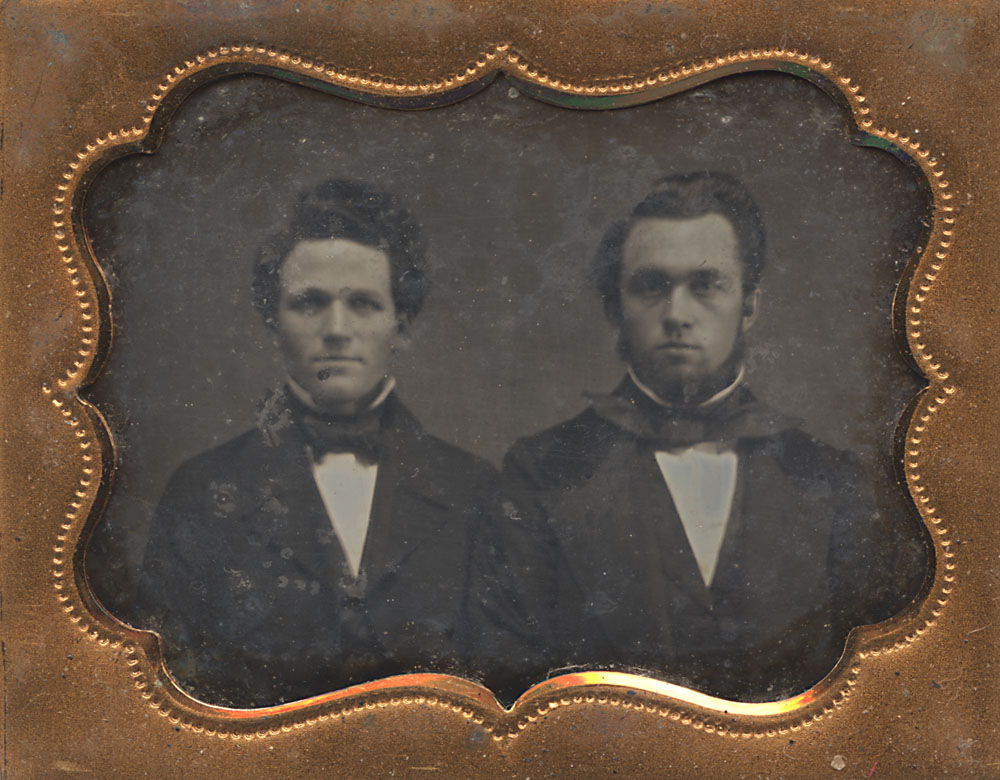
Ninth-plate Daguerreotype, Two Brothers

Ninth-Plate Daguerreotype, Two Brothers

Another recent auction acquisition. This is a minuscule 1/9th plate (roughly 2 inches x 2 1/2 inches) Daguerreotype of two brothers. I bought this one because of the relatively unusual size (1/9th plate and smaller Dags are less common) and the subject – I’m not used to seeing 1/9th plate images of more than one person. It has condition issues – while the case still has the original hinge intact, the bottom of one side is missing, as is the lining of the bottom of the image side. The interesting thing about it is that it reveals the case in this instance is made of a thin wood box covered with tooled leather. Some of these cases were made of essentially cardboard before being leather-wrapped. I did do a little bit of cleaning on this one, as the original seals, while present, were badly deteriorated and lots of dust had gotten inside the glass. There is still some kind of schmutz on the surface of the plate, and I do not yet know how to safely remove it, so I am holding off on that. I have digitally cleaned up the scan of the plate to show the potential, but left some of the blotches in the image to give an idea of what it looks like in its present state.
Ordinary Objects, Italian Edition

As you may well know if you’ve followed my blog for some length of time, I like taking portraits of ordinary objects- things we see in daily life and ignore and/or take for granted, like pay phones, water fountains, traffic cones, and trash cans. I’ve photographed them in Paris, Toronto, New York, Washington DC and now Rome and Florence. They all have a common denominator of their base functionality. I think though that the Italian ones seem to have just a bit more flair and style to them – take a look and see what you think.

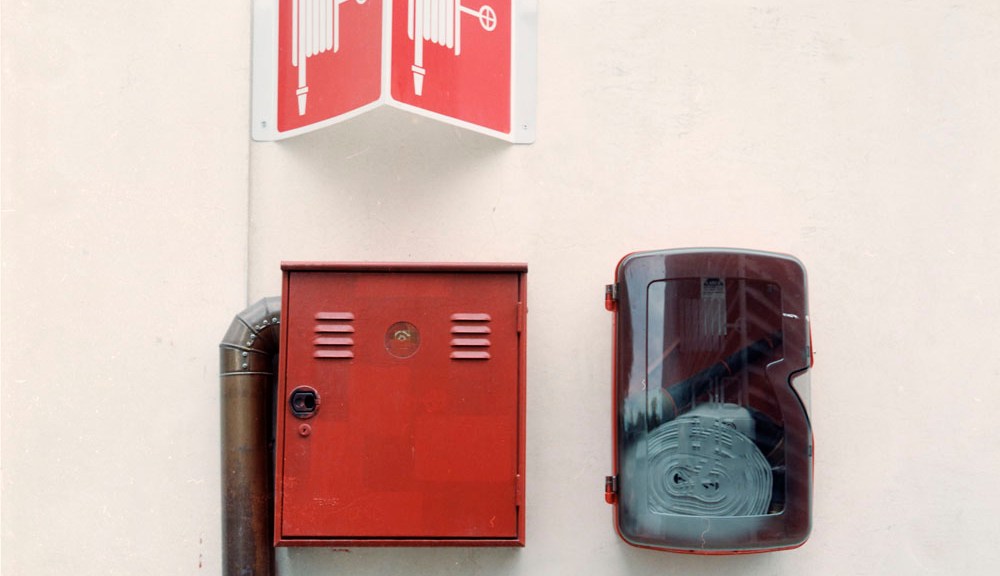
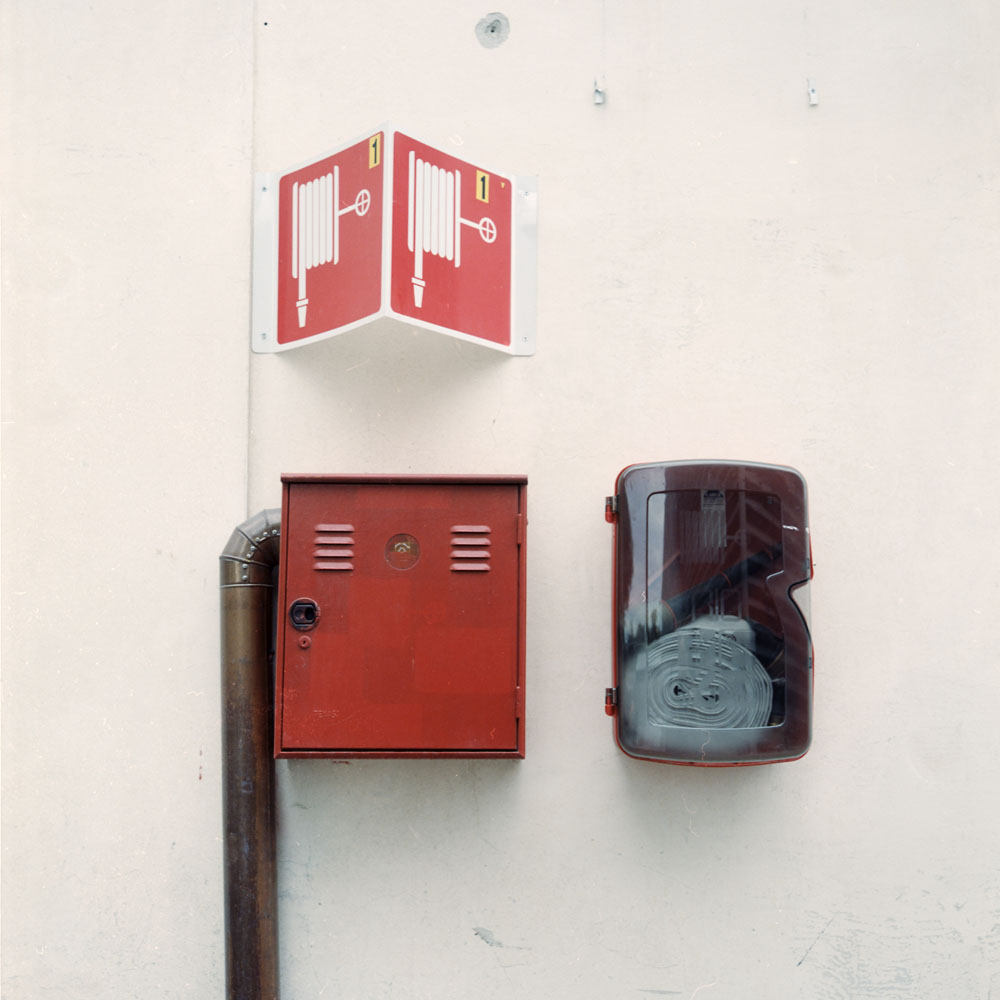
This fire hose connector is probably the newest thing I’ve photographed in this series – the copper connecting pipe has only just begun to oxidize!

Fire Hose Connector
Fire Hose Connector

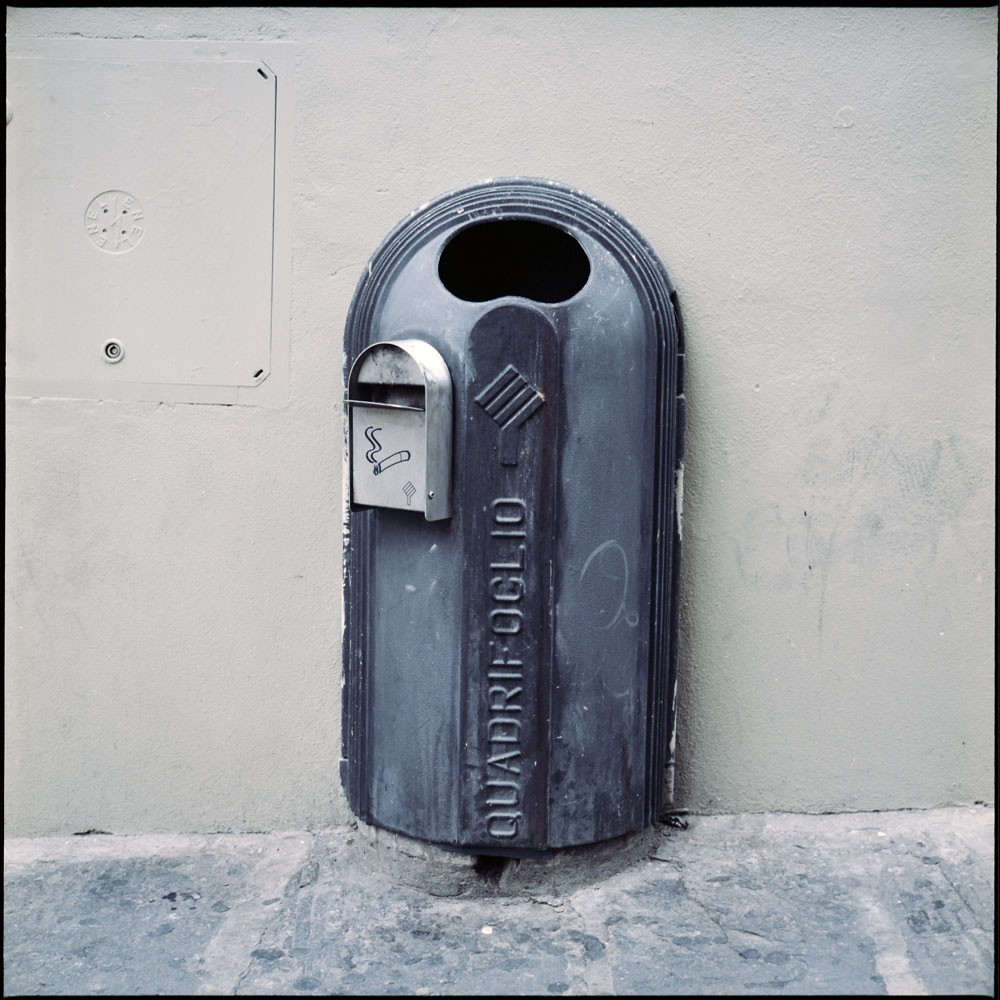
In contrast, this trash can in Florence with cigarette butt receptacle is quite well-used, but still has style.

Quadrifoglio Trash Can, Florence

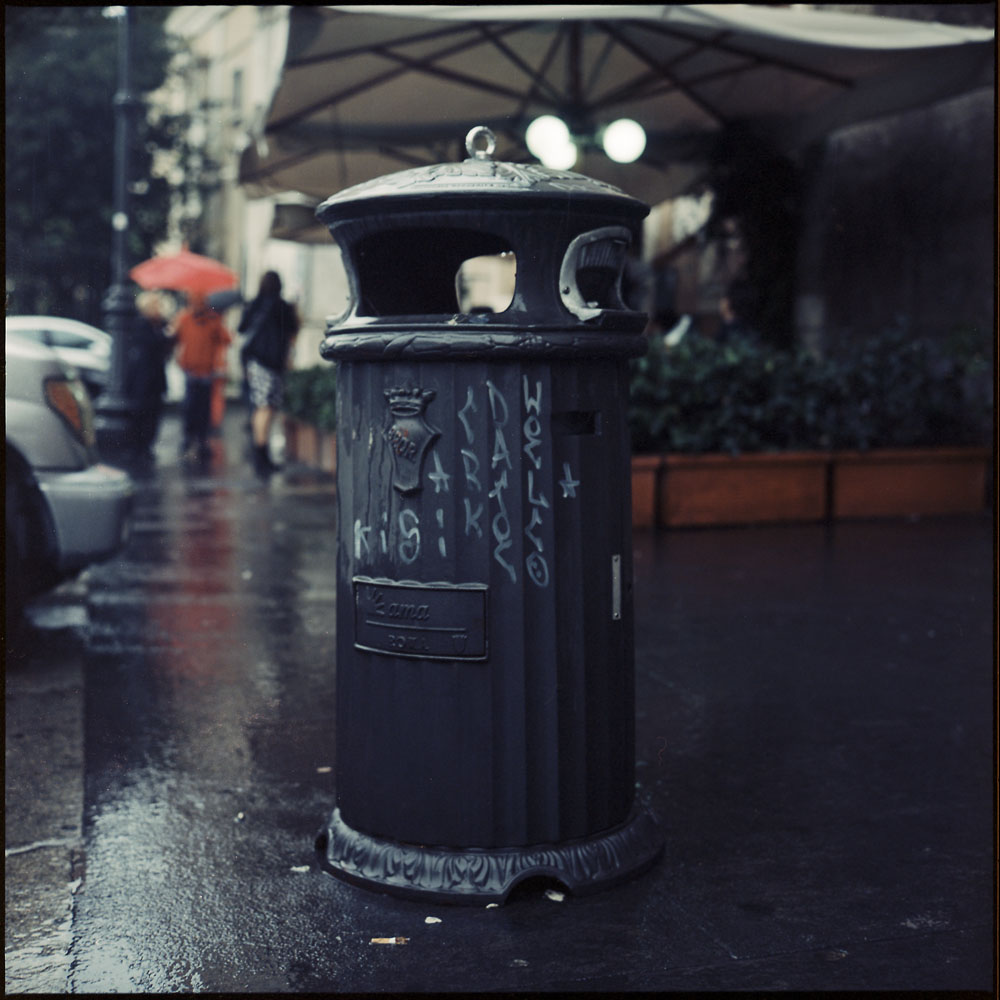
… as does this Roman bin across from the Capitoline hill.

Trashcan in the rain, Rome

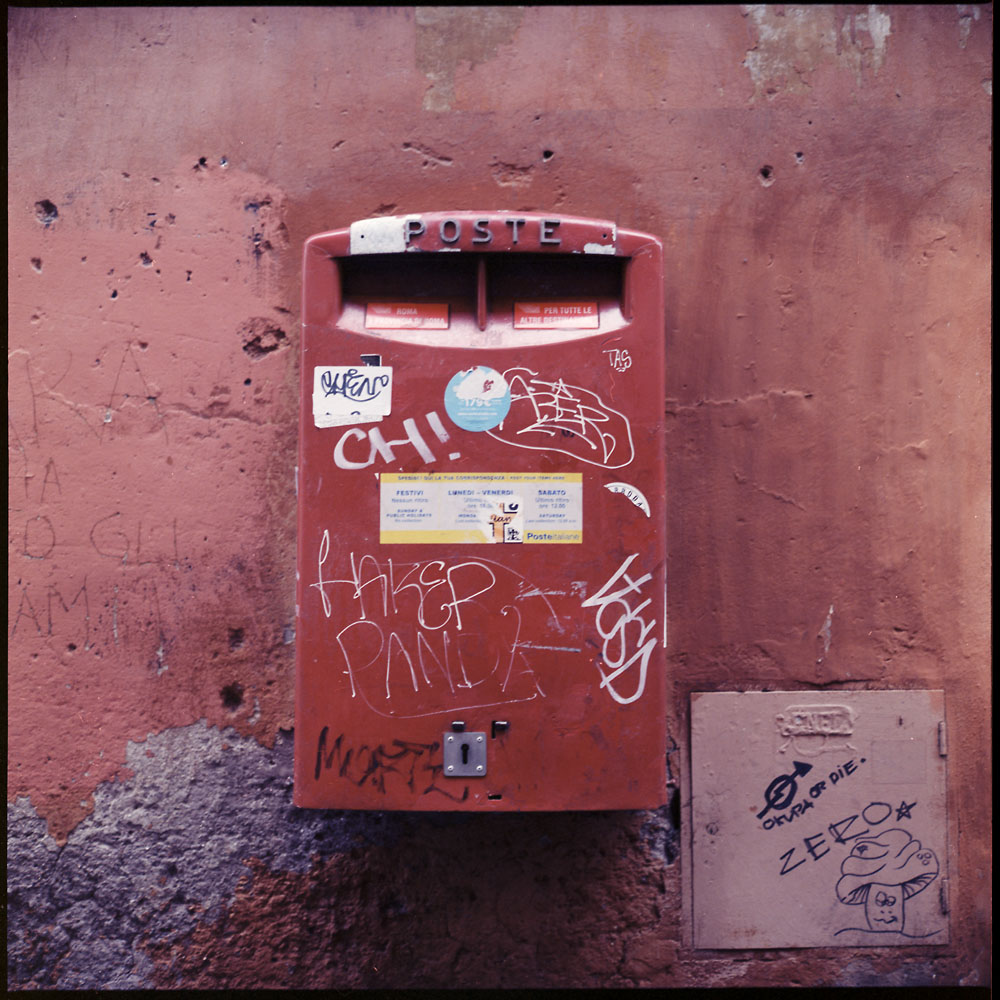
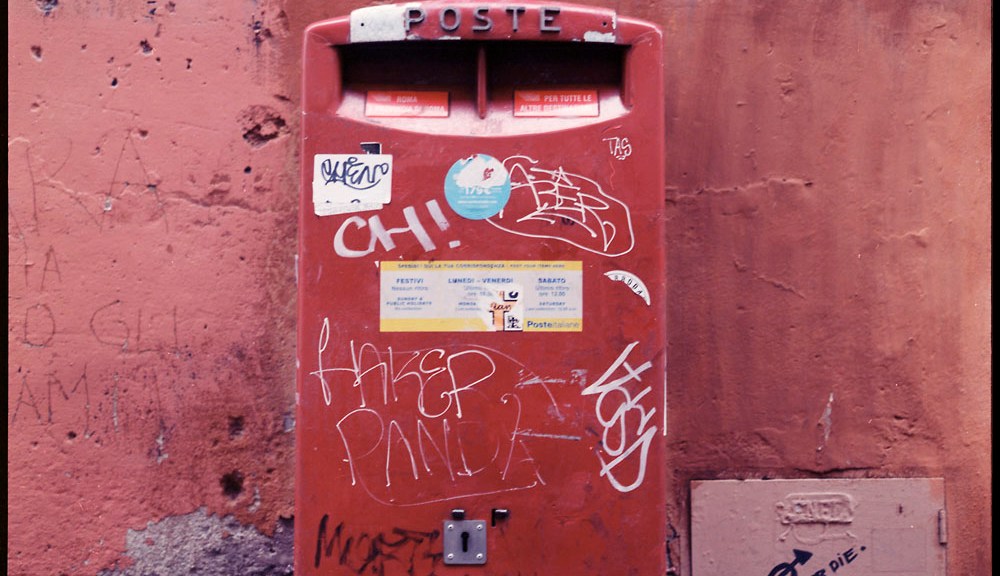
The poor mailbox in Trastevere has been graffiti’d and stickered and it still soldiers on.

Mailbox, Trastevere, Rome

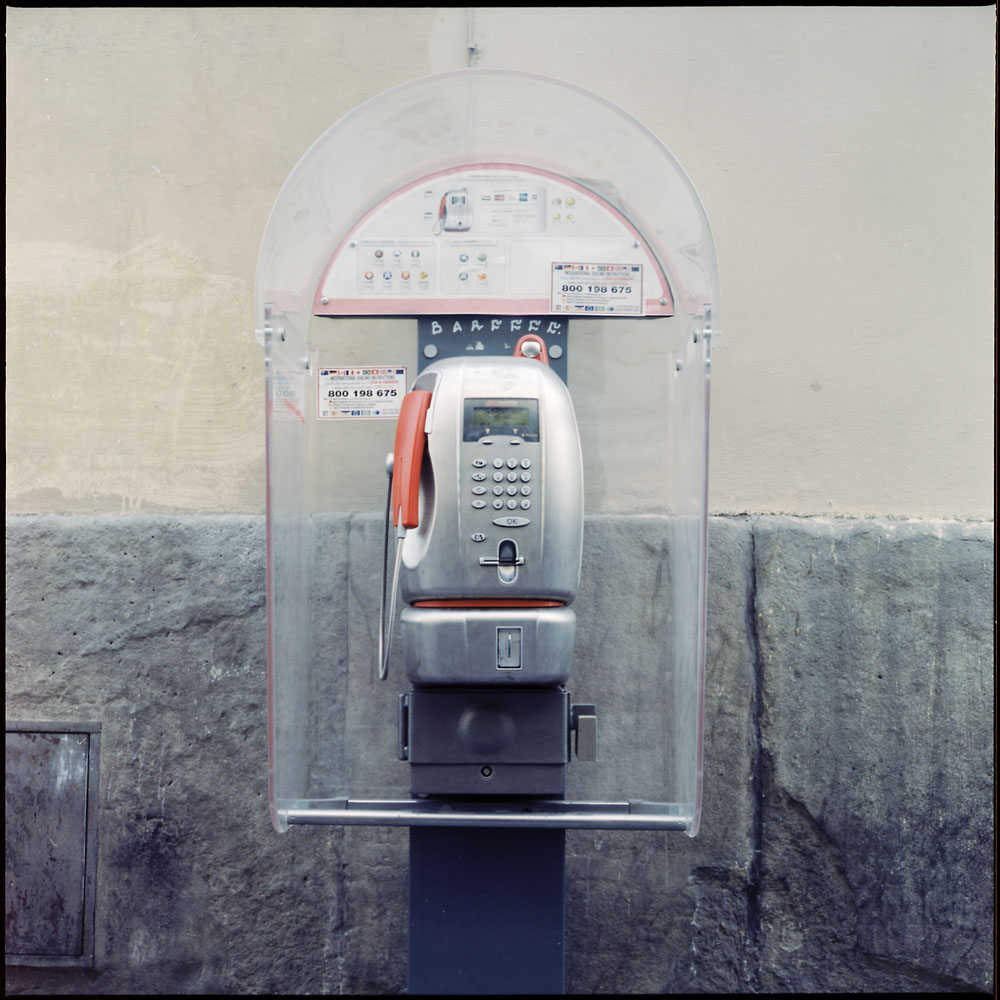
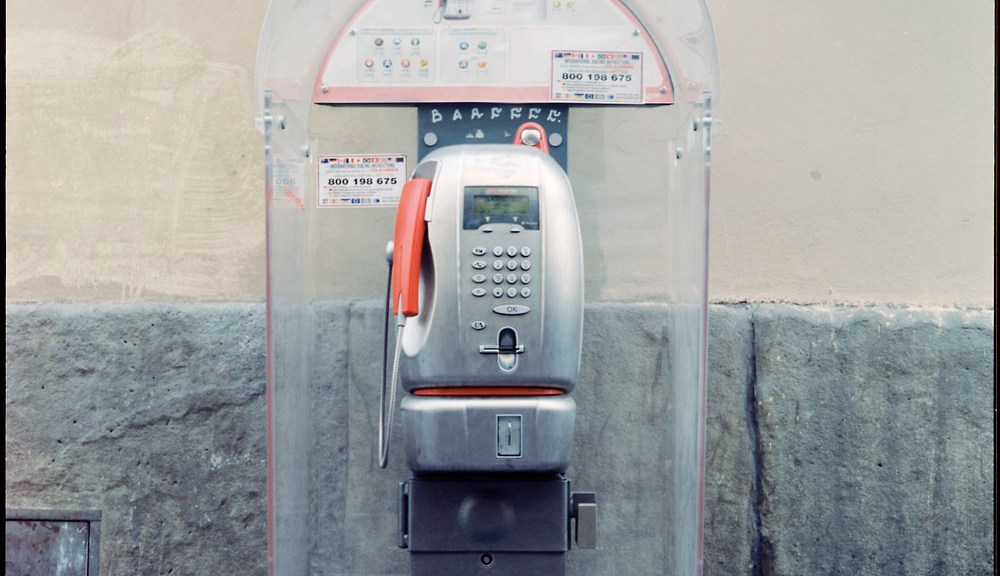
Don’t you wish all payphones were this glamorous (and as easy to find)? Here in DC when I went to find a payphone to photograph, it took me several days of looking before I ran into one. I saw this one on my first day in Florence.

Payphone, Florence
Payphone, Florence

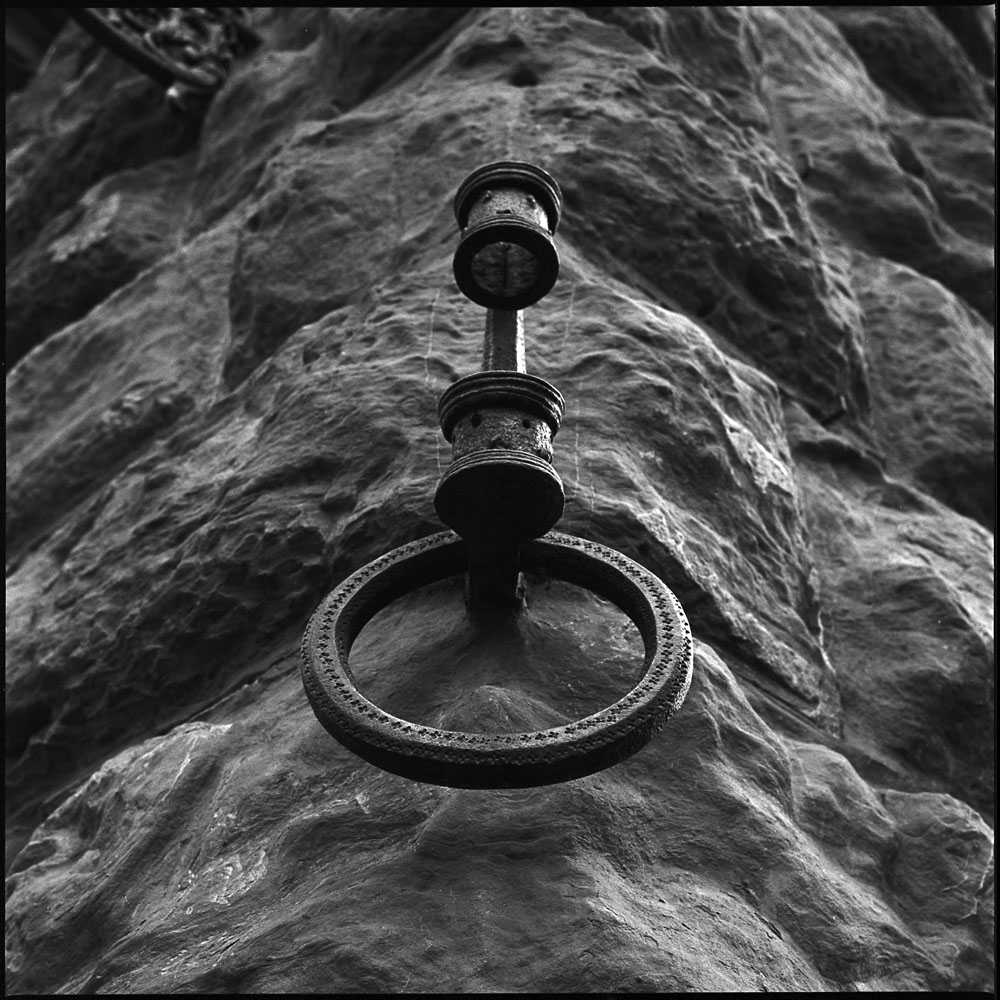
I’ll include this because it has a very utilitarian purpose – it’s a street lamp. Granted, a 15th century street lamp attached to a palace, but a street lamp nonetheless.

Torch Holder, Palazzo Medici-Riccardi

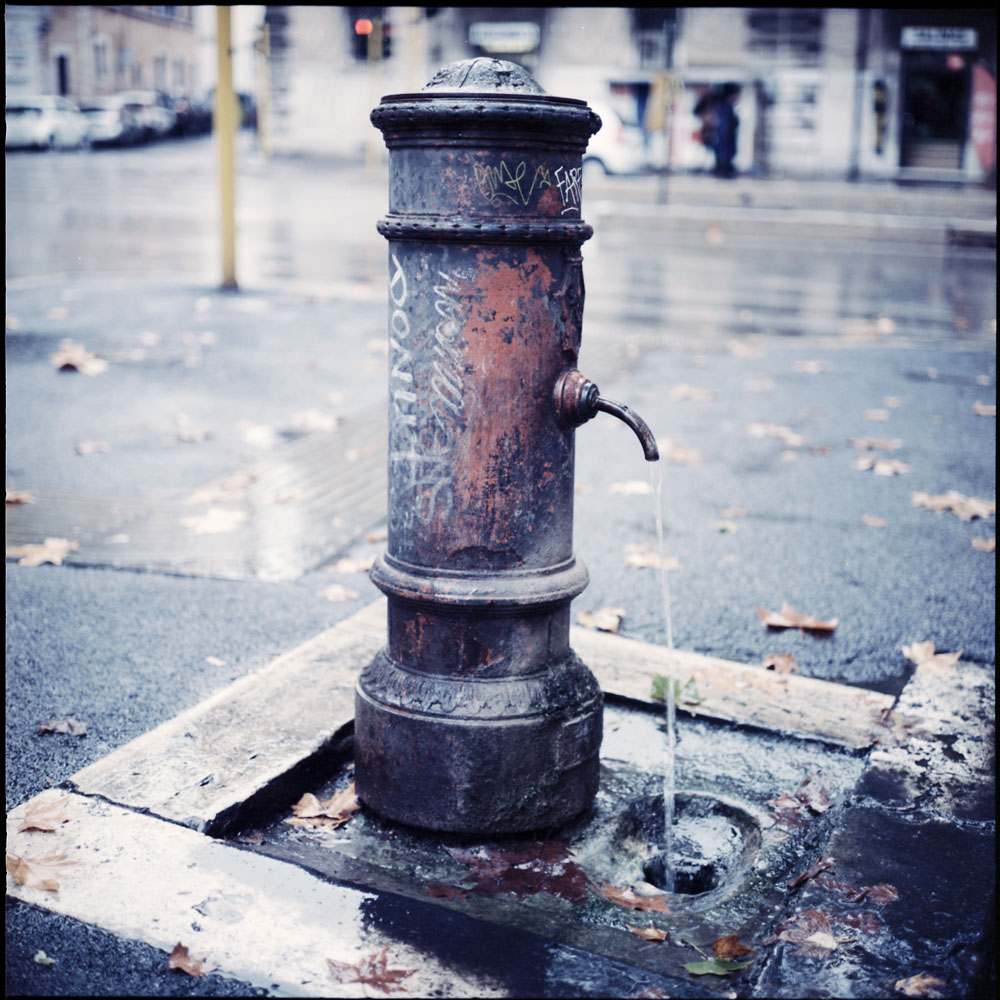
A public drinking fountain. These were ubiquitous across Rome, in very much the same form, some in better and some in worse condition. But they worked, and the water was sweet and clean, always flowing, and free.

Water Fountain, Trastevere, Rome

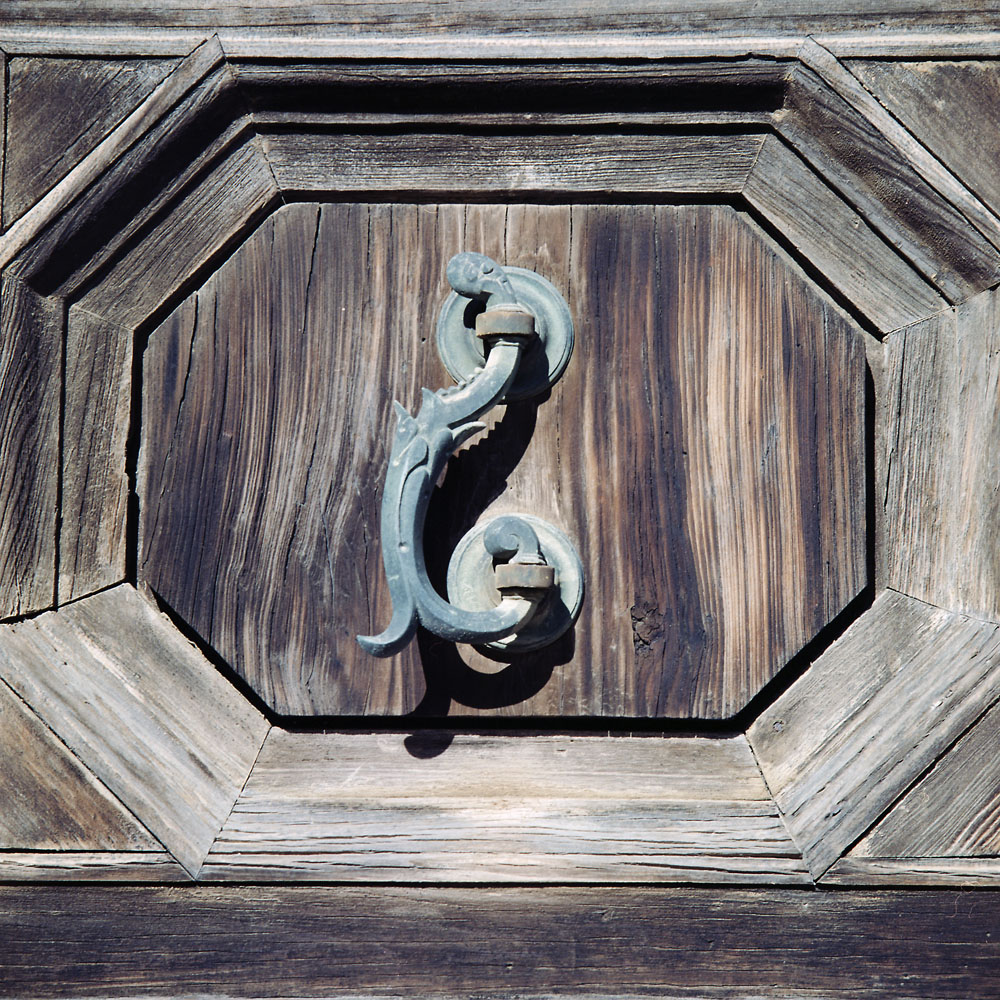
A lowly door handle – this one in particular is attached to a palace, but there were plenty to be found of similar quality on middle-class residences in both Rome and Florence.

Door Handle, Boboli Gardens

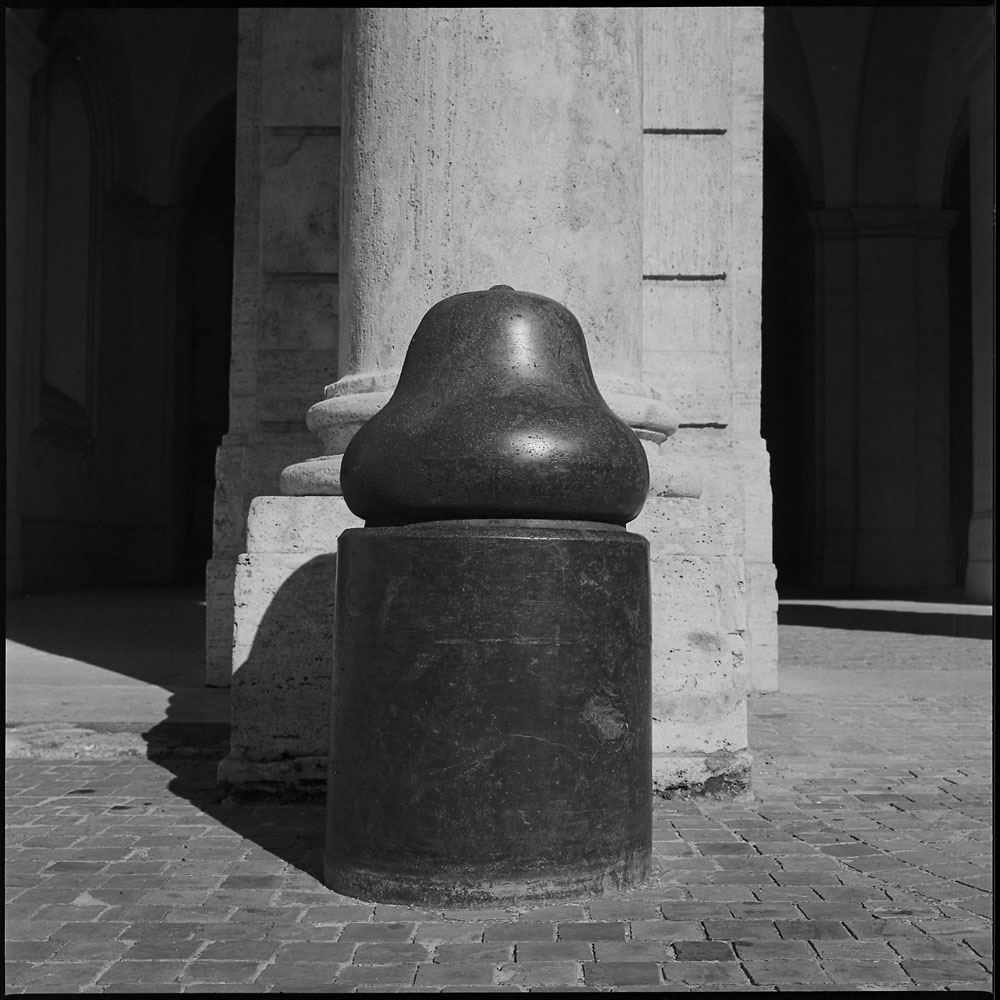
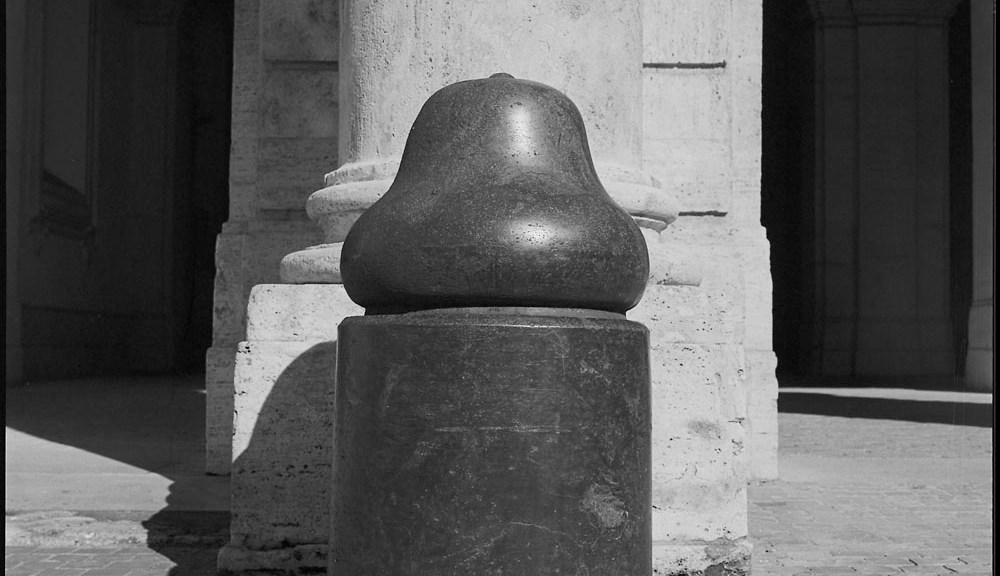
And last but not least, a traffic cone. Well, in this case, a red granite bollard some four feet high and three-ish in diameter, in the entrance courtyard to the Palazzo Barberini.

Red Granite Bollard, Palazzo Barberini

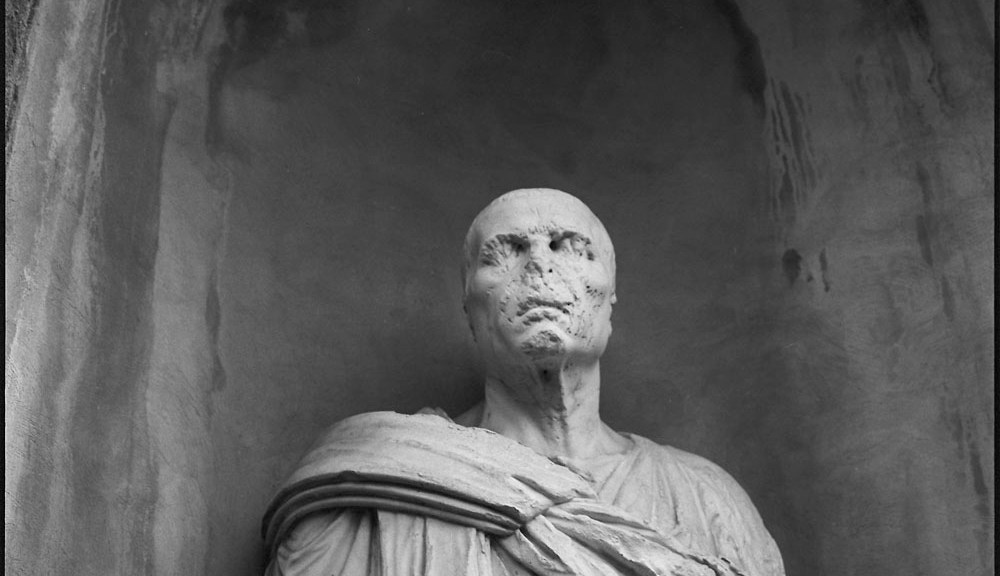
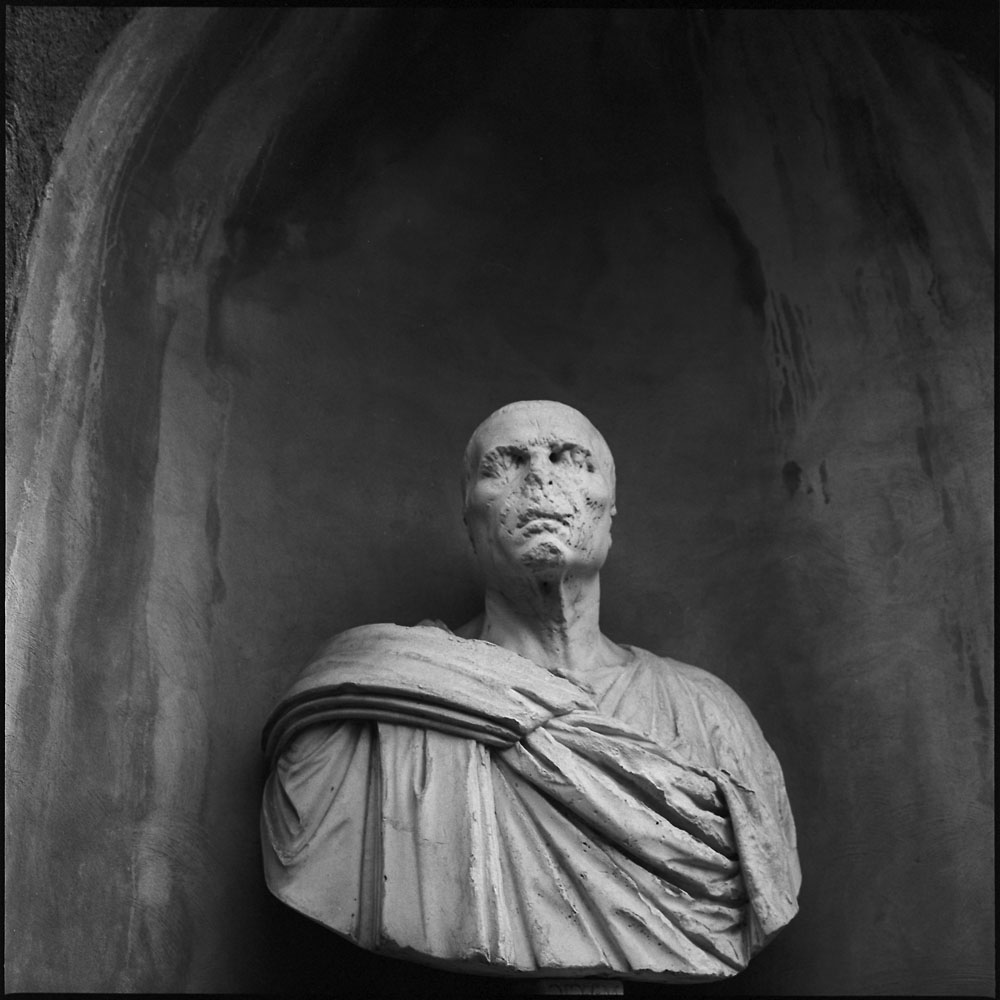
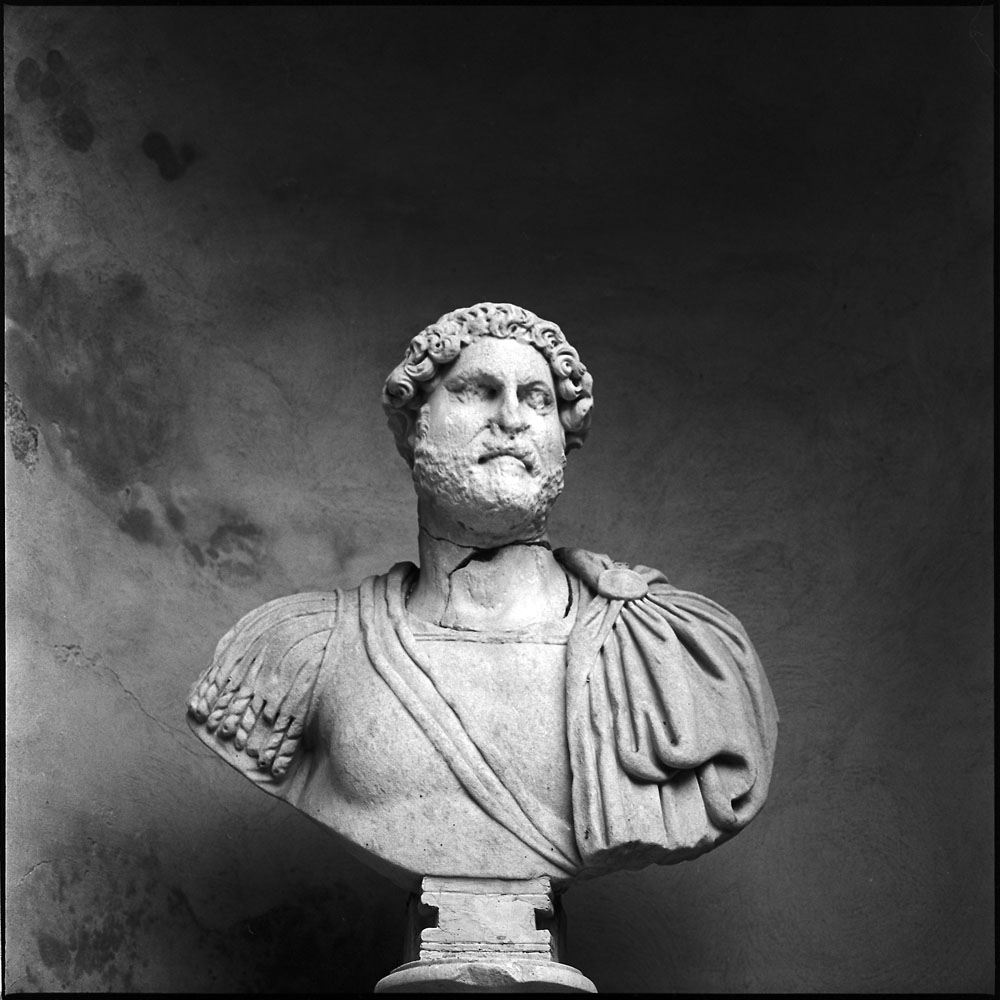
Pair of Roman Busts, Castel Sant’Angelo

These two pieces are quite moody, and that somber undertone of them inspired me. From their weathered appearance to the various forms of damage they’ve taken over the centuries, they act as a kind of memento mori to remind us that even art in marble will eventually die.

I’ve joked to friends that this one is proof that there were zombies in ancient Rome – but in fact the damage to the face is probably caused by relatively contemporary rivals seeking to damage the visage of a now-dead adversary, or inadvertent blows from overzealous Renaissance-era treasure hunters or clumsy builders trying to clear debris in preparation for fortifying the former Imperial tomb.

Roman Bust
Roman Bust

This one has suffered different indignities – while his visage remains relatively intact, at some point his head was separated from his shoulders, and later re-attached.

Bearded Bust
Bearded Bust

Just for the record, to the best of my knowledge there were no zombies running around ancient Rome.

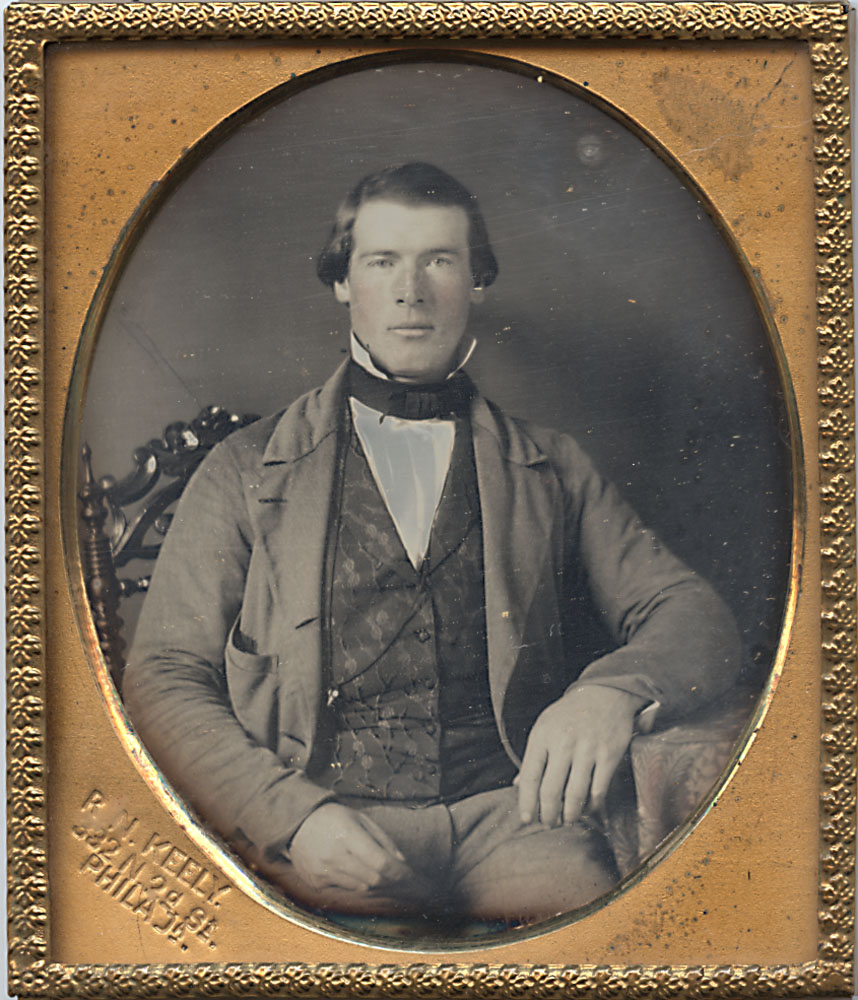
Anonymous Man by R.N. Keely, Philadelphia

Another recent acquisition for the collection is this daguerreotype of an unknown man by R. N. Keely, of 322 North 2nd Street, Philadelphia. Also an early daguerreotype (discernible by the attire of the sitter and the style of the mat), this is probably from the late 1840s. While the mat itself is still quite plain, it bears the photographer’s imprint, and the whole packet (this time complete with intact original seals!) is wrapped in a gilt brass frame.

Anonymous, by R.N. Keely, Phila

I was also pleased to see that in this acquisition I had yet another photographer’s studio address to add to my Philadelphia Victorian Photographers’ map. Were I sufficiently motivated and had enough free time, I’d love to sync up the images in my collection with the studios’ addresses, and ideally match the dates as well. But, that would be a great project for an intern to tackle, should I ever have one (hmmm… maybe I should approach my high school alma mater and see if there would be a talented kid interested in the project????).

Fire Hose Connector – Ordinary Object Portrait

Another in my series of portraits of ordinary objects. Most of my ordinary objects portraits depict well-used, sort of unloved objects, but this is a brand-new (or at least nearly new) fire hose connector inside the Fortezza Basso complex in Florence.

Fire Hose Connector
Fire Hose Connector

Trashcan, Theater of Marcellus, Rome

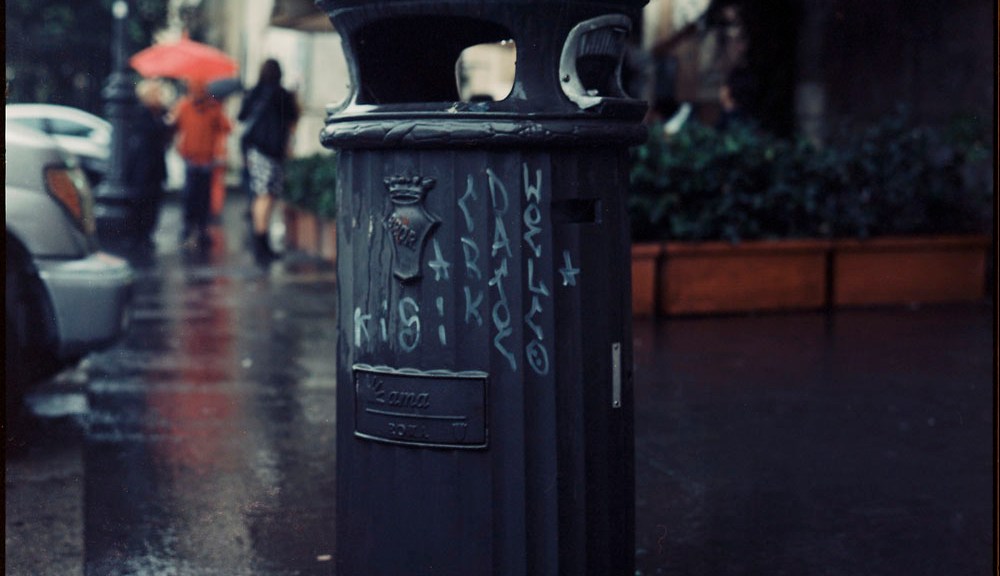
Another of my portraits of ordinary objects – this time a trash can in Rome, outside the Theater of Marcellus, at the foot of the Palatine Hill. The trash can sits at attention, doing its duty exposed to the elements. Neither rain nor snow nor ill-placed cigarette butts deter it from its appointed task.

Trashcan in the rain, Rome

I don’t usually photograph in the rain, but I was so excited to be in Rome, running around and photographing without constraints, I didn’t care if people were staring at me as if I were some kind of freak, photographing a trash can in the rain with a 60 year old camera. This particular composition appealed to me because while the trash can is the center of attention and the star of the show, the background of the cafe umbrellas and the woman in the red coat with matching umbrella convey an extra level of that sense of how people turn their backs on public conveniences like trash cans and ignore them until they need them. Everything else is more important and more deserving of protection/attention.

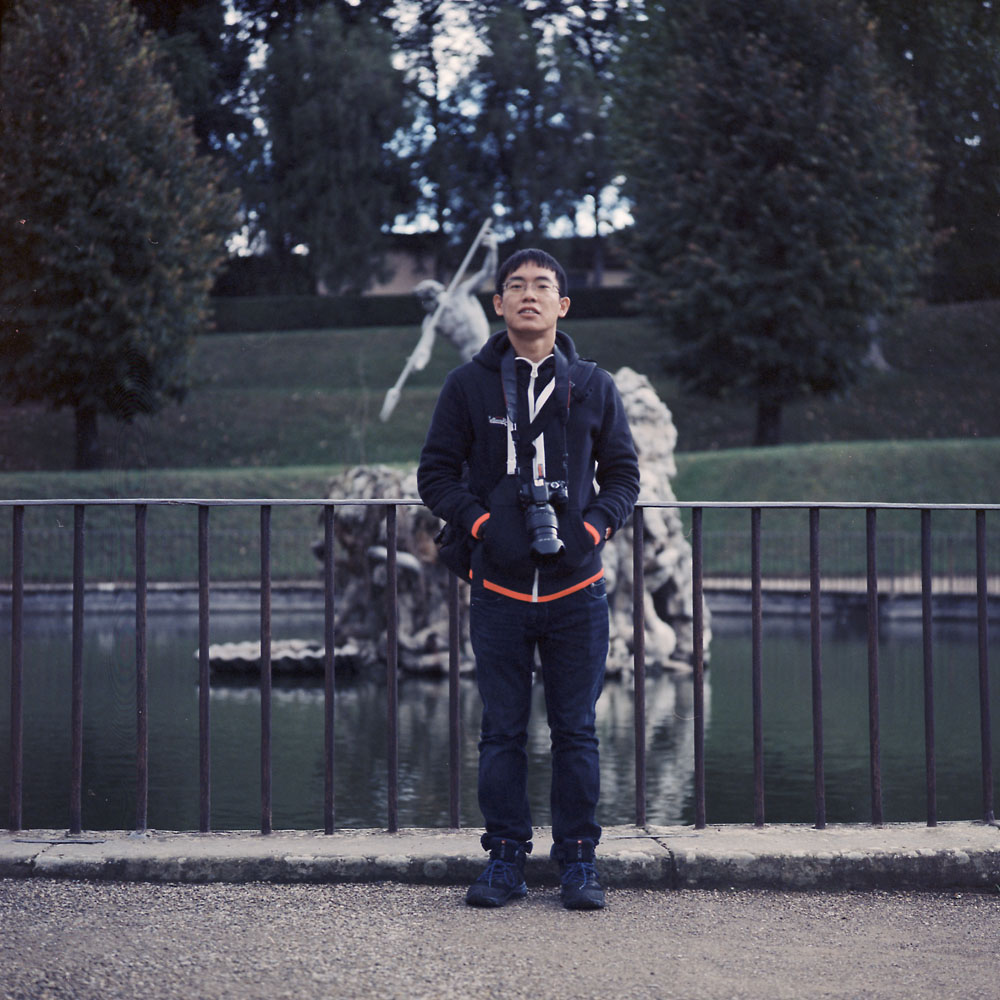
My Friend TC, at the Boboli Gardens, Florence

TC is a friend I’ve known for gosh, probably 10 years now. When we met he was a grad student working on his PhD at MIT. He’s now a full-fledged Doctor in Physical Chemistry, and working in Zurich. When I told him I was coming to Florence, he offered to pop down and hang out for a day or two. He was a real godsend, as I was still in the throes of a really bad allergy attack triggered by down pillows on the bed of my apartment in Rome, and he stopped at a pharmacy and got me some European Benadryl.

TC in the Boboli Gardens

We went to the Uffizi the first day I was in Florence, then grabbed dinner at a restaurant he found on Yelp. The food was quite good, but what shocked me was the size of the portions. I was used to these small portion sizes per course that I had been getting in Rome, so I had a pasta course, a salad, and an entree. The pasta wasn’t too much bigger than I was expecting, but the salad was entree- sized! I had only had maybe 1/3 of the salad when the waitress stopped by and asked about it. I told her it was very good but just too big. She offered to cancel my entree, which I was glad to accept. Half and hour later, we’re sitting chatting and the entree arrives after all!

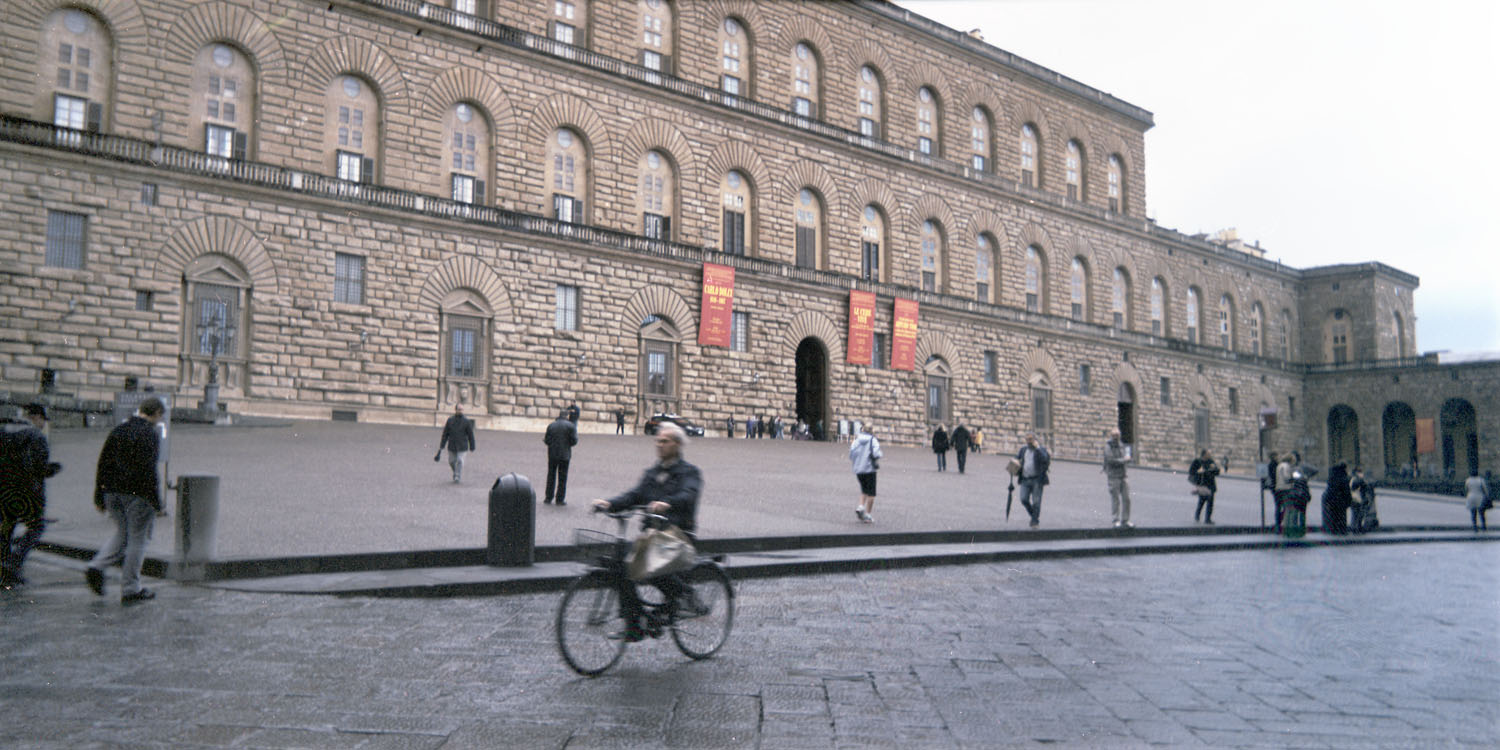
The next day, we met up again and walked over to the Palazzo Pitti via the Ponte Vecchio. The Palazzo Pitti is gargantuan – it was the Medici family’s main residence in the 16th and 17th centuries, and everything about it was designed to overawe. The Vasari corridor connects it with the Uffizi over the Ponte Vecchio to provide a secure passage should the Medicis need to escape an angry mob, or just not want to mingle with the hoi polloi on their way to and from their private box seats at the Santa Felicita church.

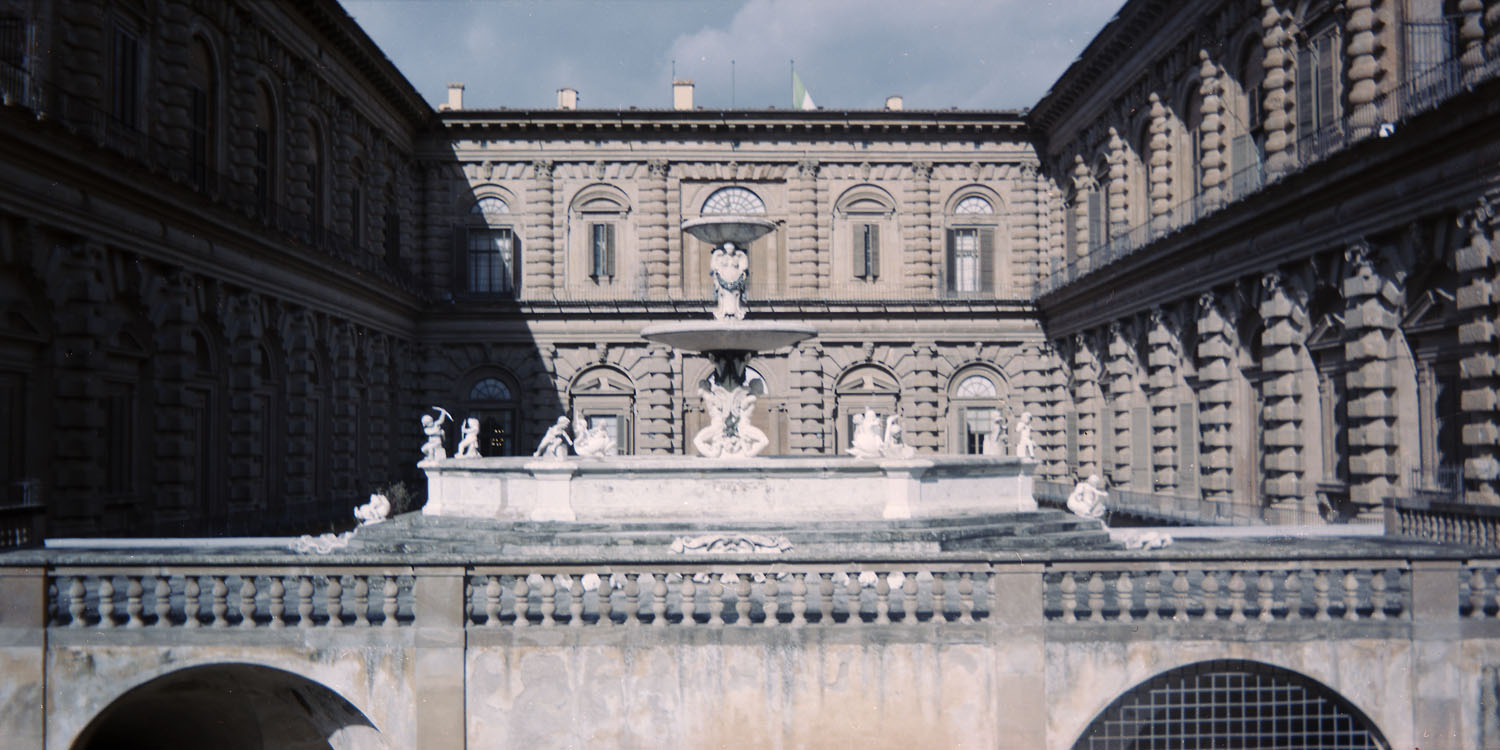
Cyclist, Palazzo Pitti

The Boboli Gardens back onto the Palazzo Pitti. They were once the private playground of the Medici family, but now are open to the public. This is the garden facade of the Palazzo Pitti.

Pitti Palace, from the Boboli Gardens

After touring through the Pitti and hiking up and down the Boboli gardens (which are on the face of a fairly steep hill), TC and I grabbed lunch at a little cafe across from the Palazzo Pitti’s main entrance. I had my first ever cappuccino there. I’m now a devotee, provided there’s enough sugar.

So thank you, TC, for the Benadryl, the companionship, and for the swiss chocolates – they were delicious!

Mailbox, Trastevere, Rome

Rome is a city known for many things – fine food, ancient architecture, more churches than you can shake a stick at, and among other things, graffiti. This poor mailbox has been heartily defaced – scribbled on, stickered, and overall abused. Yet it still soldiers on in its duty, collecting the mail. Here is my portrait of the mailbox to elevate it into the pantheon of my Ordinary Objects series:

Mailbox, Trastevere, Rome

Something I found fascinating was the degree to which English has penetrated into Italian life. In the big cities, almost everyone speaks it to some degree or other. Signage in museums is in Italian and English – no French, no German, no Spanish, no anything else. Just English and Italian. Even the graffiti is often in English, like the little mushroom to the right of the mailbox here, and some obscenities on a wall outside the Garbatella Metro station (forthcoming in a future post). I don’t know what quite to make of it – while it makes life easier for me as a visitor who is not proficient in Italian (I can fake it ’til I make it based on my fluency in Spanish), I do worry about global homogenization.

Payphone, Florence

Another in my Portraits of Ordinary Objects series.

Payphone, Florence
Payphone, Florence

I’ve been working on this series for a while now, photographing common things we see every day and take for granted. I keep on doing this around the world, photographing pay phones, mail boxes, trash cans, fire hydrants, all the little things that populate the overlooked corners of our daily lives. The interesting thing about them is that despite cultural differences (mailboxes in France are yellow, in the US they’re red and blue) they’re pretty much instantly recognizable across all cultures. You don’t have to be a Spaniard to recognize a Spanish mail box, pay phone, or trash receptacle.

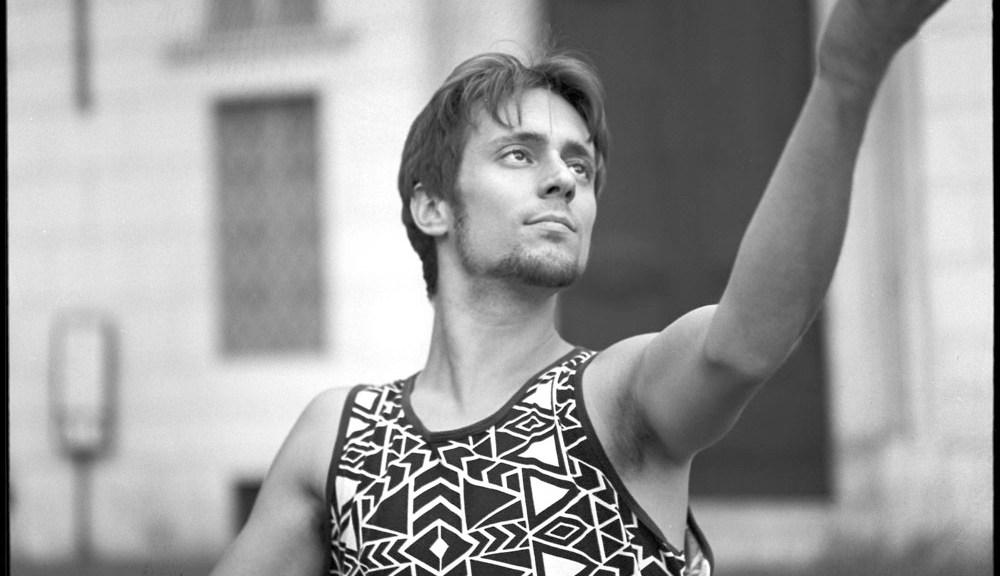
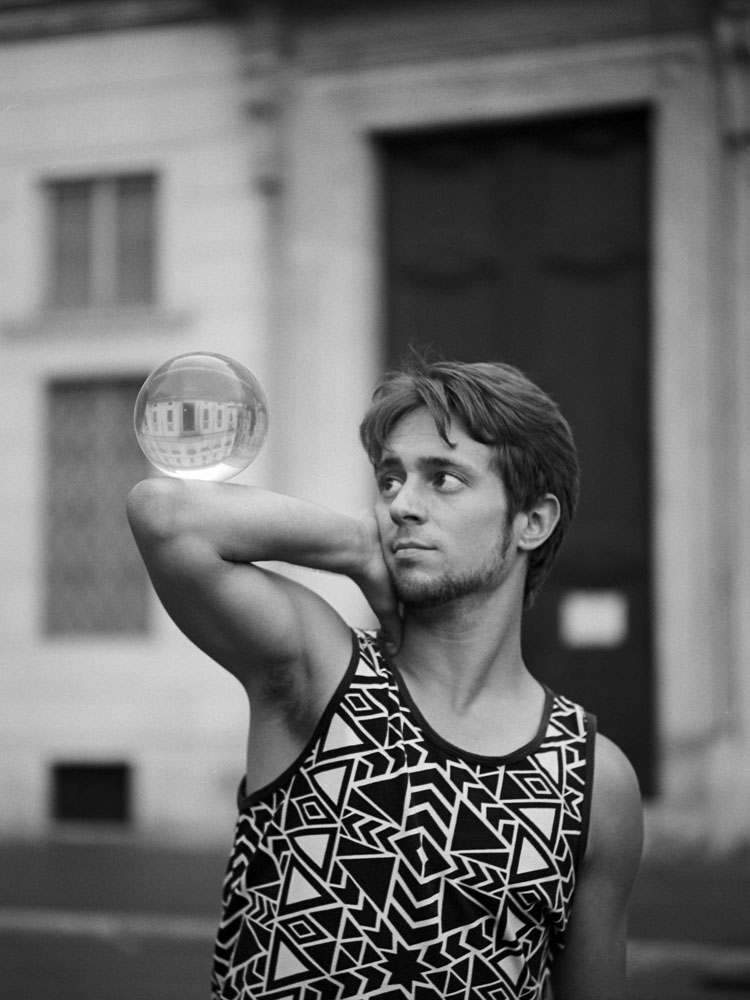
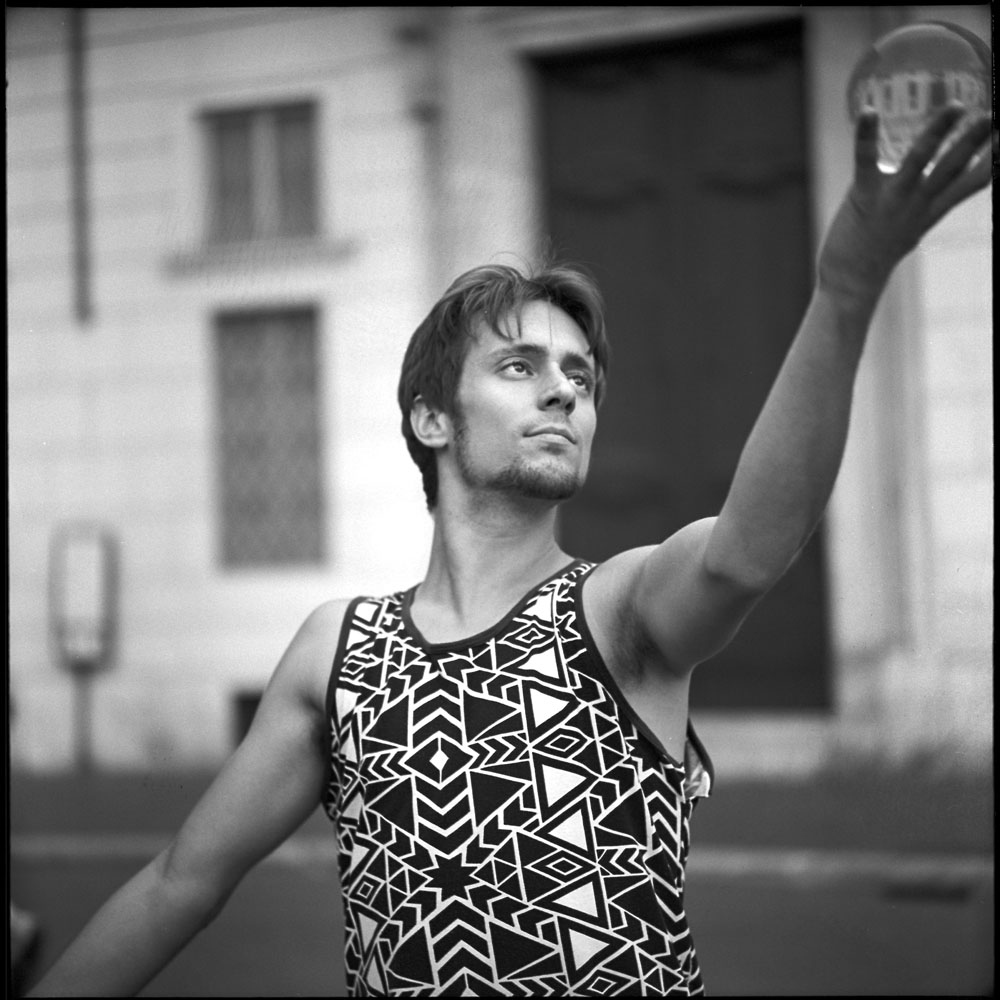
Juggler, Piazza Navona

This is something I’m working on doing more of- photographing people in the wild, so to speak. I do well in the studio, where people are expecting you to take their picture, and for that matter have given you some measure of control over the experience. But “street” photography, photographing people out and about doing things where they’re not expecting to be photographed, well, that’s an entirely different animal. I find it easier to photograph people who are performing or in some other way putting themselves out there to be observed. If nothing else it’s good practice for more elusive subjects.

Juggler, Piazza Navona

This young man was out on the Piazza Navona, juggling this glass sphere. He had a sign up with his busking bowl that described it as a particular kind of juggling – I forget the term, but he would roll the glass sphere up and down his arms, across his neck behind and over his head. Here he has the sphere on his elbow, then at the end of his fingers.

Juggler, Piazza Navona