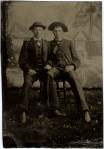
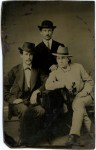
Tintype, Two Brewers, Keystone Cabinet Export Beer
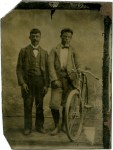
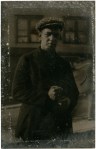
Tintype, Occupational, Plumber
1900s Tintype, possibly African-American
Trickster Tintype #1
Tintype, Father & Son?
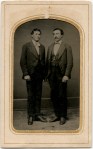
Tintype, Three Dandys
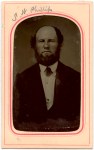
Senior Mr. Phillips
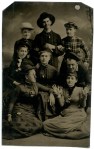
Tintype, Bathing Beauties
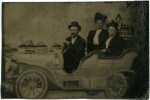
Family in Novelty Car, Cliff House, San Francisco
Trickster Tintype #2
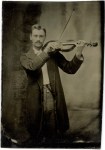
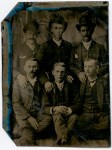
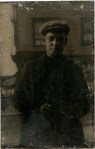
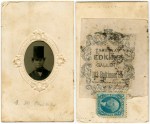
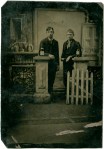
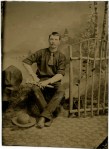
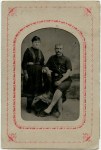
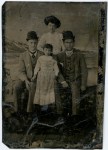
I thought it would be fun to review my loose tintypes. These are only the ones I’ve previously posted to the blog, not the entire collection. They run the range from tiny gemtype size (the one of Mr. Phillips in the top hat) to quarter-plate size (almost 5×7). They span a time period from the 1860s to the 1920s. Assembled they present a fascinating if incomplete snapshot of daily life in Victorian America. Showing everything from affectionate friends to unconventional family groups to people on vacation to working people with the tools of their trades, they portray a slice of life otherwise undocumented in literature or historical narrative. This is one of the great joys of collecting images like this – not just the traditional studio portraits, but the images that express meaning and personality beyond a marker that someone existed.
Two more from Gettysburg itself, and three more from the Catoctin Furnace.
Horse CarriageGettysburg Rail Depot
The rail depot is now a little museum, with exhibits relating to Lincoln’s visit.
Catoctin Furnace VentIronmasters House RuinsIronmasters Root Cellar
The iron master of Catoctin Furnace was responsible for all the finished product coming out of the factory. His house was quite large. Today it stands in ruins. The ‘root cellar’ image is my assumption of what the space might have been – it is not labeled on the site. I’m guessing at its function by the proximity to the house (it would have been immediately behind the house, near the kitchen). The other possibility is that it is the spring/well for the house. Since I lacked a flashlight, I did not go in to try and find out what was in there.
Here are some of MY photos from my Gettysburg excursion, not just the antique images I bought.
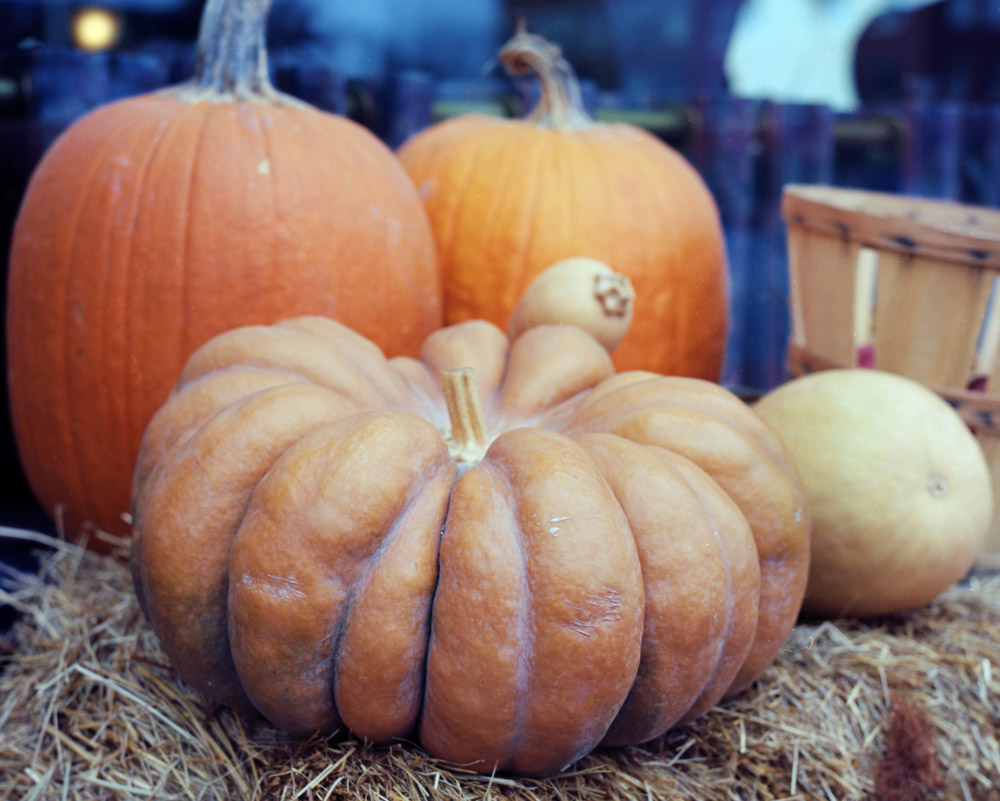
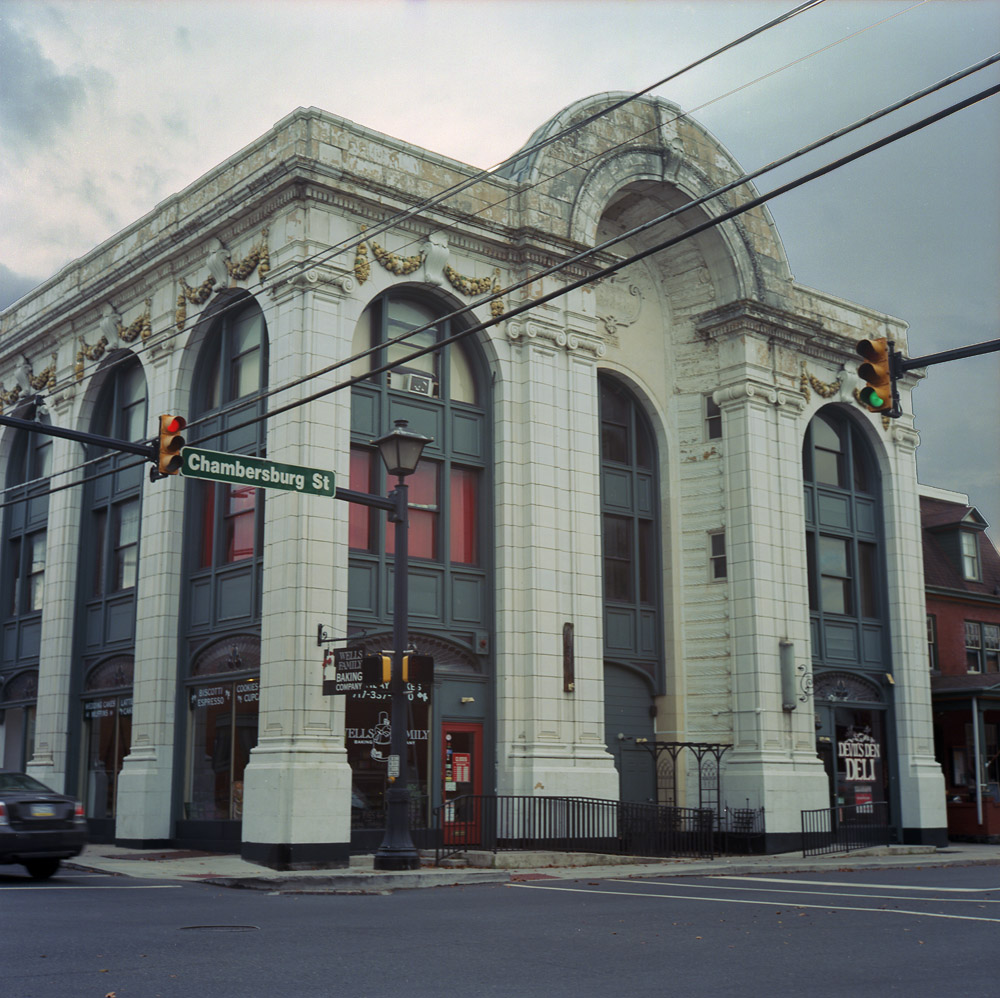
PumpkinsNumber 20, Chambersburg StreetGetty’s Hotel Canopy
I had just taken this photo and was walking back toward the main square (aka “the diamond” in local parlance – that’s a whole other story) when I ran into someone who recognized my camera as a Rolleiflex, and who had one (actually several) himself. I explained to him that servicing them to get them back into good working order was not actually that expensive, and that he could still easily get film for them. I think (I hope, anyway) I inspired him to get his Rolleis out of the closet and put them back into service.
The “diamond” story:
I grew up just down the road from Gettysburg, in another southern Pennsylvania town storied in Civil War lore: Chambersburg. Like Gettysburg, it has a central town square, where the courthouse, a church, and a couple of banks are located. We always called it “the square”. Then, a couple of years ago, I went on a Civil War themed bus tour led by Ed Bearss, the historian and talking head (Ken Burns’ The Civil War and History Channel’s Civil War Diaries, among others). We were covering JEB Stuart’s raid on Chambersburg. When we arrived in downtown, he explained that the proper term for a town’s main square in that part of Pennsylvania was (and allegedly still is) “the diamond”. The squares are square, per se, formed at the intersection of two roads, which enter the square from the middle of each side, but in a gesture to ease of parking (originally buggies and horses, now cars), inside the square, the corners have been cut off, making a diamond-esque space in the middle. Thus the diamond. But I had never heard it referred to as “the diamond” in the first 39 years of my life until I heard Ed tell that story.
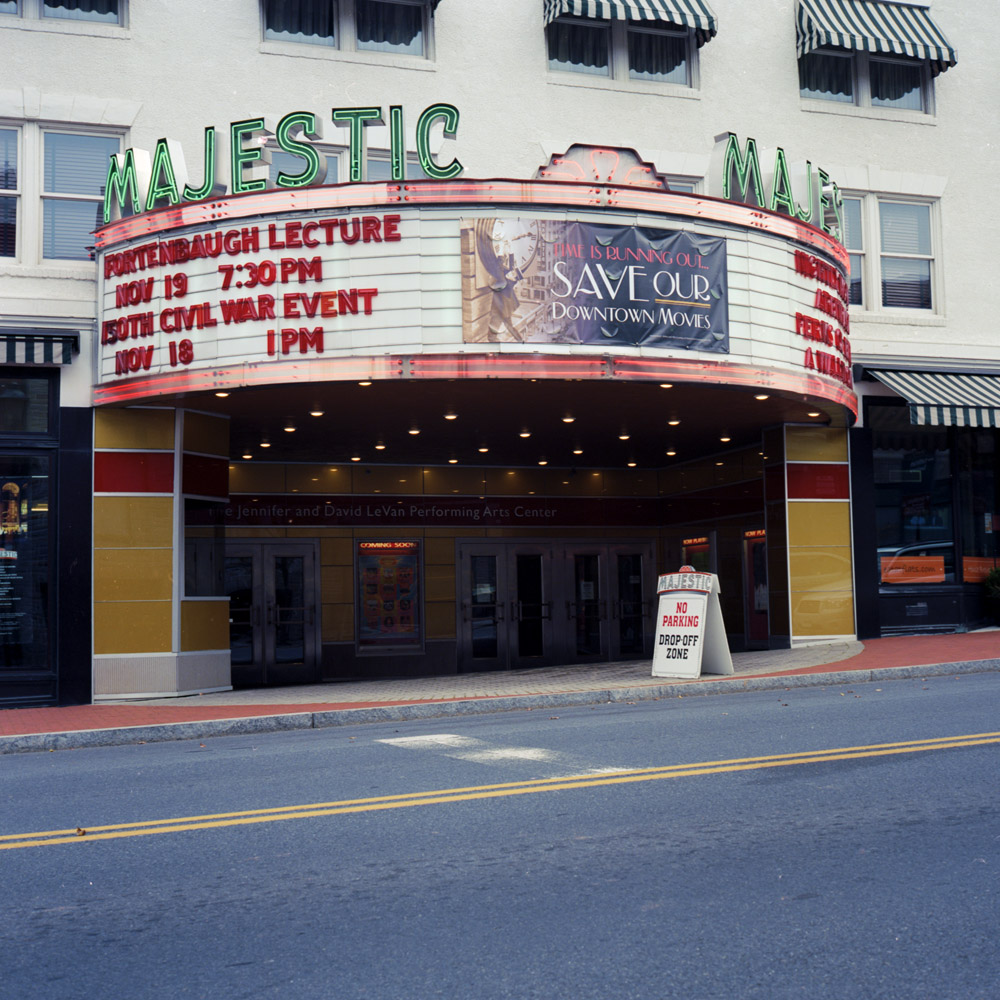
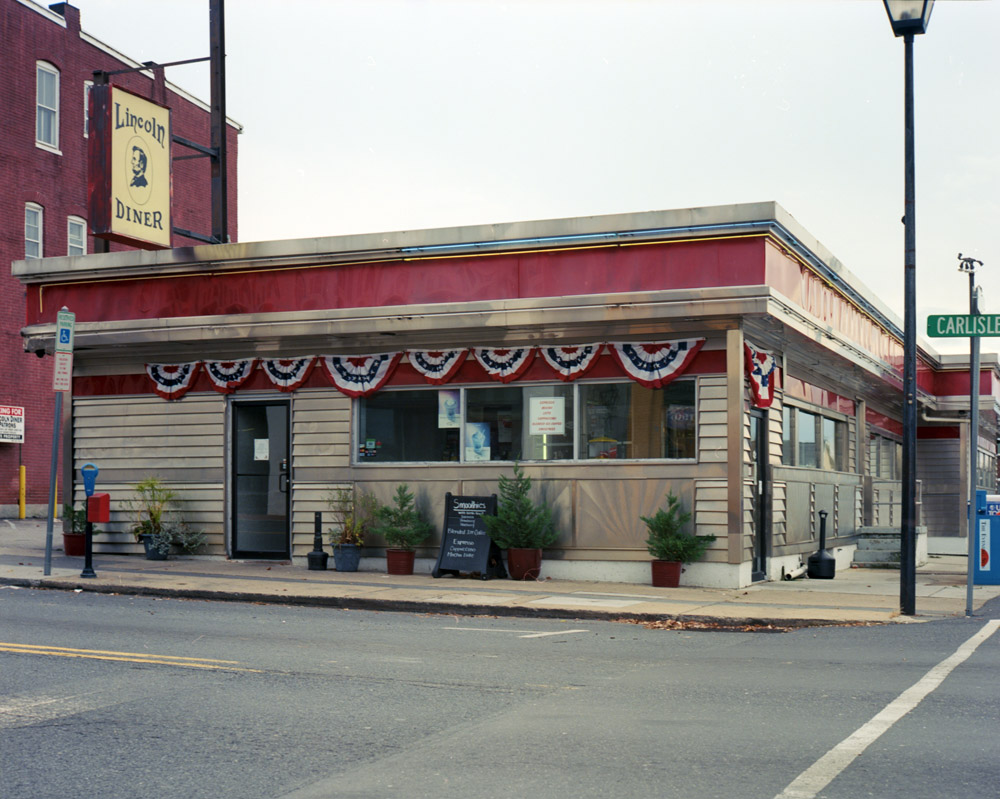
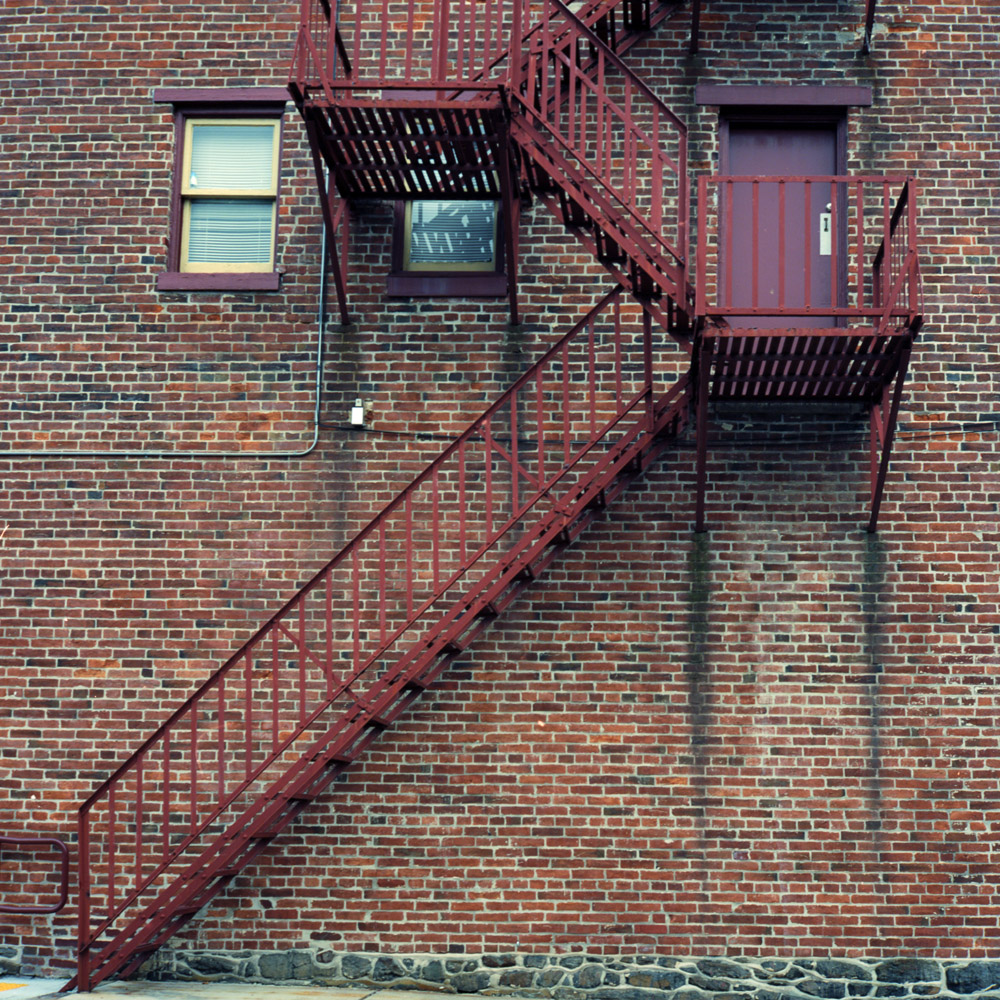
Majestic Theater, GettysburgThe Lincoln DinerFire EscapeChambersburg StreetGettysburg Dive Bar
This is one of those places you see in so many small towns – the local dive bar, or “bar of shame” as I like to think of them. No windows that you can see in, which I suppose gives patrons an illusion of privacy. The ironic thing is that A: this bar is on the main street, just a block or so off the main square, and B: it’s a small town, so everybody knows everybody. If you enter this bar, the whole world is going to know about it.
Emmittsburg Road, Evening
The Emmittsburg Road, at evening time. I took this picture because it epitomizes Gettysburg, the battlefield, to me as much as any monument or marker or green bronze cannon. This is the gently rolling countryside where over three days in July, 1863, almost 50,000 men gave their lives.
Catoctin Furnace
Not actually in Gettysburg, but on the way home, is the Catoctin Furnace. This was an early ironworks, in operation from the late 1700s. Catoctin Furnace supplied the Continental army during the American Revolution, and the Union army during the Civil War. They would stack layers of charcoal, limestone and iron ore needed to produce finished iron into the furnace and let it burn, adding additional layers until enough molten iron was produced. Then a clay valve in the bottom of the stack would be opened and the molten iron bled off into sand-filled channels in the ground where it would form into pig iron bars. I’ve seen two explanations for the name, pig iron: one variation has it because of the shape of the bars after pouring, the other because of the sound the molten iron made as it ran into the molds.
All photos were taken with my Rolleiflex 2.8E, using Kodak Ektar 100.
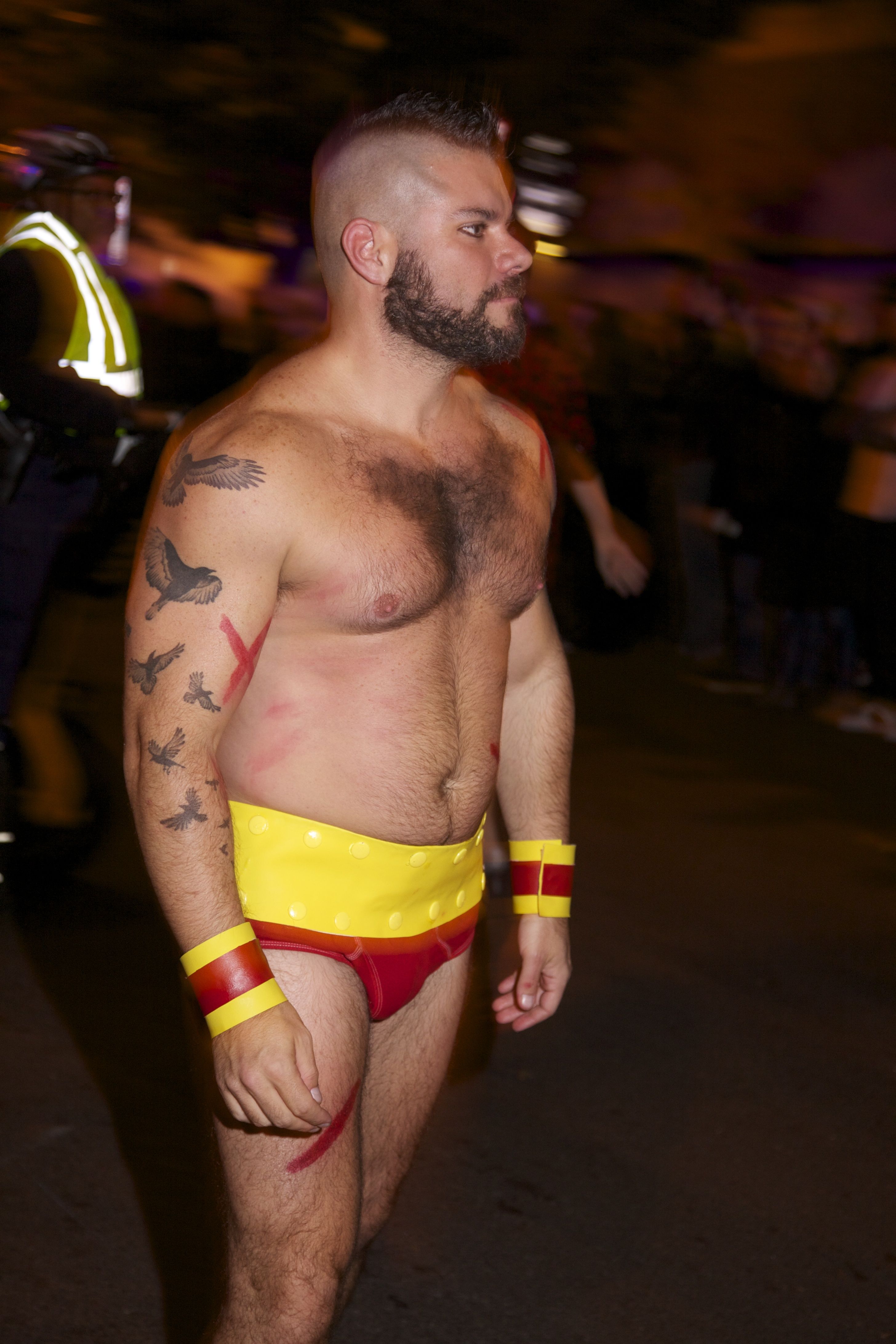
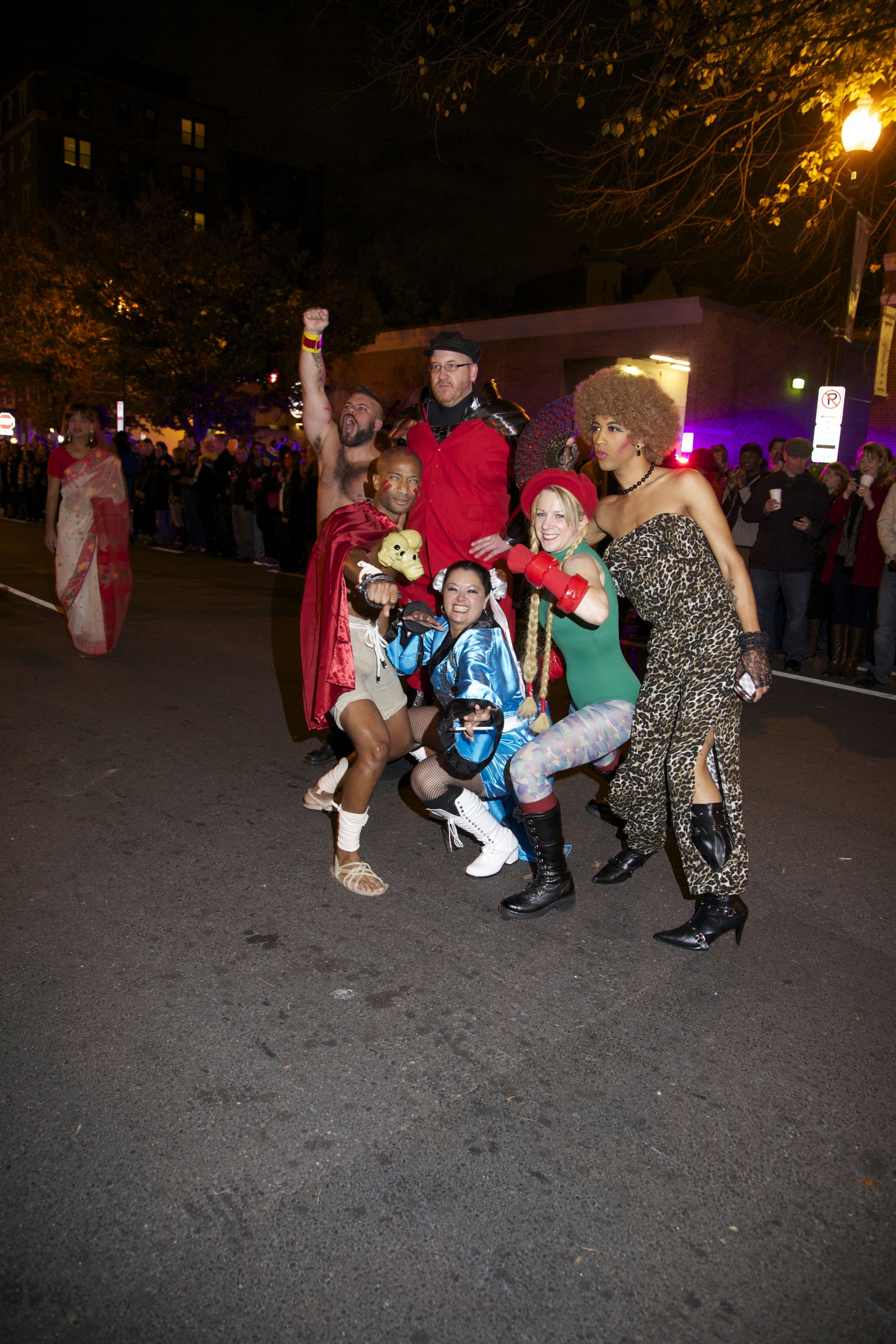
Zangief, from Street FighterThe Street Fighter Gang
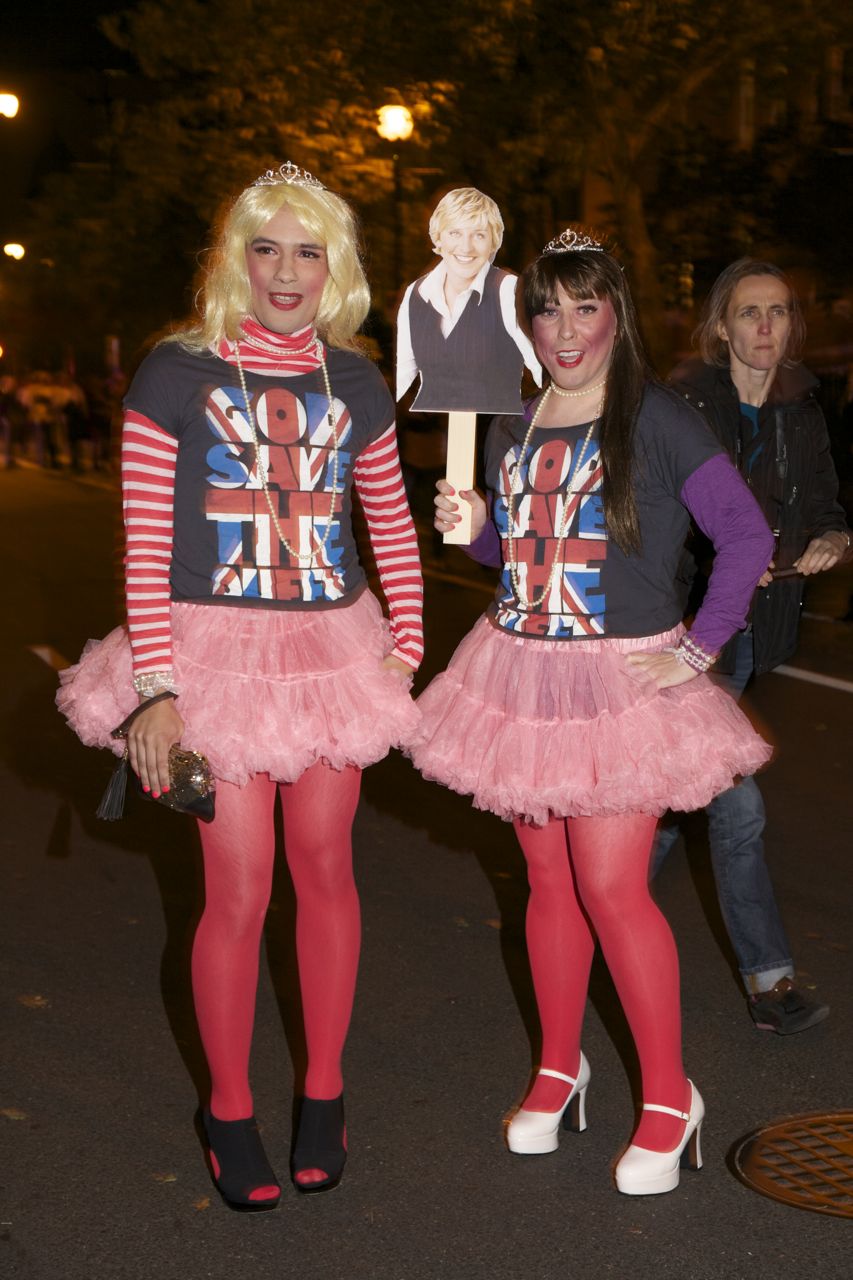
For those who are too old (or too young!) to be aware of the video game, the above characters are from a video game series called “Street Fighter”. The series is immensely popular and has been around in some form or another since 1987. To me, they’re a little out of touch with the High Heel Race thing, as nobody in their group is actually in DRAG – it seems more like this was an excuse for them to wear their Halloween costumes one more time.
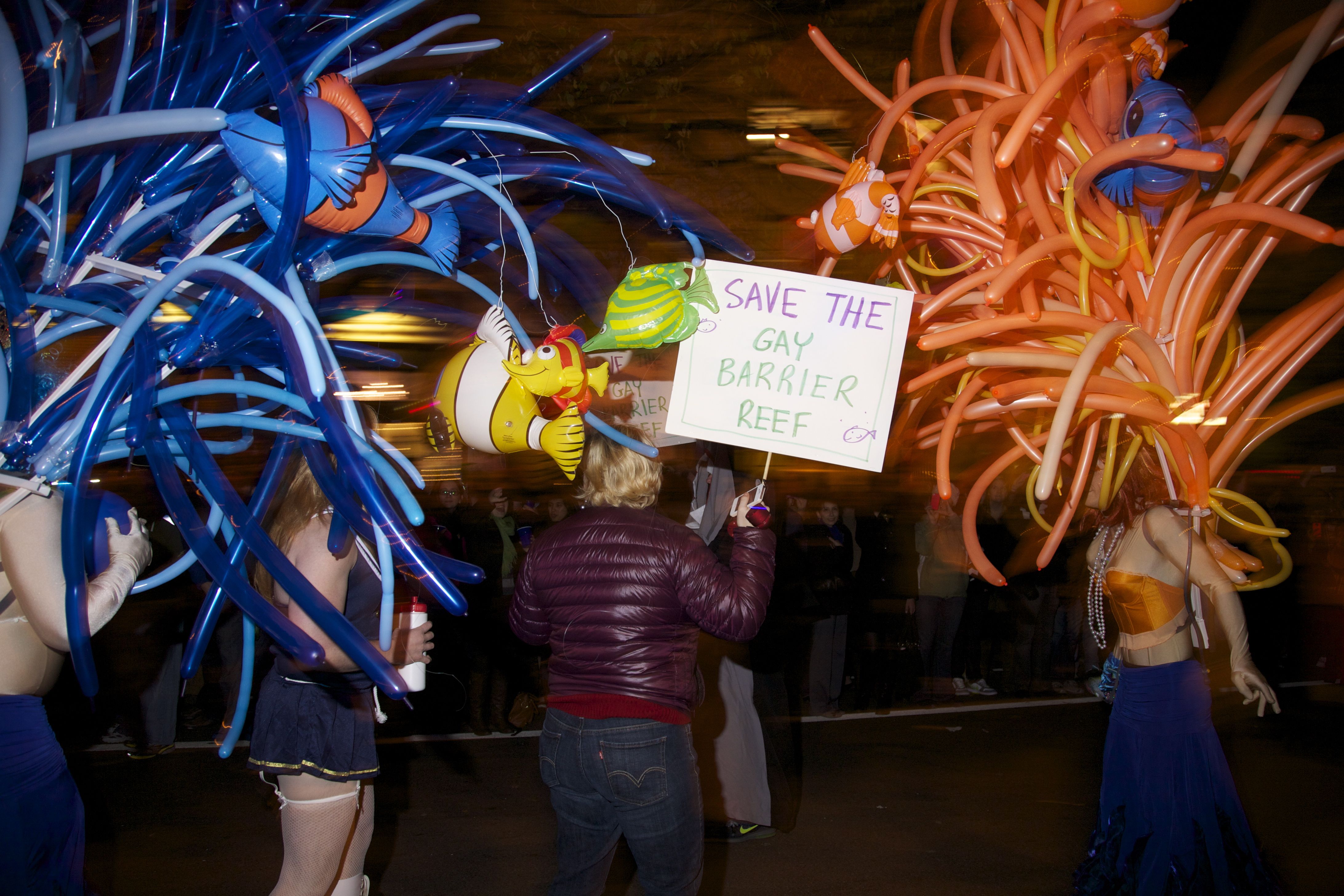
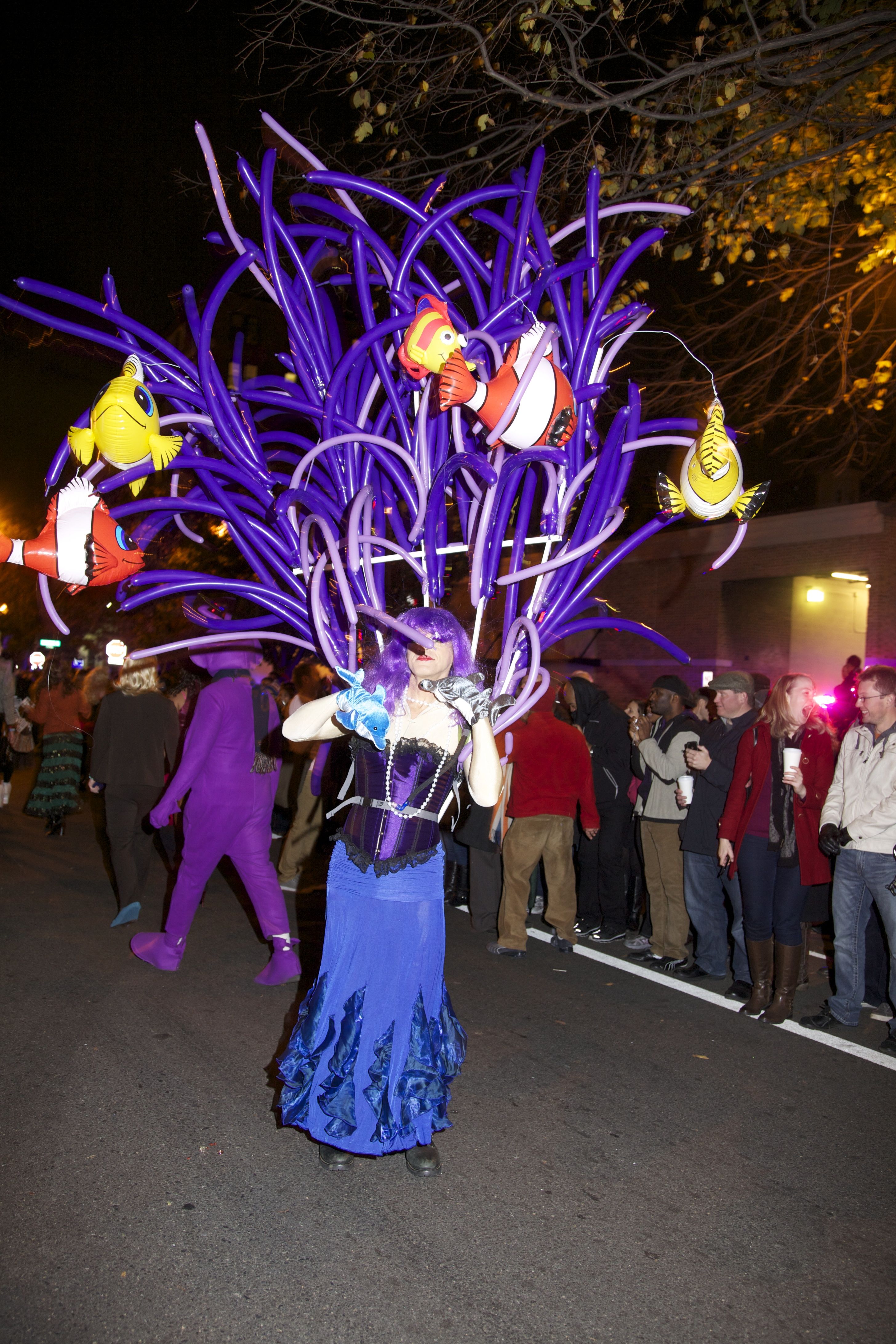
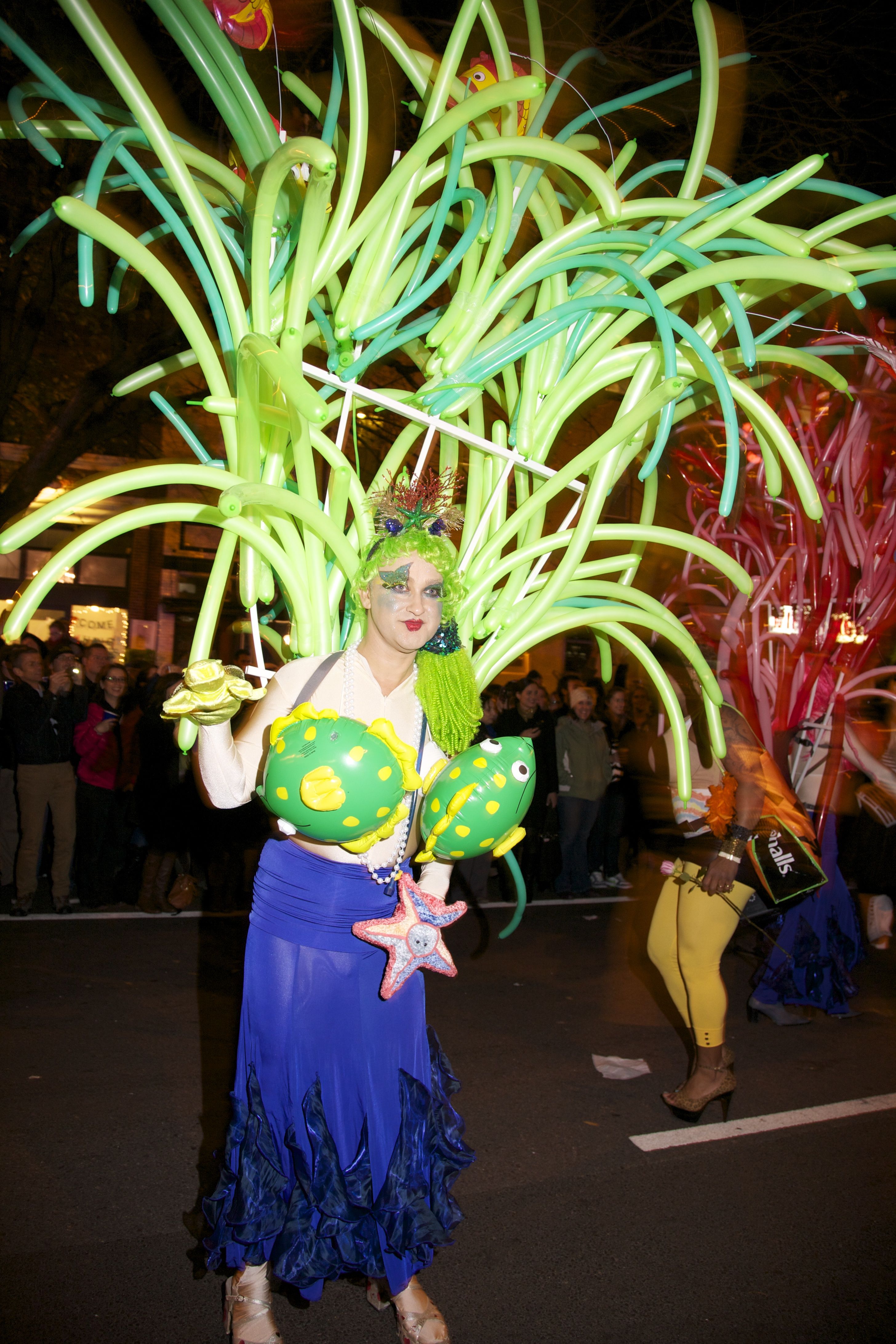
Save The Gay Barrier ReefPurple Gay Barrier Reef CoralGreen Gay Barrier Reef Coral
Until they got close enough to read their signs, I thought they were imitating the Carnival samba girls in their huge feather headpieces, just with balloons, as you could see their contingent from two blocks away.
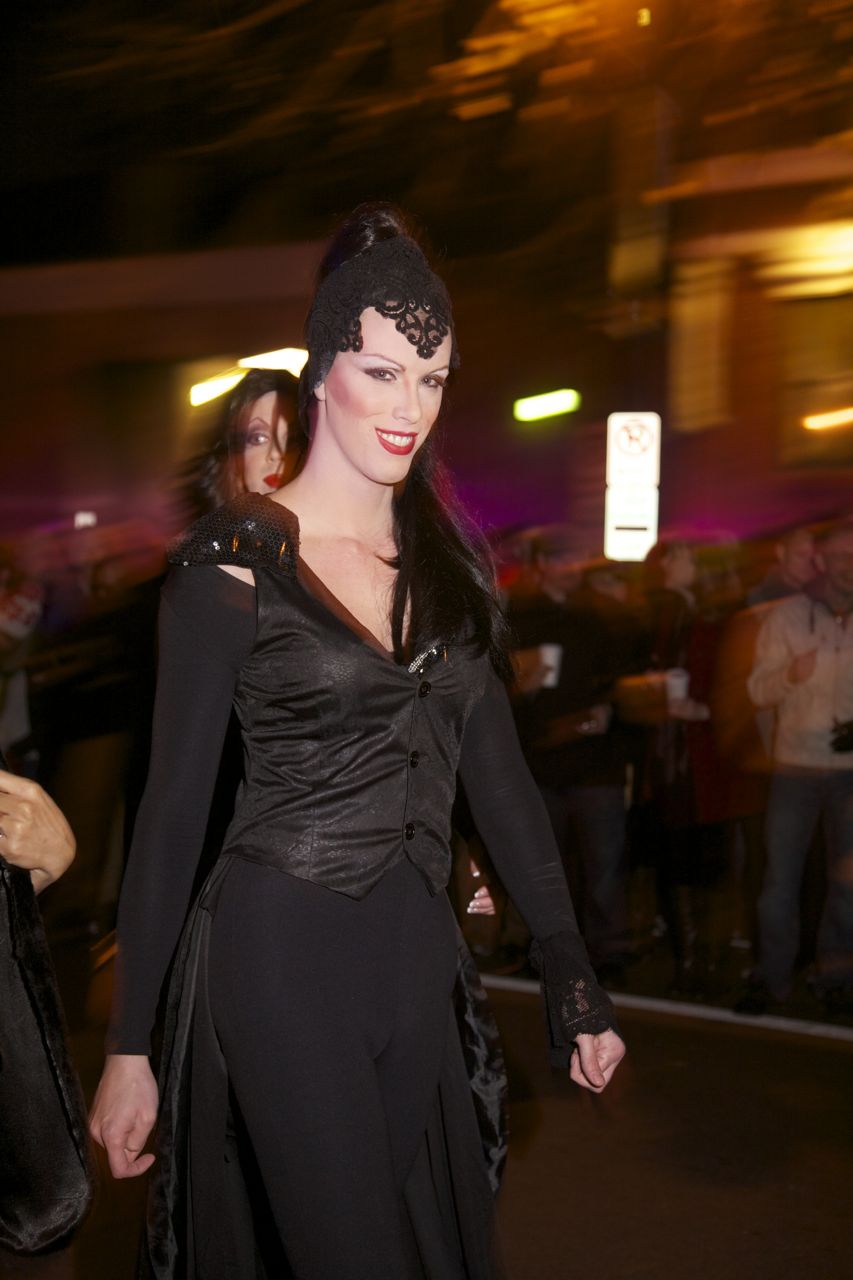
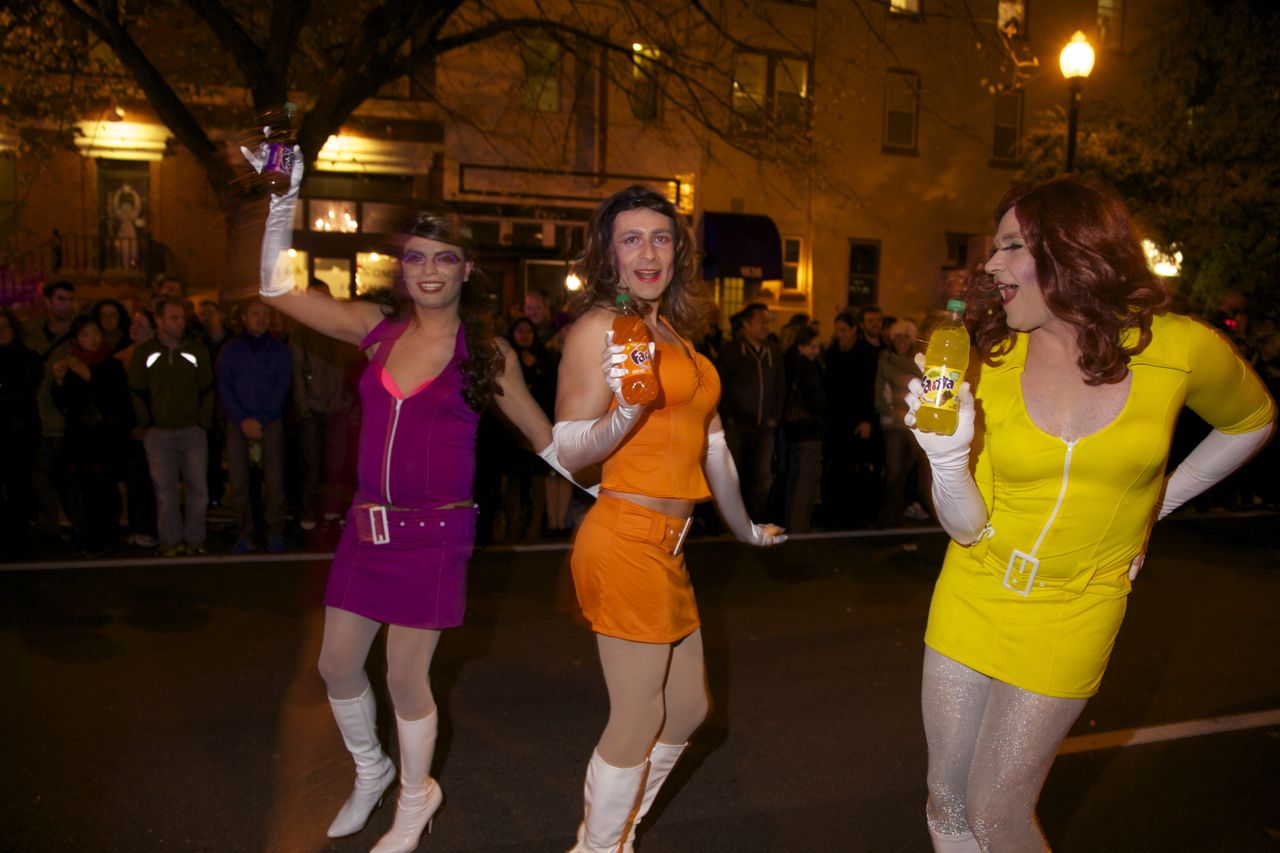
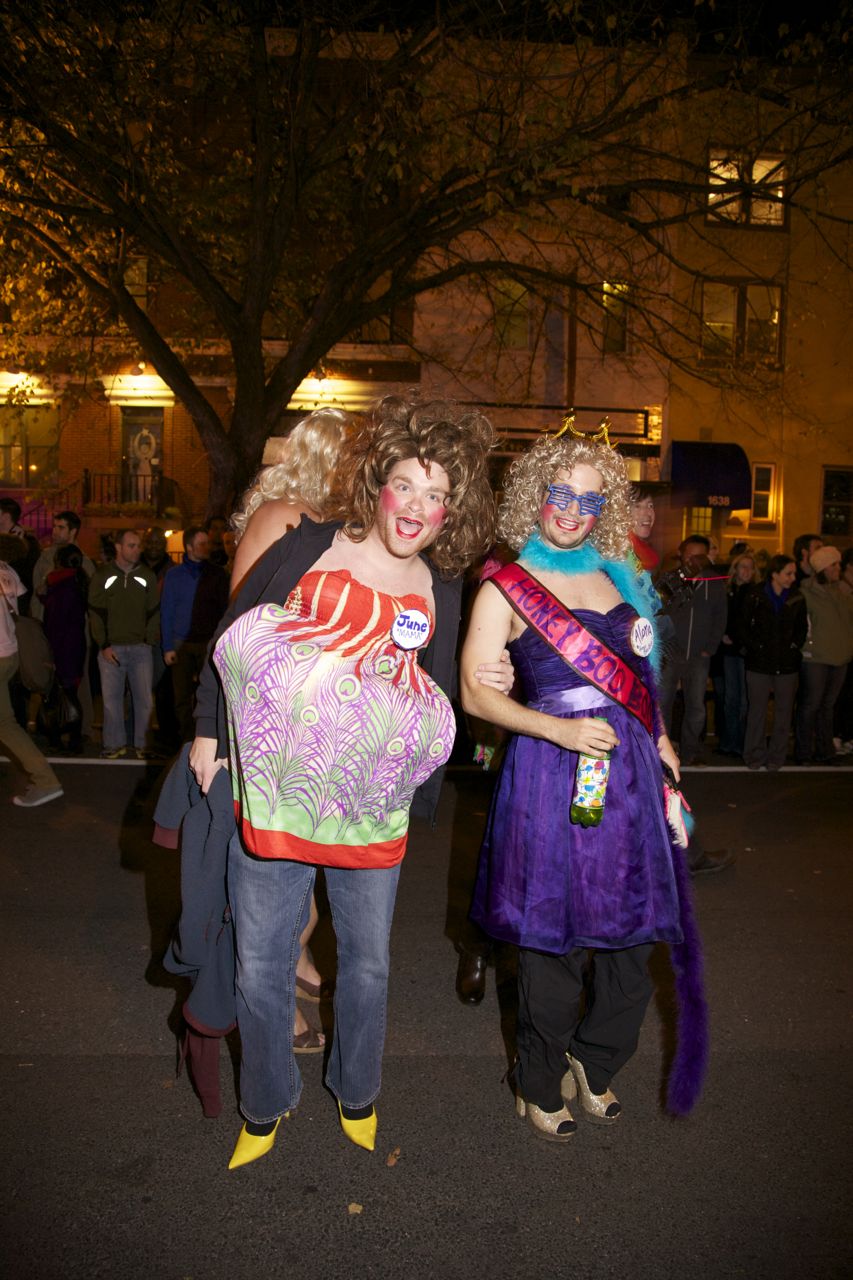
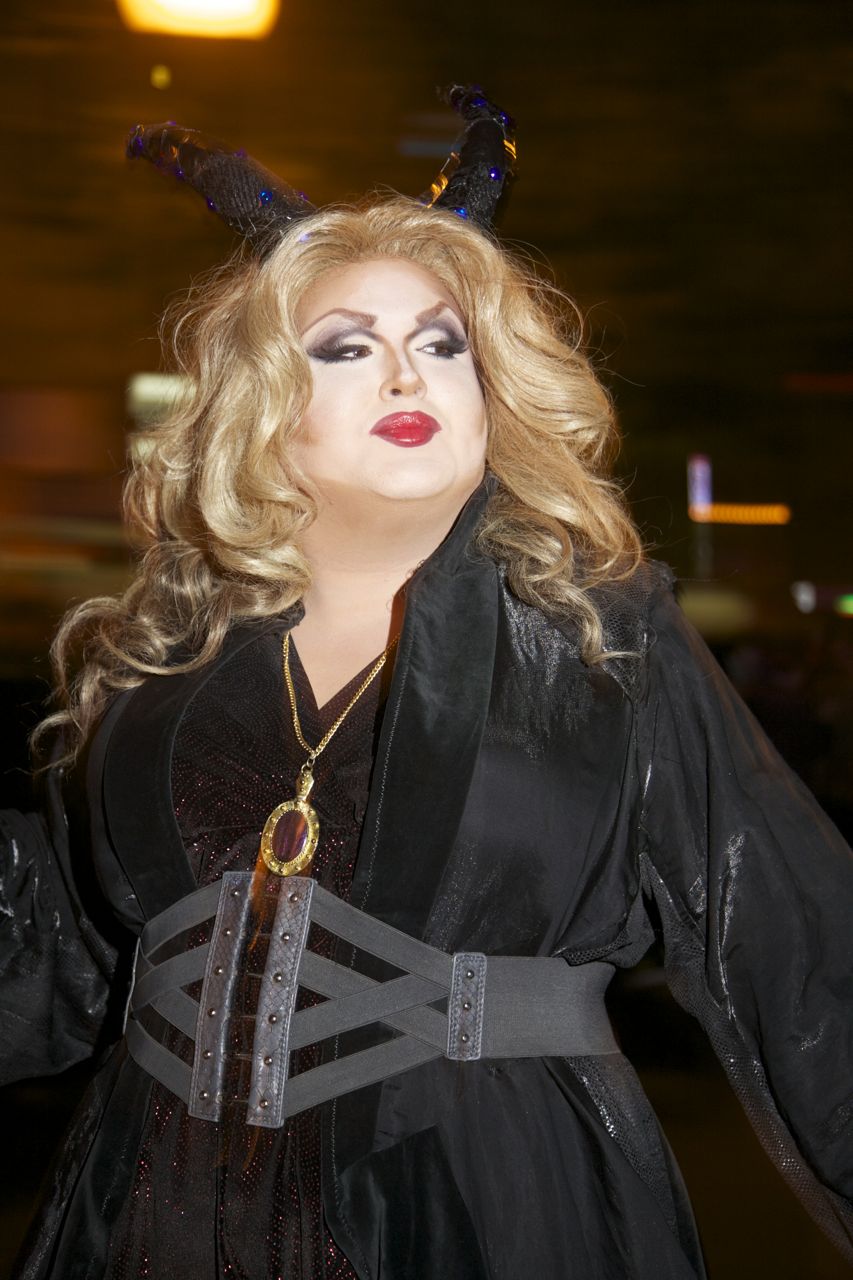
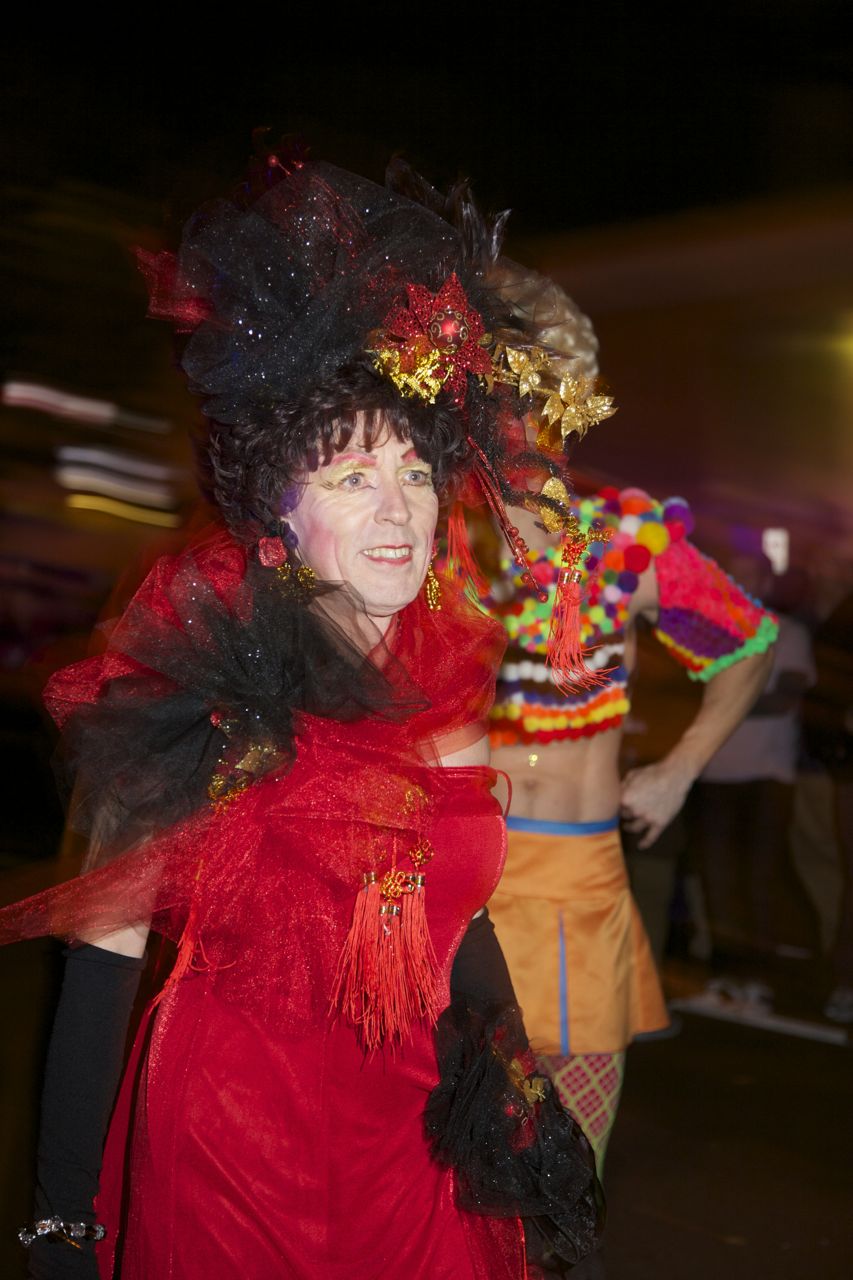
The Evil Queen from Snow White?The Fanta GirlsHoney Boo-Boo and Mama
And another pop-culture reference that may be lost on some – it’s Honey Boo-Boo and her Mama June, characters from a reality TV show about a trailer-trash child beauty pageant contestant and her dysfunctional family.
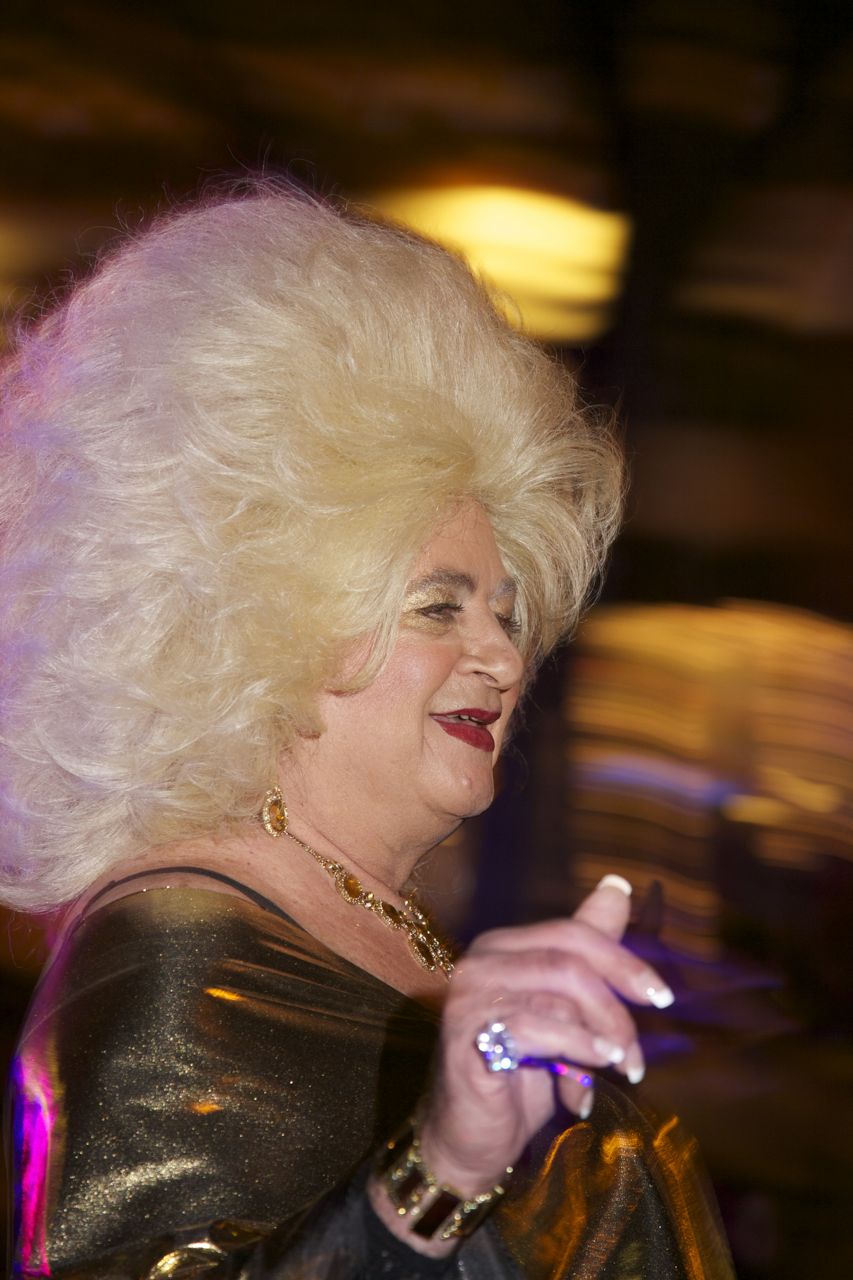
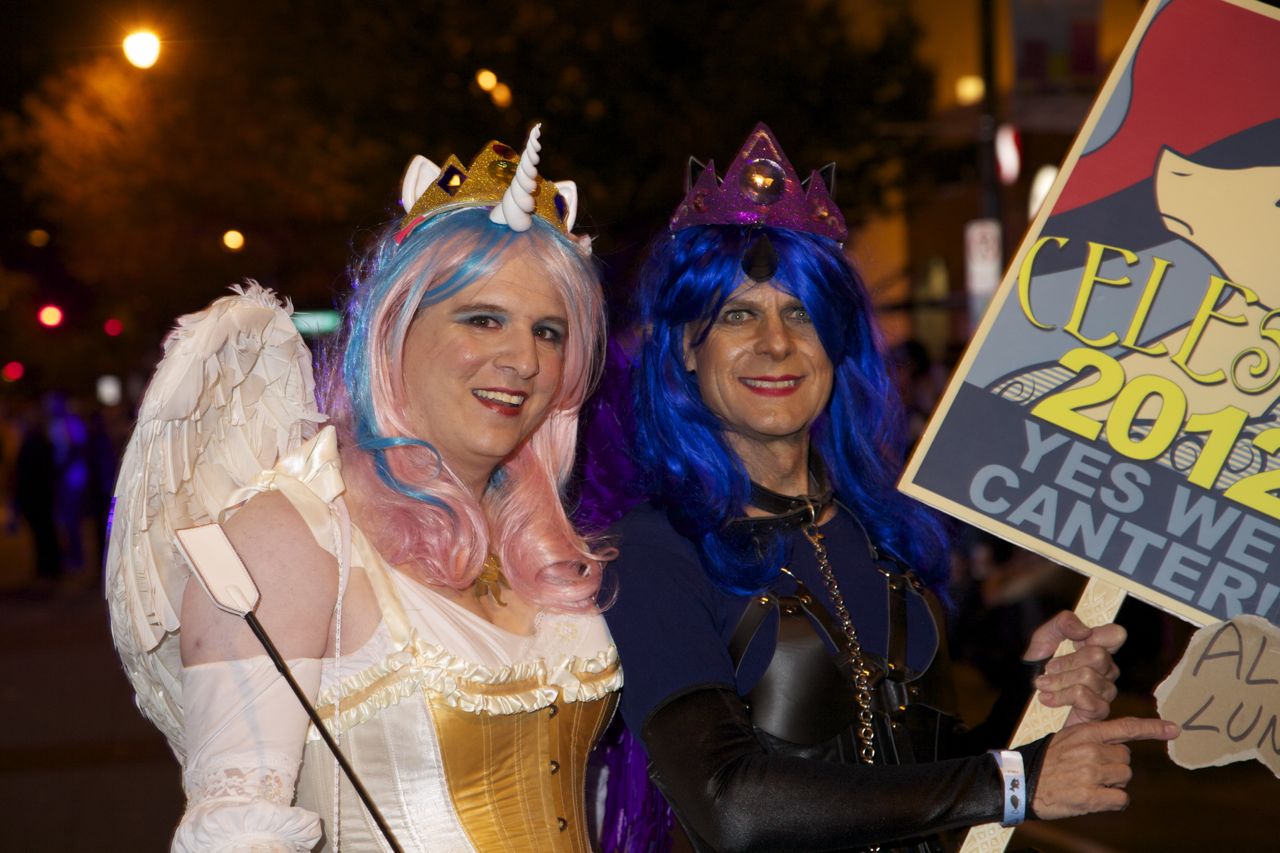
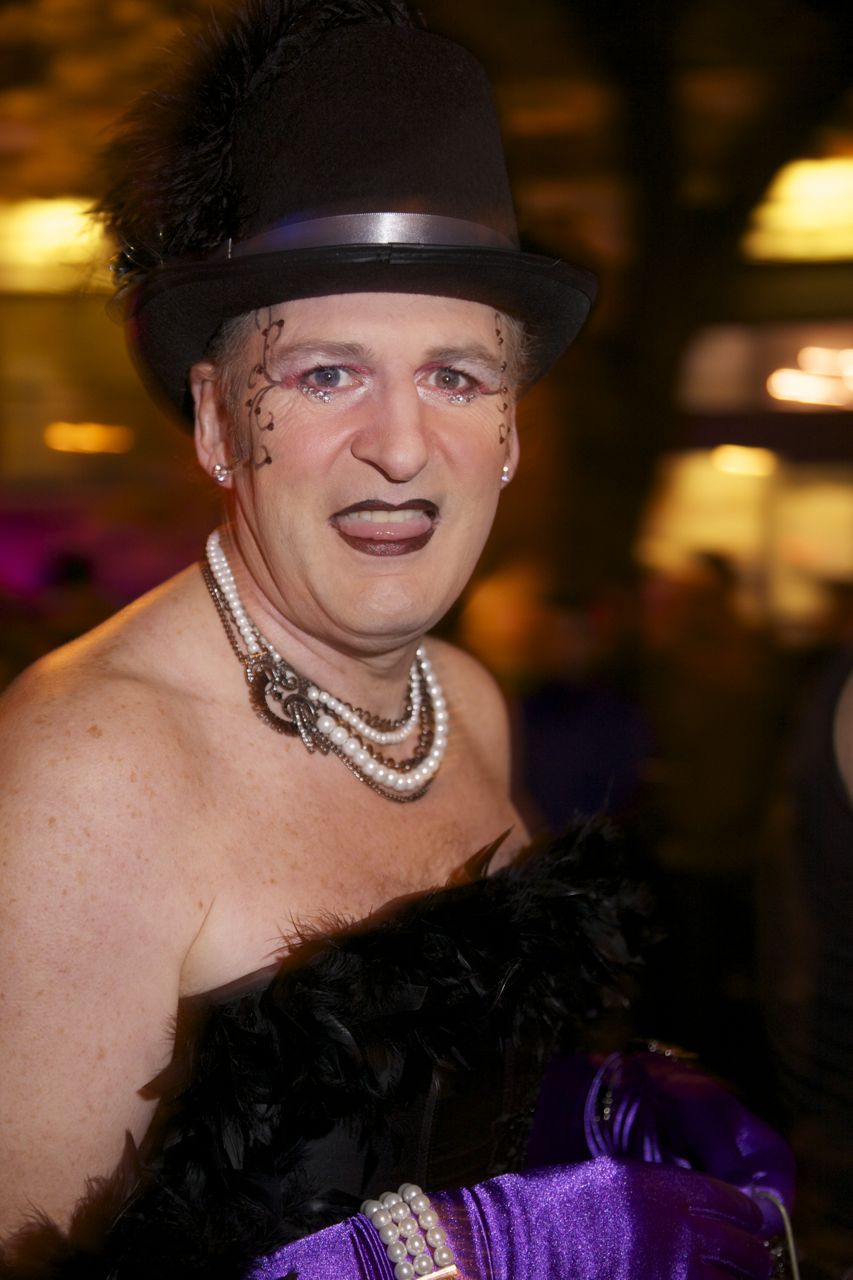
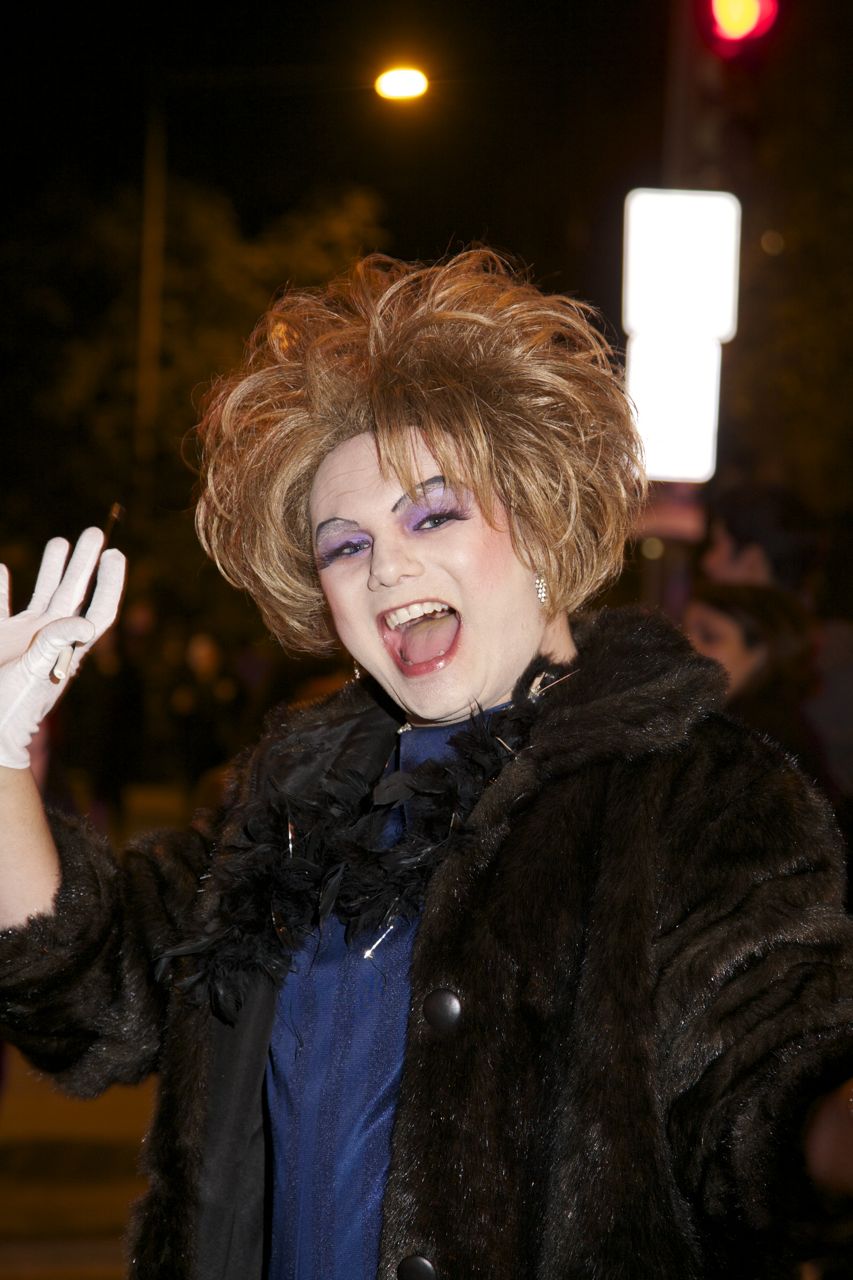
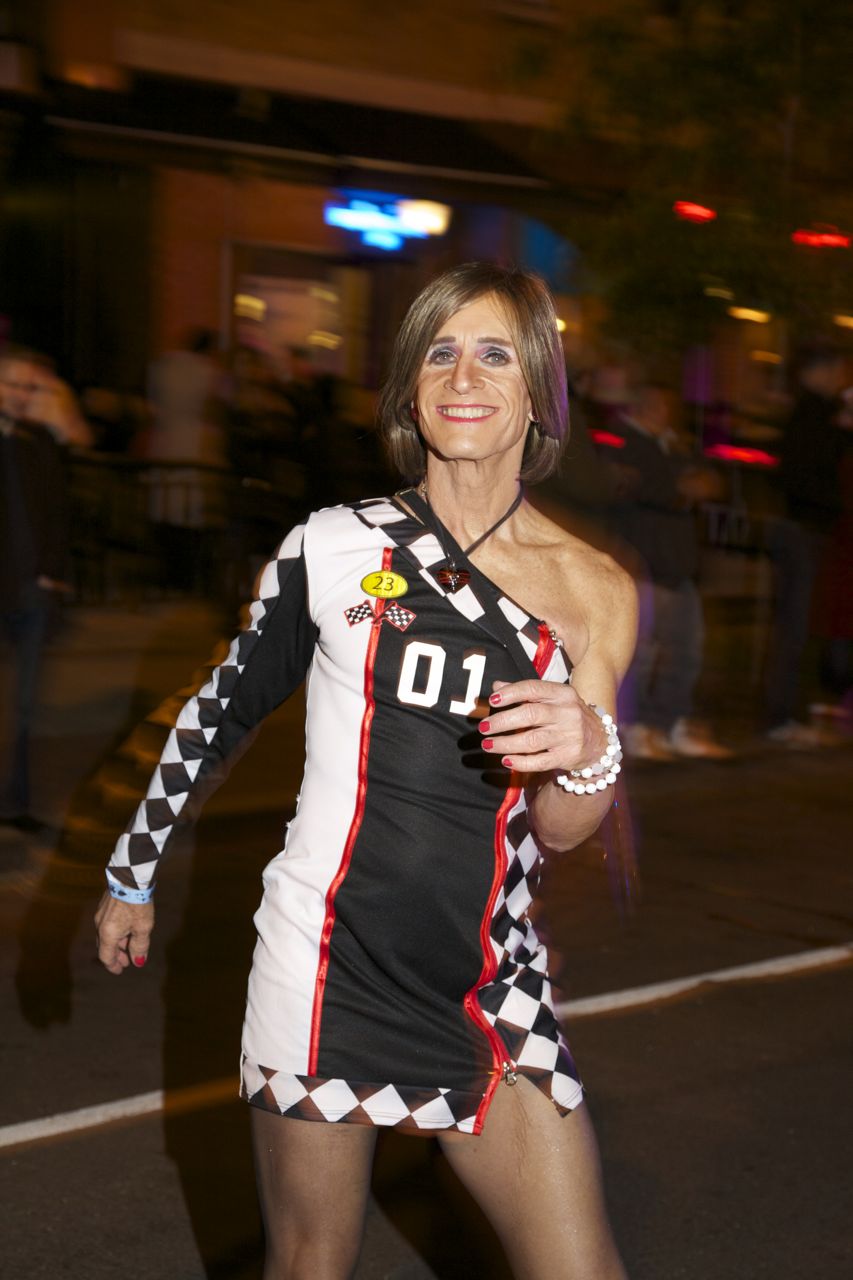
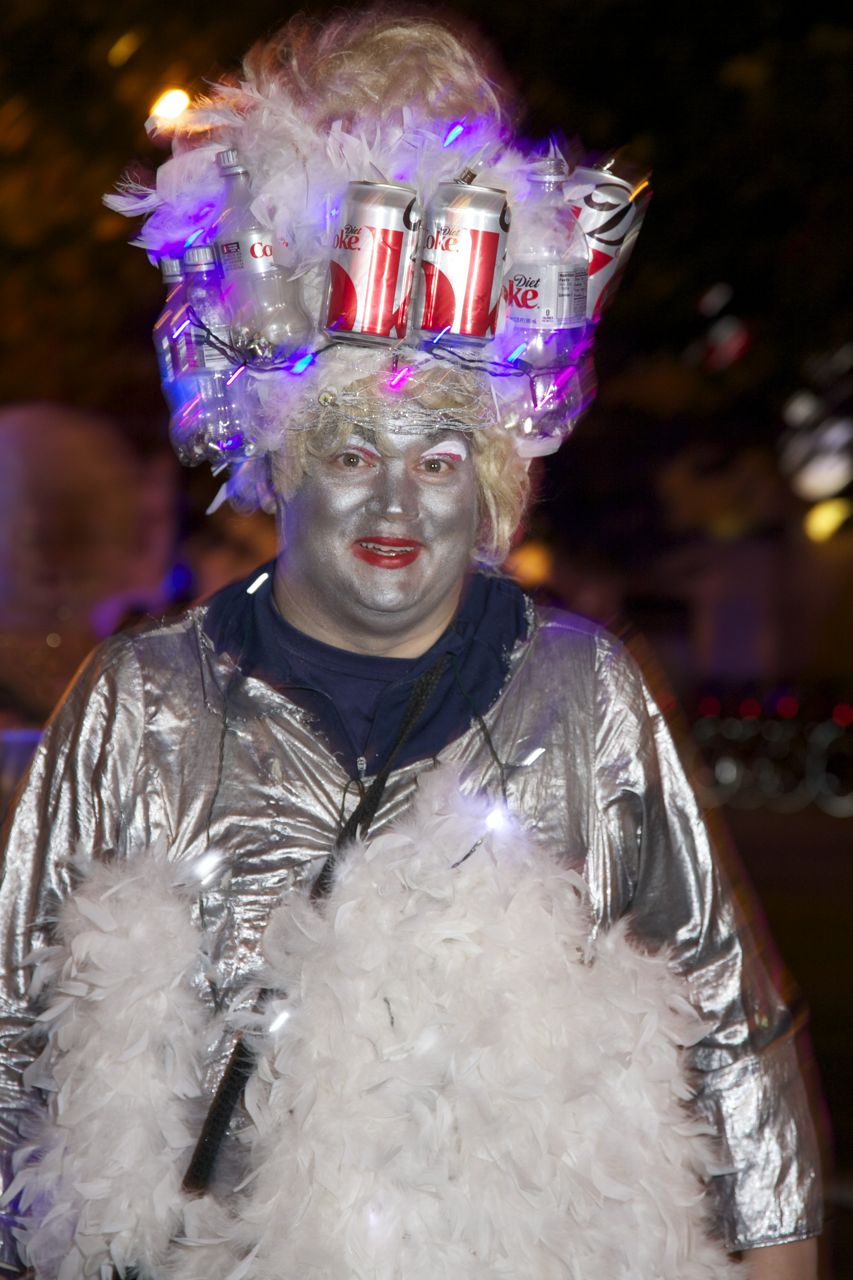
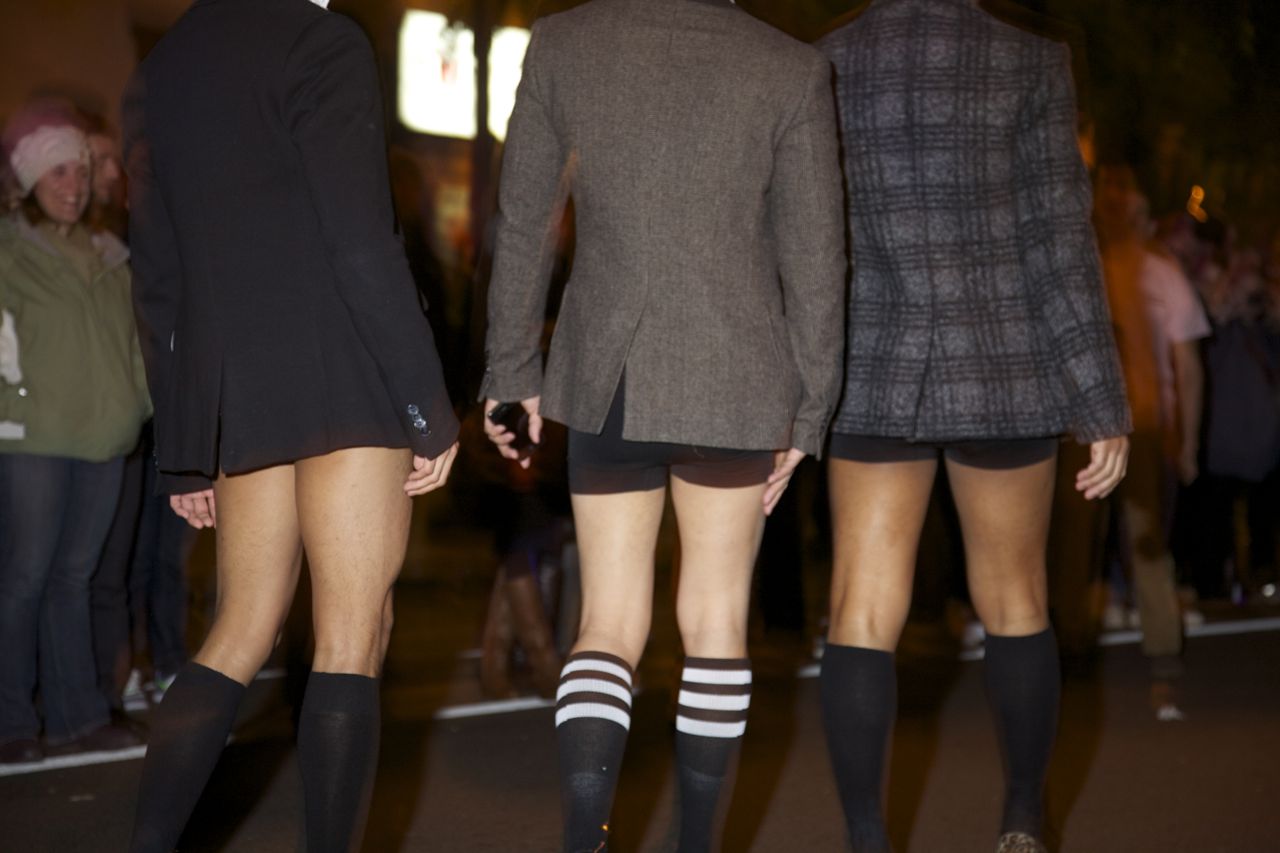
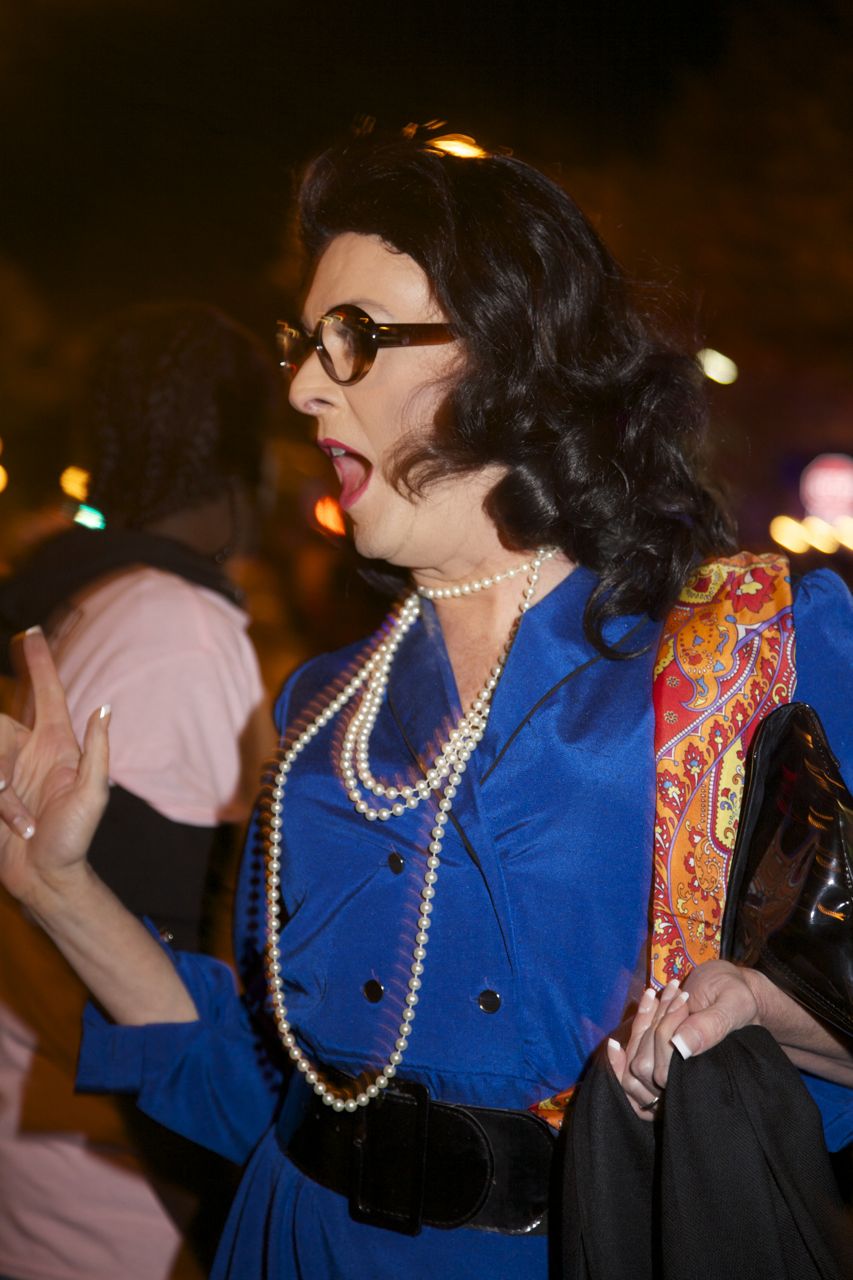
Was that high heel or high hair race?The higher the hair, the closer to God?Anime flying ponies running for office?Sophia Grace and Rosie, all grown up. Be Afraid, Be VERY Afraid!Candy tits, hairy pits and abs to die for…Sally Bowles, perhaps?Cruella deVille wants her puppiesOld-fashioned GalRace Fan
All shot with my Canon 5D, 24-105 L zoom lens and 580EX flash.
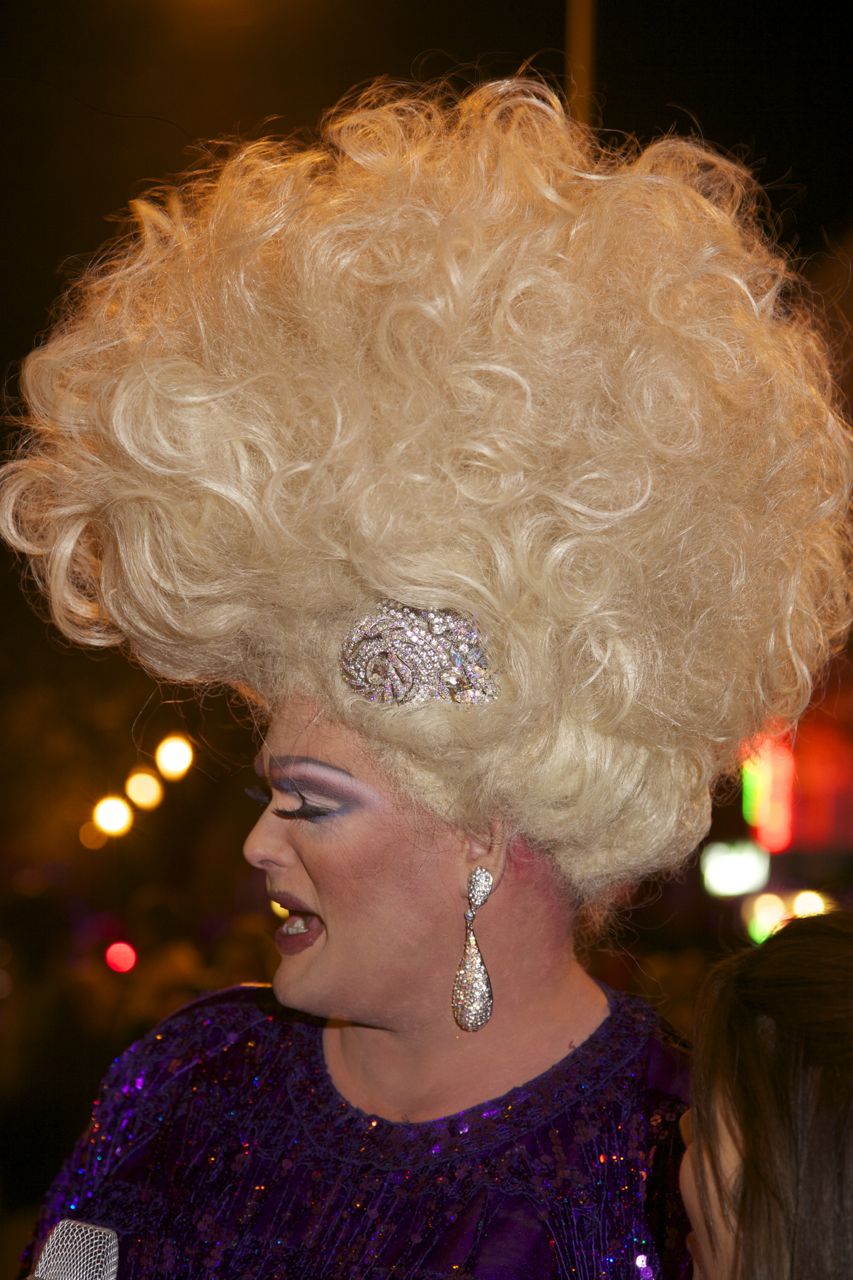
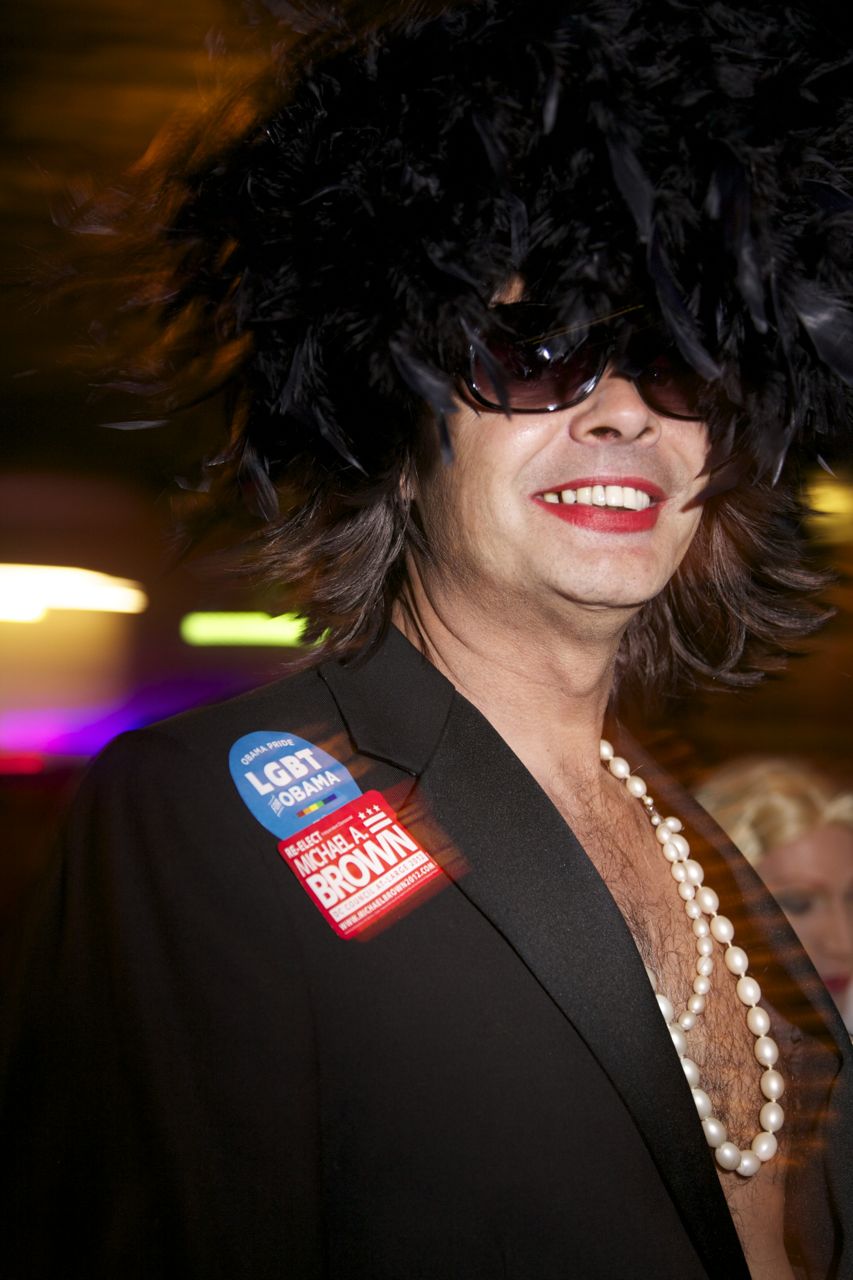
This is Cookie Buffet, the drag persona of Christopher Dyer, a long-time DC resident and sometimes politician – Cookie Buffet, from Wikipedia
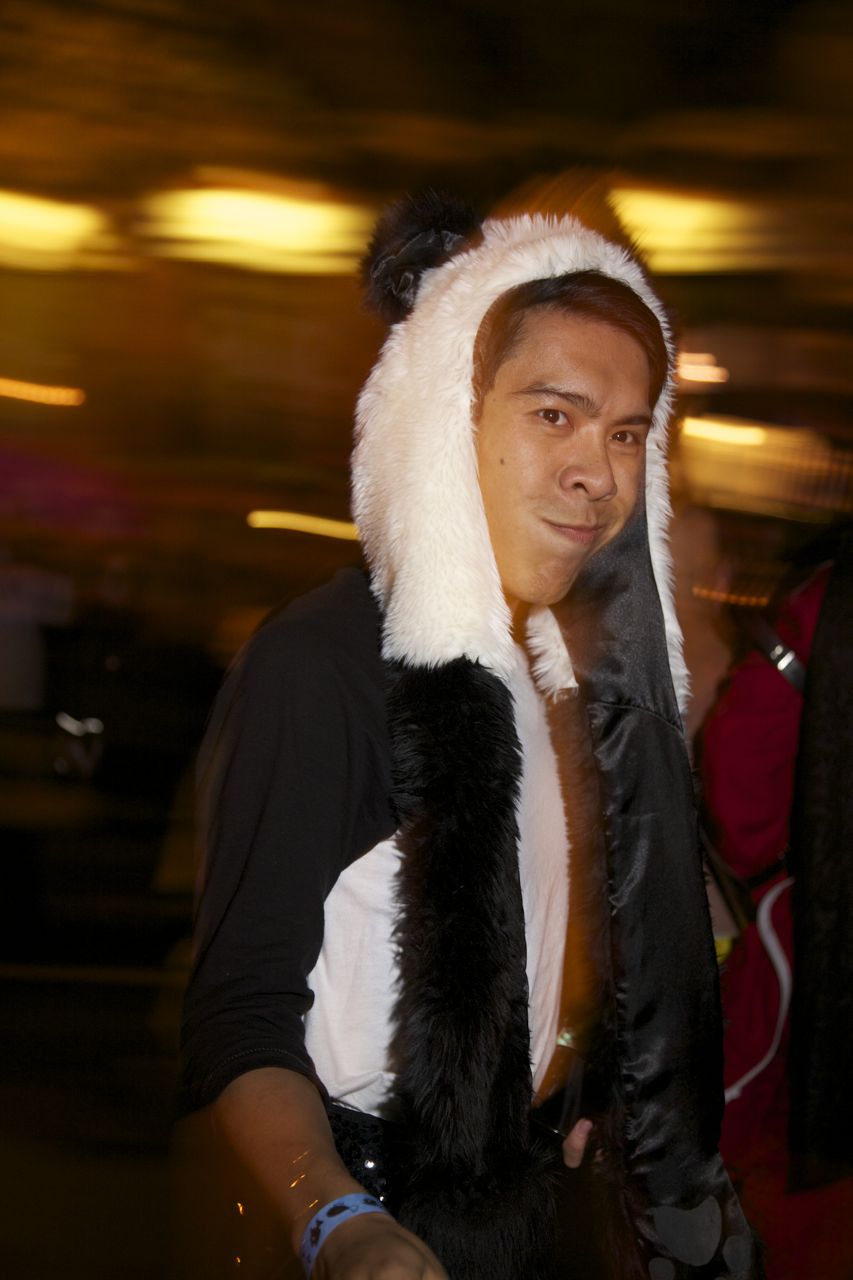
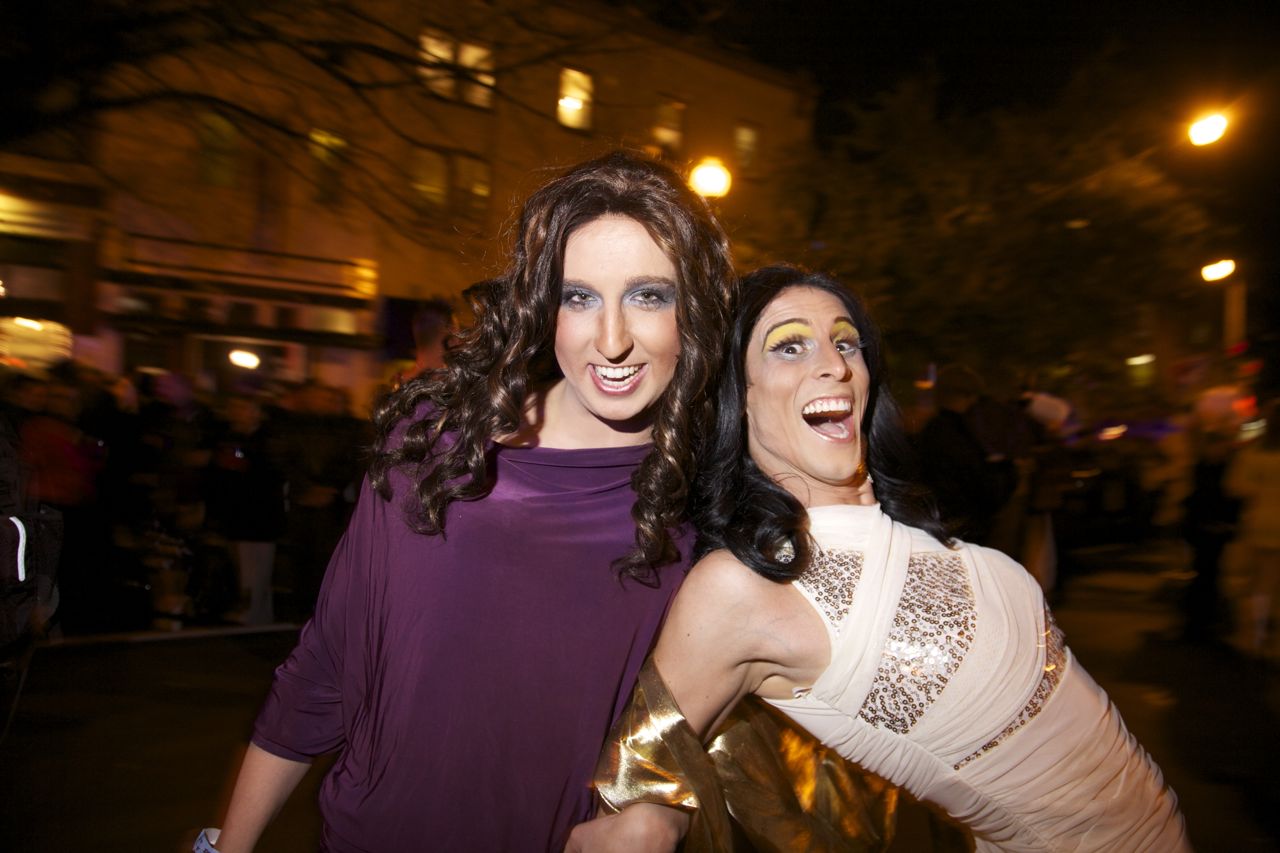
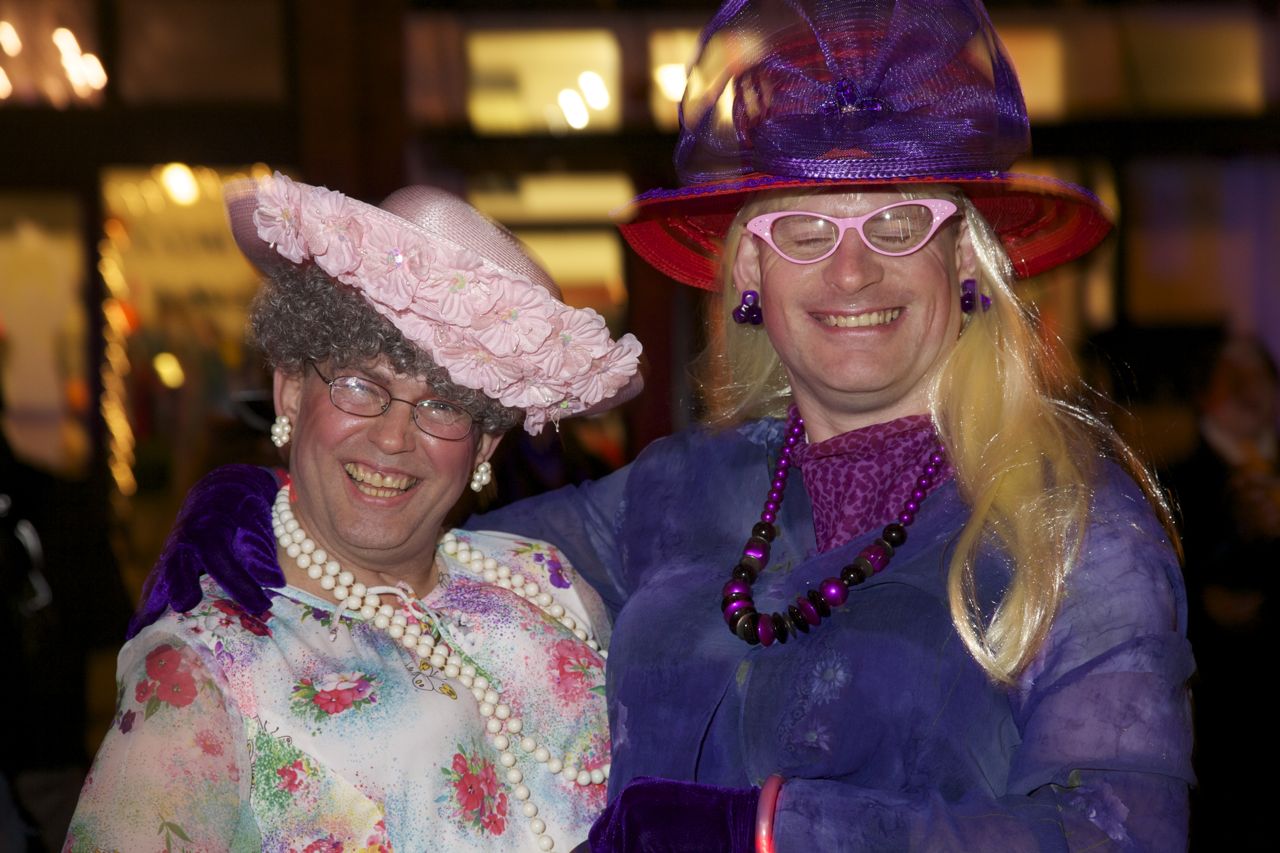
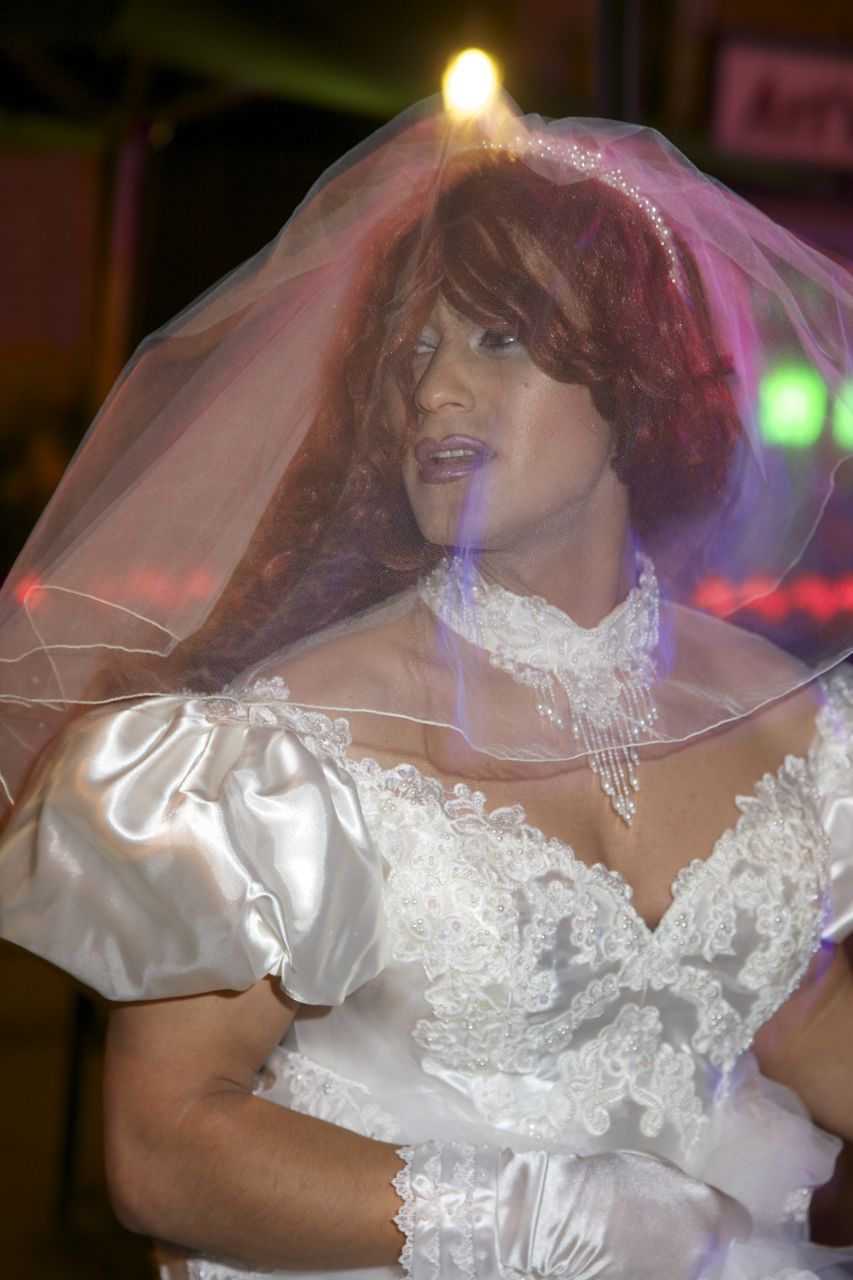
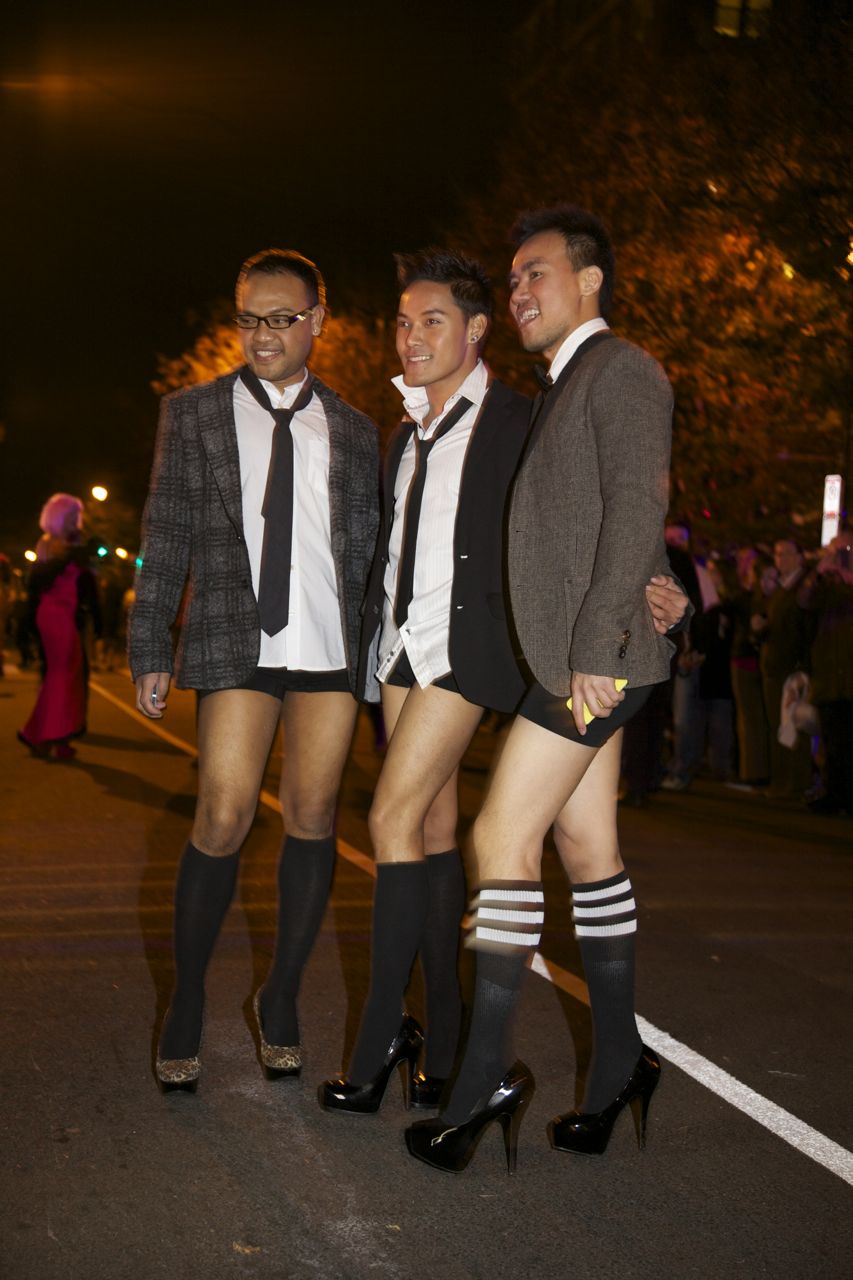
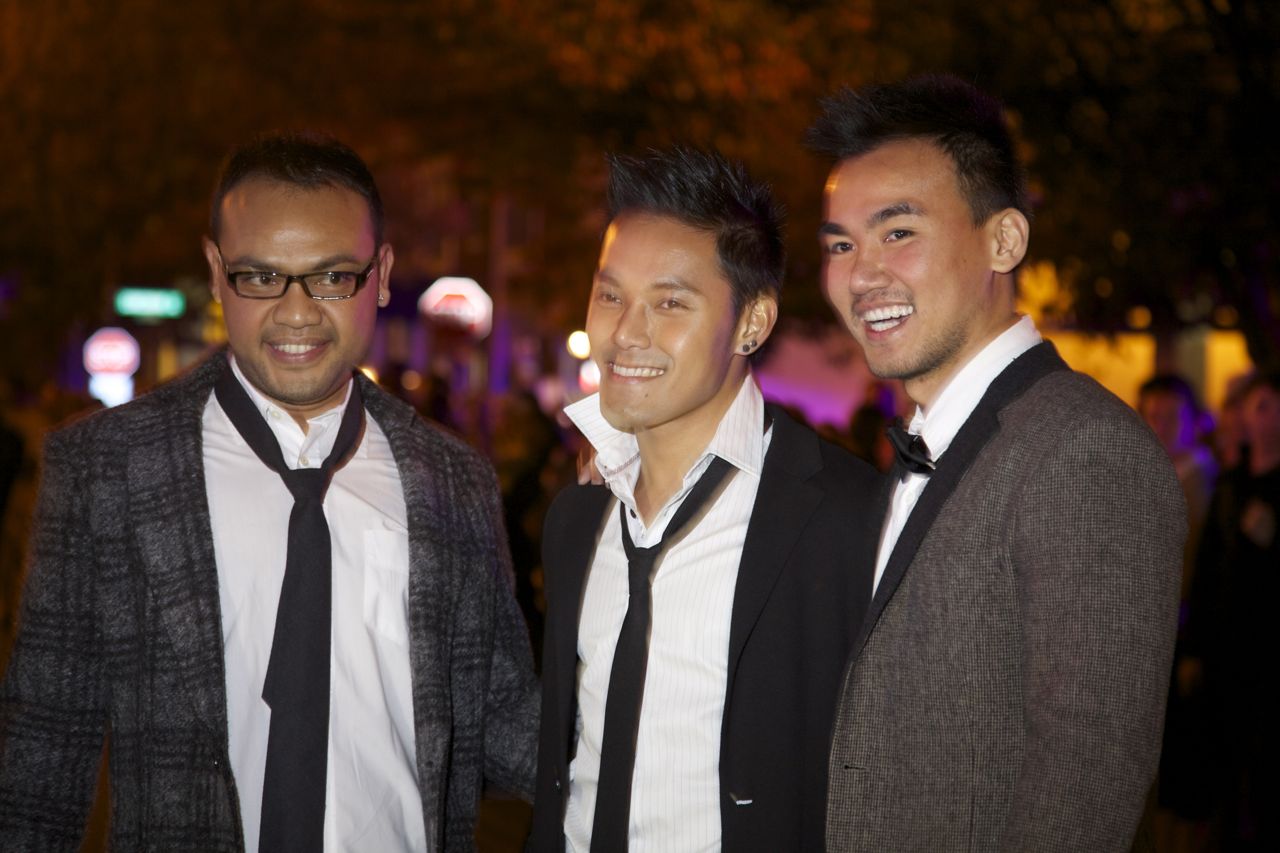
Panda Girl!Having FunChurch LadiesRunaway BrideAsian Schoolboys in HeelsAsian Schoolboys in Heels – the closeupAsian Schoolboys in Heels, showing their school prideSouthern Belle?Tired, and Fabulous!Vote For Me!
This is the first in a series – I’ll finish posting over the weekend, as I have over 200 shots to edit through.
All these were shot with my Canon 5D and the 24-105 L lens.
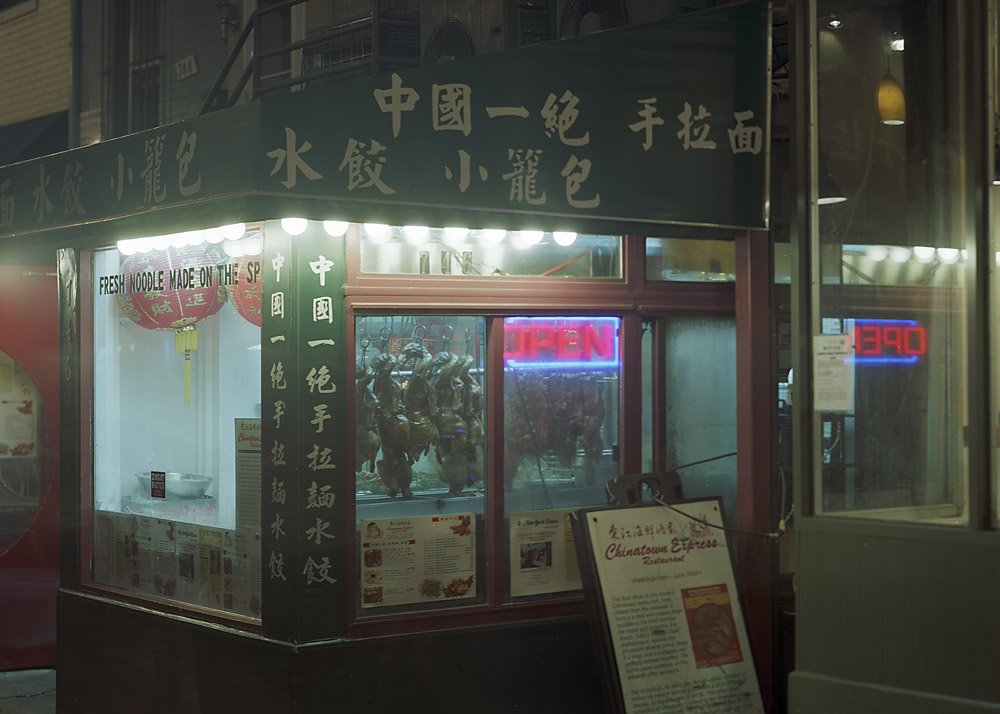
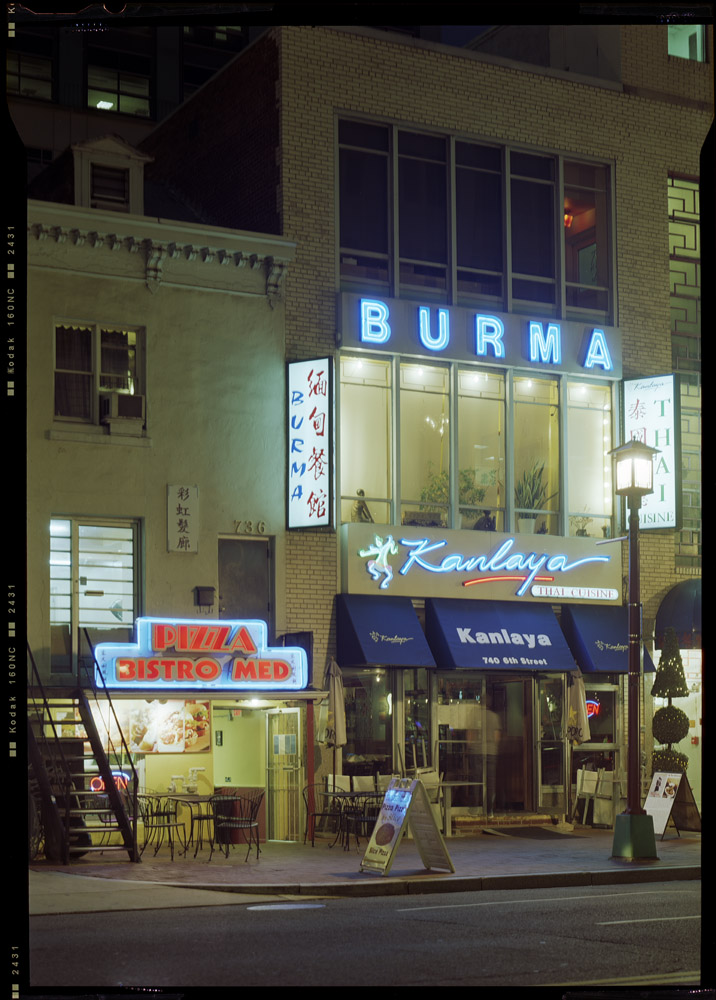
The fresh noodles and Peking duck house on 6th Street, NW. I think someone needs to teach them about Windex, as the “OPEN” sign is fuzzy not from being out of focus in my composition but from the splattered duck fat on the window. And no, I’ve never eaten there to know if the food is any good or not. But if you’re lucky when you wander by you can watch them making traditional Chinese noodles in the window, stretching and re-folding the dough over and over and over again, then cutting the ends and BOOM! you’ve got all these separate strands of pasta.
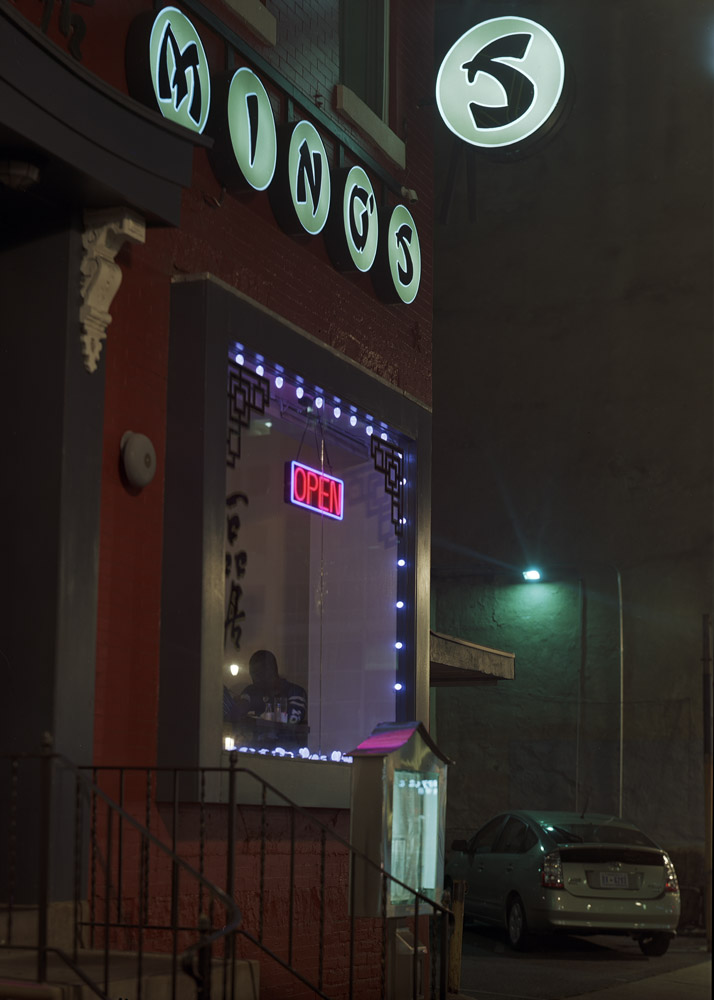
Mings Chinatown
I liked the juxtaposition of the empty sidewalk out front, the lone Prius in the parking lot next door, and the intimate diners in the window.
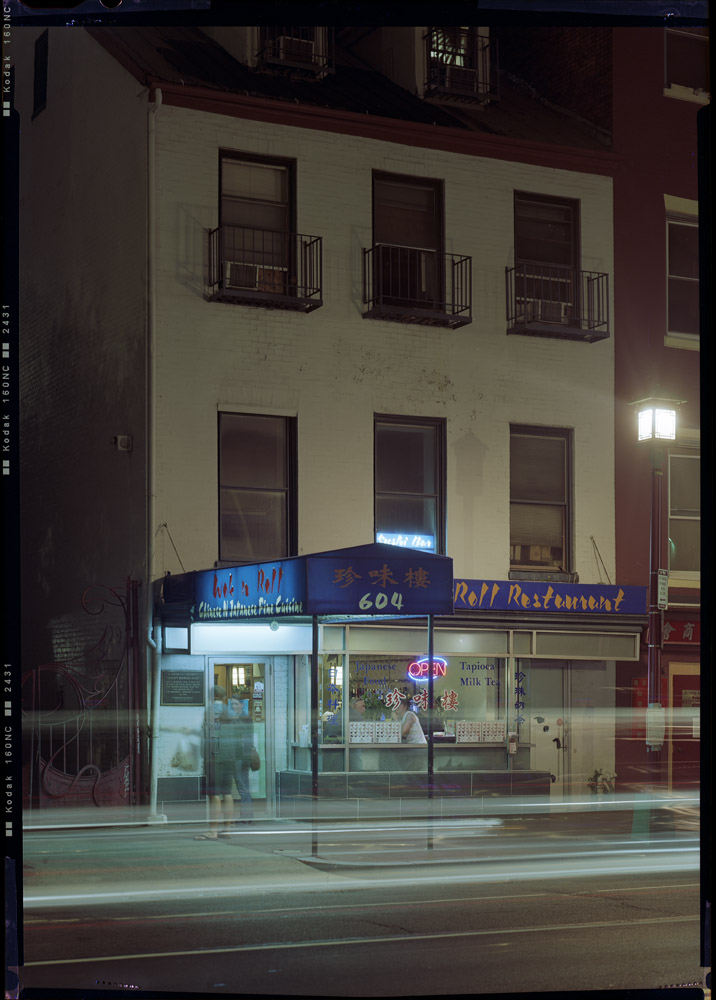
Secession Sushi – The Wok ‘n Roll in the Surratt House
This one gets a cutesy title because there’s just something so post- and meta- and ironic and all that kind of stuff about having a sushi joint on the ground floor of Mary Surratt’s boarding house, where the plot to assassinate Abraham Lincoln was hatched. Don’t believe me? Read the plaque on the wall of the house, like the two time-blurred figures in the photo are doing. It’s a very odd vestige of what downtown Washington looked like in 1865, and despite what Robert Redford would have had you believe in “The Conspirator” (by filming in an albeit lesser mansion in Savannah, Georgia), evidence of the utterly middle-class lifestyle of Mary Surratt.
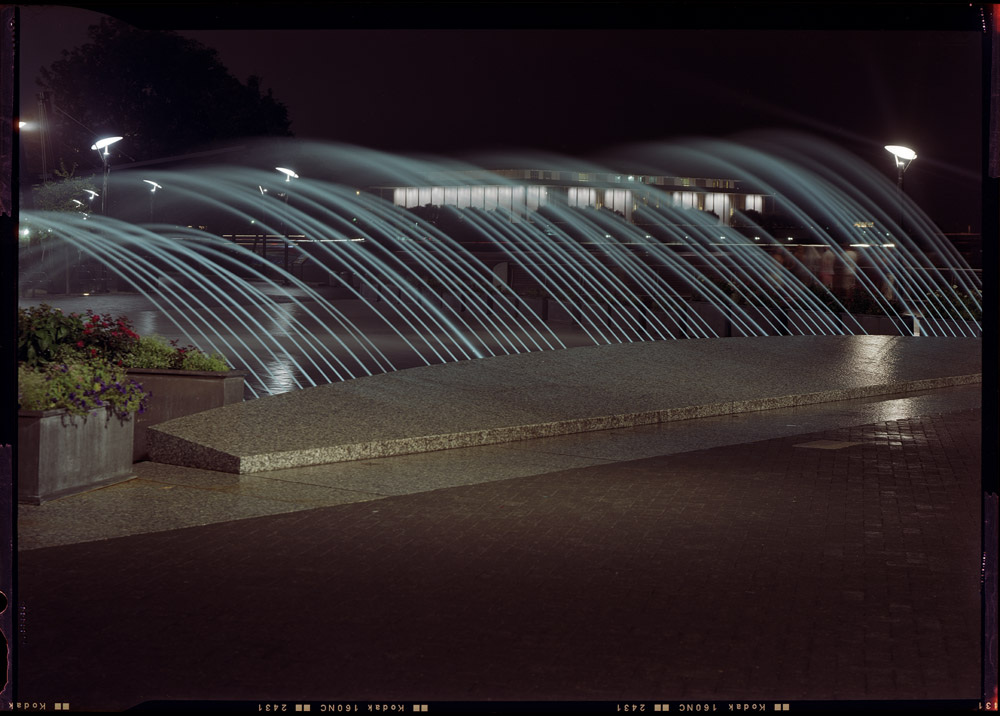
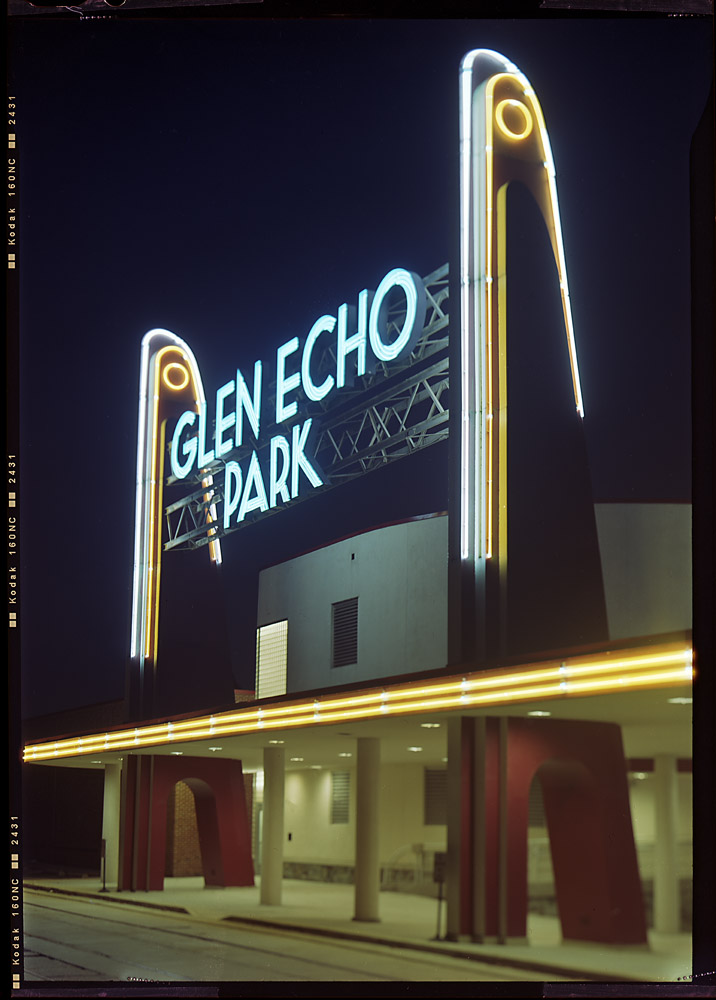
All the above images were shot with my Canham woodfield 5×7, using my Kodak 12″ Commercial Ektar, using Kodak Portra 160nc film.
Three more in my DC at night series. These were all shot with the Canham 5×7 wood field, and if memory serves, all were taken with the Kodak 12″ Commercial Ektar lens.
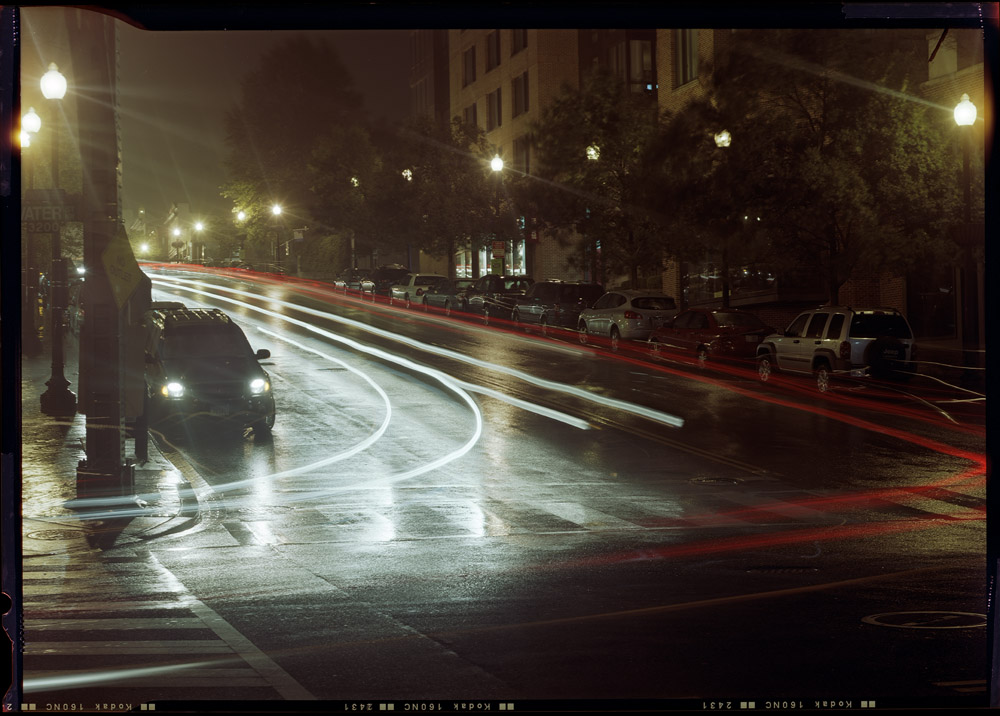
Here’s another in my DC at Night photos – the intersection of Wisconsin Avenue and Water Street, under the Whitehurst Freeway in Georgetown. I was down there shooting some other scenes, trying to finish off my 5×7 color negative film stock (I bought a 50 sheet box when it was only $150 a box…now, over $400!!!!). This was taken with my 12″ Kodak Commercial Ektar lens. A roughly 30 second exposure. I was a bit nervous during the shoot as I was out in the rain, with a carbon-fiber tripod, and sheltering under a gigantic steel overpass. I think the lightning was a few miles away though, and nothing happened. I was a little bummed that none of the lightning recorded in the sky as anything other than general fog, but hey… the headlamps and tail lights of the cars recorded very nicely, don’t you think?








 dcphotoartist