Where are you from?
New Jersey, but have been in the DC area since 1975.
How did you get into photography as an art medium (as opposed to casual or professional use)?
My degree is in Photography (The George Washington University), and I’ve always been interested in it as art medium.
Which alternative processes do you practice?
Hand coated emulsions, Cyanotypes, Cliché Verre
What attracted you to alternative processes in general?
The potential for unique images.
What drew you to the specific media you practice?
The introduction of serendipity into the creation of the images.
How does the choice of media influence your choice of subject matter (or vice versa)?
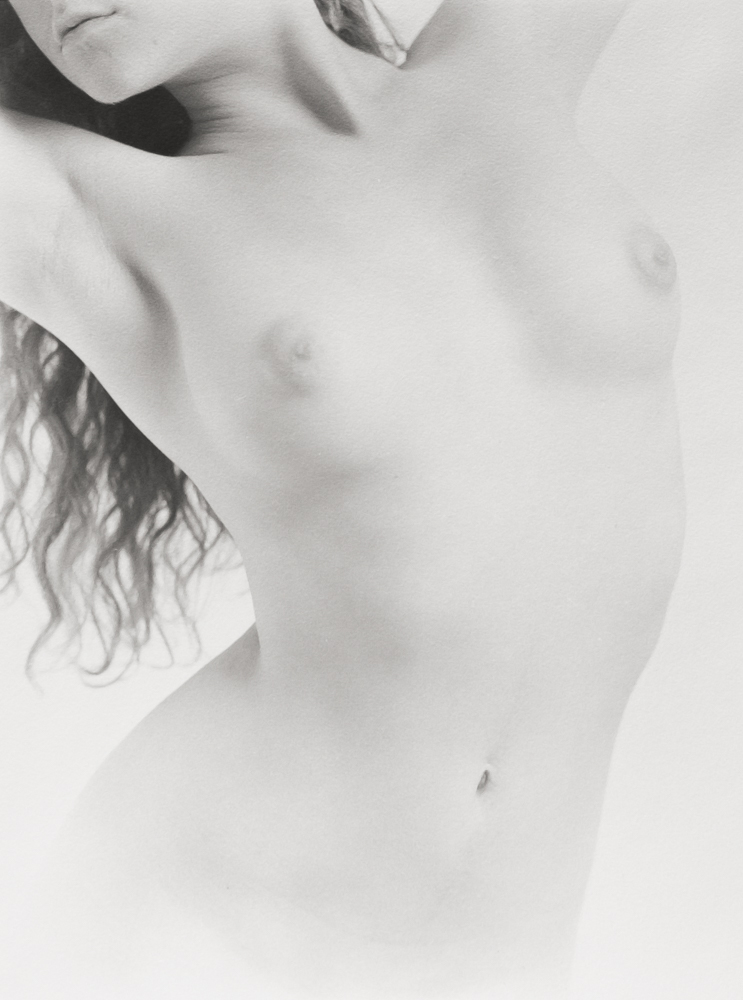
For the images accepted in this show, I was going for a painterly effect, and the nude lends itself to this.
In today’s mobile, electronic world of instant communication and virtual sharing of images, how important is it to you to create hand-made images?
Extremely important. There’s a fleeting aspect to the new way to share photographs. A physical image has more staying power.
Is your choice to practice alternative, hand-made photography a reaction to, a complement to, or not influenced by the world of digital media?
To a degree, it is a reaction, for the reasons stated above. However, without being influenced by the fleeting nature, and “perfection”/repeatability of digital, I’m not sure if I would have been as open to creating work which is so prone to flaws, chance, and experimentation. I’d like to think I would, but I have noticed a change in my work, since the advent of digital.
Do you incorporate digital media into your alternative process work?
No.
If so, how do you incorporate it? Is it limited to mechanical reproduction technique, or does it inform/shape/influence the content of your work?
N/A
What role do you see for hand-made/alternative process work in the art world of today? Where do you see yourself in that world?
I think this is a great time for photographers pursuing alternative processes. In a world obsessed with instant gratification, the time, and passion, required to create unique images is a great antidote. I also see a greater appreciation, among the public, for the craftsmanship inherent in alternative processes. As for my place in this world, it’s not something I think about. I just want to continue my work, and continue to create photographs.
Where are you from?
I was born in Washington, DC, and live now in Howard County, Maryland, halfway between Washington and Baltimore.
How did you get into photography as an art medium?
Almost as soon as I got my first SLR, I took a photography class, where I learned to shoot, develop black and white film, and print. I was smitten with every aspect of the process and began to see the world in terms of images.
Which alternative processes do you practice?
I work primarily with temperaprint, which is a variation of gum bichromate, and polymer photogravure.
What attracted you to alternative processes in general?
I think that it was in the early 1990’s that Polaroid transfers became popular. I loved the look of Polaroid color on watercolor paper, and I loved the beauty of imperfection and unpredictability of the process after having worked for several years making full range, full tone silver gelatin prints. Within a rather short time, I was drawn to some of the more traditional historic processes.
What drew you to the specific media you practice?
I had the great fortune to live in London from 1993 to 2000. During this time, I had the opportunity to take classes in alternative photographic processes with the late Peter Fredrick at Kingsway College. We learned several historic techniques, like cyanotype, VanDyke brown, p.o.p., gum bichromate, etc.—all of which I quite liked… but it was Peter’s own process, temperaprint and also photo-etching that truly resonated with me.
How does the choice of media influence your choice of subject matter (or vice versa)?
Subtly, I think. I have a few on-going projects (windows & mirrors, the garden of sculptures, the C & O Canal, the watershed behind my house, for example) where I take photos that I know will eventually be printed as temperaprints or photogravures…but much of the time, I take photographs as a means of discovery & pleasure, without a great deal of thought as to the final image. Some will translate beautifully as alternative prints; others will not.
In today’s mobile, electronic world of instant communication and virtual sharing of images, how important is it to you to create hand-made images?
It is very important to me. I am delighted that photography has become so easy & so spontaneous, and that we are able to share photos instantaneously. But it is pretty wonderful, as well, to be able to take some of our work many steps further, to create something that comes out of us as artists. Perhaps it’s similar to the difference between a quick email relating events and a soulfully written poem. Hand-made images have that quality.
Is your choice to practice alternative, hand-made photography a reaction to, a complement to, or not influenced by the world of digital media?
I would say that initially, there was no influence by the world of digital media. I began working in alternative photography at a time when I was mostly making silver gelatin prints. Now, the choice to practice hand-made photography is a complement to the world of digital media.
Do you incorporate digital media into your alternative process work?
I shoot digitally and make my enlarged color separation negatives (used for temperaprint) and positives (for polymer photogravure) via my computer. This is so much easier, faster, and more reliable than working in the darkroom.
If so, how do you incorporate it? Is it limited to mechanical reproduction technique, or does it inform/shape/influence the content of your work?
I don’t limit myself to using digital techniques for sheer mechanical reproduction, but most of the digital manipulation that I make is small in comparison to what was originally seen and shot. I’m in early stages of a new project, however, that references a time in the past of personal significance. I suspect that digital compositing will play a greater role in my printmaking for these images.
What role do you see for hand-made/alternative process work in the art world of today? Where do you see yourself in that world?
It seems to me that hand-made/alternative process work has an important role in the art world today. Many artists are using historic and other hand-made processes to produce pieces with incredibly varied aesthetics. There’s a fairly steep learning curve with much alternative work, but the rewards in terms of expressiveness and creative possibility are enormous. My work tends to be quiet, contemplative, and pictorial. I follow my heart every step of the way, and I truly feel like the handmade aspect of printmaking is necessary to complete my vision.
How did you get into photography as an art medium (as opposed to casual or professional use)?
My interest in using photography as an art medium was sort of chosen for me. I cannot paint or draw very well at all, hence I took to photography to satisfy my creative needs. I enjoy the varied and beautiful geography that surrounds me in Colorado and I want to try
to put what I feel and see in the landscape onto a print that the viewers will connect with.
Which alternative processes do you practice?
I’ve got a little A.D.D. when it comes to the different alternative processes. I use platinum/palladium, kallitype, albumen and gum printing as my “go to” methods, but if I feel the image warrants a different process or if I just want to see what a print looks like in another process I’ll use cyanotype, gumoils, carbon.
What attracted you to alternative processes in general?
Flexibility in appearance of the print is what the interest in alternative processes is for me. So much can be done to influence the final look of a print it is almost limitless. I also really enjoy spending hours in the darkroom, it is very satisfying for me. Being able to print on many different papers types with all the textures and tones available is a big plus in my attraction to alternative processes.
What drew you to the specific media you practice?
Sort of similar to the above question, it is very flexible in what can be achieved in the look and feel of an image. You can get a straight platinum/palladium look, or if you add a little gum over the print it can totally change the character of the print. I enjoy the gum over process (platinum/palladium or kallitype) because if all I want to do is enhance the shadows without affecting the rest of the print it is a good solution. On the other hand, I might change the whole tone of a platinum print with a deep gum printing over the top. The flexible nature I guess would be reason for the processes I use.
How does the choice of media influence your choice of subject matter (or vice versa)?
I am primarily a landscape photographer. I have never been into printing large prints, rarely over 11×14 inches in size. I want the viewer to get close to the print, study it for all it glory and flaws. I don’t know if it is a conscious decision for me to choose my media based on the subject matter, but I prefer for my images an intimate up close experience and I feel the processes I use are what fits my style best.
In today’s mobile, electronic world of instant communication and virtual sharing of images, how important is it to you to create hand-made images?
It’s paramount! We are saturated with images all day long. There is a certain satisfaction for me to spend countless hours printing and reprinting and image until I get what I want and I hope viewers will appreciate the effort involved, sometimes that hope is in vain but it means something to me to make a hand made image.
Is your choice to practice alternative, hand-made photography a reaction to, a complement to, or not influenced by the world of digital media?
I’m not influenced by digital media really at all. It doesn’t interest me as a tool as I enjoy using film and am comfortable with it’s attributes and limitations. If I’m honest I guess I kind of enjoy being one of a few alternative printers versus being one in a billion digital photographers.
Do you incorporate digital media into your alternative process work?
Not in a serious way. I may use a digital negative if the film negative is unsuitable to use for the given process I wish to print in.
If so, how do you incorporate it? Is it limited to mechanical reproduction technique, or does it inform/shape/influence the content of your work?
It’s just making a digital negative, my photoshop skills render me unable to go much further than that unfortunately.
What role do you see for hand-made/alternative process work in the art world of today? Where do you see yourself in that world?
I believe in the photography art world, the alternative processes will continue to be valued and appreciated for both it’s aesthetic appeal as well as for the craft involved. That being said, a good photograph is a good photograph regardless of how it was made. As for myself in that world, that is for others to judge. I will keep doing what I enjoy doing and let the chips fall where they may.
John Sarsgard. It’s of Danish origin… two of my great grandparents were immigrants from Denmark, and two from Norway, on my father’s side.
Where are you from?
I was born and grew up and was educated in Mississippi, where my Iowa farm boy father met my mother during his military service in World War II.
How did you get into photography as an art medium (as opposed to casual or professional use)?
I was initially attracted to photography via the darkroom, as a combination of science and magic. We lived in a small house with one bathroom, the only place a darkroom could work, and I learned to develop and print very quickly. I suppose I initially photographed things I liked or disliked or was attracted to for other reasons. I think I began documenting these subjects without much notion of art, but as I continued, I gradually wanted to make my photographs reflect my reaction to the subject, and make it more visually interesting. When steam locomotives were still around, for example, I wanted to photograph them because they were going away, and I had to have my own images of them. But then I noticed that all my locomotives looked similar to other photos I had seen, and started thinking about how to incorporate my thoughts and feelings about them, and how to make images that I thought pleasing. For years until now, that has continued. Photographing subjects to which I feel a connection, and attempting to express my connection and at the same time to make an image I find pleasing. And making prints myself has continued to be part of the process, although with a now dedicated darkroom! I wish I still had the 120 contact prints of the locomotives.
Which alternative processes do you practice?
Platinum/palladium
What attracted you to alternative processes in general?
Alternative processes provide much more freedom of interpretation for the artist. When I make an inkjet print, the final medium plays a much smaller part in my expression. I work on the image in Lightroom and/or Photoshop and then attempt to get the printed image to look about like what I have on the screen. Many of the inkjet papers are quite beautiful, but the possibilities for personal expression in the alternative processes are much richer. I am not attracted to them just because they are old. New alternative processes and variations on the historic ones will continue to be developed, and I would not reject them because they are new.
What drew you to the specific media you practice?
I saw Stieglitz’s platinum portraits of Georgia O’Keefe in the Metropolitan Museum and loved them. Along with daguerreotypes, I started appreciating photographs as objects of beauty in addition to a means of recording an image. Then I saw many of Carl Weese’s platinum prints up close, and held them in my hands, and knew I wanted to learn to make these things. I studied with Carl to learn. Perhaps I will try daguerreotypes some day, but for now, I would rather focus on making better platinum prints. Also, I am attracted first to the contact printing processes because I worked in the information technology industry for 35 years, have fairly good hands on computer skills, and am quite comfortable making digital negatives. I was a fairly good darkroom printer in silver gelatine, but the things I always wished I could do better printing in the darkroom are much easier for me in Photoshop. Maybe I will try some of the other contact processes, but for now I am enjoying getting better and better at pt/pd. I do dream a little about getting a big camera and learning one of the wet plate processes.
How does the choice of media influence your choice of subject matter (or vice versa)?
Good question, one I still am working at answering. When platinum printing was king, people used it for all kinds of things because that was what they had. Most of the subjects to which I am attracted result in portraits, landscapes, or people in places to which they are connected one way or another. I think all those work well in pt/pd. I did a series on young men in New York playing hard ball street basketball in a park in Greenwich Village. I enjoyed doing it but never thought of it as a platinum subject, but I would consider individual portraits of these guys as works for platinum.
In today’s mobile, electronic world of instant communication and virtual sharing of images, how important is it to you to create hand-made images?
It is just what I do. I do not complain about the electronic world and virtual sharing and all that goes with it. I participate in it. But I believe there is a place for photographs as things that can be held in the hand that have a beauty of process as well as a beauty of subject and composition. I do not create hand-made images because I think there is something wrong with electronic ones. I do it for their own sake and because I love doing it.
Is your choice to practice alternative, hand-made photography a reaction to, a complement to, or not influenced by the world of digital media?
Pretty much same answer as above. I make these things because I like what they look like and love making them. I do not reject digital media. People download lots of music from iTunes, and people still buy vinyl. They don’t buy vinyl because they are Luddites, but because they appreciate its special qualities. That’s how I feel about alternative, hand-made photography.
Do you incorporate digital media into your alternative process work?
I do. I print almost entirely from digital negatives.
If so, how do you incorporate it? Is it limited to mechanical reproduction technique, or does it inform/shape/influence the content of your work?
I would not say that digital media informs my alternative process work. I would say that my alternative process work drives what I do digitally.
What role do you see for hand-made/alternative process work in the art world of today? Where do you see yourself in that world?
Hand-made/alternative processes have unique qualities all their own that add greatly to the more conventional images most people know more about. Painters and sculptors employ lots of different media and materials, and are richer for it. So can photography. But it is up to us as artists and to the rest of the photography establishment to help people learn about these alternative methods and materials most people have never heard of or seen. I love this kind of work, and I want others to see and appreciate it, so I try to get it out there for people to see. I like to do small things to help people see platinum/palladium prints up close and without barriers. I think doing thinks like showing work framed but not under glass helps. I show platinum prints to portrait clients.
Nowadays I live in Switzerland, but I am originally from England.
How did you get into photography as an art medium (as opposed to casual or professional use)?
I discovered Charlie Waite’s landscapes. These showed me that photography could be a personal statement as much as a documentary record. Charlie opened my eyes and changed my life.
Which alternative processes do you practice?
Platinum/palladium printing. I occasionally dabble with other alt processes, but not for serious work.
What attracted you to alternative processes in general?
As an artist I feel it is important to be involved throughout the creative process. I want what I make to be my creation. You can only truly achieve this when working by hand.
What drew you to the specific media you practice?
I made my first platinum/palladium print in 2005: a close-up of some flowers on a slate embankment. I still have it somewhere. I had seen pictures of platinum/palladium prints online, but the first one I saw in the real-world was that first print I made. It was an epiphany, and I very quickly realised that there was nothing else I wanted to make. Platinum/palladium allows me a depth of emotional engagement that I don’t have with traditional silver gelatin or digital machine-made prints. This emotional engagement is really important. I want what I feel in my studio when working with the model to be conveyed in my finished work. Platinum/palladium allows this.
How does the choice of media influence your choice of subject matter (or vice versa)?
I find platinum/palladium to be the perfect medium for nudes. It renders soft, graceful and beautiful images that are far more subtle than the shouty, high contrast stuff we are routinely bombarded with.
In today’s mobile, electronic world of instant communication and virtual sharing of images, how important is it to you to create hand-made images?
I can’t really see the point in churning out machine-made images. Anyone can do this.
Is your choice to practice alternative, hand-made photography a reaction to, a complement to, or not influenced by the world of digital media?
I was making platinum/palladium before the digital revolution really took off. I use digital cameras, of course, but not for serious work. The workflow is so different and feels so shallow to me.
Do you incorporate digital media into your alternative process work?
In general, I would say no. I do use digital negatives from time to time, but this isn’t a significant part of my creative life.
What role do you see for hand-made/alternative process work in the art world of today? Where do you see yourself in that world?
Most photography collectors want distinctive, exclusive and personal artwork. Small limited editions of hand-made prints made using the finest of materials by a master of the creative process all contribute to this. And of course the enormous lifespan of platinum/palladium prints ensures that these photographs will pass the test of time. A well made platinum/palladium print will last as long as the paper it is printed upon. Many collectors like the fact that their investments will be there to be enjoyed by their grandchildren’s grandchildren.
Ian Leake’s work can also be found at IanLeake.com
Where are you from?
Hard to answer this question. I was born in England, I am Indian, grew up in Ohio but have lived in the DC area for the past 26 years. I currently live in Silver Spring, MD
How did you get into photography as an art medium (as opposed to casual or professional use)?
Since I was in third grade I knew I wanted to have a career in photography. I do all kinds of photography minus commercial work. I am the director of the photography program at American University and one of the classes I have been teaching for the past decade or so has been Fine Art Photography. This class was transformative to me when I was a student and got me interested in alternative processes.
Which alternative processes do you practice?
I work in many alternative processes, Polaroid Transfers/Fuji Transfers, Photograms, Lumen, Liquid Emulsion, Cyanotypes.
What attracted you to alternative processes in general?
It is the unknown that attracts me to these processes. Each piece is unique and the nature of small subtle changes from one exposure to another. You never know what you are going to get and I learn patience from these processes. It reminds me that even though photography is known for its reproducibility, alternative processes allow for diversions from an otherwise known outcome.
What drew you to the specific media you practice?
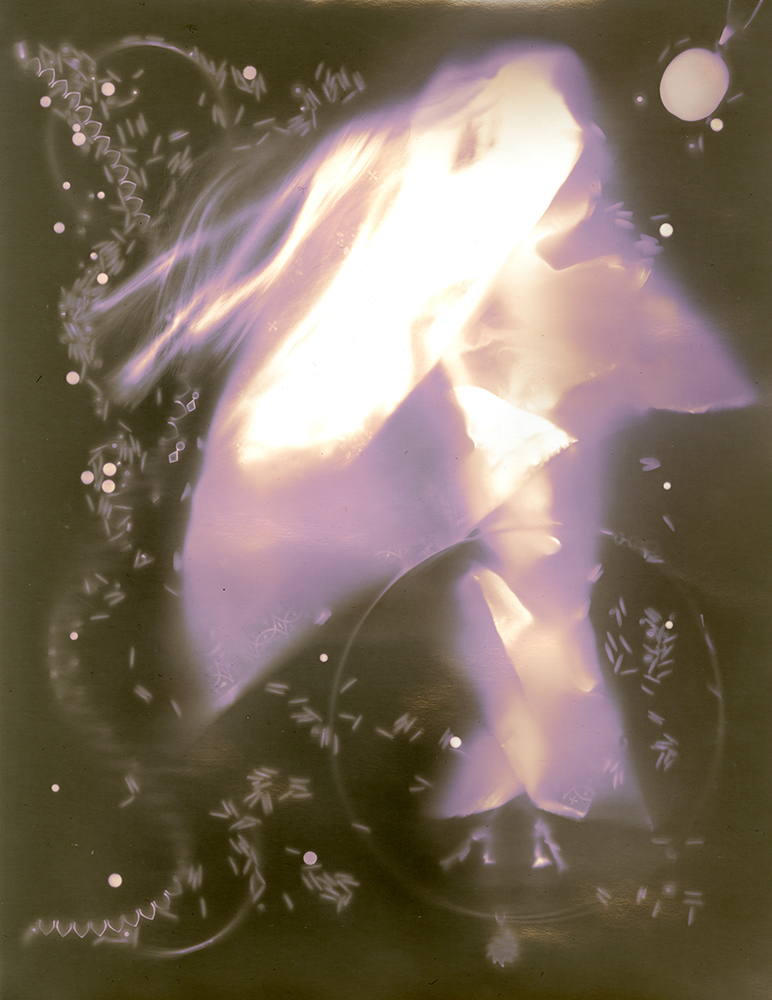
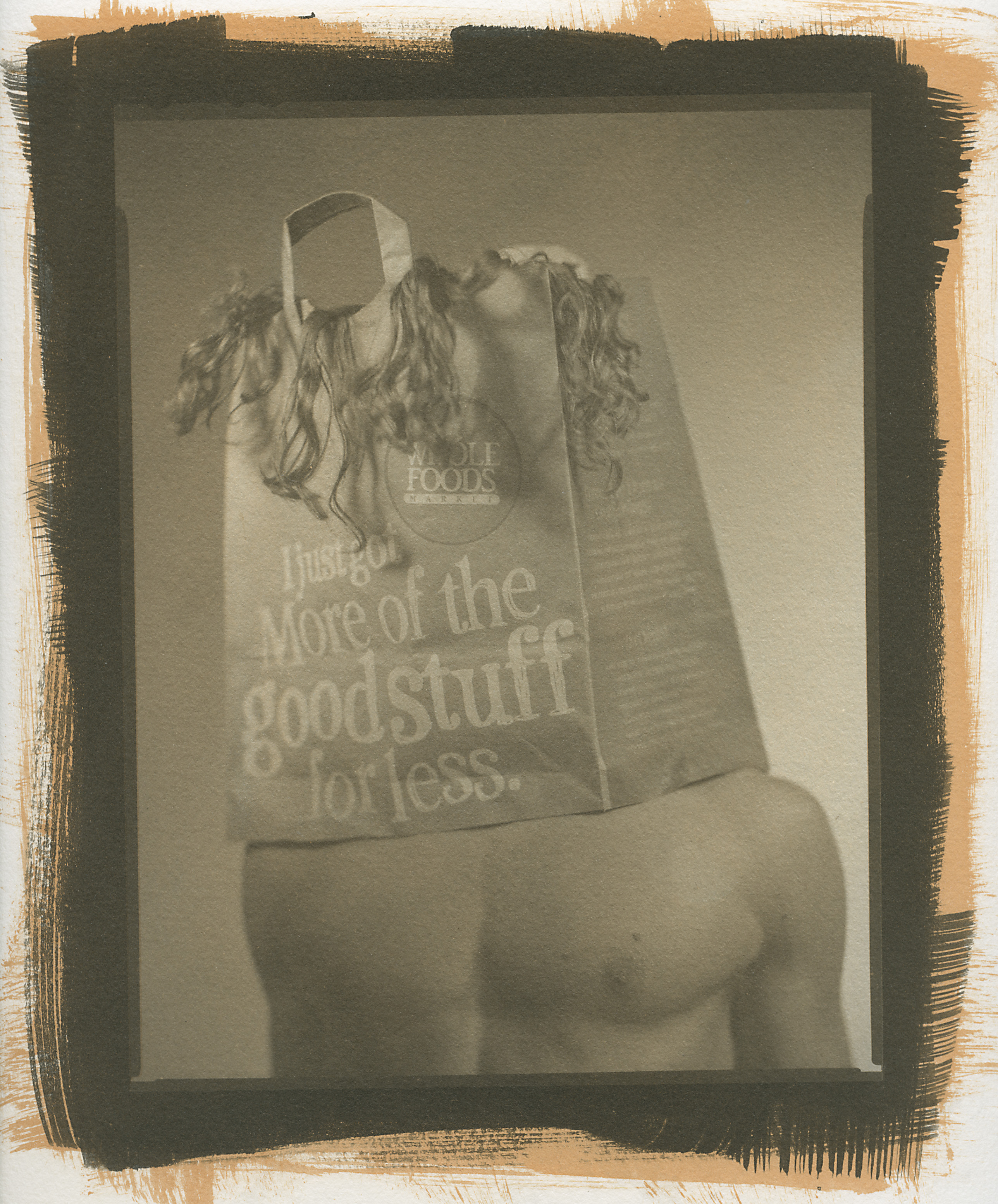
For this series, I tried using photograms and I wasn’t able to get the details on the Indian Barbie’s sari. While I didn’t want the image to be recognizable as a Barbie doll, that carried too much weight as an Icon, I did want the doll to be seen. I loved the colors that were produced with a six-hour exposure in the UV light box. These pastel pinks and purples are reminiscent of Indian wedding colors which are bright and vivid.
How does the choice of media influence your choice of subject matter (or vice versa)?
I often have an idea and will try many approaches or I will re-appropriate my own work into various mediums when a new theme comes into my head. Often I work with issues of race, identity, gender and diaspora, so the work I do can flow from one series to another, with changes.
In today’s mobile, electronic world of instant communication and virtual sharing of images, how important is it to you to create hand-made images?
Hand-made work is vital to my photography practice. While I do a lot of work on the computer, it is this work that seems more personal to me, BECAUSE it is done by my own hand. It becomes personal and when you are doing themes surrounding your identity, it seems to go hand in hand.
Is your choice to practice alternative, hand-made photography a reaction to, a complement to, or not influenced by the world of digital media?
To me the ideas come and I test them in a variety of ways. I’m not wedded to any process, I think the work warrants the process. So often I will test things out before I decide what is working. I often tell my students they need a viable reason for choosing the medium they work in. The image has to warrant the process or why do it that way.
Do you incorporate digital media into your alternative process work?
Yes, I have a series of Polaroid transfers that I have scanned and blown up to 40 x 50”. With Polaroid going under and the Impossible project not being able to take over creating pull apart film, digital is the only way to do this process now. As of last week Fuji announced they are no longer making their pull apart film, so unless some company takes over there will no longer any film that will allow for emulsion transfers or emulsion lifts.
If so, how do you incorporate it? Is it limited to mechanical reproduction technique, or does it inform/shape/influence the content of your work?
I use it to enhance the work and to reproduce it at larger sizes.
What role do you see for hand-made/alternative process work in the art world of today? Where do you see yourself in that world?
I feel that there will always be a place for alternative processes, and new ones will come up that will combine digital. I find it to be a great time to be making work because there are no rules on how to make work that is shown in galleries. I do see my students becoming more attracted to these older processes because of they are learning something new.
I’m very pleased and thrilled to announce the entrants whose work has been accepted into the Rendering The Spirit: The Personal Image in Alternative Media exhibition at Glen Echo Photoworks. We accepted twelve artists showing a very diverse range of subject matter and technique, from wet plate collodion to photogravure to lumen prints. The exhibit is also very geographically diverse – works are coming from Texas, the Washington DC area, Switzerland, Germany and Japan.
The honored artists are:
Atalie Day Brown (Maryland)
Barbara Maloney (Maryland)
Bruce Schultz (Louisiana)
Dan Schlapbach (Maryland)
Erik Larsen (Colorado)
Eddie Hirschfield (Virginia)
Hendrik Faure (Germany)
Ian Leake (Switzerland)
John Sarsgard (New York)
Leena Jayaswal (Maryland)
Marek Matusz (Texas)
Yugo Ito (Japan)
A few featured works from the exhibition:
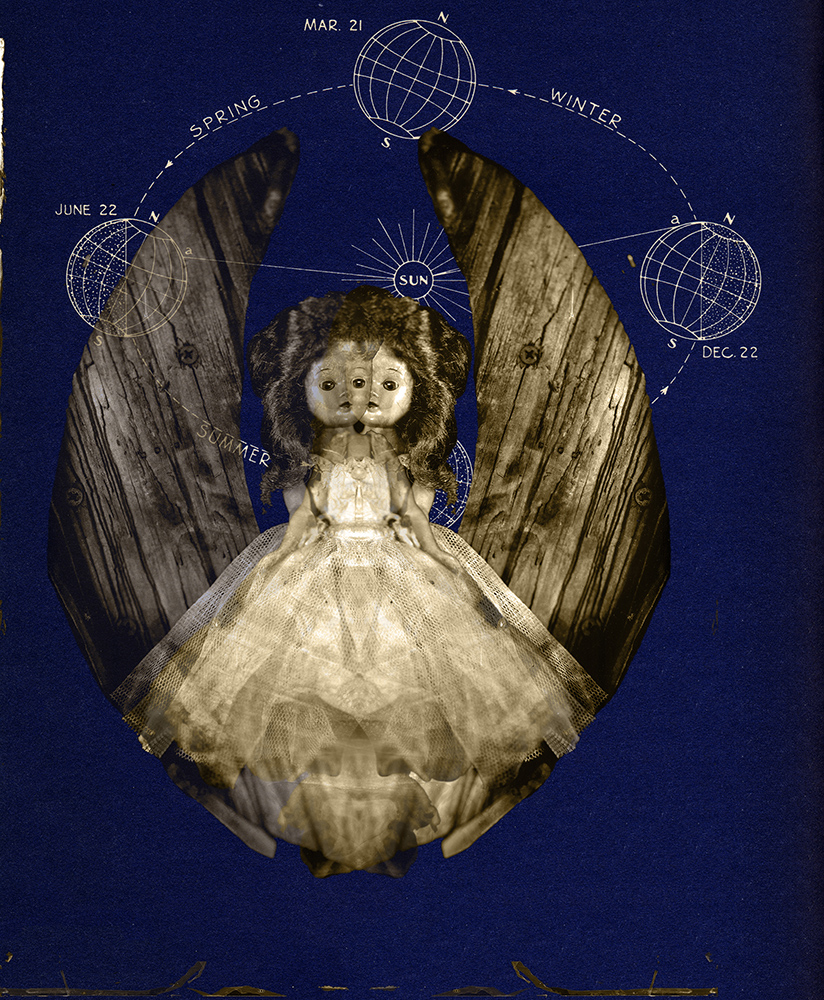
Causes of the Seasons – Dan Schlapbach
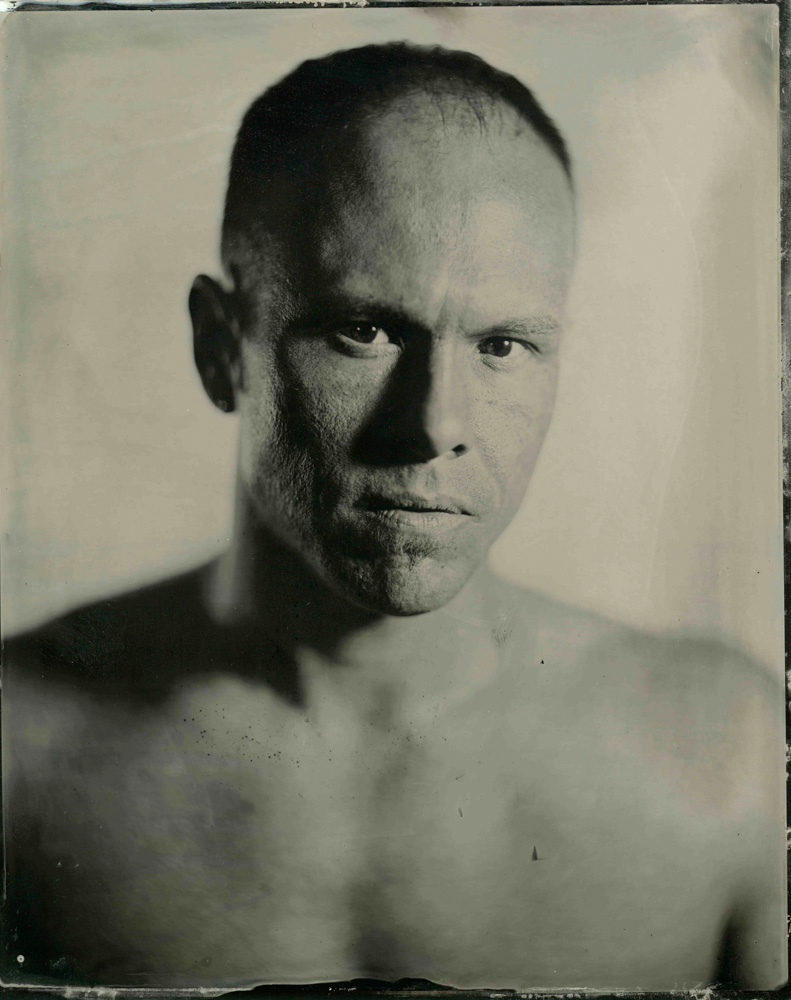
14×17 inches, digital relievo wet plate collodion ambrotype. There is a digital print behind the glass ambrotype image, creating a relief like a traditional relievo ambrotype
Portrait of Jared – Atalie Brown
8×10 inch tintype (direct-positive, wet-collodion on aluminum plate)
This is a reminder that the submission deadline for Rendering The Spirit: The Personal Image in Alternative Media is less than a week away, on February 21.
Photoworks is a non-profit photographic arts and education center in Glen Echo, Maryland. Last year was their 40th anniversary, and as part of the ongoing celebrations and future vision for Photoworks, we are launching a new program to provide visibility and accessibility to historic/alternative processes and artists working in these media. Rendering The Spirit is the kickoff event to highlight this programming.
Works to be considered must be made using an alternative/historic process, including but not limited to lumen prints, daguerreotypes, gum bichromate, tintypes/ambrotypes/melainotypes, platinum/palladium, kallitypes, Van Dyke Brown, cyanotypes, carbon prints, calotypes, salt prints, albumen prints, bromoil, gumoil or some combination of the above. Silver Gelatin prints on machine-made commercial papers are not accepted. Original capture of the image can be from in-camera negatives or digital capture or some combination thereof, but the final image must be a physical object made using one or more historical processes.
Also include an artists statement, brief bio and an explanation of the work(s). All required documents (JPEGS, Artist statement/bio/explanation of works) should be emailed to photoworks.gallery@gmail.com no later than February 21st. Notifications will be sent by email to all selected artists by March 1. Works must be received by March 14. The opening reception will be held on March 26.
Render (v): to distill, to cook down to its essence, to translate, to represent.
Rendering: an act of bringing into being, of distillation, of translation, of representation.
By aiming our gaze at works created using “alternative” processes, we aim to show the diversity of work being created at this nexus of the 19th and 21st centuries and engage in a dialog about what it means to create work using anachronistic techniques.
Scott Davis is a faculty member at Photoworks where he teaches alternative processes, portraiture and studio lighting. He received formal training at Maryland Institute, College of Art. His specialty is platinum/palladium printing, and he is an avid collector of 19th century photography. He has exhibited his personal work locally, nationally and internationally, and has served as curator at the former Art Reactor Gallery in Hyattsville.
Malcolm Cosgrove-Davies is a self-taught photographer who since 1978 has been practicing historic photographic processes including gum bichromate, cyanotype, VanDyke, palladium, and carbon printing. Mac’s images derive from his extensive travel to developing countries as well as everyday life. Using antique and hand-made film cameras in various large & panoramic formats he seeks to match the image to the beauty and elegance of the selected photographic process. In addition to building the occasional camera, printing frame or other useful photographic gadget, he also creates books and presentation portfolios for his prints. He is represented in various collections such as the Smithsonian American Art Museum, Library of Congress, Maier Museum, and Lehigh University Art Galleries.
Back in November I taught a studio lighting class at Photoworks. This was my first time offering this class, so the curriculum was a bit of a gamble – I started with foundations of studio lighting, working from hot lights on still life setups and a single light source, and built my way up to electronic flash systems with multiple lights. In this case, my students had the burning itch to jump straight to portraiture, as that was their primary interest. I had a wonderful bunch of students in the class and everyone brought something to the table.
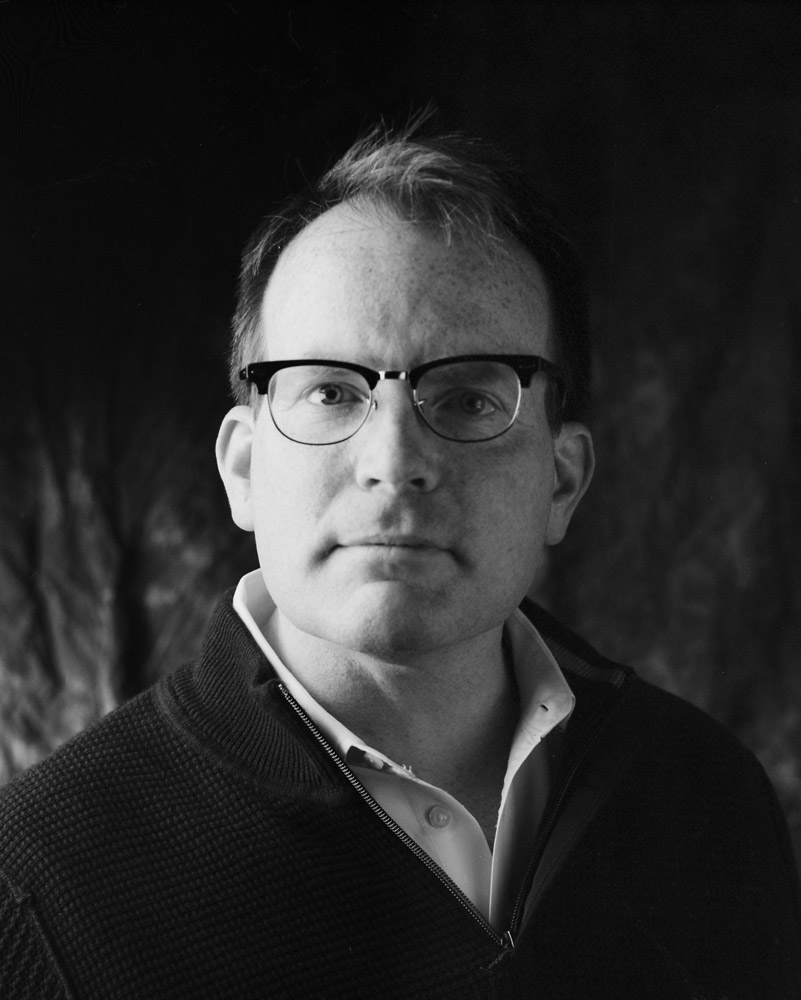
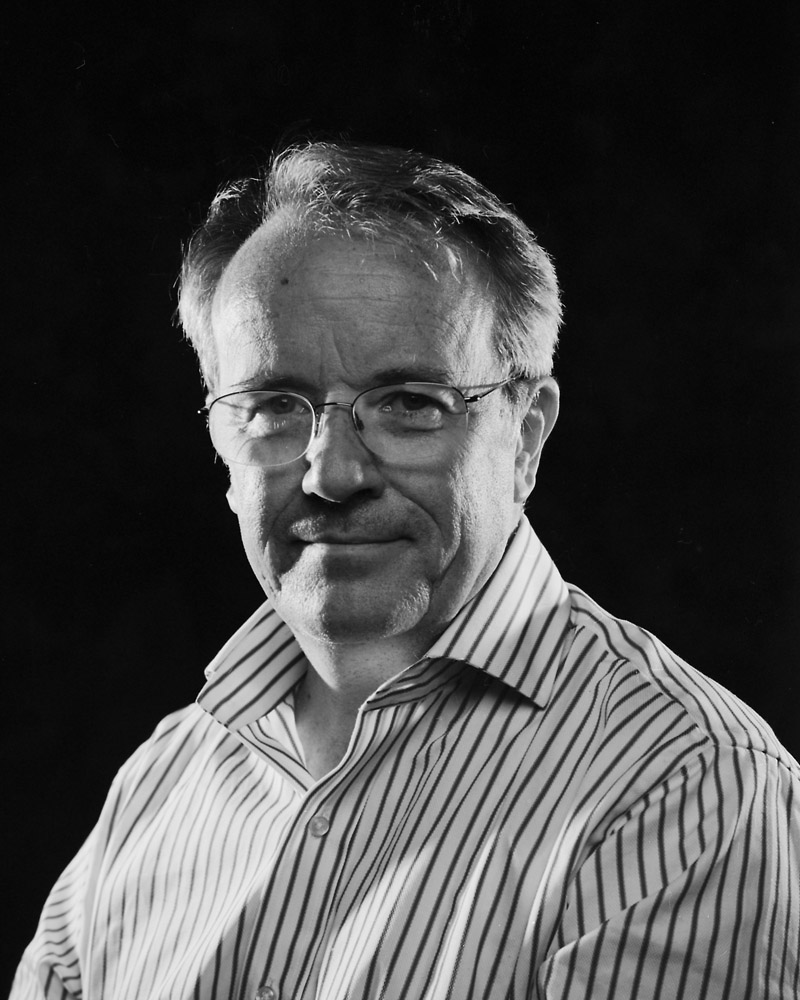
The portraits here are taken by me of my students. The portrait of Joe was done to demonstrate side light with a large diffuse light source, and a reflector. For demonstration purposes I moved the reflector in and out to lighten and darken the shadows, and shot it with both high and low contrast. This is my favorite of the bunch – there’s three-dimensional modeling of his face with the light, but the shadowed side of his face is not lost.
Joe P.
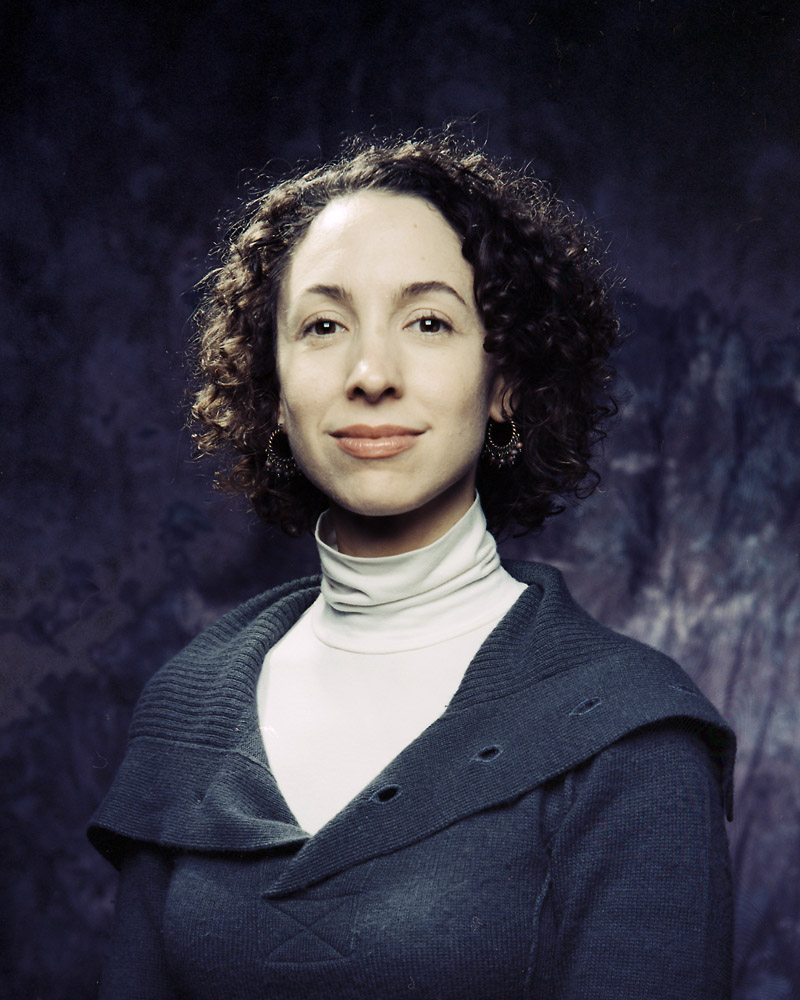
Geraldine was lit to show soft, flattering light. This was the classic “butterfly light” with a large diffuse light directly above and in front of the subject, a reflector below to open up the shadows a bit, and then hair light and background light applied to create separation of the subject from the background.
Geraldine W.
The shot of Matthew was done to demonstrate that “edge lighting” look you often see in sports photos of young athletes in shoe commercials. Obviously Matthew is no longer a high-school football player, but the look is very masculine and rugged and it works well on him. This was accomplished with two equal-powered heads in soft boxes, placed behind the sitter, at 45 degree angles to the subject-camera axis, and then adding in a little fill in the front so his face wouldn’t get lost.
Matthew F.
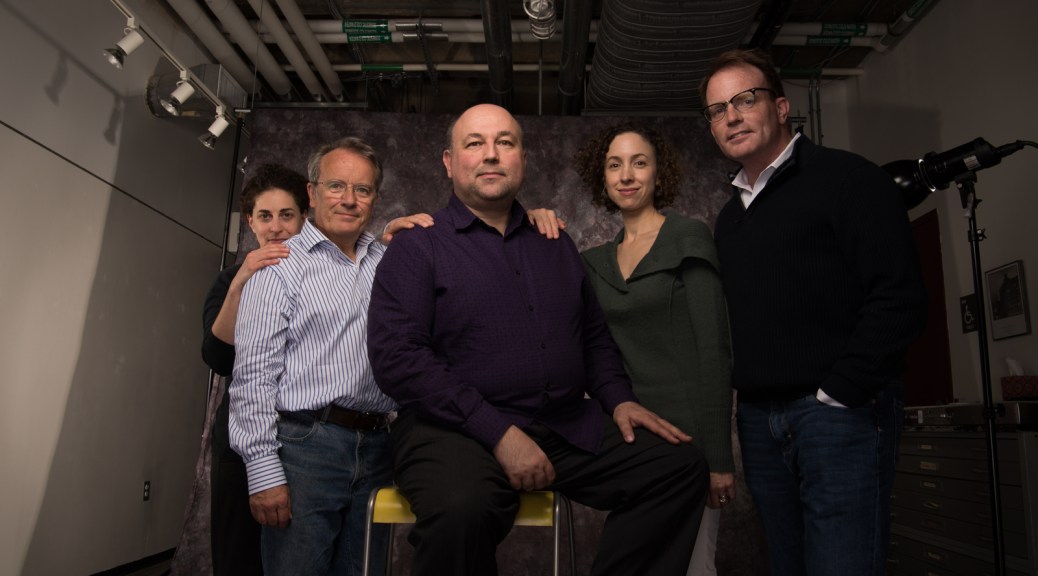
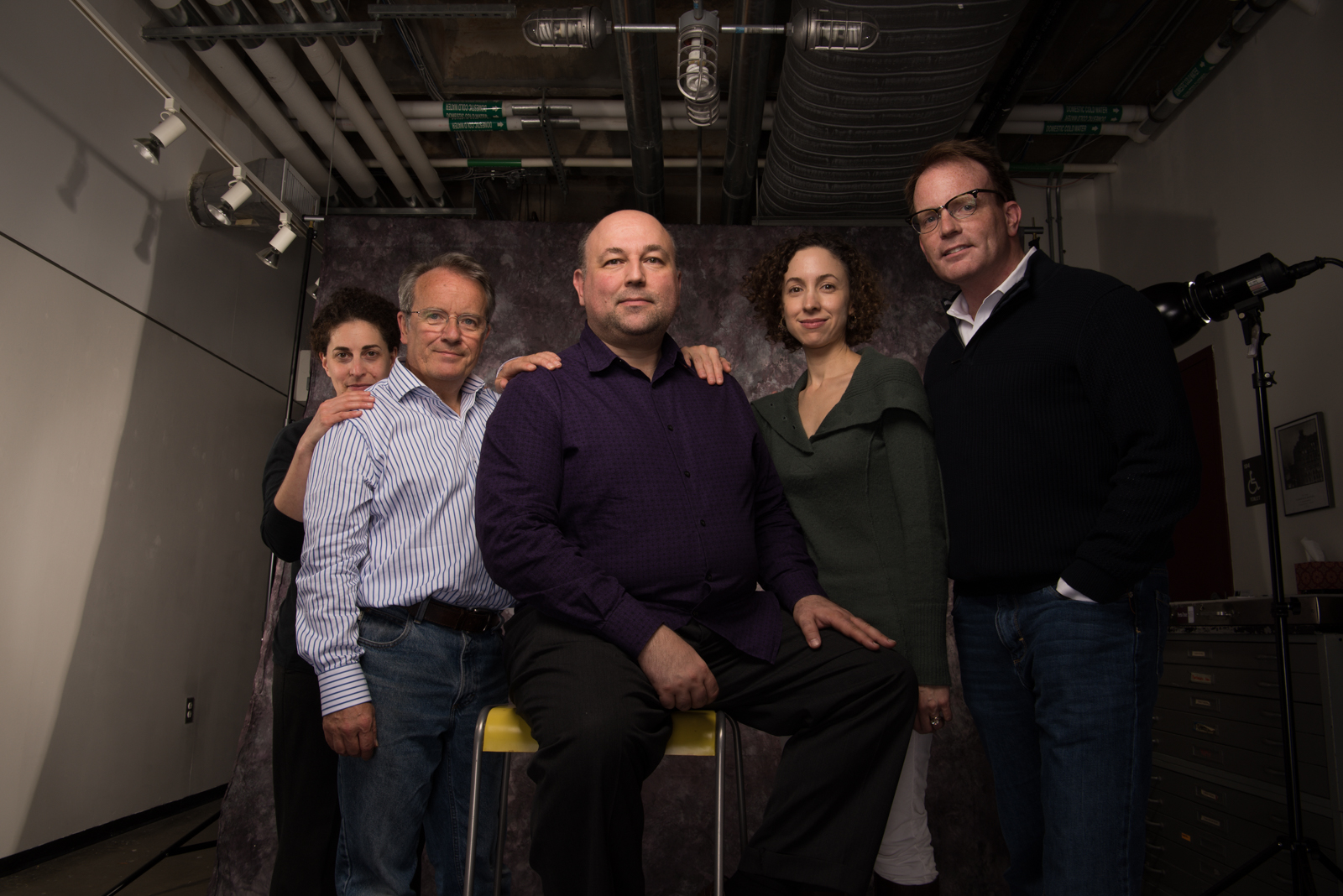
The final photo of the day is our group shot. That’s me in the center, if you’re wondering. My fourth student in the class was Leslie, who is the one hiding behind Matthew’s shoulder.
Studio Lighting Class
All individual portraits were done with a Tele-Rolleiflex and the Rolleinar 0.35 close-up adapter, on Kodak Ektar 100 color film. The two black-and-white images were converted from Photoshop. Ektar is a good portrait film in natural light, I’ve decided, but for studio portraiture, Portra 160 is better.
Render (v): to distill, to cook down to its essence, to translate, to represent.
Rendering: an act of bringing into being, of distillation, of translation, of representation. By aiming our gaze at works created using “alternative” processes, we aim to show the diversity of work being created at this nexus of the 19th and 21st centuries and engage in a dialog about what it means to create work using anachronistic techniques.
Curators: Scott Davis and Malcolm Cosgrove-Davies
Scott Davis is a faculty member at Photoworks where he teaches alternative processes, portraiture and studio lighting. He received formal training at Maryland Institute, College of Art. His specialty is platinum/palladium printing, and he is an avid collector of 19th century photography. He has exhibited his personal work locally, nationally and internationally, and has served as curator at the former Art Reactor Gallery in Hyattsville.
Malcolm Cosgrove-Davies is a self-taught photographer who since 1978 has been practicing historic photographic processes including gum bichromate, cyanotype, VanDyke, palladium, and carbon printing. Mac’s images derive from his extensive travel to developing countries as well as everyday life. Using antique and hand-made film cameras in various large & panoramic formats he seeks to match the image to the beauty and elegance of the selected photographic process. In addition to building the occasional camera, printing frame or other useful photographic gadget, he also creates books and presentation portfolios for his prints. He is represented in various collections such as the Smithsonian American Art Museum, Library of Congress, Maier Museum, and Lehigh University Art Galleries.
Works to be considered must be made using an alternative/historic process, including but not limited to lumen prints, tintypes/ambrotypes/melainotypes, daguerreotypes, gum bichromate, platinum/palladium, kallitypes, Van Dyke Brown, cyanotypes, carbon prints, calotypes, salt prints, albumen prints, bromoil, gumoil or some combination of the above. Silver Gelatin prints are not accepted. Original capture of the image can be from in-camera negatives or digital capture or some combination thereof, but the final image must be a physical object made using one or more historical processes. For a submission fee of $40, each artist may submit up to five examples. Send jpegs at 72dpi, 1000 pixels on the long axis. JPEGs should be named ArtistName_number (i.e. JohnBrown_1 ).
Also include an artists statement, brief bio and an explanation of the work(s). All required documents (JPEGS, Artist statement/bio/explanation of works) should be emailed to photoworks.gallery@gmail.com no later than February 21st. Notifications will be sent by email to all selected artists by March 1. Works must be received by March 14. The opening reception will be held on March 26.
Explanation:
The explanation should enumerate the title of the work, the file name of the associated JPEG, the size of the piece (including frame dimensions), the year it was made, and any pertinent details about the creation of the work.
Example:
Image Title:
File Name:
Size:
Year Created:
Explanation:
Joseph
JohnBrown_1.jpg
8”X10”
2016
Hand-colored quarter-plate daguerreotype, distressed with fingerprints and acid etching.
All works accepted must be framed/mounted and ready to hang. Outside dimensions should be no greater than 24 inches on the long axis. All works must be available for sale – Photoworks takes a 35% commission on any sales. Artists are 100% responsible for shipping to and from Photoworks.
You must include a pre-paid return shipping label with your work; any work shipped without a return label will be considered a donation to Photoworks, and will not be returned to the artist. Artists are responsible for insuring their work – while Photoworks endeavors to take every precaution to protect and care for works while on display, they will not be liable for any loss or damage.
Artists Statement:
Please send us a one paragraph statement about your work, and in particular describe why you are using the alternative process(es) you are using; what do they mean to you, to the work, how they shape meaning, their aesthetic impact.
Artists Bio:
Please send a one paragraph biography.
Forty years ago, in a derelict building hidden among the abandoned amusement park rides of Glen Echo Park, four young photographers founded Photoworks with little more than a shared passion for the daily work of seeing, shooting, and printing images of lasting beauty and artistic integrity. The day-to-day collaboration, creative dialogue, and informal mentoring that led those artists to successful careers as fine art and commercial photographers established the values of experimentation and collegiality that define Photoworks today. Offering a diverse combination of educational programs, gallery exhibitions, and community initiatives, Photoworks is a vibrant and unique resource for student and professional photographers – an arts community in the very best sense of the word.
For more information about Photoworks, visit their homepage: Glen Echo Photoworks

 dcphotoartist