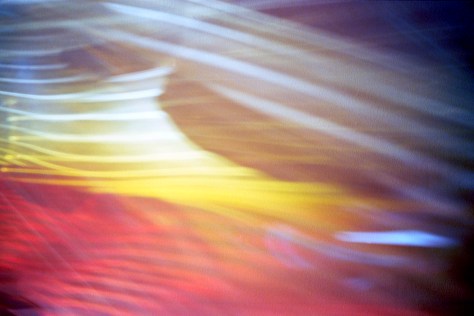
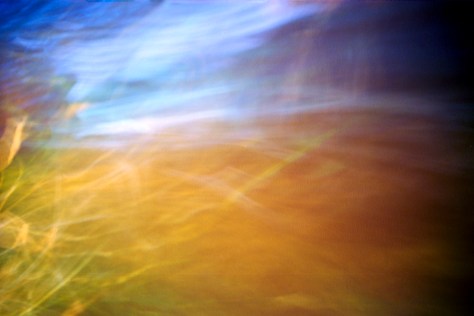
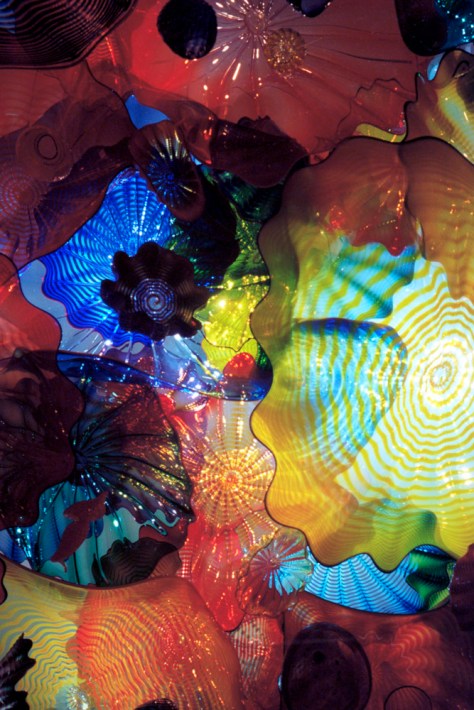
This was taken over the Thanksgiving weekend at my visit to Richmond, Virginia and the Dale Chihuly glass exhibit at the Virginia Museum of Fine Art. There was a passageway between rooms where the ceiling had been filled with all these marine-inspired glass forms and then lit from above. The glass forms (seen in the last image) then projected these really abstract color and light patterns on the walls. These were interesting enough that I tried to capture some of the effect of it.
Shot with my Contax G2, 21mm lens, and Kodak Ektar 100 film – hand-held.
Two more from Gettysburg itself, and three more from the Catoctin Furnace.
Horse CarriageGettysburg Rail Depot
The rail depot is now a little museum, with exhibits relating to Lincoln’s visit.
Catoctin Furnace VentIronmasters House RuinsIronmasters Root Cellar
The iron master of Catoctin Furnace was responsible for all the finished product coming out of the factory. His house was quite large. Today it stands in ruins. The ‘root cellar’ image is my assumption of what the space might have been – it is not labeled on the site. I’m guessing at its function by the proximity to the house (it would have been immediately behind the house, near the kitchen). The other possibility is that it is the spring/well for the house. Since I lacked a flashlight, I did not go in to try and find out what was in there.
Here are some of MY photos from my Gettysburg excursion, not just the antique images I bought.
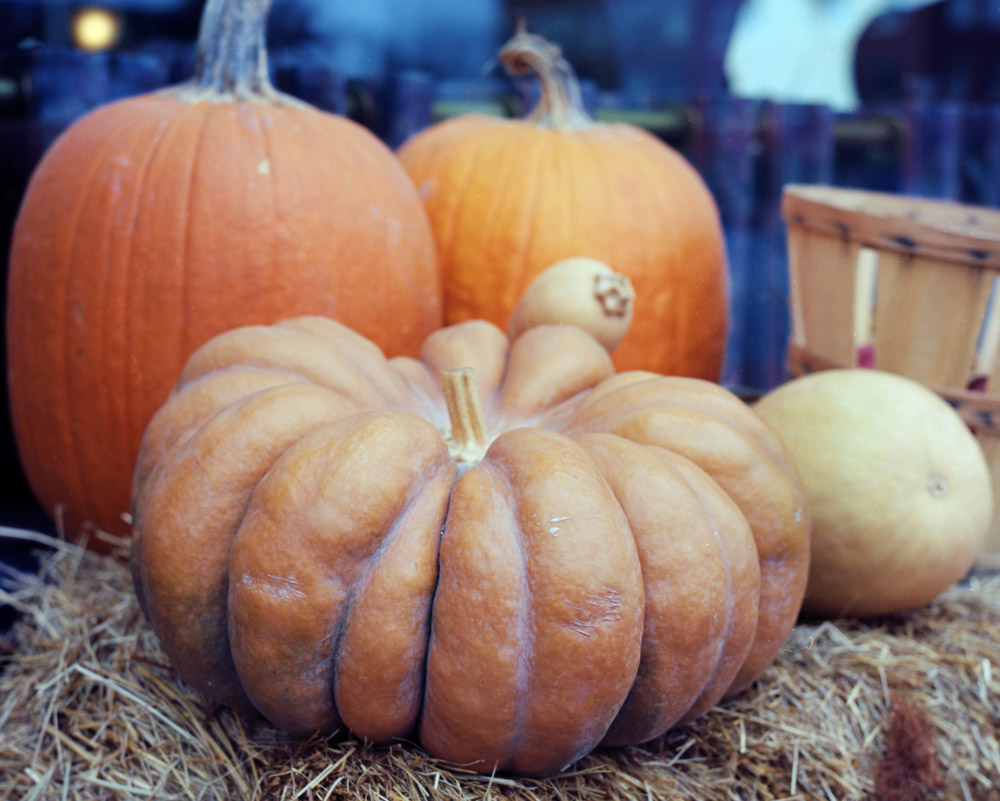
PumpkinsNumber 20, Chambersburg StreetGetty’s Hotel Canopy
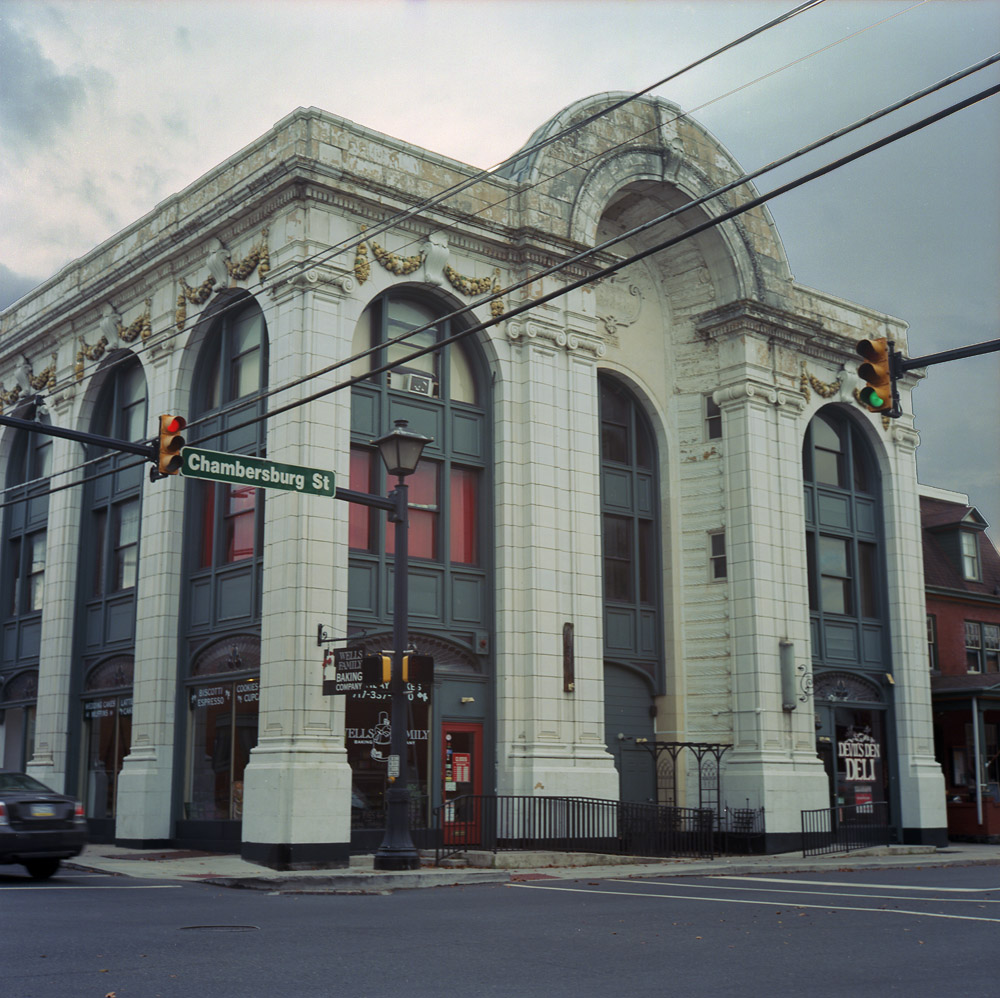
I had just taken this photo and was walking back toward the main square (aka “the diamond” in local parlance – that’s a whole other story) when I ran into someone who recognized my camera as a Rolleiflex, and who had one (actually several) himself. I explained to him that servicing them to get them back into good working order was not actually that expensive, and that he could still easily get film for them. I think (I hope, anyway) I inspired him to get his Rolleis out of the closet and put them back into service.
The “diamond” story:
I grew up just down the road from Gettysburg, in another southern Pennsylvania town storied in Civil War lore: Chambersburg. Like Gettysburg, it has a central town square, where the courthouse, a church, and a couple of banks are located. We always called it “the square”. Then, a couple of years ago, I went on a Civil War themed bus tour led by Ed Bearss, the historian and talking head (Ken Burns’ The Civil War and History Channel’s Civil War Diaries, among others). We were covering JEB Stuart’s raid on Chambersburg. When we arrived in downtown, he explained that the proper term for a town’s main square in that part of Pennsylvania was (and allegedly still is) “the diamond”. The squares are square, per se, formed at the intersection of two roads, which enter the square from the middle of each side, but in a gesture to ease of parking (originally buggies and horses, now cars), inside the square, the corners have been cut off, making a diamond-esque space in the middle. Thus the diamond. But I had never heard it referred to as “the diamond” in the first 39 years of my life until I heard Ed tell that story.
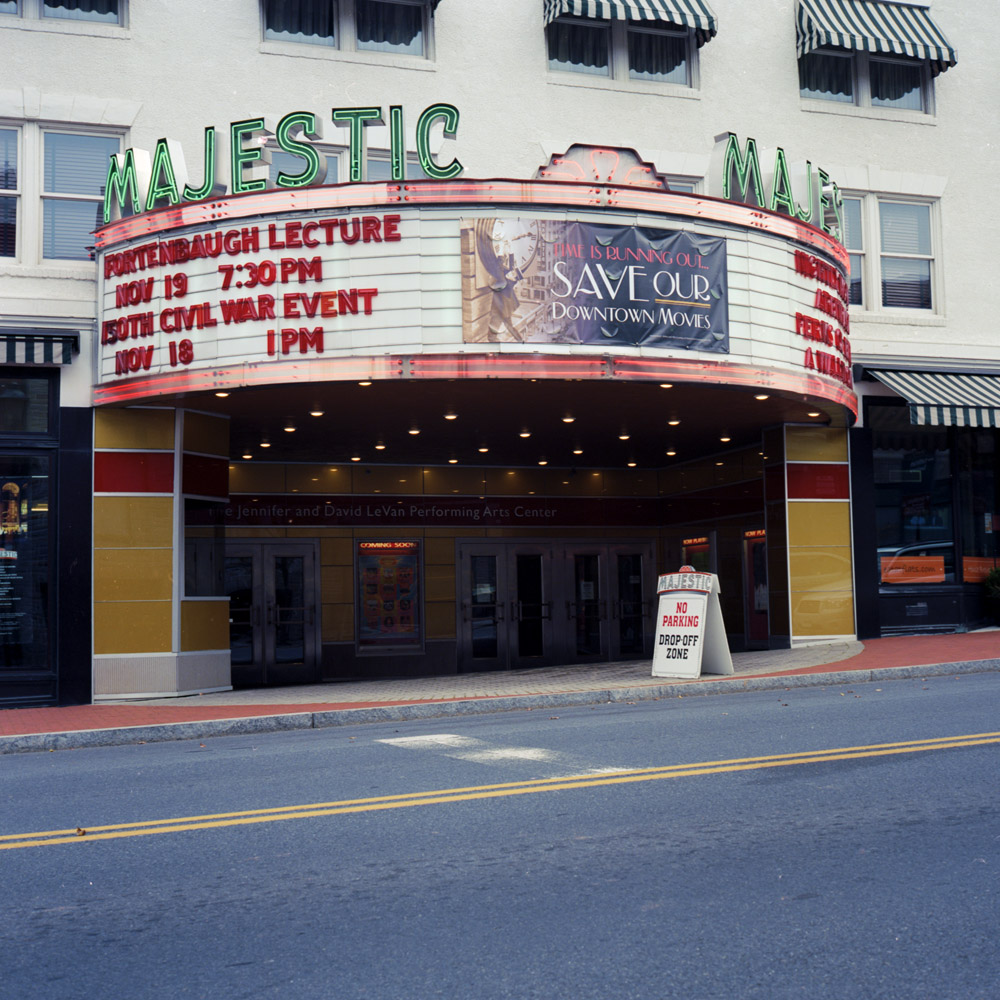
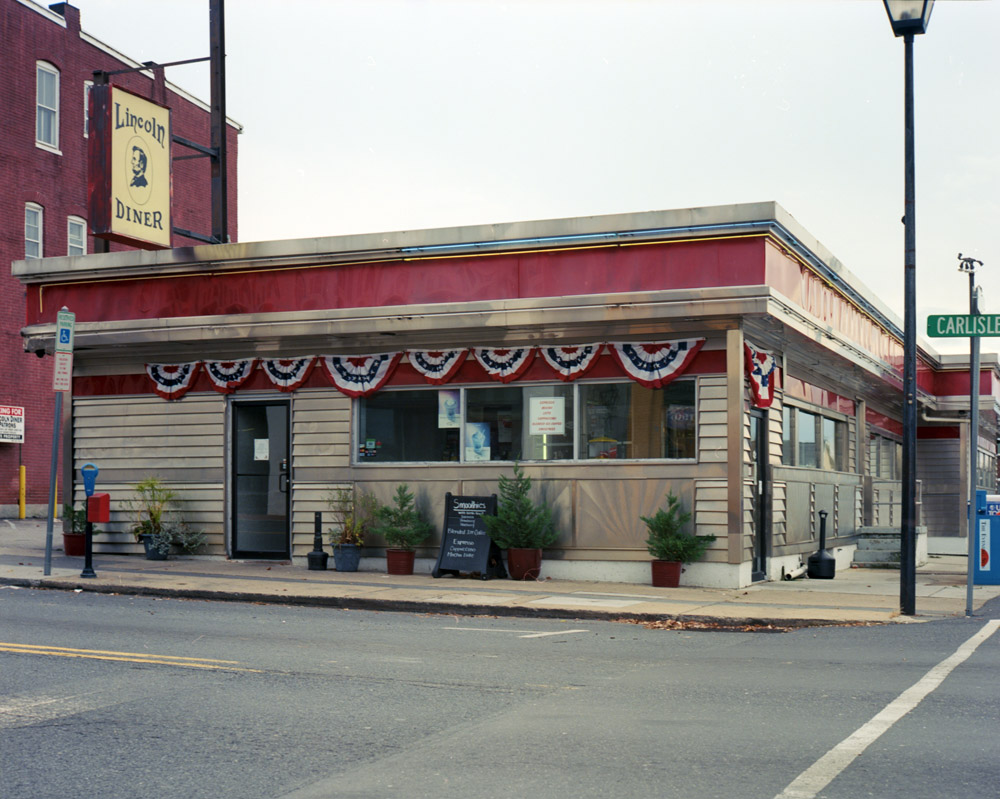
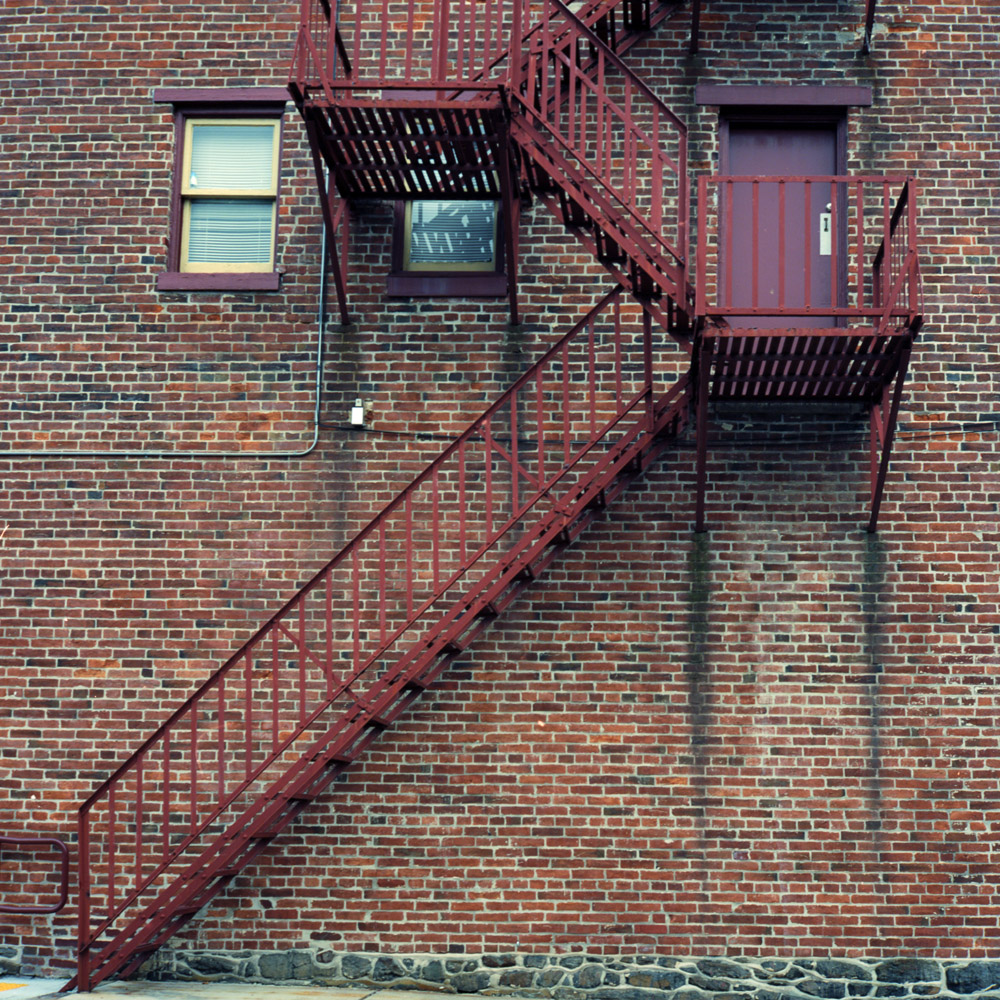
Majestic Theater, GettysburgThe Lincoln DinerFire EscapeChambersburg StreetGettysburg Dive Bar
This is one of those places you see in so many small towns – the local dive bar, or “bar of shame” as I like to think of them. No windows that you can see in, which I suppose gives patrons an illusion of privacy. The ironic thing is that A: this bar is on the main street, just a block or so off the main square, and B: it’s a small town, so everybody knows everybody. If you enter this bar, the whole world is going to know about it.
Emmittsburg Road, Evening
The Emmittsburg Road, at evening time. I took this picture because it epitomizes Gettysburg, the battlefield, to me as much as any monument or marker or green bronze cannon. This is the gently rolling countryside where over three days in July, 1863, almost 50,000 men gave their lives.
Catoctin Furnace
Not actually in Gettysburg, but on the way home, is the Catoctin Furnace. This was an early ironworks, in operation from the late 1700s. Catoctin Furnace supplied the Continental army during the American Revolution, and the Union army during the Civil War. They would stack layers of charcoal, limestone and iron ore needed to produce finished iron into the furnace and let it burn, adding additional layers until enough molten iron was produced. Then a clay valve in the bottom of the stack would be opened and the molten iron bled off into sand-filled channels in the ground where it would form into pig iron bars. I’ve seen two explanations for the name, pig iron: one variation has it because of the shape of the bars after pouring, the other because of the sound the molten iron made as it ran into the molds.
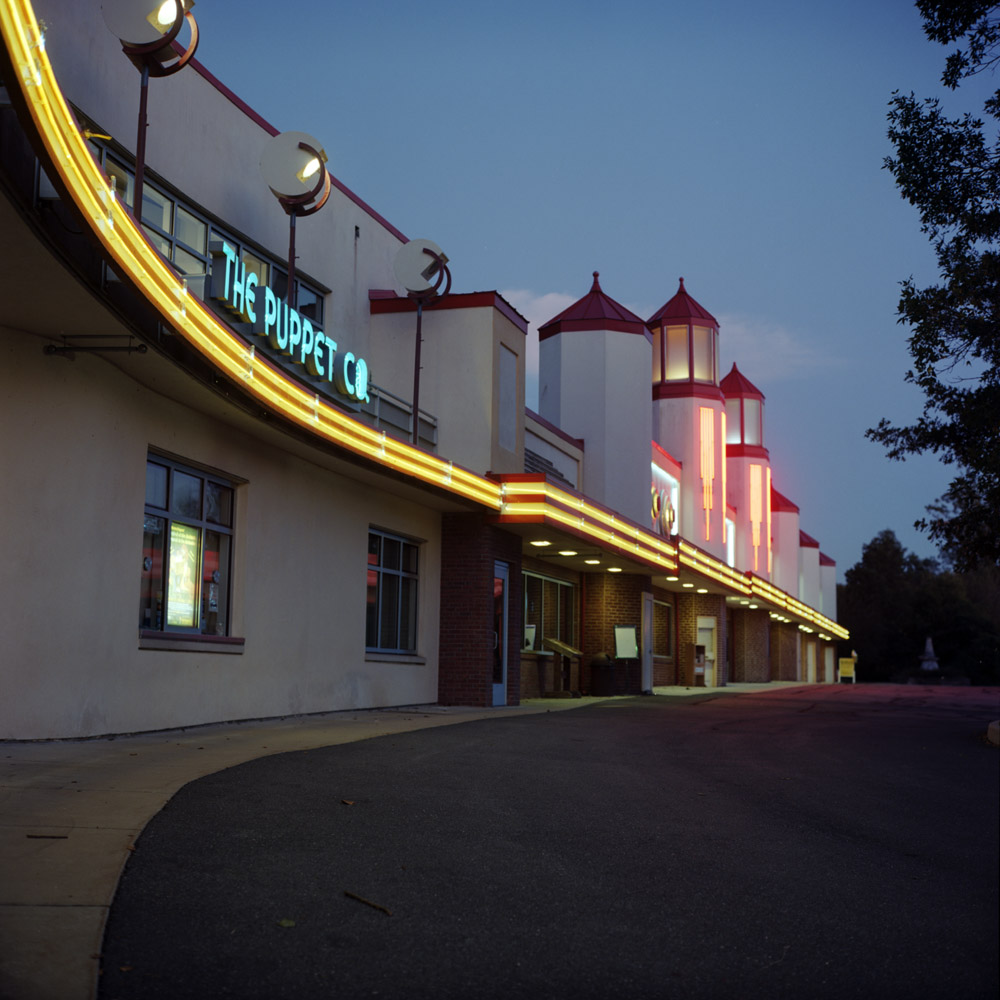
All photos were taken with my Rolleiflex 2.8E, using Kodak Ektar 100.
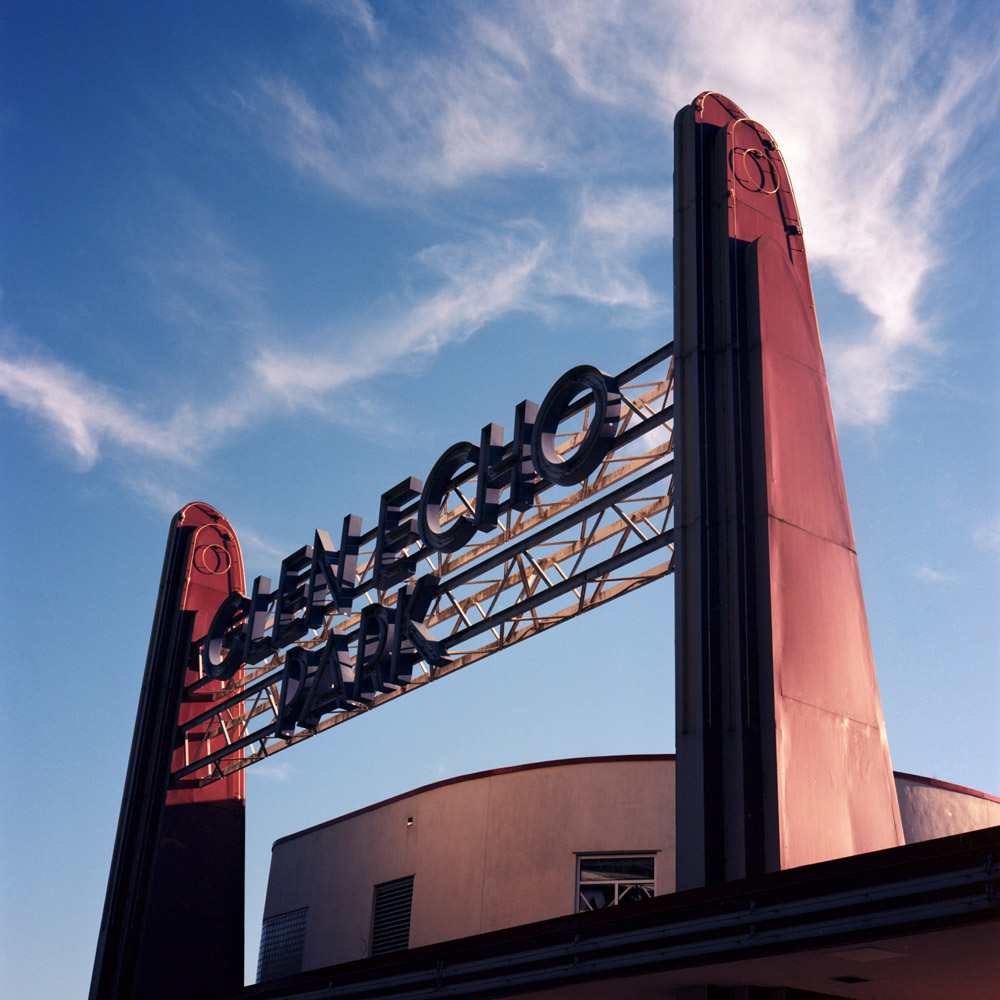
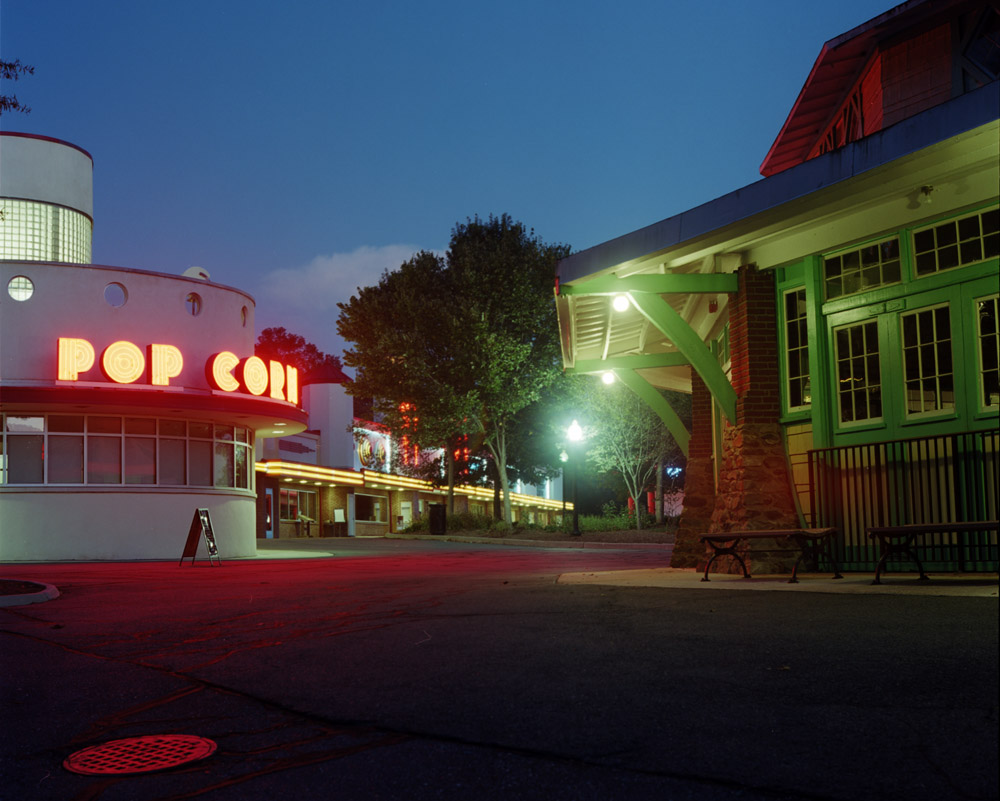
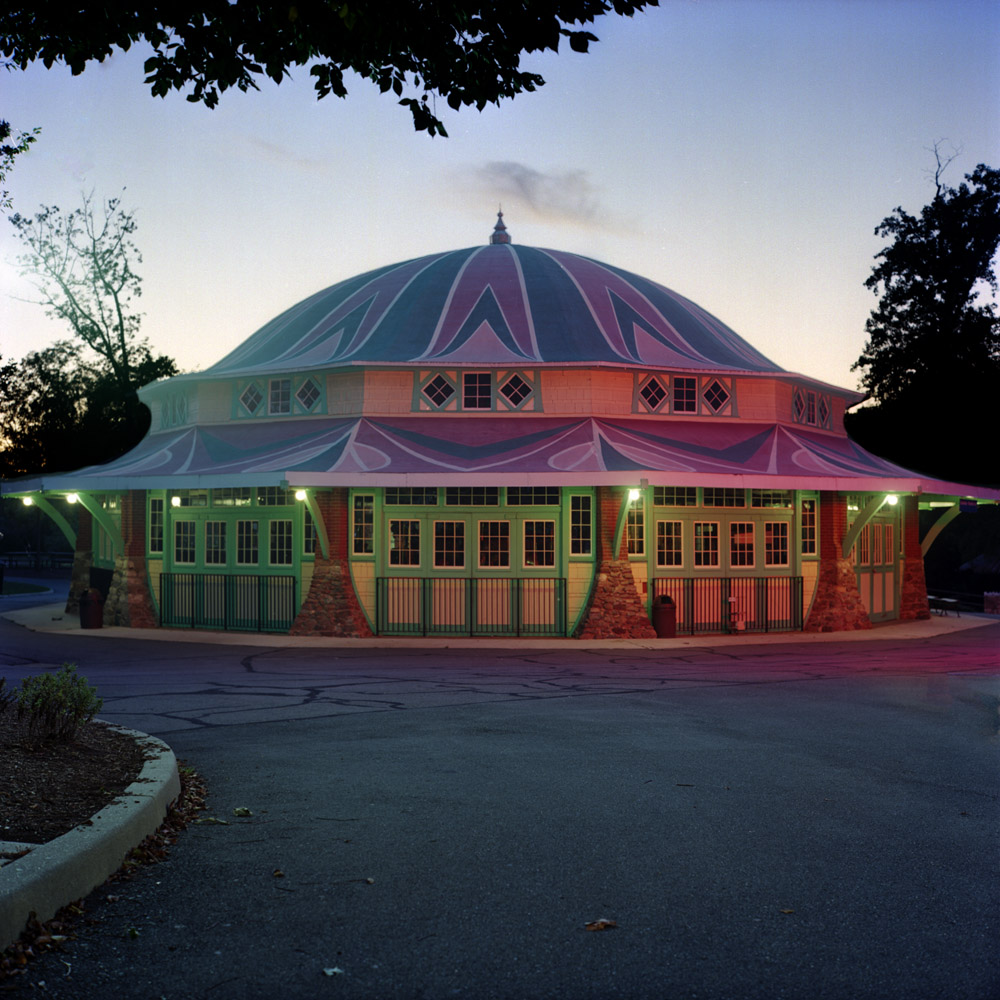
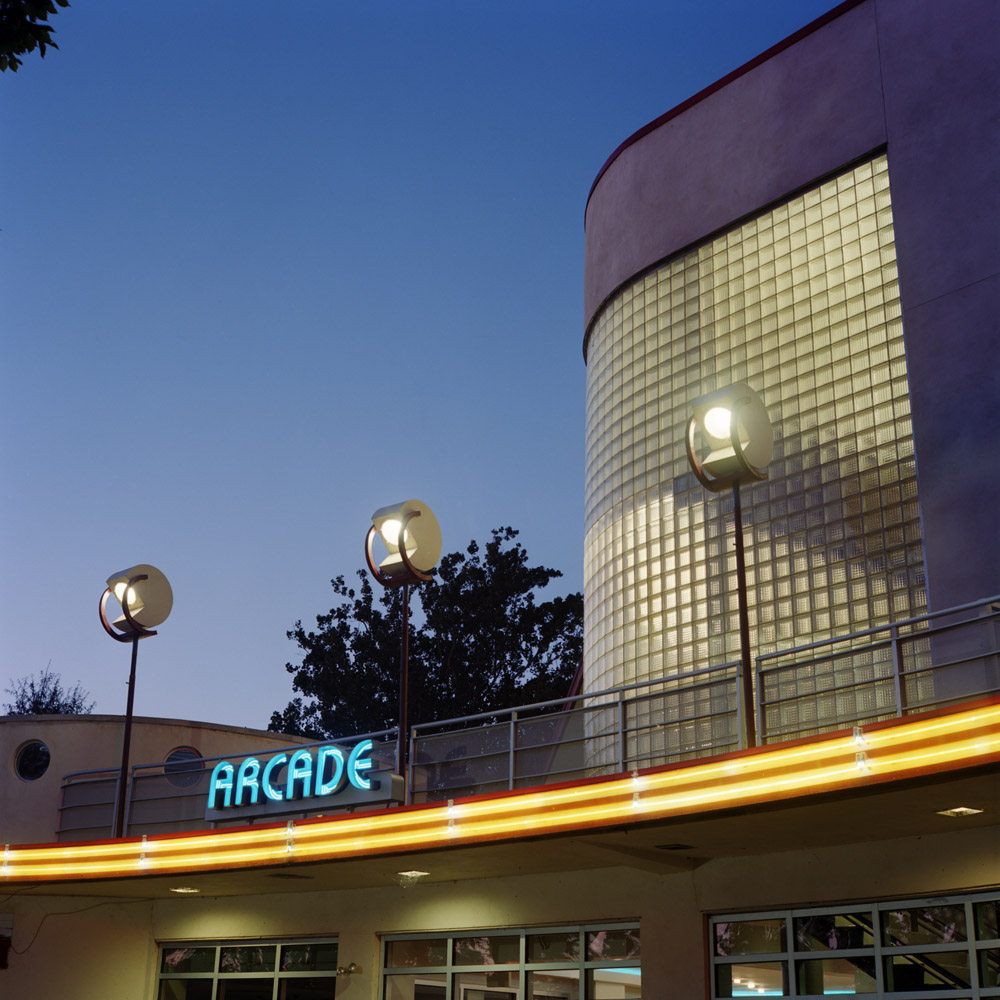
More of my twilight/nighttime exposures. The subject is Glen Echo Park, again. I love shooting in the park because of the wonderful neon lights, and the fact that while it’s never BUSY at that time of day, it’s never empty either. The park is always changing with the seasons, and it has a very secluded feel despite the proximity to the nation’s capitol and two very busy highways.
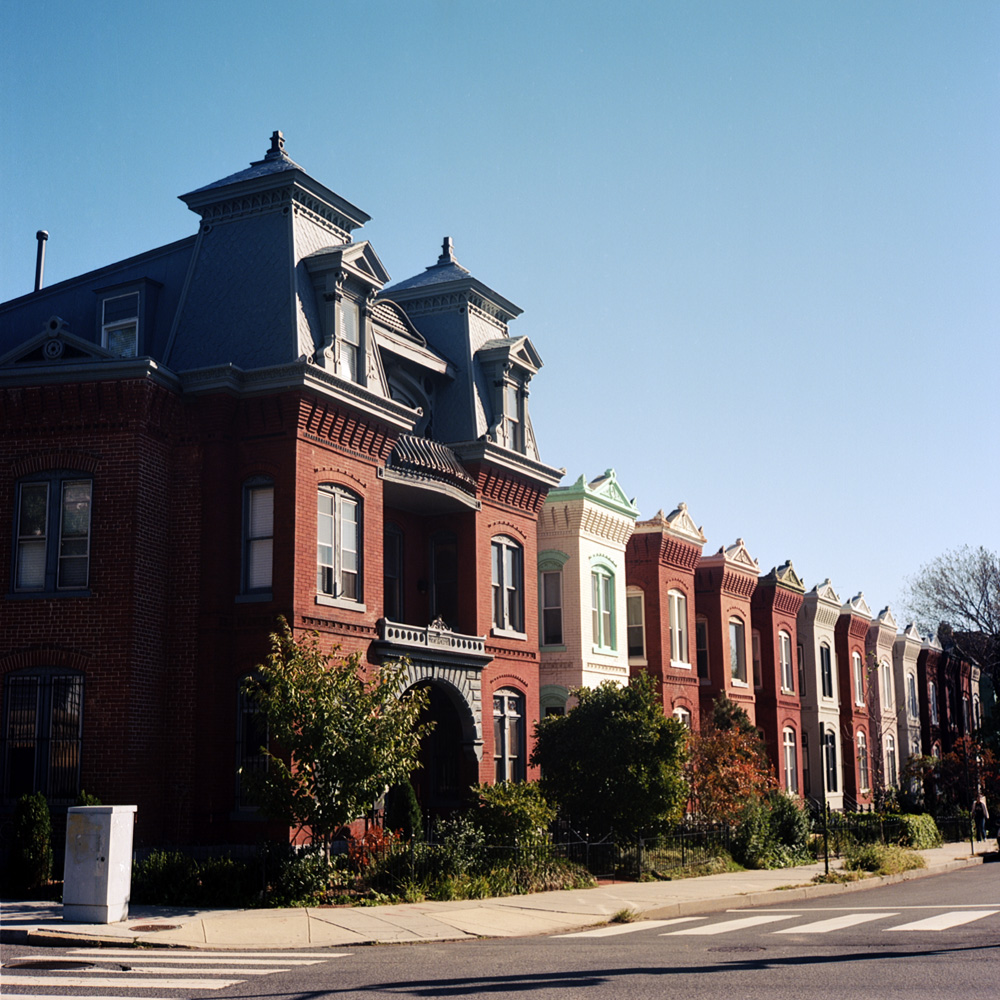
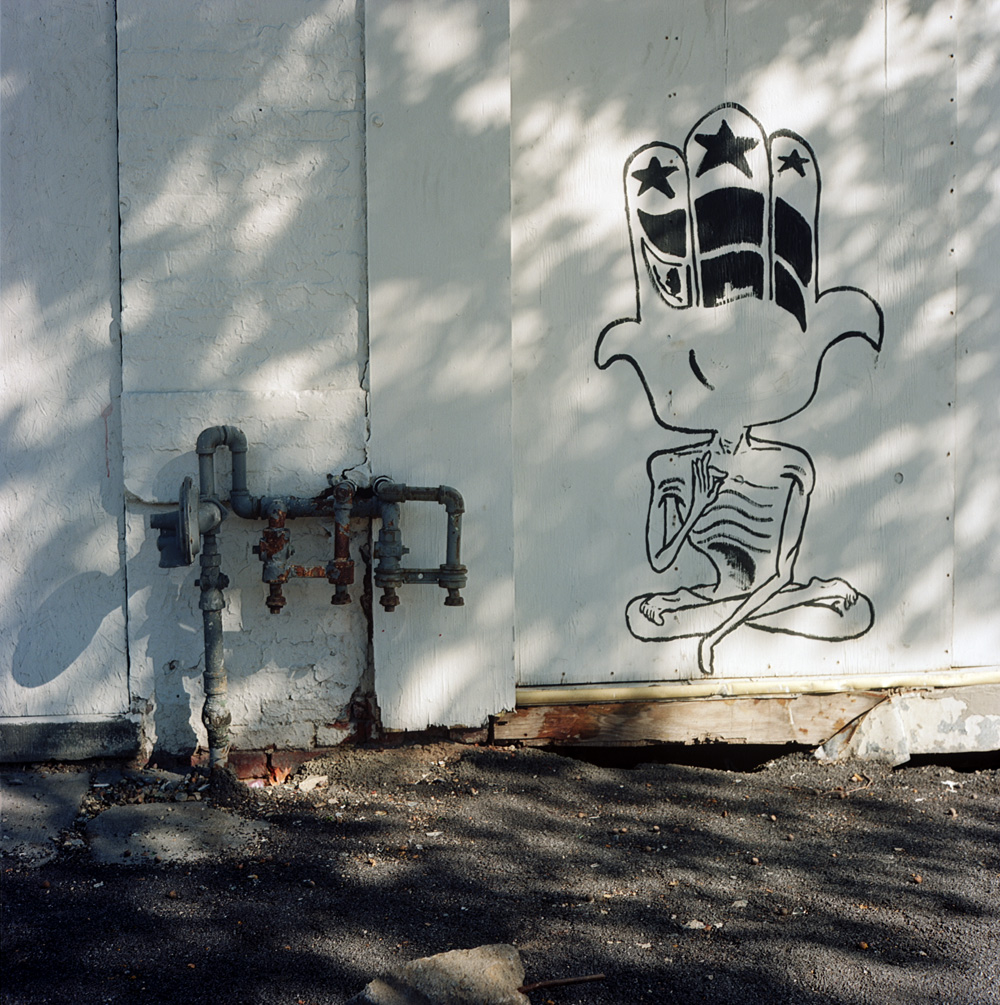
13th Street & Florida AvenueGraffiti, DC Flag Design, 14th StreetApartment Building, 11th and Florida Avenues
These were all shot with my Rolleiflex shortly after I bought it. It’s a 2.8E model, from the 1950s, with the Planar lens. There certainly are limits to the fixed “normal” lens on the Rolleiflex, but working within those limits, it’s a beautiful camera that produces beautiful results. I’m very tempted to take it with me on a vacation as my sole camera and see what I can get with it. I like how compact it is and how unobtrusive, compared to say my Mamiya RB67. All images shot on Kodak Ektar 100.
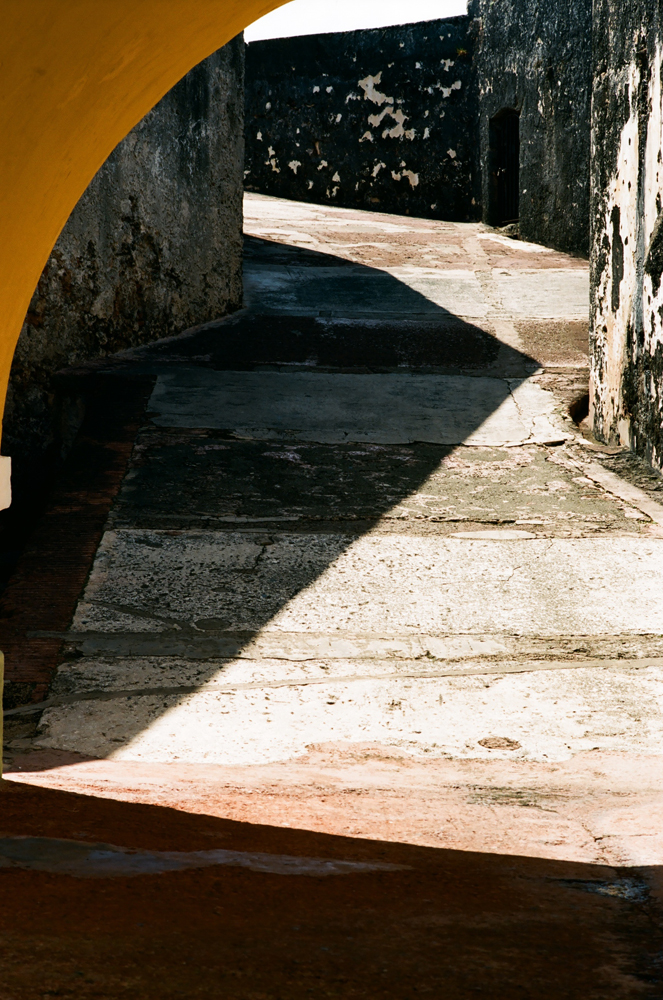
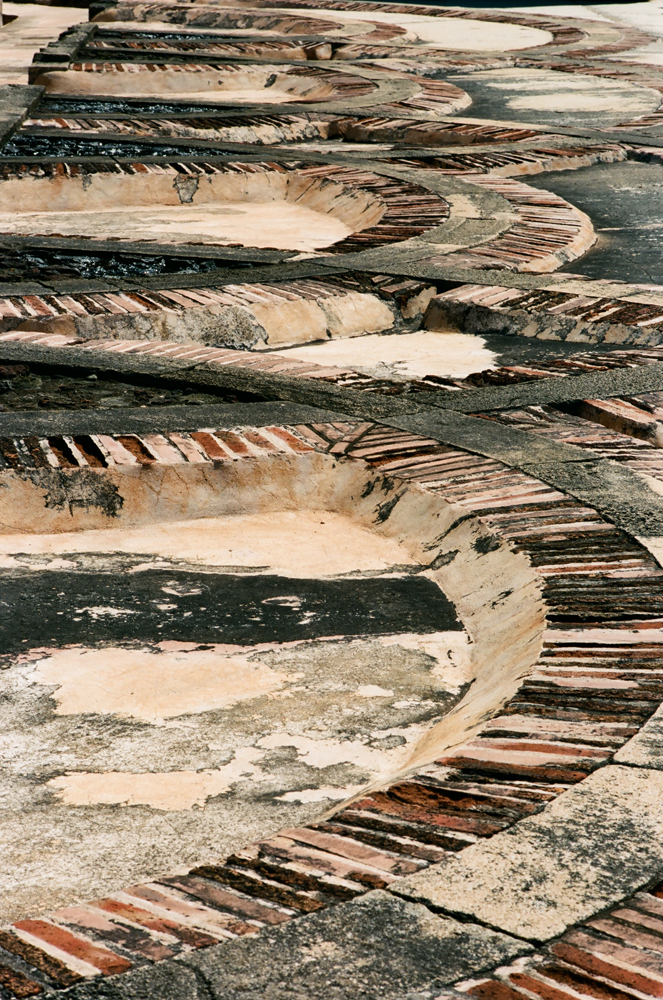
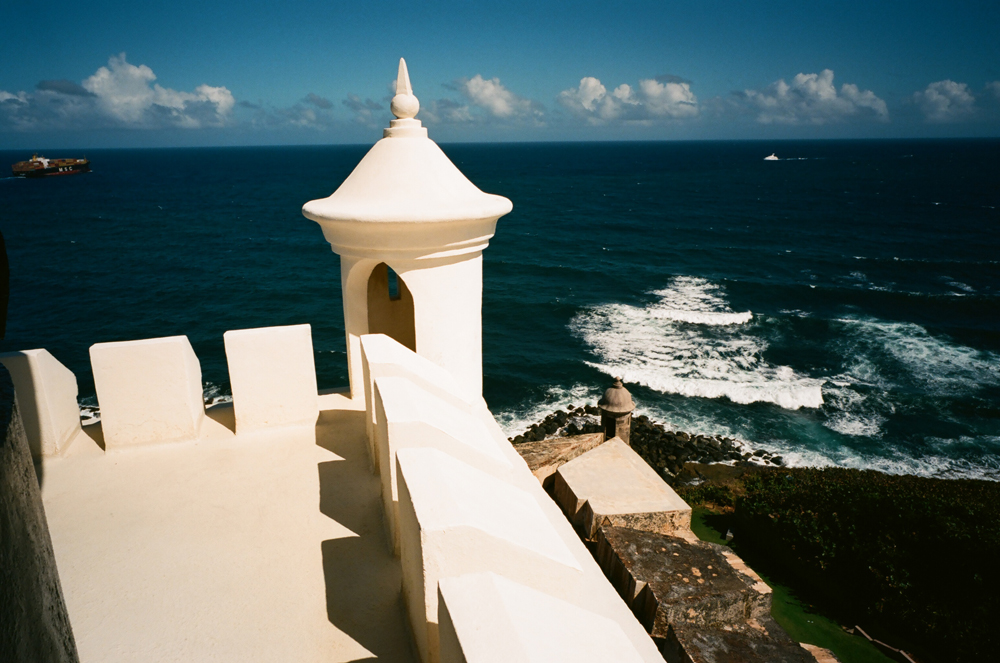
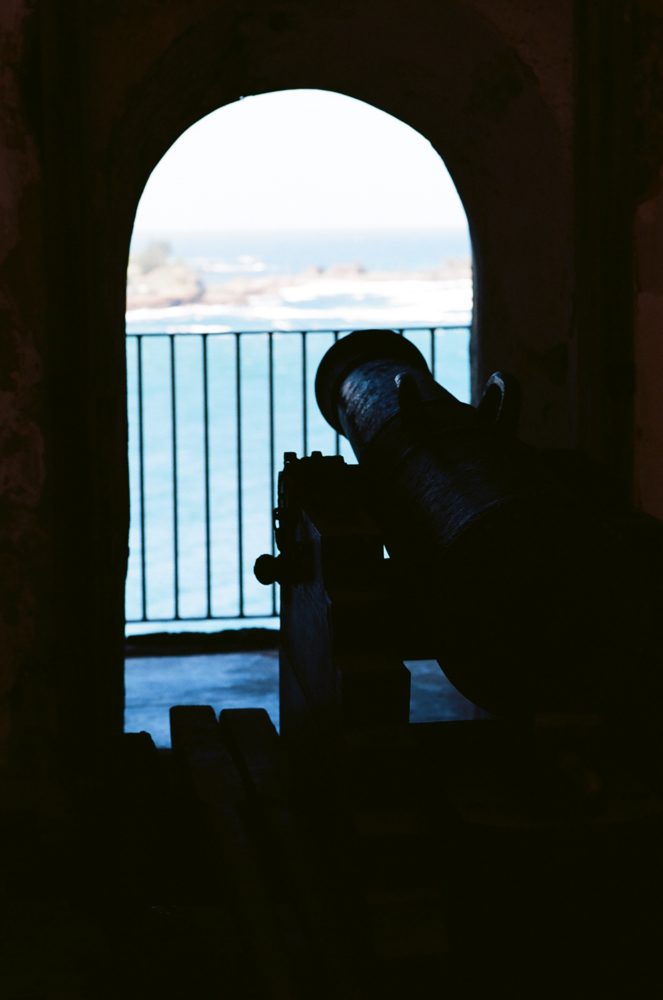
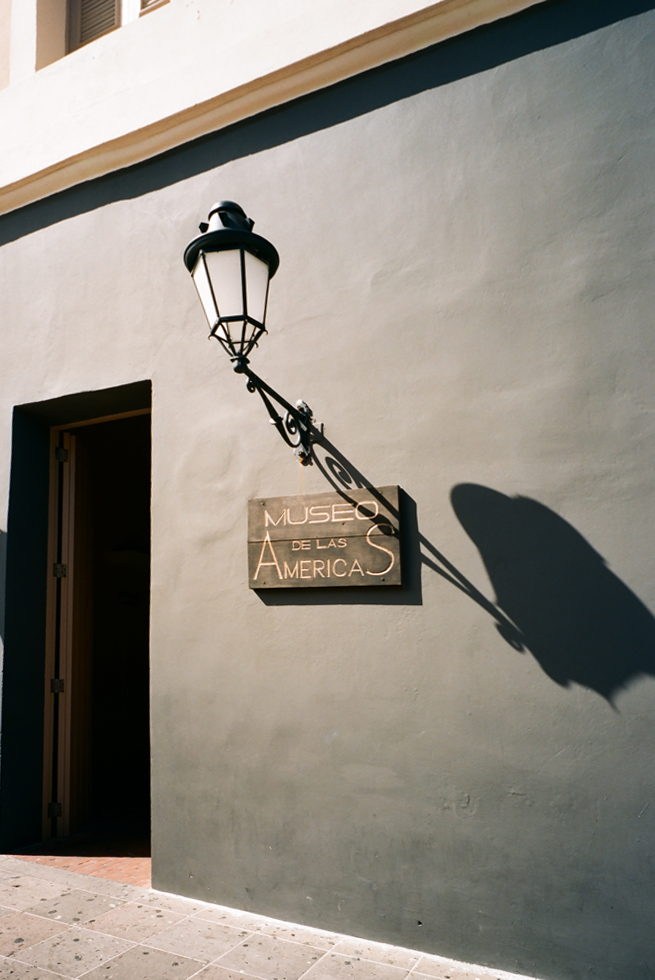
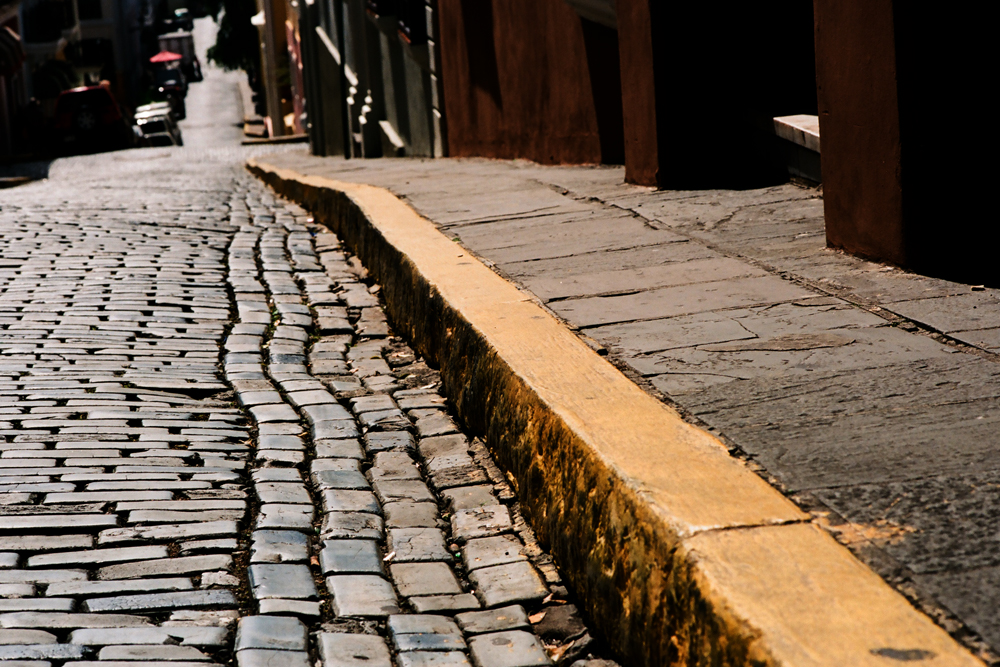
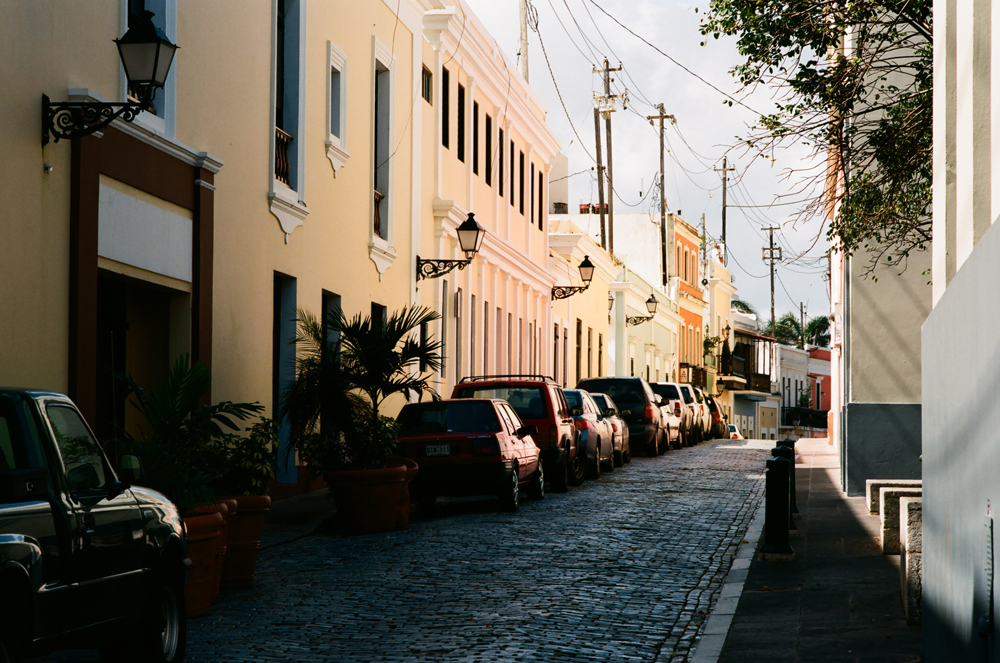
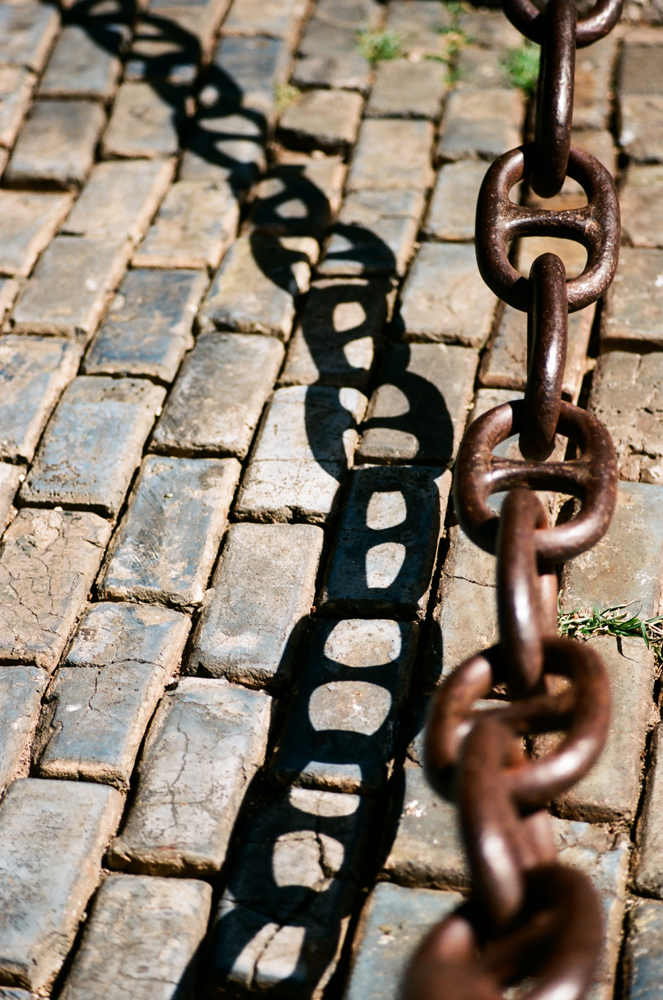
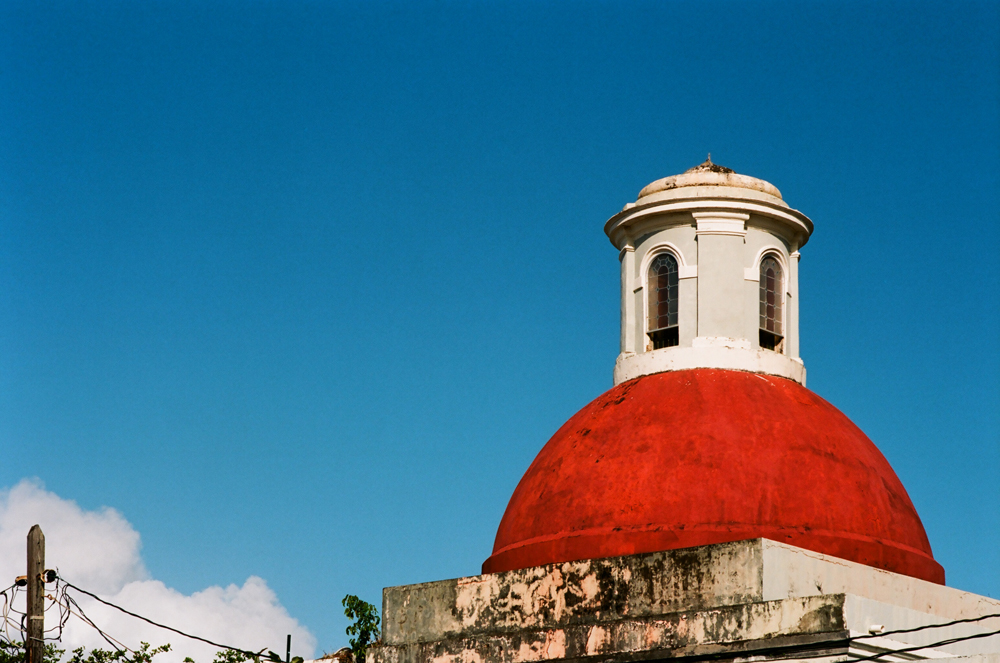
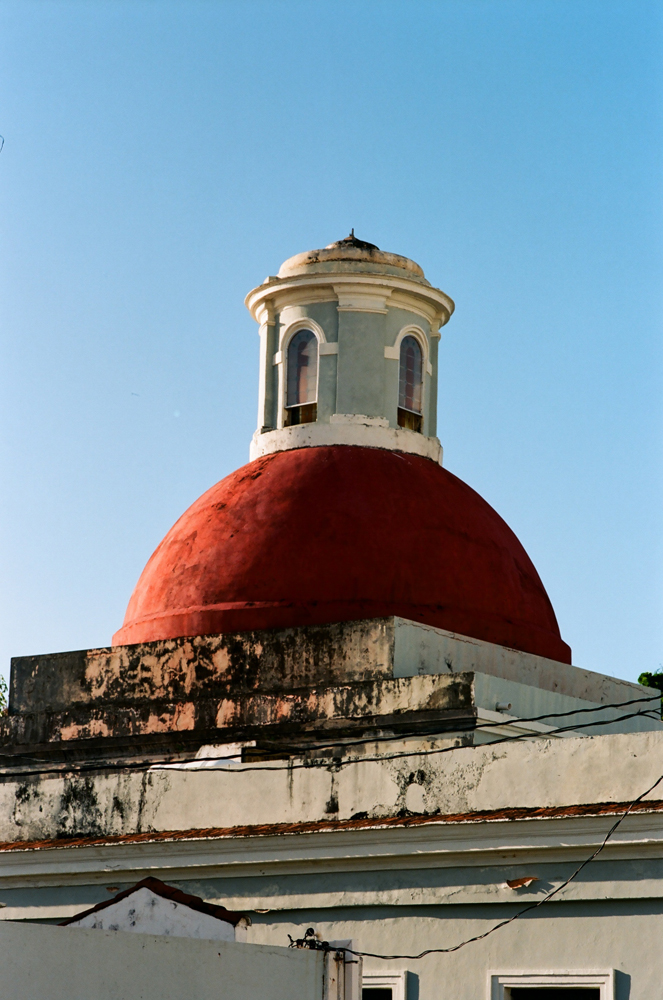
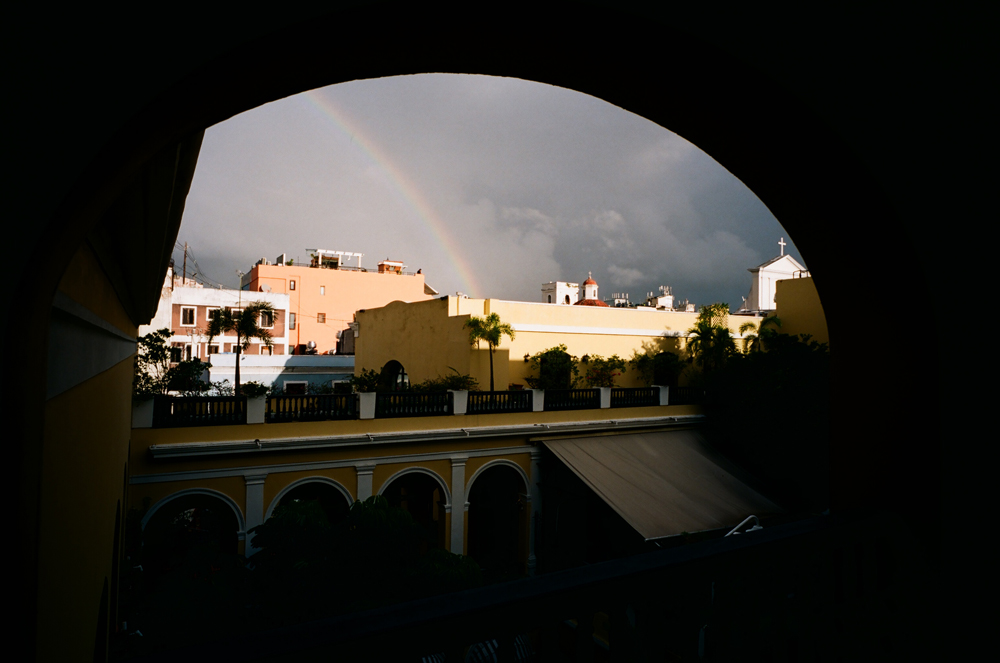
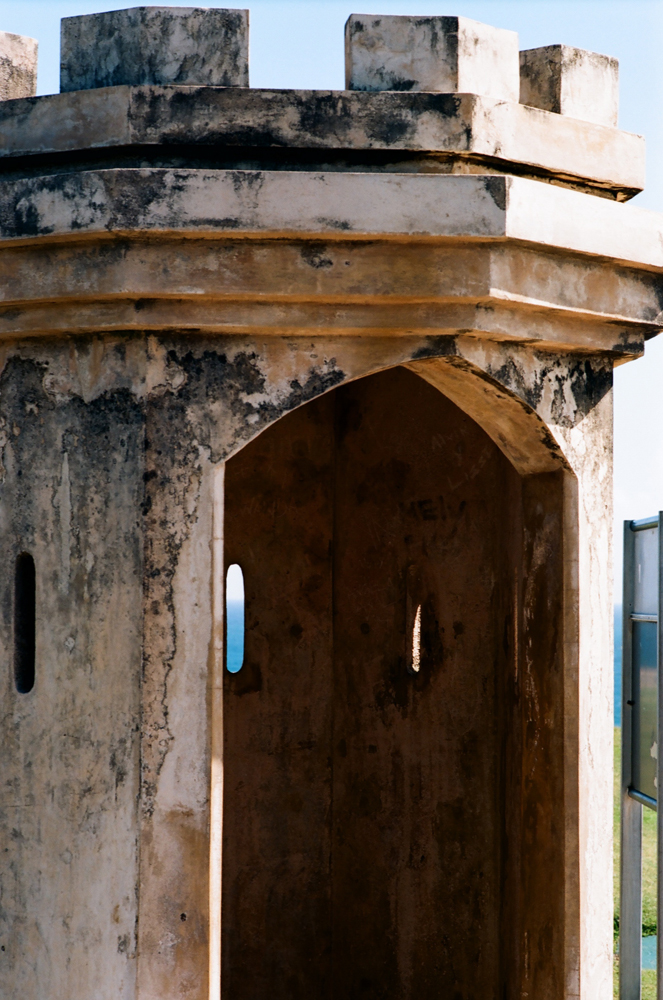
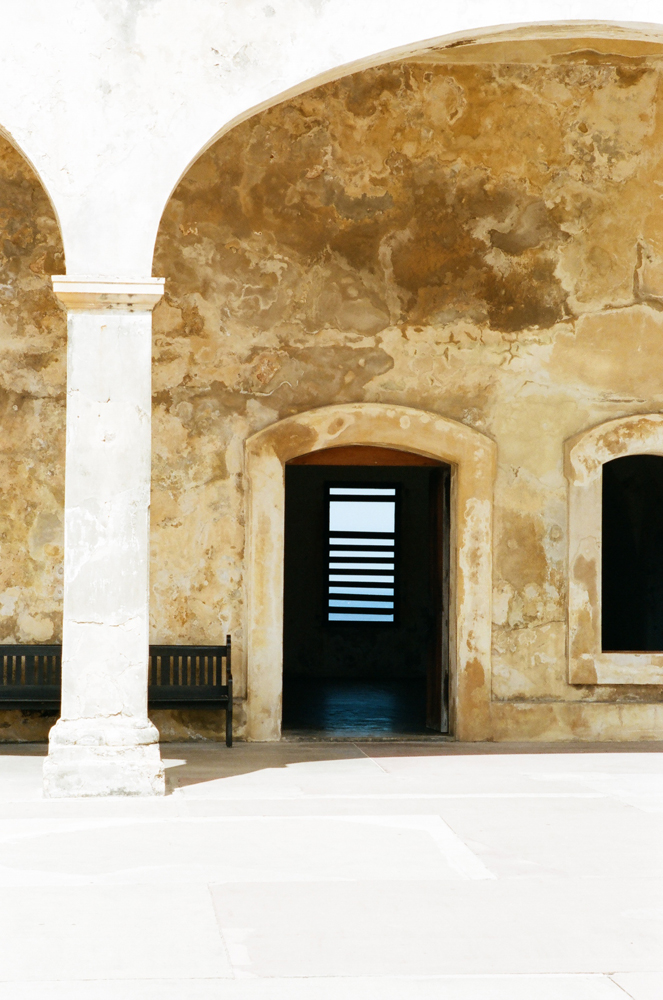
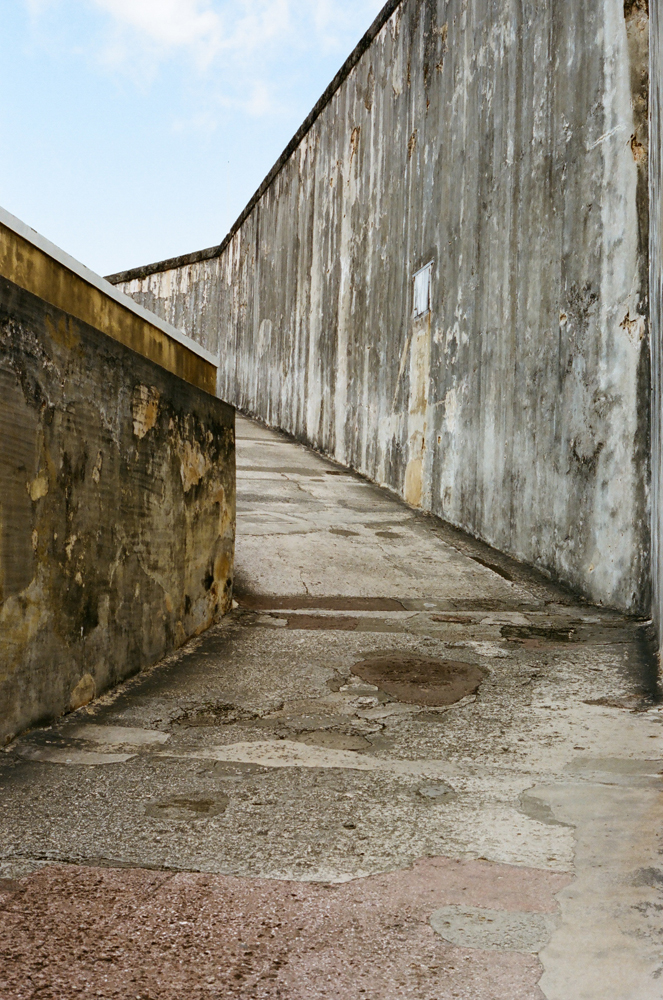
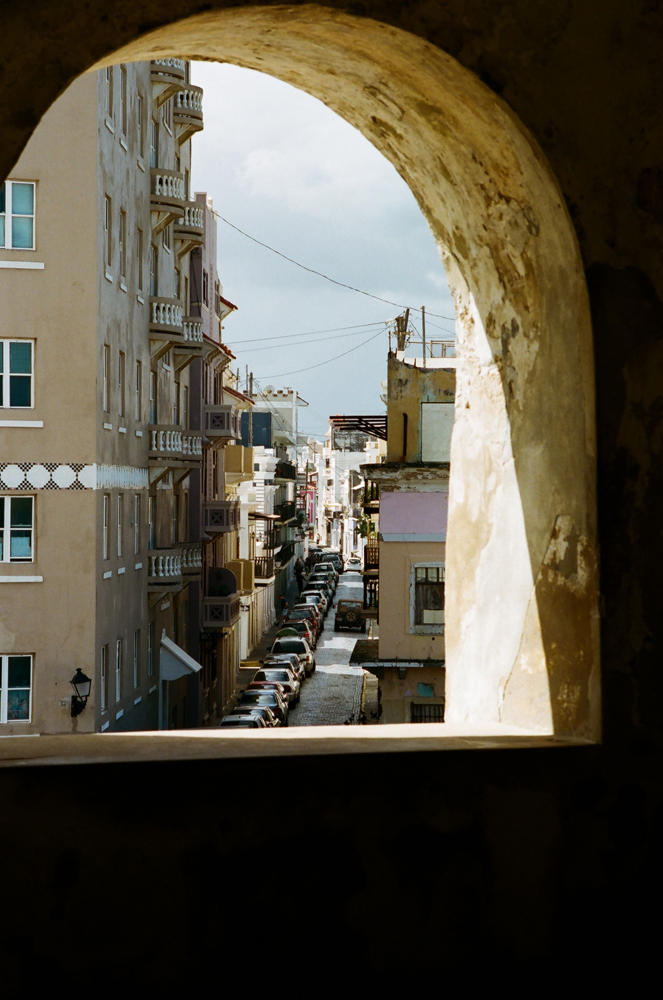
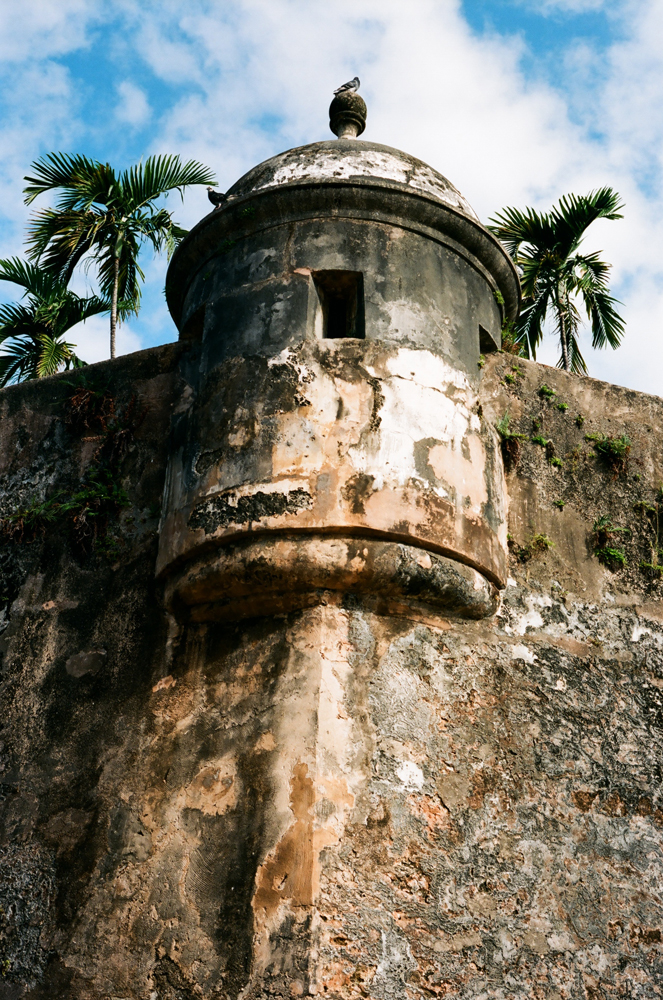
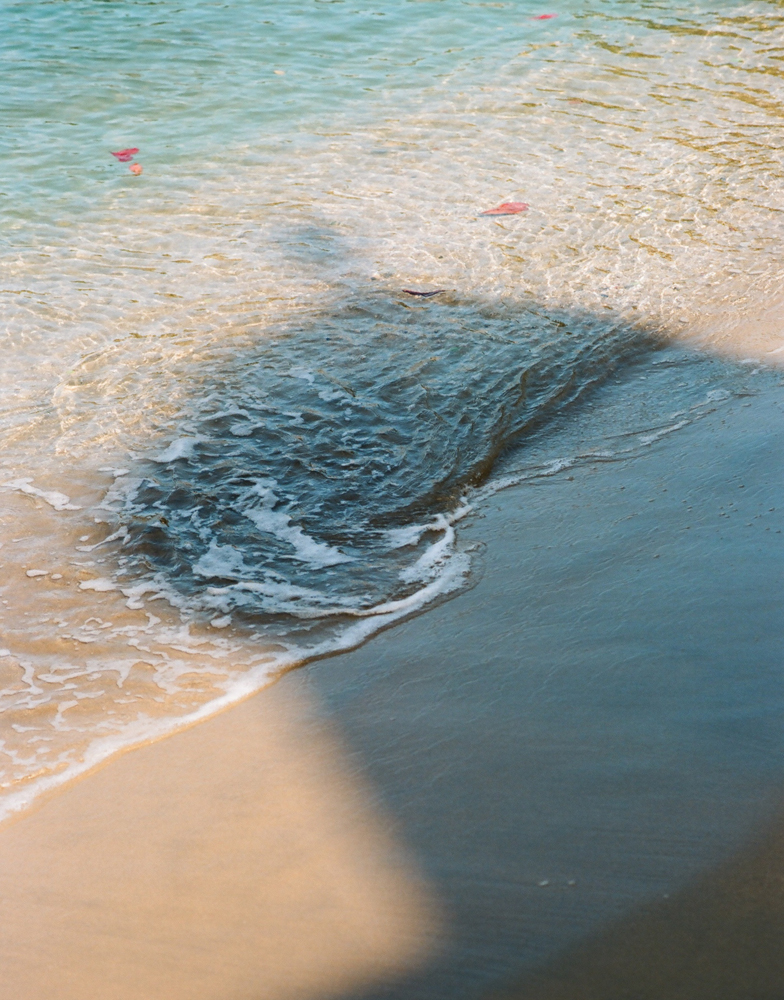
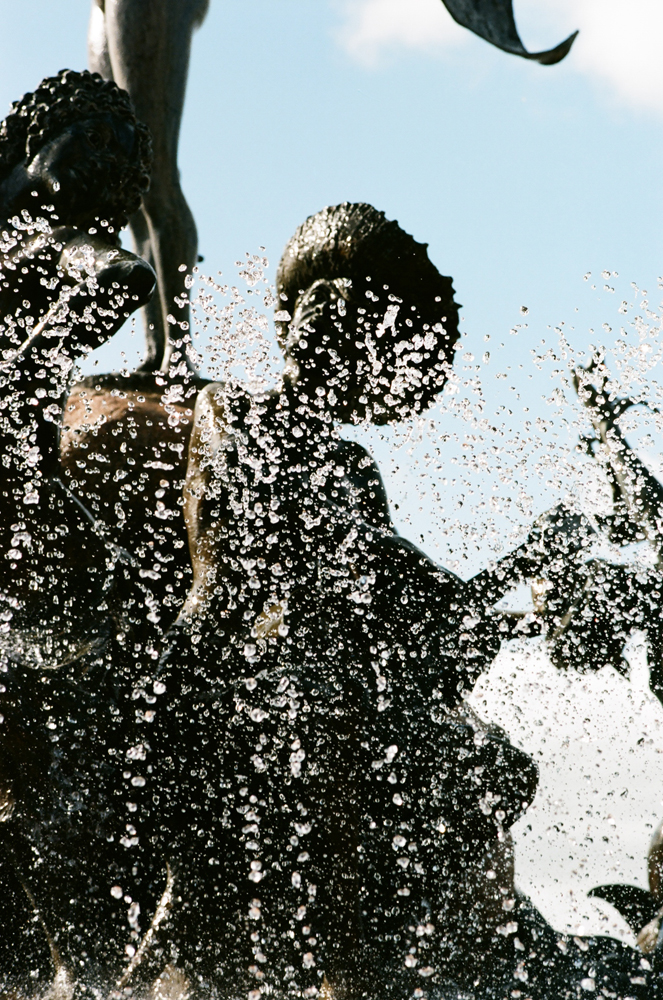
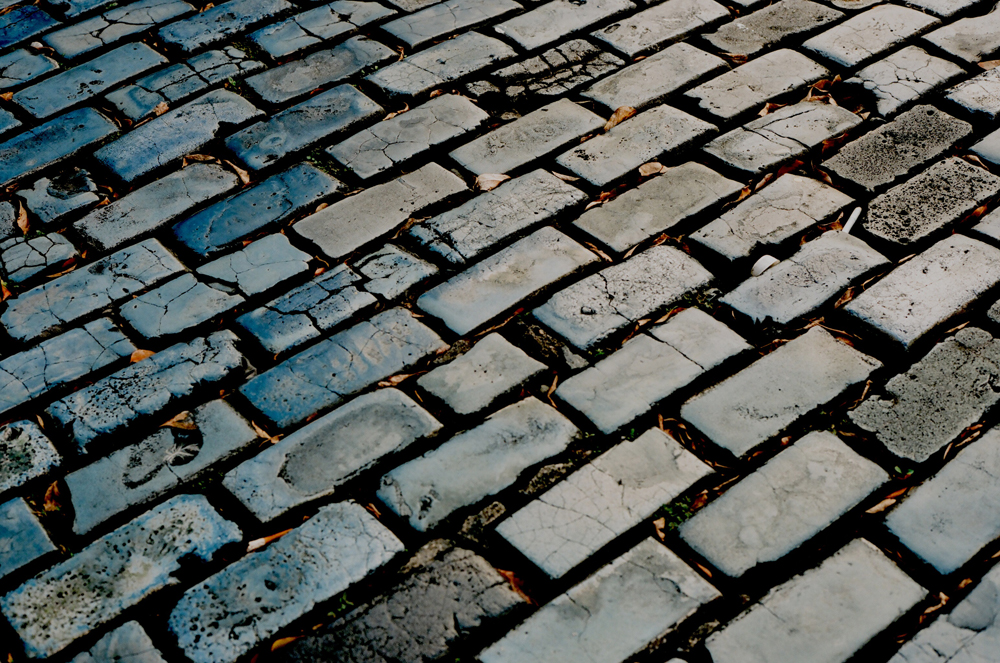
Just a few better images from the trip to Puerto Rico. Definitely NOT with a view camera – everything was shot with a Contax G2, mostly with the 21mm and 90mm lenses, with a couple of 45mm grabs in there. As always, working with the G2 is a joy, and it produces incredible results. Even though it isn’t “as silent as a Leica”, I enjoy the whirring of gears of the auto-focus, and the snick-snick of the shutter.
I’m some kind of obvious when taking photos, as even when I’m using the G2, which is a pretty inconspicuous camera, I seem to attract attention. My father and I were coming back from dinner and I stopped to take a photo, and this panhandler approaches me. He asks, “How much does that camera cost”? I can tell he’s not a photography enthusiast, so I reply, “I don’t remember, I’ve had it for a while. It takes film” – hoping that will discourage any thoughts of taking it. He then states, “I guess you have a relationship with your camera”. DUH. I do, but don’t even THINK about trying to end that relationship non-consensually. I do have a love affair with my cameras, and I’ll happily share that with anyone interested, but I’ll smack you to the moon if you try to mess with that.
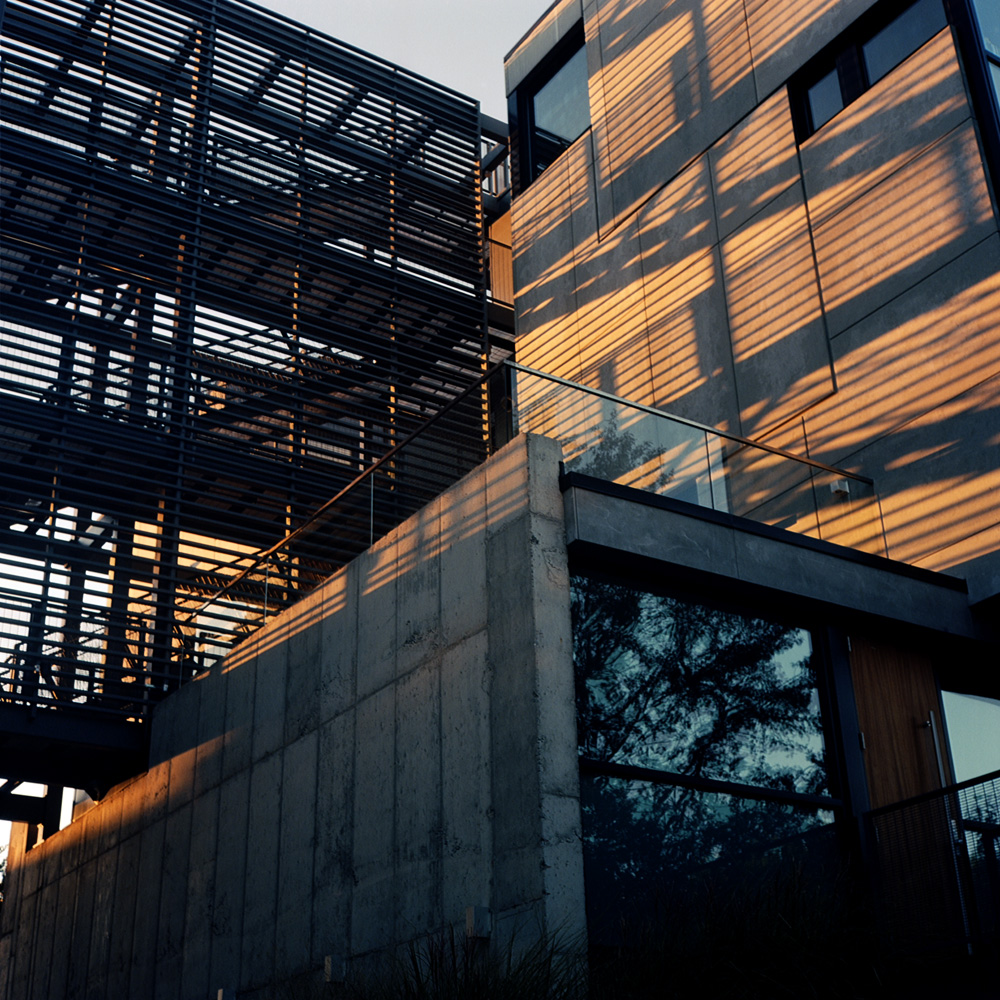
This time, I was paying attention to creating abstract compositions, which is easy in some ways because the tropical light is so strong, even early and late in the day you get powerful shadows and directional light, unless you’ve got profound overcast. The wrinkle is color- because our natural perception of the world is color, working with color film tends to emphasize our connection to the reality of the subject and distract from perceiving it as just line and form. I hope I’ve managed with a few images to challenge that limitation. I know for myself as a predominantly black-and-white photographer that switching gears to see and think in color is hard – some of the photos I took on this trip I can look at and see very clearly that they would be better as black-and-white images. Sometimes color creates contrast that we don’t see when we are used to thinking only of tone and reflectiveness, and sometimes what looks good as contrast between light and shadow looks god-awful in color because it’s too harsh and the color is overwhelmed.
For those who are interested, all these were shot on Kodak Ektar 100 (with a few using the new Kodak Portra 400). I think it is my new go-to 35mm film, displacing even my beloved Fuji Reala. I like the palette of Ektar better now- the Fuji’s greens are a little too strong, the blues and reds a little weak compared to the Ektar. I’m also highly impressed with the Portra 400. I brought along two rolls of it thinking I might use it for some night photos. Dummy me didn’t segregate it from general population in the film pocket of my camera bag, and I accidentally grabbed a roll and loaded it thinking it was still the Ektar 100 (BAD Kodak – the design for the canister is identical except for the text label, so you can’t tell easily through the plastic tube which is which). The upside is, I can almost not tell any difference between them, at least in a scan and a 4×6 print. I’ll let you look through the gallery and decide for yourselves which is which. I’m not telling.






 dcphotoartist