Tag Archives: New York

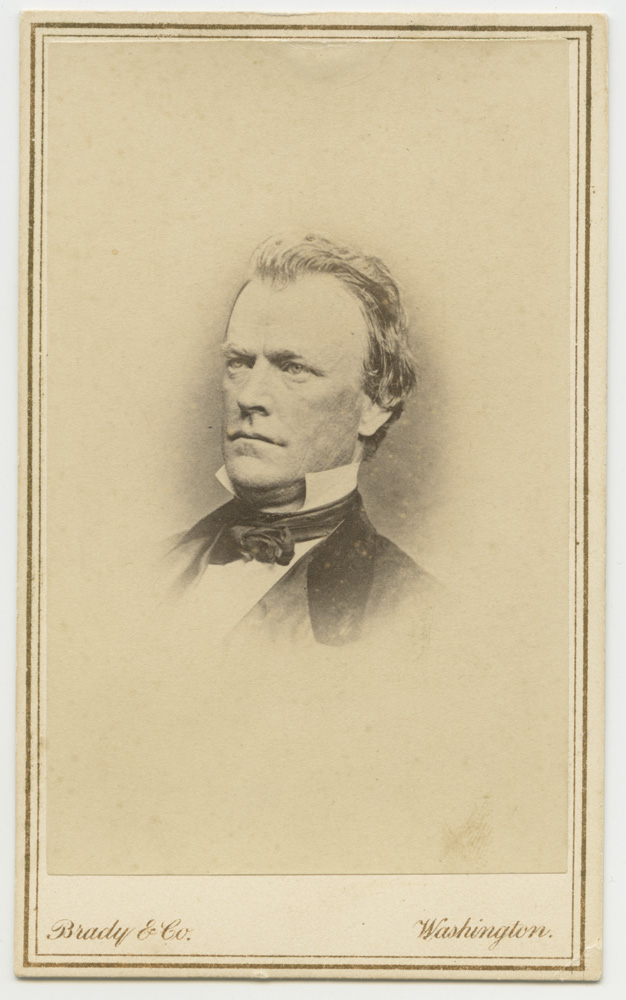
Anonymous Gentleman, by Brady’s Washington DC studio

Anonymous Gentleman, by Brady

If you’ve been following my blog for any length of time you know by now of my interest in images by Mathew Brady’s Washington DC studio. Here is another gem, in near perfect original condition. The sitter is anonymous.

I’ve seen enough of Brady’s CDVs now that I’ve noticed a pattern in the labeling – if you want to tell which studio produced the image, first look at the front – if it says Washington or New York on the front, that’s a 100 % guarantee of where it was taken. If it is not labeled on the front, look at the photographer’s imprint on the verso. The studio that produced it will be listed first: a Washington DC portrait will say “No. 352 Pennsylvania Av., Washington DC & New York”, whereas a New York portrait will say “Broadway & 10th Street, New York, & 352 Pennsylvania Avenue, Washington DC”. Strangely, the Washington DC ones often list only “New York” as the second address, if they list it at all (I have seen it all three ways,”Broadway & 10th”, “New York” and no second address), but the New York ones seem to always list the full “352 Pennsylvania Avenue” as the second address. This of course does not take into account the E&HT Anthony CDVs, which do not list any Brady studio address, but rather state “Published by E & HT Anthony, 501 Broadway, New York” very prominently, and then include the following variations:

  • From Photographic Negative by Brady
  • From Photographic Negative in Brady’s National Portrait Gallery
  • Manufacturers of Photographic Albums
  • No Brady attribution or mention of photographic albums

I guess it makes sense for Anthony to plug the albums on the backs of CDVs, but they made a full range of photographic supplies from albums to chemistry and cameras. The name lived on in various forms for well over a century – they merged with Scovill around the turn of the 20th century and formed Ansco (ANthony & SCOvill), which then partnered with Agfa in the US to become Agfa-Ansco.

Yet More Little People

Unknown Little Person, H.B. Gerncore's Temple of Art
Unknown Little Person, H.B. Gerncore’s Temple of Art

I’ve had a devil of a time trying to decipher the photographer’s name on the back – the best I can tell is it’s either H.B. Gerncore or H.L. Ger-something-something. In any case, it’s a beautiful photo of a strikingly proportionate little person. I’m frankly not even entirely sure he’s a little person and not just a pre-teen in a well-tailored suit. But the top hat and tails make it more likely he’s an adult sideshow or circus performer.

The Strattons, George Nutt and Minnie Warren in their Tuilieries outfits

Here’s yet another photo of Tom Thumb and company, this time in the outfits they wore to meet Napoleon III. Also an Anthony print, with the facsimile signatures on the back. Again no attribution of the photographer, so while it is possible it’s a Brady, it’s likely not. Notice the hand-coloring of the women’s garlands and the men’s watch chains.

Exhibition Review – Faking It: Manipulated Photography before Photoshop

Over my lunch break today I caught a wonderful exhibit at the National Gallery of Art entitled Faking It: Manipulated Photography Before Photoshop. The exhibition opened in mid-February and runs through May 5th. It moves to Houston in July to October. One of the singular points the exhibit drives home is the fact that photography has always been subject to manipulation even from its earliest days when daguerreotypes were hand-colored to make them more ‘realistic’, and skies were printed in via multiple negatives to compensate for the shortcomings of early emulsion formulas. One of the coups of the exhibition is the inclusion of Steichen’s “The Pond – Moonlight” from the collection of the Metropolitan Museum of Art. Most people familiar with the work know it as a multi-layered gum bichromate over platinum print. What most don’t realize, however, is that the image may in fact be a composite with the moon having been added, and may also never have been photographed by moonlight (a feat that would have been difficult to achieve with the emulsions available even in 1904). The moon in the image may be an addition or otherwise a manipulation of the print, and the nighttime feel of the image merely an effect of the color choices in the gum layers of the print.

The Pond, Moonlight - Edward Steichen

Images have been manipulated for a whole host of reasons, from a desire to make them more real (hand-colored daguerreotypes) to conveying an inner reality (surrealist photography) to evoking an emotional resonance (The Pond, Moonlight) to suggesting a reality that could exist (a Zeppelin docking at the docking tower of the Empire State building) to creating something that never existed (giant crickets consuming giant produce on the back of a wagon) to re-shaping reality for political ends (Nazi and Soviet propaganda posters and publicity photos). All of the above are represented in this exhibit, and placed in an historical and artistic continuum.

There has been much controversy lately over questions of photojournalistic integrity with regards to digital manipulation to include/exclude details to tell a story, from the Iranians photoshopping additional rockets into a picture of a missile test to Edgar Martins getting caught claiming his work was unmanipulated when in fact he was heavily altering his images. This is not new, but in fact the question of manipulative ethics is far more unsettled for far longer than most people realize. In 1906, Horace Nichols was photographing the Epsom Derby on a rainy day. There were gaps in the crowd, so to convey the feeling of the event he wanted to convey, he spliced in a whole sea of additional umbrellas. This was common practice for Mr. Nichols, and he rarely cited it in the captions of his images, but he sustained a career as a serious photo-journalist. It makes you think long and hard about your assumptions of photographic verissimilitude and the historical moment in which photography ‘ceased to tell the truth’.

The exhibition is well worth the visit if you have an interest in the history of photography and questions of honesty and integrity of the photographic medium.

Also worth noting is that the Metropolitan Museum of Art in New York is currently hosting (through May, 2013) a companion exhibit (which I hope will travel as well) entitled After Photoshop: Manipulated Photography in the Digital Age

I’ll be up in New York in April for a weekend and so I’ll try to catch it then and see the two shows as brackets for one another. The comparison should be very interesting.

More additions to the photographers’ maps

I added several addresses in the last few days, to all three maps. To New York, I added:

P.H. Rupp, 13 Avenue A

D. Appleton & Co, Cartes De Visite, A.A. Turner, Photographer, 443 & 445 Broadway

C. Henkel, 1288 Broadway

To Philadelphia, I’ve added:

Schreiber & Son, Photographers, 818 Arch Street

Photographed by Roberts, 808 Arch Street

Fitzgerald & Co, Photographers, 828 Arch Street

To Washington DC I’ve added:

R. W. Addis, Photographer, McClee’s Gallery 308 Pennsylvania Avenue

Tasset, Artist Photographer, 925 Pennsylvania Avenue

As per my usual practice, I’m including any advertising copy found on the photographers’ verso imprints along with the address.

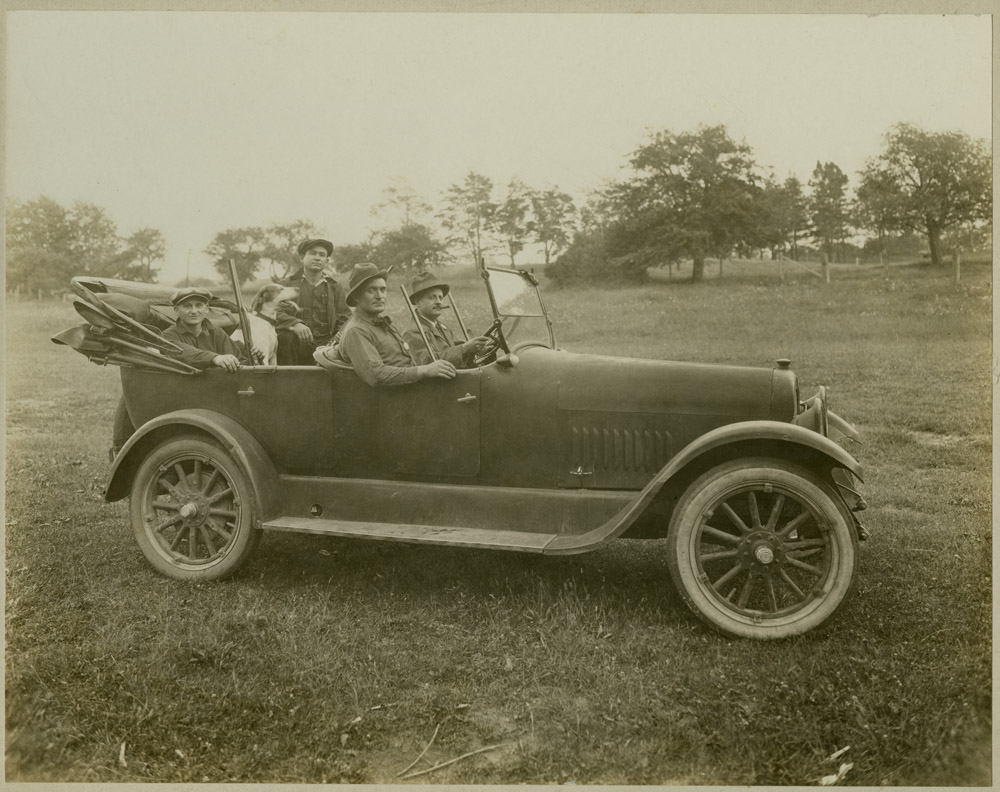
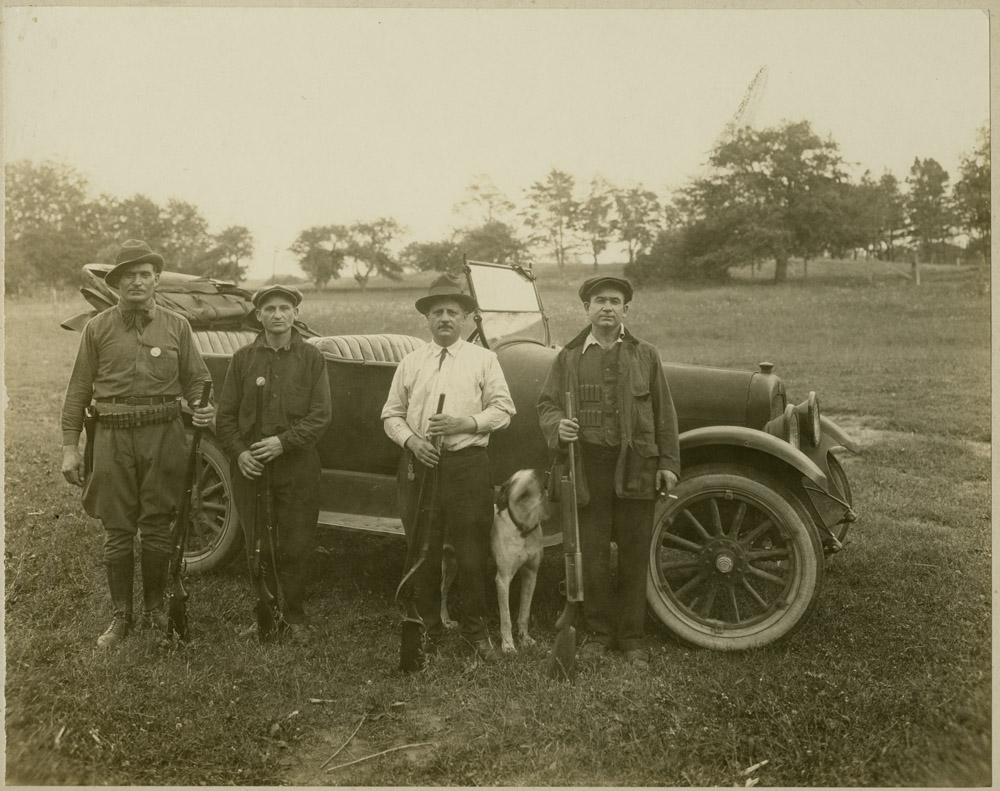
Ca. 1916 Hunting Party

1916 Hunting Party in car, by John D. Isaac, Batavia, NY
1916 Hunting Party, by John D. Isaac, Batavia, NY

These are 8×10″ prints mounted to 11×14 inch boards. The reverse of each is stamped “John D. Isaac, Batavia, New York”. These gentlemen all appear to be a family – there’s way too much resemblance between three of the four to be anything other than brothers/father and sons. And I love the dog being included in the photo, and hopping up in the back seat like just another passenger. Just goes to show dogs have always loved cars.

The big mystery is the car – what make is it. I initially thought it was a Dodge, from the shape of the fender and the headlamps, but the grille is not quite right, and neither is the maker’s enamel plaque on the grille, or the hood vents, the door opening pattern (suicide door on the front, standard in the rear) or the contour of the cowl where the hood fairs into the body. This is a larger, more luxurious car than a Dodge, but the common (and not-so-common) marques I can think of to look up don’t seem to match either. It’s not an Essex, Hudson, Hupmobile, Locomobile, Plymouth, Haynes, Mercer, Peerless, Pierce Arrow, Buick, Cadillac, or Overland, that I can tell. It could be as late as the early 1920s, but it’s definitely not past 1930.

EDIT: Doing some more digging, I think I found what it is. It’s a ca. 1916-1918 Studebaker, most likely a Light Six touring car.

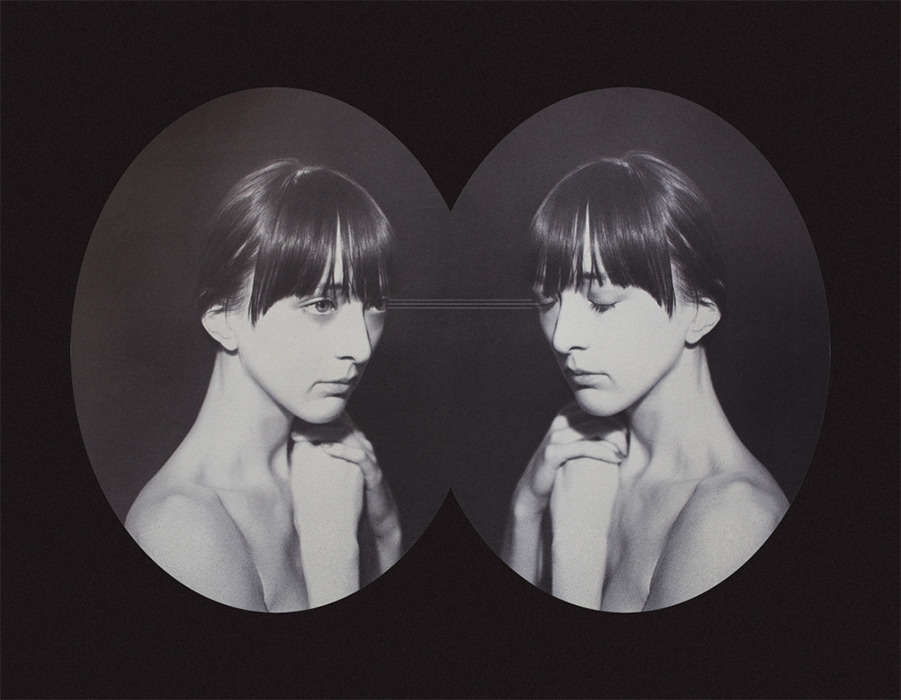
Danielle Ezzo – curator and photographer

Danielle Ezzo makes beautiful salt prints. You should check out her work!

http://dezzoster.tumblr.com

She has an upcoming show at Galerie Protege in New York, the opening is October 11.

Lovingly Distant, by Danielle Ezzo

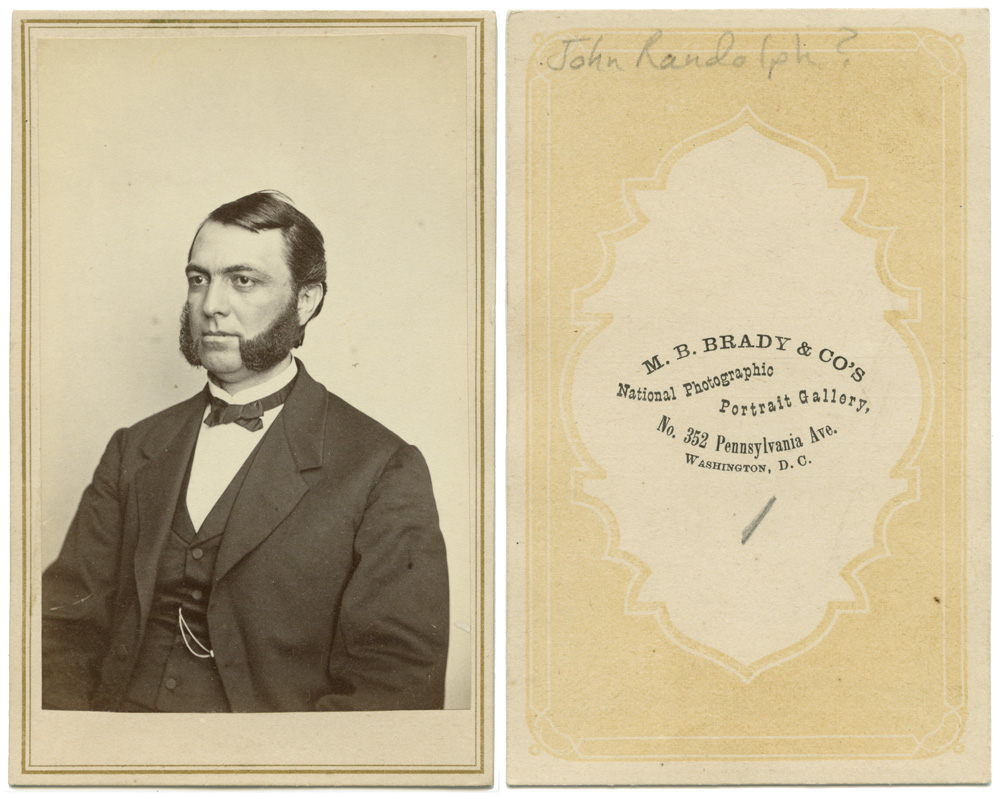
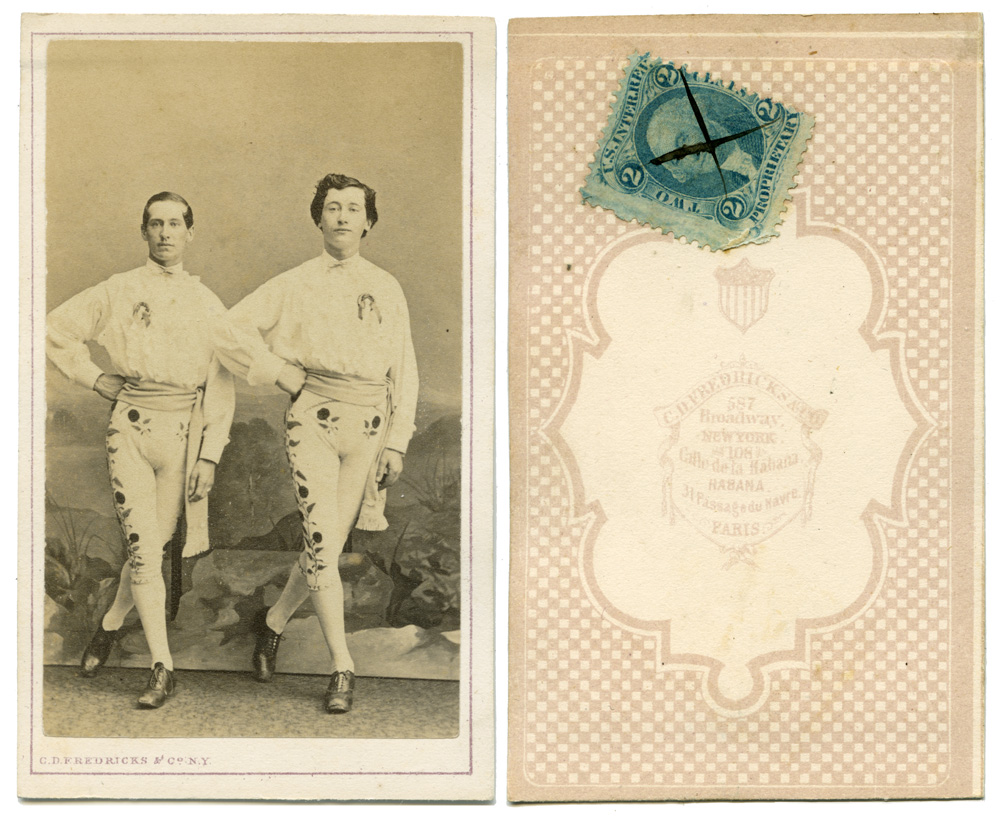
A Brady CDV from the Washington DC Studio, and a Fredericks CDV from ¿Havana?

Two more CDVs – a Brady from the DC studio, and judging by the backmark style, a later (post Civil War) image. The sitter is reputed to be named John Randolph, one of the FitzRandolphs of Philadelphia (or could it be the FitzRandolphs who gave the original land grant to found Princeton University?). Evidence is unclear, but the picture is very.

John Randolph, by Mathew Brady

The second CD is from the Fredericks studio, of New York, Havana and Paris. As the subject is toreadors, I’m guessing this was taken at either the Paris or Havana studios. Bullfighting has never had any serious following in the United States, so toreadors would be unlikely to come to New York on a performing tour of the US. I thought I had another Fredericks CDV somewhere in my collection, but I’ll be damned if I can find it – I may have just recorded the address on my New York studio map during a scan of studio backmarks on eBay.

Two Toreadors, by Fredericks of New York, Havana and Paris

This is another image that could have been marketed as “gay interest”, thankfully it wasn’t. Despite their costumes and matching fey poses, there’s nothing about them that shouts (or whispers) 19th century code for gay. Pure 21st century wishful thinking.

More updates to the Victorian Photographers maps

I’ve added four more studios to the New York and three to the Philadelphia Victorian photography studios maps.

New York:

  • William J. Tait, corner Greenwich & Cortlandt streets
  • John C. Helme – Daguerreotype studio, 111 Bowery
  • Abraham Bogardus – Daguerreotype studio (early), Greenwich & Barclay
  • Mathew Brady – Daguerreotype studio (early), 205-207 Broadway

Philadelphia:

  • D.C.Collins & Co. City Daguerreotype Establishment, 100 Chestnut Street
  • Reimer, 612 N. 2nd Street
  • Van Loan & Ennis – Daguerreotype studio, 118 Chestnut Street

Just a little more fun with the photographers maps compilation.

Here’s a quick link to the maps in case:

Victorian Photo Parlor Maps

Some more food for thought – I think I’ve mentioned this before, about the migration over time of certain studios, moving uptown in New York as their client base moved further uptown – to better illustrate this, I’ve pulled the studio addresses for three of the most prominent portrait studios of the day, and listed them in chronological order as best possible:

Mathew Brady:

  • 205-207 Broadway
  • 359 Broadway
  • 635 Broadway
  • 785 Broadway

Gurney & Sons

  • 349 Broadway
  • 707 Broadway
  • 5th Avenue & E. 16th Street

Abraham Bogardus

  • Greenwich & Barclay Streets
  • 363 Broadway
  • 872 Broadway

Also notice how close they all were to each other. While I don’t have dates per-se for each of the addresses, notice that at one point, all three were in the same block of Broadway (the 300 block), and again later, all three were in a two block span of Broadway, further uptown (700-800 block). Even early on, they were clustered close to each other in Lower Manhattan – 643 Bleecker is not far from Greenwich & Barclay, and another photographer, William J. Tait, was just a block or two away at Greenwich & Cortlandt streets.

Soldiers and Sailors

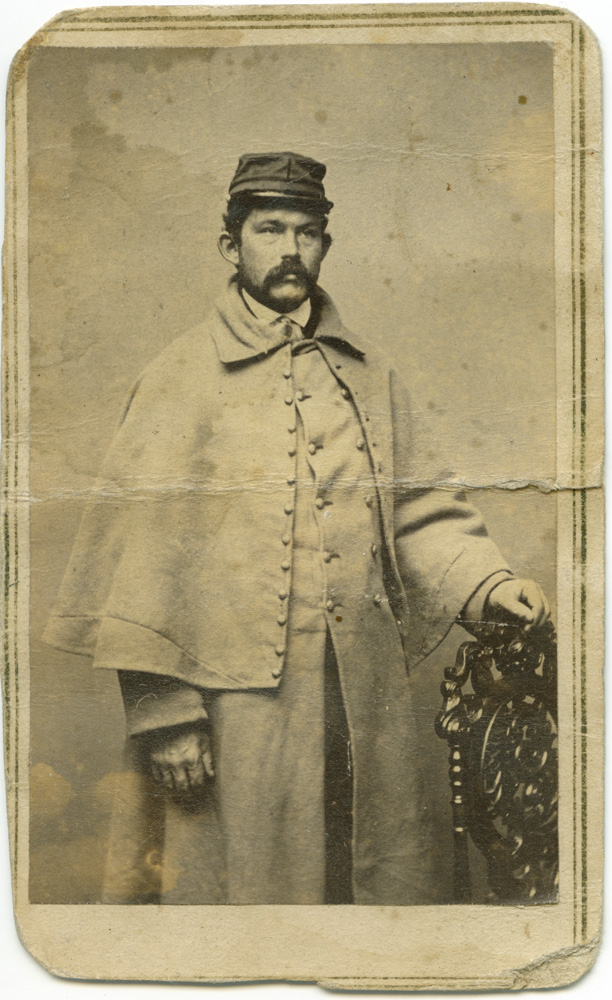
Here’s a Union soldier, identity unknown, from the William J. Tait studio. This may well have been taken immediately prior to shipping out to battlefields unknown – the studio address is Courtlandt Street and Greenwich Street in lower Manhattan – basically in the site of the modern World Trade Center. Back then it would have been only two or three blocks from the waterfront piers. It’s another image that obviously meant a lot to someone as it has a fold across the middle – someone was carrying it around with them in a pocket. Did the sitter die in combat, or was it just a fond memory of a critical time in US history that inspired the owner to keep it at hand?

Union Soldier, Wm. J. Tait studio, NY

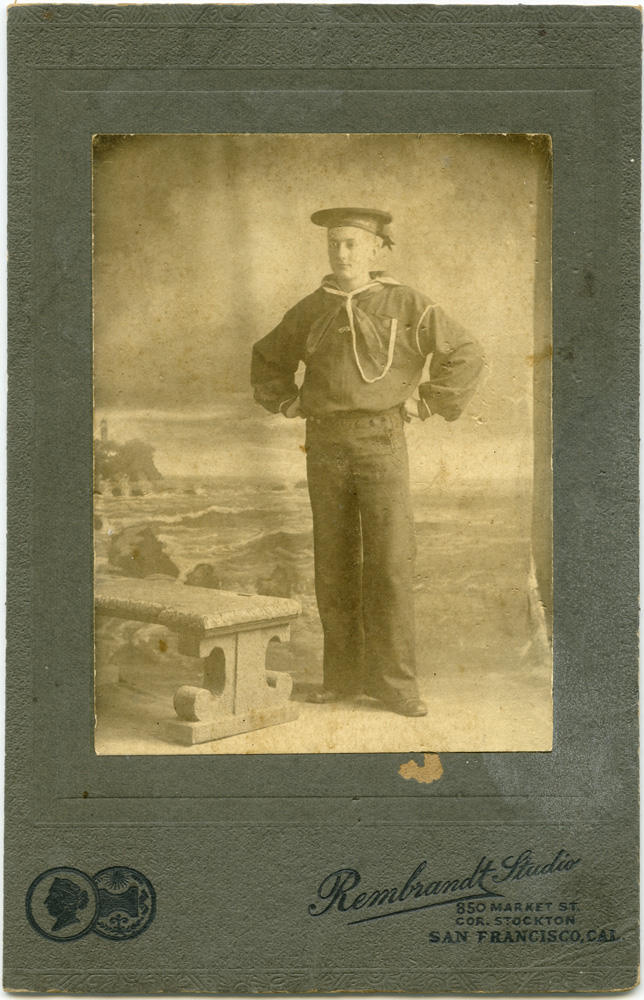
In a totally different light, here’s a west coast sailor. This time, most likely the 1890s, on a cabinet card. The original card is a little bit bigger than 3.5″ by 5″. I did a very mild clean-up of the scan in Photoshop to make the image more readable online. The original card is slightly lower in contrast and has a couple very minor spots in the background that do not interfere with the subject. I tried to scan his hat at high resolution to see if I could read the ship’s name he was assigned to, but it couldn’t be resolved (at least not with my scanner).

Sailor, 1890s, Rembrandt Studio, San Francisco

There’s a noticeable difference between the two photos, and I don’t think it is just attributable to the changes in photo technology between 1860 and 1890. The Civil War sitter has a far more somber expression on his face and in his body language – it’s as if he knows he is going to die, and this is a reminder to send back to his family so they won’t forget him when he’s gone. The 1890s sailor, on the other hand, is having a lark, getting his portrait done while in port perhaps as much a souvenir of the location as anything else. Later I’ll re-scan and post my Hong Kong sailor photos to provide a comparison.

Upcoming collectors show in New York

For those who might be interested, here’s a link to The Photography Collectors’ Show in New York next Saturday, March 19. I’m toying with the idea of going up to see it.

Here is a list of dealers who will be in attendance:

Steve Yager
Adam Forgash
Casey A. Waters
Christopher Wahren
D. T. Pendleton
Dennis Waters
Erin Waters
Greg French
Henry Deeks
Maria DiElsi
Thomas Harris
Stacy Waldman
Arthur Dristiliaris
Brian Caplan
David Chow
Dr. Stanley Burns
Glenn Vogel
Jack Domeischel
Julian Wolff
Larry Berke
Lisa Taos
Richard Hart
Richard Silver
Stephen Perloff
Stuart Butterfield
Susan Davens