Another onesie – The skyline at dawn, from the apartment window.
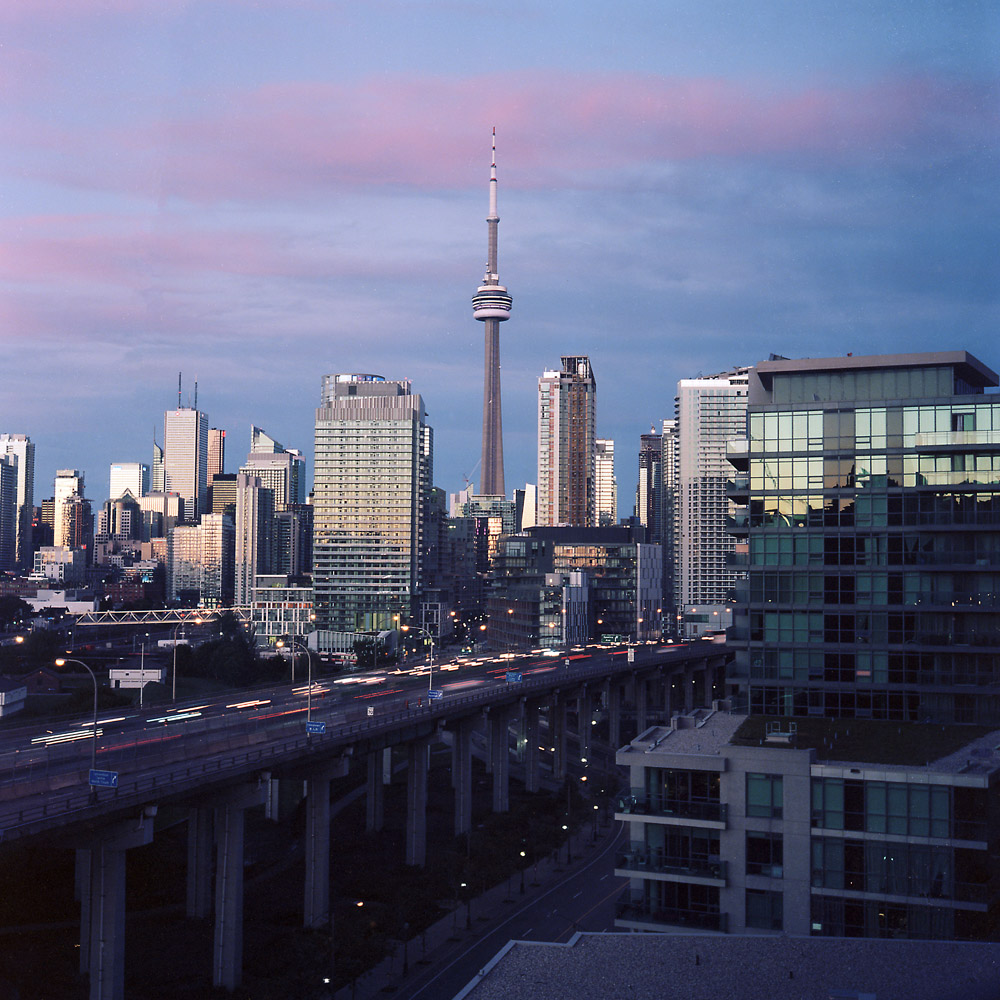
Another onesie – The skyline at dawn, from the apartment window.
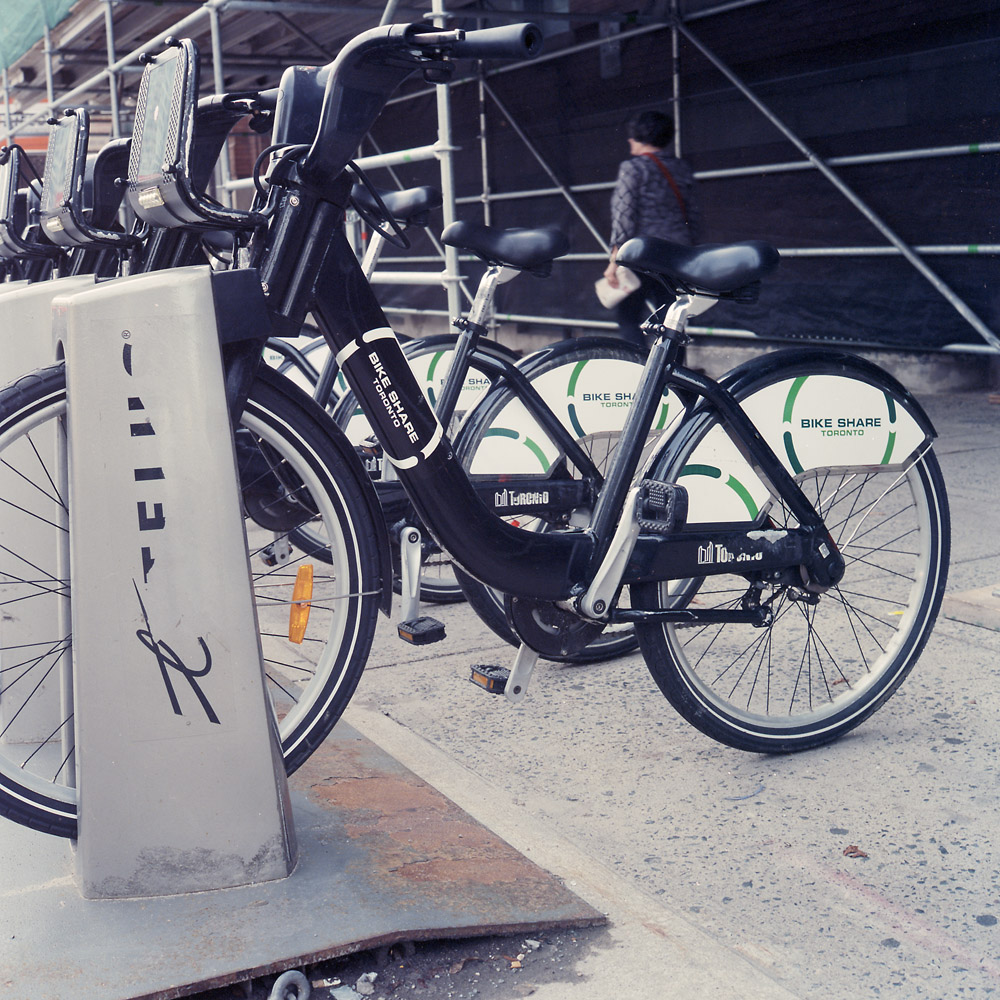
Bicycle culture is widespread in Toronto – lots of people ride them everywhere. The Toronto Bikeshare is older than some, and well established. I found myself photographing them as part of my work on public transportation (or at least as car alternatives).
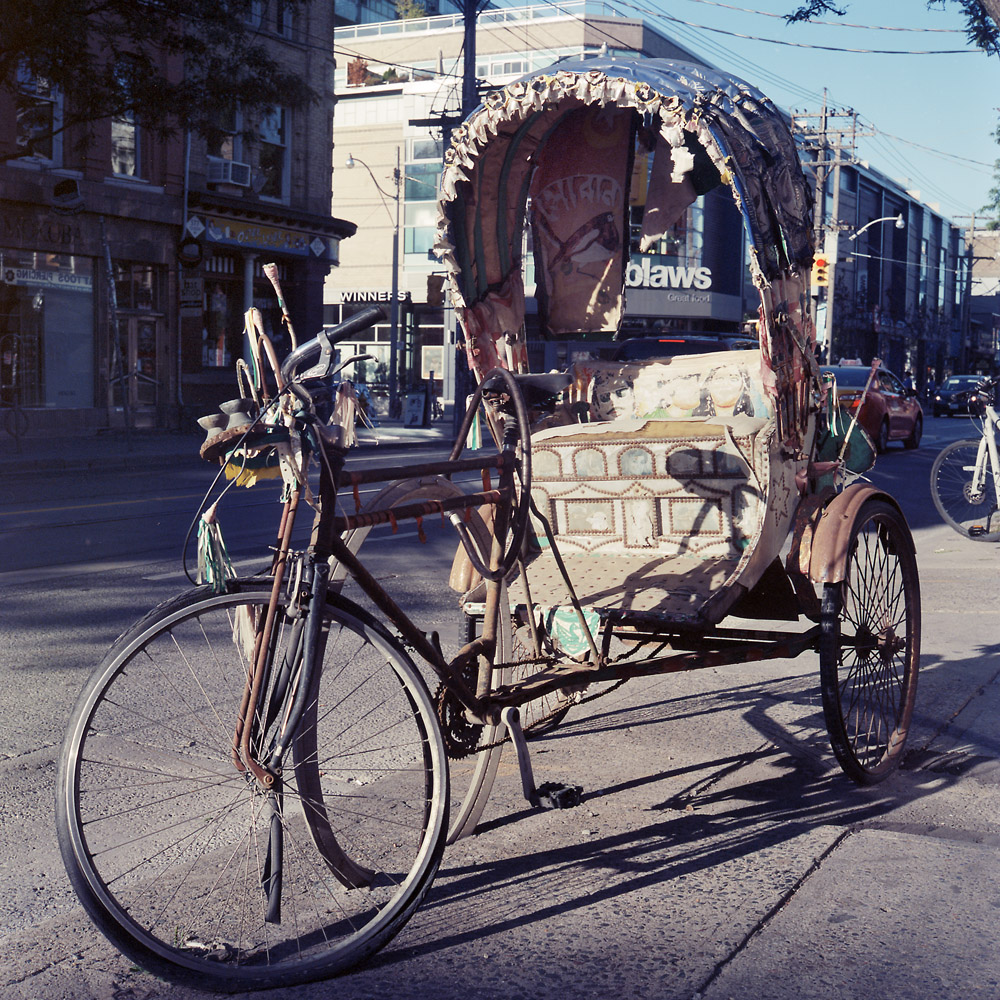
While THIS bike is obviously non-functional, it is extremely cool. It was imported from India god knows how long ago. With Canadian winters being what they are, it could be only a couple years in-country. This was found on Queen Street, a very bohemian and trendy part of town, still a little rough around the edges. There did not appear to be any particular association between the pedicab and a store or restaurant – it was just there.
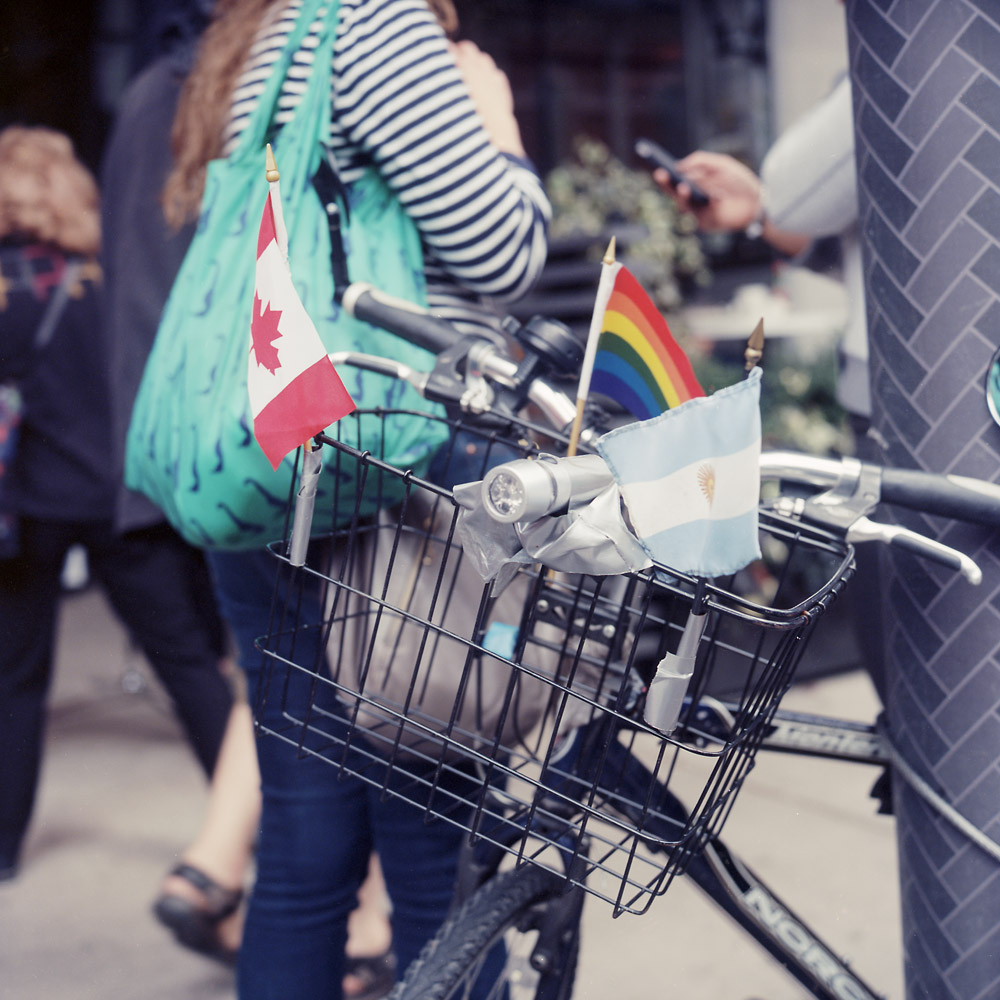
This was spotted outside the TIFF Bell Lightbox theater complex during the opening weekend of the Toronto International Film Festival. It is emblematic of the multi-cultural, open-minded Canadian attitude toward just about everything. Canada, Argentina, Gay… it’s all good.
Ok, this one gets its own shot because it’s just too cool for school and doesn’t play well with others. I was up in Toronto for the Toronto International Film Festival last weekend. I rented an apartment on Fort York Boulevard, right down by Lake Ontario. The apartment had a view of the downtown skyline, including the CN Tower, which is the tallest structure in North America, and if I recall correctly, the 15th tallest in the world. As such, it attracts lightning strikes. I was lucky enough to be there for a late-summer thunderstorm, and to photograph it through my apartment window during that storm, and catch a shot of the CN Tower getting struck.
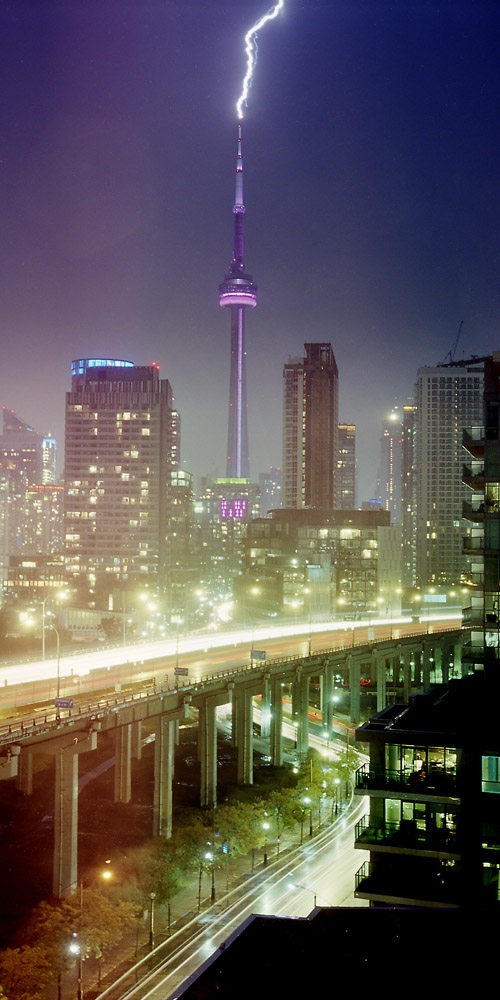
I promise you it was far more impressive in person than it is in the photo.
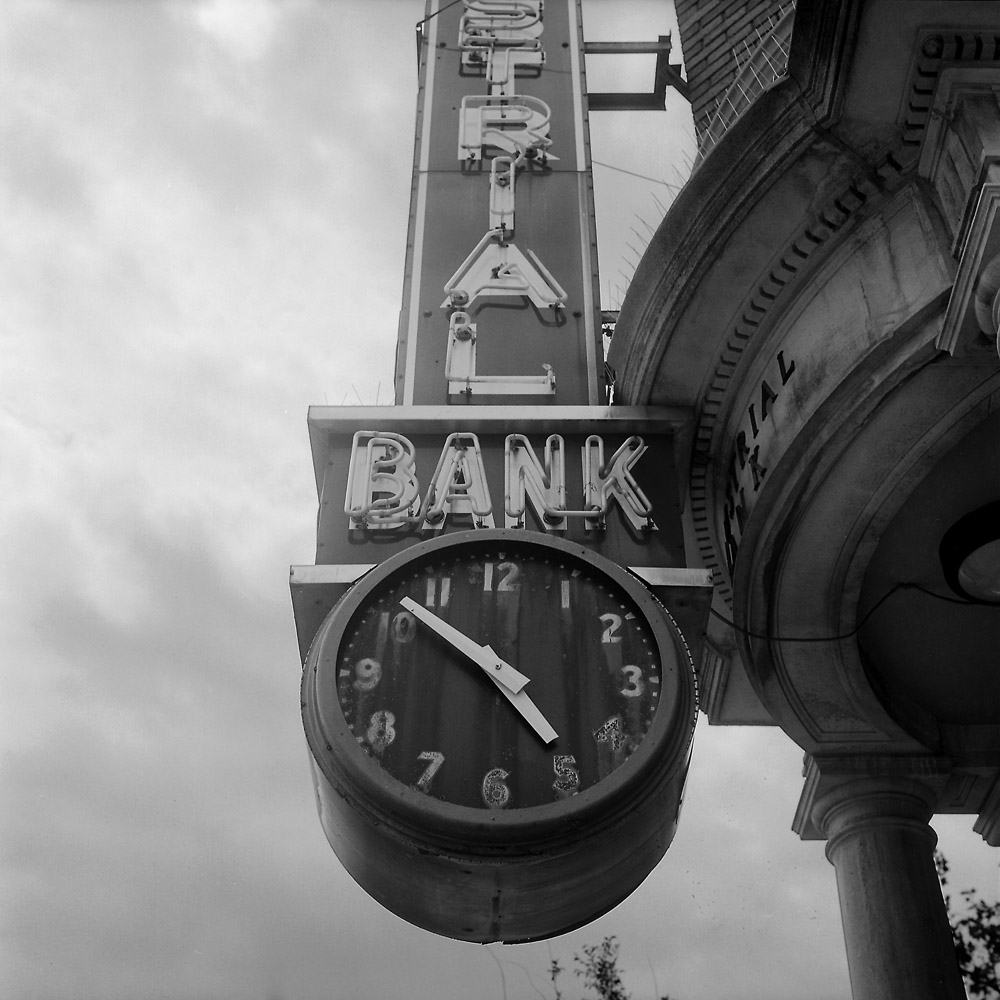
This didn’t really ‘fit’ with any of the other neighborhood photo groups I posted earlier, so it’s getting its own post. The Industrial Bank branch at 11th and U Streets NW is the original location for Industrial Bank, which was founded to cater to the African-American community in the early 20th century when many mainstream banks wouldn’t lend money to black people. They have kept the vintage neon sign with the clock outside, probably a 1930s addition from the look of it. They never light the neon, though. The clock does work, but nobody seems to be bothered enough to get the time right. When I took this shot it was around 1pm, but the clock says a bit shy of 5pm. But hey, it’s 5pm somewhere!
Another sign of change and transformation is the ebb and flow of graffiti. My latest find was this:
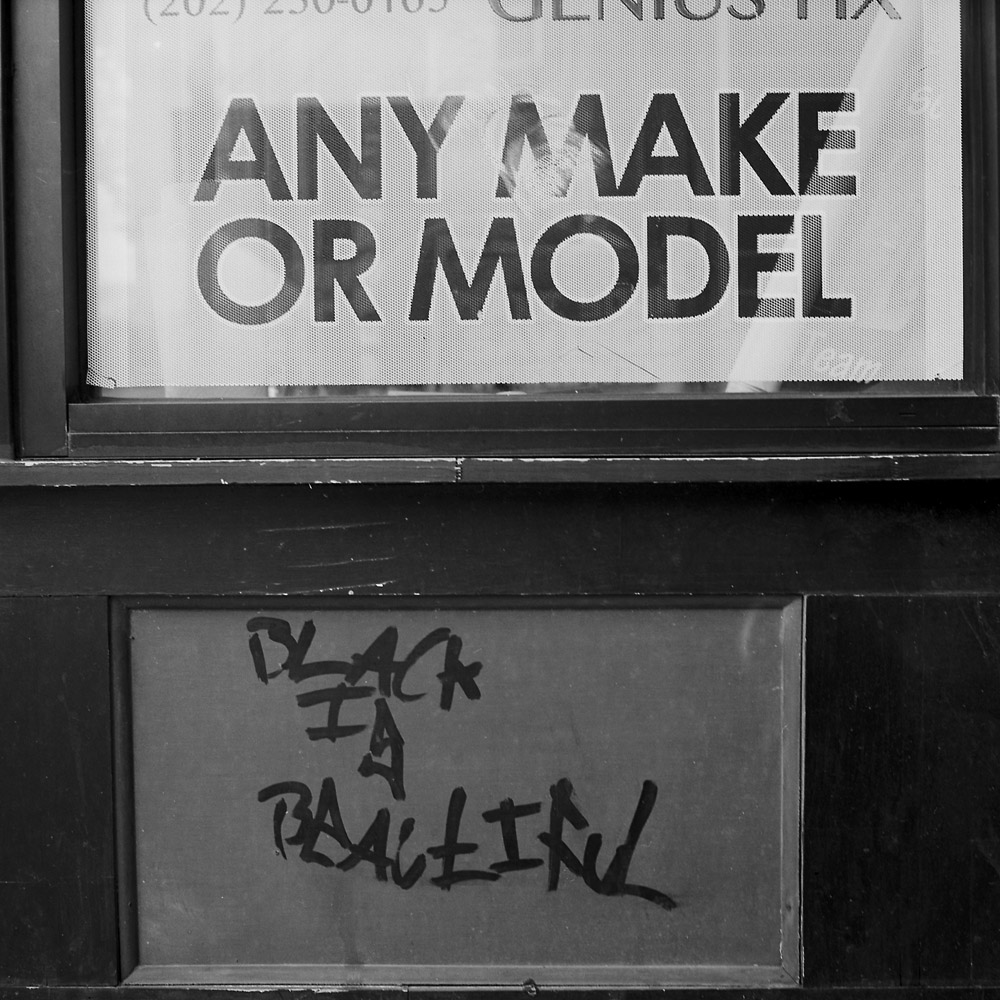
I loved the serendipitous juxtaposition of the advertisement wording for the cellphone repair shop and the graffiti – “Any Make, Any Model… Black is Beautiful”. There’s truth in accidents. Or maybe it wasn’t an accident.
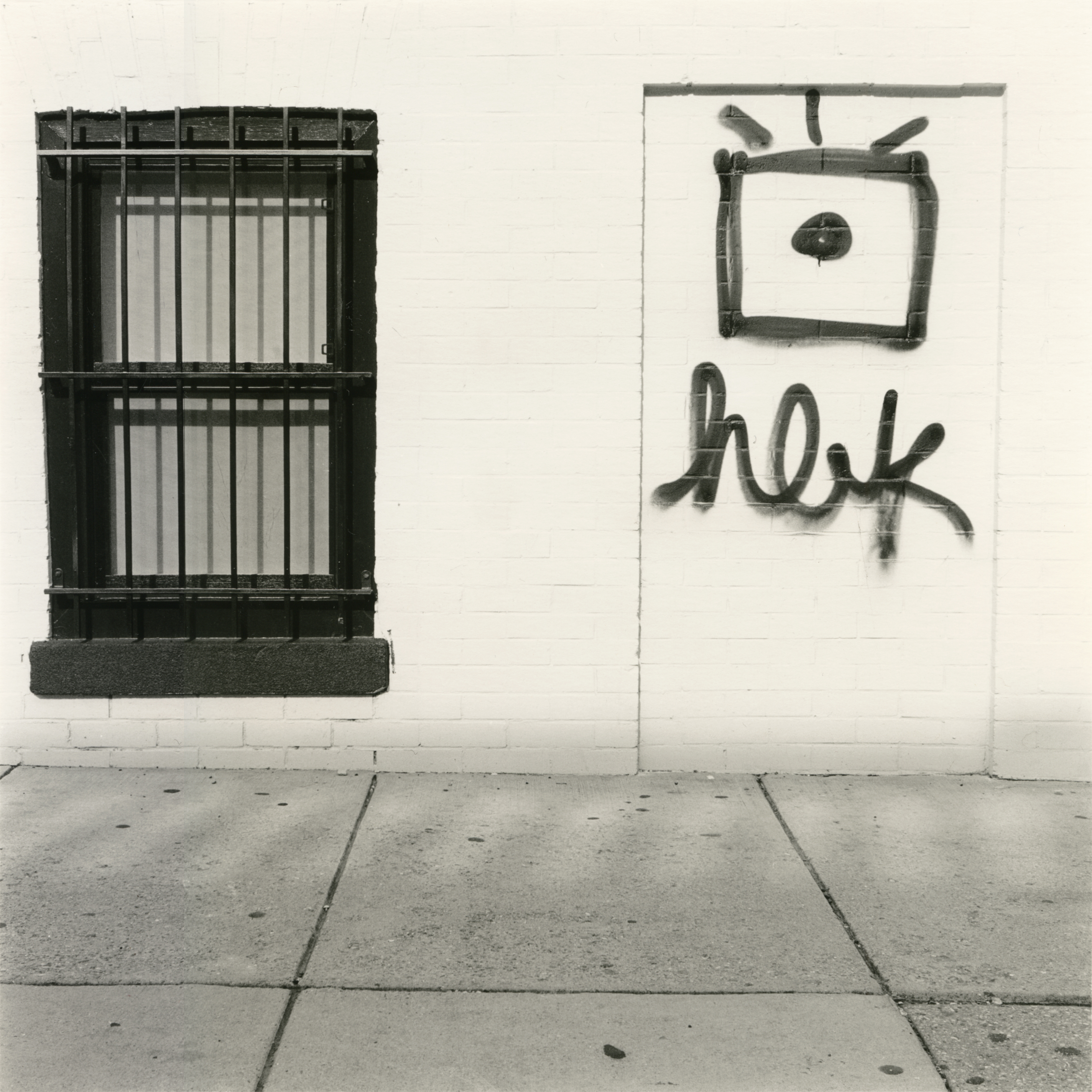
A generic graffiti tag on a bricked-up window of a house. This is casual art, that has its own accidental grace and beauty despite not having any great aspiration beyond marking territory or gang initiation.
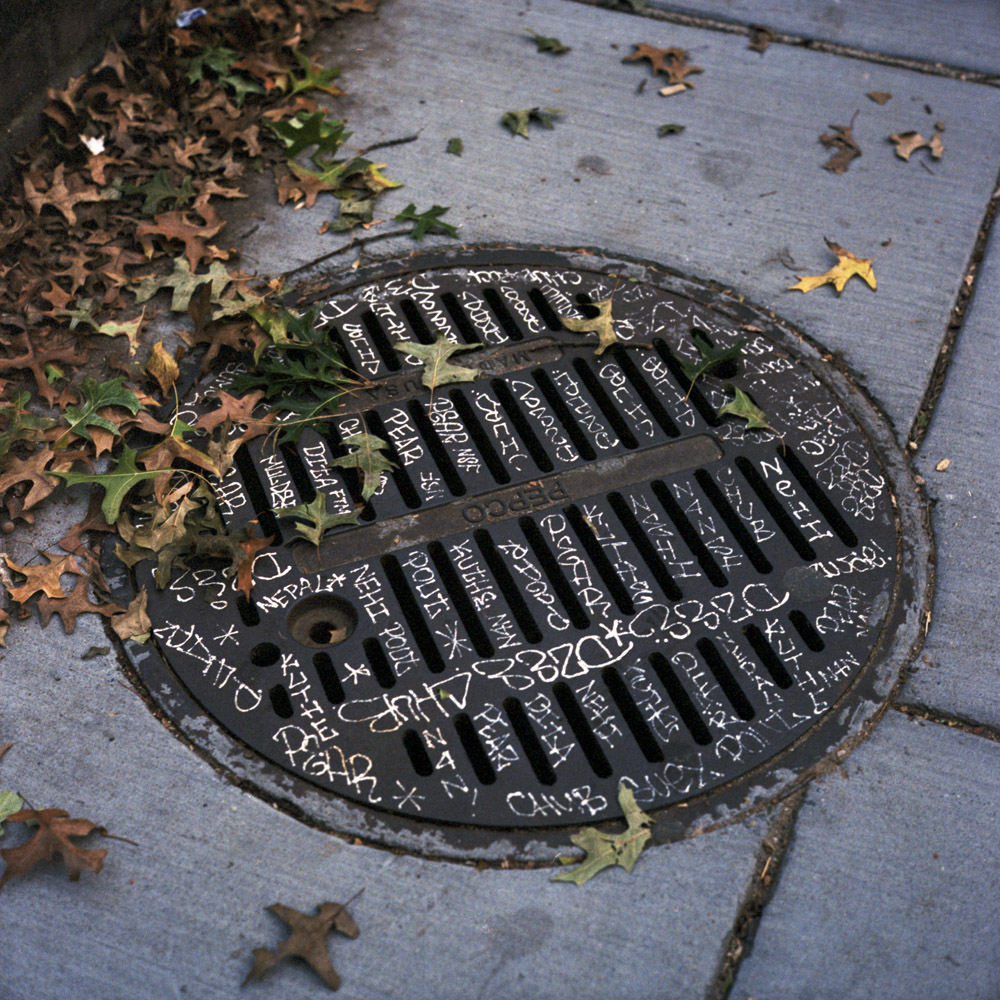
Then there’s graffiti that is transformed from simple defacement by virtue of adopting the form and structure of the object upon which it is inscribed, like this manhole cover.
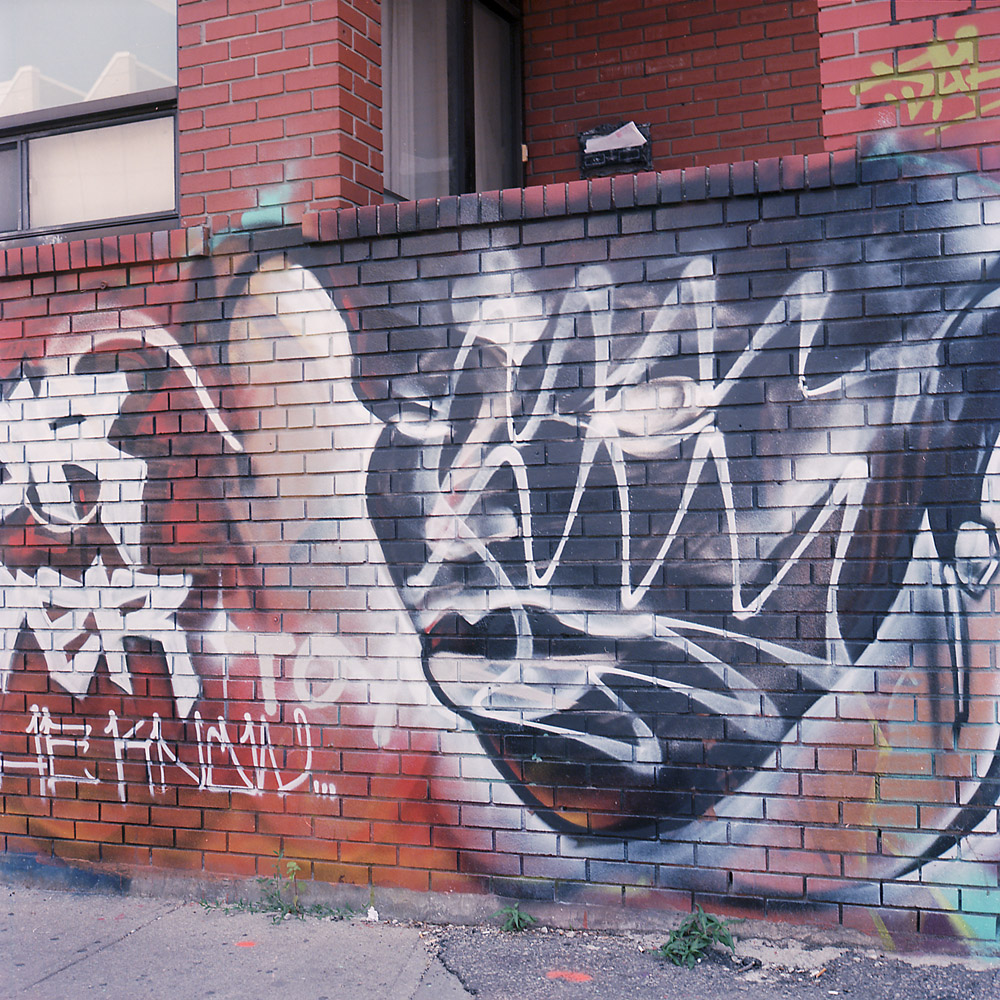
Some street art I found in Toronto. There’s a point where graffiti transcends defacement of property and really does become art in itself.
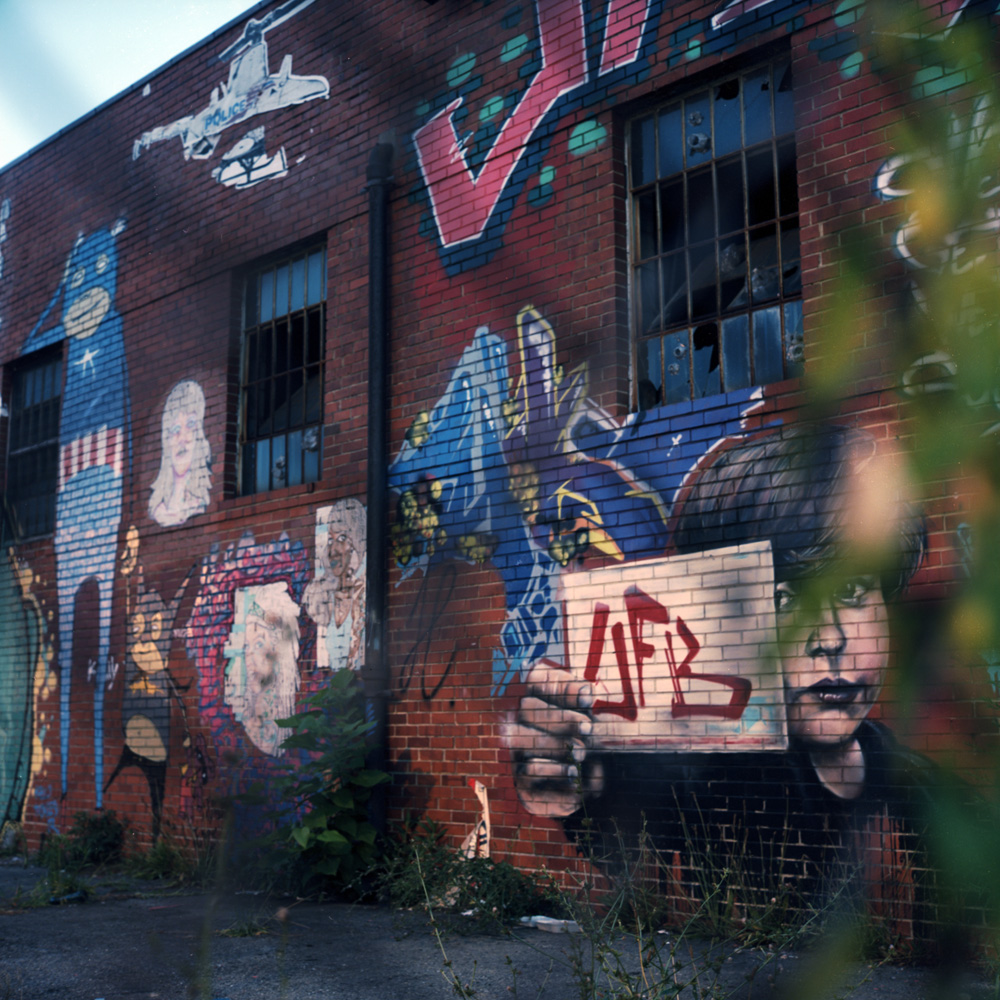
More graffiti as street art. There is part of this wall that I intentionally cropped out as it makes a statement that I don’t know I’d want to make or pass on (decapitated nude female torso).
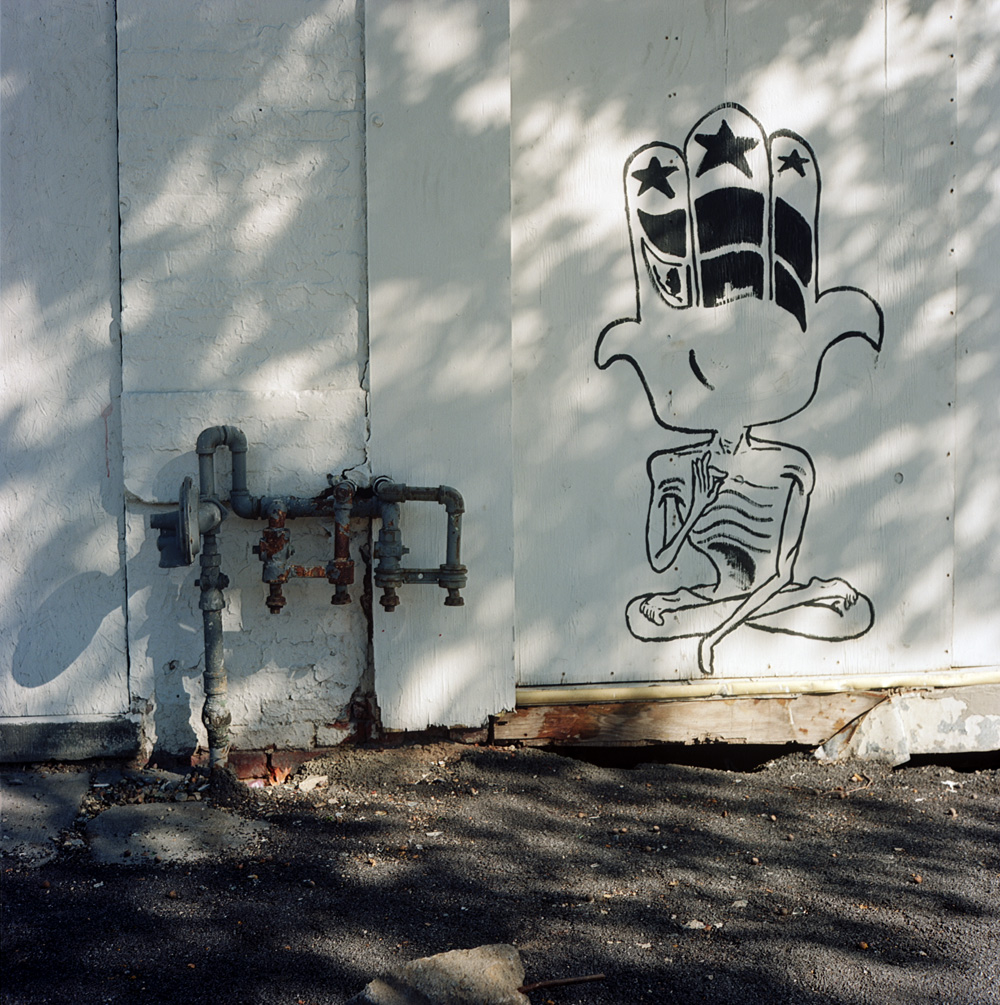
Back to simplicity, this bit speaks to collective identity questions – the figure transforms the Washington DC city flag of three stars over two bars into a humanoid with a hand for a head. Politics, ethnicity, religion, all rolled into a piece of temporary public art (the wall upon which this figure was painted has been gentrified into several very expensive restaurants).
The camera of record is a Rolleiflex 2.8E, and the films used are FP4+ for b/w and Kodak Ektar 100 and Portra 160 for color.
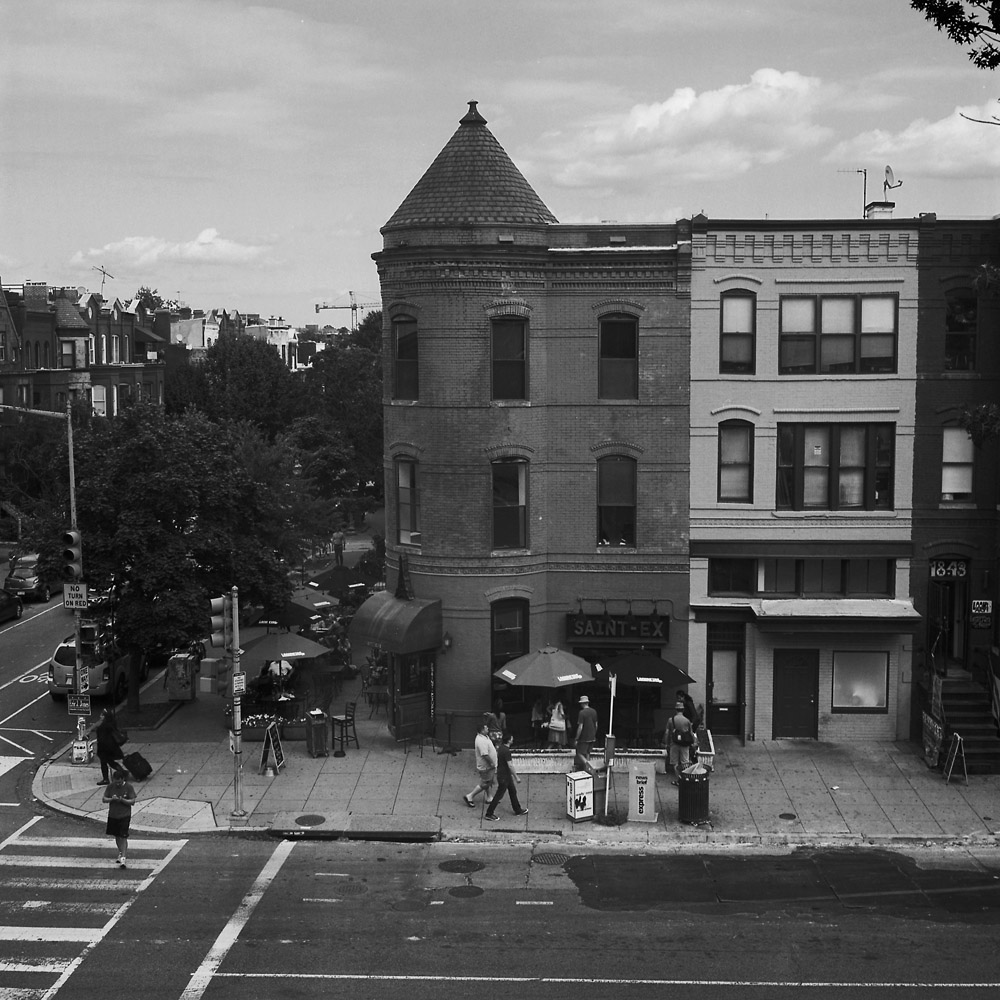
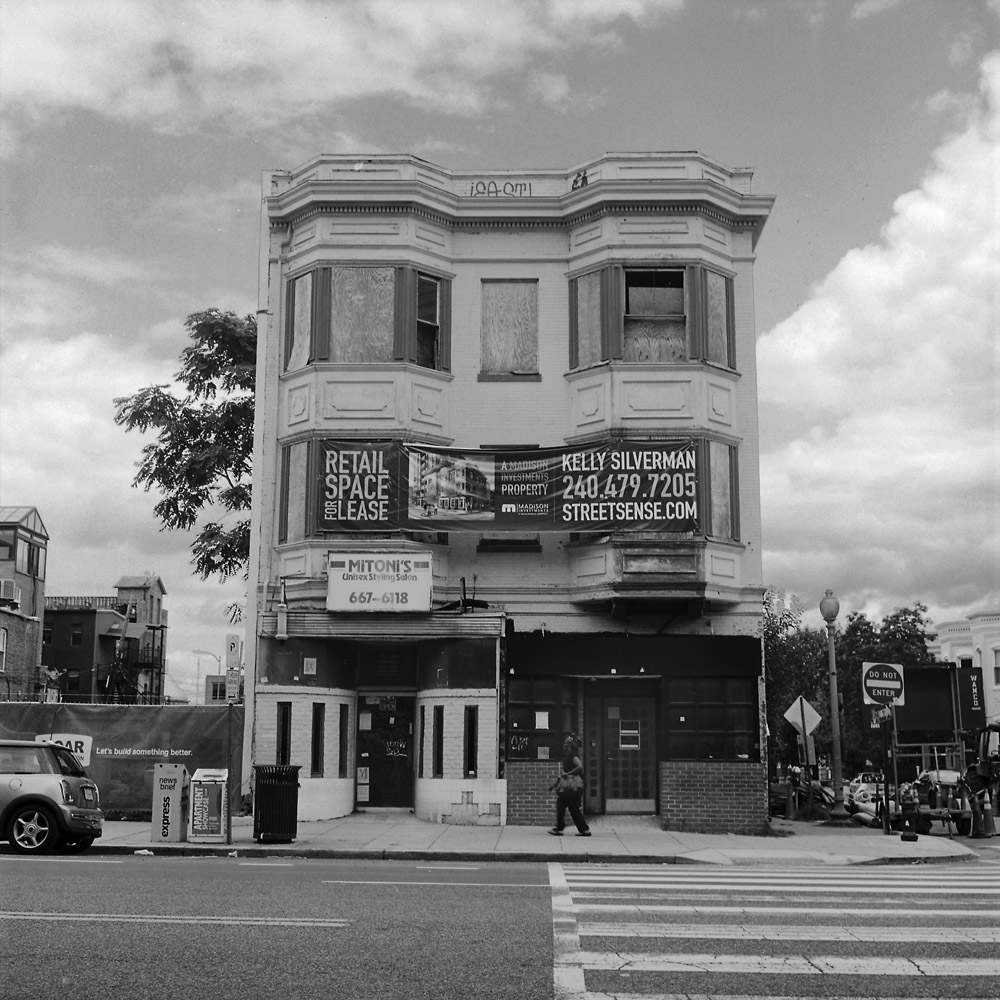
The signs of gentrification, both good and bad, abound in my area. Funky old shops in decrepit buildings are being forced out and razed to be replaced by condos and market-rate rentals at prices I don’t know how anyone can afford and being serviced by shops and restaurants worthy of being spoofed by AbFab. At the same time, the drugs, the street crime, and the random trash are all disappearing too.
I’m not sure Mitoni’s salon is still in business, or if it is, for how much longer. But I’ve not been sure if it is in business for the last decade, frankly. Regardless, it will shortly be going away to be replaced by an 8-10 story condo/retail complex.
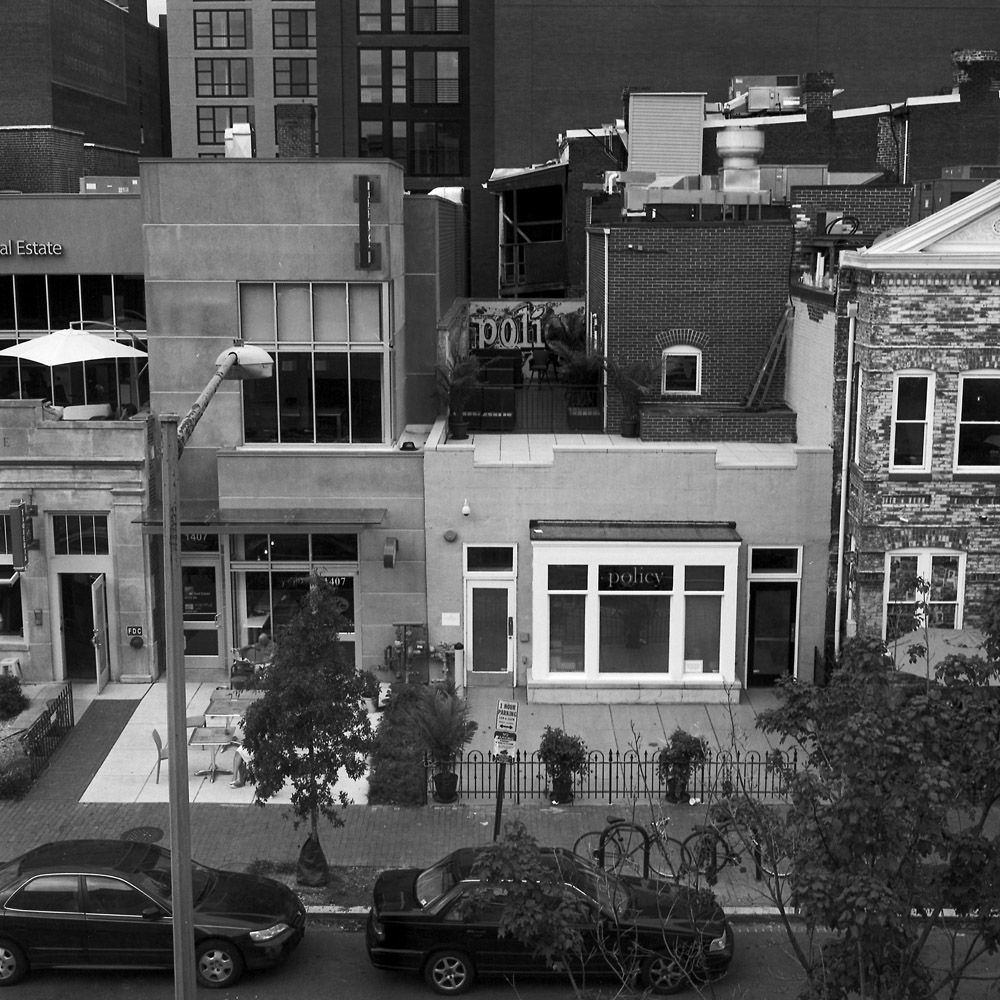
You can very clearly see the layers of old and new, gentrified and recycled here. A former post office (that was once notorious for a rat infestation that destroyed tens of thousands of pieces of undelivered mail) is now a trendy taqueria. An old antiques store is now the Policy restaurant and bar with the roof deck you can see. In the upper left background is the old cold storage facility which oddly enough still rents out storage lockers. Behind the street-level buildings in the foreground is The Louis, a high-rise condo complex with swanky restaurants, coffee shops, and a Trader Joes (which is actually a welcome addition to the neighborhood). This shot was taken from the roof of Room and Board, an upscale furniture shop in what was a long-boarded-up former car dealership building.
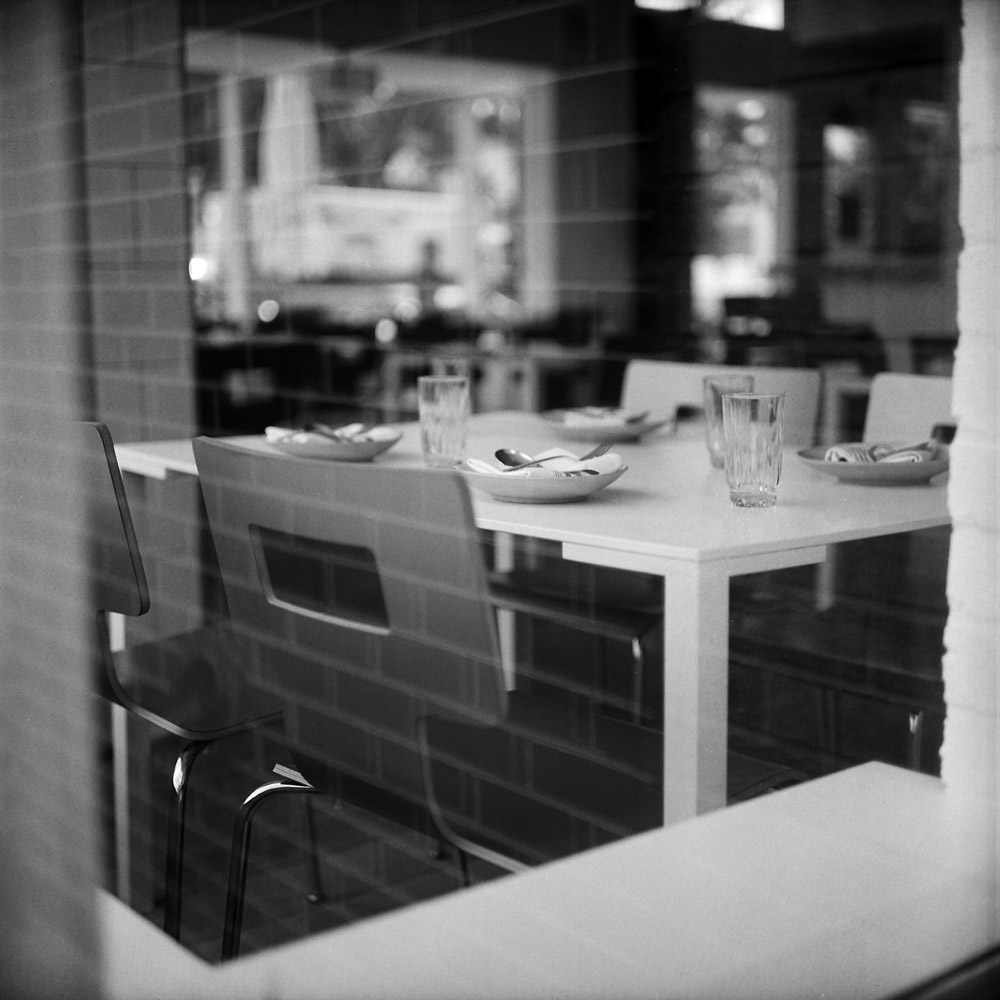
The dining room at Doi Moi, a new Thai/Vietnamese restaurant.
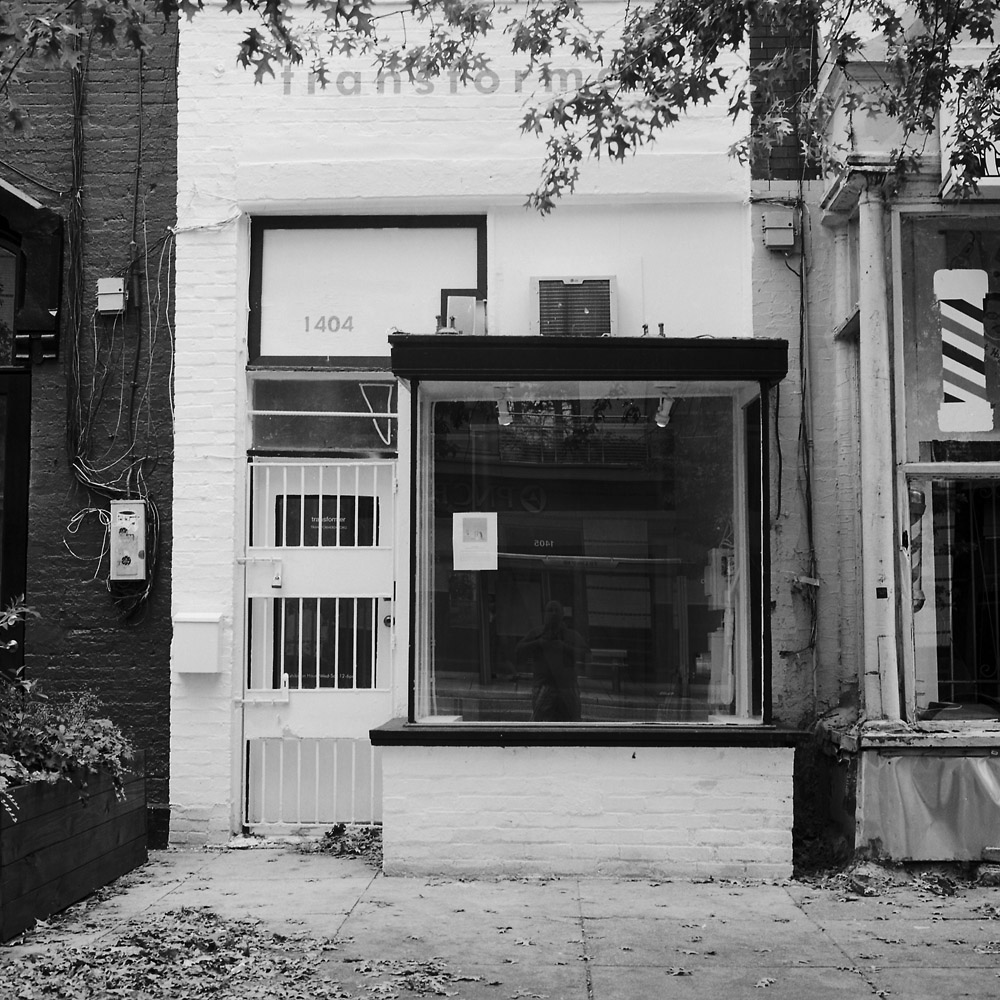
Transformer Gallery is one of the pre- to mid-gentrification vestiges. They’re a small space, and perhaps their saving grace is the fact that the space is too small for most developers’ interests. I don’t know how they survive as, from my perspective, a lot of the art they show is hard to sell.
When I took the photo, it was still August, so I thought the leaves made an interesting ironic statement about the nature of the changing neighborhood.
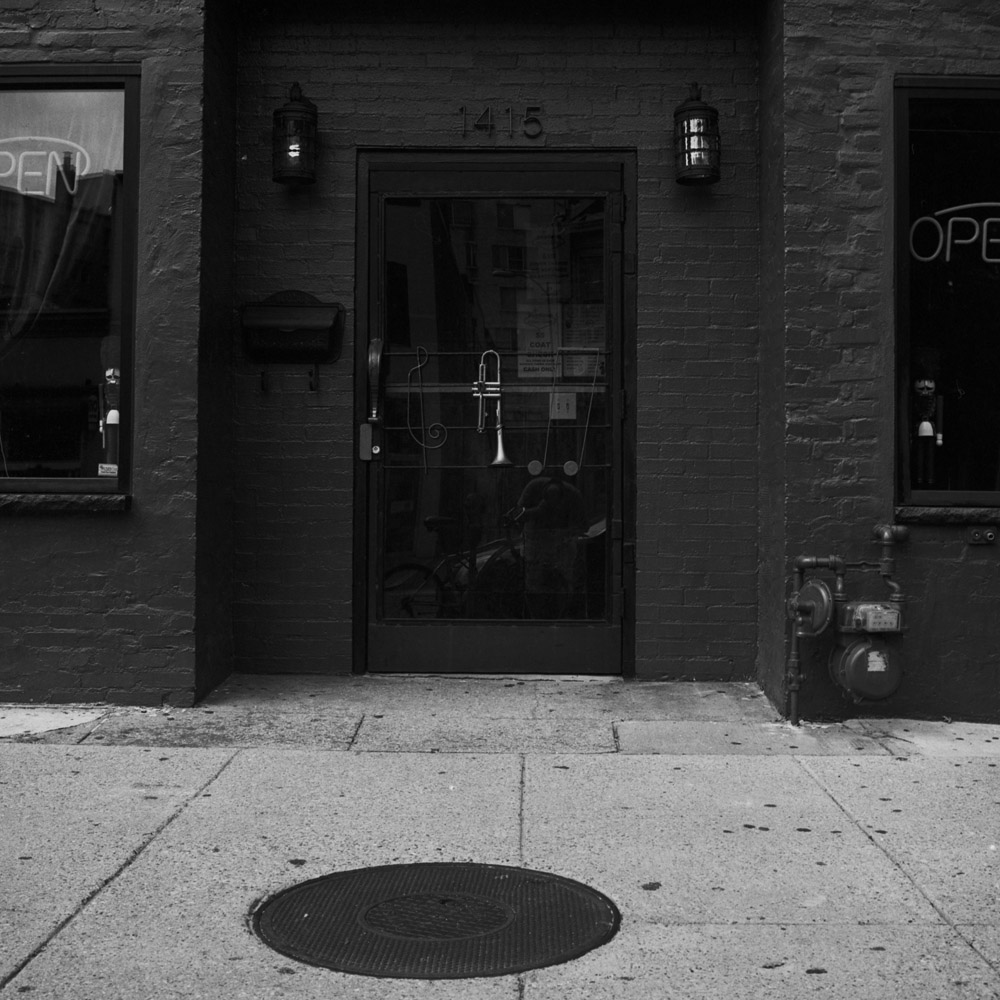
The Fabulous Vegas Lounge is another vestige of the old neighborhood. They must own their building to have outlasted the condo buildings that went up around them. It’s been a Jazz club since the 1970s at least.
As usual, all photos taken with my Rolleiflex 2.8E, on Ilford FP4+.
I went out on one of my neighborhood walkabouts and found these scenes. I’m still not good with getting people’s faces in street photos because when I try for a portrait, it inevitably becomes non-candid because I take too long trying to compose and focus, they see me, and at best the moment is lost. So I do photos of people from behind. Maybe I’ll work on making it into a thing.
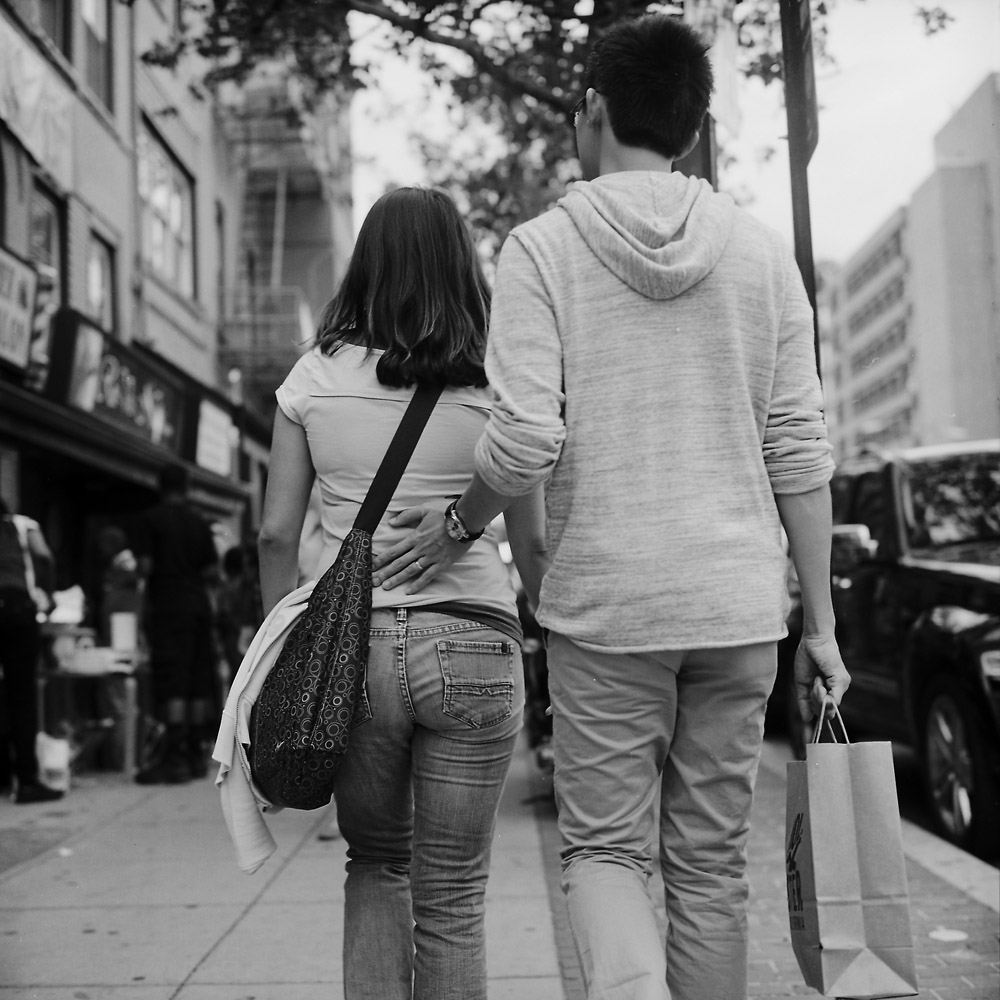
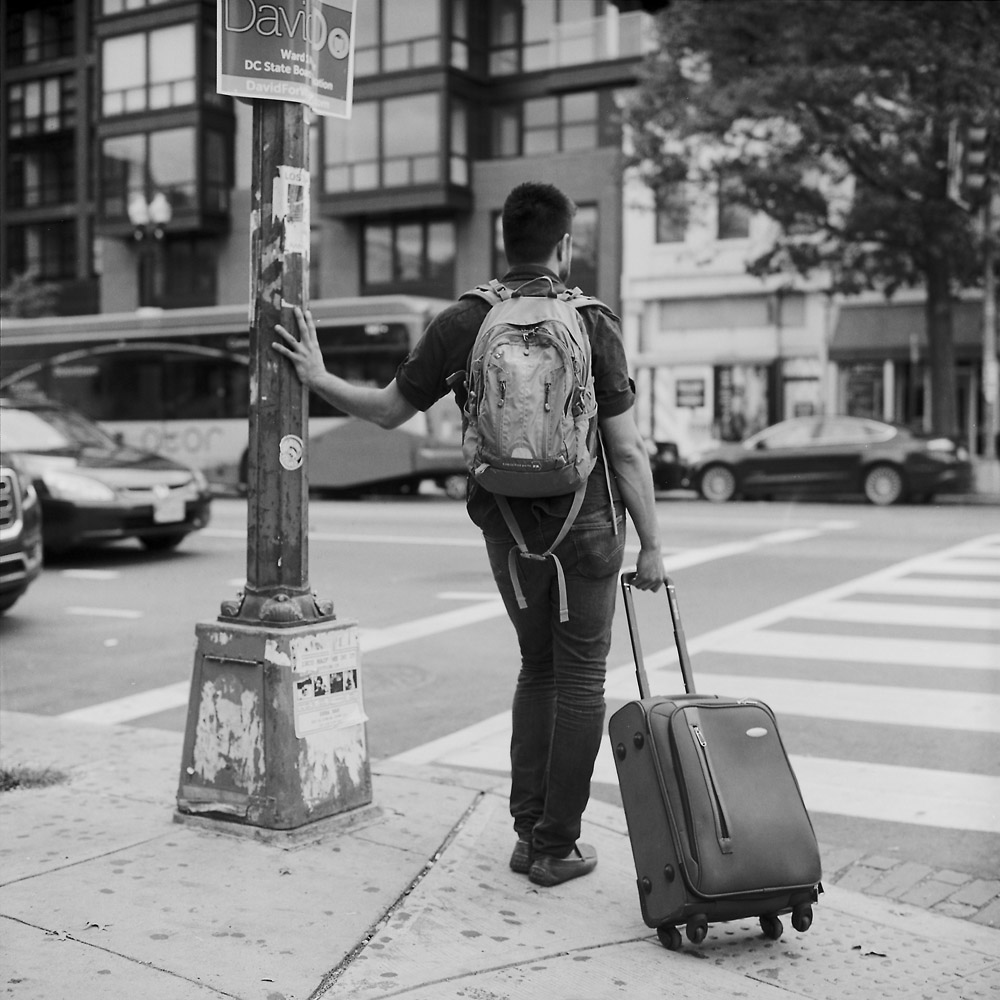
Scenes with activity in them, though, work better. I guess because I’m standing off at an angle to the action and people can pass through without being aware, so they get included from a variety of angles.
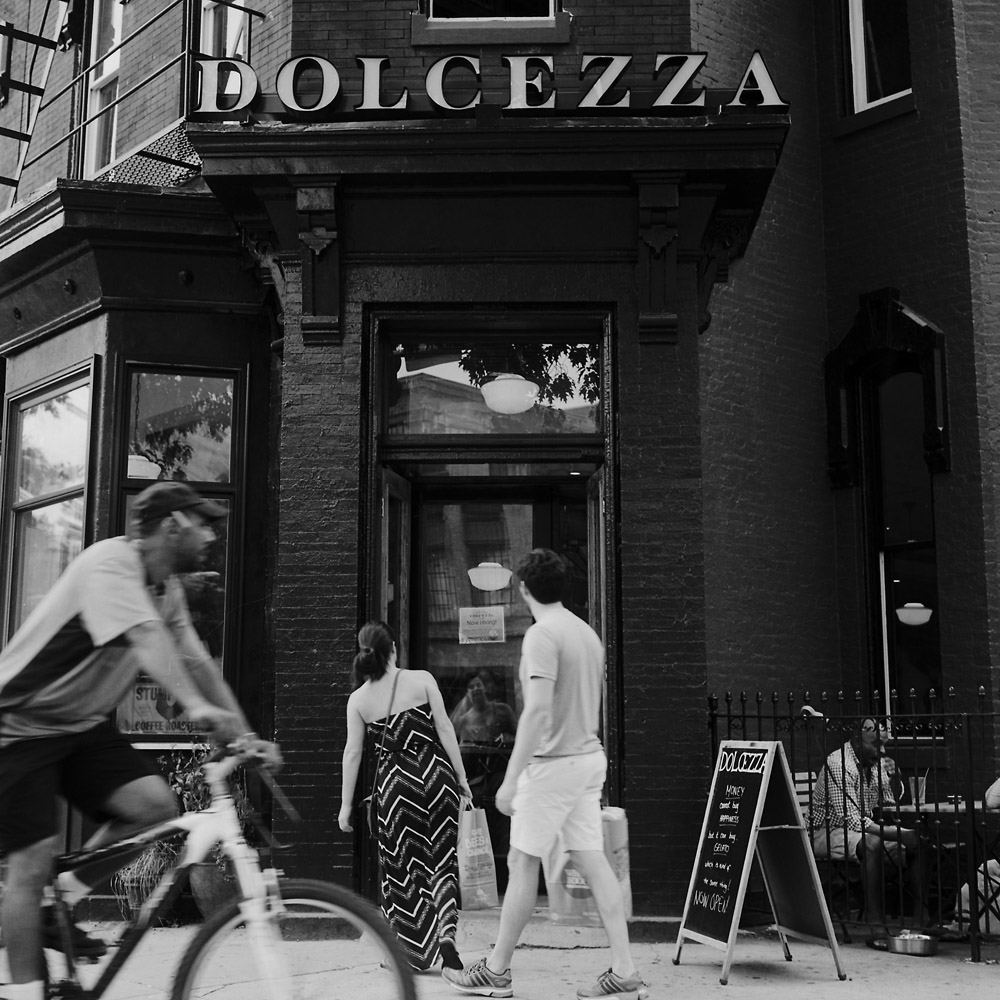
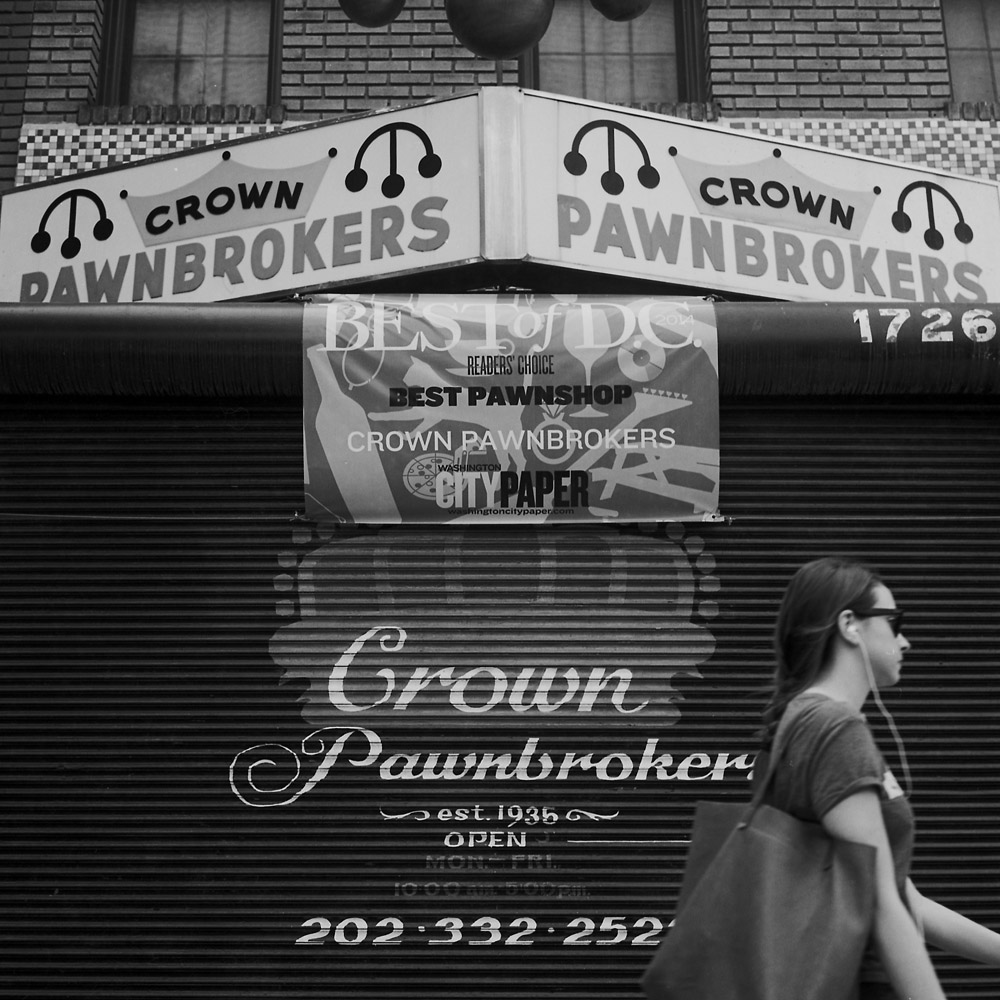
And sometimes they get included because they’re completely unaware of the camera’s presence, like the worker inside Ben’s Chili Bowl.
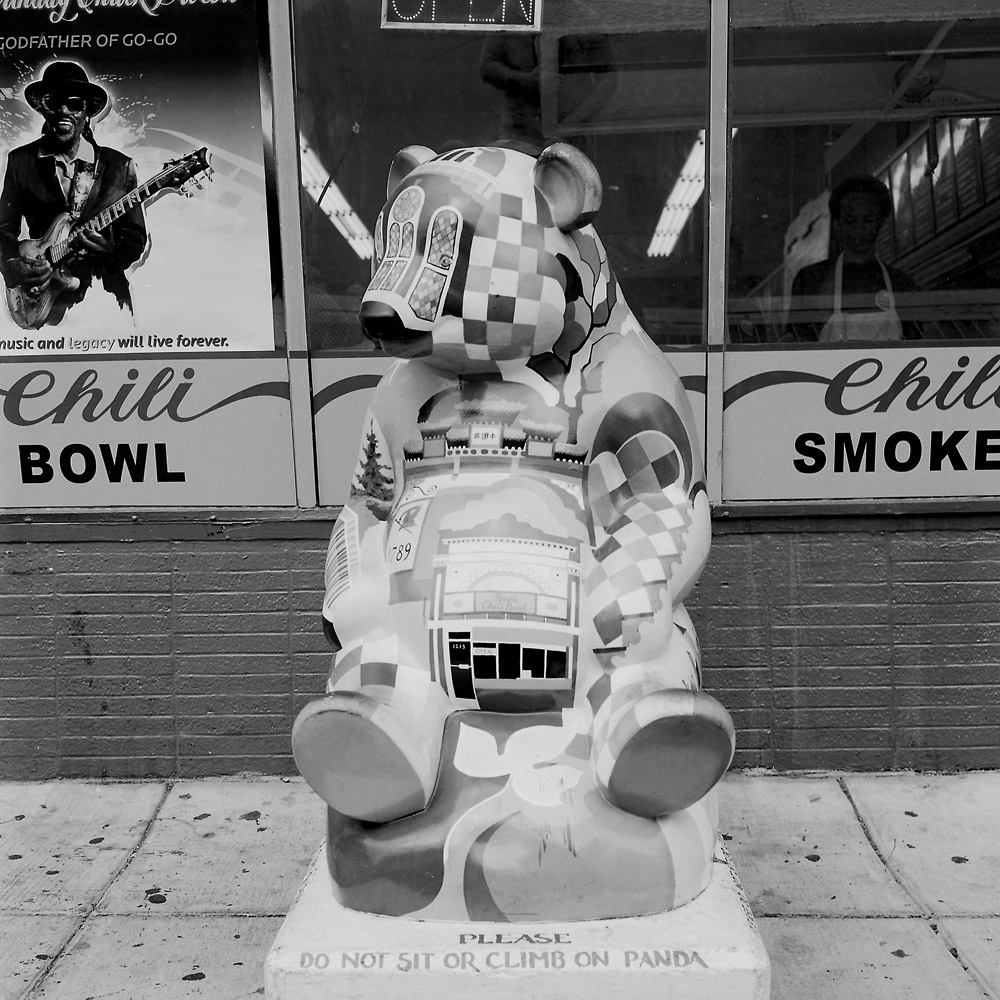
All shots taken with my Rolleiflex 2.8E on Ilford FP4+. The Ilford FP4+ is part of a large stash of it that I bought more than a few years ago when there was a scare that Ilford would go out of business. I bought a box of 100 rolls (B&H was running a special on the bulk lot). Well, Ilford stayed in business (thank heavens!), and my use of medium format waned for a while (I sold off my Hasselblad outfit to finance a large format camera), so the bulk lot sat in my basement, going past its expiry date. Now that I’ve found and fallen in love with the Rollei, I’m finally making a dent in that box. It’s a great compliment to the quality of Ilford that I can still use this film this many years past the expiration and I have yet to need to tweak the chemistry to compensate for the film’s aging.
I was out doing some more street shooting in my neighborhood and found a couple more “ordinary objects” that cried out for portraits. I’ve included some of my past ones here to provide some context for the project idea.

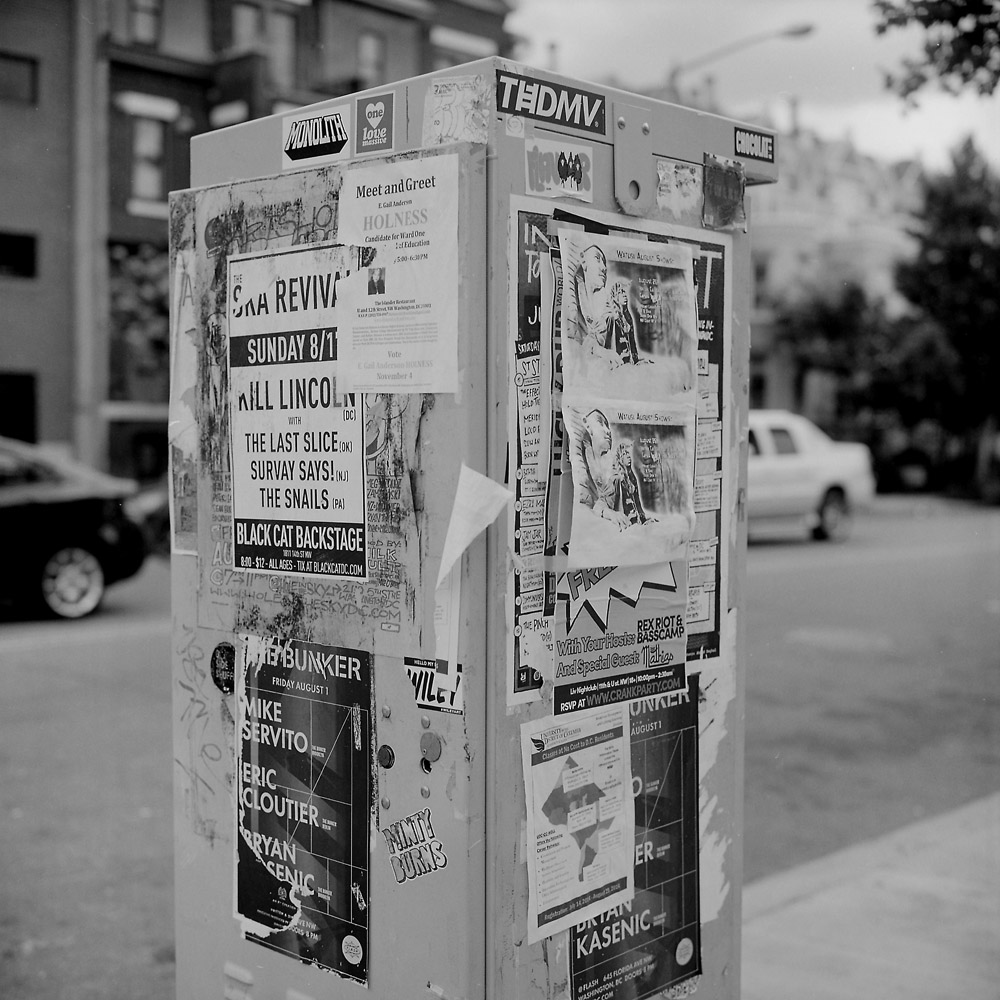
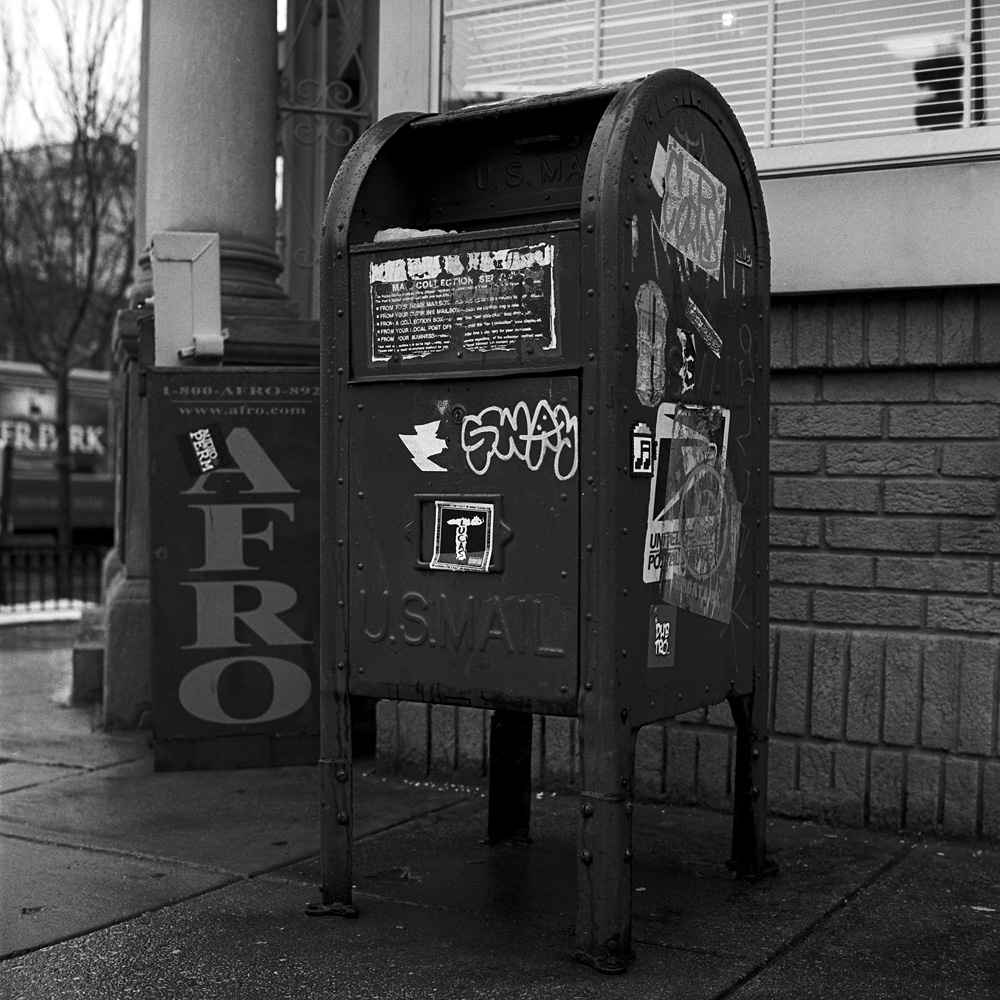
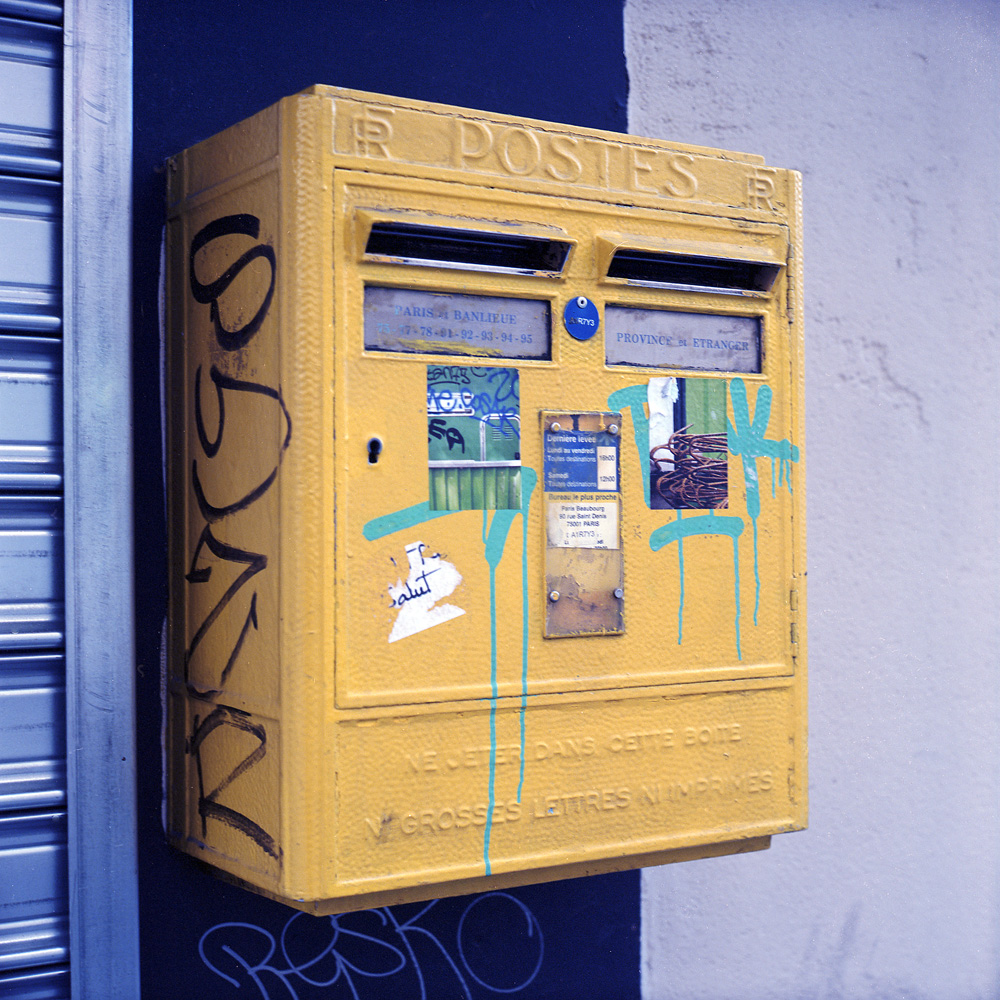
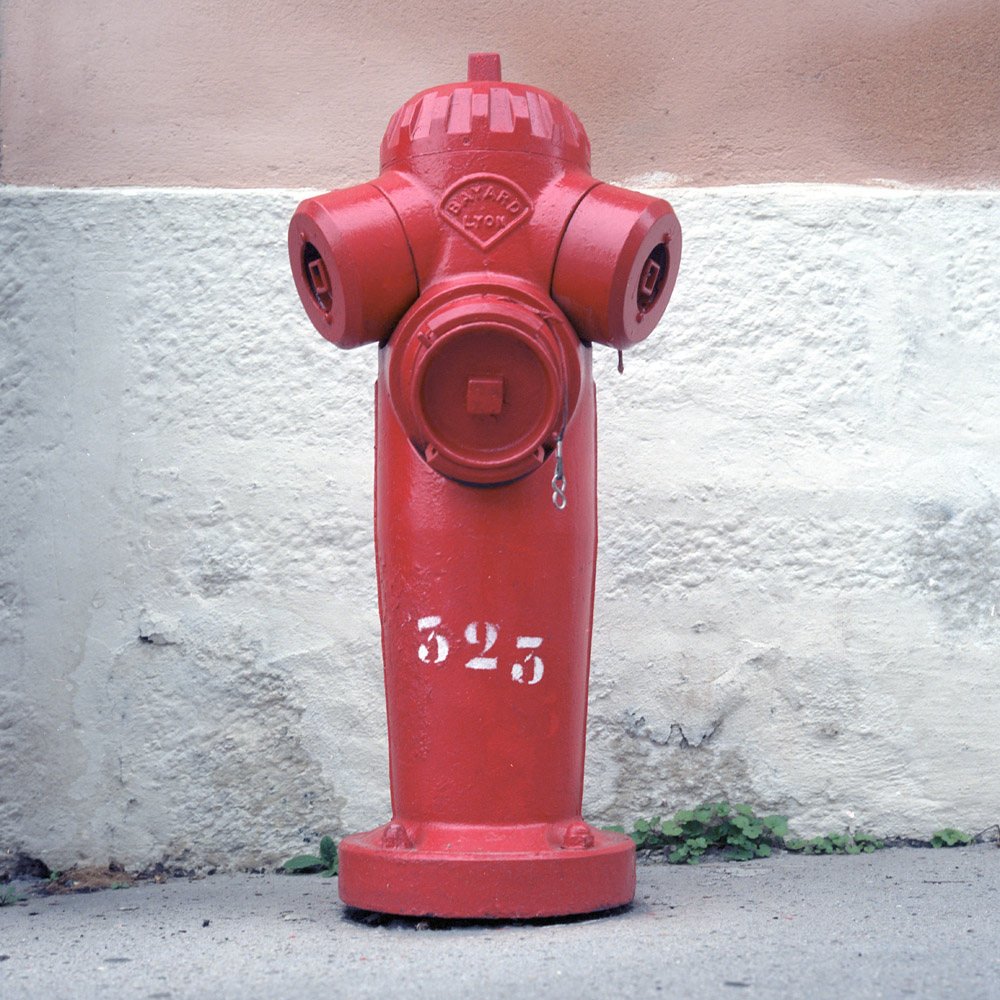
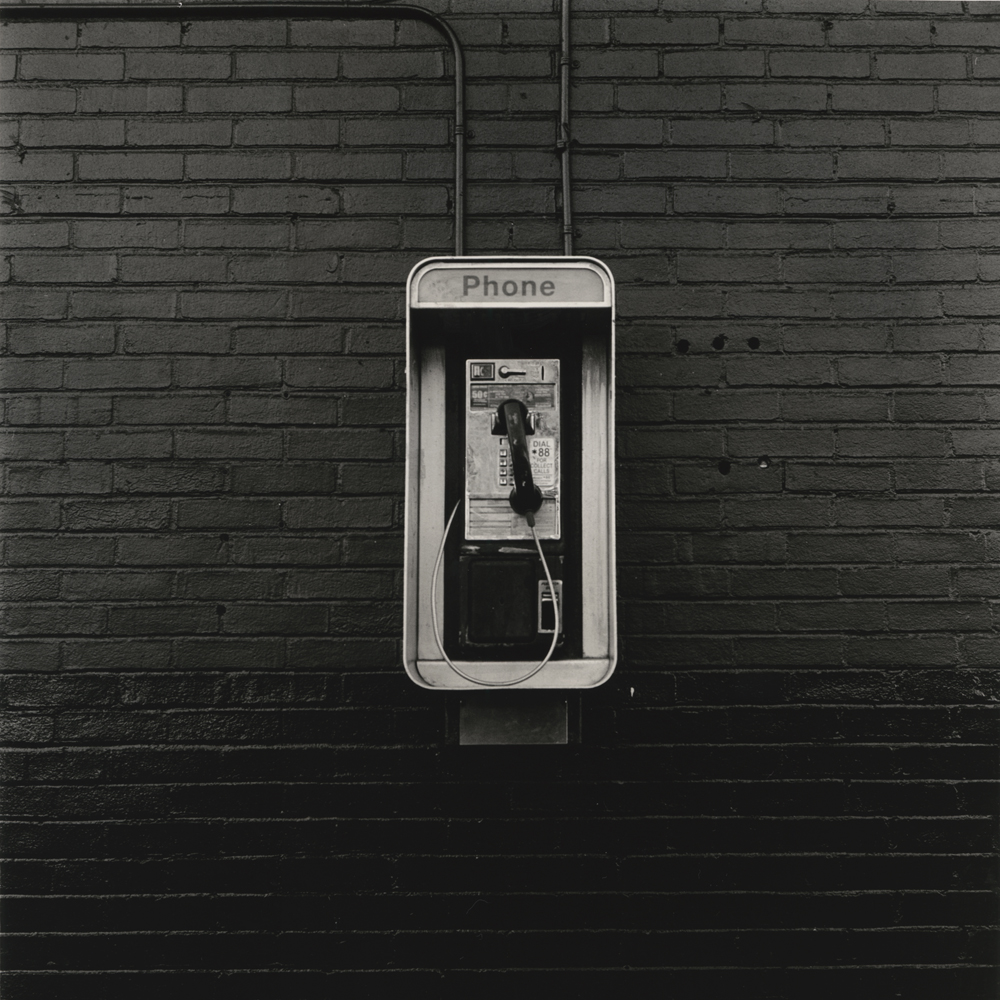
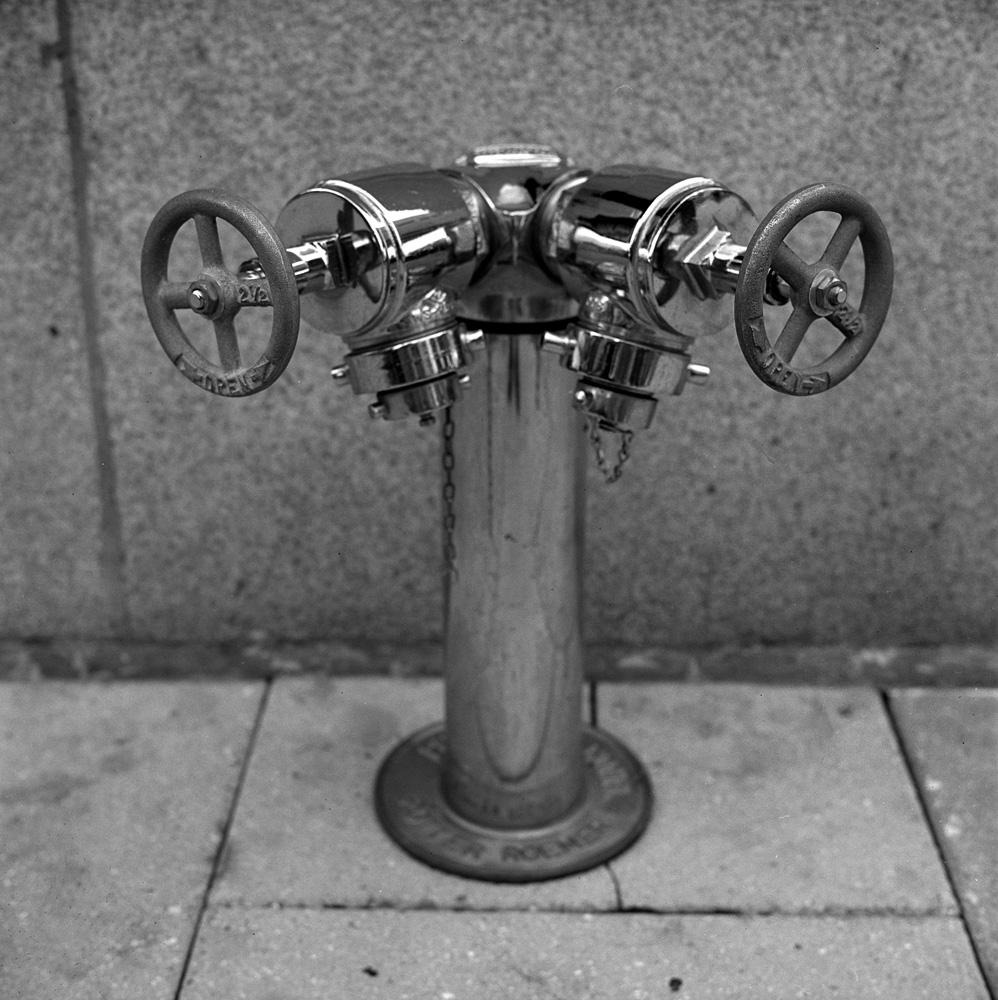
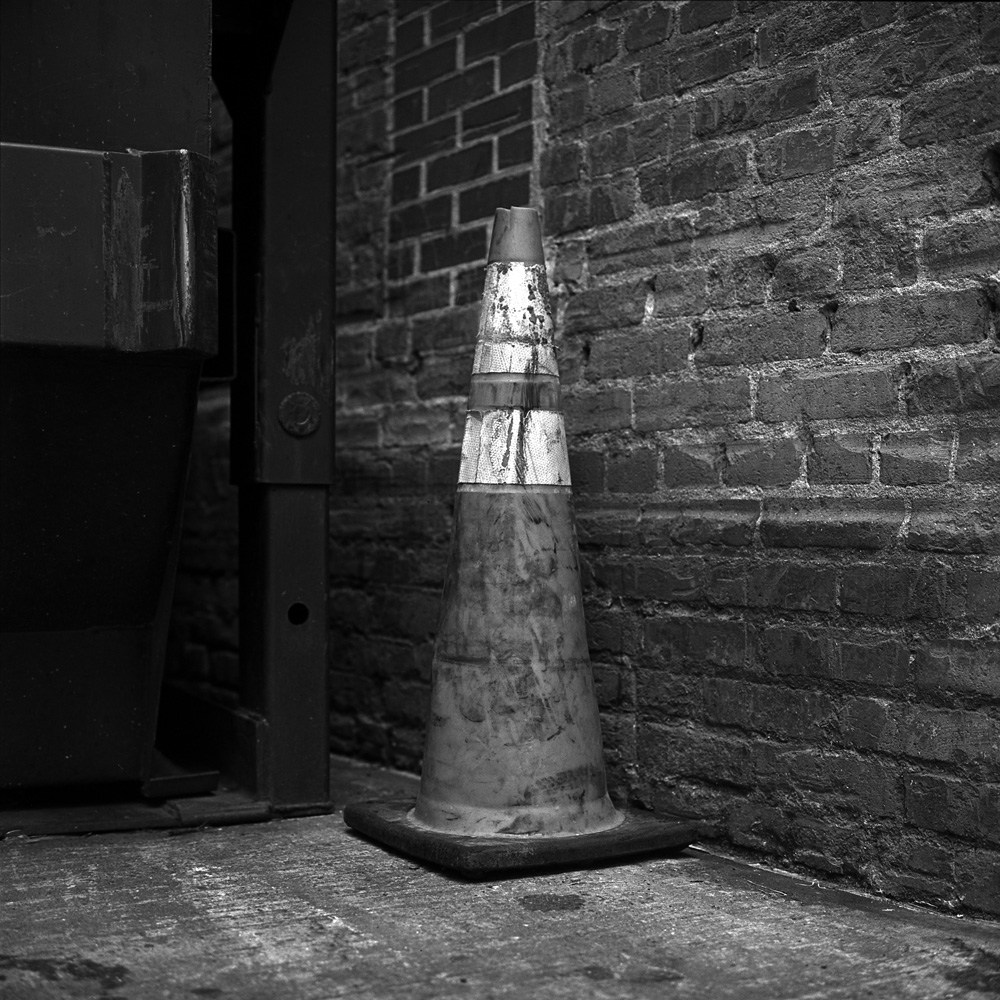
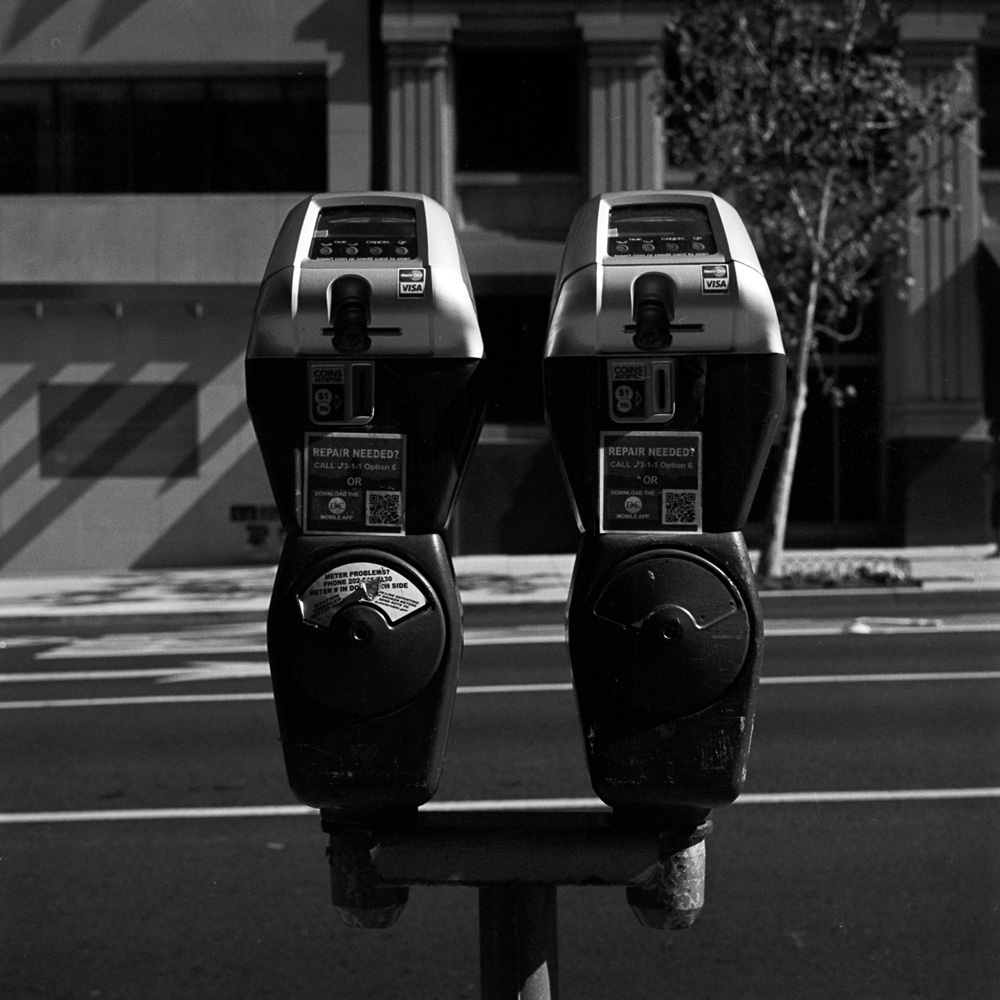
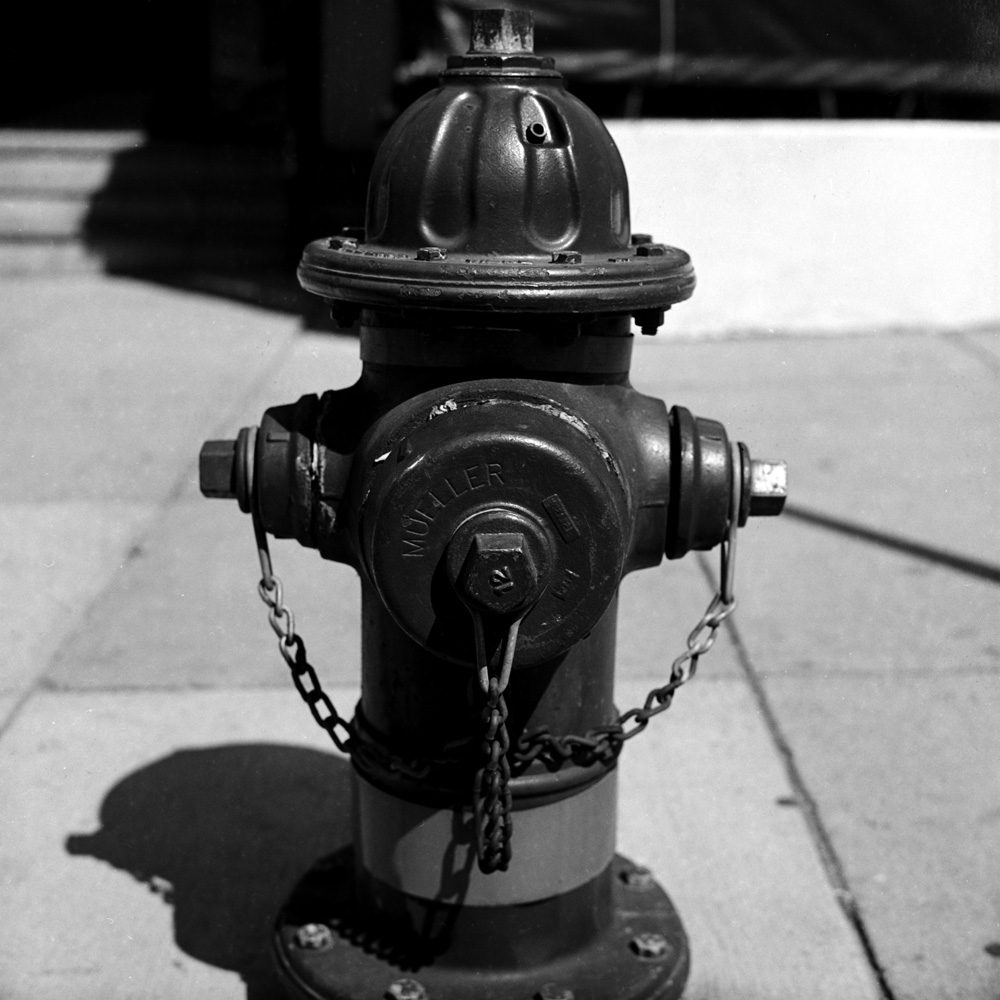
These were shot on a mix of films – the black and white are either Kodak Tri-X or Ilford FP4+, and the color shots were taken with Kodak Ektar 100, all using my Rolleiflex 2.8E.
I found the shot I had taken of the NYC subway train oncoming. Again a bit impressionistic, but you can still feel the difference between it and the other city’s subways that I’ve photographed, even though the car isn’t at all visible in the exposure. I THINK this is the N/Q/R platform at 5th avenue and 59th street- it’s been a while since I took the shot.
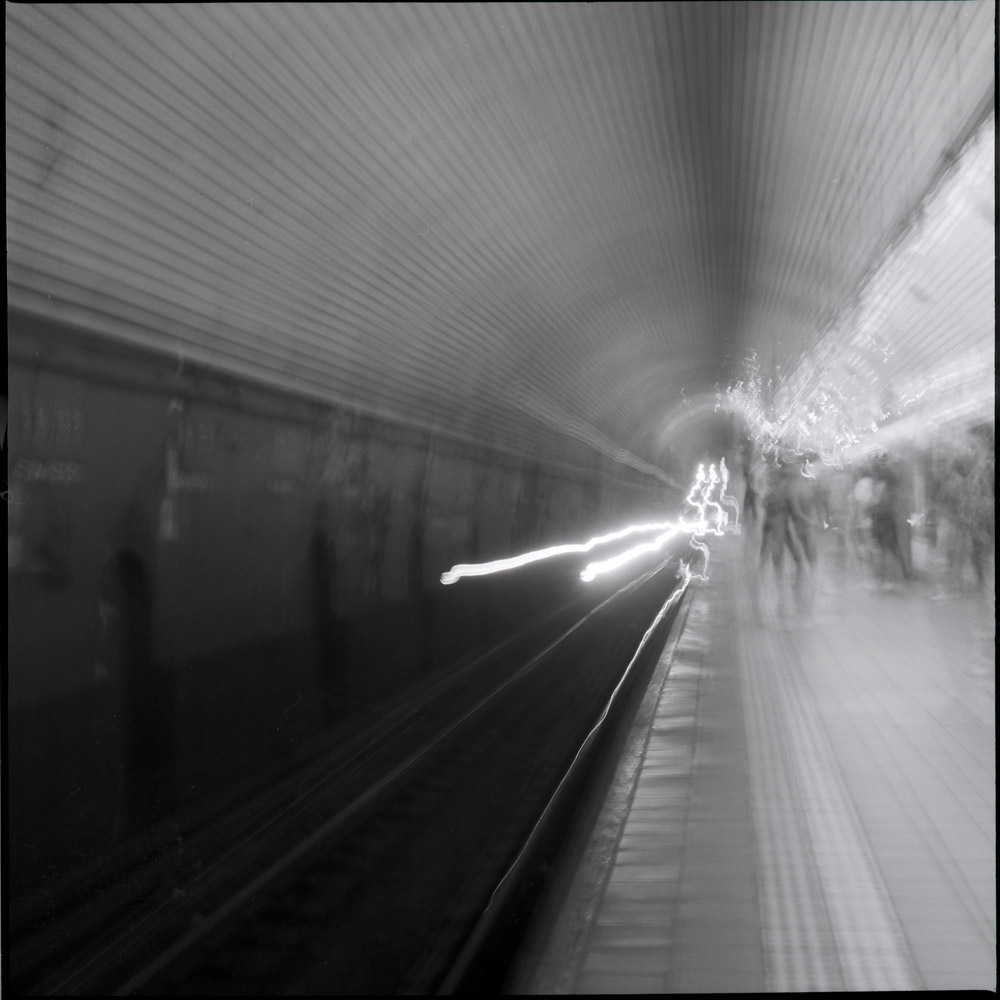
Here are a couple more of my subway shots as a comparison. Please pardon the repetition of the recent post:
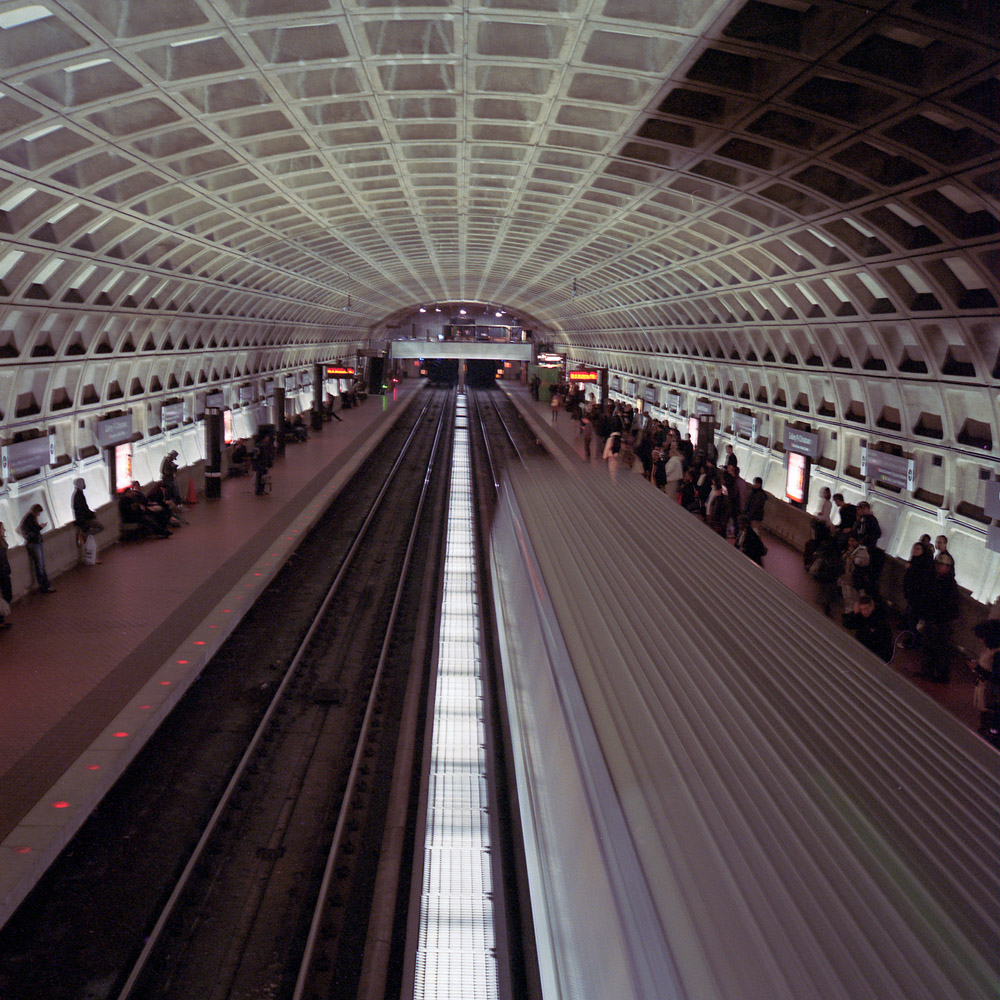
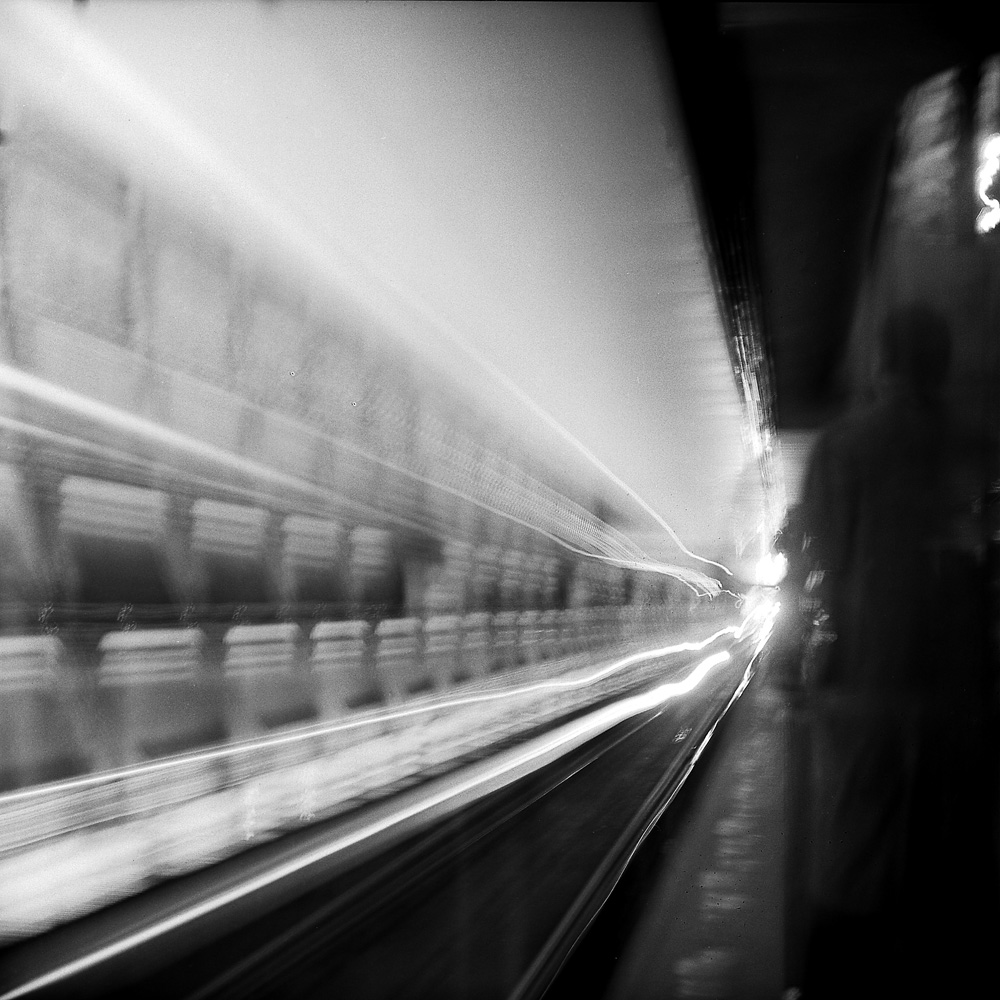
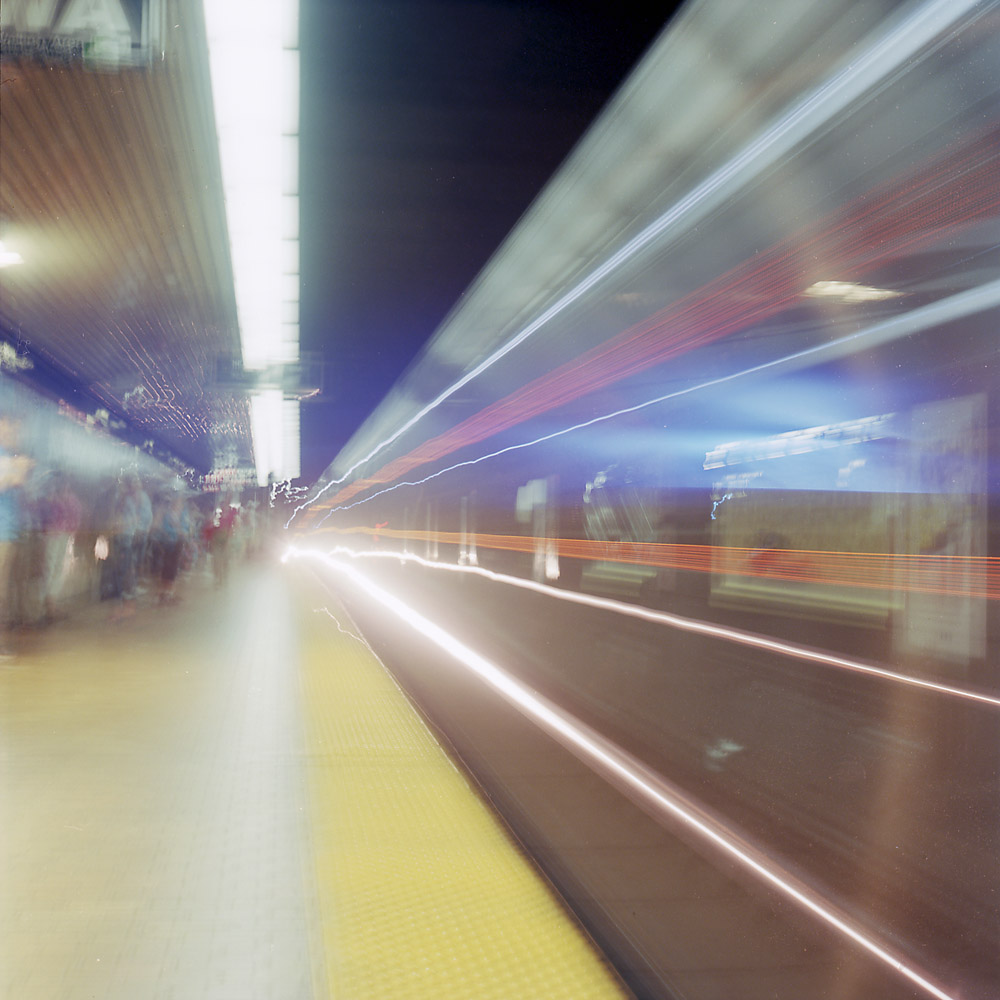
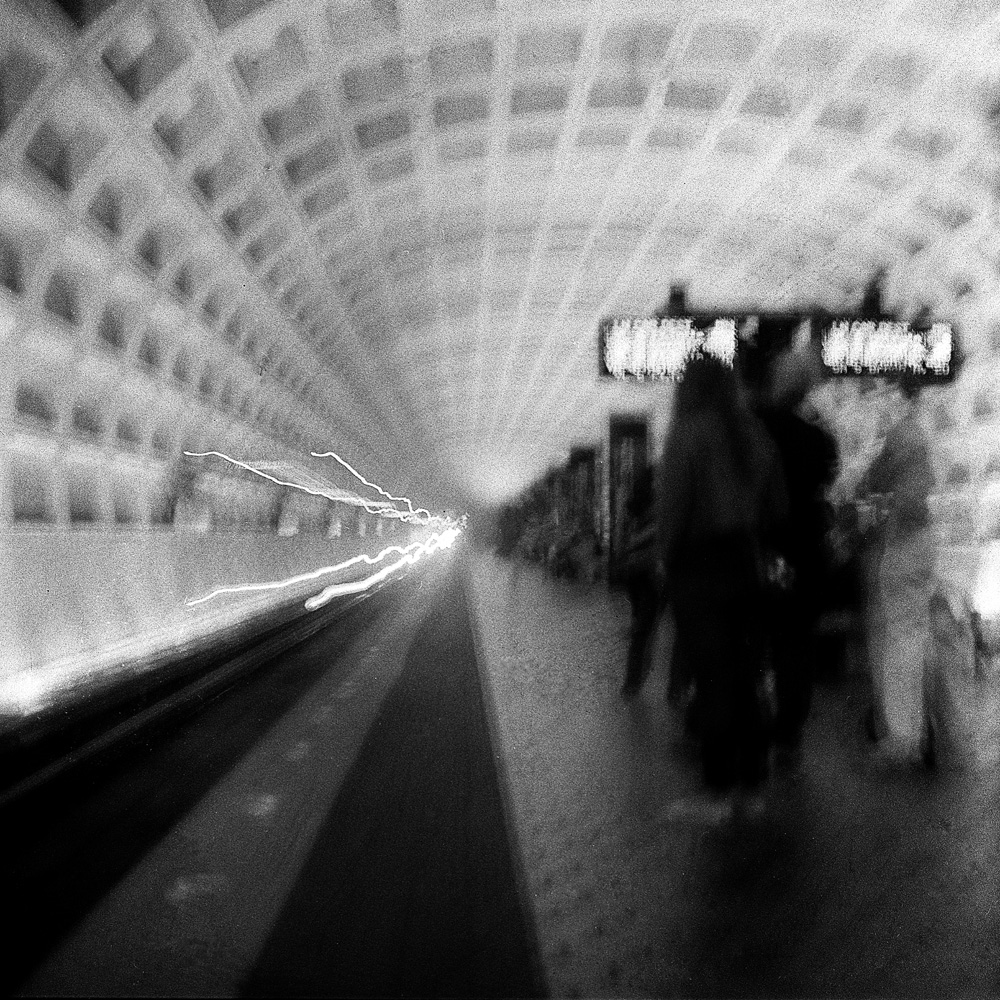
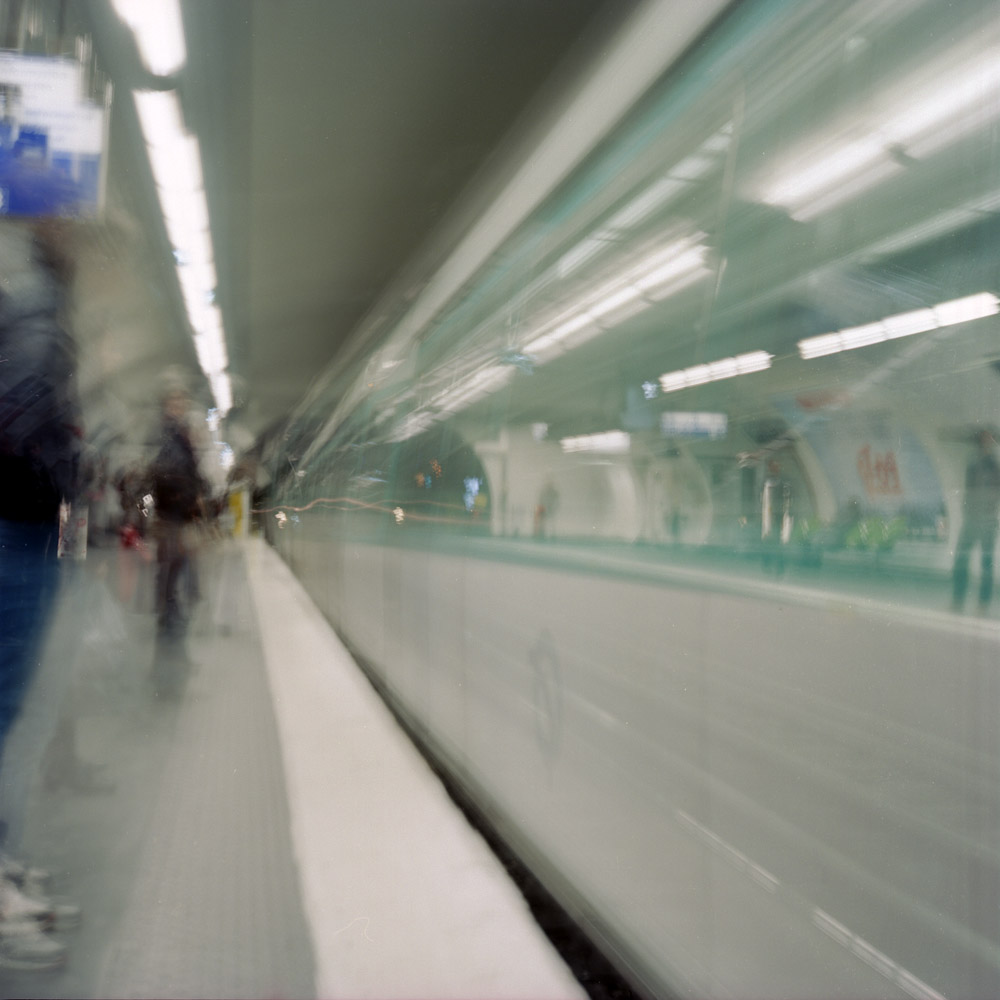
All shots taken with my Rolleiflex 2.8E. Film used was either Ilford FP4+ for the b/w shots or either Kodak Portra 160 or Ektar 100 for the color.
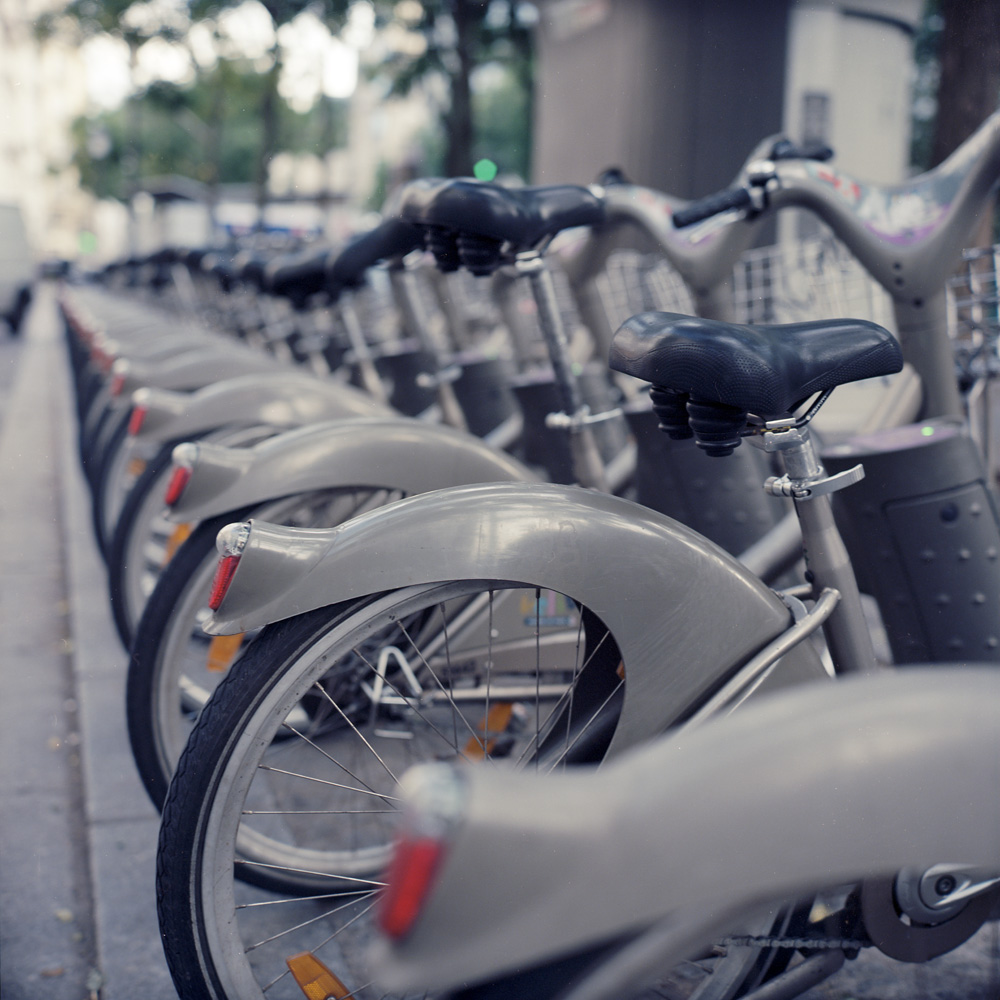
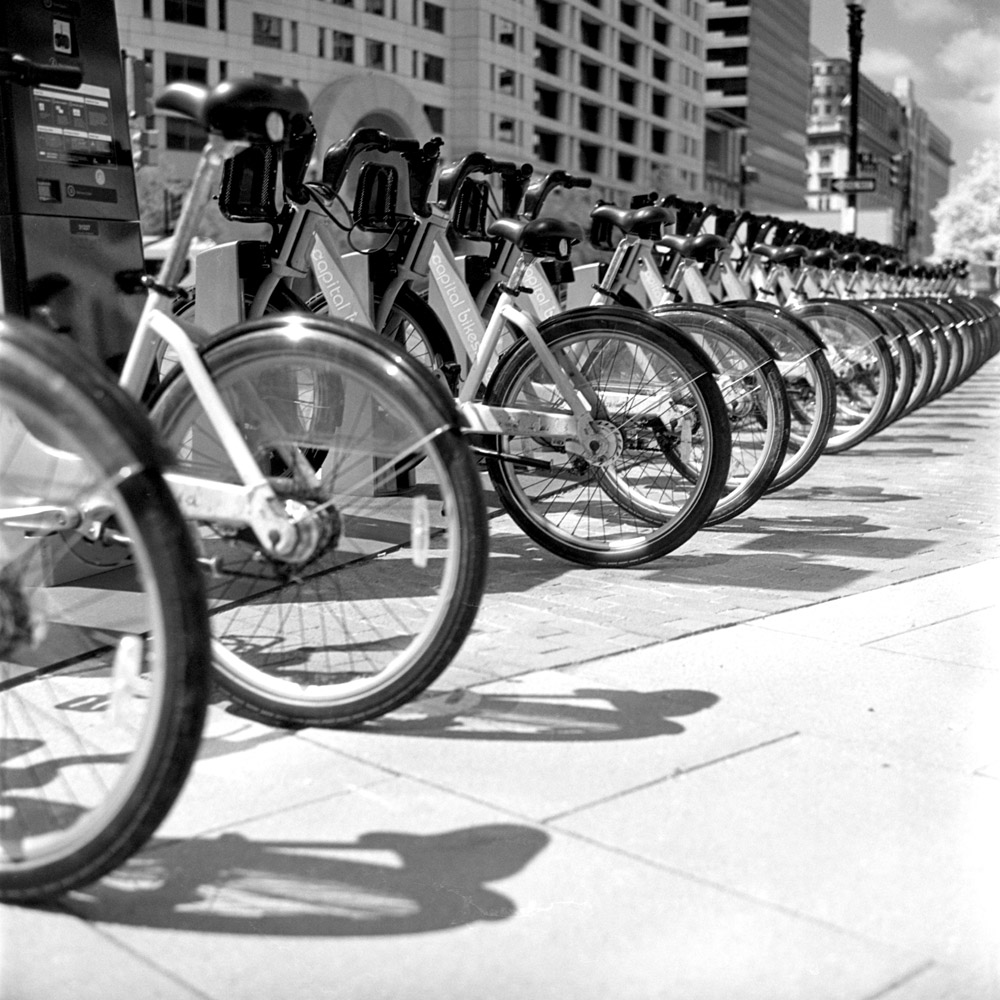
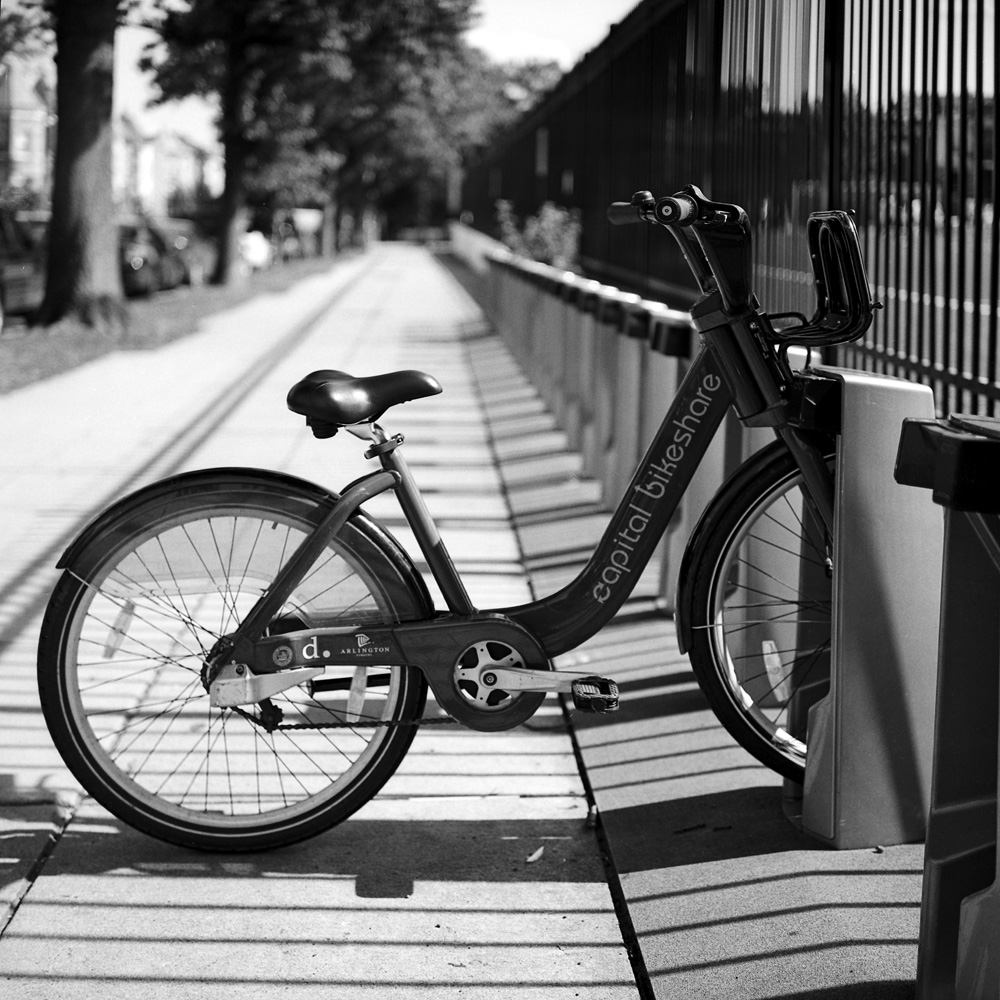
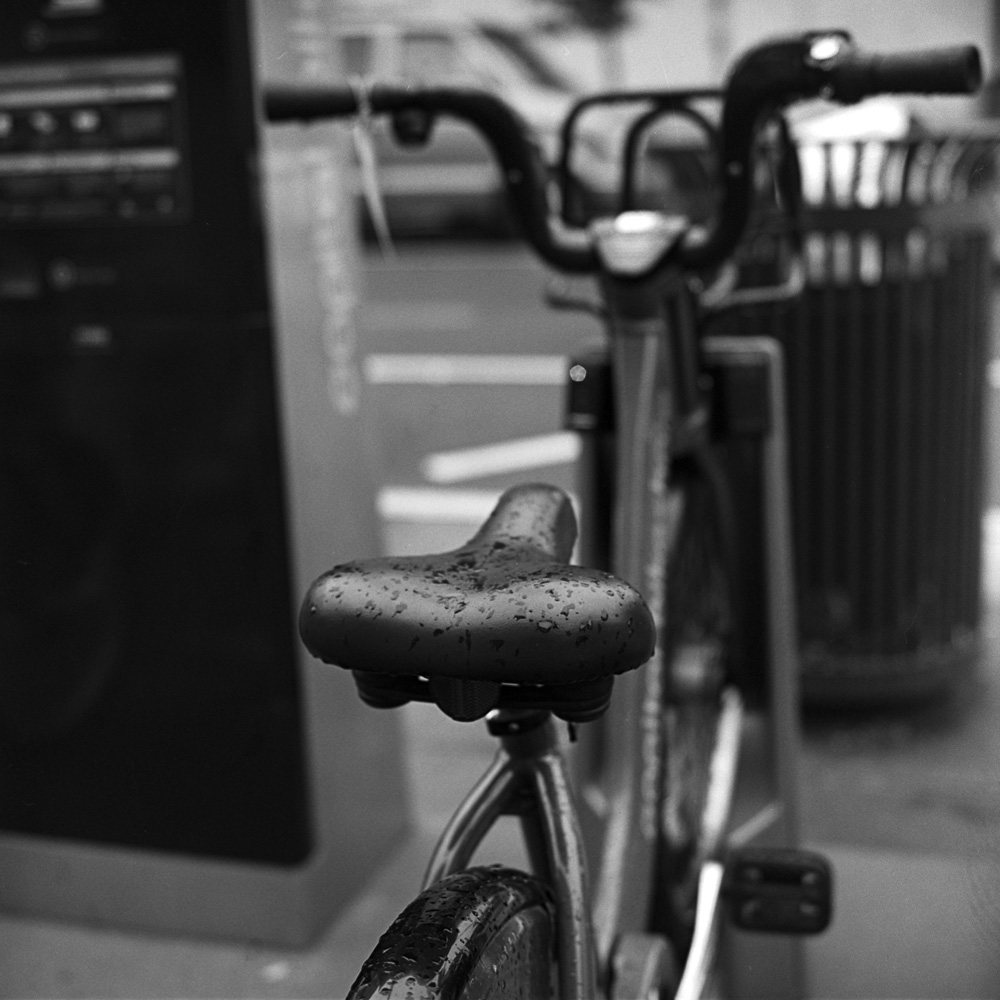
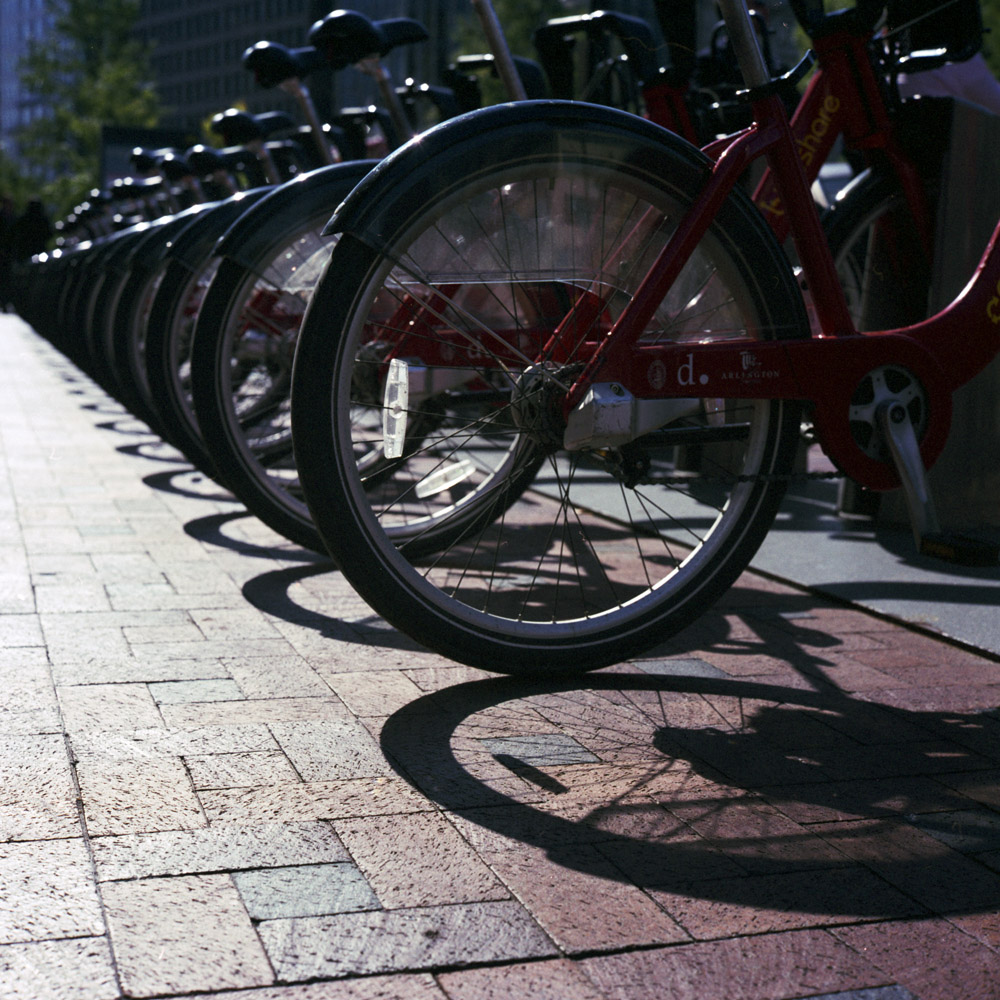
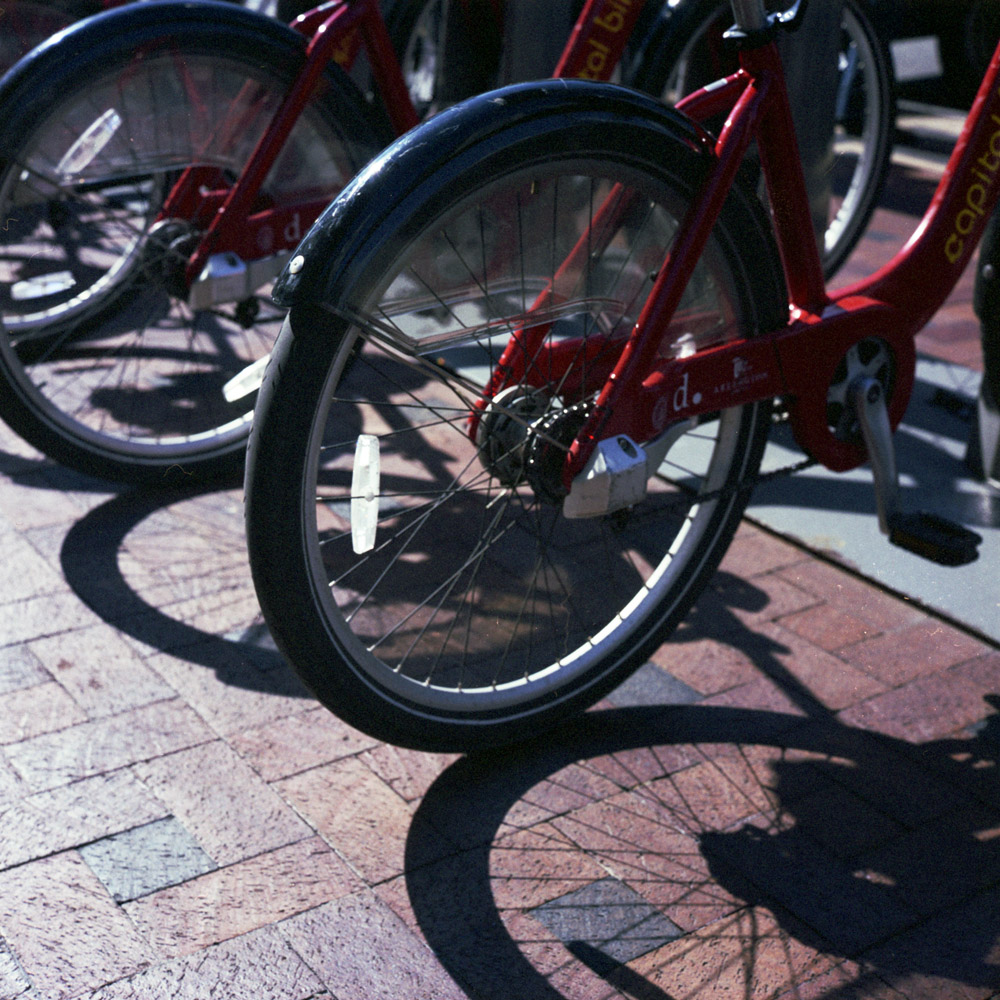
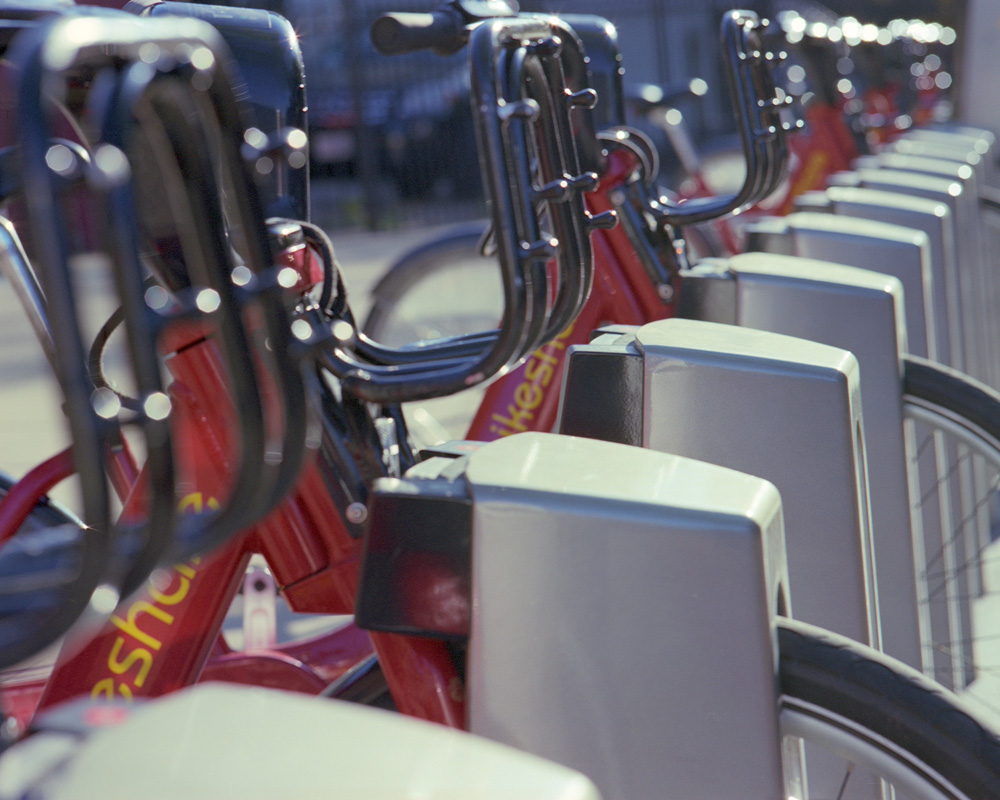
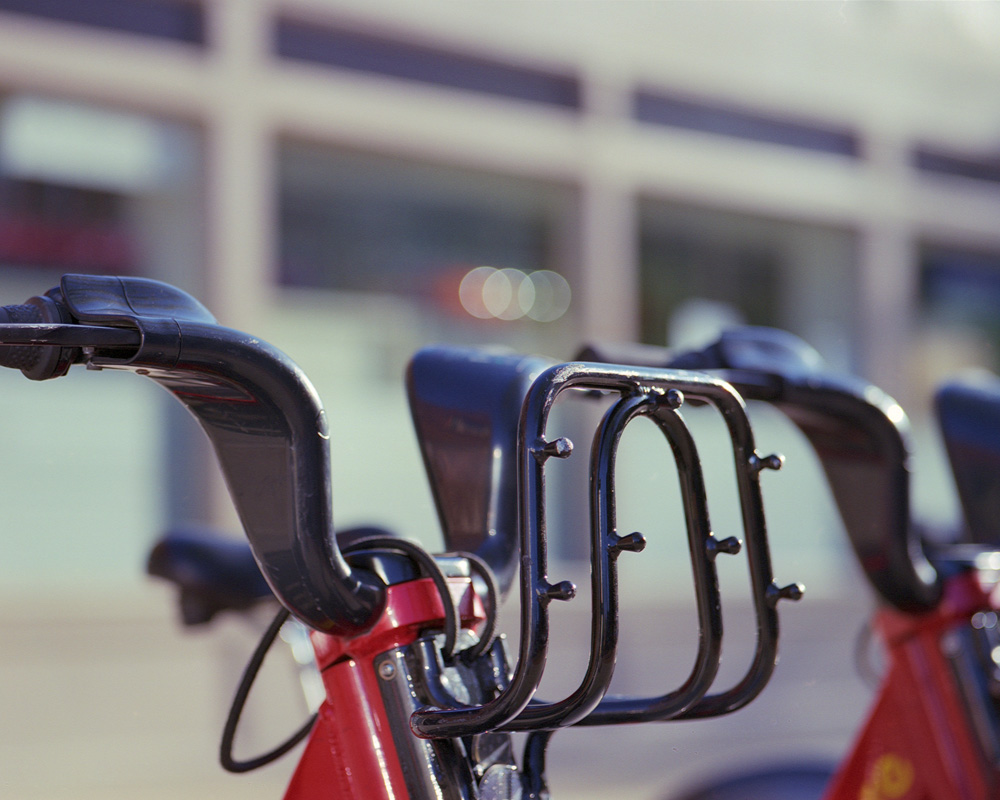
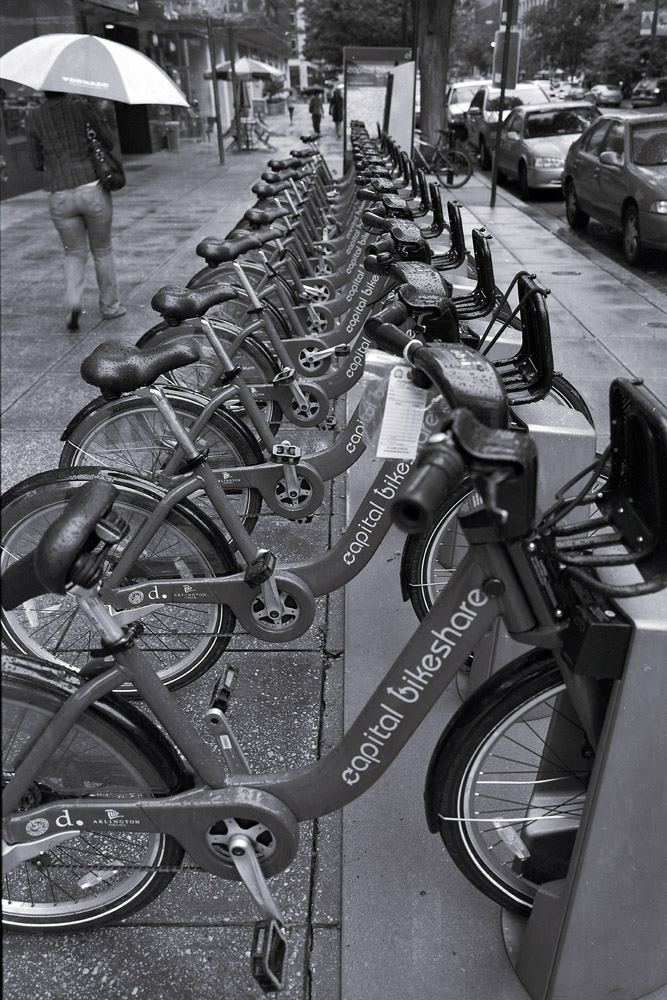
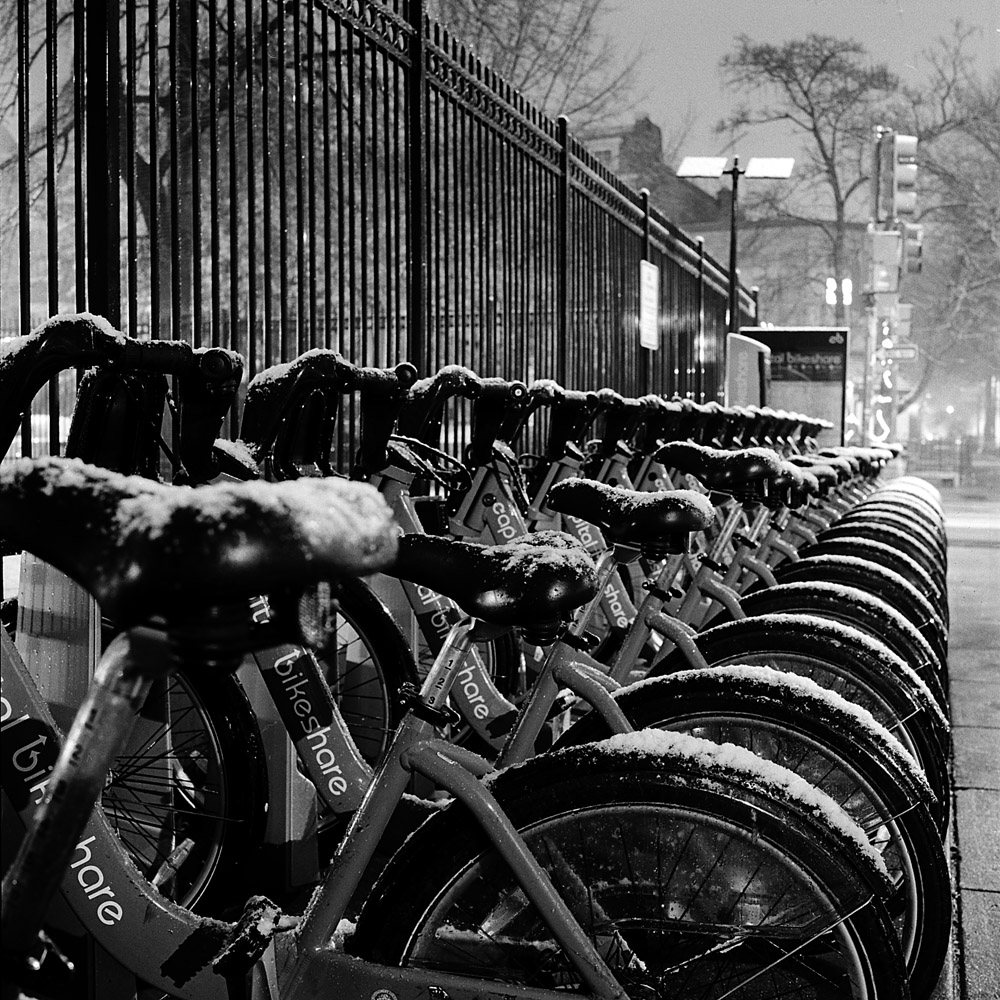
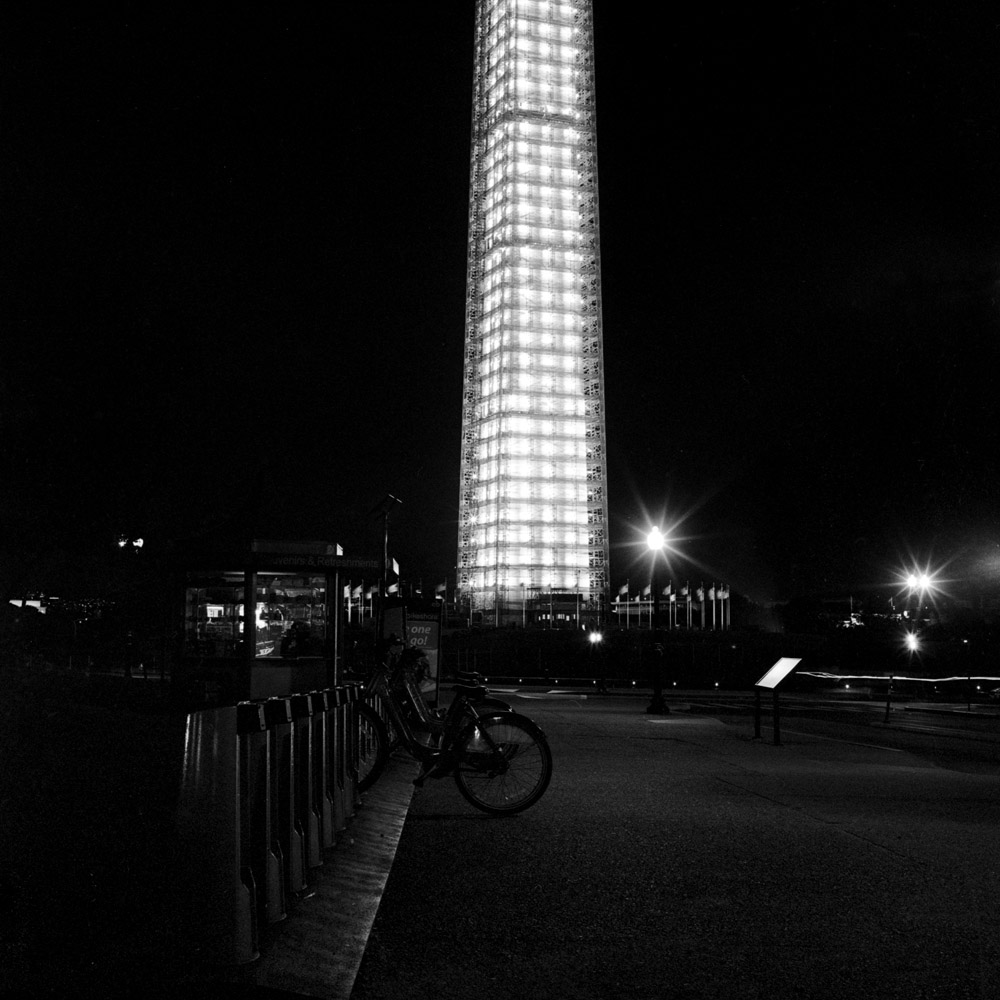
For rather obvious reasons, most of these are of the bikeshare here in Washington DC. I will be shooting more in other cities where I find them – I’m going to try New York the next time I’m up there, as the CitiBikes are everywhere in Manhattan. I do have token representation from Paris, though. I shot these with a range of cameras, from my Rollei to a loaner Fuji GSW 690 II, to my RB-67. Each has their merits and the different formats I think actually work together to convey the varied moods and perspectives of the bikeshare experience.
 dcphotoartist