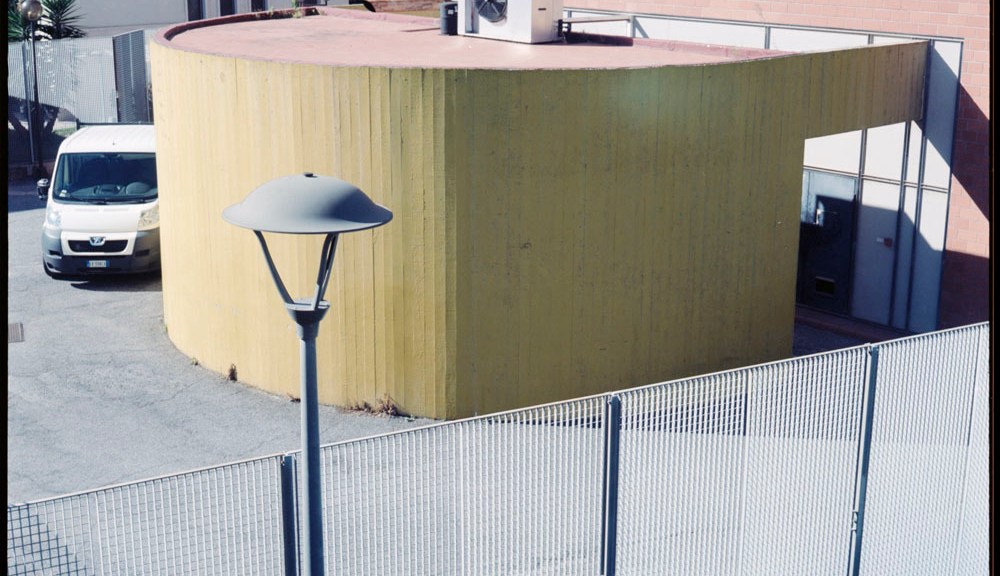
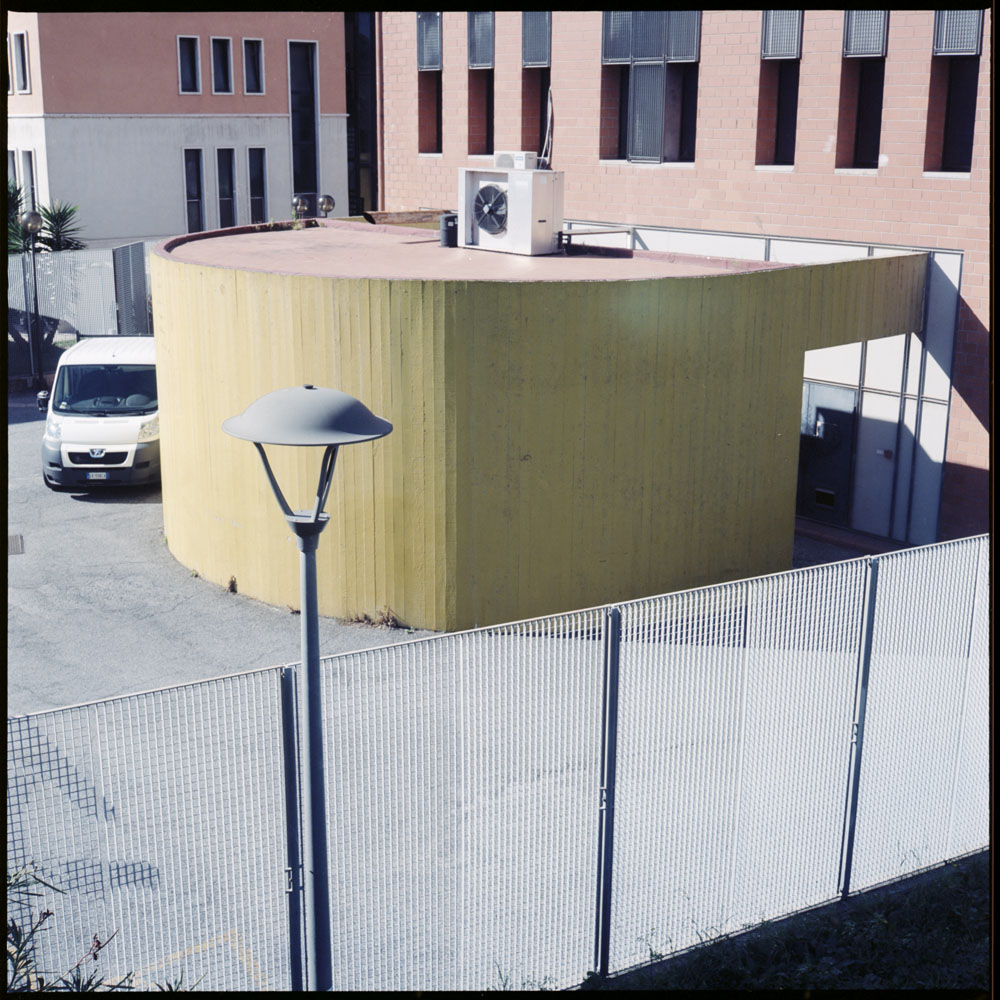
As I was coming down the stairs from the pedestrian overpass connecting the Garbatella Metro station with the other side of the railroad tracks, I saw this scene. This is actually about repetition, in a way: a repetition of one.
Yellow Wall, Garbatella
There’s one lamppost, one van, one A/C unit, and one yellow wall. A series of solitudes.
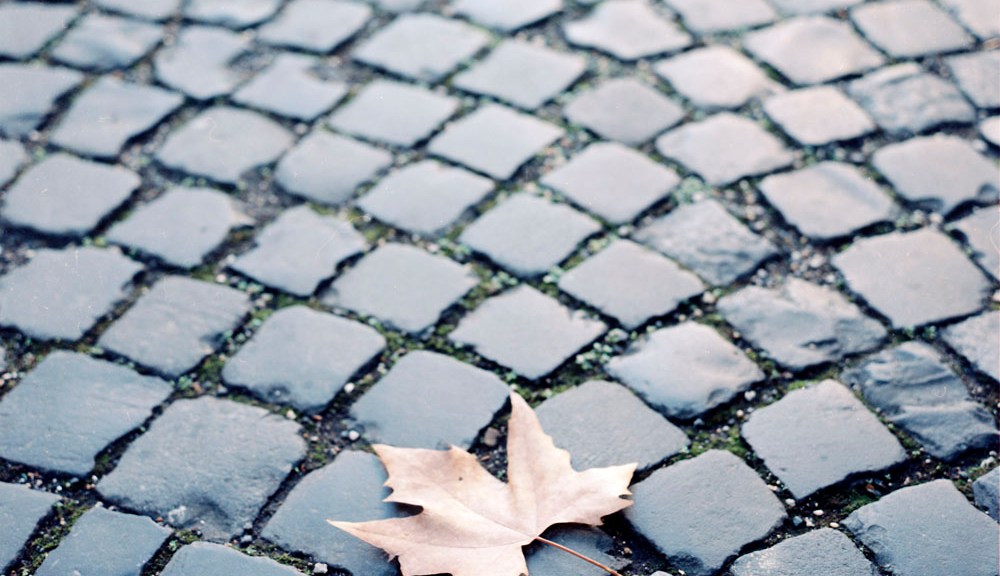
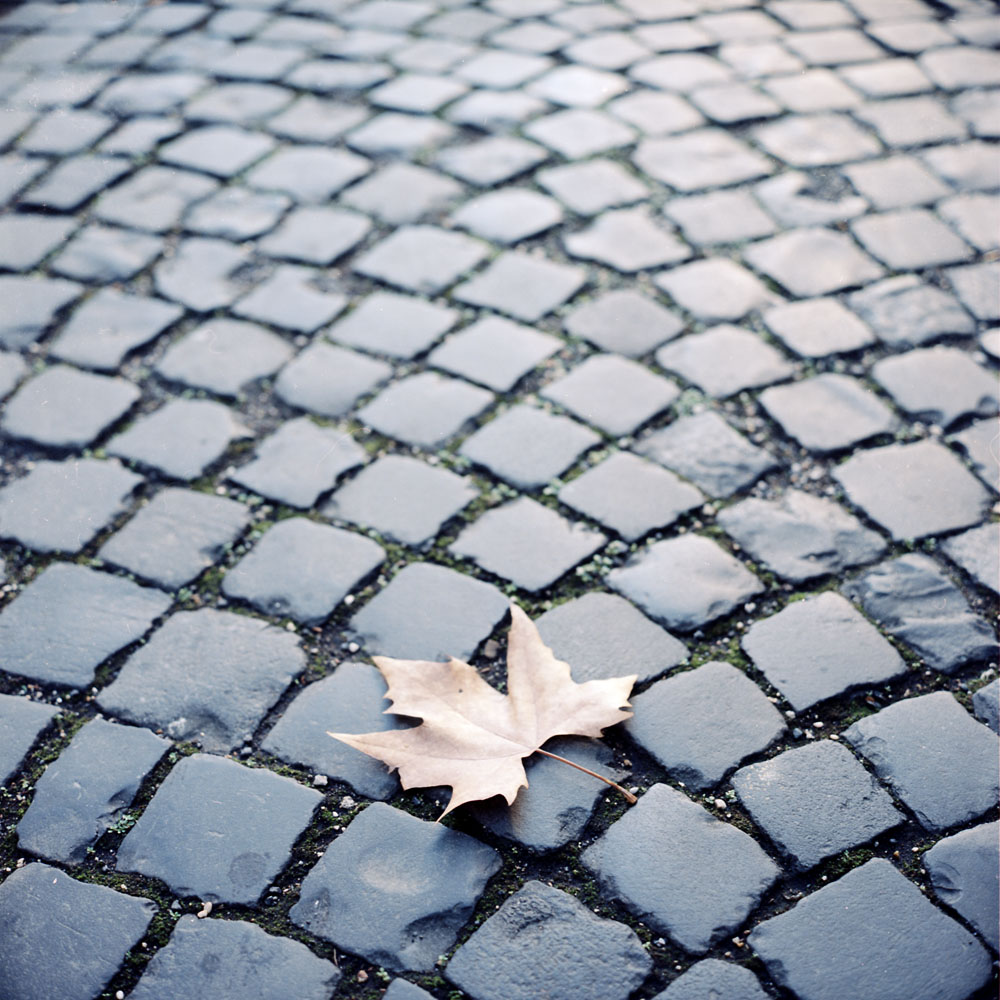
Just a one-off today – a single leaf that had turned brown and fallen on the black cobblestones outside the Centrale Montemartini museum.
Leaf, Centrale Montemartini
In travel, you make plans, and if you’re smart, you have either backup plans or you’re open to serendipity. I do a bit of both.
I had wanted to go see the Museo Centrale Montemartini, which is a collection of overflow ancient sculptures from the collections of the Capitoline Museums in downtown Rome, housed in a former power generation plant along the Tiber river. I had figured I’d go there on Monday, since most museums are closed on Monday, but the Capitoline Museums are open on Mondays. Well… long story short, Centrale Montemartini may be part of the Capitoline Museum group, but since it’s three subway stops out of downtown, it’s not like the ones on the hill overlooking the Forum, and it DOES close on Mondays. So I found myself in semi-suburban Rome looking at a closed museum, camera in hand. What’s a girl to do when faced with a loaded camera and a closed museum? Photograph the first fallen leaf of fall on some artfully laid cobblestone blocks in the museum driveway (and get honked at by a scooter driver for blocking the two and a half lane wide driveway). It also gave me time to shoot the bridge you saw in a previous post.
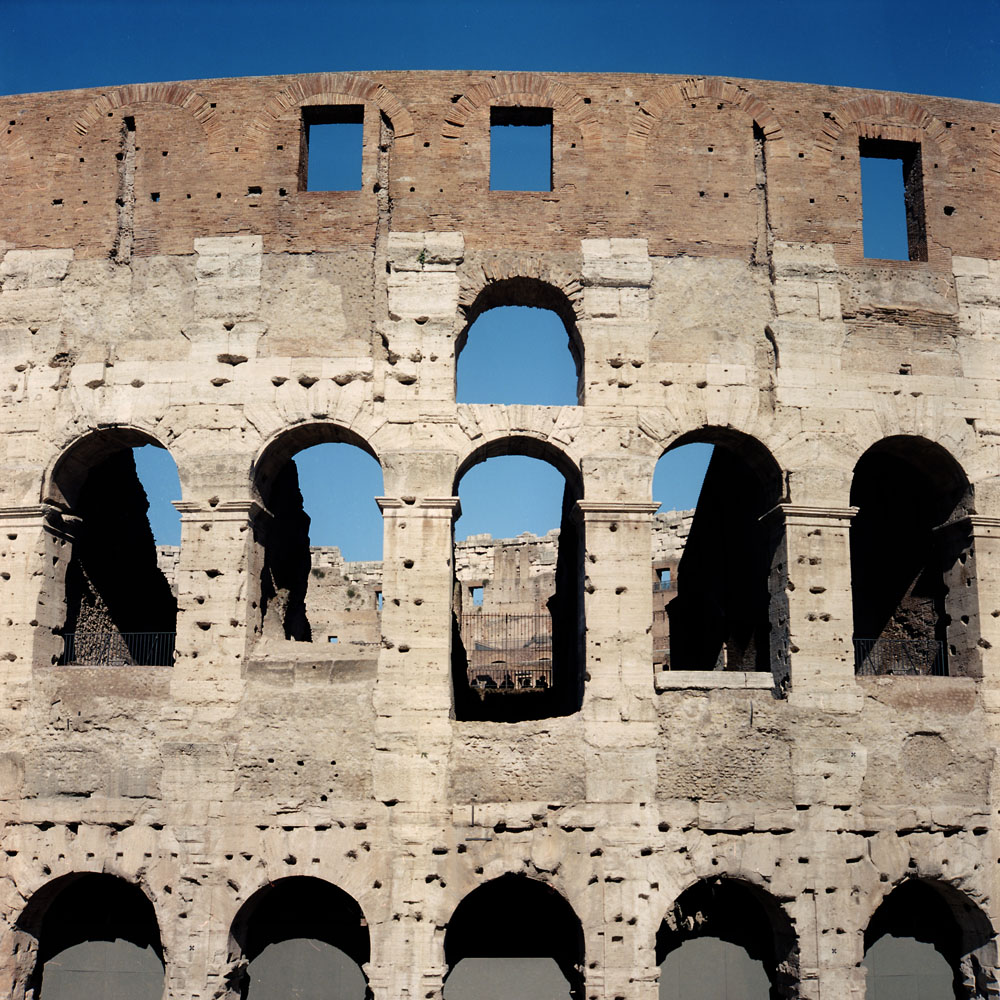
The Colosseum is truly one of the marvels of ancient Rome. A building that could seat somewhere between 50,000 and 80,000 (the higher number comes from an ancient source – modern estimates are lower) but evacuate them all in just minutes, hosted mock sea battles, and was designed and constructed without the use of decimals or precision measurement systems.
Colosseum Wall
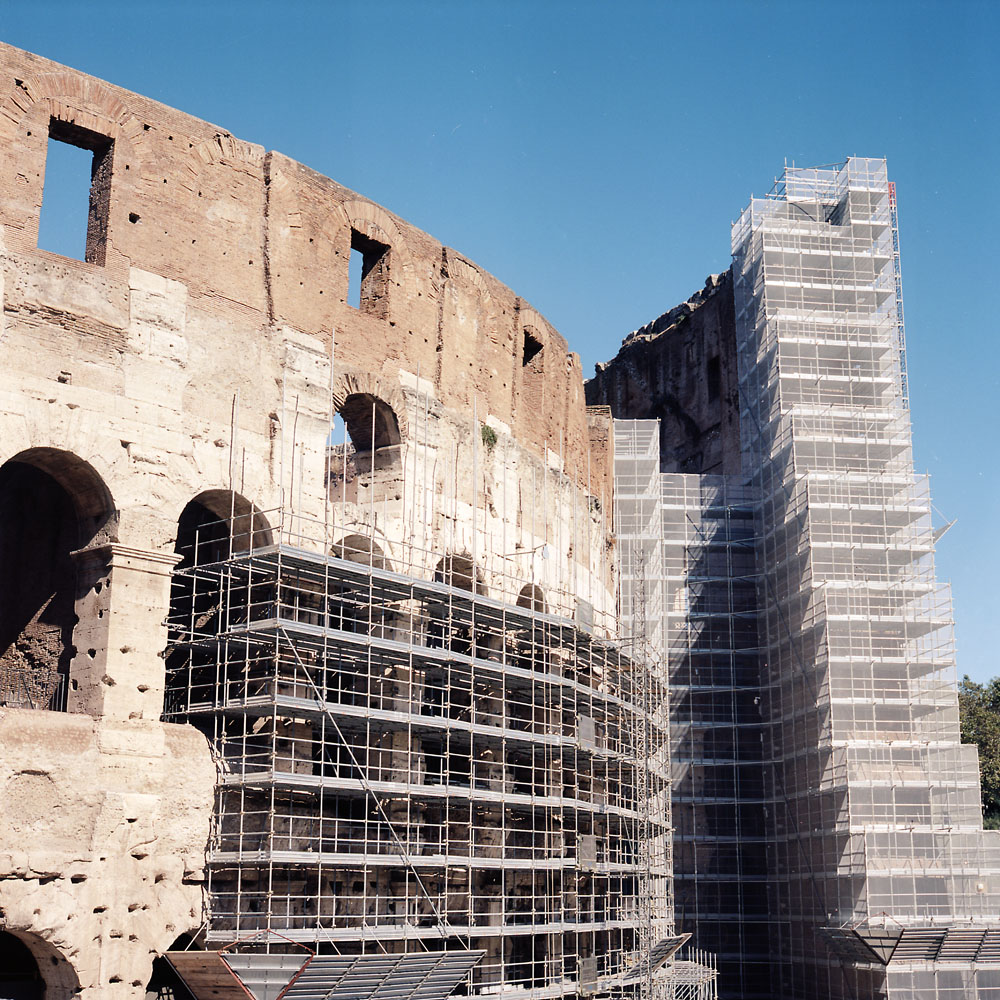
There is an ongoing project to restore and stabilize the outer wall of the Colosseum. To that end, they’ve wrapped parts of the exterior in scaffolding to assist in the work.
Colosseum Scaffold Rear
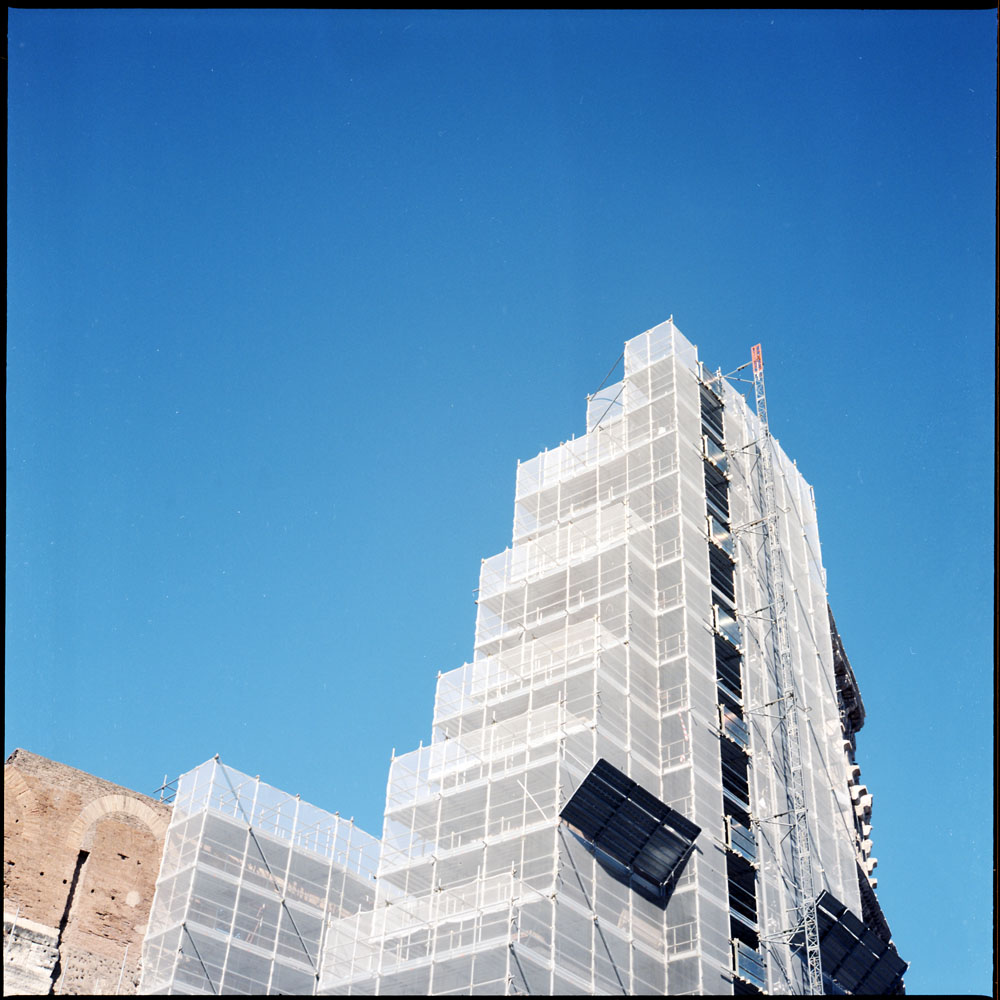
Viewed from a different angle, the scaffold takes on the appearance of a modern skyscraper.
Colosseum Skyscraper
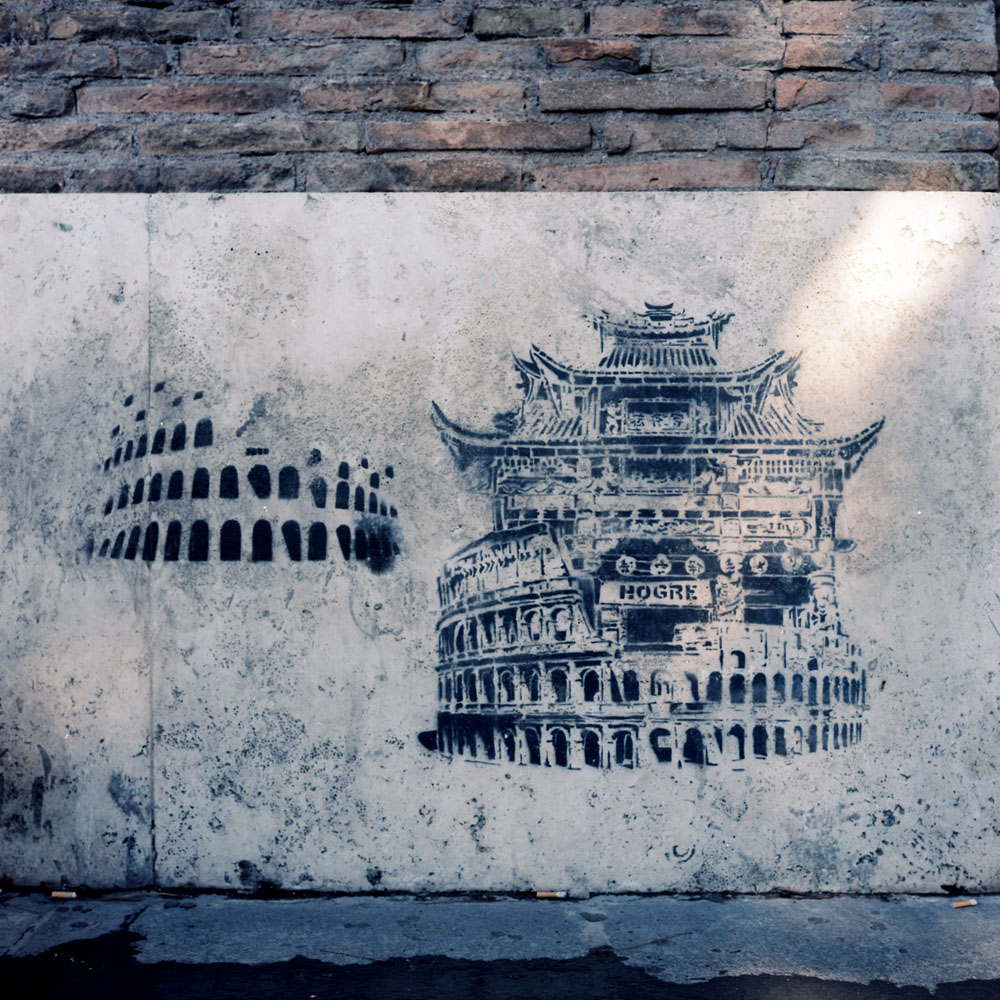
I spotted this bit of graffiti on a wall outside the entrance to the Colosseo Metro station.
Colosseum Graffiti
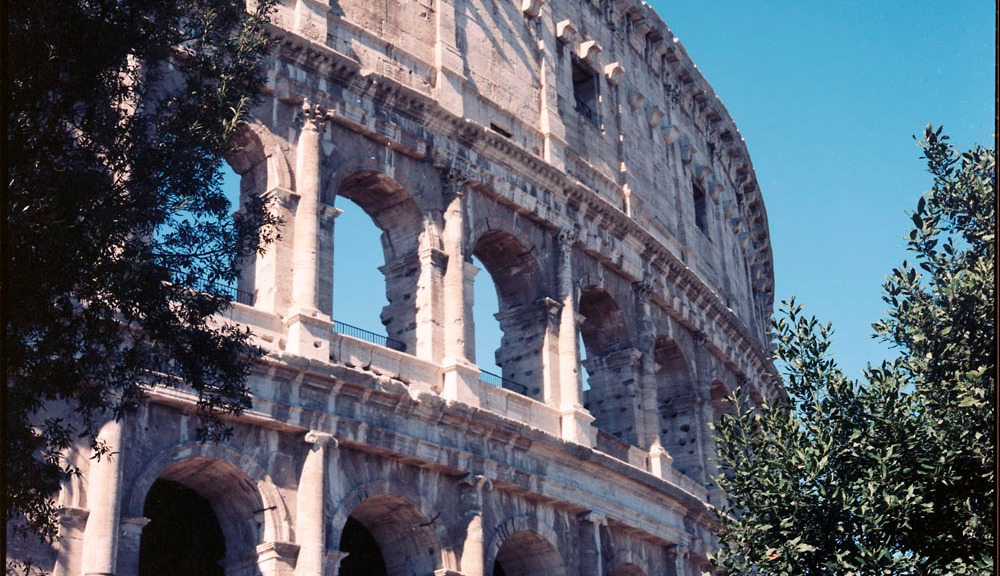
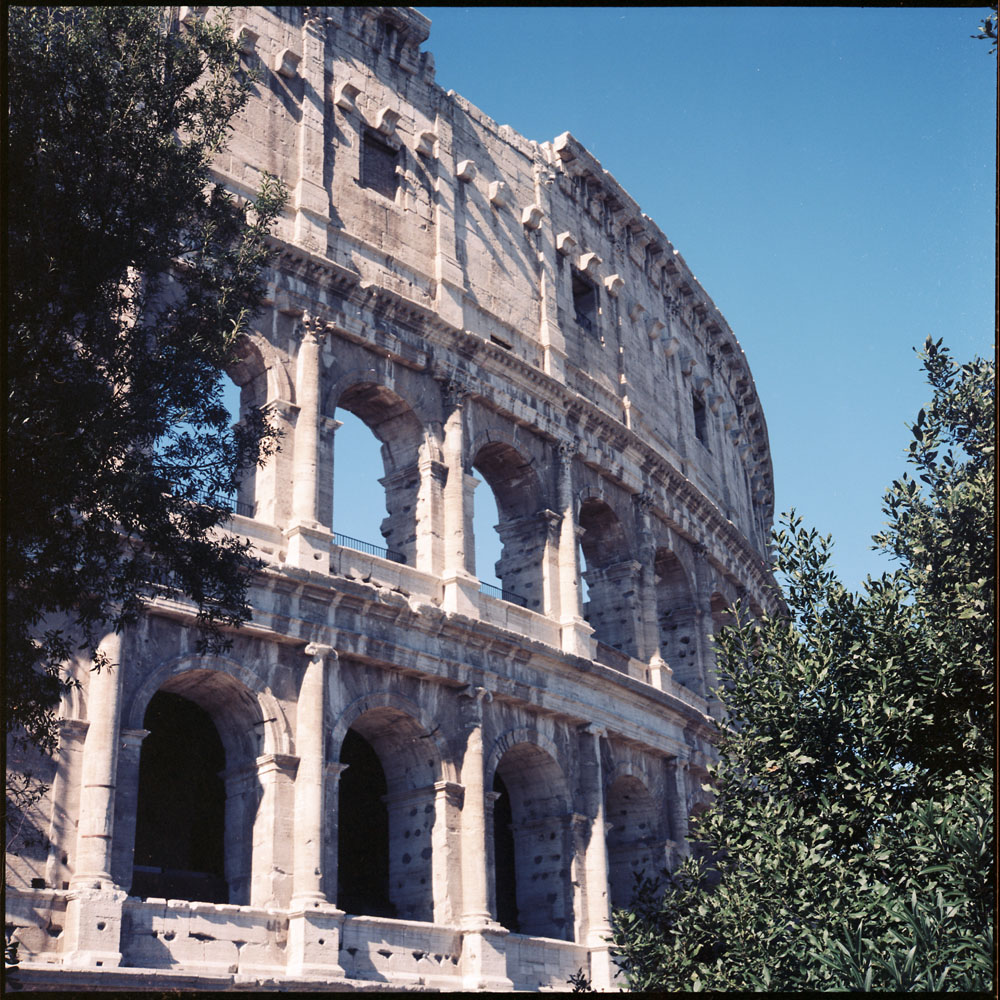
A simple shot of the Colosseum exterior wall in a section not undergoing stabilization work.
Colosseum Exterior, Trees
You’ll notice I have no shots of the interior of the Colosseum. I did not make it inside. Traveler’s tip – if you want to see it without booking a tour, you need to buy a timed entry ticket, which you can get from the ticket booth at the entrance to the Forum. Get the ticket from the Forum (it lets you in to both the Forum and the Colosseum) instead of trying to get it directly from the Colosseum. Why? Because the line to get in, EVEN if you have the RomaPass card, is about 2-3 hours long.
There will be lots of touts outside the Colosseum offering tours that will let you skip the line to get inside. Most of these will have the sole value of letting you skip the line – the guides are of varying and often poor quality. You’re better off pre-booking your tour in advance through an agency with online reviews that you can tell how good a program they offer. The advantage of a pre-booked tour is that the tour guides will be able to take you in to parts of the Colosseum you can’t enter if you just go in yourself.
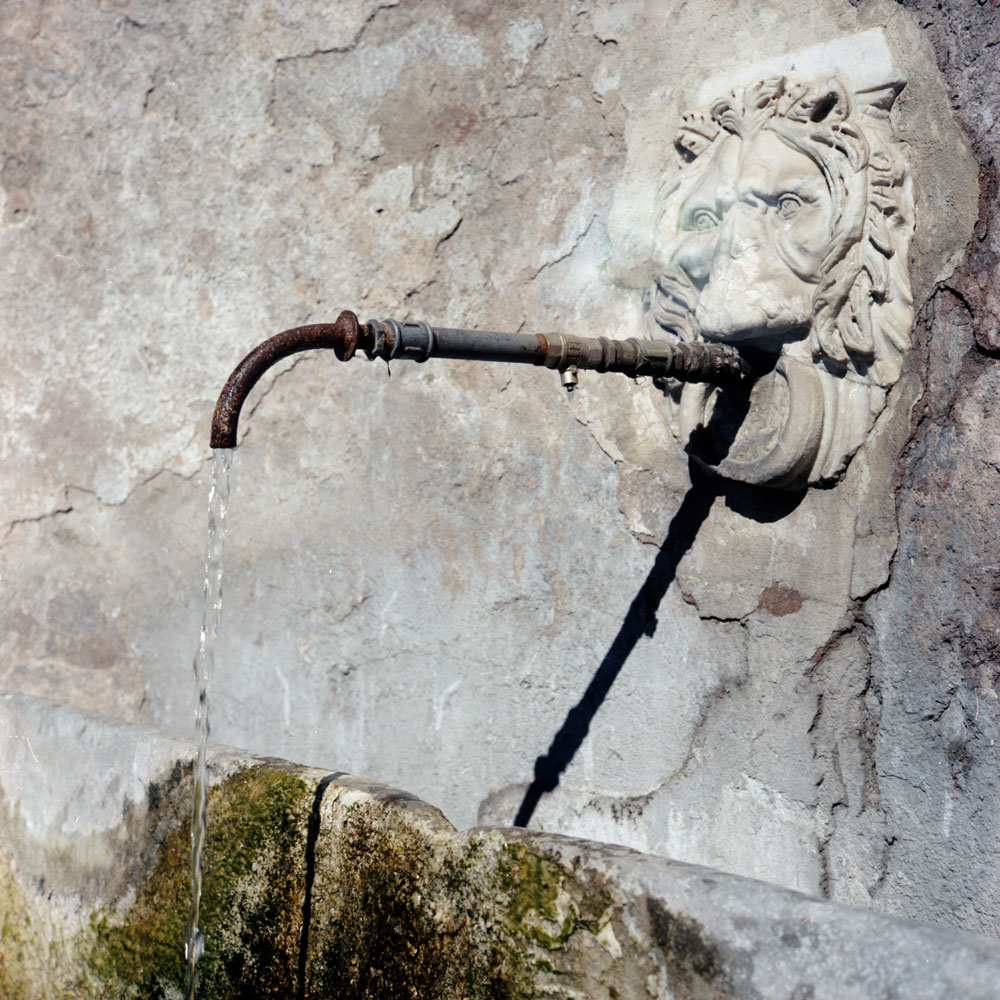
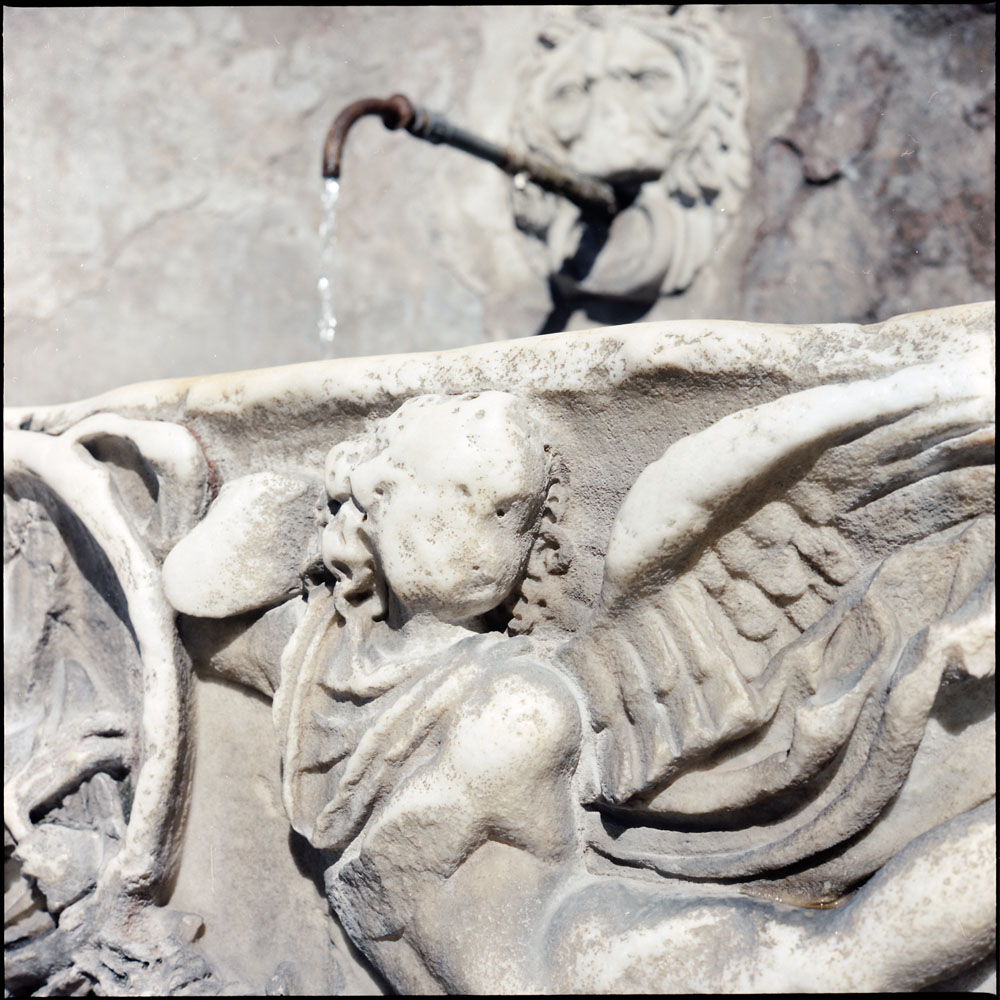
You’ll find public drinking fountains all over Rome. It’s one of the charming features of the city. Unlike fountains in some cities, they run continuously. You can fill a cup or a kettle from the spigot, or if you just want a sip, you can put your finger under the water spout to block it and water will squirt up from a small hole in the top of the pipe so you don’t have to hang upside down to get your water fix.
Water Fountain, Colosseum
That’s a try-at-your-own-risk activity though – if the water pressure on the spout you’re blocking is good, it comes out the little hole with quite some velocity – I tried it on this fountain and got a thorough squirting in the face. Given the heat of the day it was a welcome squirt, but not expected.
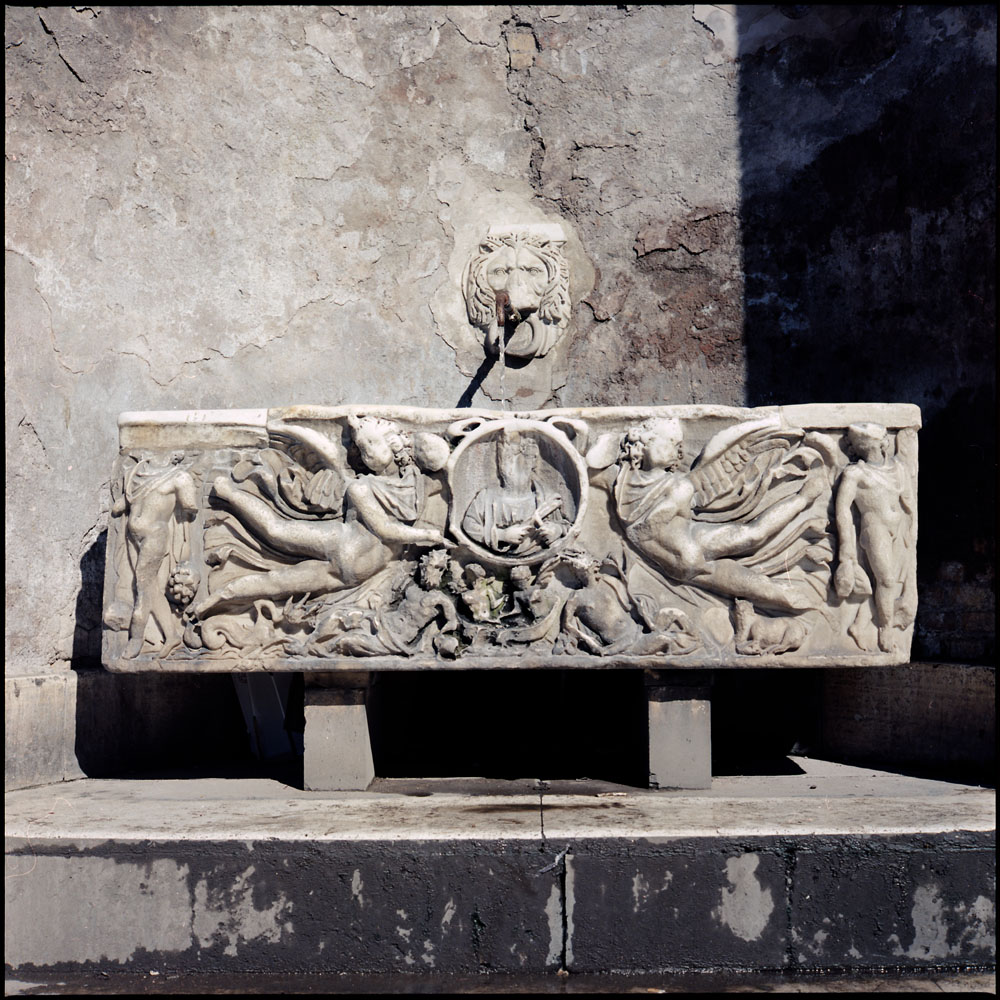
I don’t know how old the trough under the spigot is, but it appears to be of the late Imperial era. It may have always been a water trough, or it may have been a sarcophagus – it’s the right size for it. But probably only in Rome will you be able to drink your water in a 1700 year old water fountain.
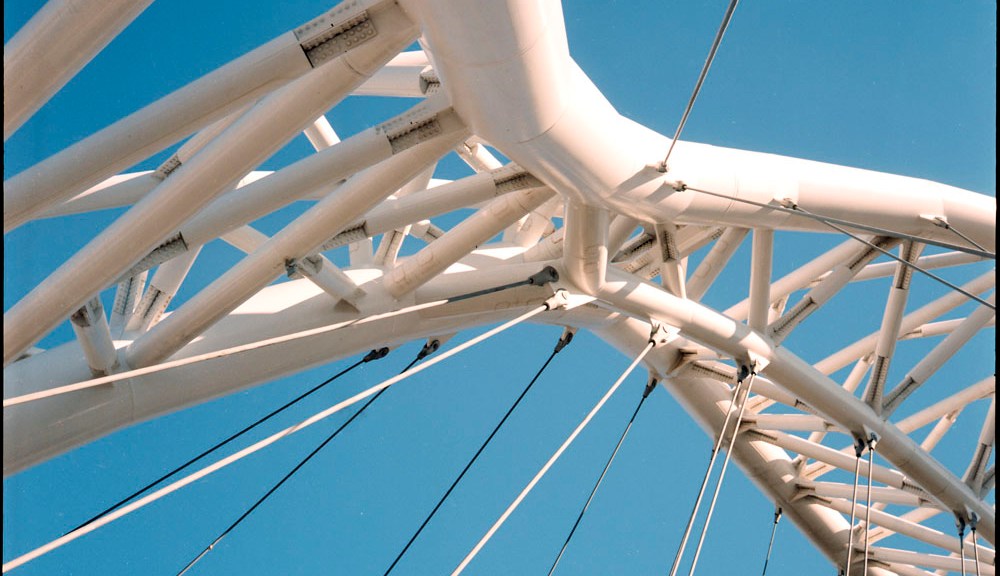
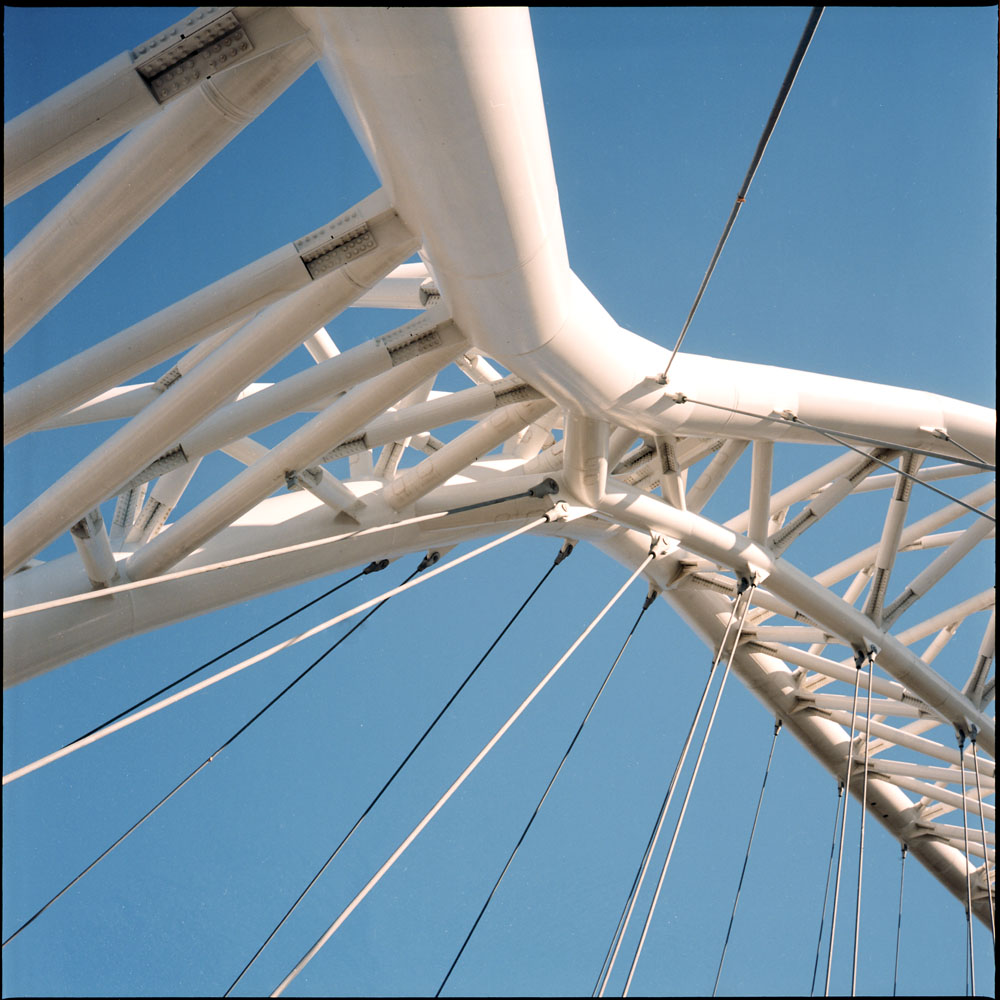
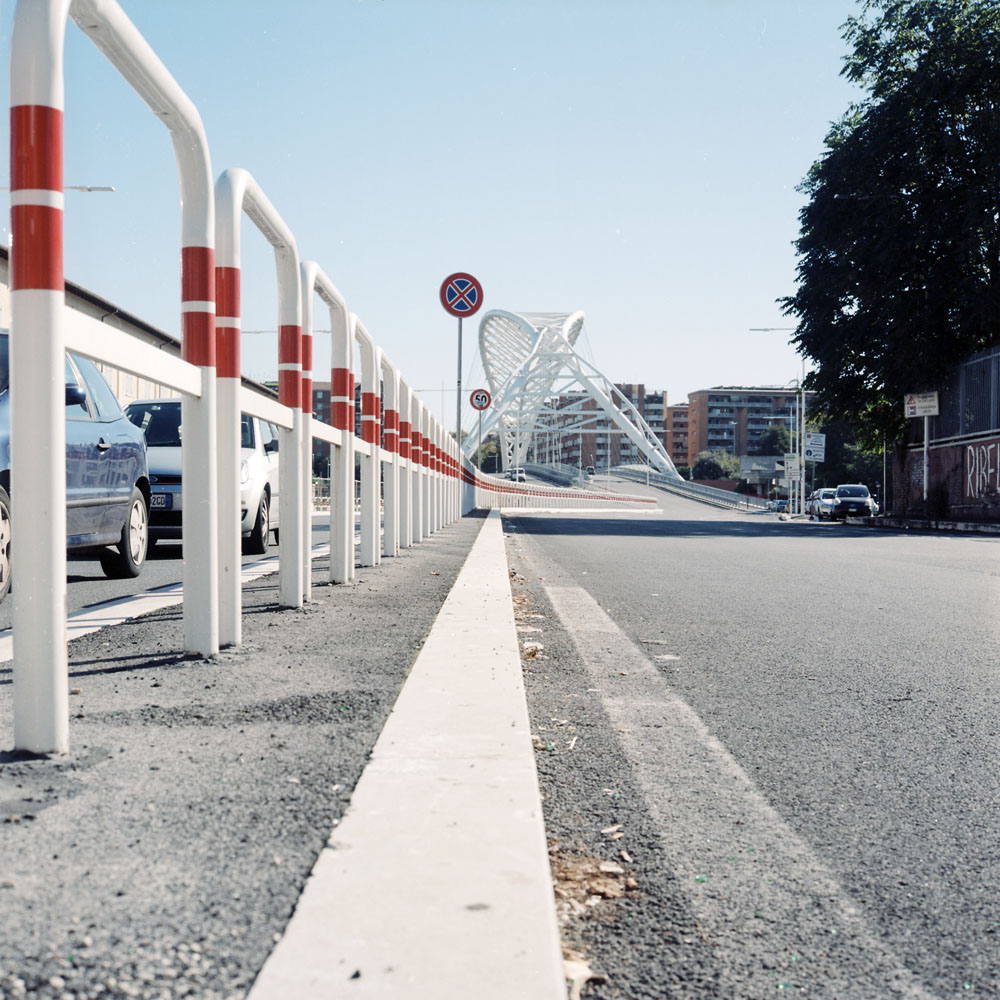
Italy isn’t all about ancient structures – while there are historical and architectural marvels aplenty in the center of the city of Rome, modern architecture happens too. At the Garbatella Metro station, this enormous viaduct that carries a four lane road over the railway tracks soars into the sky like a giant DNA strand or a dinosaur skeleton bleached white in the sun.
Viaduct, Garbatella, RomeViaduct, Garbatella, From Below
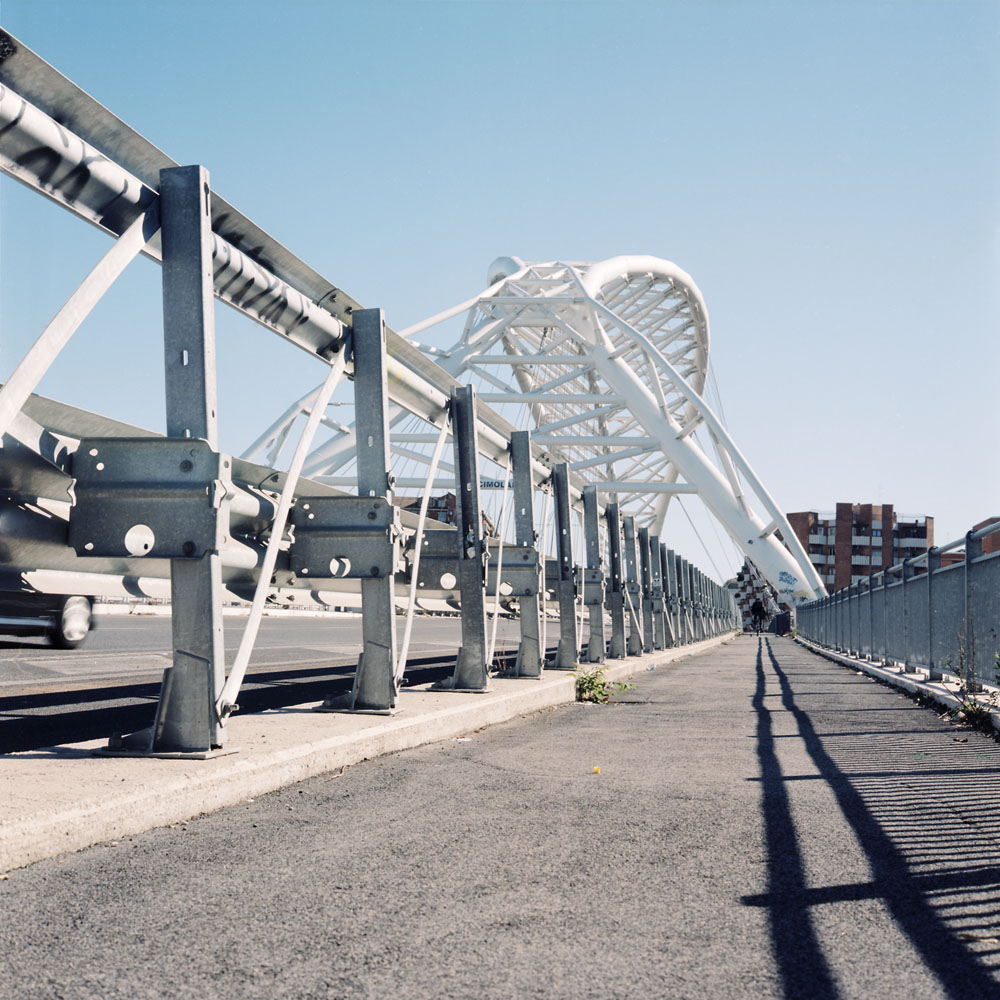
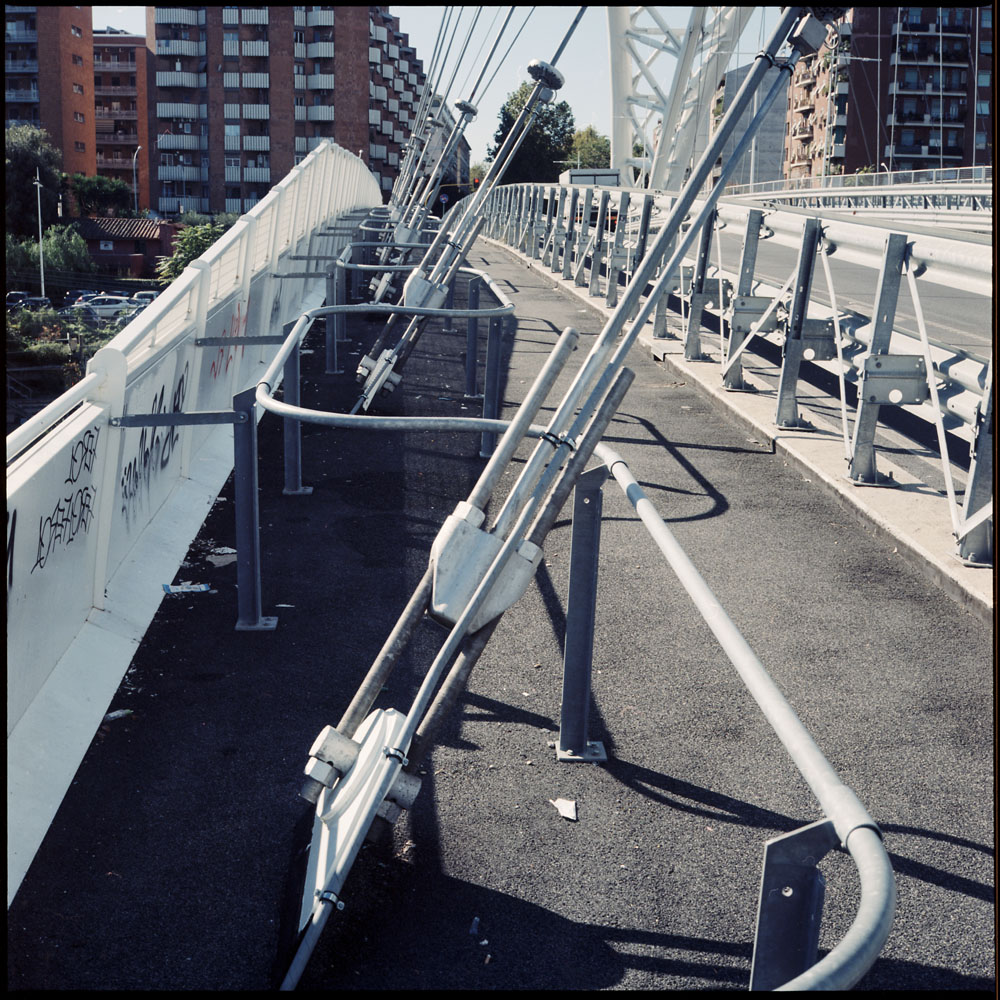
Everything about this bridge was designed with an artistic conceit, even the railings that surround the suspension cable anchor points – they undulate like the bridge form itself, like a ribbon or a snake winding its way between the cables.
Railings, Garbatella Viaduct, Rome
Even the safety barrier between the lanes on the roadway has been thoughtfully designed from an aesthetic as well as functional perspective.
Here begins my Italian saga. I got back less than a week ago from my Italian excursion, having spent 12 days in Florence and Rome. I posted an odd and end from my phone while on the road, but now that I’m home I’m working my way through the 79 (yes, 79!) rolls of film I shot. I’ve got 16 processed so far, and will try to develop some more after work during the week so I don’t have to totally binge on the weekends.
If you’ve been following the blog, shortly before I went away I got a Lomo Belair X/6-12 panoramic camera. I posted a few shots I took with the 58mm super-wide lens, and that lens is, well, marginal at best. Very soft, very low-contrast, and horrendous barrel distortion. Not the kind of lens I would want to shoot a lot of architecture with, and that’s what I’d be shooting a lot of in Italy. I brought it with me just in case, but kept the 90mm lens on the camera and ended up shooting exclusively with that.
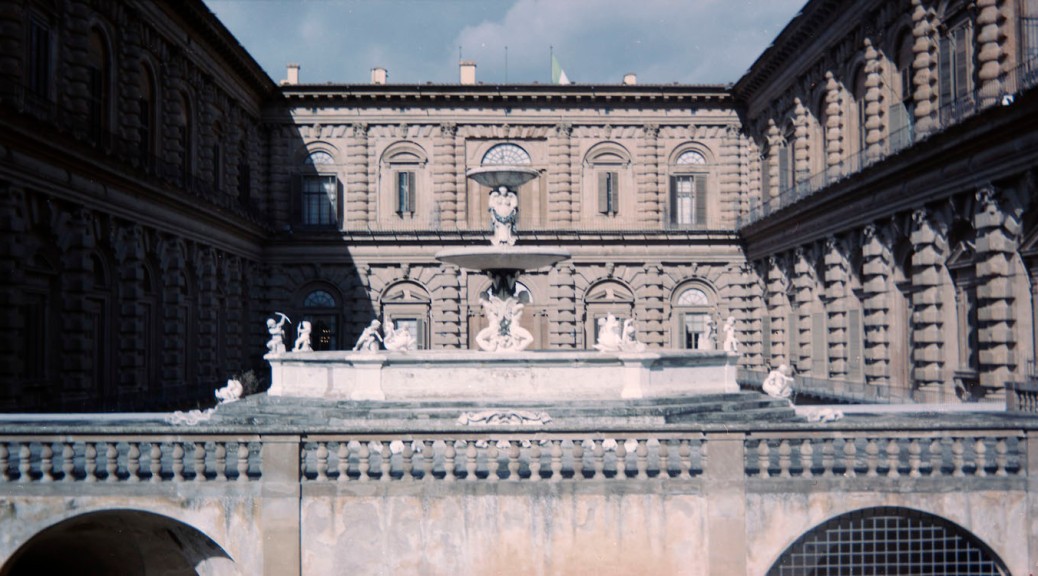
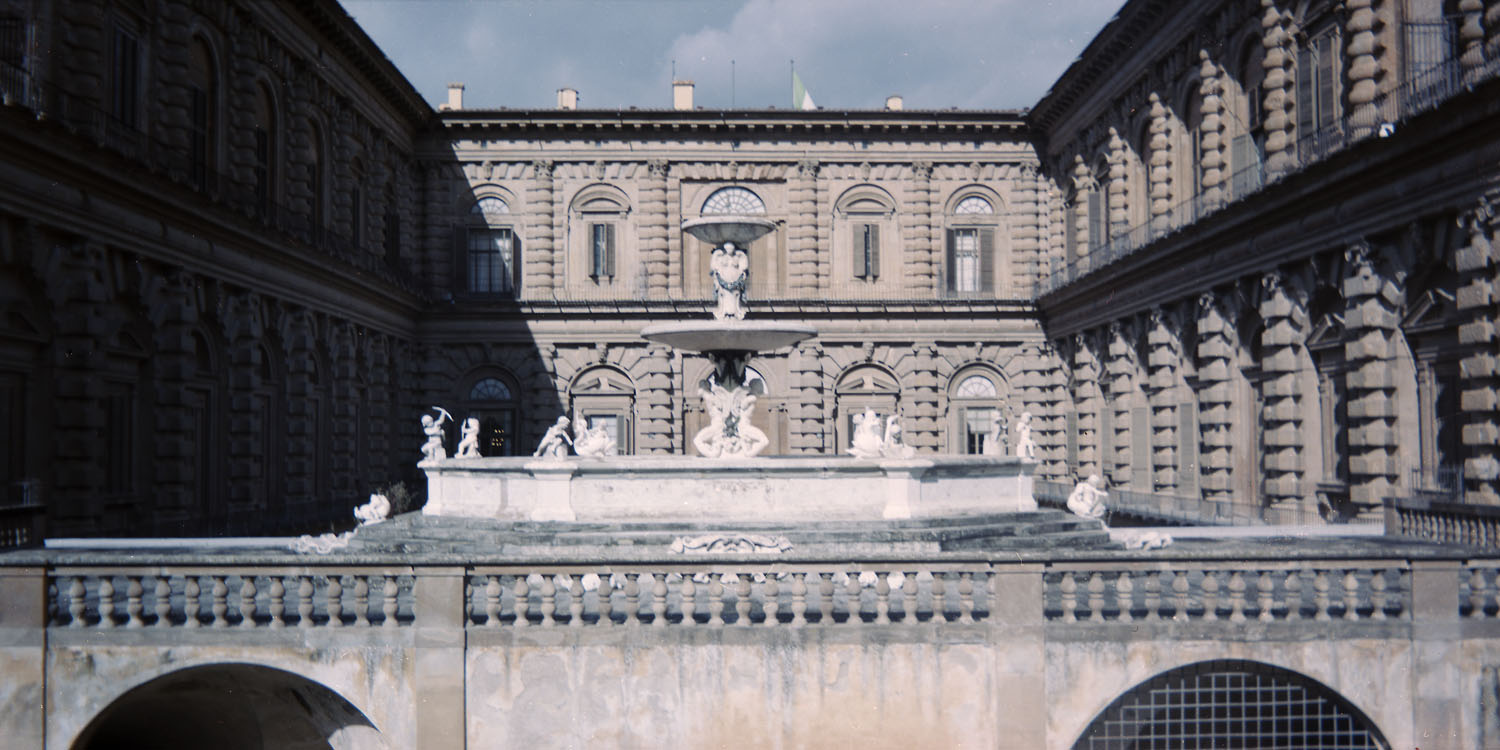
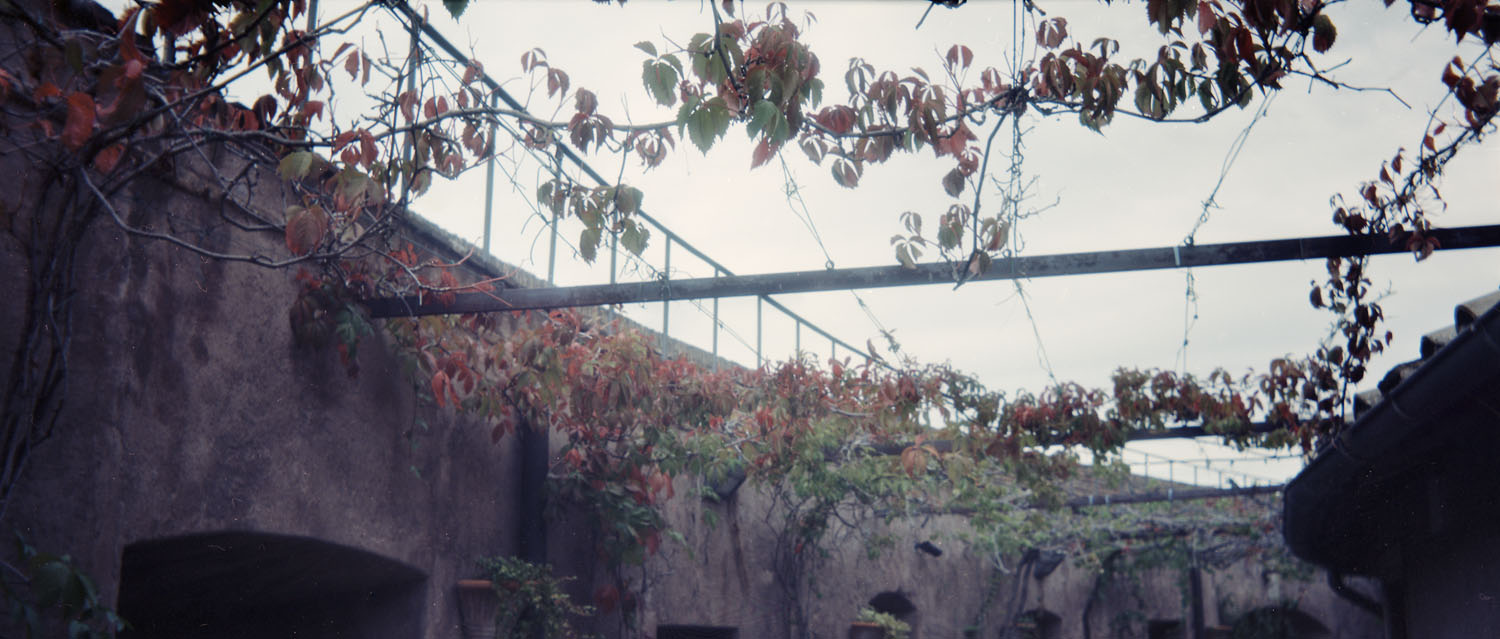
This is the courtyard of the Palazzo Pitti, as seen from the Boboli gardens behind it. As you can see from this shot, the 90 is sharper than the 58, but still not up to the standards of a glass lens (the 58 and the 90 are both plastic).
Pitti Palace
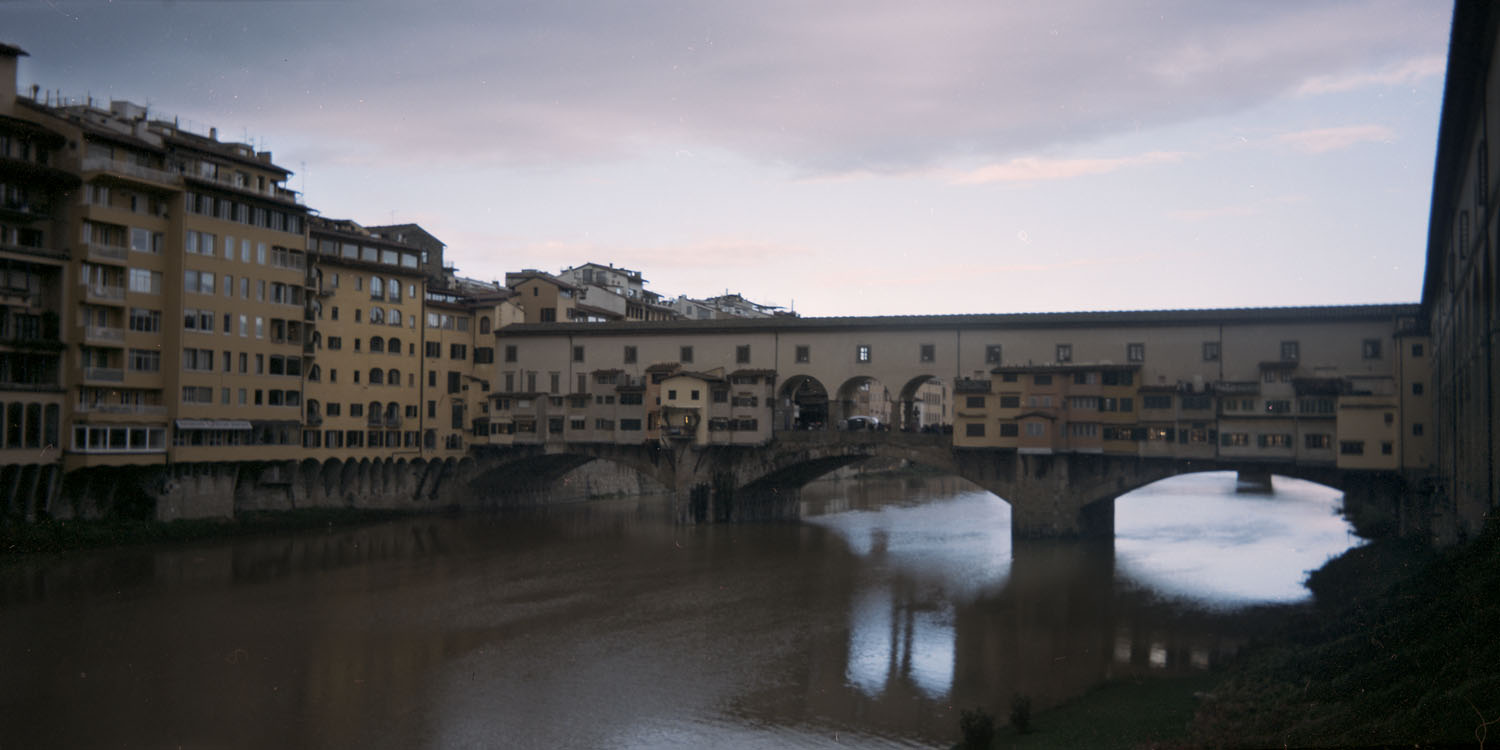
The 90 is better, but better is a relative term. Certainly, I wouldn’t have been able to take these shots without the camera, and I genuinely like them, but they’re not what I normally think of when I think of my style of photograph. If I’m going to stick with the camera, it’ll be a mental adjustment to apply the tool to tasks appropriate to it. It’s very good at transforming the time of day of a shot- while this is titled “Ponte Vecchio Evening”, it was actually shot around 10AM.
Ponte Vecchio Evening
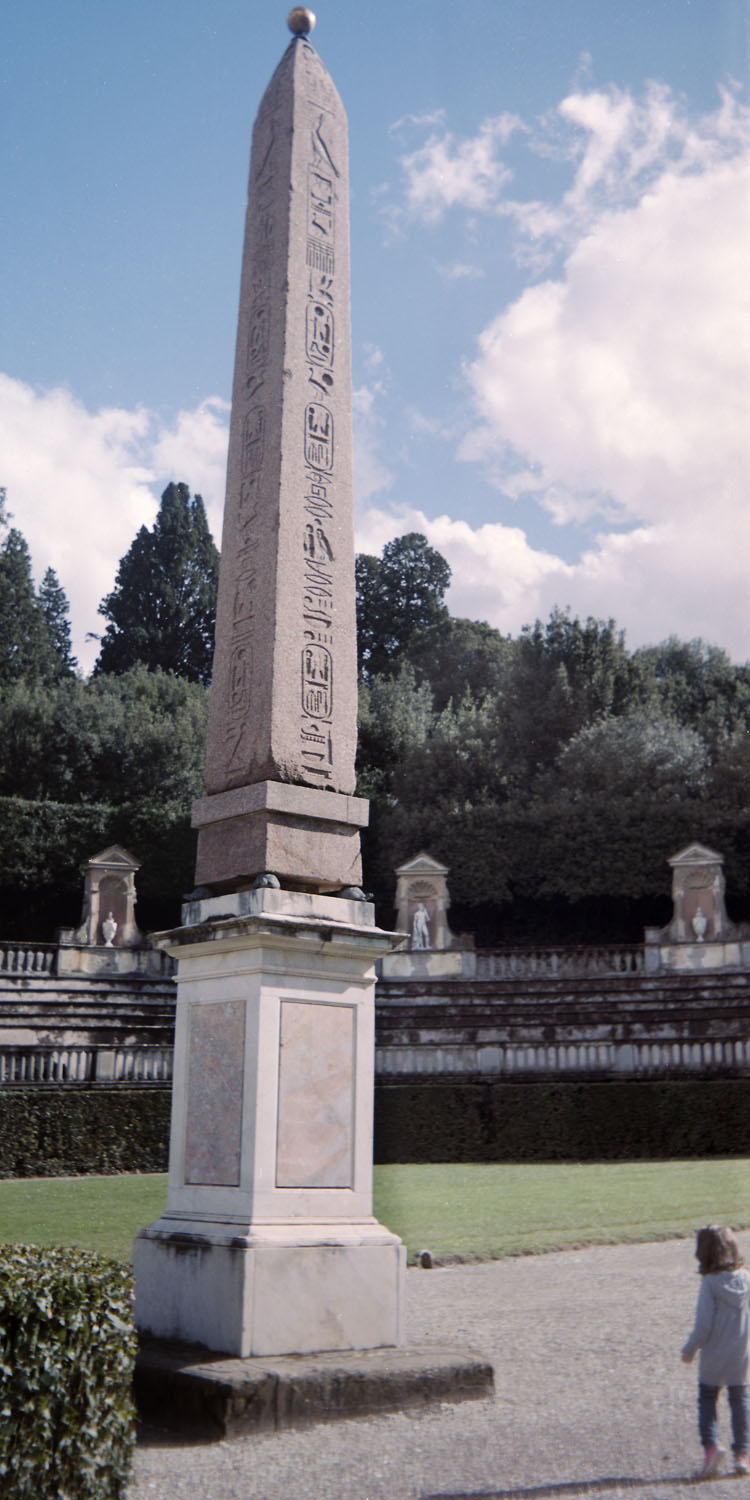
This has also been a lesson for me in making peace with cropping. I’ve been for the most part a full-frame kind of guy – I try to compose to the edges of my frame so everything shows the way I want it to and I don’t need to crop. But sometimes, the best of intentions when composing in the heat of the action don’t always work, and you learn to crop after the fact. This shot, for example. In the original full frame, the obelisk was dead center in the frame. I think at the time I pushed the shutter button I thought the little girl was out of the picture, but there she was. On the left, the edge of the fountain in front of the obelisk was intruding into the scene. Looking at the image actually captured, all the action in the scene included the little girl playing off against the obelisk, and the edge of the fountain was a real distraction. Cropping to get rid of the fountain completely changed the dynamic and makes the image go from being a record shot to something actually interesting.
Obelisk Boboli Gardens
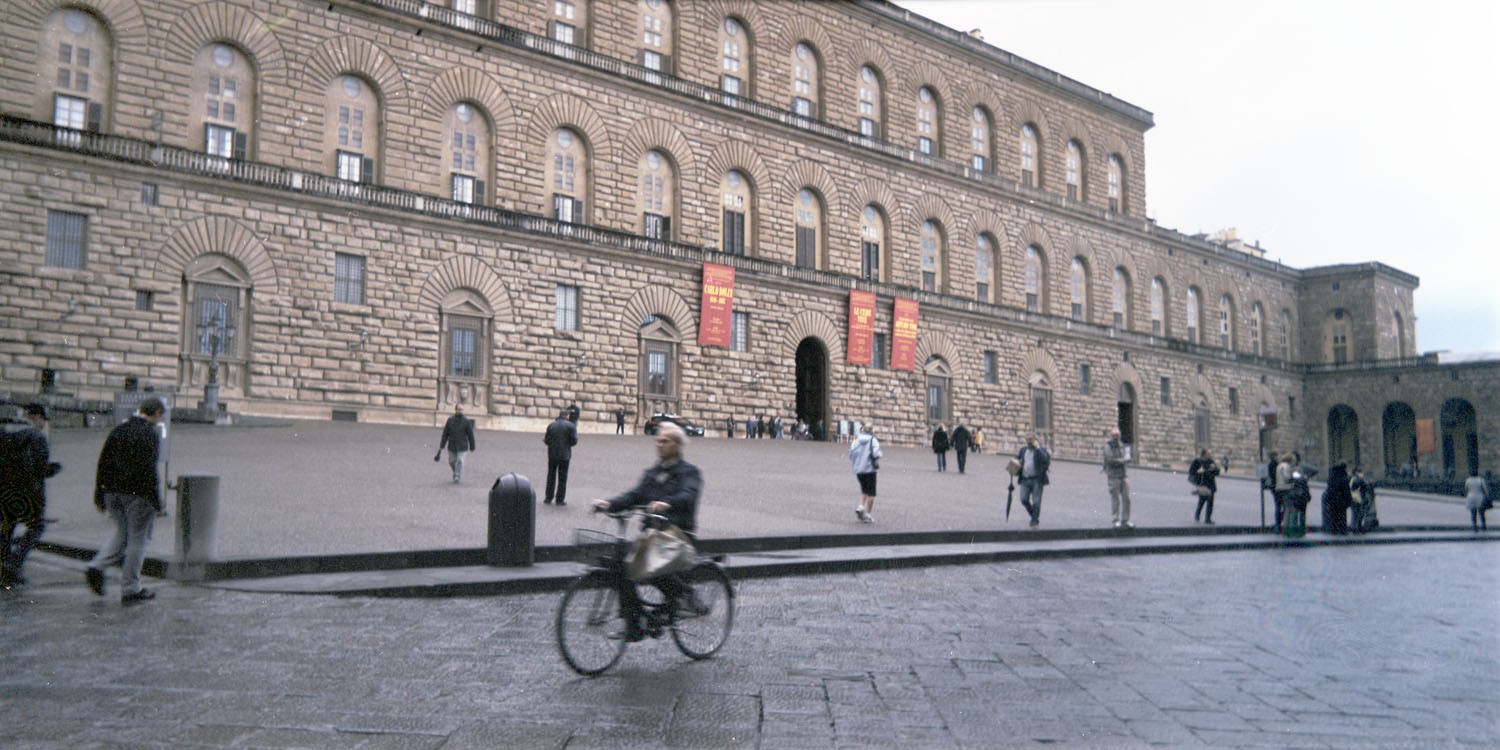
This is the facade of the Palazzo Pitti, originally home to the Medici family, later a residence for Napoleon Bonaparte, then the administrative center of the Italian government for the first few years after unification, and now an art museum. The shutter has a maximum speed of 1/125th of a second, which is fairly slow all things considered. I don’t know how fast an exposure this was – the camera doesn’t tell you what speed it is using – so I’m guessing somewhere in the 1/60th range given the amount of movement in the cyclist. That’s another thing you have to make peace with with this camera – unpredictability. I don’t know that I’m there yet. I’ve got about 12 more rolls of film from this camera to process in my black-and-white film, so we’ll see how I feel after getting through those.
Cyclist, Pitti Palace
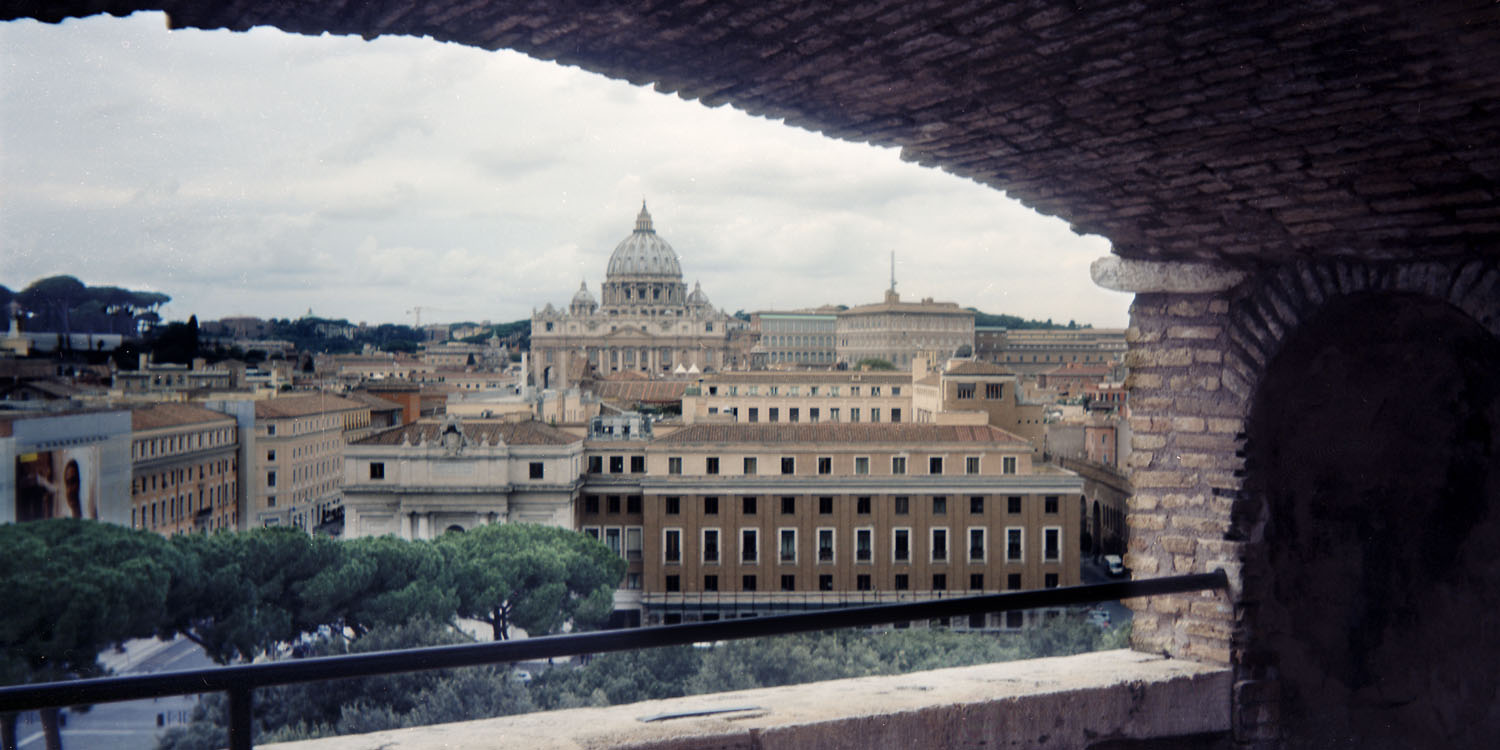
Sometimes the panoramic composition works phenomenally, like this one of St. Peter’s Basilica as seen from inside an arch on the Castel Sant’Angelo.
St. Peters From Castel SantAngelo
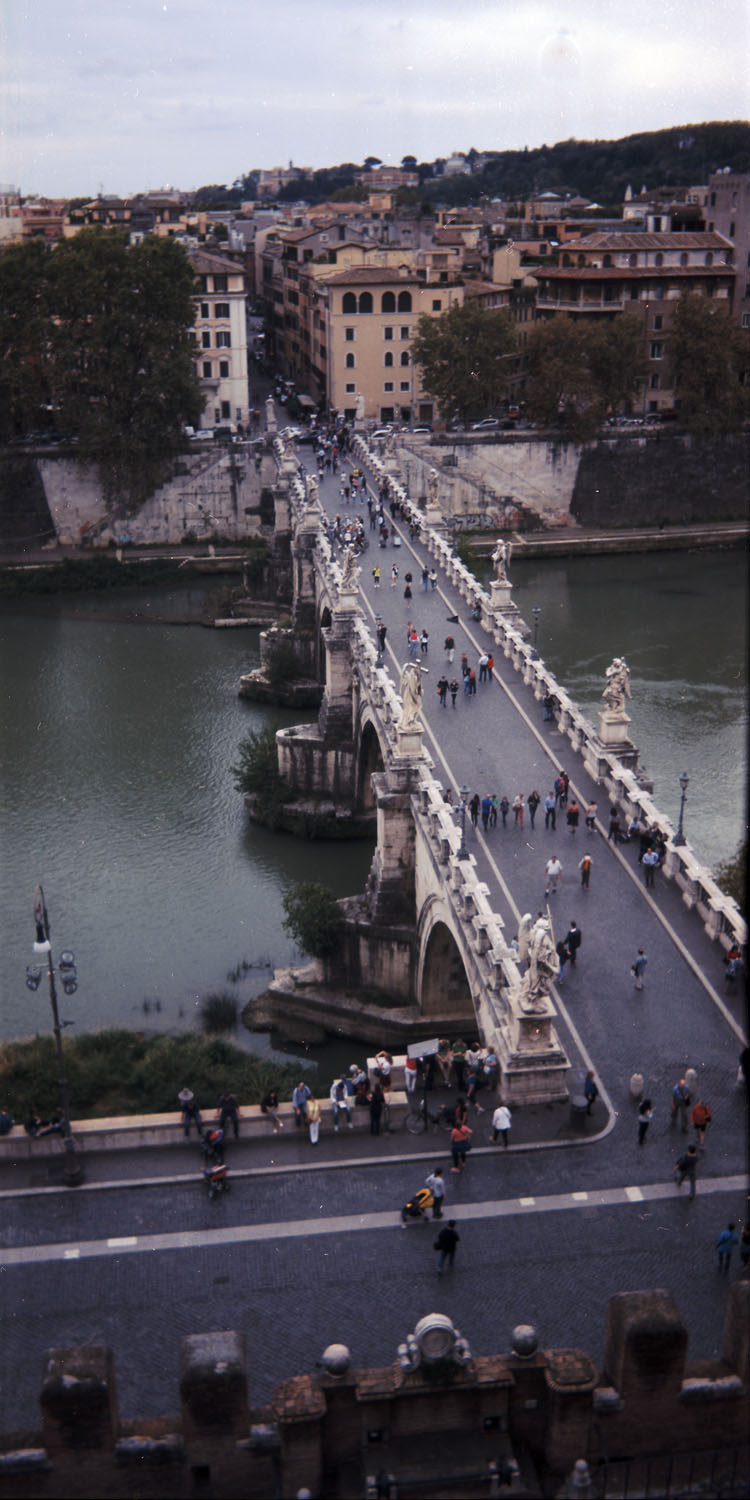
Other times, the panorama gives you compositional challenges that provide serendipitous solutions to themselves, like shooting the bridge in front of the Castel Sant’Angelo. The landscape around the bridge provides an S shape through the composition that leads your eye around and through the entire scene, not just pulling you from lower right to upper left and shooing you out of the frame at the end.
Bridge From Castel SantAngelo
Another argument in favor of cropping – the original of this included the heads of the patrons of the Castel Sant’Angelo cafe (yes, they have a cafe in the battlements of the Castel Sant’Angelo, which began life almost 2000 years ago as the burial monument to the Roman Emperor Hadrian).
Today I was out at the Colosseum (which I did not enter because the line, even with a ticket in hand, was 2 hours long!). There was this amazingly talented juggler who I shot some video of, which I’ll share here. One clip is him juggling and talking (not in the clip is his explanation that all Italian schoolchildren start English in first or second grade, which is why he sounds so good). The other clip is him in slo-mo. I’m not sure what order WordPress will put them in and since I’m on my phone with an abysmal wi-fi connection I’ll leave them alone.
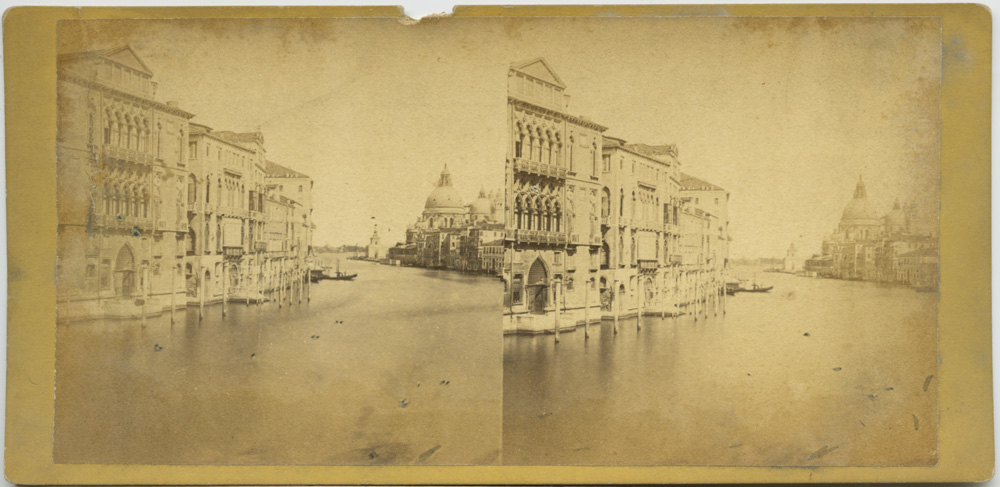
This one probably dates from the 1860s/early 1870s based on the plain style of the card and the condition of the albumen print(s). No label on front or back, but a hand-written note in Italian stating “Palazzo Cavalli”
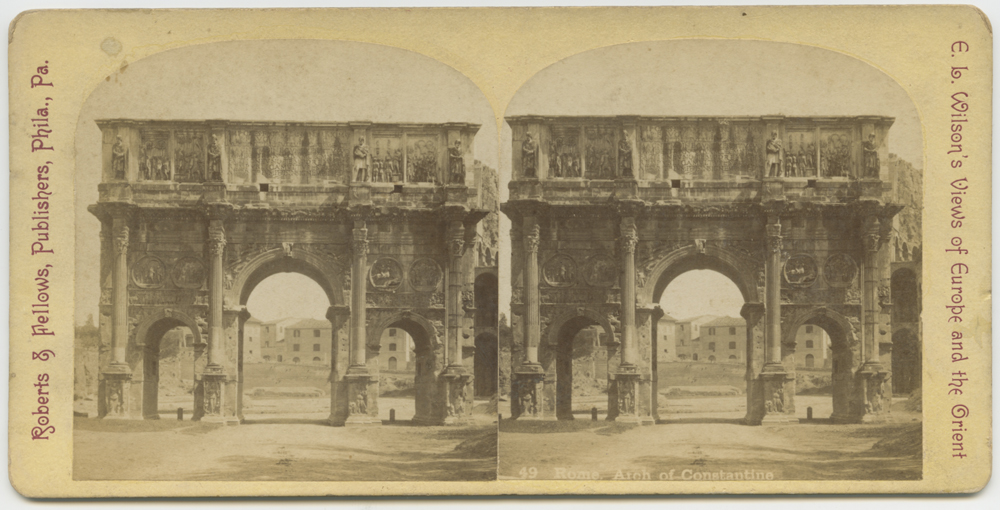
The Arch of Constantine, Rome
This one is still probably 19th century, but 1880s-1890s. American made.
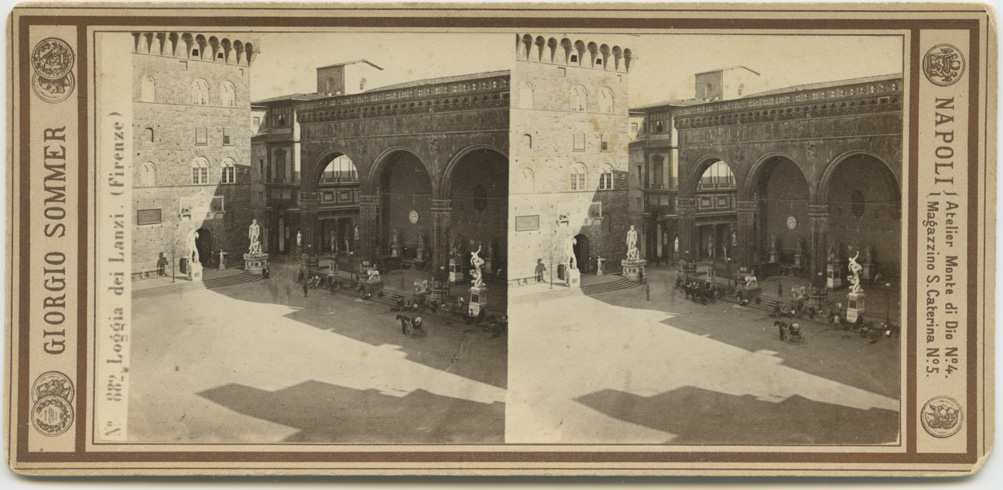
The Piazza della Signoria, Firenze
Most likely between 1900-1910. This one fascinated me because I’ve actually been there! It was neat to see how the Piazza looked over 100 years ago.
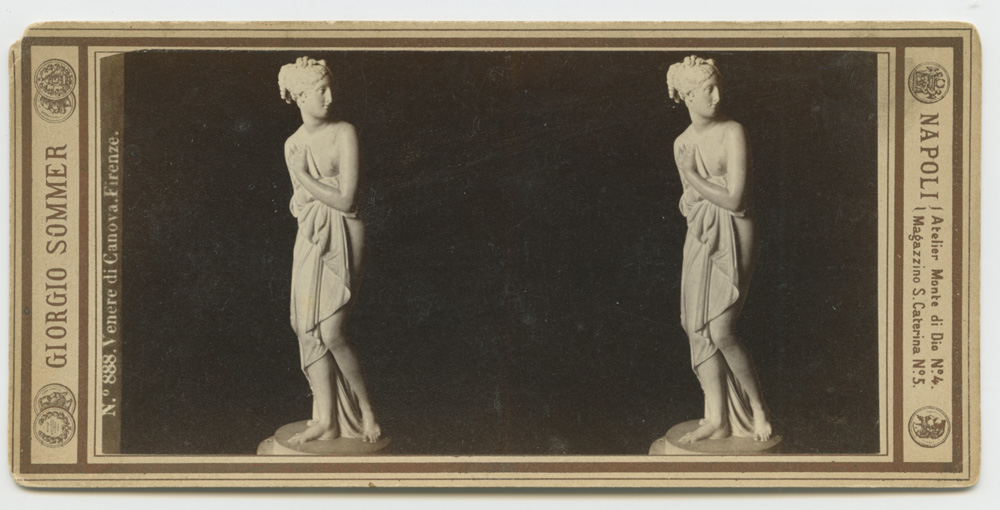
Venus of Canova, Firenze
This one came along for the ride in the batch of stereoviews. I’m not sure if this Venus resides in the Bargello or the Accademia.
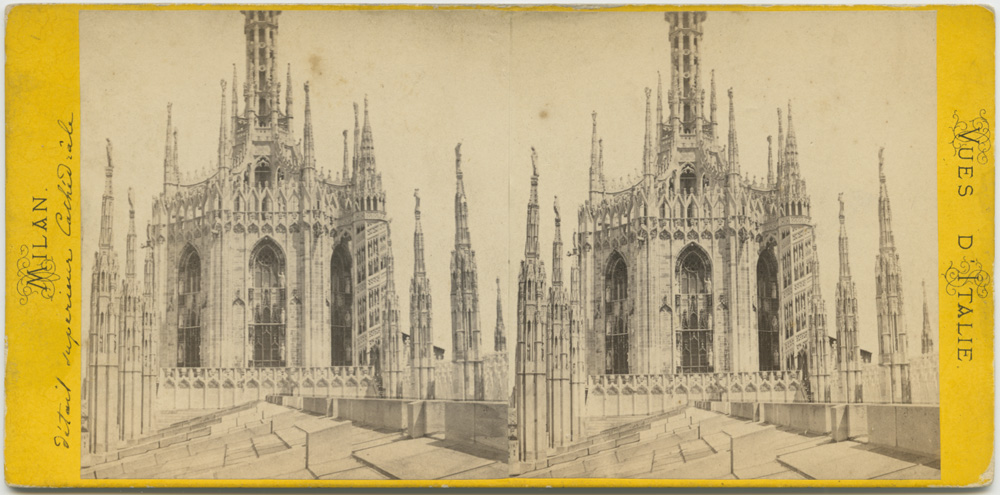
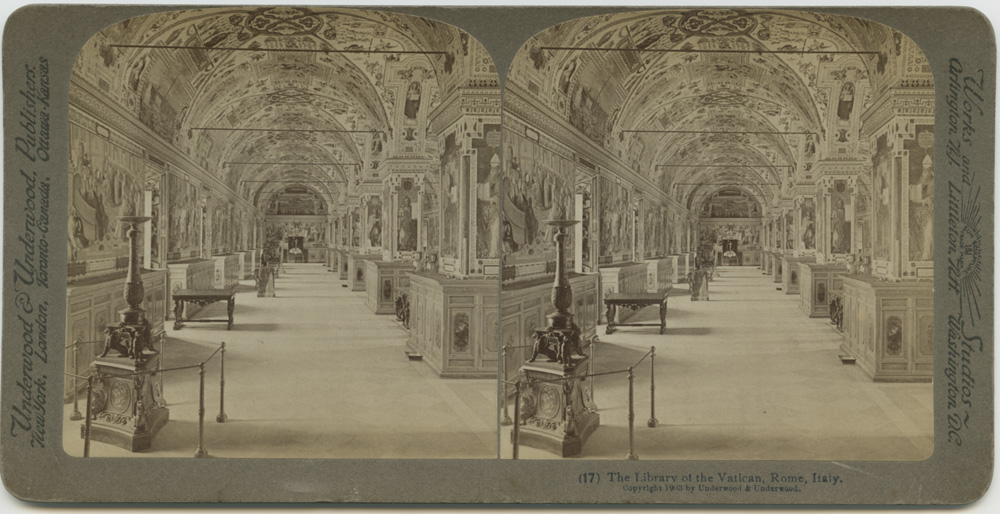
Milan CathedralThe Vatican LibraryCastel Sant Angelo
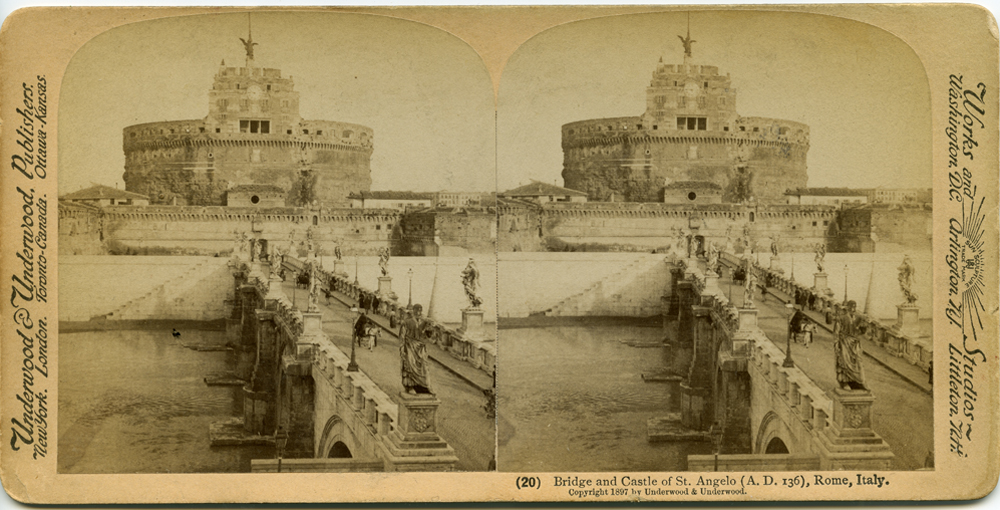
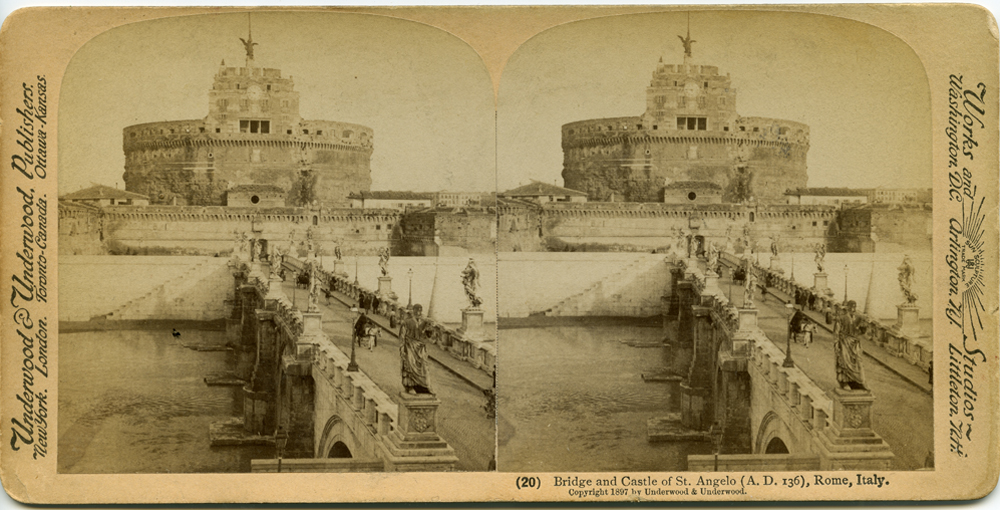
The first one is actually a French stereoview, and is definitely the oldest of the three – could be as early as the 1860s, but more likely 1870s. The Vatican Library is an Underwood & Underwood from 1903. The Castel Sant’Angelo is also an Underwood, and it is dated 1897.
Over the weekend I went to a camera swap meet in Tyson’s Corner, Virginia. You know, one of those things they hold in a hotel ballroom where dealers in used gear set up tables and put out all kinds of odds and ends for sale, and some will actively buy your used cameras too. I can remember not so many years ago when these things were huge, attracting 75+ vendors in some pretty big spaces in some pretty decent hotels.
Now, though, not so much. This show is now in the basement ballroom of what is quite possibly the lowest-rent hotel in Tyson’s Corner (it hasn’t been redecorated since the 60’s). I would guess that there were not more than 20 vendors. To describe it as a flea market would be verging on charitable. There were some nice items, for sure, but most of it was glorified (and some not even glorified) junk. I did see a few momentary temptations (a beautifully preserved Nikon F with the non-metered prism, but it was so nice it looked to be a collector piece not a user), but nothing to compel my wallet to open, camera-wise. I did find some stereoviews, including this one, for $2 each. Castell Sant'Angelo, The Vatican
I know, here I was saying I’m not collecting stereoviews, which is not entirely accurate, nor is it entirely inaccurate either. I pick up a few here and there when I see one that tickles my fancy. I’m sure that 99% of them when I die will still be worth what I paid for them, in large part because I don’t actively collect. Stereoviews were made in series, much like this one. Underwood & Underwood was one of the largest publishers of stereoviews, and they printed thousands upon thousands of them, with themes like “The Grand Tour of Europe” or “The Seven Wonders of the Ancient World” or “Vignettes from Oriental Life” showing pictures of the peoples and customs of Asia. They were the 1860s to 1910s equivalent of newsreels and National Geographic movies before motion pictures and television existed, and served to bring the world in all its variety into the homes of the working classes who could not travel and see these things, and perhaps were illiterate and unable to read about them in books and newspapers.
Each stereoview is numbered, and within individual sets, there are always some rare ones. Chasing down the rare numbers reminds me too much of collecting baseball cards, so that’s why I don’t get into it – the image is more important to me than the rarity of the paper behind it. Not that I’d ever turn down a set of Alexander Gardner’s stereoviews of the Lincoln Assassin’s execution. I’m just not going out looking for them.
 dcphotoartist