Tag Archives: travel

Reading Terminal Market

Back at New Years I went up to Philadelphia for a short weekend getaway. I stayed at the Marriott in center city, which was across the street from the Reading Terminal Market. The market is a food hall located under the tracks and platforms of the Reading Terminal, a train station that today serves mostly commuter trains. There is some amazing food there – I had lunch one day at a traditional Jewish deli that just absolutely hit the spot with a corned beef sandwich and a cup of chicken soup. Termini Brothers bakery has an outlet there and I brought home four of their raisin scones that were to DIE for (and if you ate them often, possibly to die of – they’re quite rich!). In addition to the prepared foods stalls, there are butchers, fishmongers, and greengrocers stalls as well, providing an oasis of fresh food in the center of a heavily urbanized business district that has seen better days.

“Eat Oysters, Love Longer” – the bar counter at Pearl’s Seafood.

Sushi Umi across the hallway from a handicrafts stall.

Fish on ice at the fishmonger’s.
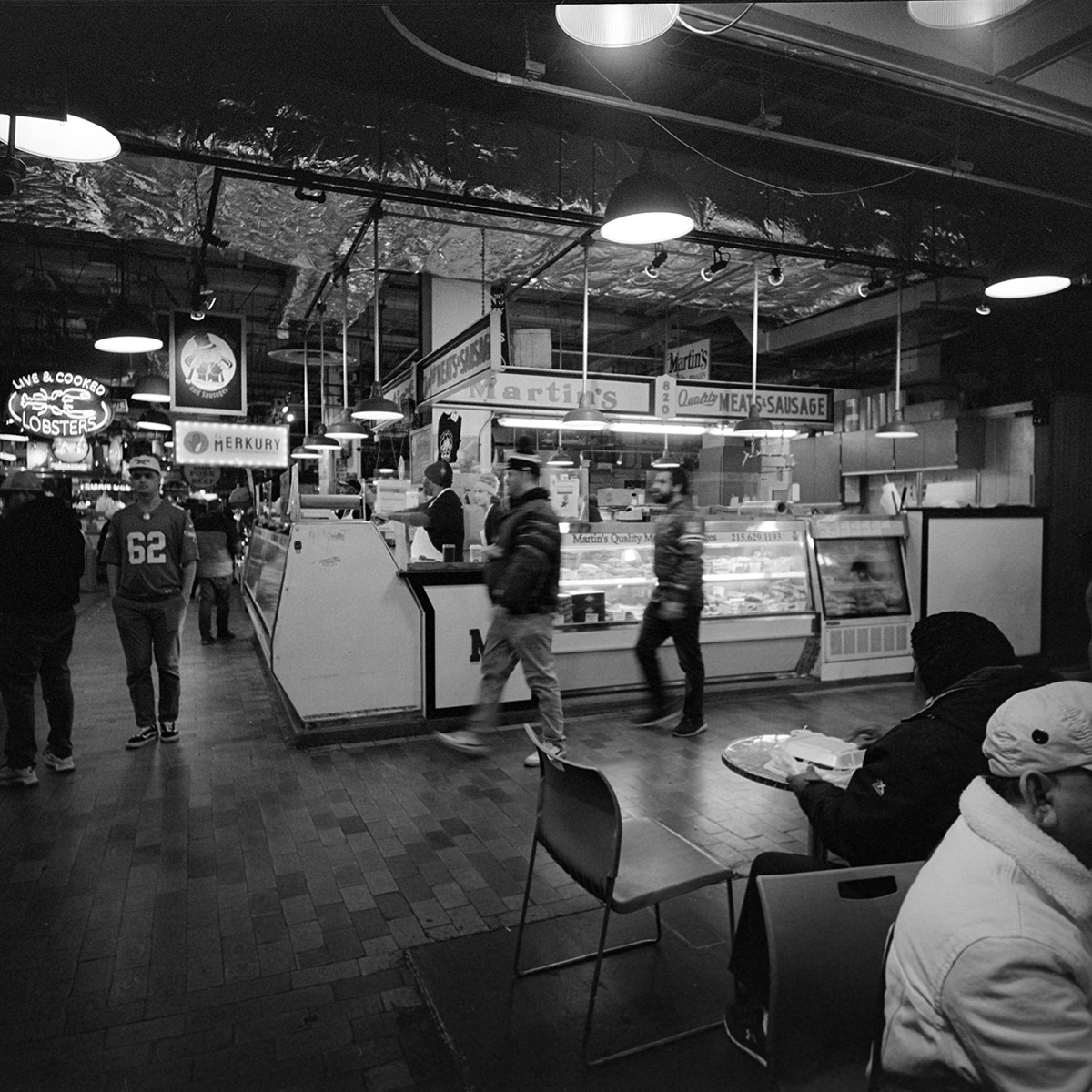
Martin’s butcher shop – Quality Meats and Sausage. A sign in the background is for live and cooked lobsters. Interesting trivia – lobster was, until the second half of the 19th century, considered poor people’s food. Lobsters used to be so common in the coastal waters of New England that you could just wade into the surf to catch them , and they had little to no market value – so much so that prisoners in New England rioted to demand their ration of lobster be held to no more than three days a week. With the advent of refrigerated rail service, it began to be served in the dining cars of long-distance trains, being able to be transported away from the coasts. It was transformed into a delicacy as they concurrently became more and more scarce as demand rose.

Pastries in the display case at Termini Bros.
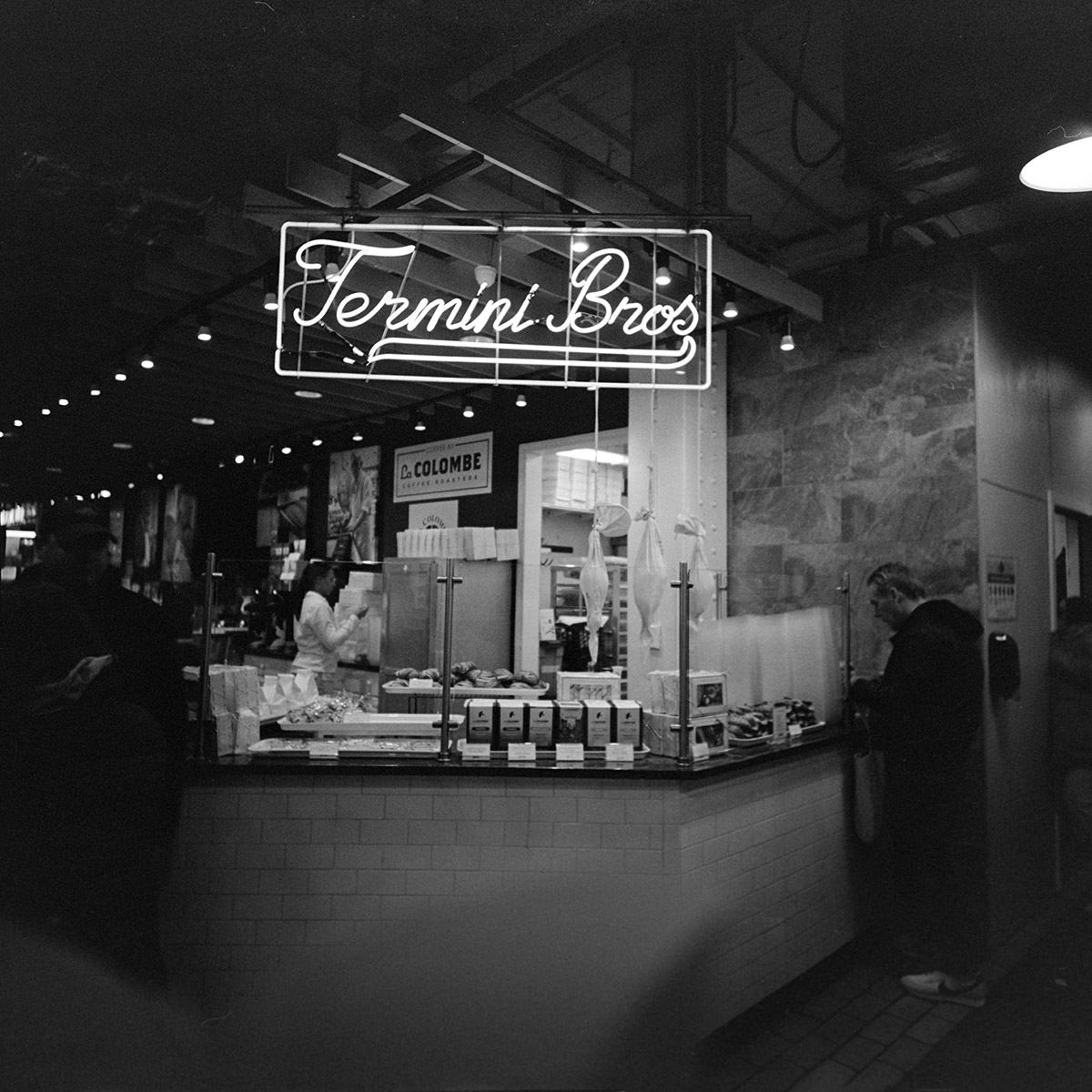
The neon sign for Termini Bros counter. They have been in business since 1921, and if their scones are anything to judge by, as long as they keep that standard up, they’ll be around for at least another century!

In case you’re wondering, all these were taken with one of the best, in my opinion, travel cameras available: the Lomo LCA-120. It’s a super-wide (38mm on 120 film, or the equivalent of a 21mm on 35mm/Full Frame). The super-wide angle means you can use it in places you would have a hard time photographing with most other cameras. It is fully automatic exposure – the only control you have over the exposure settings is by changing the ISO on the meter dial. It is, in contrast, manual focus but only via focus zones – you have a selection of four distance ranges you can select via a lever on the side of the lens panel. Because it is a leaf shutter and has no mirror to move, it is quiet when taking photos, so you can work unobtrusively in a busy environment. It does require you to have a somewhat loose shooting style because of that wide angle lens and the fact that you’re composing via an uncoupled viewfinder, not through the lens. While I normally like having the precision of an SLR or a TLR with aperture and shutter controls, working with the LCA 120 is very liberating in a way because you stop worrying about all those fiddly things and just concentrate on composing the image in the viewfinder.

I combine it with Kodak Tri-X film frequently because that gives me enough wiggle room to pull off hand-held exposures with even long-ish exposure times – I’d venture to guess that the shots in Reading Terminal Market were somewhere between 1/15th of a second and 1 second. Yes, you read that right – hand held at up to 1 second.
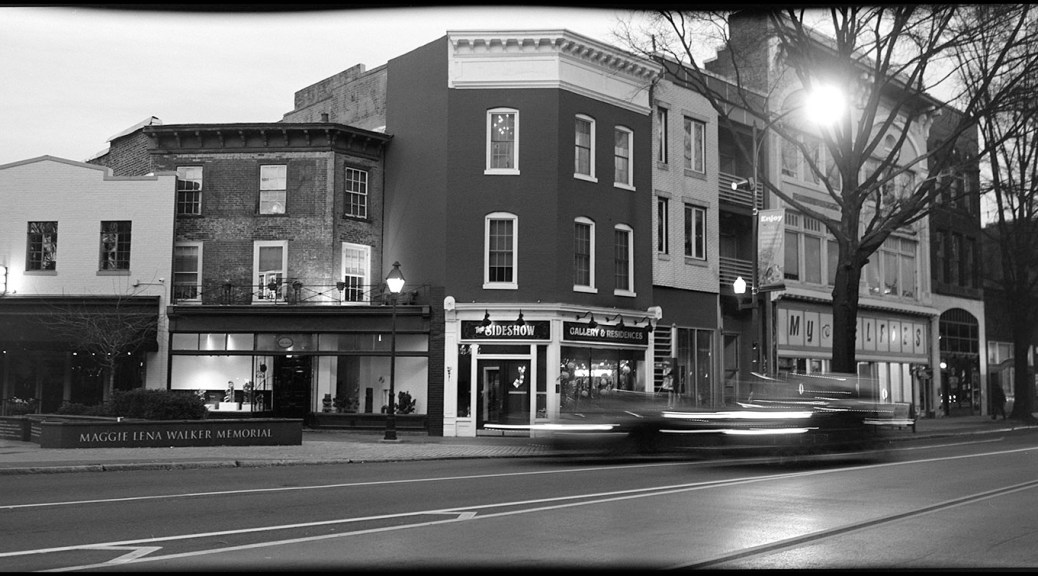
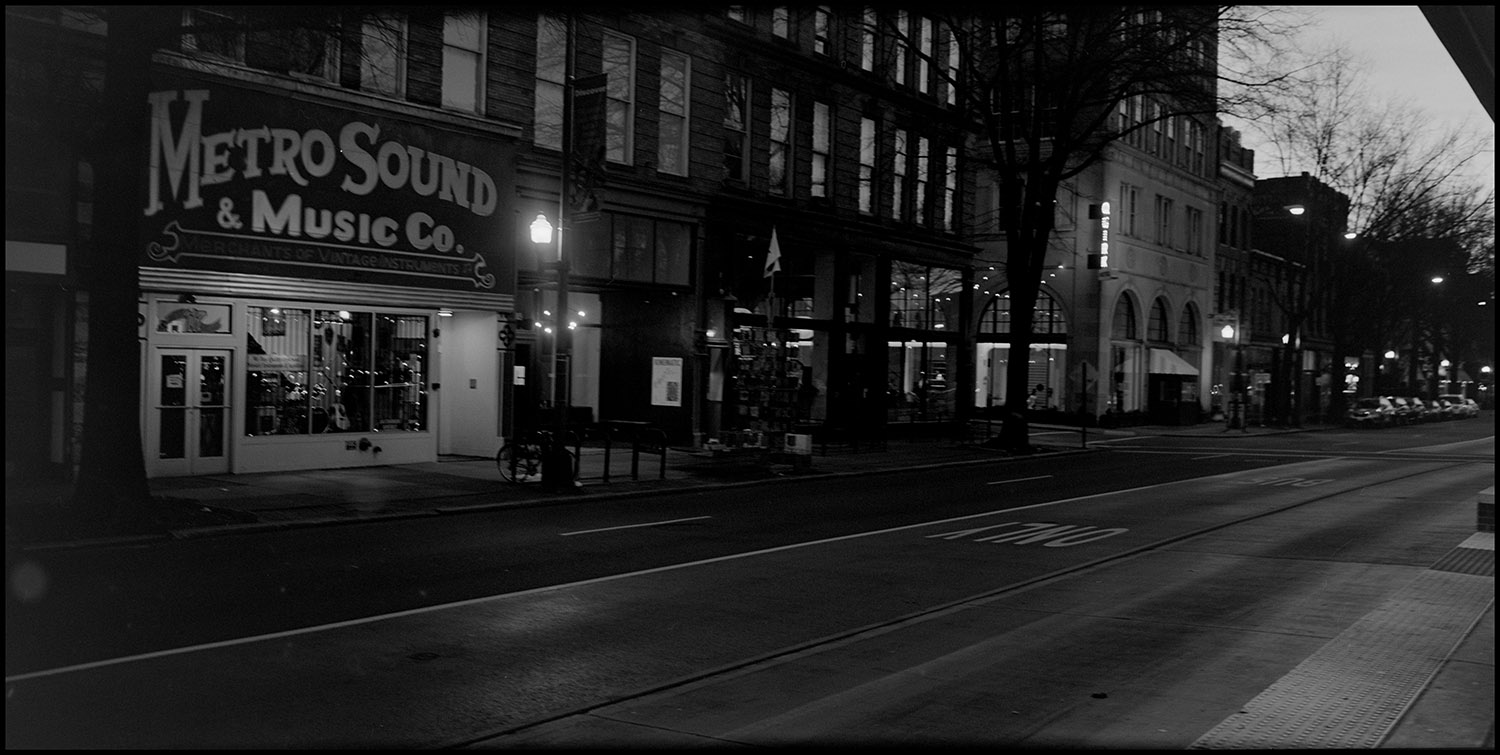
Walking on Broad (Street)

I went down to Richmond, Virginia over President’s Day weekend back in February to take a mini-vacation. I brought along my then new-to-me Pentax 67 and my trusty Lomo Belair X/6-12. Thank heaven I brought the Lomo along because I managed to get one and a half rolls out of the Pentax before the battery died and the mirror locked up. It’s going to be going off to the repair shop soon. What I did get out of the Pentax was brilliant, and I’ll share those in another post. So I at least had one working camera with me, even if it is a rather specialized one, and I made the best out of the situation and shot an entire trip in panorama mode.

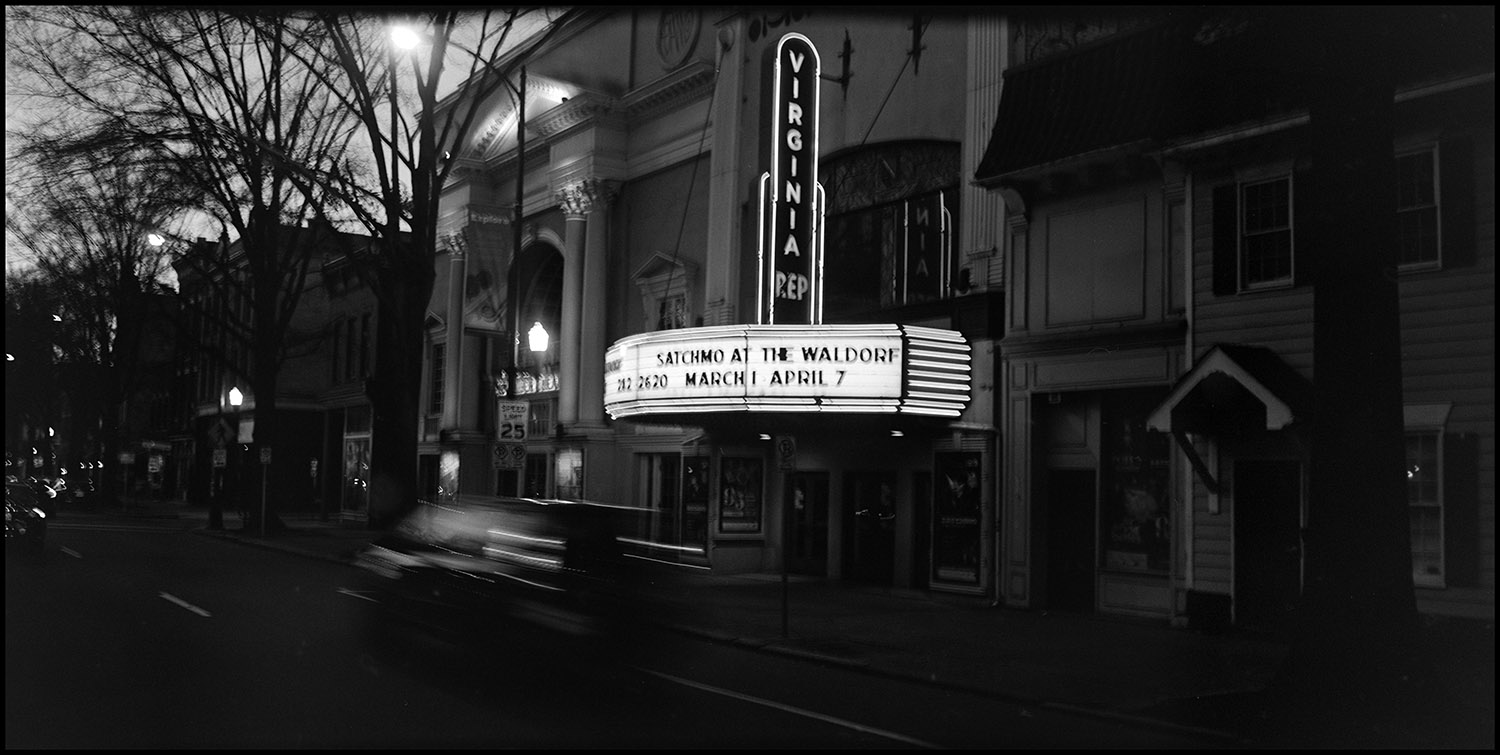
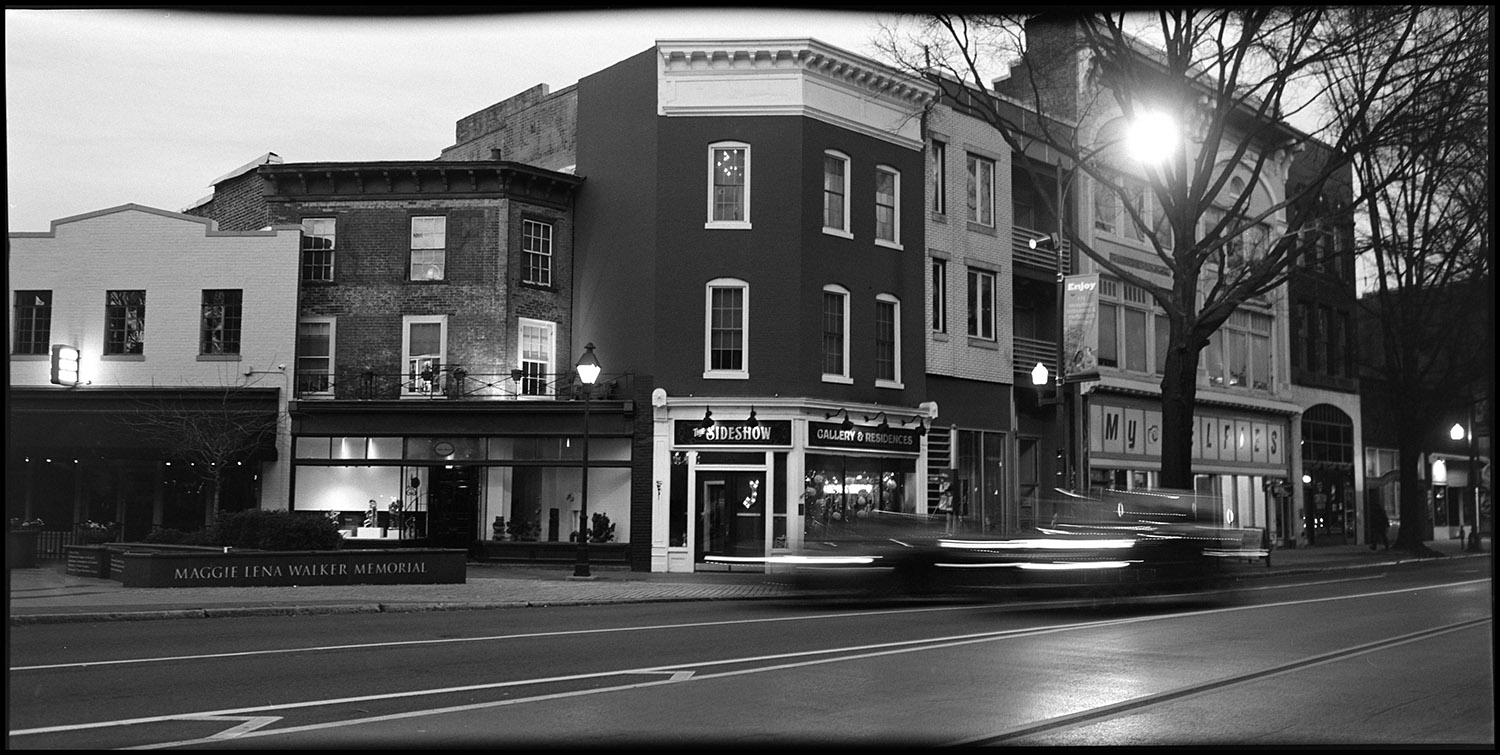
One evening I took the camera out and did some twilight shots – all hand-held, along Broad Street in downtown Richmond. The Lomo is very good for that kind of shooting, and I apparently have hands of steel when it comes to doing slow shutter speeds. The Lomo doesn’t tell you what speed it’s using, but some of these shots were anywhere between 1/15th and 1 second. I tried one or two that went past 1 second but I’m not THAT good.
Broad Street is the main axis street through Richmond – it starts near the Virginia Capitol building and heads west, running for miles out into the Richmond suburbs. These shots were all taken within a few blocks of each other, around the East/West Broad dividing line.

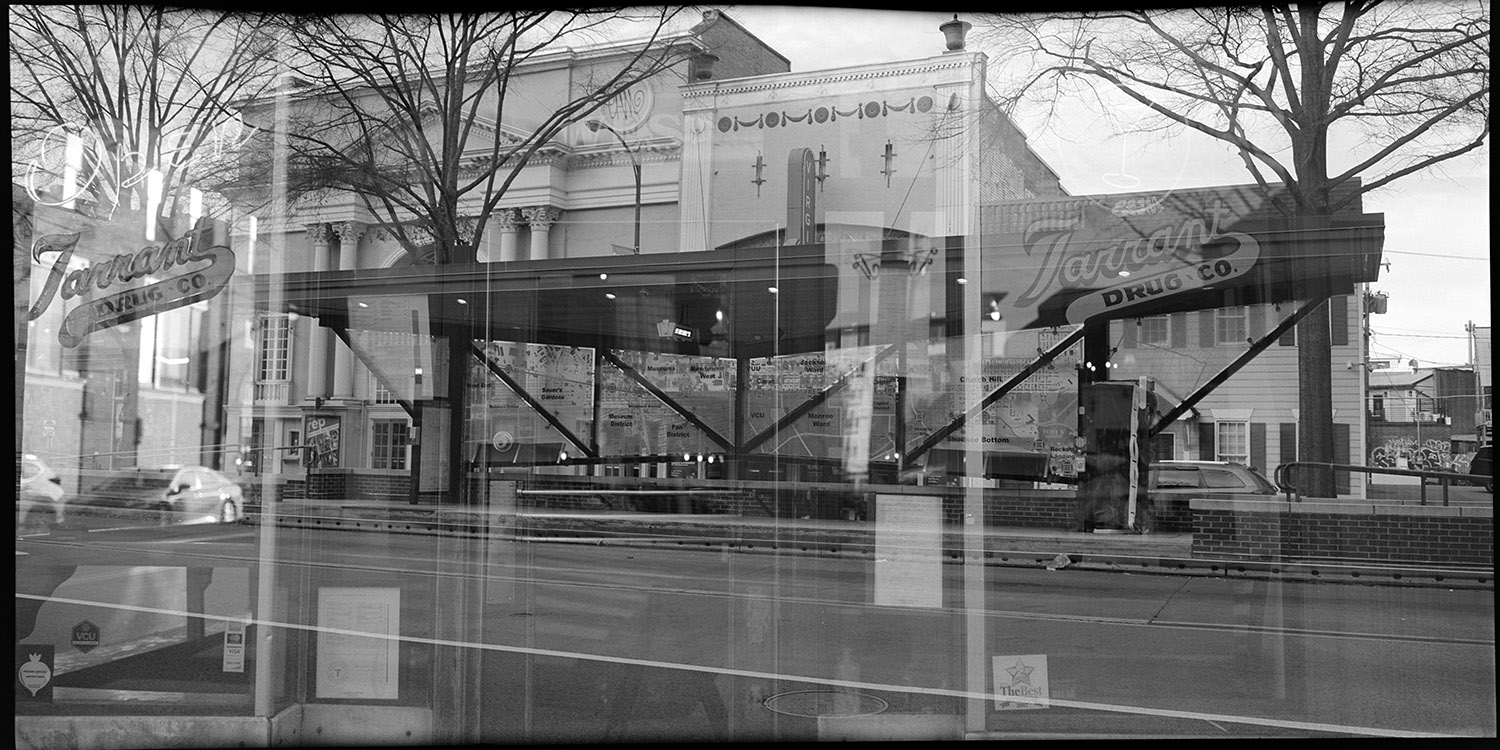
The above image was a happy accident- a triple exposure of the theater building, the bus station, and the window of Tarrant’s, a turn of the 20th century drugstore turned New Southern cuisine restaurant (and the home of my absolute favorite chicken-n-waffles anywhere so far! … well, the Jefferson Hotel in Richmond did them better, but they don’t offer it on their menu any more, BOO HISS…)

West Broad was once the commercial and business heart of Richmond, and like so many urban centers in the second half of the 20th century, it took a downturn. Now it is being revived with art galleries and artists studios, boutique businesses and hotels, and upscale condos and loft apartments. For those who love urban grit, though, there’s plenty of that left if you want it.

Awesome Occupational Cased Tintype

I went to Gettysburg, Pennsylvania today, as much to get out of the house while we still had nice weather (I think it was nearly 70F for the high today, even if a bit overcast!) as anything else. My parents had been up there a couple weeks ago, and told me about this one antiques shop that they thought was worth visiting. The shop not only had a much better than usual bin of “instant ancestors” (more on that in a minute), but they also had an amazing display of (surprisingly reasonably priced) other Civil War -era photos (dags, cased tins, and cased ambrotypes) and a veritable museum worth of vintage rifles, muskets, pistols, swords, cannonballs, uniforms and paraphernalia (canteens, insignia, and so on). I picked up a quartet of “instant ancestors”, and had my eye on three others that were in the box but not bargain priced. Over in the big glass display case with all the high-ticket cased images of identified soldiers both Union and Confederate, there was this occupational tintype, complete with embossed leather case:

Occupational Trio, Cased Tintype ca. 1865

I’m showing it here out of its case because I scanned the tintype on my flatbed scanner while I had the packet apart to clean the cover glass (some idiot decided to stick the price tag to the cover glass with cellophane tape that was not a “magic” residue-free tape). This one was a minor splurge as I’m trying to keep myself to a budget, but given the overall quality I felt it was well worth it.

As to the subject matter – does anyone have any idea what profession these gentlemen might have? My first thought was butcher, but they don’t seem to be wielding any butcher’s knives or have any of their product with them. My second thought went to baker, but again, no bread in the photo, and I’ve seen bakers before holding bread. Perhaps greengrocers? Shop clerks? The aprons are rather long for general store clerks, I think, but I’m not an expert on 19th century tradesmens uniforms.

More Environmental Portraiture

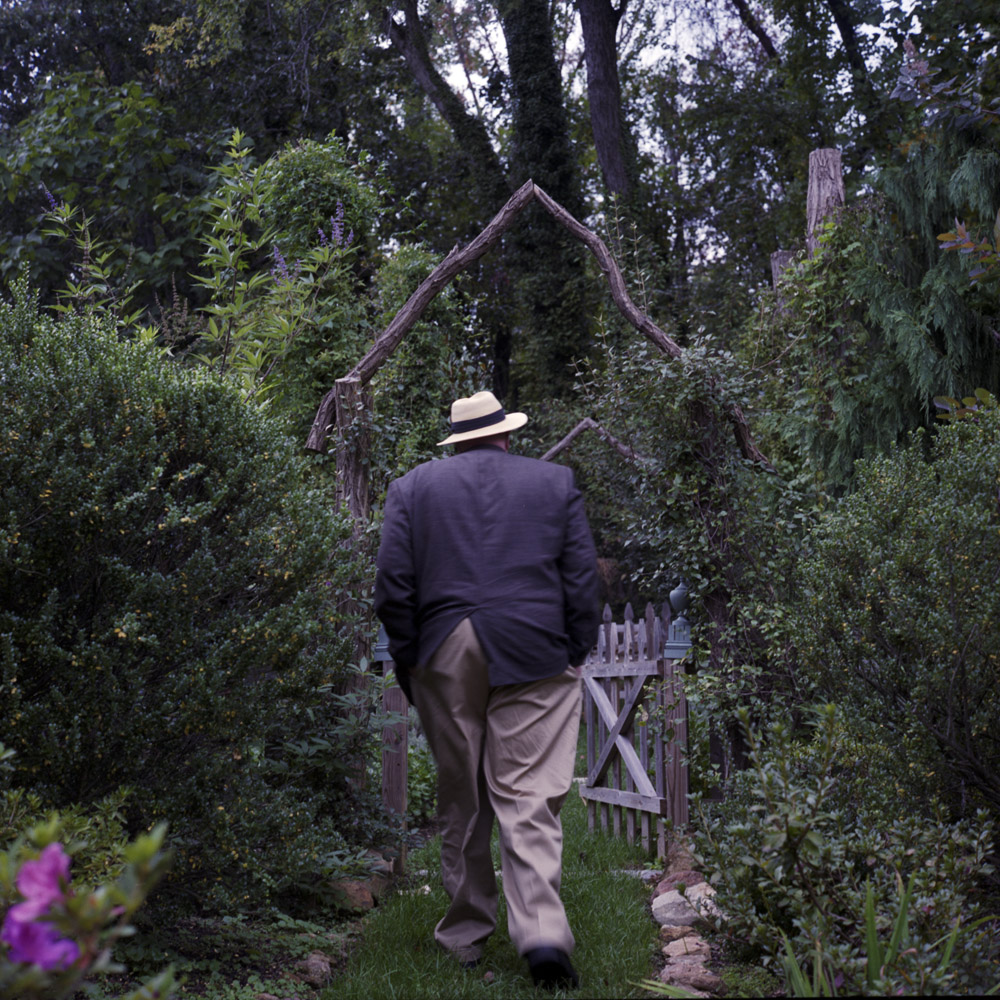
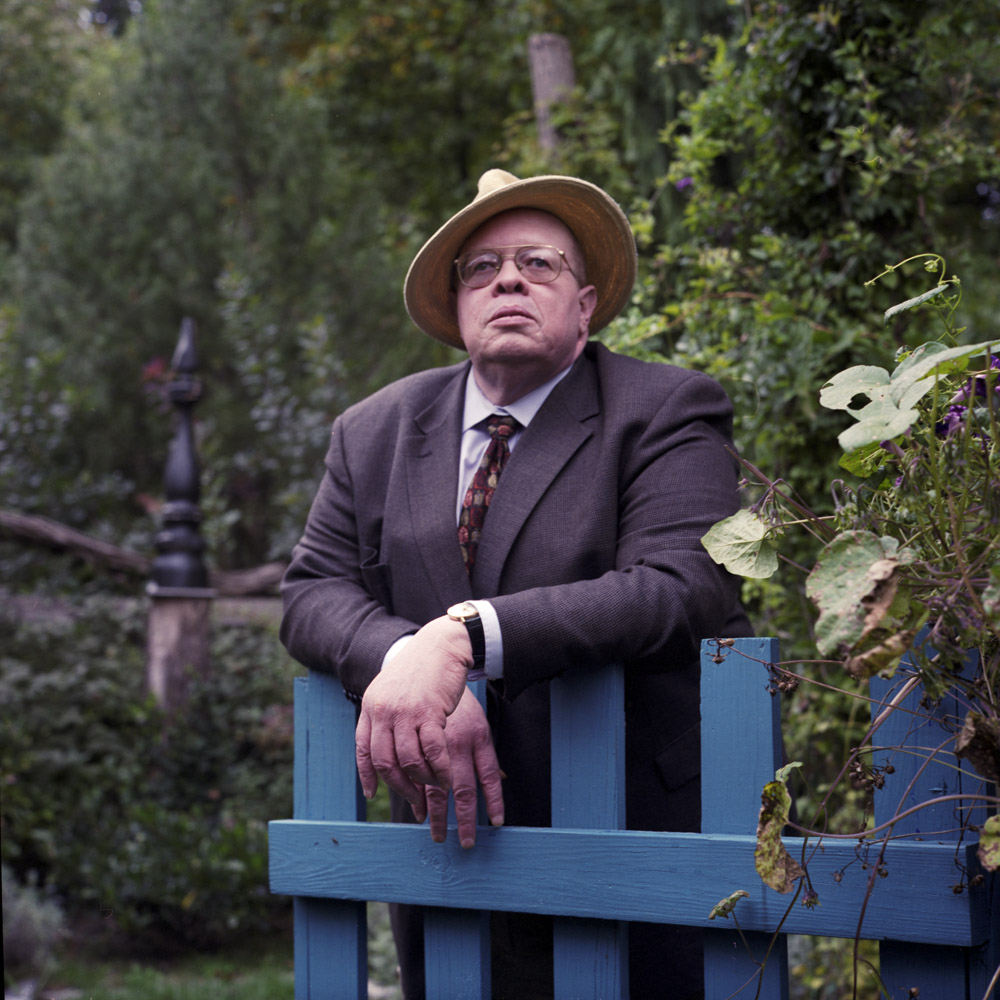
Two more photos of my friend, Charles, in his friend Henry’s garden.

Charles, in the Garden

Charles, at the Garden Gate

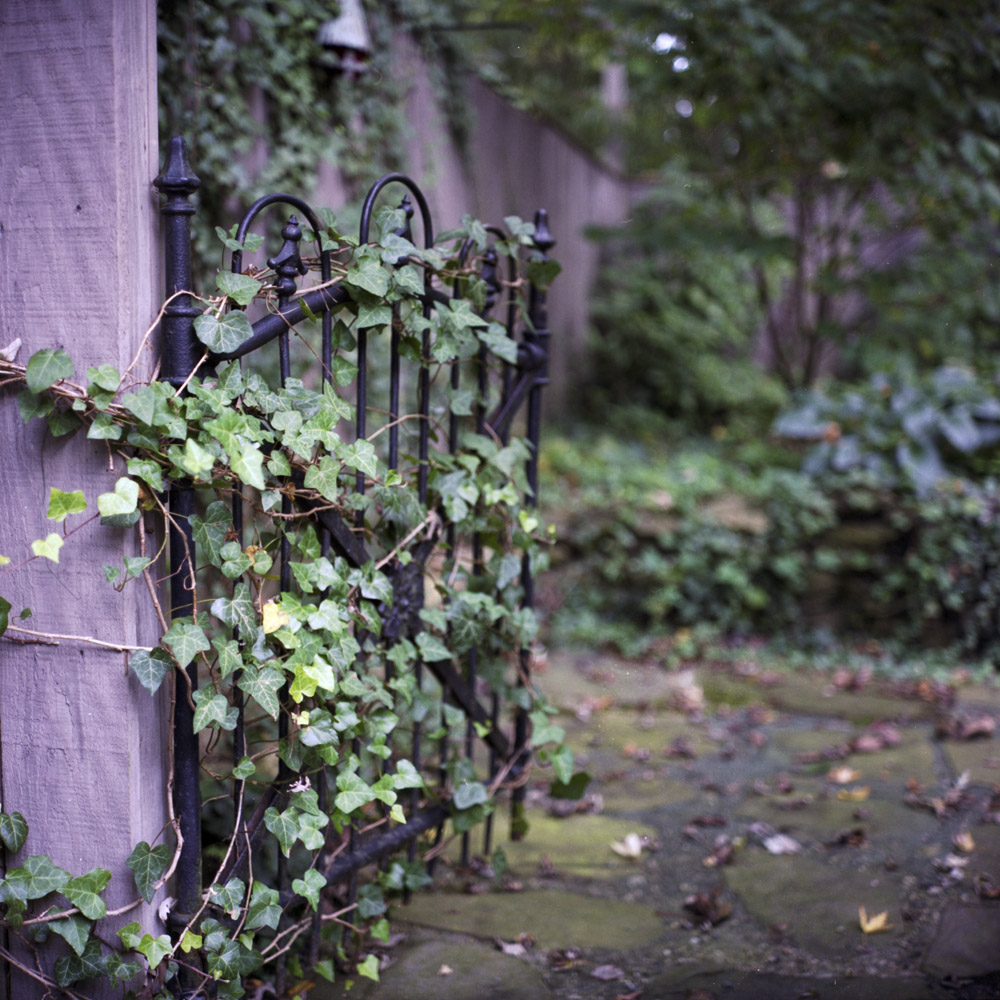
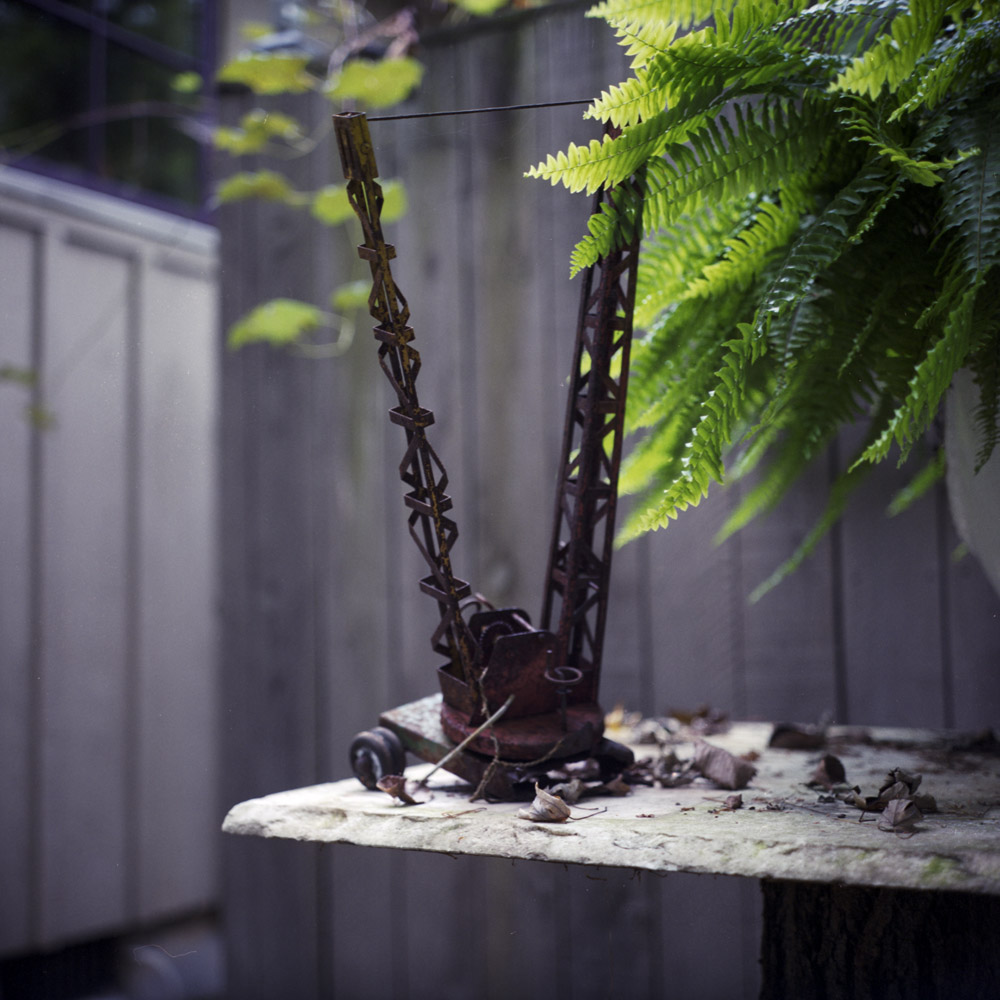
Sometimes a portrait doesn’t even have to include the person it’s about. In this case, the design of the garden, including the whimsies and follies, speak volumes about the garden’s designer.

Iron Gate, Henry's Garden
Iron Gate, Henry’s Garden

Rusted Toy, Henry's Garden
Rusted Toy, Henry’s Garden

All taken with my Rolleiflex 2.8E, on Fuji Reala film. The film is easily 11 years out of date, but still produces excellent results. I wish I had a couple of bricks more of it in cold storage, but Fuji discontinued the emulsion in all but 35mm size a couple years ago.

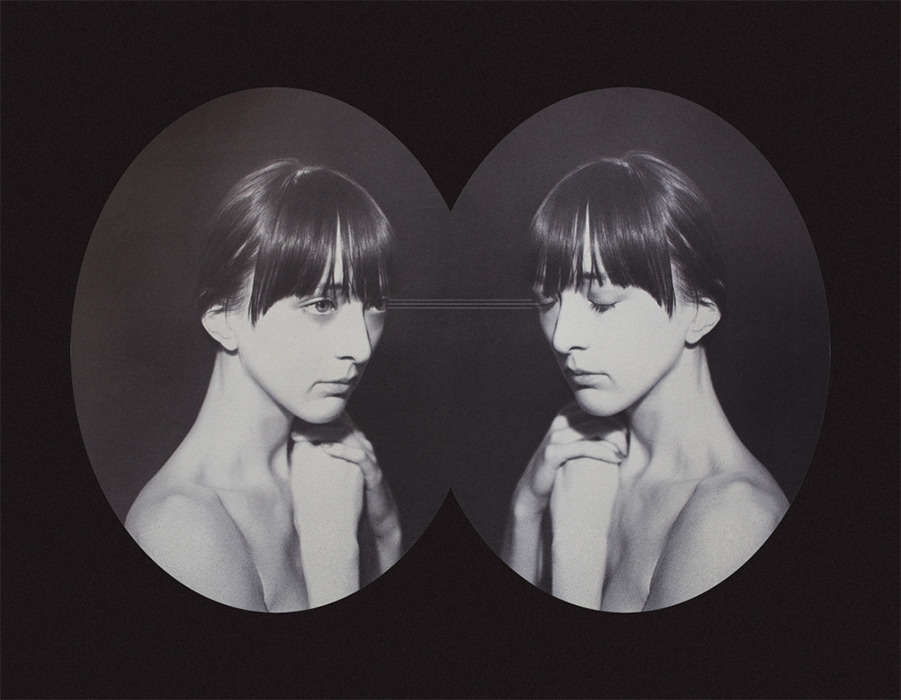
Danielle Ezzo – curator and photographer

Danielle Ezzo makes beautiful salt prints. You should check out her work!

http://dezzoster.tumblr.com

She has an upcoming show at Galerie Protege in New York, the opening is October 11.

Lovingly Distant, by Danielle Ezzo

Sailors Crossing the Equator

A Sailor's First Crossing of the Equator
A Sailor’s First Crossing of the Equator

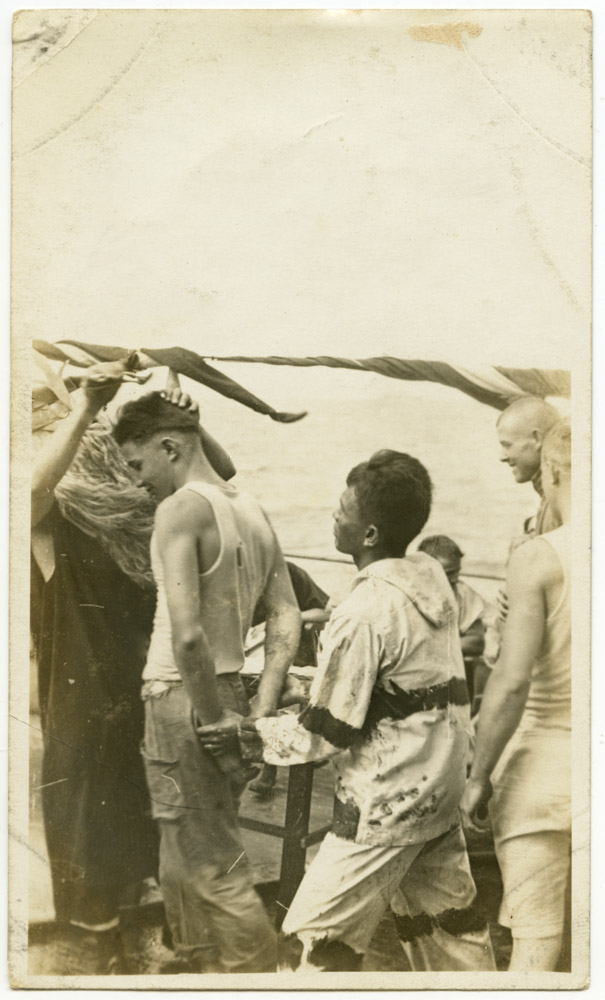
Here is a vintage silver gelatin print of a sailor’s ritual head shaving on his first crossing of the equator. Note the “mermaid” in long blond wig administering the shaving, and the asian sailor restraining the recipient of the haircut. This must have been a merchant ship, possibly in the Pacific, pre- WW II. In any case, a fascinating snippet of nautical culture as seen from an insider’s perspective.

Last one for the evening – Un Dama de Havana, Cuba

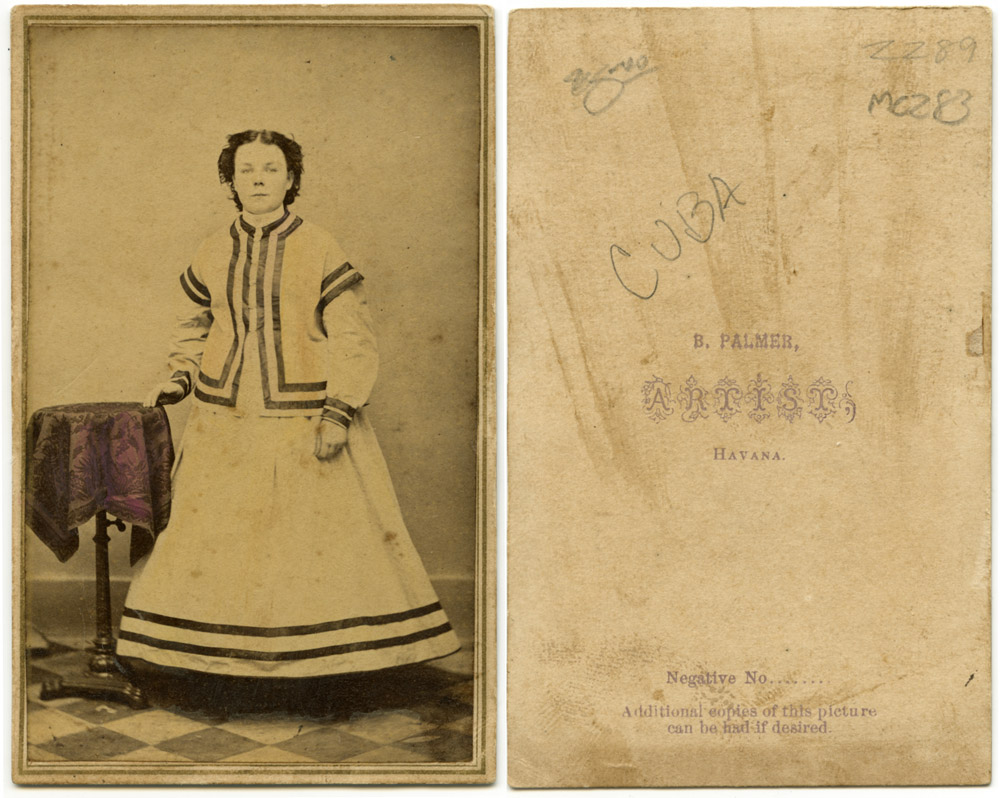
For your evening’s delectation, here is a nicely hand-colored CDV of an anonymous lady from Havana, Cuba. This is only the second CDV I have with an association with Cuba – I have a C.D. Fredericks that lists the Havana studio on the back mark, but is not necessarily taken there. In this case, Mr. B. Palmer, Artist, Havana is the only designation, so I must assume the photo was indeed taken in Havana. No street address is mentioned, which would be neat to have to be able to cross-check at some point in the future to see if his studio still stood. The entire backmark is in English, so I wonder if he catered to the tourist trade exclusively. The lady in the photo appears to be an adult, so I’ve called her Dama and not Señorita.

Dama De Havana, B. Palmer, Photographer

New York Stereoviews, ca. 1904

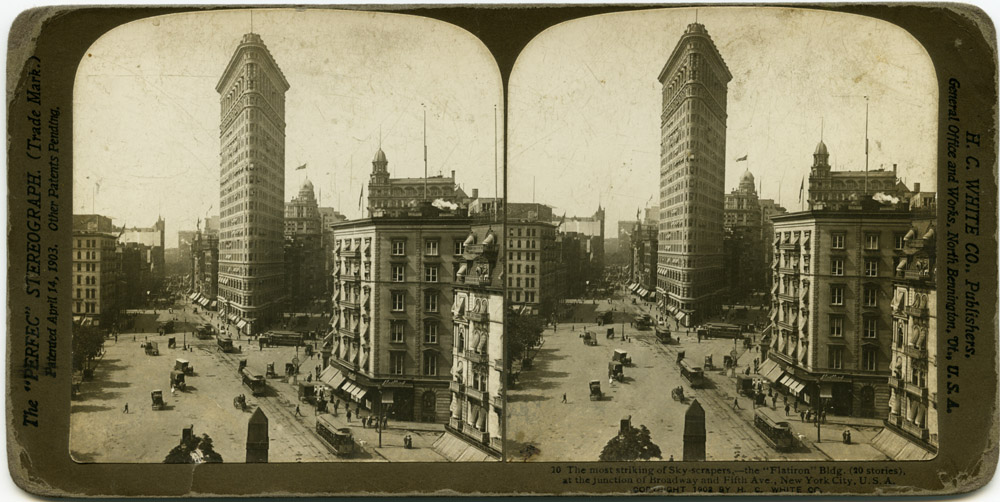
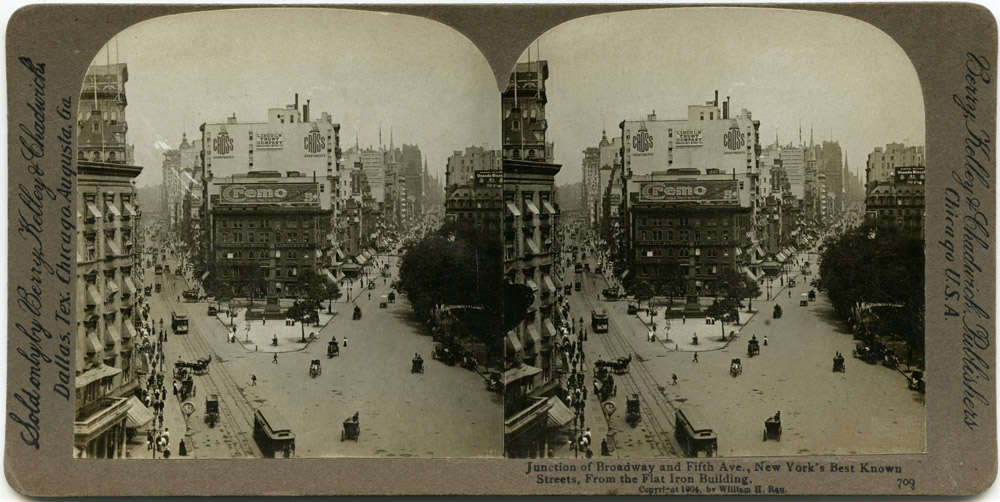
Here’s a pair of stereoviews of the scenery around Madison Square Park in New York City. They’re effectively a matched set because the one is a view of the Flatiron building looking south from Madison Square Park, and the other is looking up Broadway past Madison Square Park from the Flatiron. The Flatiron building is so-called because of its triangular shape which reminded people of the shape of a clothes iron. It is also one of the most iconic buildings in New York City, and one of the most photographed. It was the first “skyscraper” in New York, and while today it is almost petite in comparison to its uptown neighbors, it was a marvel of construction and engineering in its day.

The Flatiron, looking South from Broadway at Madison Square Park

Broadway, looking North from the Flatiron Building

Thanksgiving Trip – Monticello, Montpelier and Meander Plantation, Virginia – Part 1

I know- this was a terribly long time to wait to do something with these images – Thanksgiving was November of last year. No excuses will be offered. My parents and I have a tradition of going somewhere within a reasonable driving distance of home every year over the Thanksgiving holiday weekend, usually anchored around visiting house museums. It started a couple years ago going to the Hagley Museum outside Wilmington, Delaware, and the Barnes Collection. Another year we went to see The Oatlands plantation outside Leesburg, Virginia. This trip we went to Charlottesville, Virginia to see Monticello, Thomas Jefferson’s home, and Montpelier, James Madison’s home. We stayed a few miles away in a plantation home turned inn, Meander Plantation.

Montpelier:

Home of James Madison, the fourth President of the United States. He drafted the Bill of Rights (the first ten amendments to the Constitution) from Montpelier. Like so many southern gentleman plantation owners, he was better at spending money than making it or managing his estate, so when he died, his wife was left with massive debts that she could little afford to pay, so she ended up having to sell off the lands and eventually the house as well. In the 20th century, Marion Scott Dupont owned the house, which had grown to quite a large edifice with 55 rooms. She bequeathed the house to the National Trust for Historic Preservation upon her death in 1983. In 2003, an effort was begun to return the house to the 22 rooms of James Madison’s time – the restoration was completed in 2008. Today, due to the trials and tribulations of time, the house is largely comprised of empty rooms, with the odd bit of furniture here and there as Madison’s original belongings were sold off and scattered to the four winds nearly two centuries ago. The remaining 2600 acres of the original estate are today devoted to an equestrian center, gardens and agricultural research.

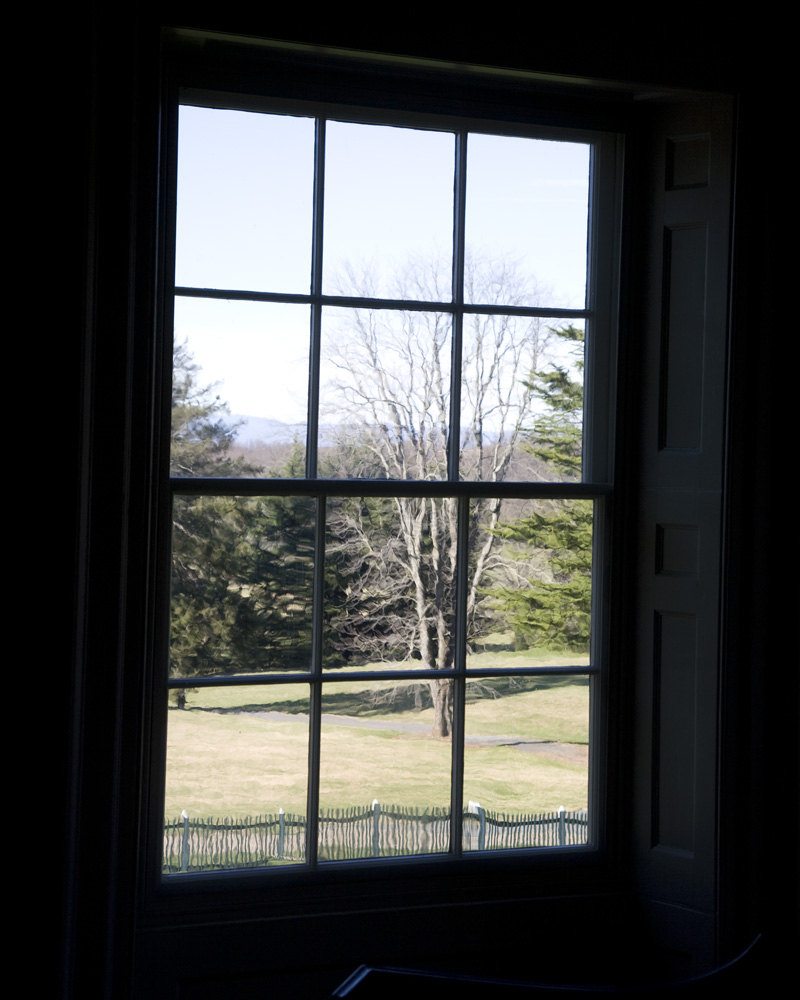
The View from James Madison's Library
The View from James Madison’s Library

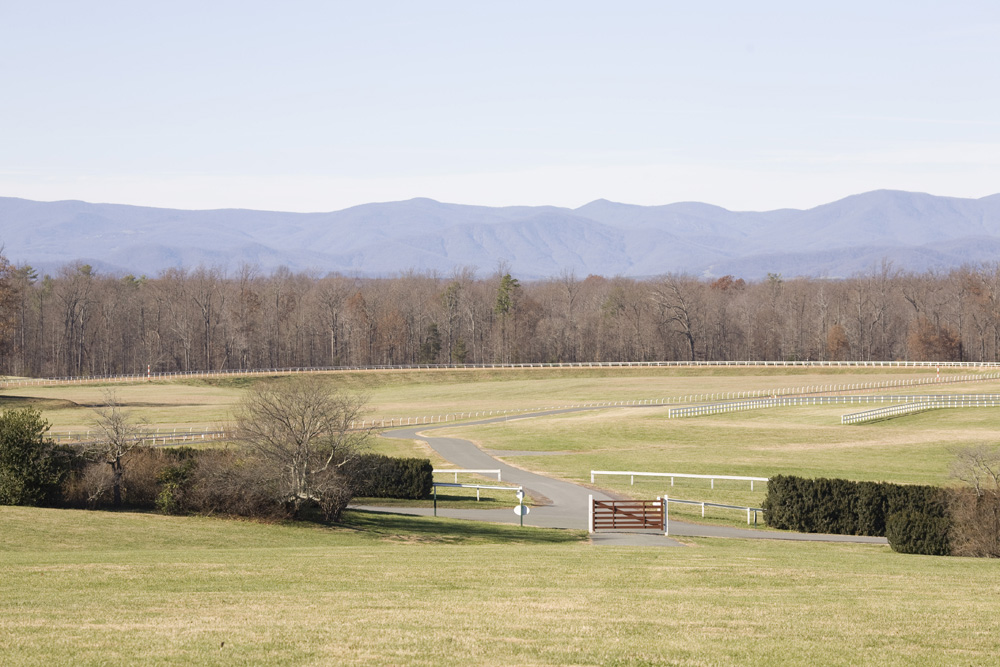
The Blue Ridge Mountains, from Montpelier

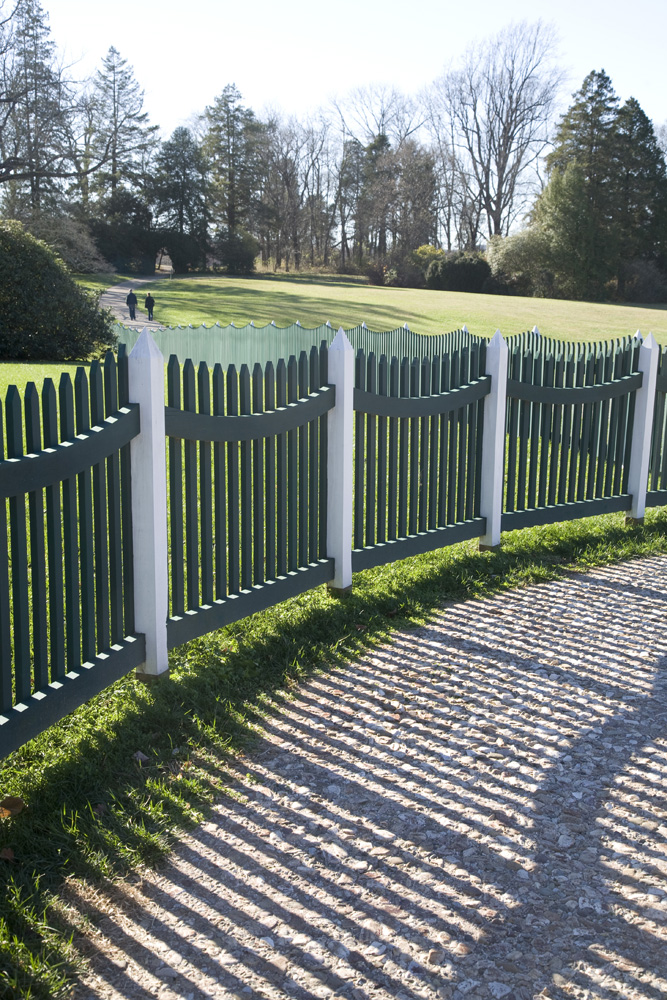
Fence, Approaching the House, Montpelier

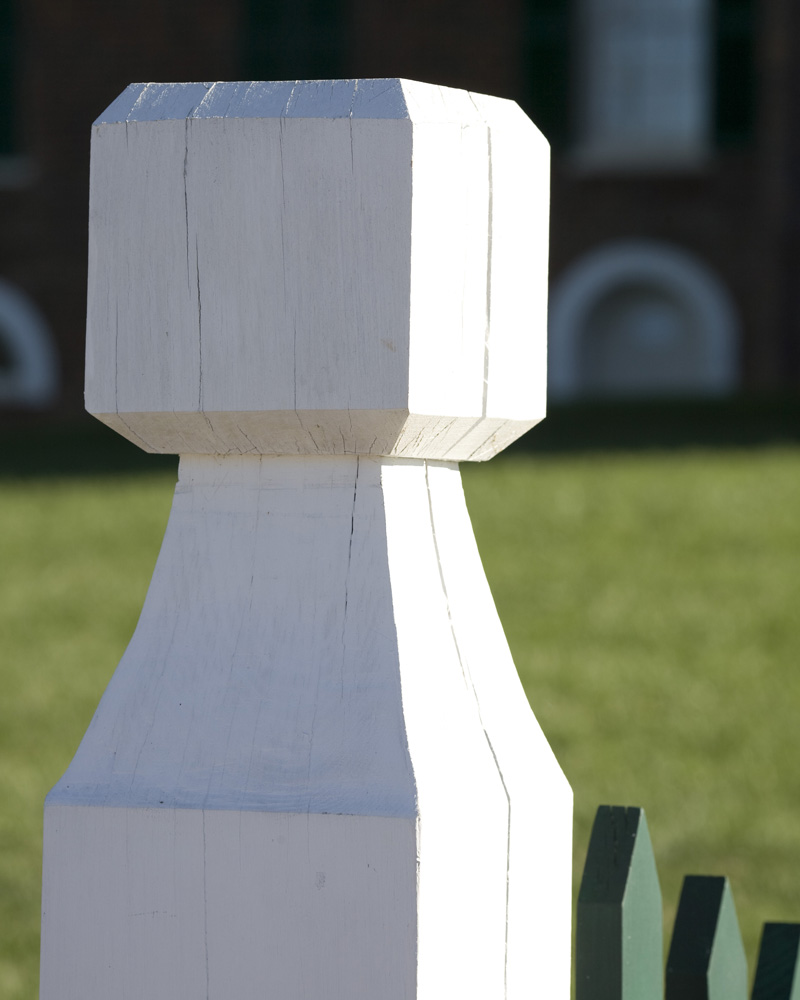
Fence Detail, Montpelier

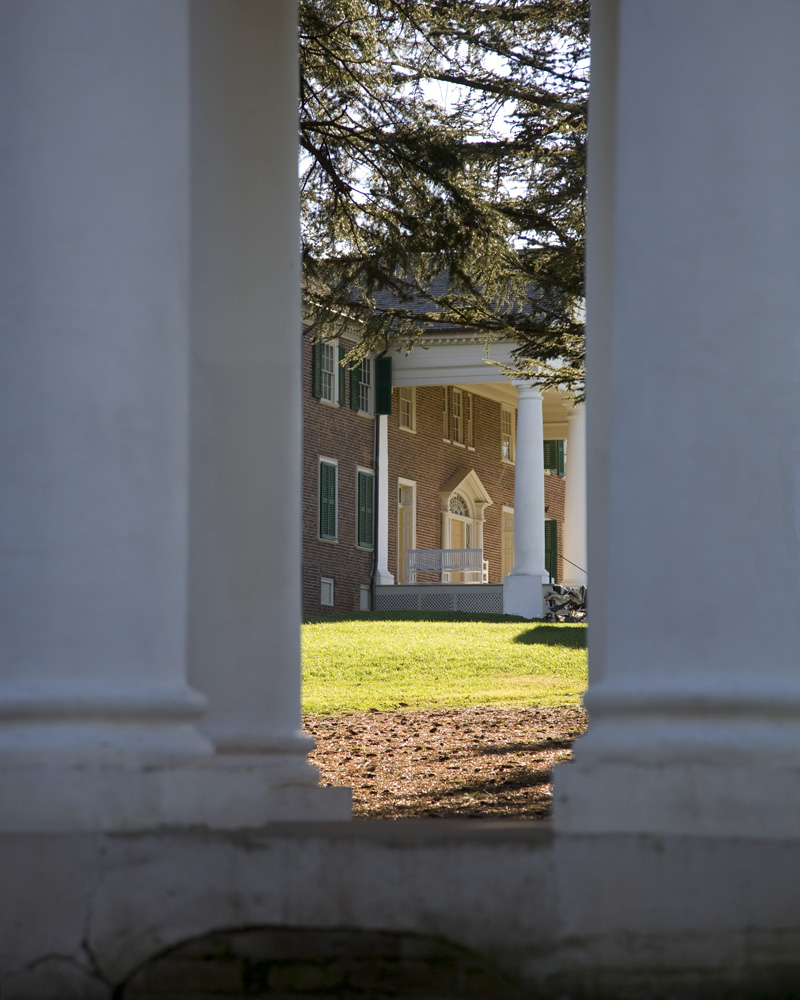
Front Porch, Montpelier, from Madison's Temple
Front Porch, Montpelier, from Madison’s Temple

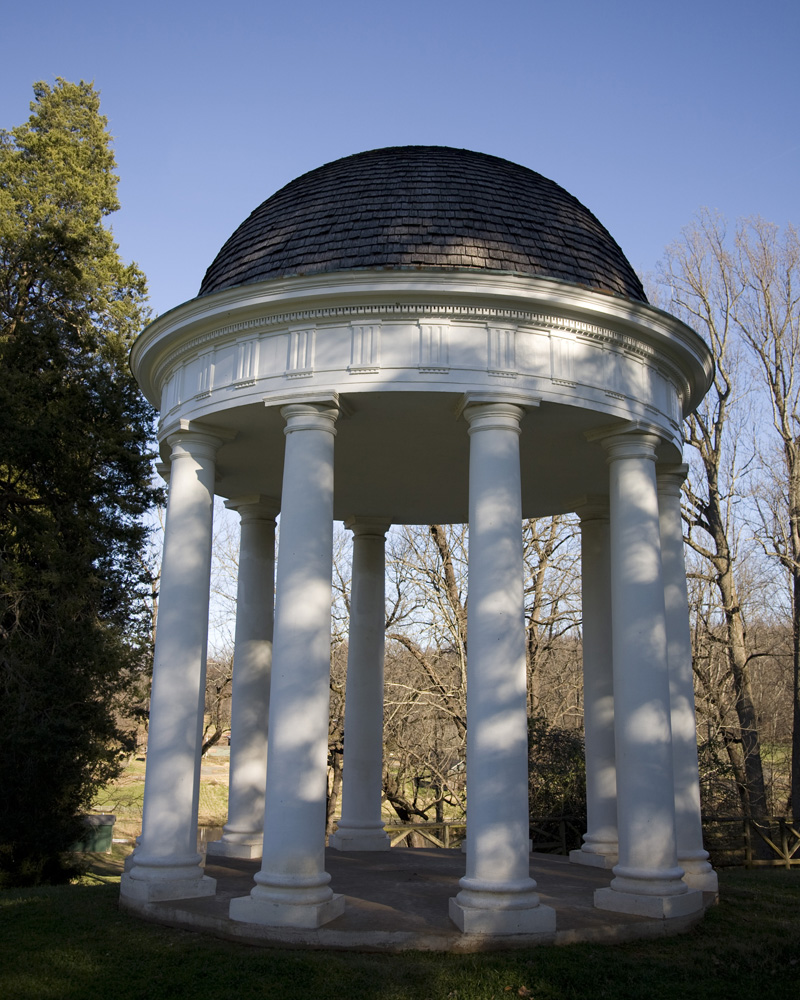
Madison's Temple
Madison’s Temple

You may be wondering why I’ve not included any images of the full front of the house. They take tour groups through in 10-15 minute intervals, and there were always groups of tourists on the front porch, and/or baby carriages and wheelchairs parked out front that were most un-photogenic.

After touring the house, you can visit the gardens that Marion Scott Dupont installed.

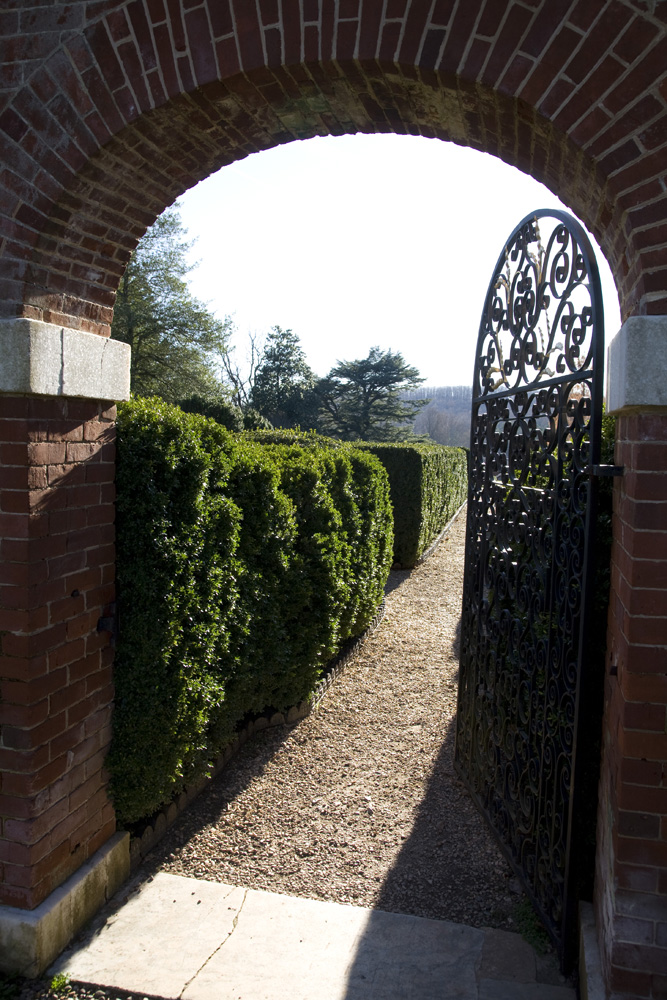
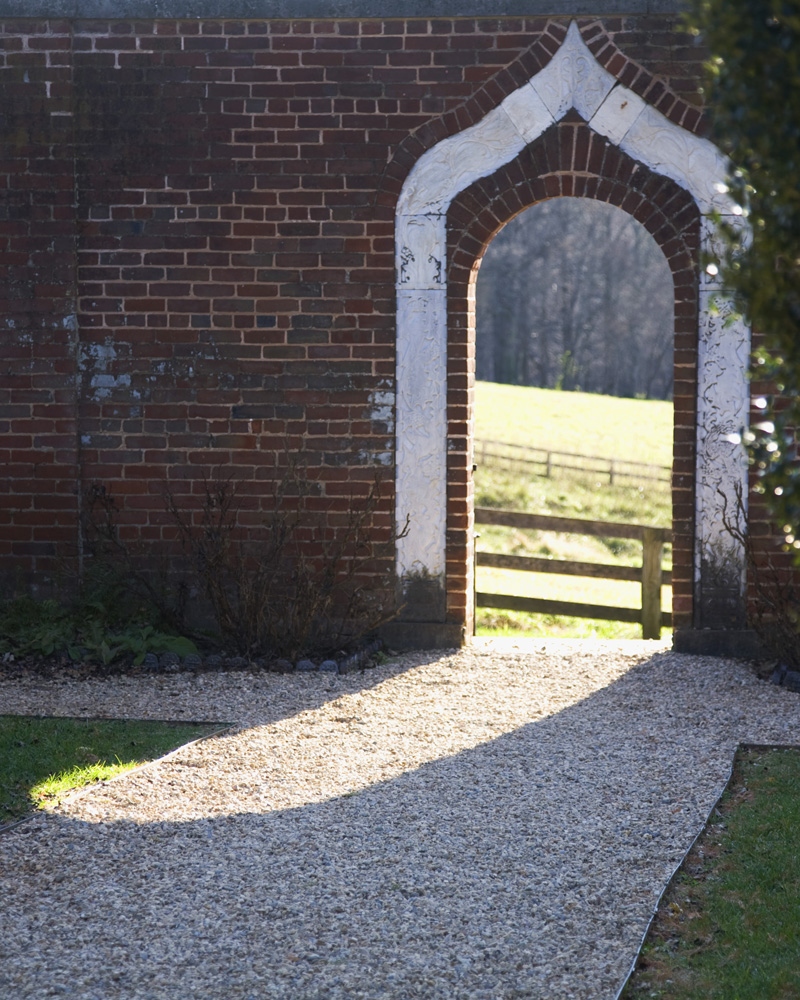
Walled Garden Entrance, Montpelier

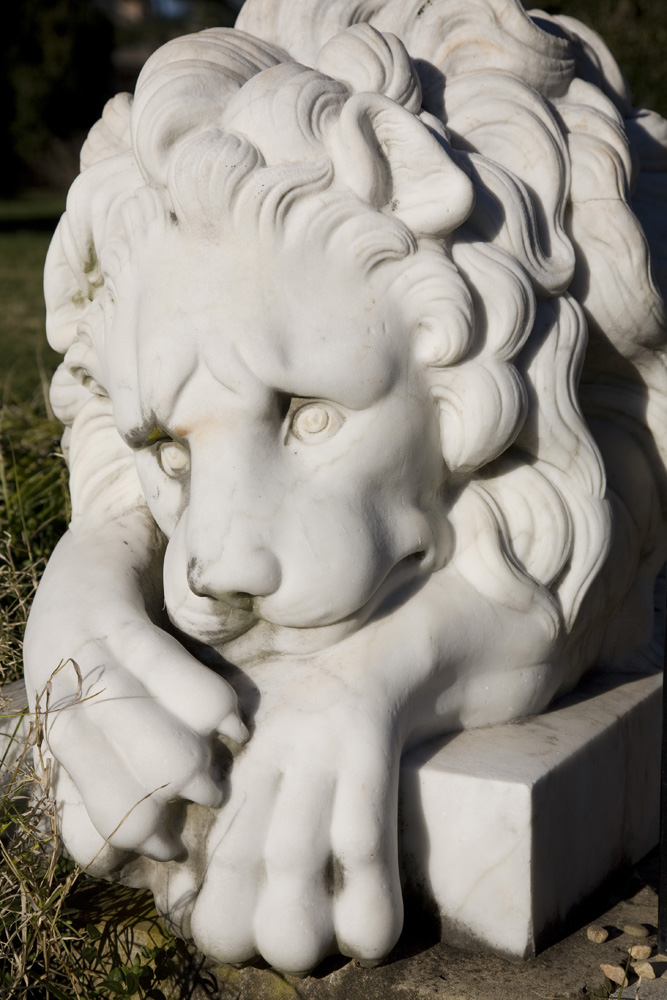
Garden Lion, Montpelier

The gardens at that time of year present mostly boxwood hedges that aren’t terribly interesting without getting an aerial view. So you’ll have to suffice with the garden lion for now.

Exit, Walled Garden, Montpelier

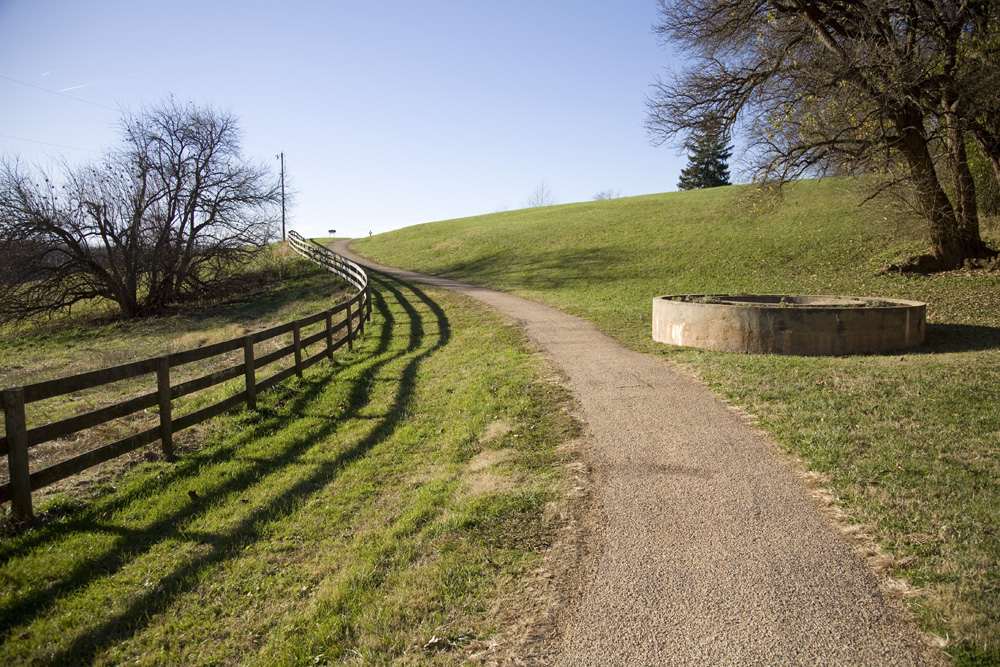
The return path to the visitor center:

Lane to Visitor's Center, Montpelier
Lane to Visitor’s Center, Montpelier

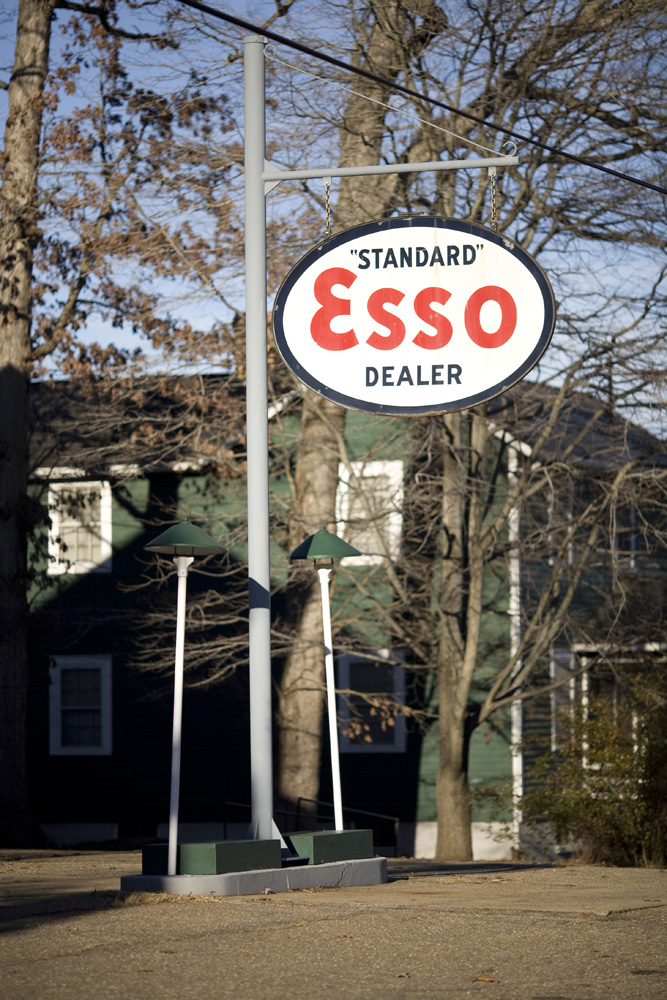
The Duponts had a private rail line that came to Montpelier as Marion Scott Dupont’s father, William Dupont, worked in Washington DC and wanted to have easy access to work and home. The rail station still stands and is now a civil rights museum. Across the street is a well-preserved Esso station from the 1920s.

Montpelier Esso Station

Stereoviews of China, circa 1900-1905

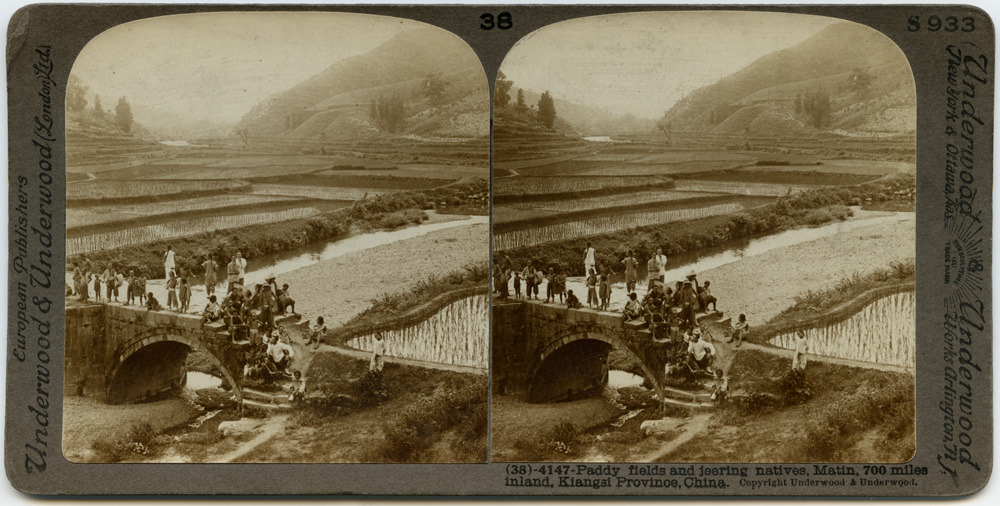
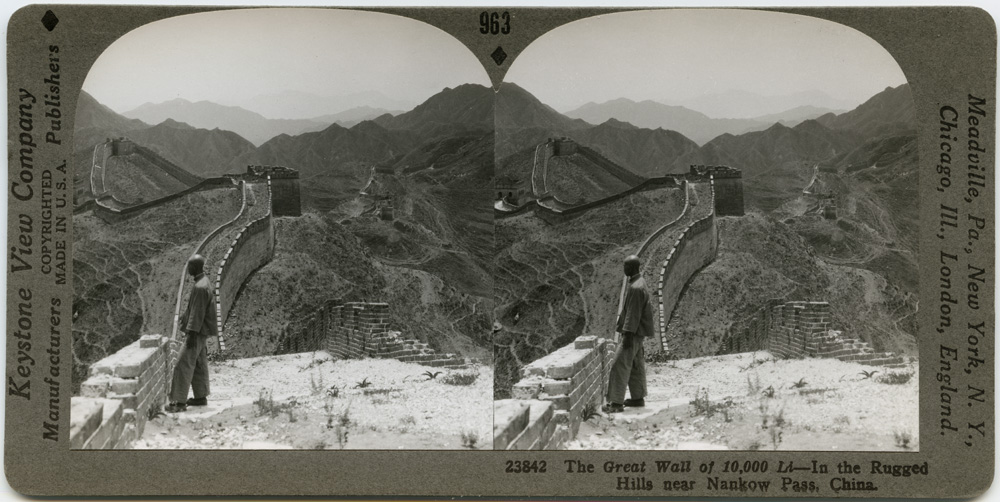
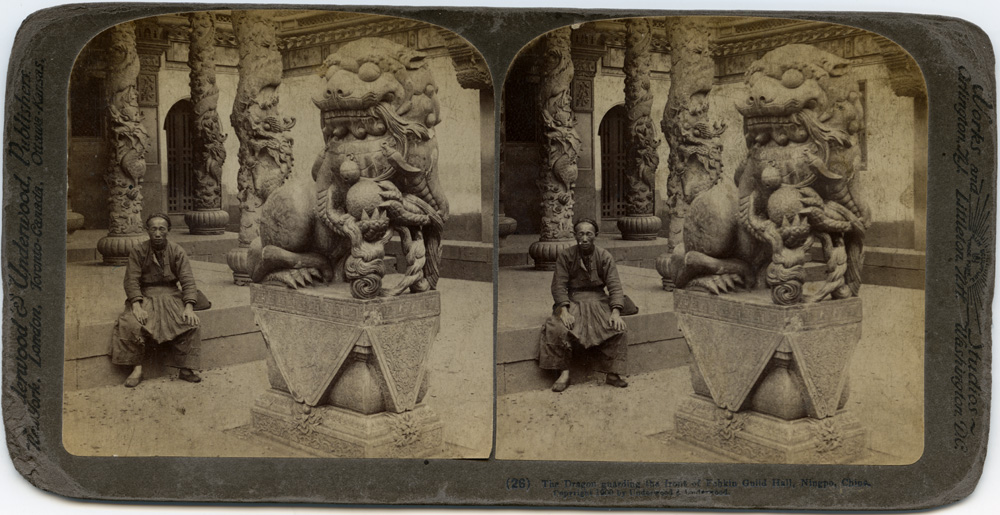
Here are three stereoviews of China, taken in the first half-decade of the 20th century. These were produced by Keystone and Underwood & Underwood, two of the biggest producers of stereoviews. They both churned out thousands of these cards as fast as they could be supplied with new images of exotic locales, exotic being very broadly defined. This was foreign travel on the cheap, when it was not only more expensive but more time-consuming and more dangerous. The stereoview both broadened the horizons of their consumer and reinforced existing stereotypes of the day – note that the crowd on the steps in the rice paddy is “jeering natives” – they’re probably all wondering what that idiot gweiloh (white man) is doing putting his head under a blanket on the back of that funny box on the hill across the way.

Rice Paddies, Kiangsi

Ningpo Guild Hall
Ningpo Guild Hall

The Great Wall of China, Nankow Pass