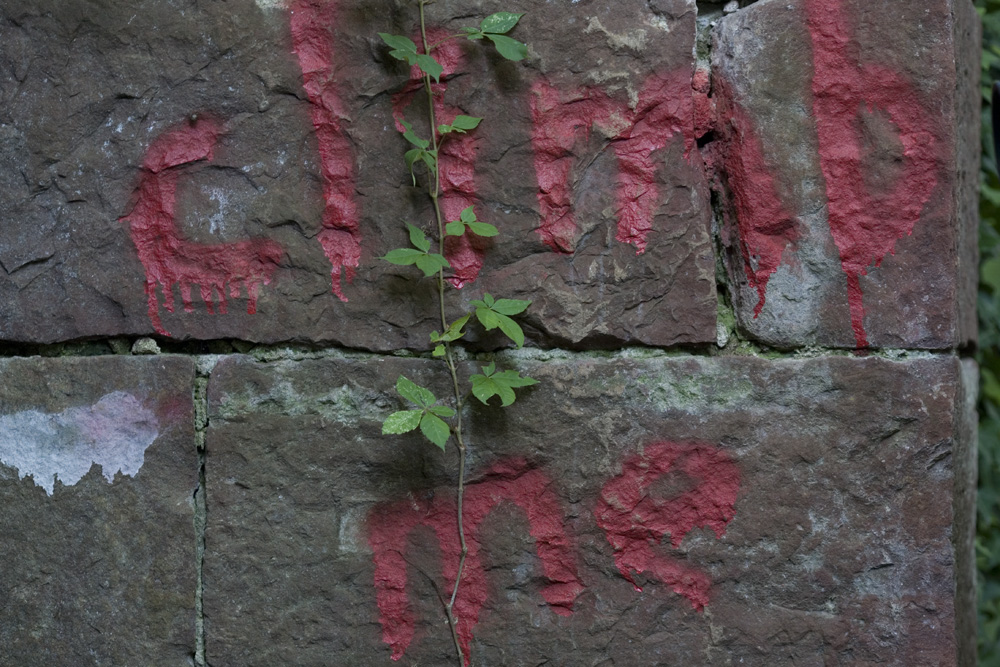
I went out on Sunday evening with a friend of mine to do some shooting over at the old mill ruins at Rileys Lock along the C&O Canal. The ruins are buried in the woods, and a popular hangout for teenagers looking to paint some graffiti or smoke or sit silently next to each other playing on their cellphones. You know, usual teenager stuff. Climb Me
I loved the accidental humor of the vine following the instructions on the graffiti here.
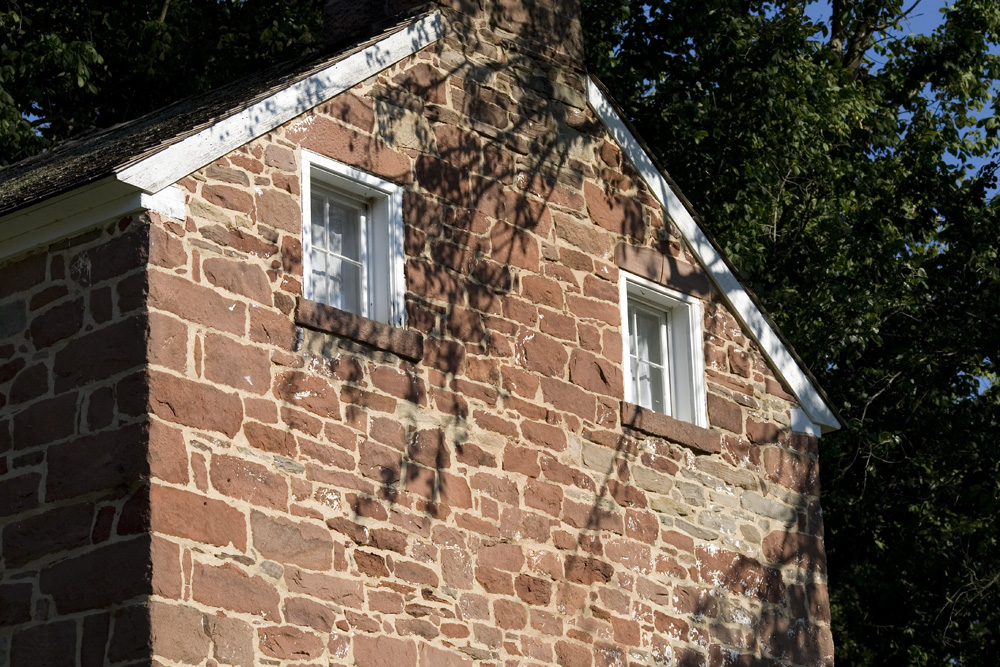
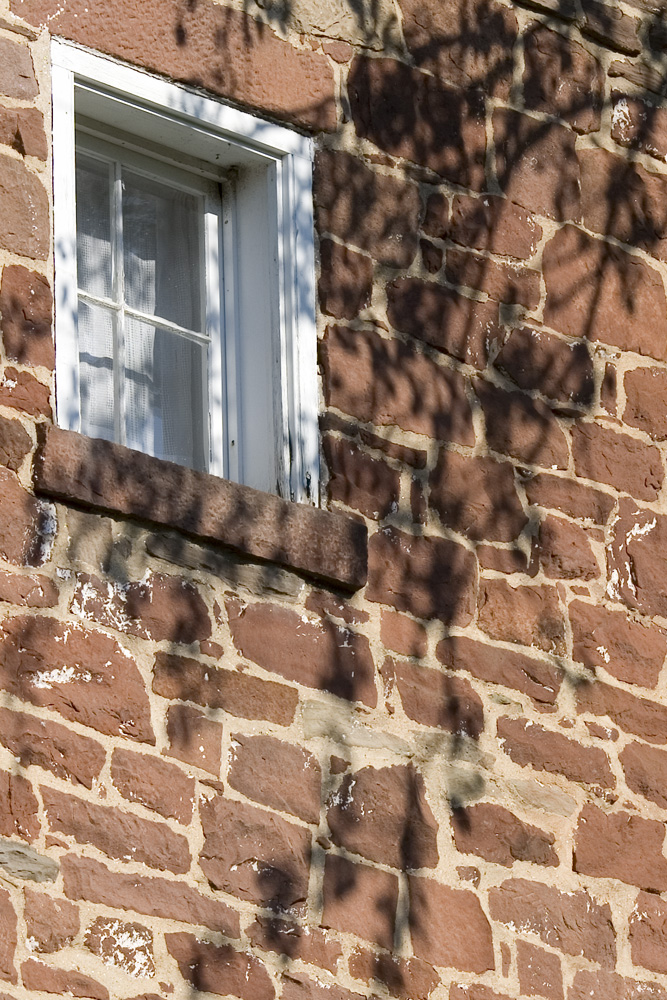
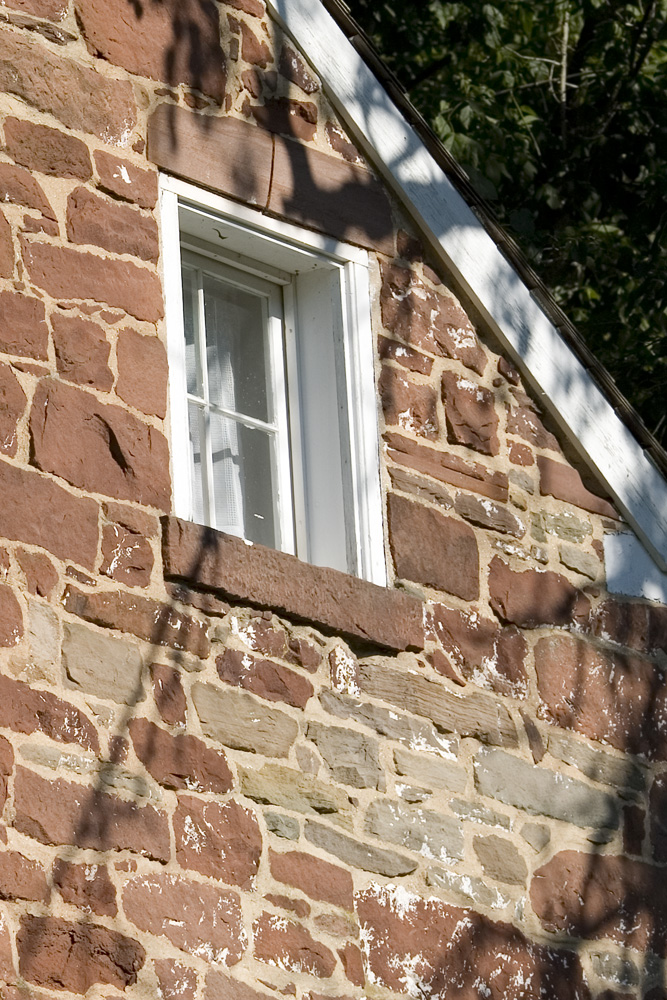
I was still playing around with my new-to-me Canon 135 F2 L lens, and here are some examples of what it can do. The first shot is the canal house at the Riley’s Lock viaduct. I was intrigued by the play of shadows from the nearby tree on the stone wall. After getting home and downloading the shot onto my Mac, I looked at it and thought, “there’s some better, more interesting shots within this” so I made a couple crops, which I’ll show below. Comments and thoughts greatly appreciated. Canal House Windows
Here’s the full-frame original shot. Canal House Window, Left Canal House Window, Right
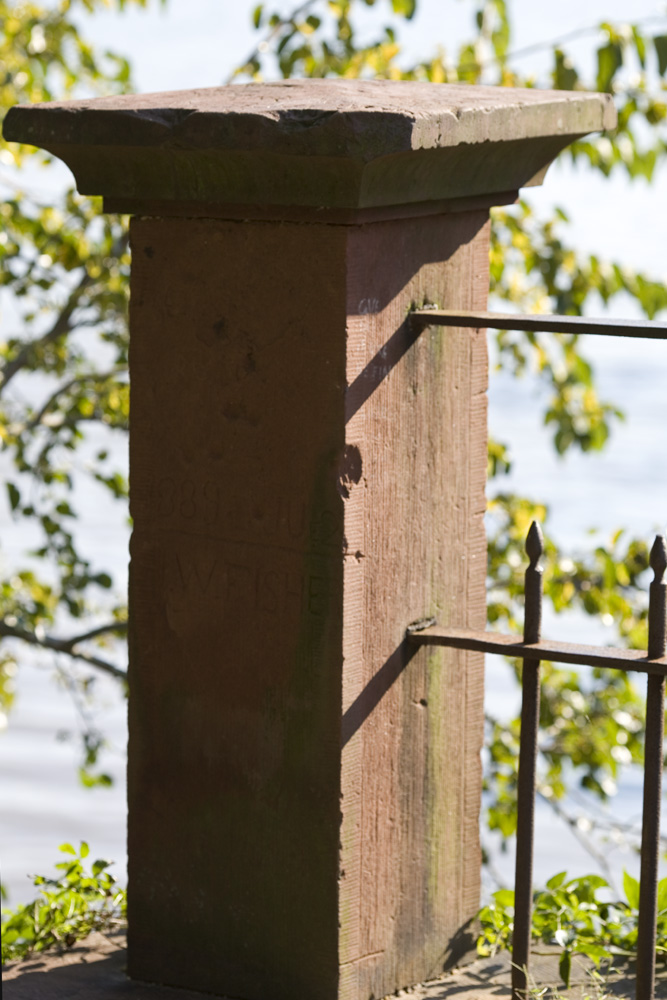
And last but not least, the brownstone rail end with a dedication chiseled into it.
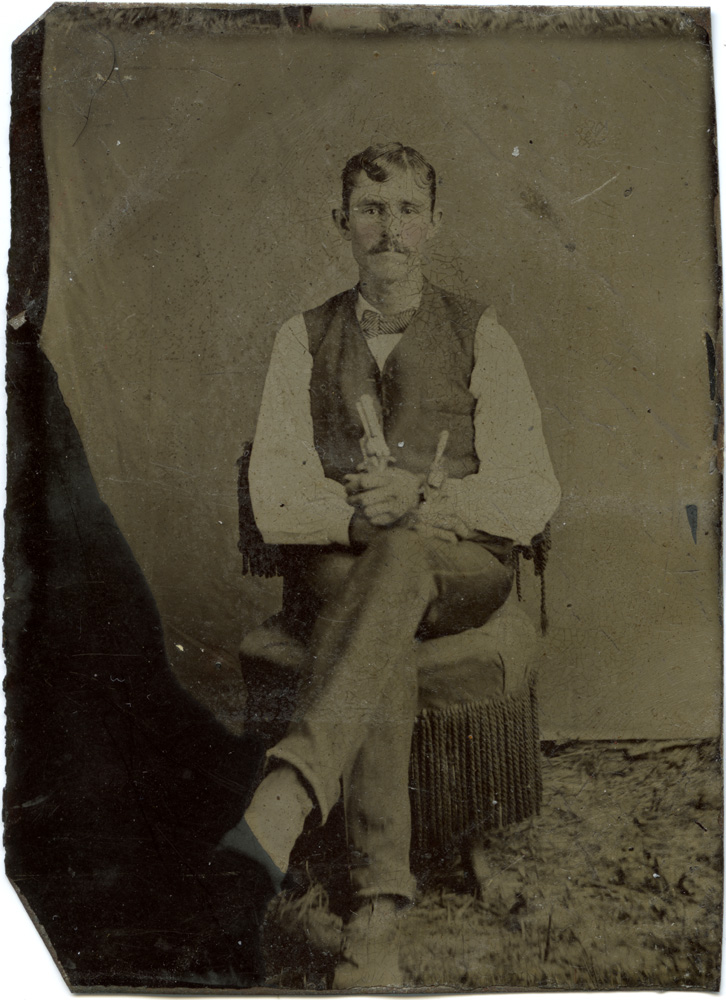
Here’s a little gem I recently uncovered. No date, no attribution, no name of the subject. It’s a little approximately 1/6 plate tintype. Definitely not from a professional studio, as the plate is ragged – the edges appear to have been almost torn from a bigger sheet, and the collodion pour and/or development are uneven. The photo was taken in the field (literally – you can see the grass under the sitter’s chair, and the backdrop looks like it might have been a rug or blanket with some kind of fringe on top, thrown over a hastily erected backdrop stand). Still, the photographer went to the effort to tint the cheeks on the sitter. It brings to mind the civil war soldier portraits with the young men about to march off to war posing with pistols. I wonder, like with those war portraits, if the pistols are indeed property of the subject or if they are merely props he chose to pose with because they looked cool (many of the civil war soldier photos are using prop weapons that belonged to the studios. Many soldiers had not yet been issued firearms when they had their pictures taken, and they often posed with weapons inappropriate to their rank and status – enlisted men with non-government issue pistols, for example). Was he a saloon keeper? A lawman? The guns are kind of dinky, and he’s handling them rather casually. I think it’s the aura of uncertainty that lingers with an image like this that makes it so fascinating.
Anonymous Vernacular - The Pistol Packer
I’m using the term “Vernacular Photography” to describe this image. A good friend of mine gave me a definition for it (after a rather contentious debate from which I learned some humility): “Vernacular photography is photography by indigenous populations for indigenous consumption”. Meaning photographs that are created with the intent to be consumed by the audience that created them. The photographer does not have to be known or unknown; neither does the sitter. What matters is the intent. So a Mathew Brady portrait of a client off the street, commissioned by that client for their own personal use, even if the client were famous, would be vernacular, but Brady’s civil war documentary, even the camp scenes of soldiers at rest, would not. Diane Arbus’ photos are NOT vernacular, nor are Ansel Adams’. Their work was created for the express purpose of exposing an idea and sharing it with the world at large. Vernacular photography is created for a known, limited audience. Non-vernacular photography (art photography, documentary, etc) is created for an unknown, unlimited audience. The sitter for my tintype here probably had no expectation of the life of his image beyond whoever he gave it to being able to remember a moment in time at some now-unrecorded location. By collecting it, publishing it and categorizing it, though, do I now lift it out of that category of vernacular image by giving it that unknown, infinite audience?
There’s a wonderful book on the American Tintype by Steven Kasher called “America and the Tintype” which catalogs the better part of a century’s worth of mostly anonymous, vernacular photography from the tintype era. If you’re interested in the subject, I highly recommend picking up a copy.
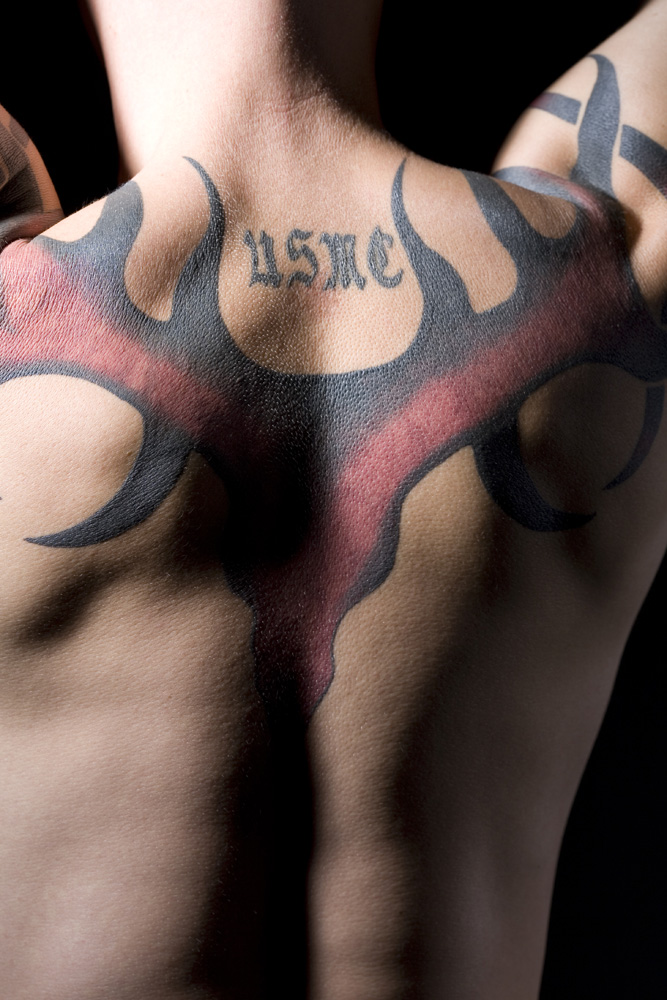
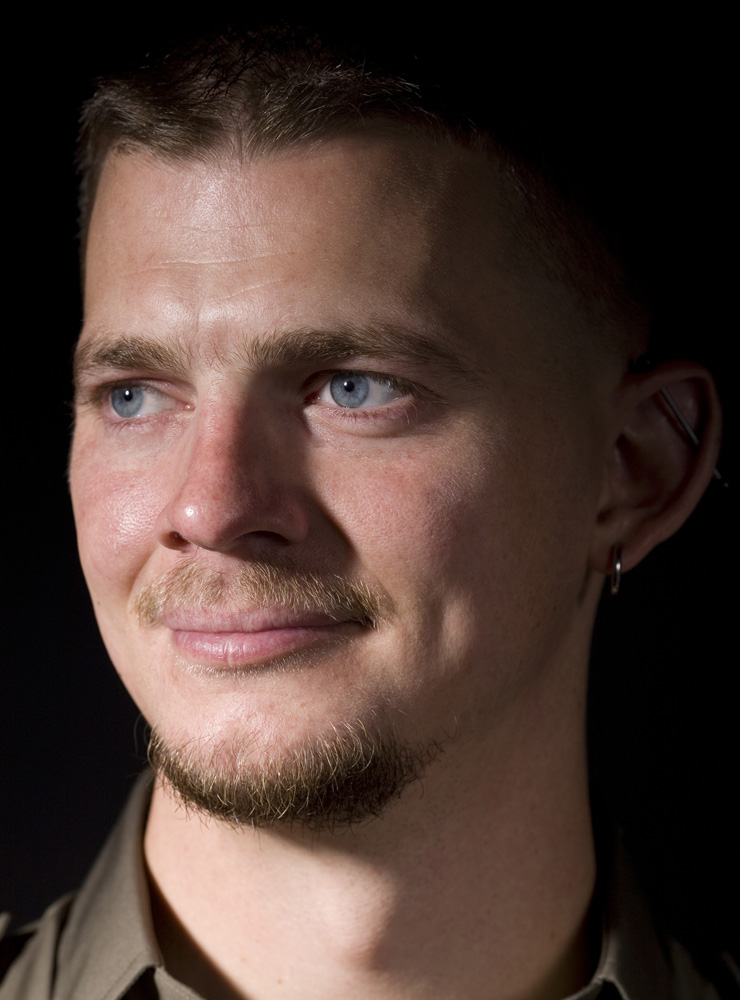
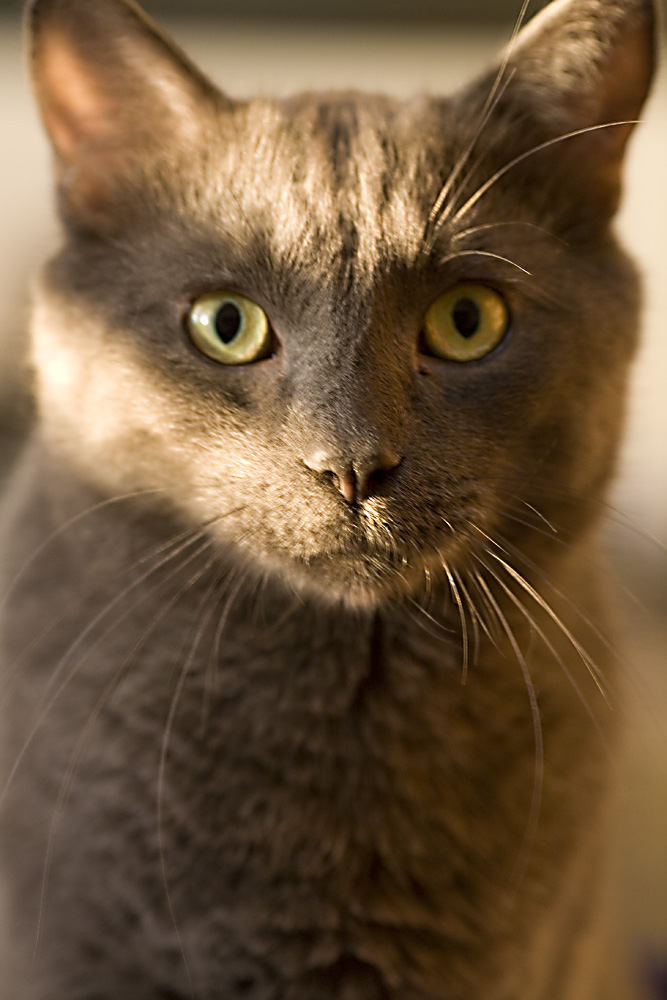
Here are some shots from my new toy, the Canon 135 L f2 lens. I put it to use in my studio last night, doing some portraits of a friend of mine. As you can see, it’s wickedly sharp, but even at f10, it still has pretty shallow depth-of-field. In examining the original camera-RAW file in Photoshop, I swear I could count every hair on his back, and every pore on his face, until the depth-of-field dropped off and then it blends away to creamy-smooth very quickly. You can see in the shot of my cat Chub-Chub (long story behind the name, but when I first got him, he ate like a pig, started gaining weight and would waddle down the steps, belly a-swinging) that at f2, the depth-of-field is whisker-thin. I’m going to love this lens.
I was a very naughty boy yesterday – I gave in to gear-itis and snapped up a like-new-in-box Canon L-series 135mm F2 lens for on my Canon 5D. As you can tell from reading this blog, I’ve been an absolute junkie for all things big, old, and film-based. That doesn’t mean I reject the 21st century, however; I have been jonesing for this lens for my Canon though for a while as its quality as a portrait lens is super-famous (I’d say infamous but that would imply something negative about the reputation, which could not be further from the truth). So I’m now the proud owner of a 135 L f2. I was playing around last night photographing the cats last night for lack of a better moving subject. I did use it to record the new acquisitions in the antique image collection – it worked wonderfully for that. I’ll be using the 5D as an ersatz Polaroid tonight in the studio as I have a portrait commission to do tonight. It will make a handy lighting check, and it will be useful to have some portraits of something other than Frosty and Chub-Chub (my furry little pudd’ns).
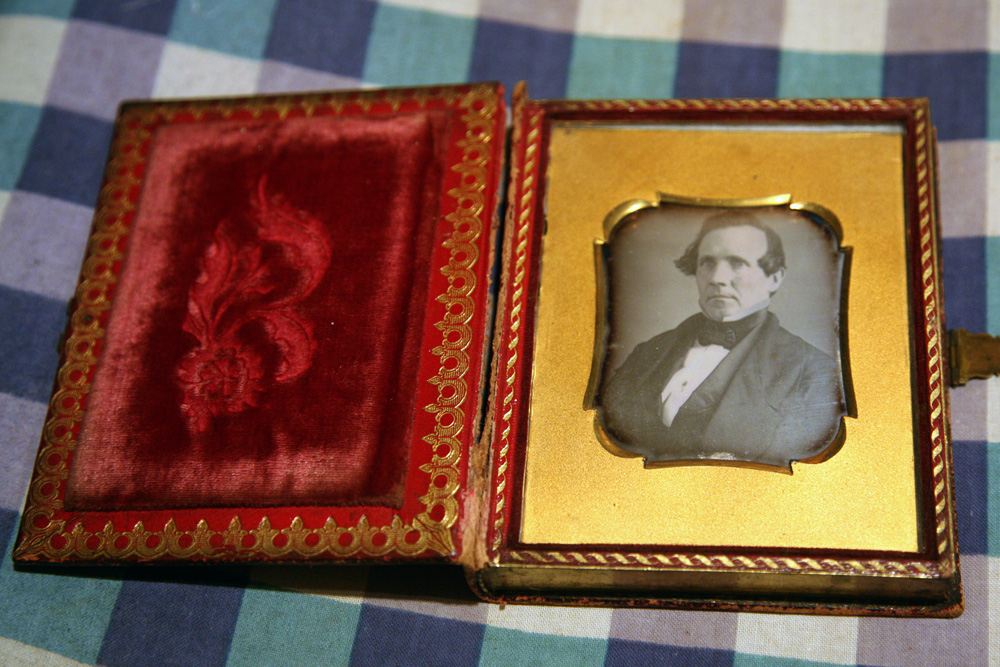
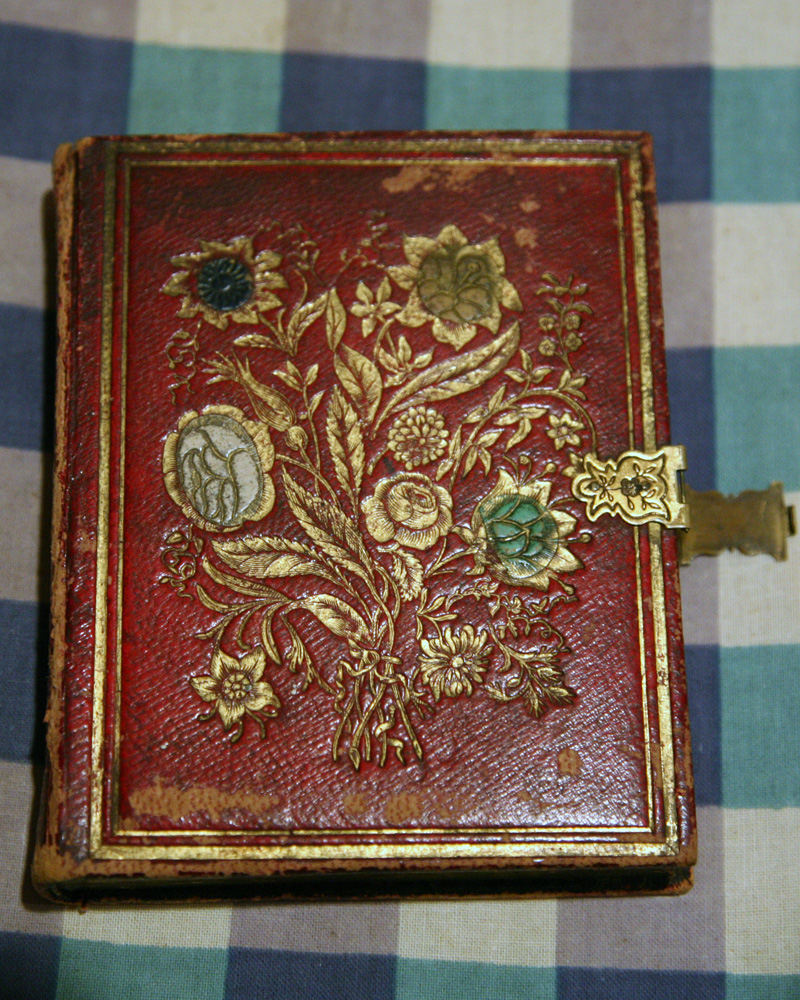
Quarter-plate Daguerreotype, Gentleman in book-form case
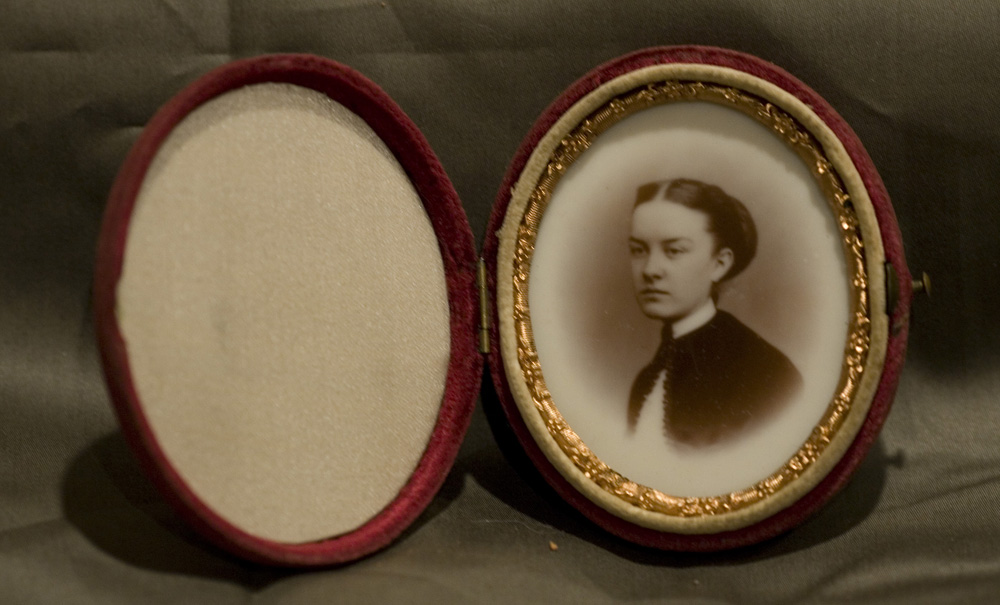
Ninth-plate milk-glass Ambrotype, anonymous girl
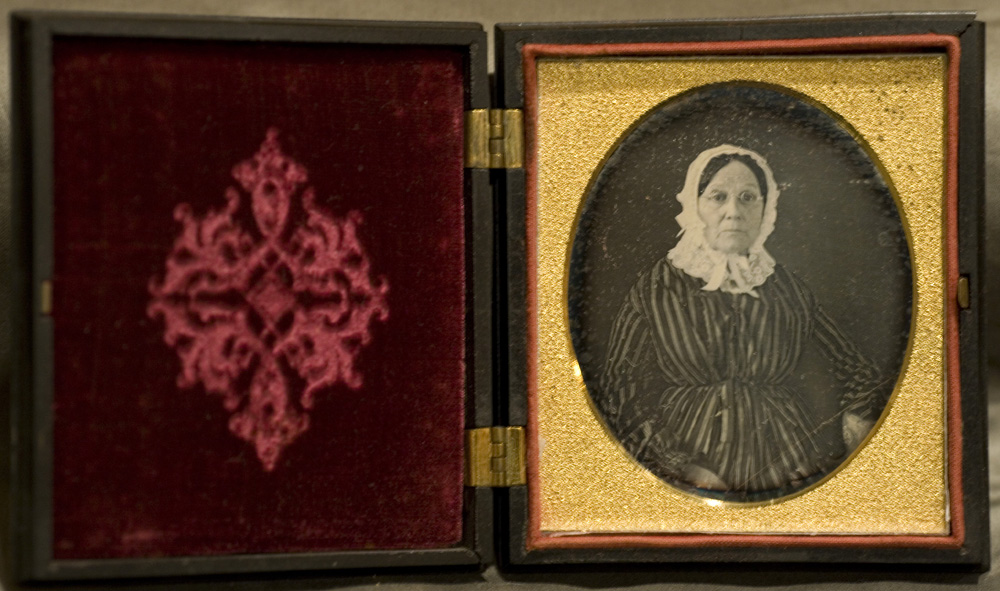
Sixth Plate Daguerreotype in Union case, anonymous lady in bonnet
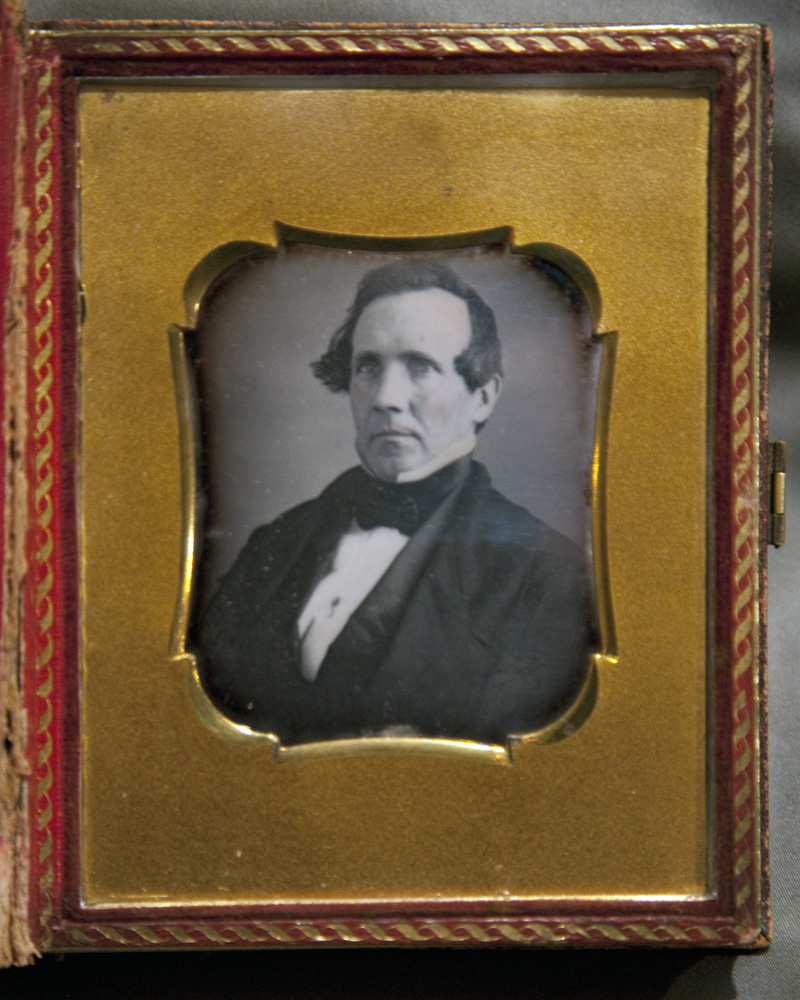
My three latest acquisitions. I’ve mentioned/showed the gentleman in the book-form case before, but I have a better photo of the image itself to include now. The little milk-glass ambrotype is truly exquisite. These are in a way consolation prizes for the one that got away – I was bidding on but got outgunned on a vintage 16×21 William Henry Jackson albumen print of Bridalveil falls at Yosemite, from the days of his Denver studio (1880-1897). That was a shame; at the closing bell I could have bought it but then I’d have had to turn around and re-sell it immediately, which would have been no fun. These I get to keep as long as I like.
I’ve gotten some further confirmation, so I can post more information about this now:
I’ll be showing work at PhotoWorks in Glen Echo, Maryland as part of PhotoWeek DC 2011. I’ll be displaying my platinum/palladium prints and talking about the process as part of a show-and-tell event on Sunday, November 6. I’ll update with links when they have a schedule of events published. I’ll also probably be doing a process demo some evening that week or the following weekend, November 12-13, and a full-fledged workshop in the spring of 2012.
One of my 14×17 still life shots. Printed in palladium. Making a palladium print (or any hand-coated emulsion) this large presents unique challenges – trying to coat something this big is a lot harder to get even because it’s such a large surface. You have to work with a much bigger brush, and make sure you keep the emulsion moving around quickly. Don’t be afraid of getting sloppy outside your margins – it’s more important to be evenly coated than it is to be precise and tidy. I printed this on Bergger COT320, a 320 gsm uncoated paper designed specifically for alternative process photo printing. It’s a beautiful, heavy-weight paper with great wet strength and a bright white base – it gives you easily another full stop of contrast range over a more warm white/eggshell paper.
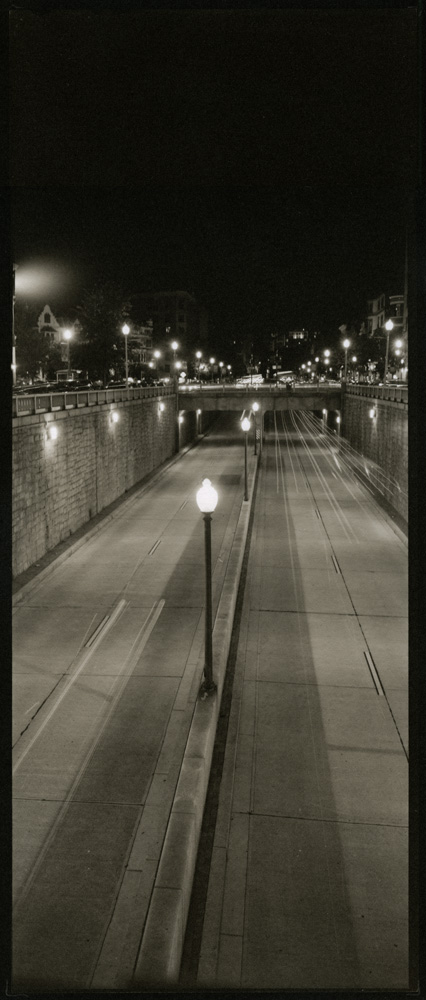
Dupont Circle Underpass, Connecticut Avenue, Night
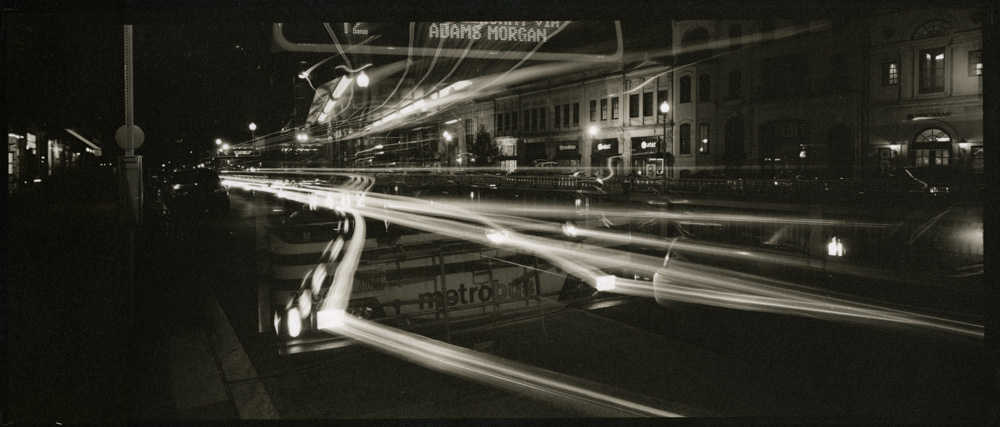
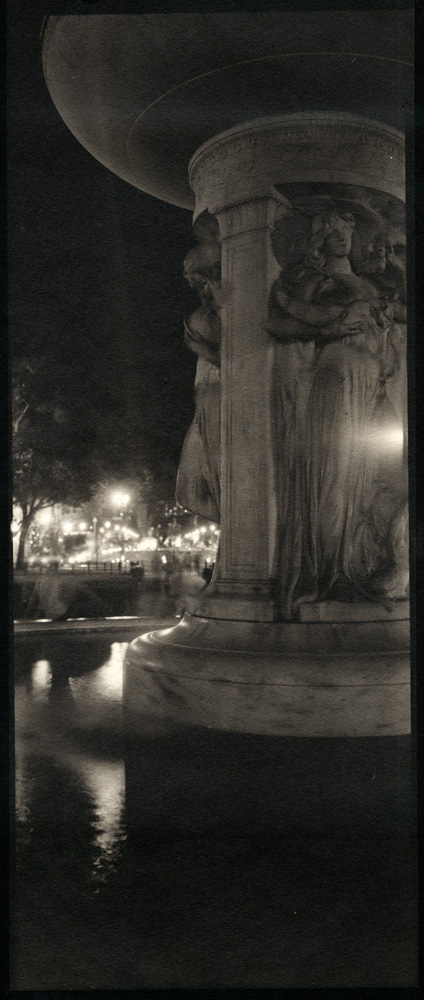
Some of my prints from the shoot on Saturday night. These are all palladium prints. The images were shot with my Canham 5×12. All images were taken around Dupont Circle. You can see from the bus photo that these were obviously long time exposures (the bus was somewhere north of 2 minutes, in multiple snaps of 30+ seconds each). The bus was an experiment that didn’t produce the expected result, but in a bout of serendipity turned out something just as cool as my original concept. I was hoping the bus sitting still as passengers boarded would record as a solid object. Instead, it became something far more abstract in the final image – you can recognize the bus, in pieces. It became an essay on motion, transportation and “transit/ion” by virtue of its self-deconstruction.
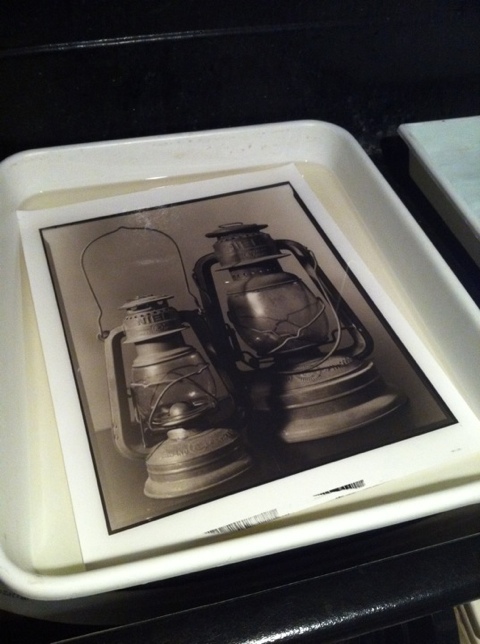
Here’s the first print in the wash from the 14×17 still-life shoot I did a week ago. Looking at the negative I was worried it would be too thin to print well in palladium. My fears as you can see were totally unfounded. This was a straight palladium print with 33 drops of Pd, 33 drops of Ferric Oxalate (FeOx), and 2 drops of NA2 (sodium platinum) as a contrast agent. The paper is Bergger COT 320.
The first of the new images has arrived. The cased quarter-plate daguerreotype of a gentleman. The case itself is quite amazing – made to look like a little book, it’s nearly half an inch thick and gives the plate some real heft. Makes you wonder if the family had a series of them together on a shelf in their library. The image itself is in quite excellent condition, with minimal tarnishing around the edges of the mat. There is a very subtle hand-coloring applied to his cheeks. As you can see from the shot of the open case, the spine is torn but not completely broken.

 dcphotoartist