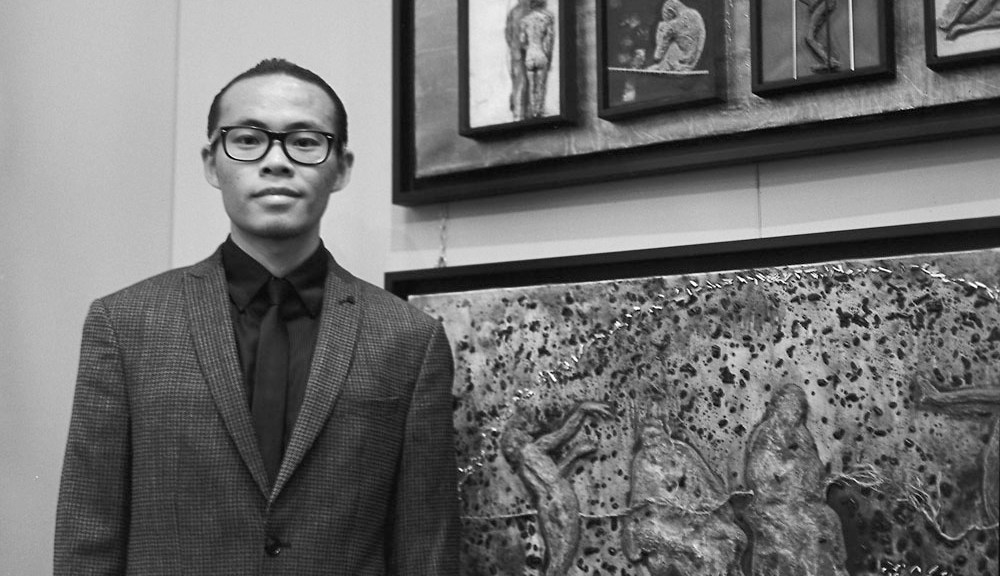
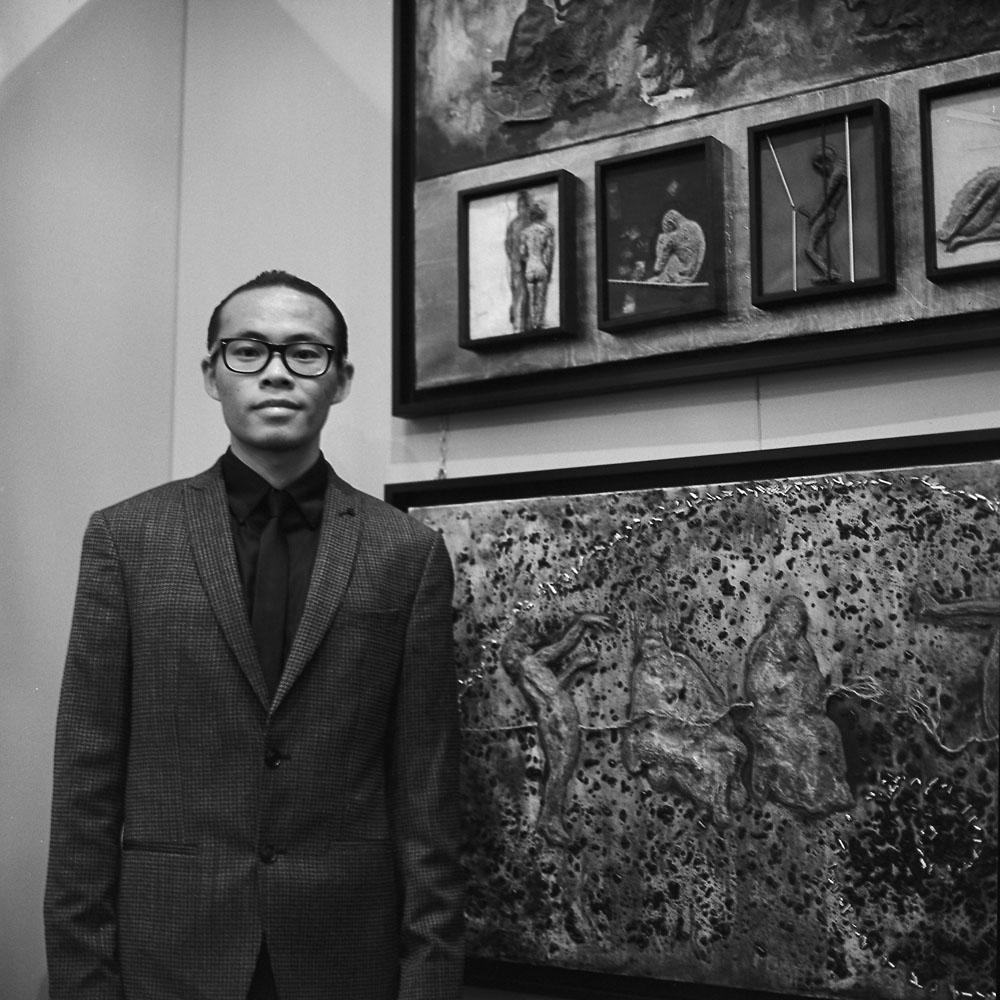
By pure fortunate happenstance, I was in Florence for the opening of the Biennale, an every-two-years art exhibition featuring contemporary artists across all media. Photographers, painters, sculptors working in ceramics, glass, wood, and bronze, video artists and installation artists were all represented. As I was there on opening day, some of the works were still being installed, and many of the artists were present. I got a chance to meet two of them- Xu Lishou and Amir Jabbari.
Xu Lishou
Xu Lishou is a painter from Taiyuan, currently residing in Italy. His work features traditional Chinese themes but painted in a very modern style, using mixed media such as paper pulp and rope to provide high-relief texture. We spoke a little through a friend of his who translated.
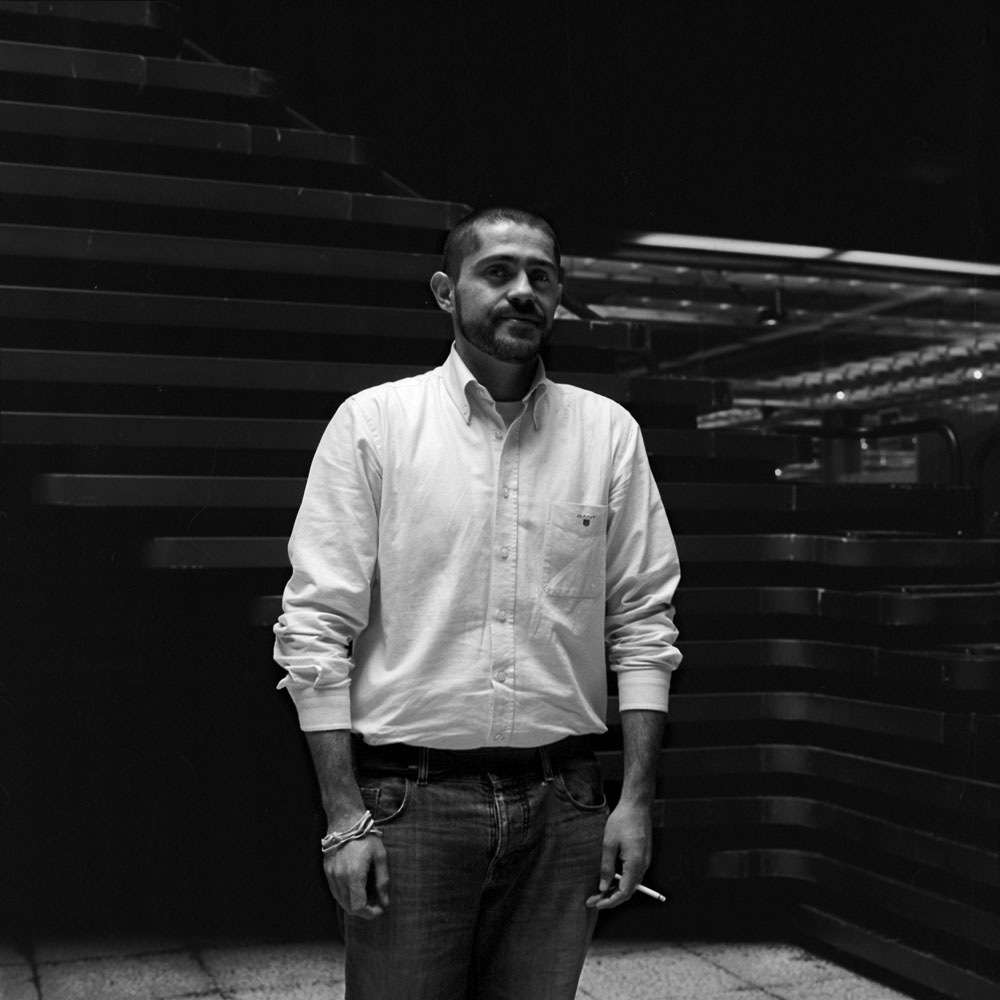
Amir Jabbari
I met Amir in the light well of the exhibition hall (the hall is mostly underground, inside the Fortezza Basso, a Medici-era military fortification which still has use today as a base). I had stepped in to photograph the stairways, and he was smoking a cigarette. He is a video artist from Tehran. I did not get to see his video, alas, as it was one of a group of videos on continuous loop in the video exhibition room, and I was feeling under the weather and couldn’t wait for it to come back up.
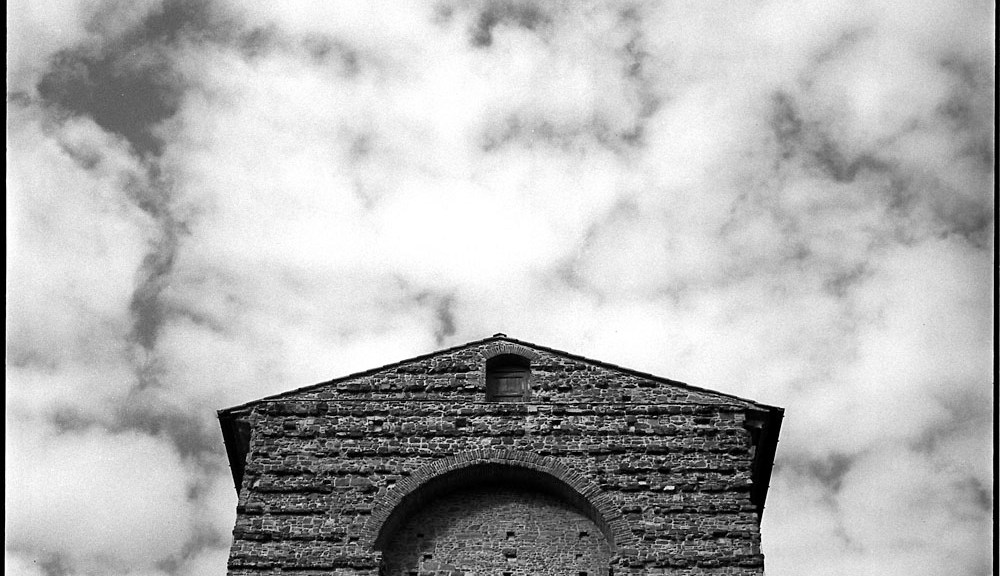
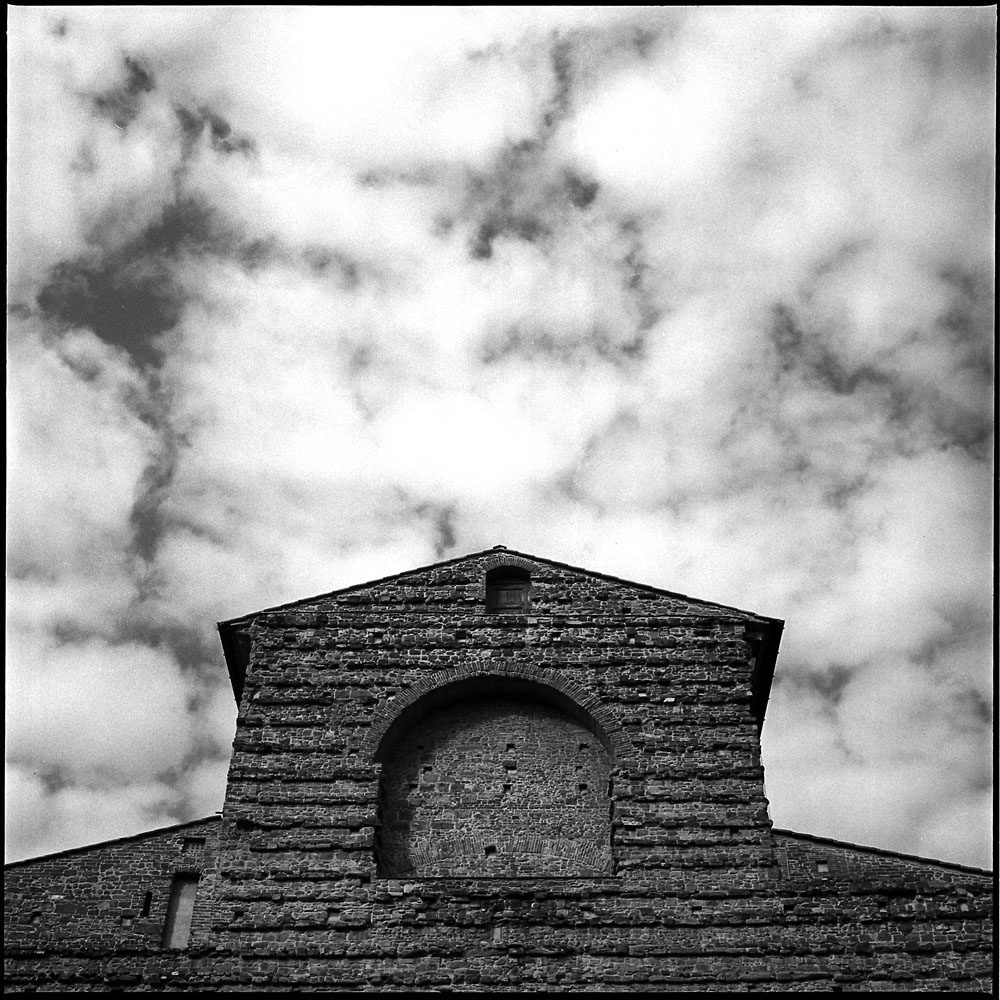
My take on the facade of San Lorenzo, the Medici family parish church and originally the primary cathedral for the city of Florence.
San Lorenzo Facade, Clouds, Florence
The facade is one of the most famous unfinished structures in Italy. The church was designed by Brunelleschi, but he died before it was completed. The Medici family, who were financing the construction of the church, commissioned Michelangelo to design a new facade. He built a scale model, but the design was never executed. In 2009, a CGI model of his design was projected on the existing facade for a period of time to gauge reaction to completing the facade, but nothing more has come of it. While the Michelangelo design is quite beautiful, the current facade has sat as-is for over 500 years, so I think it would be a sacrilege to both the existing building and the Michelangelo design to build it now.
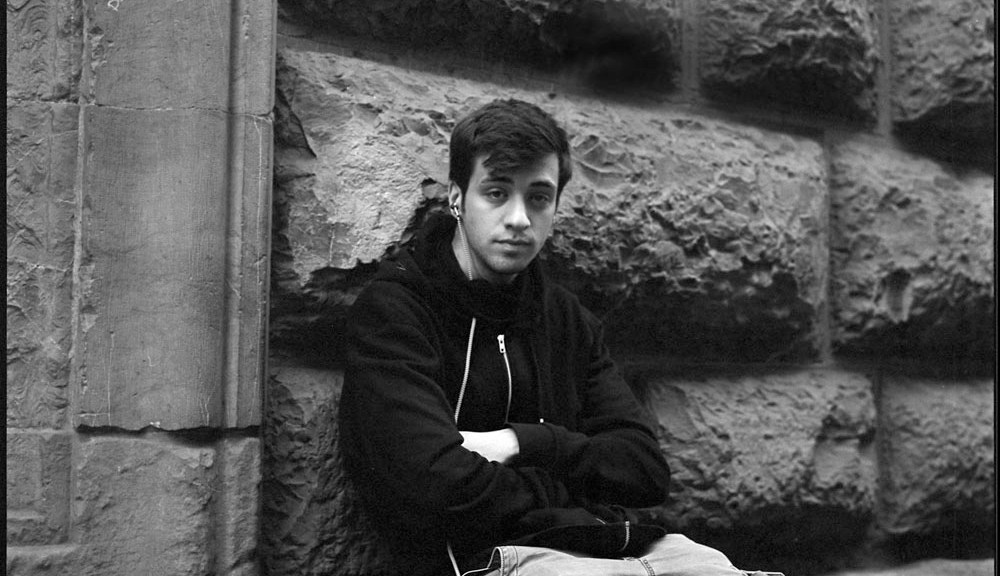
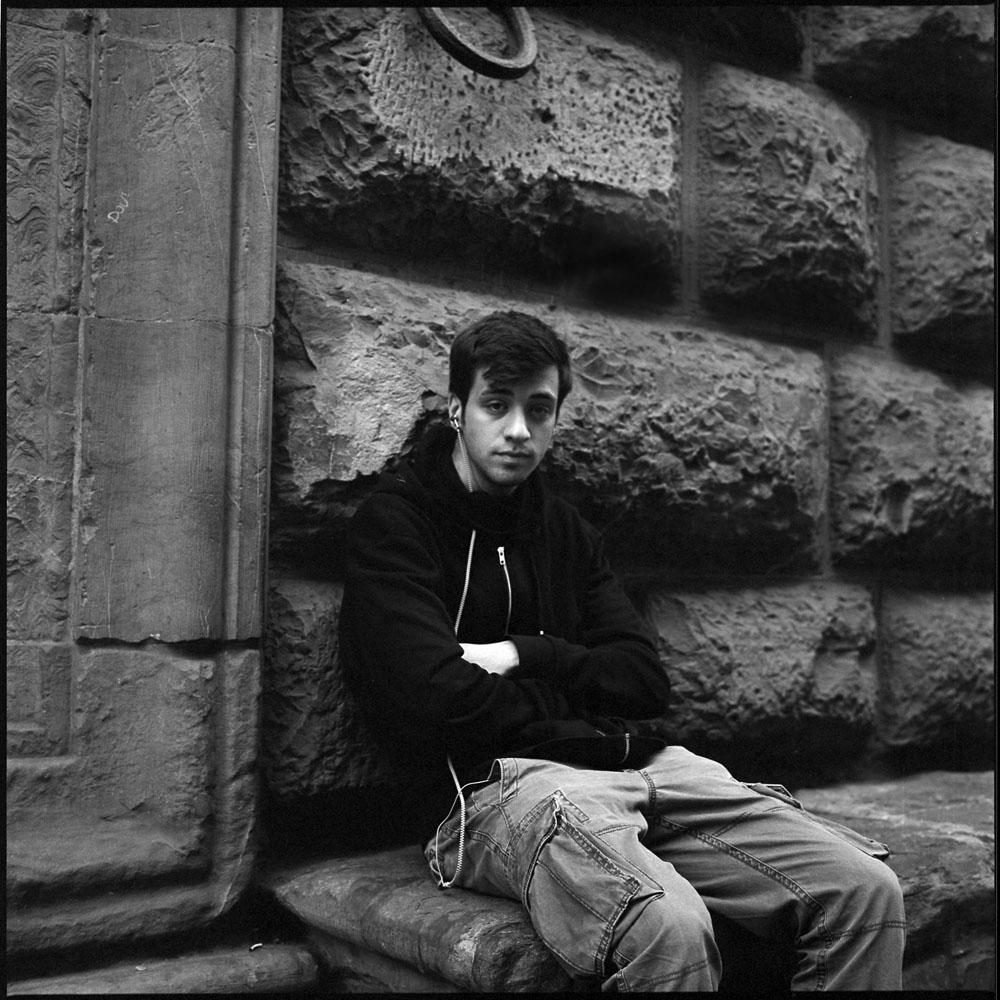
I saw this young man sitting on the bench around the Palazzo Medici-Riccardi. I don’t know what he was waiting for – might have been a bus, or a group of students visiting the Palazzo. Regardless, his pose cried out to make his portrait.
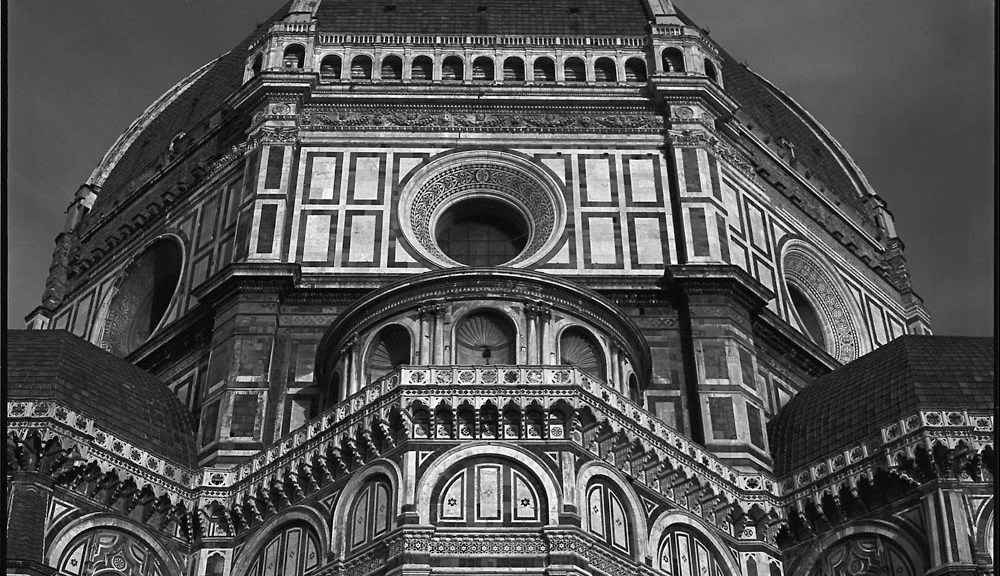
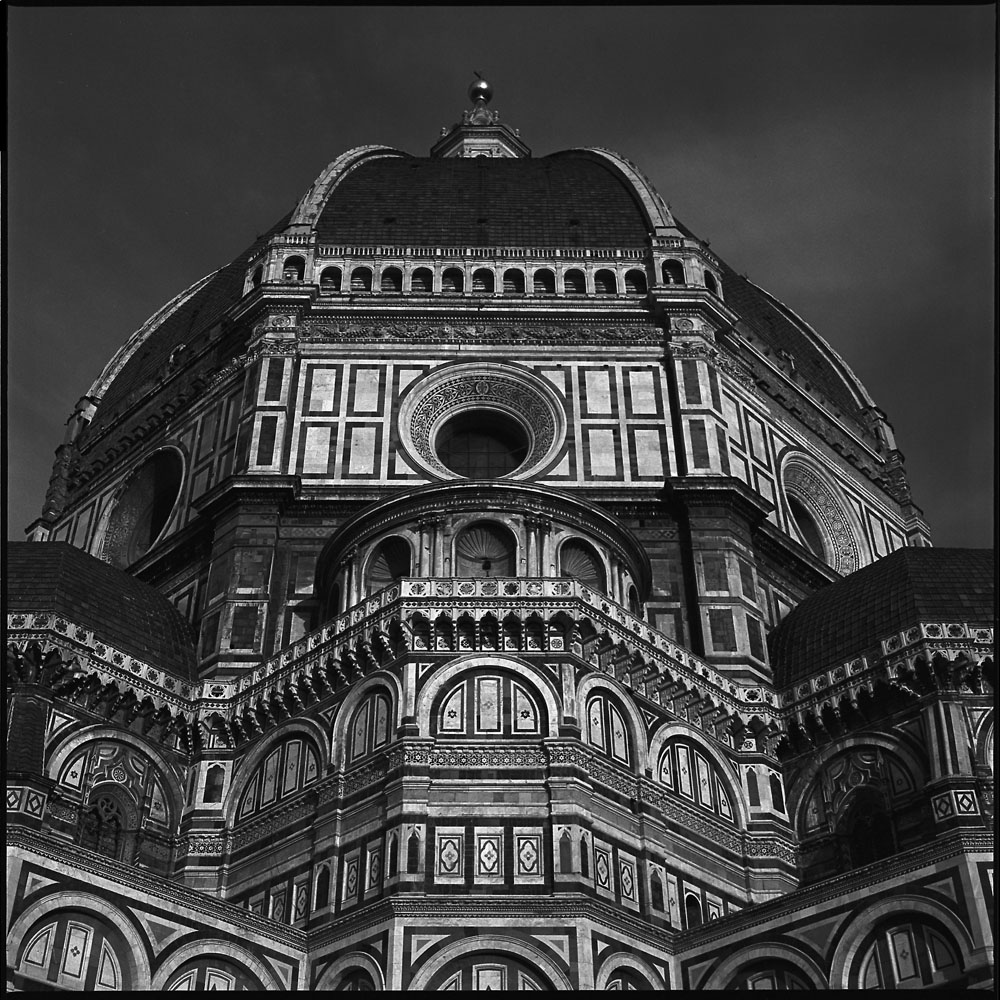
Here is the famous dome of the Duomo, Florence’s main cathedral. Designed by Brunelleschi, one of the Renaissance’s greatest architects, and built using highly innovative techniques and equipment that other than the power source being humans and/or animals, any large construction crew today would recognize. The dome has stood as one of the most recognizable symbols of Florence, if not all Italy, for nearly six centuries.
Cupola, Santa Maria Del Fiore, Florence
There’s a terrific book out there on the dome and its design and construction, Brunelleschi’s Dome: How a Renaissance Genius Reinvented Architecture, if you want to read more about it. I’m actually going to go back and re-read it myself, now that I’ve re-visited the cathedral and have been reminded of just how magnificent and amazing it is. The dome and its lantern stand at an impressive 375 feet high, making it the largest dome in Western architecture until the modern era, and it still remains the largest ever built using brick and mortar.
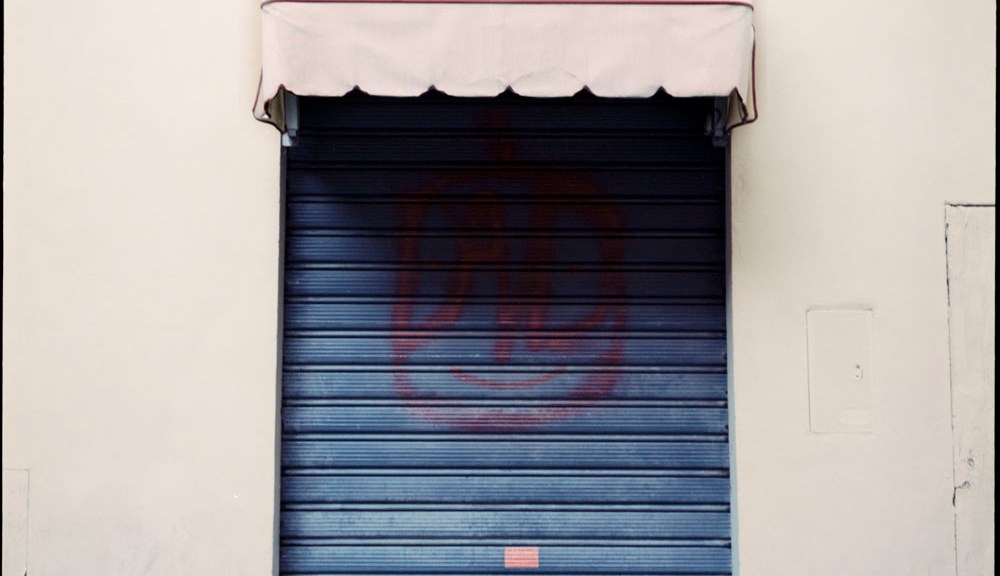
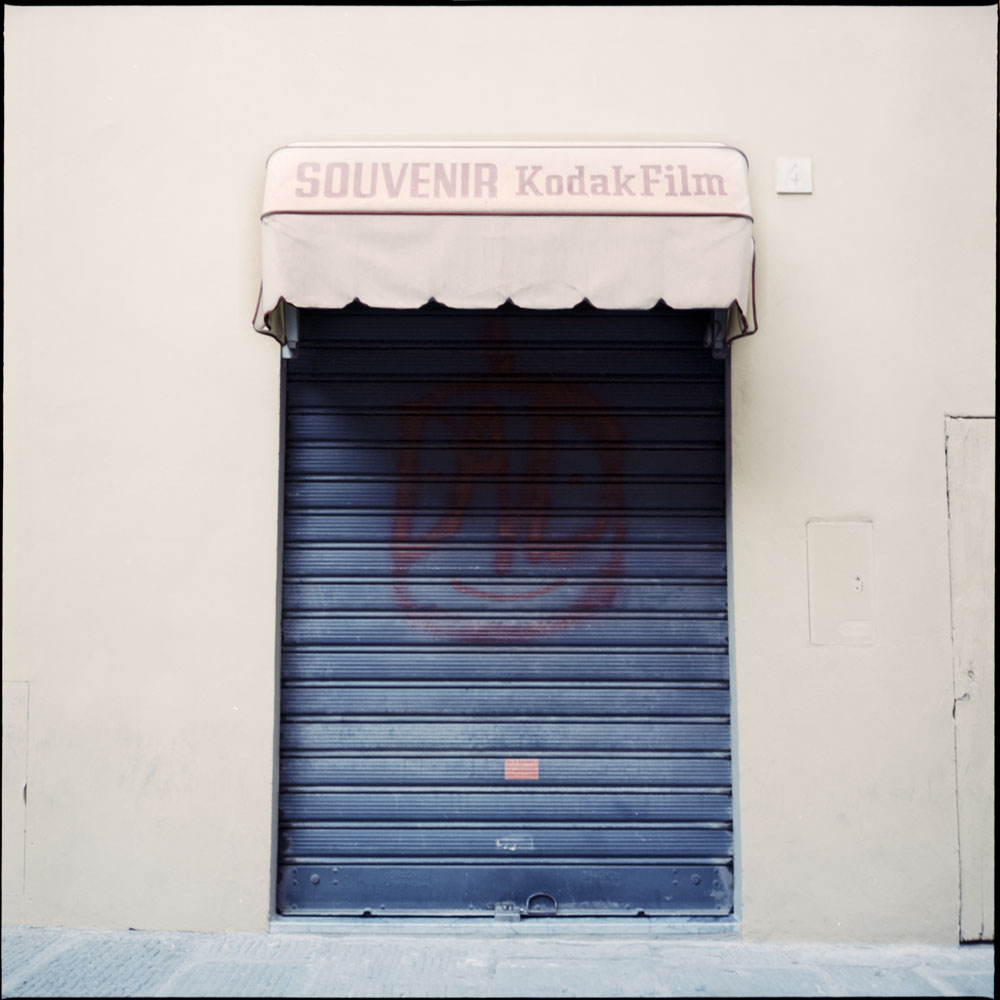
This little souvenir shop is in an alleyway just off the Piazza del Duomo in Florence. The shop is sill in business, but I caught it early in the morning before they opened. I felt it was a good metaphor for Kodak- the name is still recognizable and marketable, but it’s rather sleepy, dusty, and to many folks it’s perceived as already shuttered.
Souvenir Kodak Film, Florence
Of course, I took this with the latest generation of Kodak color film – Ektar 100 – which is perhaps the finest grained, most color-accurate film ever made.
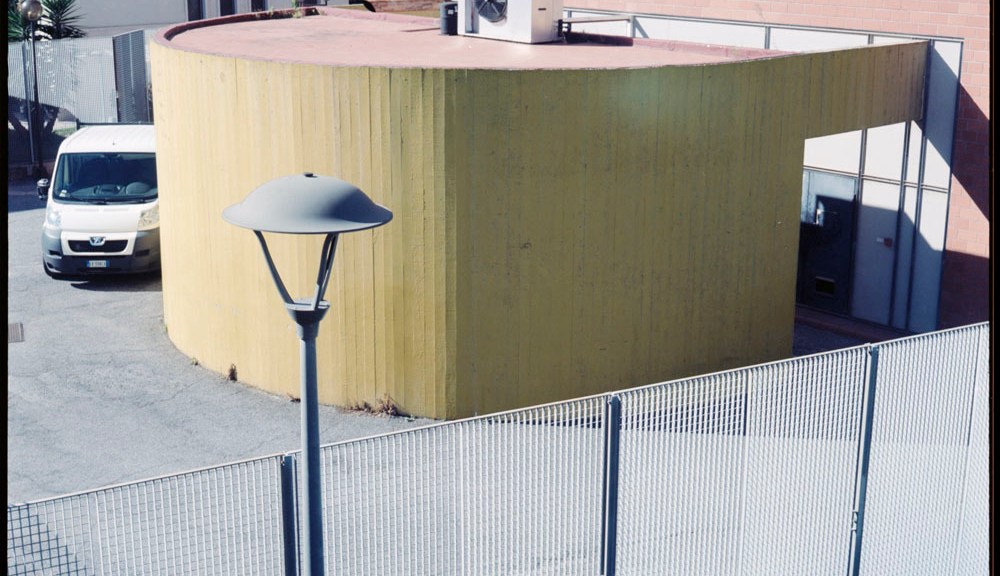
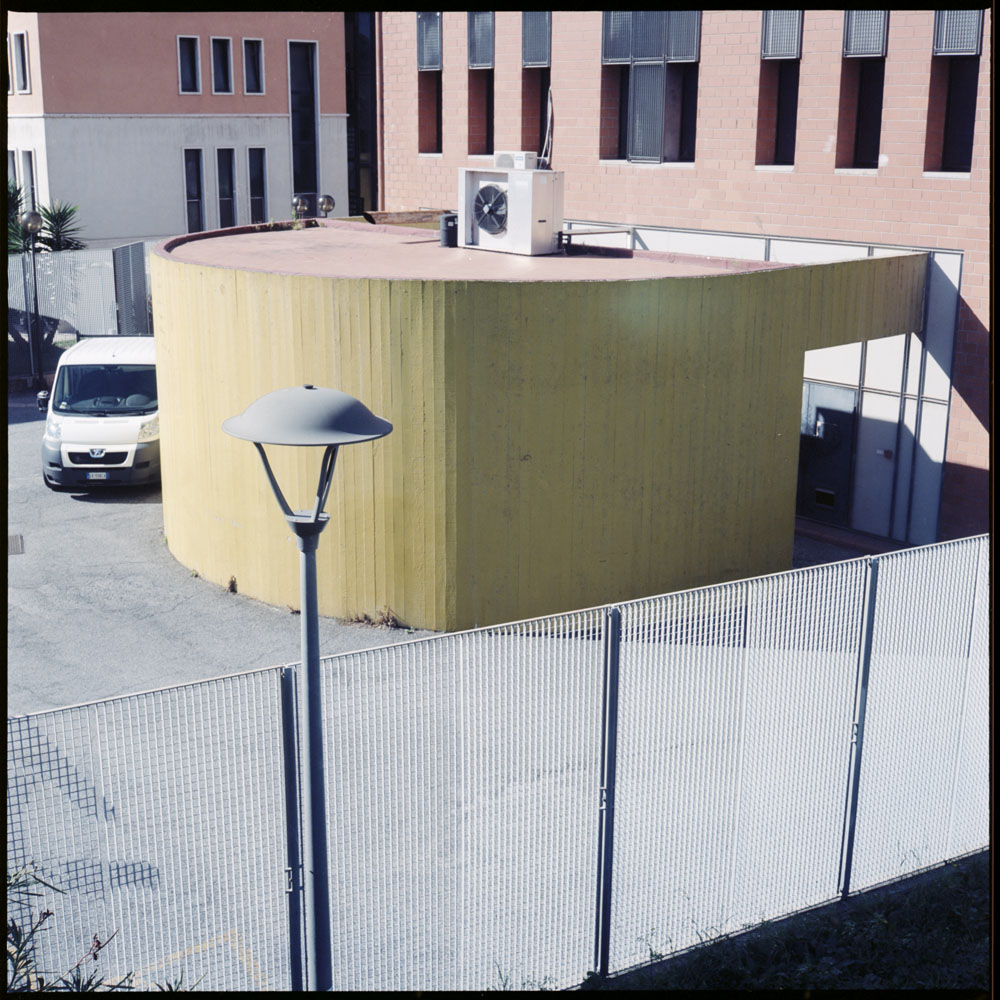
As I was coming down the stairs from the pedestrian overpass connecting the Garbatella Metro station with the other side of the railroad tracks, I saw this scene. This is actually about repetition, in a way: a repetition of one.
Yellow Wall, Garbatella
There’s one lamppost, one van, one A/C unit, and one yellow wall. A series of solitudes.
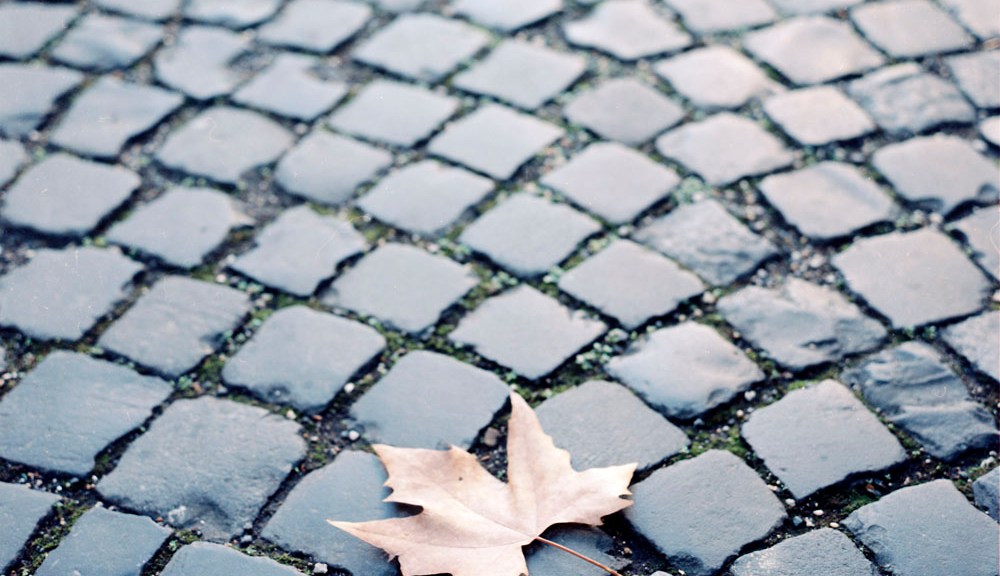
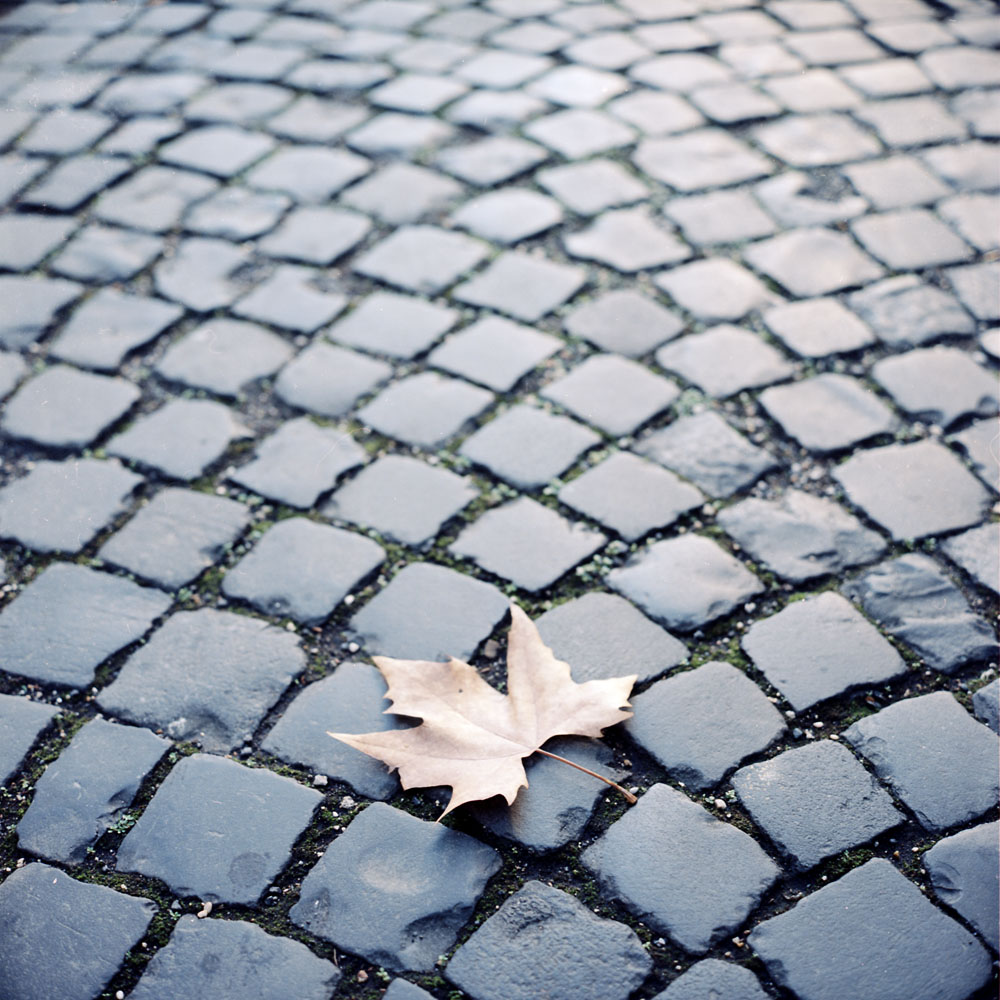
Just a one-off today – a single leaf that had turned brown and fallen on the black cobblestones outside the Centrale Montemartini museum.
Leaf, Centrale Montemartini
In travel, you make plans, and if you’re smart, you have either backup plans or you’re open to serendipity. I do a bit of both.
I had wanted to go see the Museo Centrale Montemartini, which is a collection of overflow ancient sculptures from the collections of the Capitoline Museums in downtown Rome, housed in a former power generation plant along the Tiber river. I had figured I’d go there on Monday, since most museums are closed on Monday, but the Capitoline Museums are open on Mondays. Well… long story short, Centrale Montemartini may be part of the Capitoline Museum group, but since it’s three subway stops out of downtown, it’s not like the ones on the hill overlooking the Forum, and it DOES close on Mondays. So I found myself in semi-suburban Rome looking at a closed museum, camera in hand. What’s a girl to do when faced with a loaded camera and a closed museum? Photograph the first fallen leaf of fall on some artfully laid cobblestone blocks in the museum driveway (and get honked at by a scooter driver for blocking the two and a half lane wide driveway). It also gave me time to shoot the bridge you saw in a previous post.
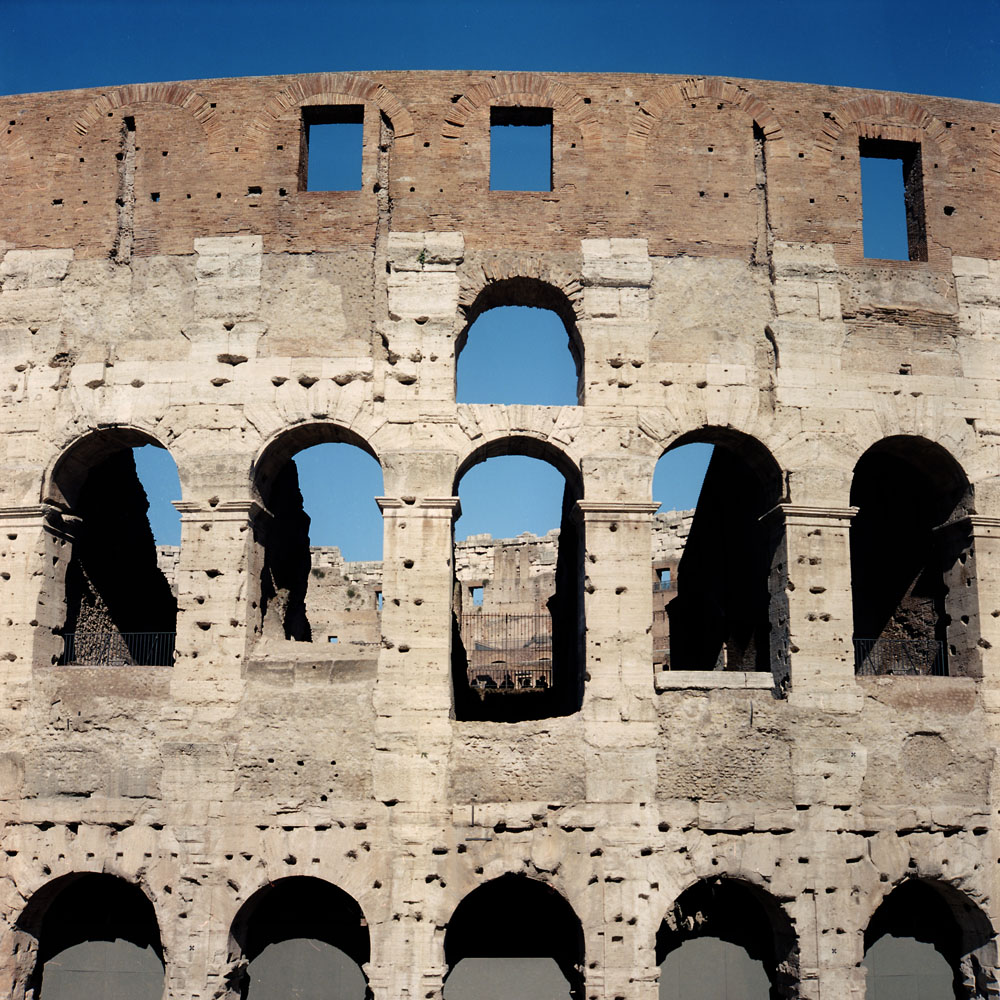
The Colosseum is truly one of the marvels of ancient Rome. A building that could seat somewhere between 50,000 and 80,000 (the higher number comes from an ancient source – modern estimates are lower) but evacuate them all in just minutes, hosted mock sea battles, and was designed and constructed without the use of decimals or precision measurement systems.
Colosseum Wall
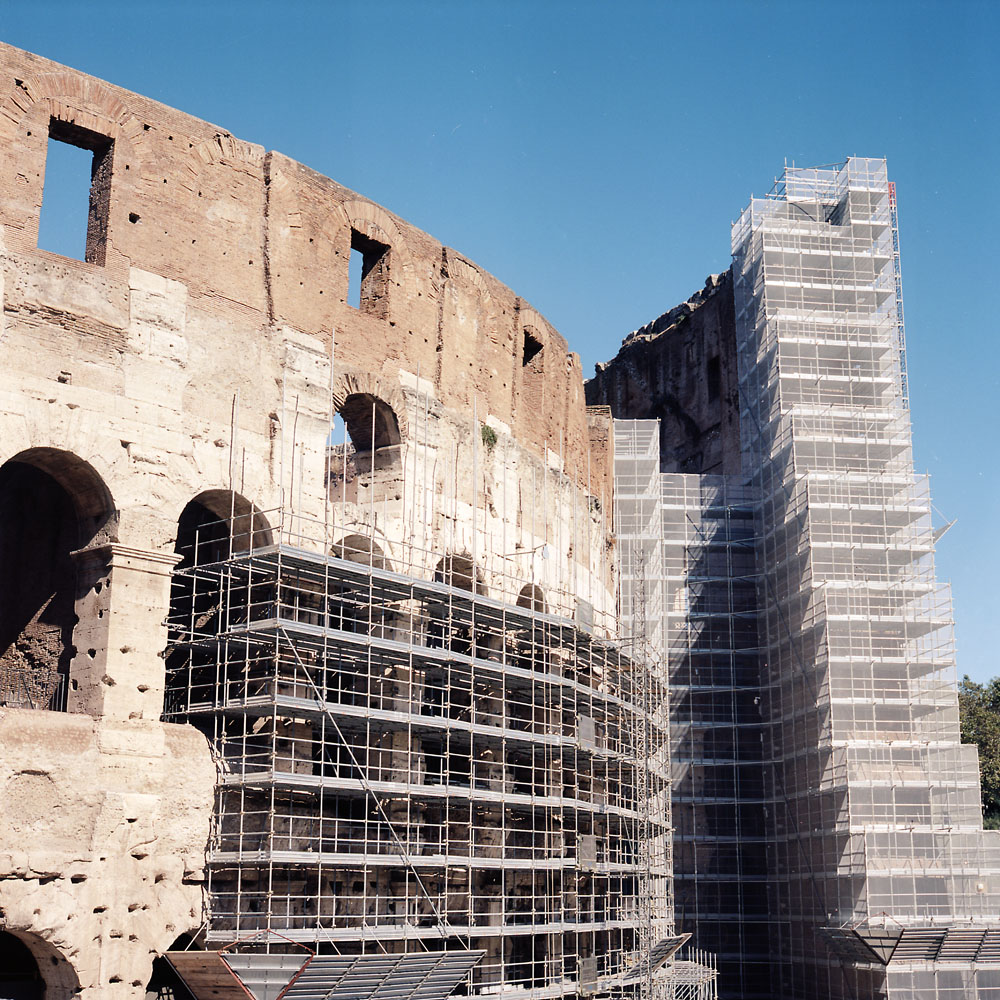
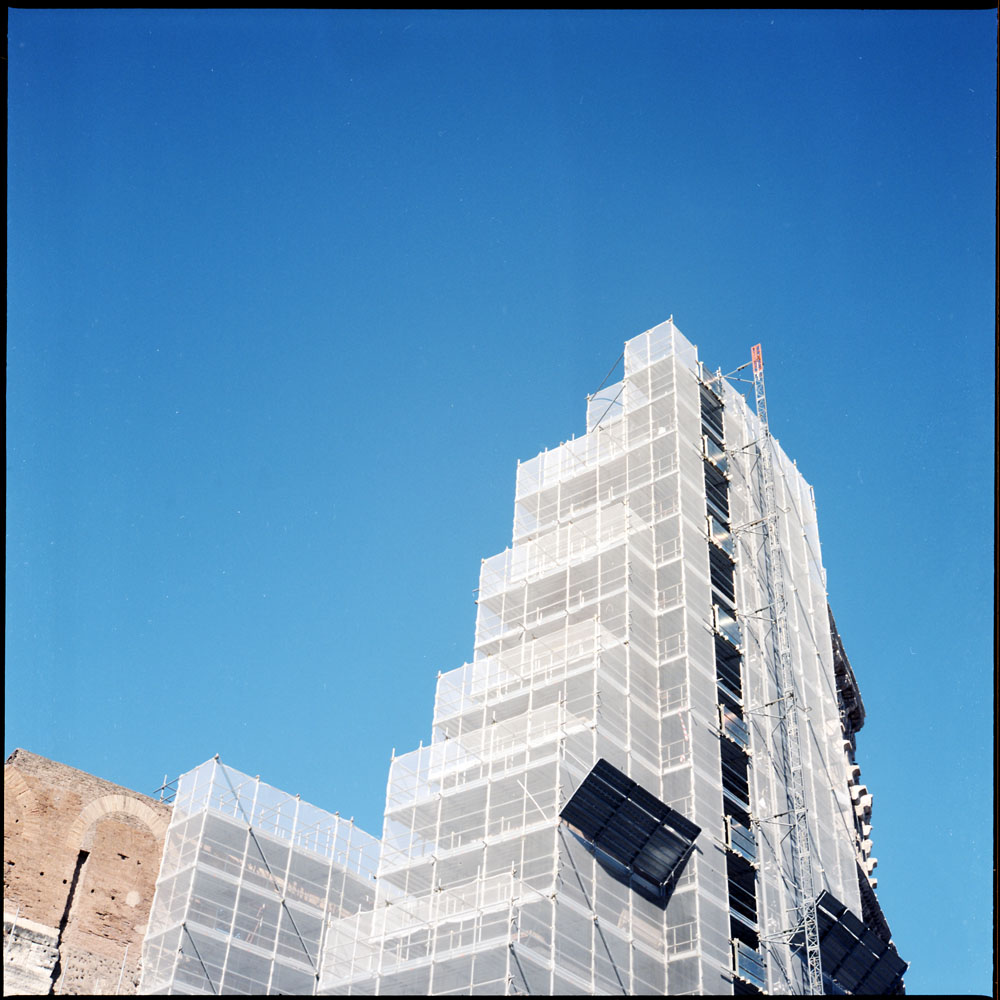
There is an ongoing project to restore and stabilize the outer wall of the Colosseum. To that end, they’ve wrapped parts of the exterior in scaffolding to assist in the work.
Colosseum Scaffold Rear
Viewed from a different angle, the scaffold takes on the appearance of a modern skyscraper.
Colosseum Skyscraper
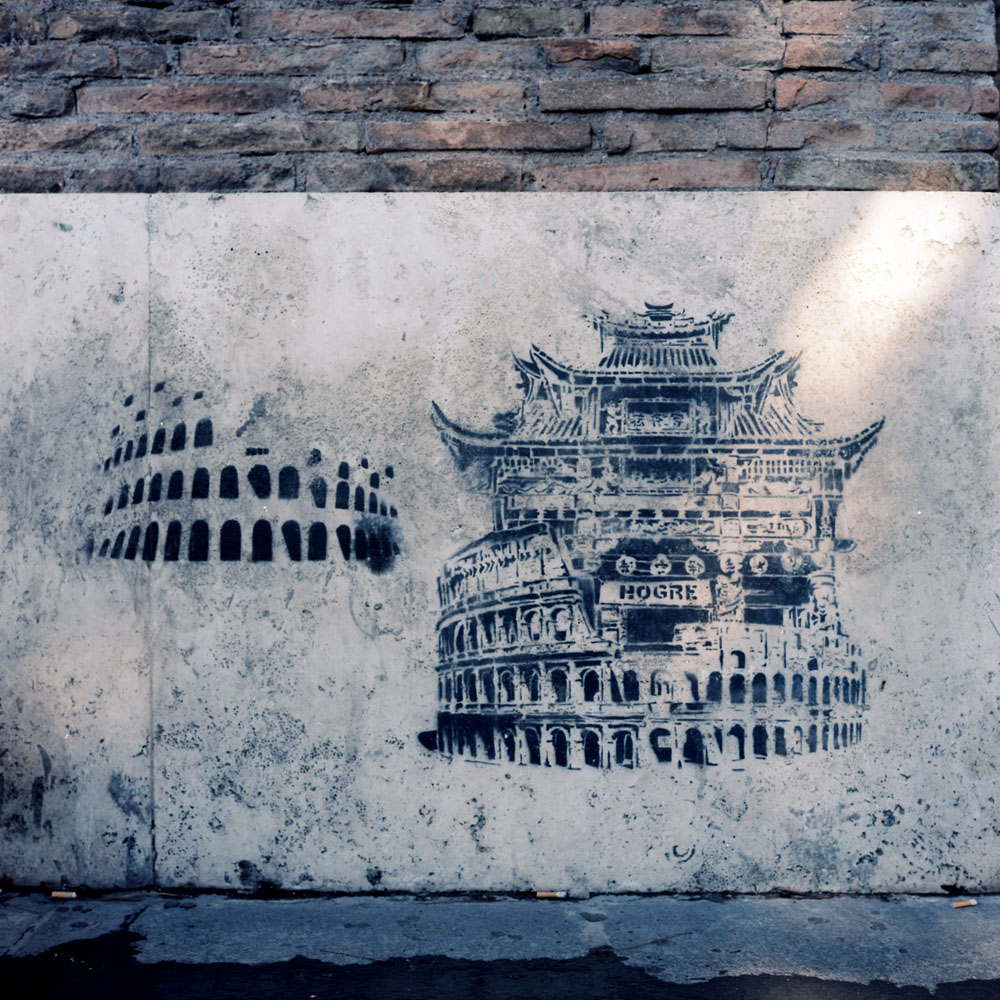
I spotted this bit of graffiti on a wall outside the entrance to the Colosseo Metro station.
Colosseum Graffiti
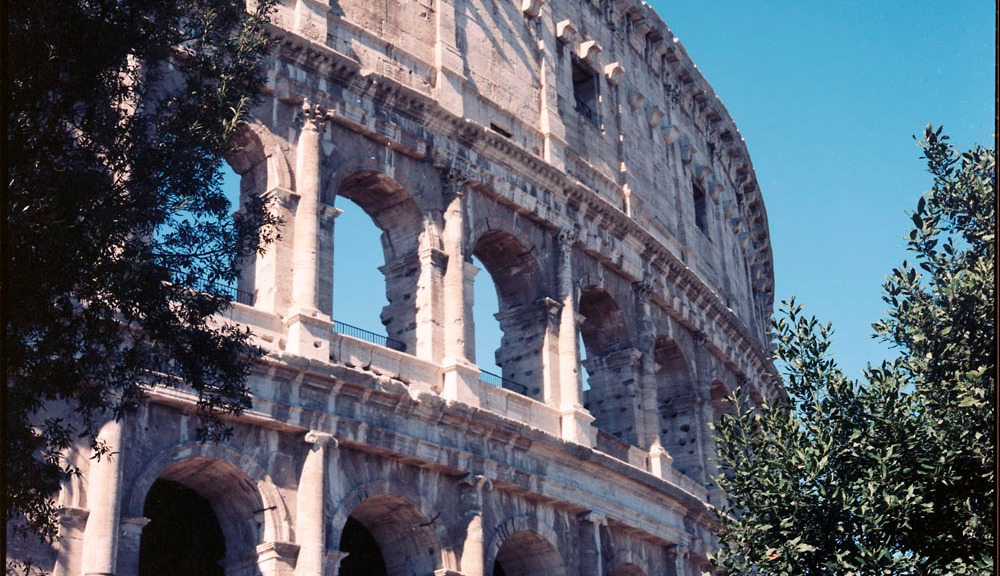
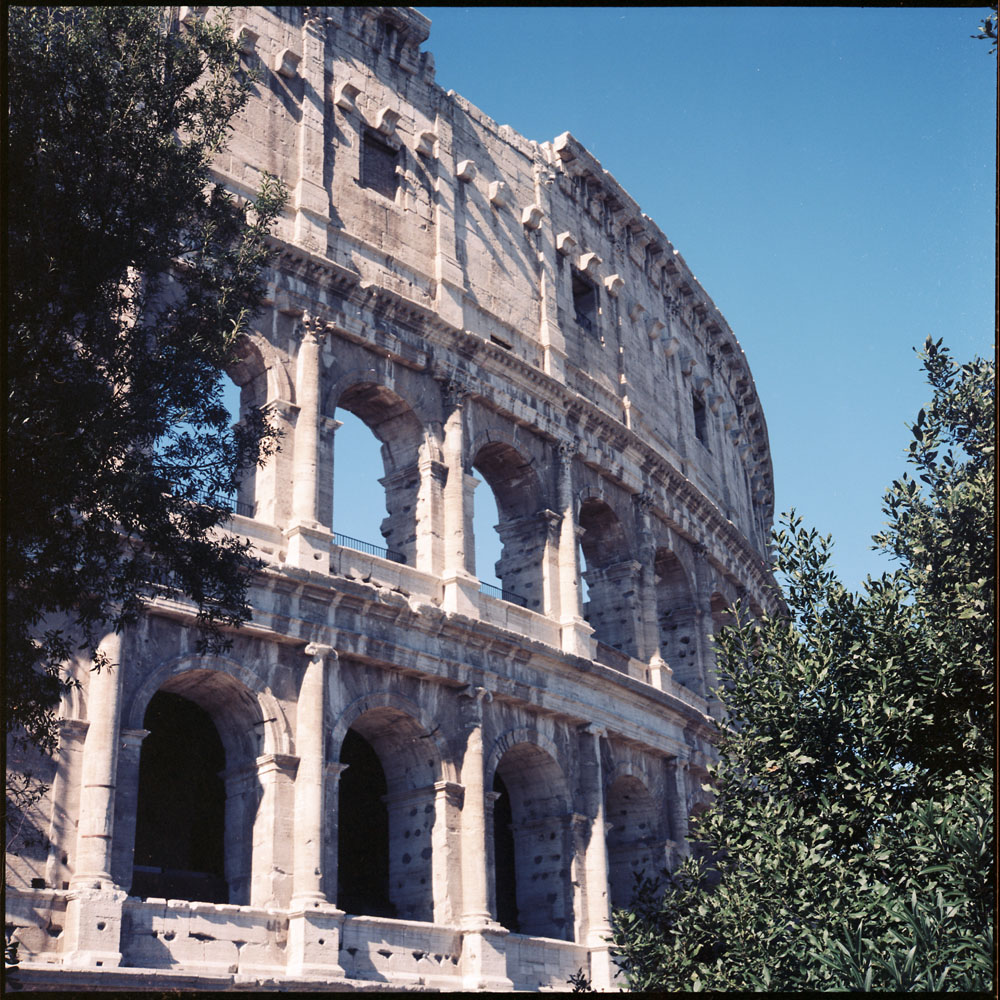
A simple shot of the Colosseum exterior wall in a section not undergoing stabilization work.
Colosseum Exterior, Trees
You’ll notice I have no shots of the interior of the Colosseum. I did not make it inside. Traveler’s tip – if you want to see it without booking a tour, you need to buy a timed entry ticket, which you can get from the ticket booth at the entrance to the Forum. Get the ticket from the Forum (it lets you in to both the Forum and the Colosseum) instead of trying to get it directly from the Colosseum. Why? Because the line to get in, EVEN if you have the RomaPass card, is about 2-3 hours long.
There will be lots of touts outside the Colosseum offering tours that will let you skip the line to get inside. Most of these will have the sole value of letting you skip the line – the guides are of varying and often poor quality. You’re better off pre-booking your tour in advance through an agency with online reviews that you can tell how good a program they offer. The advantage of a pre-booked tour is that the tour guides will be able to take you in to parts of the Colosseum you can’t enter if you just go in yourself.
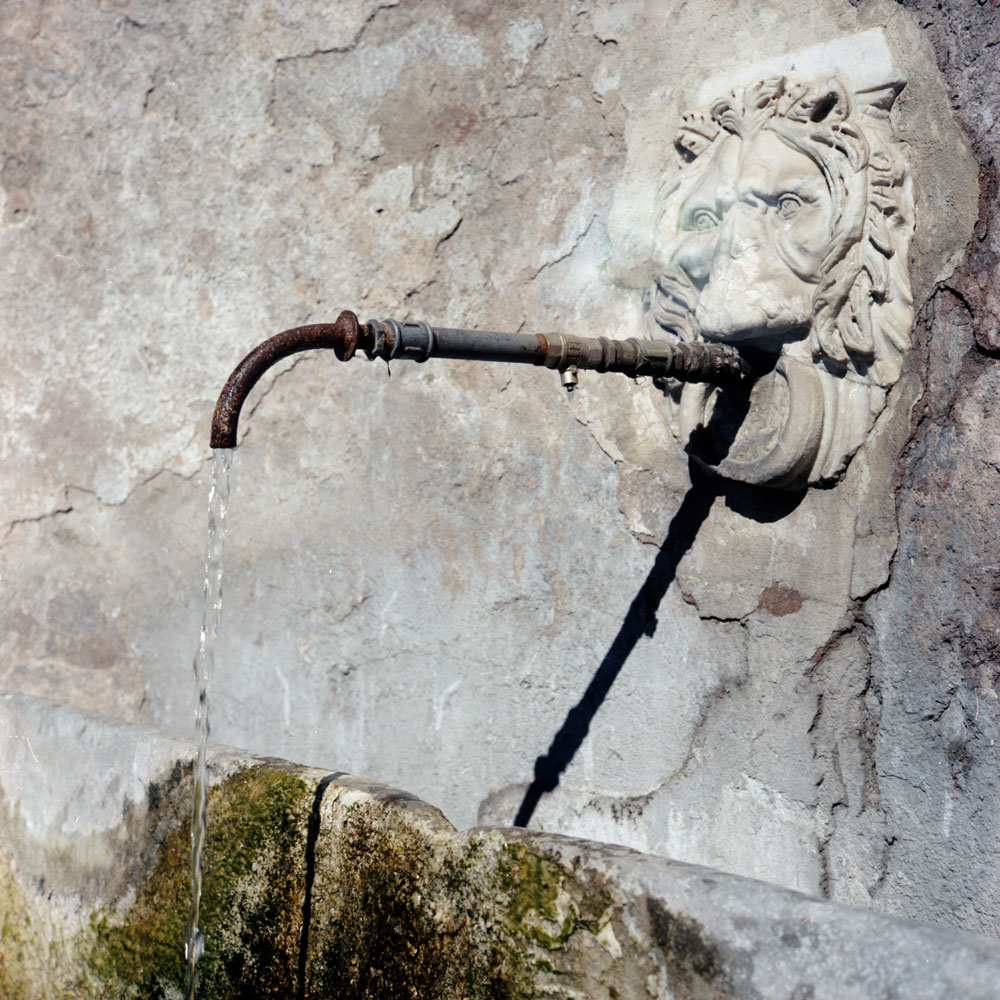
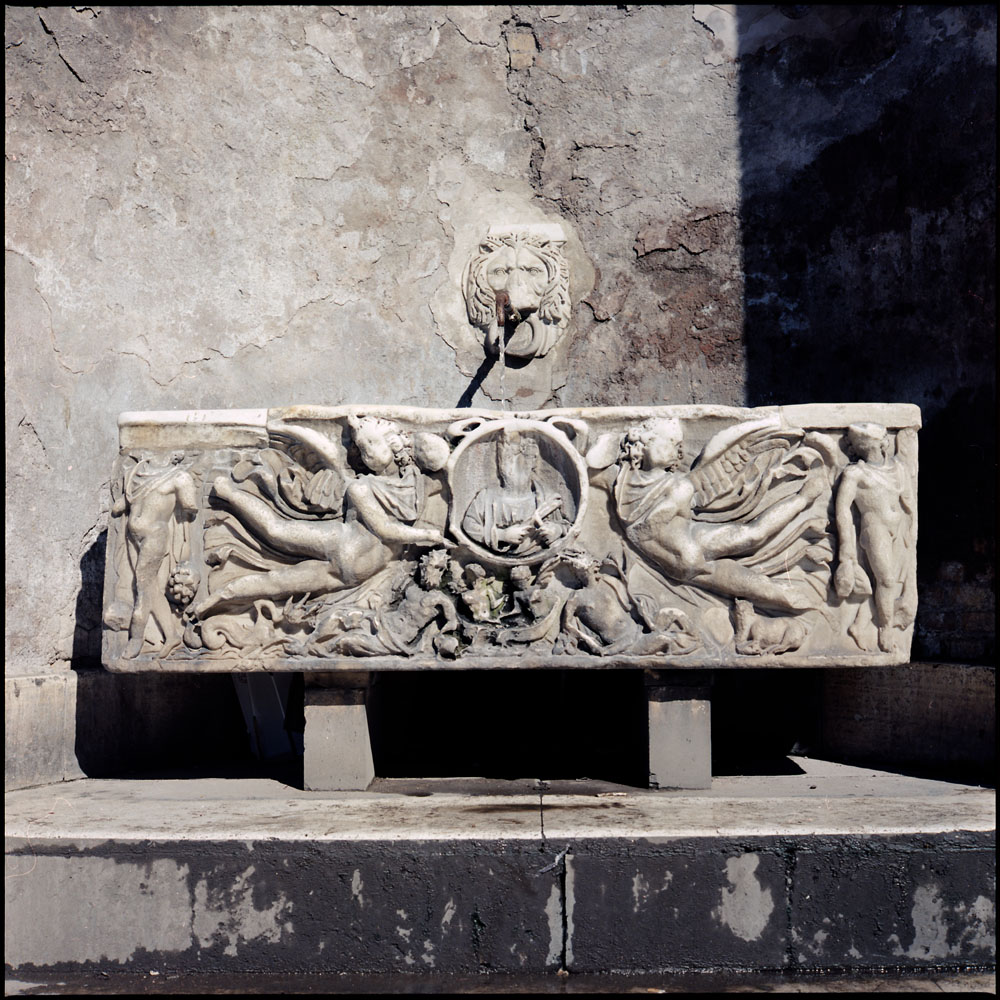
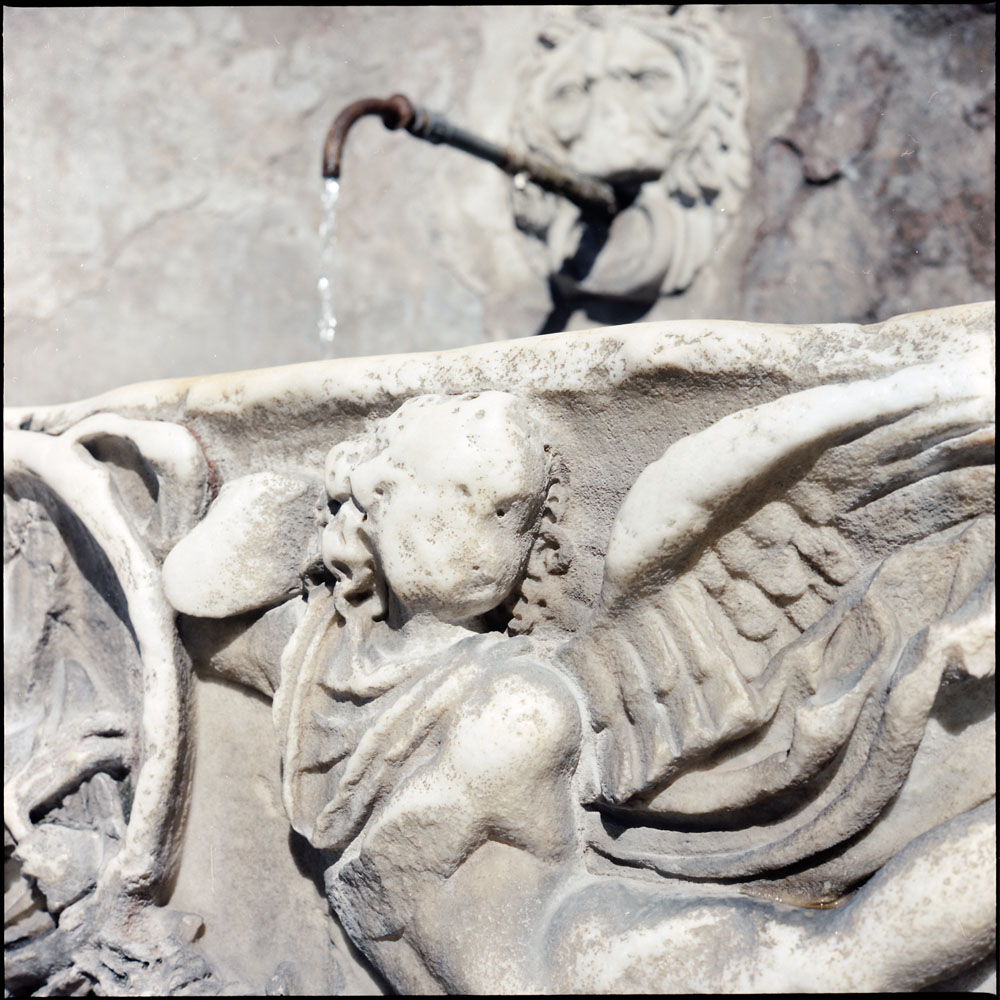
You’ll find public drinking fountains all over Rome. It’s one of the charming features of the city. Unlike fountains in some cities, they run continuously. You can fill a cup or a kettle from the spigot, or if you just want a sip, you can put your finger under the water spout to block it and water will squirt up from a small hole in the top of the pipe so you don’t have to hang upside down to get your water fix.
Water Fountain, Colosseum
That’s a try-at-your-own-risk activity though – if the water pressure on the spout you’re blocking is good, it comes out the little hole with quite some velocity – I tried it on this fountain and got a thorough squirting in the face. Given the heat of the day it was a welcome squirt, but not expected.
I don’t know how old the trough under the spigot is, but it appears to be of the late Imperial era. It may have always been a water trough, or it may have been a sarcophagus – it’s the right size for it. But probably only in Rome will you be able to drink your water in a 1700 year old water fountain.
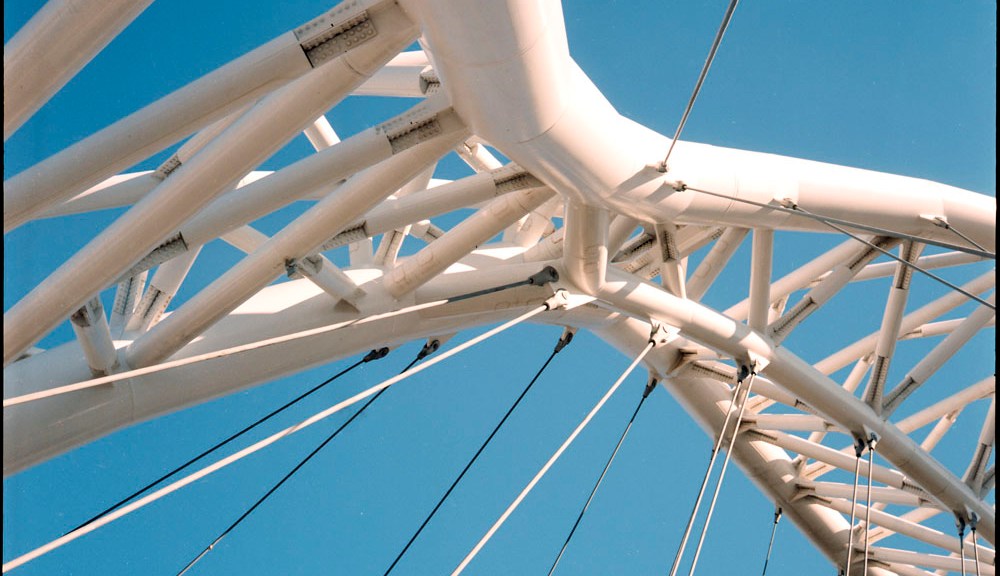
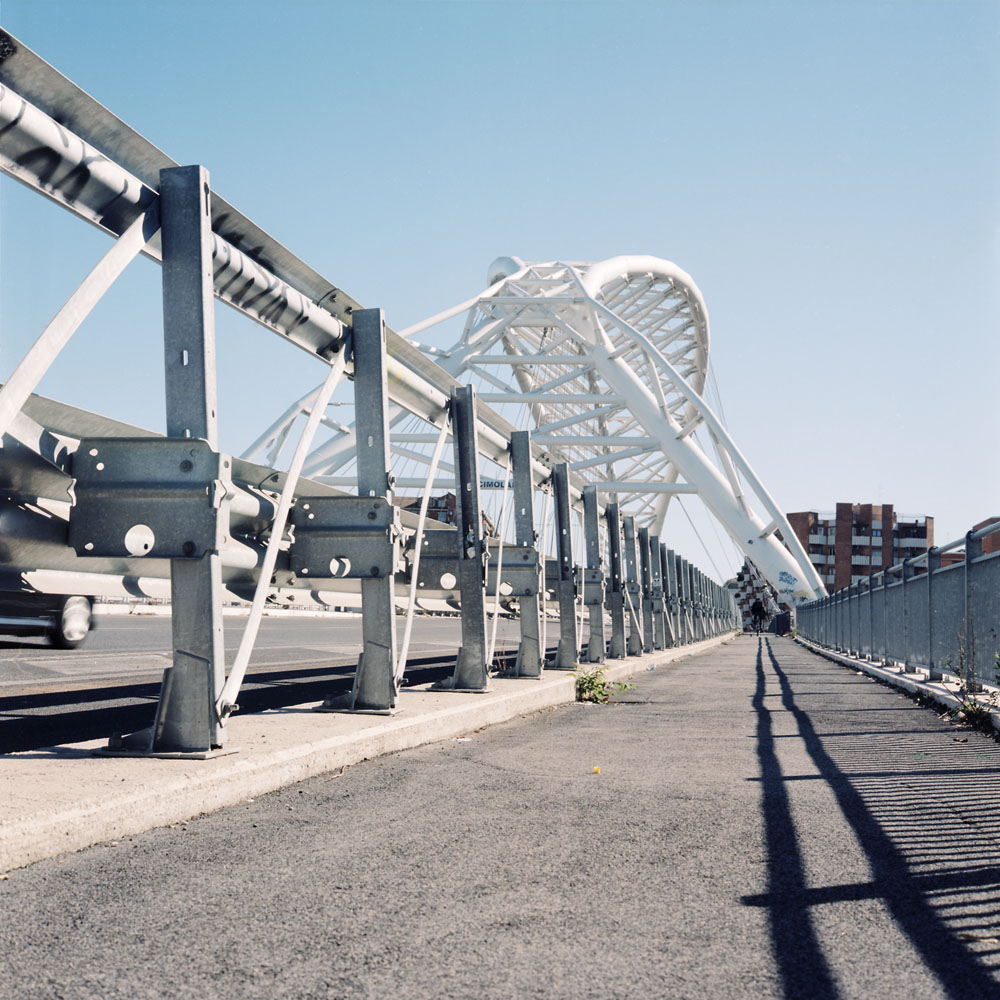
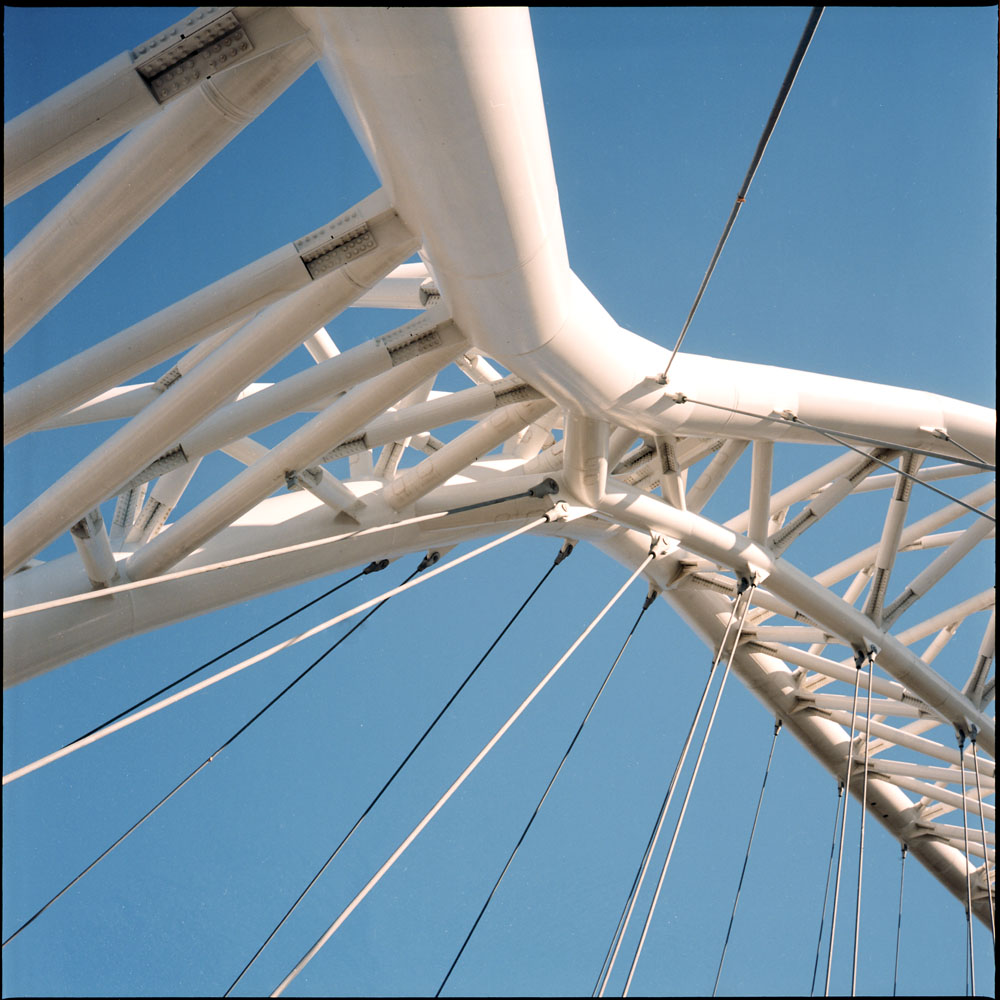
Italy isn’t all about ancient structures – while there are historical and architectural marvels aplenty in the center of the city of Rome, modern architecture happens too. At the Garbatella Metro station, this enormous viaduct that carries a four lane road over the railway tracks soars into the sky like a giant DNA strand or a dinosaur skeleton bleached white in the sun.
Viaduct, Garbatella, RomeViaduct, Garbatella, From Below
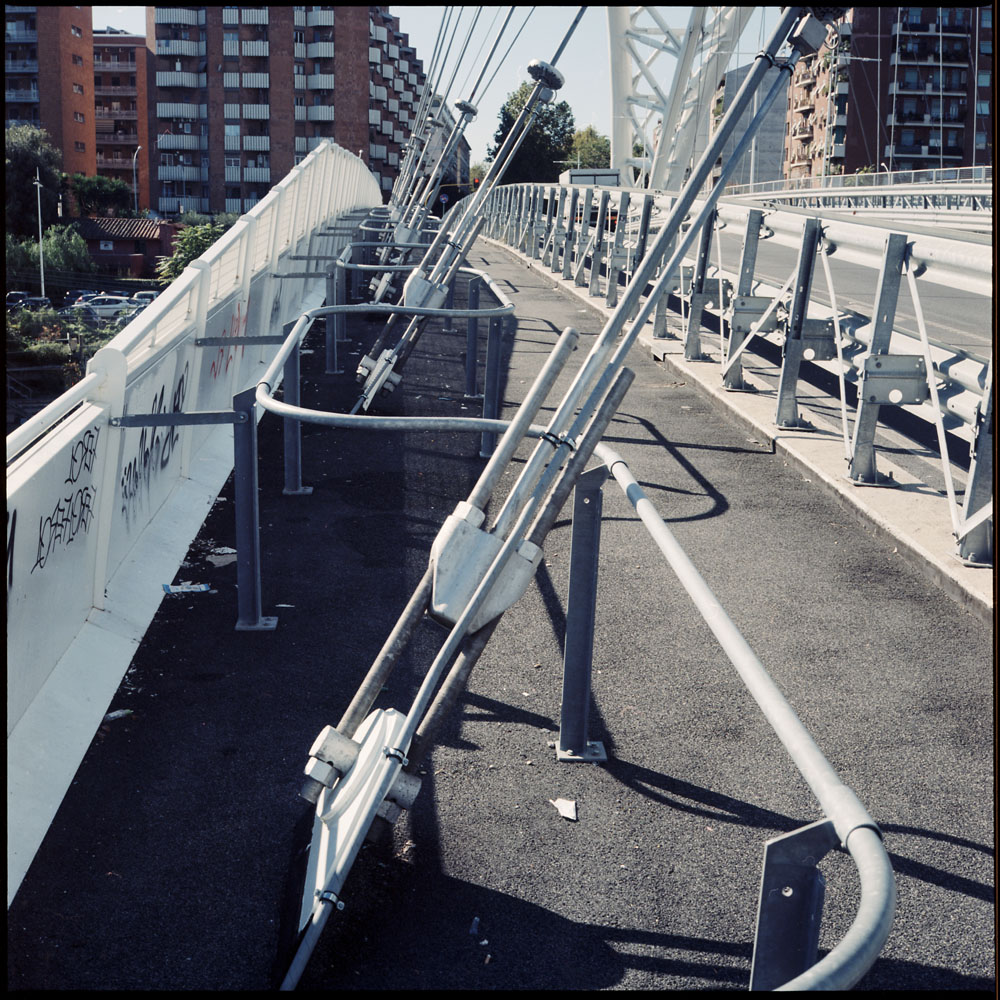
Everything about this bridge was designed with an artistic conceit, even the railings that surround the suspension cable anchor points – they undulate like the bridge form itself, like a ribbon or a snake winding its way between the cables.
Railings, Garbatella Viaduct, Rome
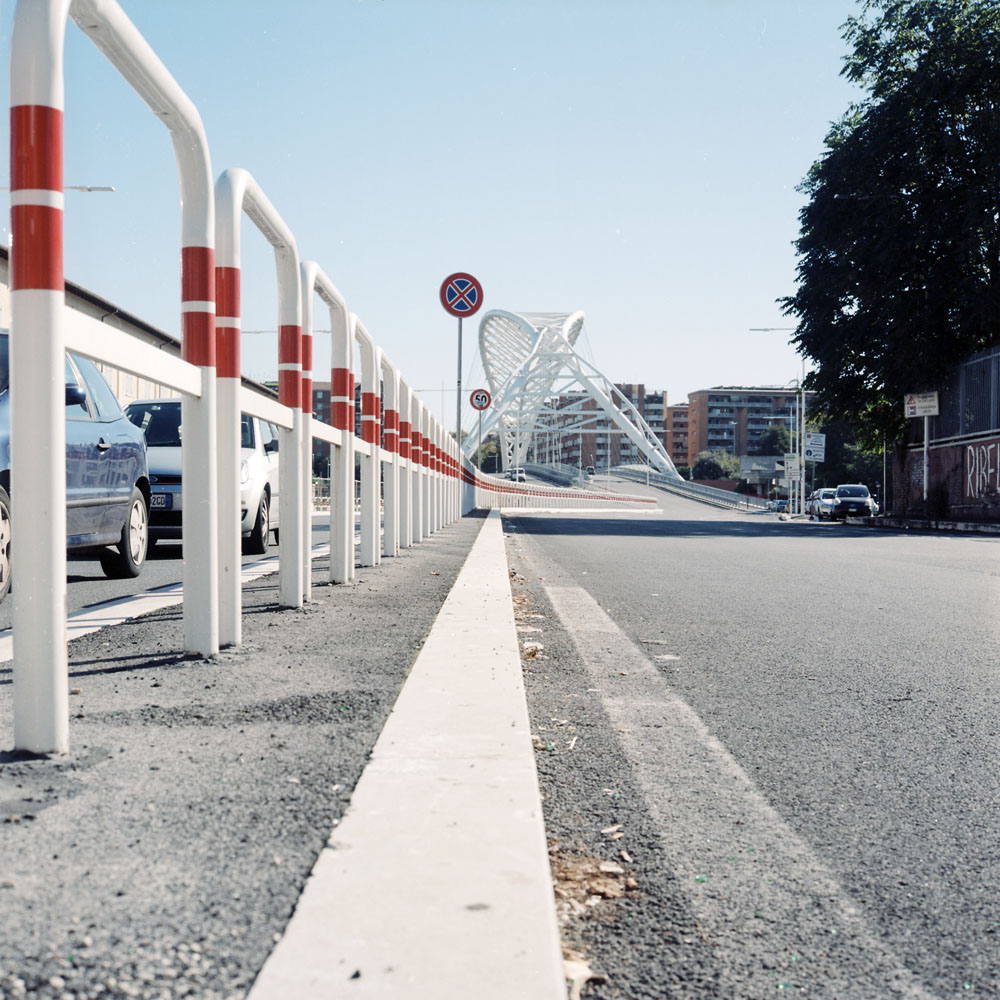
Even the safety barrier between the lanes on the roadway has been thoughtfully designed from an aesthetic as well as functional perspective.
 dcphotoartist