You may recall I recently posted some triptychs I did with my Lomo Belair X/6-12. I had been postponing printing them because I was A: being lazy, and B: I knew that they would be challenging to print because 1: lining up two negatives is hard enough, but getting three is even harder, and these are three pieces of roll film which doesn’t want to lay flat, and 2: I was concerned that there would be too much space between the frames because of the size of the image area vis-a-vis the negative size.
Inertia being the greatest of obstacles, it took me until now to get around to printing them. The challenges of registering the negatives to map my coating area, then re-registering them so they would align properly when exposing were substantial, but not as bad as I thought they would be. I guess there was enough humidity in the room that they cooperated for the most part and didn’t act as dust magnets or tensioned leaf springs while trying to place the cover glass in the contact frame.
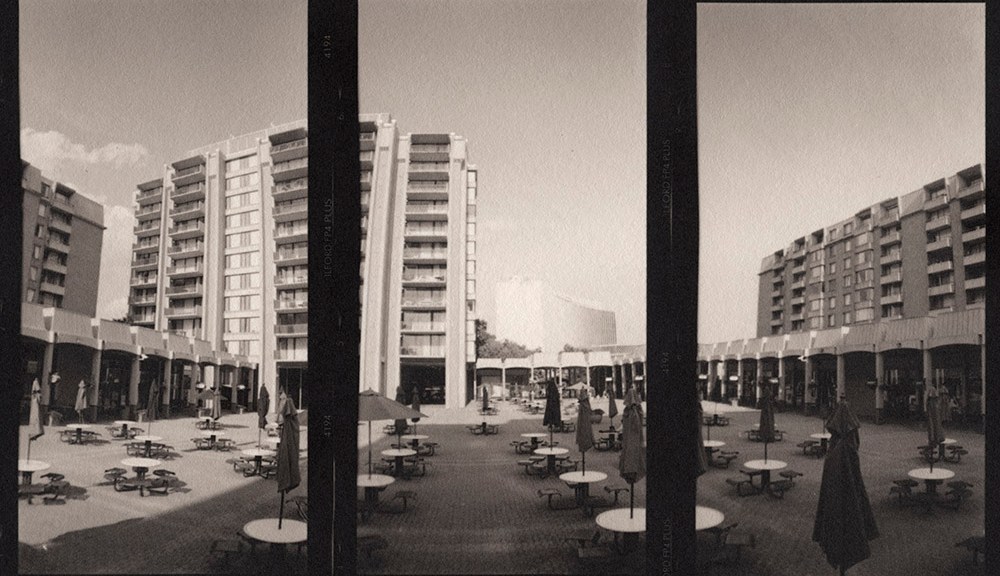
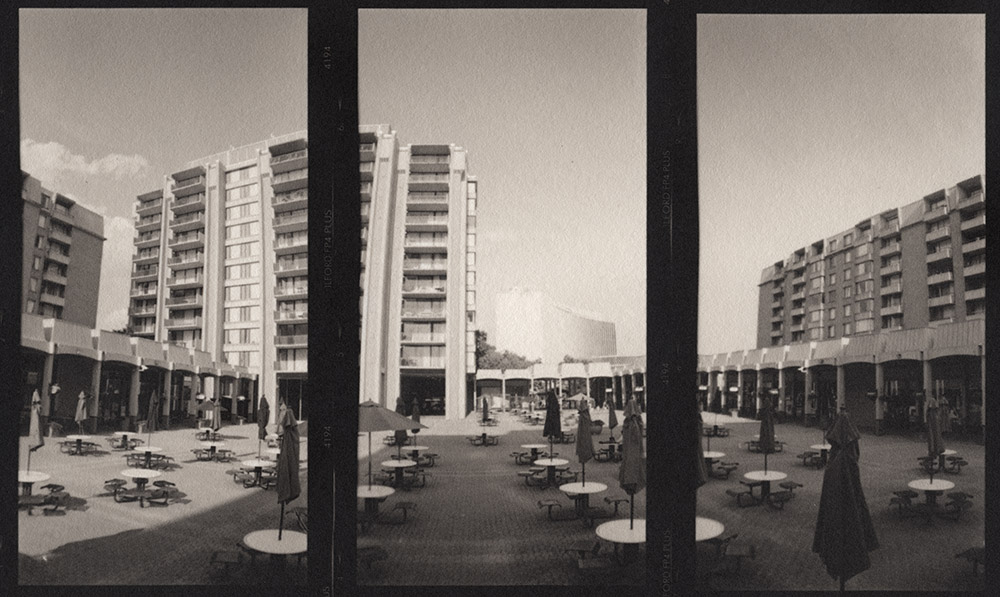
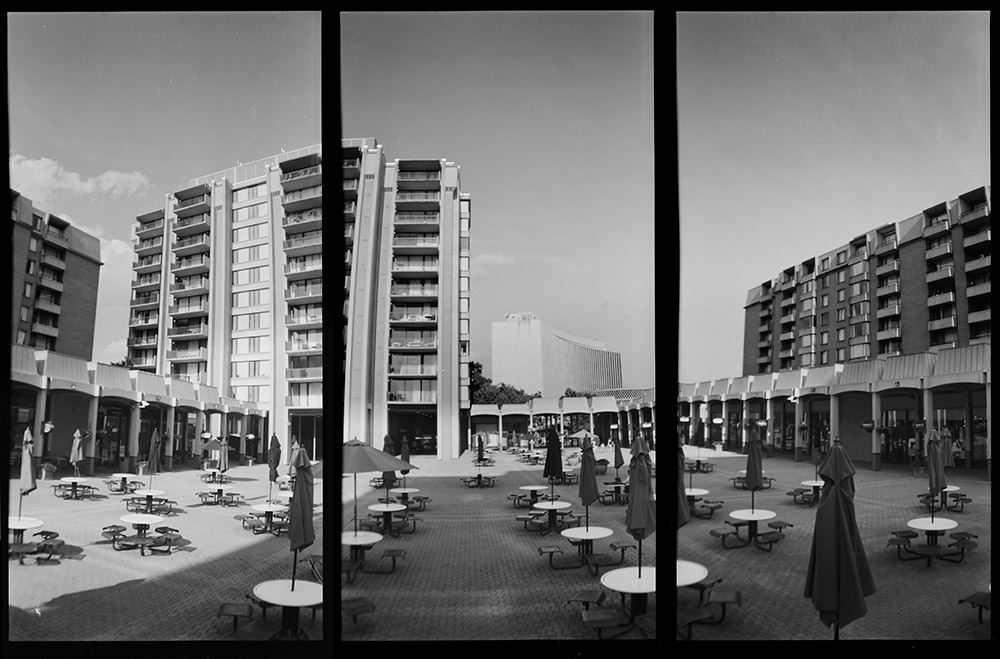
Columbia Plaza, Horizontal Triptych
I think of this first one as a panorama of panoramas – it’s a horizontal panorama in the end, made of three vertical panorama shots. It’s the more conventional of the two in that it shows a fairly straightforward interpretation of the scene.
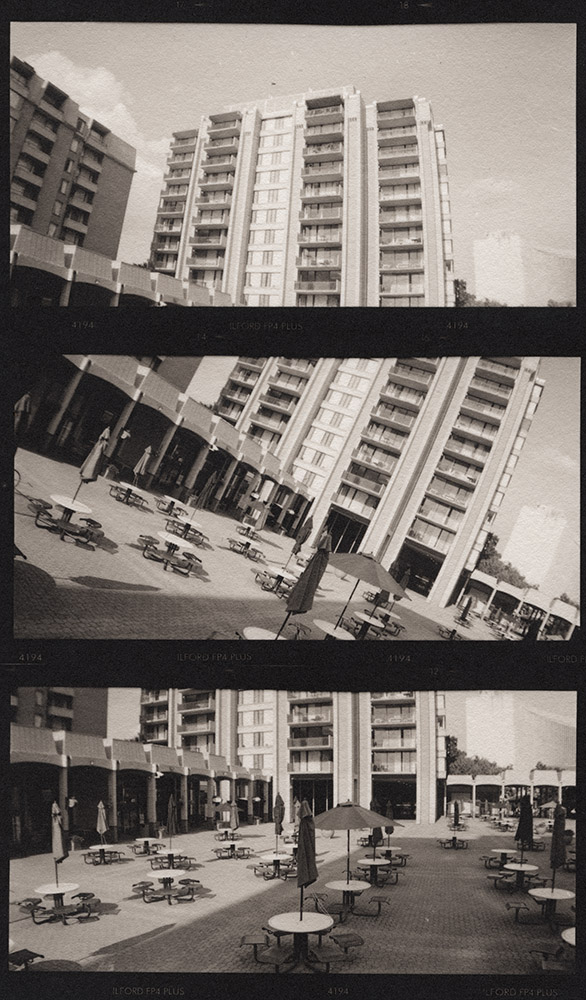
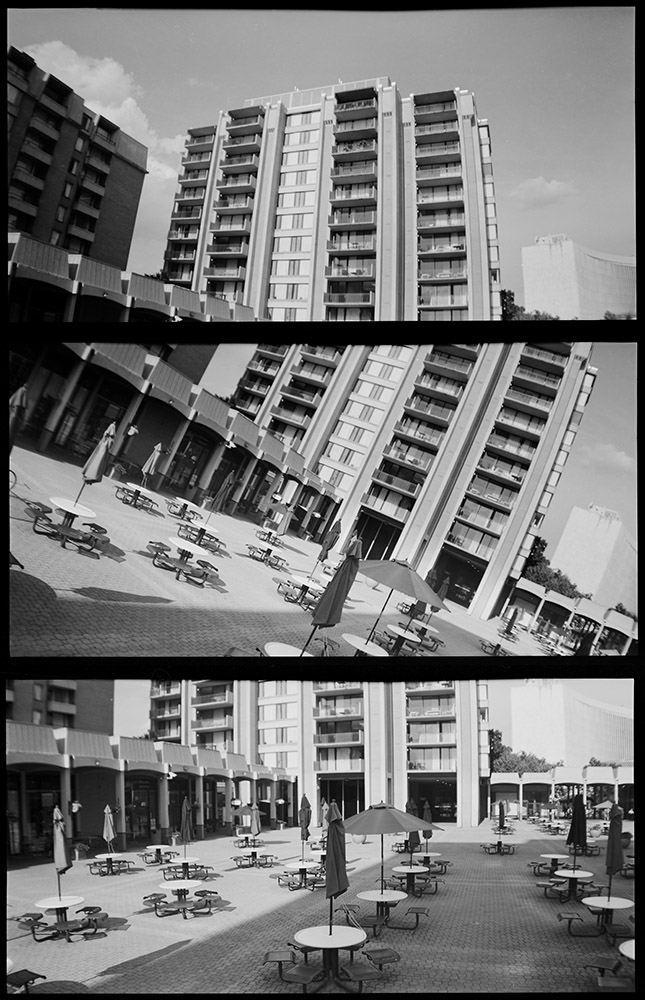
Columbia Plaza, Vertical Triptych
The vertical triptych I got a bit more creative in my interpretation, showing the middle frame askew, and each frame is not discreet in what it depicts – if you look carefully, they overlap in their subject matter, and you could almost do the top and bottom frames as a square-isn diptych.
Both images were printed on #Hahnemuhle #PlatinumRag in pure #palladium. No contrast agent was used, and they were developed in #PotassiumOxalate.
I’ve been having so much fun lately with my photography. As it should be – it should never be WORK – it should be fun. And the Lomo Belair X/6-12 is part of the reason. Yeah, it’s lo-fi, it has a plastic fantastic lens, it’s auto-exposure with virtually no feedback (you never have any idea what shutter speed you’re using). But you’re shooting medium format panoramics! And for $250!! Where are you going to find a (useable) Brooks Veriwide or a Horseman 6×12 for $250? Even a 6×12 roll back for a 4×5 will set you back $400. So there’s a lot to like about it for the money.
And although the negatives themselves are, shall we say, less than razor-sharp, they do make awesome contact prints (witness my Roman panoramics and my recent Sinister Idyll series). This triptych was inspired by a vertical panorama series I saw someone else do. Theirs was a landscape, but I thought this office/apartment/retail complex in Washington DC would make a good urban subject to try it out on.
Columbia Plaza
Another fun experiment with my Lomo. This time a vertical panoramic triptych. I intentionally skewed the middle panel to give what is otherwise a very static subject some visual movement and dynamism.
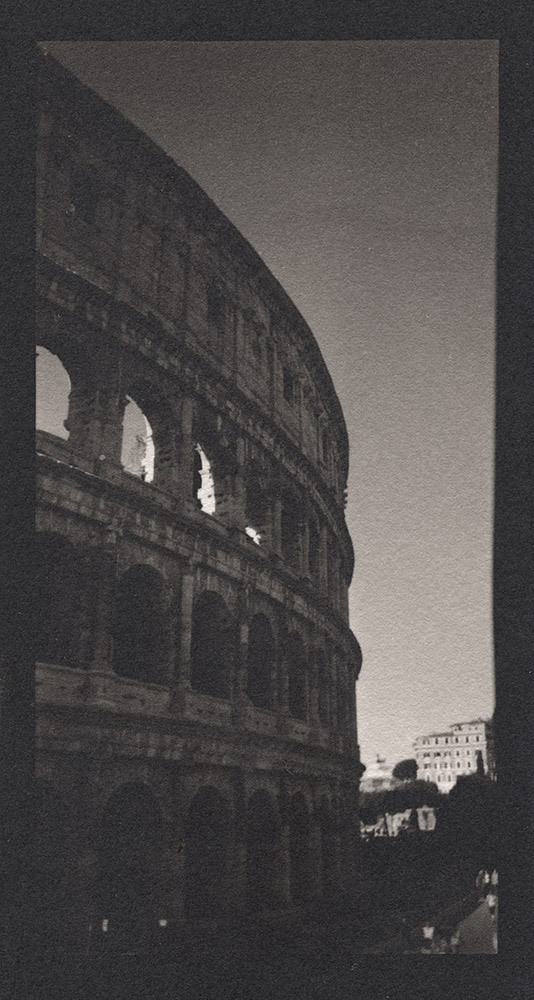
After printing a few of these panoramas from Rome, I was so taken by the intimacy of the miniature format of the 2 1/4″ x 4 1/4″ contact print, I went and made a whole series of them. I’m at fourteen of them now, but that number will fluctuate a little as I finish printing and edit down from there. I’m going to go out shooting this weekend and make some more images in the format and perhaps build a full show’s worth.
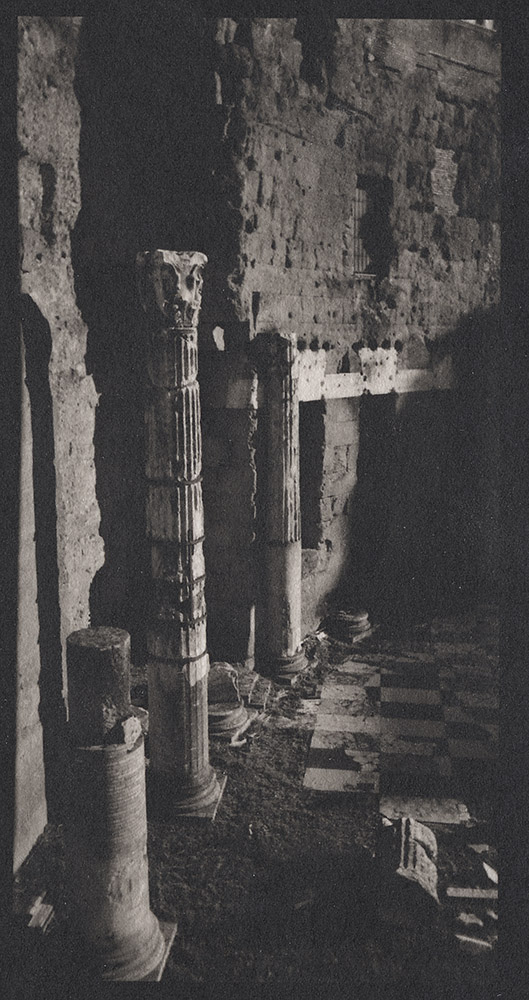
Columns, Marble Floor, Trajan’s Market
I took the portfolio to the Sunday morning critique we have at Glen Echo, and instead of presenting them as raw prints, I matted them with 8-ply mats with oversize margins (11×14 inch mat boards, so roughly 4-6 inch margins around the 2 1/4 x 4 1/4 inch window). I also cut the windows such that all the mats could be viewed in landscape orientation regardless of whether the image was in portrait or landscape orientation.
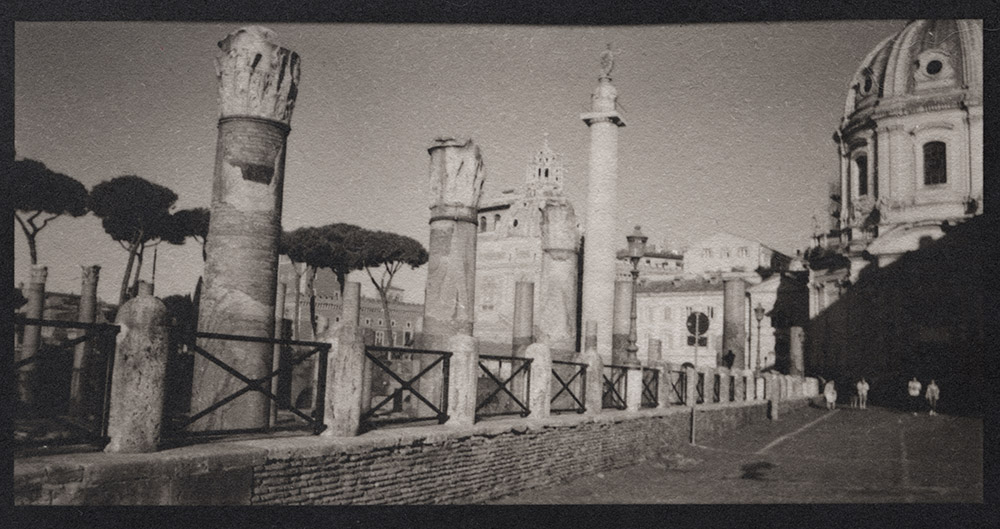
Trajan’s Column, Via Fori Imperiali
Presentation is very important when considering your work. It should be the first thought on your mind when planning a show – of course you need to edit the body of work, but how it will look on the wall is just as critical to successful reception as the work itself. Good presentation will focus the viewer’s attention on the work and block out the distractions of everything else going on around it.
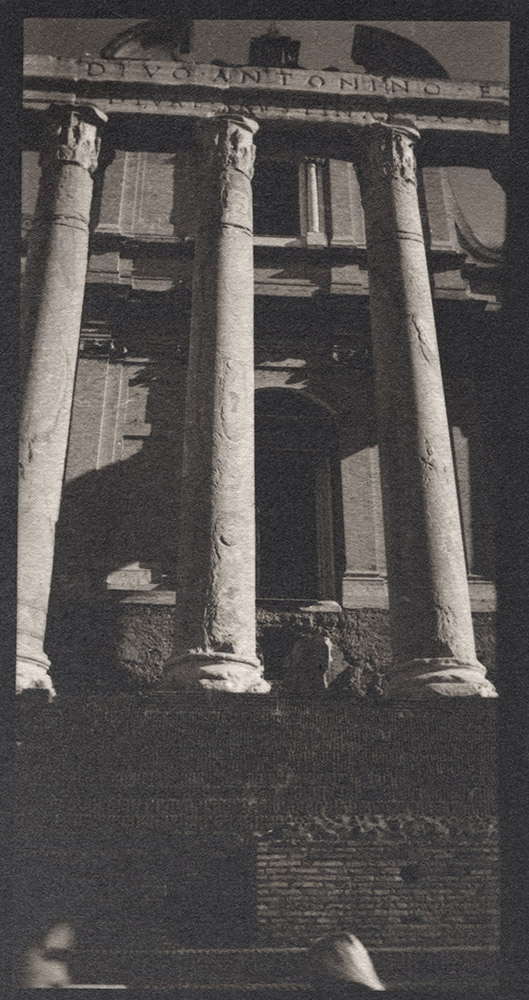
Temple of Antoninus and Faustina
Also, if you’re at all concerned with selling your work, makes a huge difference in the sales price – poorly presented, someone would pay a poster price for an original Ansel Adams, if they bought it at all. Properly presented, your work will fetch premium prices even though nobody has really heard of you outside your own city.
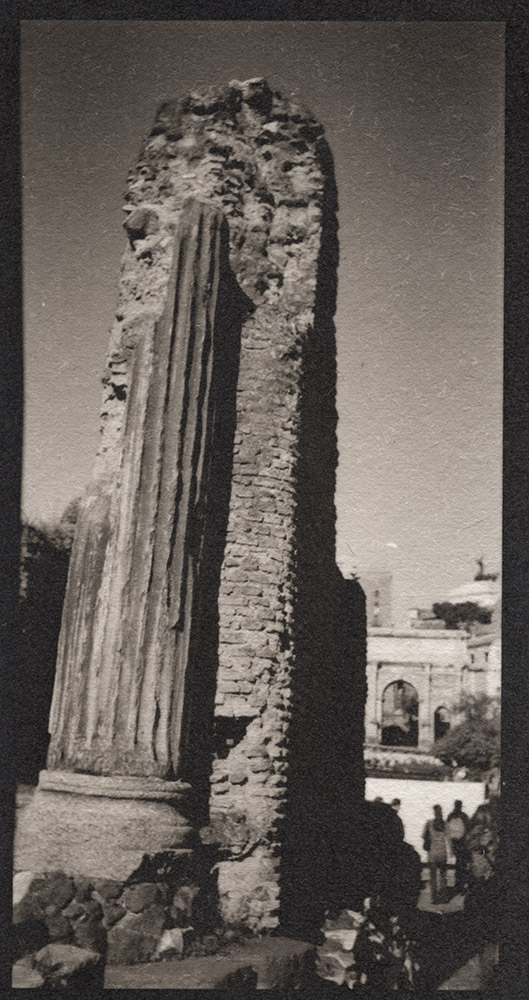
Column Fragment, Imperial Forum
This webpage is a prime example of the issue of presentation – showing these images here in this size on this medium is a complete and utter failure to represent the scale, quality and impact of the images. You’re looking at them on your monitor, in a size well beyond their actual physical size in reality. And because they’re scans of the prints, the paper texture is exaggerated as are any minor flaws due to the handmade nature of the prints.
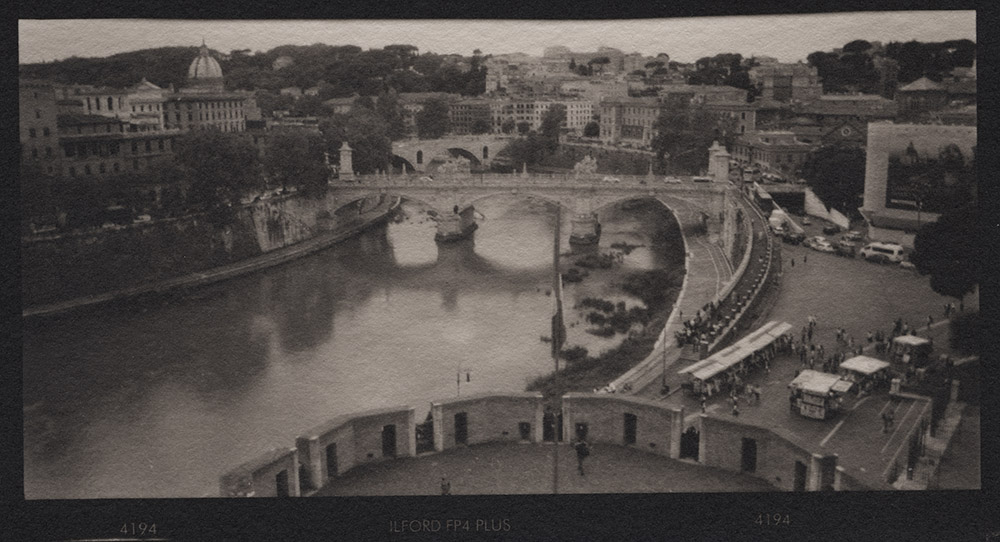
Here is the continuation of the tiny prints series. All of these are still from Rome, again the Lomo Belair X6-12 as the camera of choice. I was having a conversation yesterday with a friend about these and while sharing them online is great, seeing scans of them at what ends up being a much larger size than the actual print, they lose some of their impact.
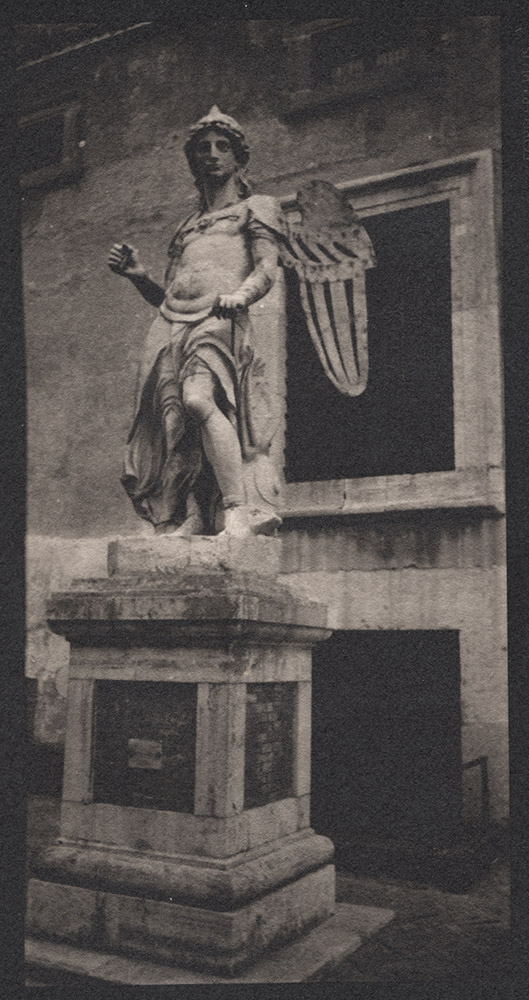
This is a statue of the Archangel Michael, in the Castel Sant’Angelo. His body is stone but the wings are bronze.
Archangel Michael, Castel Sant’Angelo
The umbrella pine image is one of those that when I scanned the negative and worked with the image in Photoshop, all the “flaws” of the negative become quite apparent, and you start thinking it’s not a successful image. But contact printed, it cleans up nicely and really sings.
Roman Umbrella Pine
St. Peter’s Basilica Facade. This is one of the images that made me respect the Belair and its results more than I did initially. It’s still not going to ever match a serious panorama camera like a Horseman 6×12 with a highly corrected glass lens, but it does a great job for what it is, and certainly it scores extremely well in the value-for-money proposition – I got mine used for $200, whereas a used Horseman would set you back closer to $2000.
St. Peter’s Facade
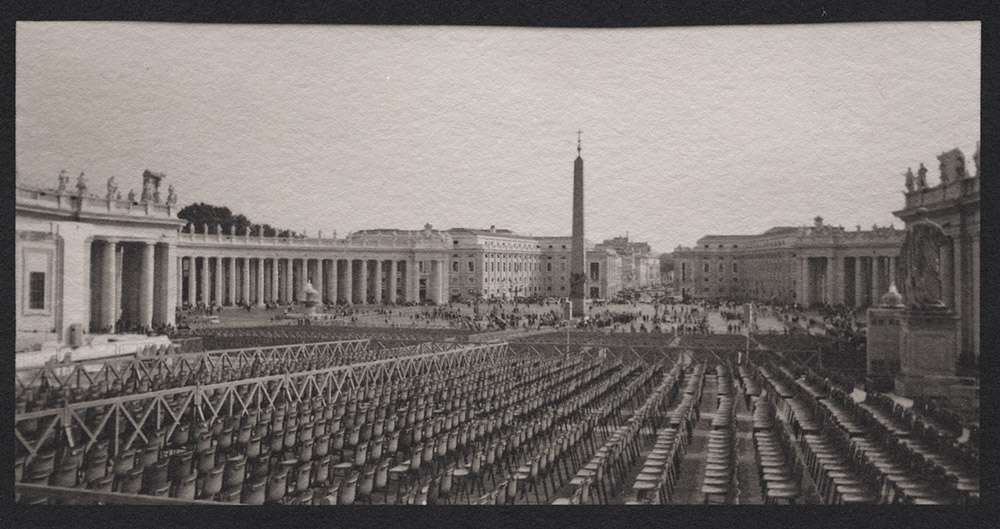
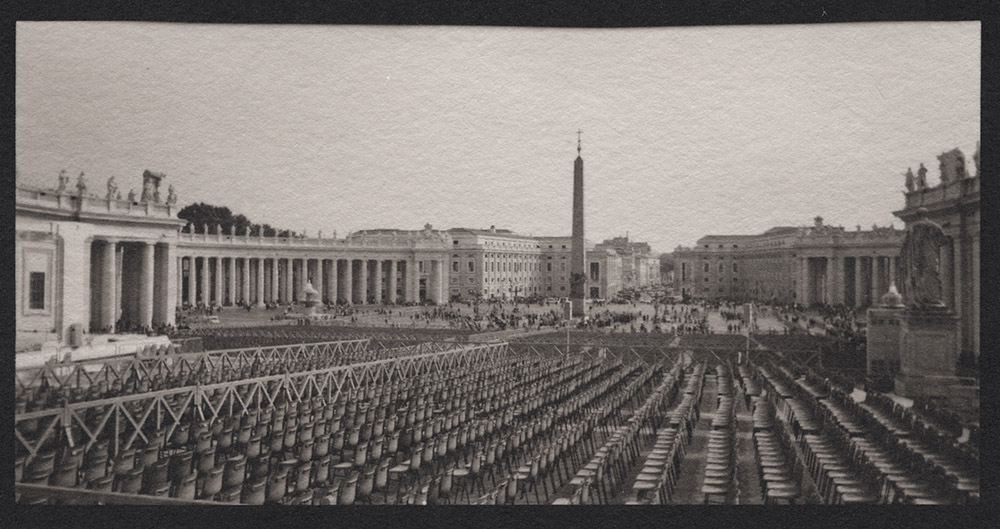
The plaza in front of St. Peter’s was set up for a Papal Mass when I was there. The sea of folding chairs made for an interesting composition, leading your eye back to the obelisk and beyond.
St. Peter’s Plaza
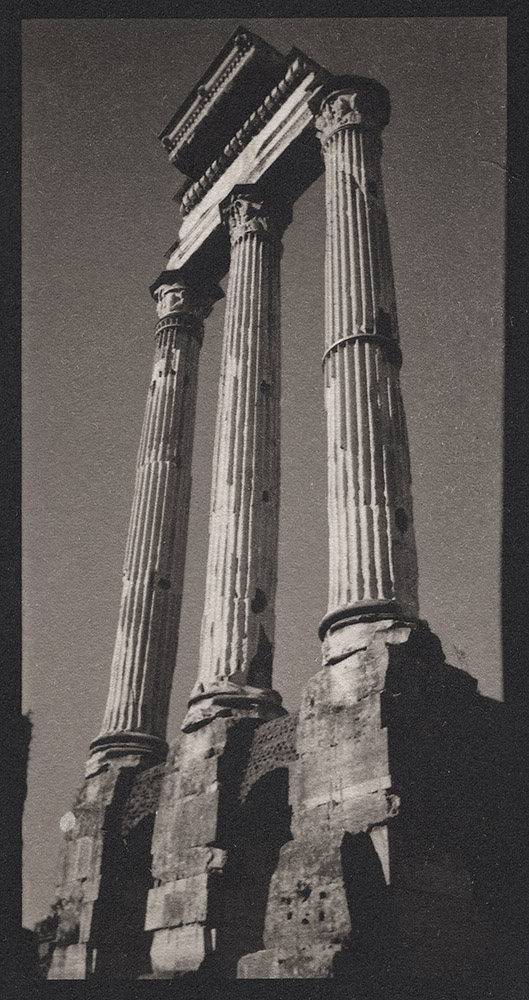
These are the famous three remaining columns of the Temple of Vesta in the Roman Forum. This one really strikes me because of the simple, graphic nature of the subject. It’s another one of those images that everyone photographs when they’re at the Forum, and everyone knows it, even if you haven’t ever been to the Forum. Printing in platinum/palladium takes it somewhere new and different and it doesn’t feel like just another tourist image.
Three Columns, Temple of Vesta, Roman Forum
All these images are platinum/palladium prints, in this case all are a 50/50 blend of platinum and palladium, on the new wonderful Hahnemuhle Platinum Rag paper. I’m going to have to try a pure platinum print with it next and see how it behaves.
When I was in Rome last year… (no jokes please!) I shot a bunch of panoramic images with my new-to-me Lomo Belair X6-12. My just completed session of the Intro to Platinum/Palladium Printing class I teach inspired me to dig them out and see how they would fare in the medium. I’m really loving these tiny prints – 2 1/4 by 4 1/4 inches! They make you get up close and intimate with the print. I’m matting them in 11×14 inch 8-ply mats for extra measure.
Sometimes you have to walk away from a process or a practice for a while, which happened to me with platinum/palladium. I was on a kick of doing other stuff, shooting my travels with the Rolleiflex. Then it was the Fuji rabbit hole with digital and the X-T1. Then this class came along and I needed something to jumpstart my printing. These images were just the ticket. Photographers in general have an obsession with how big they can make their prints, and even the general public too. But there’s something to be said for tiny prints. I still remember the Andre Kertesz show at the National Gallery where they had a lot of his early work on display – in his youth, he could only make contact prints off of small negatives from roll film cameras because he was poor and didn’t have space for a dedicated darkroom. Getting up close and personal with his images, like “Underwater Swimmer”, which is all of 1 1/2 by 2 1/4 inches, really makes you think about the image itself instead of being awed by its size. Not that I have several million dollars to spare, but I’d much rather spend that kind of money on a print of “Underwater Swimmer” than on Andreas Gursky’s “Rhein II”. Fortunately, the Kertesz would be a lot cheaper to buy than the Gursky anyway.
On a separate note, I’d like to give a shout-out to Carol Boss at Hahnemuhle papers. All three images above were printed on the new Hahnemuhle Platinum Rag paper. She has very generously become a sponsoring partner of my Intro to Platinum/Palladium class at Glen Echo Photoworks, and is supplying us with our paper. It is a wonderful new paper- very easy to coat and print on. It may well displace my old standard Bergger COT 320.
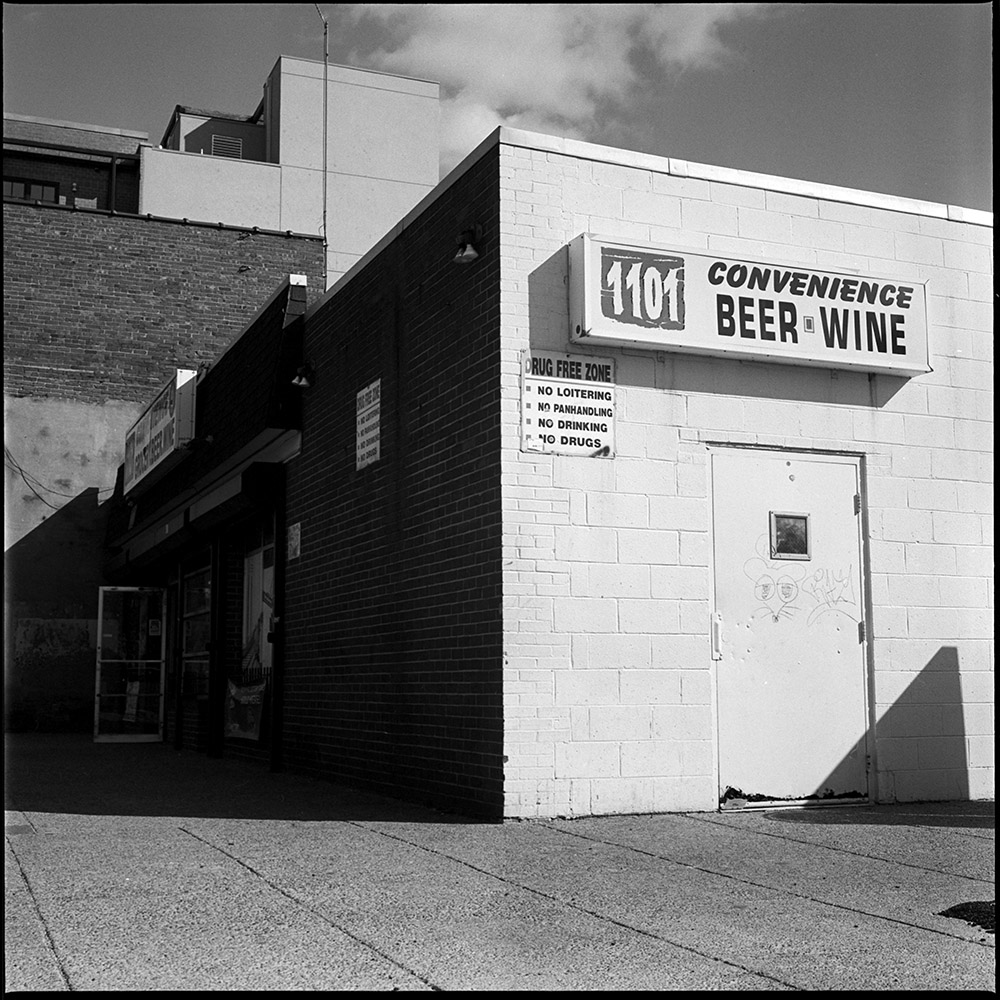
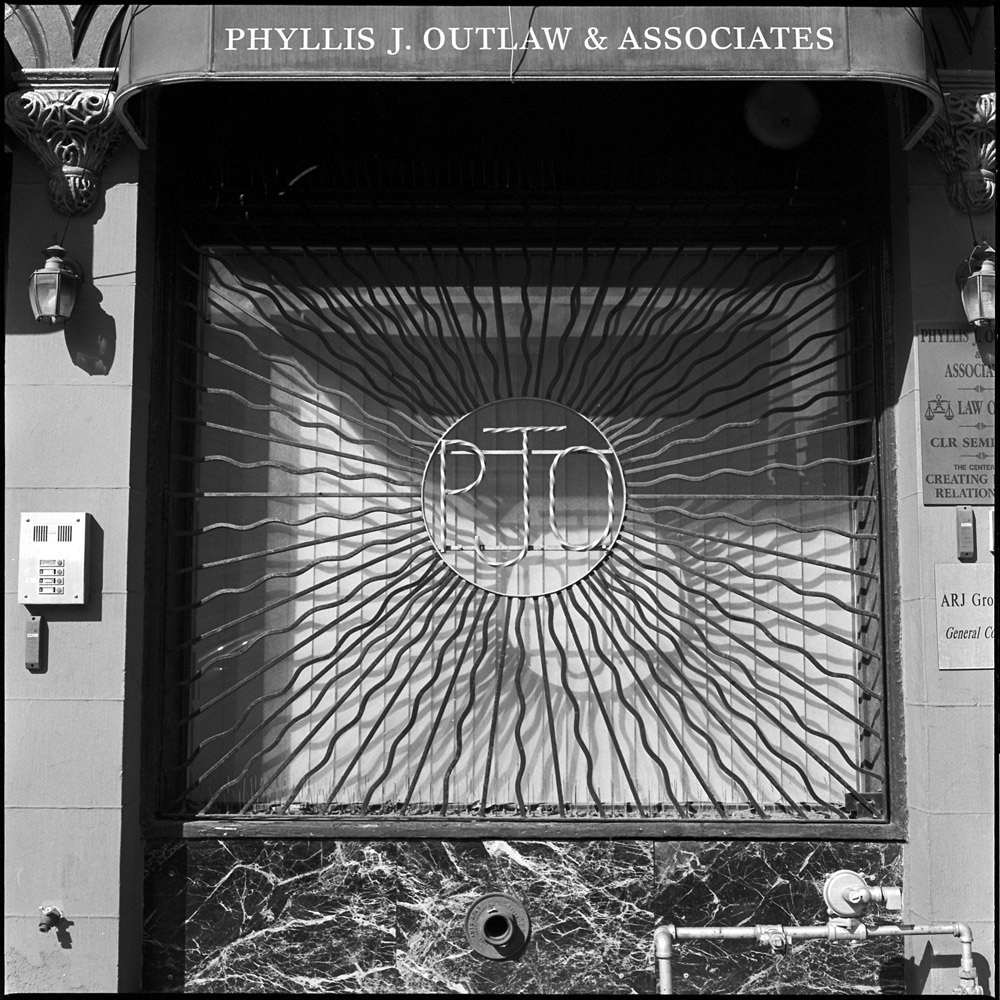
H Street Northeast is a neighborhood in major transition. It was in the 1950s and 60s an important retail and entertainment corridor for the African-American community in DC, along with the U Street corridor in Northwest. Along came the 1968 Martin Luther King riots, and then in the 1970s and 80s the rise of the drug epidemics, and H Street turned into pawn shops, liquor stores, and abandoned buildings. In the early 2000s, property developers turned their eyes toward the area for the relative abundance of cheap real estate as the next new place they could revitalize and get rich in the process.
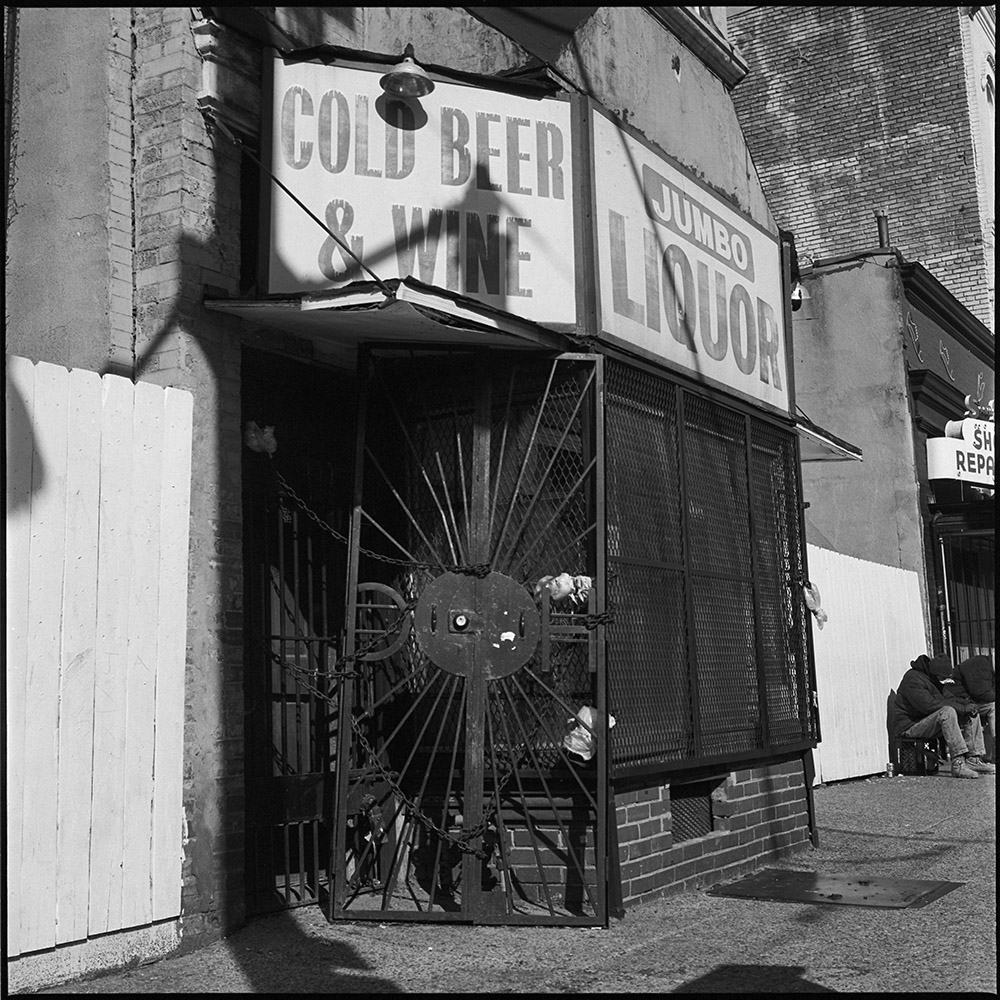
These first four shots here represent the old side of the neighborhood – liquor stores, barred windows and businesses that clung to life through the lean years.
Cold Beer & Wine1101 ConveniencePhyllis J OutlawS and S Shoe Repair
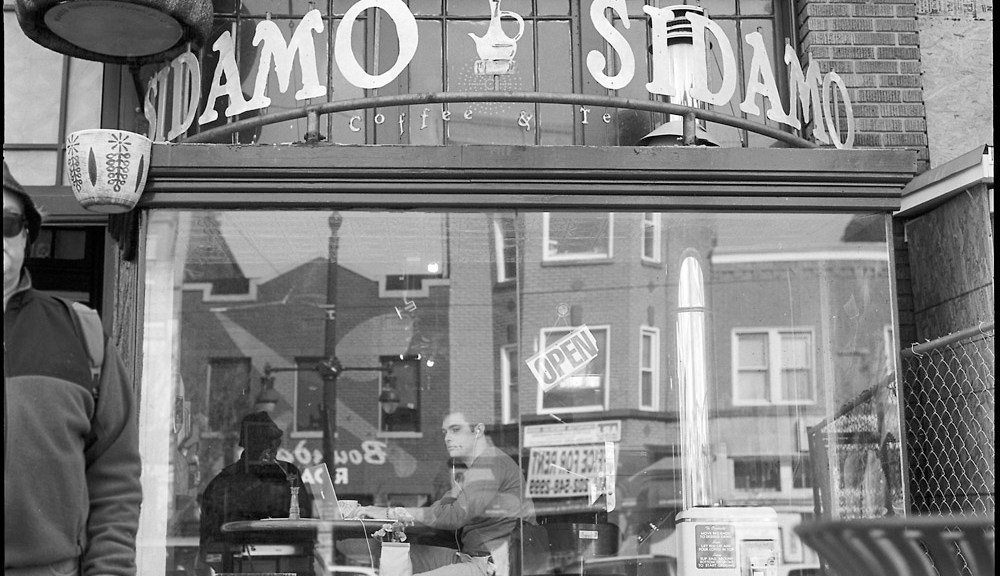
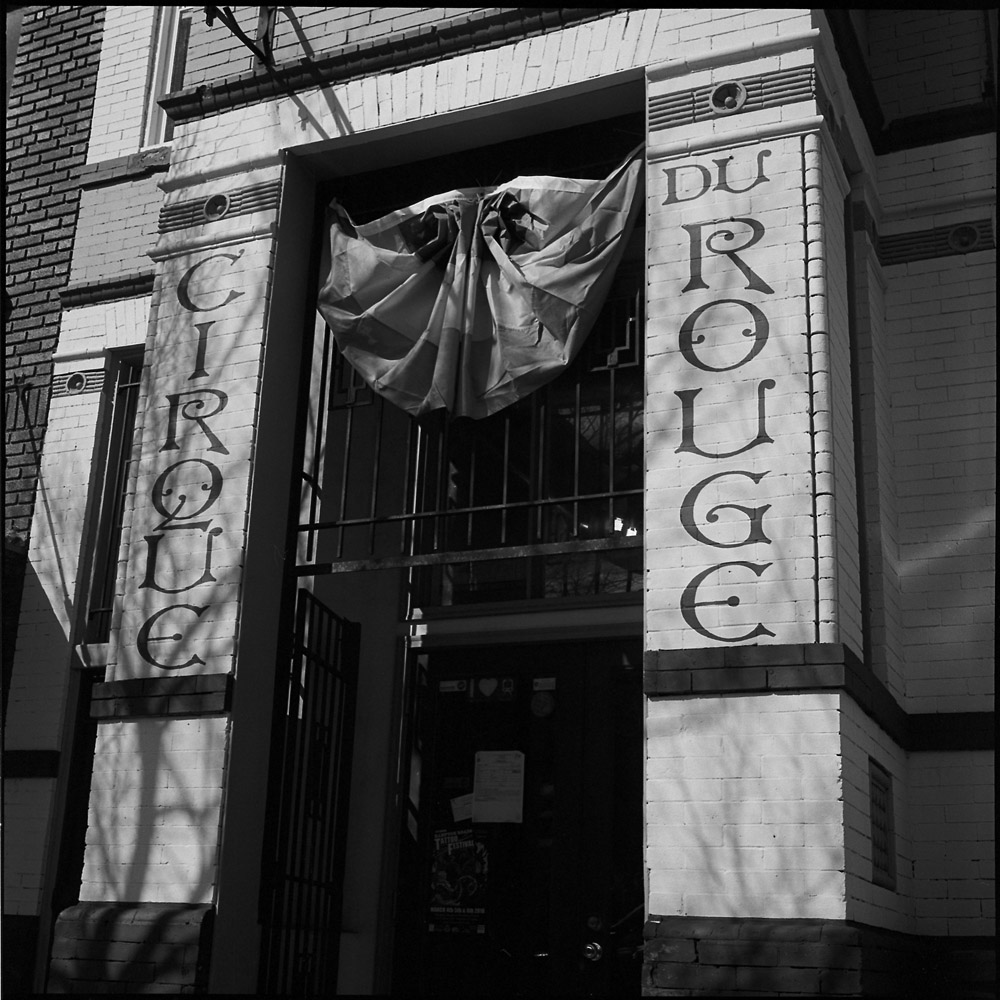
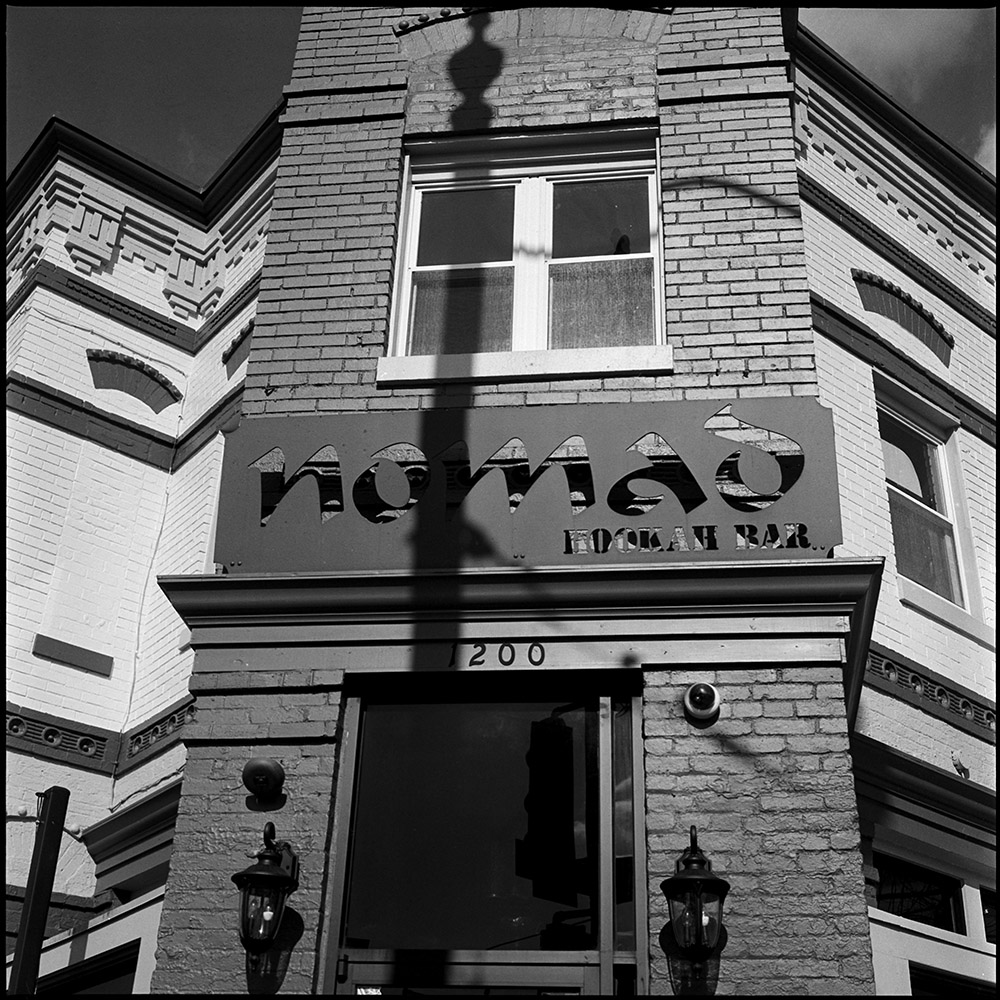
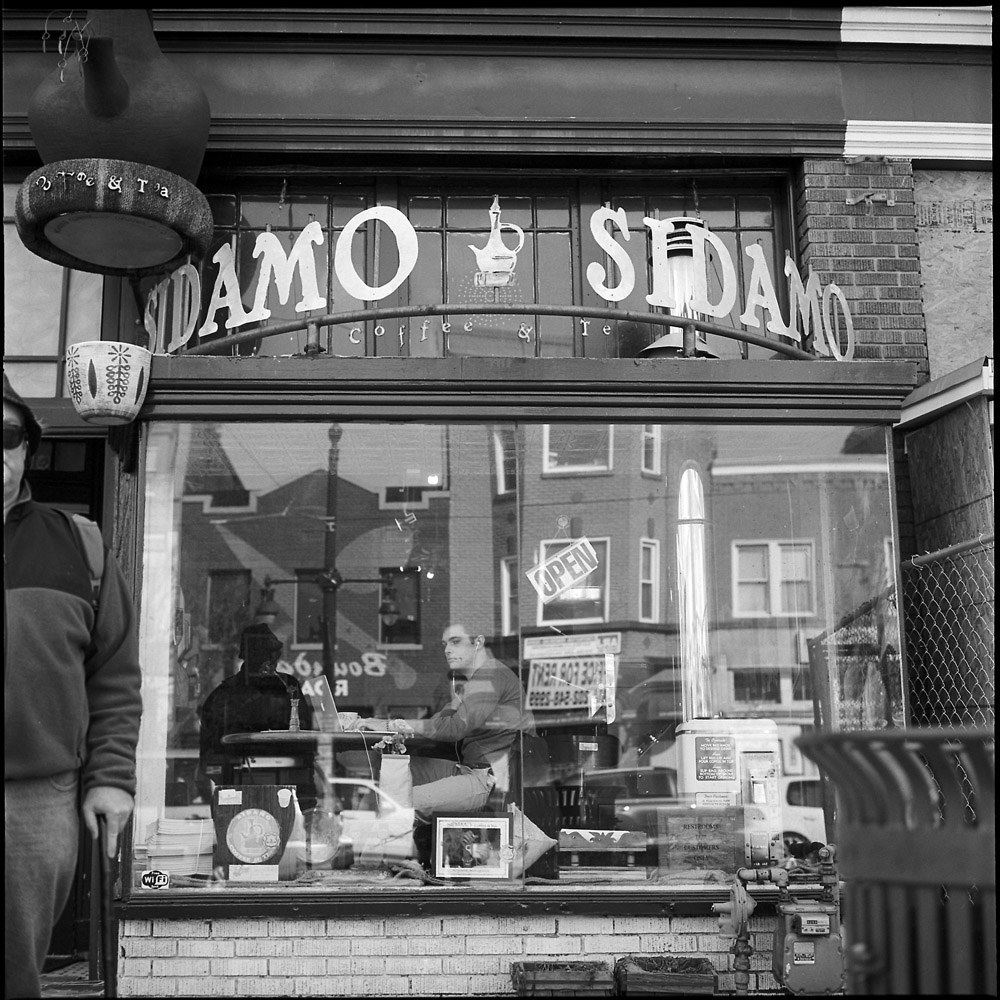
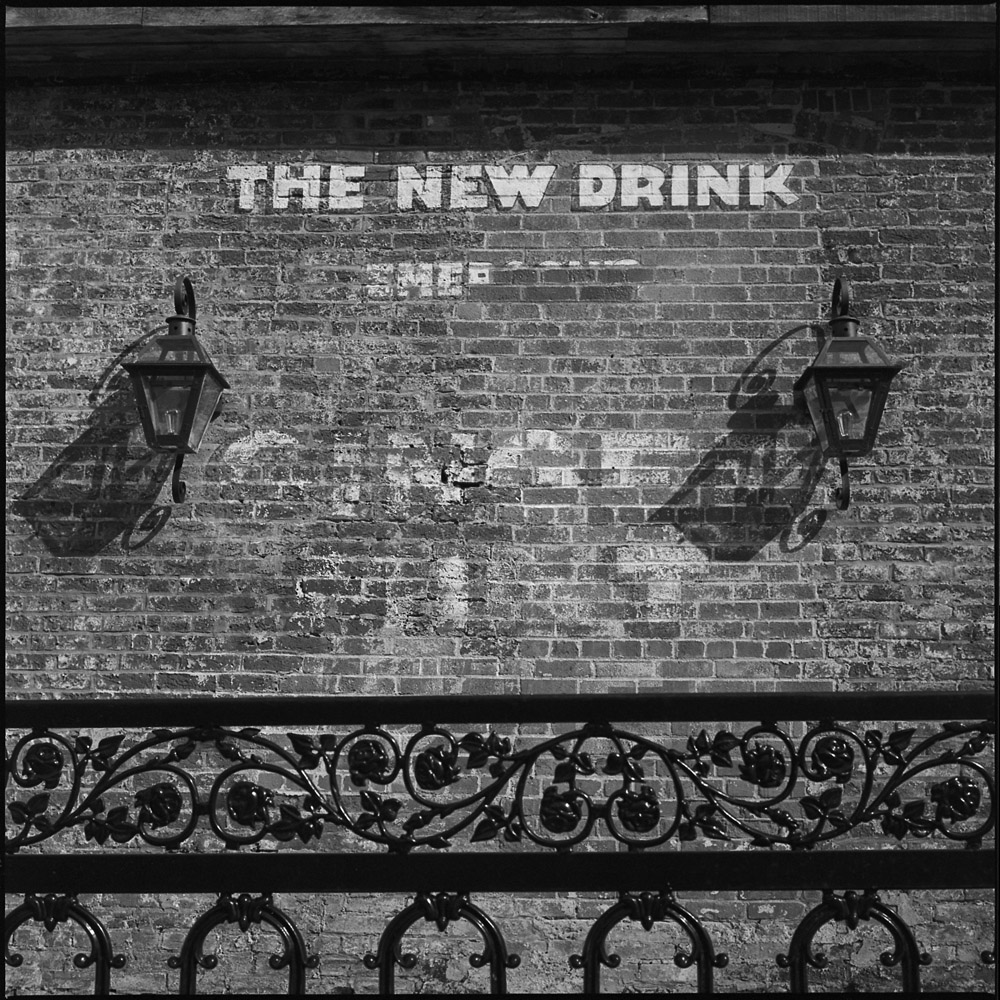
This set are the changing face of H Street – fresh paint, new entertainment venues, coffee shops and chic pubs.
Cirque Du RougeNomad Hookah BarSidamo Coffee & TeaThe New Drink
The not-so-visible dark underside to this is that the past residents (lower and middle income African-Americans) and the businesses they used to operate are being pushed out not only by the housing redevelopment that is driving real estate prices up by several hundred percent over the span of a decade or less, but by the changing retail landscape – when enough businesses on your street have gone from selling fifty-cent cups of coffee and five dollar lunch deals to six dollar cappuccinos and thirty dollar tasting menus, your old clientele aren’t coming around anymore. If you were already operating on a shoestring, it can be cost-prohibitive to reinvent yourself.
On the same day I went to Fort Foote, I kept on driving south into Maryland until I got to Fort Washington, proper. Fort Washington the fort is located in Fort Washington, the town, and to arrive there you drive through some rambling suburban tracts. Like Fort Foote, Fort Washington sits on the banks of the Potomac River atop a peninsula formed by Piscataway Creek’s entrance into the Potomac River. It, however, was not intended to be a temporary site but rather has been occupied and fortified since before the War of 1812. Its use as an active military base ended after World War II, but most of the structures you see were built between 1800 and 1918.
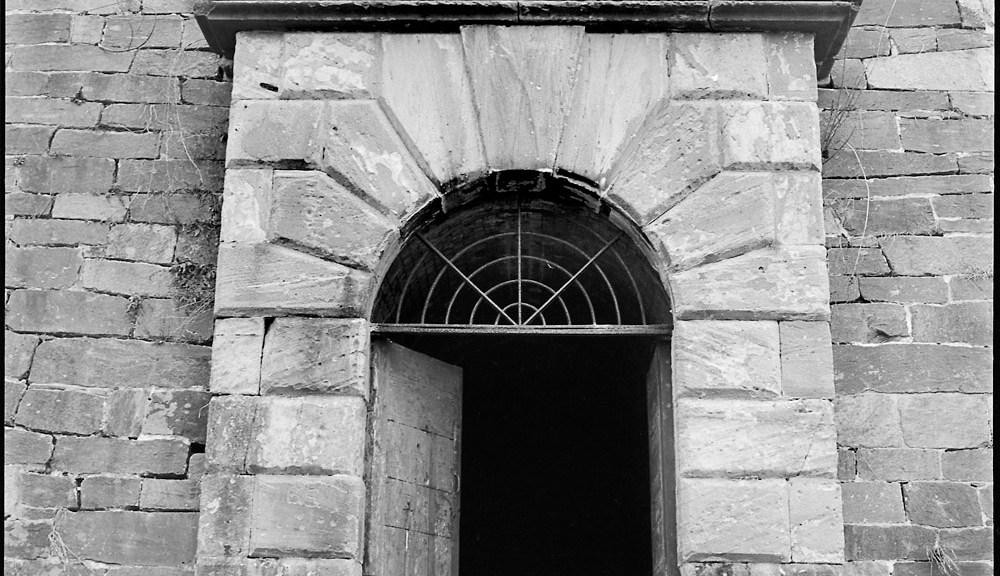
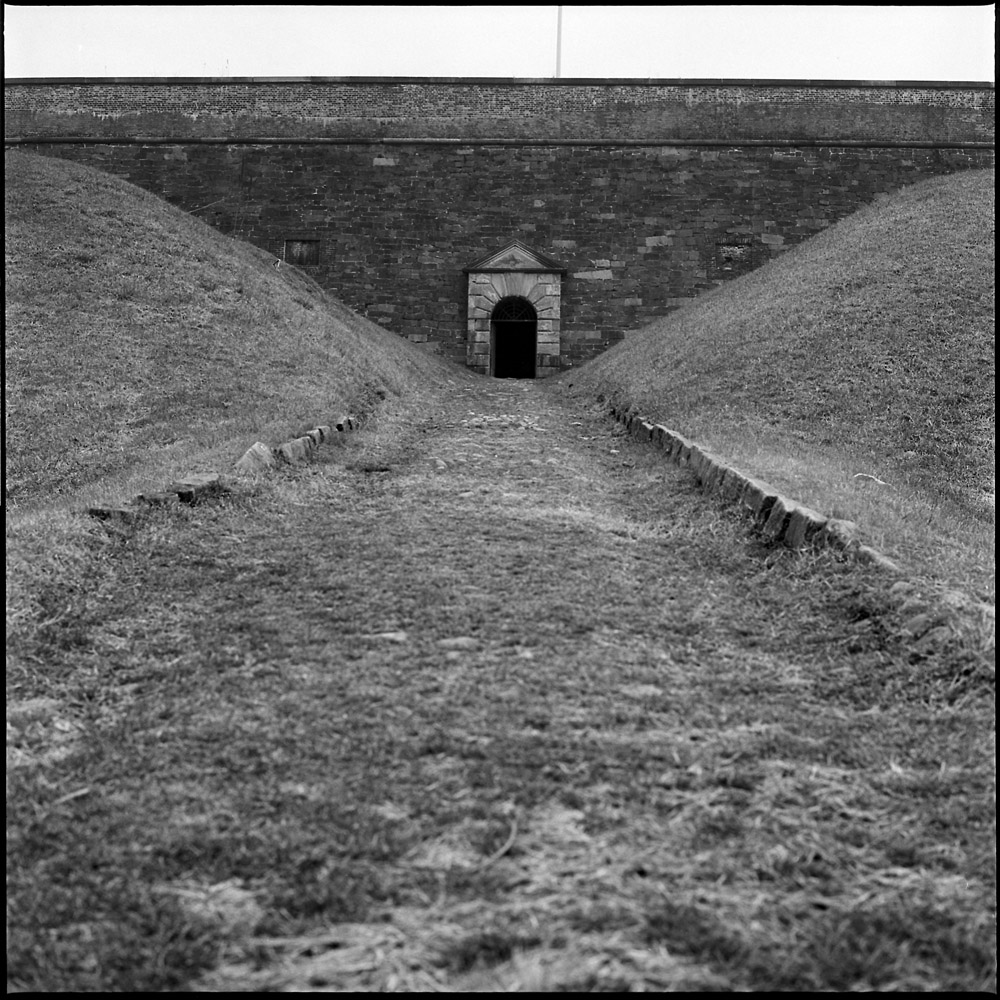
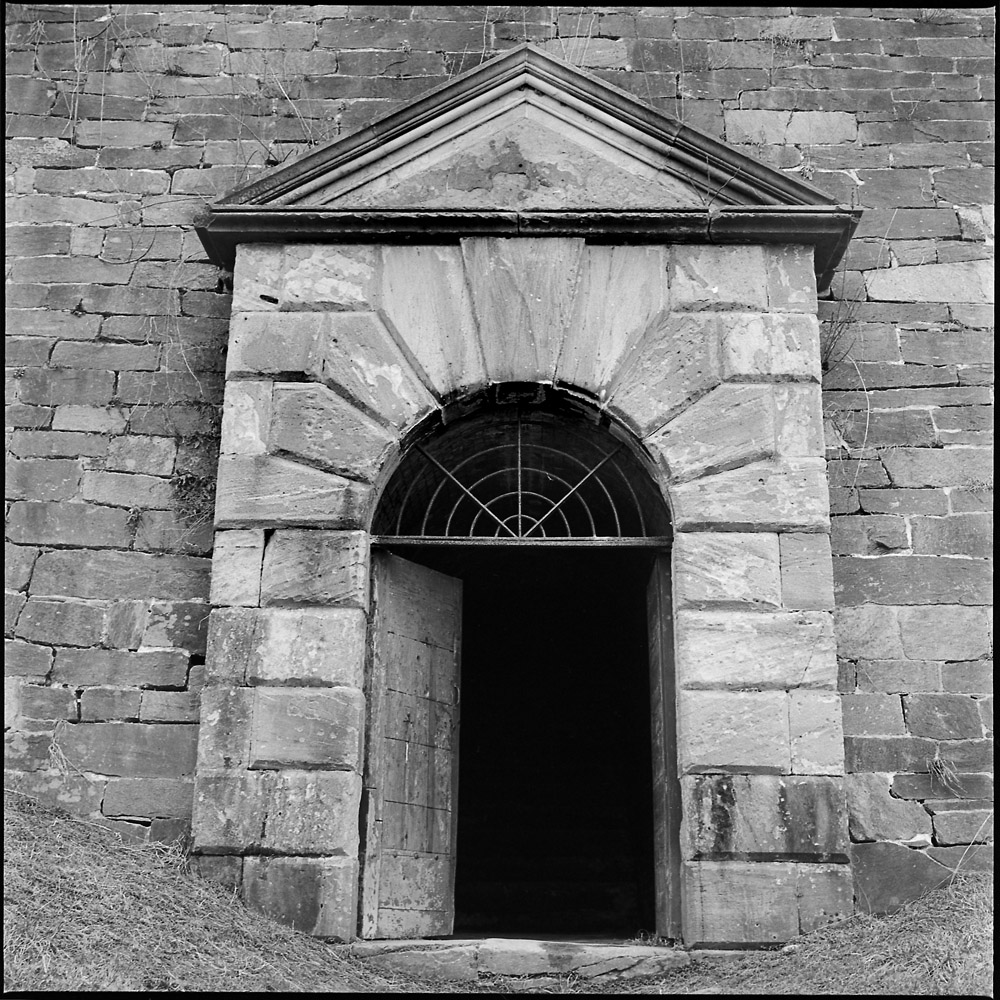
These first two images are of the gate in the early 19th century fortifications. This was the entrance that connects the hilltop fortifications to the water battery at river level.
EarthworksWater Gate
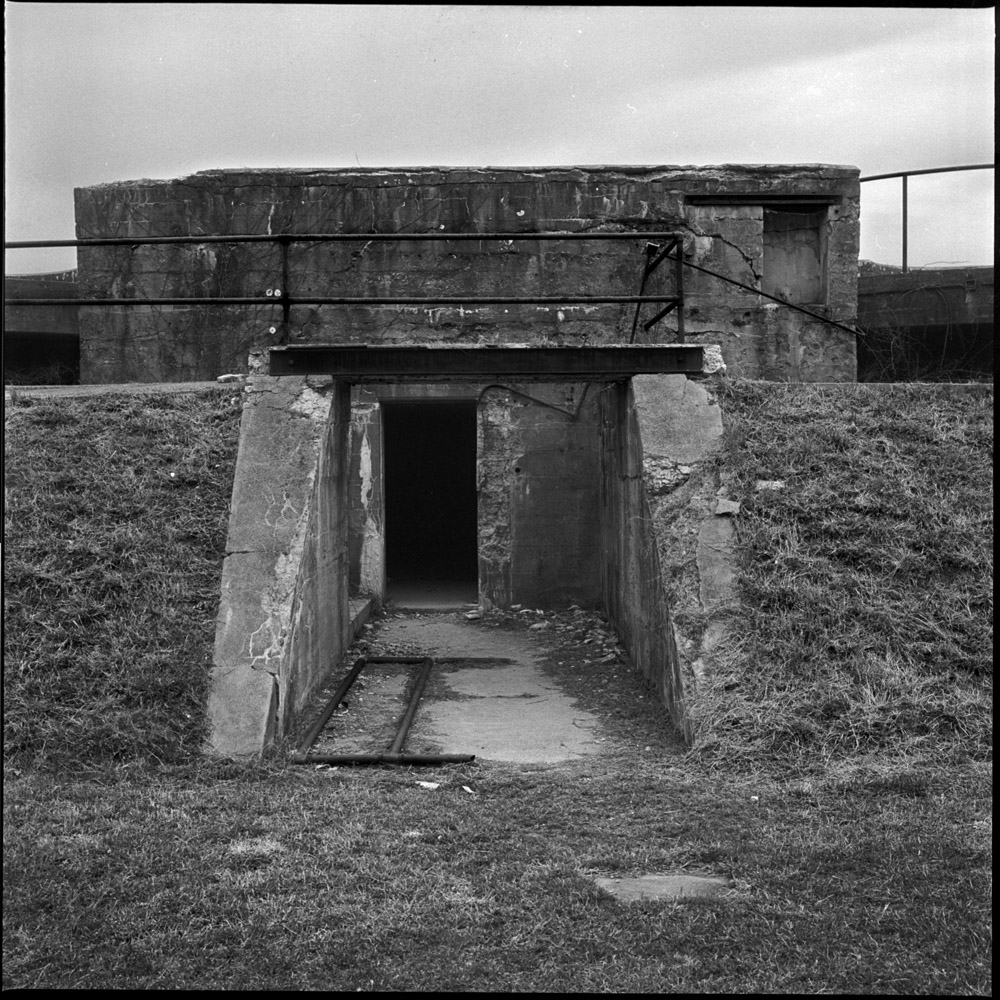
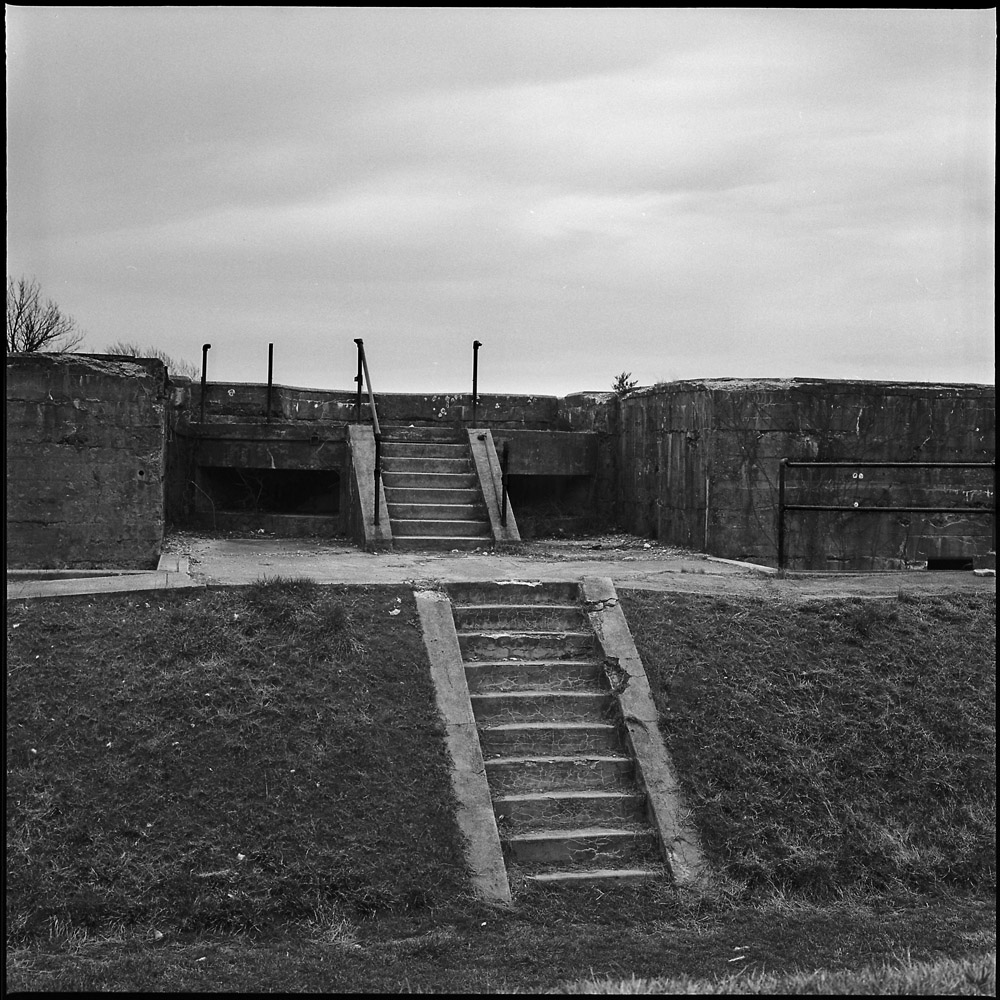
The water battery structures date to the first decades of the 20th century. You can see they are much lower, made of steel and concrete. The front side is protected by an earthen berm. The bunkers would have held the troops manning the now-dismounted cannon and communications equipment to control the batteries from within the fort.
There is something both ominous and at the same time hopeful about these structures, viewed from the land side. The bunker doorway looks like an entrance to the underworld.
Water Battery Entrance
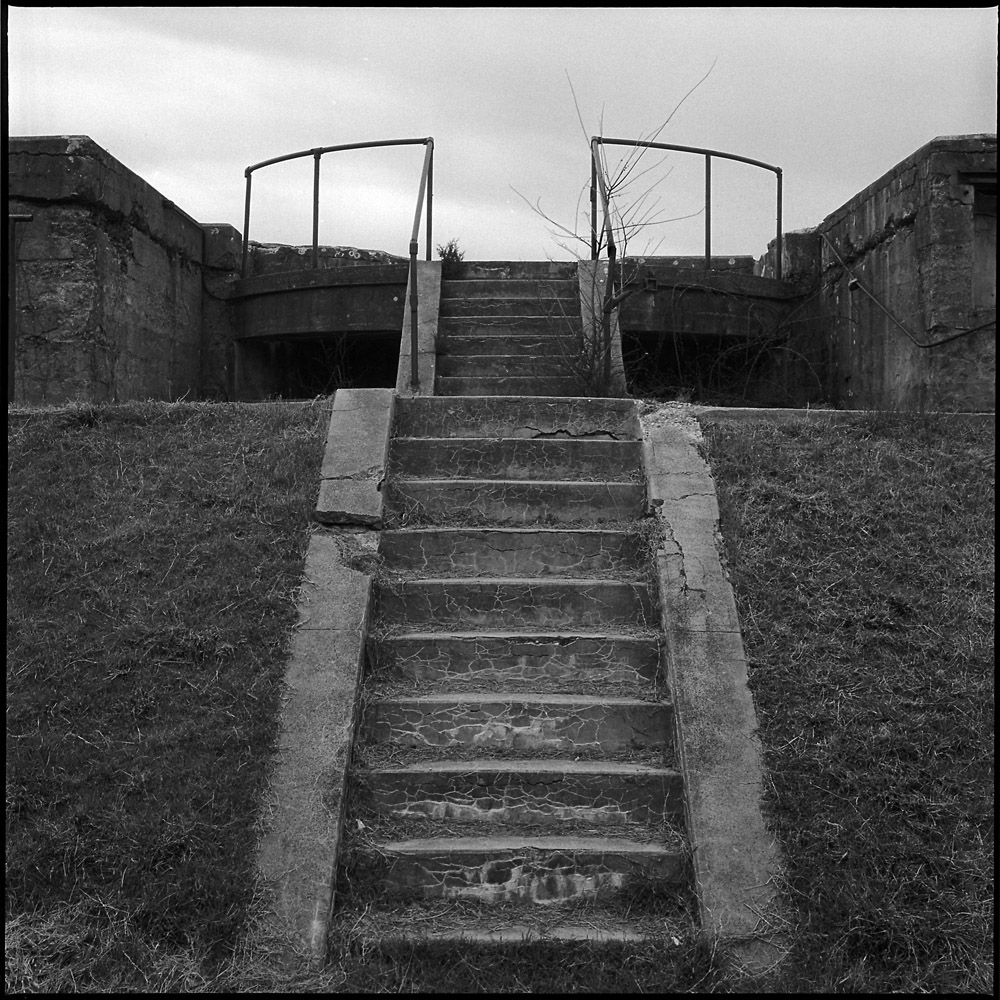
The stairs, however, now stripped of their weaponry, point to an upward journey, facing the unknown. They’re the prow of a ship, a pathway to adventure, or perhaps a Mayan temple at whose top great mysteries will be revealed.
Water Battery Stairs
The clouds above tease the possibility of rain, but it will be a gentle rain, not a thundering downpour. They’re the gateway to the horizon.
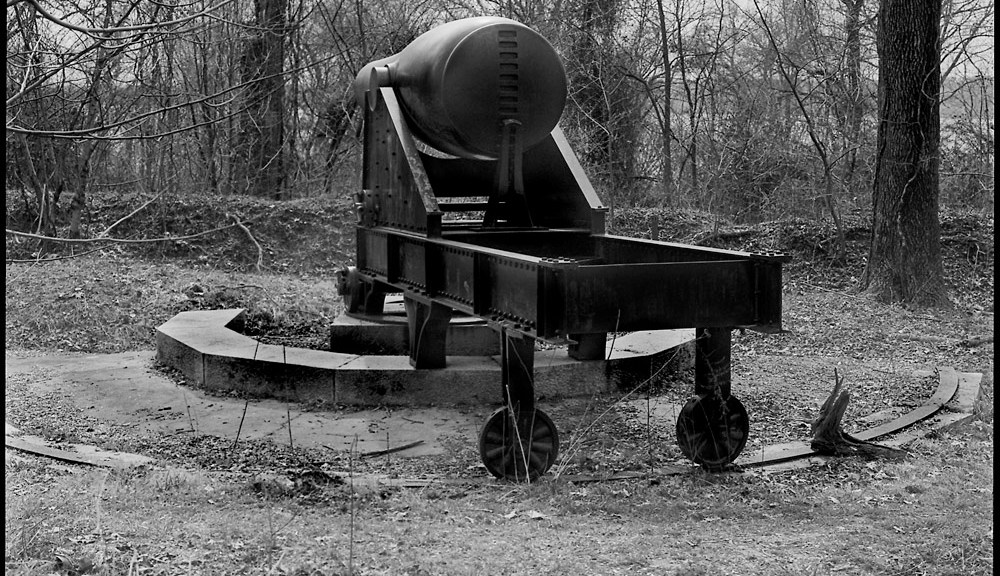
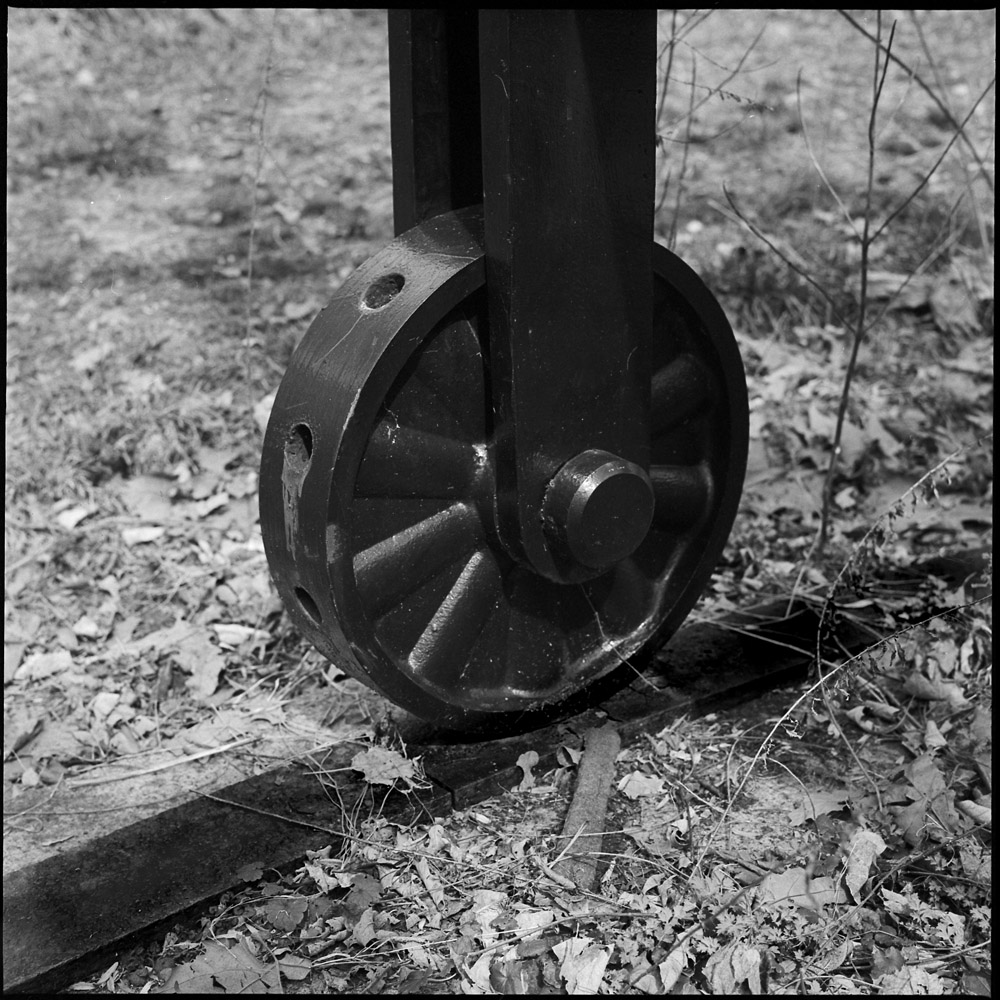
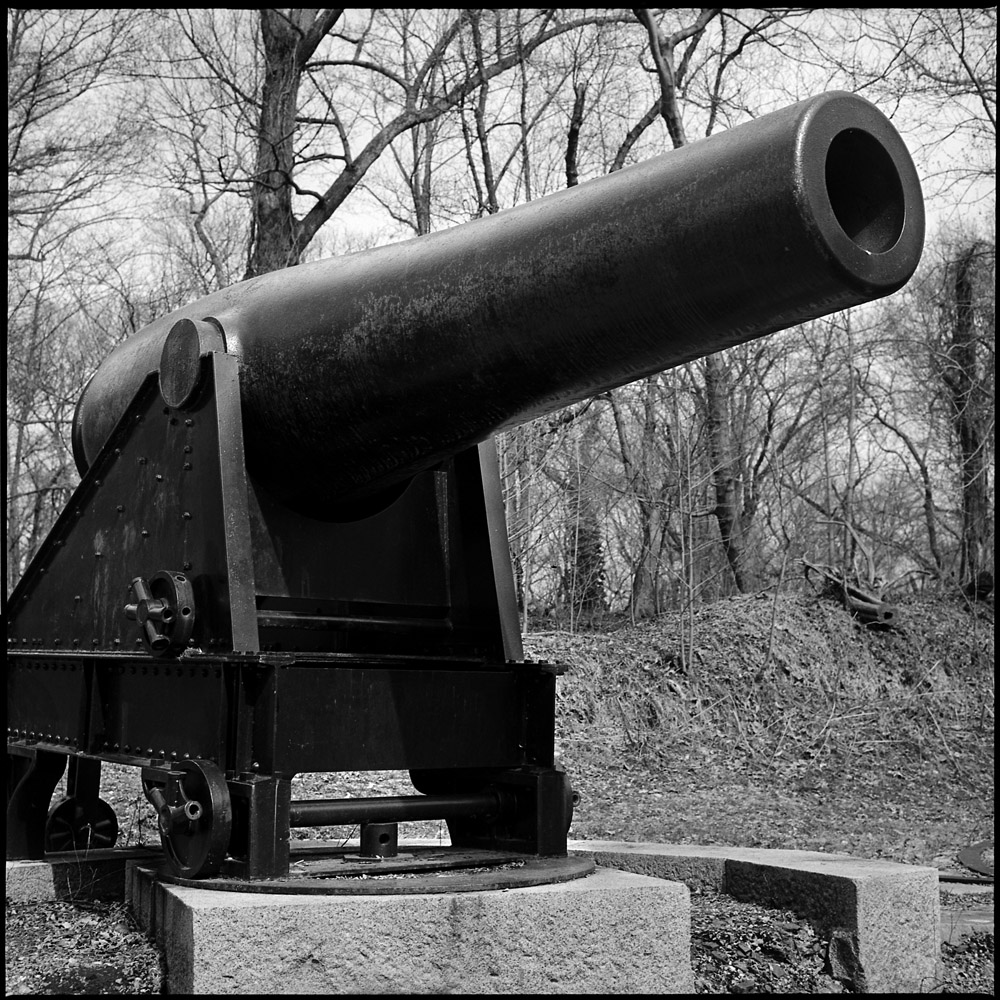
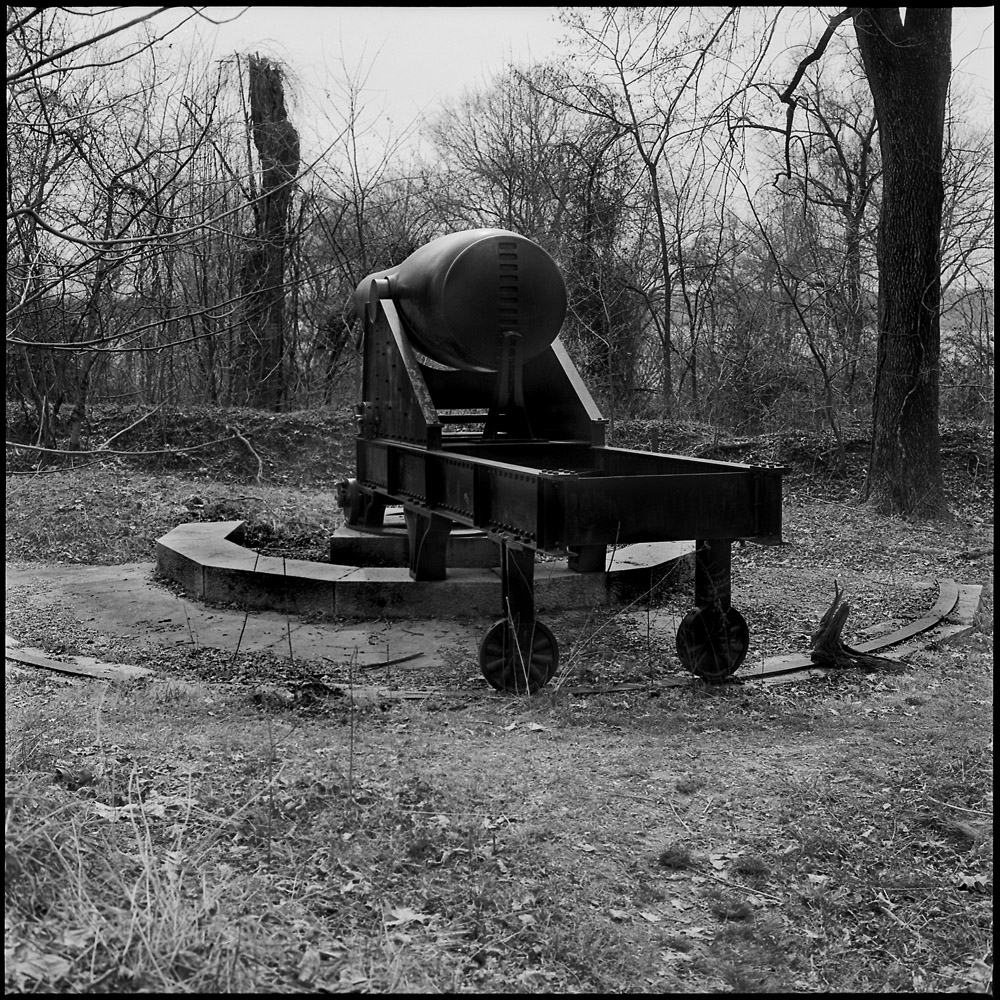
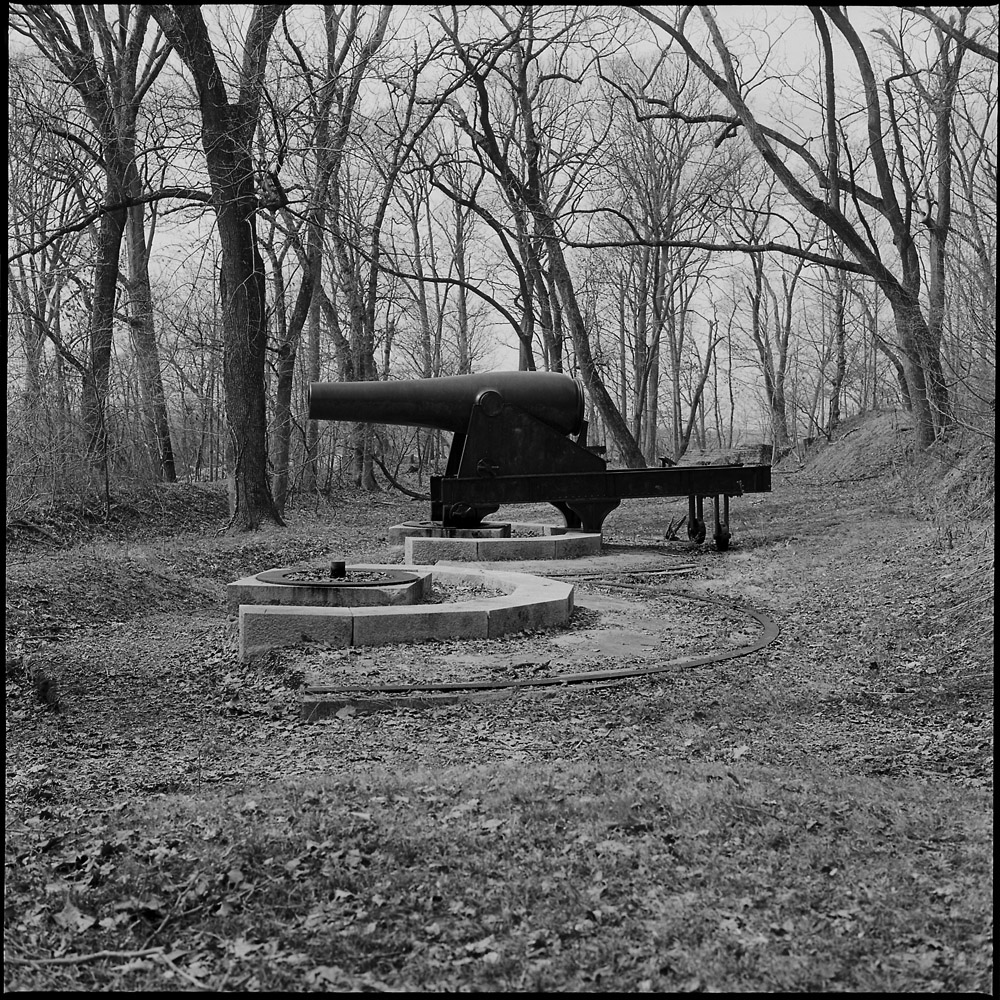
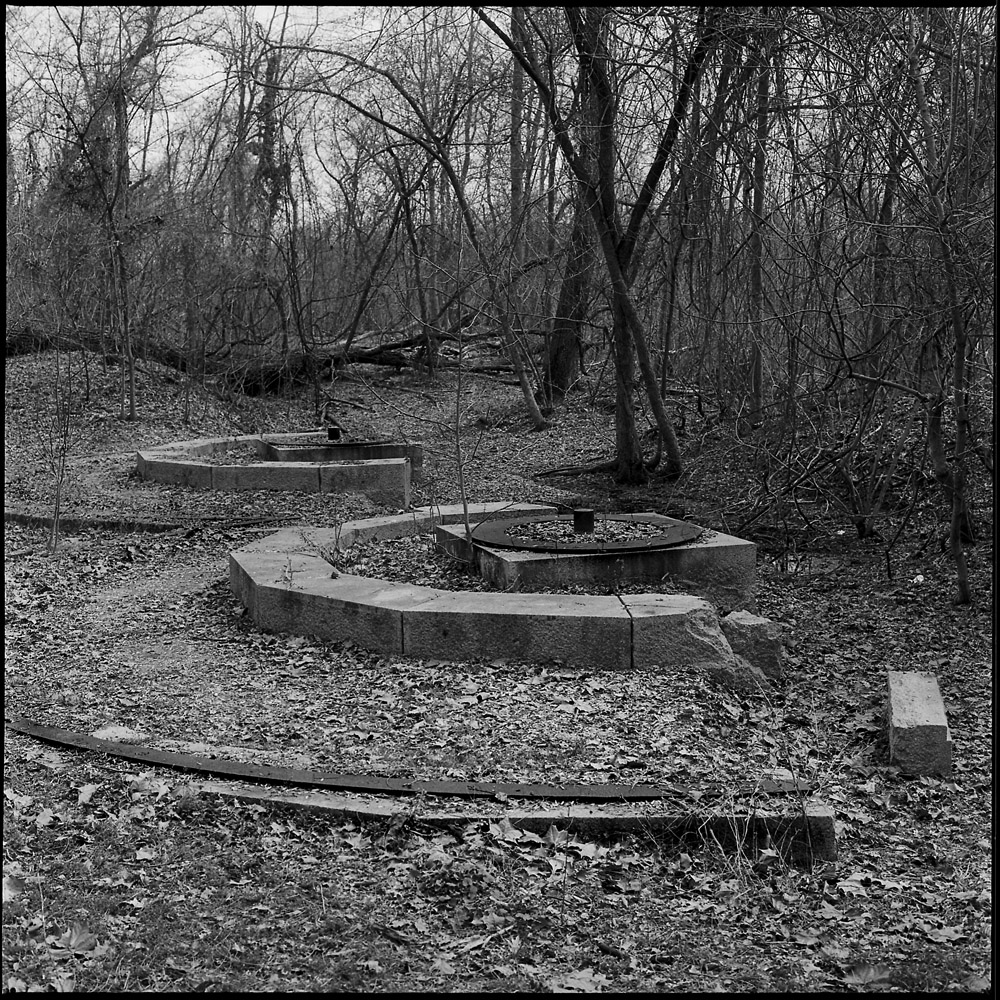
These are details of the fifteen inch Rodman guns and their emplacements at Fort Foote. I apologize for the delay in posting this second round. In this set of images I was focusing on the textures of the ironwork and the geometric patterns and repetition in the gun emplacements. There are endless circles and semi-circles repeating throughout, from the barrel of the gun itself to the wheels to the tracks to guide the traverse. They take on a bit of a crop-circle kind of feel: looking at the remnants makes you wonder if they’re the leftovers of an alien civilization.
Gun Carriage WheelRodman Gun, Fort FooteStanding SentryLone Rodman, Fort FooteGun Placements, Fort Foote
Because these are in the (encroaching) natural environment, I’ll grudgingly classify them as landscapes, but I think of them more as documentary work given the subject matter.
Serendipity plays a major role in my life. A couple weeks ago I took a mental health day mid-week and decided to visit some of our local history. My original intent was to take a short road trip to see some historic houses in northern Virginia, but they (the Woodlawn Plantation and the Pope-Leighy House) were still closed for the season. Instead, I thought I’d take a quick drive down Indian Head Highway into southern Maryland and visit Fort Washington, created to defend the capital city from river attack in the early days of the Republic. The current structures date from the years after the War of 1812 to the first decade of the 20th century. The main fort was designed by Pierre L’Enfant, the man who laid out the design for the streets of Washington DC.
On the drive down Indian Head Highway, after only a mile or so I saw a sign saying “Fort Foote Park”. I decided I’d detour and check it out. I really didn’t know much of anything about Fort Foote other than I presumed it was part of the Civil War-era defenses of Washington DC. My presumption about it was correct, but there’s a lot more to it than you might expect given that description. Most of the 68 defensive forts that ringed DC are now little more than some mounded dirt with a plaque commemorating what they were. They’re overgrown with trees and grass and cross-cut with walking trails, city streets, and even housing developments. Fort Stevens, the location where the only sitting United States President ever came under enemy fire, today is barely a half a square block, hidden behind a post-war church, 20th century homes and shops, and hemmed in by city streets.
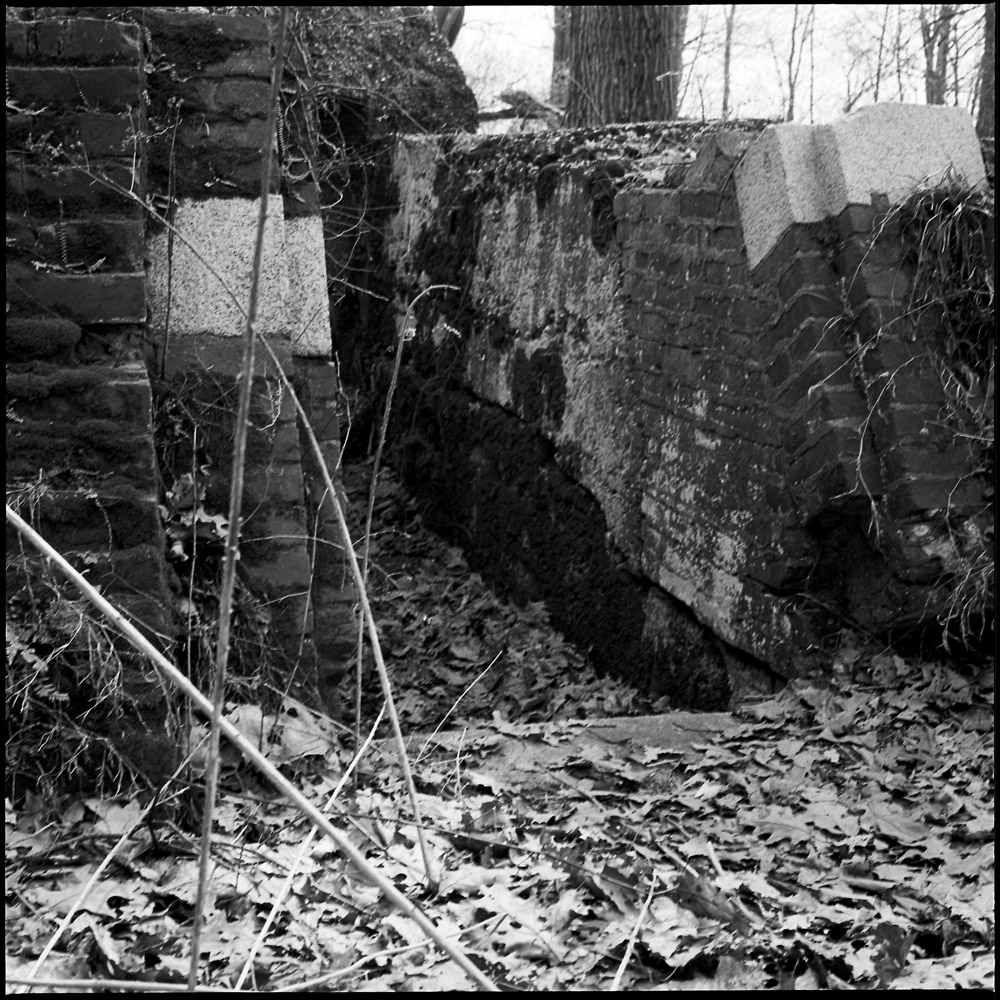
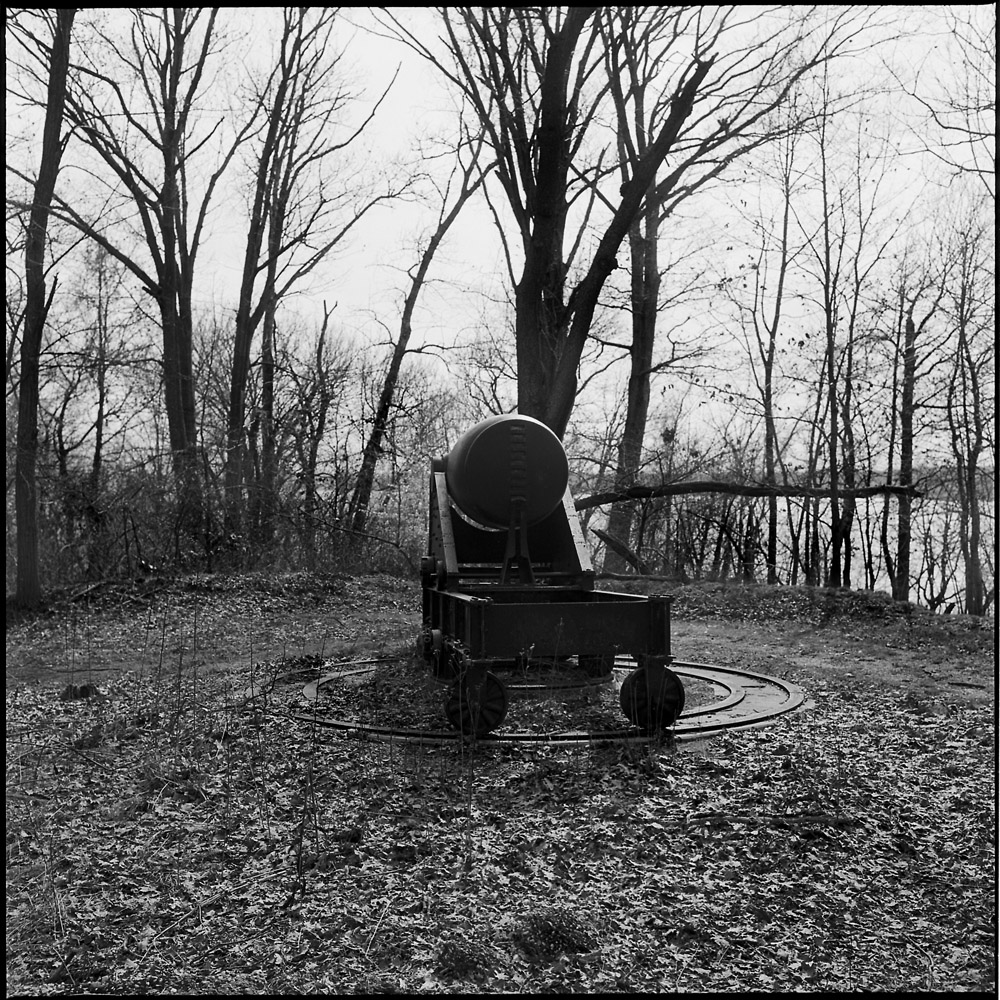
Fort Foote has been spared much of that indignity. Fort Foote (named after a Union admiral who was killed in action in 1863 assaulting Confederate strongholds on the Mississippi river) too is overgrown with forest, but the earthworks remain very much in their original configuration. It owes its survival in part due to the location on a 100 foot tall bluff facing the Potomac river, too awkward a site for proper development. Two of the mighty 15 inch Columbiads (also known as Rodman guns for the man who designed them) remain in situ, and the ammunition vault’s crumbling ruins (also known as a “bombproof”) can be seen and scampered over by enterprising and nimble youth.
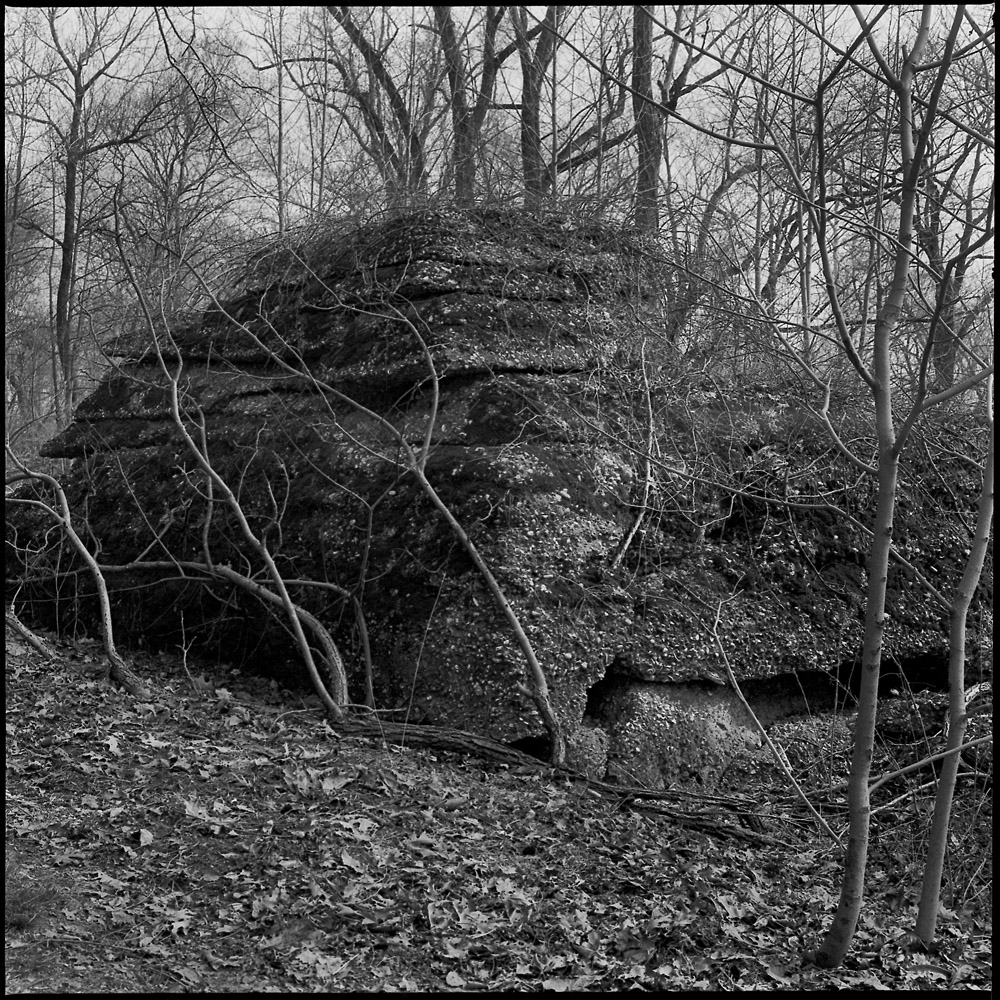
Crumbling Bombproof, Fort FooteBombproof Entrance, Fort Foote
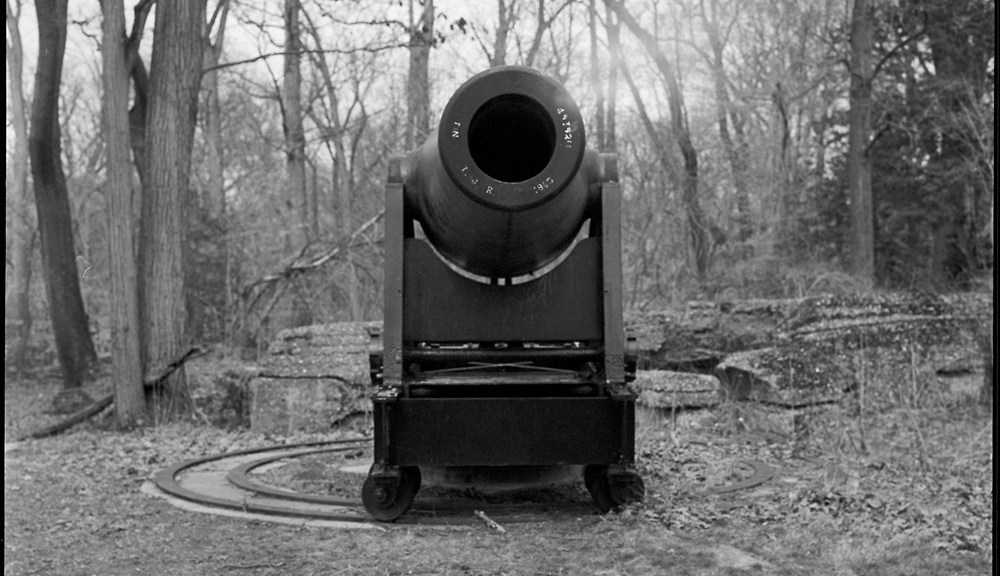
The Rodman gun was a major innovation in cannon technology. Due to a radical change in forging technique, they could be made much stronger and safer to be fired repeatedly without risk of the powder charge exploding the gun itself. The design was so successful that eventually the United States had nearly 450 of them providing coastal defense. The 15 inch Columbiad version could fire a 200 pound projectile some 5000 yards and penetrate ten-inch steel armor at that range. The guns at Fort Foote were never fired in anger. The smaller 12 inch and 8 inch cannons that topped the earthworks were removed by the end of the 19th century when the fort was decommissioned. Today, only a handful of the 15 inch Rodman guns remain in existence, the majority having been melted down or in some cases entombed in concrete to add support to the improved fortifications they once defended.
Rodman Gun, Front ViewRodman Gun
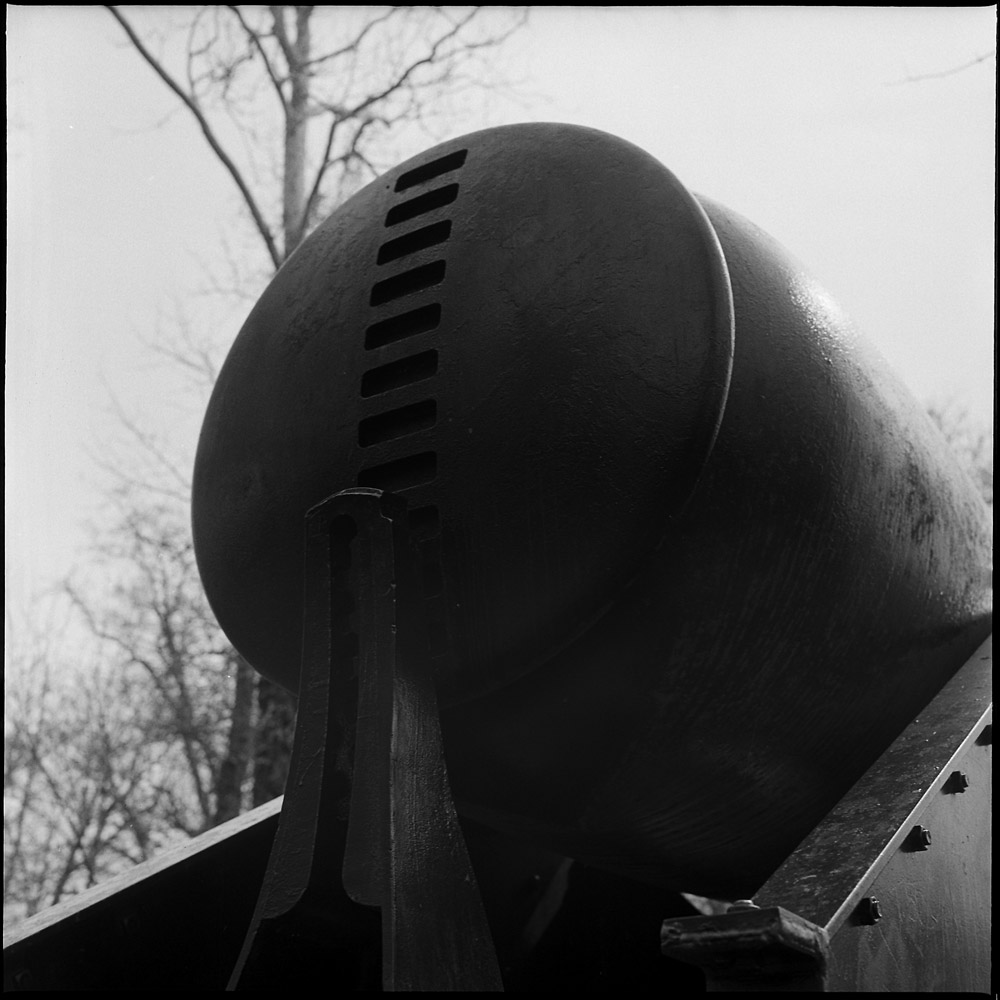
The notches on the back of the Rodman gun, along with the large, relatively flat “knob”, are signatures of the design, and indicative of some of the innovations. By making the “knob” large and flat, it made it much easier to hoist the cannon for moving it and loading and aiming – a common problem with smaller guns that had a much more traditional knob on the rear was that the weight of the gun, when hoisted in the air, would stress the join between the barrel and the knob and it would break, sending the extremely heavy barrel crashing to the ground, crushing anyone below, ruining the gun, and possibly discharging the shot if it were loaded.
Rear, Rodman Gun
The Rodman cannons were mounted on platforms that would enable them to be withdrawn below the earthworks to be loaded, and then raised when ready to aim and fire, reducing the exposure of the gunnery teams to enemy small arms fire. This wheel with its tubes to take wooden levers would have been used to raise and lower the gun on the pop-up mount.
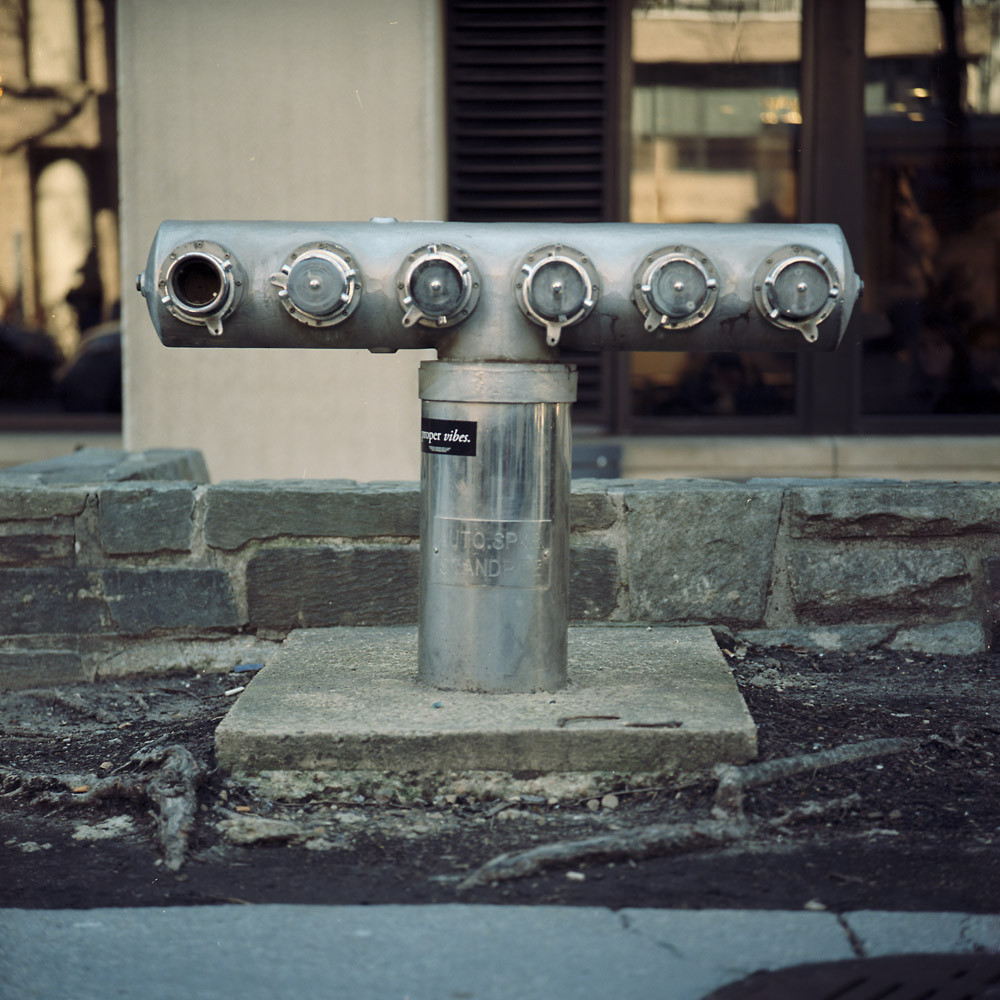
I don’t know if I’ve ever seen a fire hose connector with more connections on it than this one, outside the George Washington University library. The location may be key – if the library ever catches fire, that much paper will require a lot of water to keep it all from going up in a ball of flame.
Multi-Hose Connector
Either that or it’s some kind of arcane commentary on the Starbucks Coffee in the library basement immediately behind it.





 dcphotoartist