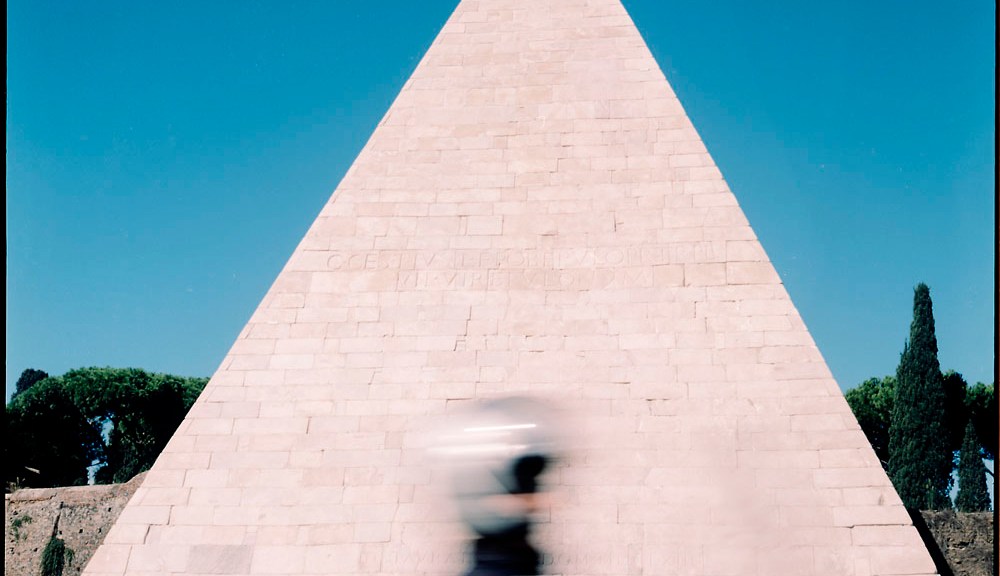
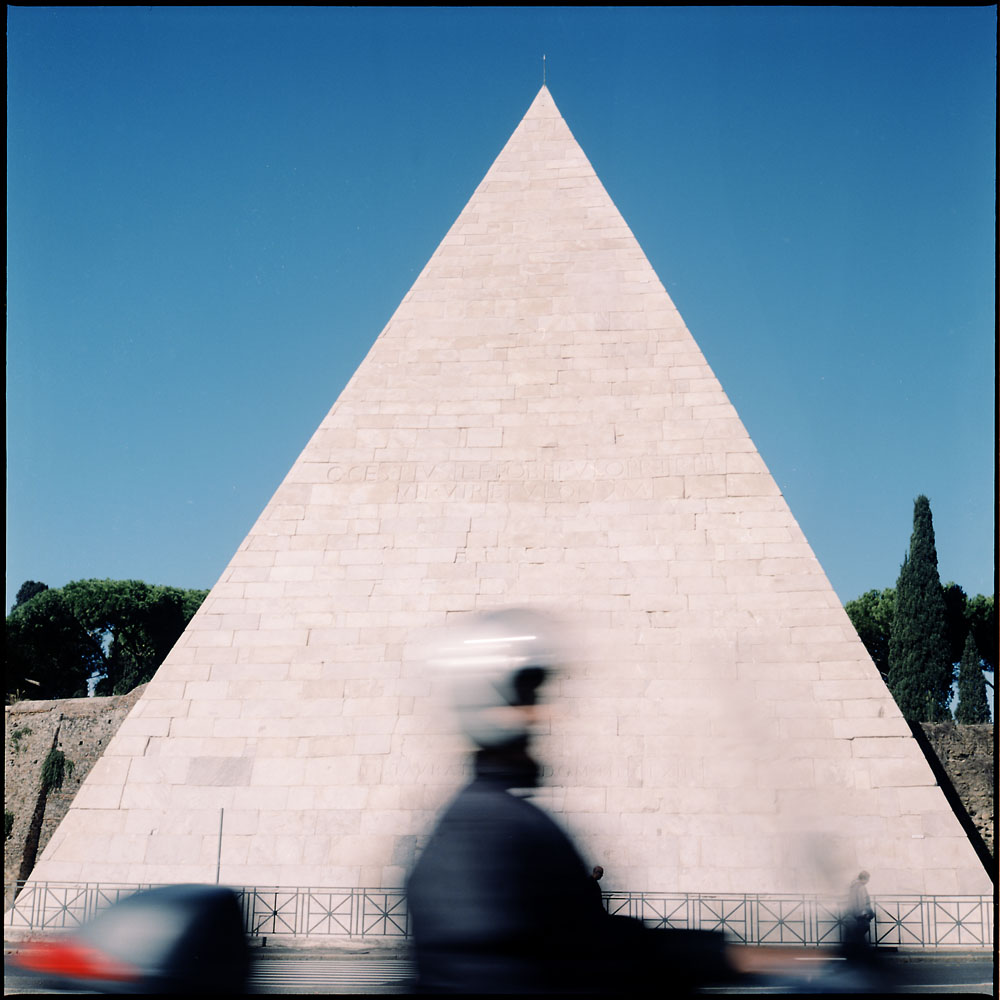
When you get off the Pyramide Metro station, the very first thing you see upon exiting is the old city gate in the walls of Rome. Pan left and the very next thing is the Pyramid of Cestius. Caius Cestius was a wealthy Roman citizen who, inspired by the pyramids of Egypt, decided he wanted a white marble pyramid as his funerary monument. He had his tomb built into the city walls. His goal of not being forgotten certainly succeeded as we still know who he was today, some two thousand years after his passing.
Pyramid of Cestius, Scooter
His monument backs onto the “English” Cemetery, known technically as the Cimiterio Accatolico (non-Catholic cemetery), final resting place of many English expatriates (and Russian, and American, and French…) including the luminaries of 19th century Romantic literature, Shelley and Keats. The Pyramid of Cestius is in fact open for tours, but they only offer them one day a week, twice a month, and you need to make reservations.
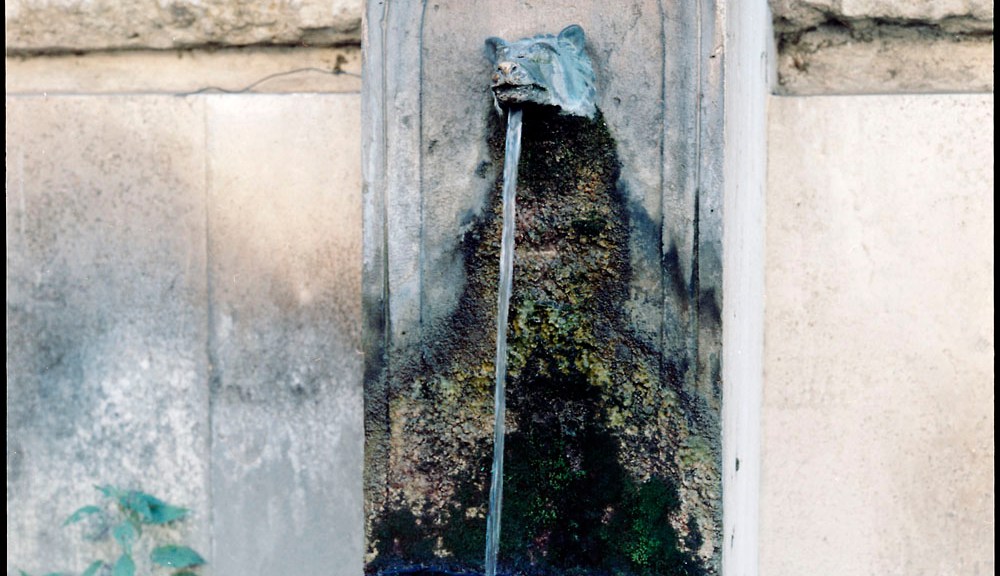
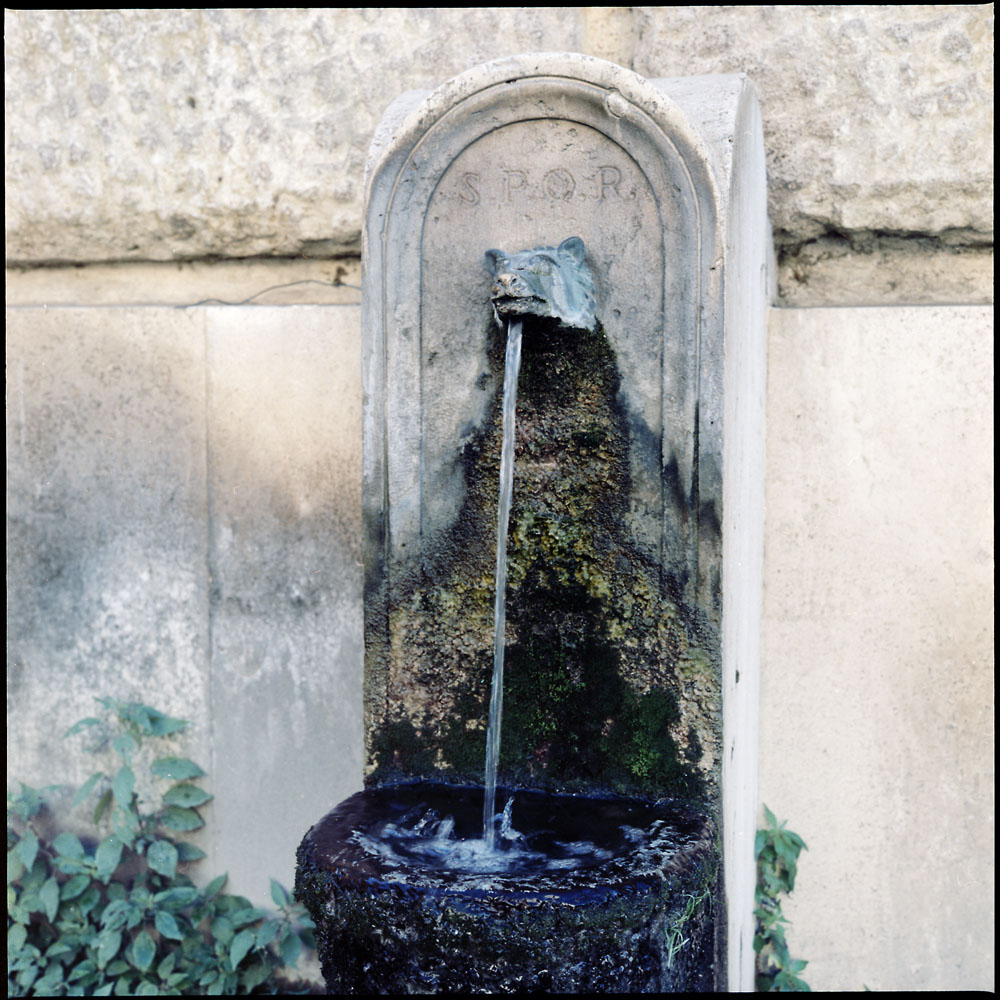
I found this fountain with its traditional wolf’s head and SPQR inscription, both symbols of ancient Rome, in the entrance courtyard to the Centrale Montemartini museum. I suspect they’re relics of the Fascist era as the power plant was built during Mussolini’s pre-war leadership, and symbols of Imperial Rome were in very high demand.
SPQR Fountain, Centrale Montemartini
Today, it adds a touch of tranquility to an industrial setting.
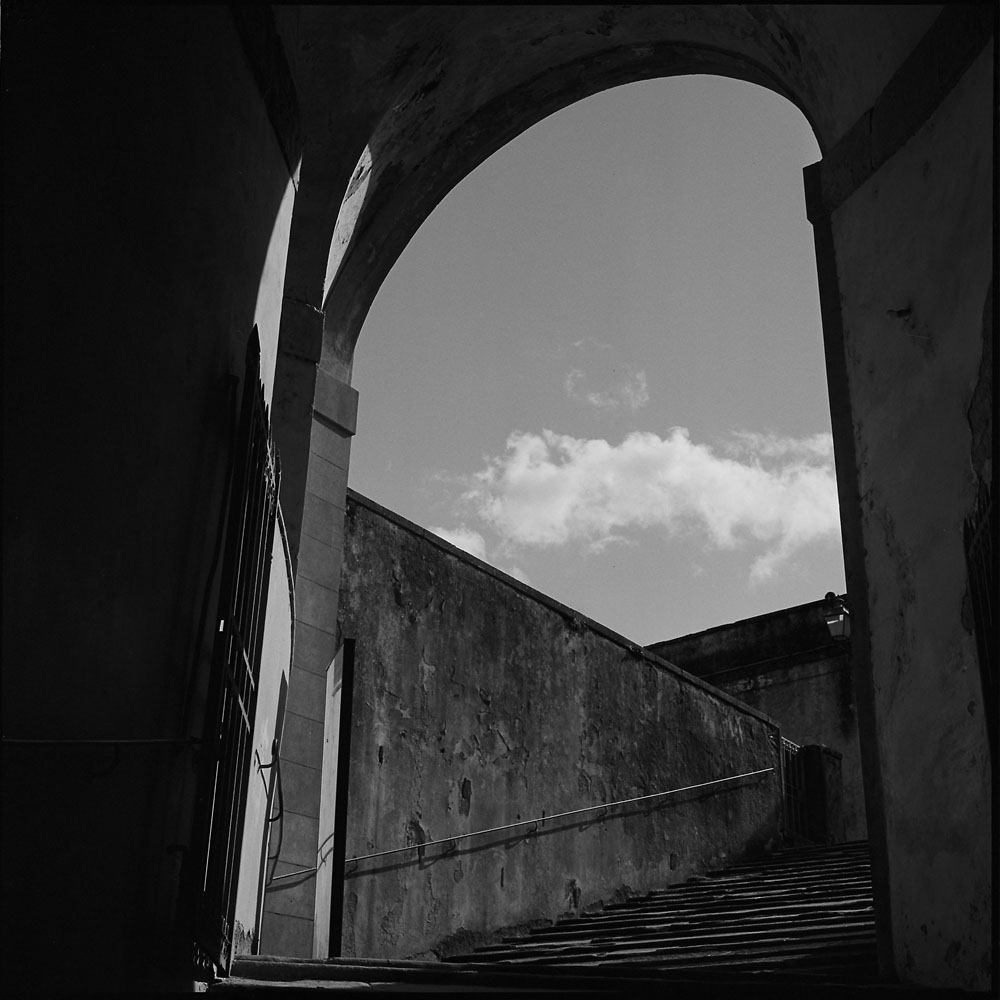
The stairs from the Palazzo Pitti courtyard to the Boboli Gardens pass through this upswept curving space, creating a rather dramatic view of the sky:
Stairs To Boboli Gardens
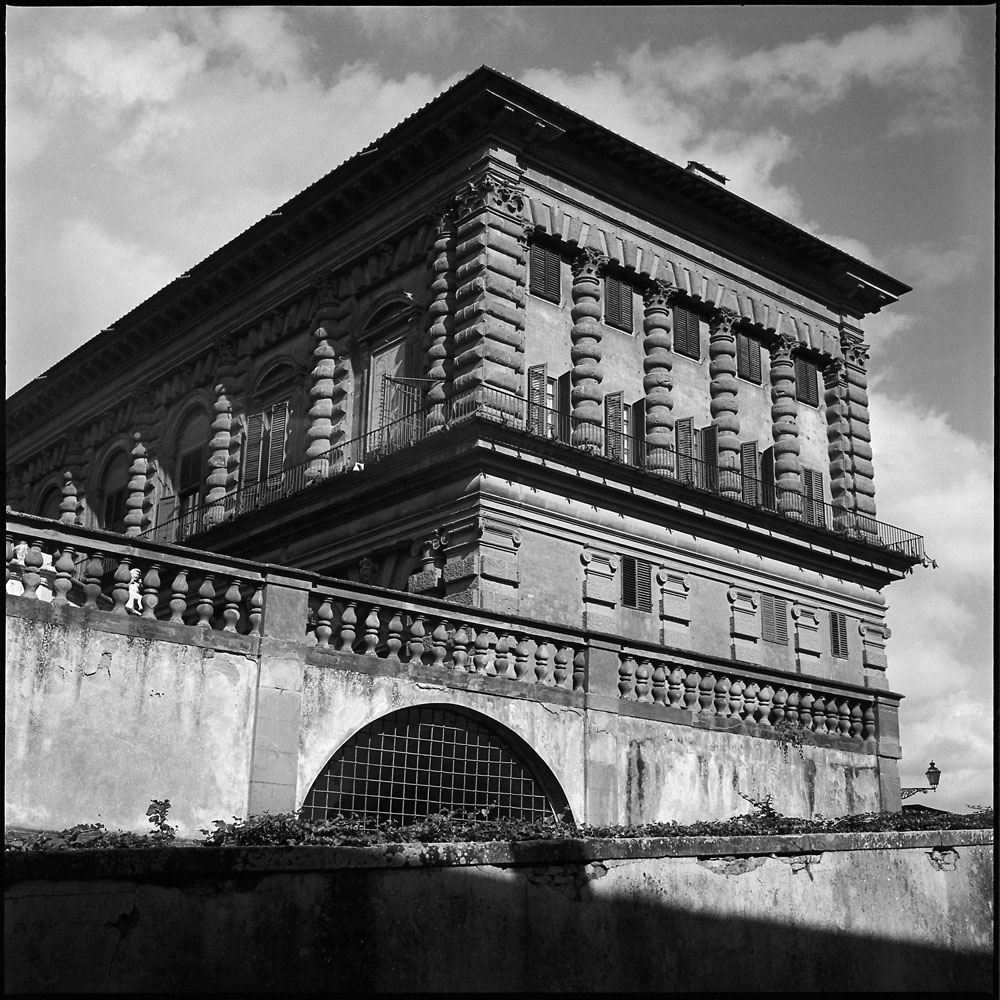
This is the Medici residence wing of the Palazzo Pitti, where the Grand Duke and Duchess had their suites, and Napoleon’s bathtub can be found.
Medici Residence Wing, Palazzo Pitti
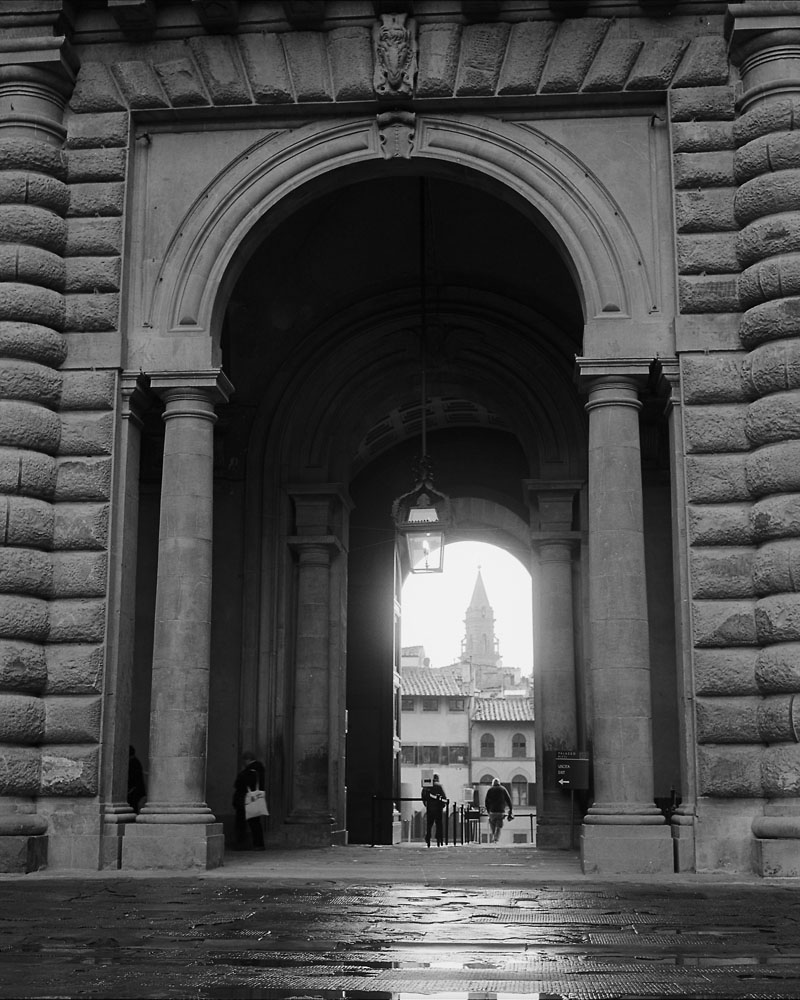
This is a view from the courtyard of the Palazzo Pitti out the main entrance. The bell tower in the distance belongs to Santo Spirito, a church with an ornate interior designed by Brunelleschi, the man who created the dome of the Duomo.
Entrance, Palazzo Pitti in the Rain
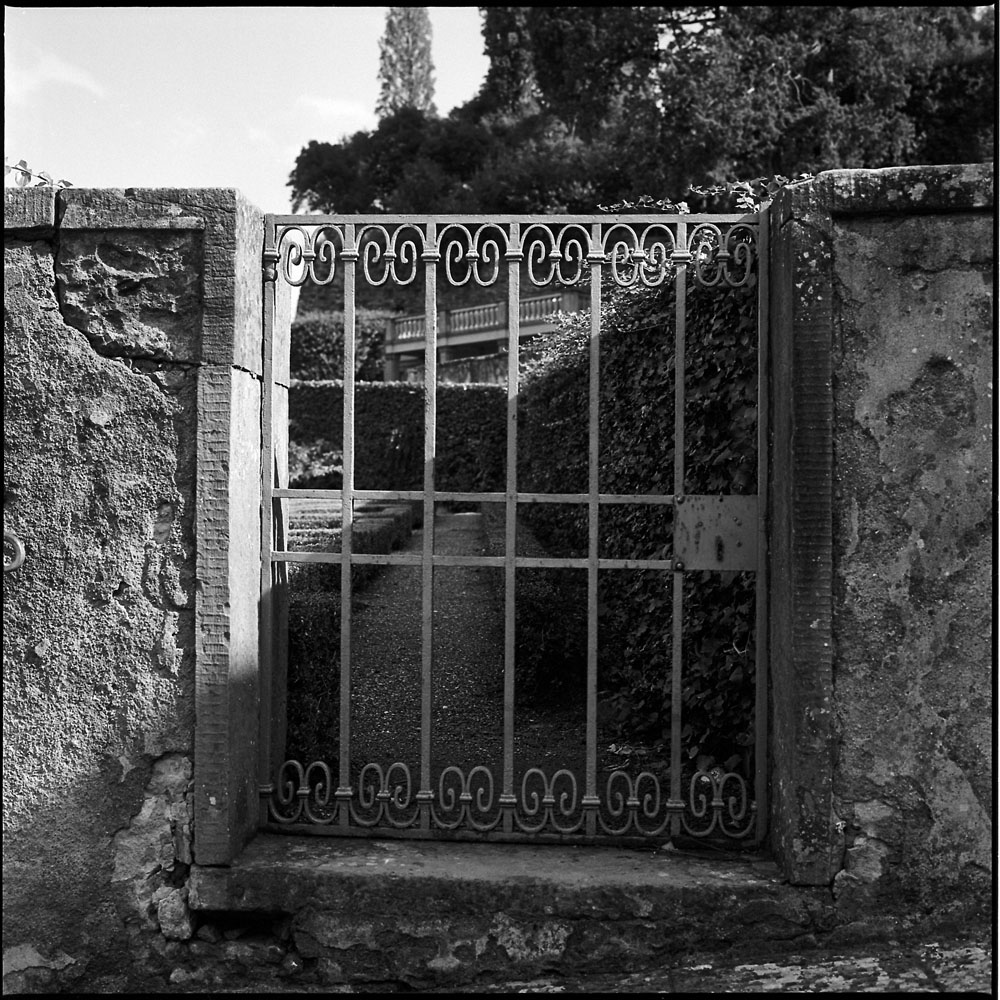
A wrought-iron gate in the Boboli Gardens.
Garden Gate, Boboli Gardens
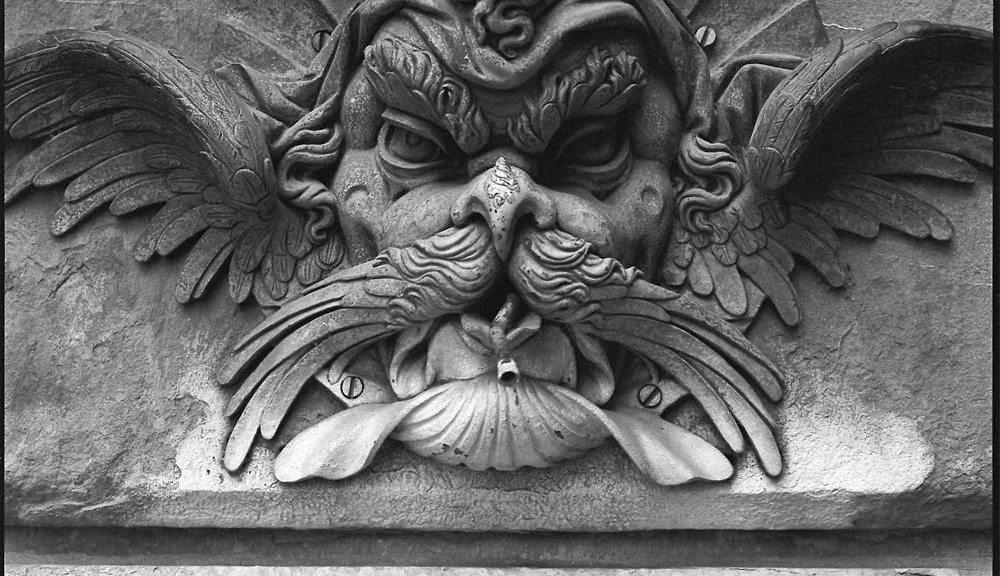
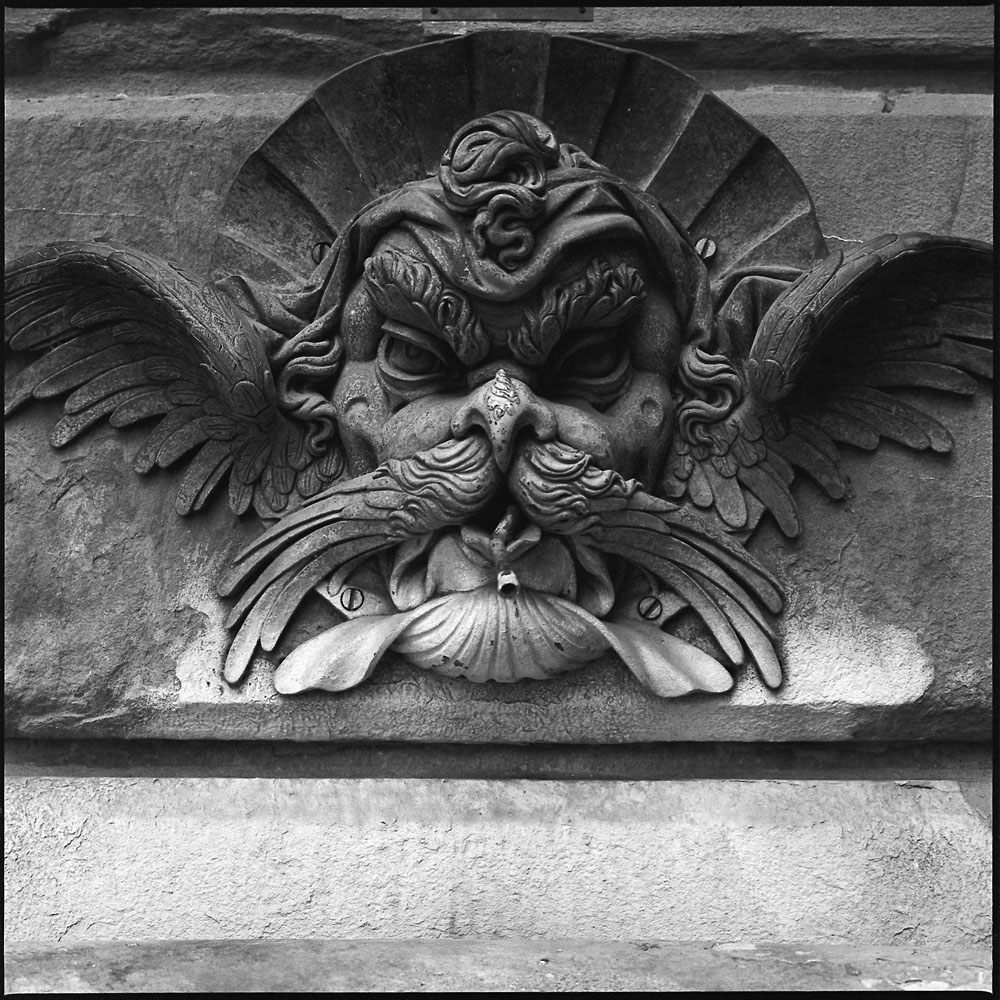
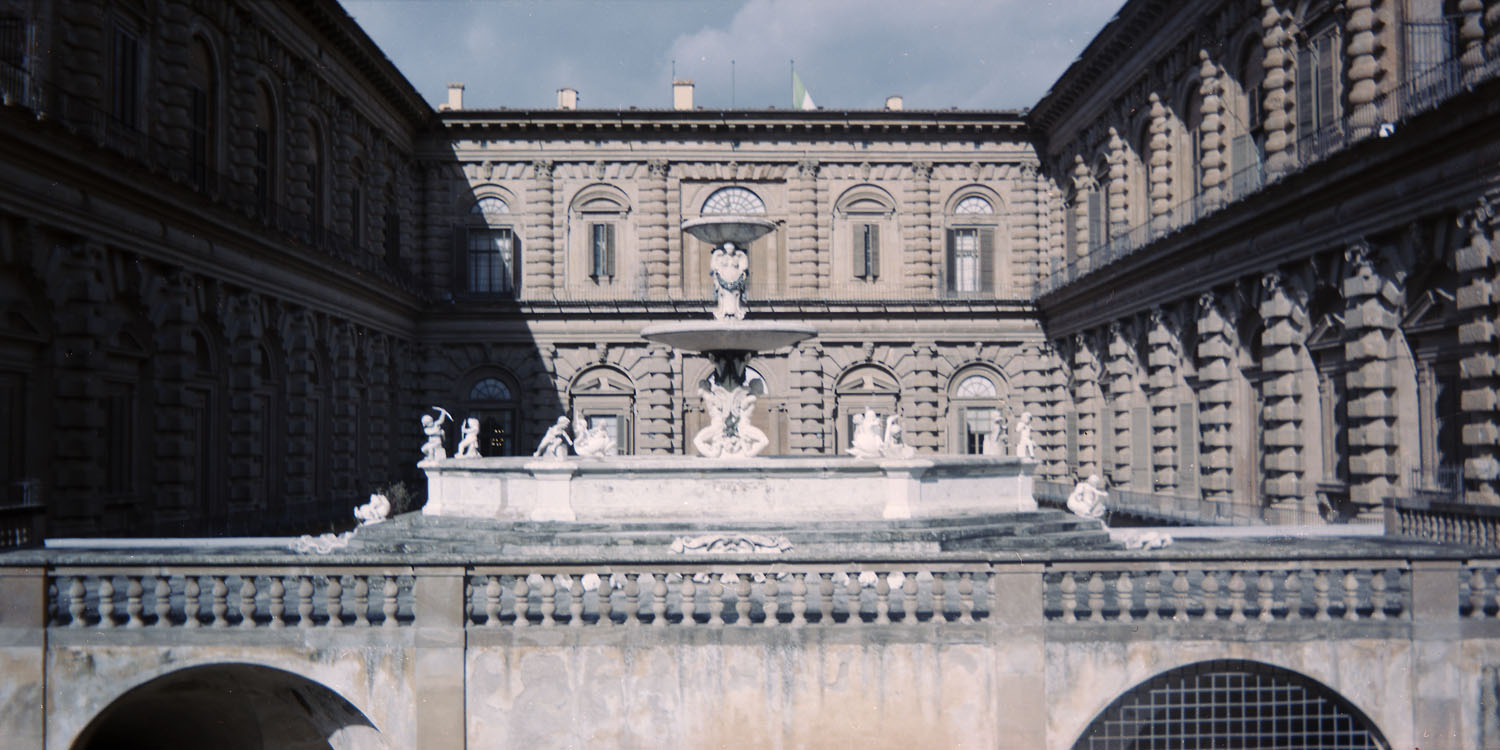
This fountainhead is found in the courtyard to the Palazzo Pitti. And no, Ayn Rand had nothing to do with it.
Fountainhead, Palazzo Pitti
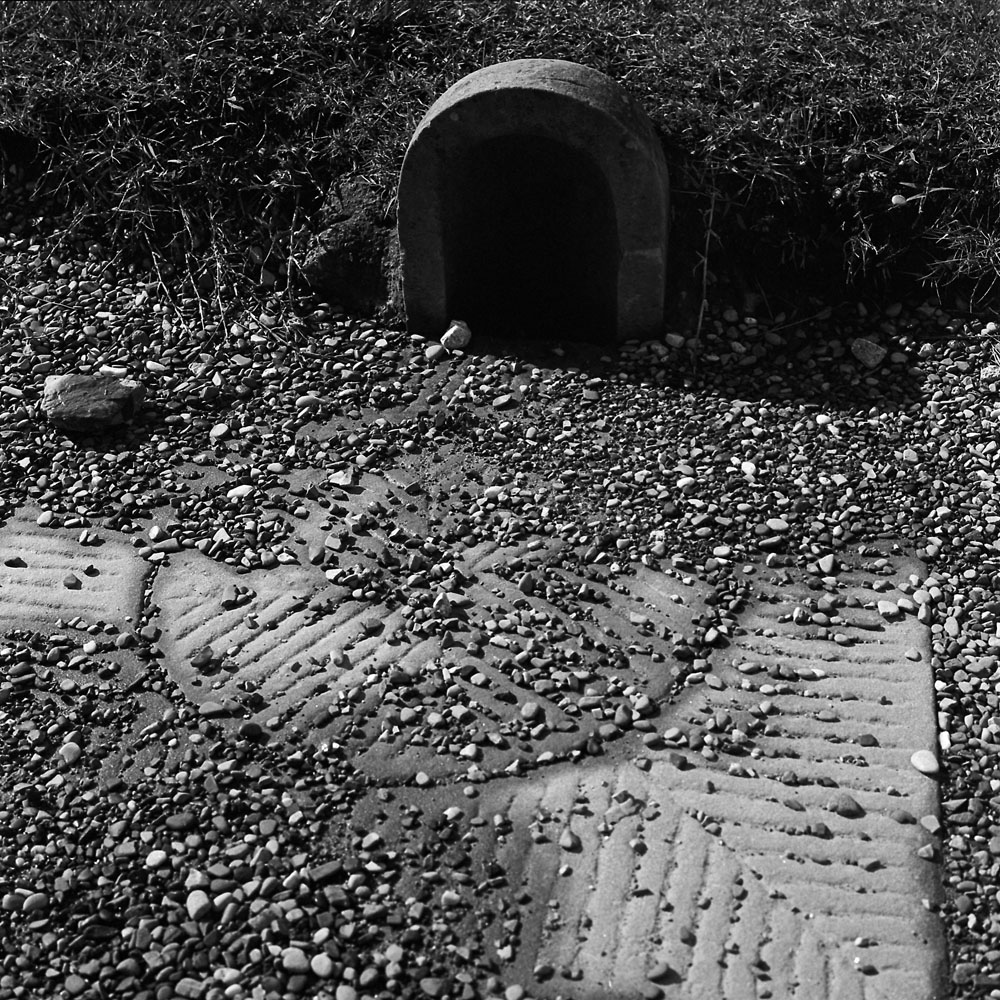
As you’re probably aware if you read this blog with any frequency, I’m fascinated by ordinary objects that we tend to ignore. So I couldn’t pass up the opportunity to capture a Renaissance storm drain cover and inlet in the Boboli Gardens, along one of the gravel paths ascending from the amphitheater to the Neptune fountain.
Drain Cover, Boboli Gardens
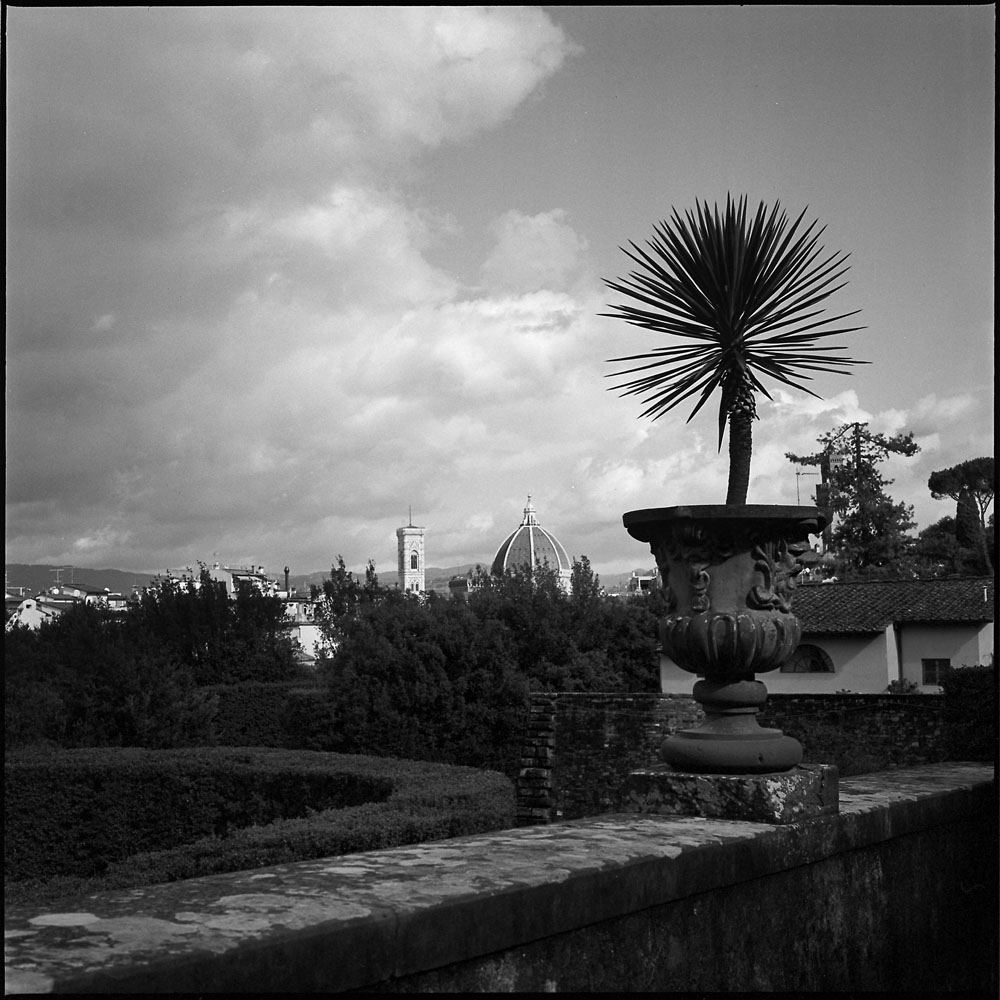
And finally a view of the Duomo from the Boboli Gardens. You don’t really realize how big the cathedral dome is and how much it dominates the landscape in and around Florence until you stand on the hill a good mile away and realize that it’s the biggest thing between you and the mountains some fifteen or more miles beyond.
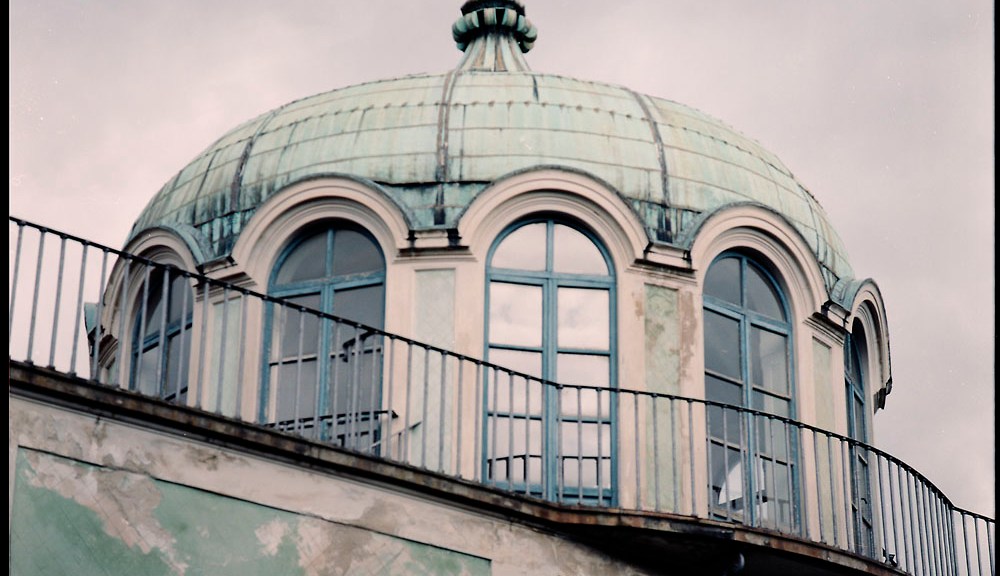
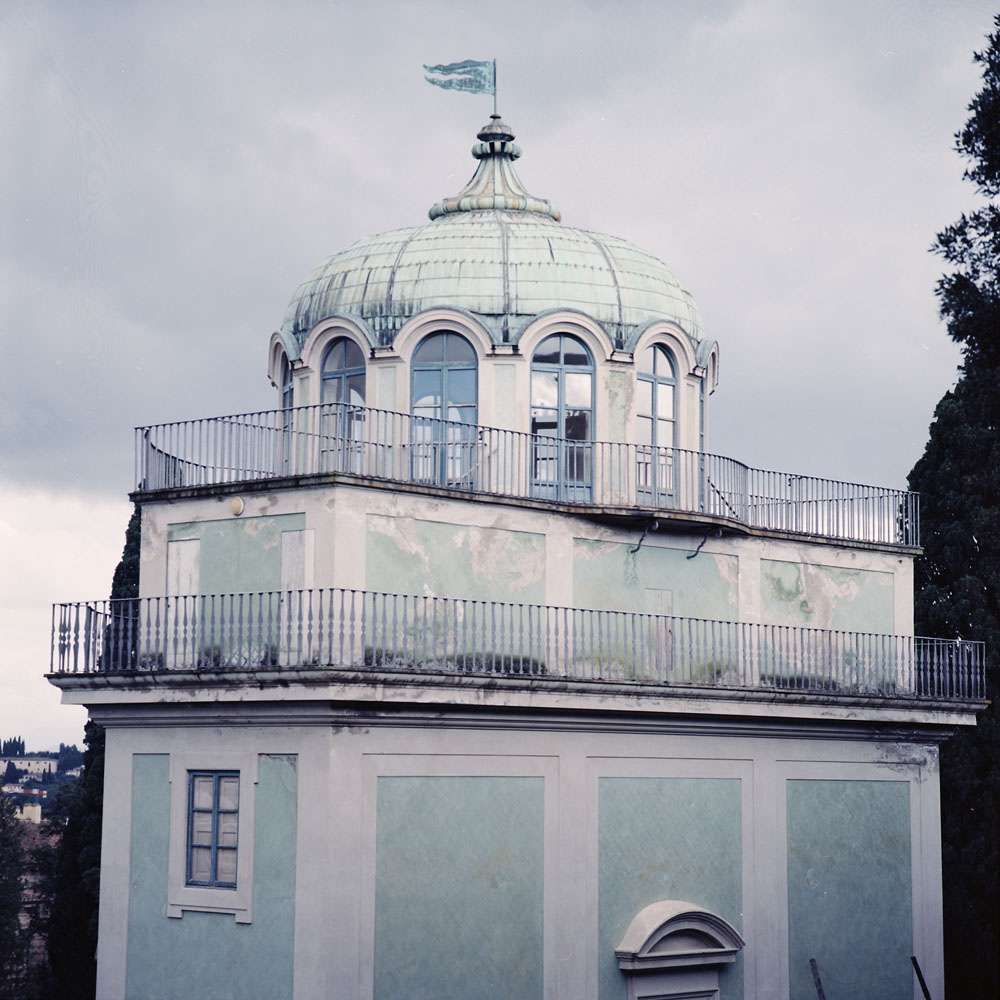
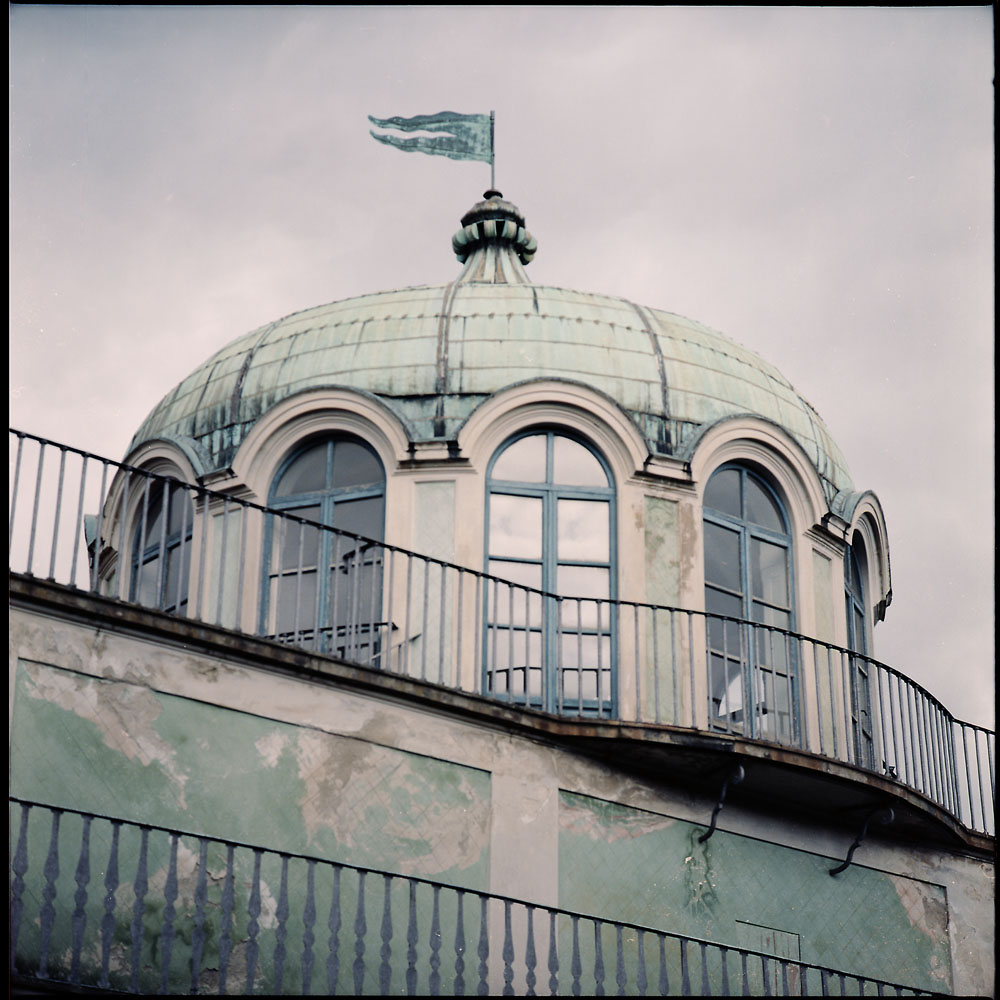
The architectural folly known as the Kaffeehaus (Coffee House) in the Boboli Gardens behind the Palazzo Pitti. The Coffeehouse was built by Maria Theresa while she was the Grand Duchess of Tuscany (she would later become the Hapsburg Empress of Austria-Hungary). Thus the German spelling of the name for the building, which comes from its purpose- it was a refreshment center for visitors to the gardens to stop and get a coffee or tea or other beverage – exploring the 110 acres of the Boboli Gardens is thirsty work.
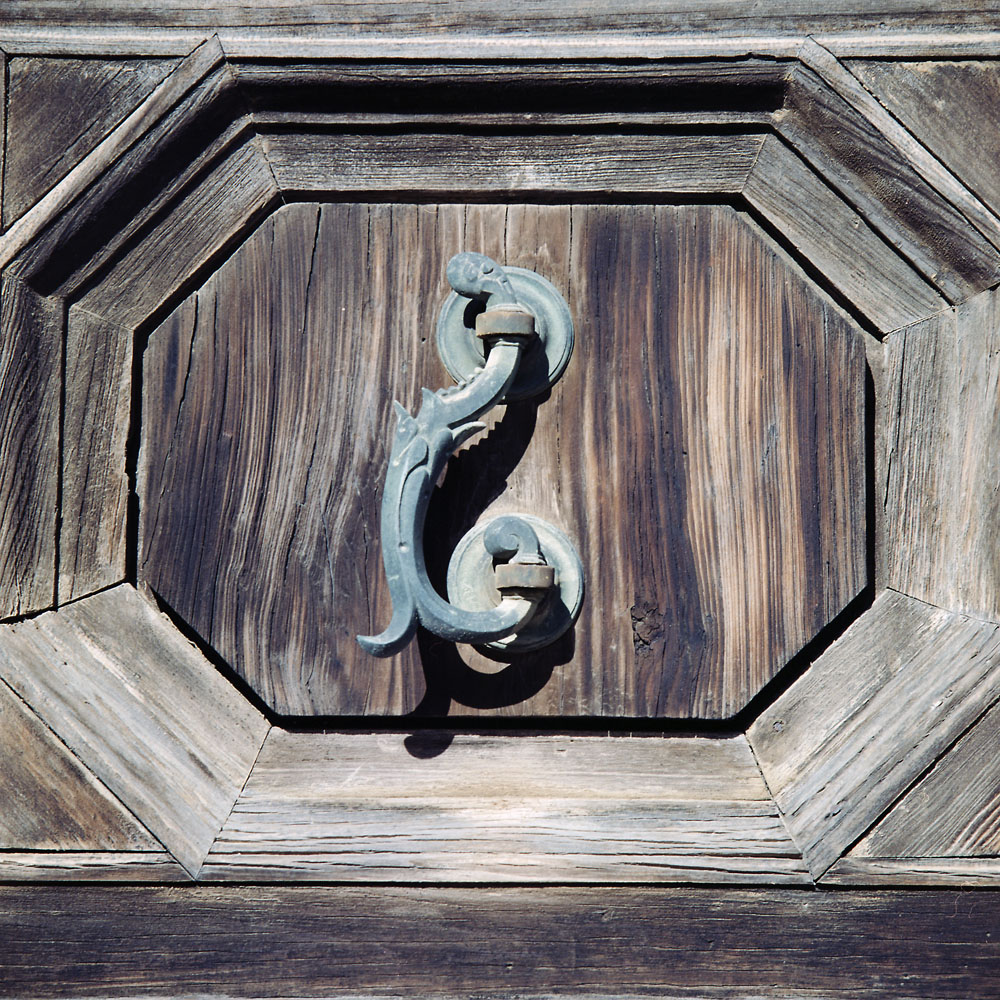
This is a bronze door handle on a well-weathered door in the gardens. I forget what structure it is attached to – it might be one of the servant’s entrances to the Palazzo Pitti.
Door Handle, Boboli Gardens
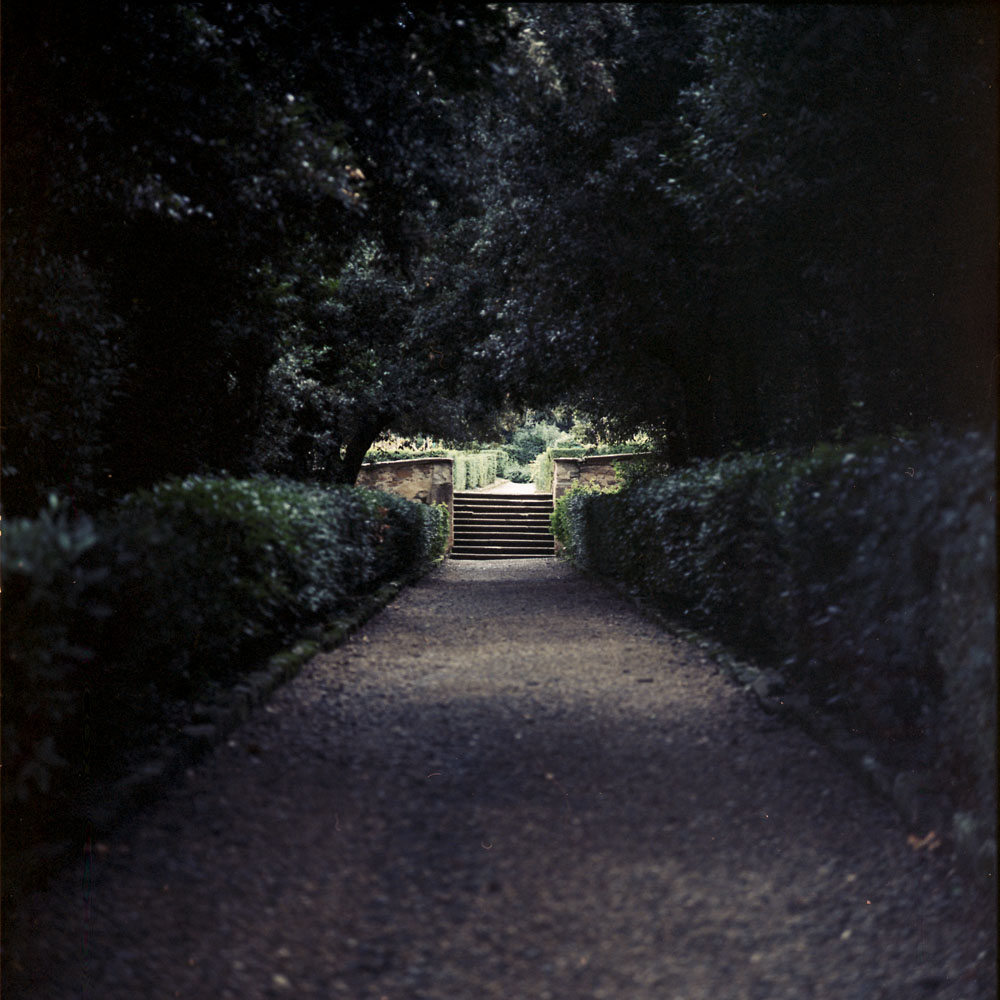
An allee of tall hedges in the Boboli Gardens, leading to a staircase. The gardens themselves are built onto the slope of a hill, so they have many changes of elevation.
Garden Allee, Boboli Gardens
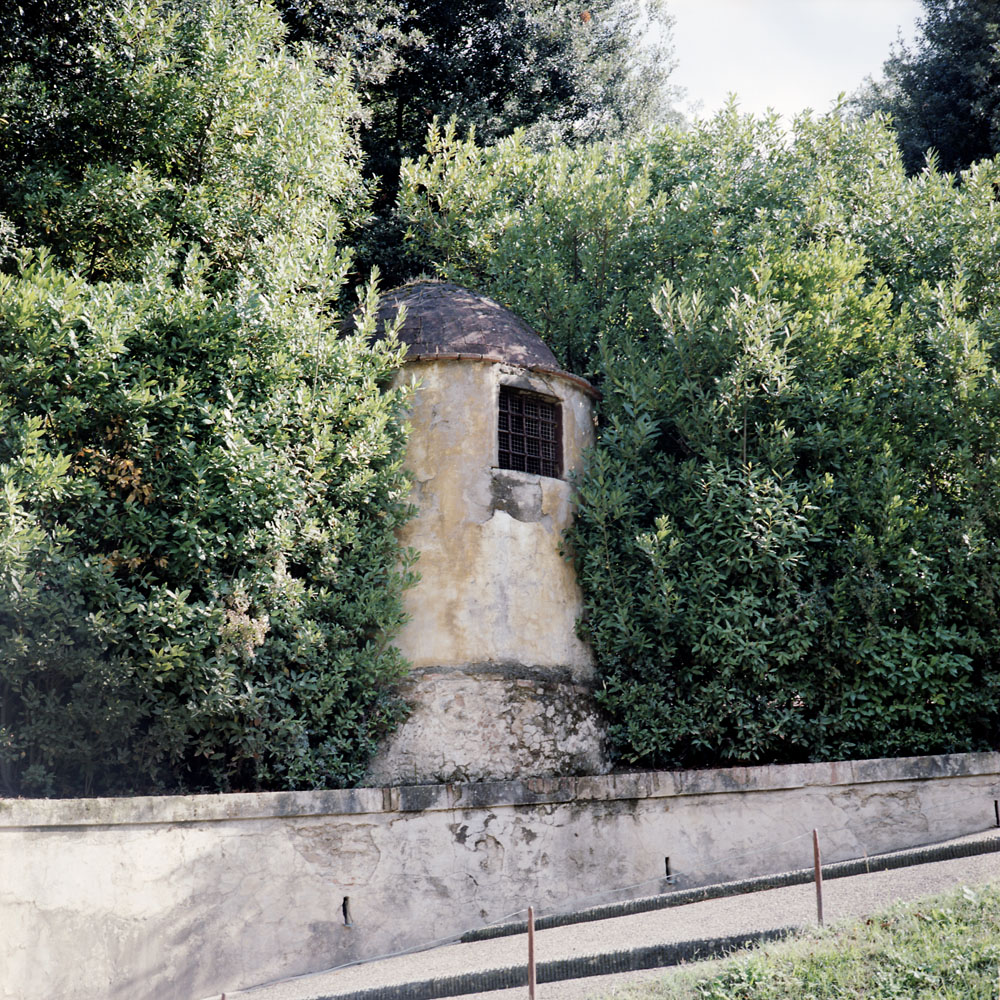
A tower set into the hedges along the ramp from the amphitheater to the Neptune fountain. I’m not sure what purpose it serves- it could be just a garden shed for storing tools and groundskeeping equipment, or it may relate to the water control systems for the myriad fountains in the garden.
Garden Tower Boboli Gardens
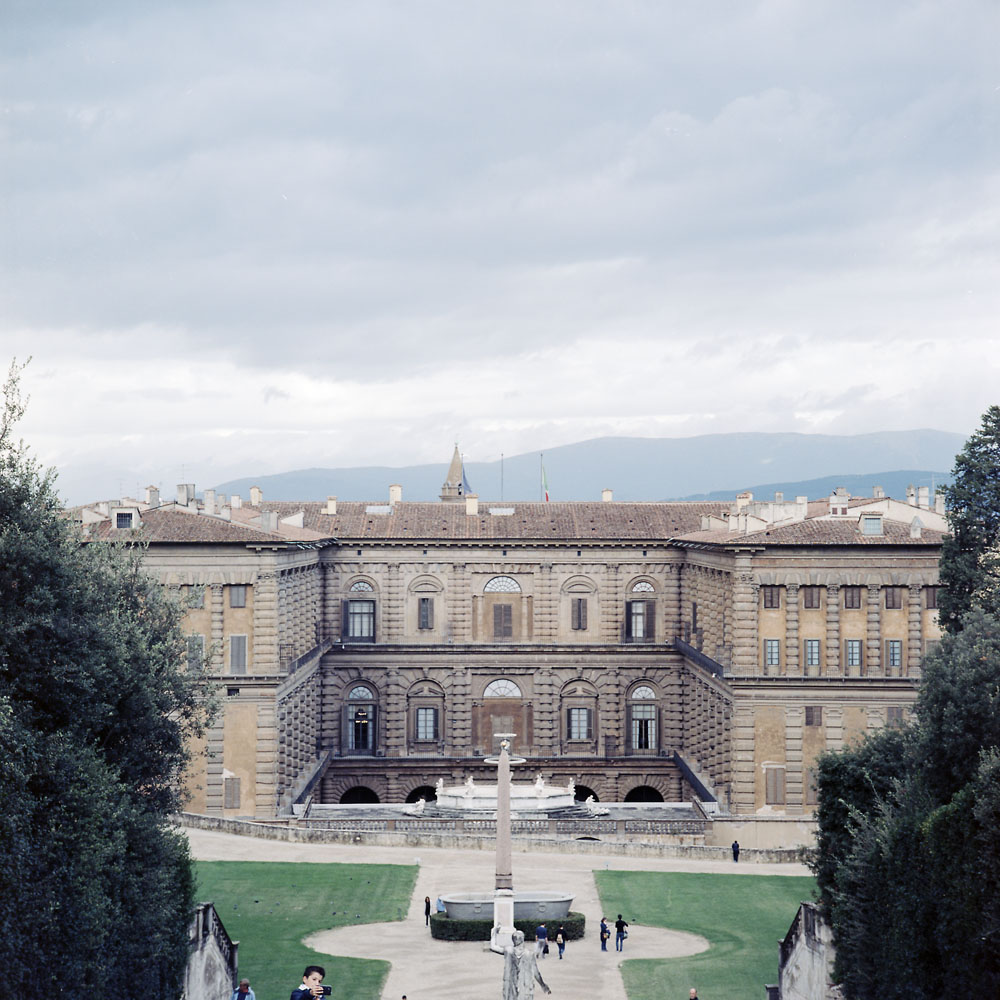
A view of the Palazzo Pitti from the top of the amphitheater stairs. The title comes from the boy in the lower edge of the frame taking a phone selfie. A very modern take on a very old palace.
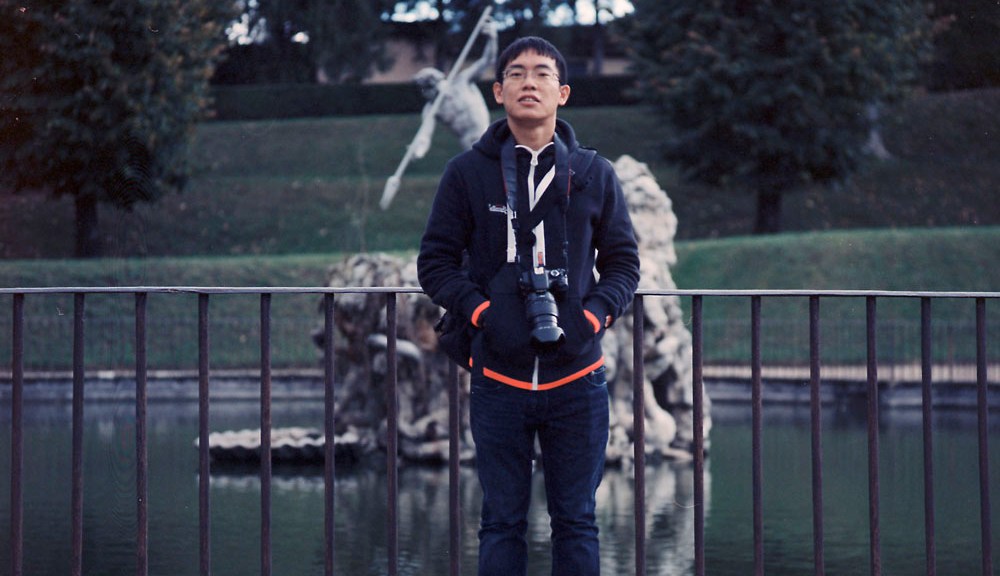
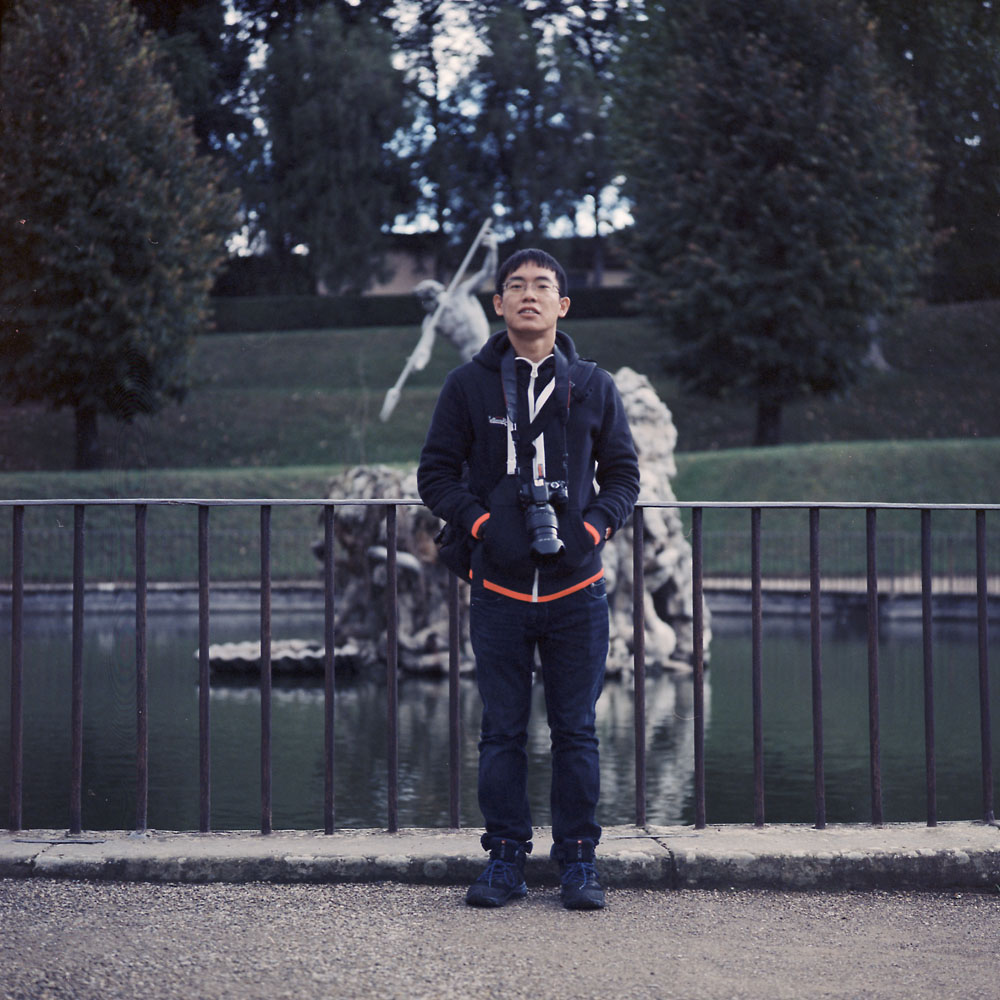
TC is a friend I’ve known for gosh, probably 10 years now. When we met he was a grad student working on his PhD at MIT. He’s now a full-fledged Doctor in Physical Chemistry, and working in Zurich. When I told him I was coming to Florence, he offered to pop down and hang out for a day or two. He was a real godsend, as I was still in the throes of a really bad allergy attack triggered by down pillows on the bed of my apartment in Rome, and he stopped at a pharmacy and got me some European Benadryl.
TC in the Boboli Gardens
We went to the Uffizi the first day I was in Florence, then grabbed dinner at a restaurant he found on Yelp. The food was quite good, but what shocked me was the size of the portions. I was used to these small portion sizes per course that I had been getting in Rome, so I had a pasta course, a salad, and an entree. The pasta wasn’t too much bigger than I was expecting, but the salad was entree- sized! I had only had maybe 1/3 of the salad when the waitress stopped by and asked about it. I told her it was very good but just too big. She offered to cancel my entree, which I was glad to accept. Half and hour later, we’re sitting chatting and the entree arrives after all!
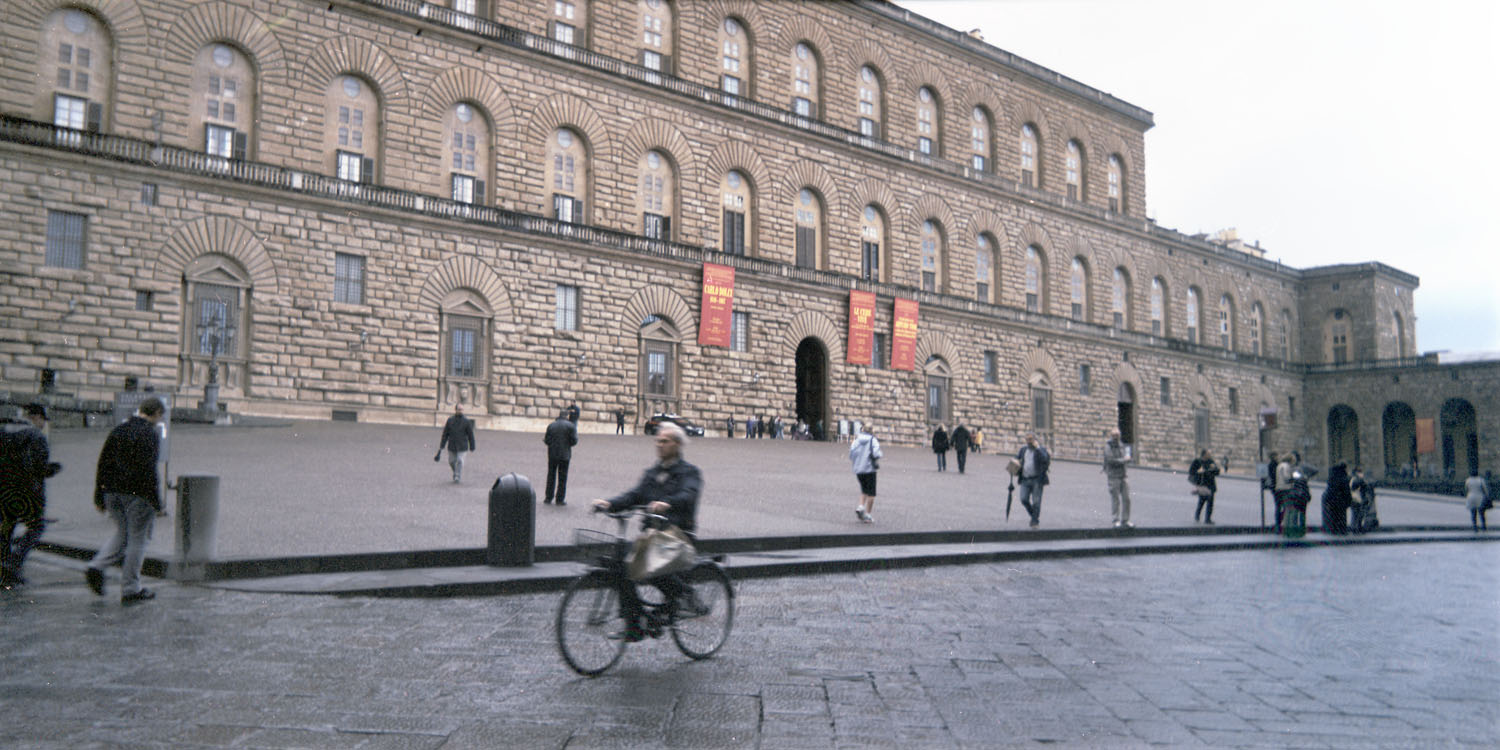
The next day, we met up again and walked over to the Palazzo Pitti via the Ponte Vecchio. The Palazzo Pitti is gargantuan – it was the Medici family’s main residence in the 16th and 17th centuries, and everything about it was designed to overawe. The Vasari corridor connects it with the Uffizi over the Ponte Vecchio to provide a secure passage should the Medicis need to escape an angry mob, or just not want to mingle with the hoi polloi on their way to and from their private box seats at the Santa Felicita church.
Cyclist, Palazzo Pitti
The Boboli Gardens back onto the Palazzo Pitti. They were once the private playground of the Medici family, but now are open to the public. This is the garden facade of the Palazzo Pitti.
Pitti Palace, from the Boboli Gardens
After touring through the Pitti and hiking up and down the Boboli gardens (which are on the face of a fairly steep hill), TC and I grabbed lunch at a little cafe across from the Palazzo Pitti’s main entrance. I had my first ever cappuccino there. I’m now a devotee, provided there’s enough sugar.
So thank you, TC, for the Benadryl, the companionship, and for the swiss chocolates – they were delicious!
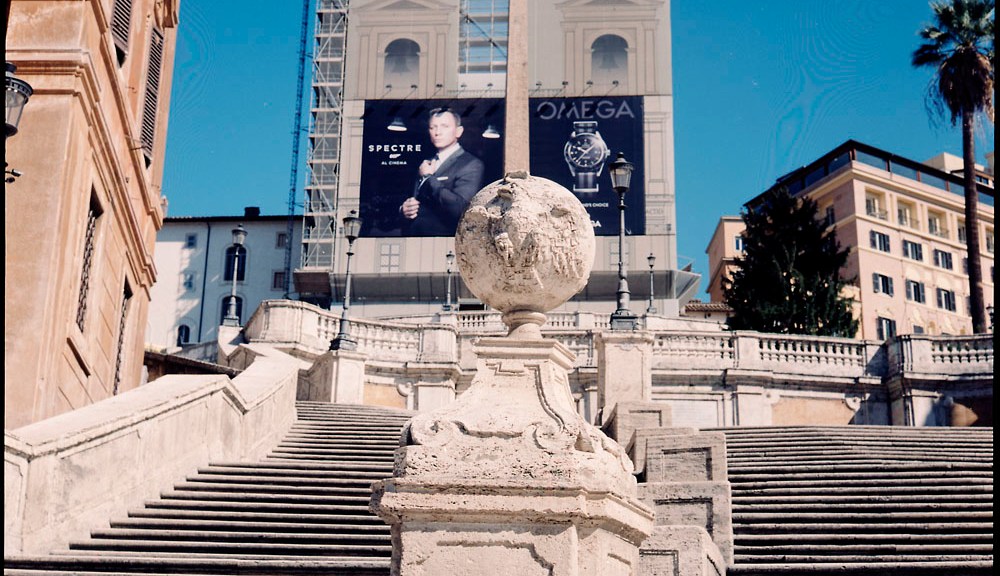
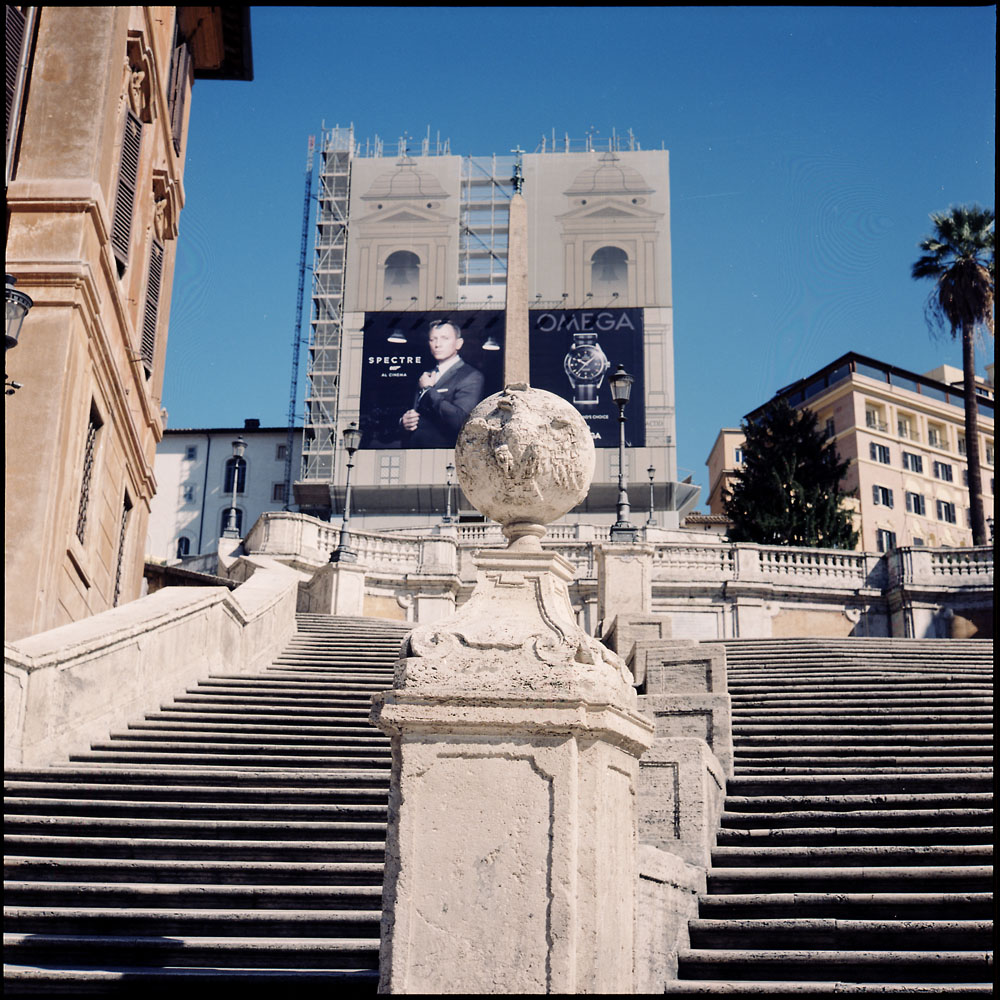
At this moment in time, the Spanish Steps are closed, yes CLOSED, fenced off with chain link fencing, due to an ongoing restoration project. So this shot, taken by poking the lens of my camera through the fence, is something otherwise virtually impossible without photographic trickery. Pretty much 24 hours a day, 7 days a week, 365 days a year, the Spanish Steps are crowded with tourists and the steps themselves are nigh-well invisible. The downside is all those tourists coming to see the Spanish Steps were displaced off the steps and back into the street below, completely over-running the fountain at their foot. So an otherwise lovely fountain was unphotographable.
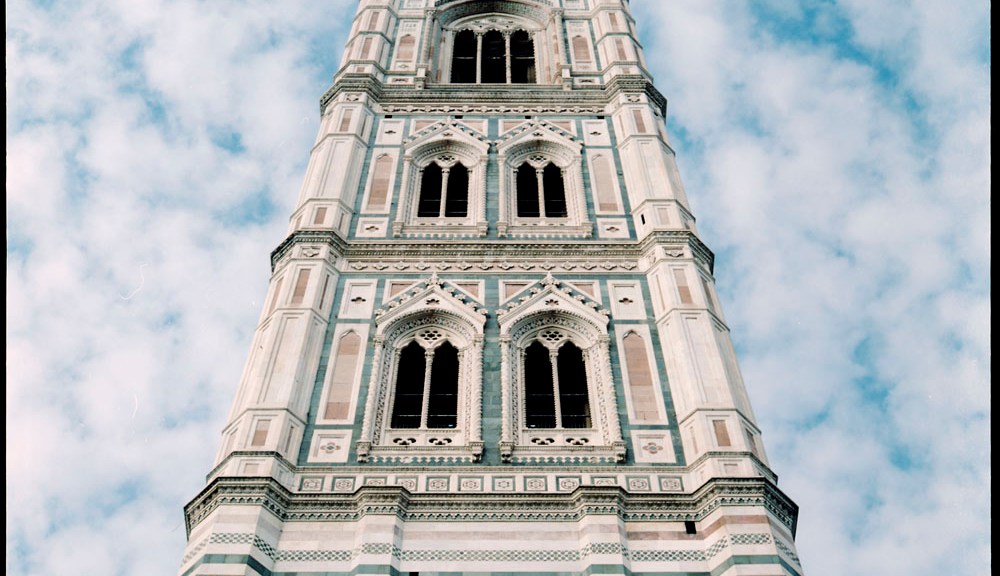
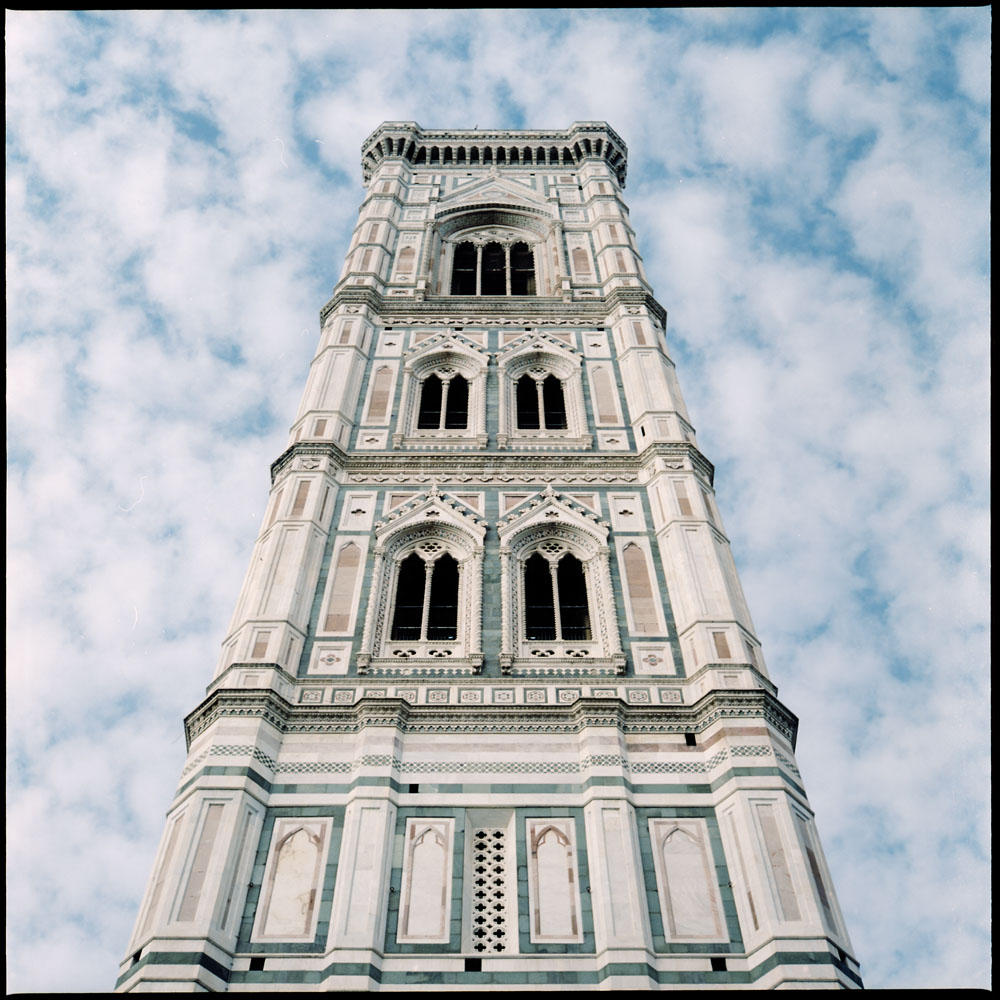
The bell tower, or campanile, of the Duomo in Florence. It is referred to as Giotto’s Campanile because it was designed by the famous painter Giotto, who had become the second Master of Works at the Cathedral after a 30 year gap following the death of his predecessor.
Campanile di Giotto, Florence
He created the polychrome marble scheme for the tower to match that which had already been designed for the cathedral itself, and saw the completion of the first floor of the tower before his own death in 1337. Today, the bell tower is as much a symbol of Florence as the dome of the cathedral or the Palazzo Vecchio.
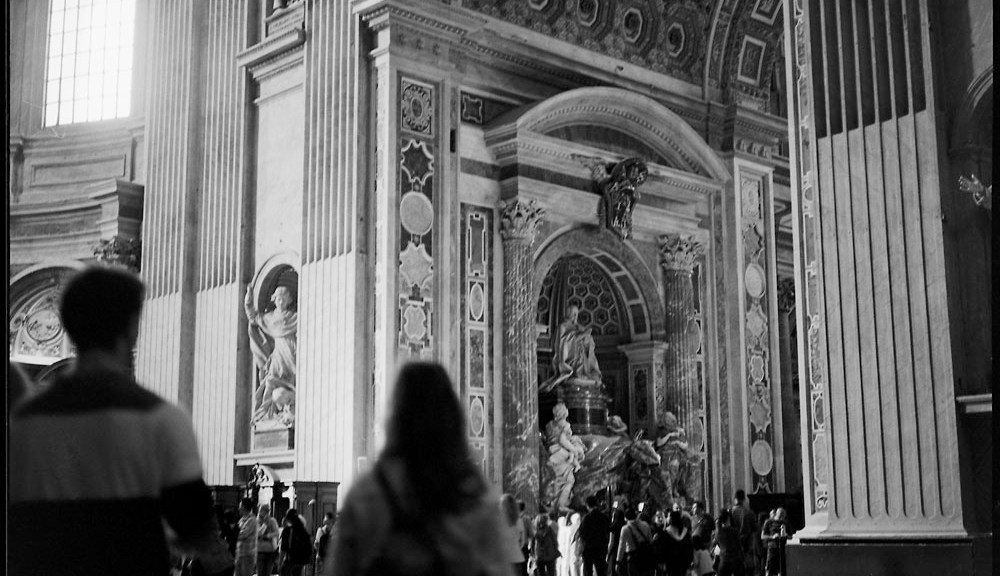
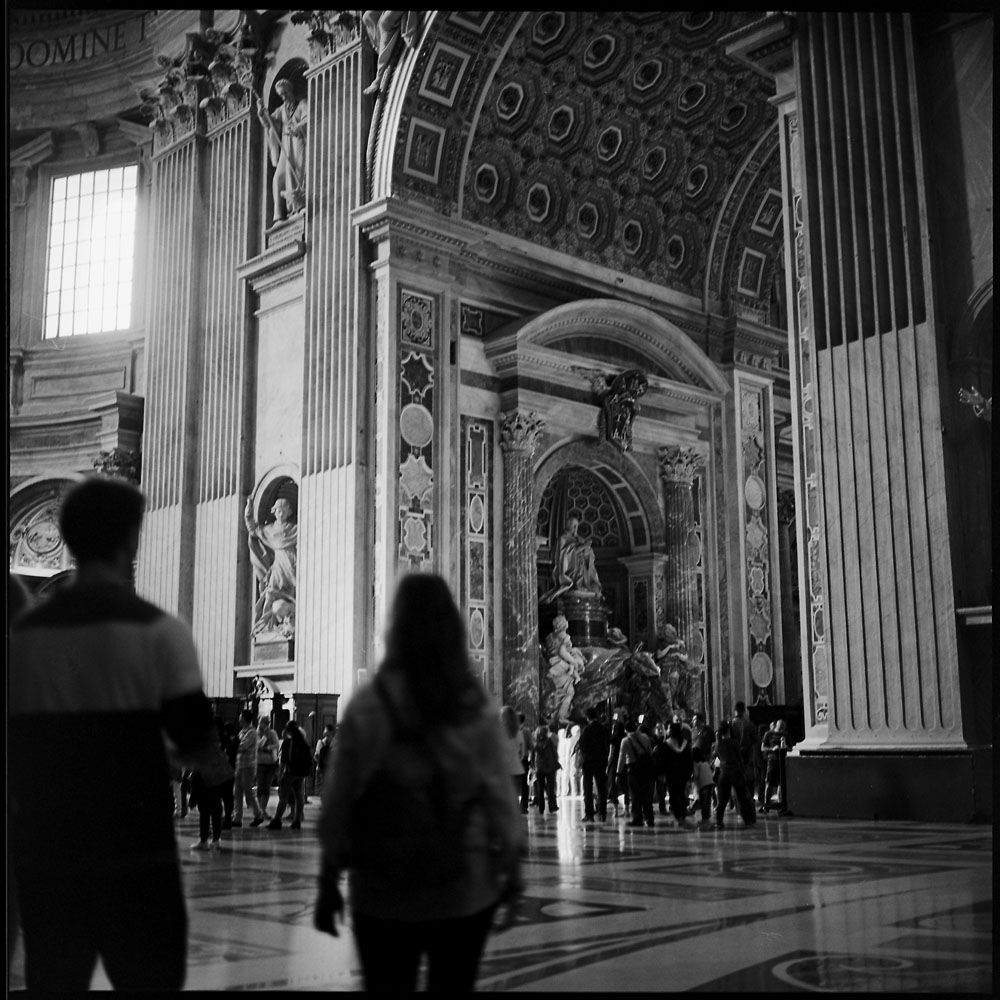
It’s so easy to be overwhelmed by St. Peter’s – the space is so vast, even when full of tourists it doesn’t shrink down.
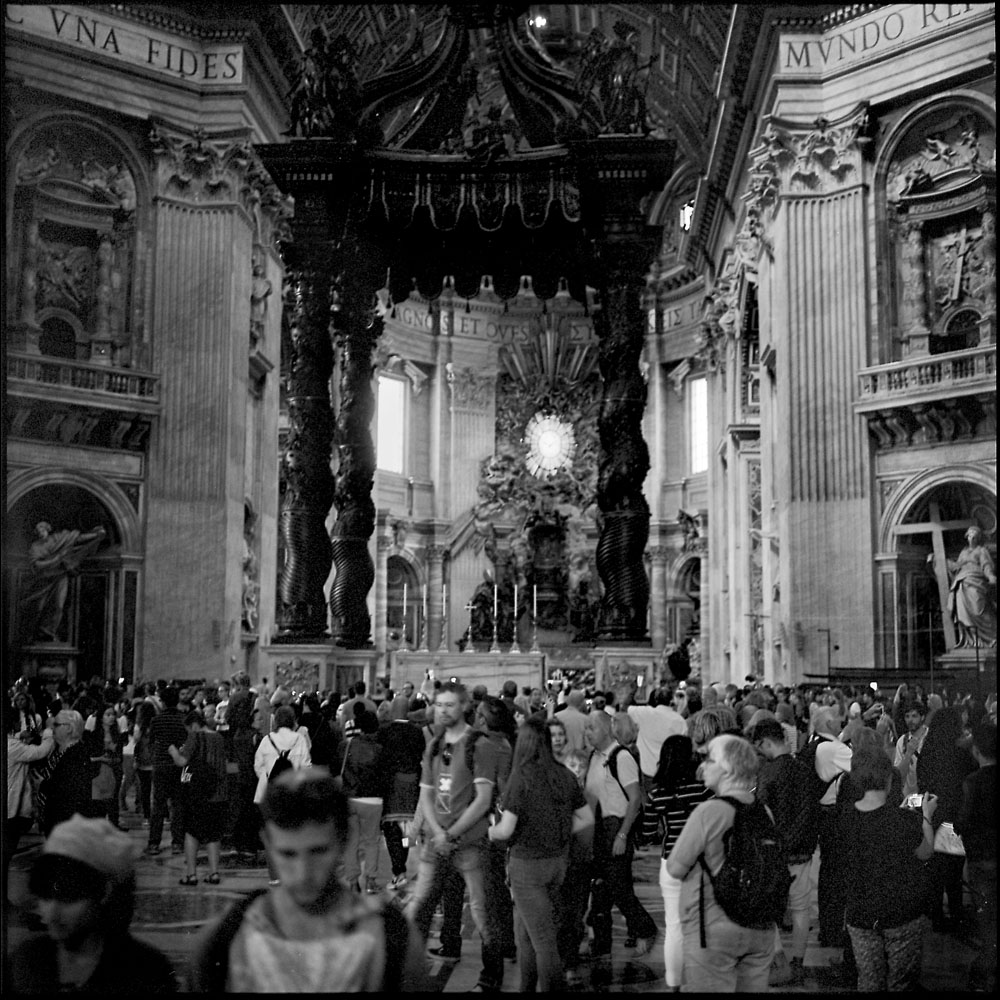
The baldacchino over the high altar at St. Peter’s is one of the more recognizable objects. Cast from bronze allegedly taken from the roof of the Pantheon, it was designed by Bernini (remember the staircase from earlier?) and marks not only the center of the crossing under the dome, but the grave of St. Peter. While one of its alleged functions is to provide a bit of human scale to the vast space of the basilica, it is so massive that it only compresses the space if there are no people around to provide comparison.
Baldacchino
This view into the transept from the crossing with the people in the foreground I think really helps give you a sense of scale for the place.
Crossing the Nave, St. Peter’s
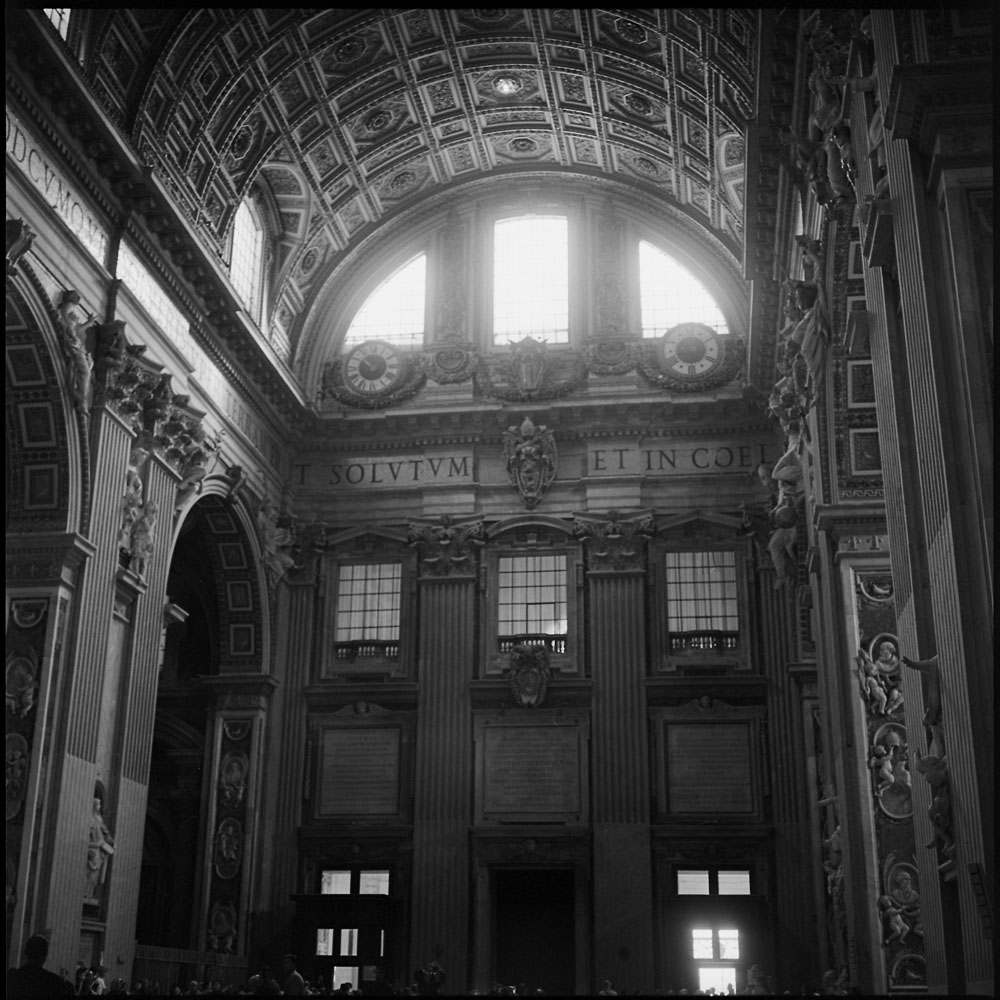
This is a view of the entrance with its two clocks, as seen from the mid-nave.
St. Peter’s Entrance, Clocks
On a separate but related note, it’s interesting how we refer to Rome and the Vatican interchangeably when we speak of the seat of the Catholic Church, when in fact they are two distinct entities. This was not always true, of course- especially during the Renaissance through the early 19th century, it was literal truth to say that Rome was the papal seat. Now, of course, the Vatican is in fact not only a separate city within the city of Rome, but in fact a separate nation, complete with its own passports. The Vatican is in fact the world’s smallest country.
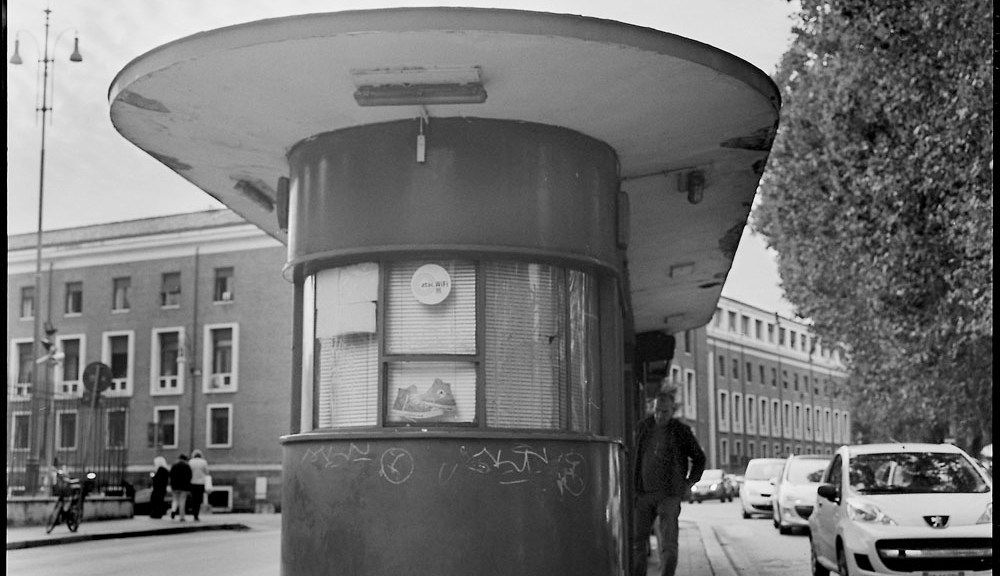
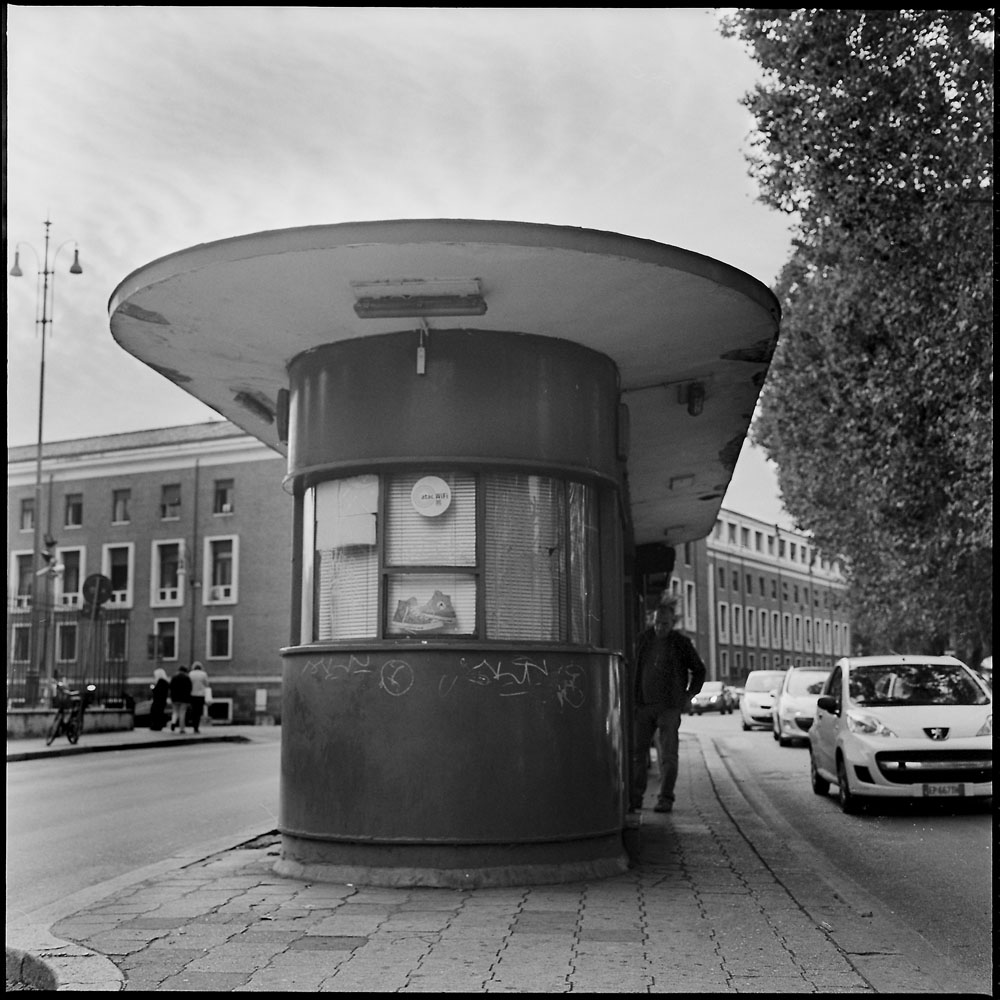
This is where I went to catch a bus to go to the Vatican Museum on my first day in Rome. It’s a vintage bus shelter, hard to date, but I’d guess post-war, maybe as late as 1950s. What you can’t see in the picture is that in the middle of the structure is a news-stand. Today it’s not so bad, but I wouldn’t want to have had to work there even as recently as the 1980s when diesel exhaust was much heavier than it is now.
Vintage Bus Shelter, Rome
That’s actually a sense-memory I kind of miss – you knew you were in Europe when you smelled the diesel exhaust everywhere. That and certain kinds of tobacco. It’s still a noxious odor, but the emotional context of it is so positive. I suppose geologists feel that way when they smell sulphur or biologists with methane.
 dcphotoartist