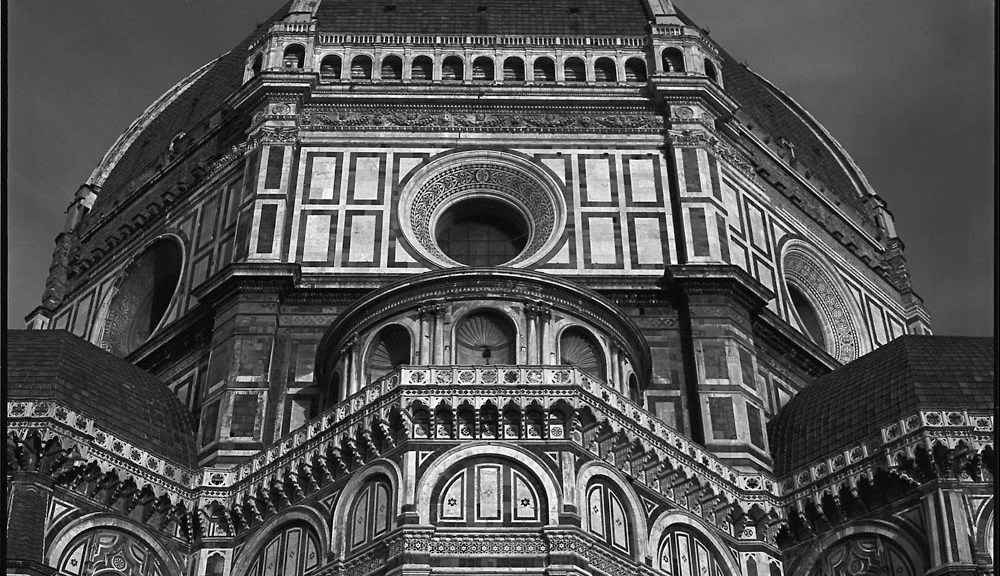
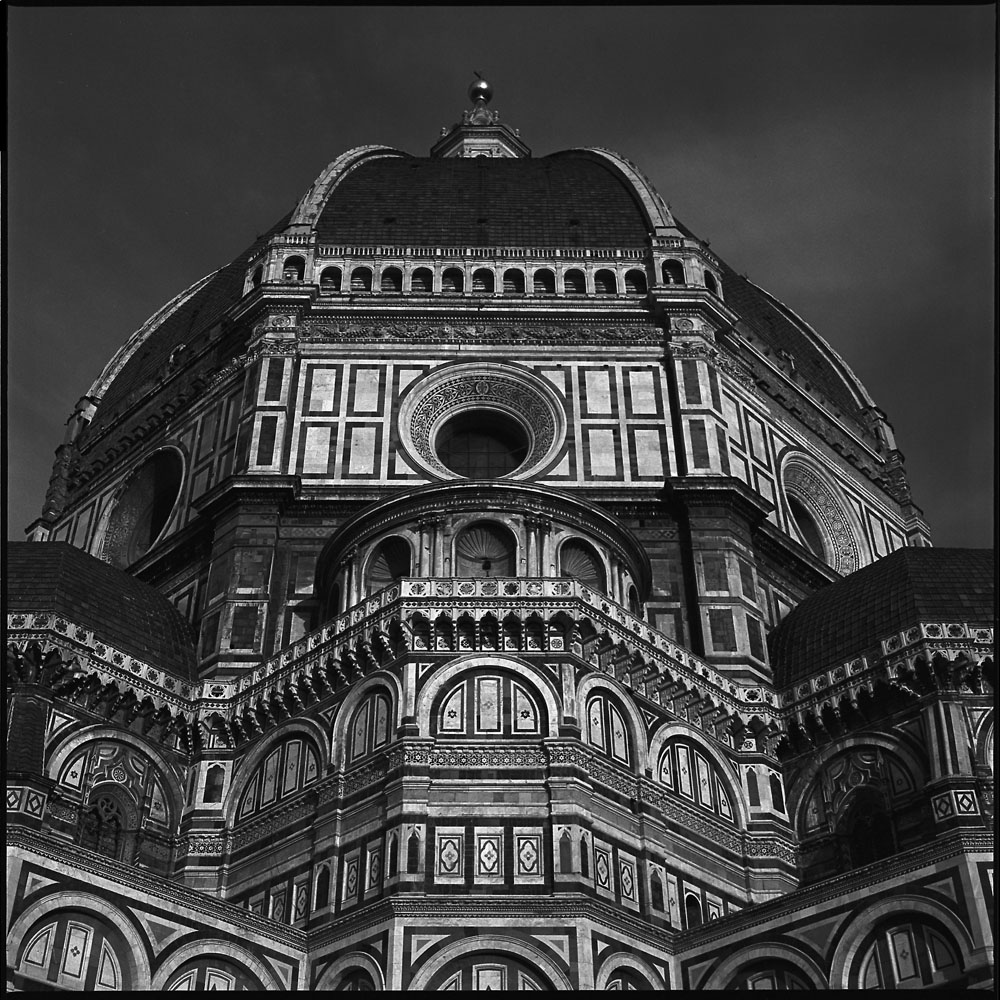
Here is the famous dome of the Duomo, Florence’s main cathedral. Designed by Brunelleschi, one of the Renaissance’s greatest architects, and built using highly innovative techniques and equipment that other than the power source being humans and/or animals, any large construction crew today would recognize. The dome has stood as one of the most recognizable symbols of Florence, if not all Italy, for nearly six centuries.
Cupola, Santa Maria Del Fiore, Florence
There’s a terrific book out there on the dome and its design and construction, Brunelleschi’s Dome: How a Renaissance Genius Reinvented Architecture, if you want to read more about it. I’m actually going to go back and re-read it myself, now that I’ve re-visited the cathedral and have been reminded of just how magnificent and amazing it is. The dome and its lantern stand at an impressive 375 feet high, making it the largest dome in Western architecture until the modern era, and it still remains the largest ever built using brick and mortar.
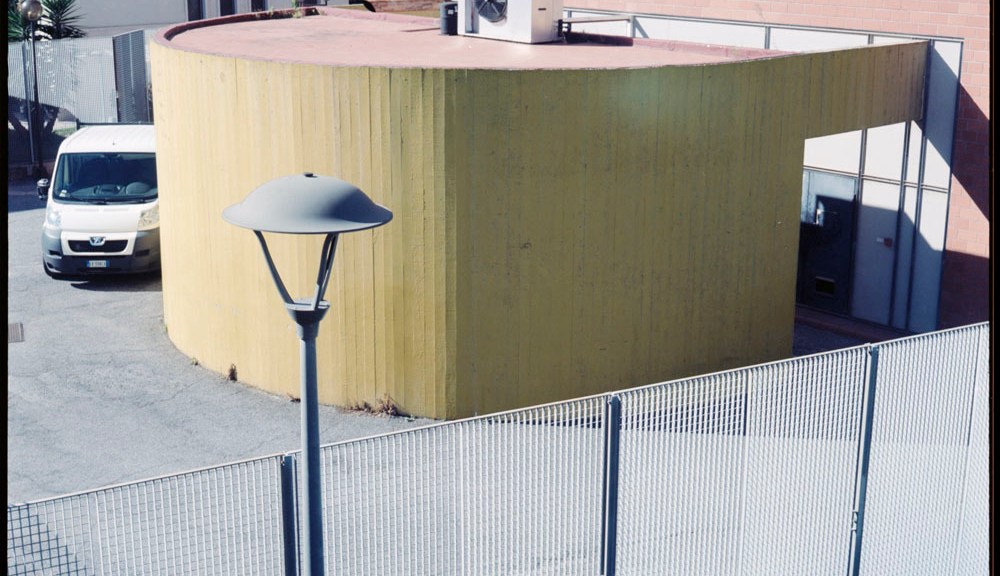
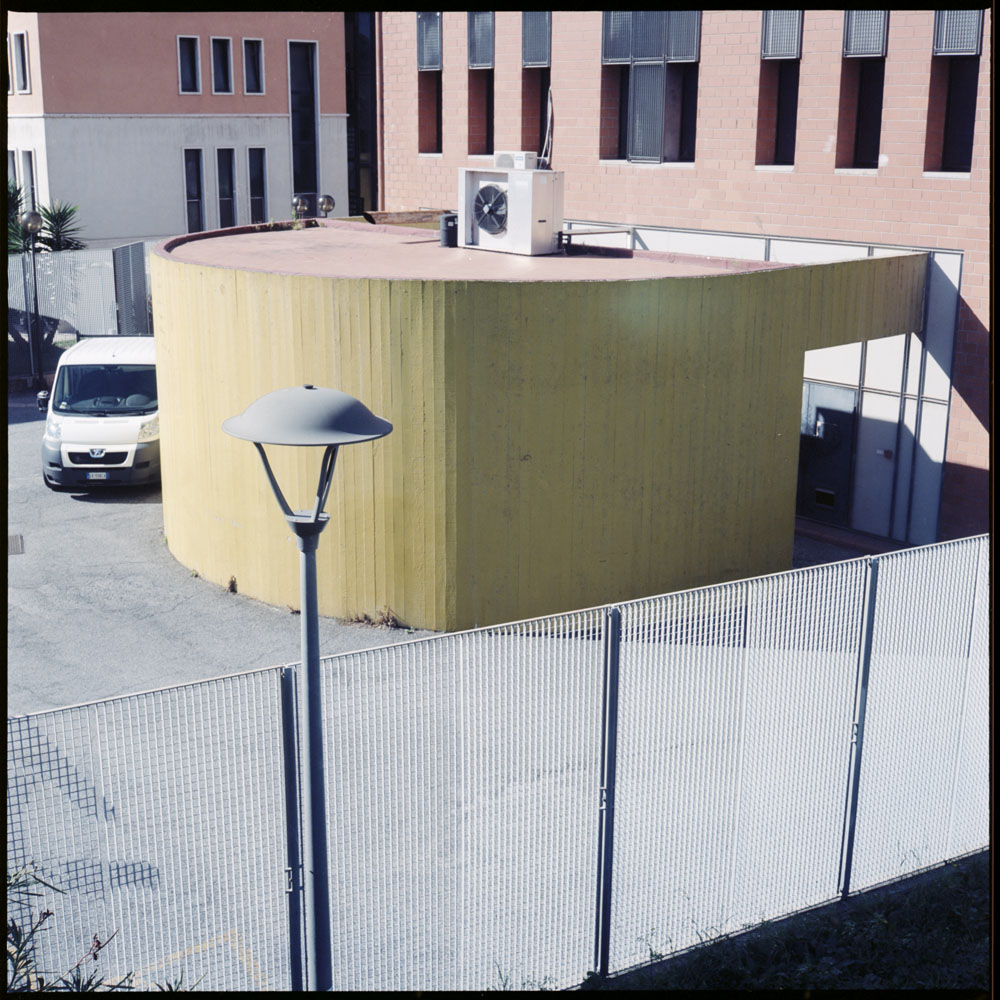
As I was coming down the stairs from the pedestrian overpass connecting the Garbatella Metro station with the other side of the railroad tracks, I saw this scene. This is actually about repetition, in a way: a repetition of one.
Yellow Wall, Garbatella
There’s one lamppost, one van, one A/C unit, and one yellow wall. A series of solitudes.
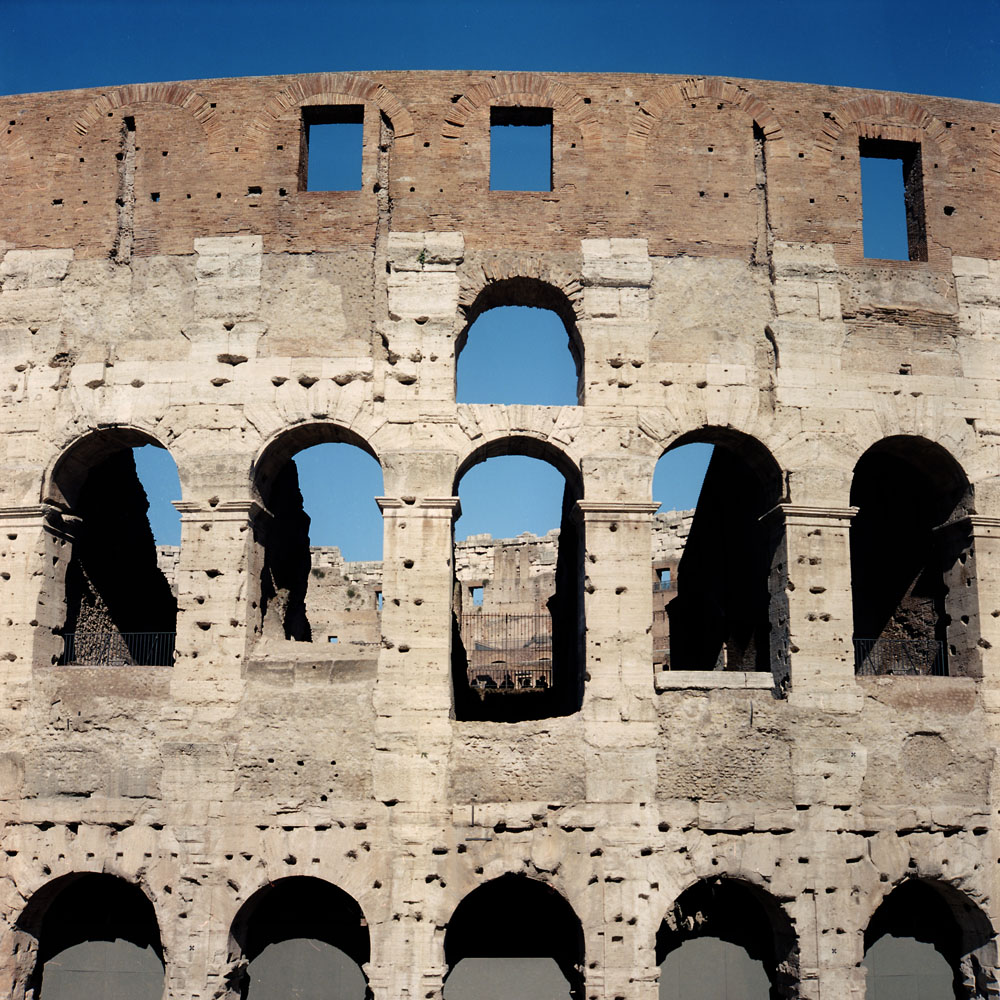
The Colosseum is truly one of the marvels of ancient Rome. A building that could seat somewhere between 50,000 and 80,000 (the higher number comes from an ancient source – modern estimates are lower) but evacuate them all in just minutes, hosted mock sea battles, and was designed and constructed without the use of decimals or precision measurement systems.
Colosseum Wall
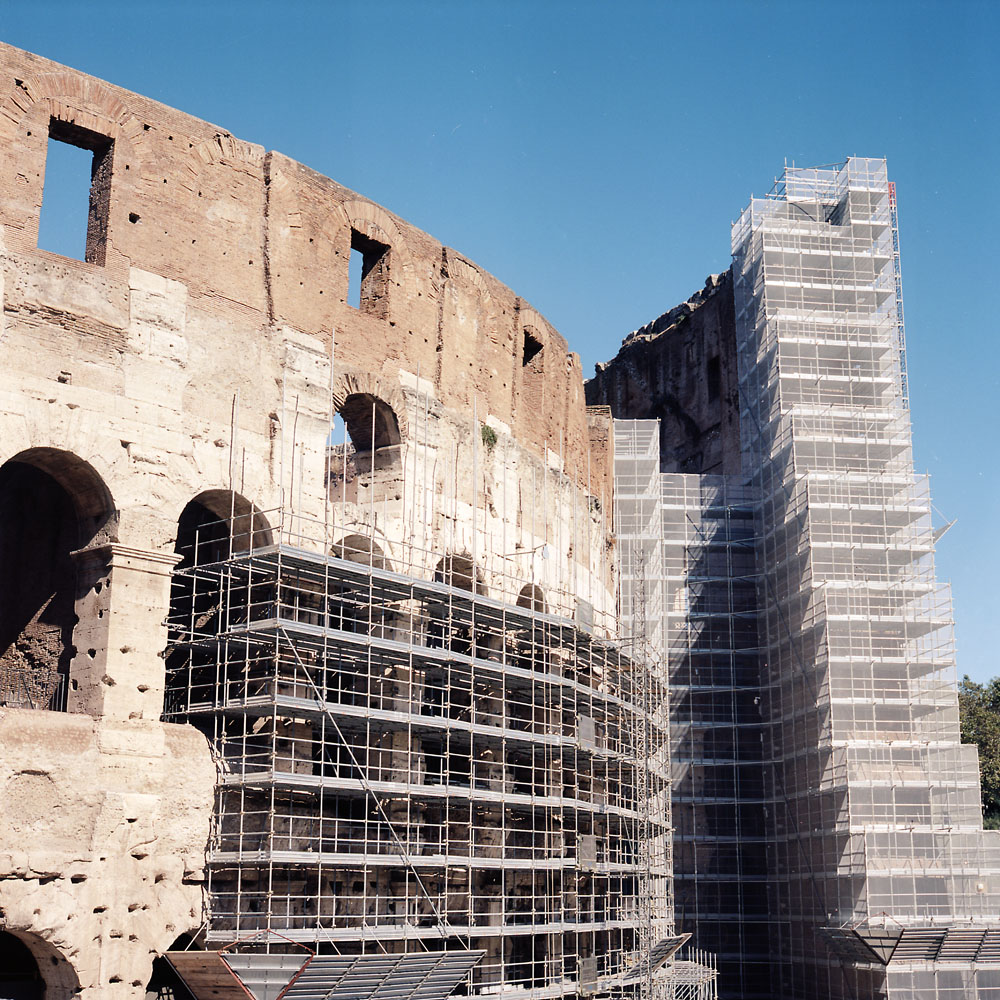
There is an ongoing project to restore and stabilize the outer wall of the Colosseum. To that end, they’ve wrapped parts of the exterior in scaffolding to assist in the work.
Colosseum Scaffold Rear
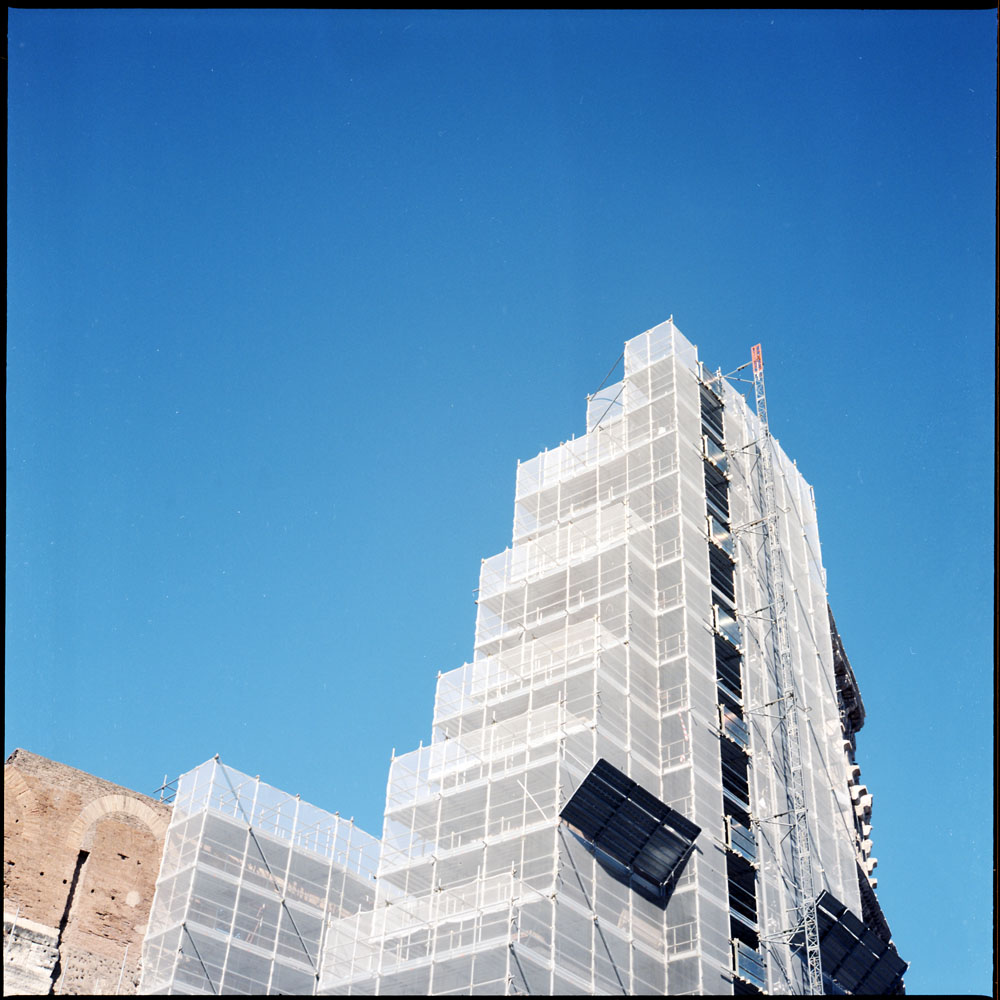
Viewed from a different angle, the scaffold takes on the appearance of a modern skyscraper.
Colosseum Skyscraper
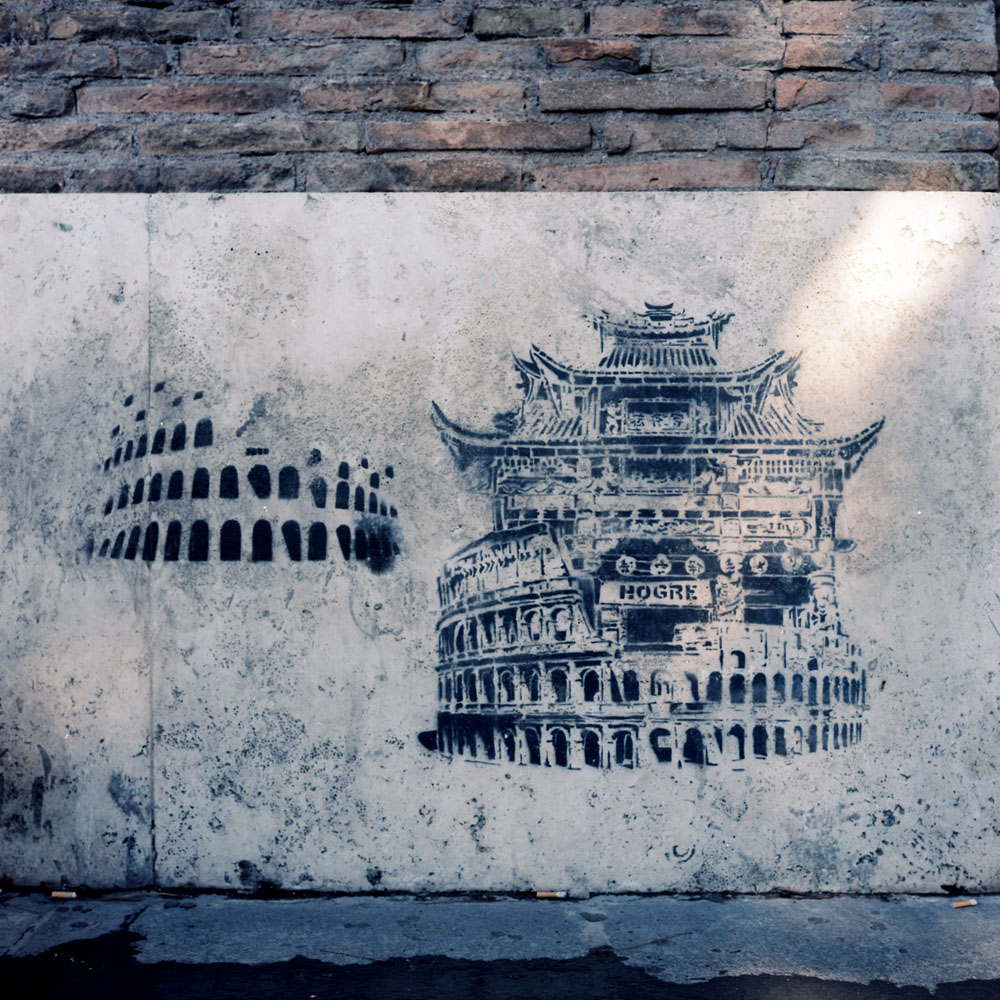
I spotted this bit of graffiti on a wall outside the entrance to the Colosseo Metro station.
Colosseum Graffiti
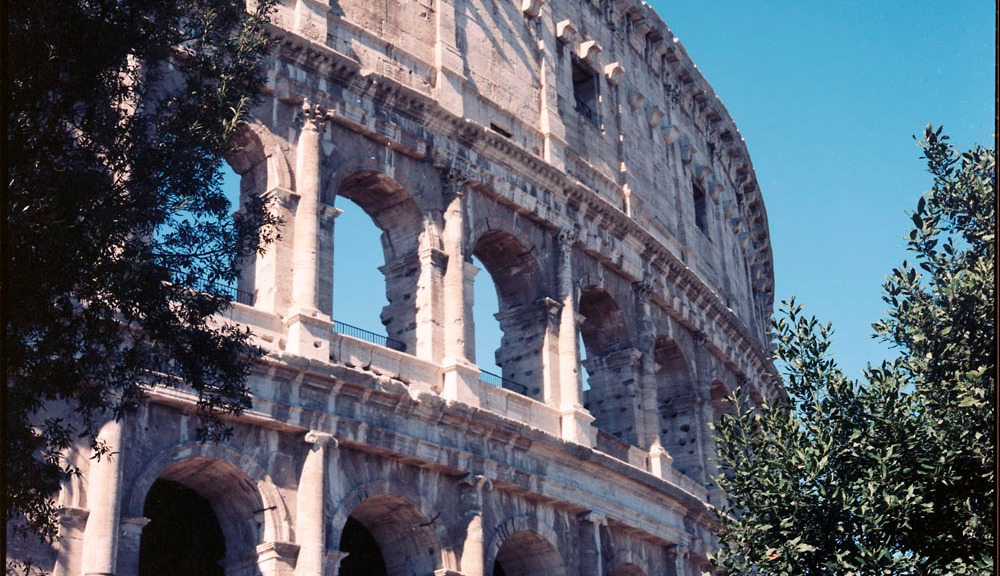
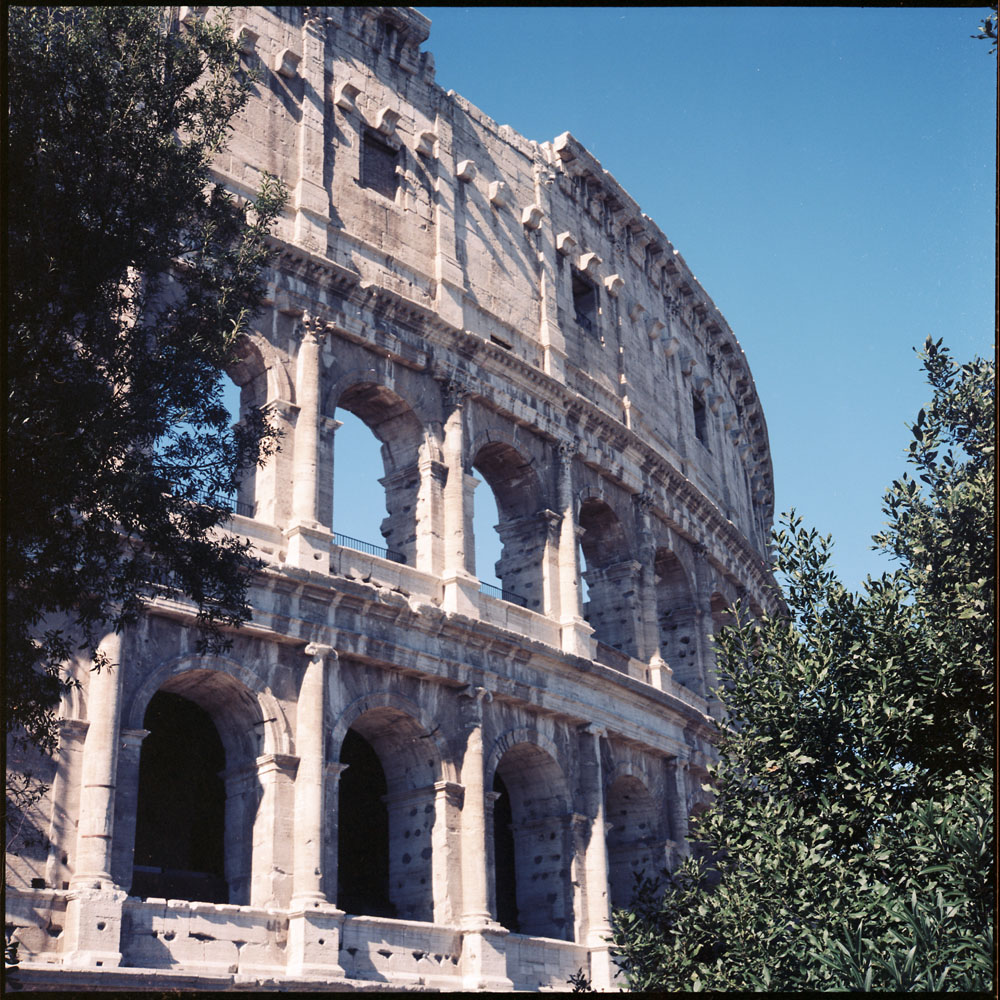
A simple shot of the Colosseum exterior wall in a section not undergoing stabilization work.
Colosseum Exterior, Trees
You’ll notice I have no shots of the interior of the Colosseum. I did not make it inside. Traveler’s tip – if you want to see it without booking a tour, you need to buy a timed entry ticket, which you can get from the ticket booth at the entrance to the Forum. Get the ticket from the Forum (it lets you in to both the Forum and the Colosseum) instead of trying to get it directly from the Colosseum. Why? Because the line to get in, EVEN if you have the RomaPass card, is about 2-3 hours long.
There will be lots of touts outside the Colosseum offering tours that will let you skip the line to get inside. Most of these will have the sole value of letting you skip the line – the guides are of varying and often poor quality. You’re better off pre-booking your tour in advance through an agency with online reviews that you can tell how good a program they offer. The advantage of a pre-booked tour is that the tour guides will be able to take you in to parts of the Colosseum you can’t enter if you just go in yourself.
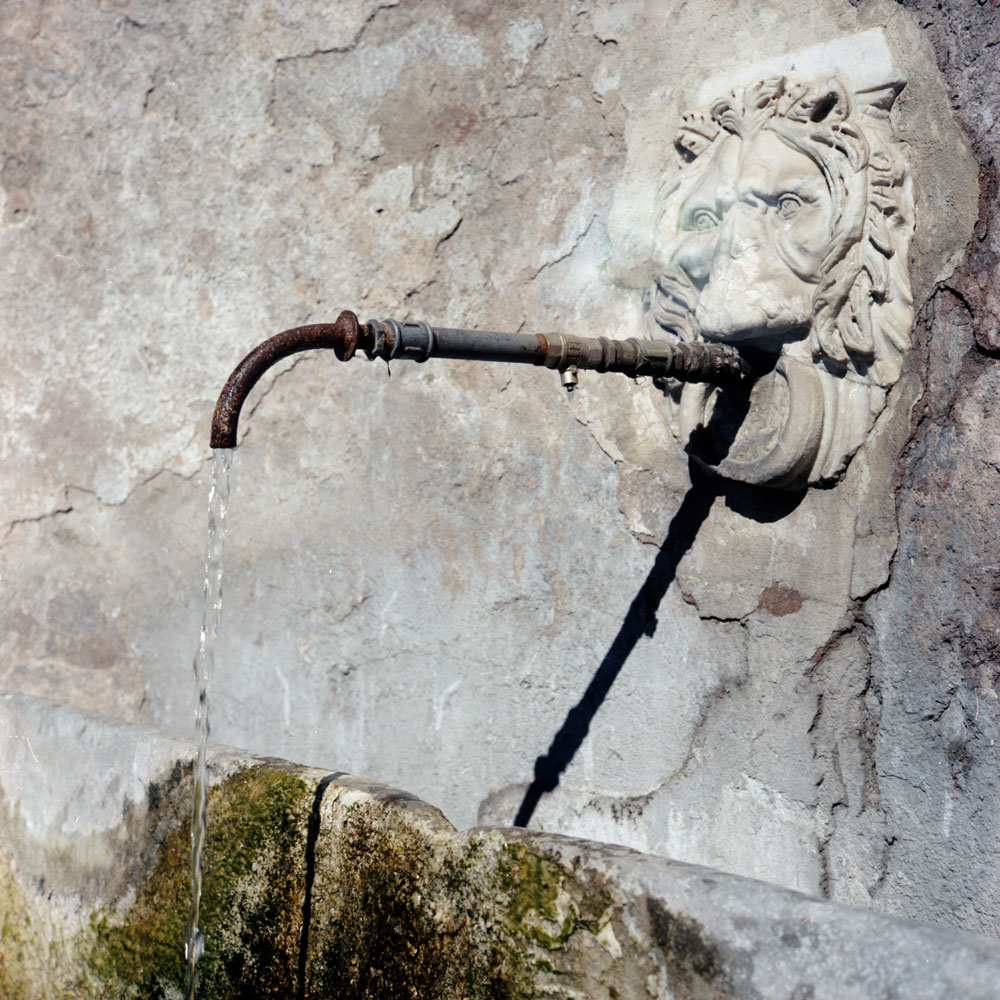
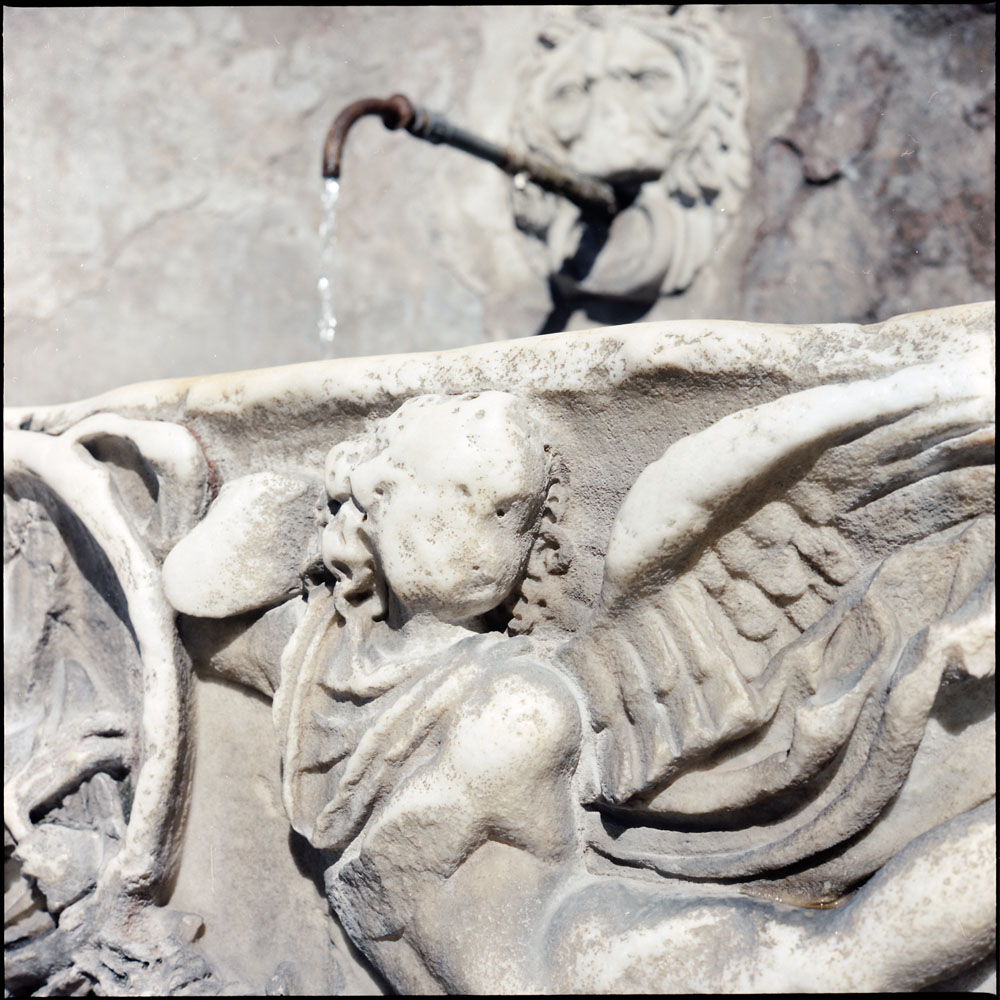
You’ll find public drinking fountains all over Rome. It’s one of the charming features of the city. Unlike fountains in some cities, they run continuously. You can fill a cup or a kettle from the spigot, or if you just want a sip, you can put your finger under the water spout to block it and water will squirt up from a small hole in the top of the pipe so you don’t have to hang upside down to get your water fix.
Water Fountain, Colosseum
That’s a try-at-your-own-risk activity though – if the water pressure on the spout you’re blocking is good, it comes out the little hole with quite some velocity – I tried it on this fountain and got a thorough squirting in the face. Given the heat of the day it was a welcome squirt, but not expected.
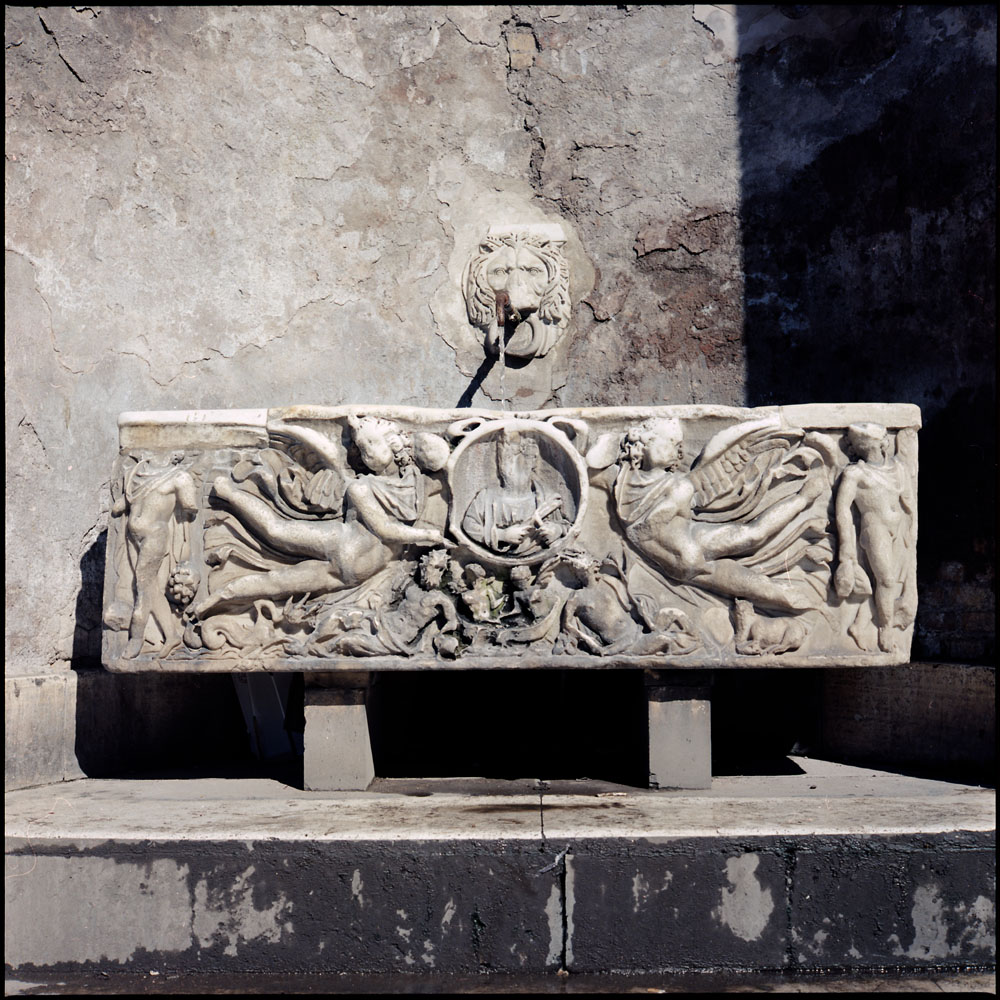
I don’t know how old the trough under the spigot is, but it appears to be of the late Imperial era. It may have always been a water trough, or it may have been a sarcophagus – it’s the right size for it. But probably only in Rome will you be able to drink your water in a 1700 year old water fountain.
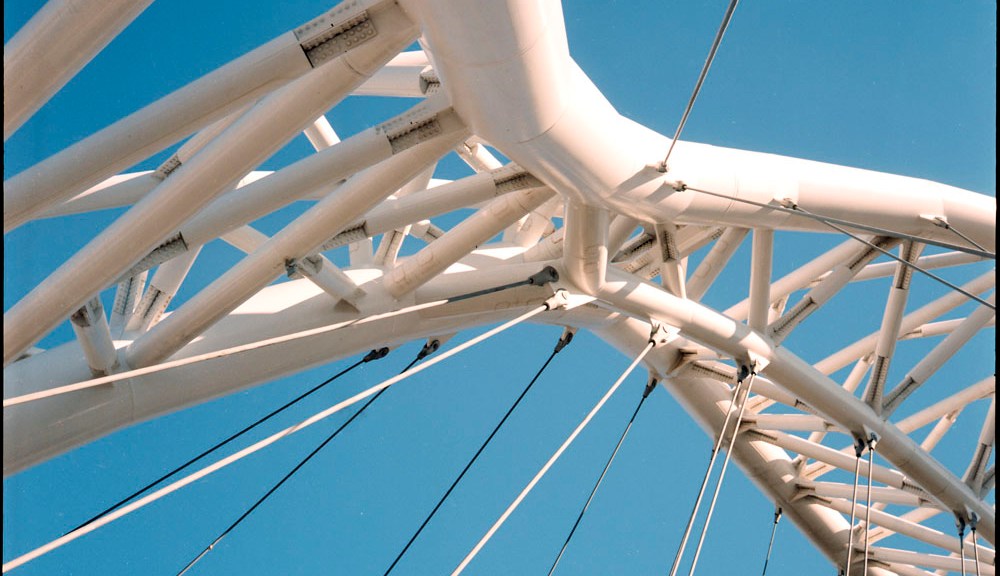
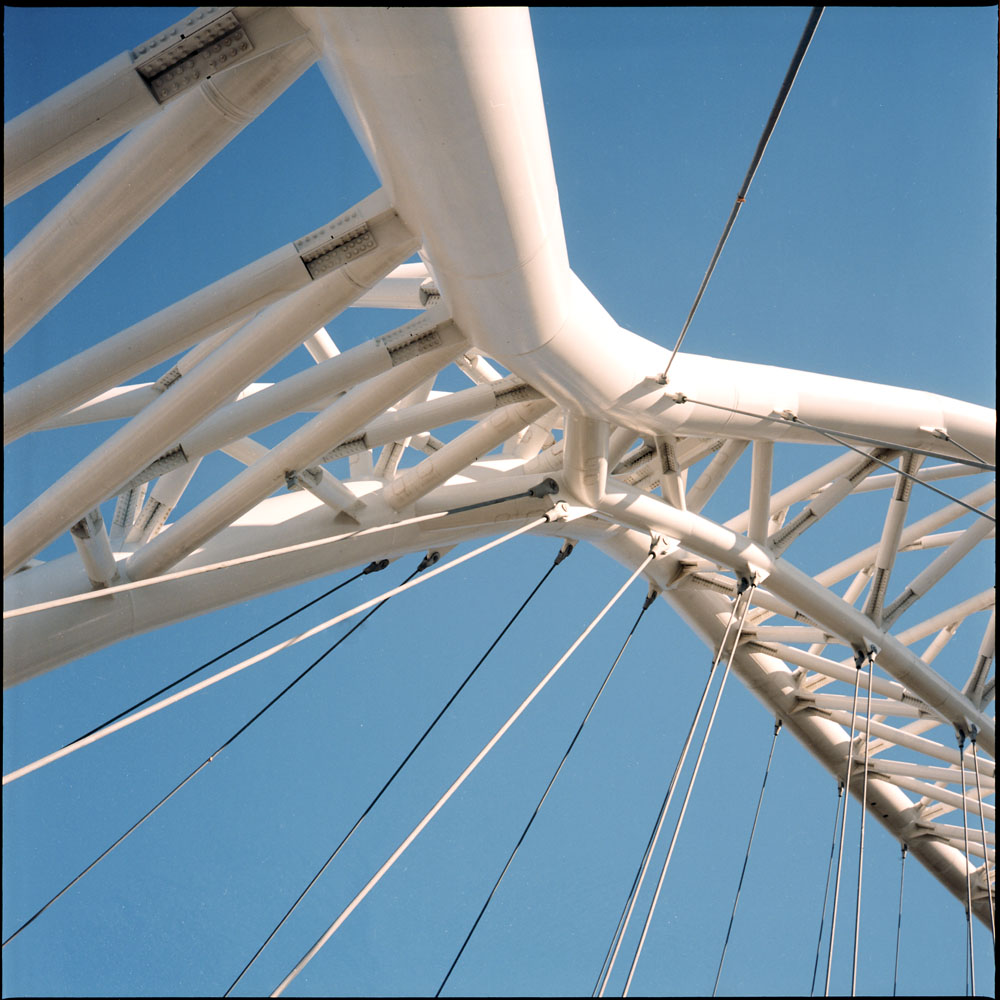
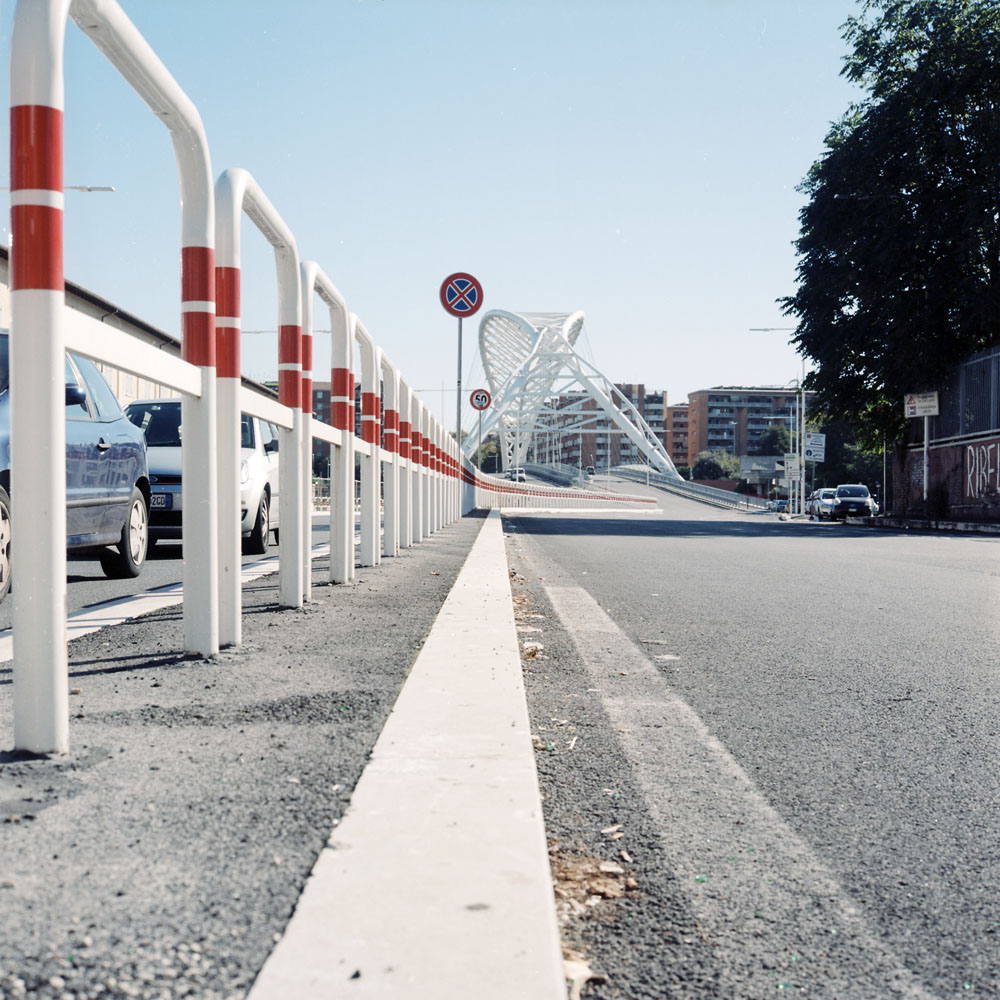
Italy isn’t all about ancient structures – while there are historical and architectural marvels aplenty in the center of the city of Rome, modern architecture happens too. At the Garbatella Metro station, this enormous viaduct that carries a four lane road over the railway tracks soars into the sky like a giant DNA strand or a dinosaur skeleton bleached white in the sun.
Viaduct, Garbatella, RomeViaduct, Garbatella, From Below
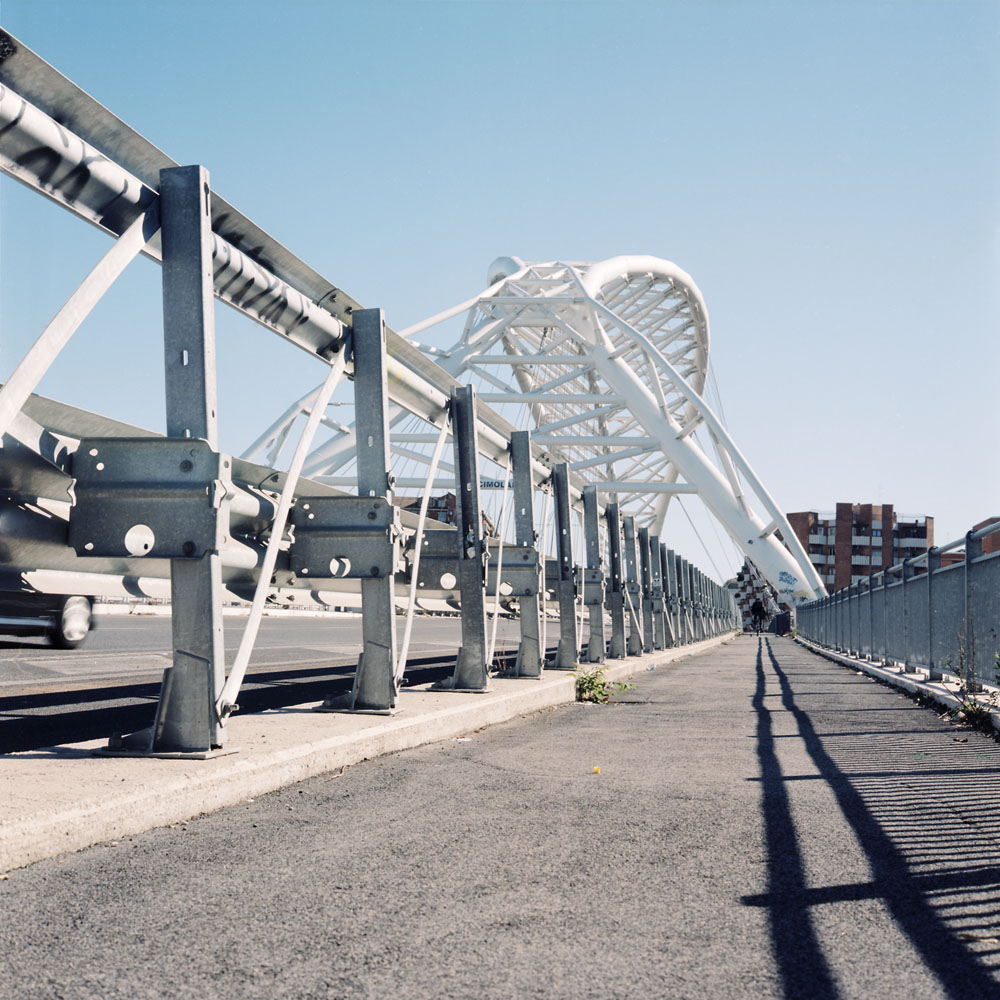
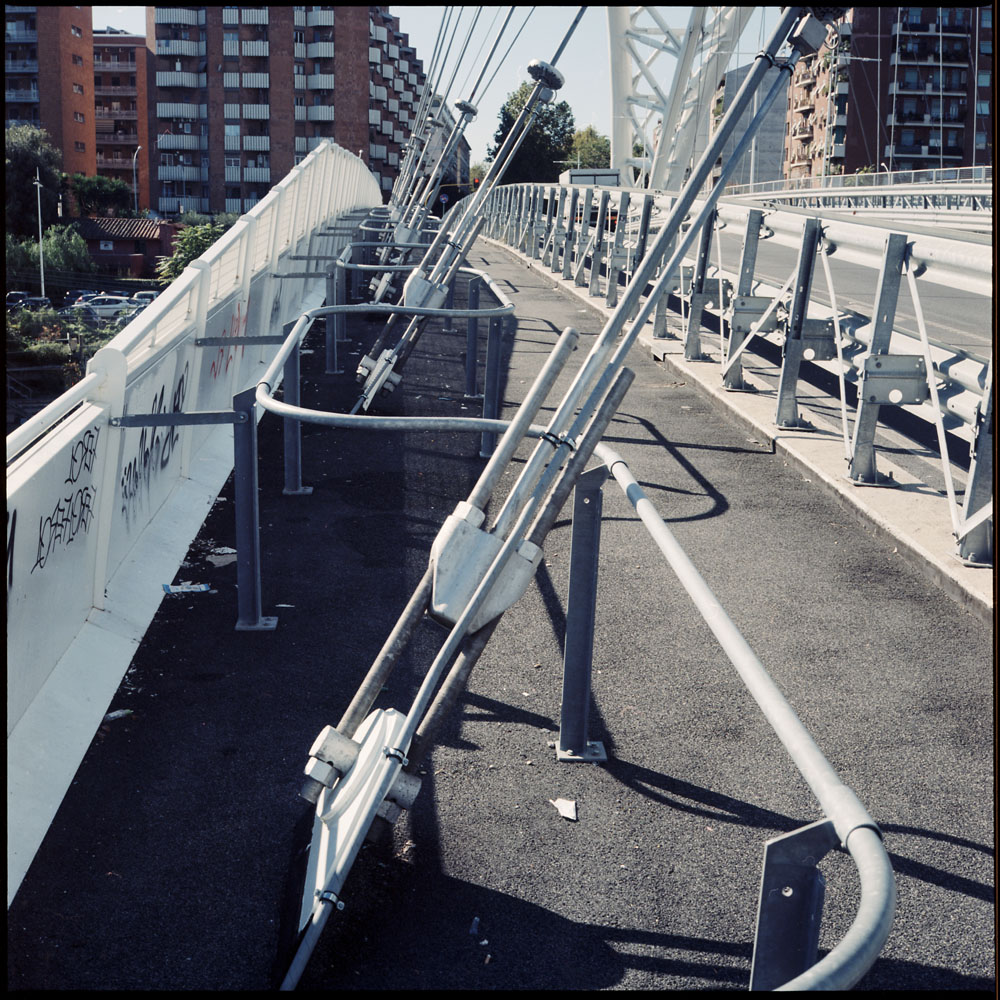
Everything about this bridge was designed with an artistic conceit, even the railings that surround the suspension cable anchor points – they undulate like the bridge form itself, like a ribbon or a snake winding its way between the cables.
Railings, Garbatella Viaduct, Rome
Even the safety barrier between the lanes on the roadway has been thoughtfully designed from an aesthetic as well as functional perspective.
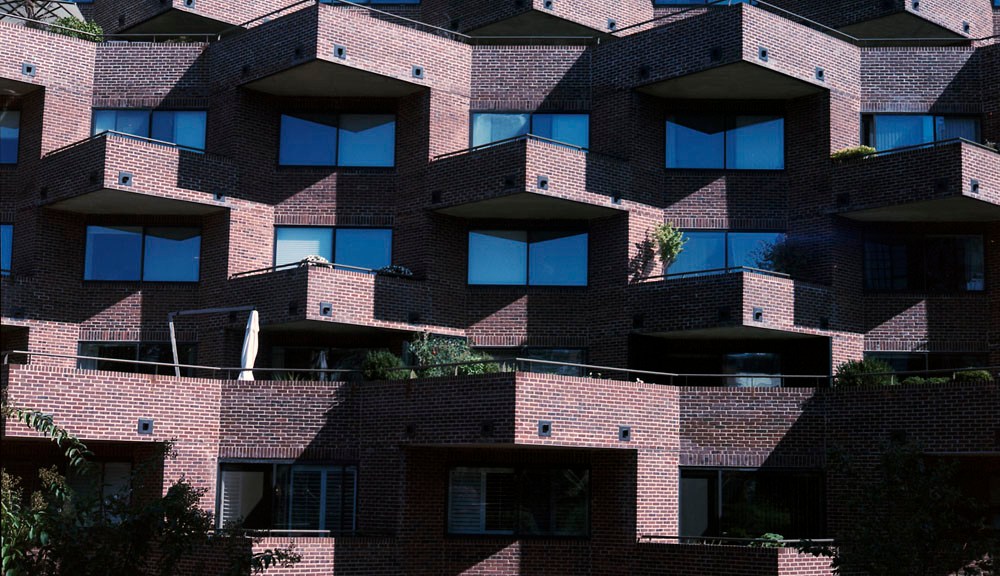
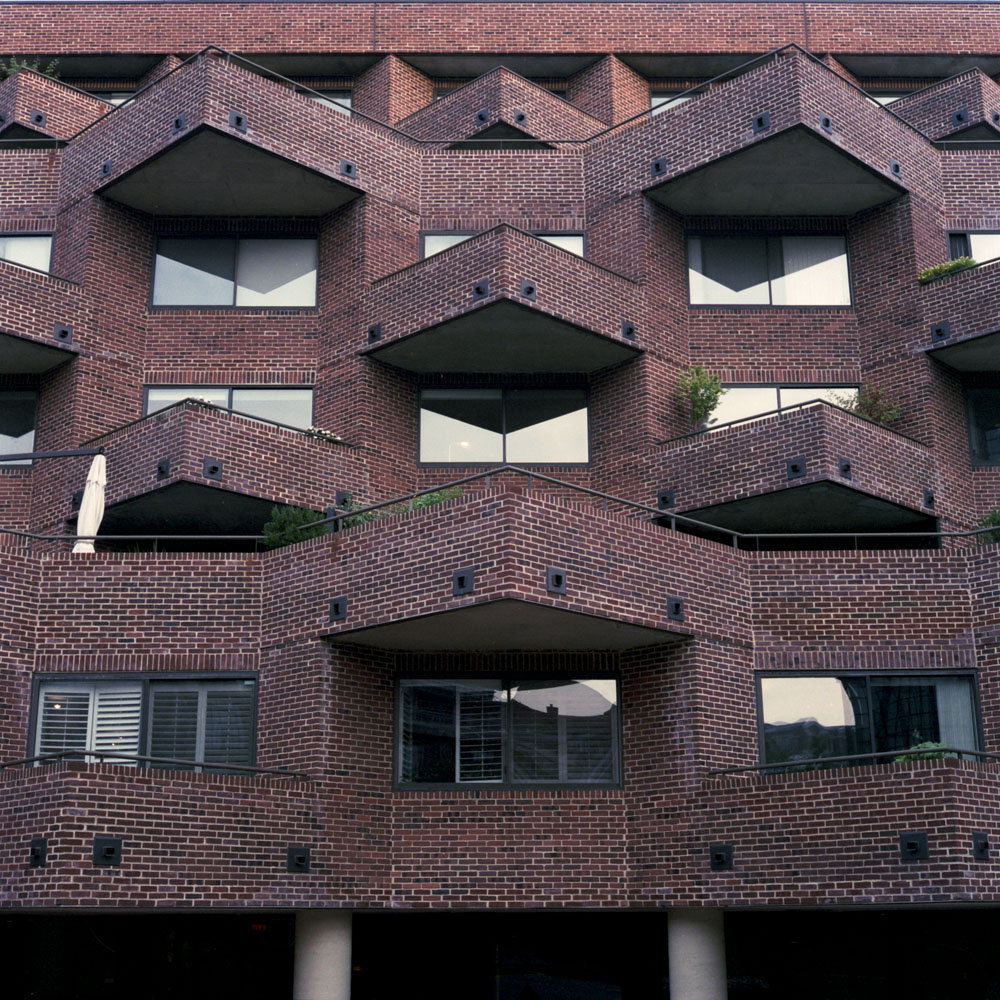
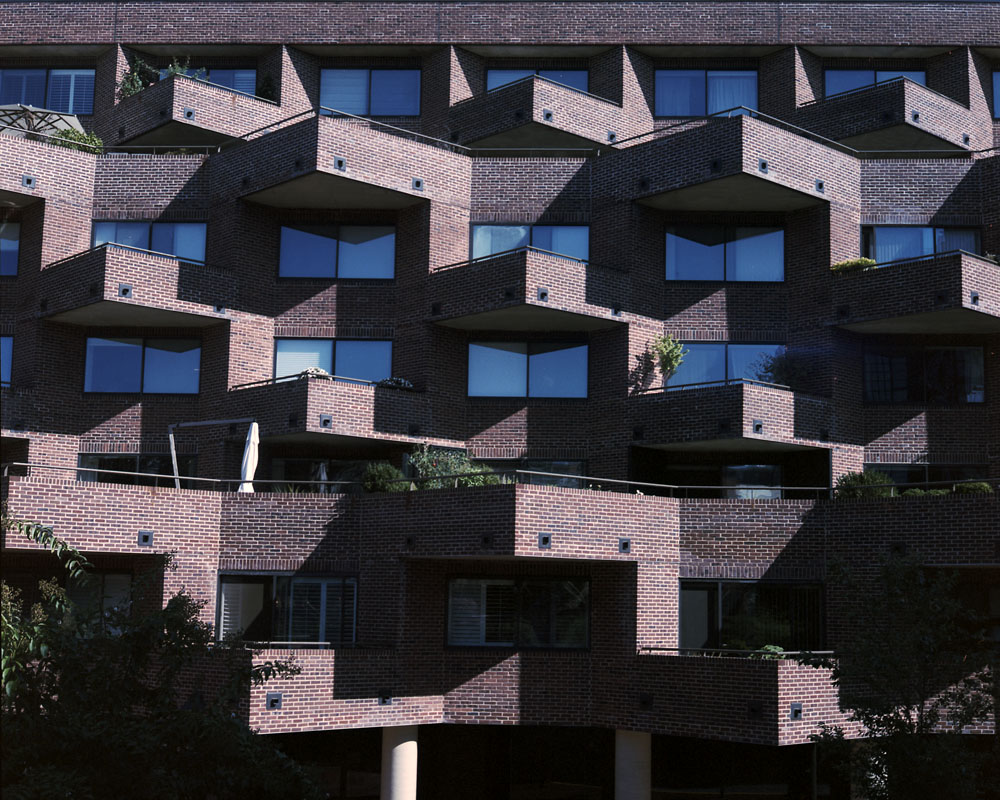
Two very similar shots of the same building. One in soft, diffuse light, the other in strong directional light. While both are about repetition of shapes and patterns, the one remains representational, the other, abstract.
Balconies, GeorgetownBalconies. Georgetown
And the difference between these two shots is about two hours. They were taken on different, but weather-wise similar, days, but one was taken around 4pm, the other around 6pm.
Key Bridge is one of the most iconic structures in Washington DC and a major attraction in its own right. It spans the Potomac between Georgetown and Rosslyn, and carries a tremendous volume of traffic between DC and Virginia every day.
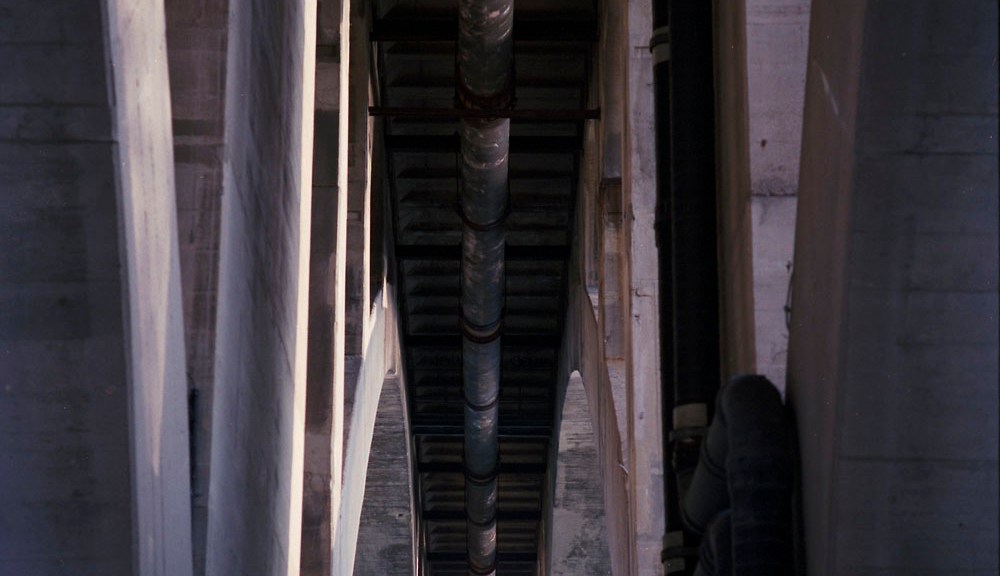
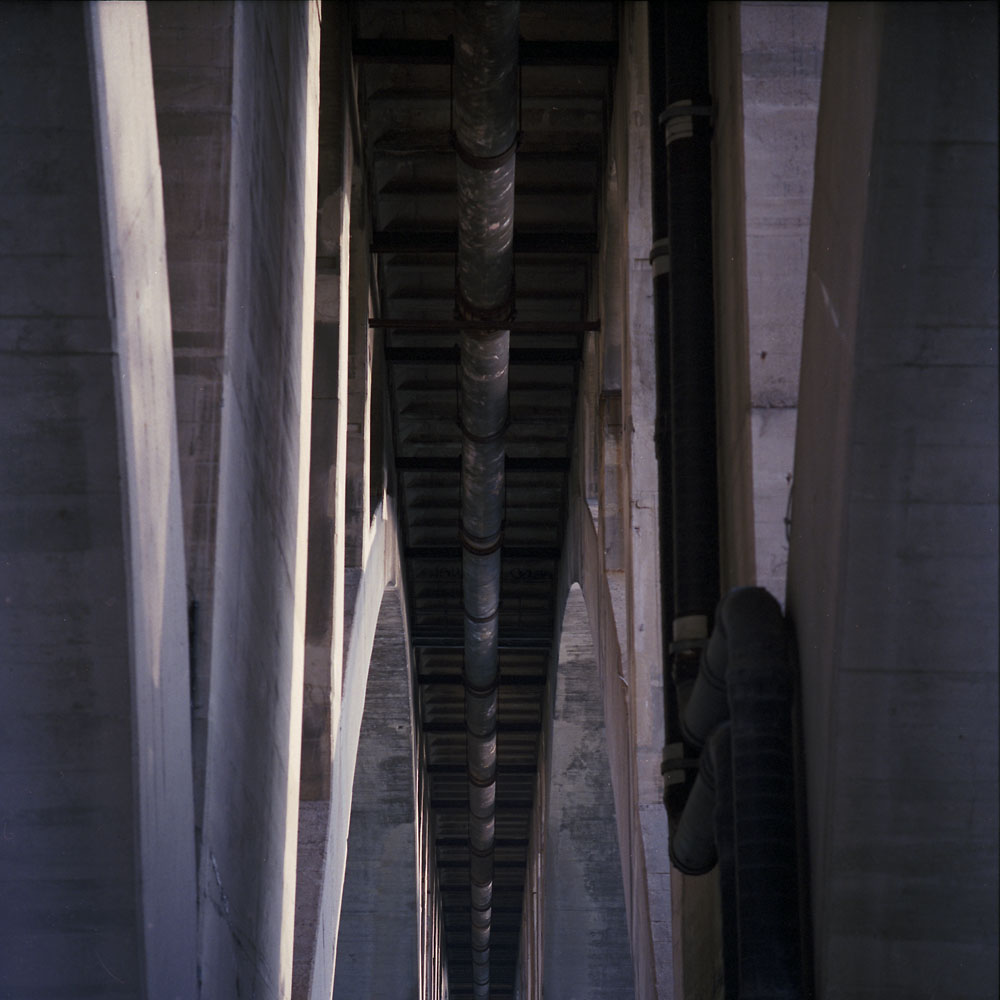
The view of the underside is one most people never get, of this or any bridge for that matter.
Under Key Bridge
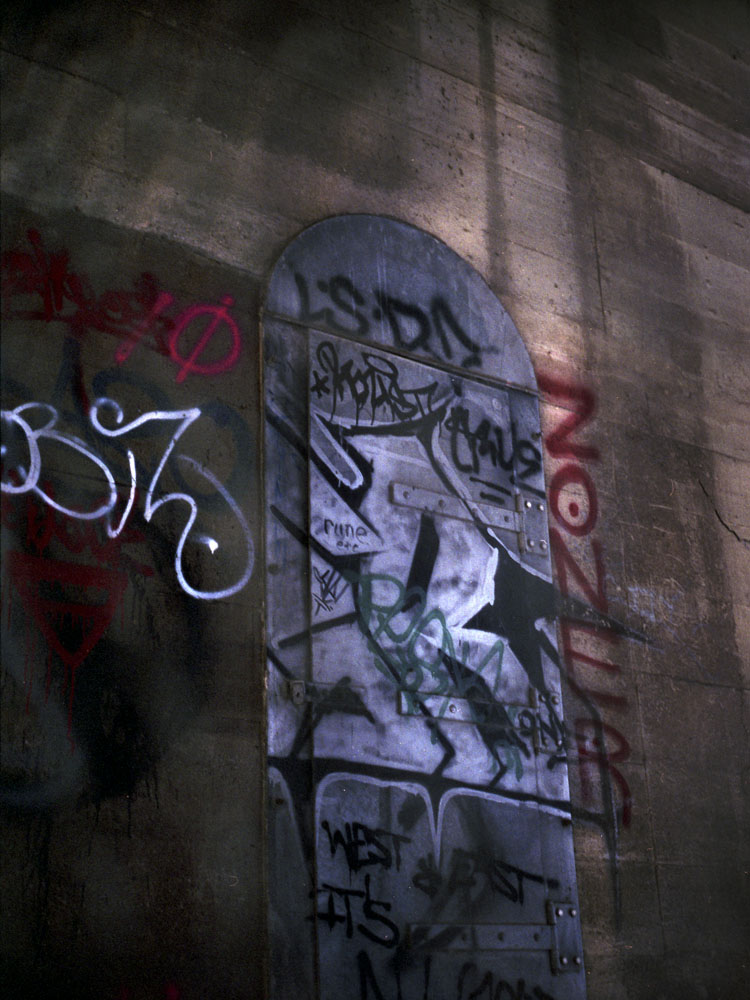
Key Bridge is chock full of strange hidden nooks, like this service door to something in the infrastructure. Despite being sealed off behind chain-link fencing, people have managed to get in and graffiti it.
Service Door, Key Bridge
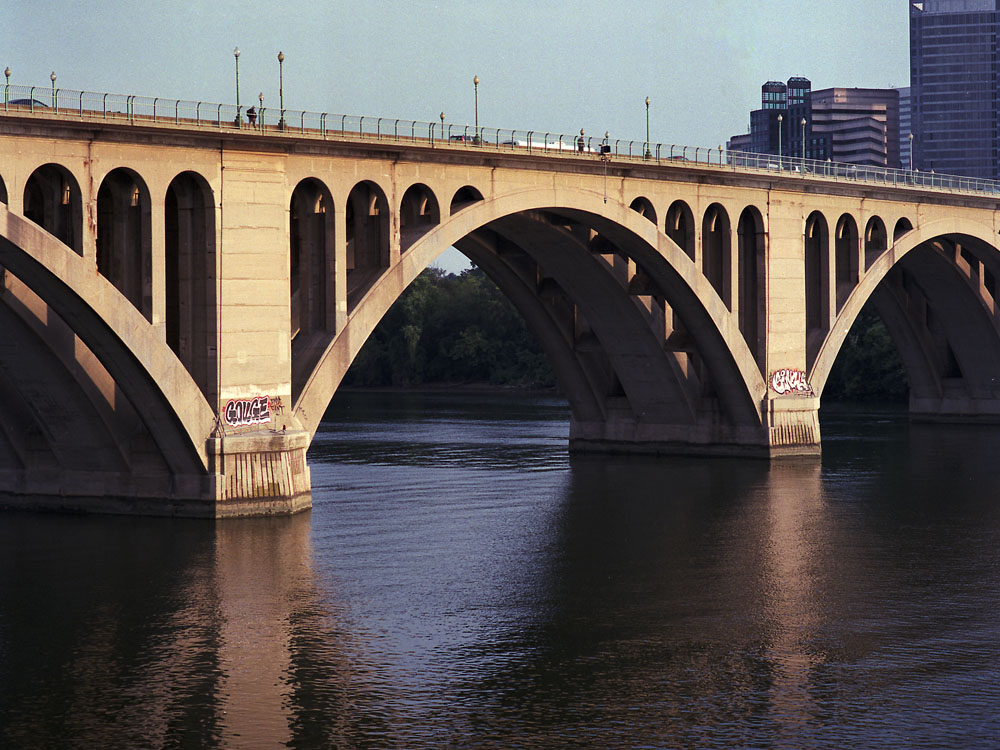
The prototypical view of Key Bridge, from the West side. I’m fascinated by how someone managed to get to the bottoms of the piers and graffiti them. You’d have to either have a boat, sail up to the foot of the pier, then climb up 20+ feet from the waterline, or somehow rappel down from the pedestrian deck of the bridge. Not a recipe for success on either front, as I’d imagine you’d be spotted very quickly and arrested.
Key Bridge, Evening, West Side
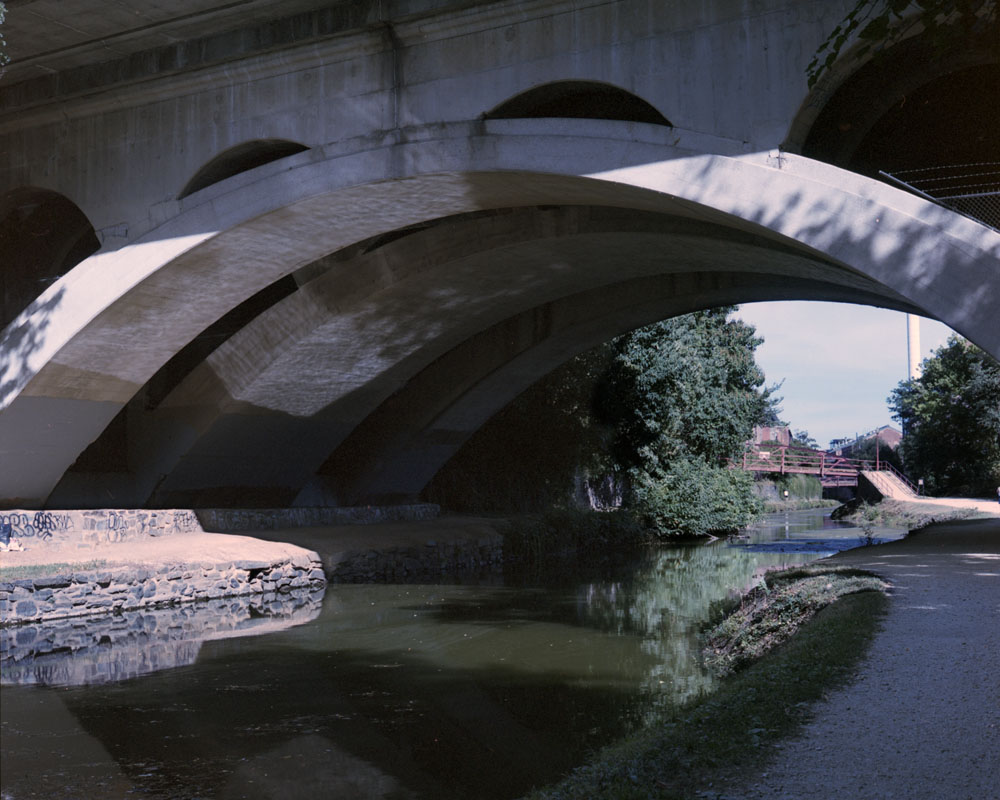
Here’s a view of the underside where the bridge crosses the C&O Canal.
Canal, Under Key Bridge
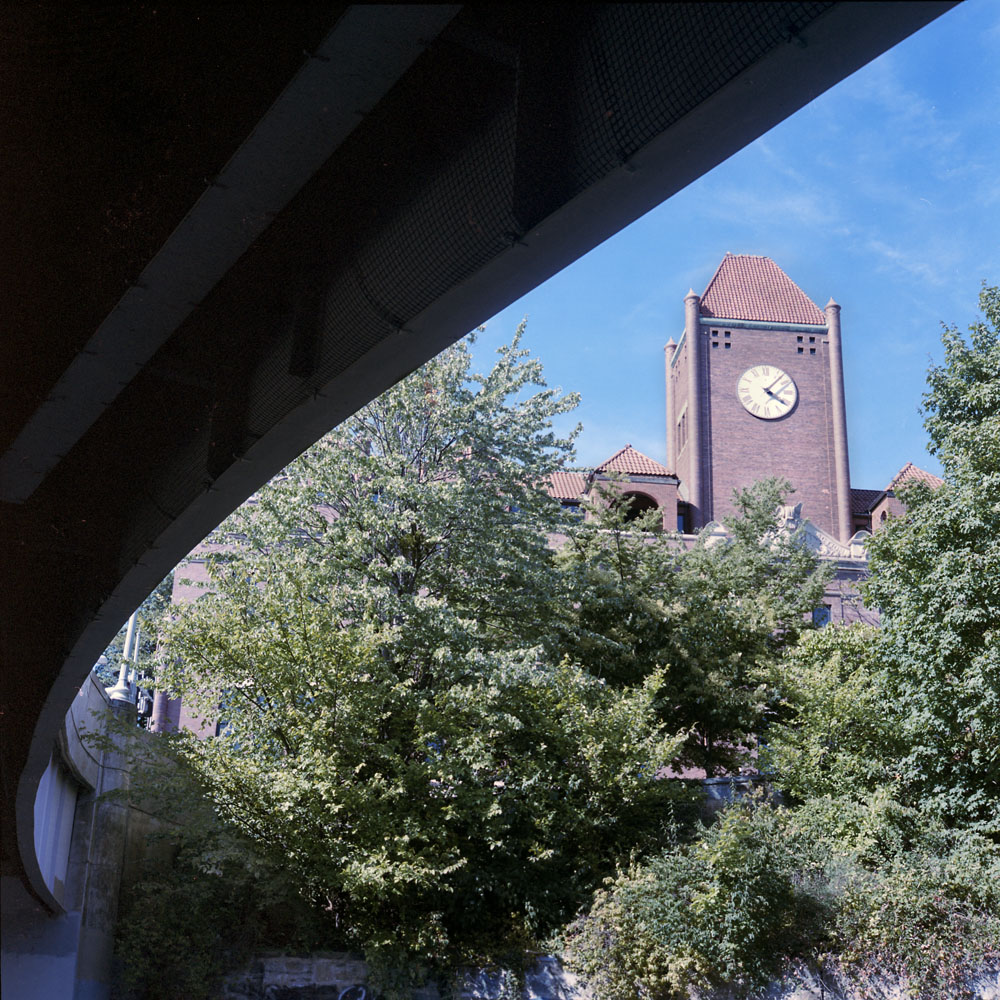
This is the tower of the old Trolley Barn, which used to house the streetcars that plied DC in the late 19th/early 20th century. Now it is office space on the upper levels. The view is from under Key Bridge, where the on-ramp to the Whitehurst Freeway (really just an elevated bypass to get around the street traffic of Georgetown) splits off of Key Bridge.
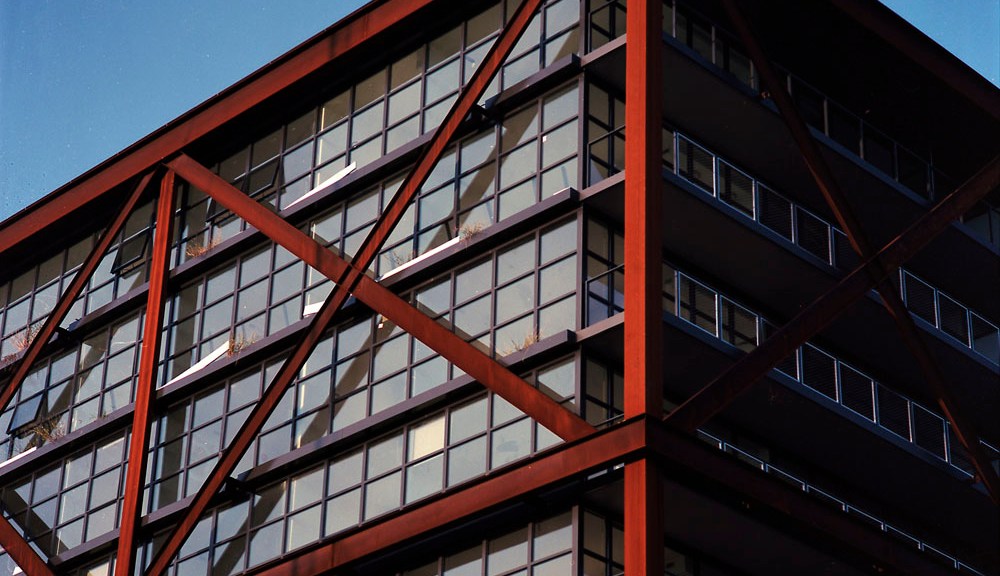
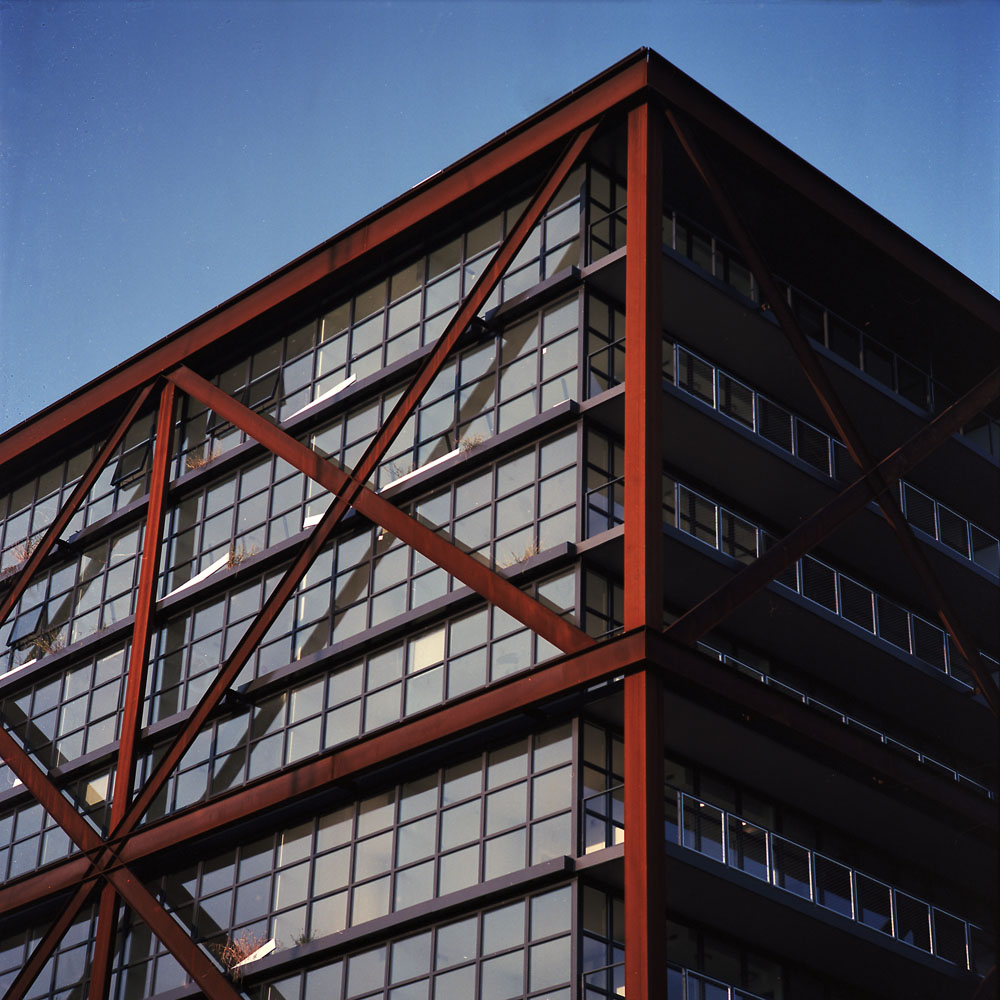
This is, believe it or not, a brand new building in my neighborhood, with obscenely priced (although I’m sure very beautiful) condos. The rusted steel on the outside is intentional. It’s called the Atlantic Plumbing building because it occupies the former site of Atlantic Plumbing Supply. Late evening sun illuminates it perfectly, pushing the strong lines of the rusted steel and glass into deep relief.
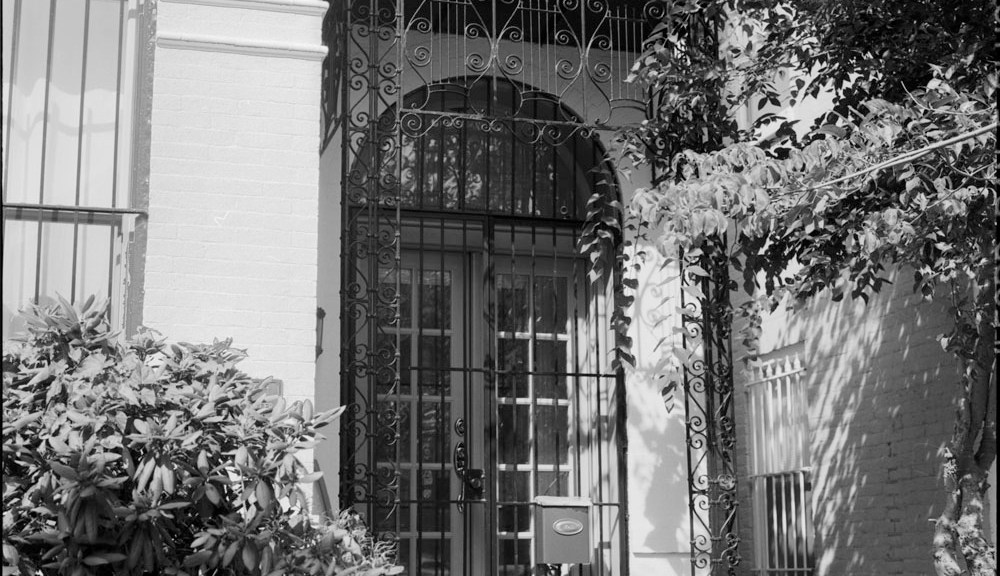
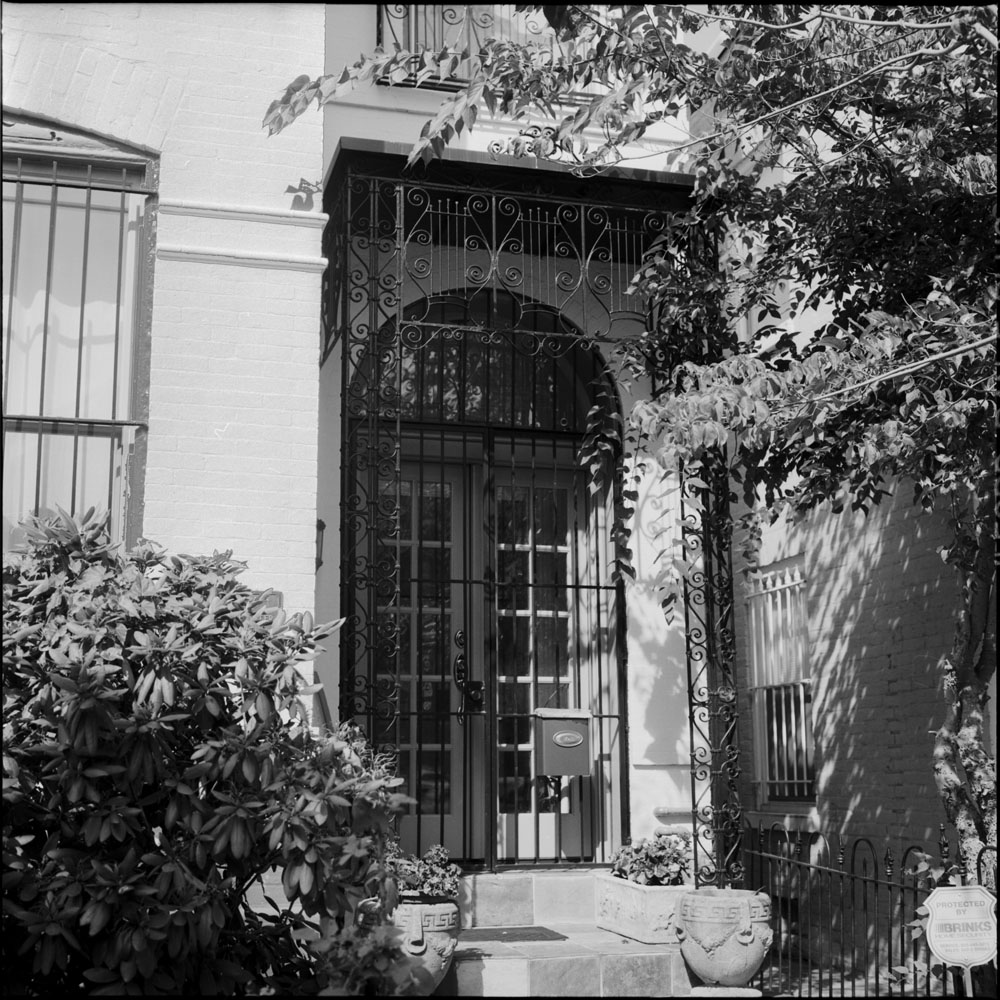
This is the home of Lilian Evanti, a pioneering African-American opera singer. She was a soprano, perhaps the equal of Marian Anderson (they actually performed together in 1926) but did not have the fame or success in the United States that Marian would go on to have, so she mainly performed on European and South American stages where audiences (and management!) were more open to black women in operatic leading roles. She was born in Washington DC and resided here for much of her life. You can tell from the ironwork on the outside of her house that this was a musical home.
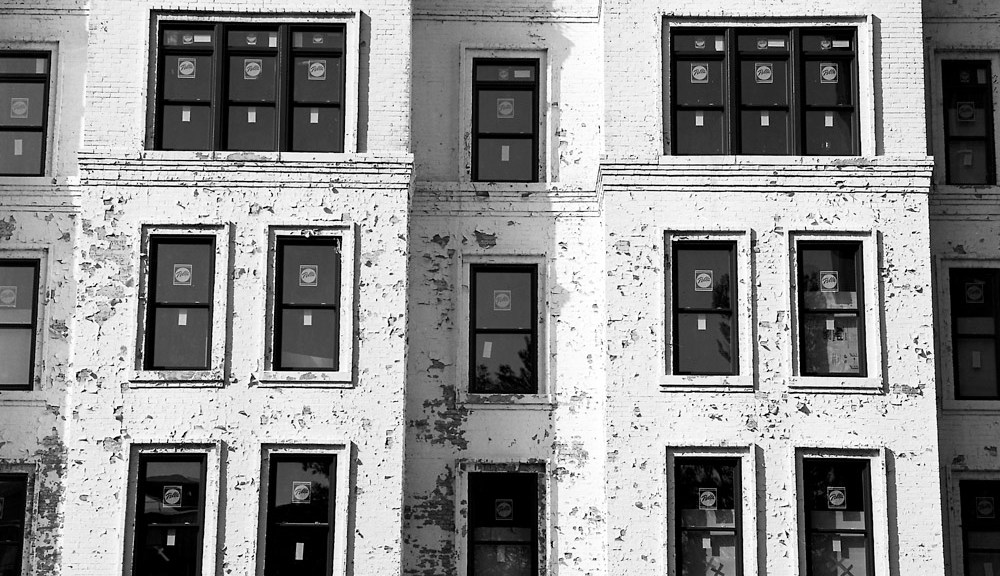
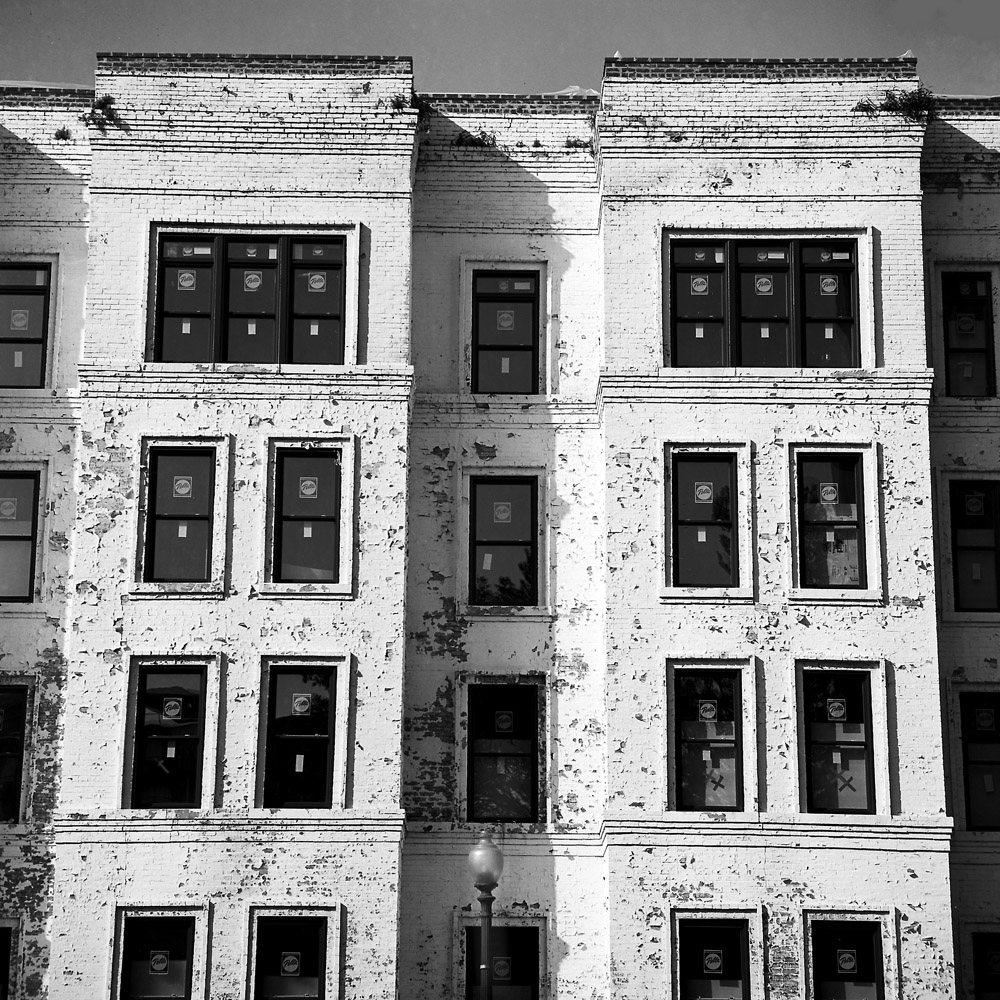
Well, it’s more like two bays, one lamp, but that’s a lot less poetic. This is another one from the same building in the Windows post, that I can’t believe I never posted.
Two Towers, One Lamp
While it’s not quite abstract, it is very much about repeating patterns and their contrasts in a single scene, the contrasts being the texture of the peeling paint, and the single lamp-post.
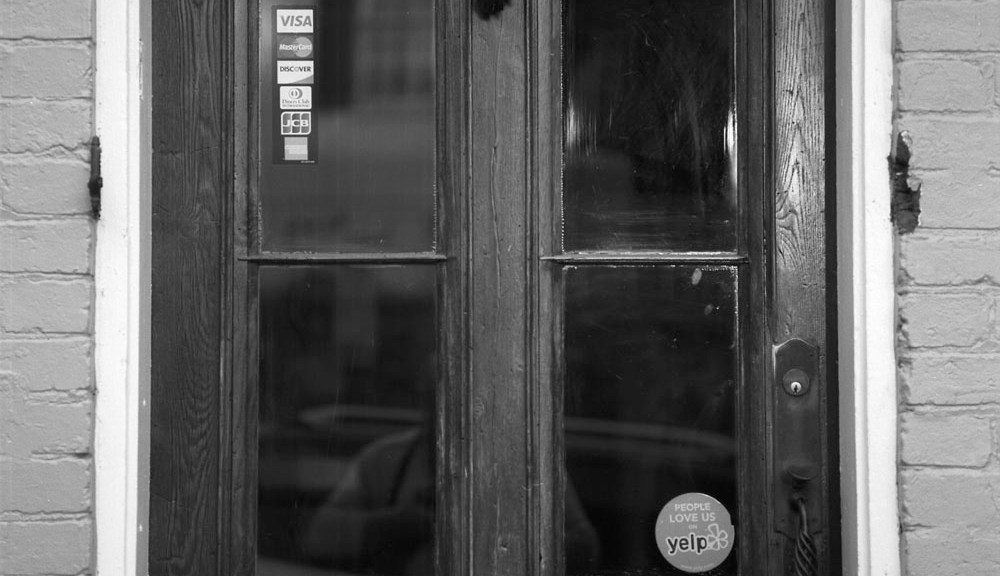
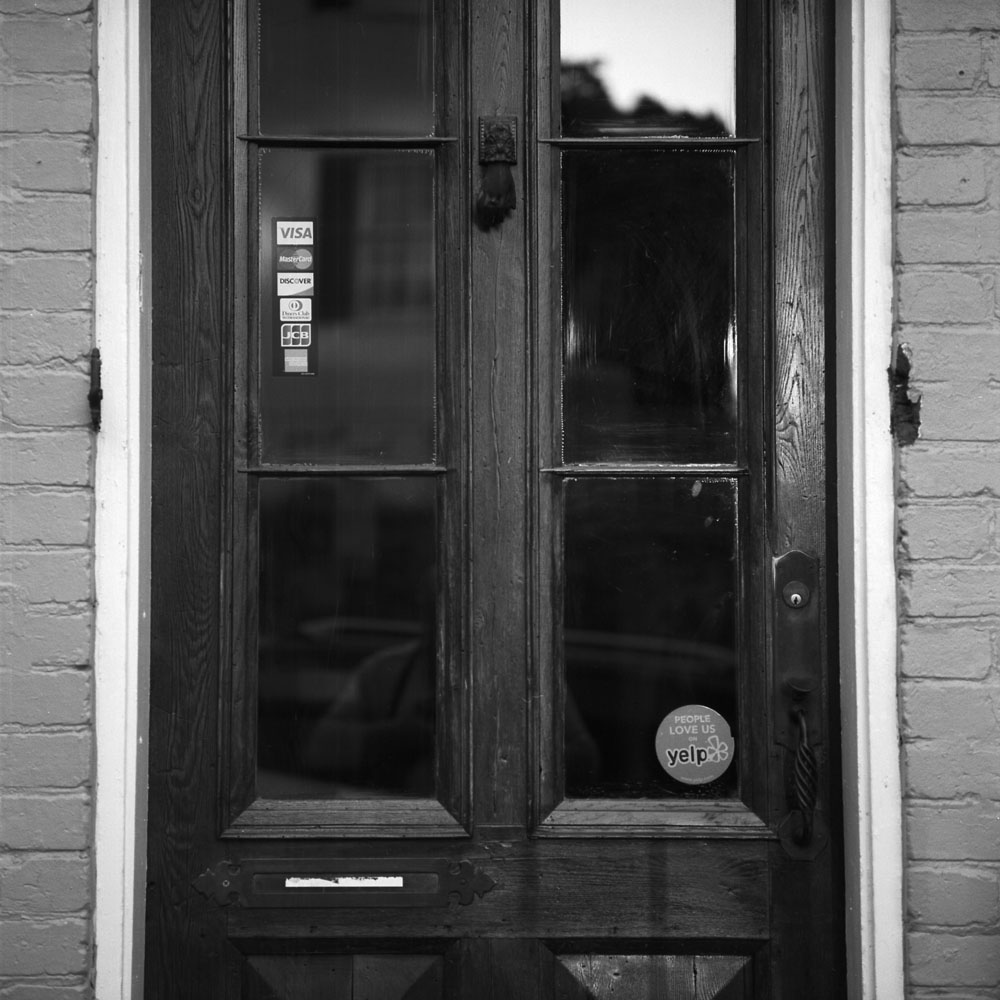
Just a single frame this time, of a door in Georgetown with a cast-iron knocker. I wish I had a front door that could take that kind of knocker – I’ve always loved the hand holding a ball knocker since I saw them in Spain as a teenager. They bring back pleasant memories. They’re kind of like Proustian madeleines, but less edible.
Door-knocker, Georgetown
I’m also visually drawn to window glass that is partially transparent and partially opaque from reflections and light hitting it. There’s a certain sense of mystery about what’s behind it because it’s only half-seen.
 dcphotoartist