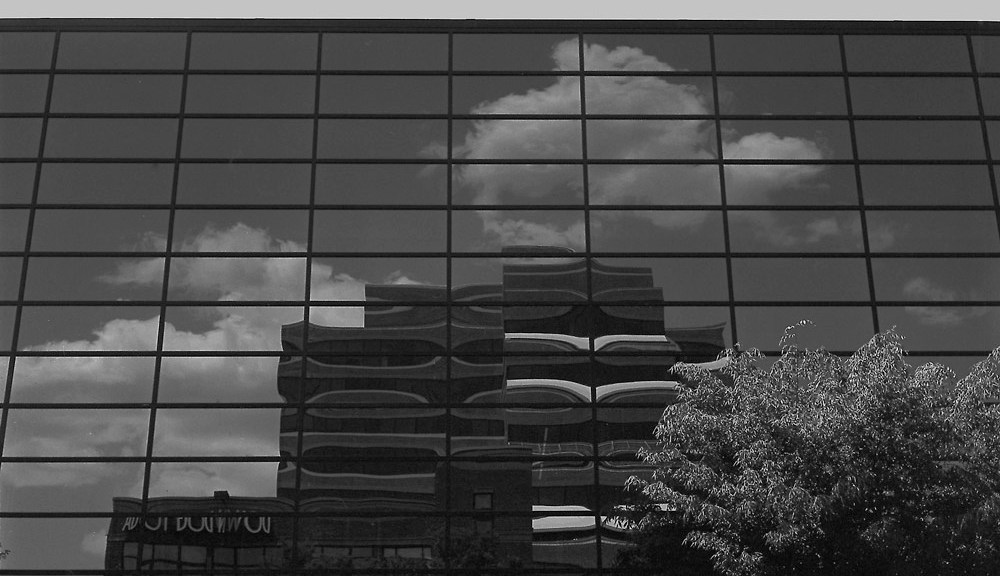
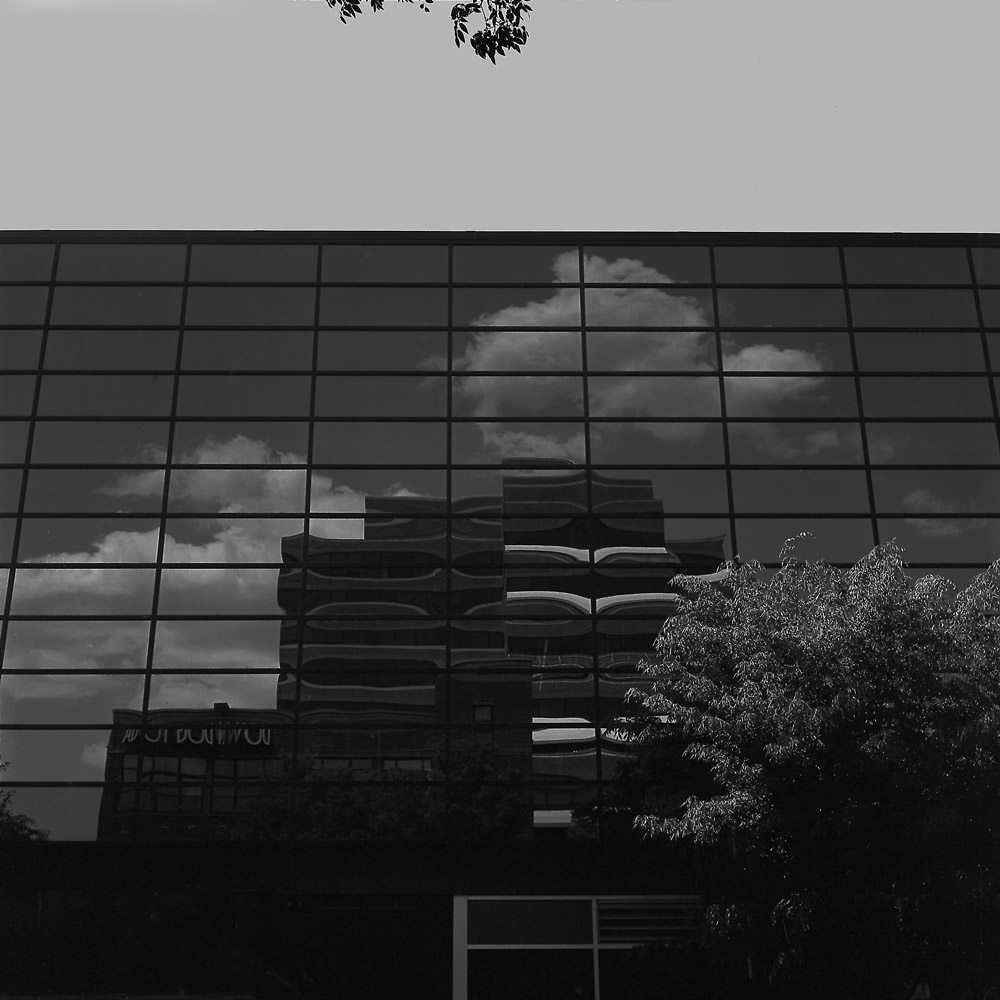
This has a very Japanese aesthetic to it, don’t you think?
This has a very Japanese aesthetic to it, don’t you think?
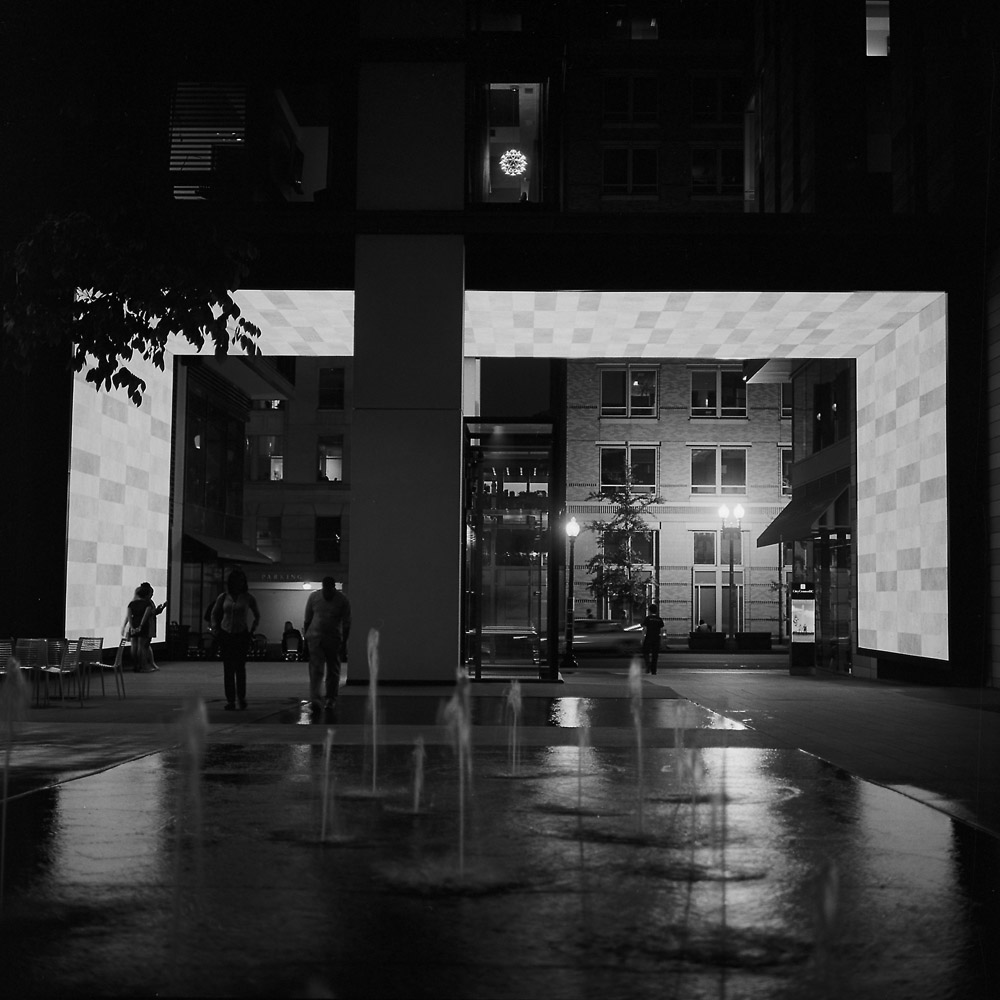
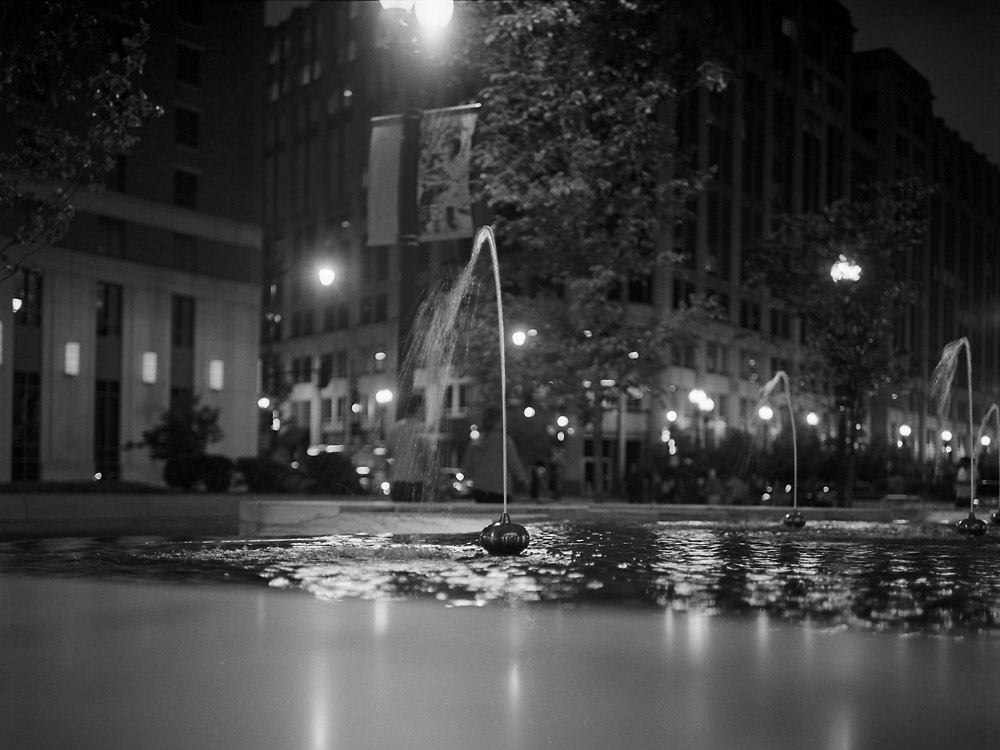
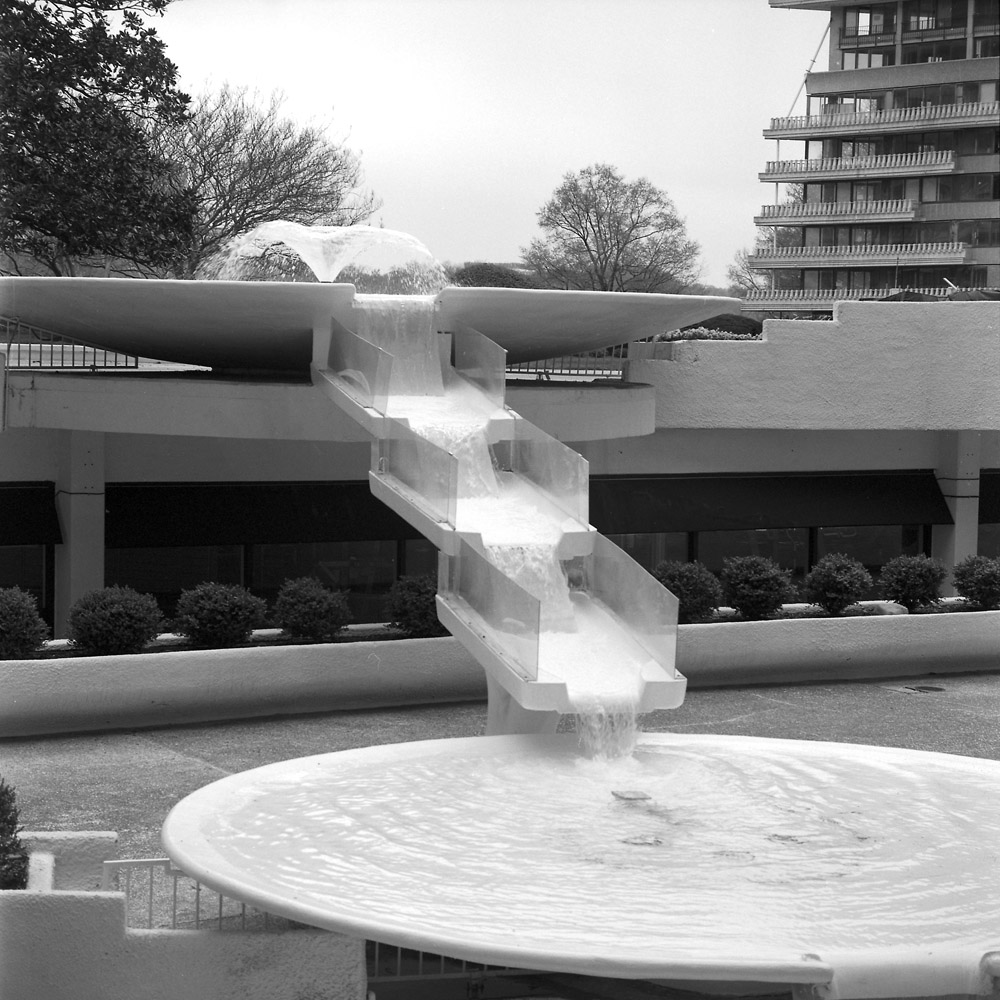
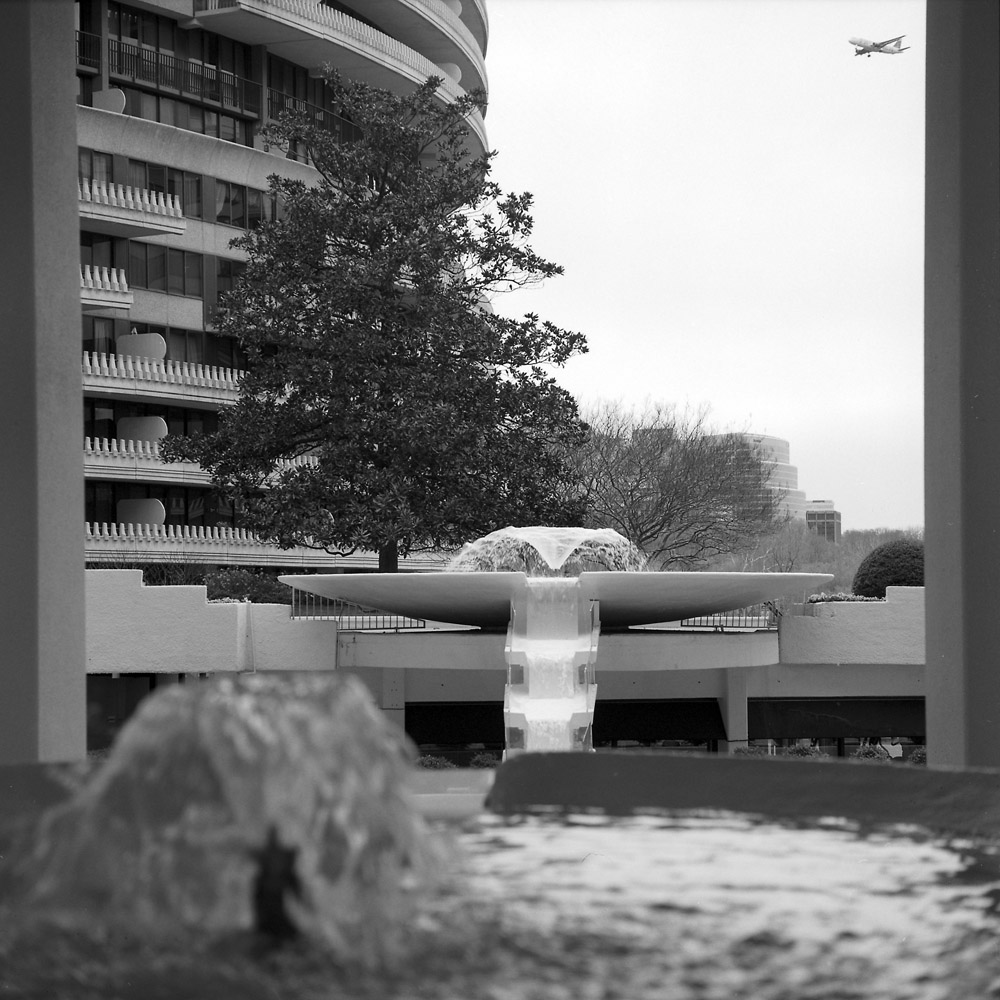
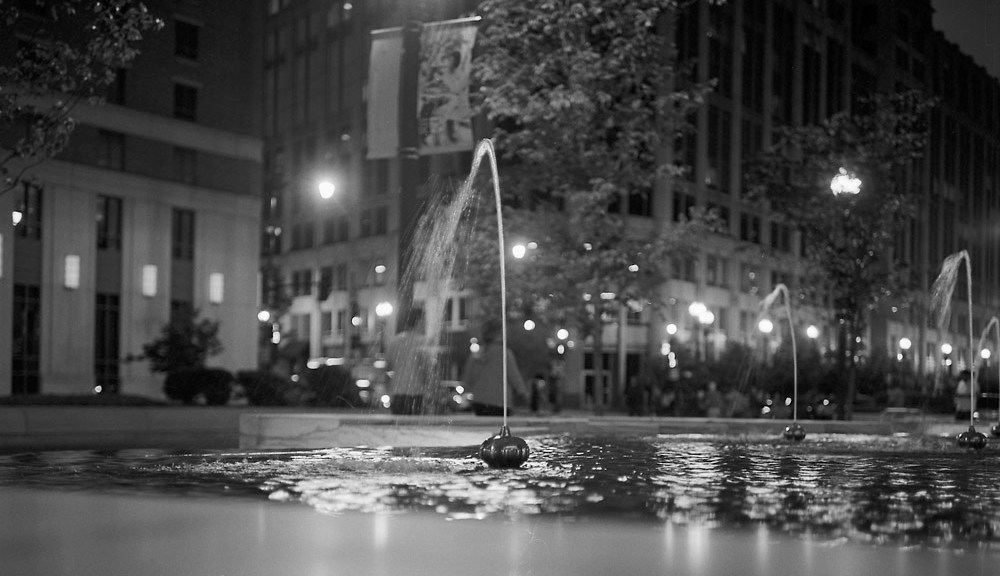
I don’t think a whole lot of words need be said about these fountains – I just like the juxtaposition of day and night with the common theme of moving water.
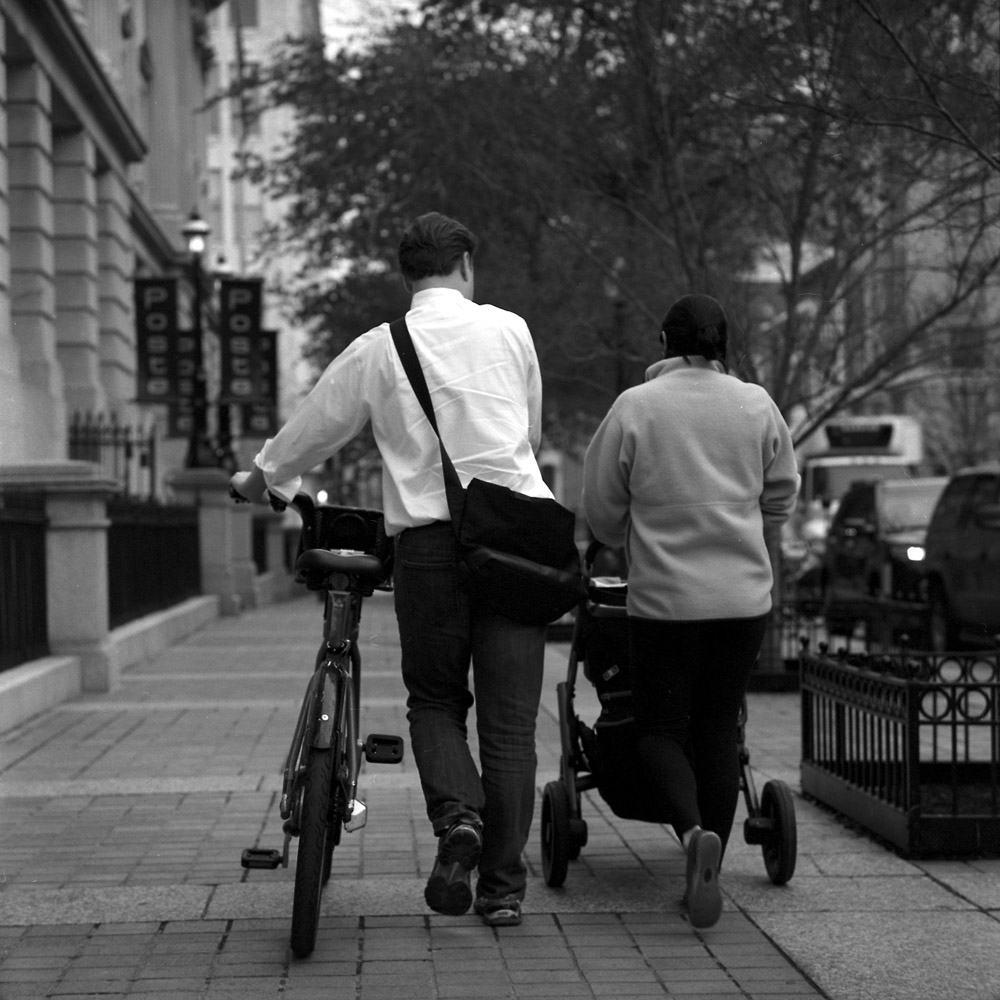
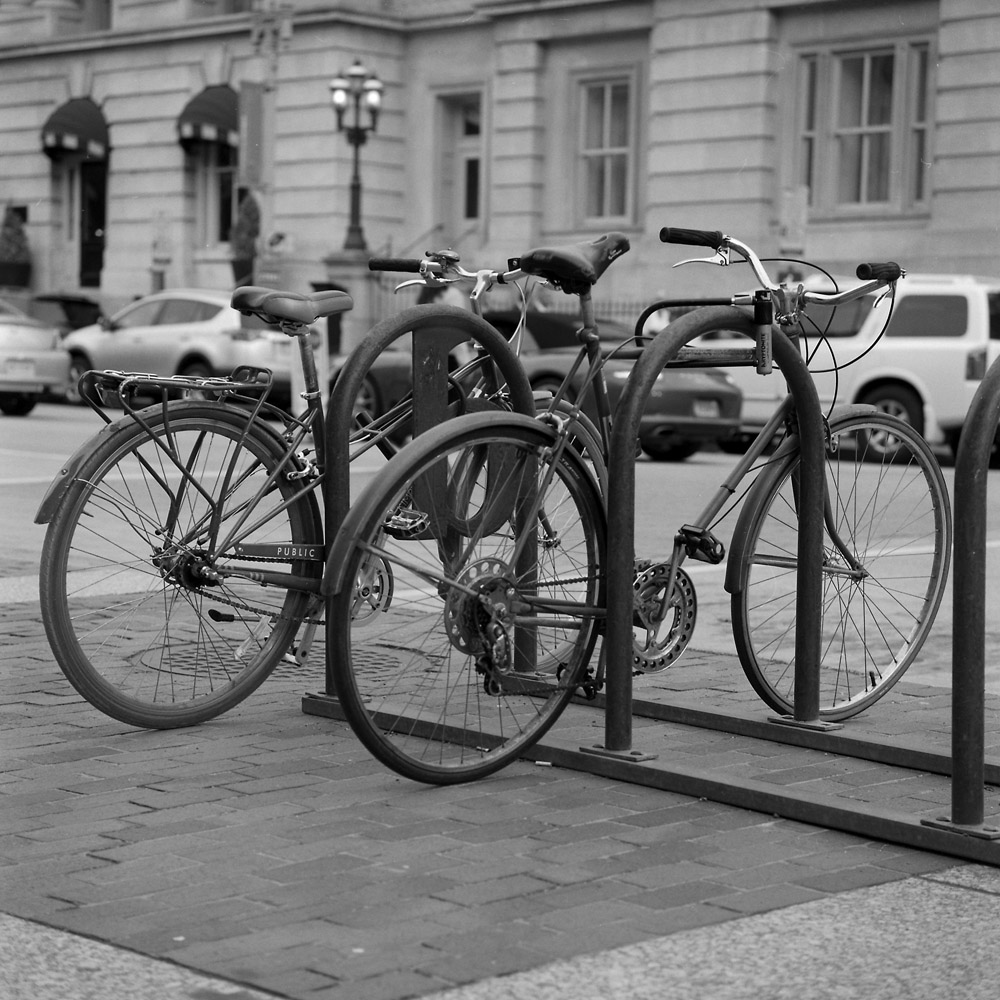
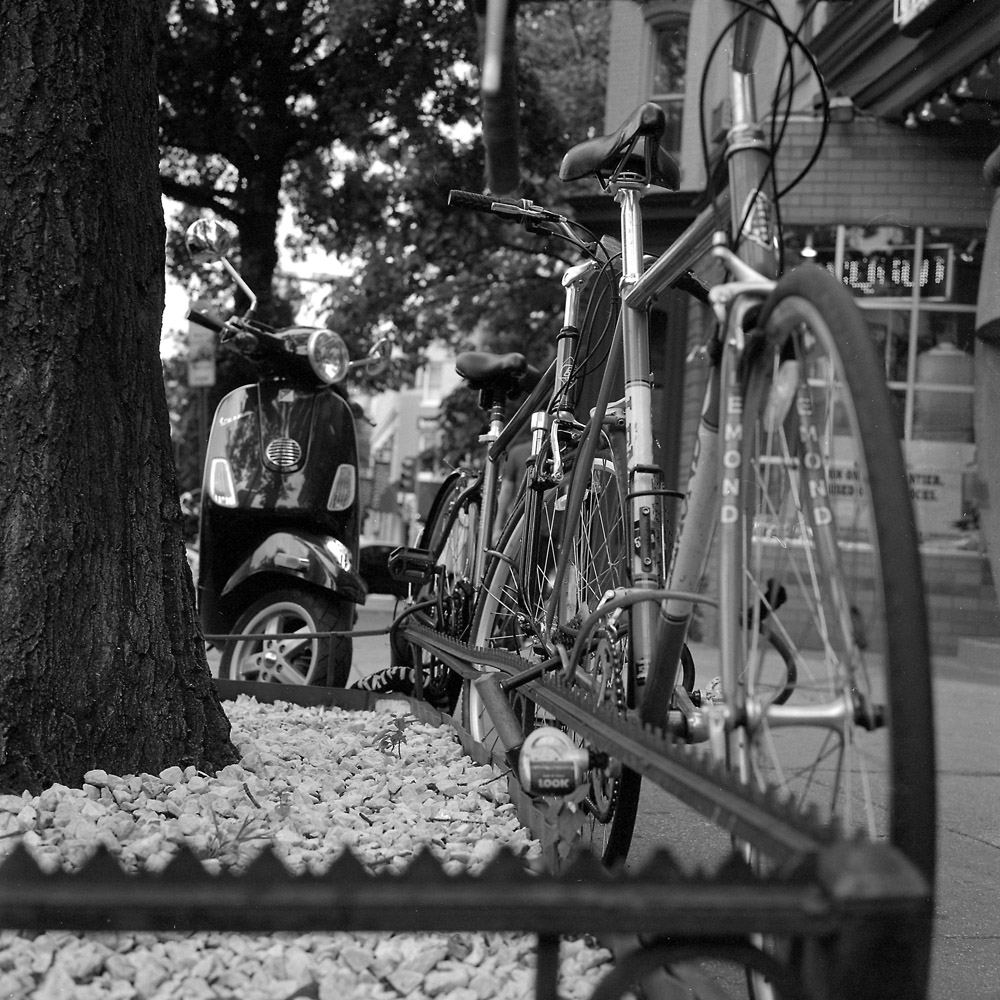
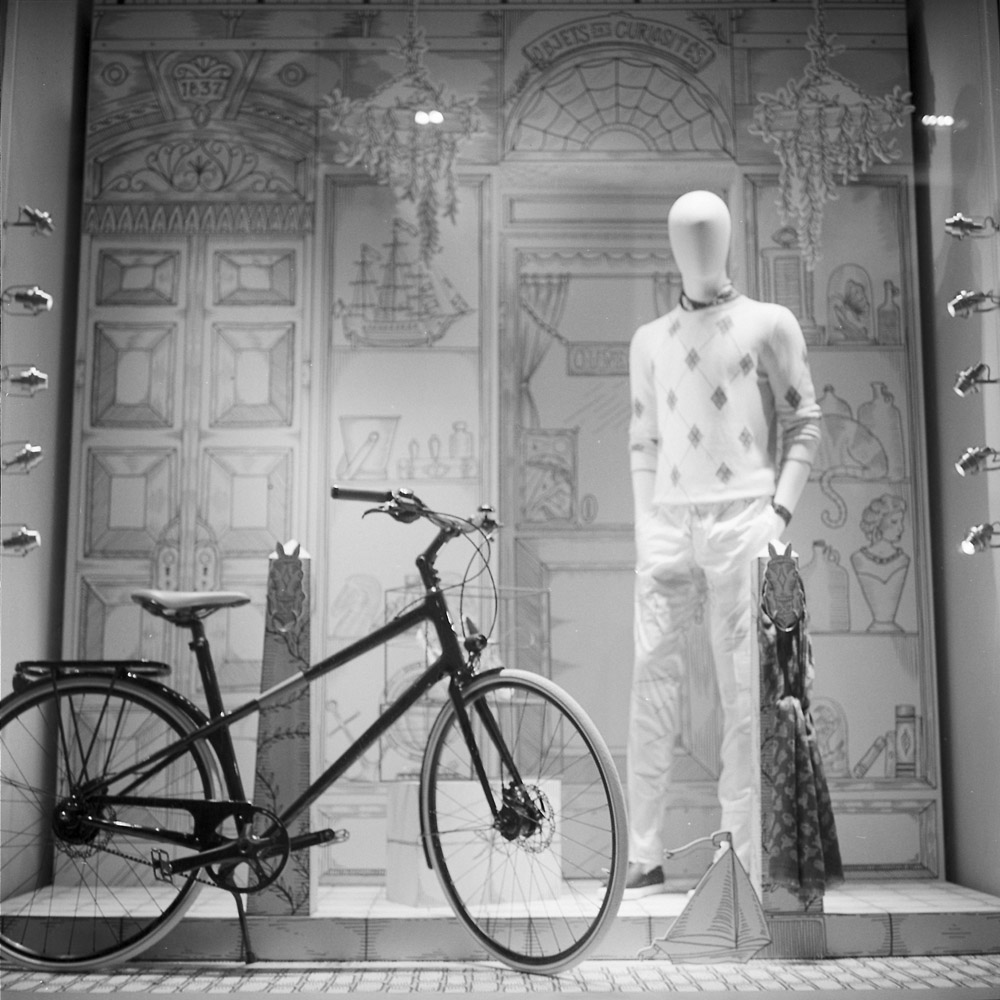
Another regular subject for me is bicycles and public transportation. Here are four more bicycle photos seen around town.
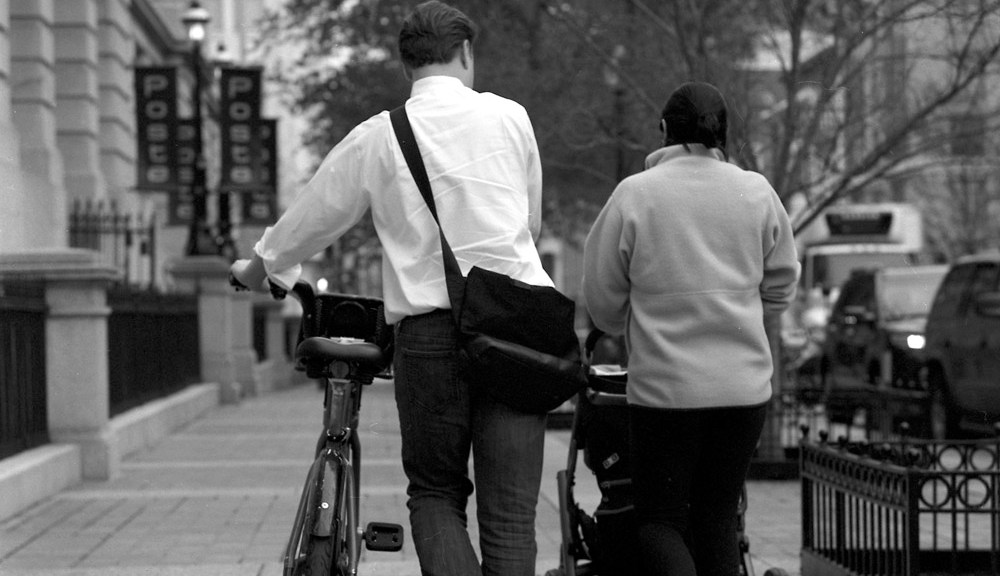
A couple walking home together. He’s using a Bikeshare bike, which is a pretty positive commentary on their adoption by more than just tourists.
A pair of interesting old bikes locked up on the rack outside the National Portrait Gallery/American Art Museum.
I’m on the fence about how much I really like this image, but it’s bikes, so I’m including it for now. Let me know what you think – does the composition work well? Placement of depth-of-field?
Finally, the bike in the Hermes window. While it’s not in use for its intended purpose, it’s a nice looking bike, and it’s in the Hermes store window, very cleverly employed in the window design. I forget if it was red or dark blue (I think red), but it was a splash of color that popped out against the white backdrop of the window, pulling your eye around the display.
Here’s another photo of Ed Bearss I took on the Ball’s Bluff tour, as he’s describing the battle in front of the sign at the park entrance, armed with one of his US Marine Corps- themed swagger sticks.

He’s always carrying one to point and gesture with while he talks, for emphasis.
Another stop on the tour I did with Ed Bearss earlier this month was the battlefield of Ball’s Bluff. Ball’s Bluff was a very significant early battle in the Civil War – while in the grand scheme of things a minor engagement with a total of three hundred or so Union casualties (including drowning deaths of soldiers trying to escape the Rebel onslaught across the Potomac River, swollen with recent rainwater), the Union loss and its aftermath (bodies of soldiers who drowned fleeing the battle washed up in Washington DC and as far south as Fort Washington, some 60 miles downriver) were shocking enough that they triggered the formation of a joint committee comprised of senators and congressmen, the Committee on the Conduct of the War. This oversight committee was empowered to investigate not only the military but the executive branch up to and including the President himself.
Today, while the cemetery itself is administered by the Veterans’ Administration and is a National Military Cemetery, the parkland surrounding it is not US Park Service property but instead is a joint program of local and regional governments and non-profits. There is a 1970s subdivision built right up against its southern edge, which you have to drive through to get to the park.
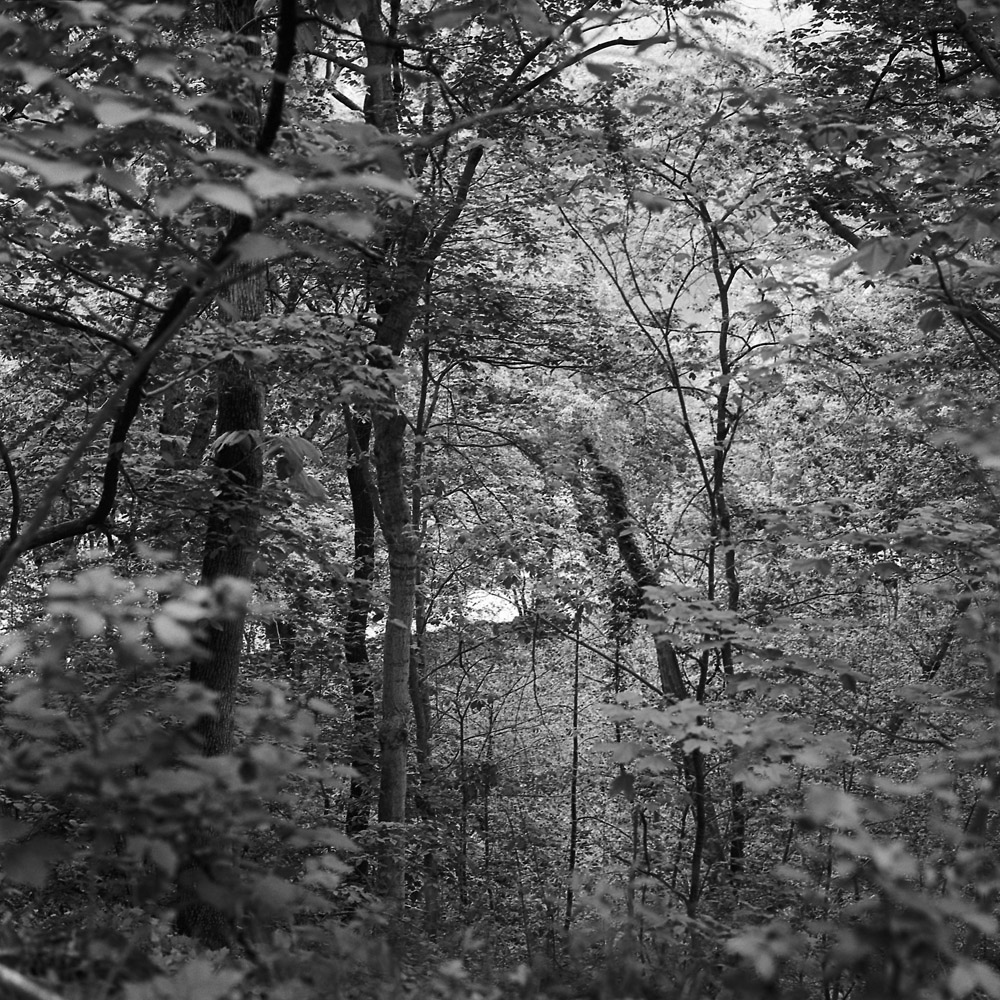
This is a view down Ball’s Bluff – some three hundred feet tall, you can see the river as a bright patch in the lower center of the image. Many of the Union casualties were chased down this cliff face by charging Rebel soldiers and plunged to their deaths. The photo doesn’t do justice to the steepness of the cliff face – that would be a truly terrifying predicament – leap or fall over the edge to break your neck if you’re lucky, or get shot.
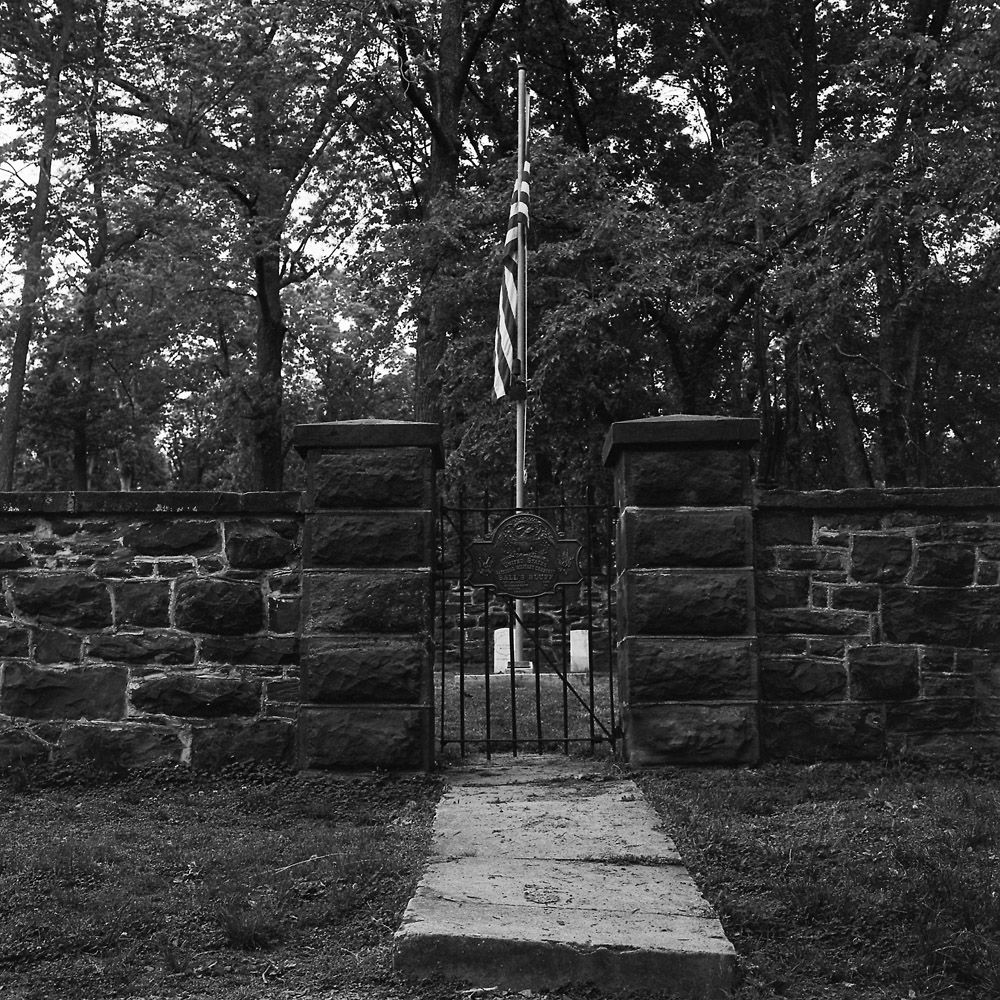
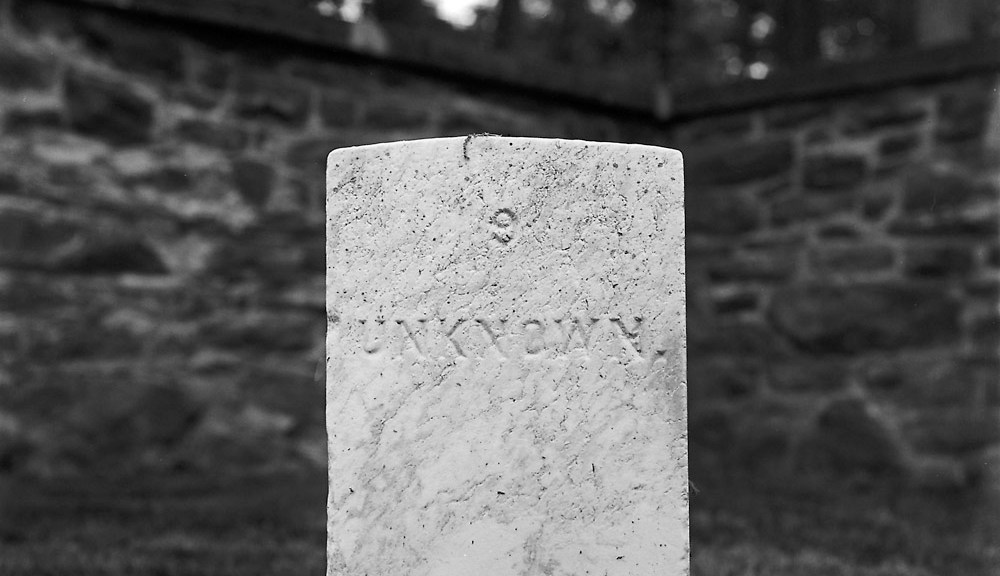
Here is the gate to the cemetery – one of the smallest in the National Military Cemetery system. Fifty-four are buried, with twenty-five markers. Only one is known. The cemetery is closed to new burials, for rather obvious reasons. There are two markers outside the cemetery where a Union commander, Col. Edward Baker, and a Southern infantryman, Clinton Hatcher, were killed, but neither are interred in the cemetery or within the park.
The cemetery itself is a very simple design, with the headstones laid out in a semi-circle around a flagpole, enclosed by a wall of Seneca sandstone, the same stone used to build the Smithsonian Castle.
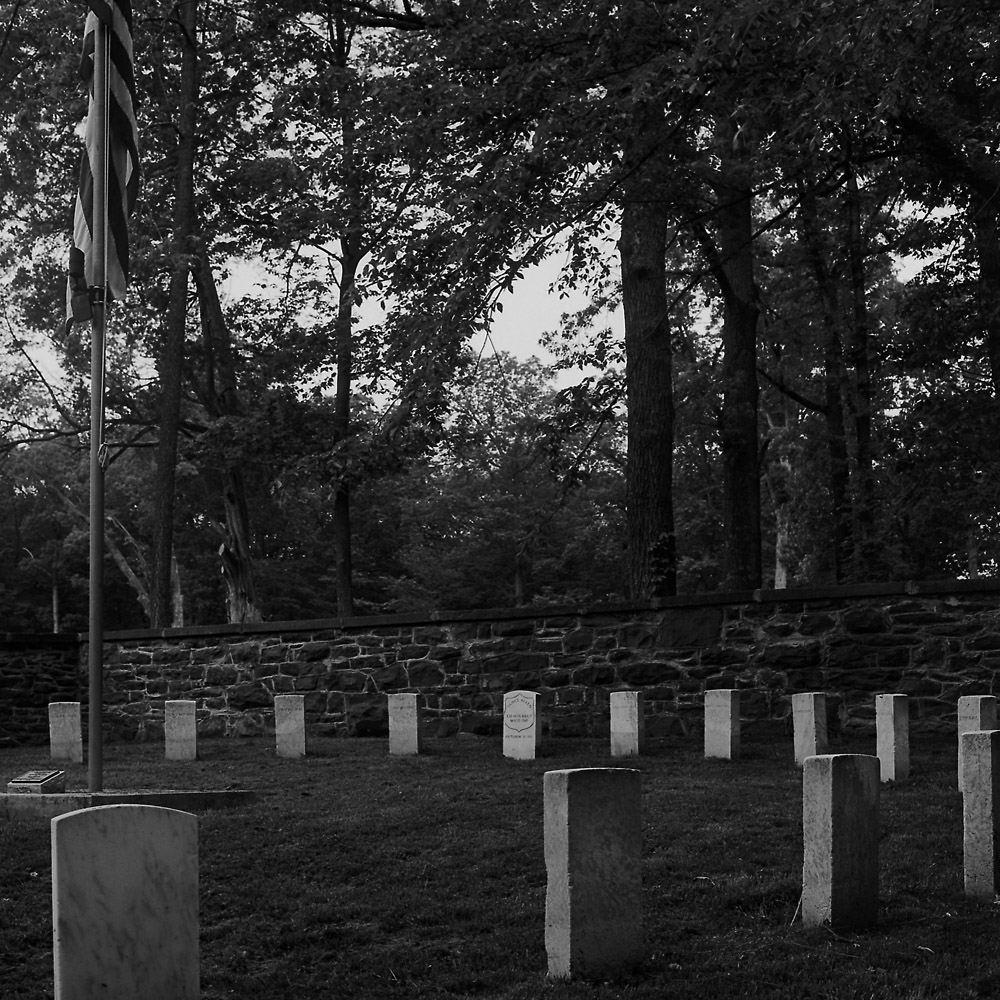
A close-up of one of the headstones for the unknown dead buried within.

This in a way closes a loop in my antique image collecting. While I don’t actively seek out Civil War soldier images, as they are highly sought after and very expensive, especially when the subject is identified, the graves of the unknown soldiers are a reminder of why so many soldiers at the time had their portraits made. Not only to send home to loved ones out of pride in their profession, but to help provide a means of identification should they be killed in battle, in a day when the dog tag had not been invented, nor DNA profiling or even dental records. Today, the unknown soldier is almost impossible, but back then, an all too frequent reality. When you were killed on the battlefield without any form of ID, and the battle lasted for several days, and your body lay in the sun as it ripened and rotted, and maybe there was no good way to get your body back to civilization at the time of the battle, you could end up not buried, or just dumped in a shallow grave for sometimes years. There are photos of burial parties at Cold Harbor where formerly enslaved black men are collecting remains for inclusion in the cemetery, and they have a cart full of skeletons.
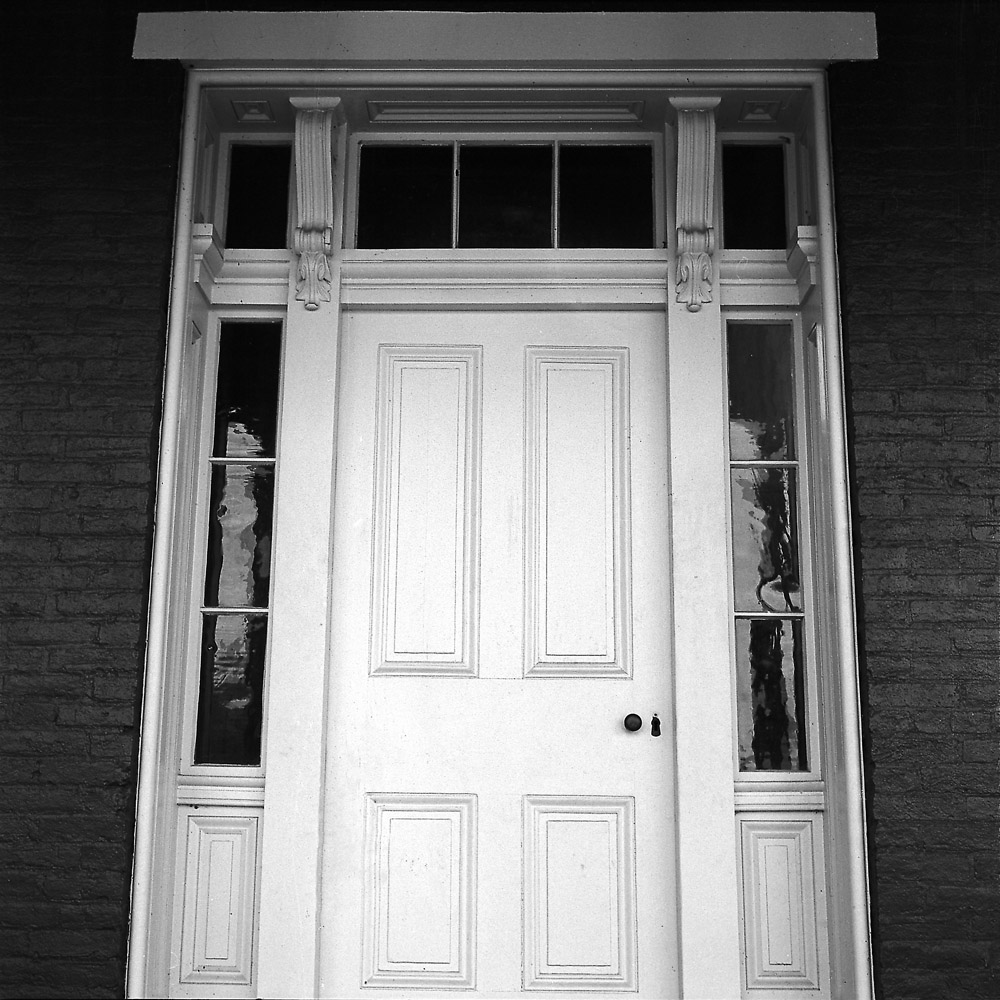
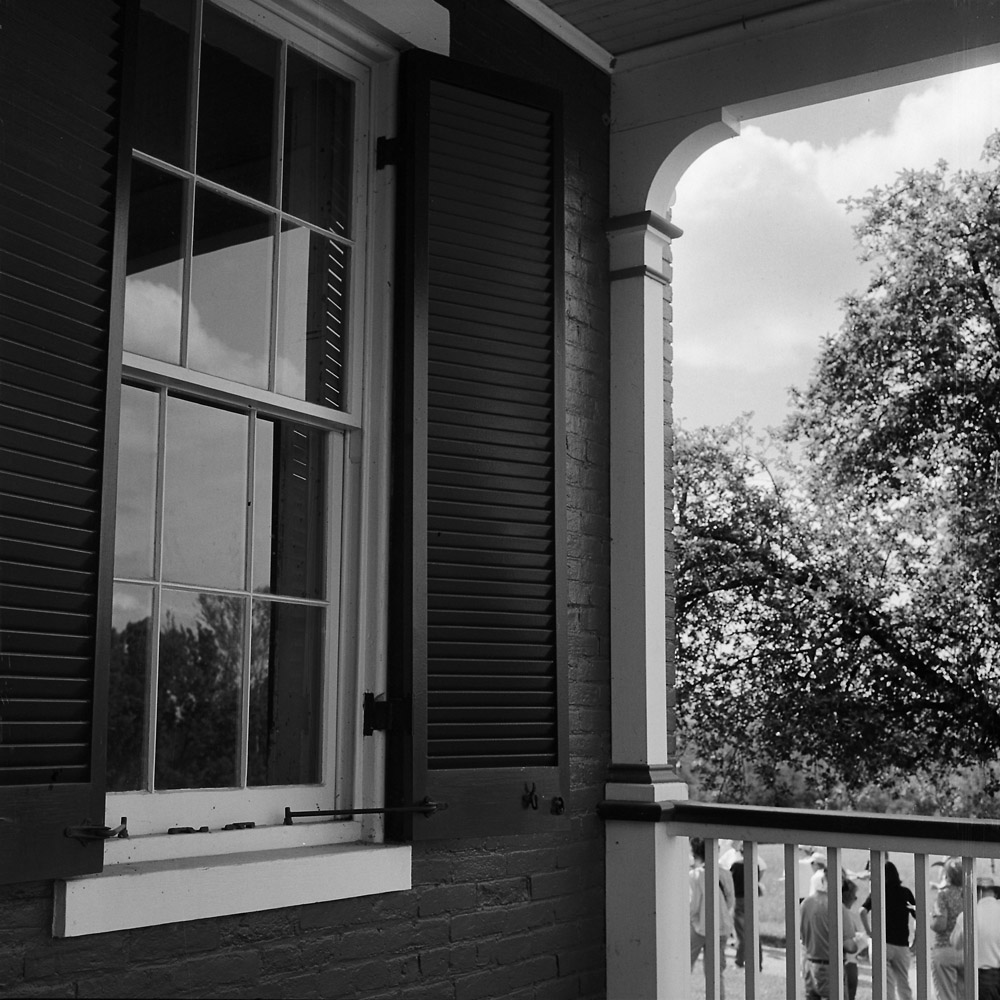
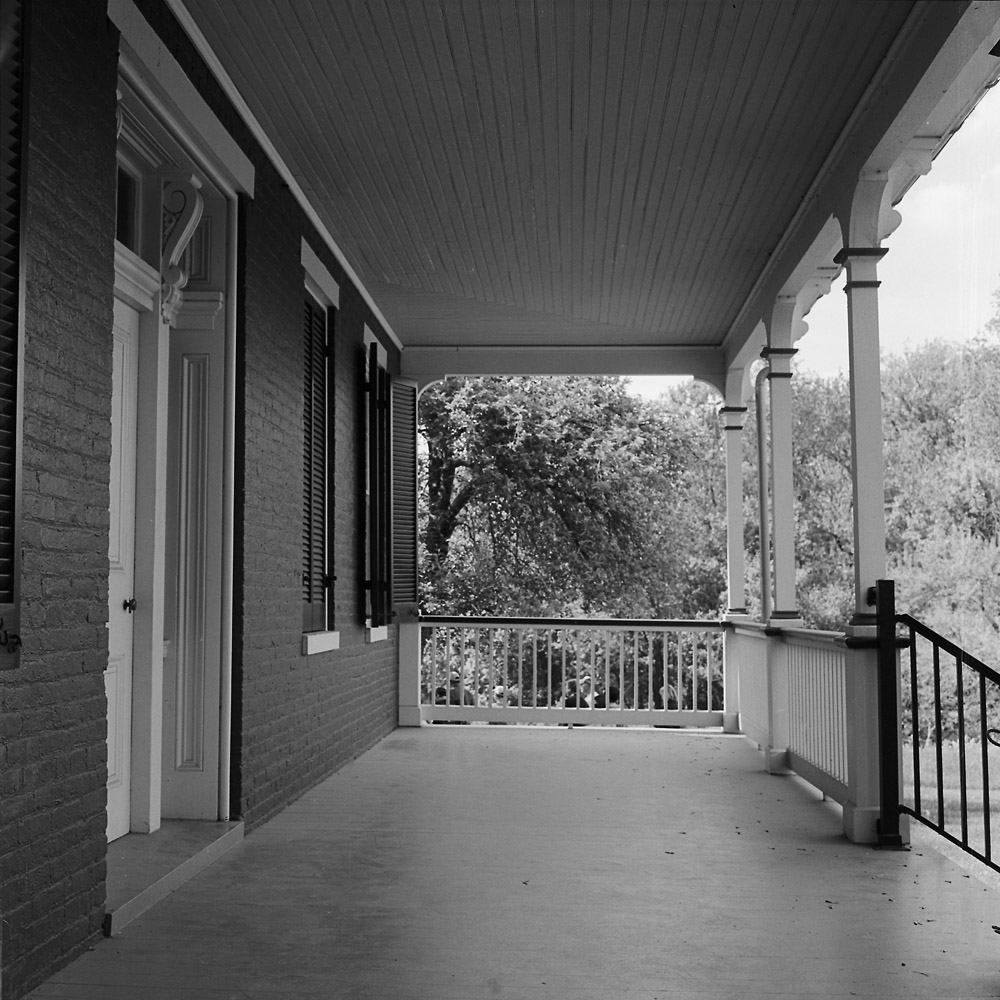
Views of the Worthington House. This house was the center of a smaller farm operation (relative to its neighbors, at roughly 300 acres) through which the Monocacy battle transpired. Rebel forces had crossed the Monocacy river at a ford adjacent to this property, and set up an artillery position near the house, from which they could see not only the Thomas house, but the Union positions at the railroad junction perhaps a mile or so away. Throughout the battle, the Worthington family took shelter in their basement, and their six year old son watched the battle through the gaps in a boarded-up window. He would later publish a book about his experience.
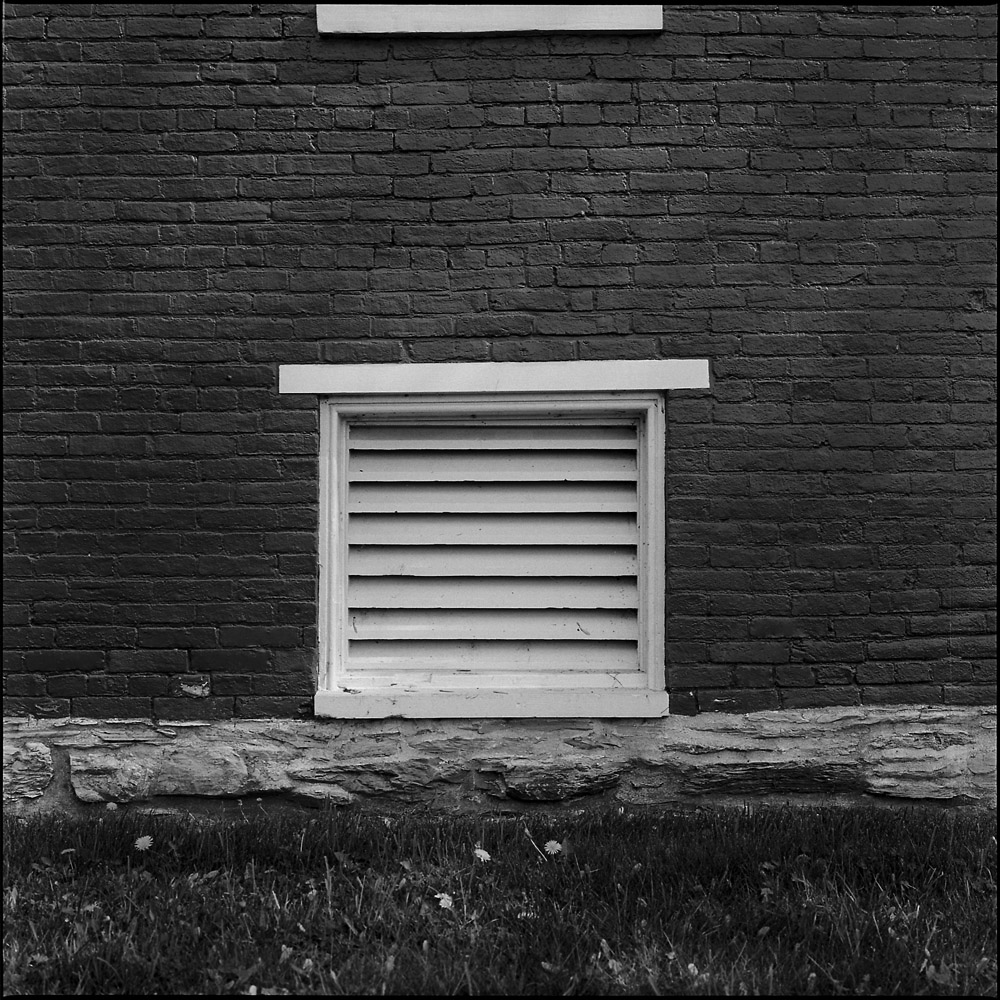
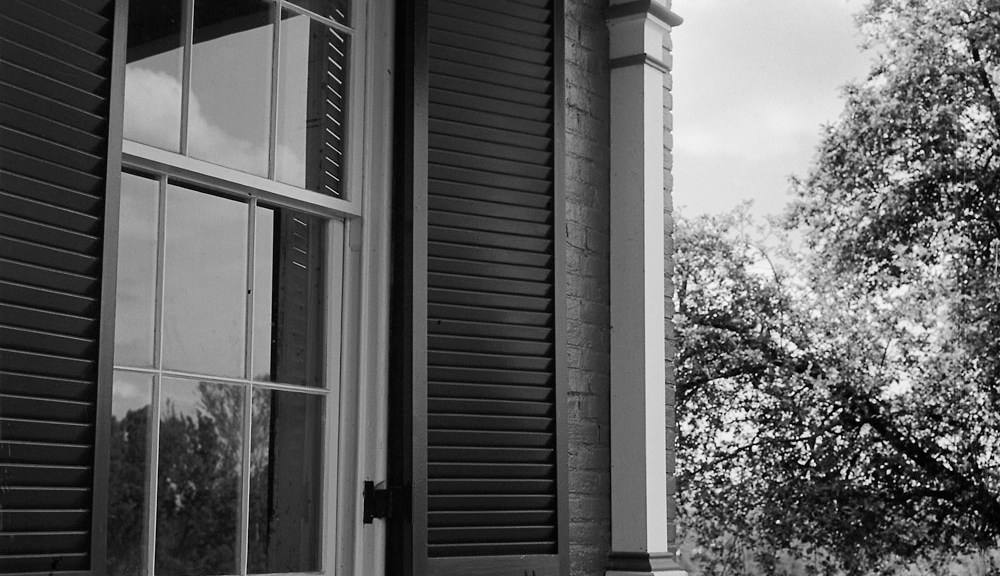
This louvered window is most likely the window through which young Glenn Worthington witnessed the battle, as it has the best views across the property where the Rebel units would have positioned themselves.
A detail shot of the front door to the Worthington house
A view off the front porch, including the lawn where the Rebel forces took up position.
a view looking down the length of the front porch. This is very much like the front porch that would have been on the Thomas house.
I did take a view of the whole Worthington house front, but something went wrong with the negative and I don’t feel like spending several hours in Photoshop cleaning it up and trying to fix it. I’ll save it for another day and go back and re-photograph it.
The Monocacy Battlefield National Park consists primarily of three farm properties, the Worthington, Thomas and Best farm properties. I’ll cover the Worthington house in a second post. What makes this special is the extent of original preservation of those three homes which were on the battlefield at the time of the fight, and in relatively original condition, with the same outbuildings and dependencies that were on the properties. You go to visit Monocacy, and you’re seeing nearly exactly what the Union and Confederates saw 150 years ago, although with more trees.
The Thomas farm had a large manor house on the property owned by a wealthy gentleman farmer from Baltimore who had acquired the property as a country home to escape the heat and humidity of the big city.
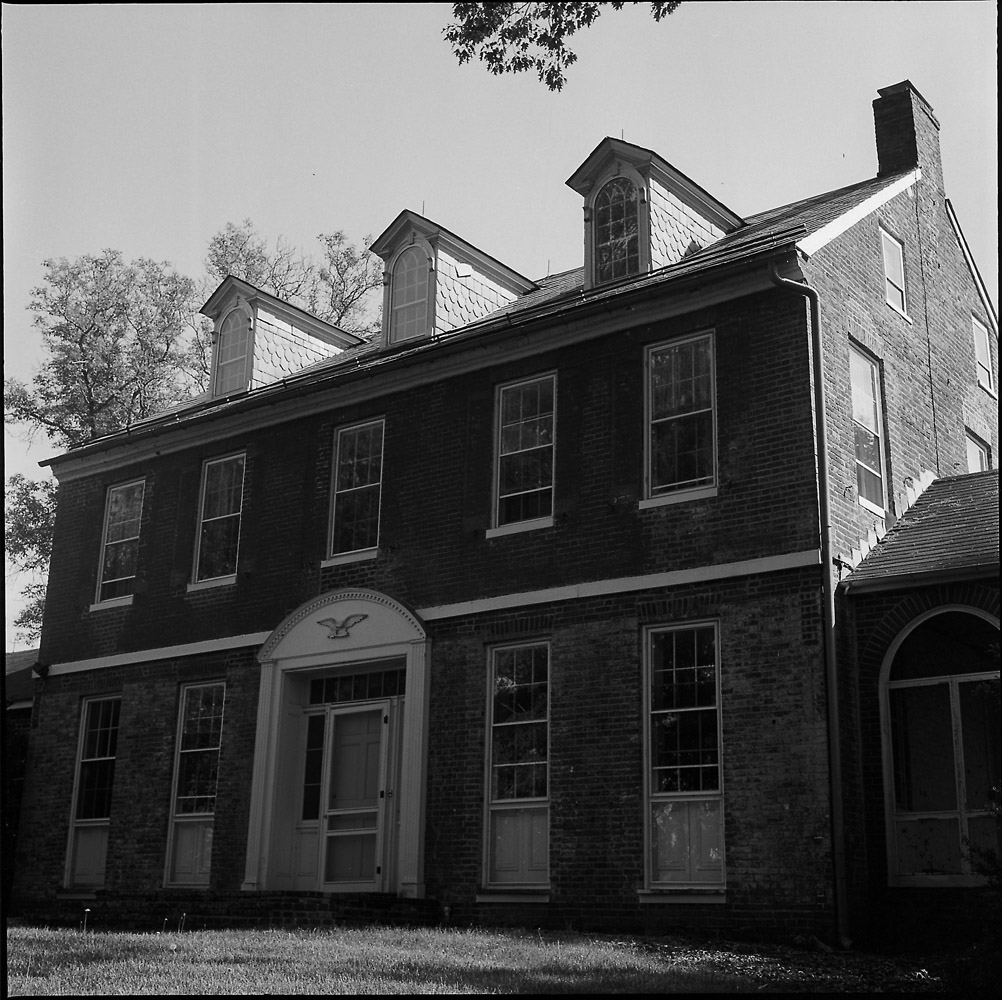
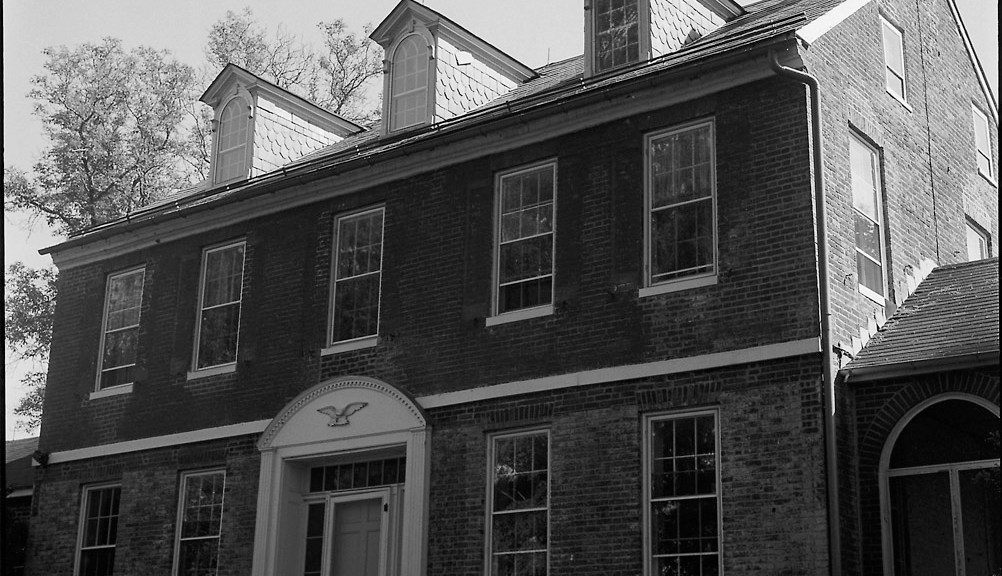
Changes made to houses always leave signs. The face of this house used to have a porch that spanned the width of the house, on both the first and second floors, and the second story windows were once full-length doors like the first floor windows. These would have been very useful in the days before central air conditioning to help catch a breeze in the summer. Also, the third story dormer windows are most likely 20th century additions, as is the decorative arch over the front door. The house itself was occupied by private owners into the 1960s at least, and now is used by the Park Service for meetings. While you cannot tour inside the house, the interior is in stable if not terribly original condition, which you can see through the windows.
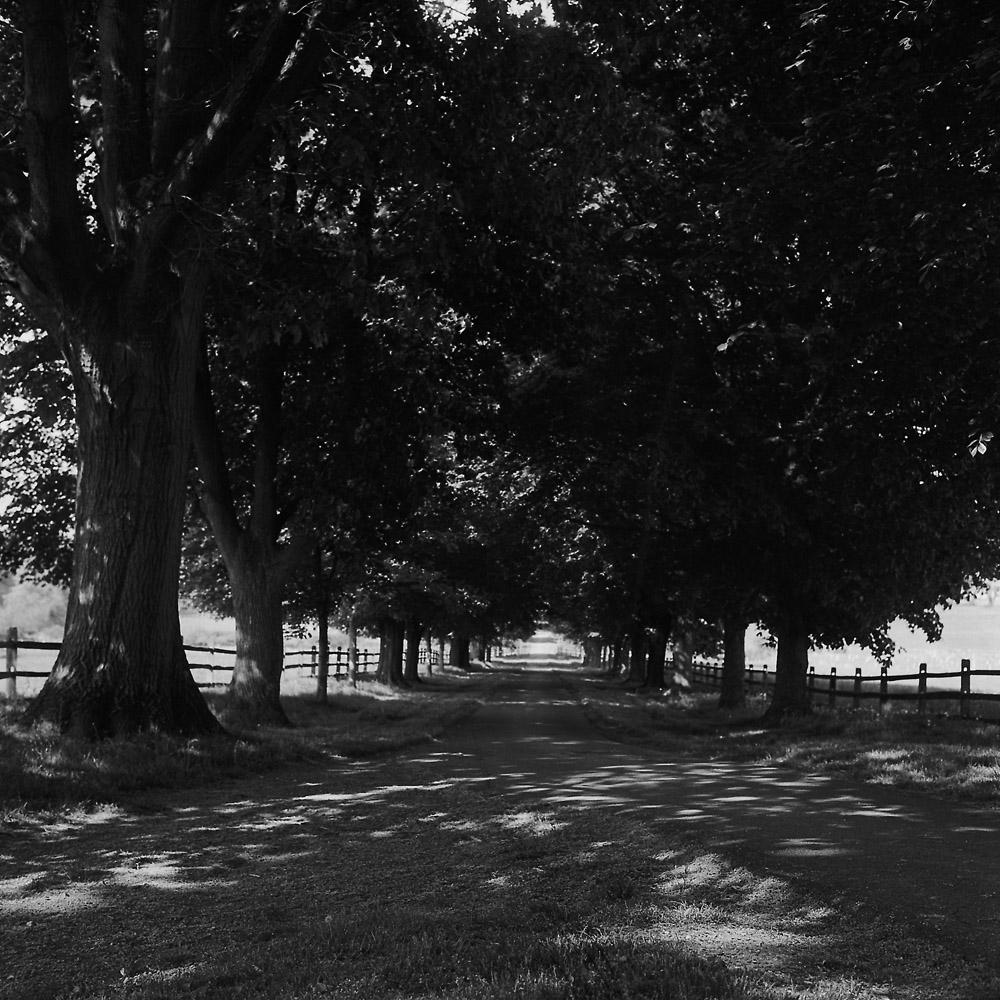
The grand allee out front leads down to the Georgetown Pike (today known as Route 355 or Rockville Pike). It may have been a bit less dense in 1864, but it would have looked generally similar at that time. What a wonderful way to approach your home, isn’t it?
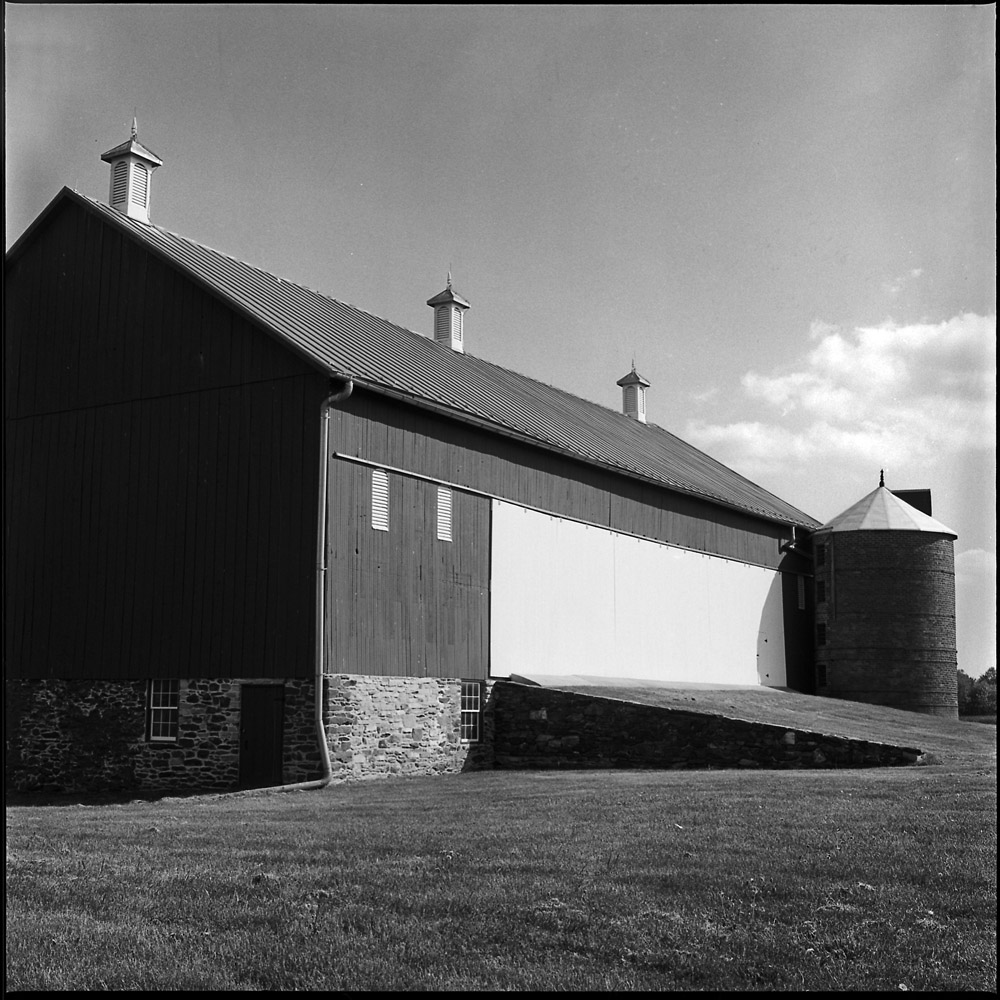
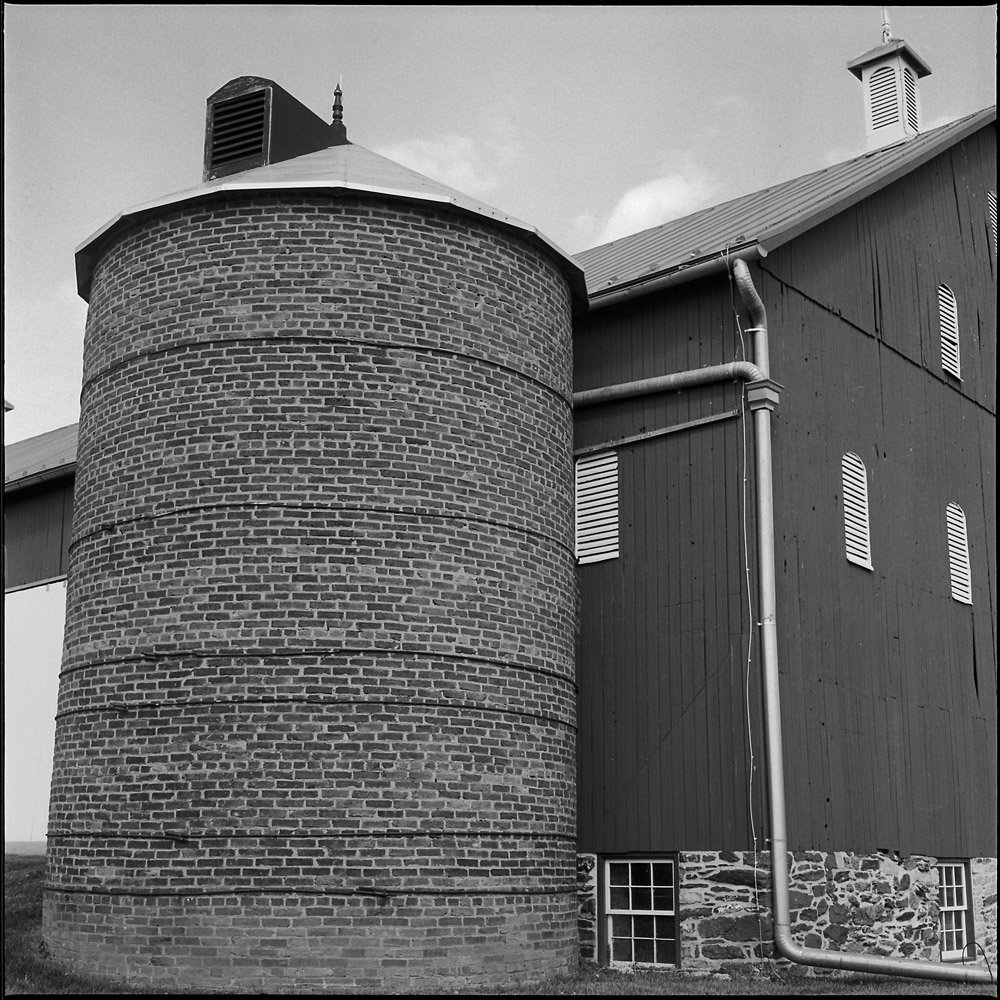
The Thomas farm is still a working farm – they have a herd of cattle, and crops are planted and harvested out of the fields. The barn itself is the same structure that was present in 1864 at the battle. The round silo is NOT original, as round silos did not show up until the first decade of the 20th century.
Another view of the silo.
One of the great privileges of living in Washington DC is access to cultural institutions. As part of the Smithsonian Resident Associates program, I get to take part in lectures and tours on art, politics, and history. As you can tell from my blog postings about my antique image collecting, I’m a big Civil War history fan. The Smithsonian Resident Associates program offers a wonderful series of lecture tours on the Civil War, the best of which are led by the inimitable Ed Bearss. Ed is a national treasure – he’s a combat-wounded WW II veteran, Chief Historian Emeritus of the US Park Service, responsible for raising and restoring the Union ironclad ship on display at Vicksburg, Mississippi (which he’ll say was a study in how NOT to raise a sunken ironclad), brilliant raconteur, and at 91, still leading tours 200+ days a year. And even at 91, he’s the first one off the bus and leading the charge across the field, the entire day. If you’re a Civil War fan, you probably know who Ed is – he’s one of the historians on-camera in Ken Burns’ The Civil War, and was a regular on History Channel’s “Civil War Diaries”.

This is a somewhat rare image of him on tour, as he’s got his eyes open. Often when he’s narrating the events of a battle, he’ll close his eyes. It’s not because of a vision problem – when asked, he explained that “it helps me picture the story in my head”. I feel so privileged to get to walk battlefields with Ed and listen to him tell the stories of the events as only he can, with his unique cadence and stentorian voice.
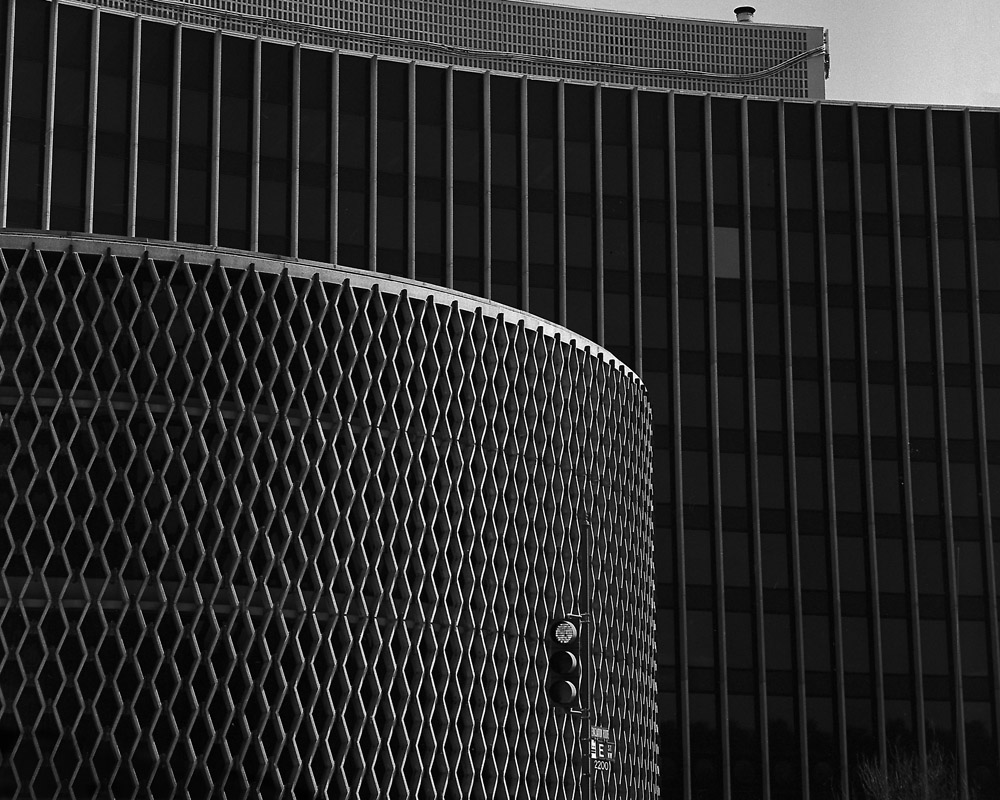
If there’s one subject that never fails, it’s architecture. Twenty-four hours a day, it looks different. To the patient and observant eye, even the most seemingly bland box of a building can be transformed into a study of volume and texture with the careful observation and application of light.
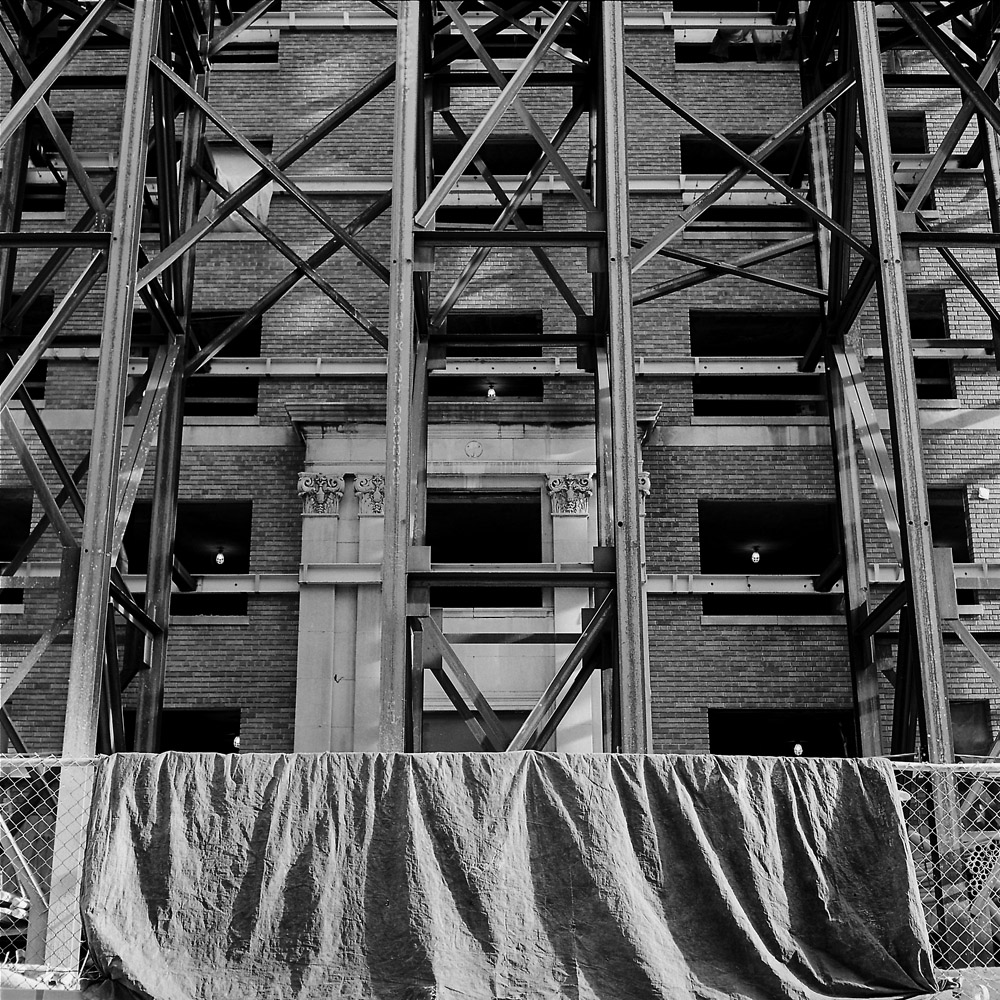
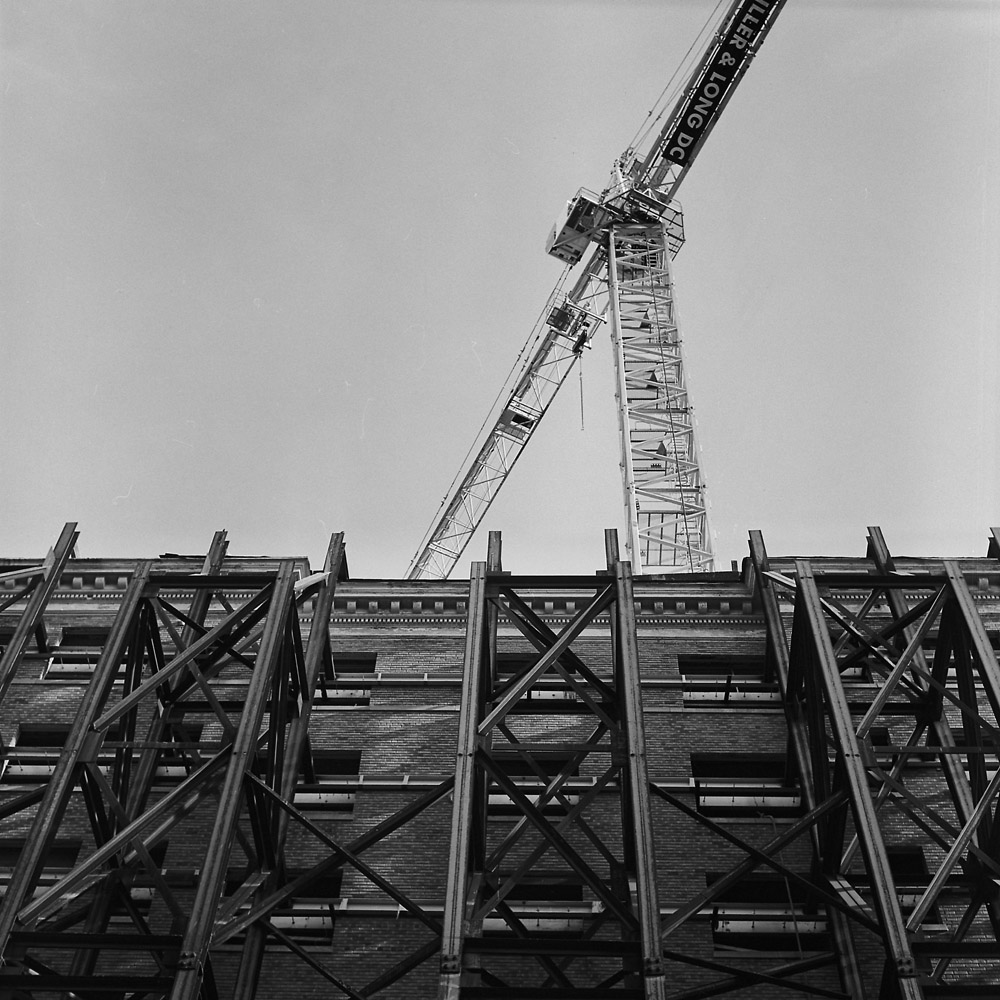
Steel girders wrapping a facade for protection during renovation become a study of patterns and of contrasting textures – the rigid linearity and modernity of the I-beams highlights in strong relief the delicate brickwork and moldings behind it, and the strong shadows cast by the evening sun bring out geometric repetition.
The white crane above the girder wall catches the late afternoon sun, a thrusting line that divides the blank sky with dynamic movement that creates multiple negative spaces instead of unbalancing the image with empty information.
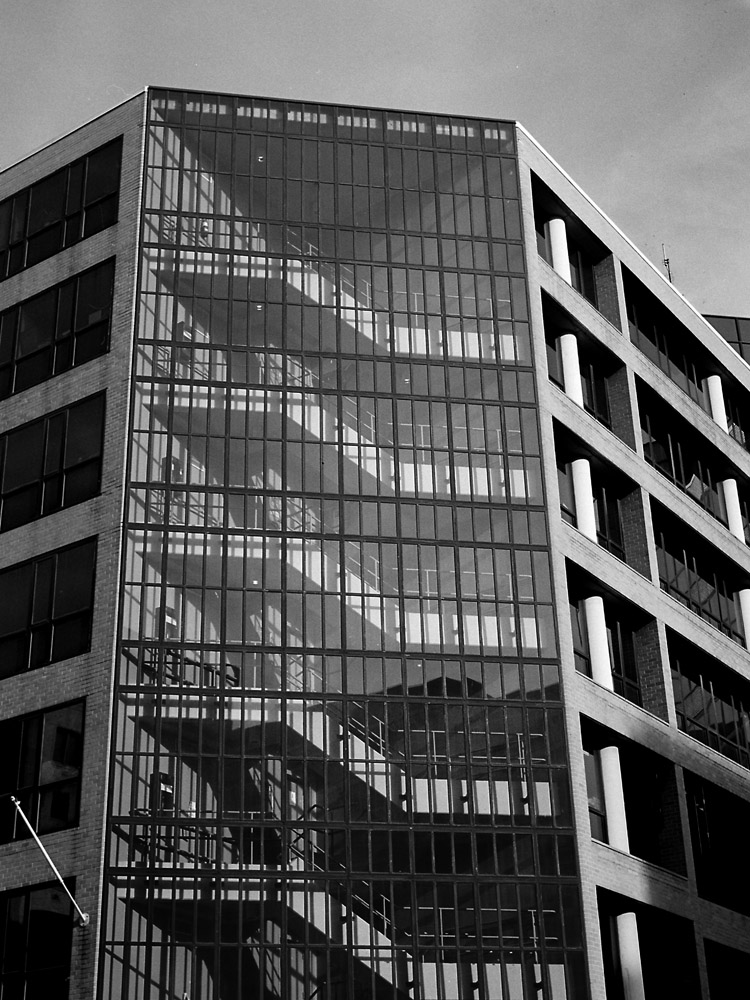
This image would be even better in color as there are patches of blue in the stairwell that repeat in a subtle pattern, drawing your eye into and up the stairs, but even in black-and-white, the repeated lines of the ascending structure draw your eye through the image.
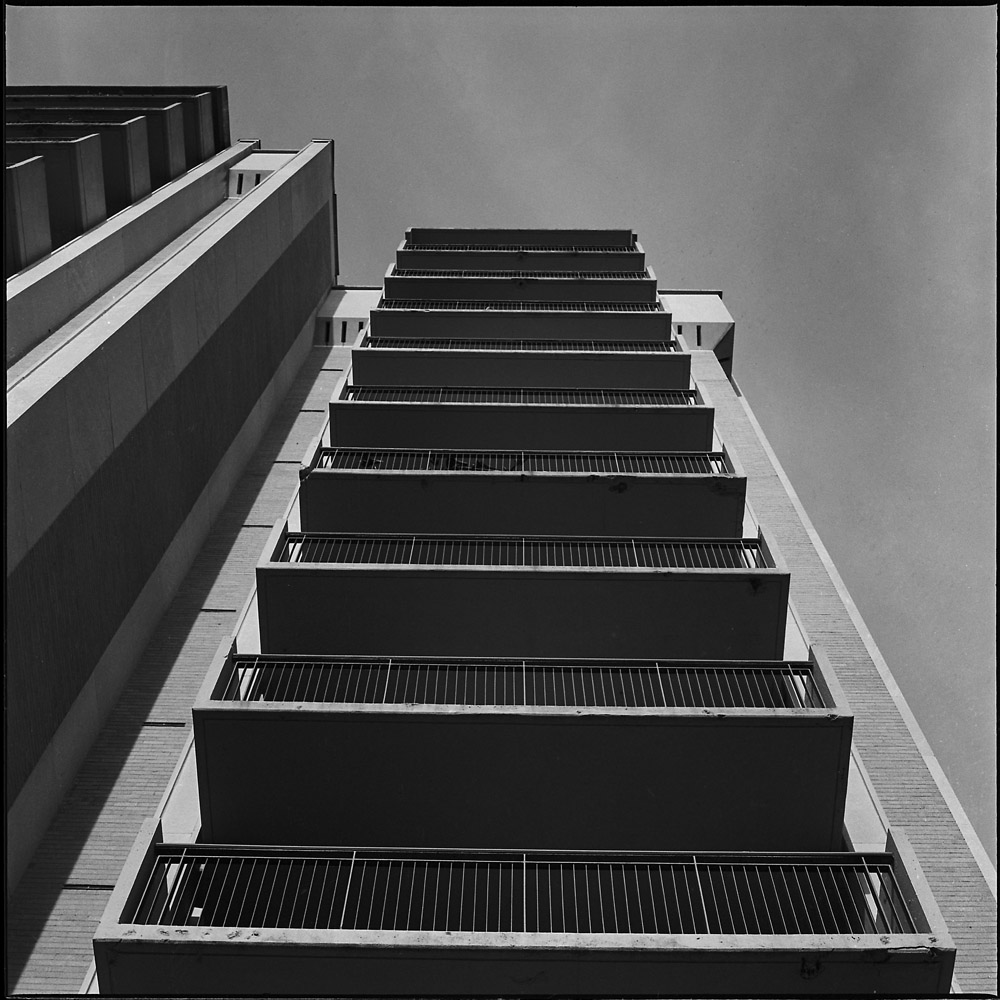
I like the vertiginous vertical lines of the apartment tower as you look straight up it. Believe it or not this was shot hand-held, no tripod, no level, just very careful eyeballing and steady hands.
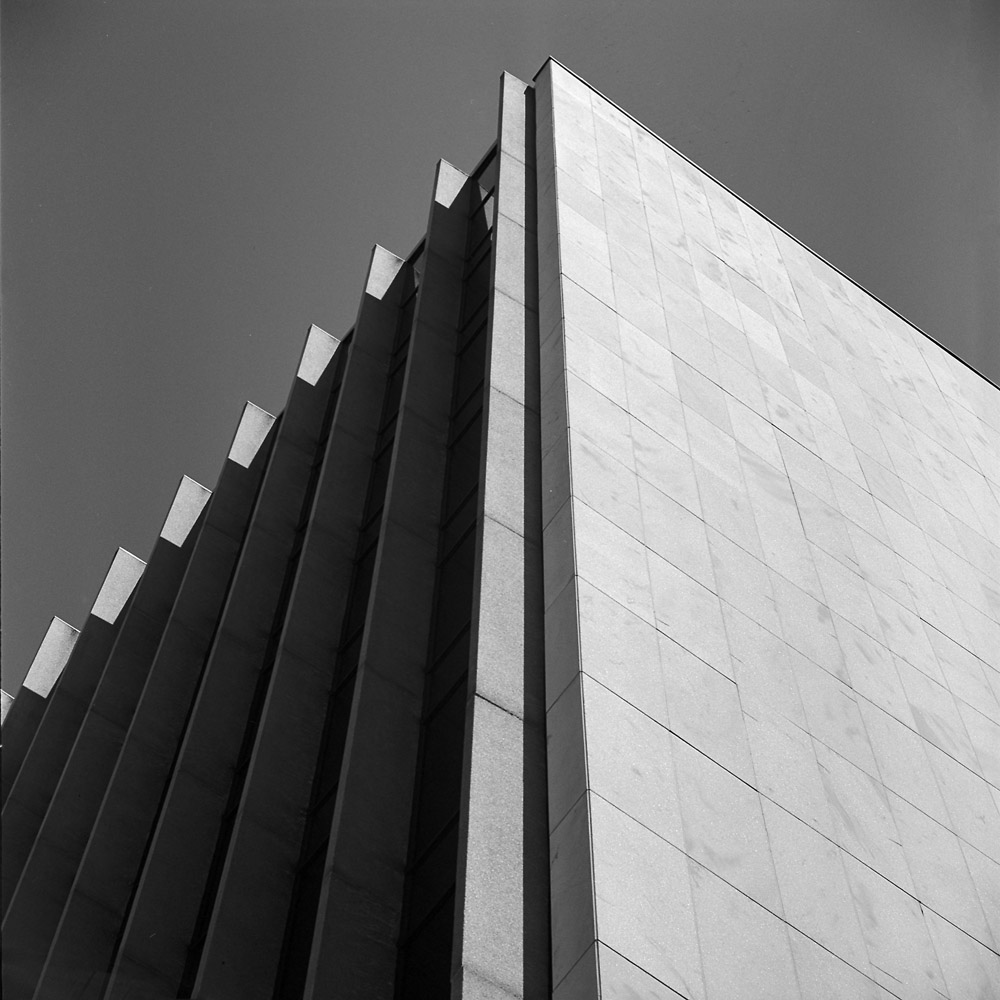
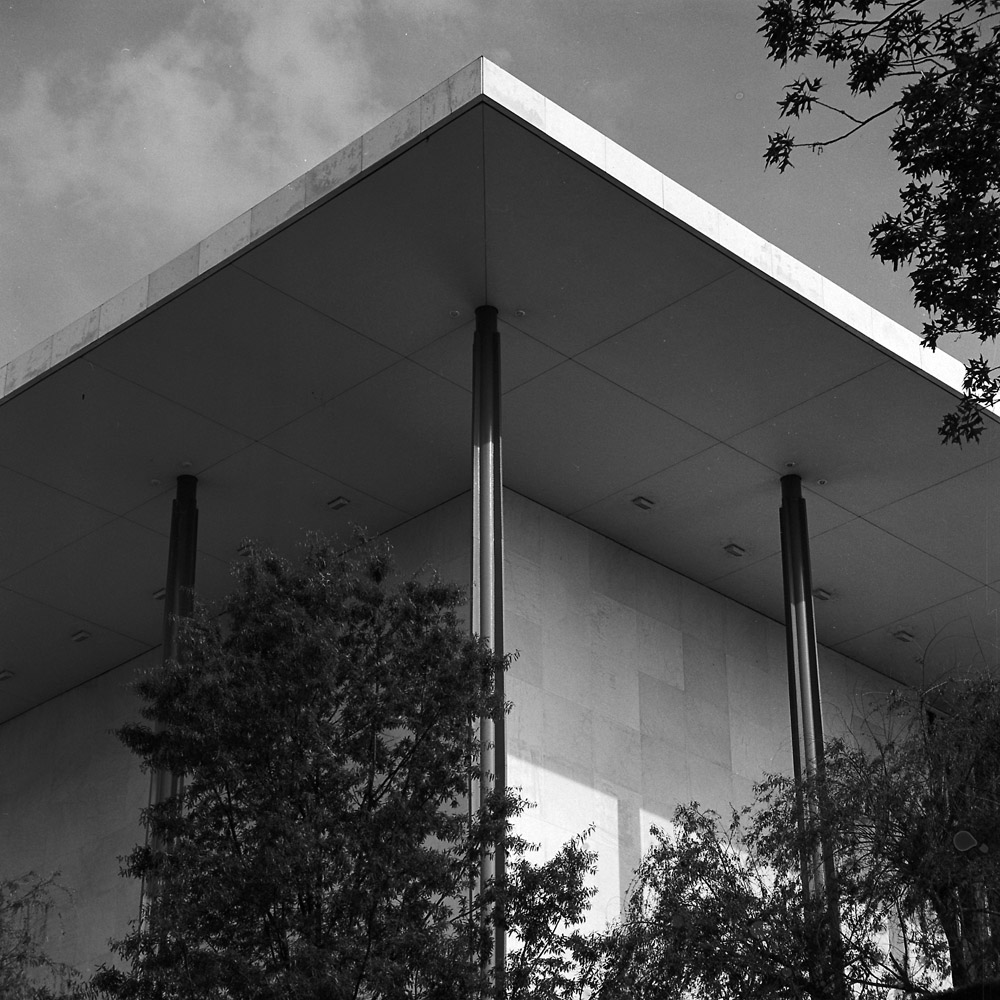
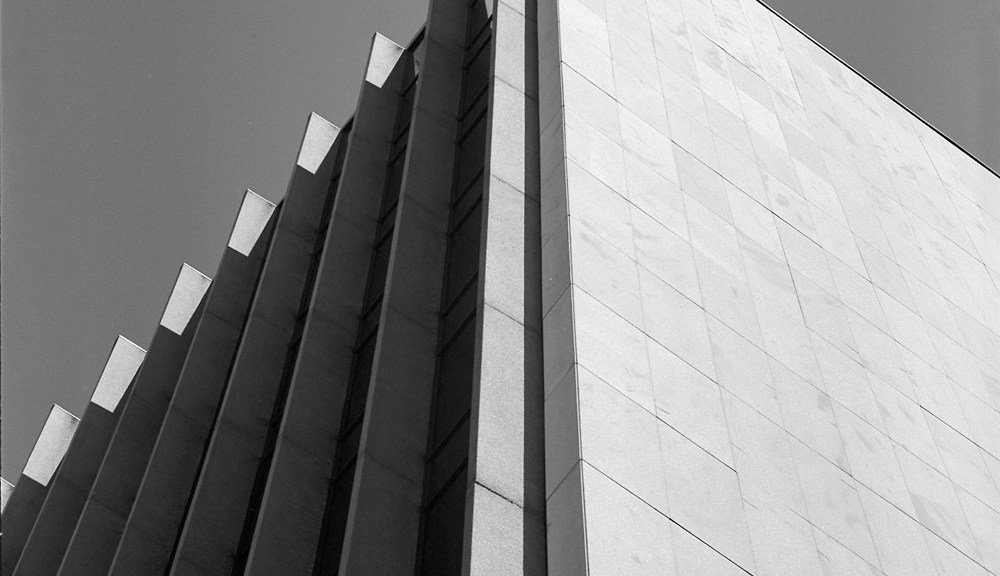
The Kennedy Center for the Performing Arts is a magnificent slab of white marble. Even the outside spaces are all grand and awe-inspiring, very much in keeping with the goal of presenting and preserving the performing arts. Here the roofline is a dramatic act in itself, like a set piece in an opera playing on the stage within. Wagner couldn’t have composed it better.
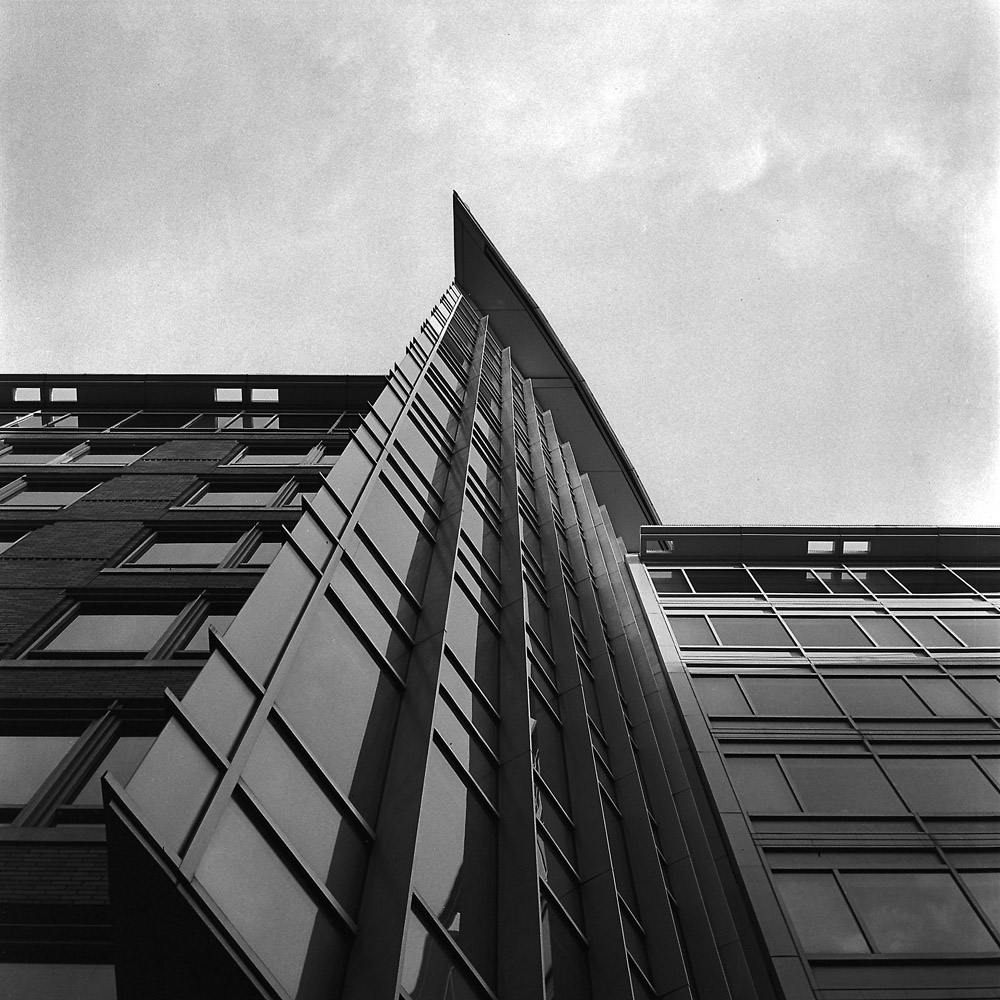
Another vertigo-inducing shot looking straight up at what I call the ships’ prow building. The facade is mostly flat, but this arced wedge bursts forth from the surface like a ship’s prow cutting the waves.
 dcphotoartist