Category Archives: Collecting

Uncommon Affections

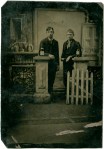
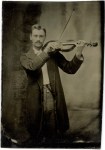
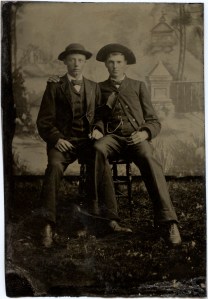
Two Affectionate Gentlemen, Tintype
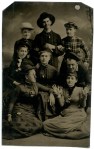
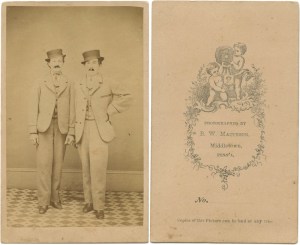
Cross-dressed Women by Mattheson
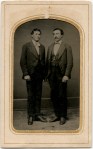
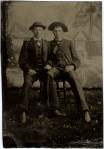
Tintype, Two Affectionate Pals (Brothers?)

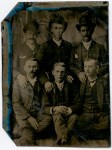
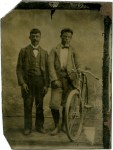
After my recent find of that tintype showing two men holding hands, I thought I’d pull together a series of same-sex affection pictures. Turns out I have fewer than I thought. Thus the title, in part, and in part for the fact that the photos are more rare than you’d think on the one hand, and not as rare as you’d think on the other. In an era where same-sex attraction was only beginning to be named and understood as anything other than a moral failing to be treated as a crime, it would seem reasonable to assume images of affection between two people of the same sex would be virtually non-existent. Because, however, there was no concept of a homosexual person, the idea that expressions of affection between two people of the same sex would mean something other than friendship would have been alien and never enter into the mind of the average Victorian. And in an era where physical expressions of affection between the genders, in public anyway, would have been profoundly frowned upon even for a married couple, it is not surprising that there are few images of an affection that would not have been considered unmanly.
Loose Tintypes

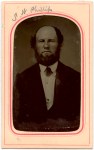
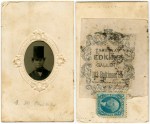
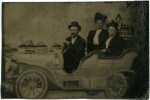
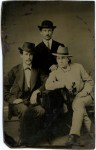
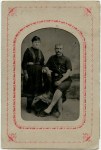
I thought it would be fun to review my loose tintypes. These are only the ones I’ve previously posted to the blog, not the entire collection. They run the range from tiny gemtype size (the one of Mr. Phillips in the top hat) to quarter-plate size (almost 5×7). They span a time period from the 1860s to the 1920s. Assembled they present a fascinating if incomplete snapshot of daily life in Victorian America. Showing everything from affectionate friends to unconventional family groups to people on vacation to working people with the tools of their trades, they portray a slice of life otherwise undocumented in literature or historical narrative. This is one of the great joys of collecting images like this – not just the traditional studio portraits, but the images that express meaning and personality beyond a marker that someone existed.

Pugilists

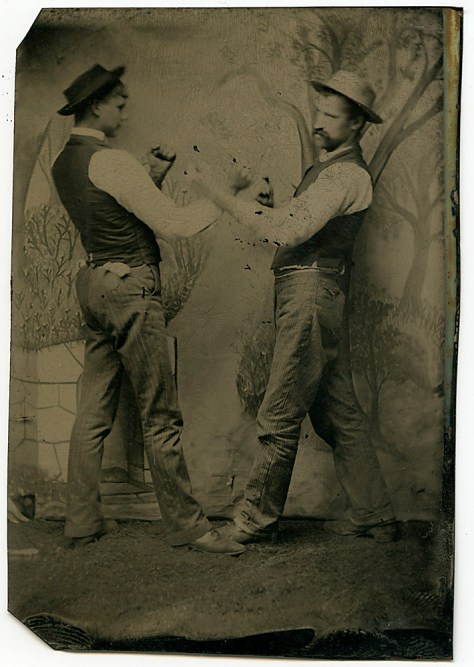
A tintype of two men boxing, for your consideration.

Tintype, Pugilists
Tintype, Pugilists

I’m attracted to this image by virtue of the slight motion blur captured in their pose – their hands and faces are a little soft from the 1+ second exposure. I suppose this could theoretically be an occupational tintype in that they may be boxers, although they’re rather formally dressed for athletes. I suspect this is just another case of two friends having a lark in the photographers’ studio. There’s probably a lost backstory to the picture – perhaps an inside joke about friends or siblings who were always fighting? Or perhaps it was a photographers’ study.

Occupational tintype – Shopkeepers

Shopkeepers
Shopkeepers

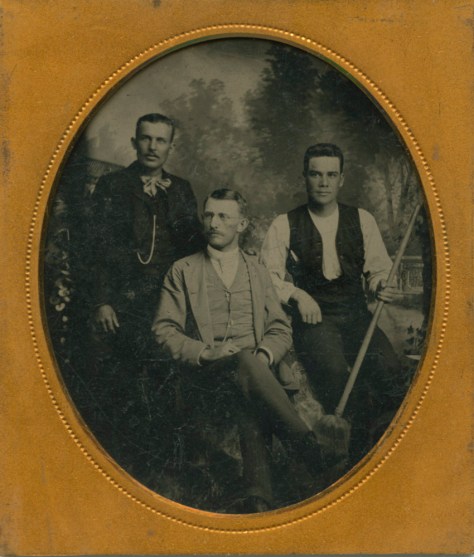
This is an unusually packaged tintype of three shopkeepers, one with a broom. I have more than good reason to suspect that the image is not original to the packet in which it resides – the packet itself is very oddly assembled, with the brass frame in four separate sections held together by a strangely still elastic string.The packet itself consists of the cover glass, the brass passepartout, the tintype, and a very thick backing glass that appears to have been blackened at one point with some kind of varnish that has faded and flaked off in spots over the intervening century and a half. The varnished back glass would suggest that it had been originally paired with a clear glass ambrotype. However, a clear glass ambrotype would have been thicker than the tintype, and the packet as is barely fits inside the brass frame. Altogether, a mystery of how this particular ensemble came to be assembled as it currently stands.

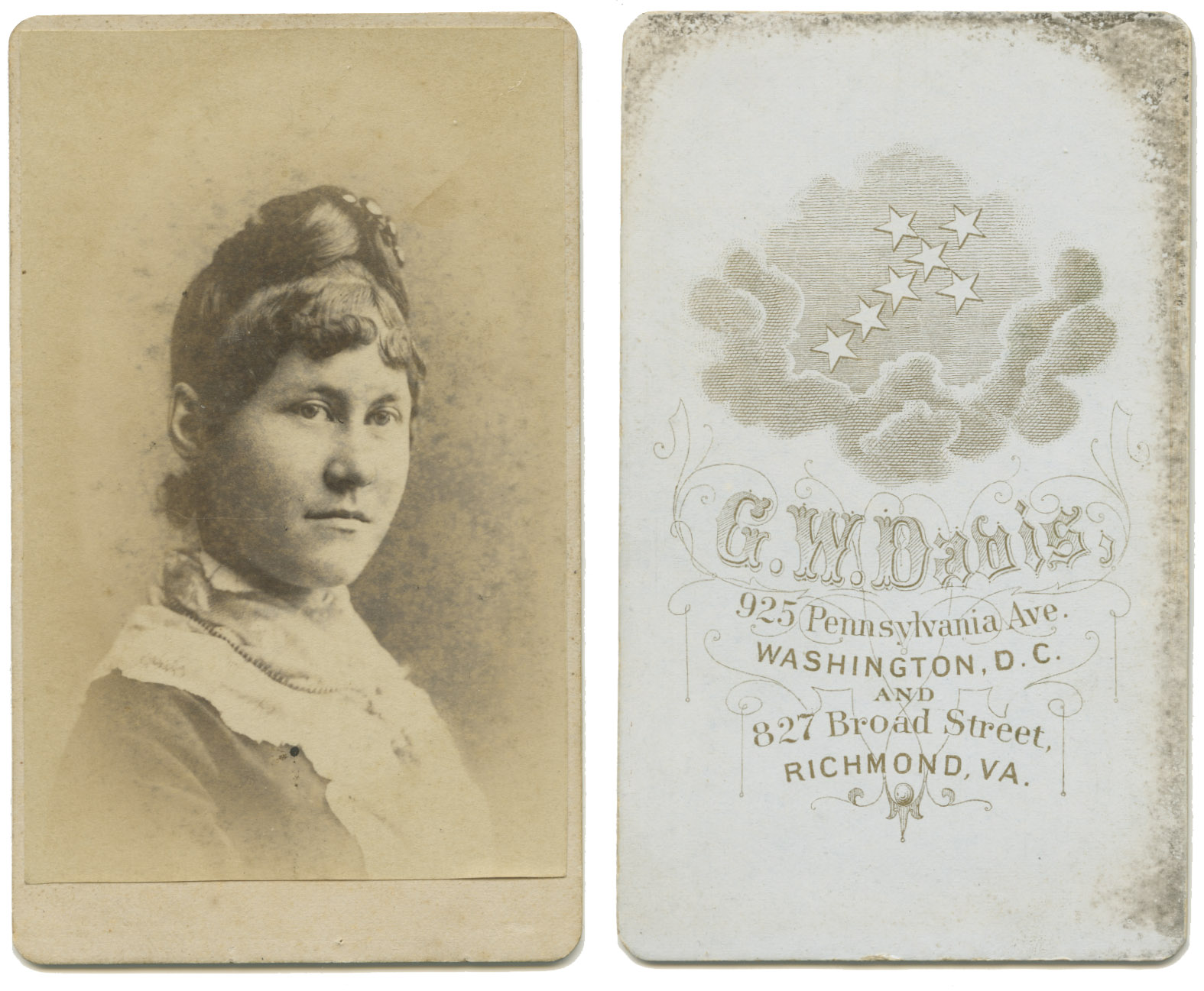
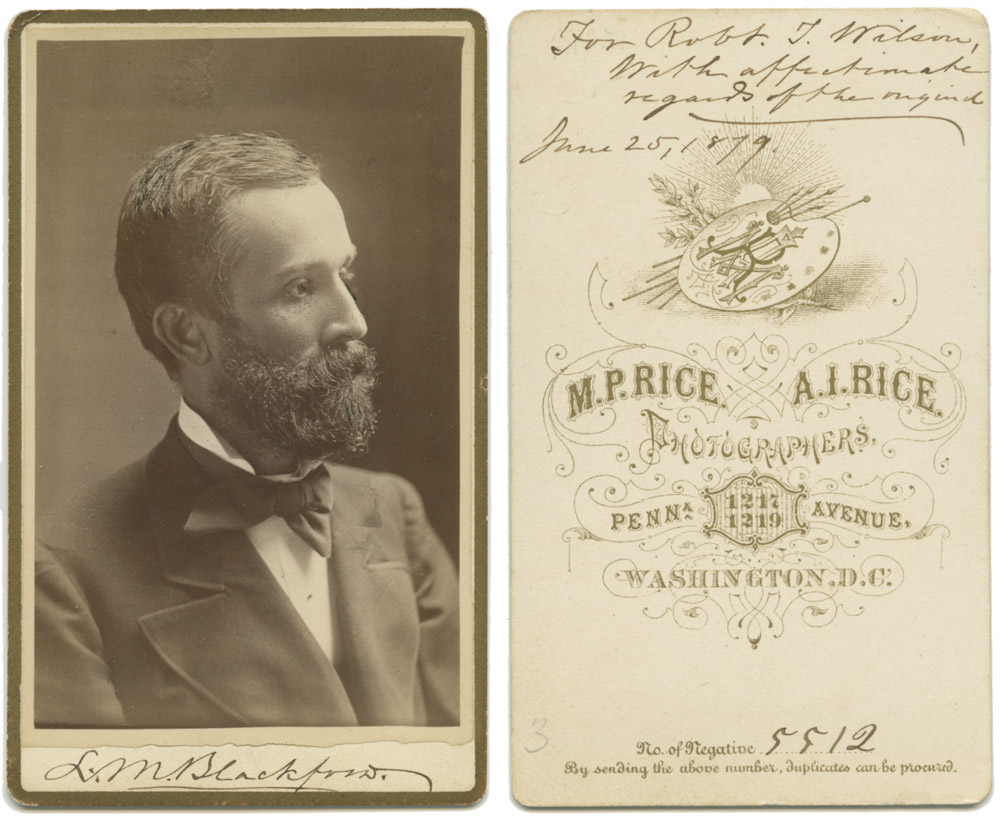
Two CDVs from Washington DC photographers

Anonymous Lady, by Davis of DC and Richmond
L.M. Blackfoot, by Rice and Rice, Washington DC

Two more CDVs from the collection, both by Washington DC photographers. And no, Mr. Davis is no relation that I’m aware of. I acquired these in part because of the beautiful blind stamps on the backs.

It Pays To Research BEFORE You Post, or, Daguerreotype Conservation, Part Two

http://britishphotohistory.ning.com/profiles/blogs/nano-scientists-attempt-to-save-disintegrating-artworks?xg_source=activity

Quoted in full:

The recent article in the Scientific American magazine paints a picture of doom and destruction for daguerreian art pieces. Of course this is disconcerting for collectors and institutions that have significant investment in these beautiful objects. The author implies that degradation surrounding some Southworth and Hawes daguerreotypes in the Young America exhibition can be applied to all daguerreotypes when he writes “The vanishing images suggested that any daguerreotype could spontaneously crumble.” This sky-is-falling statement in my opinion does not represent the majority of daguerreotypes.
Lets review this issue.
Approximately 160 Southworth and Hawes daguerreotypes were exhibited over two years at three institutions. Five plates changed significantly with an obscuring white haze, and supposedly 25 plates changed slightly. The majority of the plates did not change at all.
From personal experience I can tell you that I have 19th century daguerreotypes as well as my own daguerreotypes that have been on continuous display on my studio for 10+ years with no sign of change. This is my argument against the claim that daguerreotypes are light sensitive.
What every collector or institution must know is Southworth and Hawes plates have a very unique storage history contrary to the norm. The great majority of S&H images that remain were plates retained by the studio stored completely unsealed in plate boxes. They were sold in this condition through Holman’s bookshop in the 1930’s. and early 40’s. As they migrated to private collectors and institutions they were sealed using what were thought of at the time to be proper conservation materials. A typical preservation package used by the George Eastman House from the mid-1970’s to 1999 consisted of 4-ply buffered board with a paper binding tape, and a buffered die cut paper mat separating the plate from the glass. The buffering agent is 3% calcium carbonate to provide an alkali reserve of ph 8.5.
A significant case in point. In 1999, a trove of Southworth and Hawes daguerreotypes were discovered in the garage of David Feigenbaum after his death. A team of conservation professionals from the George Eastman House were asked to prepare the plates for auction at Sotheby’s. Over 200 plates were housed in the materials described above. A collector who purchased a Southworth and Hawes daguerreotype from the David Feigenbaum sale brought it to me to replace the conservation housing with an 19th century brass mat, preserver and case. I retained the die-cut buffered mat and backing board. Soon after, I made a daguerreotype that I felt wasn’t good enough to frame in my own passe-partout housing design, but I wanted to preserve it as I had made it in collaboration with my friend Irv Pobboravsky. I placed the daguerreotype behind glass using the die-cut mat I retained from the Feigenbaum sale held together with spring clips and placed it in a zip-lock back. It was stored in the dark for approximately four years. It now has a very definite obscuring white haze adjacent to the mat. While this is not a scientific experiment, it does provide a significant observation and cause to question if the housing materials are contributing to the deterioration of the plates.
I have experienced the “white haze” phenomena on other of my contemporary images as well as on 19th century images that have been in contact with buffered board. What is good for the conservation of paper, ie alkaline buffering, is not necessarily good for daguerreotypes.
In reviewing the conservation efforts for the Young America Exhibition I learned that plates were not removed from their buffered mat board and die cut preservation packages. These were placed intact into extremely well sealed secondary housings incorporating shallow copper pans to act as pollutant scavengers. A complete overview of the conservation for this exhibition can be found here.
http://notesonphotographs.org/images/1/1e/Young_America_design_for_…
If the buffered materials are a co-factor in the formation of “white-haze” deterioration it would explain why even with the best intentioned conservation, some plates still changed during exhibition. A questionable environment was enclosed within a stable one.
This remains to be explored and I hope to soon analyze the plate and mat from my example. I present this scenario as a possible alternative and/or co-factor to the silver-chloride scenario presented in the Scientific American article.
In closing, I would say that daguerreotypes are among the most stable of photographic objects providing the housings are intact to prevent atmospheric pollutants from reacting with the silver surface and that the housings themselves are not contributing to the problem. The nature of the mechanism of deterioration particular to a small percentage of Southworth and Hawes daguerreotypes is not yet fully understood. The findings reported in the Scientific American article should not prevent us from exhibiting, collecting or enjoying these amazing photographs. It is prudent, as has been shown by the Young America exhibition, to accurately document any daguerreotype intended for exhibition and carefully monitor it at regular intervals to note any changes.
sincerely,
Mike Robinson
Daguerreian Artist
President of the Daguerreian Society

This certainly adds a new wrinkle to the previous Scientific American article. It also goes to show that just because an article comes from a reputable source does not necessarily mean it is accurate. My bad. This bears further following, and I will post updates as I find them. That said, I would still be careful in exhibiting Dags to prevent unnecessary degradation.

Daguerreotype Preservation issue

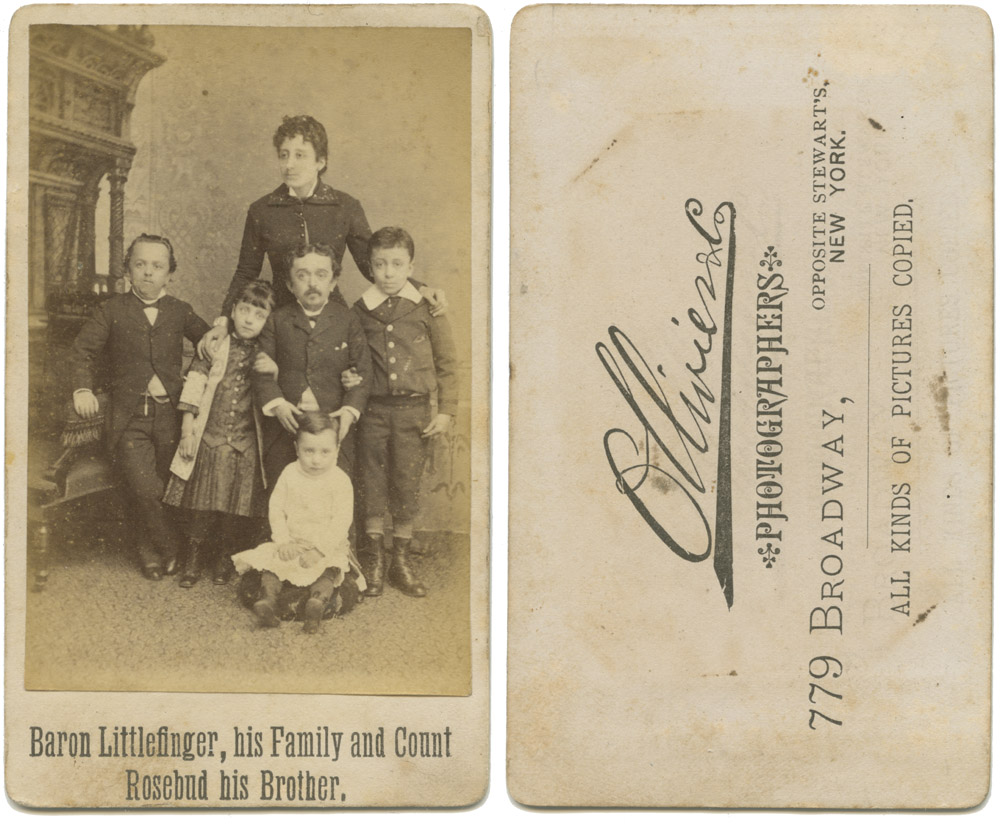
Count Rosebud and Baron Littlefinger

Baron Littlefinger & Family

I realize I just posted this image in my previous entry, but I think it’s worthy of a separate post. Frankly, I’ve had it in my collection for a while but for some reason I didn’t post it at the time I added it. So I’m making up for the past omission. I think it’s worthy of adding a separate entry because their story is interesting. Count Rosebud was an Italian named Primo Magri. He and his brother Giuseppe (or according to some accounts, Ernesto), Baron Littlefinger, were allegedly given actual titles by Pope Pius IX. They toured as performers. In 1885, Count Rosebud married the widow Thumb, Mrs. Lavinia Warren. They had to perform into old age because they supposedly had very lavish tastes and could not afford to retire. I haven’t seen any back story on the rest of the family referenced in this photo – who were they, were they really the Count’s family or just props like the Thumbs’ baby, did he divorce this woman at some point before marrying Lavinia, or was he a widower?

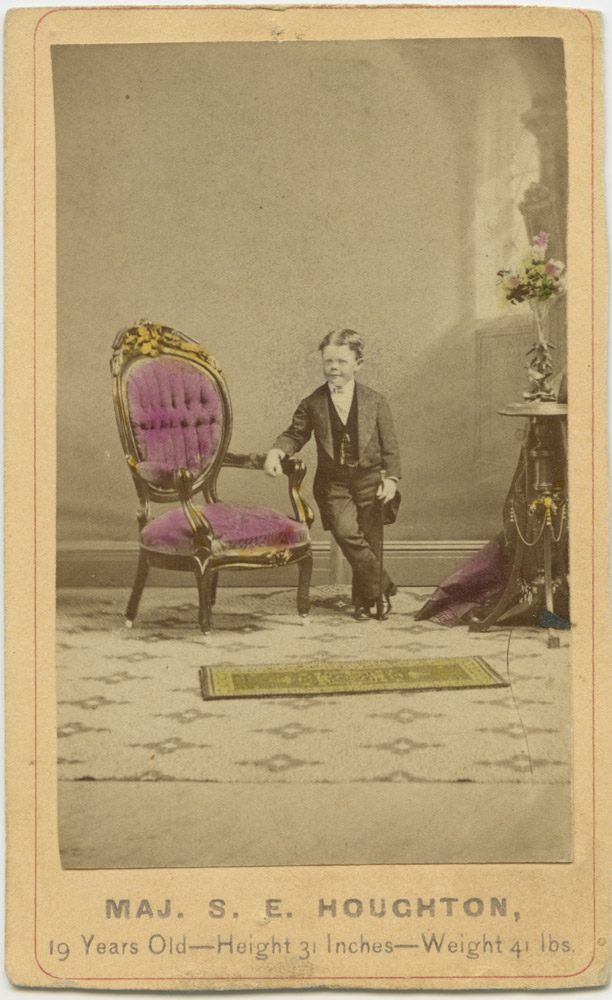
Maj. S.E. Houghton

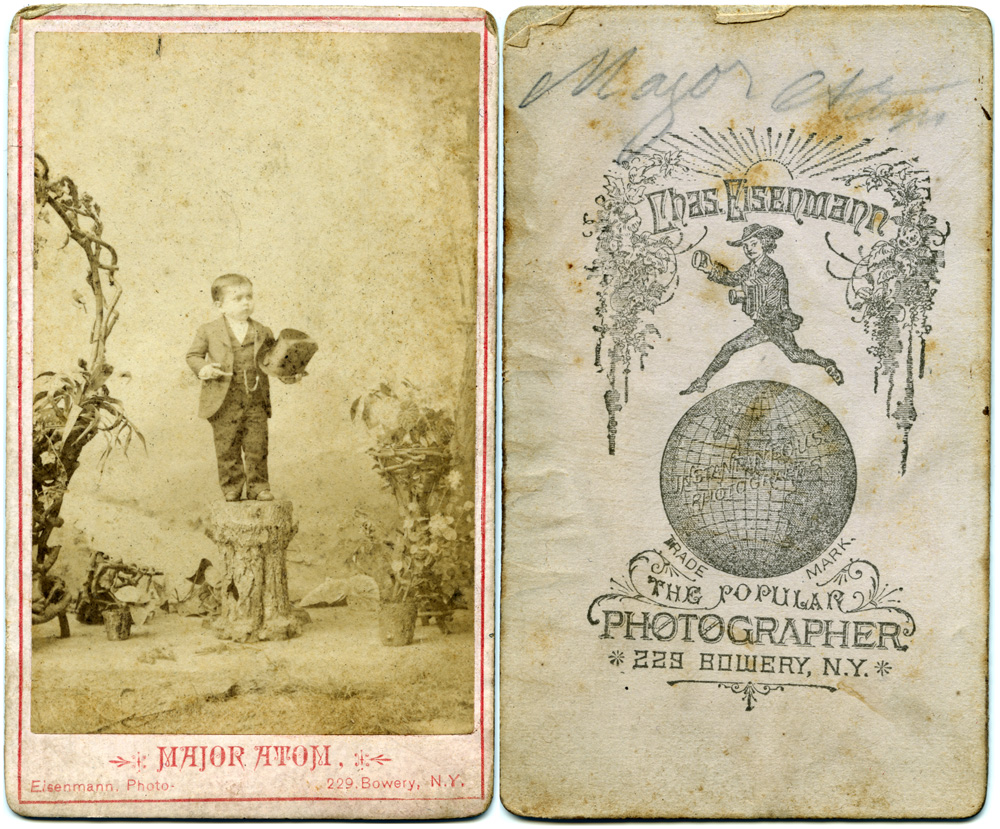
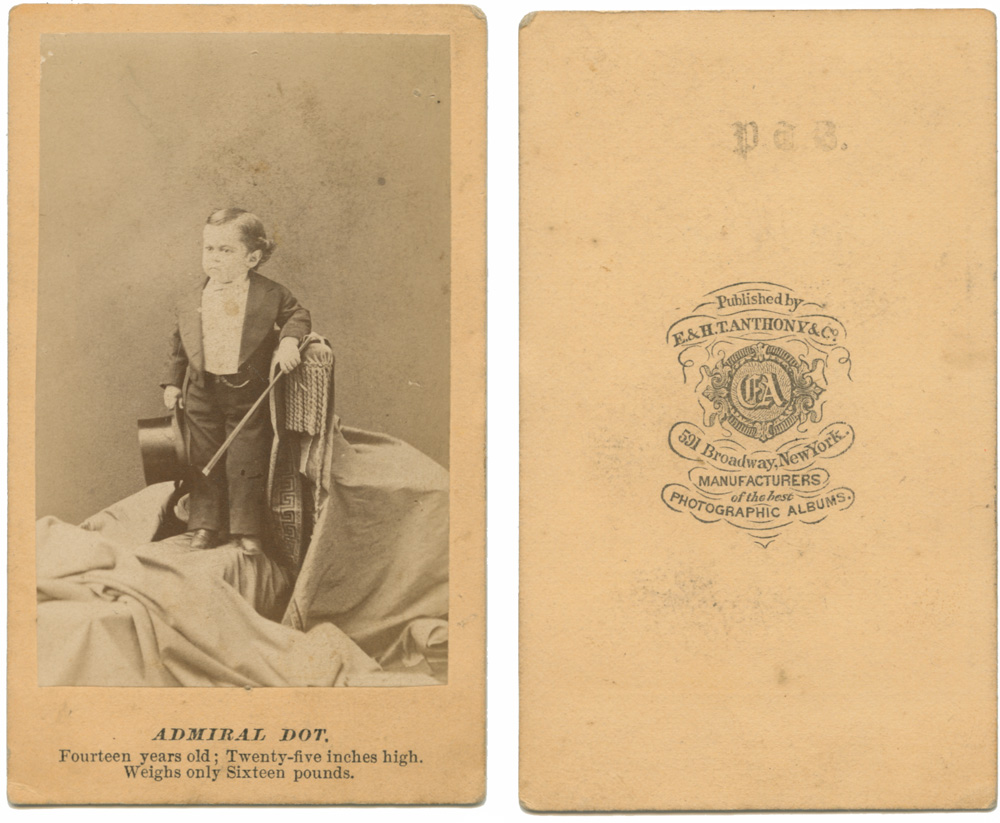
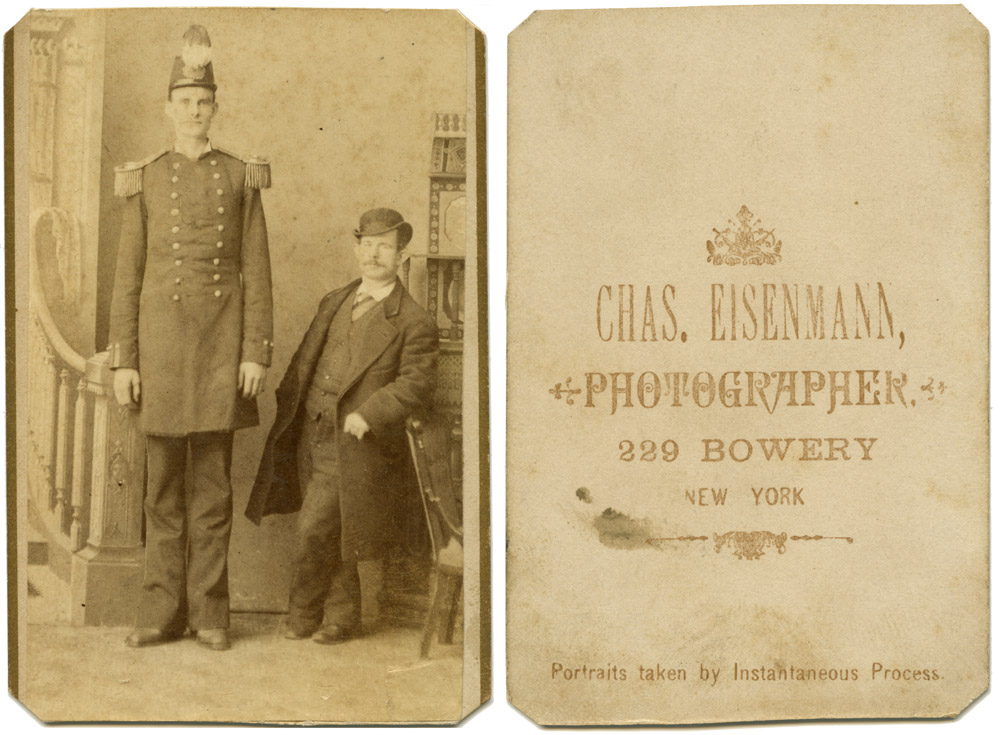
My latest CDV of a circus sideshow midget. What was it with the circus and fake military ranks or titles? Major Houghton, Admiral Dot, Major Atom (although there’s a wee (pardon the pun) bit of irony in that one), Commodore Nutt, General Tom Thumb, Baron Littlefinger and Count Rosebud and just to name a few. Even when folks weren’t given fake titles, they often got dressed up in military-esque uniforms, like my photo of Landon Middlecoff, or some of the other giants I’ve seen.

Major S.E. Houghton
Major S.E. Houghton
Major Atom, by Chas. Eisenmann
Admiral Dot, published by E&HT Anthony
Commodore Nutt and unknown little woman, Anonymous CDV (probably Brady)
Baron Littlefinger & Family
Landon Middlecoff, the 'Kentucky Giant', by Eisenmann
Landon Middlecoff, the ‘Kentucky Giant’, by Eisenmann

More additions to the photographers’ maps

I added several addresses in the last few days, to all three maps. To New York, I added:

P.H. Rupp, 13 Avenue A

D. Appleton & Co, Cartes De Visite, A.A. Turner, Photographer, 443 & 445 Broadway

C. Henkel, 1288 Broadway

To Philadelphia, I’ve added:

Schreiber & Son, Photographers, 818 Arch Street

Photographed by Roberts, 808 Arch Street

Fitzgerald & Co, Photographers, 828 Arch Street

To Washington DC I’ve added:

R. W. Addis, Photographer, McClee’s Gallery 308 Pennsylvania Avenue

Tasset, Artist Photographer, 925 Pennsylvania Avenue

As per my usual practice, I’m including any advertising copy found on the photographers’ verso imprints along with the address.