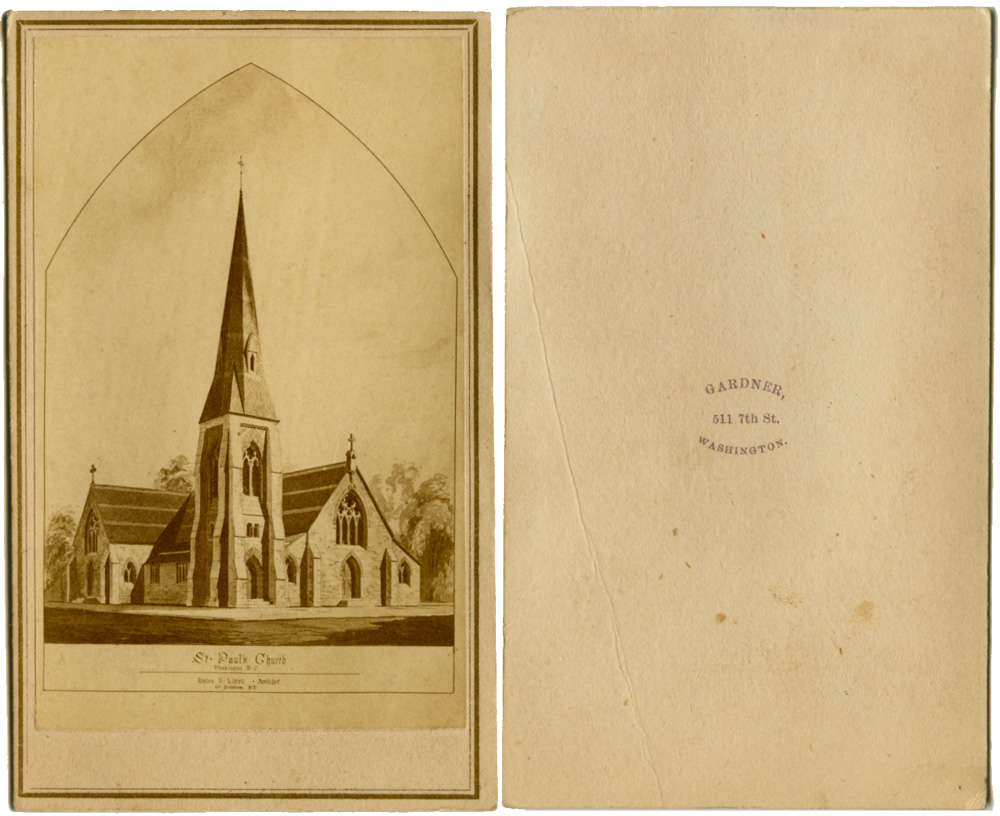
Here’s another CDV from the Alexander Gardner studio. It’s a card-size copy of an architectural rendering of St. Paul’s Church here in Washington DC. The Architect is Emlen T. Littell, 111 Broadway, New York. I’ve done a little digging and can’t find a current St. Paul’s church that looks like this – there are a number of St. Paul’s churches in the DC area, but the ones I could find in the most probable parts of town for the time period don’t look anything like this, nor do they mention the architect – and several of them do mention the architect who designed their building.
Emlen Littell was a prominent ecclesiastical architect in the 2nd half of the 19th century, working mostly in New York and Philadelphia. He became president of the American Institute of Architects. One of his most famous designs is the Church of the Incarnation in New York City, which had many famous parishioners including Admiral David Farragut and Eleanor Roosevelt. FDR’s mother’s funeral was held there as well. It has windows designed by Louis Comfort Tiffany among other well-known Victorian artists.
Architectural rendering, St. Paul’s Church, Washington DC by Alexander Gardner
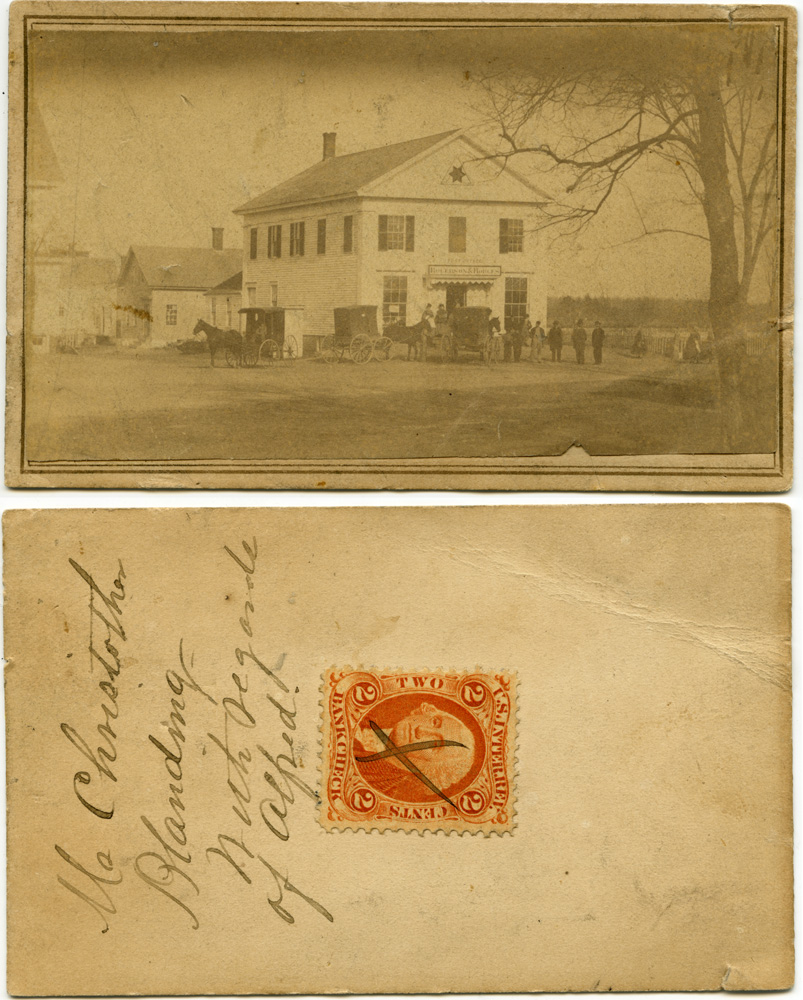
Here’s a charming little anonymous CDV of Rugerson & Hodges’ General Store and Post Office. No location given – maybe Pennsylvania or somewhere in New England? If anyone out there in internet land has any idea of the location, feedback would be much appreciated.
Here I was, just minding my own business doing a little shopping for me and the cats, when what do I see but the retired general and former Secretary of State, Colin Powell, signing copies of his new book.
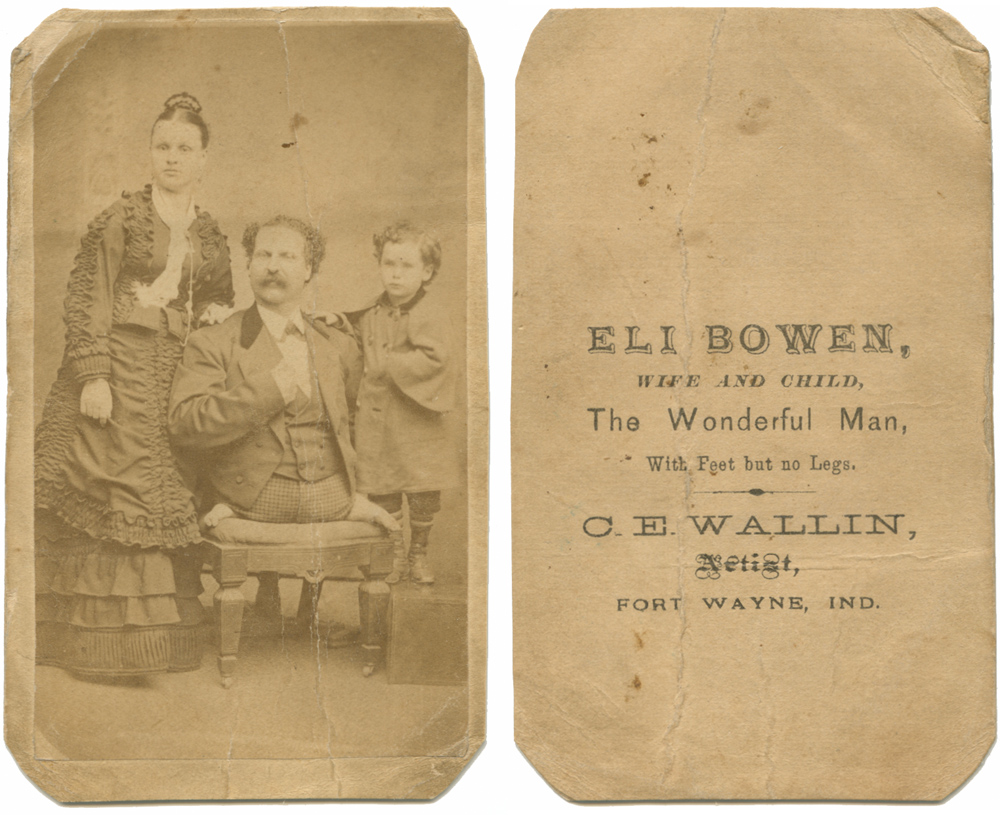
Betcha thought I had quit collecting! Nah, it’s just in hiatus – makes for a good winter pastime when you’re cooped up in the house. But I found a couple more images that were interesting enough to add.
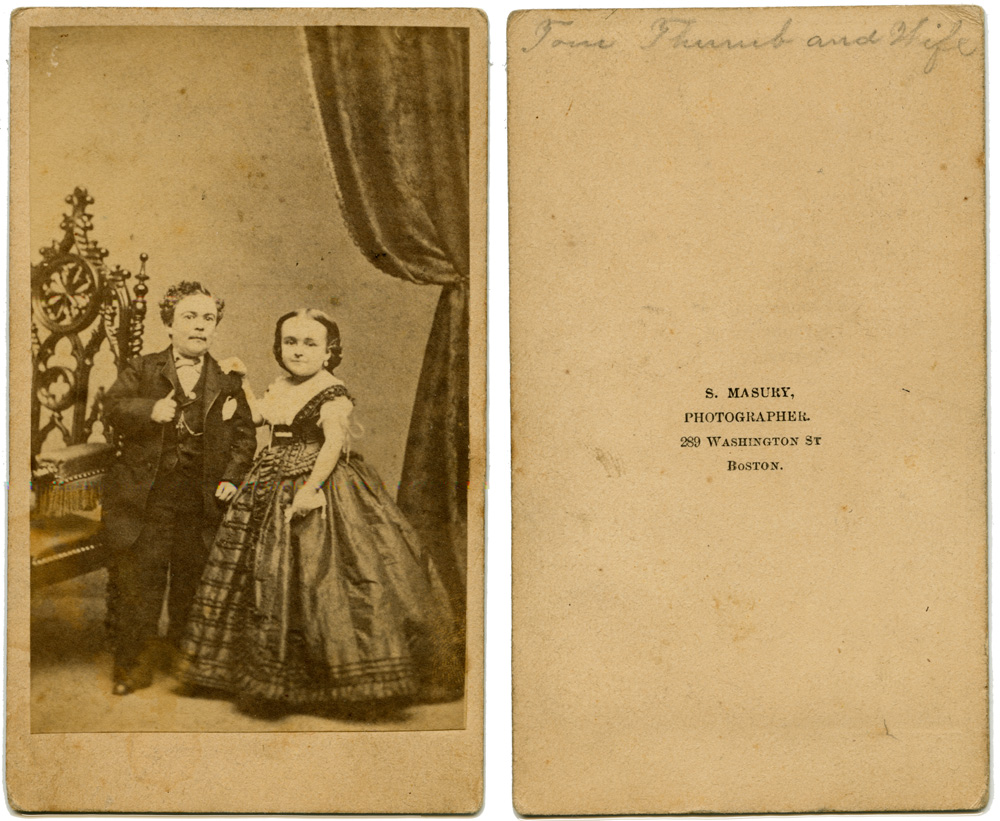
First up – another Tom Thumb and his Wife. I love this one not only because it shows them in their advancing years, but it demonstrates that they remained culturally relevant throughout their lives. I also love the handwritten notes on the back – in this case it gets things wrong about them (they were NOT 18th century performers, and I’m not aware that they were musicians – Tom Thumb’s main performance was as a comic impersonator, doing skits where he portrayed Napoleon and Cupid).
Tom Thumb and Minnie Warren, in their advancing years
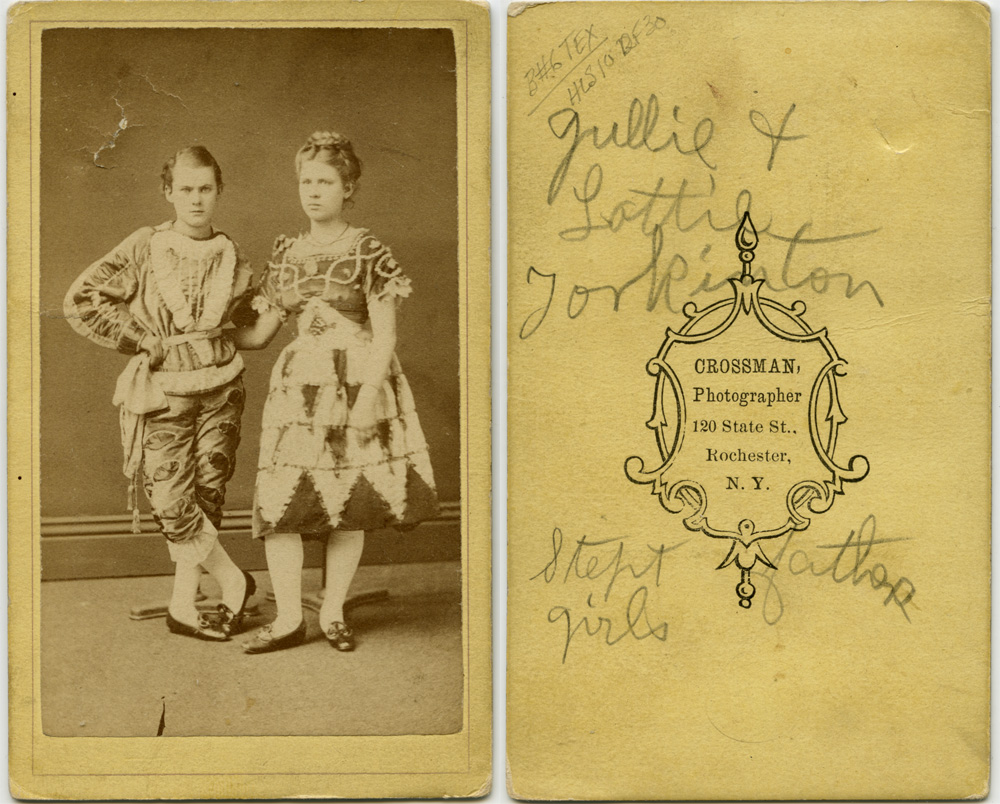
Here’s another circus performer pair – the hand-written label says “Gullie and Lottie Tarkinton”. I was unable to find any reference to who they were. They’re not listed on Olympians of the Sawdust Circle. I’m guessing they are sisters, perhaps even twins. The one is dressed and posed in a very masculine way, quite in contrast to the other, which is its own kind of interesting. And I’m a sucker for a photo that you can see the head clamp stands in.
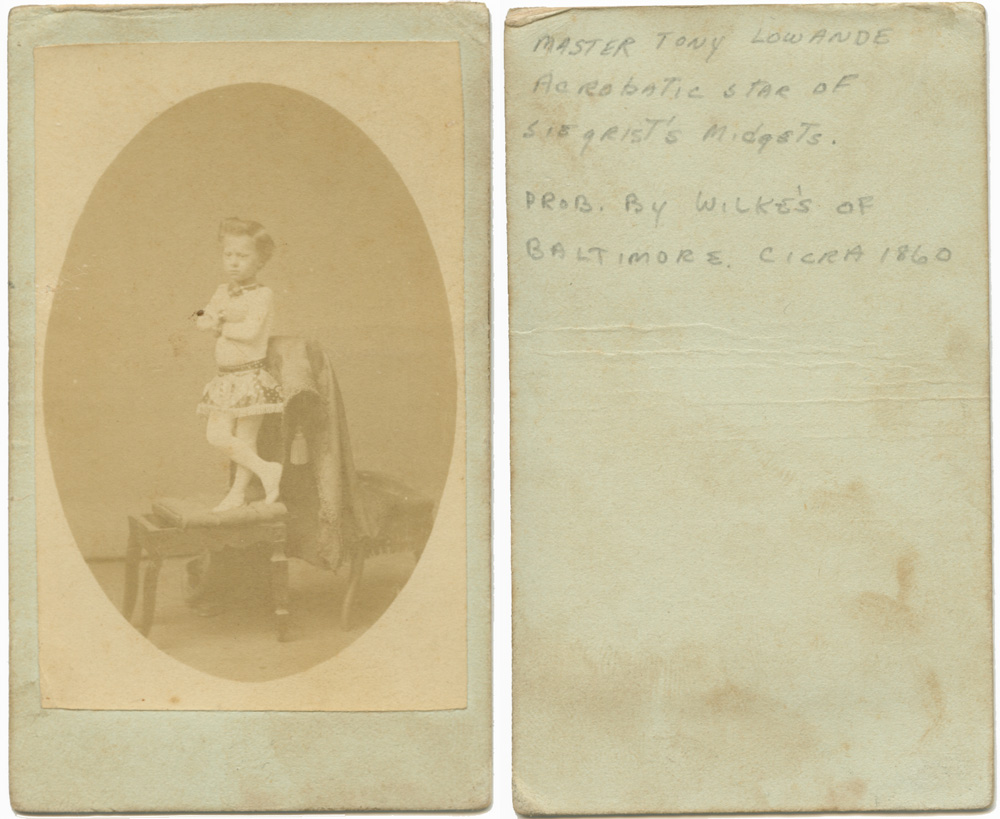
Mr. Lowande doesn’t look particularly happy to be having his picture taken. But that combination of tights and skirt not only look uncomfortable, I suspect wearing them outside the carnival tent would tend to challenge the masculinity of all but the most self-confident of men. This CDV is probably by D.J. Wilkes of Baltimore – although there is no identification on this card, the image is identical in all but pose (same outfit, same props) to another one I found online with the photographer’s imprint. I’m having a devil of a time finding more specific information about Mr. Lowande – most of the references I find for that name refer to an equestrian performer (that may be the same Tony Lowande, but I’m not sure), and the dates would seem to be later (that Tony Lowande was born in 1869 according to Olympians of the Sawdust Circle) and part of a famous family of Brazilian-American circus performers. Or it could be just that everything else about the photo aside from the name and photographer’s ID is wrong – Tony Lowande might just have been a five year old boy in this photo, and not a midget. I could also not find any reference to Siegrist’s Midgets, but that doesn’t mean anything per se.
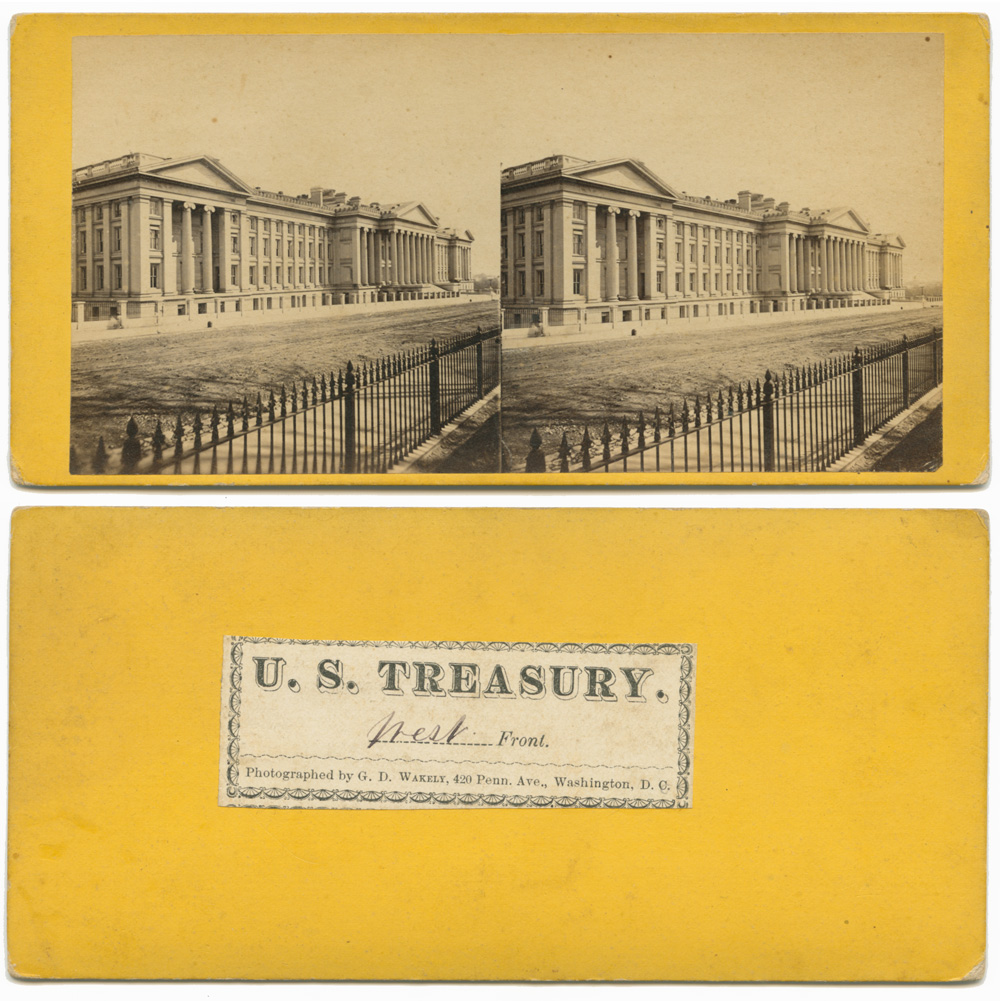
Quite possibly the oldest stereoview I have – I’d put this one at no later than 1870. This may have even been taken during the Civil War, although I think you’d have been hard pressed to find Pennsylvania Avenue that empty during the war. The area around the White House was even more the center of government at that time than it is now (now federal agencies are spread throughout the town and into the suburbs). The State Department was across the street to the north, and the War department was the other side of the White House. But Washington was a much smaller town in those days, and when Congress was not in session, half the town was empty.
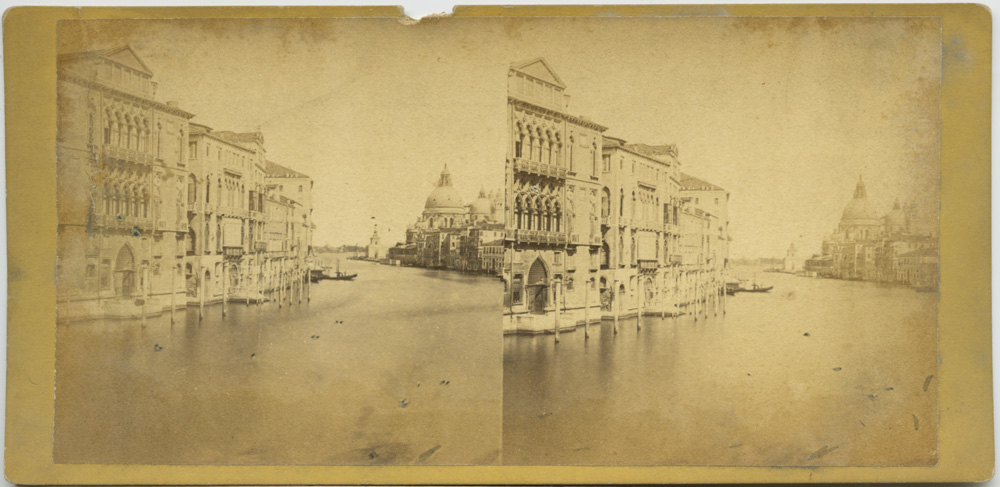
This one probably dates from the 1860s/early 1870s based on the plain style of the card and the condition of the albumen print(s). No label on front or back, but a hand-written note in Italian stating “Palazzo Cavalli”
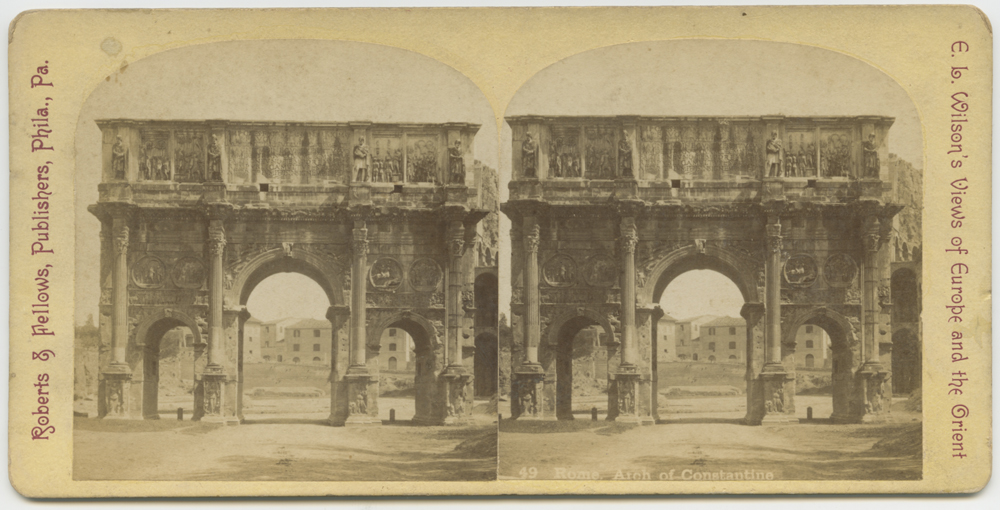
The Arch of Constantine, Rome
This one is still probably 19th century, but 1880s-1890s. American made.
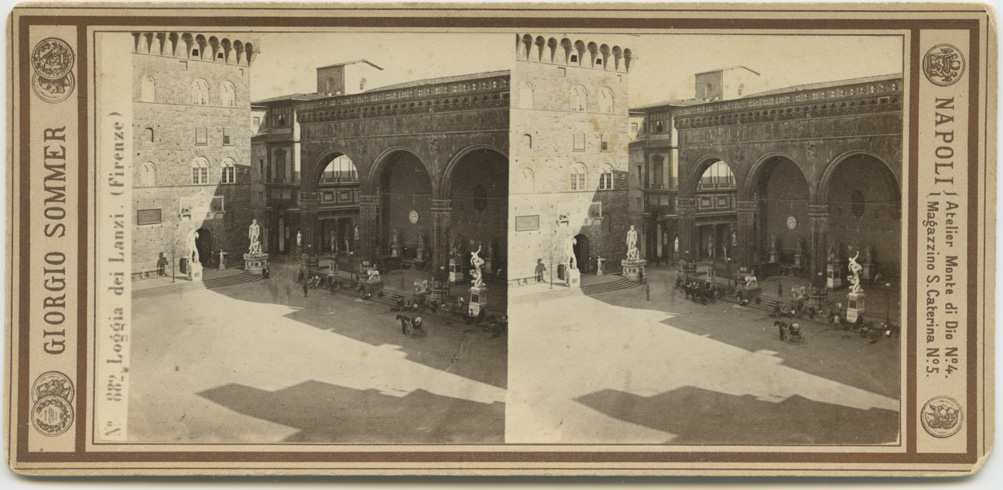
The Piazza della Signoria, Firenze
Most likely between 1900-1910. This one fascinated me because I’ve actually been there! It was neat to see how the Piazza looked over 100 years ago.
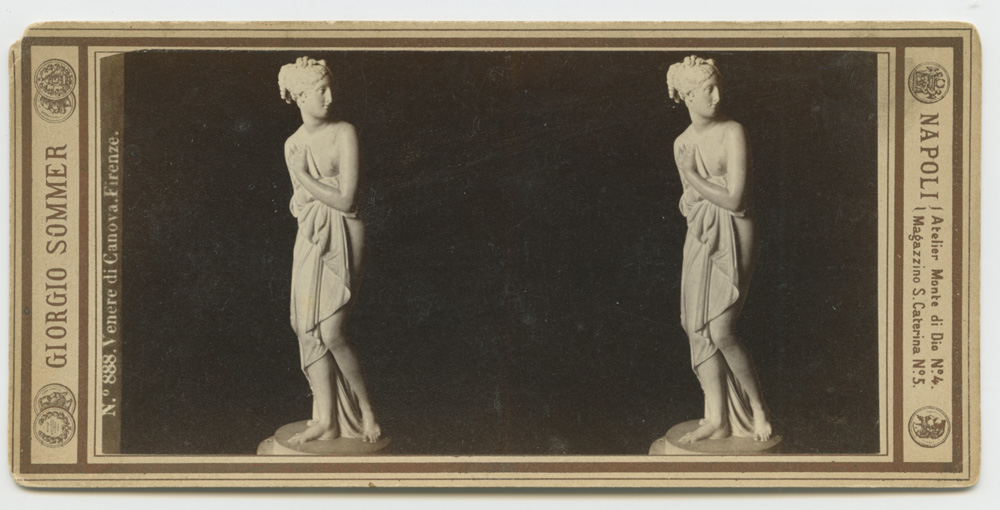
Venus of Canova, Firenze
This one came along for the ride in the batch of stereoviews. I’m not sure if this Venus resides in the Bargello or the Accademia.
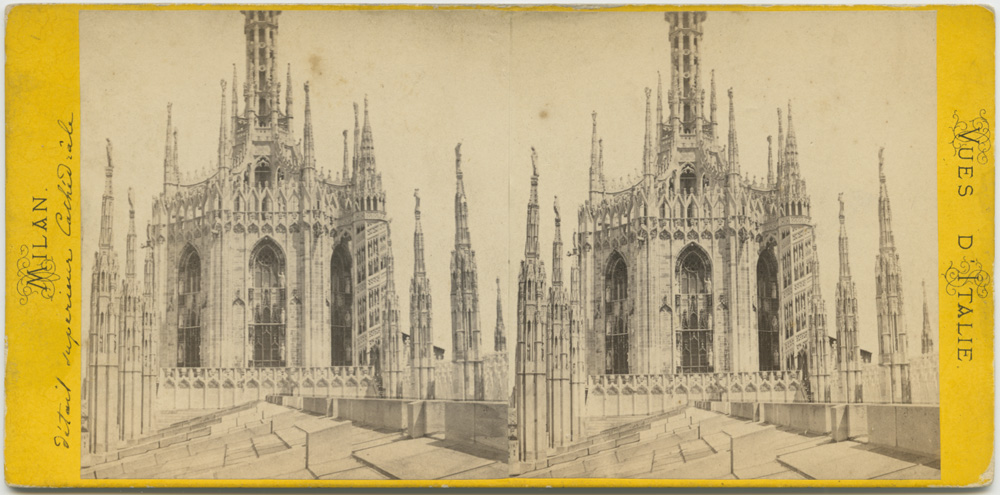
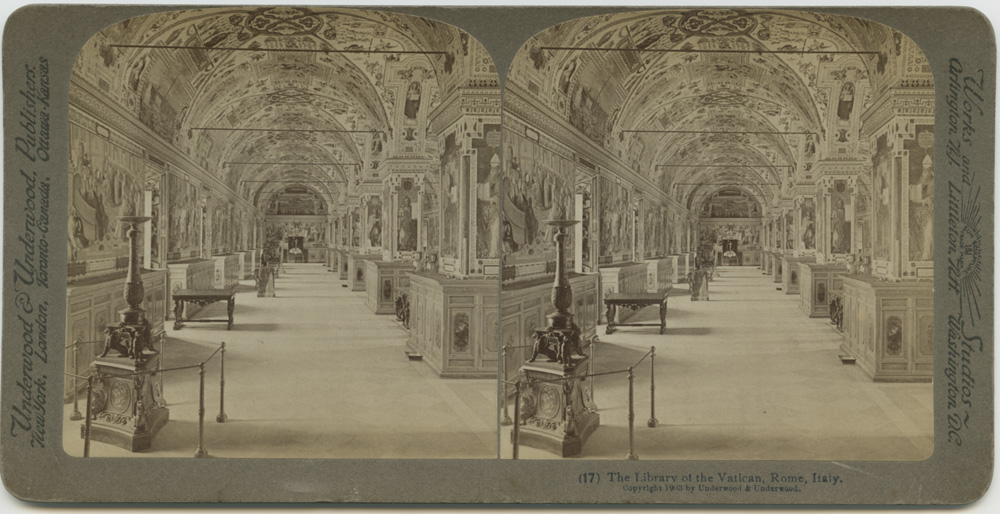
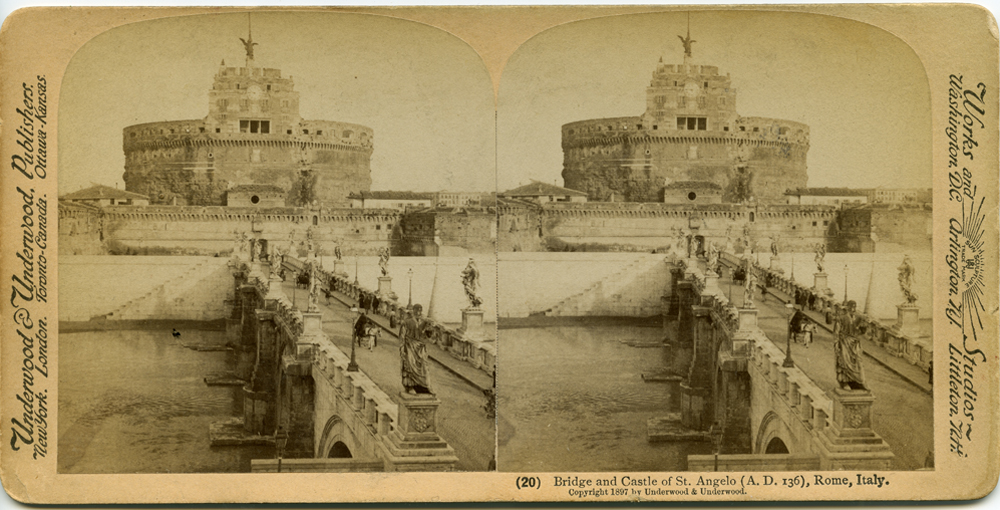
Milan CathedralThe Vatican LibraryCastel Sant Angelo
The first one is actually a French stereoview, and is definitely the oldest of the three – could be as early as the 1860s, but more likely 1870s. The Vatican Library is an Underwood & Underwood from 1903. The Castel Sant’Angelo is also an Underwood, and it is dated 1897.




 dcphotoartist