Category Archives: Collecting

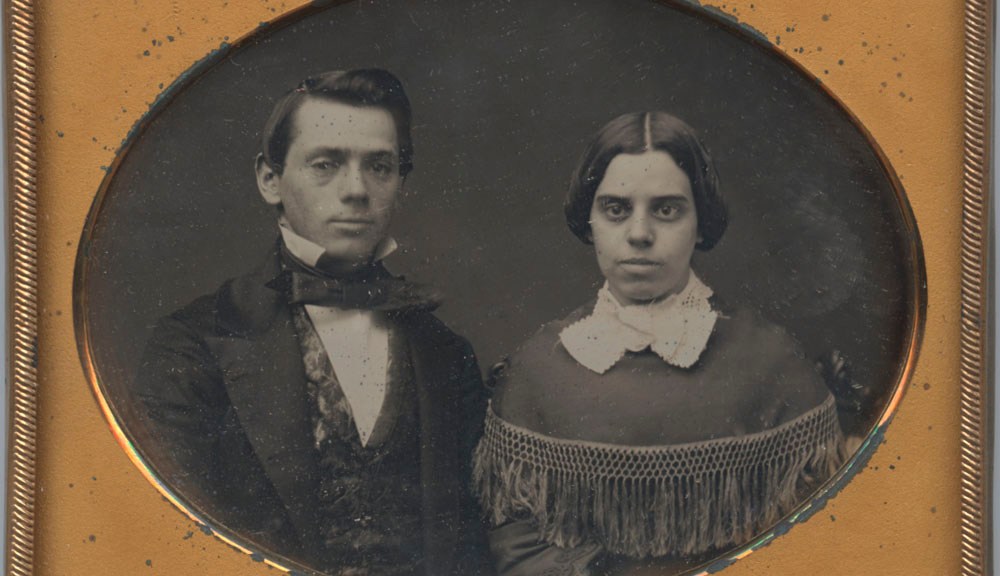
1/4 Plate Daguerreotype, Anonymous Couple in Wallet Case

Here is a lovely daguerreotype, the latest addition to my collection. This is a quarter-plate size piece, in a wallet case. I did not have anything in a wallet case before, so I jumped on the opportunity especially since the plate was in such nice condition. The scan does not do it justice, frankly, as the cover glass and the frame put the plate a little out of the focusing range of the scanner lens, making it look a little less sharp, and any dust is only magnified.

Anonymous Couple, 1/4 plate Daguerreotype

Here is the wallet case itself. The clasp lock in fact works. I suspect there was a better button to operate the clasp at some point in the past and it fell off. This scan again doesn’t do the artifact justice, as the clasp has a lovely pattern etched into it that isn’t coming through.
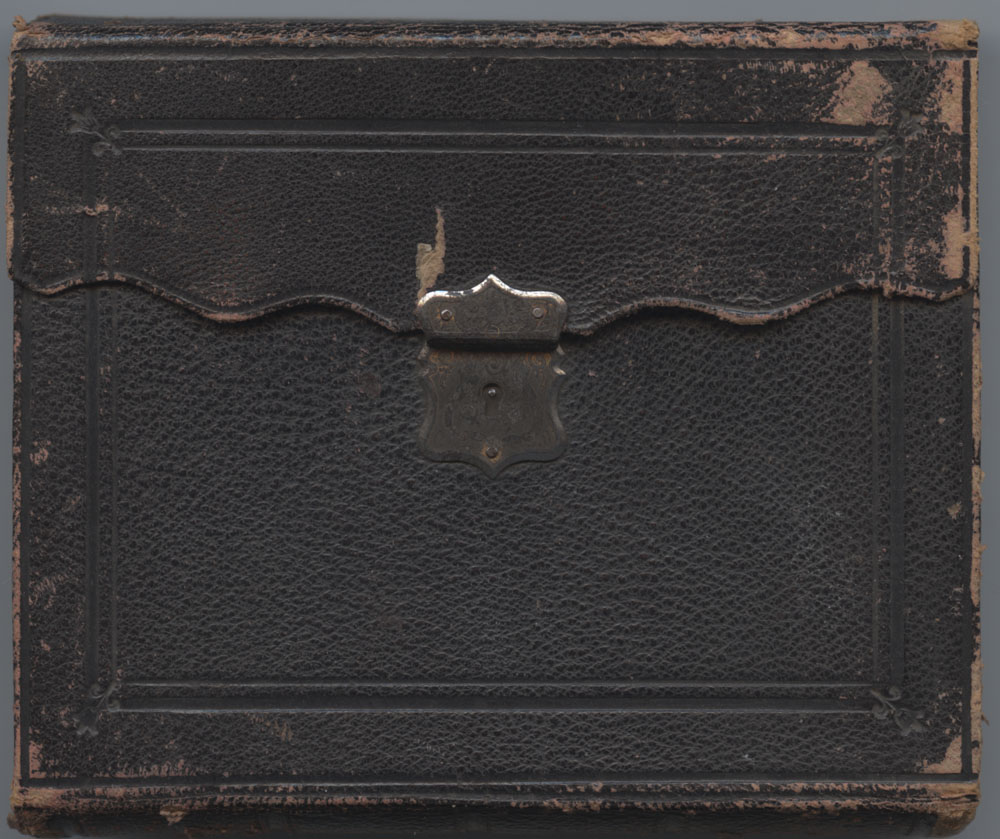
Wallet Case
Wallet Case

I wanted the wallet case to add to my collection because I do exhibit and lecture from these artifacts and the wallet style makes it all the more obvious how these were meant to be carried around as treasured keepsakes to show to friends and family, not put up on a wall or a shelf (although wall frames for daguerreotypes and ambrotypes do exist). It creates an interesting dynamic between public and private – these objects were not reserved for viewing in the privacy of ones home, but rather exhibited wherever and whenever the fancy struck. We’ve come full circle on this today, where now people carry their entire photographic life on a little candy-bar sized device in their pocket, which interestingly enough, is roughly the same size as the quarter-plate daguerreotype, just a little skinnier.
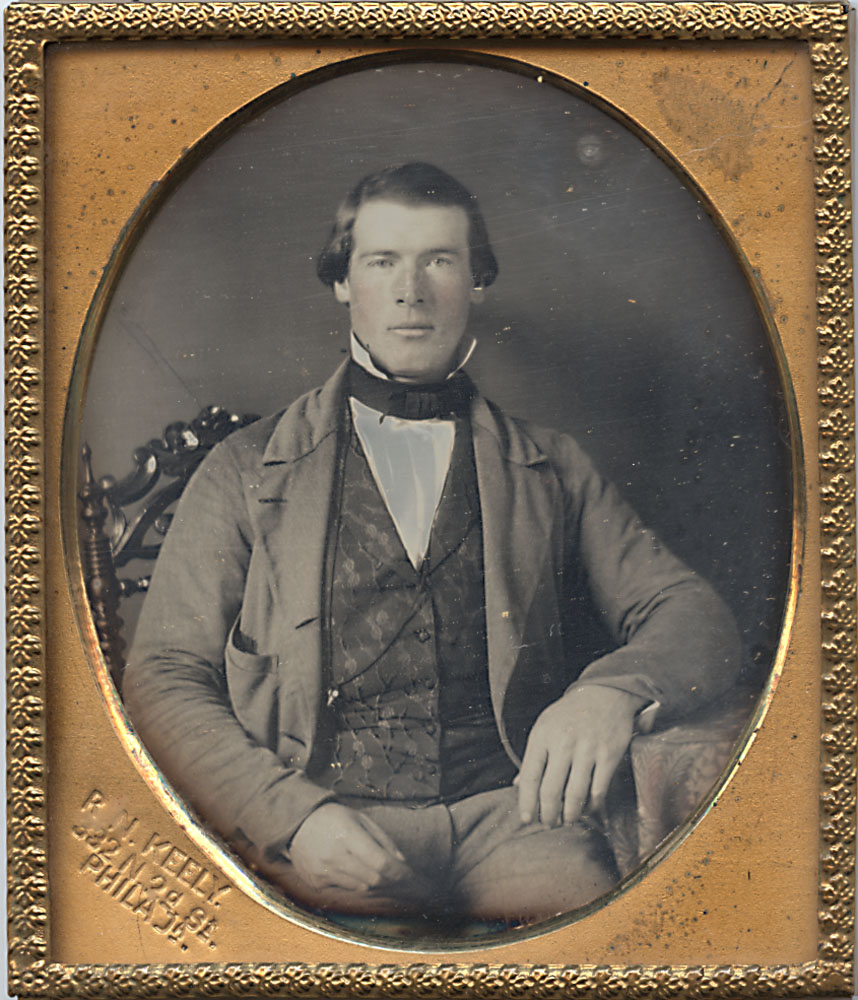
Anonymous Man by R.N. Keely, Philadelphia

Another recent acquisition for the collection is this daguerreotype of an unknown man by R. N. Keely, of 322 North 2nd Street, Philadelphia. Also an early daguerreotype (discernible by the attire of the sitter and the style of the mat), this is probably from the late 1840s. While the mat itself is still quite plain, it bears the photographer’s imprint, and the whole packet (this time complete with intact original seals!) is wrapped in a gilt brass frame.

Anonymous, by R.N. Keely, Phila

I was also pleased to see that in this acquisition I had yet another photographer’s studio address to add to my Philadelphia Victorian Photographers’ map. Were I sufficiently motivated and had enough free time, I’d love to sync up the images in my collection with the studios’ addresses, and ideally match the dates as well. But, that would be a great project for an intern to tackle, should I ever have one (hmmm… maybe I should approach my high school alma mater and see if there would be a talented kid interested in the project????).

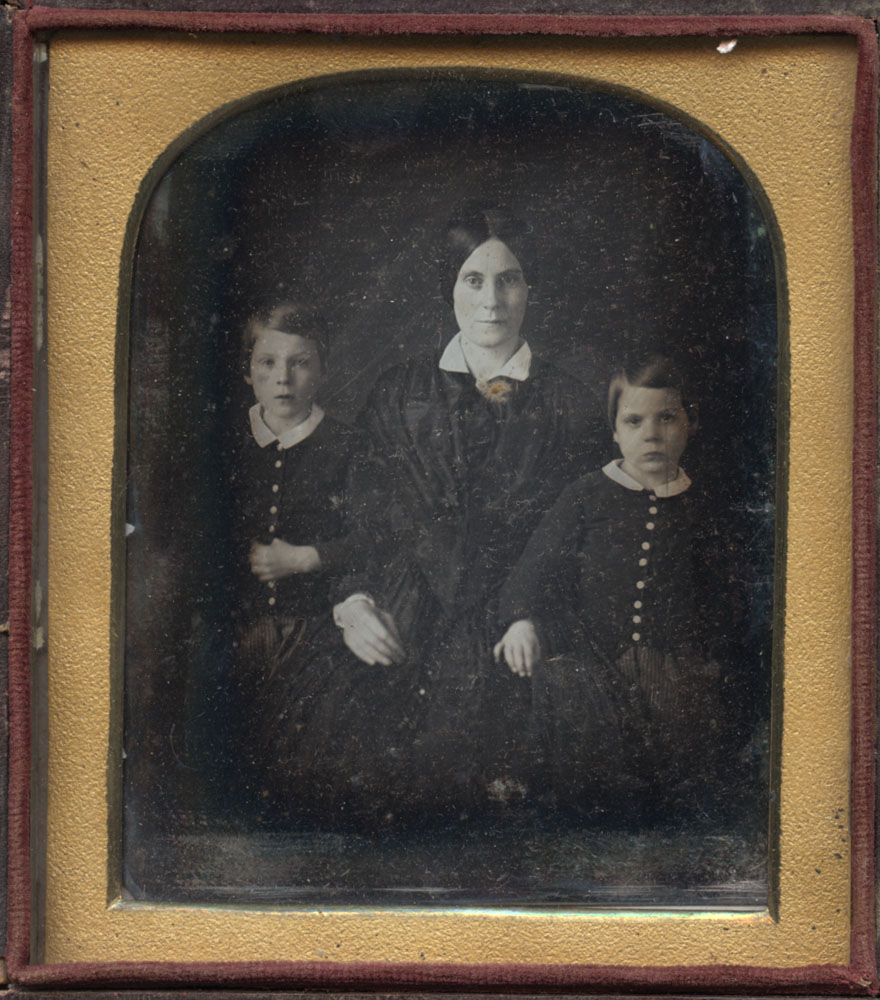
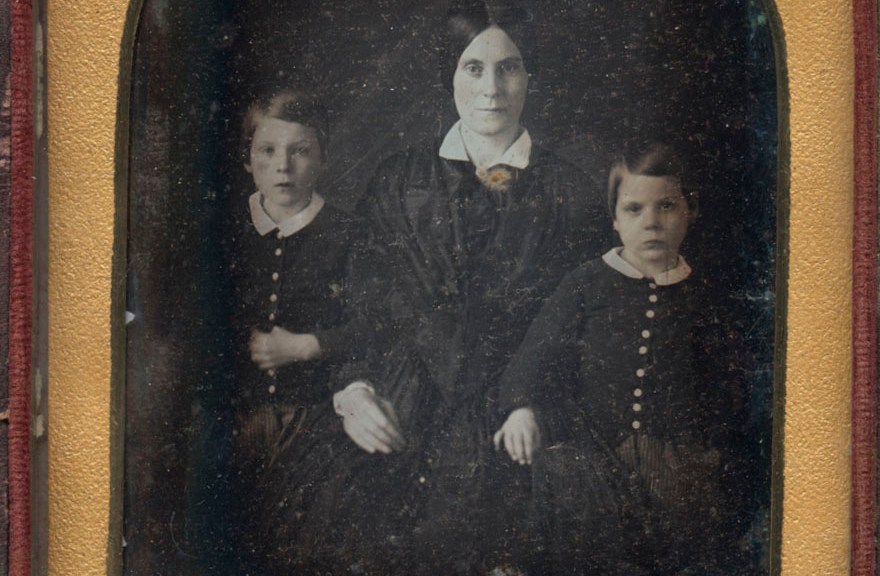
Mrs. John Frisbee, Sam and Frank, Stuyvesant/Kinderhook, NY

Obtained from the Frisbee estate, this early daguerreotype (circa 1840s) is an approximate 1/4 plate (the dimensions don’t strictly correspond to 1/4 plate, but it is noticeably larger than a standard 1/6th plate image) in a leather case. The seals are entirely missing and thus the plate is loose in the case, and it demonstrates numerous mat abrasions around the edges.

Frisbee Family
Frisbee Family

Condition issues aside, it’s still a striking family photo from the 1840s, and quarter-plate size images are getting rarer. I’m pleased to add this to my collection.

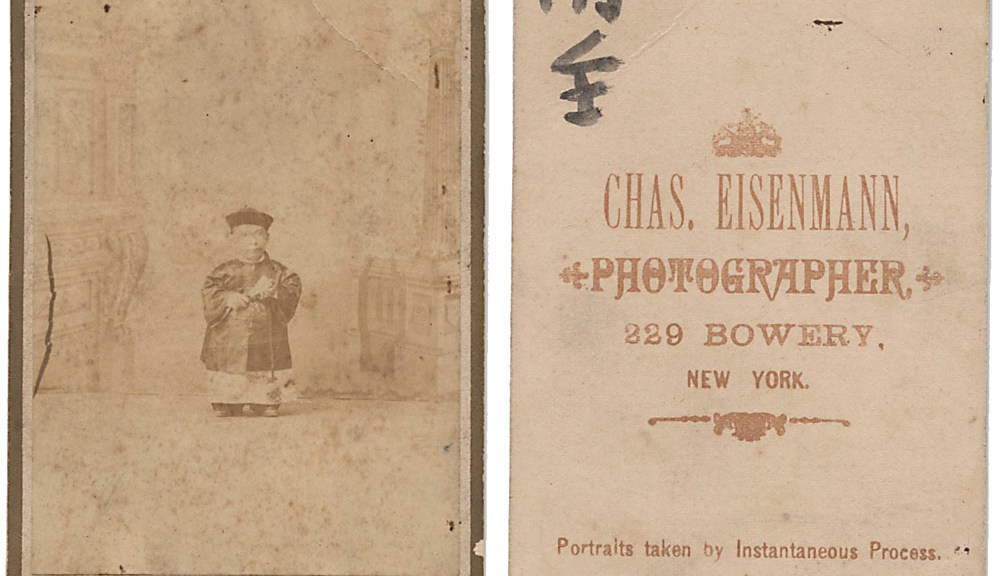
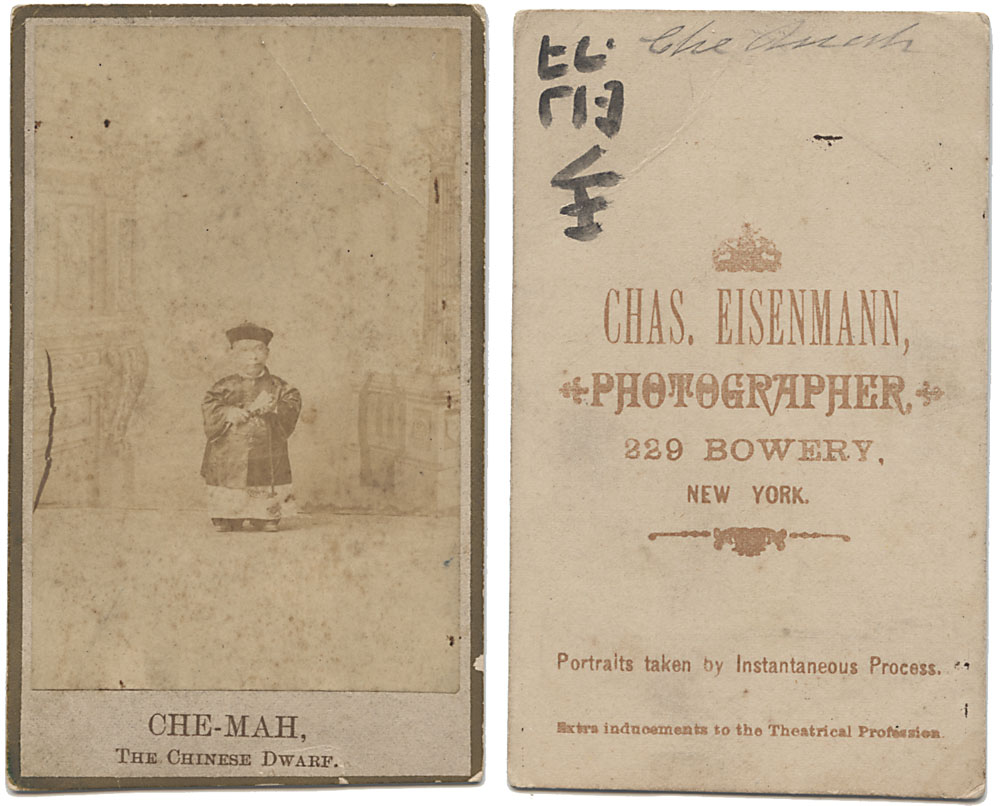
Che Mah, the Chinese Dwarf

I haven’t been collecting much lately as I’ve been focused (pun intended) on shooting and creating images more. However, in a casual perusal of Ebay the other day I found this image. I’ve been wanting a CDV of Che Mah for a while. This one is rather faded and not in the best of condition, but I jumped on it as A: it was a reasonable price, and B: CDVs of Che Mah don’t show up all that often. I’ll shop around for another one in better condition later, but having this one fills a gap in my collection.

Che Mah, by Eisenmann

About Che Mah:

Like many sideshow performers, Che Mah had an exotic backstory. It was claimed that he was born in Ningpo in 1838 off China’s coast on the island of Choo-Sang and discovered by Barnum on one of his worldwide scouting expeditions. The reality is likely more mundane. After his death the book This Way to the Big Show: The Life of Dexter Fellows made the claim that he was Jewish and from London.1
Regardless of his ethnicity and country of origin, Che Mah was a popular attraction and throughout his career he worked in the Barnum & Bailey Circus, Kohl and Middleton dime museum in Chicago and Buffalo Bill’s Wild West Show.

Unlike many of the more diminutive performers of his day, he married a women far larger than he. His first wife, Louisa Colman was a normal-sized trapeze artist, his second, Norah Cleveland, weighed 200 pounds. Norah and he divorced after 14 years of marriage on the grounds his wife would not provide enough sex.2

Upon retirement, he bought a farm in rural Indiana but working a farm proved to be too difficult. He sold the farm and brought a house in Knox. Che Mah died in 1936 and was buried in Crown Hill Cemetery in Knox, Indiana.

1.Hartzman Marc, American Sideshow. New York: Tarcher. 2006. 27. Print.
2.Homberger, Francine. Carny Folk. New York: Citadel. 2005. 1-3. Print.

Courtesy of the Sideshow Slideshow

Note the signature in the upper left of the verso. It appears to be hand-signed in ink, so that may well be his actual signature.

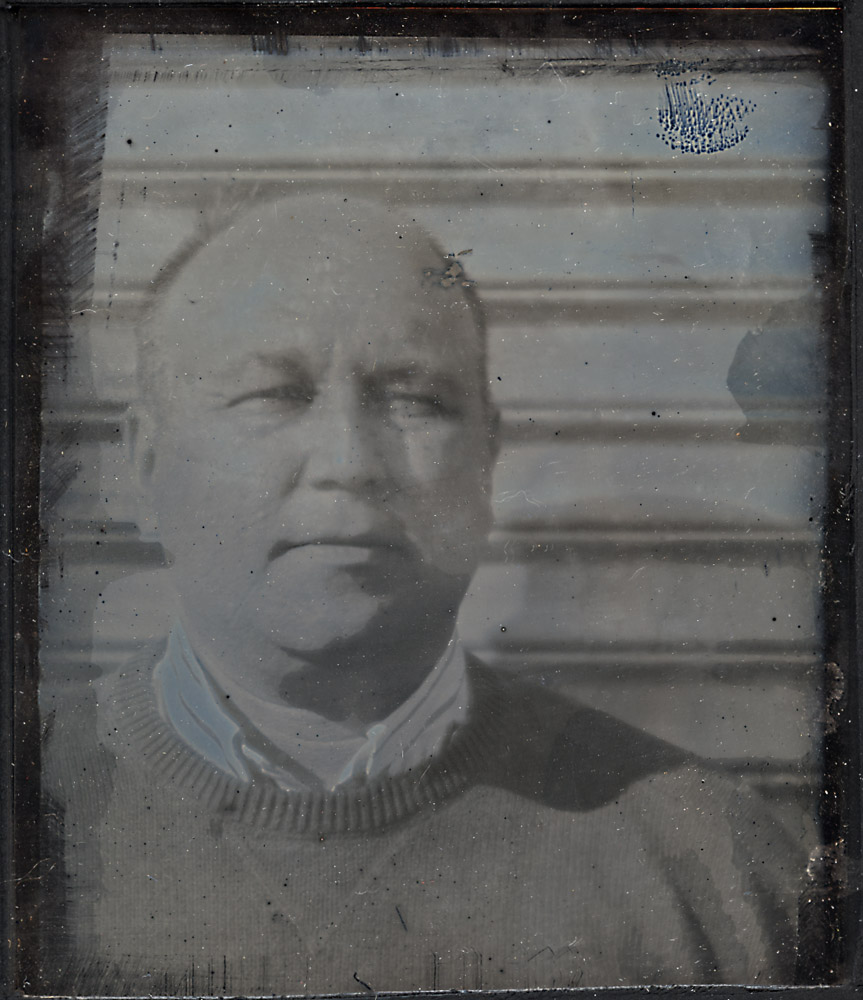
Self-portrait, Daguerreotype

Self-Portrait, Daguerreotype

This is a (I believe) mercury-developed Daguerreotype that I made of myself at a Daguerreotype workshop in Philadelphia a few years ago. It’s far from proficient, but it’s an unique piece of work complete with all its flaws. It was another find in the camera room cleanup preparations, and I noticed it was tarnishing at the edges, so I thought I would make a good scan of it before it deteriorates.

The blue color you see on my collar and on the steel roll-up door behind me in the photo is not added – this is a natural phenomenon in Daguerreotype plates – areas of bright highlight will turn blue during development.

Second Confirmation of Identification – Clara Barton and John J. Elwell

John J. Elwell and Clara Barton, Washington DC

Over the weekend I was on a Civil War history tour with the inimitable Ed Bearss. Another tour participant was a fellow civil war image collector and a re-enactor who talks about Civil War medicine. He also works for the Civil War Medical Museum in Frederick, Maryland. We were discussing images in our collections and he too has a copy of this CDV, and even without my prompting, described it as Clara Barton and John J. Elwell. I’m still going to take some time to go down to the Library of Congress to try and verify the image in their collection. But it’s good to know that I’m NOT alone in my interpretation of who these sitters are.

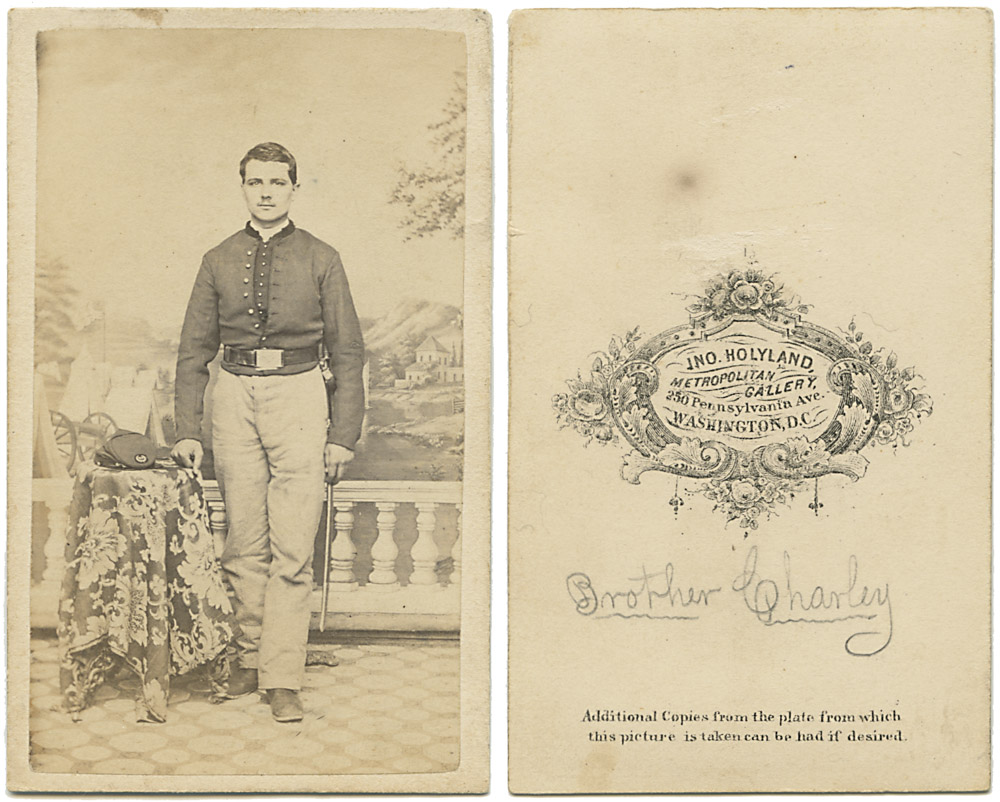
Brother Charley, by Jno. Holyland, Washington DC

A new acquisition to the CDV collection – another Civil War soldier (definitely Union this time!) complete with sword, cap, and patriotic studio backdrop. The sword, his youth, and the overall style of his uniform suggest to me junior grade officer. Some non-commissioned officers did carry swords, particularly in the cavalry and artillery, but they would have had rank insignia on their sleeves.

Brother Charley
Brother Charley

This is the first soldier portrait from the period that I have which has a patriotic battle-themed background (notice the cannon to his right just above the table, along with the field tents and flag). This was a popular thing to do during the Civil War for soldiers. Many itinerant photographers had backdrops painted to depict scenes of camp life in front of which they would pose the soldiers. These backdrops served as positive propaganda back home, as it gave the soldiers’ loved ones a sense of normalcy to the life of their son/brother/husband/father. This one was done in a proper studio in Washington DC, just a few doors down the street from Matthew Brady’s parlor. I would guess based on the rather healthy looking condition of the young man that this was taken before he first marched into the field, and probably early in the war.

On a separate but not entirely unrelated note – if you observe carefully, you can see the foot of the posing stand peeking out from behind his legs. I’ve been seeing a lot of comments on Facebook lately about how some at best tragically uninformed and at worst scandalously unscrupulous people out there on Ebay and other online venues have been describing ANY photo of this period where the posing stand is visible as a post-mortem. I want to debunk this myth as strenuously and vigorously as possible. Posing stands were NOT meant to keep corpses in the upright position while they were being photographed. For that matter, most genuine post-mortems I’ve seen have shown the deceased in a prone position if an adult, sometimes sitting up or being held by a parent if a child, but even then children were not uncommonly posed in their coffins.

I would say that this young man is very definitely, obviously alive and well at the time of the taking of this photograph, wouldn’t you agree?

Corporal, US Army, by Alexander Gardner

The latest acquisition in my collection – an unnamed Corporal in the US Army, photographed by Alexander Gardner.

Unidentified Corporal, by A. Gardner

If you look carefully you can see the service stripe on his sleeve. This designates three years of service, so in all likelihood this was taken in 1864, as Gardner was working for Mathew Brady until late 1862, and opened his own Washington DC studio in 1863. Soldiers with the three year service stripe would have been quite rare before 1864 due to the politics of enlistment in the first years of the war and the relatively small size of the army prior to 1861. I’m not sure how long after the War ended he continued to use the “Photographer to the Army of the Potomac” logo, but it most likely ceased within a year or two after the war, as the civilian population quickly tired of reminders of the irrepressible bloody conflict.

I just discovered one reason why Gardner studio imprint CDVs are so much less common than Brady studio imprint CDVs – Gardner ceased photographing in 1871 and opened an insurance firm, whereas Brady continued working as a photographer until his death three decades after the war.

Architectural Abstractions – The World Health Organization Building

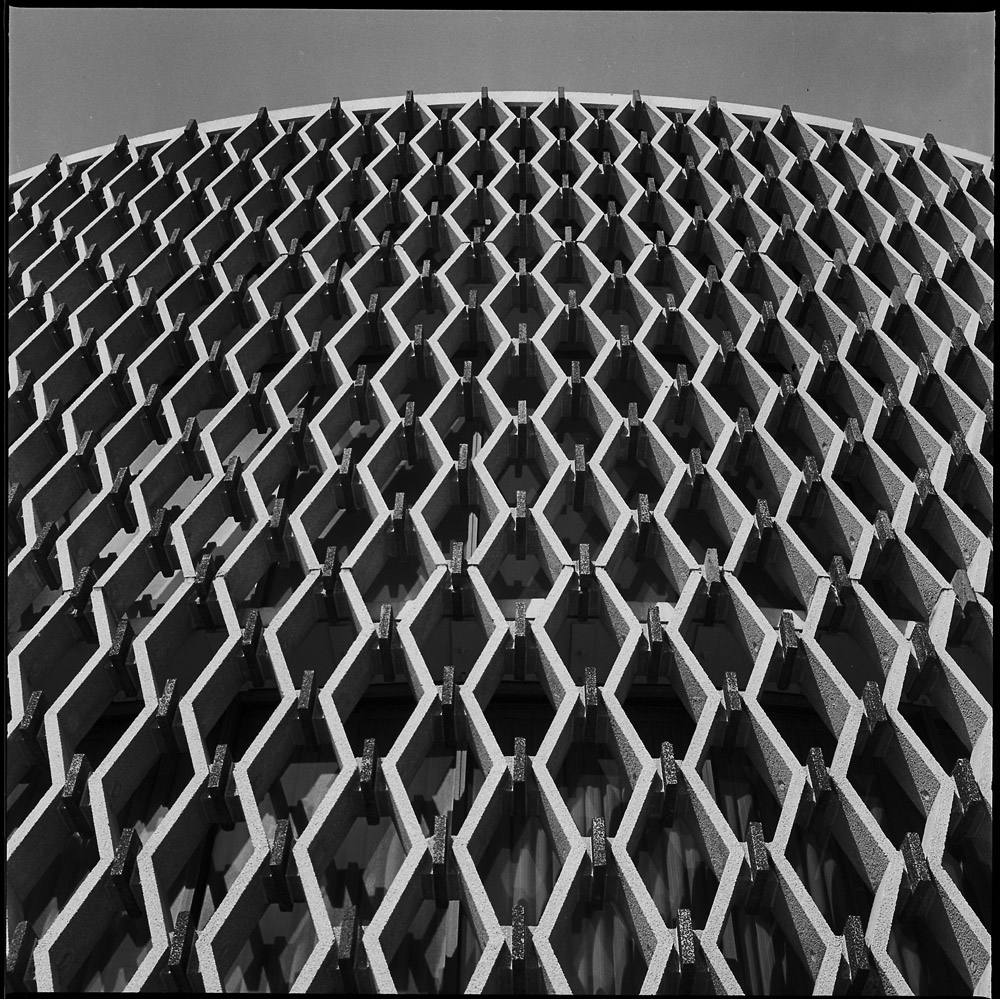
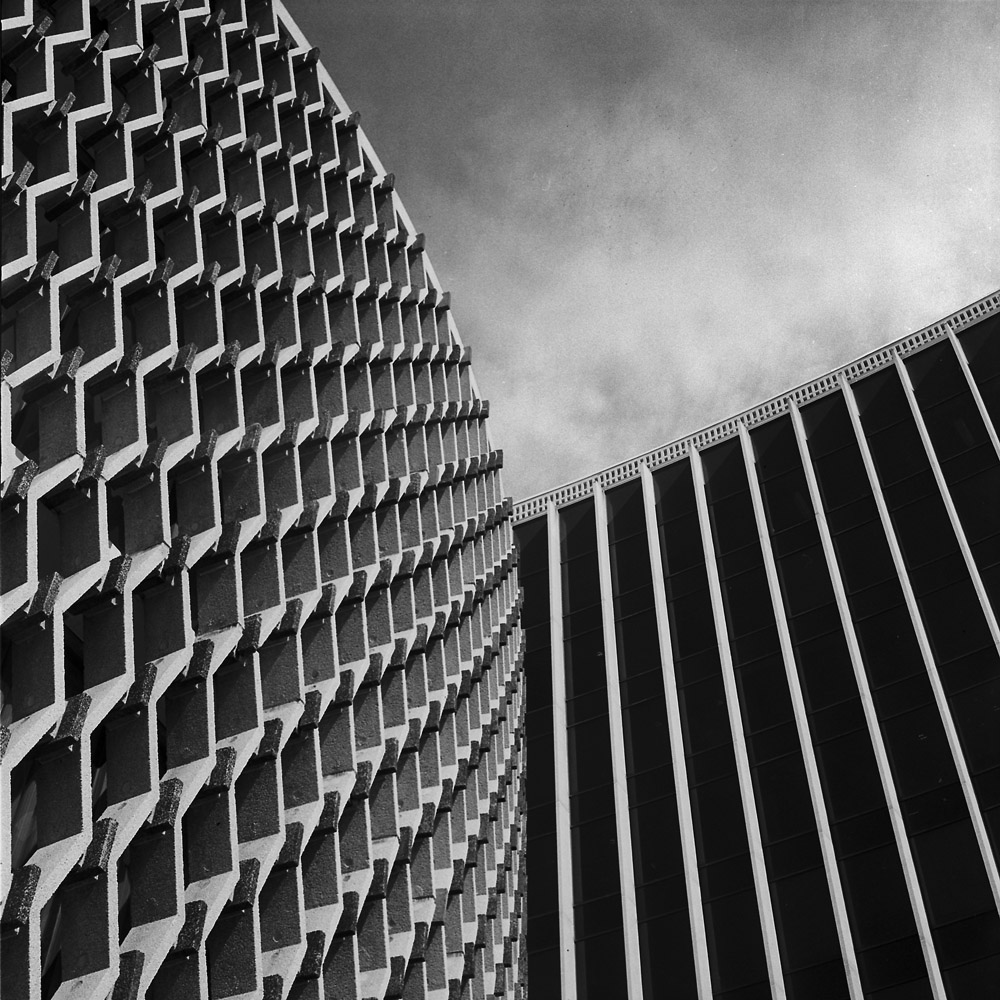
Two different takes on the WHO building downtown DC. This time shot in bright, strong, contrasty sunlight. Due to the geometry of the building I was aiming for geometric abstractions, composing so the context of the structure was absent and what is visible has to be taken non-literally.

World Health Organization, Cylinder

Pointing the camera vertically to create these images really pushes the perception into unreality – you’re dealing with three texture sets, not anything particularly identifiable. Mid-century architecture like this is a rare commodity in DC – most buildings are either glass-and-steel cubes, neoclassical faux-palaces, or Art Deco boxes of varying degrees of interest and value, so this really stands out.

World Health Organization, Thirds

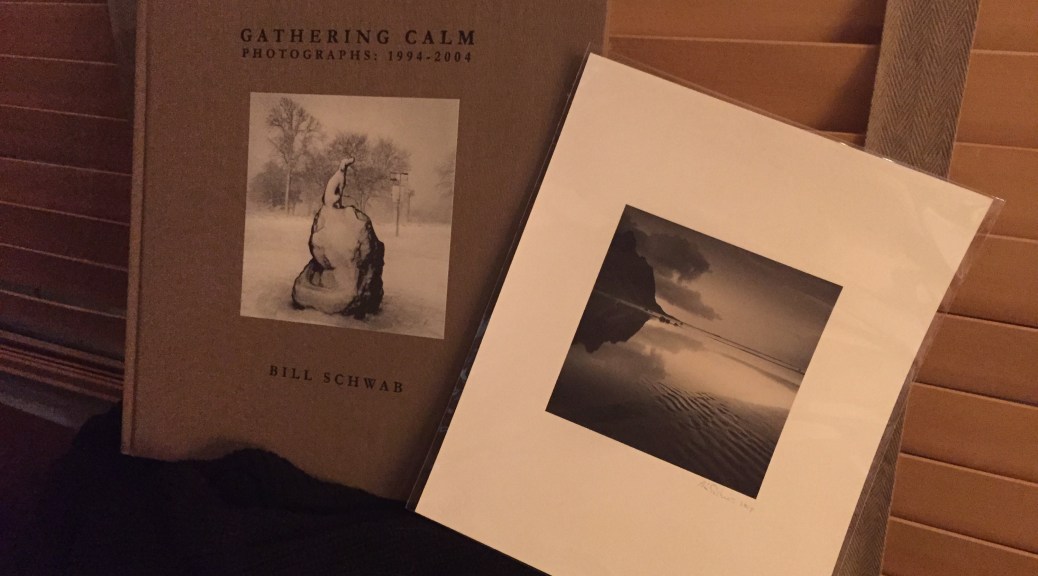
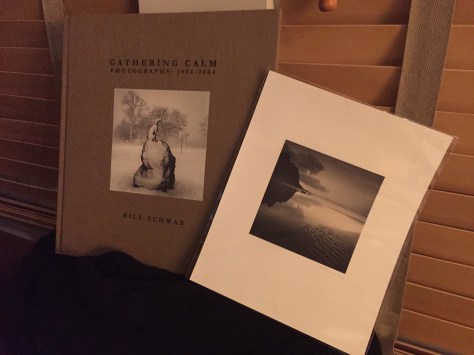
Another New Book- Gathering Calm by Bill Schwab

Yay! Another book through Kickstarter has arrived today. This time it’s Gathering Calm – Photographs:1994-2004 by Bill Schwab. This and the accompanying print were rewards for backing the Photostock workshop facility. 


Bill is a friend and a phenomenal photographer, and the organizer of Photostock, an annual photography festival in the north woods of Michigan. When Photostock started it was just a dozen folks camping on Bill’s property. To support the activities of Photostock, Bill built a workshop facility with classroom and wet darkroom space. Today it’s grown to perhaps 100 people gathering at The Birchwood Inn in Harbor Springs, Michigan, for a three day weekend in June.