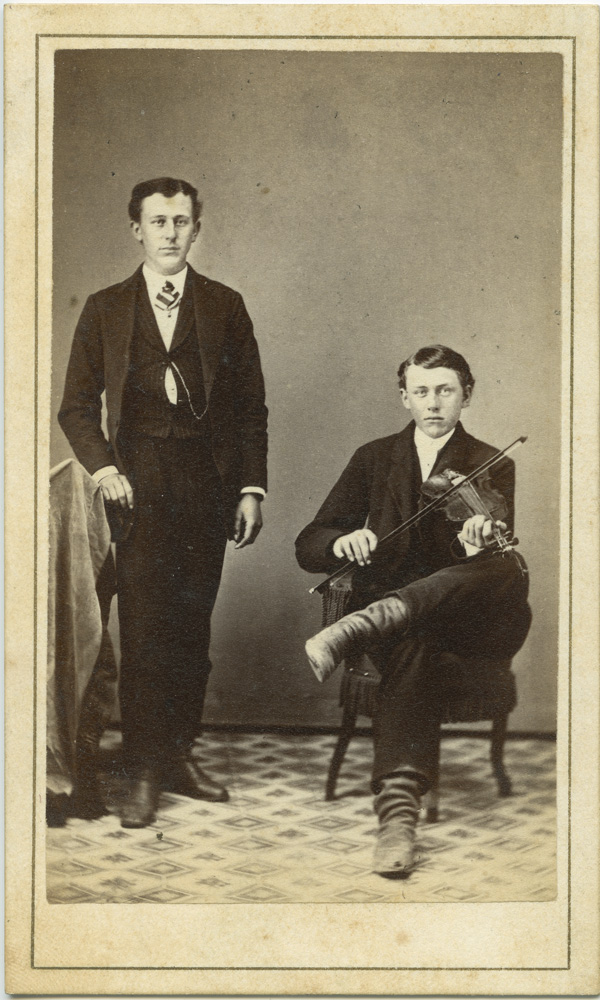
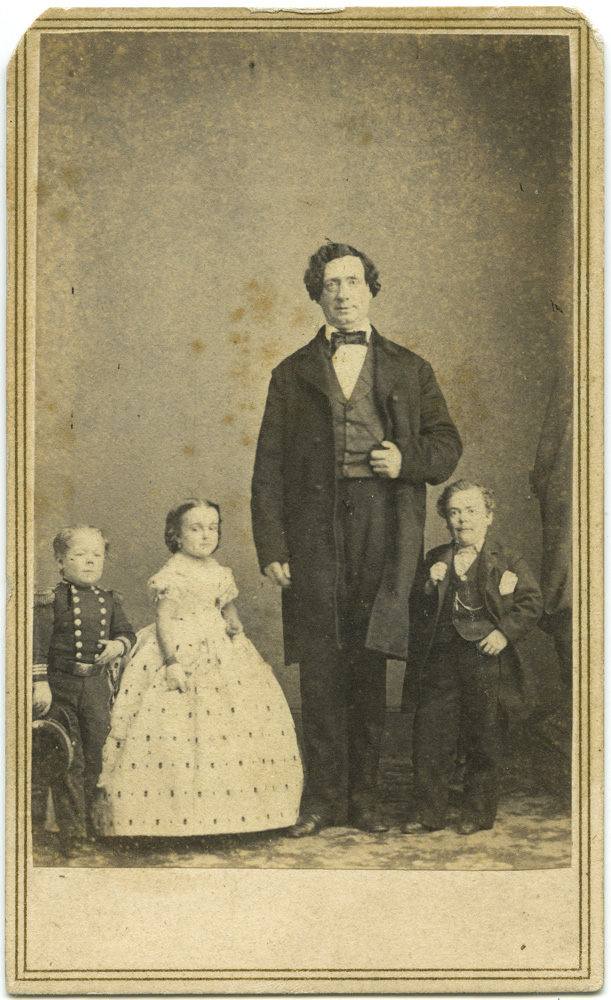
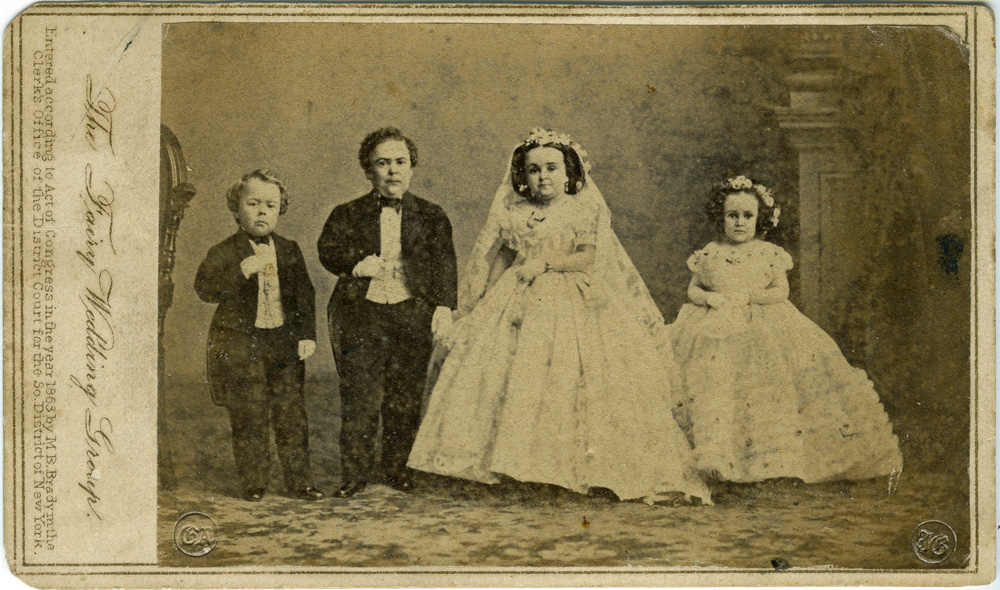
Two new additions to the collection – an anonymous CDV of what appears to be at least brothers if not twins, one standing the other seated playing the violin. Best guess is late 1860s / early 1870s. The other is another Brady image of Tom Thumb, his wife, and Commodore Nutt, this time with an average man for comparison. It’s funny how these things turn up in groups – I first get the Fairy Wedding CDV, then another different image of the same people shows up shortly after, so I had to buy it!
For those who haven’t been following this, a few years ago the Liljenquist family (father and three sons) began collecting civil war cased tintypes and ambrotypes. They amassed a collection of over 700 images, of which approximately 10% have been identified. They range in size from 1/9th plate to 1/2 plate, and in subject matter from Union and Confederate soldiers to children, wives, mothers and family members in mourning, officers and enlisted and both slaves and freedmen. The collection is currently on display at the Thomas Jefferson building of the Library of Congress. Although small, the display encompasses some 300 images: some two hundred and fifty Union soldiers and their families and some fifty Confederates. One of the most striking images in the collection is the former slave and his family, a wife and two daughters, posed with him in Union uniform. It makes an interesting parallel that 150 years ago, this man was fighting for his freedom, and today, a very similar man with a very similar family sits in the White House, President of a nation radically remade by the sacrifices of that African-American soldier. Other highlights include the little girl dressed in mourning attire, holding a photo of her father who quite possibly she never knew, and the picture of the confederate soldier accompanied by a letter back home to his family describing how he died on the field of battle. A mourning necklace is also on display: the pendant is an oval gutta-percha case containing the photograph while the chain supporting it is woven of human hair, most likely from the woman who made it and whose husband is depicted inside the case.
The collection is astonishing in its scope and specificity, as well as for the collecting acumen displayed by the Liljenquist family. The family still collects at a furious pace, and so the Library has asked them to make their donations quarterly, instead of weekly as they had been doing, to give the curators time to catalog and preserve their donations. The collection in its entirety will be available online through the Library of Congress’ website in the near future.
They also have the collection on display on the LoC Flickr feed entitled “Civil War Faces“. They welcome input from the general public as part of the effort to identify the subjects of the photographs.
I’ve found two more Washington DC parlors and one New York Daguerrian studio:
J. Golden – 819 Pennsylvania Avenue
Henry Ulke & Bro. – 278 Pennsylvania Avenue
The New York Daguerrian parlor is:
A.J. Beals – 156 Broadway
The address for Henry Ulke’s studio would put him today squarely on the grounds of the US Capitol, not far from the Spring Grotto, if the address is correct. Either they had a different street numbering scheme, the address is in Southeast DC instead of Northwest DC (which would put him at an even more unlikely location, a tiny triangle park just beside the Library of Congress building), or the Capitol grounds were greatly enlarged sometime between the 1870s and 1900. Given how so far so many of these studios’ locations can be accurately pinpointed today, even though the streetscape has changed a lot, I’m liking the probability that the address is correct, and that the streetscape has changed, rather than the location being inaccurate.
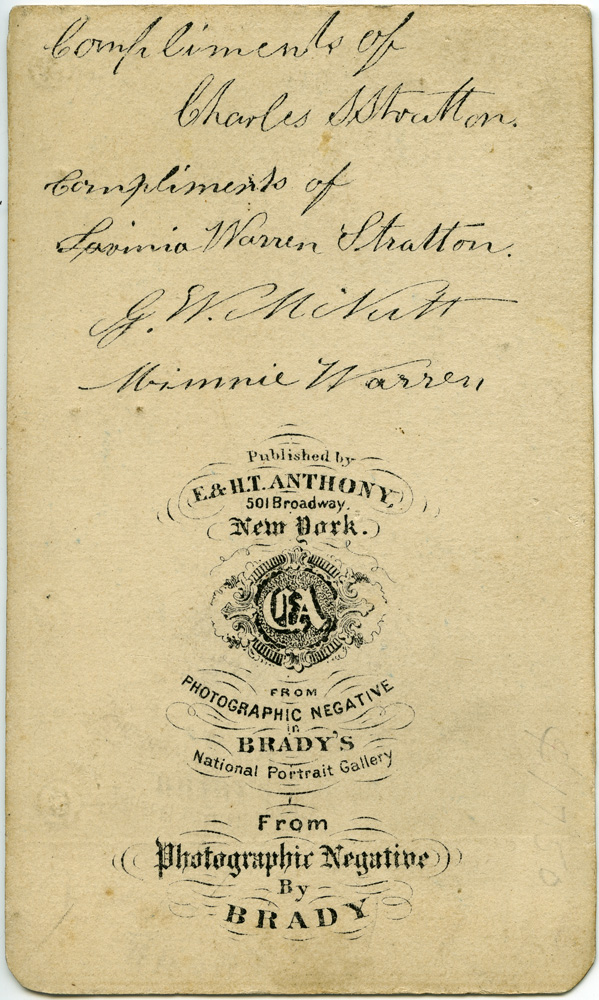
Ok, I’ve been waiting for a while to get this one. I originally saw a listing with a copy of this image on Ebay for somewhat north of $300. I debated and debated whether to get it or not. After much consideration, I passed on it, thinking that the signatures on the back were most likely facsimiles, and not original signatures. Patience paid off – another copy (the one I bought) showed up. While not quite as nice a condition, it actually looks much better in person than it does in the scans. My copy had the added benefit of being less than a quarter of the current asking price of the other copy I passed on.
For those not familiar with the subject matter, Charles Stratton, AKA General Tom Thumb, was a star of the P.T. Barnum sideshow and performer from the 1840s to the late 1870s. He was born a relatively large, healthy baby but stopped growing significantly before his second birthday. At his tallest he was 3 feet 4 inches. In 1863, he married another dwarf, Lavinia Warren. His best man was George W.M. Nutt, a fellow dwarf and performer in Barnum’s circus, and Lavinia’s bridesmaid was her younger sister, Minnie, also a dwarf. The event was dubbed “The Fairy Wedding” and was the social event of the year. Two thousand guests packed Grace Episcopal Church in Manhattan. After the wedding, Charles and Lavinia went to Washington where they were received by President Lincoln. Charles, Lavinia, George and Minnie posed for Matthew Brady who went on to sell CDVs of the photo as souvenirs of the wedding through his publisher, E. & H.T. Anthony. This is one of the E. & H.T. Anthony productions.
The Fairy Wedding, 1863 E&HT Anthony print, Obverse
The Fairy Wedding, 1863 E&HT Anthony print, Reverse with facsimile autographs
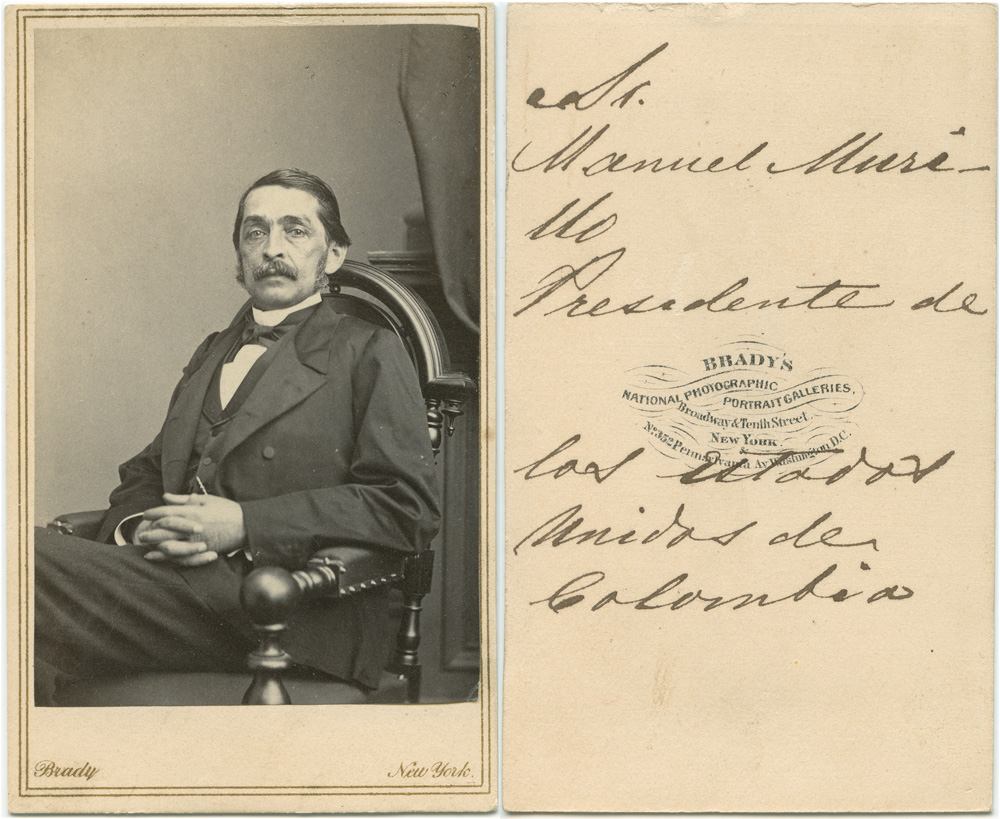
Another recent acquisition. Manuel Murillo Toro, the President of Colombia from 1864-1866 and again from 1872-1874. Taken in the Mathew Brady New York studio. Probably the best-preserved Brady image I have. This image is most probably from the 1872-4 term, as he is labeled President of the United States of Colombia on the back. In his prior term as president, Colombia was known simply as Colombia. Manuel Murillo Toro, Presidente of Colombia
For those who might be interested, here’s a link to The Photography Collectors’ Show in New York next Saturday, March 19. I’m toying with the idea of going up to see it.
Here is a list of dealers who will be in attendance:
Steve Yager
Adam Forgash
Casey A. Waters
Christopher Wahren
D. T. Pendleton
Dennis Waters
Erin Waters
Greg French
Henry Deeks
Maria DiElsi
Thomas Harris
Stacy Waldman
Arthur Dristiliaris
Brian Caplan
David Chow
Dr. Stanley Burns
Glenn Vogel
Jack Domeischel
Julian Wolff
Larry Berke
Lisa Taos
Richard Hart
Richard Silver
Stephen Perloff
Stuart Butterfield
Susan Davens
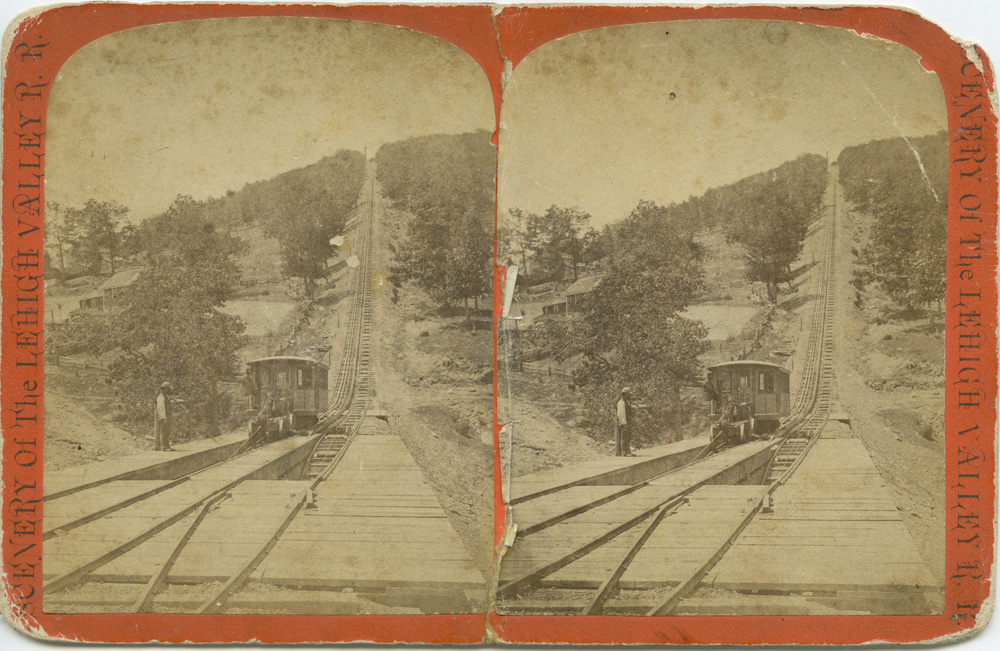
After digging up the stereoview of the Lehigh Valley Railroad station, I did a quick peek on Ebay to see if I could find any others. Whaddya know, my first search turns up another in the series. It’s in pretty rough condition, but I bought it anyway because it was going cheap. This is one case of a stereoview set that I’ll actually try to complete – there’s only 24 in the set. I have a casual interest in railroad memorabilia, as my grandfather was a conductor on the Pennsylvania Railroad’s Broadway Limited between Altoona an Chicago in the first half of the 20th century. I’m also a roller-coaster fan, so finding a photograph of the first roller-coaster is pretty cool (first roller-coaster you say? see the blurb below). Incline, Lehigh Valley Railroad
This is a picture of the switch-back gravity railroad, which was originally built to aid in bringing coal from the top of the mountain to the railroad. It quickly grew into a tourist attraction, and then became the first roller-coaster in the United States, when it became dedicated to passenger service. The car would be towed to the top of the mountain on one track, then switch and fall down the other track propelled by gravity alone. There was a driver/brakeman in the car to prevent it from flying off at the bottom out of control.
The town is Mauch Chunk, Pennsylvania, now known as Jim Thorpe, PA, named to honor the Native American athlete. Ironically enough, Jim Thorpe was from Oklahoma, and his sole connection to Mauch Chunk is that he attended the Carlisle Indian Industrial School in Carlisle, Pennsylvania, and that Mauch Chunk was a Native American name approximately meaning “Bear Mountain”, because the mountain in whose shadow the town was built looks like the back of a bear. After he died in 1953, his surviving wife sold his remains to the town, which hoped that his grave would be a tourist attraction.
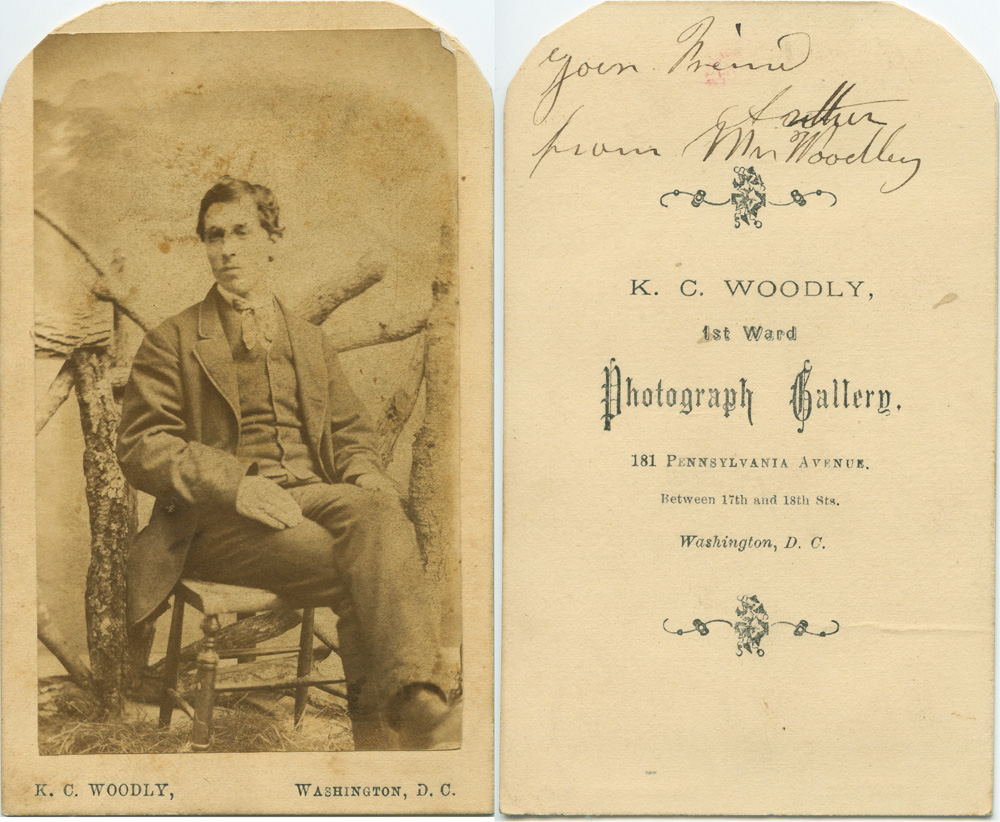
This next image is another recent acquisition – another Washington DC carte-de-visite. This one, if the inscription on the back is accurate, is a self-portrait by the photographer, or at least the inscription is by the photographer – “Your Friend – From Mr. Arthur(sp?) Woodley”. I’m curious if the Woodly on the card is a typographical mistake, as the signature really does look like it says “Woodley”. I’m also curious if the Woodley/Woodly is any relation to the Woodleys for whom Woodley Park was named. Given how small a town DC was in the 1860s, I’d say the odds are in favor.
K.C. Woodly CDV, Washington DC
The address on this one is a mystery – 181 Pennsylvania Avenue would put the studio on the Capitol lawn. Furthermore, he indicates that the studio is located between 17th and 18th Streets, which would make 1781 Pennsylvania Avenue a more likely actual address. I wonder if the printer was short on E’s and 7s when he ran these off.
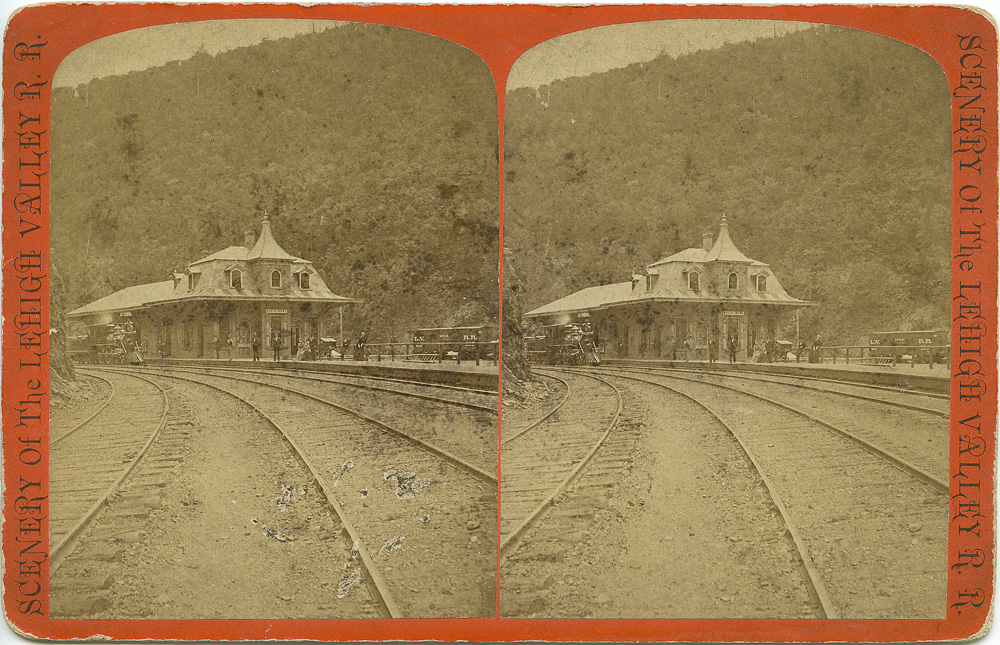
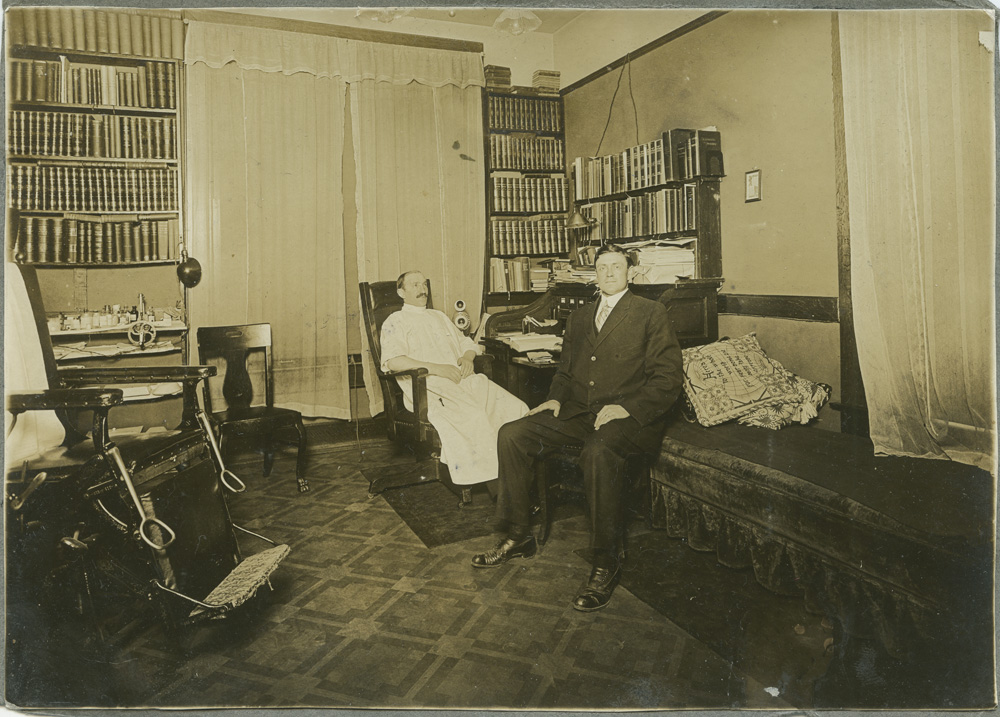
I was doing some clean-up in my office the other day and ran across these two images. Absolutely nothing to do with each other. I don’t remember where I found the doctor’s office photo, but I got the Lehigh Valley Railroad stereoview (I know, here I go again with the stereoviews I “don’t collect”) in Sacramento, California, and I suspect that’s a large part of the reason I got it – curiosity as to why something so regionally specific ended up on the opposite side of the country. The doctors’ office photo I bought because my father is a (now retired) physician, and it was interesting to see what a doctors’ office at the beginning of the 20th century looked like. I love the pillow on the sofa that says “Here’s to the world, for fear that someone may take offense” – proof that cheesy knicknacks are not a late 20th century phenomenon. The stirrups on the chair make me wonder if it is a gynecologist’s office, and the relationship of the subjects of the photo is odd – the doctor seemingly asleep in the chair, and the man in the suit facing the camera – is he a patient, a friend of the doctor, the photographer, or a combination of the above?
Lehigh Valley Railroad, Mauch Chunk station Doctor's Office, early 20th century
As I’ve been collecting images, and I do a fair bit of my looking on Ebay, I’ve noticed a couple of interesting albeit off-putting trends. I go back and forth between interest in tintypes, daguerreotypes, and CDVs, with the occasional odd foray into early 20th century images if they include things like cars. In looking for daguerreotype images, I’ve been seeing a lot of what are really very ordinary, common images (no identification of subject or photographer, 1/6 plate to 1/9th plate size, ordinary condition) being listed for astronomical prices ($650 for a 1/6 plate dag? Really?). It’s one of those things that gives you a false impression of the market – seeing all those listings at those stupid prices makes you think that A: your own collection is worth a lot more, and B: if people are listing them for that kind of money, they must be selling for that kind of money. This impression lingers unless you do a search on closed auctions, where you’ll see that most of the successful sales are still in the under $200 range, with the odd exception of some truly rare or exceptional images (1/2 plate, known subject, unusual subject, etc).
Another marketing trend I find a bit odd is the whole “gay interest” tag in the image description. On one level, I get it – the seller is trying to reach out to an under-appreciated market. On the other hand, I question if the people using that tag line understand the “gay interest” thing at all. Two men or two women posing together in the Victorian world did not make them a same-sex couple. They could be siblings, co-workers or just friends. 99% of the time we have zero context to go with any image to make an assessment of the relationships captured in the images. There was no public subculture in the 1850s or even in the 1880s that we would today recognize as analogous to the late 20th/early 21st century gay culture, and as such it would not have been recorded photographically. There is certainly an interest in finding proof of ancestry – “see, we DID exist in the 1850s”. Unfortunately, buying in to the “gay interest” marketing of these images is really just being taken for a ride through ignorance and vulnerability. Don’t get me wrong – it’s certainly fun to speculate what might have been going on behind the scenes of these pictures, and what the relationships of the sitters might be to one another. I have one image in my collection that in the right minds implies no end of off-camera highjinks. But it’s still pure speculation. If you see an image marked “gay interest”, buy it only because you actually like the image, not for any marketing baloney designed to separate more of your hard-earned money from you than is fair.
I’ve been a little overzealous in my collecting lately, so it’s going to go on hiatus. Well, unless I come across some nice Washington DC based CDVs at bargain prices. See, collecting is an addiction. Fortunately, unless you get into the realm of hoarding, it’s one addiction that doesn’t require interventions or support groups.
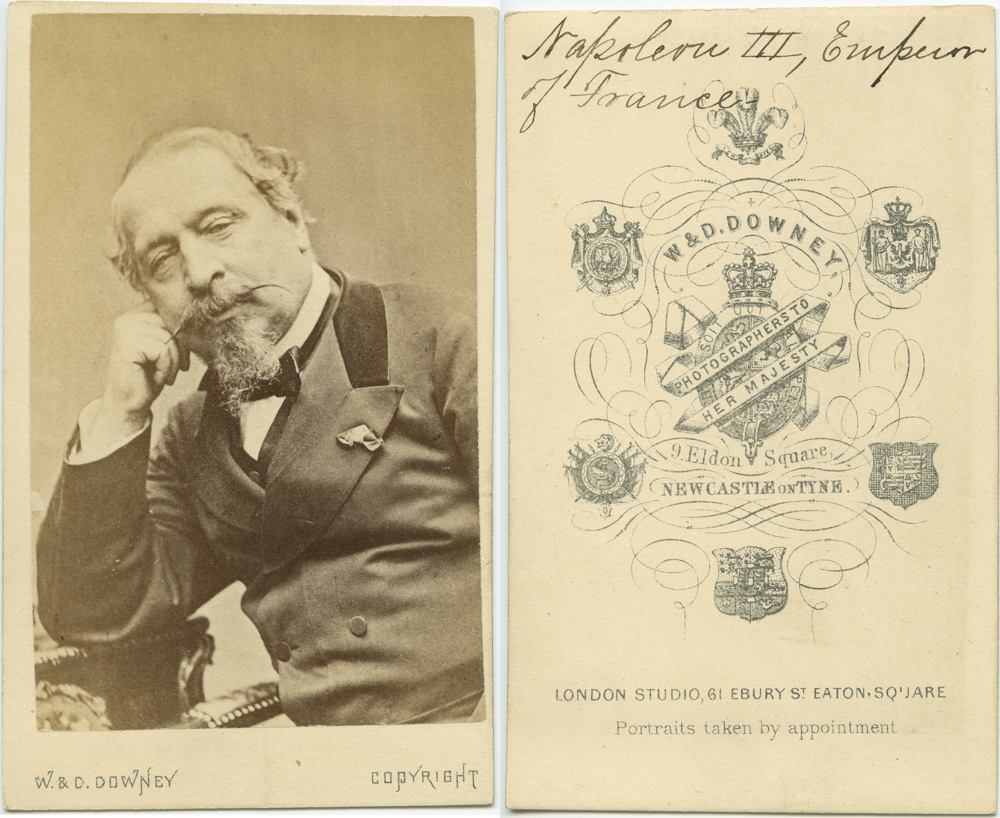
Anyway, back on topic, here’s a rather special CDV worthy of being the pausing point (the pause that refreshes?). Napoleon III, last Emperor of France. Taken in London at the studios of W. & D. Downey, photographers to Her Majesty. Napoleon III, Last Emperor of France
 dcphotoartist