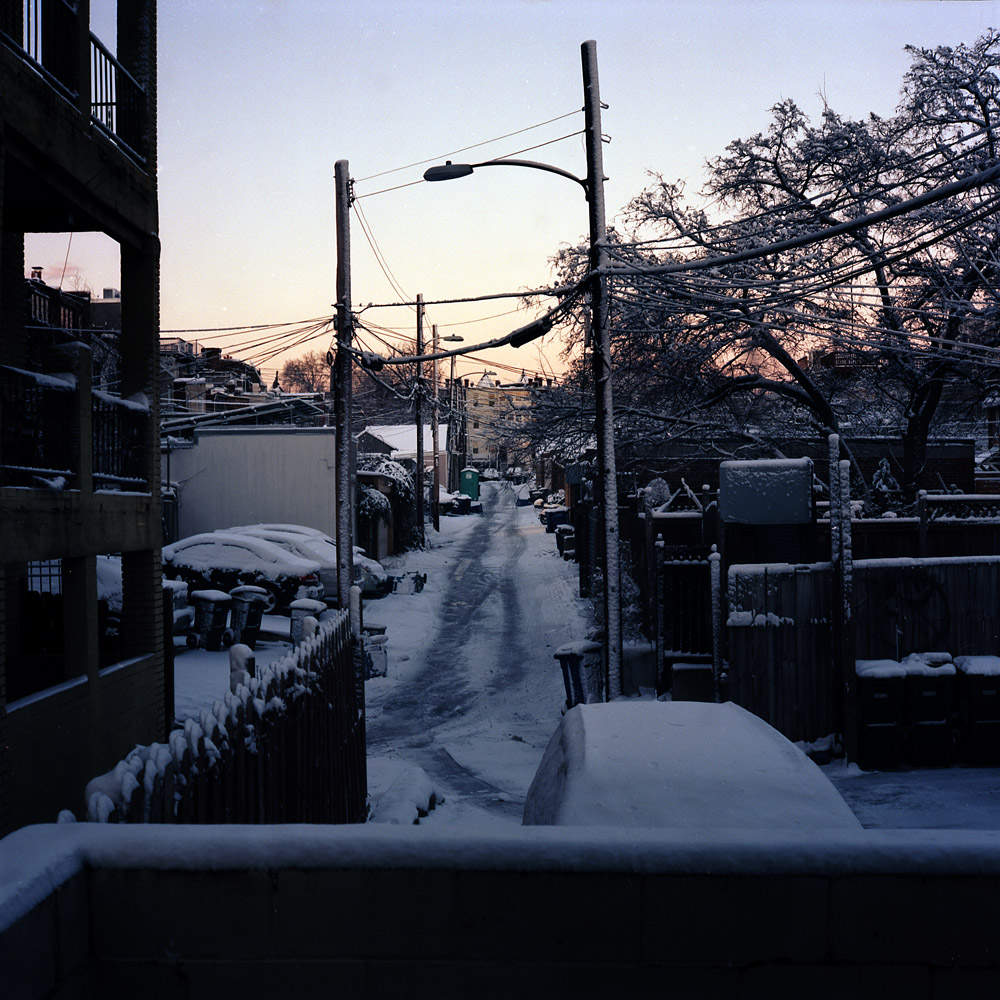
… but this time in color. I caught the sunrise reflecting on the windows of the houses at the top of my alley, and tinting the sky.
Sunrise, Snow, My Alley
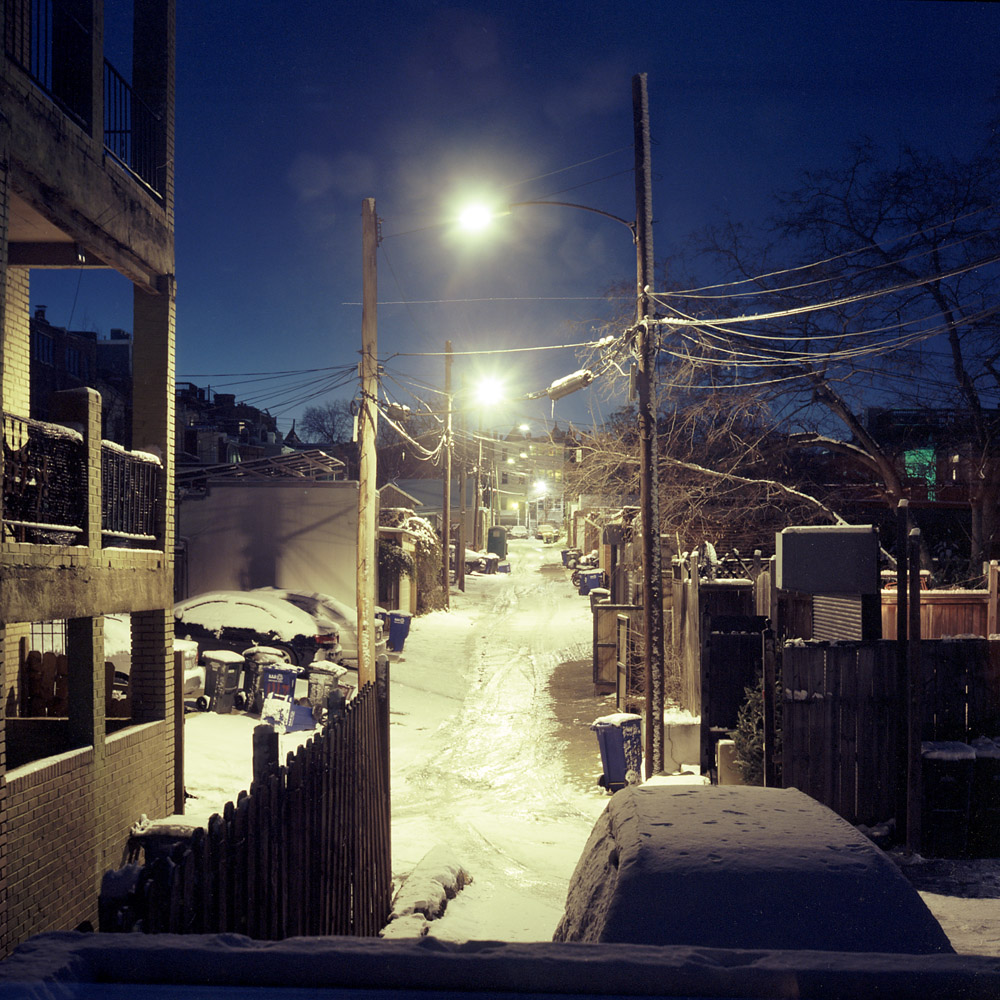
That inspired me to set back up at twilight and take this version, with the sky gone deep blue but not yet black.
Night, Snow, My Alley
Just so you know, to take these photos I had to set up my tripod in the bathtub and then stand on the rim of the bathtub to be able to compose these shots. The things I do for my readers 😀
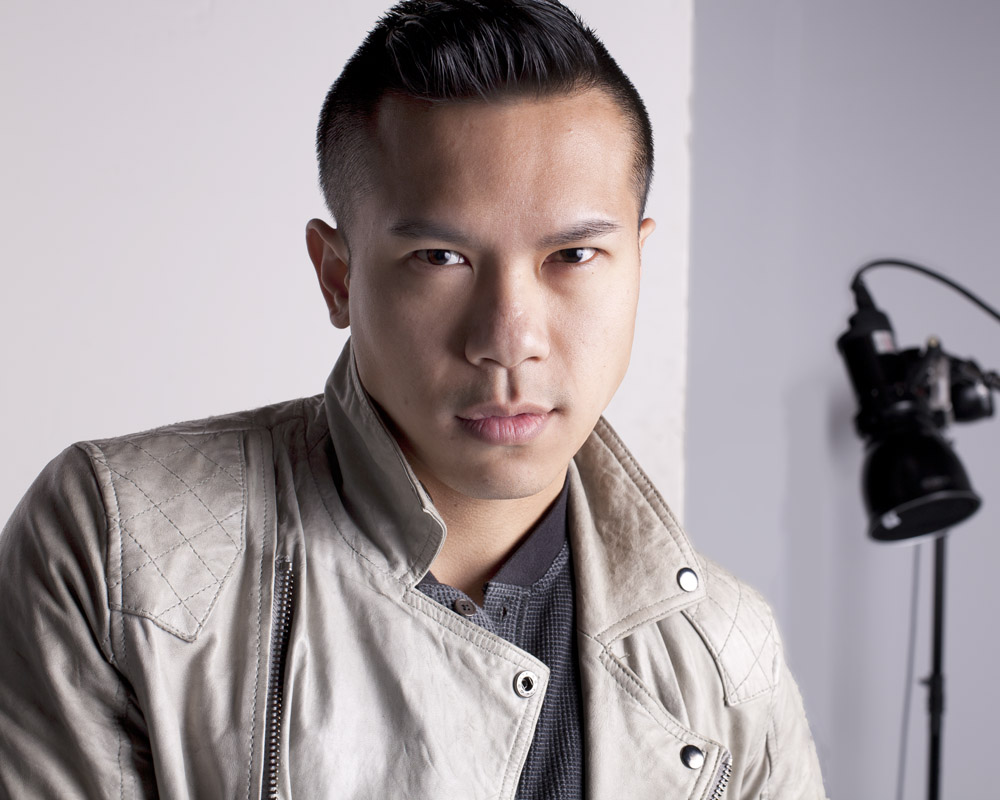
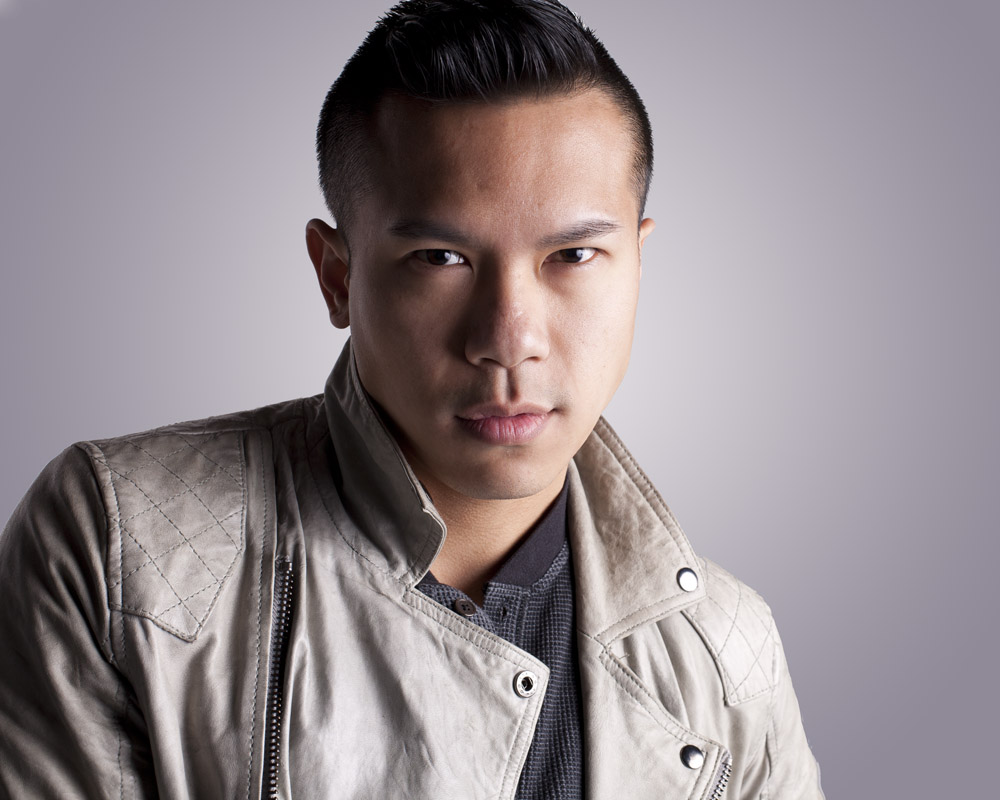
This is what happens when you shoot two days in a row, then go work at the office for a full day, then come home and edit photos until 11pm. Your judgment gets a bit off. I posted the original version of this headshot with the studio background intact (well, minus a broom handle I cloned out). Looking at it again in the clarity of new morning light, I realized that the background stuff, while cool, was a serious distraction from the goal of the photo – getting you to focus on the model’s face. So I got rid of the background altogether in a remake – What do you think? Much better, no?
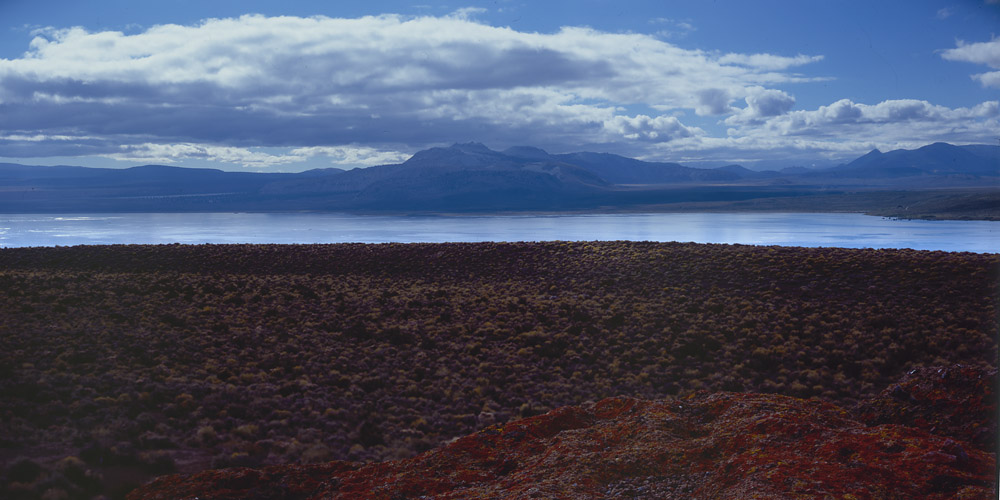
Another panorama taken from a 4×5 Fujicrhome transparency shot on my trip to the eastern Sierra. This view is from the north, looking down at the lake from the top of that volcanic upthrust where the fissures are that I mentioned in the previous post.
Mono Lake, from Upthrust
Mono Lake is like the Great Salt Lake in Utah or the Dead Sea in Israel – it has no natural drainage, so over time, the waters have become super alkaline with all the minerals that leach out of the rocks and soil around it. I wouldn’t drink it, and although you can swim in it if you’re so inclined, it’s not a pleasant feeling. The mineral content makes it such that it is easy to float on the surface – the ducks and other aquatic birds seem to float on top of the water, instead of in it. I have a few photos of the tufa formations for which the lake is famous that I’ll scan and post later. The tufas are formed when pure freshwater from underground springs enters the lake, causing the minerals in the water around it to sediment out and form hollow columns in fantastic shapes.
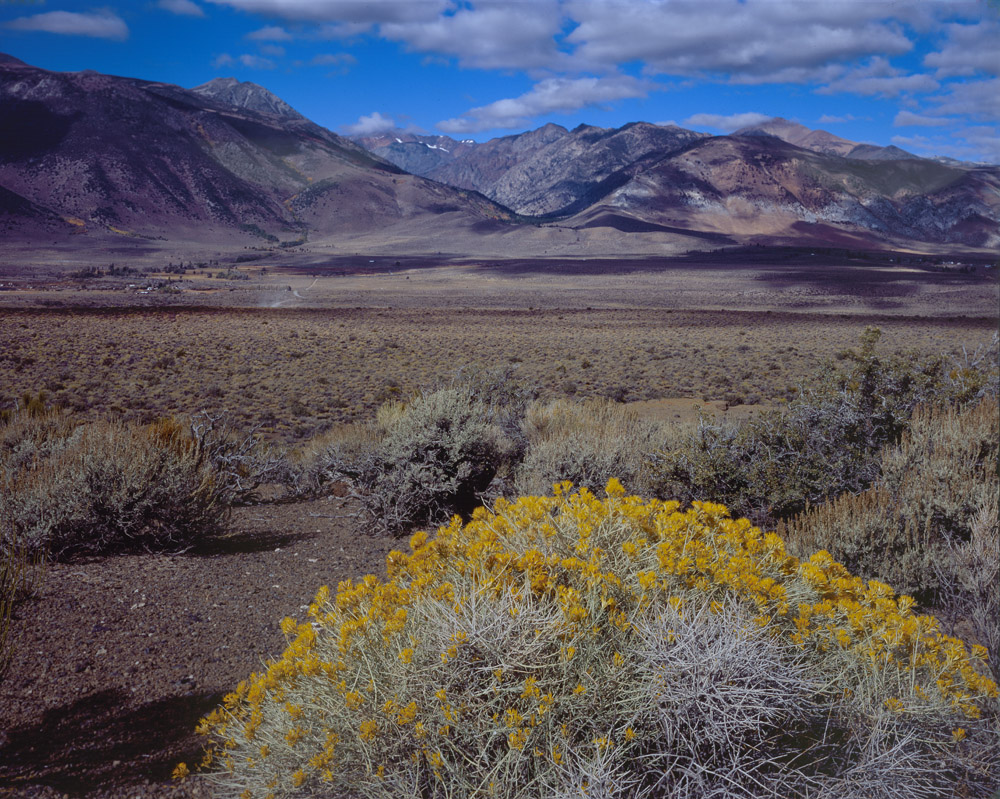
A few scenes from the high desert around Mono Lake. You’ll forgive my ignorance of desert flora and not naming the plants properly, but I’m an east coast city boy at heart, so I’m lucky I can tell an oak tree from a blade of grass. Well, not entirely true, but you get the point – a horticulturalist I’m not.
Golden Bush, Mono Lake
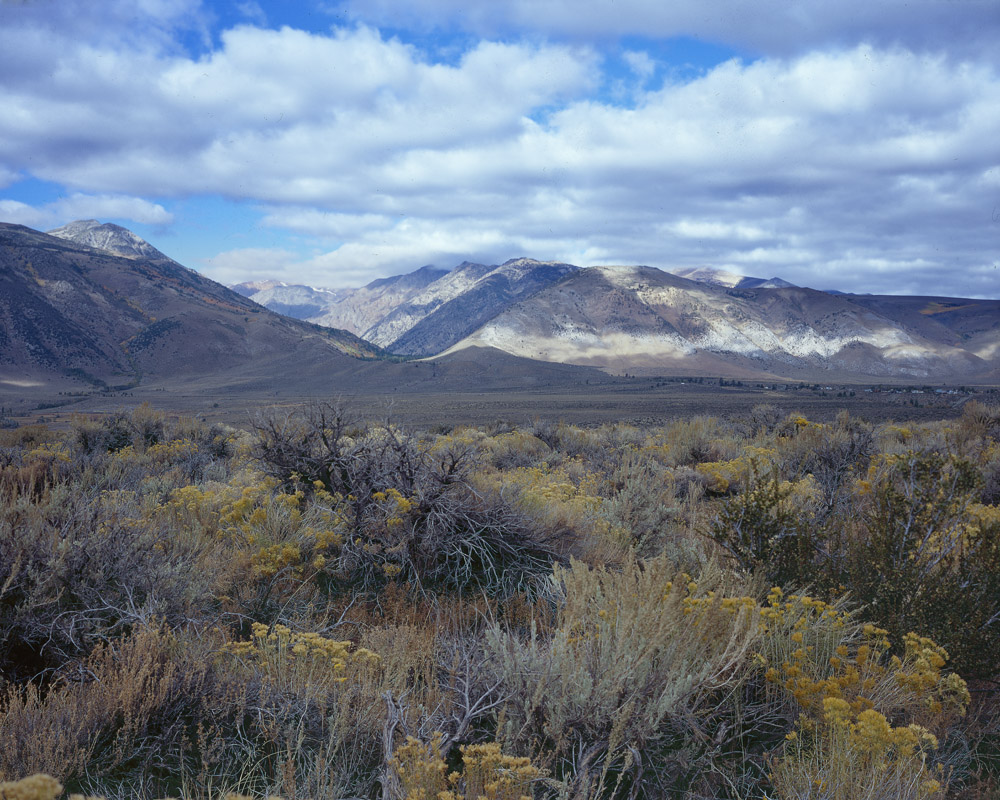
Thinking of horticulture, that reminds me of an old joke about Dorothy Parker – she was invited to speak at a meeting of the Ladies Auxiliary of the New York Botanical Gardens. Knowing of her penchant for a quick wit, one of the more naive members of the group asked her to use “horticulture” in a sentence. Her response? “You can lead a horticulture but you can’t make her think”. For repeating the joke in this context, the quip is probably about me, but I have a good sense of humor about such things. More scrub brush on the top of the plateau:
High Desert, Mountains, Mono Lake
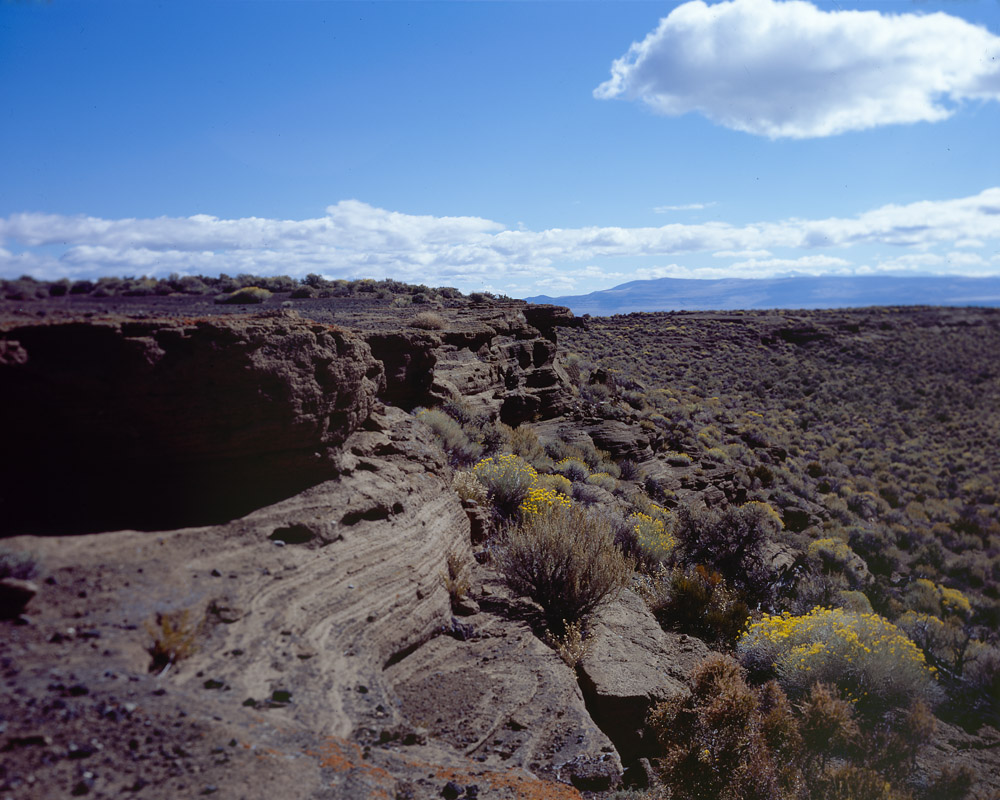
These are taken in the scrublands atop the volcanic uplift plateau on the north edge of Mono Lake. For geology buffs, the plateau was uplifted perhaps 10 to 15,000 years ago in an event so rapid and violent it created fissures resembling miniature slot canyons. I went out in search of said fissures and hiked around on top of this plateau for perhaps two hours, looking for them, not finding any, all the while wary that I would miss one and inadvertently plummet down into one and get stuck. As it turns out, they’re on and near the leading edge of the plateau, and had I stuck to the edge, I would have found them perhaps fifteen minutes after ascending to the top of the plateau. But I had a lovely time all to my self, communing with the great open spaces, and I saw these scenes, so no great regrets.
Uplift Face, Mono Lake
I think I goofed the movements on the camera with this one, as there is some out of focus in the foreground that in retrospect really shouldn’t be there, but I’ll blame it on the altitude getting to me – I was fat and out of shape, and hiking at nearly 9000 feet of elevation with 30+ lbs of camera gear on my back.
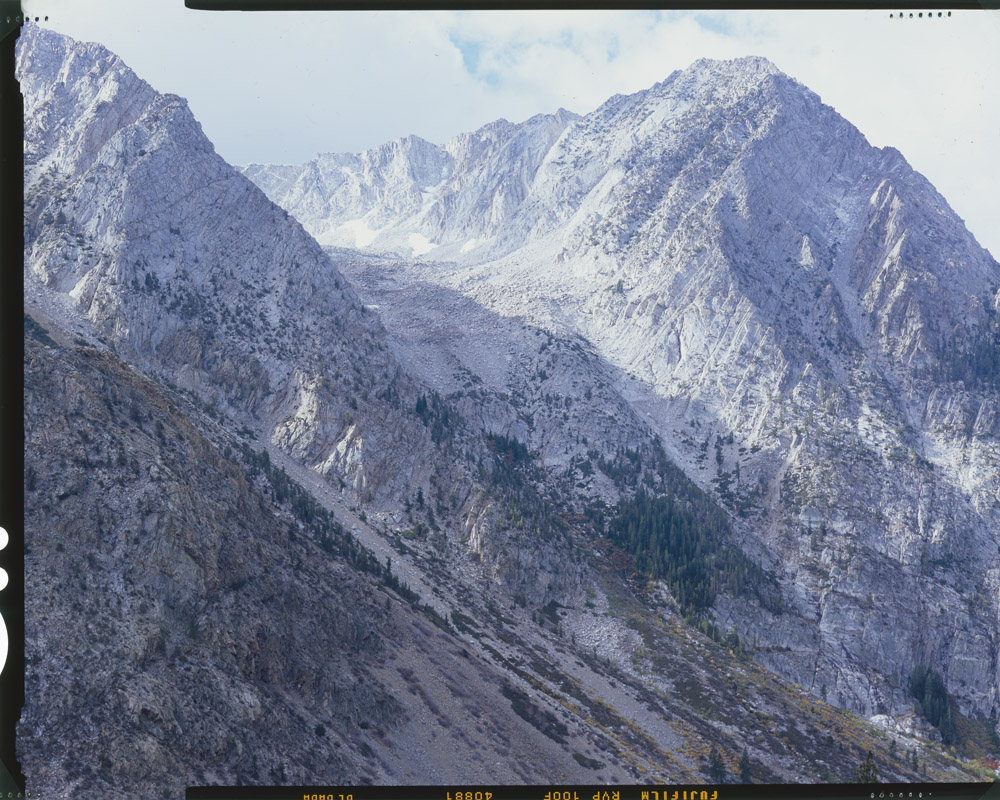
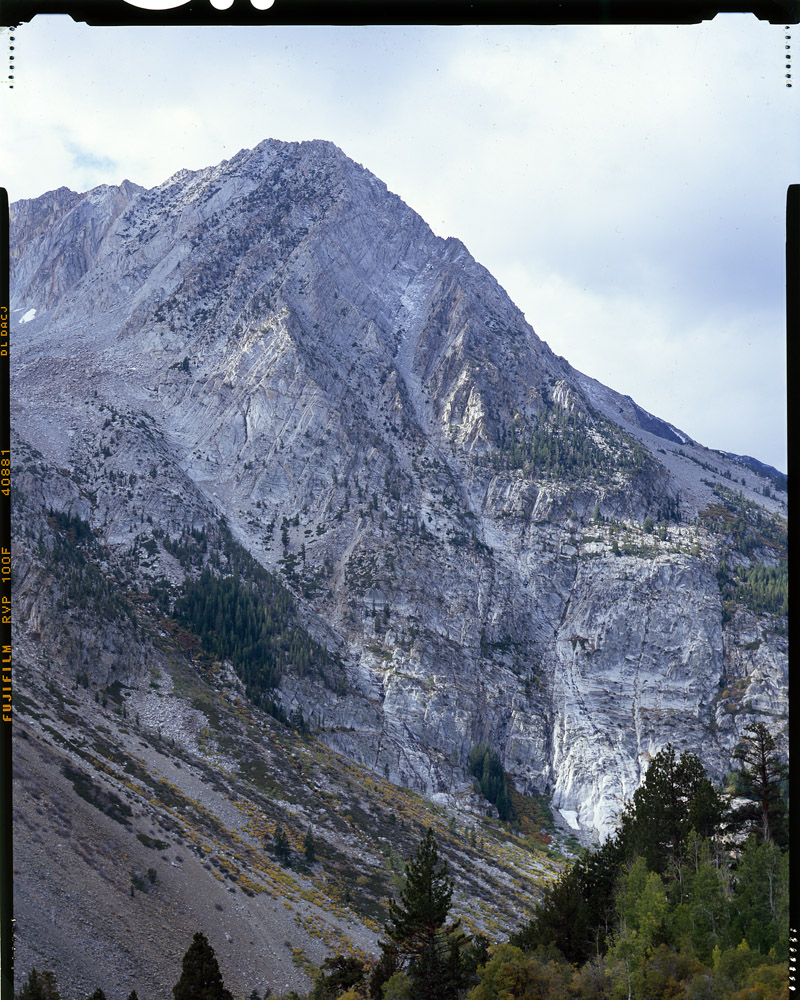
I was doing some clean-up in my library after doing the book inventory and came across something I’ve been looking for for a very long time: a box of 4×5 Fujichrome Velvia 100F transparencies (slide film). No scan on the internet will do the actual chromes justice – they need to be viewed on a lightbox with a loupe or even better, projected. Not that I have a projector that could handle a 4×5 chrome. But here are two favorites that I think come pretty close to conveying the majesty of a big slide:
Tioga PassTioga Pass
These are both views of the eastern end of the Tioga Pass, on the way in to Yosemite National Park from Lee Vining. If memory serves, these are even before you get to the ranger station at the park entrance. I took a vacation back in I think 2004 to the east side of the California Sierra. I drove from San Francisco up through gold rush country – Sutter Creek, Volcano, and Sonora to take 108 around the north side of Yosemite through the Sonora Pass to get to Lee Vining, where I eventually stayed for a couple nights to explore the landscape. Photographers, like fishermen, have tales of “the one that got away” – this is mine, “the shot I couldn’t take”. Coming up through the Sonora Pass, I reached the peak of the pass, 9980 feet of elevation, just at sunset. The road that climbs up through the pass becomes a series of hairpin switchbacks as it approaches the apex. Ascending the penultimate stretch, I glanced out the window to see the setting sun painting the mountain faces to the west brilliant oranges and reds, like they were on fire. There was no place to stop, even if I didn’t get out of the car, let alone set up a tripod and squeeze off a frame or two with a 4×5 field camera. So the image has to live in my memory, and hopefully in retelling it, I’ll encourage some of you to get out there and drive that route yourselves, and time your trip so that you climb the pass at sunset and can see it for yourselves.
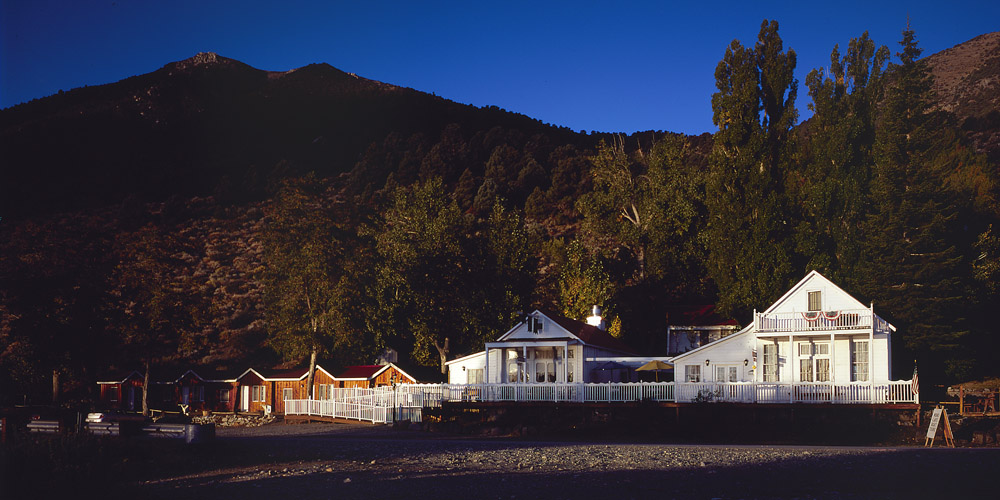
I’ll close with a panorama shot cropped from a 4×5 ‘chrome I shot of the Tioga Inn where I stayed. The two white buildings of the inn are actually salvaged structures in whole or in part from Bodie, the famous ghost town up the road a little ways. The more modern cabins on the left are some of the rooms – there are more cabins on the right, up in the trees, some of which are also made of Bodie salvage materials.
Tioga Inn
I’ll have more to tell of the road trip in future posts.
Here are a few loose odds-n-ends I shot back at the end of September, but kept on the shelf until I was all done with the Paris photos. I like playing around as light levels fall – it’s a challenge to balance foreground and sky, but when it works, it’s beautiful. I also like the colors you get when you mix different kinds of lighting.
I was walking around Glen Echo Park in the evening after visiting for (I think) an exhibit opening. I had the Rollei with me, and a roll of Kodak Portra 800 loaded. Portra 800 is another one of those “miracle” emulsions, in my estimation. It is expensive (almost $10/roll), but when you need it, it’s there and it works so well at what it does. Yes, it does have more grain and less contrast than Portra 400, not to mention Portra 160, but the difference compared to what you would have seen in older 800 speed films is almost not worth mentioning. It’s a specialty film, and because of the price, not something I’d shoot every day in lieu of a slower film. But using it is not a sacrifice, like other films used to be.
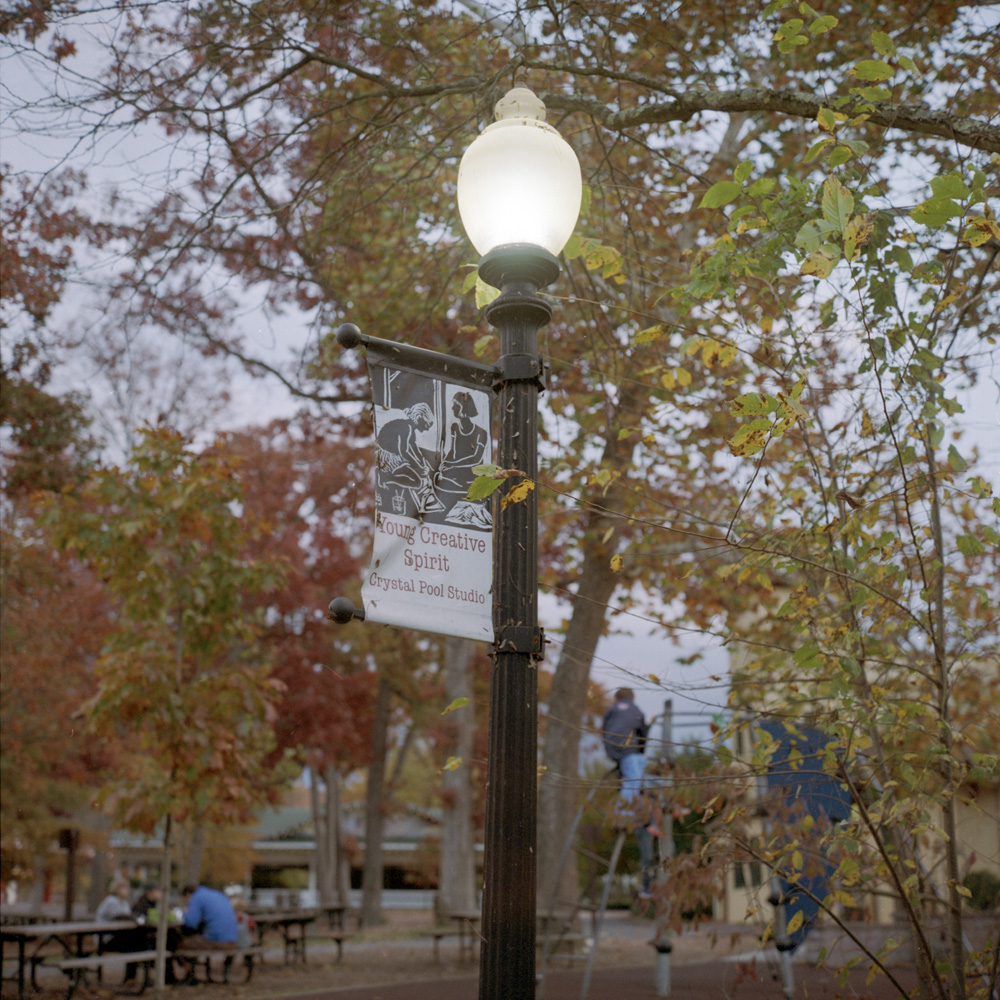
Here is one of the street lights in the park, glowing in the pre-dusk.
Lantern, Crystal Pool, Twilight
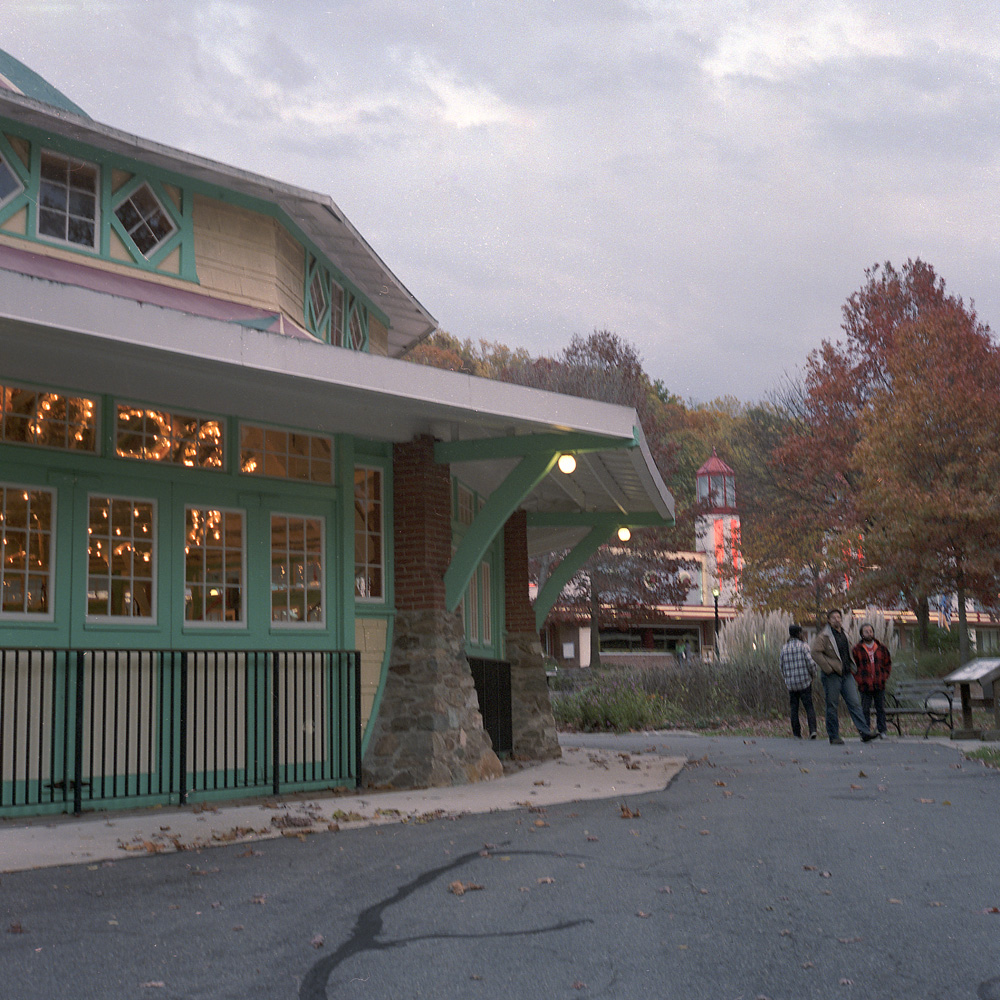
The Dentzel carousel is endlessly fascinating. The bright colors, the lights, the music, the motion – it’s a nostalgic combination that provokes a range of emotions from childish joy to melancholy. Here the lights of the carousel are glowing inside the carousel house, and the neon of the old Midway perks up the background through the trees.
Carousel Lights, Fall
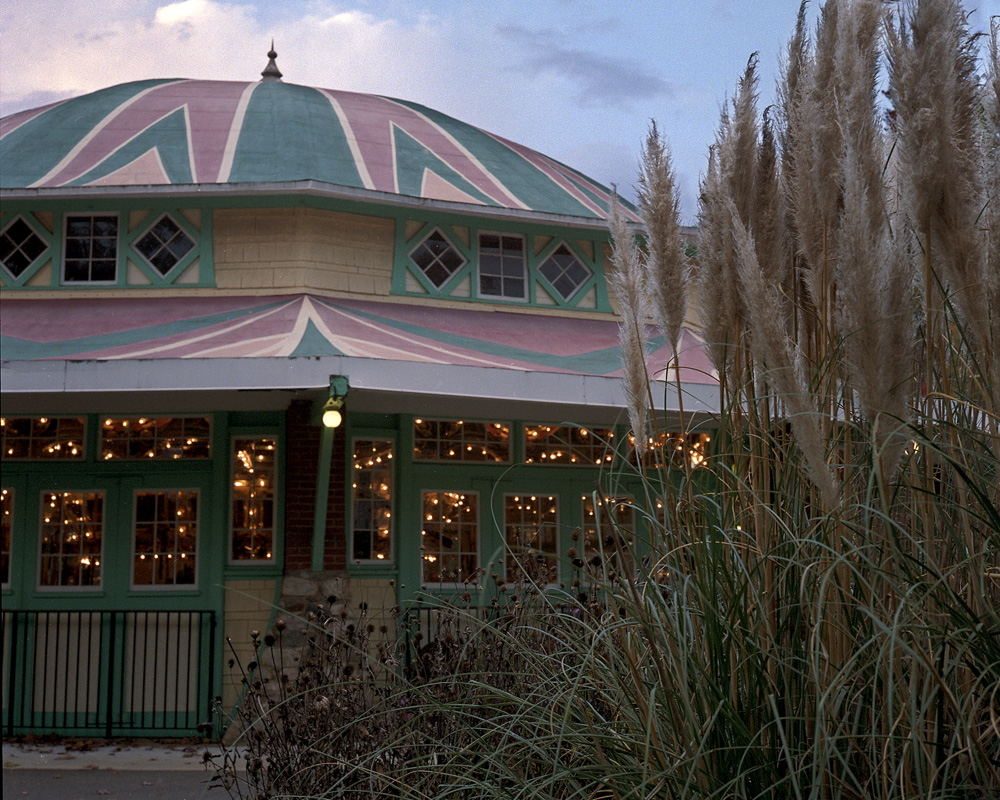
Another view of the carousel house, framed with ornamental grasses. The glow of the lights is particularly inviting – I’d love to go for a ride.
Carousel, Grasses, Twilight
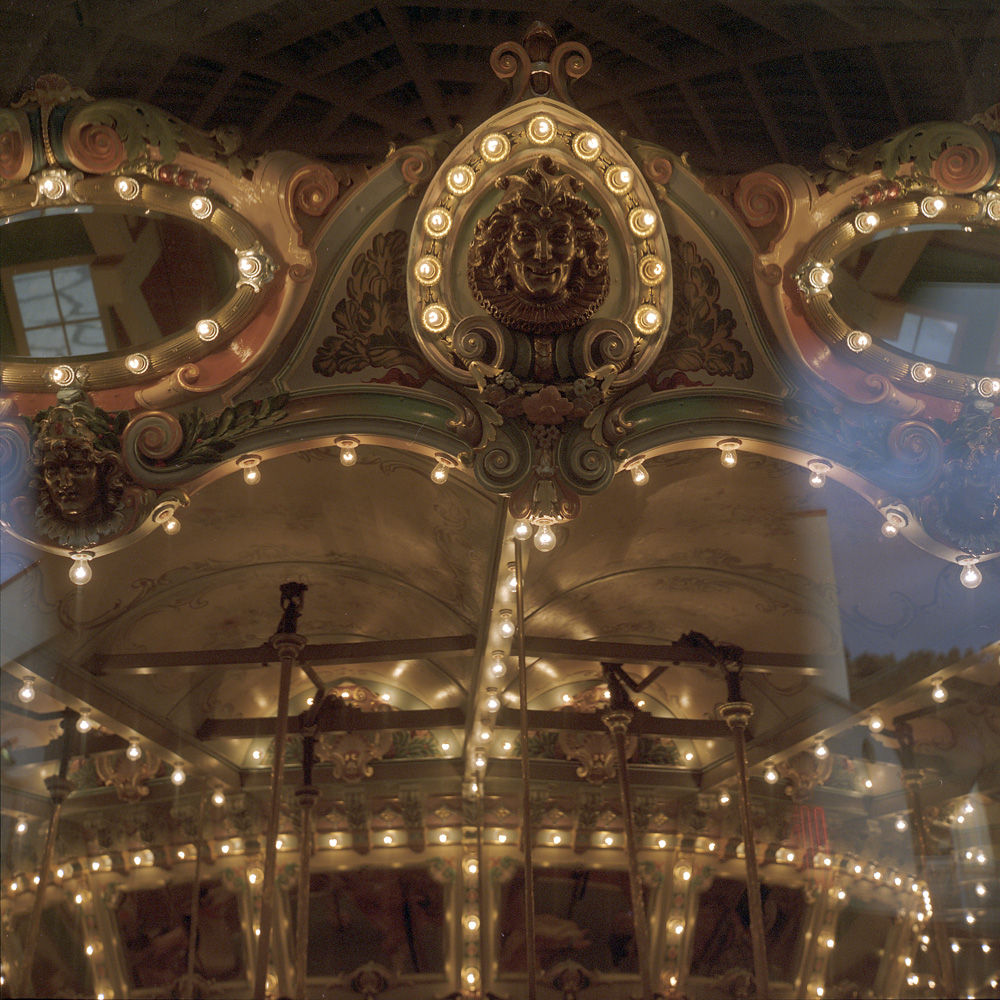
One of the circus masks on the crown of the carousel peers out at you through the reflections on the carousel house window. The lighting and the stillness gives it a slightly sinister air.
Carousel Lights
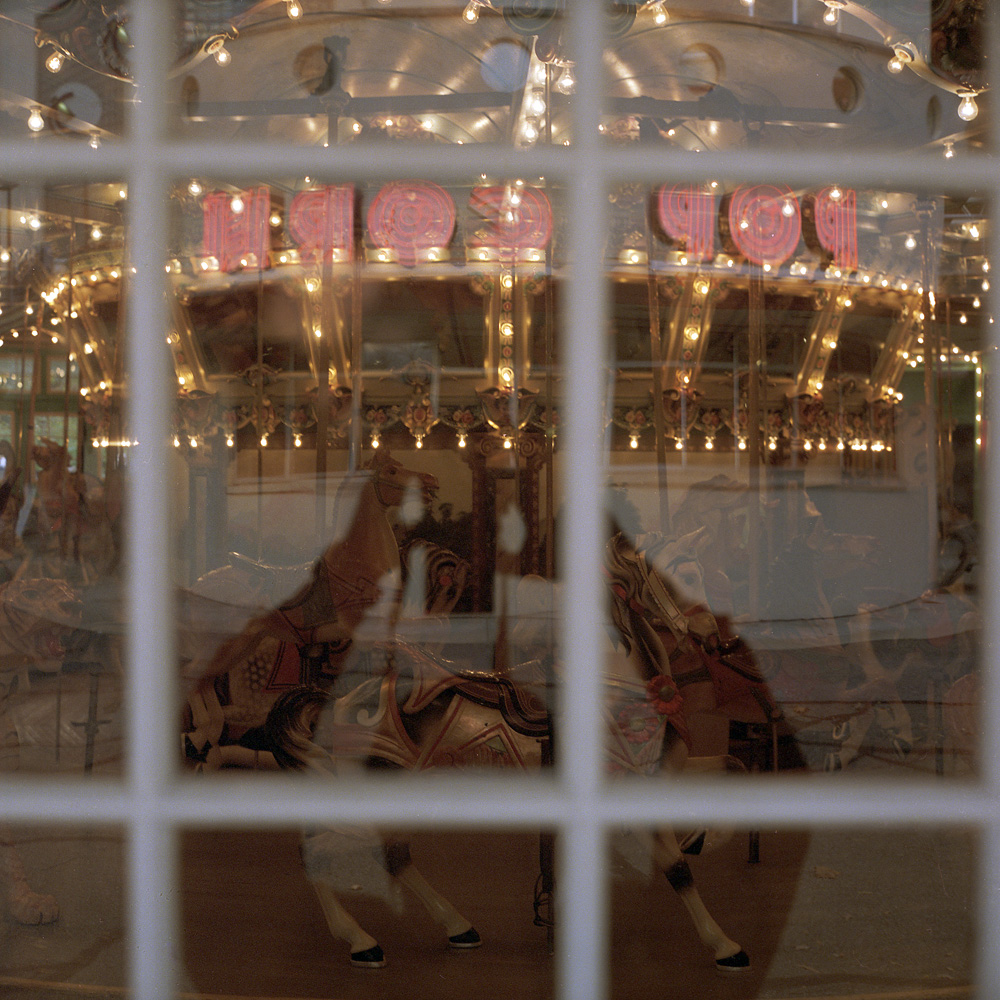
The neon of the arcade reflects in the windows of the carousel house, and I’ve caught myself taking the photo in the reflection as well. The reflected neon gives it a true carnival atmosphere – it almost feels like a real live amusement park, instead of the culture and arts center it has become. Which is not to say that the park lacks vibrancy and vitality, but it has a new character now, a lovable low-key quality that reflects and honors its past while preserving the facility for the future.
This is the last post in the Paris in October series – with this, I’ve finished uploading new images from the series. I may go back and revisit a theme or two that span multiple posts, like staircases, but I’m pretty much done. It’s been a long, fun ride – two months worth of postings from a single nine-day trip. A lot of work, but well worth the effort. I hope you all have enjoyed the series as I’ve been posting them.
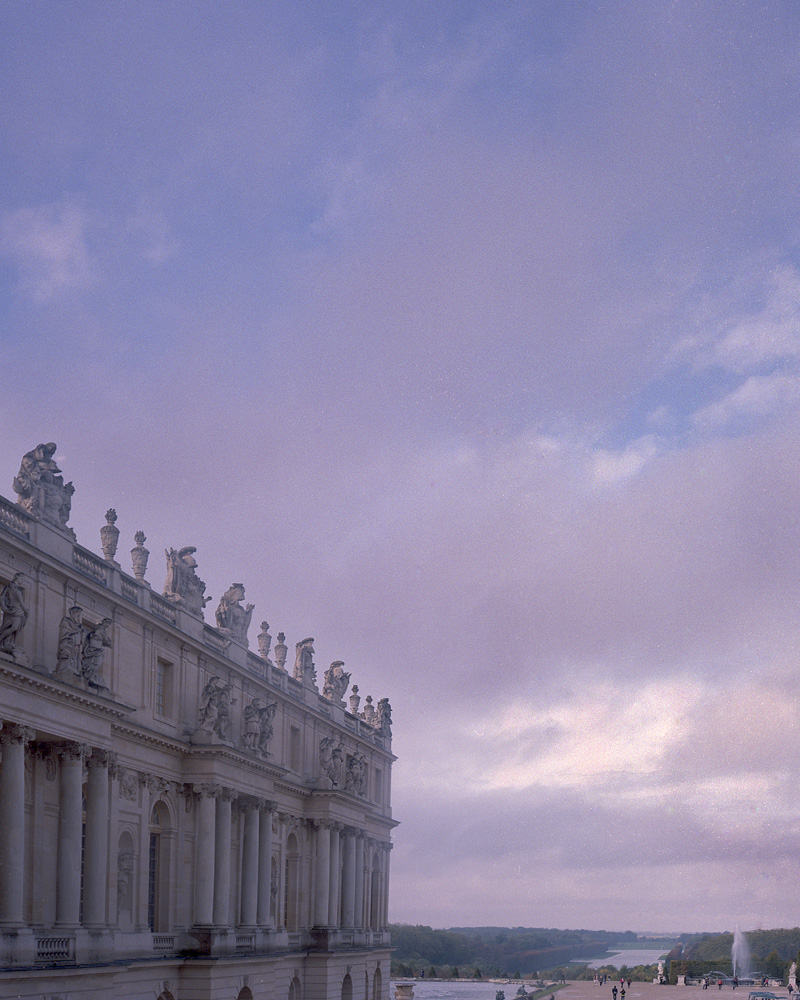
These are exterior views of Versailles, or at least view of/toward the exterior. I did not go out into the gardens – my feet were worn out at that point and they wanted an additional 9 euros to enter the gardens because they were going to be doing the musical fountain show, so I did not get around to the famous garden facade of the palace.
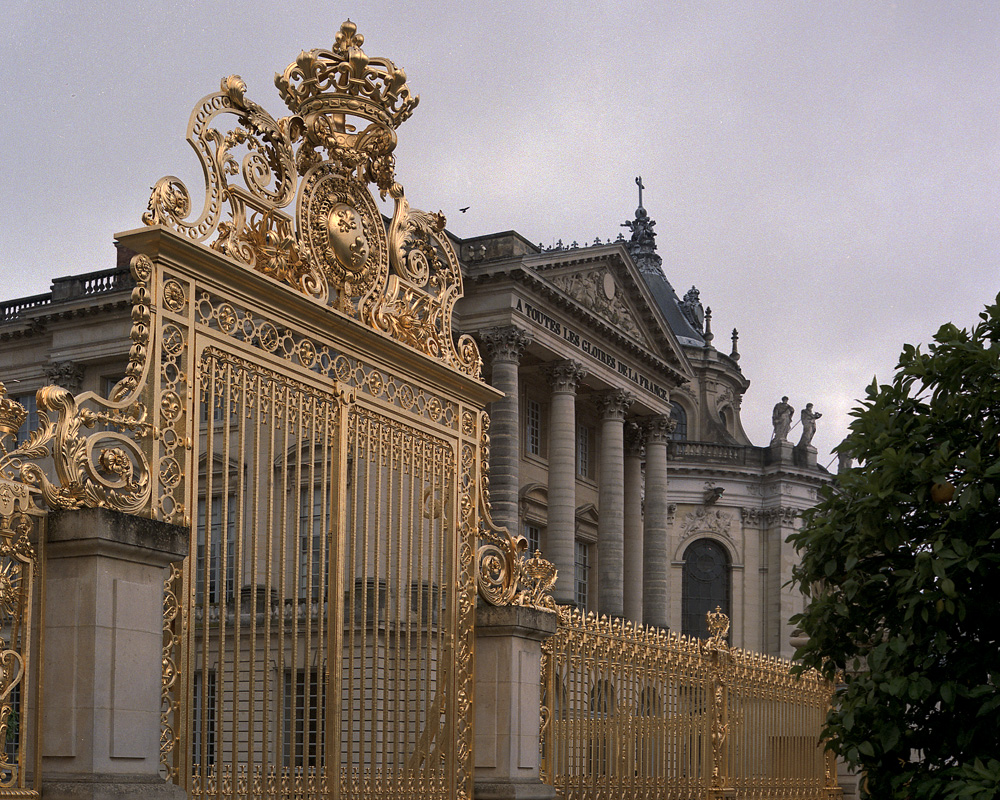
The entrance gates when you first approach are gilded iron. It’s one of the very first things you see, and it certainly makes an impression. Impressive as they are now, can you imagine what it would have been like in the 18th century to walk up to these gates?
Gilded Gates, Versailles
The words on the building portico say, “A Toutes Les Glories De La France” – to all the glories of France. For a shining period, that was literally true of Versailles. It encapsulated the magnificence and power that was the French state in the era of Louis XIV. I don’t know when that phrase was placed on the building – it has much more of a Second Empire or Third Republic feel to it. It doesn’t seem like something one of the kings would have done – the palace itself screamed that sentiment in spades, putting it down in writing on the facade was superfluous and a bit gauche.
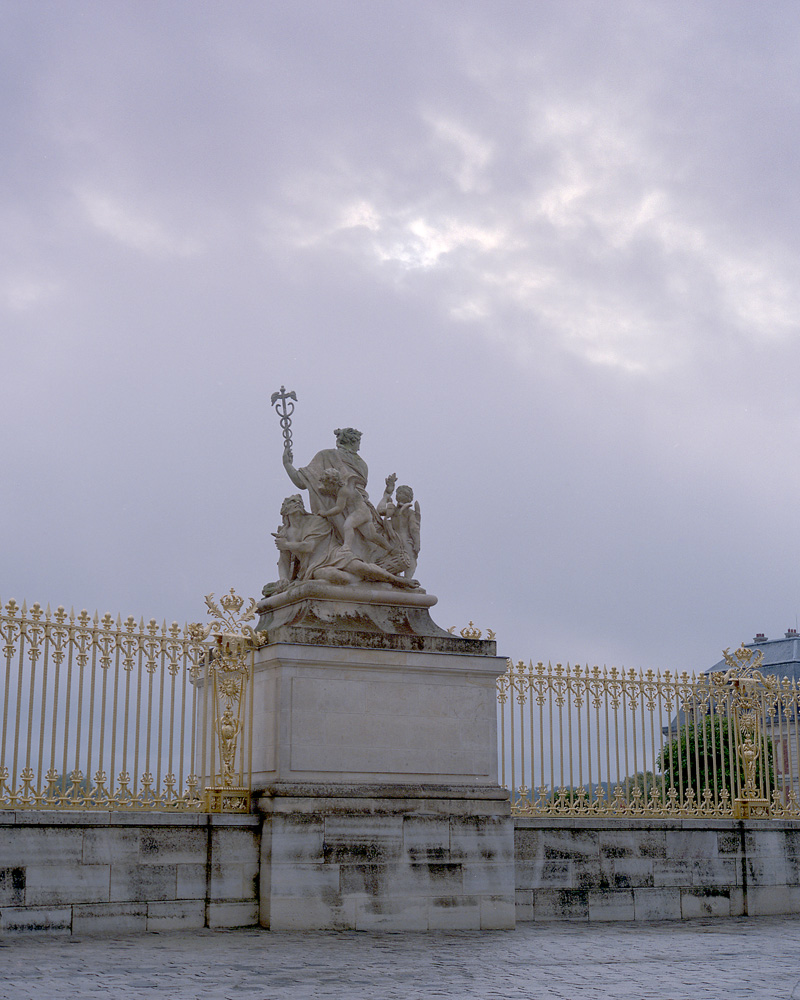
This is a view looking back at the town of Versailles from the palace entrance. The statue is the cousin of the one on the other side that I photographed in black-and-white with the grotesque figure providing a seat with its back for the allegorical female.
Statue, Entrance Gates, Versailles
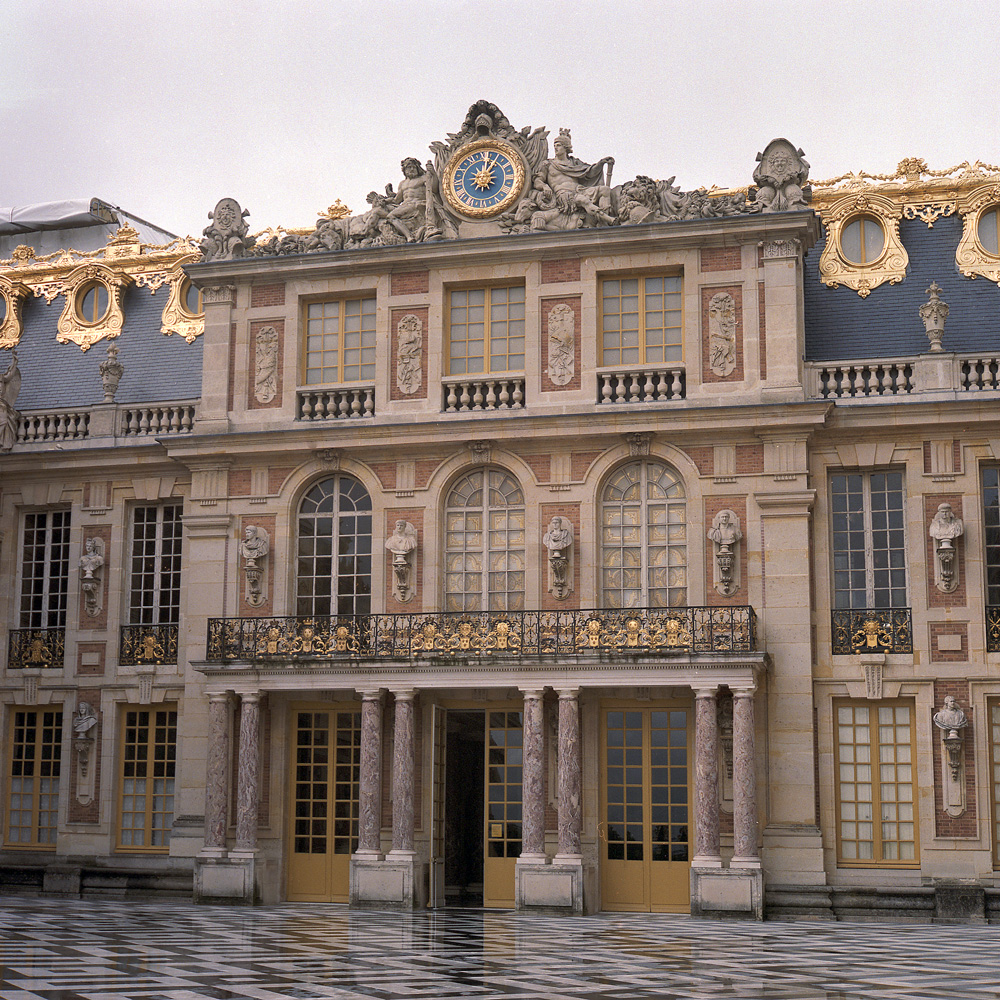
This is the palace’s front door. You can tell this is one of the older parts of the palace by the style – some brick instead of stone, less monumental in appearance. Less monumental, perhaps, but no less ostentatious. It had been raining that morning and so the marble tile courtyard surface was still wet.
Entrance Facade, Versailles, After the Rain
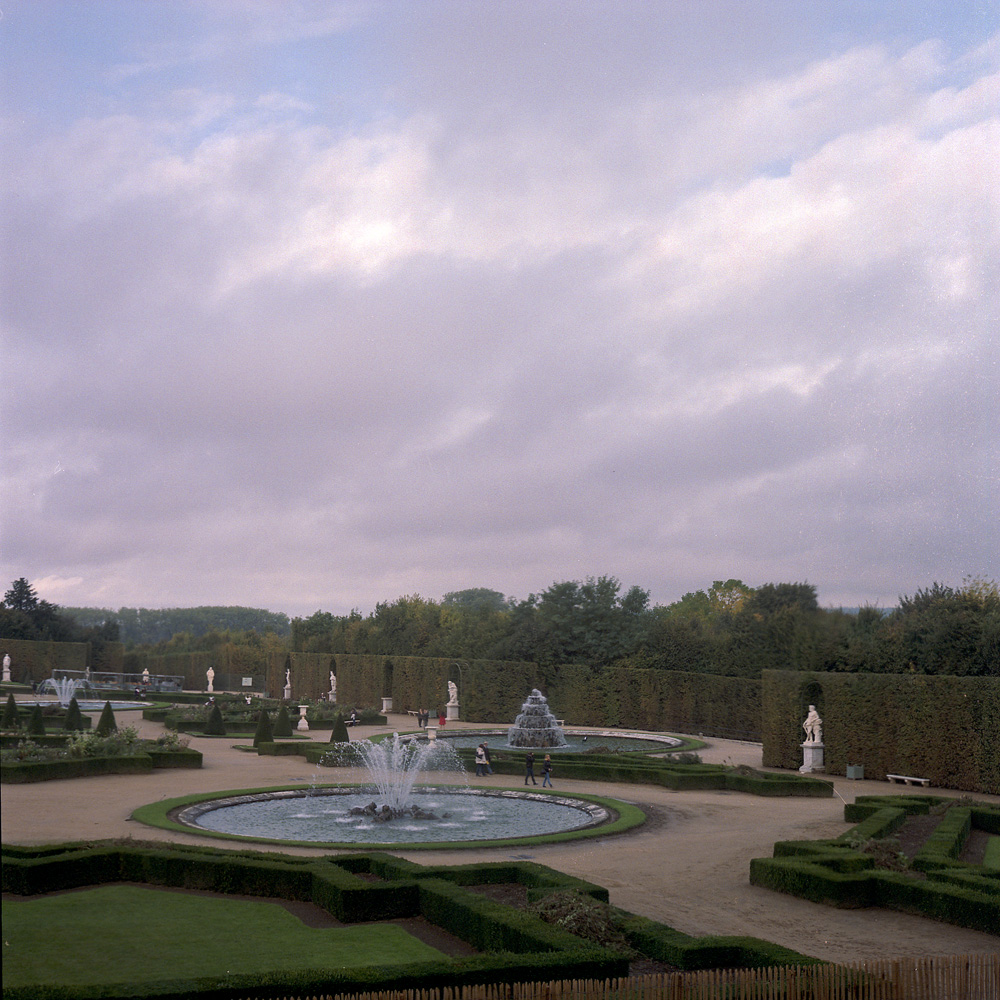
A view of one of the fountains immediately adjacent to the house:
Fountains, Versailles
A view of the garden facade through a window of another wing of the building. The colors of the sky were beautiful with all the rainclouds breaking up. You can see down the long walk with the ponds in the middle, how far off the estate stretches.
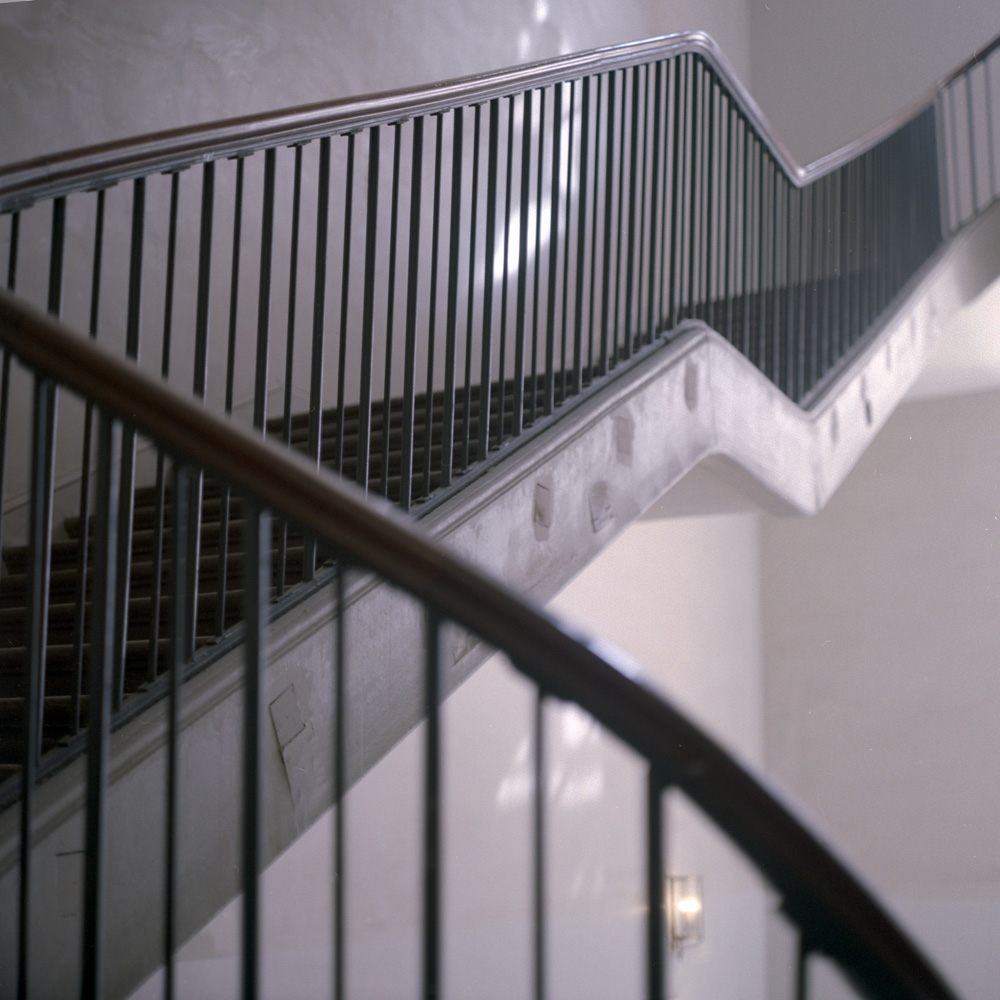
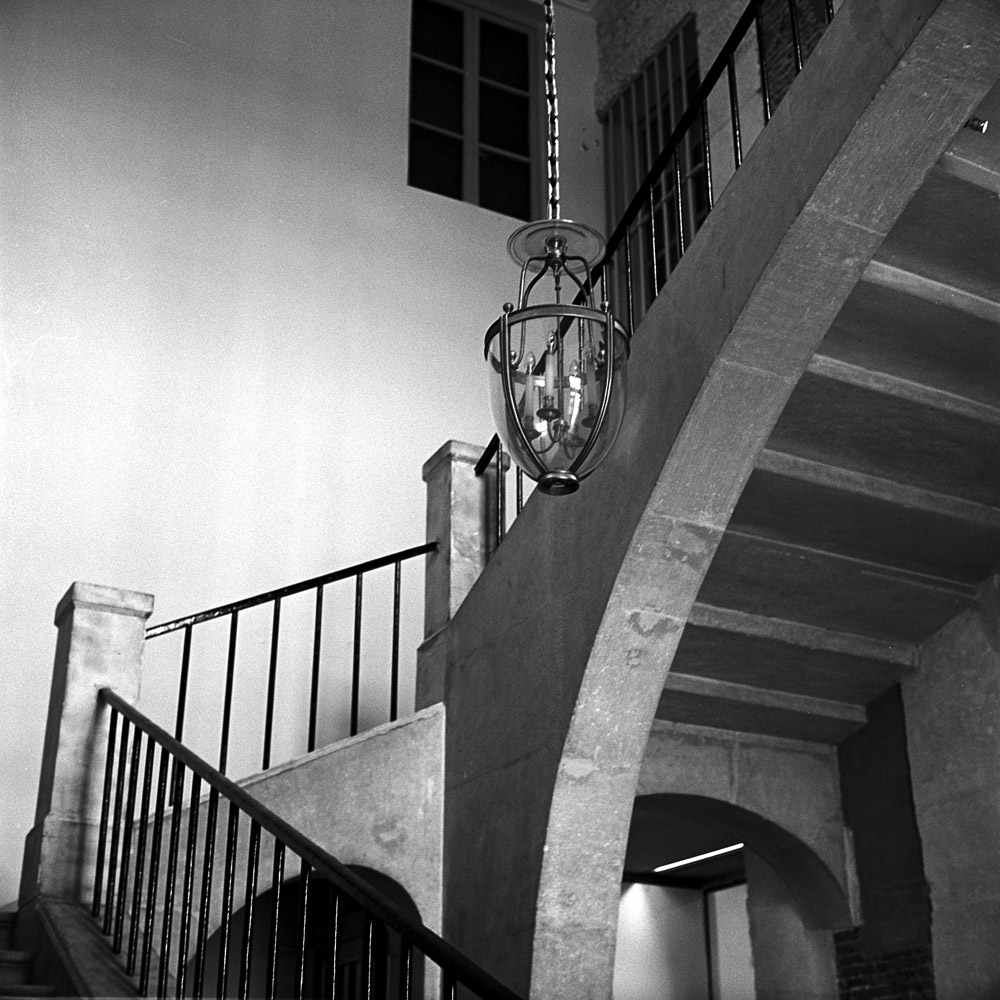
These first two are of the service stairs that lead from today’s restaurant and snack bar to the ground floor and the exit to the gardens. By the time I got to the dining room, my feet were screaming at me from all the continuous marching through the palace and across the cobbled courtyards. I did not eat in the main dining room but instead got a sandwich from the cafe. There was no place to sit (the only available tables were the stand-up kind, every chair was taken). Leaving the cafe to be faced with this staircase, then, was suddenly a daunting task. What to do, then, but photograph it?
Balustrade, Service Stairs, Versailles
To proof the images I wanted to scan and print bigger, I had a set of 5×5 inch proof prints made at the time of developing the film. Sometimes, the minilab prints looked better than my final scan results, but more often, they look worse. Based on the minilab prints, I excluded these two from my rough edit. Going back over the film while scanning everything else, I looked at the negatives and they looked good, so I took a whirl and scanned the first one. As it turned out, they were much better than I thought they would be based on the proof prints.
Service Stairs, Versailles
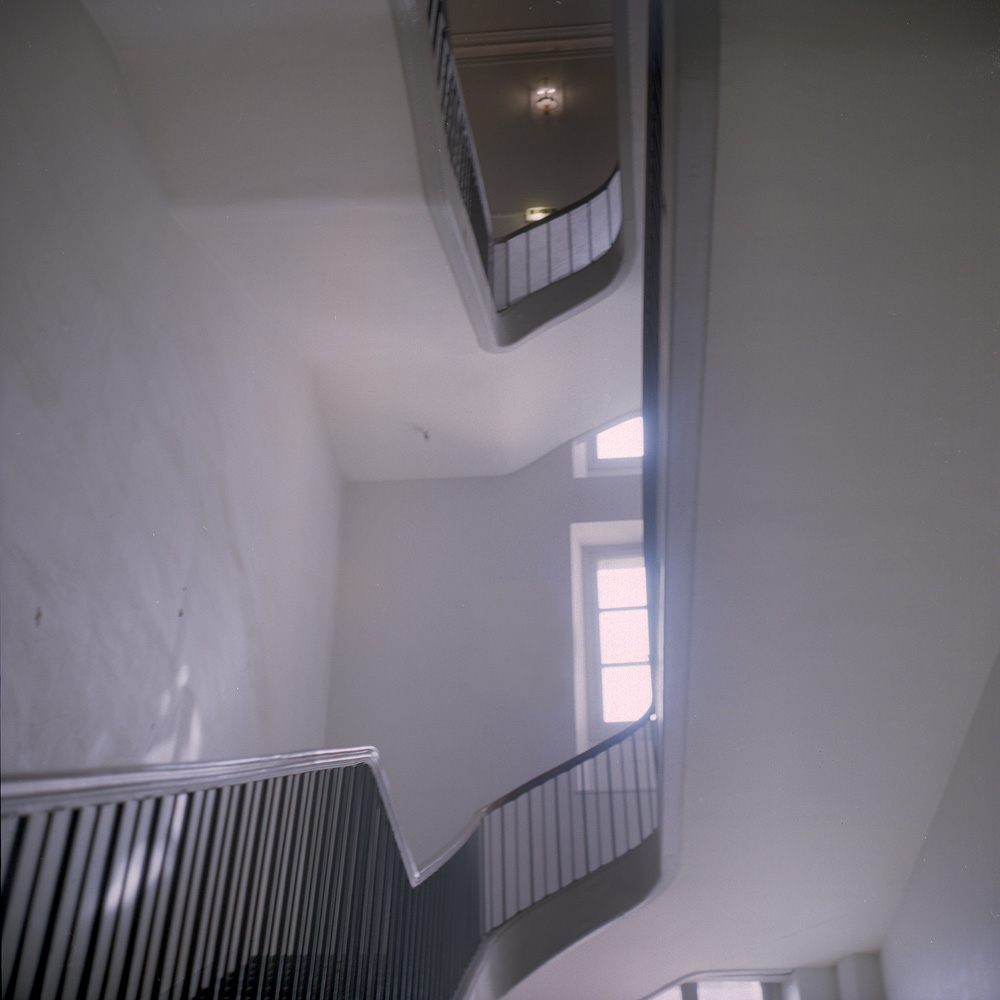
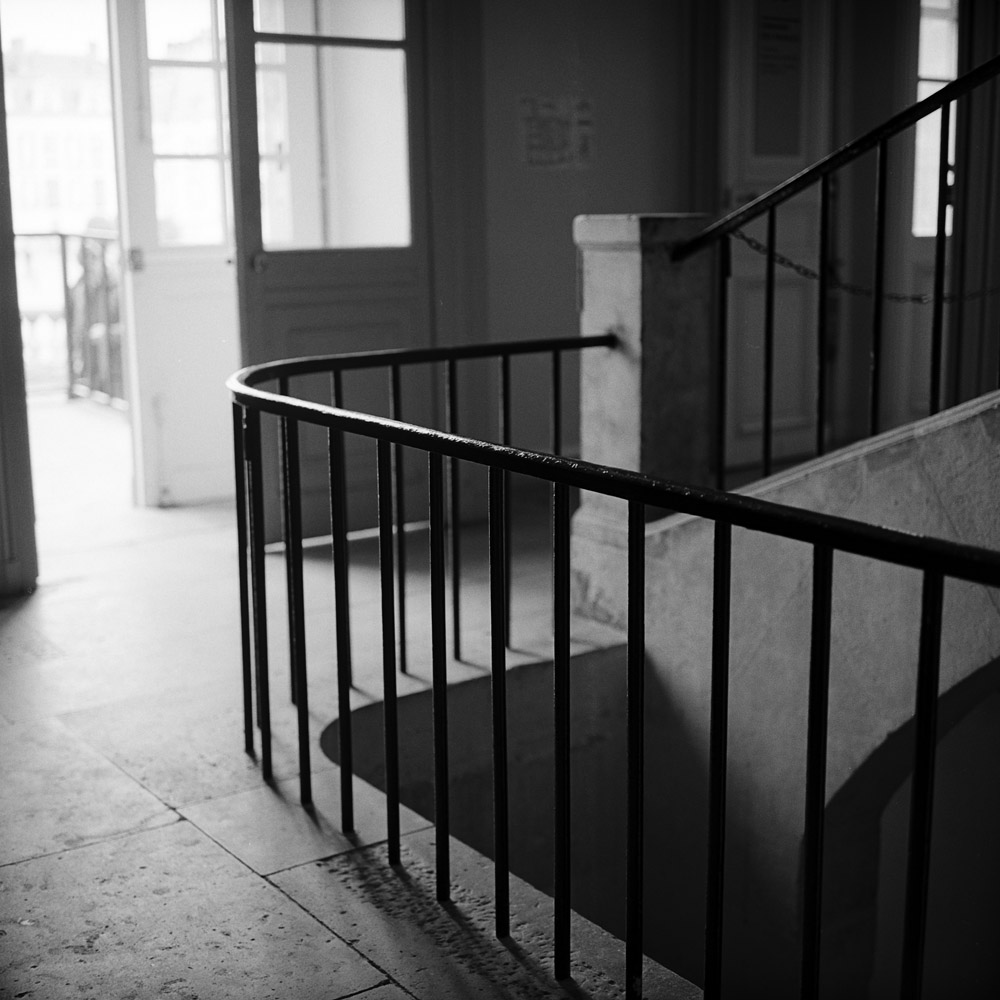
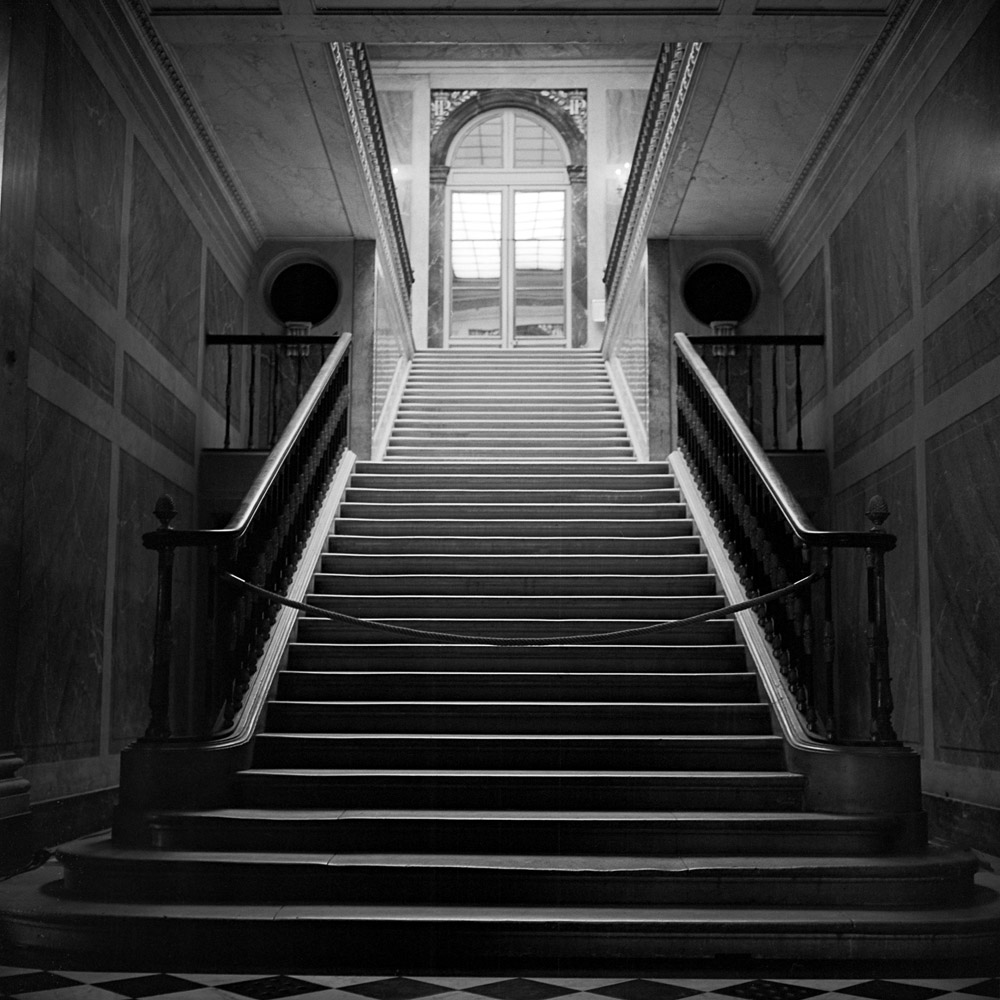
These next two are a memory refresher from an earlier post. With the exception of the last photo in this post, the only staircases I photographed at Versailles, it seems, were service stairs. I guess everyone is content to ignore them and only pay attention to (and mob) the Queen’s Stairs. Their loss, my gain.
When I originally posted this staircase, I mistakenly labeled it “The Queen’s Staircase”. It is not. The Queen’s staircase is far more opulent and magnificent than this, although I wouldn’t complain about having this be the main stairs in my house…
I’m sure you’ve read my rant about how crowded Versailles was. It seriously cramped my style trying to photograph any of the spaces on the main circuit of the house, even with my cellphone. That said, the whining ends here. I’m happy with the pictures I did take; I just wish I could have taken more. When I go back, and I WILL go back, sometime, I’ll do things differently – I’ll do the gardens first, then the house, and I’ll go in the dead of winter, on a weekday. Preferably during a snowstorm.
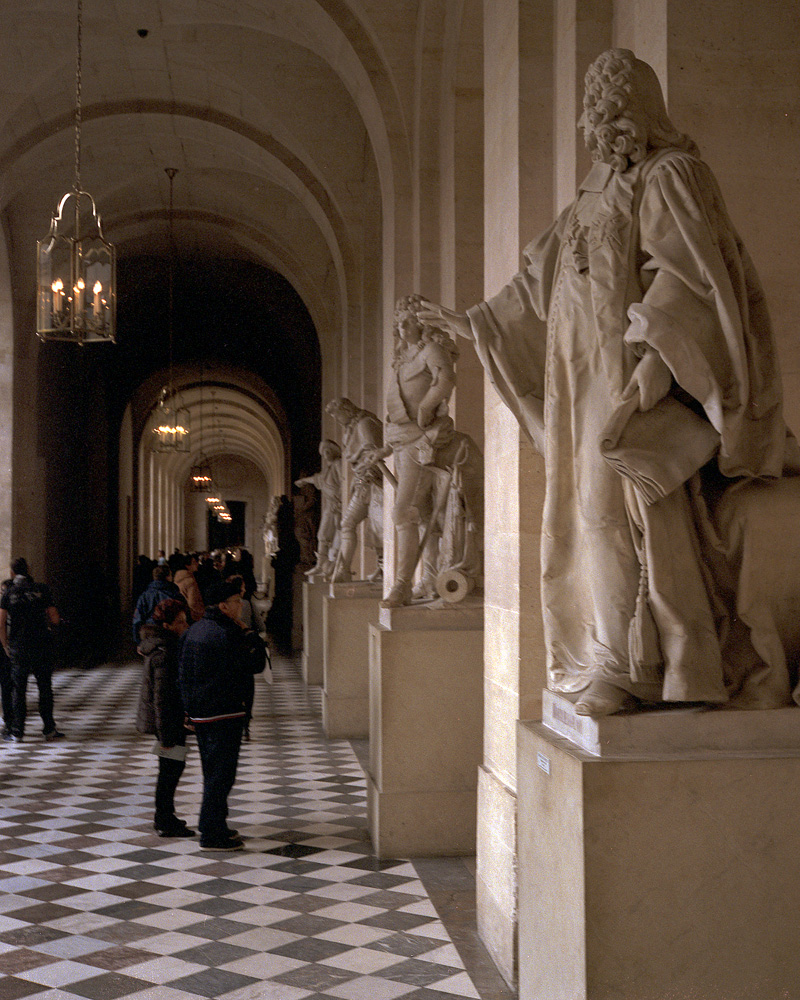
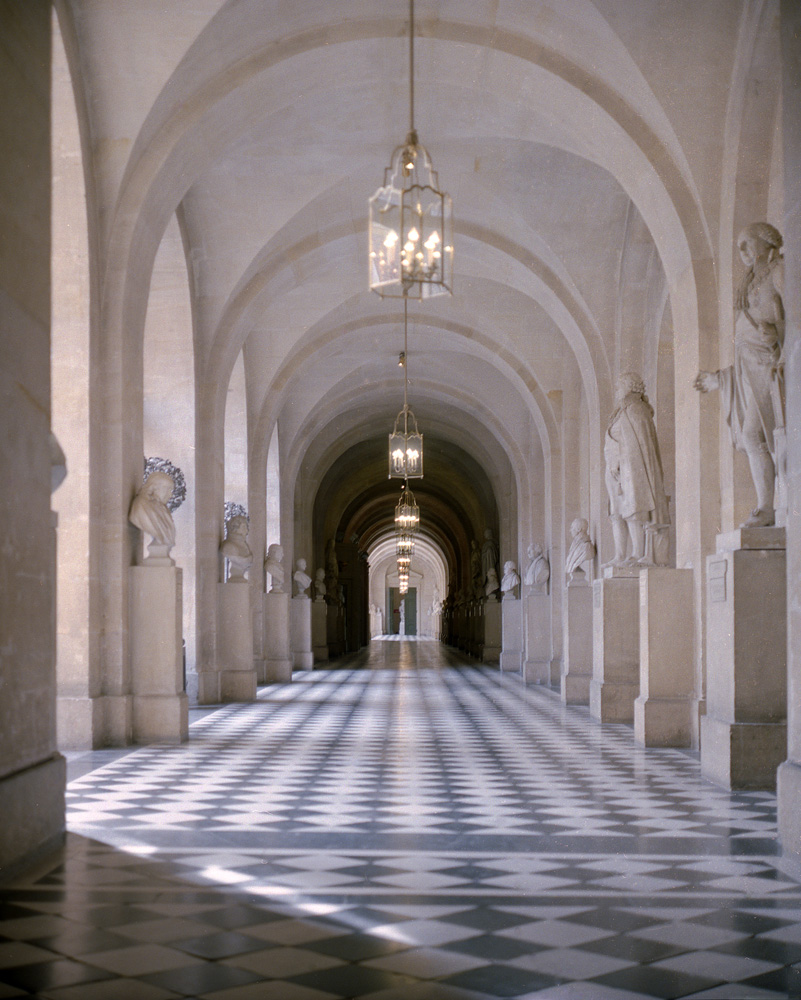
There are multiple halls filled with statues of great Frenchmen. Here are two such passageways, one with and one without tourists. The shot with tourists provides a human scale and a modern reference point for the house. The one without gives an architectural scale.
Tourists, StatuaryStatuary Hall, Versailles
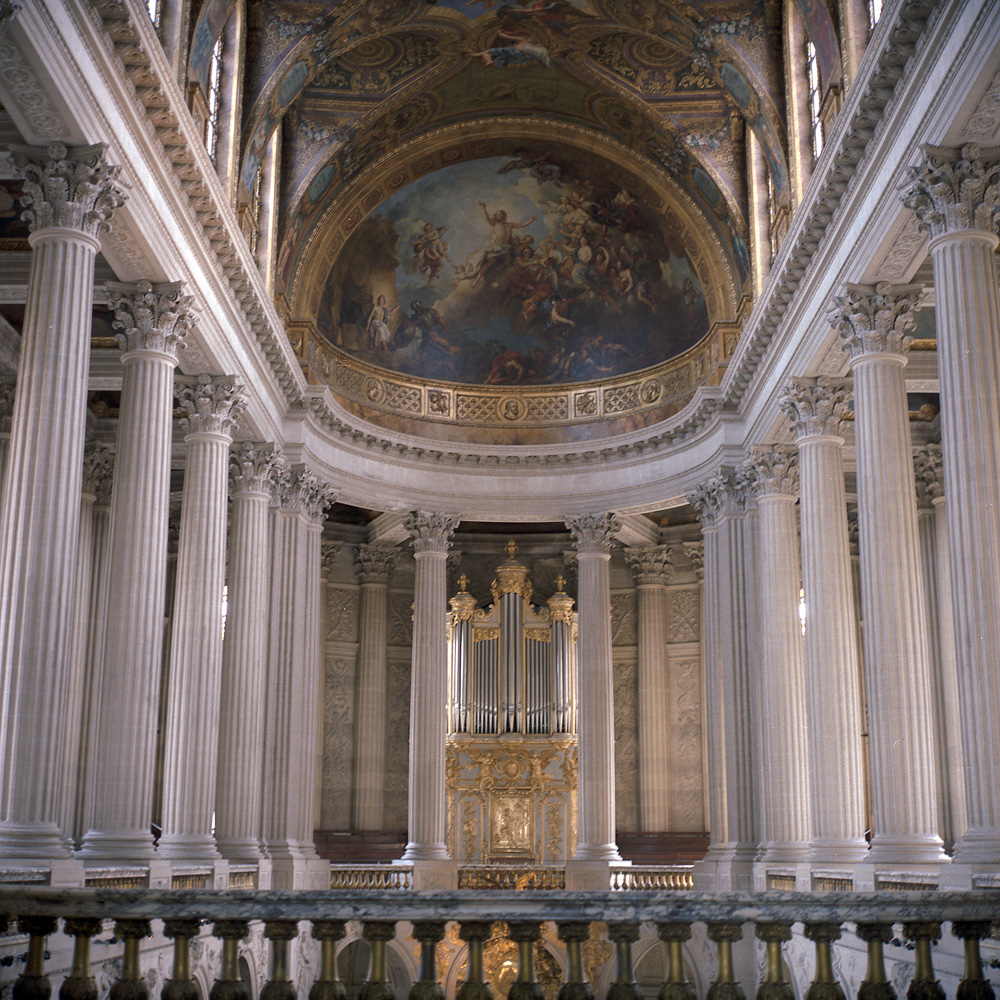
The royal chapel is one space in the palace that truly gives you a sense of not only the grandeur of the palace but also the extreme disparity of wealth between the aristocracy and the peasants.
Royal Chapel, Versailles
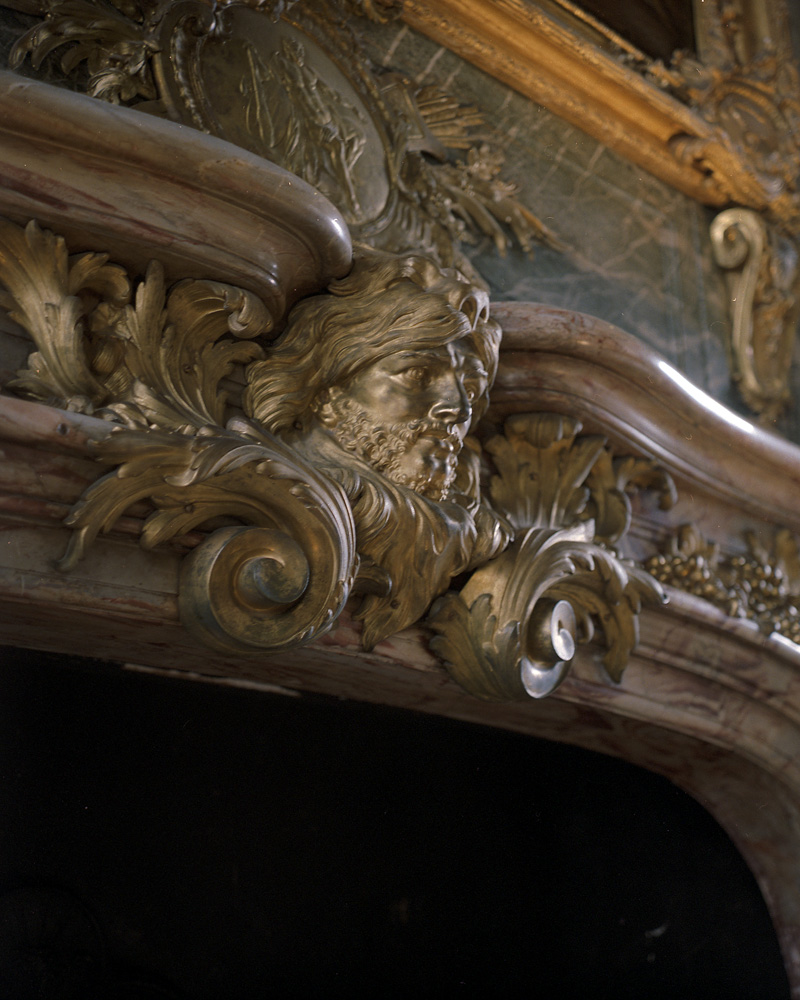
A huge part of the purpose of Versailles was to show off the wealth and power of the state. To that purpose, it lived up to it in spades. This mantlepiece is about level with my shoulders, and the head in the center is about the size of my head. You could actually walk into this fireplace.
Mantlepiece, Head
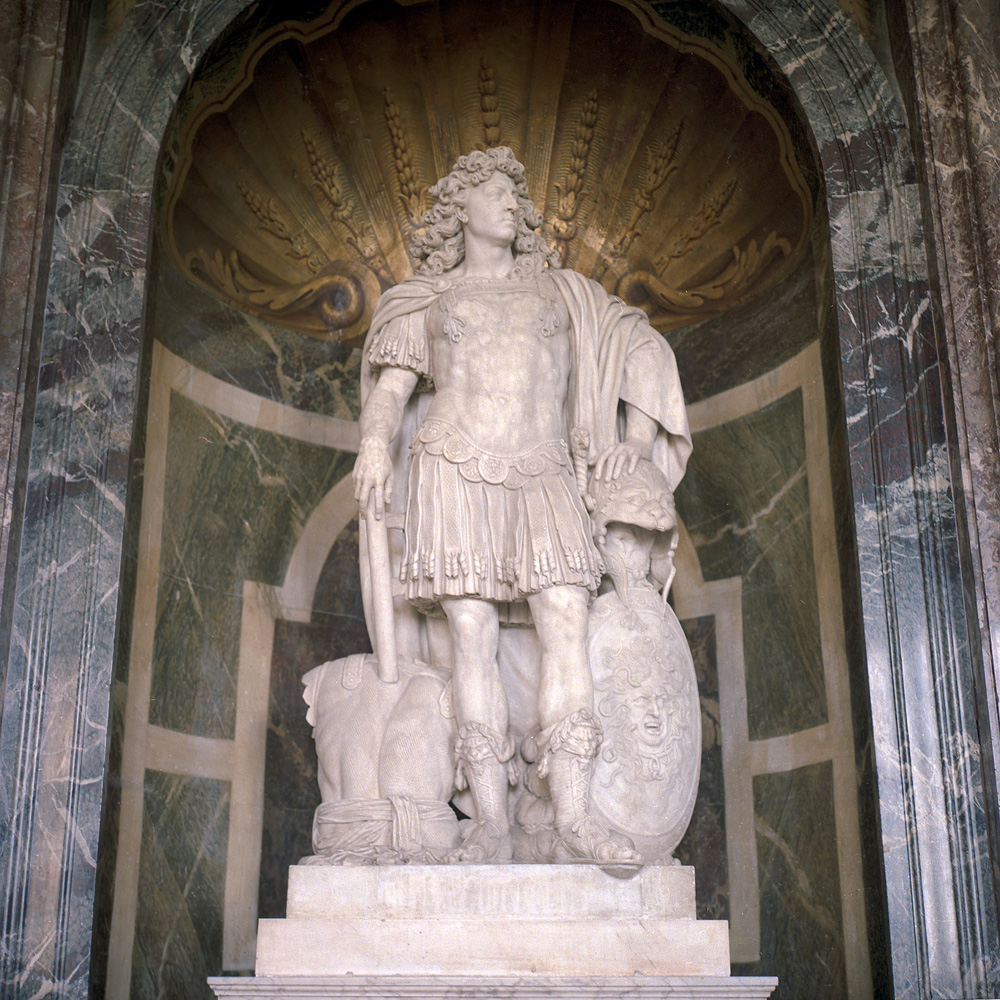
Here is Louis XIV as Mars, the God of War.
Louis XIV as Mars, God of War
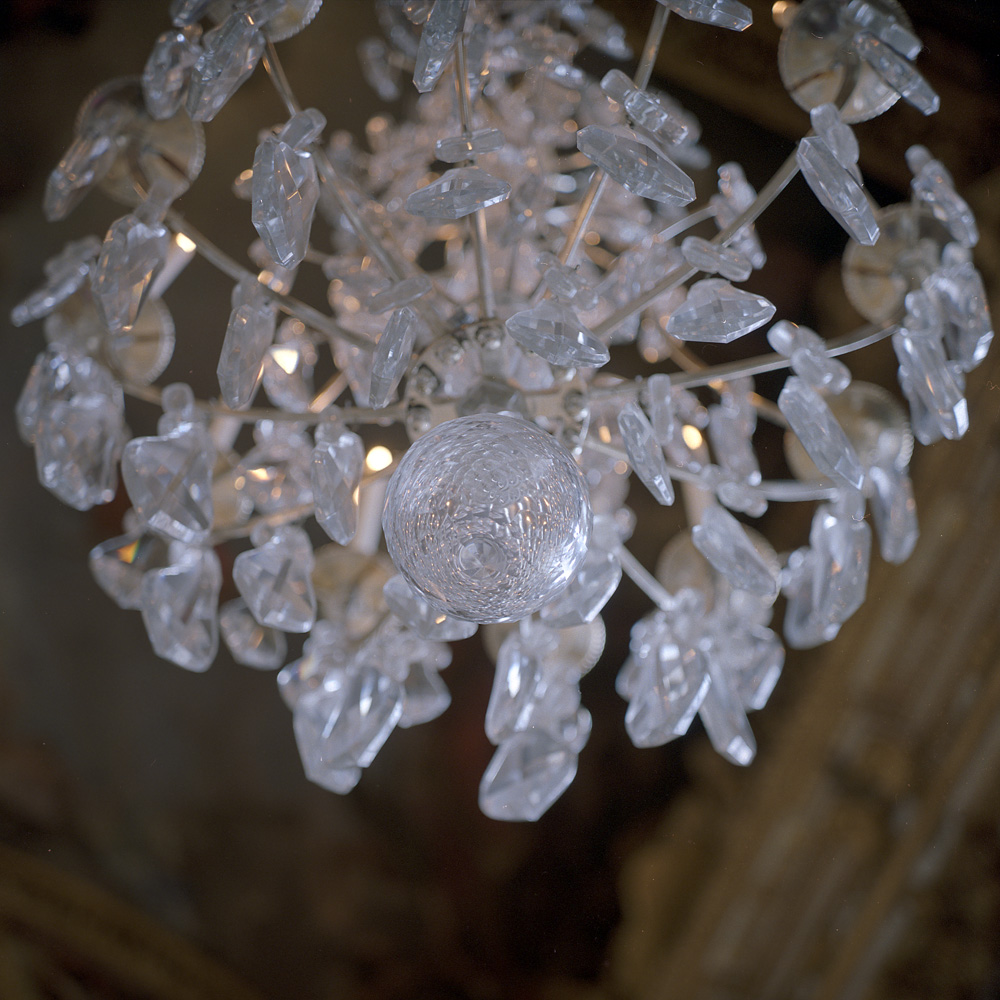
This is the one view of the Hall of Mirrors I was able to take. It’s an atypical view of the room, and as a result I’m particularly proud of it because it is representative without being cliche. Most people when viewing the room are paying attention to the mirrors and never look up, but half the brilliance of the room comes from the crystal chandeliers reflecting and amplifying the light.
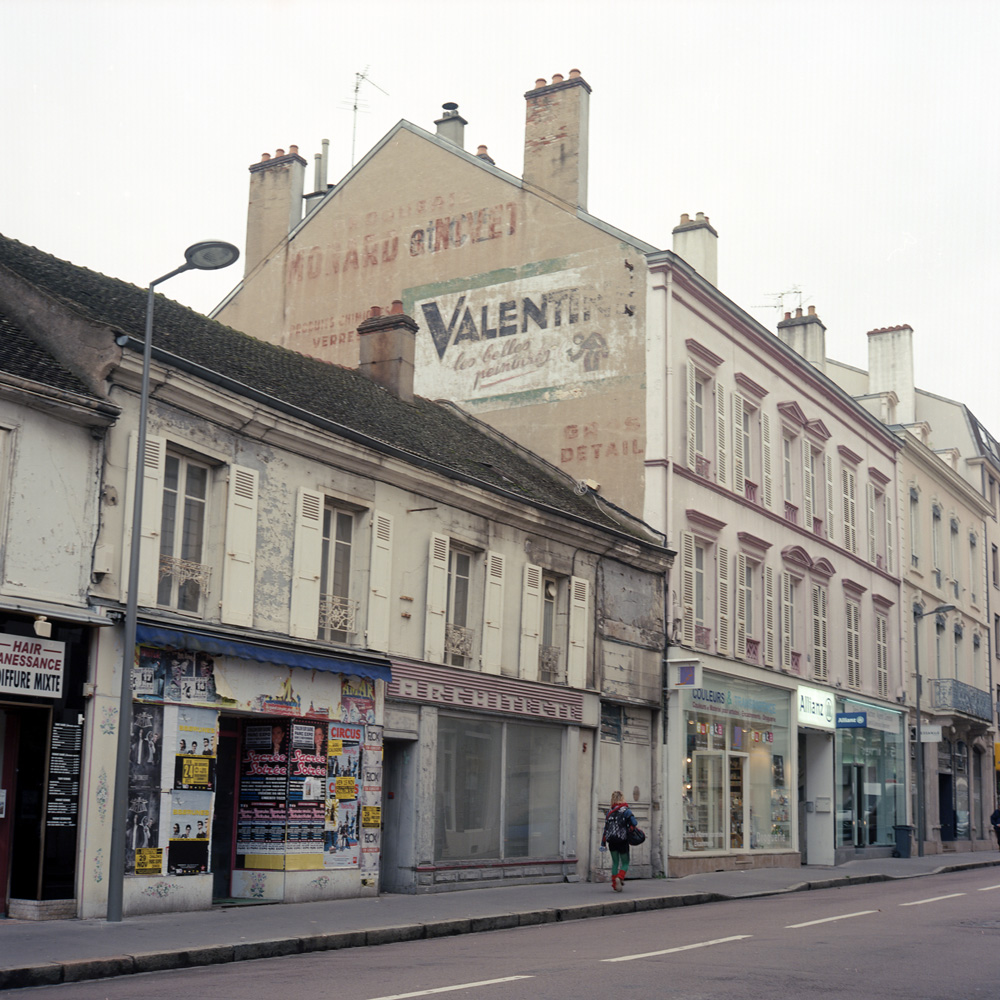
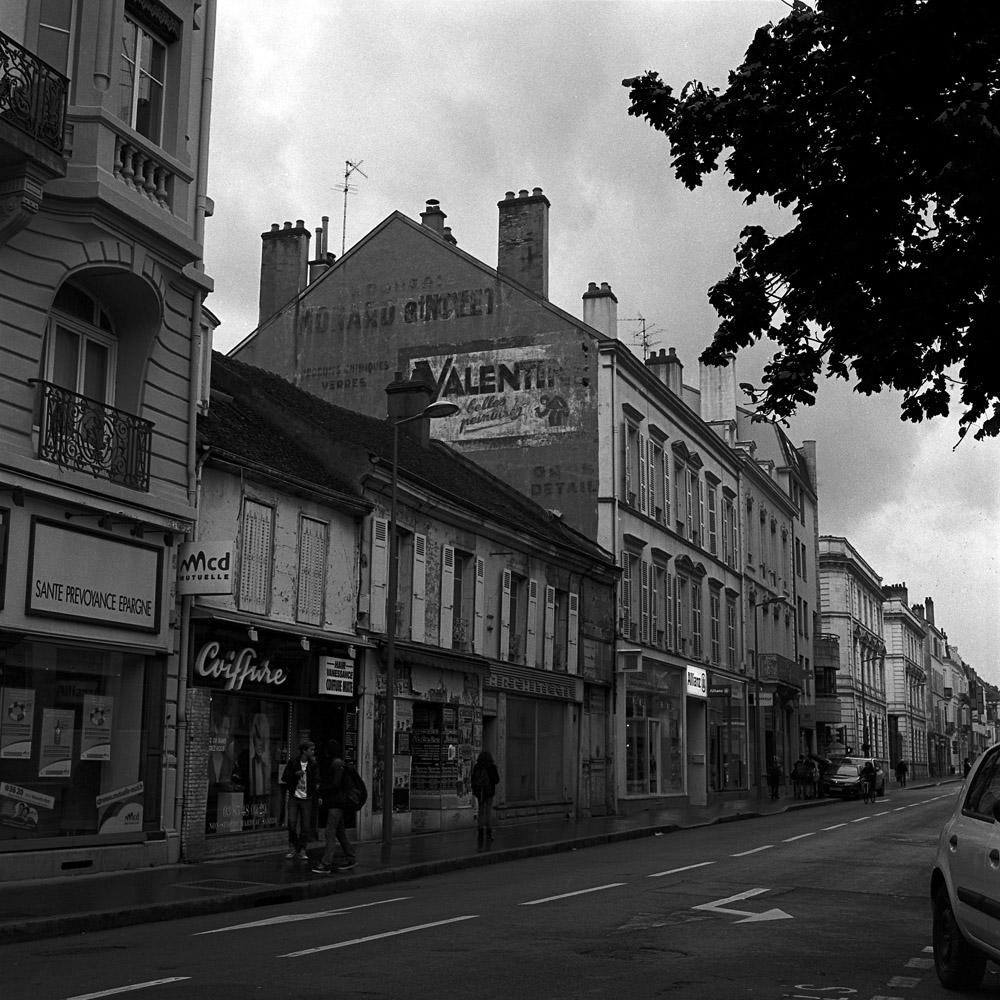
Here are some loose ends from my sojourn in Chalon-sur-Saone. You may remember the Valentin Paint ad in black-and-white – here it is in color.
Valentin Paint Ad, Chalon
The black-and-white version, as a refresher:
Old Advertisements, Chalon
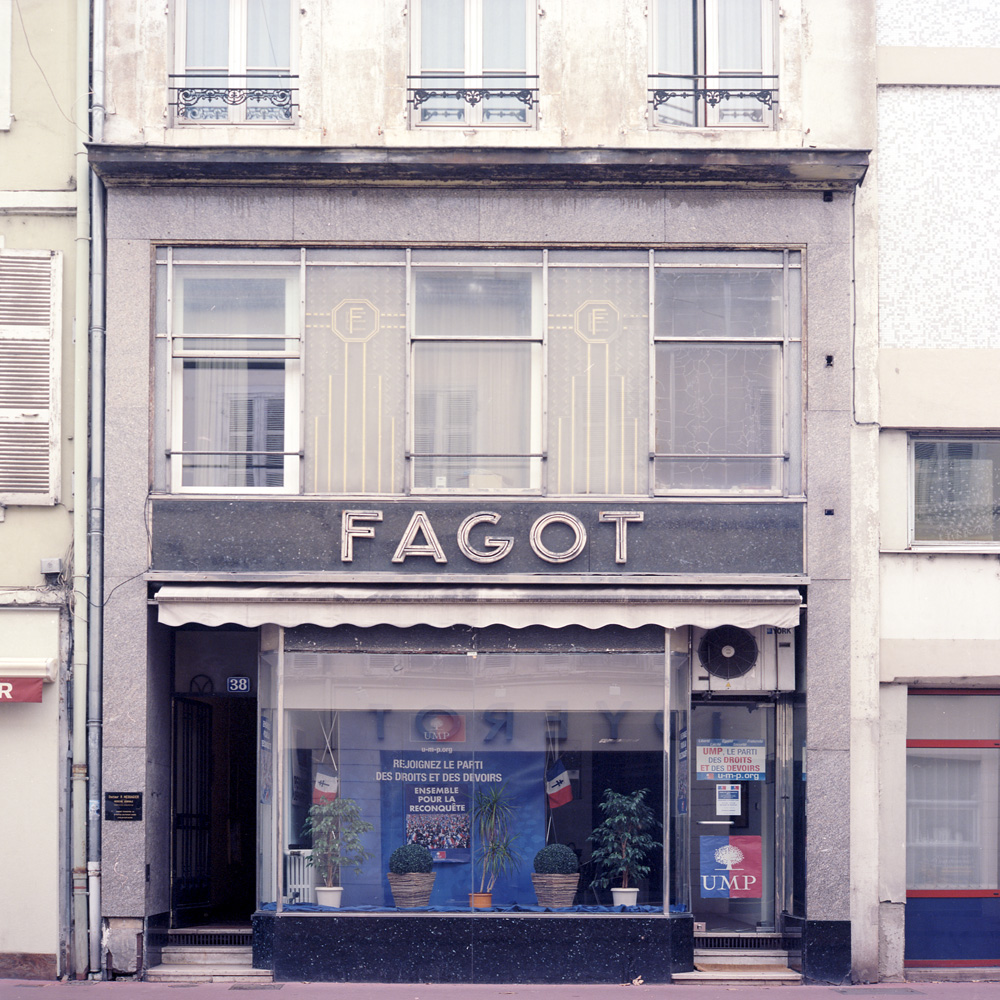
I couldn’t help but photograph this storefront for the combination of the beautiful if faded 1940s Art Deco facade and the psychologically jarring name. Fagot (pronounced Fah-GO) is a family name, not a slur aimed at someones sexual orientation. Today, instead of the original business that built the building, it is occupied by the offices of a political party.
Fagot Storefront, Chalon
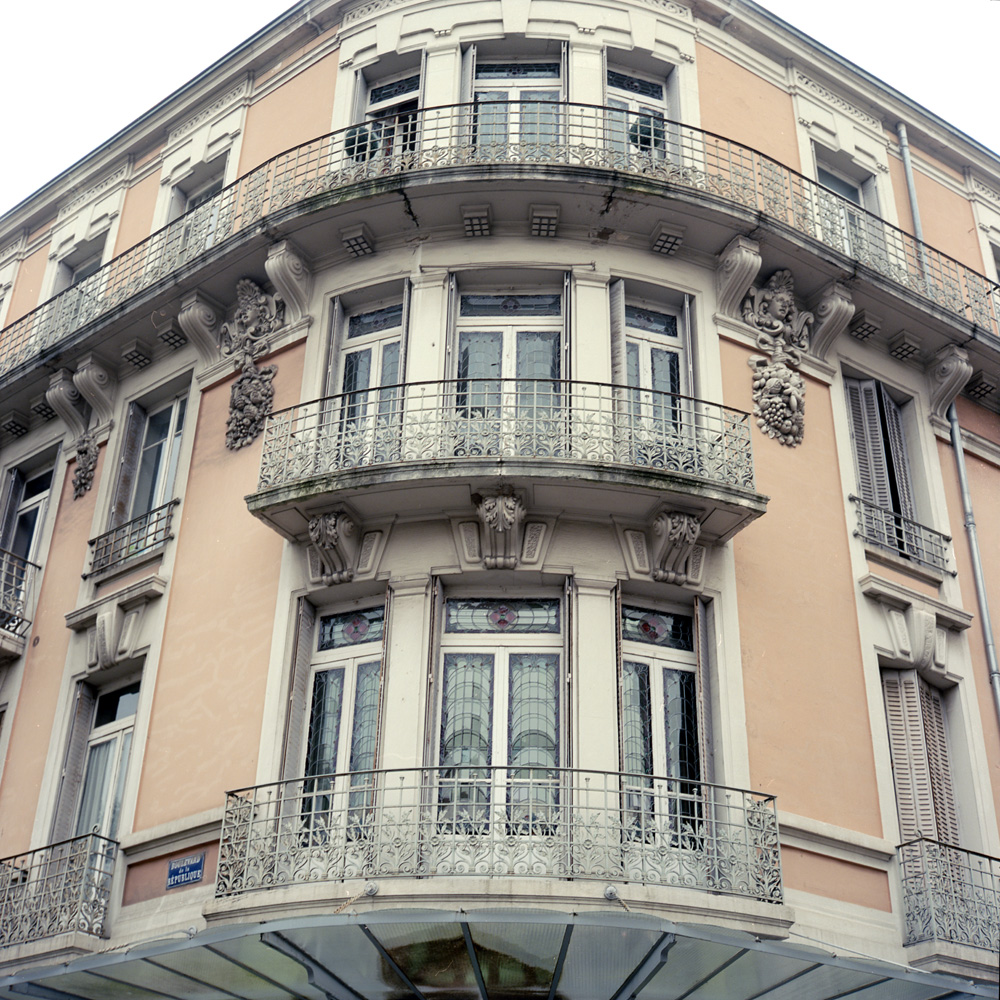
I’m a sucker for Art Nouveau and Art Deco architecture. So when I see a building like this, I have to photograph it.
Apartment Building, Boulevard de la Republique, Chalon
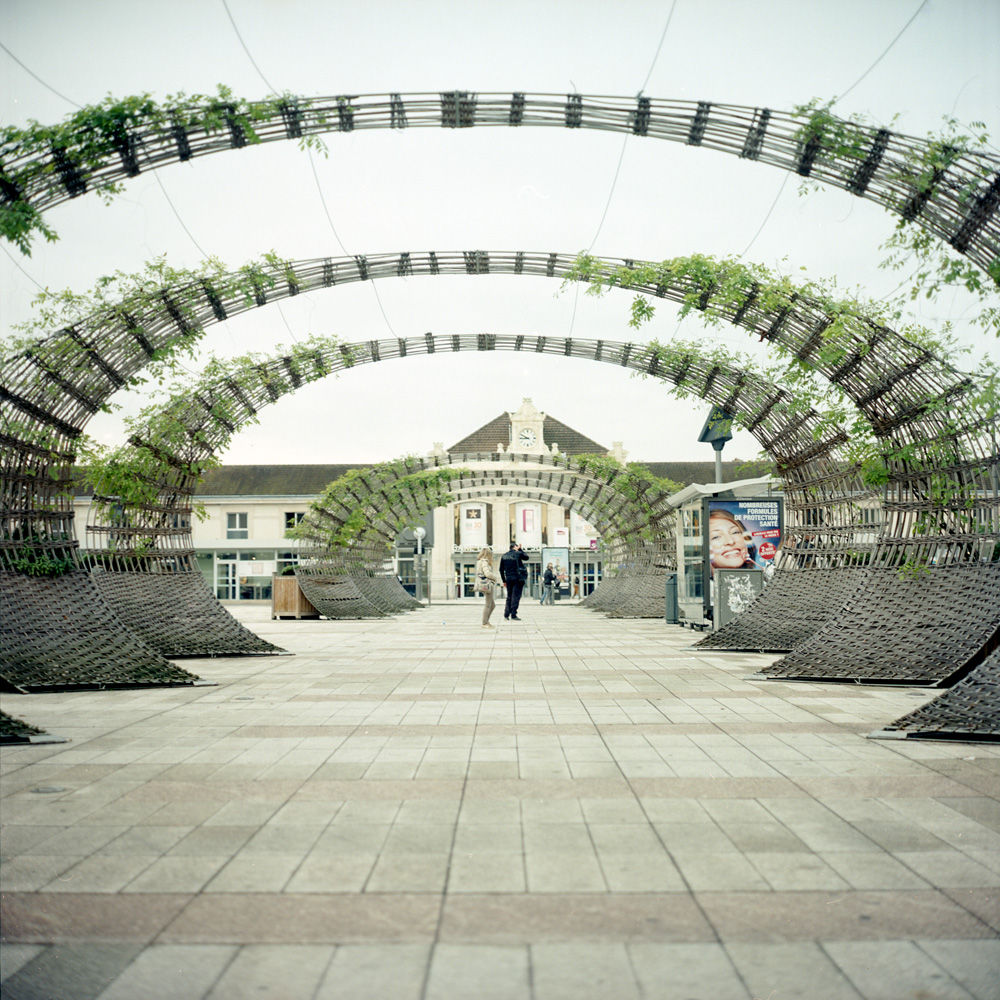
The first and last view you have of Chalon when traveling by rail is of this plaza with the modern arbors forming a tunnel to point you toward the center of town. To camera right is the St. Georges hotel, where I stayed, and to the left across the plaza is the english pub-style restaurant where I had the delicious breaded veal with the pasta the French don’t know quite what to do with. Behind is the Maitre Pierre restaurant you saw in my night photos from the hotel balcony.
 dcphotoartist