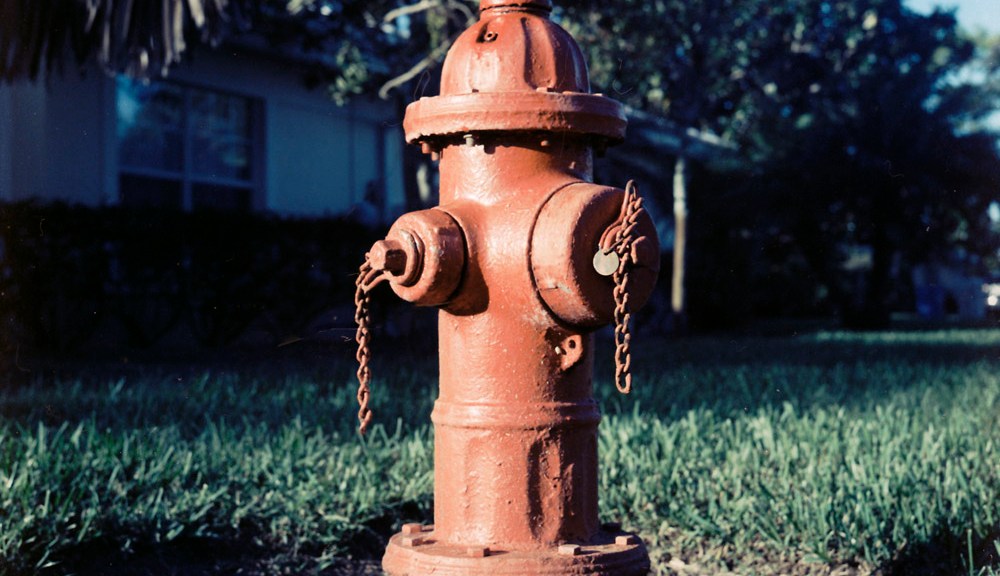
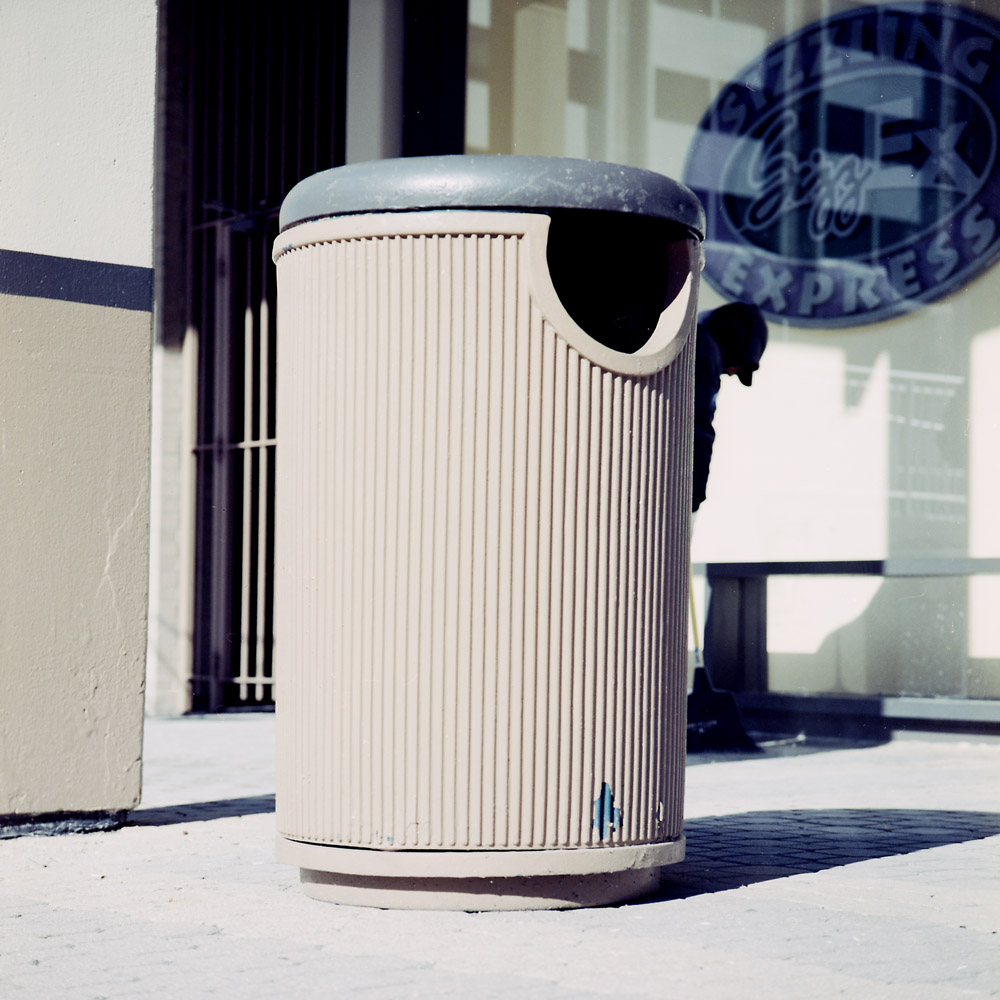
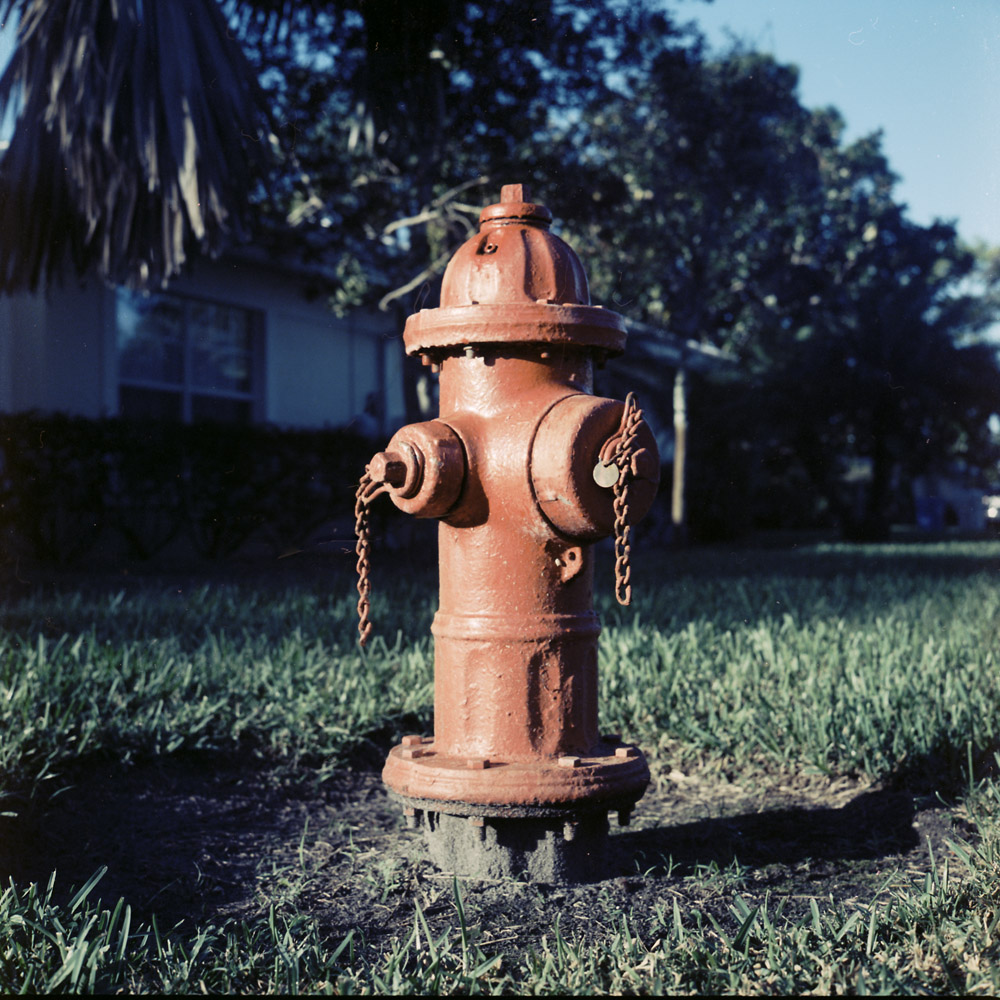
I’ve noticed that as the series continues, my style of shooting it has evolved, which is a good thing. The photos are becoming more consistent, especially in terms of composition. The camera is placed on a level with the object, which usually means much lower than eye or even sometimes waist level, and more frontally square to the object.
Fire Hydrant, Vero Beach
The hydrant is in a suburban Florida cul-de-sac where the tallest things around it are date palms, and they’re not massed together to form a giant wall, so the lighting is direct sun, not a diffused sky. I’ve been looking at it and trying to decide how well it fits the series – I think it does on the subject matter and the compositional level, but until I shoot more objects in suburban or rural environments it feels weird because the background isn’t walls or windows or passing traffic, but grass and trees.
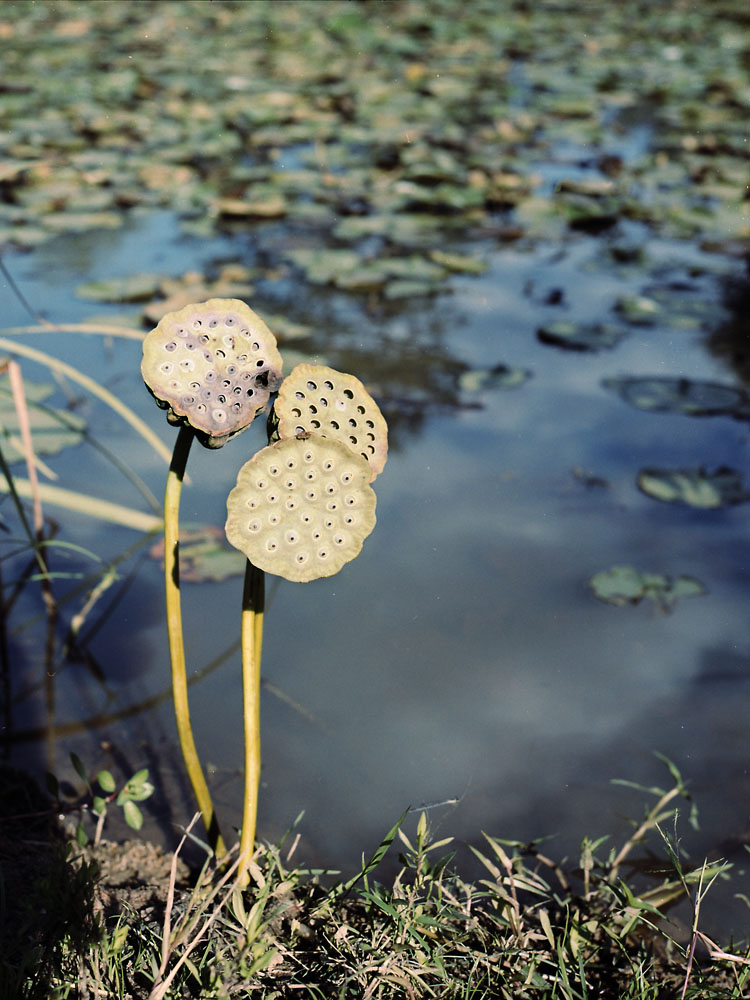
This trio of Lotus seed pods might look a little odd to those in the know- they’re not exactly in their native habitat. I was wandering the trails at Kenilworth, saw these three had fallen while still full of seeds, and picked them up to make a still-life. I re-planted them in the muddy bank of a lily pond to create this grouping.
Lotus Pod Trio
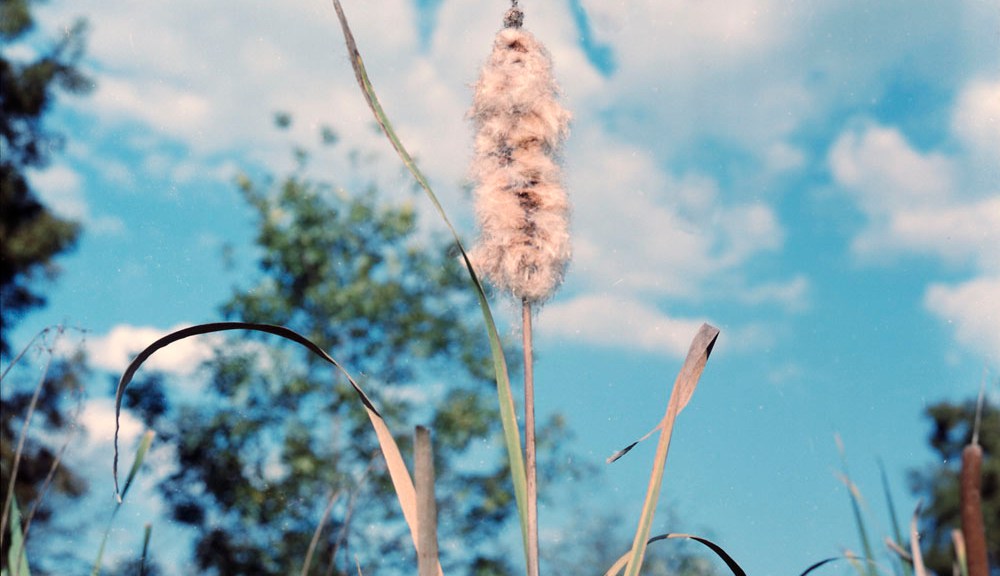
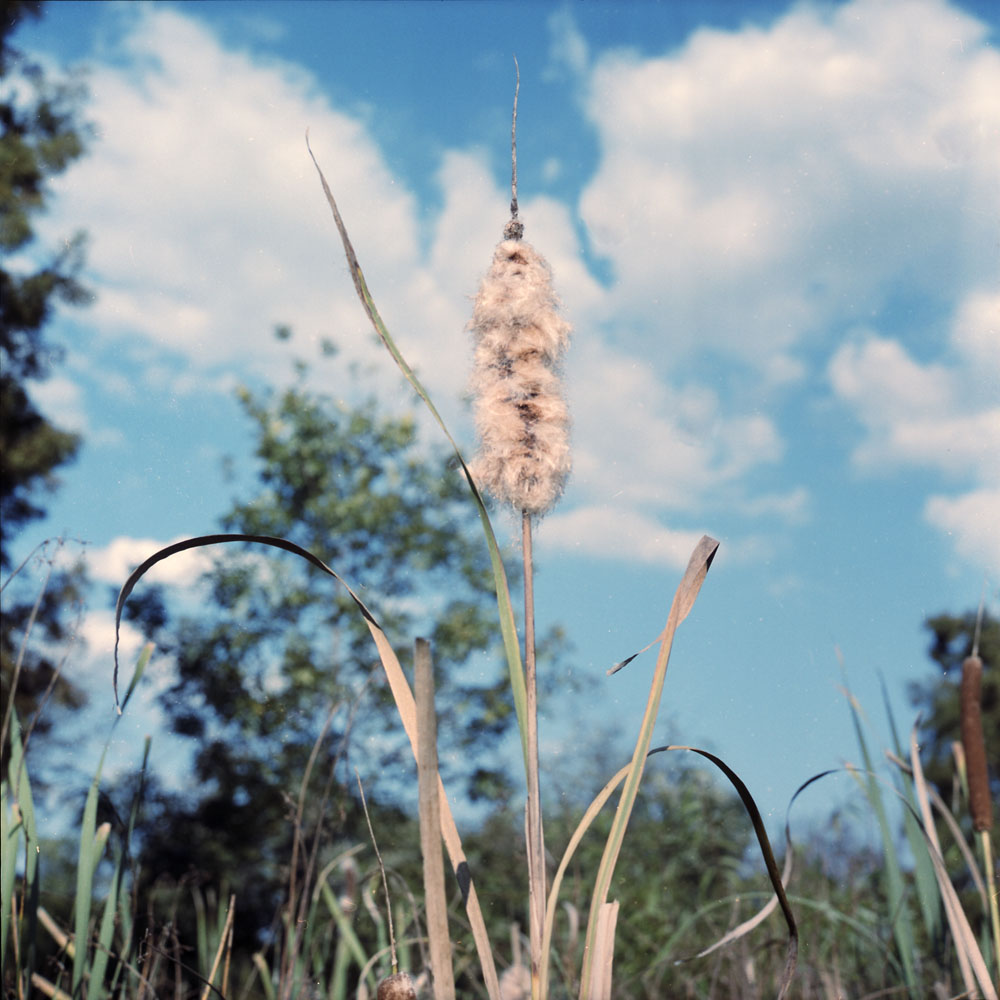
This cat-o-nine-tails at full fluff presented itself to me at the edge of another one of the ponds.
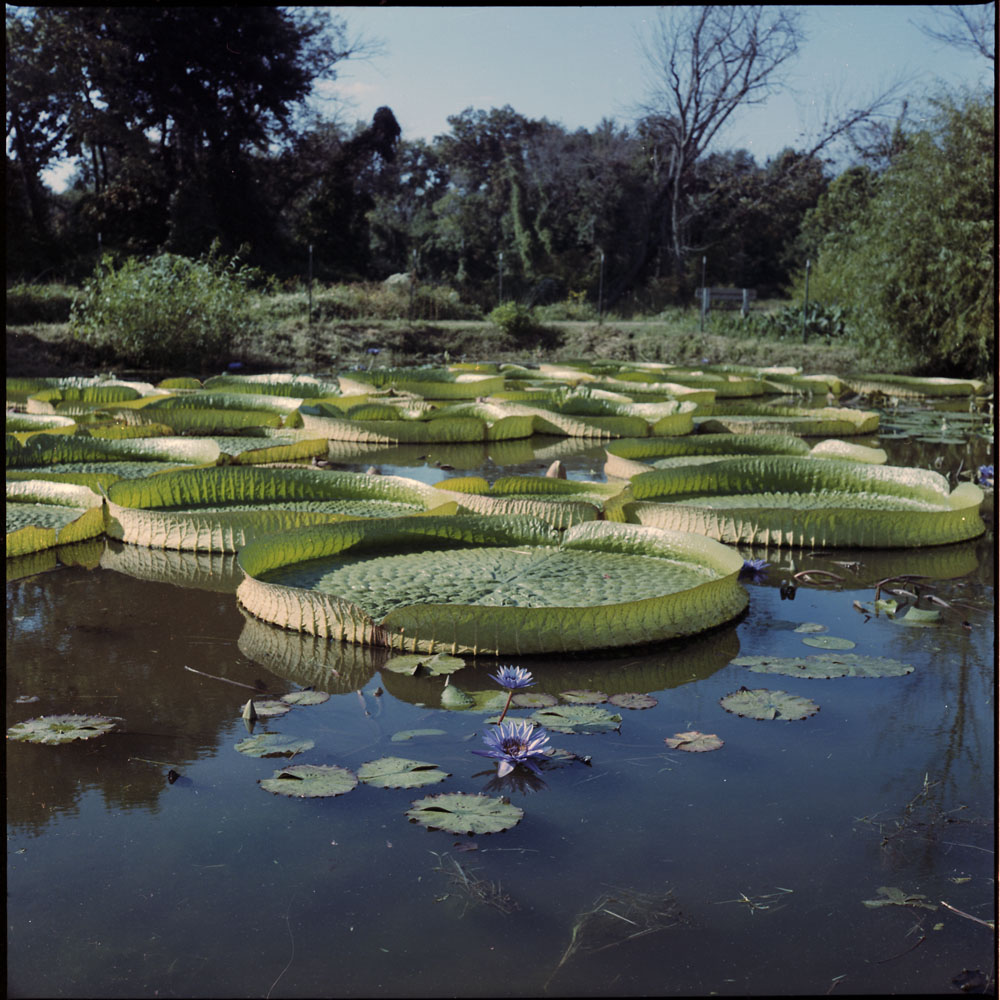
I finally got around to scanning and uploading these shots from Kenilworth Aquatic Gardens I took back in the waning days of summer. Now’s the perfect time to bring them out as it’s descending into freezing temperatures here, as a reminder of the golden light and radiant heat that we love to complain about while we’re in the middle of it, but deeply miss when it’s gone.
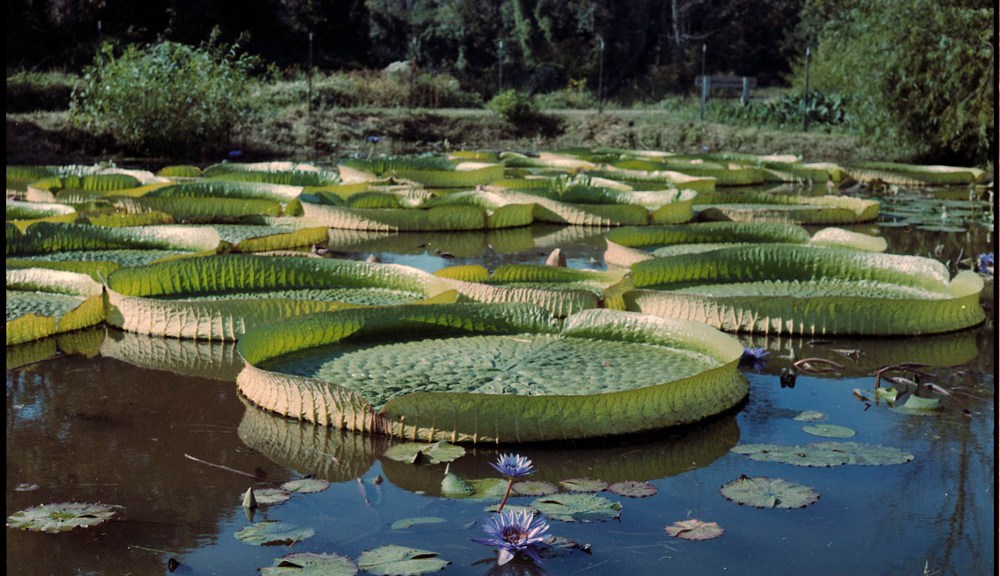
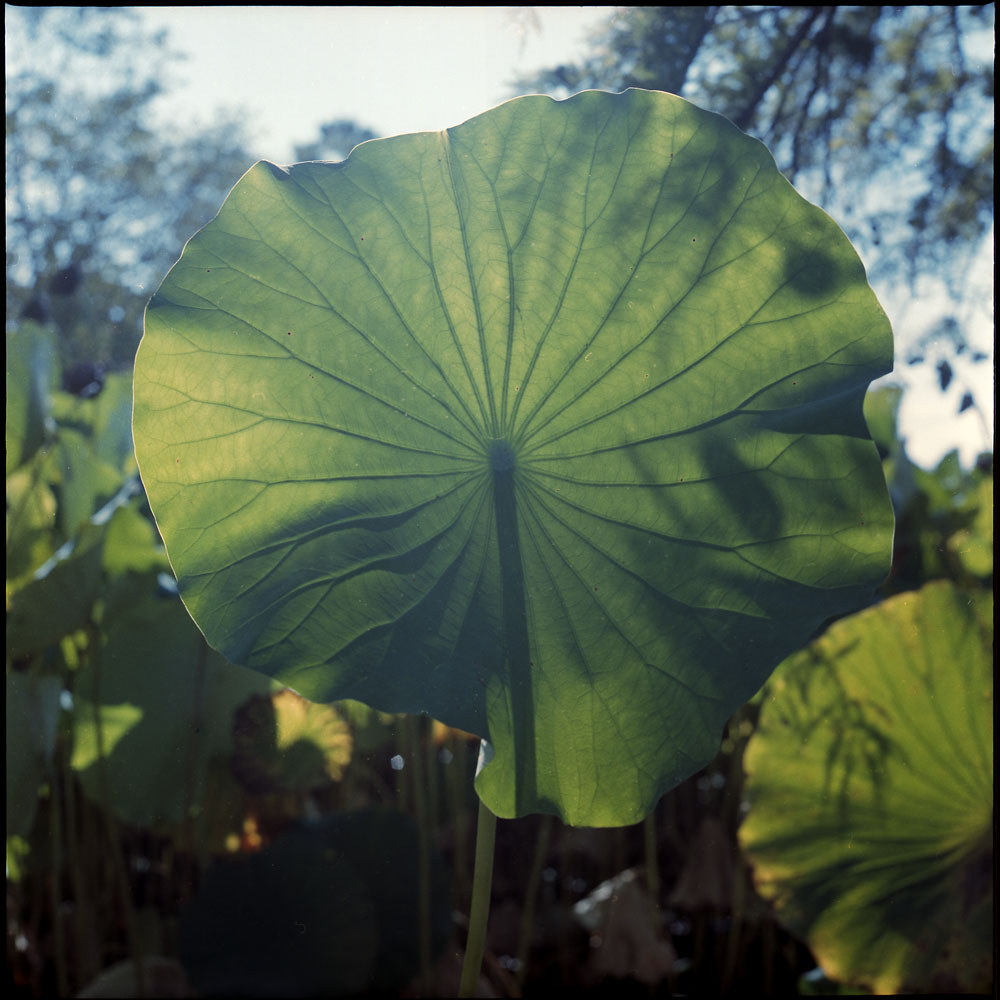
Lotus LeafAfrican Lilies
If you’ve been reading my blog for any length of time, you’ve seen me post other photos (and the odd video!) from Kenilworth. If you’re at all a fan of aquatic plants, Kenilworth is well worth the visit, as they have acres of lily ponds, lotus plants, cat-o-nine-tails and other species that grow in wet and marshy environments. In addition to the flowering plants, Kenilworth is a great place to go for wildlife – everything from dragonflies to frogs to turtles to herons and even supposedly a beaver family can be found there. And the amazing thing is that it’s not only in the middle of a city, but in the middle of a rough part of the city. Enter the gardens and you think you’re in some vast national park riverine oasis, not three miles as the crow flies from the United States Capitol building.
As you may well know if you’ve followed my blog for some length of time, I like taking portraits of ordinary objects- things we see in daily life and ignore and/or take for granted, like pay phones, water fountains, traffic cones, and trash cans. I’ve photographed them in Paris, Toronto, New York, Washington DC and now Rome and Florence. They all have a common denominator of their base functionality. I think though that the Italian ones seem to have just a bit more flair and style to them – take a look and see what you think.
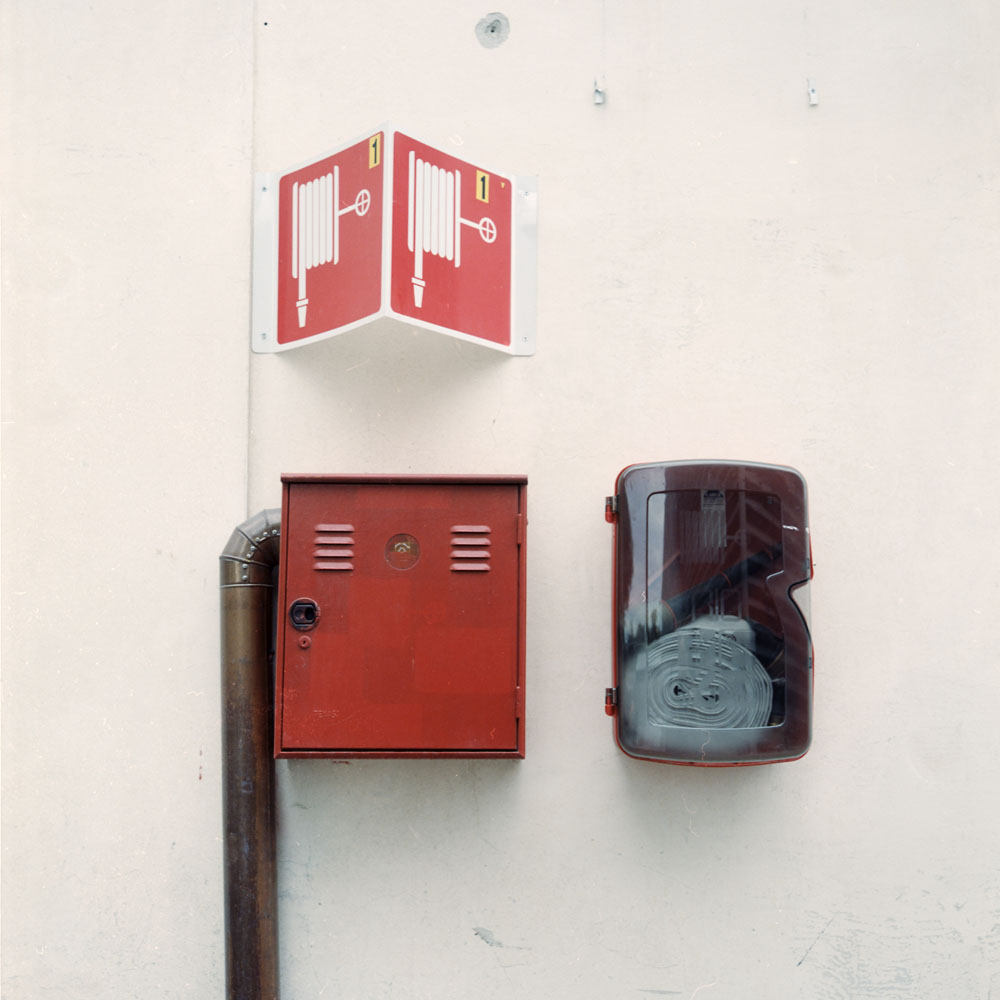
This fire hose connector is probably the newest thing I’ve photographed in this series – the copper connecting pipe has only just begun to oxidize!
Fire Hose Connector
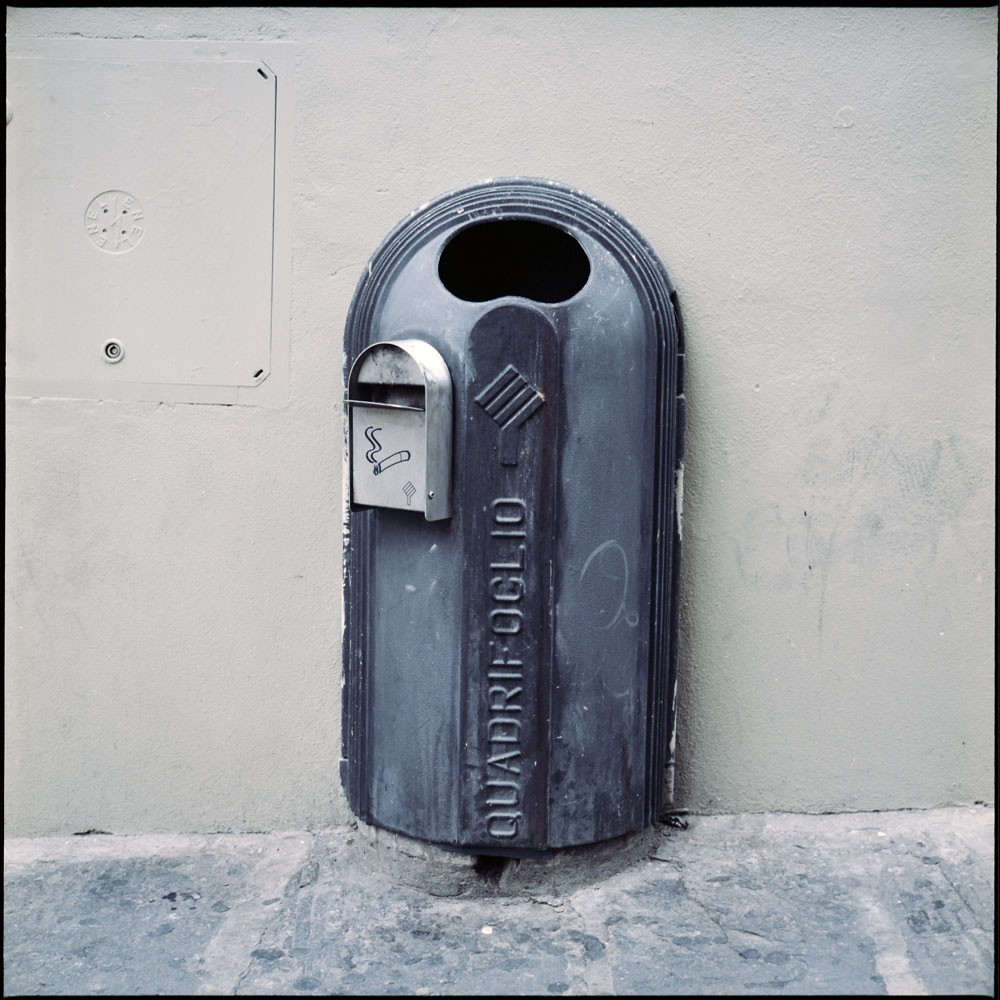
In contrast, this trash can in Florence with cigarette butt receptacle is quite well-used, but still has style.
Quadrifoglio Trash Can, Florence
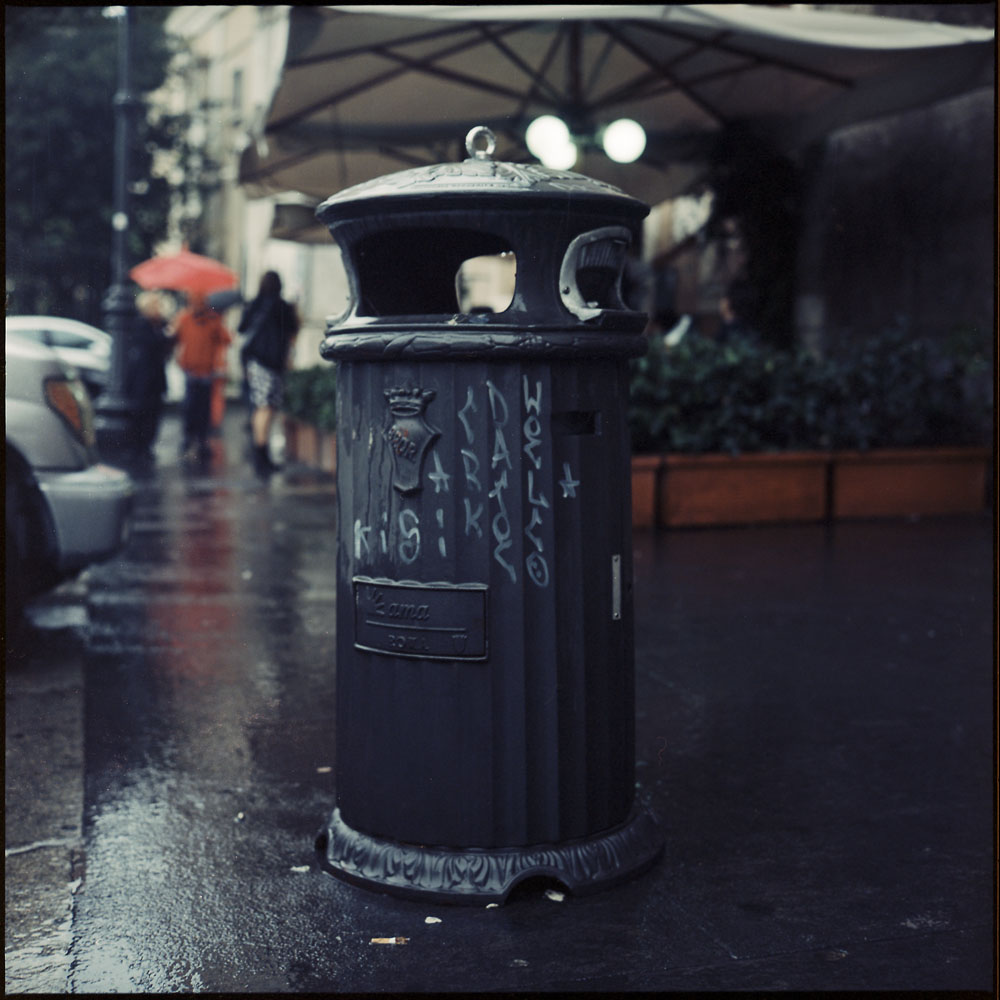
… as does this Roman bin across from the Capitoline hill.
Trashcan in the rain, Rome
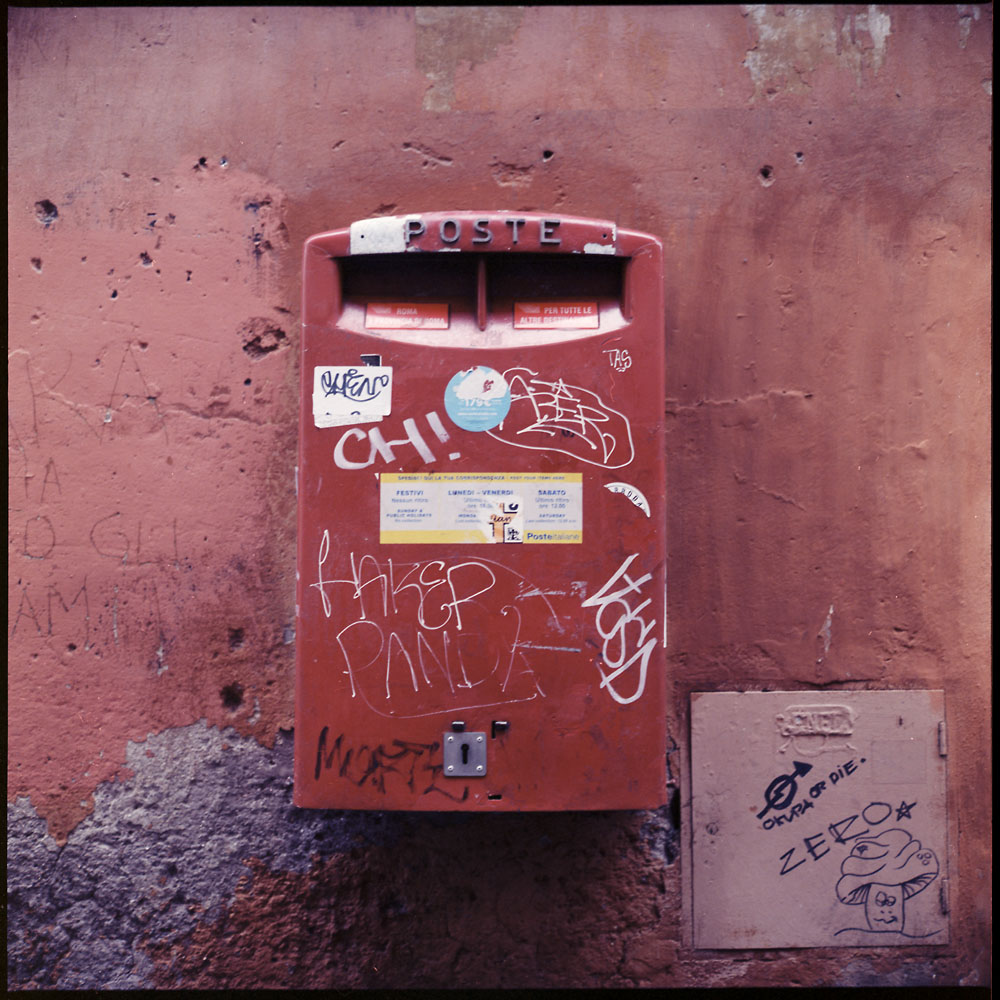
The poor mailbox in Trastevere has been graffiti’d and stickered and it still soldiers on.
Mailbox, Trastevere, Rome
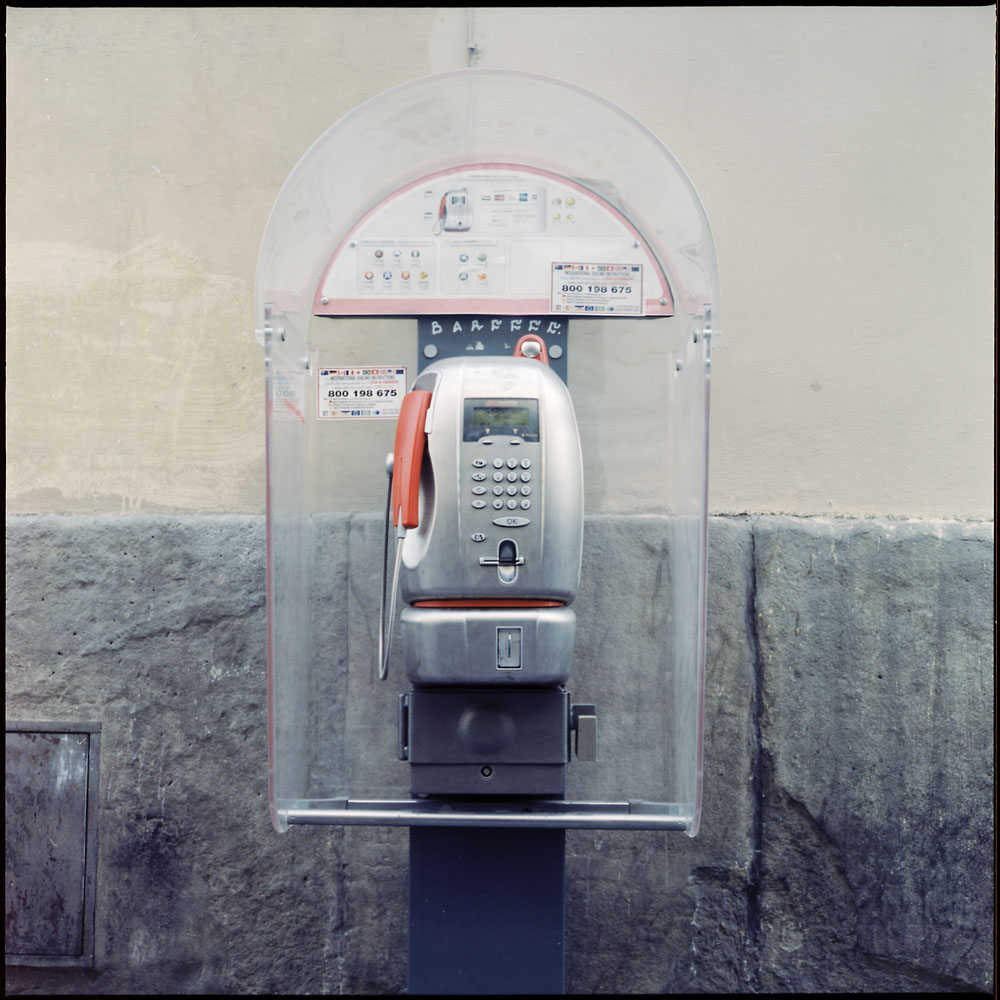
Don’t you wish all payphones were this glamorous (and as easy to find)? Here in DC when I went to find a payphone to photograph, it took me several days of looking before I ran into one. I saw this one on my first day in Florence.
Payphone, Florence
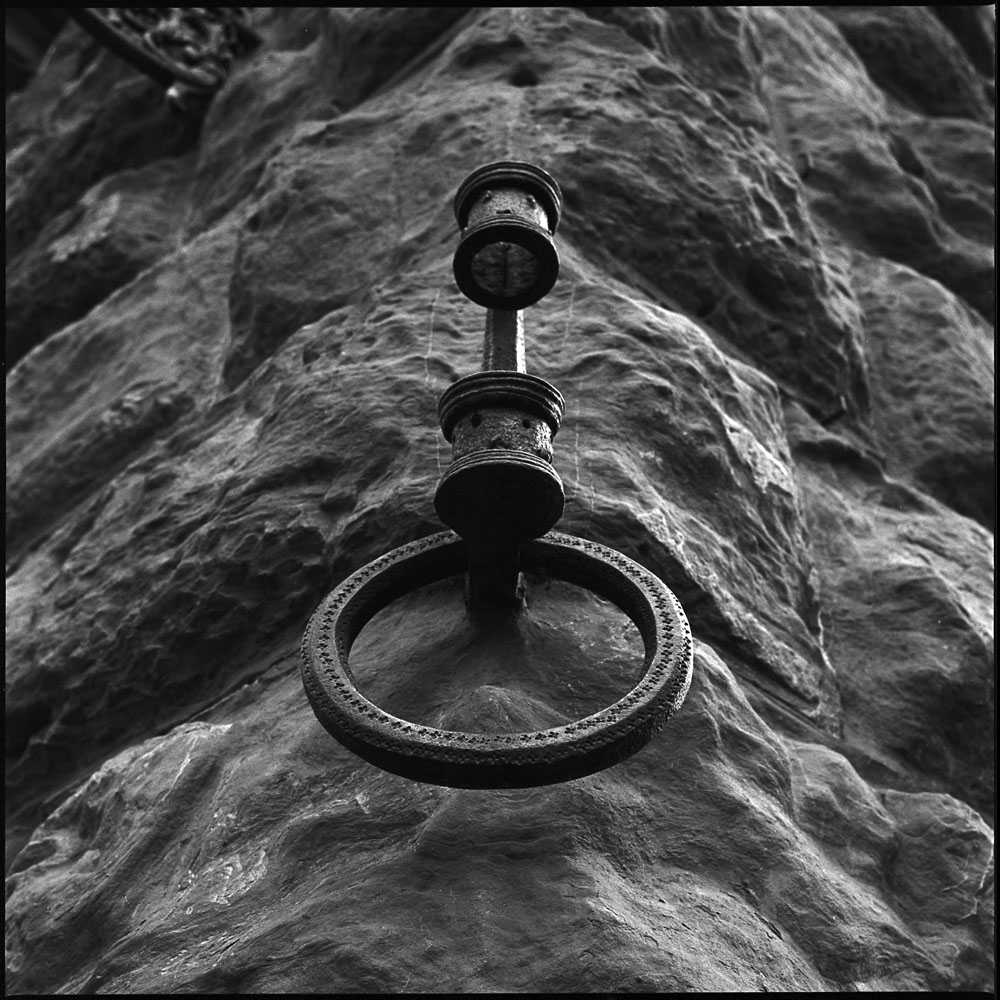
I’ll include this because it has a very utilitarian purpose – it’s a street lamp. Granted, a 15th century street lamp attached to a palace, but a street lamp nonetheless.
Torch Holder, Palazzo Medici-Riccardi
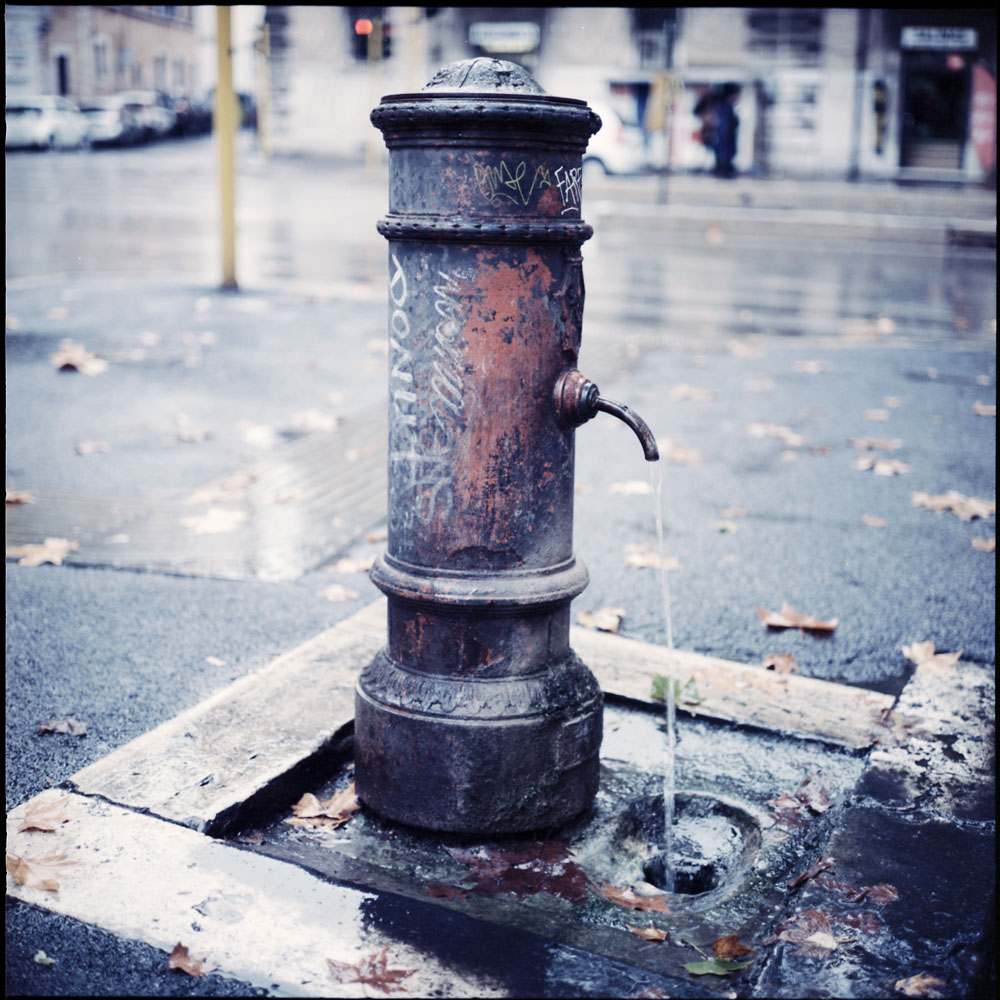
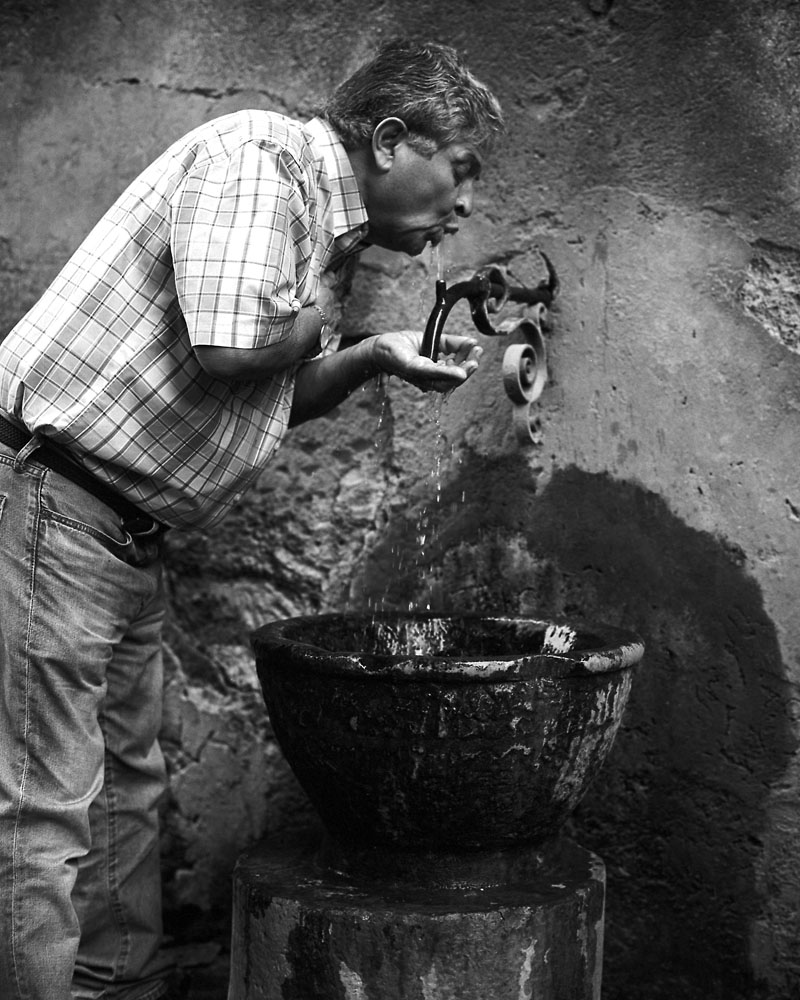
A public drinking fountain. These were ubiquitous across Rome, in very much the same form, some in better and some in worse condition. But they worked, and the water was sweet and clean, always flowing, and free.
Water Fountain, Trastevere, Rome
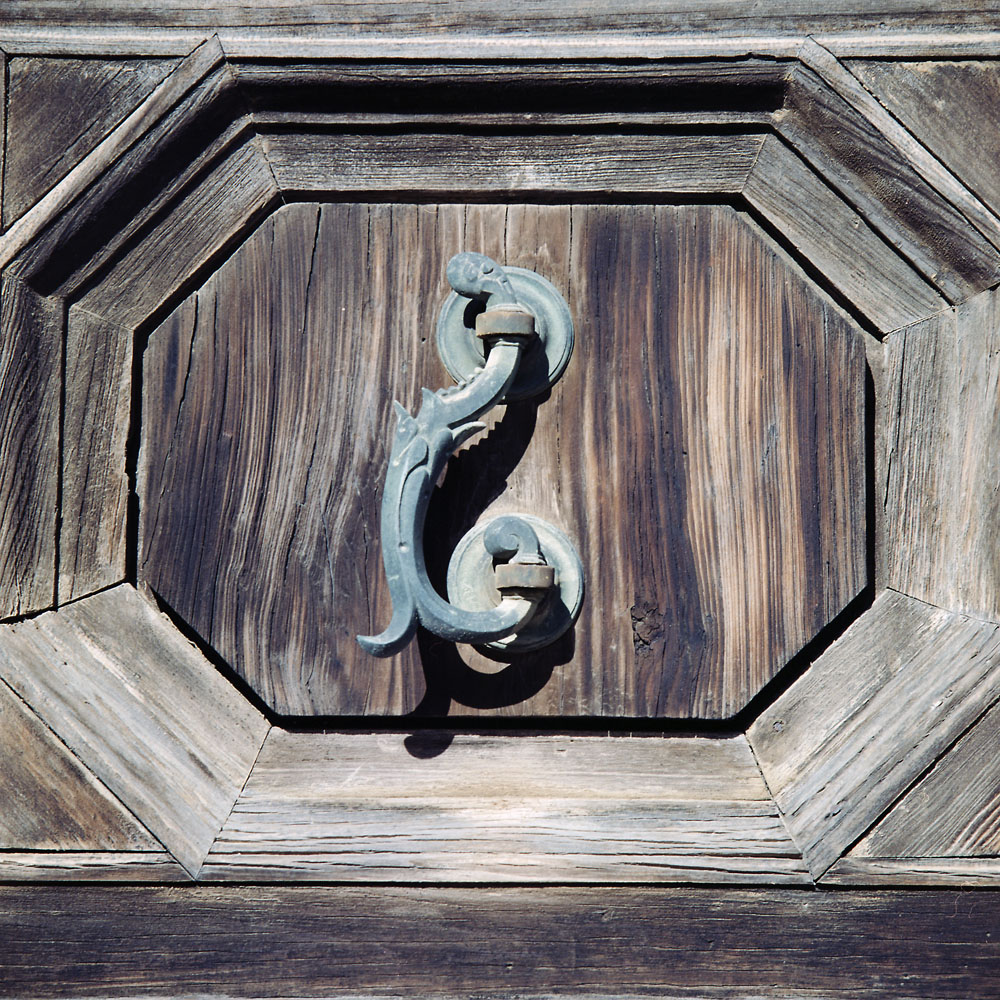
A lowly door handle – this one in particular is attached to a palace, but there were plenty to be found of similar quality on middle-class residences in both Rome and Florence.
Door Handle, Boboli Gardens
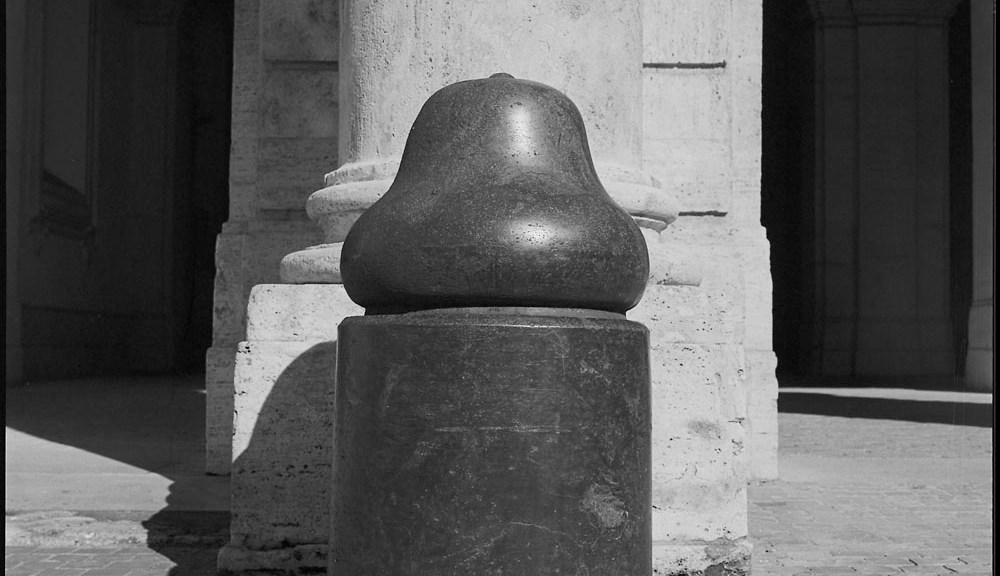
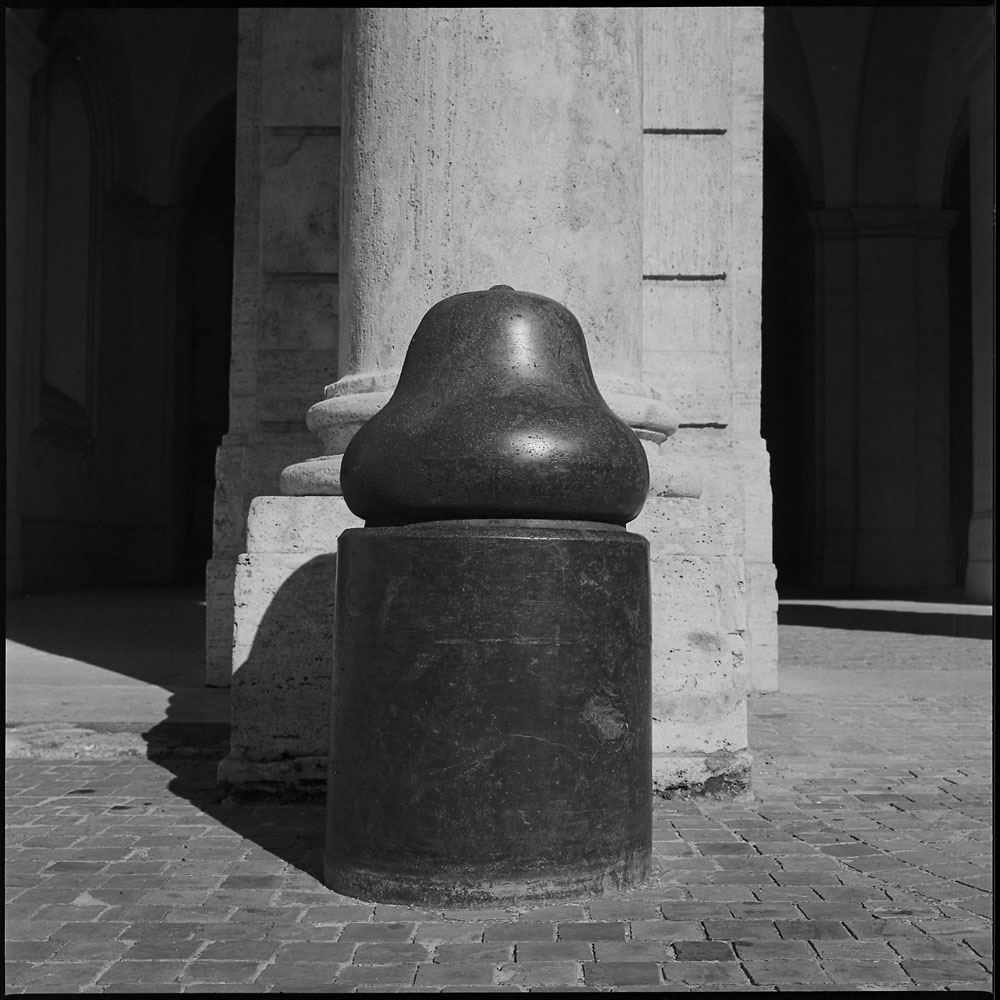
And last but not least, a traffic cone. Well, in this case, a red granite bollard some four feet high and three-ish in diameter, in the entrance courtyard to the Palazzo Barberini.
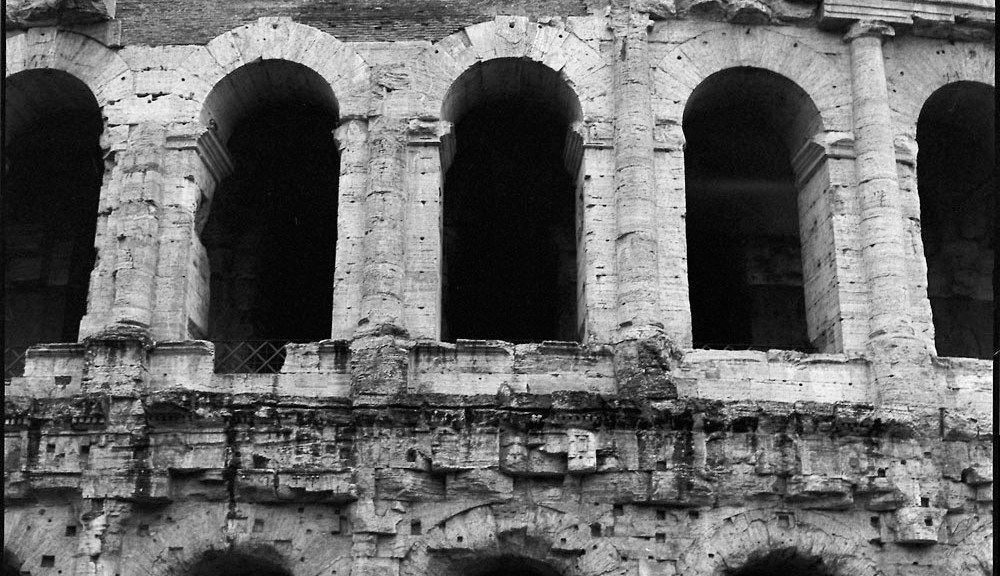
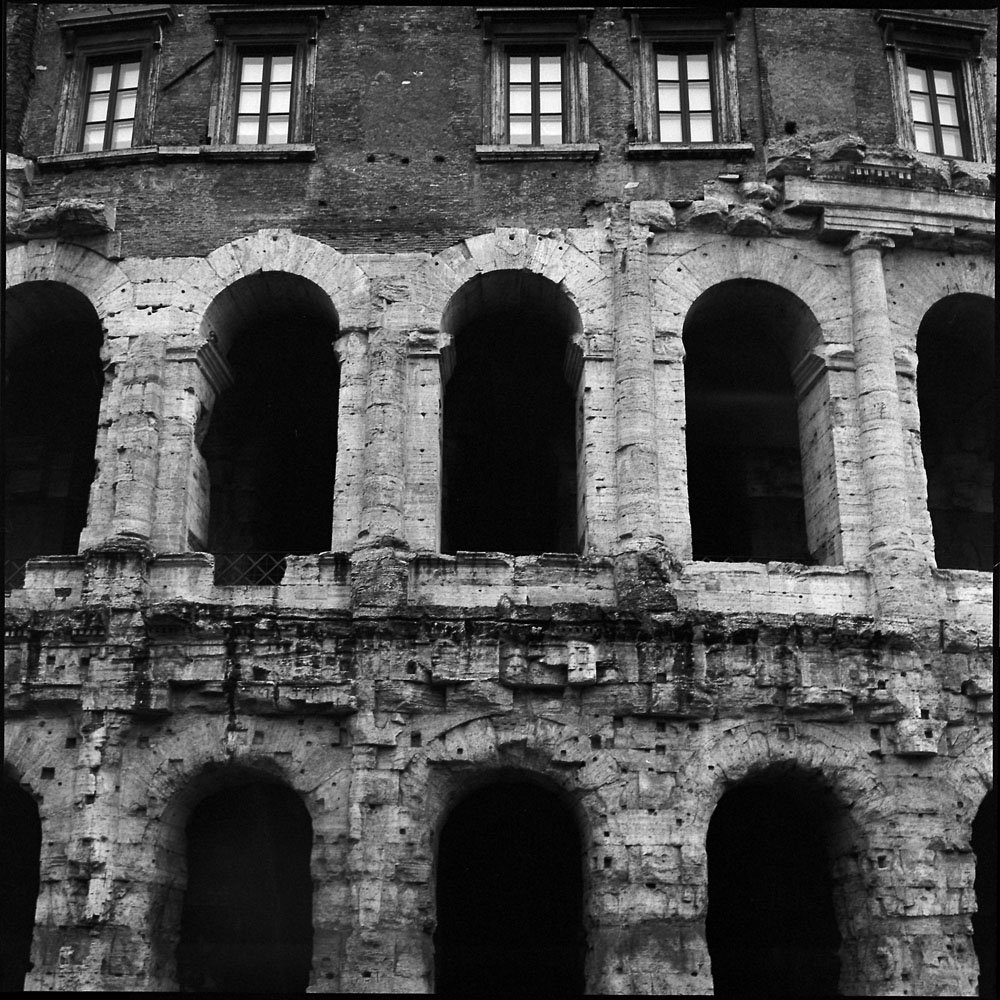
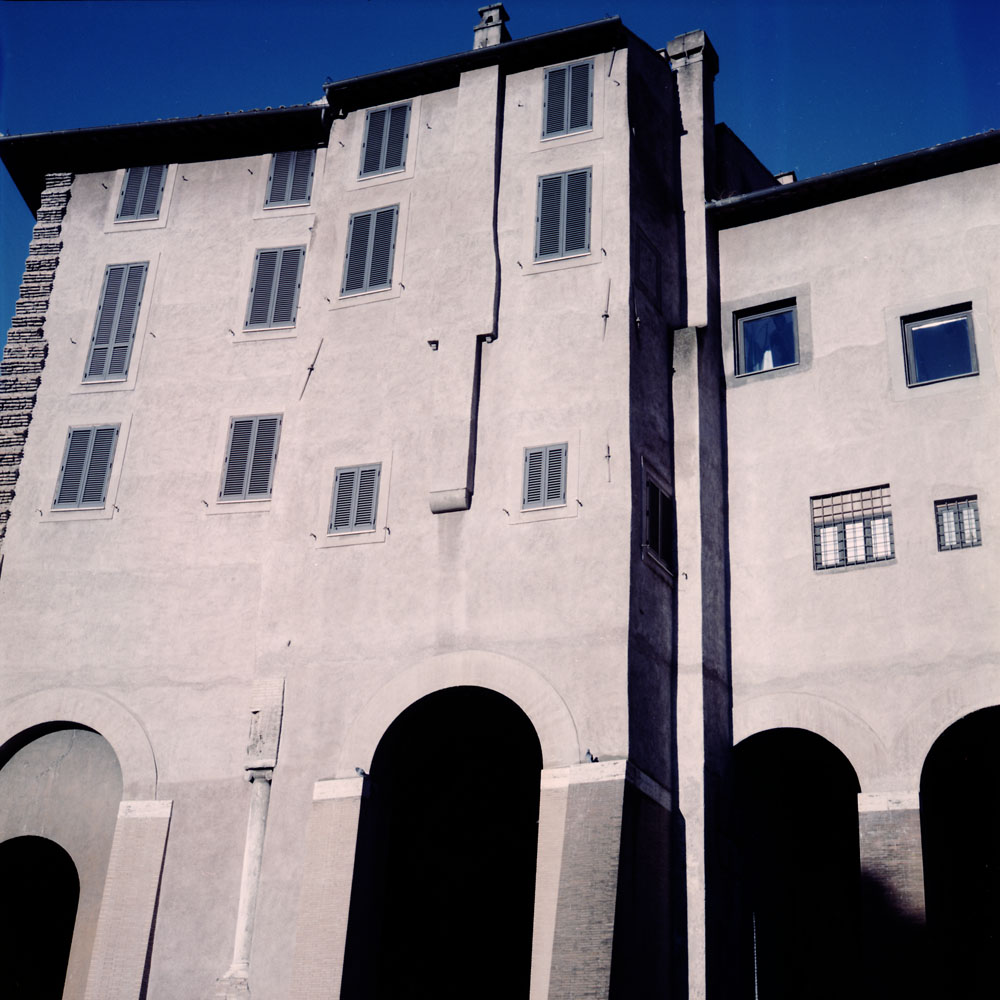
Today, the remains of the Theater of Marcellus are visible beneath the fortified palazzo on top. At the time of its construction in 11 BC, it could hold 14,000 spectators. If the structural design looks familiar, it’s because it inspired the design of the Colosseum some 60 years later.
In the 1300s it was acquired by the Fabii family who turned it into a fortress. Later the Orsini family acquired it in the 16th century and hired an architect to convert it into a palazzo. The residential structure you see on the top three floors is that conversion. Today the palazzo has been divided up into multiple apartments. How cool would that be to live in a 16th century palace built on 1st century BC foundations?
Theater of Marcellus and ApartmentsApartments over the Theater of MarcellusArches, Theater of MarcellusApartments over the Theater of Marcellus
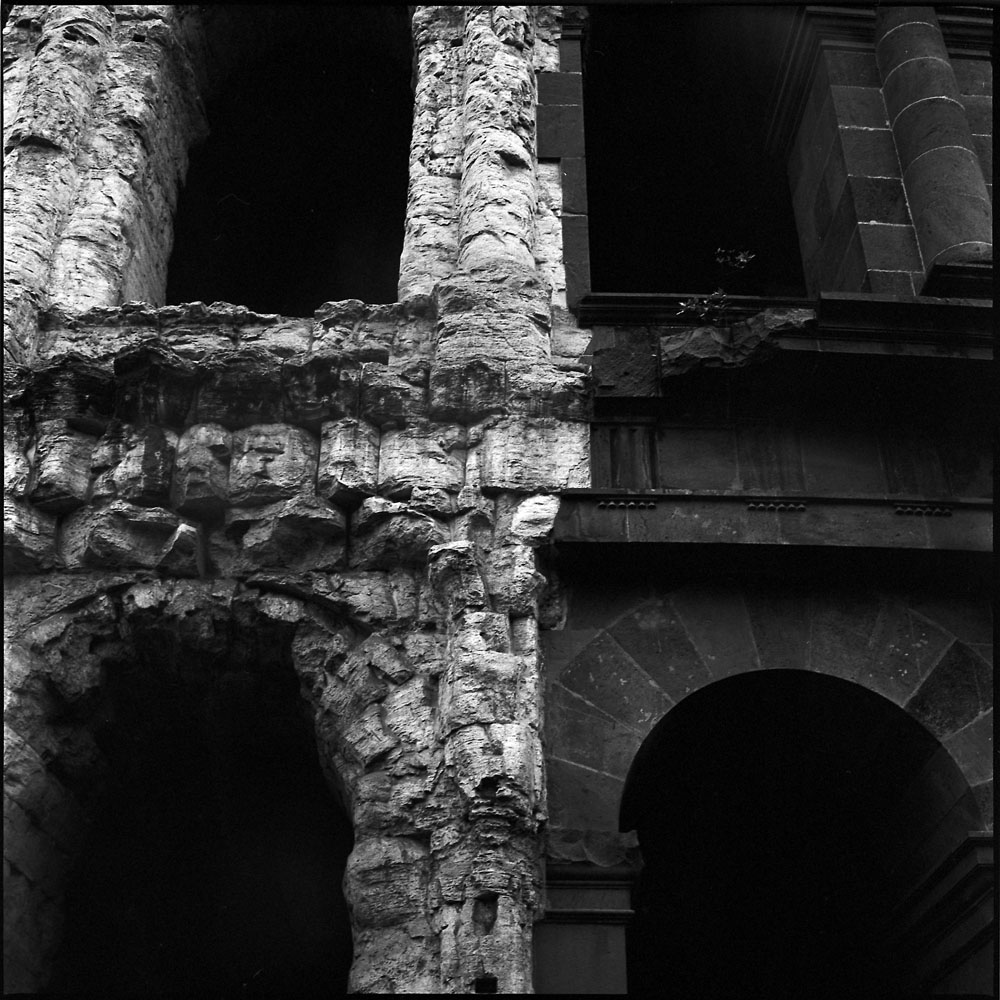
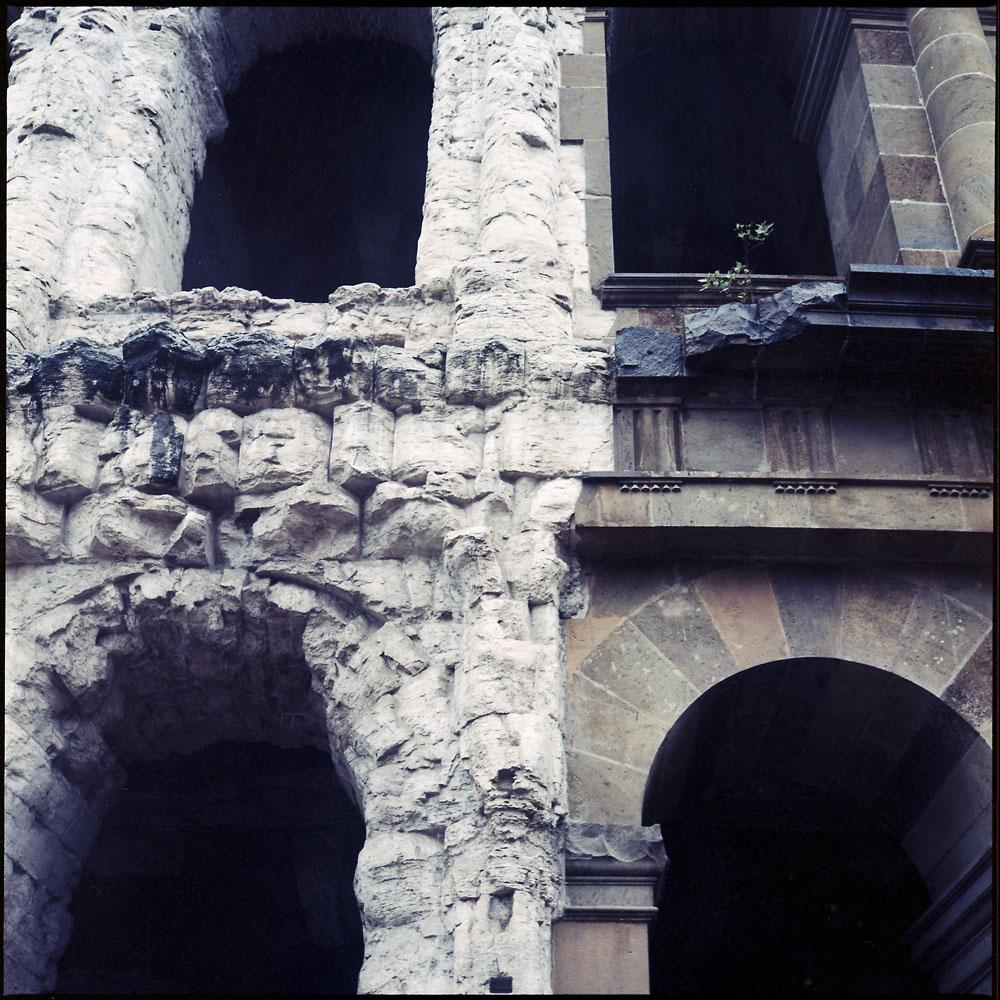
Under the heading of “who wears it better?” – Which works better, the black-and-white or the color?
Theater of Marcellus, Detail, Black-and-WhiteTheater of Marcellus, Detail, Color
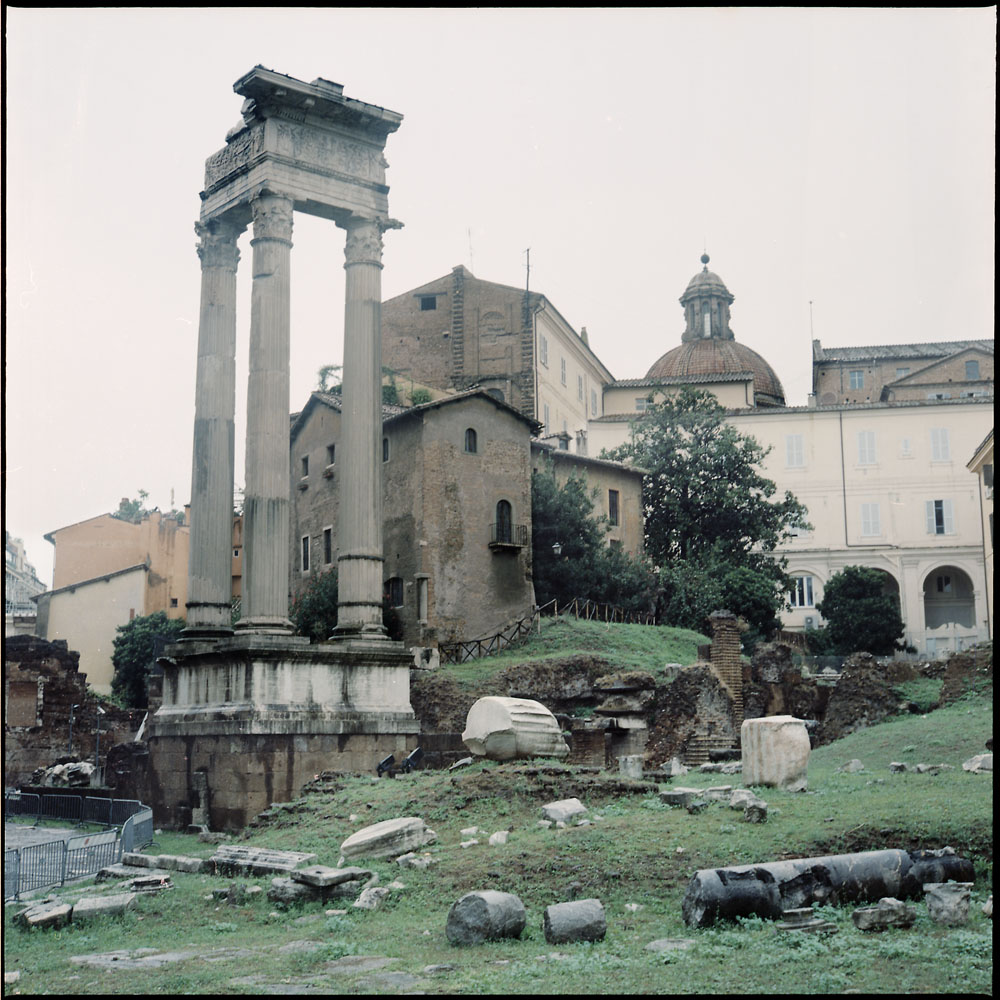
Immediately behind the theater is the ruins of the temple of Apollo Sosianus (so named for the man responsible for reconstructing it in the style we see today). There was a temple to Apollo on this site since the 5th century BC. It was originally outside the main city boundaries because it was a foreign cult, imported from Greece. It sits directly across the Roman street from the Theater of Marcellus. Because of the proximity to the city walls, the Senate chambers and the theater, many backroom political deals were struck in its chambers.
Temple of Apollo Sosiano
The three columns you see today were re-discovered and re-erected in the 1930s after the demolition of an apartment building to re-expose to view the Theater of Marcellus. The columns’ pieces were found in the arcades of the theater. While they have been placed on the pedestal and re-topped with their capitals and frieze, it is highly unlikely that they are in their actual original positions.
I spent almost half a day wandering around the Castel Sant’Angelo, poring over every vista, nook, cranny and fragmented rock. I was in photographic heaven. There’s everything inside it to point your lens at from Roman sculptures to fanciful brickwork to Renaissance paintings. The Castel Sant’Angelo is one of the most recognizable structures in Rome. The foundations of it date back over 2000 years to the reign of emperor Hadrian, who had it built as his mausoleum. In the Christian era, the proximity to St. Peter’s and the Vatican palace made it useful not only as a source of marble for construction of churches and apostolic palaces, but as a fortification. The drum-like structure was originally Hadrian’s tomb, and was covered in white marble. A succession of popes built on top of this, had walls with gun emplacements built around it, corridors cut through it, had palatial apartments added on top of it, and used Hadrian’s burial chamber as a dungeon for their most valuable/most hated prisoners. An elevated, sealed corridor with defensive structures runs atop a wall connecting the Vatican apartments to the Castel, enabling the pope to flee to the safety and security of the castle in times of siege. The castle has wells of its own and storage enough to keep its garrison provisioned for up to six months at a time.
This bastion overlooks the entrance gate of the castle that faces the Tiber river and the Angel bridge. Quite the fearsome looking structure, isn’t it?
Bastion, Castel Sant’Angelo
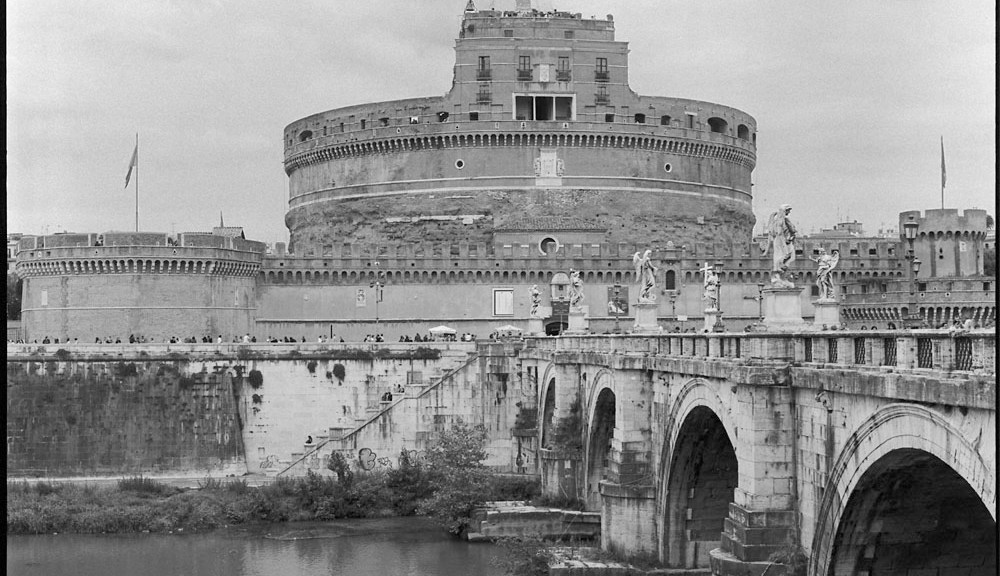
Here is perhaps the most famous view of the castle. The statues of angels were added to the bridge in the 16th and 17th centuries, but three of the five arches of the bridge are contemporary with the original construction of Hadrian’s mausoleum. So you’re crossing a 2000-year old span over the Tiber when you use the bridge.
Castel Sant’Angelo from across the Tiber
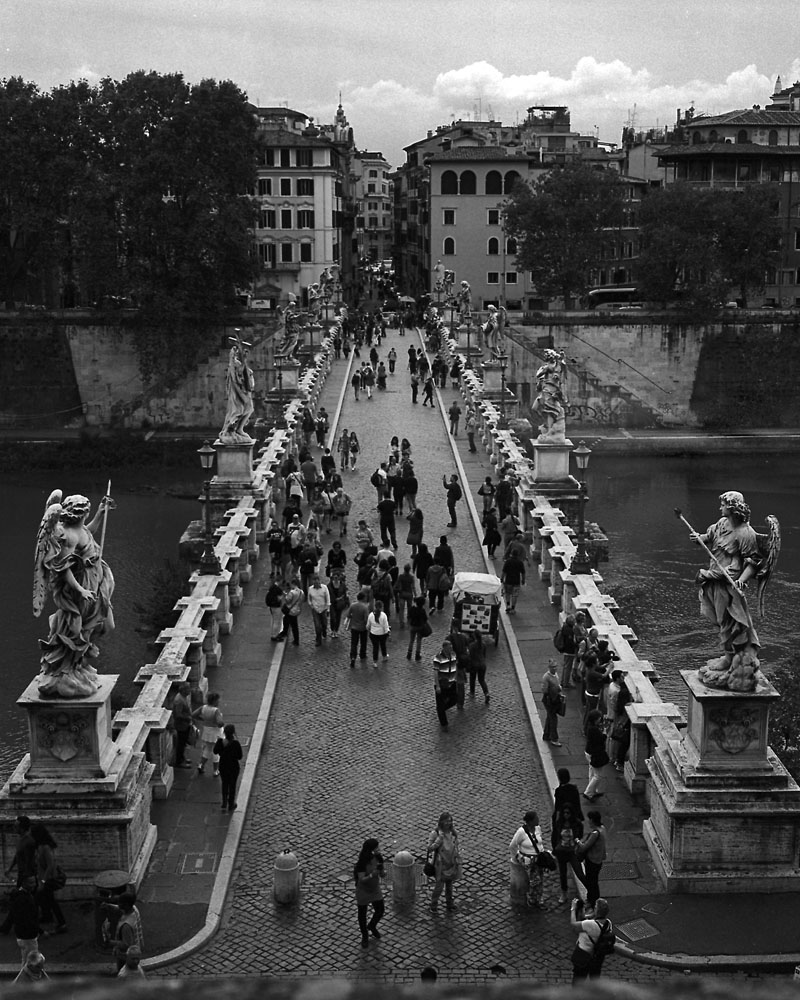
This is a view of the bridge from one of the outer bastions over the main gate to the castle. During the Jubilee year of 1450, so many pilgrims crammed onto the bridge that the railings gave way and many plunged into the river to their deaths. Starting in the 1530s, the angels that adorn the bridge began to be added.
Angel Bridge from the Castel Sant’Angelo
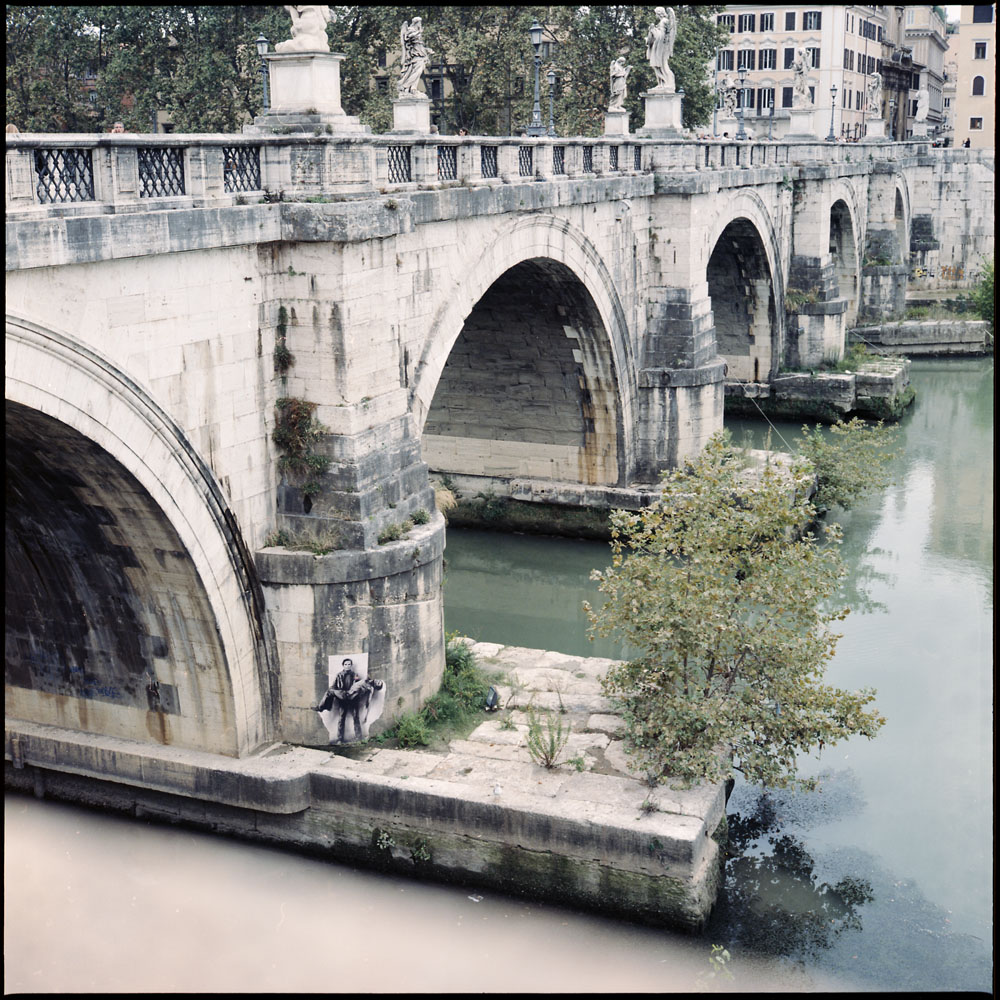
Looking down onto the footings of the bridge in the Tiber, we can see some interesting graffiti, particularly the figure of the man holding a woman’s prone form.
Angel Bridge Footings, Tiber River
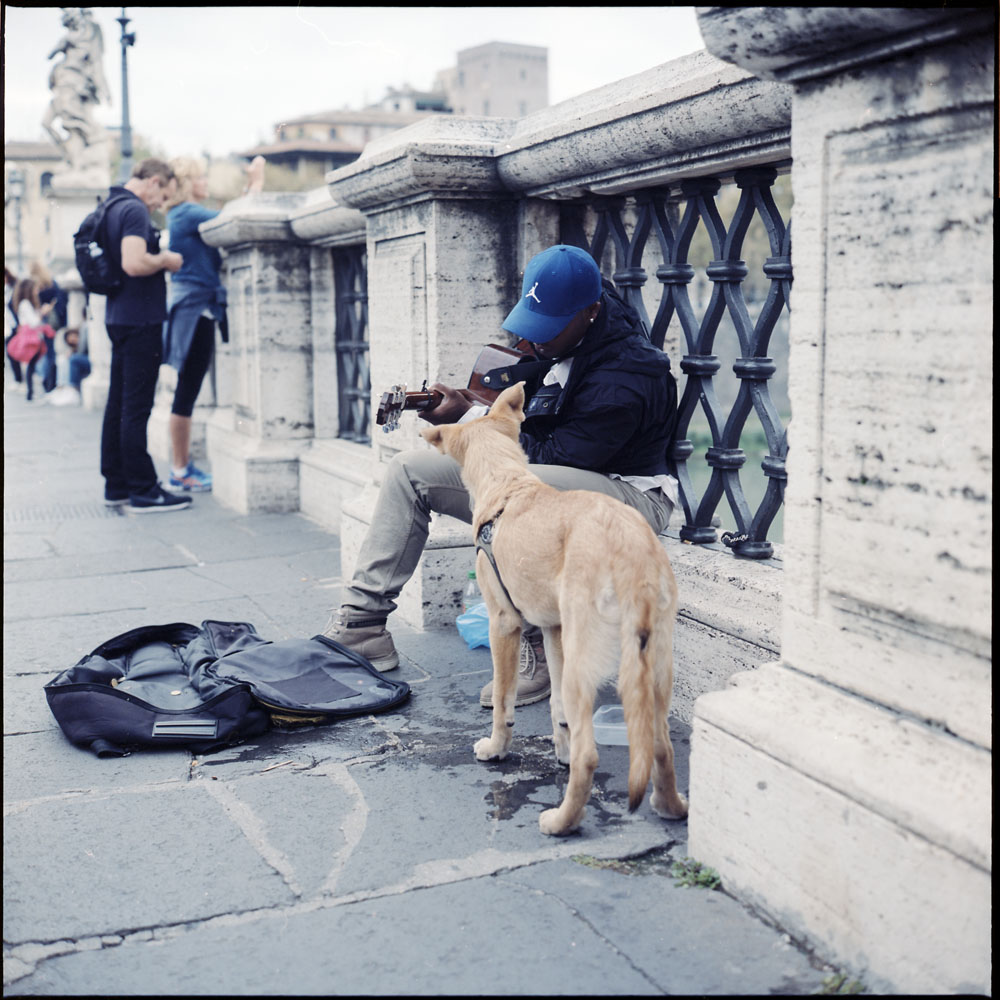
This young man was playing his guitar for tips on the bridge. I think he was consulting his dog as to what to play next.
Busker and dog, Angel Bridge
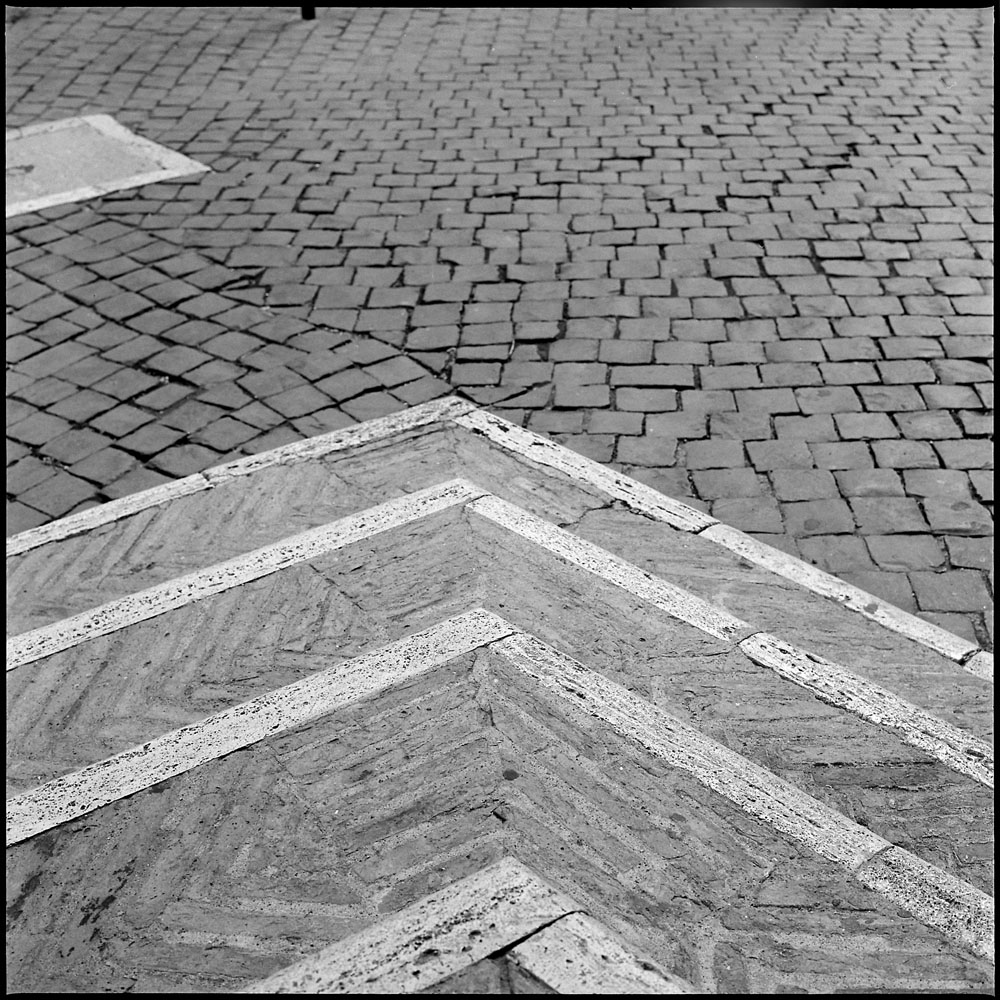
Moving inside the fortification, these steps emerge from one of the bastion towers to the courtyard that encircles the central drum at its base.
Steps, Castel Sant’Angelo
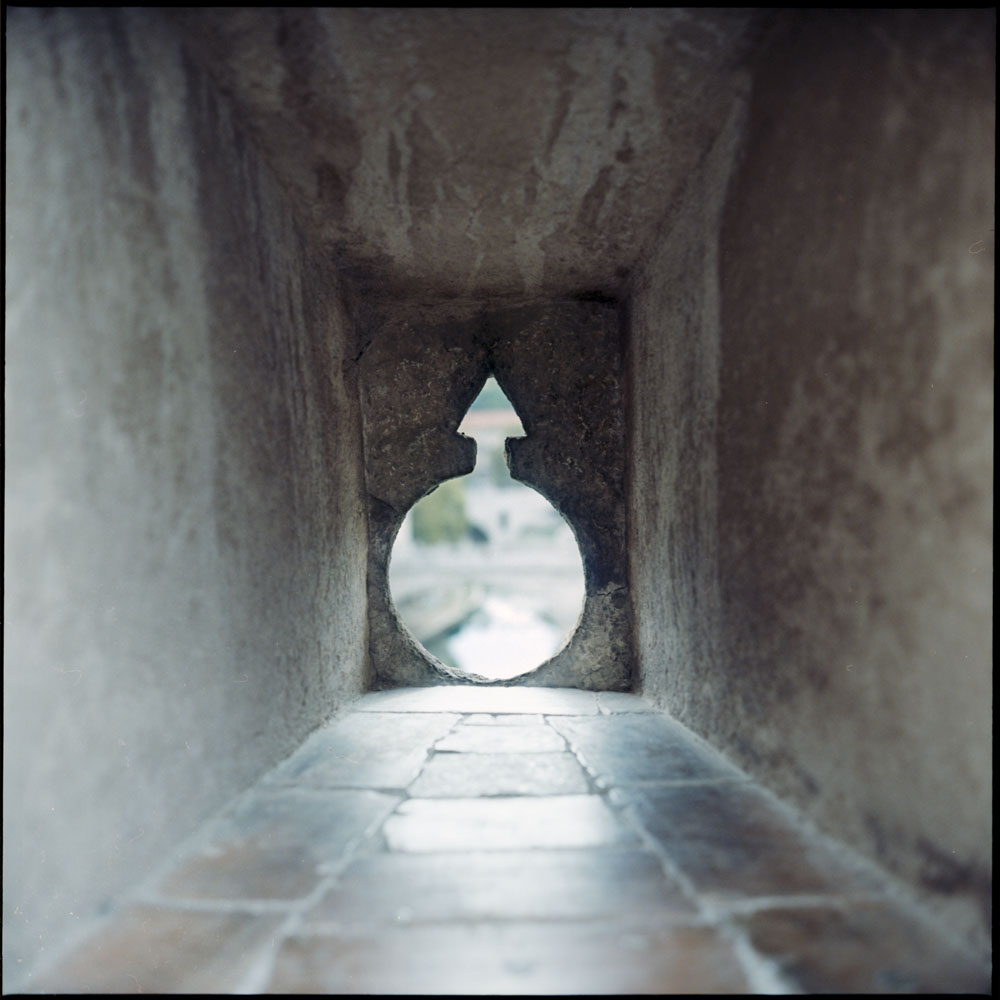
Looking out a gun port in the fortifications of the castle, you can see the bridges over the Tiber in the distance.
Gun Port, Castel Sant’Angelo
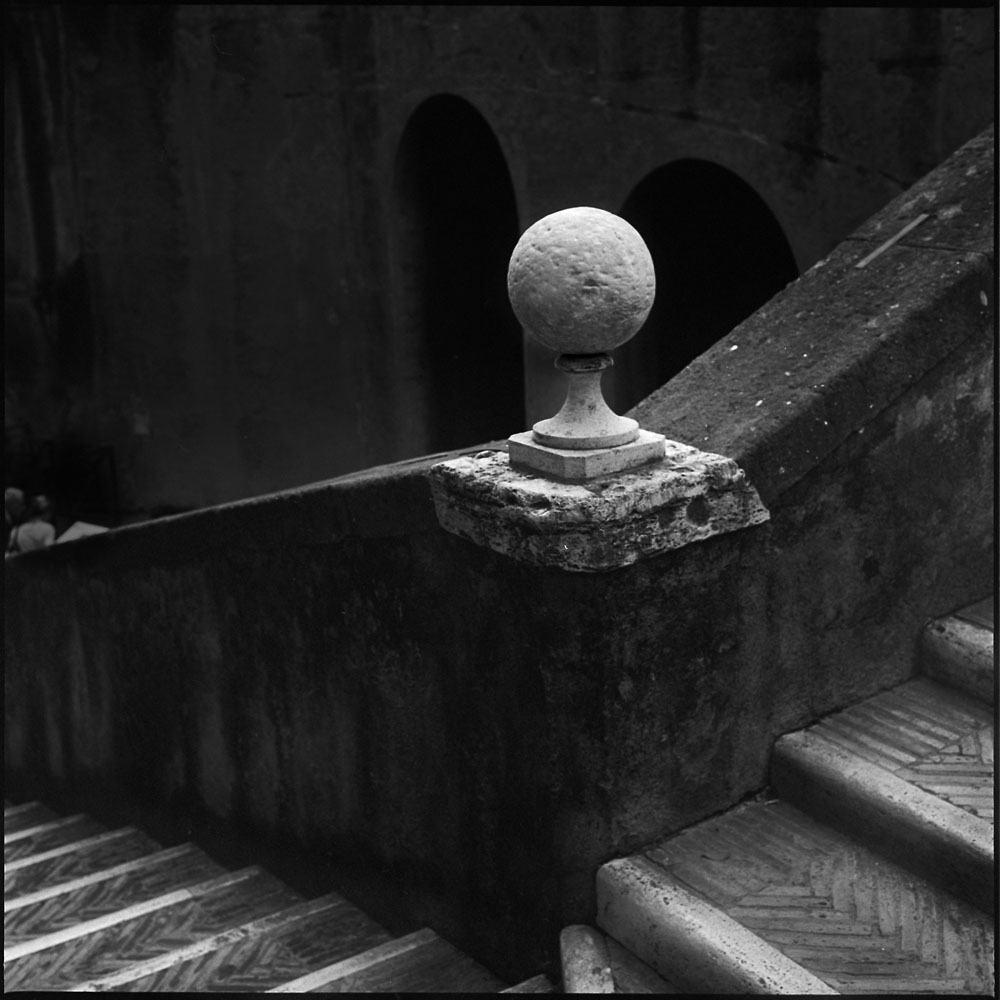
A newel post topped with a stone sphere on the stairs leading from the inner courtyard toward the Papal apartments:
Stairs, Newel Post, Castel Sant’Angelo
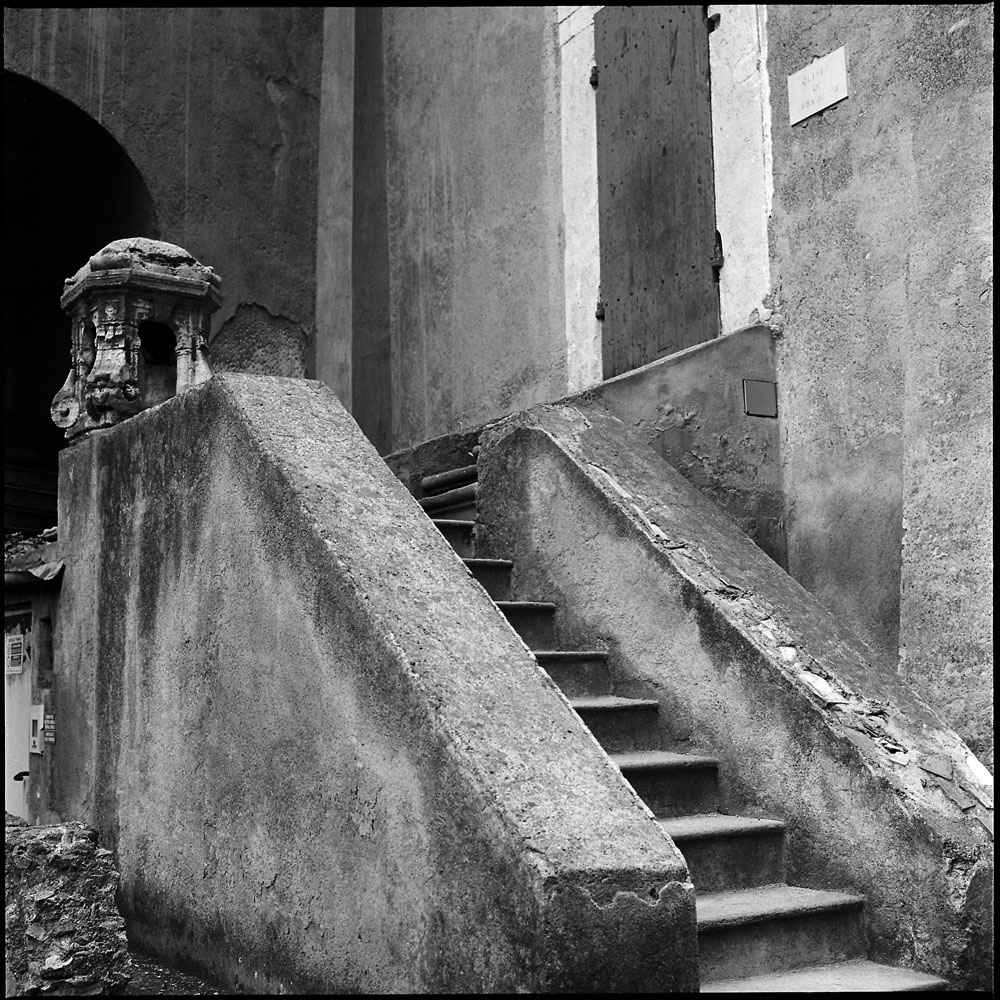
These stairs lead to a structure that probably housed Papal guards. The stone lantern atop them is one of several around the fort.
Stairs, Lantern, Castel Sant’Angelo
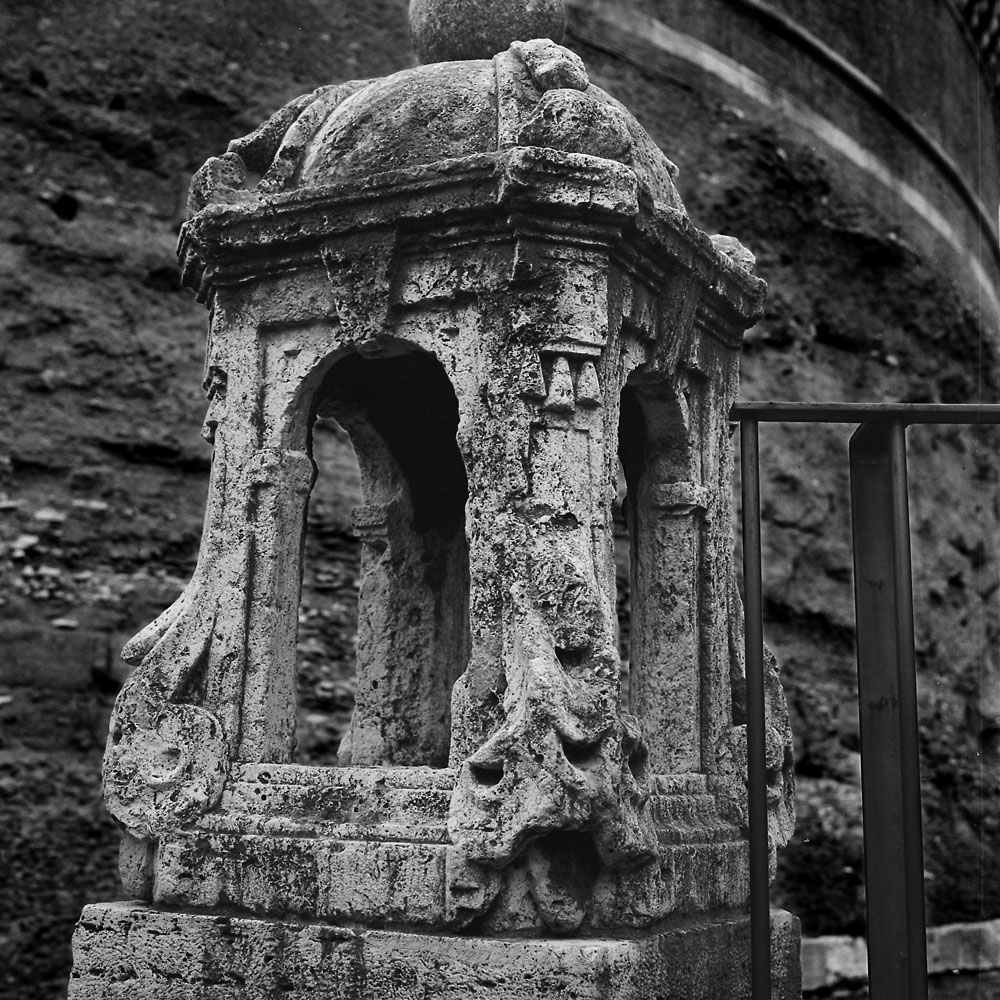
A close-up detail of another one of the stone lanterns:
Stone Lantern, Castel Sant’Angelo
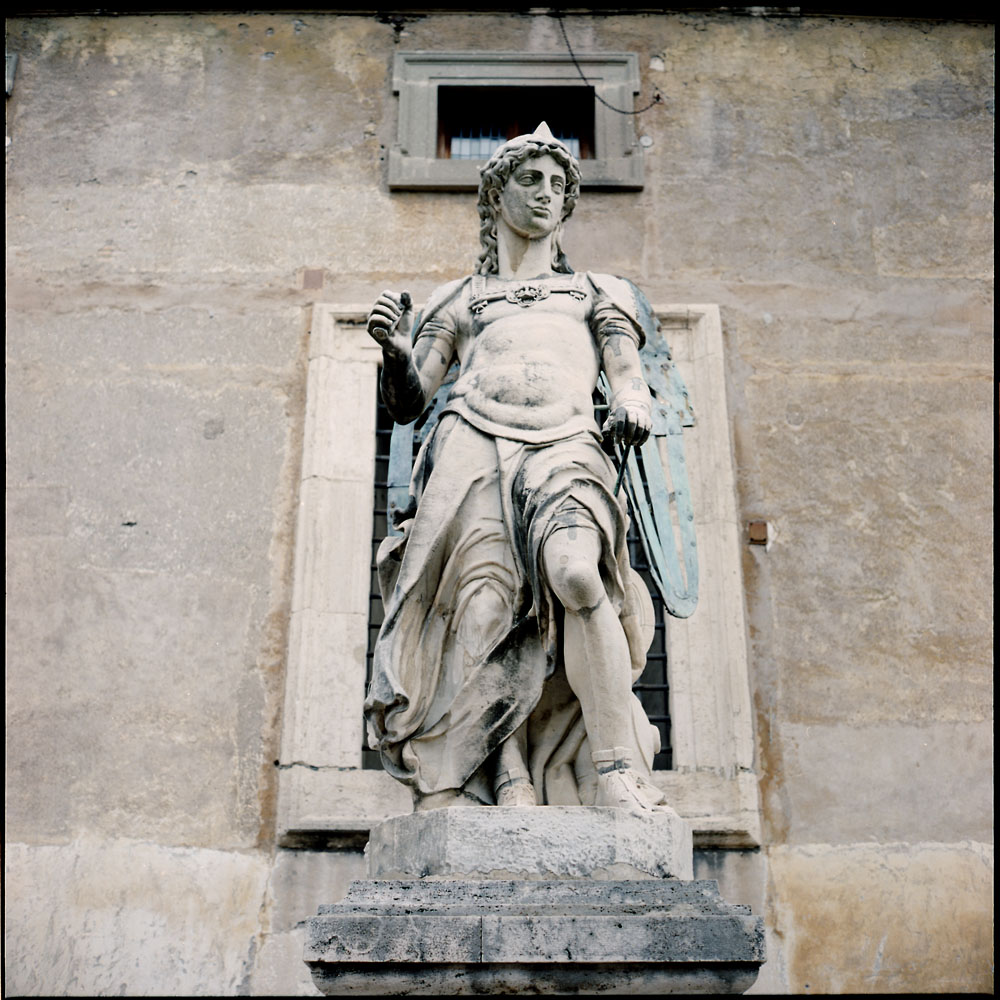
At the level of the upper courtyard, a statue of the Archangel Michael dominates. Opposite is one of several wells that keep the castle in fresh water in case of siege.
Archangel Michael, Castel Sant’Angelo
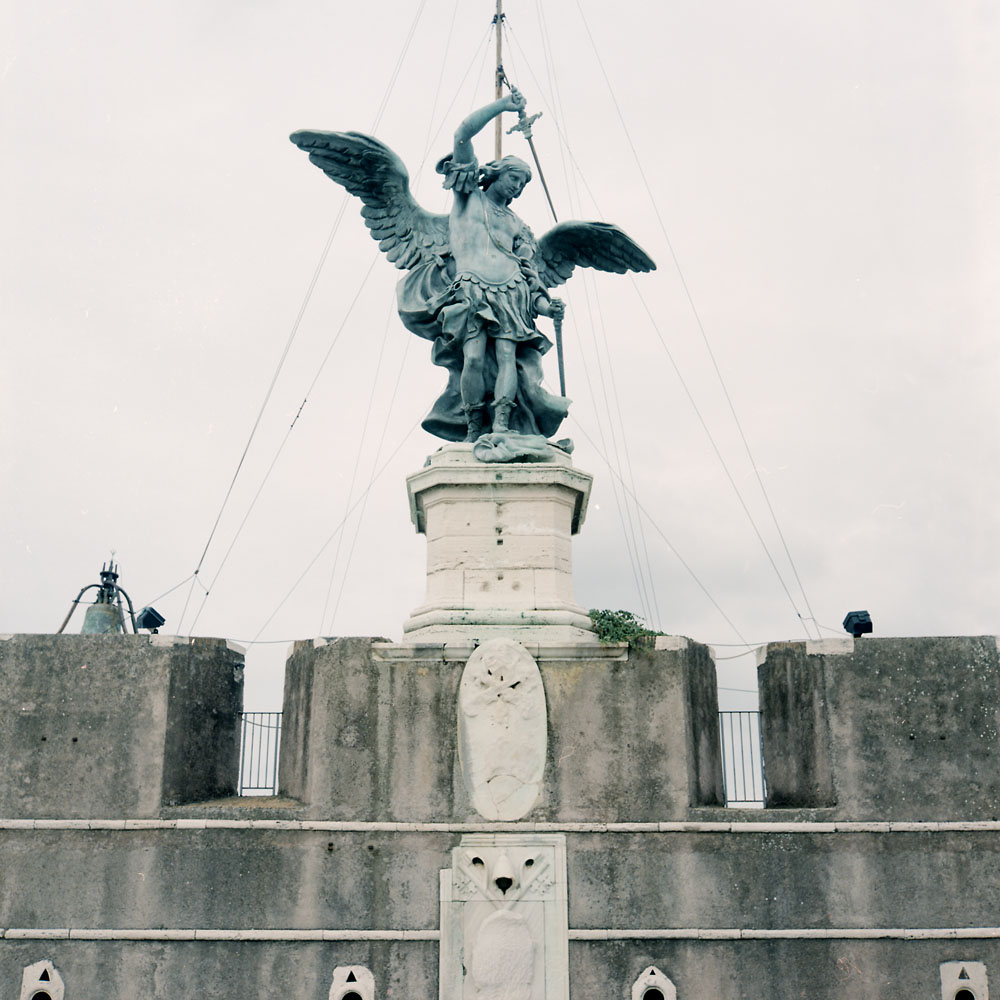
The fortification is crowned by a bronze statue of the Archangel Michael, drawing his sword. Modern additions have also placed radio aerials on the roof, overtopping the archangel. Technologia Omnia Vincit, as it were.
I went to the Forum on a bright and sunny day, thinking I would pass the time until I could get in the Colosseum. Little did I realize that the two-plus hour delay on entering the colosseum was for timed entry tickets, not general admission, even with my Roma Pass, and I would still have to wait in line for two hours to get in. It all worked out in the end – I enjoyed the Forum and wandered the periphery of the Colosseum and got some good shots of the exterior, and took a pass on going inside. Now that I know better I’ll go back the next time and get timed-entry tickets or book a tour in advance. Do NOT get suckered in by the tour guides touting skip-the-line access on the plaza around the Colosseum – the guides who give the tours are of questionable expertise and foreign language skill, so about the only plus you’ll get from going in with them is skipping the line.
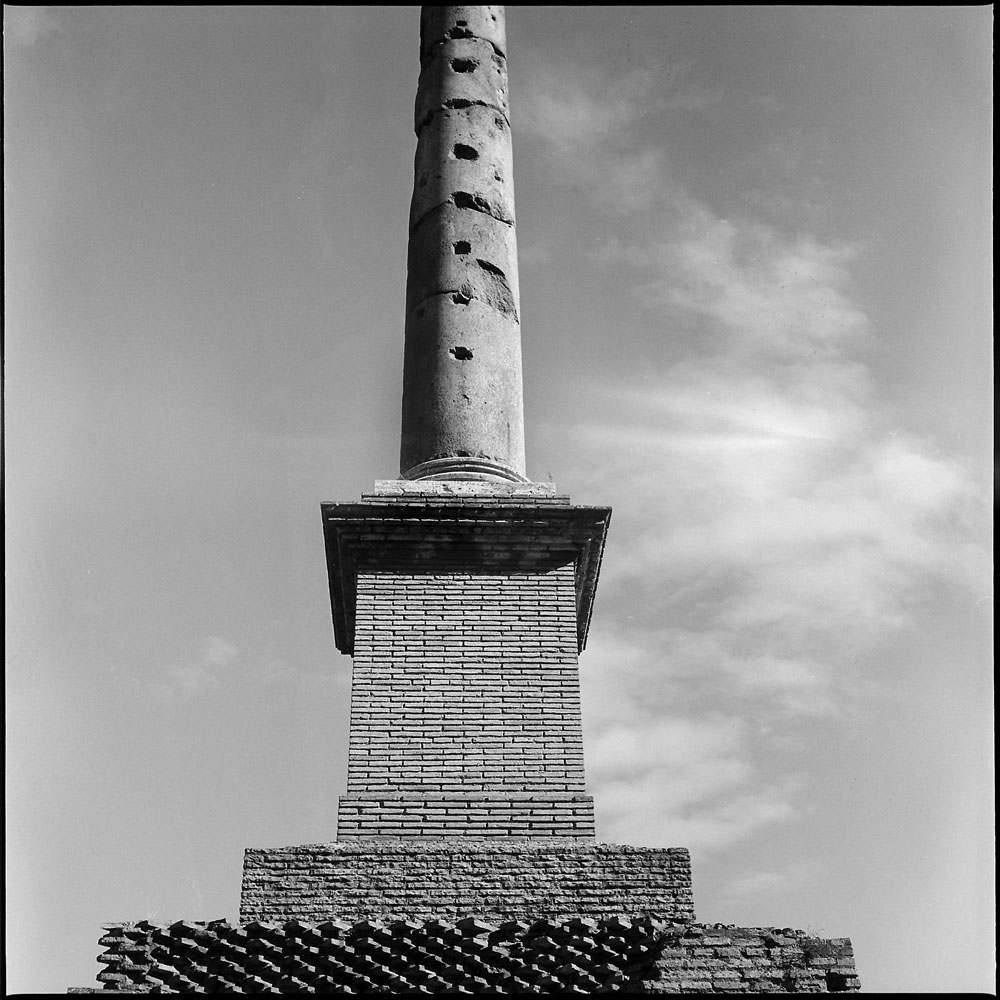
This column is one of the few remaining columns of a loggia across from the Basilica Julia.
Solitary Column, Imperial Forum
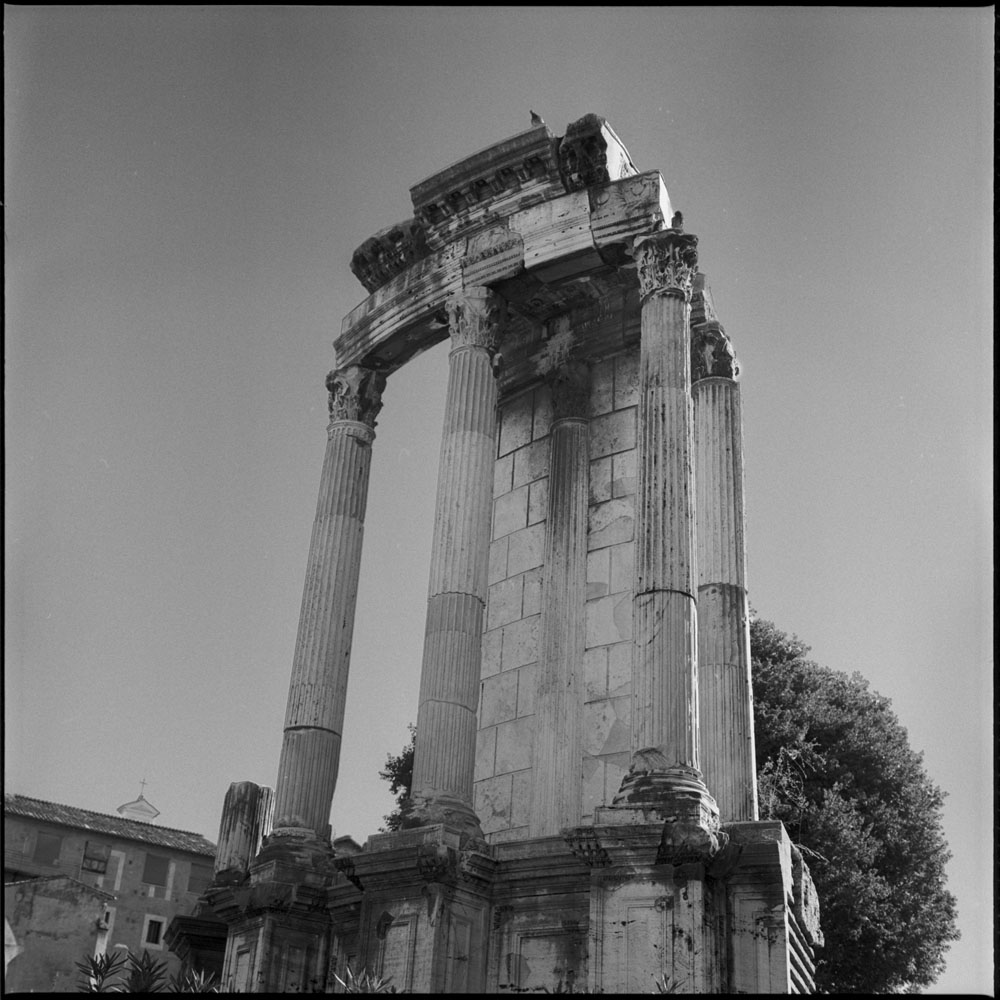
The temple of Vesta is a small circular structure, with a few columns and a fragment of a wall jutting up. This would have housed a flame kept burning by the Vestal virgins, women who pledged celibacy for some thirty years of service. They would have been too old to marry or have children by their retirement, but if they were able to wait that long, they were richly rewarded and retired to lives of considerable luxury and comfort. If they couldn’t wait, well… they and their defilers were sentenced to death.
The Temple of Vesta
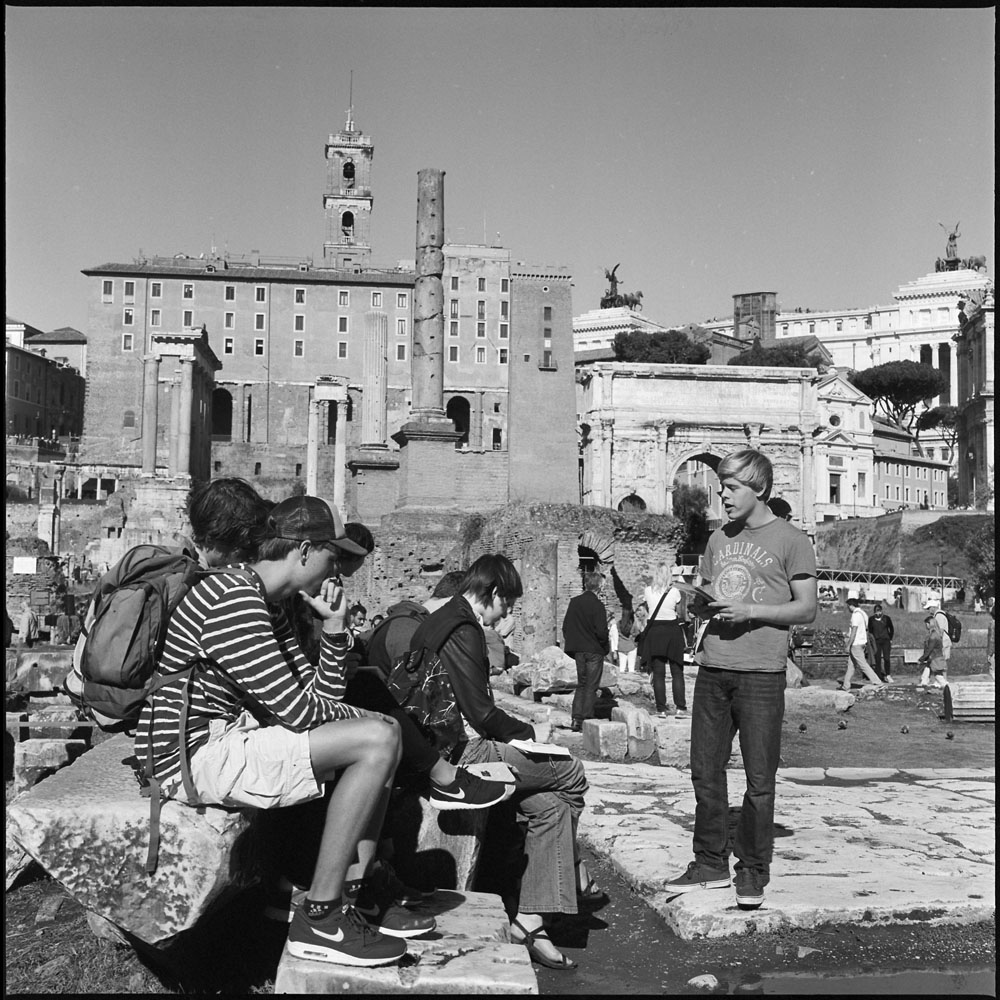
I caught this school group in the Forum, one student presenting a topic about the place to his fellow students. I suspect it was a project for a history course. Made me wish I had gone to school somewhere in Europe that we would have taken field trips to the Forum, instead of to the American History museum to look at displays of Revolutionary War muskets.
A School Group at the Forum
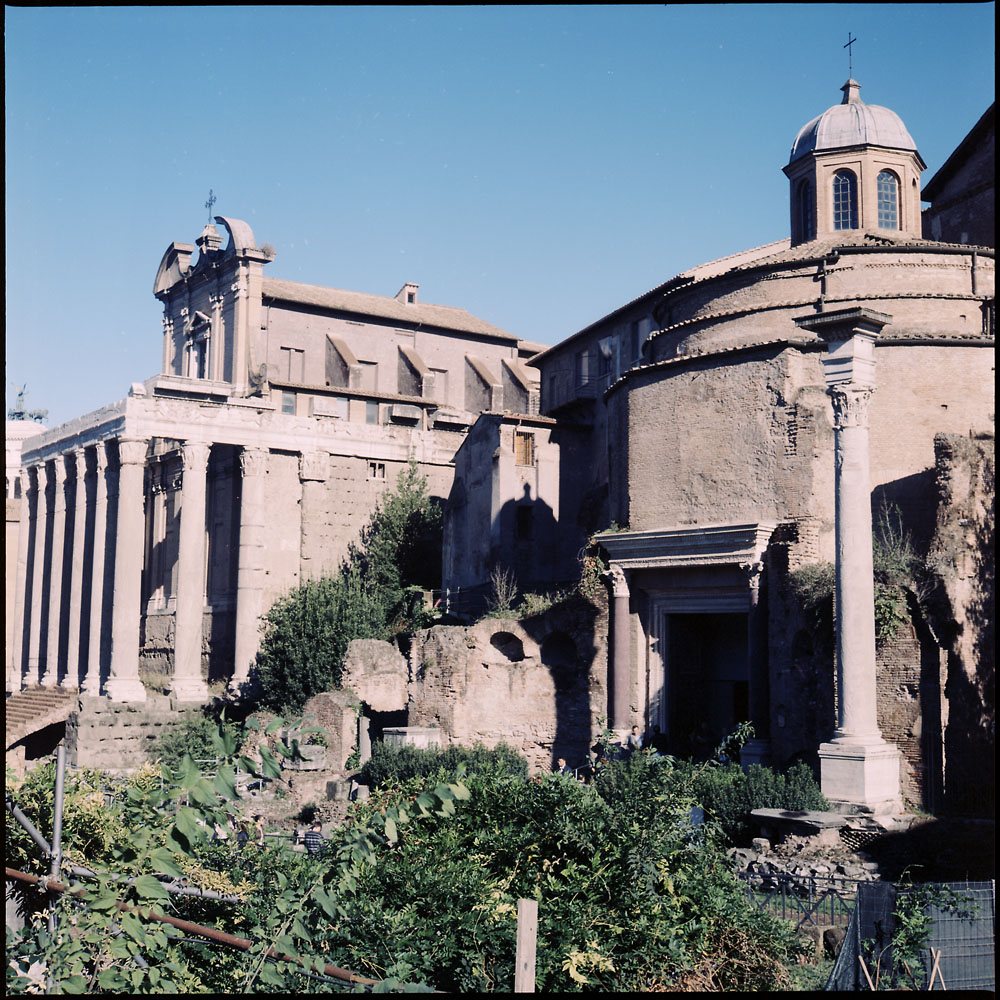
Two of the major surviving structures of the Forum are visible in this view – the Temple of Romulus (now part of the Basilica of Saints Cosmas and Damiano) and the Temple of Antoninus and Faustina. The temple of Romulus is the cylindrical structure in the foreground. Because of its early re-use as a Christian church, the temple of Romulus is, after the Pantheon, the best preserved Roman temple in the city. The Roman Senate structure is also quite well preserved, and the main Senate chamber retains is marble steps and the black marble slab that supposedly marks the tomb of Romulus.
Temple of Antoninus and Faustina and the Temple of Romulus
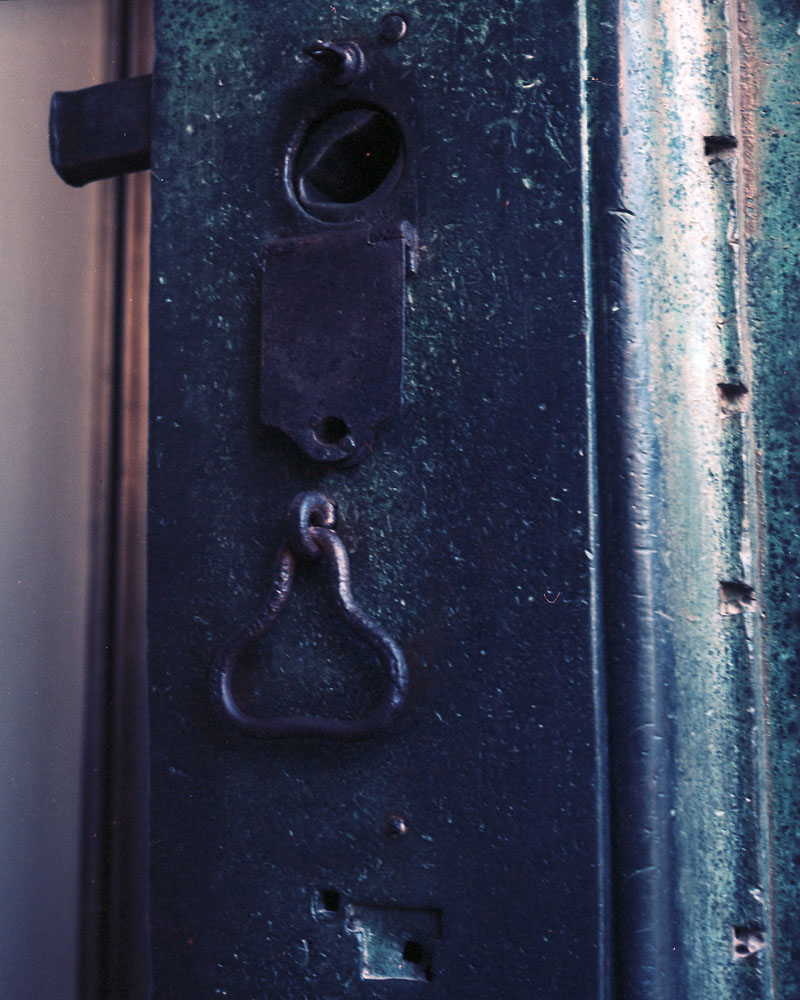
A striking rarity are the doors of the temple of Romulus – they are the ORIGINAL bronze doors, over 2000 years old. Many other temple doors have been either removed and melted down for re-use or, as in the case of the doors of the Senate building, moved by Bernini to Saint John Lateran. You can really feel the patina of the ages when looking at these doors.
Ancient Bronze Door, Temple of Romulus
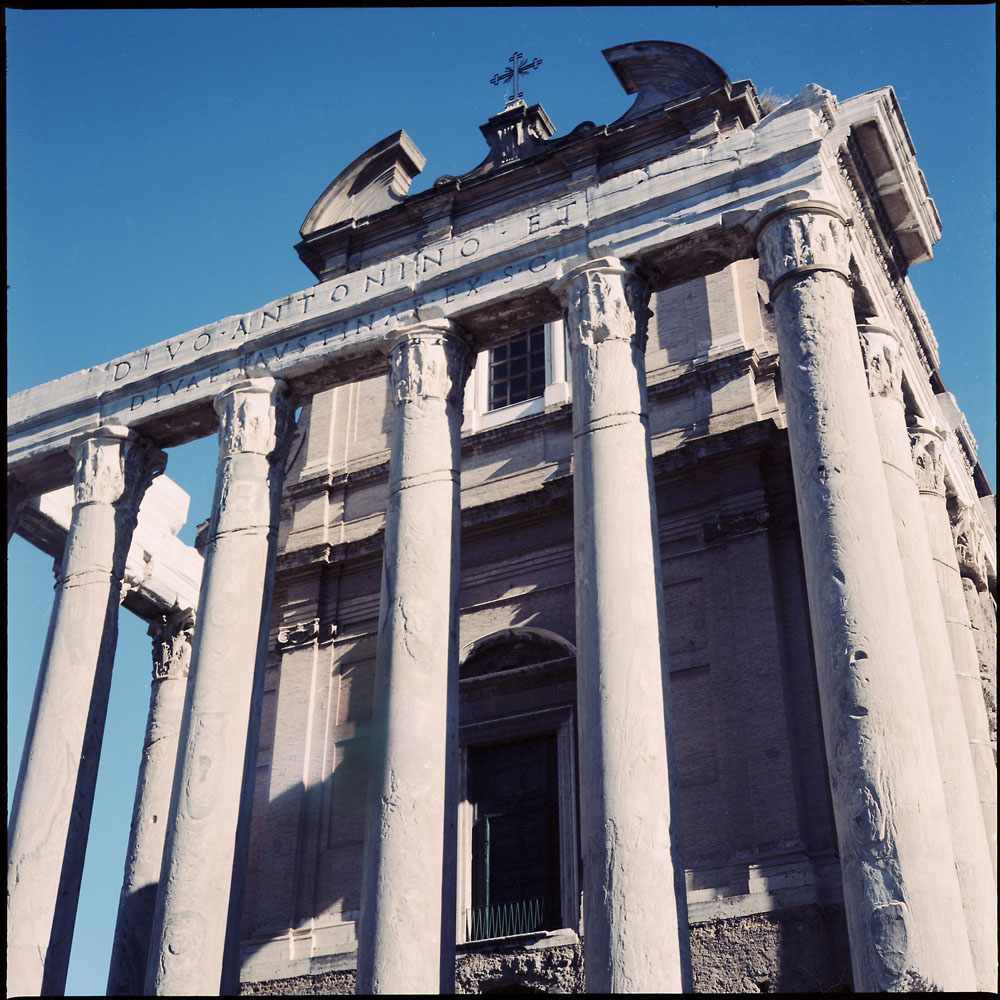
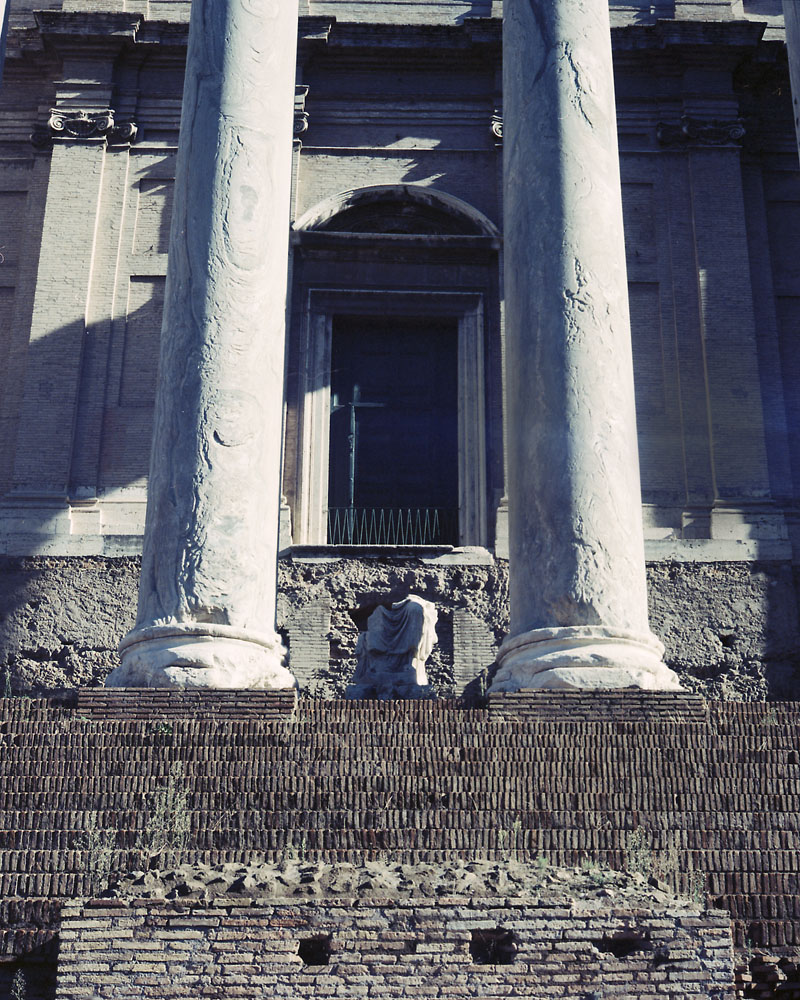
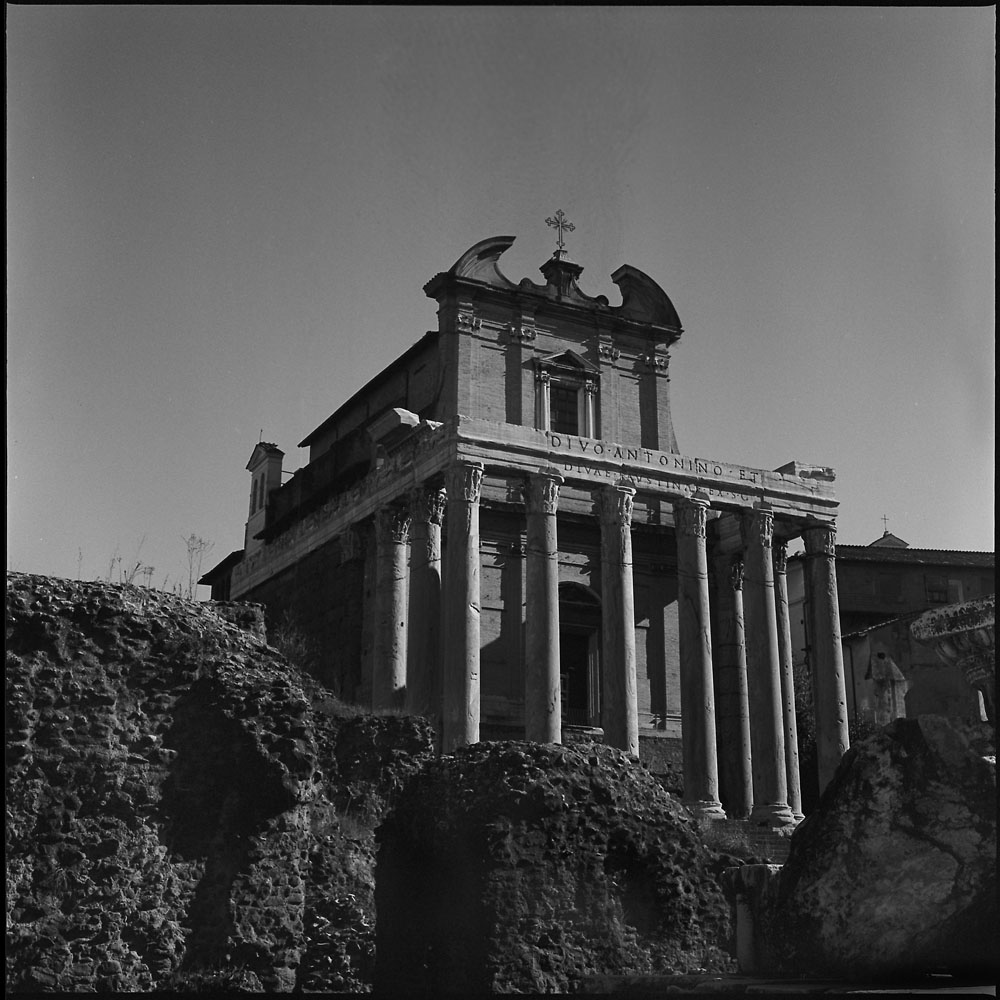
The Temple of Antoninus and Faustina was originally built in honor of Faustina, the wife of Emperor Antoninus. She was deified upon her death, and Antoninus had the temple erected in her memory. When he passed away, he too was deified and added to the temple’s namesakes. The colonnade survives in its current state of preservation due to the later conversion of the structure into a Christian church. You can see the former entrance to the church a whole story above the top of the steps – at the time of the conversion, the Forum had infilled to the level of the door.The columns also owe their survival to this infilling – you can see the diagonal gouges in the columns from where ropes or chains were wrapped around them in an attempt to pull them down. This may have been because of an anti-Pagan movement during the early Church, or it may have been by marble scavengers trying to get the columns for their stone.
Temple of Antoninus and FaustinaColumns and steps, Temple of Antinous and FaustinaTemple of Antoninus and Faustina
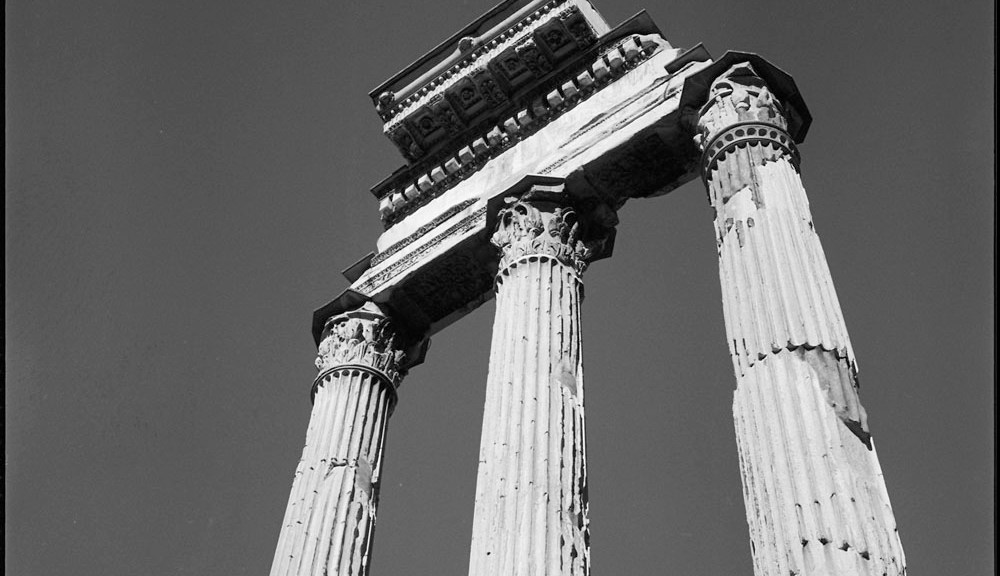
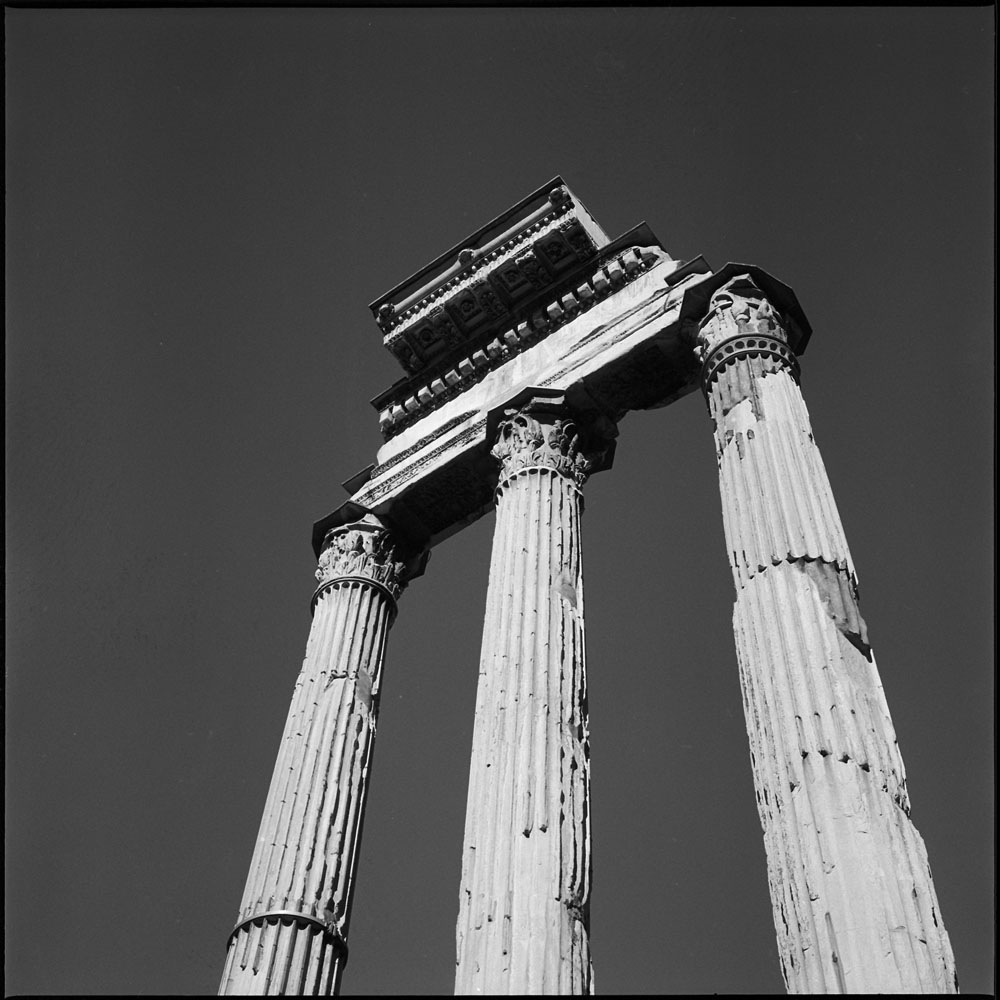
Most of the temples of the Forum are ruins – a few scant columns remain of them, or in some cases only foundations. The temple of Castor and Pollux is one survivor with a few columns to mark its location. Their losses are due to various anti-Pagan movements and repeated use of the Forum as a low-effort quarry for marble to be used in the palaces of popes and cardinals.
The Temple of Castor and Pollux
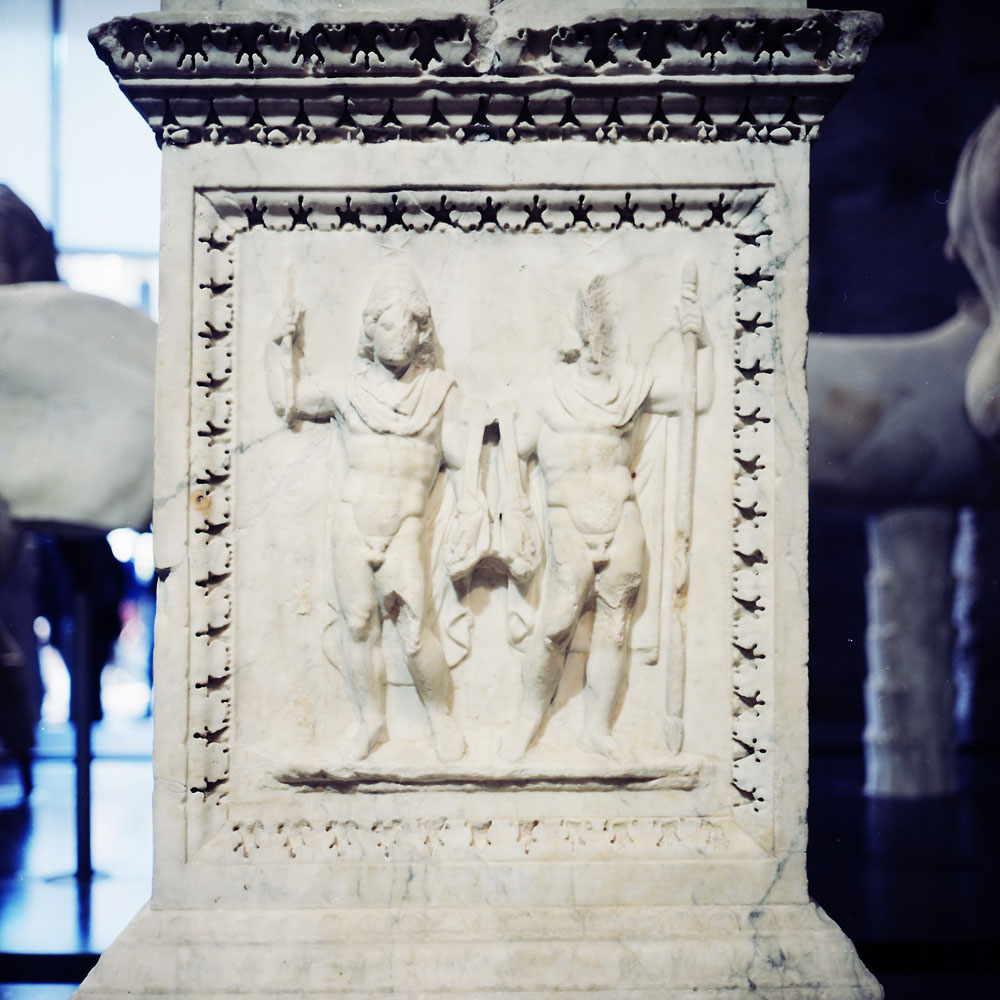
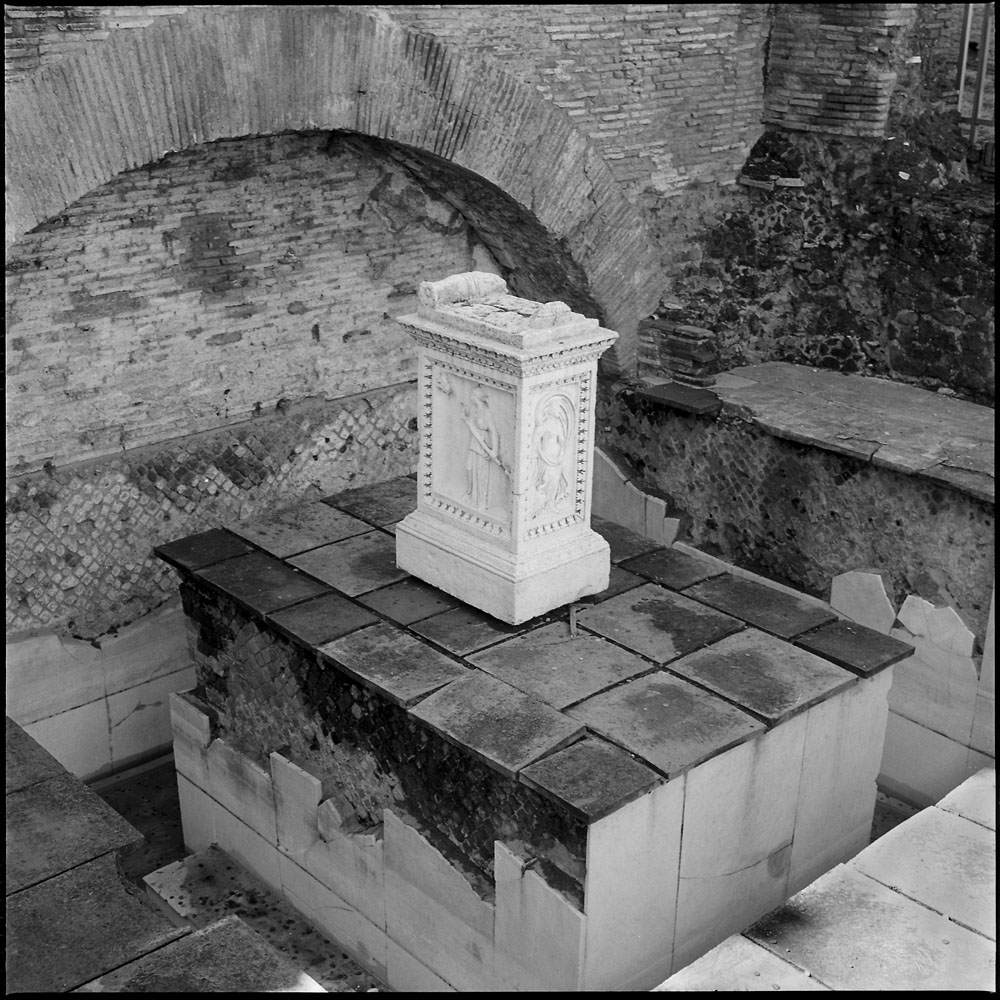
The original altar from the spring of Juturna was on display inside the temple of Romulus as part of a temporary exhibition when I was there. This side depicts the twins Castor and Pollux, who supposedly visited the spring to water their horses. The temple of Castor and Pollux is directly across from the spring. They have a replica in place at the spring itself.
The Altar of Castor and Pollux from the Lacus JuturnaeSpring of Juturna, Roman Forum
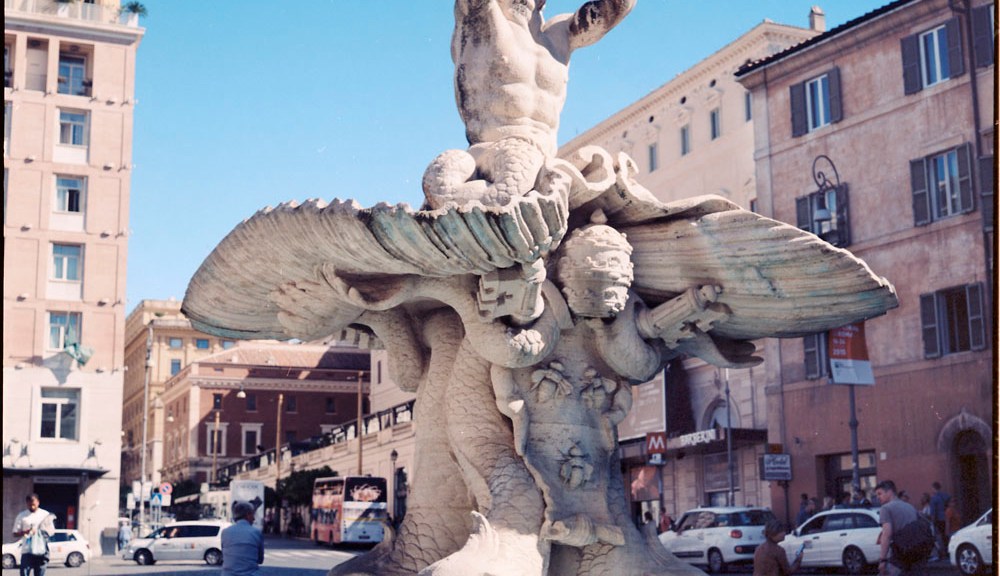
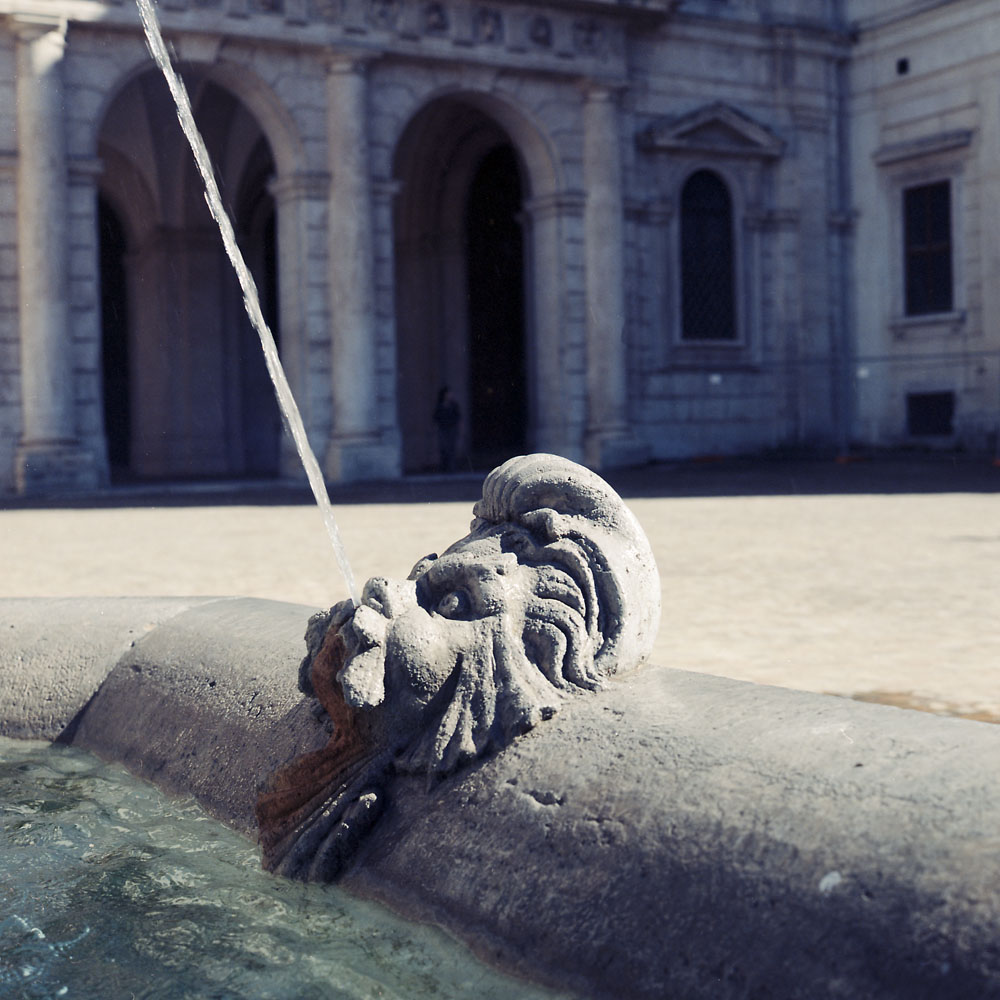
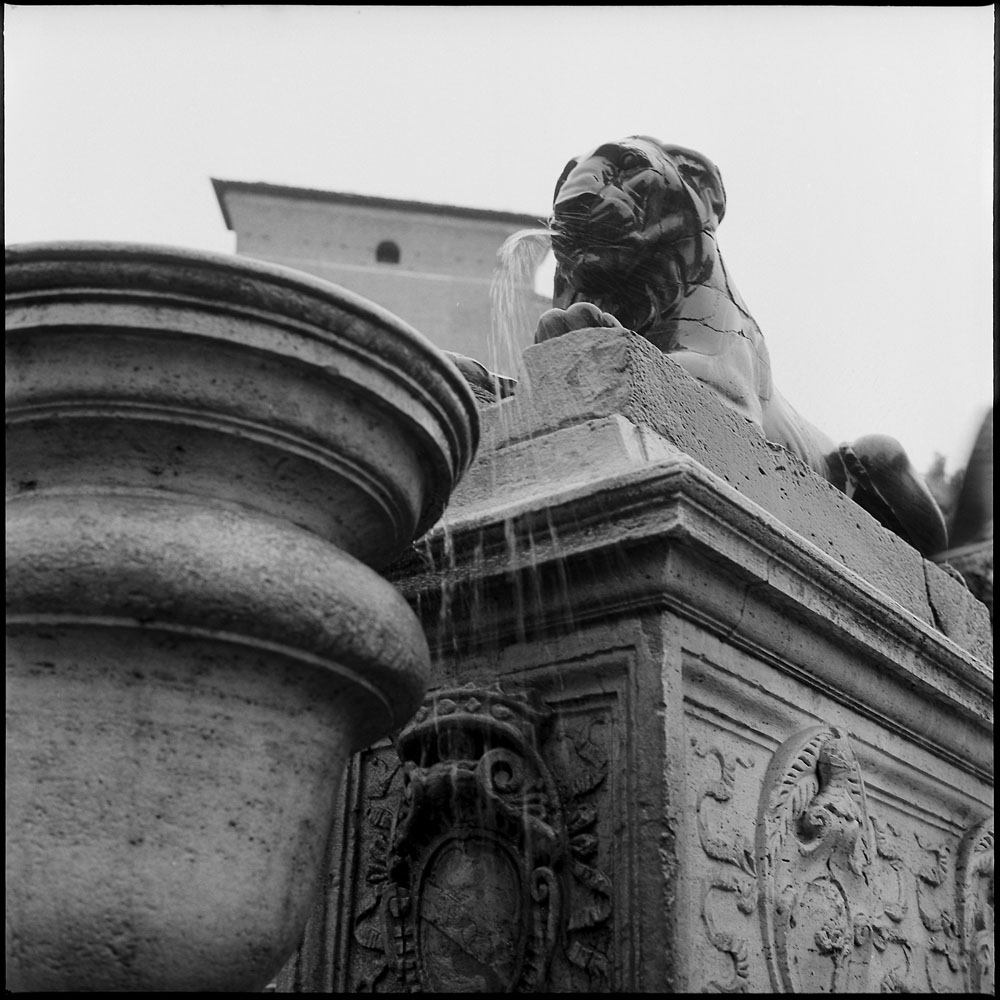
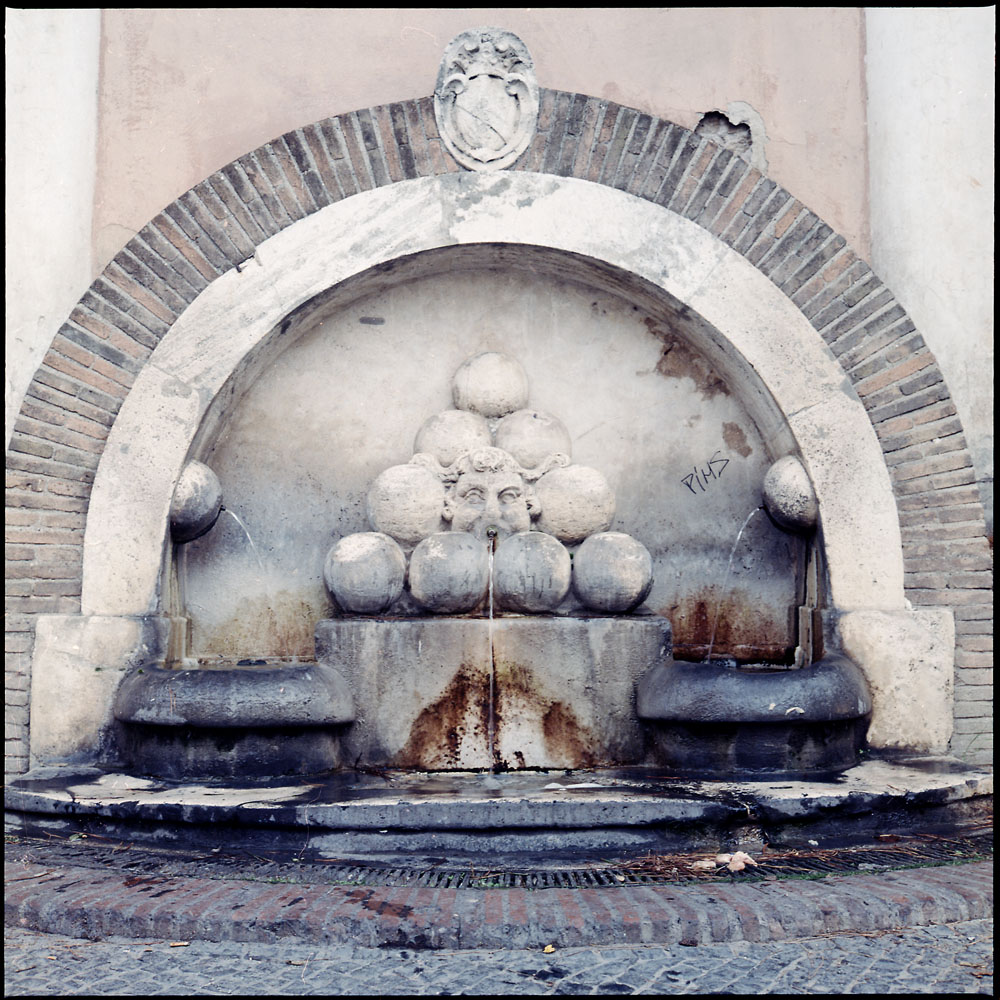
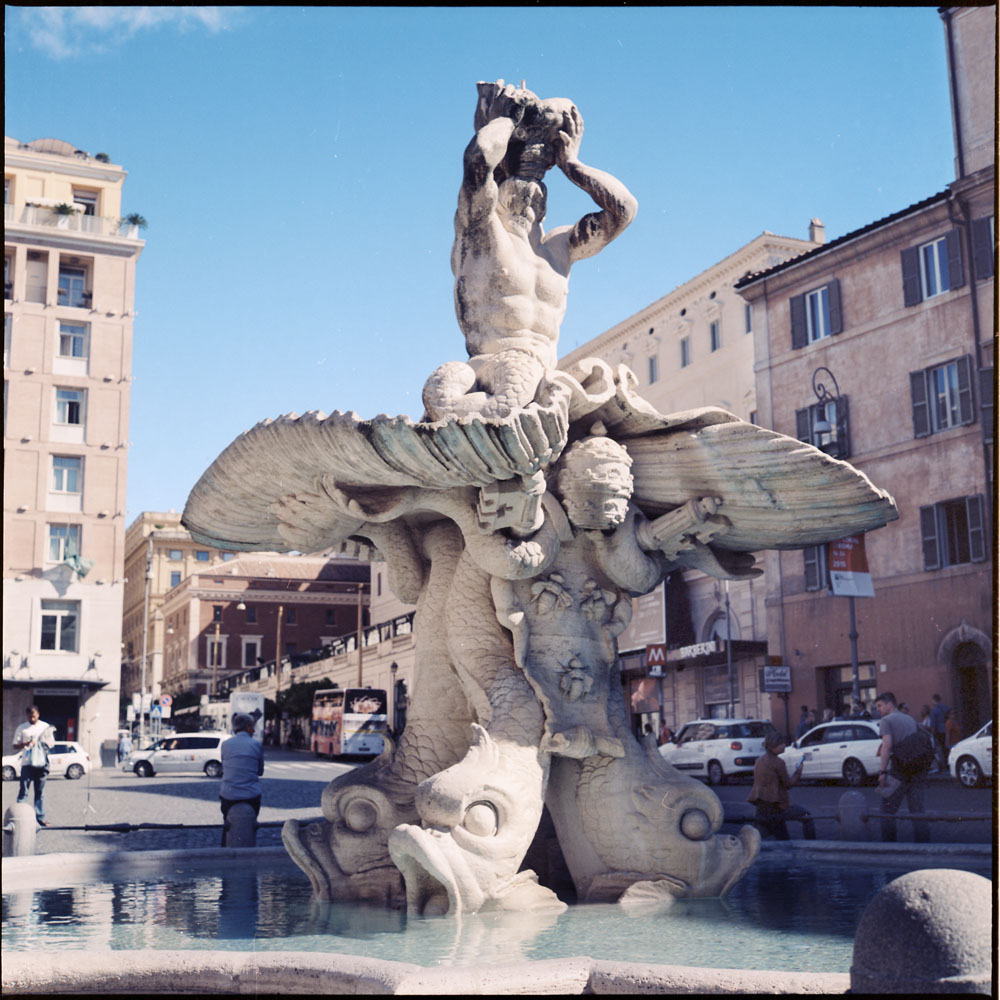
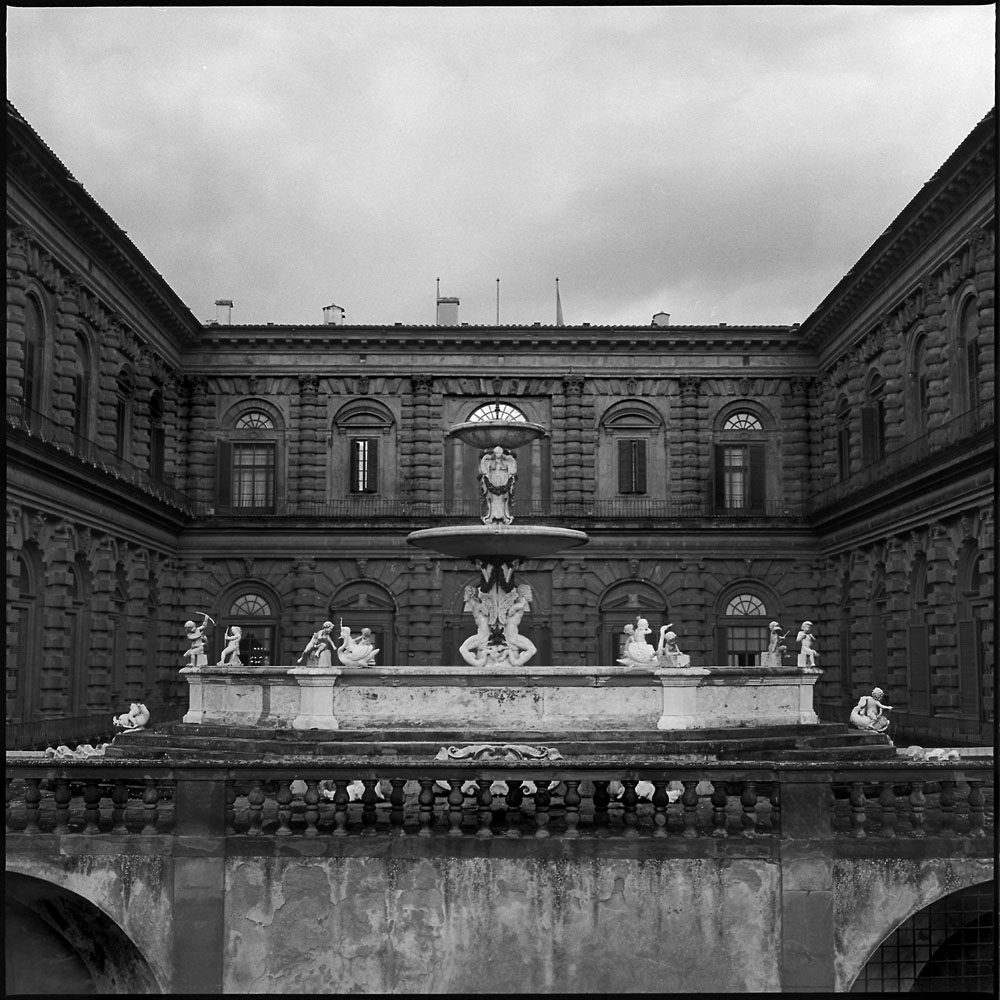
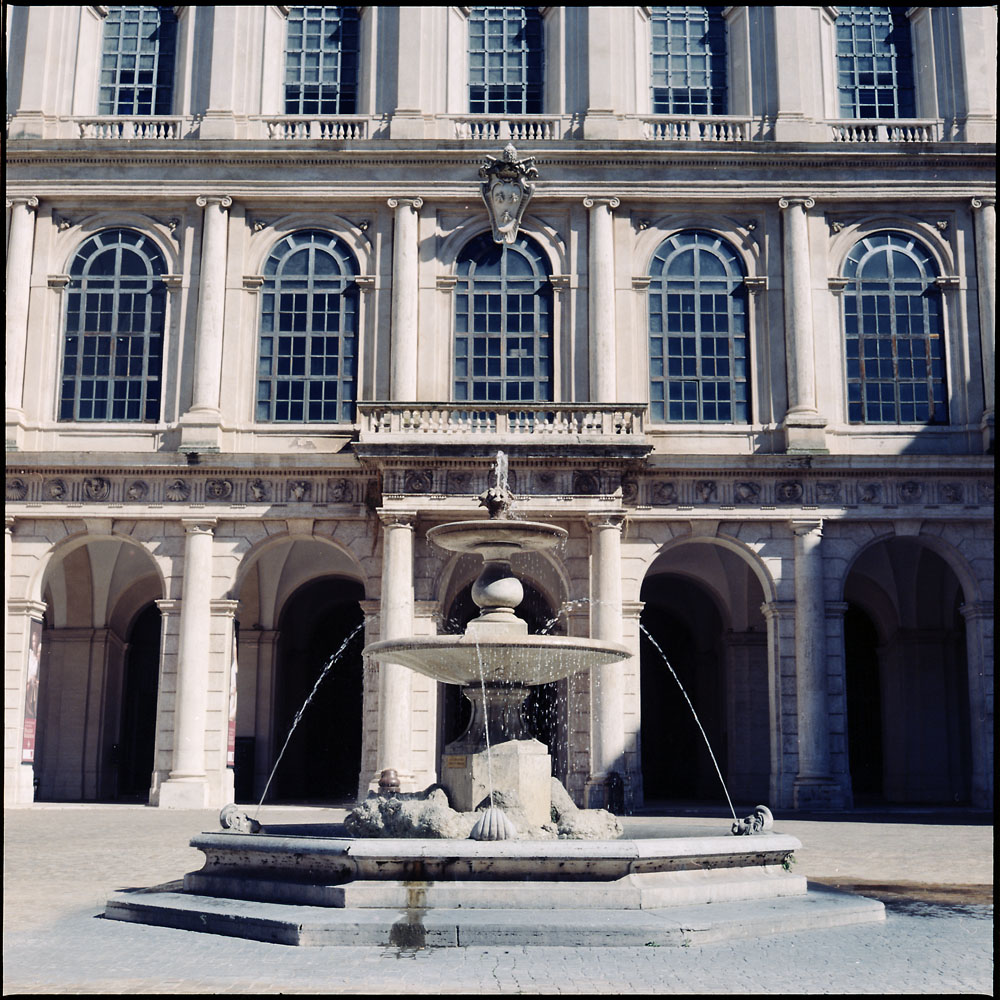
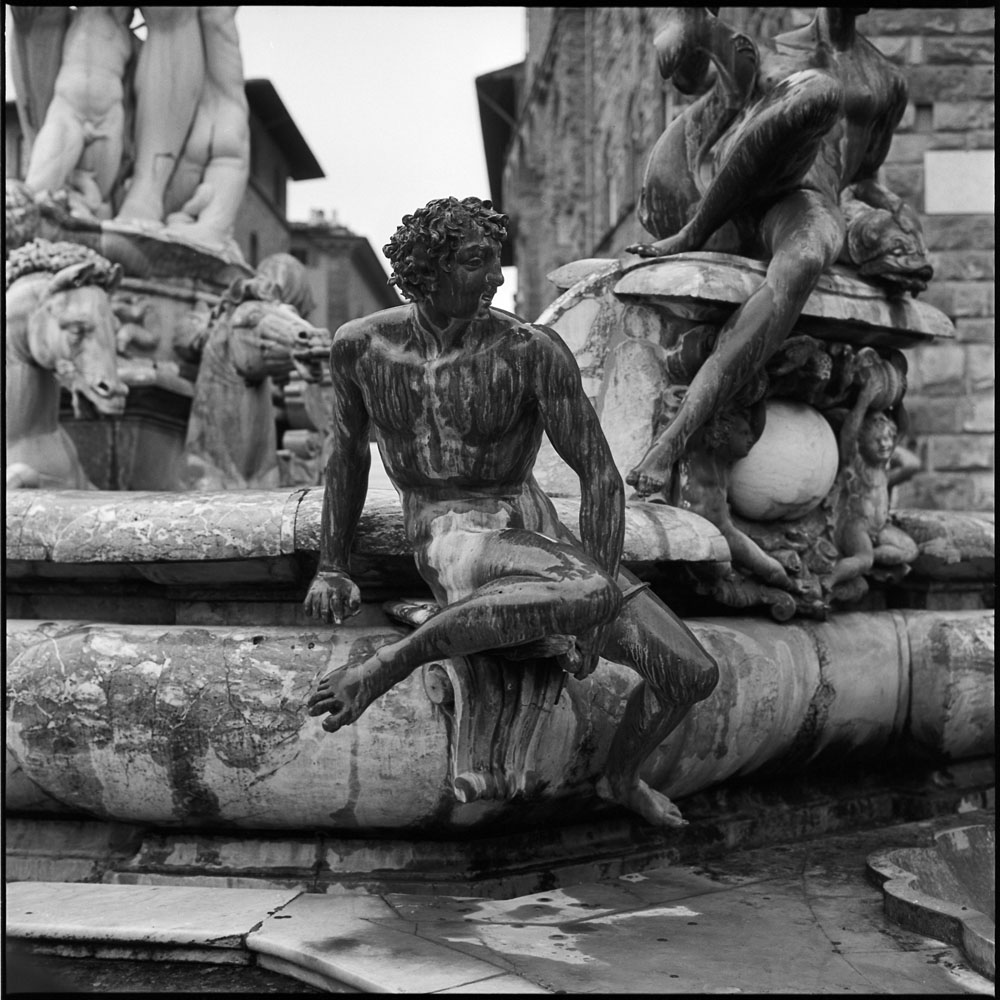
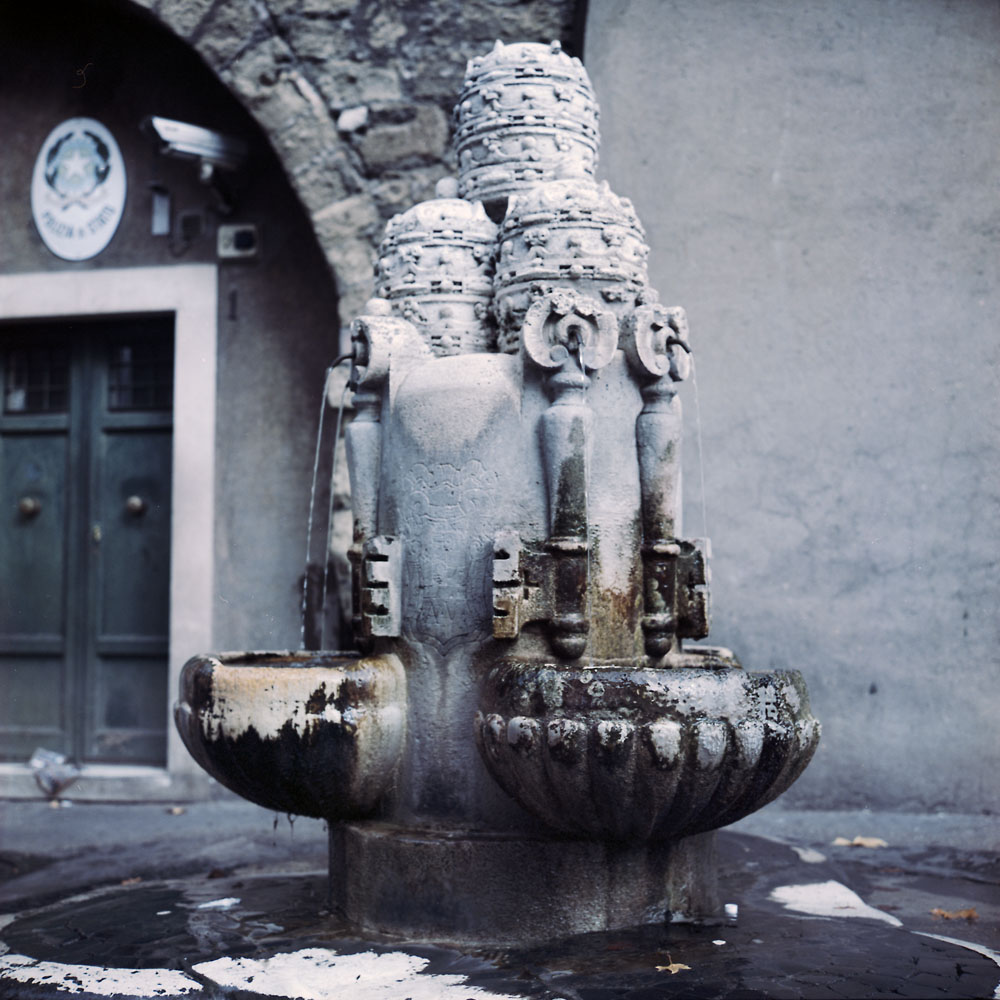
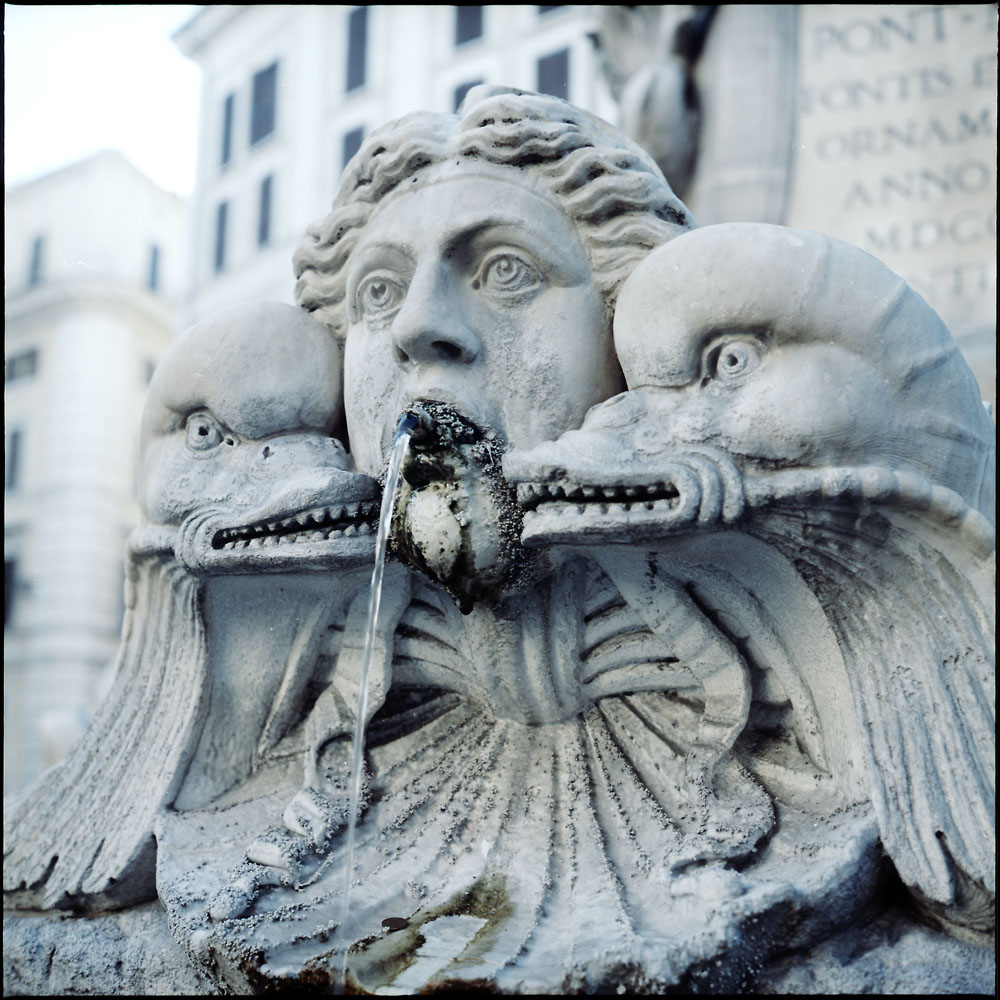
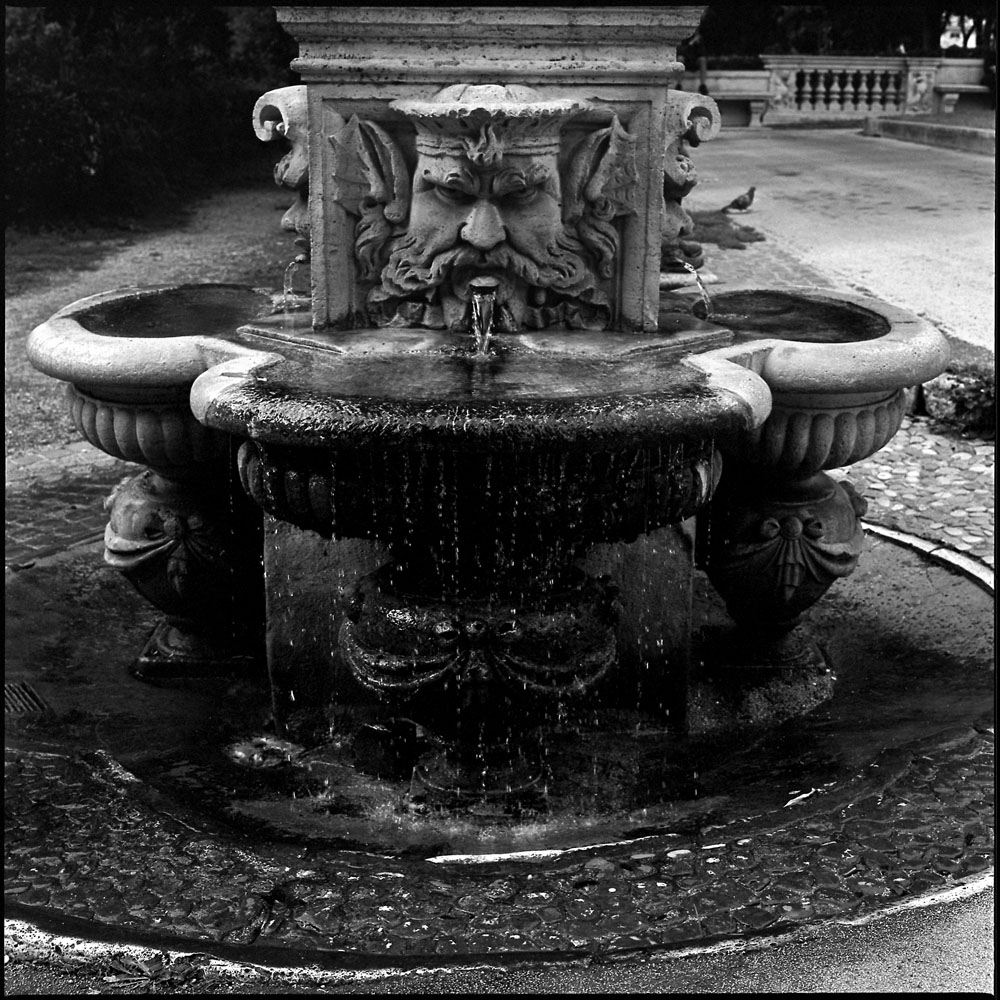
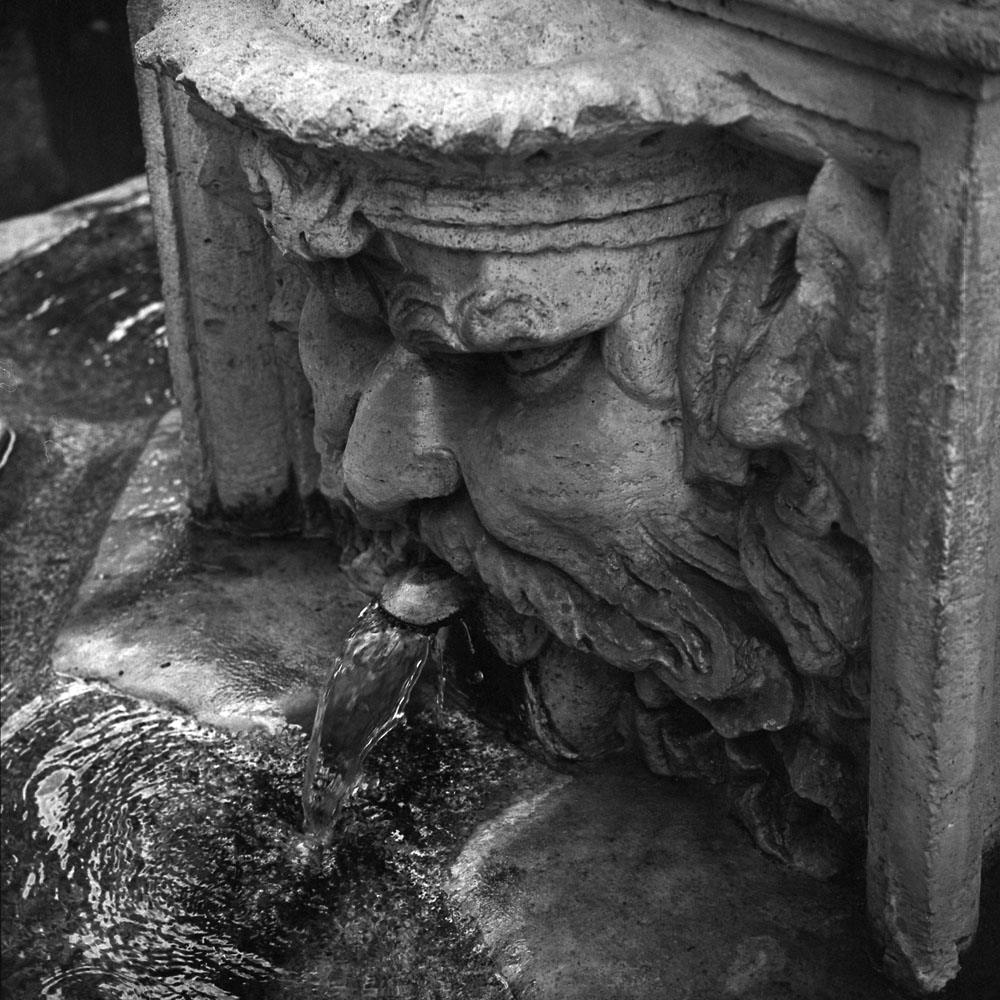
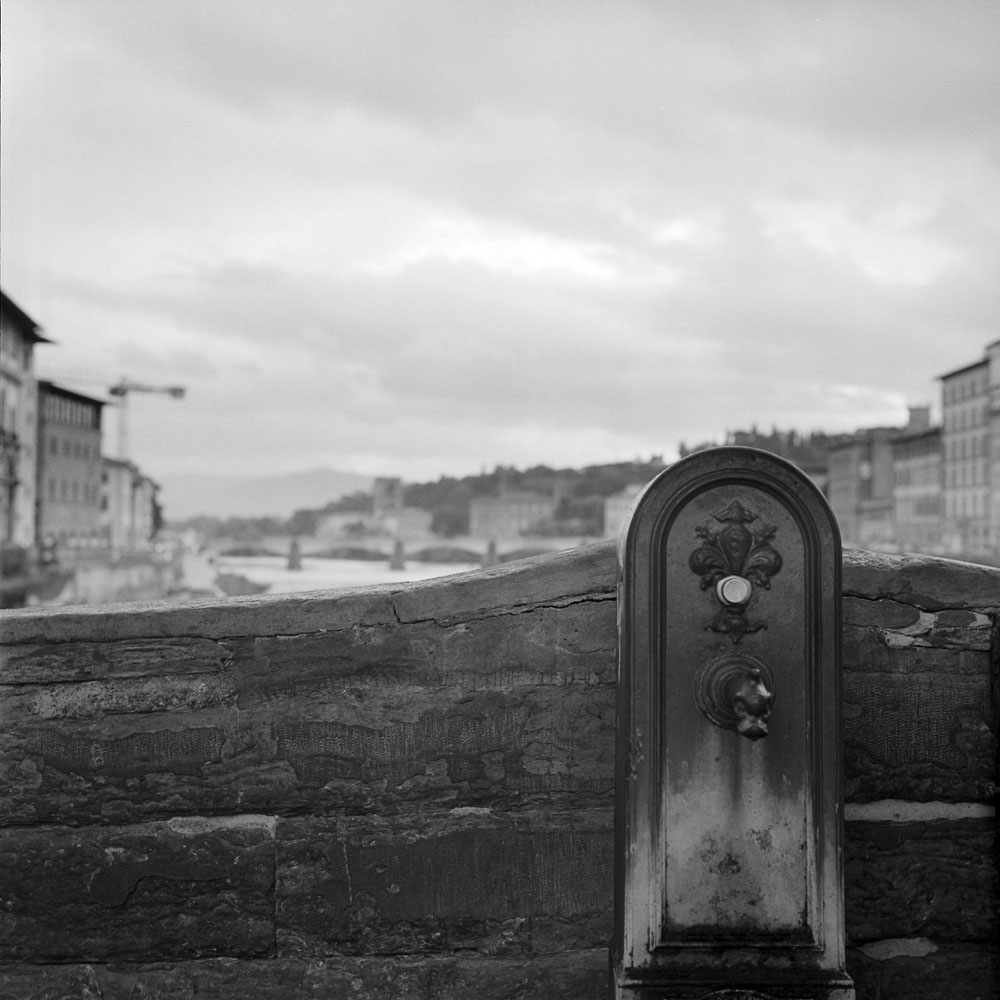
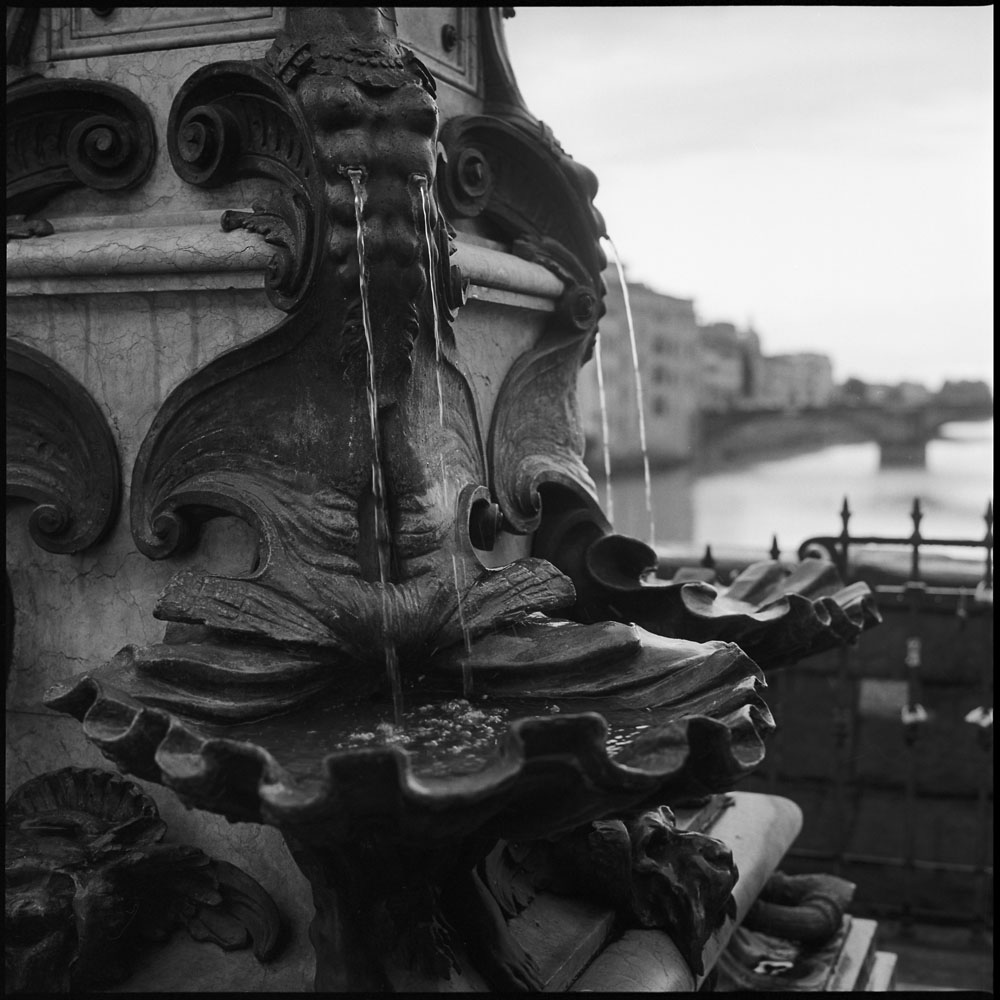
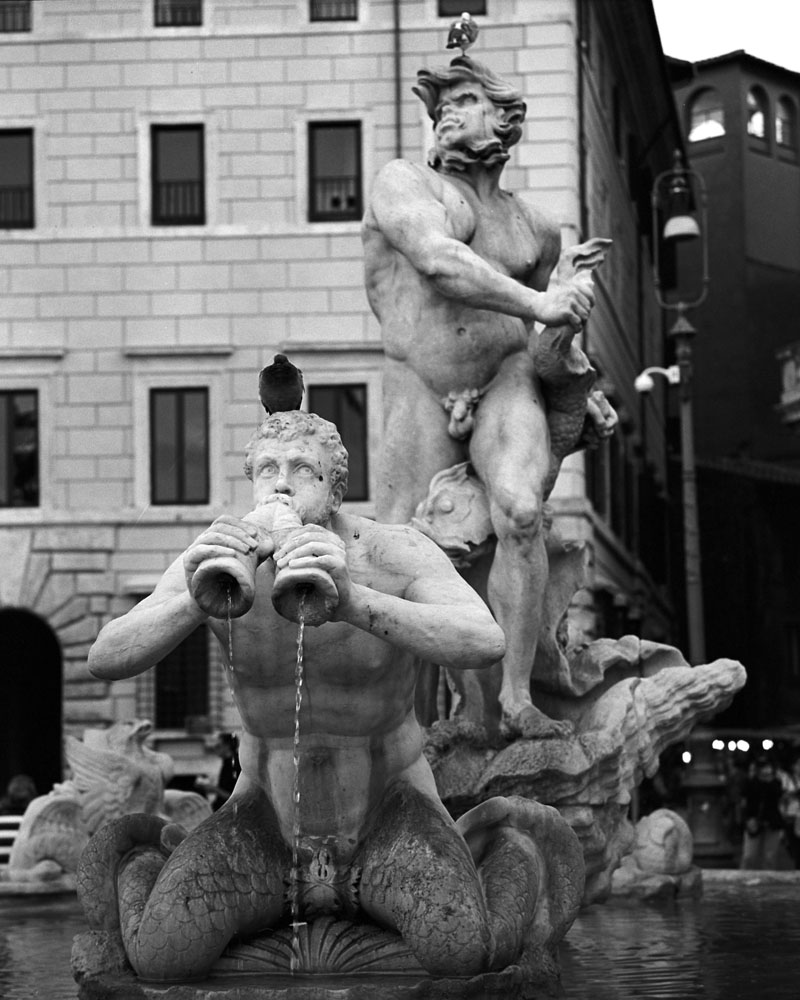
This is somewhat of a recap of some earlier images, but they’ve been a running theme in my Italian work so I thought I’d pull together a collection of my photos of fountains from Rome and Florence.
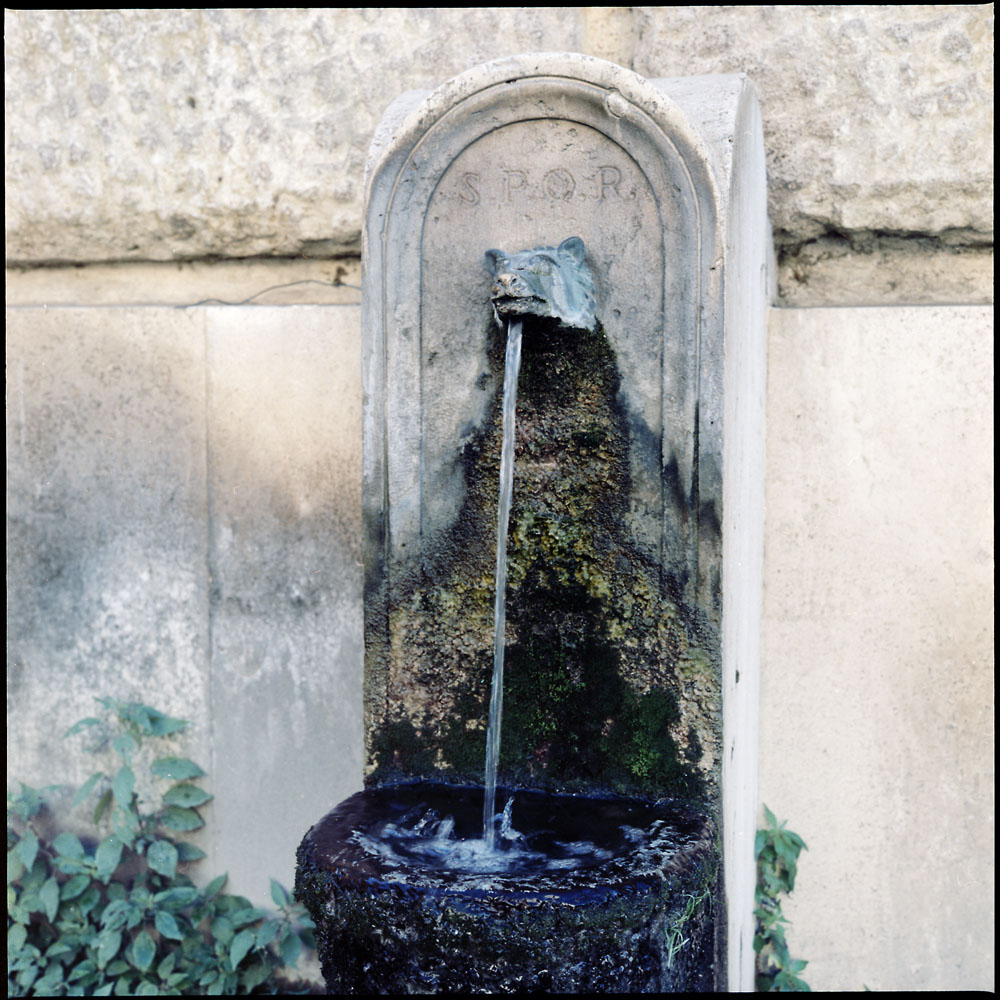
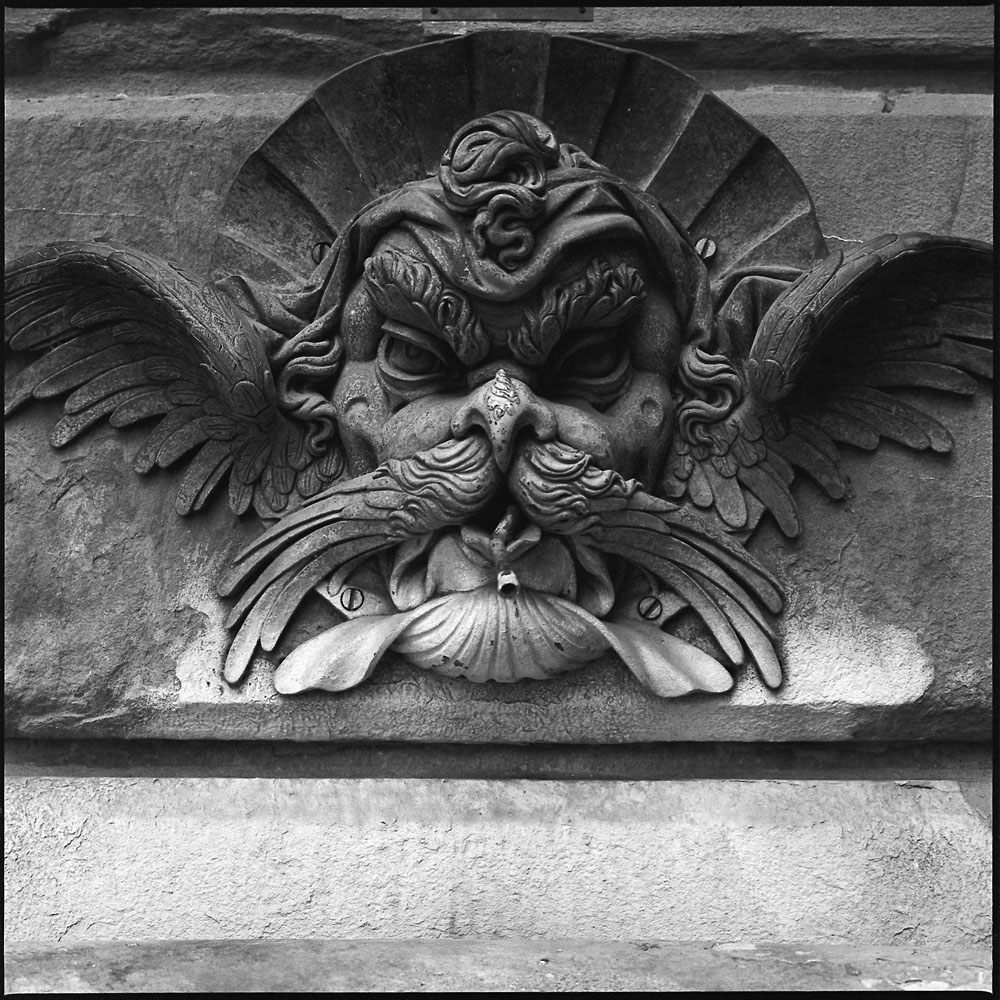
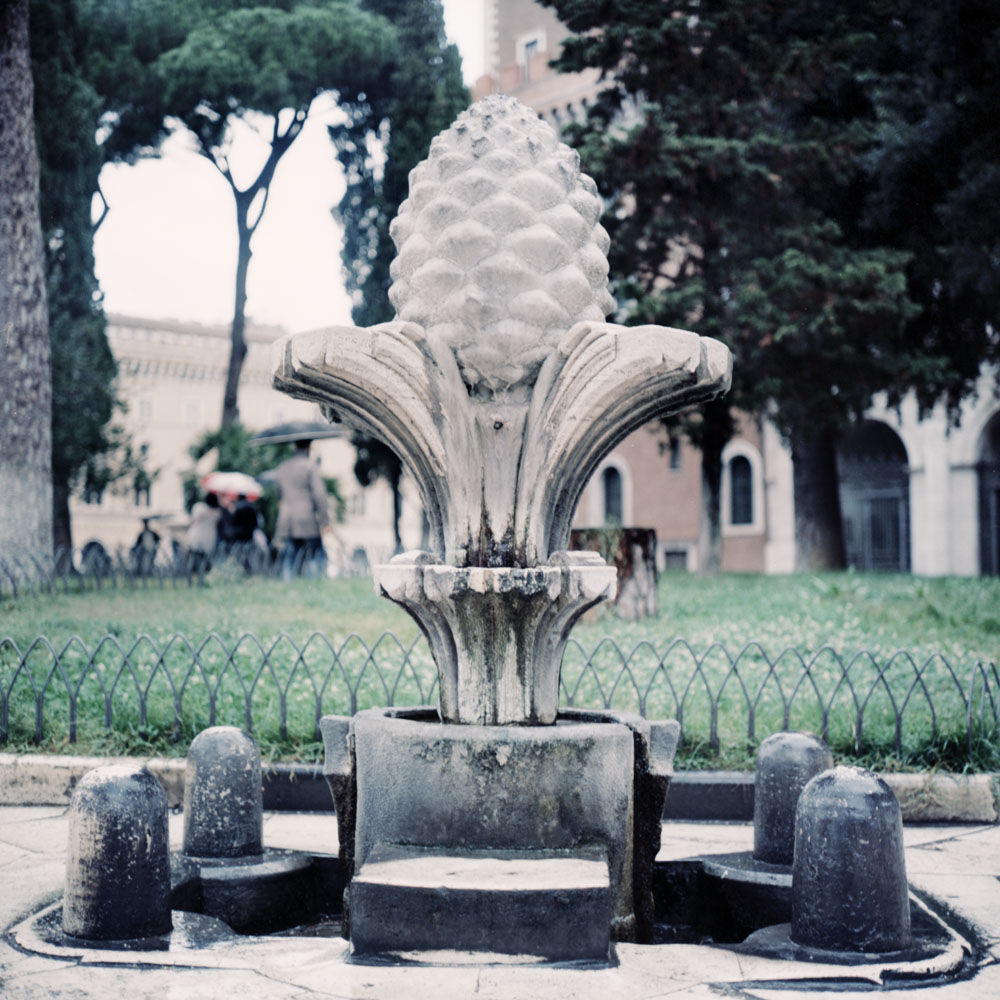
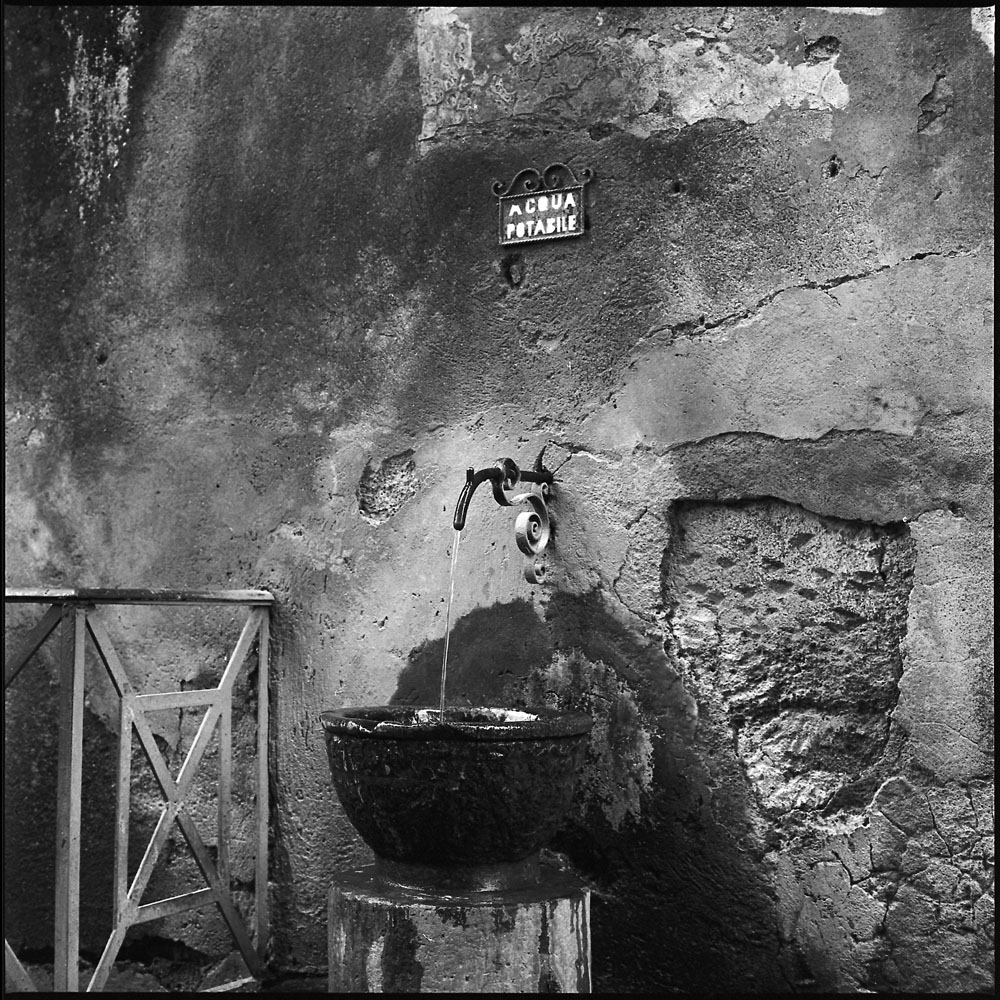
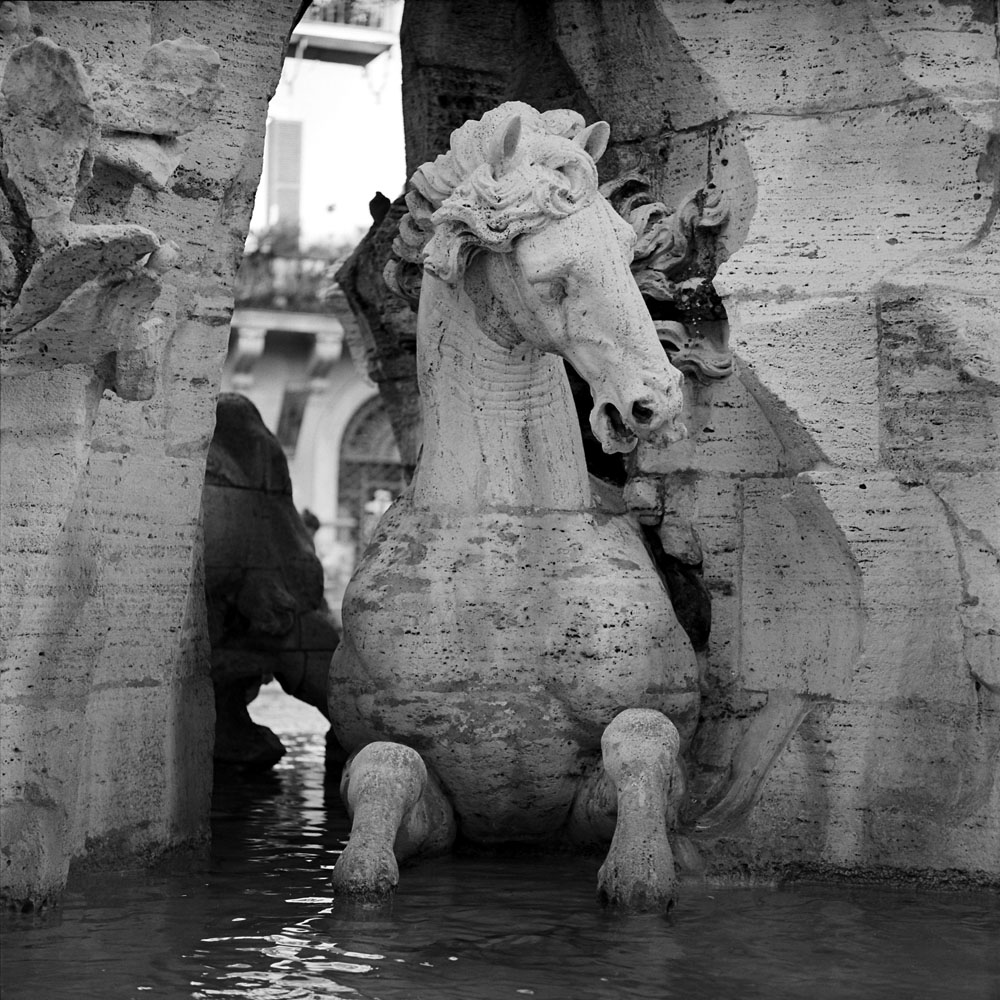
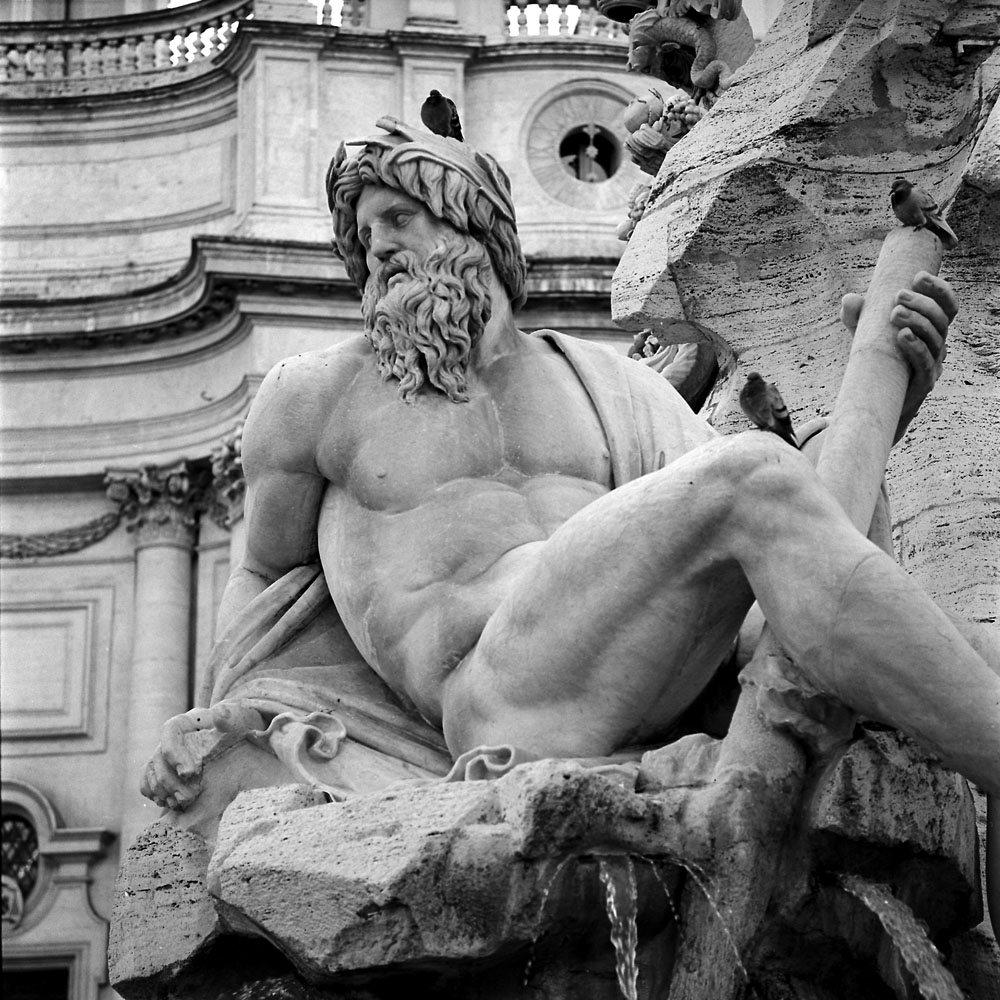
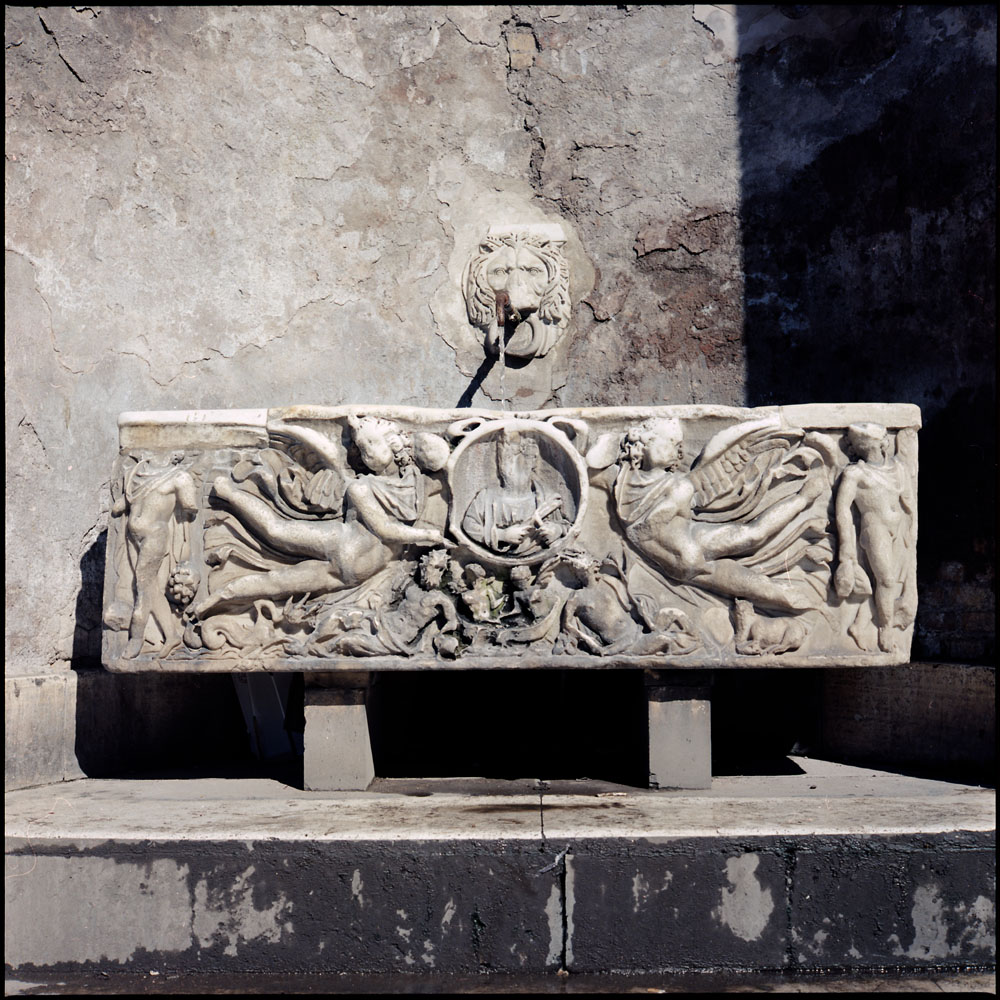
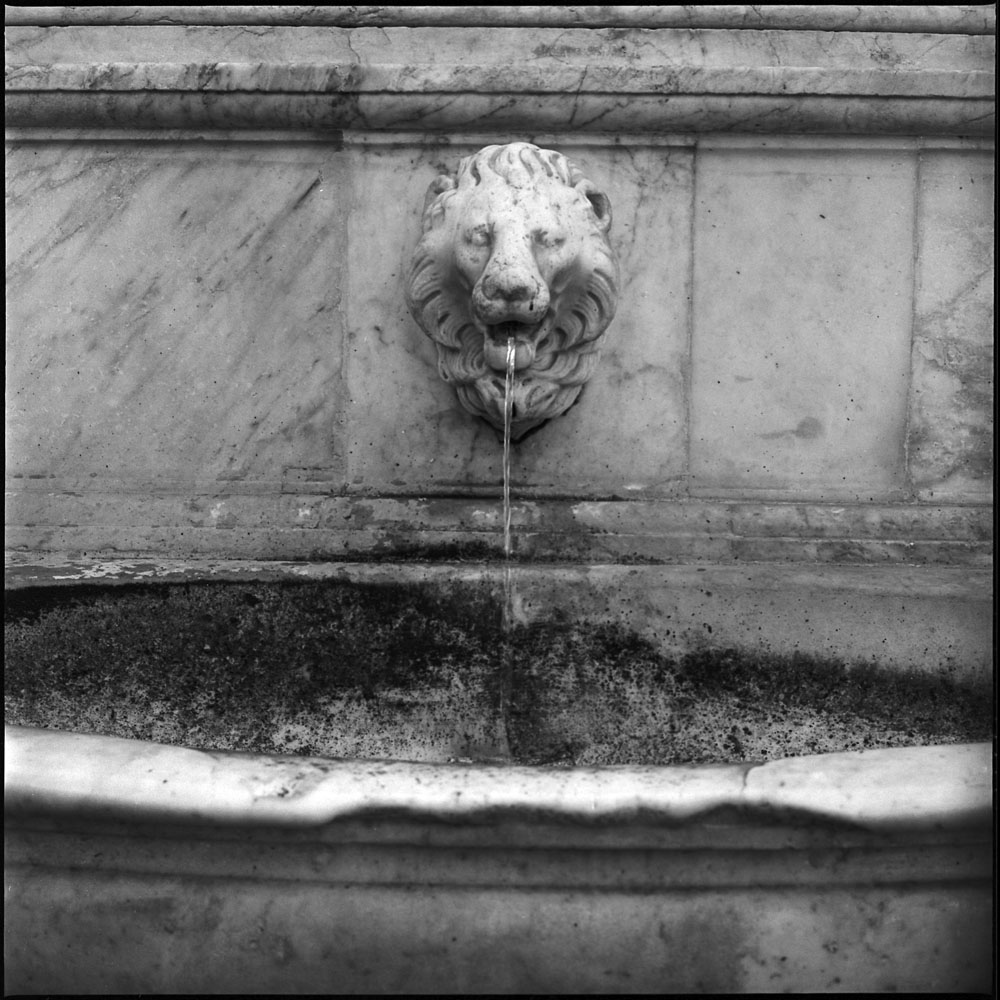
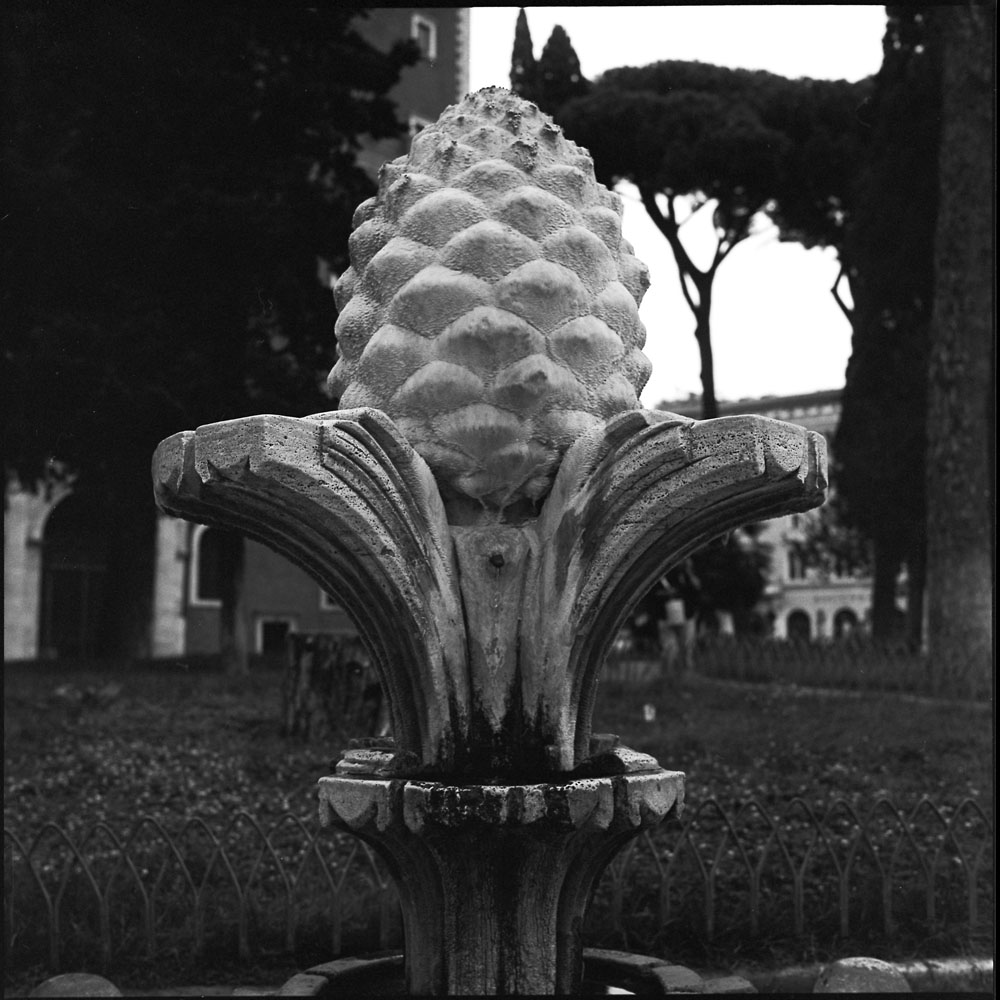
Fountain Detail, Palazzo BarberiniFountain, Capitoline Steps, In the Wind and RainCannonball FountainTriton Fountain, Piazza BarberiniFountain, Palazzo PittiFacade, Villa BarberiniFigure, Neptune Fountain, Piazza della SignoriaFountain, Temple of HerculesSPQR Fountain, Centrale MontemartiniFountainhead, Palazzo PittiPinecone Fountain,Piazza Venezia, RomeAcqua Potabile, Castel Sant’Angelo, RomeWater Fountain, Trastevere, RomePapal Tiara and Keys Fountain, VaticanFountain, PantheonFountain, Villa Borghese, RomeFountain, Villa Borghese Park, RomeFountain, Palazzo BarberiniDrinking Fountain, Ponte Vecchio, FlorenceDrinking Fountain, Castel Sant’Angelo, RomeCellini Fountain, Ponte Vecchio, FlorenceTrumpeting Merman, Fountain, Piazza NavonaHorse, Four Rivers Fountain, Piazza NavonaRiver God, Four Rivers Fountain, Piazza NavonaAncient Fountain, ColosseumLion Head Fountain, San Lorenzo, FlorencePinecone Fountain, Piazza Venezia
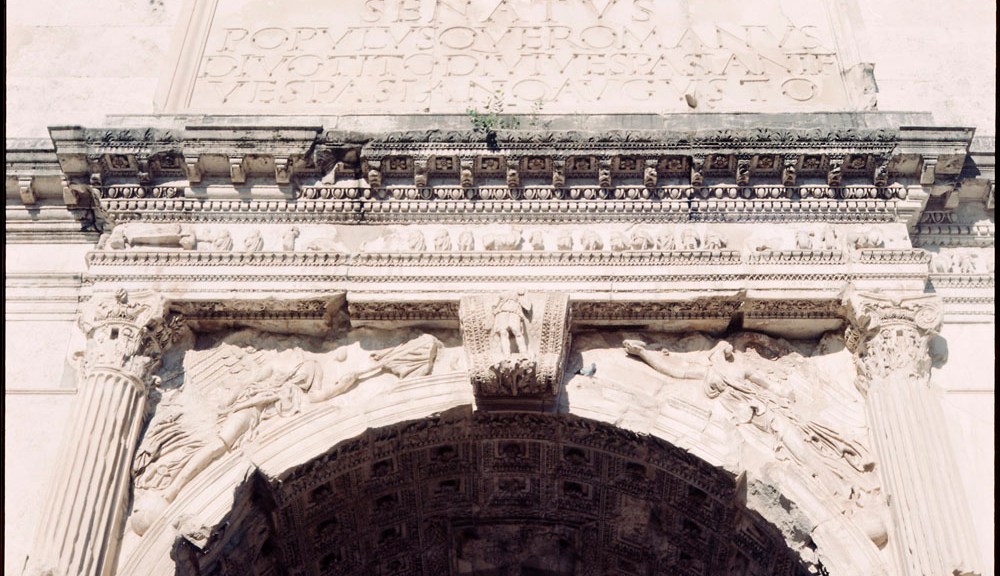
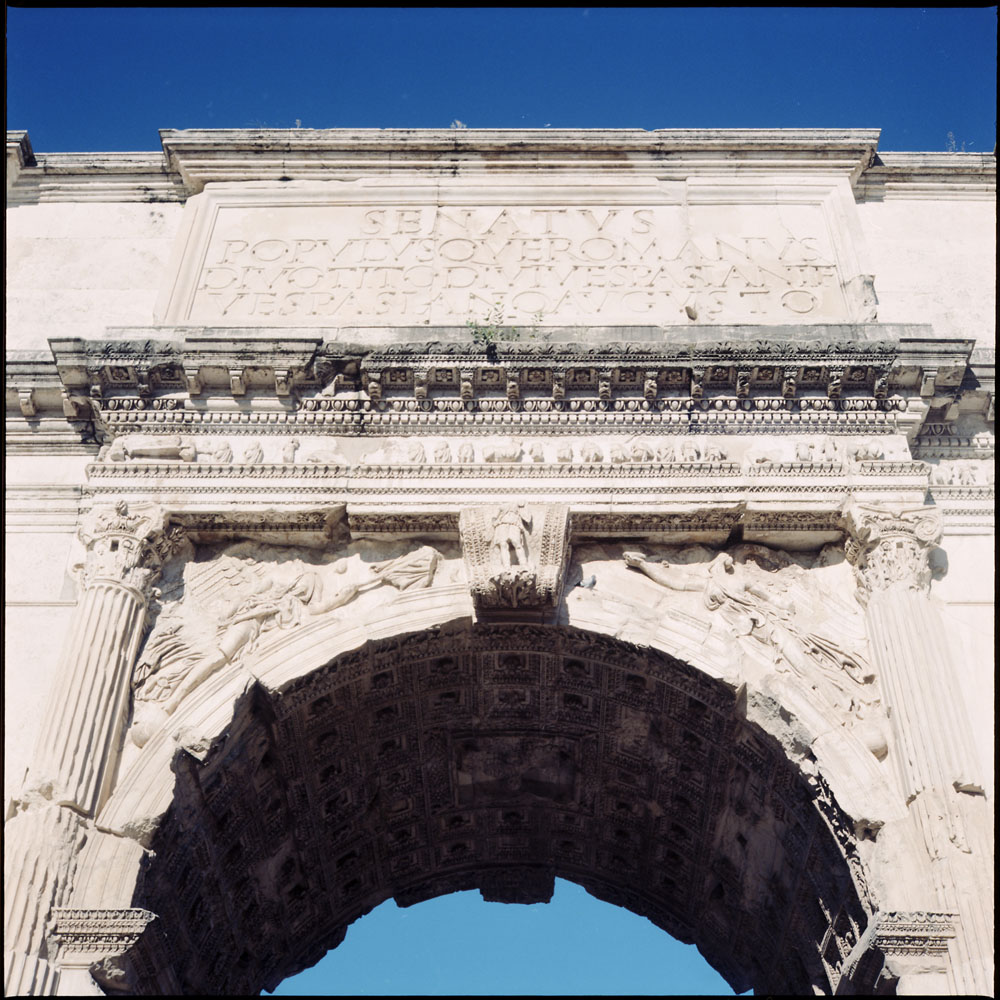
Many emperors had triumphal arches erected. Immediately beside the Colosseum is the arch of Constantine. The arch of Septimus Severus stands at the foot of the Capitoline hill, at the one end of the Forum. There are others scattered around the Empire, and of course, they inspired many later constructions, such as Napoleon’s Arc De Triomphe in Paris, the Soldiers’ and Sailors’ Arch in New York City, Wellington Arch in London, and the Arch of the General Staff Building in St. Petersburg. Ironically, the latter two were built to commemorate the Russian and English victories over Napoleon. This is the arch of Titus, at the opposite entrance to the Forum.
The Roman Senate and People (dedicate this) to the divine Titus Vespasianus Augustus, son of the divine Vespasian.
The inscription itself and the central arch are the remaining original parts of the arch. It was restored and reconstructed in the 19th century. The reconstruction was done in Travertine marble to demonstrate the difference between the original and reconstructed parts, and the reconstructed columns were left plain in contrast to the fluted columns of the original.
The arch would have originally had a sculptural group on top of perhaps horses and chariots, or perhaps the emperor riding a pegasus. The inscription would have been filled with metal letters in silver, gold or some other metal (bronze is possible but less likely as it would have oxidized and bled green patina over the face of the arch).
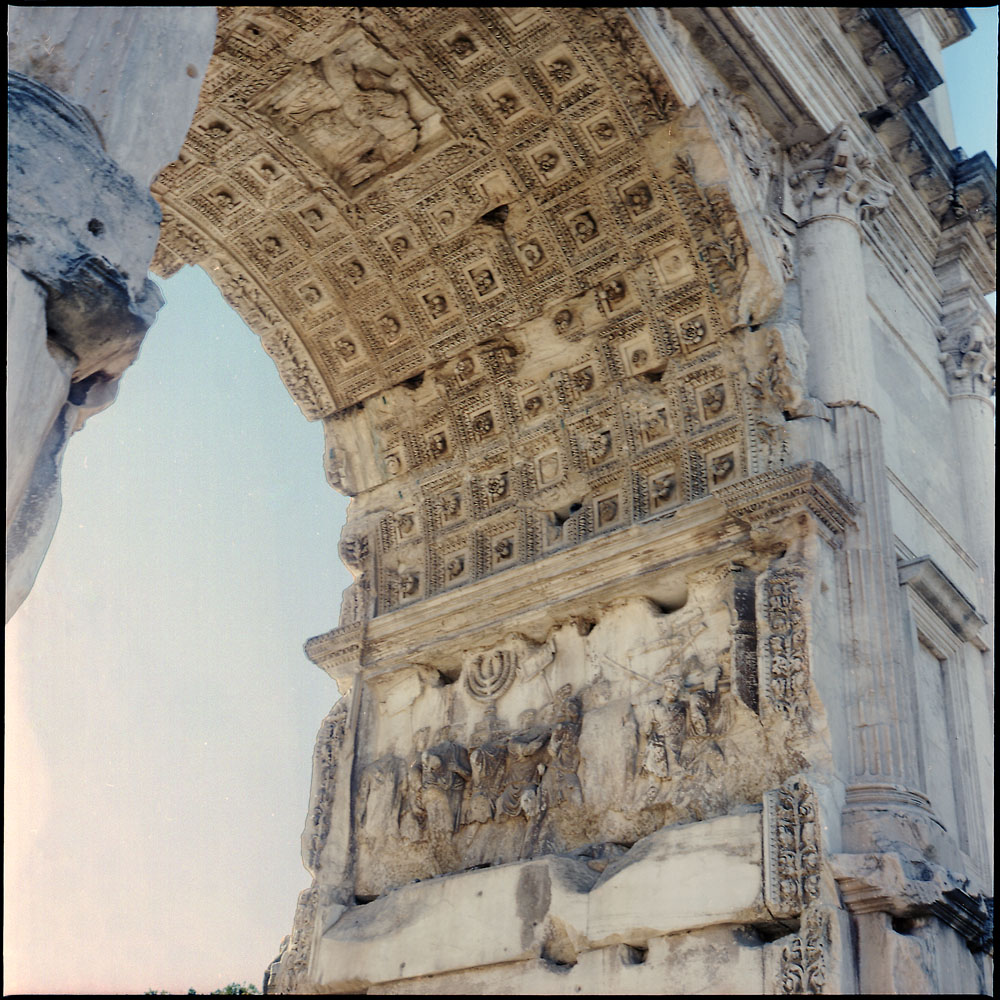
In the interior of the arch, you can see the spoils of war being brought back to Rome from the Temple in Jerusalem, particularly the golden Menorah. This was originally painted golden color, with the background blue. During a spectrographic survey of the arch for the Arch of Titus Digital Restoration Project in 2012 discovered the remains of yellow ochre paint in the menorah.
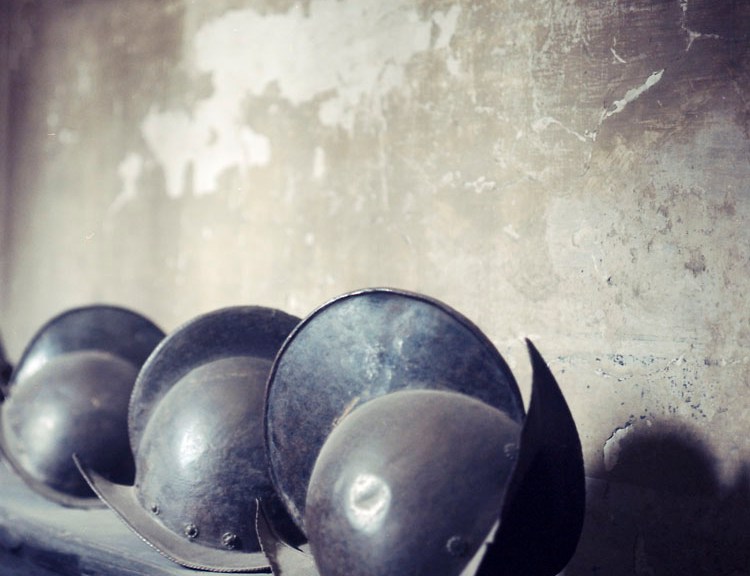
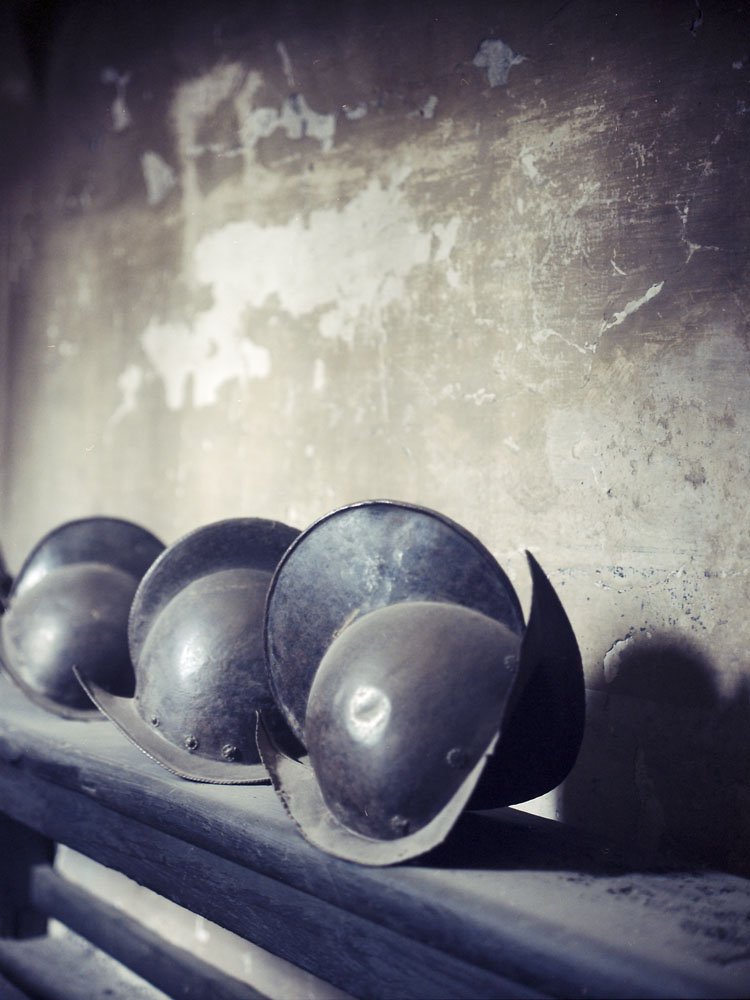
In a guardroom in the Castel Sant’Angelo preserved as an example of what such a space would have looked like in the 17th or 18th century, a row of steel helmets have been laid out:






 dcphotoartist