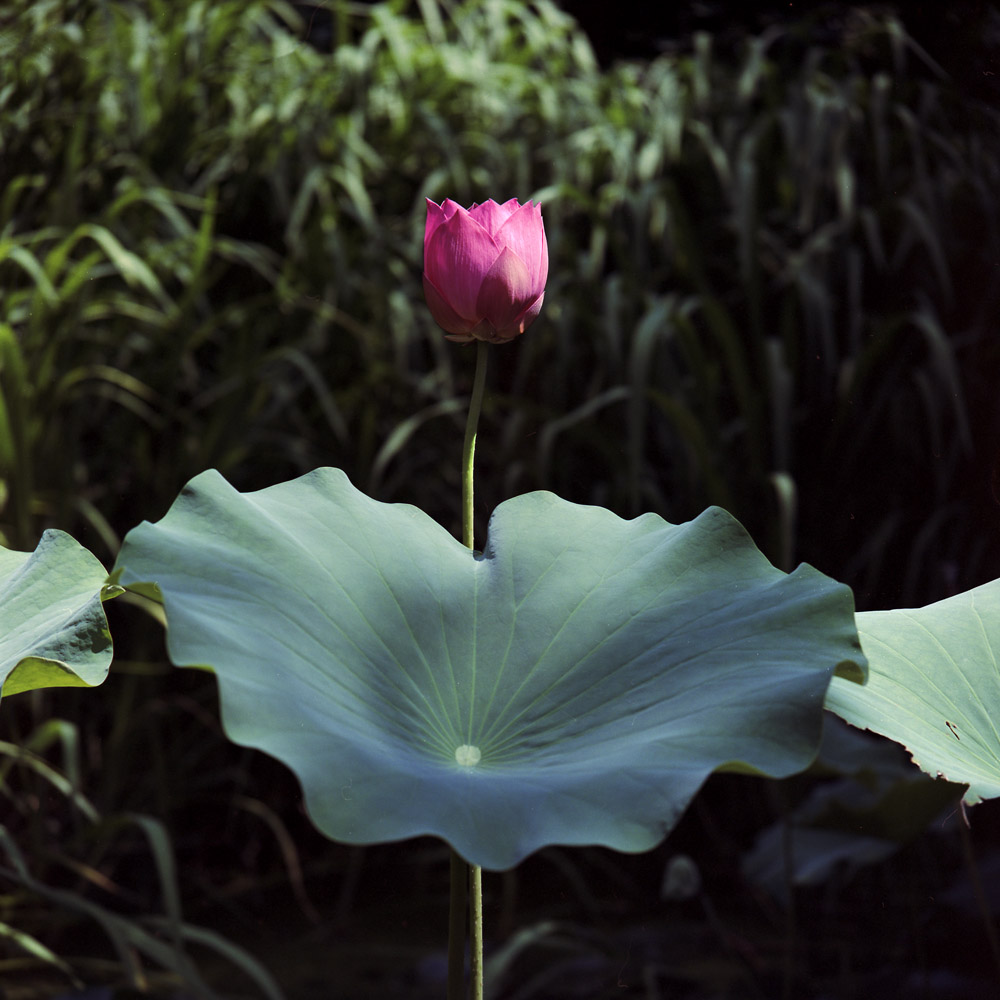
I don’t think much needs said – it’s a lotus blossom at peak season, with full and unbuttered leaves.
I don’t think much needs said – it’s a lotus blossom at peak season, with full and unbuttered leaves.
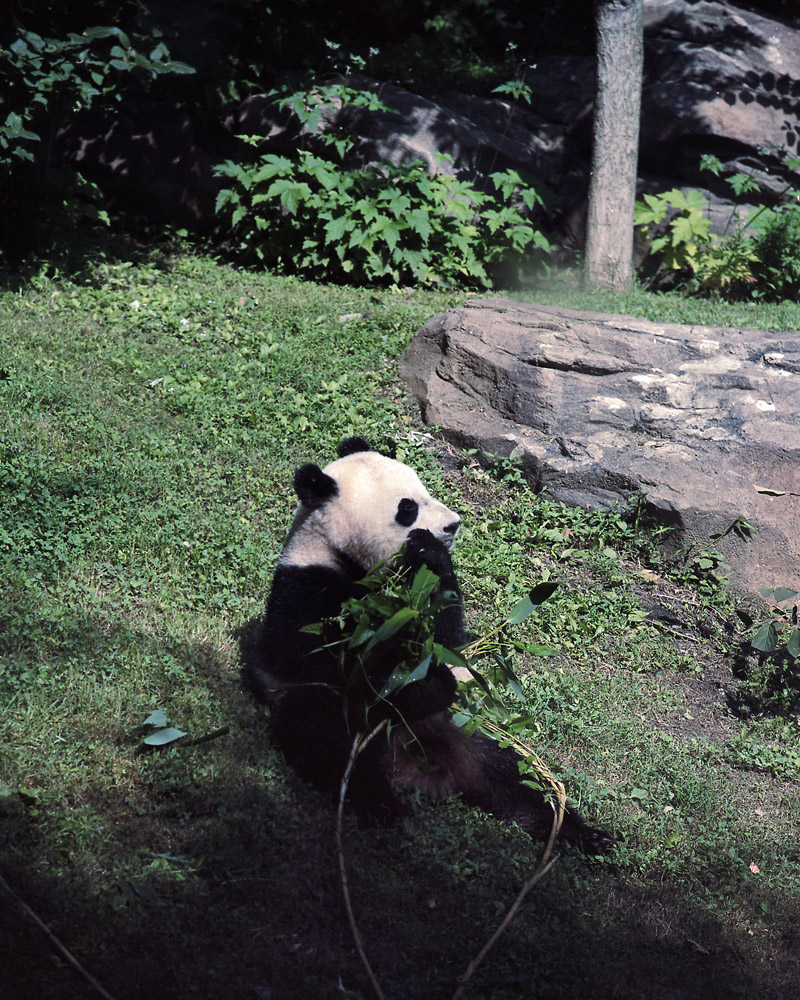
I took the Tele-Rolleiflex with me to the zoo the other weekend. I didn’t know quite what I would be able to get good shots of and not, but I tried anyway. The one animal I could get close enough to get a good shot of while still outdoors in good light was, fortuitously enough, the Giant Panda – I think this one is Tian Tian, the male panda.
Enjoy!
I’ve been doing a lot of housecleaning. I’m preparing what used to be my old office (the computer is now in the library, aka the second bedroom) to become the “camera room”. I have all the shelves I need, I just have to clear out some more stuff and get rid of the old computer desk I used in that room. In the process of cleaning it up, I found a whole bunch of old negatives that I hadn’t done much with. I had tried scanning some of these in the past, and had issues, but I think that was as much my old scanner and my old scanning software that couldn’t handle them as well. These two images were some of the rare color nudes I’ve done. I’m not entirely sure why I don’t do more color nudes – I think there’s a mental association with color nude work and shall we say “non-artistic” photography. I think it’s much harder to do a good color nude because it becomes so hyper-realistic that we start to look at the model not as a model, but more as a portrait, and as such we start personifying the models rather than seeing them as abstract everymen and everywomen.
These shots can’t be duplicated – the graffiti-covered structure (which used to be part of a military guardhouse overlooking the entrance to San Francisco Bay) has since completely collapsed into the sea and/or was removed by the Army and/or Golden Gate Natural Recreation Area rangers for being tragically unsafe. Quel dommage – it made for a really cool backdrop. These are two survivors from that excursion, and proof that checked-baggage x-ray scanners are indeed hazardous to film (thus the difficulty with scanning and color-correcting them).
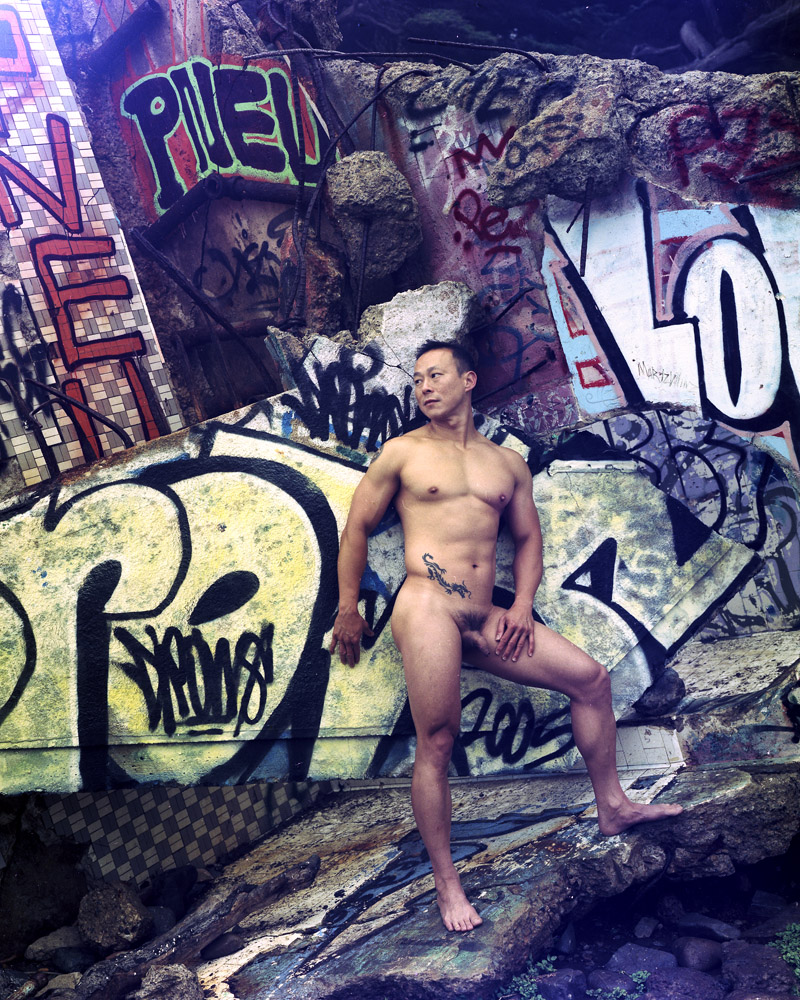
K.T. was a great model to work with. You can’t see it from these shots but we were out photographing in full-on San Francisco Golden Gate fog. Which is COLD. And WET. But he bravely got out there on the crumbling concrete in the sand and the wind and the fog with nothing but his birthday suit and posed. I think we worked for about 2 hours. Yes, he did have a bathrobe to slip in and out of between shots, I’m not that cruel. I’m going to try and coax him into posing again for me a good 10+ years on from when these were taken.
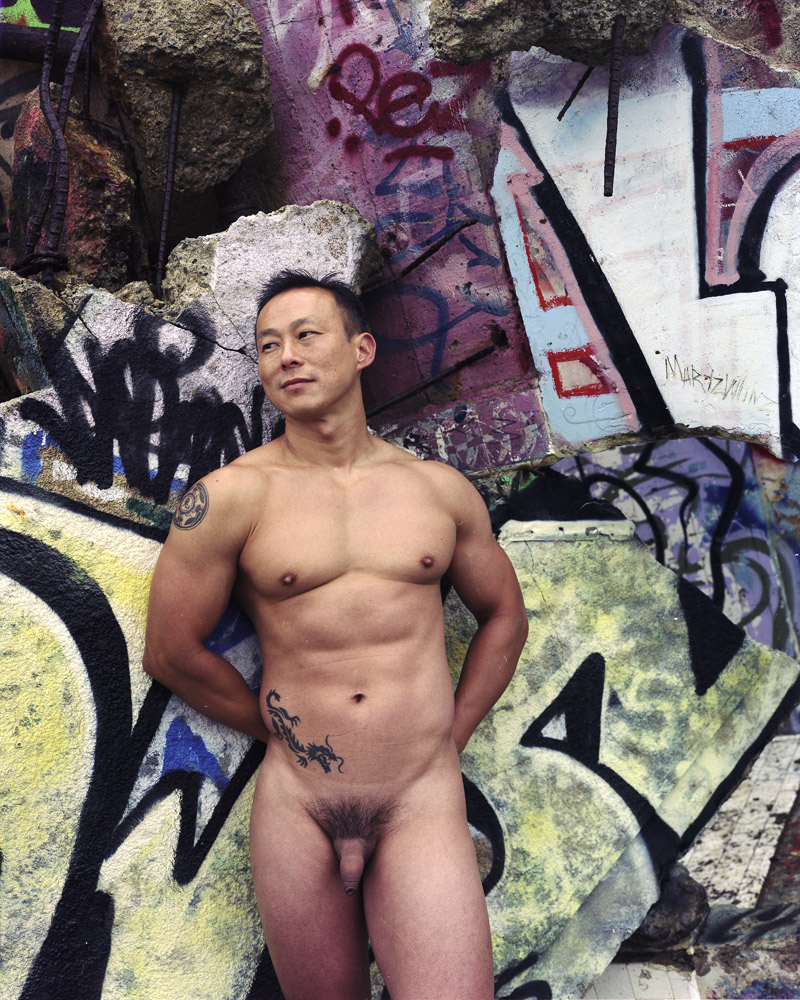
I’ll be following these up with a batch of black-and-whites I did with the same model at the same location. One of the great things about San Francisco is that public attitudes toward things like (respectful) nudity are so relaxed. Although the location looks very isolated, we were just perhaps 60 feet down a cliff from a well-traveled footpath, inside the city of San Francisco proper. I was shooting on this same beach another time, that day being a rare sunny day in SF, and my model was standing next to a rock in the surf, naked as the day he was born. Out from between two sheltering rocks comes a rather grungy looking tennis ball, hotly pursued by a Golden Retriever. Who is shortly followed by its owner. We don’t have any time at all to react, and my model has no way to cover up. The dog’s owner pauses for a second, surveys what we’re doing, says, “nice day for it!”, smiles and walks on after the dog.
I know these have nothing to do whatever with each other beyond the fact they were all captured here in Washington DC.
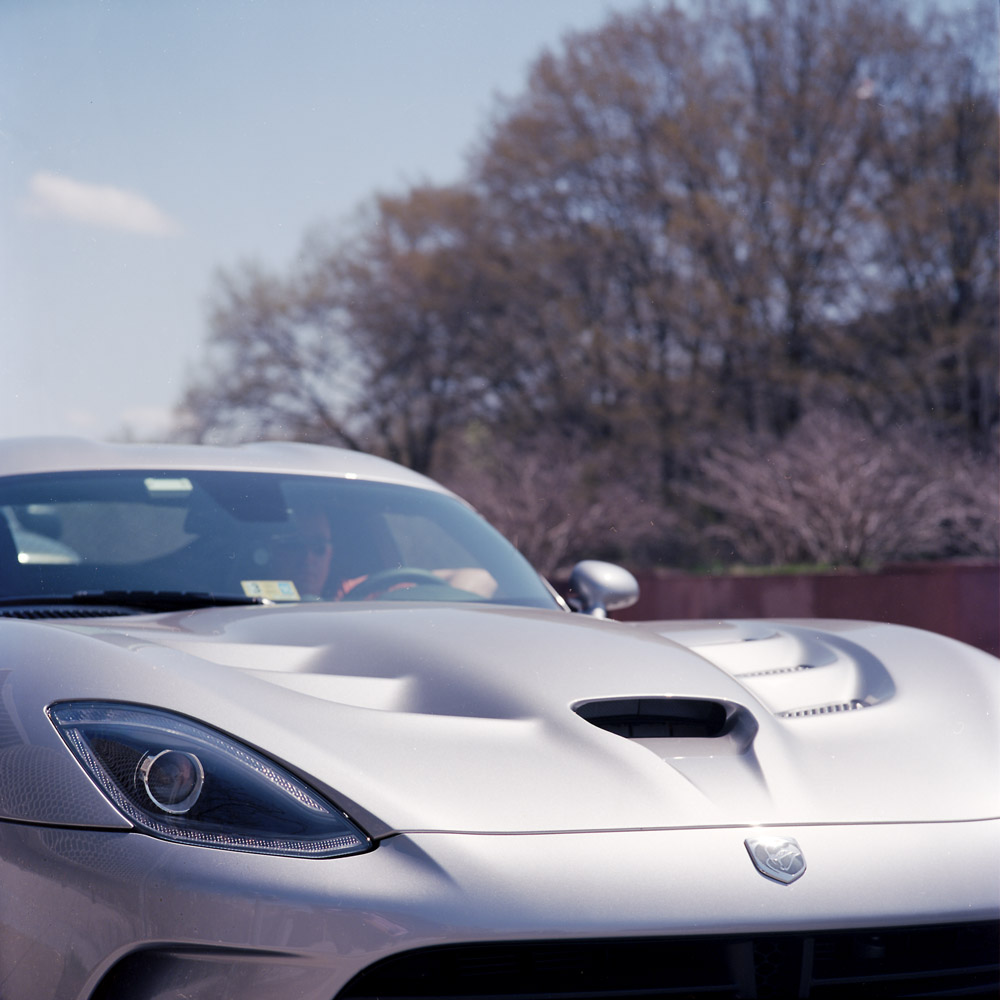
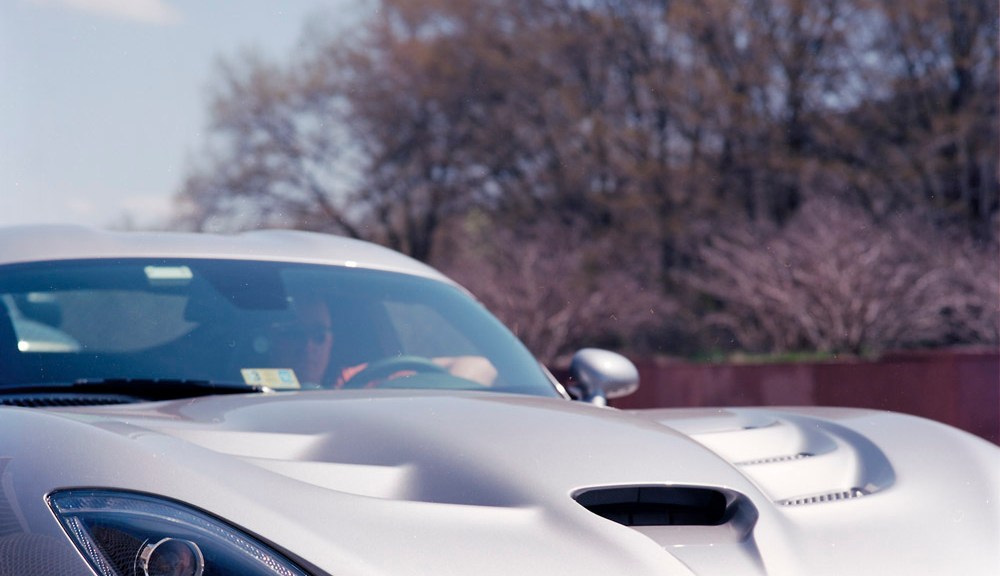
A rather rare sighting – a Dodge Viper hardtop coupe on the street. They’re big, they’re bad, they don’t make good city driving. So it was unusual to spot one parked at curbside. I didn’t even realize the driver was still sitting in the car when taking the picture until I came around to the side to take another look at it, and he waved at me.
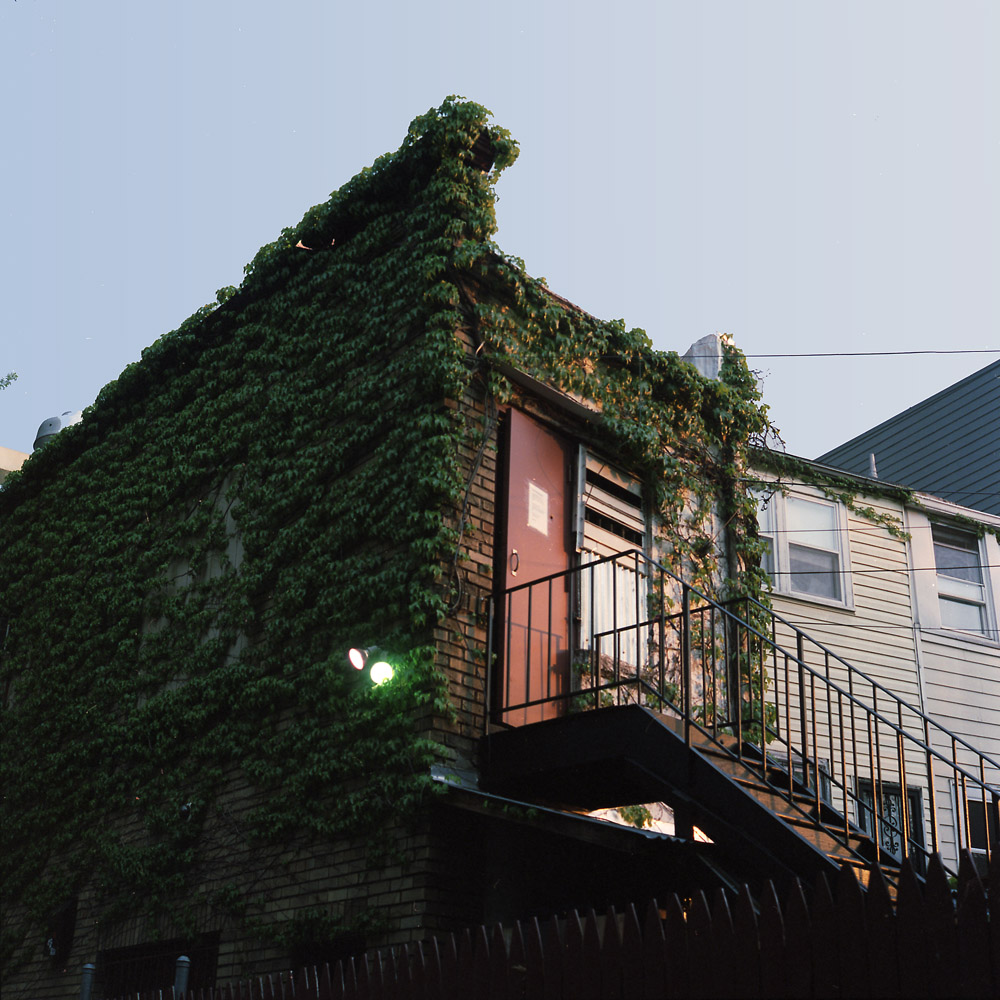
The back door to the Wonderland Ballroom. I was walking past it on my way home from another neighborhood walkabout and saw the sunset glow illuminating the upper story. Now an extremely popular neighborhood hangout that draws a youthful/hipster crowd, it was in its previous incarnation the oldest continuously operating gay bar in the city. It catered to an African-American male clientele, but the owner shuttered the club when he realized his patrons were mostly the same dozen or so elderly men who would come in, drink one beer all night, and sit around chit-chatting with each other. You can’t run a business on less than a dozen beer sales a night, even if you do own the building.
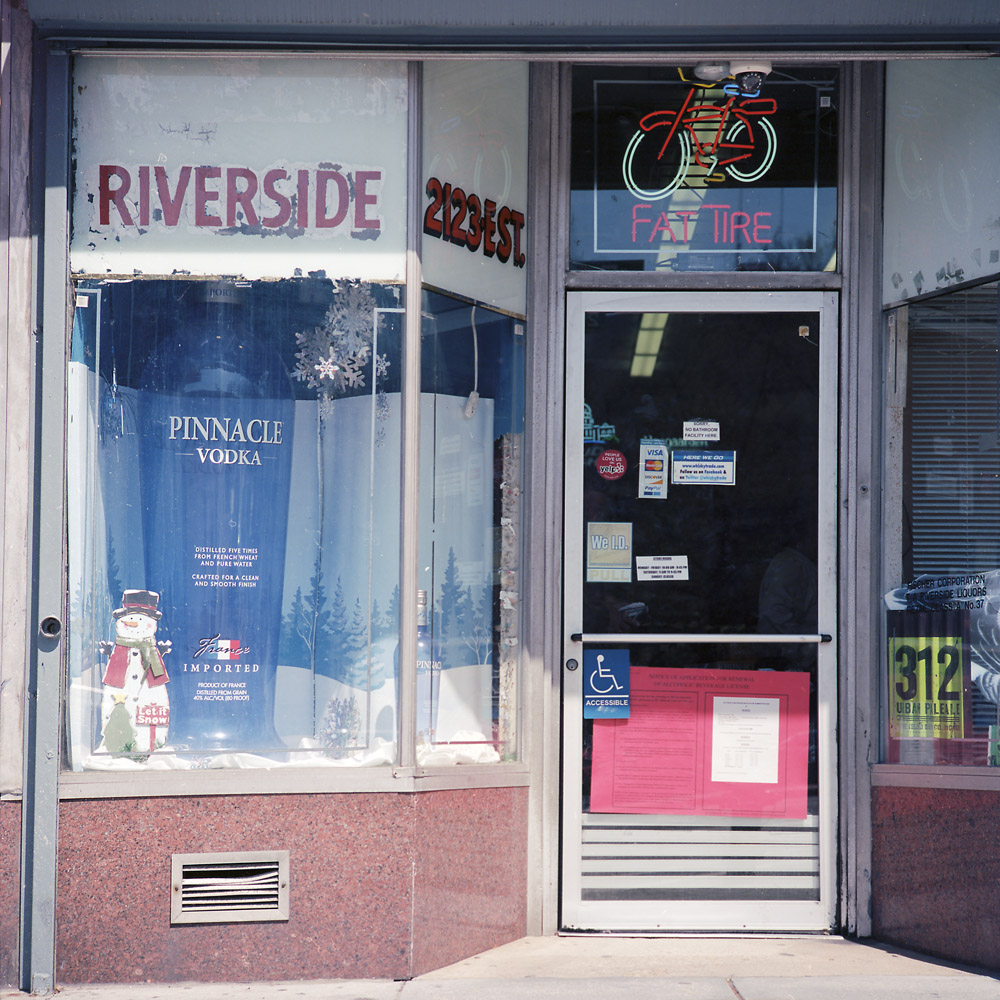
This is a liquor store near my office. I loved the old-fashioned lettering in the window that preserved the feeling the store was trapped in a 1940s time warp. I think it was the original lettering as it has the same feel as the Art Deco facade of the building. This highlights the importance of photographing things you see when you see them as they may not be there tomorrow – when I passed the store yesterday on my way back from lunch, they had replaced the old painted lettering in the window with what looked like a piece of white foam board with blue printed lettering, which while easier to read was nowhere near as pretty.
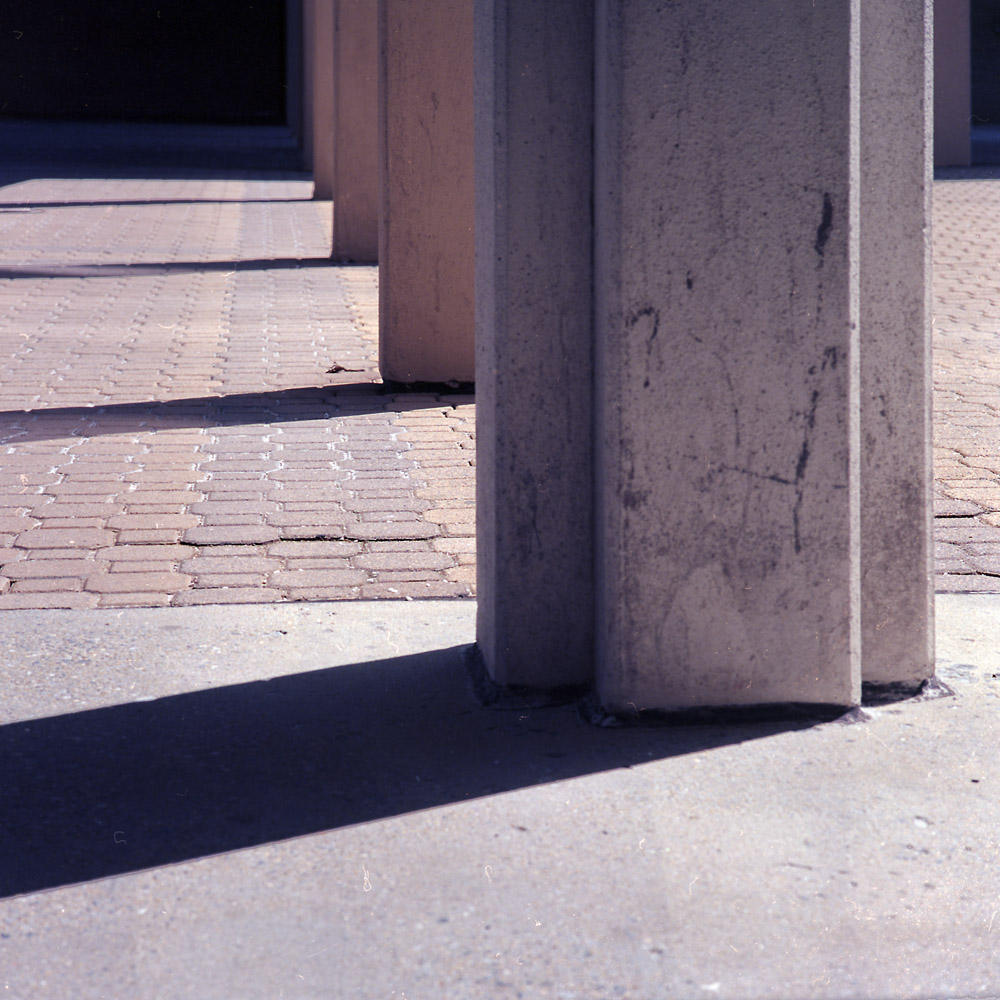
Another scene near my office – columns for a pergola, casting shadows across the brick pavers on the plaza.
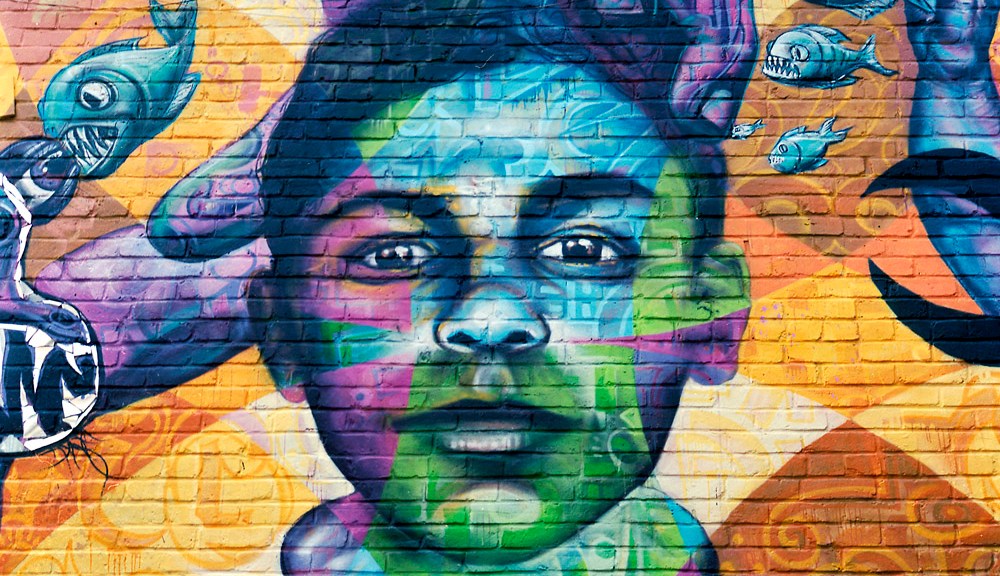
I had photographed this mural before. The other day I was doing a walkabout in my neighborhood and passed it again, to see that the artist had re-worked the mural in new colors with new designs.
here are the original photos I took, in color and black-and-white.


The artist came back and re-worked the piece, keeping only the head of Garuda and the head of the black boy as compositional elements, and completely re-working the color palette.
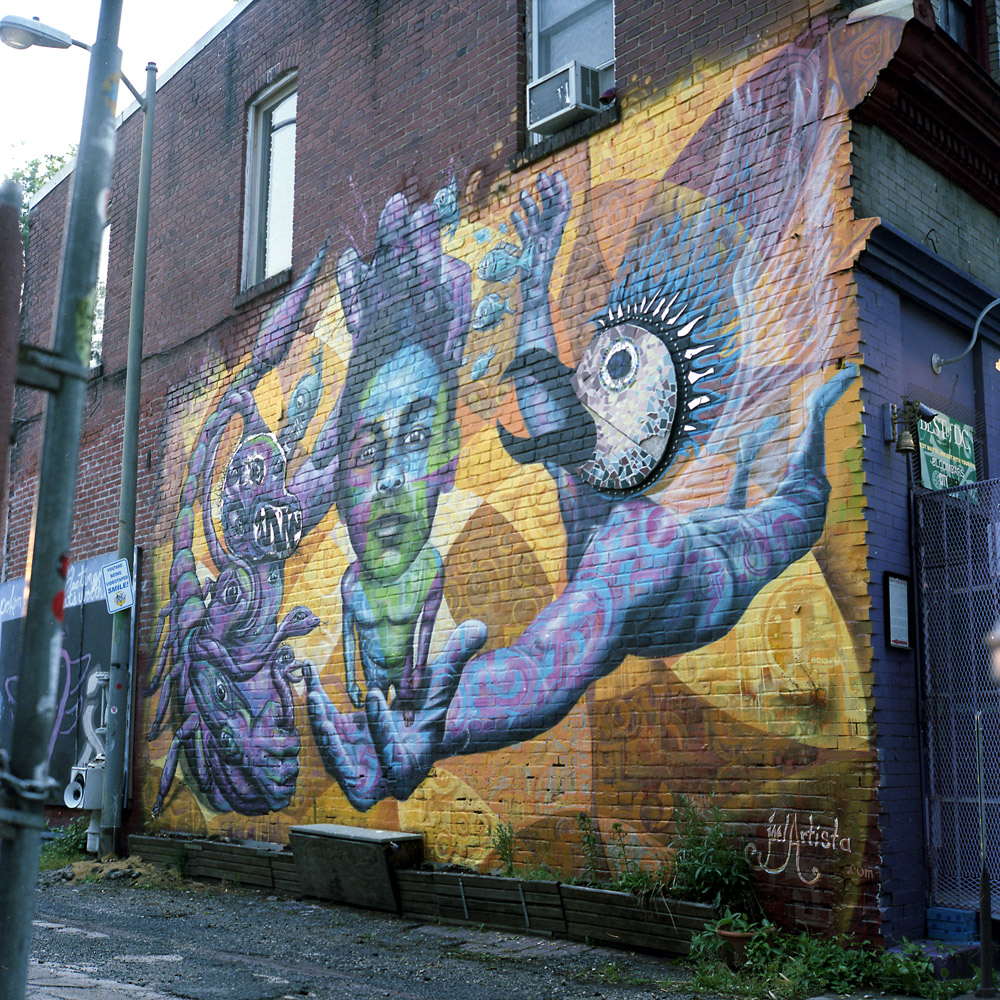
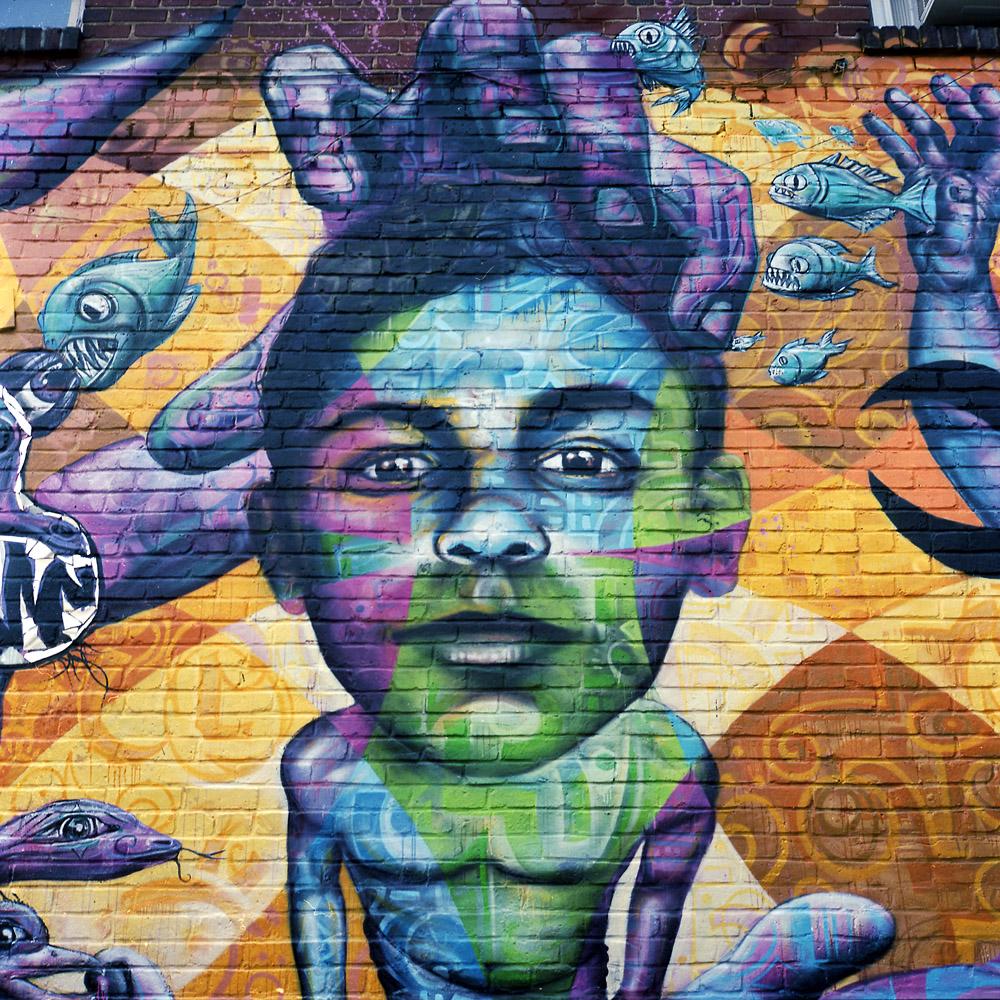
This is one thing a traditional photograph can’t do – it can’t evolve over time being reworked into a totally different yet fundamentally similar image. At the point you transform a photograph this much, it’s no longer a photograph. It’s figurative and not literal. Part of the intrinsic quality of a photograph that makes it valuable and meaningful as a photograph as opposed to a painting is its relative immutability and the appearance of a binary 1:1 relationship with reality. We know of course that photographs CAN lie, and that they have figurative, non-literal properties, but the descriptive quality of a photograph is so powerful that we WANT to view them as purely, literally descriptive and non-figurative – “Photos don’t lie” and the visual equivalent of “if it wasn’t true, they couldn’t print it”.
So the question to you is, is this the same mural, or is it a different mural entirely, now that it’s been reworked?
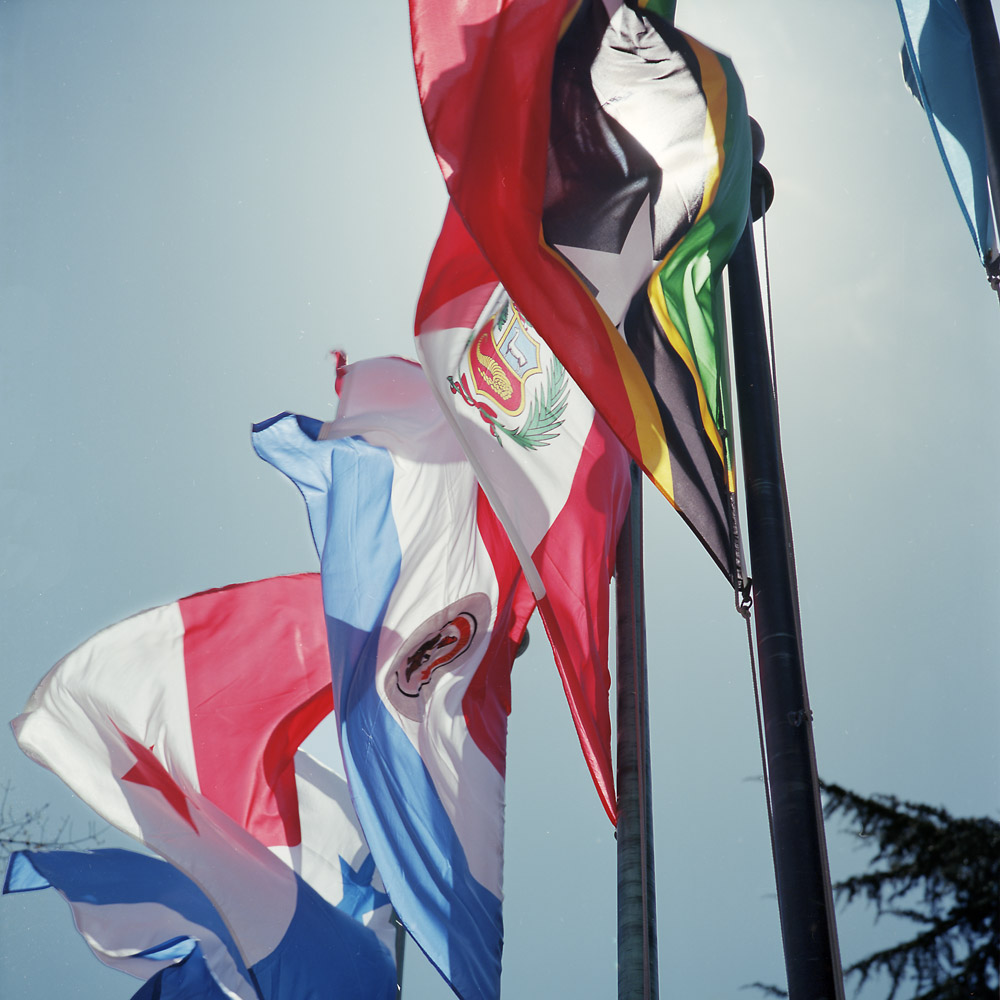
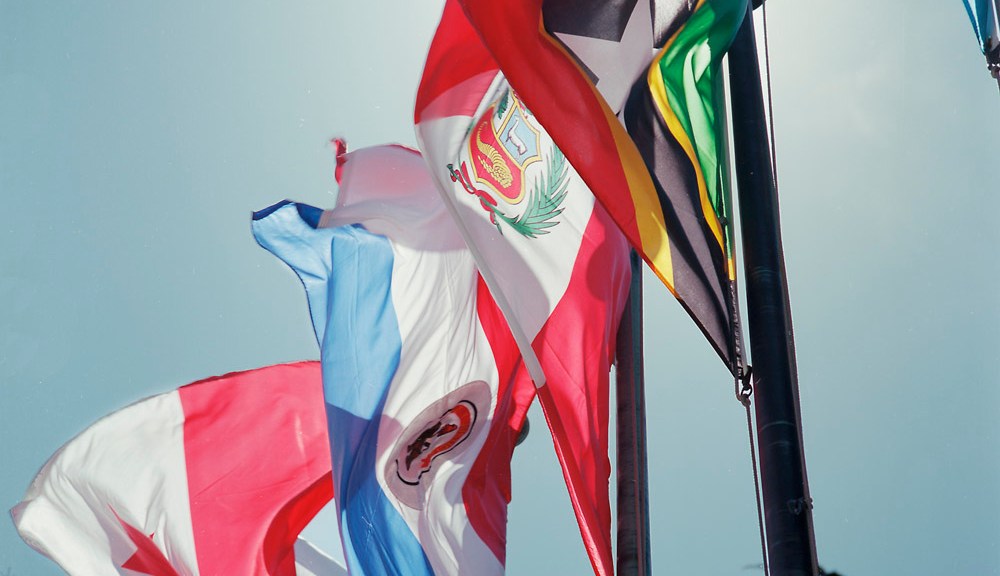
Ok, so you’ve seen me posting images of the PAHO/WHO headquarters building for the last few weeks. Here are some shots of the flags outside. There are 29 member nations, from Argentina to the United States, but also including France, Great Britain, and Spain.
Here they are snapping in a brisk breeze, with the Washington Monument visible in the background:
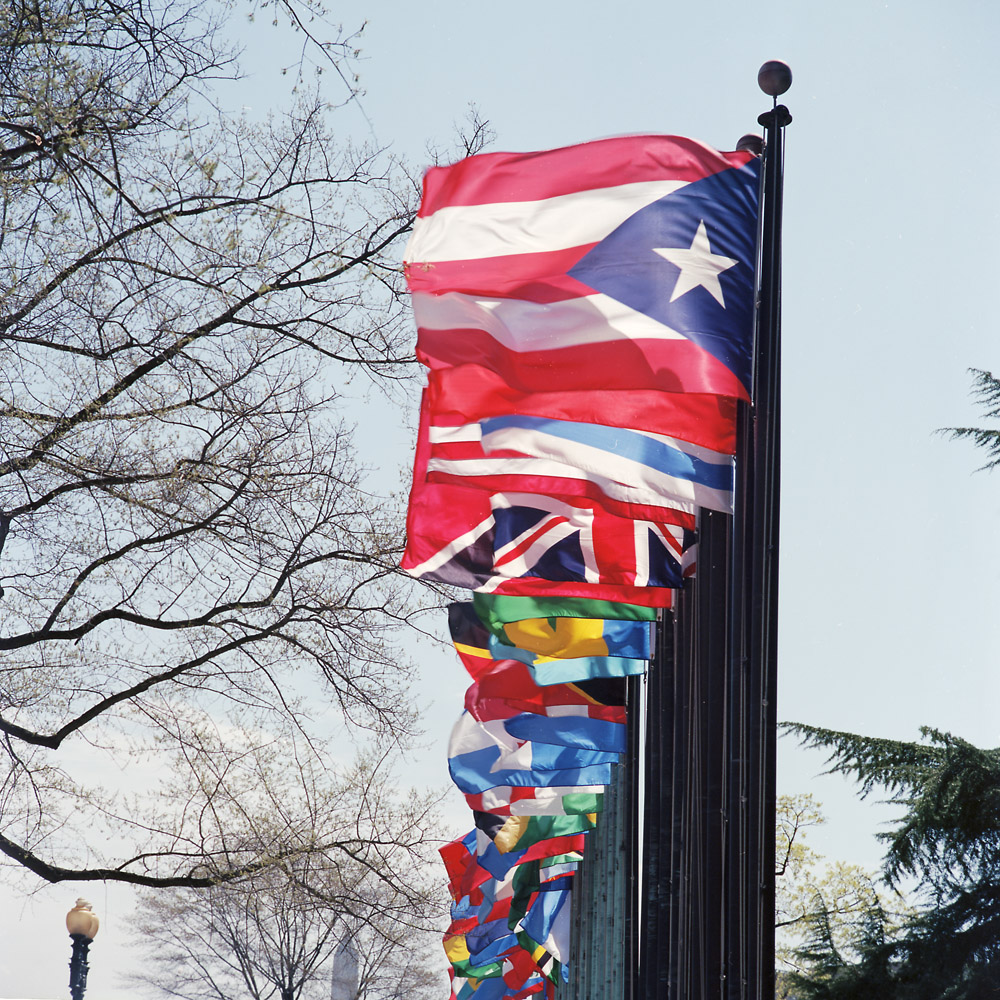
A close-up of several flags, with the PAHO building as the backdrop:
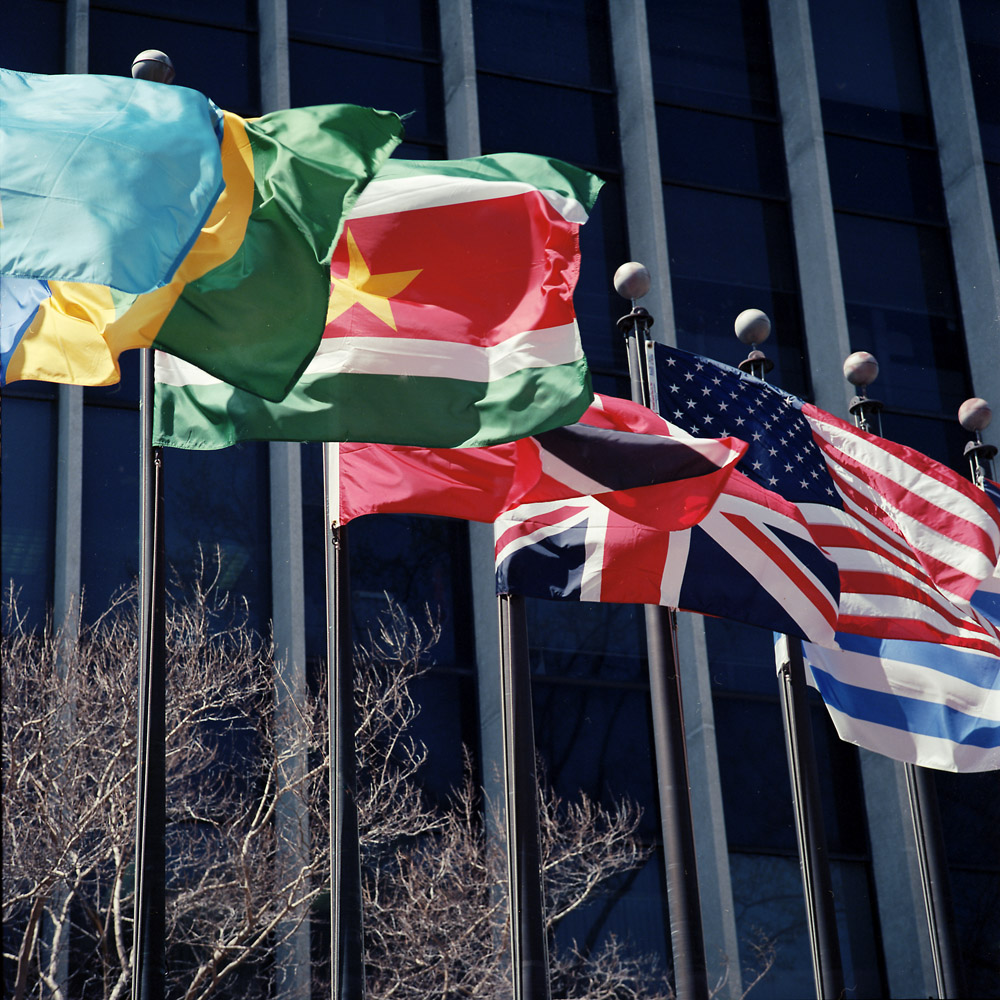
Looking up into the flags with the mid-day sun backlighting them:
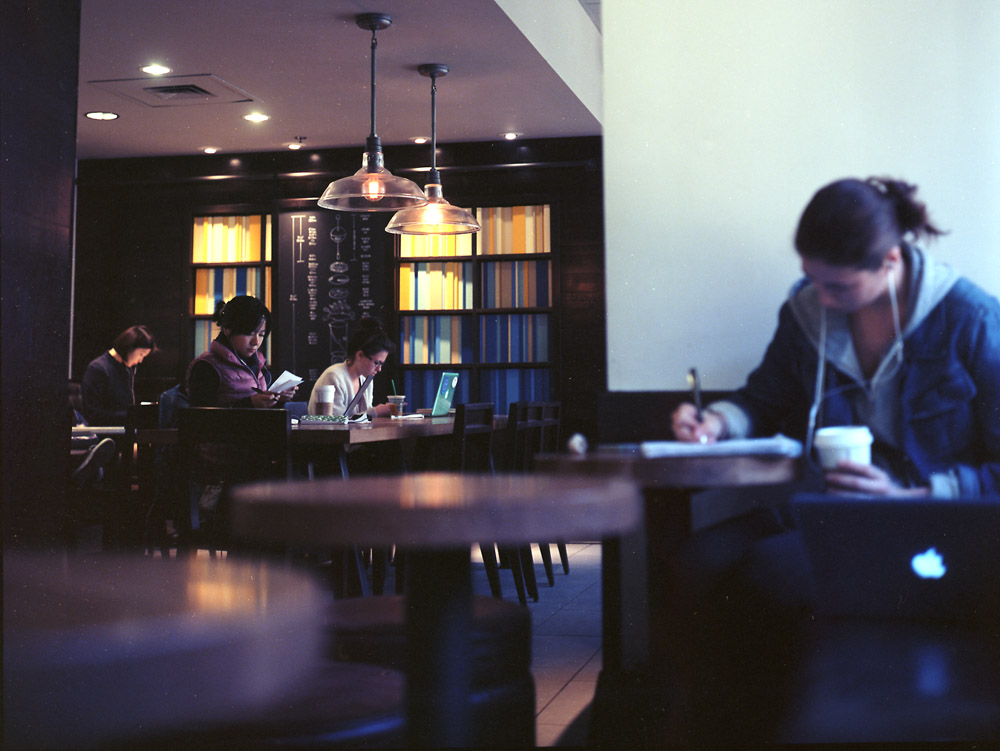
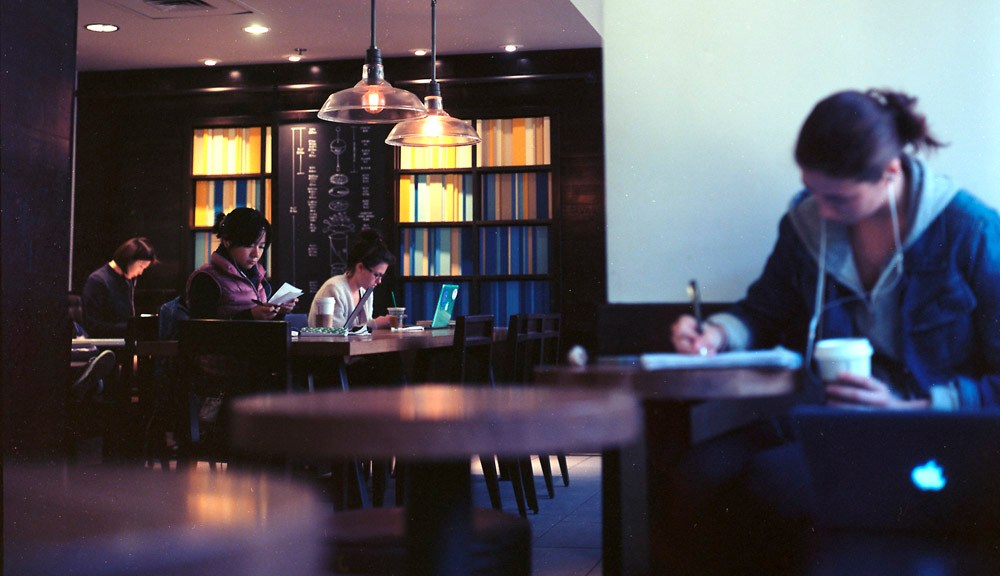
While I certainly don’t think of this as being anywhere equal or even close to a Vermeer painting, to me it has a little bit of that feel – soft light describing people working at gentle activity.
Thinking of which, if you haven’t seen the movie, Tim’s Vermeer, you really ought to. It’s a documentary about this inventor named Tim who got this wild idea about how Vermeer painted his paintings. Tim was a visionary in his own right, having pioneered digital video editing back in the early 1990s and received an Emmy award for technical achievement. Having been relatively successful in his career, he was free to go Ahab on his obsession with the idea that Vermeer used some kind of optical device to assist him in painting. Tim, unlike captain Ahab, was able to run his idea to the ground and survive the encounter unscathed. While nobody can say conclusively that Tim was right and Vermeer DID use an optical device, his documentary film and the end result are an incredibly compelling argument in favor.
Just some random captures of people out and about. I want to get better at street candids, so I’m practicing. These are a few good examples, at least I think they’re good, for me.
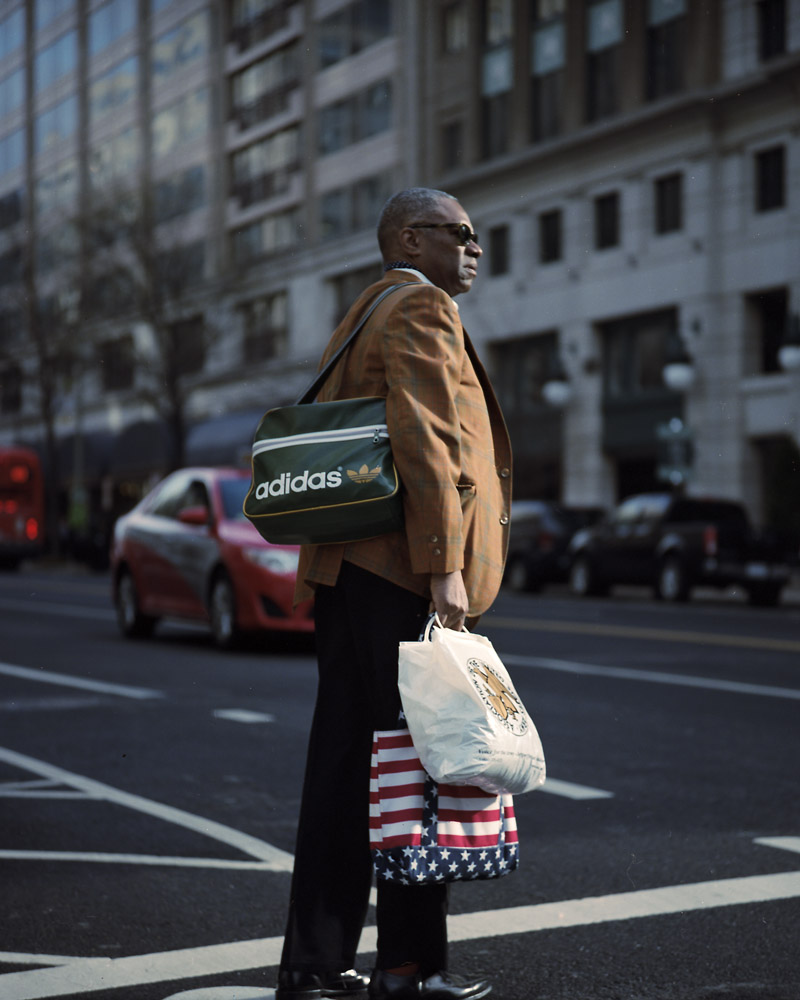
I saw this man crossing the street early in the morning, loaded down with his bags. I don’t think this shot would have worked in black-and-white – the hodgepodge of tweed jacket, American flag logo bag, Adidas bag, and the plastic shopping bag wouldn’t pop if they were tonally similar.
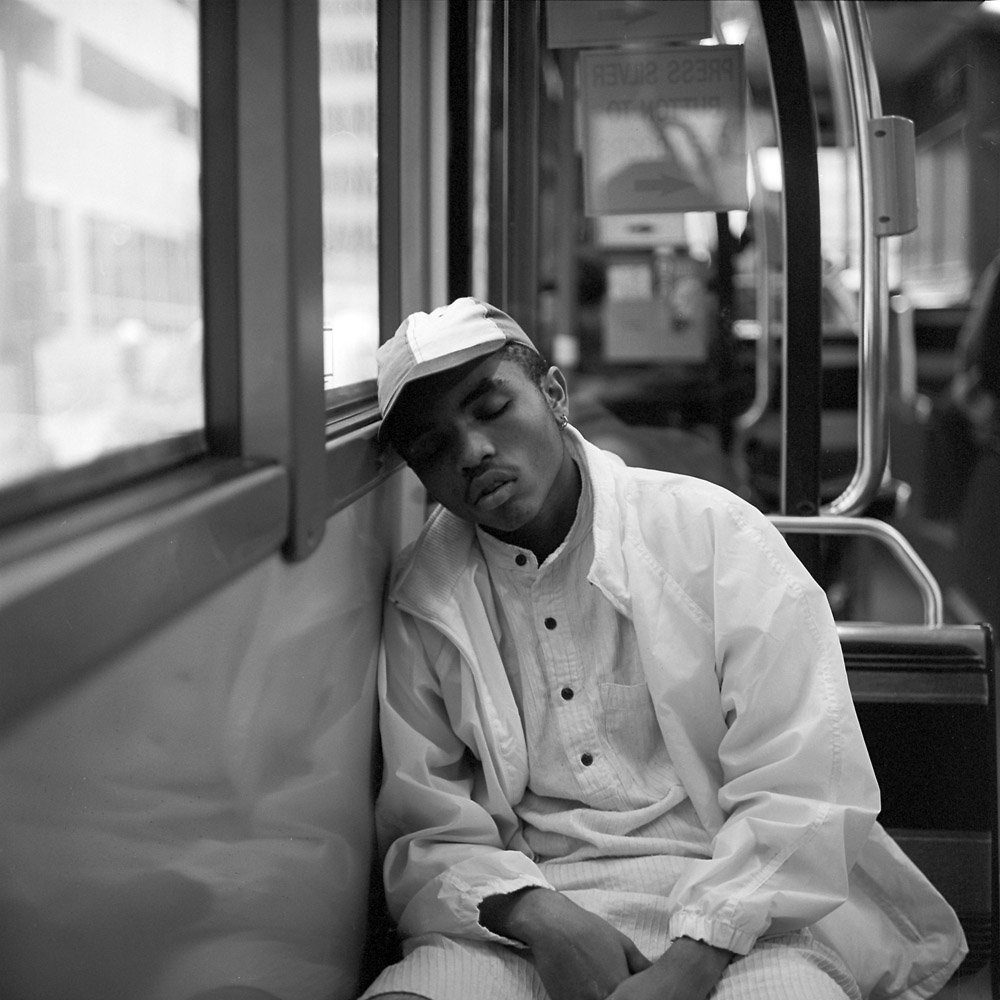
I’ve posted the boy on the bus sleeping before. This one DOES work better in black-and-white because the brightness of his hat and shirt contrast with his skin color and give him a very peaceful, almost angelic look.
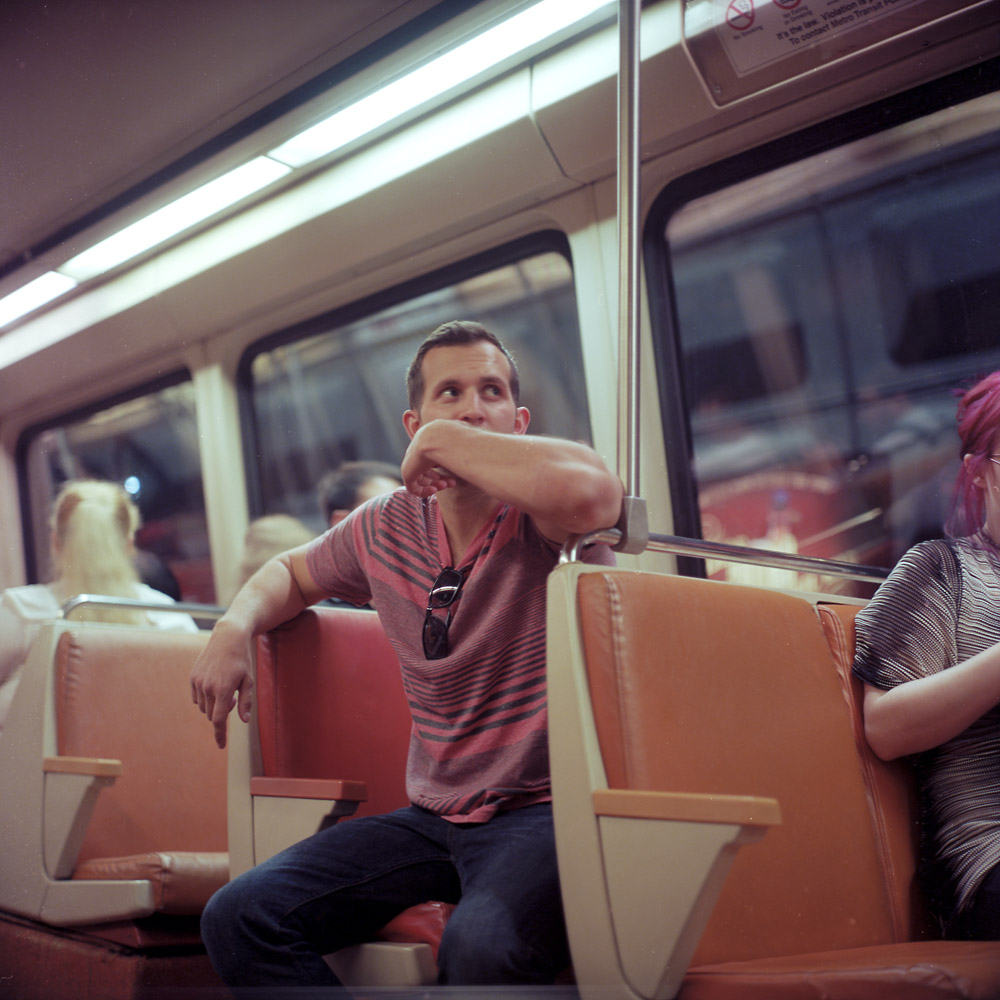
This man is watching the overhead sign announcing the upcoming station. I caught him in an unguarded moment, doing what everyone does on the train. Hard to tell if he’s a tourist or a local.
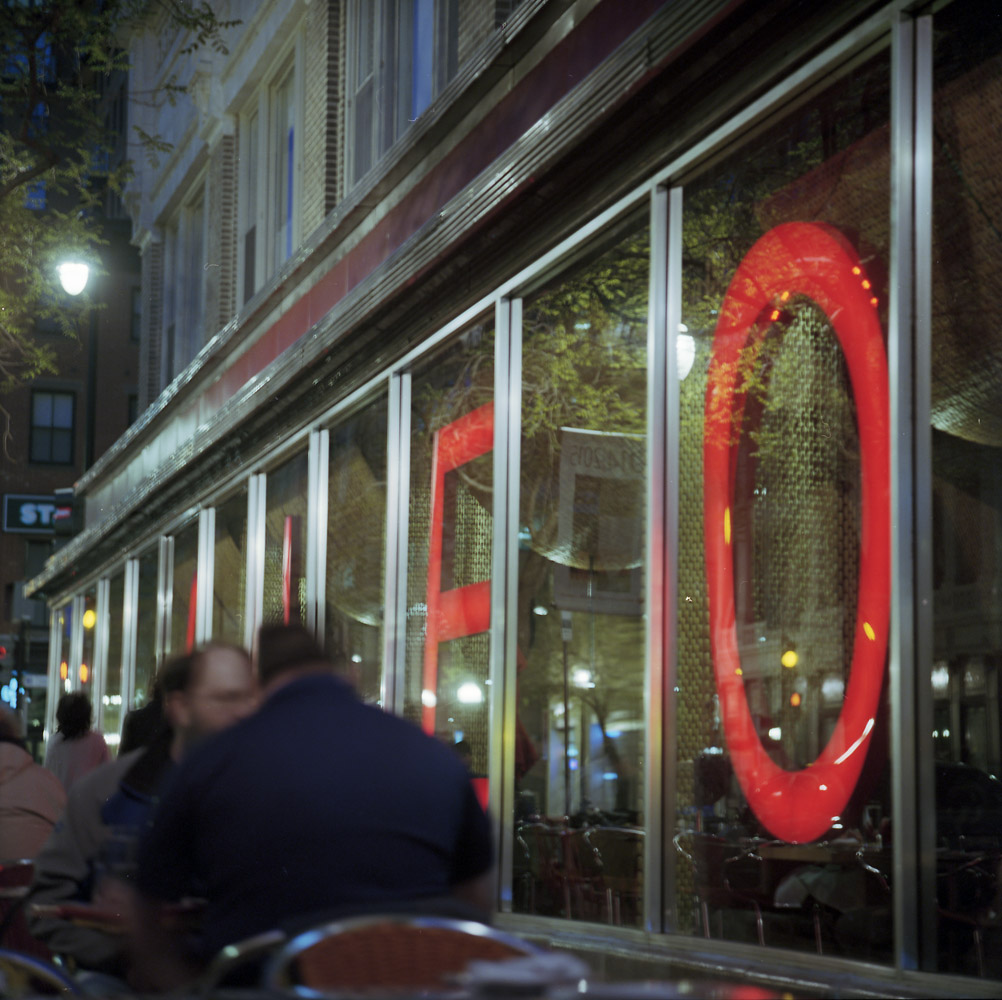
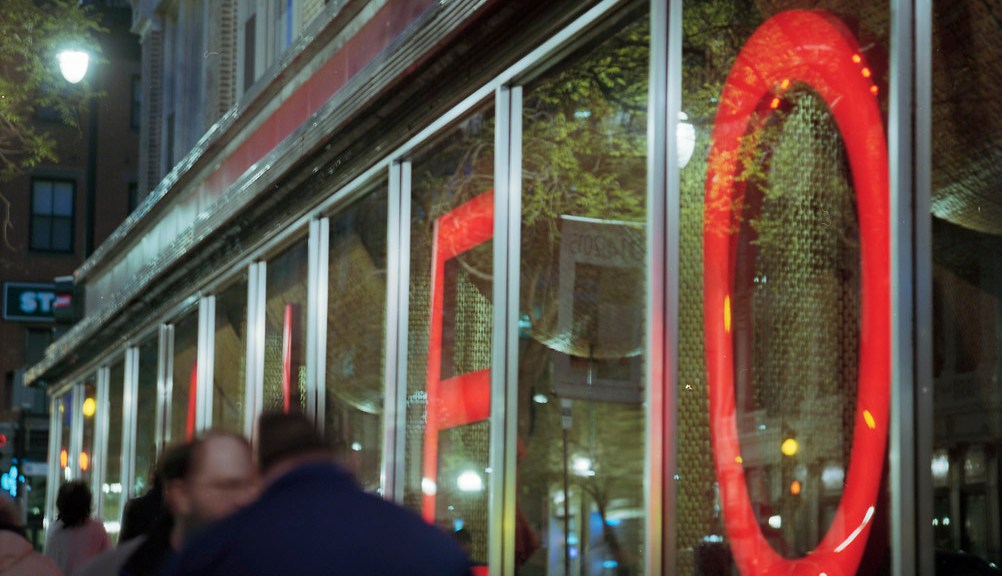
I’ve walked past the giant red JALEO letters in the window of Jaleo, a Spanish tapas restaurant downtown DC, for years, wanting to photograph them but never really getting it the way I want. The first shot comes the closest. To get what I’d like to get, I’d have to stand in the street, in the winter, and cut down the trees out front as well. So this will have to do.
A view into the restaurant. Photographically, what interests me in taking an image like this is the visual layering that happens – there’s reflections in the glass, the big red J, the people at the table, the pendant lights leading you away deep inside the restaurant, the other patrons at tables in the rear. Sociologically, this is another indictment of the modern life – two people at dinner staring at their phones instead of interacting with each other.
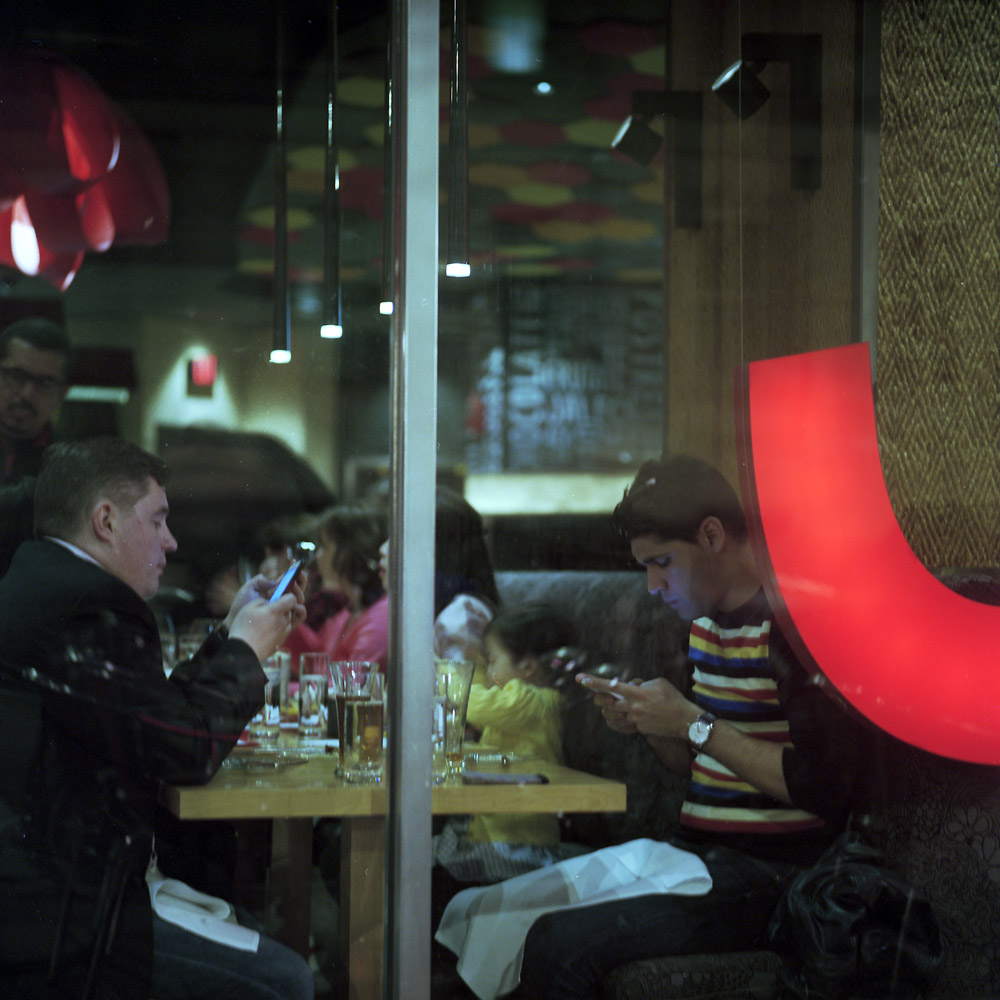
It’s a sad commentary on how inward-focused we as a society have become that it is socially acceptable for two people (or more!) to go to dinner together and interact more with their digital devices than with the other human beings at the same table. We’re there to do one of the most basic and most pleasurable things two or more humans can do – share a meal. Put down the damn phone at the dinner table!
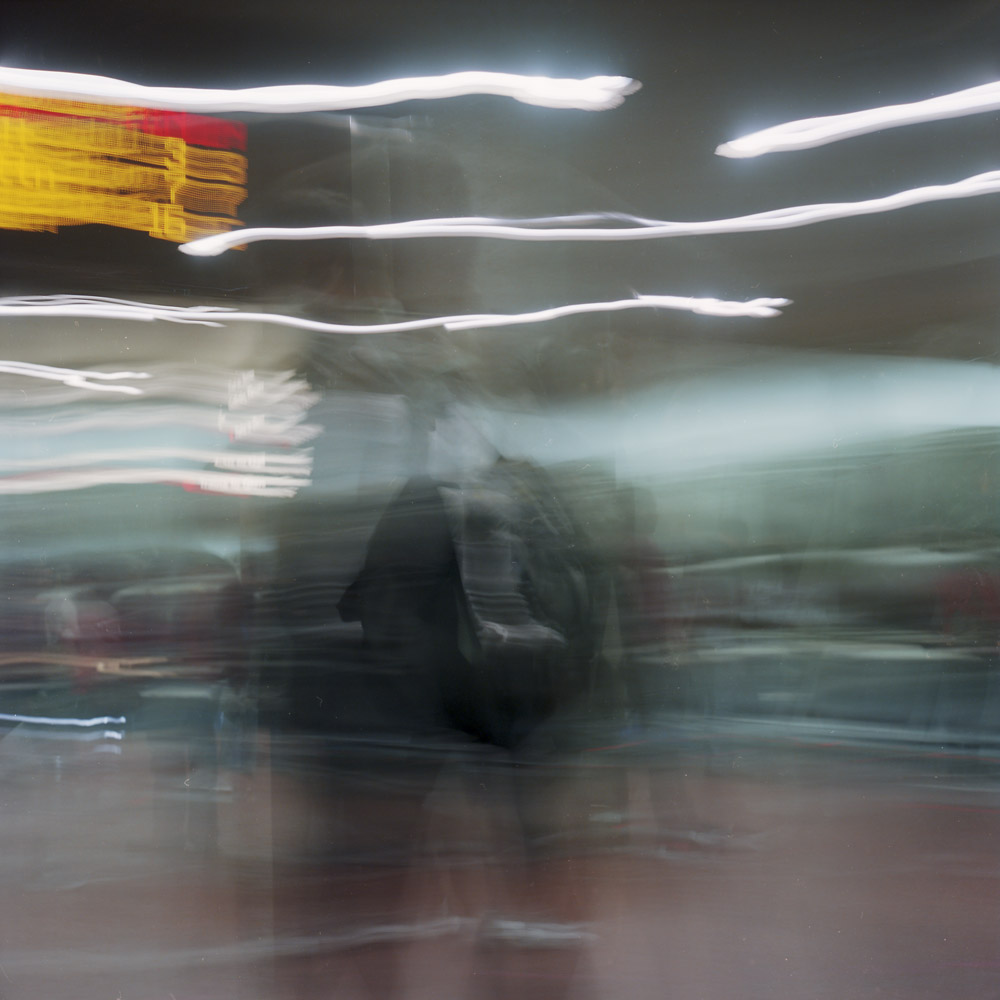
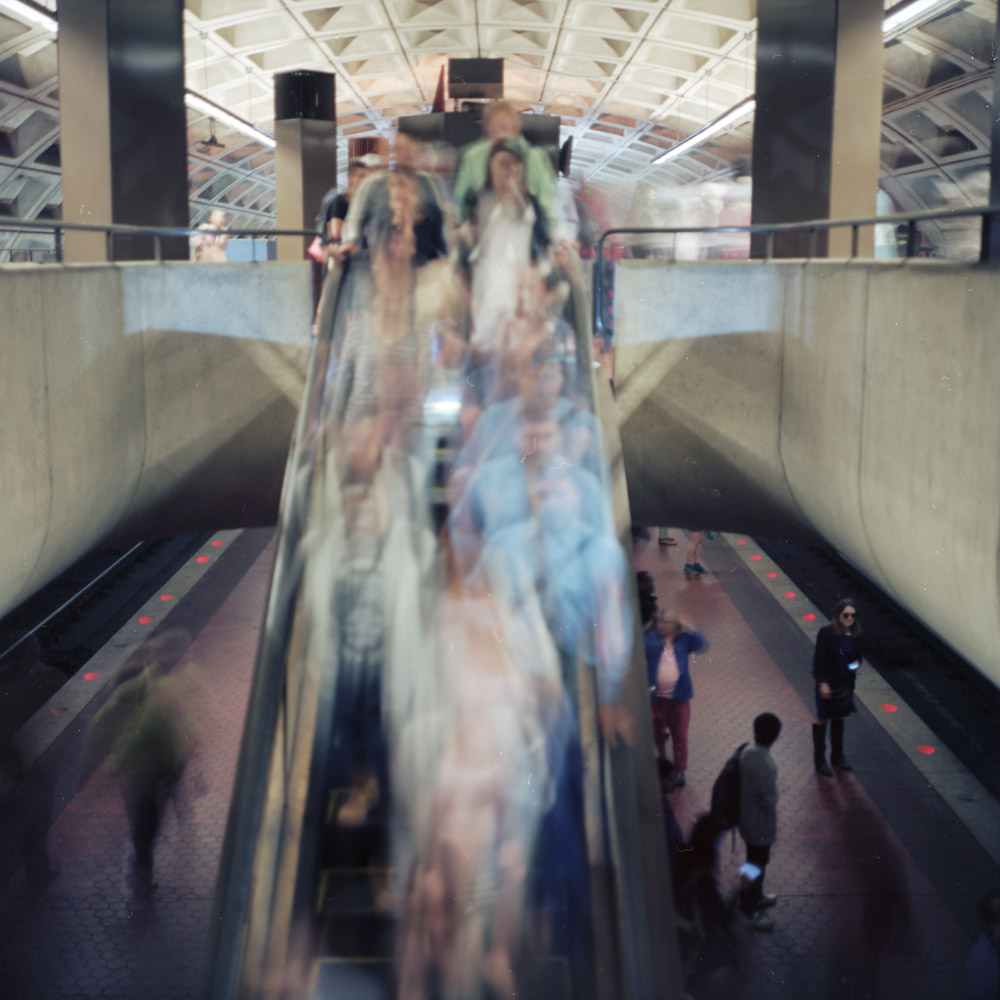
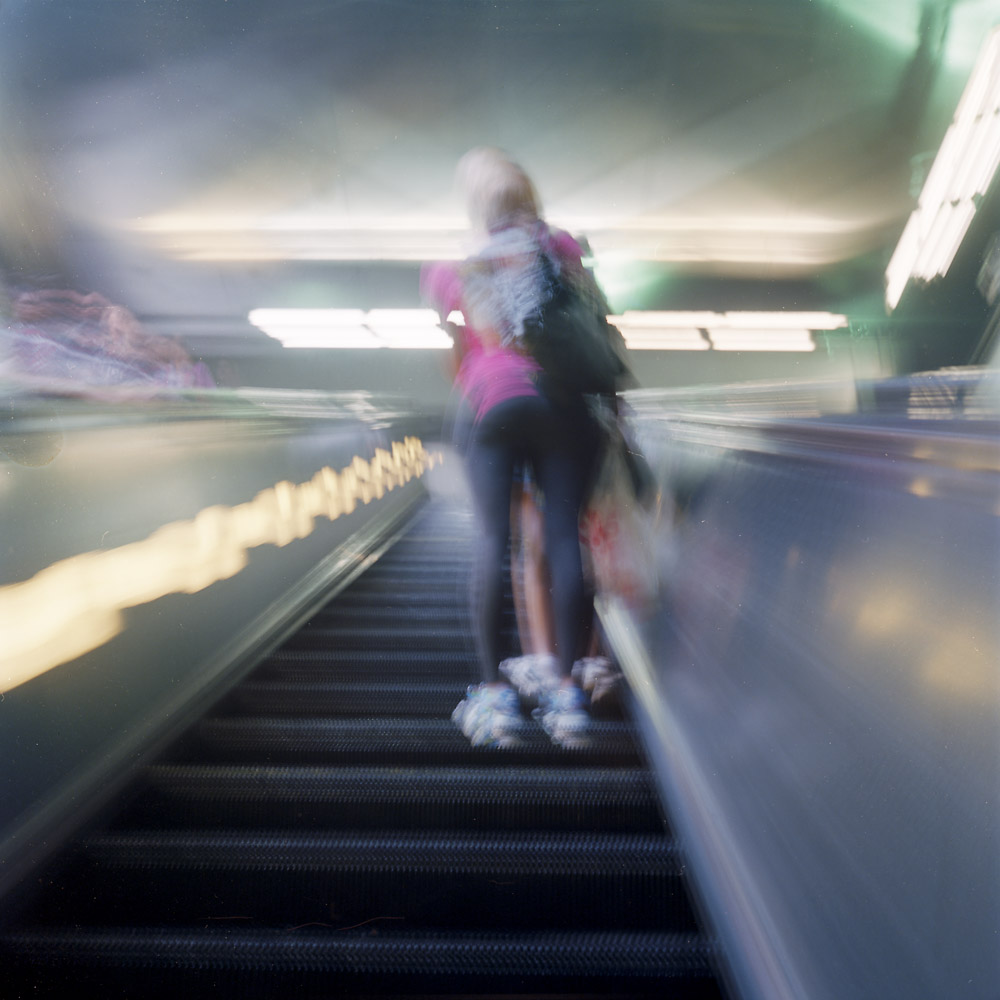
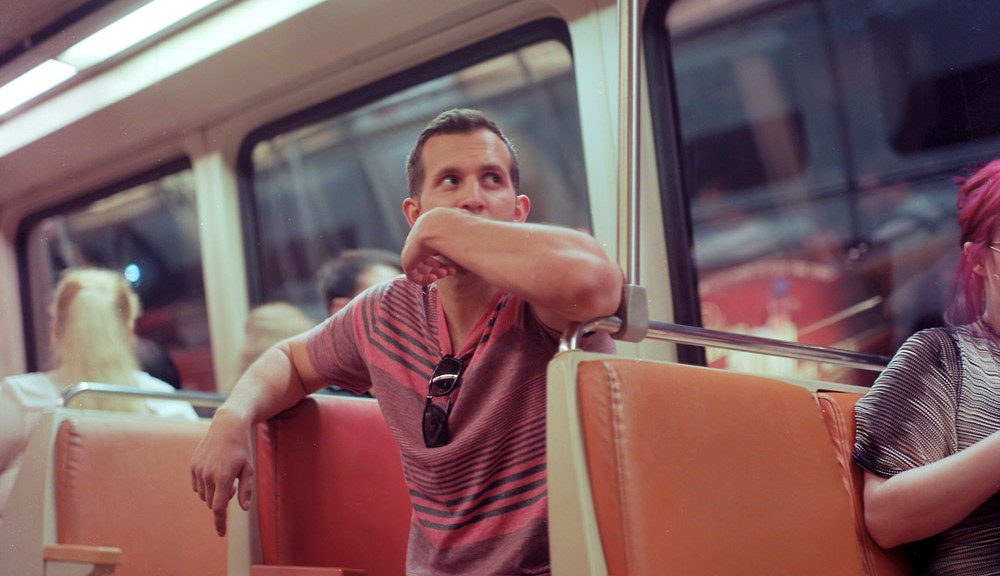
More in my Commuter Diary series. These are more about the people on the train and in the station than they are about the stations and trains.
The man in the suit stands out not only from his attire but also from his posture and from actually standing apart from the other riders on the platform waiting for a train.
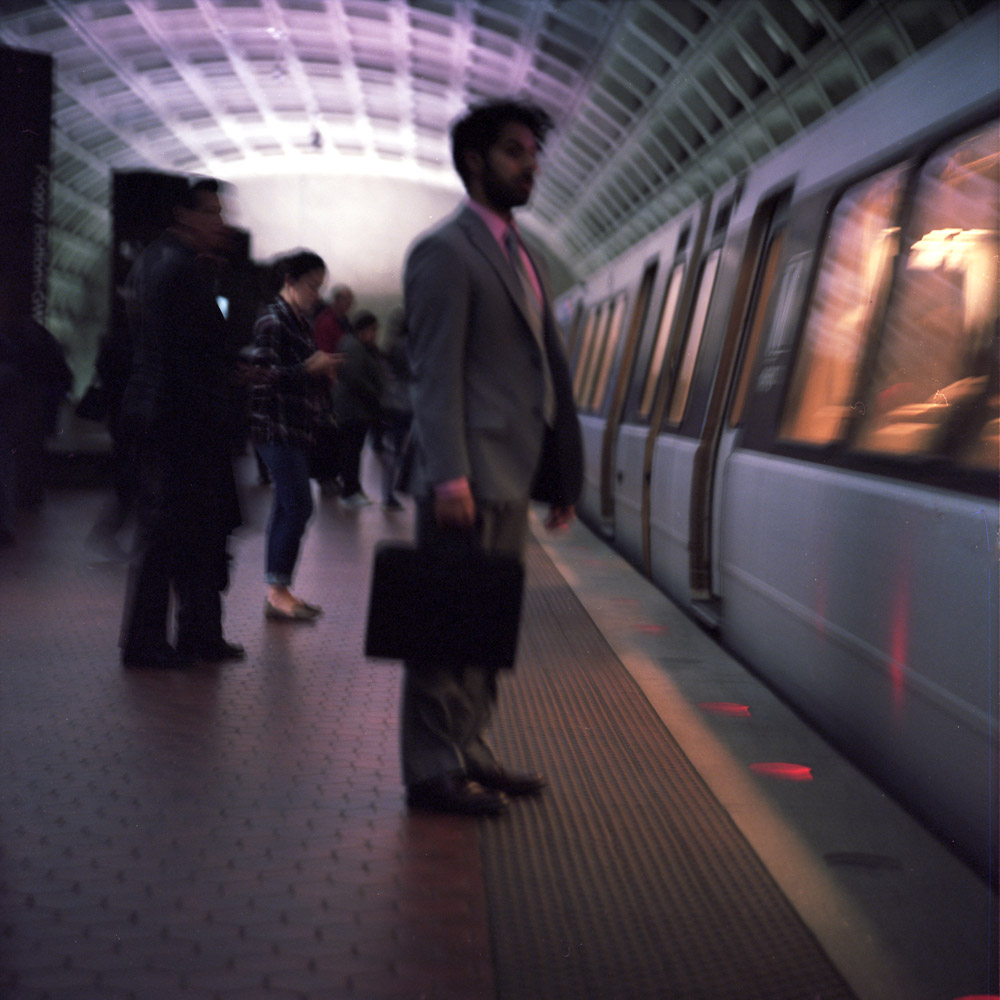
This was a visual experiment for me, to see what it would look like to follow a moving subject. This man was talking furiously on his phone, pacing back and forth in an erratic elliptical orbit of a spot on the platform.
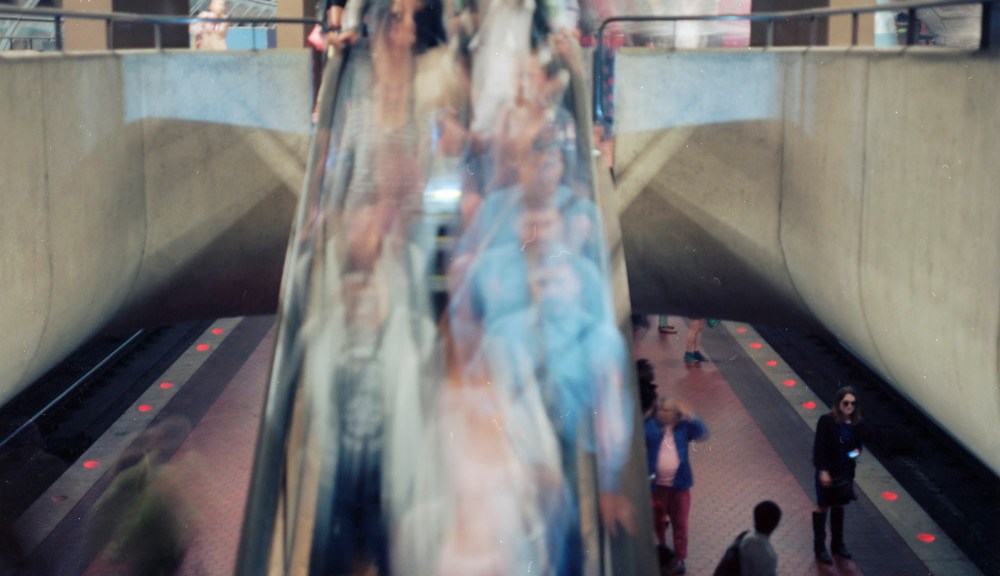
The flow of people is remarkably sharp given the length of time I had the shutter open for (several seconds). The repetition of people’s shapes going down the escalator is from the escalator being turned off and them walking down, so they pause just long enough between strides that they register over and over again. I’m going to re-try this experiment and see how many repetitions I can capture.
Another typical experience in the daily life of a commuter – watching the person in front of you as you ride up the escalator.
 dcphotoartist