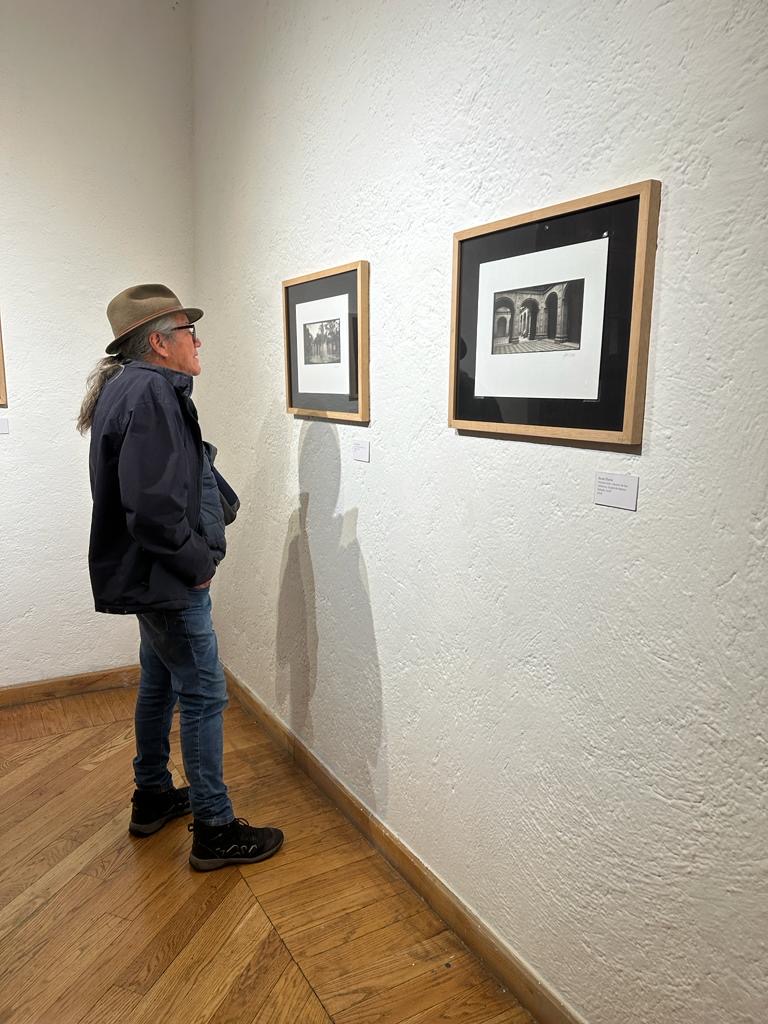
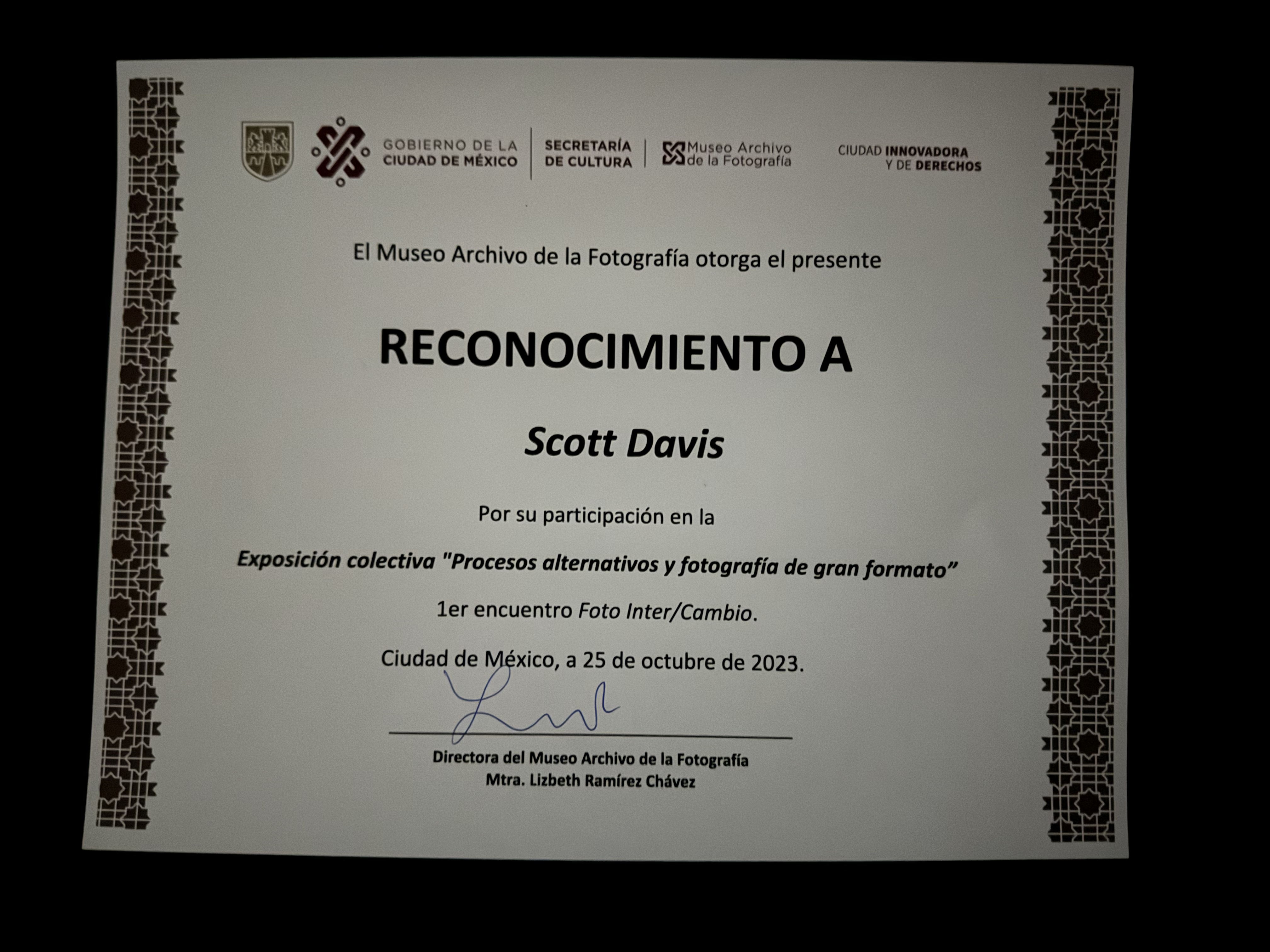
I am still trying to find words to describe how absolutely overwhelmingly wonderful last night was. I had previously shown some work in a group exhibit at the Museo as part of the Foto Inter/Cambio conference, and even then they treated me as some kind of photographic rock star – I was part of the ribbon-cutting ceremony to open the exhibit, they asked me to speak publicly, and I received a certificate of recognition for helping to organize the conference.
I had brought additional personal work in a portfolio that I was planning to share with attendees of the conference. This included a bunch of my male nudes. One of the staff members saw that work, and was very interested in it. He asked me to show it to one of their curators, Juan Pablo Cardona. Juan Pablo was very taken with the work, especially the four-color gum bichromate prints I had made of an African-American model.
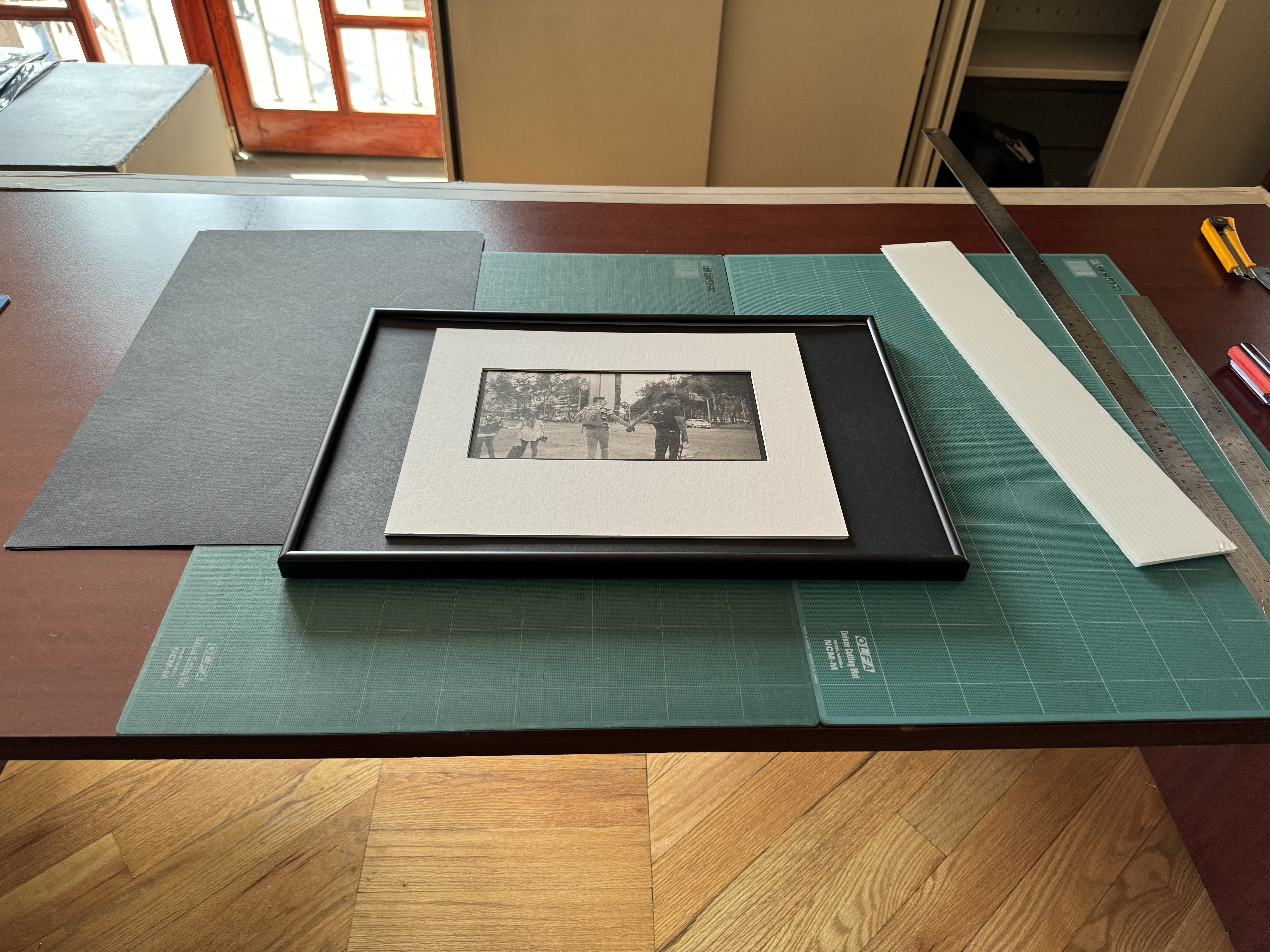
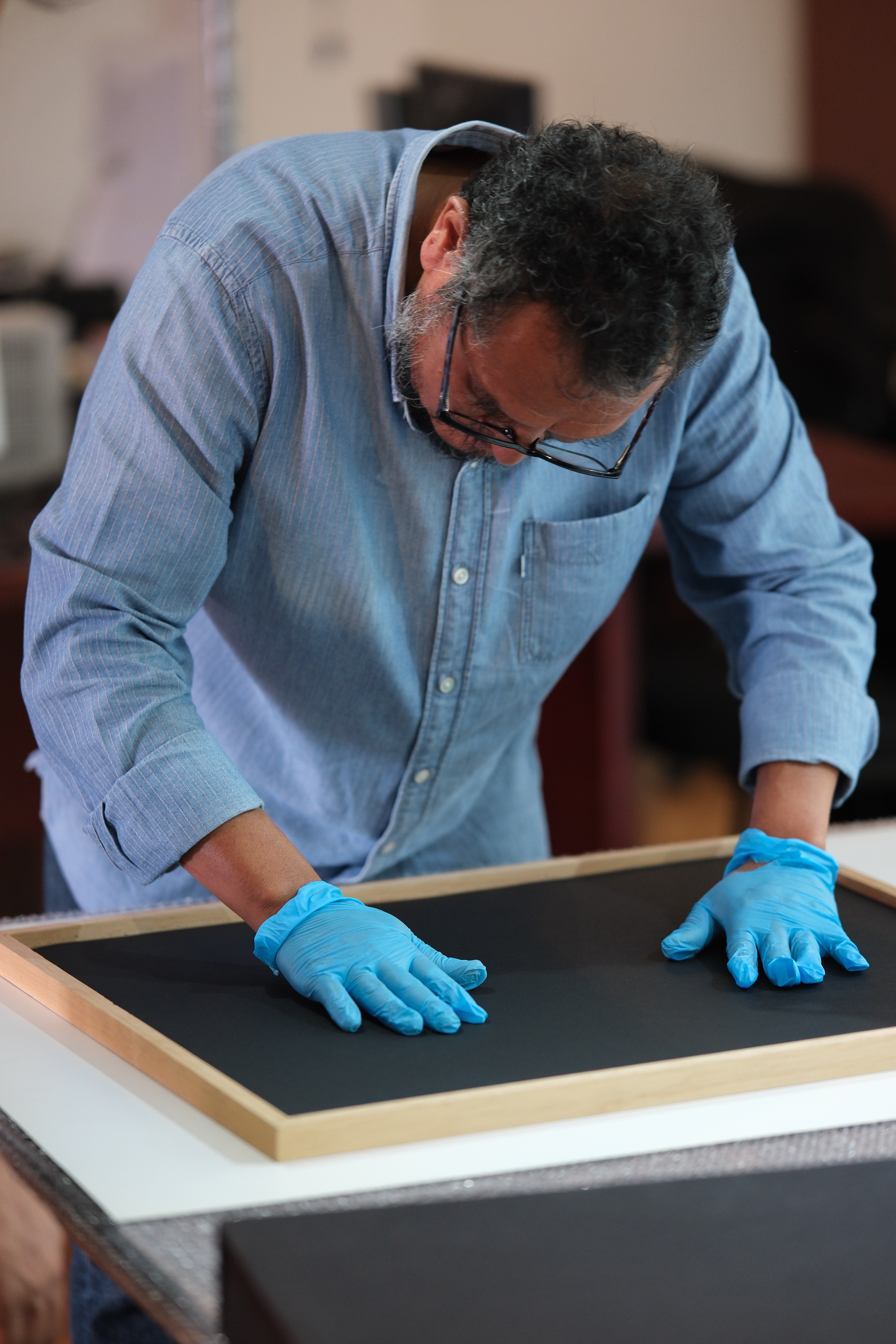
At the opening reception for the Foto Inter/Cambio show, he asked if I would be willing to show that work to the museum director. Not being an idiot, of course I said yes. We stepped off the floor of the reception and into the museum’s framing lab where my portfolio had been stored for the day, and Lizbeth Ramirez, the director, along with Juan Pablo and another museum staffer, had me go through my portfolio.
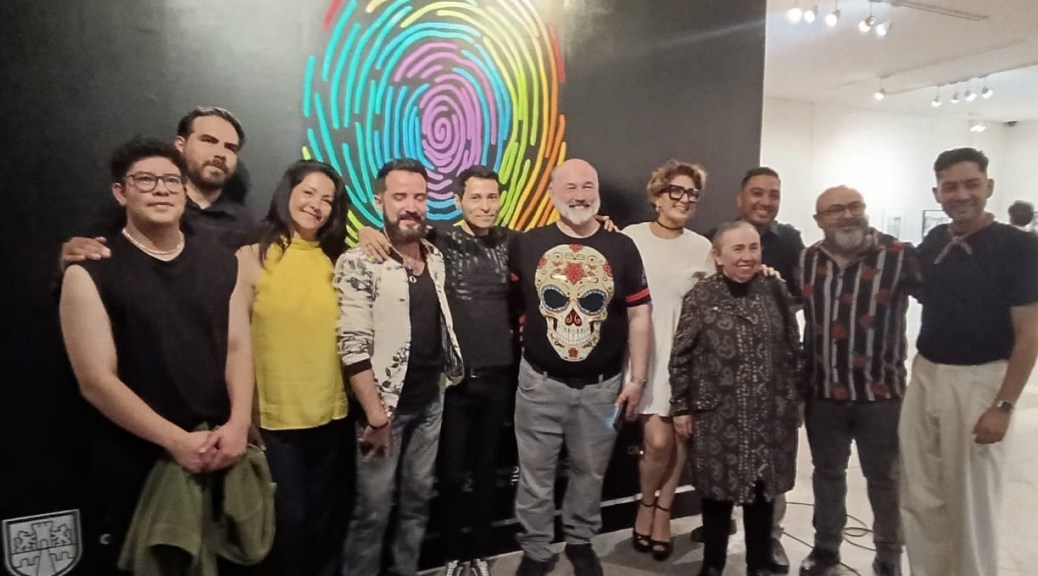
Everyone was excited by my work, and at that time Juan Pablo asked if I would be interested in participating in a show for this year’s Pride celebrations. Of course I said YES! And thus began the journey to yesterday’s opening.
I got to the museum a bit before 6 PM – the opening was scheduled to start at 7, and they had asked all of us artists to be there an hour ahead of time. That was my first glimpse of the installed exhibition:
panoramic view of the galleryMy wall in the gallery
The museum staff did an absolutely amazing job of preparing the space – I love the way they used color blocks on the walls to break up the space and give the work a flow and a rhythm around the room. This gallery is on the first floor of the museum immediately off the entrance, so public visibility is excellent. I had expected this would be in their upstairs gallery where we had the show last year for the conference, but this is the big deal.
Also to my surprise, I was selected to be one of three of the fourteen artists to speak at the opening. They also listed my name first on the list of participating artists, which to me was a very high honor.
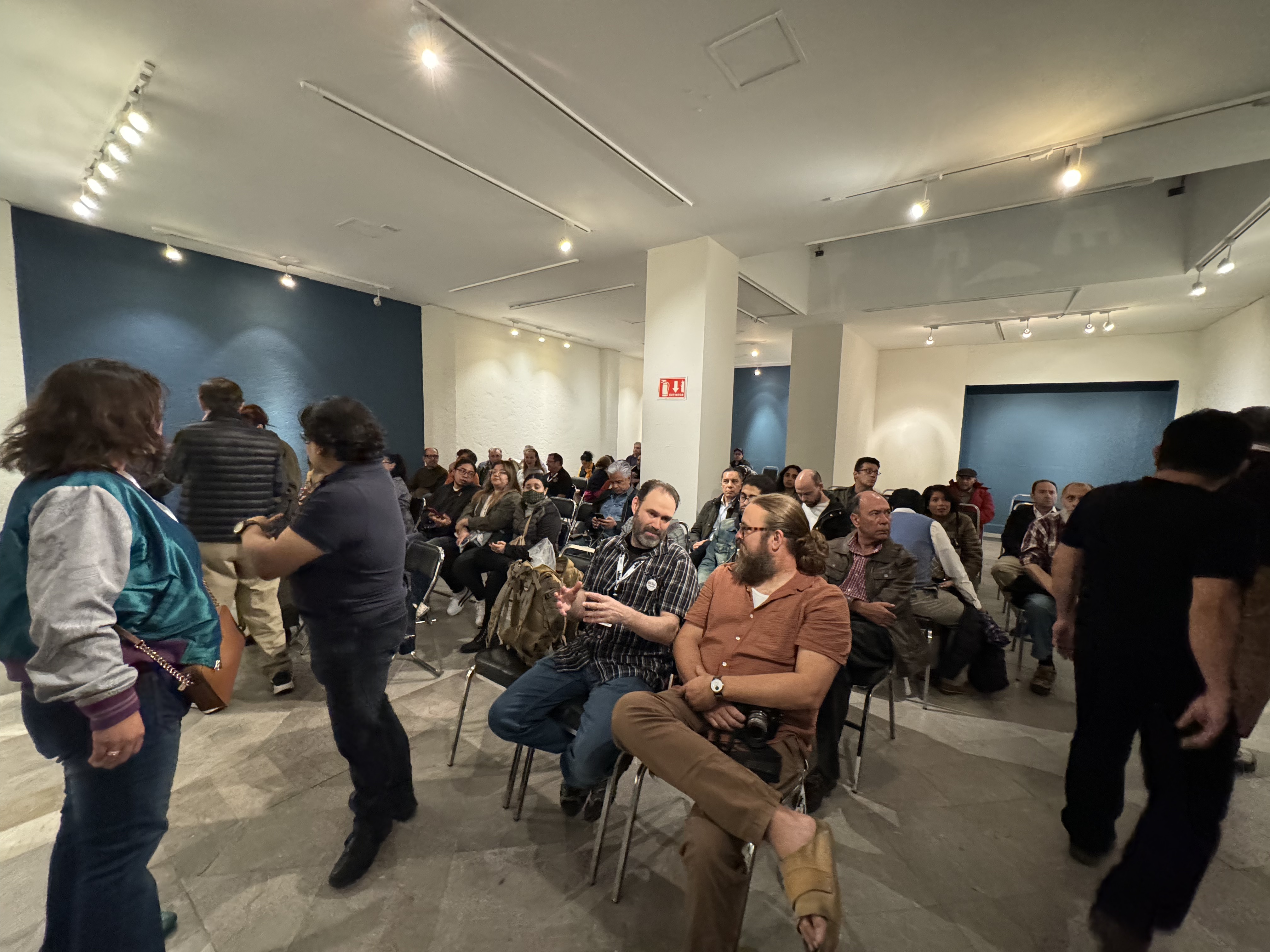
When organizing the event, the museum staff indicated it was limited to 100 people. I think over the course of the evening, significantly more than that came. When I turned around to look at the crowd waiting to be admitted, I was absolutely stunned at how many turned up.
I’ve never had a crowd this big or this enthusiastic at an opening before. This exhibit, and especially this opening night reception, has been the absolute high point of my career to date and quite possibly the most incredible night of my life.
I realize I am incredibly tardy in posting this, on the cusp of the closing of the show (the museum very generously extended the show through September 2!). I wish I could be there in person for the take-down and to collect my work (I have a friend who will be picking it up and storing it for me until I am back in CDMX next), but that wouldn’t be practical.
This is long long long overdue, but better late than never. Especially since we are in the throes of planning the next iteration which will be in March of 2025!
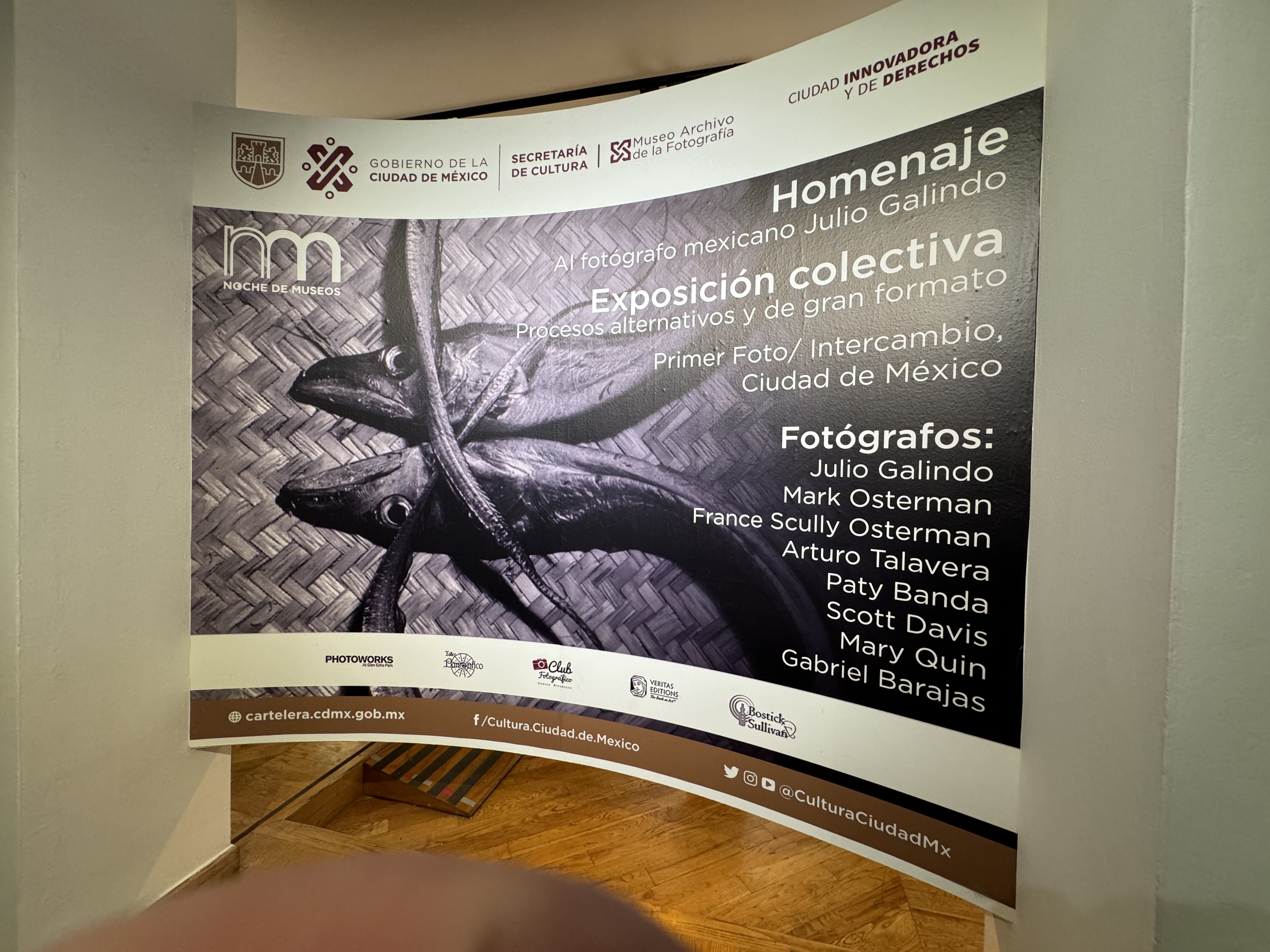
Over three days we had five seminars, two photo walks, a Day of the Dead environmental portrait shoot, two hands-on demos, and opening and closing keynote speeches, plus an exhibition of alternative process work at the Museo Archivo De La Fotografía, Mexico City’s official photography archive. Images displayed in the exhibit ranged from salted paper prints made with wet collodion negatives to daguerreotypes of Mexico City to palladium prints to a fine press book with hand-tipped prints. A lot of images were made, and new friendships formed.
I want to first offer my sincerest gratitude to Gabriel Barajas, my business partner in this venture, without whose initial inquiry back in 2018 this would never have happened. He invested a massive amount of energy and time into making this happen here. I also want to thank all the people of the Club Fotografico Centro Historico who helped pull this off- their volunteer efforts from manning the reception desk to shooting video footage to getting us bottled water made the whole thing run. I especially want to call out Veronica Mondragón for her tireless logistics management.
Gabriel BarajasMary Quin with Veronica MondragónJuio Galindo
Another thank you goes to all the staff at the Museo Archivo De La Fotografía for their support. They provided us with a venue for our keynote events, and they expanded their offering of gallery space to turn what would have been a modest three-day pop-up show into a major, meaningful exhibition taking over an entire floor of the museum and running for two weeks. They also made me feel like a rock star – I got asked to participate in the ribbon-cutting to open the show, and received a certificate of recognition from the Secretary of Culture for Mexico City for my efforts. They’re also inviting me back to give a platinum/palladium printing workshop some time next year, and a show of my portrait and figure work.
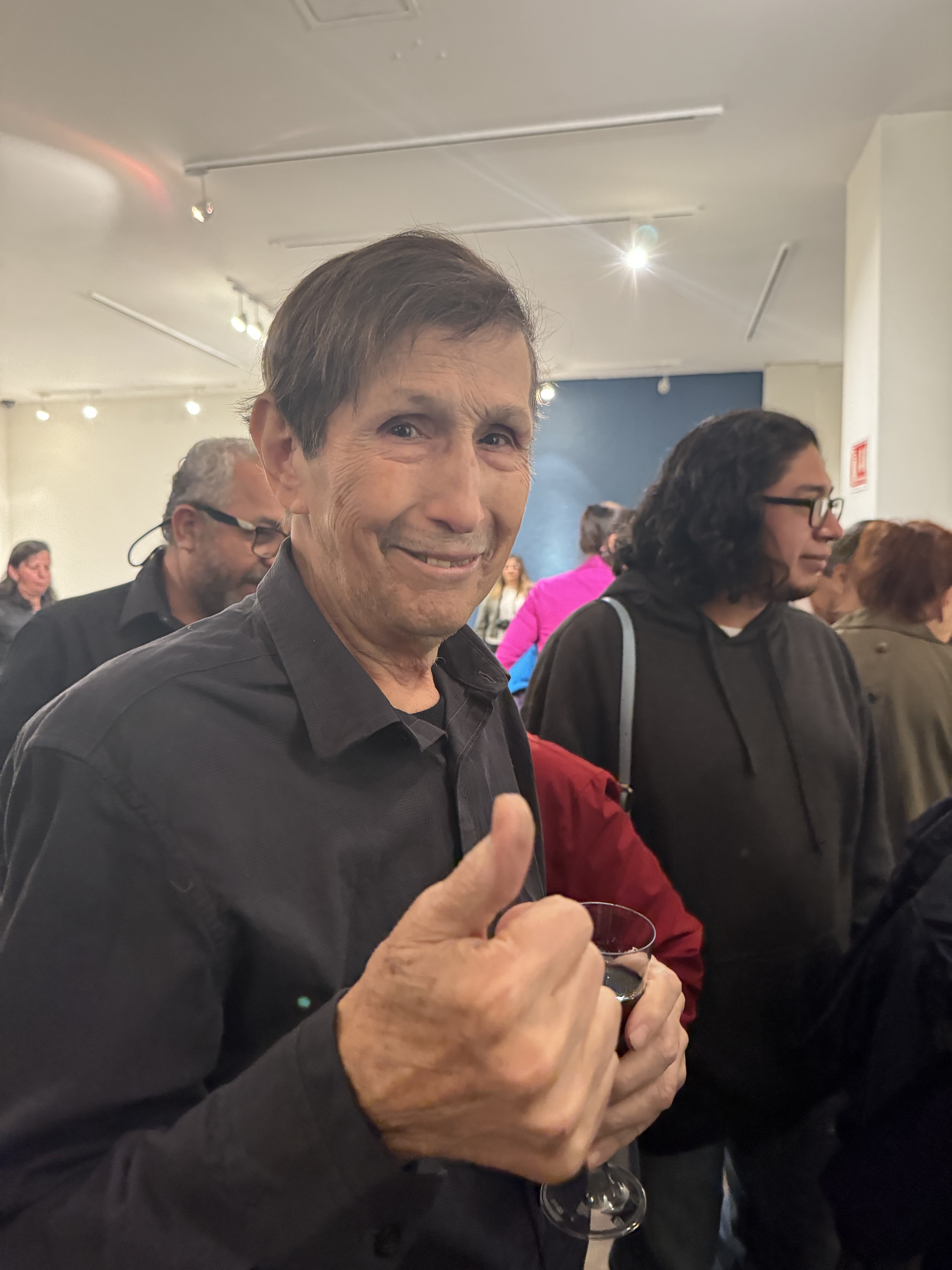
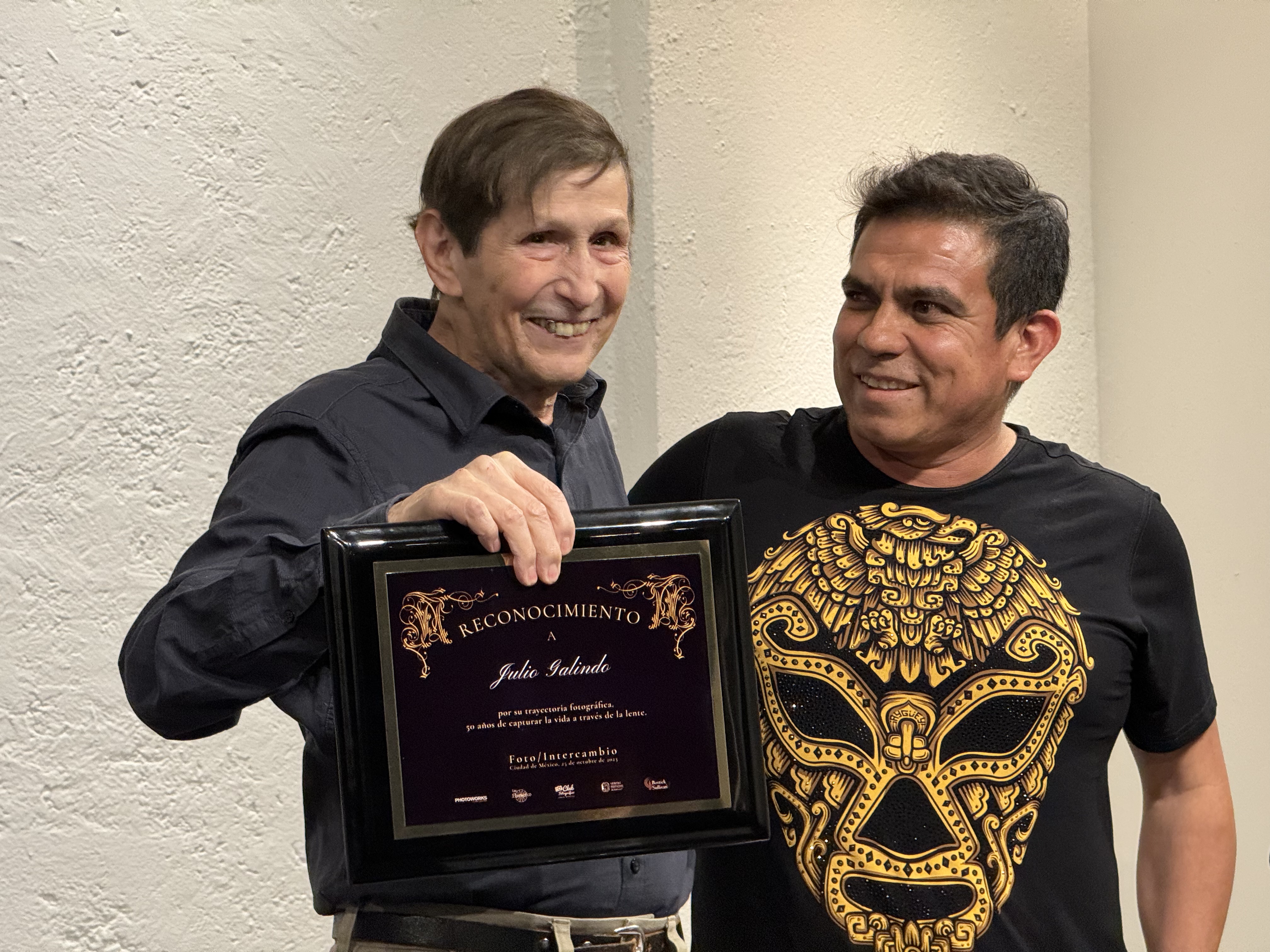
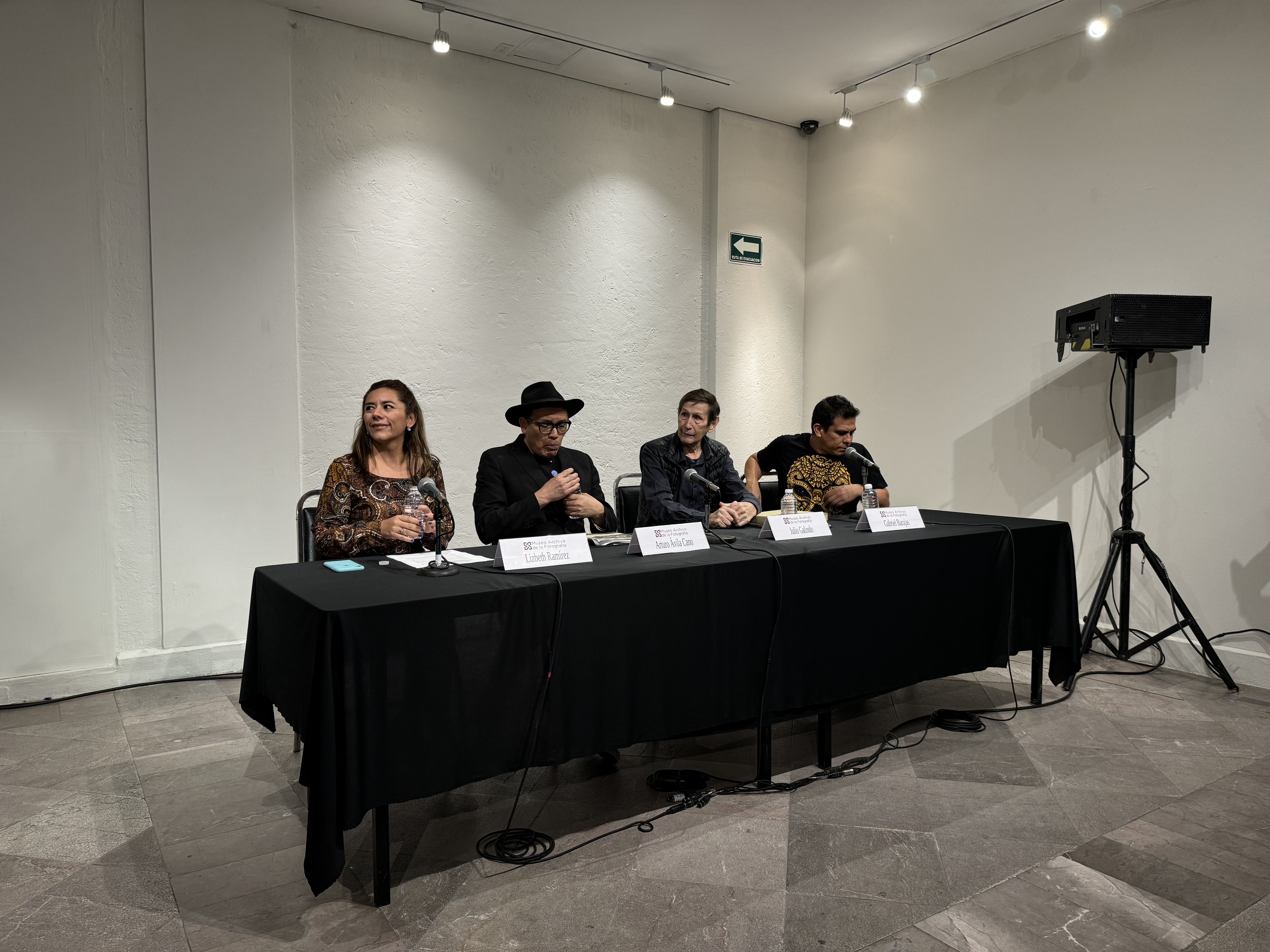
Some photos from the opening night reception at the Museo Archivo de la Fotografia, including the lifetime achievement award being presented to my friend Julio Galindo. As you can see from the last couple of images, we had a standing-room-only crowd. It was quite the evening, and I will never forget it.
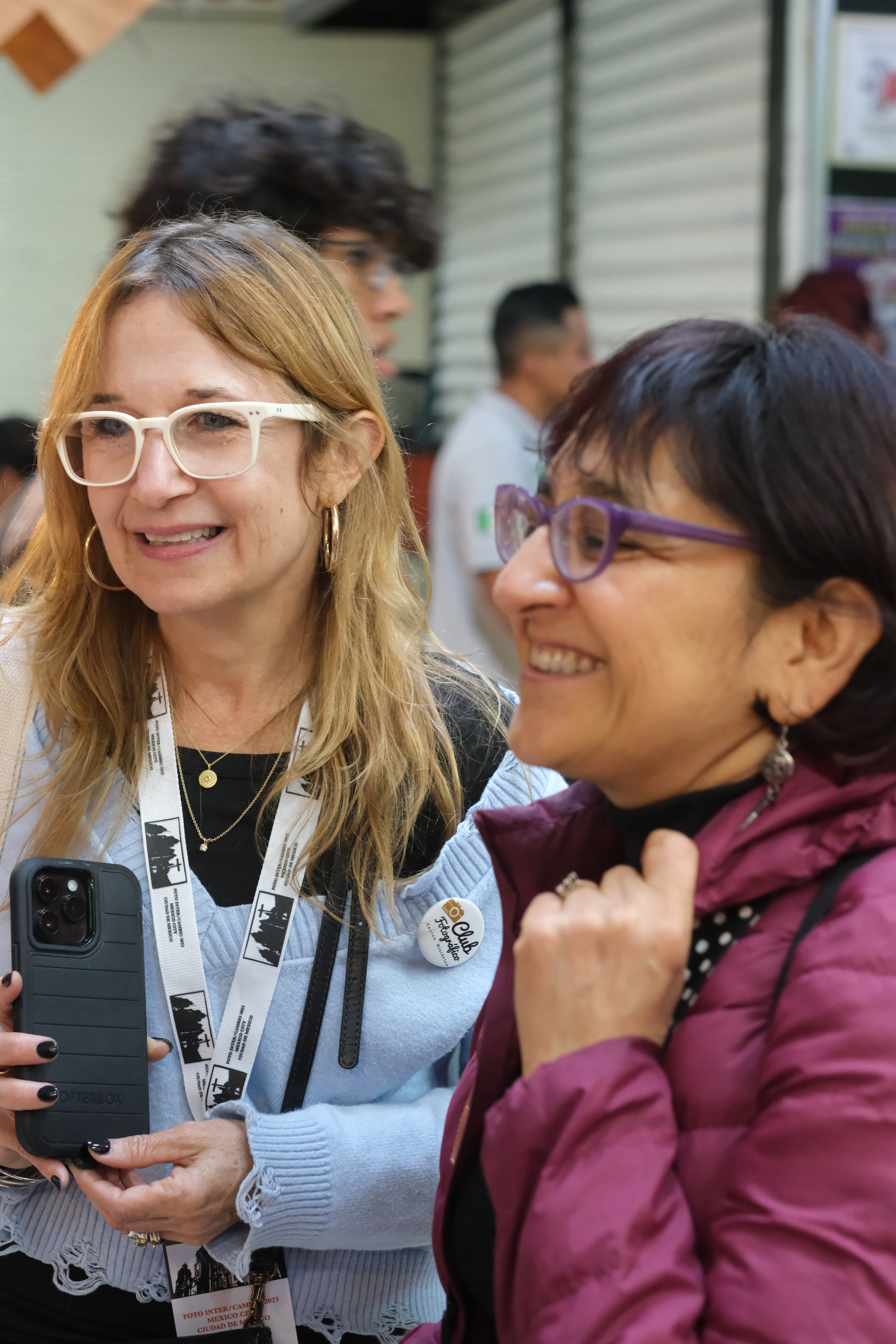
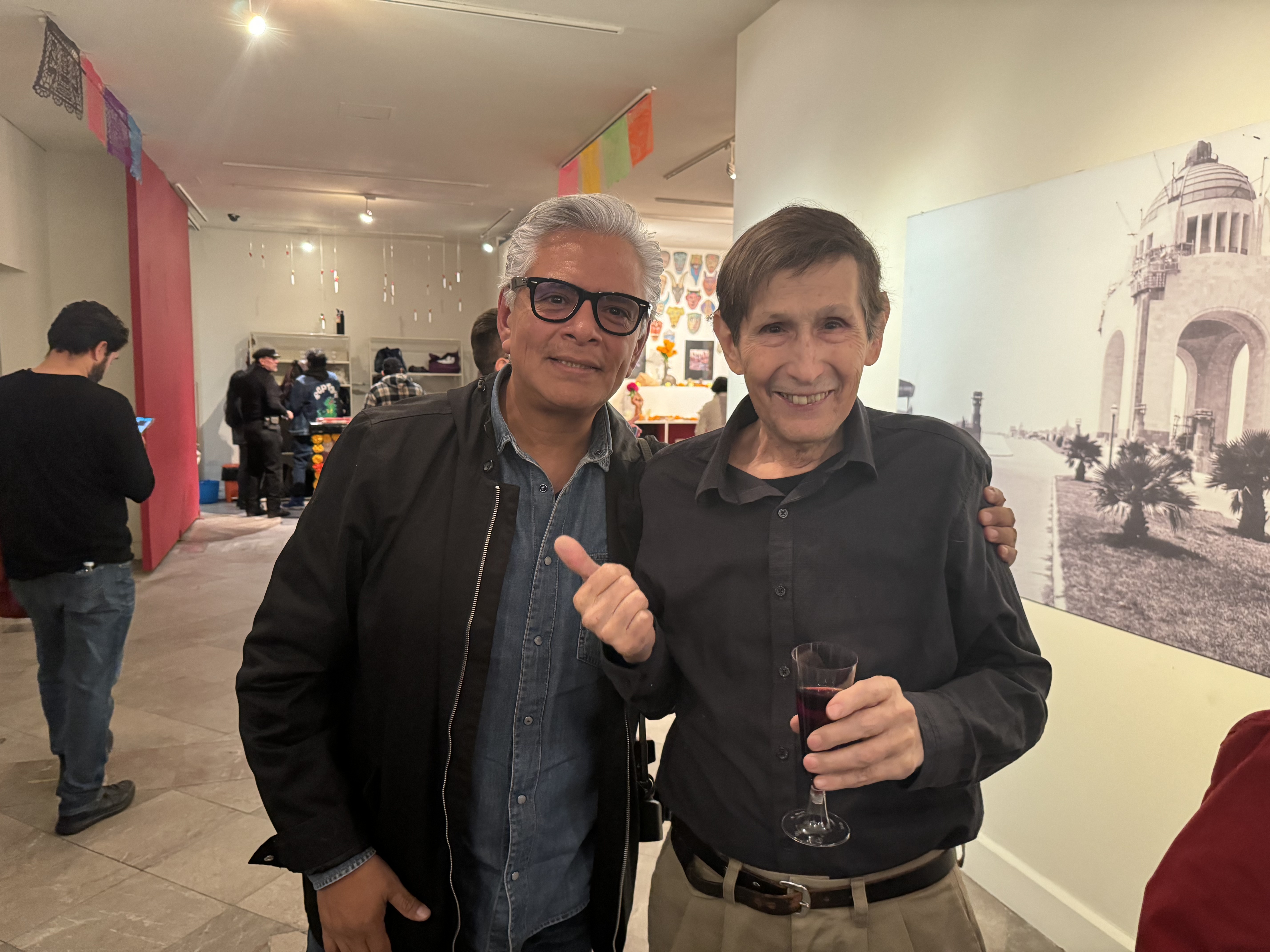
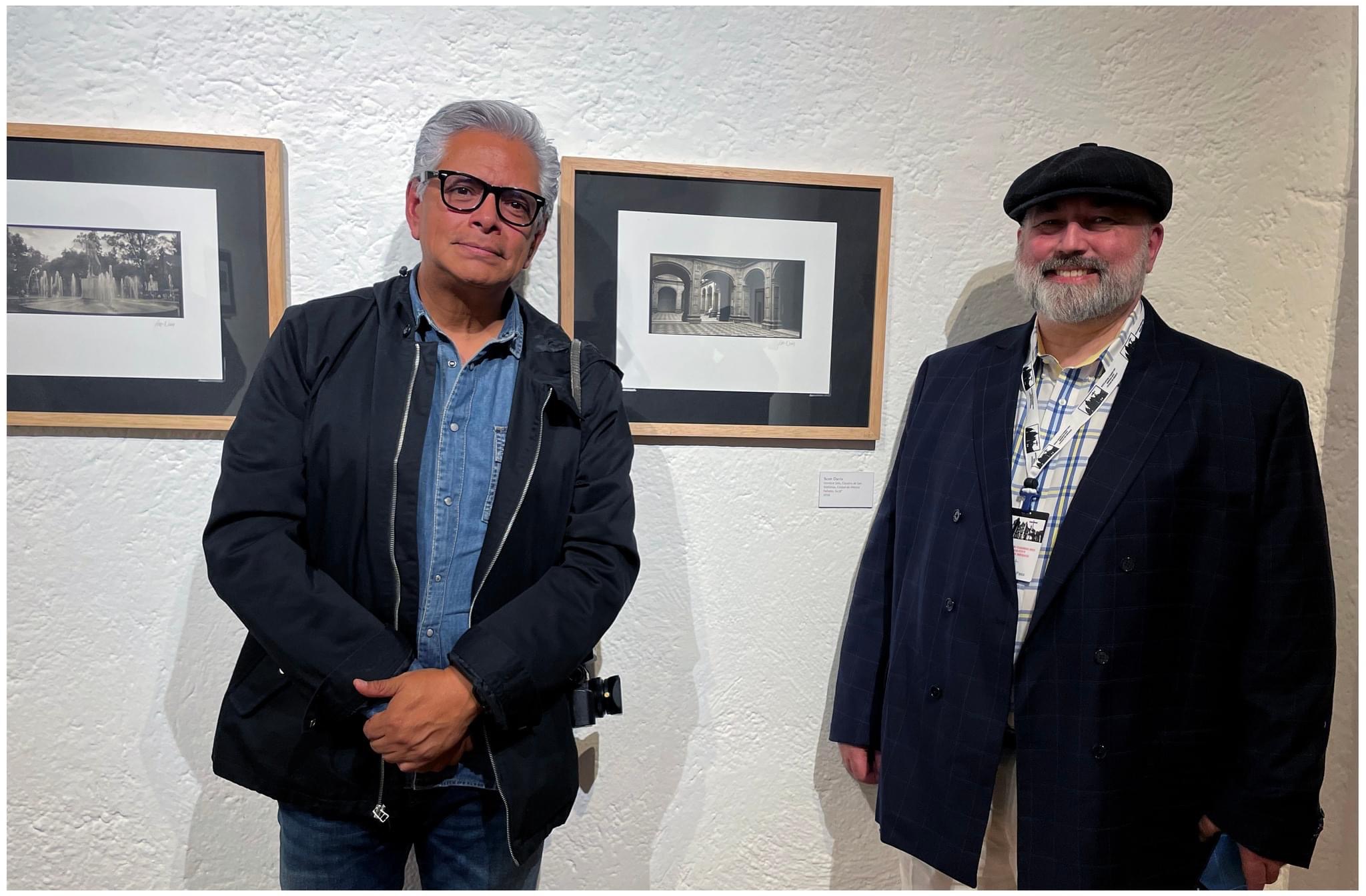
Julio Galindo with Gabriel BarajasFrance and Mark Osterman at the opening receptionJulio GalindoAlejandro Sanchez Mociños and Julio GalindoAlejandro Sanchez Mociños with meArturo Avila Cano and Julio GalindoPanel presentation of award to JulioOpening night crowdopening night crowd
I don’t know of a bigger thrill for an artist than to have the director of a museum request you to give them a portfolio review, and then turn around and offer you a show and a workshop (funded by the museum!).
We had three days of activities and presentations. There were two main themes to the conference this year: Daguerreotypes and Book Arts. Carlos Gabriel Vertanessian, an Argentinian photo historian, gave a talk about the history of early photography in Mexico, focusing on the beginnings of the Daguerreotype in Mexico. Takashi Arai and Paty Banda gave a joint presentation (perhaps the most technically challenging presentation to pull off; Takashi was in Japan and calling in at 4AM his time, while Paty was also calling in from another location in Mexico City). They are both 21st century Daguerreotypists and talked about their personal work – Takashi with his interest in nuclear and environmental issues, and Paty with her rephotographic project doing 21st century daguerreotypes that re-created the earliest known photographs of Mexico City.
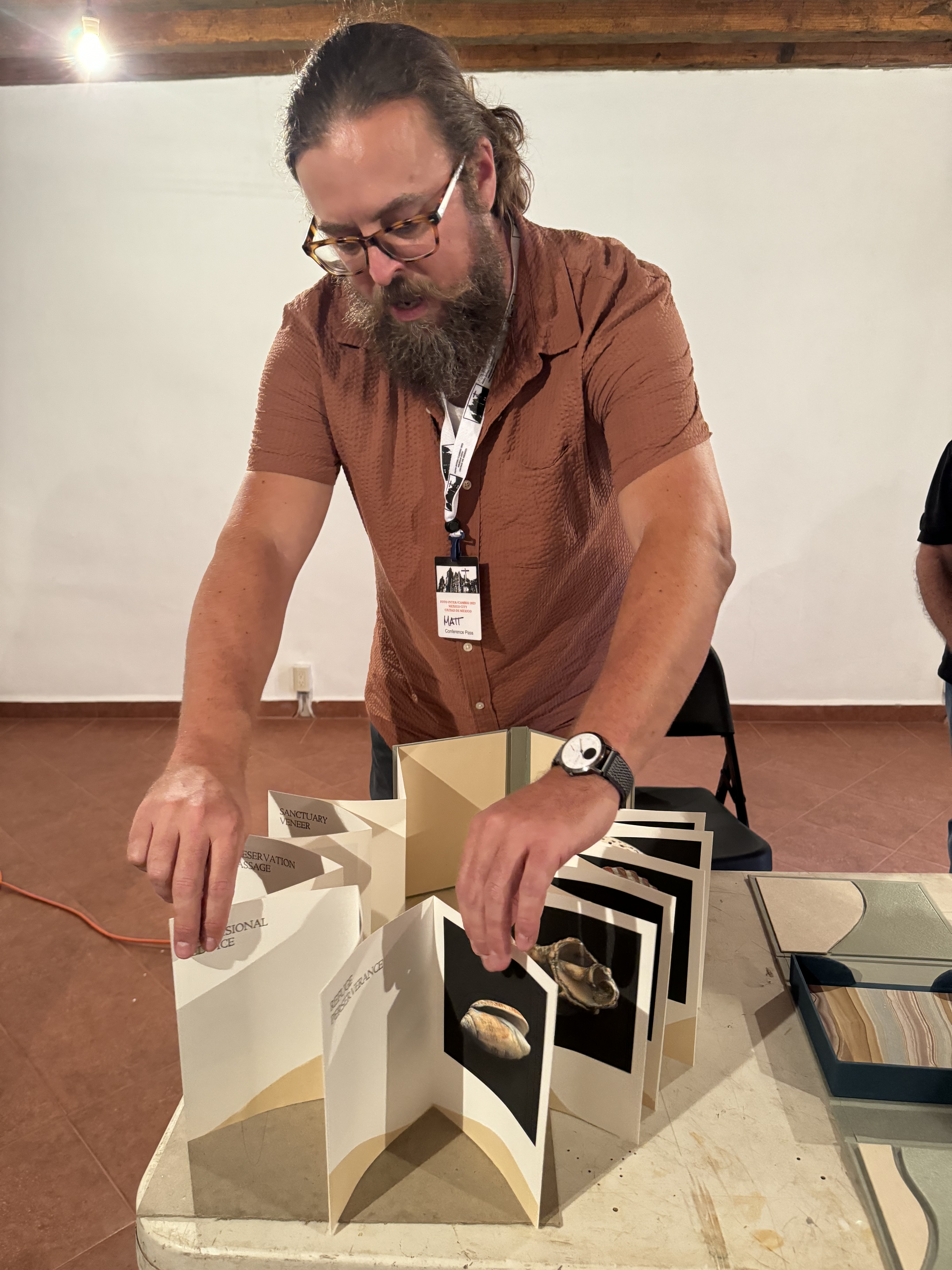
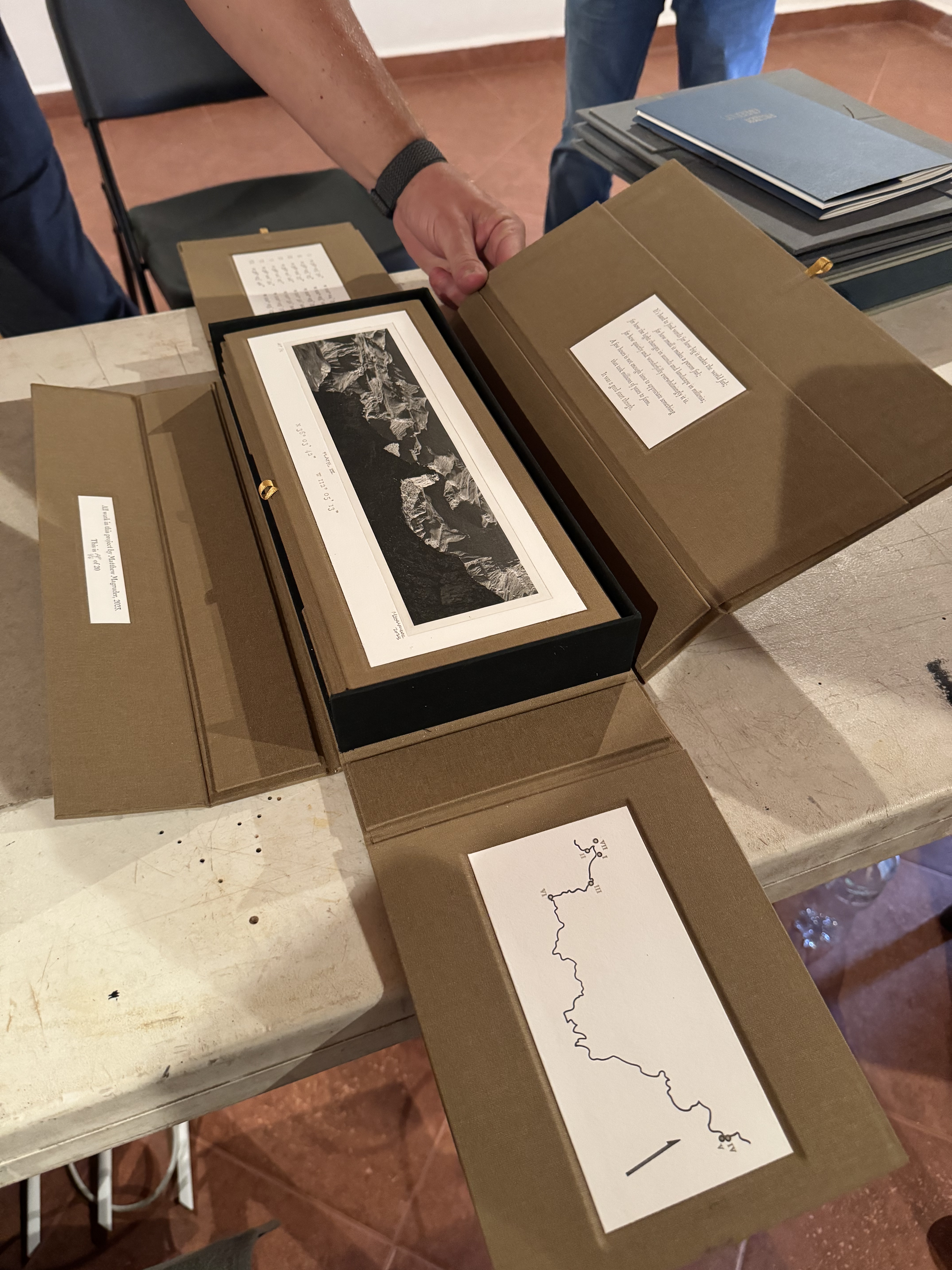
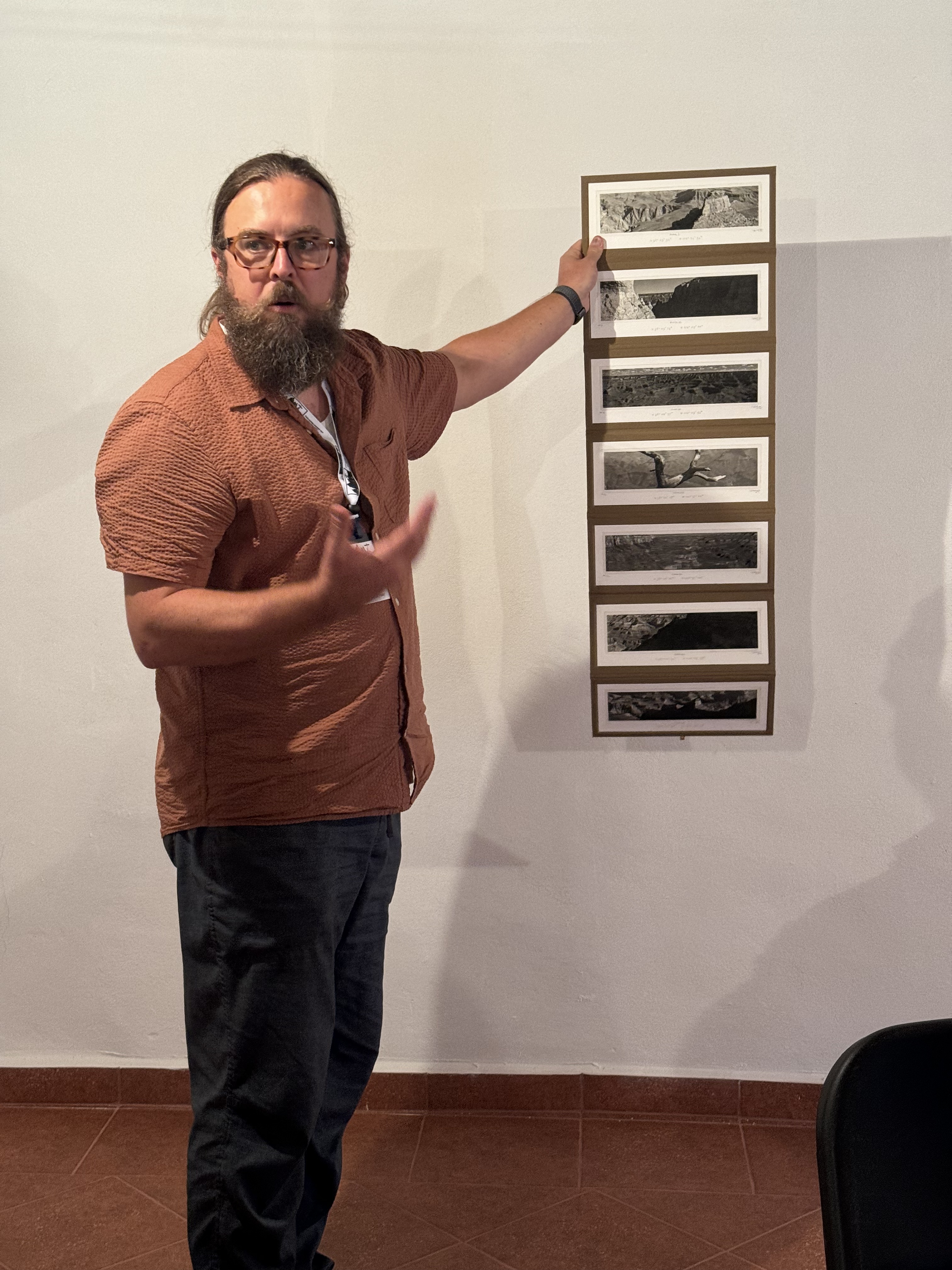
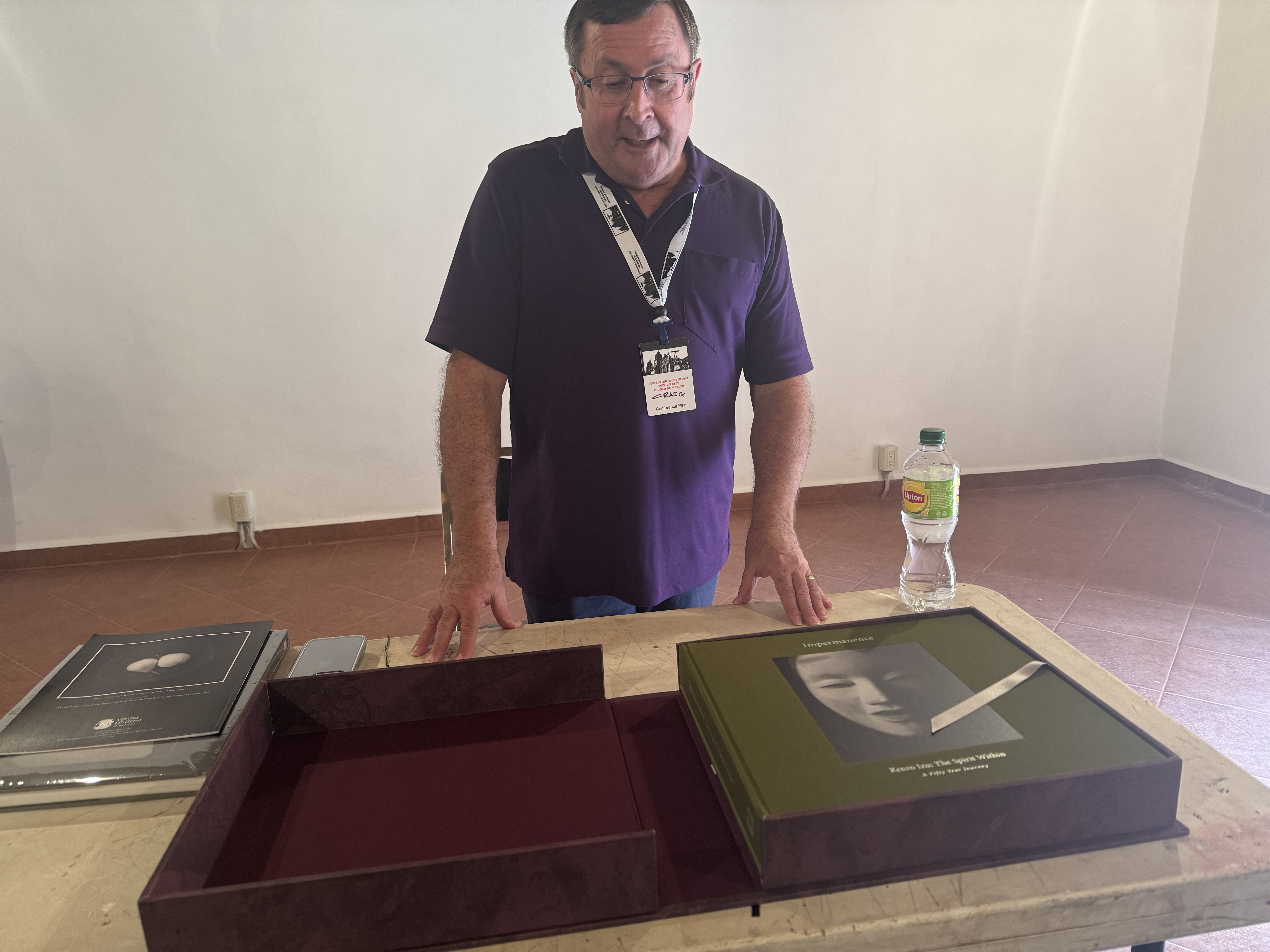
Matthew Magruder presented his work that spans multiple photographic disciplines; the work he presented centered on book arts and the handmade artists book. Craig Alan Huber (another person to whom I owe a great debt of thanks for his assistance in making this conference happen) gave a contrasting presentation on publishing fine art books, from “trade press” to the extremely limited edition fine-art volumes (usually cased in presentation boxes and accompanied by signed prints, etc). Craig is the owner and publisher of Veritas Editions, an award-winning press that specializes in high-end limited edition books.
Matt Magruder and Craig Alan HuberMatt Magruder and one of his accordion bookshand-made book of panoramic imagesMatt Magruder demonstrating panorama bookCraig Alan Huber and a fine press book from Veritas EditionsCraig showing a print accompanying the book
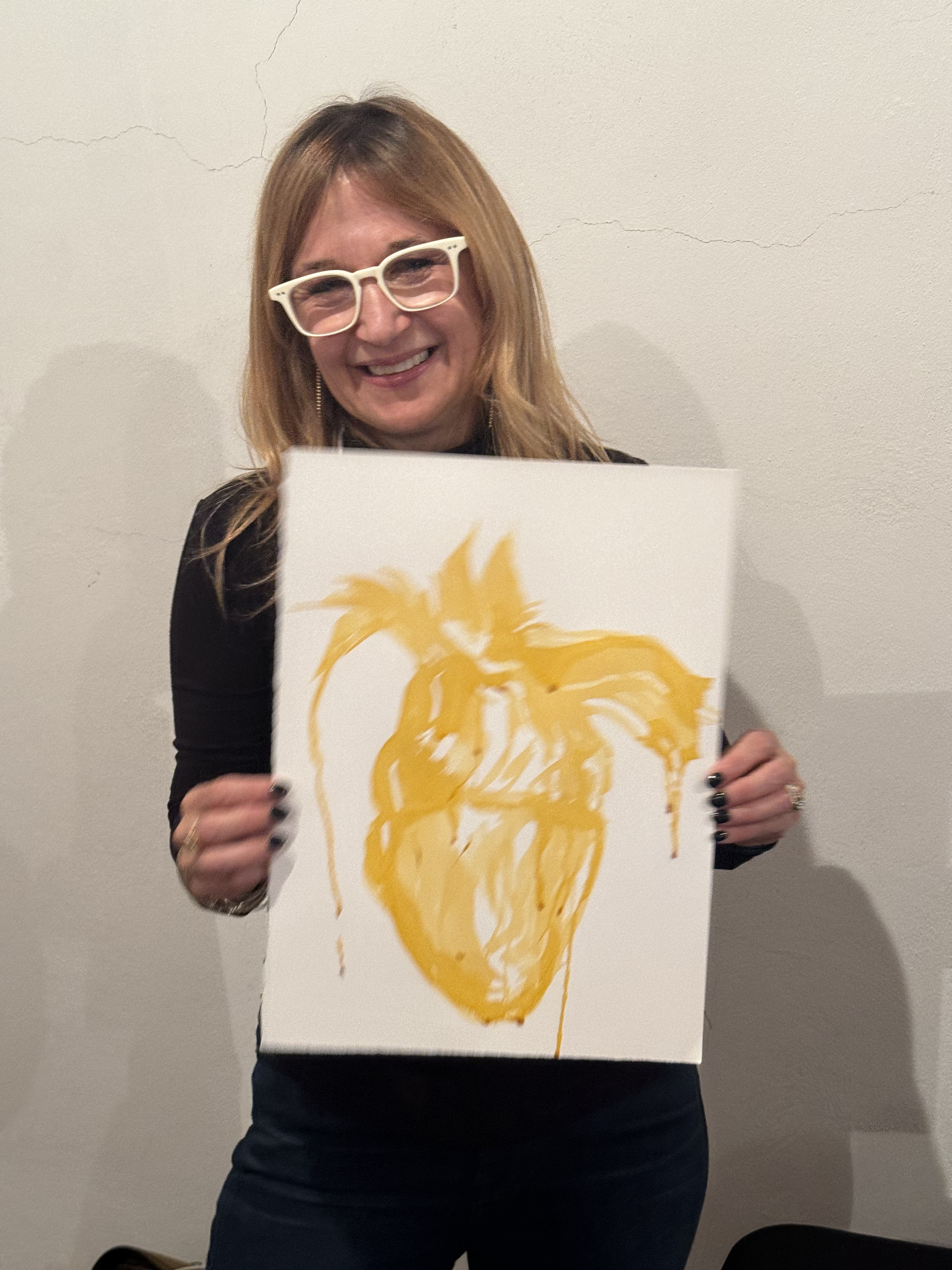
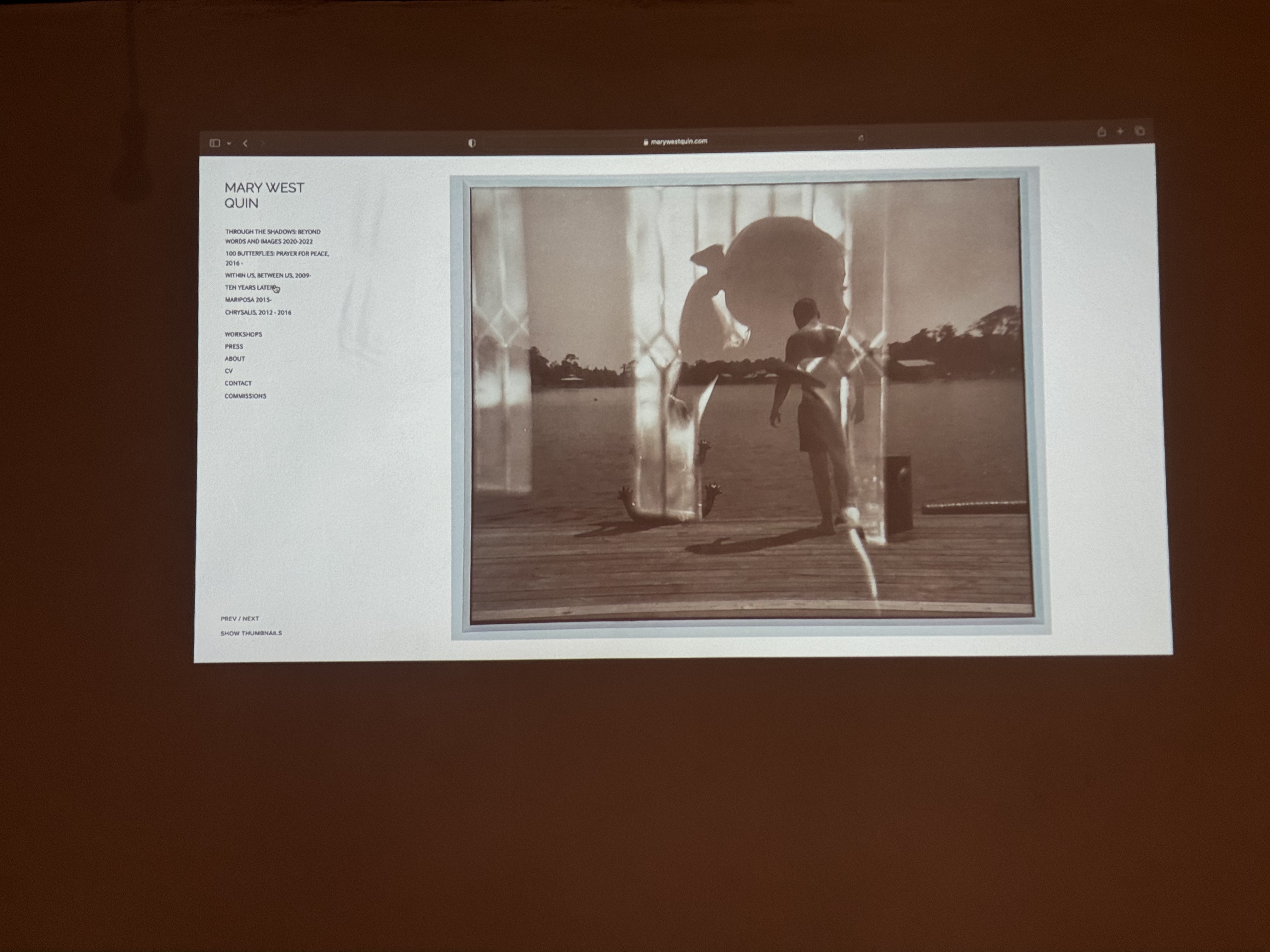
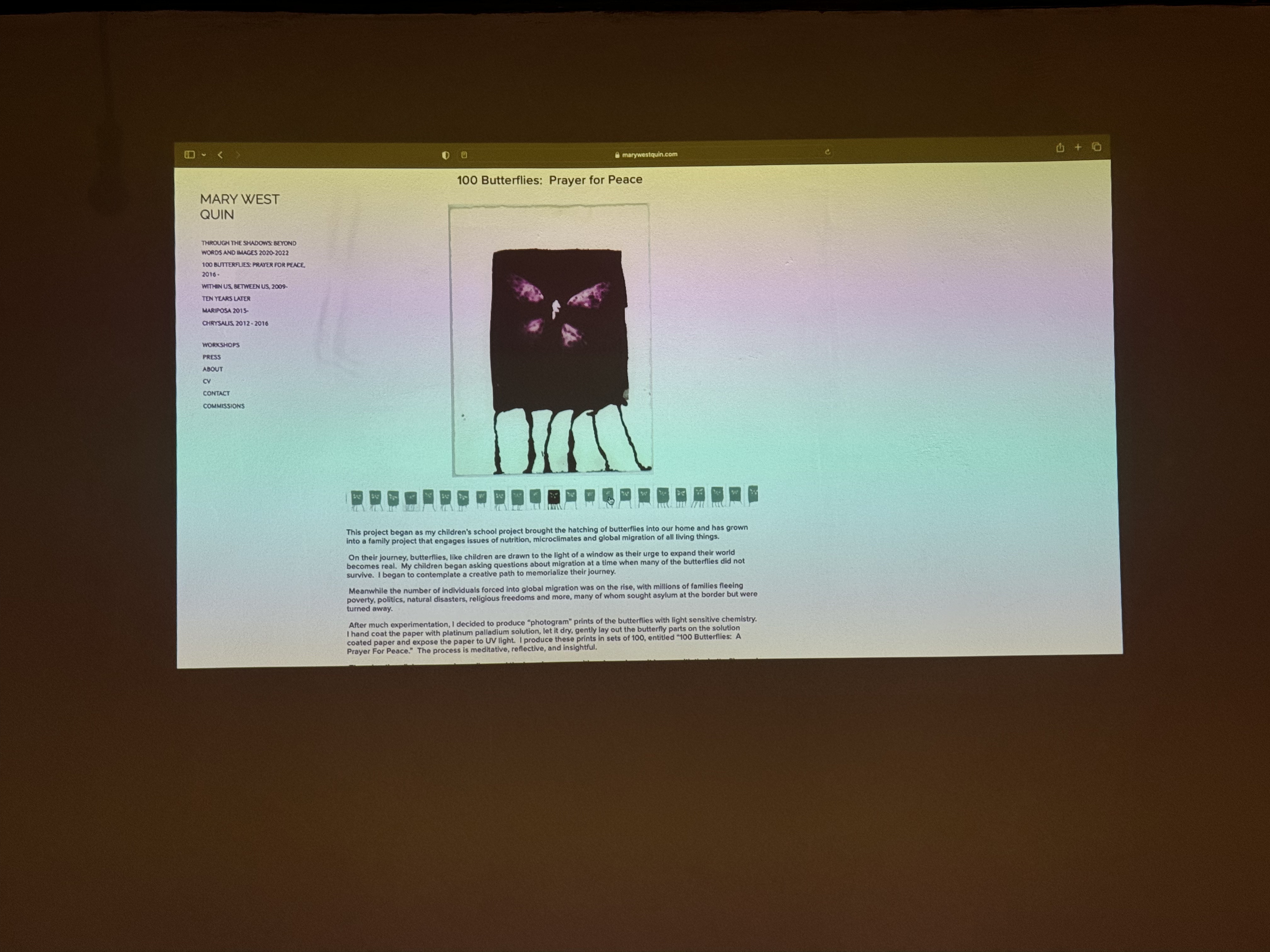
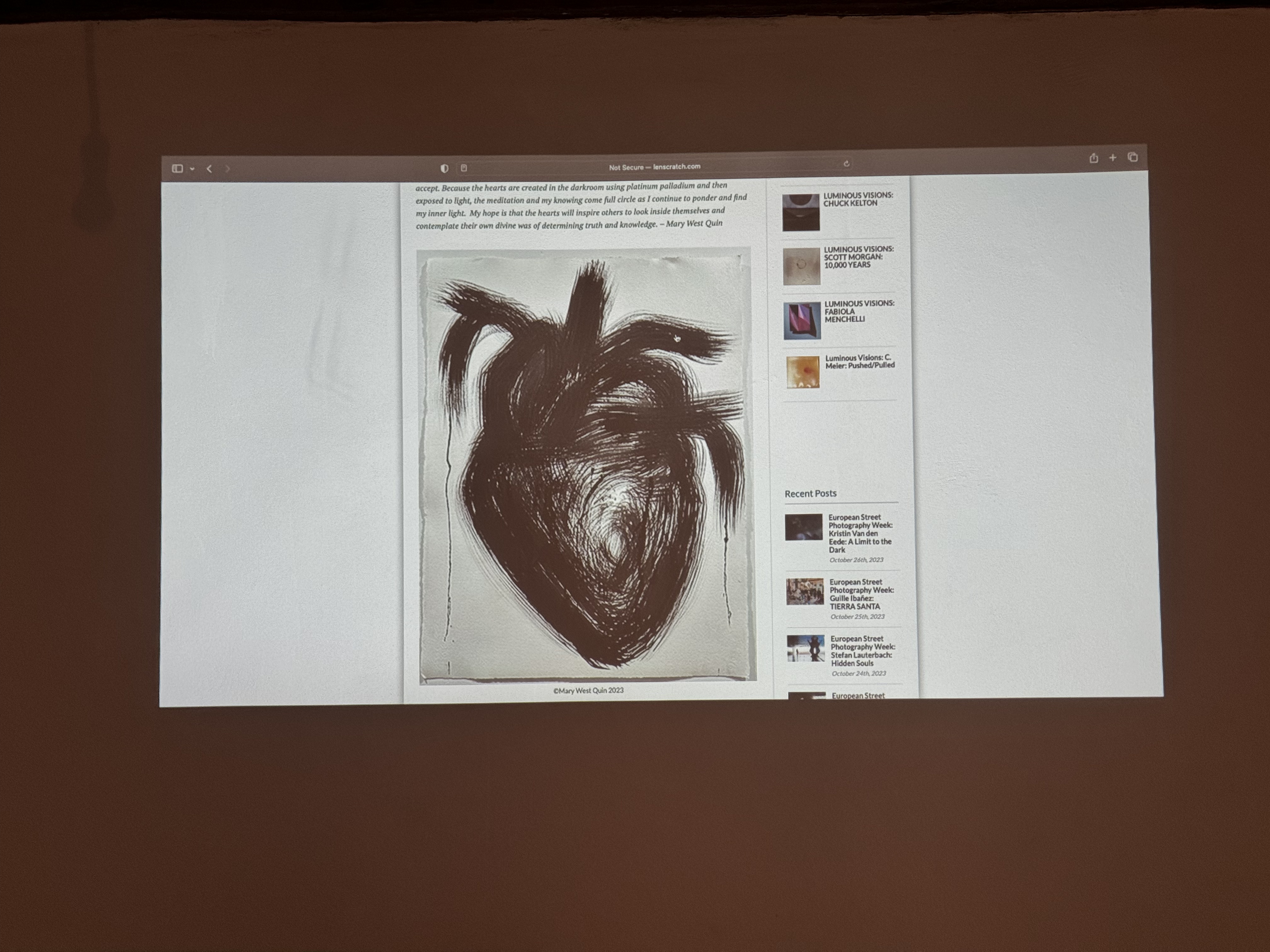
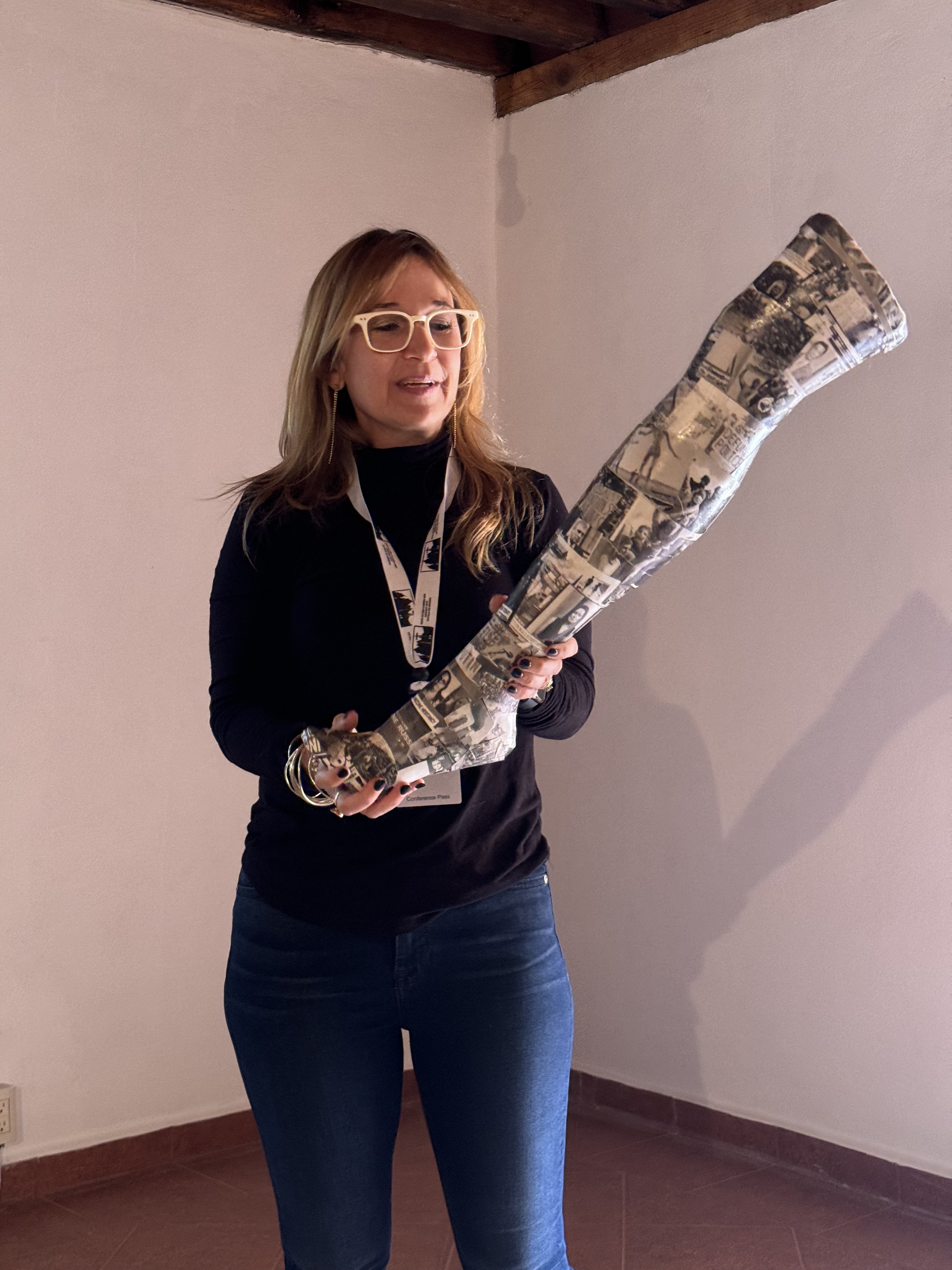
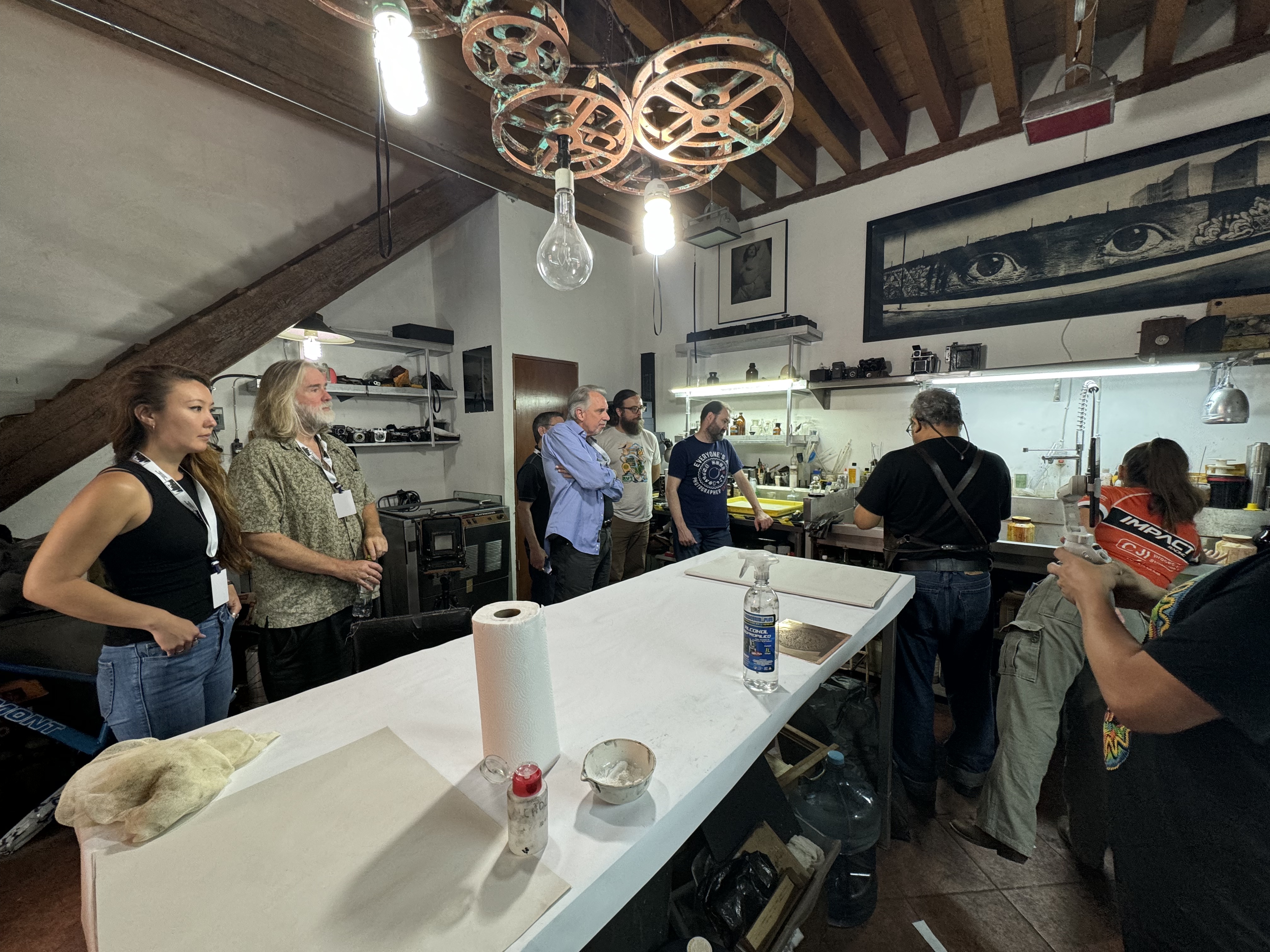
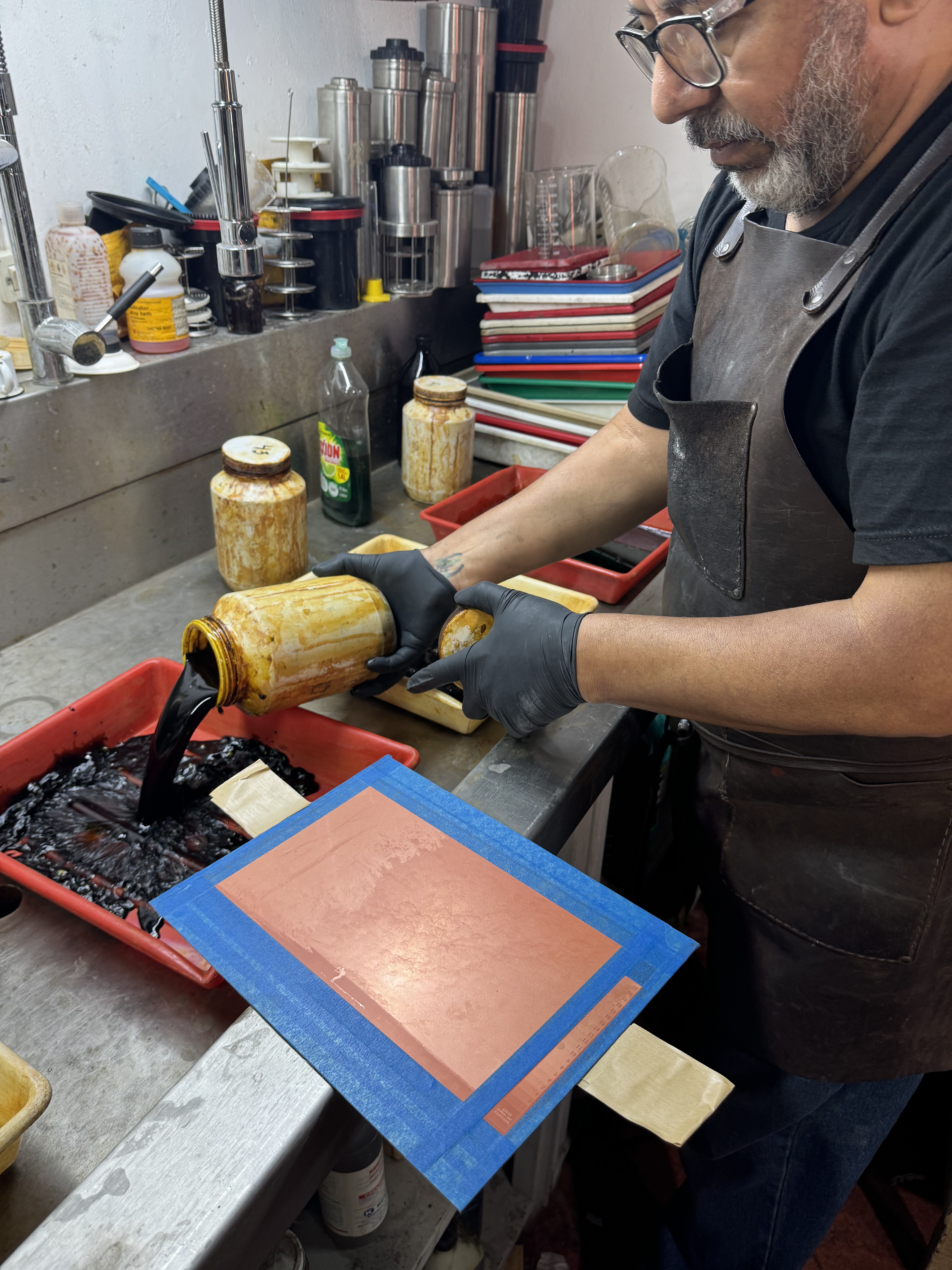
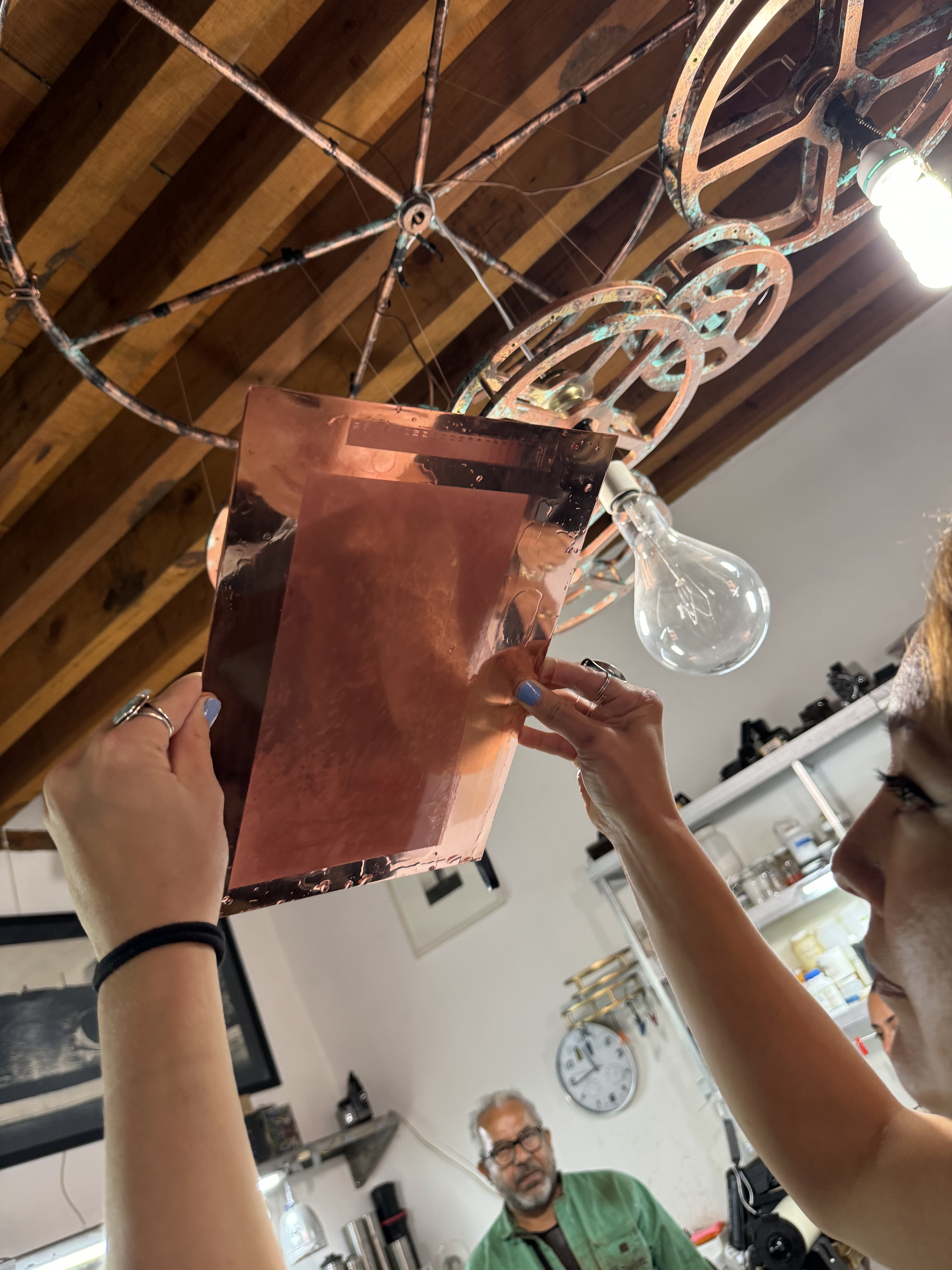
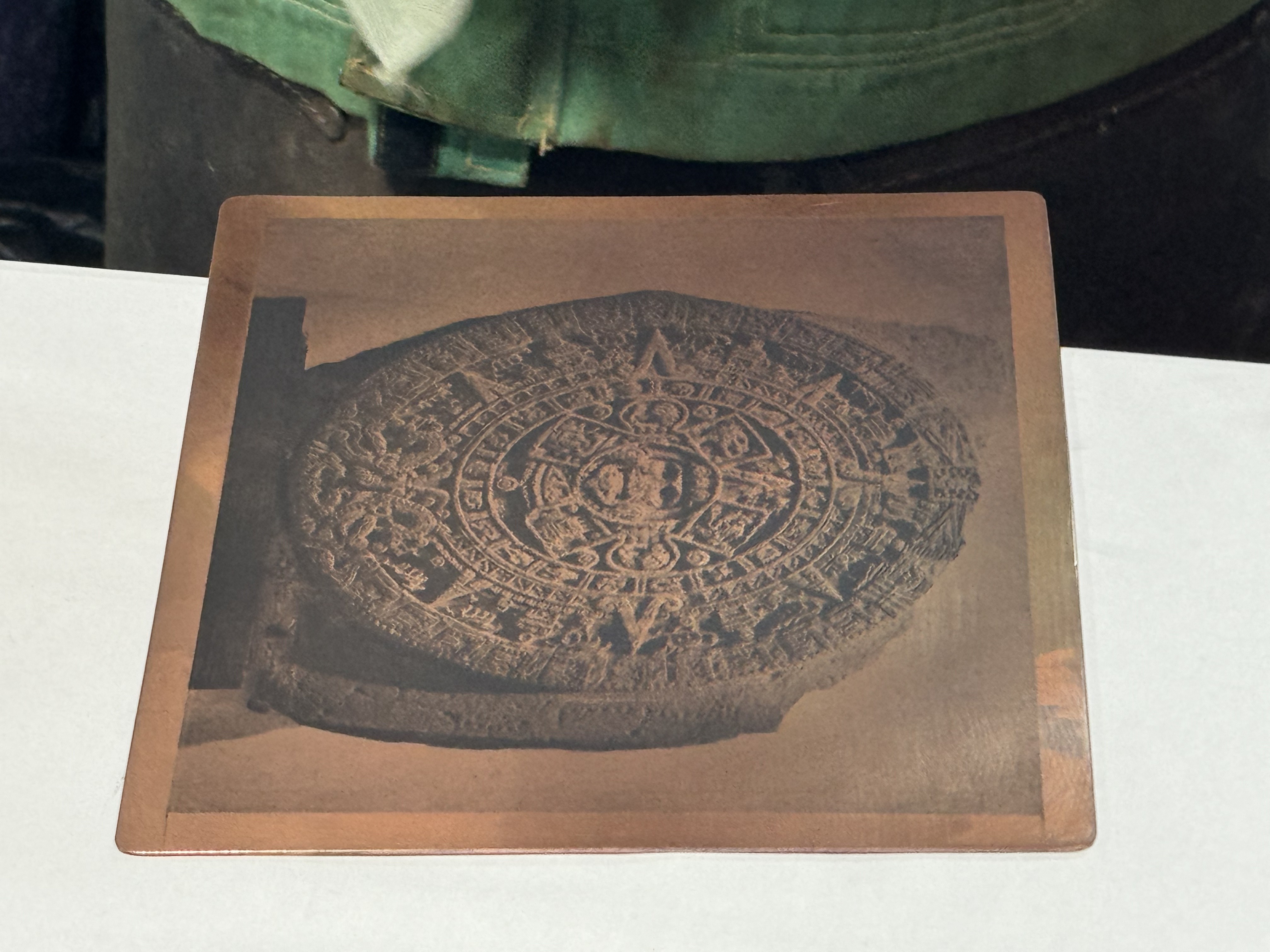
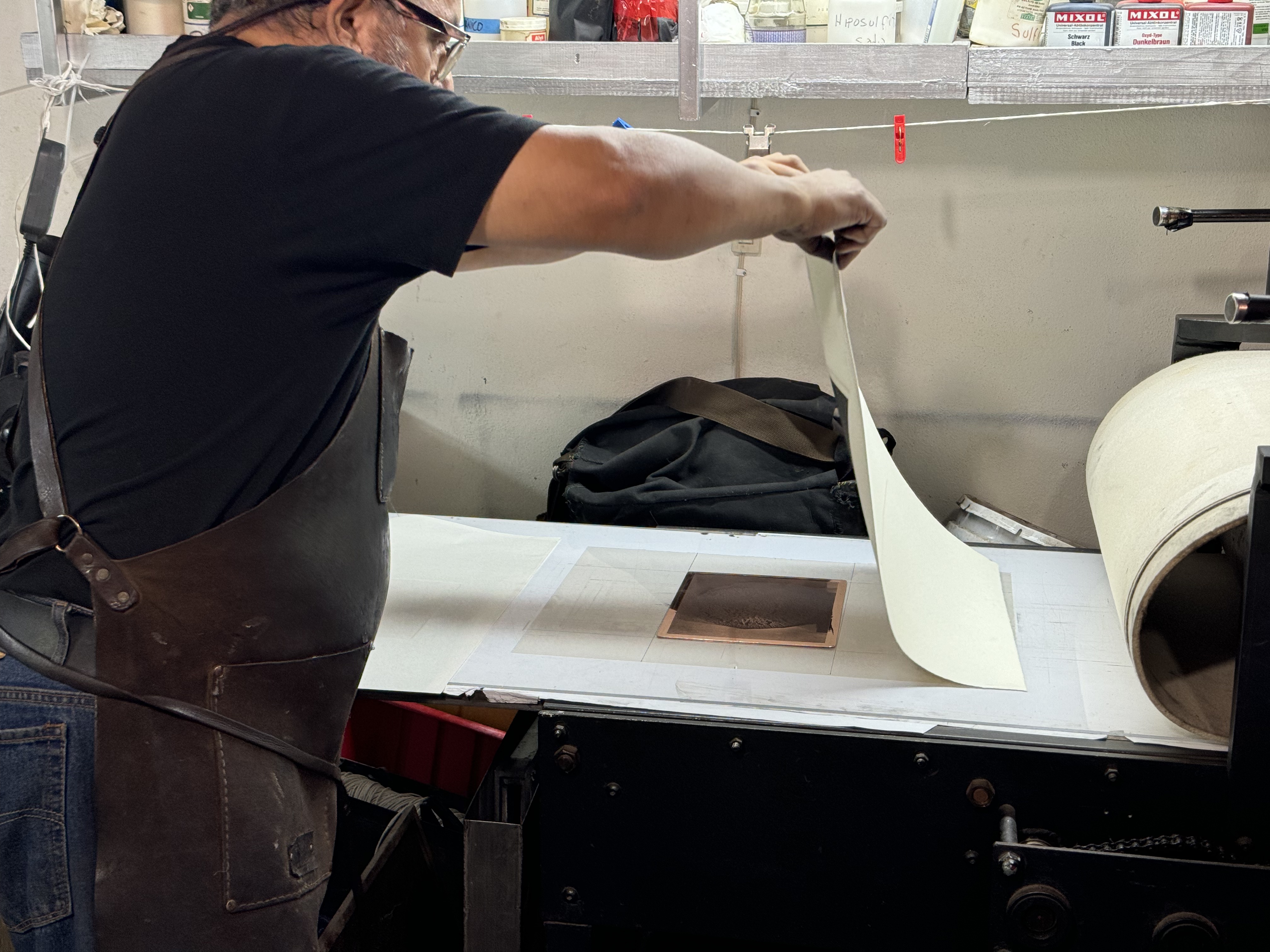
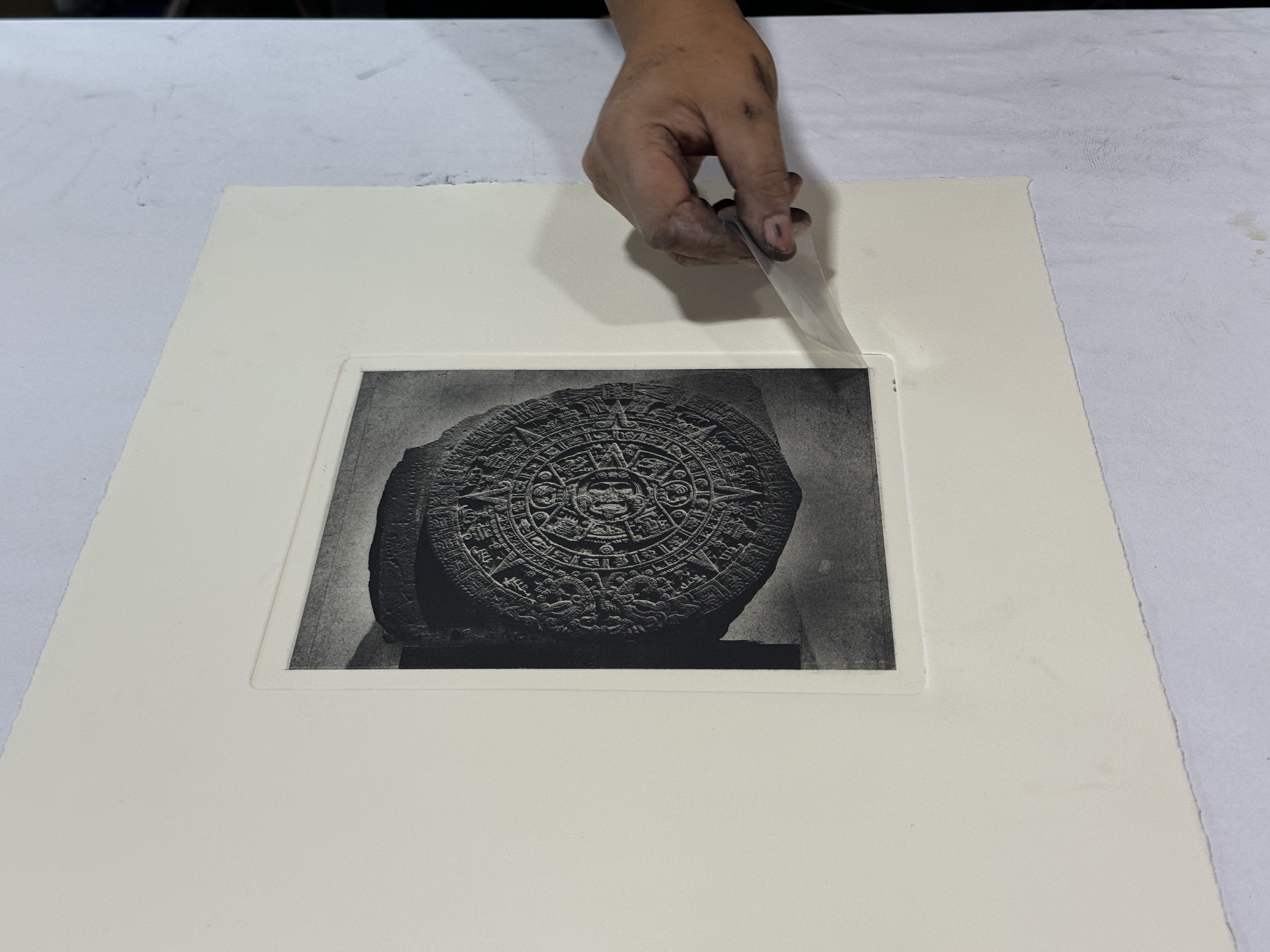
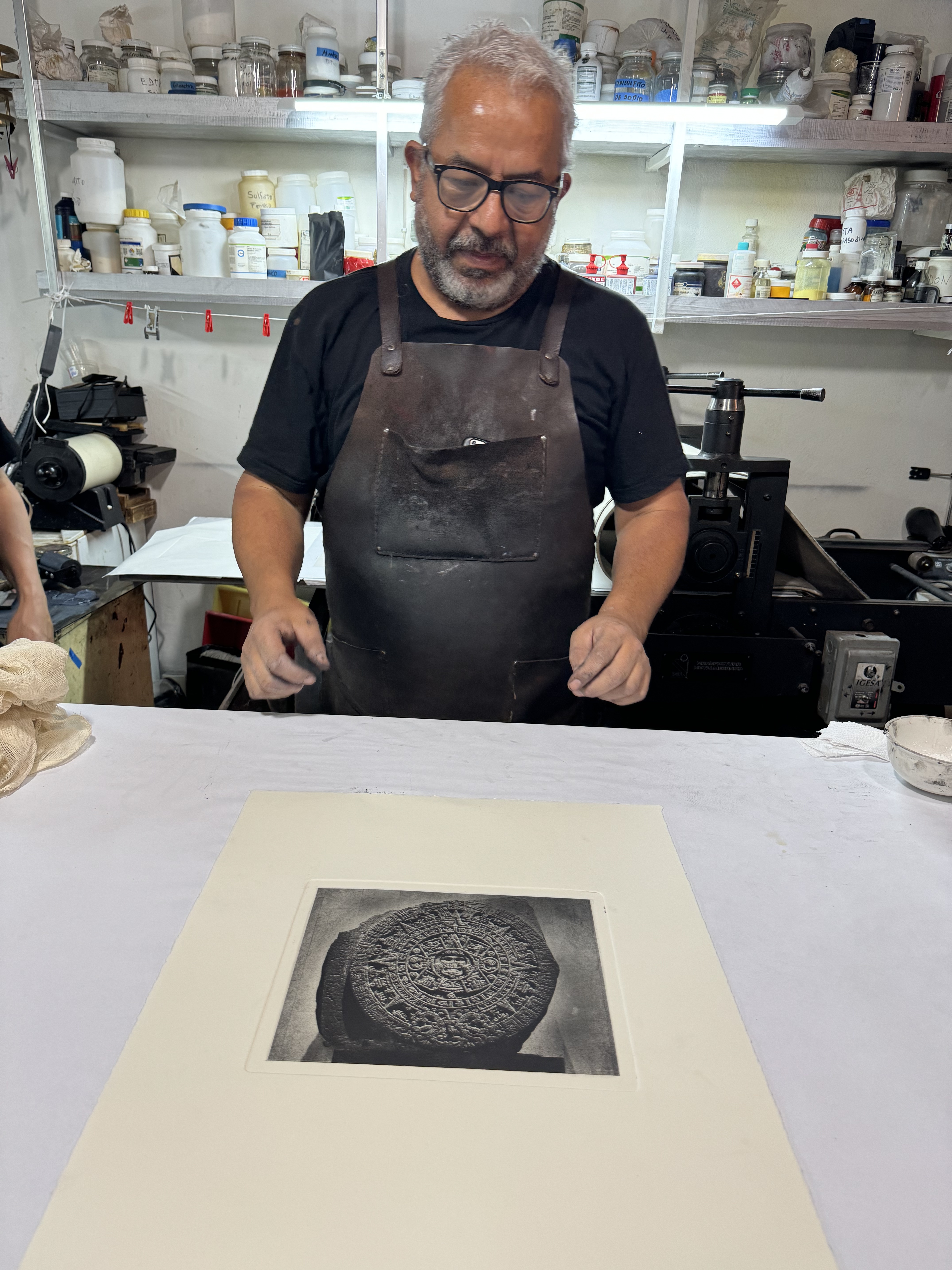
We also had presentations by Mary Quin and Arturo Talavera. Mary is an innovative artist from Alabama who began her photographic career working with large format cameras making traditional photographic images and has evolved into making “intuitive” images where she paints and drips photo chemistry onto paper to create images. Mary also gave a hands-on demo to the attendees of her technique. Arturo is a photographer from Mexico City and a master of multiple historic photo processes. Arturo hosted us for a morning in his studio where he demonstrated making a copper-plate photogravure image of the Aztec “Sun Stone” housed in the Anthropology Museum; his original plate from which he created the gravure was a whole plate size Daguerreotype!
Mary Quin showing one of her hearts – work in progressEarly work in Palladium by Mary QuinOne of Mary Quin’s butterflieshand-drawn heart in palladiumMary Quin with mannequin leg collageArturo Talavera’s studioArturo about to etch a plateArturo examining the etched plateetched plate with ink, ready to pressPrint and etching plate after running through the pressfinished printArturo examining finished print
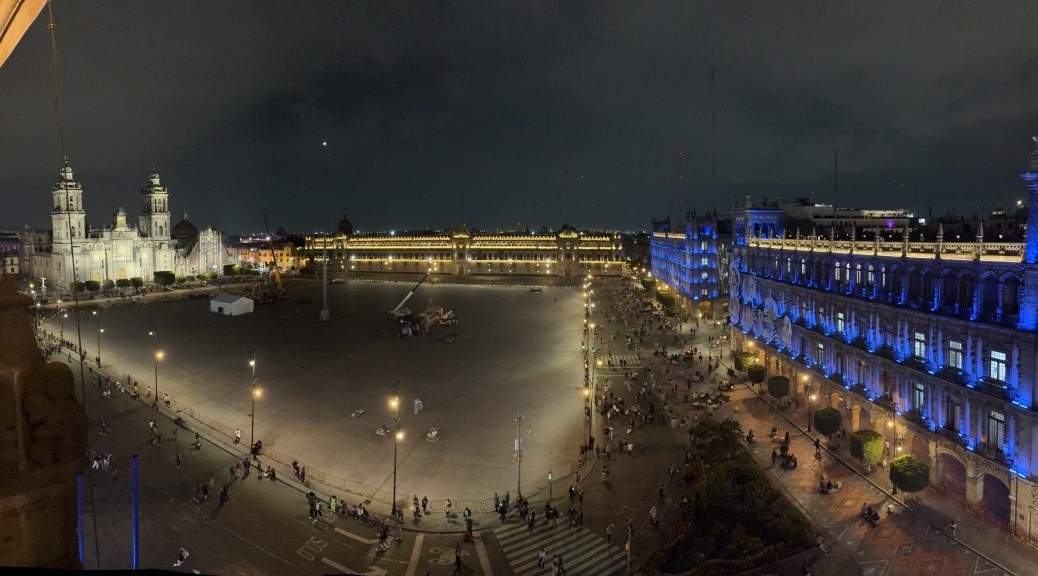
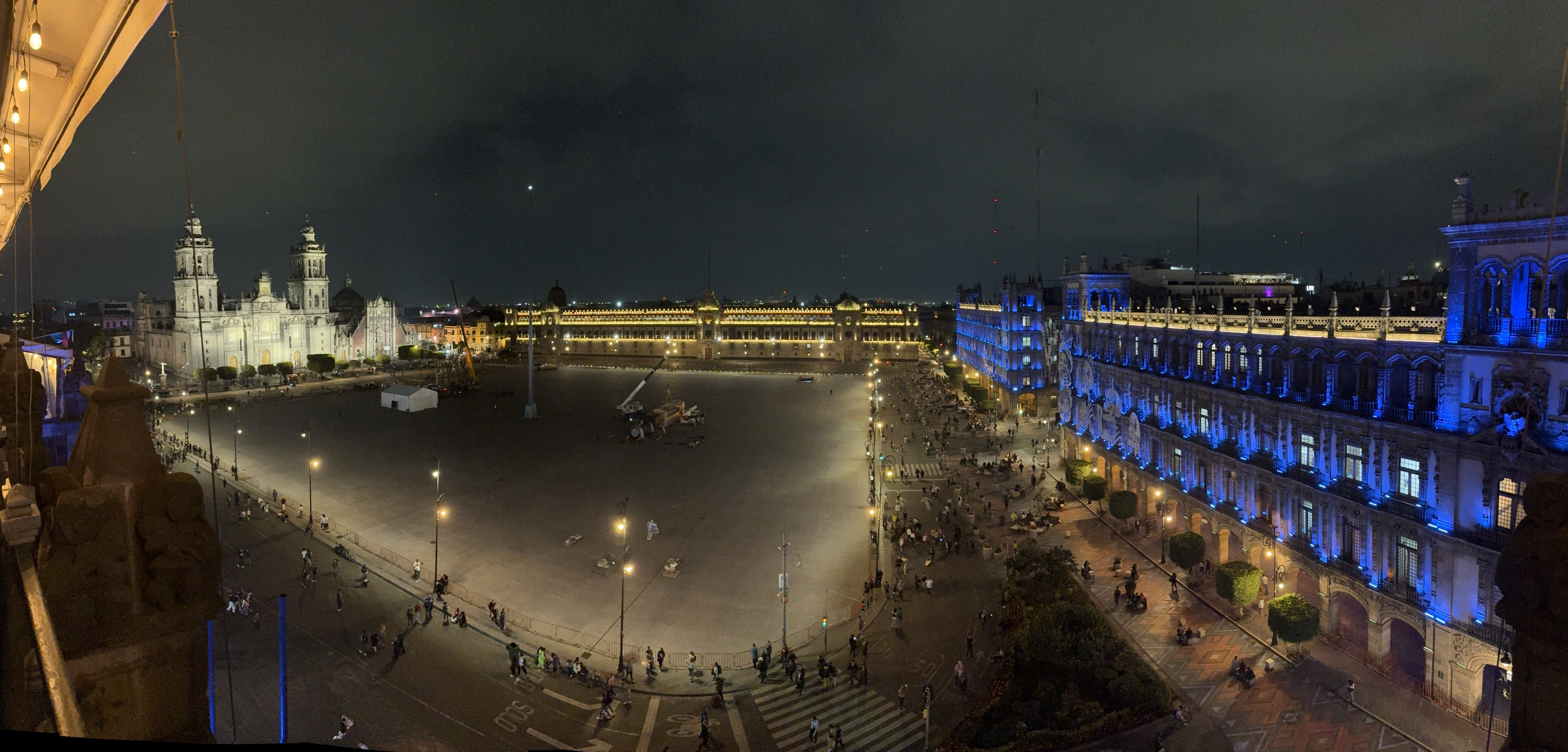
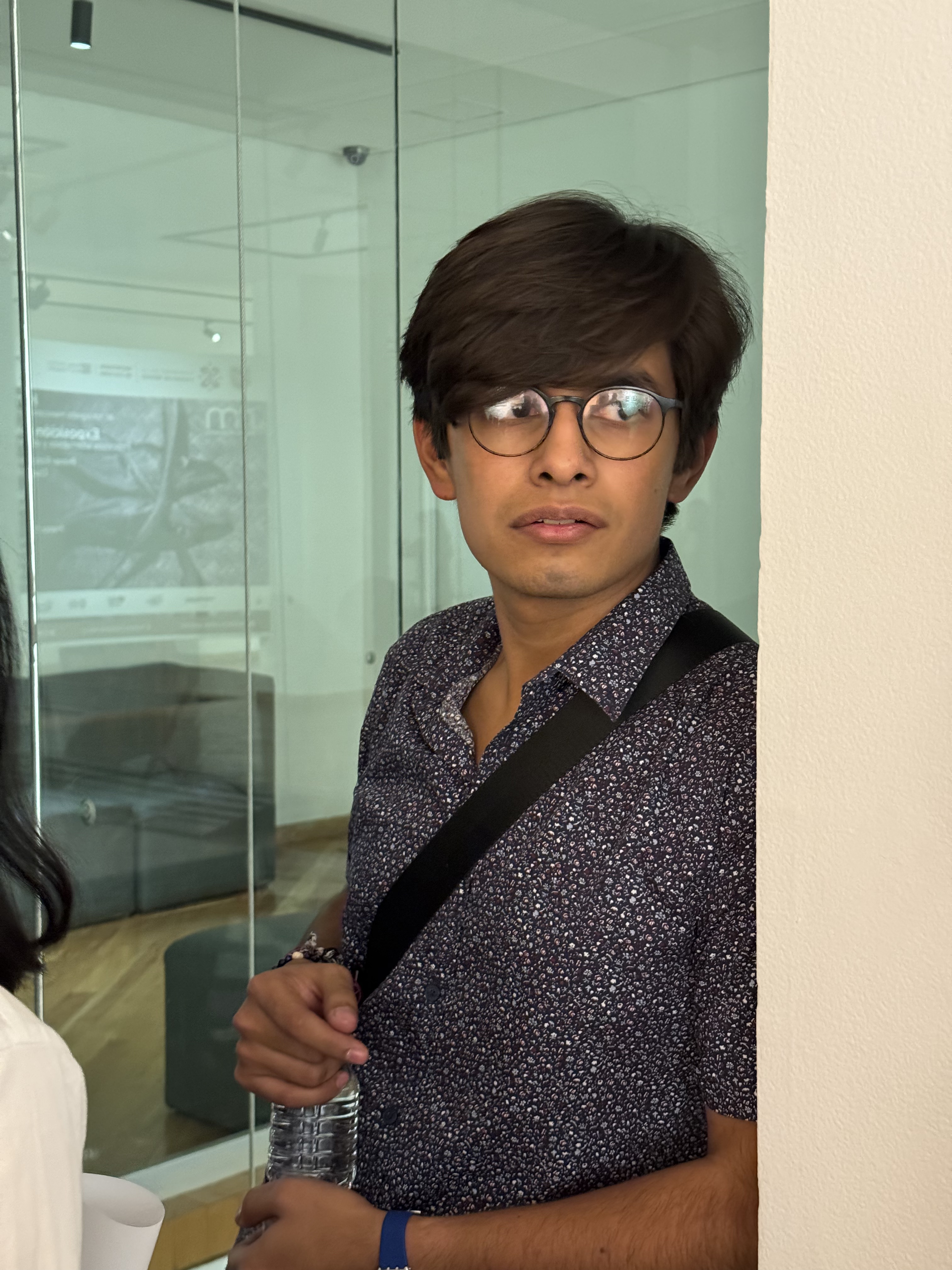
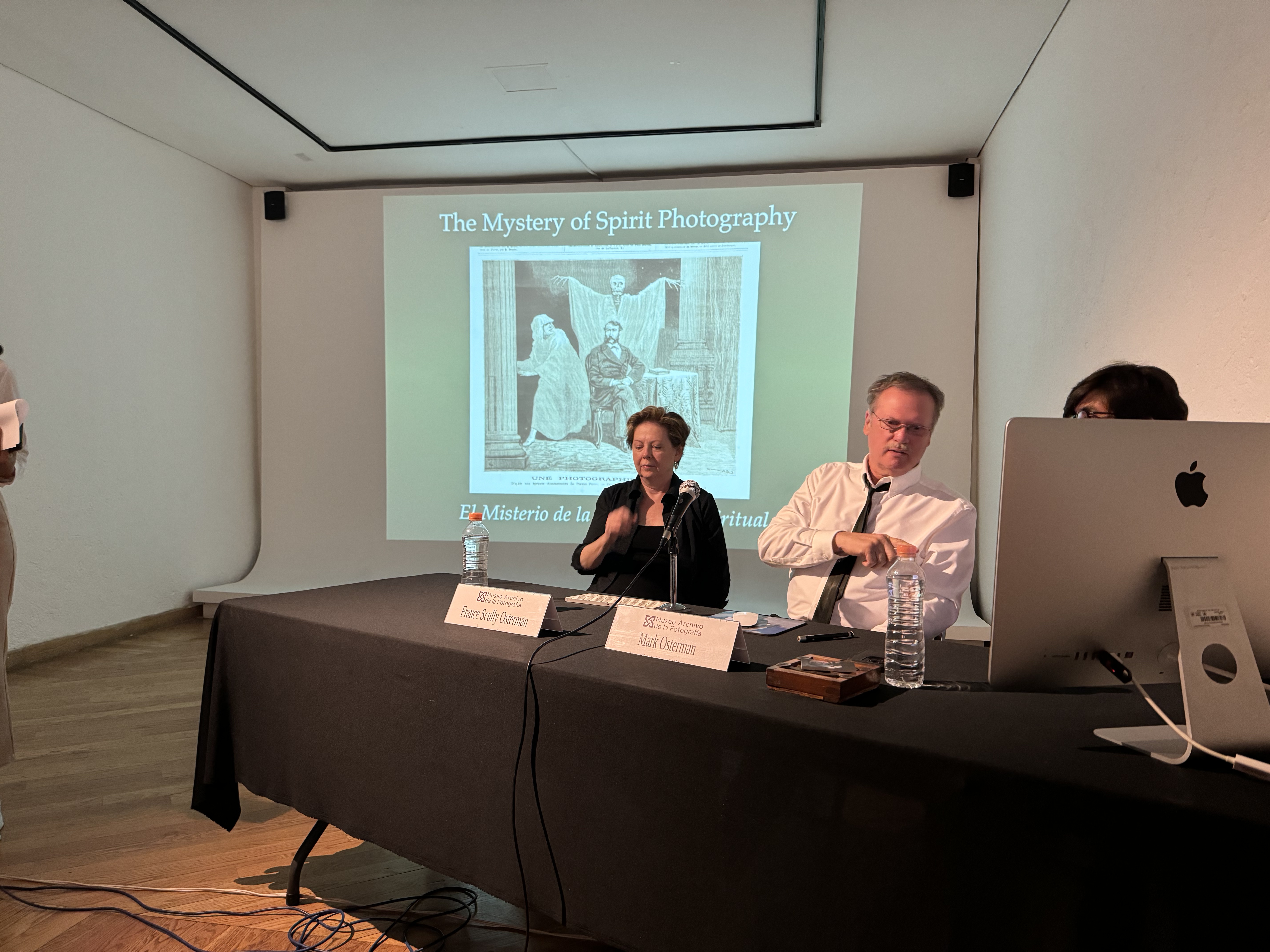
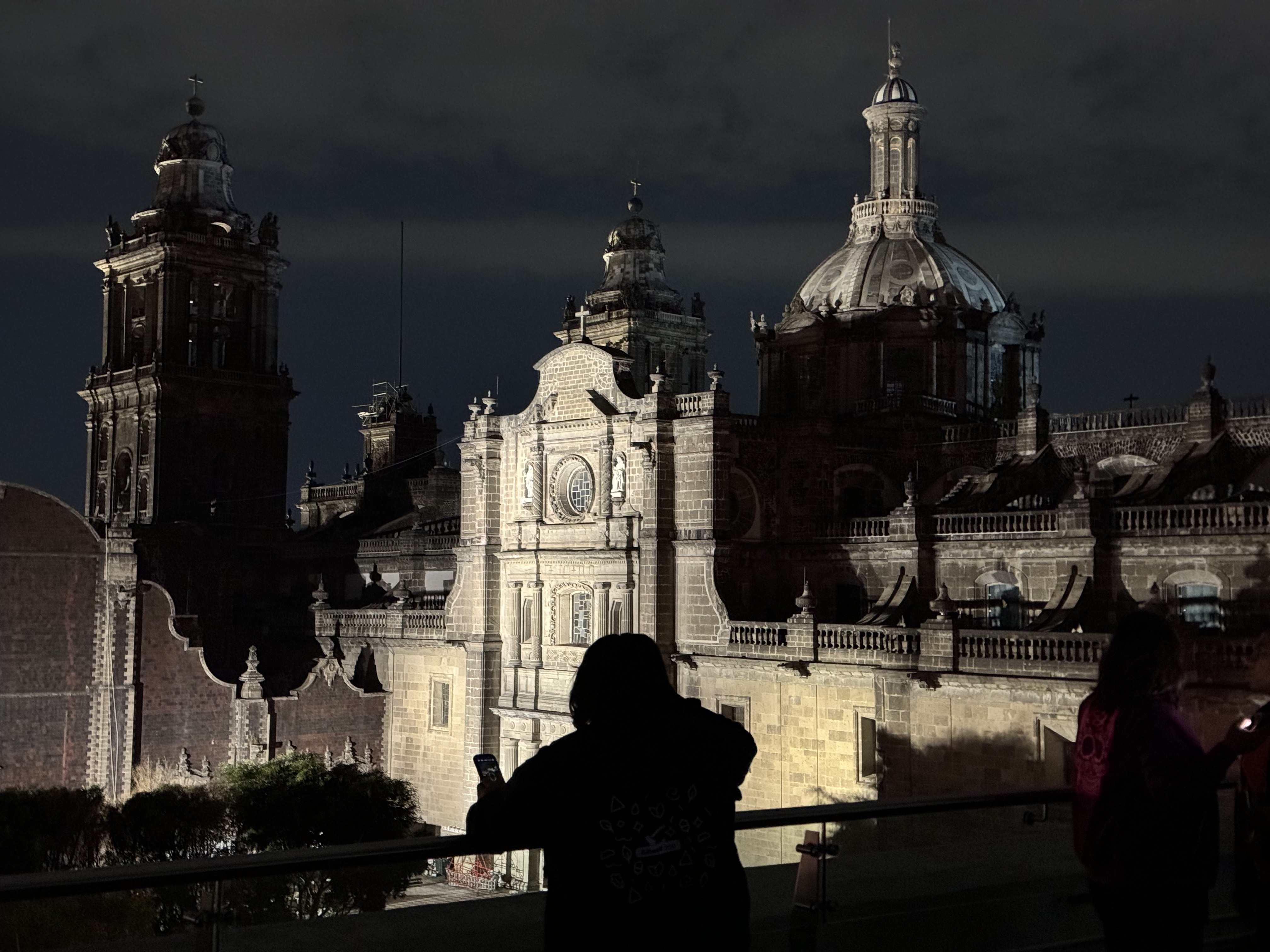
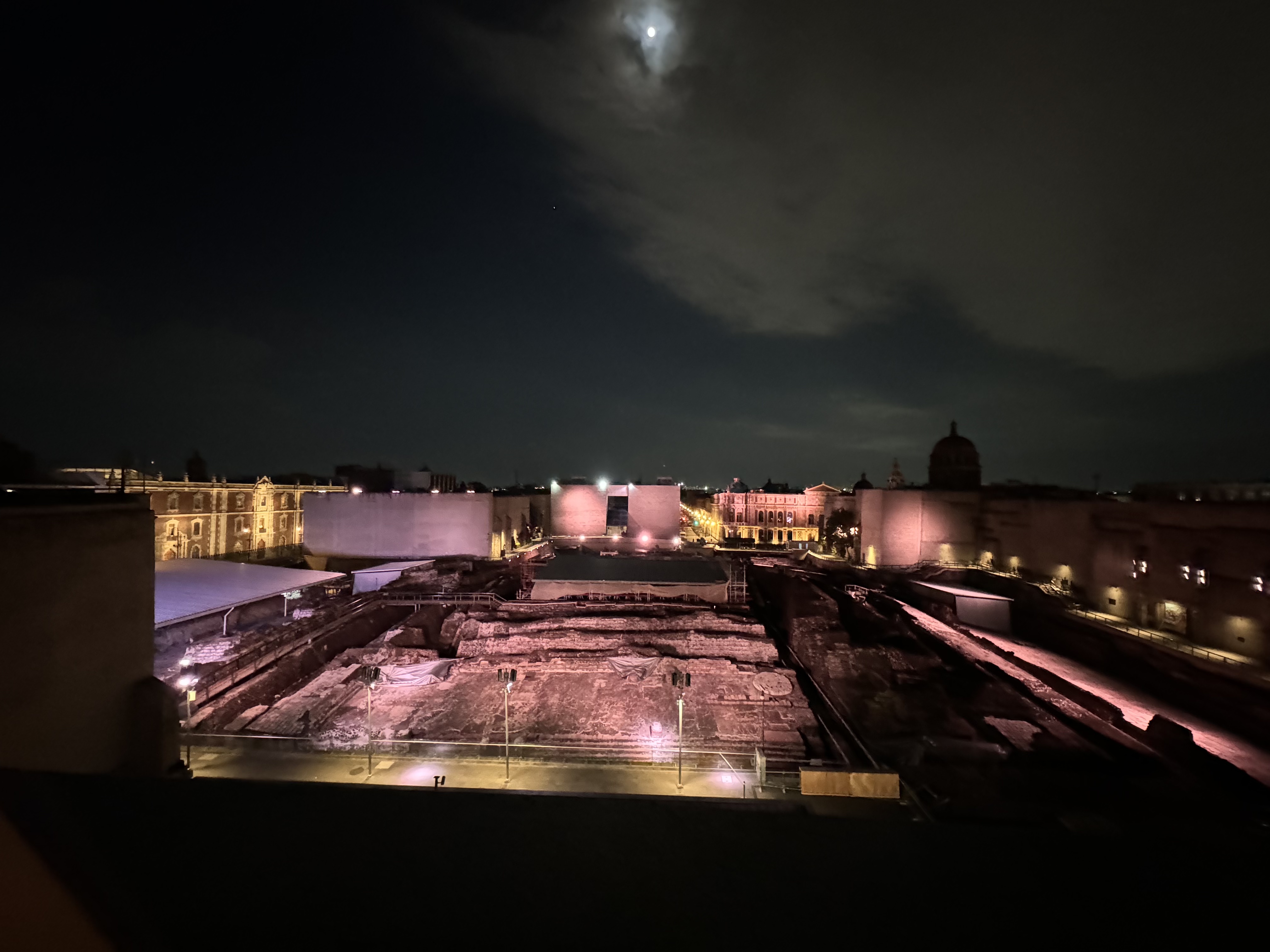
Our closing night keynote was presented at the Museo Archivo de la Fotografia by Mark and France Scully Osterman, who talked about 19th century spirit photography, an especially timely topic as we were on the cusp of the Day of the Dead weekend in Mexico City. Another resounding success, with a standing room only crowd, Mark and France talked about the origins of spirit photography in the middle 19th century, with the aftermath of the US Civil War being a significant driver of the interest in spiritualism that encouraged the practice. They also talked about the HOW it was done, with techniques ranging from simple long exposures that rendered moving figures in the image as ghostly presences, to advanced methods for manipulation and trickery to give the impression of spiritual manifestations. The evening closed out on the roof of the museum overlooking the Metropolitan Cathedral and the ruins of the Templo Mayor and some celebratory wine was shared by all. The first image is of the wonderful young man who did the live translation for Mark and France’s talk; he did an outstanding job!
Our translatorMark and France Scully Osterman presentingMark and France viewing the cathedral at night from the museum rooftopView of the cathedral View of the Templo Mayor with the moon overhead
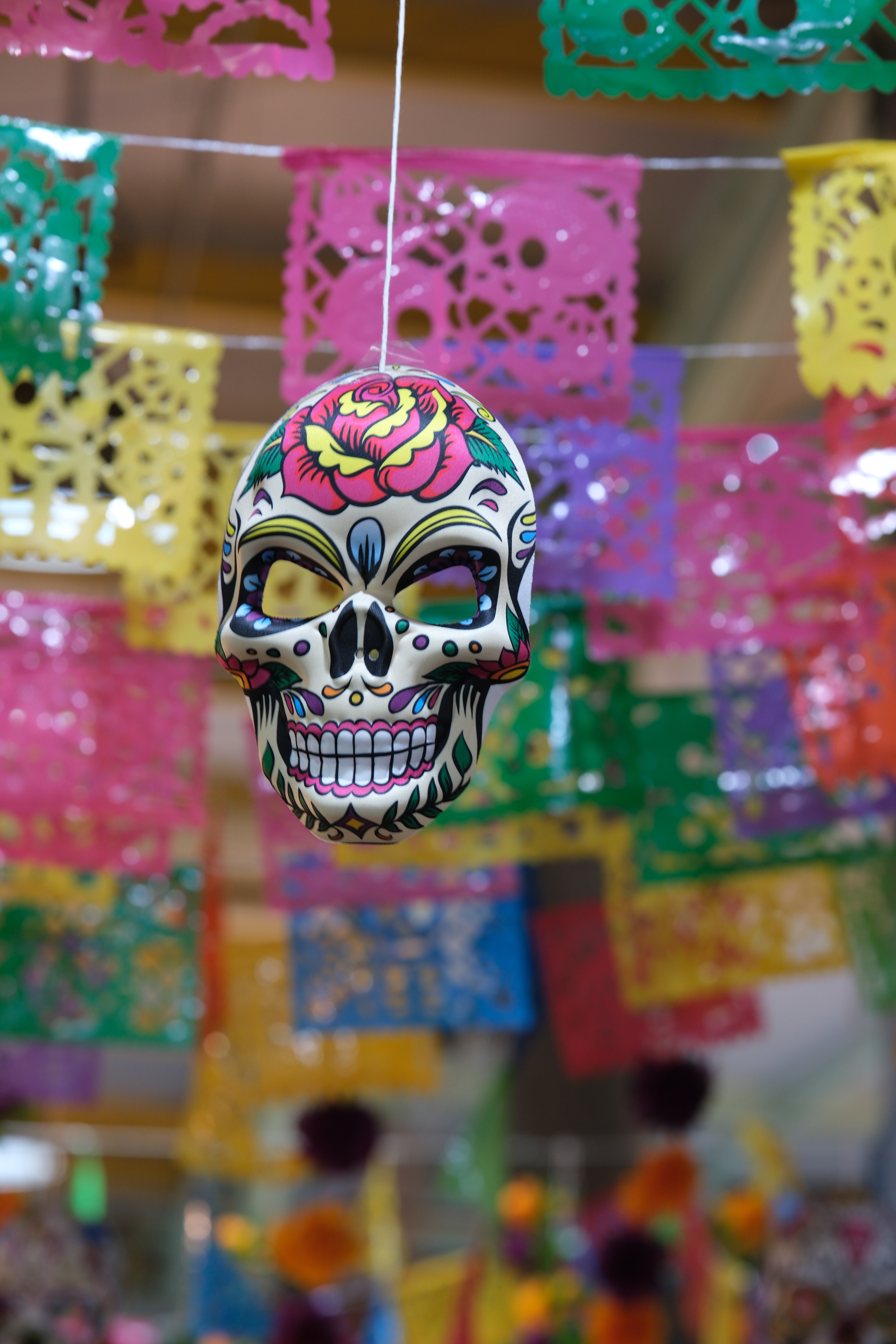
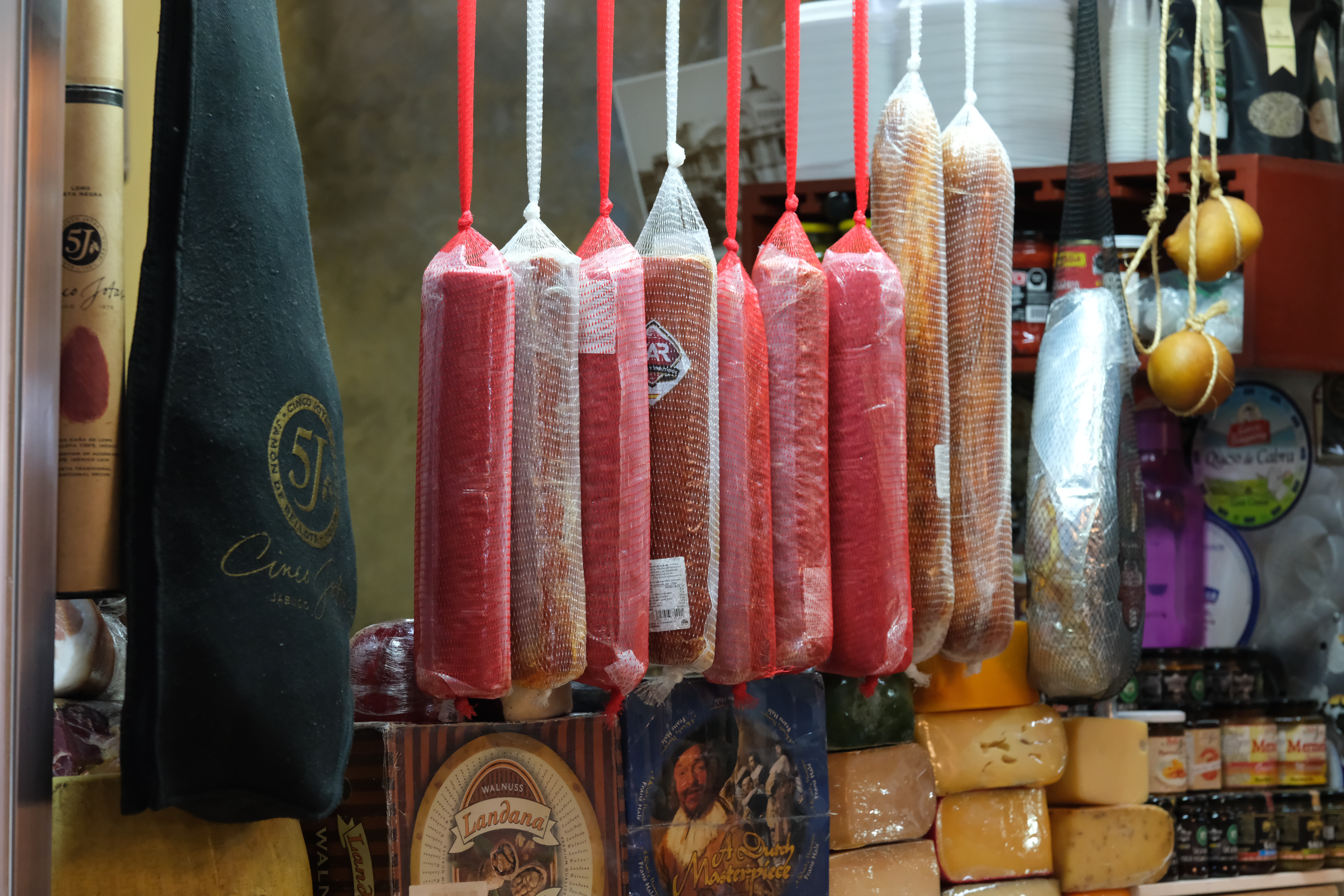
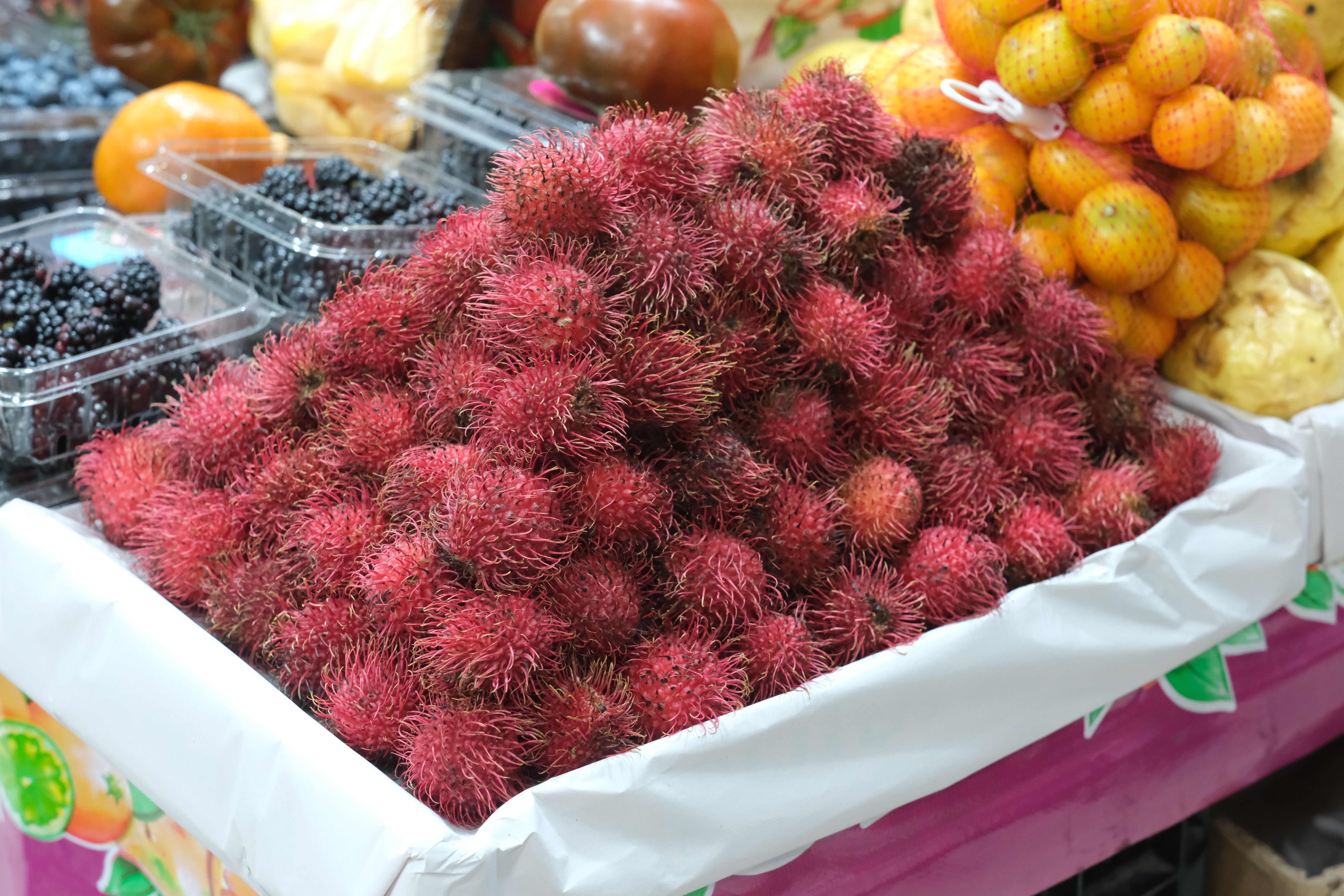
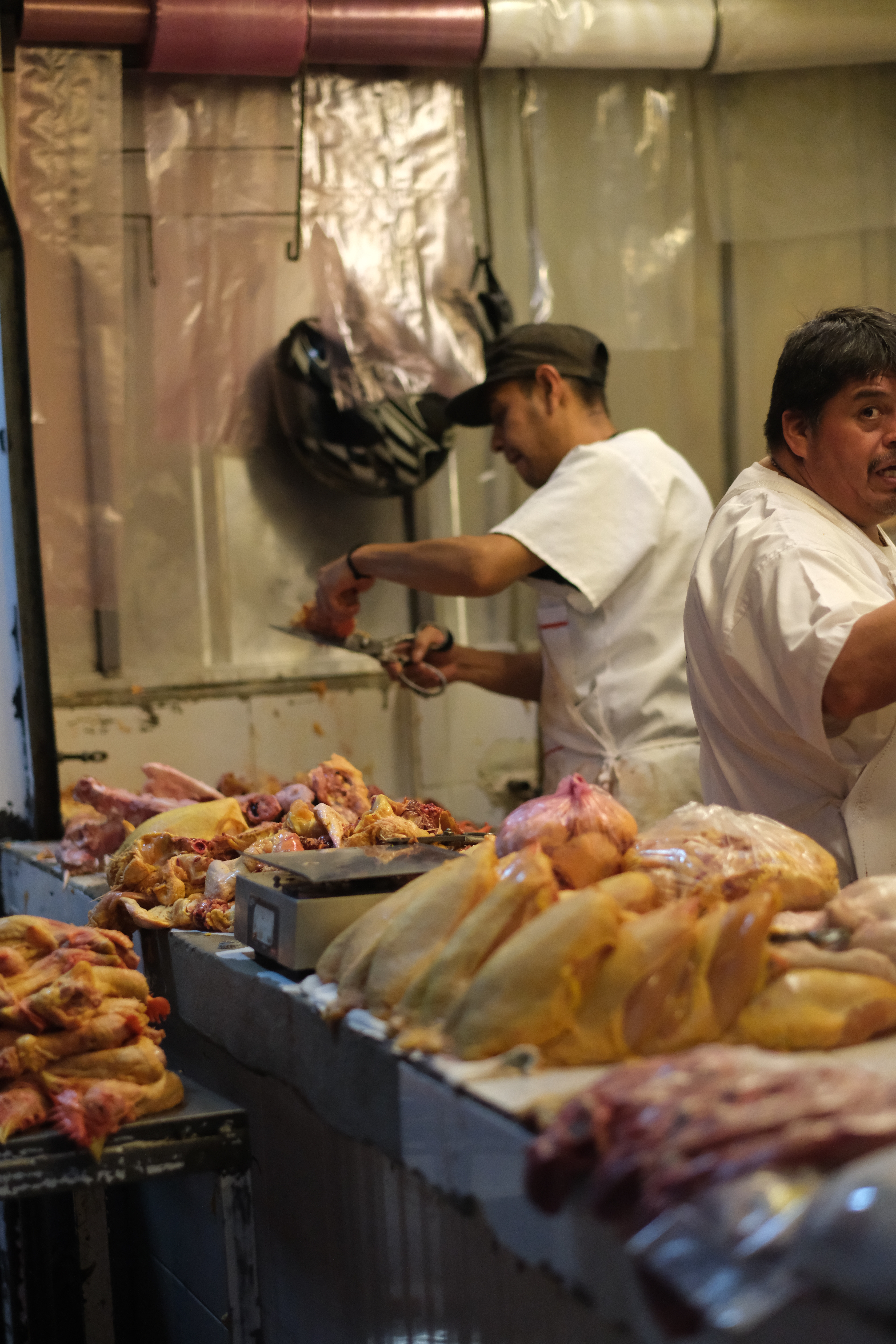
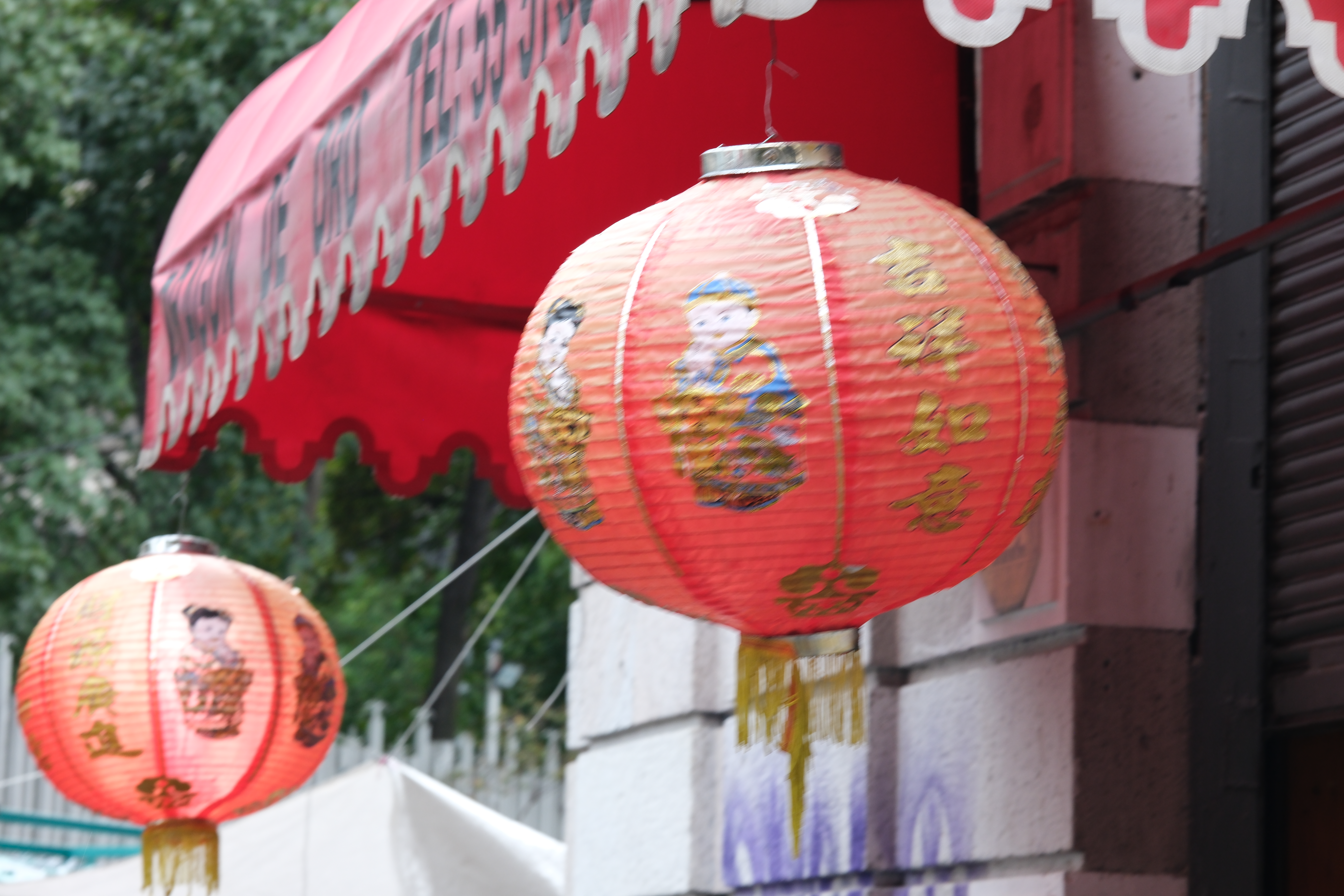
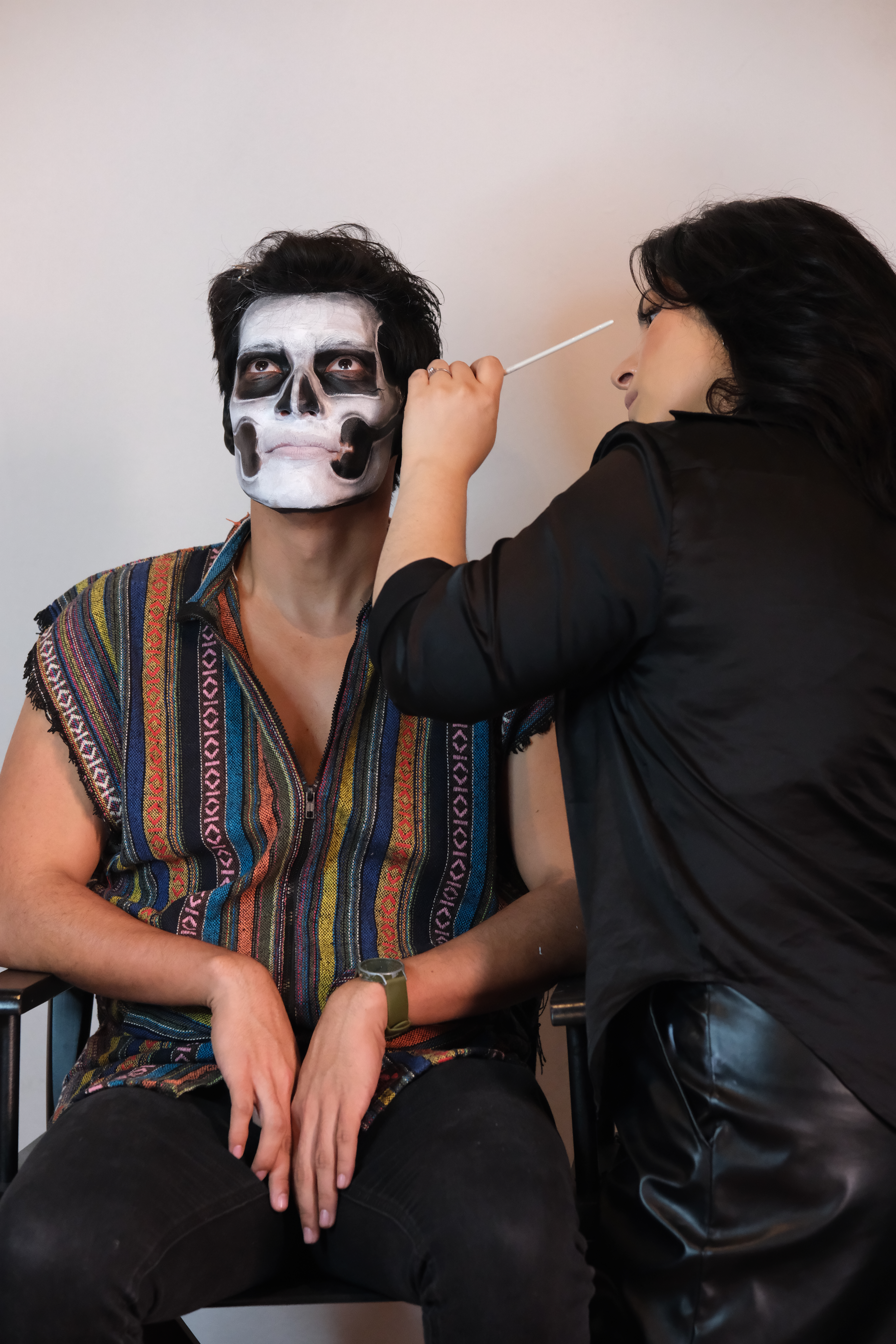
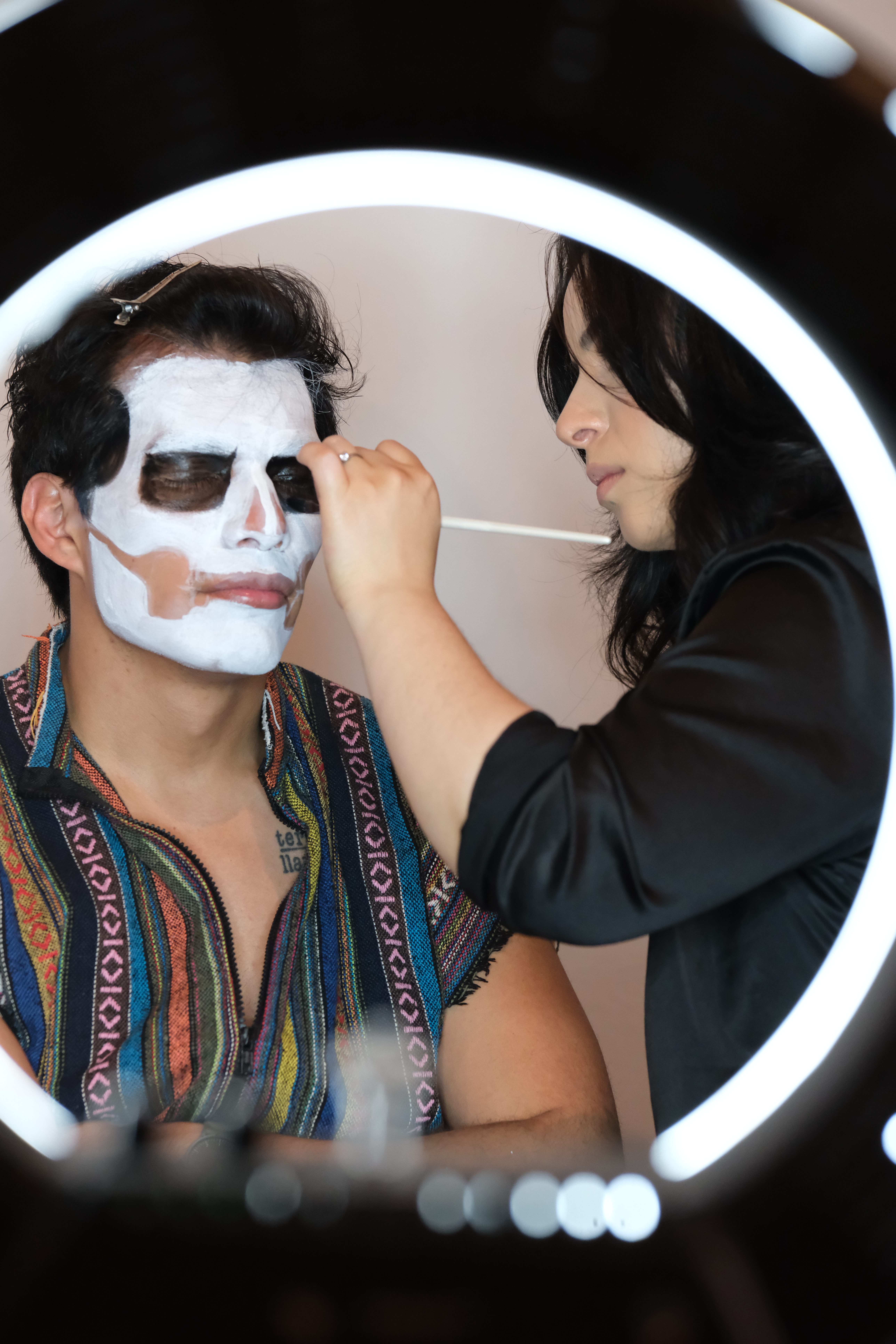
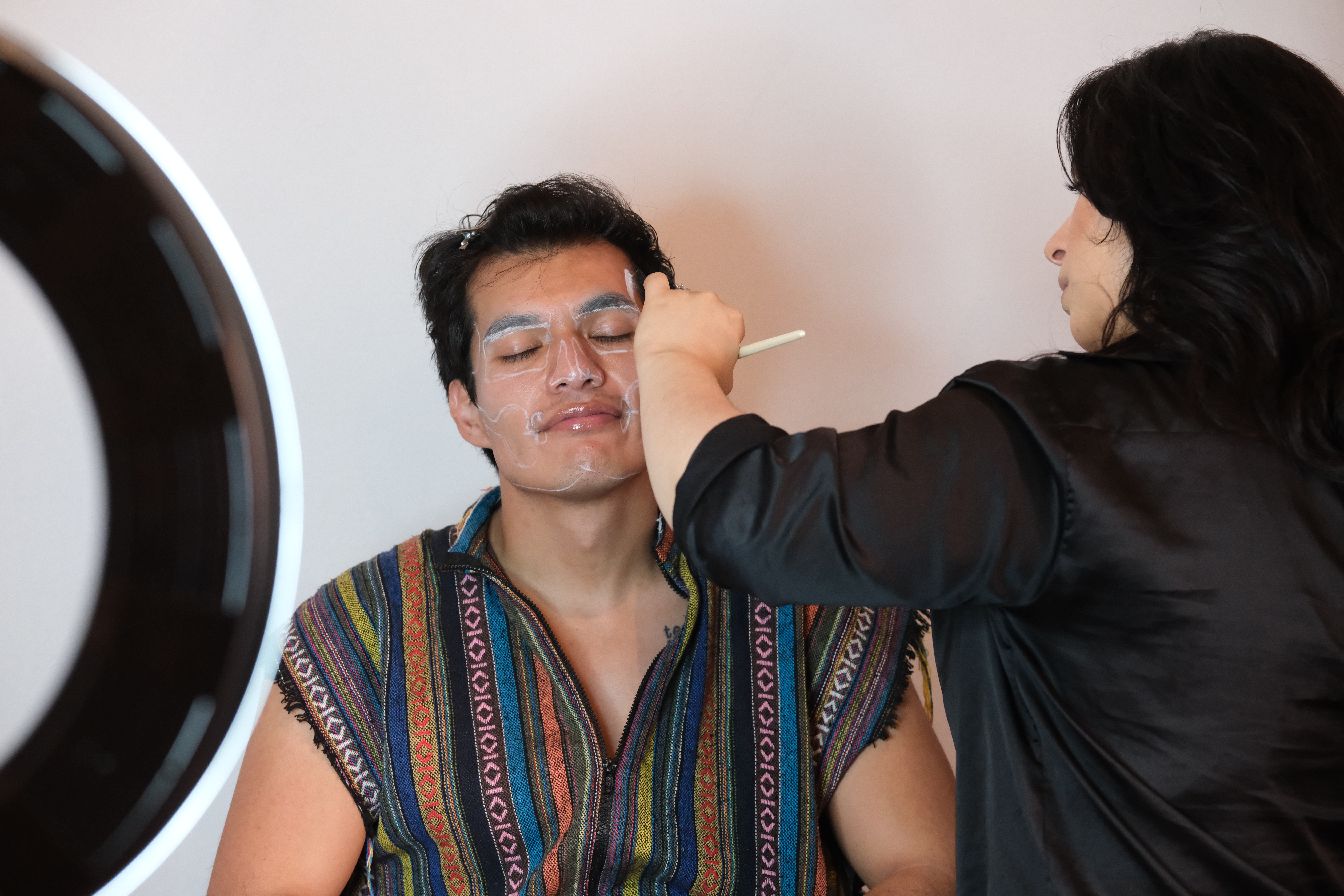
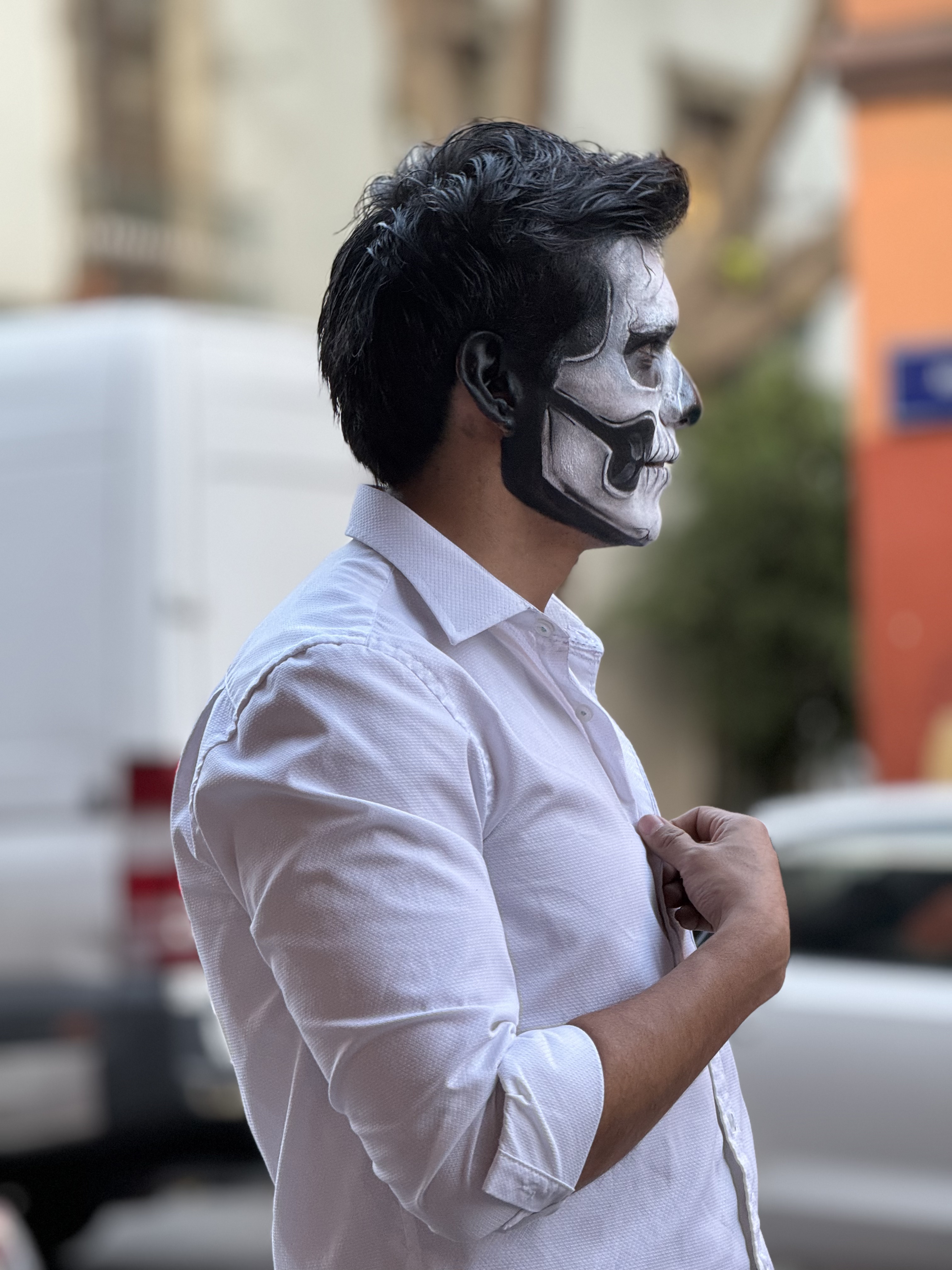
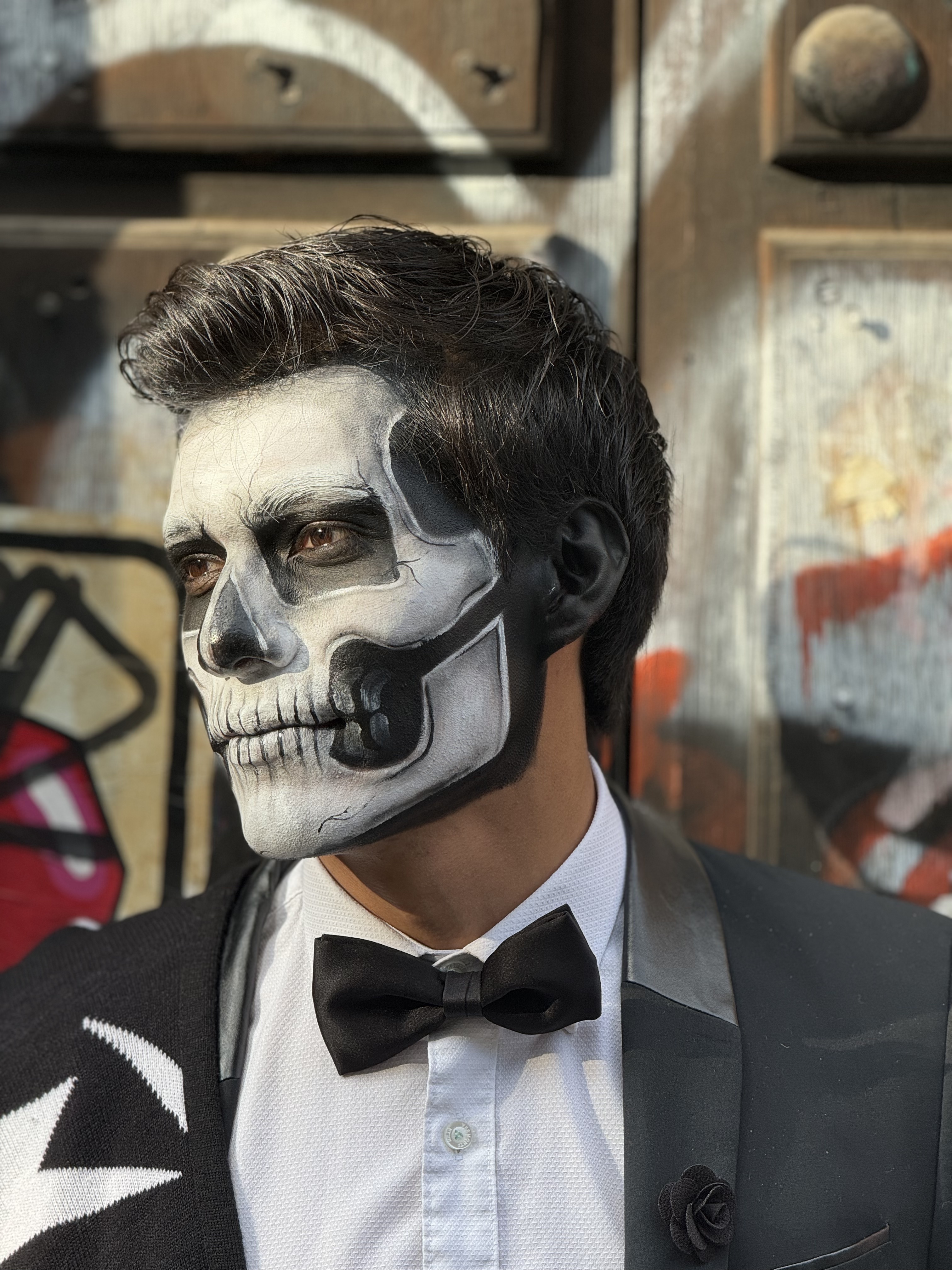
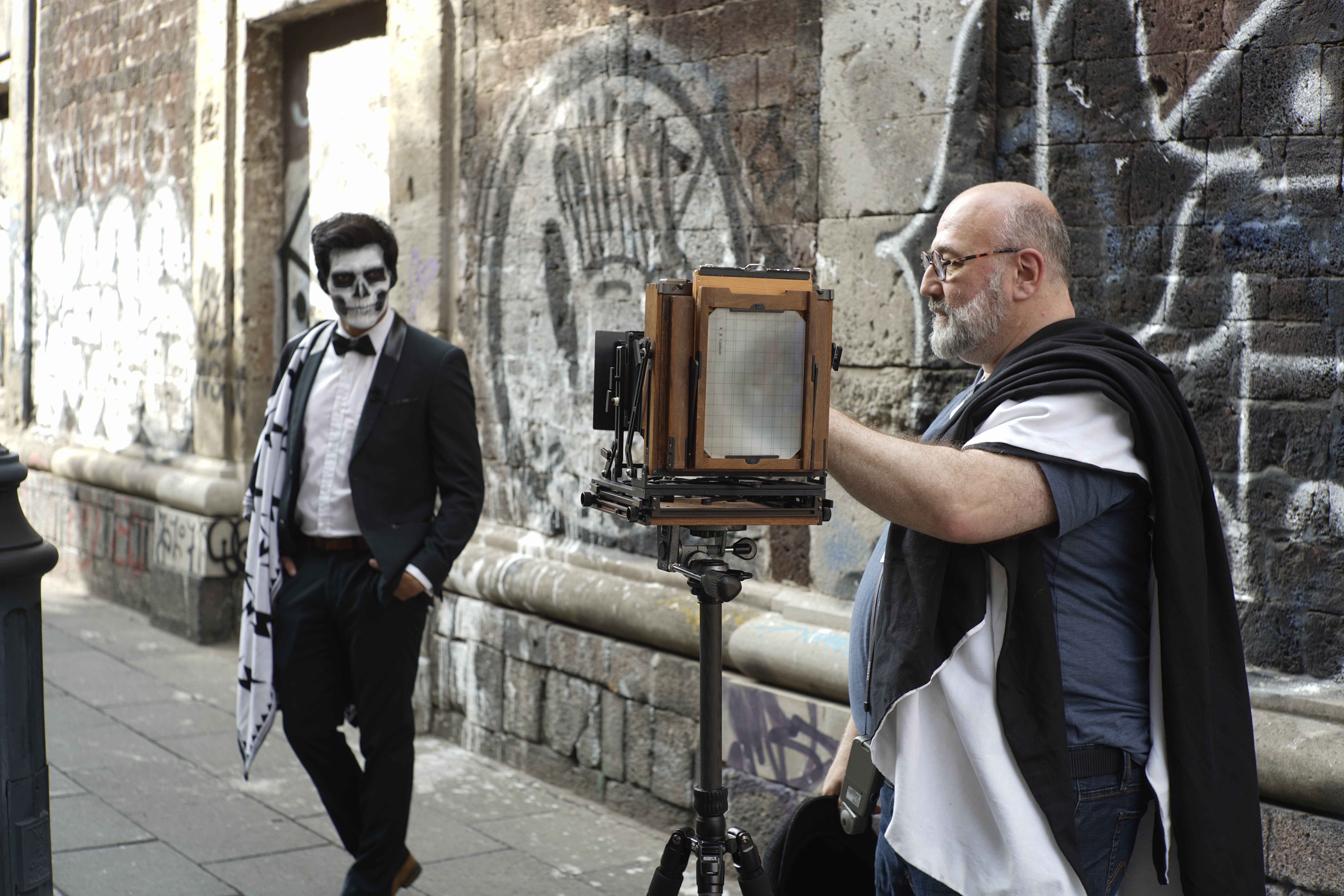
All work and no play makes for a dull conference, so we had several photo walks arranged; a daytime trek through the Mercado de San Juan which specializes in exotic cuisine (they have everything from whole turkeys to cockroaches to alligator meat!), a visit to Mexico City’s Chinatown, a nighttime photo walk in the Centro Historico around the Zocalo, and a large format portrait shoot with a model in Day of the Dead makeup and costume (another big thanks to our model and his makeup artist – Rafa Farias and Annie Hernandez).
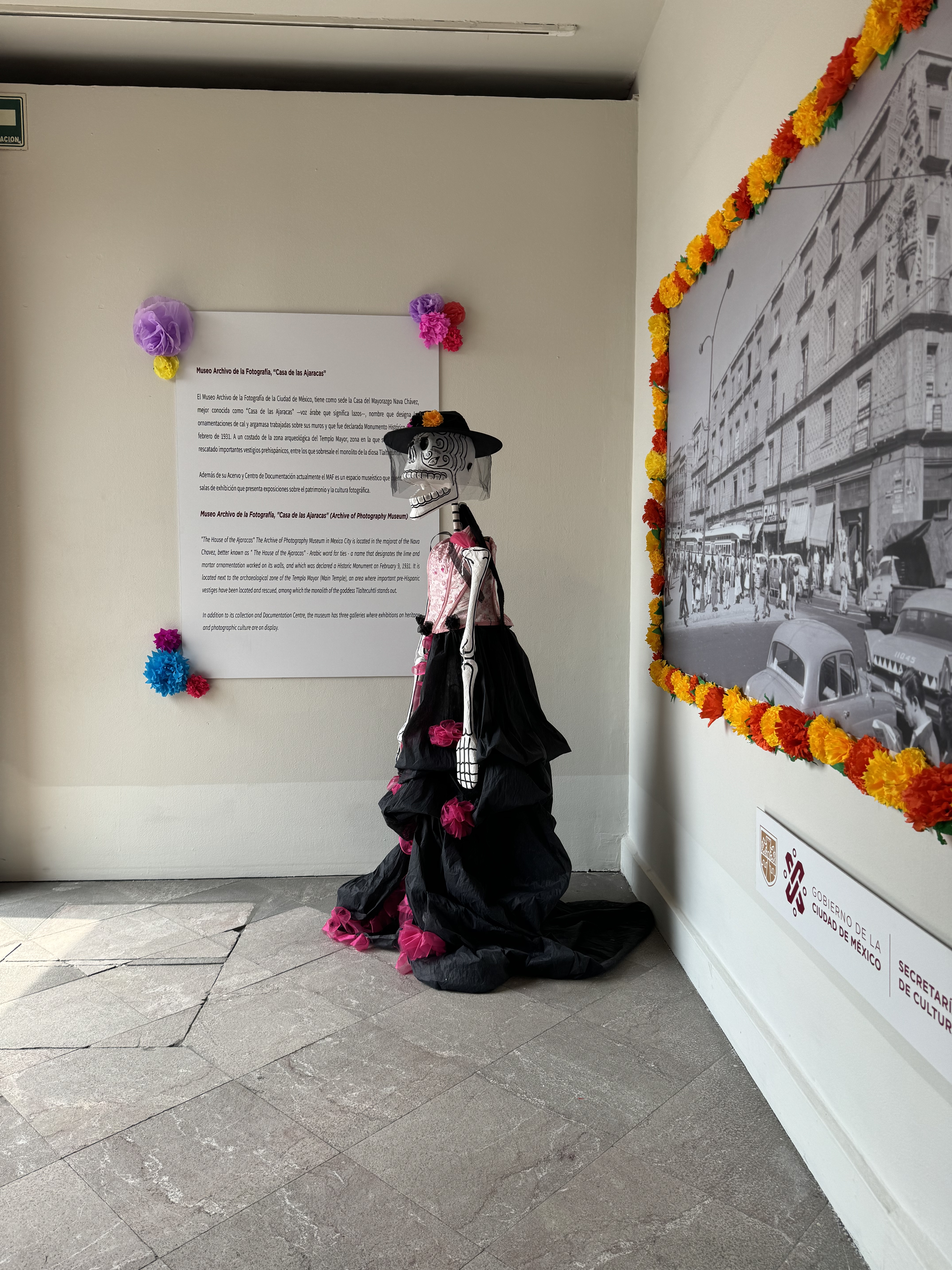
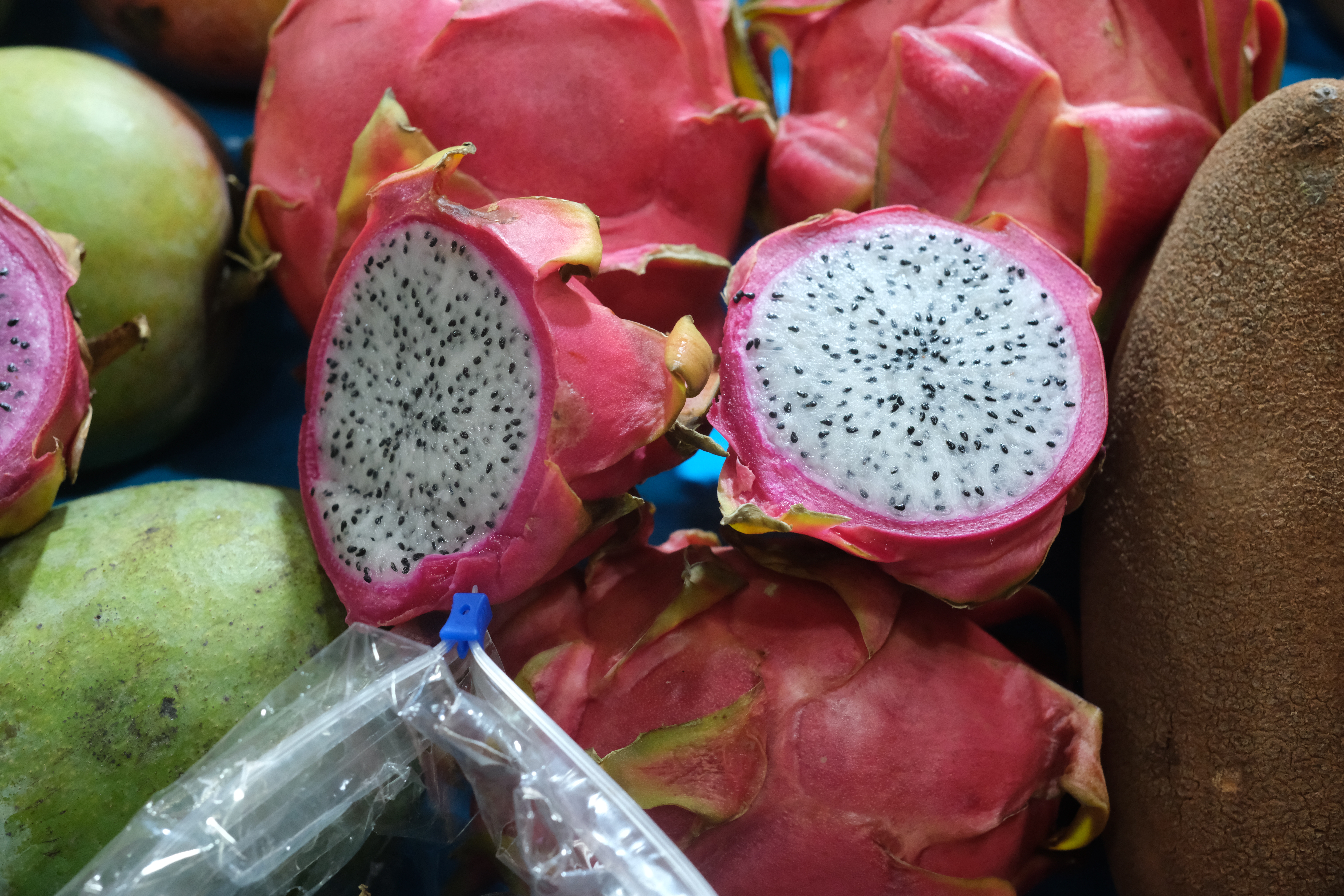
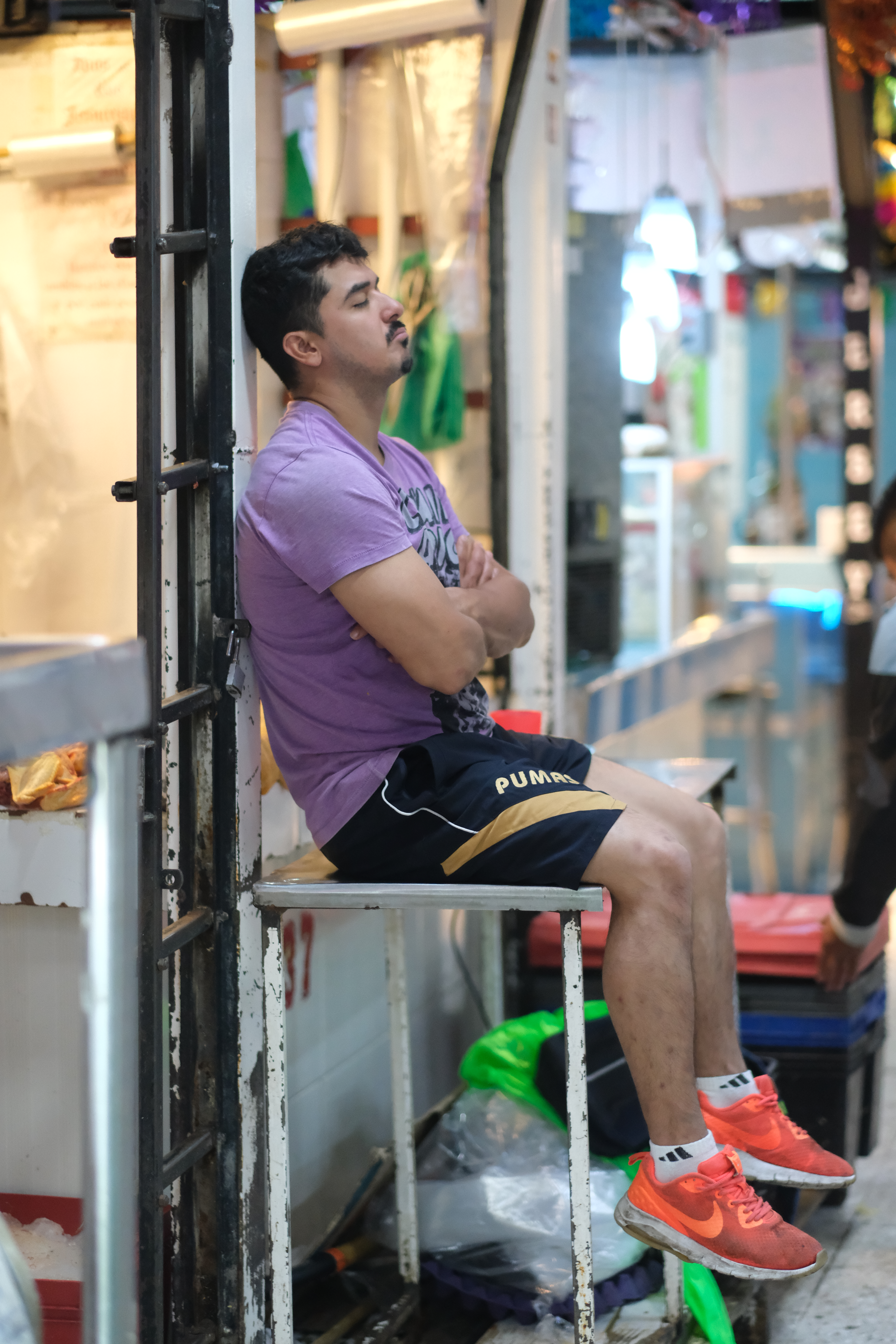
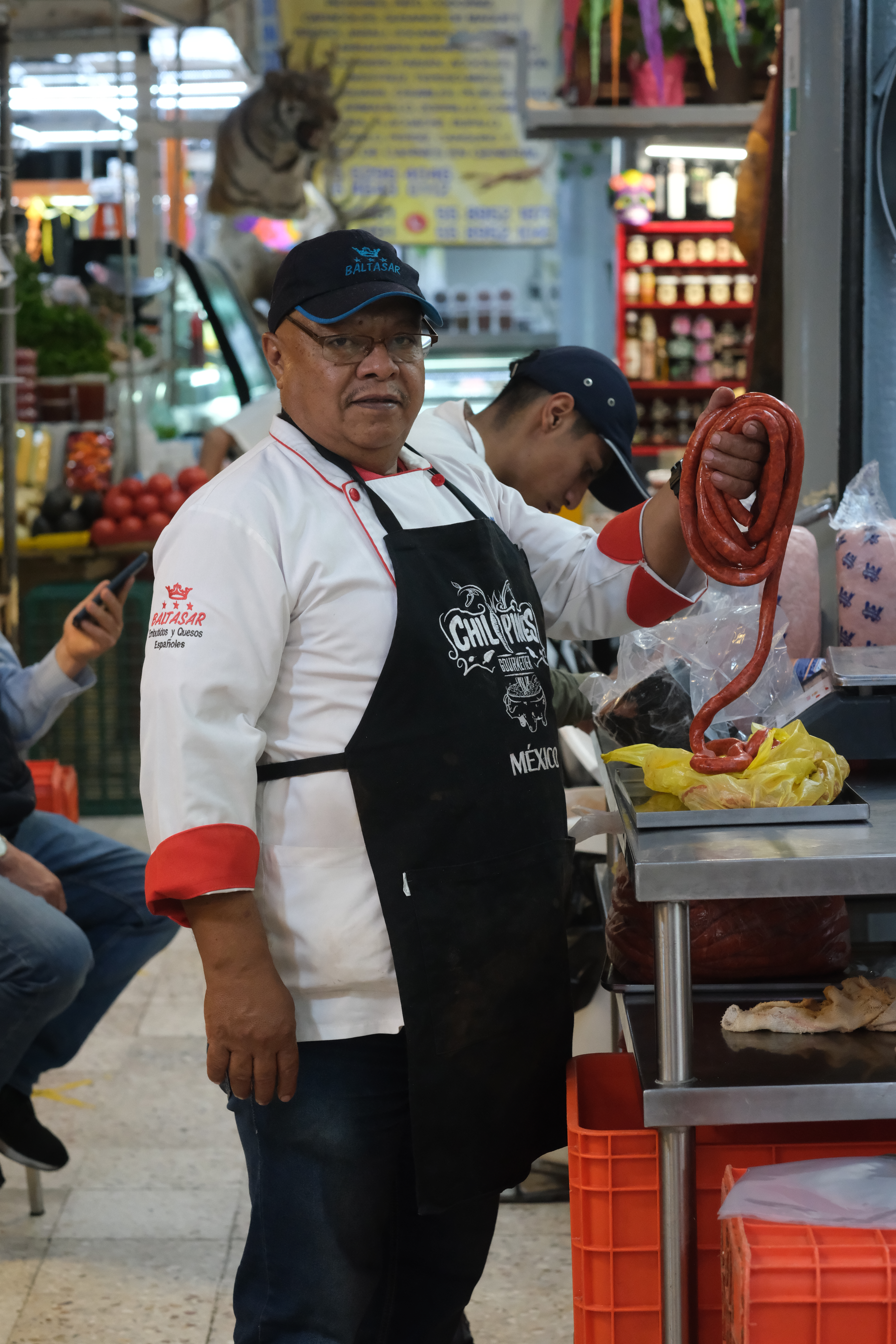
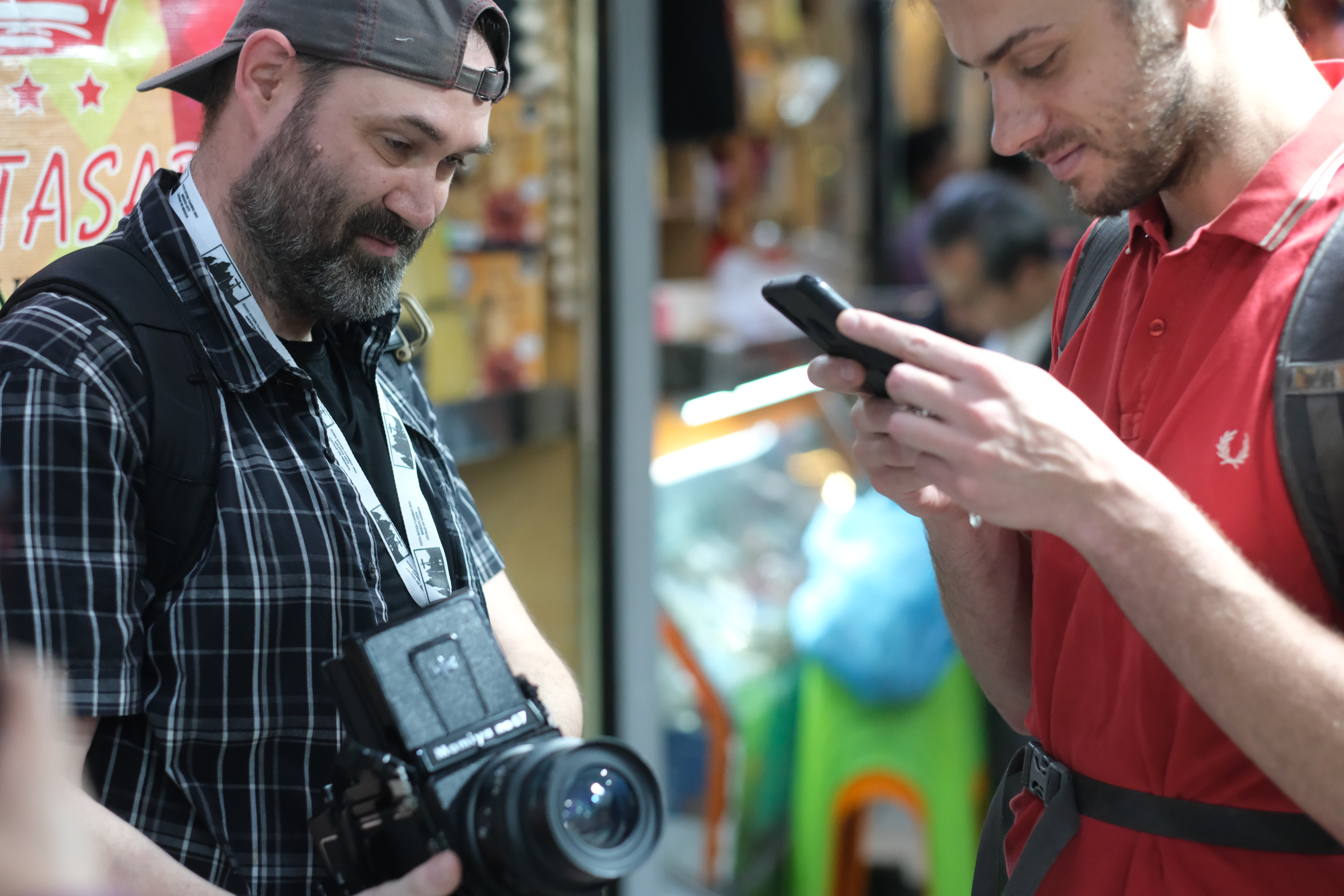
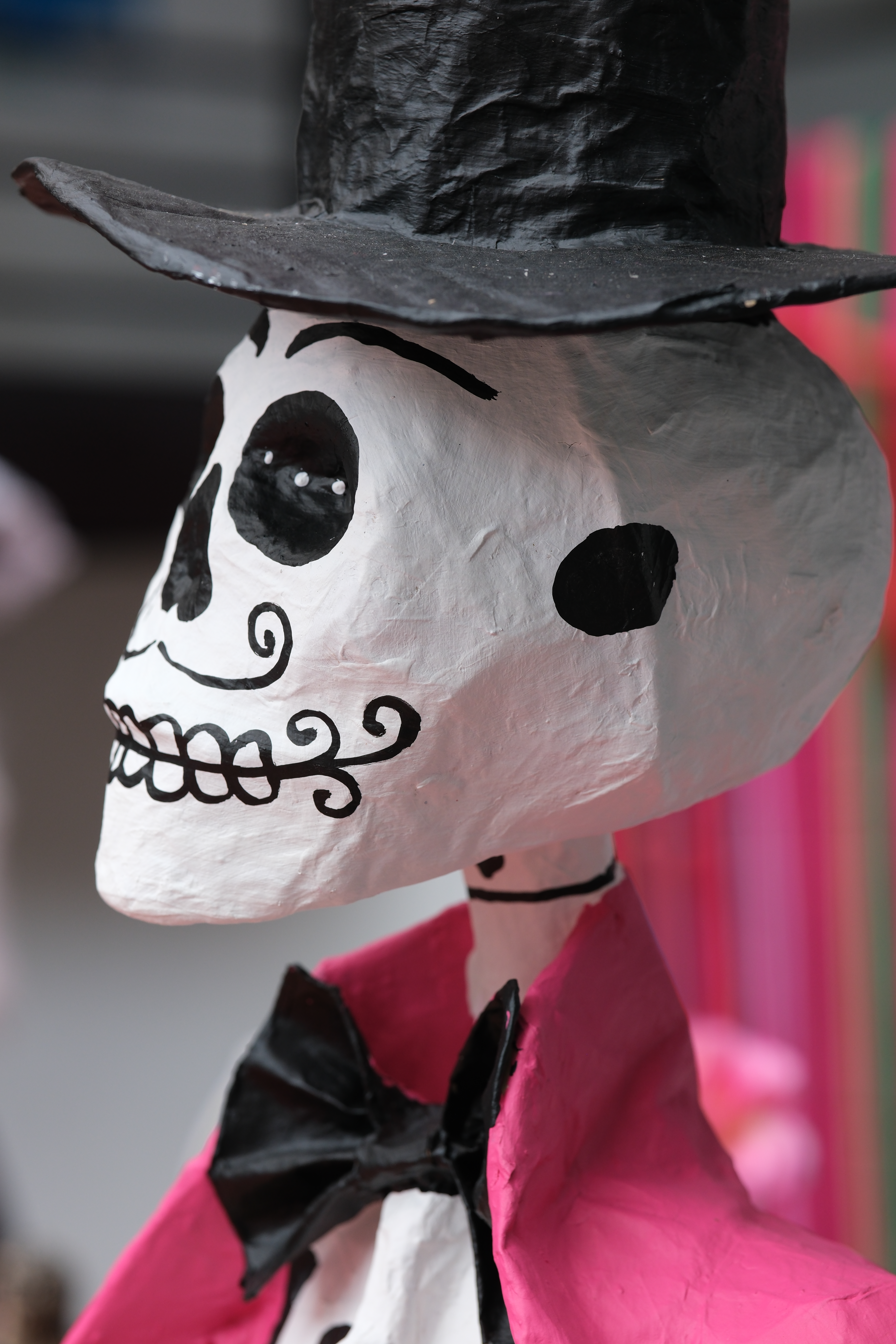
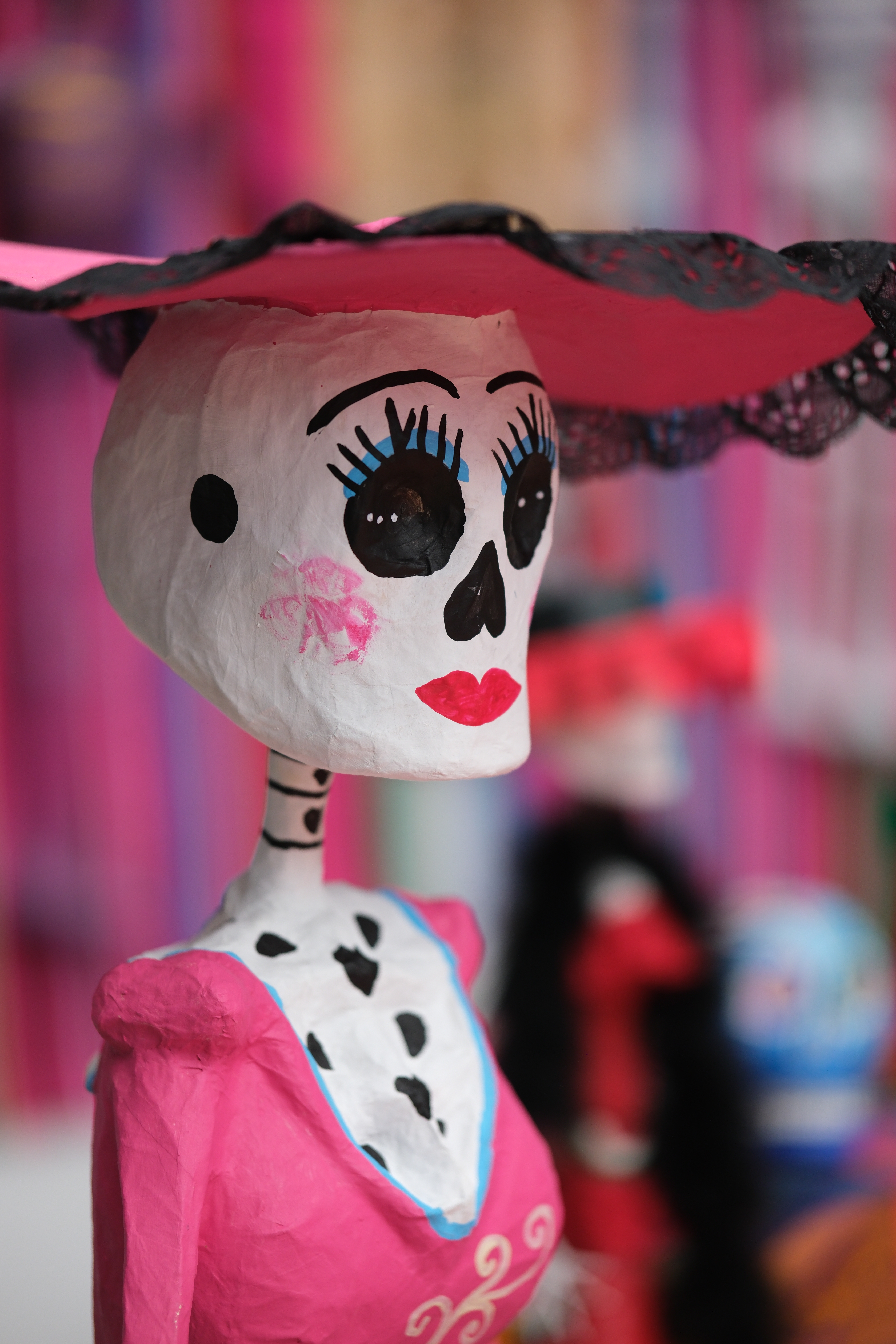
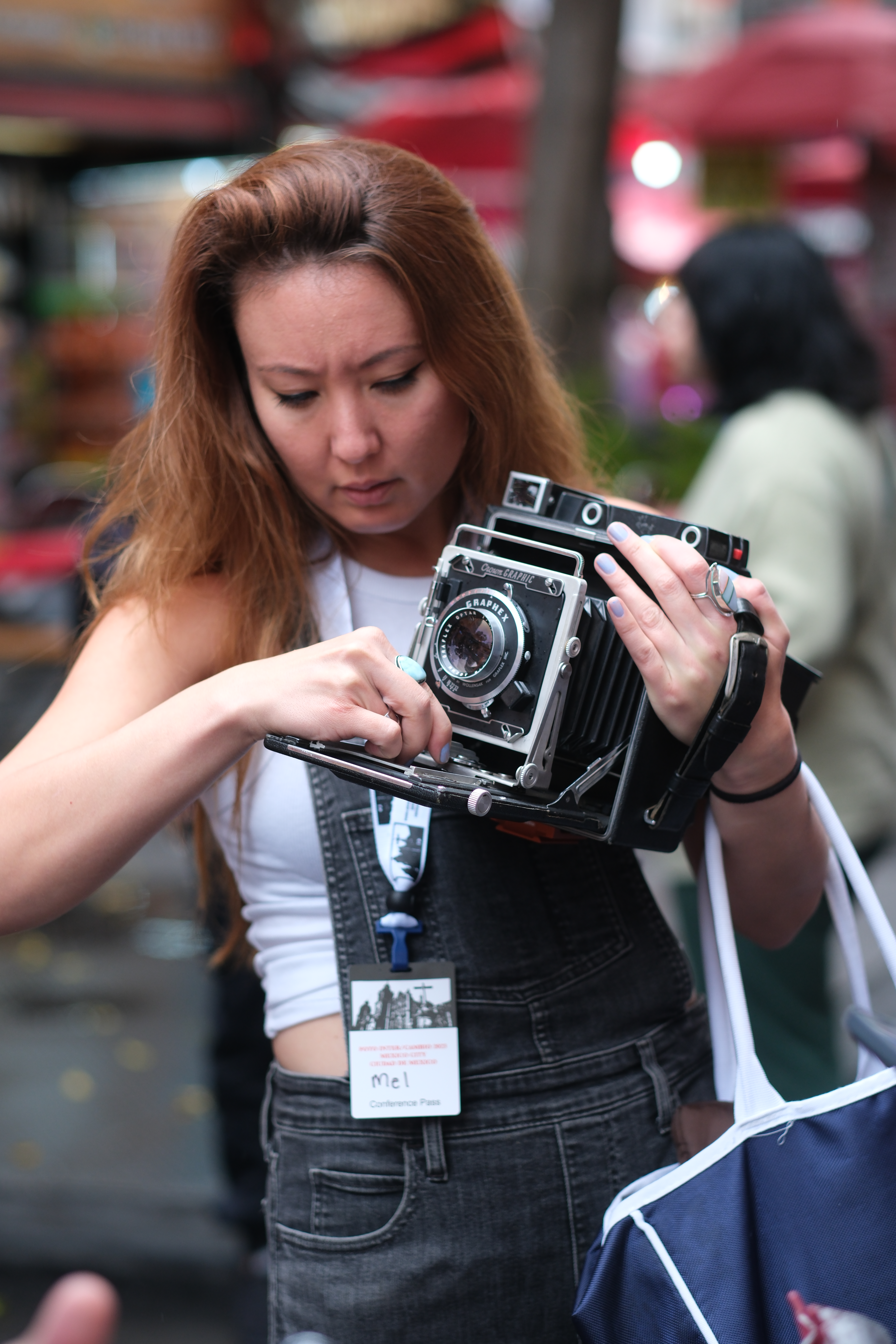
Day of the Dead decorations at Mercado San JuanFish at Mercado San JuanFresh veggiesSausagesRambutans and other exotic fruitDragonfruitRed SnapperThe butcher’s counterCatching a nap in the MercadoMaking sausages Vlad Grablev meets a fan of his RB67Mary Quin and Veronica in the MercadoDay of the Dead Ofrenda in the Mercado de ArtesaniasCatrin in the Mercado de ArtesaniasCatrina in the MercadoWeaver looking around in the Mercado San JuanChinese store in CDMX’s ChinatownMel with her Speed Graphic and Instax backLighting store in CDMX’s Chinatown
Rafa and Annie getting ready for his shoot, and a few views of the finished results (that’s me with the 5×7 view camera in the last shot):
Rafa Farias getting his face paintedAnnie and Rafa working on his makeupThe beginning of the makeupRafa in ProfileRafa posing in front of graffiti at the Colegio de las VizcainasClose-up of RafaRafa head-onRafa getting his portrait done with a 5×7 inch view camera
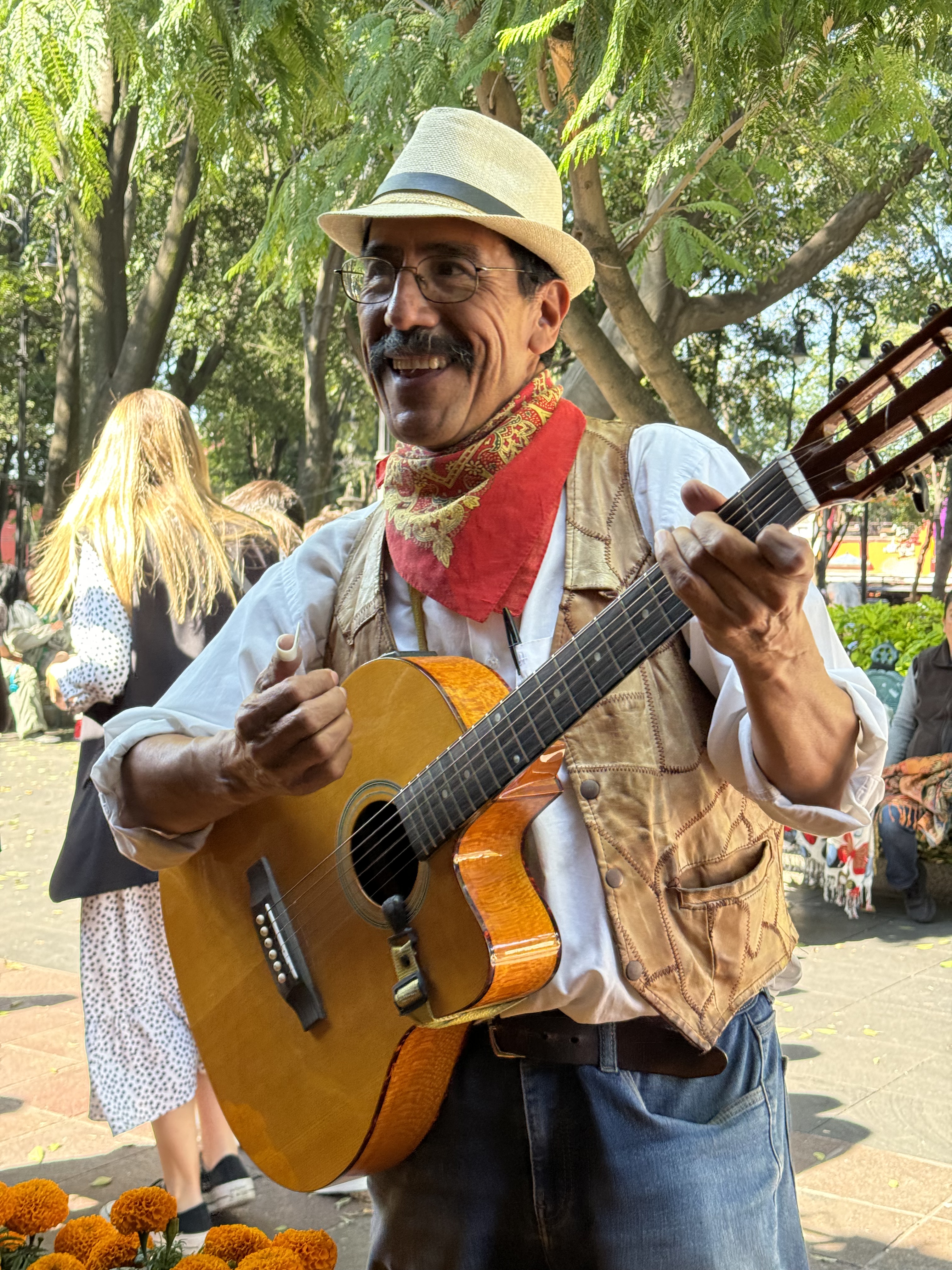
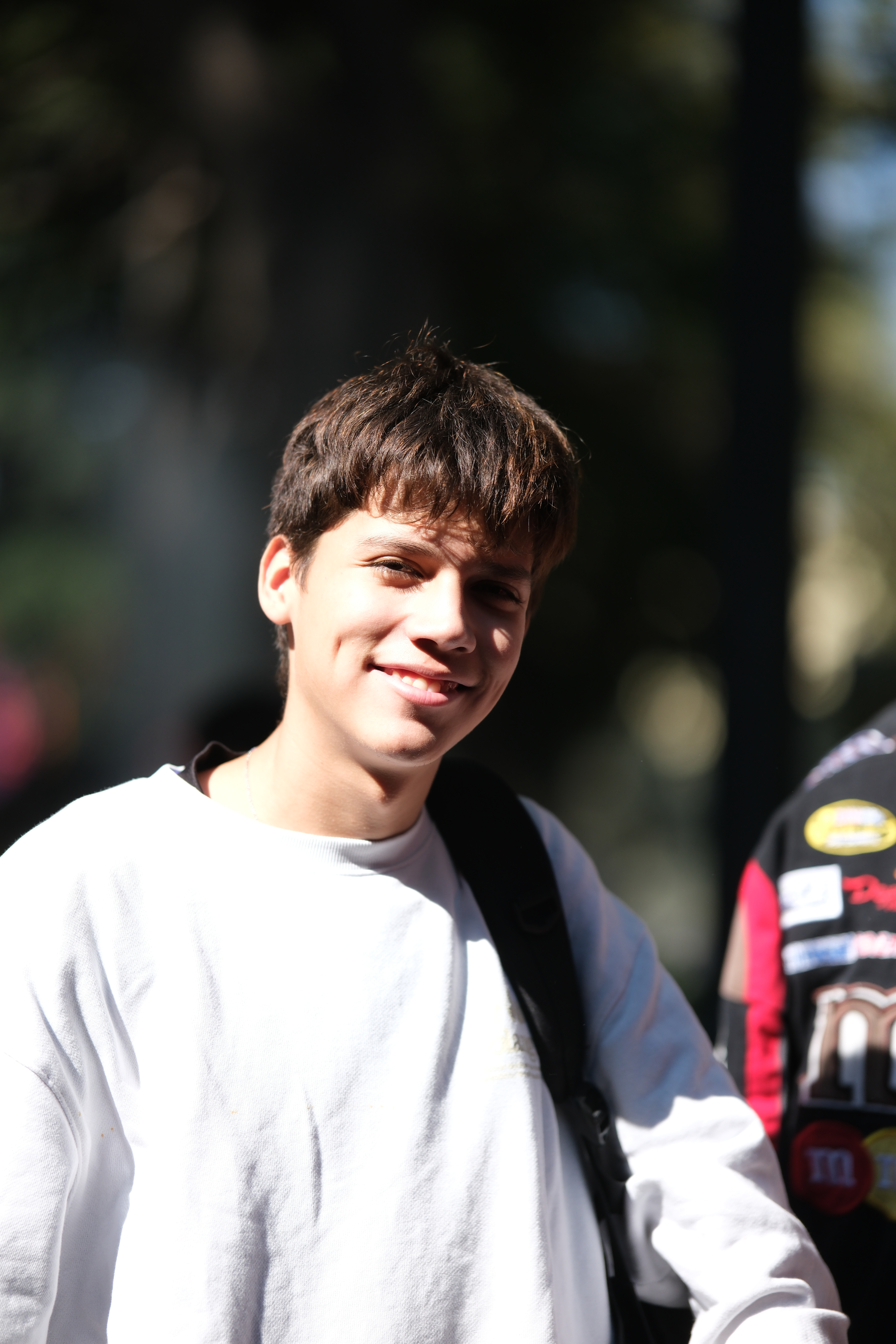
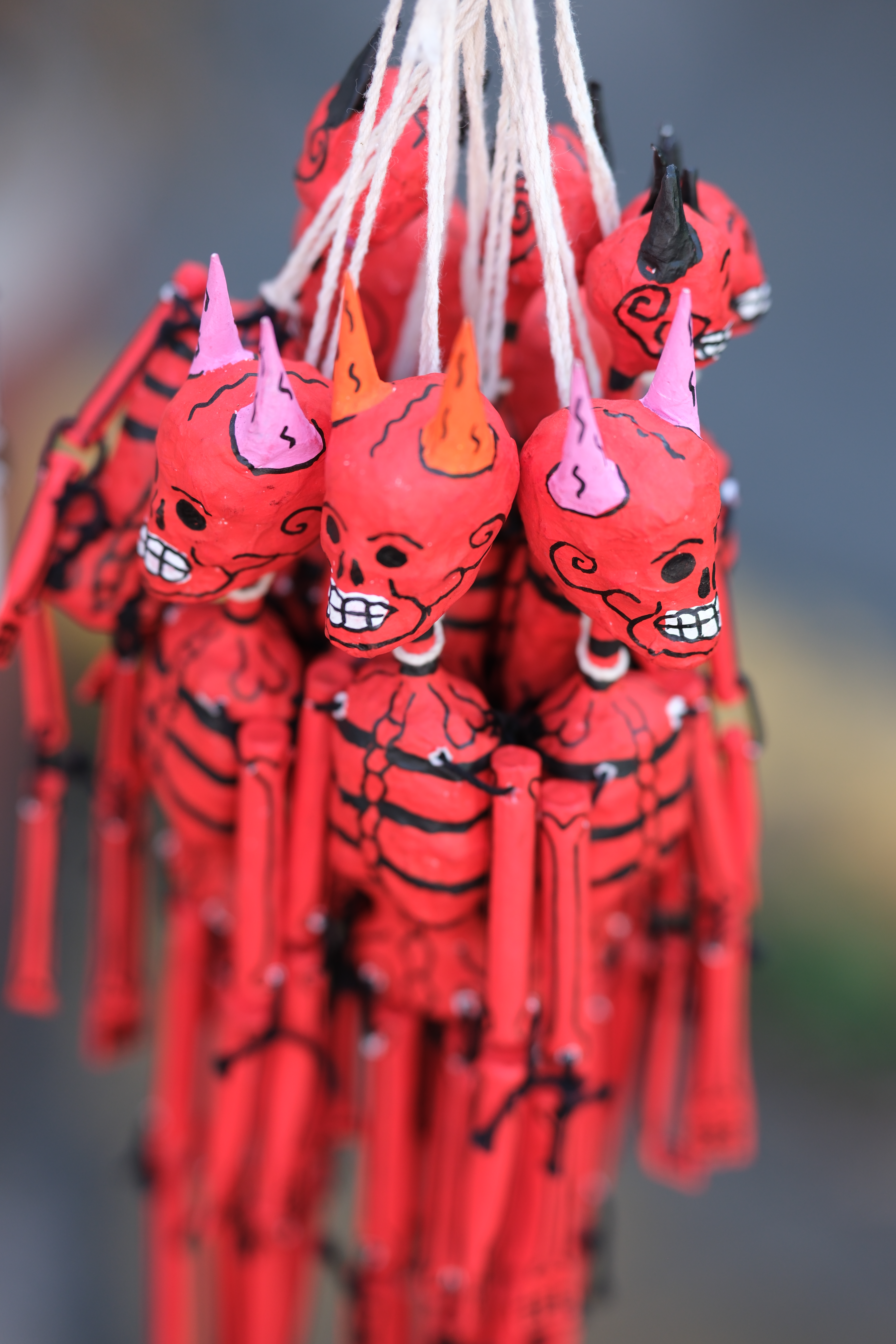
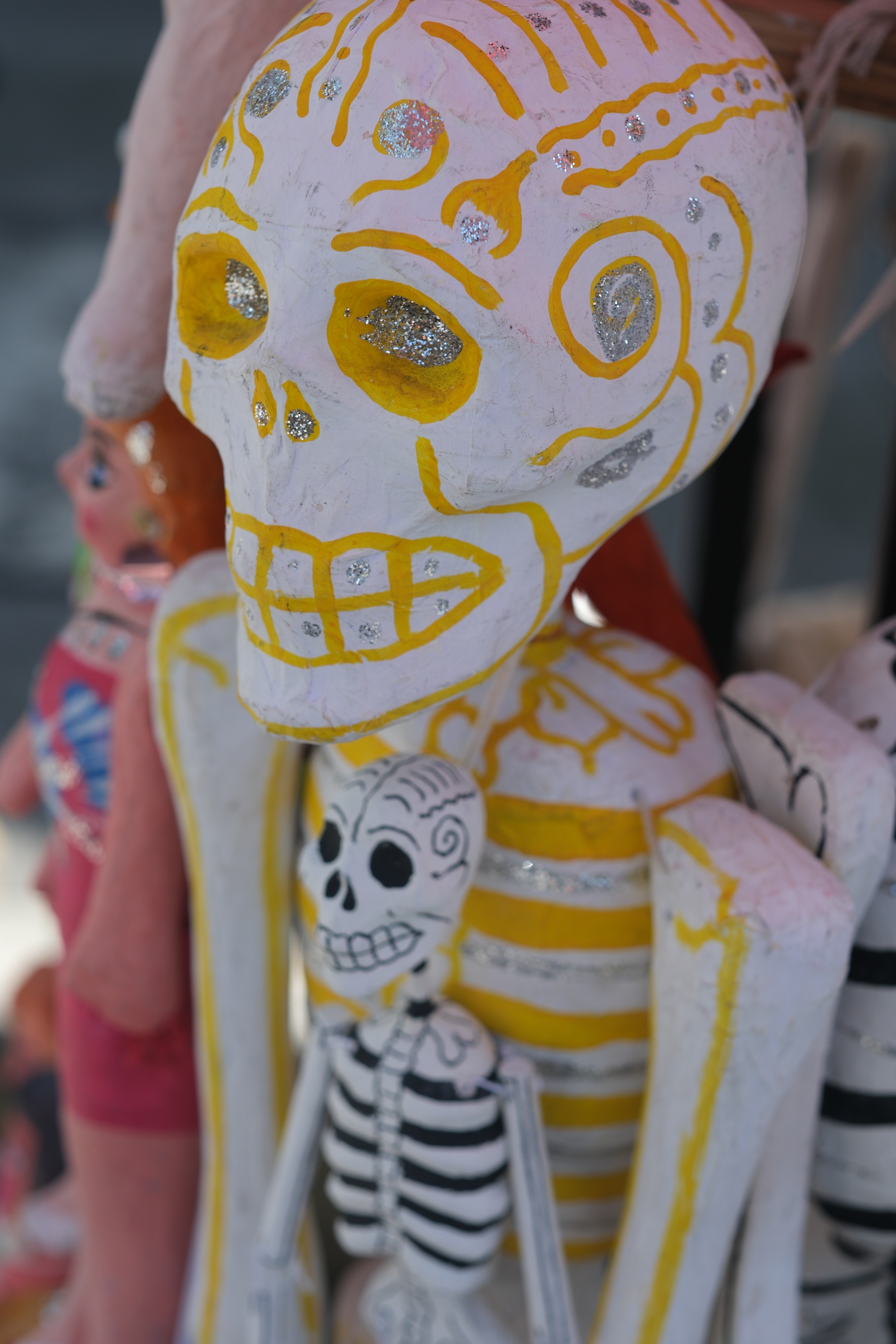
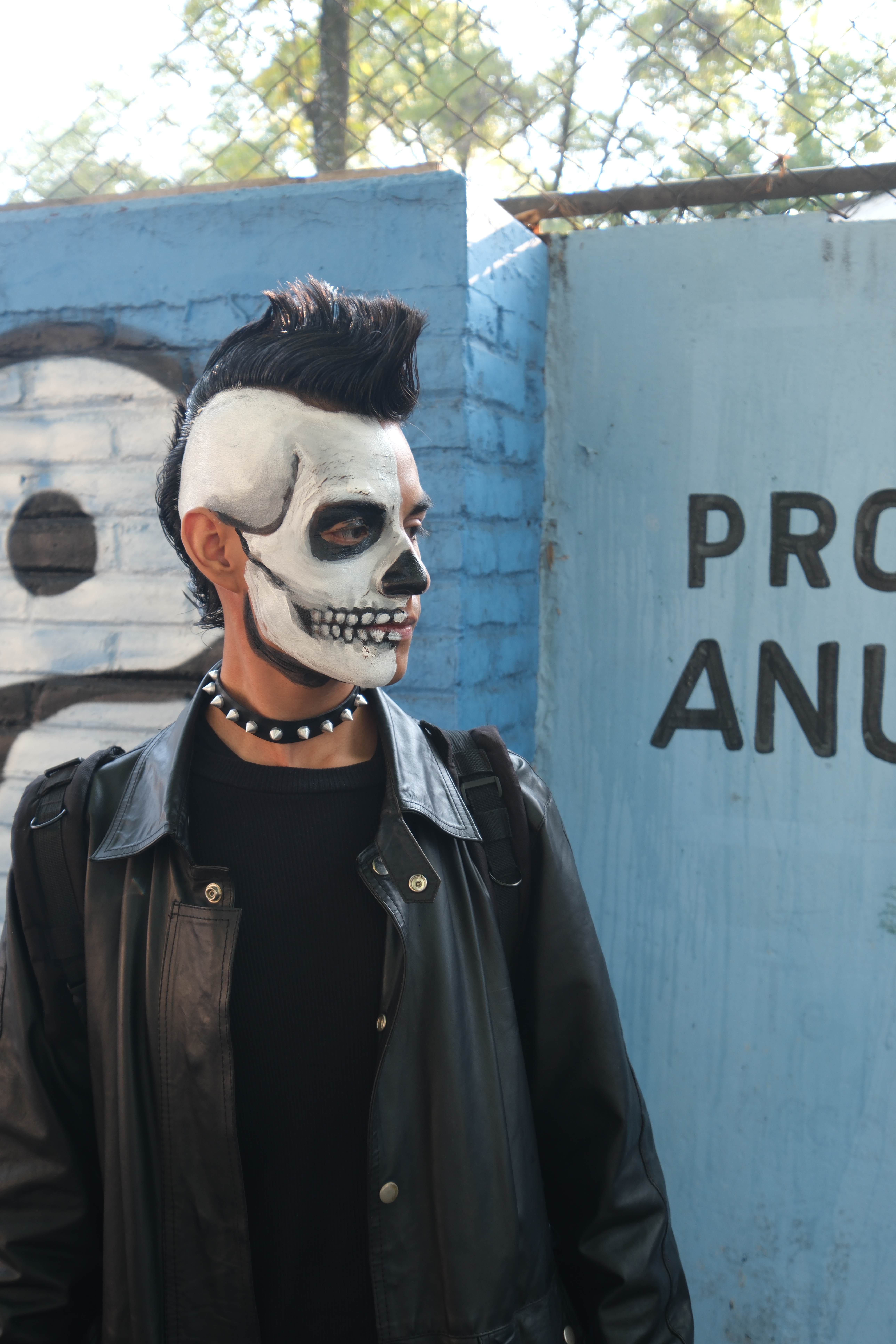
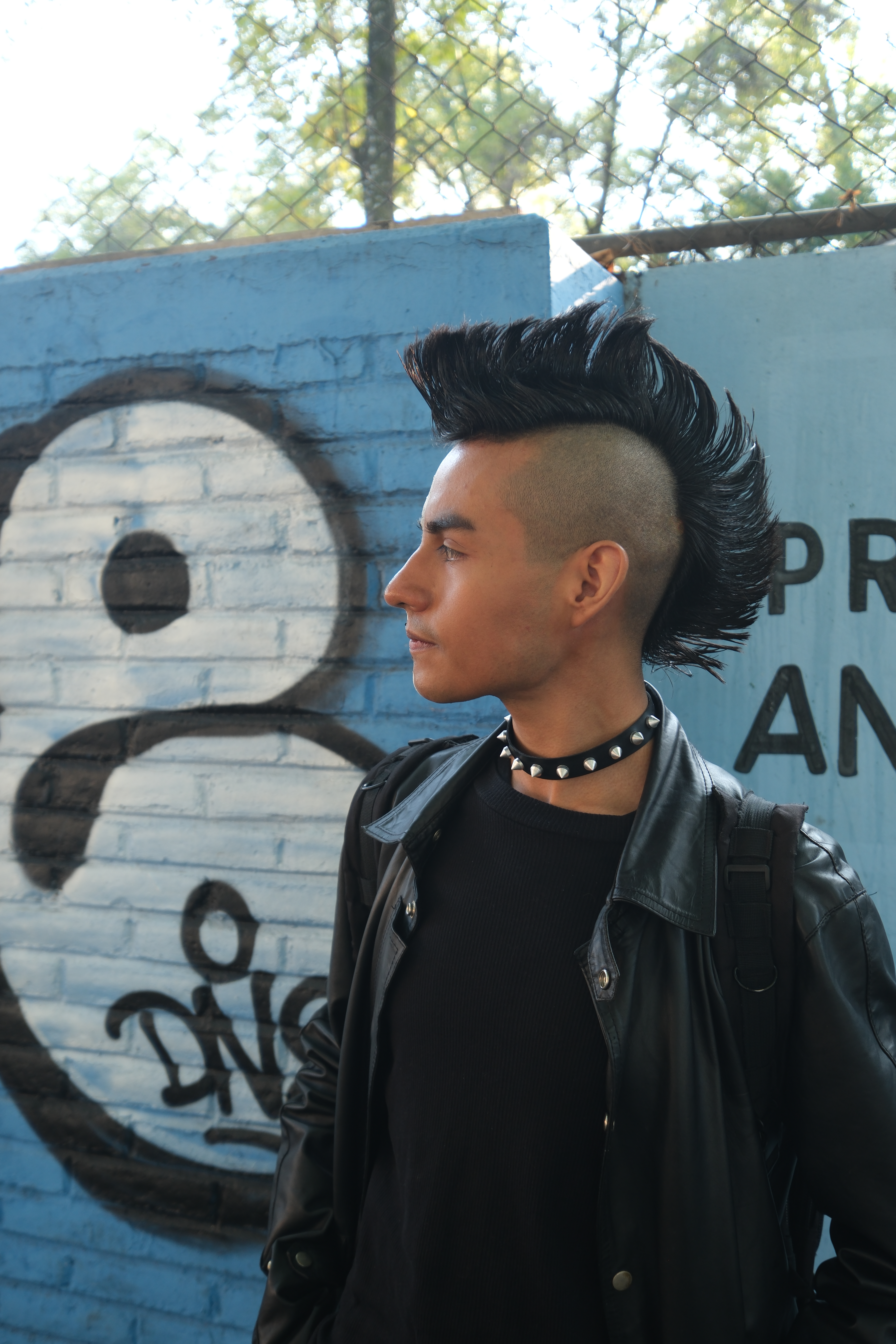
After the official end of the conference, a bunch of us took the day to go down to Coyoacán and wander around. Lots of Day of the Dead decorations were on display, and a good time was had by all. We grabbed lunch at an outdoor table at Restaurante Ave Maria, who was having a mole festival on the menu – I had a Oaxacan mole over beef which was very rich and delicious. We were serenaded by several strolling musicians – one an older gentleman with a guitar doing traditional Mexican songs, and then a group of young Mexican boys rapping. While their music wasn’t to my taste, they got big props for freestyle ad-libbing a rhyme about the gringo with the camera! I’m still building my street photography skills, especially when it comes to photographing people. As we were heading back to the Metro, I saw this guy with the most incredible style and makeup, and had to take the chance to ask him for a photo. You’ll see the results – he had half his face painted with the calavera, and the other unpainted, and he was decked out in what would certainly qualify as vintage Punk style – he would have fit right in on Kings Road in London in 1983.
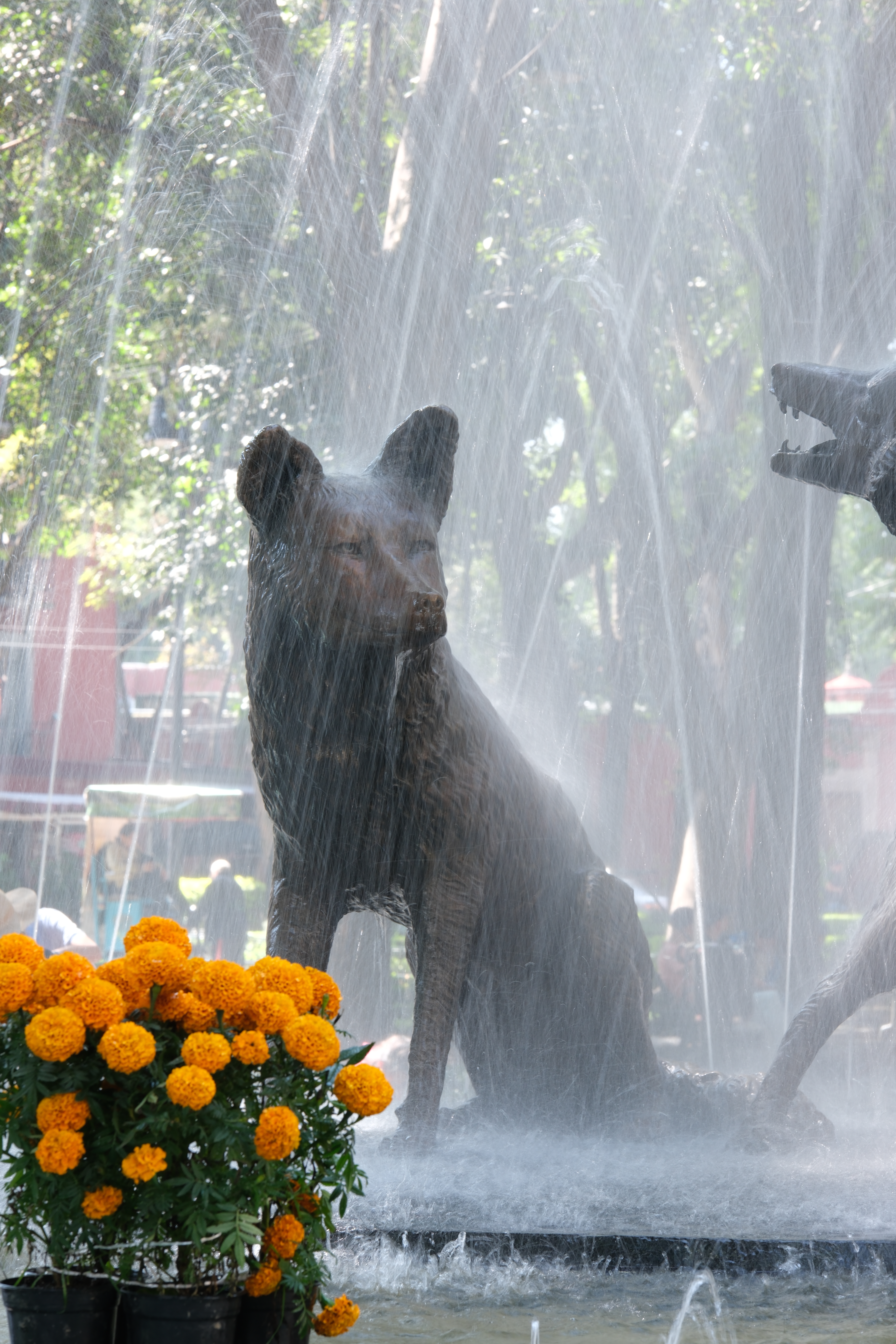
Troubadour in CoyoacánCheeky RapperDevil figurines in papier-mâché Vlad and Craig at lunch in Coyoacánmore papier-mâché devil figuresPapier-mache skeleton with skeletal dog and puppymore papier-mache figurinesSkeletonsmore skeletonsFuente de los Coyotes on the plaza in CoyoacánYoung punk with bifurcated makeupThe other side of the young punk
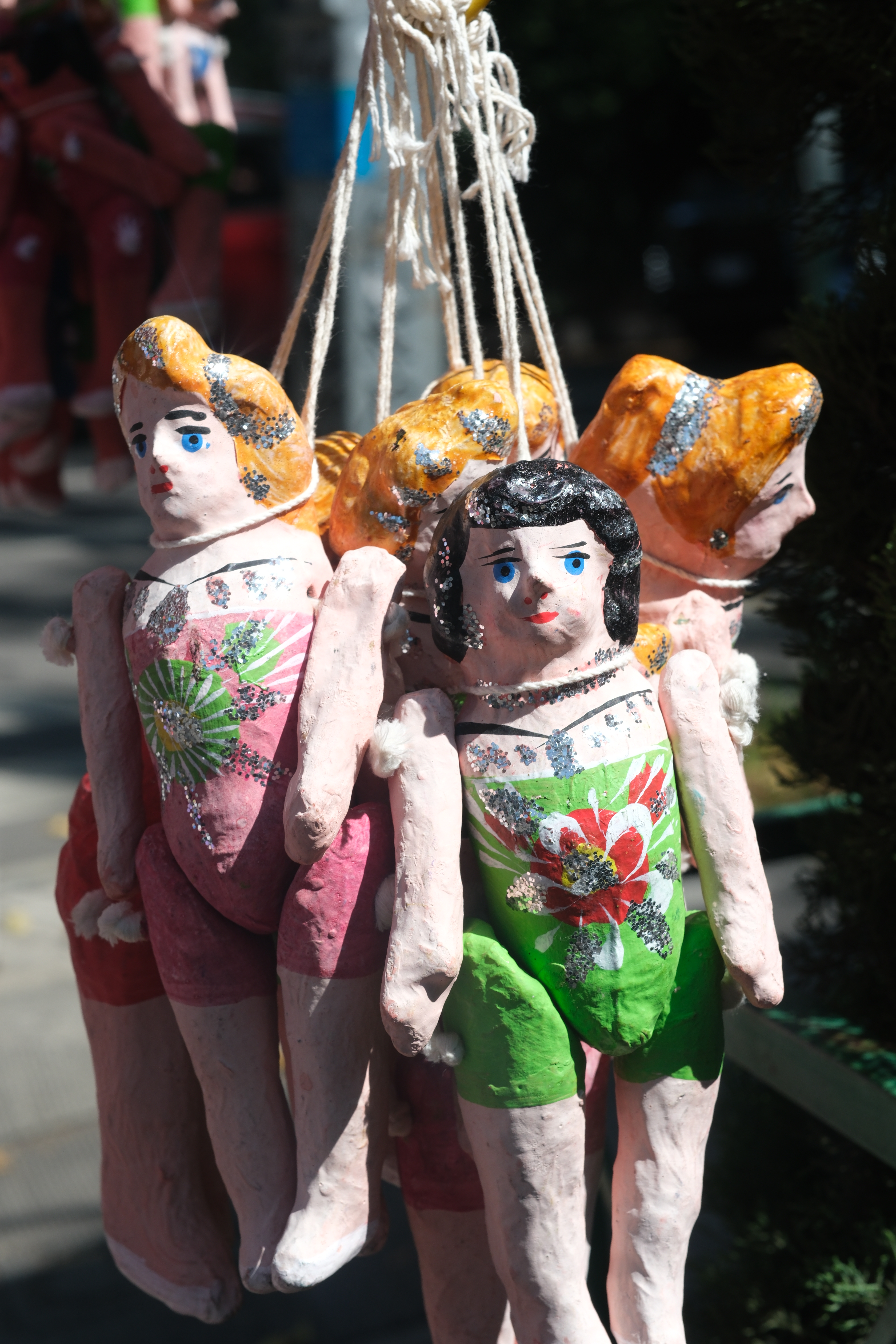
Some more Day of the Dead sights:
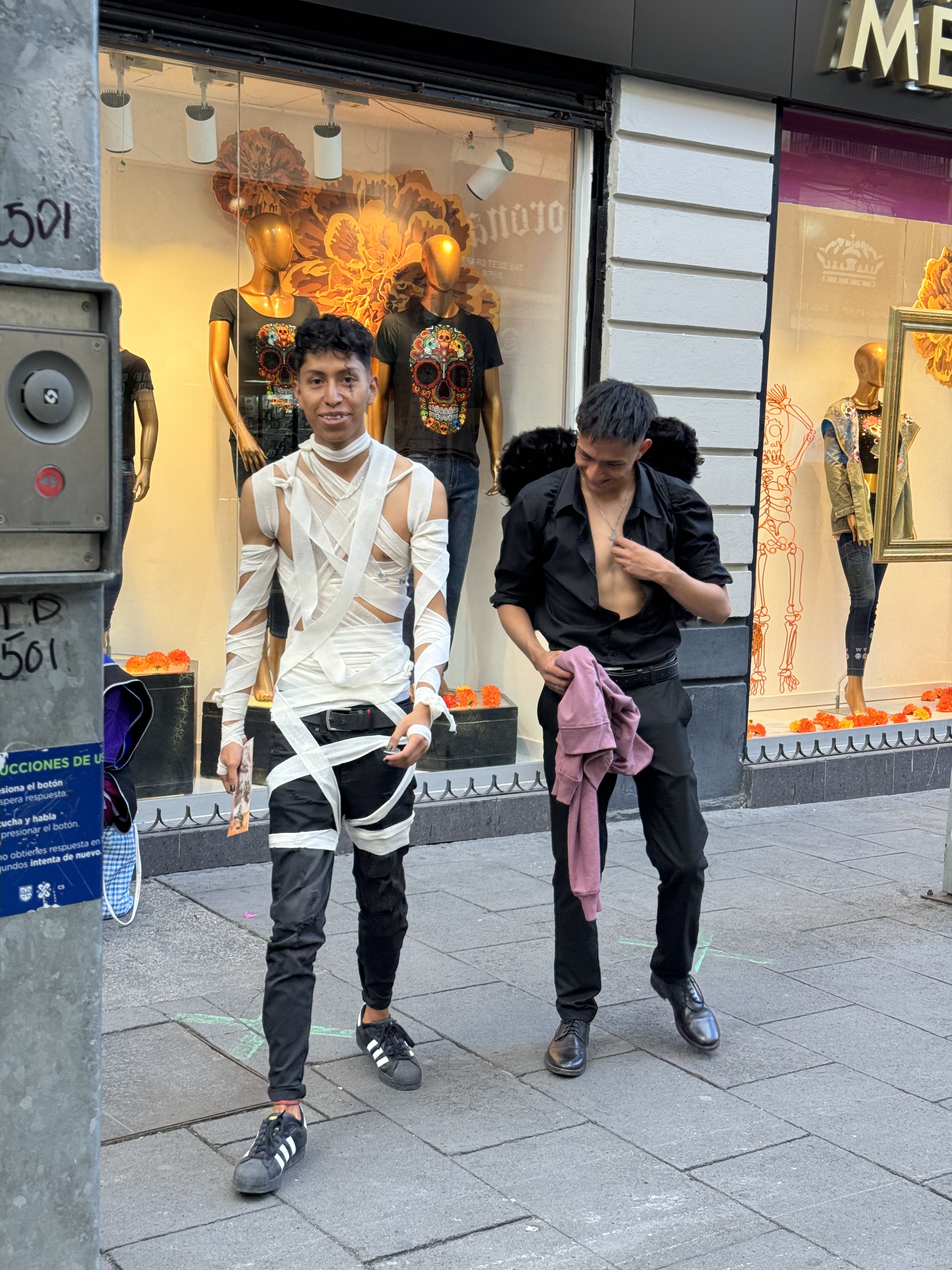
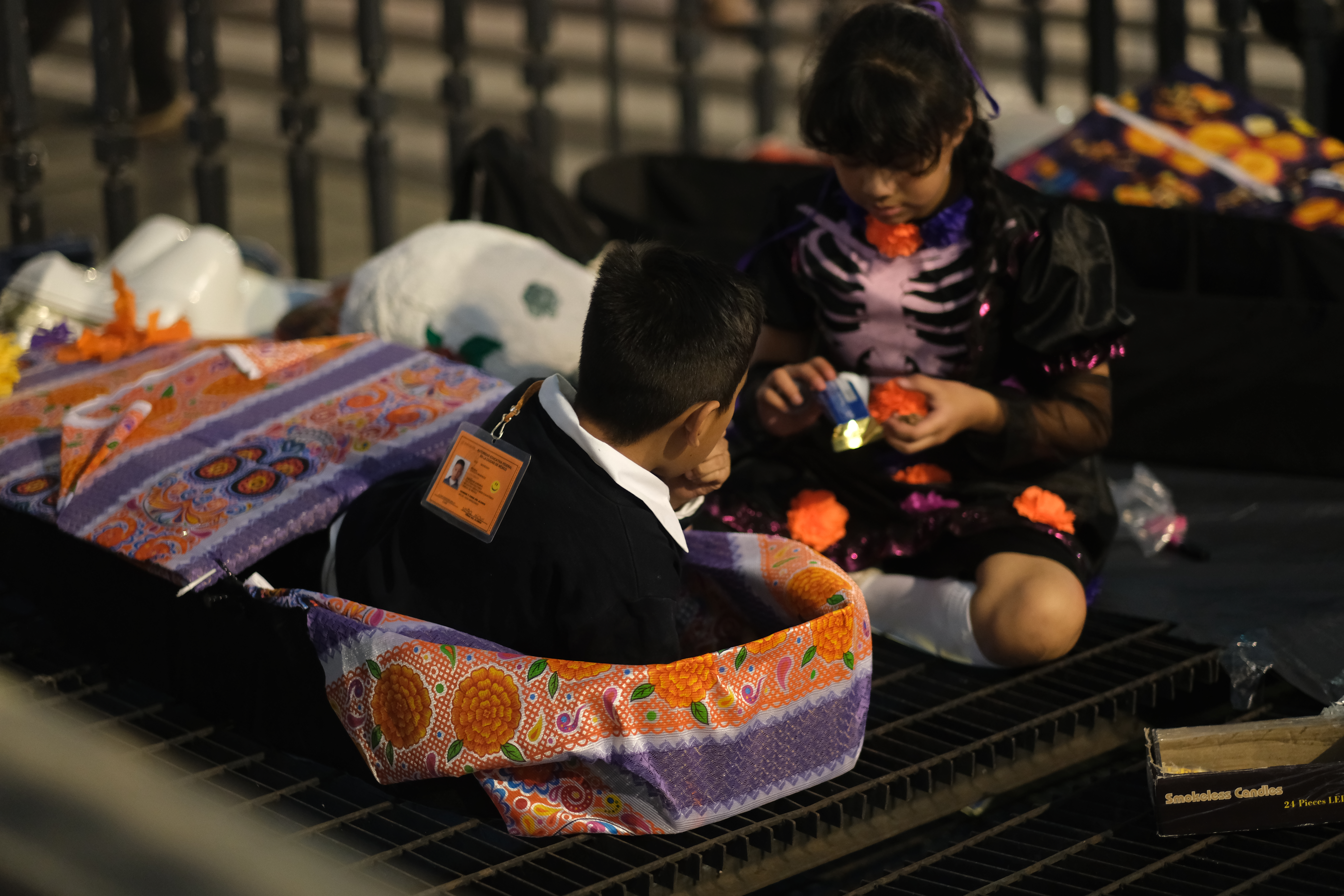
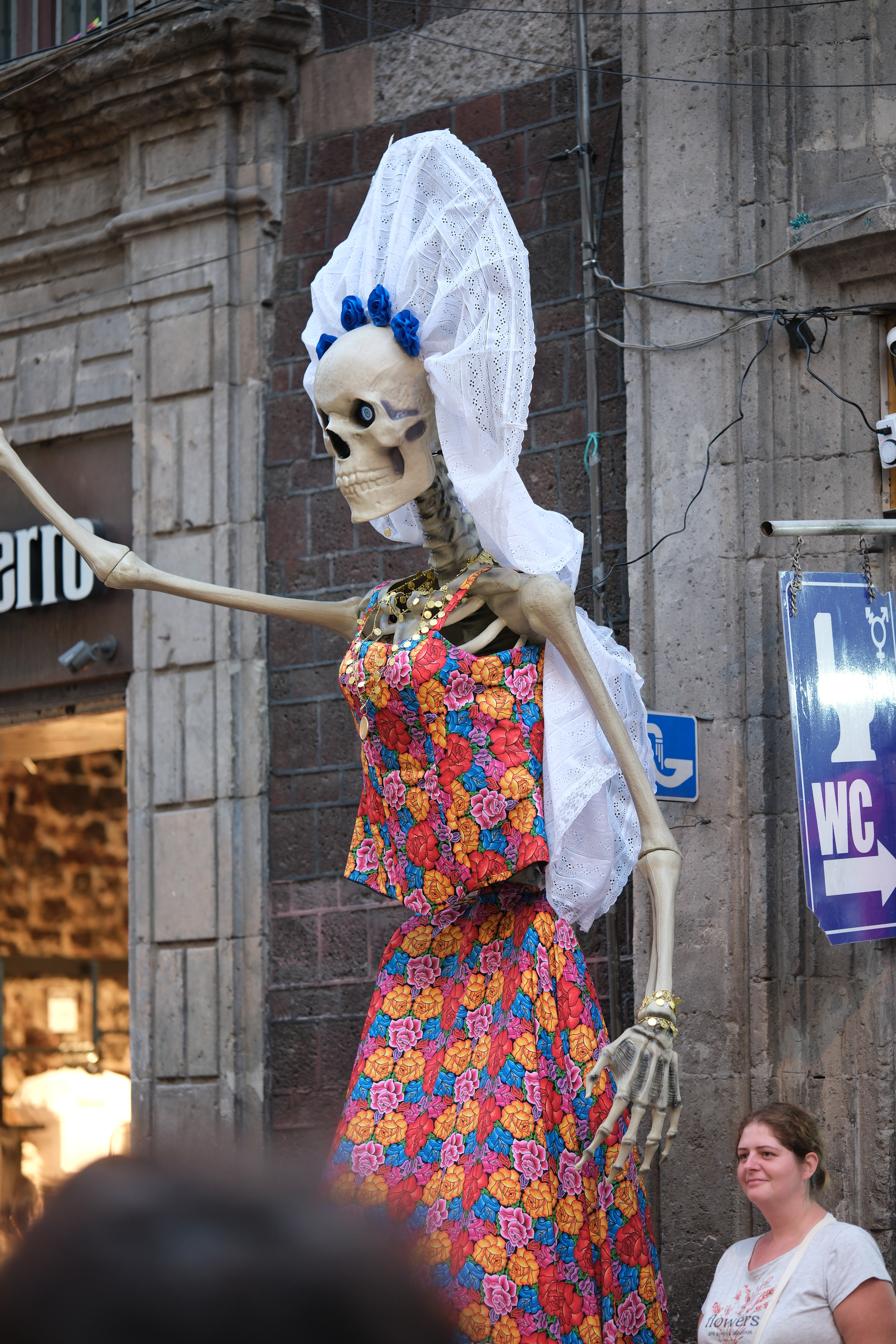
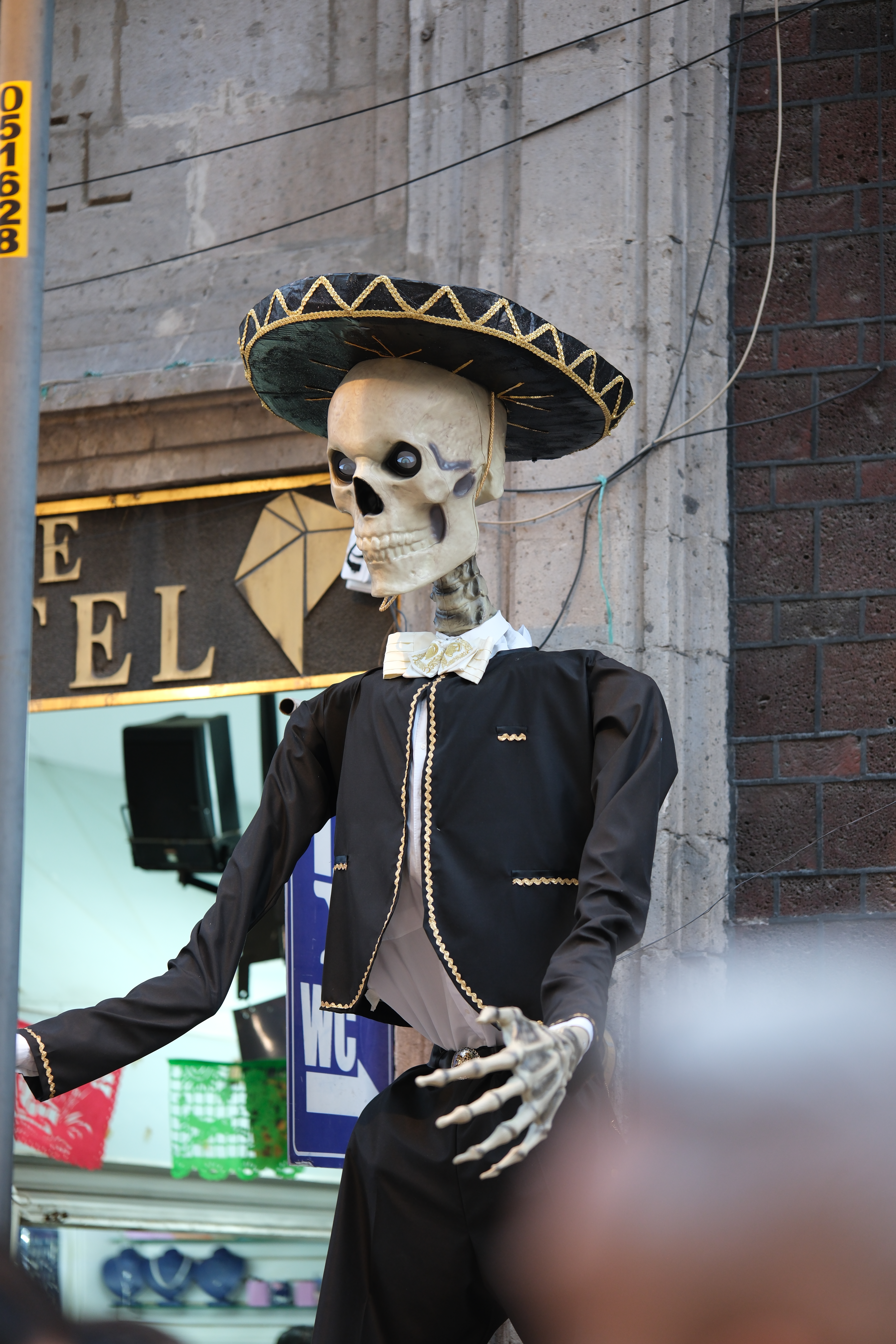
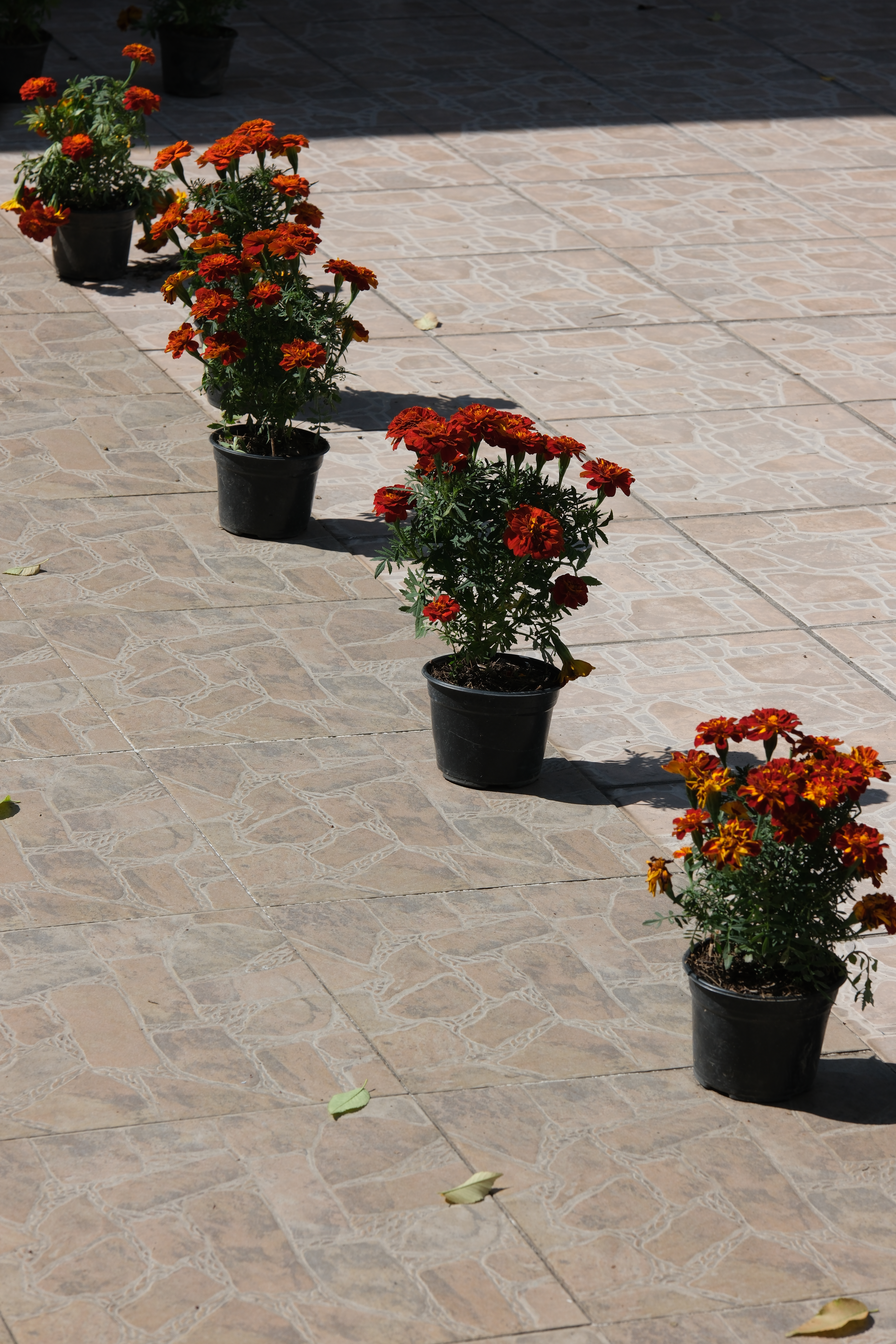
Boys on the street in Halloween attirekids dressed up on the Zocalo over the Metro entranceDay of the Dead figurines on Avenida Francisco MaderoDay of the Dead figurines on Avenida Francisco MaderoMarigolds on the patio in Coyoacán
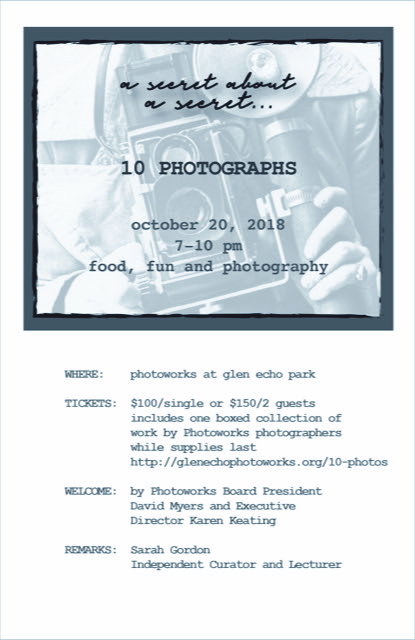
Glen Echo Photoworks Annual Fall Fundraiser is just around the corner. The event will be held Saturday, October 20th, 2018 from 7pm to 10pm at Photoworks –
We are doing something really amazing to support our community of photographers and collectors and friends – with each ticket, while supplies last, we are giving away a box of 10+1 photographs by Photoworks faculty and community members to EACH PERSON who buys a ticket. So you’re guaranteed not only to have some wine, look at some art, learn something interesting, and support a great cause, but you’ll also leave with a boxed set of prints by some of the DC area’s best photographers! Win-Win!
This will be a fun evening of photography – we will have film screenings, a talk by Sarah Gordon, Independent Curator and Lecturer, wine and nibbly things, and lots of photography on display! There’s a great show up on the walls, Places We Find by Sandy Sugawara and Catiana Garcia Kilroy, that you can check out while you’re there. Donated items for the silent auction range from photographs by faculty members, a home-cooked Italian dinner for four, a vacation cottage on Squam Lake, New Hampshire for a week for up to ten people, one-on-one tutorials, to autographed books and college application portfolio reviews. There are items in every price range, with items starting as low as $25, so you don’t have to be a millionaire to bid.
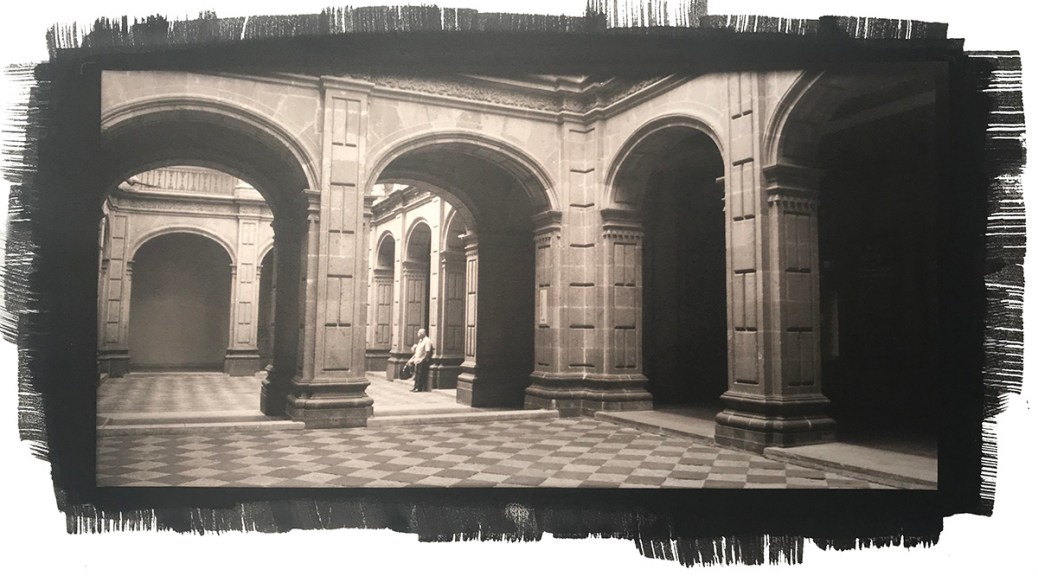
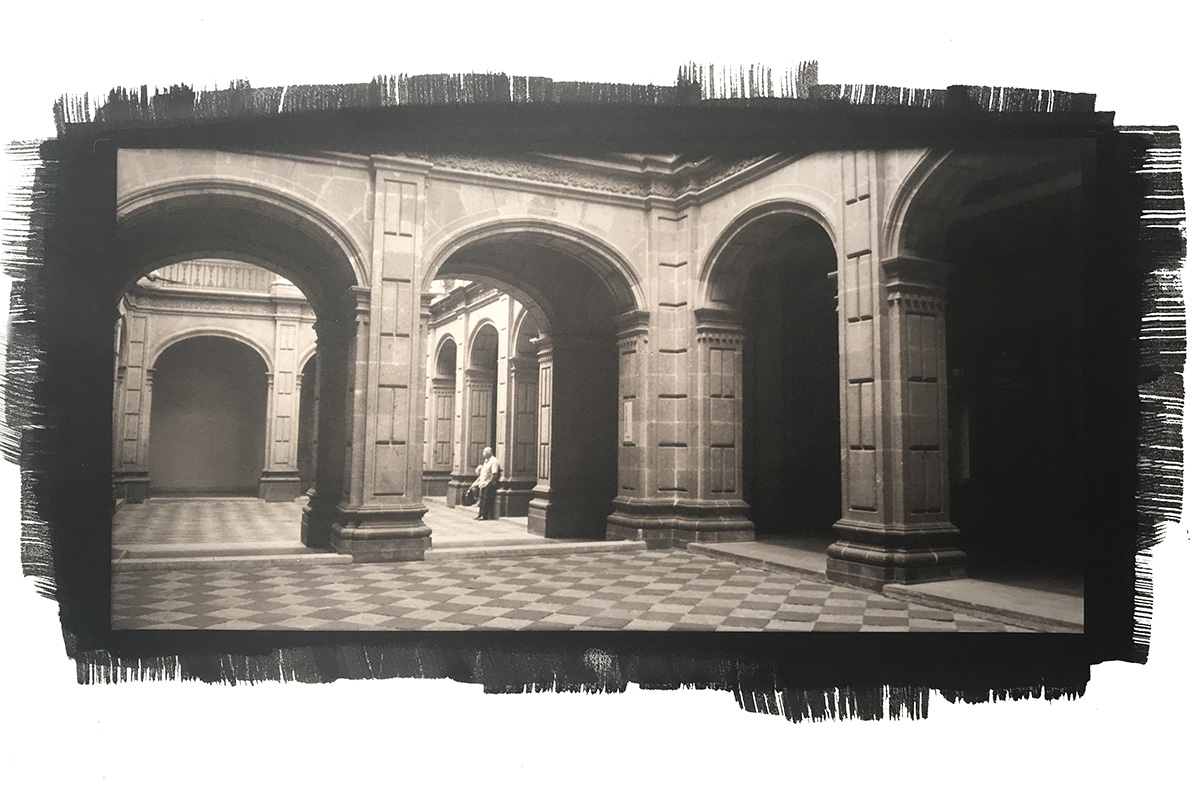
I have donated a print of the featured image on this blog post, “Antiguo Colegio de San Ildefonso”, an 8×16 inch palladium print hand made by me, edition #1 of 10, as part of the silent auction that will be held both onsite and online.
I am also donating two one-on-one workshops in advanced darkroom printing and platinum/palladium printing, so this is your chance to get personal instruction while supporting a worthy cause!
Items for the silent auction are available for online bidding in advance.
Well, I’m not normally very judgmental (of people) but I will be judging Focus On The Story – 72 Hour Photo Challenge. To participate and get your work judged by me and my colleagues at Photoworks, just create an account at EyeEm.com (its free!), upload your images from around DC shot this weekend, and tag them #EyeEmDC. Get it done by 9:00 AM on Sunday, then come down to the Johns Hopkins SAIS Campus at 3:50 PM to see the live judging!
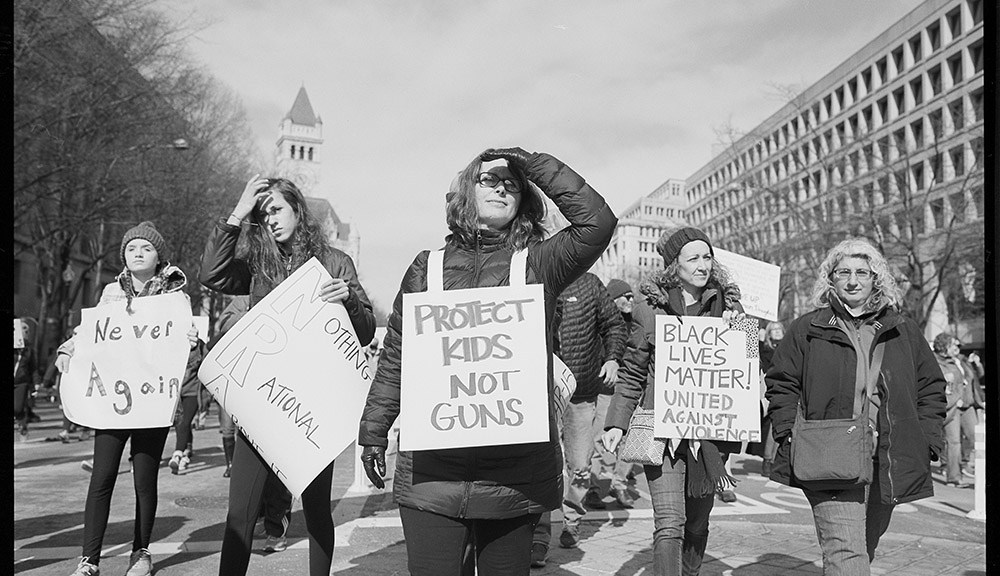
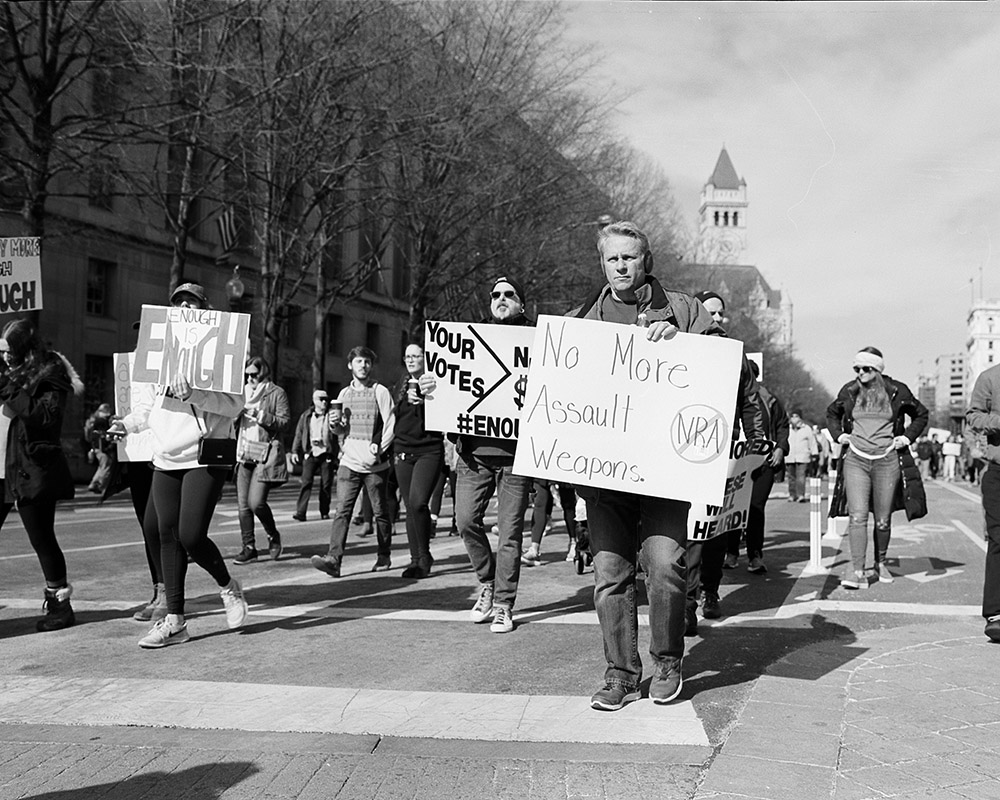
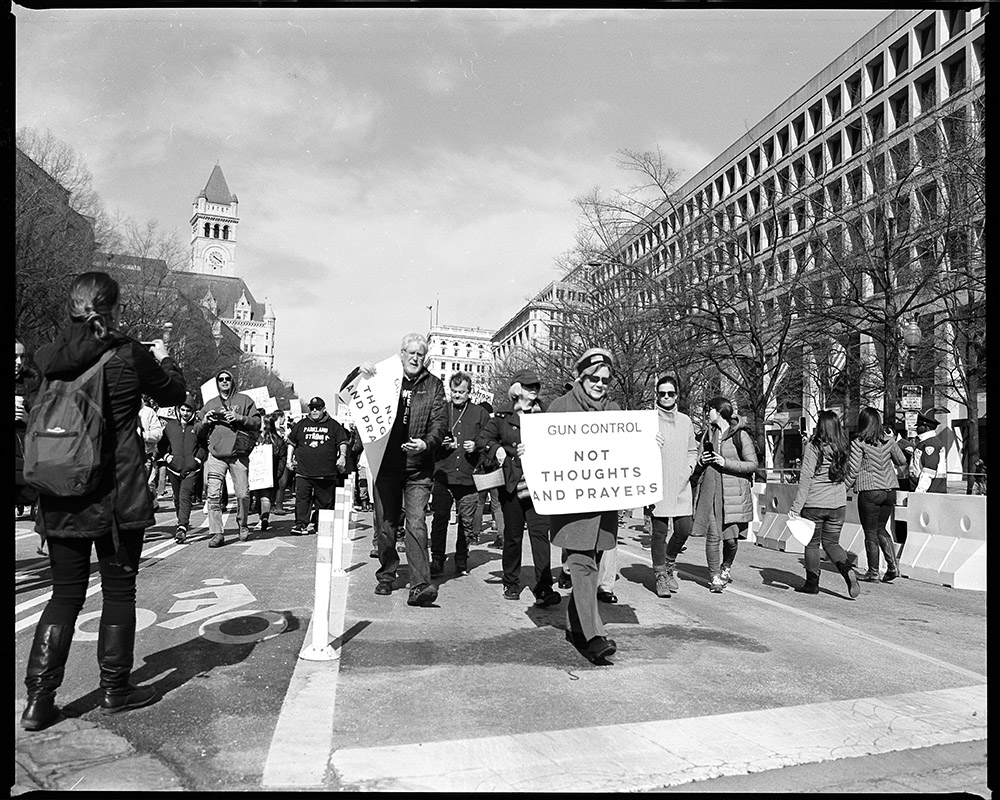
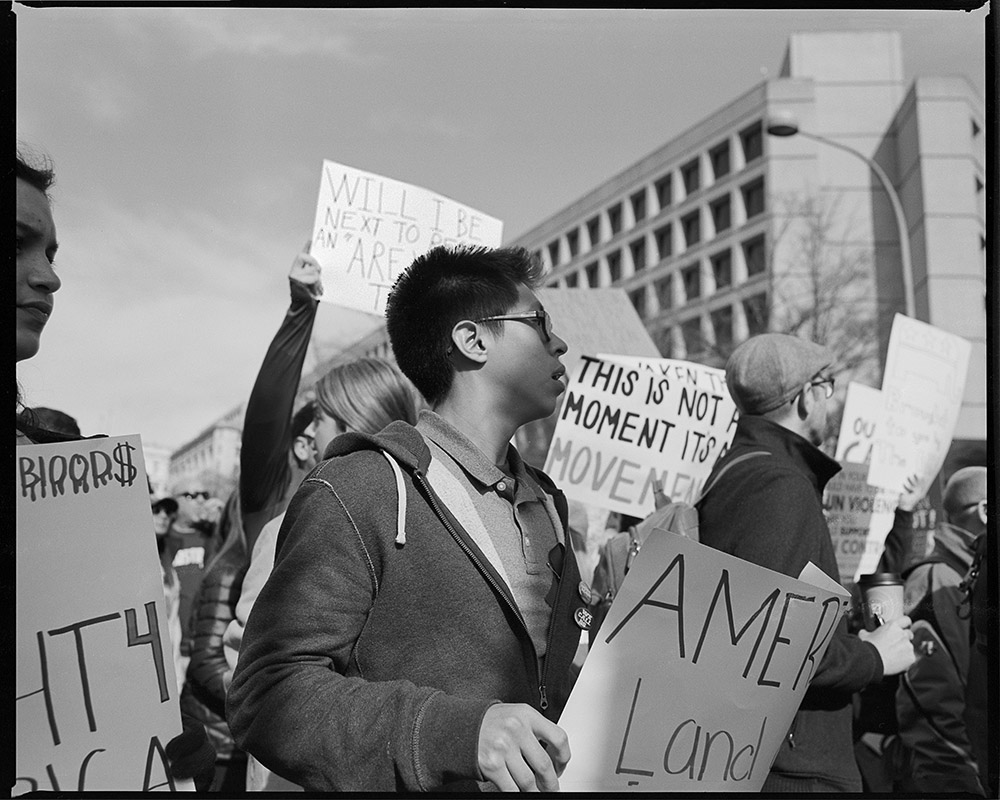
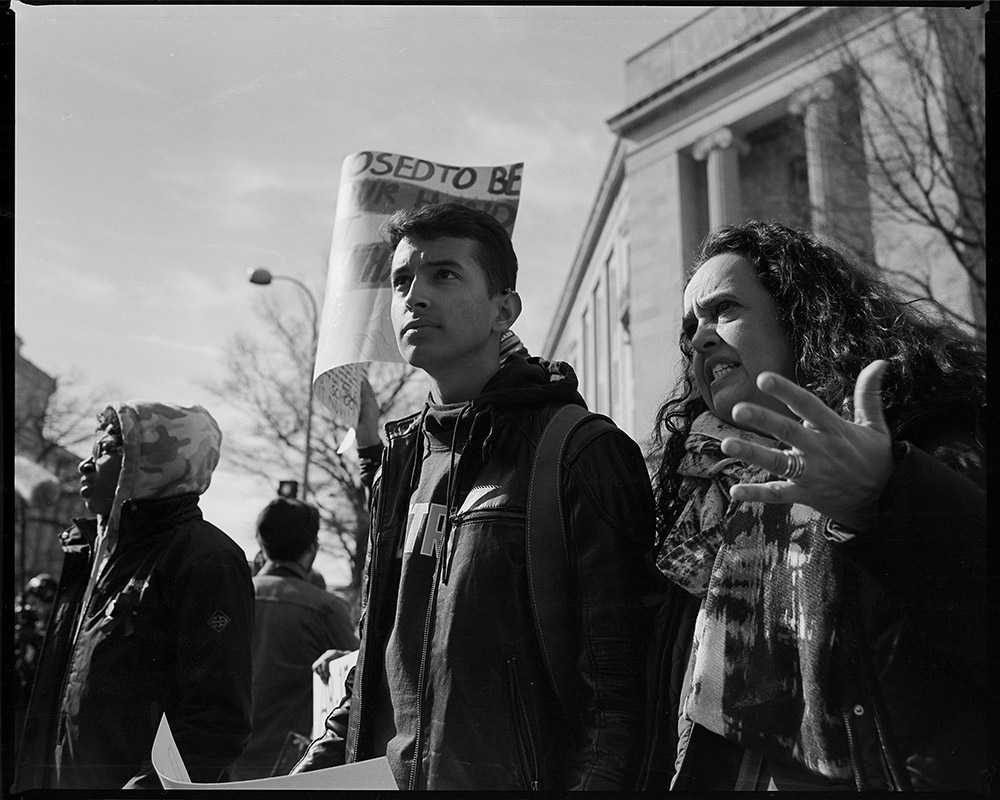
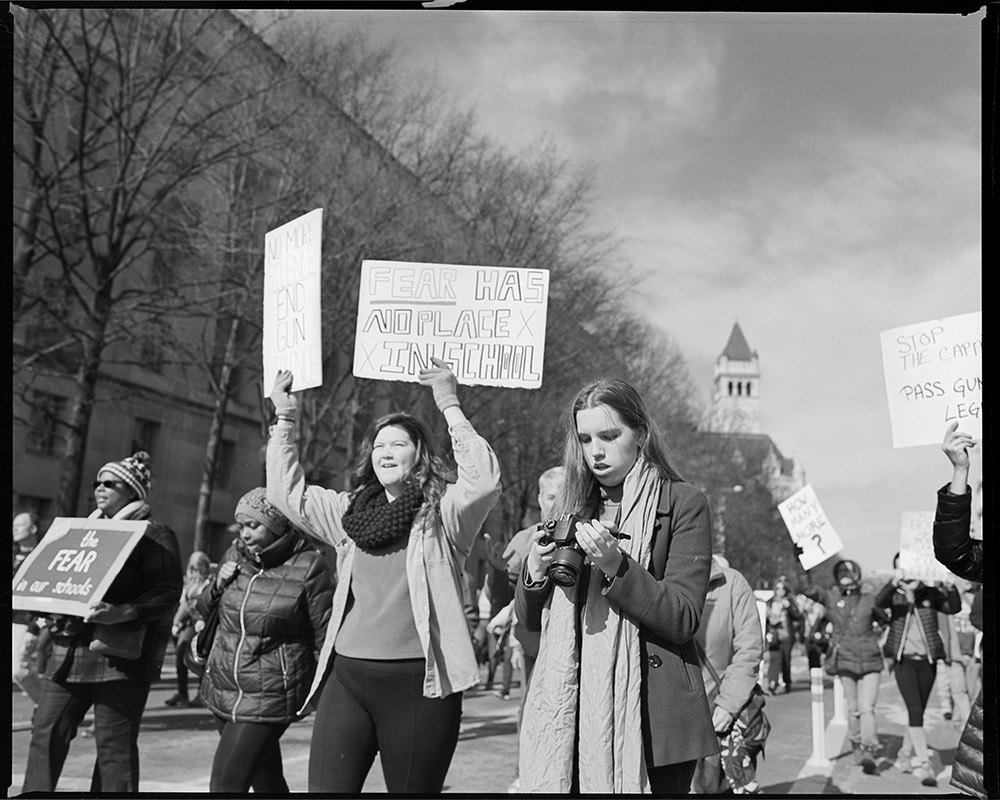
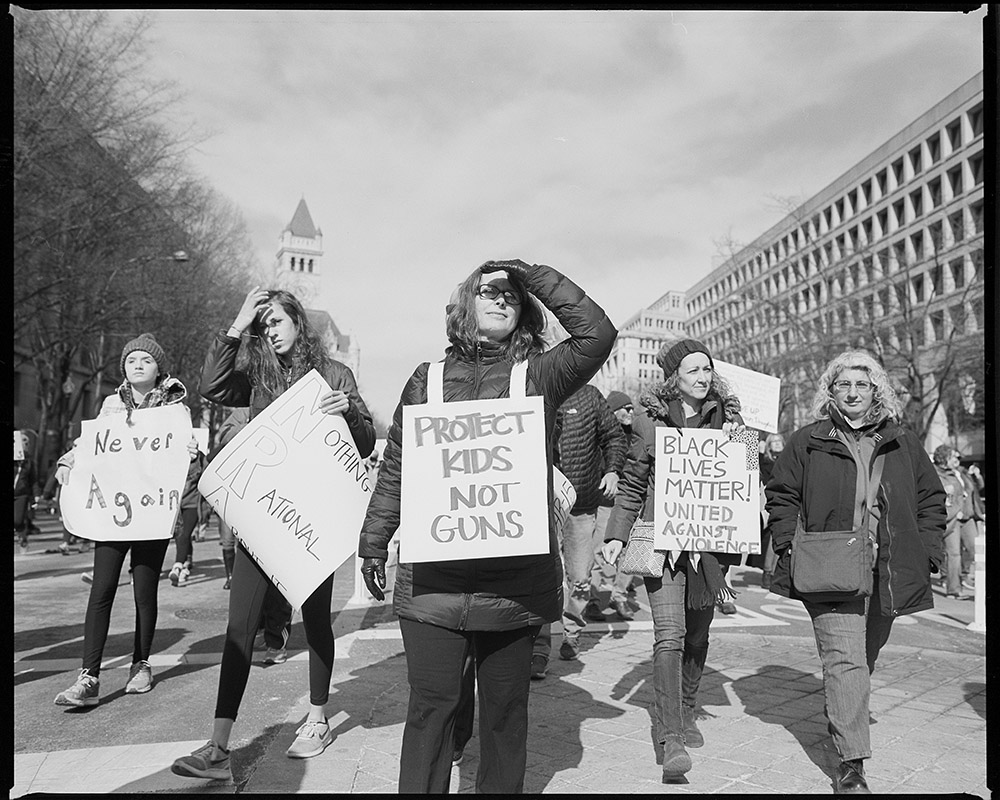
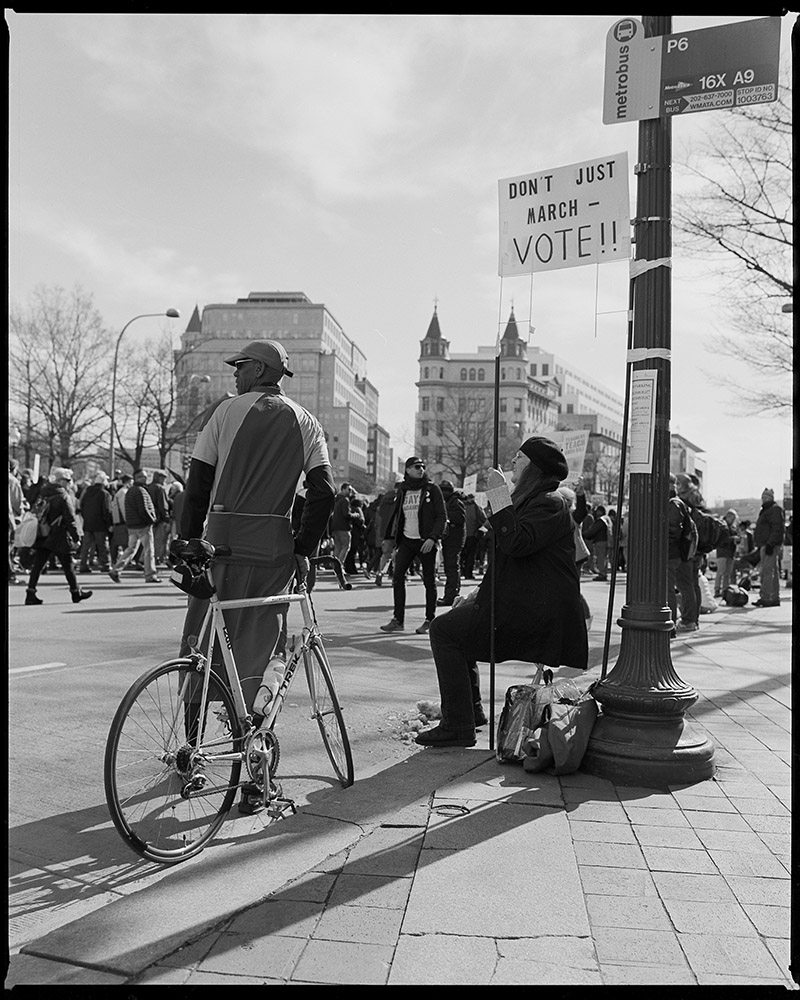
I was downtown DC the day of the March For Our Lives gun control protest. I wasn’t actually there to document the march – I was there to see it and experience it, but not even as my primary goal for the day, so I didn’t shoot a ton of film. Regardless, when I arrived at the parade route, the students and parents from Marjorie Stoneman Douglass High School in Florida were passing the intersection where I crossed Pennsylvania Avenue. It was truly moving to be there amongst them as they marched past. I’ll let the images speak for themselves, and just add that the closing image of the series says it all – Don’t just march, VOTE.
For those interested, I shot the entire series on my Mamiya RZ67 with the 65mm lens, which was really the perfect lens to use for this – I had enough room to get groups and action, but I could still get close up and isolate individual people. Film of choice was the classic documentary film, Kodak Tri-X.
Given the polarizing nature of the current president’s personality and demeanor, it should be no surprise that he attracts a LOT of protestors. There are always protestors outside the White House – for as long as I can remember, there was a 24/7 anti-nuclear weapons vigil in Lafayette Square, going back to at least the Reagan administration. The woman who spearheaded that protest has since died, so now the round-the-clock vigil encampment is immigration themed, if I recall correctly.
I don’t usually attend protest rallies or photograph them, given that they can be very sensitive events and I don’t want to be associated with anything that might go wrong when two opposing groups confront each other. Fortunately this is a rare thing in DC, but it does happen.
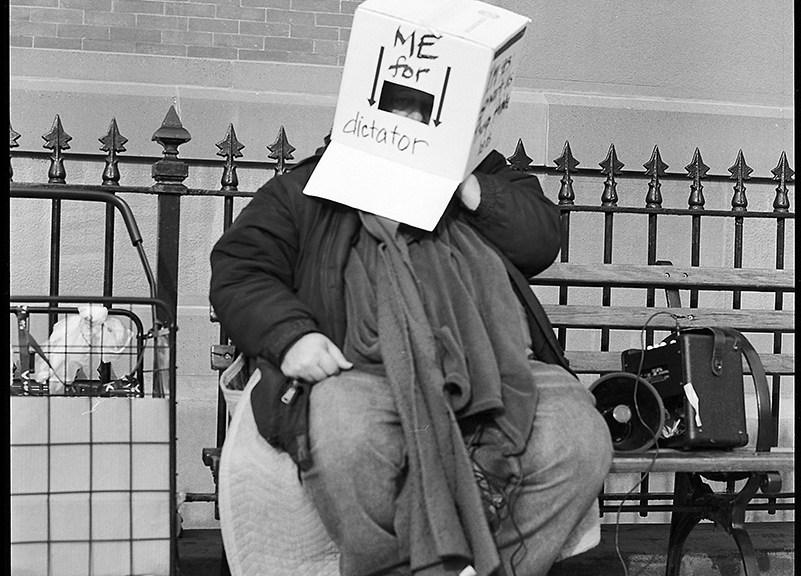
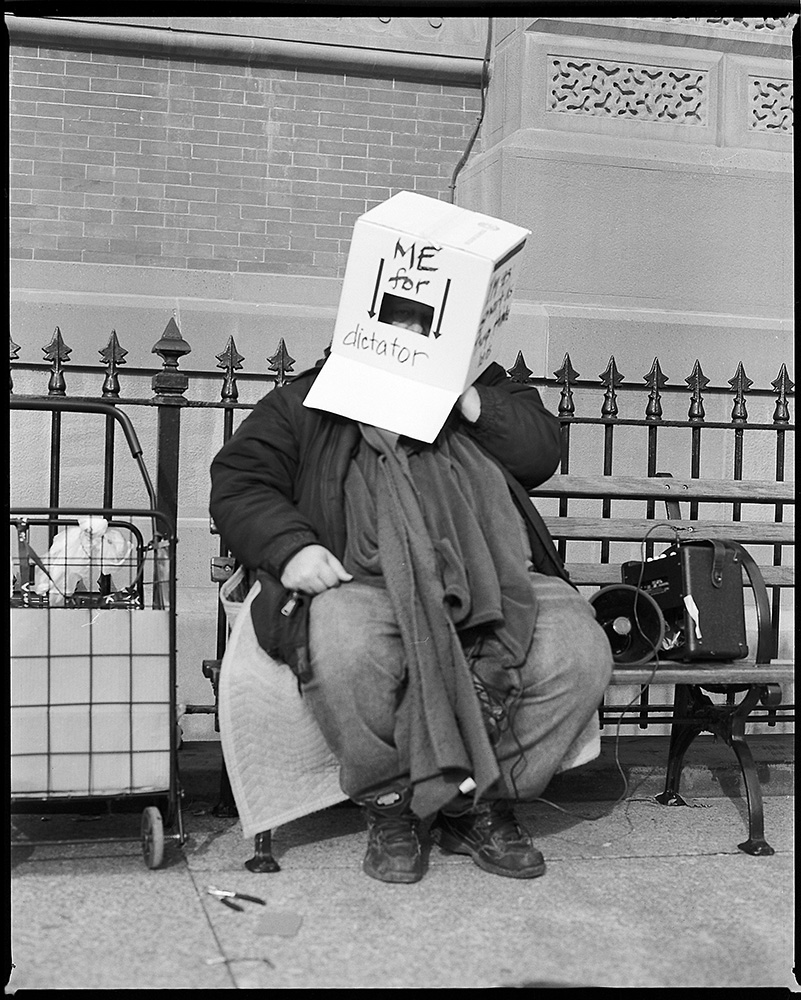
I was out playing tourist/tourguide with some out-of-town friends over the Martin Luther King Birthday holiday. We walked from the Air and Space Museum up Pennsylvania Avenue past the White House, then on to the Washington and Lincoln Memorials before finishing at the MLK Memorial. Outside the Renwick Gallery there was this character:
Me for Dictator
Inside his white box, he was playing the harmonica through a portable amplifier. There was no discernible connection between his song choices and the overall theme of his demonstration, so I don’t know to what extent he was consciously protesting, making social commentary, or just serendipitously expressing the zeitgeist because his meds were wearing off.
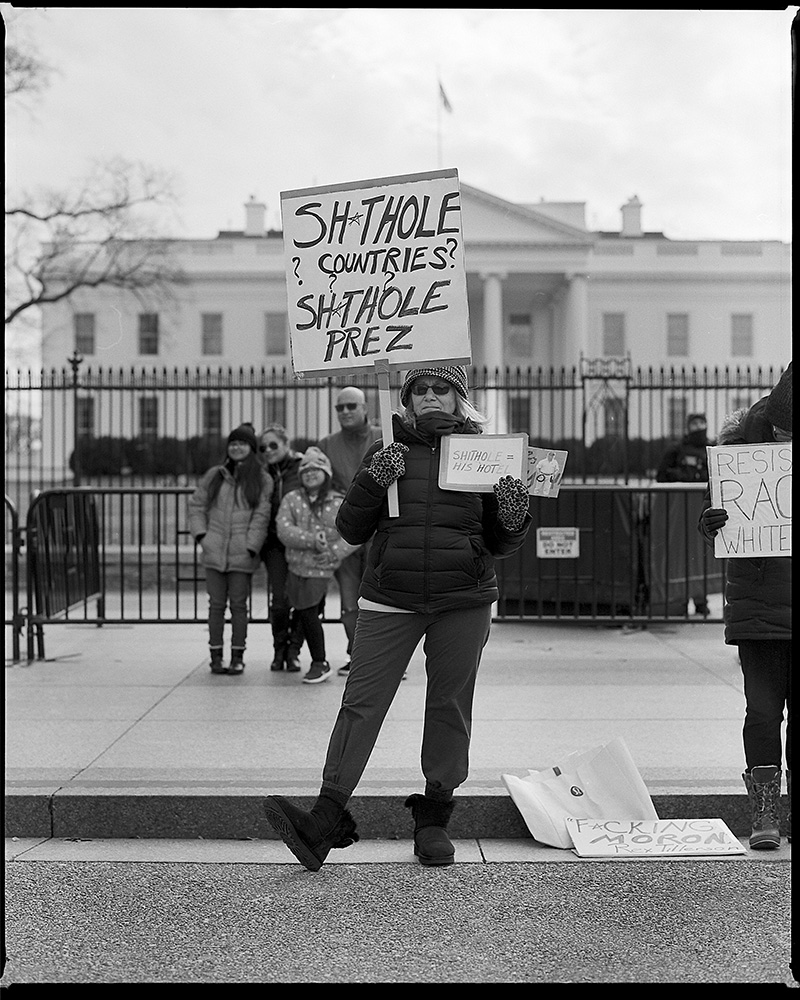
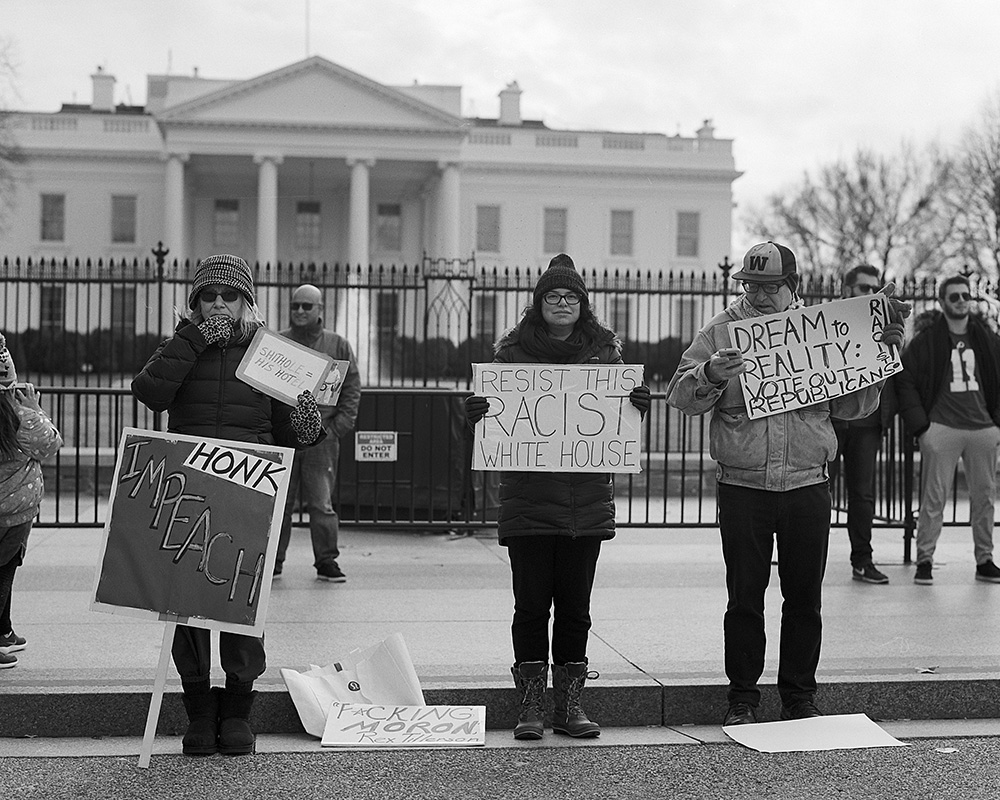
Outside the White House was a different matter, and a much more pointed display of discontent. This was right after the president had made his “shithole countries” comment, so much of the signage centered around that.
Shithole Prez
I chose this image because of the profoundly ironic juxtaposition of the happy tourists posing for a family photo in front of the White House with the protesting woman in front. This is something you will experience here in Washington that I don’t think you see many other places – the cognitive dissonance of “oh look, we’re jazzed to be here!” immediately adjacent to “I’m righteously indignant and I’m not going to take it any more!” expressed over the exact same subject.
Resist This Racist White House
One good thing about photographing protestors is that if you want to get better at “street” photography, they’re a great subject to practice on, because they absolutely want their pictures taken to get their message out to the larger world.
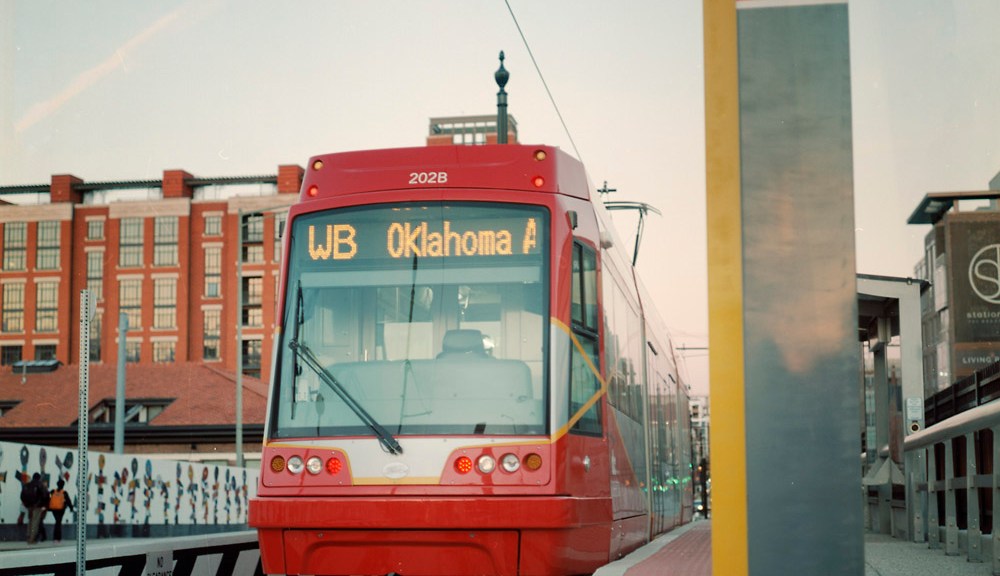
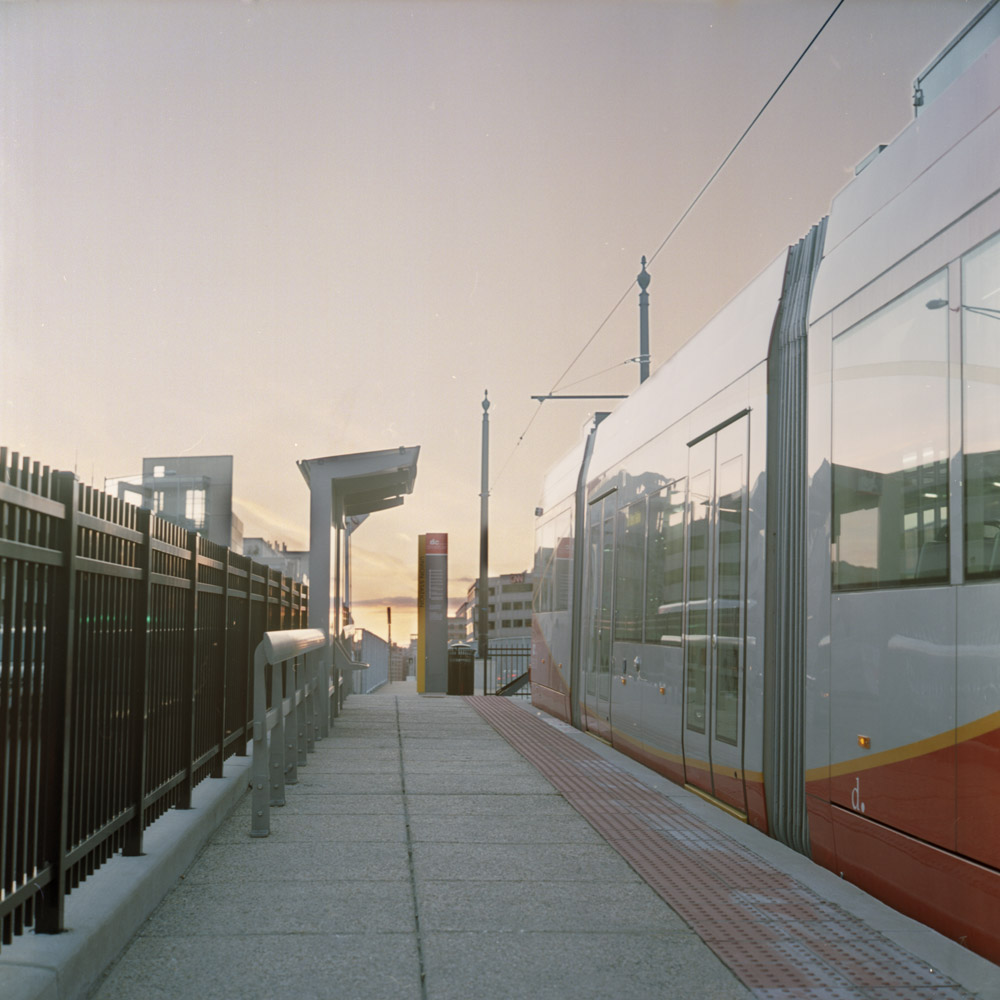
I’m a big public transportation junkie, so when I heard they were finally launching the DC Streetcar on H Street Northeast (a public works project over a decade in the making and long overdue – the tracks have been in place for two or three years now), I was so excited I ran over after work last Friday to see it and ride it only to find out I was a day early! So I satisfied my urge and photographed the streetcar at the Union Station end of the line, catching it at sunset. The shiny new car reflected not only the setting sun but the buildings across the street, bringing the surrounding urbanscape out of frame back into the picture.
DC Streetcar, Union Station, Sunset
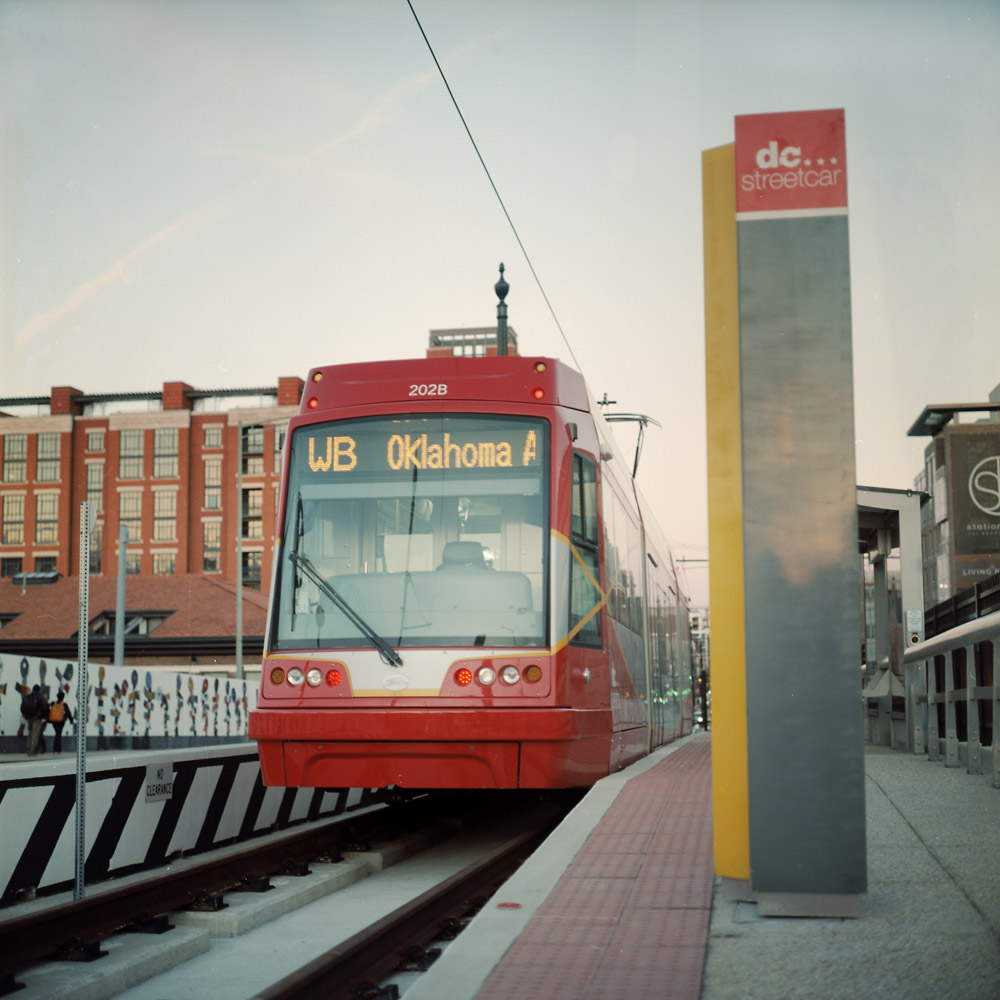
Here is a different view of the streetcar, waiting at the Union Station end of the line, looking down H Street. H Street was, fifty or so years ago, a thriving business district catering mostly to a middle-class African-American clientele. Then along came the riots after the assassination of Martin Luther King Jr., and then with the 1980s, the cocaine and crack epidemics. H Street was devastated.
Westbound Oklahoma Avenue Streetcar
Obviously now, not so much. It has transformed starting in the early 2000s with the real estate boom. Perhaps the turning point was the creation of a large condominium complex, Senate Square, on the grounds of what was originally a Catholic school and later the Capitol Children’s Museum. Now, pawn shops and lake trout joints are being replaced by artisanal coffee roasters, fancy pubs serving British-Indian fusion cuisine, and cultural outlets like the Atlas Theater and the Rock n’ Roll Hotel (which is not a hotel, but a bar and concert venue). Instead of a Murry’s, the neighborhood is now sporting a Whole Foods.
When finally fully operational (at the moment, the streetcar only runs less than half the length of installed track), the streetcar will connect Union Station and the governmental core of the city to east of the Anacostia River, a long-suffering neighborhood where good jobs and access to quality goods and services have been sorely lacking.
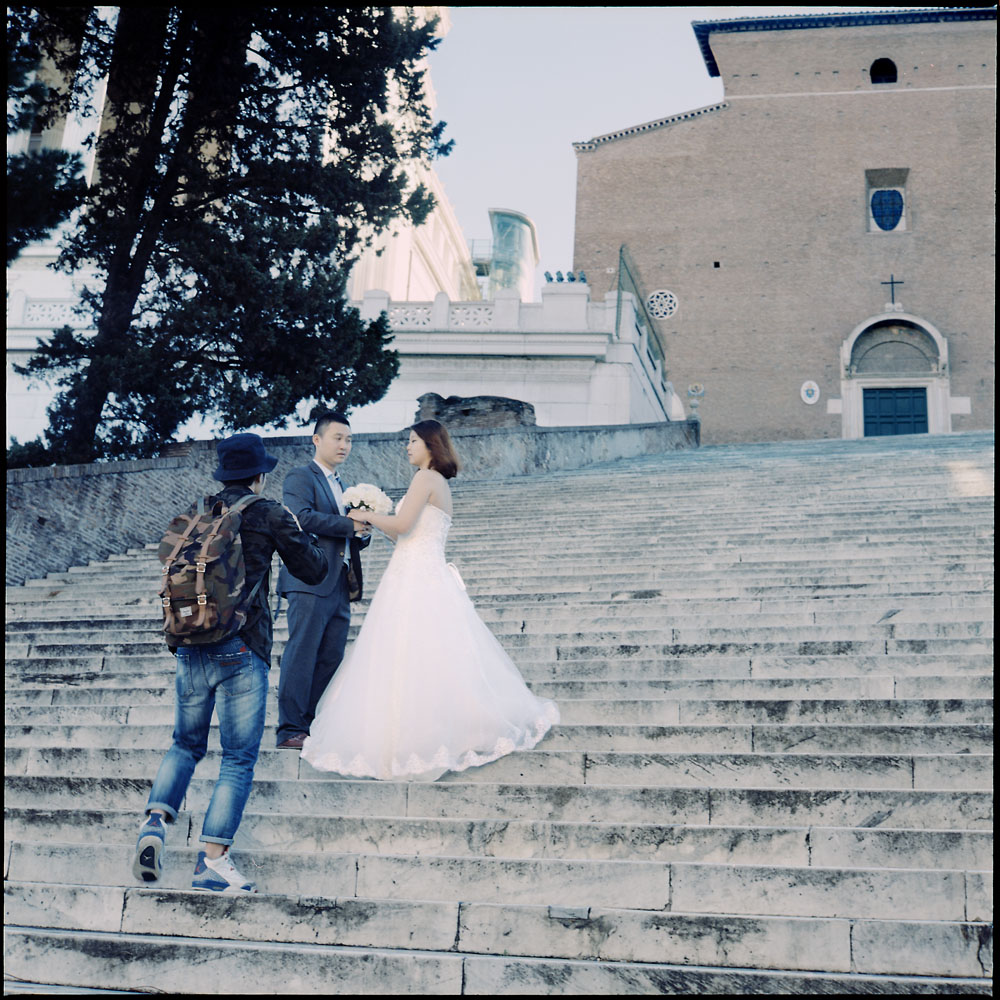
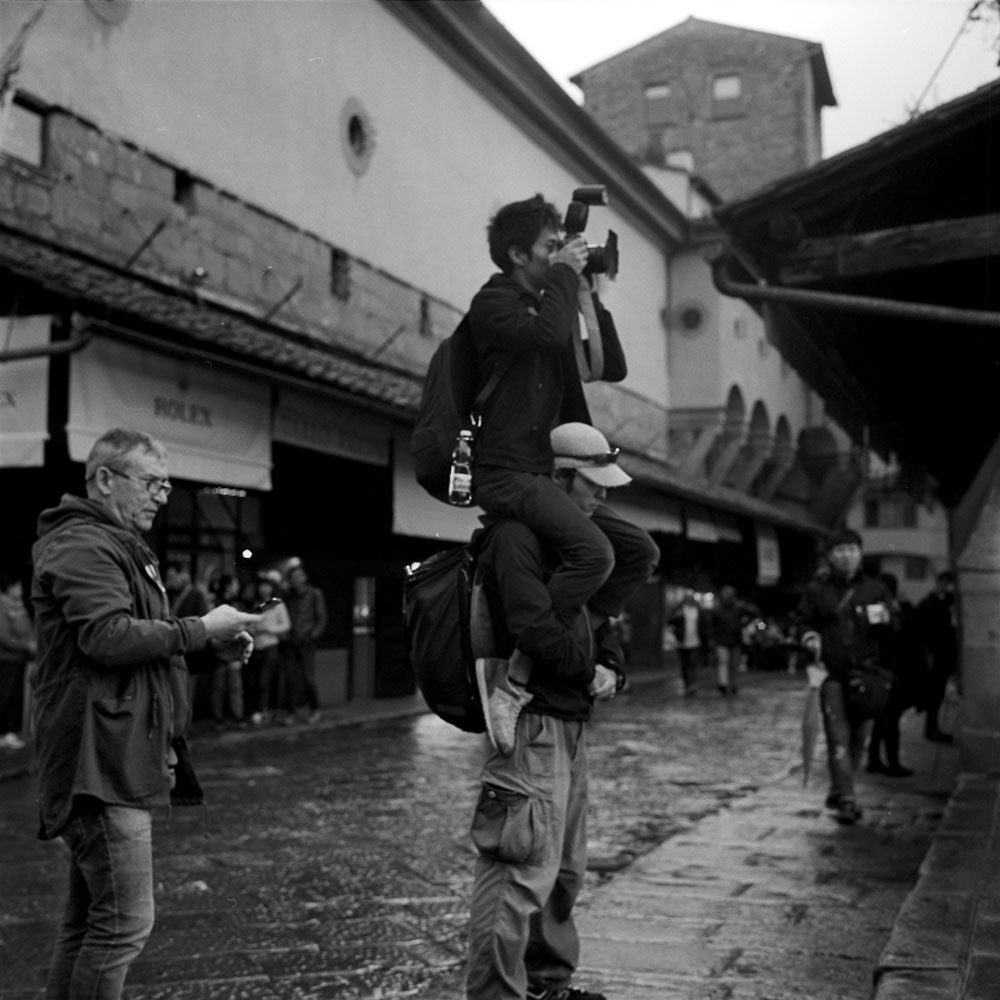
These are two of the wedding photographers I saw in action on my trip – I saw at least two more that I didn’t capture. All were Chinese – I guess it’s a thing now for Chinese couples to come to famous landmarks ( I saw this in Paris as well when I was there ) to get their wedding photos done. I don’t know if they were actually having their weddings in Rome and Florence, or just getting their pictures taken. I’d have loved to have asked, but the photographers were busy working and I’m not going to interrupt them.
I’m not at all surprised by the first location- the steps of Santa Maria in Aracoeli are a very popular destination spot for wedding couples. They were lucky that it was a quiet day – in peak season the steps are very popular with tourists, including pilgrims climbing them on their knees hoping for divine intercession to heal illness or get pregnant, although not so much these days. There are 124 steps (122 if you start on the right-hand side).
Wedding, Steps of Santa Maria in Aracoeli
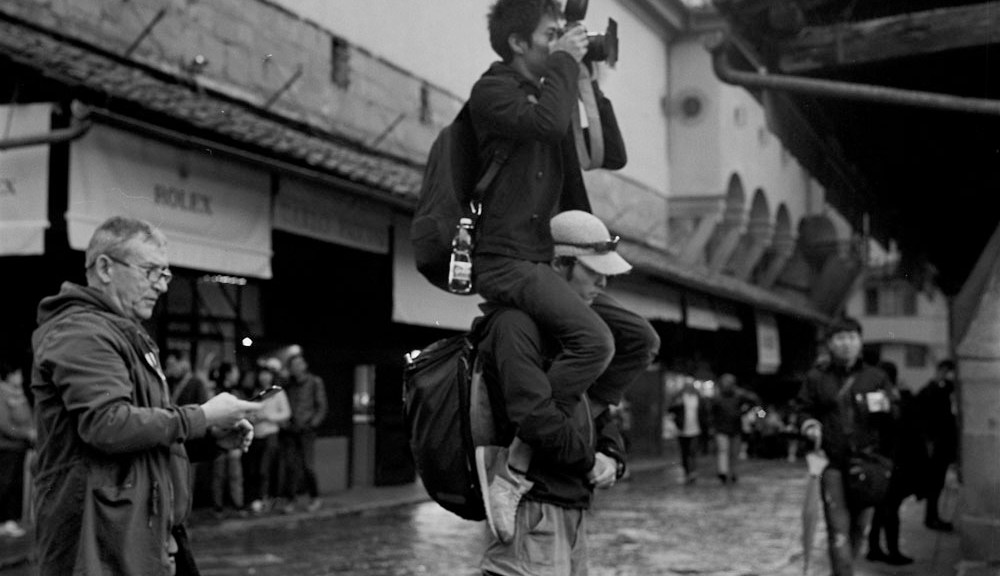
In Florence, this was the scene on the Ponte Vecchio, next to the Cellini monument. I know photographers will go to some lengths to get the shot, but this is really taking it to another level. I also observed a much more conventional photo-taking outside the Duomo early in the morning on another day.
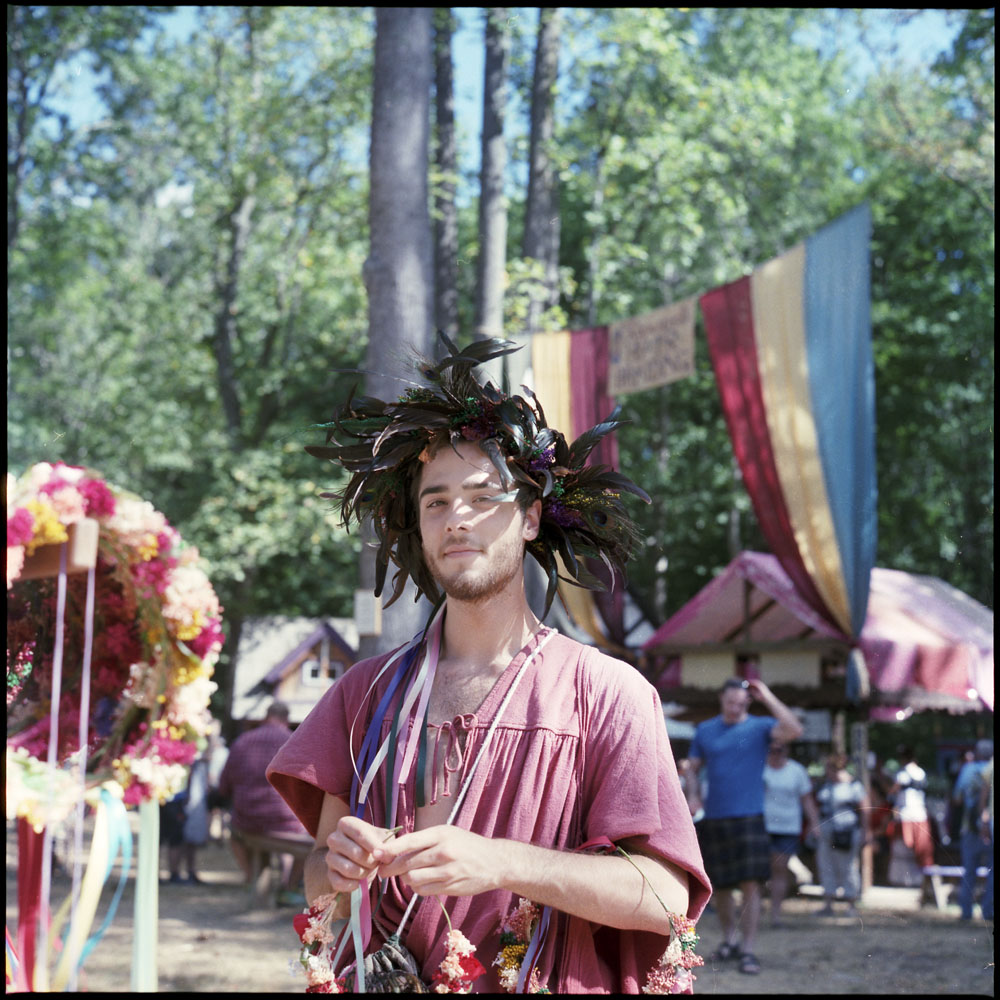
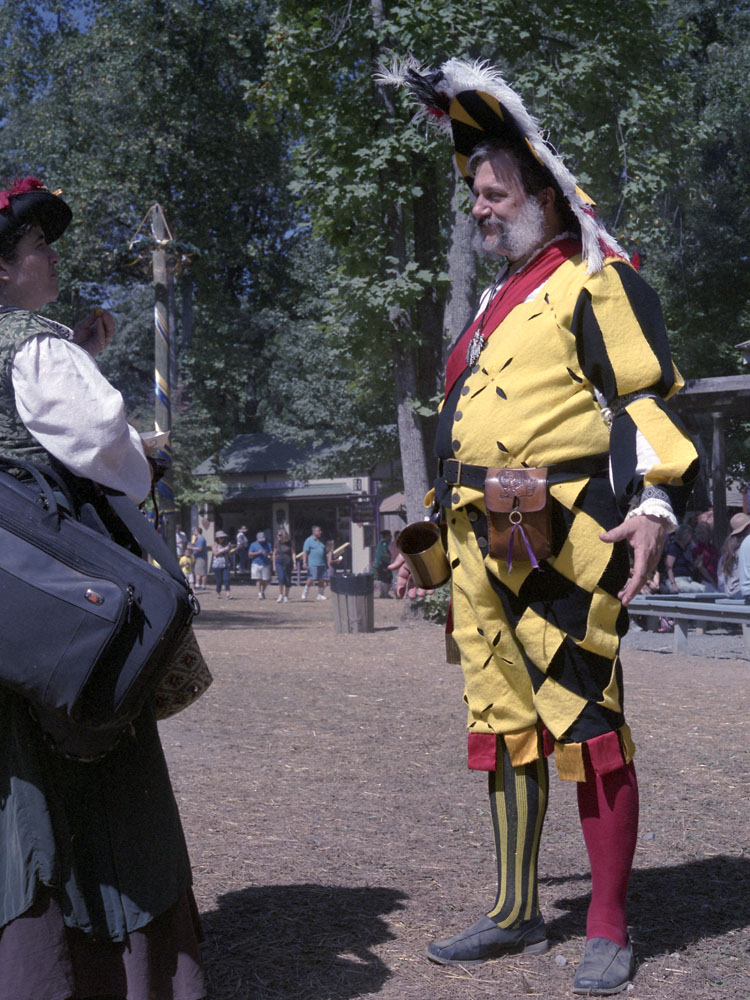
I’m a big fan of the Maryland Renaissance Festival, where people get dressed up in all kinds of reasonably (in)authentic garb and indulge in the fantasy of being in another place and time for the day. Costumes range from Renaissance royalty to fantasy characters inspired by Lord of the Rings and other sci-fi/fantasy stories.
While I often get tarted up in my own RennFest costume (I pass for a lesser lord of the Realm in my velvet doublet and tights), it was hot enough out that I decided this time discretion was the better part of valor and I would be better off in street clothes, just taking pictures. I wasn’t as photographically focused as I’d have wanted to be, pardon the pun, as I had a friend in tow who wanted to take in the sights. This was another photo outing where having the Rollei really came in handy, as people would quite willingly (if not eagerly) pose for the cool camera with the two lenses.
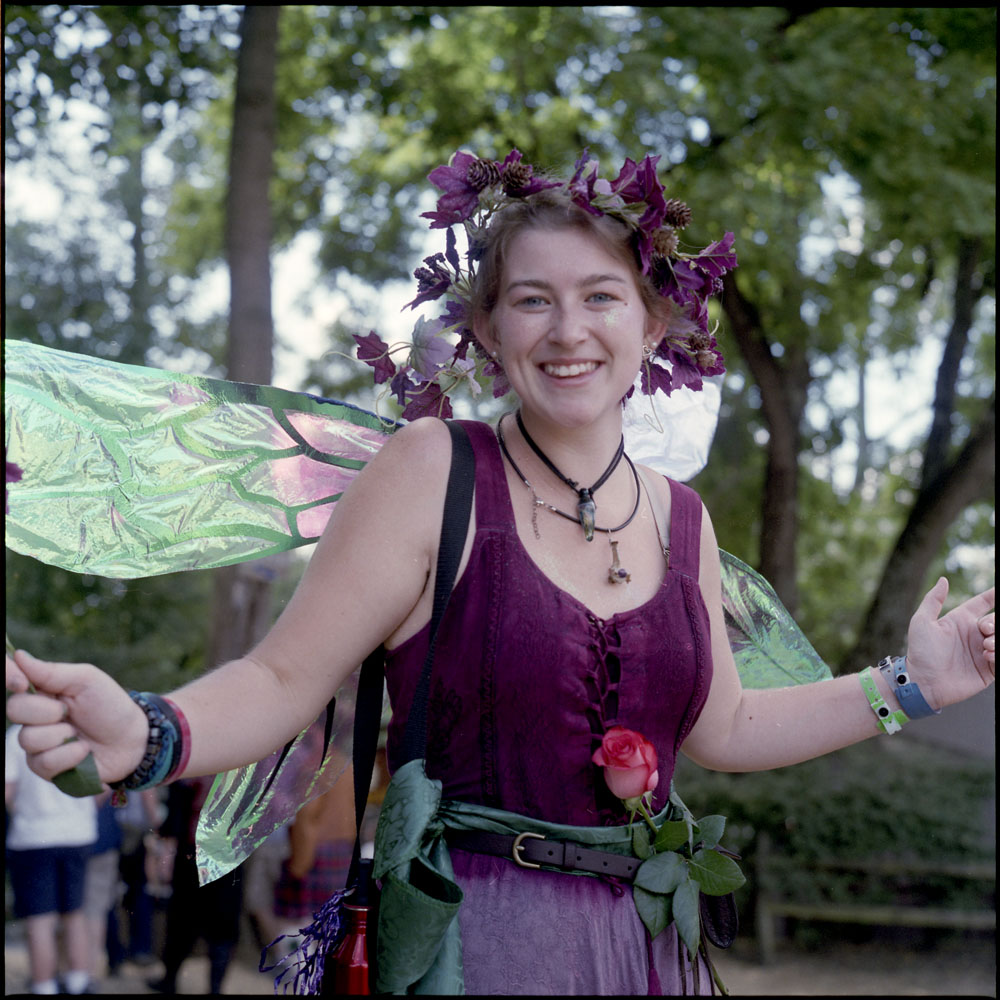
RennFest Fairy Girl
Photographing the fairy-wing girl was a hoot- she saw the camera, geeked out over it, and got even more excited when I pulled out my hand-held meter to take an exposure reading: “Are you metering me?? That’s so COOL!”.
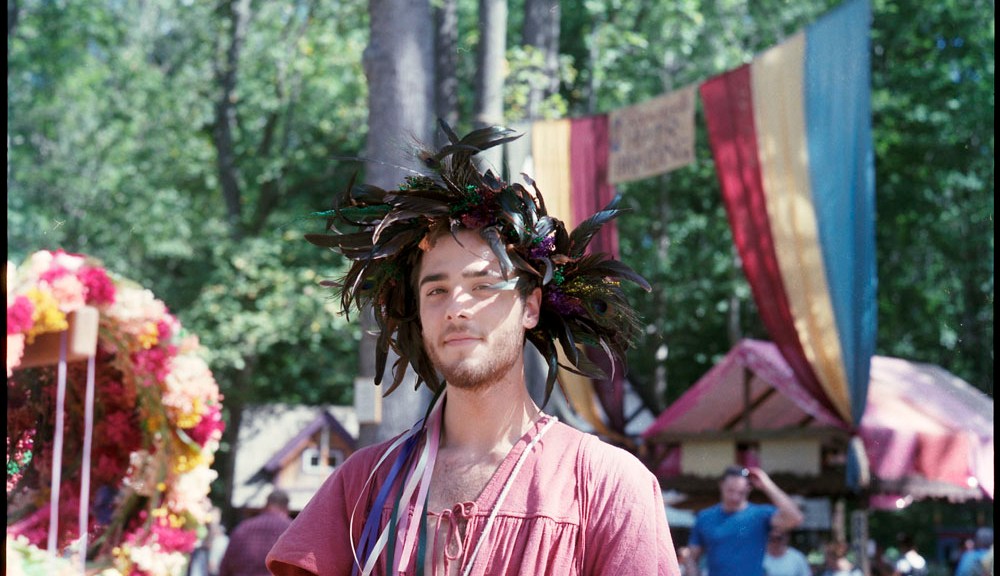
I felt so sorry for this poor boy, out selling floral hair garlands from a hand-cart in the blazing sun. Black feathers in your hair, while they do provide some shade for the face, can’t be the coolest thing to wear when it’s approaching 90F / 35C.
RennFest Flower Boy
I did take this one as a candid, since the Maryland Man was so deep in conversation with the lady.
RennFest Maryland Renaissance Man
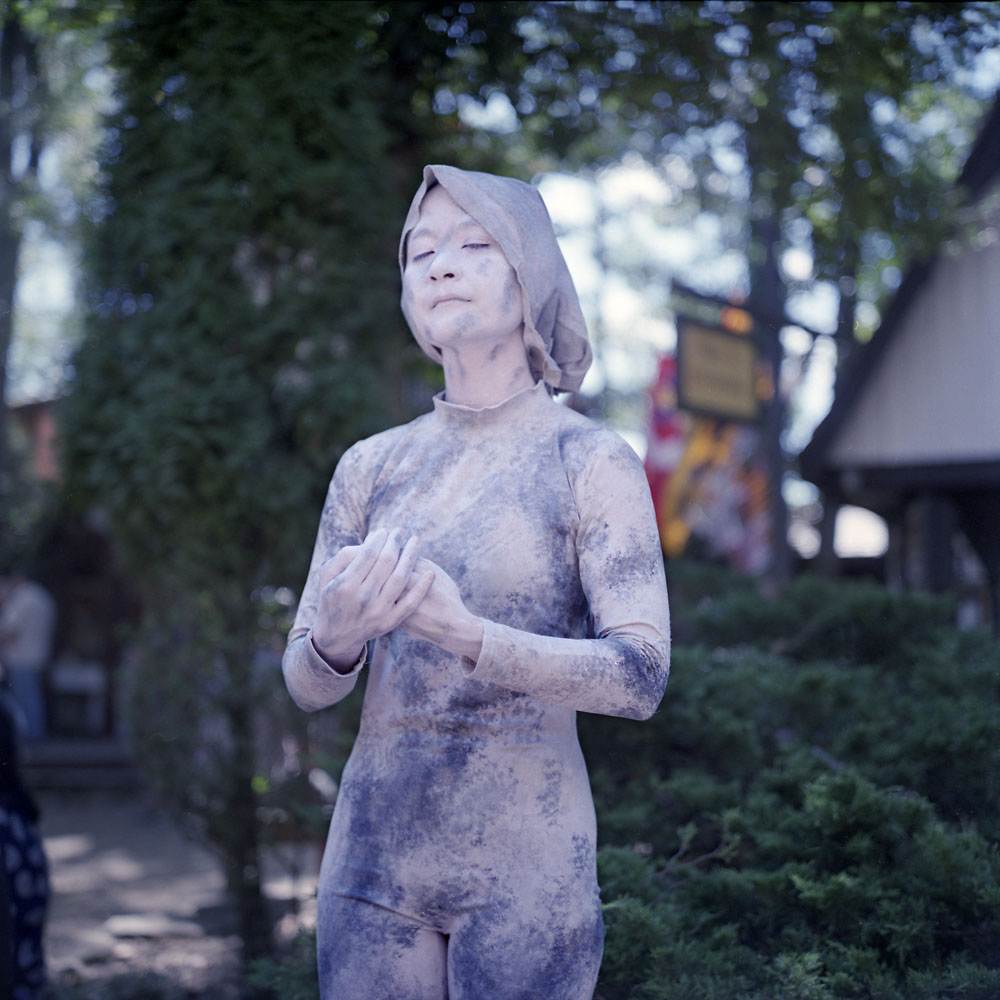
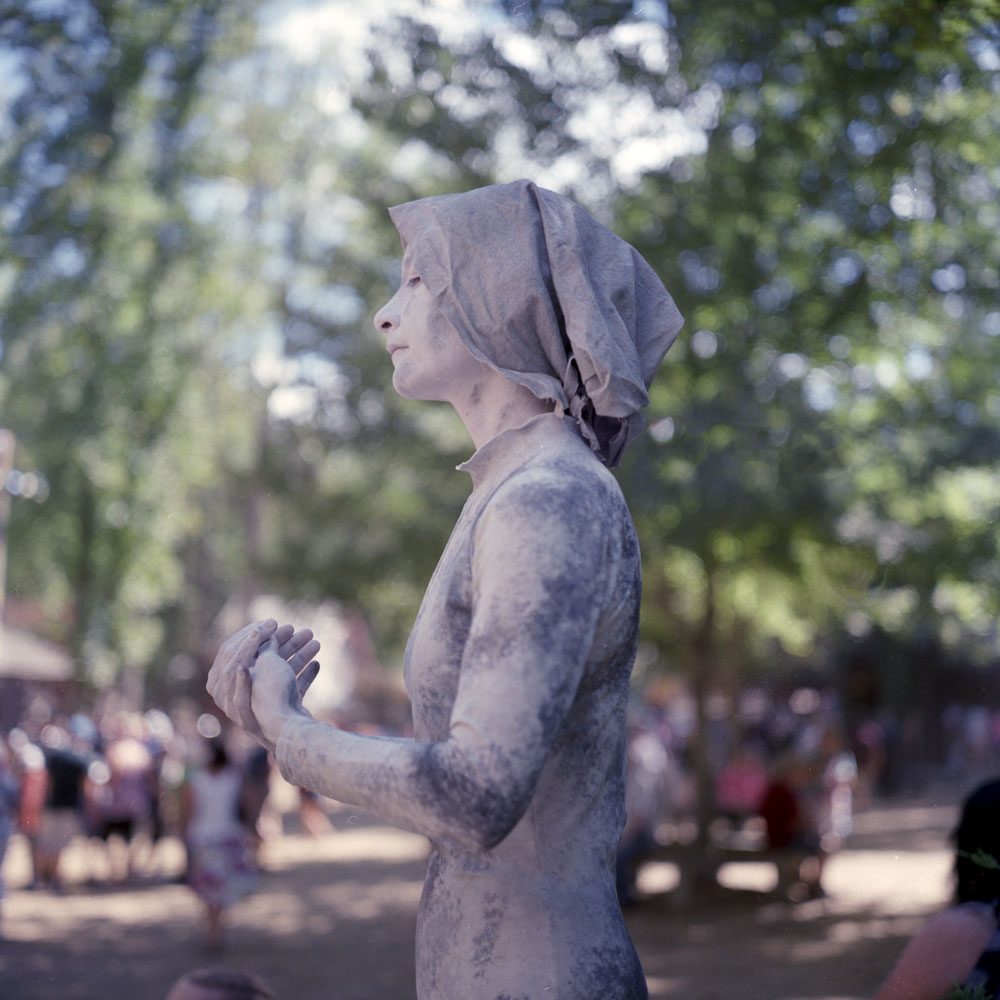
The living statue was busy posing, like a statue, and would only change or break pose if you put a tip in her cup. A little girl of perhaps five or six years old was enraptured by the statue, and an adult woman who was monitoring the child had to keep admonishing her (in the gentlest and situationally appropriate tone) “Don’t touch the statue- she doesn’t want to be touched”.
RennFest Living Statue
RennFest Statue Girl, Profile
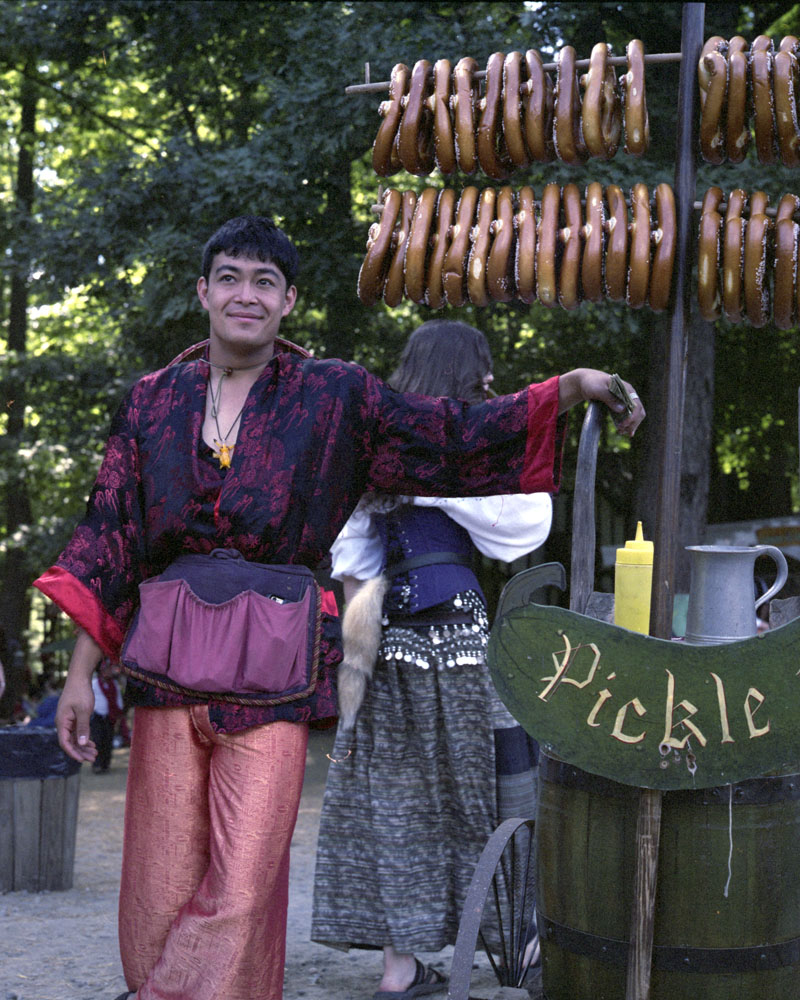
Another cast member at the RennFest who was approachable, thanks to the Rollei. He did get a bit distracted by I think a rather buxom young girl in a harem costume passing by just as I snapped the photo, so his expression isn’t what I was looking for.
RennFest Pickle Boy
And yes, if you’re wondering, that’s a Pokemon figurine on his necklace. See what I mean about not hewing to historical accuracy?
No Gay Pride parade would be complete without drag queens, just as it would not be complete without a few Dykes on Bikes and some leathermen.
Drag takes on many forms – from “high art” female impersonation to wild genderfuck and anything in between. First, the “high art”. I use that term very loosely, but what I mean by that is this kind of drag aims to present the illusion that you are in fact looking at a woman. Granted, an exaggerated pastiche of a certain kind of woman, but the intent is to present an illusion that maybe-kinda-sorta-in-dim-light-and-a-disco-soundtrack could be believed. When in drag, these queens refer to themselves (or at least the characters they inhabit) in the feminine. Their presentation is not just appearance, though, but it is performance – singing, dancing, acting. While Miss Gay Virginia is not exactly seductive in her appearance, she’s got a title which means she can do more than slap on a wig and paint up a face.
Miss Gay Virginia
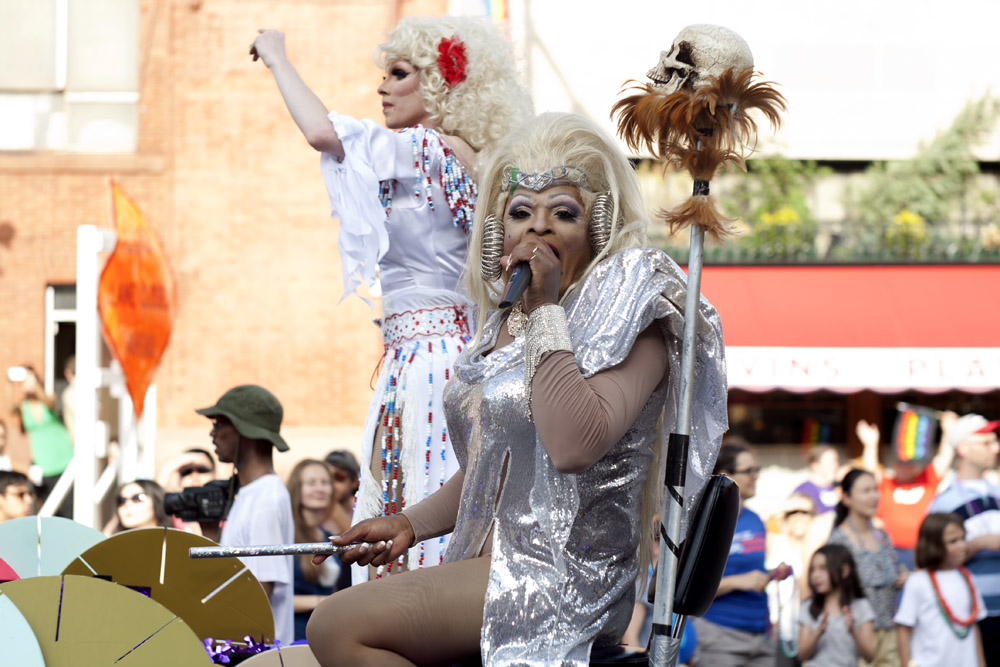
A specialty in illusion drag is celebrity impersonation. Were it not 30 years on and on the streets of Washington DC instead of a movie lot, I could believe I’m looking at Tina Turner in Mad Max: Beyond Thunderdome.
Beyond Thunderdome
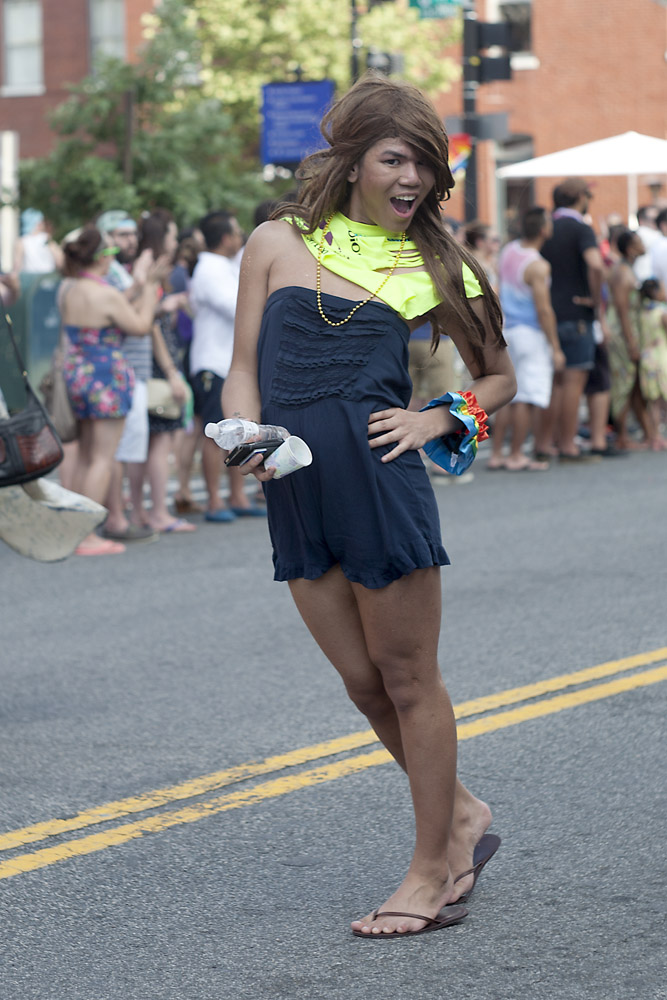
Then you have non-professional drag queens like this one. I’ve seen her at other drag events like the High Heel Race before. She may be someone who qualifies as a transvestite, not a drag queen, and gets dressed up as a woman because she enjoys it and identifies with it. Definitely not a straight guy putting on a wig and a dress as a Halloween lark. She’s in many ways more believable than the pros because she isn’t painting her face to look good in stage lights.
Drag Girl
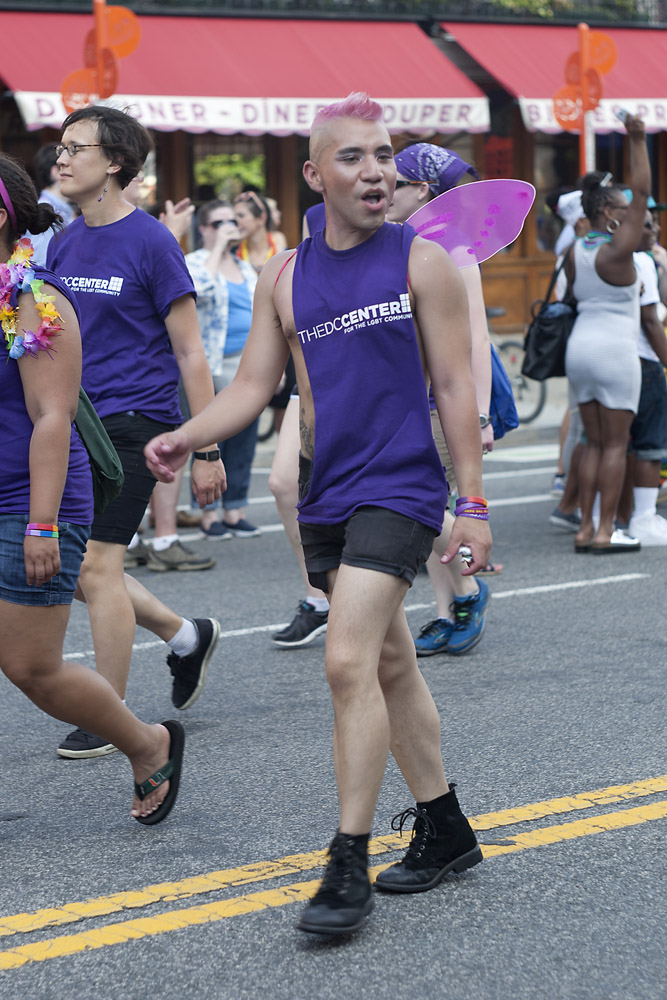
Then there’s genderfuck. The general idea of genderfuck is playing around with, crossing, and even destroying preconceived norms of what any one gender is expected to conform to. Anything from some glitter, some makeup and a pair of purple fairy wings…
Purple Fairy Wings
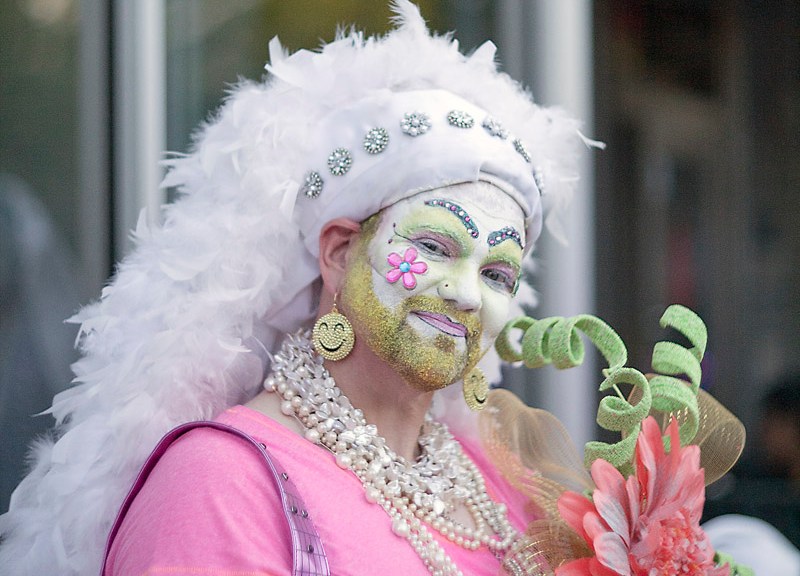
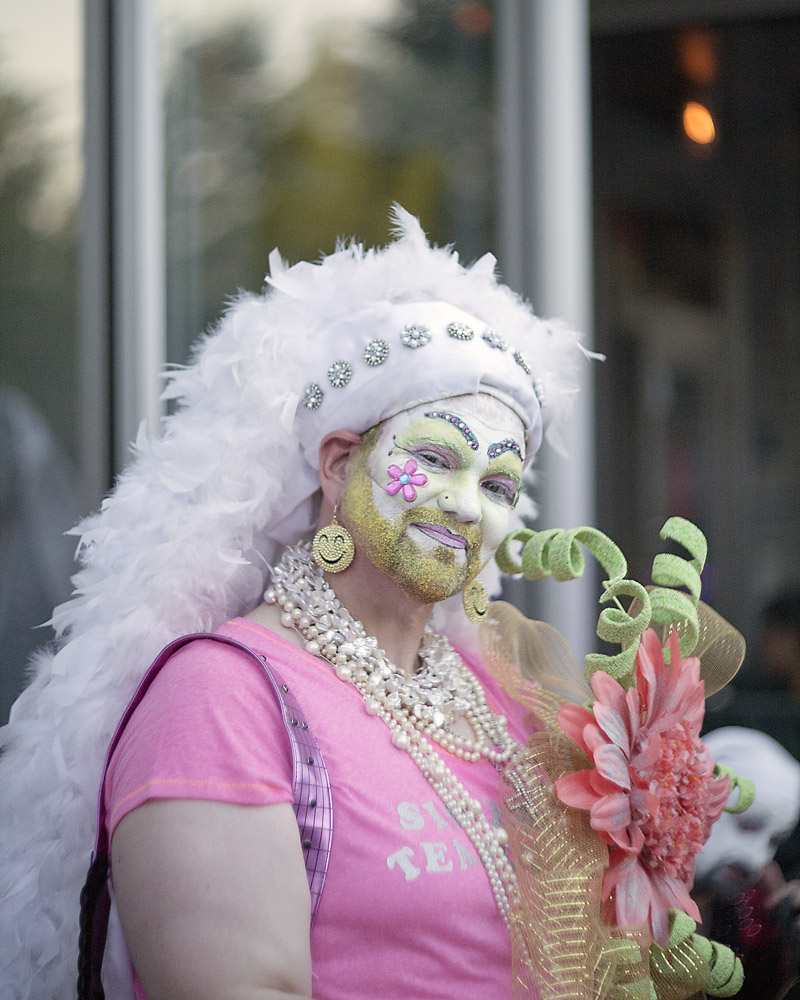
… to the Sisters of Perpetual Indulgence. The Sisters are a national (perhaps even international) organization that combines radical, politically charged drag (men with painted faces, beards, and nun’s habits, with drag names like Sister Imprudentia Vaginismus) and charitable fundraising and volunteer activity. They manage the Folsom Street Fair in San Francisco every year, and the proceeds go to HIV/AIDS charities.
Sister of Perpetual Indulgence
This is by no means a complete or exhaustive survey of what drag is, or the practitioners at the parade this year. And if you ask 10 drag queens what drag means, you’ll come up with at least 20 answers, depending on how many cocktails they’ve had before you ask.


























 dcphotoartist