Category Archives: Exhibitions

Michelangelo’s David/Apollo

Michelangelo's David/Apollo
Michelangelo’s David/Apollo

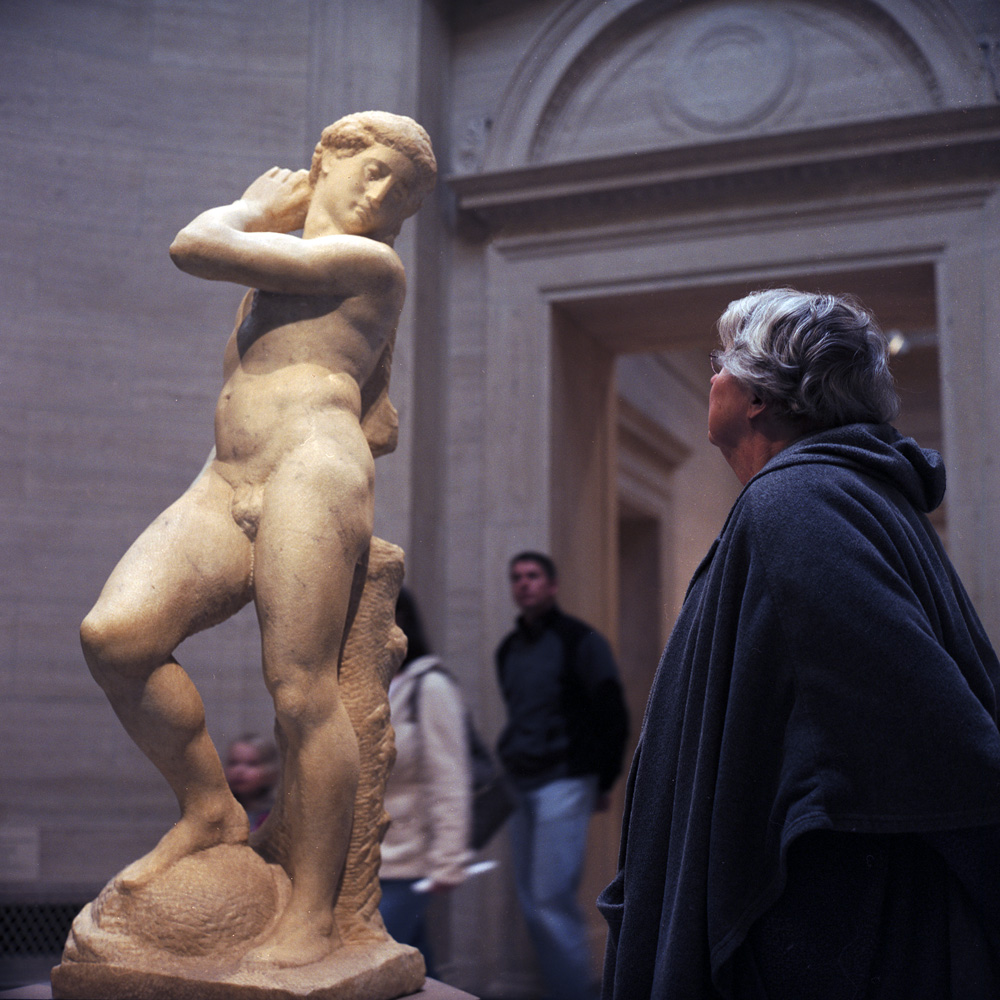
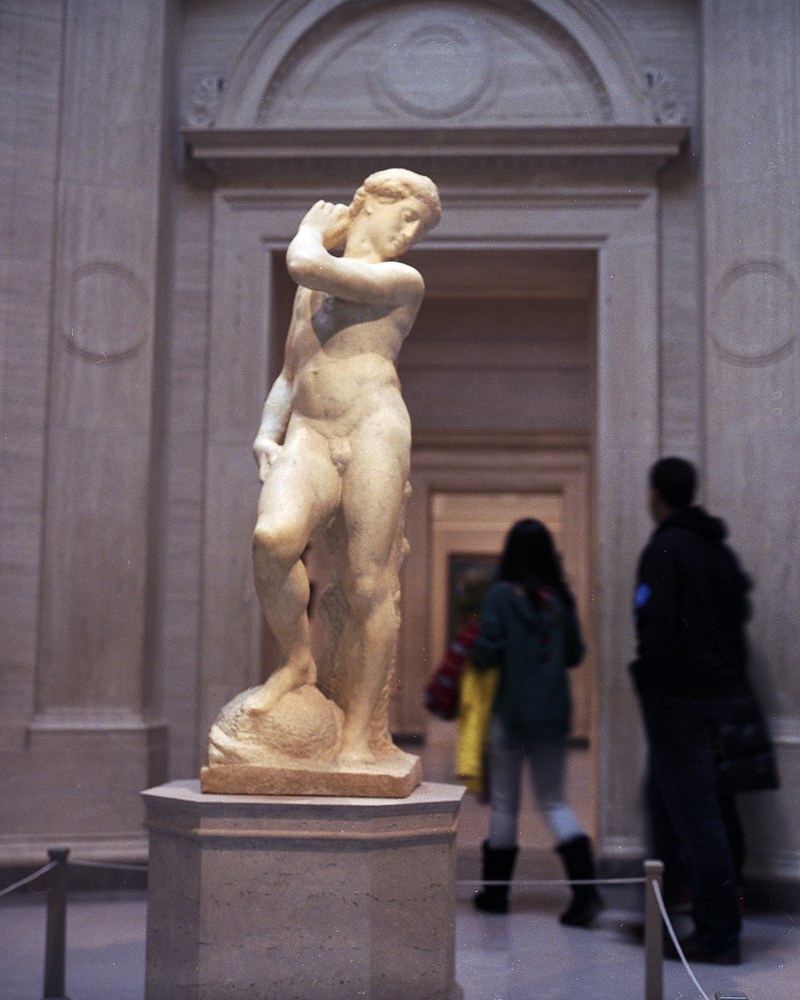
From January to March of this year, Michelangelo’s David/Apollo, normally resident in the Bargello museum in Florence, was on loan to the National Gallery of Art in DC. Being a huge Michelangelo fan, I had to go see it. The last time it was exhibited here in the US was during Harry Truman’s presidency. In fact, there are only three known or attributed works by Michelangelo in the United States (a drawing and two sculptures, one of which is in a private collection), so it’s a rare day when you can get to see something from his hand.

One of Michelangelo’s “unfinished” sculptures, much speculation exists around the entire series of the “unfinished” carvings – were they unfinished because Michelangelo was always biting off more than he could chew and didn’t have time, or did he deliberately leave them “unfinished” because he was making an artistic statement about the relationship between the image, the stone and the carving? Either way, they make for a tantalizing insight into the mind and the technique of one of the world’s greatest sculptors.

 David/Apollo Admirer
David/Apollo Admirer

I’m almost as fascinated by the people who come to look at art as I am the art itself. Sometimes (frequently, actually) I’m very annoyed with museum patrons because they’ll blithely traipse right between you and a work or the wall label for it that you’re trying to look at, rented headset on, completely oblivious to the fact that you now cannot read or see the exhibit. But when they’re not blocking your view, the way they look at art is endlessly interesting. Some will point, some will stand back and appraise, some will “print-sniff” and get close enough the guards have to warn them off. Some will ingest silently, others will pontificate to their audience of friends (and anyone else within earshot), often as not with art history textbook opinions and/or not entirely accurate “facts” about the artwork and/or the artist.

Busy weeks ahead

When it rains it pours… I’m going to have several busy weeks ahead getting ready for three (THREE!!!) shows at the same time. I’m going to have work in a group show of large format photography at the River Road Unitarian Church, an alternative process show at the ArtDC Gallery, and a solo show at Mad Momos, a restaurant here in DC. Fortunately the Mad Momos show won’t be until the end of June, so I’ll have more time to prepare for it.

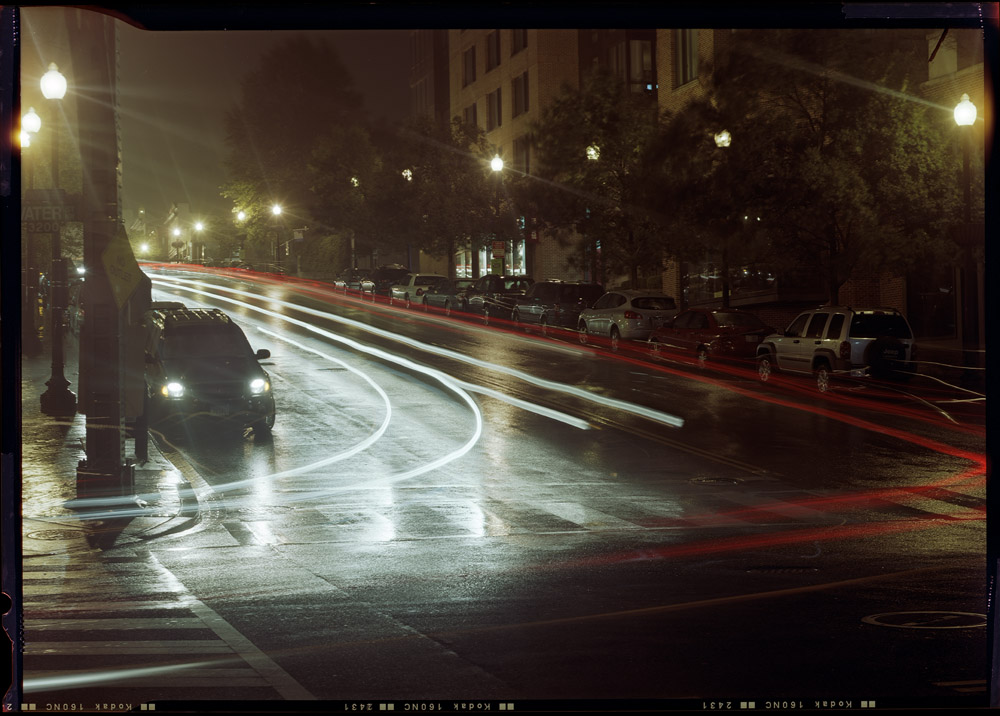
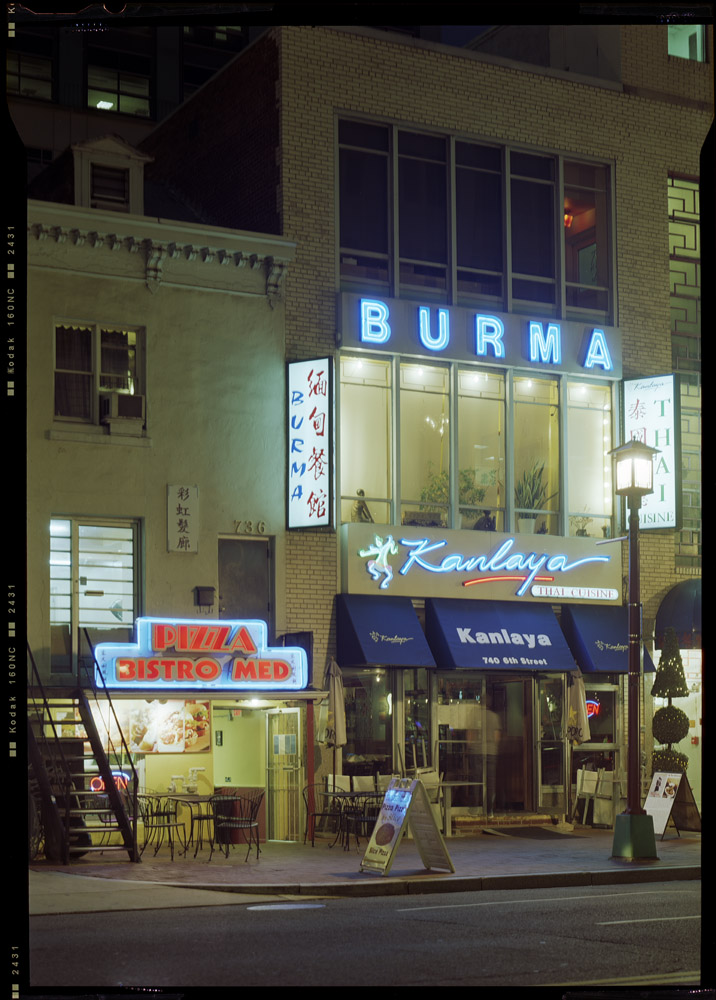
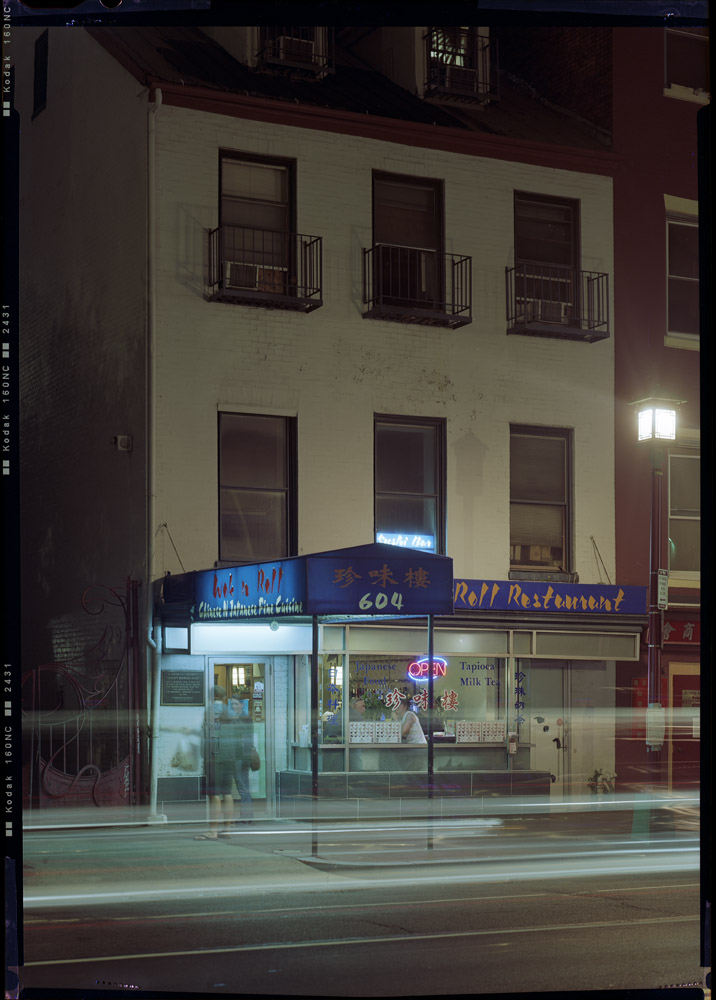
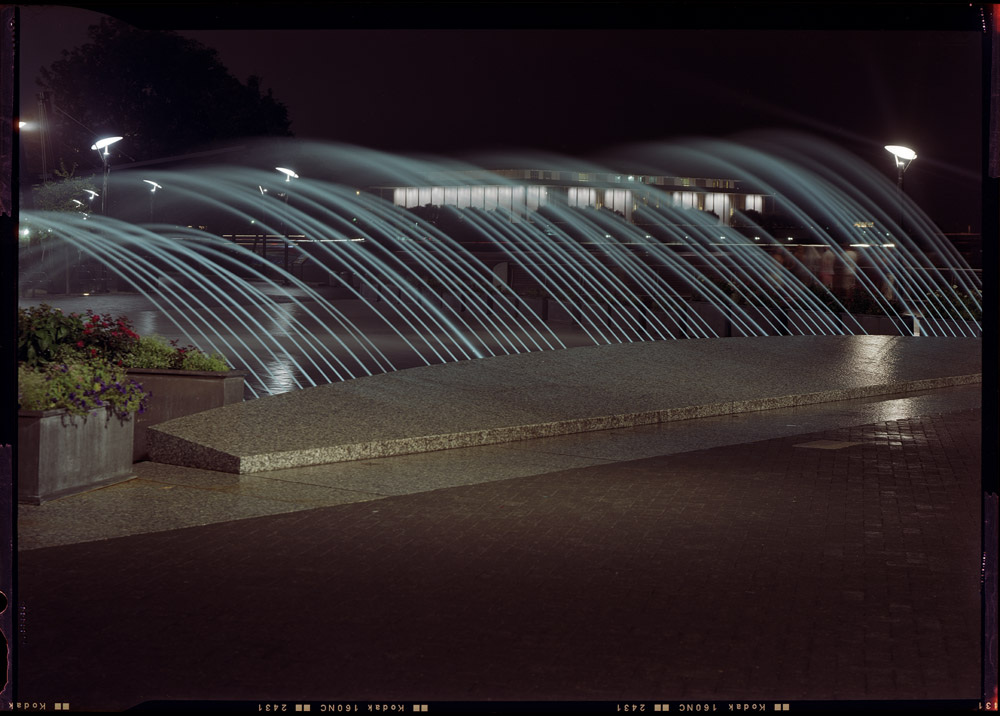
For the group show at the Unitarian church, I’m contributing some of my color nighttime shots of DC –

Georgetown in a Rainstorm
Burma Restaurant, Chinatown, DC
Secession Sushi - The Wok 'n Roll in the Surratt House
Secession Sushi – The Wok ‘n Roll in the Surratt House
Fountain, Georgetown Waterfront, Kennedy Center

The ArtDC gallery show will have my 14×17 palladium prints from Eastern State Penitentiary (don’t have them printed yet so I can’t show them – the negs are too big to scan).

Mad Momos will feature my “street” photography I think – mostly my documentary stuff from around DC. Probably all color work, but I haven’t decided yet.

Katherine Thayer memorial exhibit and call for entries

Lightbox Gallery call for entries – Katherine Thayer memorial Gum Bichromate show

Regular readers of my blog will probably remember the notice I posted last year about Katherine Thayer’s passing. Katherine was a tremendous gum bichromate printer and an extremely generous teacher of the process. Lightbox gallery in Astoria, Oregon is organizing a commemorative exhibit and has put out a call for entries for the show (link above).

To reprint the notice on the LightBox web page,

LIGHTBOX PHOTOGRAPHIC GALLERY CALL FOR ENTRIES
Two Friends Who Never Met

An Exhibit of Gum Bichromate Prints
In Memory and in Honor of Katharine Thayer
featuring the work of Katharine Thayer and Diana Bloomfield

with a juried exhibit of Gum Bichromate Prints
Juror – Diana Bloomfield
Diana’s bio

We welcome you to share in the beauty of the hand-made print, and specifically, the gum bichromate print,
with a juried exhibit as part of this memoriam for Katherine.
This exhibit serves to illuminate Katharine’s artistry— her admiration for, dedication to, and mastery of gum printing.
This exhibit also celebrates her legacy and her years-long friendship with Diana.

I had a mental picture of the kind of photograph I wanted to make. I had never seen any photographs like them, but I was determined to find a way to make them, these pictures I saw in my head. Their colors were soft and relatively unsaturated, but with a kind of glow about them . . . I set out first to teach myself to print in gum, then to adapt the method to produce the kinds of pictures I wanted to make, and have been making them ever since – Katharine Thayer – katharinethayer.com

Katherine Thayer was a long-time resident of Oregon and a masterful gum bichromate printer. She was also a generous teacher to those who struggled to learn this ultimately rewarding, yet often challenging, 19th century printing process. In Katharine’s words, “learning gum printing involves some trial and error, and there’s no short cut to mastery; a person successful in mastering the process will have some staying power and possess a sense of humor and some tolerance for failure.”
Katharine was also a decades-long member of “The List” , an Alternative Process listserv— a free and open online discussion list related to all things ‘alternative’ in the photographic printing world. For Katharine, of course, this meant gum printing. Currently, over 600 people world-wide are members of this List, and this is where Diana Bloomfield, a native North Carolinian, photographer and printer, first met Katharine. In the middle of teaching herself to make gum prints, Diana gleaned invaluable bits of information from those on the List, but she learned the most from Katharine and from her website (KatharineThayer.com). In the midst of all the questions, and in-between Katharine’s tireless mentoring, the two became good friends. They corresponded via email almost daily, and they were once in a group pinhole exhibit together in the Seattle area. Diana was also in a group exhibit at LightBox, where Katharine was a frequent visitor. Still, they never met.

Exhibition Review – Faking It: Manipulated Photography before Photoshop

Over my lunch break today I caught a wonderful exhibit at the National Gallery of Art entitled Faking It: Manipulated Photography Before Photoshop. The exhibition opened in mid-February and runs through May 5th. It moves to Houston in July to October. One of the singular points the exhibit drives home is the fact that photography has always been subject to manipulation even from its earliest days when daguerreotypes were hand-colored to make them more ‘realistic’, and skies were printed in via multiple negatives to compensate for the shortcomings of early emulsion formulas. One of the coups of the exhibition is the inclusion of Steichen’s “The Pond – Moonlight” from the collection of the Metropolitan Museum of Art. Most people familiar with the work know it as a multi-layered gum bichromate over platinum print. What most don’t realize, however, is that the image may in fact be a composite with the moon having been added, and may also never have been photographed by moonlight (a feat that would have been difficult to achieve with the emulsions available even in 1904). The moon in the image may be an addition or otherwise a manipulation of the print, and the nighttime feel of the image merely an effect of the color choices in the gum layers of the print.

The Pond, Moonlight - Edward Steichen

Images have been manipulated for a whole host of reasons, from a desire to make them more real (hand-colored daguerreotypes) to conveying an inner reality (surrealist photography) to evoking an emotional resonance (The Pond, Moonlight) to suggesting a reality that could exist (a Zeppelin docking at the docking tower of the Empire State building) to creating something that never existed (giant crickets consuming giant produce on the back of a wagon) to re-shaping reality for political ends (Nazi and Soviet propaganda posters and publicity photos). All of the above are represented in this exhibit, and placed in an historical and artistic continuum.

There has been much controversy lately over questions of photojournalistic integrity with regards to digital manipulation to include/exclude details to tell a story, from the Iranians photoshopping additional rockets into a picture of a missile test to Edgar Martins getting caught claiming his work was unmanipulated when in fact he was heavily altering his images. This is not new, but in fact the question of manipulative ethics is far more unsettled for far longer than most people realize. In 1906, Horace Nichols was photographing the Epsom Derby on a rainy day. There were gaps in the crowd, so to convey the feeling of the event he wanted to convey, he spliced in a whole sea of additional umbrellas. This was common practice for Mr. Nichols, and he rarely cited it in the captions of his images, but he sustained a career as a serious photo-journalist. It makes you think long and hard about your assumptions of photographic verissimilitude and the historical moment in which photography ‘ceased to tell the truth’.

The exhibition is well worth the visit if you have an interest in the history of photography and questions of honesty and integrity of the photographic medium.

Also worth noting is that the Metropolitan Museum of Art in New York is currently hosting (through May, 2013) a companion exhibit (which I hope will travel as well) entitled After Photoshop: Manipulated Photography in the Digital Age

I’ll be up in New York in April for a weekend and so I’ll try to catch it then and see the two shows as brackets for one another. The comparison should be very interesting.
Found a new blog worth following – Walter Schiesswohl on WordPress

I found a new blog today from a fellow WordPress-ian (is that even a word?) who has a beautiful style, very Sugimoto-esque without being a copycat. It’s entirely in German, so I’ve had to go on images alone, but I thought it was worth relaying.

Walter Schiesswohl is the photographer.

Water and Sky

“Signatures” Exhibit at Glen Echo Photoworks – Review in Washington City Paper

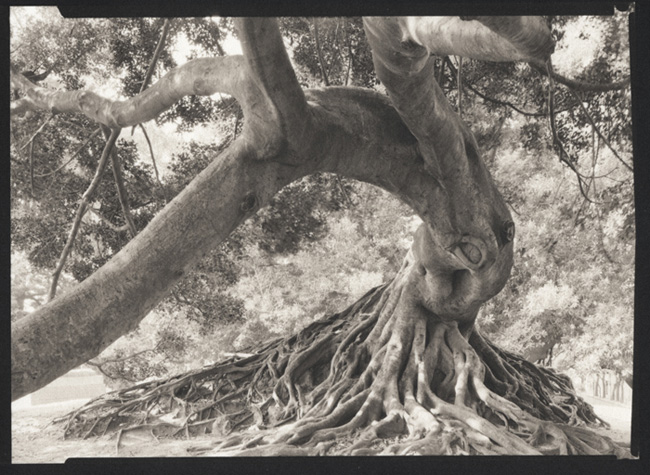
I got a favorable review in the DC City Paper for my image in the “Signatures” exhibit at Photoworks. The exhibit is (well, was, it’s now over and I’ll be picking up my print after work today) a brief show of images by students and instructors at Photoworks, with the theme of “signatures” indicating characteristic images that can be viewed as representing you and the work you do – pieces you would be recognized for. I submitted my Ficus Tree, Recoleta, Buenos Aires as my contribution to the exhibit, and it was one of three pieces singled out by the reviewer as praiseworthy. The reviewer did get the process all wrong, calling it a faux-toning process (he obviously didn’t ASK, or try to contact me about it before publishing the review), but I’ll take any positive press!

City Paper Review

Ficus, Recoleta, Buenos Aires

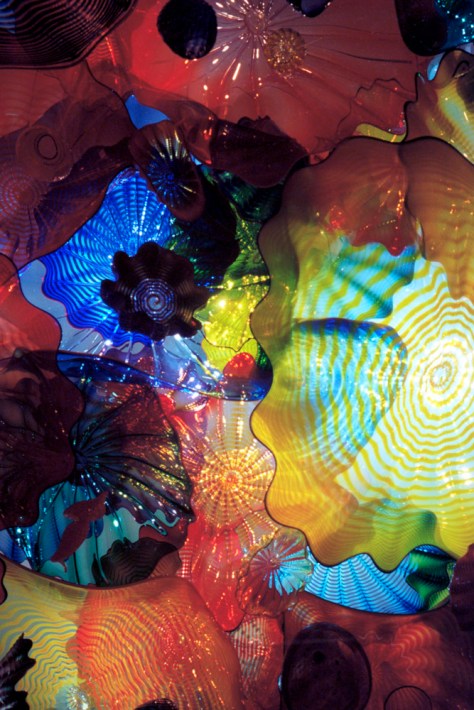
Chihuly Glass and Abstracts, Virginia Museum of Fine Art, Richmond

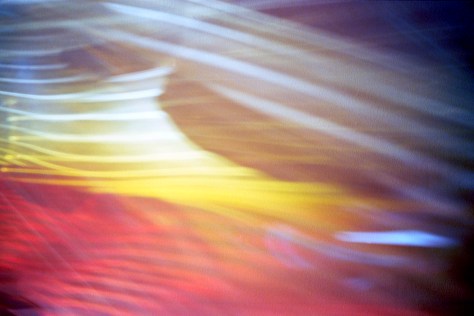
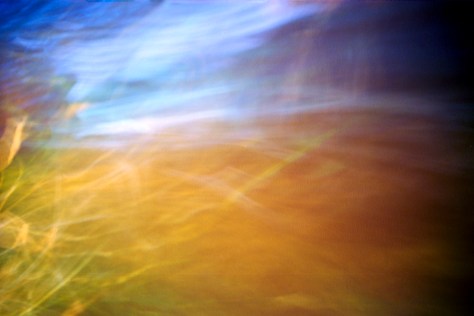
Abstract, Wall Reflections, Chihuly Exhibit, Richmond, VA
Ceiling, Chihuly Exhibit, Richmond, VA

This was taken over the Thanksgiving weekend at my visit to Richmond, Virginia and the Dale Chihuly glass exhibit at the Virginia Museum of Fine Art. There was a passageway between rooms where the ceiling had been filled with all these marine-inspired glass forms and then lit from above. The glass forms (seen in the last image) then projected these really abstract color and light patterns on the walls. These were interesting enough that I tried to capture some of the effect of it.

Shot with my Contax G2, 21mm lens, and Kodak Ektar 100 film – hand-held.

More student work from Advanced Topics in Platinum/Palladium

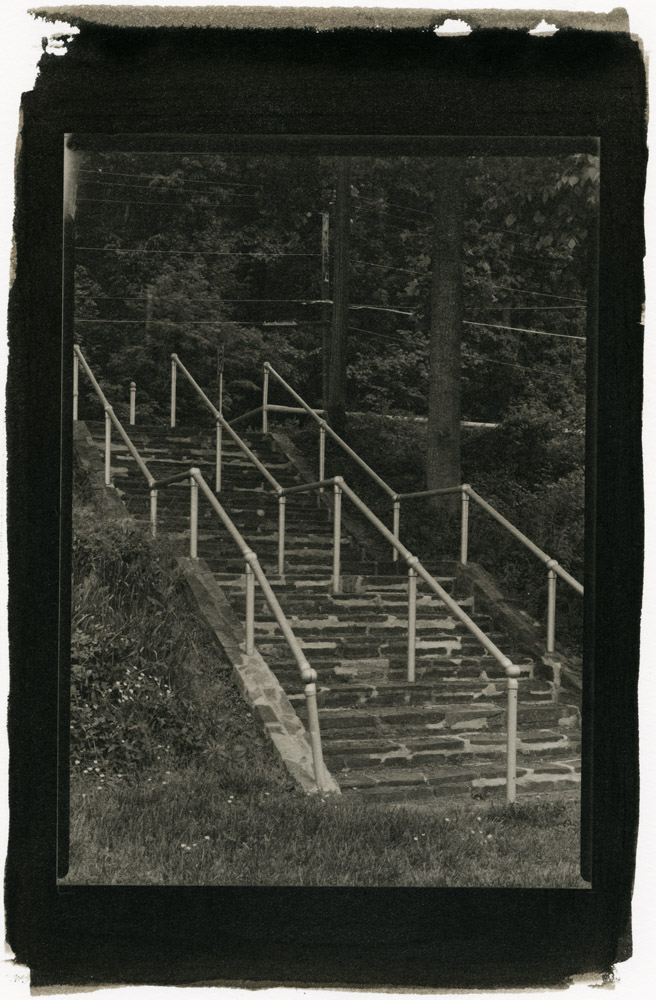
Trolley Stairs, Glen Echo Park

This is a blended platinum/palladium print (60% platinum, 40% palladium) print, on Bergger COT320 paper. This was by a student from my Intro class, but I reprinted it for this session (the student left the negative behind after the Intro class, and I happened to really like the shot anyway). This one was coated using a glass rod as opposed to a brush, to demonstrate the difference in the coating technique, and the final appearance of the print.

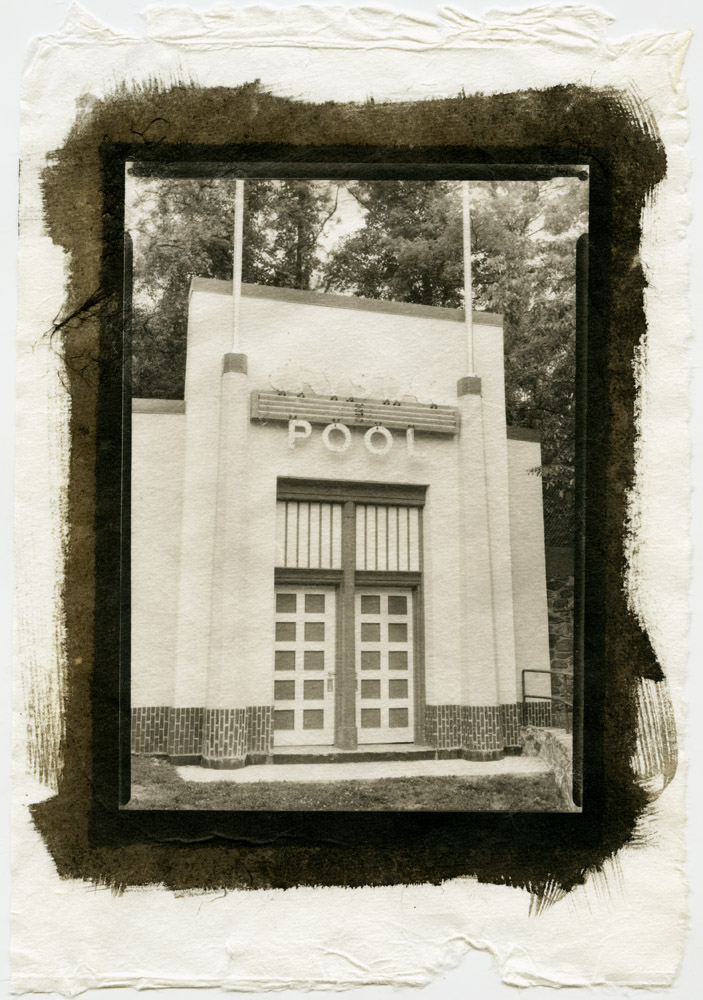
Crystal Pool, by Patrick Brown

This is a palladium print on light Kozo paper, by Patrick Brown, one of my students in Advanced Topics. He was also in my Intro class. It’s so nice to get follow-on students so you can see their progress!

Kozo paper is a Japanese paper made from tree bark, and it is surprisingly strong for as delicate as it is – this is perhaps a 90 lb paper. It does have a tendency to dissolve in aqueous solutions, but if properly masked when developing, the image area can be preserved, even if the edges do get fringed a bit. This is a perfect example. I included the paper margins to show more clearly what the paper texture looks like.

We had some challenges this class session – the original idea was to try out some different paper types, and I had obtained a sampler of several kinds. We started the morning with Stonehenge, which was supposed to be a good paper, but something was dramatically wrong with the batch we got, as we were making 30 minute exposures and still coming up weak and flat. After this is over, I’ll get a little more for myself and try pre-acidifying it to see if that helps, but no mention of acidification was made in the sample kit and I couldn’t find any reference to acidifying it online. Fortunately we didn’t waste too much time before figuring out it was the paper at fault and not the chemistry, and life moved on.

Danielle Ezzo – curator and photographer

Danielle Ezzo makes beautiful salt prints. You should check out her work!

http://dezzoster.tumblr.com

She has an upcoming show at Galerie Protege in New York, the opening is October 11.

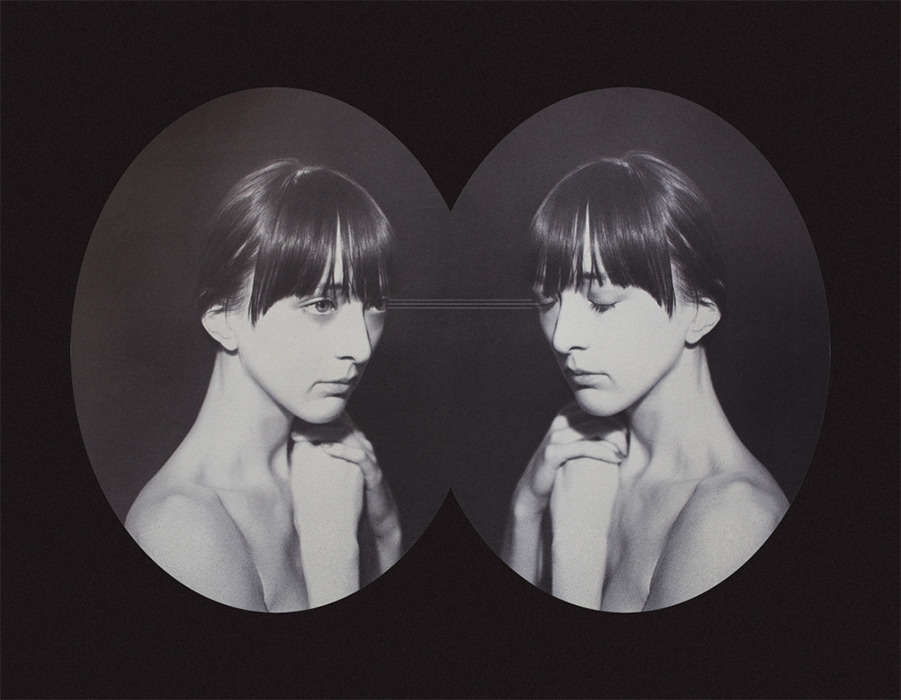
Lovingly Distant, by Danielle Ezzo

Melissa Cacciola- Mohawk Iron Worker tintype portraits

Old Man, 2012, 8×10 tintype
Norman, 2012, 8×10 tintype
Martin, 2012, 8×10 tintype

I discovered Melissa’s wet plate collodion work through a link someone posted on APUG, and I felt it was worth sharing. She has done a beautiful seet of wet plate portraits of the Mohawk Ironworkers who for the last century have been responsible for building the skyscrapers of New York City. The inspiration was the 9/11 10th anniversary last year, and the construction of Freedom Tower on the site of the old World Trade Center. I just felt her work was worth sharing. Please browse her website linked below to see more of her work and to find out more about her.

Melissa Cacciola: Mohawk Iron Workers