Category Archives: Photography

More Tiny Contact Prints

Here is the continuation of the tiny prints series. All of these are still from Rome, again the Lomo Belair X6-12 as the camera of choice. I was having a conversation yesterday with a friend about these and while sharing them online is great, seeing scans of them at what ends up being a much larger size than the actual print, they lose some of their impact.

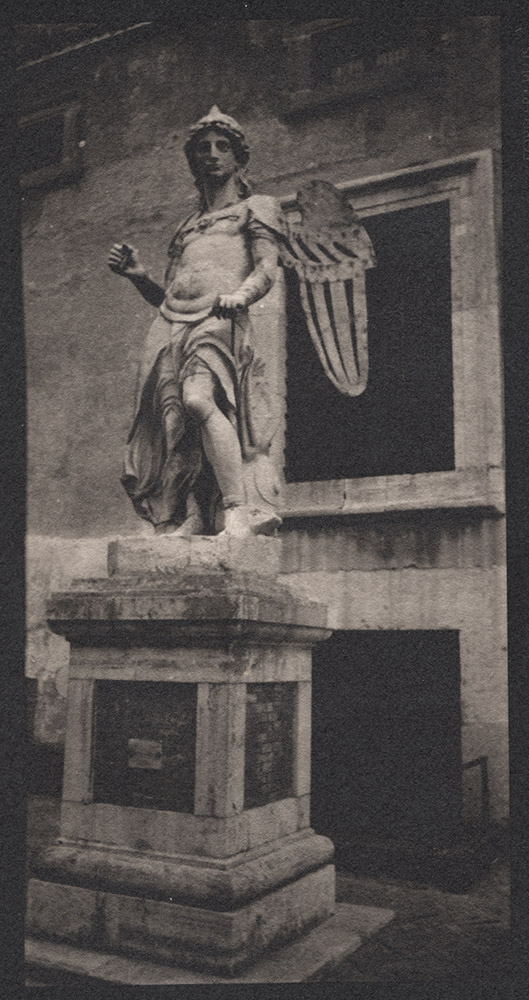
This is a statue of the Archangel Michael, in the Castel Sant’Angelo. His body is stone but the wings are bronze.

Archangel Michael, Castel Sant'Angelo
Archangel Michael, Castel Sant’Angelo

The umbrella pine image is one of those that when I scanned the negative and worked with the image in Photoshop, all the “flaws” of the negative become quite apparent, and you start thinking it’s not a successful image. But contact printed, it cleans up nicely and really sings.

Roman Umbrella Pine
Roman Umbrella Pine

St. Peter’s Basilica Facade. This is one of the images that made me respect the Belair and its results more than I did initially. It’s still not going to ever match a serious panorama camera like a Horseman 6×12 with a highly corrected glass lens, but it does a great job for what it is, and certainly it scores extremely well in the value-for-money proposition – I got mine used for $200, whereas a used Horseman would set you back closer to $2000.

St. Peter's Facade
St. Peter’s Facade

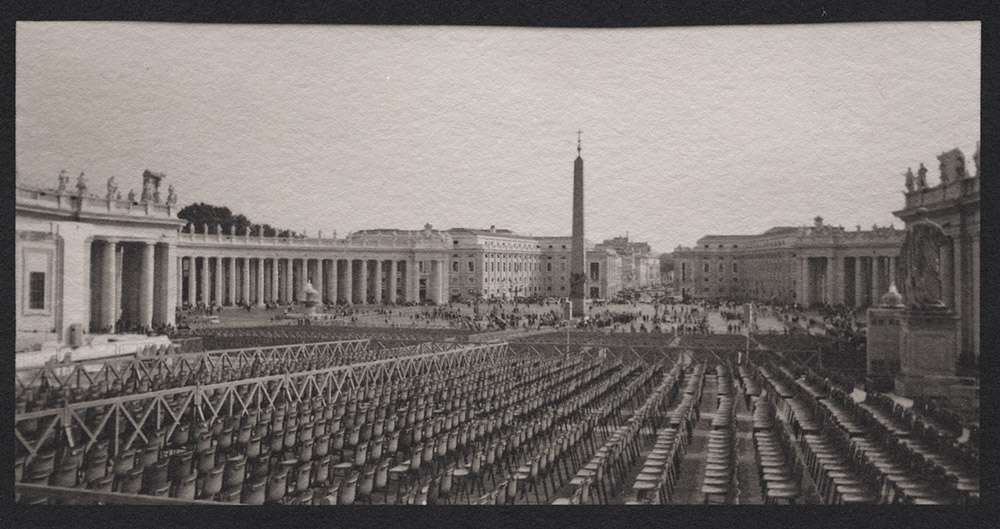
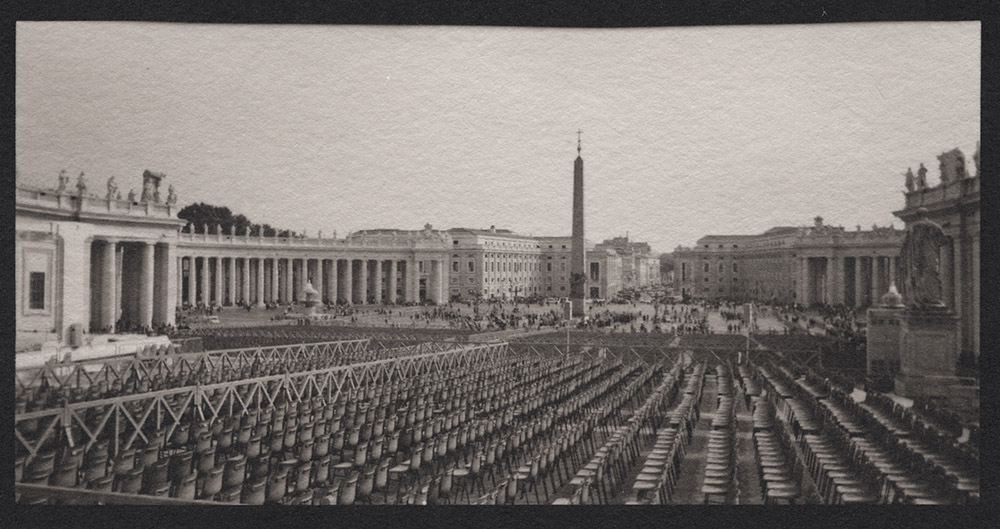
The plaza in front of St. Peter’s was set up for a Papal Mass when I was there. The sea of folding chairs made for an interesting composition, leading your eye back to the obelisk and beyond.

St. Peter's Plaza
St. Peter’s Plaza

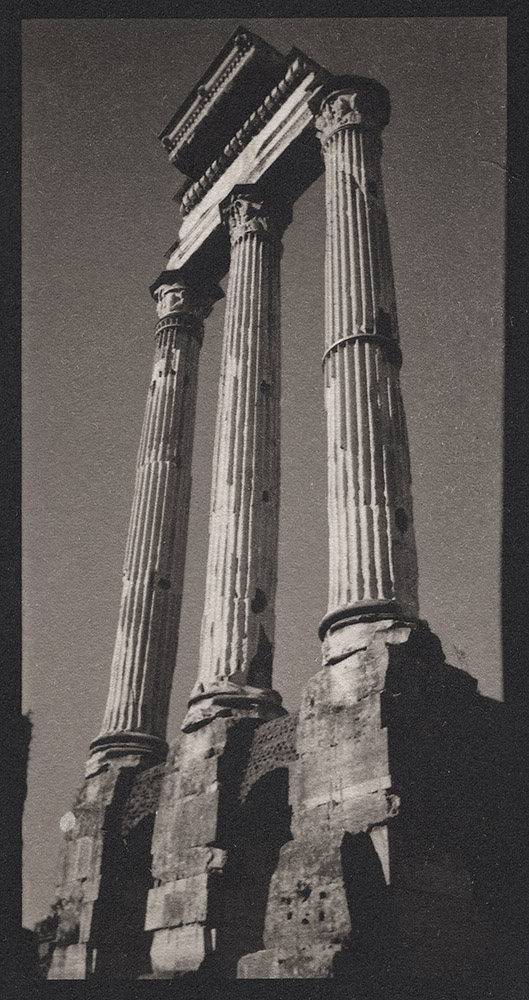
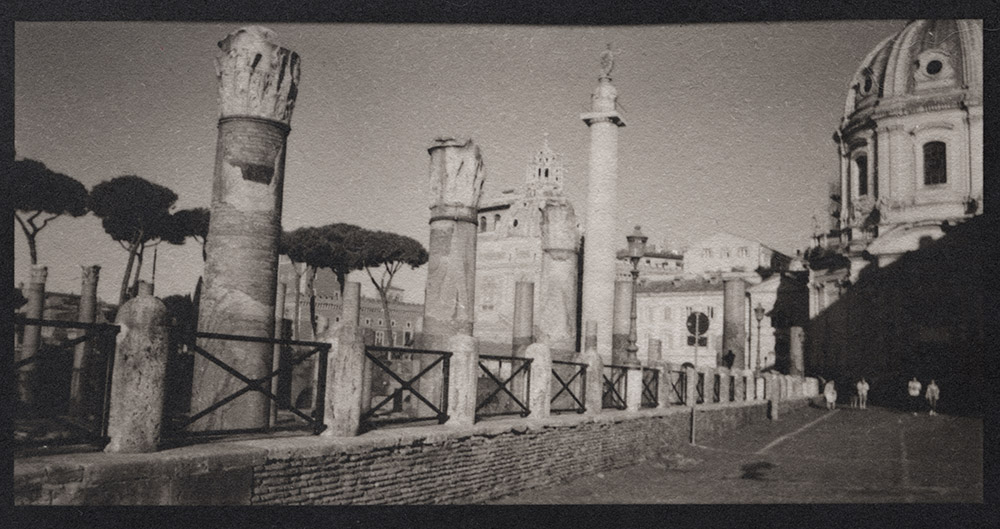
These are the famous three remaining columns of the Temple of Vesta in the Roman Forum. This one really strikes me because of the simple, graphic nature of the subject. It’s another one of those images that everyone photographs when they’re at the Forum, and everyone knows it, even if you haven’t ever been to the Forum. Printing in platinum/palladium takes it somewhere new and different and it doesn’t feel like just another tourist image.

Three Columns, Temple of Vesta, Roman Forum

All these images are platinum/palladium prints, in this case all are a 50/50 blend of platinum and palladium, on the new wonderful Hahnemuhle Platinum Rag paper. I’m going to have to try a pure platinum print with it next and see how it behaves.

Mexico City part 2 – people at work

More from Mexico City – people at work.

Throughout the Centro Historico, there are organ grinders playing their portable instruments, hat in hand for tips. A five peso coin is sufficient a tip if you enjoy their music. I gave this man a 10 peso coin for photographing him.

Organ Grinder, Calle Madero

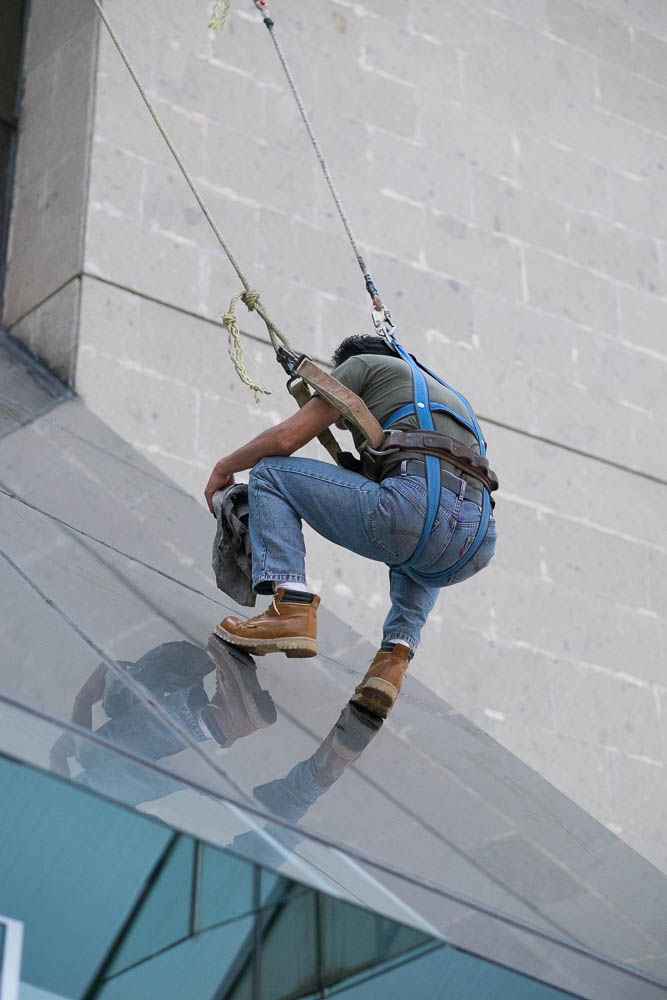
At the Templo Mayor museum, this guy was washing the windows, dangling from the roof basically on a couple of ropes.

Window Washer, Templo Mayor Museum

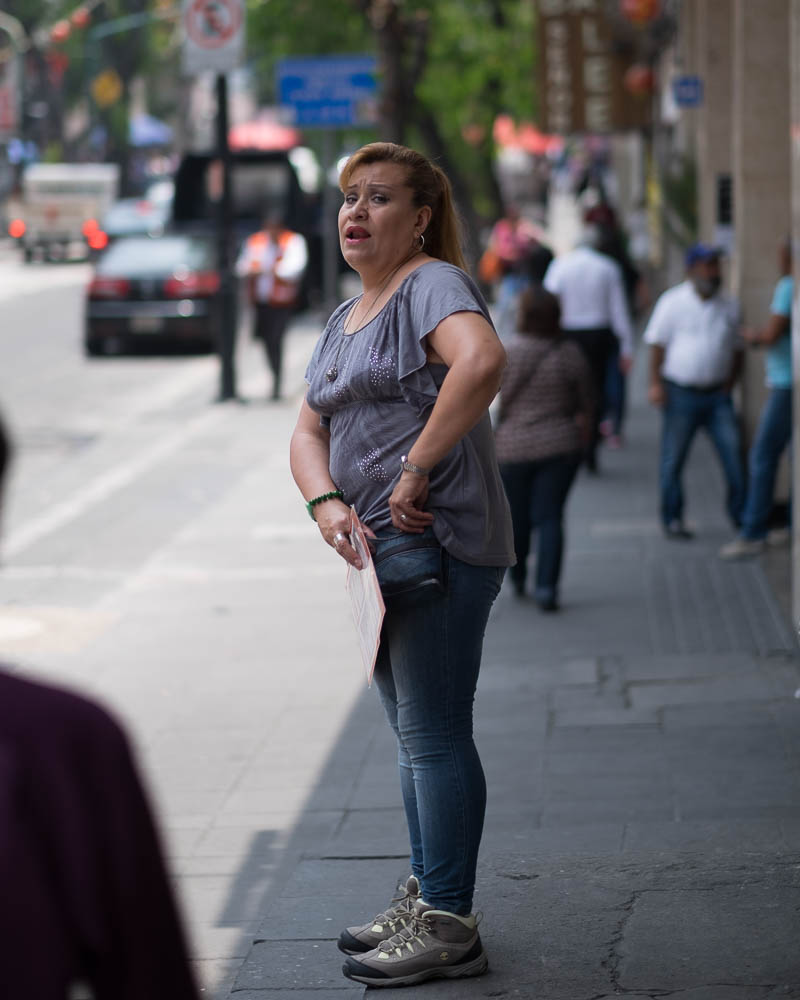
Mexico City is a very musical city, if you give it a chance. It has a definite rhythm, and part of that is the sounds. The organ grinders are out, cranking away, and on seemingly every street corner, there’s someone intoning the litany of what they have for sale. This lady was outside the taquería next door to my hotel every day, pretty much all day, reciting the kinds of tacos they had and extolling their best quality. I never heard her voice waiver or decrease in volume.

Taco Lady
Taco Lady

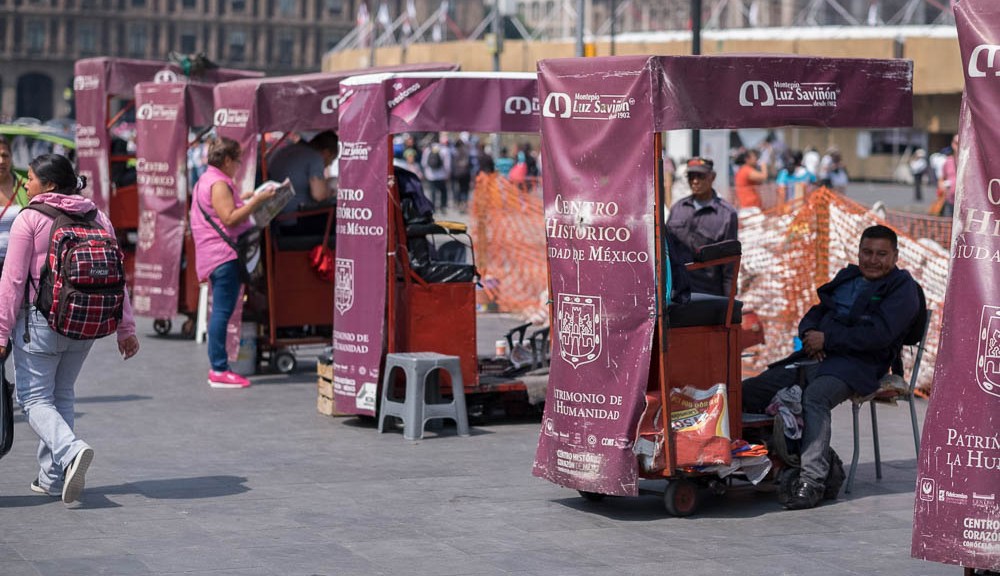
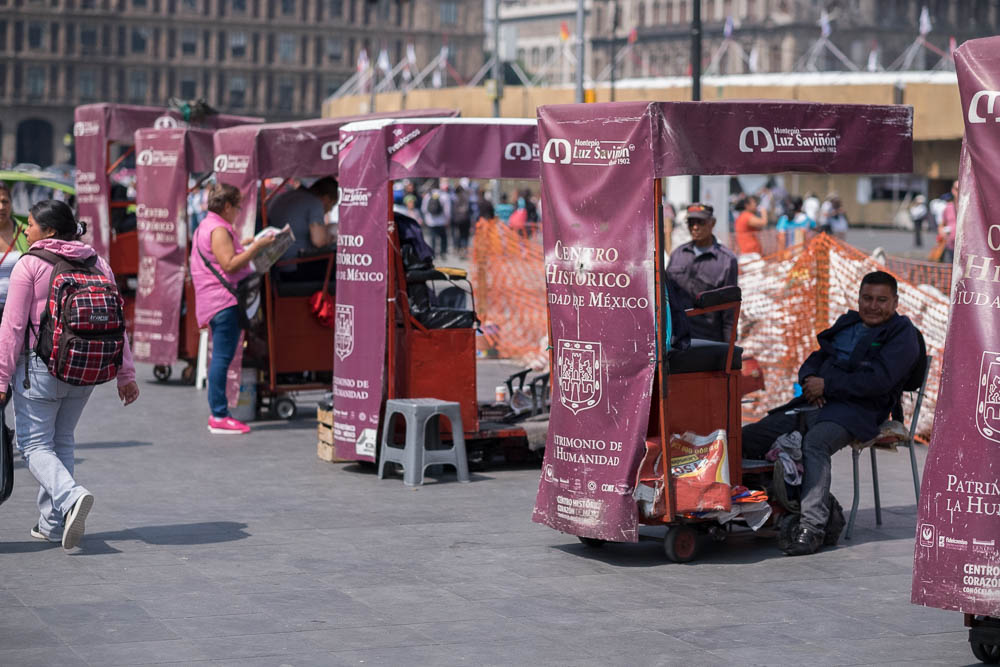
All around the Zocalo, and at various spots through the Centro Historico, there are these shoe-shine booths. While the canopies shade the patrons pretty well, the shoe-shine men (and women) are out there in the sun and the heat all day.

Shoe Shine Booths, Zocalo

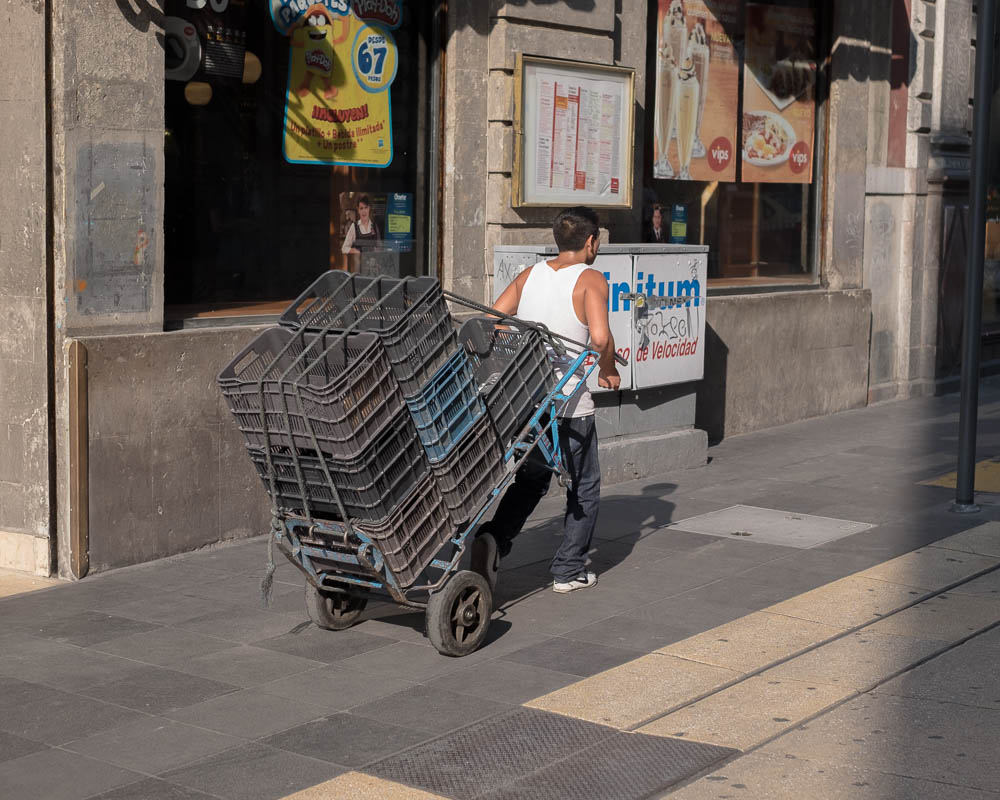
Another part of the daily rhythm of Mexico City – people hauling stuff on carts.This guy is pulling a load of plastic baskets, but this is a pretty small load compared to some I saw.

Hauling Baskets
Hauling Baskets

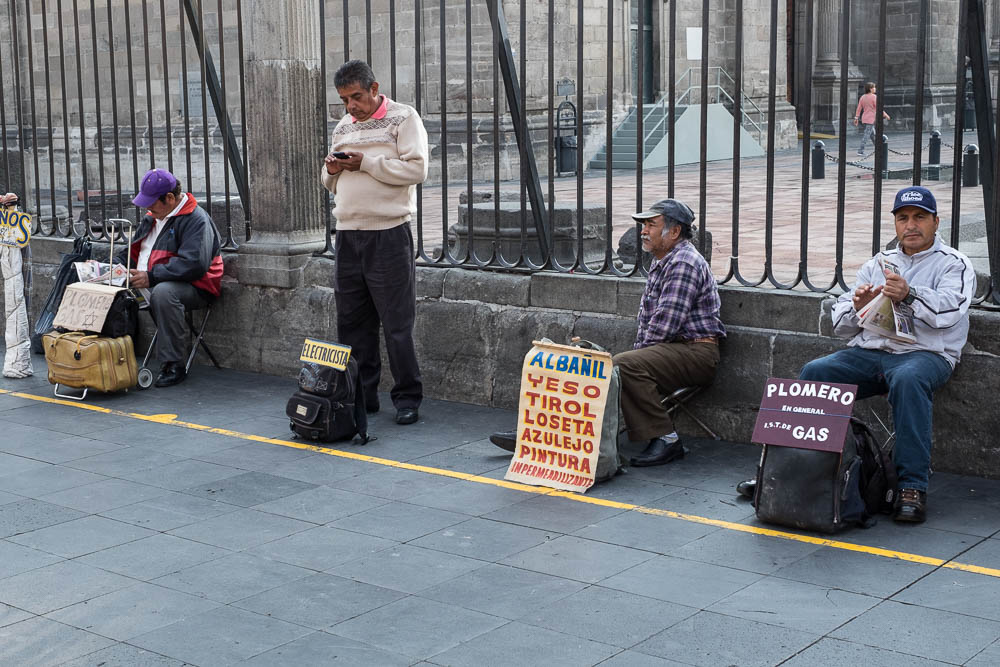
Outside the Catedral Metropolitana, skilled day laborers set up soliciting work. Here are two plumbers specializing in gas, an electrician, and a plasterer/house painter.

Day Laborers, Cathedral Metropolitana

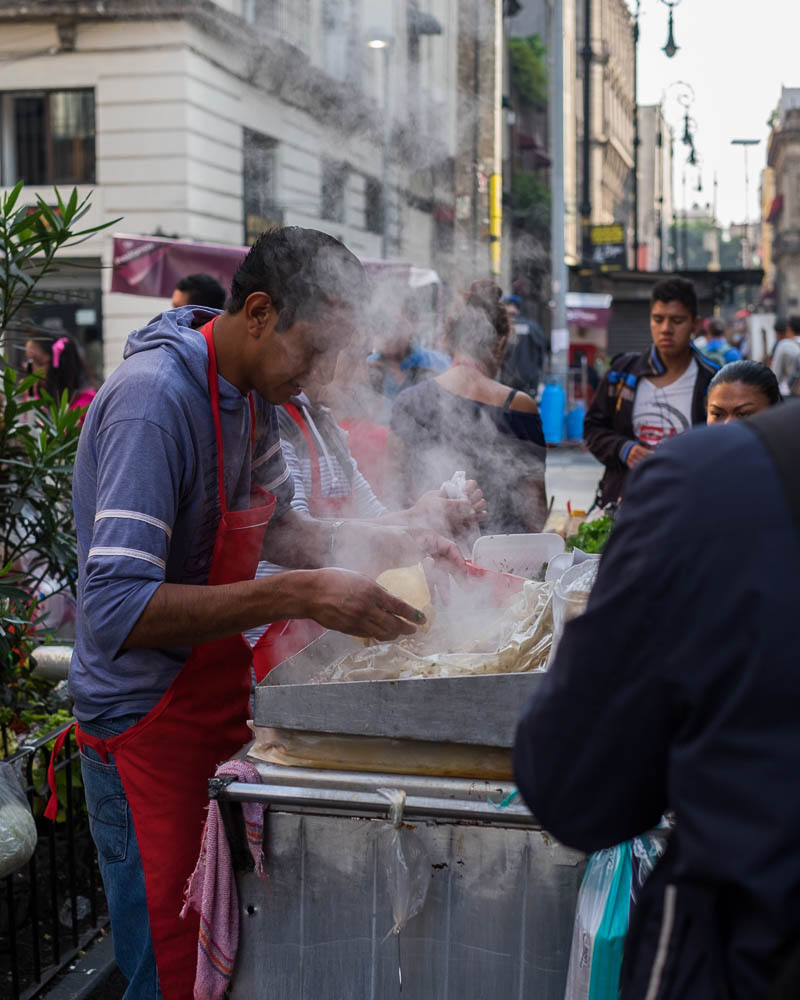
My first full day in Mexico City, I got up early and walked around through the Centro Historico and got to see the city as it was waking up. Here was a street food stall set up on a pedestrian passageway cooking breakfast for the businessmen and shopkeepers in the neighborhood.

Cooking Street Food
Cooking Street Food

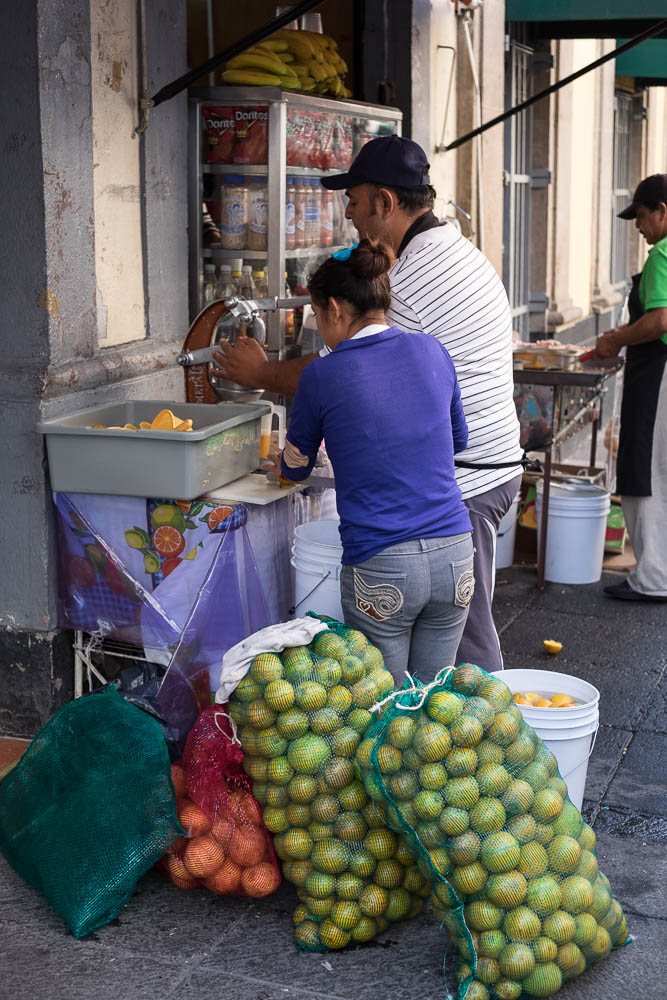
Across from the cook was the lime juicer making fresh limeade.

Juicing Limes
Juicing Limes

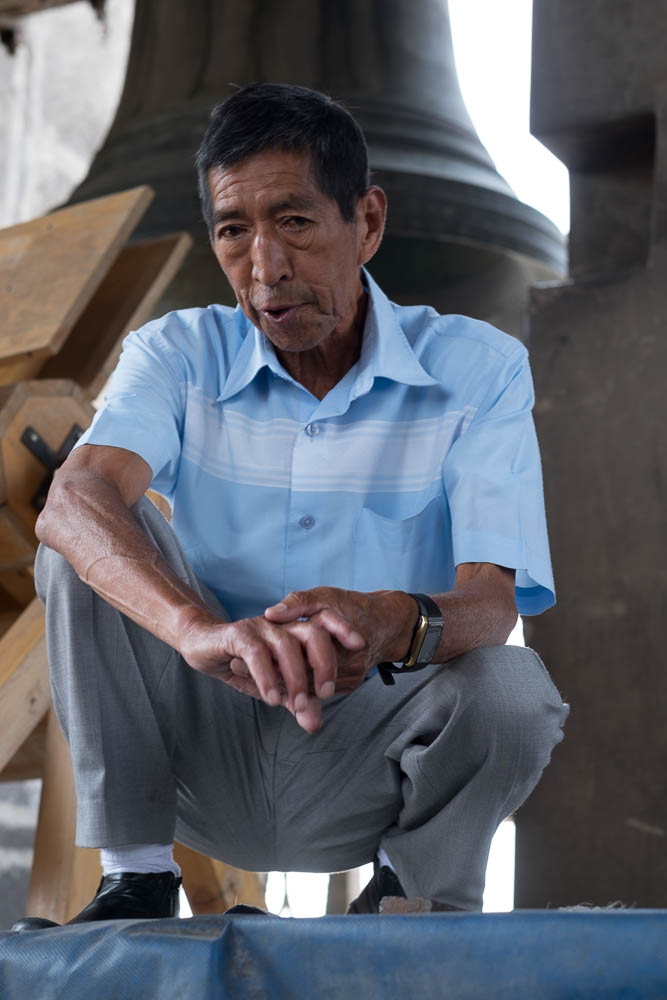
This is my tour guide who led us up through the bell towers at the Catedral Metropolitana. The cathedral is the largest Catholic cathedral in the Americas.

Cathedral Bell Tower Tourguide

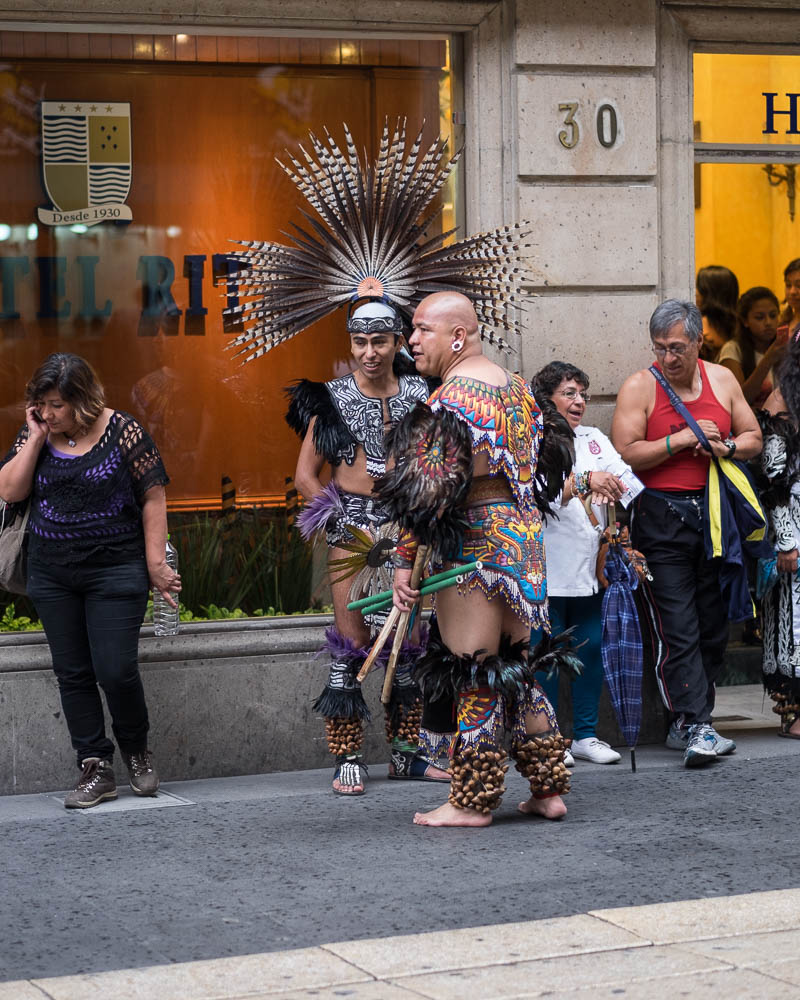
These dancers in traditional Aztec/Mexica costumes could be found most days performing on the plaza beside the Catedral Metropolitana. Here they were sheltering from a light rain in front of the Hotel Ritz (which is, unlike its namesake in Paris, a budget hotel) after a performance.

Aztec Dancers, Hotel Ritz

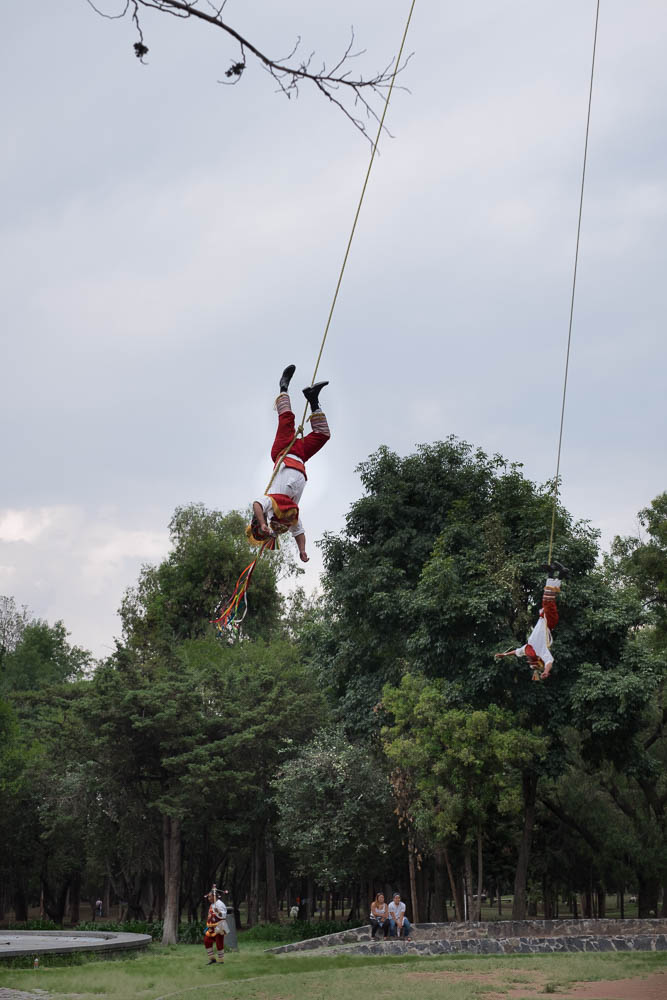
In the park area across from the entrance to the Anthropology Museum these traditional dancers were performing. At the top of the pole is a musician playing a traditional flute. The dancers are suspended by ropes at the ankles, and spin around to extend the ropes and lower themselves from the top.

Dancers, Chapultepec

Beginning of a new series – tiny contact prints

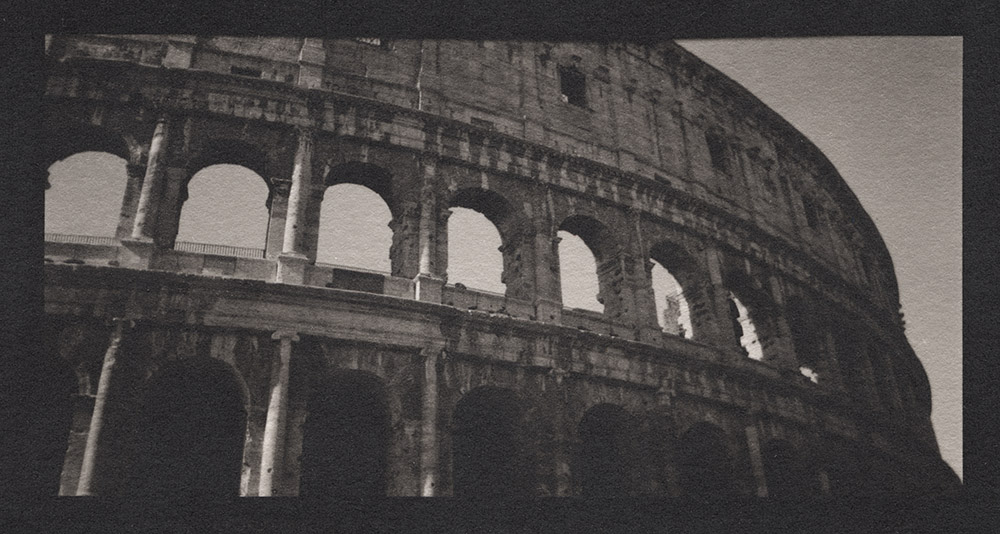
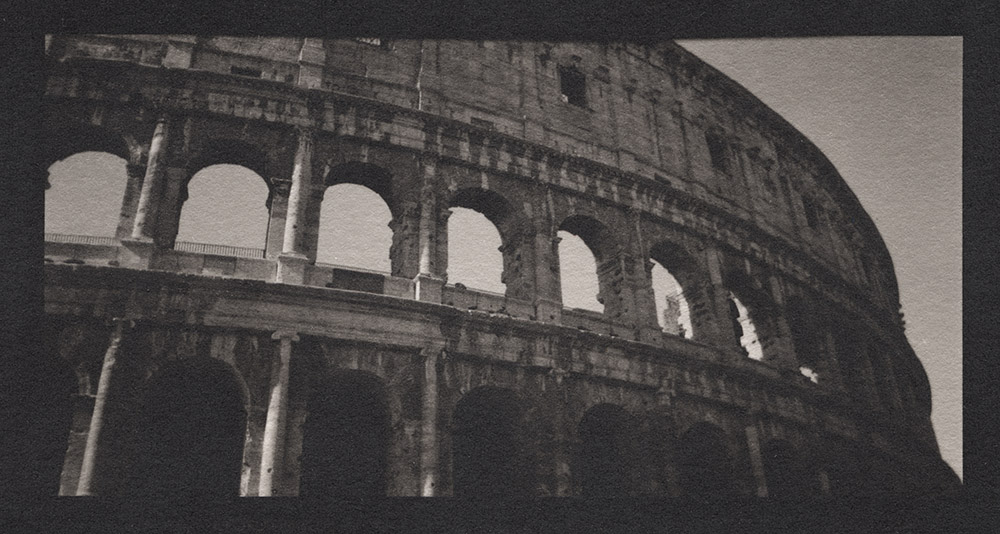
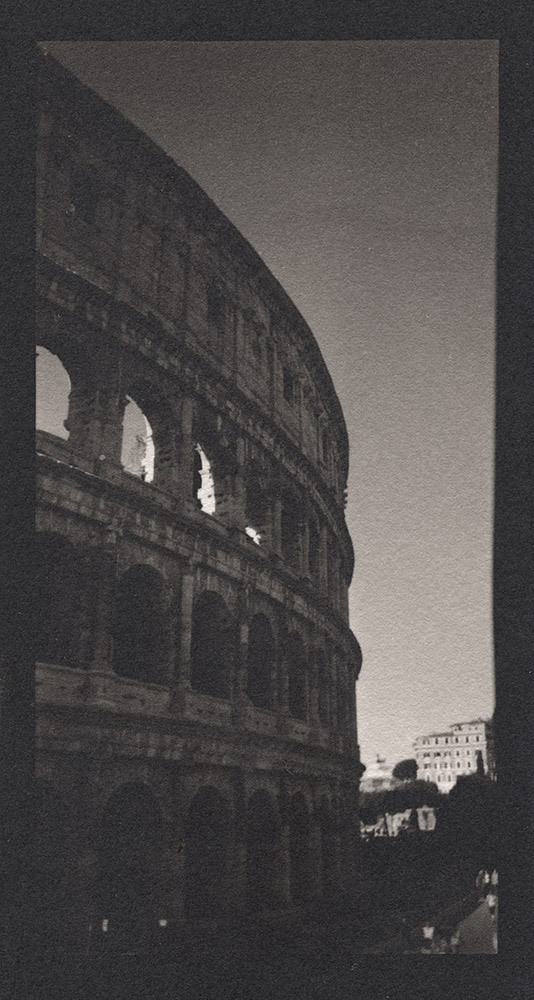
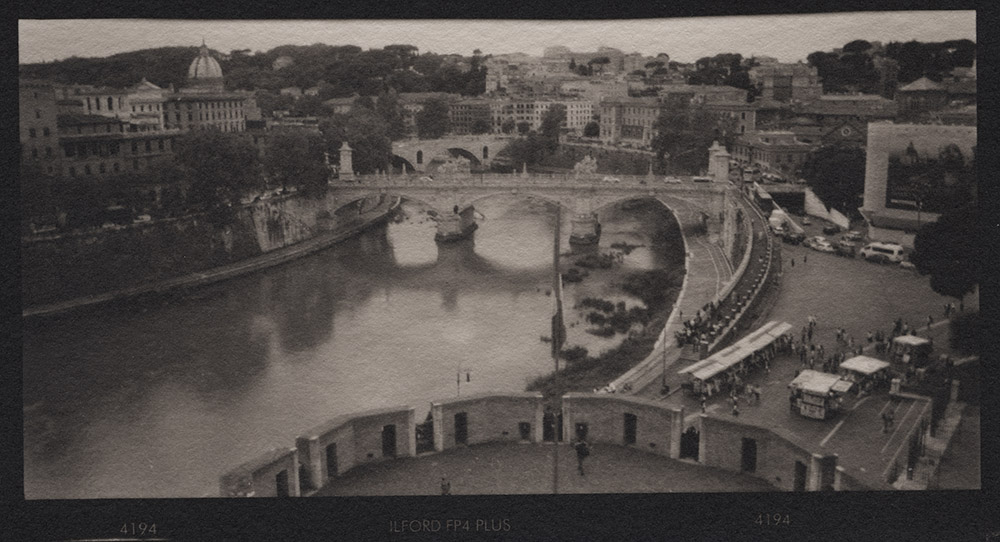
When I was in Rome last year… (no jokes please!) I shot a bunch of panoramic images with my new-to-me Lomo Belair X6-12. My just completed session of the Intro to Platinum/Palladium Printing class I teach inspired me to dig them out and see how they would fare in the medium. I’m really loving these tiny prints – 2 1/4 by 4 1/4 inches! They make you get up close and intimate with the print. I’m matting them in 11×14 inch 8-ply mats for extra measure.

ColosseumPanoPtPd

ColosseumVertPanoPtPd

TiberPanoramaPtPd

Sometimes you have to walk away from a process or a practice for a while, which happened to me with platinum/palladium. I was on a kick of doing other stuff, shooting my travels with the Rolleiflex. Then it was the Fuji rabbit hole with digital and the X-T1. Then this class came along and I needed something to jumpstart my printing. These images were just the ticket. Photographers in general have an obsession with how big they can make their prints, and even the general public too. But there’s something to be said for tiny prints. I still remember the Andre Kertesz show at the National Gallery where they had a lot of his early work on display – in his youth, he could only make contact prints off of small negatives from roll film cameras because he was poor and didn’t have space for a dedicated darkroom. Getting up close and personal with his images, like “Underwater Swimmer”, which is all of 1 1/2 by 2 1/4 inches, really makes you think about the image itself instead of being awed by its size. Not that I have several million dollars to spare, but I’d much rather spend that kind of money on a print of “Underwater Swimmer” than on Andreas Gursky’s “Rhein II”. Fortunately, the Kertesz would be a lot cheaper to buy than the Gursky anyway.
On a separate note, I’d like to give a shout-out to Carol Boss at Hahnemuhle papers. All three images above were printed on the new Hahnemuhle Platinum Rag paper. She has very generously become a sponsoring partner of my Intro to Platinum/Palladium class at Glen Echo Photoworks, and is supplying us with our paper. It is a wonderful new paper- very easy to coat and print on. It may well displace my old standard Bergger COT 320.

Mexico City – part 1 – People out and about

For the Memorial Day holiday weekend, I took a short vacation down to Mexico City. I wanted to do an art-themed vacation, taking in museums and popular art and crafts, to get some inspiration for my own work. And of course, to take images of my own. For this trip I decided to take my new Fuji X-T1 and a couple lenses because it was much more compact and less conspicuous than the Rolleiflex. It proved a baptism by fire for me with the camera, as I was shooting with it 10 hours a day every day for five days. This generally is a good thing, and I’ll write up my impressions in a separate post.

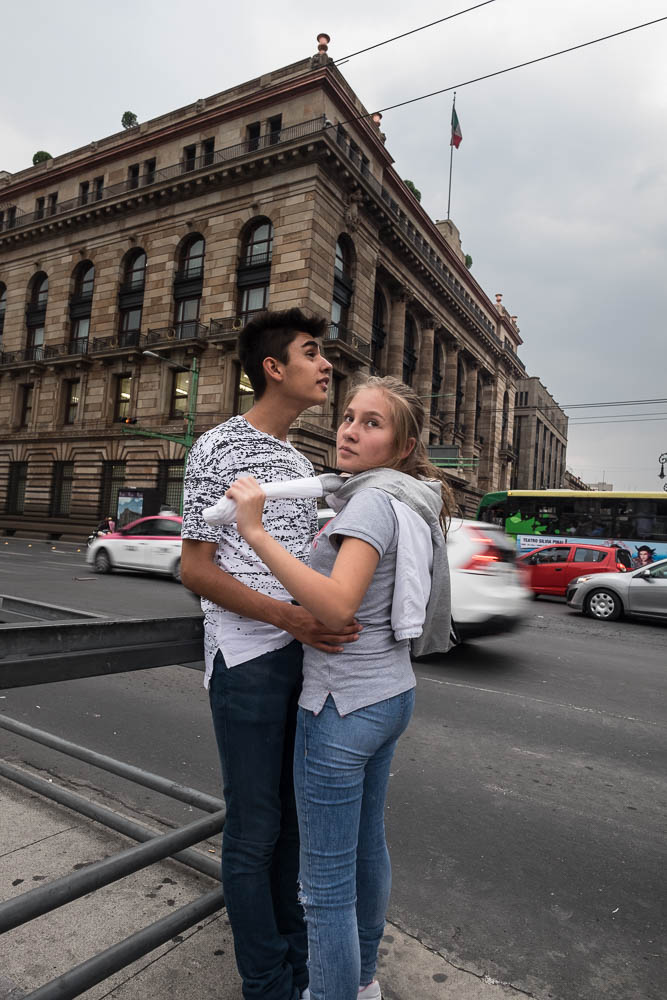
One of the first things I noticed about Mexico City is that it is a very young city – you can tell the population skews much more toward 20 than toward 60. There are young people everywhere, wandering the streets of the Centro Historico, visiting the museums, riding the subway. I spotted these two young lovers on the plaza in front of the Palacio de Bellas Artes. You saw many young couples like these two holding hands and being publicly expressive. This was a bit of a surprise to me as my last impression of Mexico City was 30+ years ago when it was a much more conservative, much more Catholic place, and this kind of public display between unmarried youth would have been frowned upon.

Young Love, Calle Madero

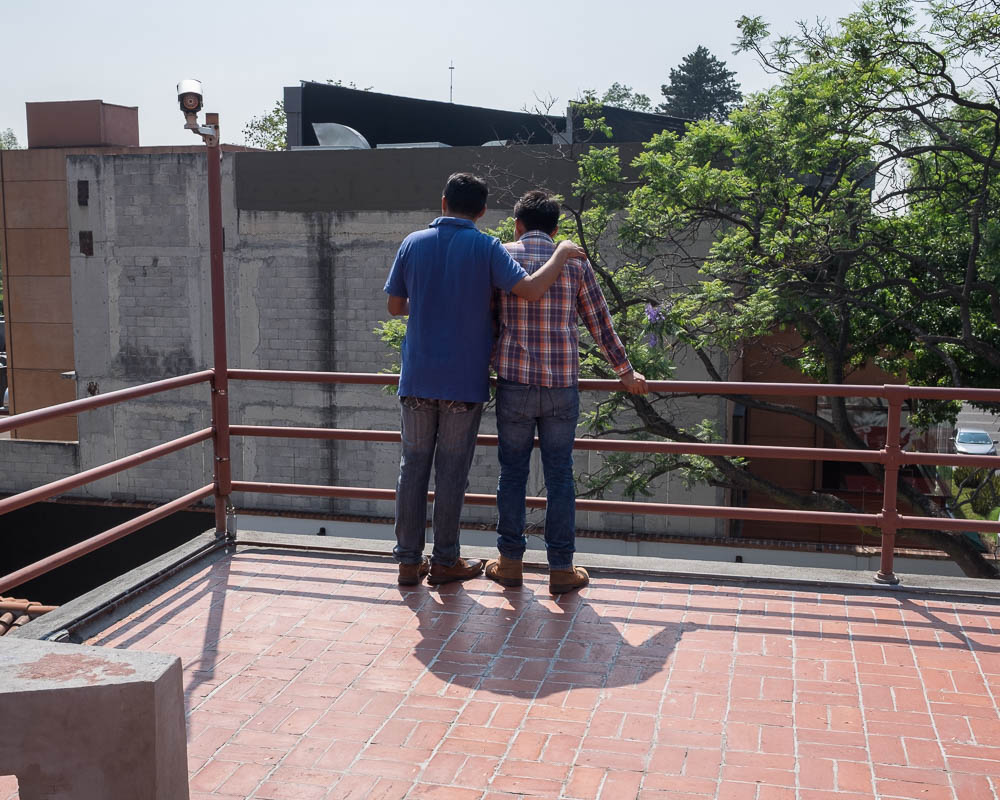
Further signs of change in Mexico City – young gay couples holding hands in public. These two were touring the Casa Studio Diego Rivera with me, and I caught them in an unguarded moment on the roof of the studio. I should have taken their portraits too, but I did photograph them together with their cellphone as they were trying to do selfies with not much success. They were very cute and sweet.

Gay Couple, Casa Diego Rivera

I also saw several other young gay couples out on the street holding hands in the Centro Historico, which surprised me a little as I was not expecting it there.

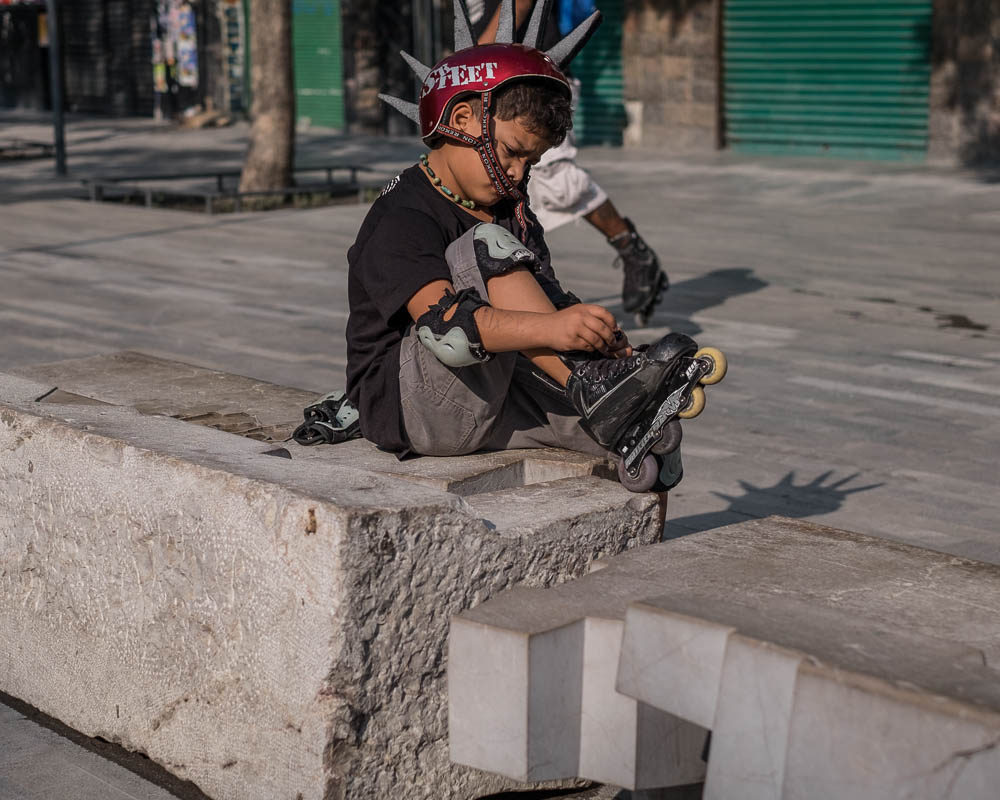
On another early Sunday morning, I took a walk through the Alameda park, which was just up the block from my hotel. This boy and his dad were out to go roller skating in the park. I loved his punked-out helmet with the spiky mohawk.

Rollerblade Chico
Rollerblade Chico

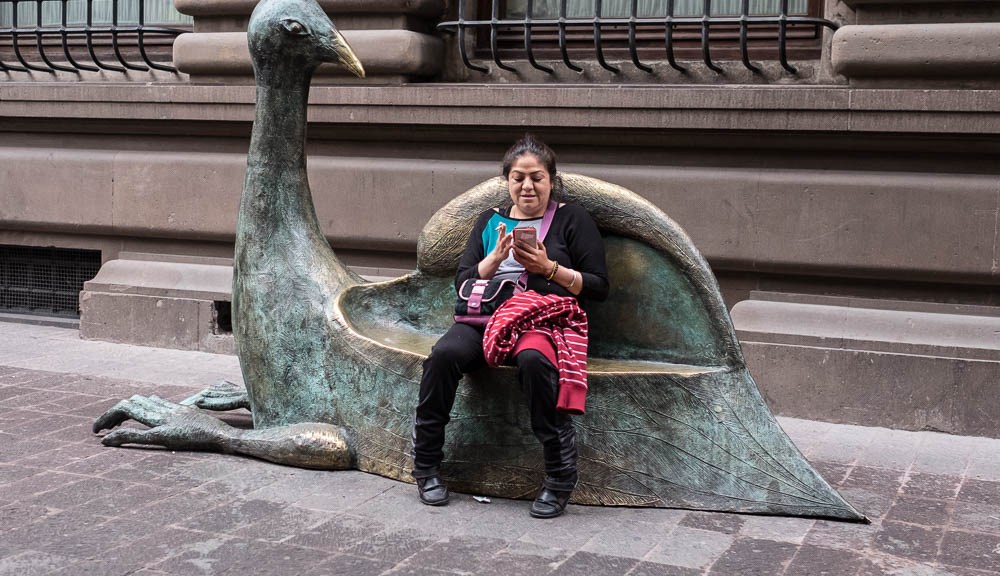
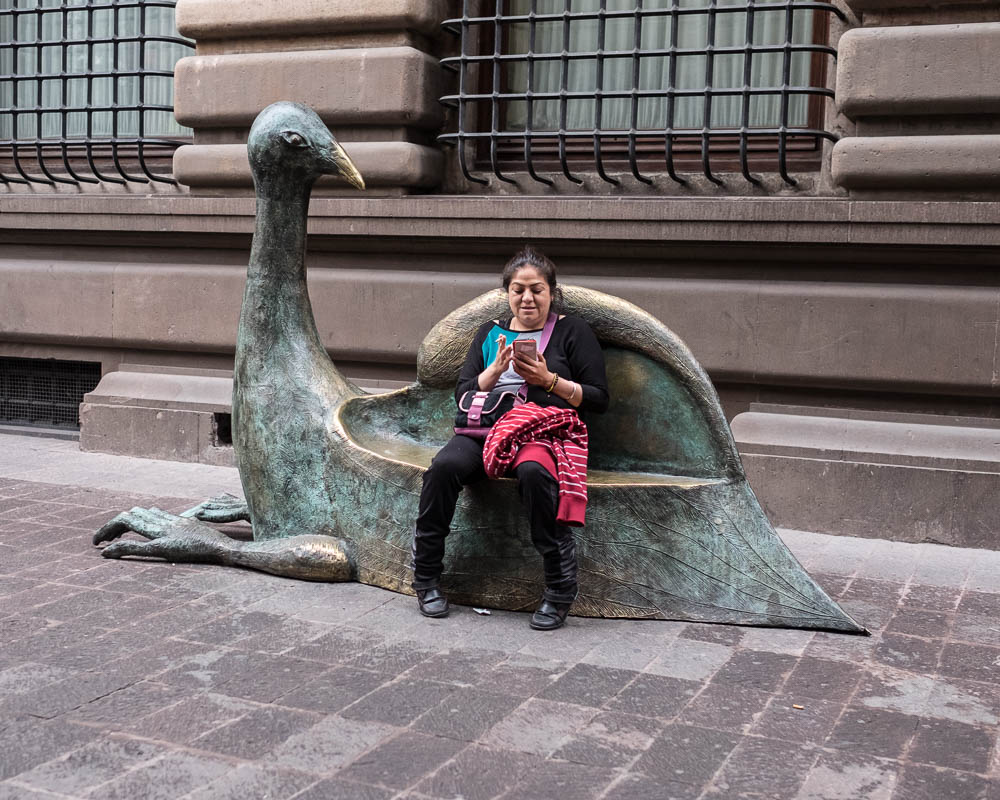
In a passageway between Calle Madero and Calle Tacuba, just behind the Banco de Mexico, there’s this big bronze bird bench (try saying that five times fast!). I spotted this lady taking a rest, smoking and playing on her phone. As is typical everywhere now, people of all ages are glued to their phones.

Lady, Bird Bench
Lady, Bird Bench

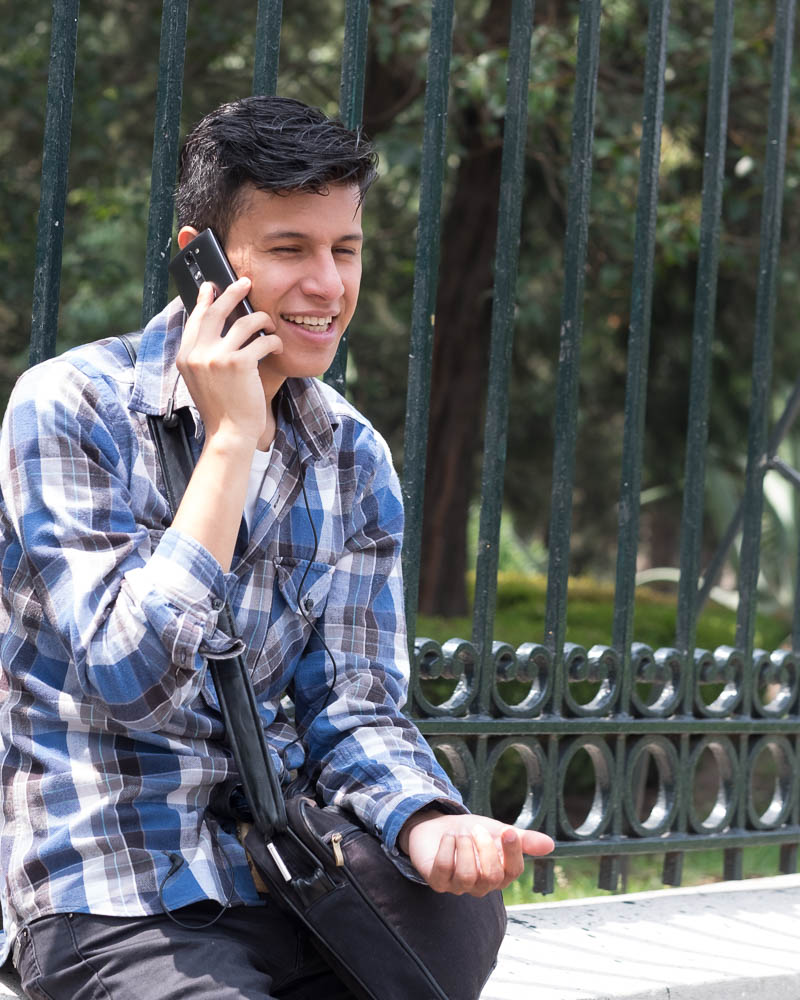
A handsome young man on his phone, outside Chapultepec Park. Hot travel tip for anyone planning to visit Mexico City – the entire city seems to roll up the sidewalks and shut down on Mondays, at least as far as attractions go – there’s maybe one museum open. They even lock up the gates to Chapultepec park and only allow bicyclists who are transiting through to enter!

Boy On Phone, Chapultepec

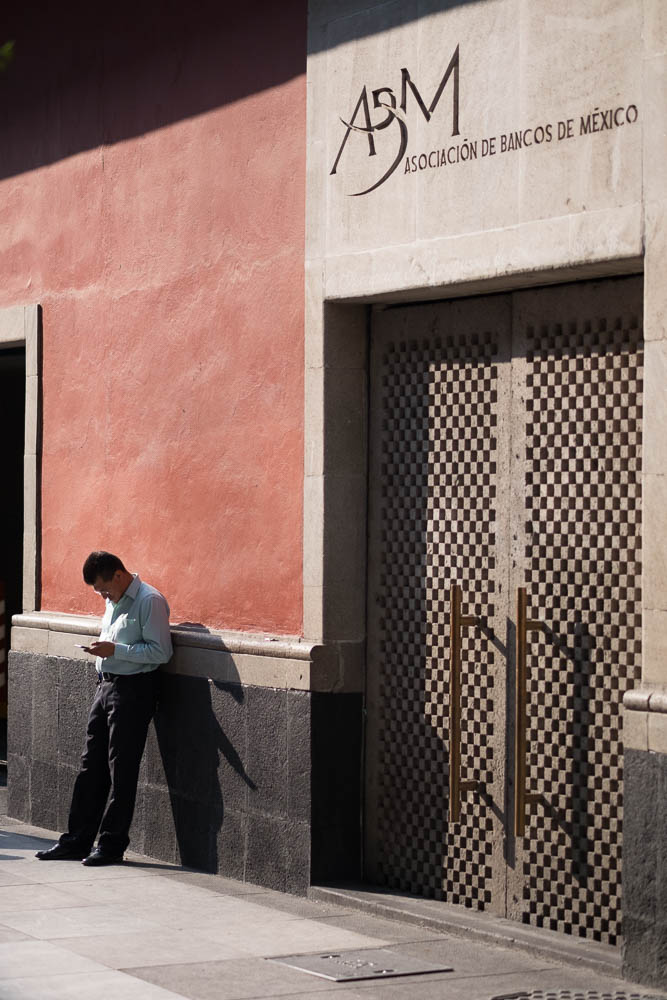
I went out for an early morning walk my first full day in Mexico City, to see what the rhythms of life are like. This man presented a dramatic composition in the morning sunlight as he leaned up against the wall.

Man On Phone
Man On Phone

Photoworks Introduction to Platinum/Palladium Printing- sponsored by Hahnemuhle!

hm-logo

I have some very exciting news to announce – my upcoming Introduction to Platinum/Palladium Printing class is now sponsored by Hahnemuhle, makers of fine art printing papers since 1584. They recently introduced a new paper specially formulated for alternative process printing, specifically platinum/palladium, and are graciously supplying the class with a very generous stock of paper for the students to use. I hope this will be the beginning of a long and fruitful partnership.

photoworks40years

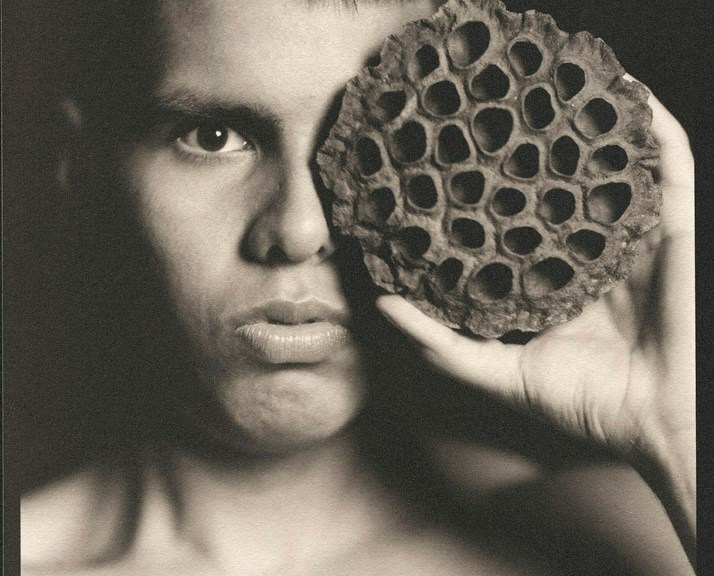
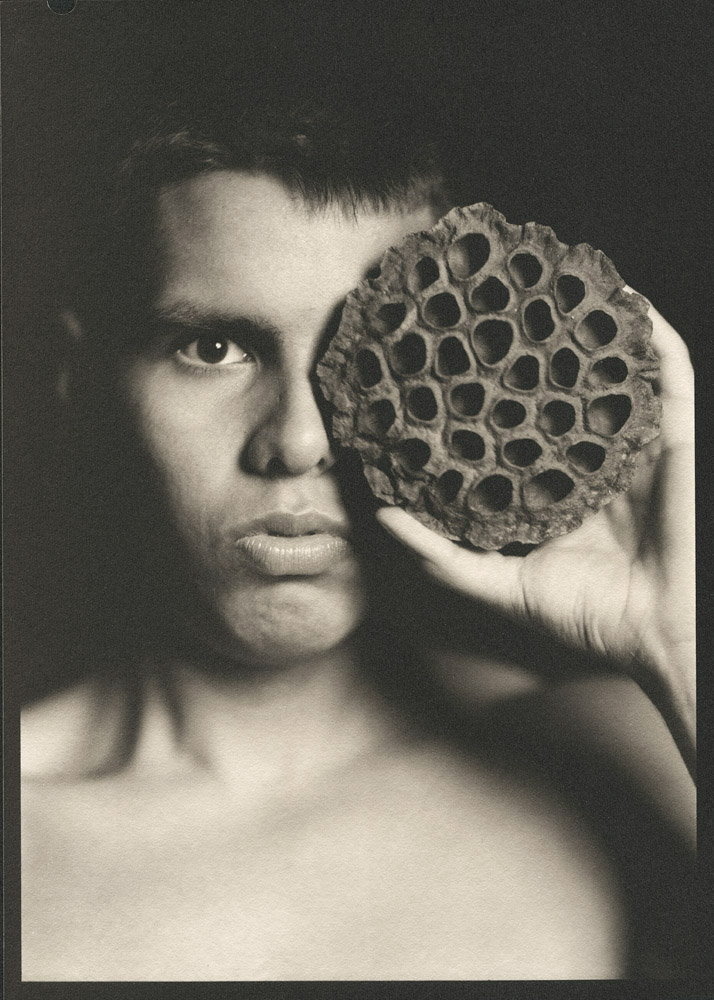
Portrait with Lotus Seed Pod

Gentrification on H Street Northeast

H Street Northeast is a neighborhood in major transition. It was in the 1950s and 60s an important retail and entertainment corridor for the African-American community in DC, along with the U Street corridor in Northwest. Along came the 1968 Martin Luther King riots, and then in the 1970s and 80s the rise of the drug epidemics, and H Street turned into pawn shops, liquor stores, and abandoned buildings. In the early 2000s, property developers turned their eyes toward the area for the relative abundance of cheap real estate as the next new place they could revitalize and get rich in the process.

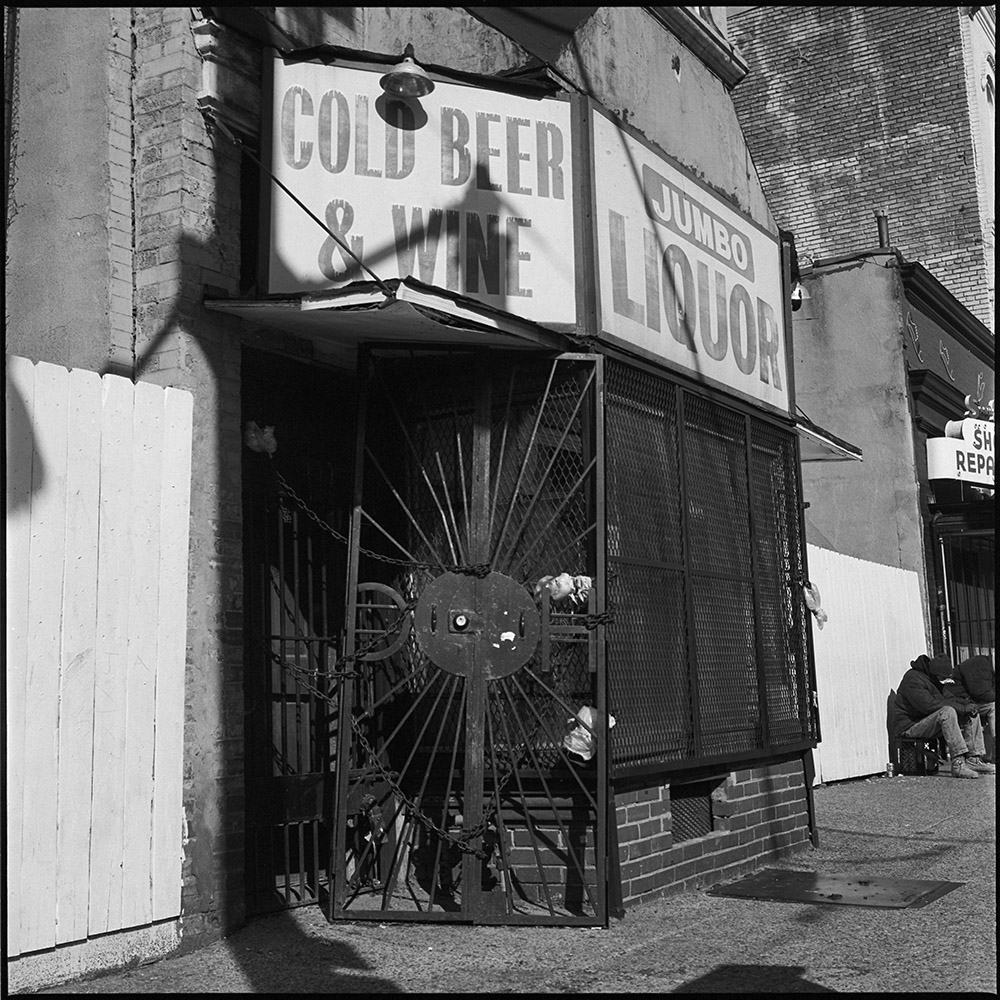
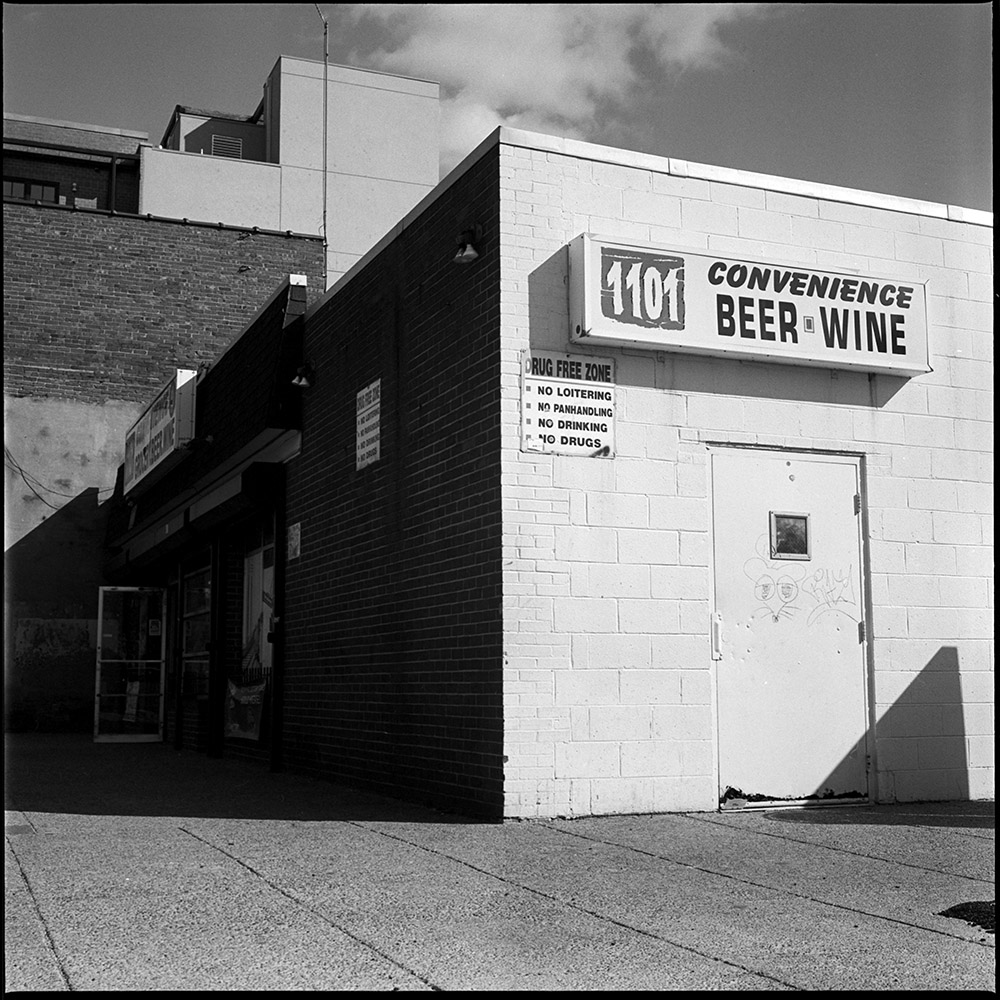
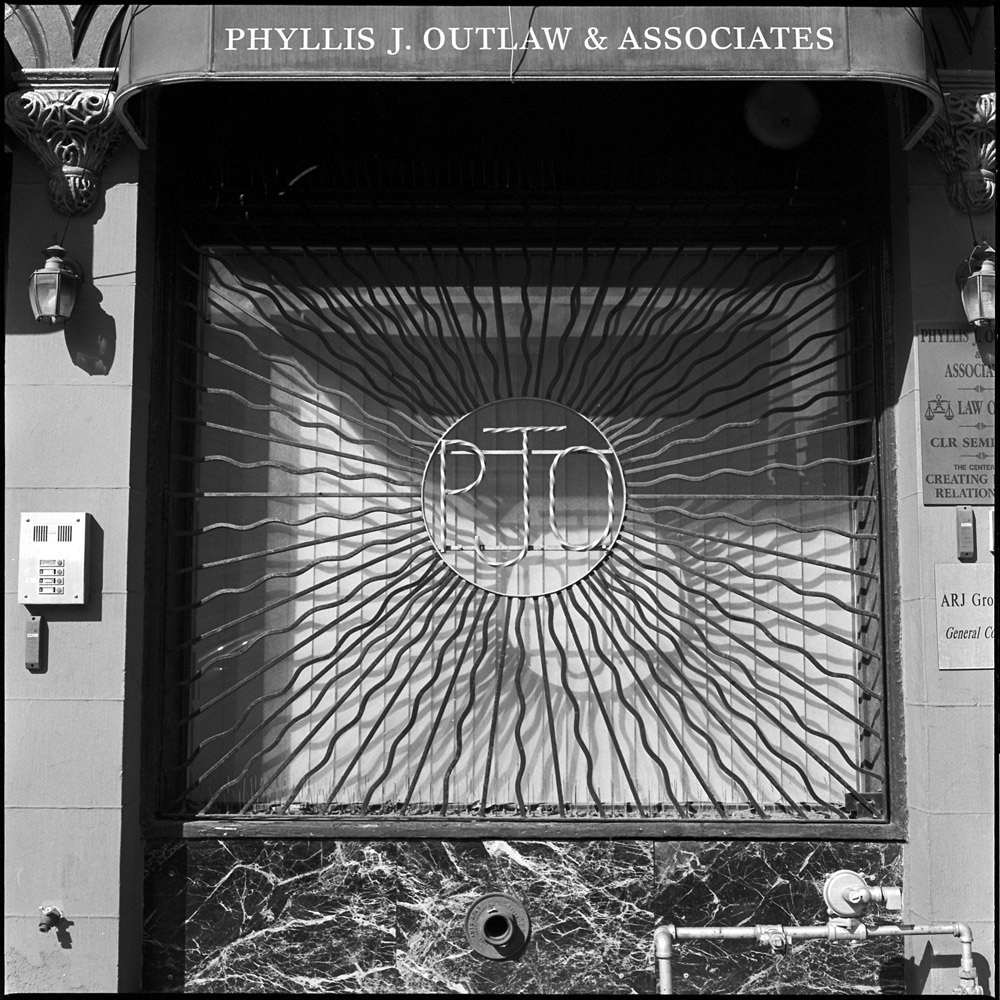
These first four shots here represent the old side of the neighborhood – liquor stores, barred windows and businesses that clung to life through the lean years.

Cold Beer & Wine
Cold Beer & Wine
1101 Convenience
1101 Convenience
Phyllis J Outlaw
Phyllis J Outlaw
S and S Shoe Repair
S and S Shoe Repair

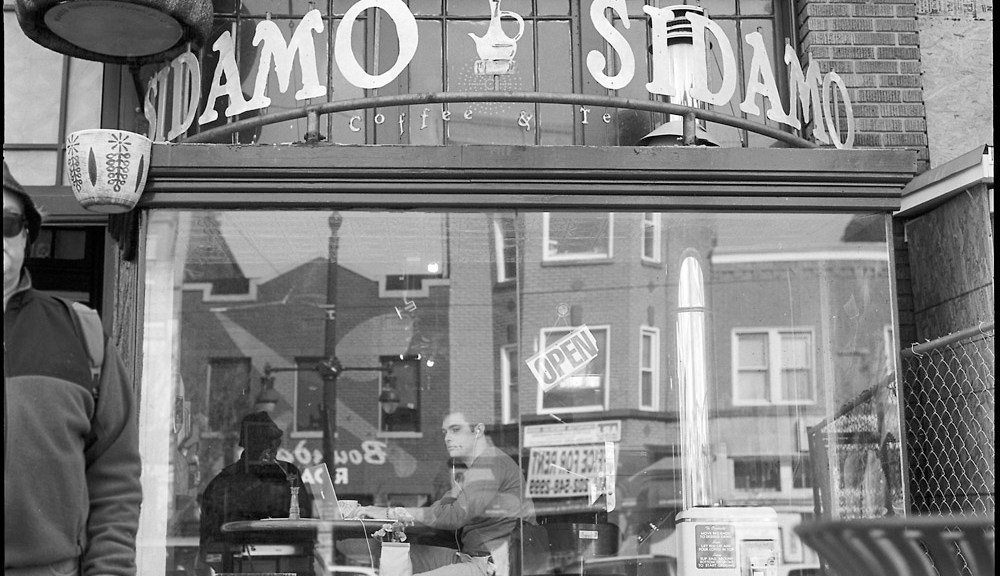
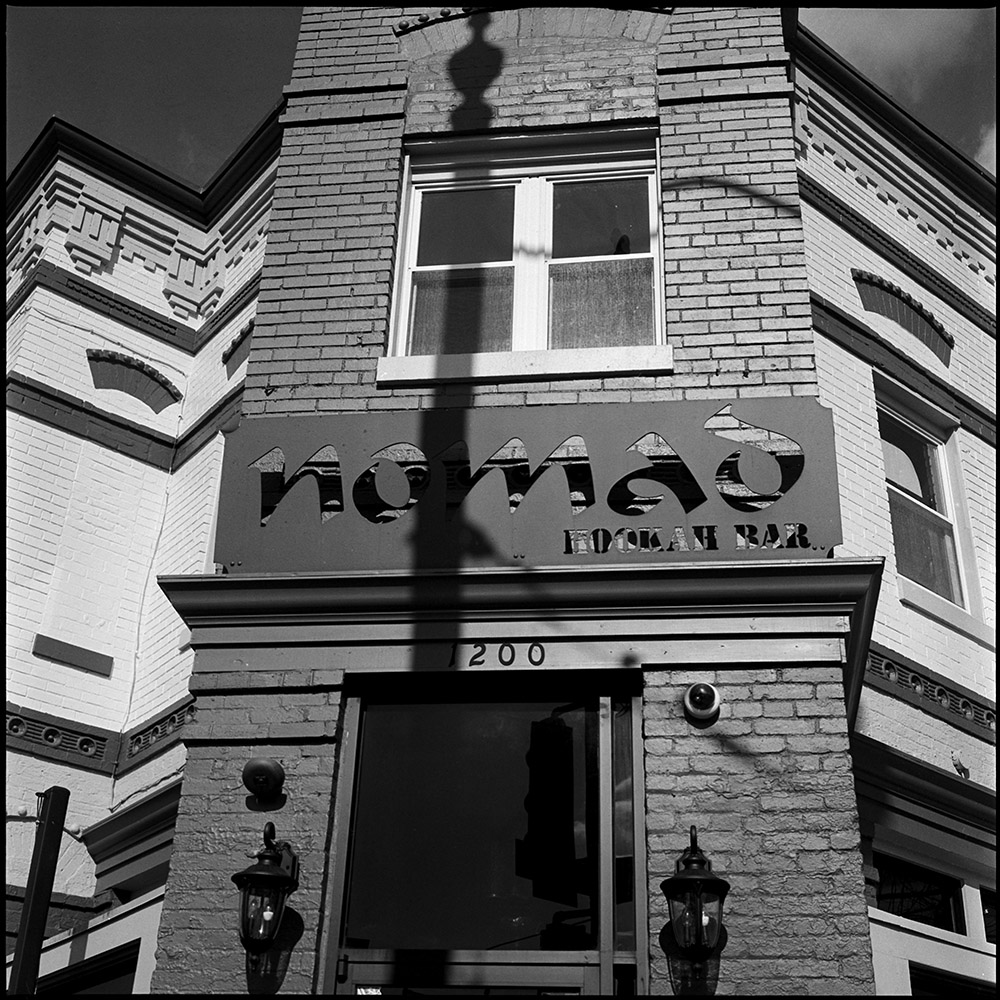
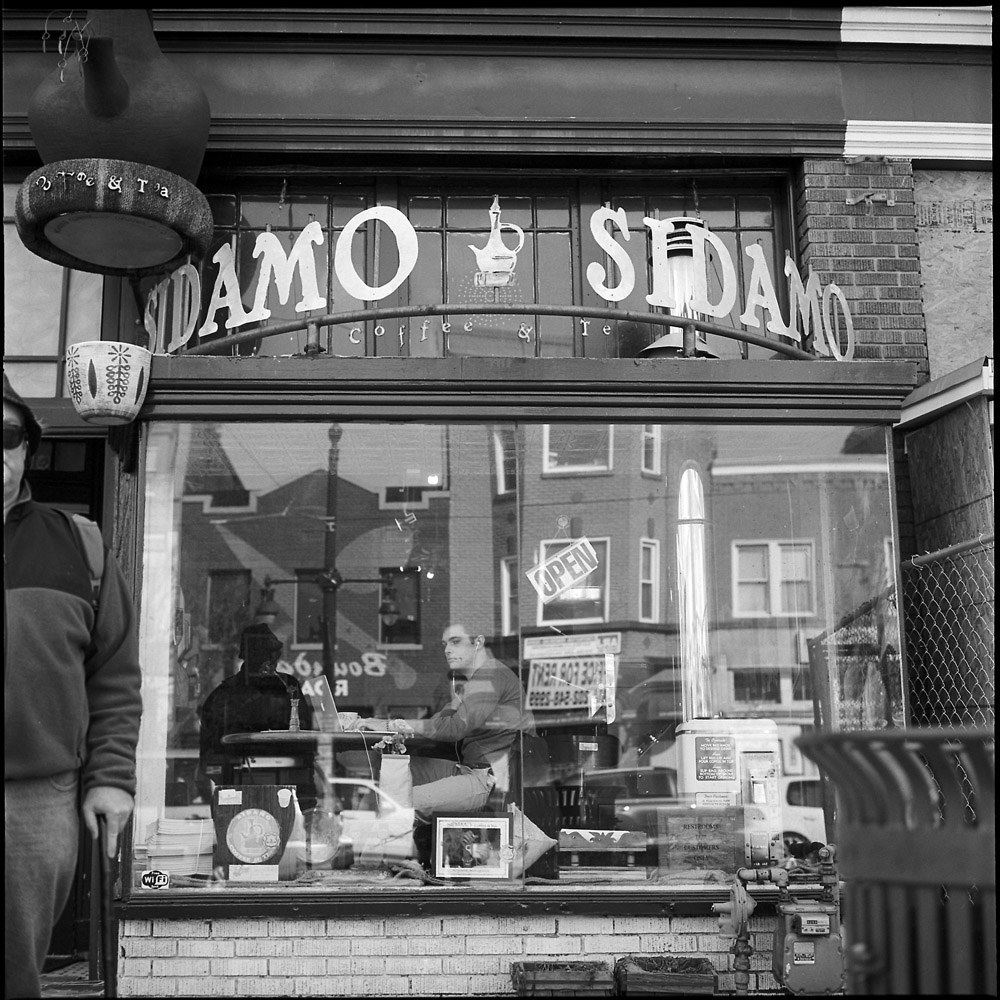
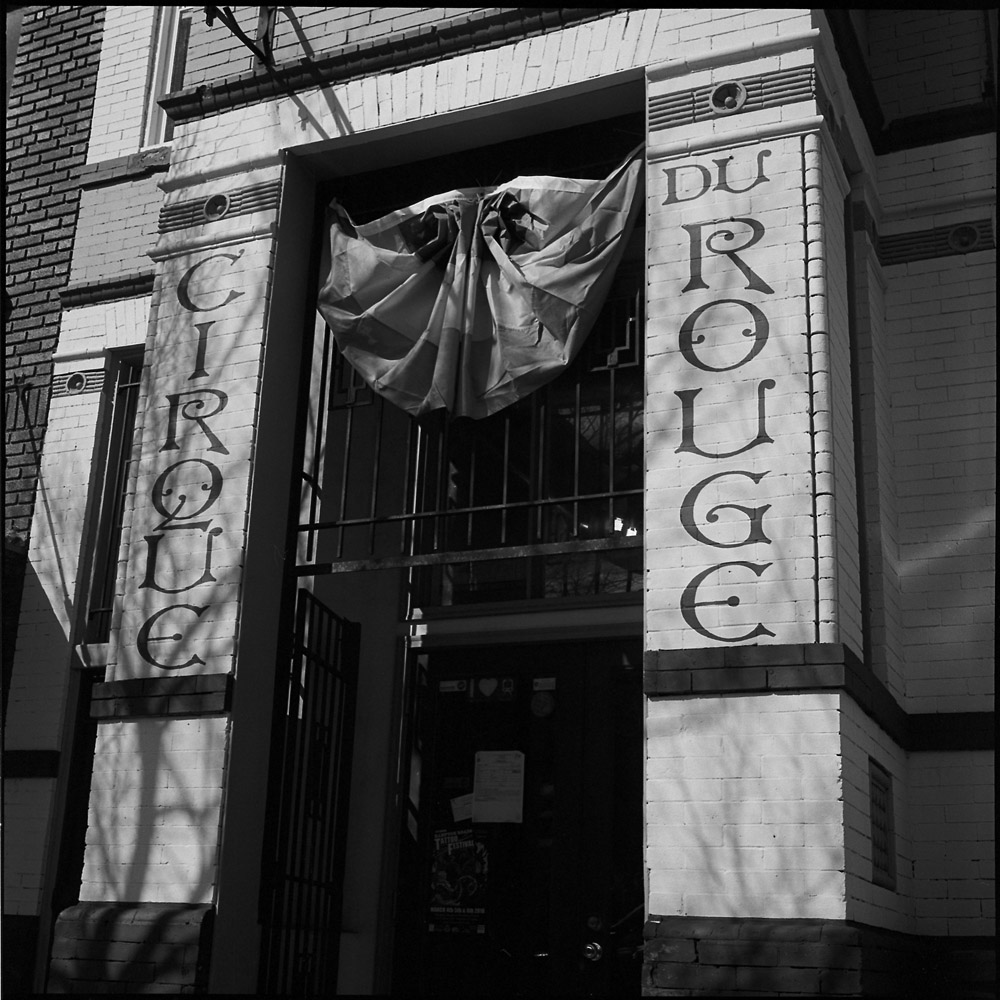
This set are the changing face of H Street – fresh paint, new entertainment venues, coffee shops and chic pubs.

Cirque Du Rouge
Cirque Du Rouge
Nomad Hookah Bar
Nomad Hookah Bar
Sidamo Coffee & Tea
Sidamo Coffee & Tea
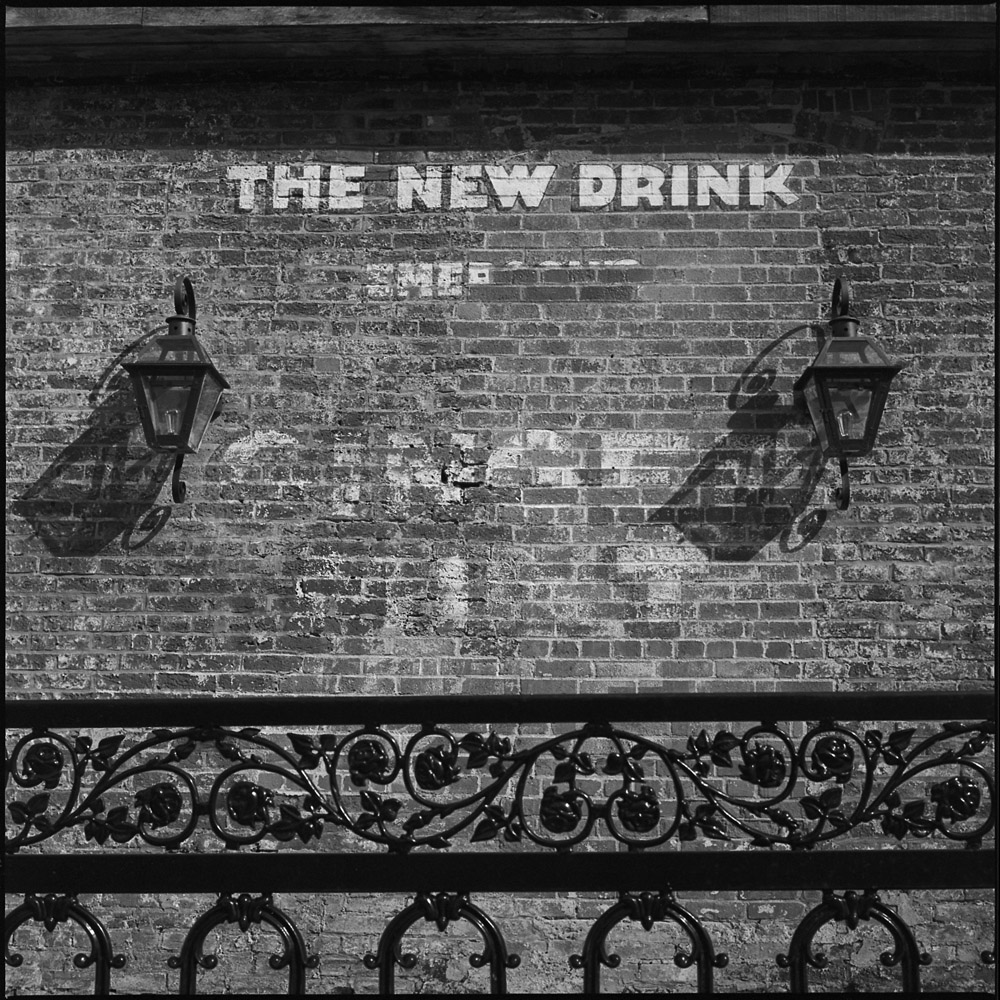
The New Drink
The New Drink

The not-so-visible dark underside to this is that the past residents (lower and middle income African-Americans) and the businesses they used to operate are being pushed out not only by the housing redevelopment that is driving real estate prices up by several hundred percent over the span of a decade or less, but by the changing retail landscape – when enough businesses on your street have gone from selling fifty-cent cups of coffee and five dollar lunch deals to six dollar cappuccinos and thirty dollar tasting menus, your old clientele aren’t coming around anymore. If you were already operating on a shoestring, it can be cost-prohibitive to reinvent yourself.

Fort Washington

On the same day I went to Fort Foote, I kept on driving south into Maryland until I got to Fort Washington, proper. Fort Washington the fort is located in Fort Washington, the town, and to arrive there you drive through some rambling suburban tracts. Like Fort Foote, Fort Washington sits on the banks of the Potomac River atop a peninsula formed by Piscataway Creek’s entrance into the Potomac River. It, however, was not intended to be a temporary site but rather has been occupied and fortified since before the War of 1812. Its use as an active military base ended after World War II, but most of the structures you see were built between 1800 and 1918.

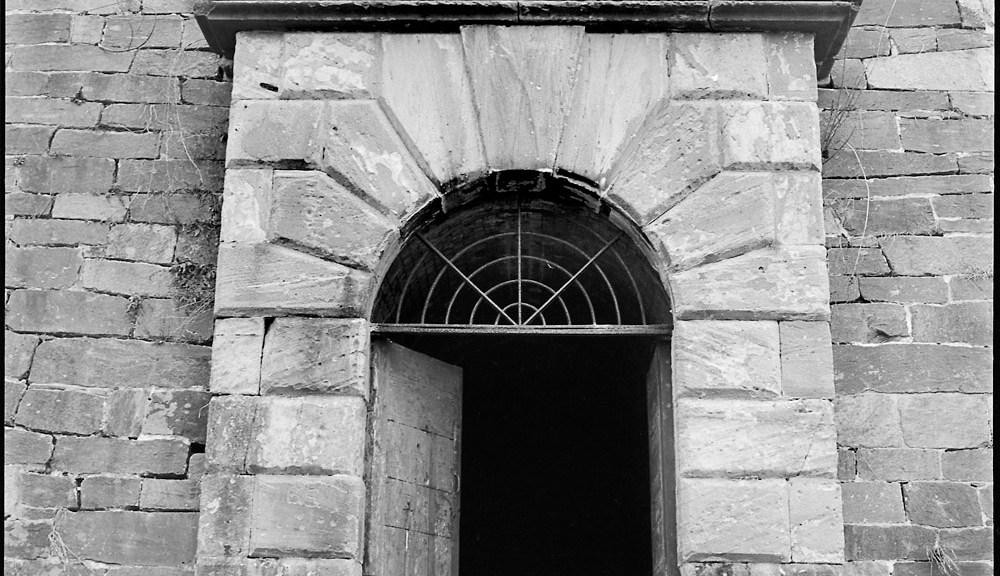
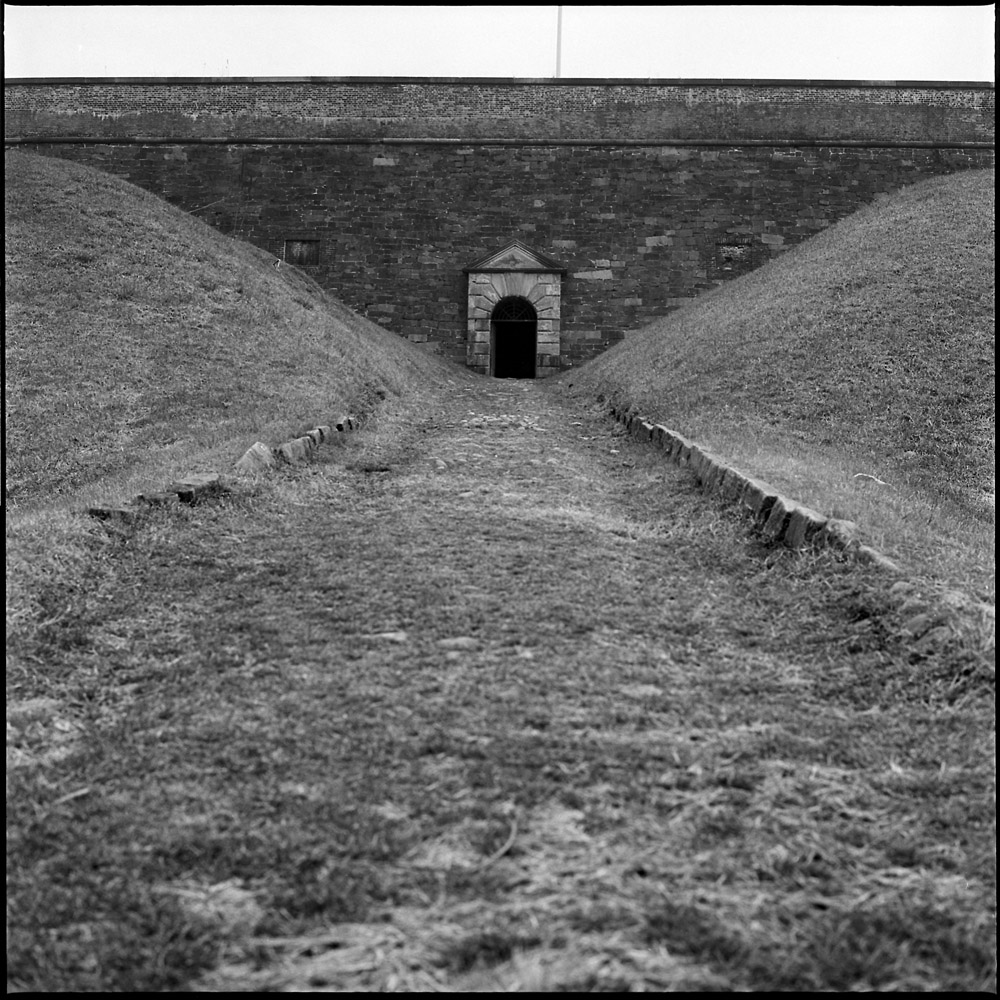
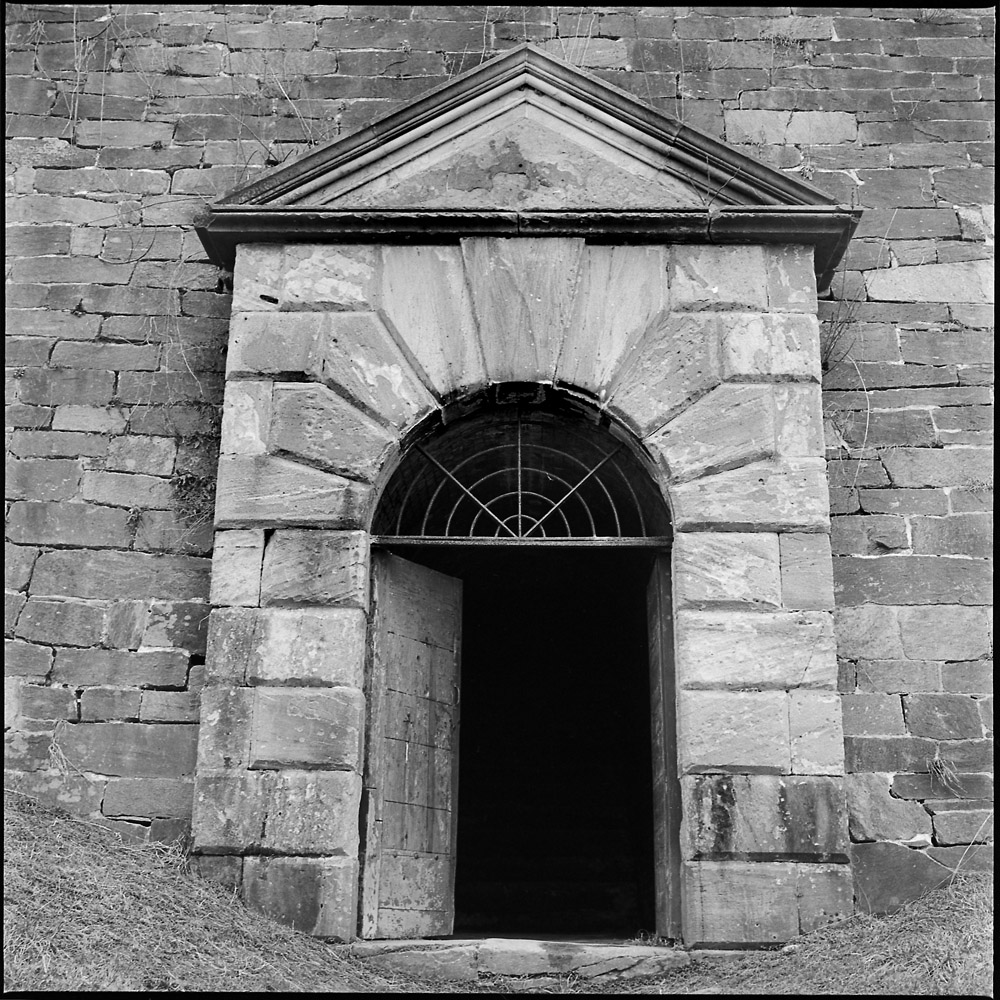
These first two images are of the gate in the early 19th century fortifications. This was the entrance that connects the hilltop fortifications to the water battery at river level.

Earthworks
Earthworks
Water Gate
Water Gate

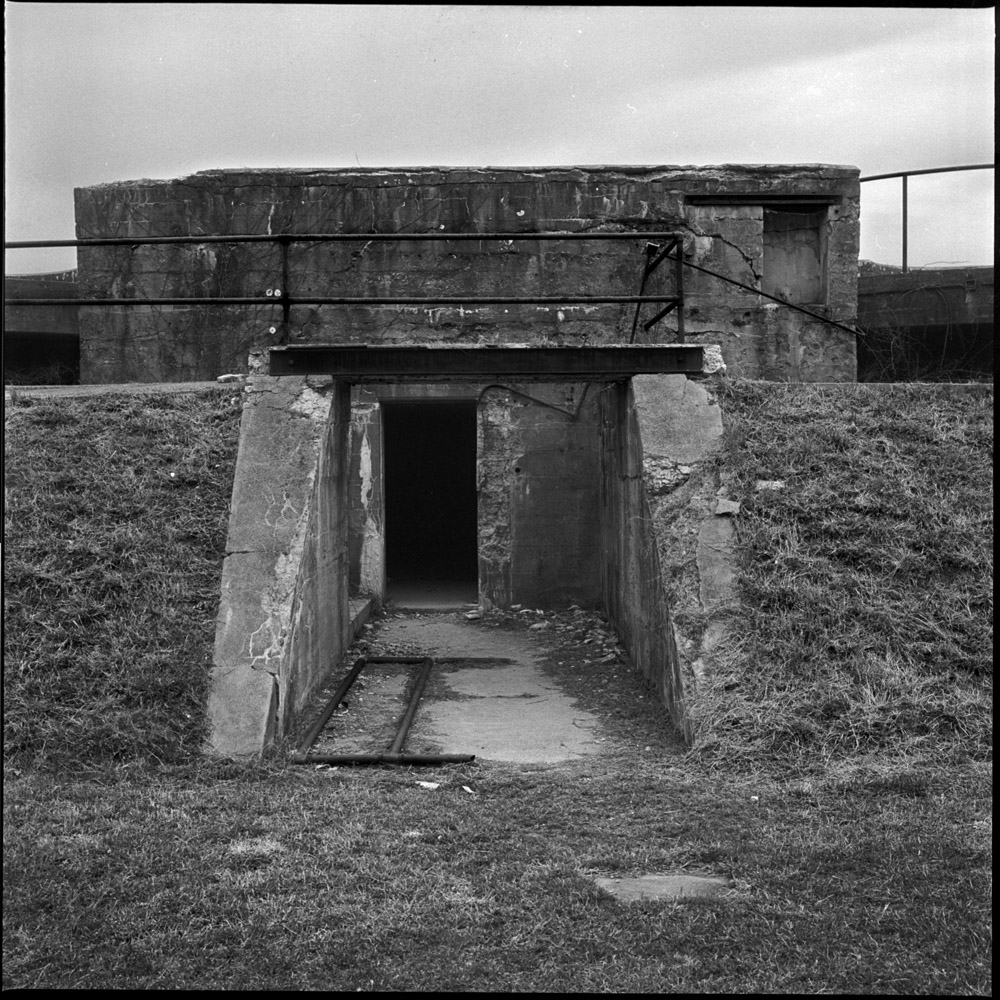
The water battery structures date to the first decades of the 20th century. You can see they are much lower, made of steel and concrete. The front side is protected by an earthen berm. The bunkers would have held the troops manning the now-dismounted cannon and communications equipment to control the batteries from within the fort.

There is something both ominous and at the same time hopeful about these structures, viewed from the land side. The bunker doorway looks like an entrance to the underworld.

Water Battery Entrance

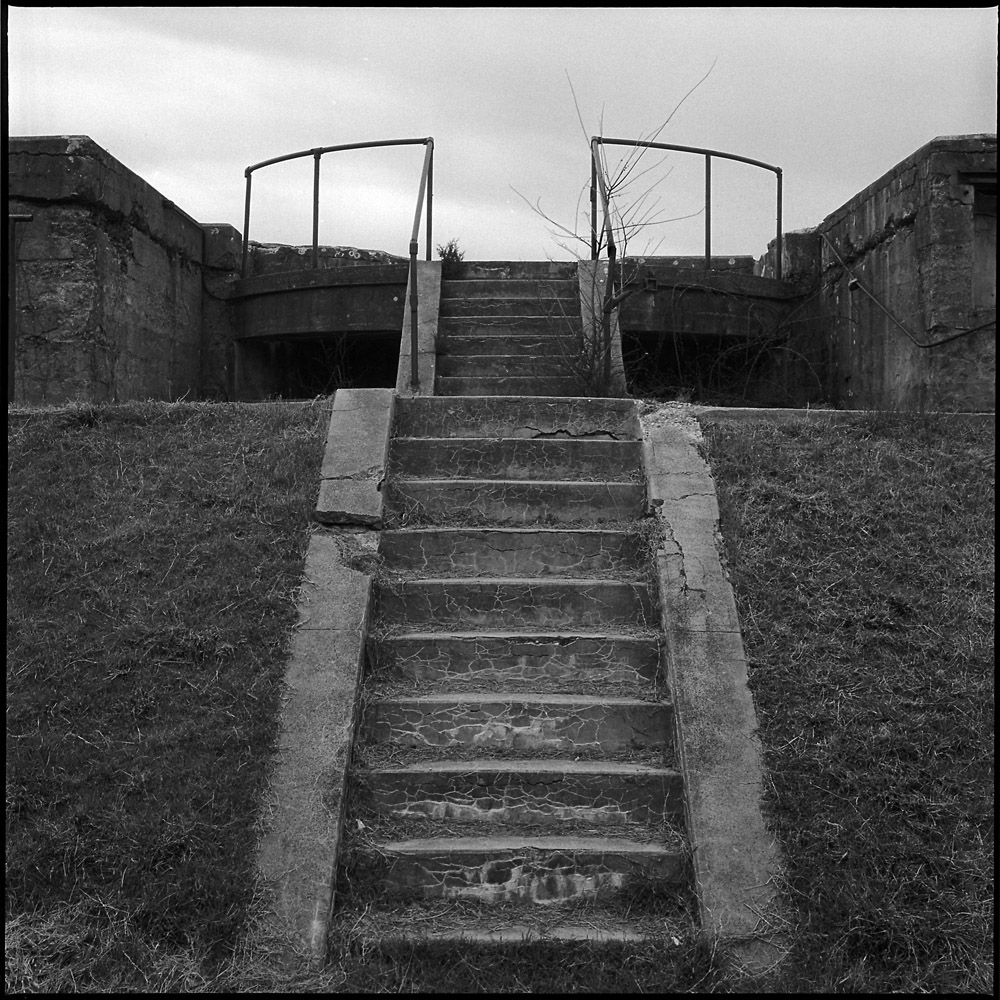
The stairs, however, now stripped of their weaponry, point to an upward journey, facing the unknown. They’re the prow of a ship, a pathway to adventure, or perhaps a Mayan temple at whose top great mysteries will be revealed.

Water Battery Stairs

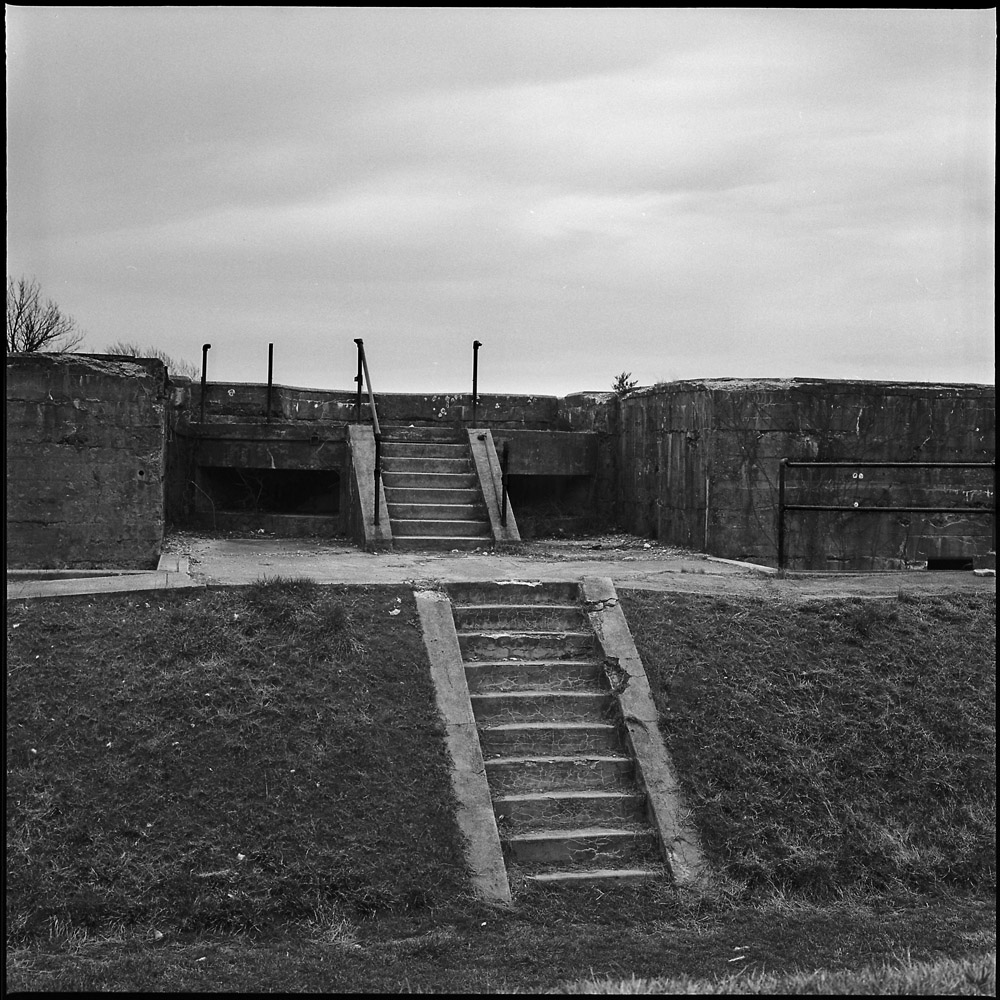
The clouds above tease the possibility of rain, but it will be a gentle rain, not a thundering downpour. They’re the gateway to the horizon.

Water Battery Stairs

More Fort Foote

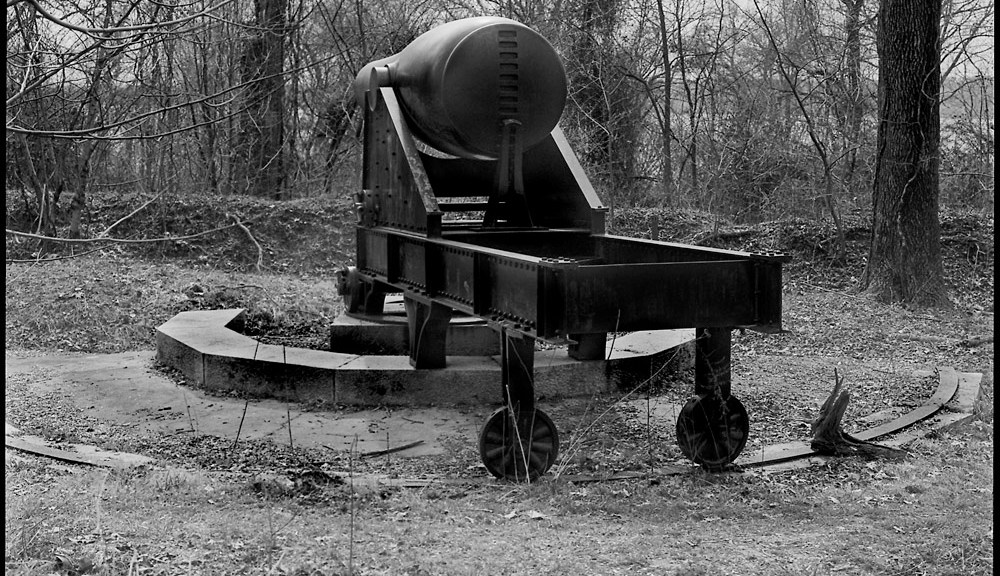
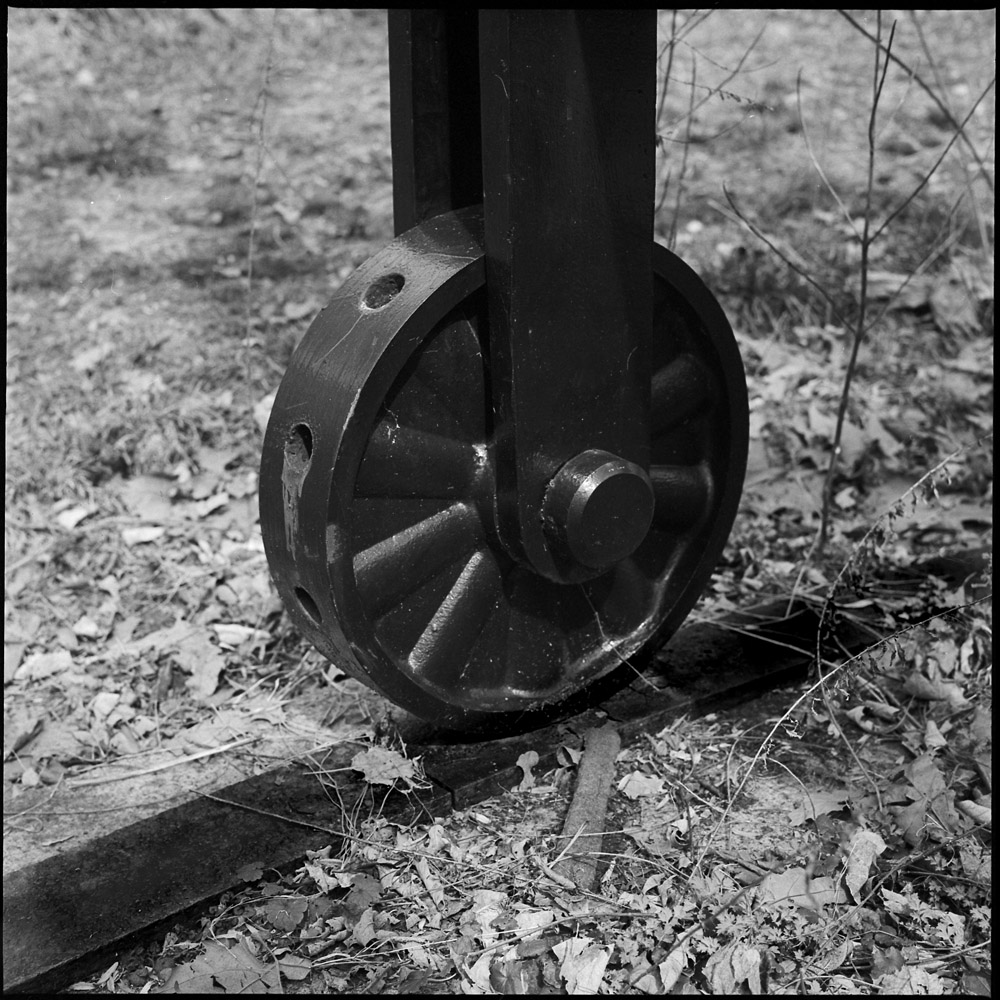
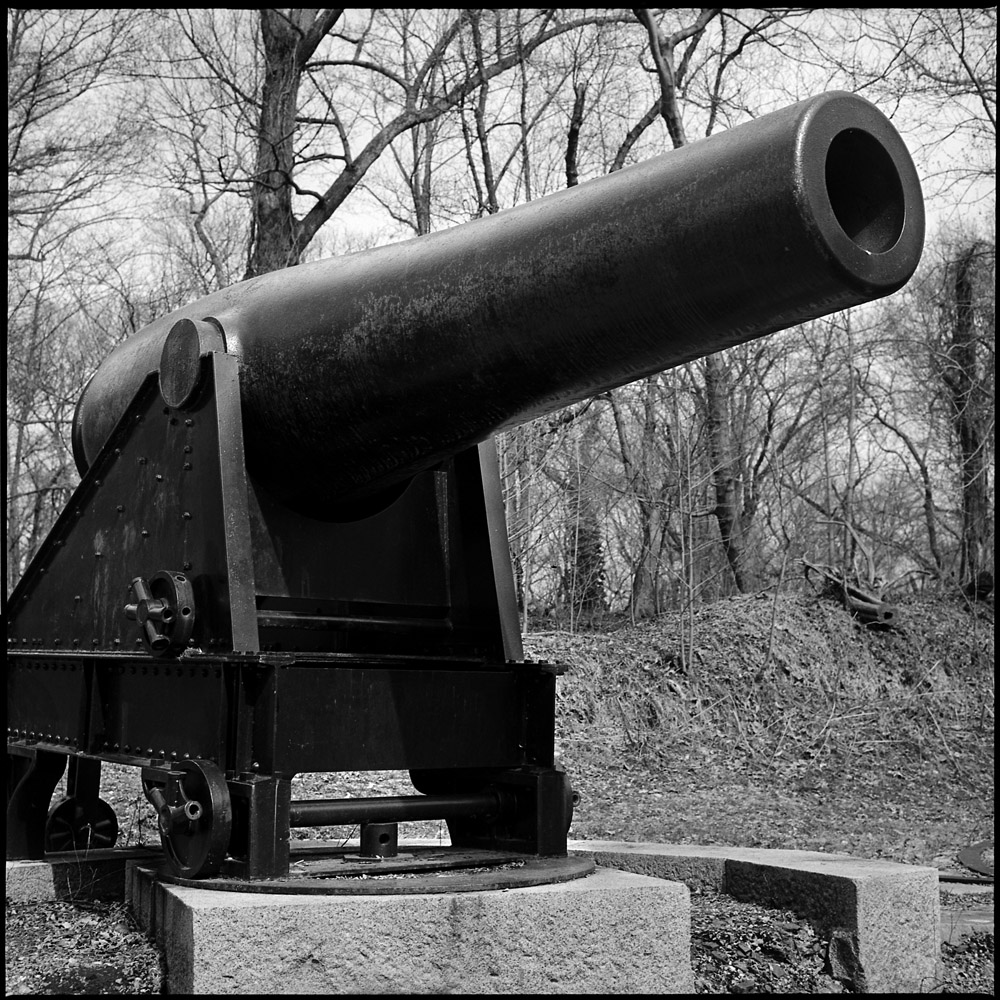
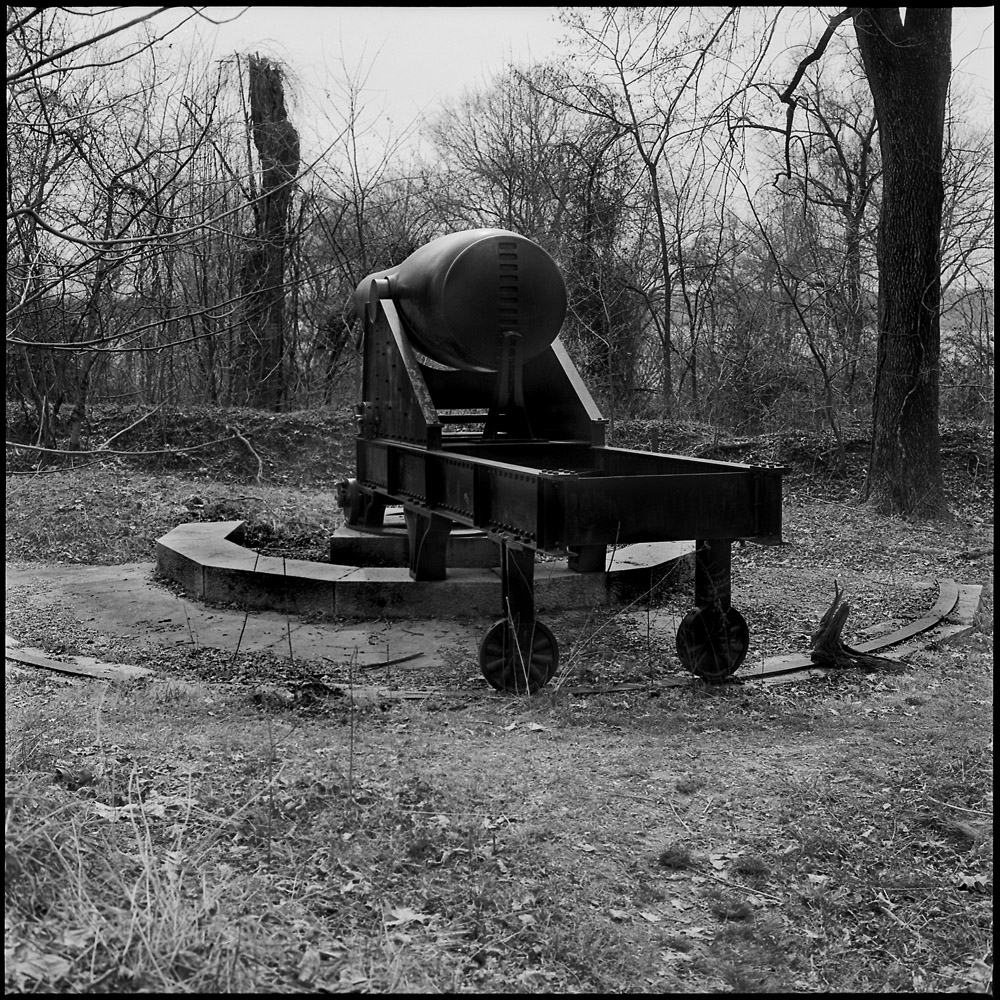
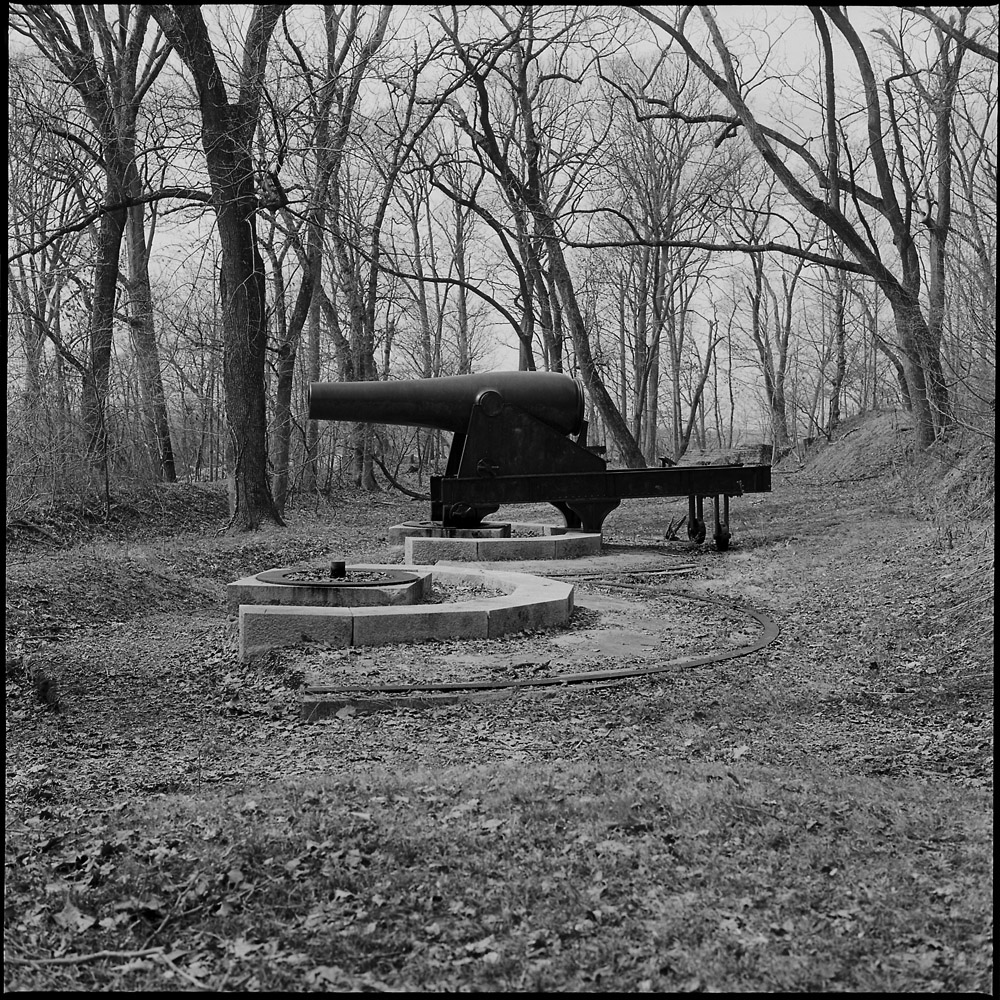
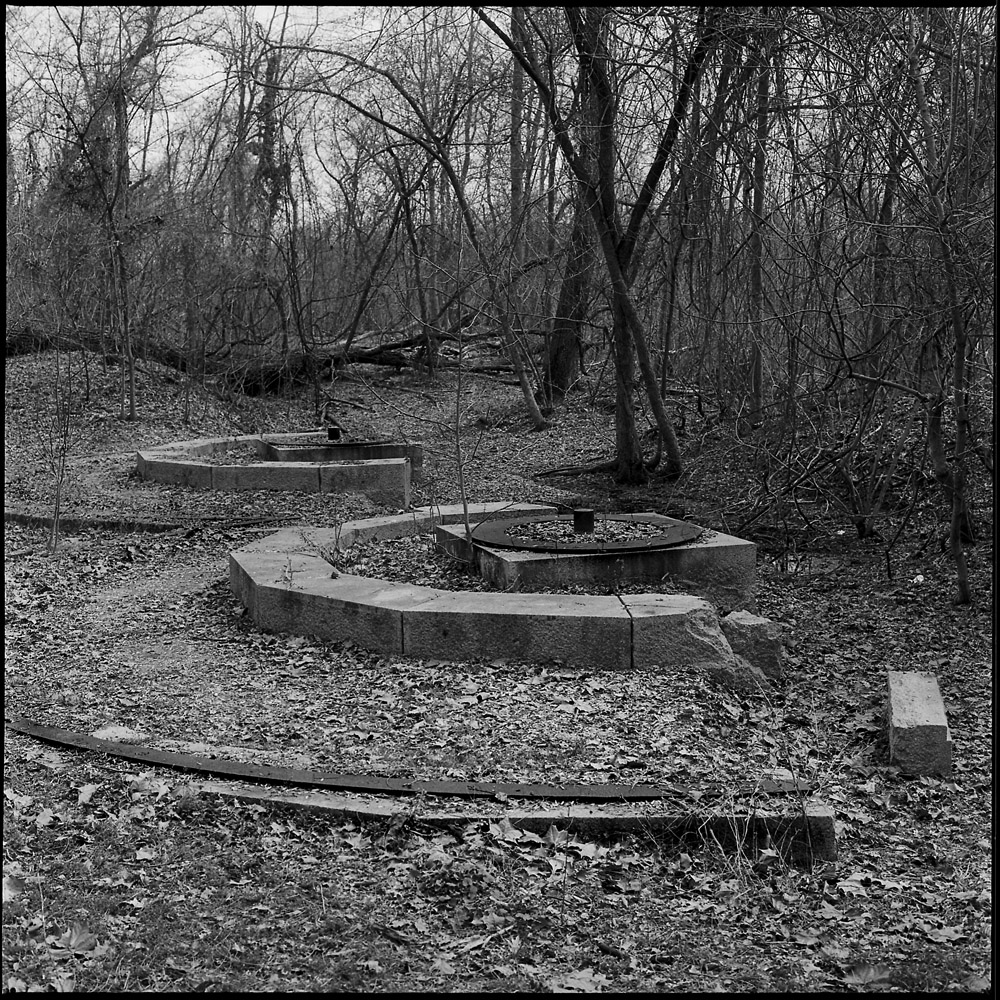
These are details of the fifteen inch Rodman guns and their emplacements at Fort Foote. I apologize for the delay in posting this second round. In this set of images I was focusing on the textures of the ironwork and the geometric patterns and repetition in the gun emplacements. There are endless circles and semi-circles repeating throughout, from the barrel of the gun itself to the wheels to the tracks to guide the traverse. They take on a bit of a crop-circle kind of feel: looking at the remnants makes you wonder if they’re the leftovers of an alien civilization.
Gun Carriage Wheel
Gun Carriage Wheel
Rodman Gun, Fort Foote
Standing Sentry
Standing Sentry
Lone Rodman, Fort Foote
Gun Placements, Fort Foote

Because these are in the (encroaching) natural environment, I’ll grudgingly classify them as landscapes, but I think of them more as documentary work given the subject matter.

Portraits of Alexander

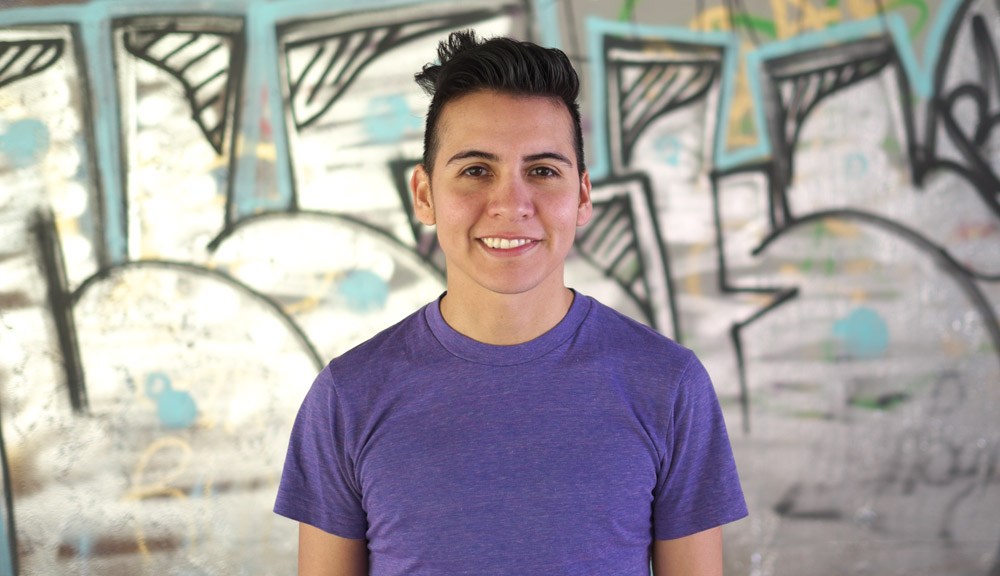
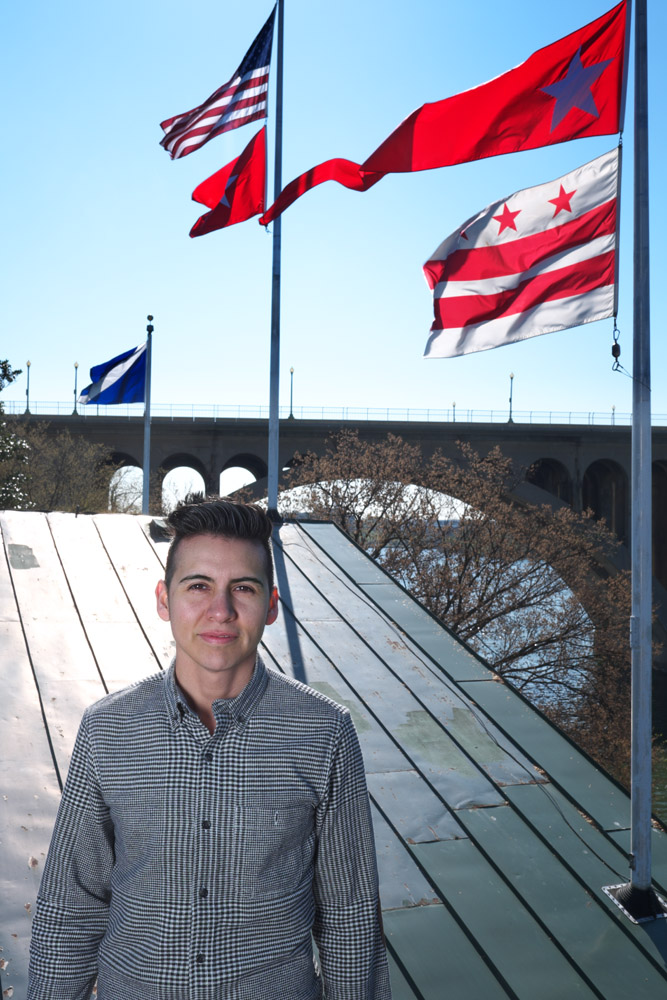
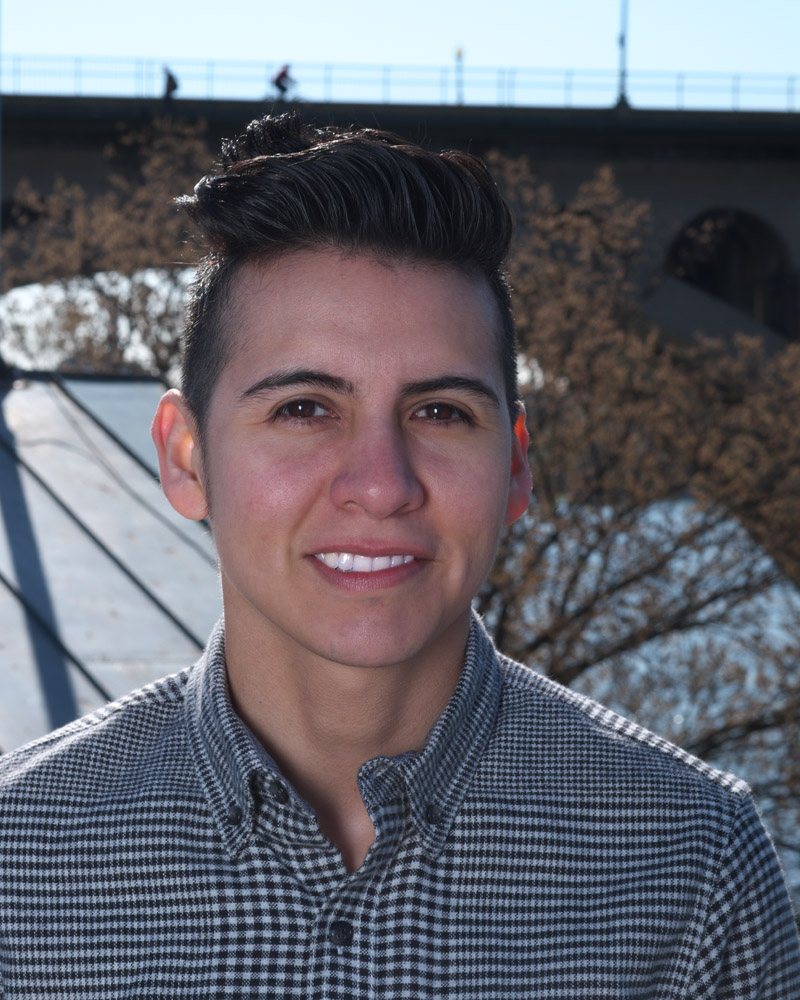
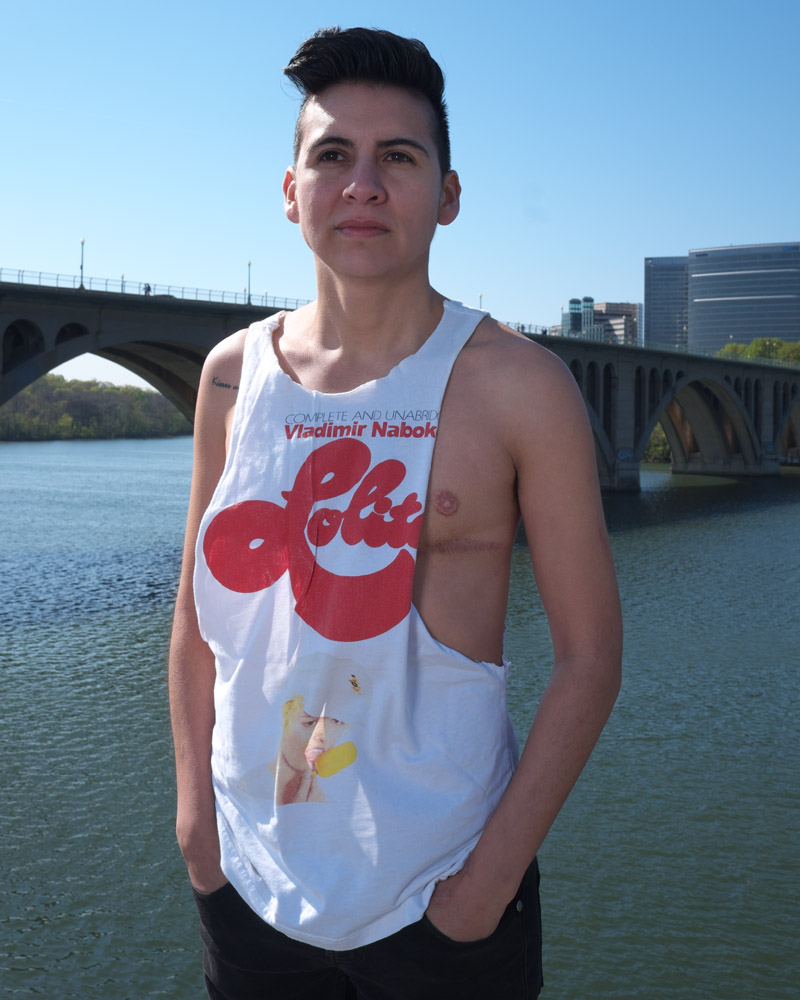
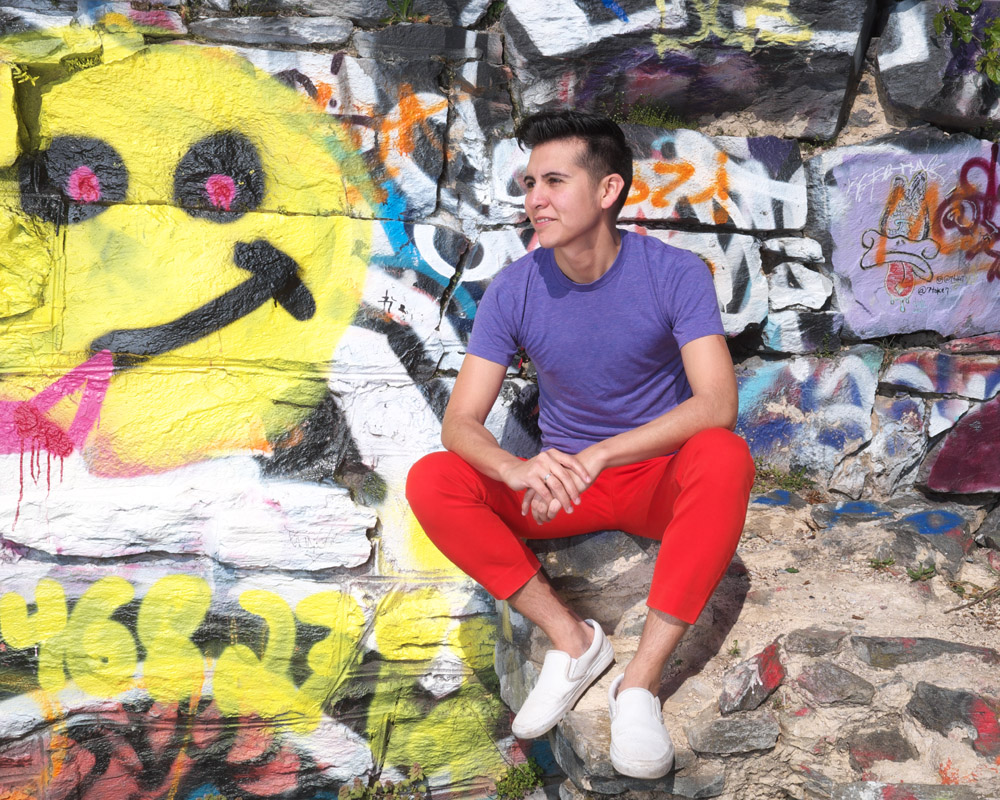
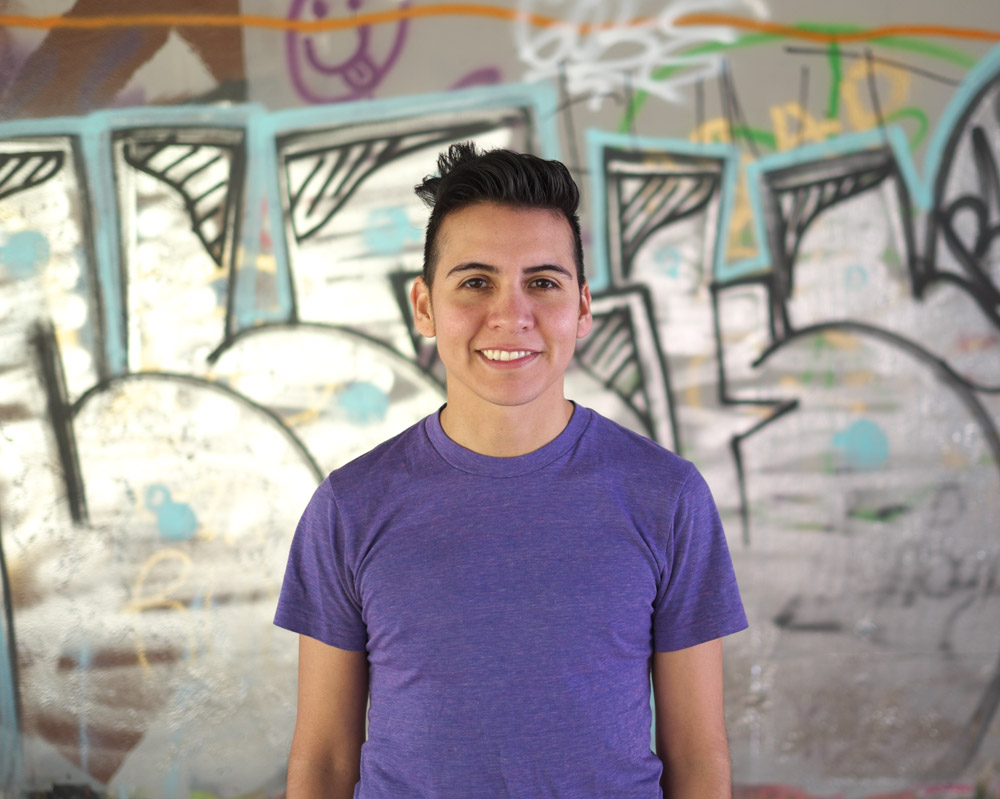
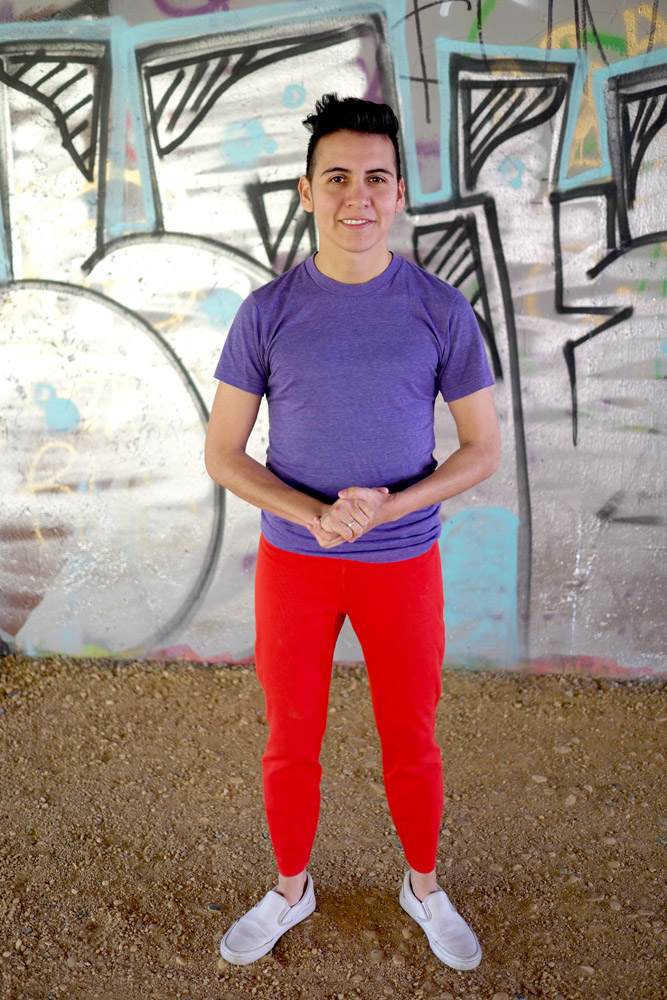
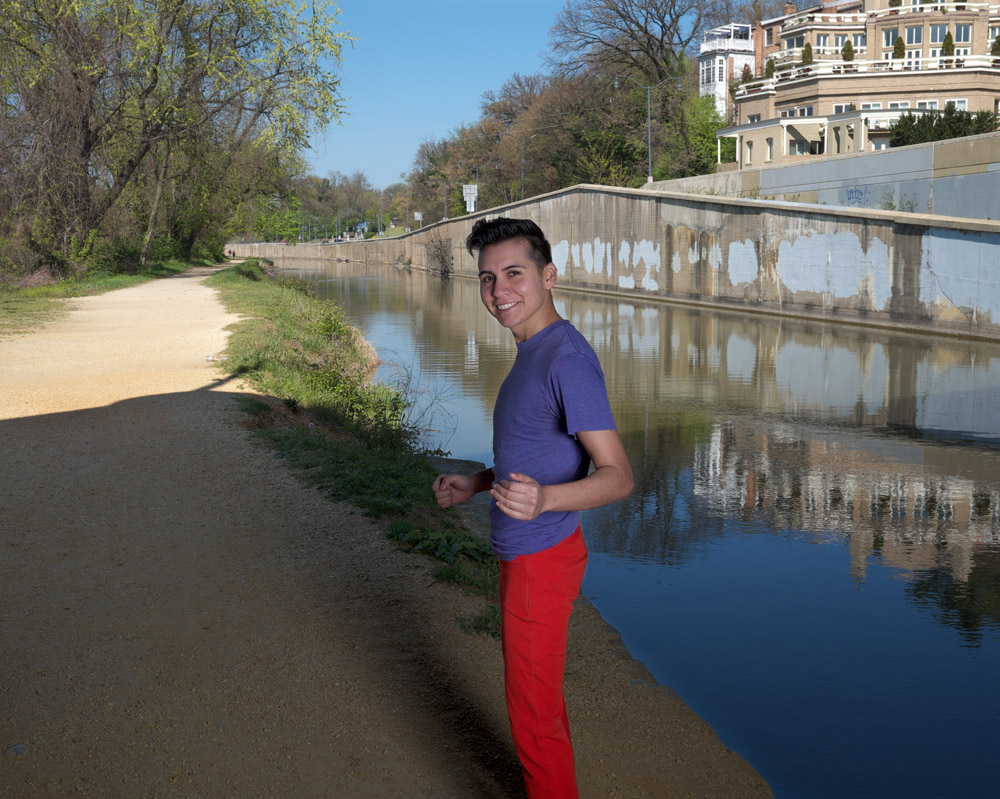
These are some portraits I took of my friend Alexander last weekend out in Georgetown. We went out to create some work for a fundraiser benefit in Toronto for Sprott House, a youth shelter run by the YMCA specifically aimed at providing housing for gay, lesbian, bisexual, transgender and two-spirit (the native American term for LGBTQ) teens and young adults. Alexander is a Latino trans man and open and proud, and I thought some portraits of someone living an out, proud life as transgender would be inspiring for kids struggling to deal with their own identities and the impact of being “other” on their futures.
The first couple images are pretty serious and straight images (pardon the pun).
AlexO41616_01

AlexO41616_02

A little bit of humor – this is Alexander’s club-hopping t-shirt. I teased him about the mixed message of serious literature on a clubbing shirt. But it is Lolita, so I guess it qualifies 🙂

AlexO41616_03

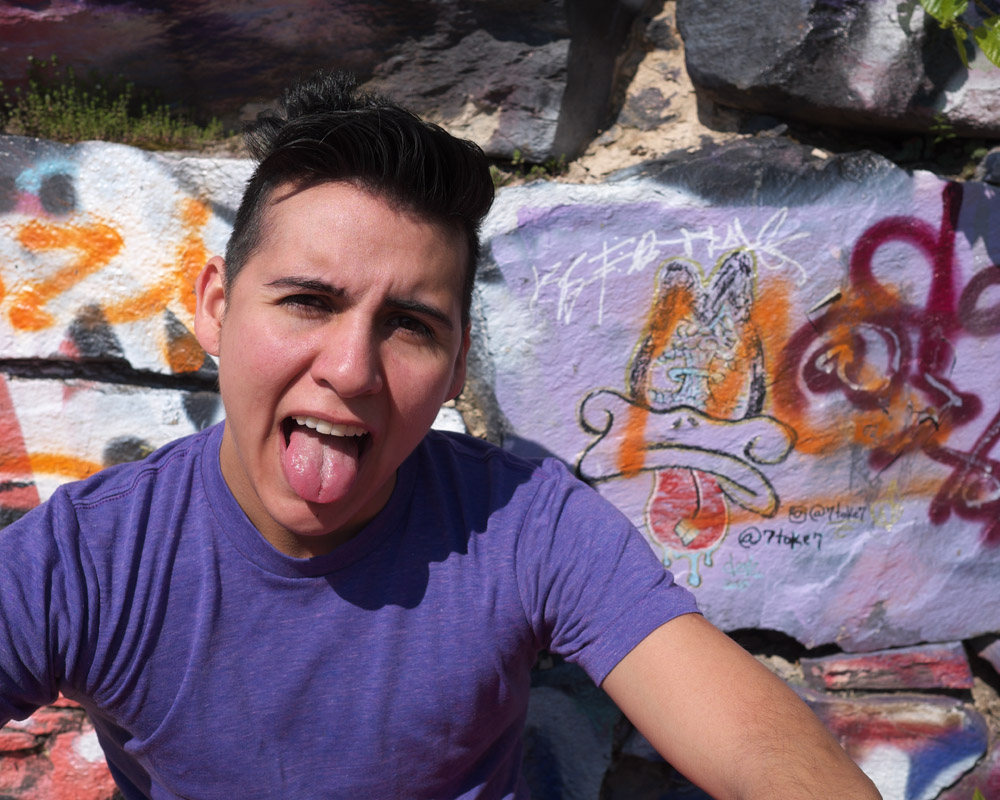
Just because a photo has a serious purpose and carries with it a political statement doesn’t mean it has to be serious. While I was posing Alexander in front of the wall of graffiti, he spotted the duck with its tongue sticking out and imitated it. It was a great spontaneous moment and shows his personality.

AlexO41616_04

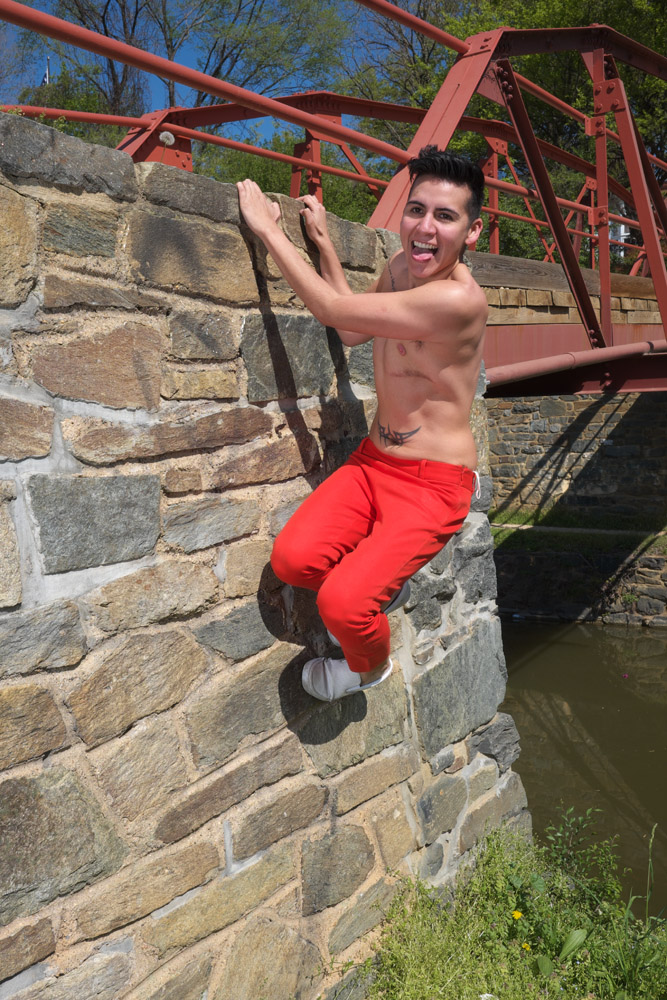
Alexander wanted to do some shots to show off his growing muscle definition, so he went and climbed the stone pier for the ramp over the canal…

AlexO41616_05

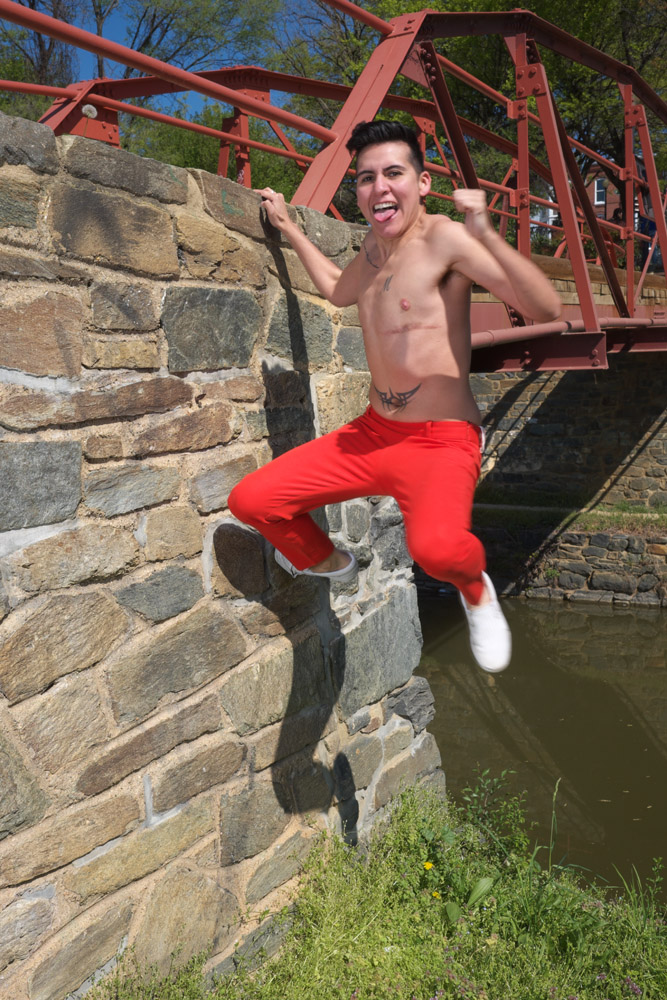
And then jumped off of it…

AlexO41616_32

His script tattoo says “it is better to have kisses than wisdom”. I haven’t made up my mind about whether I agree with the sentiment, but it definitely suits his personality.

AlexO41616_09

AlexO41616_16

Under the ramp to the freeway that passes over the C&O Canal there’s always some interesting graffiti, and right now it’s tagged with this beautiful silver metallic paint that really complemented Alexander’s red and purple outfit.

AlexO41616_27

AlexO41616_28

The last image I feel makes for a great closer for the series – Alexander’s gesture seems to be saying “come with me and we’ll have a fun time!”.

AlexO41616_35

Random Outtake – Georgetown Boathouse

This is a view I’ve seen a number of times but wasn’t ever sure how to capture it until yesterday. I’ve always had the wrong camera with me, either from the focal length, the aspect ratio, or both, perspective. This is an outtake in the sense that I was doing a model shoot with a friend of mine on the pier of the old C&O Canal bridge that used to cross the Potomac River in Georgetown, so taking this photo was not the purpose of the shoot. This is the view looking straight down at the dock for the boathouse.

Boathouse Dock, Georgetown

I was particularly drawn to the geometry and angles formed by the decking on the boat dock, with the red decking running perpendicular to the unpainted deck, and all the triangles formed by the perspective you have to take to see the scene in the first place. Even the boat, which has a totally different shape and texture to the decking, creates more triangles with its prow, and provides visual tension running the opposite direction so you move your eye around the image.