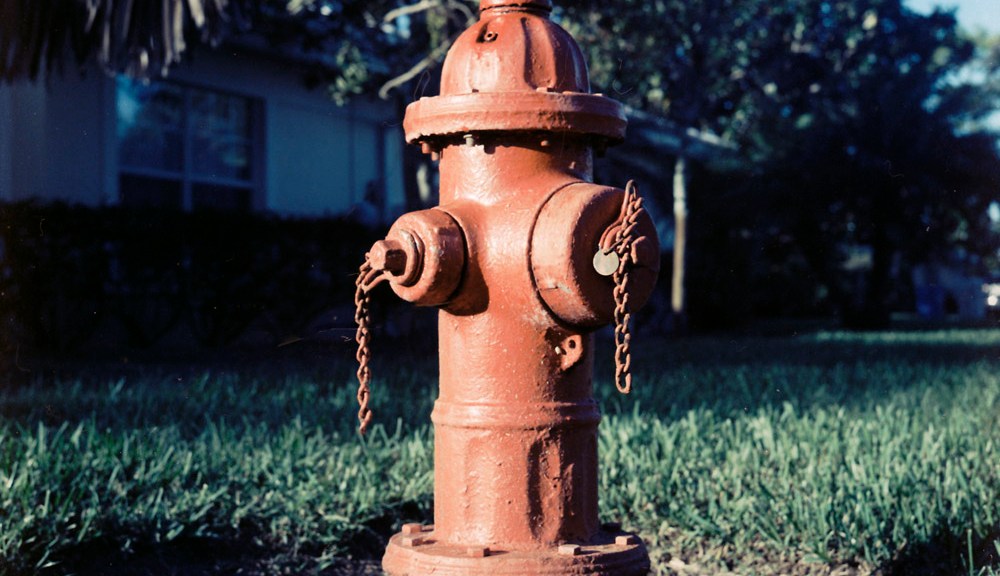
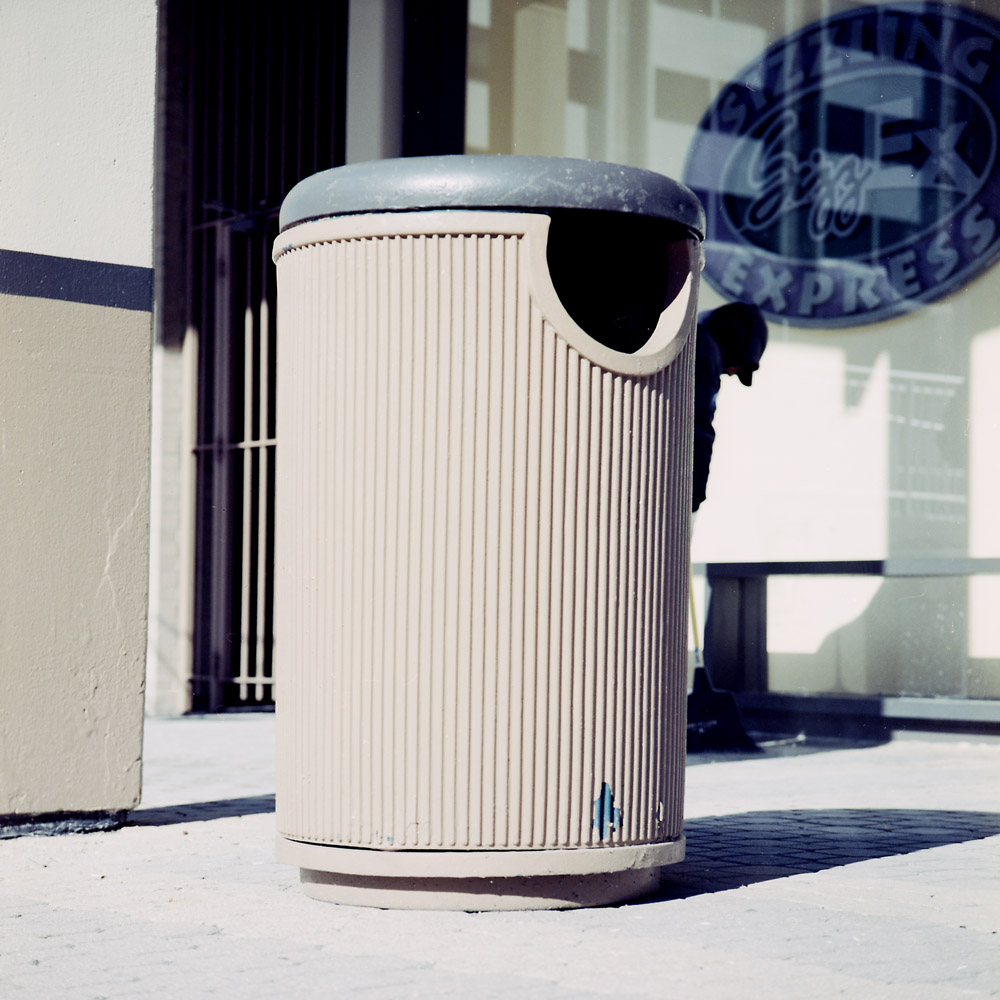
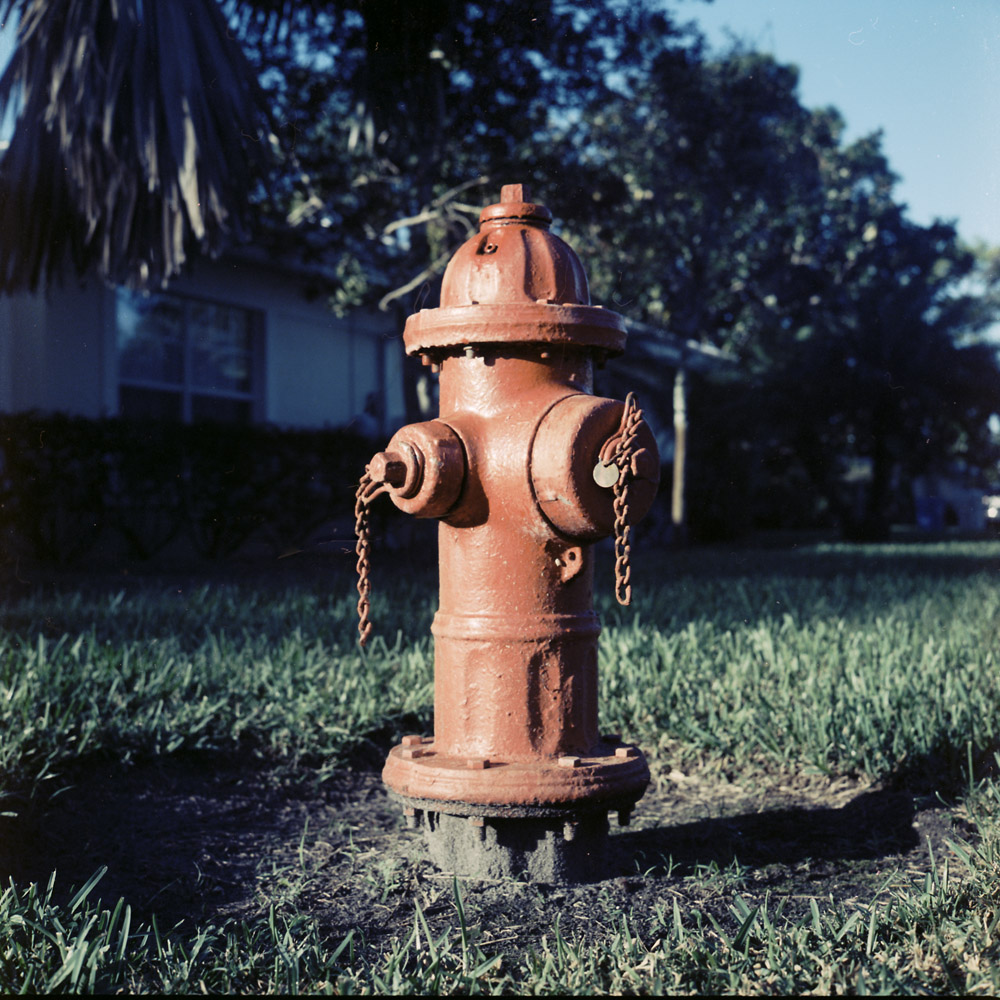
I’ve noticed that as the series continues, my style of shooting it has evolved, which is a good thing. The photos are becoming more consistent, especially in terms of composition. The camera is placed on a level with the object, which usually means much lower than eye or even sometimes waist level, and more frontally square to the object.
Fire Hydrant, Vero Beach
The hydrant is in a suburban Florida cul-de-sac where the tallest things around it are date palms, and they’re not massed together to form a giant wall, so the lighting is direct sun, not a diffused sky. I’ve been looking at it and trying to decide how well it fits the series – I think it does on the subject matter and the compositional level, but until I shoot more objects in suburban or rural environments it feels weird because the background isn’t walls or windows or passing traffic, but grass and trees.
One of the most important things you can do as a photographer is interact with the general public a.k.a. your audience. Often you don’t have a lot of time to sit down with them, have a nice chat over coffee, and explain what you photograph, how, and why. You need a memorable leave-behind that will intrigue them enough to get them to come back to your website or blog (ahem!), look at your work in depth, and interest them in hiring your services or buying your work.
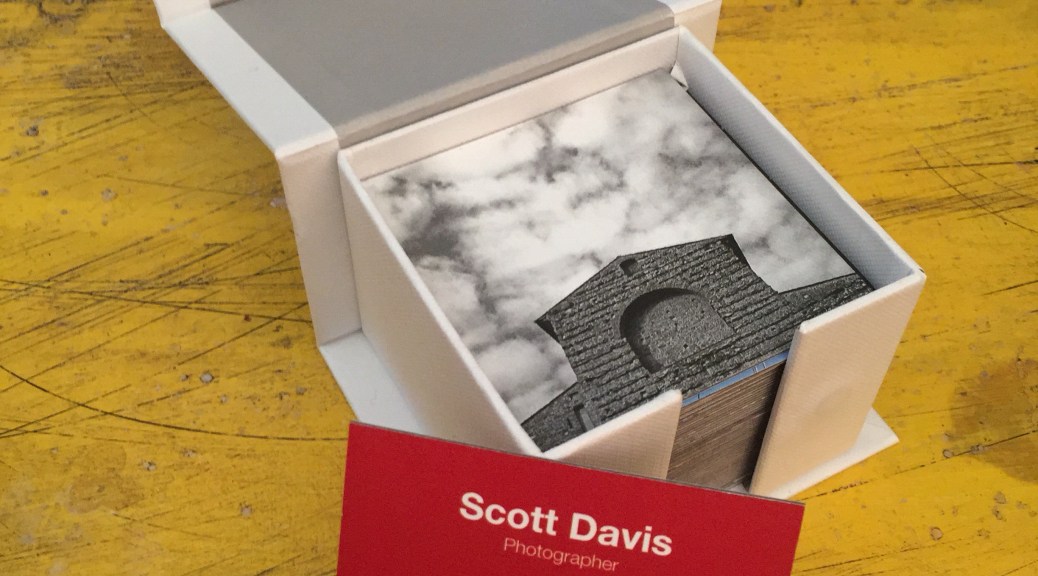
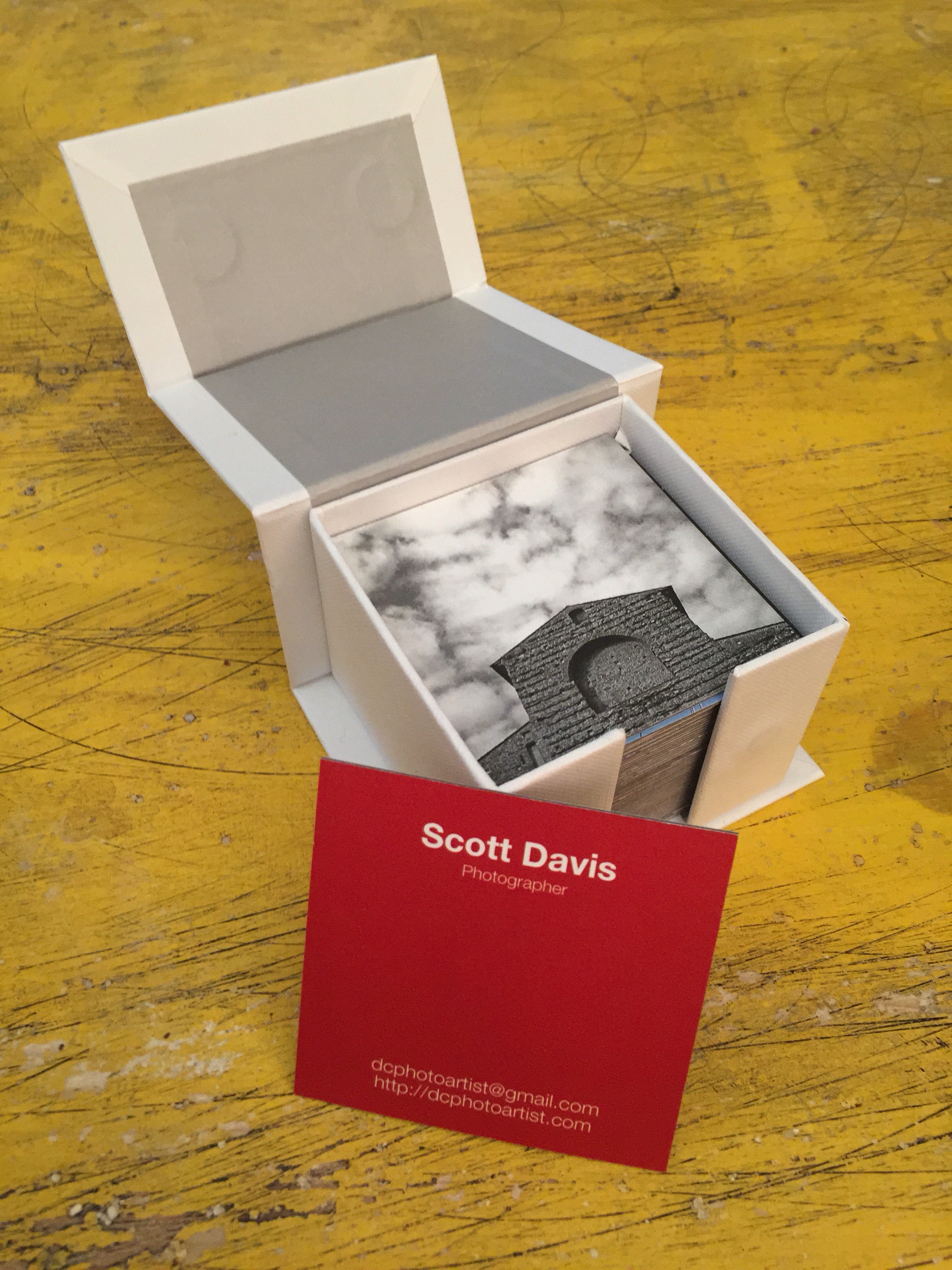
business card portfolio box, by Moo
I’ve made multiple attempts at business cards of various designs. They’ve all been reasonably successful, but I think a lot of them have been too busy, graphically speaking. I saw an ad on Facebook with a promo code for Moo, who print business cards with a few unique touches, and decided I’d try them out. One of the features they offer is the ability to print many different designs in small batches- you can do one design for your text side, and upload up to 50 images to put on the back. Print runs start as small as 50 cards, so you could end up with all your cards being unique.
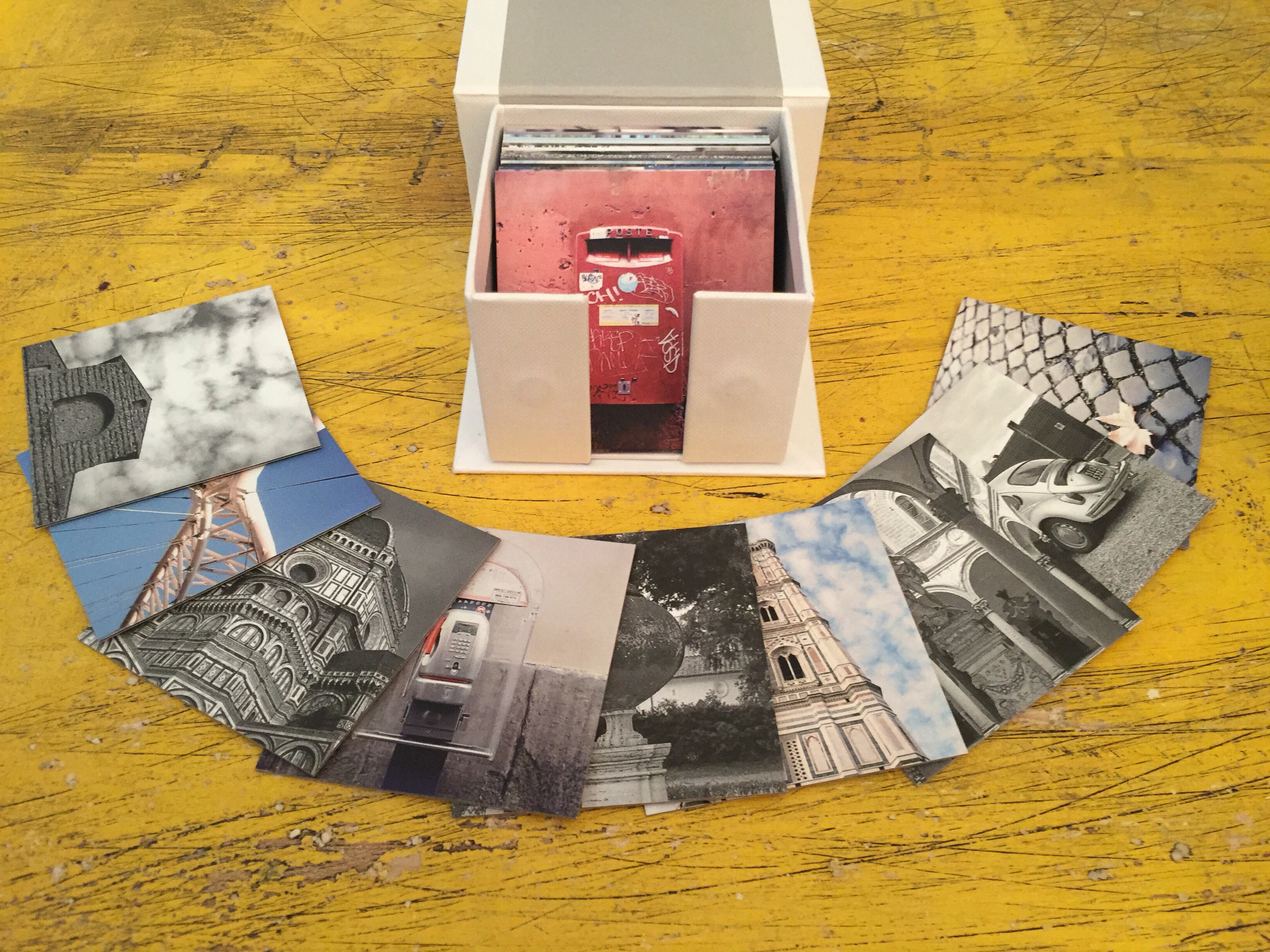
travel portfolio
In this case, I wanted to do two different lines of cards, to promote my portrait work and my travel photography. I uploaded ten images from each of my relevant portfolios and had a run of 200 cards printed. Above you can see the travel portfolio in the mini card holder box that came with the cards. The card box makes a great display piece for on a table or desk.
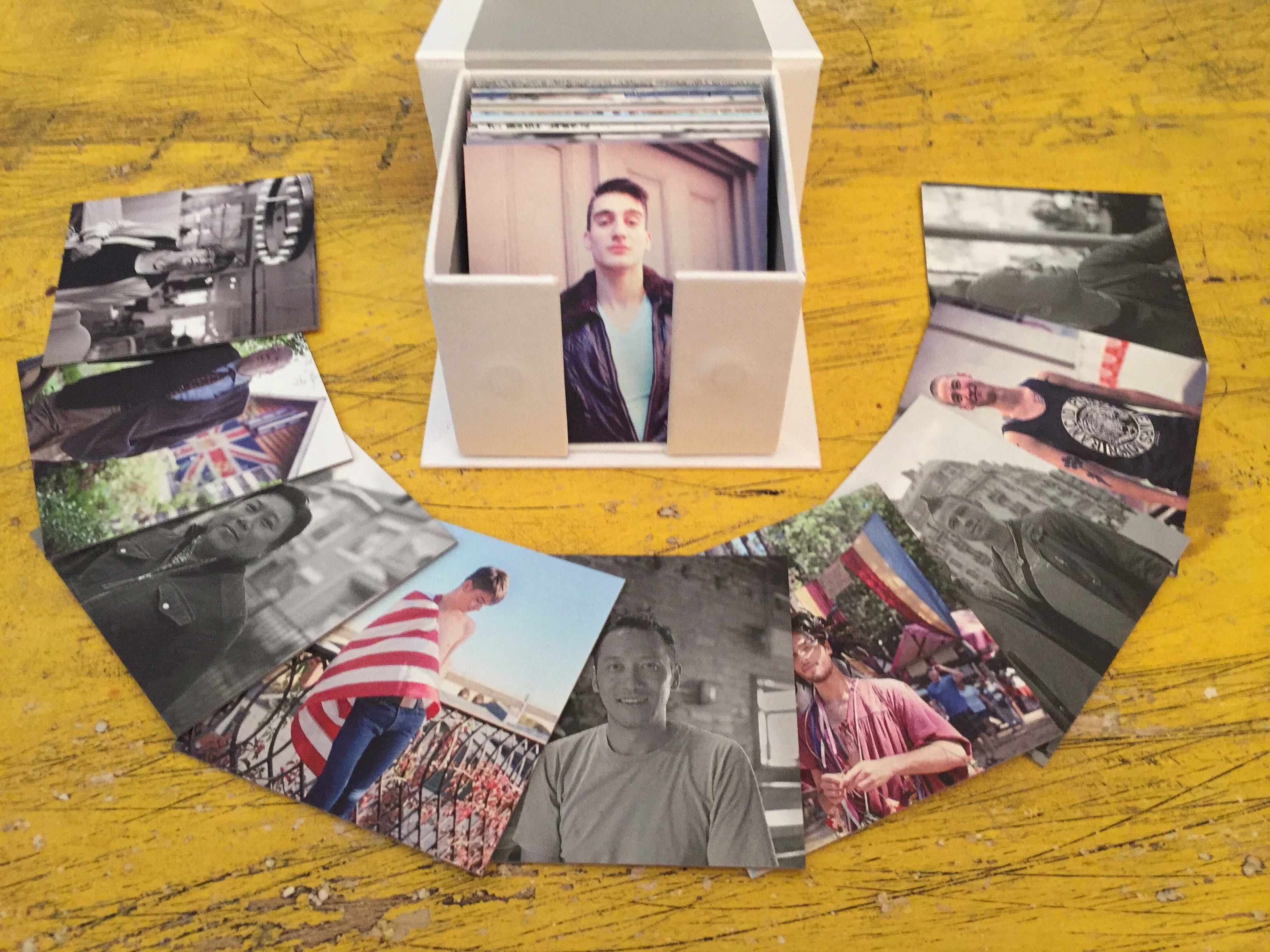
portrait portfolio Here is the portrait portfolio. That’s another benefit to the Moo business cards- with the multiple designs, you can carry an entire portfolio in your pocket all the time.
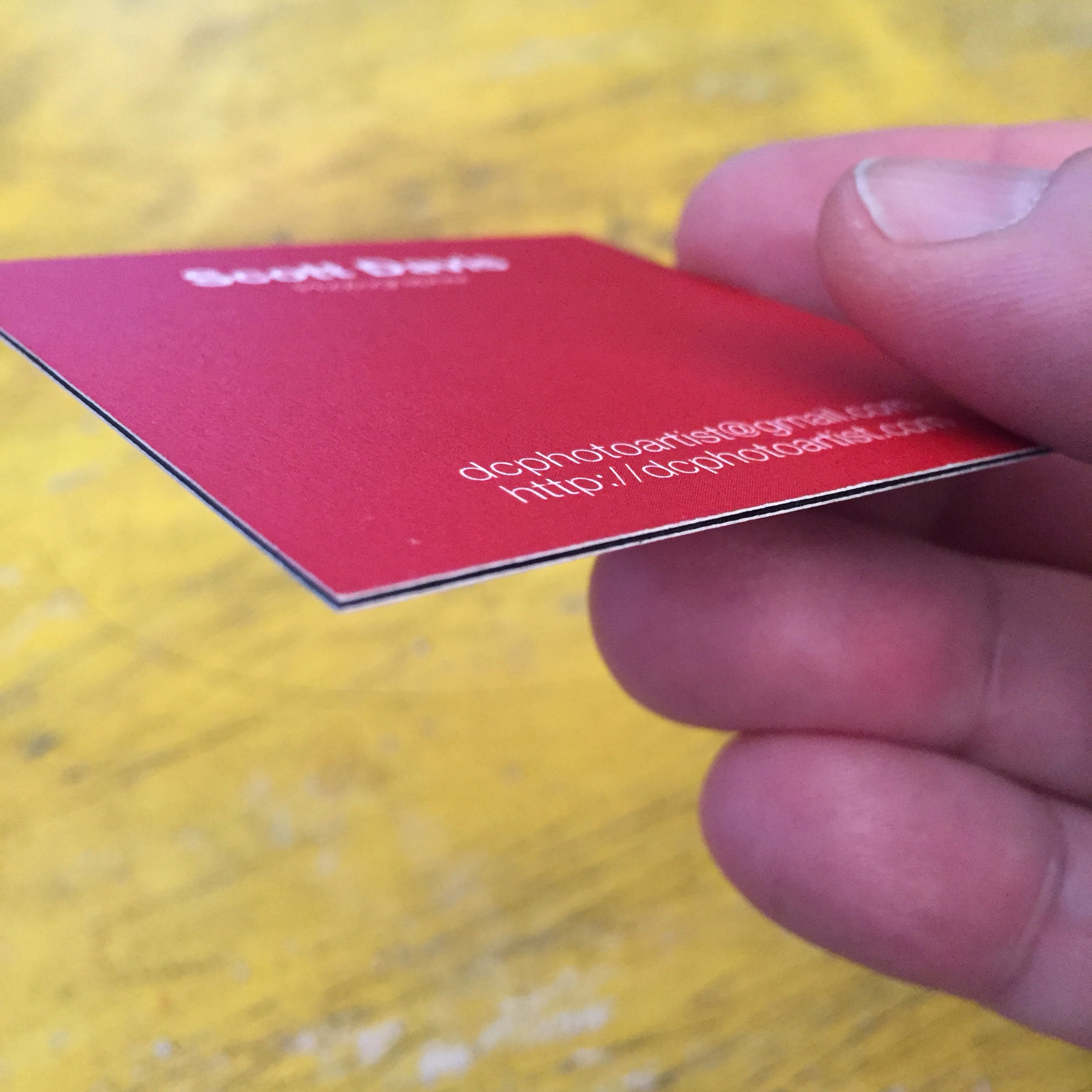
business card profile
The third quality I really appreciate is the paper stock options. I opted for the premium heavy-weight paper stock with a middle ply in an accent color, in this case black. It’s yet another characteristic that can set your cards apart from everyone else.
Wether you’re handing out cards to individuals or making a mini presentation portfolio to mail to a potential client, Moo cards can help you stand out. You can get more information about them by going to Moo.com. In addition to the square cards, they have traditional rectangular cards, mini cards, and other promotional products on a range of paper stocks to fit a wide range of budgets.
It’s all too common for people to ask professional creatives to do work on “spec” – provide me with free samples and if I like them, I’ll pay you in “credits” or something else, or maybe never. This video does a brilliant job of satirizing a very serious problem for creative professionals.
The original article I found it from is on Petapixel, another great photography website and well worth your read. Despite the sound of their name, Petapixel is actually not strictly digitally obsessed and does run articles, including positive ones, about analog photography.
In short, if you’re a creative professional, you’re probably asked on a regular basis to provide not just a portfolio in advance of a contract signing, but actually asked to do the work first. Just say NO to this kind of work – it hurts all of us because it builds the expectation that clients can get creatives to work for free. Would you expect to go into the bakery and get to eat an entire loaf of bread before deciding if you liked it enough to pay for it or not?
Back in November I taught a studio lighting class at Photoworks. This was my first time offering this class, so the curriculum was a bit of a gamble – I started with foundations of studio lighting, working from hot lights on still life setups and a single light source, and built my way up to electronic flash systems with multiple lights. In this case, my students had the burning itch to jump straight to portraiture, as that was their primary interest. I had a wonderful bunch of students in the class and everyone brought something to the table.
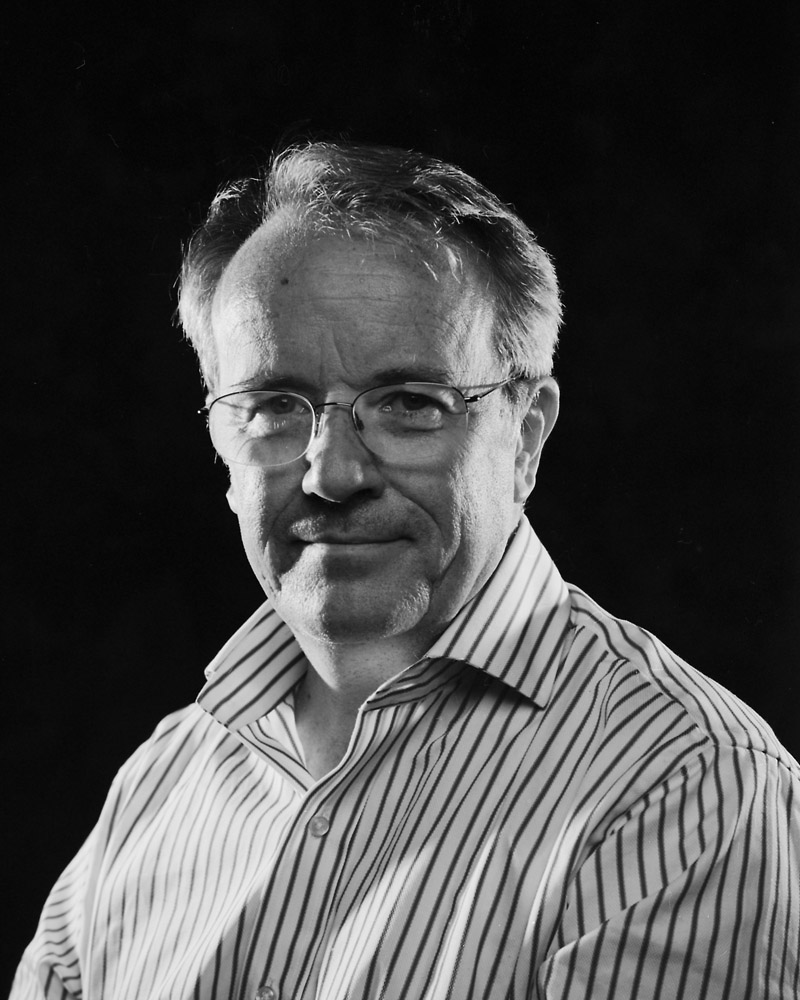
The portraits here are taken by me of my students. The portrait of Joe was done to demonstrate side light with a large diffuse light source, and a reflector. For demonstration purposes I moved the reflector in and out to lighten and darken the shadows, and shot it with both high and low contrast. This is my favorite of the bunch – there’s three-dimensional modeling of his face with the light, but the shadowed side of his face is not lost.
Joe P.
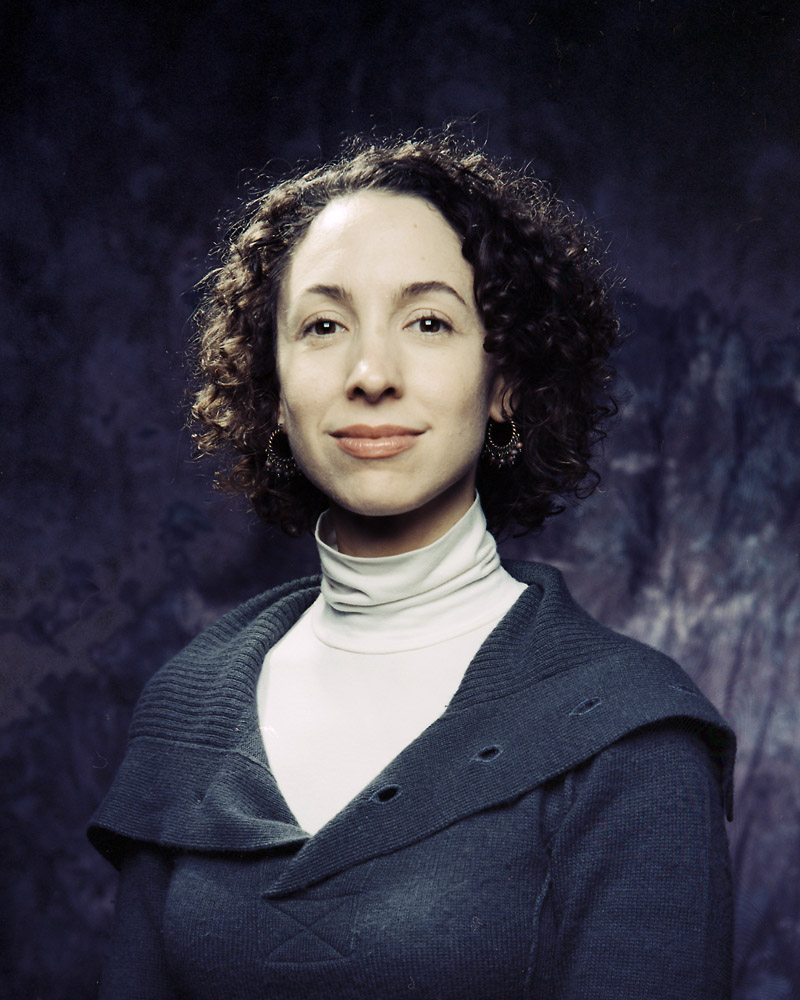
Geraldine was lit to show soft, flattering light. This was the classic “butterfly light” with a large diffuse light directly above and in front of the subject, a reflector below to open up the shadows a bit, and then hair light and background light applied to create separation of the subject from the background.
Geraldine W.
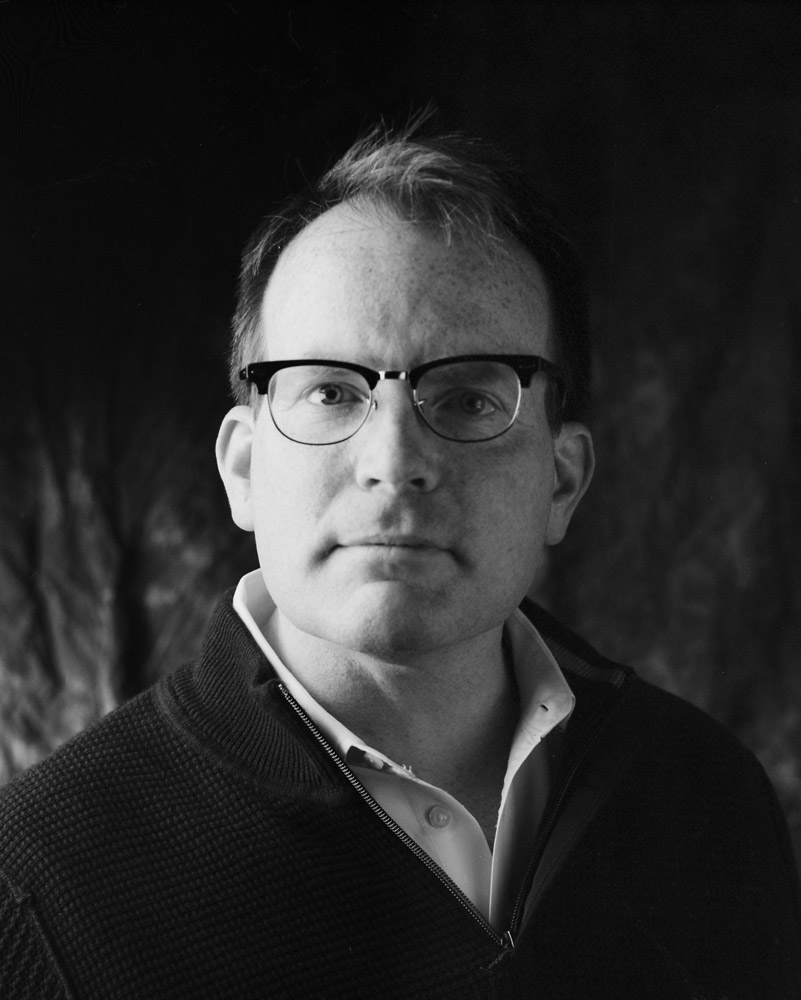
The shot of Matthew was done to demonstrate that “edge lighting” look you often see in sports photos of young athletes in shoe commercials. Obviously Matthew is no longer a high-school football player, but the look is very masculine and rugged and it works well on him. This was accomplished with two equal-powered heads in soft boxes, placed behind the sitter, at 45 degree angles to the subject-camera axis, and then adding in a little fill in the front so his face wouldn’t get lost.
Matthew F.
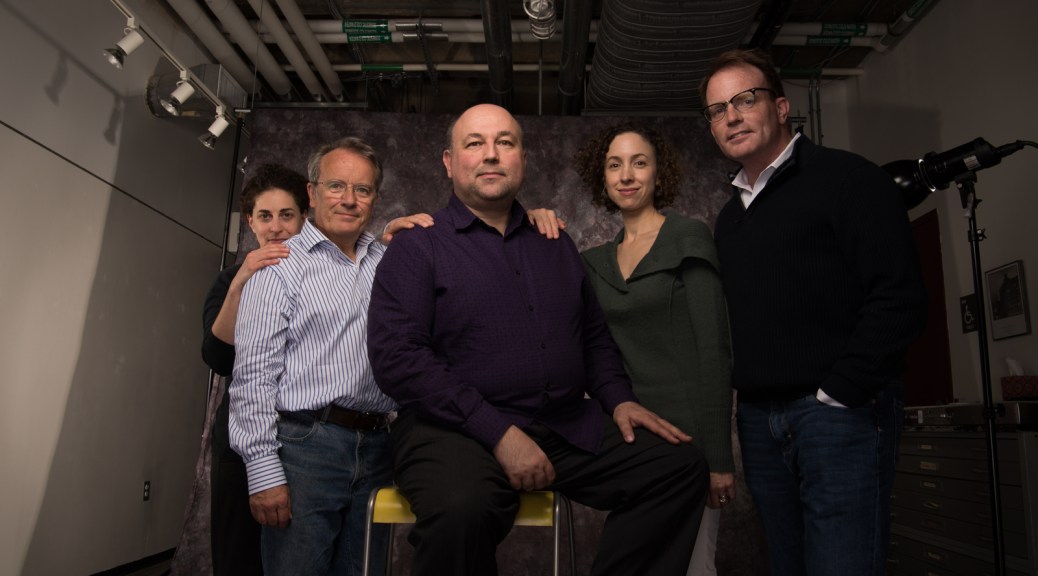
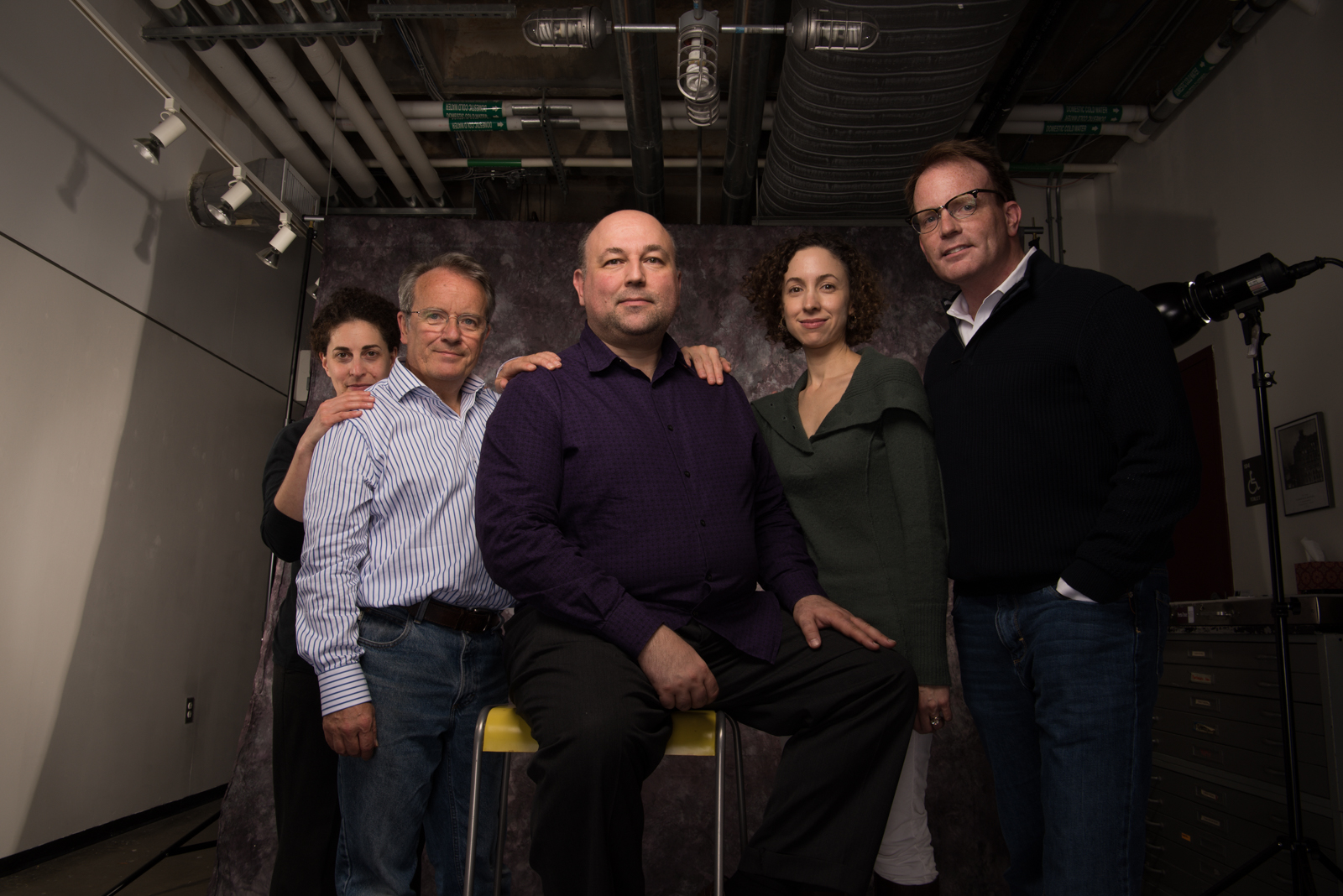
The final photo of the day is our group shot. That’s me in the center, if you’re wondering. My fourth student in the class was Leslie, who is the one hiding behind Matthew’s shoulder.
Studio Lighting Class
All individual portraits were done with a Tele-Rolleiflex and the Rolleinar 0.35 close-up adapter, on Kodak Ektar 100 color film. The two black-and-white images were converted from Photoshop. Ektar is a good portrait film in natural light, I’ve decided, but for studio portraiture, Portra 160 is better.
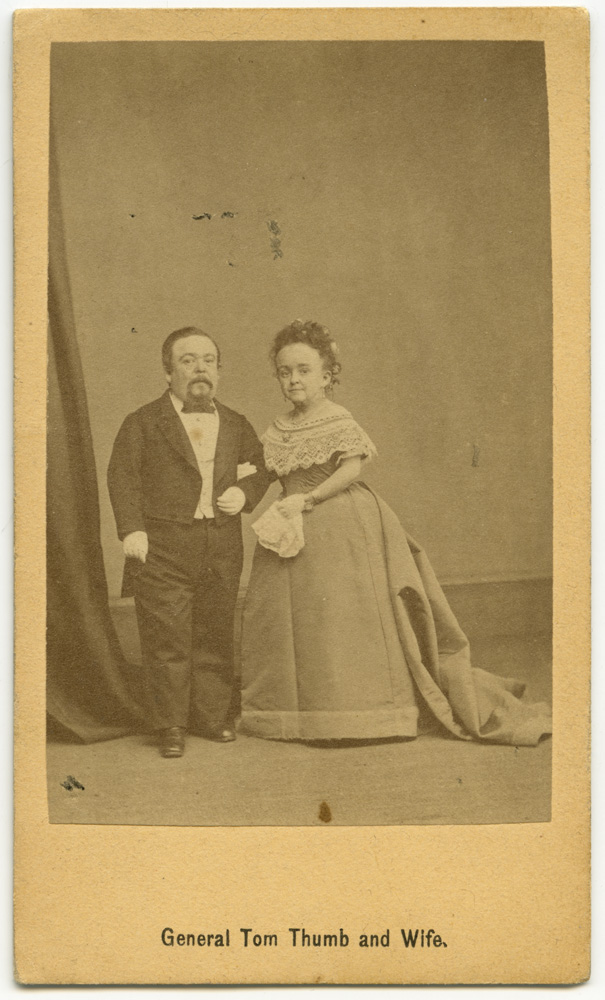
Well folks, I think it’s time and appropriate that I spin off my blogging about image collecting from my blogging about my own photographic endeavors. I want to differentiate the two activities and use this blog, dcphotoartist.com, as a professional communication channel to talk about and share my portrait work and travel images. So I hope you all will bear with me as I make the transition, and read up on both blogs. The new blog will be http://dcphotocollector.com. I’m using the theme photo of this post as the branding for the collecting site, at least for now. I’m launching it with another post about Tom Thumb and his wife.
Render (v): to distill, to cook down to its essence, to translate, to represent.
Rendering: an act of bringing into being, of distillation, of translation, of representation. By aiming our gaze at works created using “alternative” processes, we aim to show the diversity of work being created at this nexus of the 19th and 21st centuries and engage in a dialog about what it means to create work using anachronistic techniques.
Curators: Scott Davis and Malcolm Cosgrove-Davies
Scott Davis is a faculty member at Photoworks where he teaches alternative processes, portraiture and studio lighting. He received formal training at Maryland Institute, College of Art. His specialty is platinum/palladium printing, and he is an avid collector of 19th century photography. He has exhibited his personal work locally, nationally and internationally, and has served as curator at the former Art Reactor Gallery in Hyattsville.
Malcolm Cosgrove-Davies is a self-taught photographer who since 1978 has been practicing historic photographic processes including gum bichromate, cyanotype, VanDyke, palladium, and carbon printing. Mac’s images derive from his extensive travel to developing countries as well as everyday life. Using antique and hand-made film cameras in various large & panoramic formats he seeks to match the image to the beauty and elegance of the selected photographic process. In addition to building the occasional camera, printing frame or other useful photographic gadget, he also creates books and presentation portfolios for his prints. He is represented in various collections such as the Smithsonian American Art Museum, Library of Congress, Maier Museum, and Lehigh University Art Galleries.
Works to be considered must be made using an alternative/historic process, including but not limited to lumen prints, tintypes/ambrotypes/melainotypes, daguerreotypes, gum bichromate, platinum/palladium, kallitypes, Van Dyke Brown, cyanotypes, carbon prints, calotypes, salt prints, albumen prints, bromoil, gumoil or some combination of the above. Silver Gelatin prints are not accepted. Original capture of the image can be from in-camera negatives or digital capture or some combination thereof, but the final image must be a physical object made using one or more historical processes. For a submission fee of $40, each artist may submit up to five examples. Send jpegs at 72dpi, 1000 pixels on the long axis. JPEGs should be named ArtistName_number (i.e. JohnBrown_1 ).
Also include an artists statement, brief bio and an explanation of the work(s). All required documents (JPEGS, Artist statement/bio/explanation of works) should be emailed to photoworks.gallery@gmail.com no later than February 21st. Notifications will be sent by email to all selected artists by March 1. Works must be received by March 14. The opening reception will be held on March 26.
Explanation:
The explanation should enumerate the title of the work, the file name of the associated JPEG, the size of the piece (including frame dimensions), the year it was made, and any pertinent details about the creation of the work.
Example:
Image Title:
File Name:
Size:
Year Created:
Explanation:
Joseph
JohnBrown_1.jpg
8”X10”
2016
Hand-colored quarter-plate daguerreotype, distressed with fingerprints and acid etching.
All works accepted must be framed/mounted and ready to hang. Outside dimensions should be no greater than 24 inches on the long axis. All works must be available for sale – Photoworks takes a 35% commission on any sales. Artists are 100% responsible for shipping to and from Photoworks.
You must include a pre-paid return shipping label with your work; any work shipped without a return label will be considered a donation to Photoworks, and will not be returned to the artist. Artists are responsible for insuring their work – while Photoworks endeavors to take every precaution to protect and care for works while on display, they will not be liable for any loss or damage.
Artists Statement:
Please send us a one paragraph statement about your work, and in particular describe why you are using the alternative process(es) you are using; what do they mean to you, to the work, how they shape meaning, their aesthetic impact.
Artists Bio:
Please send a one paragraph biography.
Forty years ago, in a derelict building hidden among the abandoned amusement park rides of Glen Echo Park, four young photographers founded Photoworks with little more than a shared passion for the daily work of seeing, shooting, and printing images of lasting beauty and artistic integrity. The day-to-day collaboration, creative dialogue, and informal mentoring that led those artists to successful careers as fine art and commercial photographers established the values of experimentation and collegiality that define Photoworks today. Offering a diverse combination of educational programs, gallery exhibitions, and community initiatives, Photoworks is a vibrant and unique resource for student and professional photographers – an arts community in the very best sense of the word.
For more information about Photoworks, visit their homepage: Glen Echo Photoworks
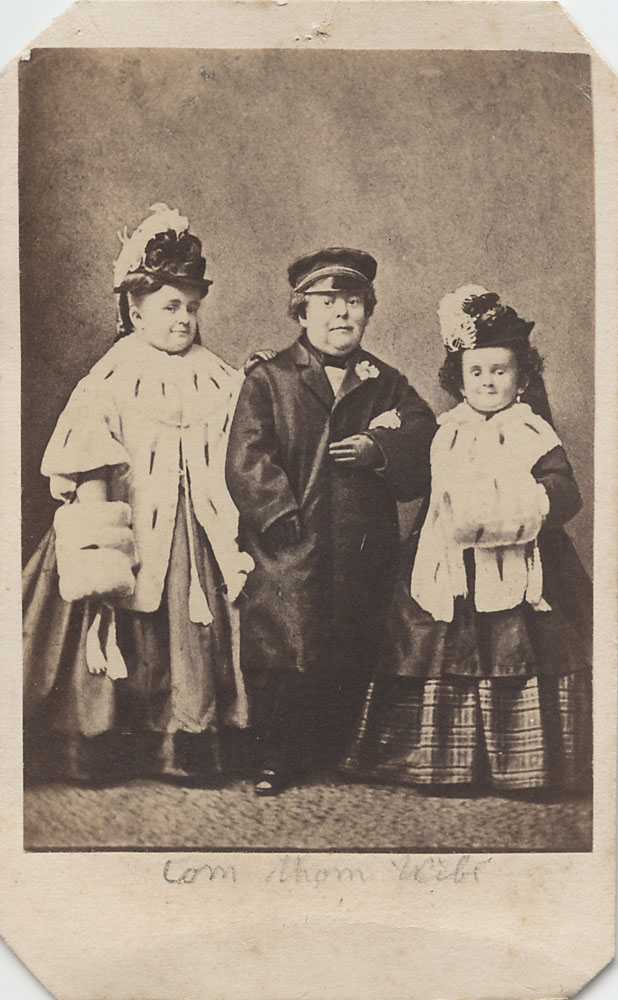
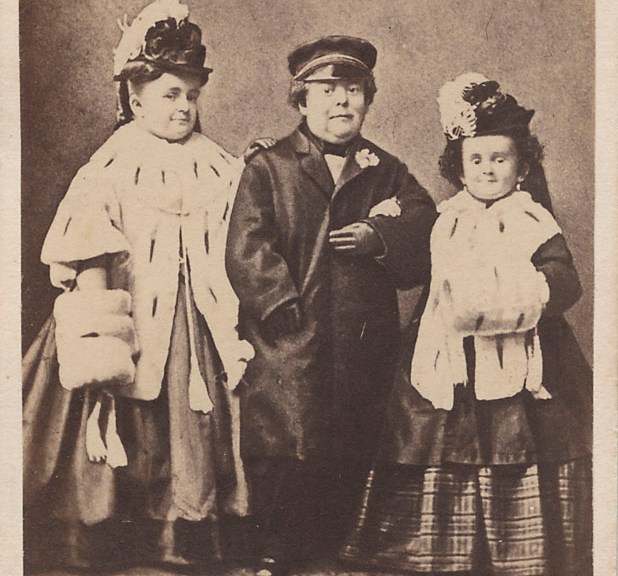
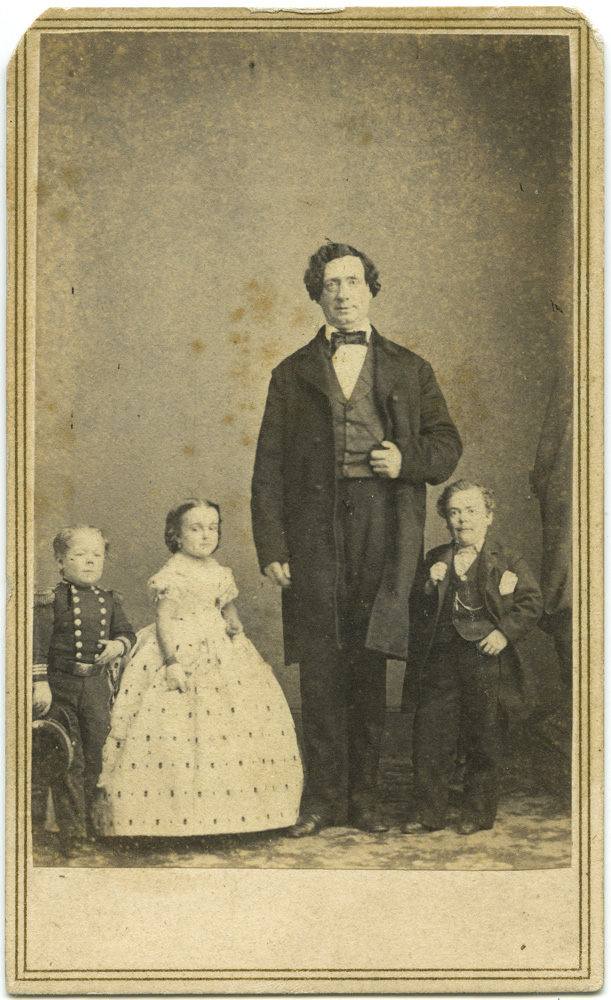
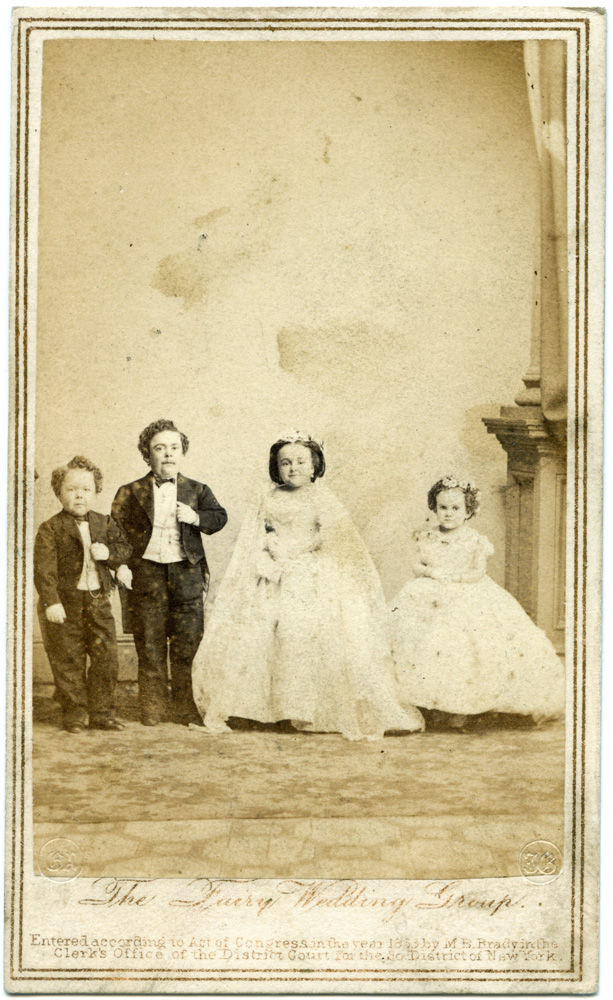
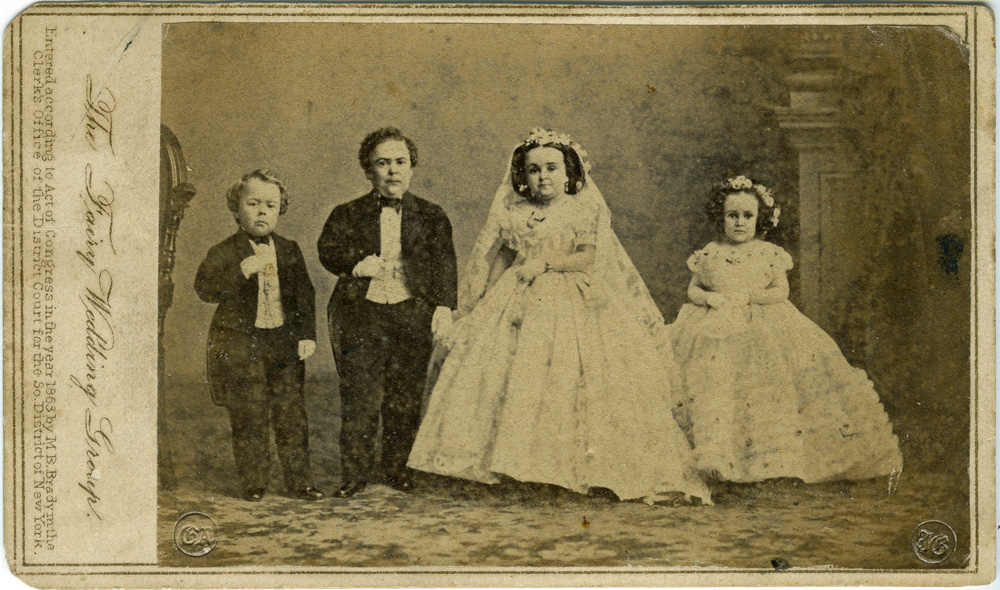
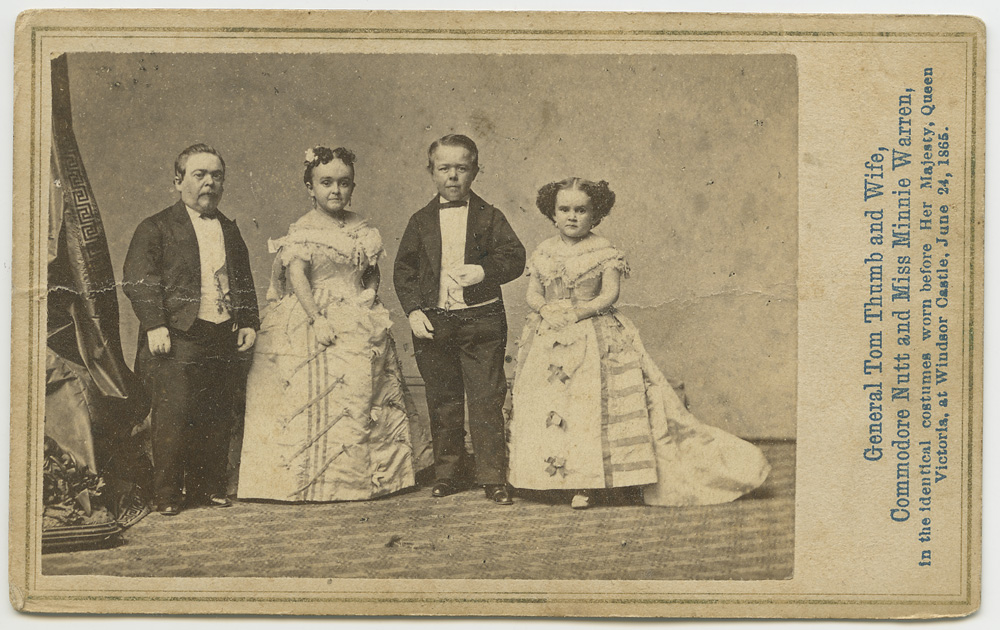
No, not a prequel to The Thief, the Cook, His Wife and Her Lover, it’s a CDV by an unidentified photographer of Tom Thumb, his wife, and her sister Minnie Warren.
Tom Thumb, His Wife, and Her Sister
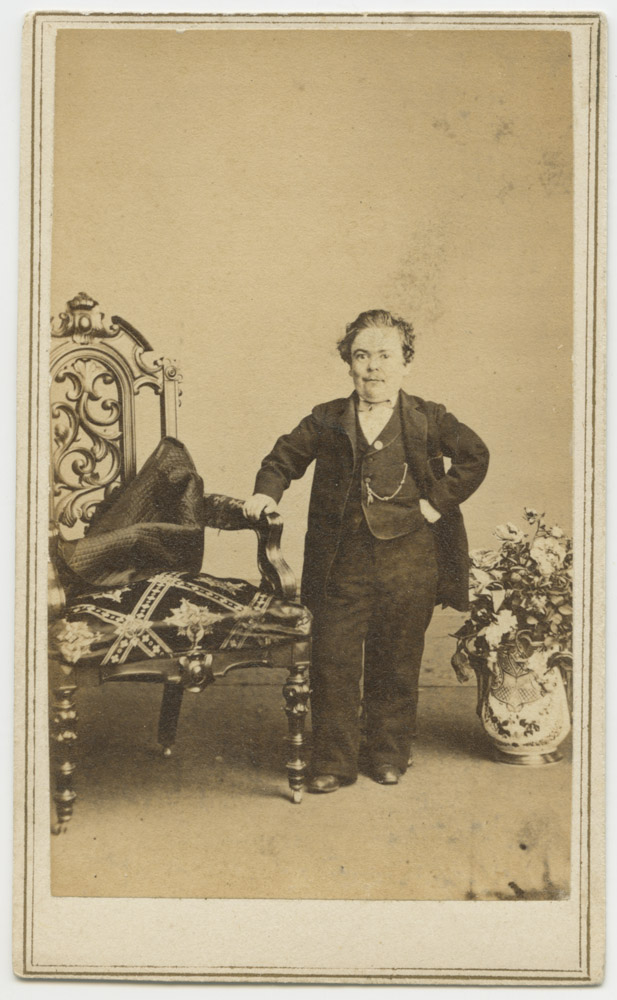
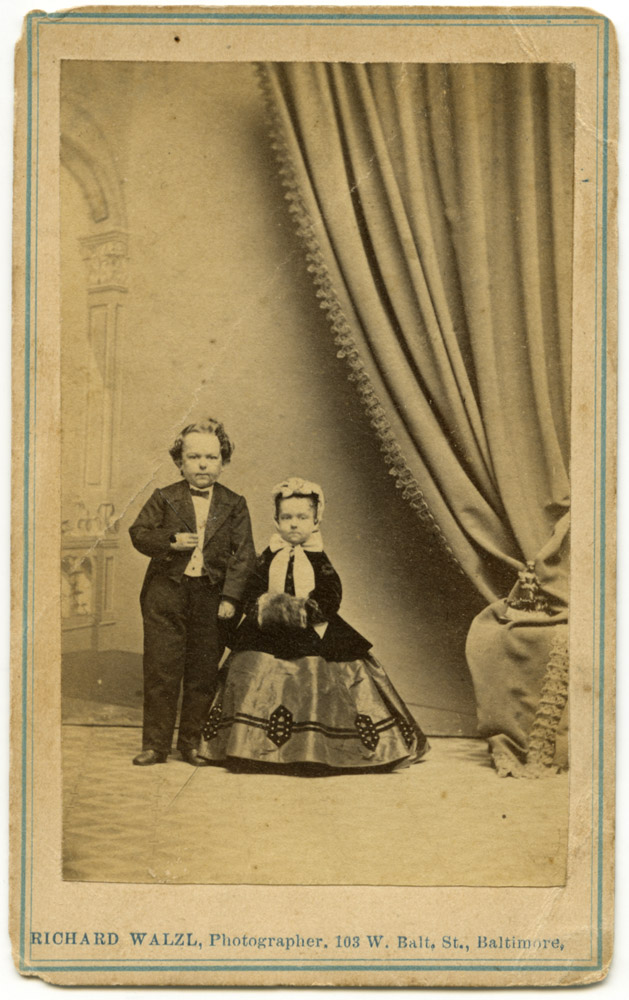
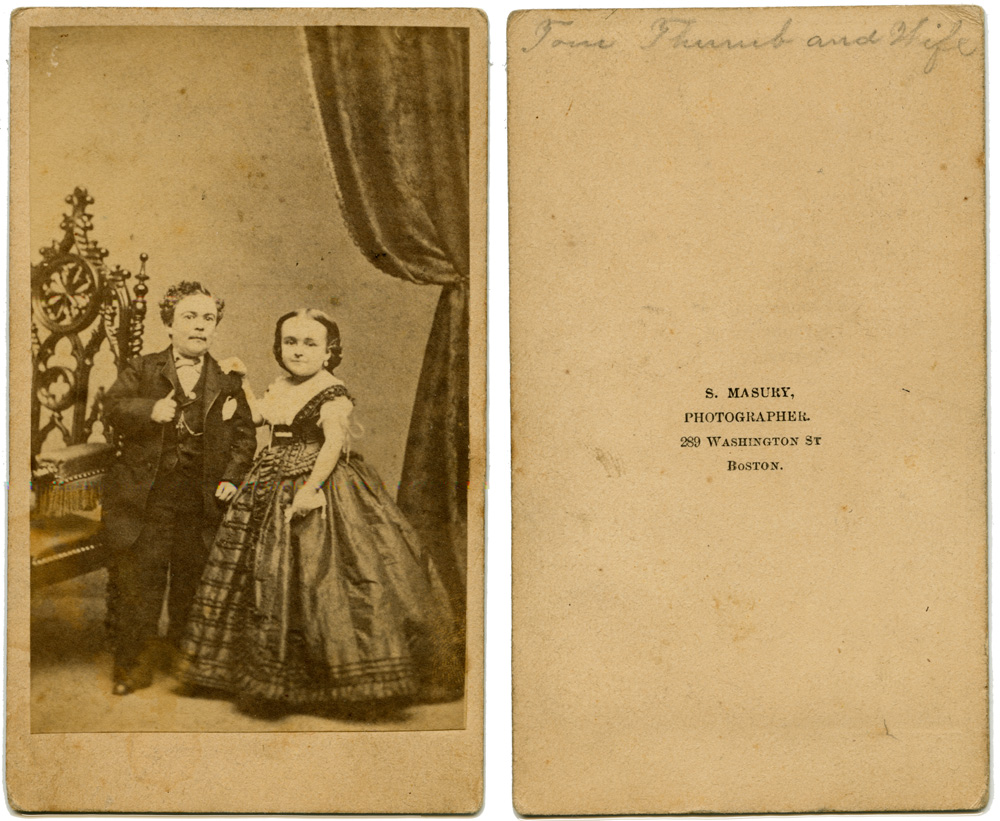
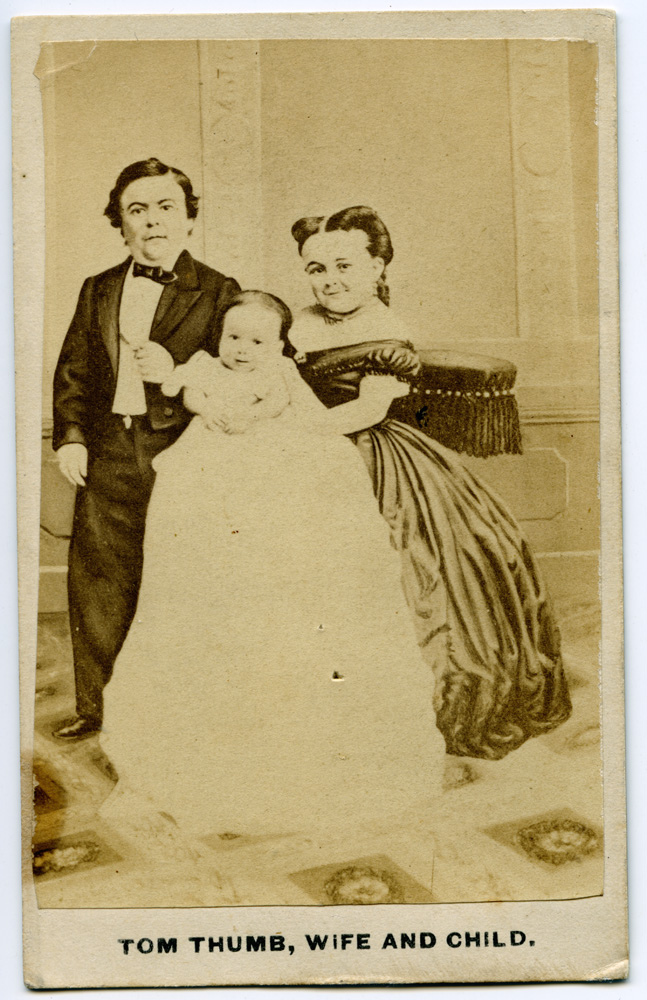
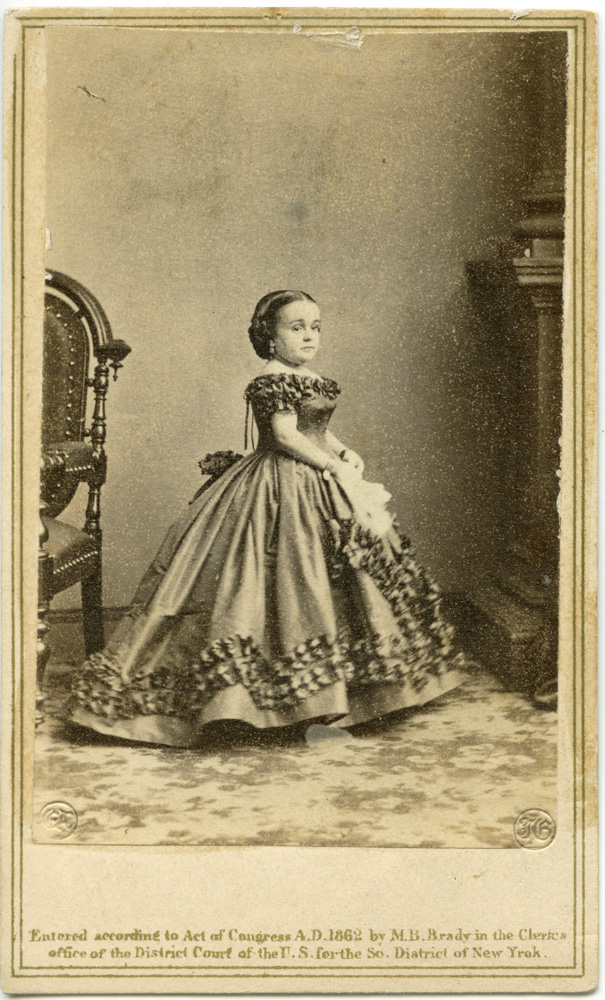
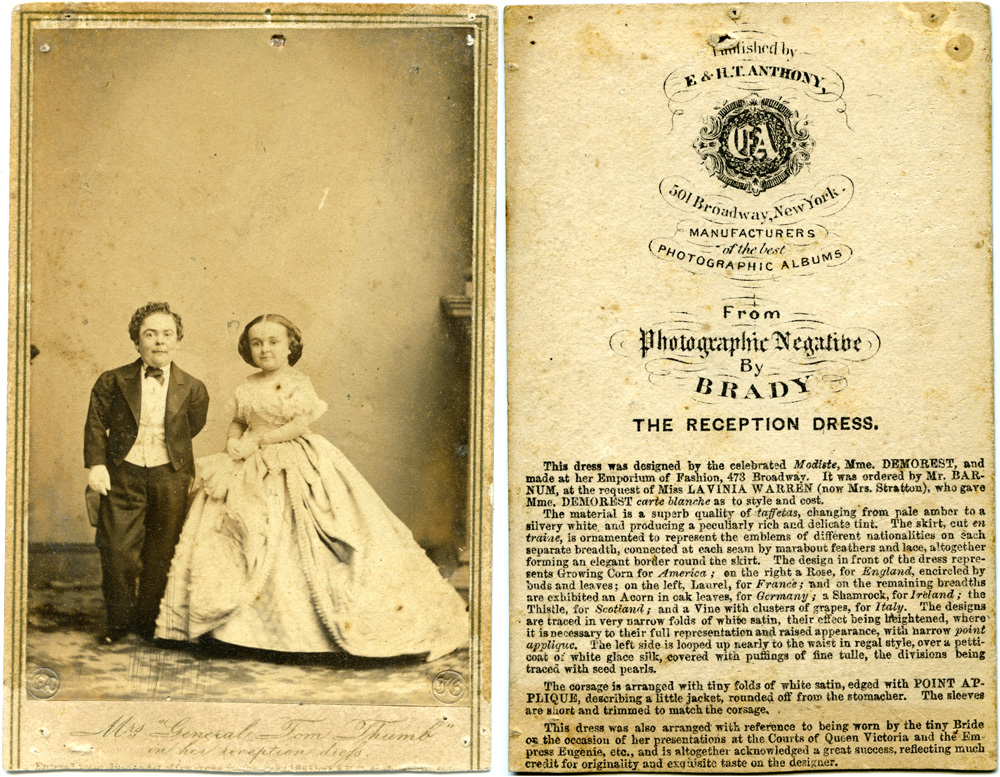
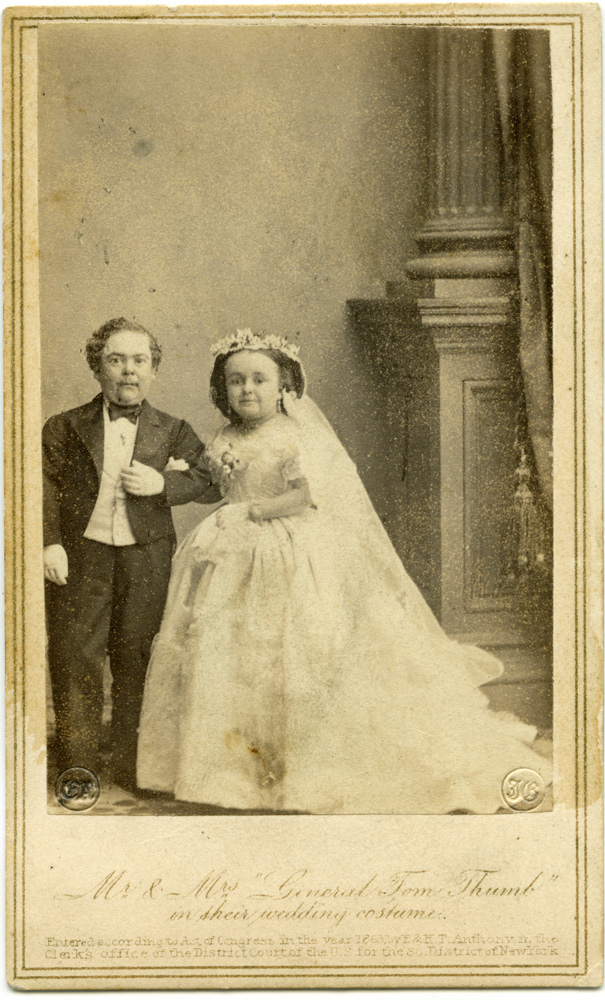
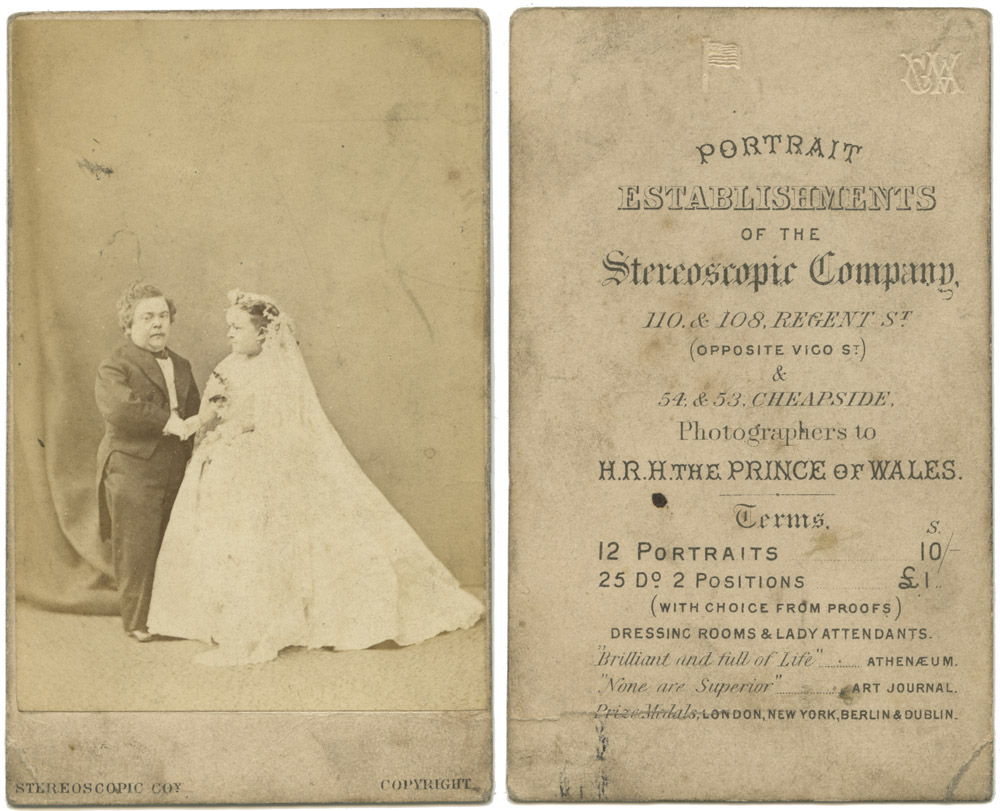
The latest addition to the collection of Tom Thumb images, this was one I hadn’t seen before. Clipped corners aside, it’s in quite good condition overall. Certainly the image is very clear and sharp, and the print has minimal wear. In the conversation I had with Zoe Trodd, the co-author of Picturing Frederick Douglass, she triggered an interesting thought. The main thesis of Picturing Frederick Douglass is that he is the most-photographed American of the 19th century. I was skeptical of this as his images on the secondary collector market are not common, however the book does document her case rather thoroughly, with 150-some distinct images of him known. This got me to wondering how many different images of my favorite subject to collect are there. I’ll enumerate the Tom Thumb images I have below:
Tom Thumb and Lavinia Warren, in middle ageTom Thumb by C.D. FredricksTom Thumb & Lavinia Warren – Walzl, Photographer, BaltimoreTom Thumb and Minnie Warren, in their advancing yearsTom Thumb and Lavinia Warren, by Masury of BostonTom Thumb, Wife and “child”Lavinia Warren Stratton, Mrs. Tom ThumbCommodore Nutt, Mrs. and Mr. Tom ThumbThe Reception Dress, The Fairy WeddingBride & Groom, The Fairy WeddingFairy Wedding Group #3The Fairy Wedding, 1863 E&HT Anthony print, ObverseThe Thumbs, by the Stereoscopic Co of LondonThe Thumbs, Commodore Nutt and Minnie Warren, as presented to the Queen
These are the ones I have in my collection. I know there are more out there that I don’t have (one particular one from the wedding, and at least two from the London Stereoscopic Company). This puts me at 15, eighteen if you count the ones I know but don’t have. It’s a far cry from the 150 of Frederick Douglass, but I’m going to keep hunting and collecting and tallying up. Having been a star of stage and circus for most of his life, he was dependent on publicity for his career and would have worked hard to keep his image in the public eye.
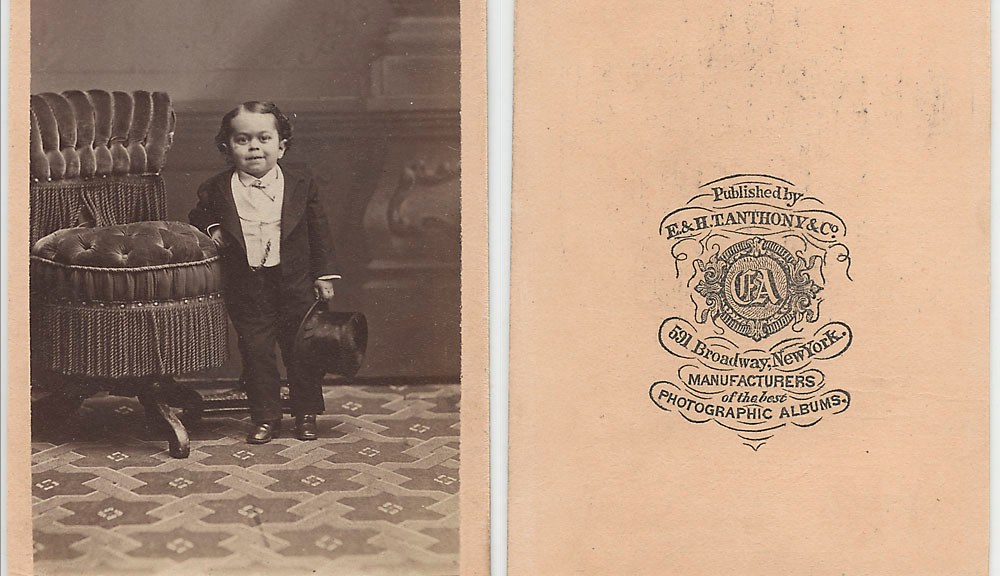
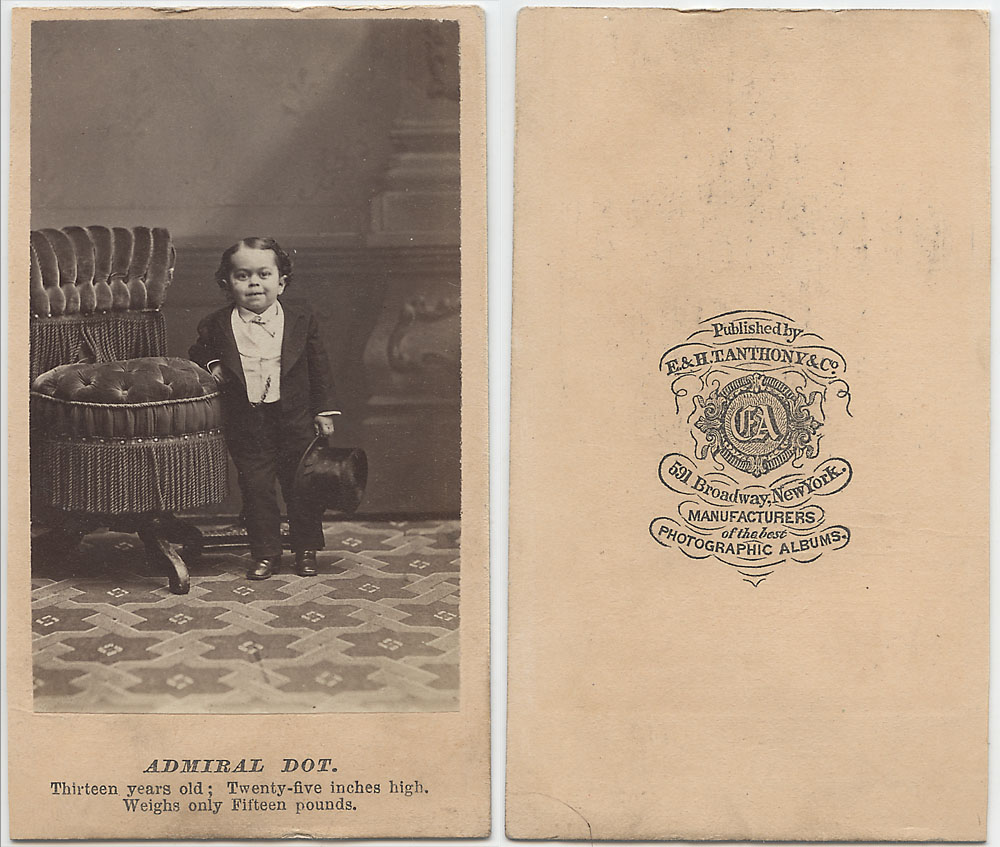
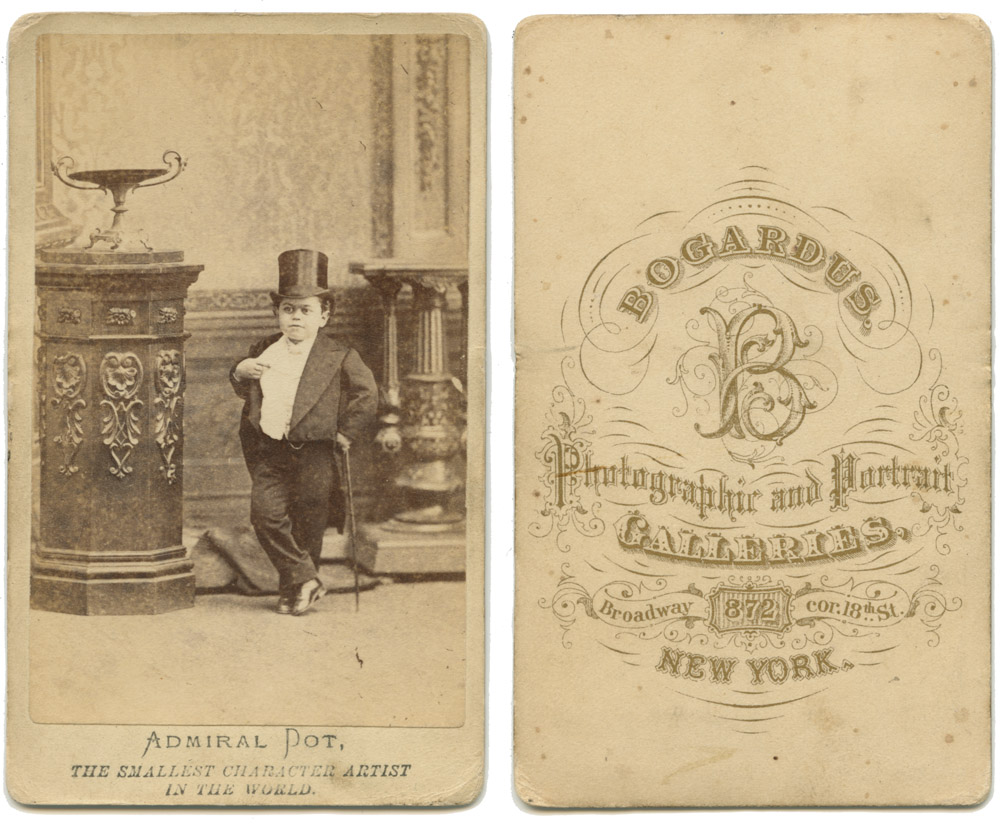
The newest addition to the collection of CDVs of little people sideshow performers – Admiral Dot, age thirteen.
Admiral Dot, Age 13
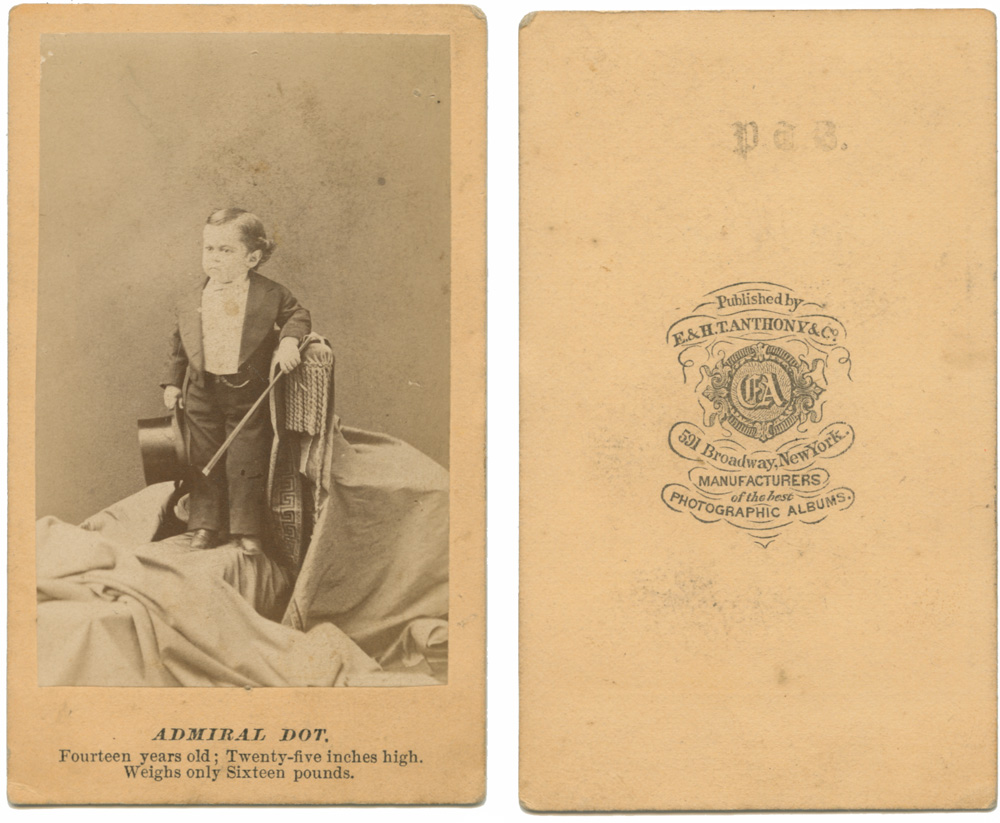
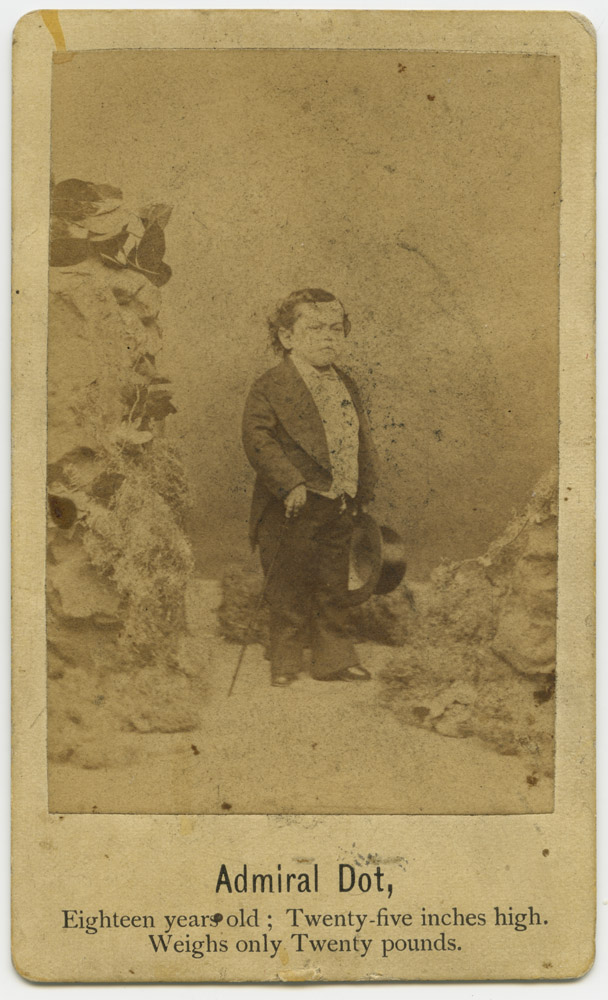
I would take his age, height and weight in this photo with a grain of salt – the producers of these CDVs were prone to mis-statement, exaggeration and even outright lies about the subject’s physical traits as part of the sideshow hype. Fat men and women were often described as sometimes a hundred plus pounds bigger than they were. “Giants” were often endowed with an additional six or seven inches in height. In this case, I’ve managed to wangle a series of Admiral Dot at three different ages- 13, 14 and 18. In the span of five years he’s gained an inch (not unbelievable) and only five pounds.
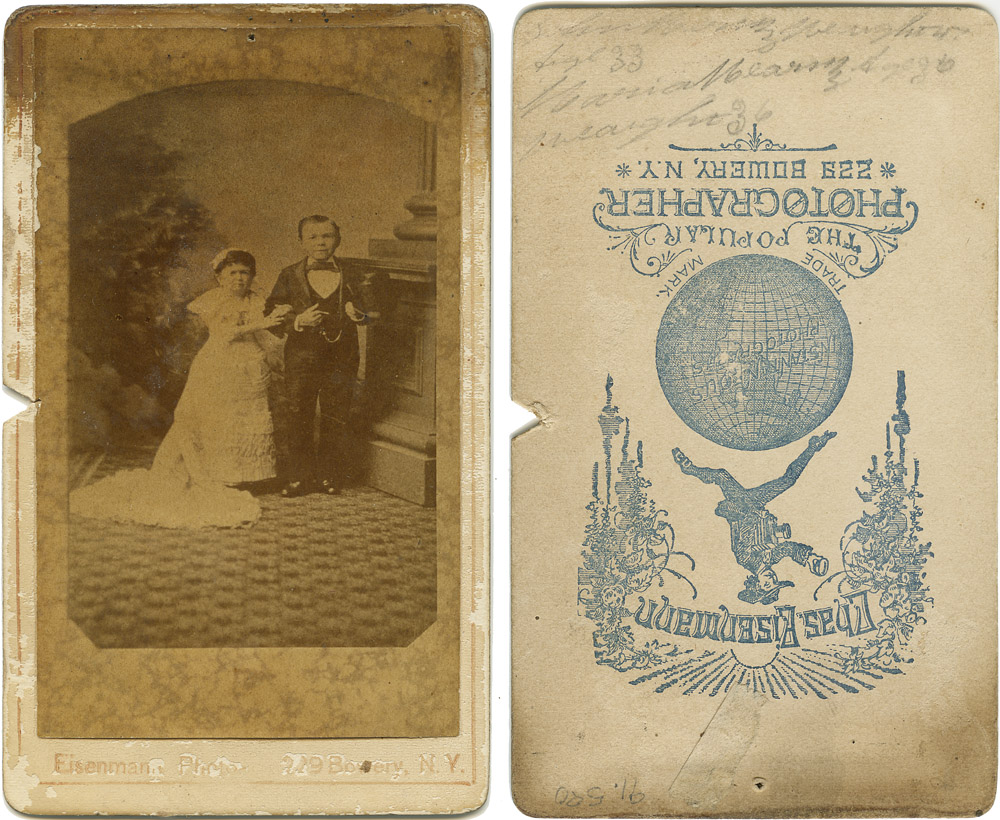
Admiral Dot, published by E&HT AnthonyAdmiral Dot, published by Anthony, photographer unnamedAdmiral Dot, by BogardusAdmiral Dot & Lottie Swartwood By Chas Eisenmann
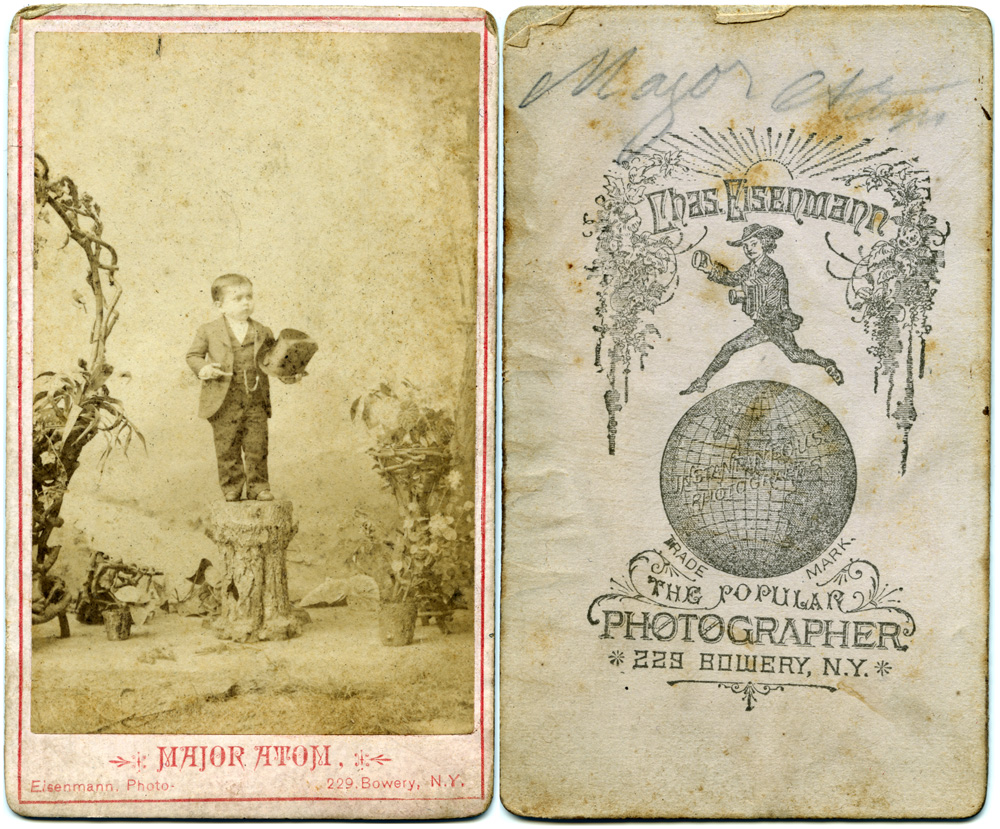
Admiral Dot was born Leopold Kahn in San Francisco. He had two brothers, also little people, who also went on to become sideshow performers – Major Atom and General Pin. He began his career working for P.T. Barnum, but went on to perform with other companies of little people, married another little person, Lottie Swartood, and have two children before dying from the Spanish Flu during the 1918 epidemic at the age of 59. While I do have images of Major Atom, I have yet to come across one of General Pin – he must not have had the career his two siblings did.
Here is my CDV of Major Atom. Can you see a family resemblance?
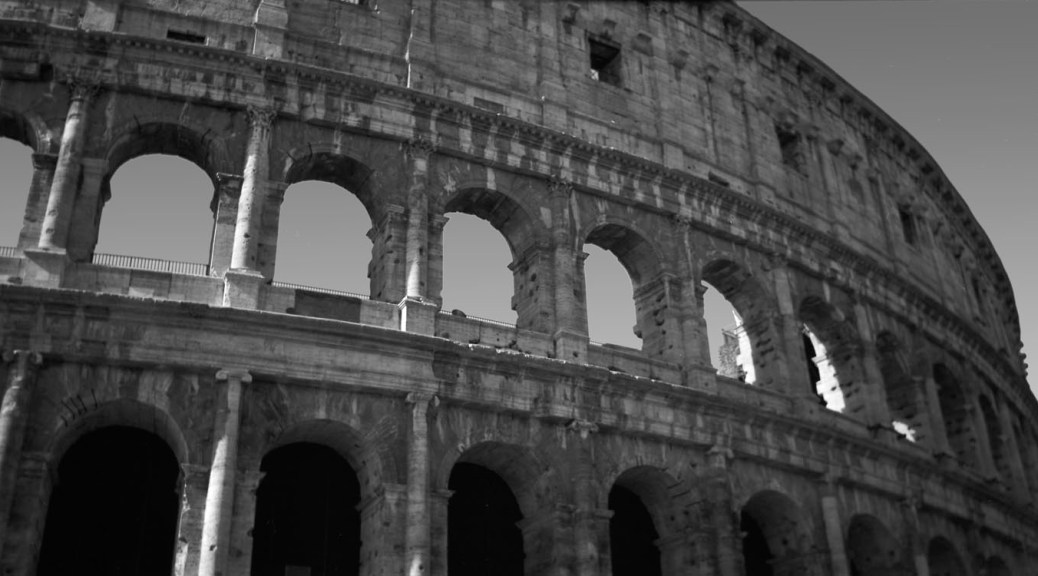
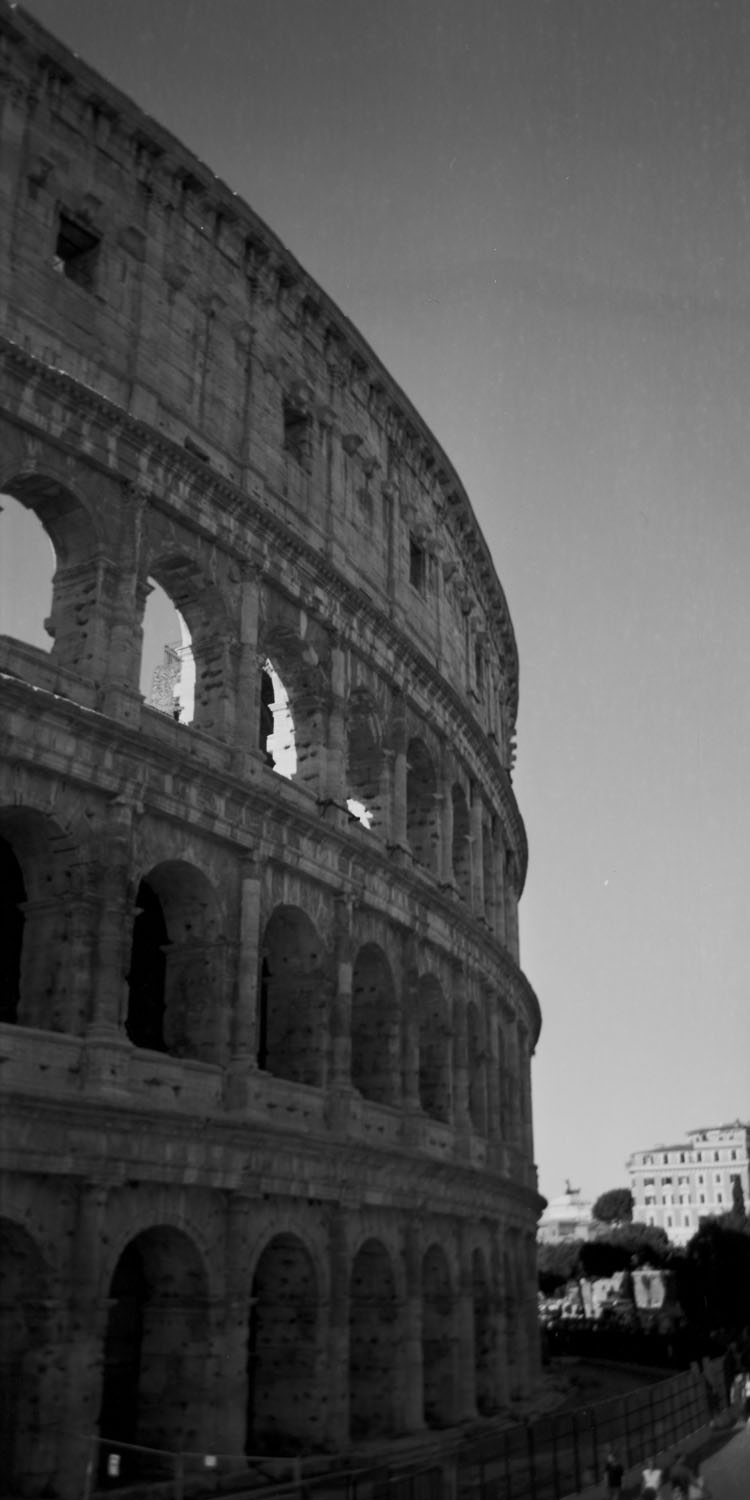
Photographing the Colosseum was one of the primary reasons I brought the Belair X/6-12. I knew already that I wanted to take panoramic shots of the building, as just about anything else aspect ratio-wise was not going to do the place justice. I think (I hope, anyway) that these give you somewhat of a sense of the scale of the building – it sits in a large open plaza and is every bit as large as a modern American Football stadium, seating somewhere in excess of 50,000 people. A testament to its architectural genius is that the entire stadium could be emptied in a matter of minutes.
Colosseum Panorama
These views depict the outer curtain wall, of which only a fraction remains. In fact, almost 2/3 of the original stadium and its decorations are gone – the columns, marble seats, wooden flooring and doors and bronze and gold decorations are all lost to the ravages of earthquakes, vandals, fires, and architectural re-purposing.
Colosseum Panorama
An astounding fact about the outer curtain wall – there is NO mortar used in its construction. The entire edifice was assembled and held together by iron bow-tie shaped clamps interconnecting each block.
So I was busy and didn’t get around to developing the last few rolls from my Italian adventure until a couple days ago. I’m working through them now – they’re all panoramic shots taken with my Lomo Belair X/6-12. I’m still on the fence about whether and how much I like it.
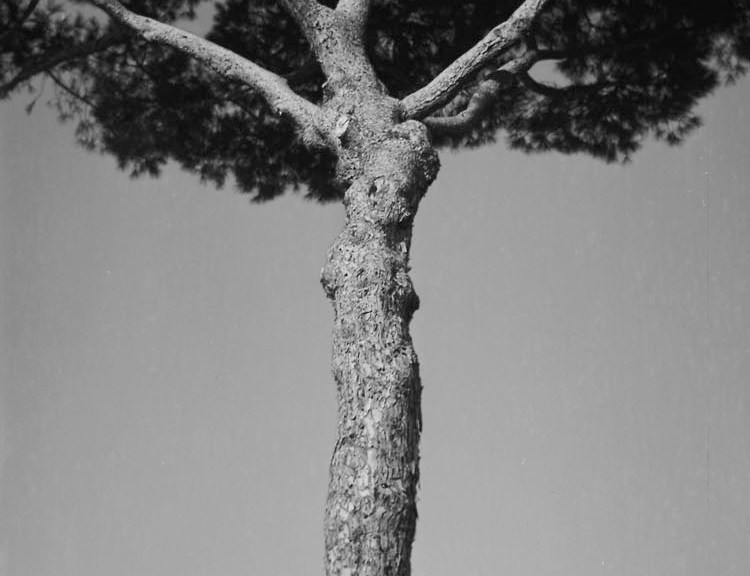
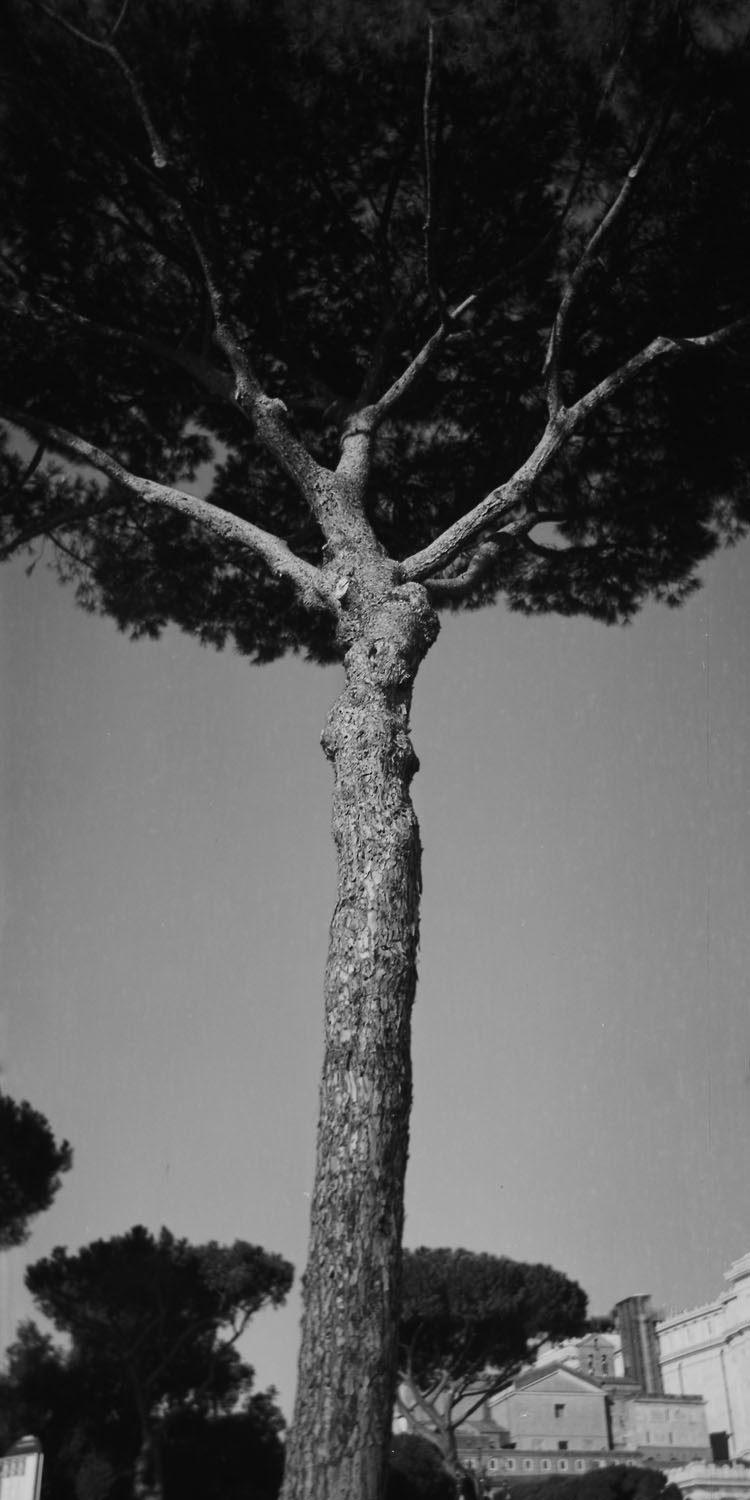
Umbrella Pine, Via Fori Imperiali
In this case, it worked. Quite well in fact. This is one of the famous “Pines of Rome” – the umbrella pine – that are ubiquitous throughout the city and the region. They’re the source of the pine nuts used in making pesto. The umbrella pine is such a signature emblem of Rome I needed to take a photo of it by itself because now having been there, I can’t think of the city without thinking of the pines.



 dcphotoartist