Category Archives: Photography

Upcoming classes at Glen Echo Photoworks, Glen Echo, Maryland

I’m offering three classes coming up this fall/winter at Glen Echo Photoworks, a center for creative photography and photographic education at Glen Echo Park in Glen Echo, Maryland, just outside Washington DC.

The Male Figure in Narrative Photography 9/19 – 11/7/2014 Fridays, 7-10pm

Go beyond standard figure studies. Research historical context and learn to use the male nude form to tell a story in a series or just a single frame through posing, lighting, using props and capturing emotions. What is “narrative photography”? Narrative tells a story either in a series, or a single image. From the earliest days, photographers have been using the male figure to tell a story in their work, be it as a stand-in for himself (Hippolyte Bayard) to express his response to criticism, to confronting eroticism and gender confusion in the world of Latin American bullfighting (Reuven Afanador) or a tool to process inner personal anxieties (Connie Imboden). This course will examine the use of the male nude in narrative photography. We will use examples from historical and contemporary photographers as a background to inform and inspire our own work. Students will be encouraged to create both single image and serial narratives to take their work beyond mere figure studies. We will also discuss issues relating to gender and sexuality with regards to the use of the male nude. We will cover understanding of the male form, posing, basic lighting, the use of props, and basic nude model etiquette. Students will be expected to know how to use their cameras, light meters, and how to process and present their own images. Weekly research topics will be assigned. There will be three shoots with one or more models, plus classroom instruction and discussion sessions. $350, plus $150 model fee.

Introduction to Platinum/Palladium Printing – 11/8 – 11/9/2014 (Saturday/Sunday, 10am-4pm, two day intensive weekend workshop)

Platinum/Palladium is one of the most beautiful alternative processes. This course demystifies the process and teaches how to make good negatives, select papers, coat emulsions, and process prints for archival stability. $350, plus $100 materials fee, payable to the instructor.

One Camera, One Lens – Learning to See 1/15 – 3/7/2015 (Thursday 7-10pm)

Too often our gear keeps us from making better pictures. Photographers often fall into the trap of thinking that more gear is the solution to every problem, when in fact it can be a crutch or a burden. This course teaches how to simplify and focus our creative vision so the camera gets out of the way and becomes a tool not an obstacle. Students will use a camera of their choosing, and a single lens. They will select a project in the first class and follow through on that project, presenting images for critique each week. Students choosing to work with wet darkroom techniques will be expected to know how to process and print their own film; students working digitally are expected to have a working knowledge of their camera and digital image processing tools of their choosing. No changing lenses allowed! $350

The courses will be posted soon to the website, but in the meantime if you want to find out more about Photoworks, please check out their website and their Facebook page-

http://glenechophotoworks.org

https://www.facebook.com/glenechophotoworks

Photoworks is one of the few facilities with regularly scheduled open darkroom times, and at $8/hr for wet darkroom (bring your paper, we provide the rest!), it’s hard to beat!
Custom work – Mounting a Hermagis Eidoscope

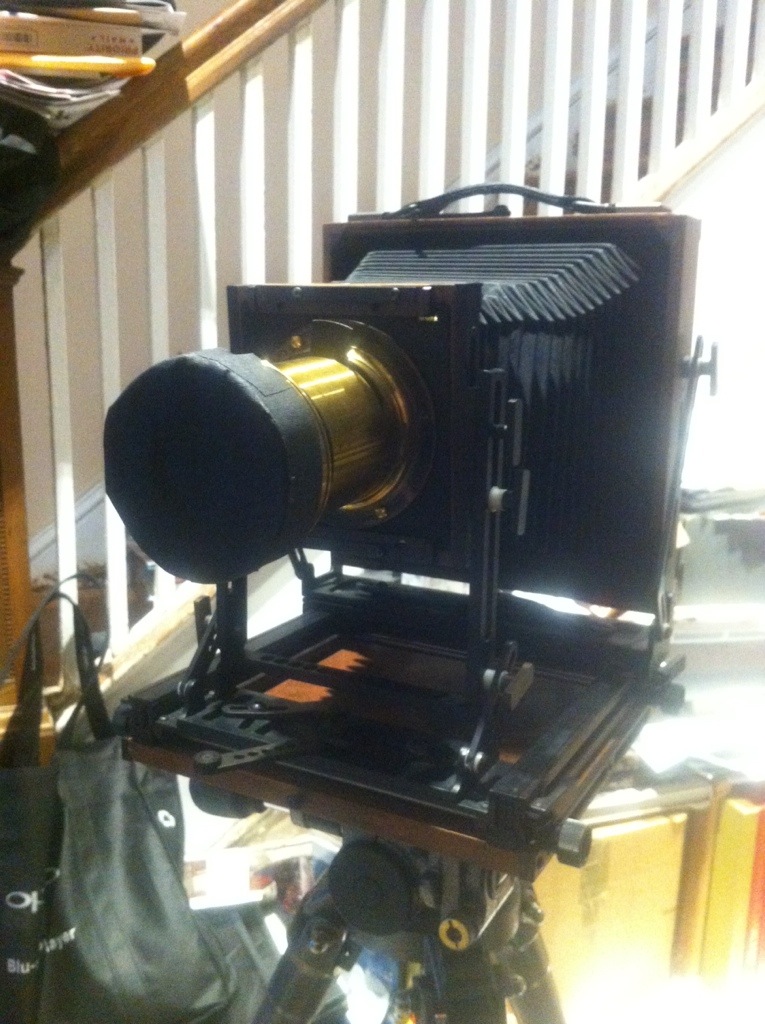
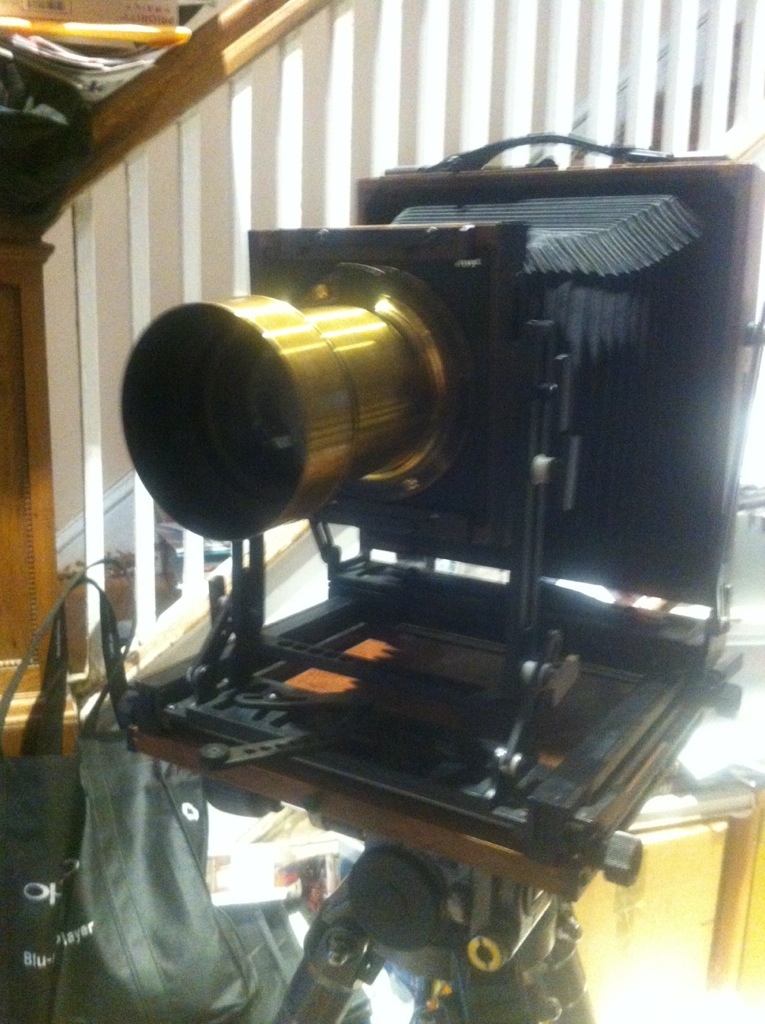
Here are two photos of the Hermagis Eidoscope #5 mounted on my Canham. The Hermagis is on loan to me from the Washington School of Photography. Mounting it on my camera required multiple customizations. First, I had to have the front standard on the Canham swapped out, as the original one was made to handle Linhof lensboards. The Linhof Technika board is just a little too small to take the flange for the lens. Fortunately, the Canham design will accommodate the larger Toyo 110×110 mm board, and now comes standard in that format.

I called Keith Canham and spoke with him about this. One of the great things about calling Keith is that when you call to discuss a problem, he answers the phone himself. You speak directly with the man who built your camera! He suggested that I pull the front standard off the camera, ship it to him, and he would re-use the hardware on a new wood panel the required size. I followed his instructions and popped it in Priority Mail. I had the new panel with all the hardware installed plus the original should I ever want to convert it back in my hot little hands within four days. Talk about customer service!! This is why I will be a loyal Canham customer as long as they remain in business.

I took the Toyo lensboard out to my folks’ place where I have my drill press and, after hunting around a bit to find the proper tools, drilled the hole in the lens board that would let the flange fit. Typically, I slightly oversized the hole, but not so big it caused any problems. I’d wish for a laser lathe but I don’t do this kind of stuff often enough to justify such a thing. For now I’ll live with my cheap Ryobi drill press and my variable diameter circle cutter.

In addition to mounting the lens, I made a lens cap from the cardboard insert that came in a package of Bergger VCCB fiber paper. The lens cap top was traced from the lens hood then cut out with an Xacto blade. The edge was made from a strip of the same board bent into a tube. There was a small gap in the side of the tube because it was too short, but that worked out to my advantage- otherwise the cap would have been too tight and therefore too hard to take off and put on efficiently. The tube is attached to the body with black bookbinder’s tape, the same tape I use for repairing hinges on light traps for film holders.

I’ll be using the lens cap as a shutter for now, until I get around to making a mount for a Packard shutter. You can see the lens cap in the first picture, on the lens.

20140514-080600.jpg

20140514-080613.jpg

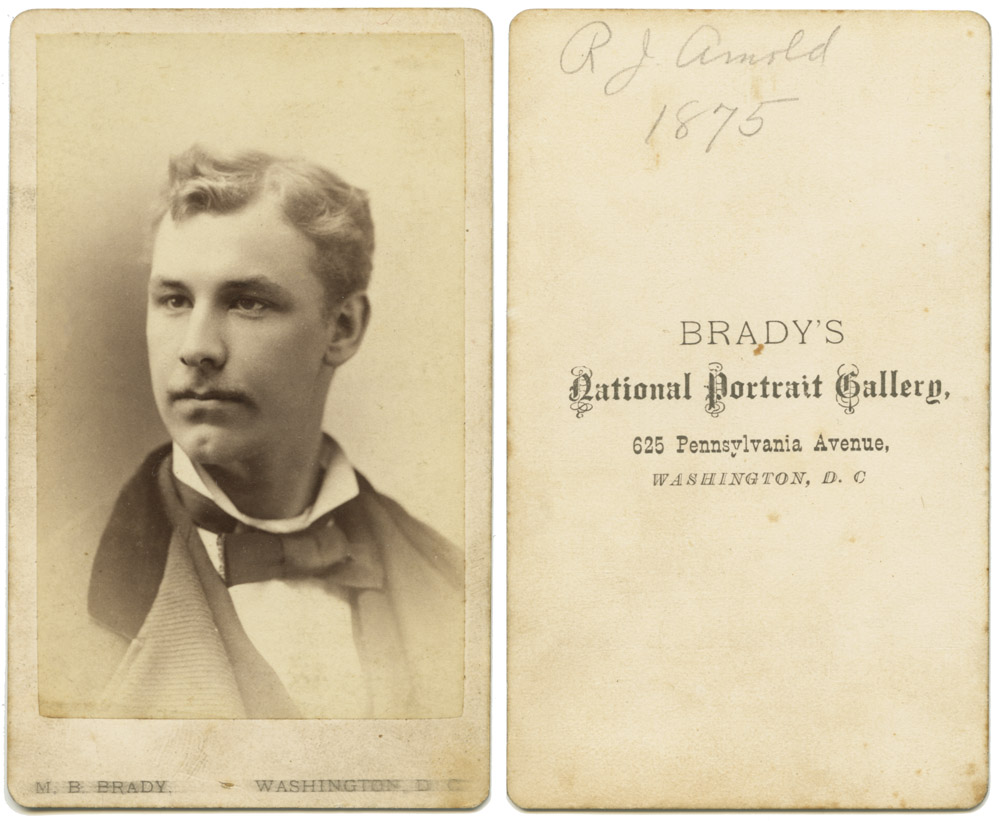
Brady CDV – R.J. Arnold, California Photographer, 1875

Here is a CDV by Brady from his later years at his Washington DC studio. The subject is R.J. Arnold, who went on to have a career as a photographer in California.

Brady CDV, R.J. Arnold

For more information about Mr. Arnold, there is a very nice website about California photographers from the 1870s-1990s at CAViews.com.

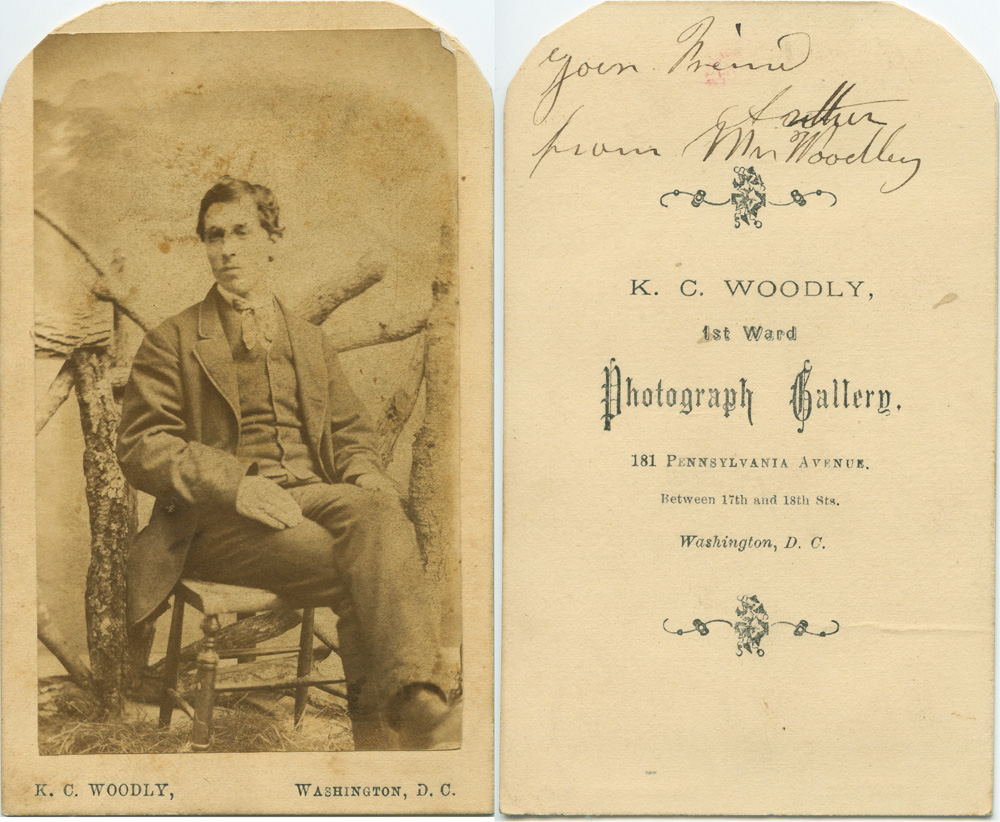
It is seldom that you find photographs of early photographers, so this was a neat acquisition for me. I have one other image that I believe is of a photographer (the label is vague – it could be the photographer himself or it could be merely inscribed by the photographer to the sitter).

K.C. Woodly CDV, Washington DC

Images of photographers with the tools of their trade are, unfortunately, extremely collectible and therefore out of my budget. But this photo of Mr. Arnold as a young man fills a nice niche as a stepping-stone to the goal of a cdv or tintype of a photographer with his camera.

Closing Reception Reminder – Silver Visions, River Road Unitarian Church, 5/3

Just a reminder we’re having the closing reception for our Silver Visions: Large Format Photography show at the River Road Unitarian Church on Saturday, May 3, from 3-5 pm. Please come out and see the work (and maybe even buy something??? Prices are very reasonable!).

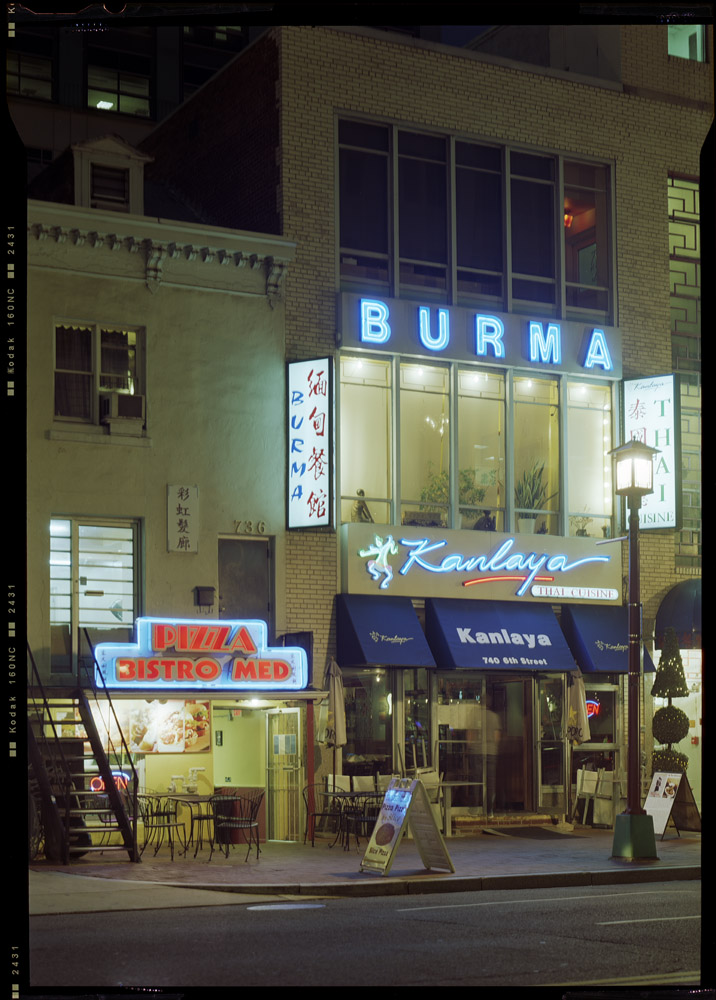
Burma Restaurant, Chinatown, DC

The church is located at 6301 River Rd, Bethesda, MD 20817, but the entrance is on Whittier Boulevard (turn on to Whittier from River Road and make the second left into their driveway – the immediate left is the exit from their parking lot).

For more information about the exhibit or visiting hours or directions, see:

River Road Unitarian Church Exhibitions

A few gratuitous photos from the Fuji GSW 690 II

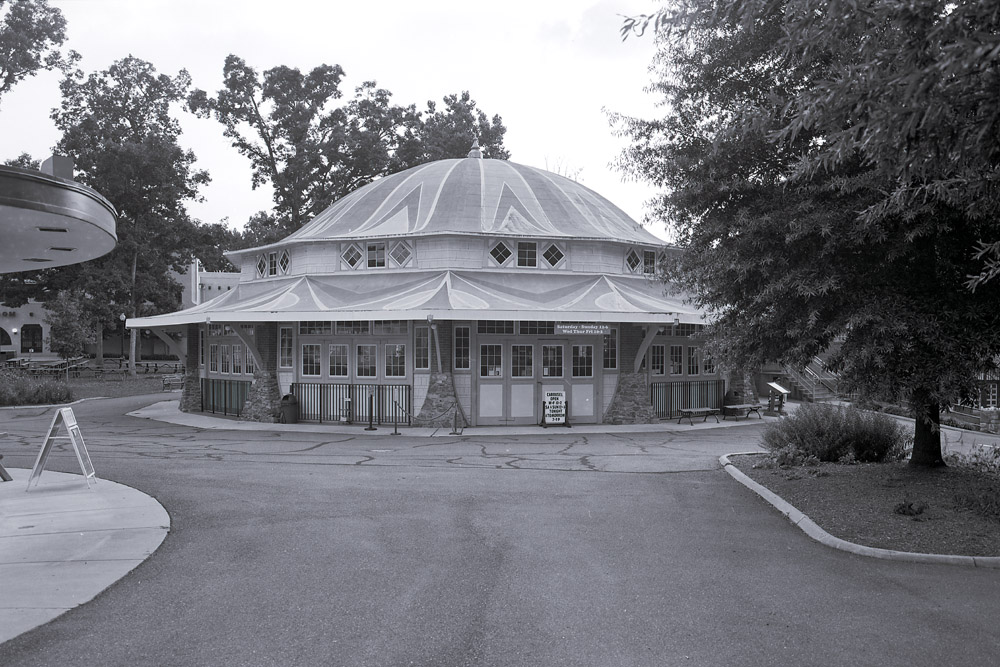
Carousel House, Glen Echo
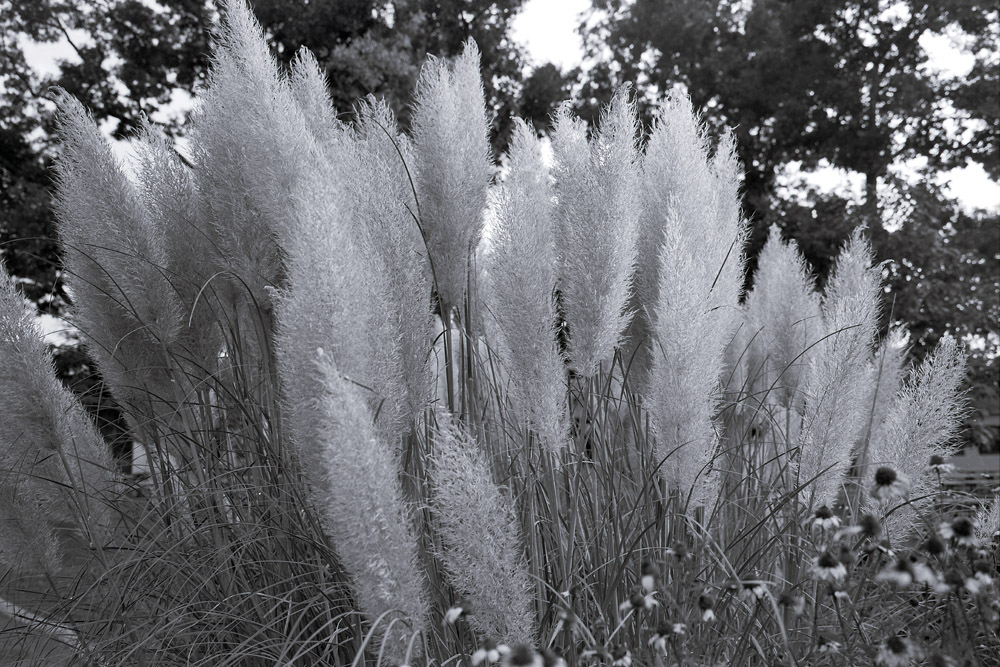
Grasses, Evening Light, Glen Echo
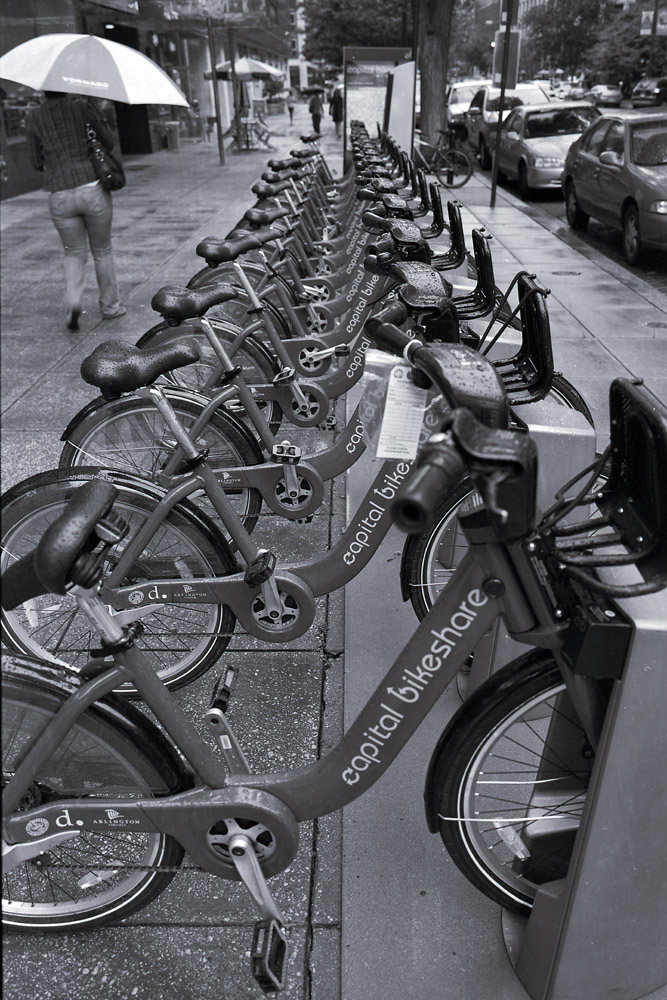
Bikeshare, Downtown in the Rain

A while back, before I went to Paris, a friend loaned me his Fuji GSW 690 II to play with, since I didn’t have anything in a wide-angle to take. While I wasn’t crazy about the camera’s operation, and I don’t particularly like the way it renders color on color film, I have to say going back and revisiting the black-and-white negatives I shot with it I’m actually pleasantly surprised. It might be worth giving another try some day. I may just have not shot enough with it to get a good feel for the operation.

Calumet Photo Update

I got a call from a friend earlier today letting me know the Calumet clearance sale was underway at our local Calumet stores. I went in after work looking for a couple of things, thinking at the least I’d grab some film if they had anything I used. They had a bunch of pro-packs of Tmax 400 left in stock (an emulsion I don’t use in 120) so I just grabbed the three remaining rolls of Ilford Pan-F. They had a 1000w hot light that was a companion to one I bought a couple months ago, and will come very handy for my class tomorrow that I’m teaching about shooting still life. The big score was a Calumet/Bowens Fresnel Spot attachment, which was in like-new condition, but because it had been rented (once!) in the past, it was marked down 40% off. 

One of the giant tragedies of the Calumet closing is the disappearance of camera gear rental from the DC marketplace. Jerry Smith, the rental department manager at the Tysons Corner location, is setting up his own equipment rental business to service the DC Metro area, in Reston, Virginia. 

You can find him on Facebook at  https://www.facebook.com/f8rentals

Jerry is a fantastic guy to work with and extremely knowledgeable. I’m so glad he’s going to take this on and revive an extremely valuable service here in the DC area.

From a Series on Identity and Commodification

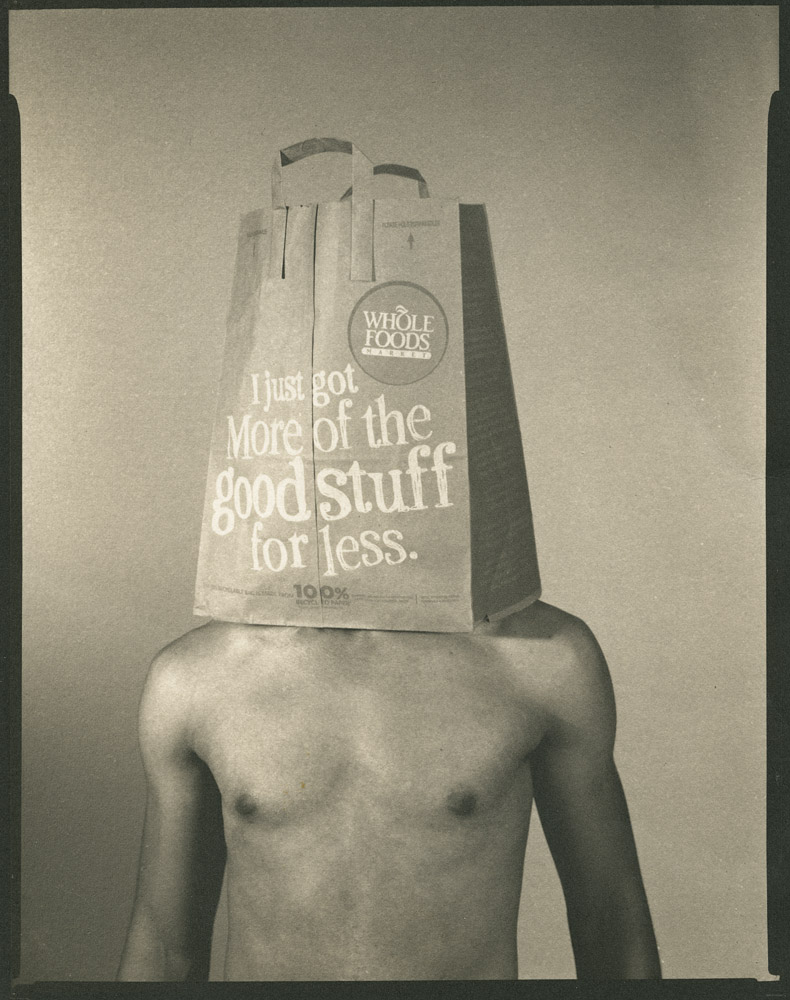
More of the Good Stuff

A long time ago I started working on a series about how we commodify people and their identities. I was playing around with advertising slogans on grocery bags and how those slogans can be used to replace food with people (not in a cannibalistic sense but as something to be looked at as a consumable or a flavor-du-jour). I’ll pick it up again when I get the chance and see if I can do more with it. Let me know what you think of the idea and the execution in this image.

The original is a whole-plate (6.5 by 8.5 inch) hand-coated palladium print on Bergger COT320 100% cotton rag heavy-weight paper.

Platinum/Palladium Prints from the vaults

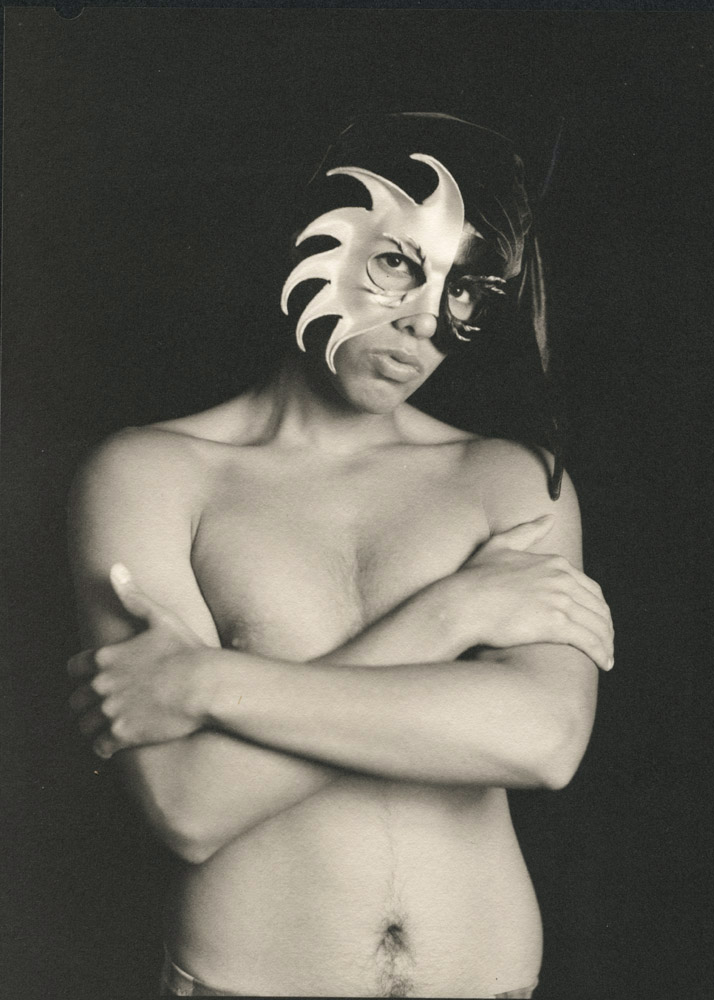
I dug up a few older platinum/palladium prints I did a couple years ago and realized they were worth sharing, so I thought I’d post them here today.

They were studies for a series I was working on – they didn’t make the editorial cut for the series, but as standalones they’re good.

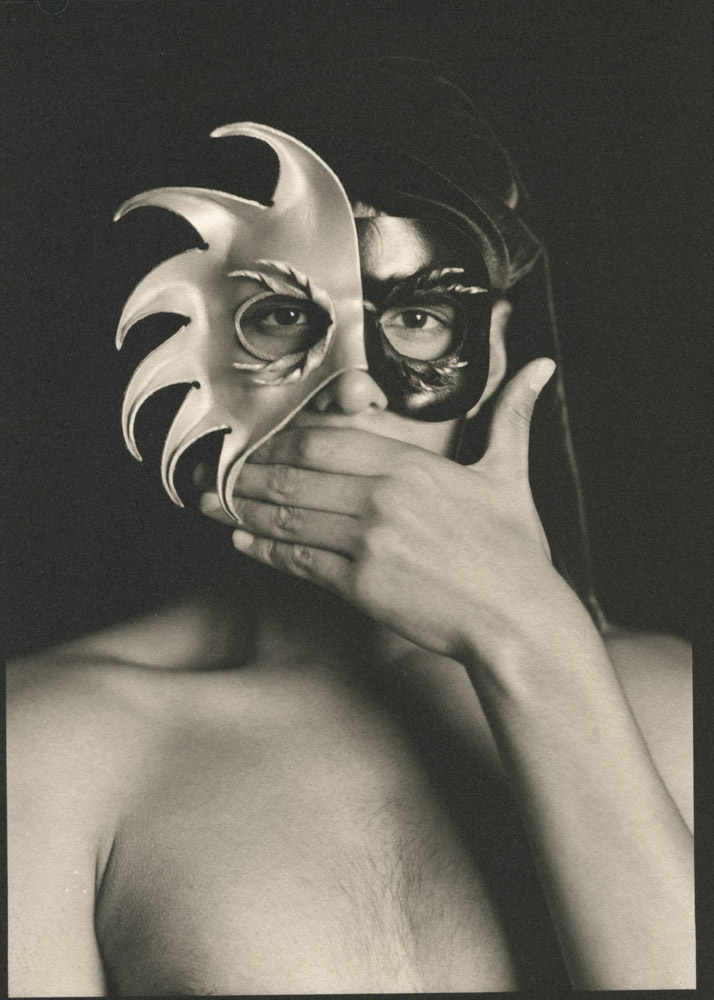
Jester
Jester

Jester
Jester
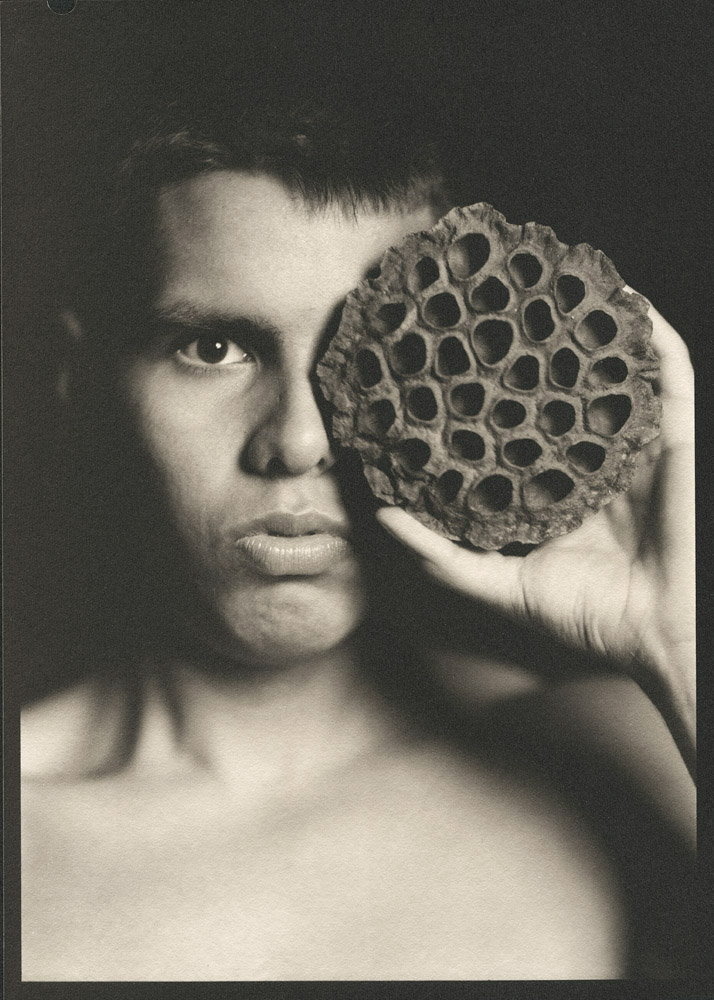
Portrait with Lotus Seed Pod

These were shot in my home studio (aka the dining room) with a single light and a black velvet backdrop. The camera was my ancient studio portrait camera with a 5×7 back installed and a Seneca portrait lens (aka Wollensak Vesta, rebranded). I mention all this to show that you can produce great work with the simplest of set-ups and equipment, and you don’t have to have the latest and greatest or fancy facilities.

New exhibit and upcoming reception

I have eight of my color night photos up on the wall as part of a group show of large format photographs at the River Road Unitarian Church. The show will be hanging through Sunday May 4, when we (the four of us artists in the show) will have a take-down party from 3-5pm. If you can’t make it to the take-down party, feel free to drop by the church and ask to see the show any time during their operating hours:

In addition to the usual Sunday fellowship hours, the exhibit can be viewed Monday-Friday 10 am-4 pm in the Fellowship Hall, River Road Unitarian Universalist Congregation, 6301 River Road, Bethesda, MD. Please call the RRUUC office (301-229-0400) before going there to check that no conflicting activity is scheduled when you want to view the exhibit.

River Road Unitarian Universalist Congregation

Amazingly enough, the RRUUC’s exhibition schedule is so popular we (the large format camera club I belong to) had to book this show almost a year in advance.

Burma Restaurant, Chinatown, DC

New adventure- home processing C41 color negative film

Some of you may be aware of the recent calamity that was the Chapter 7 bankruptcy filing of Calumet Photo. This hit particularly hard as they were the primary photo retailer in the Washington DC area, and my go-to shop for everything from film to lighting equipment to low-volume c41 film processing for 35mm and 120. Well, with the utterly unplanned, un-announced overnight shuttering of their stores, I was left without a convenient, quick source for processing my 120 film (there’s an excellent pro-lab here in town but between their schedule and mine, it takes about a week to turn around a roll of 120!).

As a result of that calamity, I decided it was time and invested in a film processing drum and a set of reels for my Jobo CPP2. Now I’ll not have to worry – I can run a batch whenever I feel like it, from as little as one roll up to six at a time, and it will cost me less per roll than outsourcing it. The reels are the 2502 series reels, and the tank is a 2563 tank. Jobo has a rather involved numbering scheme for their components, so I sometimes get confused trying to match everything up, especially on Ebay where you have to source your components separately. But no matter – I got all the pieces put together last night and everything matches, so I’m a happy camper. Next stop, YouTube, for some videos on how to load those 2502 reels!