Category Archives: Photography

Busy Week in Collecting, Part 2 – various CDVs, including celebrity photos

Here for your viewing pleasure are three random CDVs. The first one I don’t have a lot to say about because the sitter is unknown. The photographer is William Shew, who began his photographic career on the East Coast, then moved out to San Francisco in 1851 to capitalize on the gold rush. He began his career as a Daguerreotypist, and his first studios in San Francisco were a mobile wagon parked in the plaza at Kearny between Clay and Washington streets – now Chinatown (which I hope to photograph the location as it appears today while I’m out in San Francisco on vacation). He was one of only three photographers in San Francisco at the time.

Anonymous CDV by Willam Shew, San Francisco

The next pair of images come from the mid-19th century cult of celebrity. Although both cards are not marked as to their photographer, there is a good probability that they were taken by the Brady studio, which was known for such subjects, and both had been photographed on other occasions by Brady. The first is Henry Ward Beecher, the prominent preacher and abolitionist and brother to Harriet Beecher Stowe, author of Uncle Tom’s Cabin and according to Abraham Lincoln, “this little lady whose book started this great big war”.

CDV of Henry Ward Beecher, photographer unknown (probably Brady)

This one may NOT be Brady’s, because the set is so plain – even the hat stand/support prop is rather simple for Brady’s studio, and oftentimes public figures of Beecher’s status would be invited to sit for their pictures whenever they visited a new town. These cards were the sports trading cards/Tiger Beat posters of their day, and people would collect them in albums to show off when friends came to visit.

The last image is another of Commodore Nutt and a woman who is unidentified, but another little person. It MAY be Minnie Warren, sister of Lavinia Warren, ex-sweetheart of Commodore Nutt who went on to marry General Tom Thumb in the Fairy Wedding (see previous post), but she appears smaller of stature than Minnie. It is also NOT the Commodore’s wife, who while below average height, was not a dwarf. Again, an anonymous image, but very much in the same vein. It may be possible to identify the photographer from the backdrop of the image. The custom backdrops like this were often like fingerprints or signatures for individual photographers’ work – the painted backdrops were often custom-made and very expensive, so they show up over and over again.

Commodore Nutt and unknown little woman, Anonymous CDV (probably Brady)

Note the feet of the posing clamp stand showing from behind the girl/woman. I love finding images that show the stand – it’s a bit of a reminder how the image was made. These would all have been shot in daylight studios on wet plate collodion negatives, which meant that the subjects still had multi-second exposures to hold still for.

Palladium Printing at Large Sizes

If any of you out there have ever done alternative process printing, you’re probably aware of the increase in technical difficulty that comes along with making bigger prints. Each size up adds a new wrinkle, especially when it comes to getting an even, consistent coat. It certainly helps to have a good paper that facilitates a consistent coating via sizing, baryta, or other pre-treatment. Another very important step is using the right brush. I’ve become very fond of the Richeson 9010 “Magic” brush for a good reason – the Richeson brushes have earned their name “magic” by the way the bristles are designed, they just make it easier to coat evenly and smoothly without disturbing the paper surface. They’re worth the price you pay for them from the savings in coating time, reduced re-prints, and hair not pulled out in frustration.

Especially when getting into platinum/palladium printing, most novice printers are extremely cost-conscious. After all, a basic pt/pd kit to make roughly 30 8×10 prints costs in the range of $200 today. And that’s just for the chemistry. However, you’ll quickly learn that there is such a thing as false economy. While printing at smaller sizes, it’s fine to try and economize on your coating solution to see if you can still coat the entire image area. If you under-coat, it’s painelss enough to toss a bad print and start over. All that goes out the window when you start printing bigger than 8×10. Better to be generous with the chemicals until you KNOW your requirements for your paper and your image size, otherwise you’ll be throwing away blotchy, uneven print after blotchy uneven print until you get one. A couple extra drops of palladium or platinum “wasted” will cost you far less than an entire 14×17’s worth that turned out poorly. I was printing some 14×17 prints this week and I realized at the current prices for materials, I was somewhere in the region of $30-40 per print, my cost. You don’t want to mess that up.

When I coat prints that big, I usually mask the edges of the coating area for several reasons. One: I’m using a 3″ or bigger coating brush. Watercolor wash brushes that big are not precision instruments capable of stopping on a dime and not slopping chemistry around. Two: I like nice clean white borders on my paper unless I’m aiming for that ragged, handmade look. Three: the masking tape helps keep the paper in place while coating so it is easier to brush on an even coat of emulsion. One of the challenges of masking is preventing the paper from adhering to the masking tape and tearing when you lift it off. To that end, I’ve found that the 3M “delicate surface” blue painters tape works best. It’s still not a 100% solution, because even when I’m being what I think is careful, I will have the odd occasion where the tape sticks to the paper a little too much and a layer of the paper surface comes up with the tape. I prefer masking with tape during coating to using rubylith to mask while exposing because the rubylith mask just prevents the emulsion from being exposed. You still have to clear the unexposed chemistry out of the paper and if your paper is particularly binding and/or your clearing bath is insufficient, you’ll end up with a rather embarassing looking stain on the paper around your image area. The 3M tape is cheap enough, don’t skimp and try to go cheap. Throw away your tape and pull new strips with each print – again false economy if you try to re-use it, as you run the possibility of contaminating your new print with old chemistry. At potentially upwards of $40 per print, is it worth it trying to save money on $0.10 worth of tape?

Busy Week in Collecting, Part 1- Penobscot Indian Boy

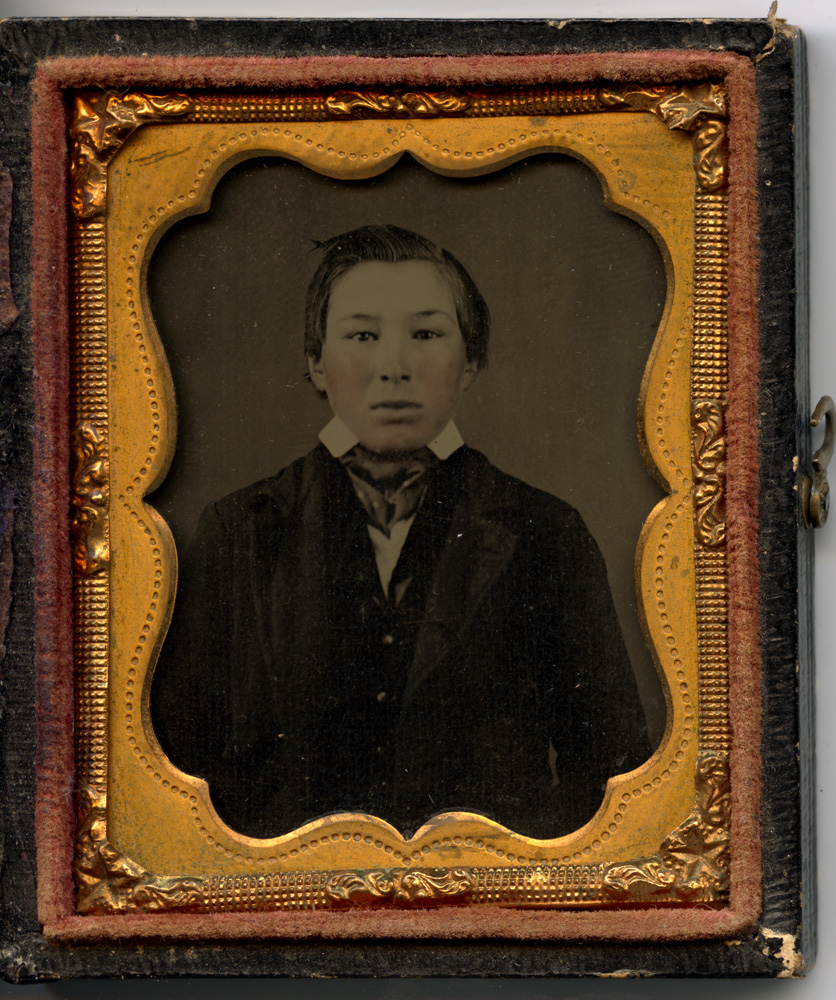
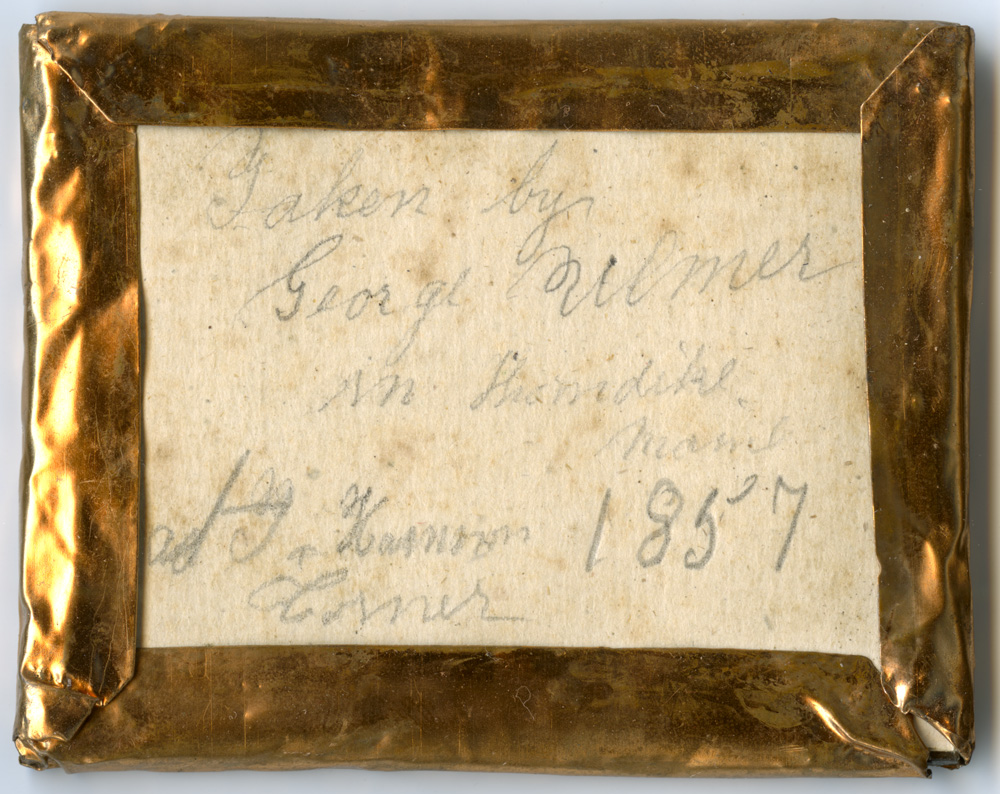
This was a wonderful find – a photo of a Penobscot Indian boy, in Anglo attire and haircut. A 1/9th plate ambrotype in a half case. Most fortunately, when the packet is removed from the half case, there is some attribution to the image. The subject himself remains unidentified, but the photographer put his name, location, and the date taken on the back. It appears to be George Ulmer(Bilmer?Kilmer?), in Thorndike, Maine 1857 At T & Harrison Corner. T could be short for Thorndike Road. If anyone has any information about an Indian School in Thorndike, Maine in the 1850s, or even better can point to attendance records, I would be eternally grateful.

FotoWeek DC events at Photoworks in Glen Echo

Photoworks in Glen Echo, Maryland (just outside Washington DC) will be putting on a slate of events as part of FotoWeek DC from November 5-12, 2011. I will be participating in the alternative process show-and-tell on Sunday, November 6, from 11AM to 4PM. I will be showing selections from my recent body of work of DC at night, all shot on large format film.

I will also be giving a platinum/palladium printing demo later that week (date/time to be determined) – admission is $40 plus a $10 materials fee. Here is the slate of presenters and schedule for November 6. I encourage everyone to come out and see the show, and if you’ve never been out to Photoworks before, please come check it out, it’s a lovely facility in the terrific (and photographically ripe) setting of Glen Echo Park, which is part of the National Park Service!

For more information about the park and its cultural, social and educational activities for people of all ages, here is a link to the park’s website:
Glen Echo Park

11:00 11:30 Barbara Maloney Intro/Temperaprint/Photoetching/Cyanotype
11:30 12:00 Scott McMahon Gum bichromate
12:00 12:30 Scott Davis Platinum/palladium
12:30 13:00 Sheila Galagan Lith Printing
13:00 13:30 Andrew Currie Tintype
13:30 14:00 break
14:00 14:30 Grace Taylor Vandyke brown
14:30 15:00 George Smyth Bromoil
15:00 15:30 Keith Williams Monobath/IR/UV
15:30 16:00 Richard Pippin Lith Printing

A few shots from Sunday

I went out on Sunday evening with a friend of mine to do some shooting over at the old mill ruins at Rileys Lock along the C&O Canal. The ruins are buried in the woods, and a popular hangout for teenagers looking to paint some graffiti or smoke or sit silently next to each other playing on their cellphones. You know, usual teenager stuff.

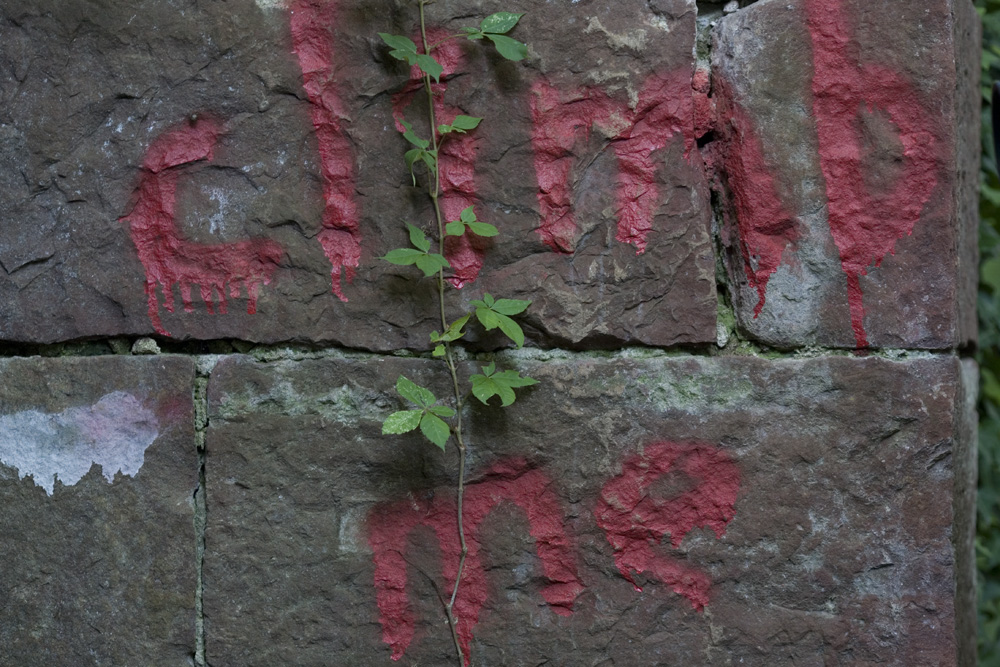
Climb Me
Climb Me

I loved the accidental humor of the vine following the instructions on the graffiti here.

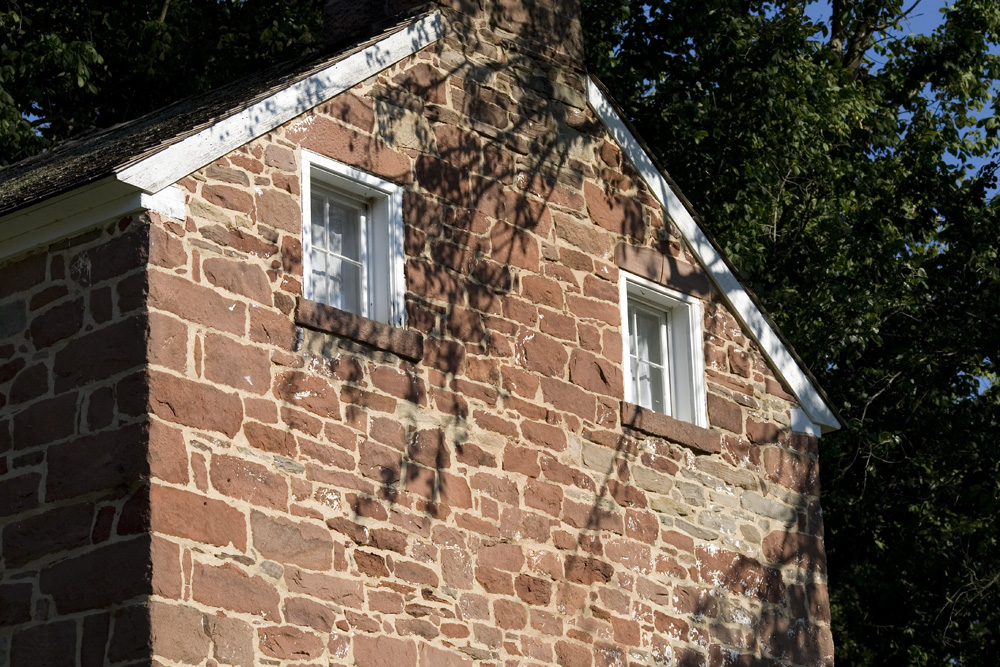
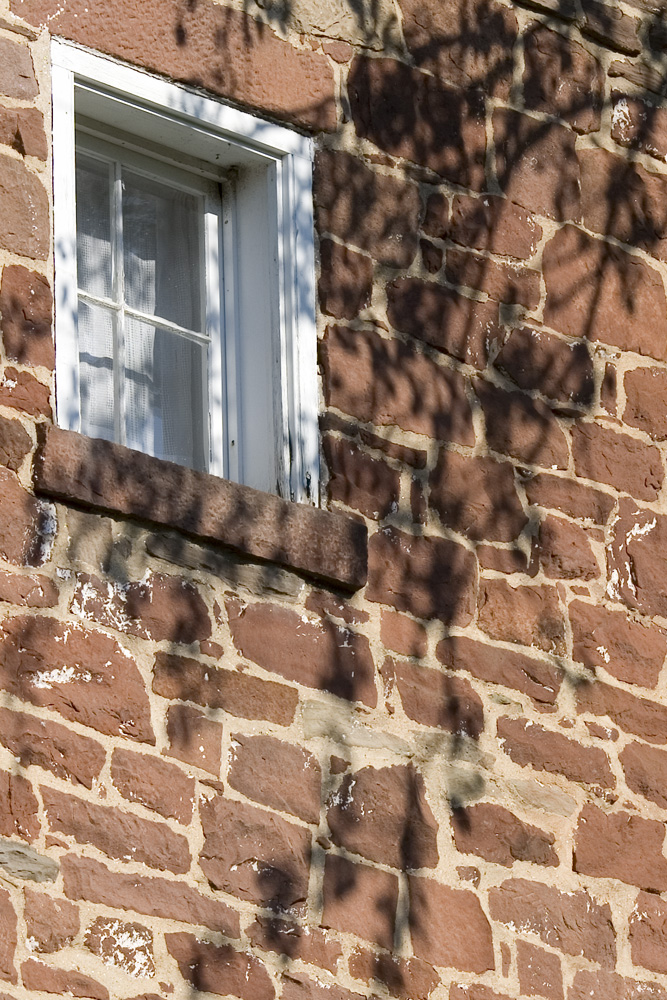
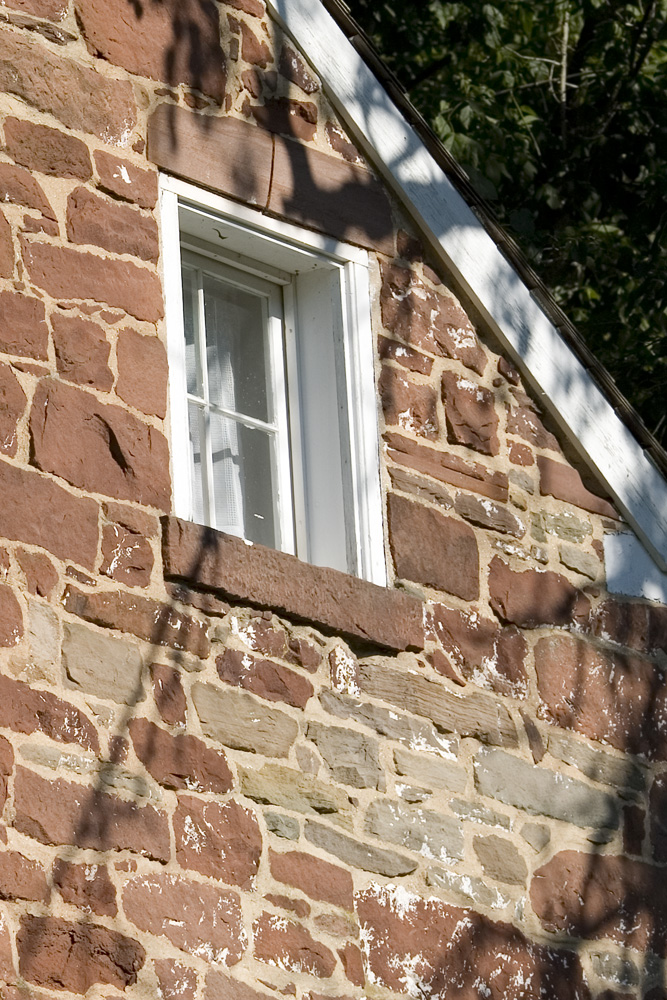
I was still playing around with my new-to-me Canon 135 F2 L lens, and here are some examples of what it can do. The first shot is the canal house at the Riley’s Lock viaduct. I was intrigued by the play of shadows from the nearby tree on the stone wall. After getting home and downloading the shot onto my Mac, I looked at it and thought, “there’s some better, more interesting shots within this” so I made a couple crops, which I’ll show below. Comments and thoughts greatly appreciated.

Canal House Windows
Canal House Windows

Here’s the full-frame original shot.
Canal House Window, Left

Canal House Window, Right

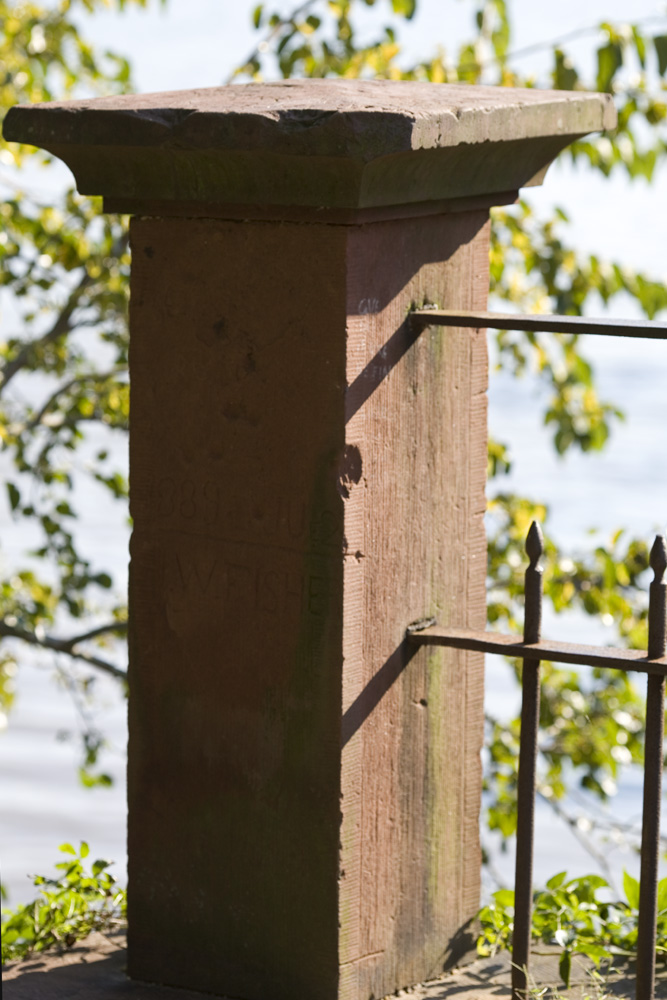
And last but not least, the brownstone rail end with a dedication chiseled into it.

Viaduct railing end pillar

Anonymous Vernacular photographs

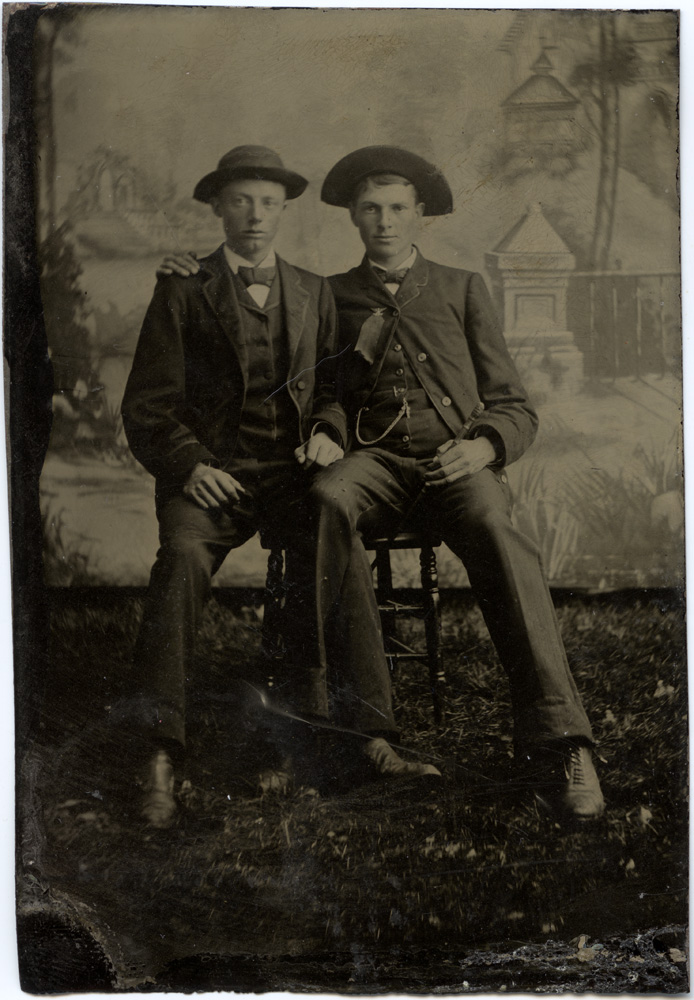
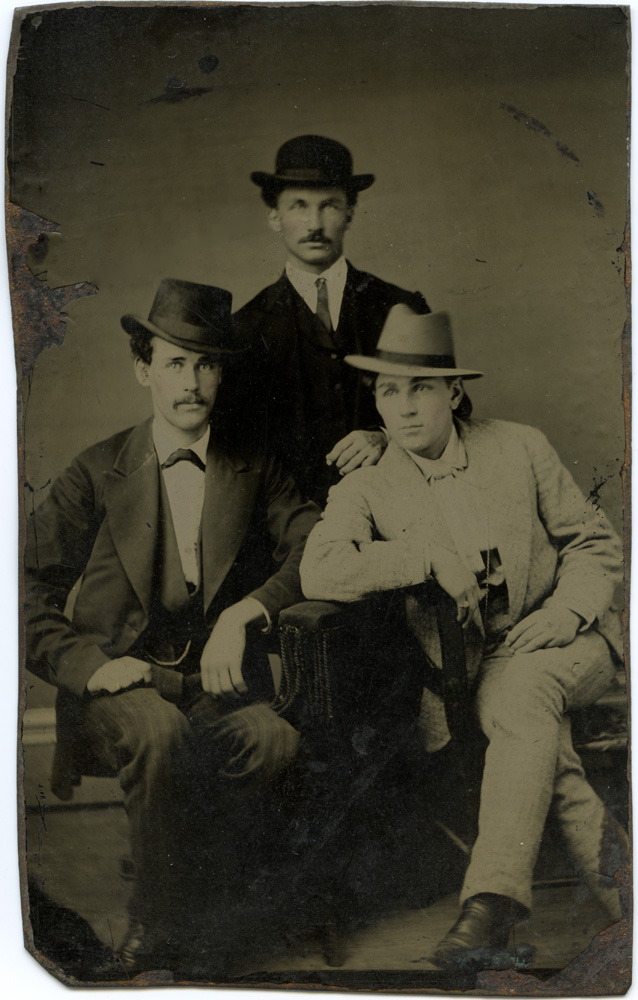
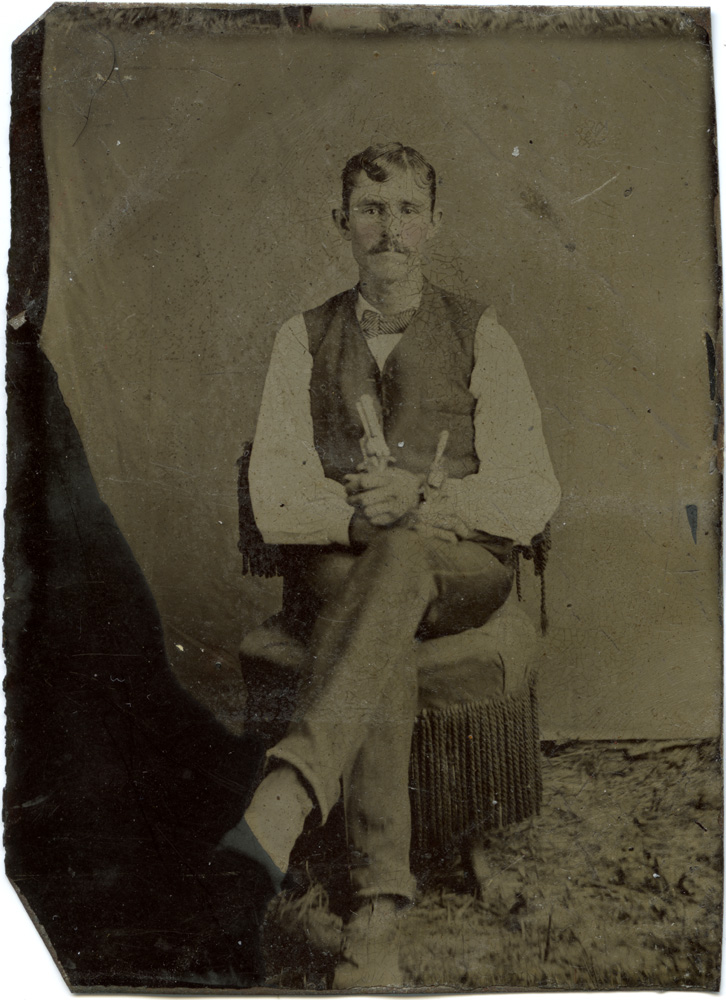
Here’s a little gem I recently uncovered. No date, no attribution, no name of the subject. It’s a little approximately 1/6 plate tintype. Definitely not from a professional studio, as the plate is ragged – the edges appear to have been almost torn from a bigger sheet, and the collodion pour and/or development are uneven. The photo was taken in the field (literally – you can see the grass under the sitter’s chair, and the backdrop looks like it might have been a rug or blanket with some kind of fringe on top, thrown over a hastily erected backdrop stand). Still, the photographer went to the effort to tint the cheeks on the sitter. It brings to mind the civil war soldier portraits with the young men about to march off to war posing with pistols. I wonder, like with those war portraits, if the pistols are indeed property of the subject or if they are merely props he chose to pose with because they looked cool (many of the civil war soldier photos are using prop weapons that belonged to the studios. Many soldiers had not yet been issued firearms when they had their pictures taken, and they often posed with weapons inappropriate to their rank and status – enlisted men with non-government issue pistols, for example). Was he a saloon keeper? A lawman? The guns are kind of dinky, and he’s handling them rather casually. I think it’s the aura of uncertainty that lingers with an image like this that makes it so fascinating.

Anonymous Vernacular - The Pistol Packer

I’m using the term “Vernacular Photography” to describe this image. A good friend of mine gave me a definition for it (after a rather contentious debate from which I learned some humility): “Vernacular photography is photography by indigenous populations for indigenous consumption”. Meaning photographs that are created with the intent to be consumed by the audience that created them. The photographer does not have to be known or unknown; neither does the sitter. What matters is the intent. So a Mathew Brady portrait of a client off the street, commissioned by that client for their own personal use, even if the client were famous, would be vernacular, but Brady’s civil war documentary, even the camp scenes of soldiers at rest, would not. Diane Arbus’ photos are NOT vernacular, nor are Ansel Adams’. Their work was created for the express purpose of exposing an idea and sharing it with the world at large. Vernacular photography is created for a known, limited audience. Non-vernacular photography (art photography, documentary, etc) is created for an unknown, unlimited audience. The sitter for my tintype here probably had no expectation of the life of his image beyond whoever he gave it to being able to remember a moment in time at some now-unrecorded location. By collecting it, publishing it and categorizing it, though, do I now lift it out of that category of vernacular image by giving it that unknown, infinite audience?

There’s a wonderful book on the American Tintype by Steven Kasher called “America and the Tintype” which catalogs the better part of a century’s worth of mostly anonymous, vernacular photography from the tintype era. If you’re interested in the subject, I highly recommend picking up a copy.

Results from the Canon 135 L f2 lens

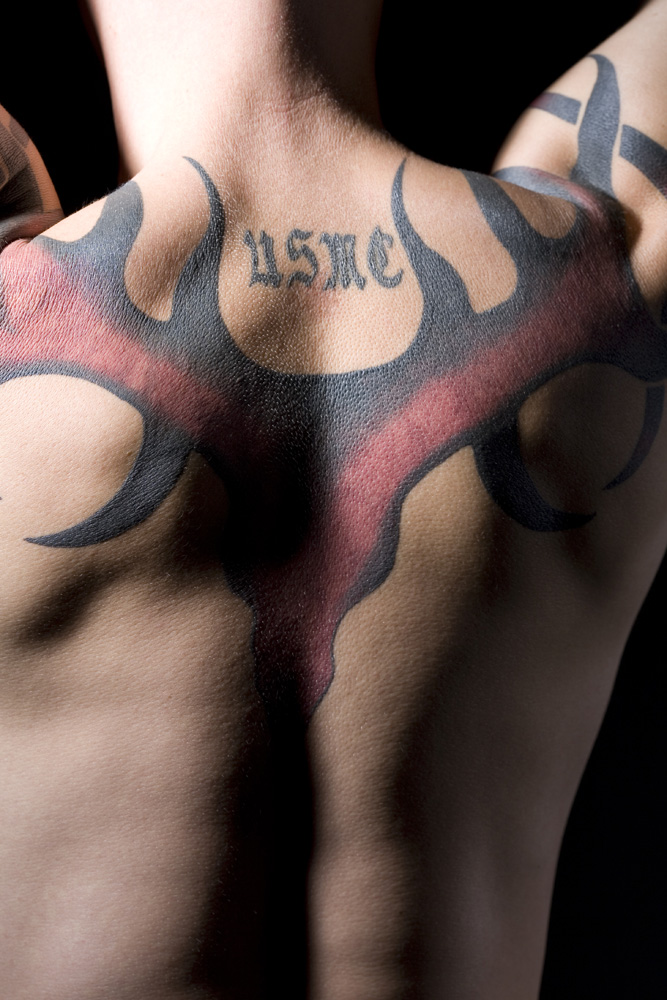
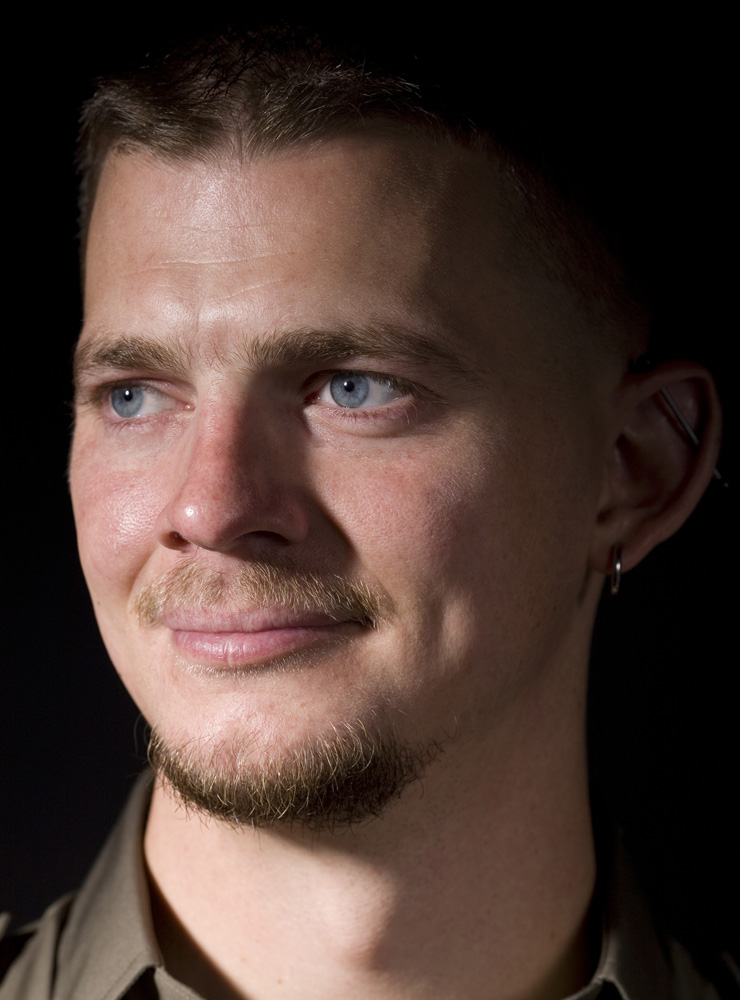
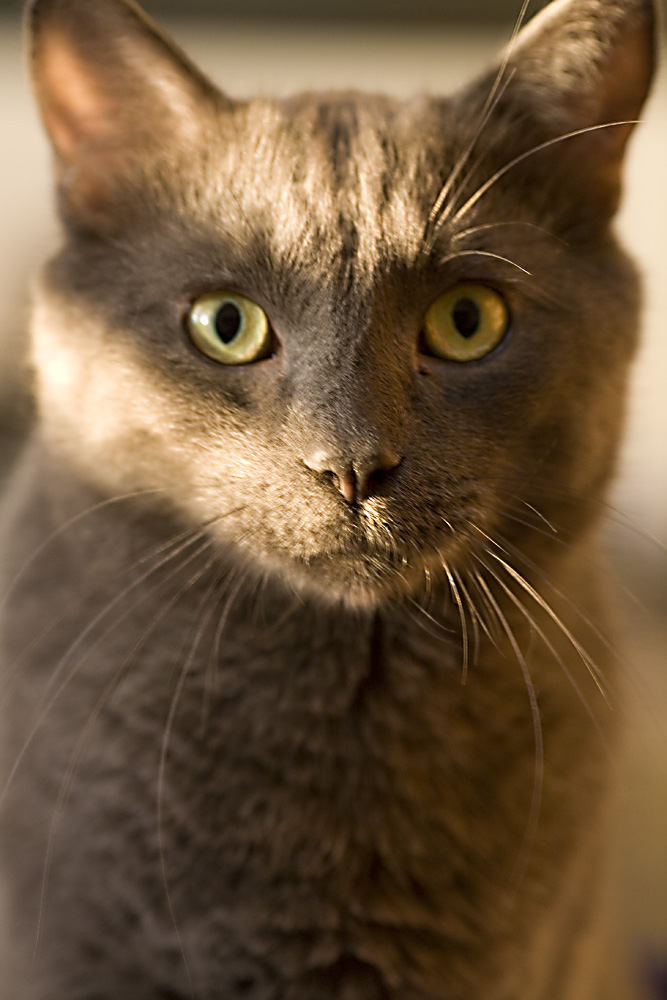
Here are some shots from my new toy, the Canon 135 L f2 lens. I put it to use in my studio last night, doing some portraits of a friend of mine. As you can see, it’s wickedly sharp, but even at f10, it still has pretty shallow depth-of-field. In examining the original camera-RAW file in Photoshop, I swear I could count every hair on his back, and every pore on his face, until the depth-of-field dropped off and then it blends away to creamy-smooth very quickly. You can see in the shot of my cat Chub-Chub (long story behind the name, but when I first got him, he ate like a pig, started gaining weight and would waddle down the steps, belly a-swinging) that at f2, the depth-of-field is whisker-thin. I’m going to love this lens.

Naughty boy!

I was a very naughty boy yesterday – I gave in to gear-itis and snapped up a like-new-in-box Canon L-series 135mm F2 lens for on my Canon 5D. As you can tell from reading this blog, I’ve been an absolute junkie for all things big, old, and film-based. That doesn’t mean I reject the 21st century, however; I have been jonesing for this lens for my Canon though for a while as its quality as a portrait lens is super-famous (I’d say infamous but that would imply something negative about the reputation, which could not be further from the truth). So I’m now the proud owner of a 135 L f2. I was playing around last night photographing the cats last night for lack of a better moving subject. I did use it to record the new acquisitions in the antique image collection – it worked wonderfully for that. I’ll be using the 5D as an ersatz Polaroid tonight in the studio as I have a portrait commission to do tonight. It will make a handy lighting check, and it will be useful to have some portraits of something other than Frosty and Chub-Chub (my furry little pudd’ns).

Three New Cased Images

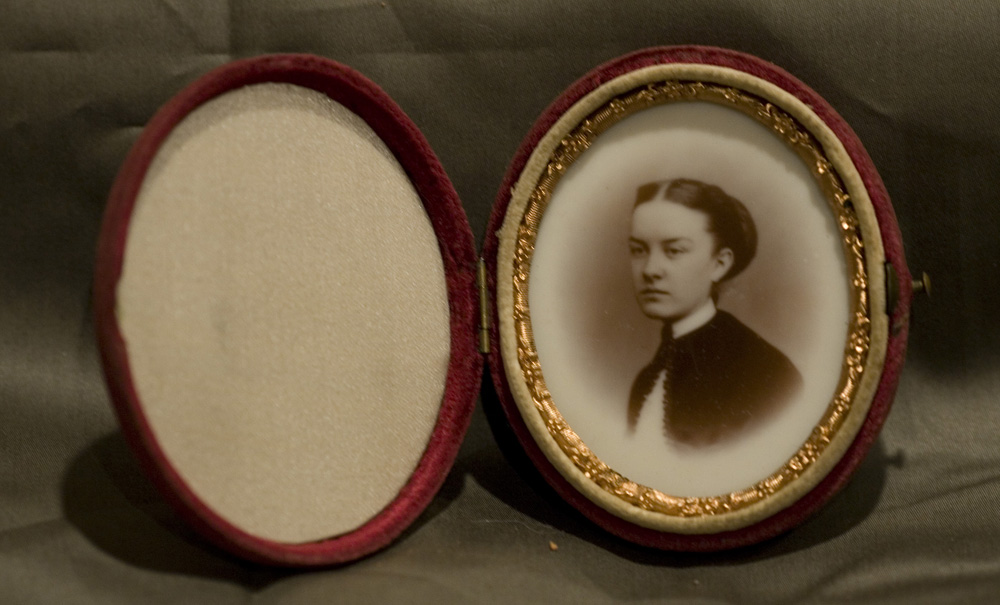
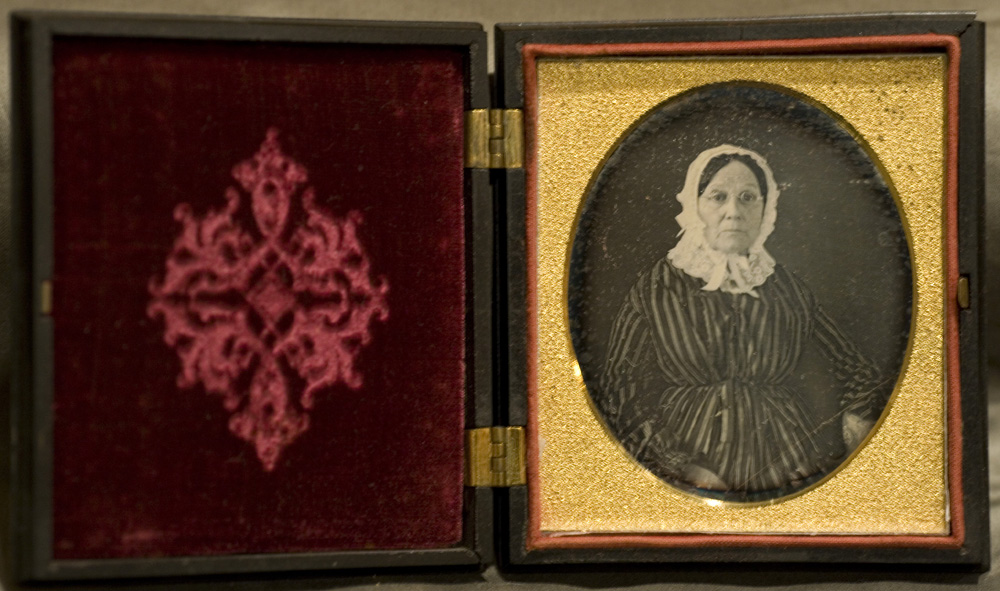
My three latest acquisitions. I’ve mentioned/showed the gentleman in the book-form case before, but I have a better photo of the image itself to include now. The little milk-glass ambrotype is truly exquisite. These are in a way consolation prizes for the one that got away – I was bidding on but got outgunned on a vintage 16×21 William Henry Jackson albumen print of Bridalveil falls at Yosemite, from the days of his Denver studio (1880-1897). That was a shame; at the closing bell I could have bought it but then I’d have had to turn around and re-sell it immediately, which would have been no fun. These I get to keep as long as I like.

Upcoming shows/classes

I’ve gotten some further confirmation, so I can post more information about this now:

I’ll be showing work at PhotoWorks in Glen Echo, Maryland as part of PhotoWeek DC 2011. I’ll be displaying my platinum/palladium prints and talking about the process as part of a show-and-tell event on Sunday, November 6. I’ll update with links when they have a schedule of events published. I’ll also probably be doing a process demo some evening that week or the following weekend, November 12-13, and a full-fledged workshop in the spring of 2012.