Show dates and times: Saturday June 22- Sunday August 18, 2024. Opening reception June 22 at 6pm. Artists Talk June 25th at 5pm (I will be participating in the artists’ talk and showing some additional work from my portfolio).
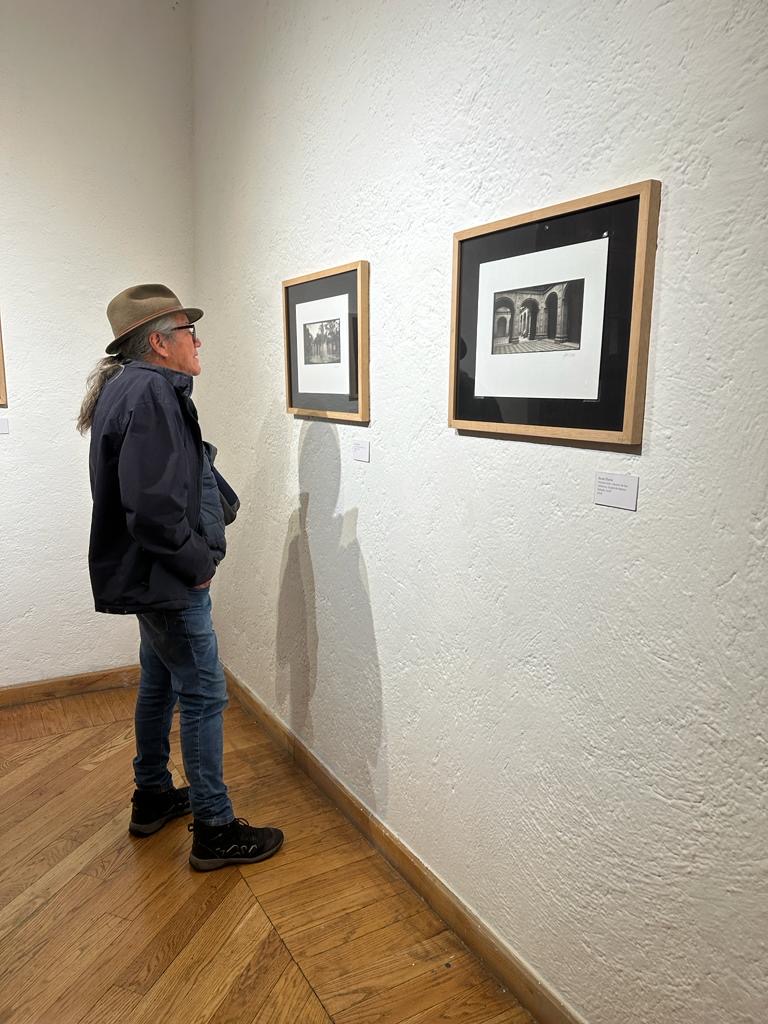
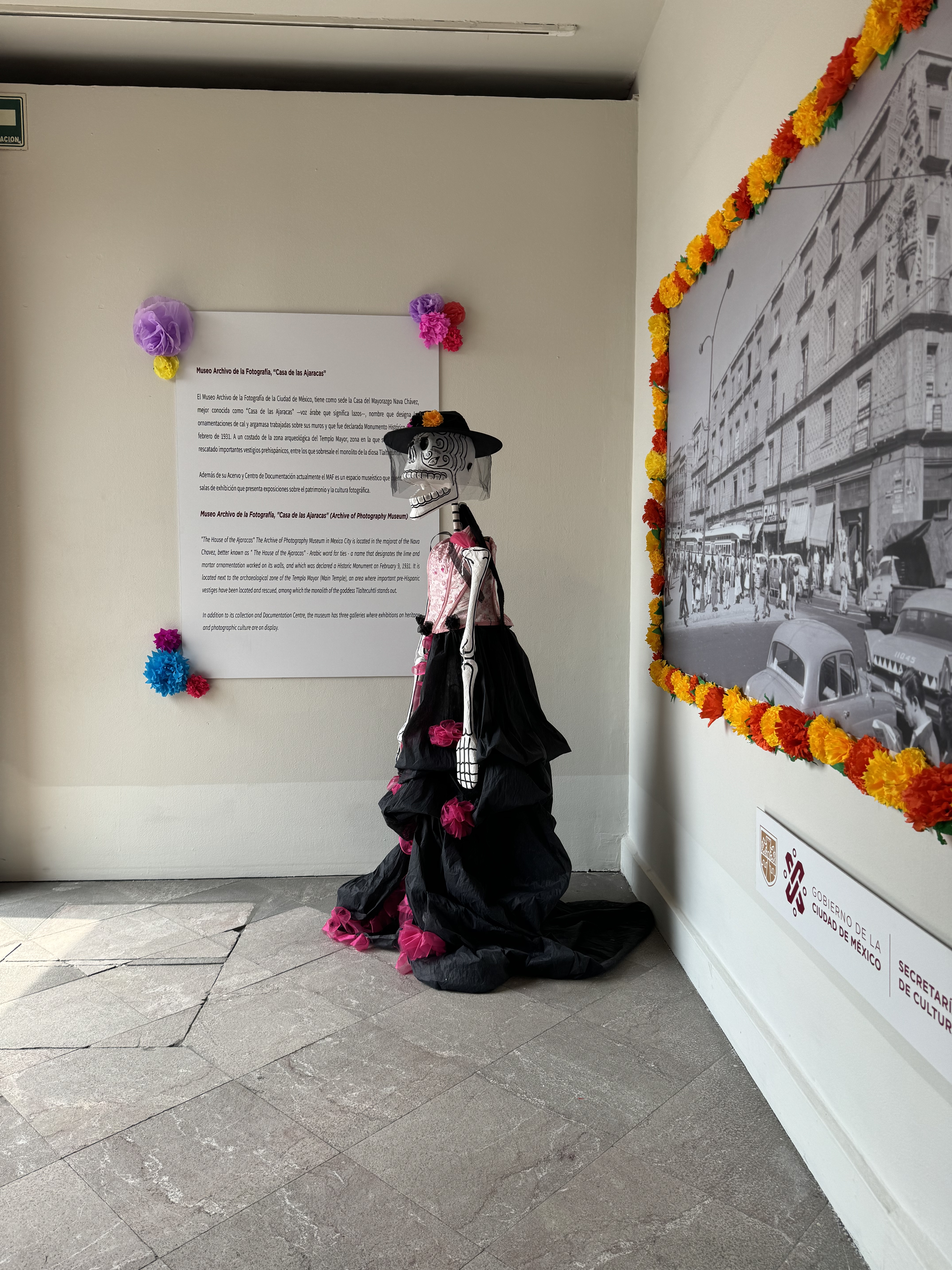
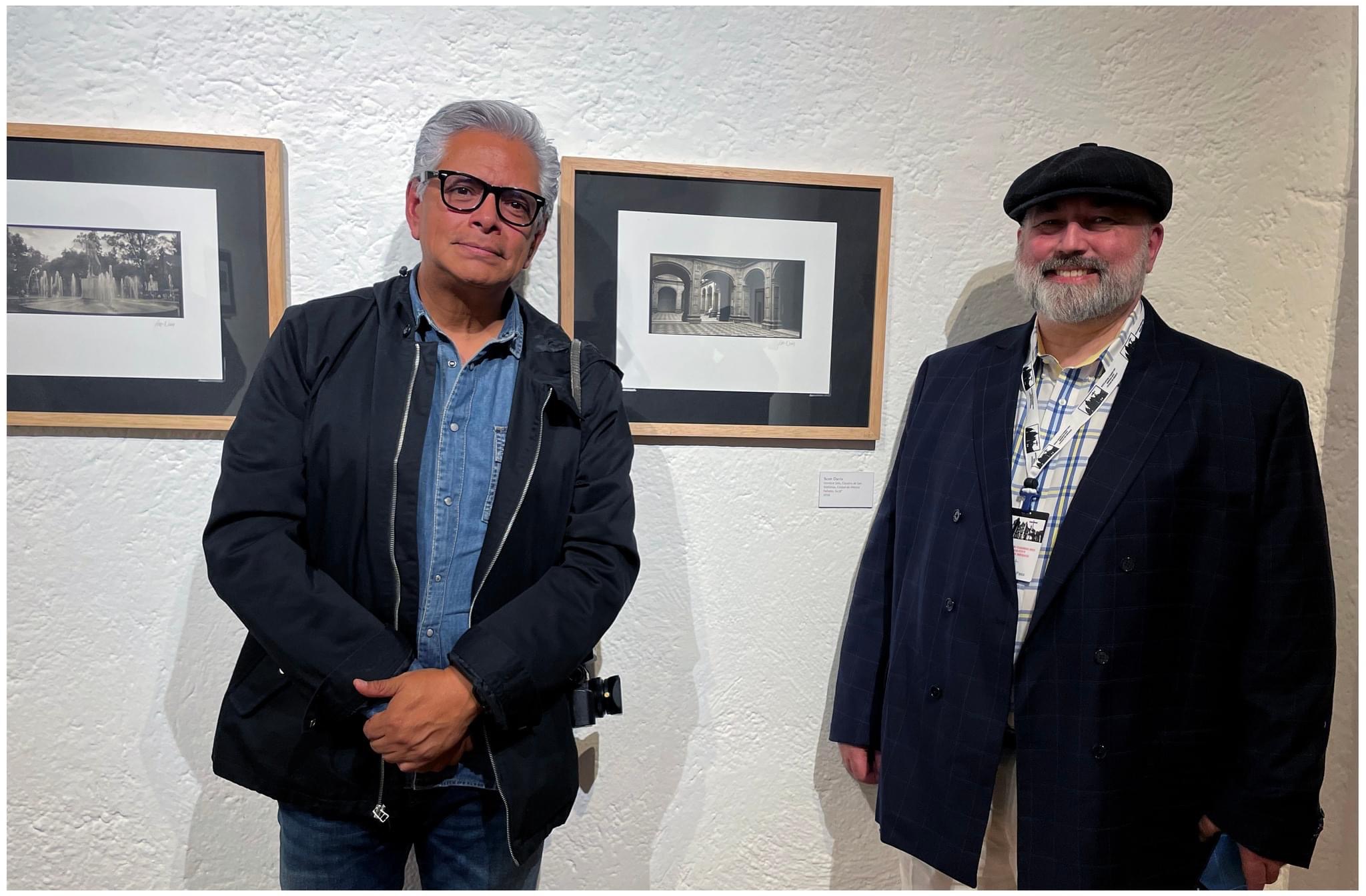
Geografía del Cuerpo is at the Museo Archivo de la Fotografía, and runs from June 26 to July 18. The opening reception is July 26 from 7-9pm, and is limited to 100 persons in attendance. I will be there as well (In case you’re wondering, I’m the one in the hat with the gray beard and glasses).
This is long long long overdue, but better late than never. Especially since we are in the throes of planning the next iteration which will be in March of 2025!
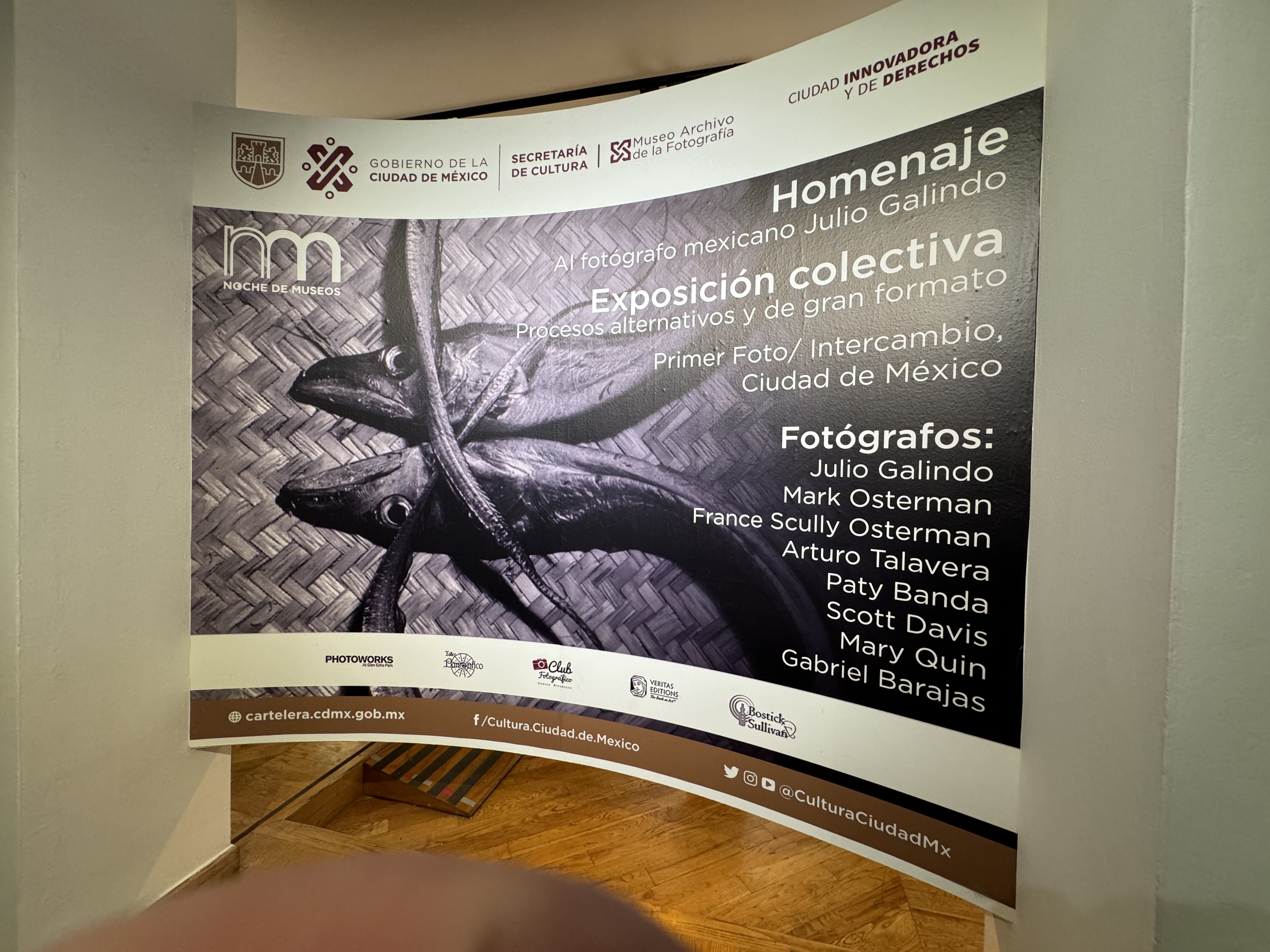
Over three days we had five seminars, two photo walks, a Day of the Dead environmental portrait shoot, two hands-on demos, and opening and closing keynote speeches, plus an exhibition of alternative process work at the Museo Archivo De La Fotografía, Mexico City’s official photography archive. Images displayed in the exhibit ranged from salted paper prints made with wet collodion negatives to daguerreotypes of Mexico City to palladium prints to a fine press book with hand-tipped prints. A lot of images were made, and new friendships formed.
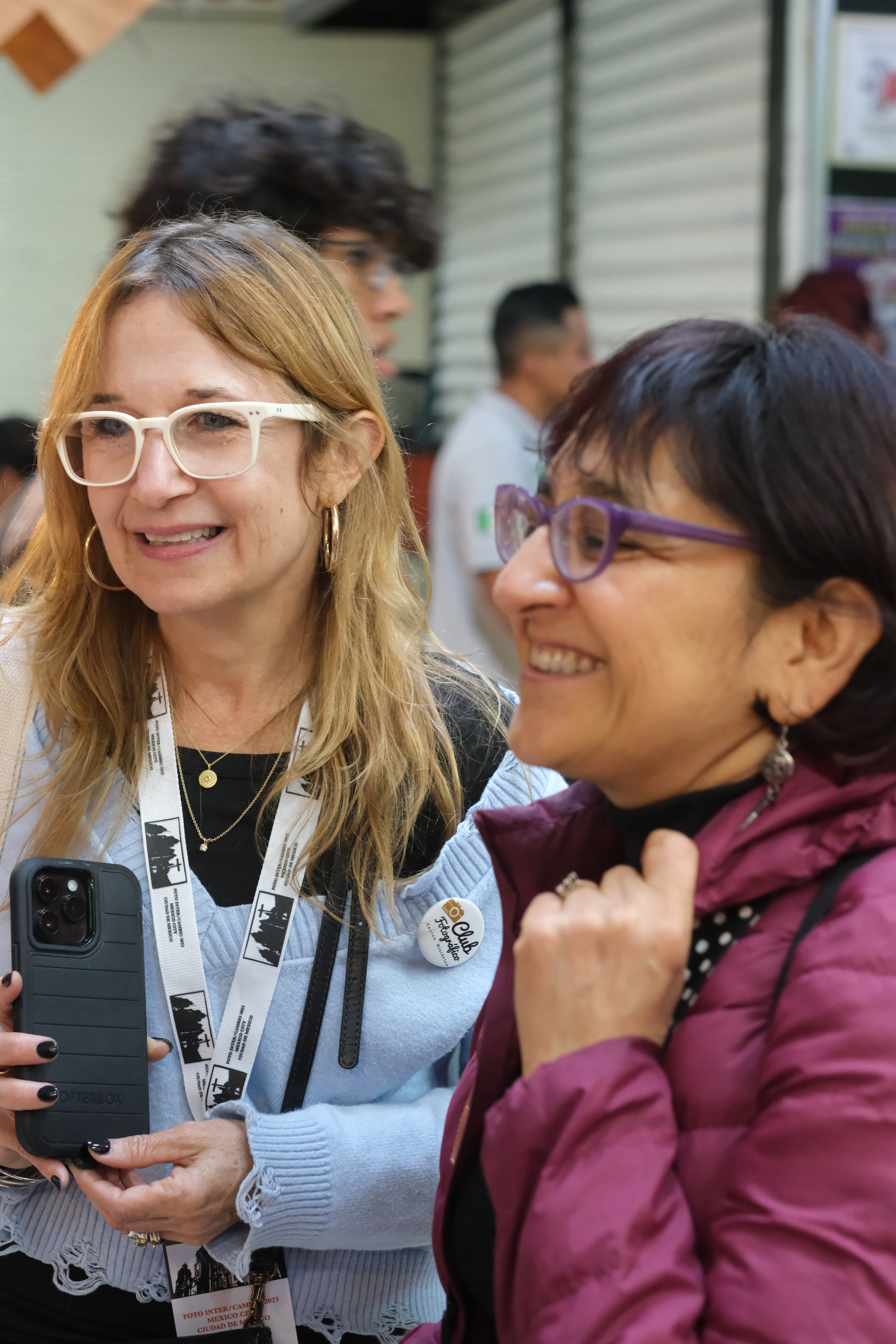
I want to first offer my sincerest gratitude to Gabriel Barajas, my business partner in this venture, without whose initial inquiry back in 2018 this would never have happened. He invested a massive amount of energy and time into making this happen here. I also want to thank all the people of the Club Fotografico Centro Historico who helped pull this off- their volunteer efforts from manning the reception desk to shooting video footage to getting us bottled water made the whole thing run. I especially want to call out Veronica Mondragón for her tireless logistics management.
Gabriel BarajasMary Quin with Veronica MondragónJuio Galindo
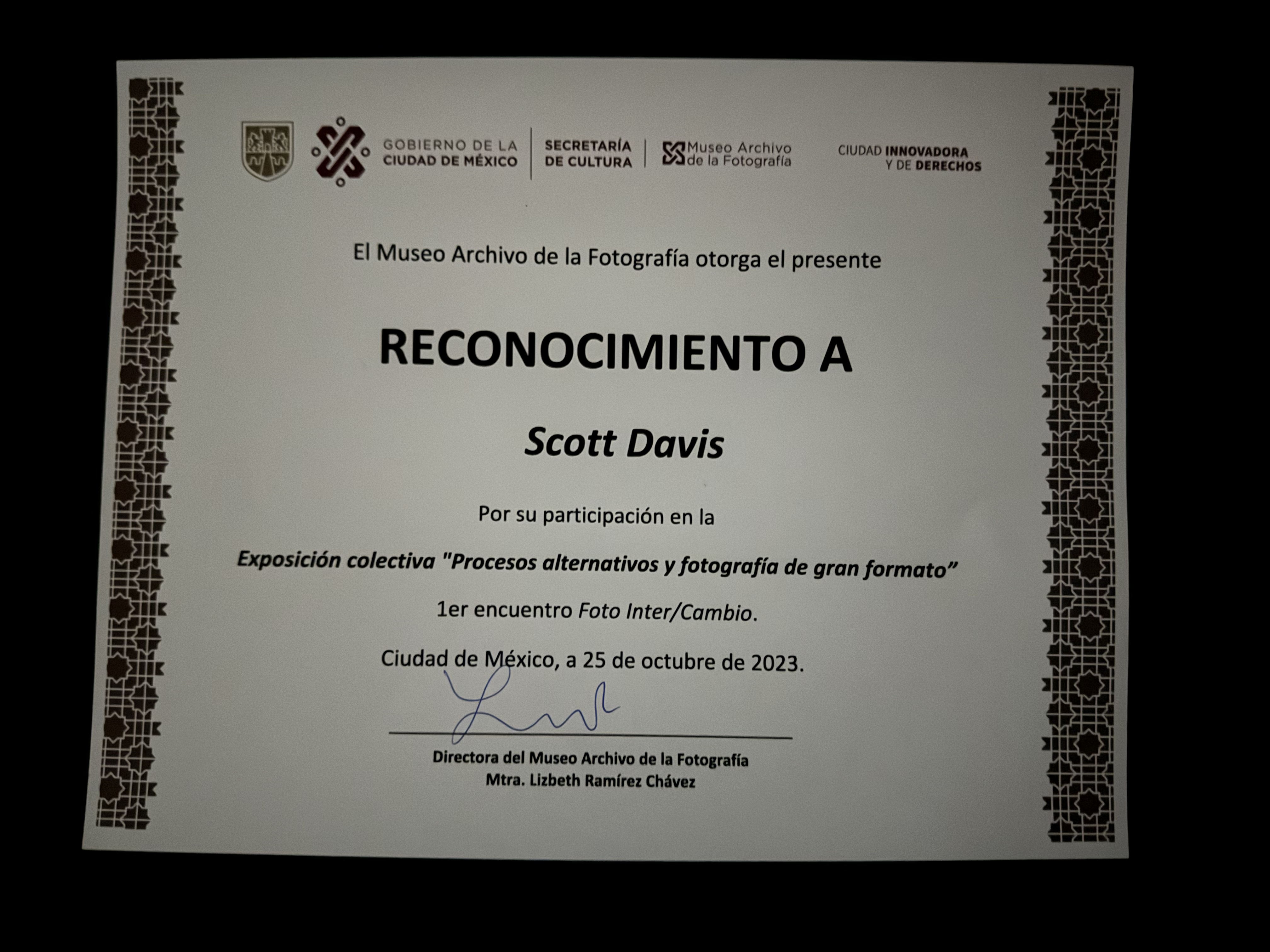
Another thank you goes to all the staff at the Museo Archivo De La Fotografía for their support. They provided us with a venue for our keynote events, and they expanded their offering of gallery space to turn what would have been a modest three-day pop-up show into a major, meaningful exhibition taking over an entire floor of the museum and running for two weeks. They also made me feel like a rock star – I got asked to participate in the ribbon-cutting to open the show, and received a certificate of recognition from the Secretary of Culture for Mexico City for my efforts. They’re also inviting me back to give a platinum/palladium printing workshop some time next year, and a show of my portrait and figure work.
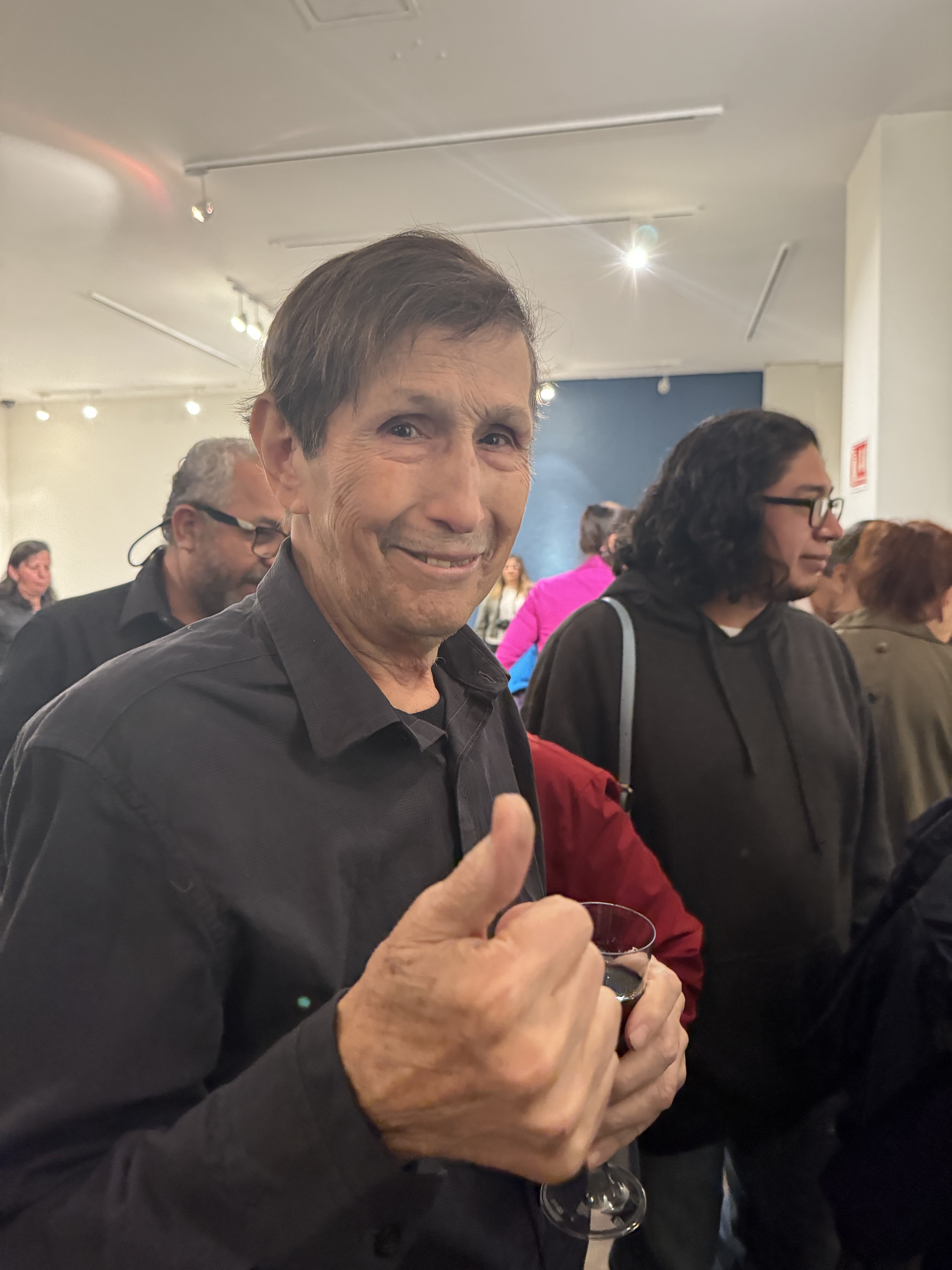
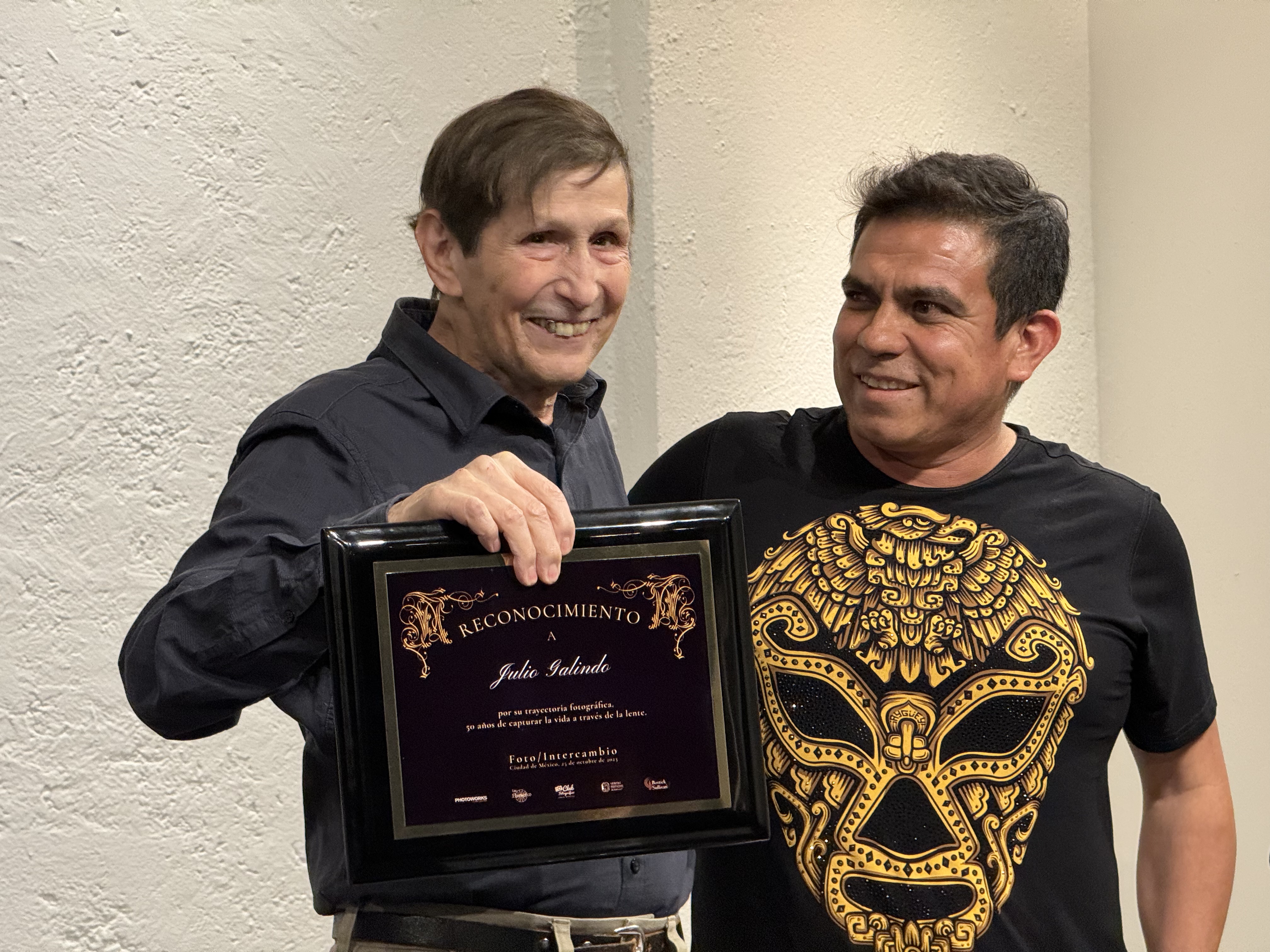
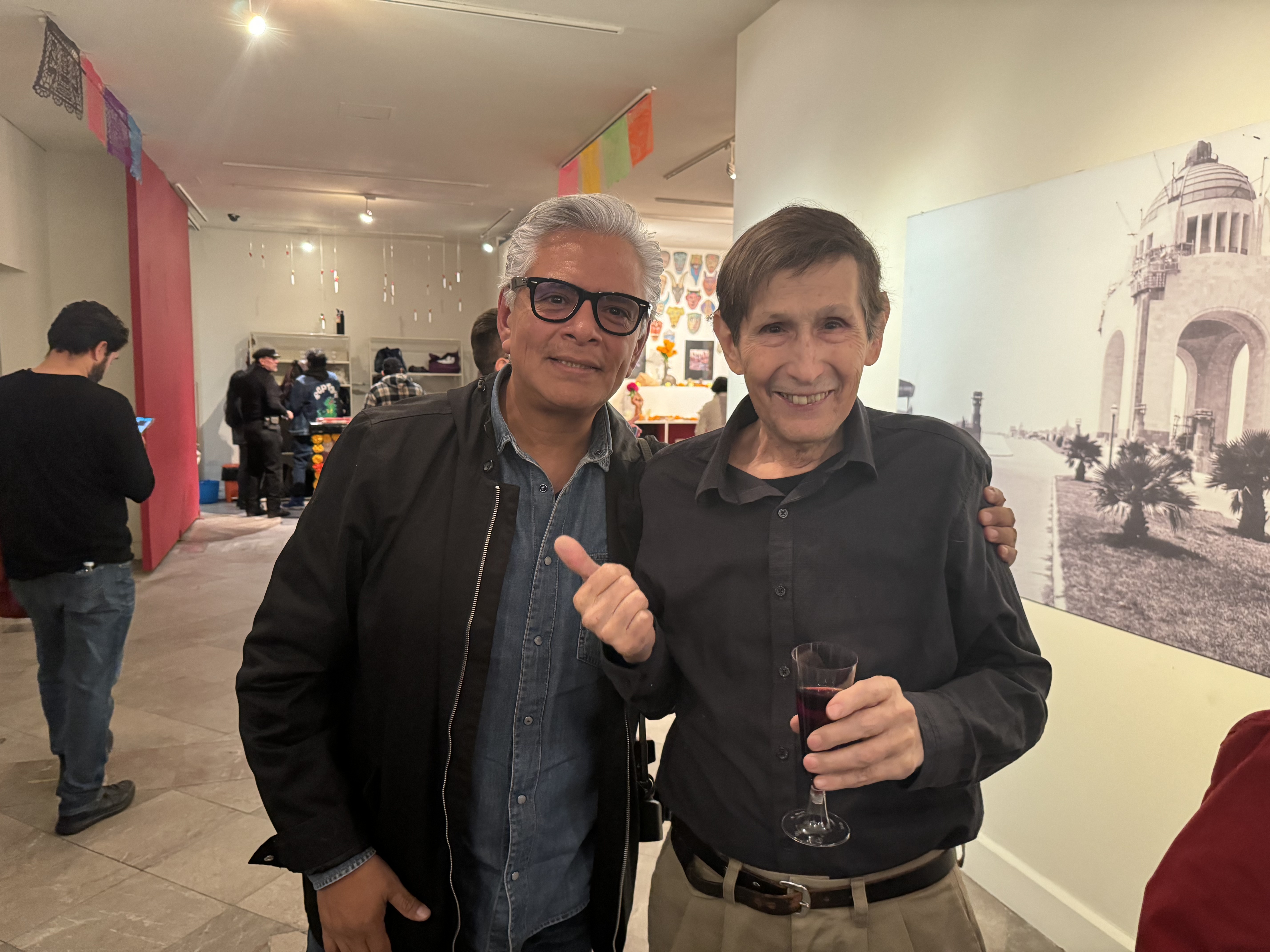
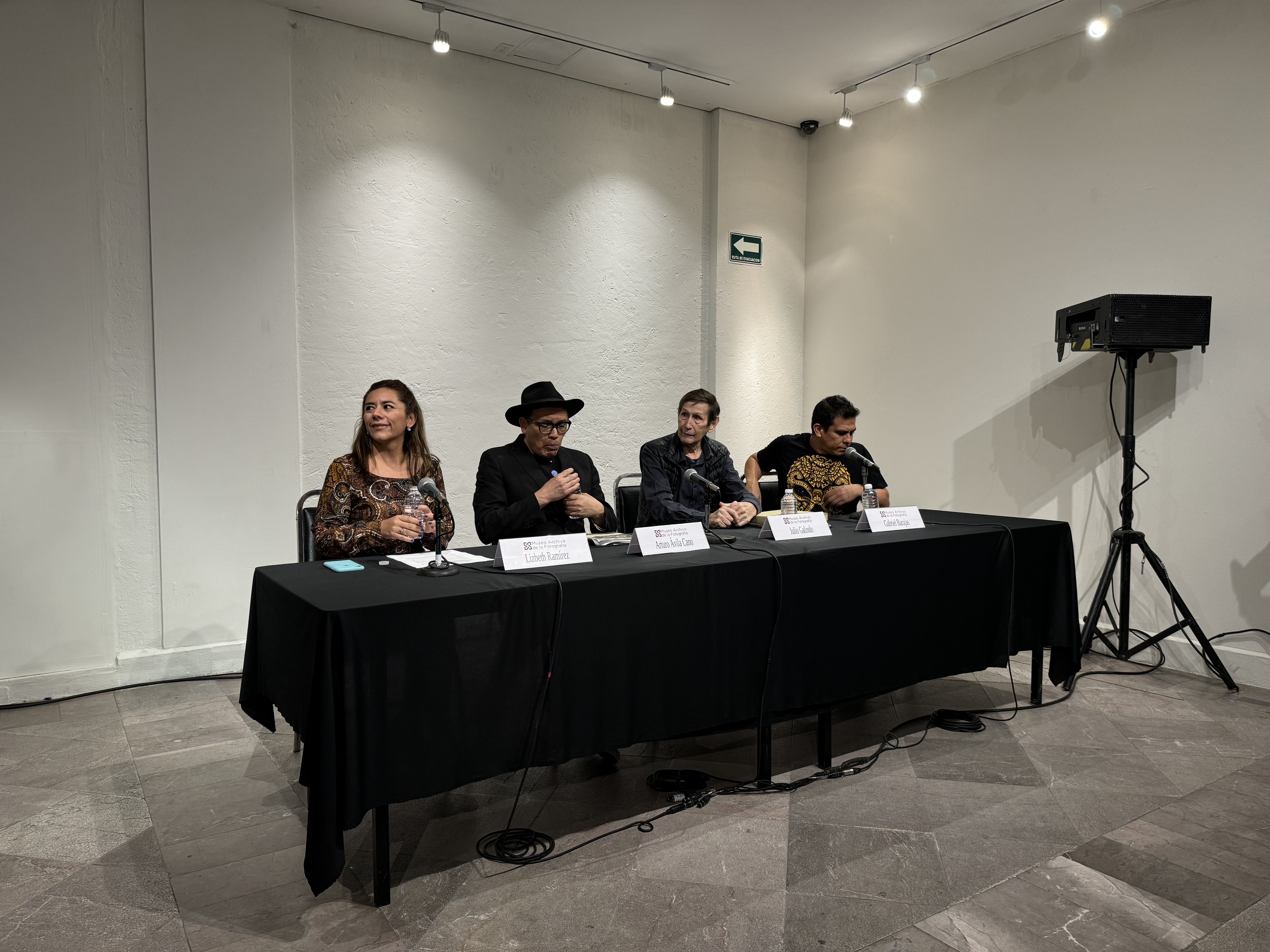
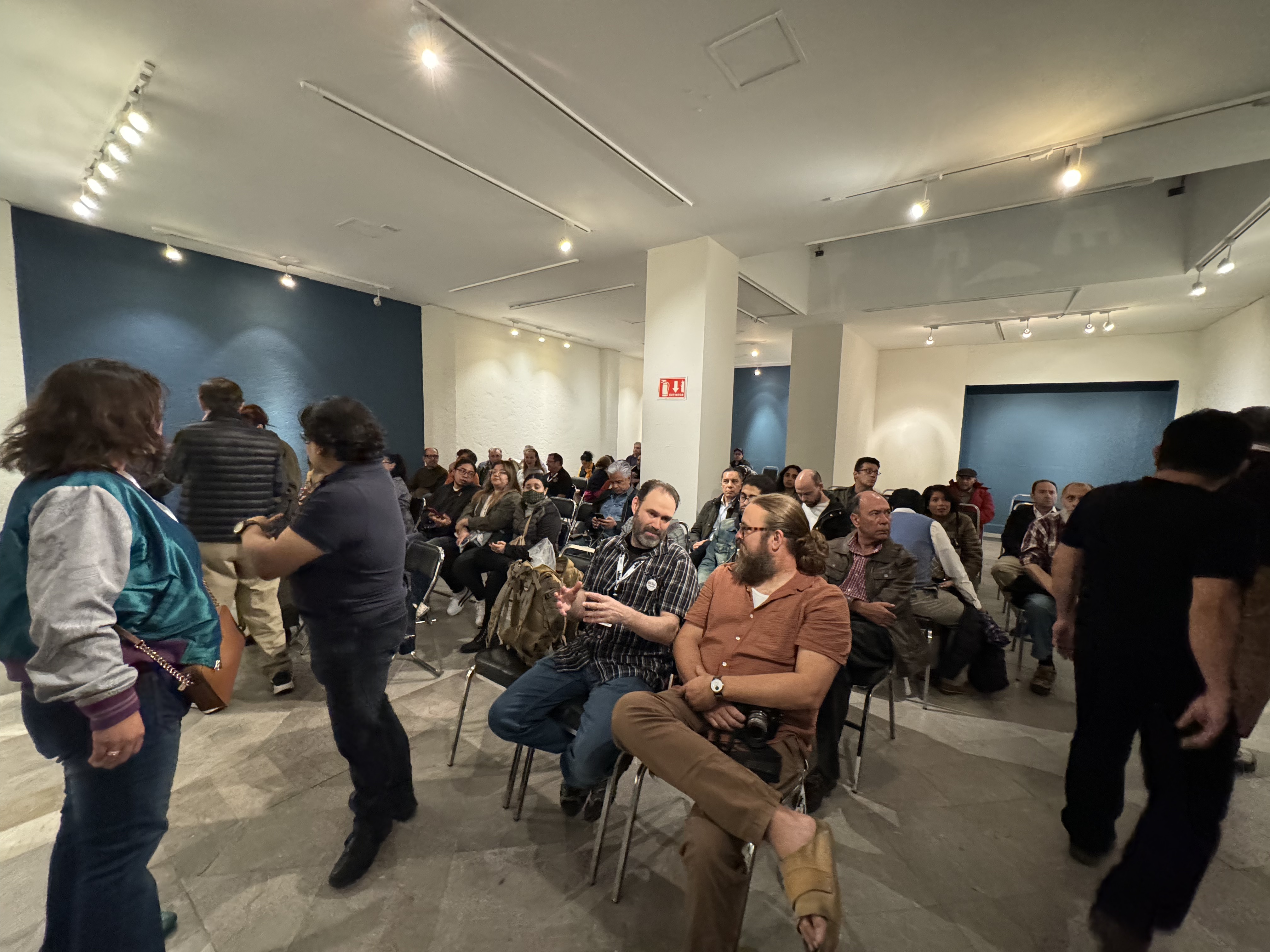
Some photos from the opening night reception at the Museo Archivo de la Fotografia, including the lifetime achievement award being presented to my friend Julio Galindo. As you can see from the last couple of images, we had a standing-room-only crowd. It was quite the evening, and I will never forget it.
Julio Galindo with Gabriel BarajasFrance and Mark Osterman at the opening receptionJulio GalindoAlejandro Sanchez Mociños and Julio GalindoAlejandro Sanchez Mociños with meArturo Avila Cano and Julio GalindoPanel presentation of award to JulioOpening night crowdopening night crowd
I don’t know of a bigger thrill for an artist than to have the director of a museum request you to give them a portfolio review, and then turn around and offer you a show and a workshop (funded by the museum!).
We had three days of activities and presentations. There were two main themes to the conference this year: Daguerreotypes and Book Arts. Carlos Gabriel Vertanessian, an Argentinian photo historian, gave a talk about the history of early photography in Mexico, focusing on the beginnings of the Daguerreotype in Mexico. Takashi Arai and Paty Banda gave a joint presentation (perhaps the most technically challenging presentation to pull off; Takashi was in Japan and calling in at 4AM his time, while Paty was also calling in from another location in Mexico City). They are both 21st century Daguerreotypists and talked about their personal work – Takashi with his interest in nuclear and environmental issues, and Paty with her rephotographic project doing 21st century daguerreotypes that re-created the earliest known photographs of Mexico City.
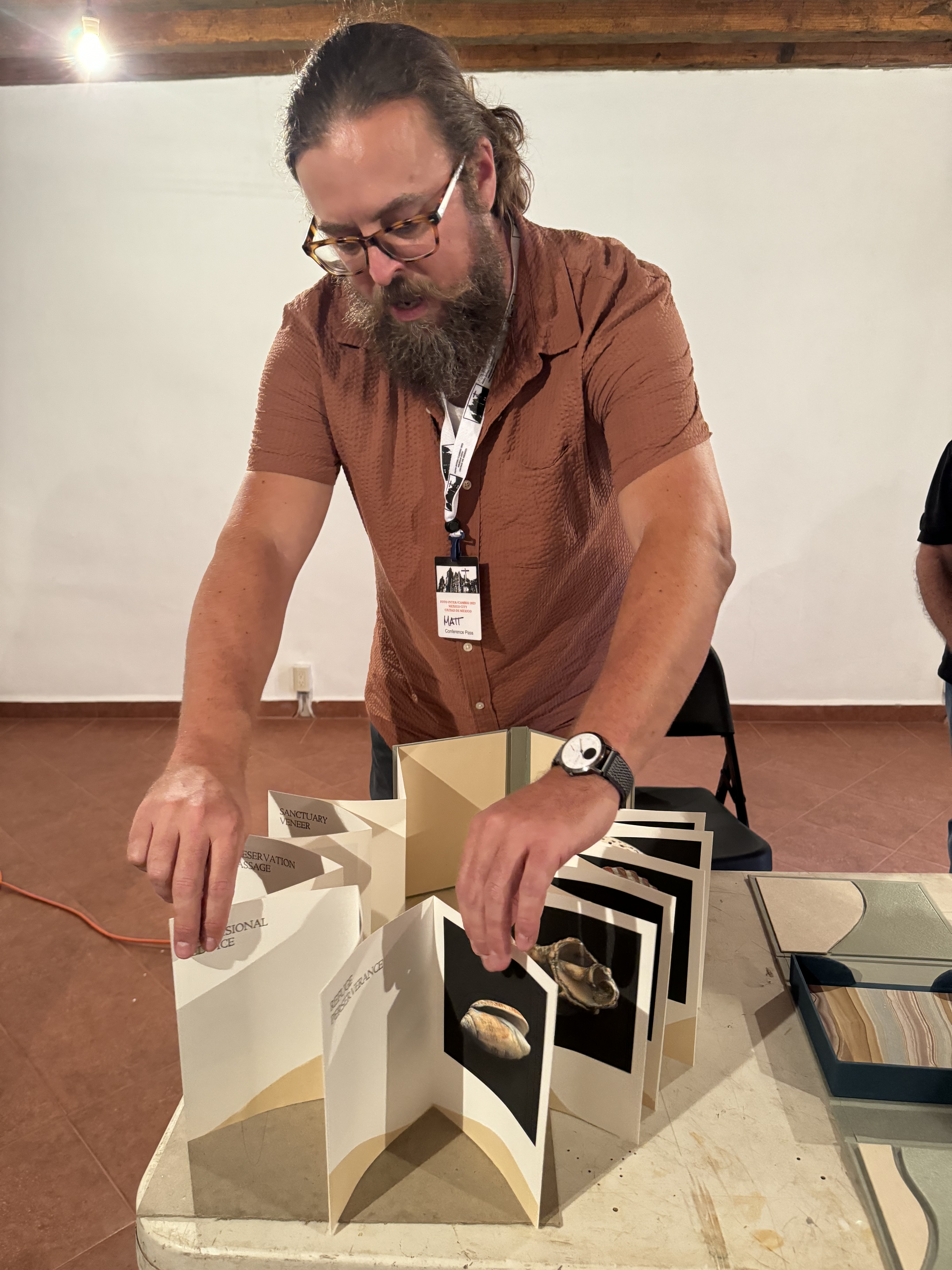
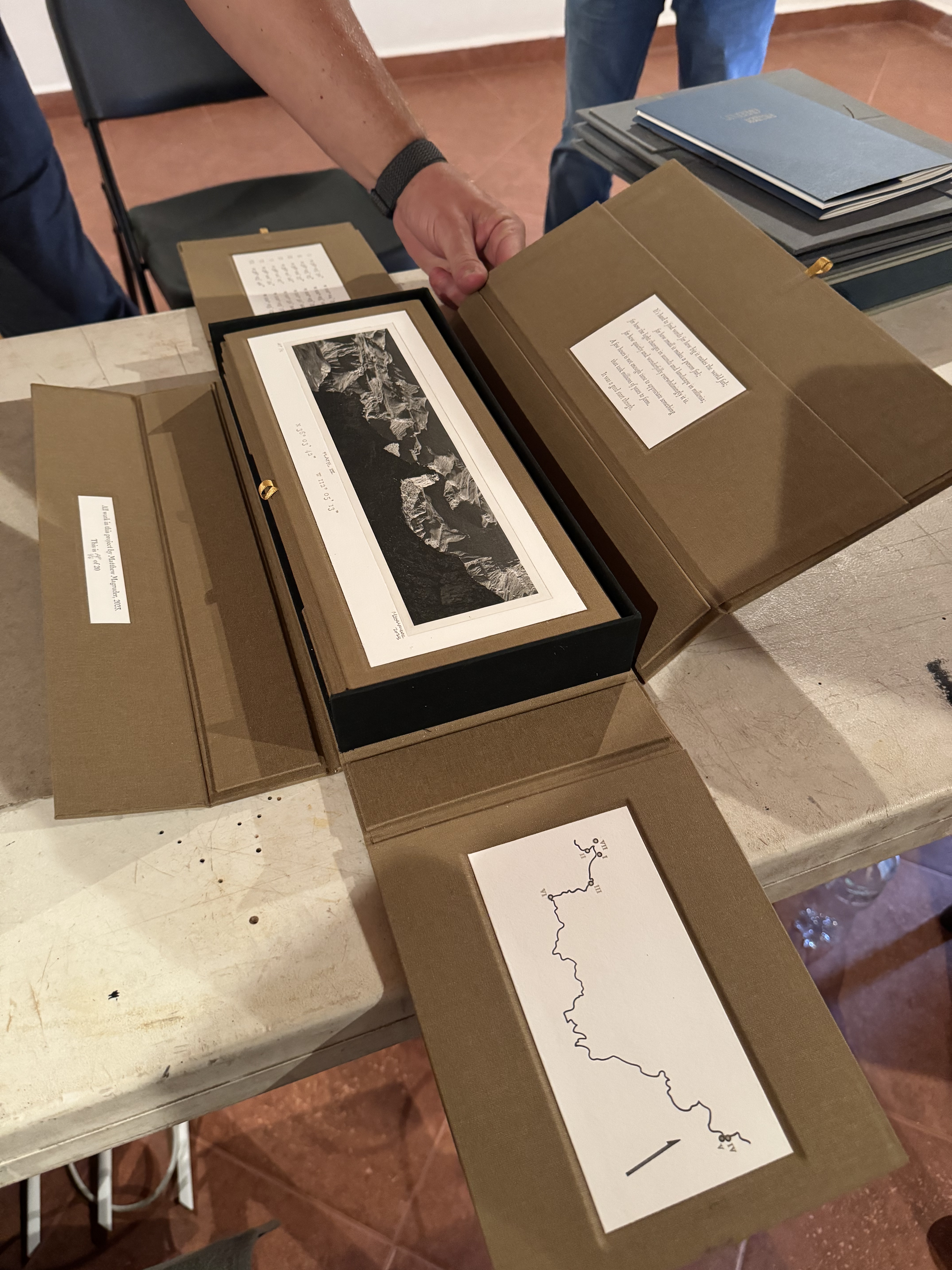
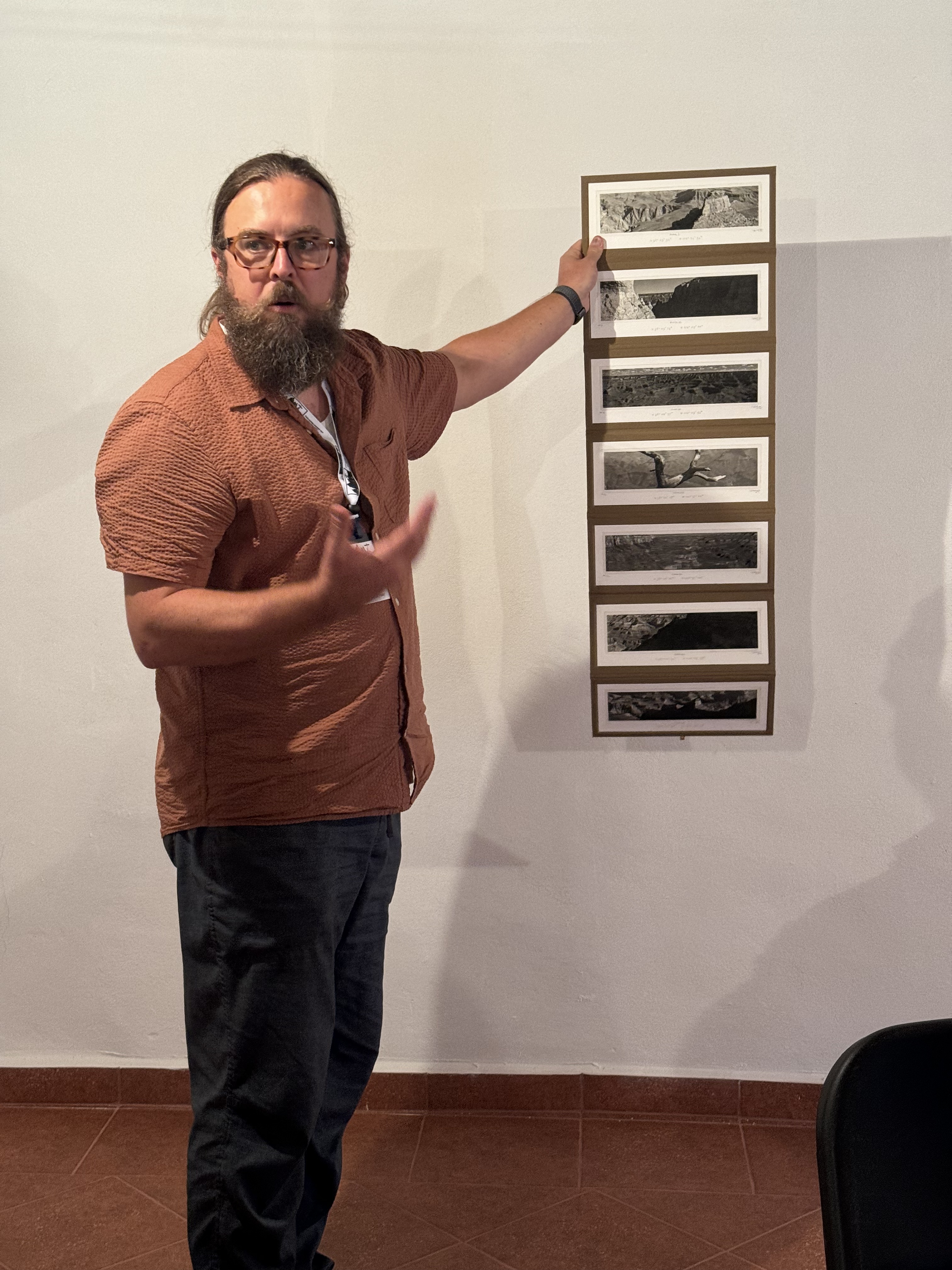
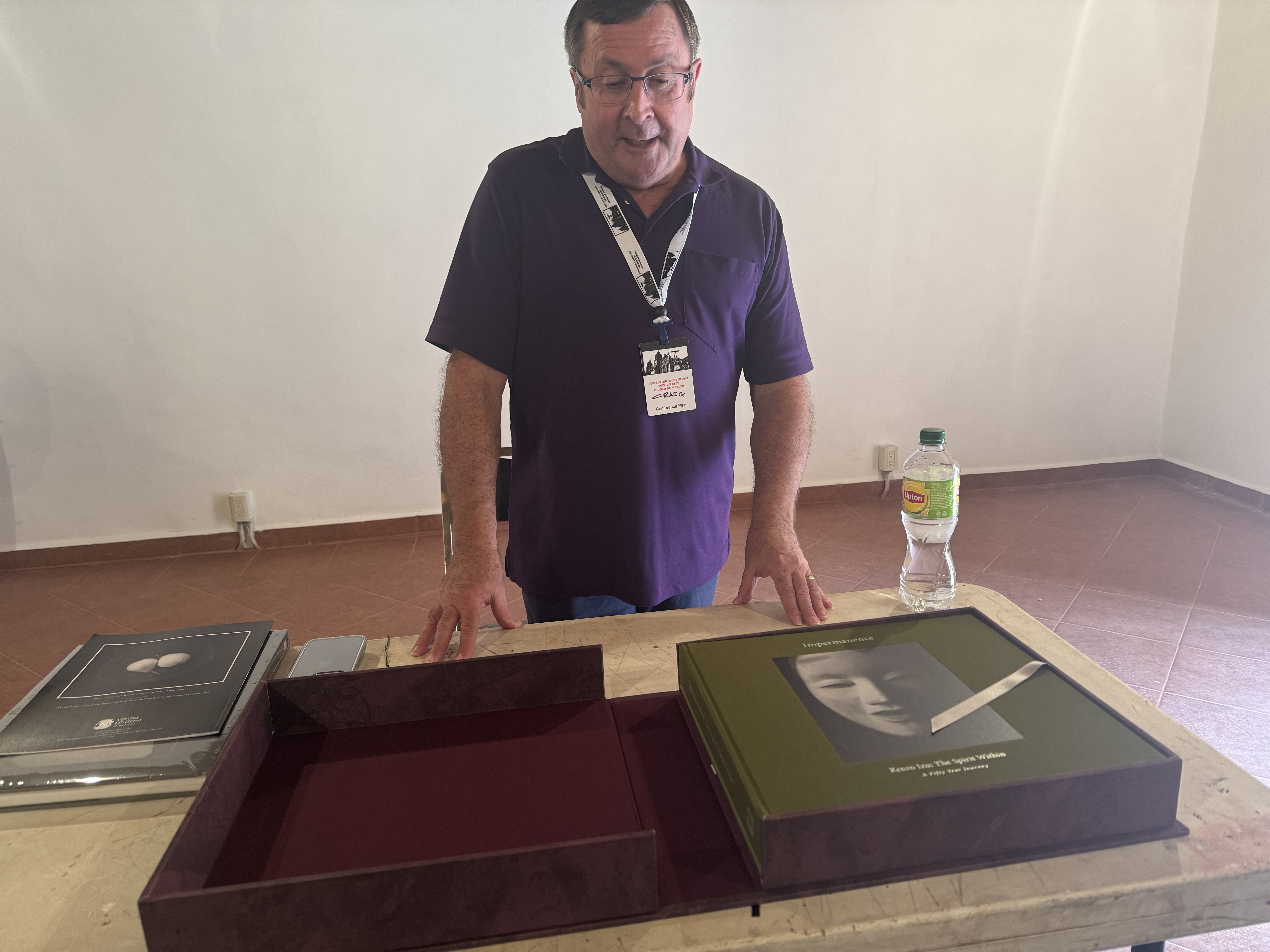
Matthew Magruder presented his work that spans multiple photographic disciplines; the work he presented centered on book arts and the handmade artists book. Craig Alan Huber (another person to whom I owe a great debt of thanks for his assistance in making this conference happen) gave a contrasting presentation on publishing fine art books, from “trade press” to the extremely limited edition fine-art volumes (usually cased in presentation boxes and accompanied by signed prints, etc). Craig is the owner and publisher of Veritas Editions, an award-winning press that specializes in high-end limited edition books.
Matt Magruder and Craig Alan HuberMatt Magruder and one of his accordion bookshand-made book of panoramic imagesMatt Magruder demonstrating panorama bookCraig Alan Huber and a fine press book from Veritas EditionsCraig showing a print accompanying the book
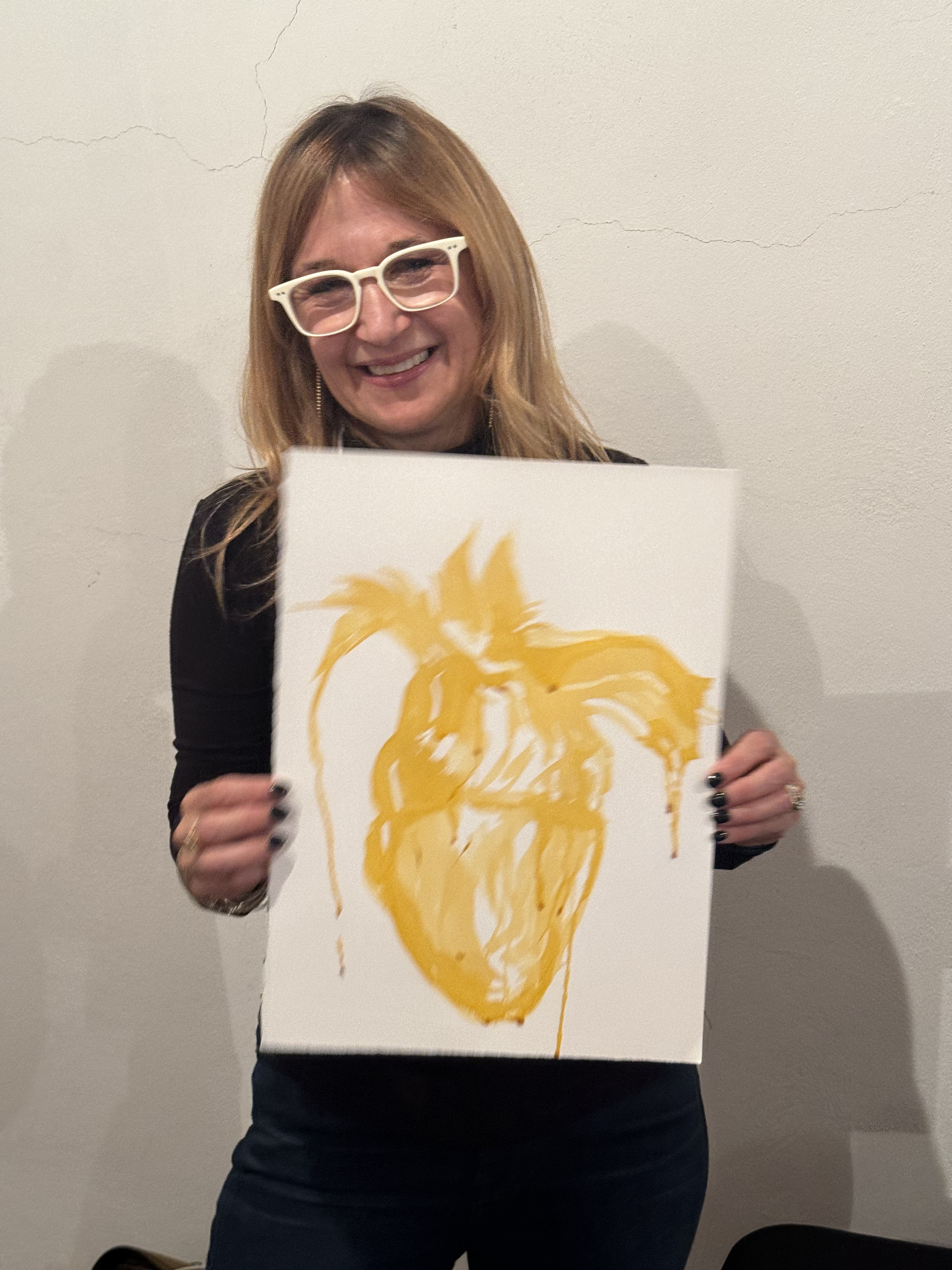
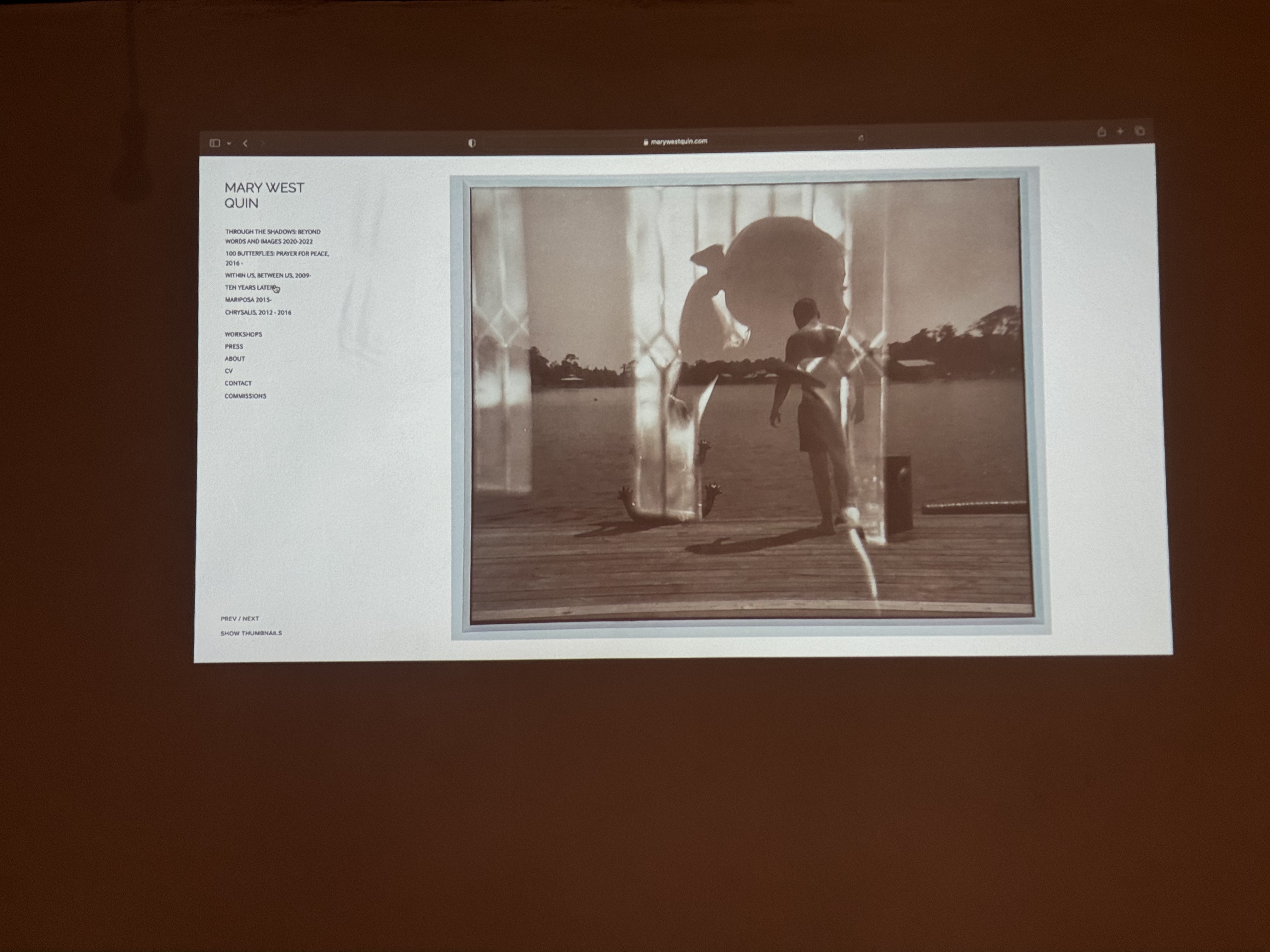
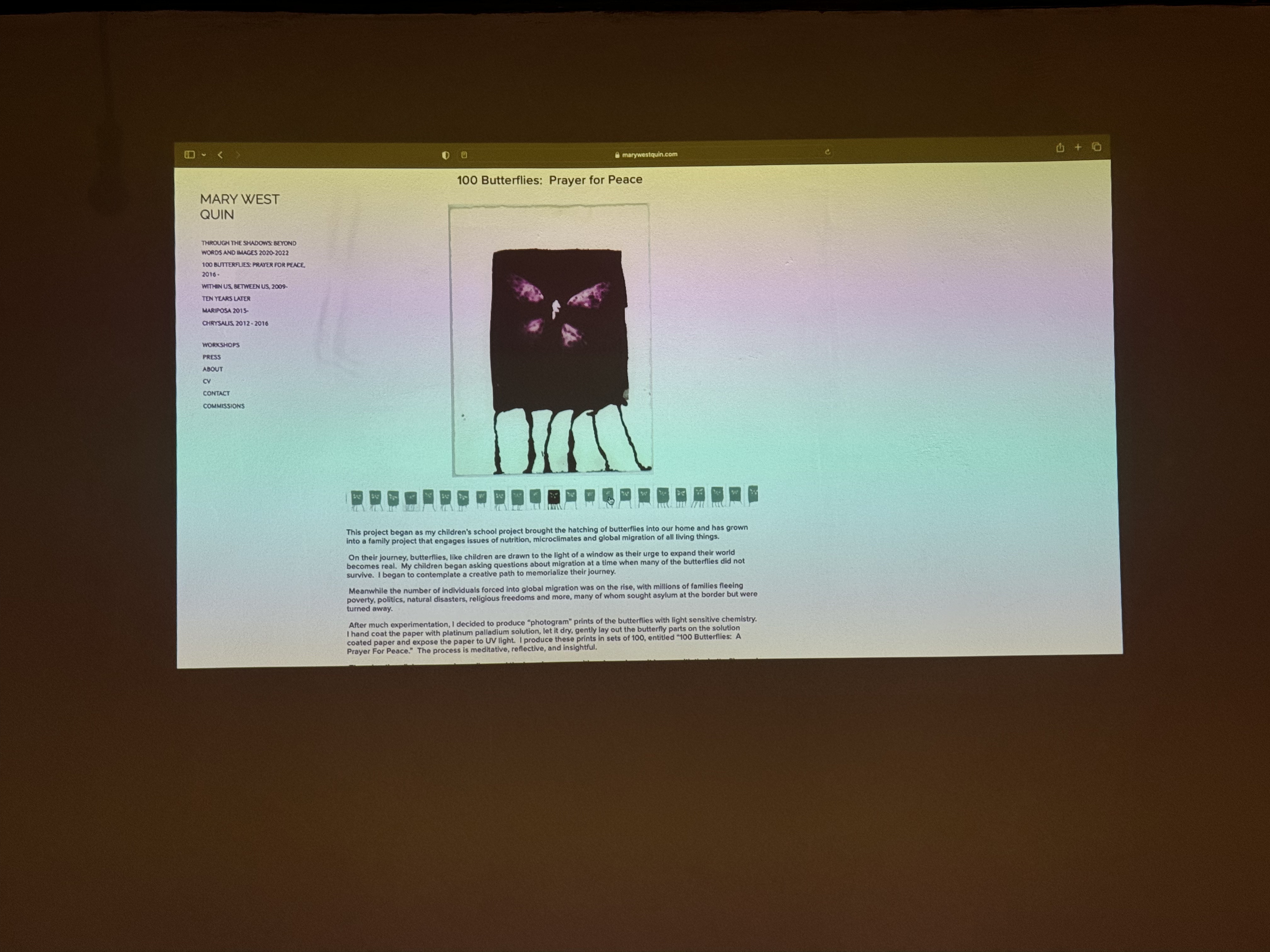
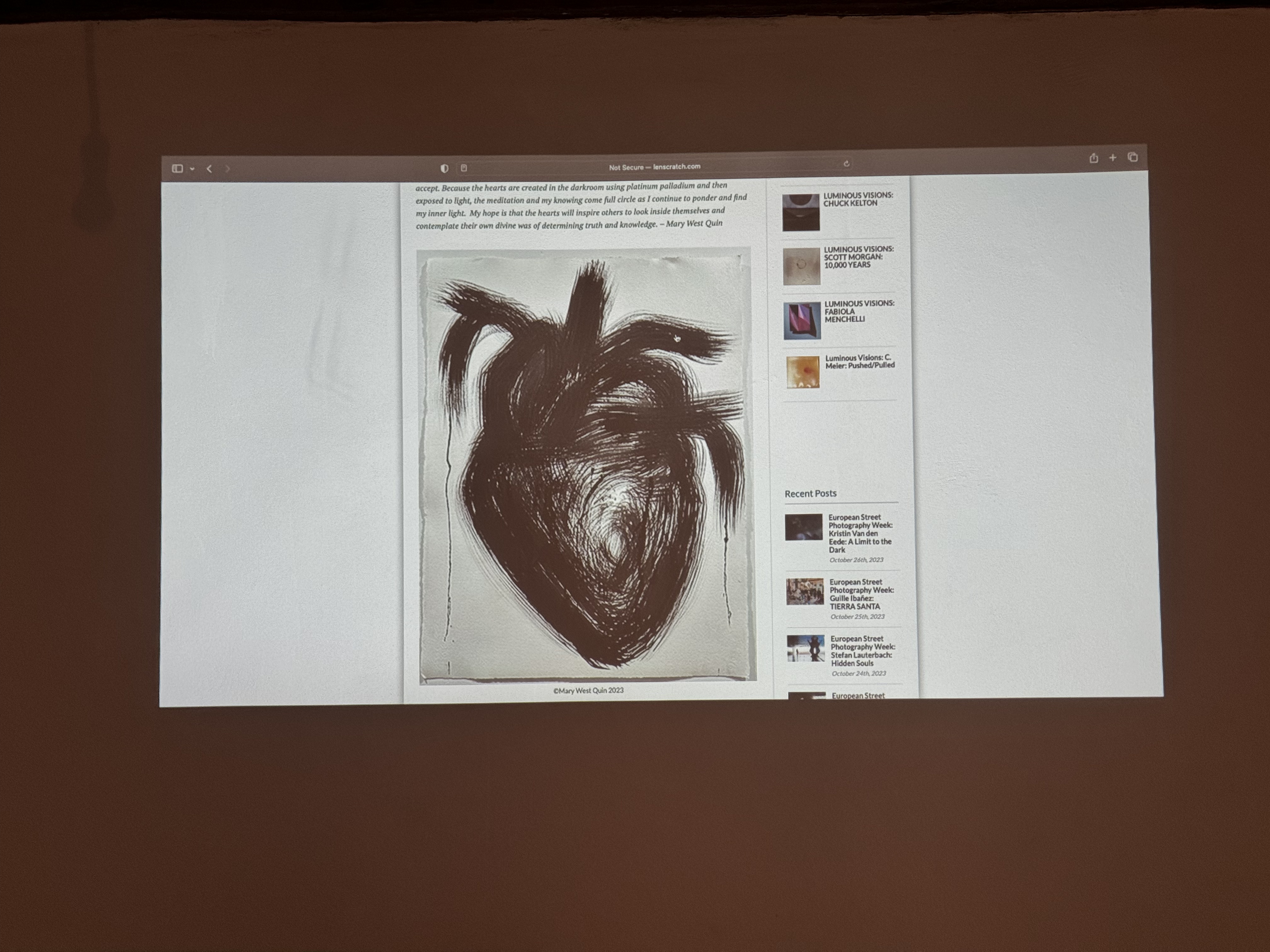
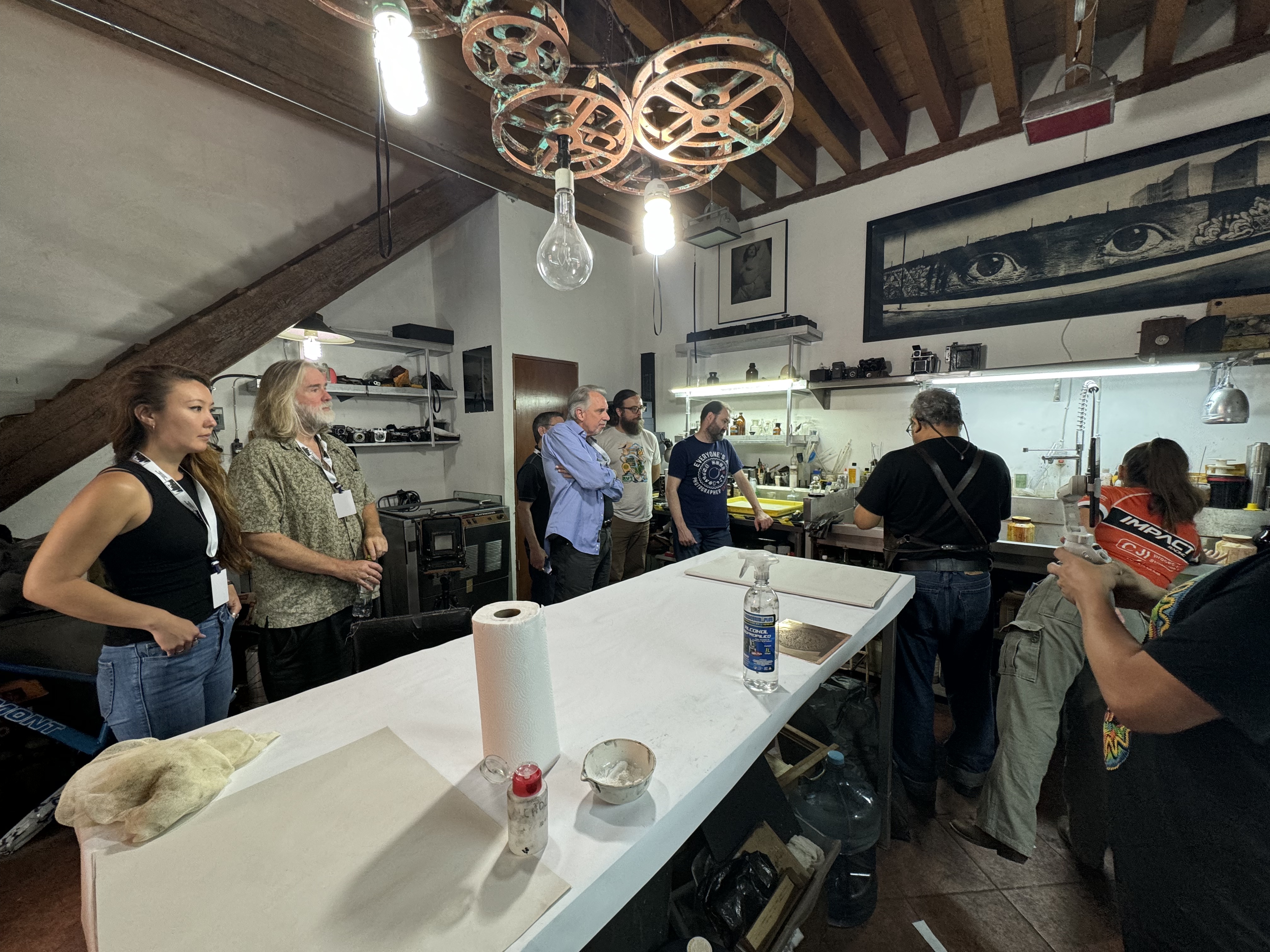
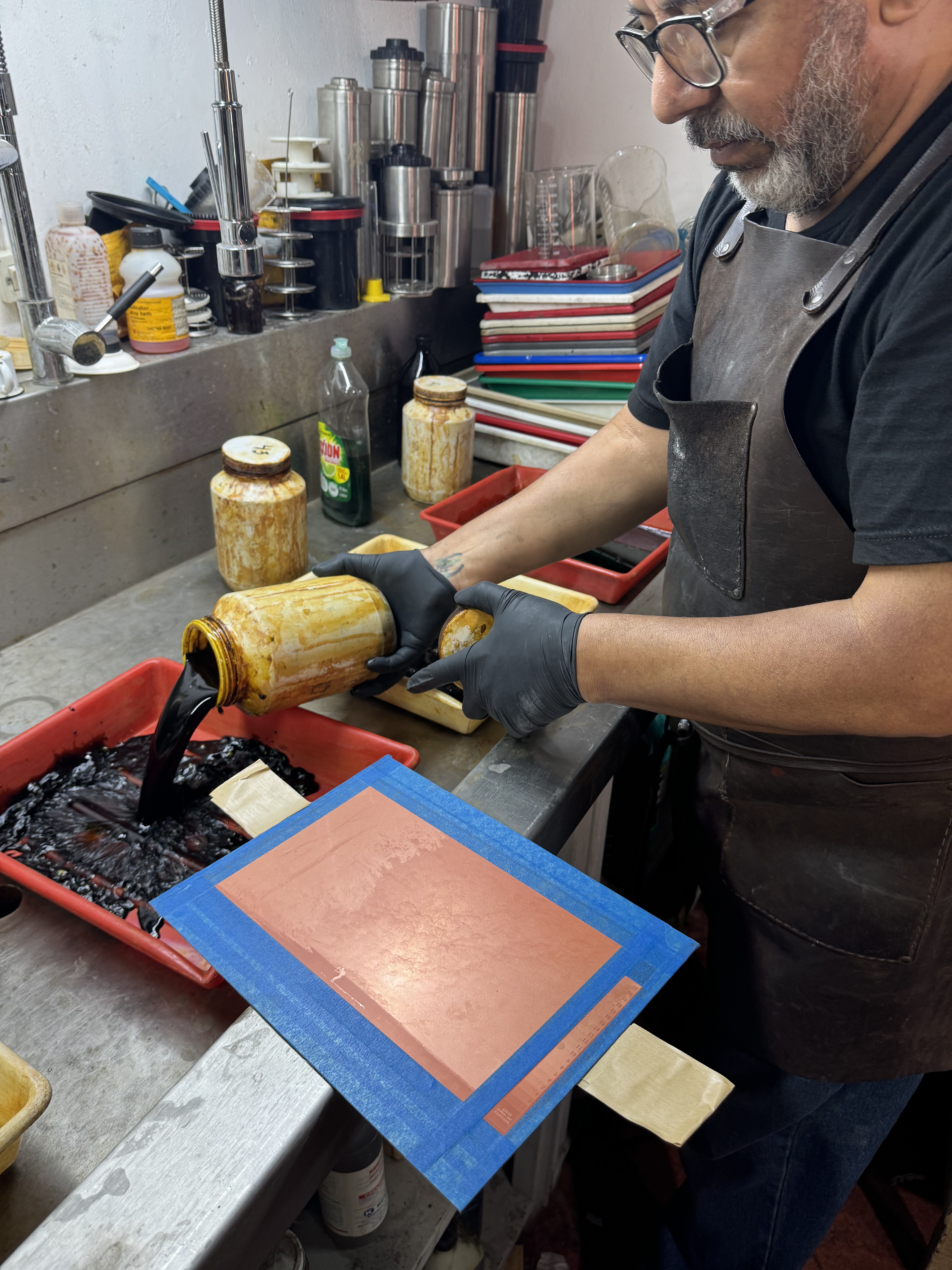
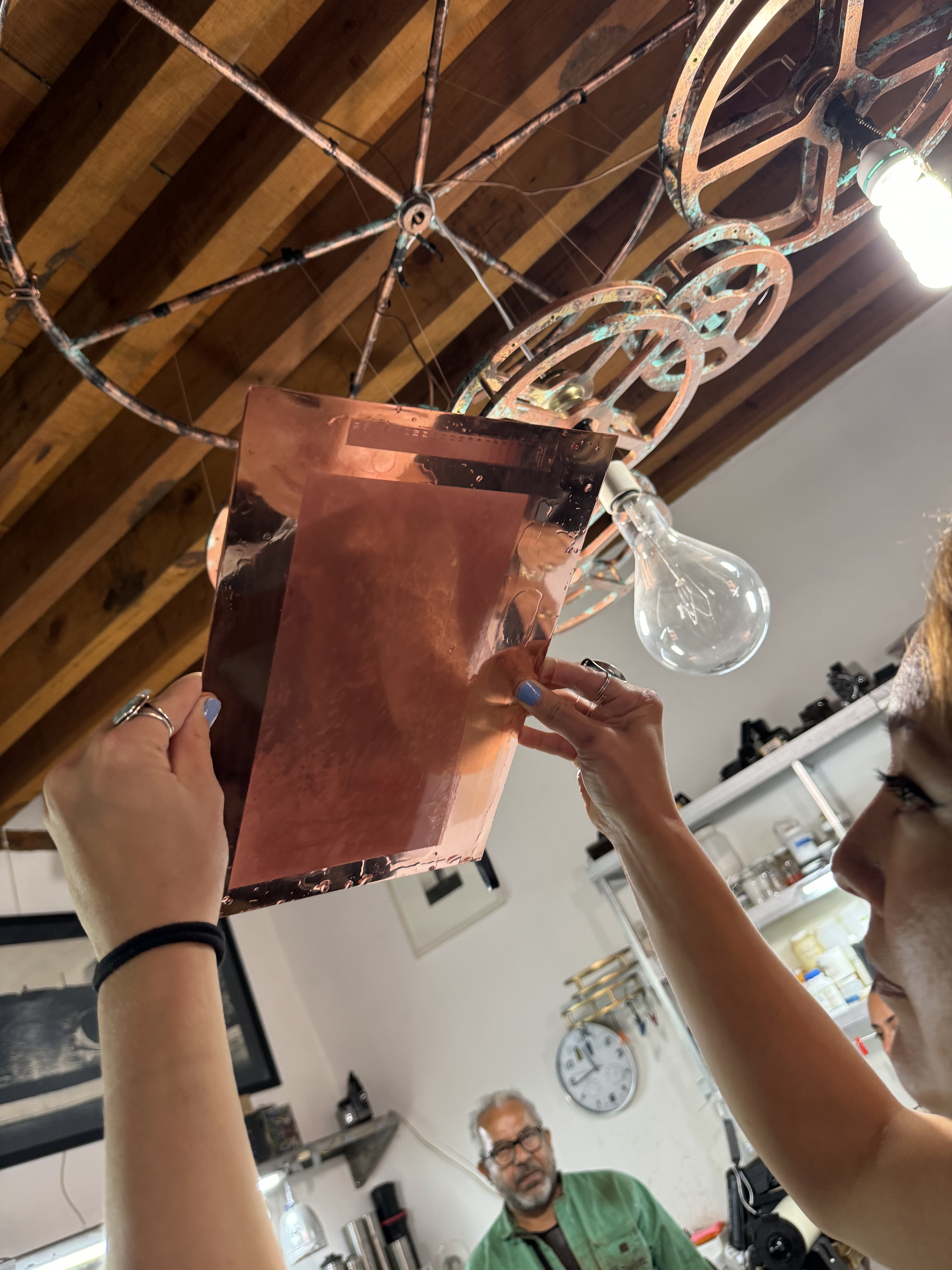
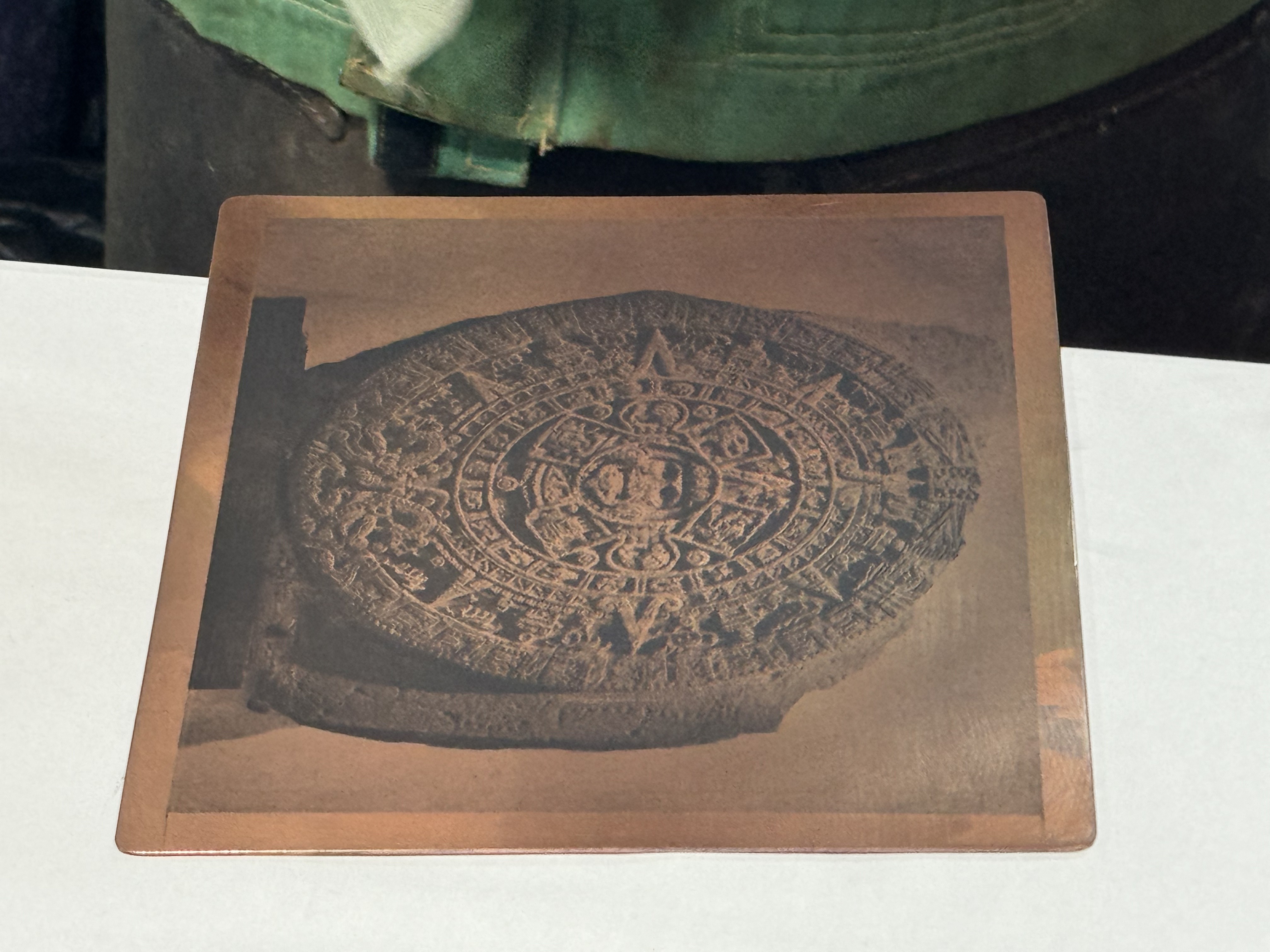
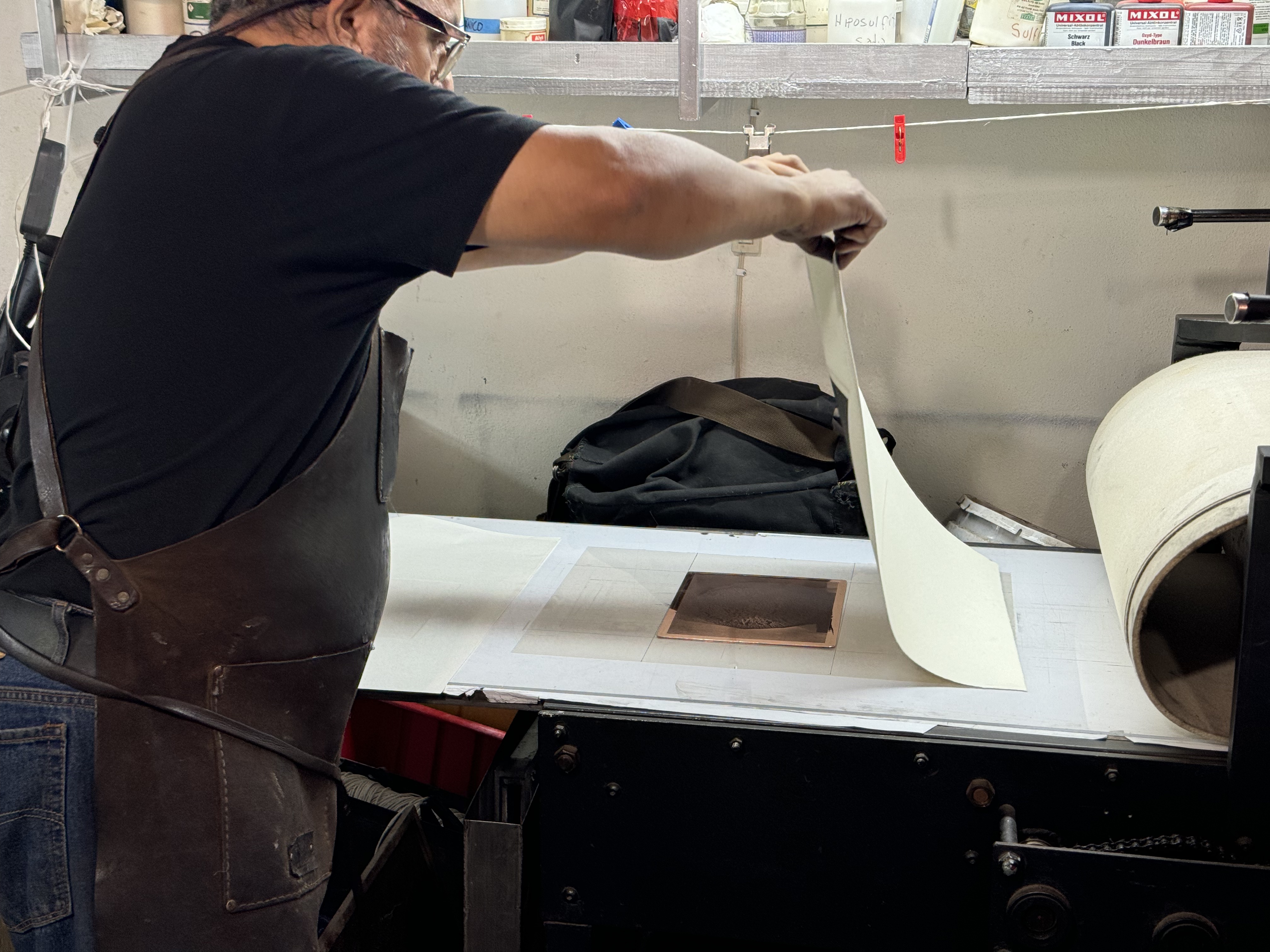
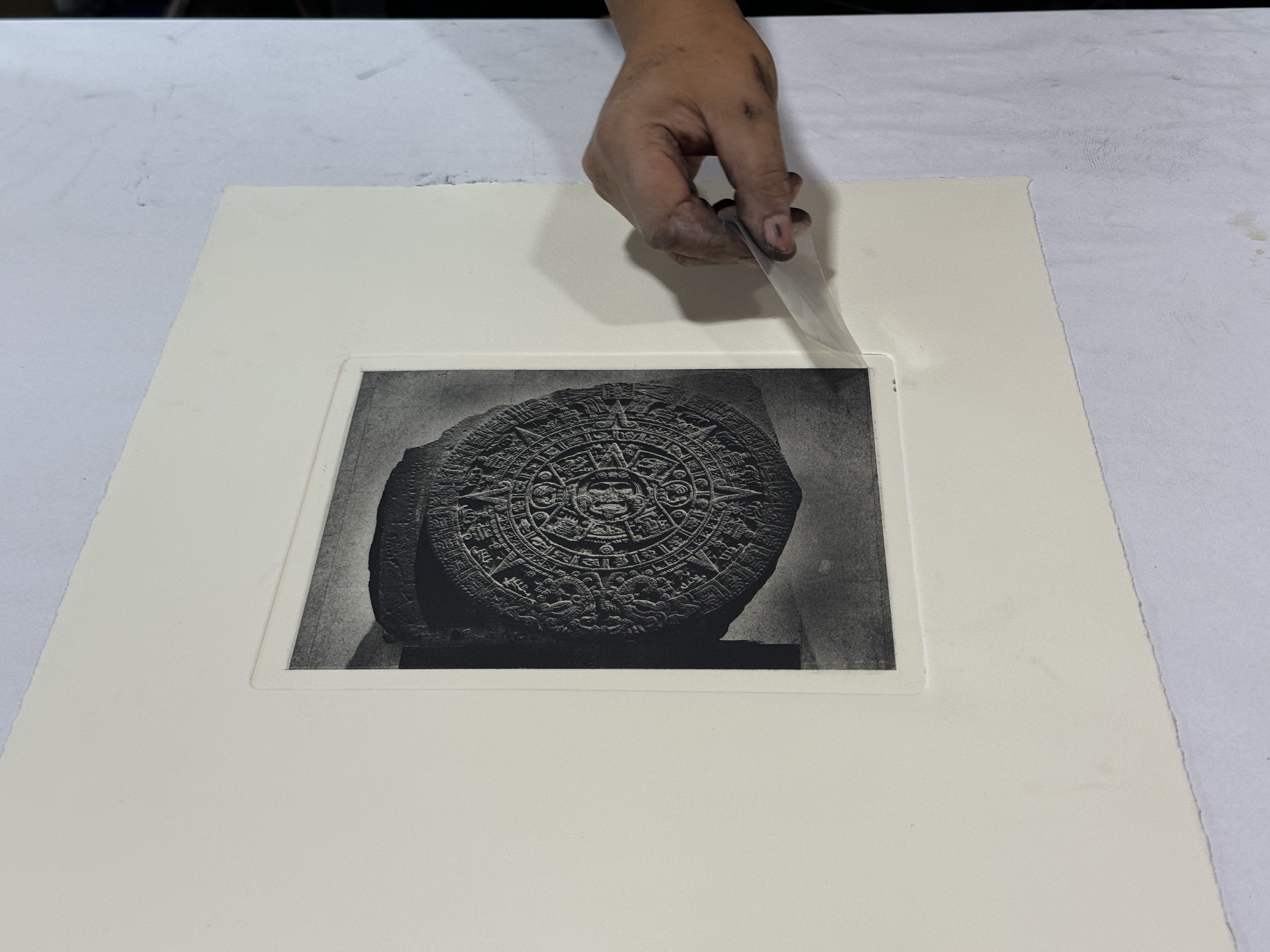
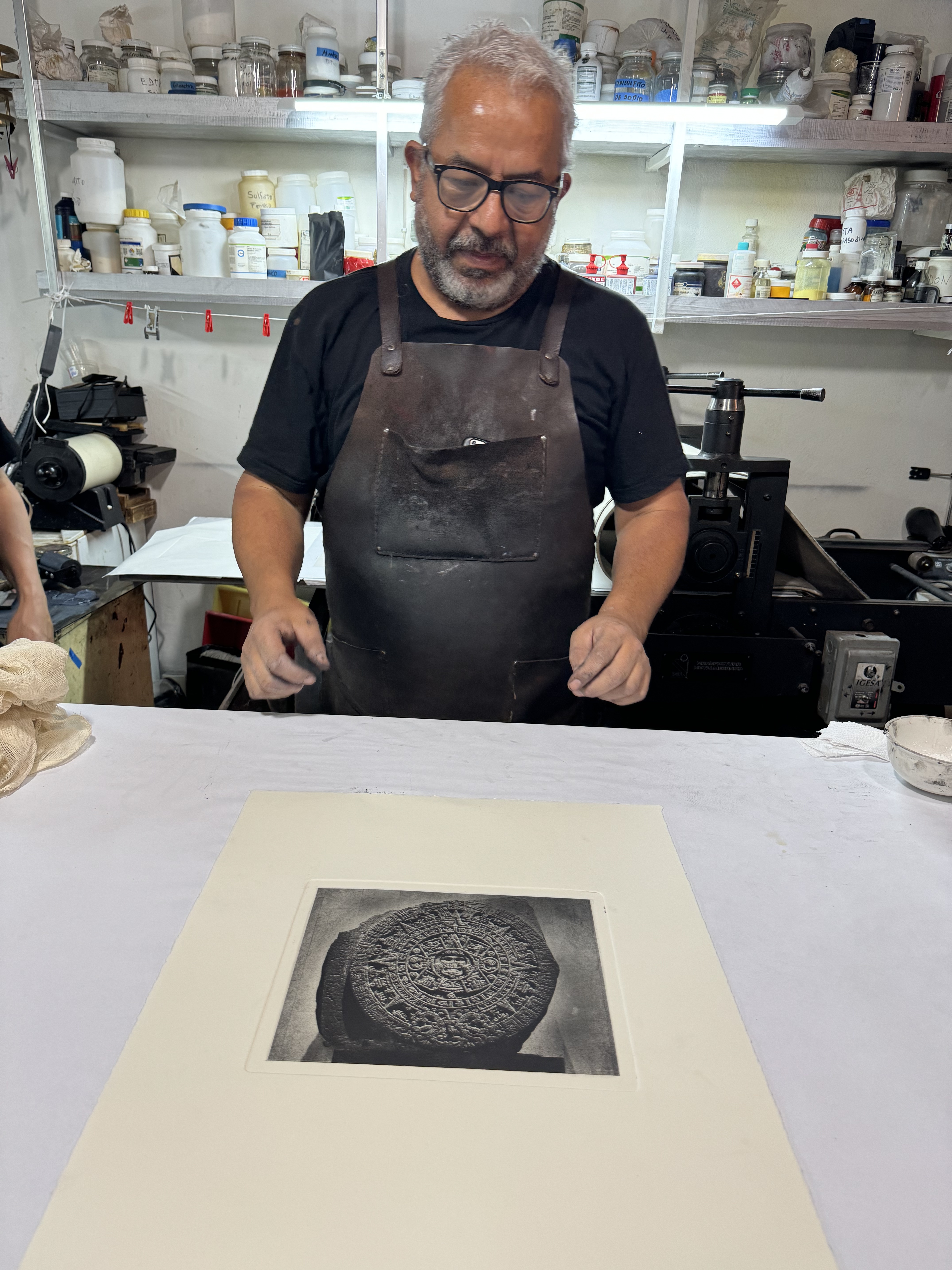
We also had presentations by Mary Quin and Arturo Talavera. Mary is an innovative artist from Alabama who began her photographic career working with large format cameras making traditional photographic images and has evolved into making “intuitive” images where she paints and drips photo chemistry onto paper to create images. Mary also gave a hands-on demo to the attendees of her technique. Arturo is a photographer from Mexico City and a master of multiple historic photo processes. Arturo hosted us for a morning in his studio where he demonstrated making a copper-plate photogravure image of the Aztec “Sun Stone” housed in the Anthropology Museum; his original plate from which he created the gravure was a whole plate size Daguerreotype!
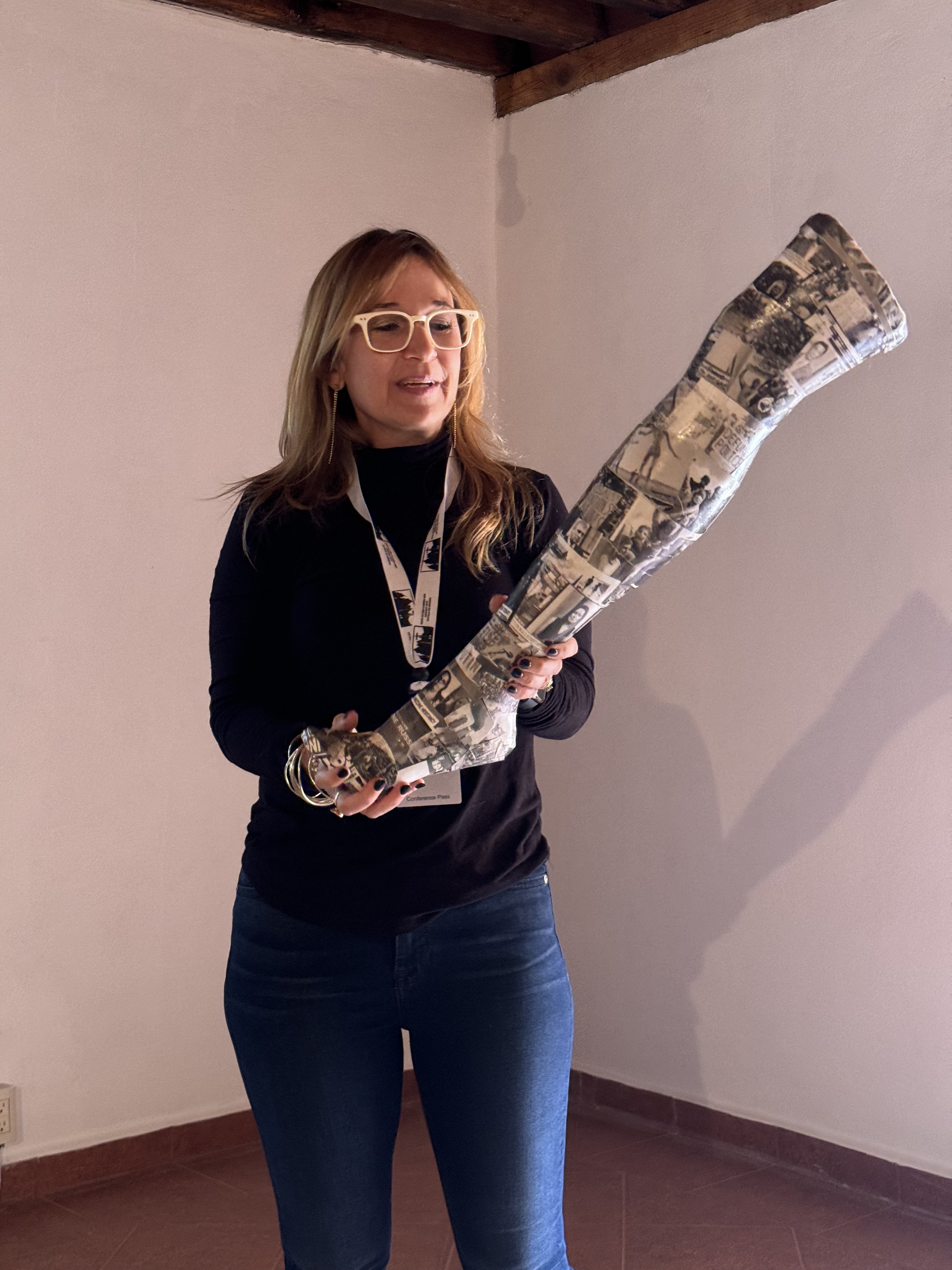
Mary Quin showing one of her hearts – work in progressEarly work in Palladium by Mary QuinOne of Mary Quin’s butterflieshand-drawn heart in palladiumMary Quin with mannequin leg collageArturo Talavera’s studioArturo about to etch a plateArturo examining the etched plateetched plate with ink, ready to pressPrint and etching plate after running through the pressfinished printArturo examining finished print
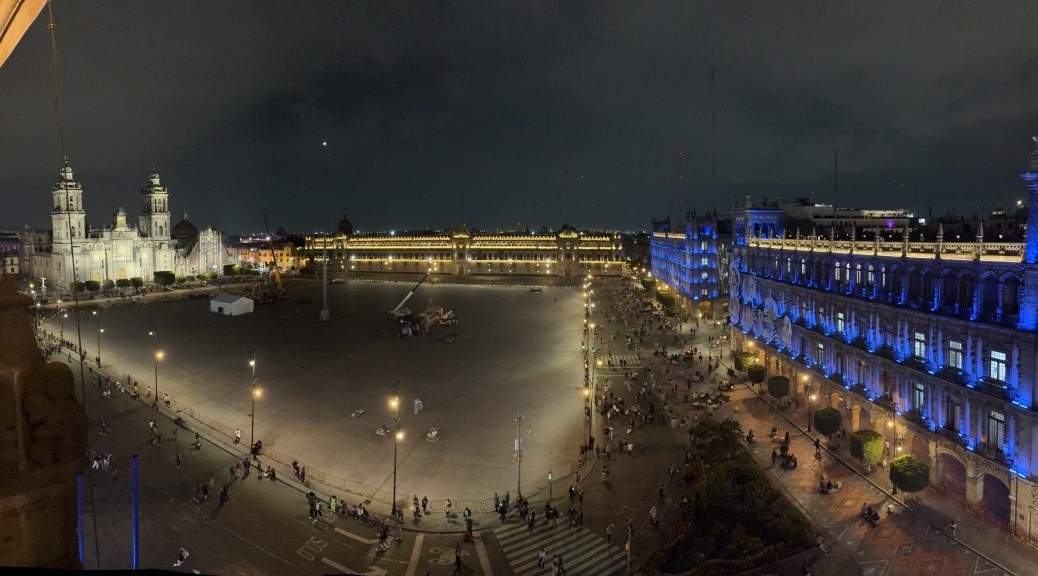
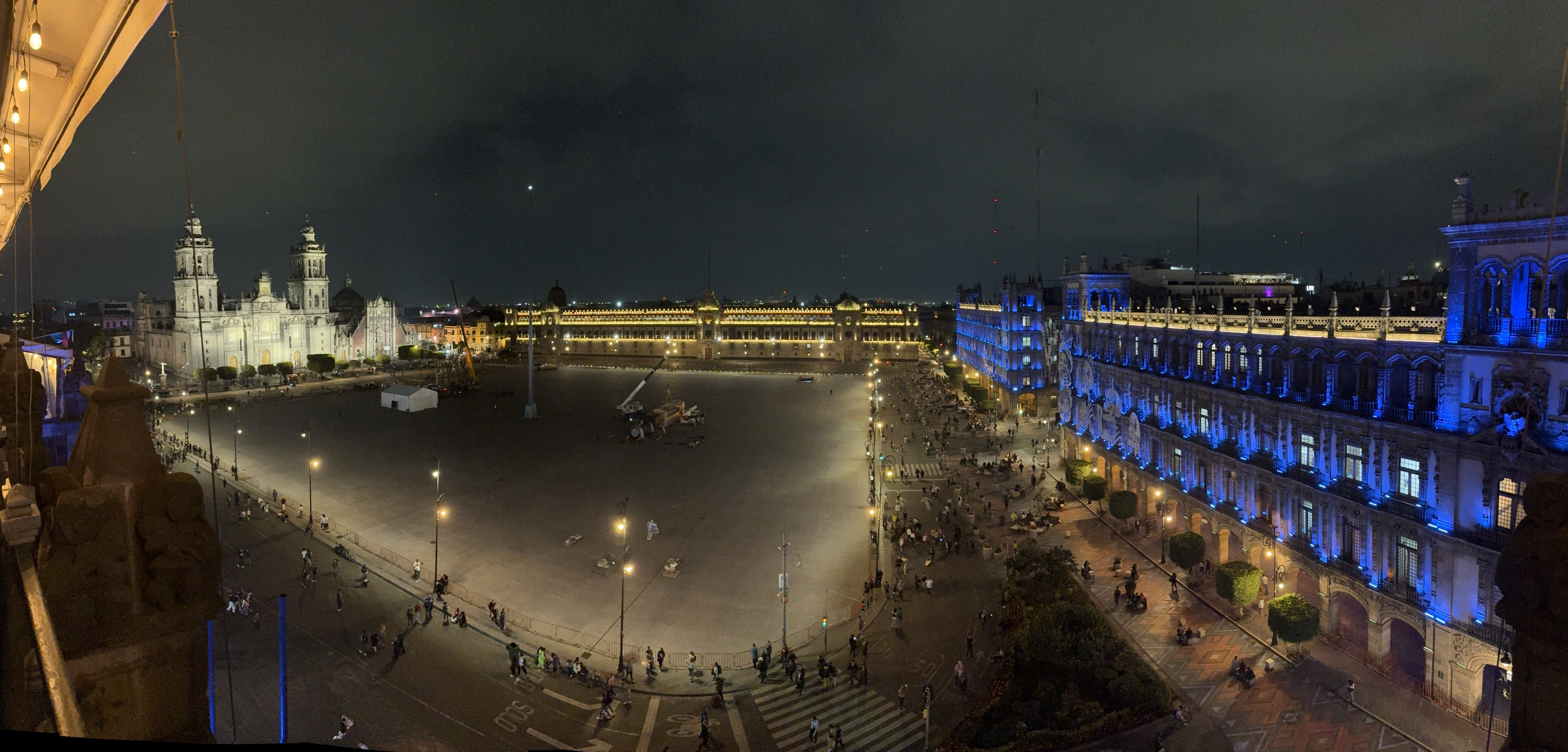
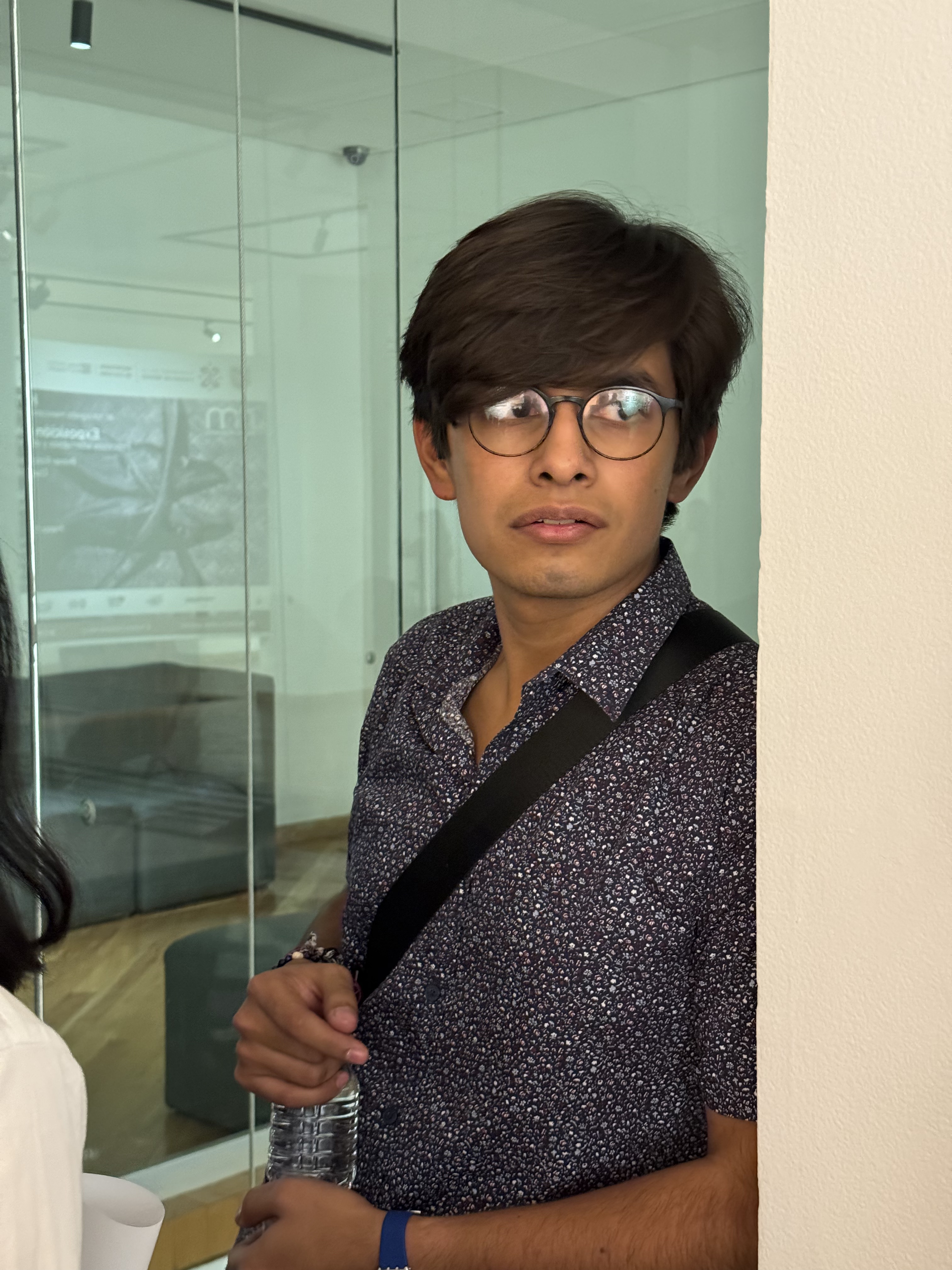
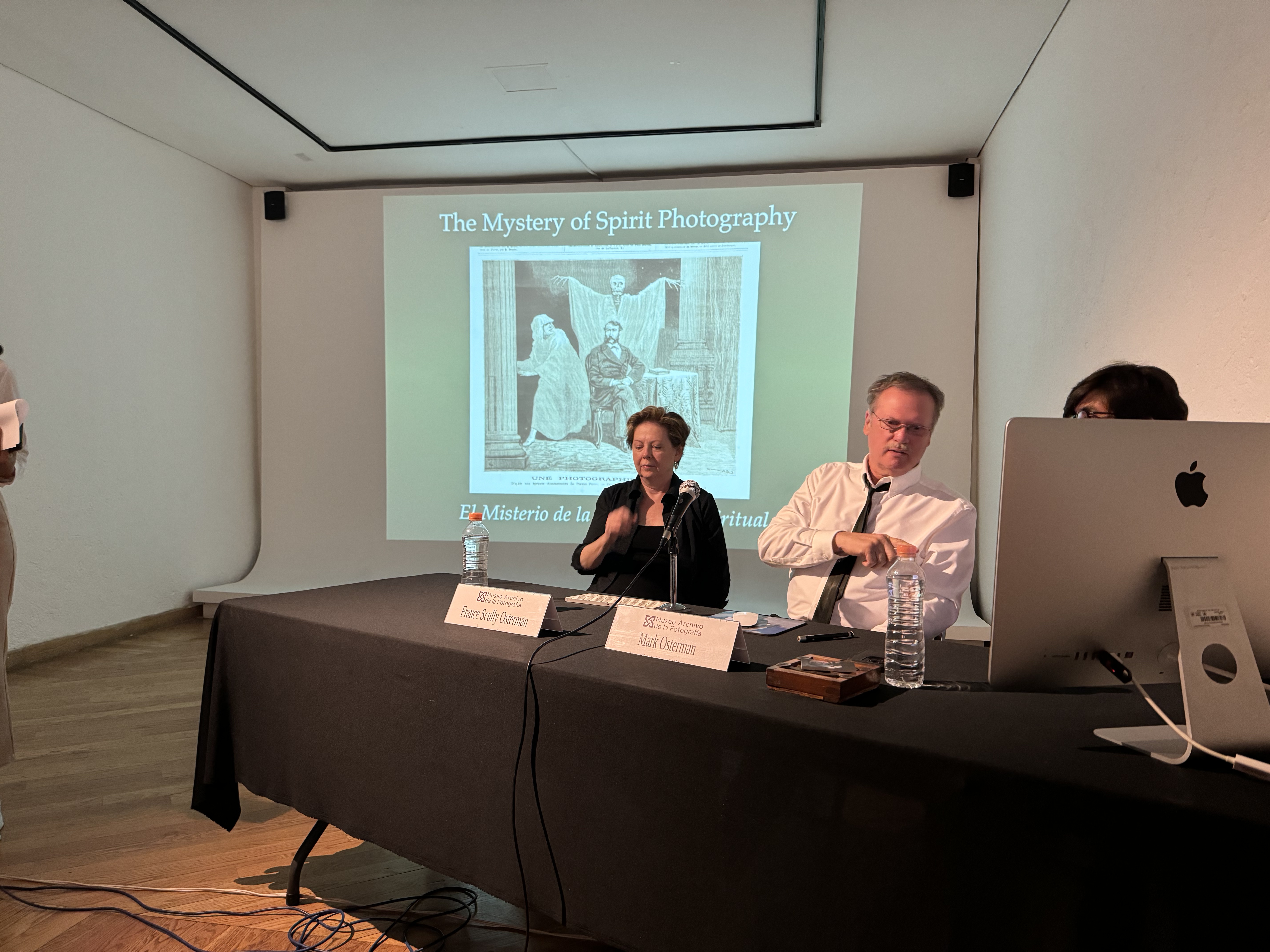
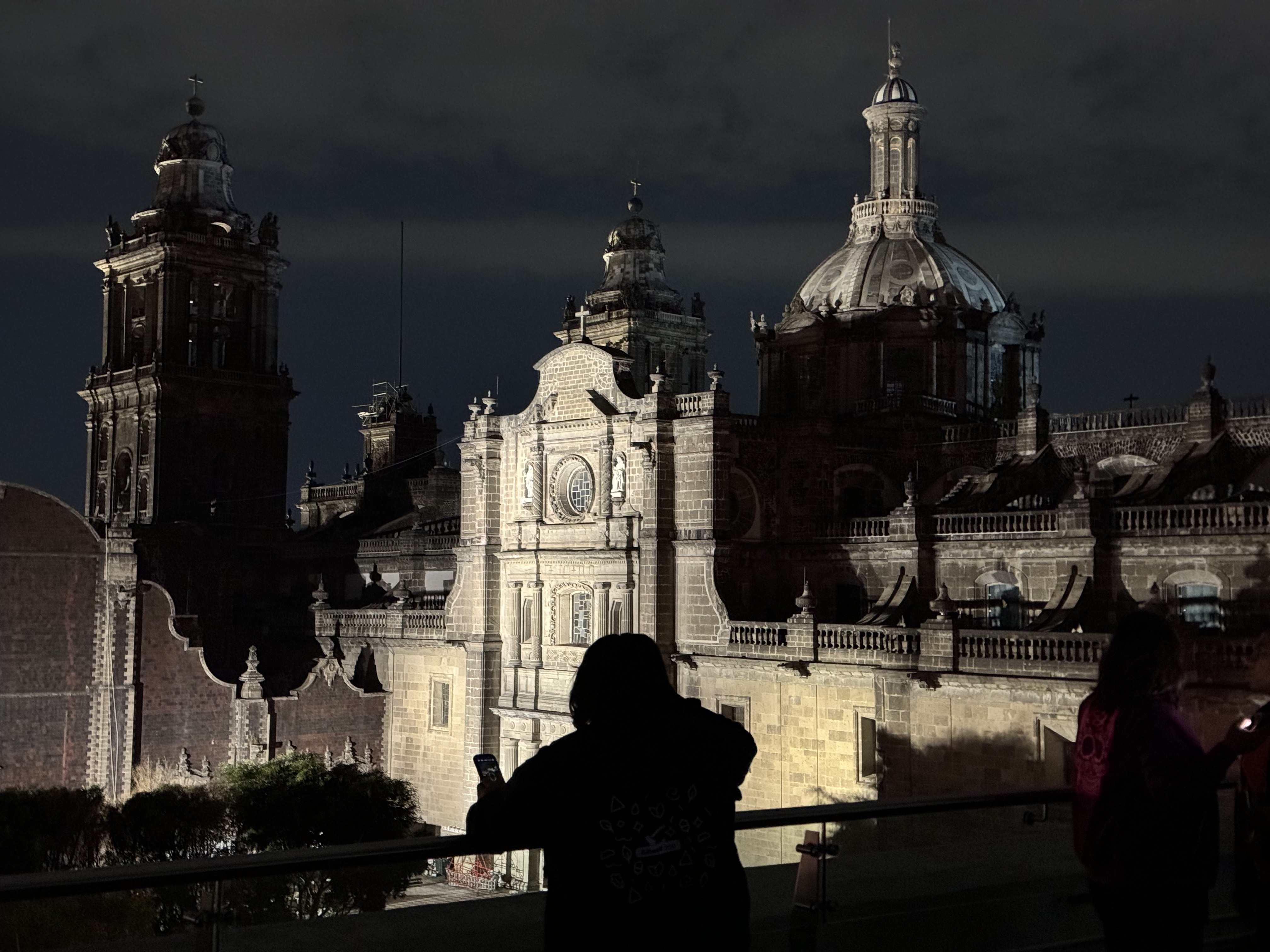
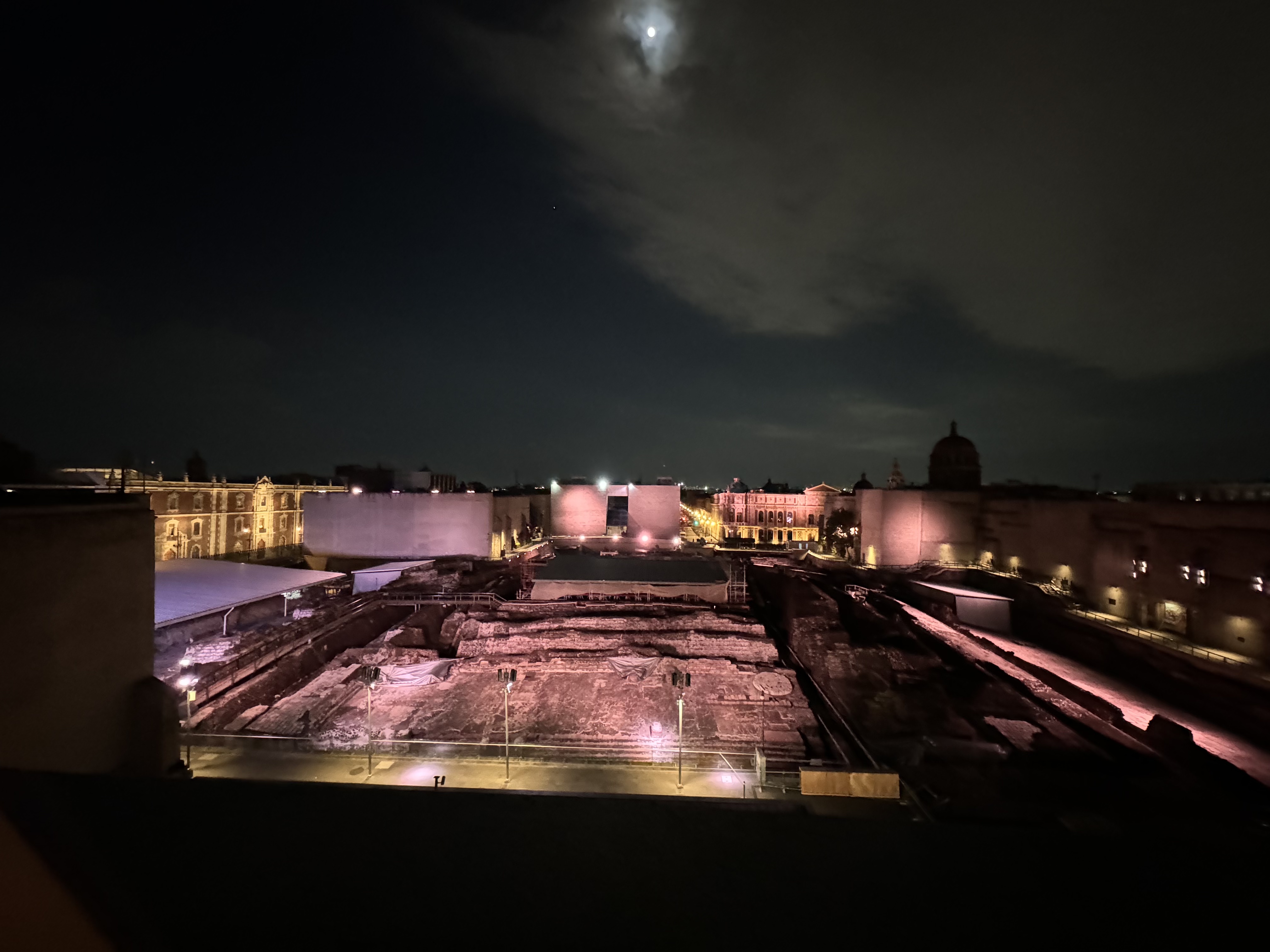
Our closing night keynote was presented at the Museo Archivo de la Fotografia by Mark and France Scully Osterman, who talked about 19th century spirit photography, an especially timely topic as we were on the cusp of the Day of the Dead weekend in Mexico City. Another resounding success, with a standing room only crowd, Mark and France talked about the origins of spirit photography in the middle 19th century, with the aftermath of the US Civil War being a significant driver of the interest in spiritualism that encouraged the practice. They also talked about the HOW it was done, with techniques ranging from simple long exposures that rendered moving figures in the image as ghostly presences, to advanced methods for manipulation and trickery to give the impression of spiritual manifestations. The evening closed out on the roof of the museum overlooking the Metropolitan Cathedral and the ruins of the Templo Mayor and some celebratory wine was shared by all. The first image is of the wonderful young man who did the live translation for Mark and France’s talk; he did an outstanding job!
Our translatorMark and France Scully Osterman presentingMark and France viewing the cathedral at night from the museum rooftopView of the cathedral View of the Templo Mayor with the moon overhead
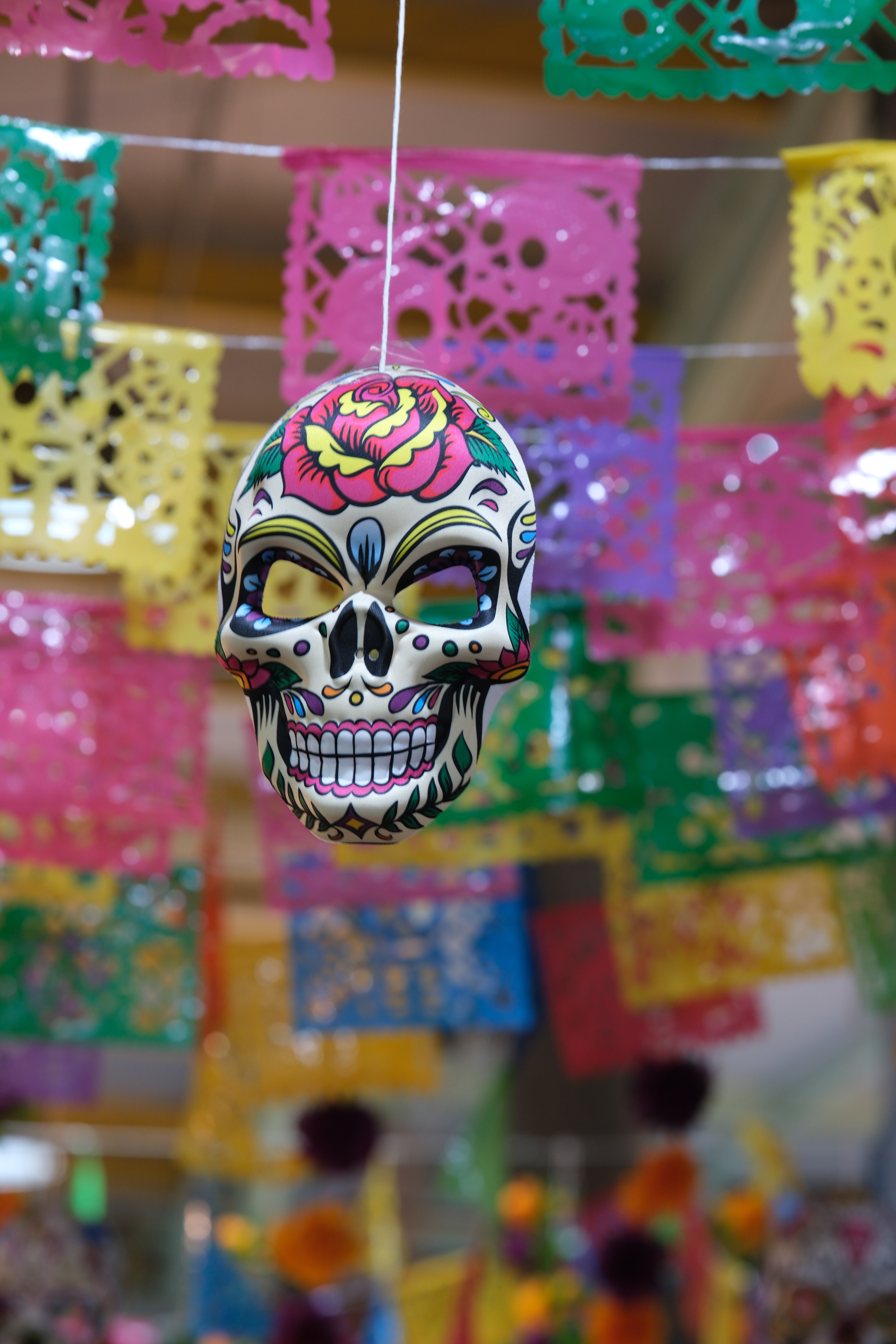
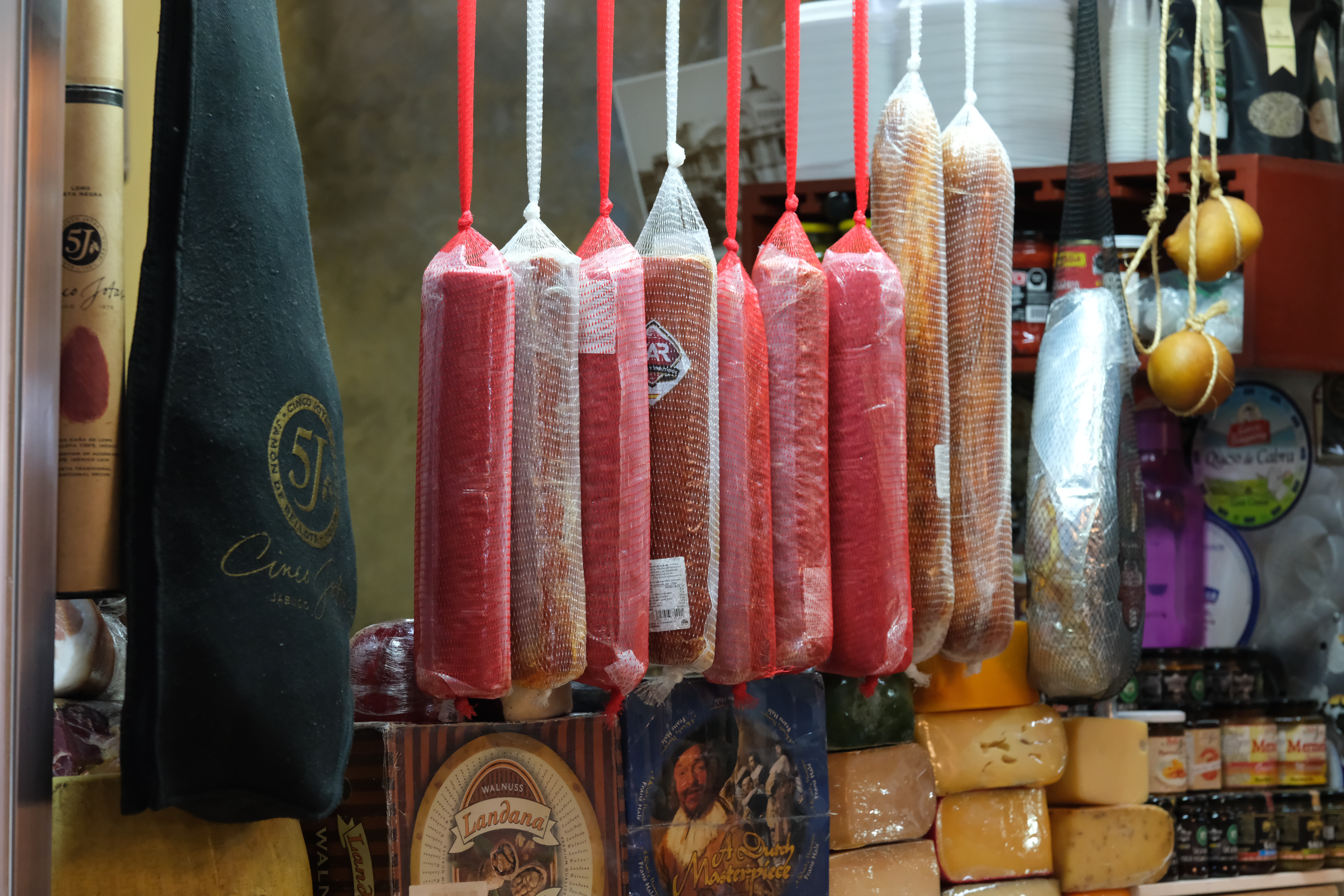
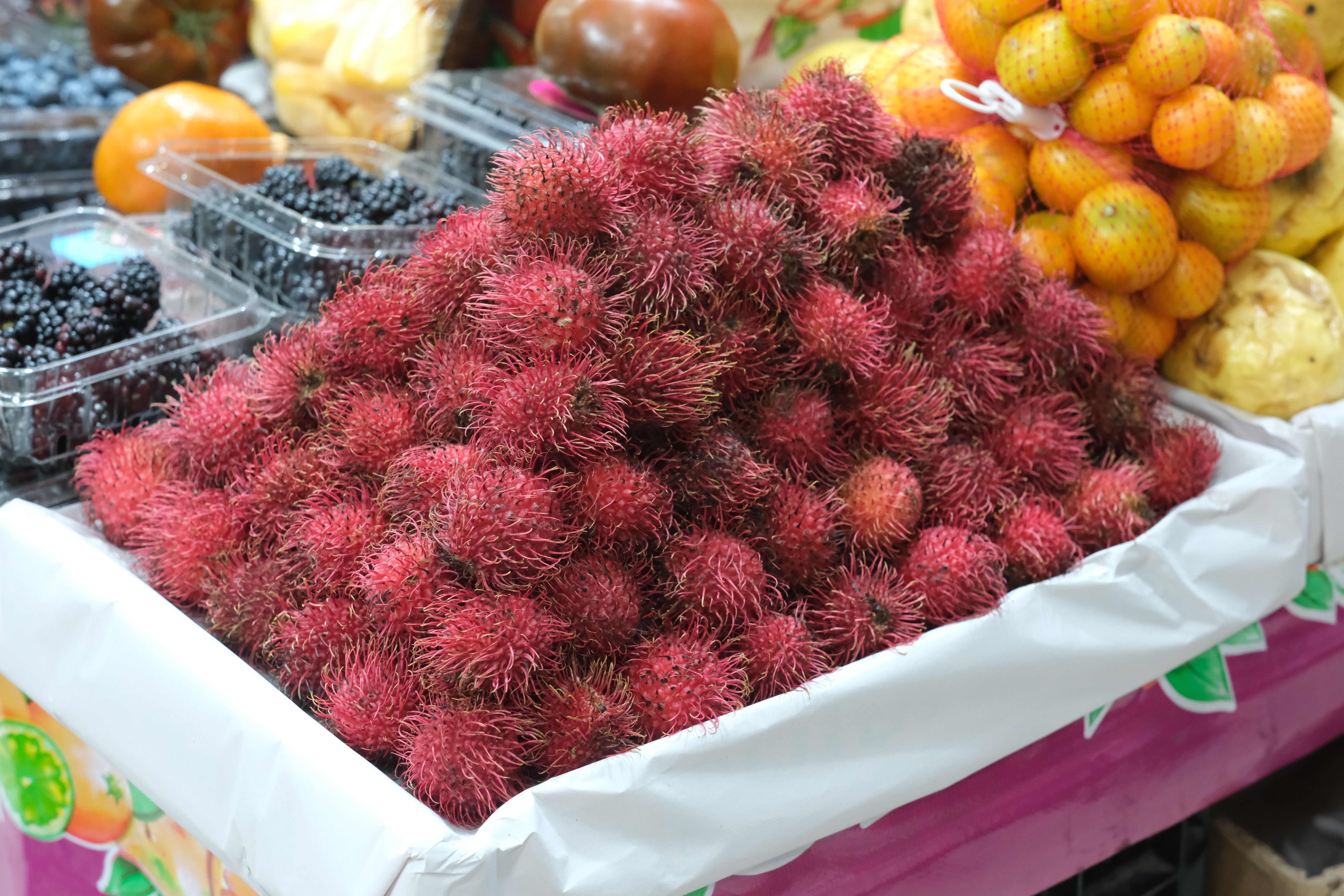
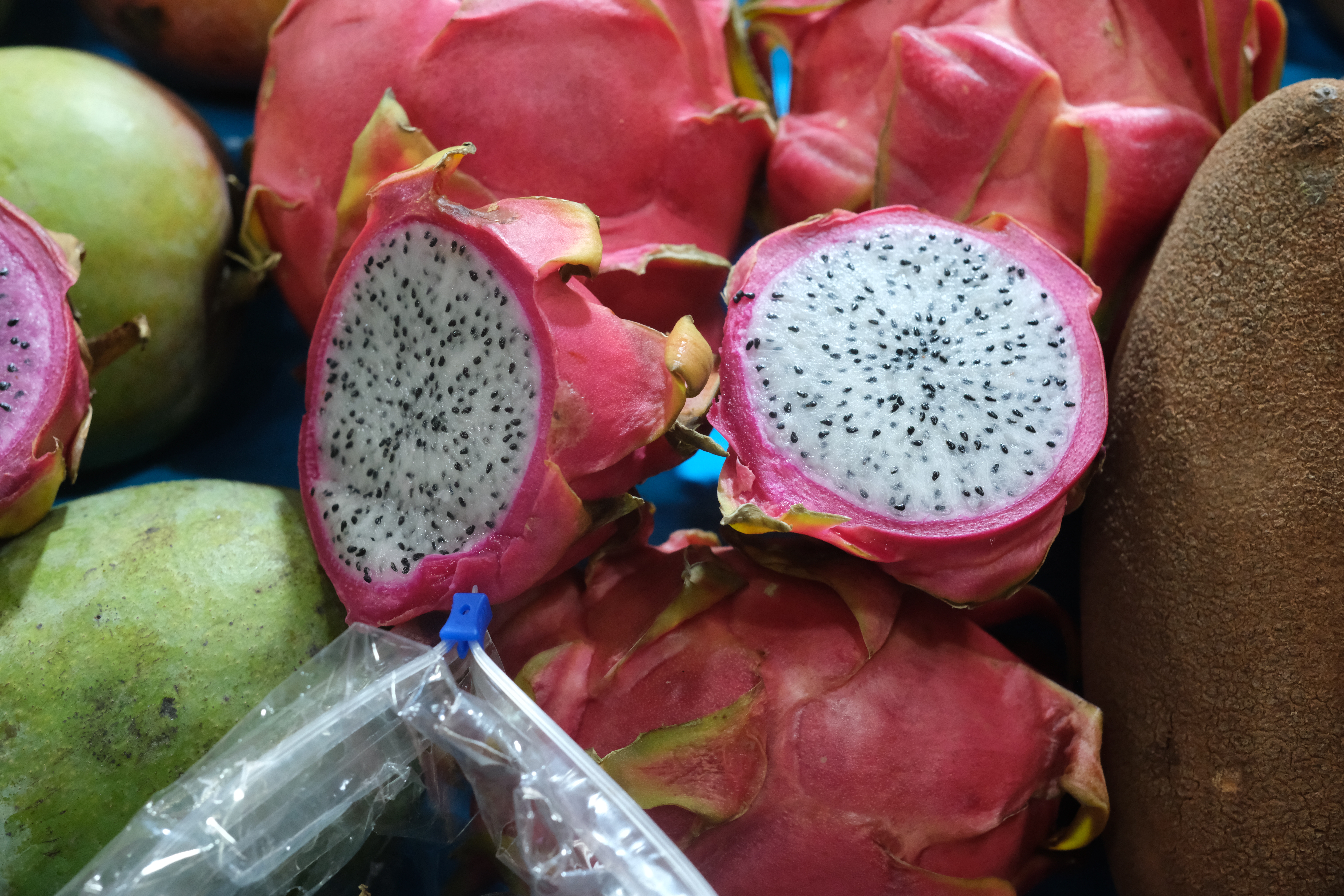
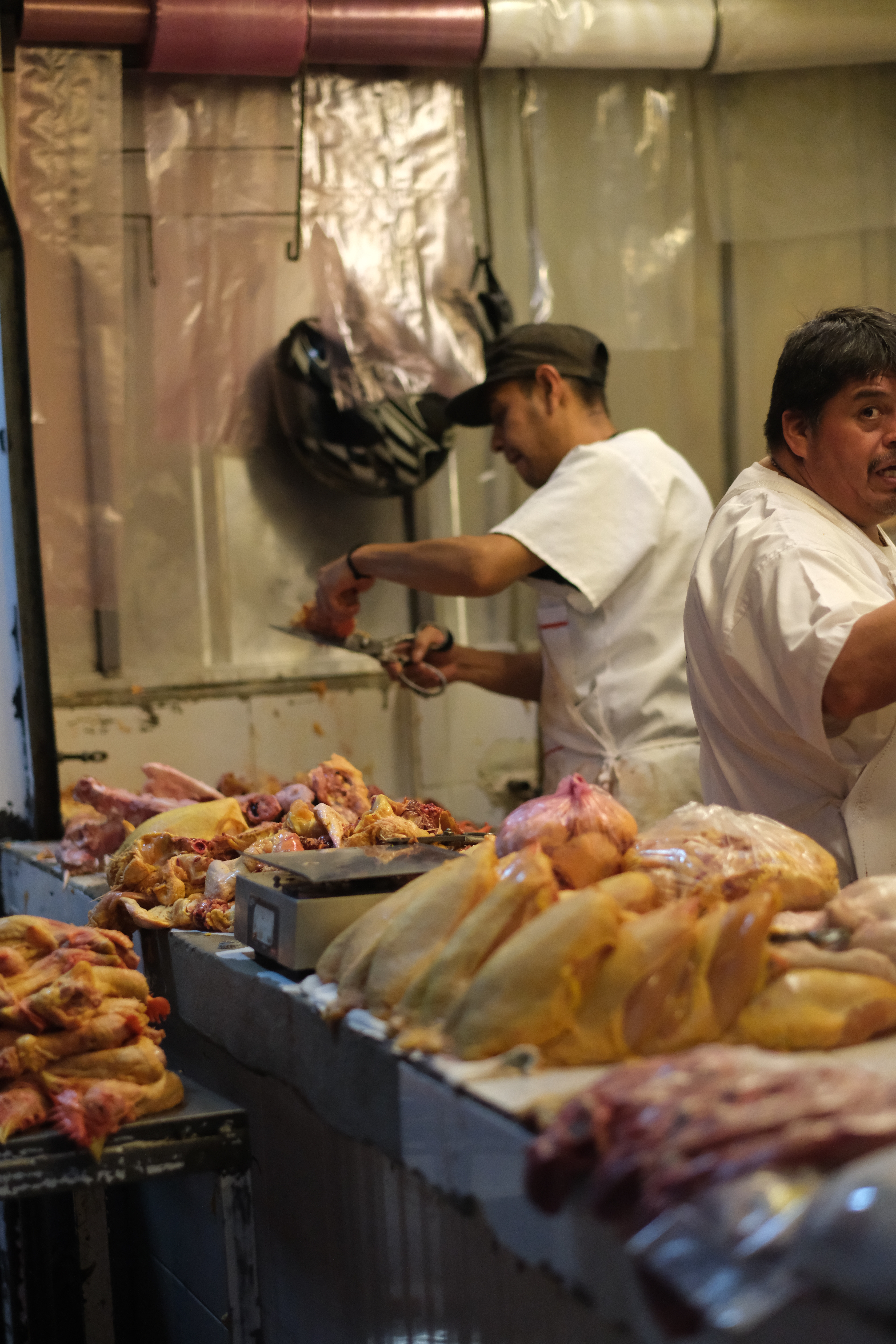
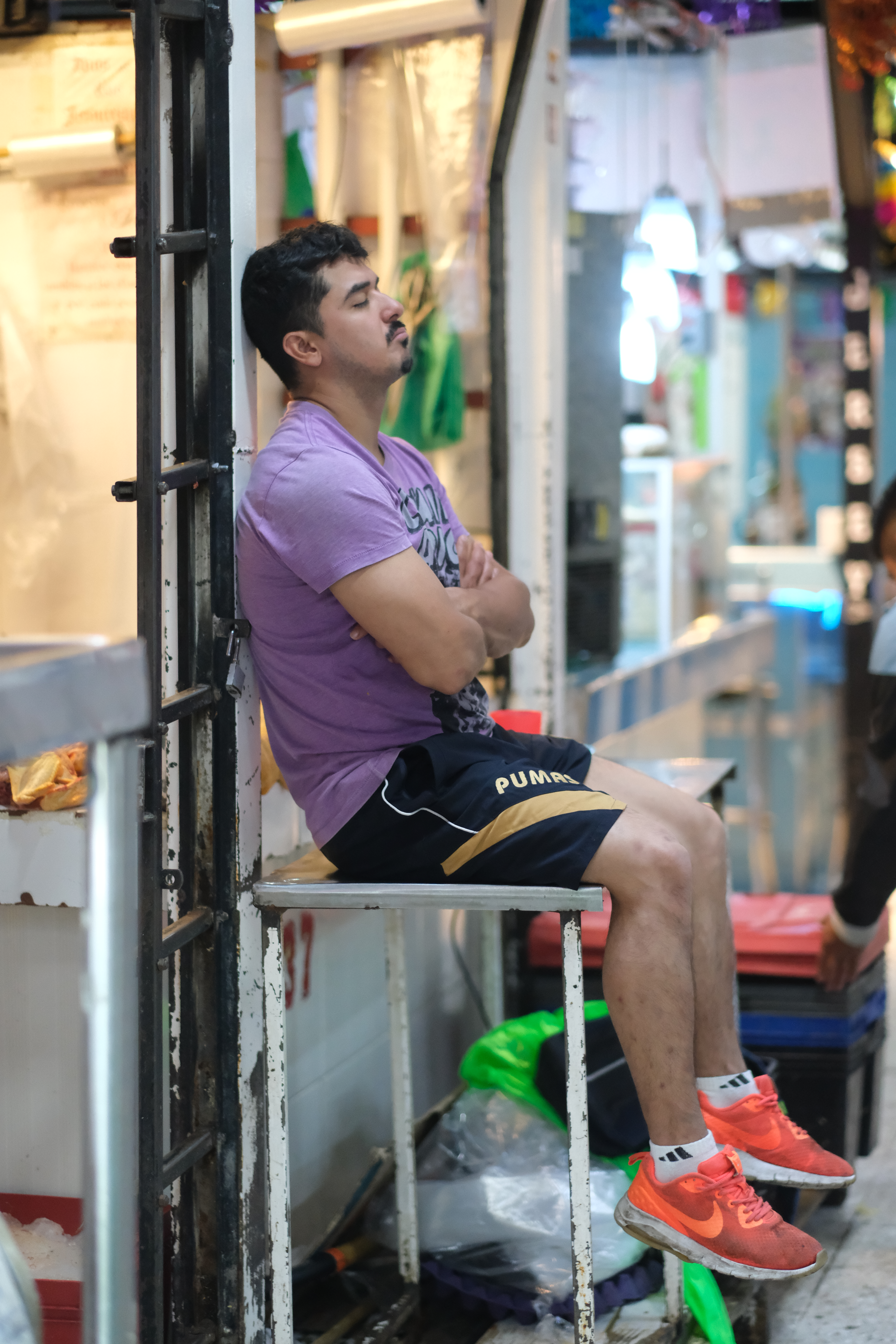
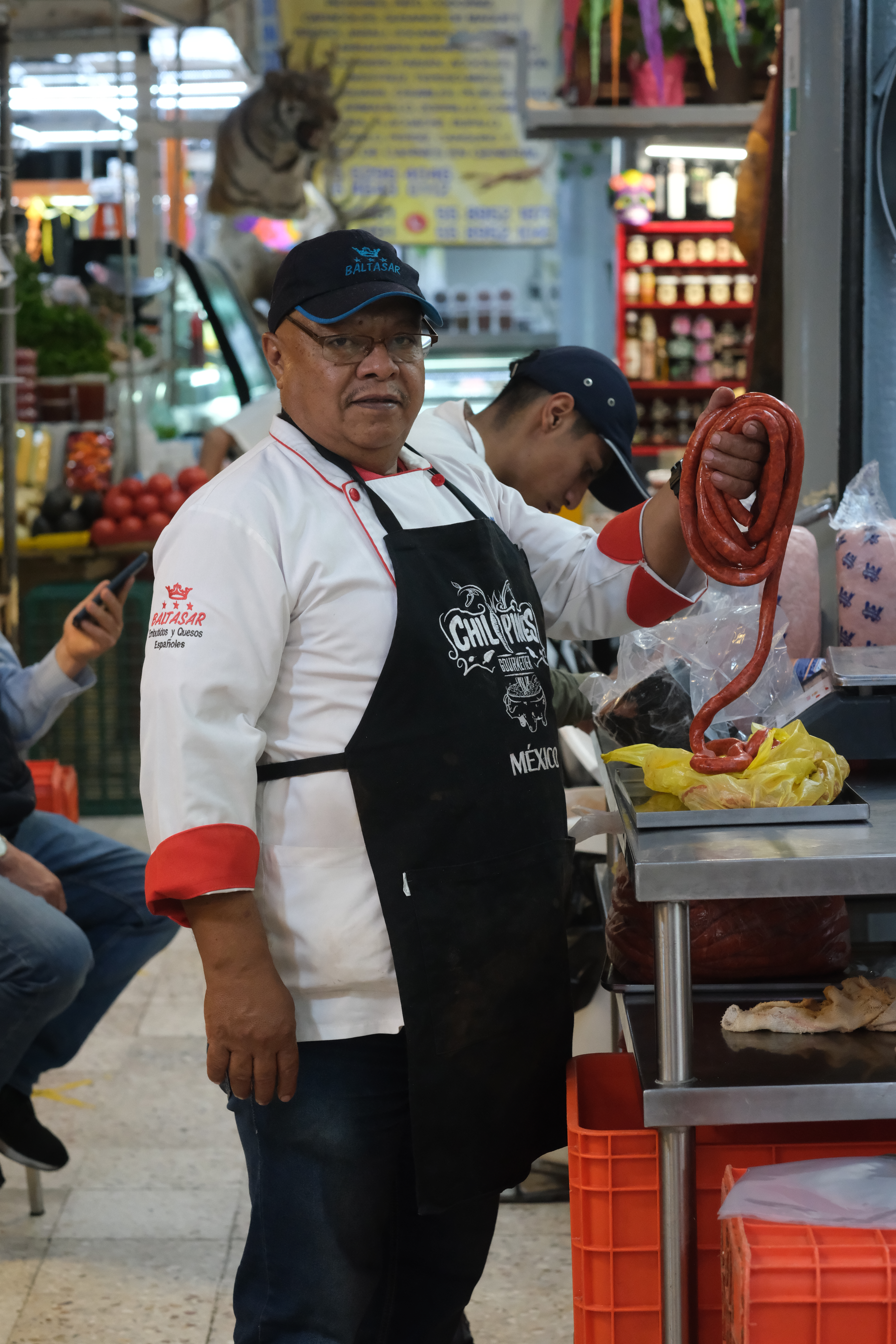
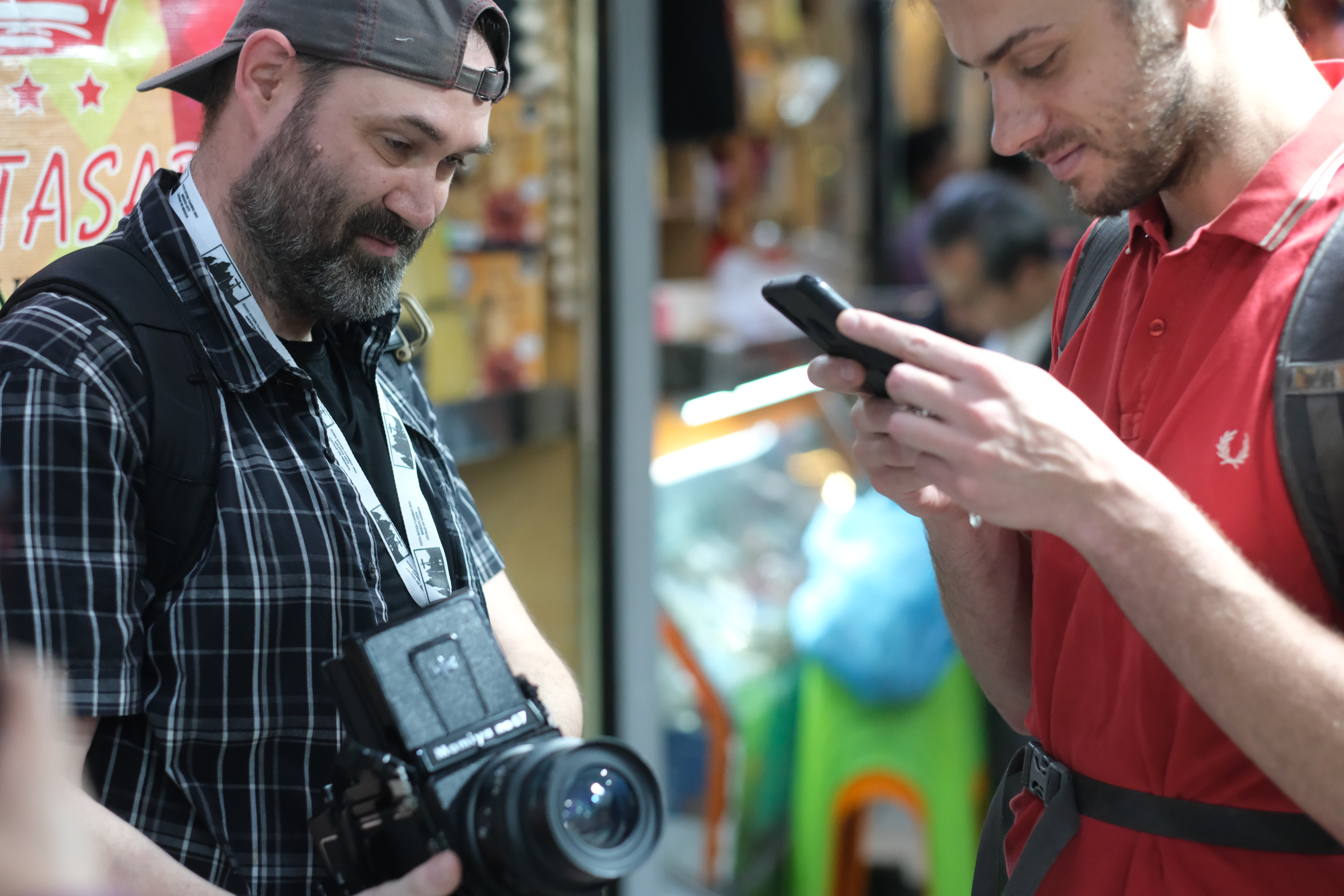
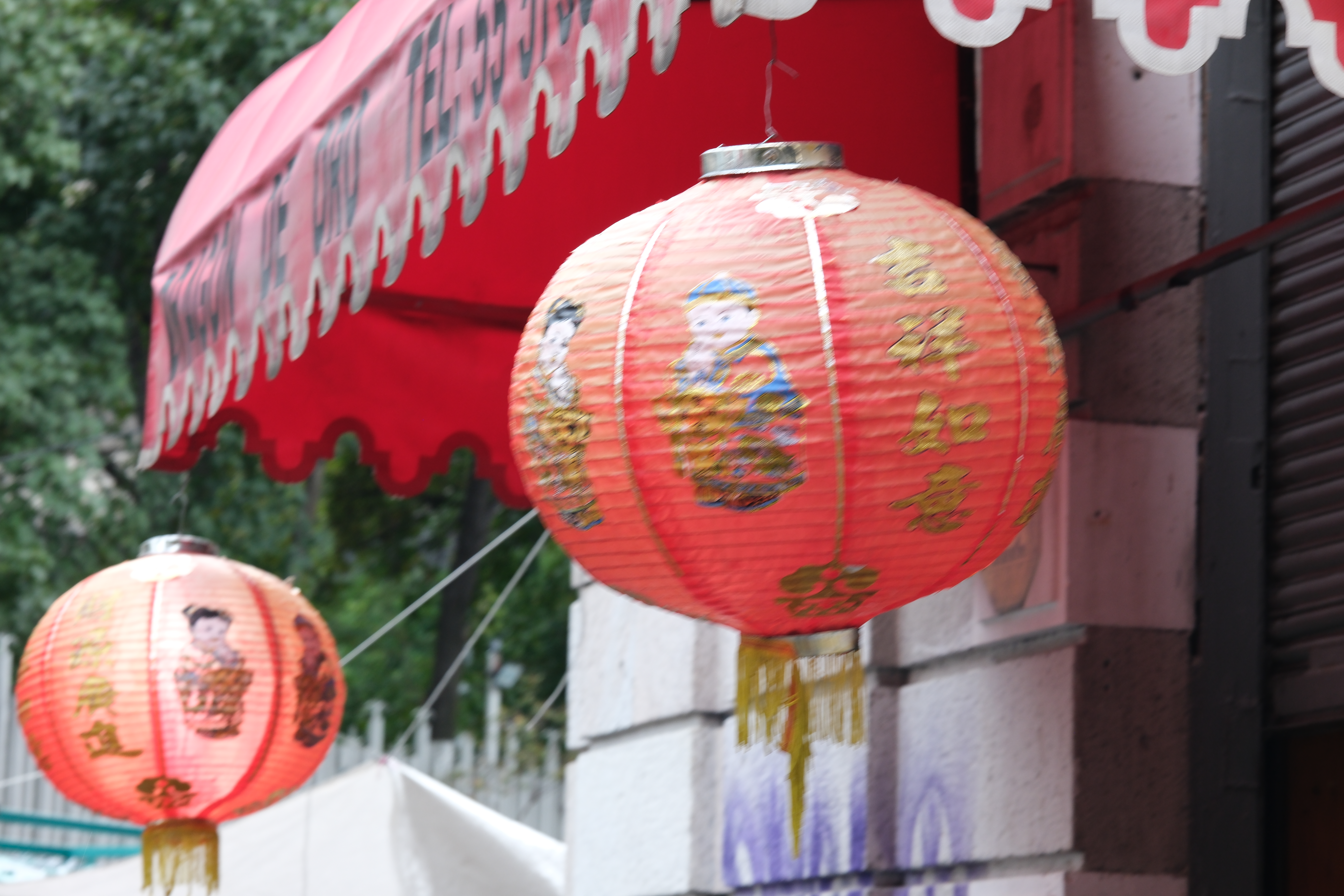
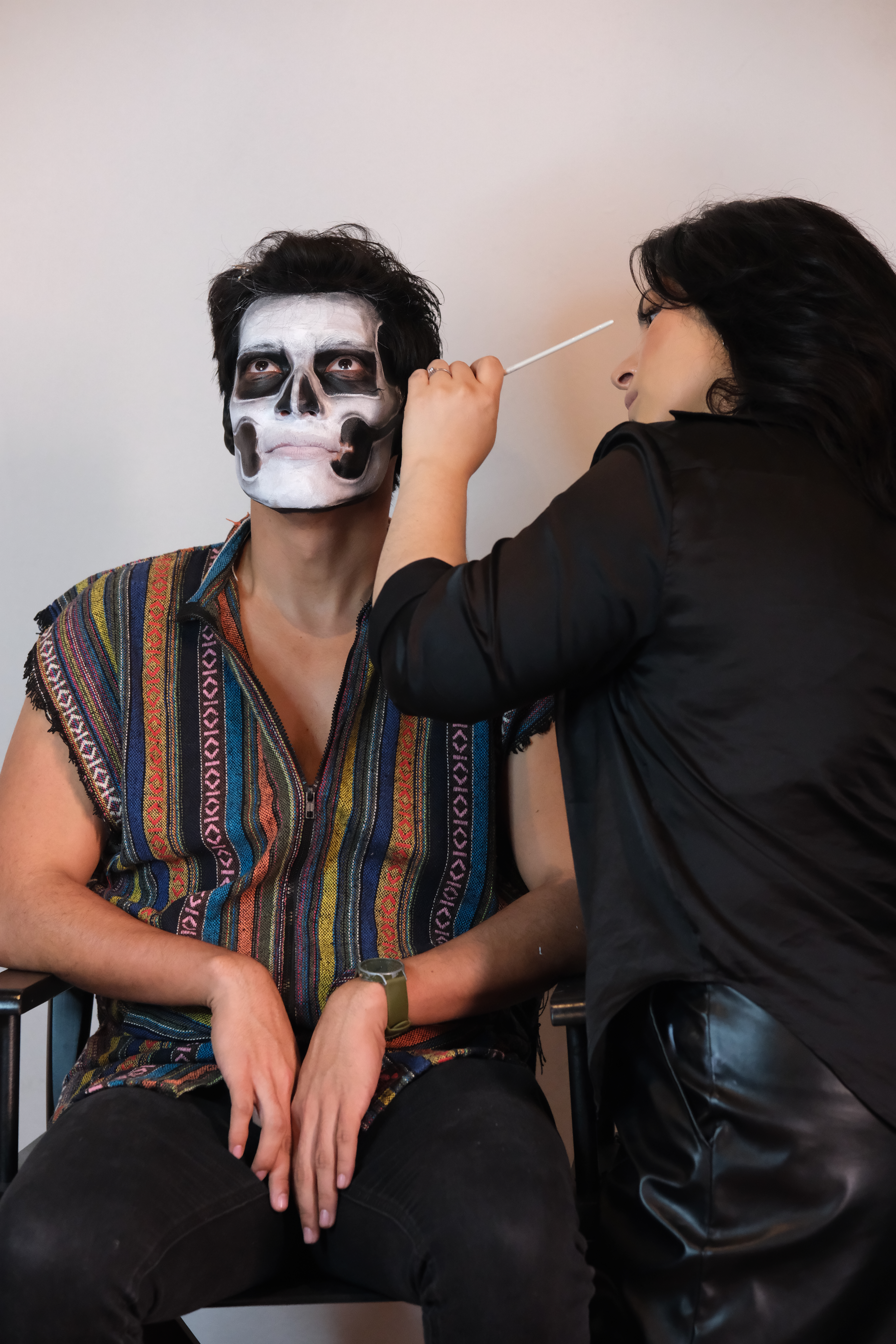
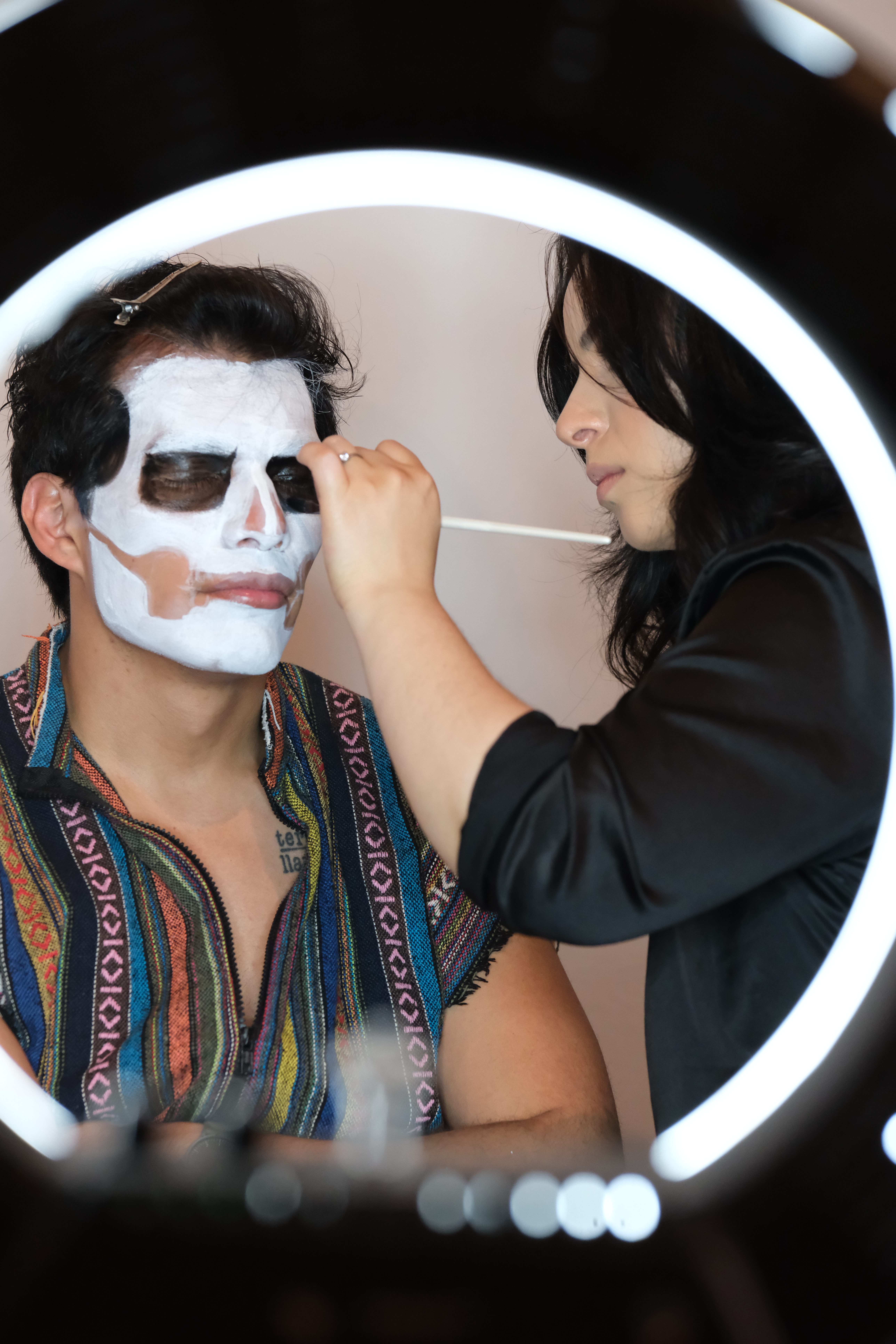
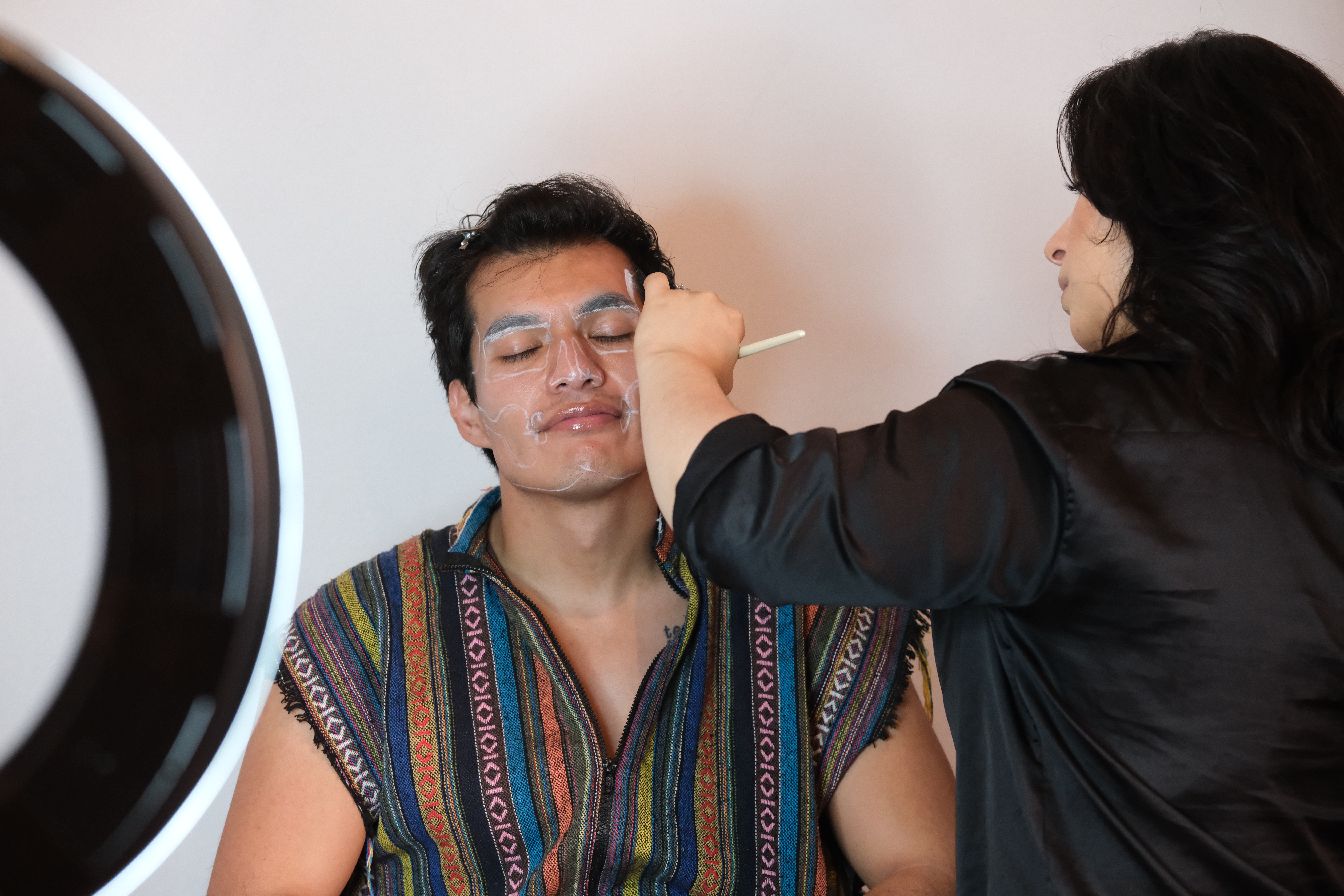
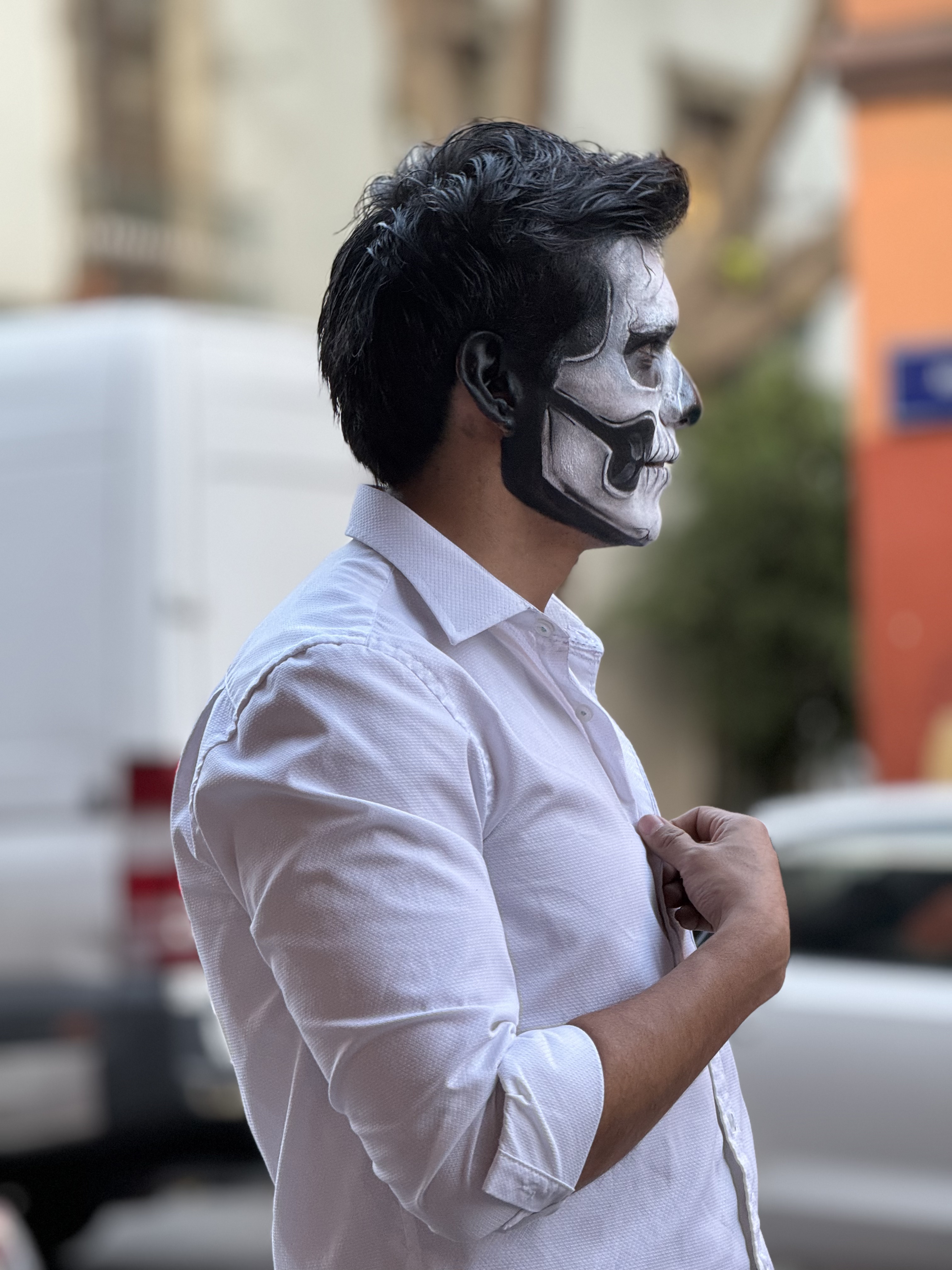
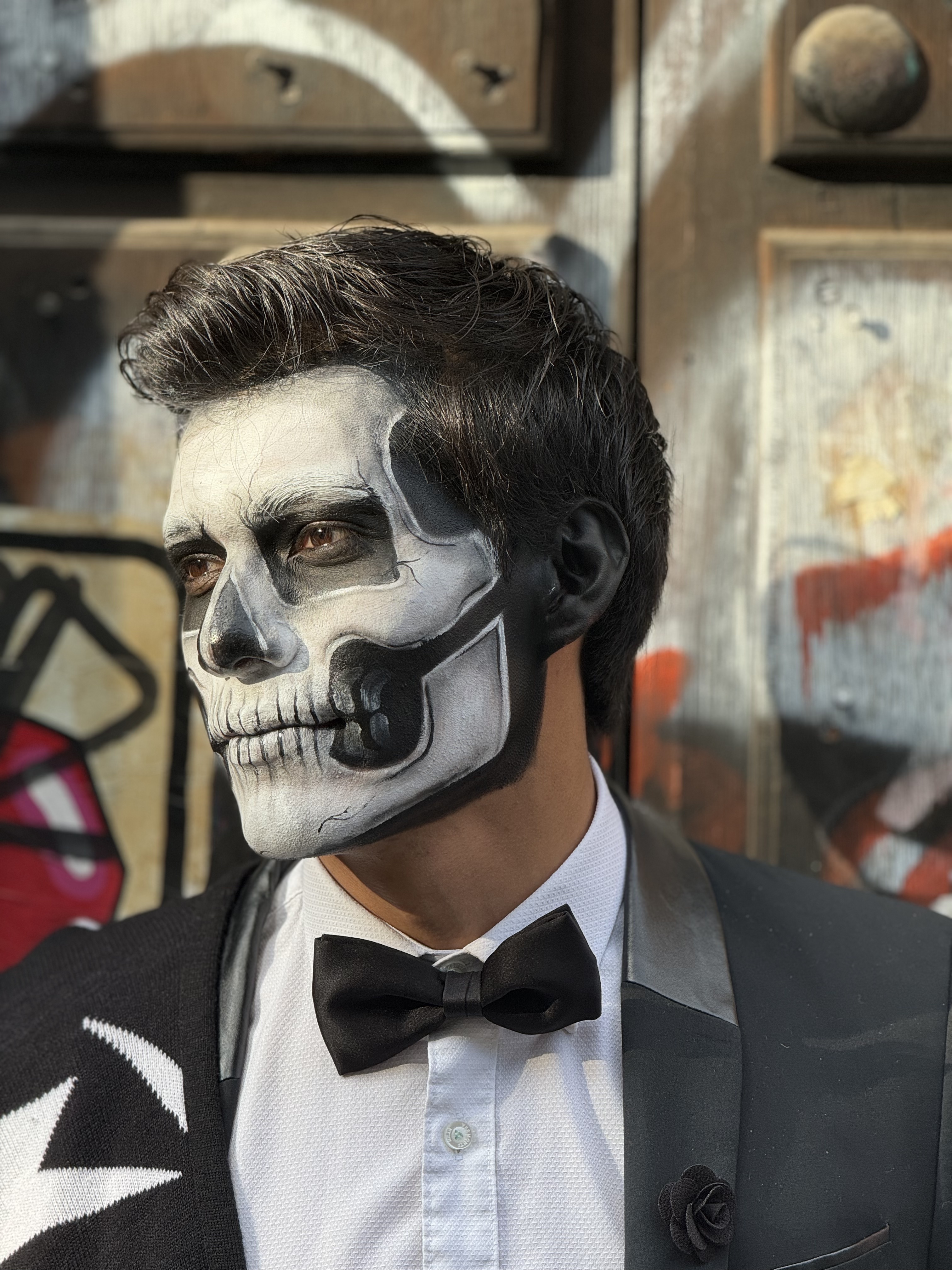
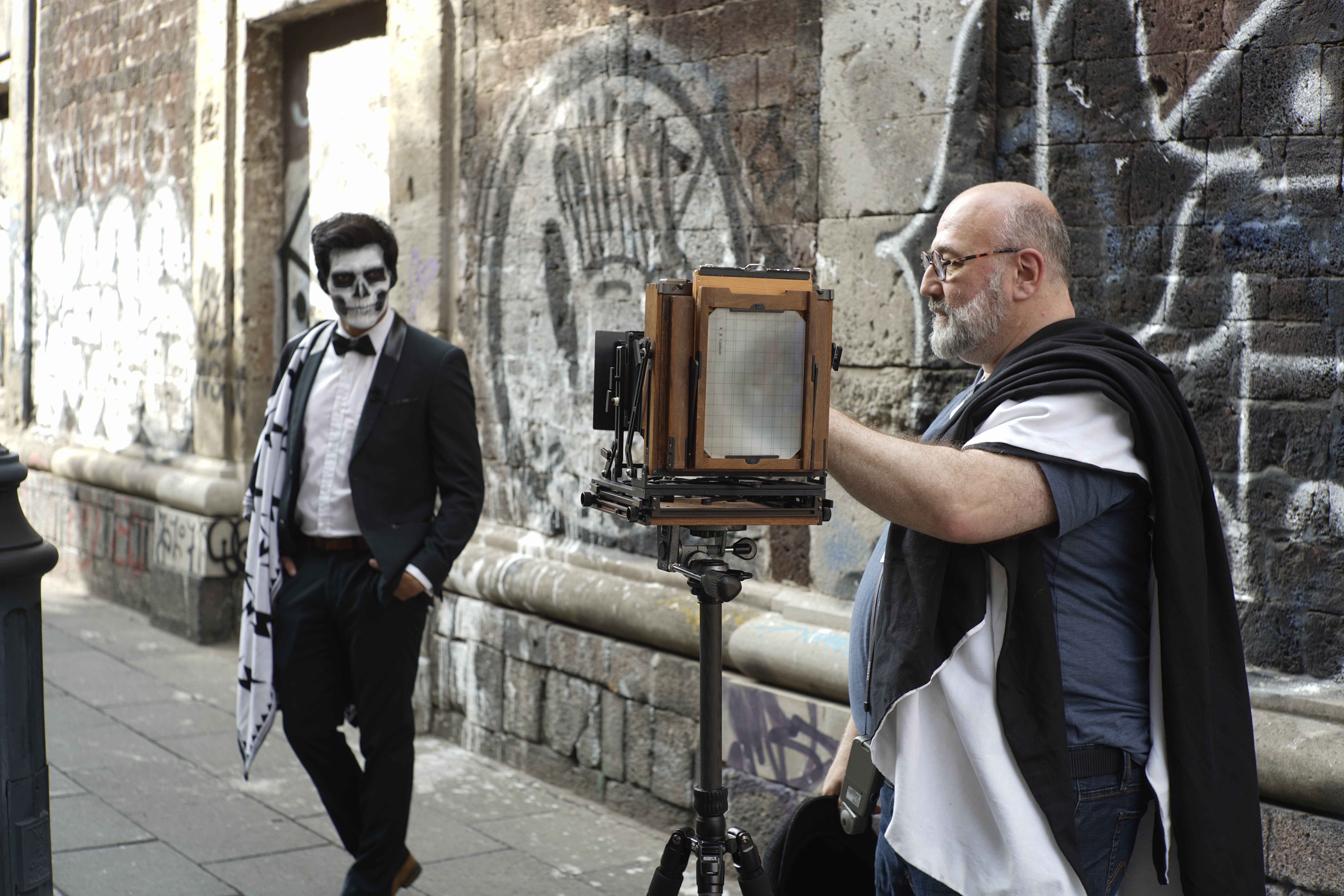
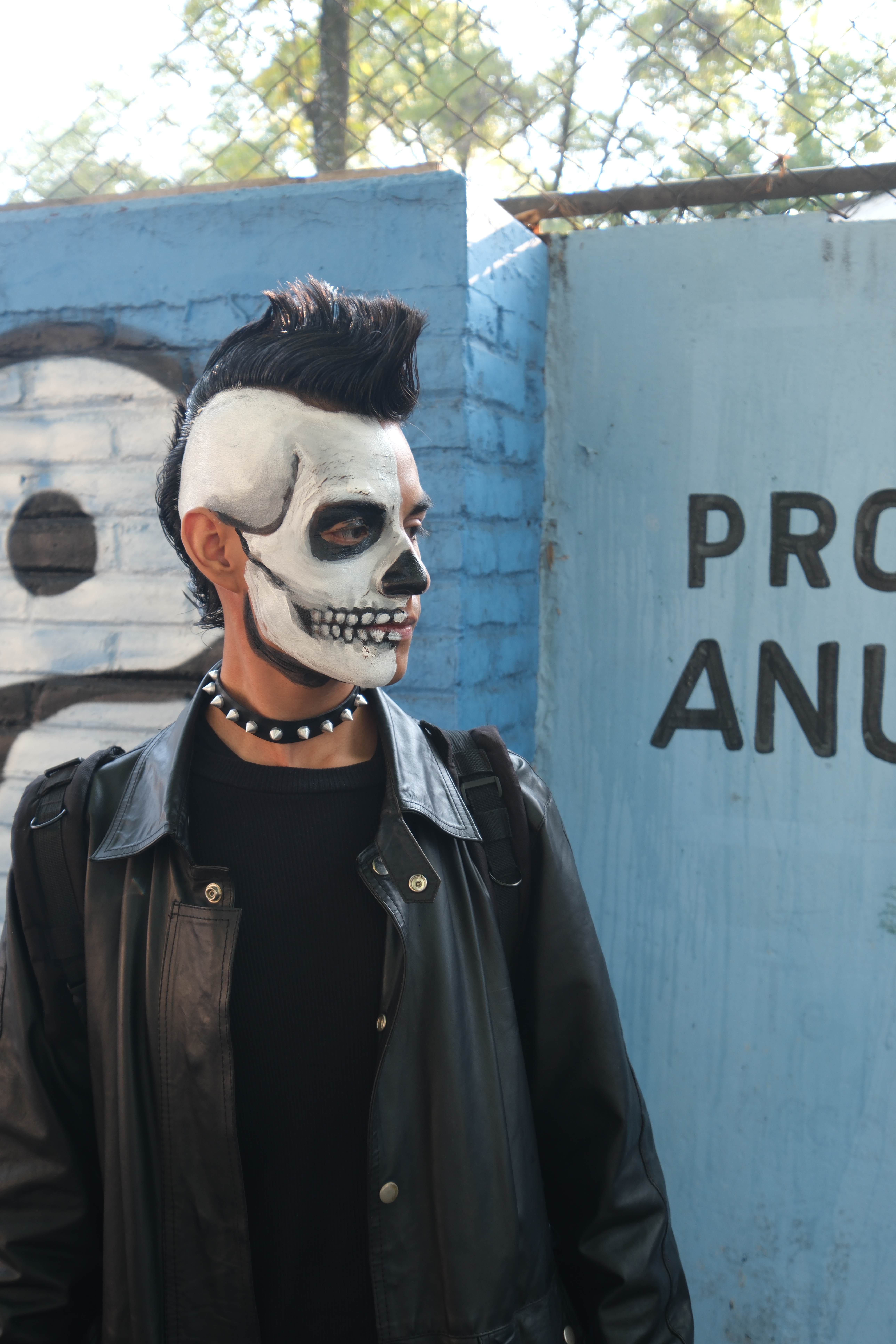
All work and no play makes for a dull conference, so we had several photo walks arranged; a daytime trek through the Mercado de San Juan which specializes in exotic cuisine (they have everything from whole turkeys to cockroaches to alligator meat!), a visit to Mexico City’s Chinatown, a nighttime photo walk in the Centro Historico around the Zocalo, and a large format portrait shoot with a model in Day of the Dead makeup and costume (another big thanks to our model and his makeup artist – Rafa Farias and Annie Hernandez).
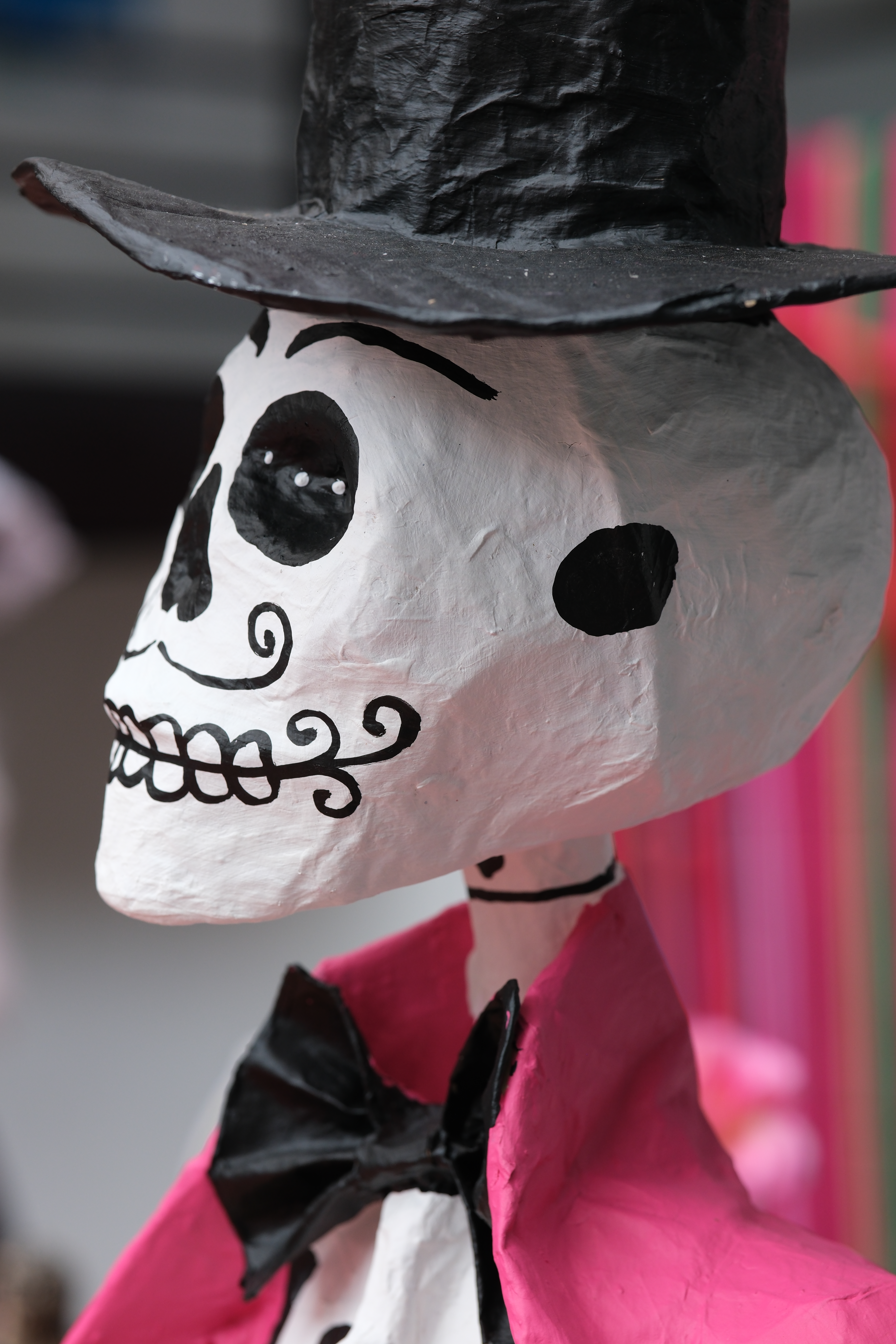
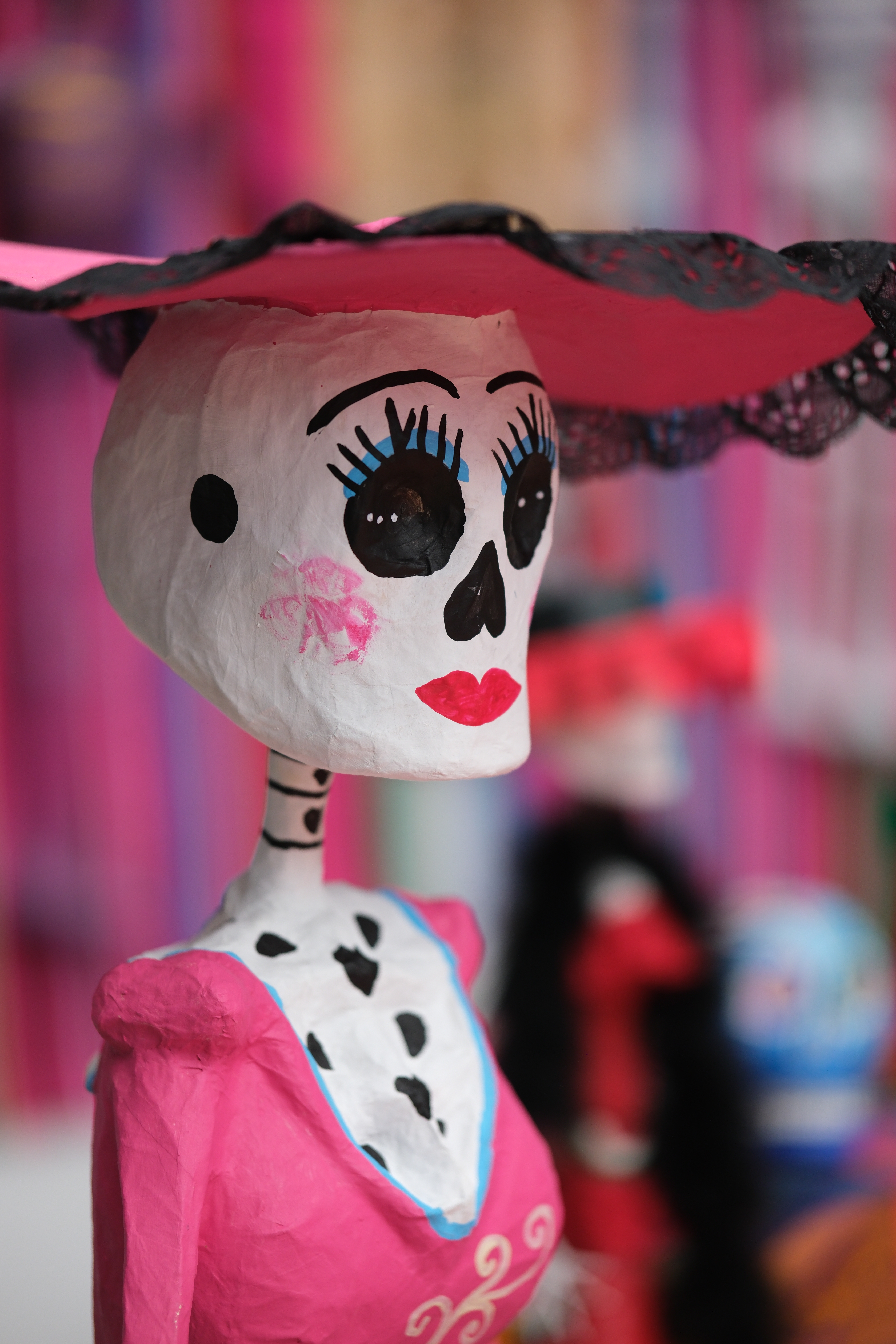
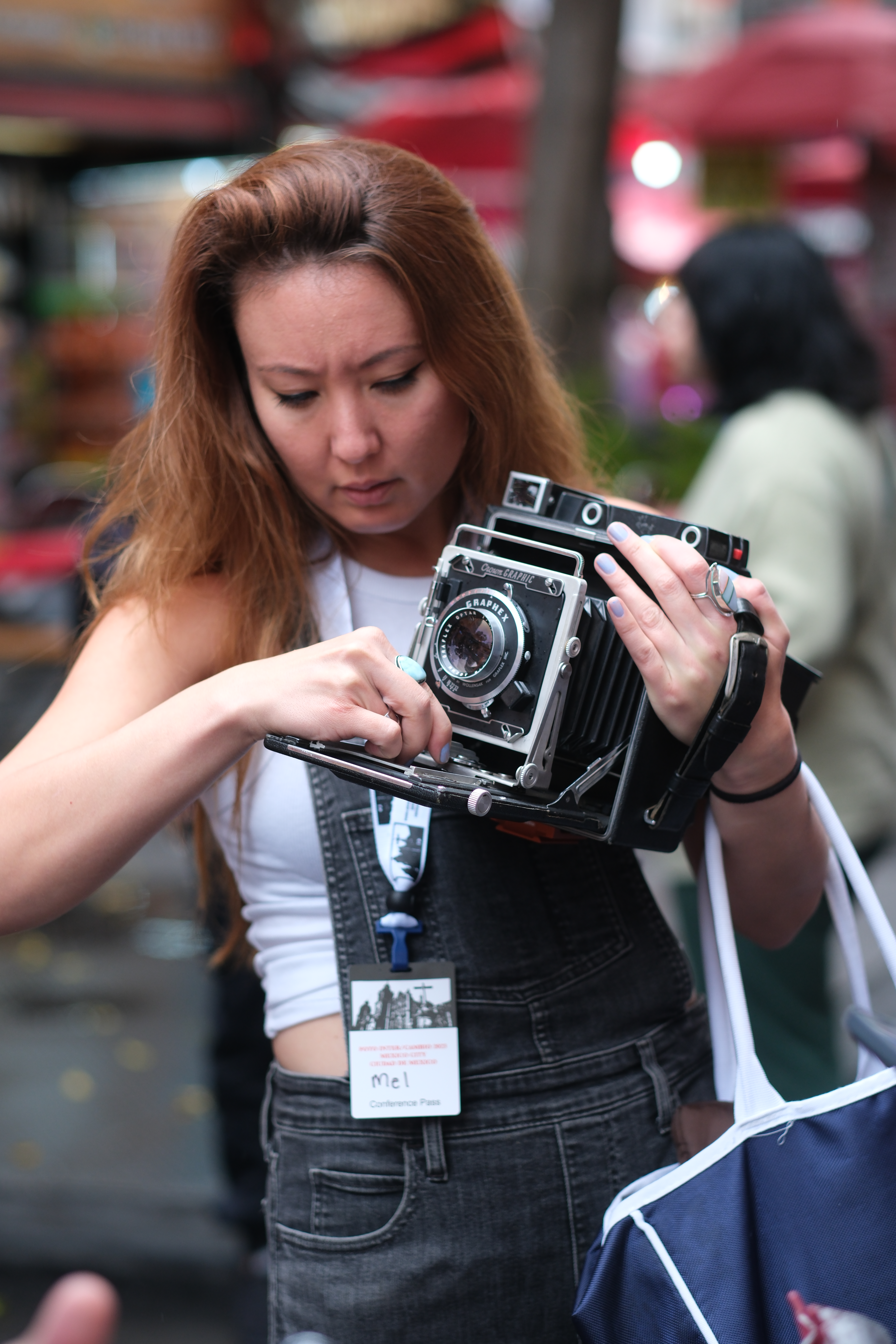
Day of the Dead decorations at Mercado San JuanFish at Mercado San JuanFresh veggiesSausagesRambutans and other exotic fruitDragonfruitRed SnapperThe butcher’s counterCatching a nap in the MercadoMaking sausages Vlad Grablev meets a fan of his RB67Mary Quin and Veronica in the MercadoDay of the Dead Ofrenda in the Mercado de ArtesaniasCatrin in the Mercado de ArtesaniasCatrina in the MercadoWeaver looking around in the Mercado San JuanChinese store in CDMX’s ChinatownMel with her Speed Graphic and Instax backLighting store in CDMX’s Chinatown
Rafa and Annie getting ready for his shoot, and a few views of the finished results (that’s me with the 5×7 view camera in the last shot):
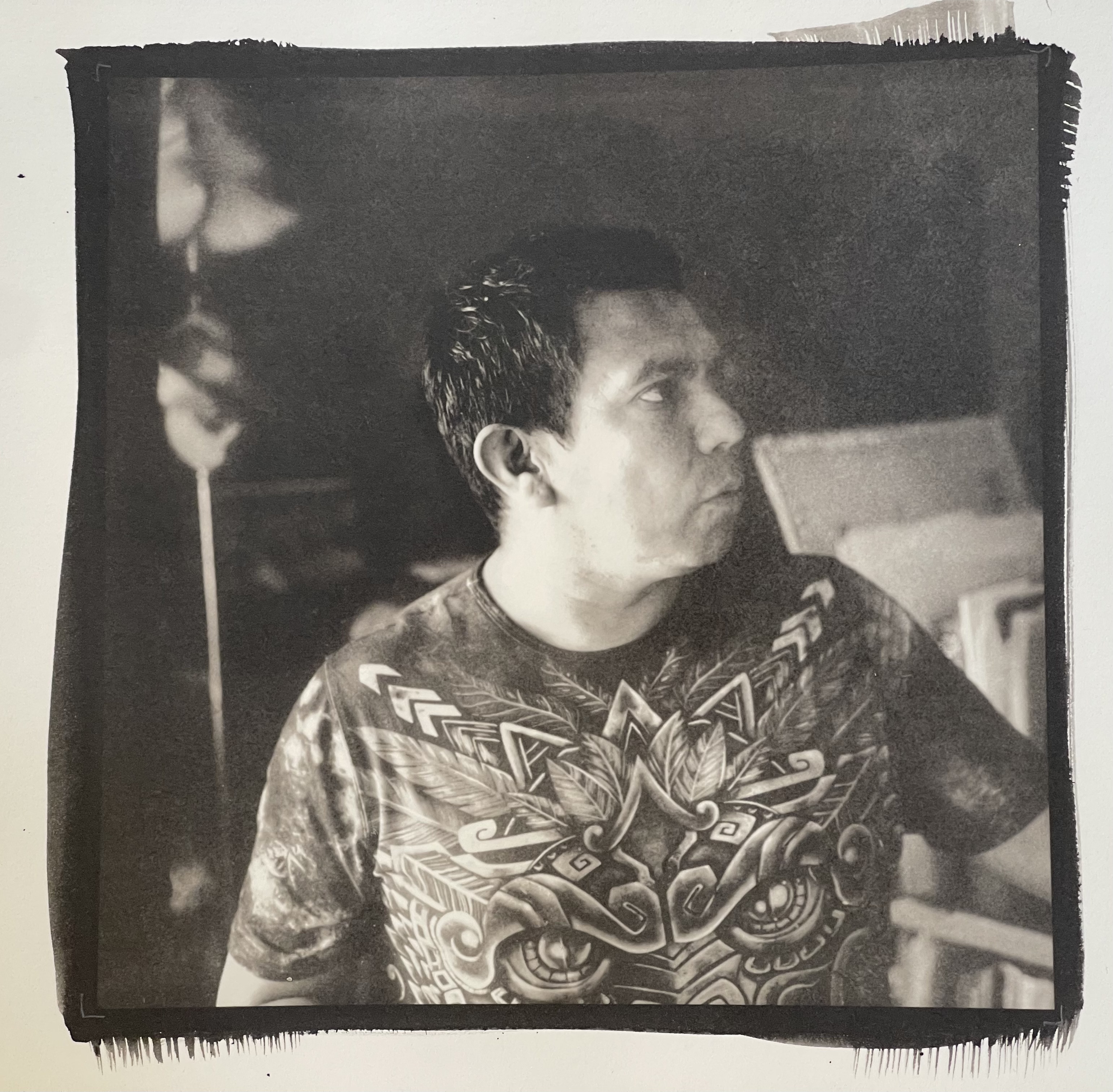
Rafa Farias getting his face paintedAnnie and Rafa working on his makeupThe beginning of the makeupRafa in ProfileRafa posing in front of graffiti at the Colegio de las VizcainasClose-up of RafaRafa head-onRafa getting his portrait done with a 5×7 inch view camera
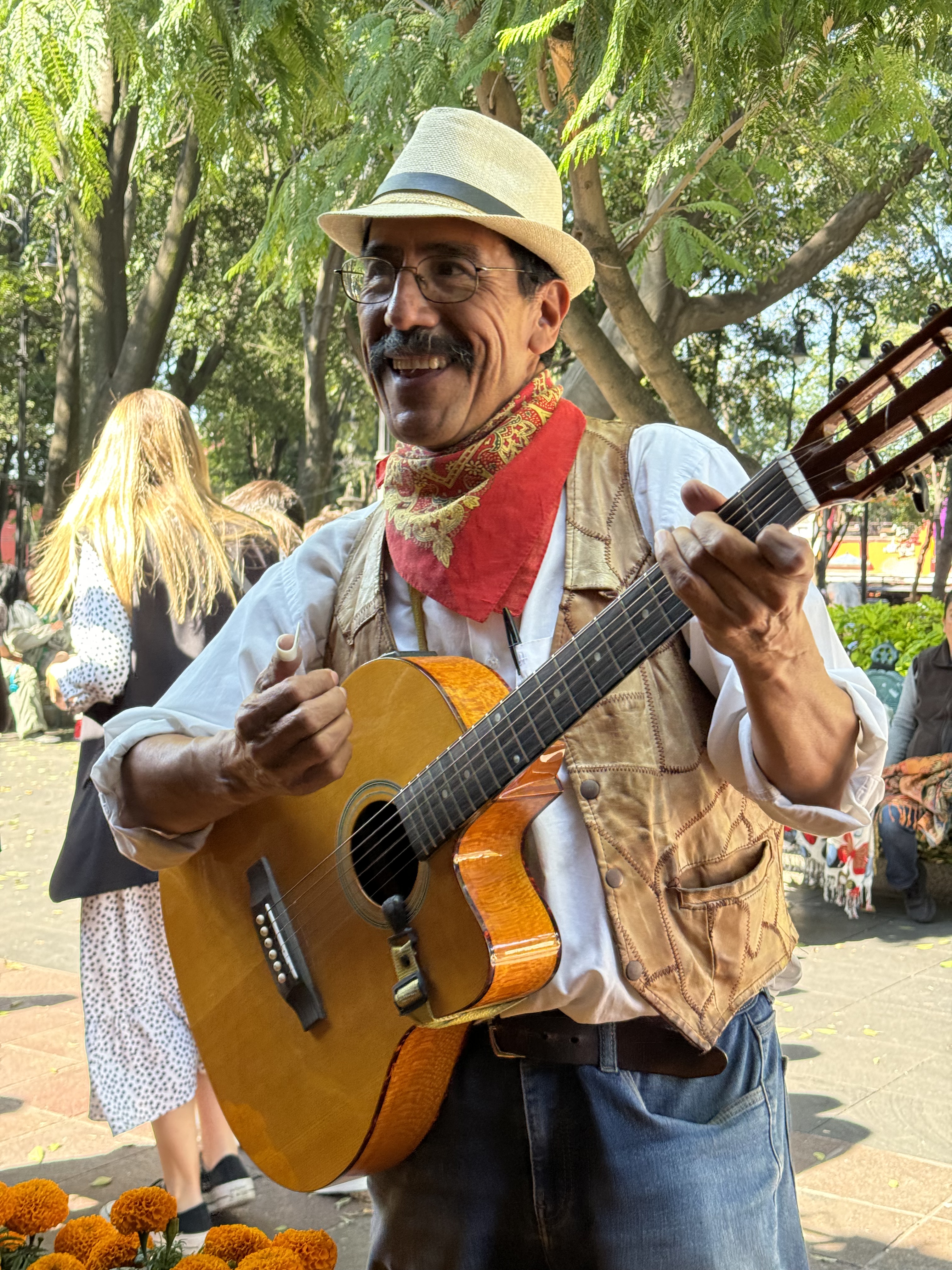
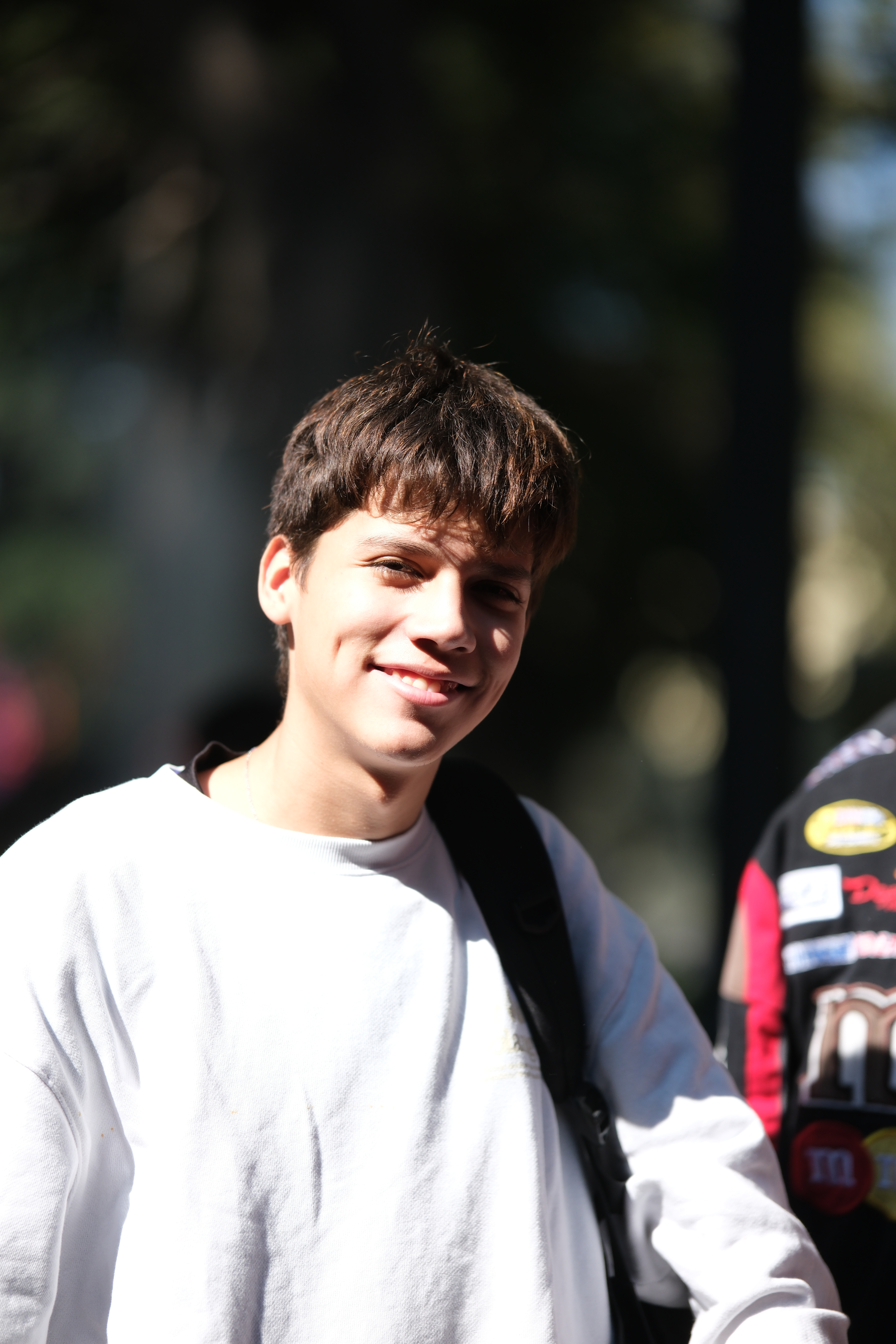
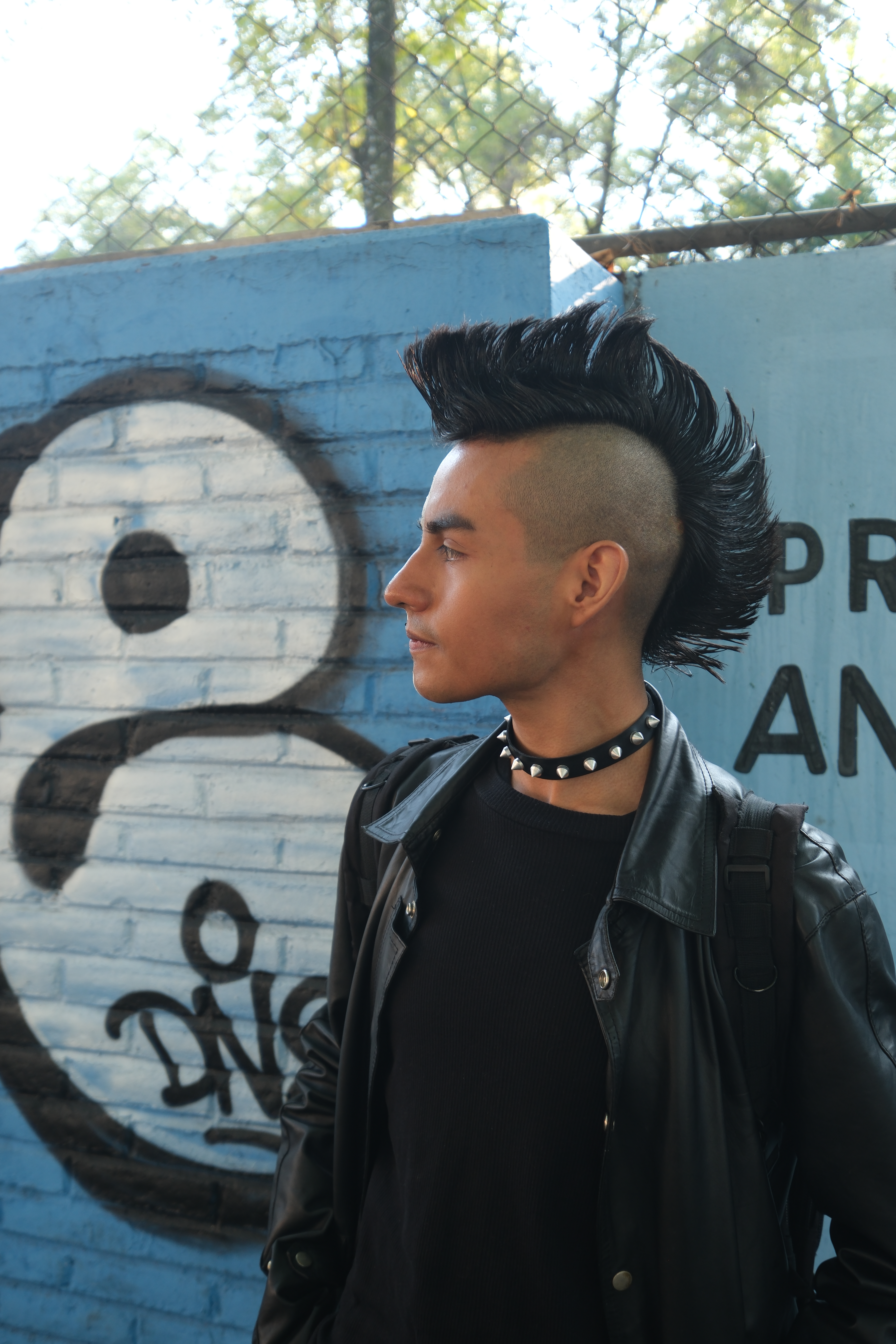
After the official end of the conference, a bunch of us took the day to go down to Coyoacán and wander around. Lots of Day of the Dead decorations were on display, and a good time was had by all. We grabbed lunch at an outdoor table at Restaurante Ave Maria, who was having a mole festival on the menu – I had a Oaxacan mole over beef which was very rich and delicious. We were serenaded by several strolling musicians – one an older gentleman with a guitar doing traditional Mexican songs, and then a group of young Mexican boys rapping. While their music wasn’t to my taste, they got big props for freestyle ad-libbing a rhyme about the gringo with the camera! I’m still building my street photography skills, especially when it comes to photographing people. As we were heading back to the Metro, I saw this guy with the most incredible style and makeup, and had to take the chance to ask him for a photo. You’ll see the results – he had half his face painted with the calavera, and the other unpainted, and he was decked out in what would certainly qualify as vintage Punk style – he would have fit right in on Kings Road in London in 1983.
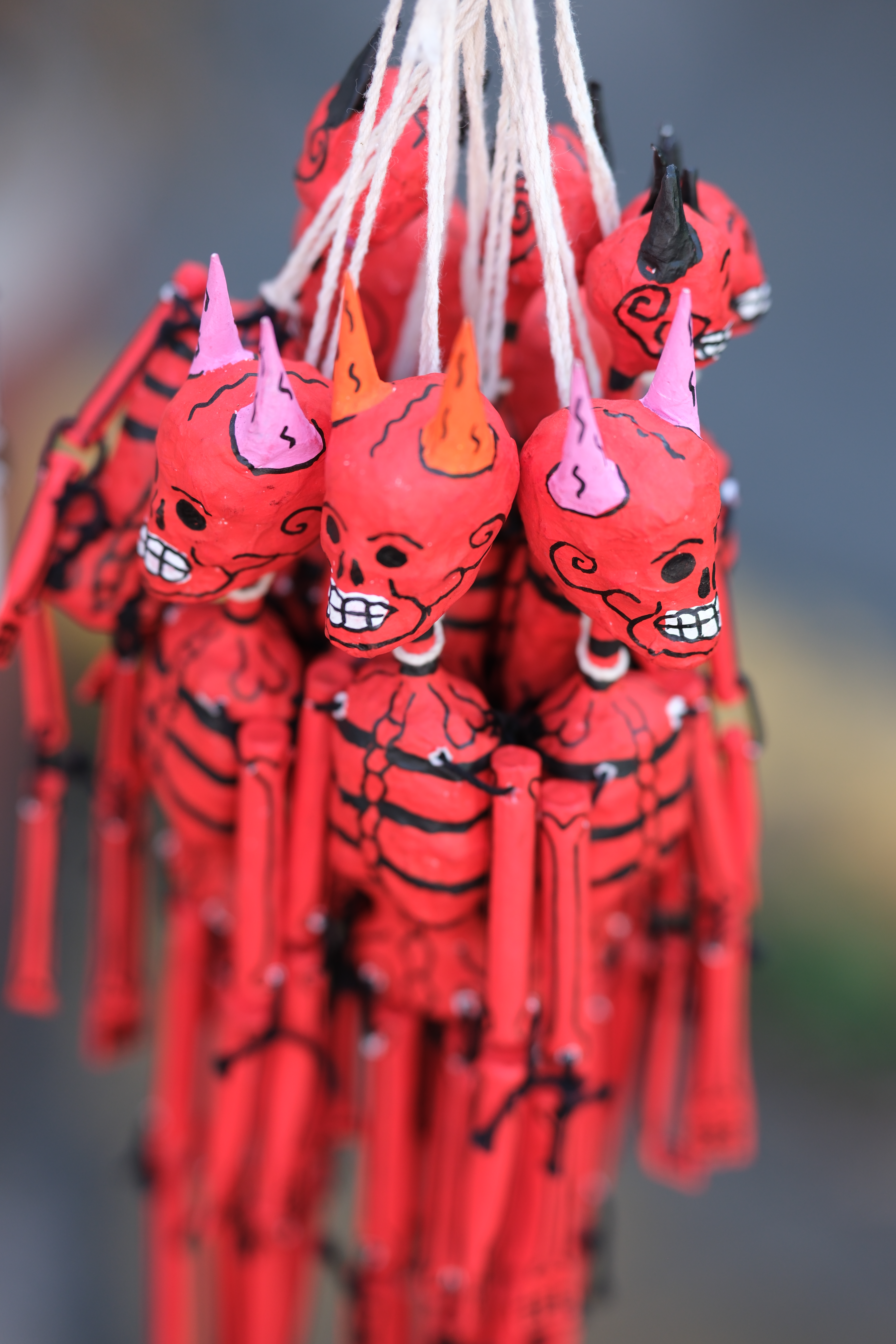
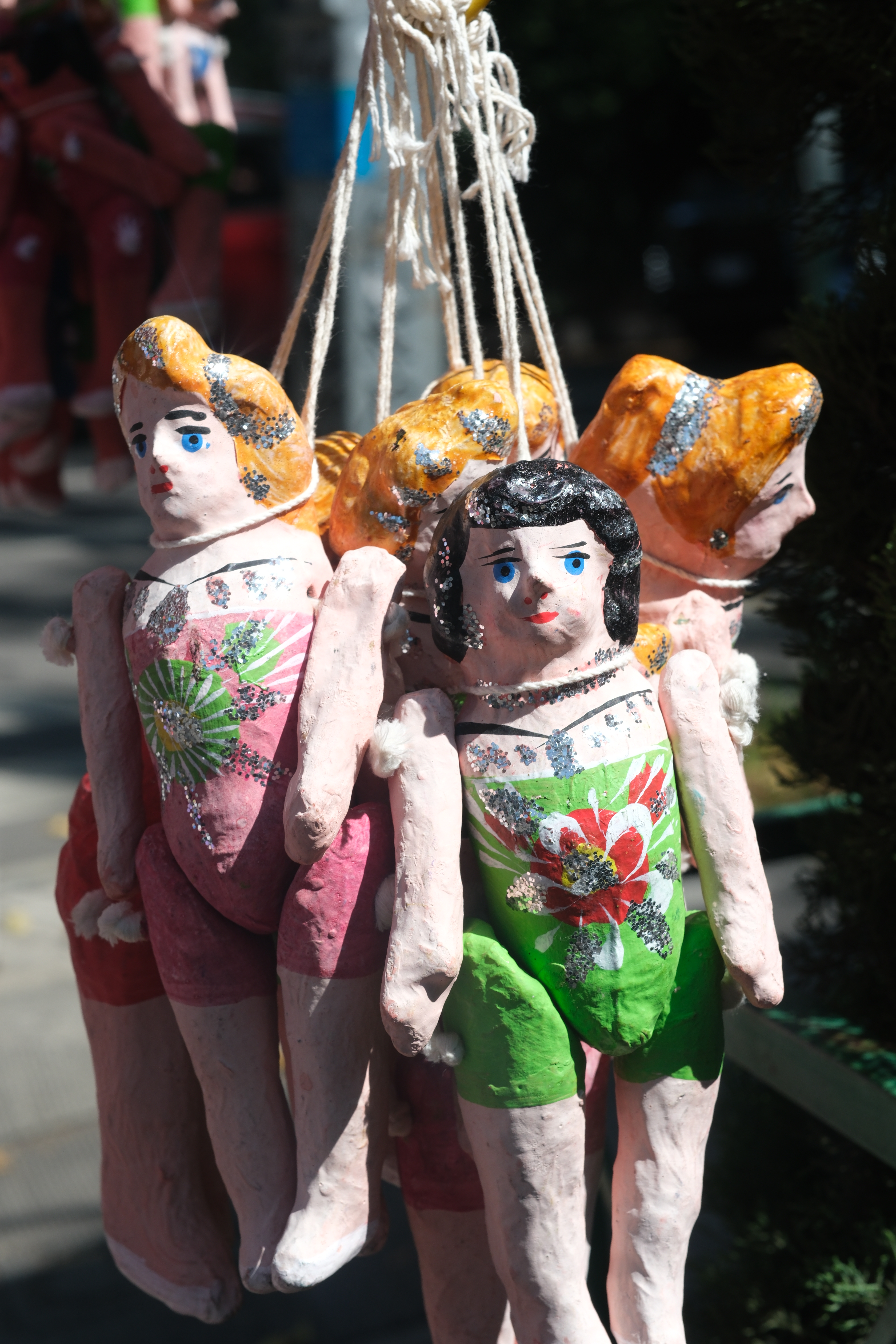
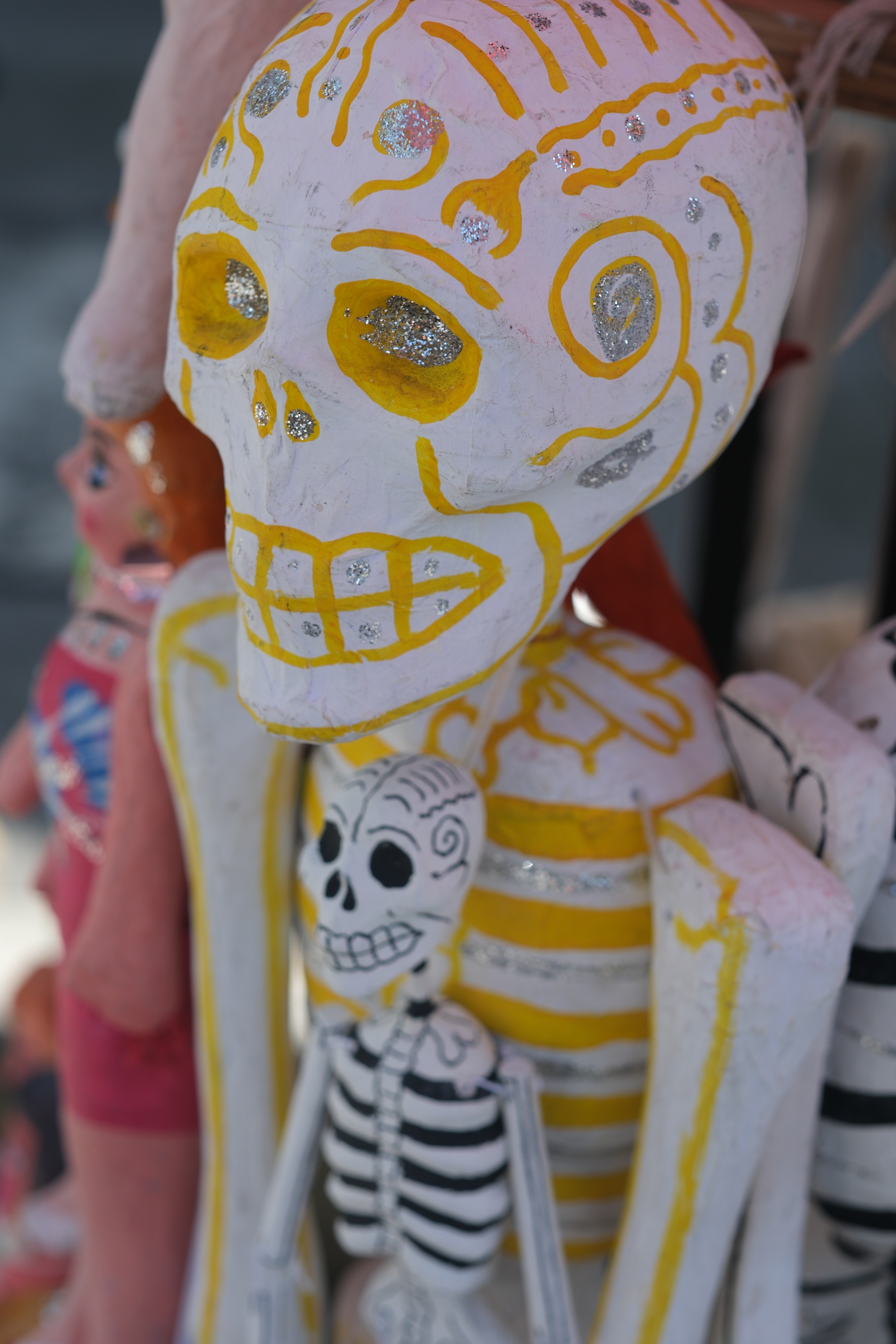
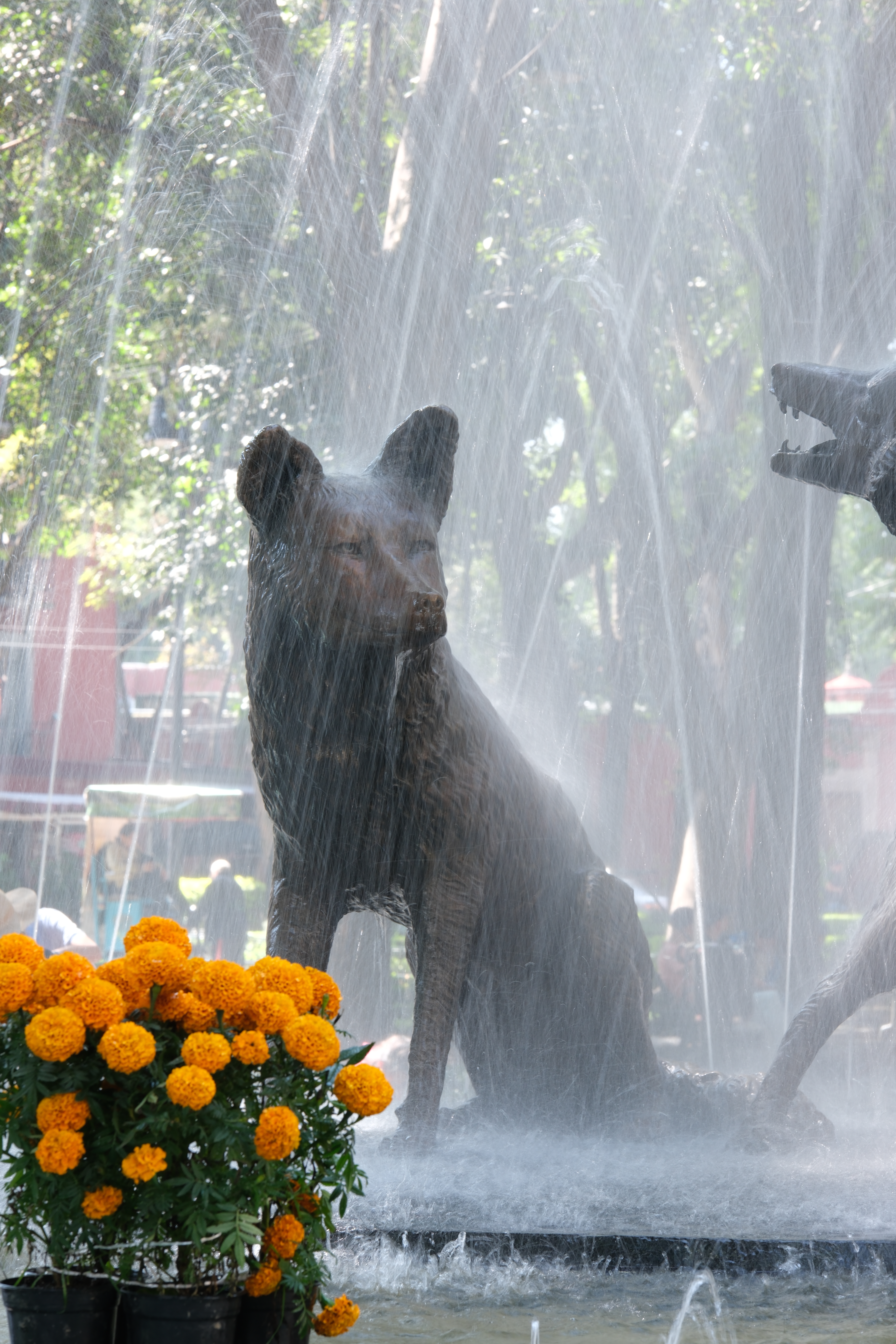
Troubadour in CoyoacánCheeky RapperDevil figurines in papier-mâché Vlad and Craig at lunch in Coyoacánmore papier-mâché devil figuresPapier-mache skeleton with skeletal dog and puppymore papier-mache figurinesSkeletonsmore skeletonsFuente de los Coyotes on the plaza in CoyoacánYoung punk with bifurcated makeupThe other side of the young punk
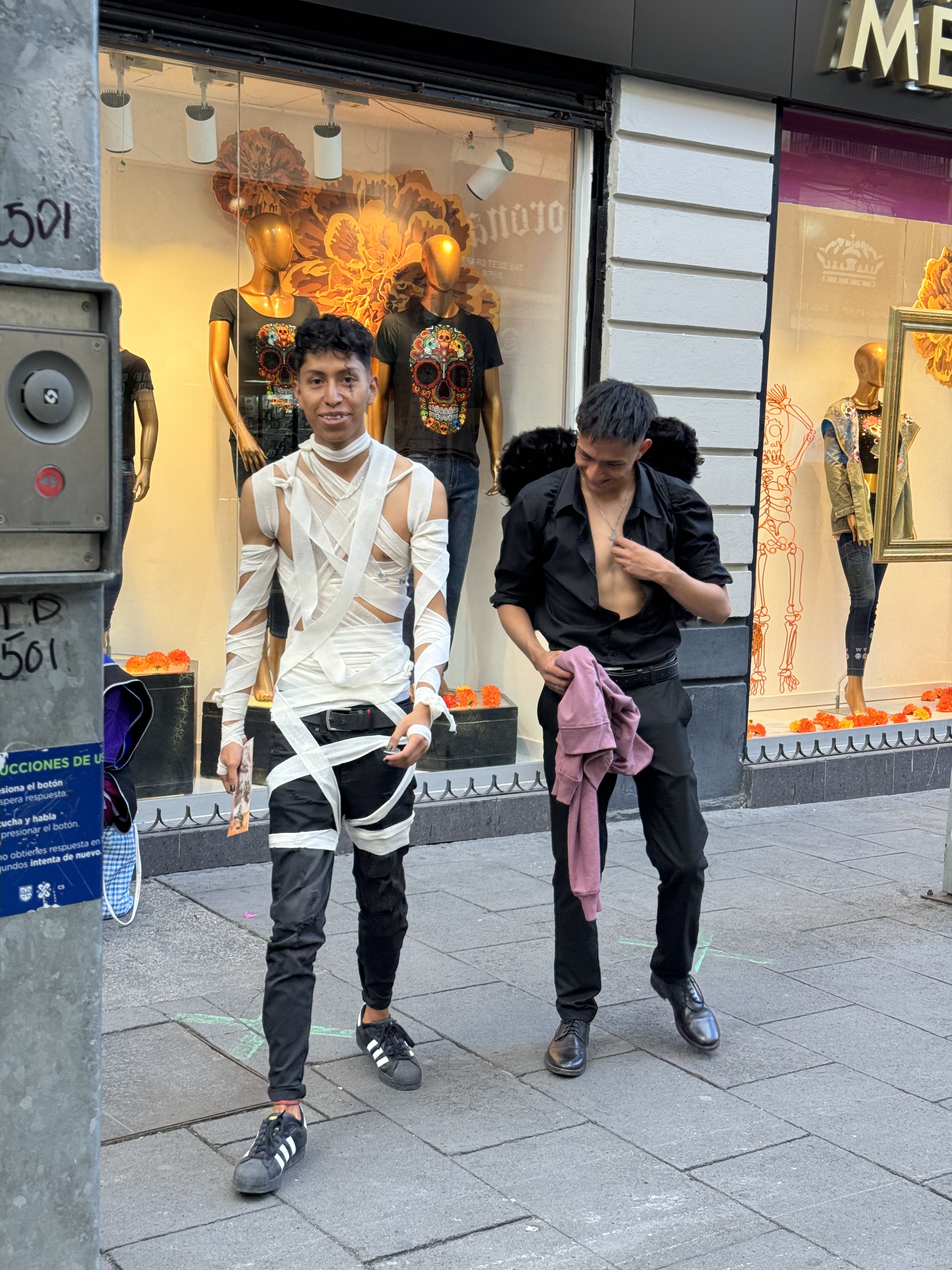
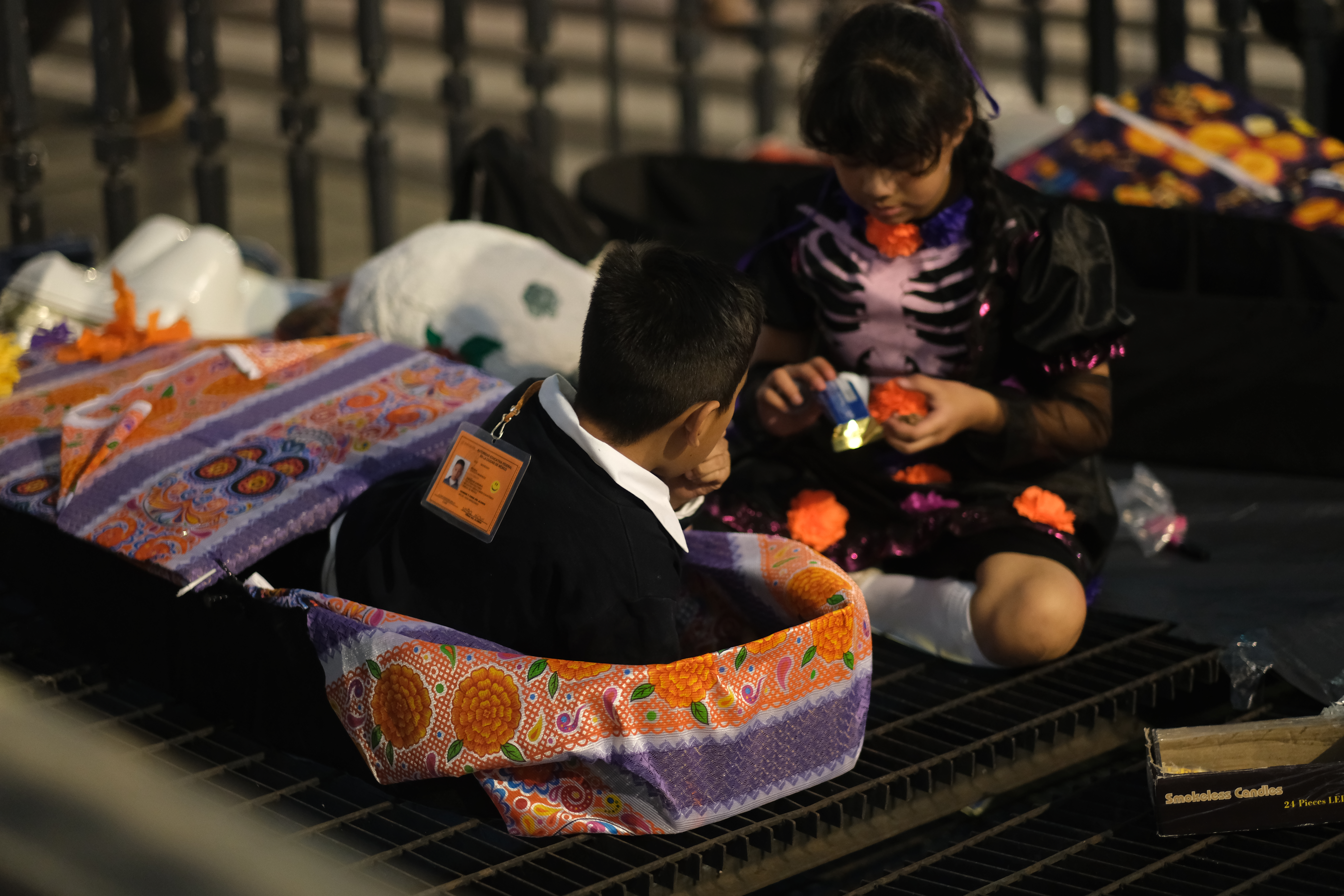
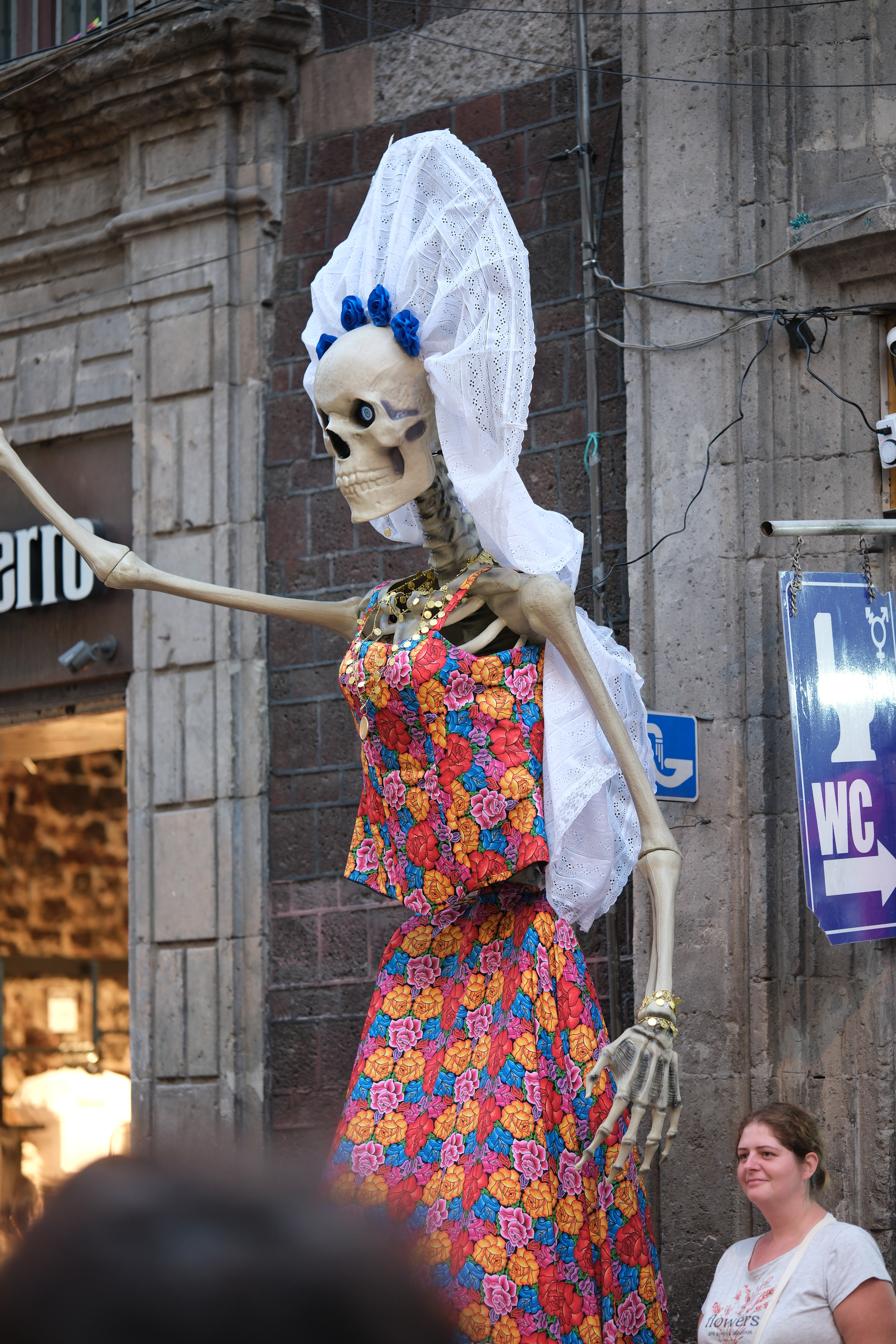
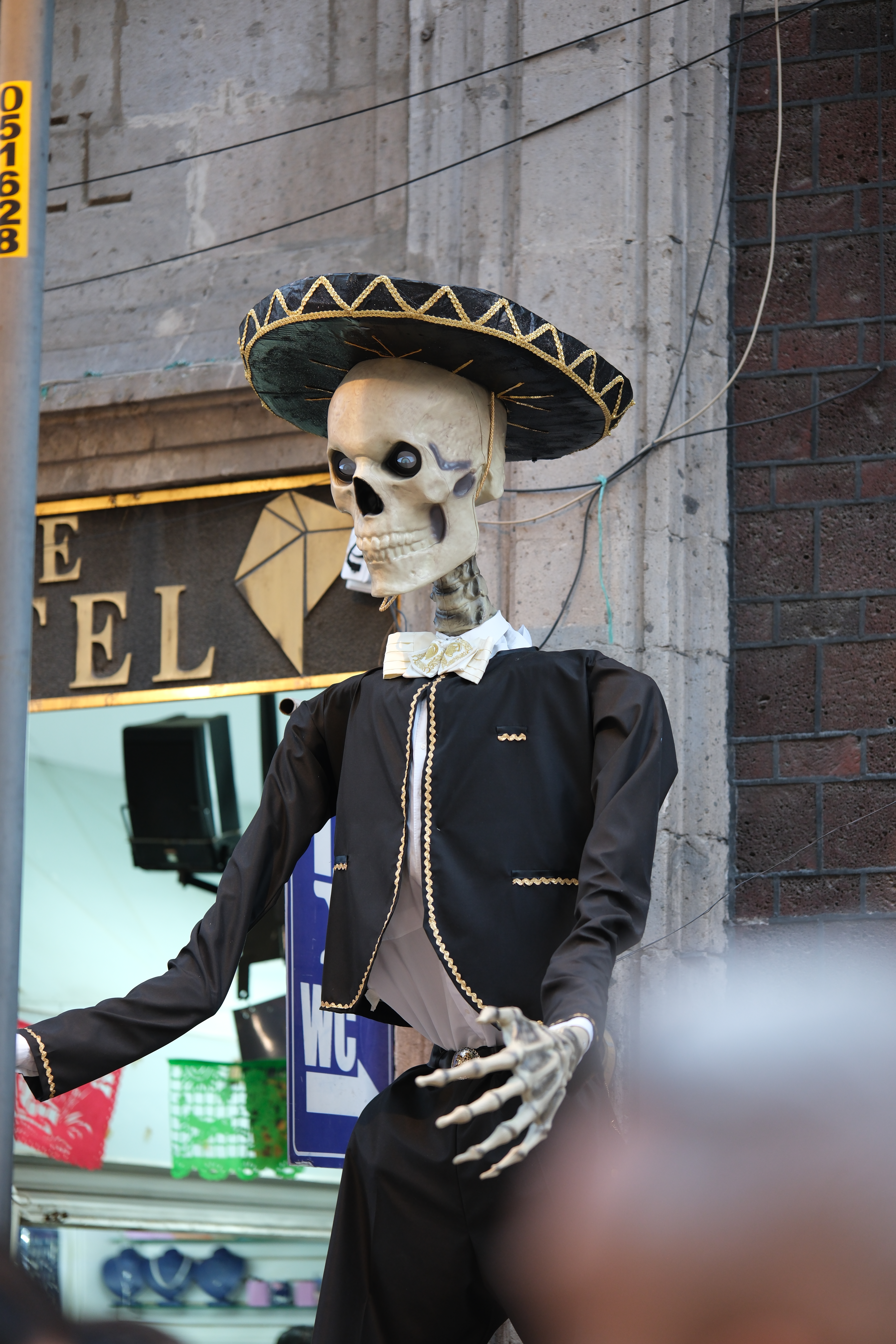
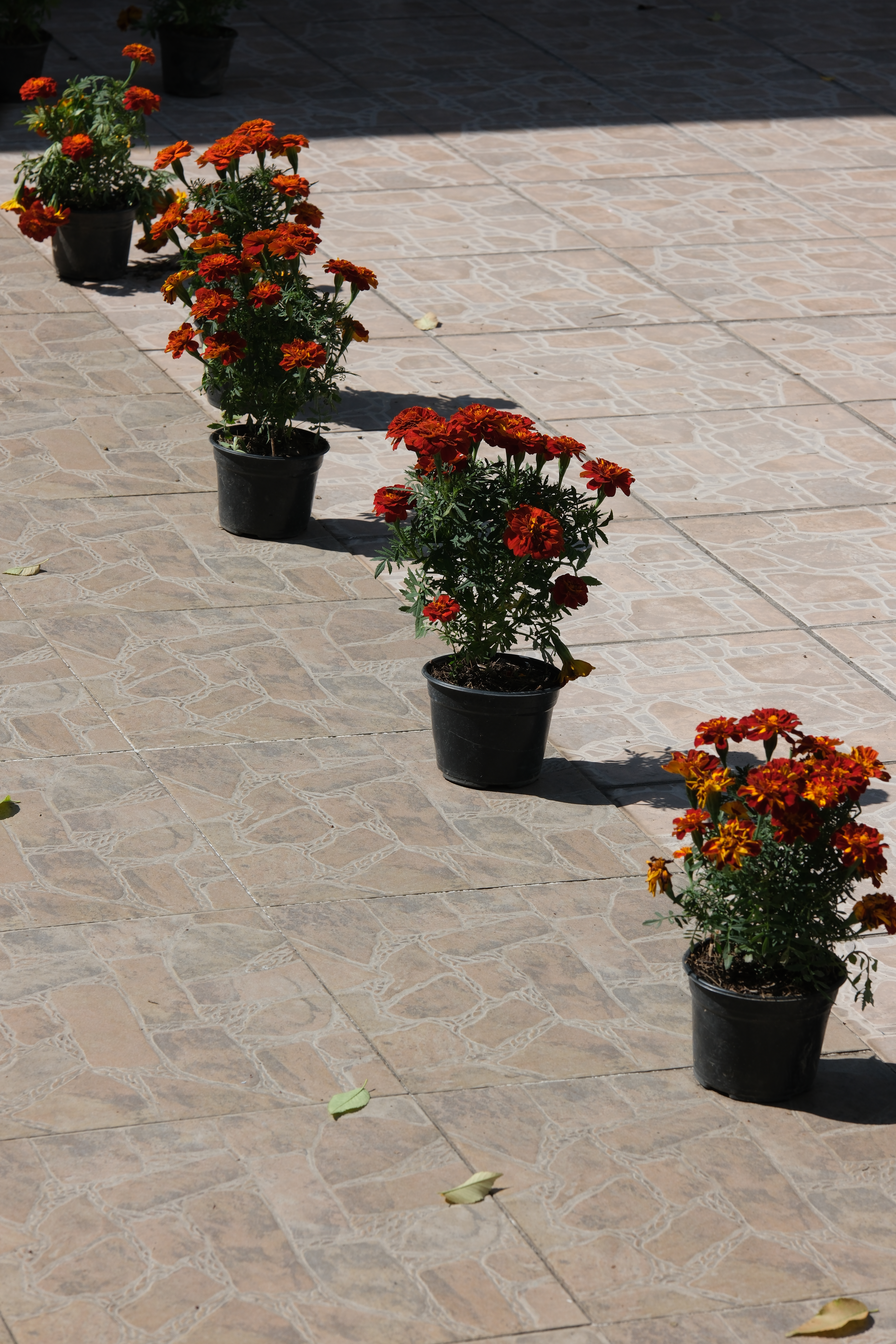
Some more Day of the Dead sights:
Boys on the street in Halloween attirekids dressed up on the Zocalo over the Metro entranceDay of the Dead figurines on Avenida Francisco MaderoDay of the Dead figurines on Avenida Francisco MaderoMarigolds on the patio in Coyoacán
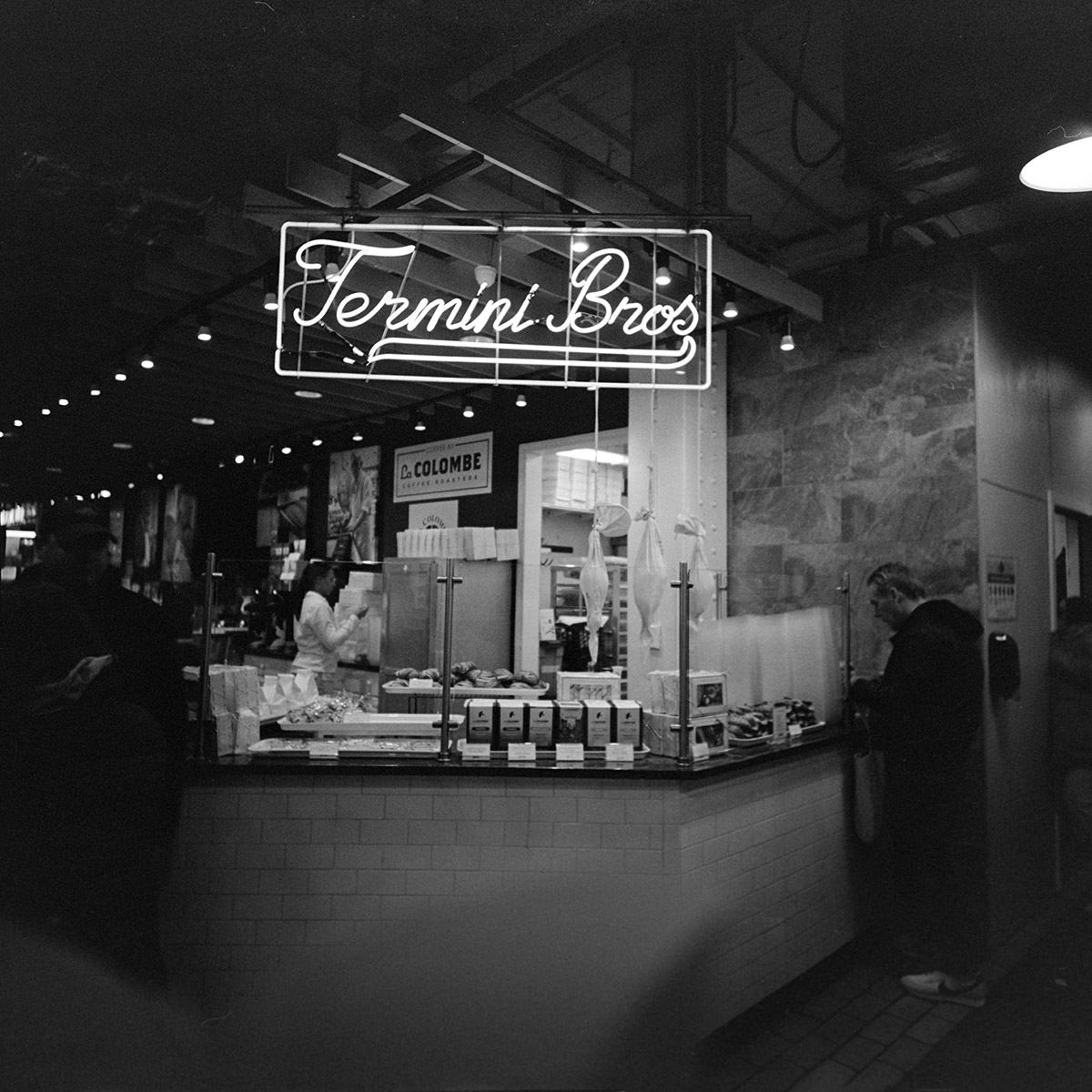
Back at New Years I went up to Philadelphia for a short weekend getaway. I stayed at the Marriott in center city, which was across the street from the Reading Terminal Market. The market is a food hall located under the tracks and platforms of the Reading Terminal, a train station that today serves mostly commuter trains. There is some amazing food there – I had lunch one day at a traditional Jewish deli that just absolutely hit the spot with a corned beef sandwich and a cup of chicken soup. Termini Brothers bakery has an outlet there and I brought home four of their raisin scones that were to DIE for (and if you ate them often, possibly to die of – they’re quite rich!). In addition to the prepared foods stalls, there are butchers, fishmongers, and greengrocers stalls as well, providing an oasis of fresh food in the center of a heavily urbanized business district that has seen better days.
“Eat Oysters, Love Longer” – the bar counter at Pearl’s Seafood.
Sushi Umi across the hallway from a handicrafts stall.
Fish on ice at the fishmonger’s.
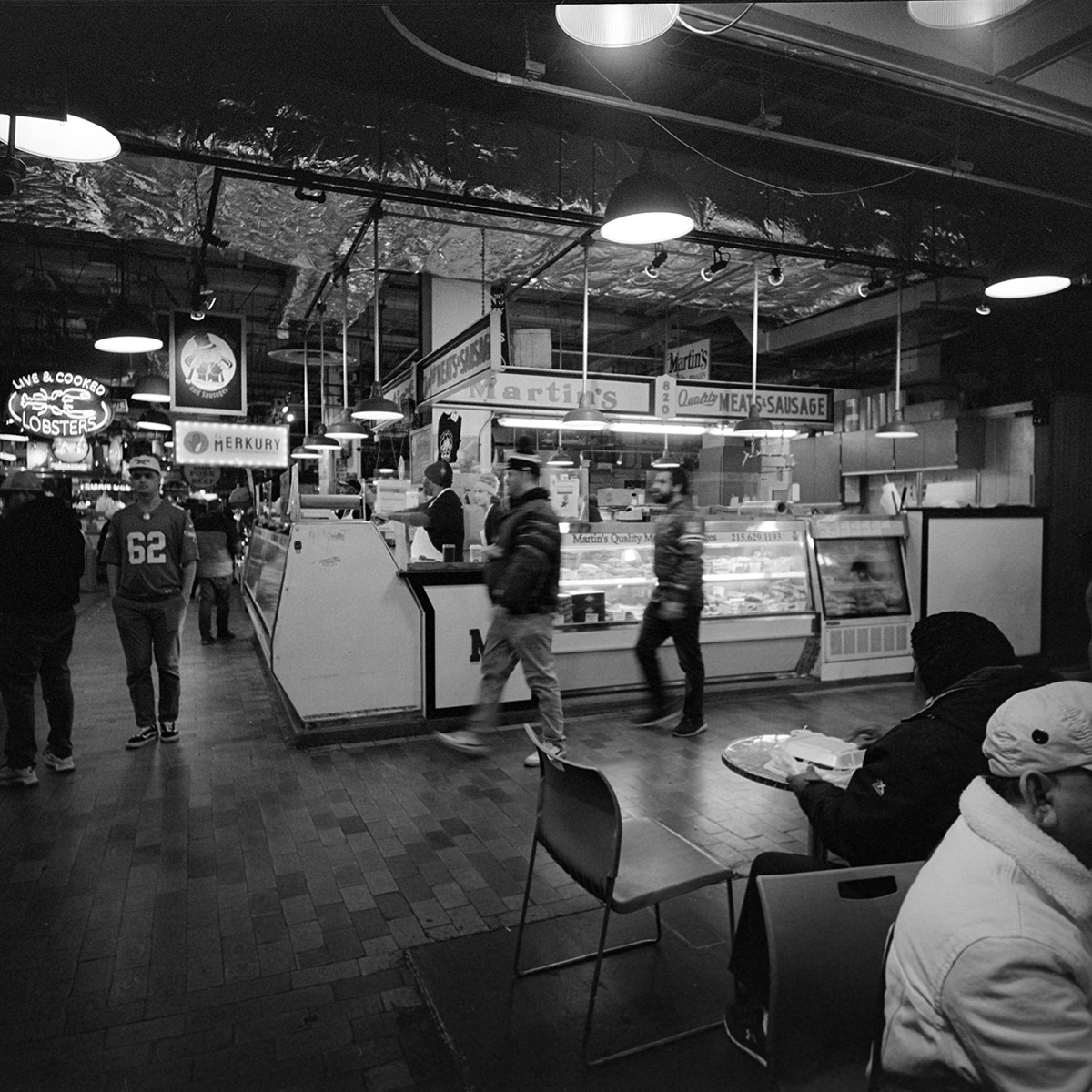
Martin’s butcher shop – Quality Meats and Sausage. A sign in the background is for live and cooked lobsters. Interesting trivia – lobster was, until the second half of the 19th century, considered poor people’s food. Lobsters used to be so common in the coastal waters of New England that you could just wade into the surf to catch them , and they had little to no market value – so much so that prisoners in New England rioted to demand their ration of lobster be held to no more than three days a week. With the advent of refrigerated rail service, it began to be served in the dining cars of long-distance trains, being able to be transported away from the coasts. It was transformed into a delicacy as they concurrently became more and more scarce as demand rose.
Pastries in the display case at Termini Bros.
The neon sign for Termini Bros counter. They have been in business since 1921, and if their scones are anything to judge by, as long as they keep that standard up, they’ll be around for at least another century!
In case you’re wondering, all these were taken with one of the best, in my opinion, travel cameras available: the Lomo LCA-120. It’s a super-wide (38mm on 120 film, or the equivalent of a 21mm on 35mm/Full Frame). The super-wide angle means you can use it in places you would have a hard time photographing with most other cameras. It is fully automatic exposure – the only control you have over the exposure settings is by changing the ISO on the meter dial. It is, in contrast, manual focus but only via focus zones – you have a selection of four distance ranges you can select via a lever on the side of the lens panel. Because it is a leaf shutter and has no mirror to move, it is quiet when taking photos, so you can work unobtrusively in a busy environment. It does require you to have a somewhat loose shooting style because of that wide angle lens and the fact that you’re composing via an uncoupled viewfinder, not through the lens. While I normally like having the precision of an SLR or a TLR with aperture and shutter controls, working with the LCA 120 is very liberating in a way because you stop worrying about all those fiddly things and just concentrate on composing the image in the viewfinder.
I combine it with Kodak Tri-X film frequently because that gives me enough wiggle room to pull off hand-held exposures with even long-ish exposure times – I’d venture to guess that the shots in Reading Terminal Market were somewhere between 1/15th of a second and 1 second. Yes, you read that right – hand held at up to 1 second.
This is all about using selective focus to emphasize a subject, and use of exaggerated perspective to draw the eye into and through the image. This is one of the things I like extreme wide-angles for – the exaggerated foreground-background relationships that happen when you put them very close to something give you a new non-eye-like point of view on your subject that really forces you to consider it formally, abstractly and within its context.
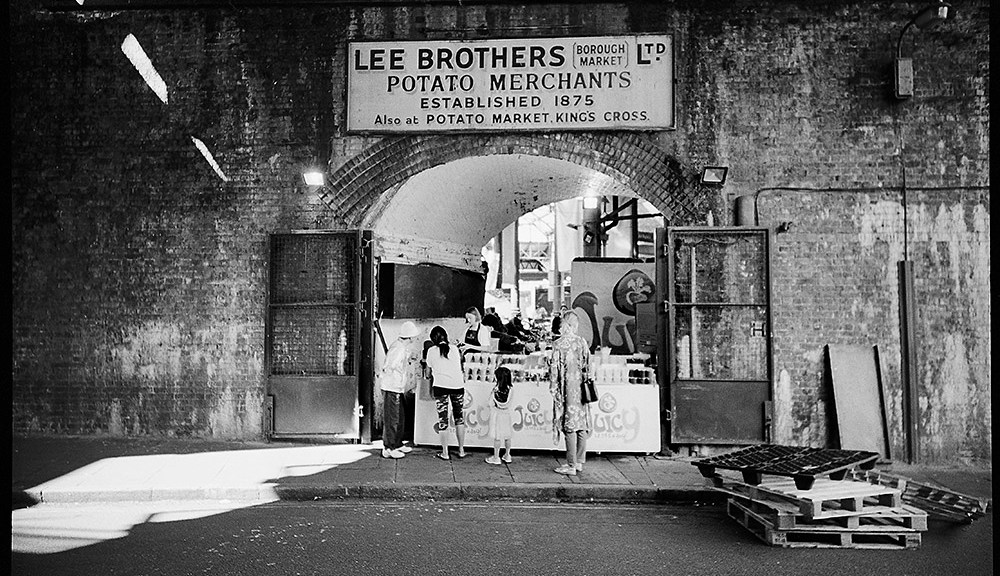
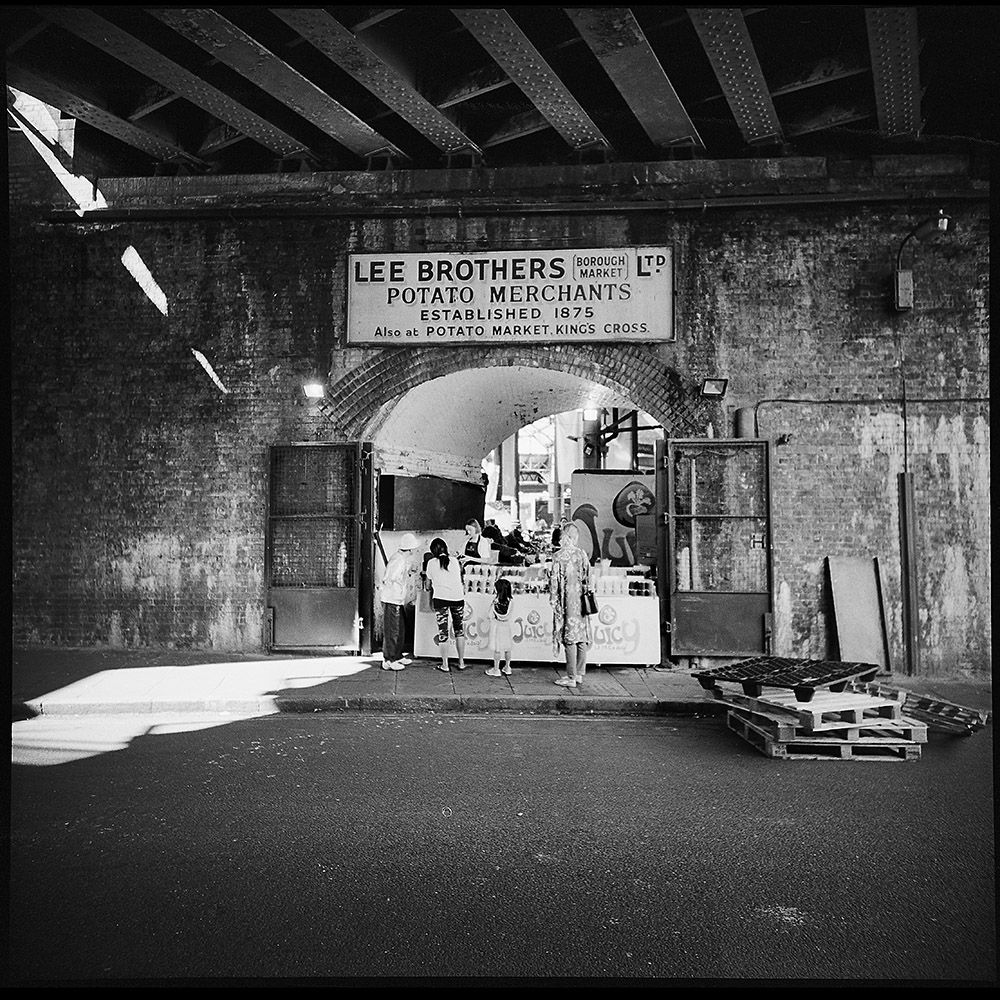
A street find while walking around with the LC-A 120. This is under the railroad tracks that cross the South Bank pier of London Bridge, just across the street from Southwark Cathedral.
Lee Brothers, Potato Merchants, Behind Borough Market
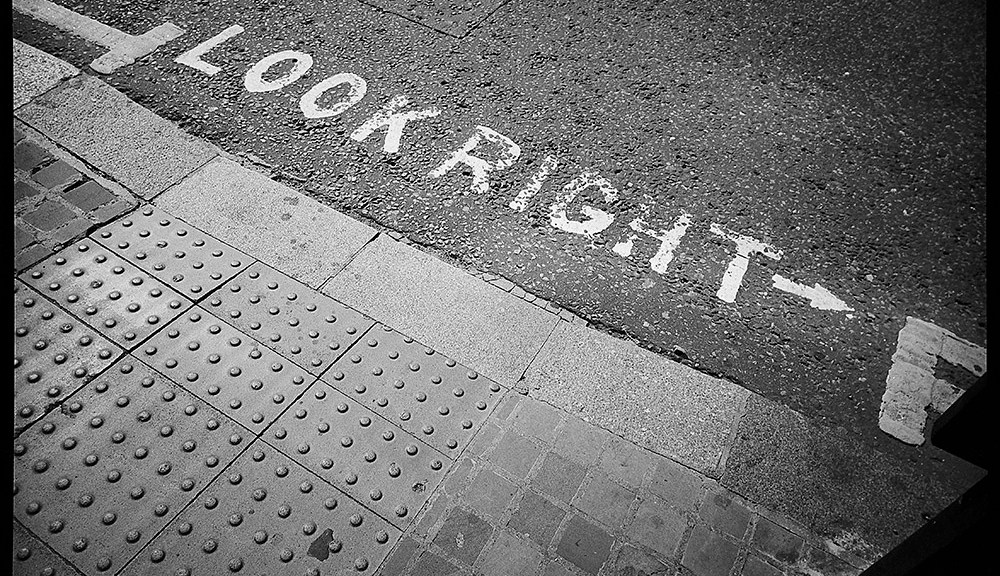
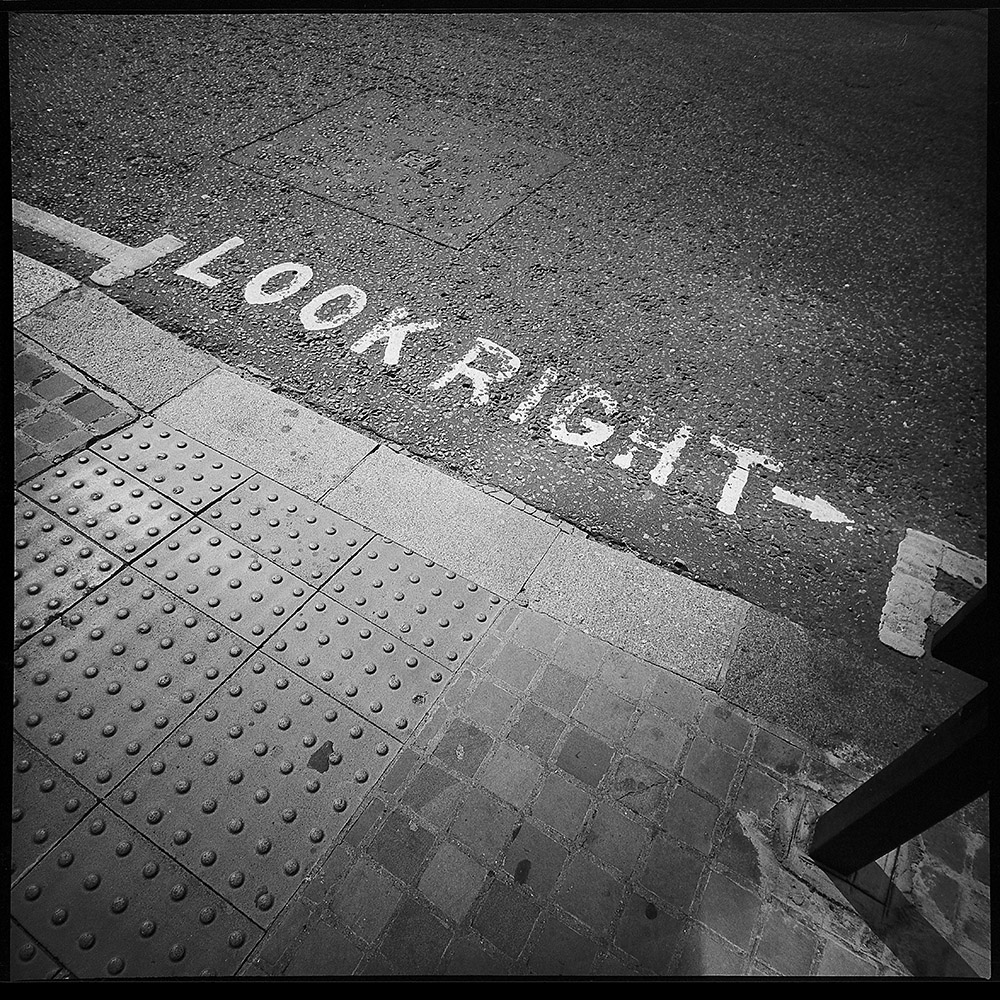
I happened to look down, and then saw this admonition to “Look Right ->”. I found it mildly amusing that traffic flow was considered so confusing that it was necessary to tell people which direction to look before crossing the street. And I love the crunchy texture of the pavement and sidewalk. This is at the corner of Finsbury Square where it abuts City Road in central London.
This is another image from the Lomo LC-A 120. The only real reason I ever mention the cameras I use nowadays is to prove a point about there being little to no correlation between the “quality” of camera you use and the quality of the images you make. I have very little control over the LC-A beyond what I point it at, when I choose to trip the shutter, the film I load in it, and the rough guesstimate of the distance between me and the subject. Everything else is really out of my control. But the decisions that are most important are the ones I do have control over – what to point it at and when to trip the shutter.
Knowing my camera and how it records images is also helpful to getting what I want out of the image, of course. But this image above would have not been any more successful if I shot it with a Hasselblad Superwide, a Rolleiflex TLR, or my Fuji XT-1, each of which offer far more control and precision than the LC-A.
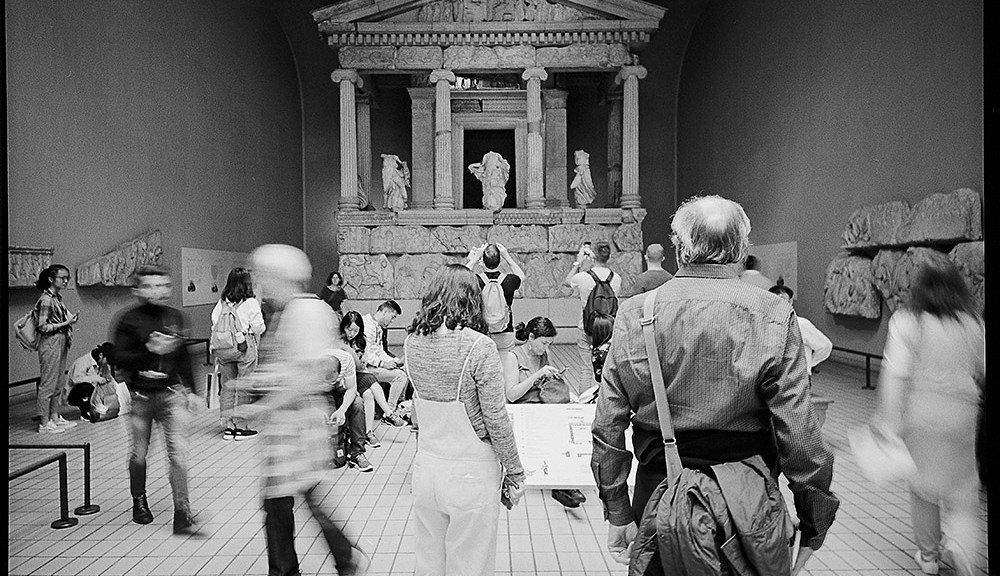
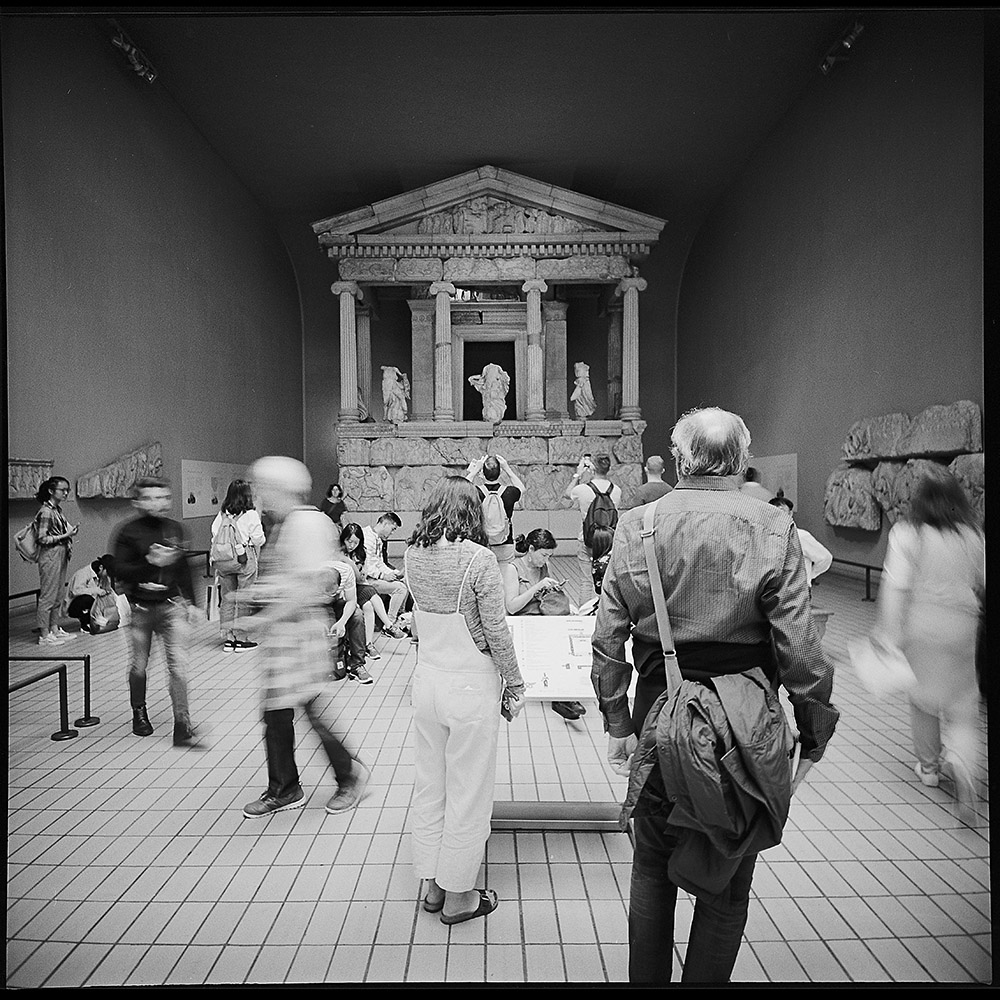
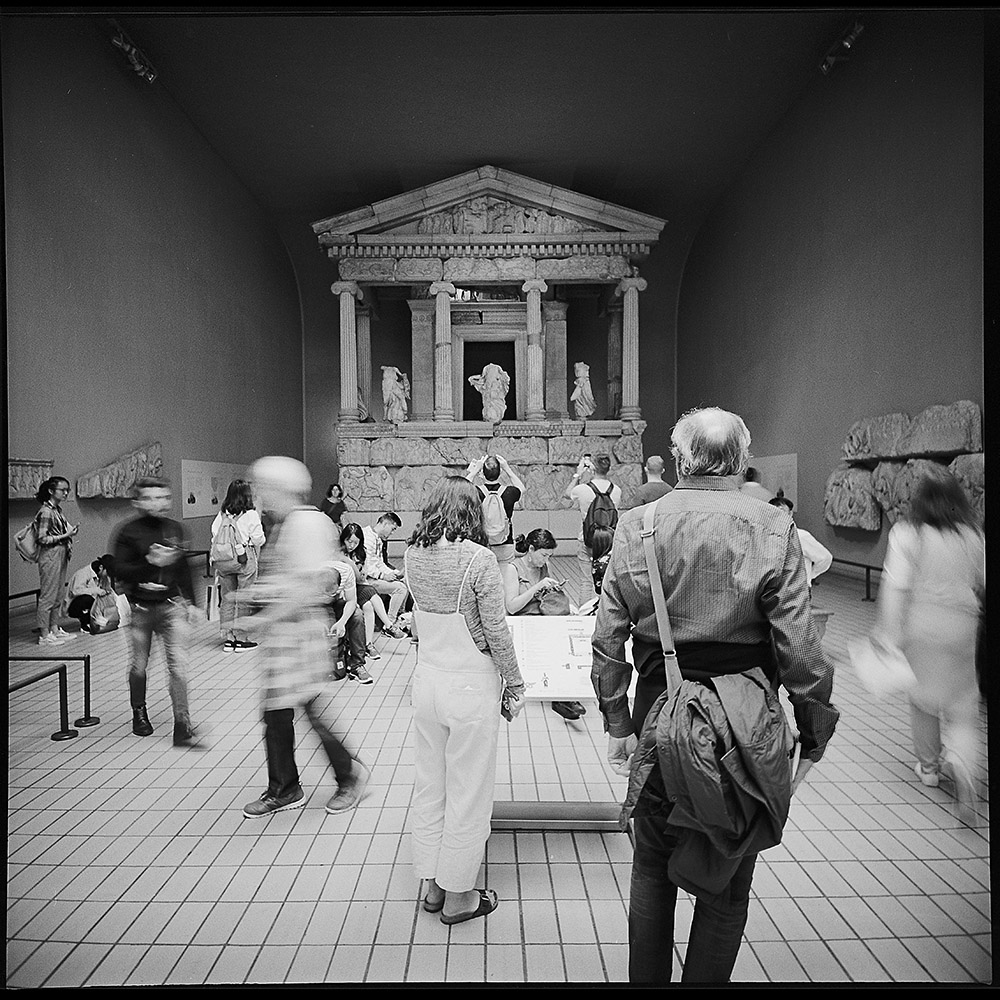
I’m entranced by the range of things happening in this photo. The geometry of the space (especially the grid on the floor) leading your eye back toward a vanishing point, the contrast between the stark modernity of the room structure and the gnarled, organic forms of the ancient Greek temple, the static, permanent nature of the architecture (all the moreso thanks to the twenty-five hundred year old temple in the room) providing backdrop for the hustle-bustle of people circulating the room, and the movement around the people stopped stock still to contemplate the temple. This was probably another 1/2 second exposure, maybe 1/4, hand-held with the Lomo LC-A.
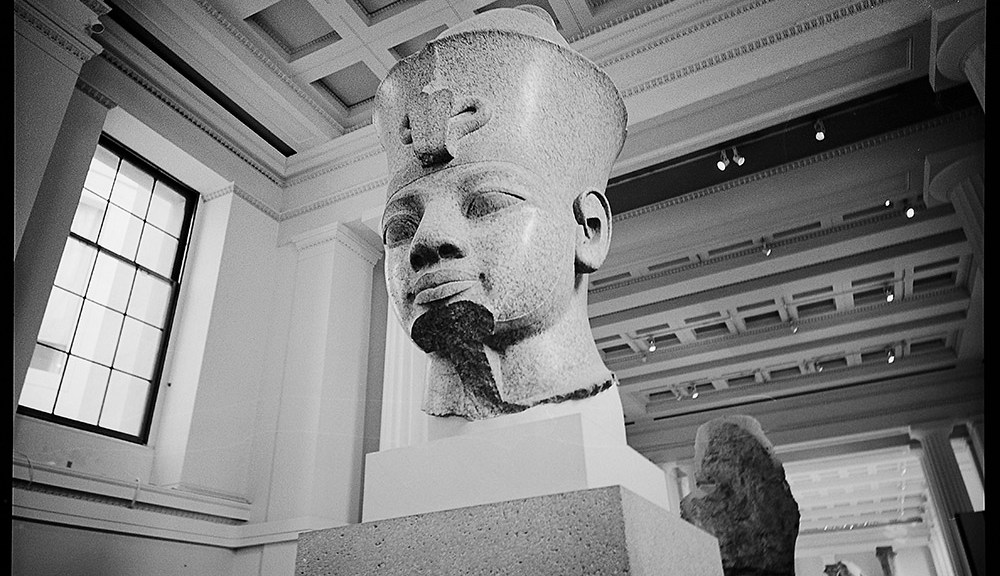
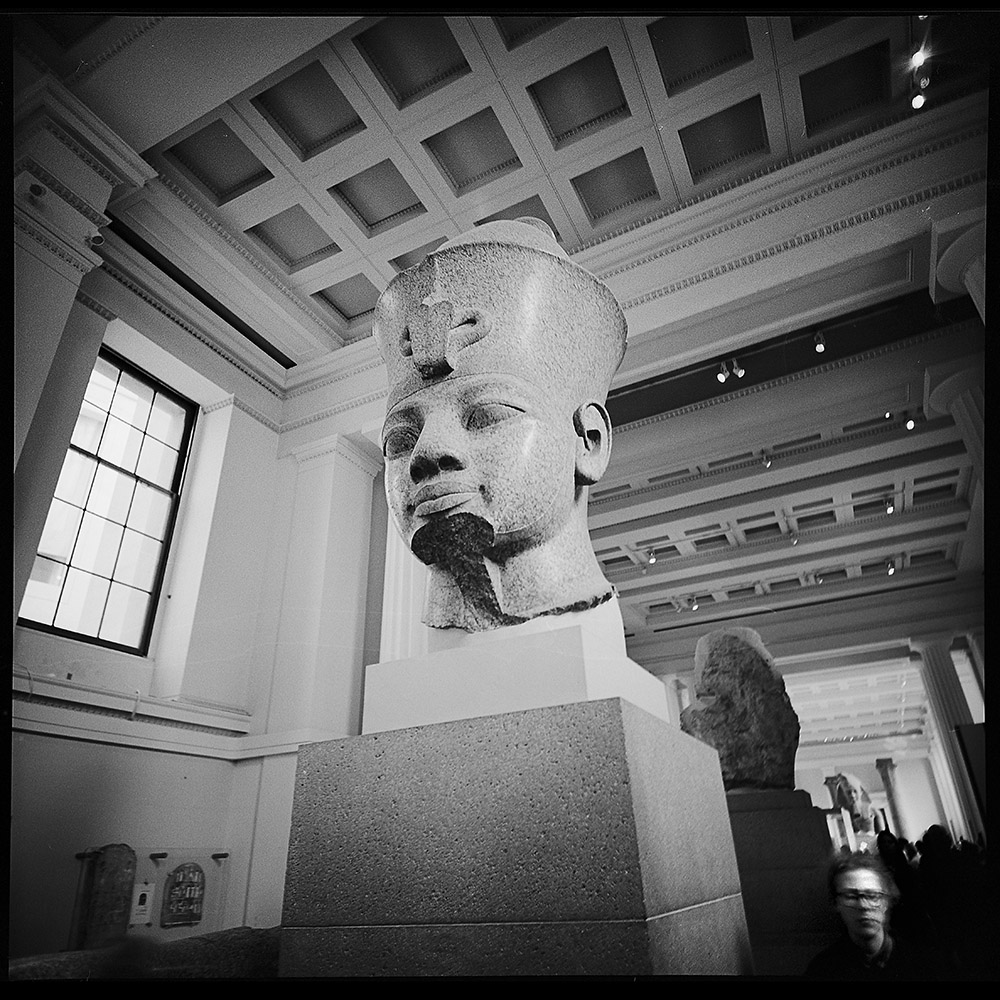
A moment of serendipity as I was photographing the red granite pharaoh’s head in the British Museum caught the face of a passer-by in the lower right corner breaking through a beam of light, an equally enigmatic expression on their face as on the Pharaoh’s. In the far background, a second Pharaoh looks on.
As many of you who have been following my blog for any period of time are now aware, I’m a camera-toy junkie. My latest foray in camera toy land has been into the world of “toy” cameras. I’ve been working for several years on my Sinister Idyll series using my Lomo Belair X-6/12. Many would call it a “toy” camera because it is a plastic fantastic body, with aperture-preferred automatic exposure only, only two aperture choices, and manual guesstimate focusing only. It’s upgradeable (as I have done) with two Russian-made glass lenses (which are absolutely superb), but beyond that, it’s a glorified point-n-shoot that takes panoramic images on 120 roll film.
Well, I just acquired its spiritual cousin, the Lomo LC-A 120. The LC-A has a super-wide lens, also a Russian glass lens, and a fully automatic shutter and aperture (you have no say whatever in the exposure other than if you game the system by changing the ISO, and no idea which aperture it’s using because there is no indicator in the viewfinder, just a slow-shutter warning light). Focusing is achieved by selecting one of four focus zones via a lever on the side of the body. I’ve been plinking around with it here around Washington DC, and just gave it its first serious workout on the road when I took it with me to London.
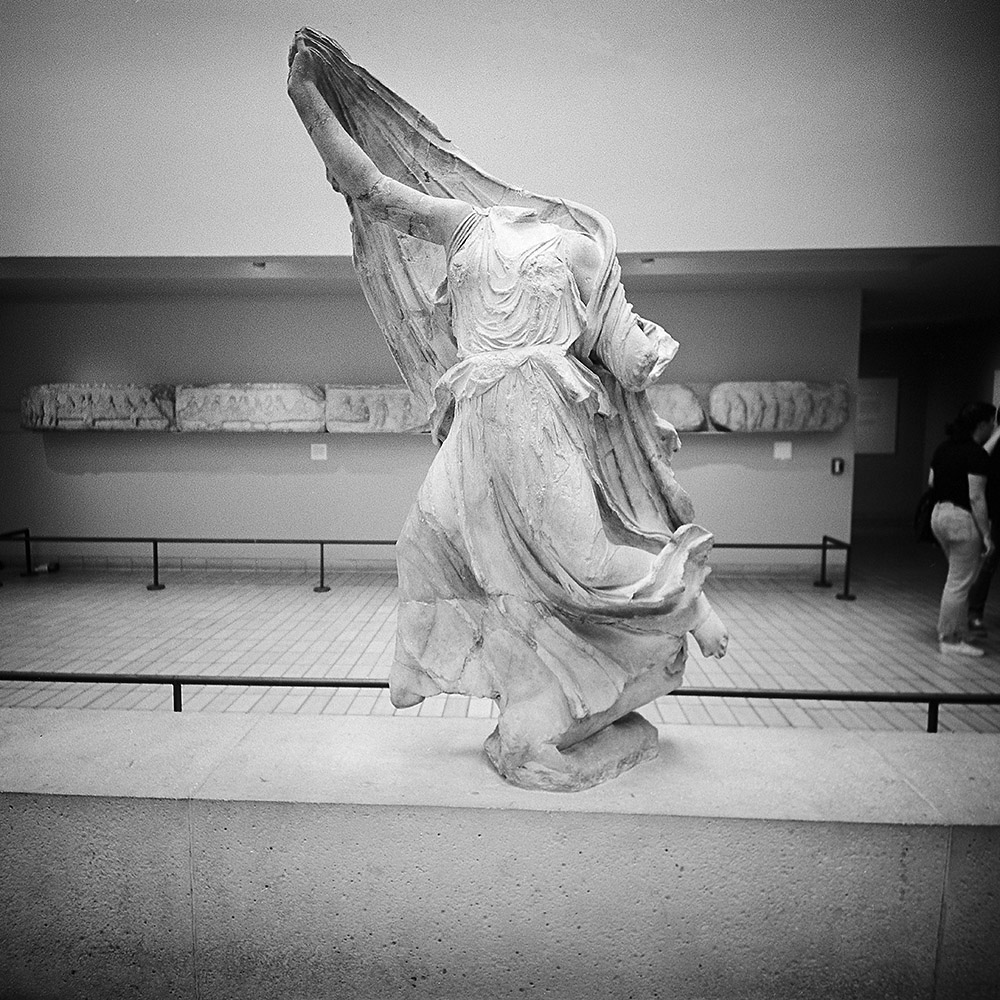
“Disco Grecian”, British Museum
One of the most obvious characteristics of the lens is a noticeable vignette in the corners. Applied properly, this is a very effective tool. Thanks to the automatic aperture, it’s not always predictable how much you’re going to get (see comment above about the aperture – with wider apertures and infinity focus, you get more vignetting. With smaller apertures and closer focus, you get little or no vignetting).
Greek Temple, British Museum
As you can see from the people moving around in this scene, the camera is quite sharp even at a larger aperture, and the extreme wide-angle (the same field of view as a Hasselblad Superwide) lets you hand-hold at speeds that would be very difficult with a normal lens on a reflex camera. I’m guessing this was somewhere between 1/8th and 1/2 second.
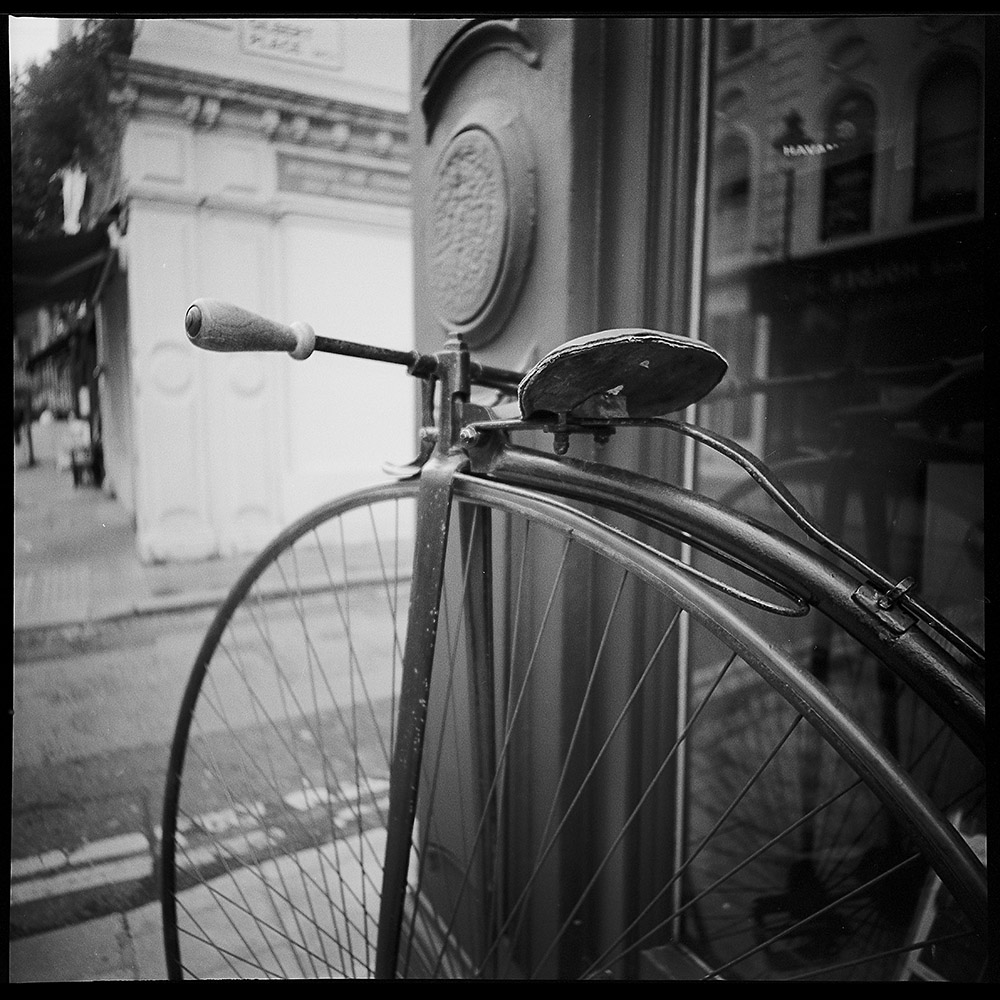
Pennyfarthing Bike, outside Thomas Farthing’s, Museum Street, London
Even with the lens being so wide, you can achieve selective focus effects with it if you get in close. I highly recommend getting in close!
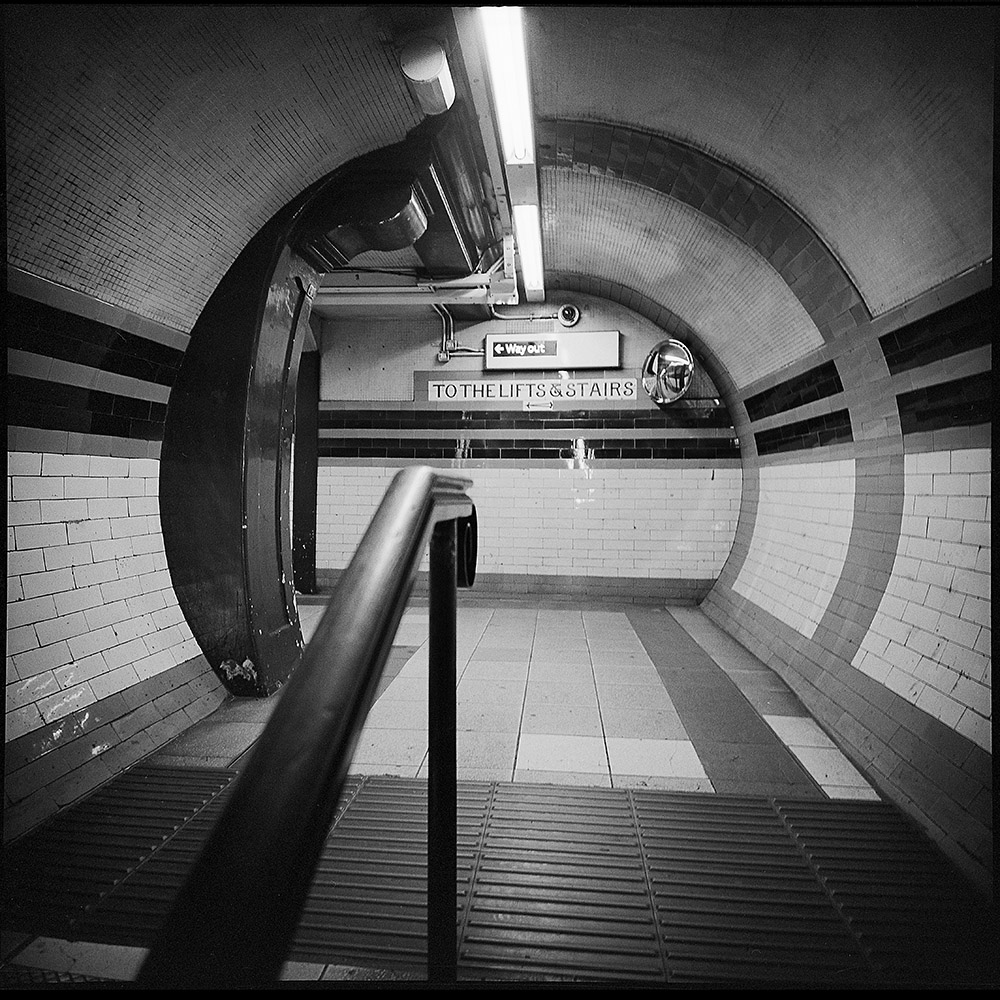
Exit, Russell Square Tube Station, London
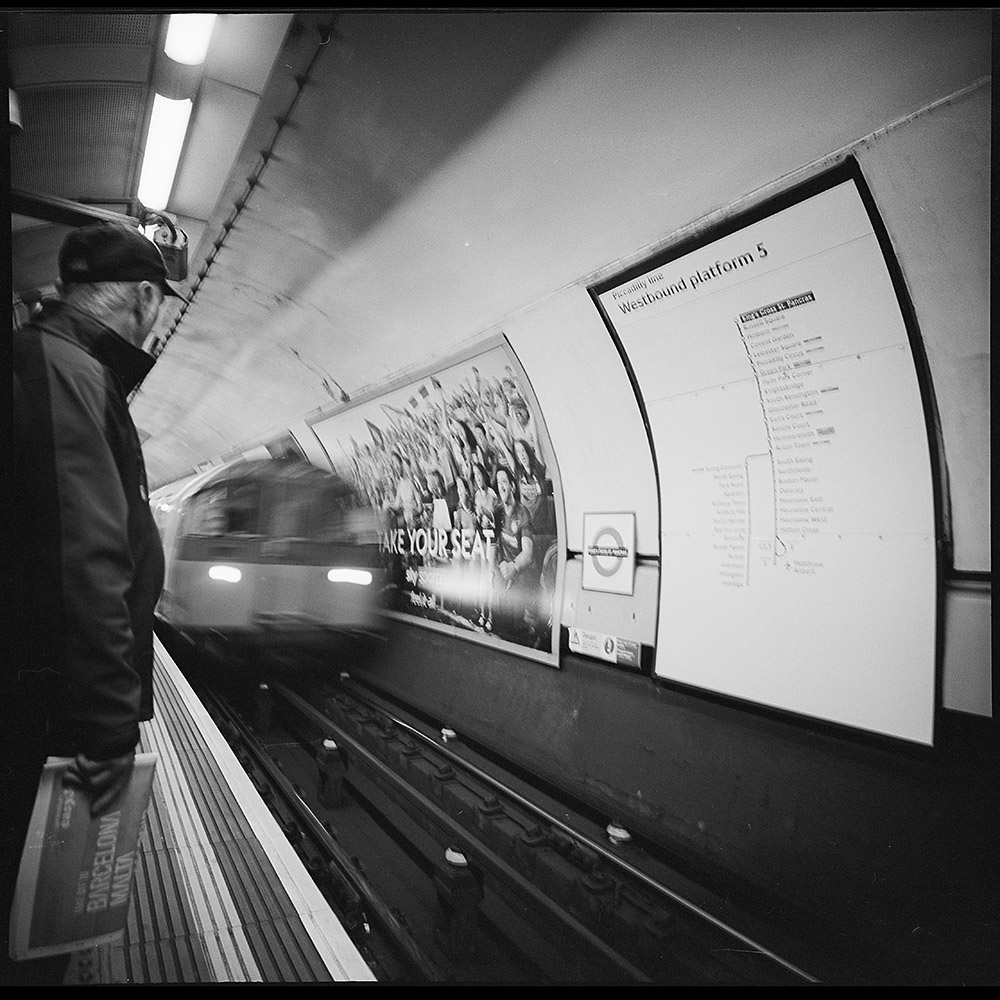
An extreme example of hand-holding (yes, I know – I have supernaturally steady hands). This was at least a one-second exposure.
Approaching Train, Waiting Passenger, Kings Cross Tube Station
The LC-A is a great travel camera because it’s so wide, it allows you to include a near-human-eye field of view, and the extreme light-weight and compact form factor make it very easy to take anywhere and carry all day. Ditto for the minimalist operation technique – you really just point, set focus range, and shoot.
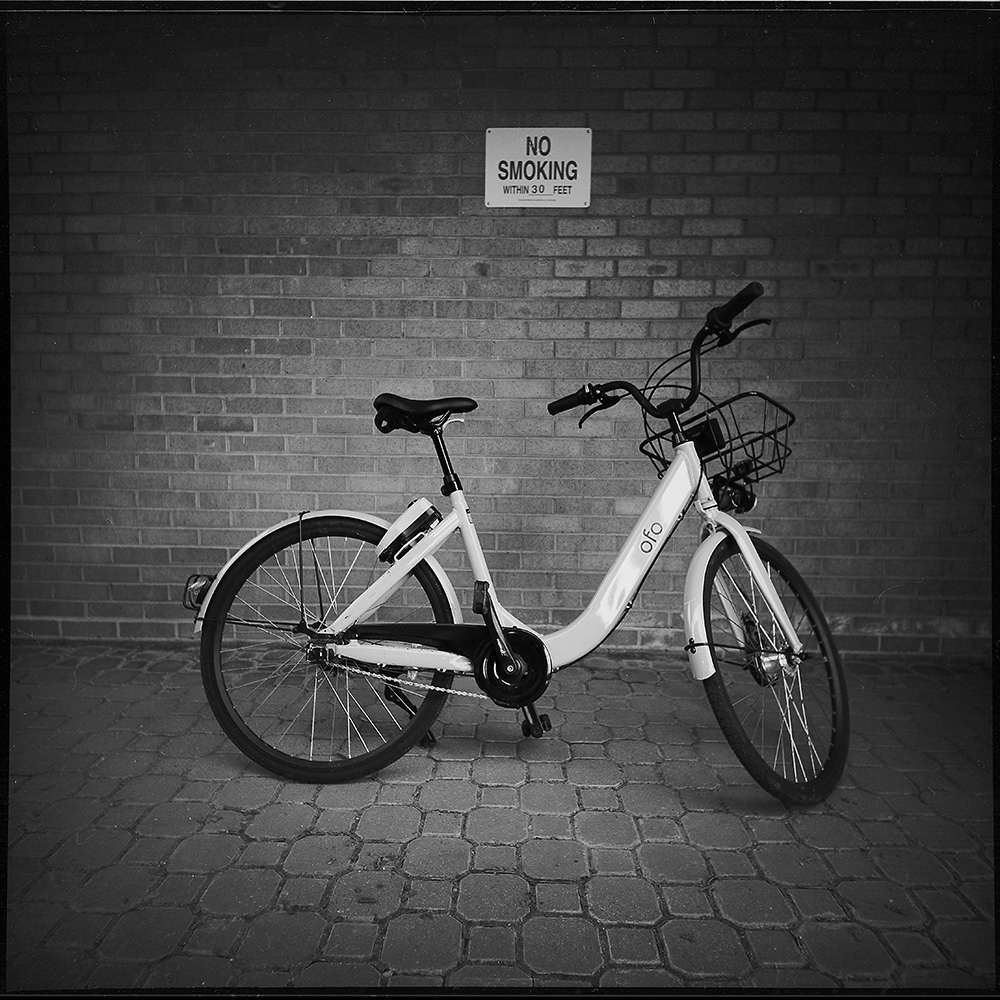
No Smoking
Back here in DC, you can see another example of the vignette effect. I did tweak this a little to amplify it, but this is not a significant manipulation beyond what the camera did.
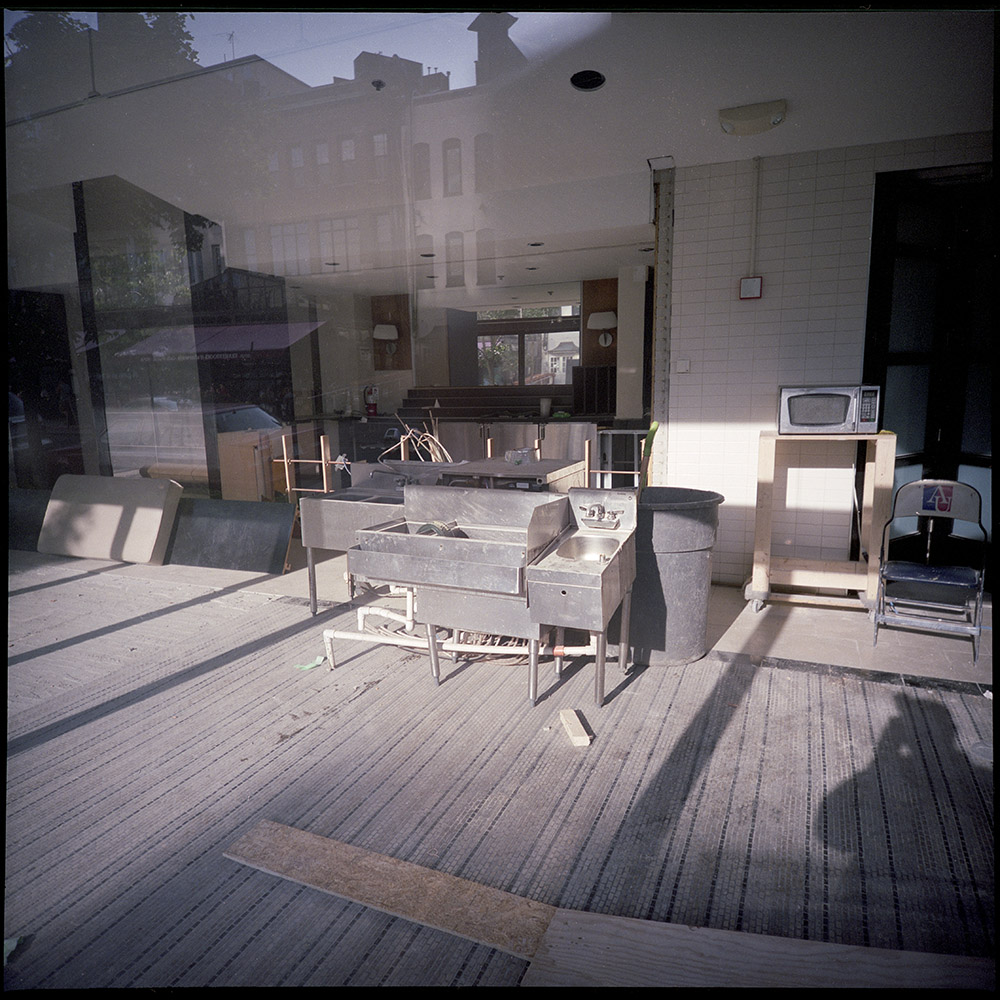
Under Construction
I like getting multi-layered images with partial reflections in glass. And it’s a bit of a self-portrait too, with my shadow falling in the image. I love how the construction workers have the microwave set up and working in the middle of a kitchen remodel – you have to have your priorities straight and keep the coffee warm!
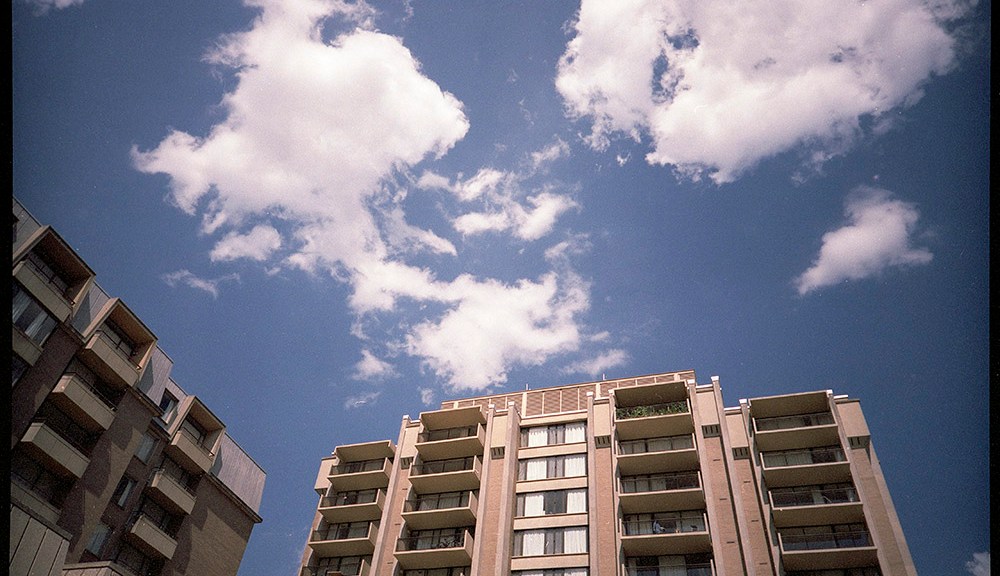
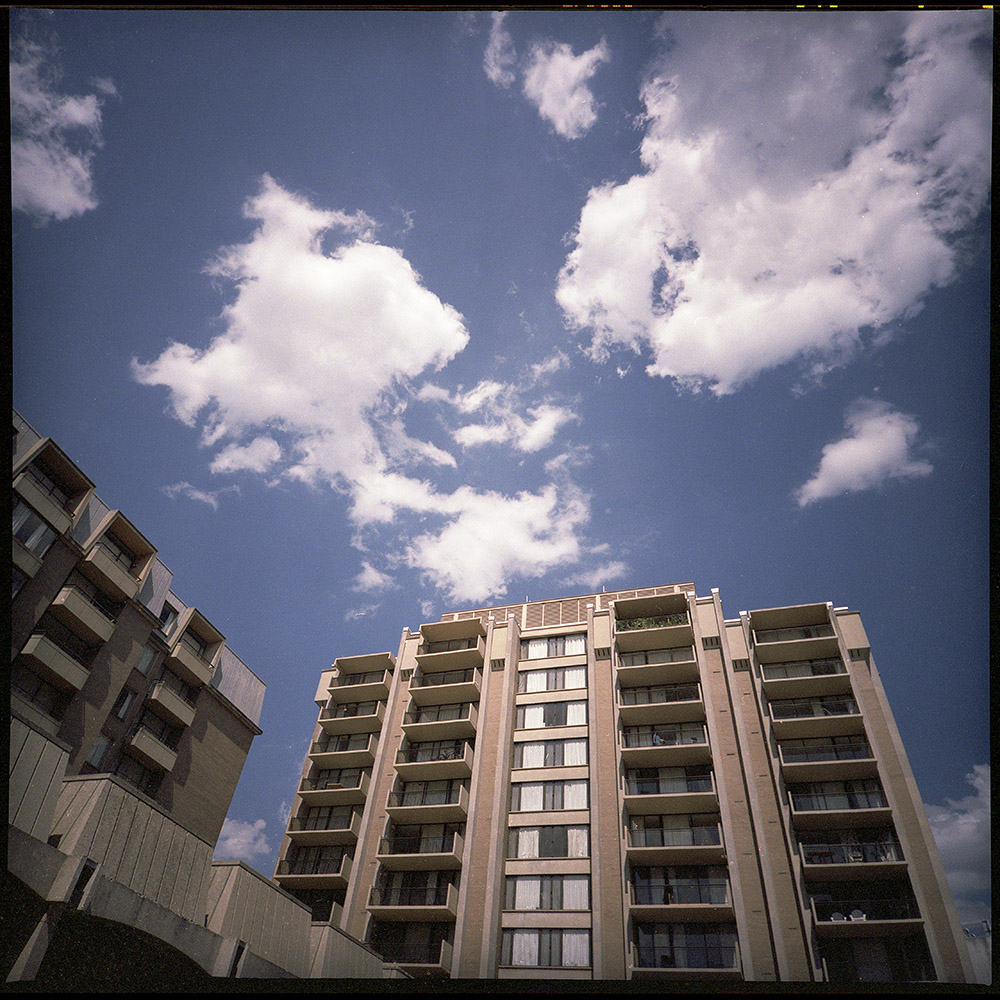
A demonstration of not only the extreme field of view, but the color rendering of the lens. The camera has a reputation for deep, saturated colors. This was taken with 10+ years out-of-date Fuji Pro 400 H.
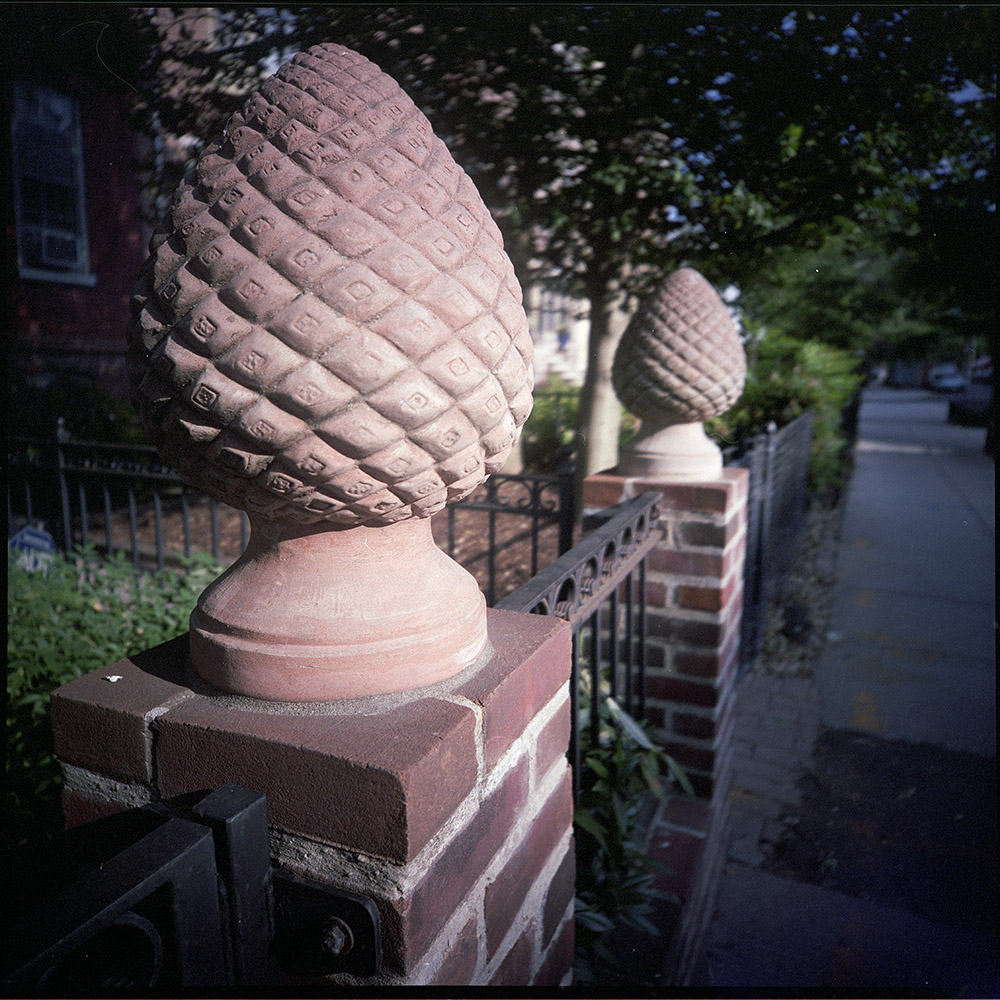
Again, you can never really get too close. This was a test of the close-focus/selective focus capability (the minimum focus setting is 1.5 feet).
Nice saturated colors even on decade-old film.
One of the things I’ve been enjoying about these “toy” cameras that give you very little control over your photograph is the way that they in many ways demonstrate the lack of need for that level of control to make good images. The extreme wide-angle of not only the LC-A but also the Belair force you to think very seriously about your composition, use of perspective, and manipulation of forced perspective to emphasize/de-emphasize compositional elements. With the Belair, I do have a “B” setting for the shutter to do long exposures and intentionally play with time, something I don’t have on the LC-A (but wish I did). Time is the one other critical component to a photograph that we do and simultaneously do not have control over – I can control when I open the shutter, and to some extent when I close the shutter (if I want a “correctly” exposed image, I must close it when it needs to be closed, not when I want it to be closed), but beyond that we have no real control over what happens WHILE the shutter is open. Things happen on their own. Movement is never fully predictable. Moving subjects speed up, slow down, change direction, or stop without warning.
I’ve started thinking of these cameras that I’ve been using – the Belair and the LC-A – as “serendipity boxes” because to use them successfully, they require an acceptance of serendipity, chance, and fortune. They’re life-metaphors in a way – just like in my own life, I can point them a certain direction, look at specific things, get closer, and turn away. But if I don’t learn how to see through them, to take in the periphery, work within the uniquely skewed perspectives that they offer, I’ll miss out on things that are presented to me because they didn’t fit in the tightly-controlled box I wanted them to fit into.
The last time I wanted to photograph the Palace of Fine Arts, the weather was not so accommodating and the skies were hazy and smoggy every day. This trip, the weather cooperated and you can see the glory that is the Palacio. The domes of the Palacio are so iconic a symbol of Mexico City, they’re even on the Starbucks mug! Next time I’m back, I’ll have to go in the Sears across the street and see if I can get a good shot out one of the third or fourth floor windows.
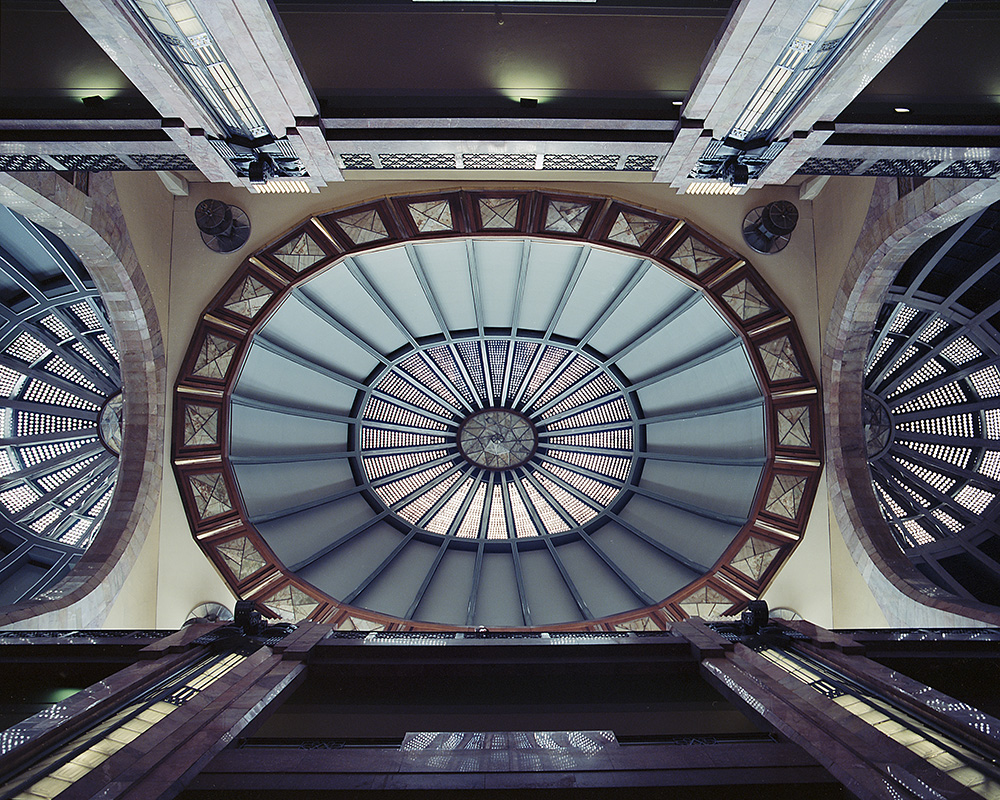
The interior is every bit as spectacular – The entrance lobby is a glory of Deco Mexicano – very much Art Deco, but with a distinct Mexican cultural twist – you can feel the stirrings of pride in indigenous Mexican heritage that were finding expression in stylized Aztec and Mayan motifs and the murals of Diego Rivera, David Alfaro Siquieros and Jose Orozco that adorn the walls of the lobby.
I feel lucky to have pulled off this shot, as I had to point the camera straight up, and hold it still for 1/15th of a second (I think it was a 1/15h, might have been 1/8th). No small feat when your camera is as big and heavy a brick as my Mamiya RZ67. I must say it has an extremely well-damped mirror that doesn’t cause camera shake – while it isn’t quite as smooth as my Rolleiflex, which has no mirror movement at all, I can hand-hold it down to 1/15th or 1/8th regularly (the Rollei I feel pretty confident to 1/4 second, and have been known to pull off 1 second exposures hand held).



























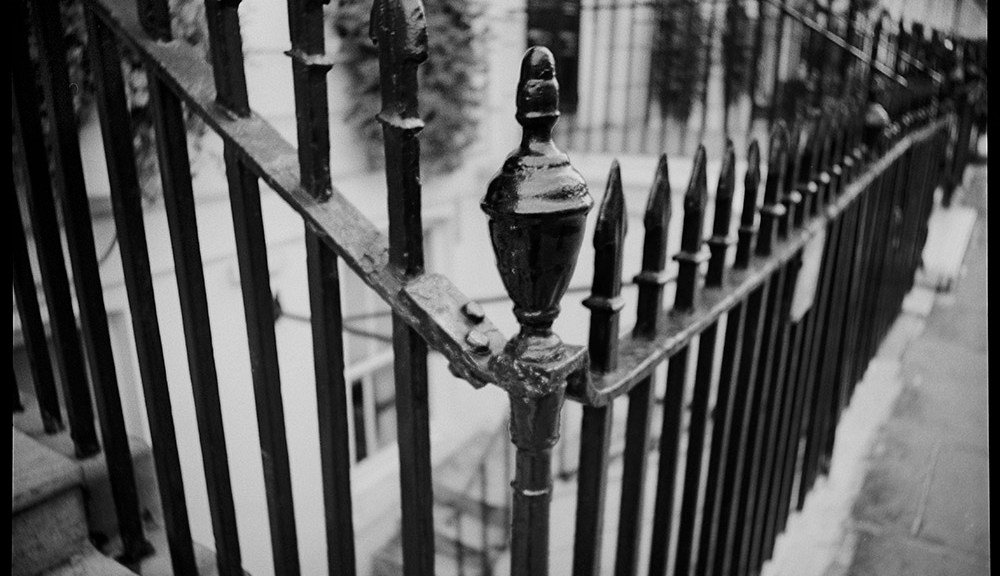
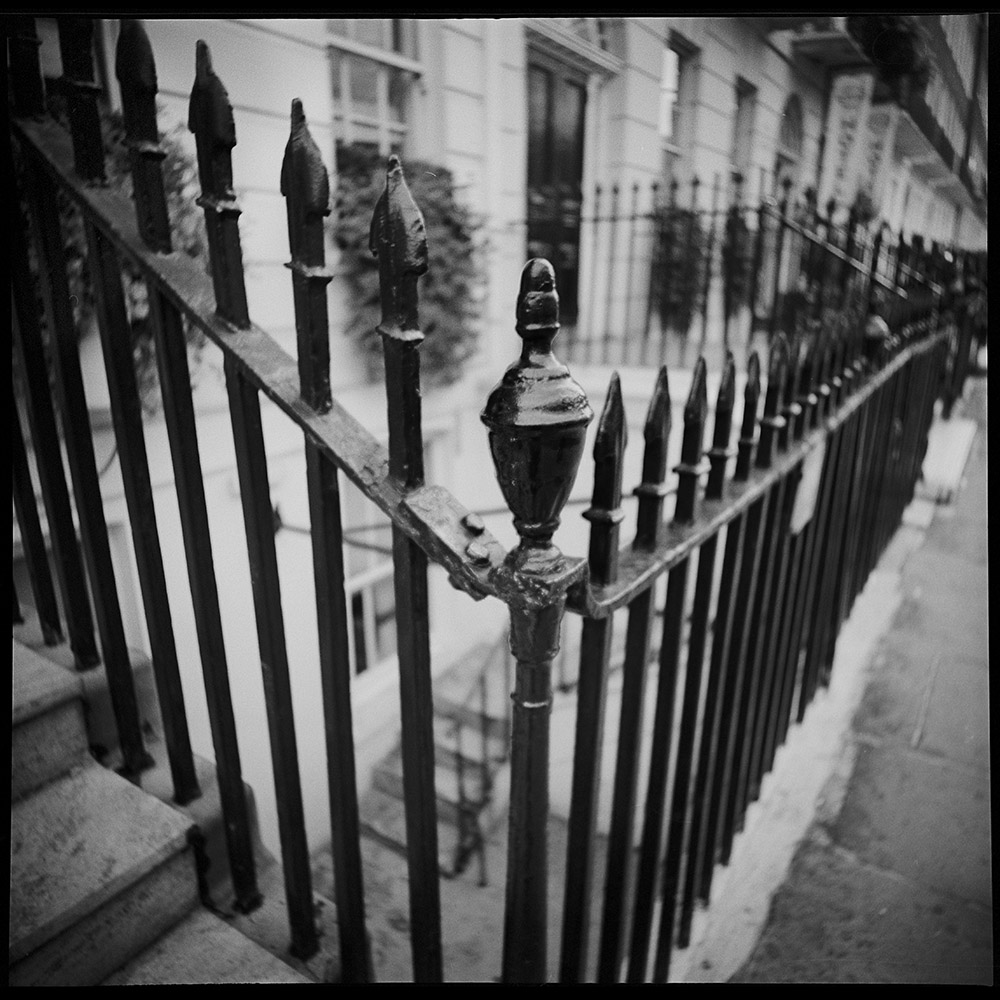
 Again, you can never really get too close. This was a test of the close-focus/selective focus capability (the minimum focus setting is 1.5 feet).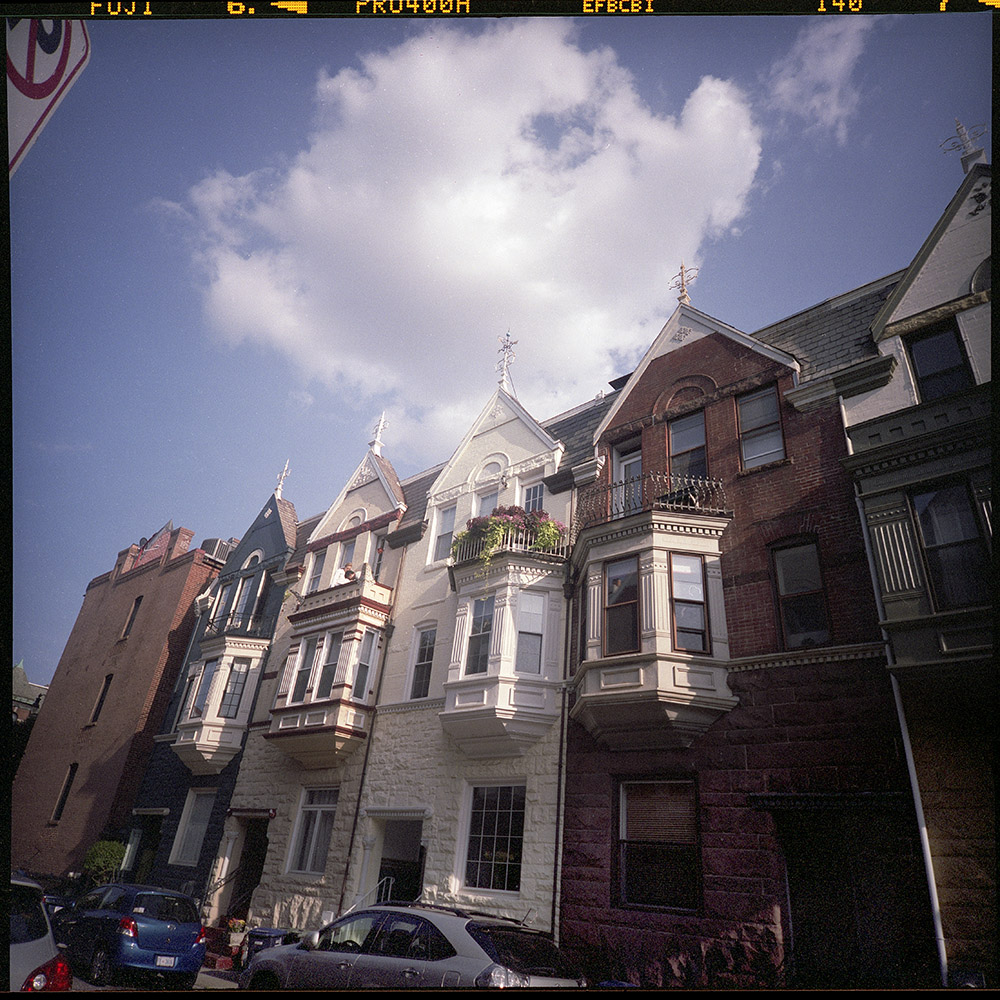


 dcphotoartist