Category Archives: Travel

My Friend TC, at the Boboli Gardens, Florence

TC is a friend I’ve known for gosh, probably 10 years now. When we met he was a grad student working on his PhD at MIT. He’s now a full-fledged Doctor in Physical Chemistry, and working in Zurich. When I told him I was coming to Florence, he offered to pop down and hang out for a day or two. He was a real godsend, as I was still in the throes of a really bad allergy attack triggered by down pillows on the bed of my apartment in Rome, and he stopped at a pharmacy and got me some European Benadryl.
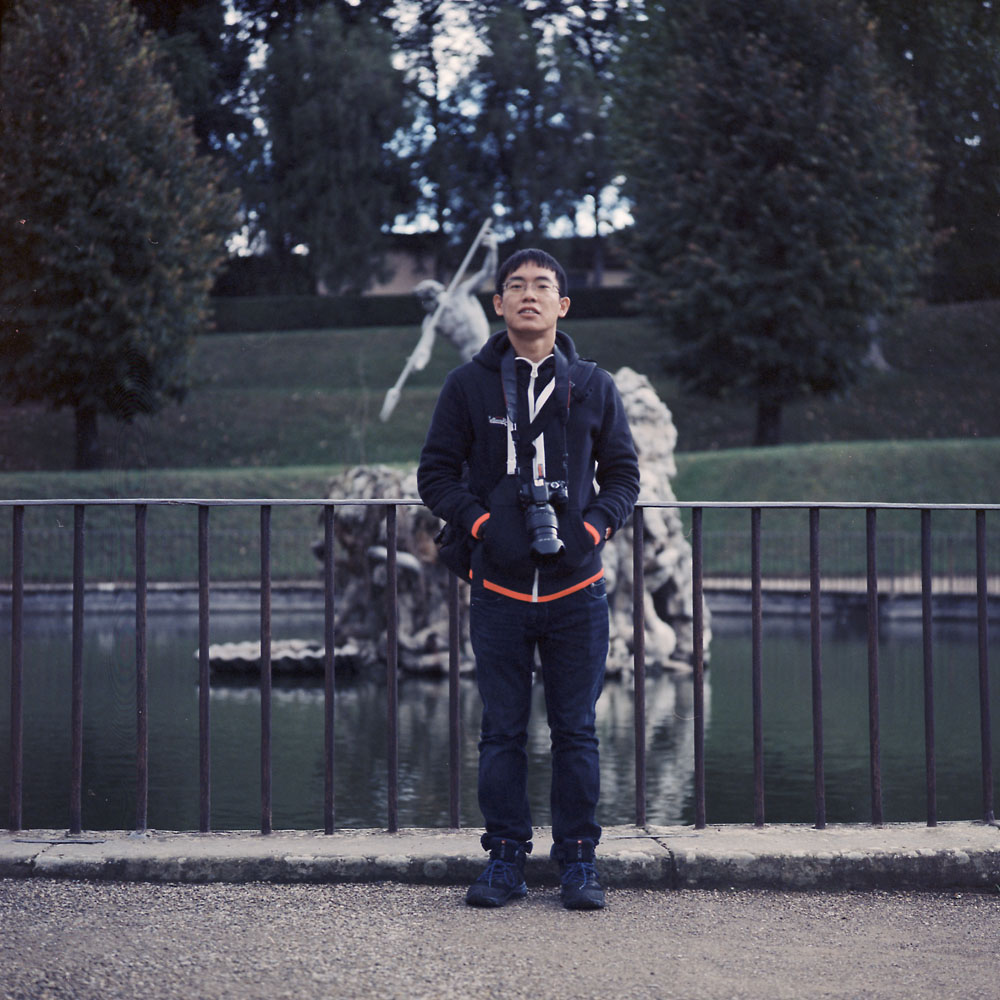
TC in the Boboli Gardens

We went to the Uffizi the first day I was in Florence, then grabbed dinner at a restaurant he found on Yelp. The food was quite good, but what shocked me was the size of the portions. I was used to these small portion sizes per course that I had been getting in Rome, so I had a pasta course, a salad, and an entree. The pasta wasn’t too much bigger than I was expecting, but the salad was entree- sized! I had only had maybe 1/3 of the salad when the waitress stopped by and asked about it. I told her it was very good but just too big. She offered to cancel my entree, which I was glad to accept. Half and hour later, we’re sitting chatting and the entree arrives after all!

The next day, we met up again and walked over to the Palazzo Pitti via the Ponte Vecchio. The Palazzo Pitti is gargantuan – it was the Medici family’s main residence in the 16th and 17th centuries, and everything about it was designed to overawe. The Vasari corridor connects it with the Uffizi over the Ponte Vecchio to provide a secure passage should the Medicis need to escape an angry mob, or just not want to mingle with the hoi polloi on their way to and from their private box seats at the Santa Felicita church.
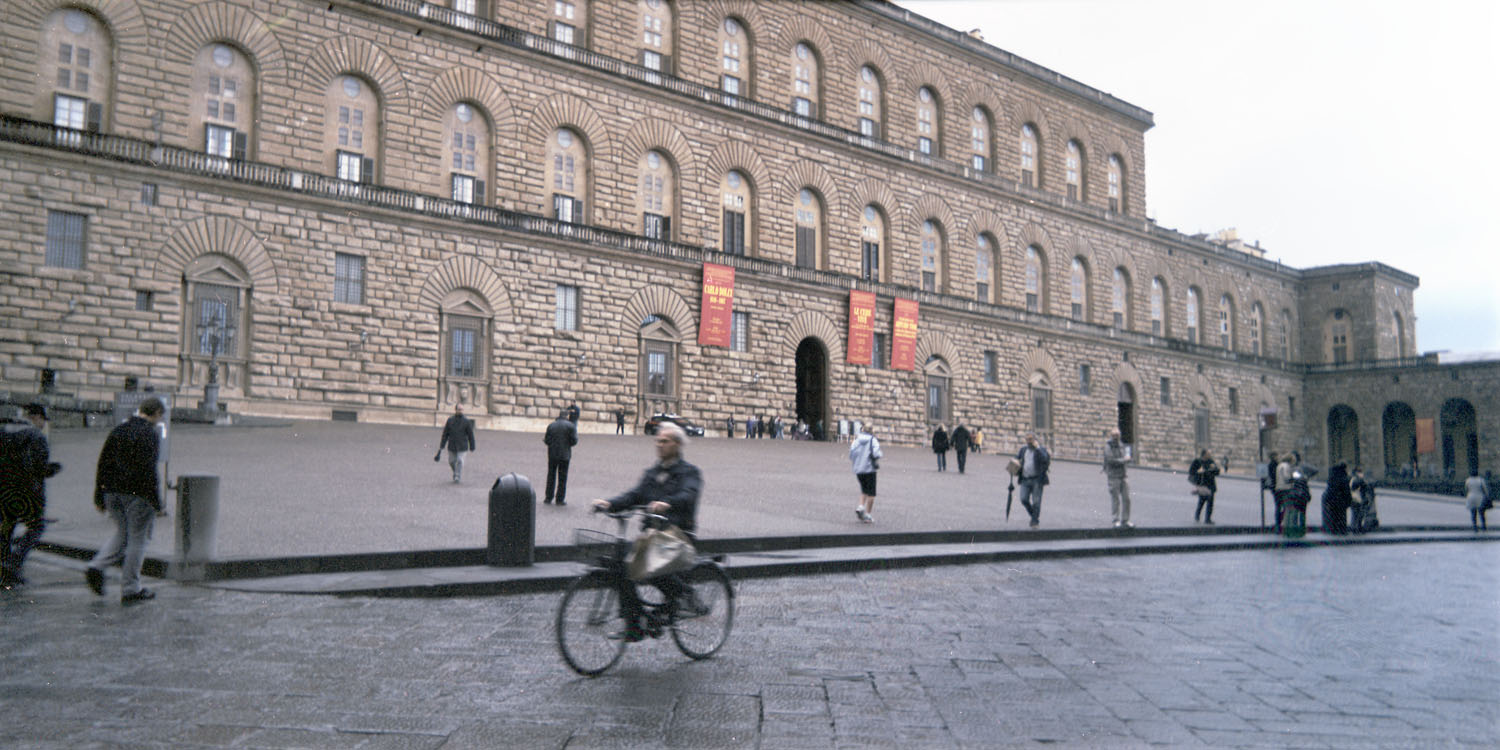
Cyclist, Palazzo Pitti

The Boboli Gardens back onto the Palazzo Pitti. They were once the private playground of the Medici family, but now are open to the public. This is the garden facade of the Palazzo Pitti.
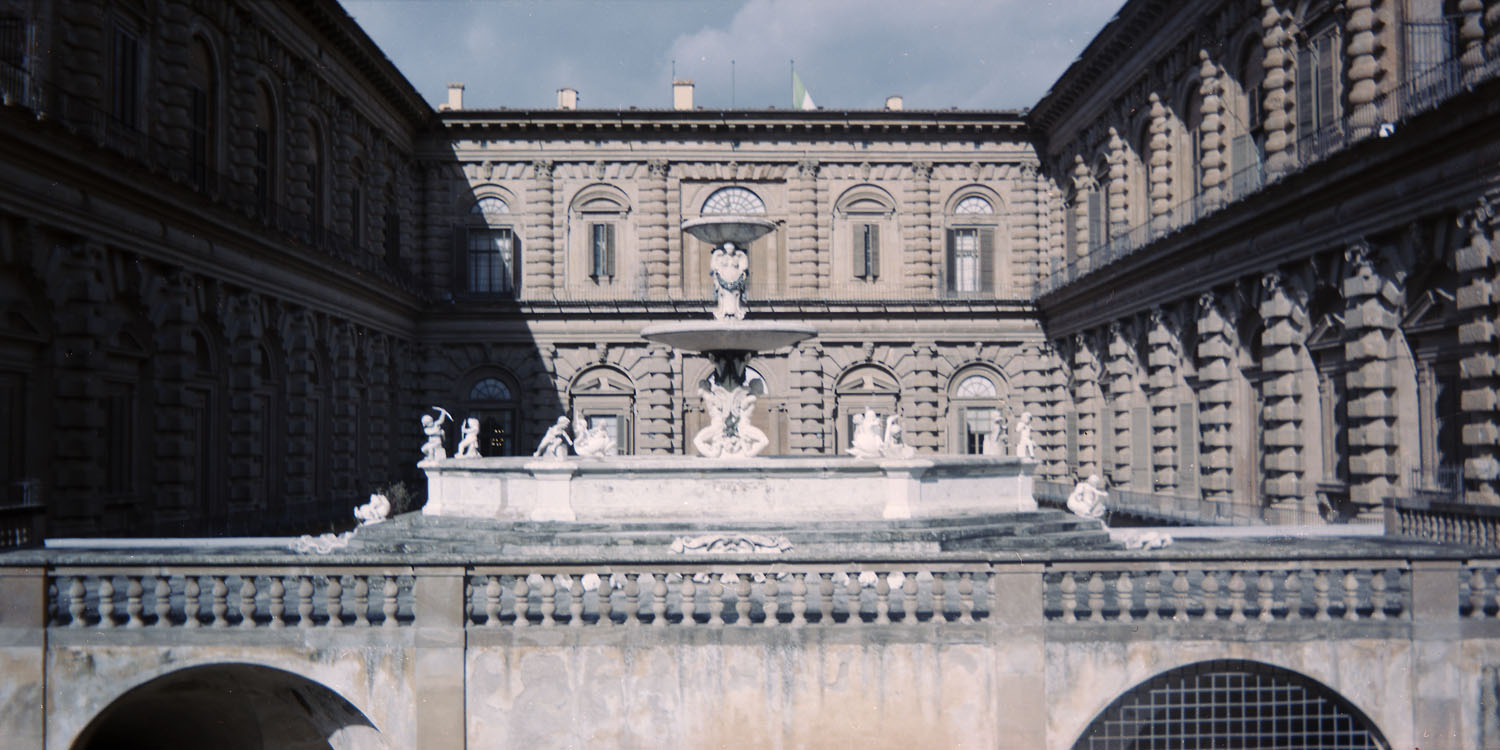
Pitti Palace, from the Boboli Gardens

After touring through the Pitti and hiking up and down the Boboli gardens (which are on the face of a fairly steep hill), TC and I grabbed lunch at a little cafe across from the Palazzo Pitti’s main entrance. I had my first ever cappuccino there. I’m now a devotee, provided there’s enough sugar.

So thank you, TC, for the Benadryl, the companionship, and for the swiss chocolates – they were delicious!
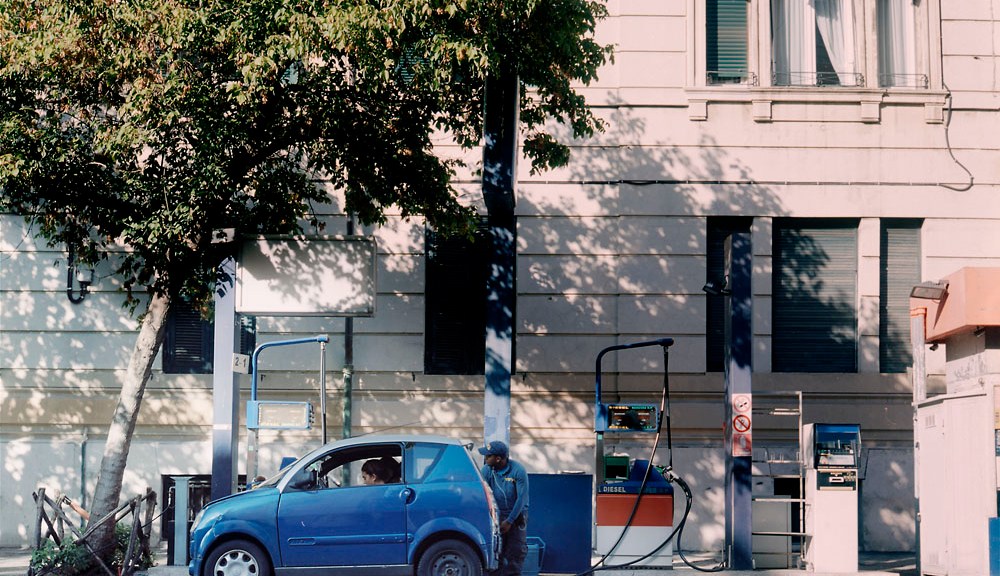
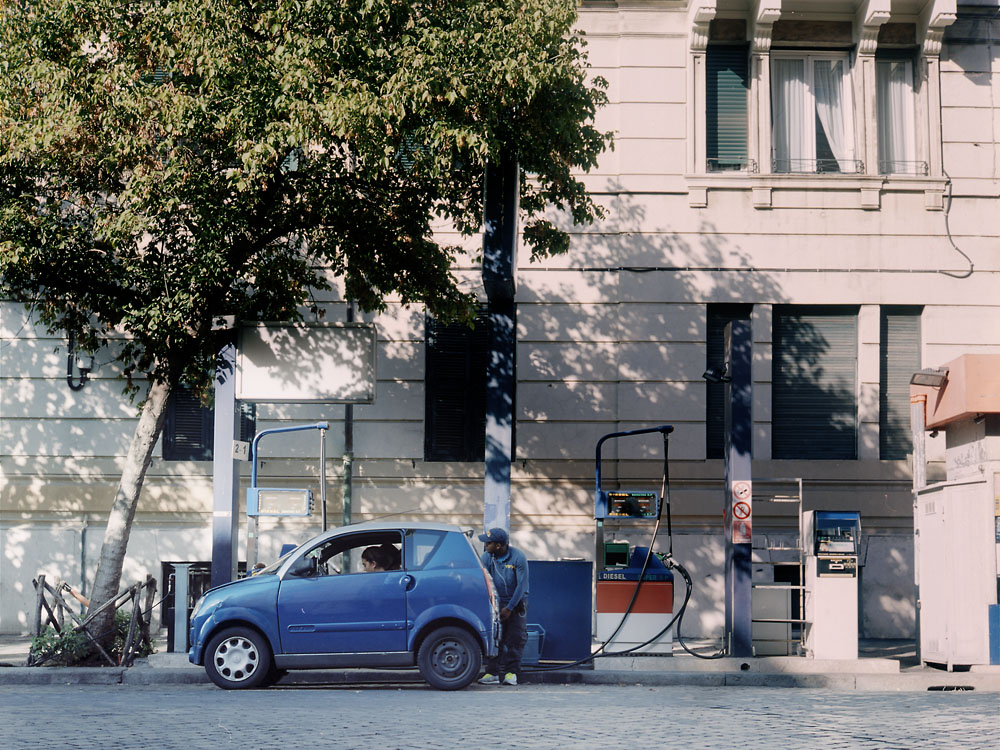
Curbside Gas Station, Via Crescenzio

Petrol Fill-Up
Petrol Fill-Up

As I was walking from Piazza Del Risorgimento to the Piazza Navona, I passed by this little curbside gas station. It seemed like a relic from the past – I’ve never seen a curbside gas station here in the US, and I don’t even remember seeing any in any of the Spanish or French cities I’ve been to. It just feels like something I’ve seen in old photos. Too bad I couldn’t get it with a vintage Fiat 500 to make it even more timeless.

The Fake Fakir in Piazza Navona

Fake Fakir, Piazza Navona

If you google photos of Piazza Navona, you’ll see this guy. He’s there all the time – must be ripe pickings. This is one of the more inventive “living statues” I’ve seen in European cities – while perhaps not as out there as the guy reading the newspaper while on the toilet or as mechanically involved as the stationary bicyclist, the faux levitation is quite clever.

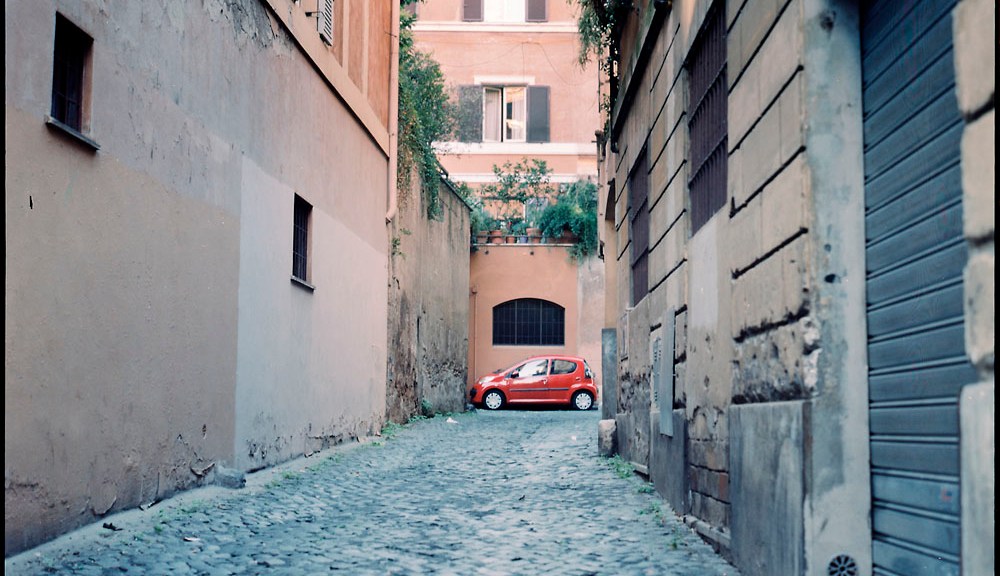
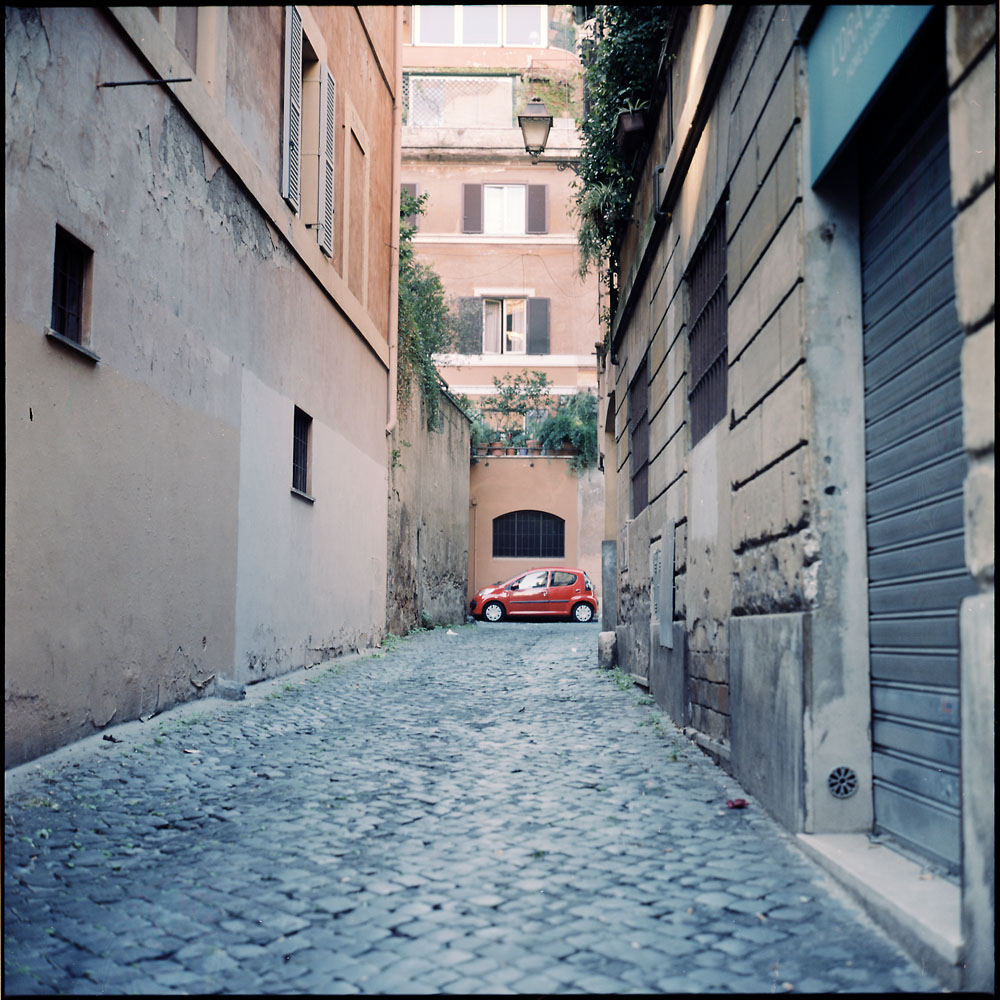
Red Car, Alley, Trastevere, Rome

Red Car, Alley, Trastevere

No words, just a found image.

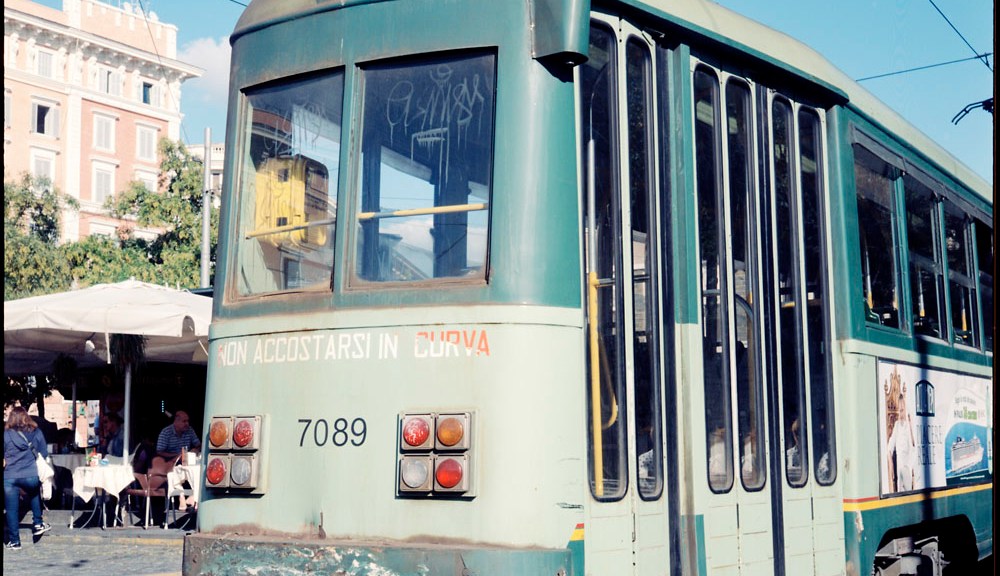
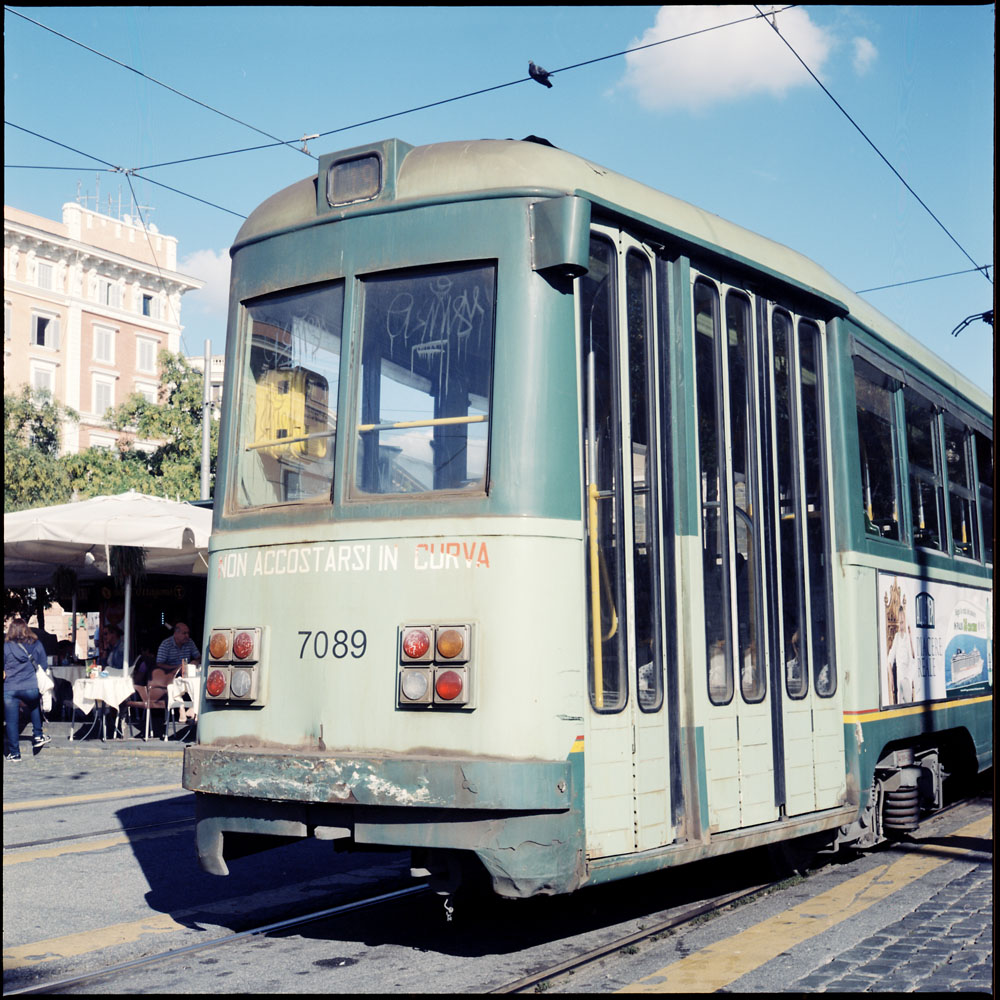
Old Streetcar, Rome

This is a vintage streetcar at the Piazza del Risorgimento, waiting for a driver shift change. You’d take this streetcar to get to the Vatican, depending on where you’re coming from.

Old Trolley, Vatican

Alas, my chariot to the Vatican Museums and for my visit to Ars Imago, a tiny but very cool camera store fully dedicated to analog photography and supporting the wet darkroom, was the more prosaic modern city bus and subway. I photographed this streetcar on my perambulation home on what was probably my longest day’s excursions – starting out at Via Dei Genovese 37, I walked across the Tiber on the Ponte Palatino, along the Circo Massimo to the Circo Massimo Metro station. From there I took the train to Garbatella, then walked from the Garbatella station to the Centrale Montemartini museum. Alas, my planning ran afoul of the Roman penchant for things being closed on a Monday, and the Centrale Montemartini was not open for visiting, so I consoled myself with photographing the amazing bridge over the railroad tracks and the graffiti art on the Garbatella subway station.

Back on the Metro one stop to Piramide, to the Cimiterio Accatolico (the “English” cemetery so named for the number of British expatriates buried there) to see the pyramid of Caius Cestius and the graves of Shelley and Keats.

Then back on the Metro again, over to the Spagna stop to see the Spanish Steps and have a tea break at Babbington’s. Then back on the Metro to the Ottaviano stop, and then walk to Ars Imago. From Ars Imago, I walked to the Piazza Navona, via the Piazza del Risorgimento, the Piazza Cavour and the Palace of Justice, across the Tiber on the Ponte Umberto I. I stopped in the Museo Stadio de Domitiano. The Piazza Navona owes its shape and size to the Stadium of Domitian, upon which it was built. While in the neighborhood, I also swung by the church of San Luigi dei Francesi to check out the chapel with the Caravaggio paintings. Then dinner at the Piazza Navona, then walked back to the Piazza Venezia to get the modern streetcar back to Via Dei Genovesi in Trastevere. According to my Apple Health app, I clocked in at over 10.5 miles WALKING that day, not including the streetcar and subway rides.

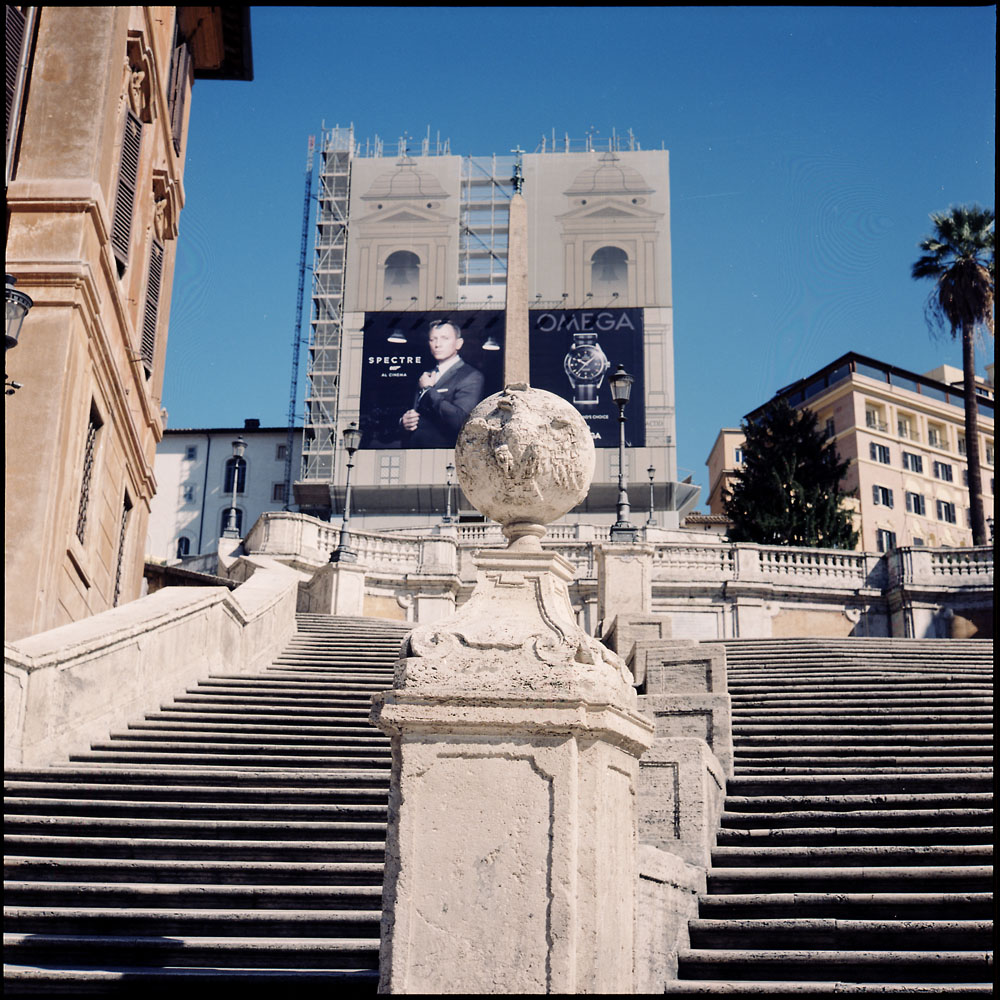
The Spanish Steps as You’ll Probably Never See Them

Spanish Steps, Rome
Spanish Steps, Rome

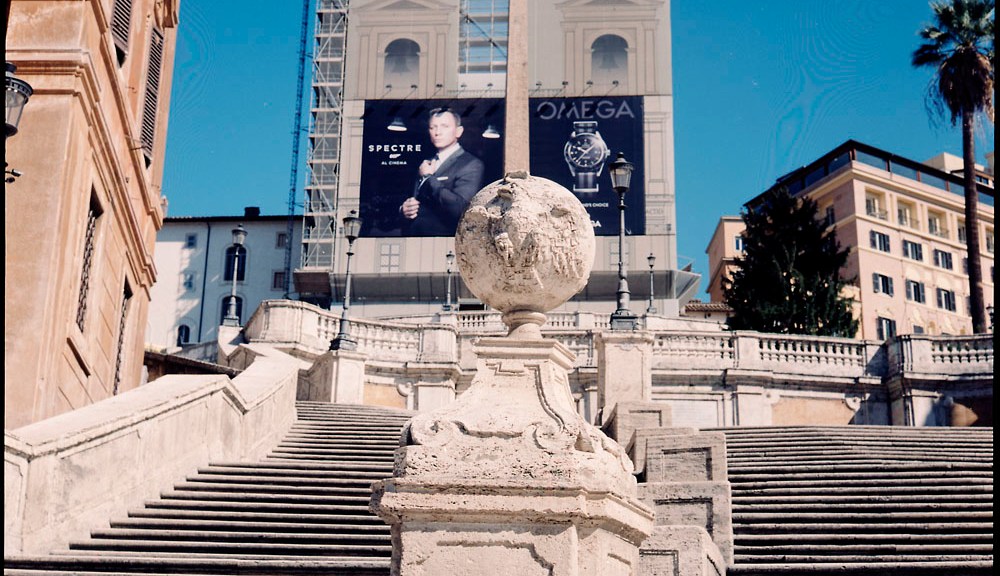
At this moment in time, the Spanish Steps are closed, yes CLOSED, fenced off with chain link fencing, due to an ongoing restoration project. So this shot, taken by poking the lens of my camera through the fence, is something otherwise virtually impossible without photographic trickery. Pretty much 24 hours a day, 7 days a week, 365 days a year, the Spanish Steps are crowded with tourists and the steps themselves are nigh-well invisible. The downside is all those tourists coming to see the Spanish Steps were displaced off the steps and back into the street below, completely over-running the fountain at their foot. So an otherwise lovely fountain was unphotographable.

Old Cars, Trastevere

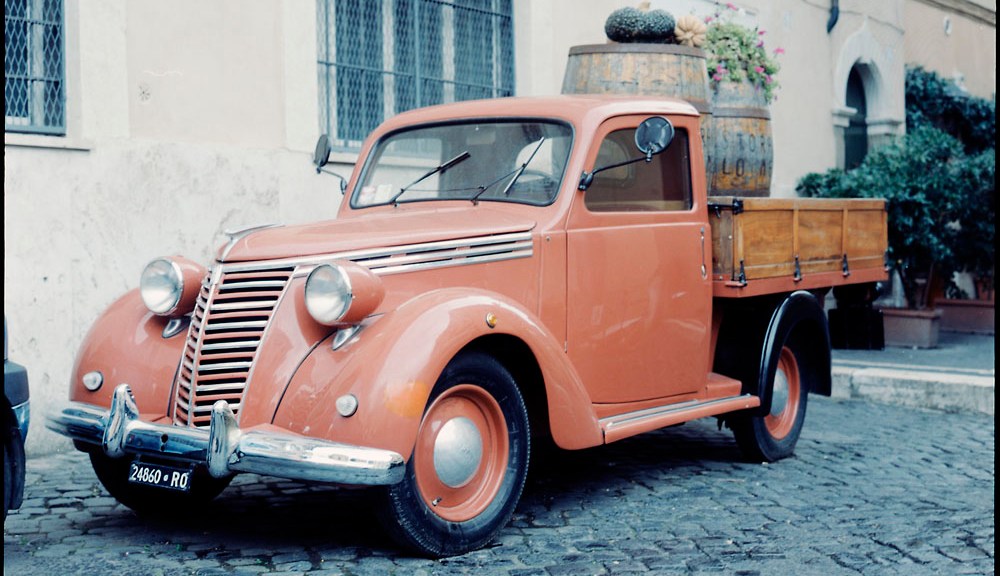
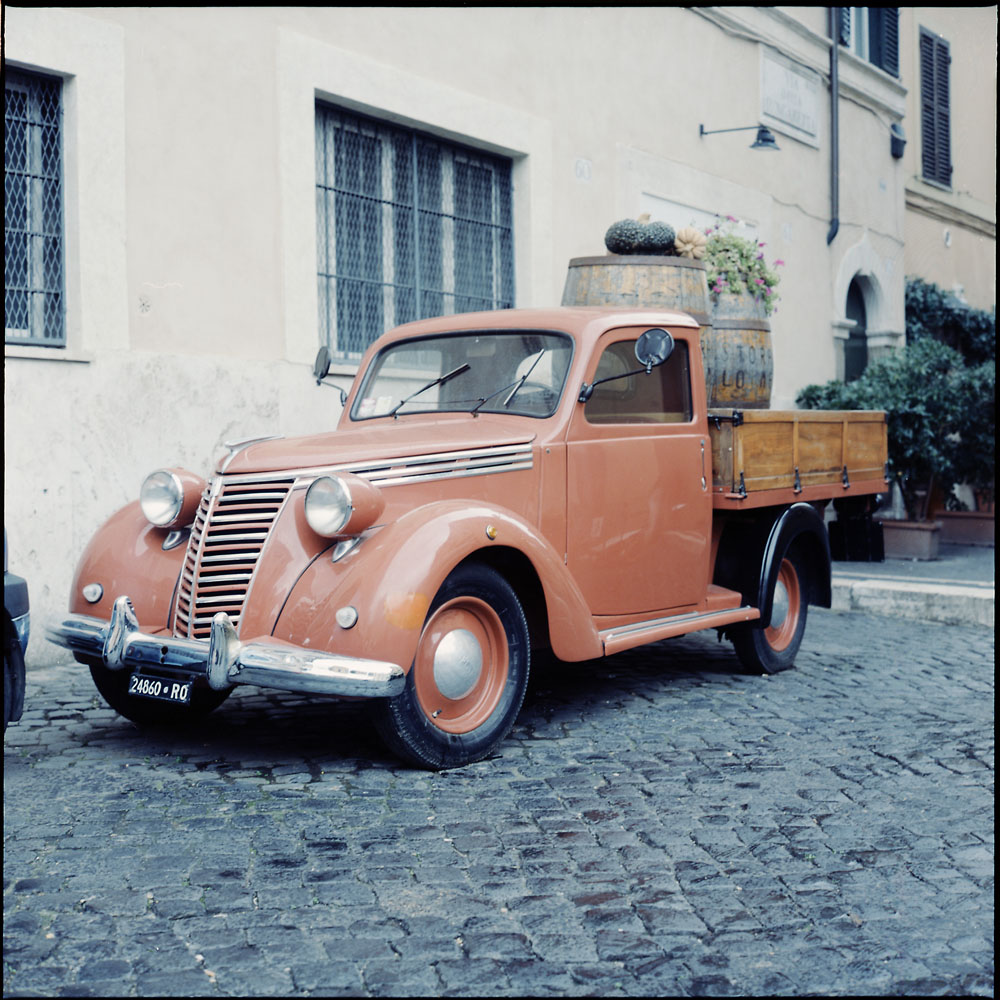
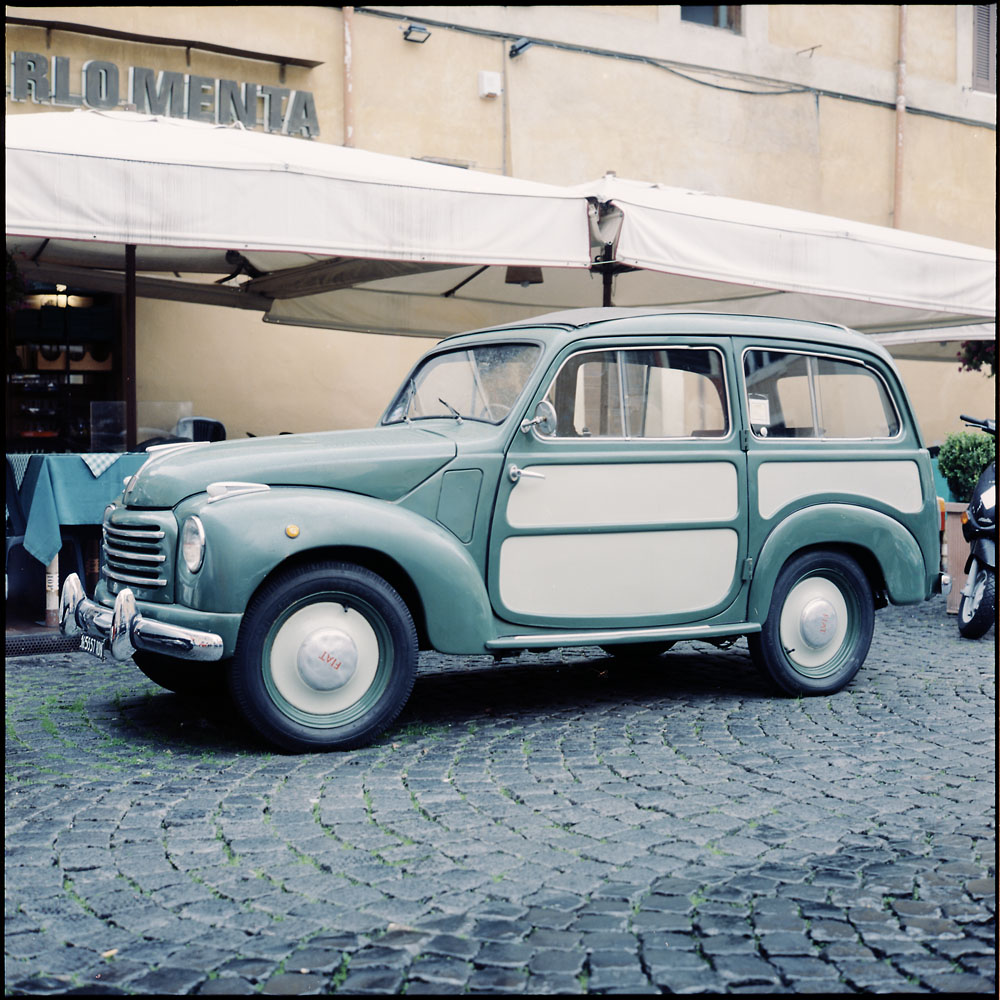
I love old cars. When I was in high school, I drove a 1962 Nash Metropolitan aka a bathtub on wheels, aka the car that floats (but it doesn’t- it’s not an Amphicar, which did float and drive in water- the Met just looks buoyant). I loved that car despite all its flaws and shortcomings. So I get a visceral reaction when I run across antique cars. These two were outside a restaurant in my neighborhood (which I did not have a chance to try).

Advertising Truck, Trastevere

Both were being used to advertise the restaurant. I don’t think the truck got driven around much if at all, what with the barrels in the bed with the restaurant name branded into them, and the pumpkins and gourds on top. The FIAT wagon, though, certainly looked like it could be used. I passed them on two different days and on both days neither vehicle appeared to have moved any.

Fiat Wagon, Trastevere

The FIAT wagon looks like the kind of car I’d enjoy having, though – folding canvas top, cute 1950s design, compact enough to be useable in the city, but enough space to haul stuff around. And it would definitely make all the right noises and have that old car smell. You know, a touch of motor oil and unburnt gasoline, combined with the funk of aging upholstery. Terrible cologne idea, but inside an old car? Magic.

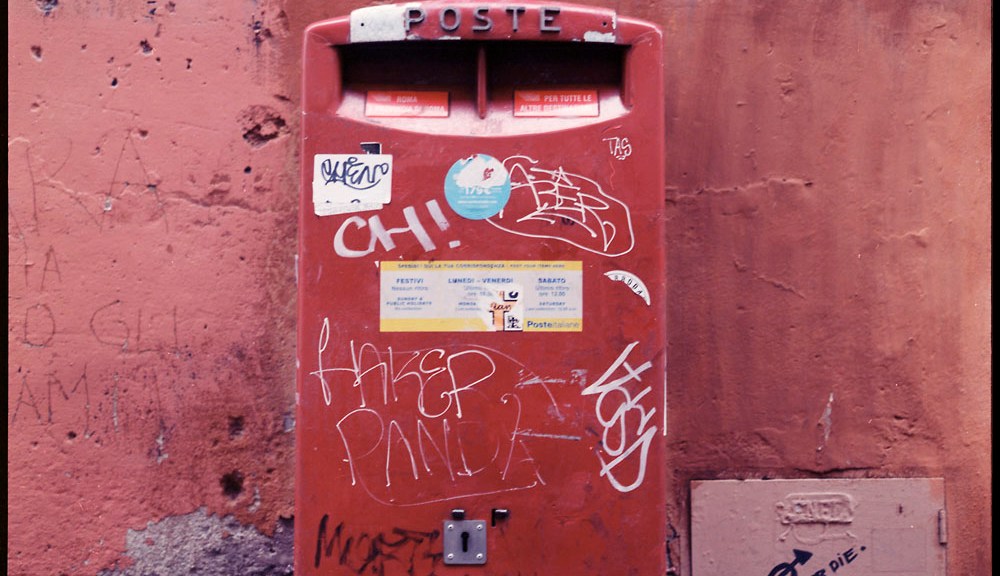
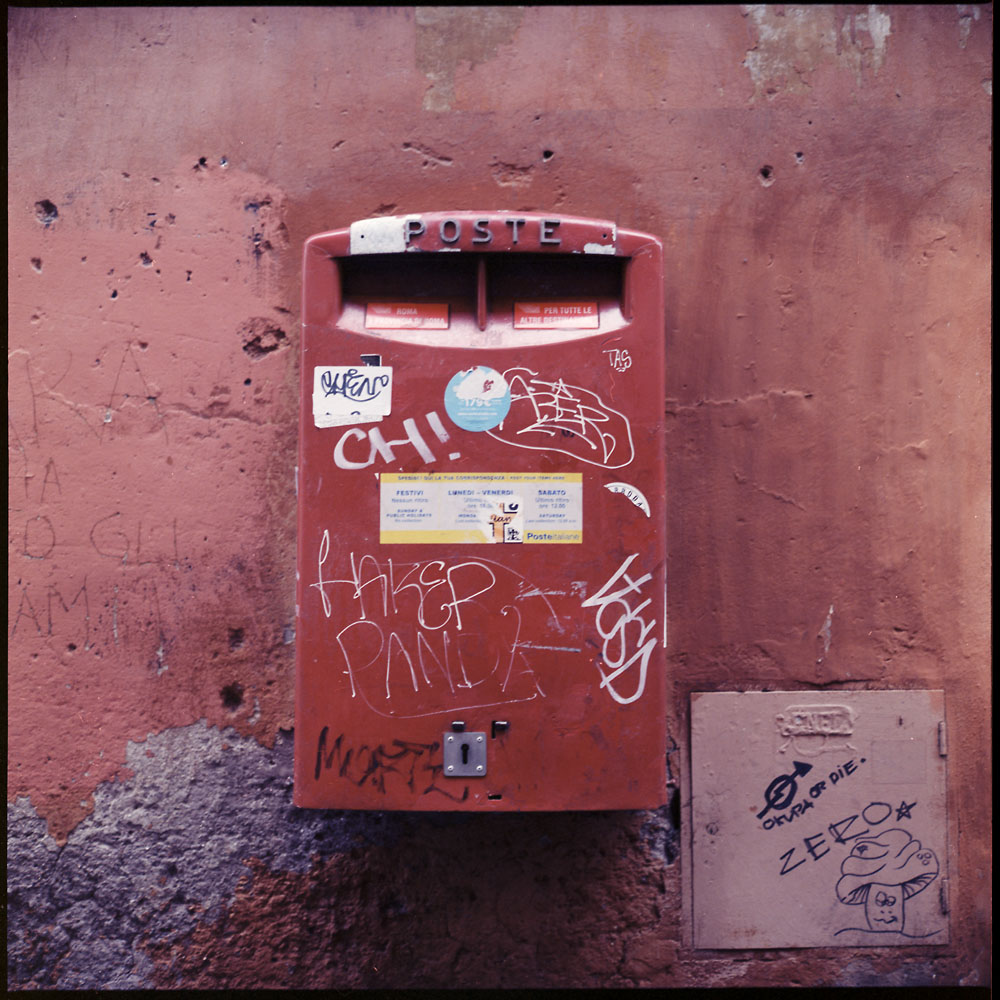
Mailbox, Trastevere, Rome

Rome is a city known for many things – fine food, ancient architecture, more churches than you can shake a stick at, and among other things, graffiti. This poor mailbox has been heartily defaced – scribbled on, stickered, and overall abused. Yet it still soldiers on in its duty, collecting the mail. Here is my portrait of the mailbox to elevate it into the pantheon of my Ordinary Objects series:

Mailbox, Trastevere, Rome

Something I found fascinating was the degree to which English has penetrated into Italian life. In the big cities, almost everyone speaks it to some degree or other. Signage in museums is in Italian and English – no French, no German, no Spanish, no anything else. Just English and Italian. Even the graffiti is often in English, like the little mushroom to the right of the mailbox here, and some obscenities on a wall outside the Garbatella Metro station (forthcoming in a future post). I don’t know what quite to make of it – while it makes life easier for me as a visitor who is not proficient in Italian (I can fake it ’til I make it based on my fluency in Spanish), I do worry about global homogenization.

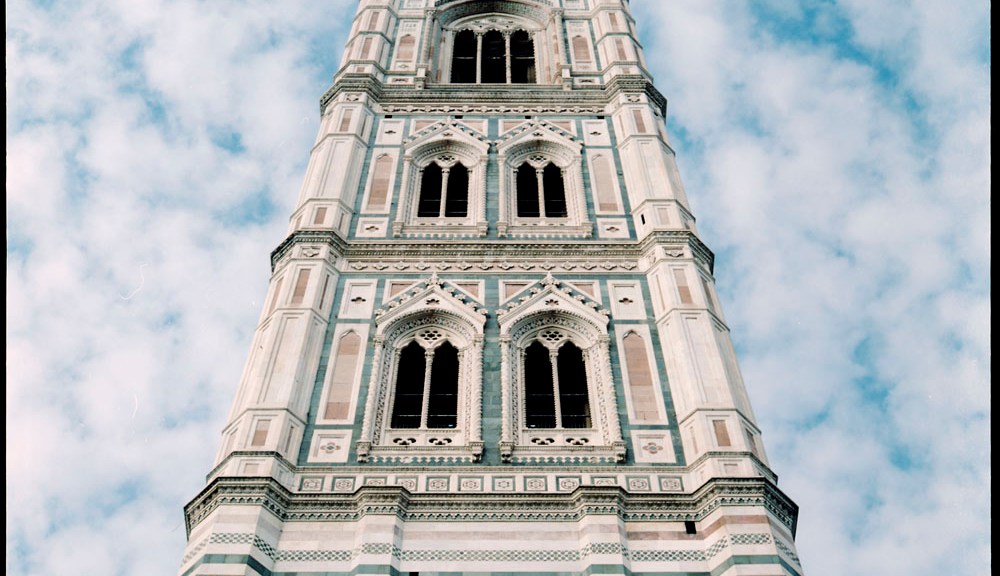
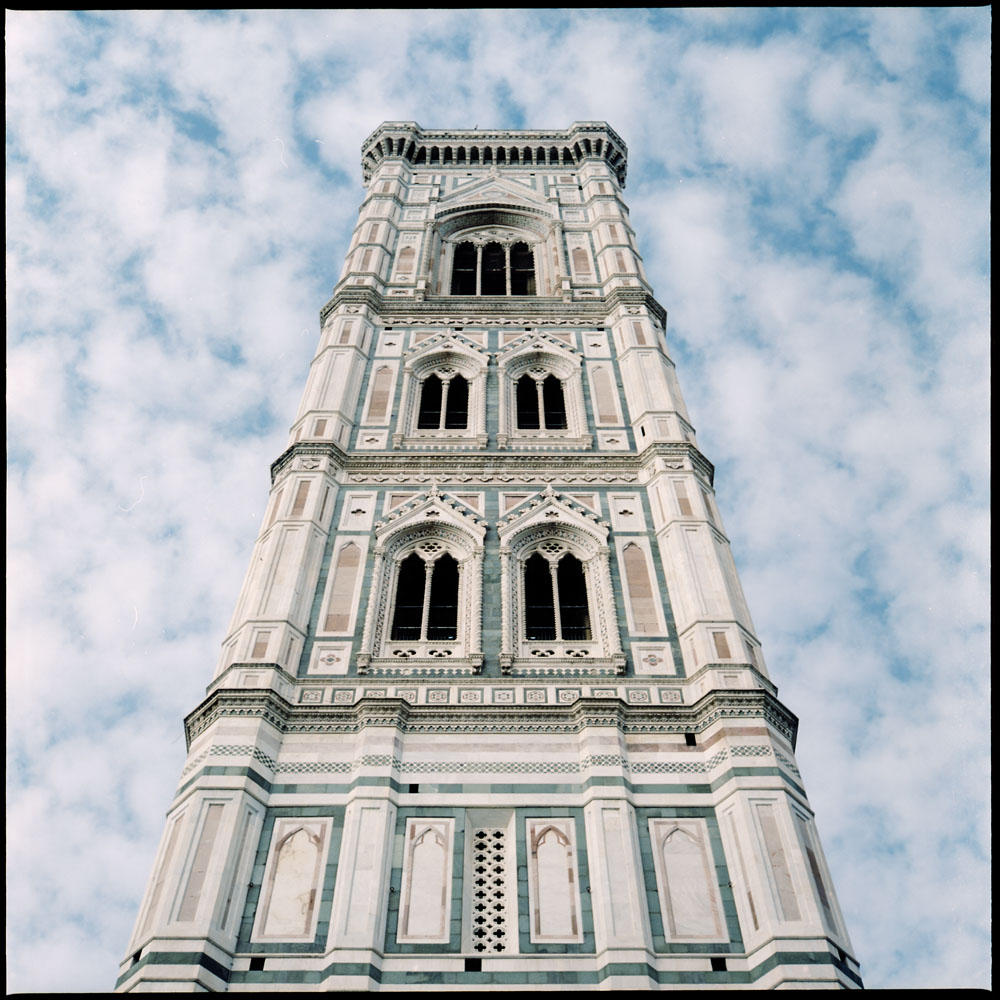
The Campanile of Giotto, The Duomo, Florence

The bell tower, or campanile, of the Duomo in Florence. It is referred to as Giotto’s Campanile because it was designed by the famous painter Giotto, who had become the second Master of Works at the Cathedral after a 30 year gap following the death of his predecessor.

Campanile di Giotto, Florence

He created the polychrome marble scheme for the tower to match that which had already been designed for the cathedral itself, and saw the completion of the first floor of the tower before his own death in 1337. Today, the bell tower is as much a symbol of Florence as the dome of the cathedral or the Palazzo Vecchio.

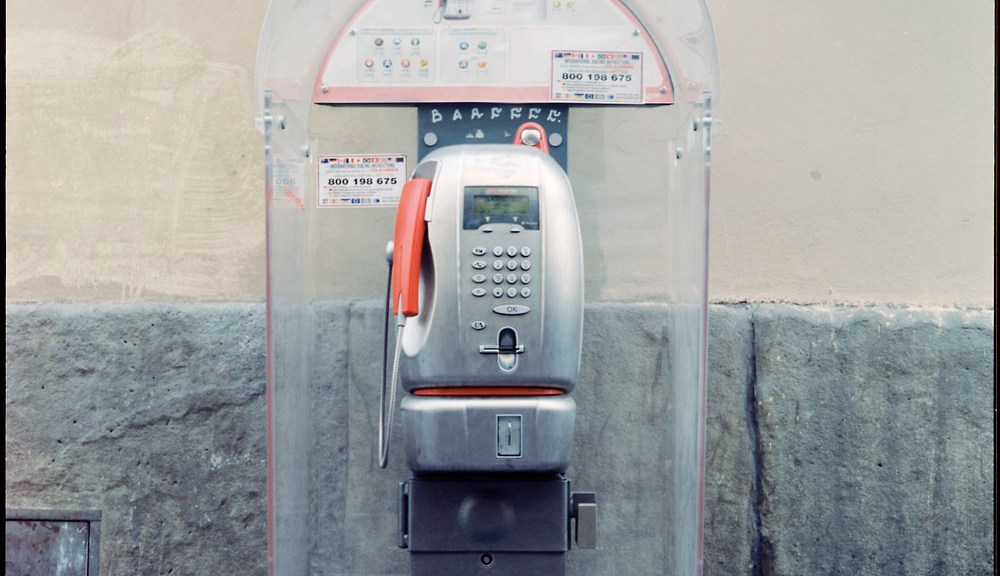
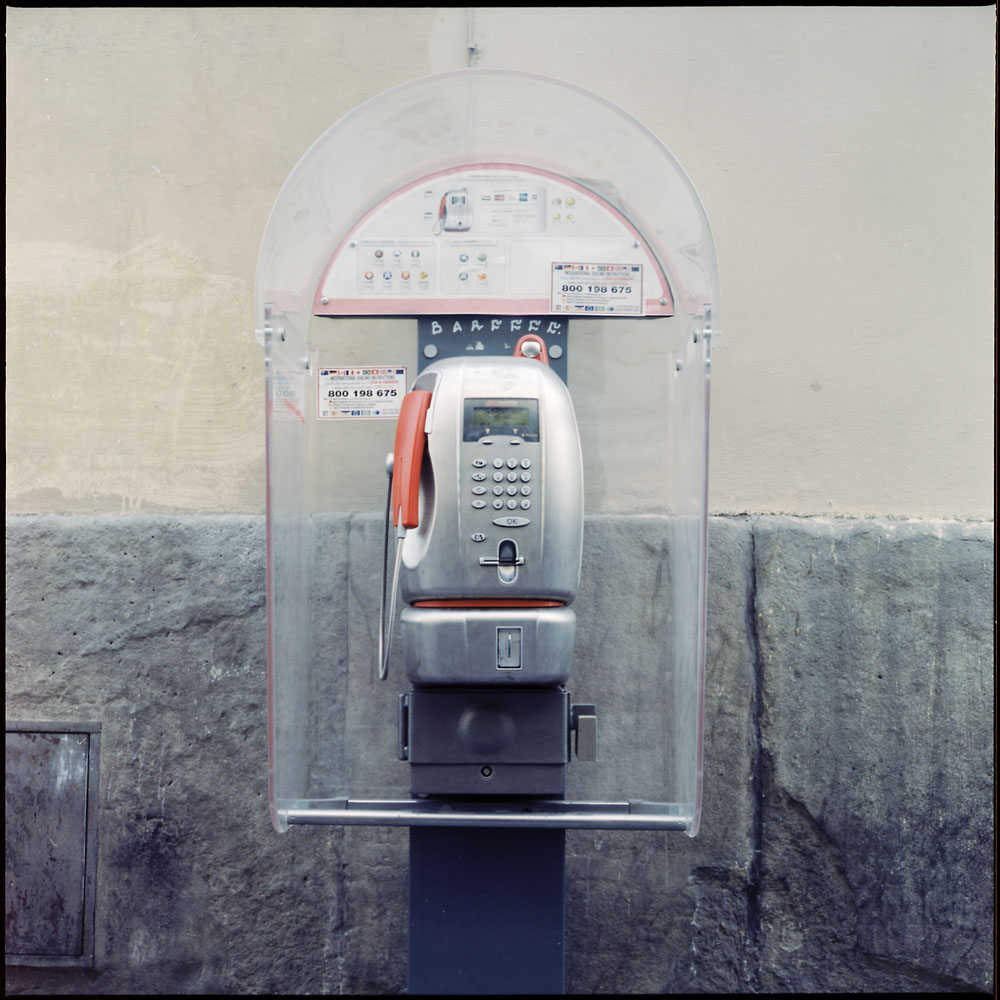
Payphone, Florence

Another in my Portraits of Ordinary Objects series.

Payphone, Florence
Payphone, Florence

I’ve been working on this series for a while now, photographing common things we see every day and take for granted. I keep on doing this around the world, photographing pay phones, mail boxes, trash cans, fire hydrants, all the little things that populate the overlooked corners of our daily lives. The interesting thing about them is that despite cultural differences (mailboxes in France are yellow, in the US they’re red and blue) they’re pretty much instantly recognizable across all cultures. You don’t have to be a Spaniard to recognize a Spanish mail box, pay phone, or trash receptacle.