Another regular subject for me is bicycles and public transportation. Here are four more bicycle photos seen around town.
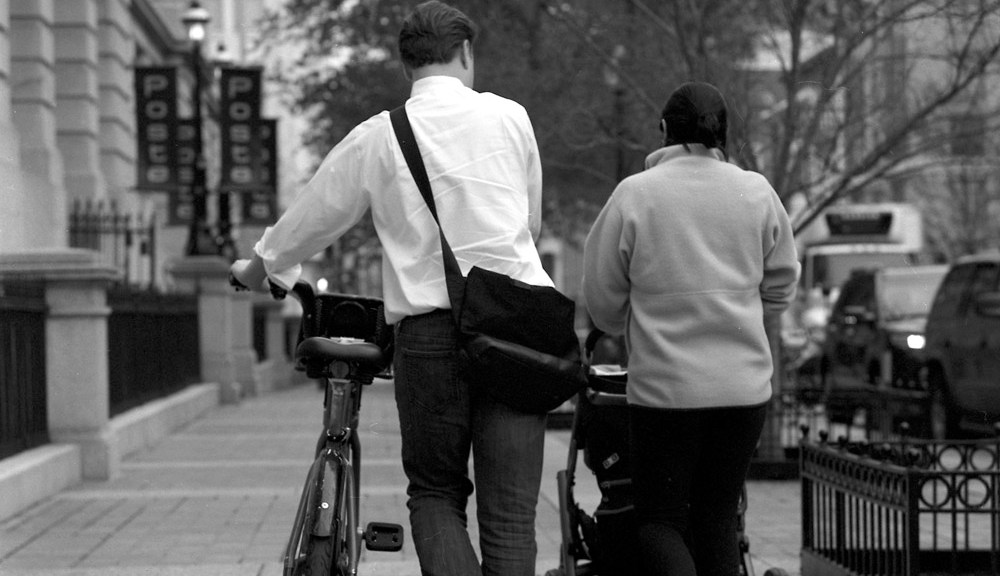
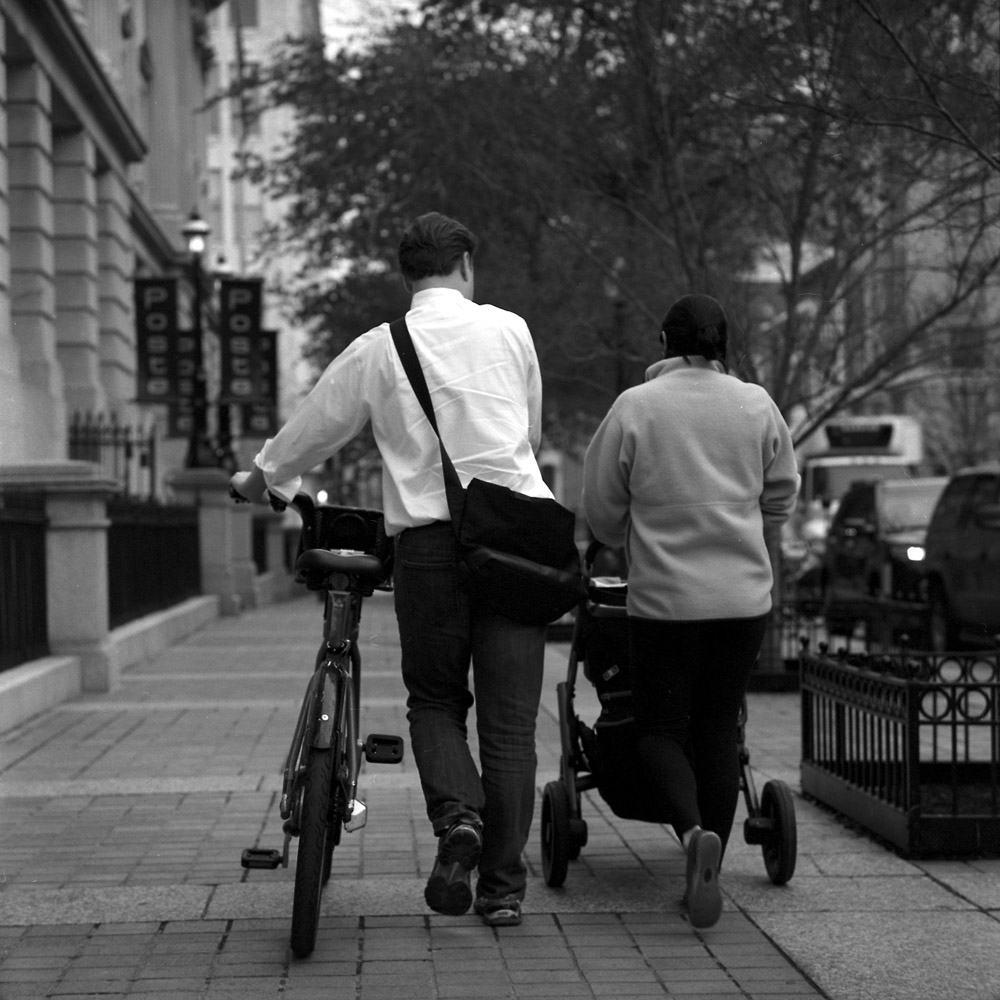
A couple walking home together. He’s using a Bikeshare bike, which is a pretty positive commentary on their adoption by more than just tourists.
Walking Home
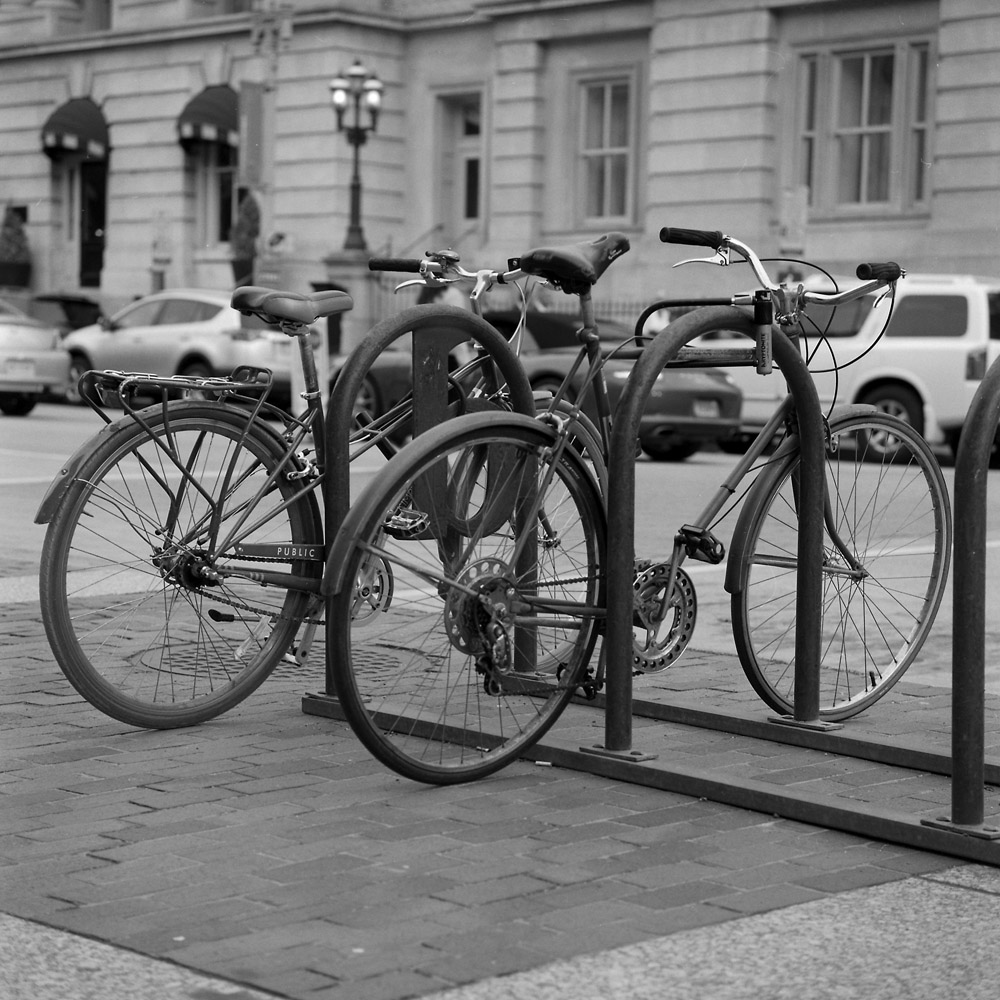
A pair of interesting old bikes locked up on the rack outside the National Portrait Gallery/American Art Museum.
Bikes, National Portrait Gallery
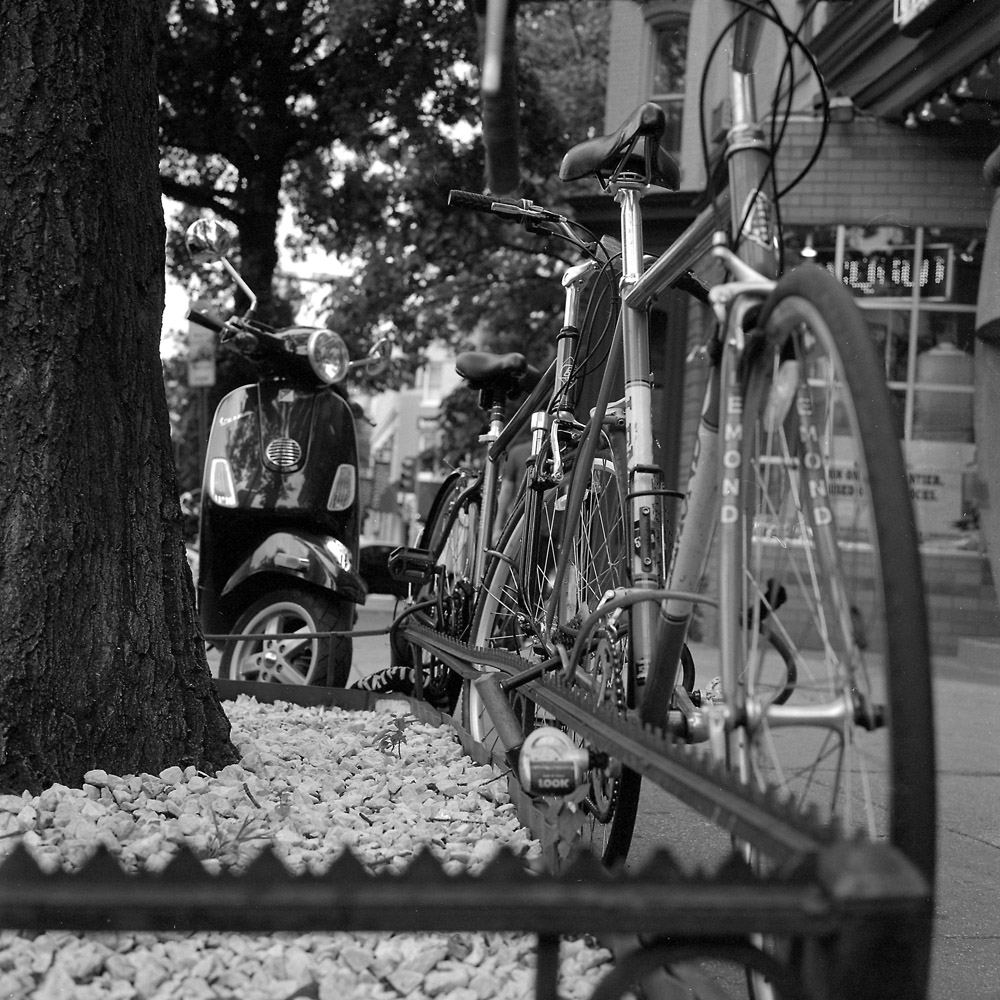
I’m on the fence about how much I really like this image, but it’s bikes, so I’m including it for now. Let me know what you think – does the composition work well? Placement of depth-of-field?
Bikes, Planter Box, Scooter
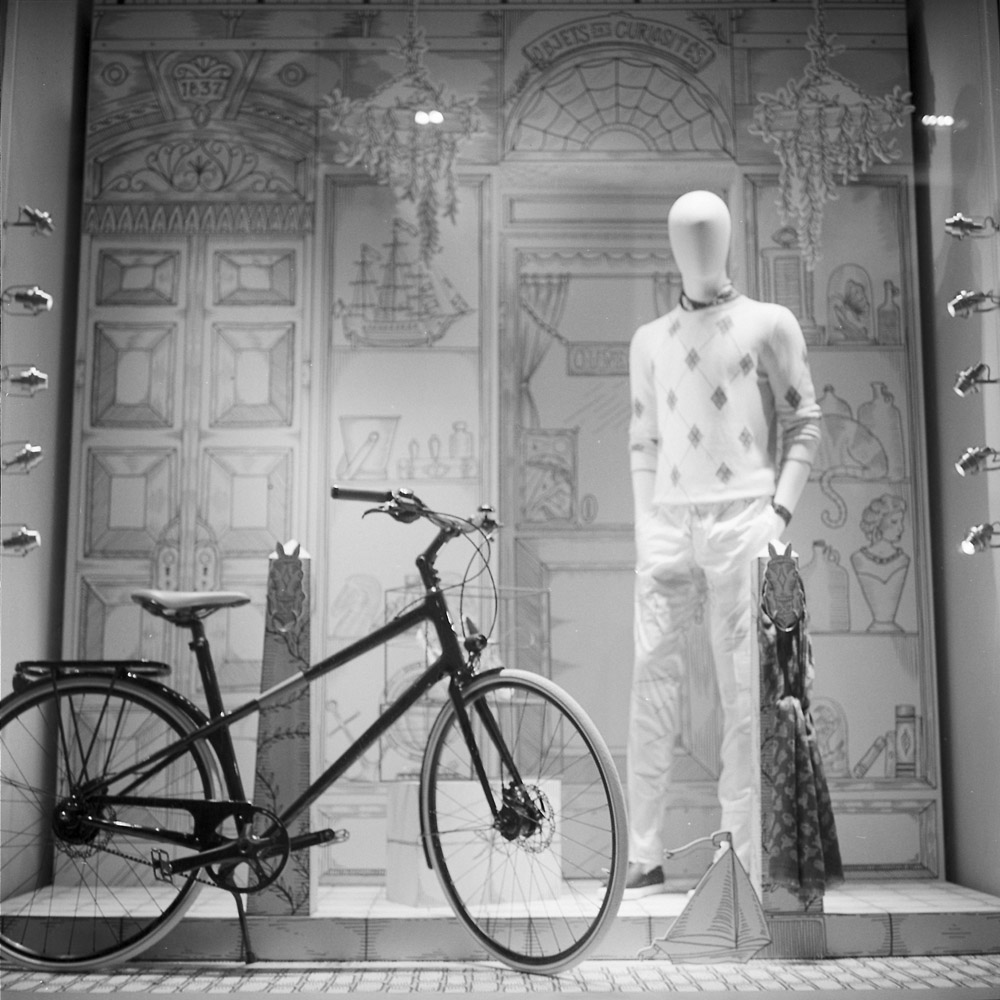
Finally, the bike in the Hermes window. While it’s not in use for its intended purpose, it’s a nice looking bike, and it’s in the Hermes store window, very cleverly employed in the window design. I forget if it was red or dark blue (I think red), but it was a splash of color that popped out against the white backdrop of the window, pulling your eye around the display.
Here’s another photo of Ed Bearss I took on the Ball’s Bluff tour, as he’s describing the battle in front of the sign at the park entrance, armed with one of his US Marine Corps- themed swagger sticks.
Ed At Balls Bluff
He’s always carrying one to point and gesture with while he talks, for emphasis.
One of the great privileges of living in Washington DC is access to cultural institutions. As part of the Smithsonian Resident Associates program, I get to take part in lectures and tours on art, politics, and history. As you can tell from my blog postings about my antique image collecting, I’m a big Civil War history fan. The Smithsonian Resident Associates program offers a wonderful series of lecture tours on the Civil War, the best of which are led by the inimitable Ed Bearss. Ed is a national treasure – he’s a combat-wounded WW II veteran, Chief Historian Emeritus of the US Park Service, responsible for raising and restoring the Union ironclad ship on display at Vicksburg, Mississippi (which he’ll say was a study in how NOT to raise a sunken ironclad), brilliant raconteur, and at 91, still leading tours 200+ days a year. And even at 91, he’s the first one off the bus and leading the charge across the field, the entire day. If you’re a Civil War fan, you probably know who Ed is – he’s one of the historians on-camera in Ken Burns’ The Civil War, and was a regular on History Channel’s “Civil War Diaries”.
Ed Bearss
This is a somewhat rare image of him on tour, as he’s got his eyes open. Often when he’s narrating the events of a battle, he’ll close his eyes. It’s not because of a vision problem – when asked, he explained that “it helps me picture the story in my head”. I feel so privileged to get to walk battlefields with Ed and listen to him tell the stories of the events as only he can, with his unique cadence and stentorian voice.
If there’s one subject that never fails, it’s architecture. Twenty-four hours a day, it looks different. To the patient and observant eye, even the most seemingly bland box of a building can be transformed into a study of volume and texture with the careful observation and application of light.
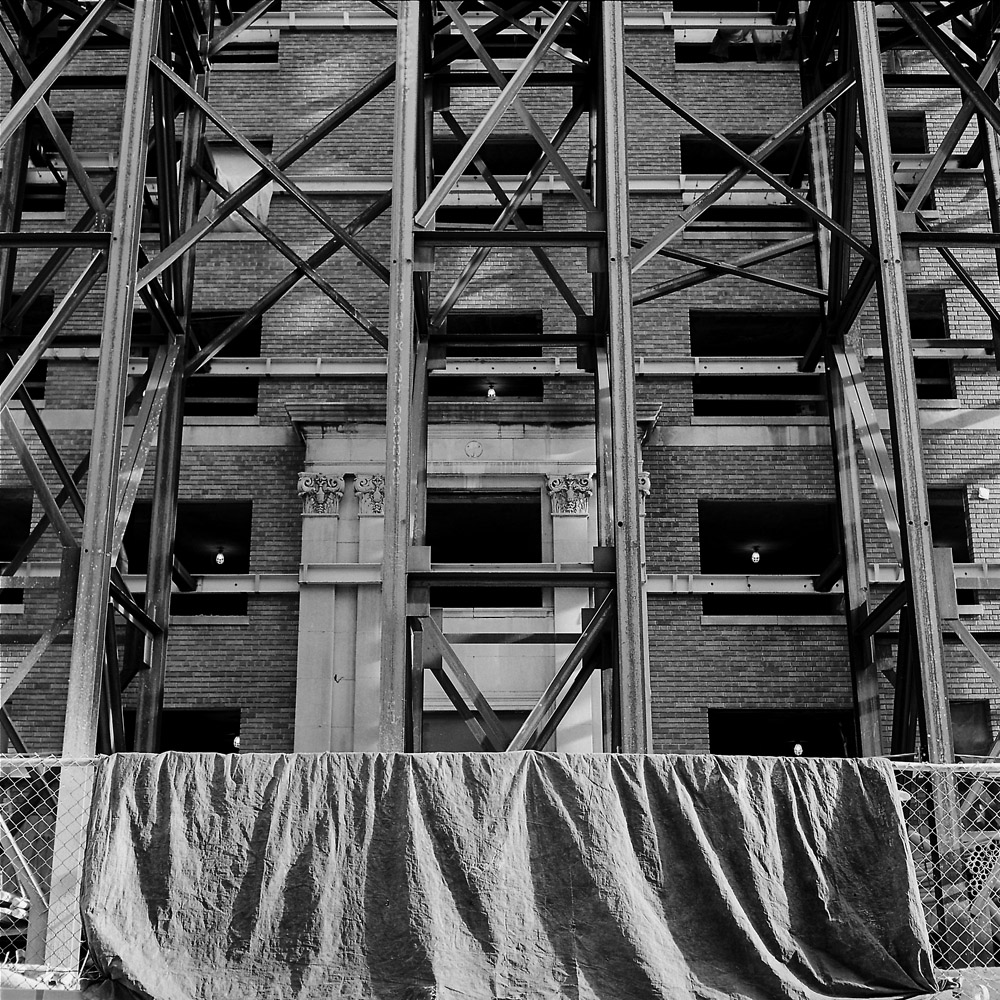
Steel girders wrapping a facade for protection during renovation become a study of patterns and of contrasting textures – the rigid linearity and modernity of the I-beams highlights in strong relief the delicate brickwork and moldings behind it, and the strong shadows cast by the evening sun bring out geometric repetition.
Facade, Girders
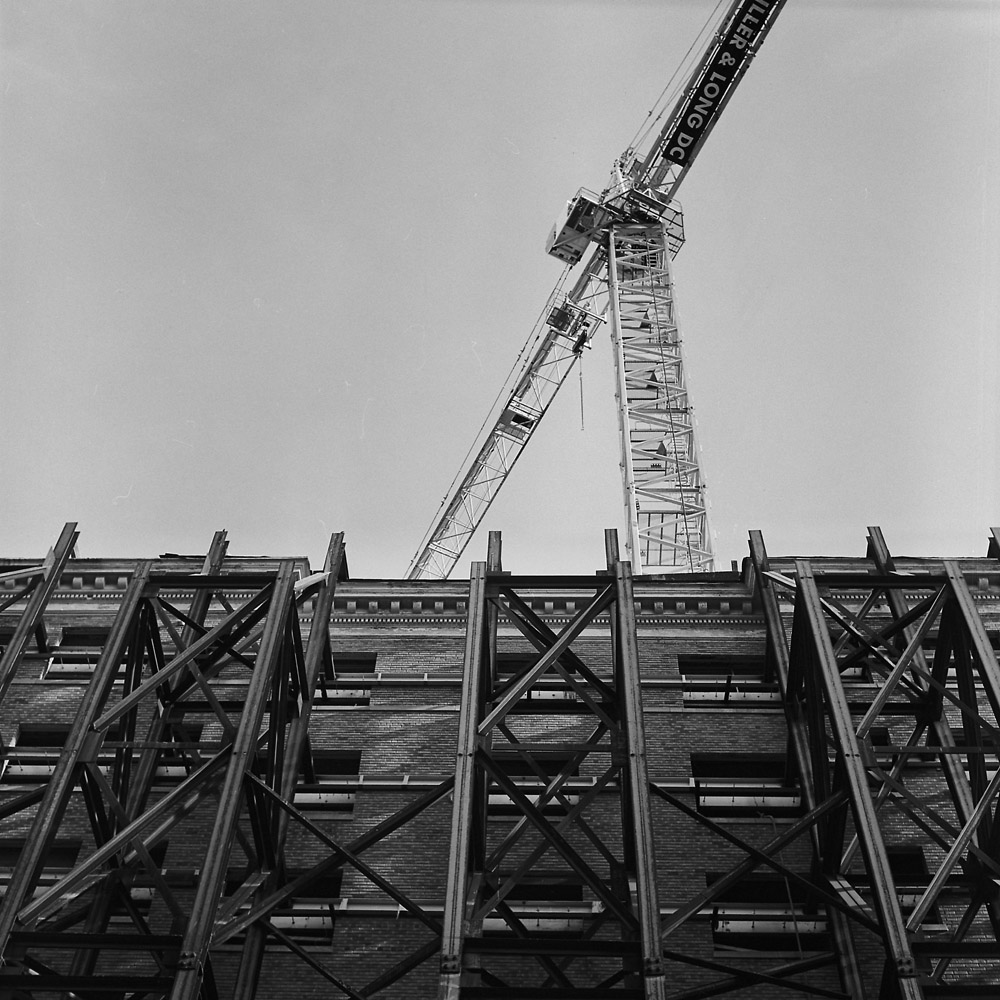
The white crane above the girder wall catches the late afternoon sun, a thrusting line that divides the blank sky with dynamic movement that creates multiple negative spaces instead of unbalancing the image with empty information.
Miller & Long Crane
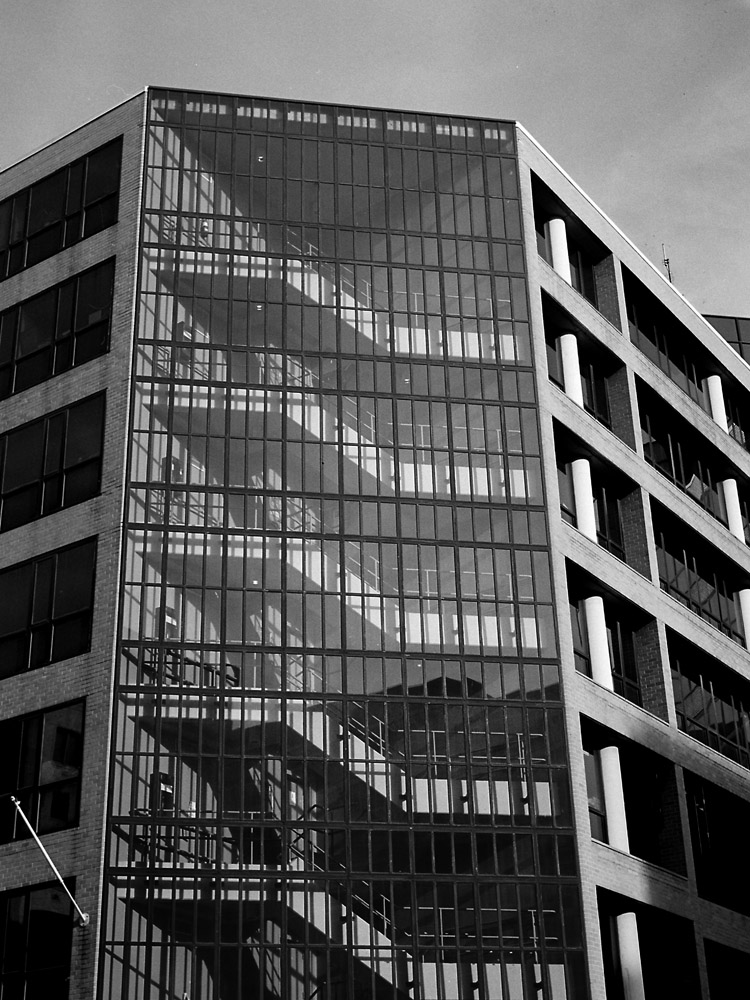
This image would be even better in color as there are patches of blue in the stairwell that repeat in a subtle pattern, drawing your eye into and up the stairs, but even in black-and-white, the repeated lines of the ascending structure draw your eye through the image.
Glass Staircase, GW
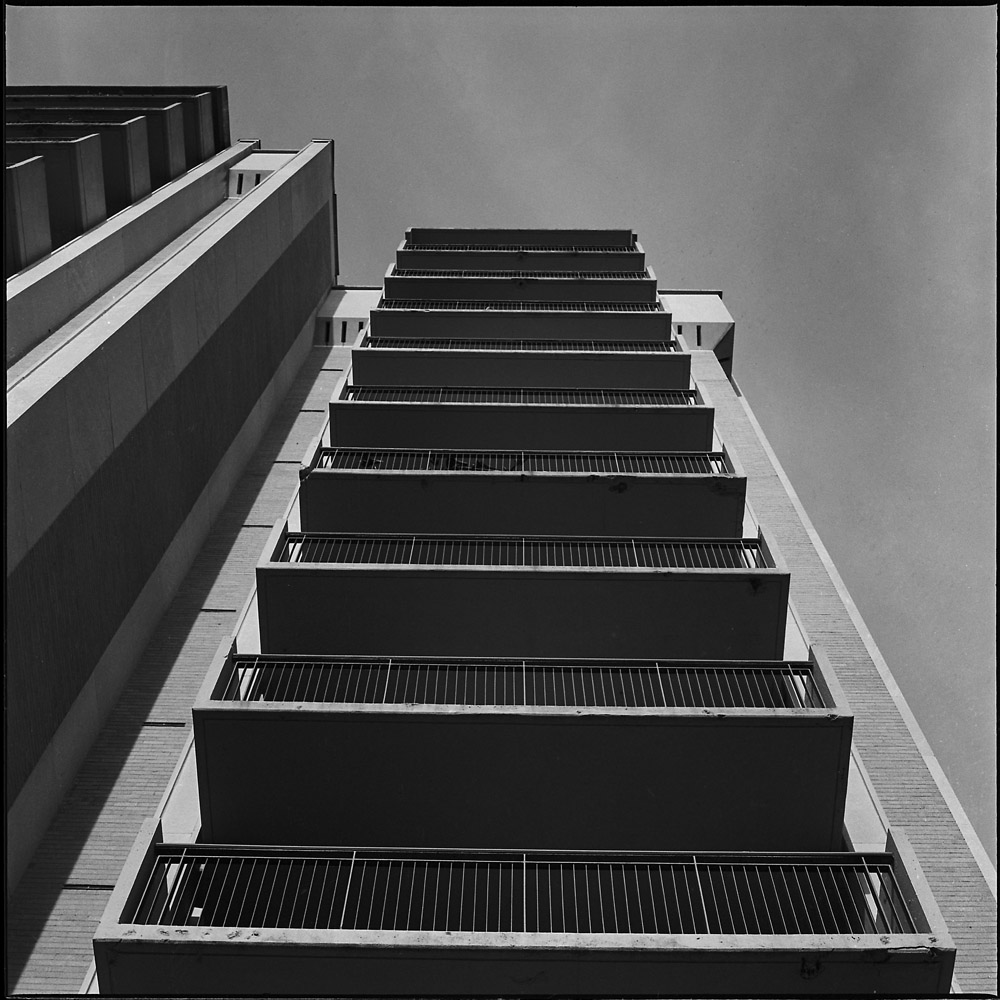
I like the vertiginous vertical lines of the apartment tower as you look straight up it. Believe it or not this was shot hand-held, no tripod, no level, just very careful eyeballing and steady hands.
Columbia Plaza Tower
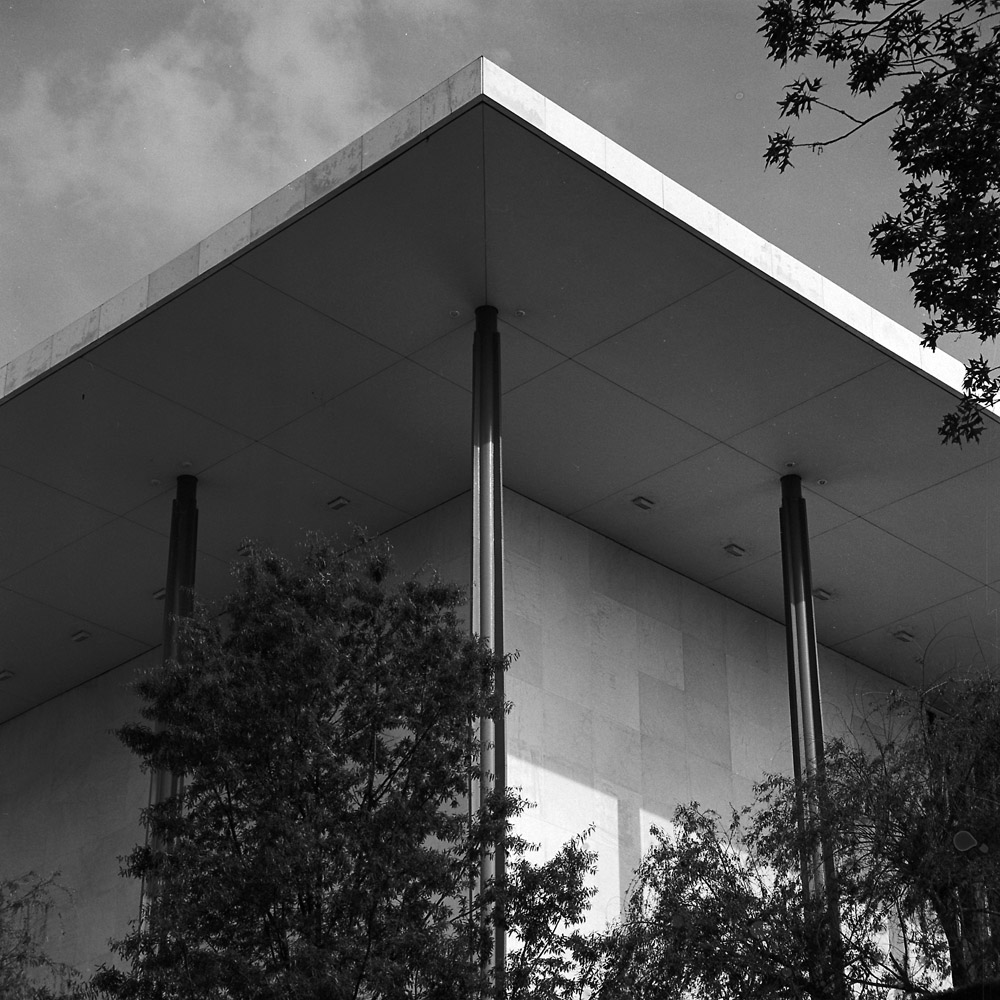
The Kennedy Center for the Performing Arts is a magnificent slab of white marble. Even the outside spaces are all grand and awe-inspiring, very much in keeping with the goal of presenting and preserving the performing arts. Here the roofline is a dramatic act in itself, like a set piece in an opera playing on the stage within. Wagner couldn’t have composed it better.
Kennedy Center Corner
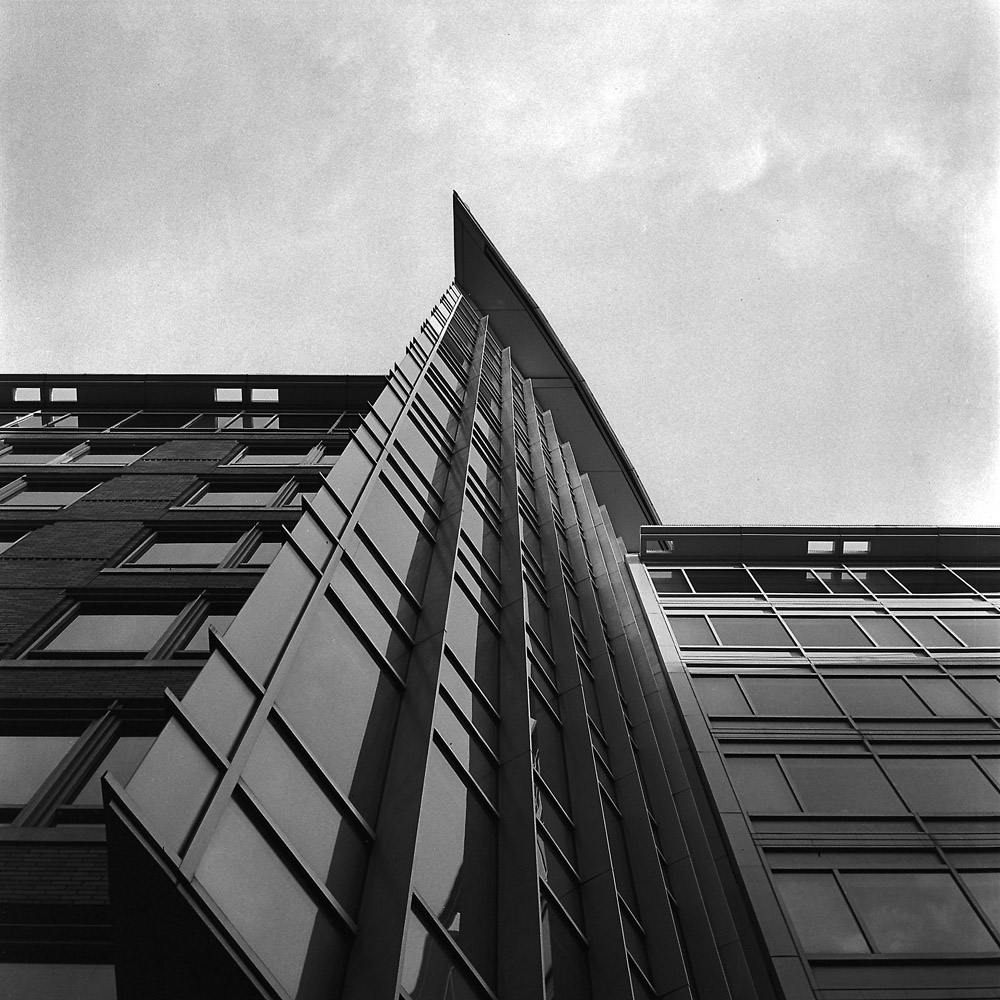
Another vertigo-inducing shot looking straight up at what I call the ships’ prow building. The facade is mostly flat, but this arced wedge bursts forth from the surface like a ship’s prow cutting the waves.
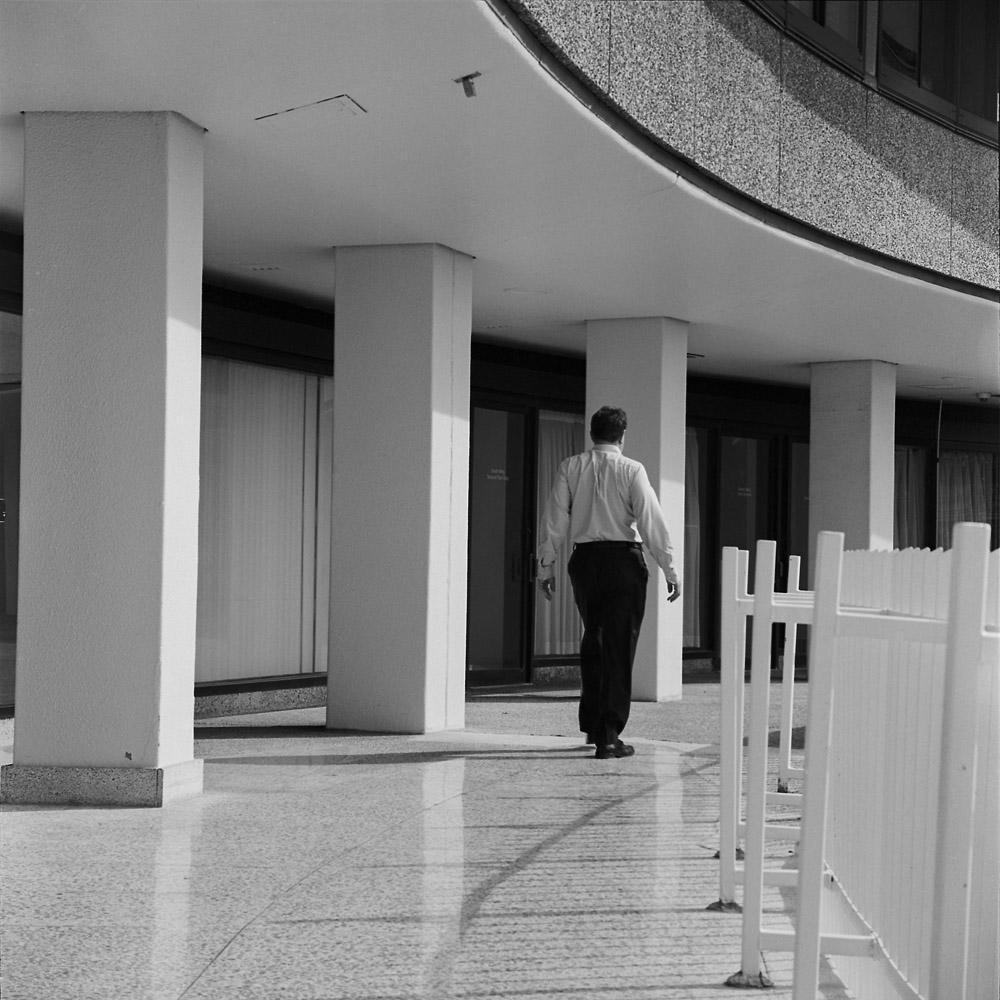
Given the looming Watergate break-in anniversary in June, I thought it apropos to post some images of the historic complex to let folks get an idea of what the place looks like. The name itself is so iconic, so much larger-than-life, I think it tends to overwhelm all thoughts of what the place actually is. This was not some garden-variety office tower. Even back-in-the-day, this was a very high-end residential, hotel and office complex, with views of the Potomac River, Georgetown and the Kennedy Center. It is across the street from the Saudi Embassy and a scant several blocks to the State Department headquarters. The place positively reeks of old money – it’s quiet as a tomb at all hours of the day and night.
Watergate Terrace
There are people around, as you can see in the image above, but they never seem to be coming or going in groups, or with any volume. Spaces where you’d expect to see lots of people, like around the fountain, or in the courtyard, are usually very quiet.
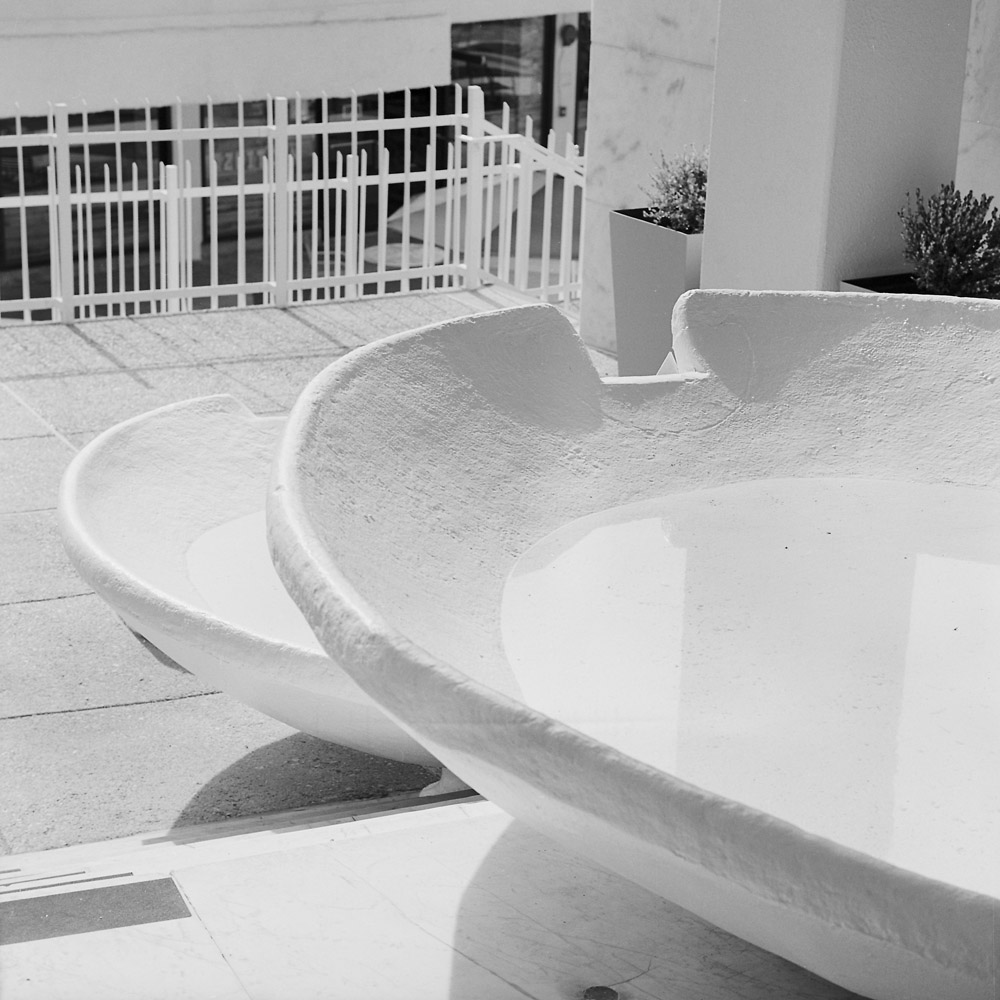
I’m particularly pleased at how well the first fountain shot turned out because of the white-on-white challenge. I was able to photograph it so that the white stayed bright but retained detail. It’s kind of like the egg challenge often assigned in studio photography classes – put an egg on a white backdrop and photograph the egg so the shell texture retains detail but is still white.
Watergate Fountain
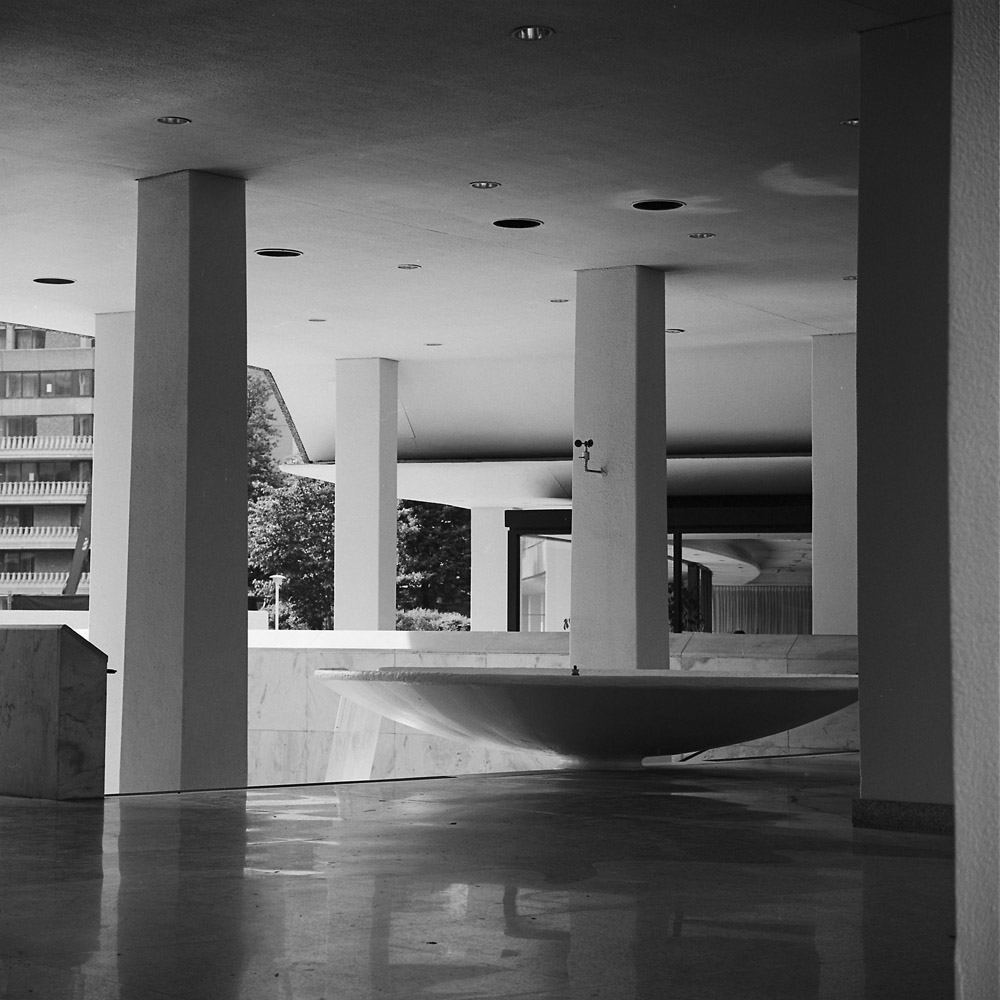
A very different mood for the same subject, just by changing the camera position and therefore the lighting on the subject.
Watergate Fountain
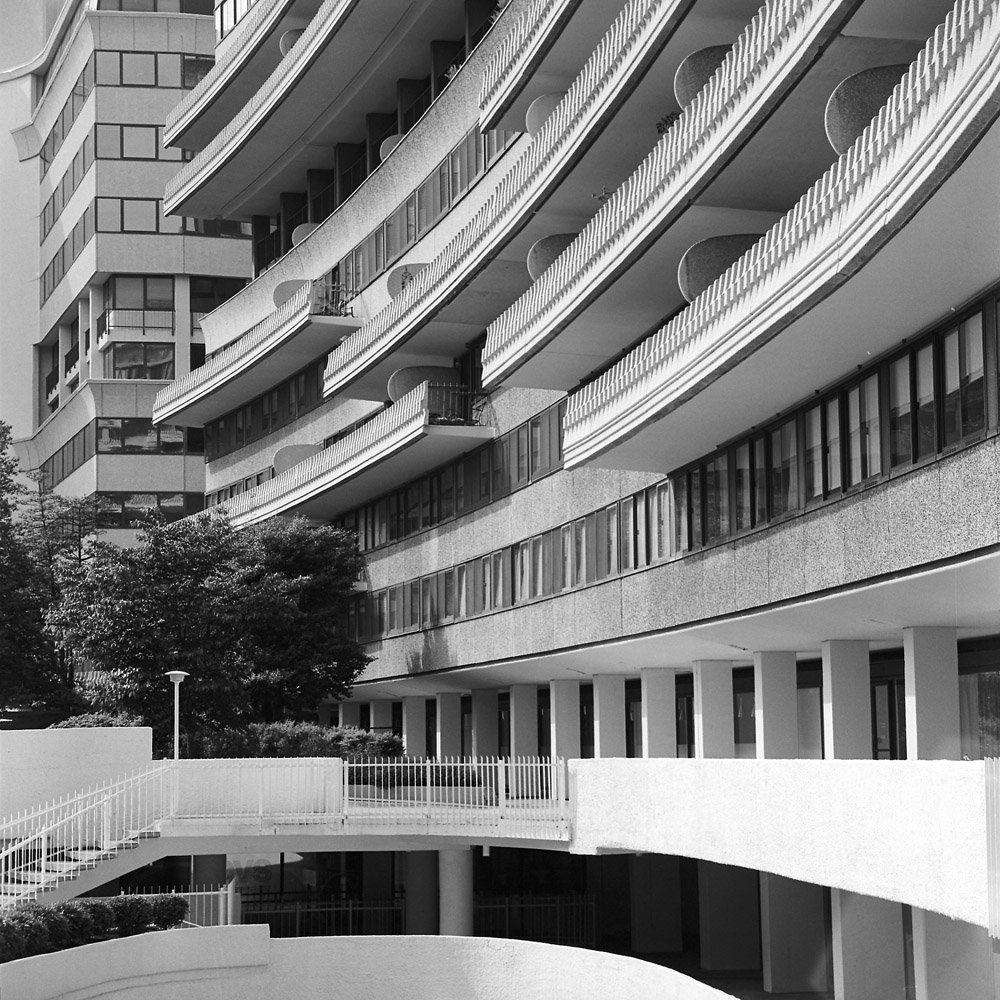
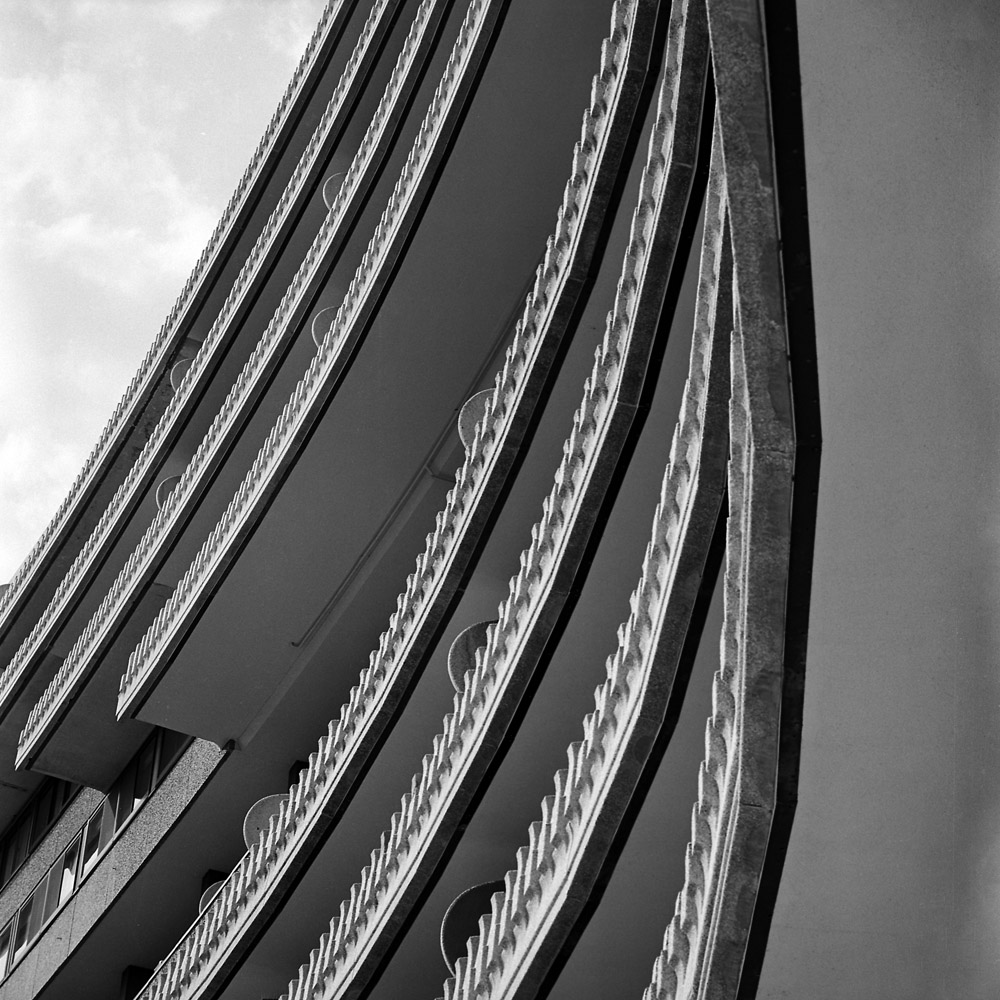
I love the balconies on the Watergate complex – they wrap around it in undulating curves and add texture to what would otherwise be an extremely plain building. Seen from a distance, as a colleague of mine put it, the Watergate does look a bit like a cruise ship the 1960s forgot.
Watergate BalconiesWatergate Balconies
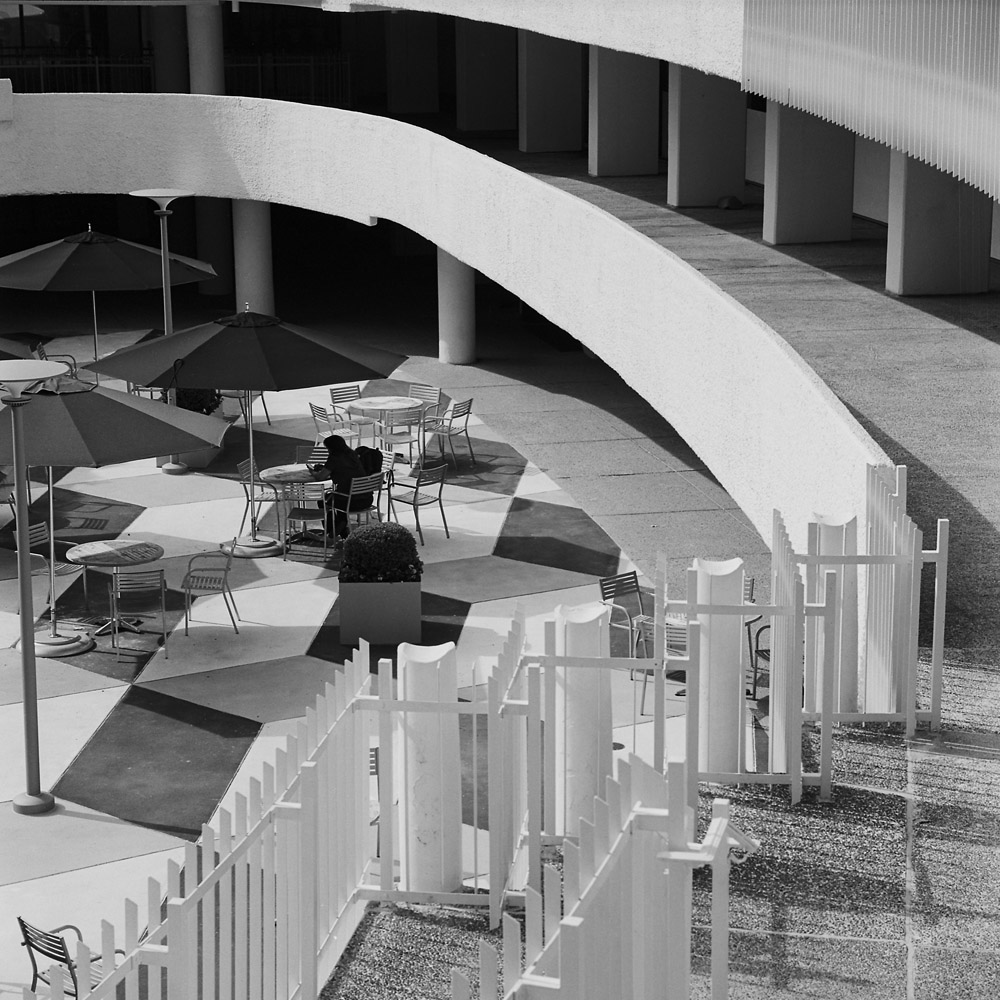
Another view of the courtyard. Again, just one person sitting alone at a table. There’s a restaurant down there, believe it or not.
Watergate Courtyard
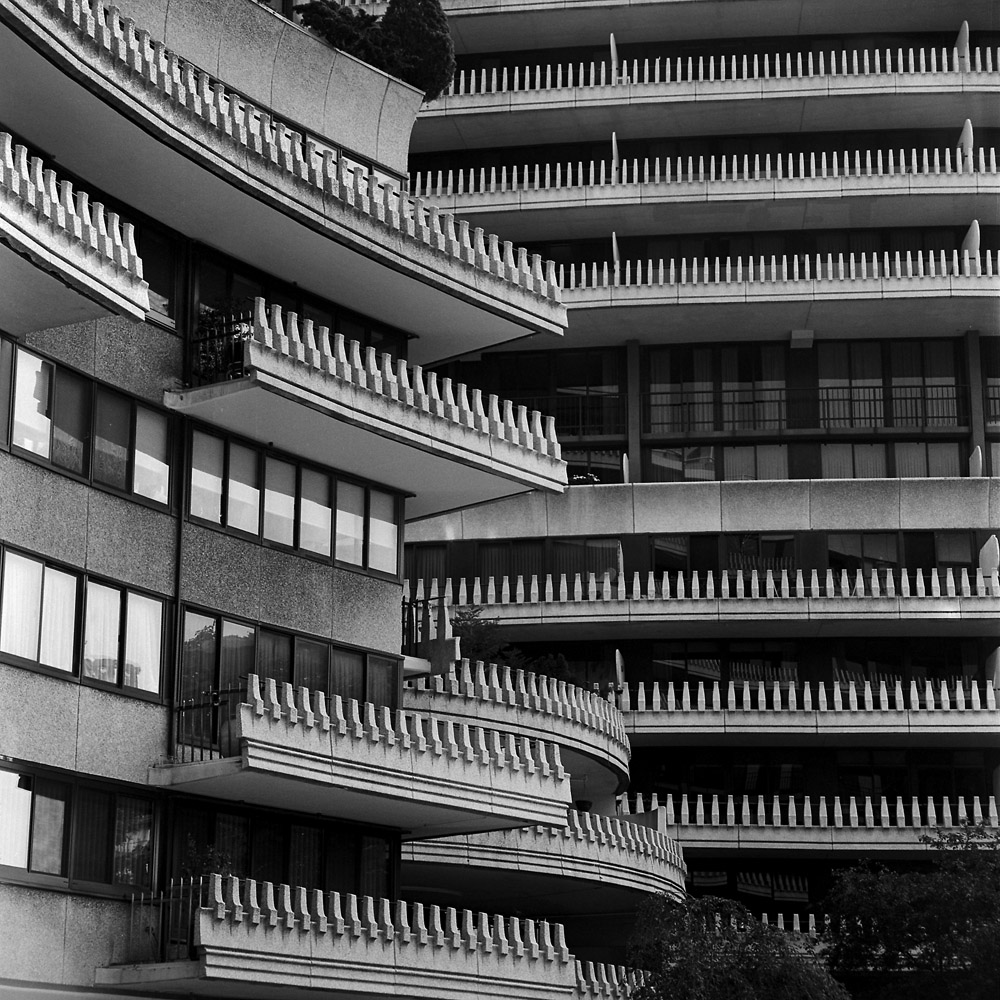
The Watergate is a great place to practice architectural abstraction because of its size, shape and textures. This view feels like a whole bunch of zippers fanning out in a display.
I know these have nothing to do whatever with each other beyond the fact they were all captured here in Washington DC.
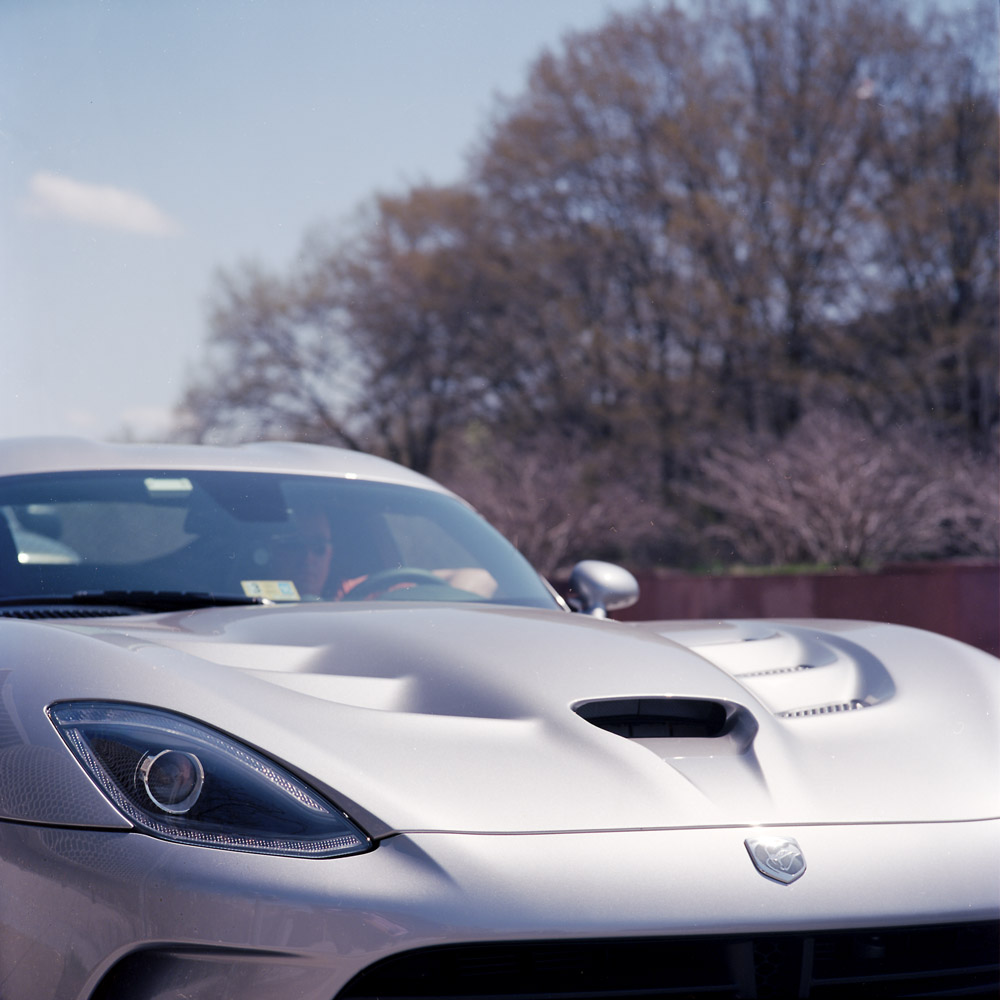
A rather rare sighting – a Dodge Viper hardtop coupe on the street. They’re big, they’re bad, they don’t make good city driving. So it was unusual to spot one parked at curbside. I didn’t even realize the driver was still sitting in the car when taking the picture until I came around to the side to take another look at it, and he waved at me.
Dodge Viper Nose
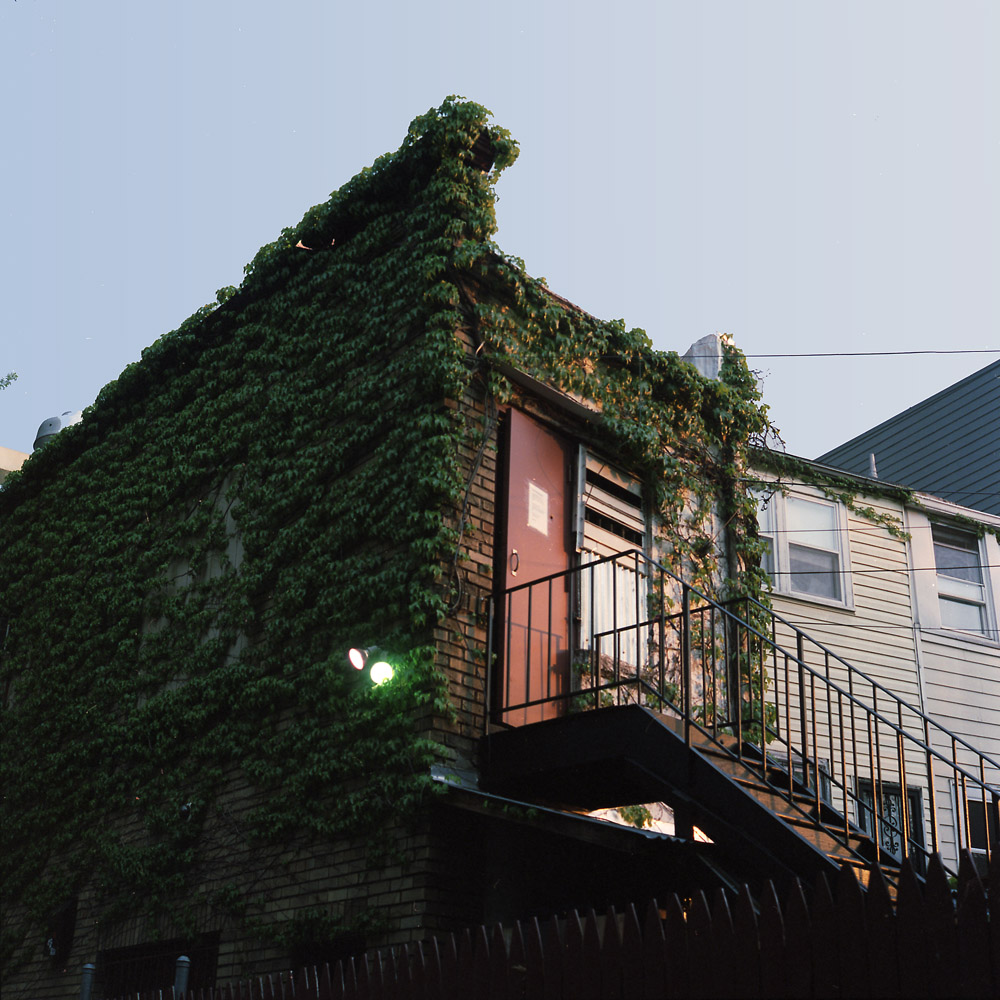
The back door to the Wonderland Ballroom. I was walking past it on my way home from another neighborhood walkabout and saw the sunset glow illuminating the upper story. Now an extremely popular neighborhood hangout that draws a youthful/hipster crowd, it was in its previous incarnation the oldest continuously operating gay bar in the city. It catered to an African-American male clientele, but the owner shuttered the club when he realized his patrons were mostly the same dozen or so elderly men who would come in, drink one beer all night, and sit around chit-chatting with each other. You can’t run a business on less than a dozen beer sales a night, even if you do own the building.
Wonderland Ballroom Backdoor, Sunset
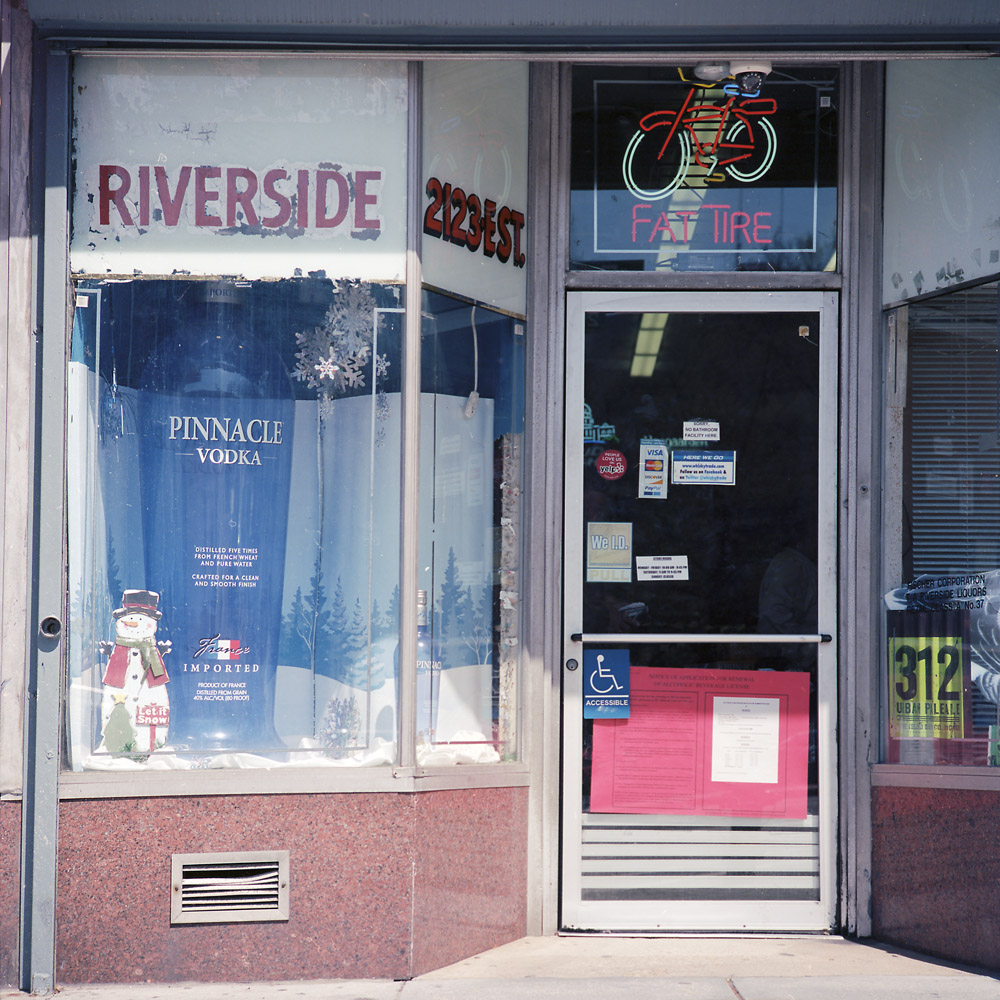
This is a liquor store near my office. I loved the old-fashioned lettering in the window that preserved the feeling the store was trapped in a 1940s time warp. I think it was the original lettering as it has the same feel as the Art Deco facade of the building. This highlights the importance of photographing things you see when you see them as they may not be there tomorrow – when I passed the store yesterday on my way back from lunch, they had replaced the old painted lettering in the window with what looked like a piece of white foam board with blue printed lettering, which while easier to read was nowhere near as pretty.
Riverside Liquors
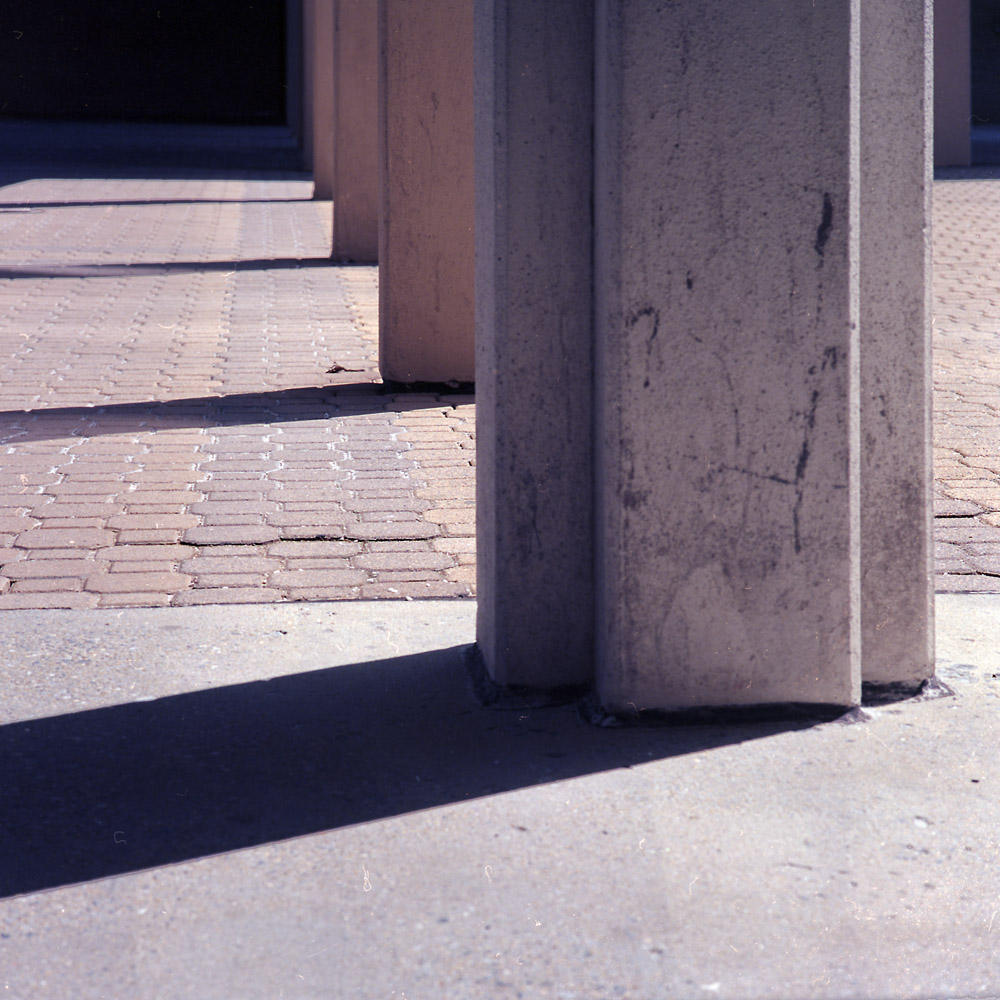
Another scene near my office – columns for a pergola, casting shadows across the brick pavers on the plaza.
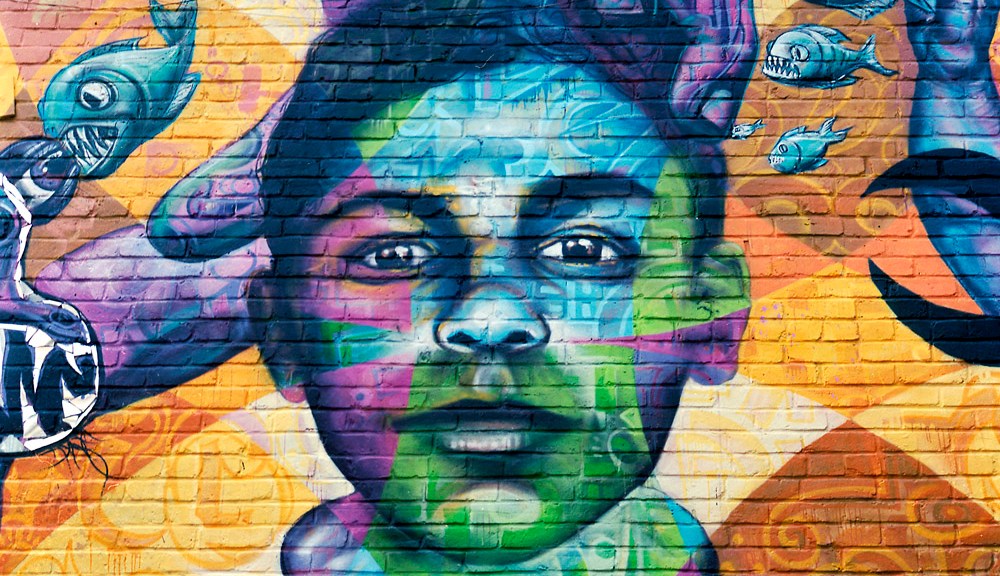
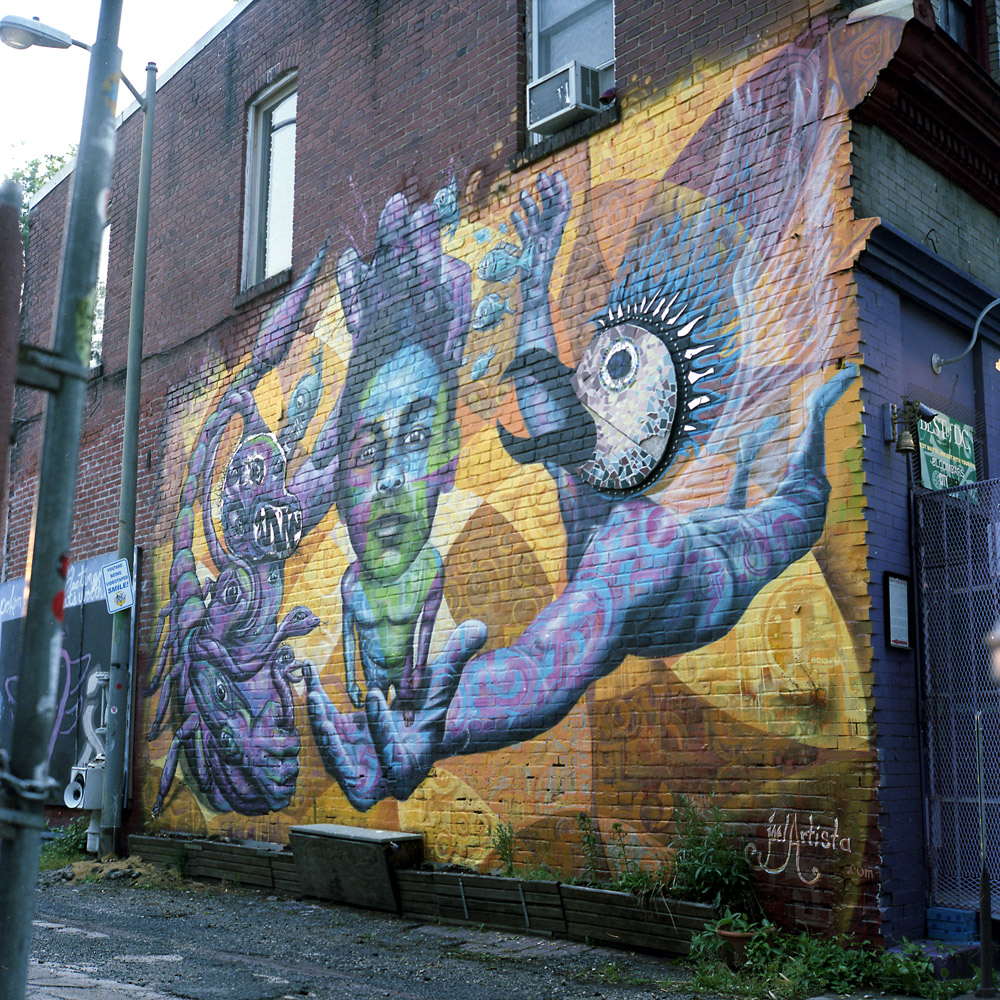
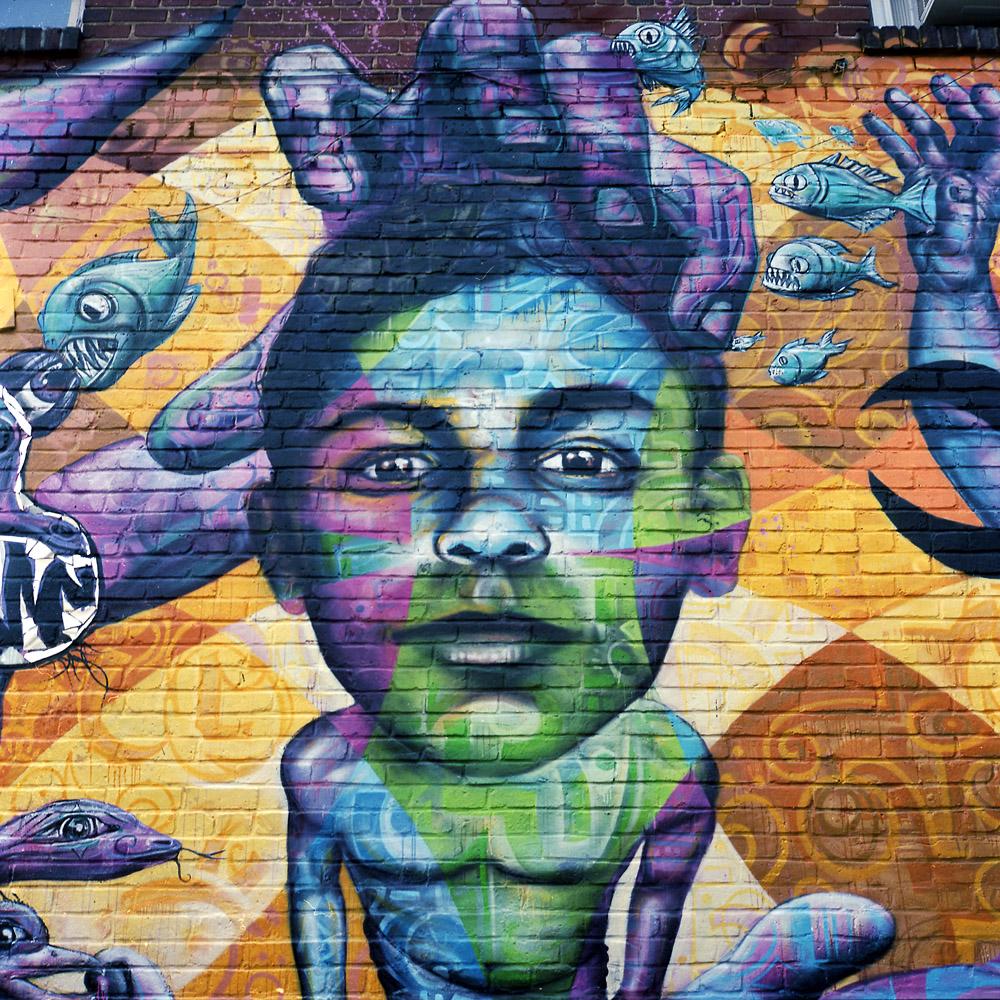
I had photographed this mural before. The other day I was doing a walkabout in my neighborhood and passed it again, to see that the artist had re-worked the mural in new colors with new designs.
here are the original photos I took, in color and black-and-white.
Black Boy, Garuda, ColorBlack Boy, Garuda, B/W
The artist came back and re-worked the piece, keeping only the head of Garuda and the head of the black boy as compositional elements, and completely re-working the color palette.
Black Boy, GarudaBlack Boy, Garuda (Detail)
This is one thing a traditional photograph can’t do – it can’t evolve over time being reworked into a totally different yet fundamentally similar image. At the point you transform a photograph this much, it’s no longer a photograph. It’s figurative and not literal. Part of the intrinsic quality of a photograph that makes it valuable and meaningful as a photograph as opposed to a painting is its relative immutability and the appearance of a binary 1:1 relationship with reality. We know of course that photographs CAN lie, and that they have figurative, non-literal properties, but the descriptive quality of a photograph is so powerful that we WANT to view them as purely, literally descriptive and non-figurative – “Photos don’t lie” and the visual equivalent of “if it wasn’t true, they couldn’t print it”.
So the question to you is, is this the same mural, or is it a different mural entirely, now that it’s been reworked?
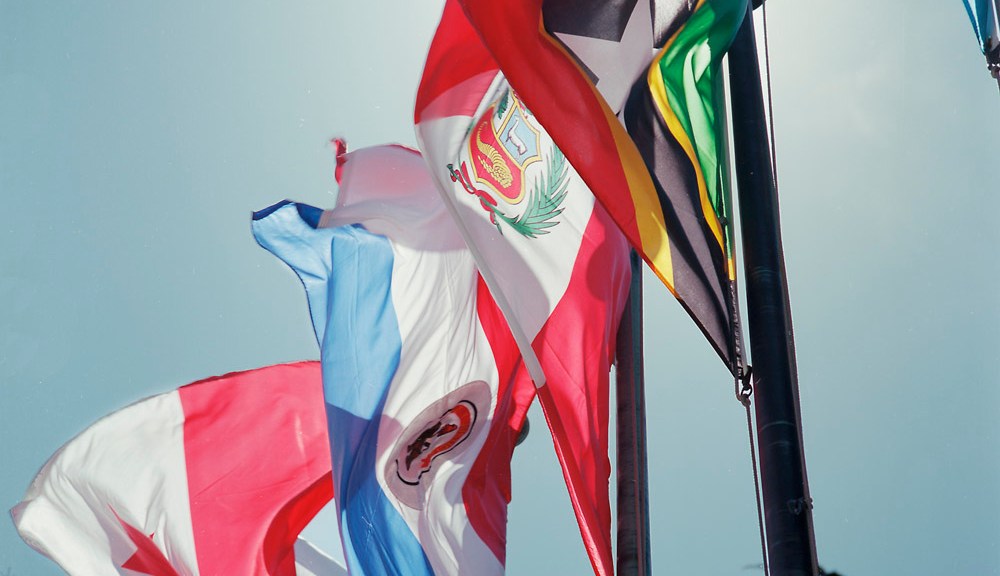
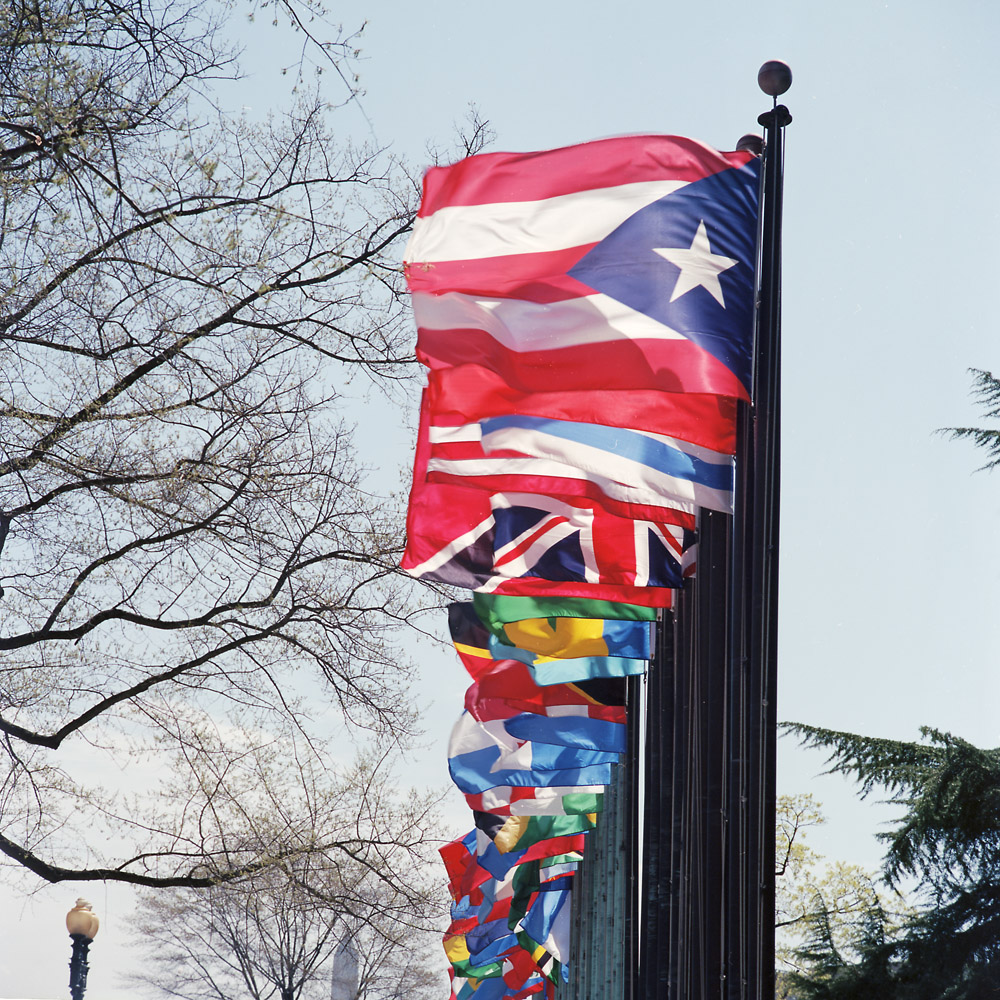
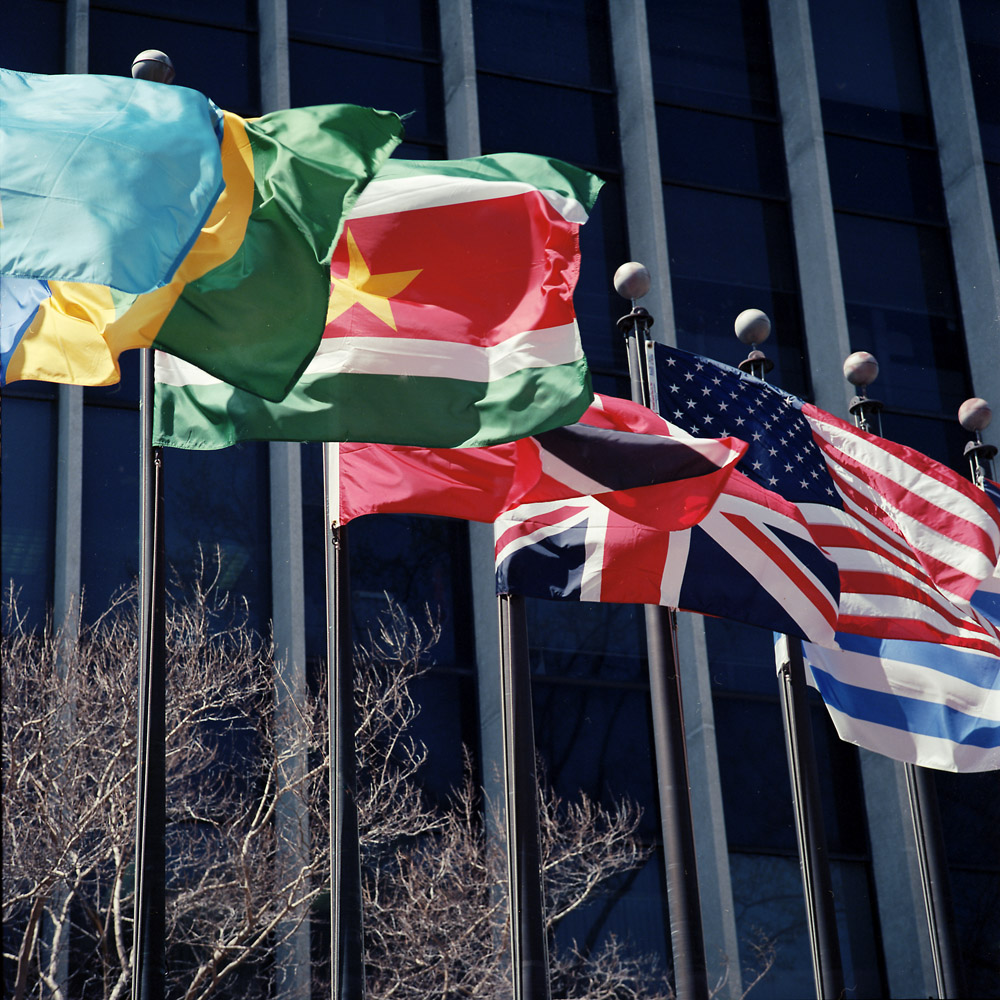
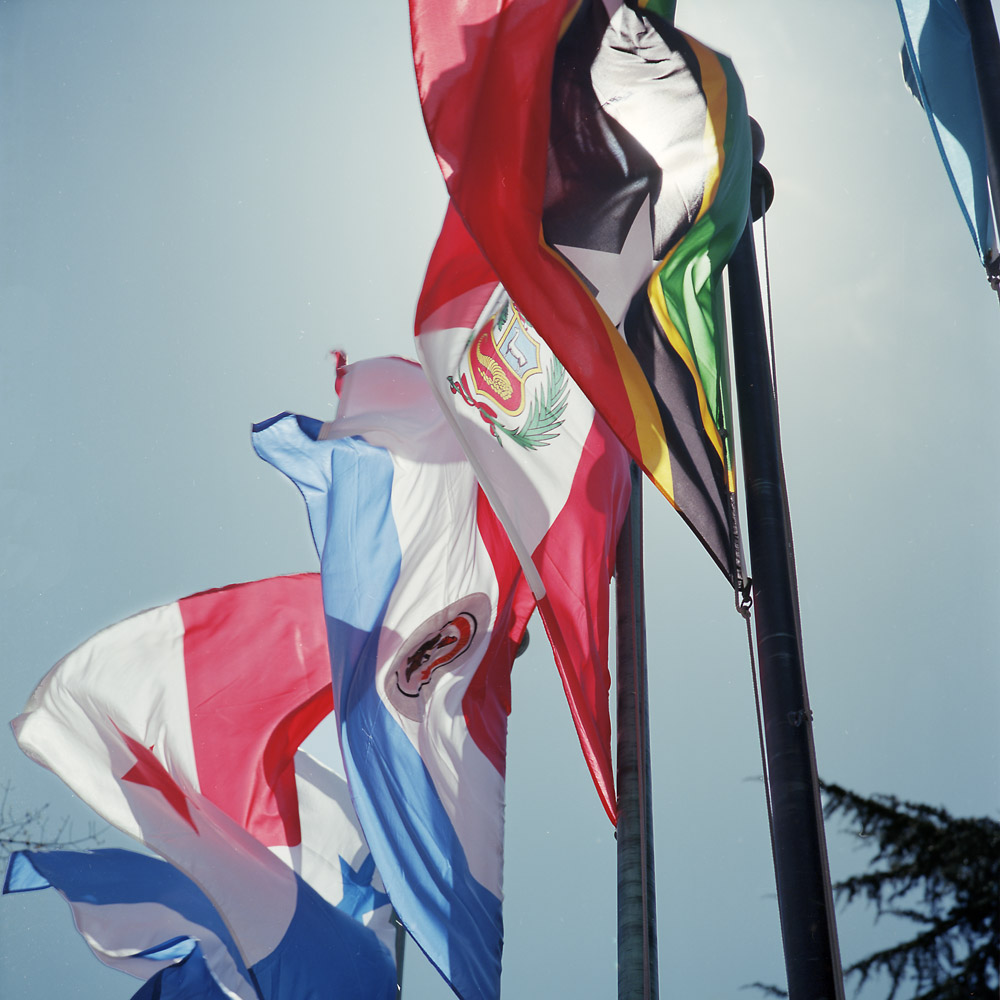
Ok, so you’ve seen me posting images of the PAHO/WHO headquarters building for the last few weeks. Here are some shots of the flags outside. There are 29 member nations, from Argentina to the United States, but also including France, Great Britain, and Spain.
Here they are snapping in a brisk breeze, with the Washington Monument visible in the background:
Flags, Pan-American Health Organization
A close-up of several flags, with the PAHO building as the backdrop:
Flags, Pan-American Health Organization
Looking up into the flags with the mid-day sun backlighting them:
Over the weekend I was on a Civil War history tour with the inimitable Ed Bearss. Another tour participant was a fellow civil war image collector and a re-enactor who talks about Civil War medicine. He also works for the Civil War Medical Museum in Frederick, Maryland. We were discussing images in our collections and he too has a copy of this CDV, and even without my prompting, described it as Clara Barton and John J. Elwell. I’m still going to take some time to go down to the Library of Congress to try and verify the image in their collection. But it’s good to know that I’m NOT alone in my interpretation of who these sitters are.
Just some random captures of people out and about. I want to get better at street candids, so I’m practicing. These are a few good examples, at least I think they’re good, for me.
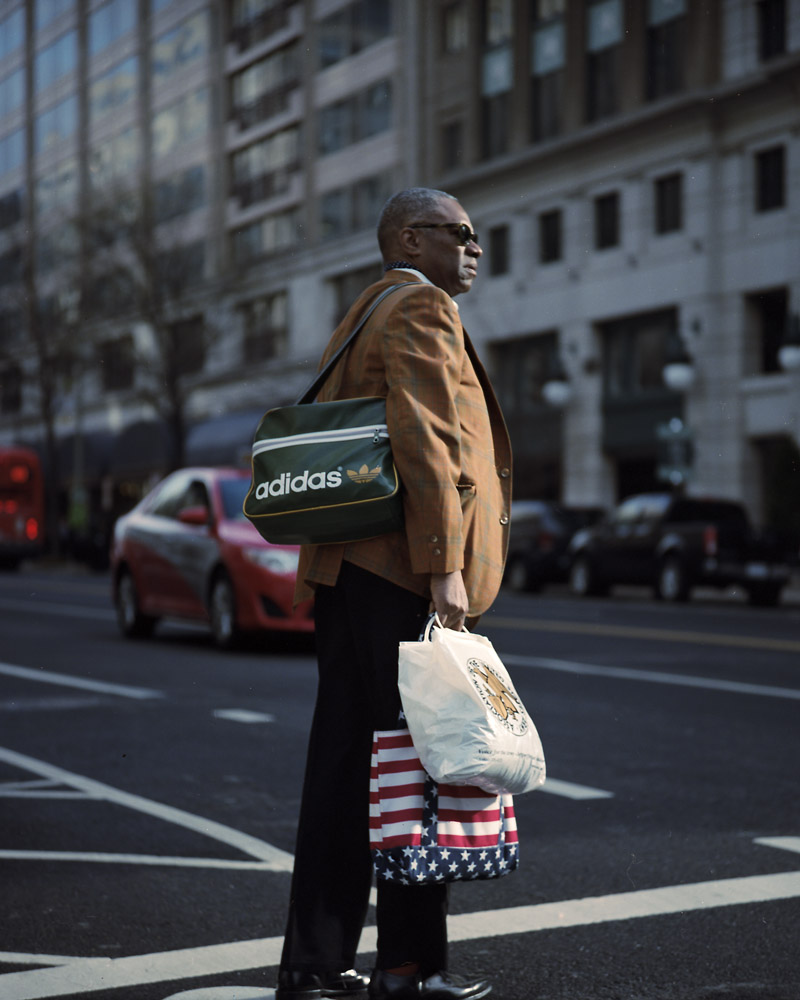
I saw this man crossing the street early in the morning, loaded down with his bags. I don’t think this shot would have worked in black-and-white – the hodgepodge of tweed jacket, American flag logo bag, Adidas bag, and the plastic shopping bag wouldn’t pop if they were tonally similar.
Man Crossing with Bags
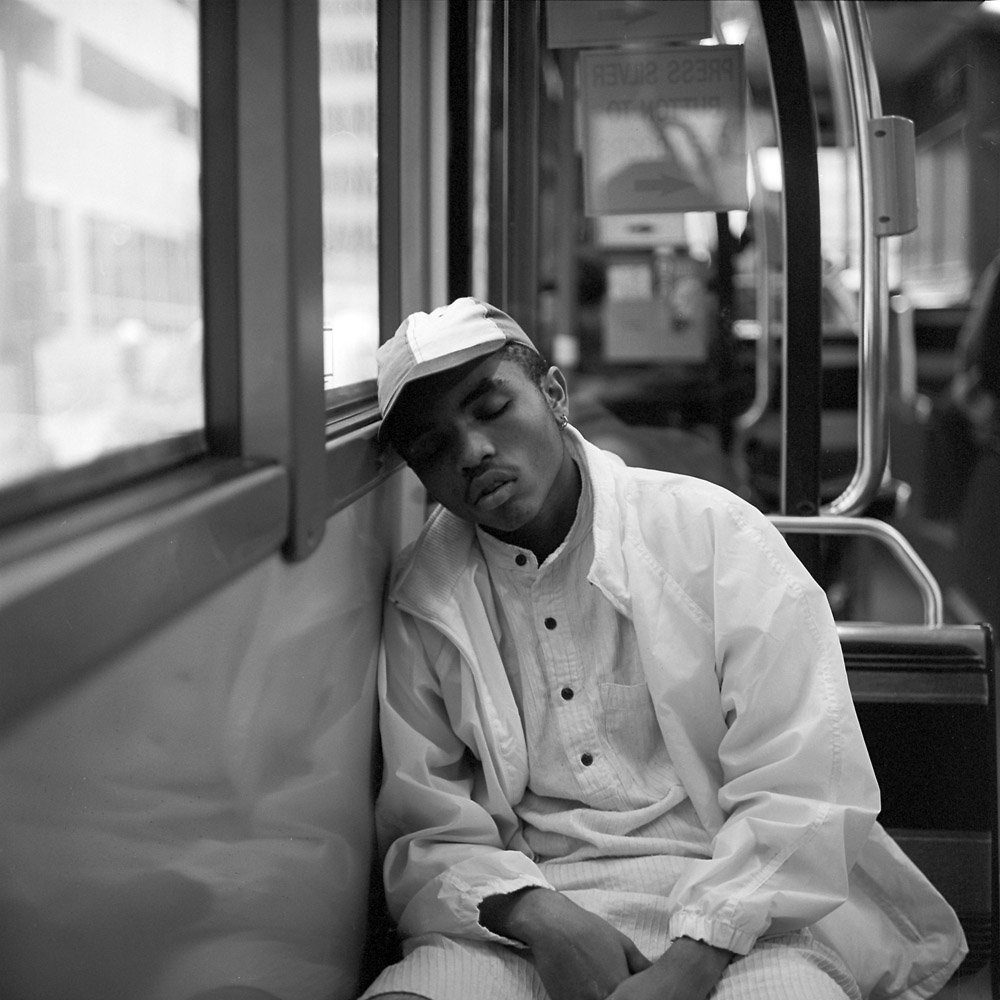
I’ve posted the boy on the bus sleeping before. This one DOES work better in black-and-white because the brightness of his hat and shirt contrast with his skin color and give him a very peaceful, almost angelic look.
Boy Sleeping On Bus
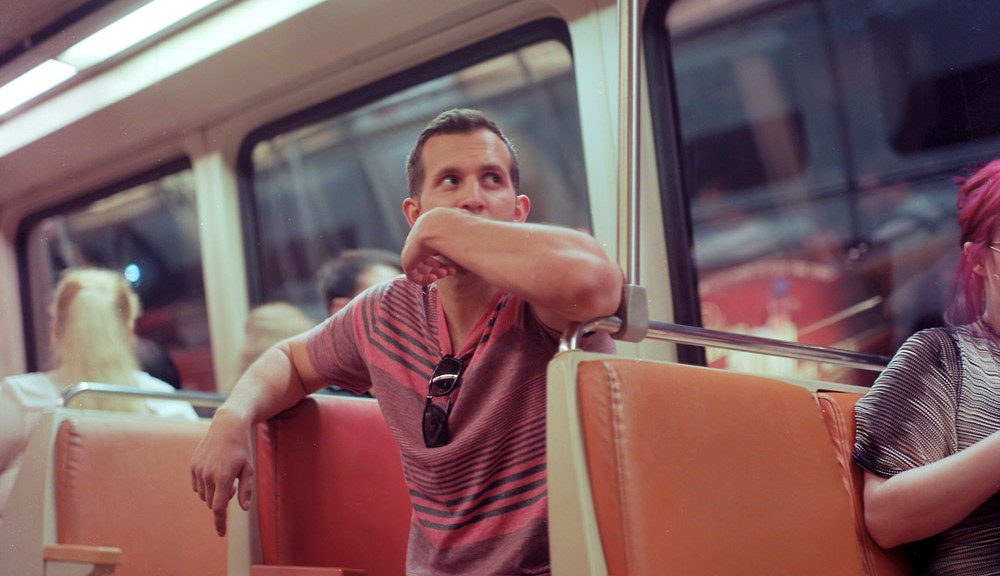
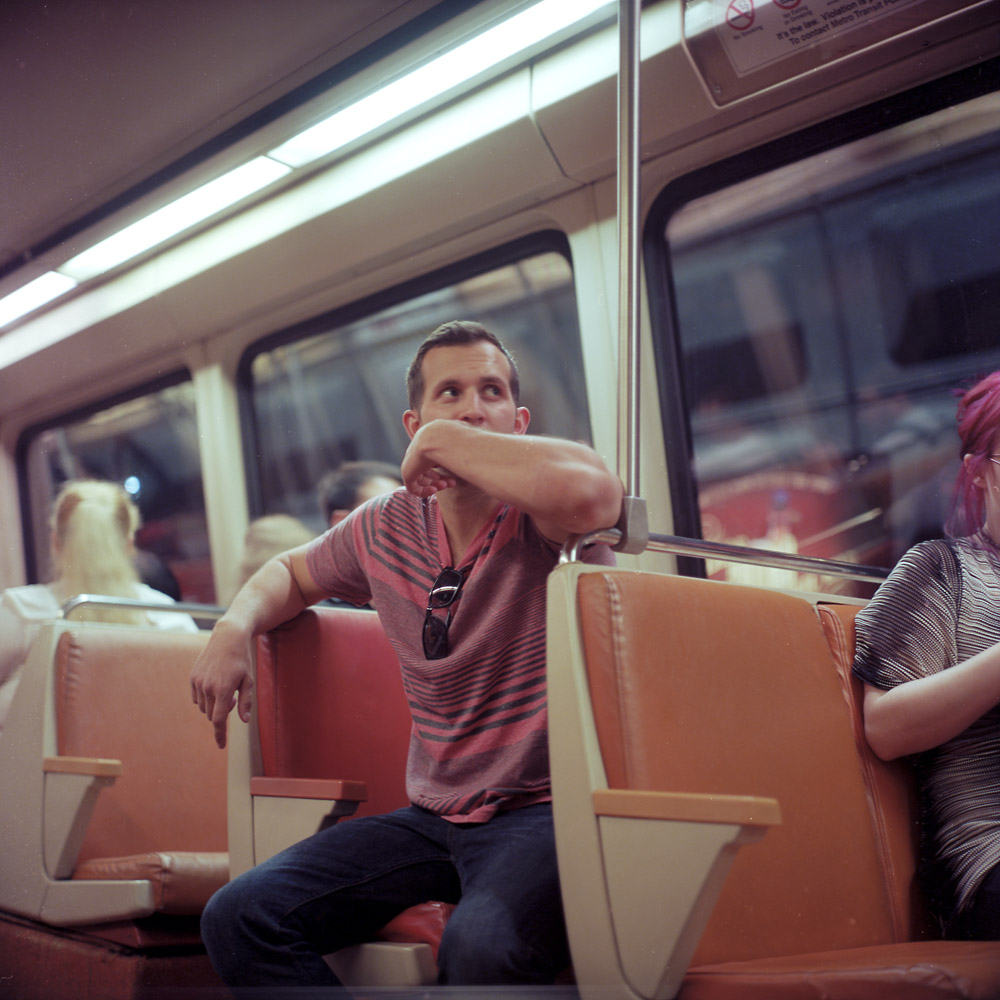
This man is watching the overhead sign announcing the upcoming station. I caught him in an unguarded moment, doing what everyone does on the train. Hard to tell if he’s a tourist or a local.





 dcphotoartist