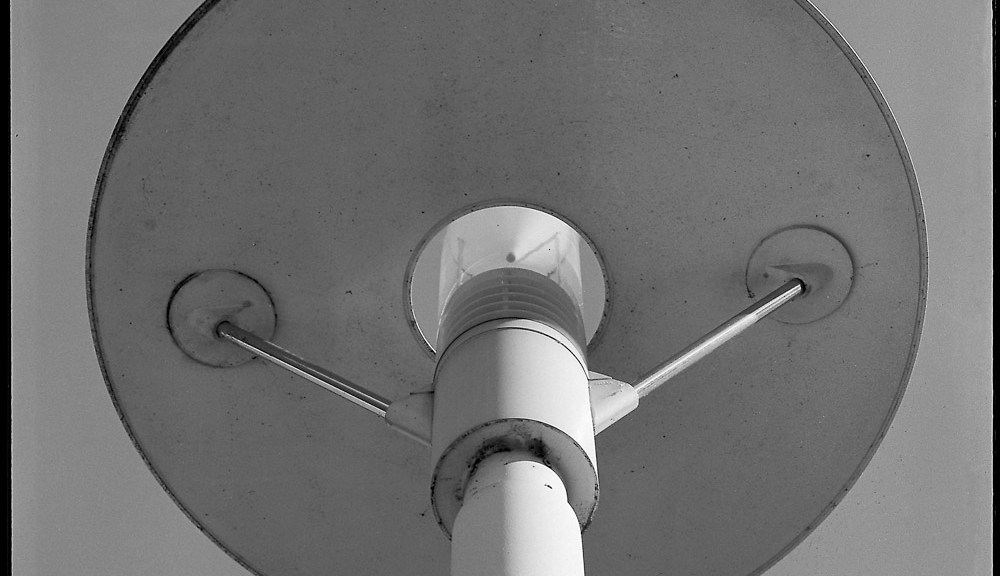
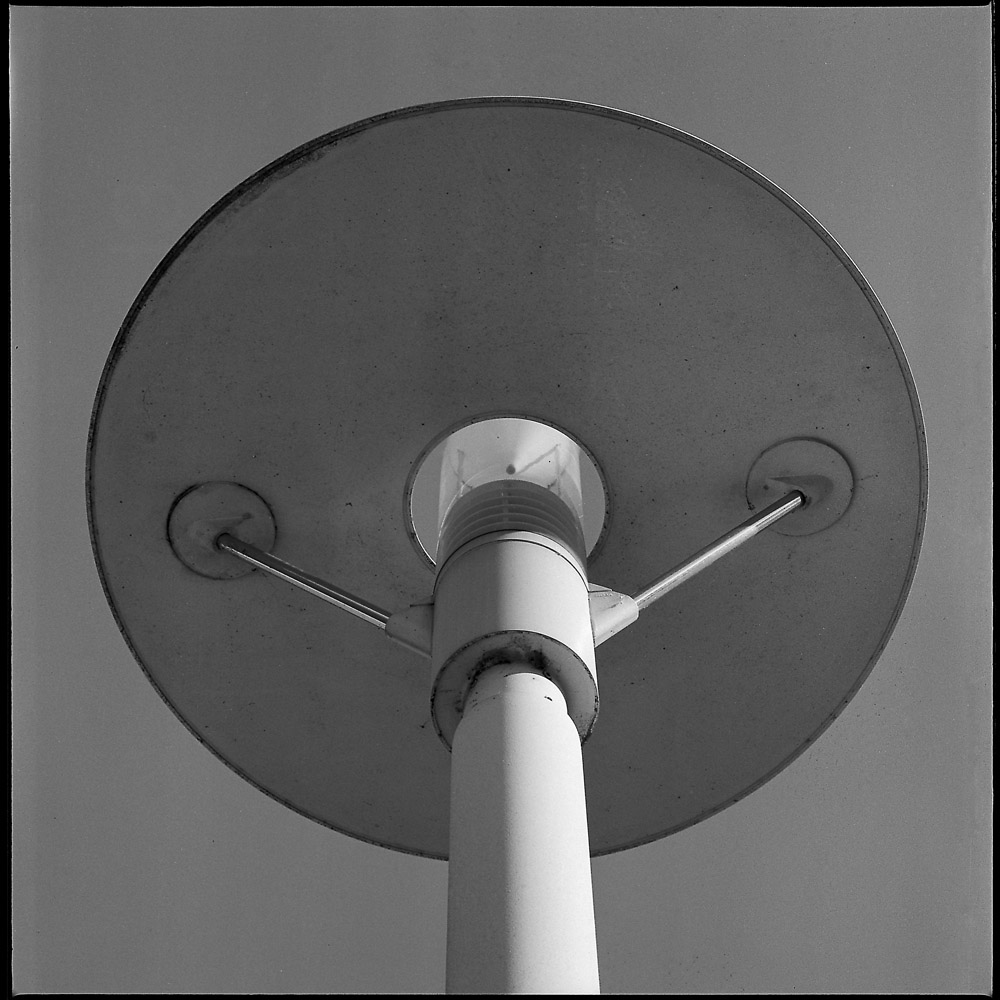
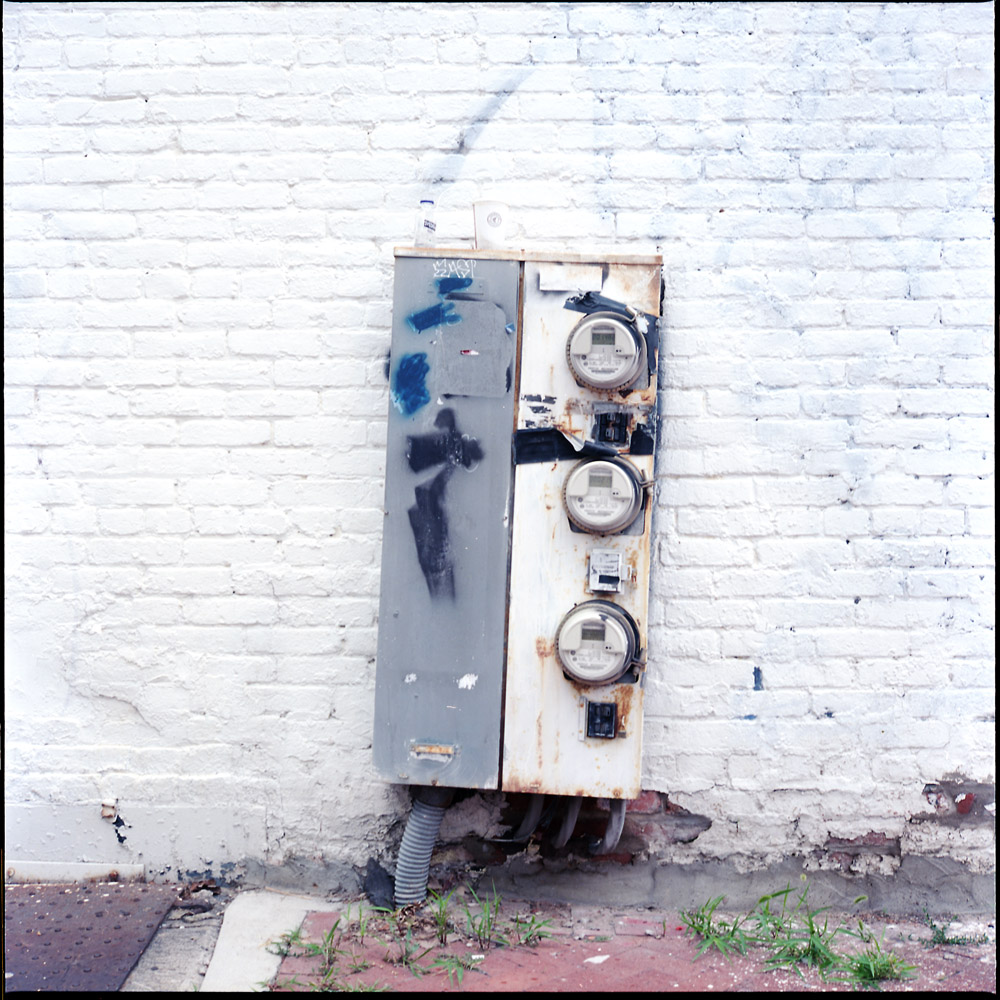
Yet more in my series of everyday objects. This time, it’s a lamppost, a safety cone (I’m not calling it a traffic cone because in this context, it’s being used to warn pedestrians of an uneven paver), parking meters again, and a police call box. You may have wondered at seeing some of my images with a black border and others without. I generally try to compose full-frame, and I like including the black border to show that. I also feel that in some cases, the black border helps define the image especially if the background is predominantly bright. I don’t ever add one to make it look as if what you see is full frame if in fact it is cropped, or to make you think it was made in a different format than presented. The images I post online for the most part are scanned from the negative, and given the nature of film, sometimes the backing paper leaks light along the edge, or other things happen during processing that require me to crop a little. Sometimes, I have to crop a lot because the composition just wasn’t right in the full square of the 120 image size. In those cases, I leave the edges alone and don’t put a black border on.
Twin MetersSafety ConePolice Call BoxLamppost, Kennedy Center
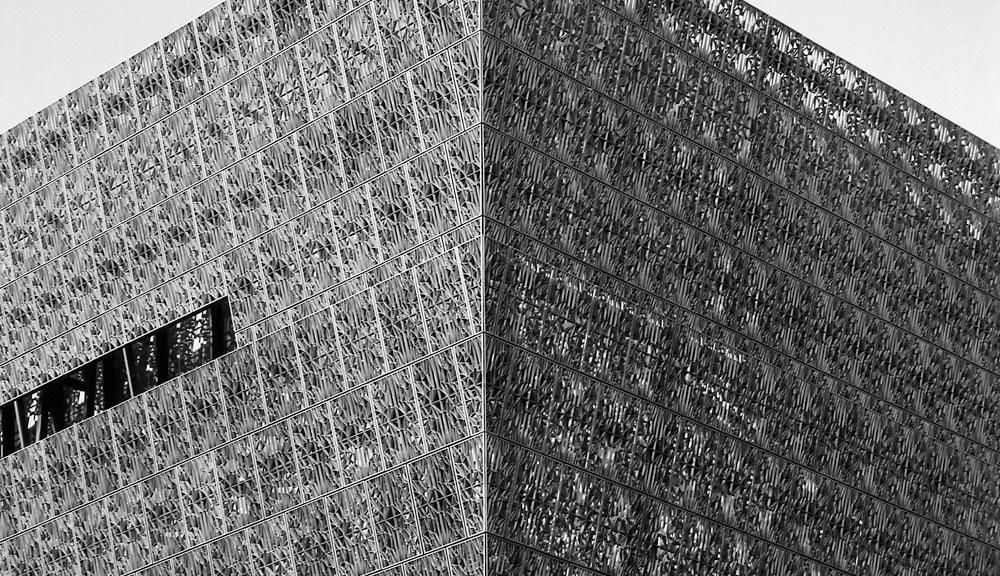
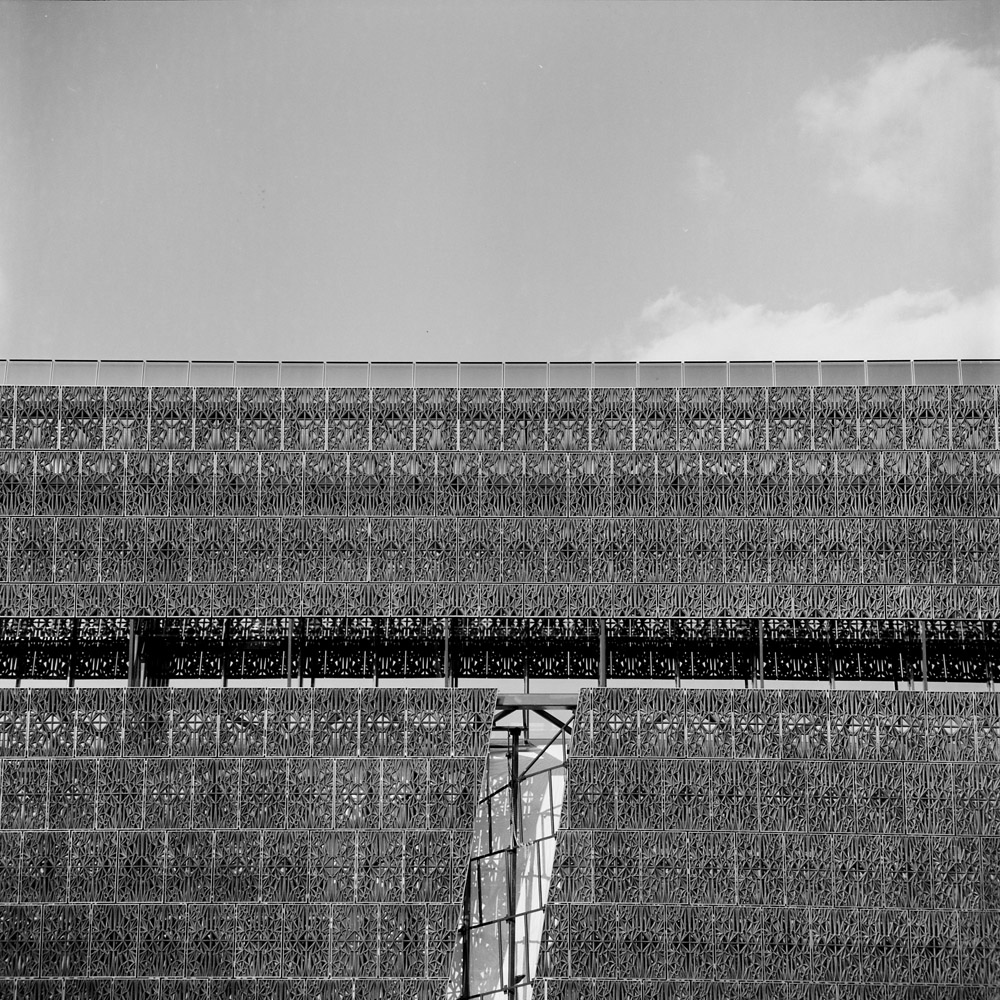
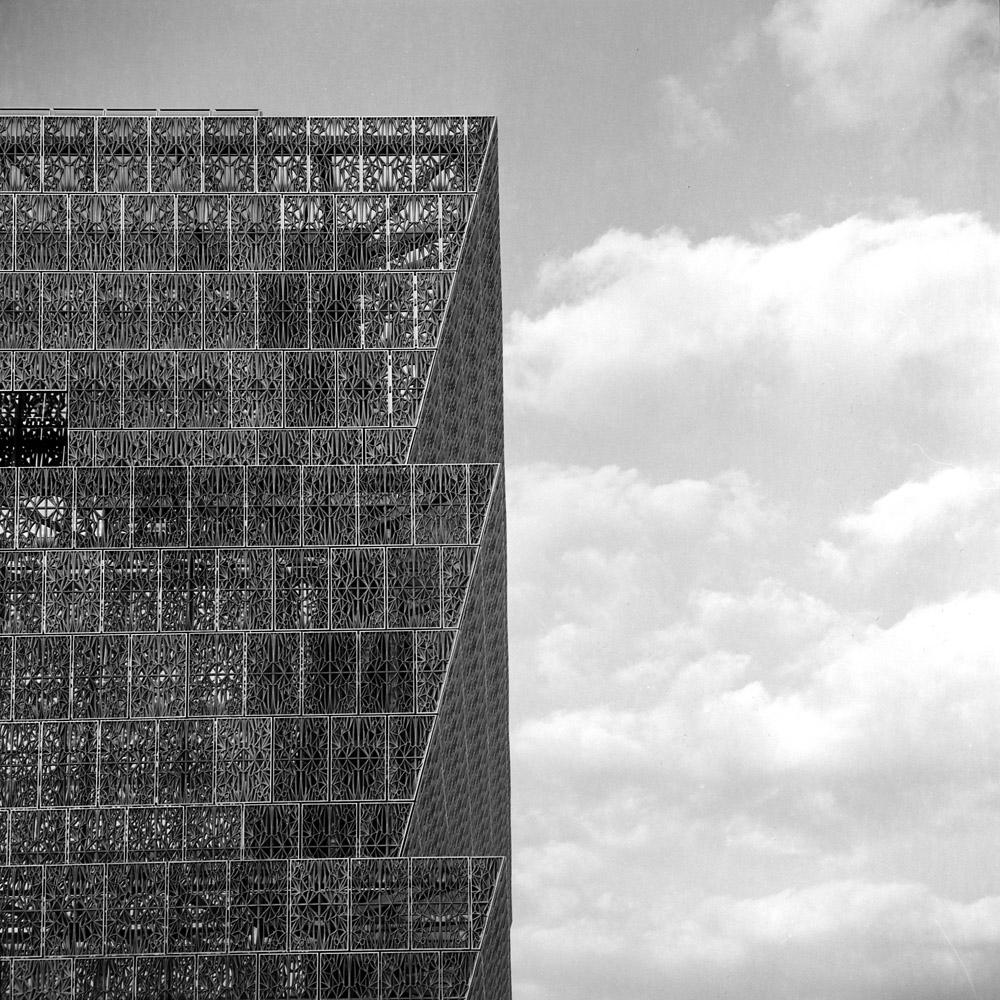
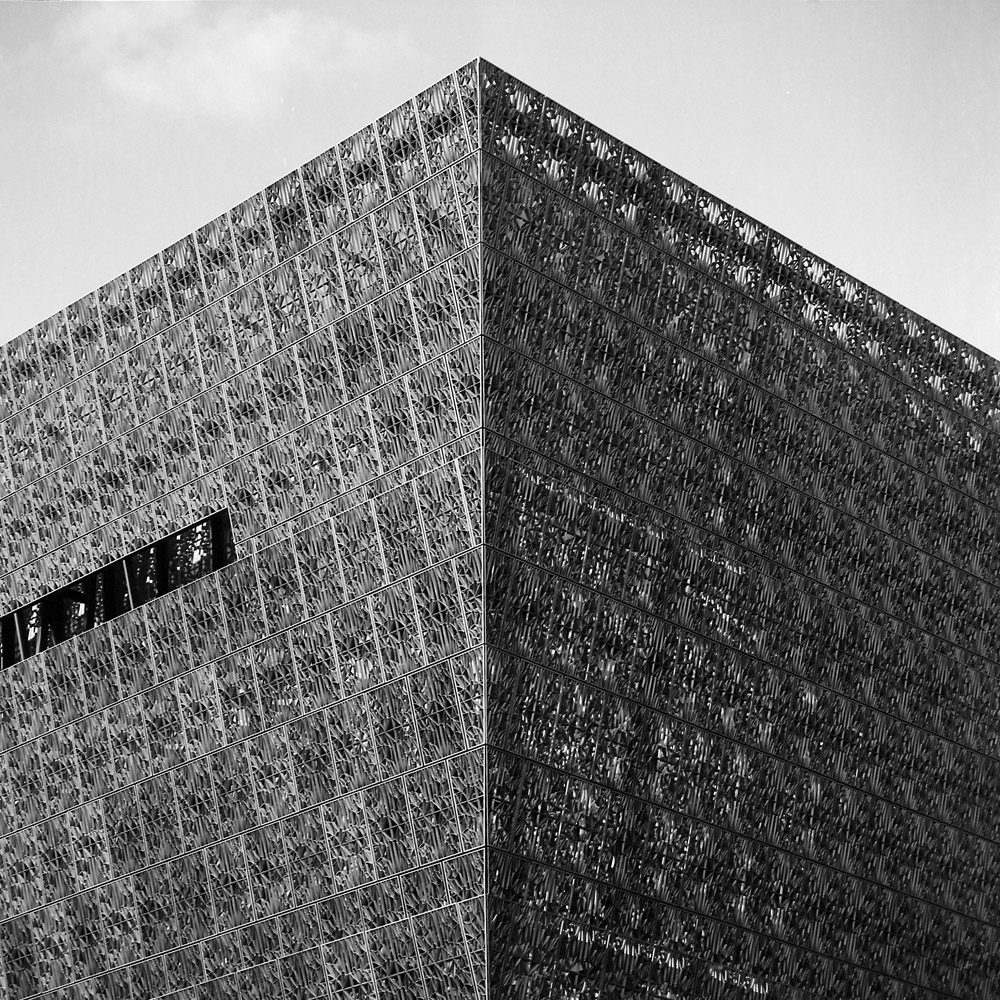
If you recall an earlier post, I had some shots of the new National Museum of African-American History and Culture (I’ll call it the African-American History Museum for short) in color, taken as architectural abstracts. Here are a few in black-and-white. The building shape lends itself extremely well to these kinds of geometric abstract studies. I think the architect nailed the design prospectus,making references to the cross-cultural influences of Africa on the American experience.
Seen here against the sky it feels like a seascape, a reminder of the trans-Atlantic voyage that brought three centuries worth of slaves to the New World.
African-American History Museum
The bronze-colored metal screening on the outside has a tropical botanical motif. It is both protective screen and mask, concealing and revealing, ancient and modern. The patterning is reminiscent of Kente cloth batik designs.
African-American History Museum
The overall shape of the structure is that of a three-tiered African crown, but viewed from different angles, it can be a monolith or a pyramid, or the prow of a ship.
Here are a few architectural details on the Brewmaster’s Castle, just off Dupont Circle. The house is so named because it was built by Christian Heurich, the founder of Heurich Brewing Company, which operated in Washington DC from the 1880s to 1956. Mr. Heurich ran the company until his death at the age of 102 in 1945. The original company and their brewery are no more, although it has been resurrected under the moniker Olde Heurich Brewing by the great grandson of Christian Heurich, and now produces craft beers under the brand Foggy Bottom. Due to a lack of facilities in Washington, the beers are brewed in upstate New York. The original brewery itself was located where the Kennedy Center now sits.
The house is now a museum and retains an extraordinary amount of the original furnishings and decorations from the period of its creation in 1892-94. The house was bleeding-edge technologically at the time – it had electric and gas lighting, central radiator heating, ventilating skylights for cooling, a pneumatic communication system, an elevator, and even a central vacuum for cleaning. The structure is made of steel and reinforced concrete to be fireproof, and although it has 15 fireplaces, due to the central heating systems, none have ever been used.
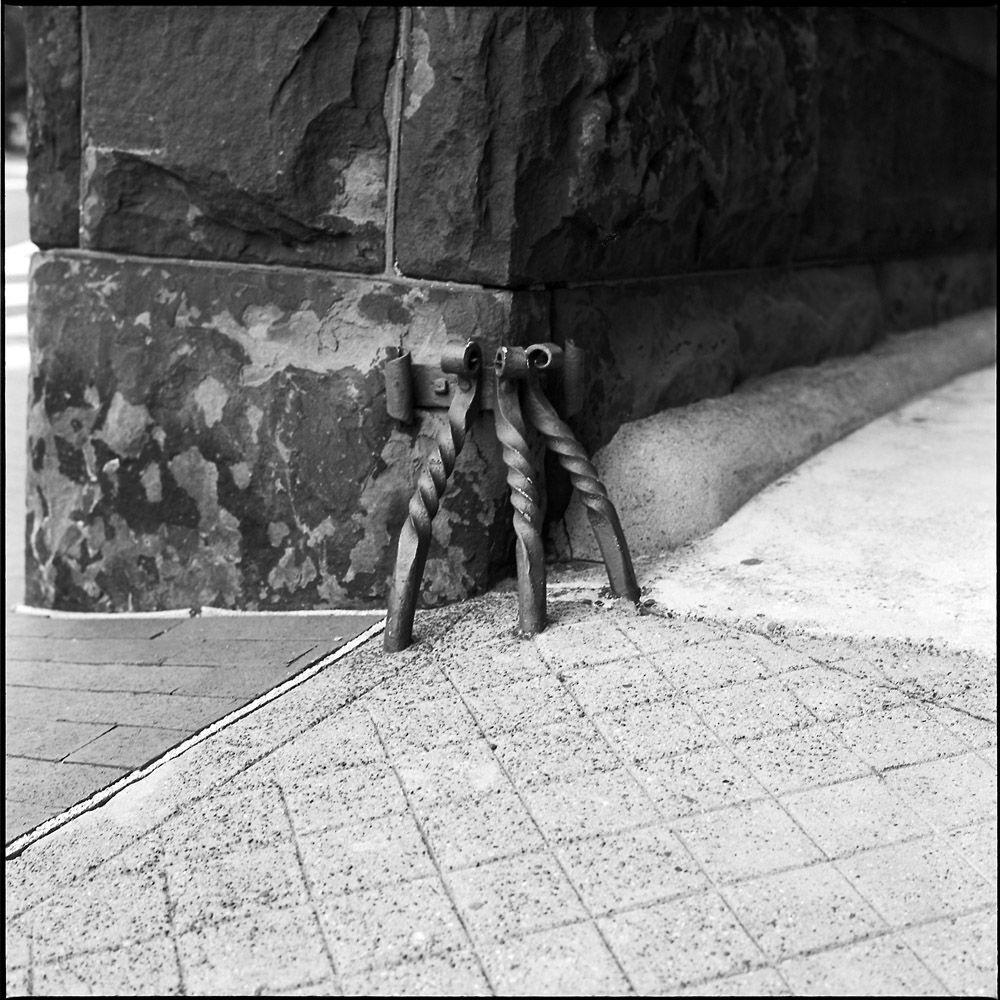
The house looms large over the neighborhood, as it is one of the last remaining mansions of the era around the circle (some have been converted to embassies, one is now the Scientology headquarters in DC, and the rest have been demolished and replaced by apartment and office buildings) and it stands out as a period piece quite in contrast to its neighboring structures from the 1950s through the 1970s. I’m fascinated by the decorative ornamental detailing on the house, as well as some of the functional bits, like this bootscrape-
Bootscrape, Brewmaster’s Castle
It is built into the base of the column supporting the porte cochere over the carriageway in front of the house. It is, of course, on the outside, and not on the house side of the porte cochere.
The bootscrape is out of view to your left in this scene – this is the entrance portico under the porte cochere. I was drawn to this composition by the repeating and converging curves of the stairs, the carriageway, and the arches of the porte cochere.
Portico, Brewmaster’s Castle
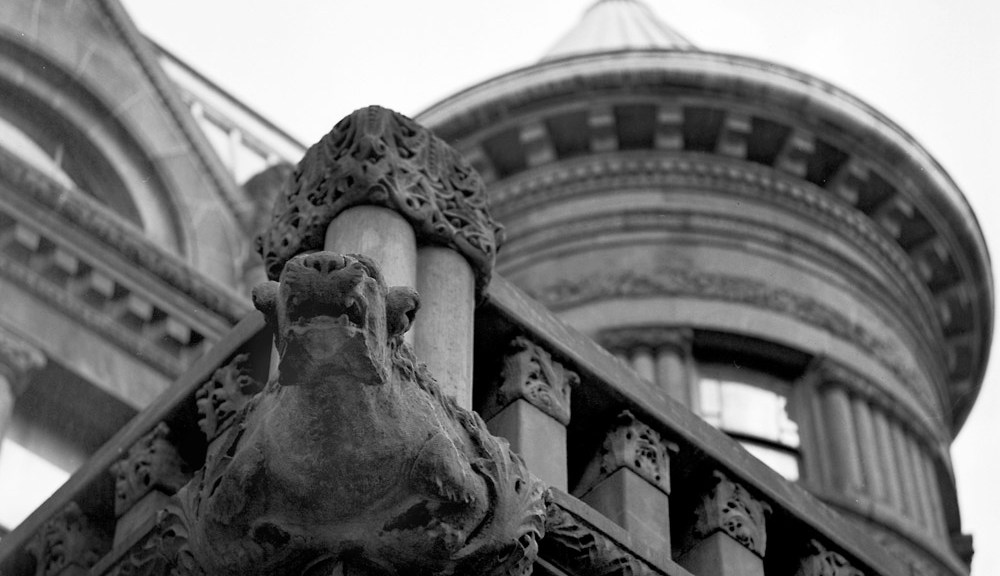
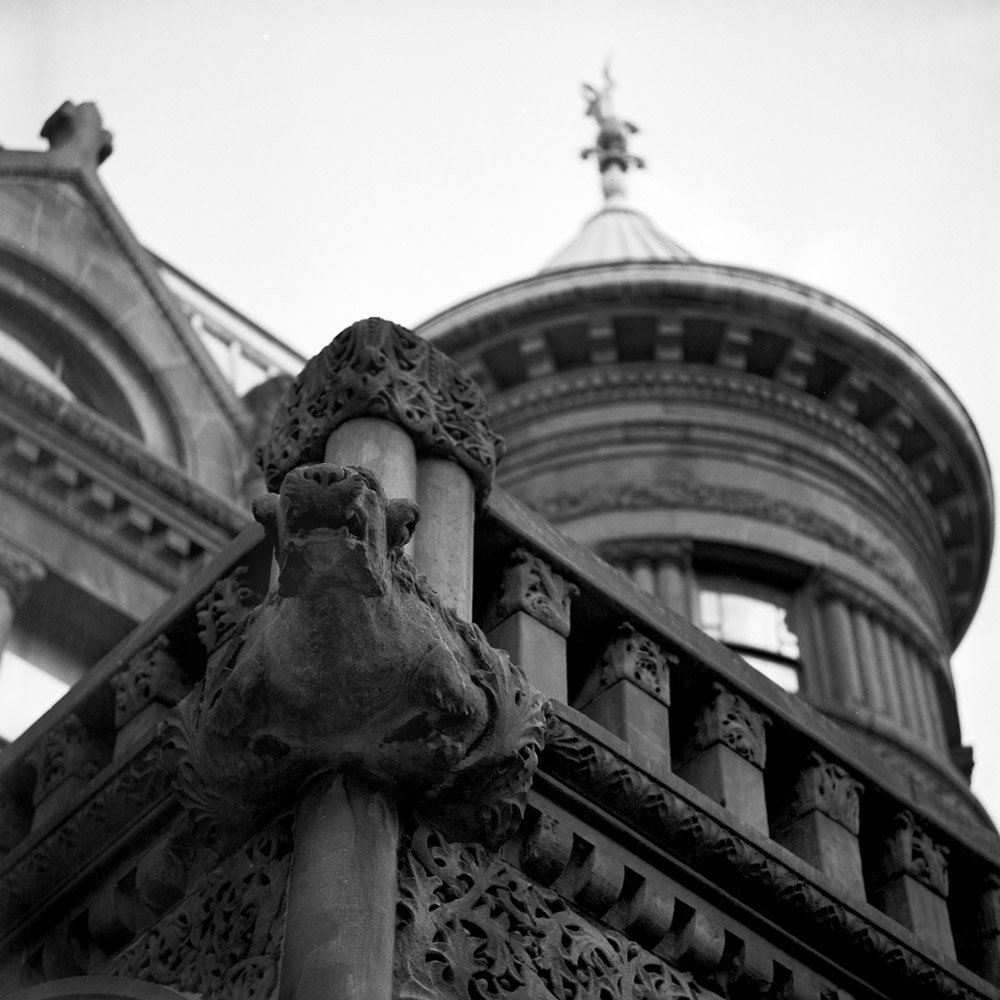
Looking up, this is one of the gargoyles on the outer edge of the porte cochere, and behind it the ornamental spire on the turret that inspired the house’s nickname, Brewmaster’s Castle.
Gargoyle, Turret, Brewmaster’s Castle
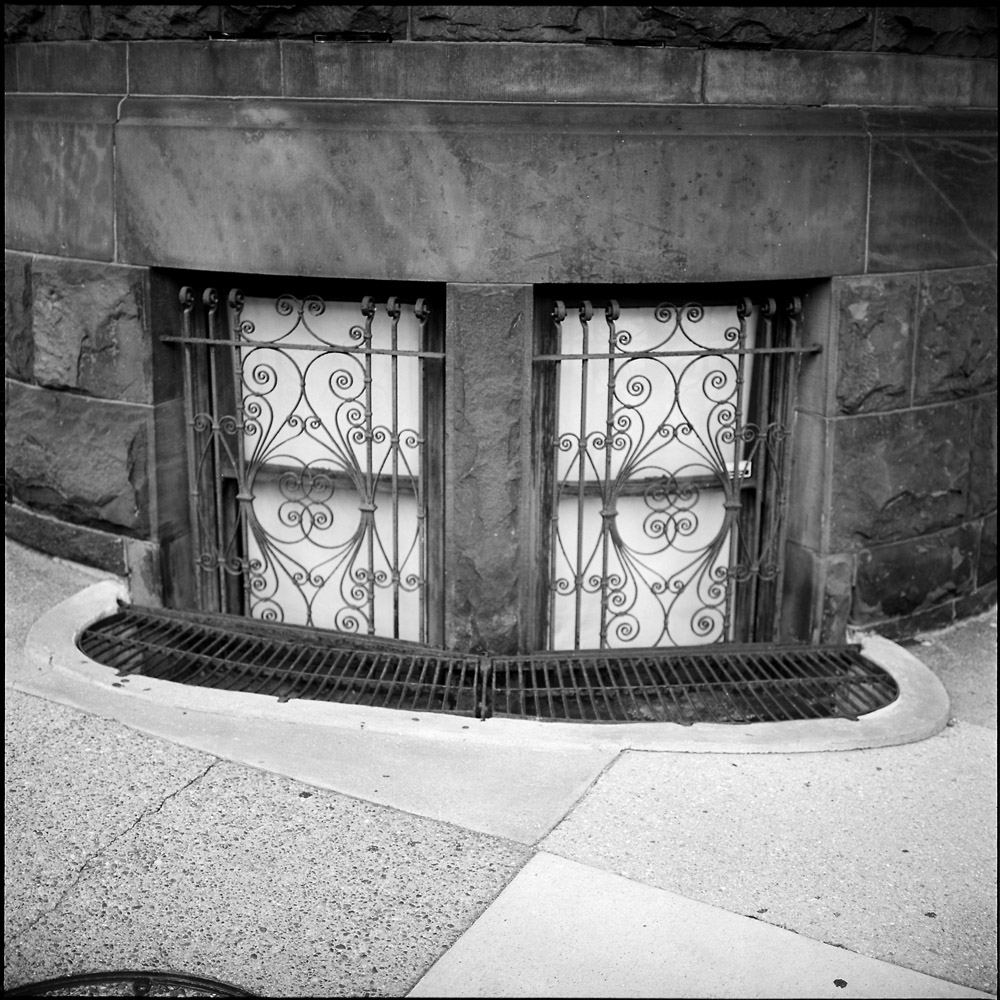
Turning around and looking down, the service spaces are equally detailed, and the innovative thought behind the construction is in evidence.
Windows, Brewmaster’s Castle
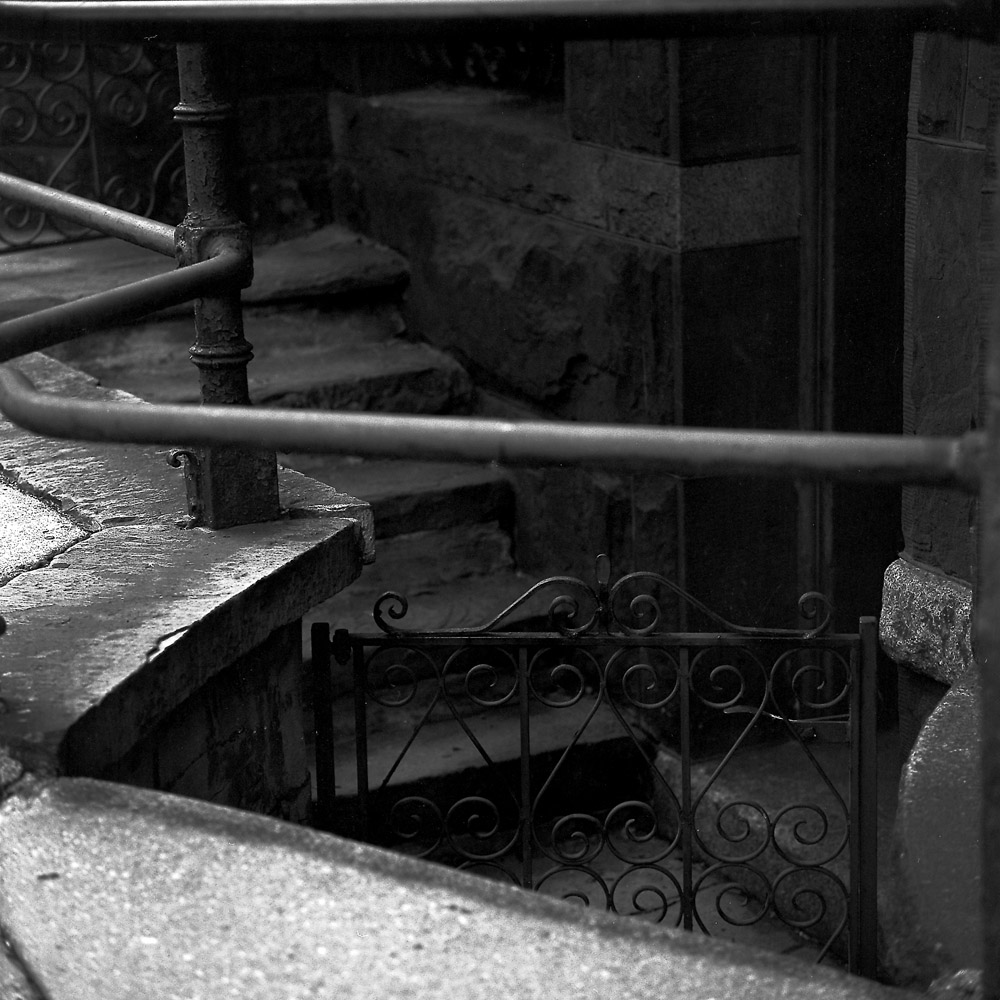
The trade entrance has TWO wrought-iron gates, one at the top and another at the bottom of the stairs.
Trade Entrance, Brewmaster’s Castle
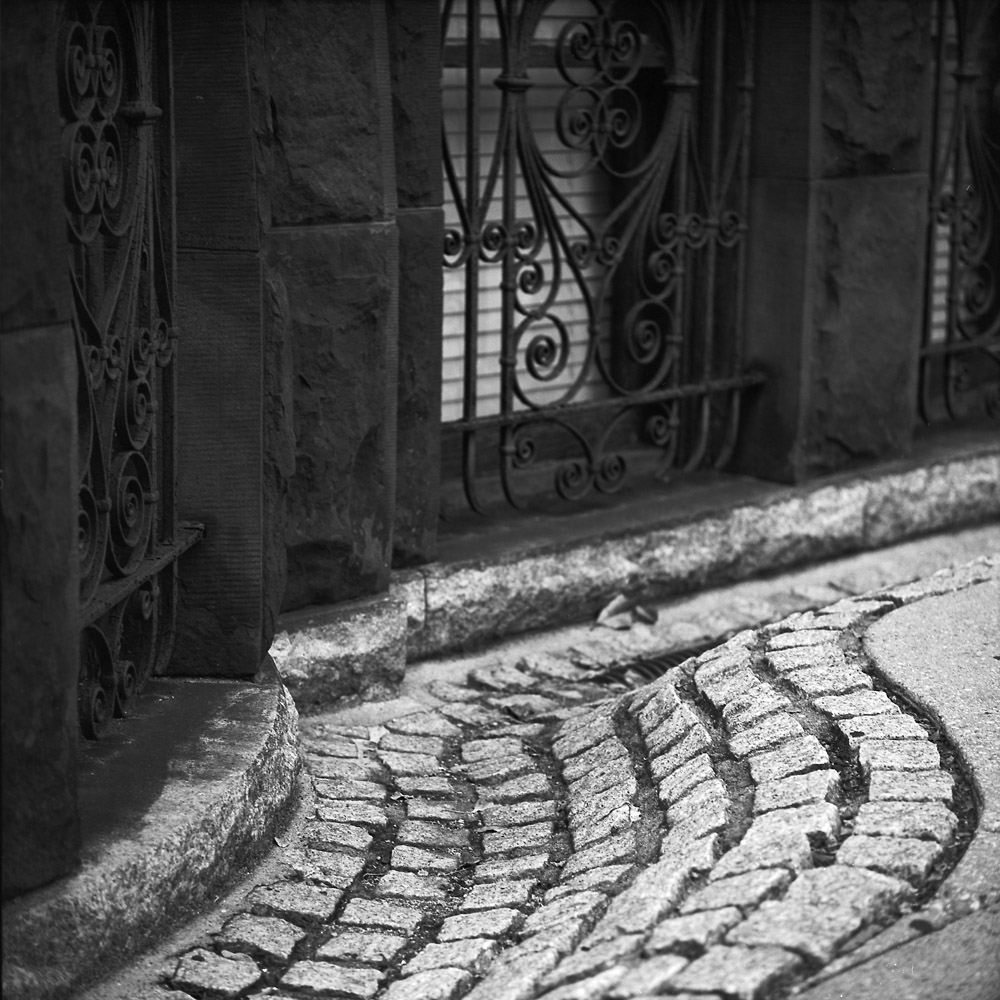
The sidewalk doesn’t pull right up to the foundations, but rather a sinuous cobblestone gutter system surrounds the house, providing adequate drainage so the basement doesn’t flood in a storm.
Gutters, Brewmaster’s Castle
The house is open for tours several days a week. While I haven’t been inside yet, I’m planning a visit soon.
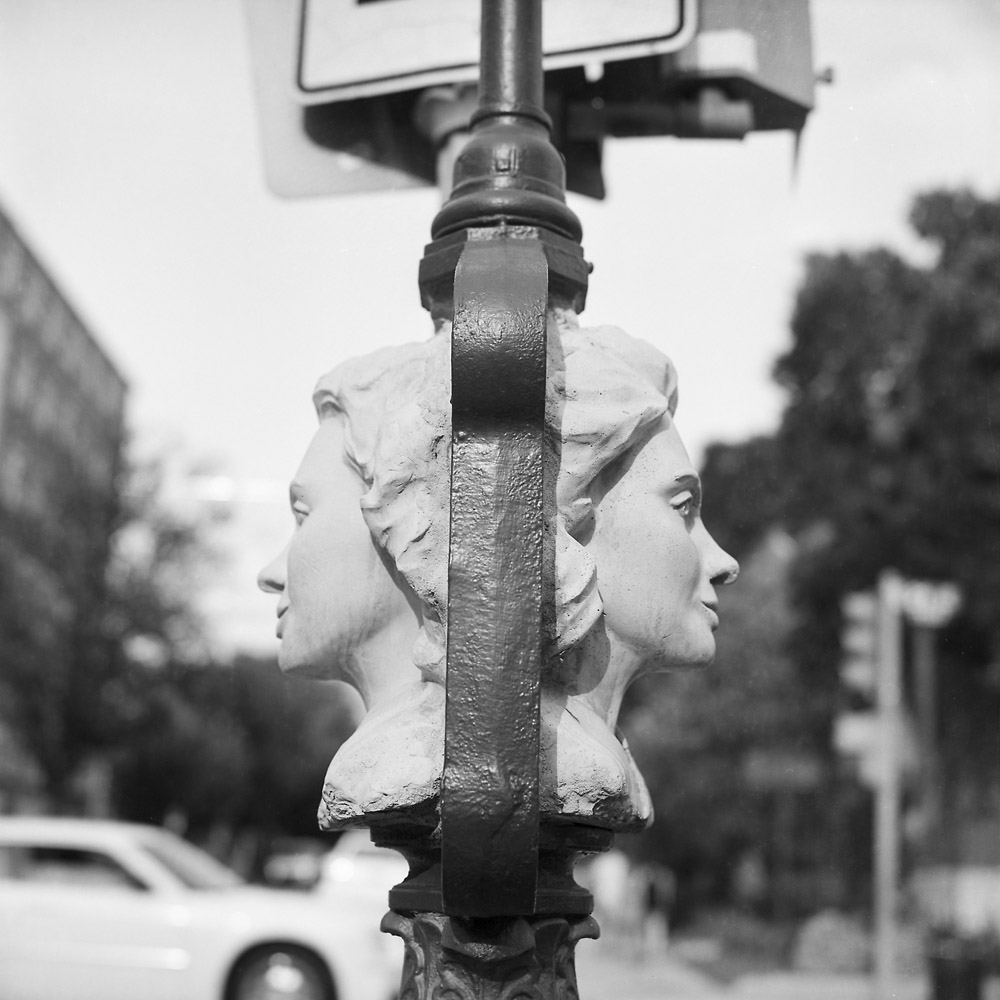
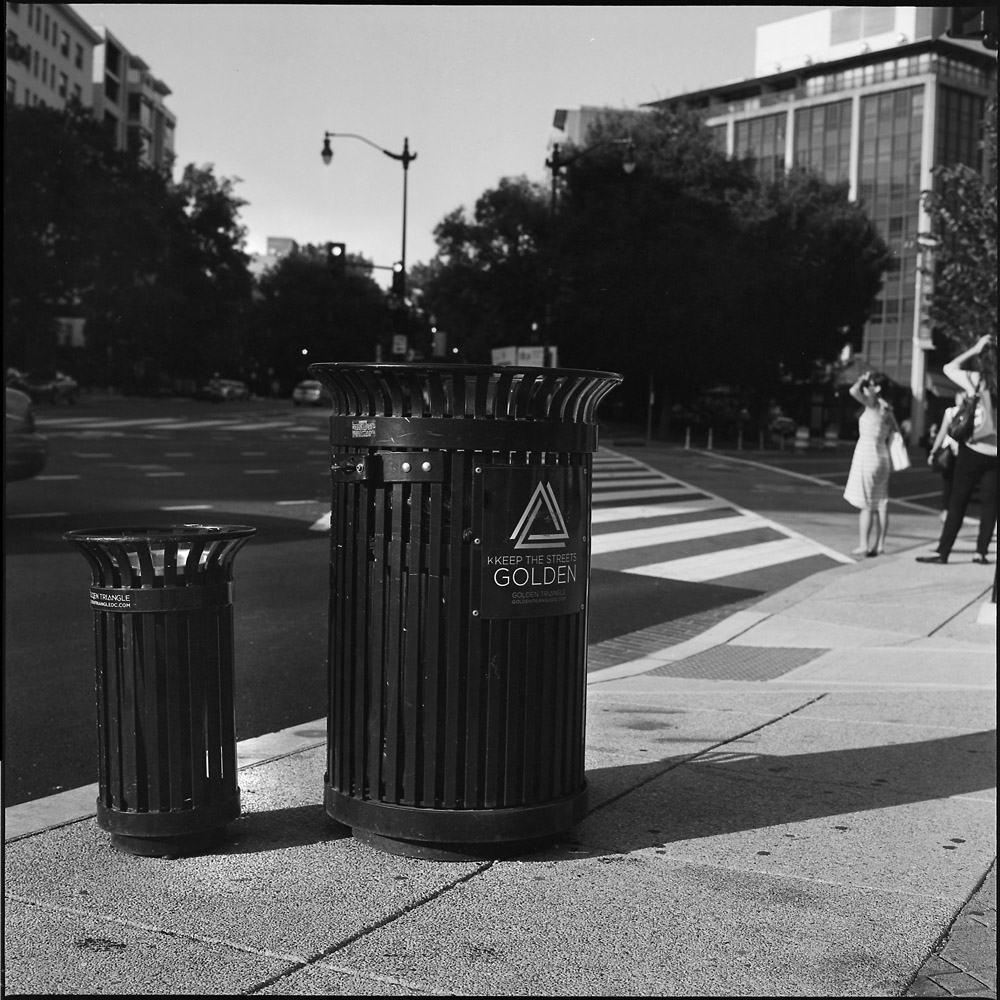
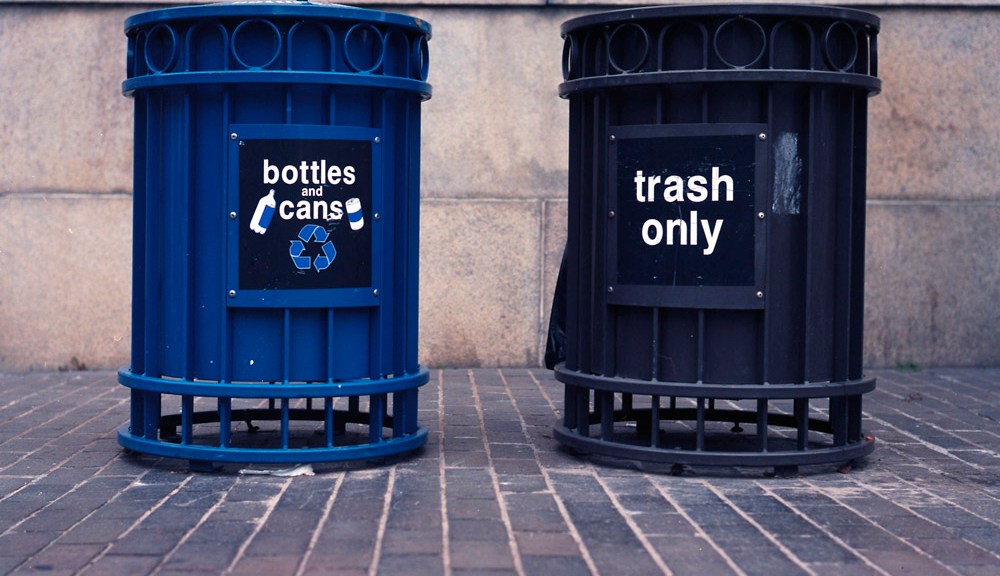
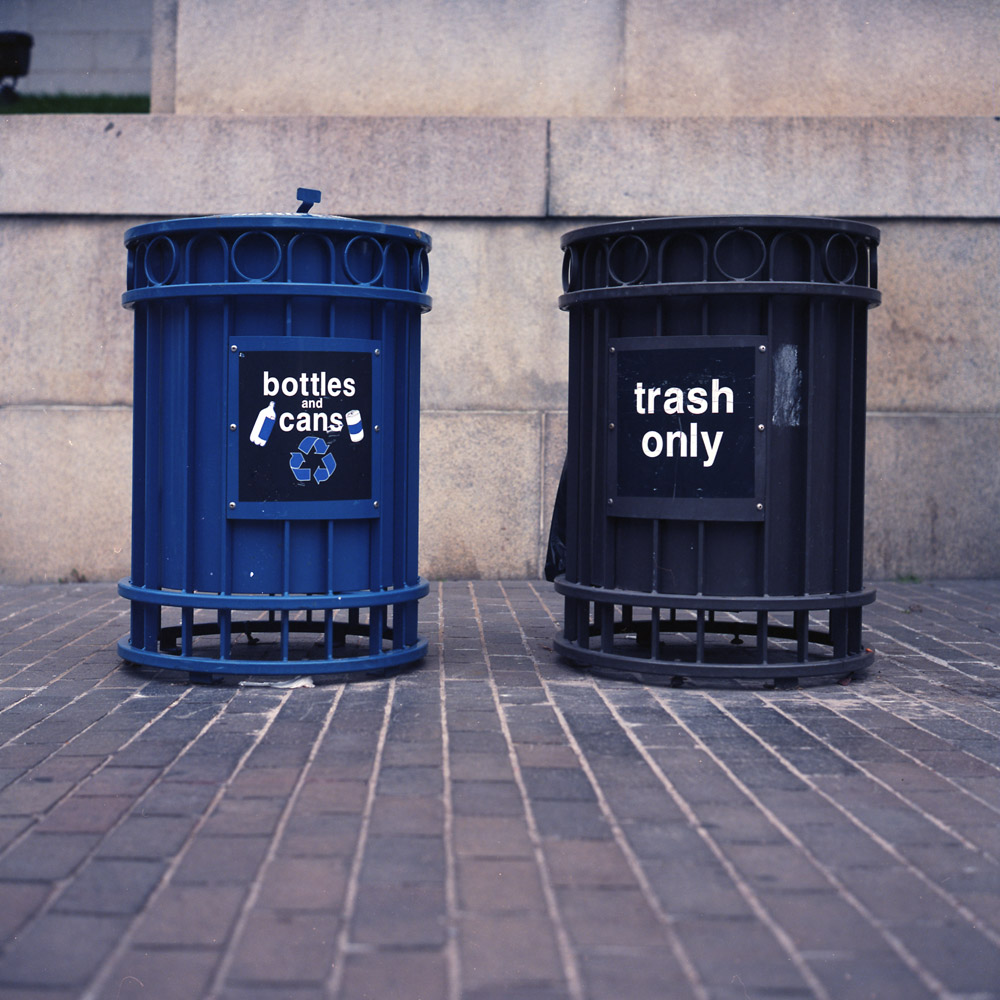
More things from my everyday objects series. These are all things I found around DC in my peregrinations on my way to and from work. They all have a theme of “two” in them – two faces, two paper boxes, two trash cans.
Two Heads
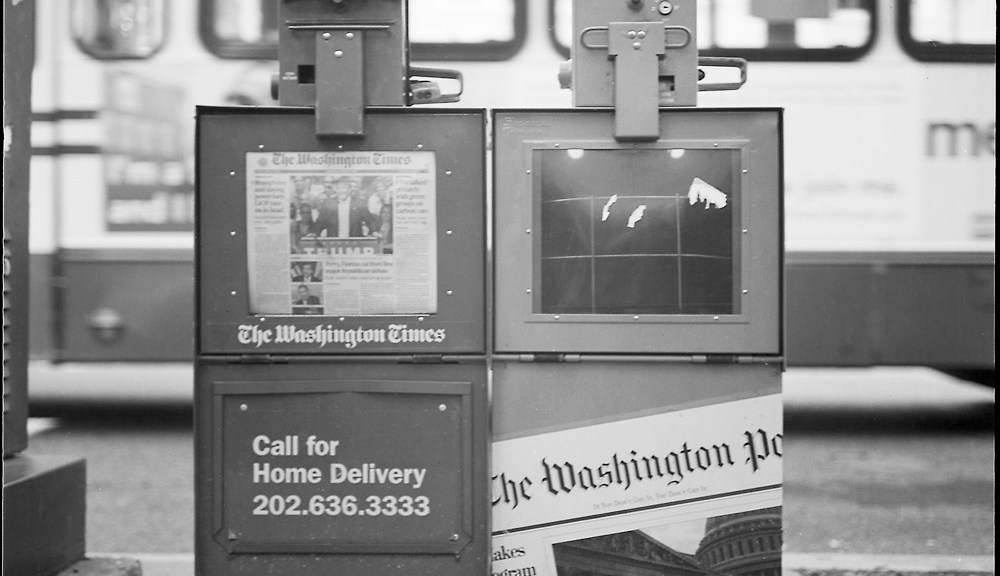
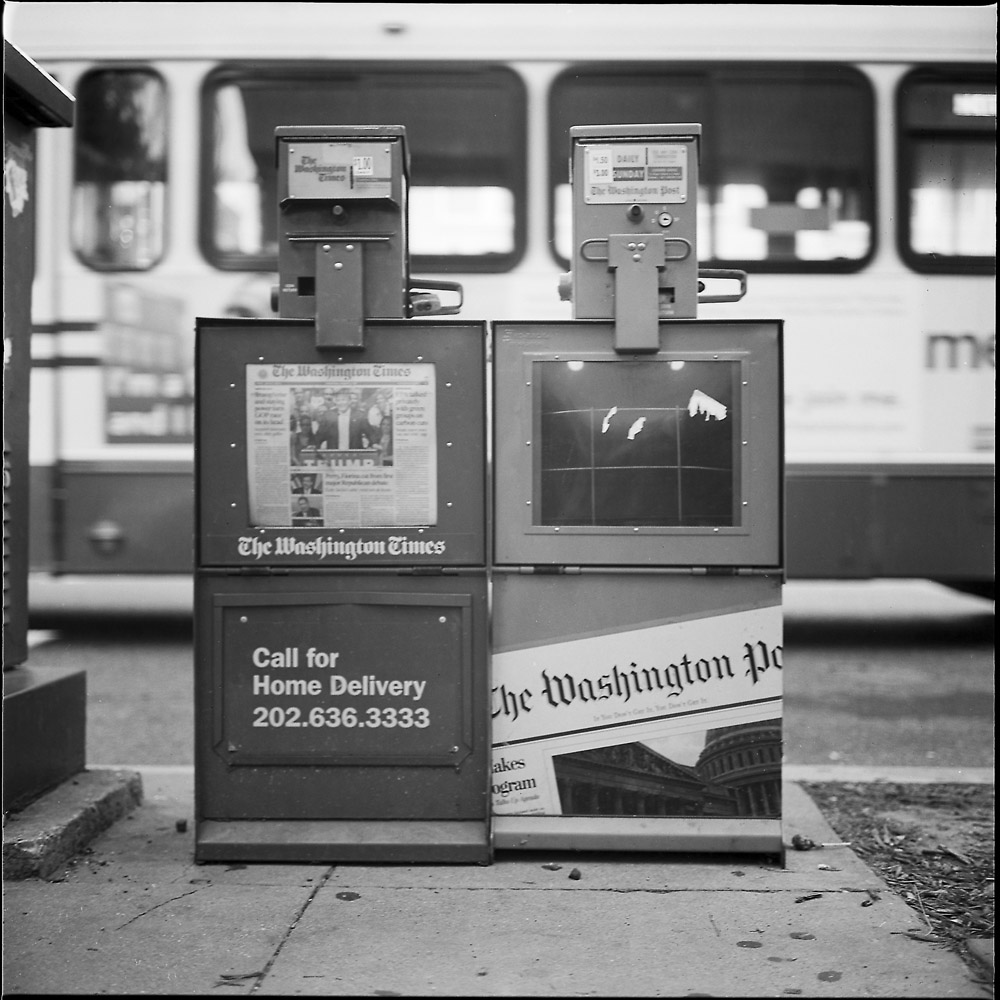
The sibling rivalry is in the two newspapers themselves represented in the two boxes – the Post and the Times. The Post is considered by many to be the “paper of record” for Washington DC, whereas the Times is a partisan hack with an extremely conservative bent, owned by a highly suspect organization (the Unification Church aka the Moonies). Depending on your political bent, the Post is a liberal shill and the Times a bastion of integrity. Either way, they co-exist in a shrinking market and both are struggling to find their feet in the post-internet age.
Sibling Rivalry – Two Paper Boxes
I call this last one two twins because there was by happy accident two people of parallel size to the trash cans, both striking the same pose in the background. It made for a serendipitous symmetry.
Many photographers complain about “I don’t have anything to photograph where I live… there’s nothing interesting, blah blah blah… I get tired of seeing the same things over and over again”. If you’re getting tired of seeing the same things over again, then you’re not looking right. Not only are you not paying attention to what’s around you, but you’re failing to observe change in your environment and to record that change, which is one of the greatest functions a photographer can fulfill.
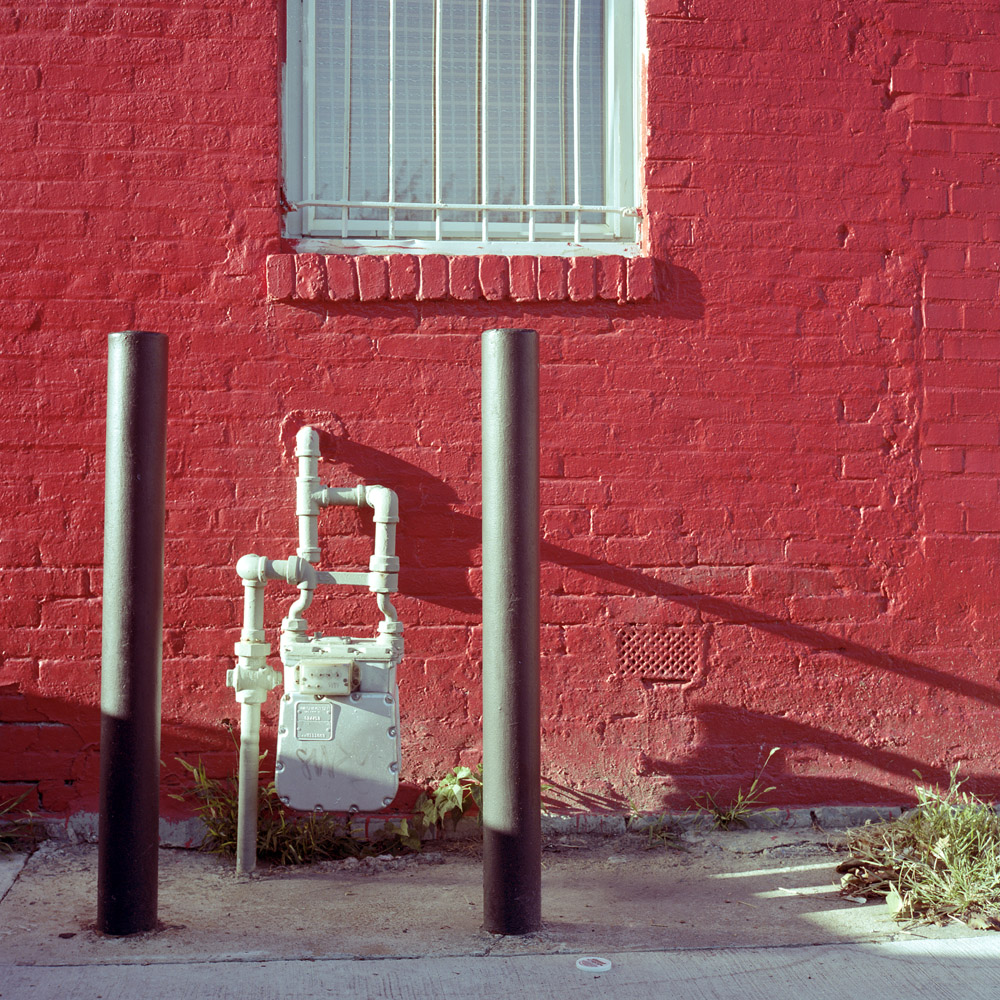
Case in point: two images of the same house, taken about two years apart. The first image is the earlier one. I was foremost interested in the gas meter as an organic pattern against the rigid geometry of the red brick and the white window at the time I took this one. The window and the gas meter were each singular objects set off against the dark, weathered red of the wall. At a bright and cloudless sunset, the meter casts a long shadow, further repeating its organic pattern.
Gas Meter, Red Wall, V Street
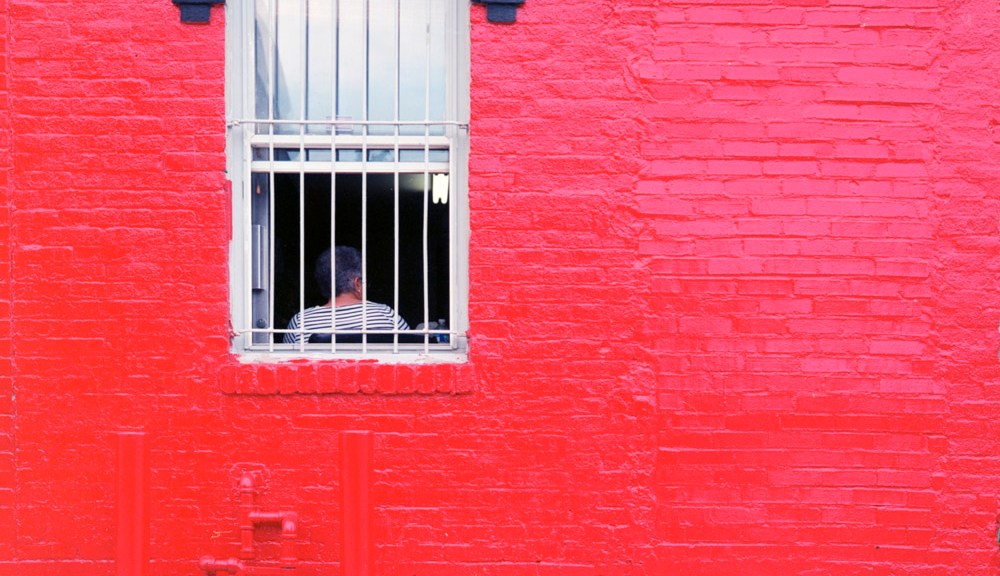
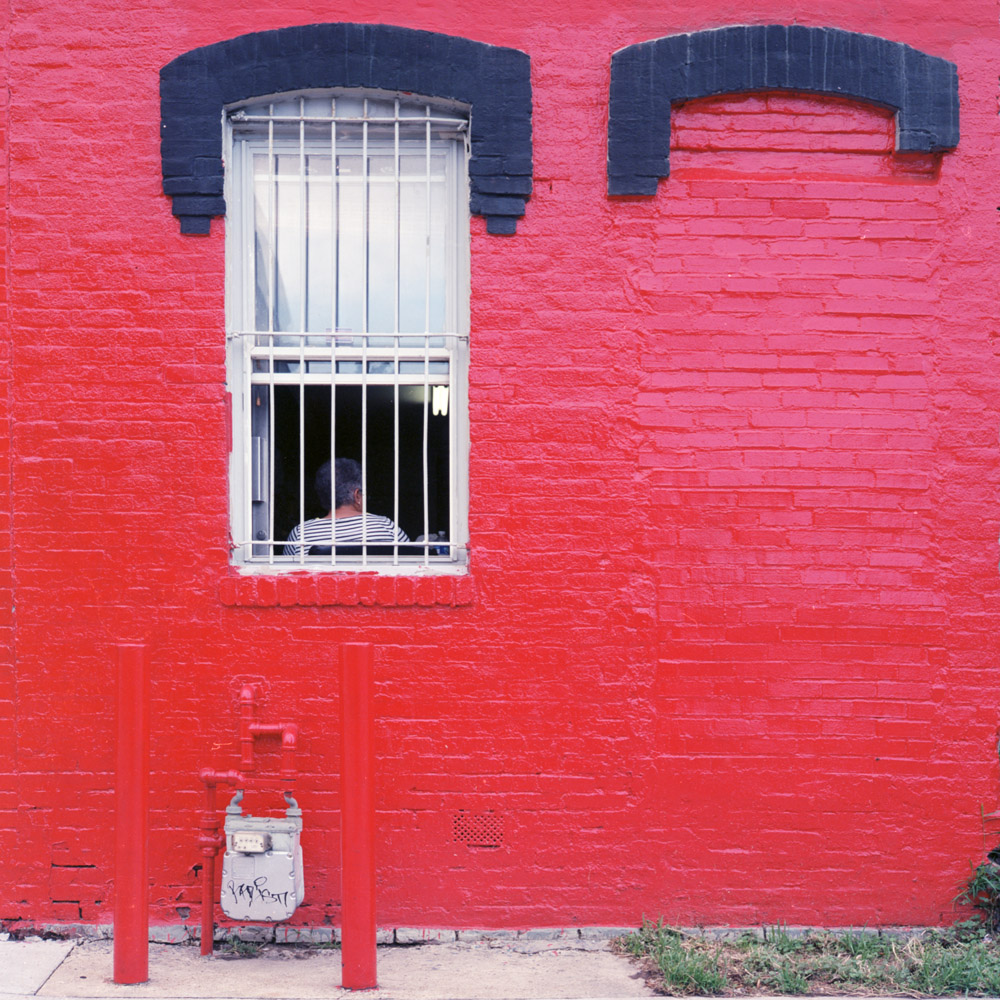
Returning two years later, the house has been re-painted, this time in BRIGHT red, along with the gas meter plumbing and the bollards protecting it. Instead of looking at singular items tightly framed, this time I pulled back a bit and gave the scene a narrative – there’s a person visible inside the bars of the one window, the other window closed. The lighting is flat from an overcast sky, pushing the drama of the scene into the deeply saturated colors and the enigma of the house – who is that person inside? how did they get in there when there is no visible door? Why is the one window bricked up but the other one open?
Red Wall, Window
By re-visiting the same subjects, we not only learn to see them, but to see them differently instead of as static, unchanging objects. It also helps with story-telling and narrative development. Being able to tell a story with an image is one of the key differentiators between a factual record (“on this date, this building/car/person/plant/animal looked like this”) and an artistic output (“why does this look the way it does? Who is that? Why are they there? Why are they doing what they are doing?”). I think that we should all strive for that artistic output and not just factual recording (not that there is no value in recording of facts – we need facts recorded!).
This is one aspect of photography that I would hope to help inspire my students toward, as an educator. But it’s also the hardest thing to teach – photographic vision is something that has to happen, organically, natively, within the individual photographer. The best you can hope for is to provide exercises to stimulate them in the direction of building their vision, and to provide constructive critical feedback to focus that energy.
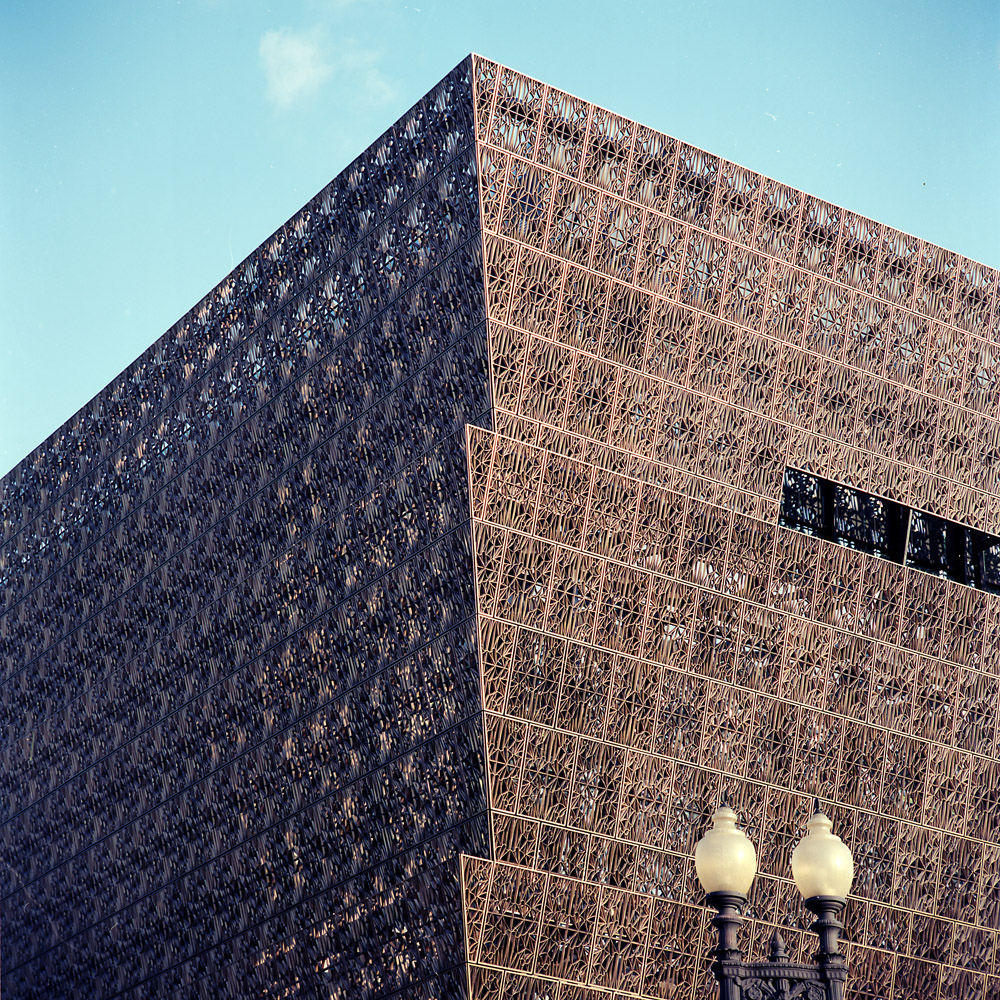
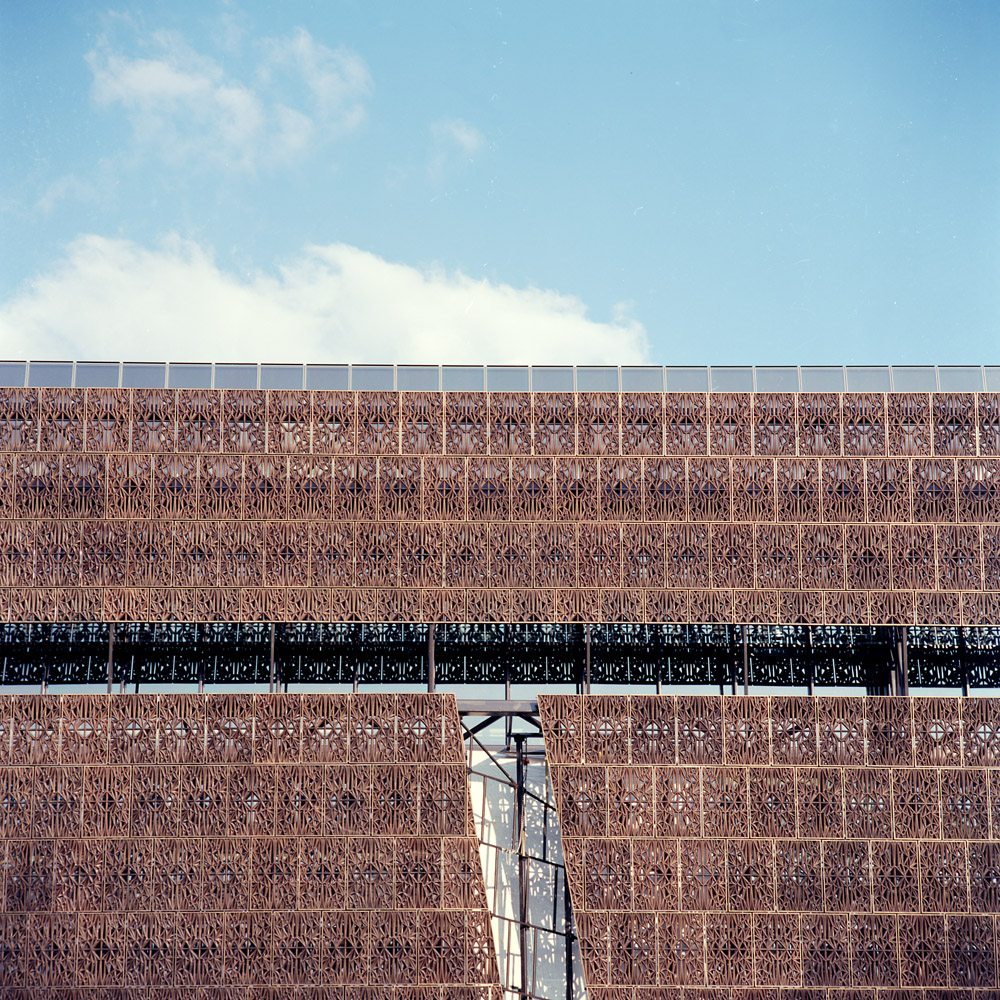
If you recall my earlier posts of the World Health Organization/Pan-American Health Organization headquarters building, I like architectural abstracts. These are some color abstracts I shot on two different excursions – one down to the National Mall at sunset, and the other on my routine walk home from work.
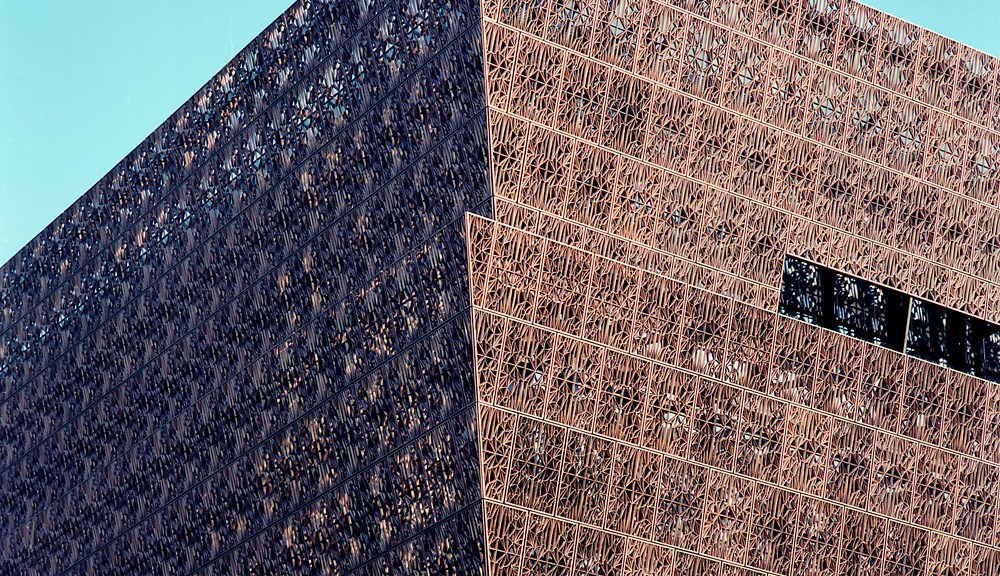
The African-American History museum is still a work in progress – I think it is slated to open in 2016, but it could be 2017 or even 2018 before it is ready for visitors, even if the structure is finished (which it appears will be true sometime this year, from the look of it). The building design is made to look like a traditional African crown with three tiers of bronze-colored mesh. The repeating pattern of the mesh screening lends itself extremely well to abstraction, and the missing panels (from the architectural renderings on the signs outside the museum, they are in fact missing/uninstalled, and not intentionally empty) add a geometric counterpoint.
African-American History Museum, Lamp
It’s nice to see that DC is finally getting some real architectural gems, and is not just filled with Classical-revival, Victorian, and Modern Industrial glass boxes. On a certain level it’s too bad the Corcoran was not able to get their financial act together several years ago and build the Frank Gehry addition to the school they wanted, as that would have been quite a striking change to the streetscape.
African-American Museum, Sky
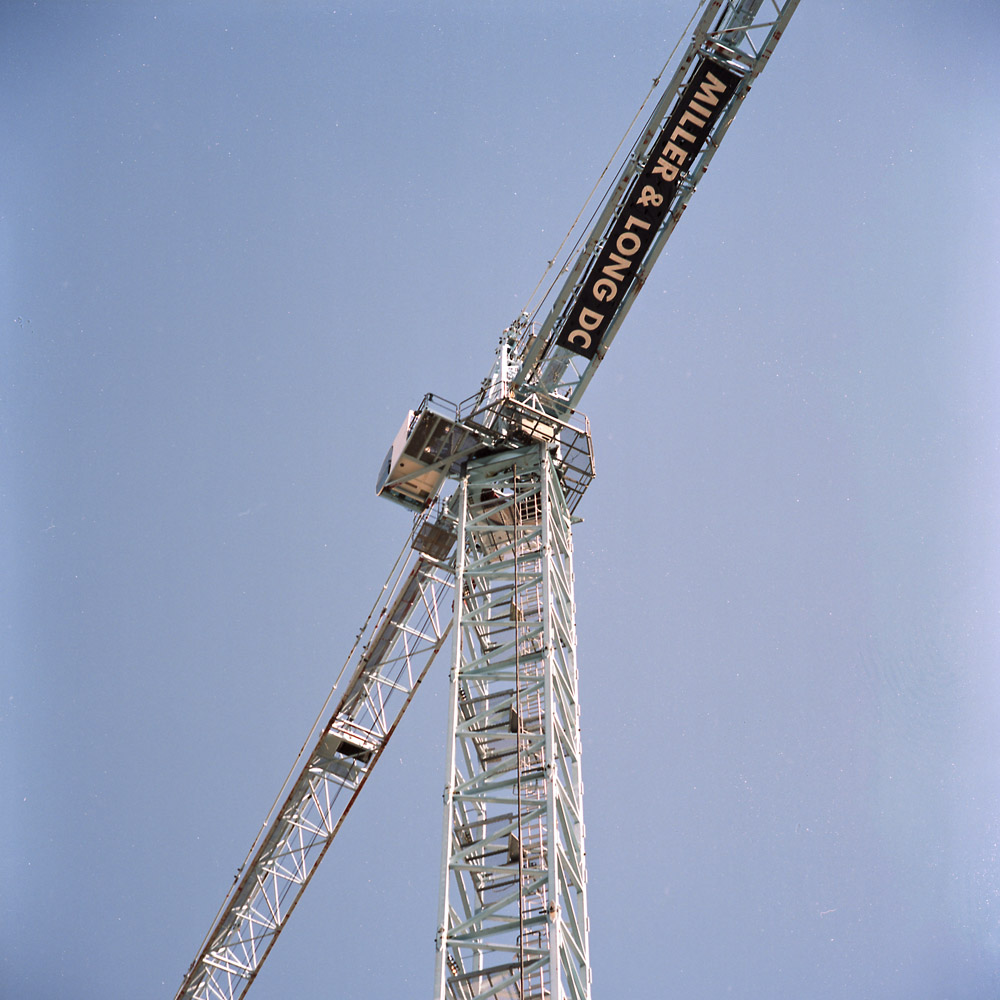
Although not strictly architectural, I thought the geometric forms of the crane against the solid blue sky made for a nice abstract and fit well with the overall theme; after all, it is a construction crane.
Miller-Long DC crane
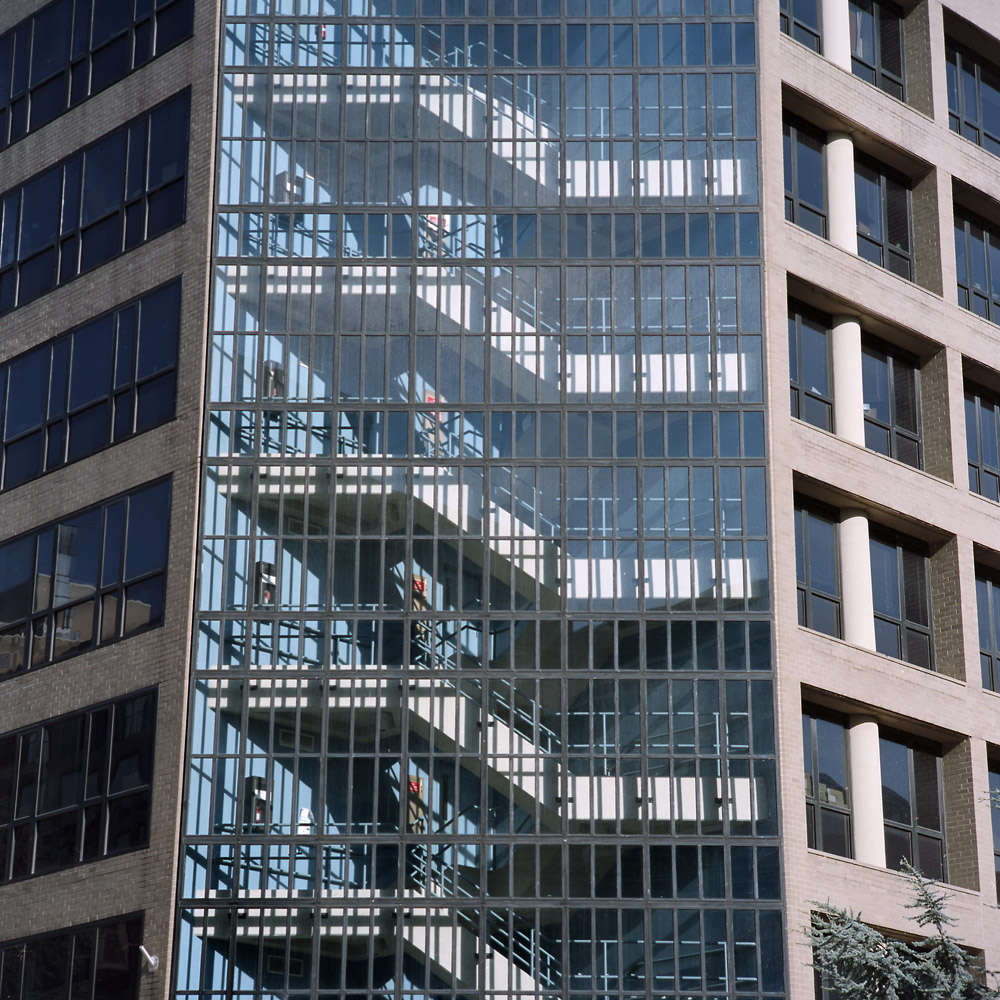
Far be it for me to accuse George Washington University of being architecturally avant-garde; most of their buildings blend in to the DC streetscape with an ennui-inducing banality. But their 1970s and 1980s brown-brick boxes do have some worthwhile details that break the monotony and catch the eye. Take this stairwell, for instance – the walls are blue, which pops out against the brown brick facade and dark bronze-color window trimming. And easily overlooked, the blue stairwell provides some continuity by breaking the space between the facades, each of which has a different styling for their windows. Without the stairwell, the contrast would be in high relief, and we’d think something went wrong during construction and/or they ran out of money and had to switch styles when they turned the corner.
Glass Stairwell, GW
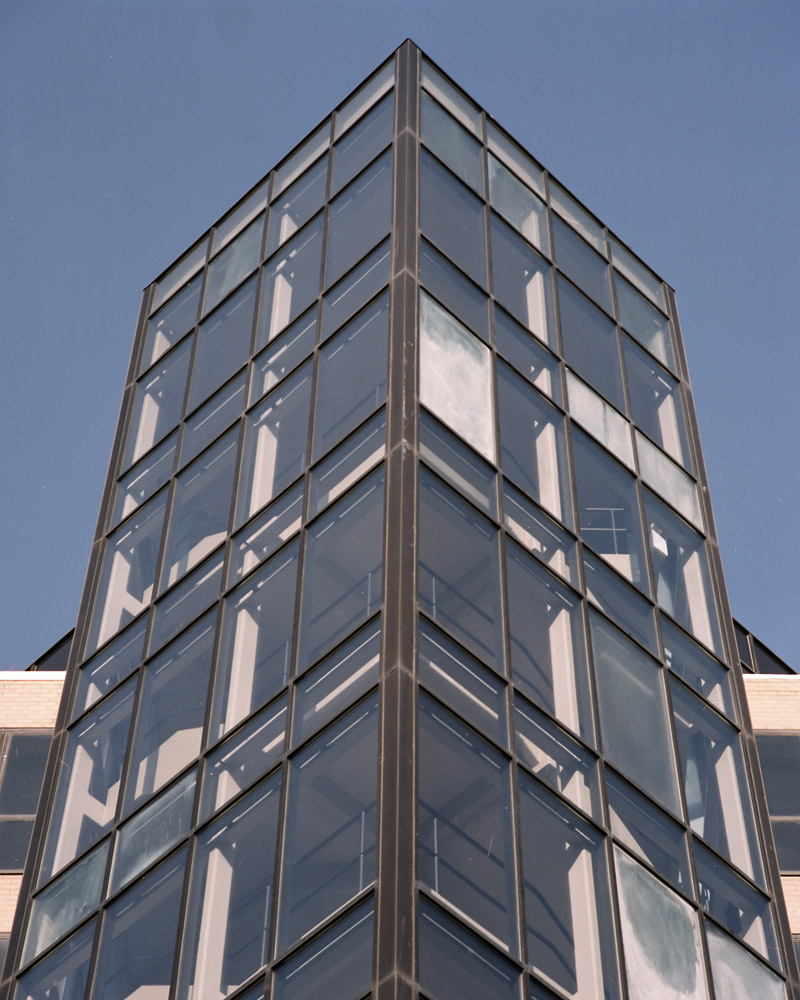
This glass tower thrusts into the sky like the prow of an ocean liner, cleaving the plane of the facade like an Arctic icebreaker clearing the channel into Archangelsk through a wall of sea ice (ok, I’m being a tad dramatic but I wanted SOMETHING to say about it).
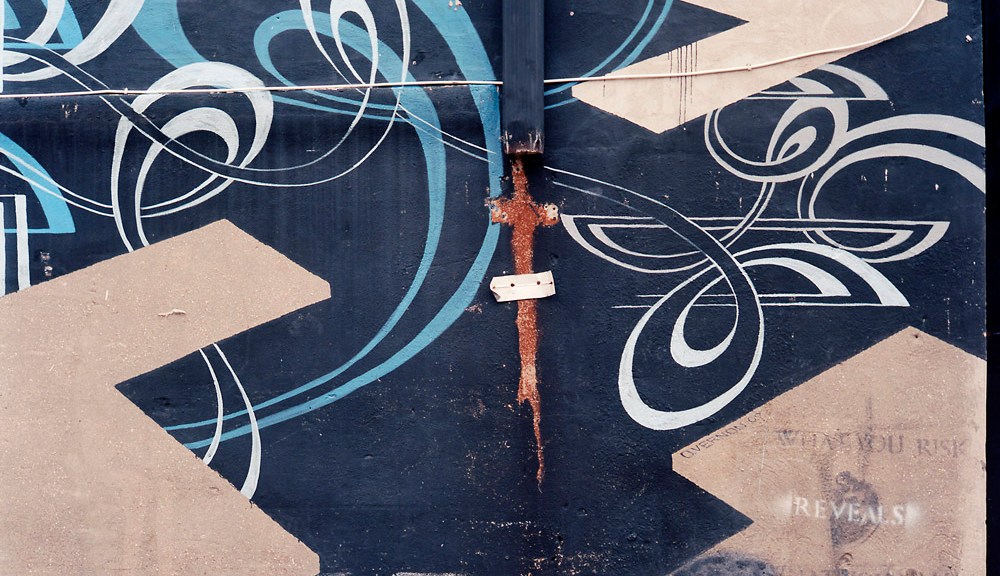
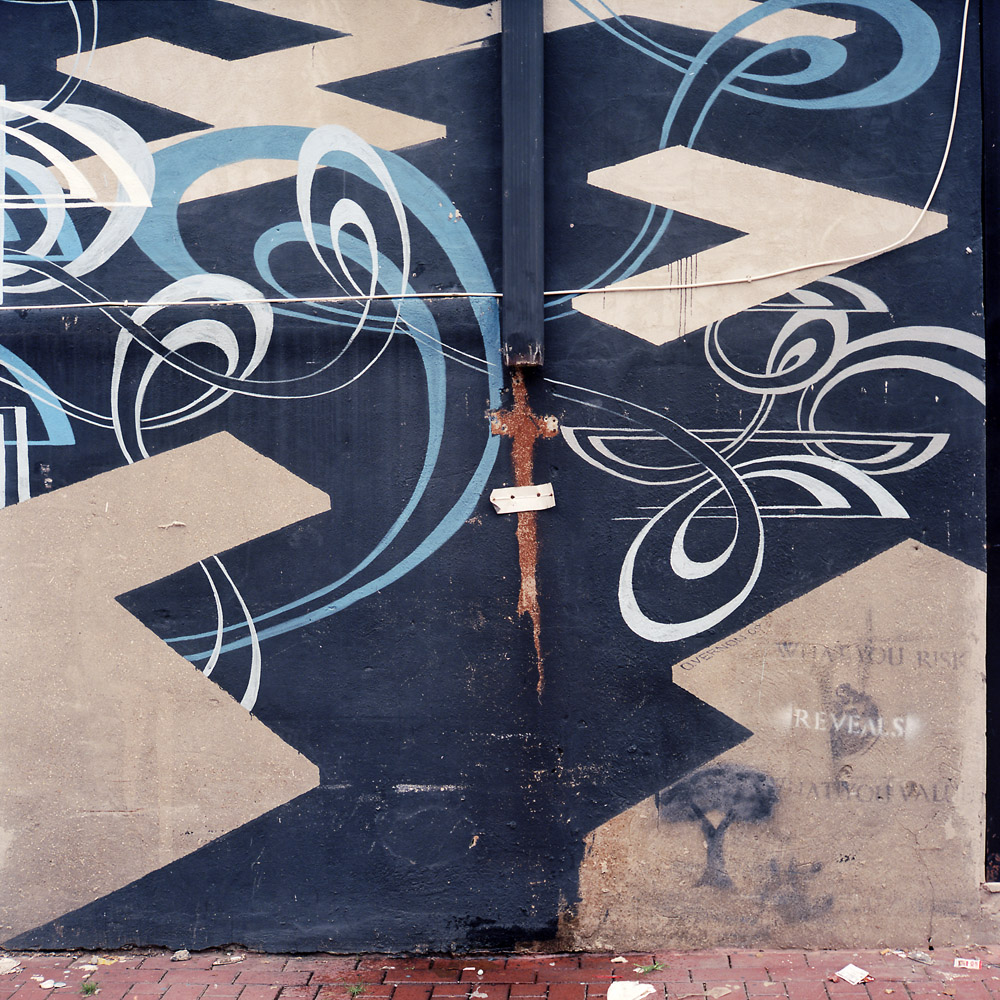
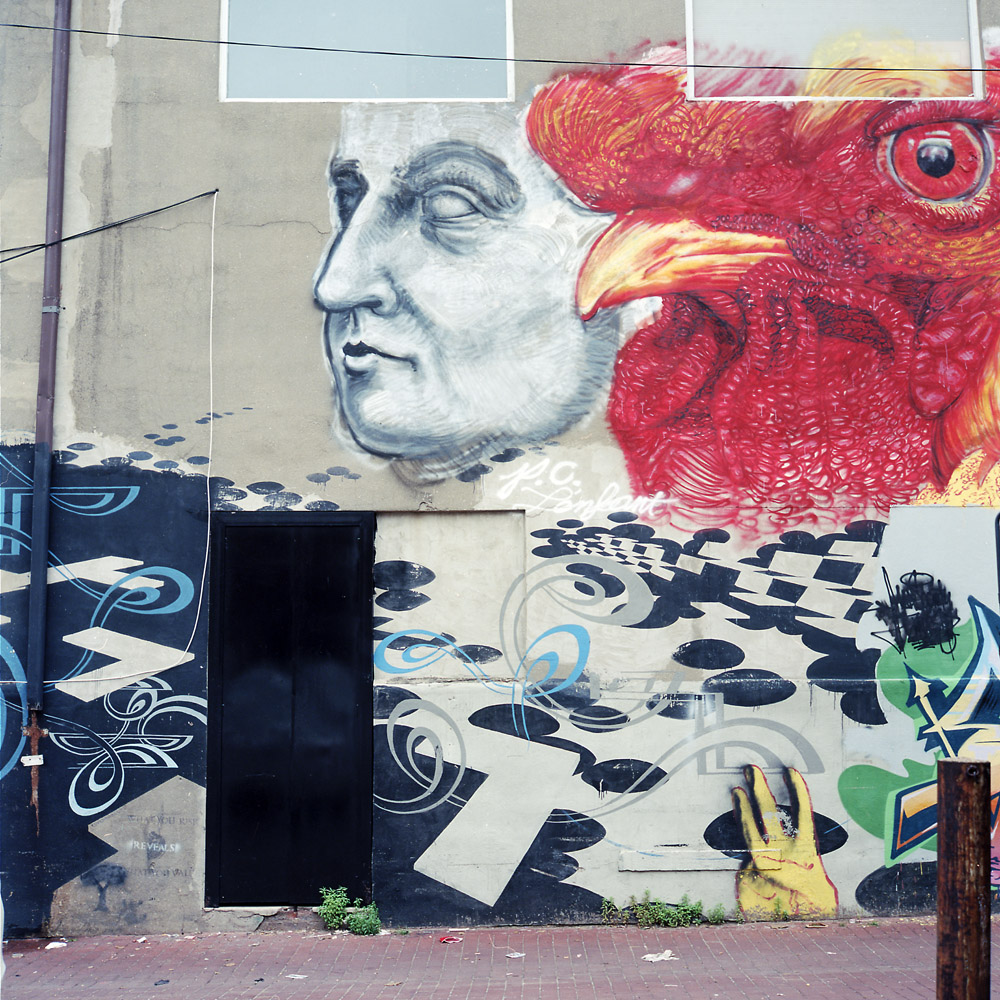
I often go on walkabouts on my way home from work with the Rollei in tow. I’m always impressed by the array of graffiti that’s been put up, and how it is becoming an accepted art form, with entire murals done in “graffiti style”. Here are some finds, most of them in a single alley off 14th Street.
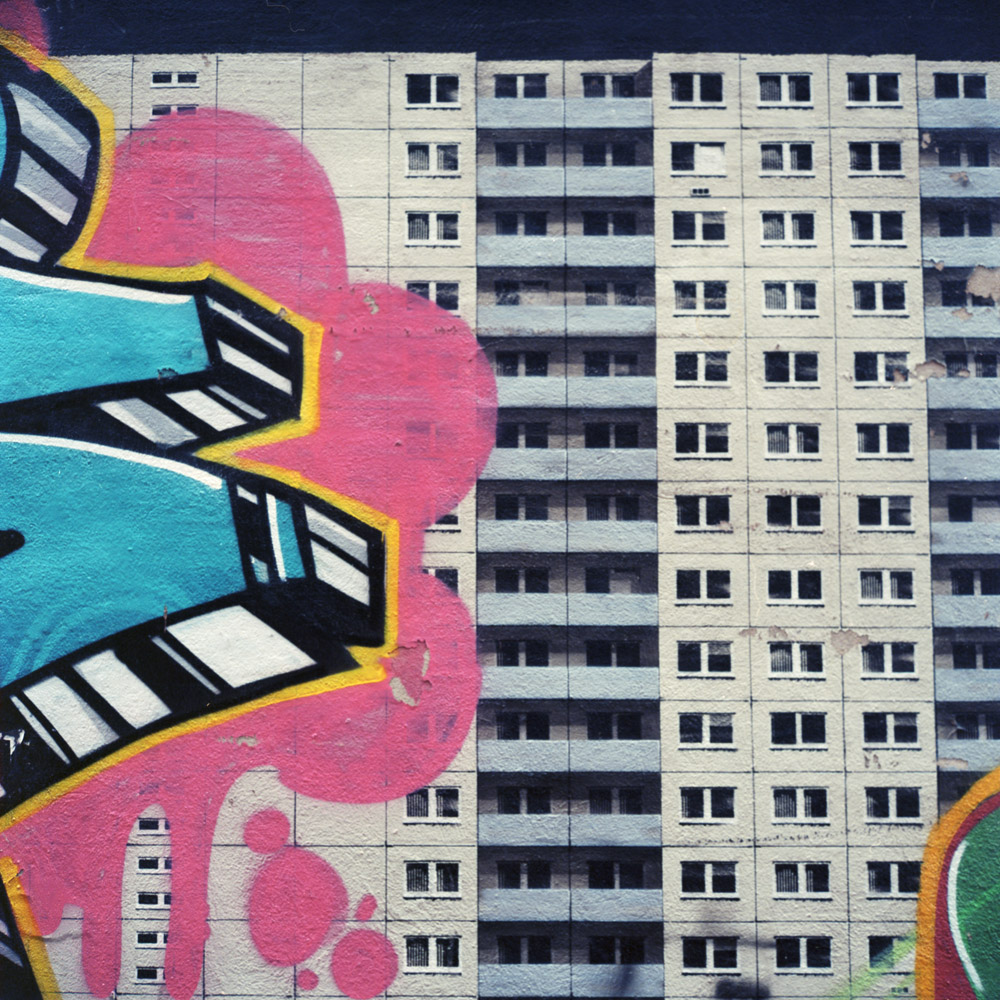
I’m particularly taken with this segment of the mural, because of the optical illusion. If you de-focus just a little bit so you lose the texture of the stucco, it really looks like someone has made a GIANT tag on top of an actual apartment building.
Optical Illusion
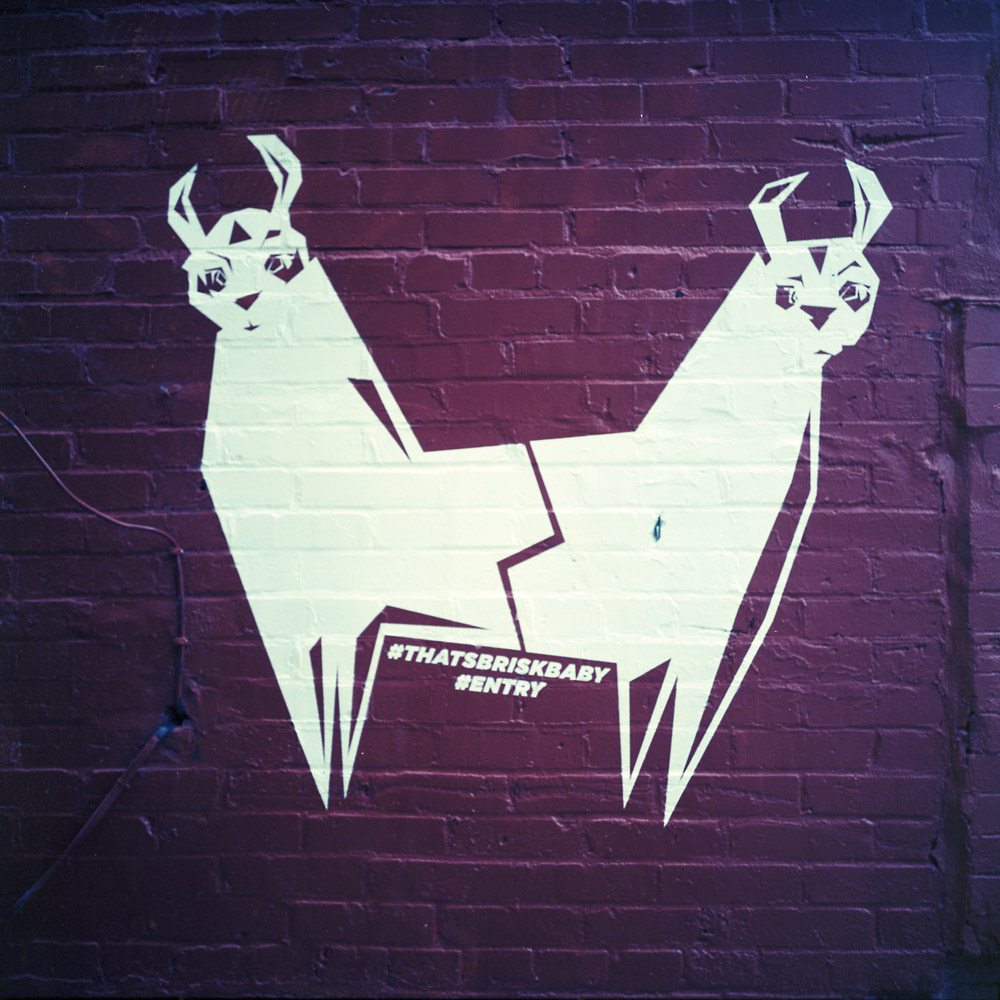
I forget exactly where the two-headed Llama is located, but it’s near the alley mural. Very different texture and style, obviously not the same artist (the Llamas are a stencil, whereas the mural is almost entirely freehand). But Llamas are always cute.
Two Llamas
I don’t know if the stencil is an add-on to the mural by the artist, or if someone else came along and tagged it on top of the mural. But the statement is both enigmatic and profound: “What you risk reveals what you value”.
What You Risk
Another M.C. Escher-esque optical illusion in the mural- when you first look at it you see a redhead with long, flaming hair streaming behind. Then you realize it’s a head with a chicken next to it. But it’s hard to keep seeing the chicken, and easy to go back to seeing the redhead alone.
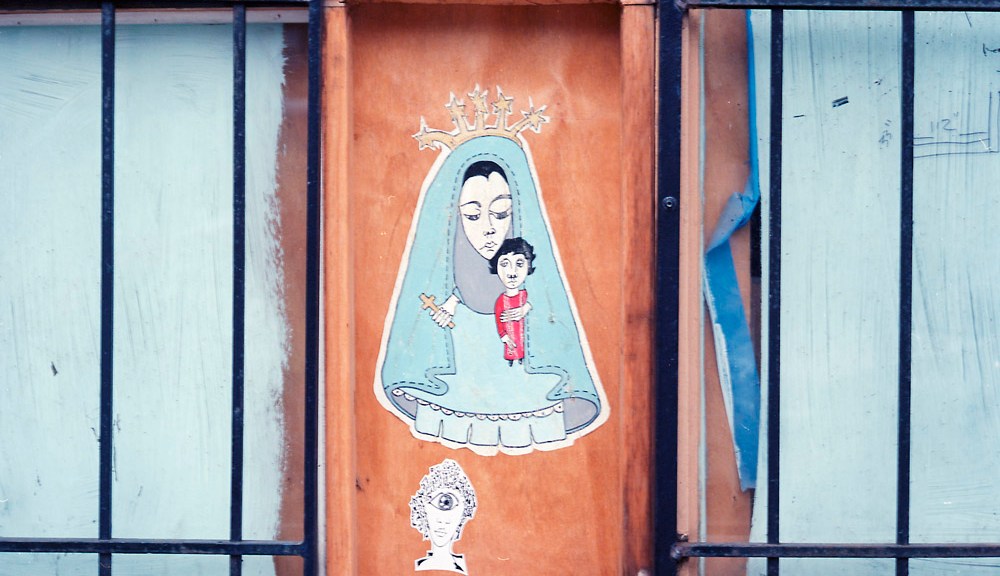
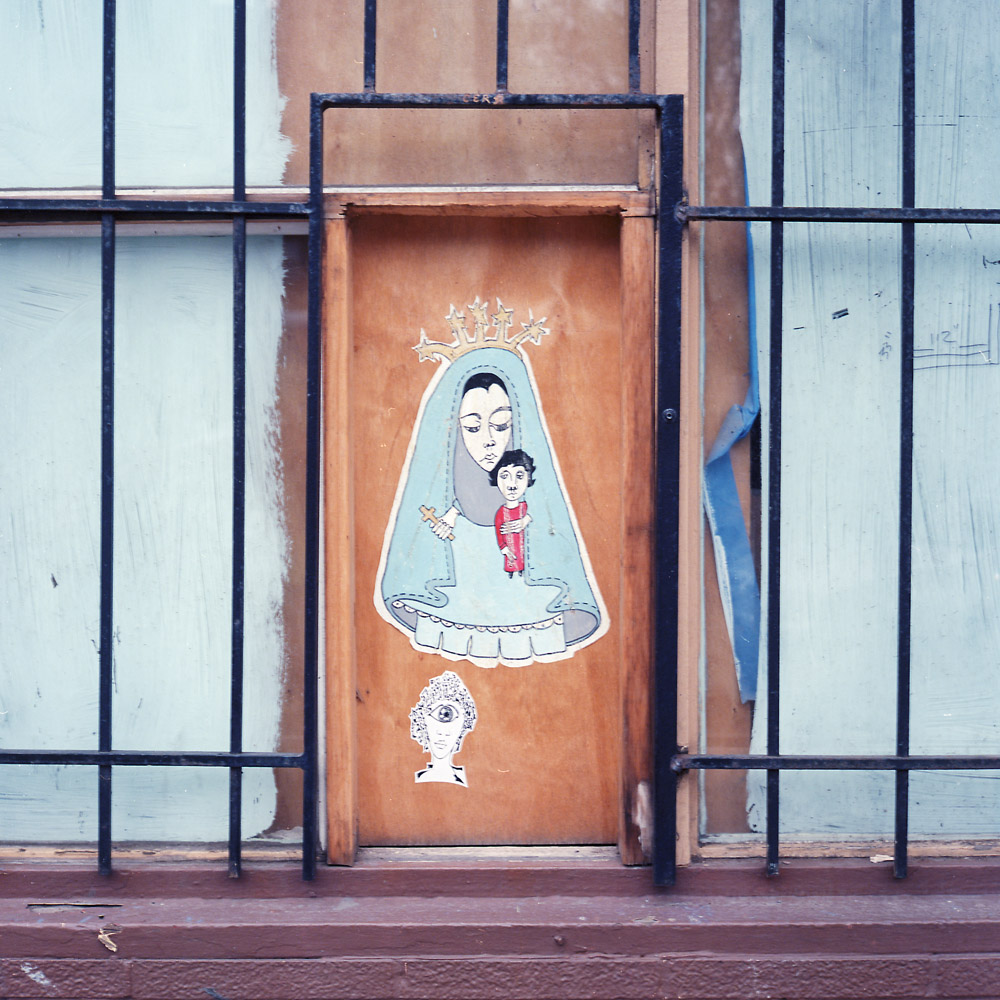
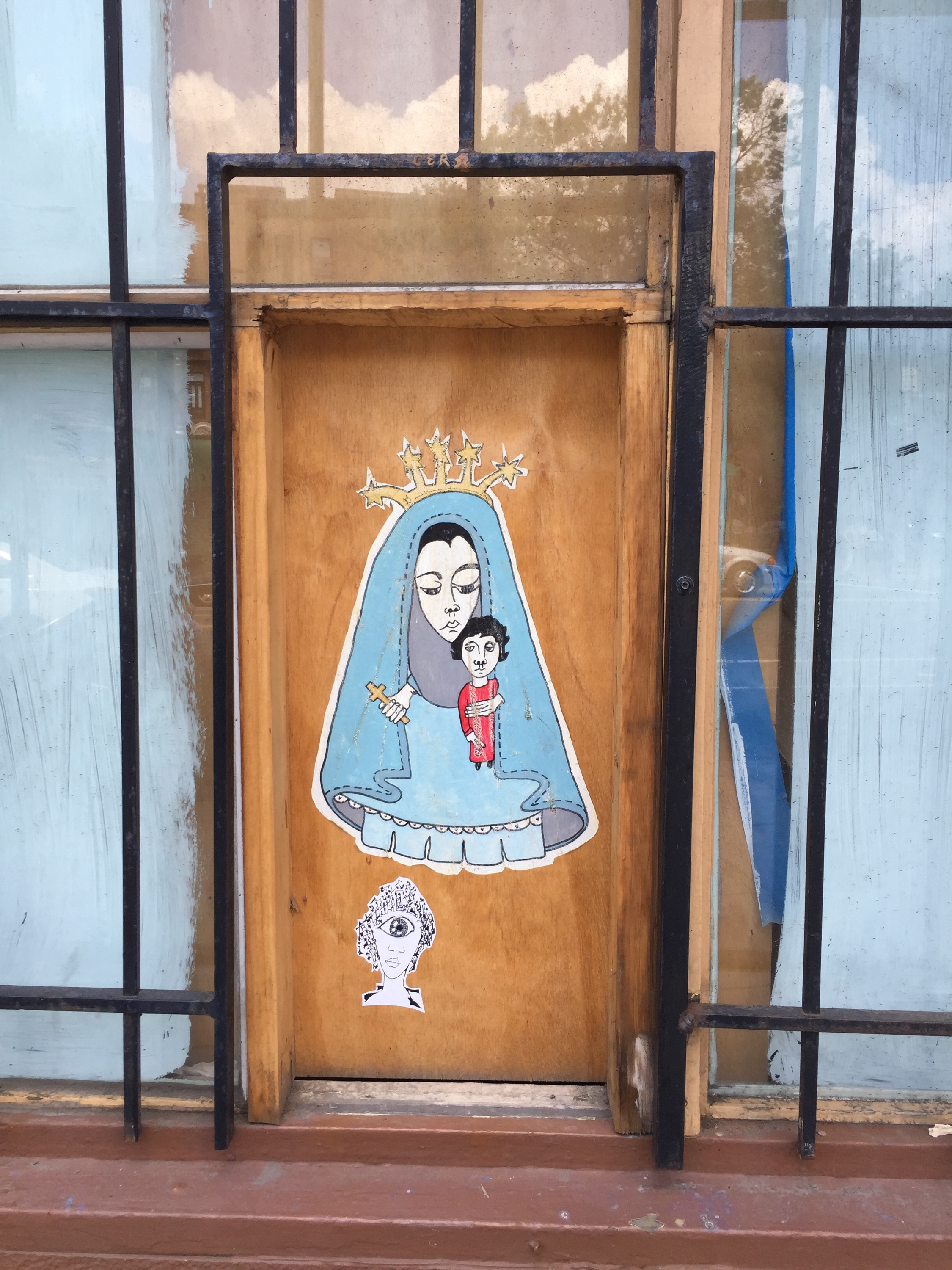
Another pairing of iPhone vs. Rollei in the battle of “the best camera is the camera you have”:
Mother Mary Passthru, RolleiMother Mary Passthru, iPhone
I was lucky that I got back around with the Rollei to take this shot because within a week of my return with the Rollei, construction crews had started work on the building and Mother Mary of the Takeout Passthru, the not-so-baby Jesus and the One-Eyed Wonder beneath them had been removed and replaced by a fresh sheet of plywood. Gone was the shrine to the blessed deli, replaced by the altar of rapid gentrification.



 dcphotoartist