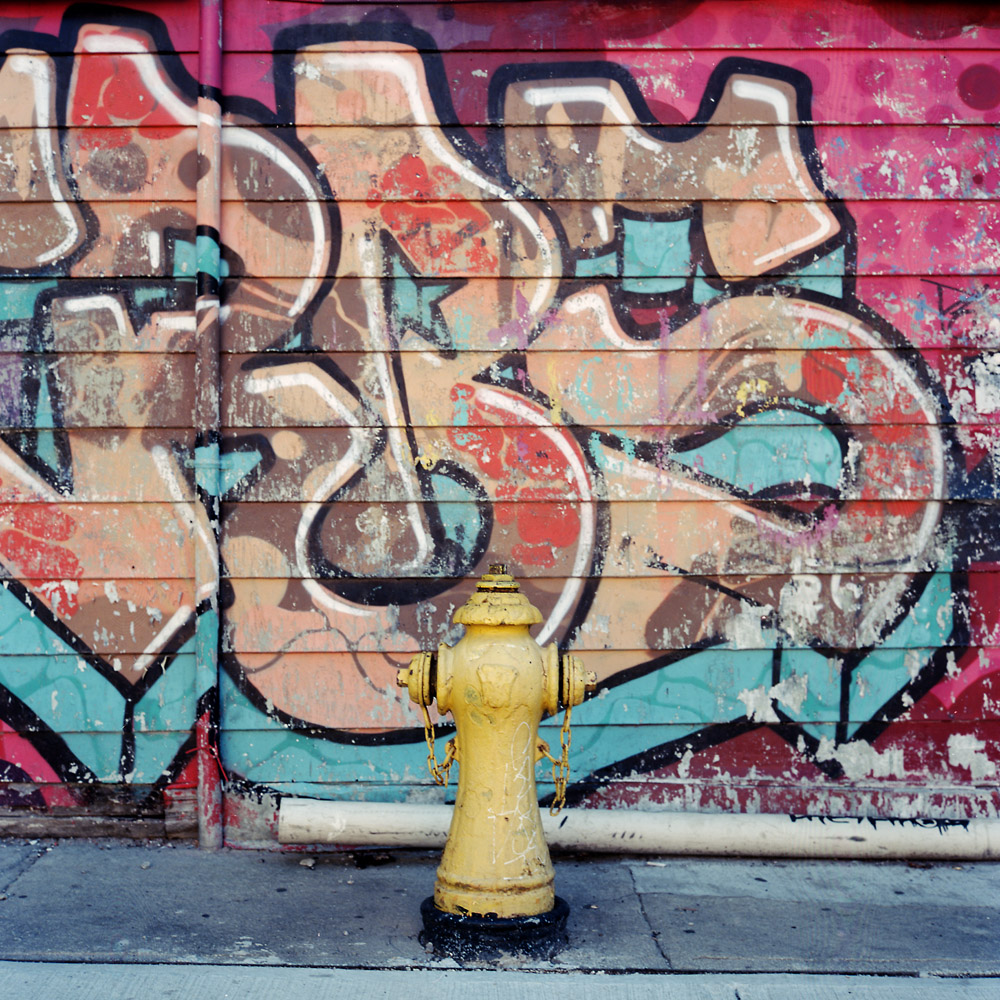
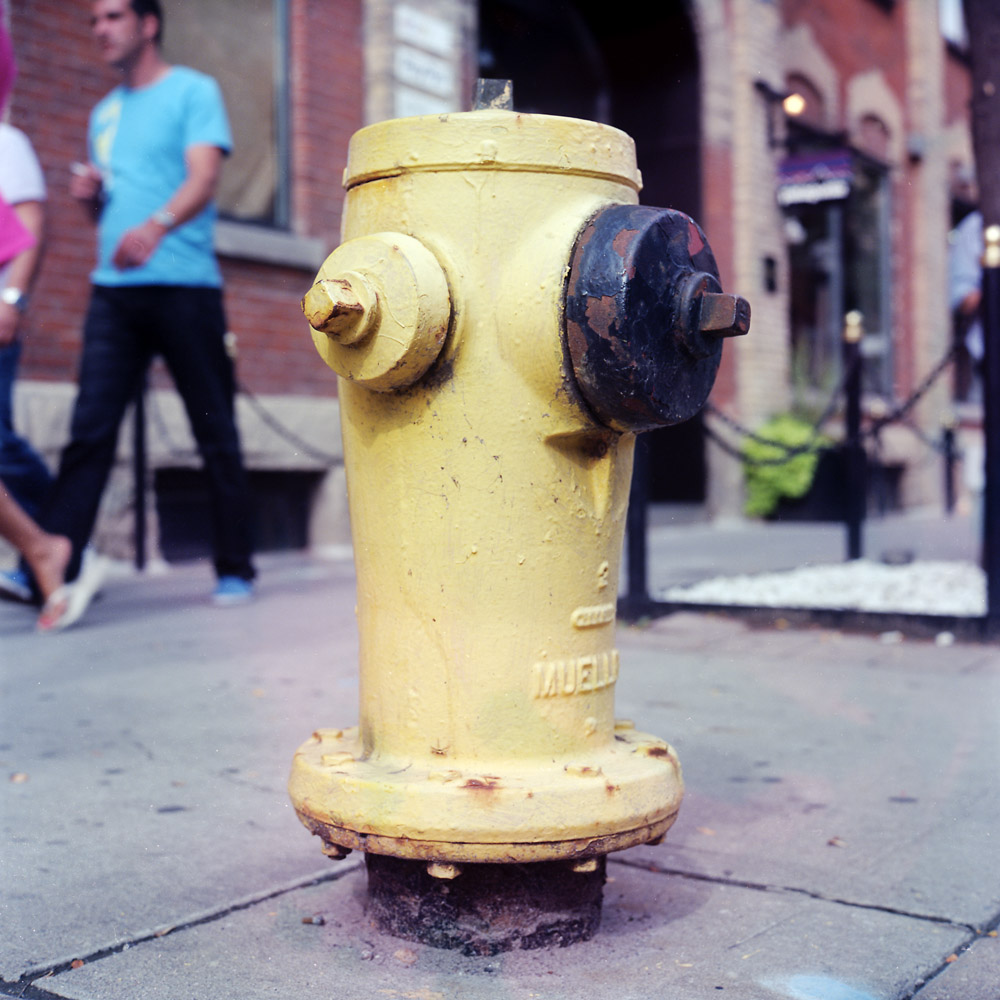
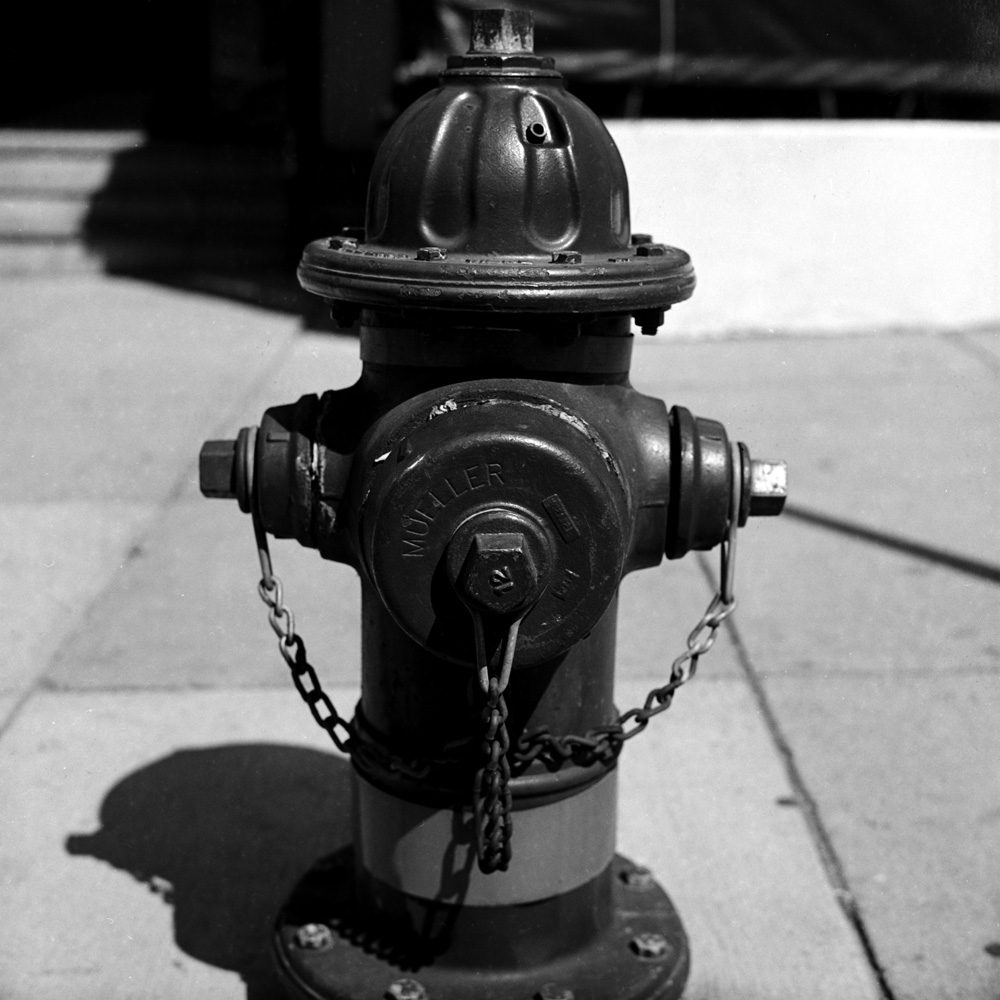
I know I’m repeating hydrants in the same post, but they’re substantially different takes on the same subject.
Hydrant, Graffiti
I also find it interesting that we have Mueller hydrants in Washington DC but they look very different.
Mueller Hydrant, TorontoMueller Hydrant, K Street, DC
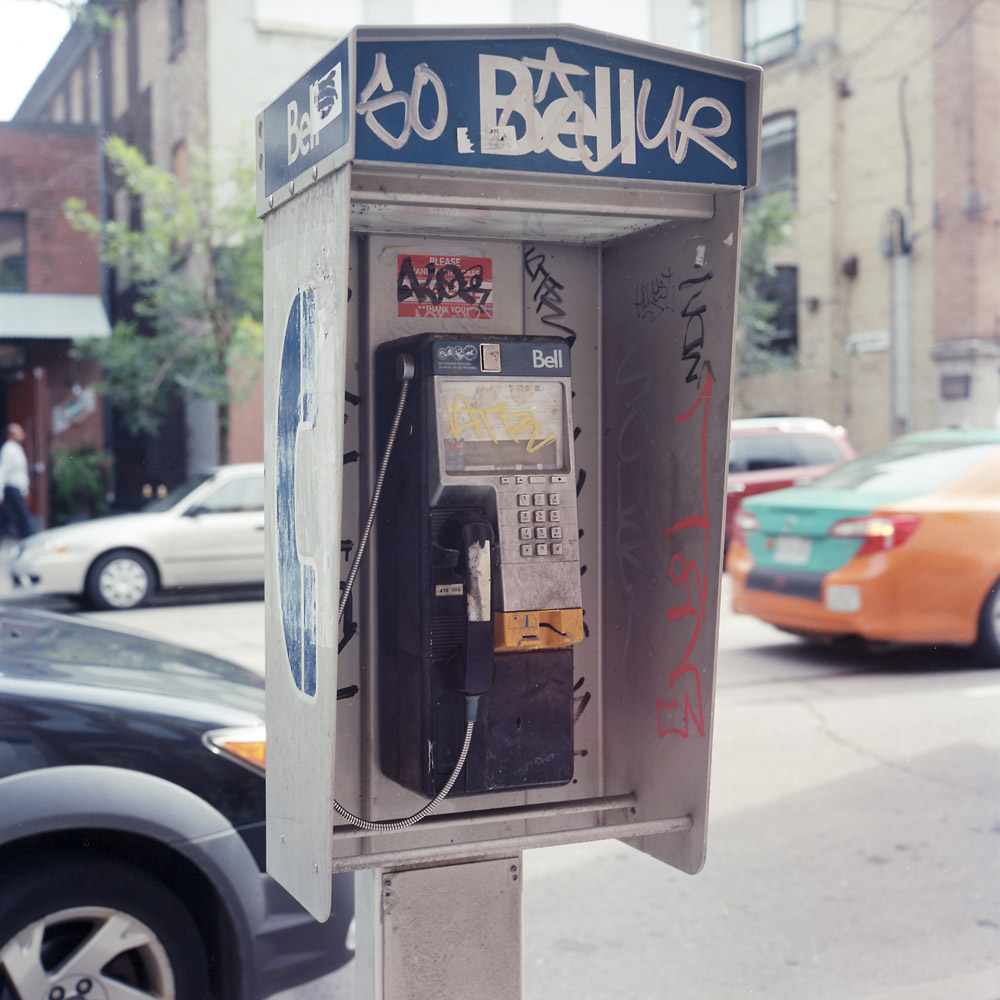
Another pay phone shot, showing the much-abused state of the poor neglected utility. I see a lot more pay phones around Toronto, but still not many people using them.
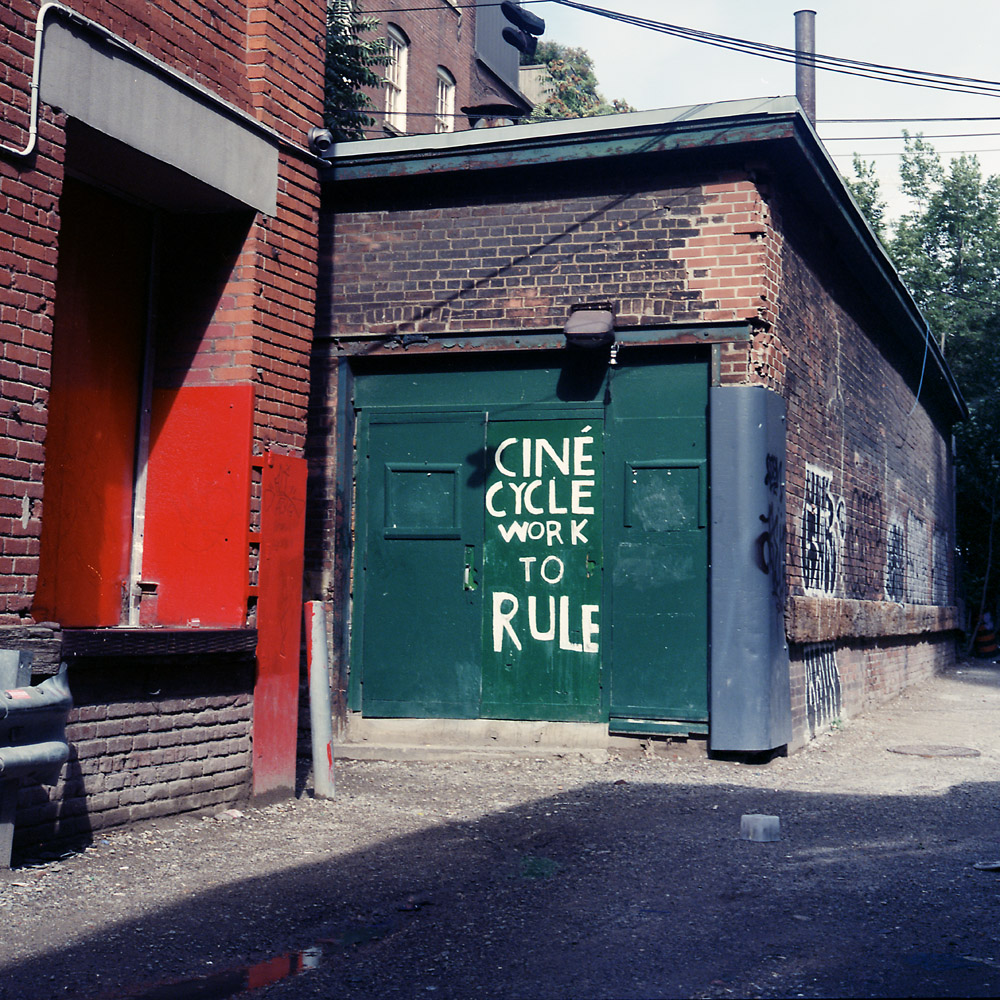
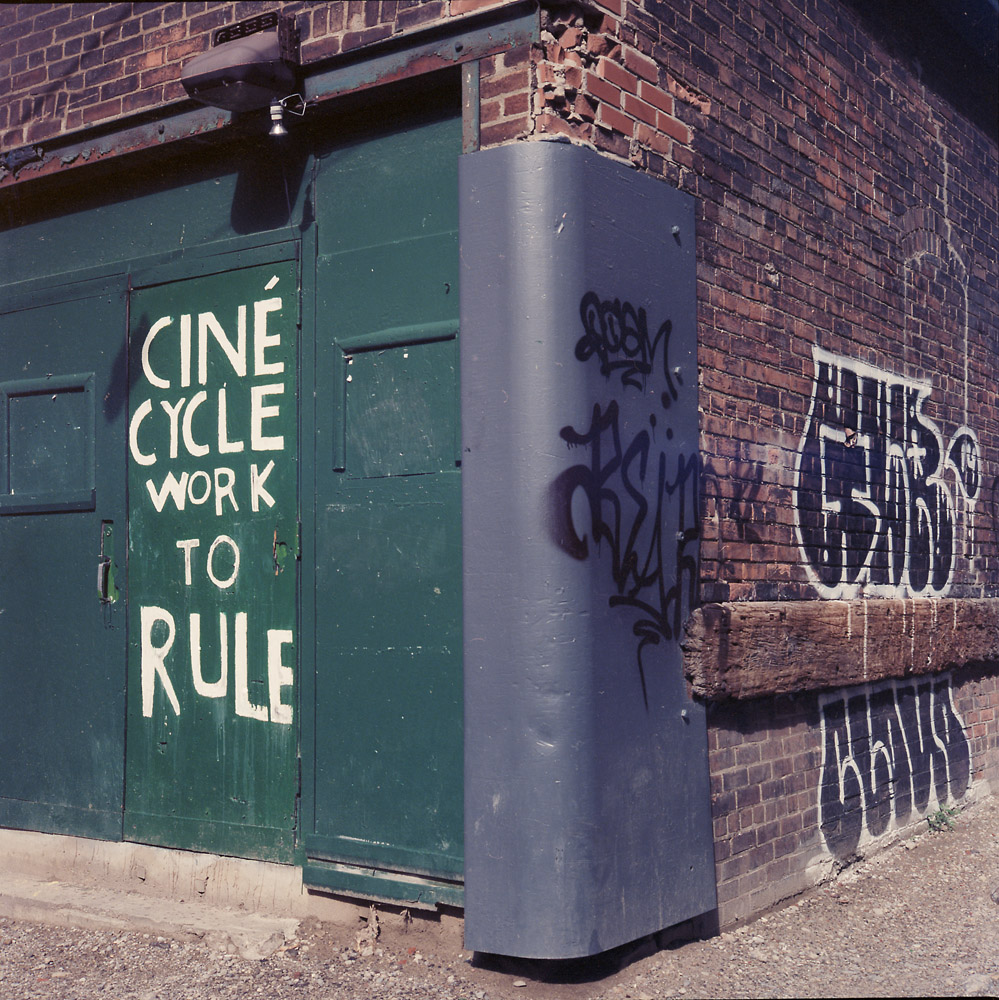
Two versions of the same scene- which do you think works better?
Cine Cycle – WideCine Cycle – Close
I’m still on the fence – the wide shot has that extra splash of color from the door on the next building, and the visually leading lines, but the tight shot pulls your attention to the sign.
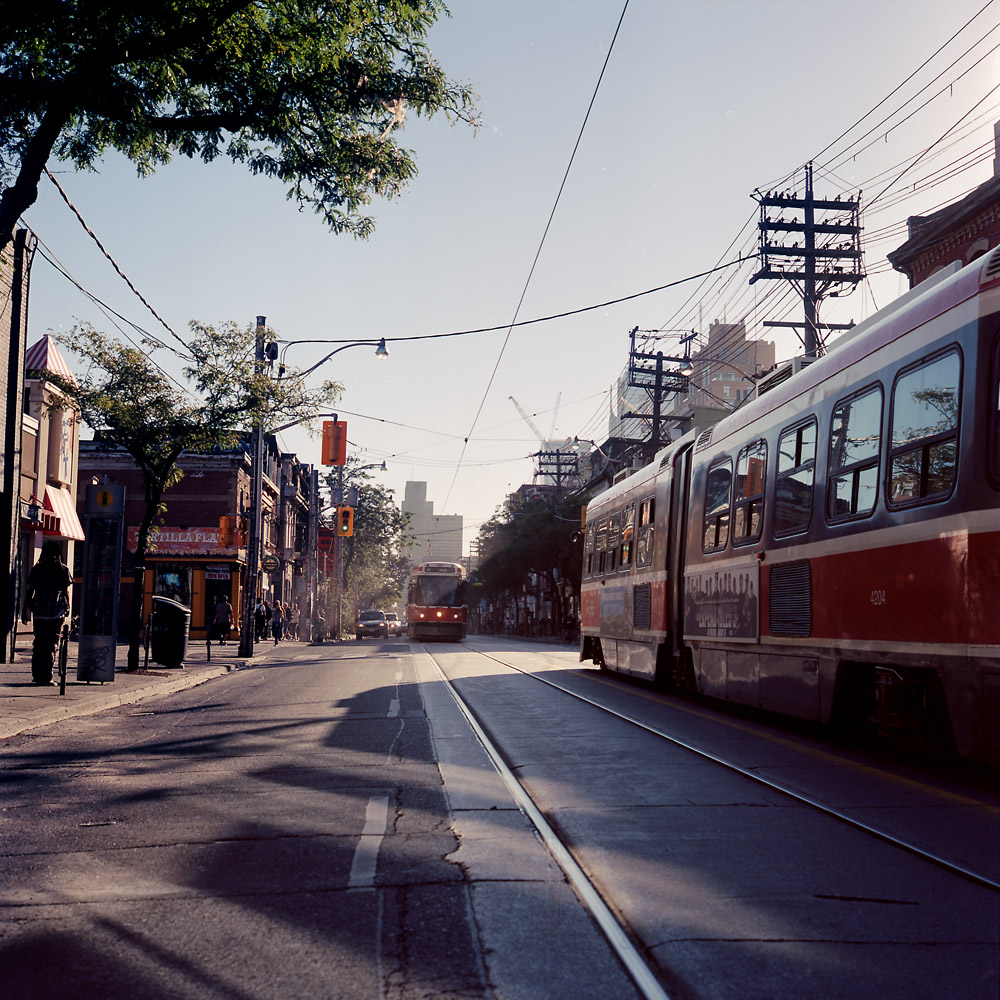
Two streetcars passing in the early morning light on Queen Street in Toronto. I loved the way the sunlight passed through the gap in the buildings to spotlight the distant streetcar.
Streetcars, Morning Light
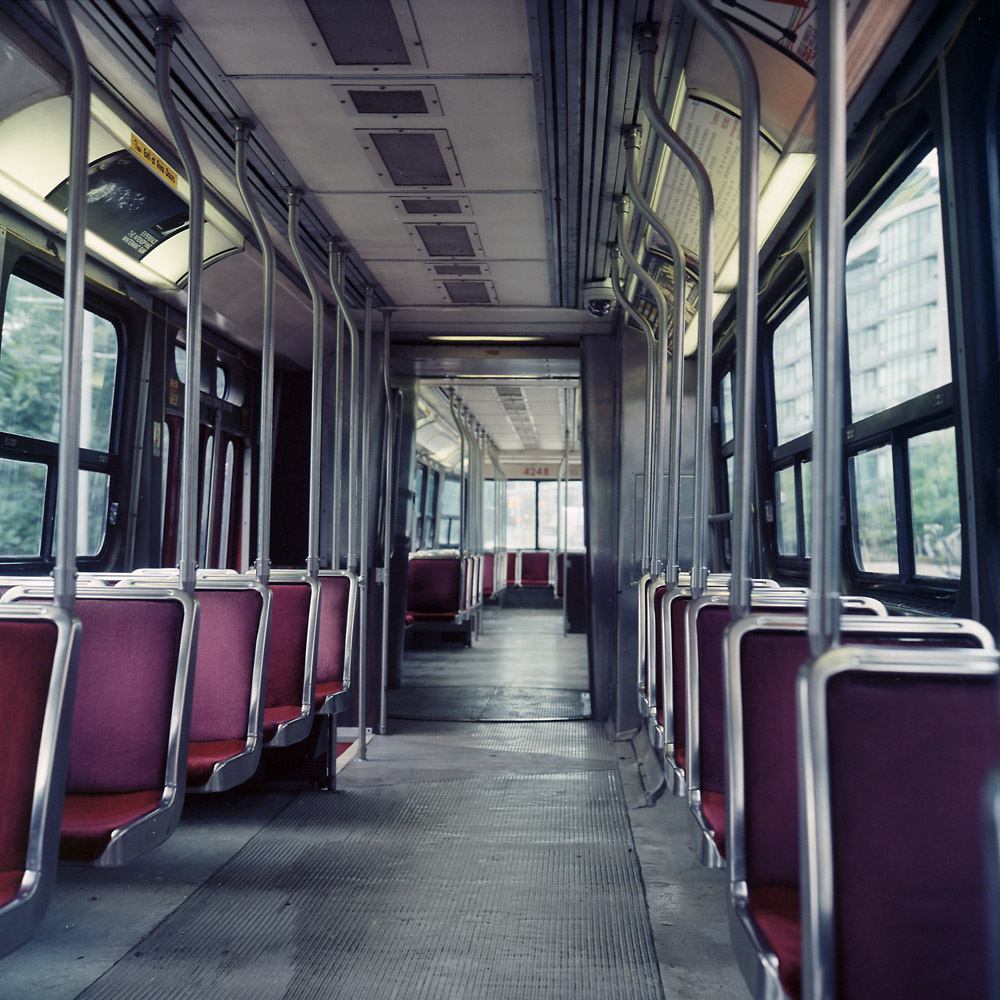
I was the first passenger on the line that morning – it’s one of the double articulated streetcars.
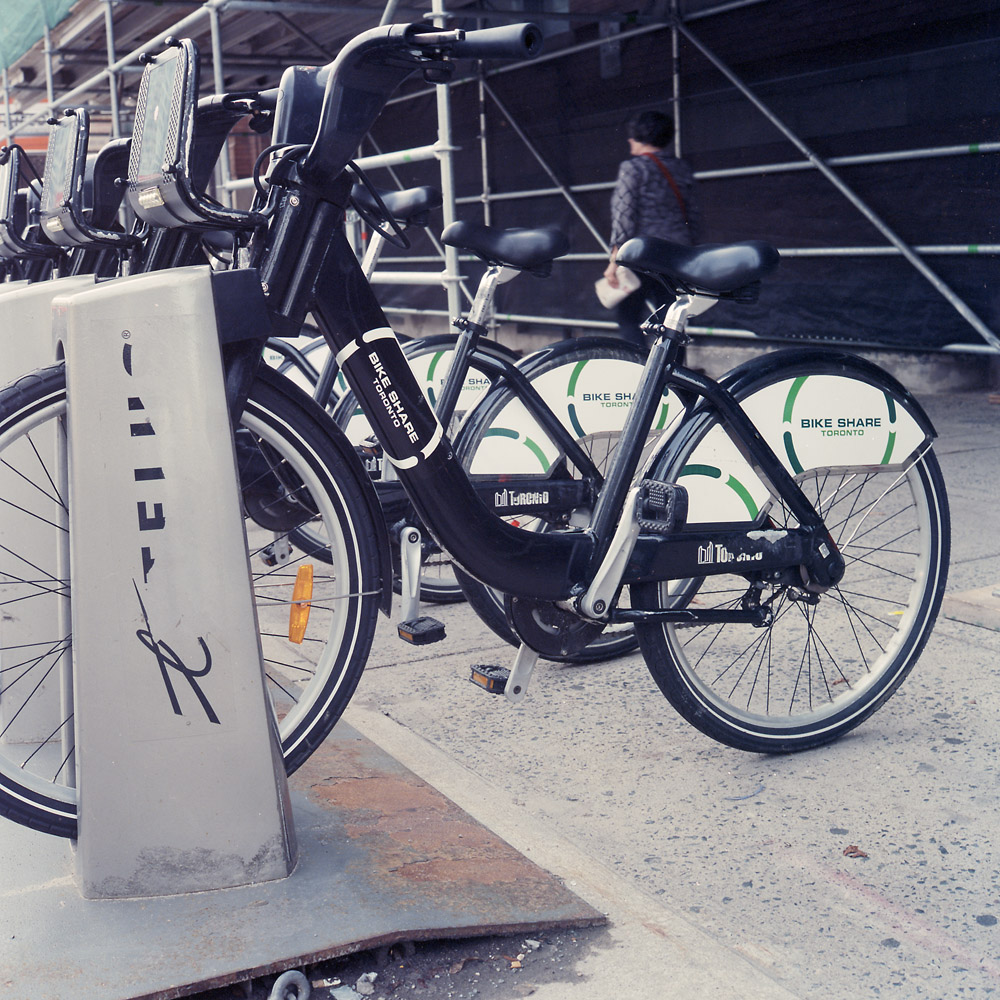
Bicycle culture is widespread in Toronto – lots of people ride them everywhere. The Toronto Bikeshare is older than some, and well established. I found myself photographing them as part of my work on public transportation (or at least as car alternatives).
Toronto Bikeshare
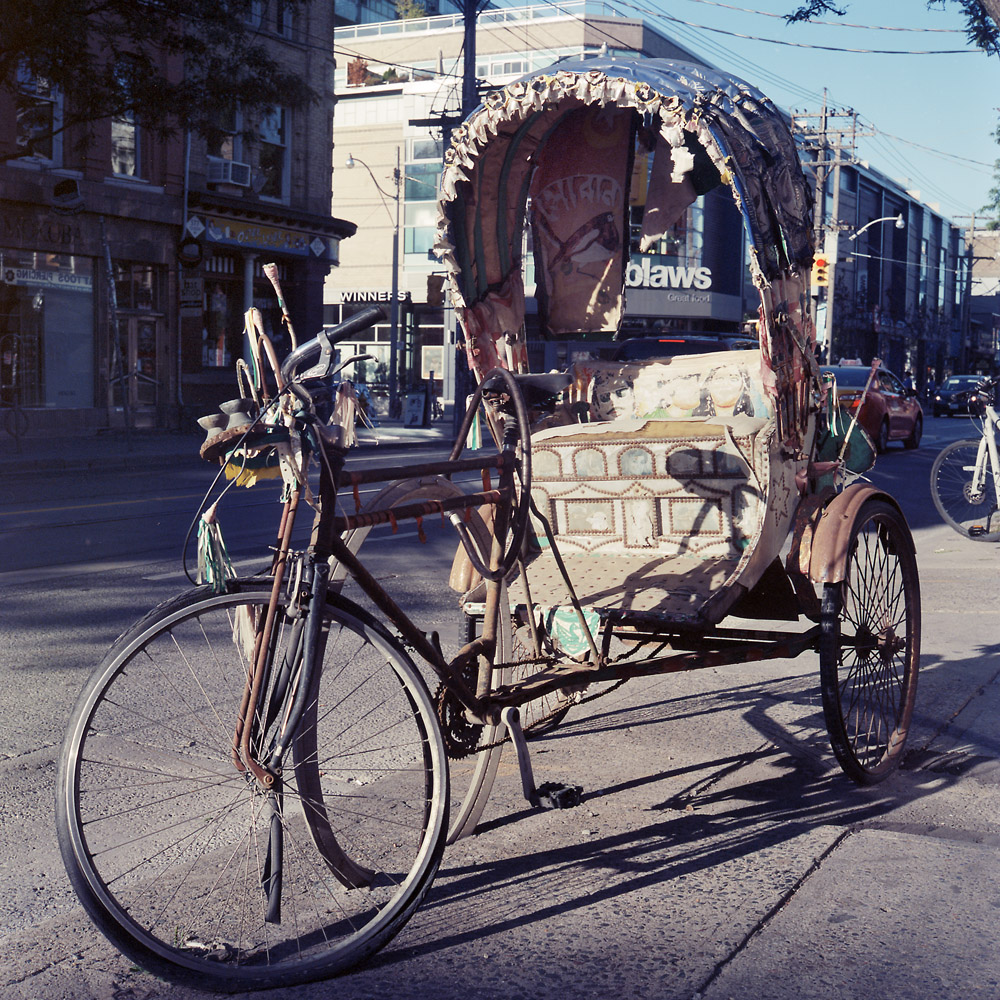
While THIS bike is obviously non-functional, it is extremely cool. It was imported from India god knows how long ago. With Canadian winters being what they are, it could be only a couple years in-country. This was found on Queen Street, a very bohemian and trendy part of town, still a little rough around the edges. There did not appear to be any particular association between the pedicab and a store or restaurant – it was just there.
Toronto Pedicab
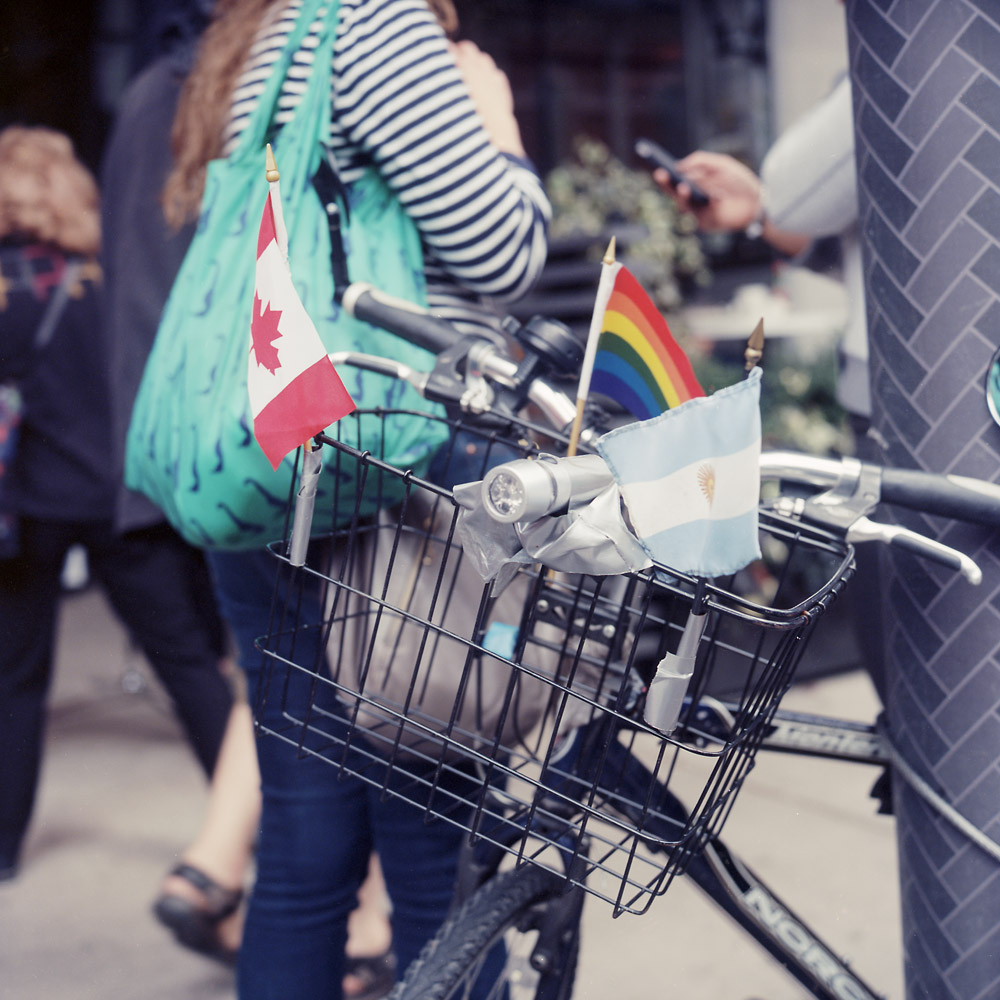
This was spotted outside the TIFF Bell Lightbox theater complex during the opening weekend of the Toronto International Film Festival. It is emblematic of the multi-cultural, open-minded Canadian attitude toward just about everything. Canada, Argentina, Gay… it’s all good.
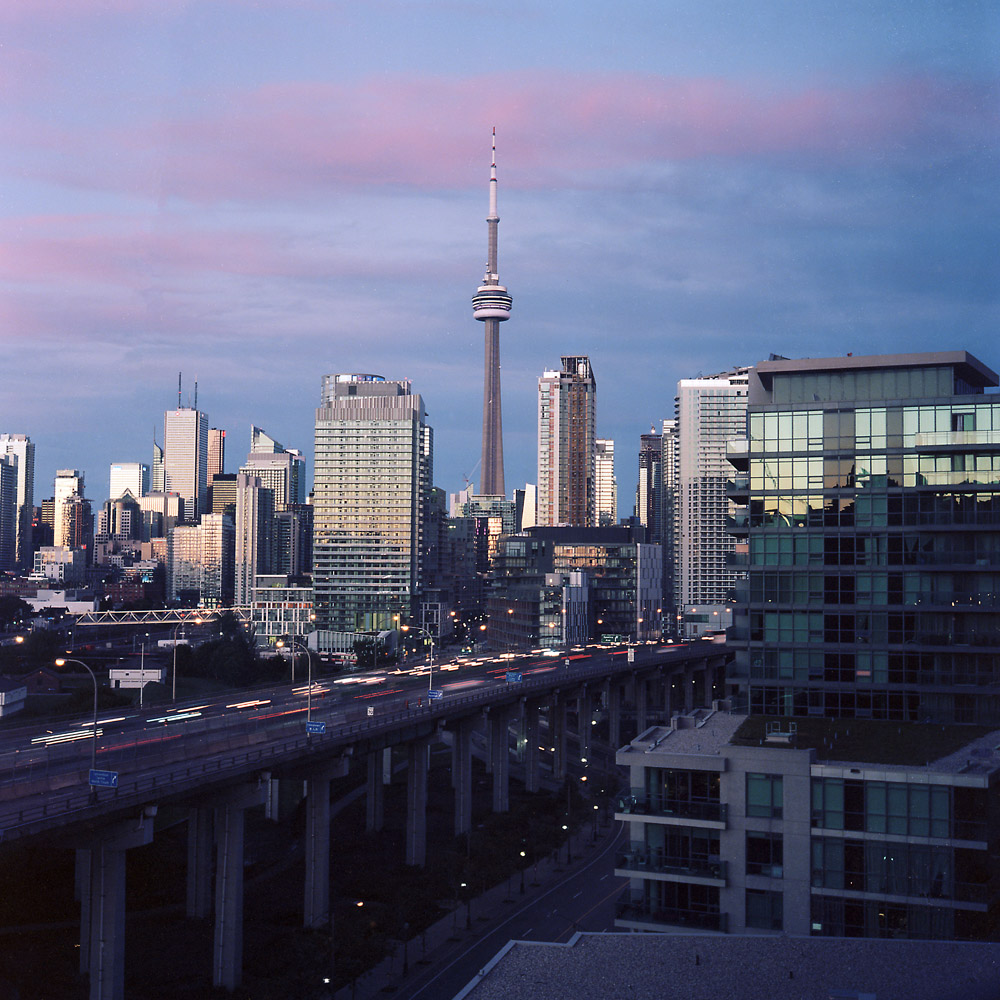
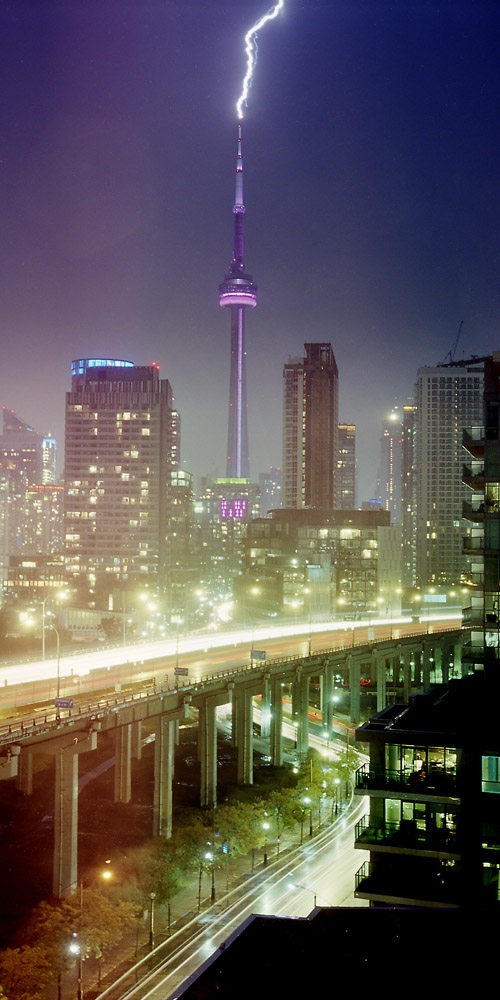
Ok, this one gets its own shot because it’s just too cool for school and doesn’t play well with others. I was up in Toronto for the Toronto International Film Festival last weekend. I rented an apartment on Fort York Boulevard, right down by Lake Ontario. The apartment had a view of the downtown skyline, including the CN Tower, which is the tallest structure in North America, and if I recall correctly, the 15th tallest in the world. As such, it attracts lightning strikes. I was lucky enough to be there for a late-summer thunderstorm, and to photograph it through my apartment window during that storm, and catch a shot of the CN Tower getting struck.
CN Tower, Lightning
I promise you it was far more impressive in person than it is in the photo.
These two portraits are natural light portraits I took of my parents in their kitchen. These were play-around shots with my Contax RTS III and the 50mm f1.4 Planar lens for it. I wanted to see what the out-of-focus areas looked like when shot wide open. I think the shot of my mom with my dad in the background has an extremely painterly quality to it and really shows off the lens’ capability. Now it makes me want to use that lens more!
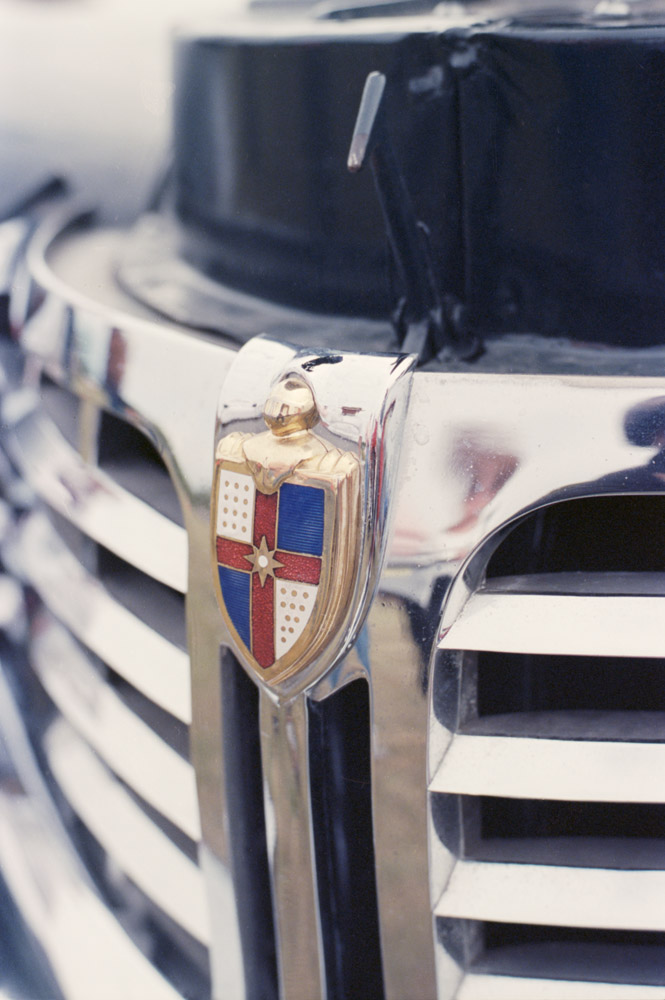
The grille of a 1947(I think – might have been a 46 or a 48) Lincoln Continental. The hood is raised in this shot to show off the engine.
Lincoln Continental Grille
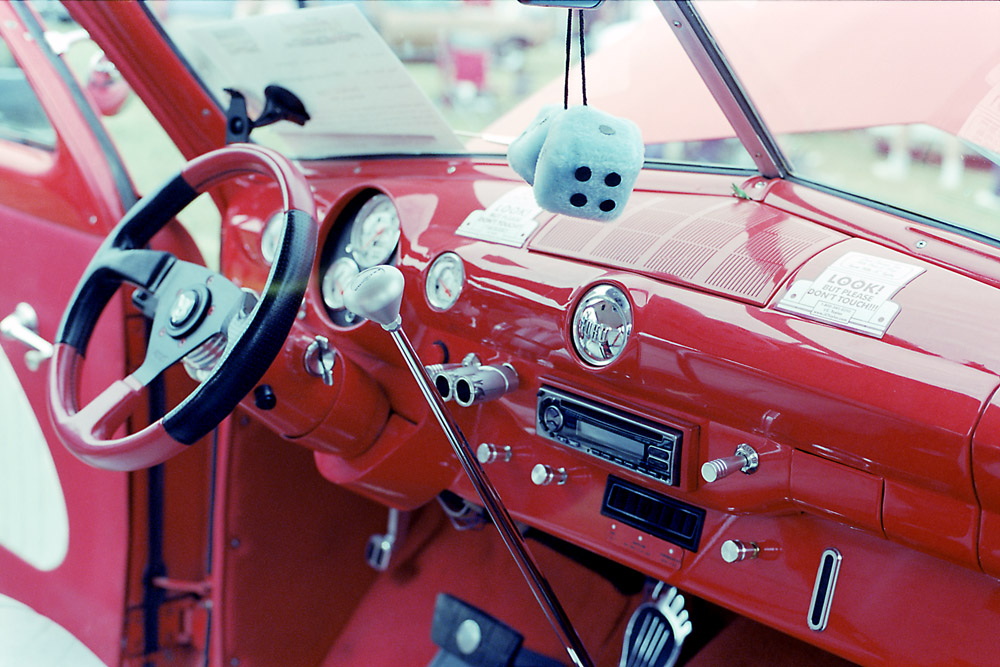
a 1950 Ford hotrod. Note the modern steering wheel and stereo alongside the otherwise traditional dashboard.
50 Ford Hotrod Dash
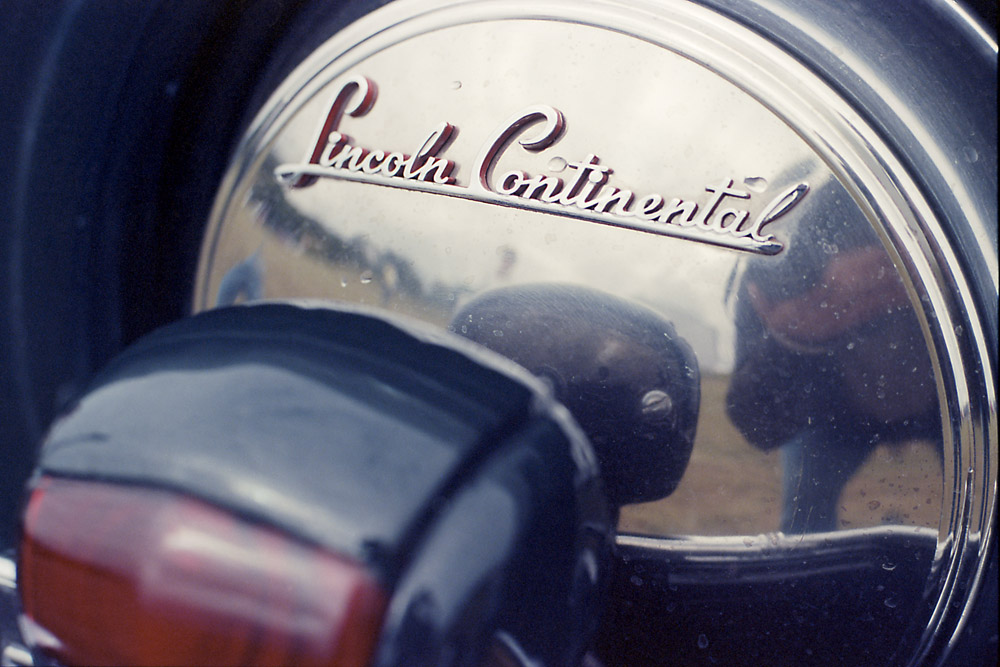
The Lincoln Continental had it’s spare tire mounted on the rear instead of in the fenders, the “continental” style. I’m not sure if the name had anything specific to do with the choice of how to mount the spare tire or if that was coincidence. The downside is that mounting the spare that way makes access to the otherwise commodious trunk rather difficult, as you have to lift your bags and parcels over the spare to access the top-loading trunk. I drove a 1962 Nash Metropolitan in high school that had a similar spare tire mount, the only thing keeping it from being a royal pain was the fact that the car and the tire were small enough that it was easy to clear the tire. For awkward cargo, the seat-back folded down to allow easier entry to the trunk.
Lincoln Continental Tire
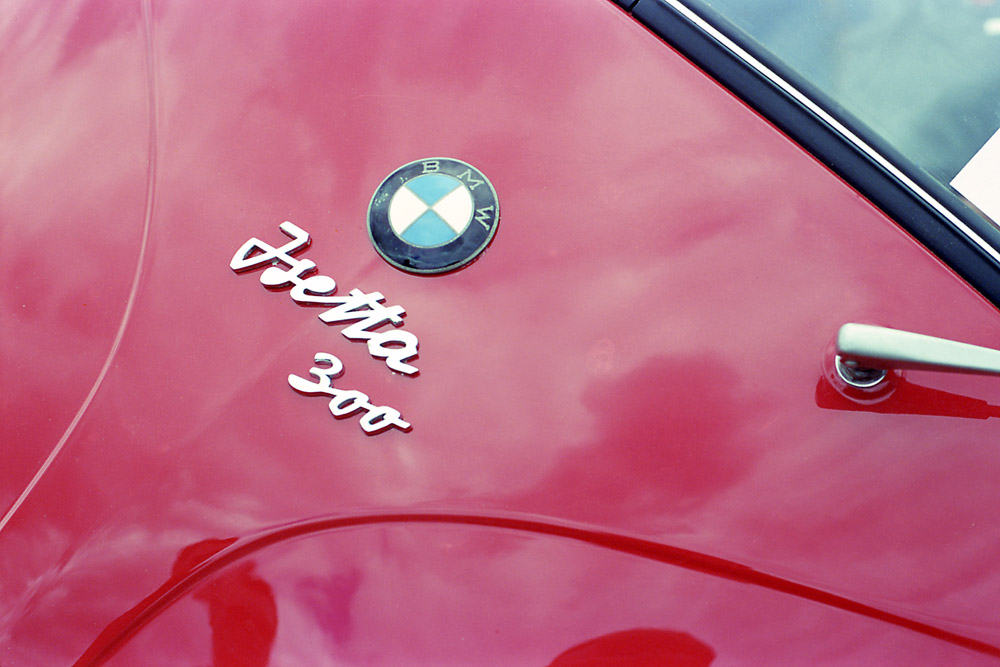
Not your neighbor’s BMW – this is the hood of an Isetta, a post-war compact BMW that is very much a spiritual ancestor to the Smart car, except it was made by BMW, and had a front-opening door to which the steering wheel and speedometer were attached and swung out of the way to grant access. Not exactly a 5-star crash safety rating. Isettas are climbing in value now, but I can remember when they were not much more expensive than my Met.
Isetta Hood
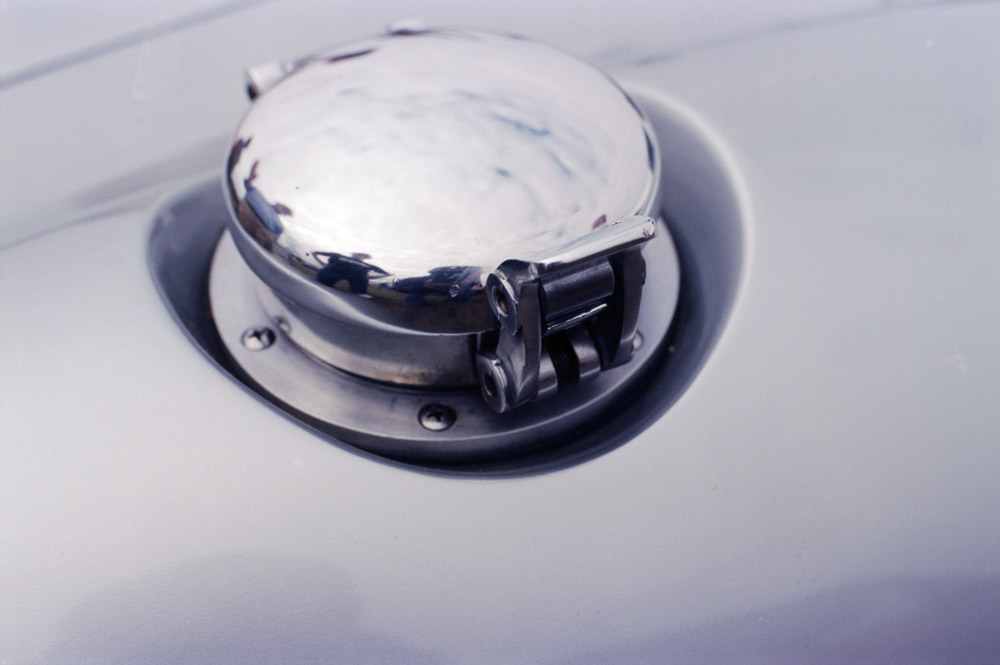
The fuel cap to a replica AC Cobra. The original AC Cobras are now so valuable (a vintage 427 Cobra is well north of $500K, and with racing history or other special qualifications, they sell for over $1M!) that probably 99% of the ones you will see on the road and 90% of the ones at car shows are replicas. This one happened to be an exceptionally well made replica with highly accurate details, like the fuel filler cap.
Sometimes, I do actually break out the 35mm and shoot. These were all taken at a local car show, playing around with my Contax RTS III and the 50mm f1.4 Planar lens. I think you really can tell a difference between shots taken with the RTS III and other 35mm cameras because of the vacuum film pressure plate – sucking the film perfectly flat at the time of exposure does lead to a sharper negative overall, or at least takes the film’s flexibility out of the equation and lets the lens shine through. These were taken with my favorite color negative film, Kodak Ektar 100.
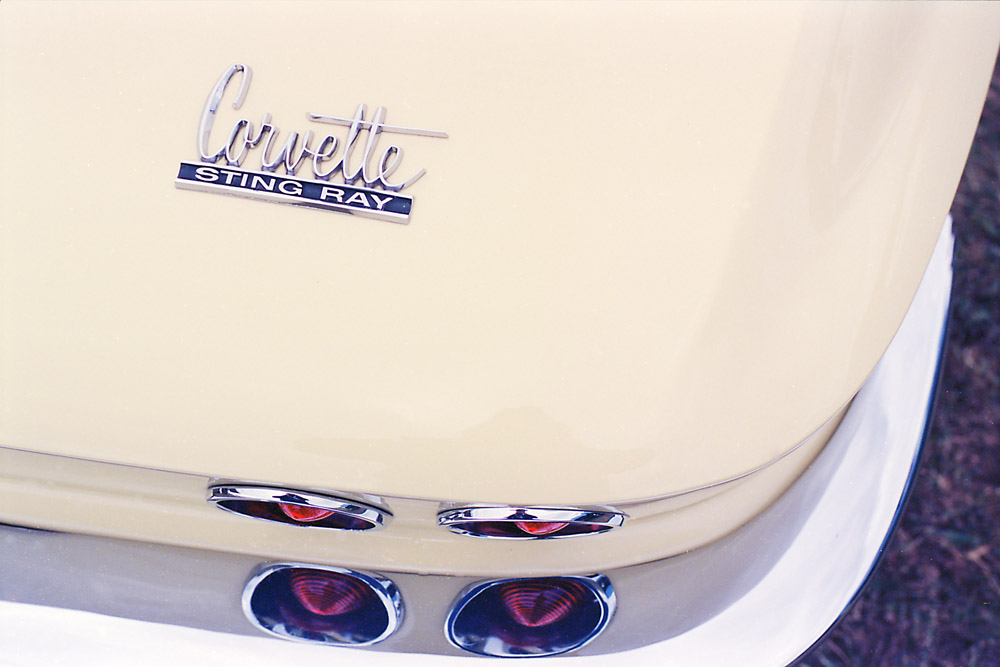
I just love the simplicity of the Corvette rear end design in this composition – the field of cream yellow, offset by the curve of chrome and the two red taillights reflected in the bumper. It doesn’t get much better than this.
Corvette Bumper
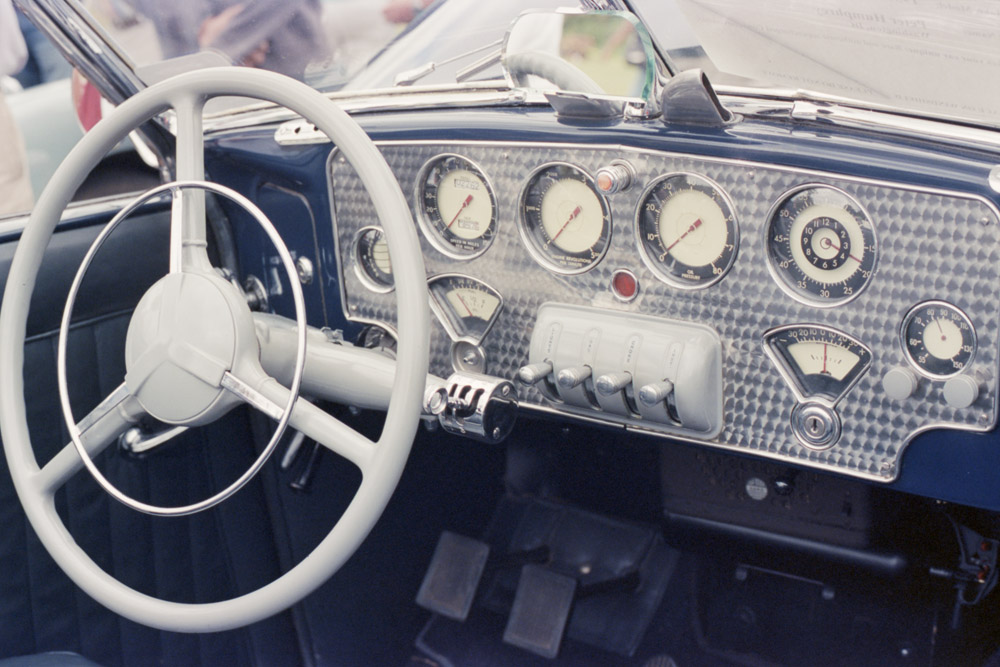
Aah, classic design. The Art Deco glory that is the Cord 810 convertible. Considering how rare and expensive these are, the owner/driver gets a lot of credit for driving it to and from the show. I saw him later that afternoon, pulled over with the hood up, so that dashed my fantasies of having one as a daily driver. But it’s still a glorious car to see on the road today.
Dashboard, Cord 810
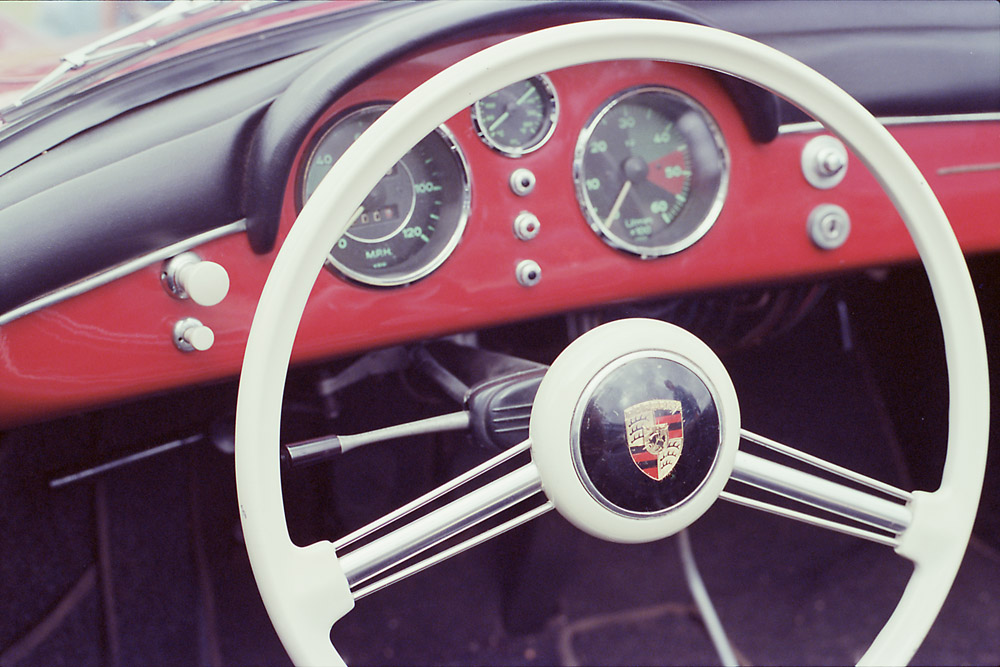
Another vintage dashboard, from a Porsche 356. Very clean, very simple, no clutter to distract from the driving experience.
Porsche Steering Wheel
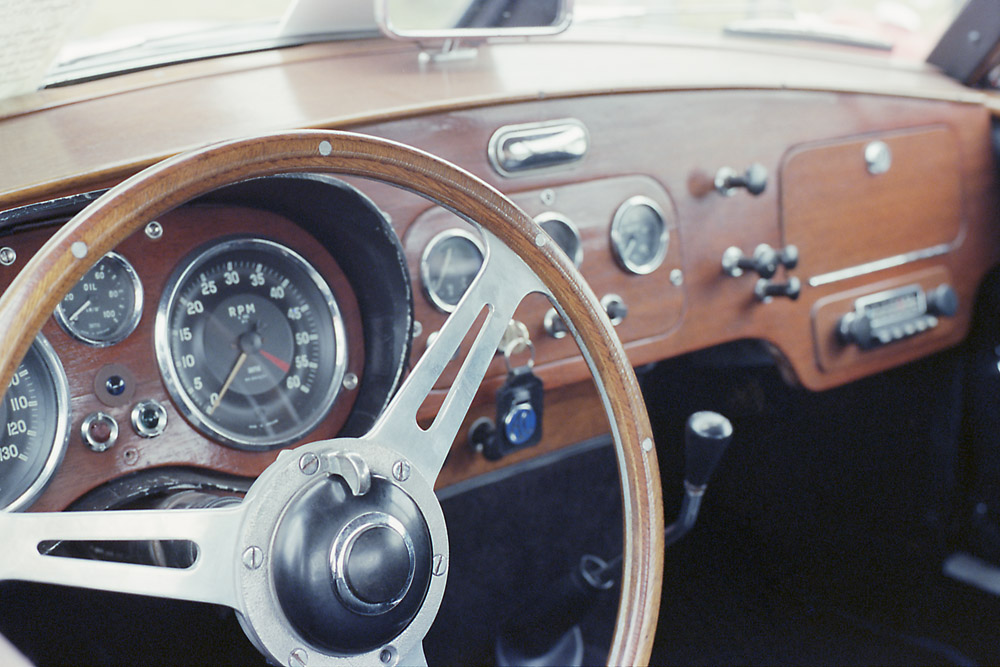
I was racking my brain to remember what car this was exactly. It’s British, 1950s, with a big (for the time and place) engine. I was thinking Jensen, or BRM, but I think Jensen was 60s and 70s, and BRM mostly did racing cars. Then it struck me – it’s a 1950s Bristol four-place coupe. They were fast, luxurious GTs in their day, and somewhat rare, especially on this side of the pond.
Bristol Dash
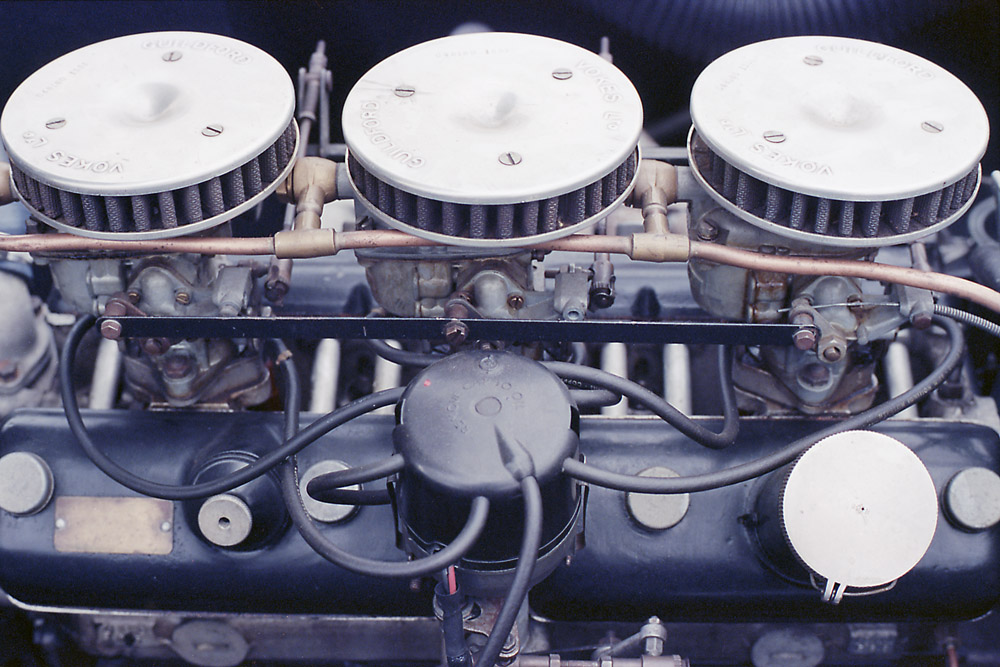
Here is the engine compartment of the Bristol. A big inline 6-cylinder topped by three magnificent carburetors. It’s almost sculptural.
Bristol Engine
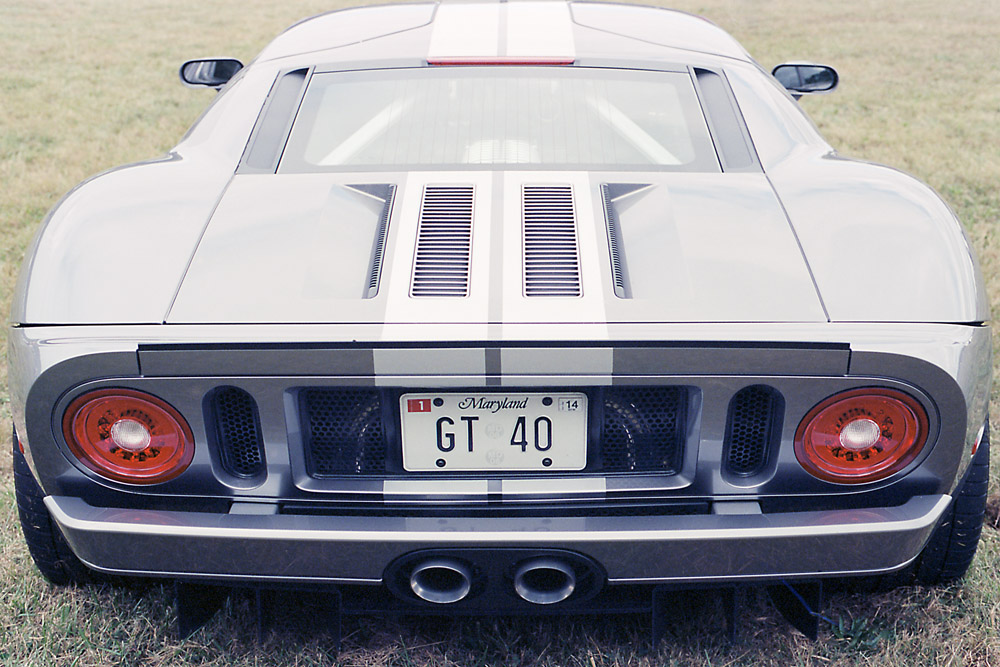
The modern contingent – a Ford GT, the modern recreation of the 1960s GT40 race car, but this one is street legal, and fully civilized on the inside with working A/C, radio, and leather seating.
Ford GT40
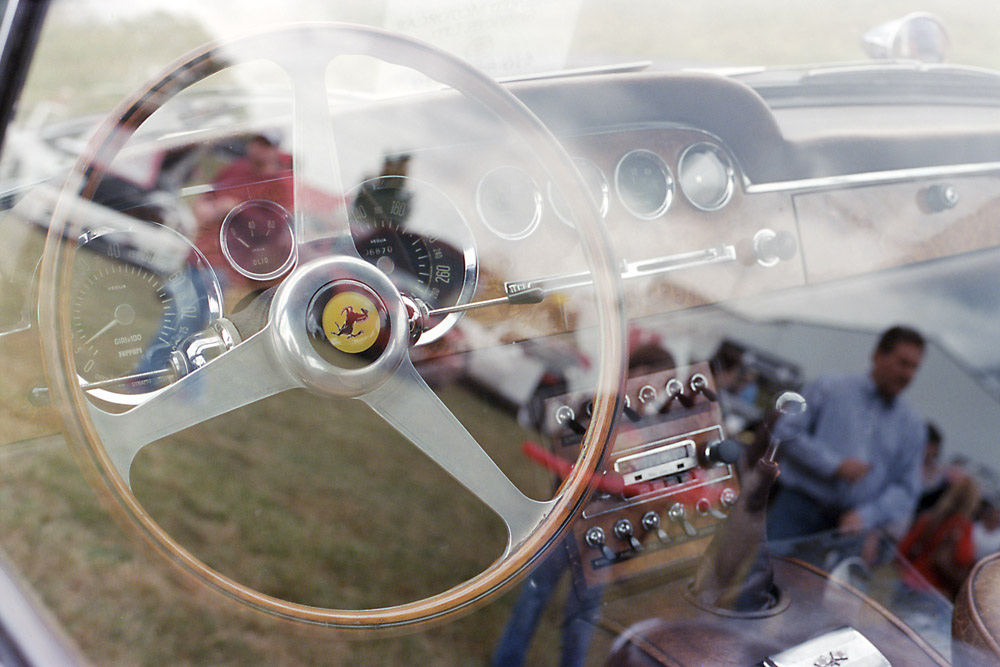
And last but not least, what car show would be complete without a Ferrari or two? This is the dashboard of a Ferrari 250 Berlinetta, as seen through the window glass.
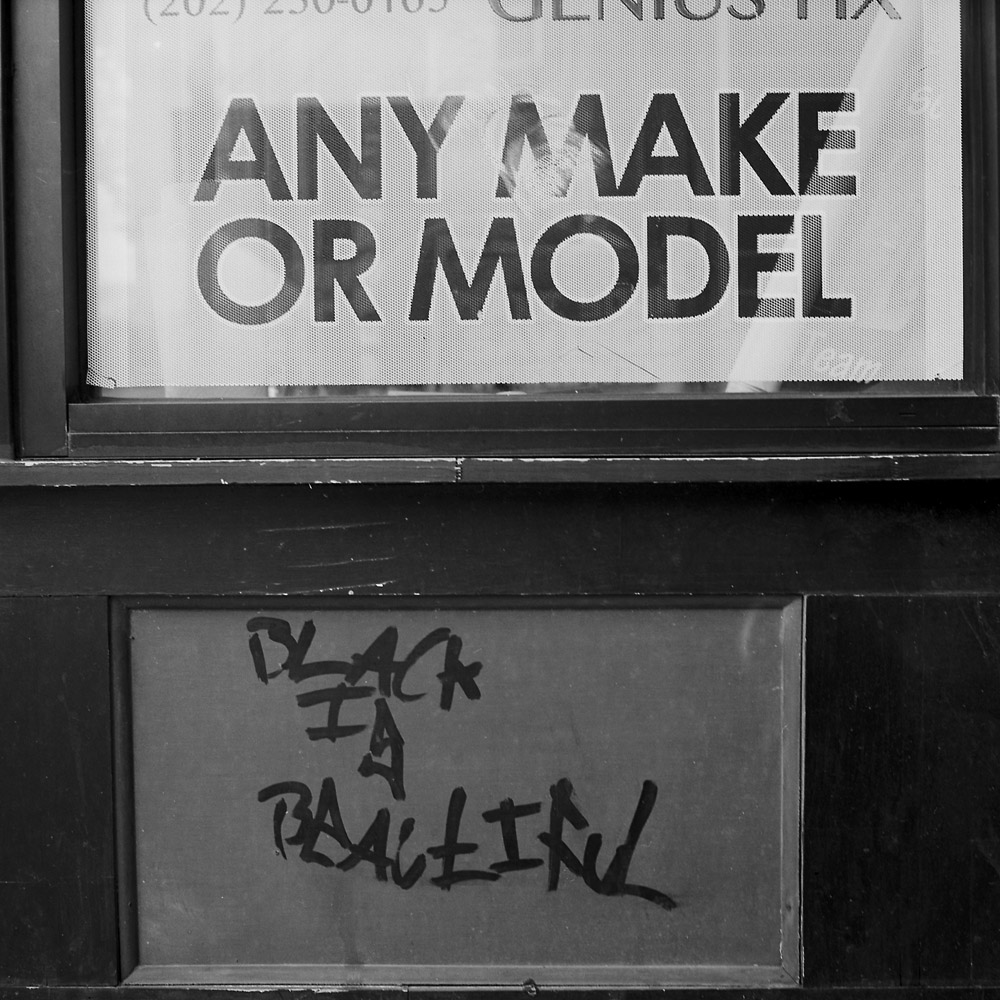
Another sign of change and transformation is the ebb and flow of graffiti. My latest find was this:
Any Make or Model (Black is Beautiful)
I loved the serendipitous juxtaposition of the advertisement wording for the cellphone repair shop and the graffiti – “Any Make, Any Model… Black is Beautiful”. There’s truth in accidents. Or maybe it wasn’t an accident.
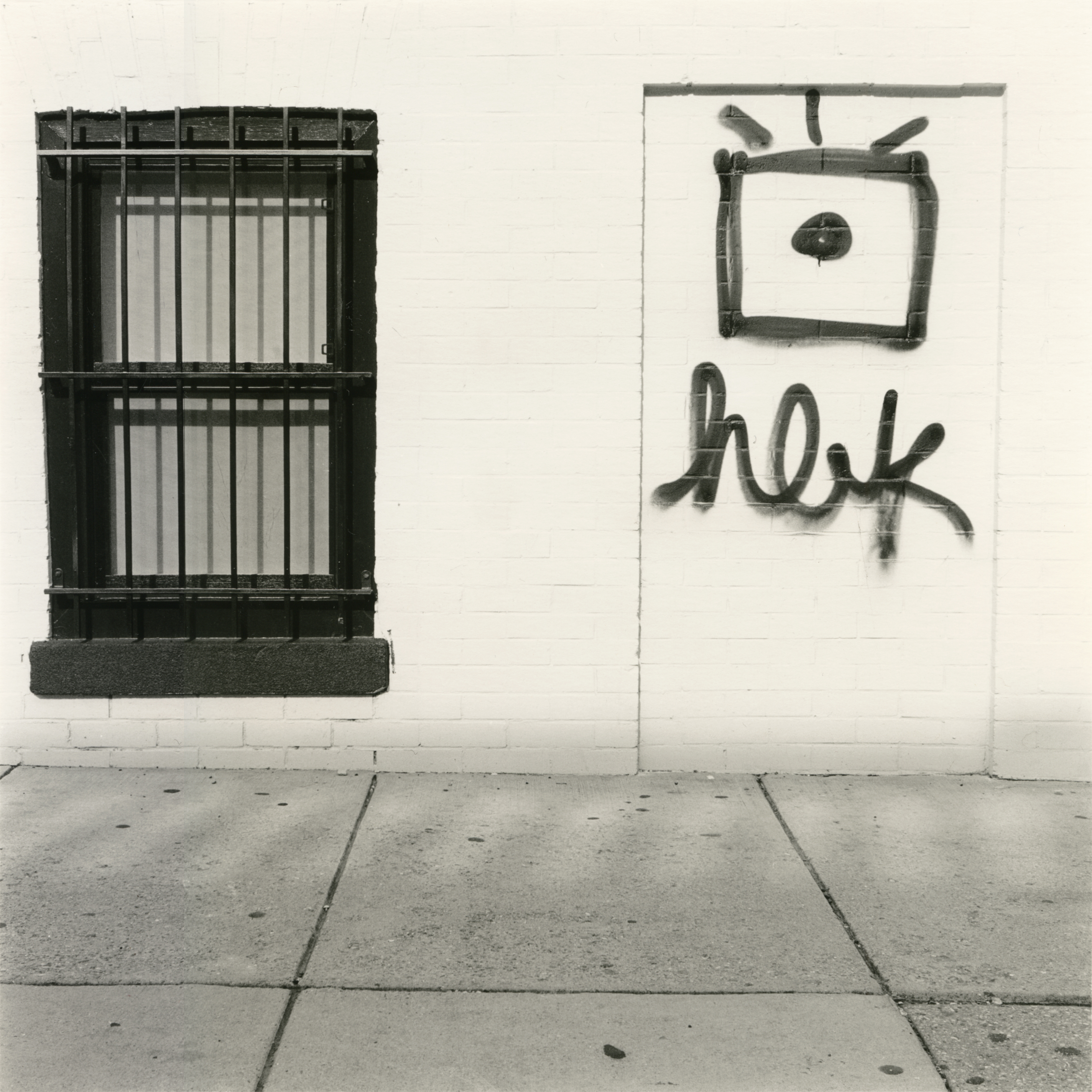
A generic graffiti tag on a bricked-up window of a house. This is casual art, that has its own accidental grace and beauty despite not having any great aspiration beyond marking territory or gang initiation.
Window, Graffiti, 15thStreet
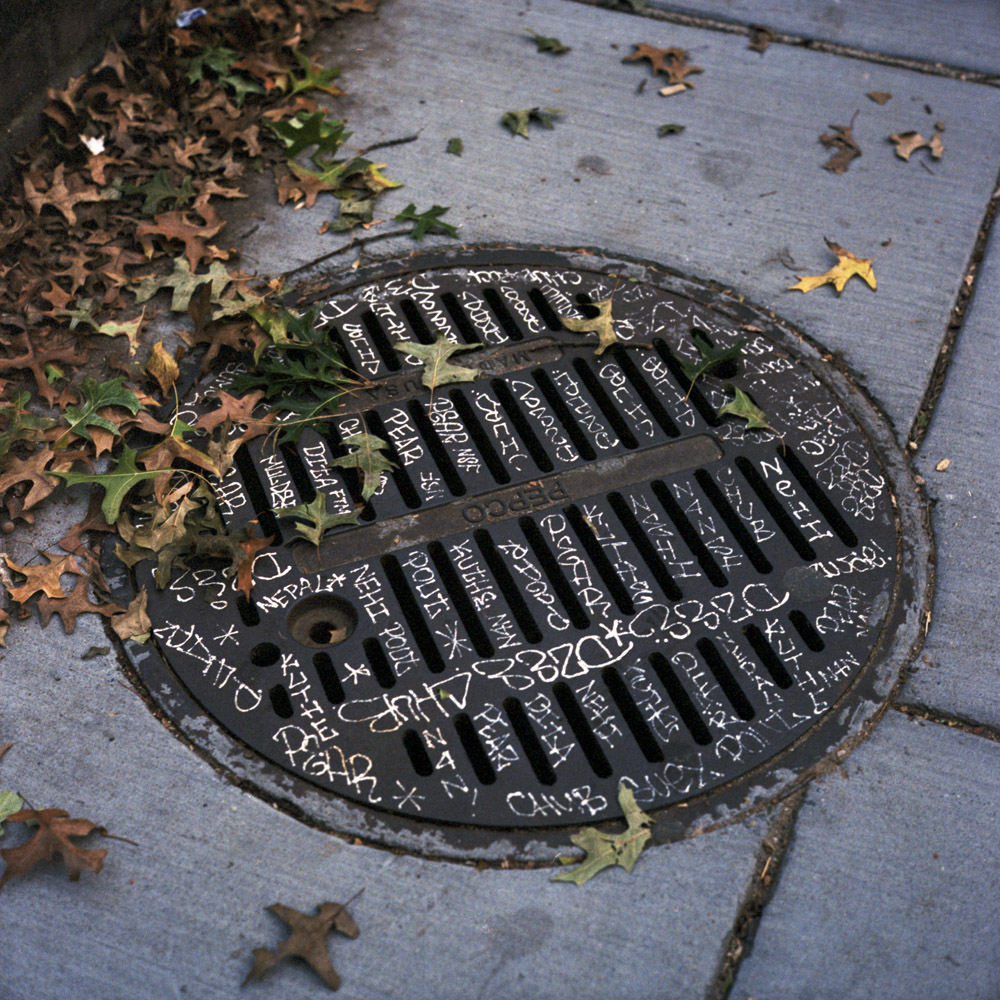
Then there’s graffiti that is transformed from simple defacement by virtue of adopting the form and structure of the object upon which it is inscribed, like this manhole cover.
Graffiti-inscribed Manhole Cover
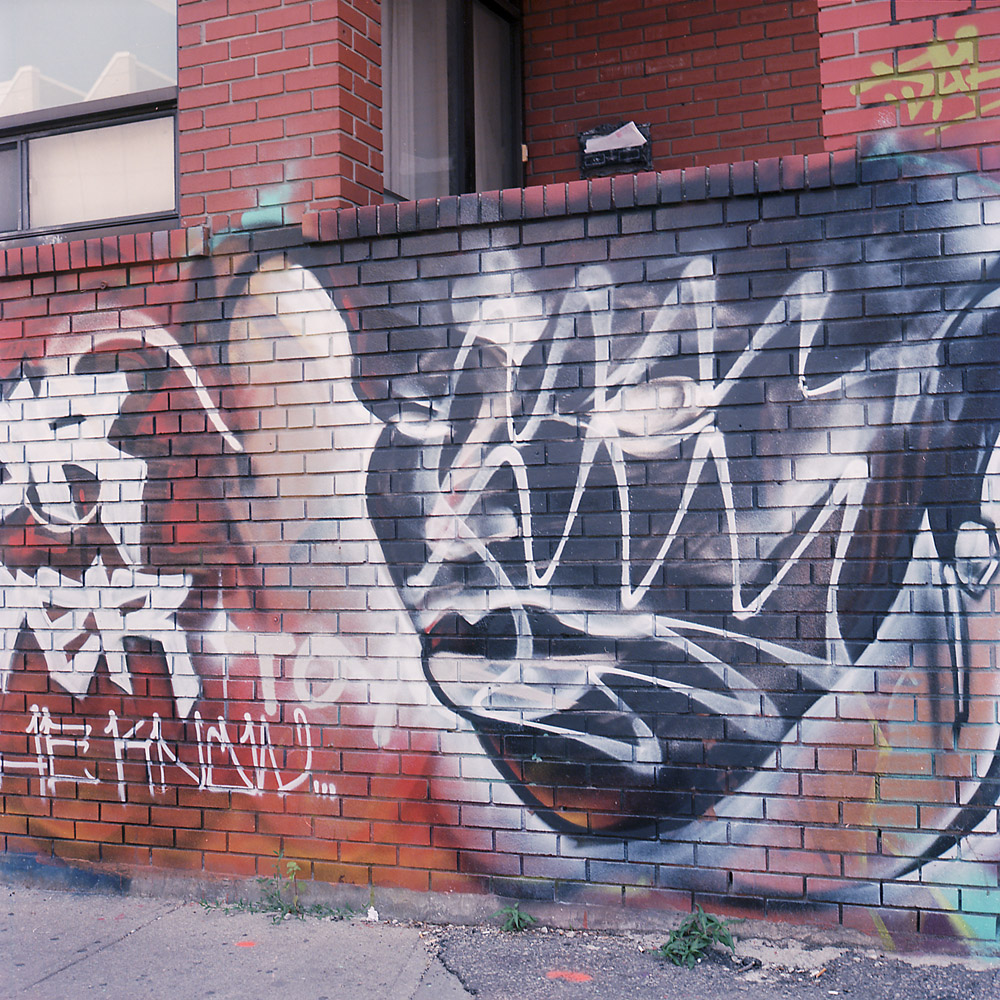
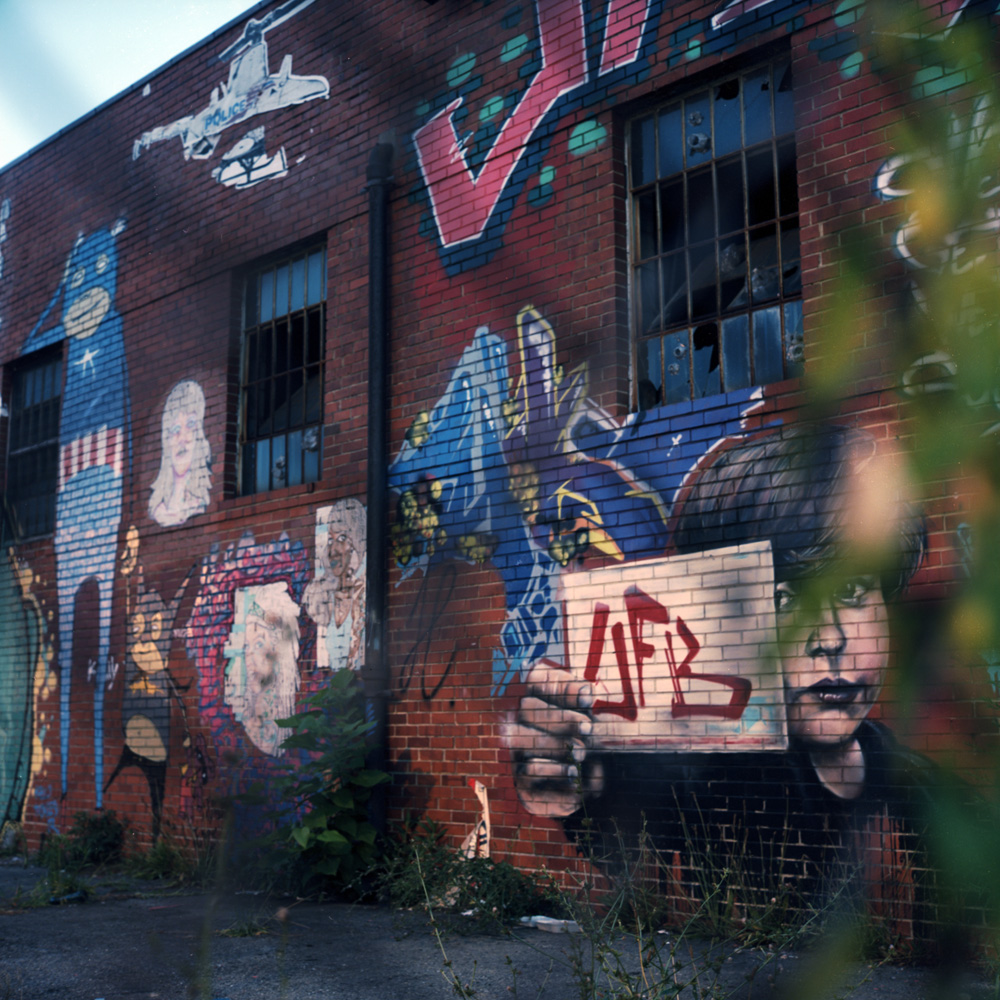
Some street art I found in Toronto. There’s a point where graffiti transcends defacement of property and really does become art in itself. Graffiti
More graffiti as street art. There is part of this wall that I intentionally cropped out as it makes a statement that I don’t know I’d want to make or pass on (decapitated nude female torso).
Graffiti, Chain Link Fence, Twilight
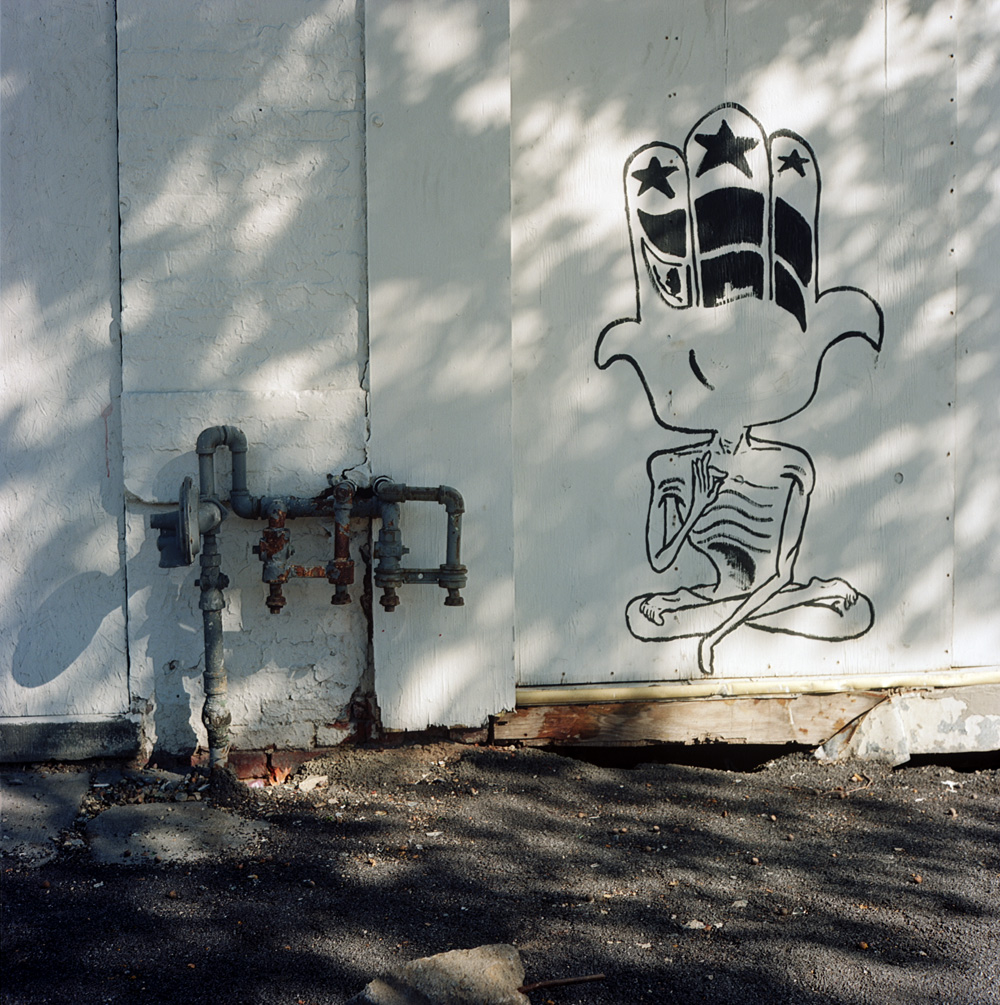
Back to simplicity, this bit speaks to collective identity questions – the figure transforms the Washington DC city flag of three stars over two bars into a humanoid with a hand for a head. Politics, ethnicity, religion, all rolled into a piece of temporary public art (the wall upon which this figure was painted has been gentrified into several very expensive restaurants).
Graffiti, DC Flag Design, 14th Street
The camera of record is a Rolleiflex 2.8E, and the films used are FP4+ for b/w and Kodak Ektar 100 and Portra 160 for color.


 dcphotoartist