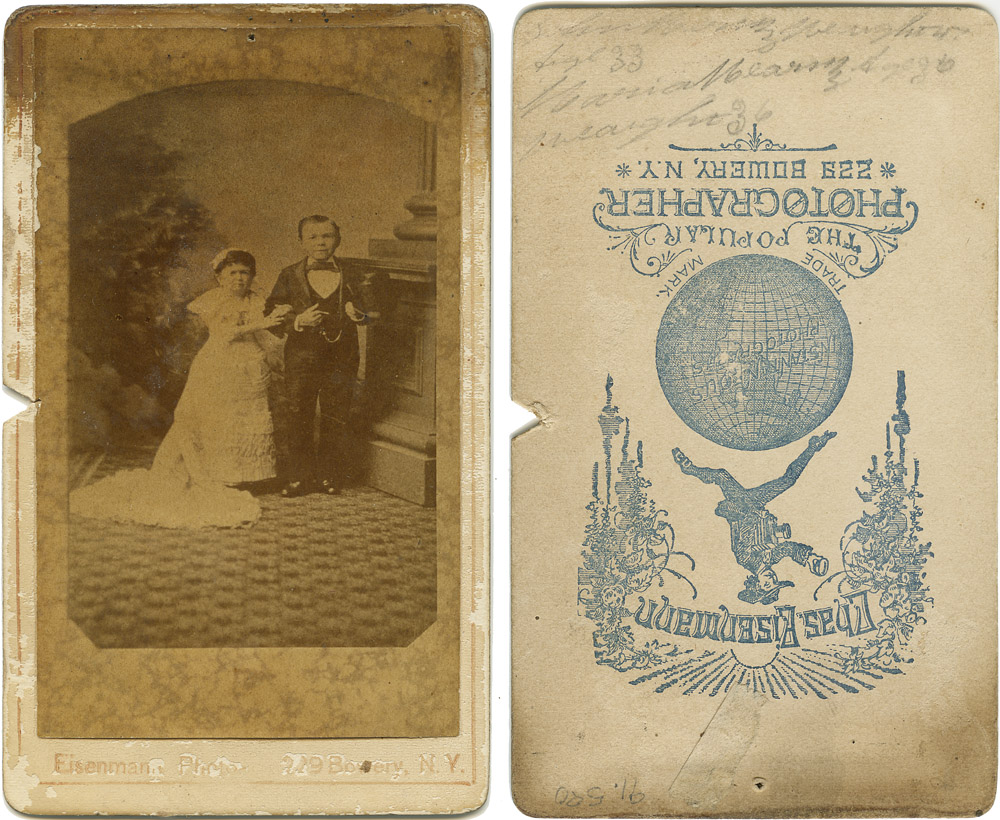
Here is another CDV for your consideration, in rather poorer condition than I normally like to buy, but I hadn’t seen this one before. This is Admiral Dot and his wife, Lottie Swartwood. I’ve inverted the image of the verso so you can at least try to make out the handwriting. From what I can read, it says, “…height 33… age 36…weight 36” (the ellipsis are where I can’t make out for sure what it says).
Admiral Dot & Lottie Swartwood By Chas Eisenmann
If you’ve been following my blog you know that Chas Eisenmann was quite the celebrity photographer specializing in people of the theater, which included the circus and vaudeville. I suppose photographing the Dots would have been a way to compete with Mathew Brady and the Anthonys, who had the Tom Thumb wedding photos in their portfolio.
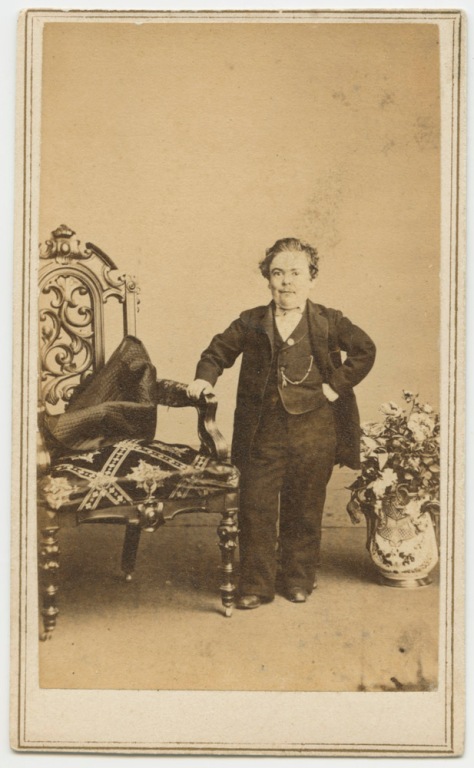
Here’s another Tom Thumb, this time by C.D. Fredricks. Proof positive that even when at home in New York, Tom Thumb was photographer agnostic, but still selective – if not posing for Brady, he was still going to the best names in town to get his photos done.
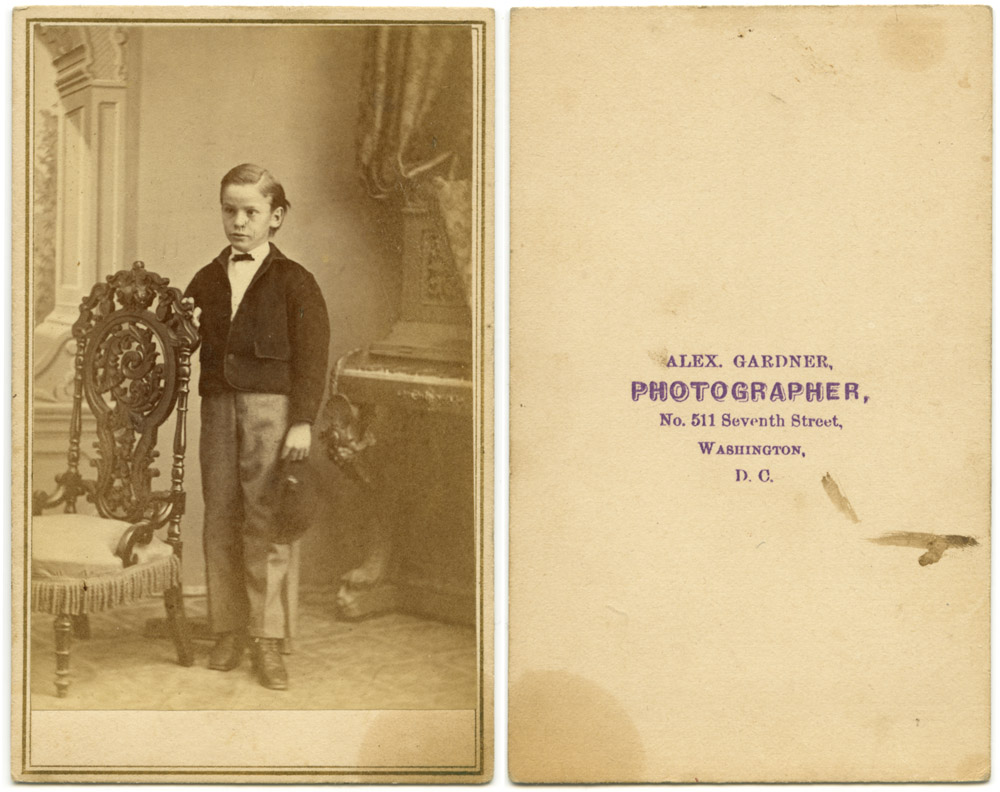
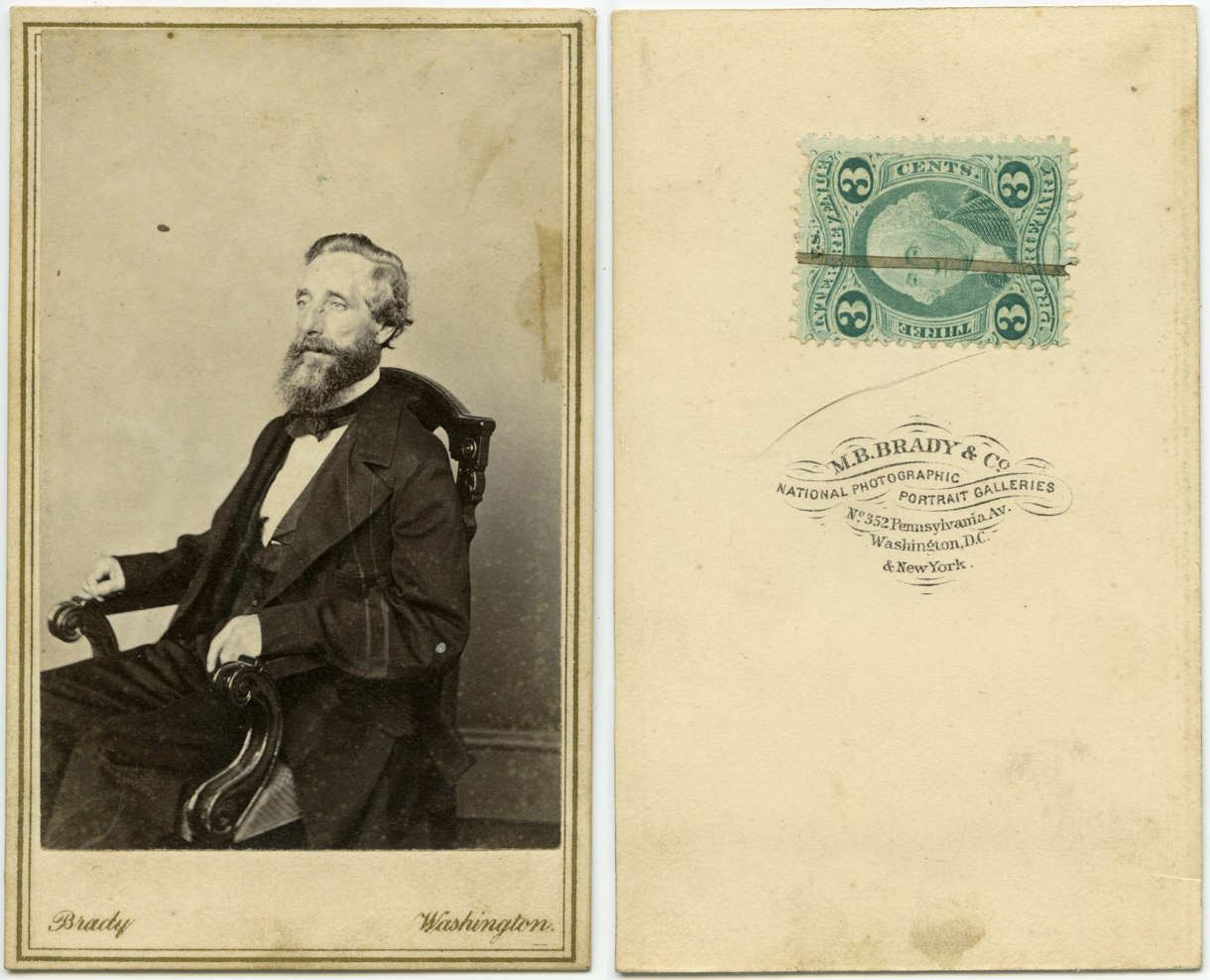
We’ll start this one with two of the most famous Victorian era photographers, Alexander Gardner and Mathew Brady. The Gardner blind stamp changes, but the only thing I can say for certain is that the stamp with the US Capitol building on it was during or shortly after the Civil War, as it touts his association with the Union army.
Alex Gardner, Version 1
Alex Gardner, Version 2
Alex Gardner, Version 3
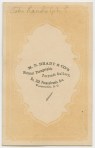
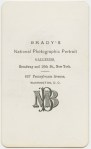
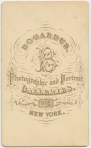
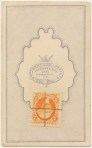
The Brady evolution is more obvious. The simple, plain version is his blind stamp from early in the Civil War period. The more ornate, shield-like design would be the 1870s, and the final version is the large letters.
Mathew Brady, Early
Mathew Brady, Middle
Mathew Brady, Late
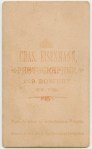
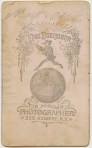
Note the similar evolution in Chas Eisenmann’s blind stamp design. I don’t have a good idea of how long a span of time it took for his design to evolve – it may have been as little as a few years, or it may have been a decade or more separating them. I think though that once he changed it, he stuck with the globetrotter logo for an extended period, perhaps 20 years or more.
Chas Eisenmann, Early
Chas Eisenmann, Late
C.D. Fredricks bind stamp. I know I have another one of his that would be the “middle” design, but I haven’t hunted it down in the CDV album I have – it would be the “middle” in that it no longer says, “specialité”, but also lists Paris and Havana as studio locations, but the design is not as fancy as the late one.
CD Fredricks, Early
CD Fredricks, Late
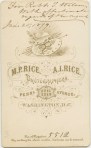
M.P. Rice. Note the change also includes the addition of (most likely) his son to the masthead of the business. Using the date on the verso, this style had arrived by the late 1870s, so the shield designs would have been late 1860s to early 1870s.
M.P. Rice, Early
M.P. Rice, Late
Finally some others for which I don’t have early/late pairings. These are just a few of the others I have, but I like looking at them just for the art.
Another CDV by C.D. Fredricks, of Lavinia Warren Stratton, Mrs. Tom Thumb. It’s an interesting addition to the Tom Thumb collection, as it shows they (the Thumbs) were very much the same as 21st century celebrities, getting photographed by all the fashionable photographers and trying to capitalize on their fame while it lasted. They seem to have had a particular loyalty to Brady, as this is the first definitive non-Brady I own of them. Can’t wait to find more
Here’s another portrait by Gardner. Funny thing – Gardner was much more successful in business than Mathew Brady, yet Brady images are far more common than Gardner’s CDVs. I don’t know if it is that he did fewer (certainly seems so) or that his subjects’ heirs are largely holding on to them still. Given the disproportion between his images and Brady’s in the marketplace (not a statistically validated survey, but in my estimation, there’s a 10:1 ratio or more on the Brady:Gardner ratio), I’d say that he just didn’t make that many. This was obviously from his civilian commercial operation, and probably a few years after the Civil War as there is no mention on the back of being “Official Photographer to the Army of the Potomac”. The country as a whole grew war-weary in the aftermath of the war – all aspects of society were changing, and quite radically. Slavery had ended, the agrarian/industrial divide fell heavily in favor of industrialization. Women were a (temporary) presence in the workforce after the death of nearly 700,000 men of working age over four years of truly brutal combat.
With all this change and stress, it’s not a surprise that an association with the US Army that was trumpeted in 1864 would be quickly effaced from advertising copy.
I found while browsing CDVs on Ebay another Brady CDV with yet another studio address in Washington DC. It was the one I’d been looking for for ages. I had heard a rumor that the studio, which you can still see from the outside of the building, was Brady’s, and I’d heard it was Alexander Gardner’s. But now, I can definitively say you can still see Mathew Brady’s Washington DC studio that was located at 625 Pennsylvania Avenue, Northwest. Today the building is occupied by the National Council of Negro Women, but if you go around back into the alley, you can still see the north light slanted studio window on the top two floors of the building. From what I’ve been told, the room is now storage space for the association, and there’s not much to see. But it’s really cool that this piece of photographic history still exists, and aside from the paint color, you can get a feel for the streetscape in the day when it was a working studio.
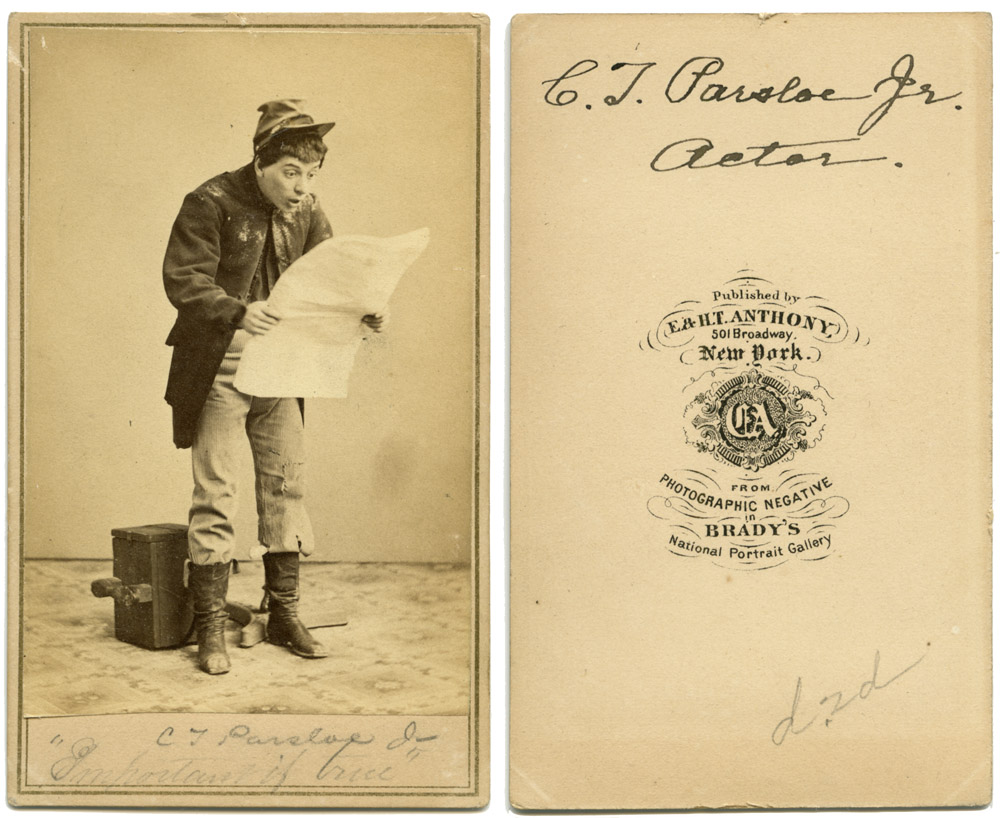
A CDV of C.T. Parsloe Jr., a 19th century American comic actor. The pencil script on the bottom says “Important if true”.
C.T. Parsloe, Jr, Actor- by Brady. “Important if true”
I love this image because it shows the power of photography to capture a fleeting moment of expression. This almost feels like it could be a still frame from a movie, unlike so much mid-19th century portrait photography where people are formally posed in elegant albeit highly conventional poses. It’s an image like this that shows Brady’s genius as a photographer – he was able, with 19th century wet-plate technology, to capture the essence of physical comedy. And you can still see the clamp stand behind Mr. Parsloe, which is a real testament to his power of posing, that he could do something so seemingly spontaneous while being physically restrained by the clamp!
I can’t find a lot of bio data on Mr. Parsloe, but he was born in 1836 in New York, and died in 1898, according to this page on the University of Washington’s digital collections archive – U.Wash. Digital Archive
I just discovered the University of Washington’s archive of photos of 19th century actors – it’s a resource I will be returning to to look up more CDV images as I keep collecting.
Here are some more of my circus freaks/performers collection. We’re going to start our tour of the circus in the sideshow, where P.T. Barnum was a busy man – he collected strange people from all over the world, and when he couldn’t find them from afar, he invented foreign origins for them!
Waino and Plutano(r), the Wild Men of Borneo, were actually brothers born in Ohio with physical and mental developmental challenges. As you can see in the photo, even in adulthood, they were pygmy sized. They did however possess considerable strength for their size, and were known to lift up to 300 pounds. Their real names were Hiram and Barney Davis (no relation!). They were a huge success in Barnum’s circus and over a 25 year career in show business spanning from 1880 to 1905, they earned $200,000, a gigantic sum in that day and age.
Waino and Plutano, The Wild Men of Borneo, by Eisenmann
As you can see, this was yet another carte by Chas. Eisenmann, who specialized in photographing theater people and performers. I love the Victorian era advertising slogans – “Portraits taken by Instantaneous Process – Extra Inducements to the Theatrical Profession” on this carte, and on another one I have by him, it shows a photographer striding the globe, with “The Popular Photographer” inscribed below. It’s too bad the carte-de-visite tradition died out; there’s nothing quite like it today in terms of marketing and character.
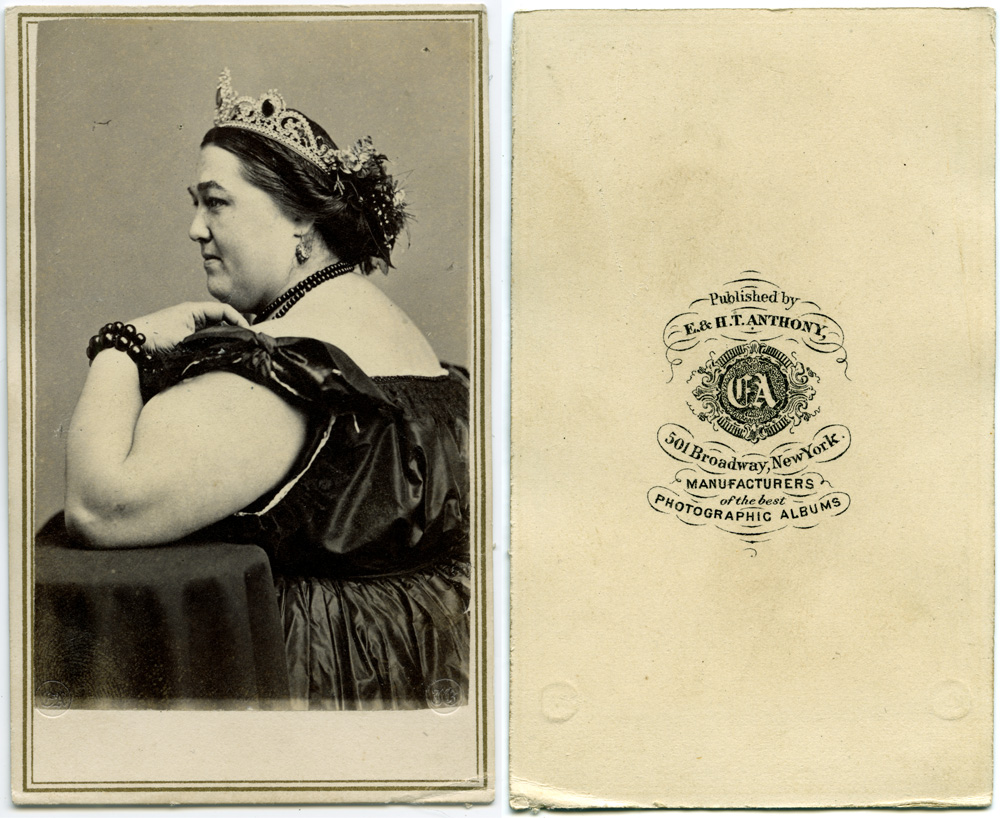
Next up, also in the sideshow, is the fat lady. Why this particular display was so popular, I’ll never quite understand. I don’t think the fat ladies sang or had any particular performing talent – they were just fat. I think it would have to have been one of the most humiliating experiences in the sideshow, to be looked at that way. At least in the other circus freak cases like the human skeleton or the midgets, they had little or no other viable employment options.
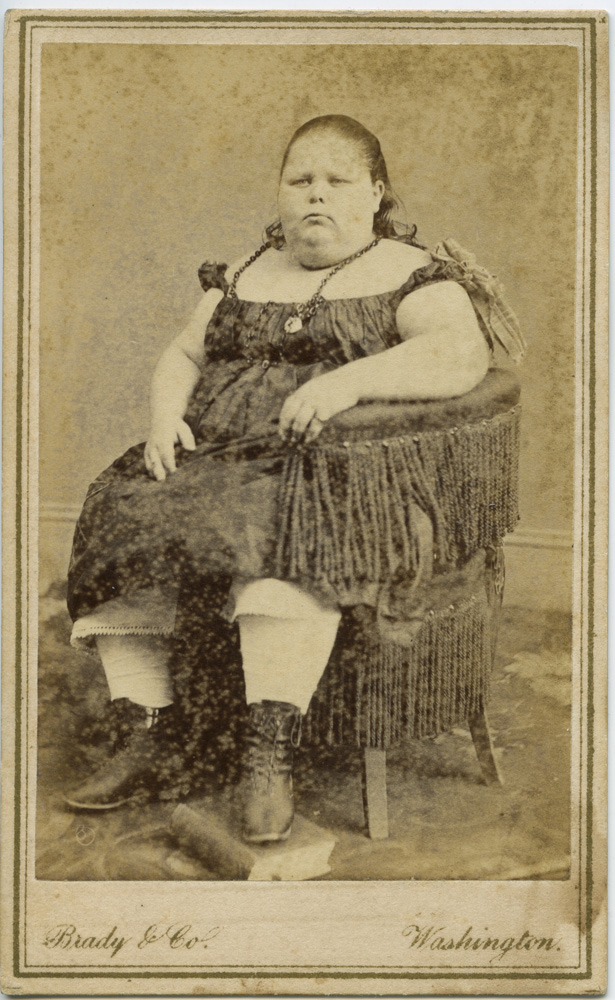
This image is an E&H.T. Anthony publication, with no credit given as to the photographer. The image has the Anthony blind stamps in the corners, and what appears in the scan to even be a fingerprint, possibly of the person who printed and mounted it. It is a breathtakingly beautiful carte in person, and I would suspect that it is probably a Brady carte, given that Anthony owned the Brady negatives for many years, and served as Brady’s publisher/distributor. The lady appears to be Madame Sherwood, a famous fat lady in Barnum’s circus. She also bears a vague resemblance to another fat lady I have, this one from the Brady studio in Washington DC. I don’t think the Brady image is the same woman, but it’s possible.
Madam Sherwood, on an E&H.T. Anthony CDV
The Brady image:
Fat Lady, Matthew Brady Studio, Washington, DC
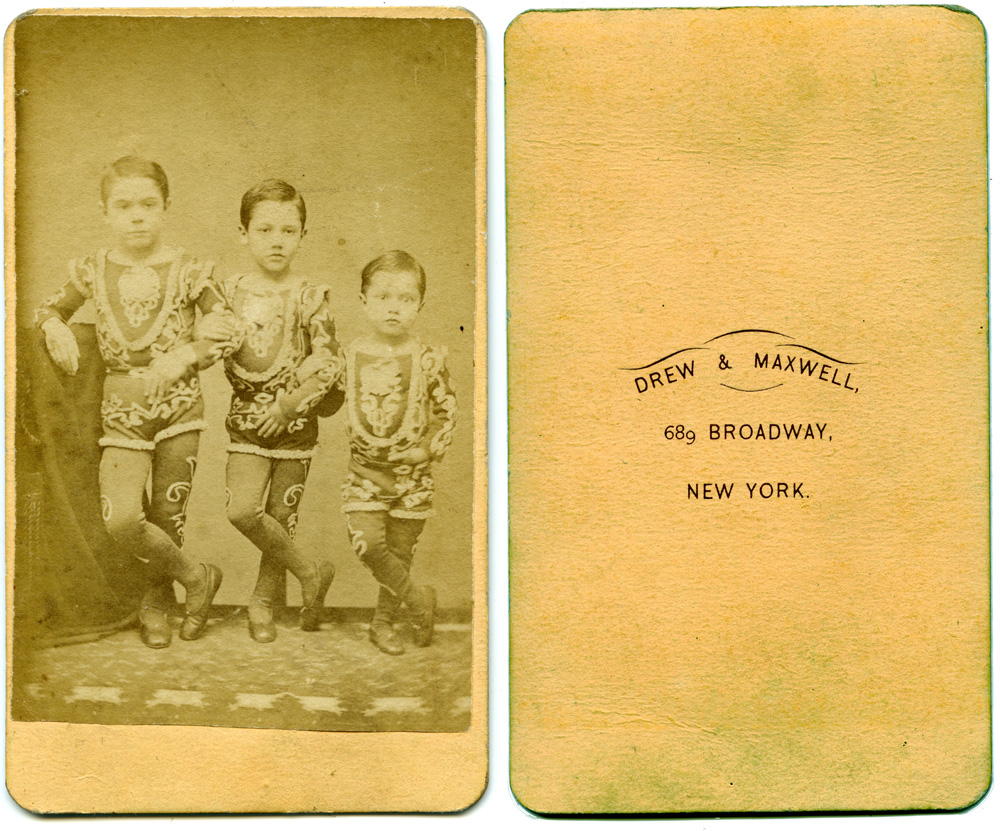
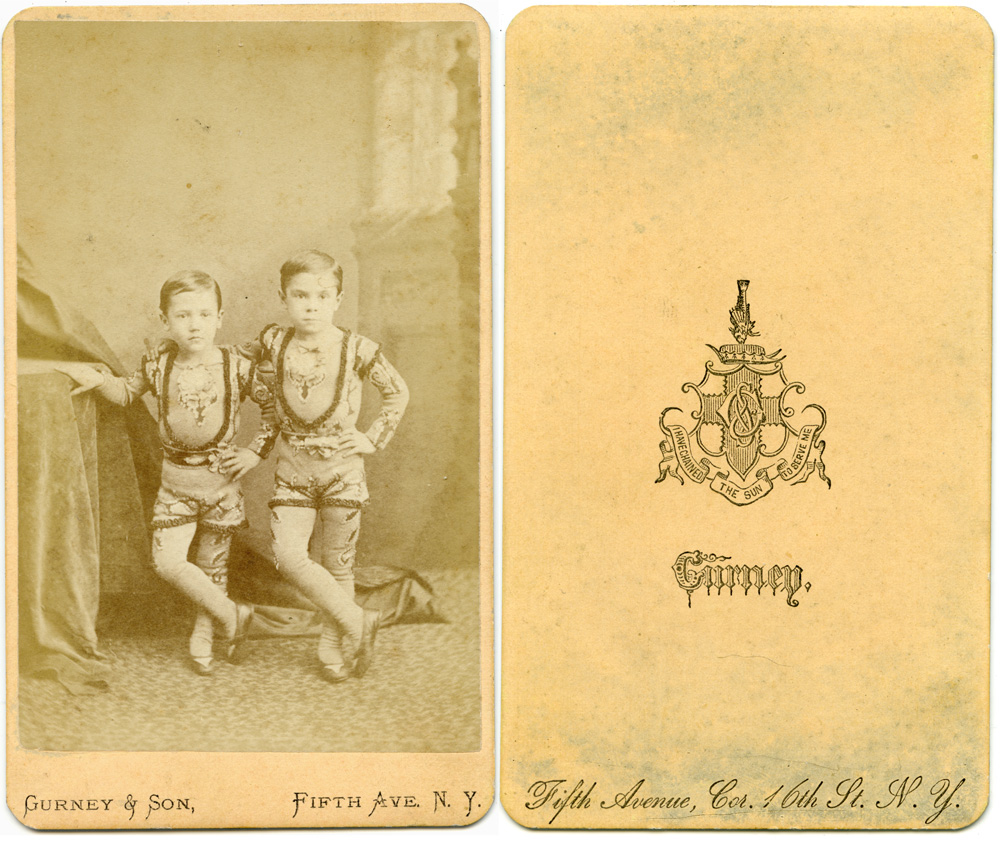
Moving under the big top, we have the acrobats! Here is a trio of boy tumblers/high-wire walkers/trapeeze artists. They look very much like the two I have in another cdv, which I’ll post again here for ease of comparison. If they are the same brothers, then the third one’s name is a mystery to me – the first pair appears to be the O’Brien brothers, but in my research, they were only ever a duo, and their father died fairly young as a result of injuries sustained in a circus accident.
Trio of Boy Acrobats, by Drew & Maxwell - possibly the O'Briens?Circus Siblings, Gurney & Son, New York
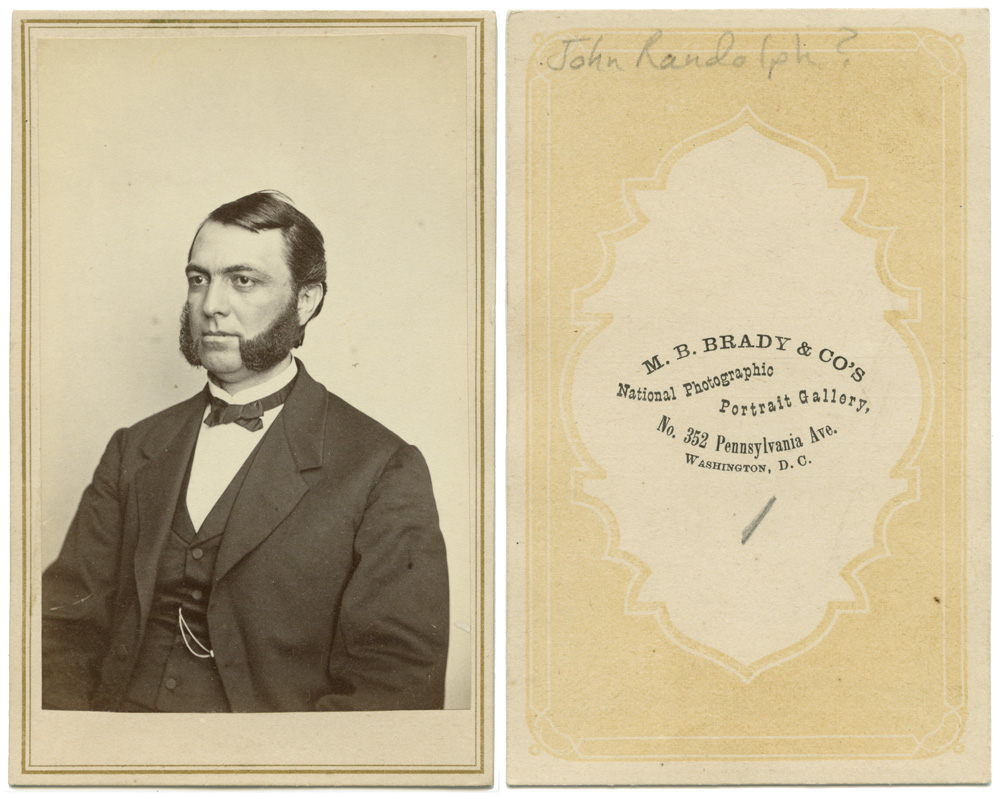
Two more CDVs – a Brady from the DC studio, and judging by the backmark style, a later (post Civil War) image. The sitter is reputed to be named John Randolph, one of the FitzRandolphs of Philadelphia (or could it be the FitzRandolphs who gave the original land grant to found Princeton University?). Evidence is unclear, but the picture is very.
John Randolph, by Mathew Brady
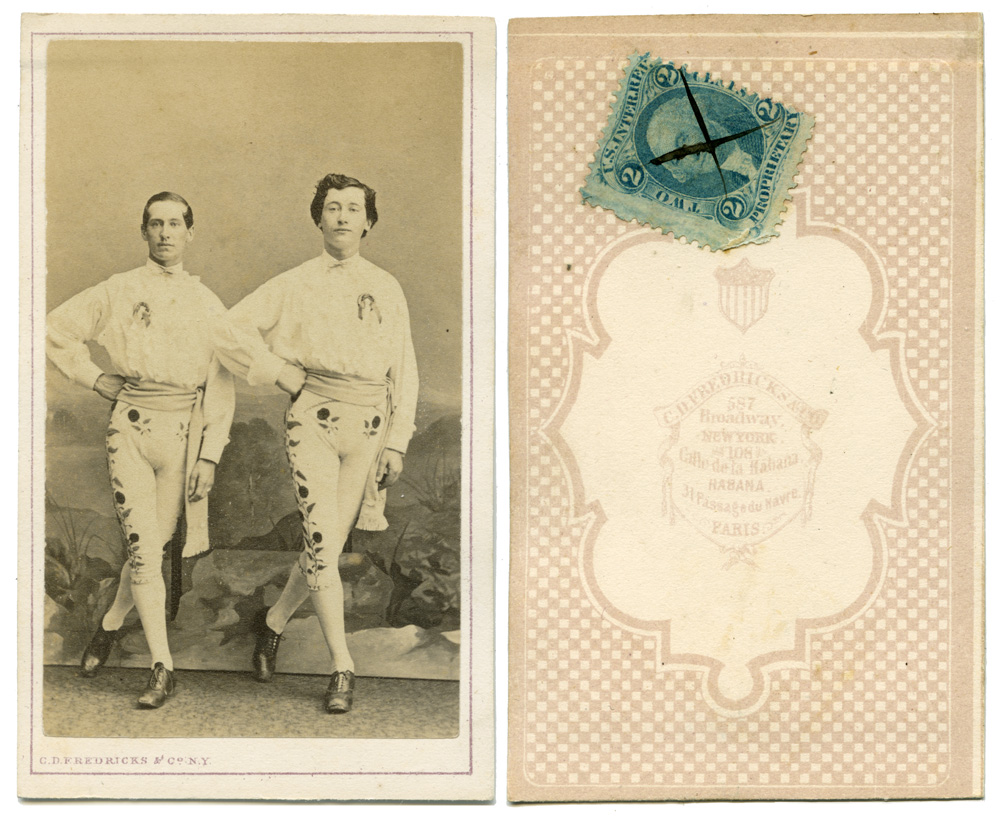
The second CD is from the Fredericks studio, of New York, Havana and Paris. As the subject is toreadors, I’m guessing this was taken at either the Paris or Havana studios. Bullfighting has never had any serious following in the United States, so toreadors would be unlikely to come to New York on a performing tour of the US. I thought I had another Fredericks CDV somewhere in my collection, but I’ll be damned if I can find it – I may have just recorded the address on my New York studio map during a scan of studio backmarks on eBay.
Two Toreadors, by Fredericks of New York, Havana and Paris
This is another image that could have been marketed as “gay interest”, thankfully it wasn’t. Despite their costumes and matching fey poses, there’s nothing about them that shouts (or whispers) 19th century code for gay. Pure 21st century wishful thinking.


 dcphotoartist