Tag Archives: Photography

Alternative Photo Revolution – Alan Dunlop

Alan Dunlop

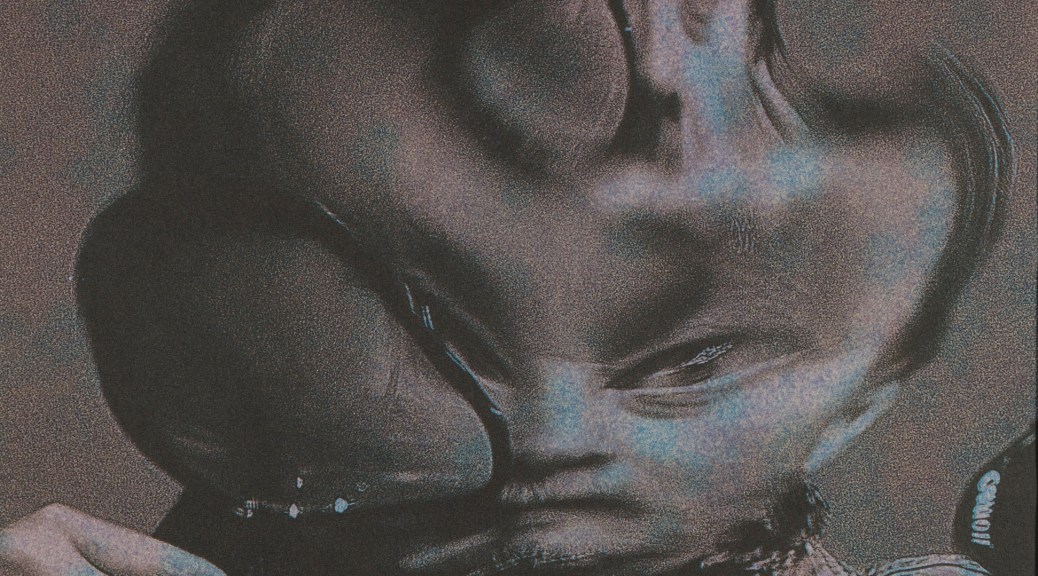
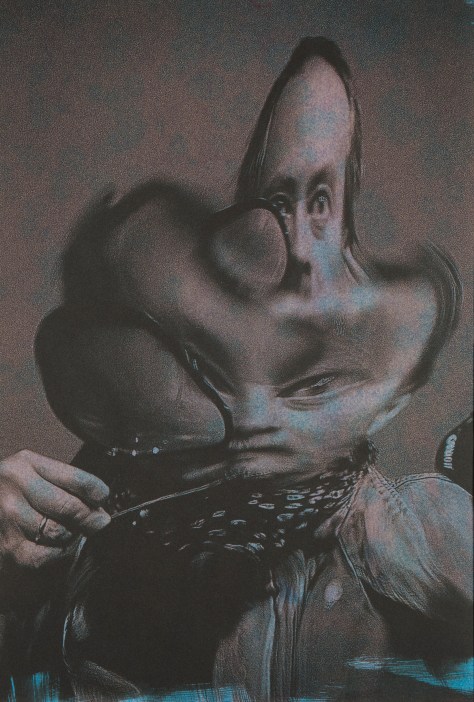
I sent interview questions out to a number of the Alt Process Revolution artists. Artists, being artists, don’t always respond in exactly the way you expect 🙂 So I didn’t get answers to my questions in a literal, 1:1 response, but here is the photo of Alan Dunlop and his bio/response.

My name is Alan Dunlop. I currently live in Toronto, Ontario.

Photography has always been a part of my life. I remember my dad taking photographs with his Rolleiflex and watching him develop prints in the closet of our tiny apartment. I wasn’t hooked, however, until I was studying advertising art and one of my teachers handed me a camera to experiment with. I eventually became a news photographer and worked for a number of local papers for more than two decades.

In my personal work, I always like to push the limits of photography and explore new perspectives and alternative realities. Over the past decade, my focus has been on collaged images. My work is influenced by my background in technical illustration and advertising art. I am also inspired by the works of contemporary artists David Hockney and Robert Birmelin. I am especially fascinated by how these two artists blend multiple images together to elicit a sense of movement and space to convey the myriad complexities of a single moment in time.

The image I submitted to the APR show is from a series of self-portraits shot over several months exploring reflections. It was created in camera, not Photoshop.

I grew up with film and spent many hours in the darkroom. The move to digital photography was an exciting one which I embraced wholeheartedly. I now work only in digital and do my own printing. The immediacy of digital allows me to explore and create images in a way that film never could and gives me more control over the final results.

After becoming familiar with Bob Carnie’s approach to alternative processes, I was curious to learn more. I am drawn to the richness of the images created using this method. I have spent time with Bob processing a number of images, including some of my own, using alternative processes.  The results were quite intriguing. The alternative process prints have a uniqueness of their own and have a very tactile feeling about them. I am curious to see how this will work with more of my own photos.
Alternative Photo Revolution – Kevin Kelly

Another one of our artists participating, Kevin Kelly, has been working for a long time on a series of images concerning gender and sexuality. I wanted to present a short video concerning his work here (if you pay attention, you’ll get to see the Dylan Ellis Gallery space in Toronto, where the show is going in May for the Contact festival).

Kevin Kelly GENDER PreDoc 1080p from Simon Haworth on Vimeo.


Alternative Photo Revolution

Glen Echo | Glen Echo Park in the Ballroom, Backroom

March 28
Viewings will be taking place from 1-9pm with a formal reception from 6-9pm. Admission: Free

New Orleans | L’Entrepot

March 31-April 1
Private reception on Friday March 31st from 6-9pm.
General admission is $10
VIP Collector ticket is $30 admission + chance to win a unique permanent print
Stay at home ticket $25 for a chance to win a unique permanent print
Tickets can be purchased on Eventbrite.
April 1st, viewings will be open to the public from 1-9pm. The Julia Street First Saturday event is from 6-9pm with all gallery’s in the area having receptions

Toronto | Connections Gallery

May 15-June 17
Opening May 18 from 6-9pm
The Toronto portion of the exhibition is a part of the Contact Photography Festival

#ContactPhoto #202Creates #202Fotos #acreativedc #glenechophotoworks #photoworks #altprocessrevolution #DylanEllisGallery #ConnectionsGallery #Toronto #NewOrleans #NOPA #KevinKelly

AltProRevSponsors

Alternative Photo Revolution – Interview with Brittany Fleming

As some  of you may remember from my Rendering the Spirit show, I interviewed the artists participating in the show via email. For APR, I did the same. With 40 artists participating and a quick turn on the time-frame, I’m only posting a few interviews.

Today’s interview: Brittany Fleming

Tell us a bit about your photographic work: * how did you get interested in photography? 

Born and raised in rural Ontario, Brittany spent most of her adolescence outside experimenting with a camera. It was during a three-month backpacking trip to Europe that her interest in travel and photography was sparked. “Being able to combine my passion for travel with photography opened up a new way of thinking. I came back to Canada knowing what I wanted to do.” 

Leaving Fergus behind, Brittany left for school in Ottawa where she completed a two- year photography program at Algonquin College. Before graduating, she started her career as a Lifestyle Photographer with Union Eleven, where she currently works. 

* what kind of work do you produce (how would you categorize your work)? 

I currently work for a studio in Ottawa, Union Eleven where I`m a lifestyle photographer. The work I show for galleries is my Street photography & Photojournalism. 

* what themes or subjects inspire you? 

I am currently working on three projects that are close to my heart. The first is about urban development and the ever changing cityscape. I document this environment through street photography. The second is an ongoing project about agriculture – showcasing farmers from our past, present, and the future of farming through a photojournalistic lens. Lastly, I am combining street photography and photojournalism to bring light to the human rights issues of our time, specifically women’s rights. 

How do you see your work in relationship to the larger art world:

* did you come to photography from another medium?

no

* do you feel your work is influenced by other media/periods/genres? If so, which ones, and why? 

On backpacking trips I was able to connect with locals. I have the ability to connect the camera to the heart, to feel the subjects and their story. An anthropologist at heart, my aim is to show the social landscape of my time. Deriving my photographic influences from Robert Frank, Diane Arbus, Walker Evans, Garry Winogrand, and Lee Friedlander, I always try to keep the human condition in focus. 

Could you talk a bit about the piece you submitted to the APR show? 

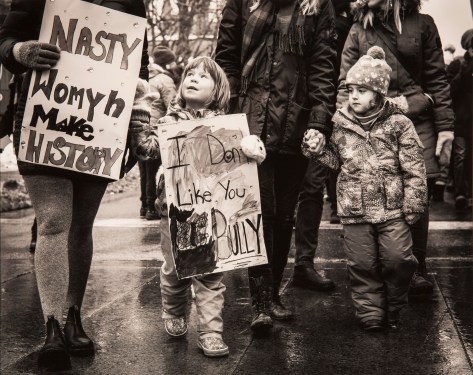
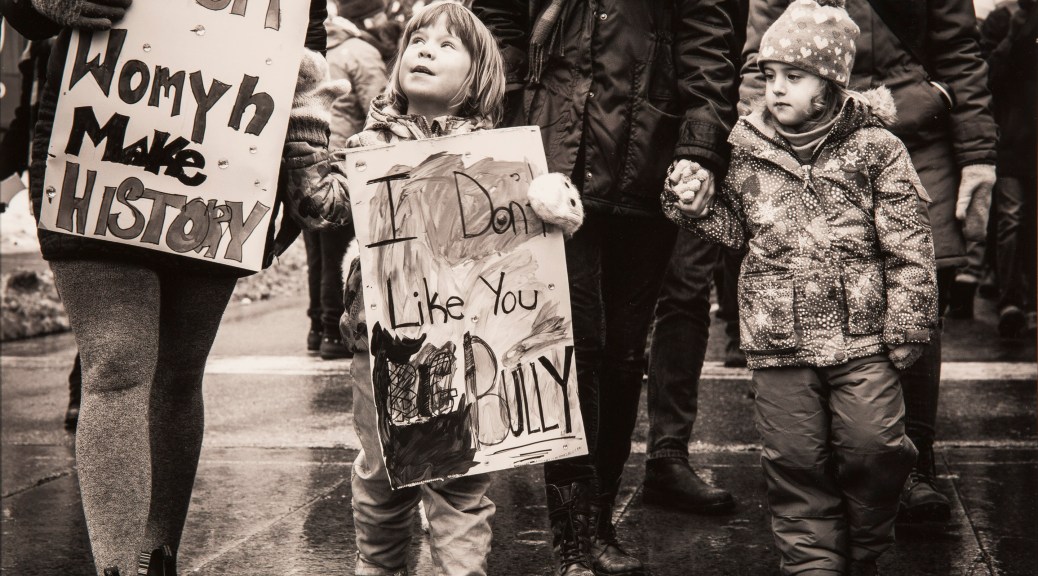
We all want to feel equal. My work is strongly influenced by this innate desire, and I’ve chosen to expose it through a female perspective. 

Captured in this photo are a group of people at the women rights march. Showing the young girls looking up to their mothers sparked a strong emotion. Thinking about this young girl, her past, present and, future. 

I too, yearn to feel accepted and equal. My hope, by sharing this image, is to show how truly brave these women are and how grateful they are for their rights and freedoms. We all have the power to go ahead and face our fears, follow our passions, and do so with grace. Our successes and failures are what will shape the generations of tomorrow. 

What is your experience with analog photography? Digital photography? 

When i was in school for photography we uses 4×5 cameras. Other then that I primarily shoot with my DSLR. 

Do you normally print your own work, or have others print for you? 

Bob and the team at Alternative Photo Services do an amazing job at printing my work for me. They are experts at bringing my images to life. 

Have you ever worked in alternative processes before? 

No this will be my first time 

 Brittany Fleming

Glen Echo | Glen Echo Park in the Ballroom, Backroom

March 28
Viewings will be taking place from 1-9pm with a formal reception from 6-9pm. Admission: Free

New Orleans | L’Entrepot

March 31-April 1
Private reception on Friday March 31st from 6-9pm.
General admission is $10
VIP Collector ticket is $30 admission + chance to win a unique permanent print
Stay at home ticket $25 for a chance to win a unique permanent print
Tickets can be purchased on Eventbrite.
April 1st, viewings will be open to the public from 1-9pm. The Julia Street First Saturday event is from 6-9pm with all gallery’s in the area having receptions

Toronto | Connections Gallery

May 15-June 17
Opening May 18 from 6-9pm
The Toronto portion of the exhibition is a part of the Contact Photography Festival

#ContactPhoto #202Creates #202Fotos #acreativedc #glenechophotoworks #photoworks #altprocessrevolution #DylanEllisGallery #ConnectionsGallery #Toronto #NewOrleans #NOPA

AltProRevSponsors

Calumet Photo Update

I got a call from a friend earlier today letting me know the Calumet clearance sale was underway at our local Calumet stores. I went in after work looking for a couple of things, thinking at the least I’d grab some film if they had anything I used. They had a bunch of pro-packs of Tmax 400 left in stock (an emulsion I don’t use in 120) so I just grabbed the three remaining rolls of Ilford Pan-F. They had a 1000w hot light that was a companion to one I bought a couple months ago, and will come very handy for my class tomorrow that I’m teaching about shooting still life. The big score was a Calumet/Bowens Fresnel Spot attachment, which was in like-new condition, but because it had been rented (once!) in the past, it was marked down 40% off. 

One of the giant tragedies of the Calumet closing is the disappearance of camera gear rental from the DC marketplace. Jerry Smith, the rental department manager at the Tysons Corner location, is setting up his own equipment rental business to service the DC Metro area, in Reston, Virginia. 

You can find him on Facebook at  https://www.facebook.com/f8rentals

Jerry is a fantastic guy to work with and extremely knowledgeable. I’m so glad he’s going to take this on and revive an extremely valuable service here in the DC area.

Museum Exhibition Catalogs

While I was in Paris, I went to see a major exhibition at the Musee D’Orsay, Masculin/Masculin, a retrospective of the male nude in art from 1800 to the present. It was beautifully presented, almost overwhelming in size and scope, and extremely memorable. At the time, I thought about buying the catalog because it had outstanding reproductions of the work in the exhibit, including many works and artists I was unfamiliar with. I decided not to because of the size and weight of the catalog, especially considering that it was only available hardcover and my bags were already close to the weight limit. After I got home, I was kicking myself for not buying it after all. I got a second chance, however, when a friend who lives in New York told me he would be going in early December, and he offered to bring me back a copy. It arrived today, just in time to be a Christmas present to myself.

This got me thinking about museum exhibition catalogs. I generally try to buy them for exhibits I’ve enjoyed when I have the chance, because it serves as a reminder of the work exhibited, and it goes a long way to helping support the museum mounting the exhibit, especially when the museum (like all the galleries of the Smithsonian and the National Gallery of Art) does not charge admission. As a result, I thought I’d list the exhibitions I’ve collected catalogs from.

In rough chronological order, descending, they are:

  • Charles Marville, National Gallery of Art, Washington DC, 2013
  • Masculin/Masculin, Musee D’Orsay, Paris, France 2013
  • Photography and the American Civil War, Metropolitan Museum of Art, New York 2013
  • Faking it: Manipulated Photography Before Photoshop, National Gallery of Art, Washington DC, 2013
  • 40 under 40: Craft Futures, Renwick Gallery, Washington DC, 2012
  • Stieglitz, Steichen, Strand, Metropolitan Museum of Art, New York, 2010
  • Hide/Seek: Difference and Desire in American Portraiture, Smithsonian National Portrait Gallery, Washington DC, 2010
  • Framing the West: The Survey Photographs of Timothy H. O’Sullivan, Smithsonian American Art Museum, Washington DC, 2010
  • Truth/Beauty: Pictorialism and the Photograph as Art – 1845-1945, Phillips Gallery, Washington DC, 2009
  • Faces of the Frontier: Photographic Portraits from the American West, National Portrait Gallery, Washington DC, 2009
  • Titian, Tintoretto, Veronese: Rivals in Renaissance Venice, Boston Museum of Fine Art, Boston, 2009
  • Impressed by Light: British Photographs from Paper Negatives, 1840-1860, National Gallery of Art, Washington DC 2008
  • All the Mighty World: Photographs of Roger Fenton, Metropolitan Museum of Art, New York, 2004
  • Segnali di Fumo: L’avventura del West nella Fotograffia, Castello Sforzesco, Milan, Italy 1994
  • Circa 1492: Art in the Age of Columbus, National Gallery of Art, Washington DC, 1992
  • Treasure Houses of Britain, National Gallery of Art, Washington DC 1985
  • Tutankhamen, National Gallery of Art, Washington DC 1977
  • The Family of Man, Museum of Modern Art, New York, 1955*

*obviously I did NOT attend the Family of Man exhibit, as I wasn’t even a fantasy in my grandparents’ minds in 1955. But I do have the exhibition book.

Also note that I’ve listed where I saw the exhibit, not necessarily who published the catalog.

Perhaps the oddest is the Segnali di Fumo catalog, purely on account of the incongruity of going all the way to Milan, Italy to see photographs of the American West (well, I didn’t GO to Milan to see the exhibit, but happened upon it as I was leaving the Castello Sforzesco), with a significant body from the Amon Carter museum in Texas. Which I haven’t been to yet, but really ought to. It would also help close the loop on my France trip, for it is there that the first known photograph ever is held – Niepce’s first known heliograph of the view out his studio window at his estate near Chalon-sur-Saone (that I couldn’t visit because it was closed for the season). I’m sure I’m missing one or two from my collection, and my collection of catalogs is a pale shadow of the total number of exhibits I’ve been to either because no catalog was produced (producing an exhibition catalog is a major undertaking and not done casually or cheaply) or because I couldn’t afford it at the time.

Another day I’ll put together a catalog of my photography monographs, as I know this is of interest to some. It’s not a huge collection, especially in light of my overall library size, but it is a work in progress.

25,000 views!

Just a little quick note, I’ve passed 25,000 hits on my blog. I’ve been blogging for one year, 10 months and 5 days. It’s been an interesting experience, I’ve made some friends from around the world, and had some really cool experiences (having conversations with the grandchildren/great-grandchildren of folks whose photos I posted from my collection).

Whole Plate camera on The Online Photographer

Just came across this post on The Online Photographer (a great blog if you’re not familiar with it):
http://theonlinephotographer.typepad.com/the_online_photographer/2011/01/the-single-use-device.html

Although I do not consider my Whole Plate cameras to be “Single Use Devices”, I am truly in love with the format and am very happy to shoot with it, and even moreso to find another member of the (very small) whole plate clan.

Prep Work

Well, today was spent prepping paper for gum and gum-over-platinum printing. I did two batches of 10 sheets of 11×15 Rives BFK. The first batch had an oxalic acid pre-bath. The last time I used Rives BFK for a platinum/palladium print, I got these funny discolored blotches, which could be attributable to paper pH, so I’m trying the acid pre-bath to see if that makes a difference. Twenty sheets doesn’t sound like a lot, until you realize that I can really only size paper in 10 sheet batches because that’s about all my clothes-drying line in my darkroom can handle. In any case, it’s enough to get me printing for a few weekends, so I won’t have to do it again for a while. It’s a necessary evil in the gum printing process, because without it your gum image would dissolve off the paper in the development step.
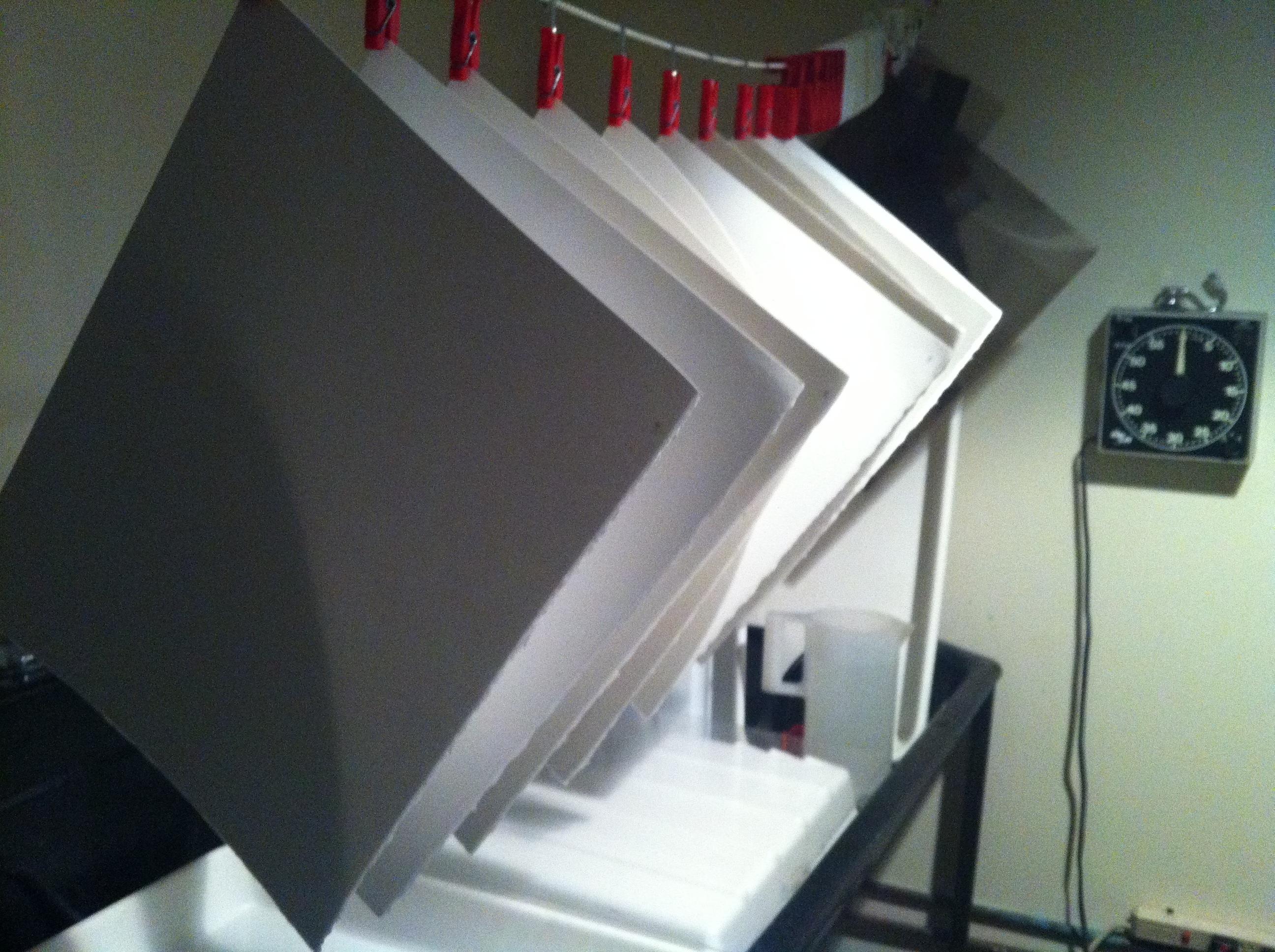
Here’s my darkroom sink with ten sheets of sized paper hanging up to dry:

Freshly sized paper, hanging to dry

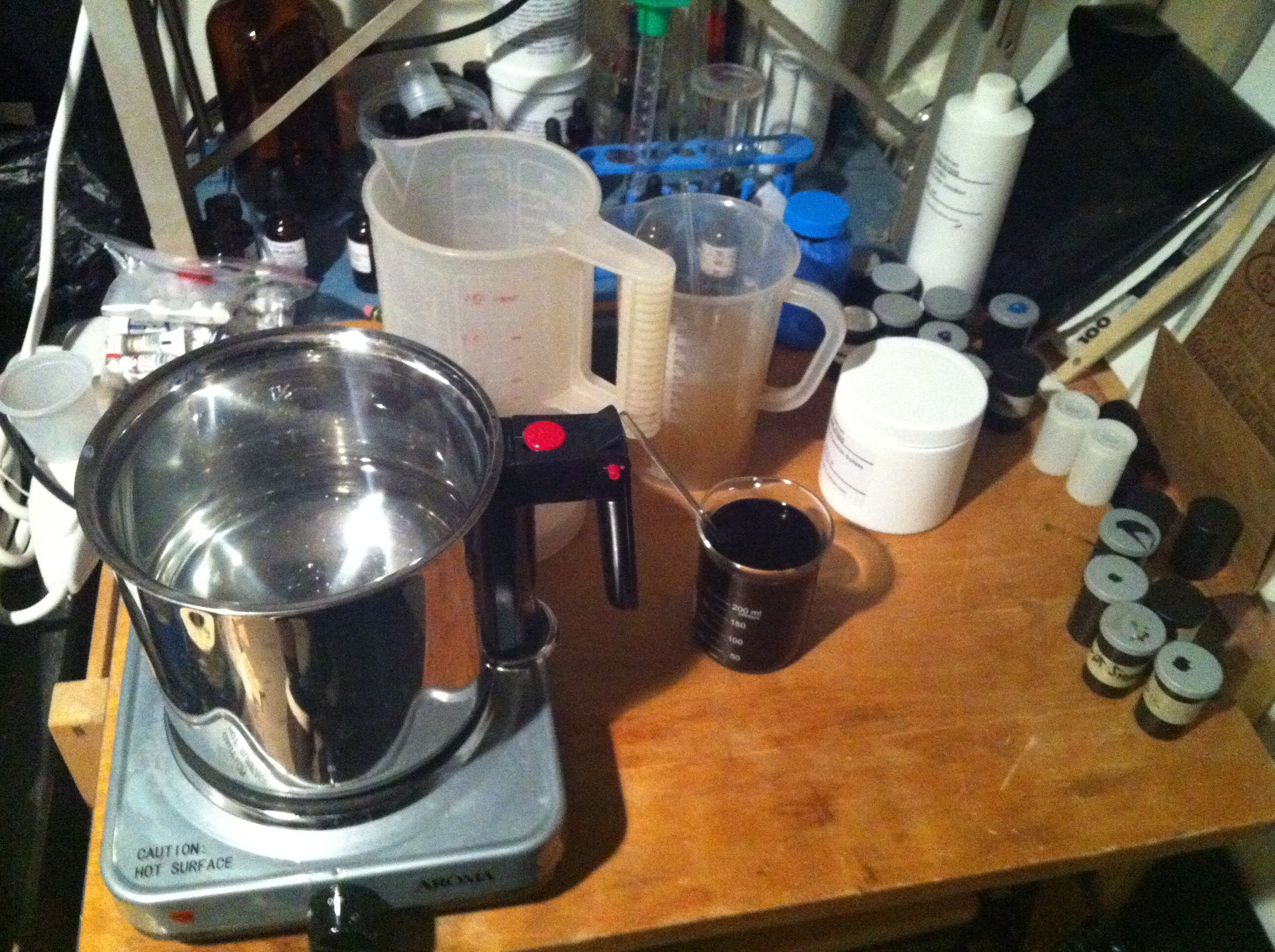
Sizing is an interesting creature – basically it’s Knox unflavored gelatin with a hardening agent added. To make it, you put a box of four 7 gram packets in 300 cc’s of cold distilled water, let the gelatin bloom for 30 minutes give or take, then mix the bloomed solution with enough water to bring it to 1 liter. Place this new solution in a water bath and heat until the gelatin solution reaches 140 degrees Farenheit. Add your hardener, mix, then you’re ready to coat. I have a bain marie pot that I use on a hotplate for heating the gelatin so it doesn’t scorch, and I can do it in my darkroom instead of on the kitchen sink.

Here’s a shot of my sizing mixing setup-

Sizing prep station

Sizing needs a hardening agent to help it stand up to repeated soakings in water. Hardeners are all something other than pleasant chemicals – typical hardeners are Chrome alum, Glyoxal and Formaldehyde (Formalin), in ascending order of toxicity. This time I decided to give the chrome alum a try because it doesn’t off-gas, has minimal effects from exposure, and requires the least safety gear for handling (latex gloves are sufficient). I had been using Glyoxal before, which requires good ventilation. My darkroom has minimal ventilation, and at this time of year, fresh air comes with a massive temperature penalty. Formalin pretty much HAS to be used outdoors, so that’s not happening either.

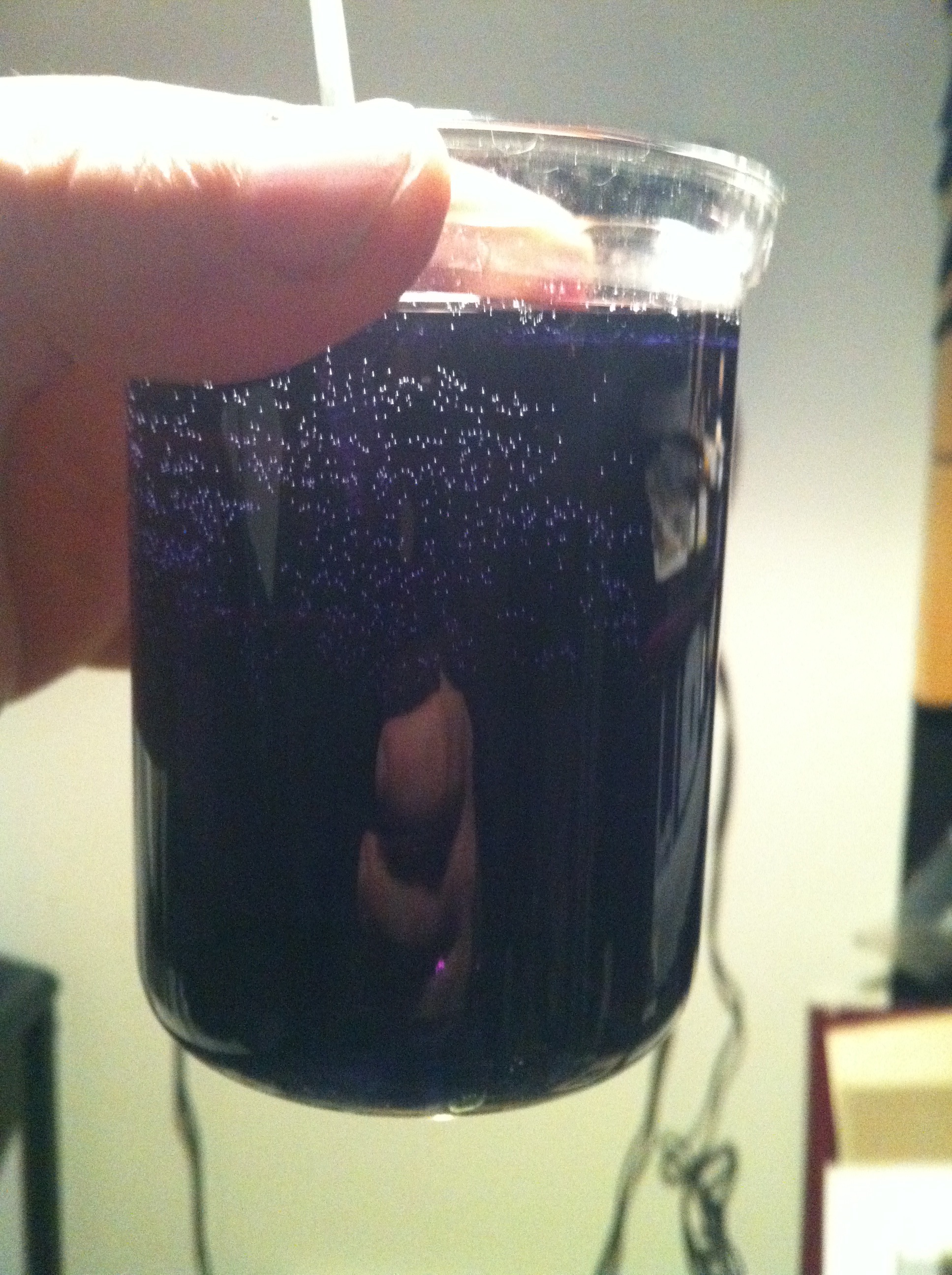
Here’s my Chrome Alum, 5% mix-

Chrome Alum

Isn’t it a lovely purple color? Don’t mistake it for grape Kool-Aid though…

Off to the Large Format Club meeting tonight

I’m going to the large format club meeting tonight. This will be our first meeting of the year, and in a new space, the Cedar Lane Unitarian Church in Bethesda. Tonight’s theme is marketing your work. I’m hoping it will go well – we’re mostly a bunch of artists with day jobs so self-promotion is nobody’s strong suit. I’ll be talking about Facebook and this blog, however, as I think that not only are they important, but I think they’ve been fairly successful for me as marketing tools.

UPDATE:

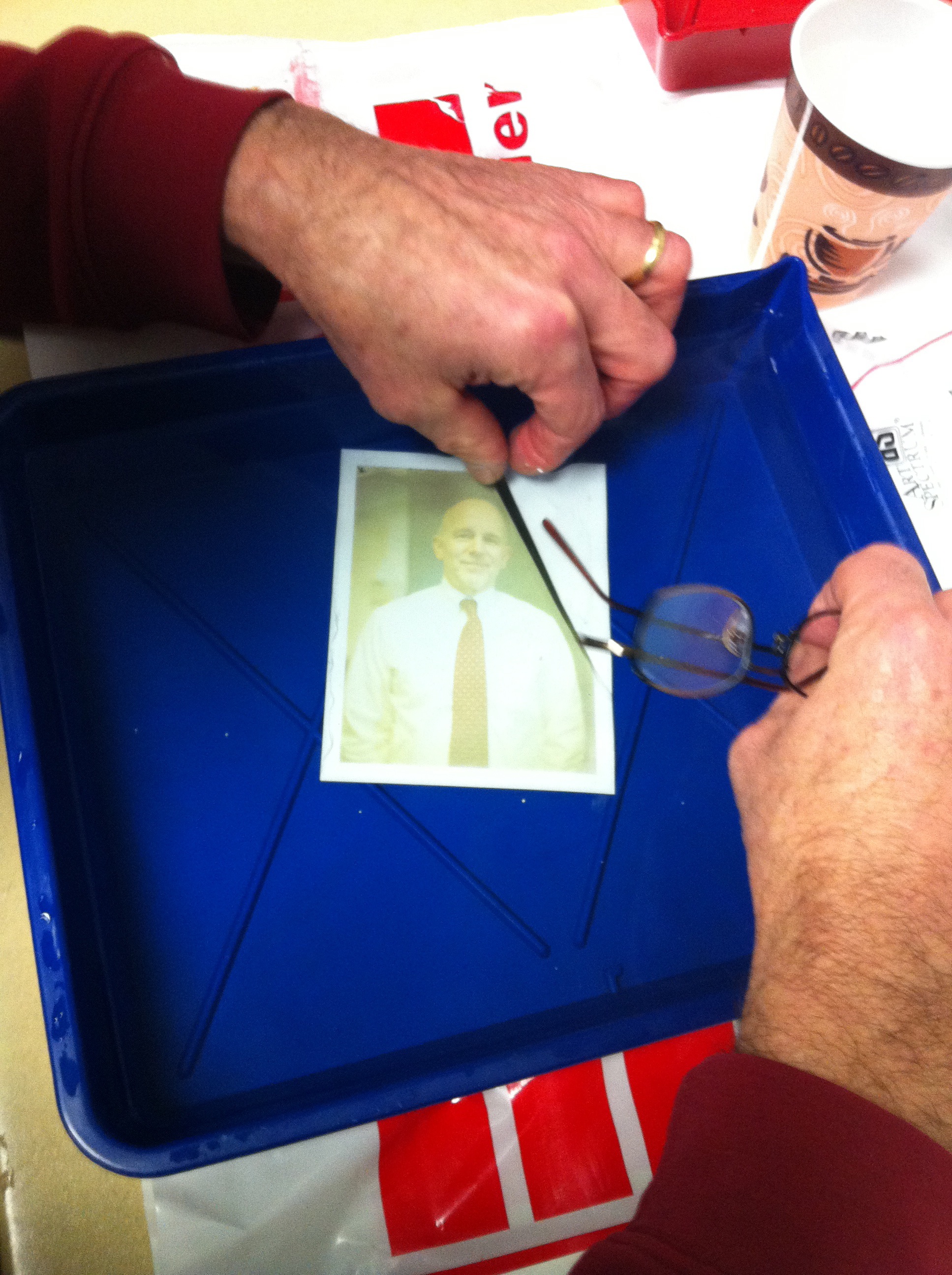
At the club meet, we didn’t have a discussion of marketing after all, but rather we got a demo of doing emulsion lifts and recovering the negative from Fuji instant film. While I don’t know how well you can print from the Fuji instant film negative, especially color, it is recoverable. Furthermore, it is possible to lift the emulsion off the print. It used to be that this only worked with Polaroid instant film, but not Fuji, but apparently that is no longer the case. Here you can see the emulsion lift working –

Lifting the emulsion from a Fuji Instant print

New batch of Rives BFK arrived today!

I got a new batch of 100 sheets of Rives BFK from my favorite supplier, Bostick & Sullivan, today. I’ll be having a sizing marathon this weekend getting all that paper ready for gum printing. I’ve not tried a lot of other papers yet, to keep the variables down, but I’ve been quite happy with the Rives BFK so far. It’s a 90# watercolor paper with good wet strength, and I’ve been able to coat up to five layers so far without having to re-size. After I get through this lot, I’ll have to try the Lana Aquarelle I have sitting around. I’m also going to try using an alum-based hardener in the sizing instead of glyoxal because it’s not exactly practical to try and size paper outdoors in this weather, and my basement darkroom doesn’t have good ventilation.