Kogod Courtyard, West Facade, NightKogod Courtyard, South Facade, NightKogod Courtyard, Southeast View, DayKogod Courtyard, West View, DayKogod Courtyard, South View, Day
Here are some views of the Kogod Courtyard of the National Portrait Gallery. The blue lighting in the nighttime shots of the courtyard was for an after-hours reception being held at the museum. The courtyard used to be a fairly typical Victorian-era affair with a pair of fountains and some scraggly looking shrubbery, open to the air and more importantly, the weather. A few years ago they undertook a multi-million dollar renovation, ripping out the old landscaping and (non-working) fountains and enclosing it with a Norman Foster designed undulating glass roof. At first I found the interior design rather stark. It has grown on me, though, with the modern interpretations of fountains being just a thin sheet of water flowing in a rectangle across the floor. Of course the roof is the masterwork – it bends and twists like a piece of origami paper. The courtyard is now a very pleasant place to sit and just pass the time, reading a book or eating something from the museum cafe.
All photos were taken with my Rolleiflex 2.8E, on Kodak Portra 800 film. Also, for the die-hard photo geeks out there, I’ve been using the free light meter app for my iPhone to do the metering. I’d say it works pretty darned well 🙂
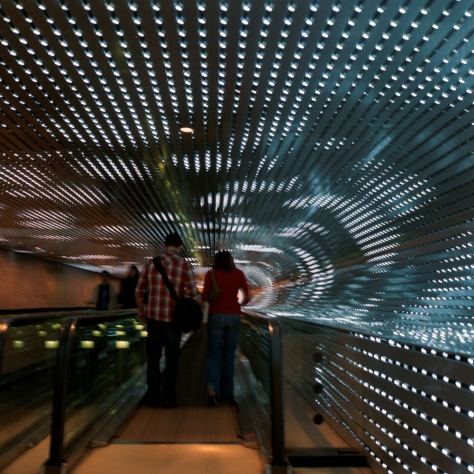
National Gallery of Art, Light Sculpture #1National Gallery of Art, Light Sculpture #2National Gallery of Art, Light Sculpture #3
Three shots of the light sculpture in operation, taken with the Rolleiflex, hand-held, using Kodak Portra 800. I thought it would make for a different take on the piece compared to the video (which was shot on my iPhone, thus the shakiness). The light sculpture has been set so that it will never in fact repeat itself exactly.
Two more from Gettysburg itself, and three more from the Catoctin Furnace.
Horse CarriageGettysburg Rail Depot
The rail depot is now a little museum, with exhibits relating to Lincoln’s visit.
Catoctin Furnace VentIronmasters House RuinsIronmasters Root Cellar
The iron master of Catoctin Furnace was responsible for all the finished product coming out of the factory. His house was quite large. Today it stands in ruins. The ‘root cellar’ image is my assumption of what the space might have been – it is not labeled on the site. I’m guessing at its function by the proximity to the house (it would have been immediately behind the house, near the kitchen). The other possibility is that it is the spring/well for the house. Since I lacked a flashlight, I did not go in to try and find out what was in there.
Here are some of MY photos from my Gettysburg excursion, not just the antique images I bought.
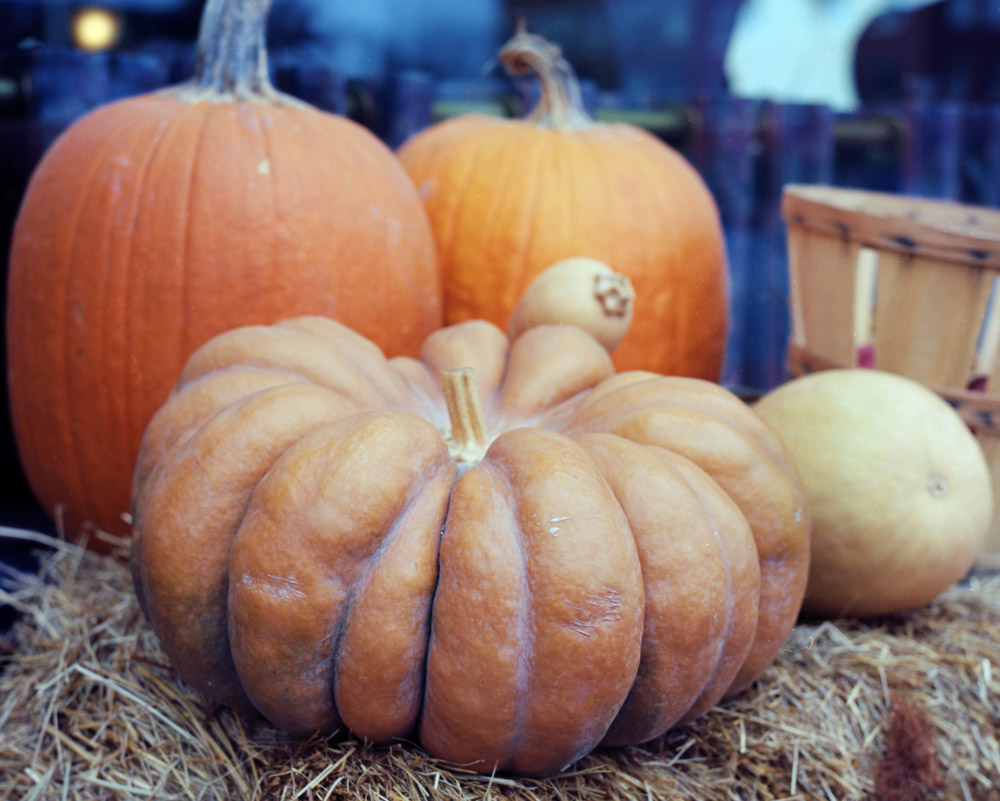
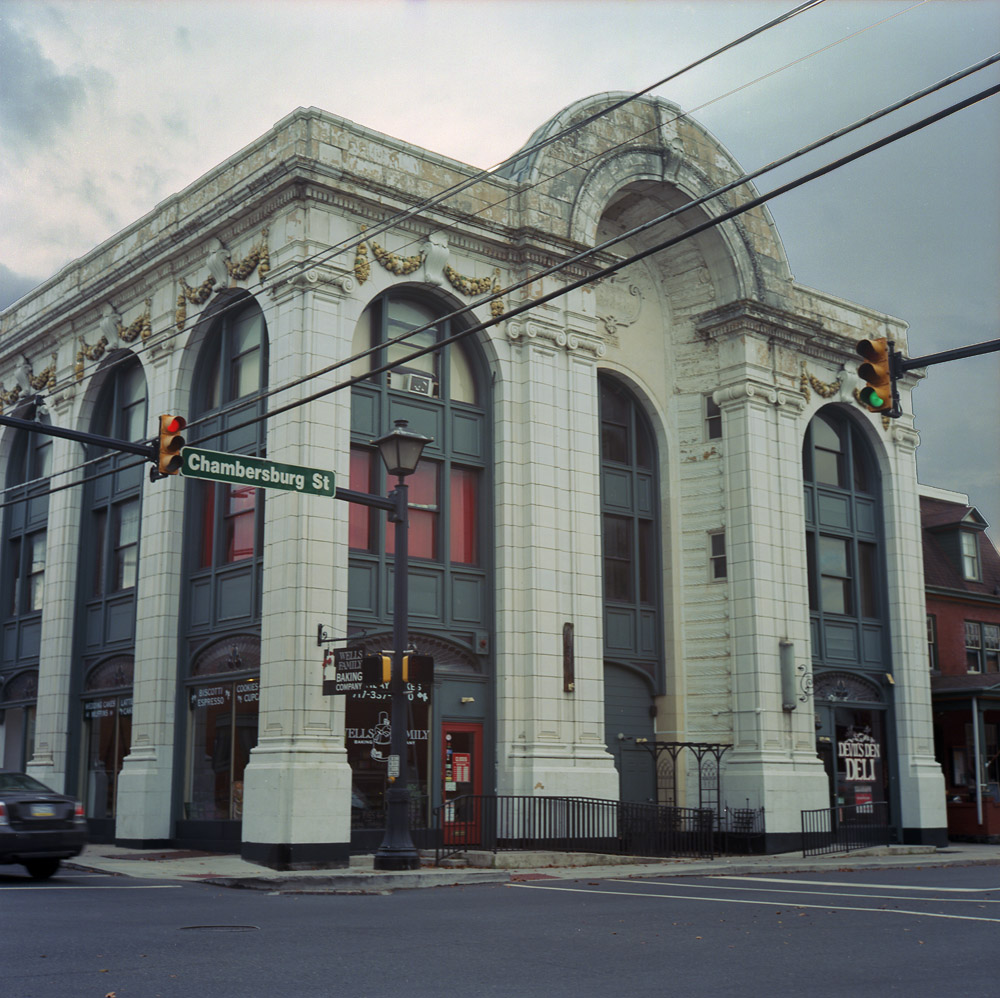
PumpkinsNumber 20, Chambersburg StreetGetty’s Hotel Canopy
I had just taken this photo and was walking back toward the main square (aka “the diamond” in local parlance – that’s a whole other story) when I ran into someone who recognized my camera as a Rolleiflex, and who had one (actually several) himself. I explained to him that servicing them to get them back into good working order was not actually that expensive, and that he could still easily get film for them. I think (I hope, anyway) I inspired him to get his Rolleis out of the closet and put them back into service.
The “diamond” story:
I grew up just down the road from Gettysburg, in another southern Pennsylvania town storied in Civil War lore: Chambersburg. Like Gettysburg, it has a central town square, where the courthouse, a church, and a couple of banks are located. We always called it “the square”. Then, a couple of years ago, I went on a Civil War themed bus tour led by Ed Bearss, the historian and talking head (Ken Burns’ The Civil War and History Channel’s Civil War Diaries, among others). We were covering JEB Stuart’s raid on Chambersburg. When we arrived in downtown, he explained that the proper term for a town’s main square in that part of Pennsylvania was (and allegedly still is) “the diamond”. The squares are square, per se, formed at the intersection of two roads, which enter the square from the middle of each side, but in a gesture to ease of parking (originally buggies and horses, now cars), inside the square, the corners have been cut off, making a diamond-esque space in the middle. Thus the diamond. But I had never heard it referred to as “the diamond” in the first 39 years of my life until I heard Ed tell that story.
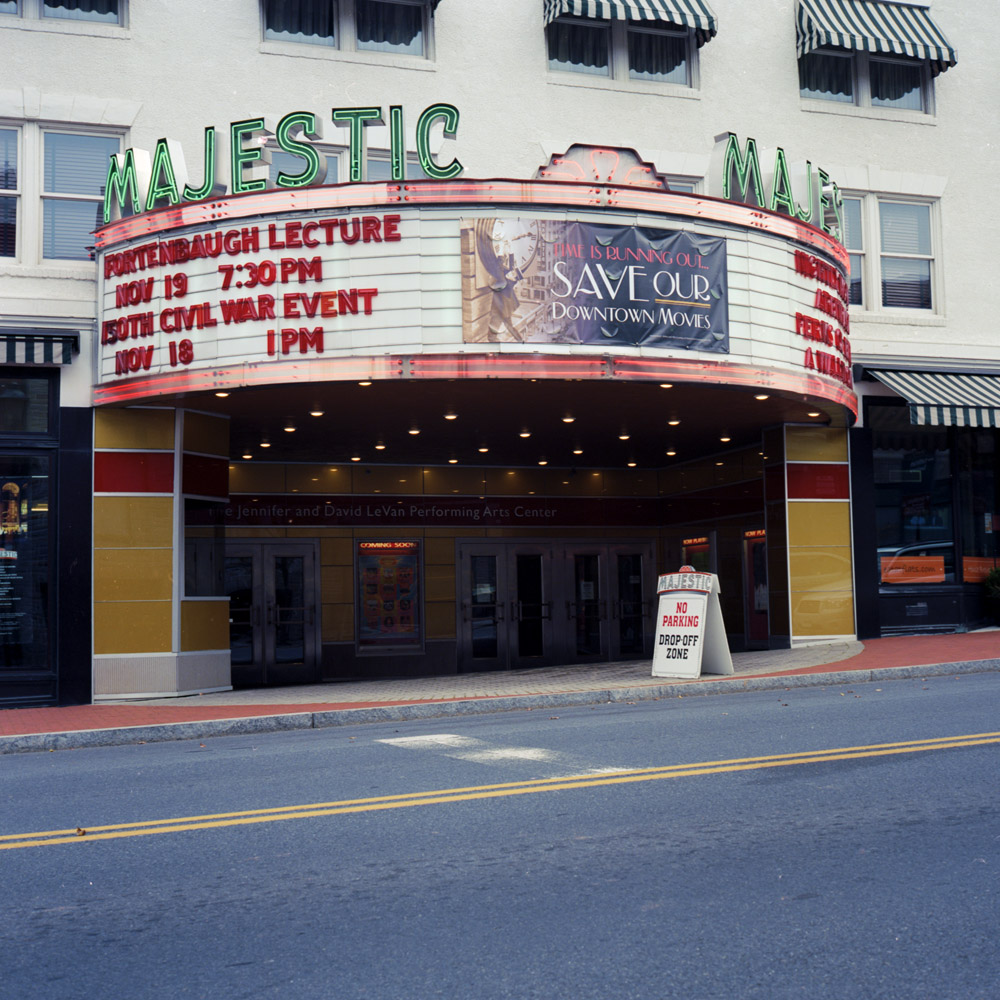
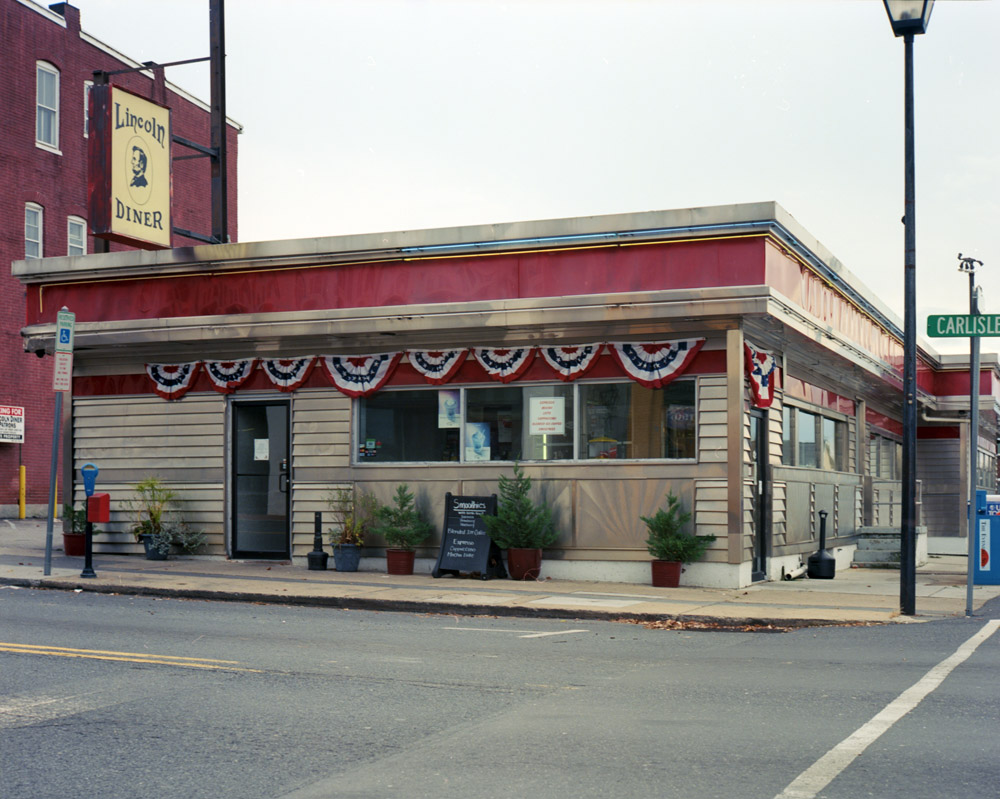
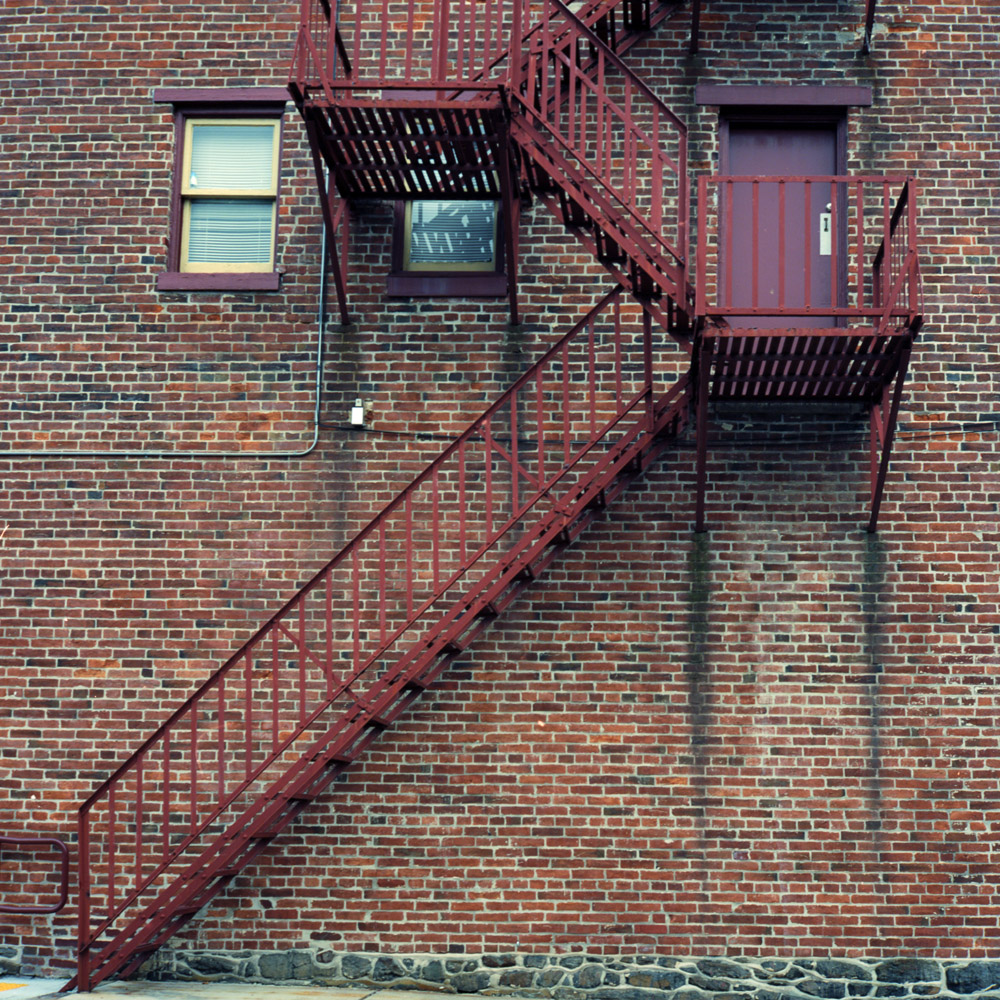
Majestic Theater, GettysburgThe Lincoln DinerFire EscapeChambersburg StreetGettysburg Dive Bar
This is one of those places you see in so many small towns – the local dive bar, or “bar of shame” as I like to think of them. No windows that you can see in, which I suppose gives patrons an illusion of privacy. The ironic thing is that A: this bar is on the main street, just a block or so off the main square, and B: it’s a small town, so everybody knows everybody. If you enter this bar, the whole world is going to know about it.
Emmittsburg Road, Evening
The Emmittsburg Road, at evening time. I took this picture because it epitomizes Gettysburg, the battlefield, to me as much as any monument or marker or green bronze cannon. This is the gently rolling countryside where over three days in July, 1863, almost 50,000 men gave their lives.
Catoctin Furnace
Not actually in Gettysburg, but on the way home, is the Catoctin Furnace. This was an early ironworks, in operation from the late 1700s. Catoctin Furnace supplied the Continental army during the American Revolution, and the Union army during the Civil War. They would stack layers of charcoal, limestone and iron ore needed to produce finished iron into the furnace and let it burn, adding additional layers until enough molten iron was produced. Then a clay valve in the bottom of the stack would be opened and the molten iron bled off into sand-filled channels in the ground where it would form into pig iron bars. I’ve seen two explanations for the name, pig iron: one variation has it because of the shape of the bars after pouring, the other because of the sound the molten iron made as it ran into the molds.
All photos were taken with my Rolleiflex 2.8E, using Kodak Ektar 100.
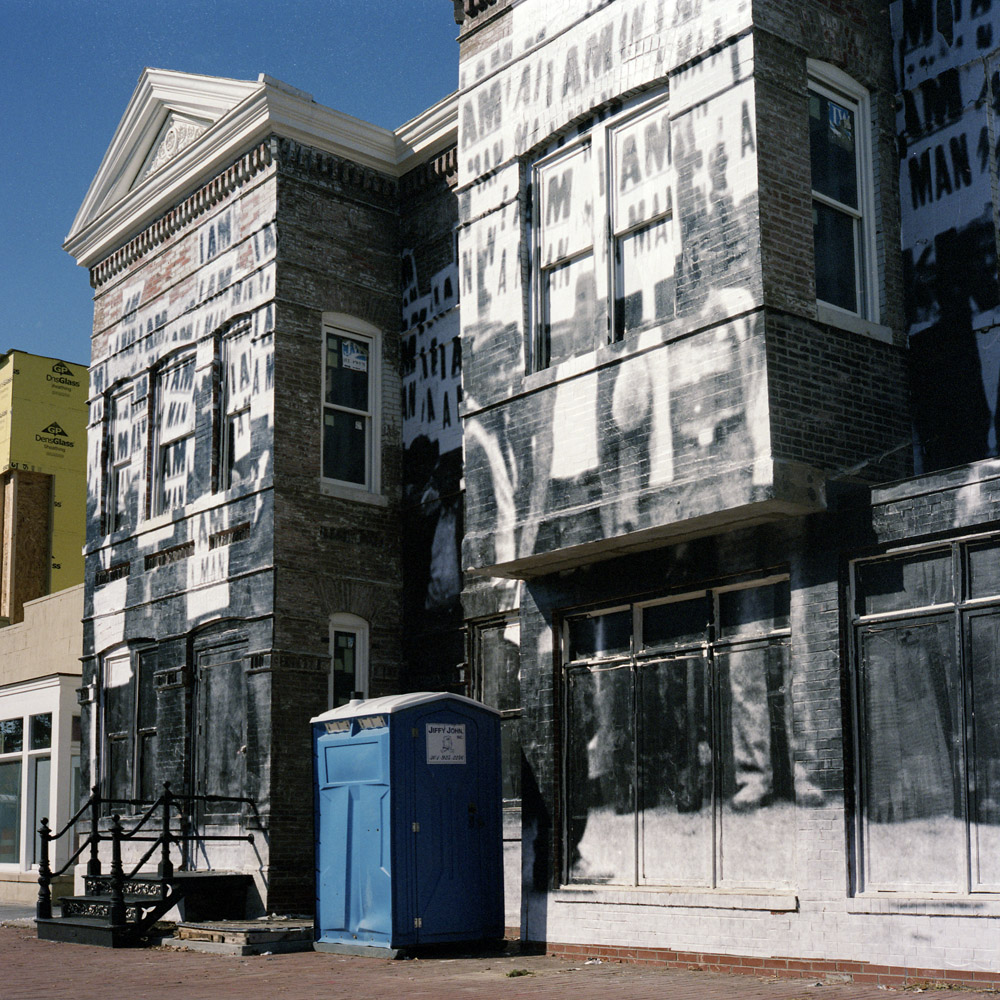
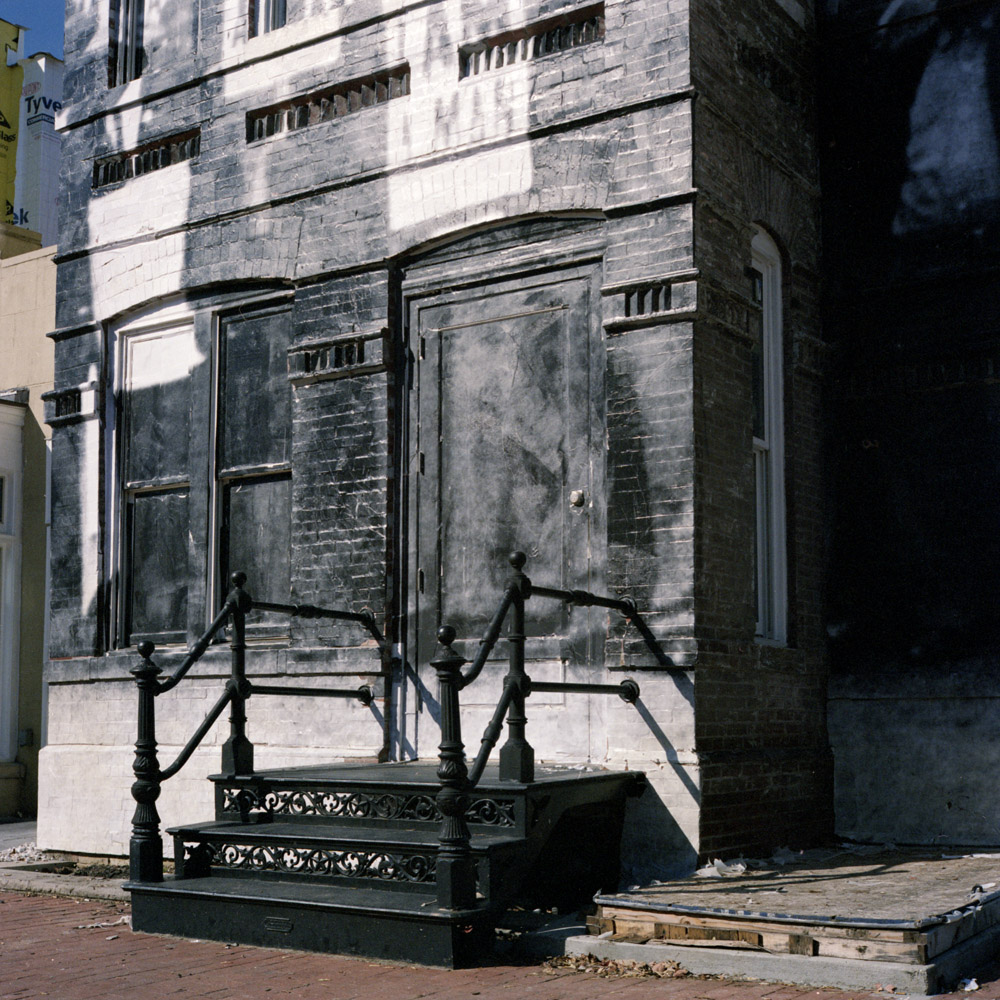
House Wrap, Black and White, 14th StreetSteps, Black and White House
Two shots of a former house turned liquor store turned redevelopment project on 14th Street.
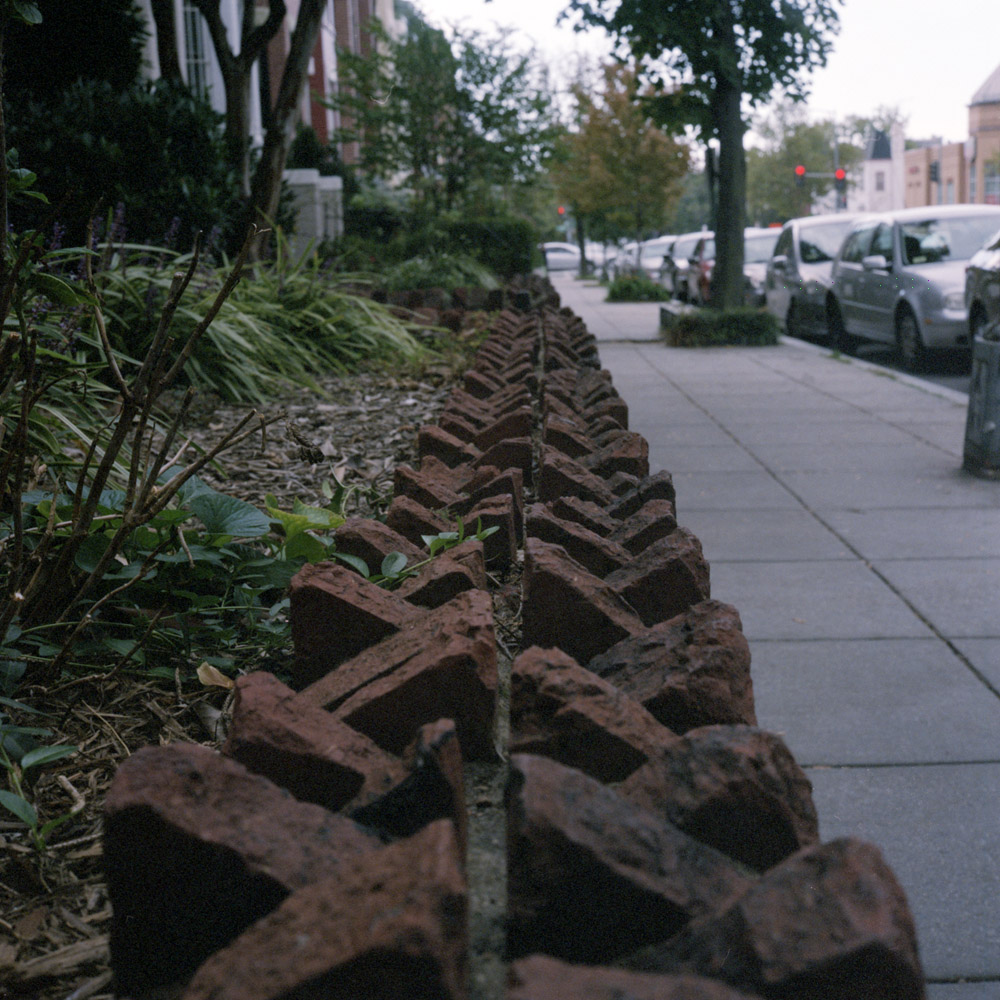
13th Street Brickwork
A perspective study of the brickwork trim on the front garden retaining wall of some houses on 13th Street.
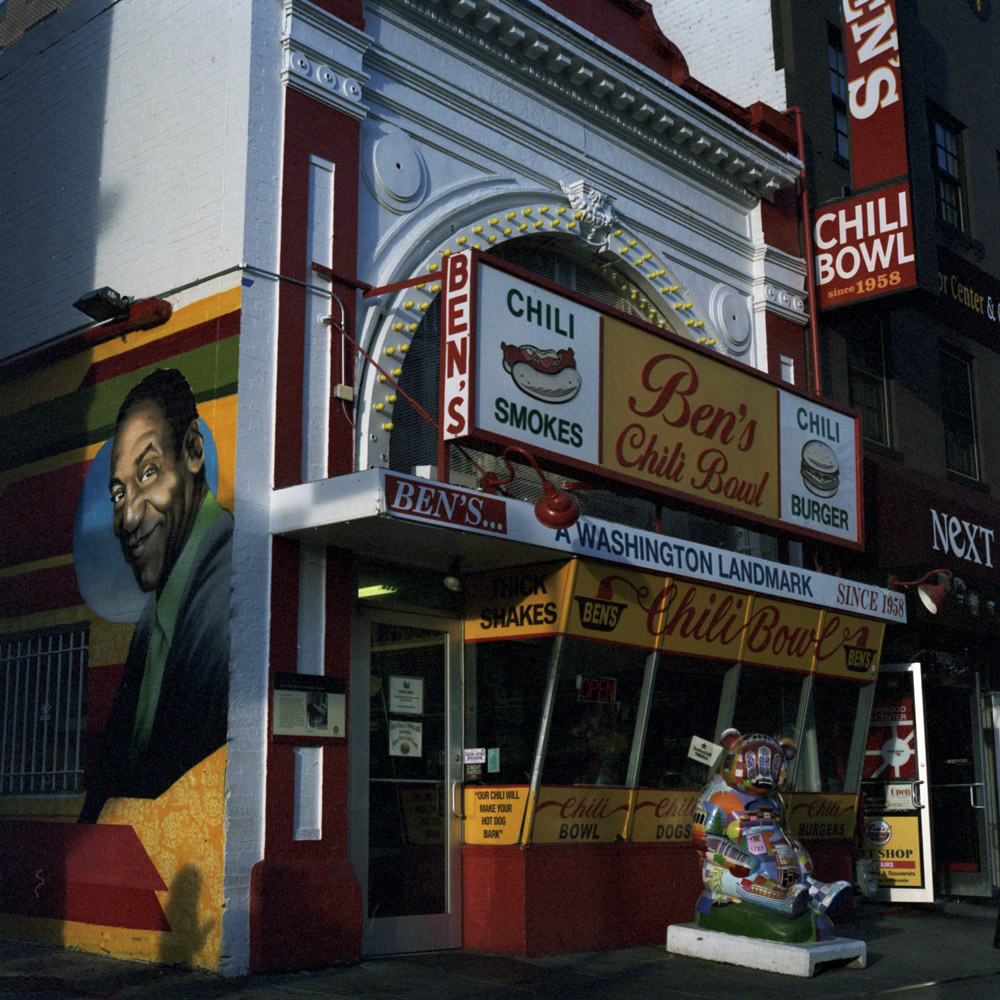
Ben’s Chili Bowl, Evening
The front of the world-famous Ben’s Chili Bowl on U Street in Northwest DC. You can see the new mural in the alley that depicts Bill Cosby (and Dr. Martin Luther King, not visible in this photo) – one of the two people who can eat at Ben’s for free (the other ‘person’ being the Obama family).
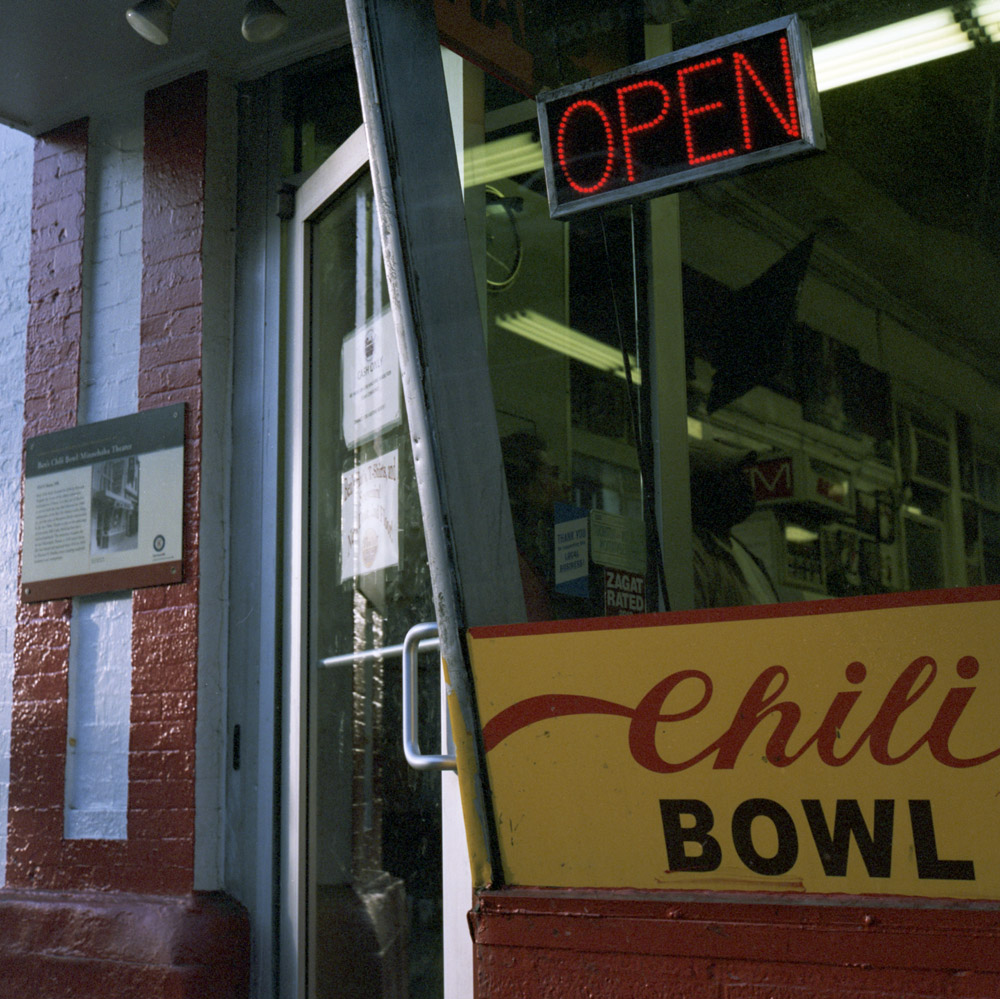
Door, Ben’s Chili Bowl
I just liked the way the door caught the reflections in the glass as it was closing.
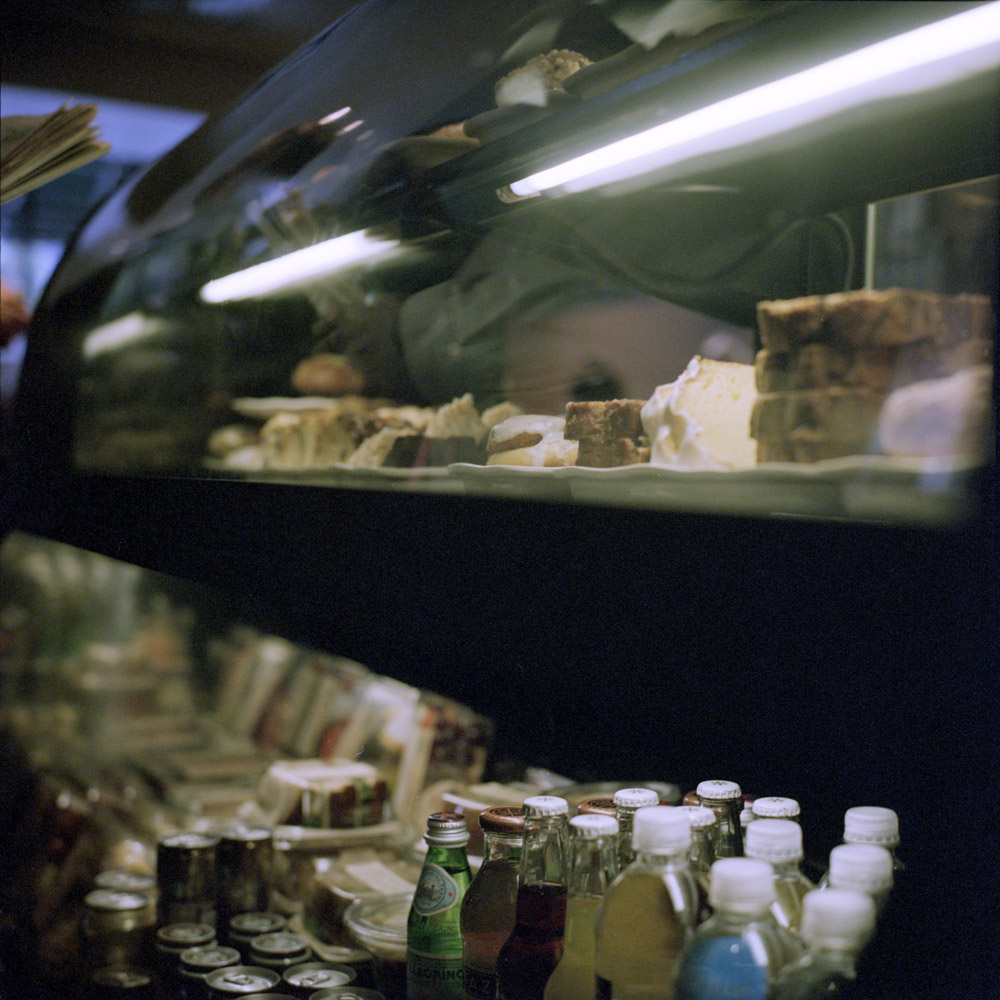
Food Case, Starbucks, 13th Street
Just another one of those quotidian things we see every day and don’t pay much attention to.
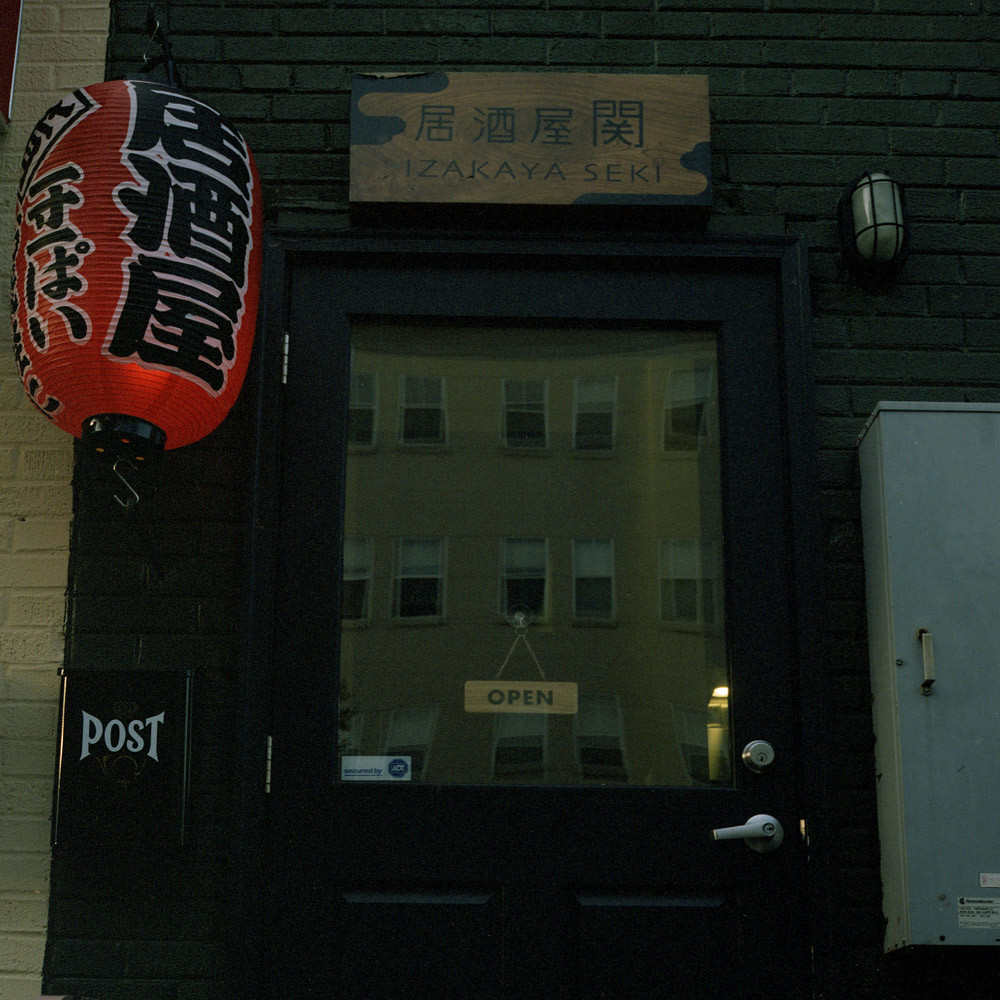
Izakaya Seki, V Street
The entrance to a new Japanese restaurant that is very much in keeping with the spirit of a real Izakaya in Japan – spartan in appearance and compact in size, but still welcoming. Rumor has it that the food is excellent – I will have to give it a try some day soon, although their menu is a bit seafood-intensive for me as I’m allergic to shellfish (shrimp, crab, lobster and scallops).
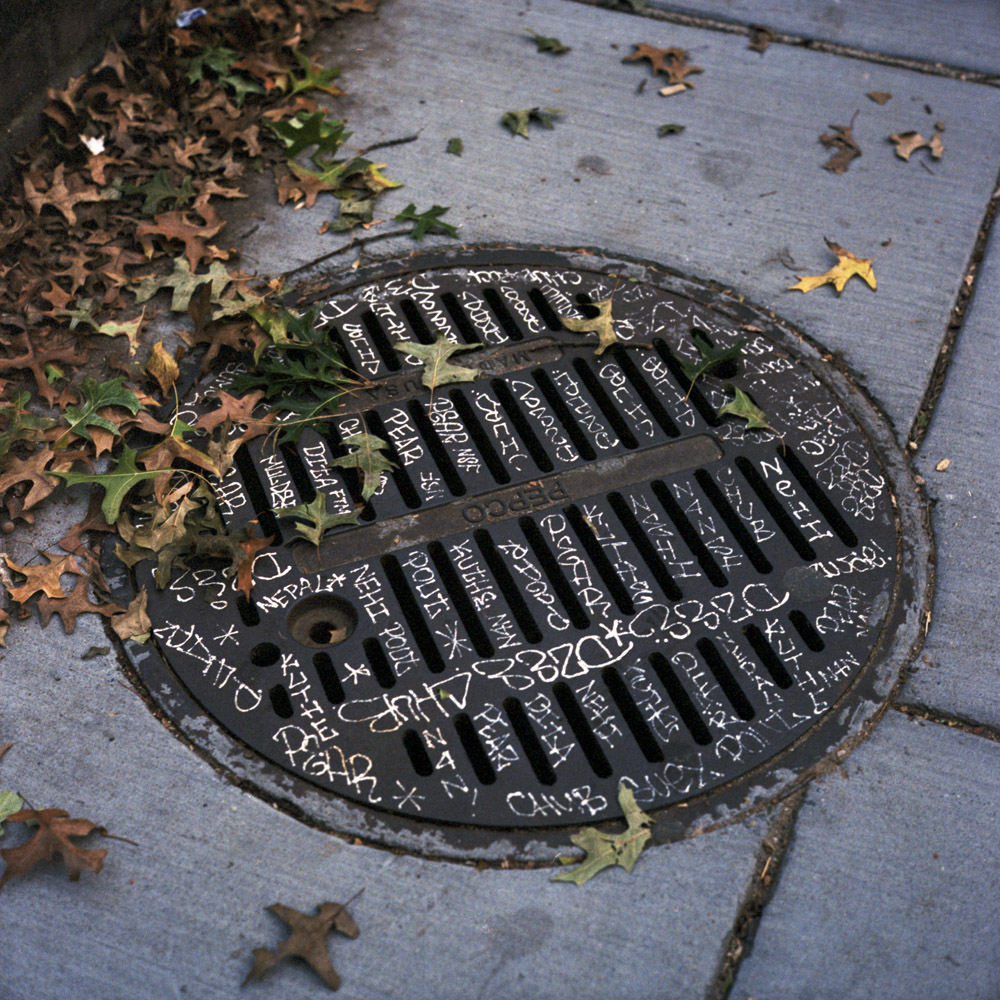
Graffiti-inscribed Manhole Cover
To close out the show, here’s a manhole cover that has been thoroughly inscribed with graffiti. I liked the contrast formed by the regular geometry of the manhole cover and the grid of the concrete with the organic shapes of the leaves, setting up a man-vs-nature conflict, only to be complicated by the man-made disorder of the graffiti.
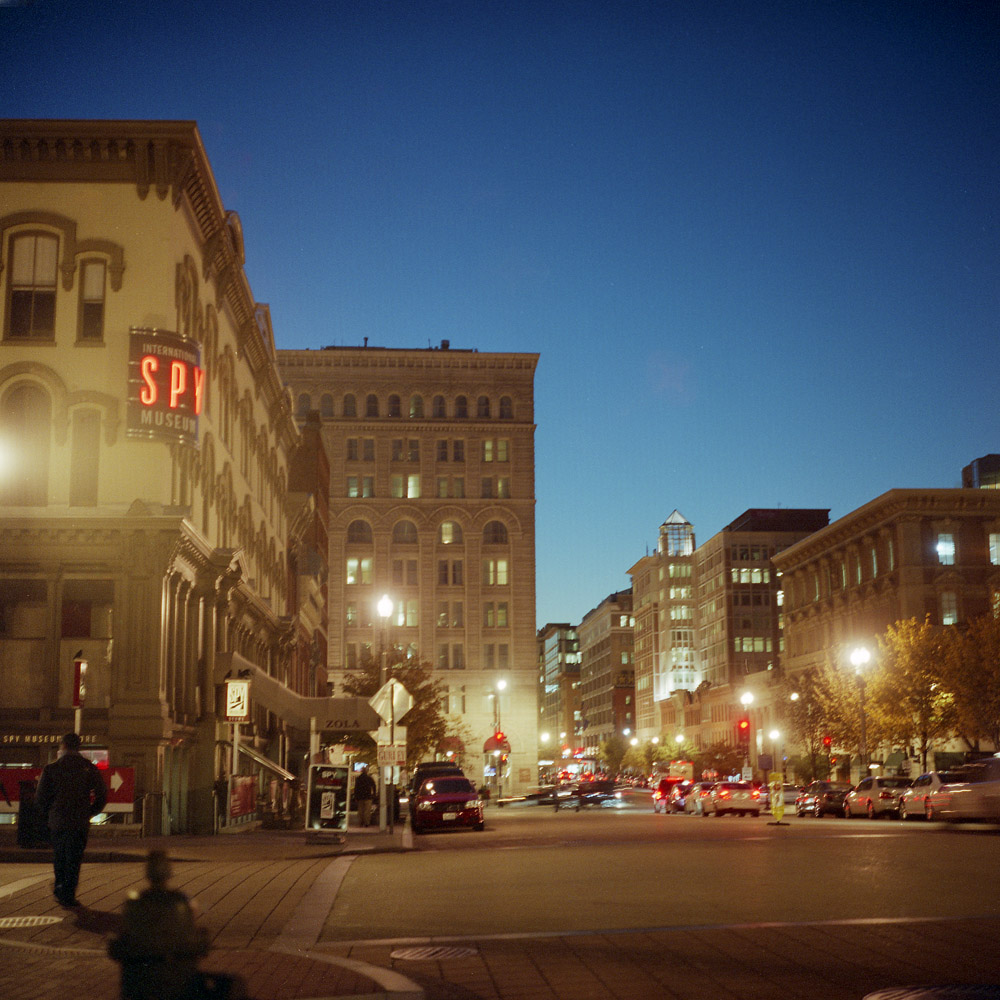
More adventures in Rolleiflex-land for those who care about such things. All of these were shot on Fuji NPH 400.
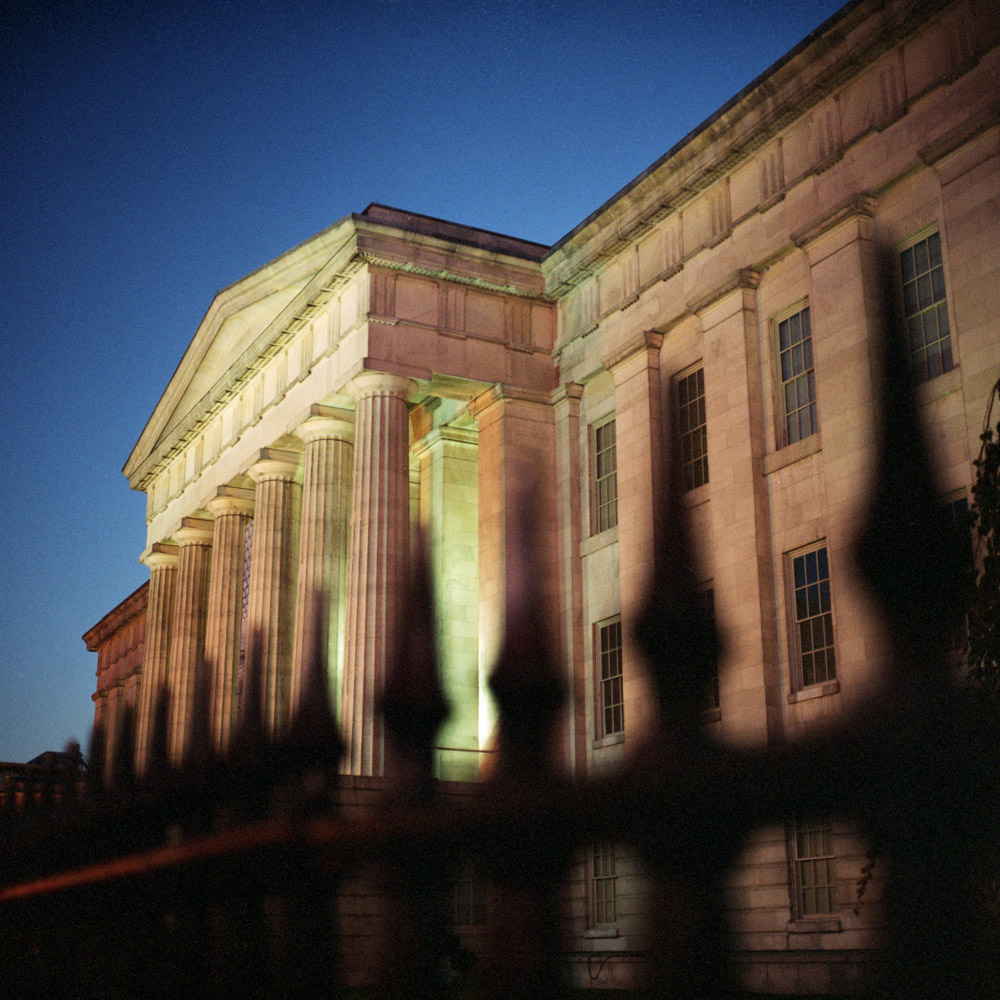
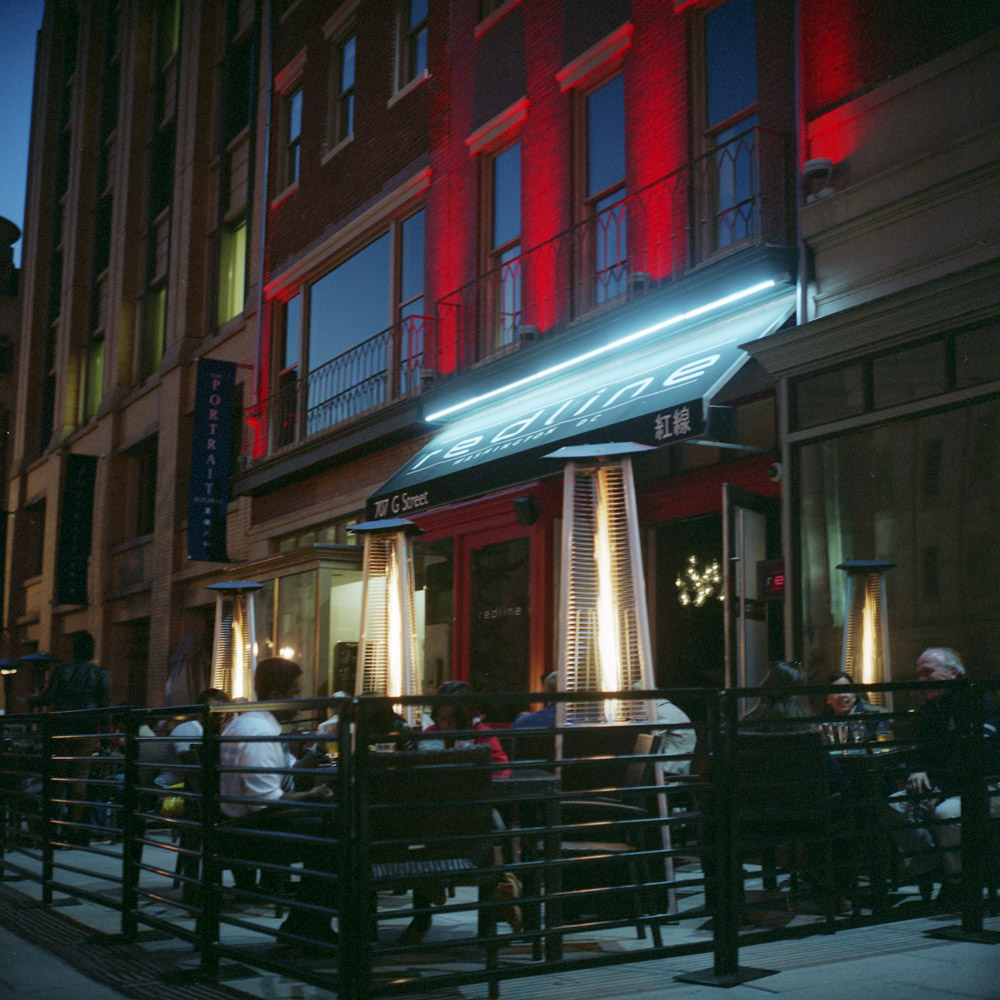
This is looking West on G Street, across the street from the National Portrait Gallery and American Art Museum (they’re housed in the same building, the former US Patent Office, once the largest building in Washington, occupying an entire square block. Designed to be fireproof (although proven later due to budget cuts during construction to NOT be as fireproof as designed), it was home to Abraham Lincoln’s Inaugural Ball). If you saw photos of this street from 30 years ago you would barely recognize it – the entire neighborhood was in rough shape, and despite the museum’s presence, not a safe place to be. They wouldn’t let school groups wander beyond the museum – it was straight from the bus to the building, and back directly into the bus in those days. The whole neighborhood smelled of Eau de Homeless. Now, drinks at Zola are $10-15 each for bottom-shelf liquor, and dinner for two at Rosa Mexicano around the corner will routinely set you back $70-100.
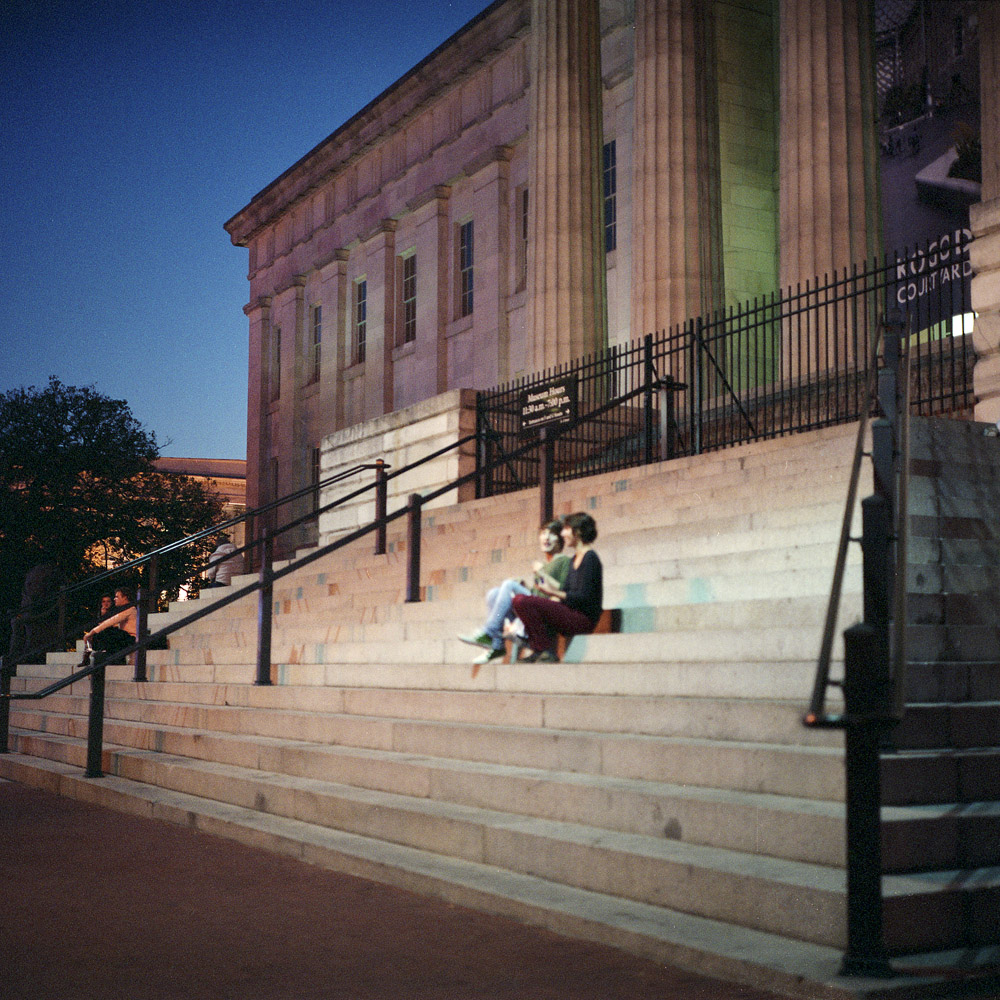
Portrait Gallery Steps, Twilight
As you can see, sitting on the steps of the Portrait Gallery is a popular pastime, although not as popular as it used to be amongst teenagers who used to congregate there in large numbers pretty much all year round. The downside was that they weren’t absorbing culture – they were there being teenagers, being rowdy and noisy, sometimes getting into fights, and other inappropriate behavior. So the museum installed speakers that play classical music. Beethoven, the ultimate teenager repellant!
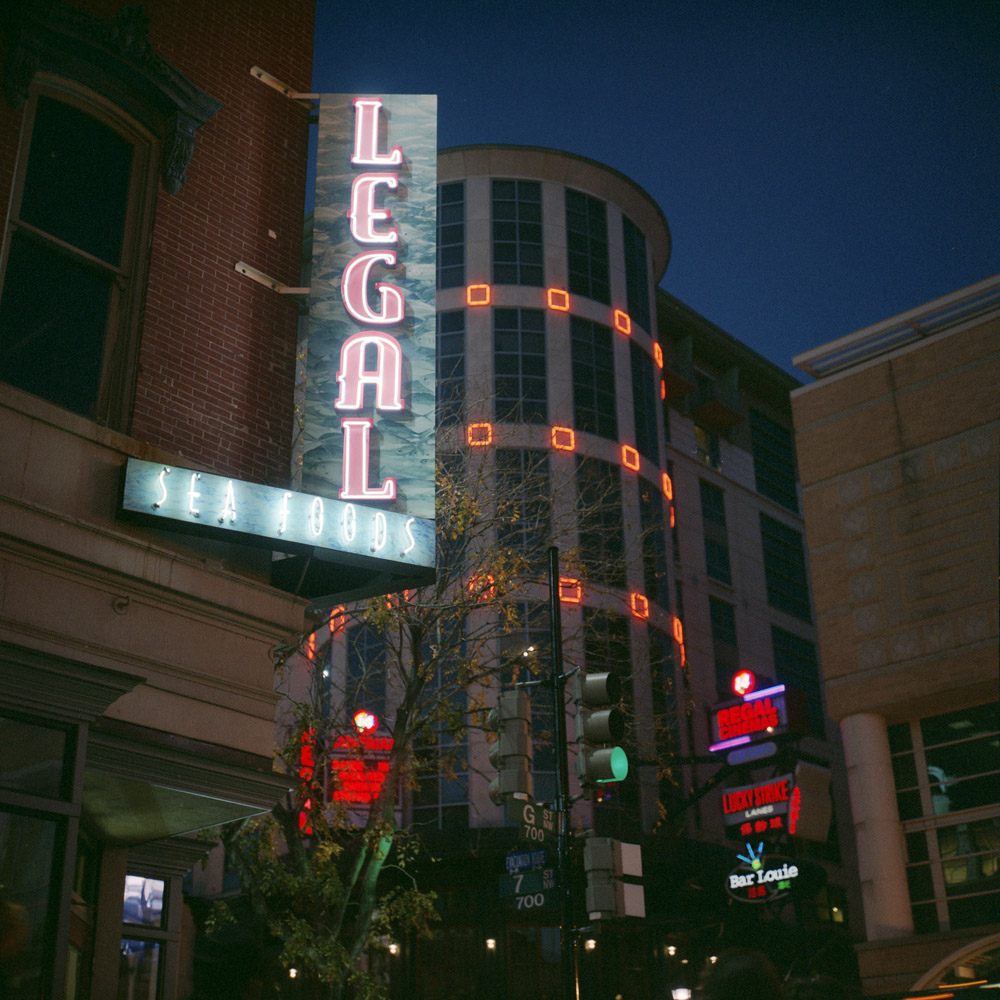
More of my DC nightscapes- I was testing out the Fuji NPZ 800 that I had in my film inventory. A surprisingly good result from a film I’ve had sitting around again for the better part of a decade.
National Portrait Gallery, TwilightRedLine Pub, ChinatownLegal Seafood, Chinatown
You can definitely see the grain in these images, but it’s nowhere near as pronounced as the grain in 400 speed 35mm film. It also handles mixed lighting pretty well, but it’s not Kodak Portra.
Oh, by the way, these were all hand-held. THAT’s why you shoot 800 speed film!
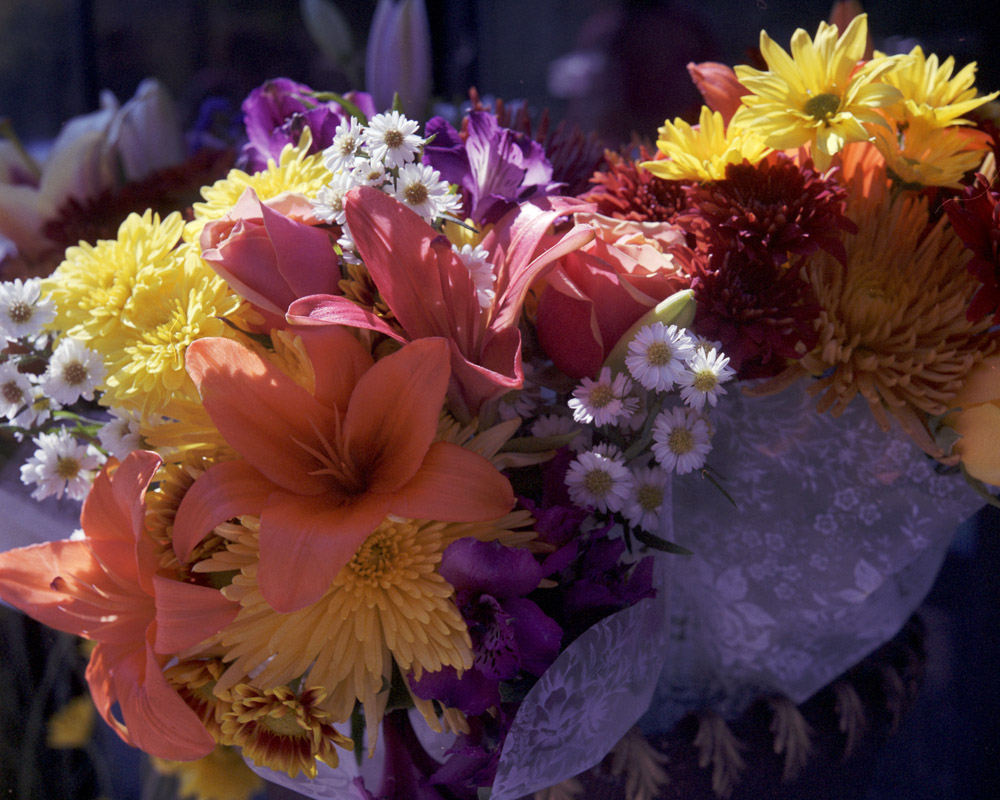
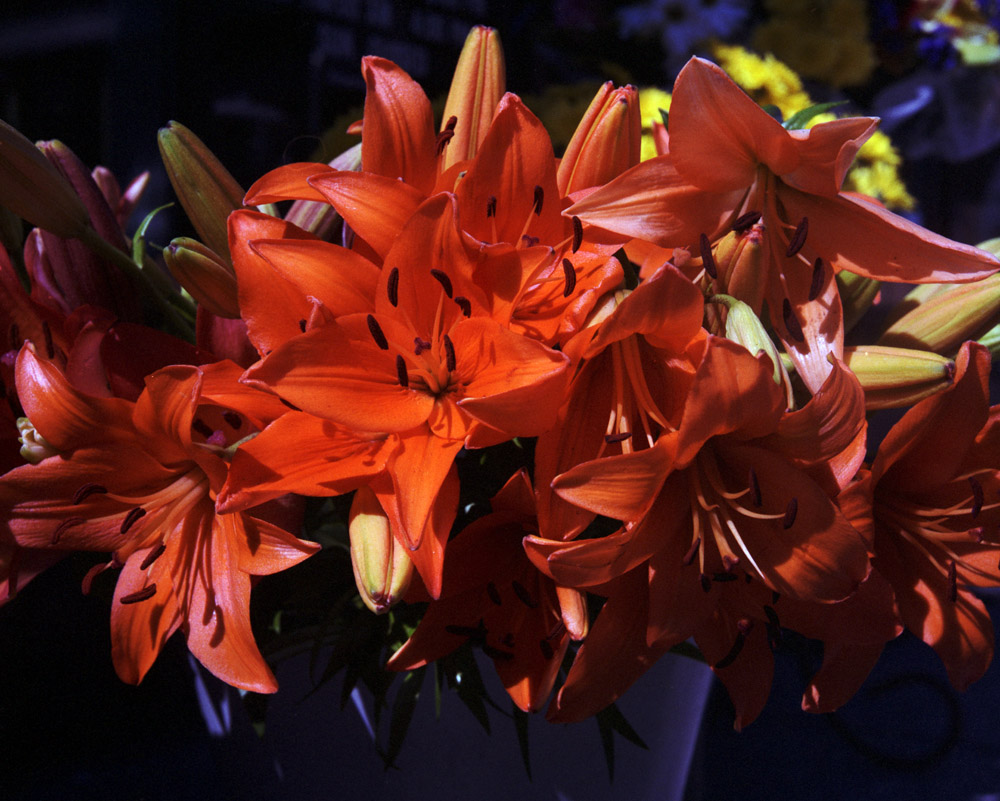
If you’re familiar with twin-lens reflex cameras, you know that they have certain limitations (close-focus capability or lack thereof, parallax compensation required, non-interchangeable lenses) for the most part (the Mamiya C22/33/220/330 family being the notable exception to most of the above). My Rolleiflex certainly falls into that category. One thing Rollei did was they came up with a special close-focus auxiliary lens set, which they called Rolleinar. Rolleinars come in four strengths, with the #4 being a rarity, and the #3 uncommon to find today. They’re basically diopters, but with a twist – because parallax worsens the closer you get, they include a special diopter plus prism for the taking lens so you can still compose a frame with relative accuracy. I have a Rolleinar 1, and I’ve been playing around with it. It’s good for getting closer for tight head-and-shoulders portraits, and for doing simple macro-ish photos of flowers and textures and the like. Here are a couple of shots I took with it outside the florist’s by my office – as you can see, it will get you close-r, but it’s far from 1:1 reproduction. Both of these were shot at or near minimum focus for the camera. Film is that same expired Fuji NPS 160 that I’ve been shooting through.
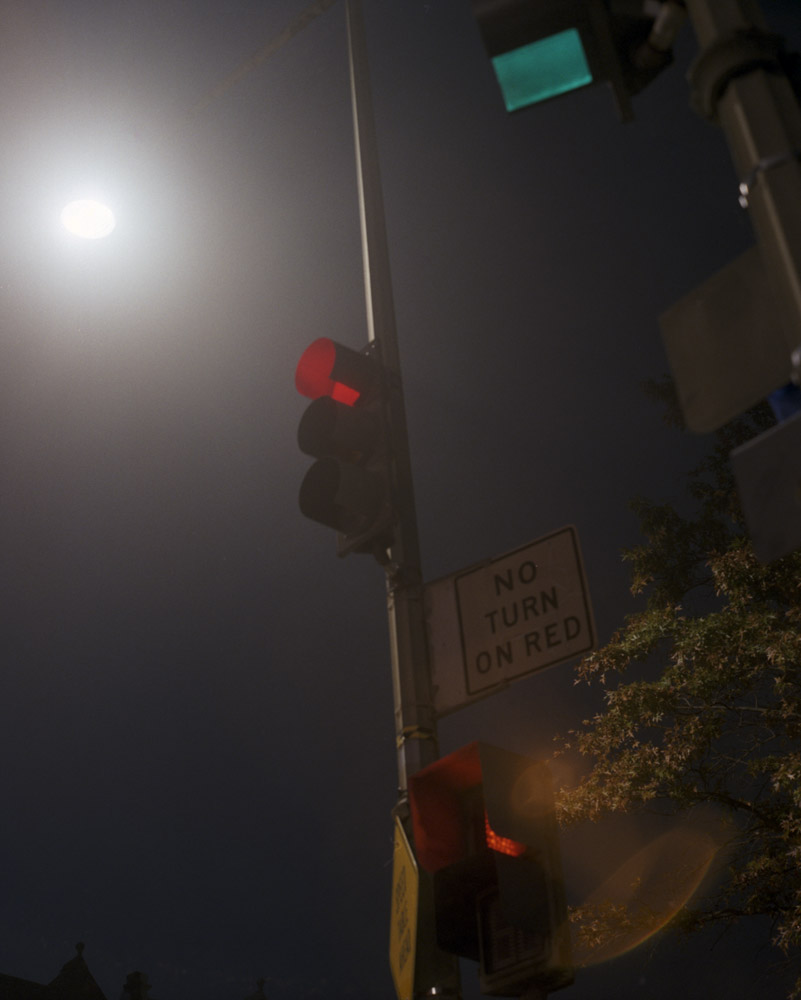
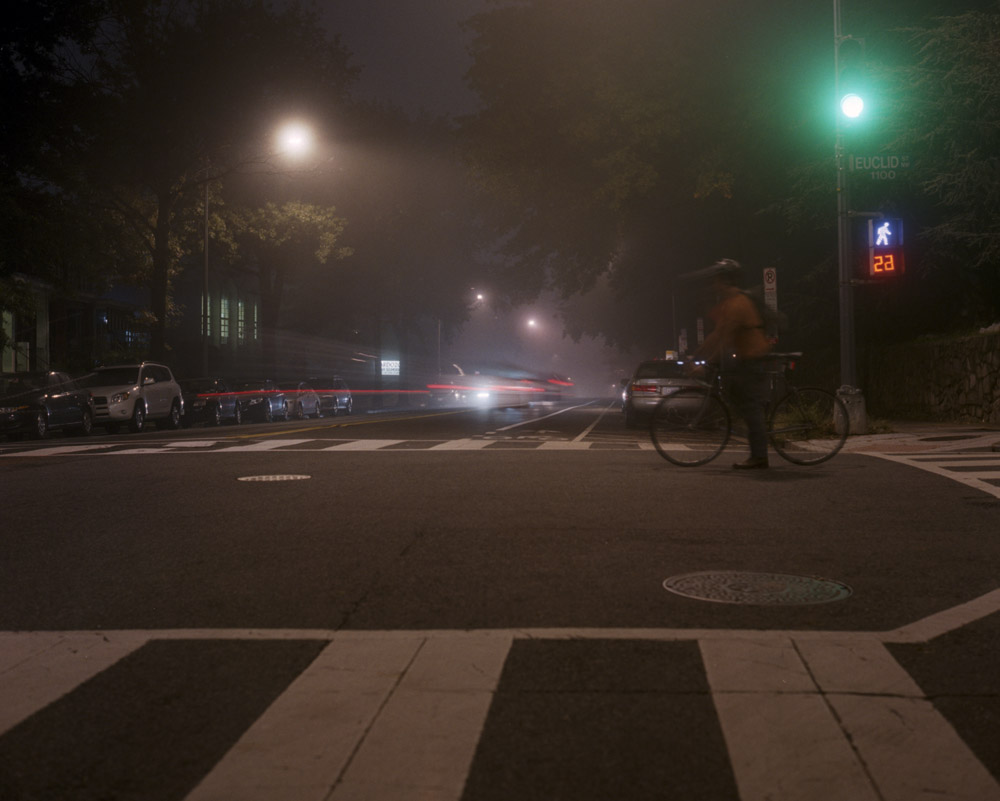
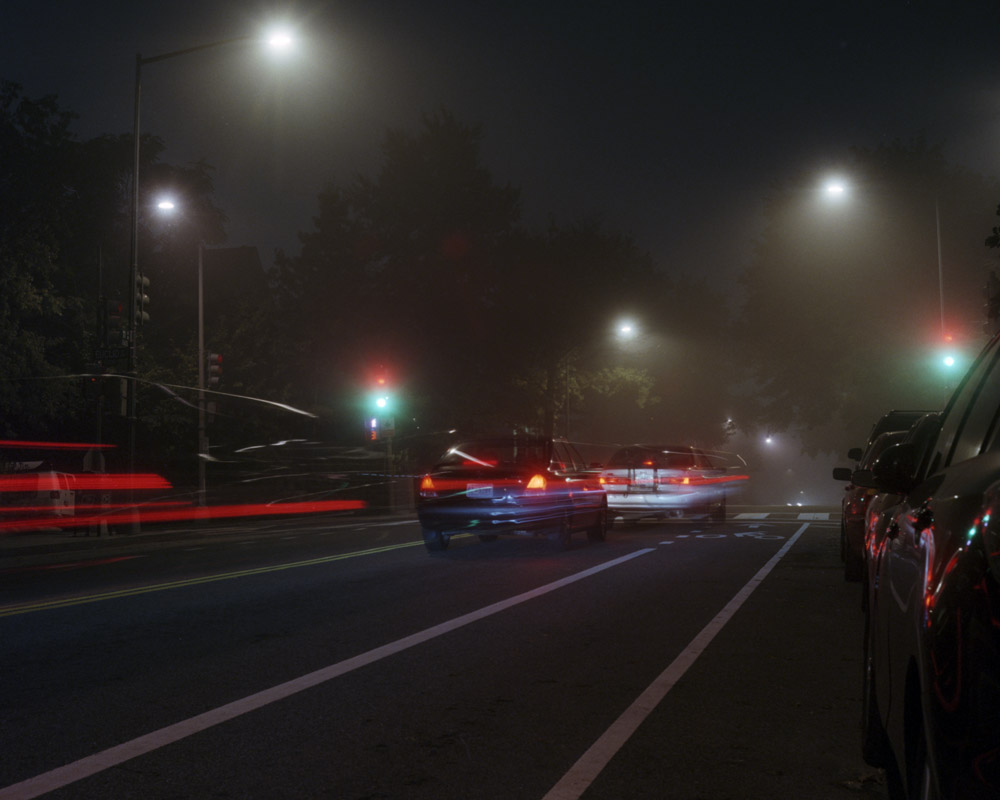
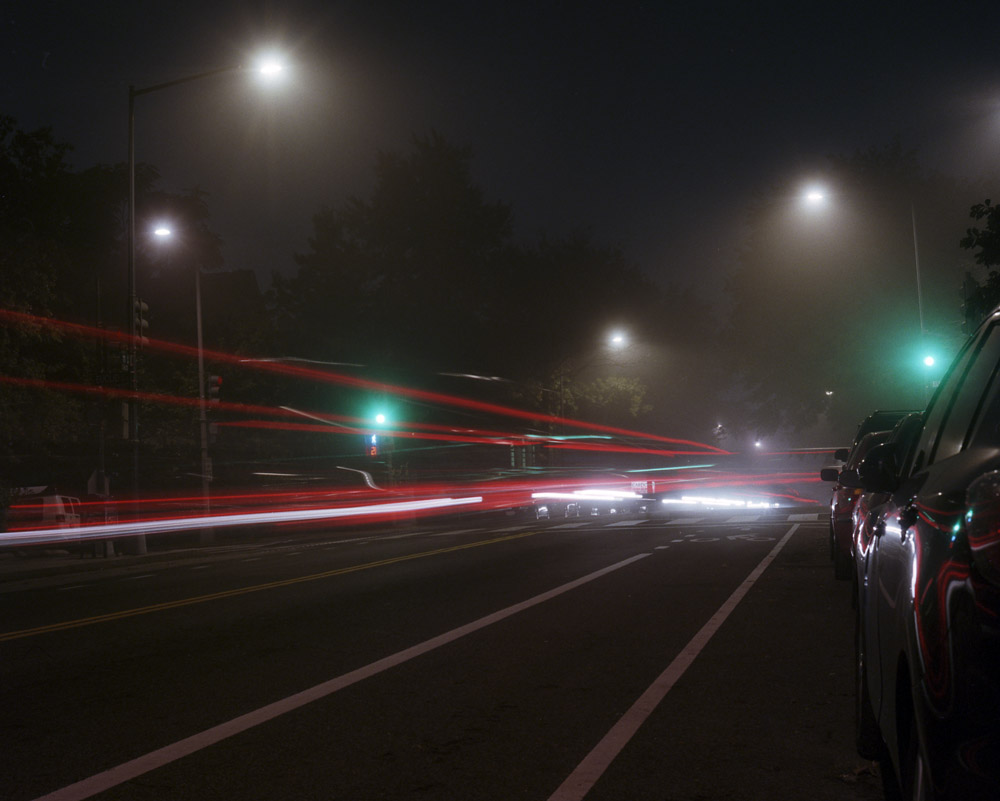
A few nighttime photos in the fog. I think these really captured the atmosphere of the evening. It had been warm in the daytime, then rained, and when the rain stopped, it was already dark, so we ended up with this cool fog. I wanted to capture that feel of the streets at night in the fog, and since I live somewhere very residential, I figured this was a pretty safe place to do it as there wouldn’t be much traffic to worry about if I stepped into the street for a four second exposure. All these were taken with my Rolleiflex, on expired Fuji NPH 400 film. The reason why I’m shooting all this expired film is not that I’ve got some kind of outdated film fetish, or that I’m a cheap-ass bastard and refuse to buy fresh film, but rather I’m just having fun experimenting and I don’t want to use “good” film on experimental stuff if I have some old film that nowadays is for all intents and purposes free but for the processing cost.
But what about the square, you say? Aren’t all Rollei photos square? Well, I do love square photos, and that’s one of the reasons why I love the Rollei so much. But there does come a time when you have to look at the photo and decide if a crop makes the image stronger. In all of these cases, the original square composition had too much something – too much sky, too much foreground, etc. So I cropped for more dynamic compositions that didn’t have so much dead space in them. I think these are much better.
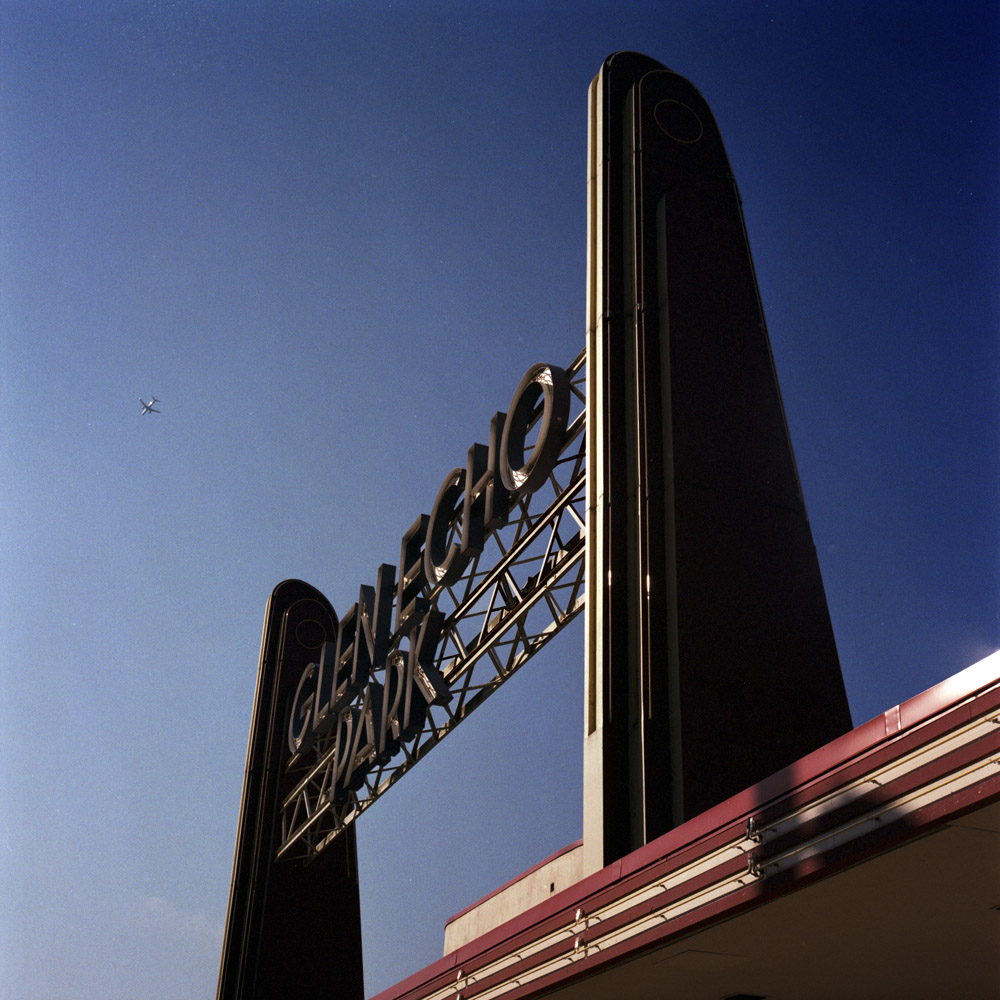
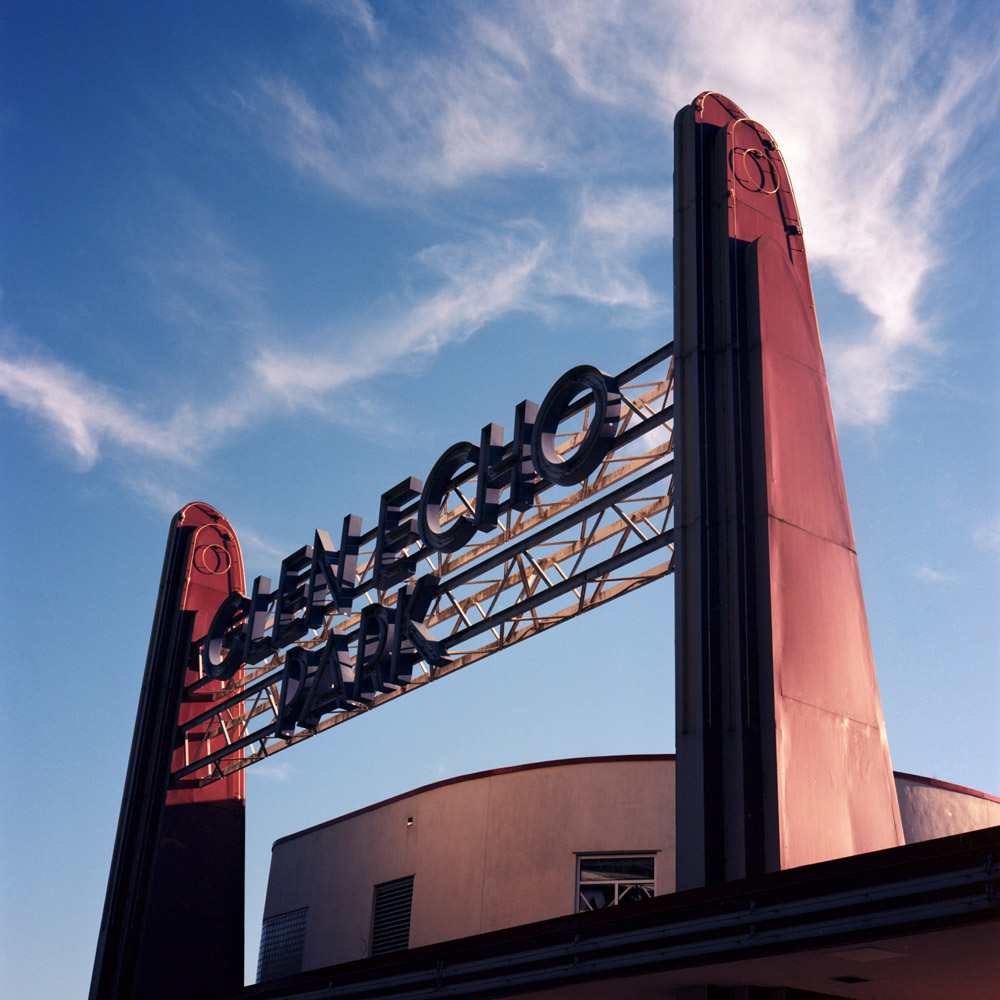
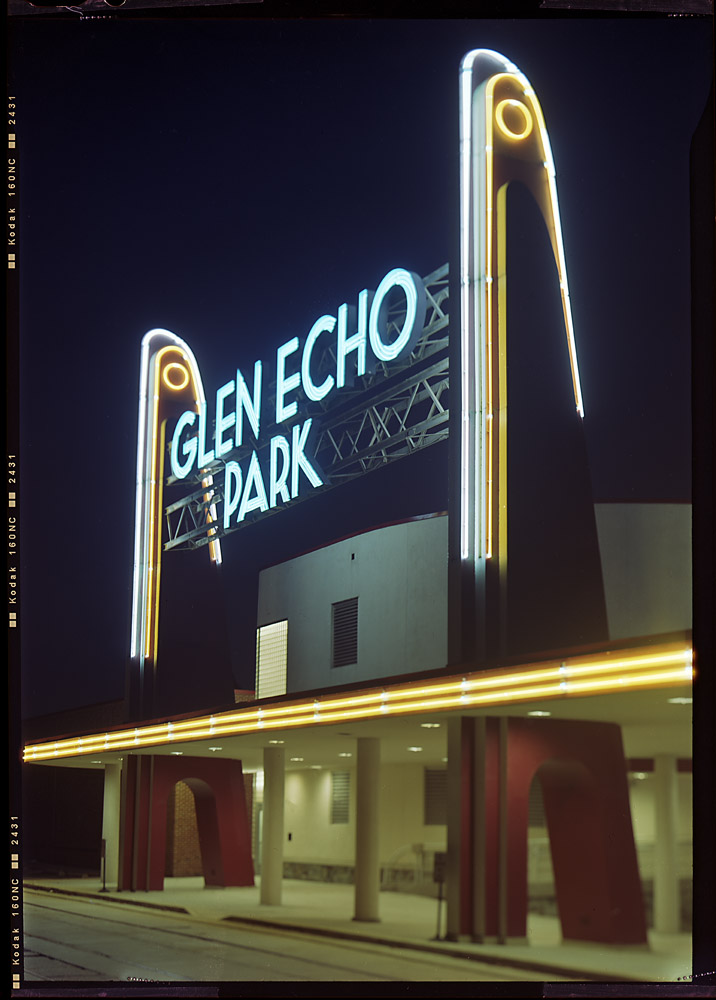
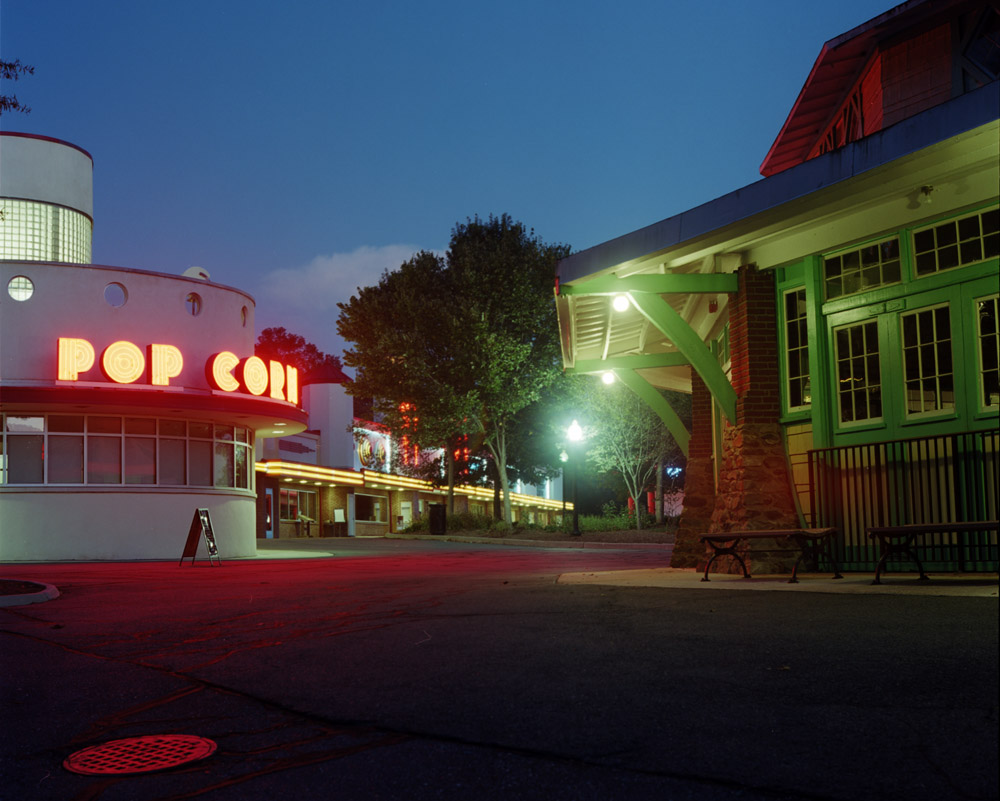
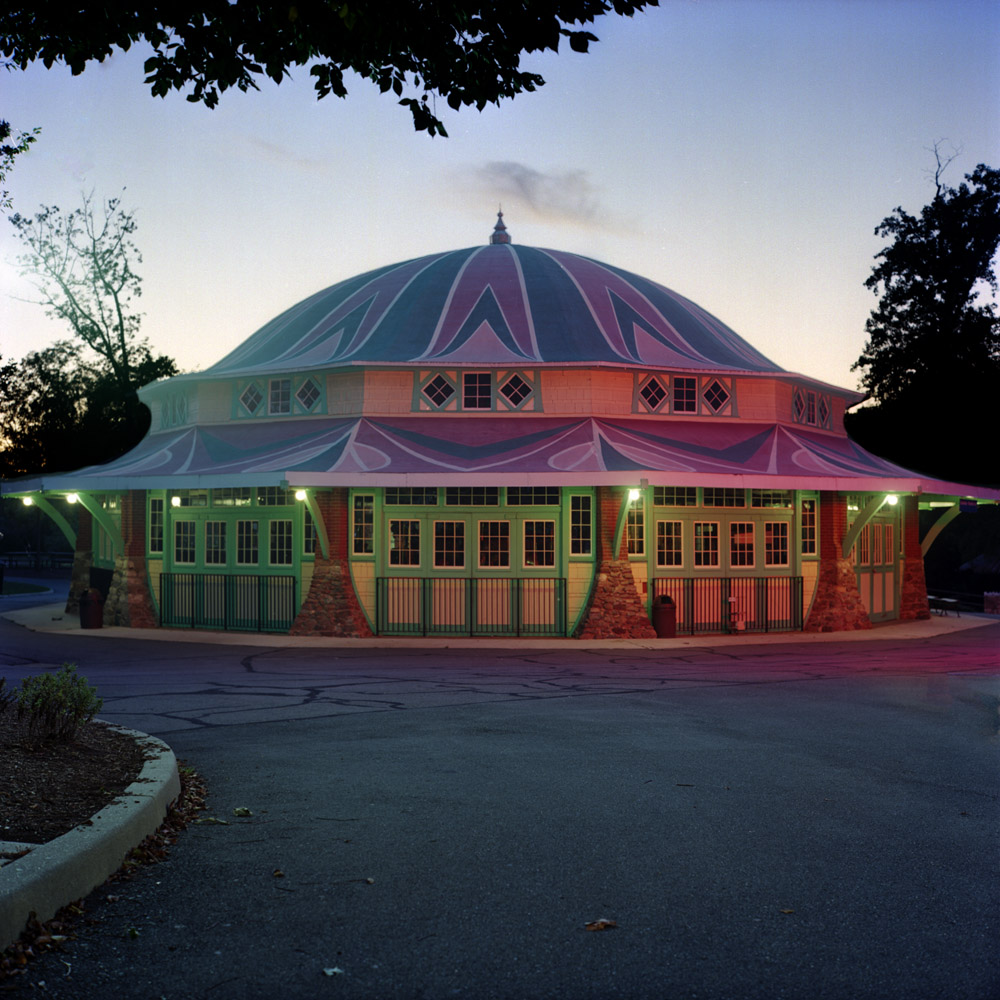
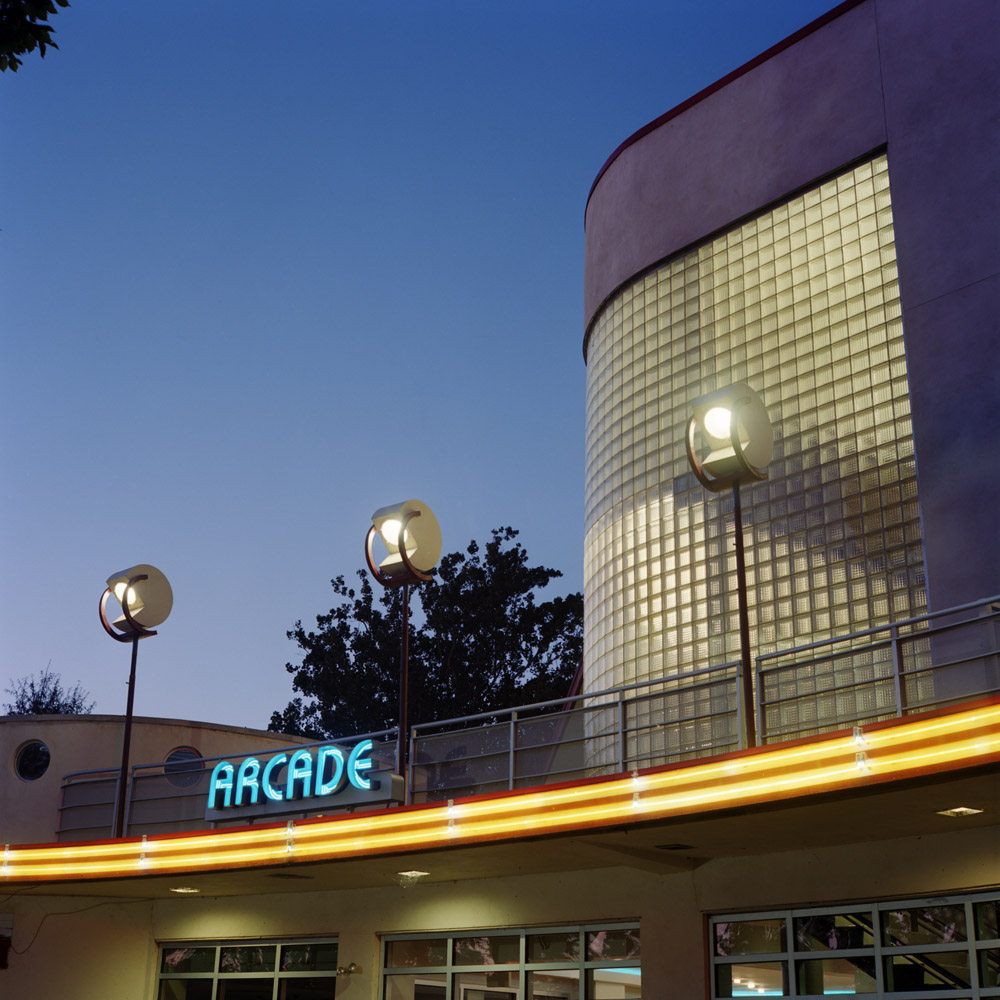
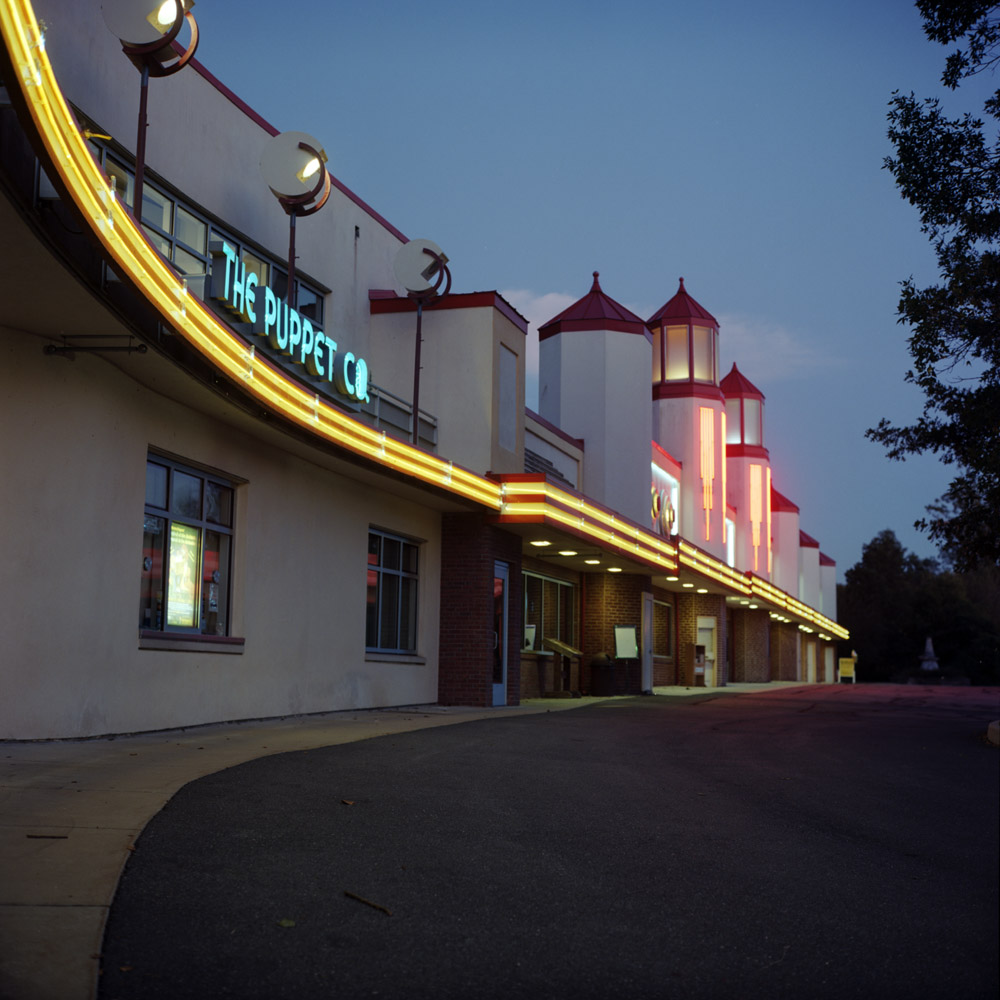
Just thought I’d do a re-visit of all my Glen Echo color work, to put them in one place. When I get a bit more organized, I’ll put my platinum/palladium Glen Echo photos together and do another mini-gallery. This has all been shot with a mixed bag of films and cameras. Mostly my Rolleiflex 2.8E, with one nod to my Canham 5×7 (the Glen Echo sign at night – it’s special enough it gets its own row). The films have been Kodak Portra 160NC, Kodak Ektar 100, Fuji NPS 160, and Fuji NPH 400. With the exception of the Ektar 100, most of the film used has been anywhere from a couple years out of date to almost a dozen years expired. Which says a lot about the quality of modern color film emulsions.
Part of the purpose of this exercise was in response to a discussion recently on an online photography forum I read where someone was complaining about how hard it was to take good photos in places you are familiar with. While I love travel photography (I’m getting ready to indulge in some serious travel photography early next year, probably one of those once-in-a-lifetime trips – I’ll keep you updated as the time approaches), I think it’s absolute baloney that you can’t take interesting photos of places you know and see every day. If anything, the opposite is true. But each type of photography requires a different mindset. Photographing on the road requires you to be able to filter out the extraneous detail because it’s ALL wondrous and new. Photographing at home requires you to turn off the detail filter so you start finding the interesting stuff you ignore because it’s what you see every day.
Photographing my own neighborhood is about recording and observing change – it’s like doing a series of portraits of the same person – this week in a suit, next week in a sundress, then later in an anorak, this year a little taller, next year a beard, the year after with a tan and a buzz cut. The Glen Echo photos are another form of portraiture, portraiture of a place. Places can have spirits and identities, and their face changes over time, just like a person’s.
Glen Echo Sign, Morning
Glen Echo Park Sign, Evening
Glen Echo Sign
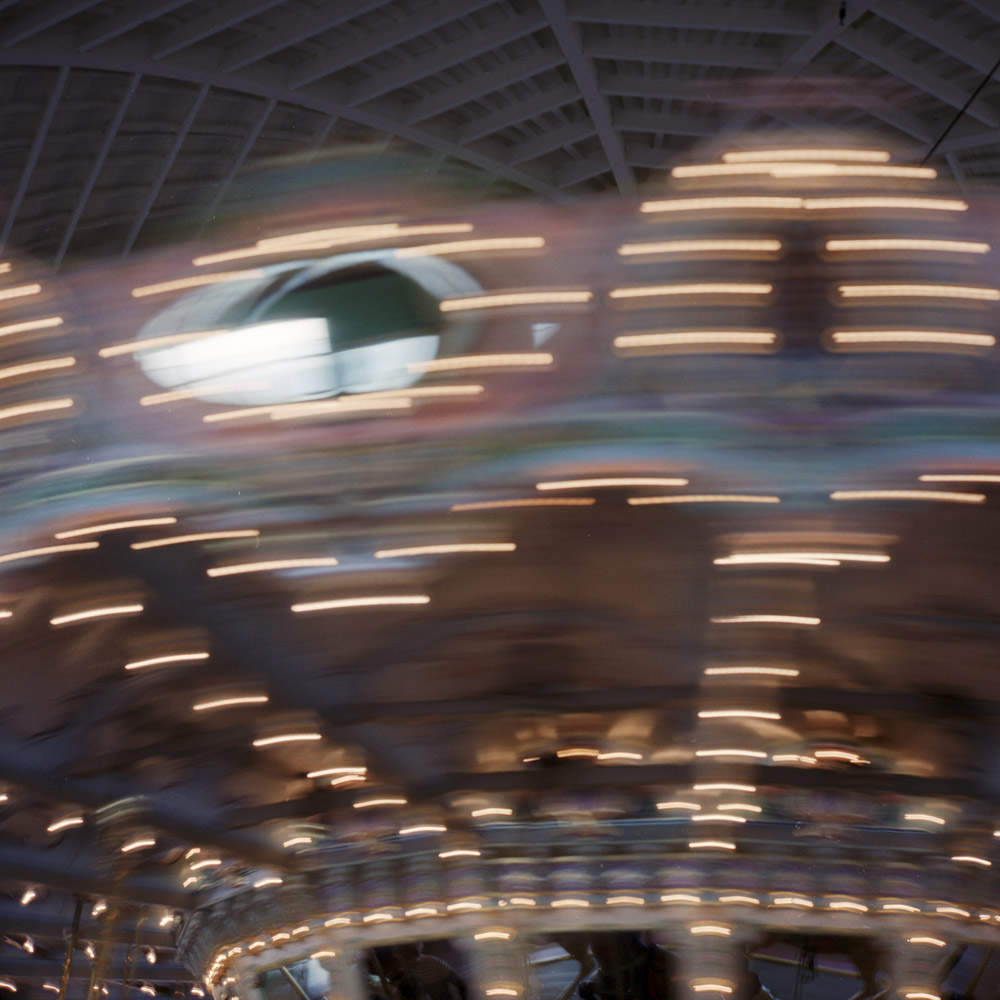
Glen Echo Carousel in Motion, #1
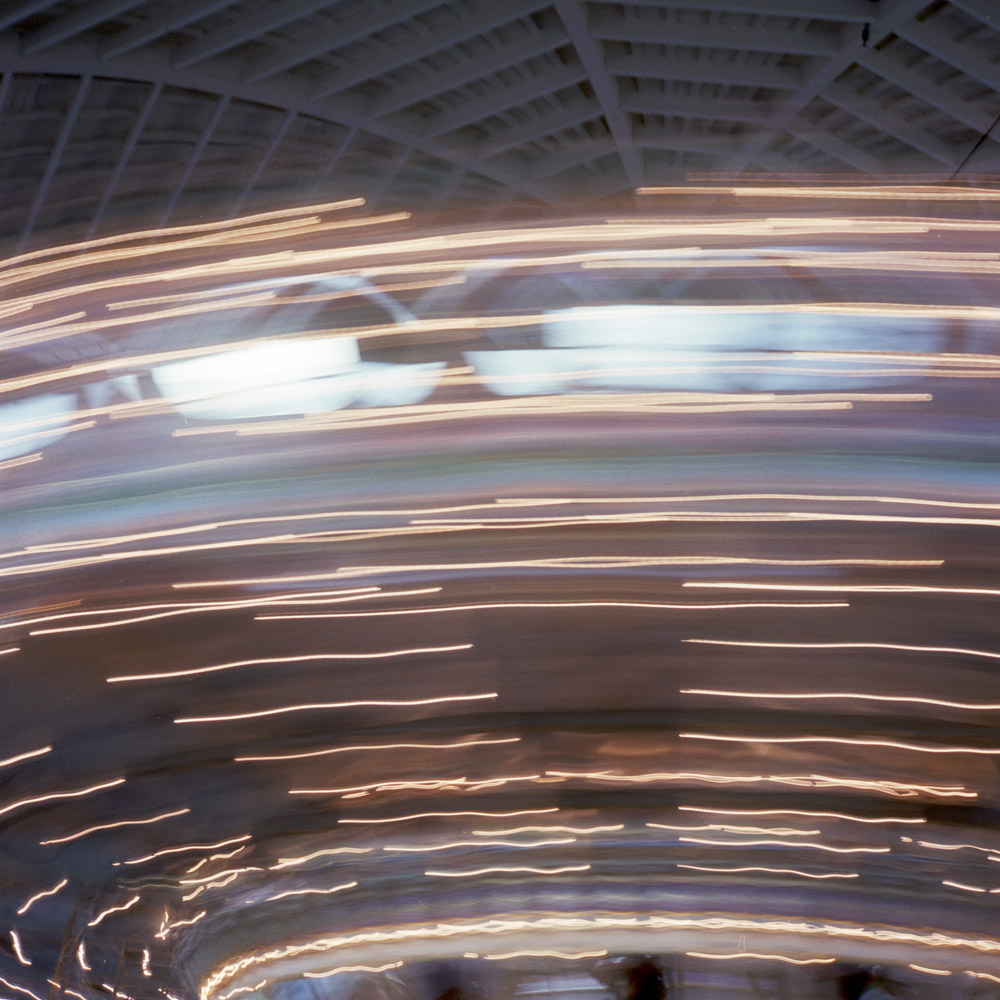
Glen Echo Carousel in Motion, #2
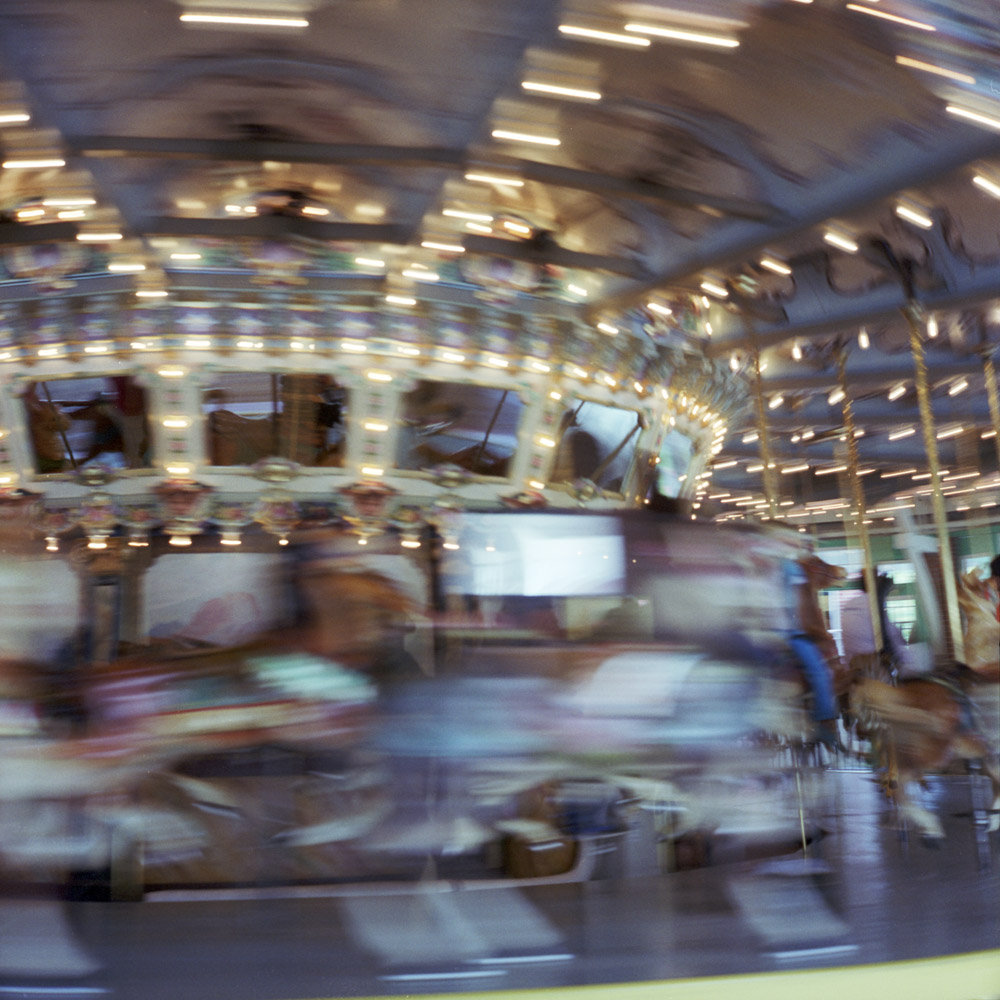
Glen Echo Carousel in Motion, #3
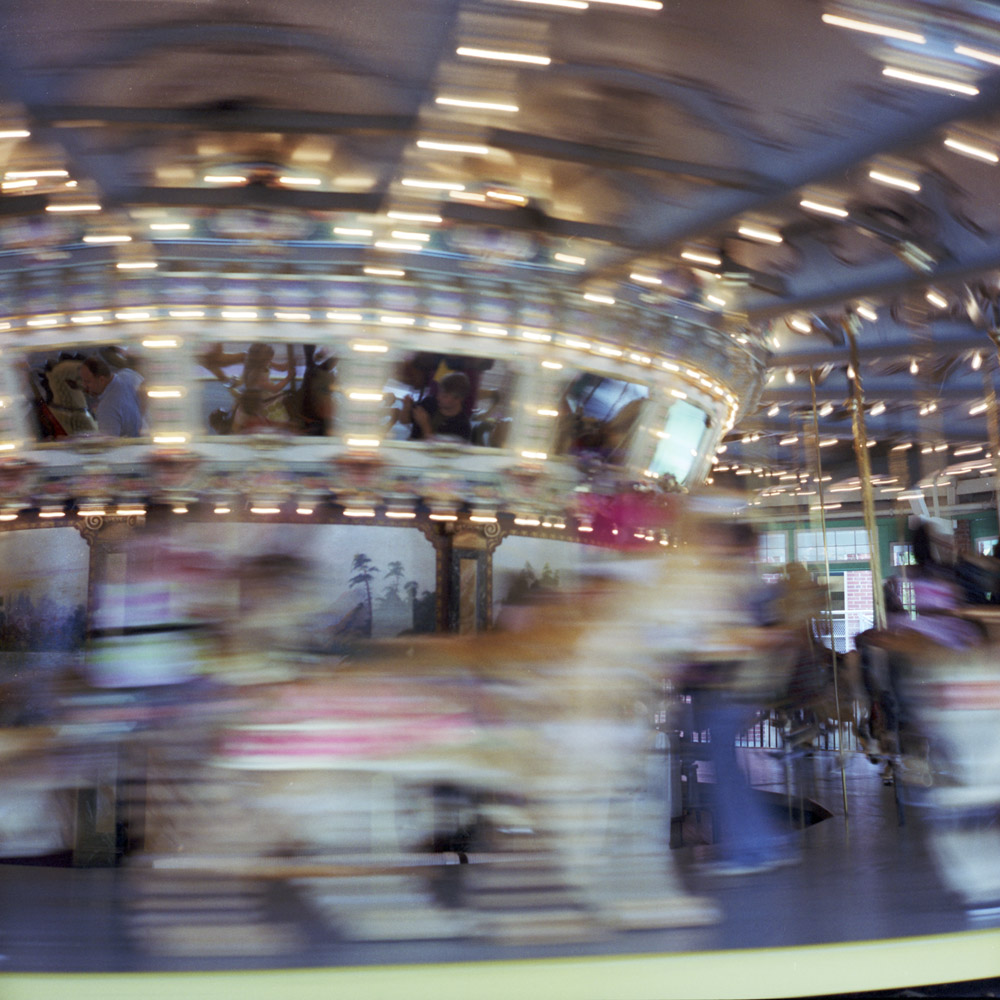
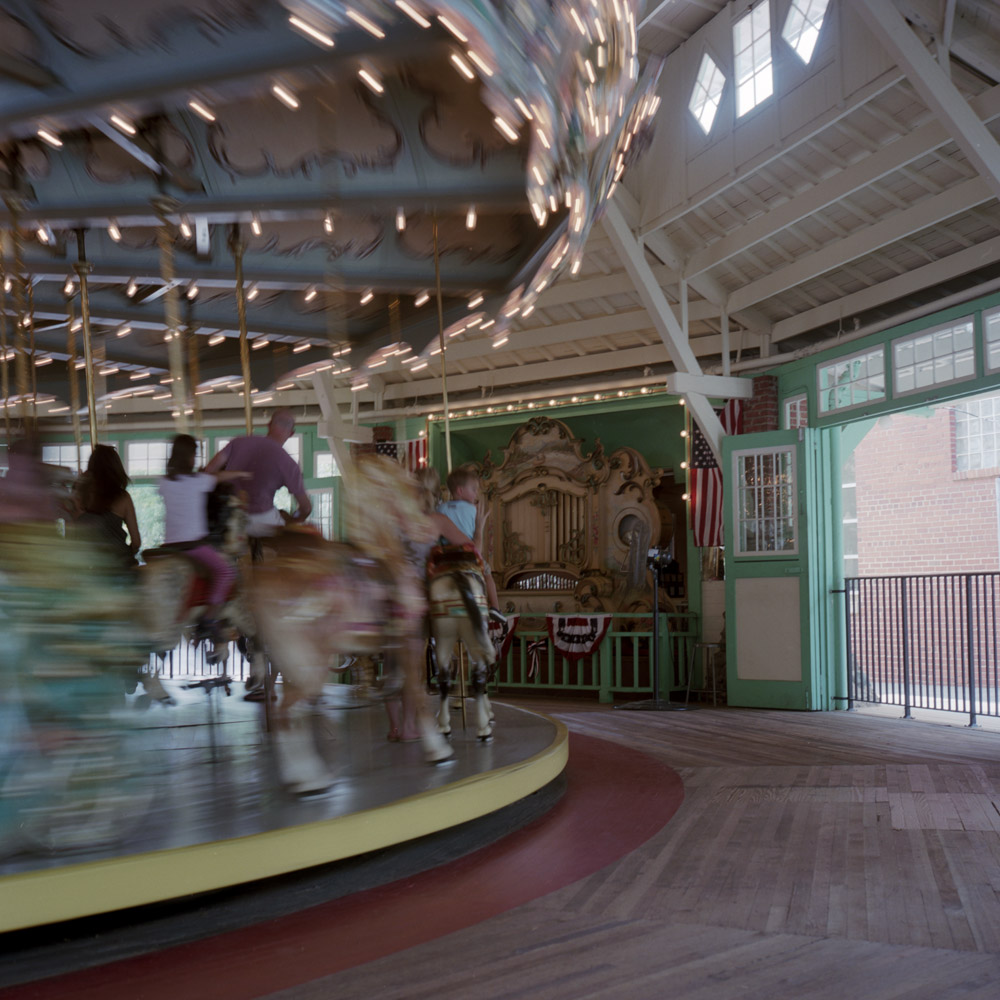
Glen Echo Carousel in Motion, #4
Glen Echo Carousel, Midway, Twilight
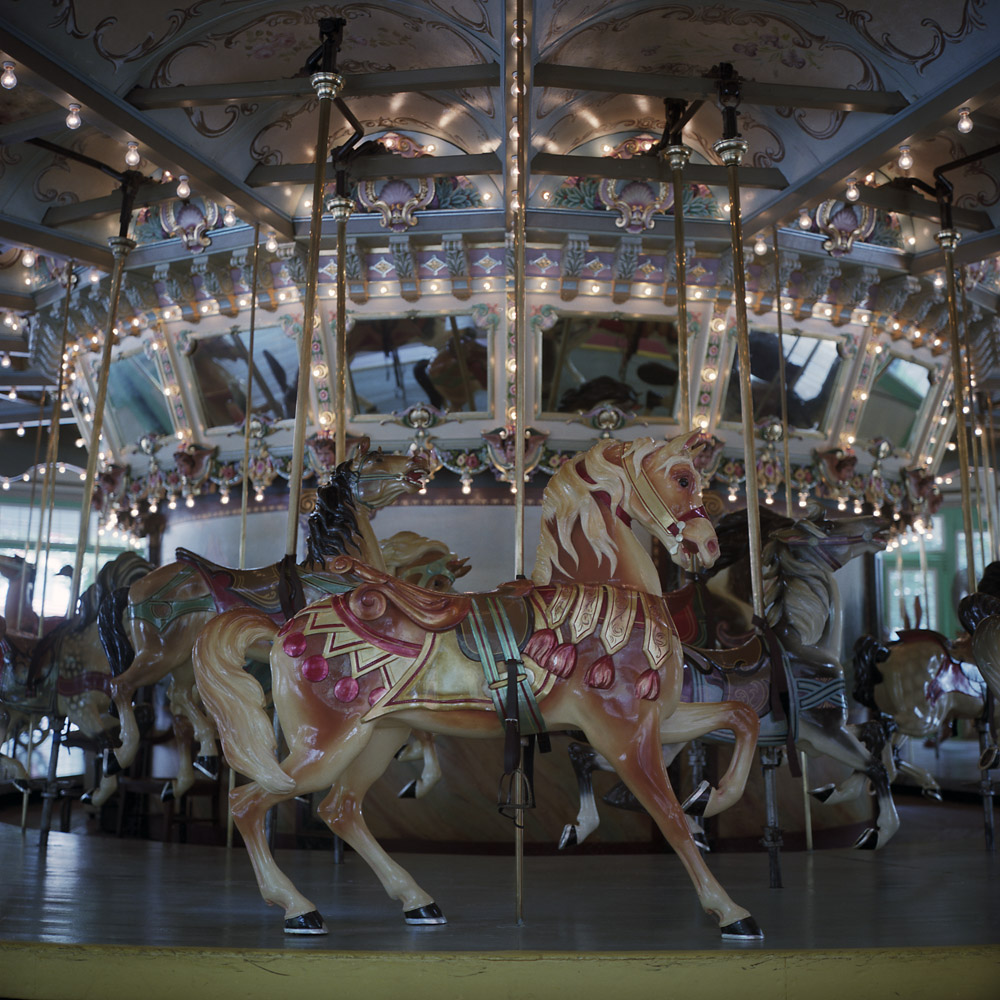
Dentzel Carousel, Glen Echo, Sunset
Glen Echo Arcade, Twilight
Glen Echo Arcade,Puppet Company, Twilight
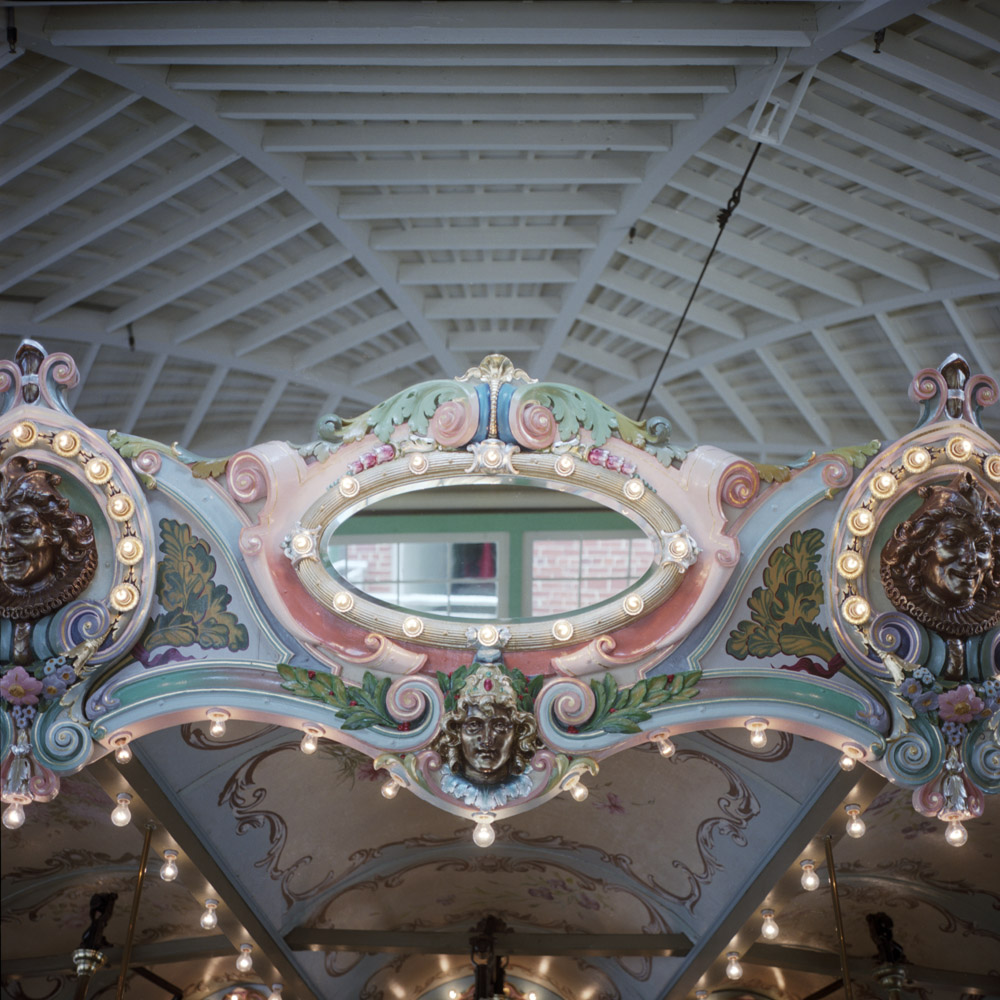
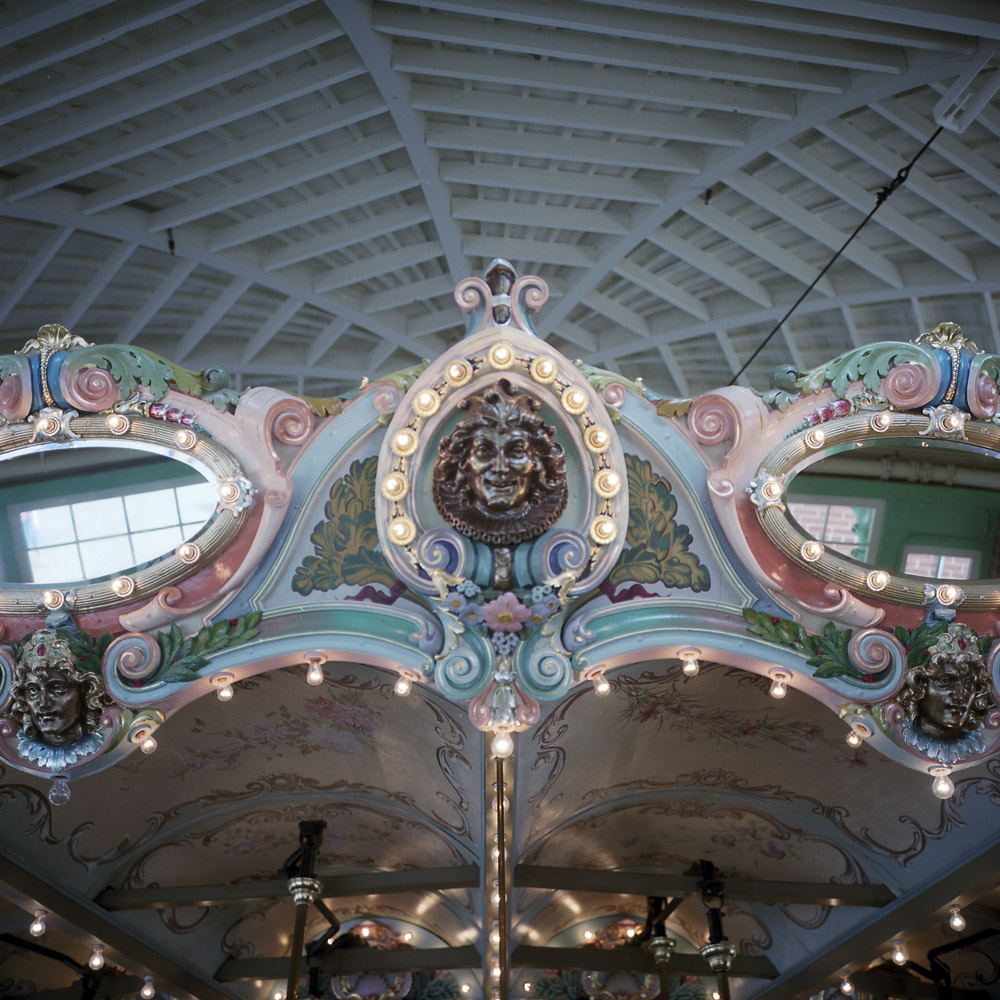
Mirror and roof vaulting, Glen Echo Dentzel Carousel








 dcphotoartist