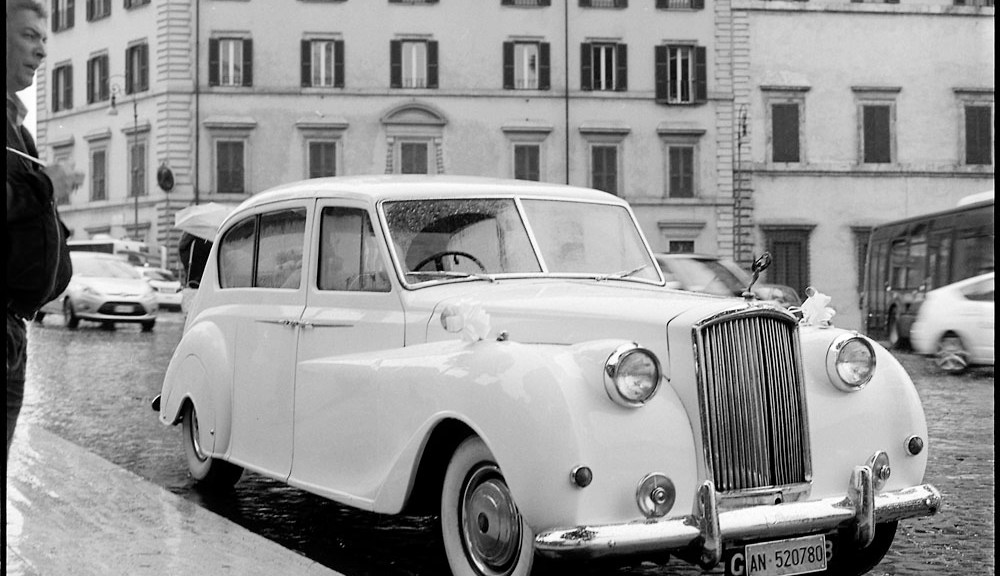
At the foot of the stairs to Santa Maria in Aracoeli, I came upon this vintage Jaguar pressed into wedding limo duty. That it was raining didn’t seem to disturb the old gal – she was still looking magnificent.
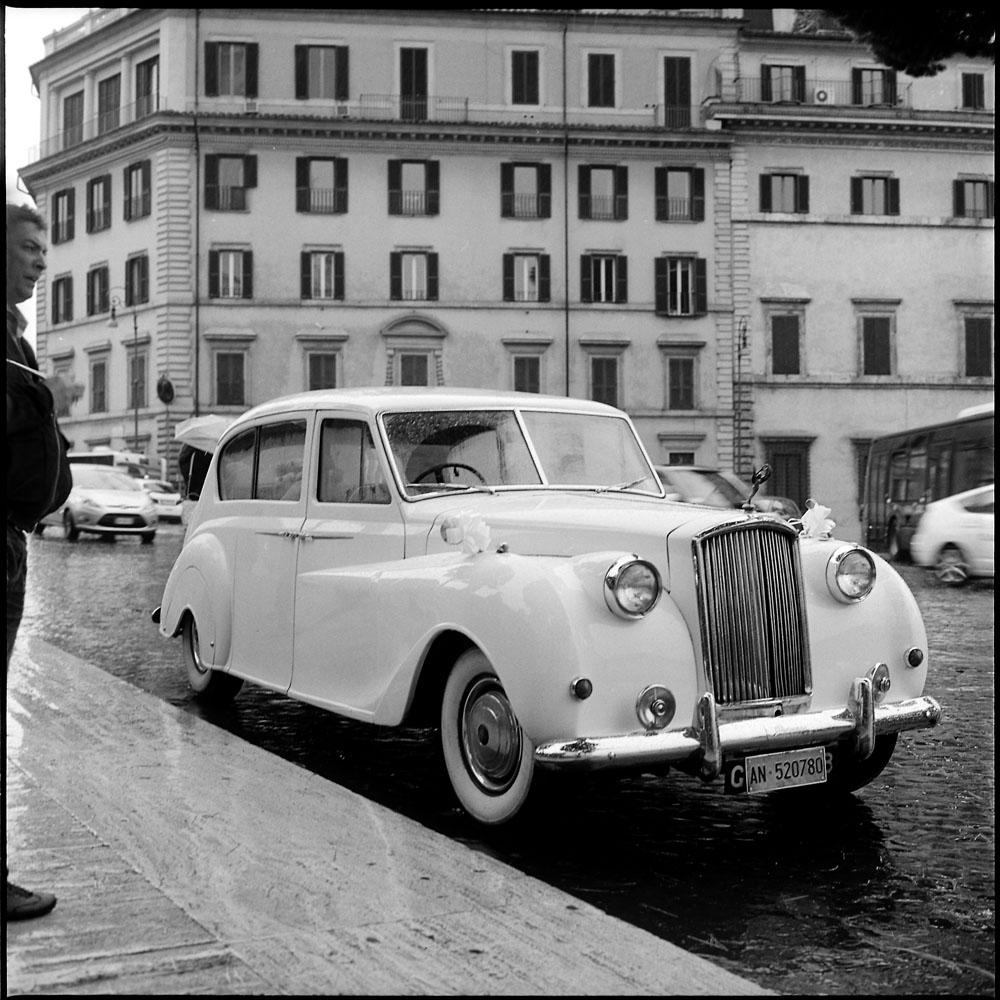
At the foot of the stairs to Santa Maria in Aracoeli, I came upon this vintage Jaguar pressed into wedding limo duty. That it was raining didn’t seem to disturb the old gal – she was still looking magnificent.
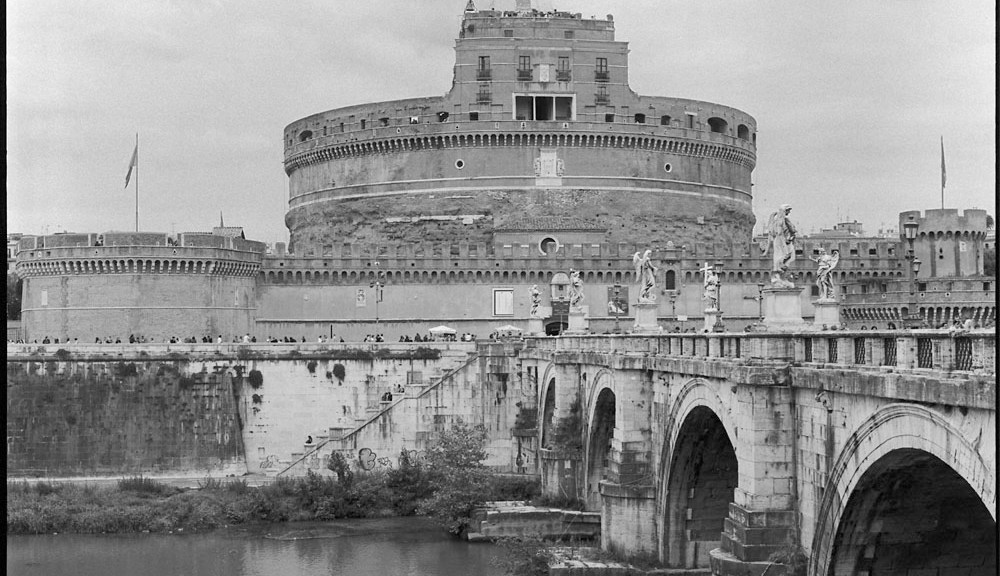
I spent almost half a day wandering around the Castel Sant’Angelo, poring over every vista, nook, cranny and fragmented rock. I was in photographic heaven. There’s everything inside it to point your lens at from Roman sculptures to fanciful brickwork to Renaissance paintings. The Castel Sant’Angelo is one of the most recognizable structures in Rome. The foundations of it date back over 2000 years to the reign of emperor Hadrian, who had it built as his mausoleum. In the Christian era, the proximity to St. Peter’s and the Vatican palace made it useful not only as a source of marble for construction of churches and apostolic palaces, but as a fortification. The drum-like structure was originally Hadrian’s tomb, and was covered in white marble. A succession of popes built on top of this, had walls with gun emplacements built around it, corridors cut through it, had palatial apartments added on top of it, and used Hadrian’s burial chamber as a dungeon for their most valuable/most hated prisoners. An elevated, sealed corridor with defensive structures runs atop a wall connecting the Vatican apartments to the Castel, enabling the pope to flee to the safety and security of the castle in times of siege. The castle has wells of its own and storage enough to keep its garrison provisioned for up to six months at a time.
This bastion overlooks the entrance gate of the castle that faces the Tiber river and the Angel bridge. Quite the fearsome looking structure, isn’t it?

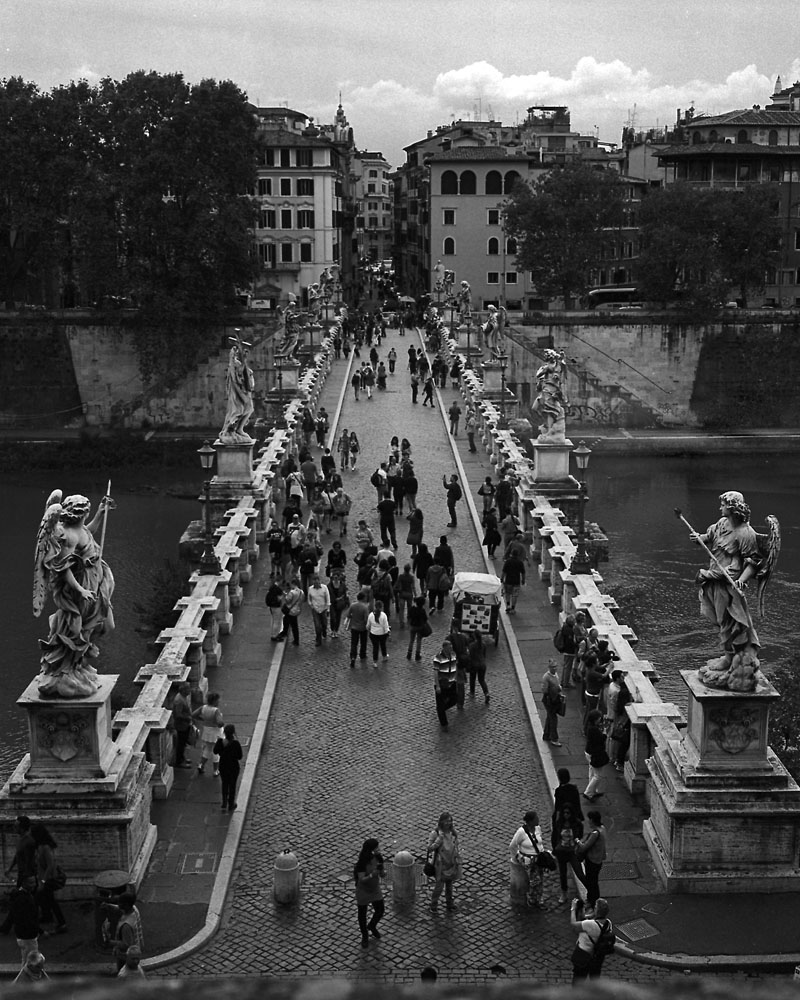
Here is perhaps the most famous view of the castle. The statues of angels were added to the bridge in the 16th and 17th centuries, but three of the five arches of the bridge are contemporary with the original construction of Hadrian’s mausoleum. So you’re crossing a 2000-year old span over the Tiber when you use the bridge.

This is a view of the bridge from one of the outer bastions over the main gate to the castle. During the Jubilee year of 1450, so many pilgrims crammed onto the bridge that the railings gave way and many plunged into the river to their deaths. Starting in the 1530s, the angels that adorn the bridge began to be added.
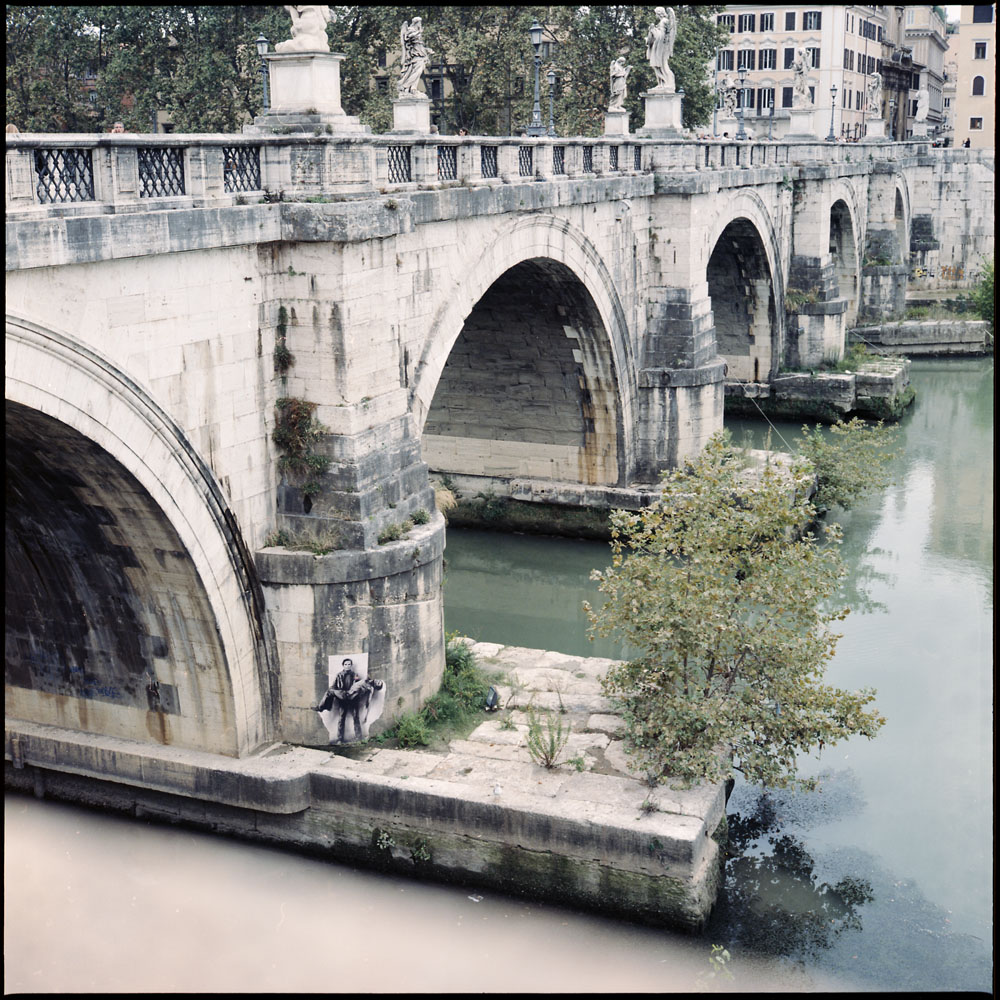
Looking down onto the footings of the bridge in the Tiber, we can see some interesting graffiti, particularly the figure of the man holding a woman’s prone form.
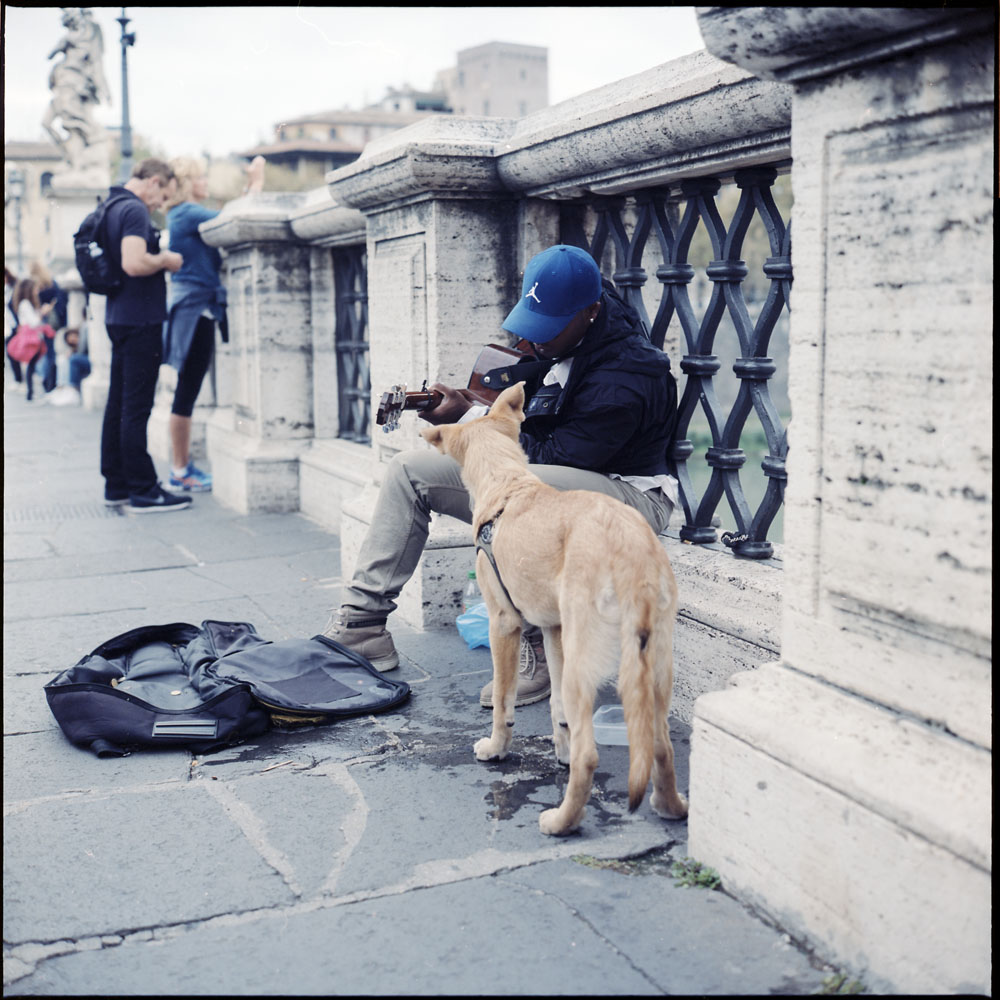
This young man was playing his guitar for tips on the bridge. I think he was consulting his dog as to what to play next.
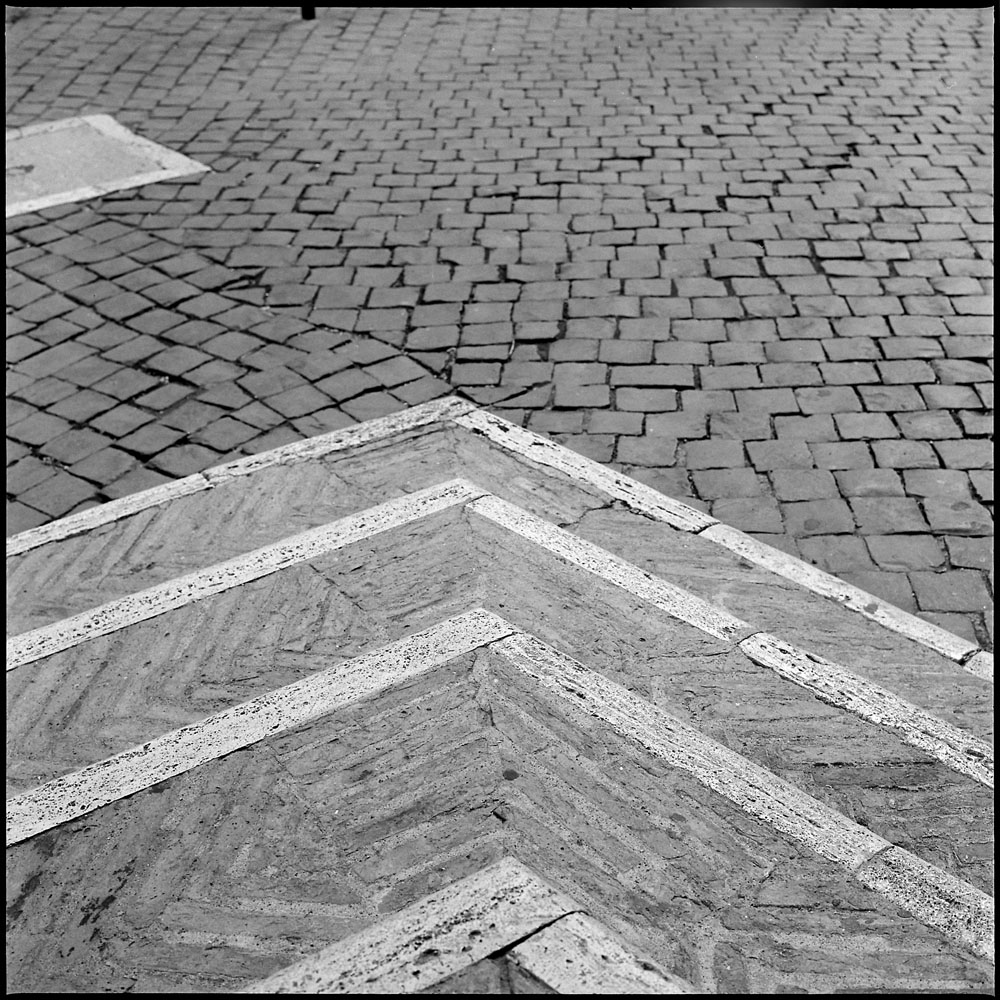
Moving inside the fortification, these steps emerge from one of the bastion towers to the courtyard that encircles the central drum at its base.
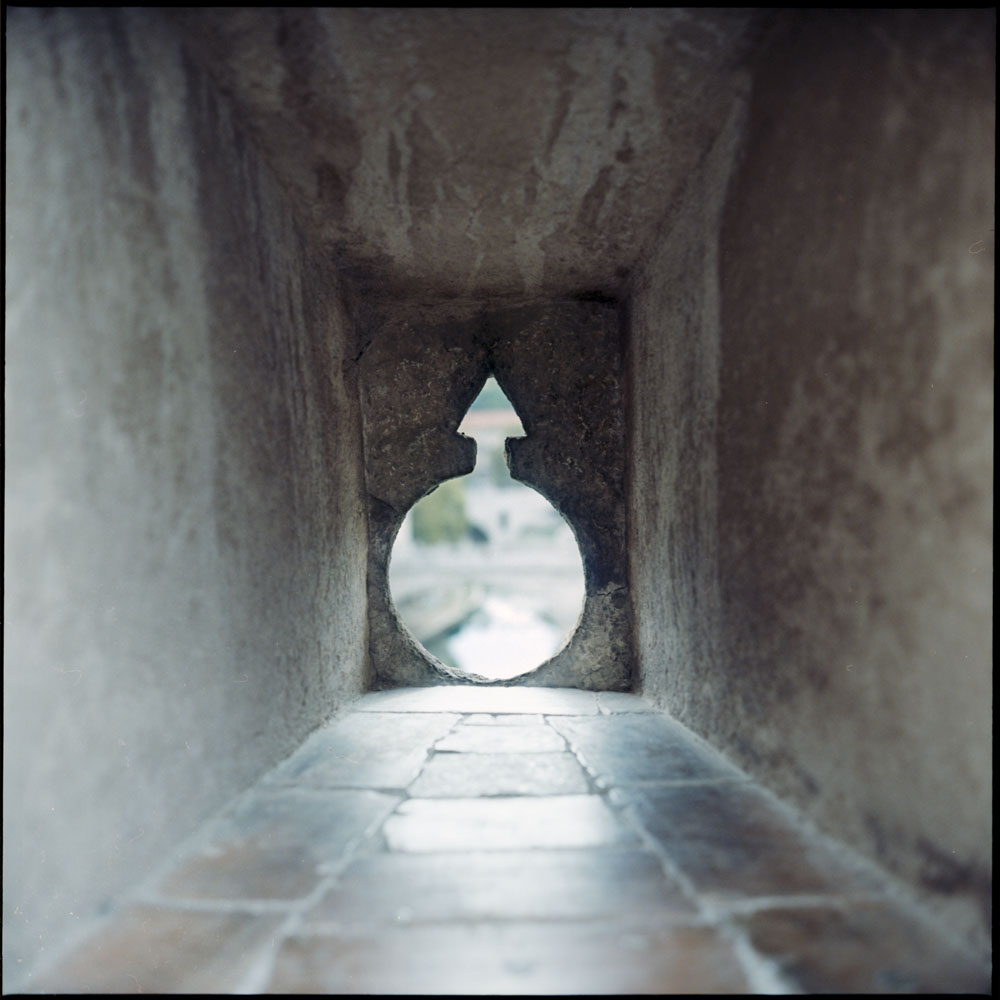
Looking out a gun port in the fortifications of the castle, you can see the bridges over the Tiber in the distance.
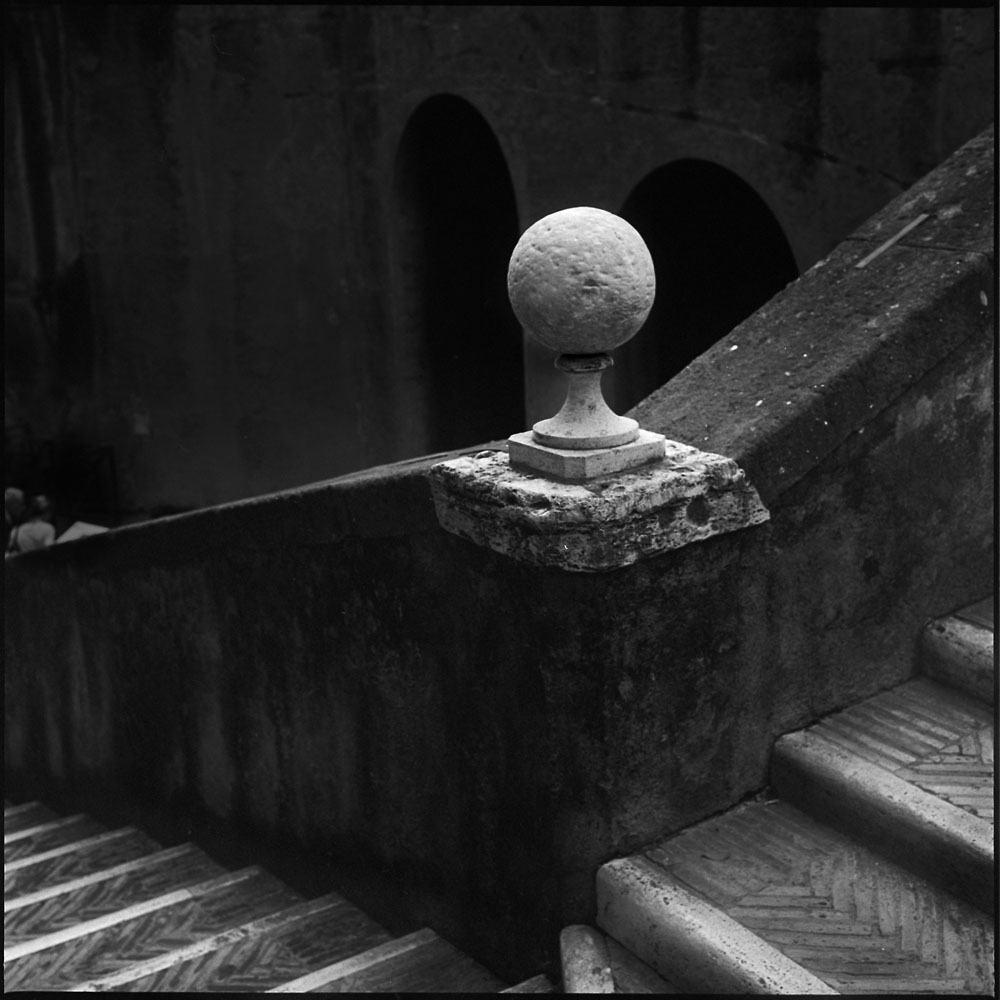
A newel post topped with a stone sphere on the stairs leading from the inner courtyard toward the Papal apartments:
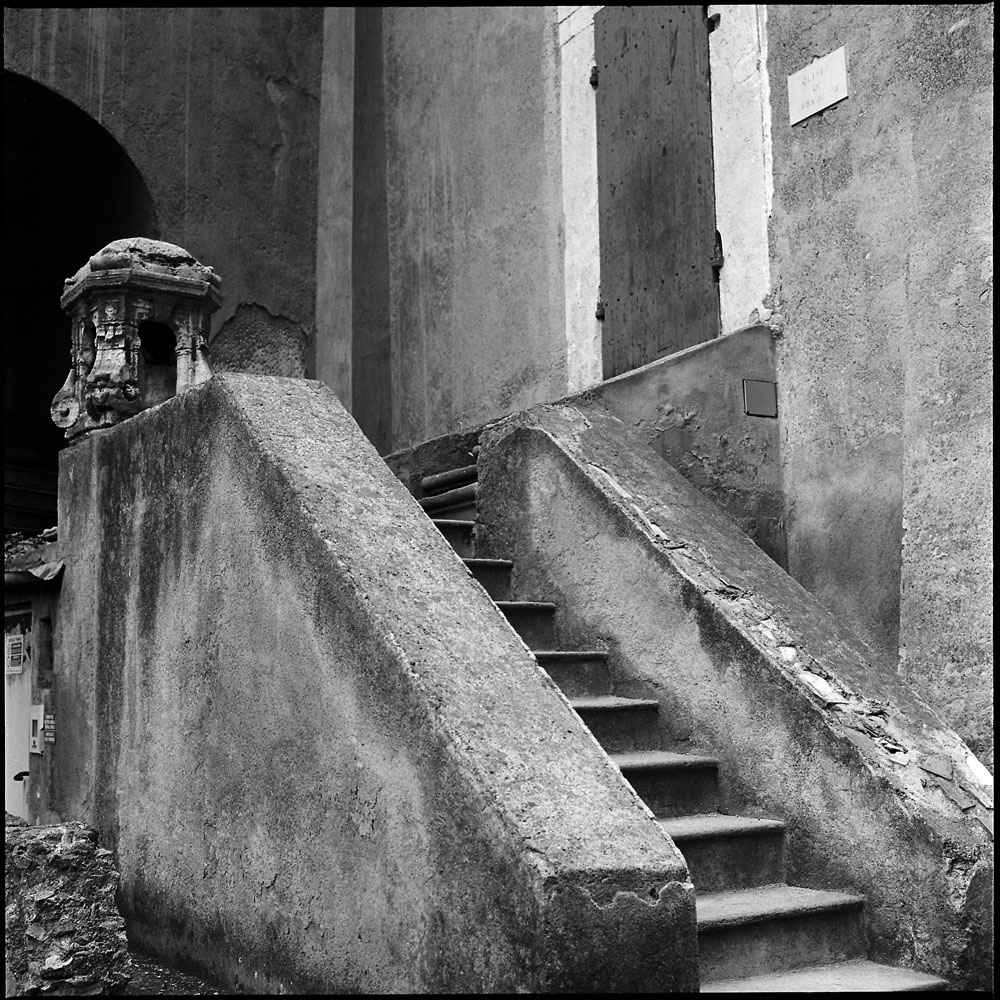
These stairs lead to a structure that probably housed Papal guards. The stone lantern atop them is one of several around the fort.
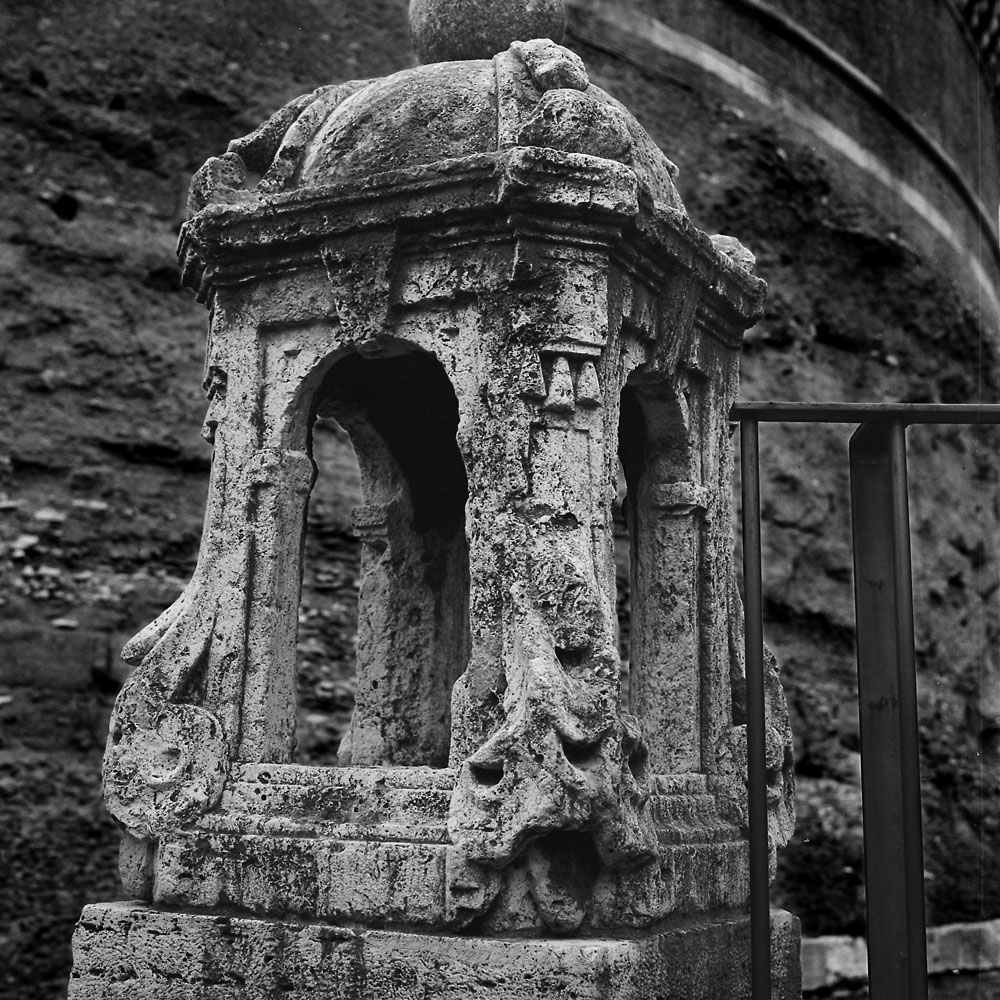
A close-up detail of another one of the stone lanterns:
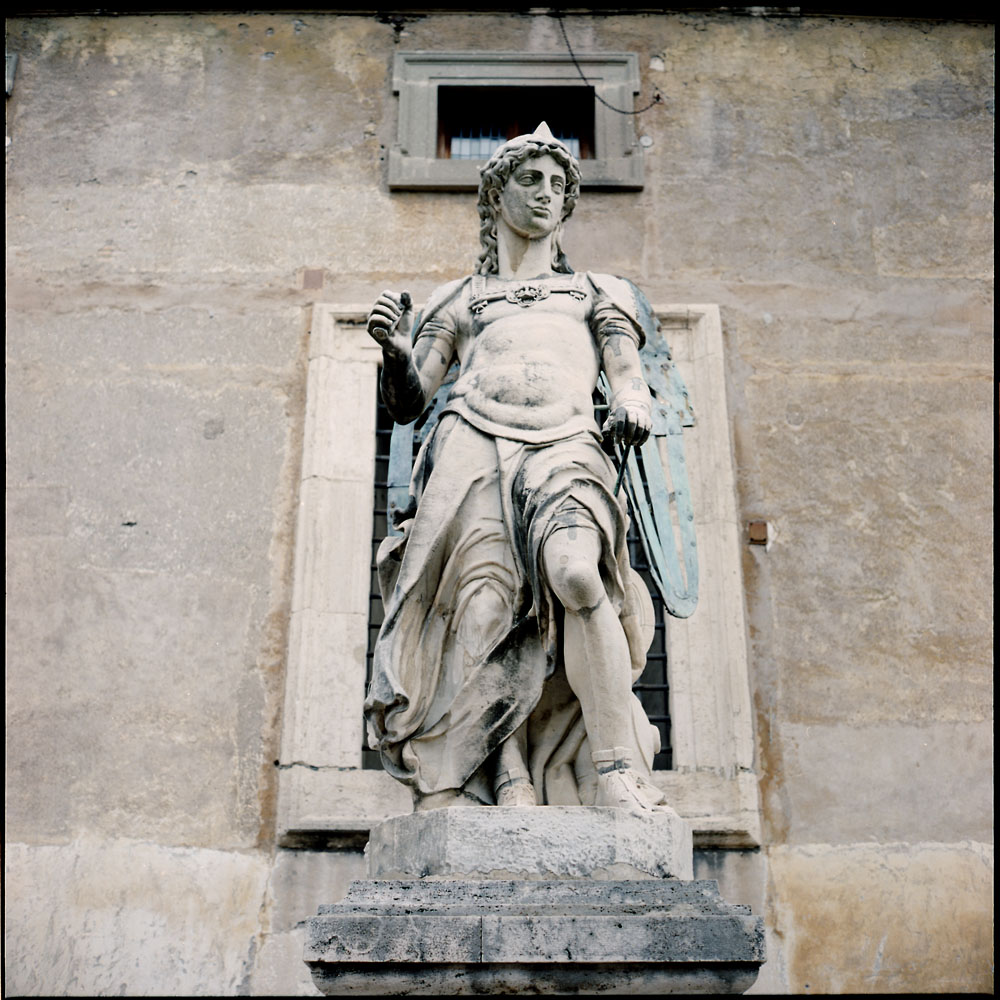
At the level of the upper courtyard, a statue of the Archangel Michael dominates. Opposite is one of several wells that keep the castle in fresh water in case of siege.
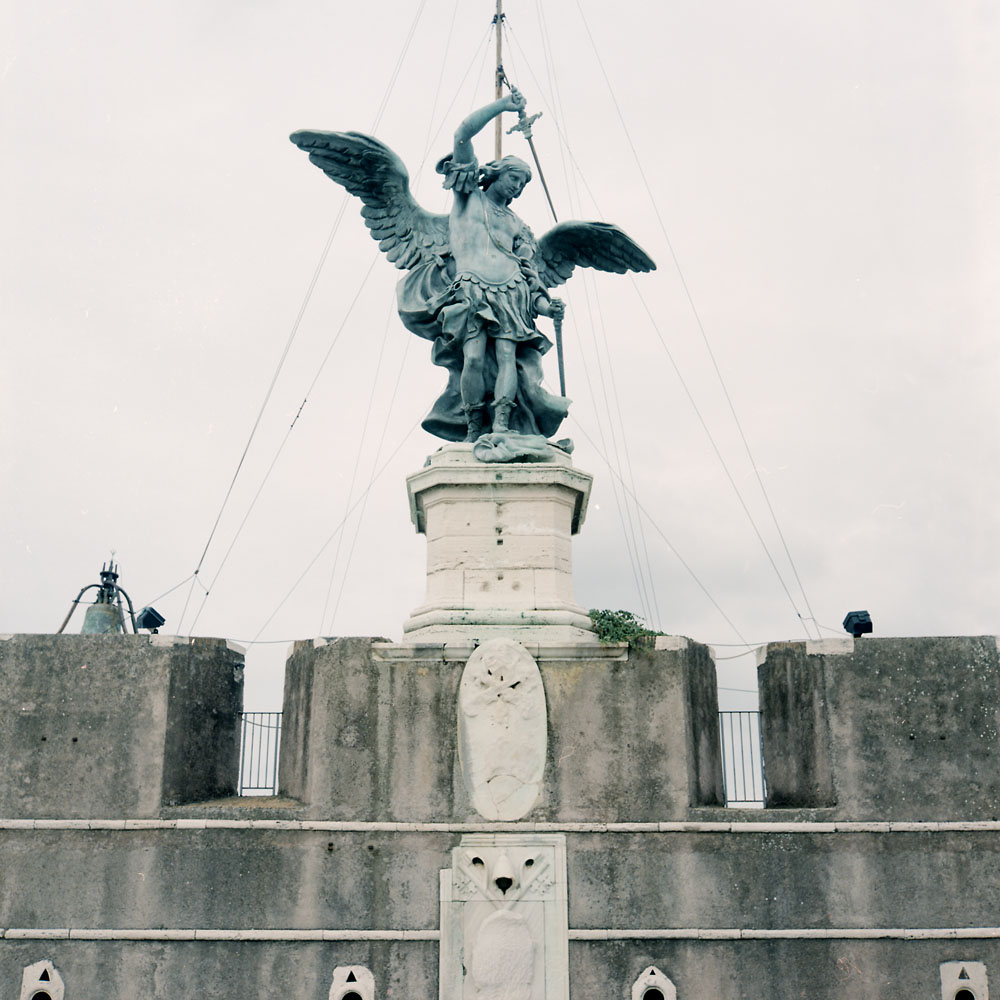
The fortification is crowned by a bronze statue of the Archangel Michael, drawing his sword. Modern additions have also placed radio aerials on the roof, overtopping the archangel. Technologia Omnia Vincit, as it were.
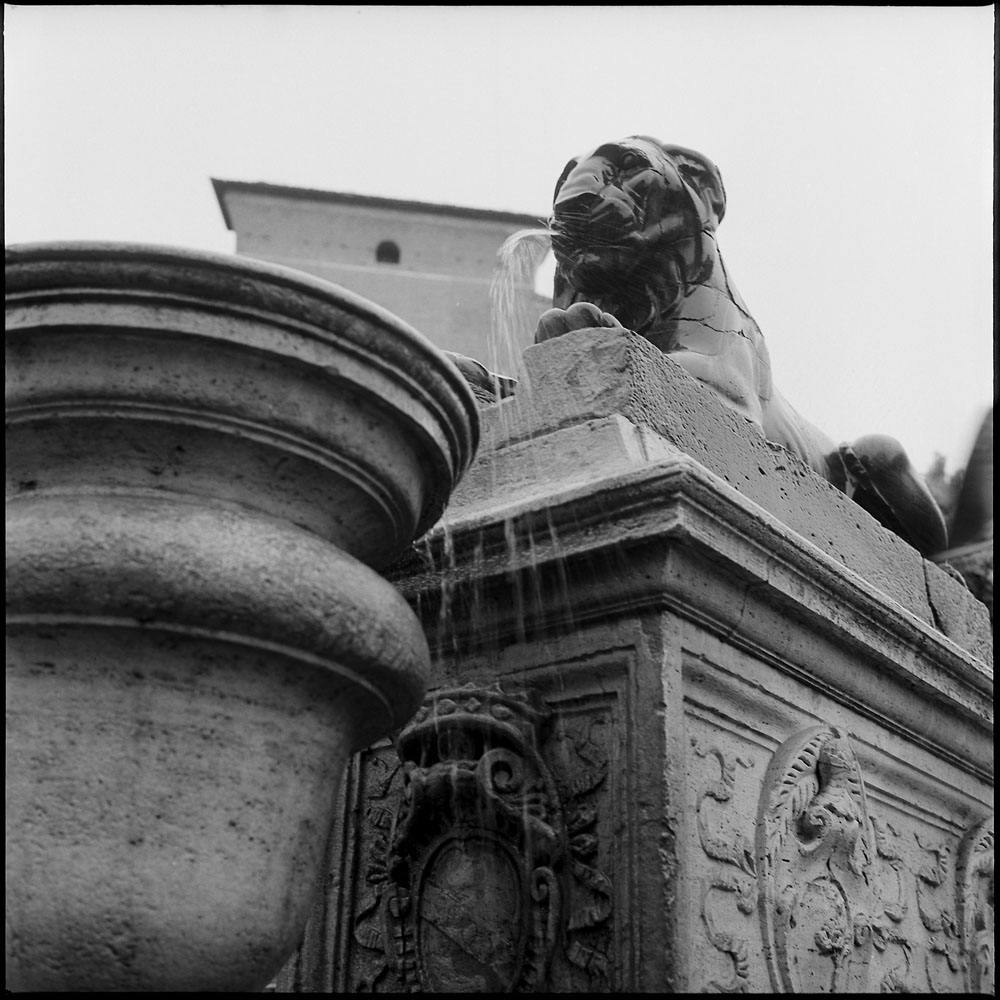
Up on the Capitoline Hill is the piazza designed by Michelangelo framed on two sides by the buildings of the Capitoline Museum and on the third by the seat of government for the city of Rome. To get to the piazza you must climb a set of marble stairs. At the foot of the stairs is a fountain in the shape of a sphinx, that would normally be jetting its water into the urn in front of it. The day I was there, it was windy and rainy, and the water jet was spraying off to the side and missing the urn.
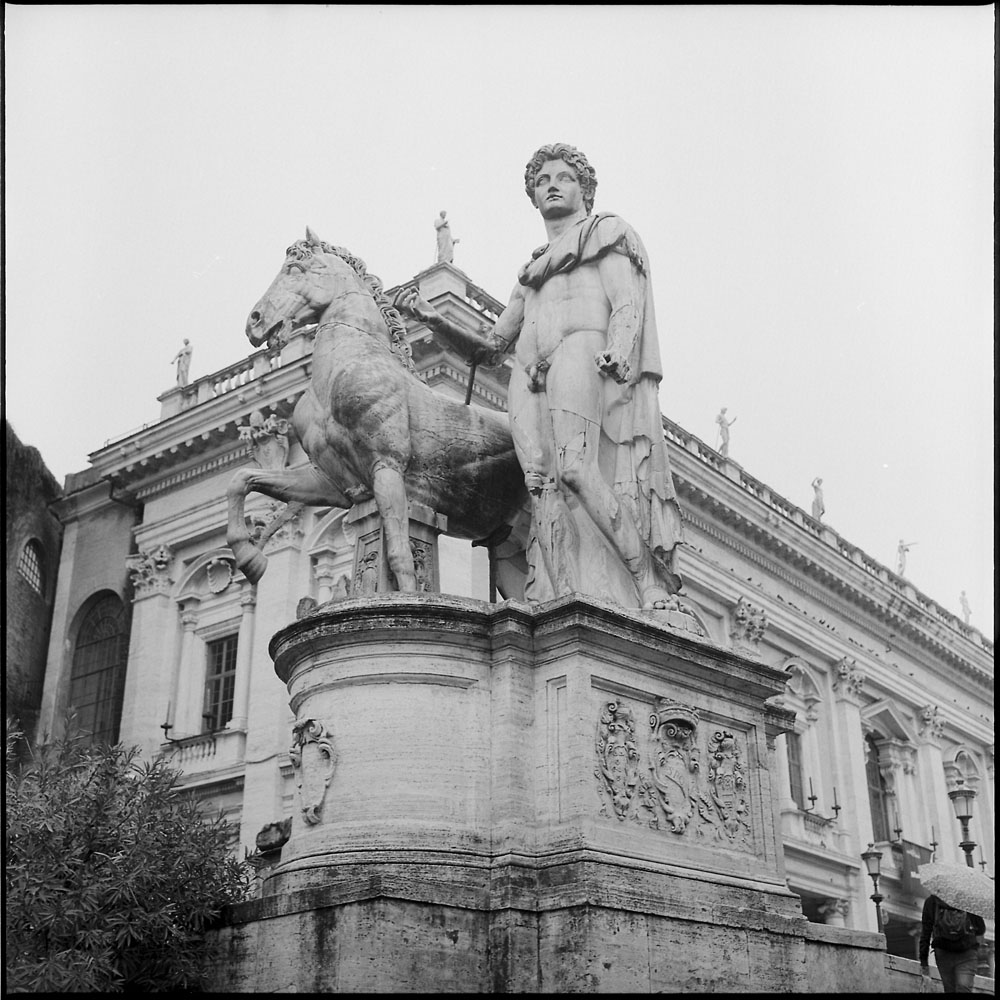
At the top of the steps, a pair of giant equestrian statues flank the staircase. These are, I believe, original Roman pieces on pedestals from the Renaissance. Certainly the style of carving and the general weathering and condition suggest an origin in antiquity.
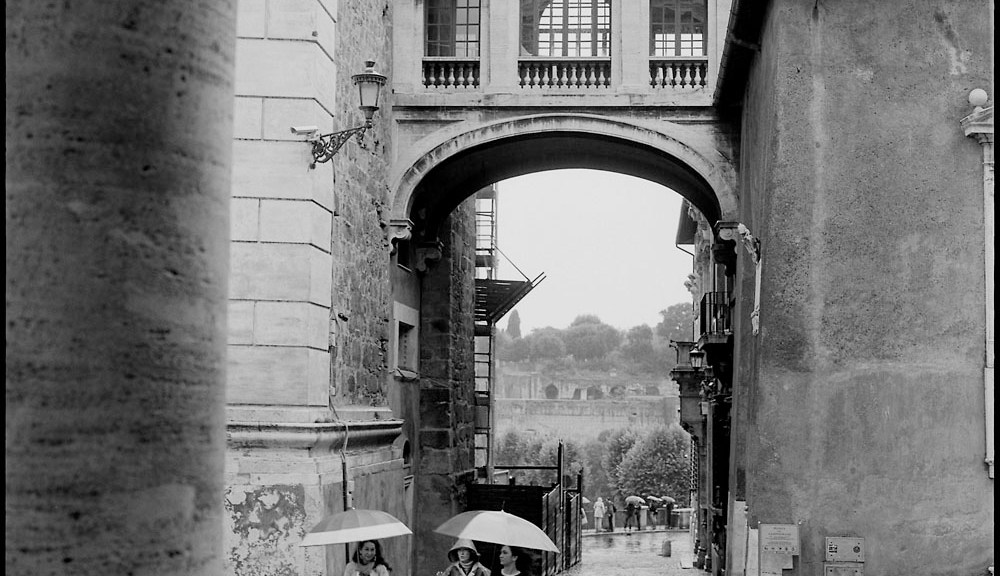
In the center of the piazza is a Renaissance copy of a famous bronze equestrian statue of Marcus Aurelius. The original is inside the Capitoline Museum. Passing between the City Hall and the Museum, you can descend the back side of the Capitoline Hill toward the Forum. Looking between the two buildings you can see the third-story bridge that connects them, and bears a resemblance to the Bridge of Sighs in Venice (although to the best of my knowlege the similarity is coincidental).
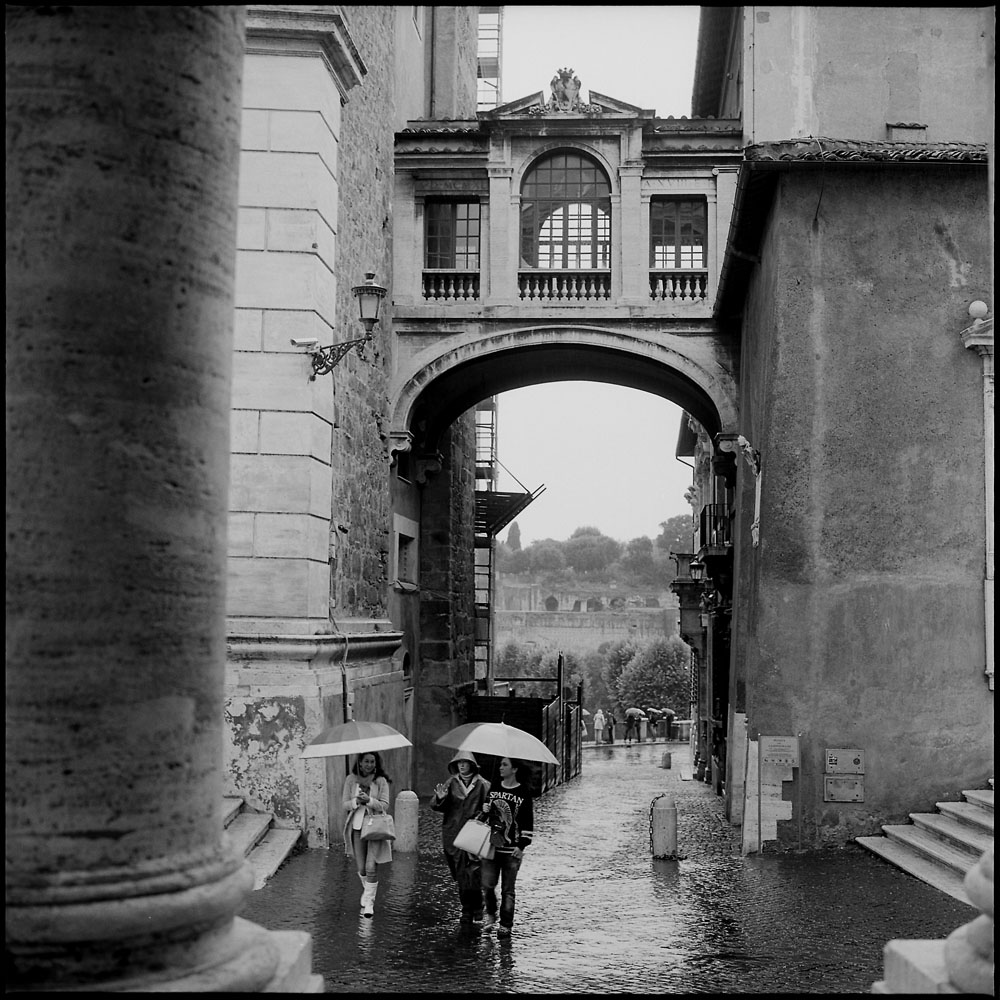
As frustrating as it can be at times to be out photographing in the rain, it’s also kind of fun- it’s a very different atmosphere, and things look quite different than they do when it’s bright and sunny. Umbrellas create their own kind of patterns. People dress differently and move differently. You can really create contrast through use of color instead of having to have strong directional light.
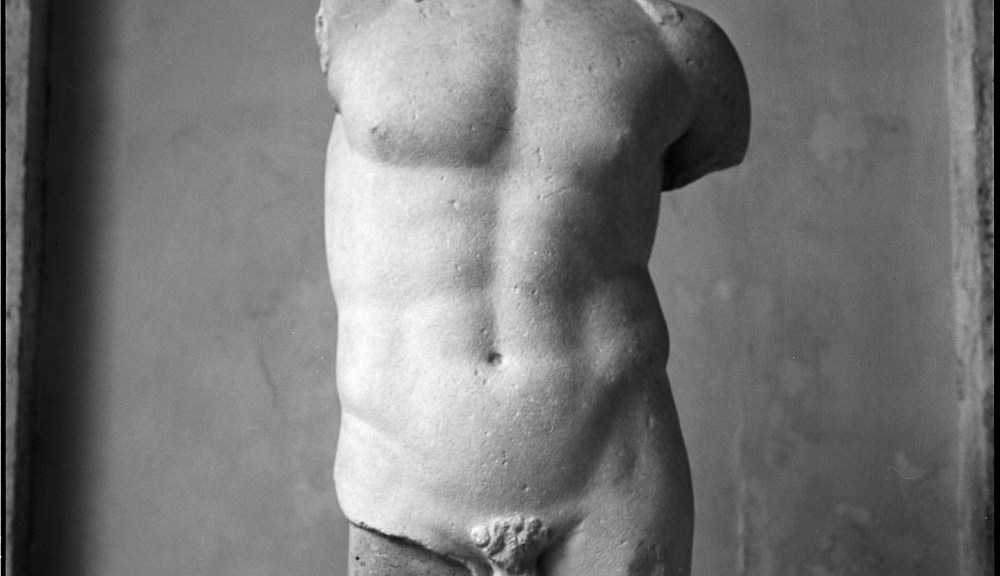
These sculptural fragments are part of the Capitoline Museum’s collection. The Capitoline Museum in Rome is famous, rightfully so, for its ancient Roman sculpture. Even in the entrance courtyard there are magnificent fragments of colossal statues. A row of funerary monuments lines the opposite side of the courtyard. The torso fragment sits on a pedestal under the eaves of the building. The collection is so large they had to take over a former power generating station along the Tiber to serve as an annex (the one I miscalculated the operating hours and didn’t get to go inside).
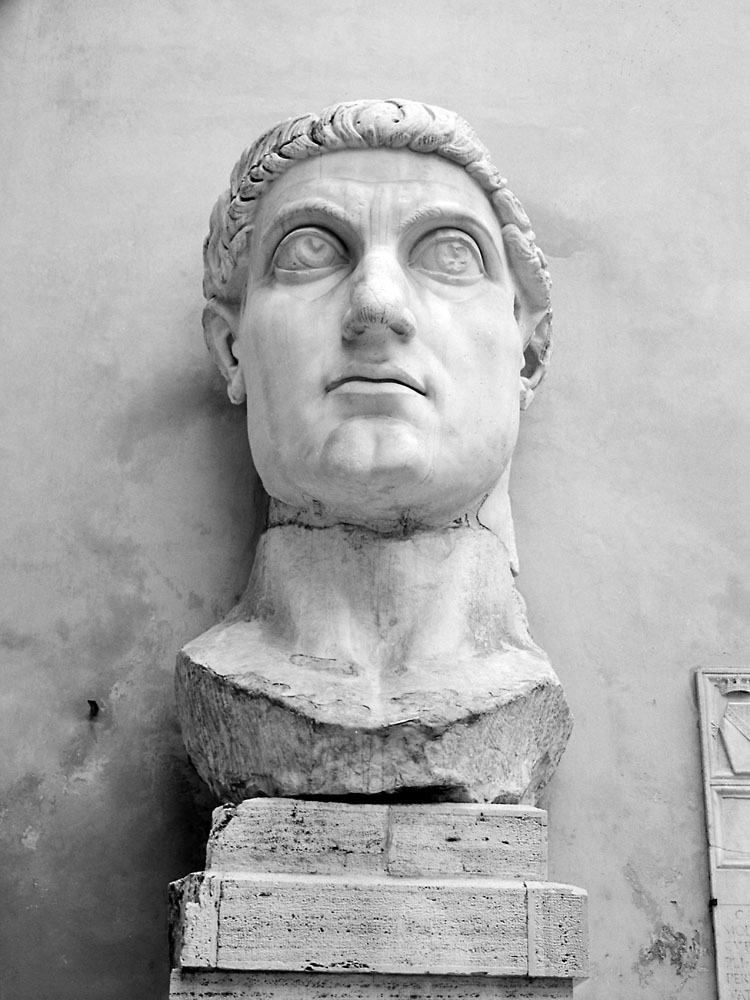
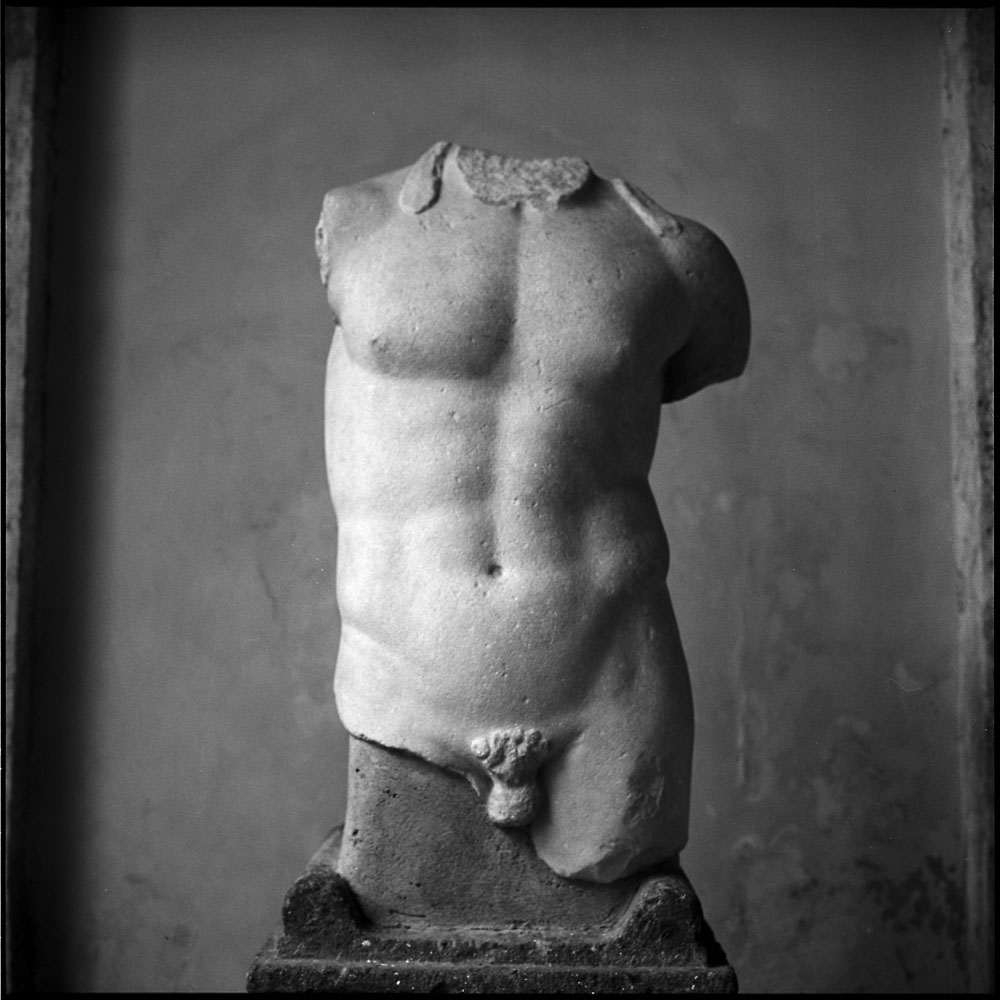
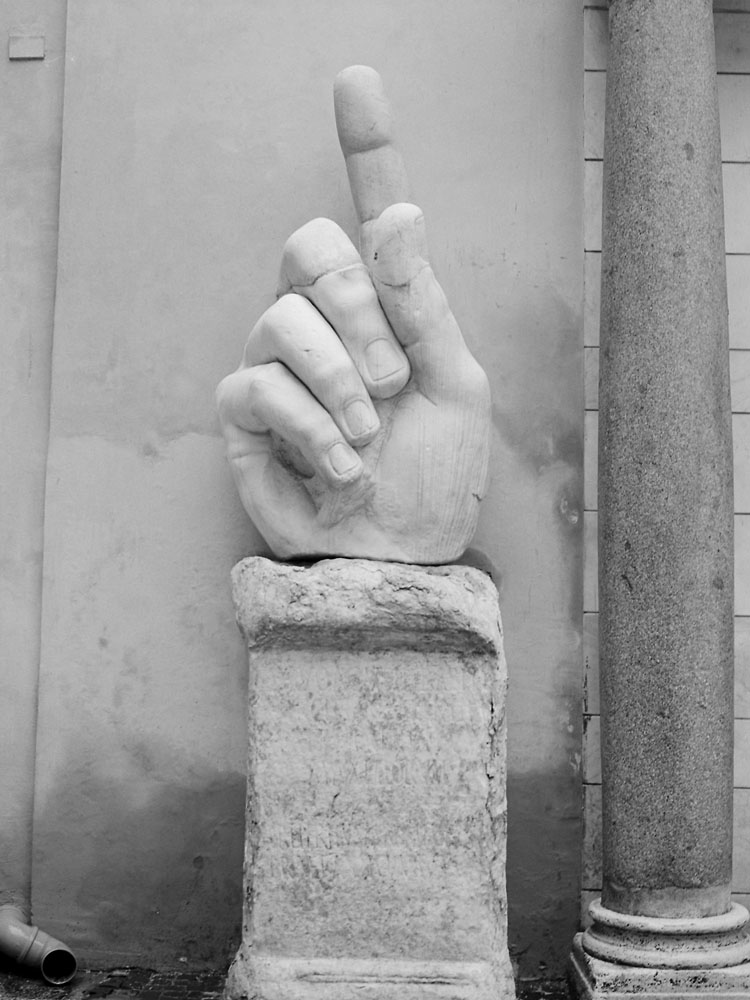
To give you an idea of the scale of these pieces, particularly the head and hand, the head is larger than the torso (which is not from the same sculpture). The head is probably 6 feet high. The hand is probably four feet from wrist to fingertip.
I went to the Forum on a bright and sunny day, thinking I would pass the time until I could get in the Colosseum. Little did I realize that the two-plus hour delay on entering the colosseum was for timed entry tickets, not general admission, even with my Roma Pass, and I would still have to wait in line for two hours to get in. It all worked out in the end – I enjoyed the Forum and wandered the periphery of the Colosseum and got some good shots of the exterior, and took a pass on going inside. Now that I know better I’ll go back the next time and get timed-entry tickets or book a tour in advance. Do NOT get suckered in by the tour guides touting skip-the-line access on the plaza around the Colosseum – the guides who give the tours are of questionable expertise and foreign language skill, so about the only plus you’ll get from going in with them is skipping the line.
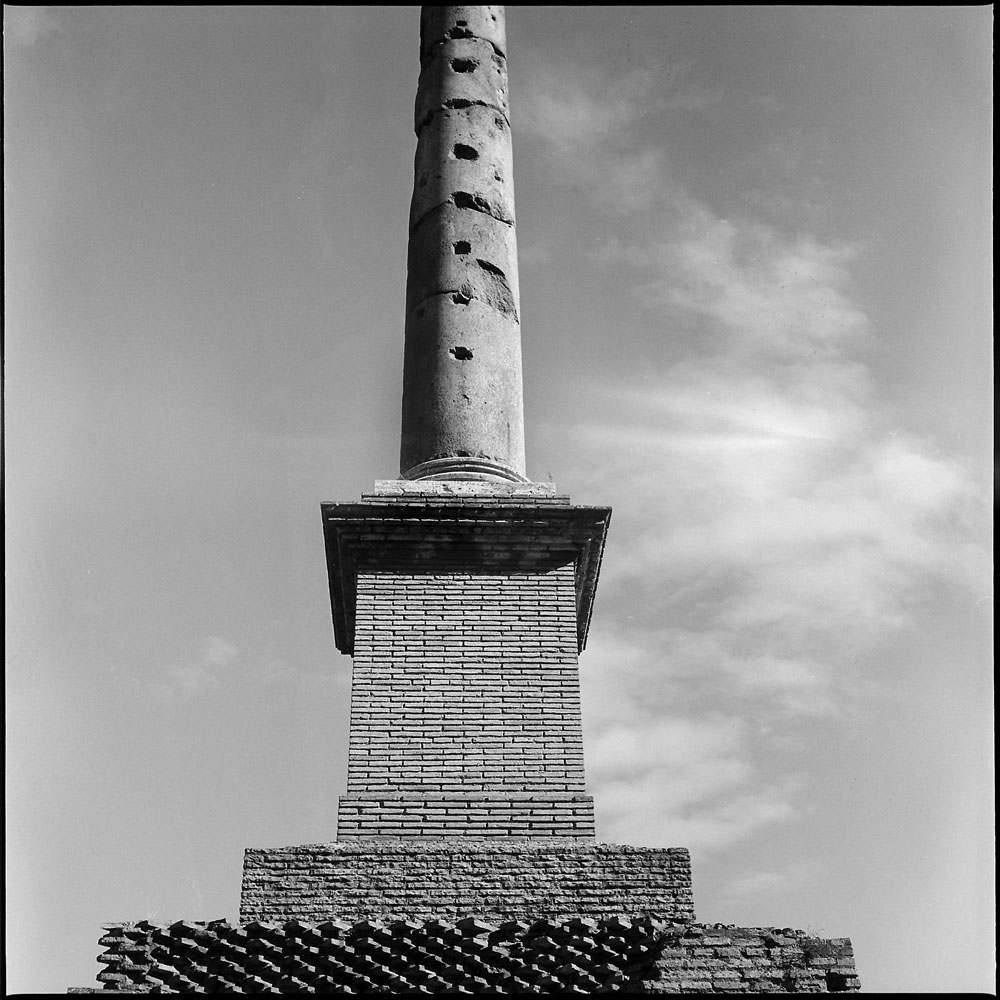
This column is one of the few remaining columns of a loggia across from the Basilica Julia.
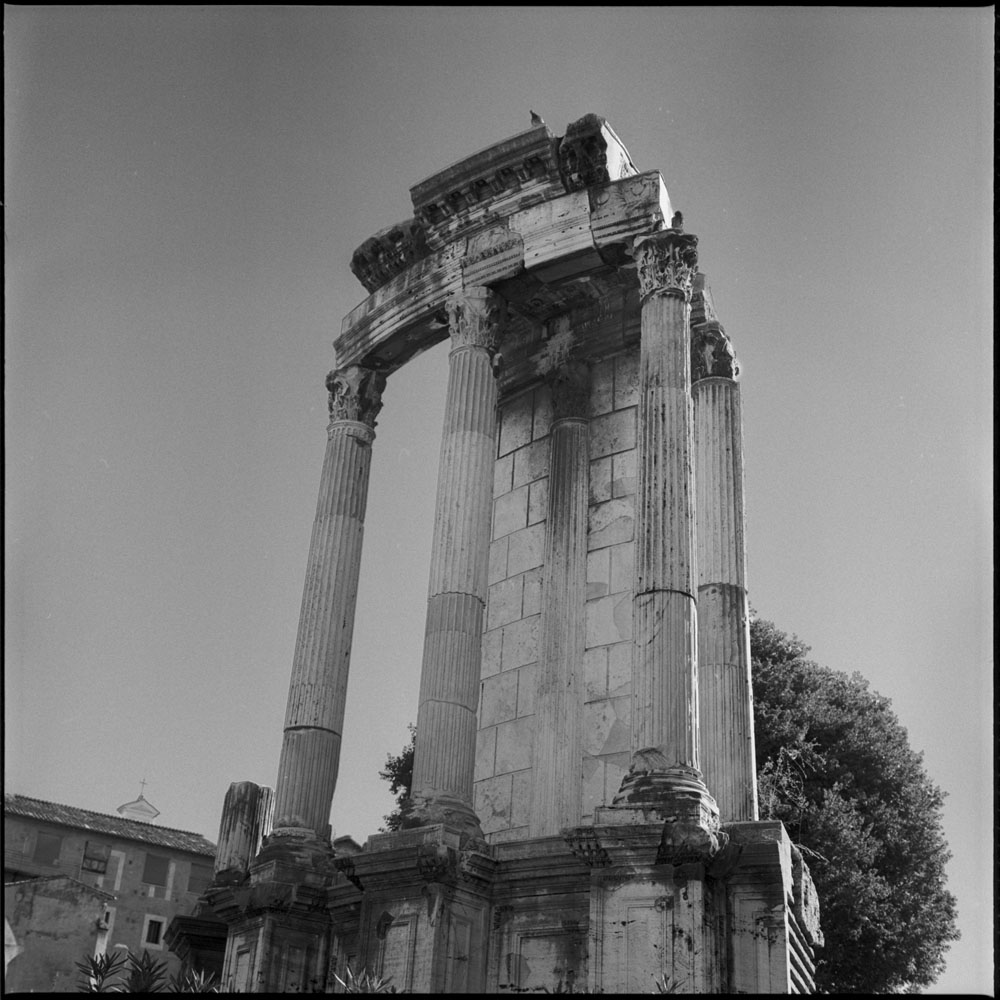
The temple of Vesta is a small circular structure, with a few columns and a fragment of a wall jutting up. This would have housed a flame kept burning by the Vestal virgins, women who pledged celibacy for some thirty years of service. They would have been too old to marry or have children by their retirement, but if they were able to wait that long, they were richly rewarded and retired to lives of considerable luxury and comfort. If they couldn’t wait, well… they and their defilers were sentenced to death.
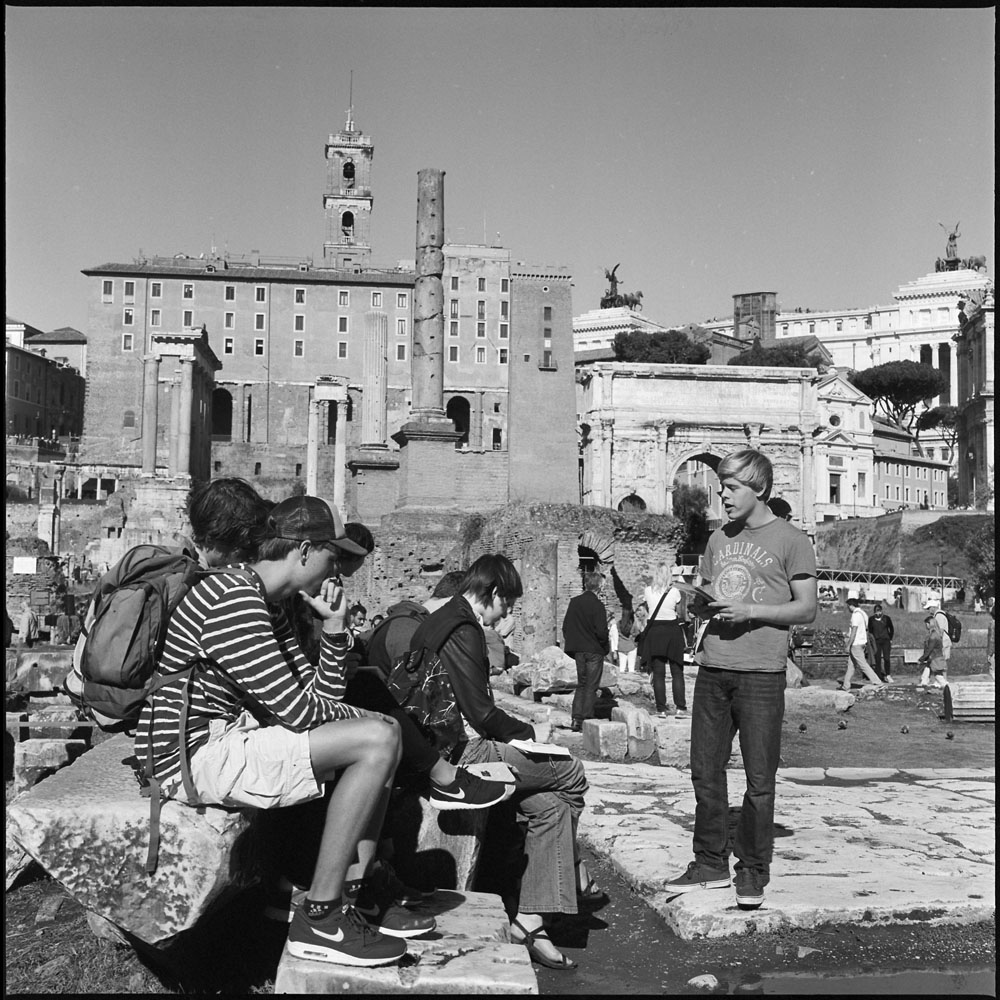
I caught this school group in the Forum, one student presenting a topic about the place to his fellow students. I suspect it was a project for a history course. Made me wish I had gone to school somewhere in Europe that we would have taken field trips to the Forum, instead of to the American History museum to look at displays of Revolutionary War muskets.
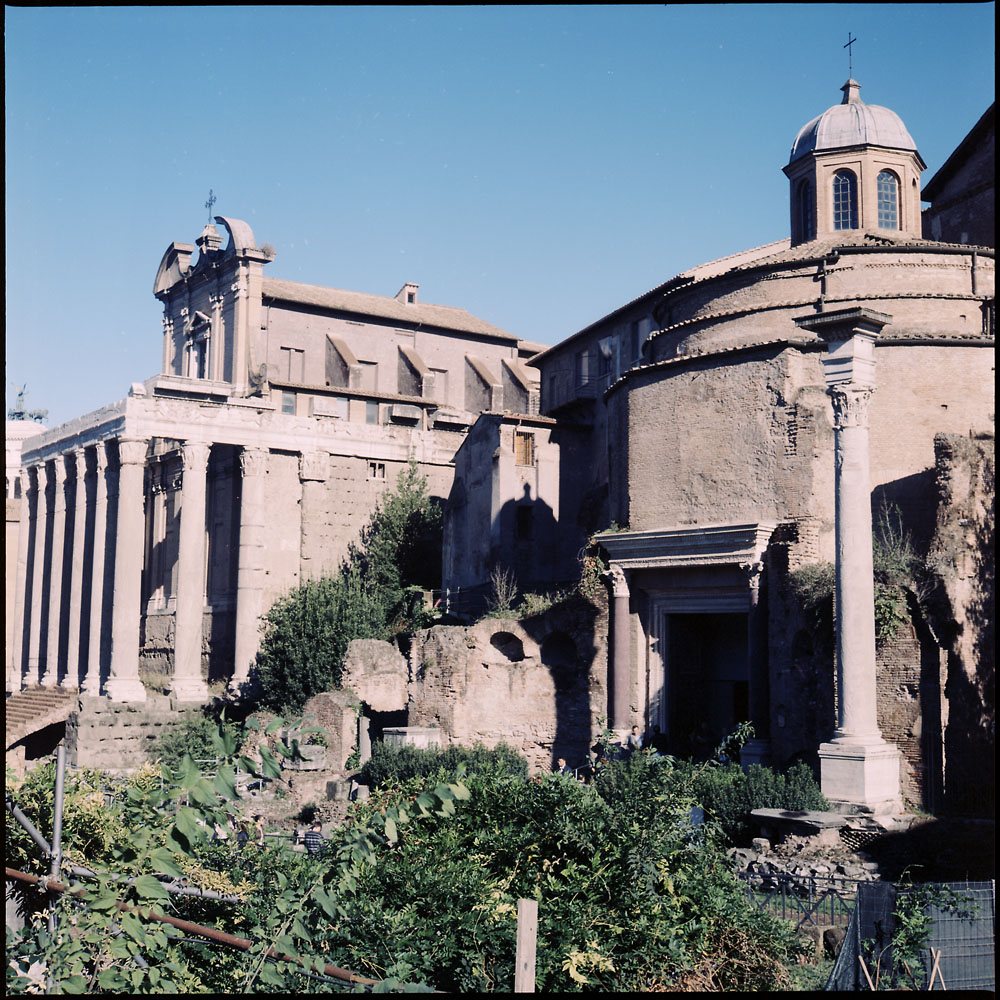
Two of the major surviving structures of the Forum are visible in this view – the Temple of Romulus (now part of the Basilica of Saints Cosmas and Damiano) and the Temple of Antoninus and Faustina. The temple of Romulus is the cylindrical structure in the foreground. Because of its early re-use as a Christian church, the temple of Romulus is, after the Pantheon, the best preserved Roman temple in the city. The Roman Senate structure is also quite well preserved, and the main Senate chamber retains is marble steps and the black marble slab that supposedly marks the tomb of Romulus.
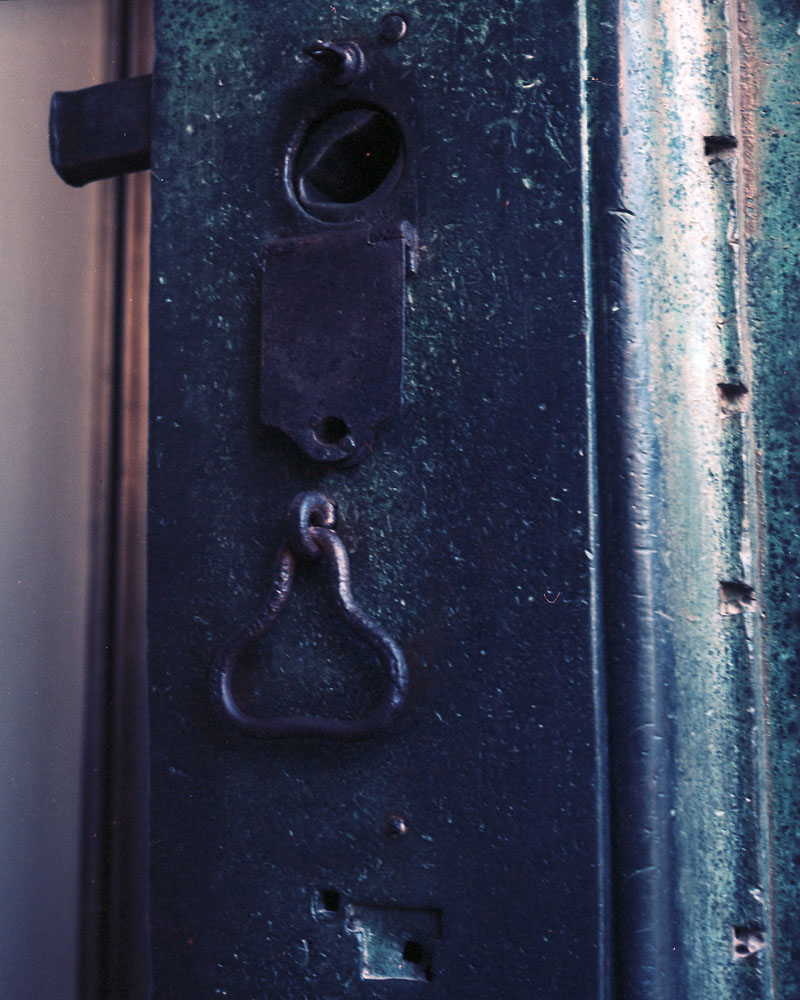
A striking rarity are the doors of the temple of Romulus – they are the ORIGINAL bronze doors, over 2000 years old. Many other temple doors have been either removed and melted down for re-use or, as in the case of the doors of the Senate building, moved by Bernini to Saint John Lateran. You can really feel the patina of the ages when looking at these doors.
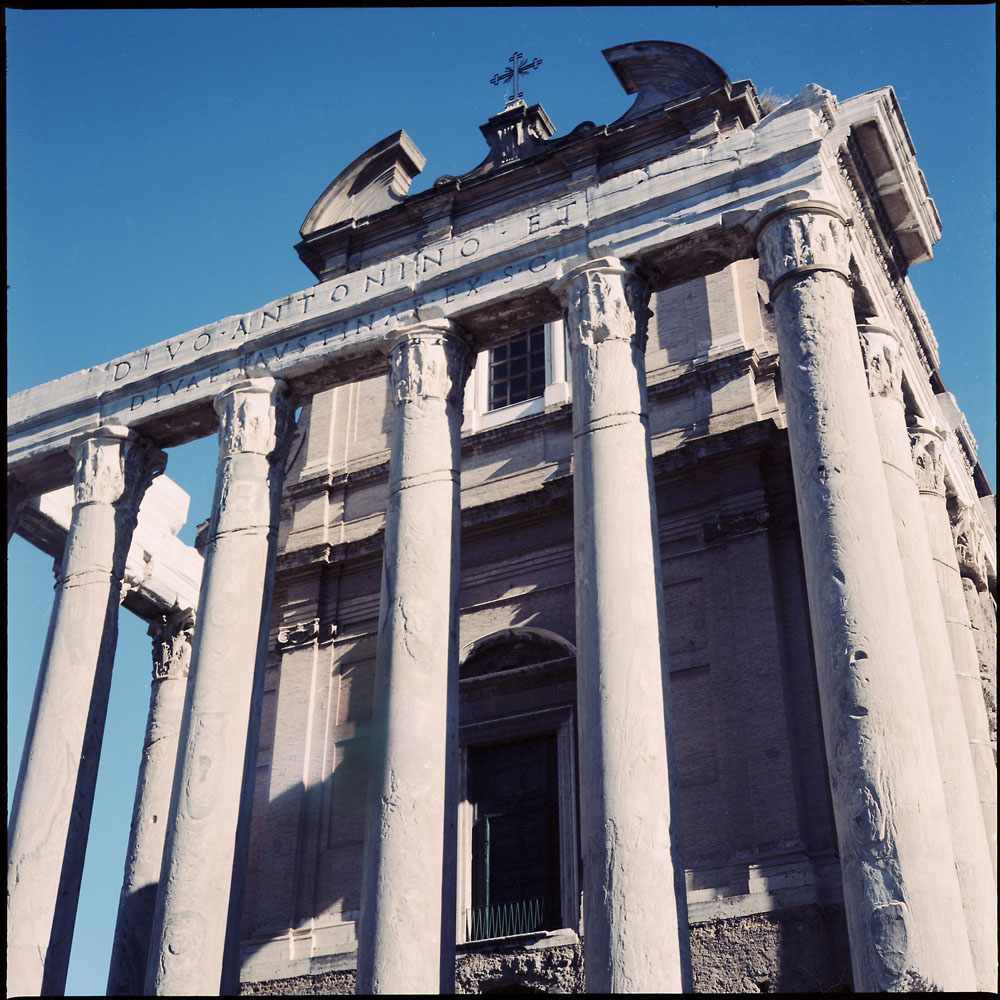
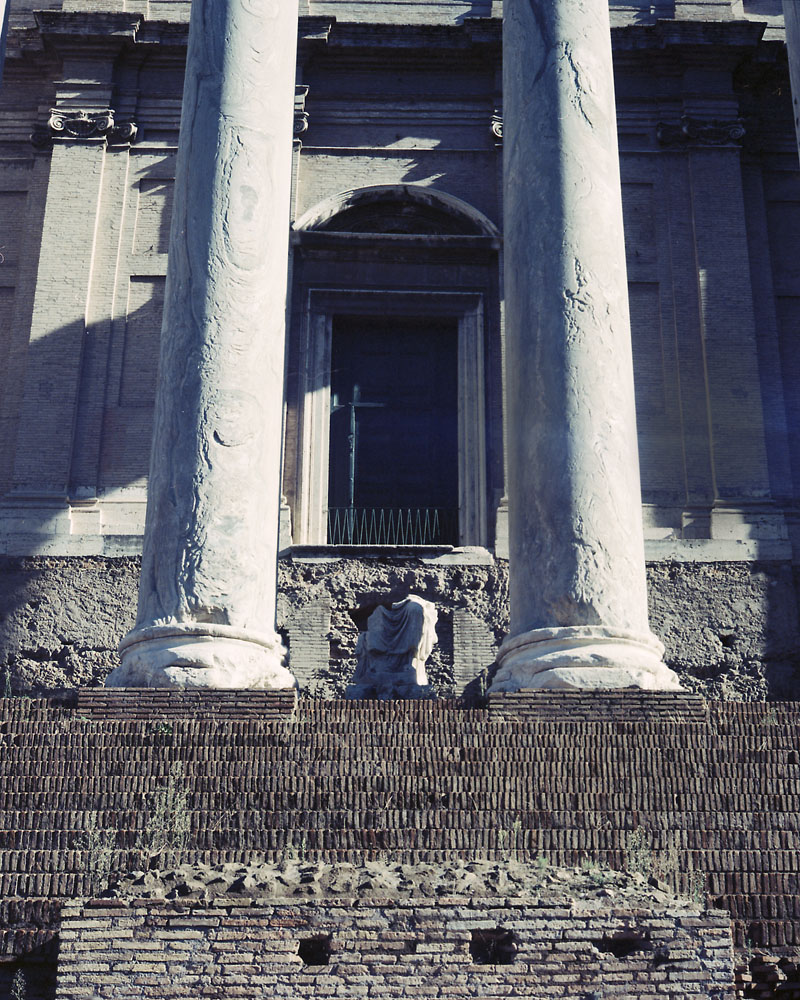
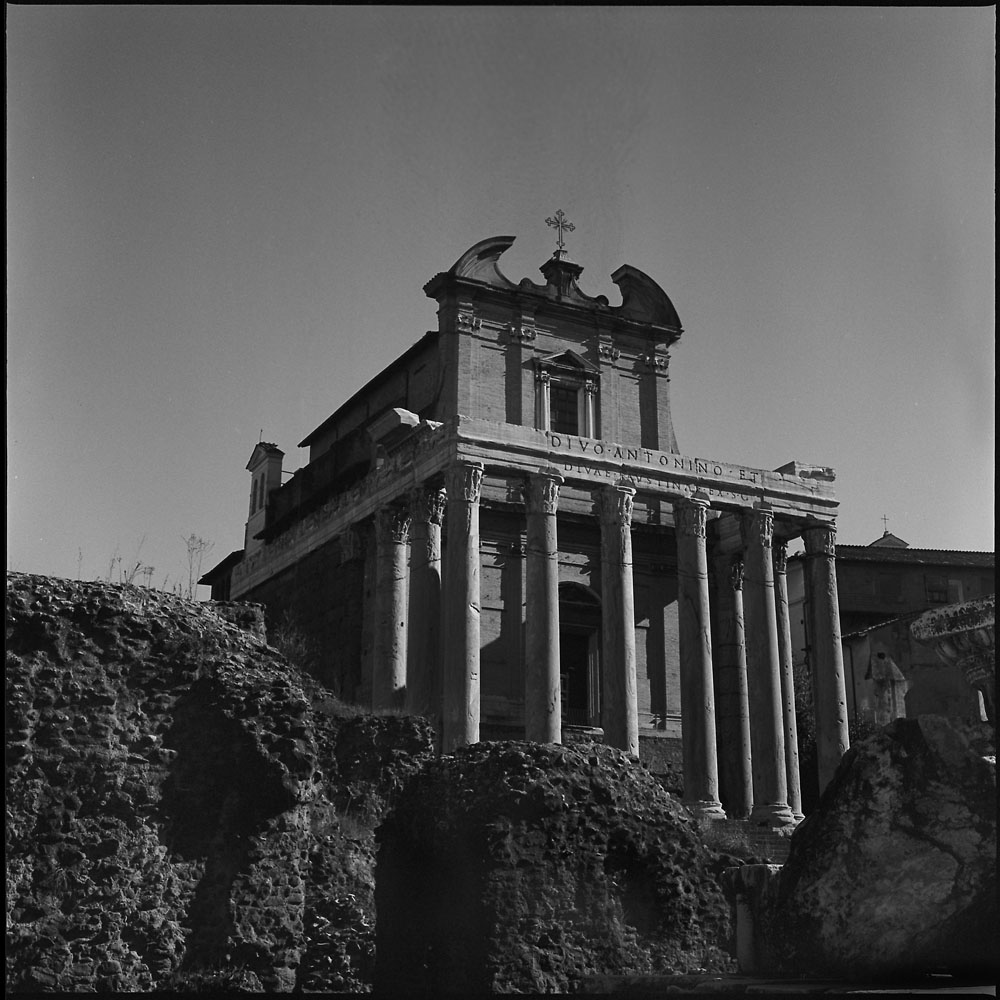
The Temple of Antoninus and Faustina was originally built in honor of Faustina, the wife of Emperor Antoninus. She was deified upon her death, and Antoninus had the temple erected in her memory. When he passed away, he too was deified and added to the temple’s namesakes. The colonnade survives in its current state of preservation due to the later conversion of the structure into a Christian church. You can see the former entrance to the church a whole story above the top of the steps – at the time of the conversion, the Forum had infilled to the level of the door.The columns also owe their survival to this infilling – you can see the diagonal gouges in the columns from where ropes or chains were wrapped around them in an attempt to pull them down. This may have been because of an anti-Pagan movement during the early Church, or it may have been by marble scavengers trying to get the columns for their stone.
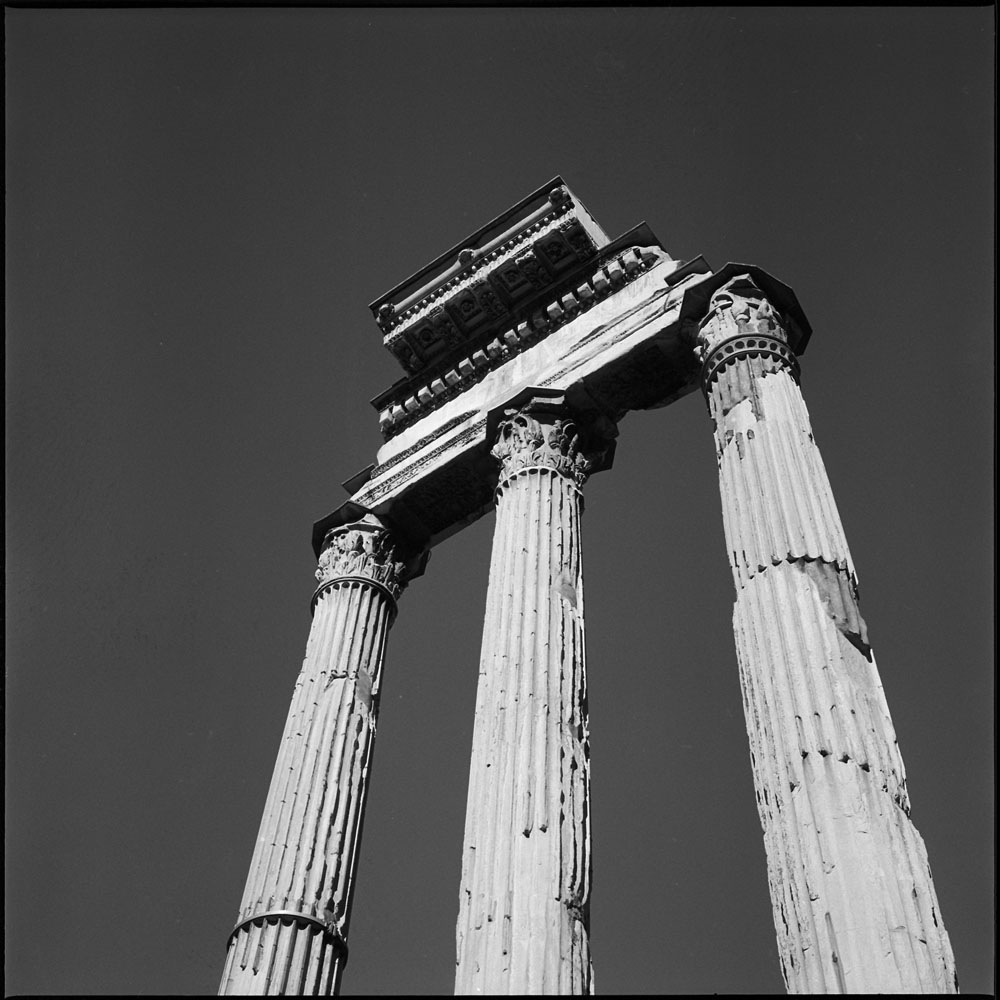
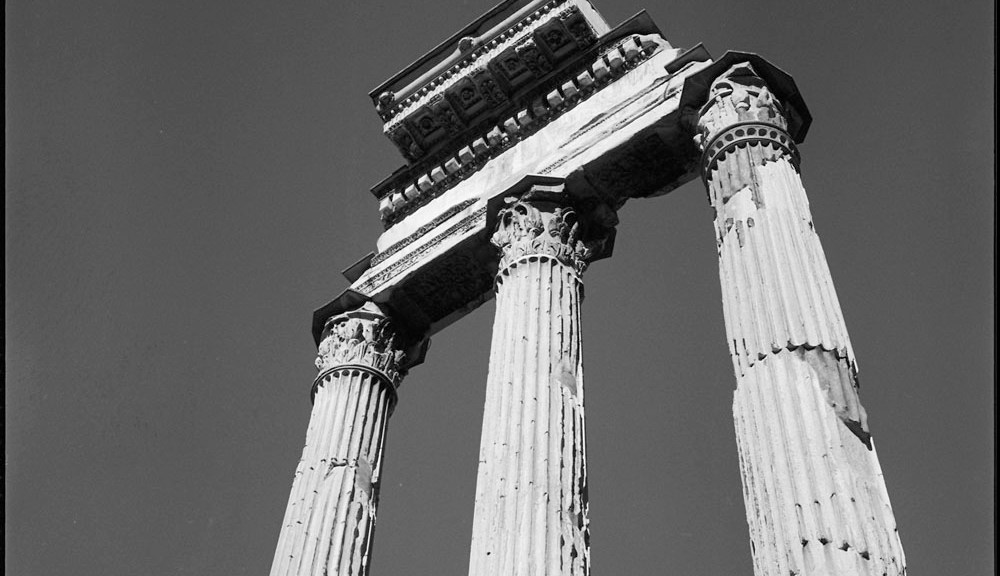
Most of the temples of the Forum are ruins – a few scant columns remain of them, or in some cases only foundations. The temple of Castor and Pollux is one survivor with a few columns to mark its location. Their losses are due to various anti-Pagan movements and repeated use of the Forum as a low-effort quarry for marble to be used in the palaces of popes and cardinals.
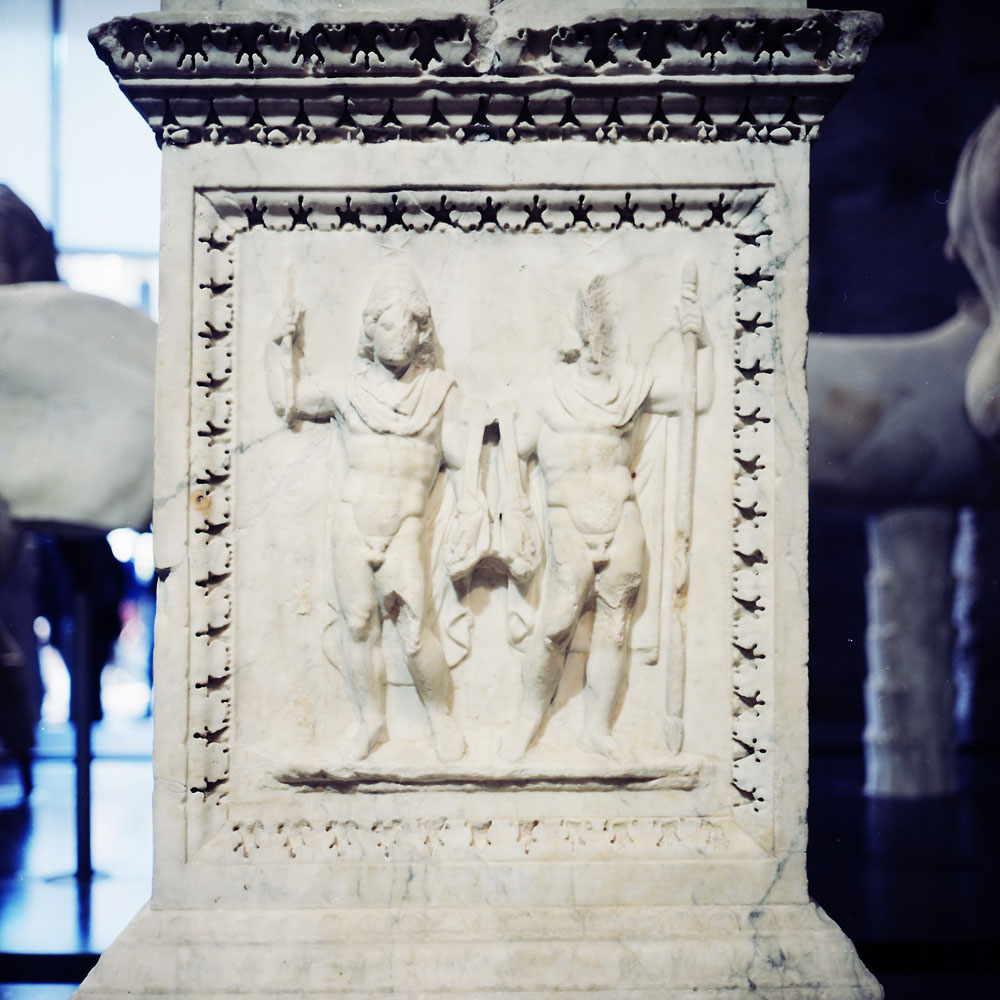
The original altar from the spring of Juturna was on display inside the temple of Romulus as part of a temporary exhibition when I was there. This side depicts the twins Castor and Pollux, who supposedly visited the spring to water their horses. The temple of Castor and Pollux is directly across from the spring. They have a replica in place at the spring itself.
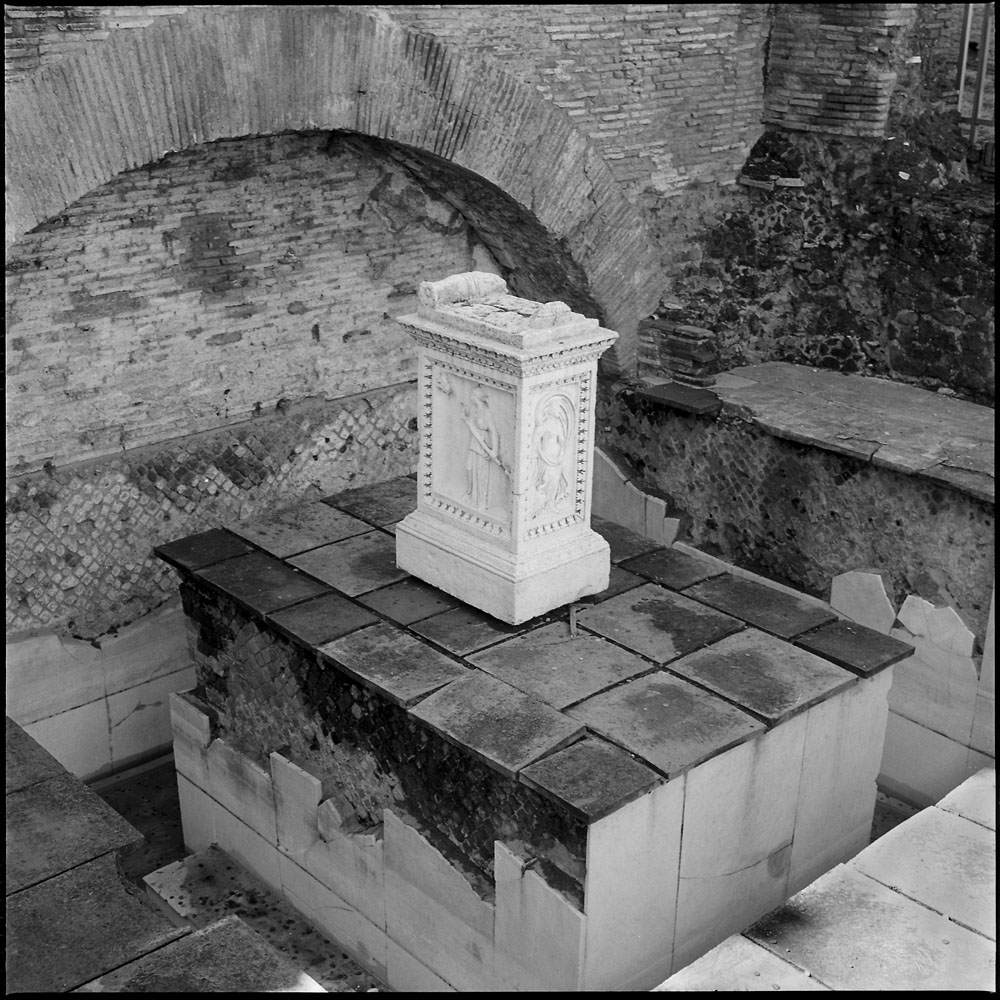
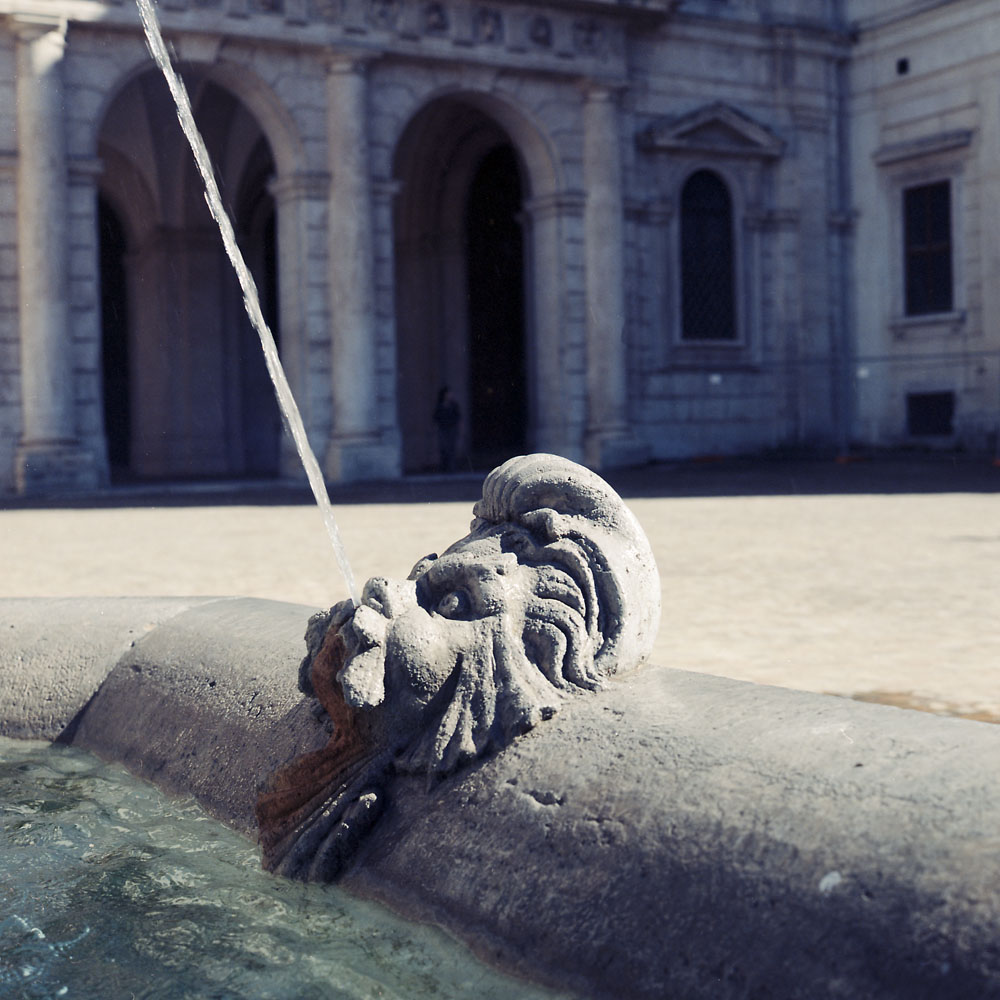
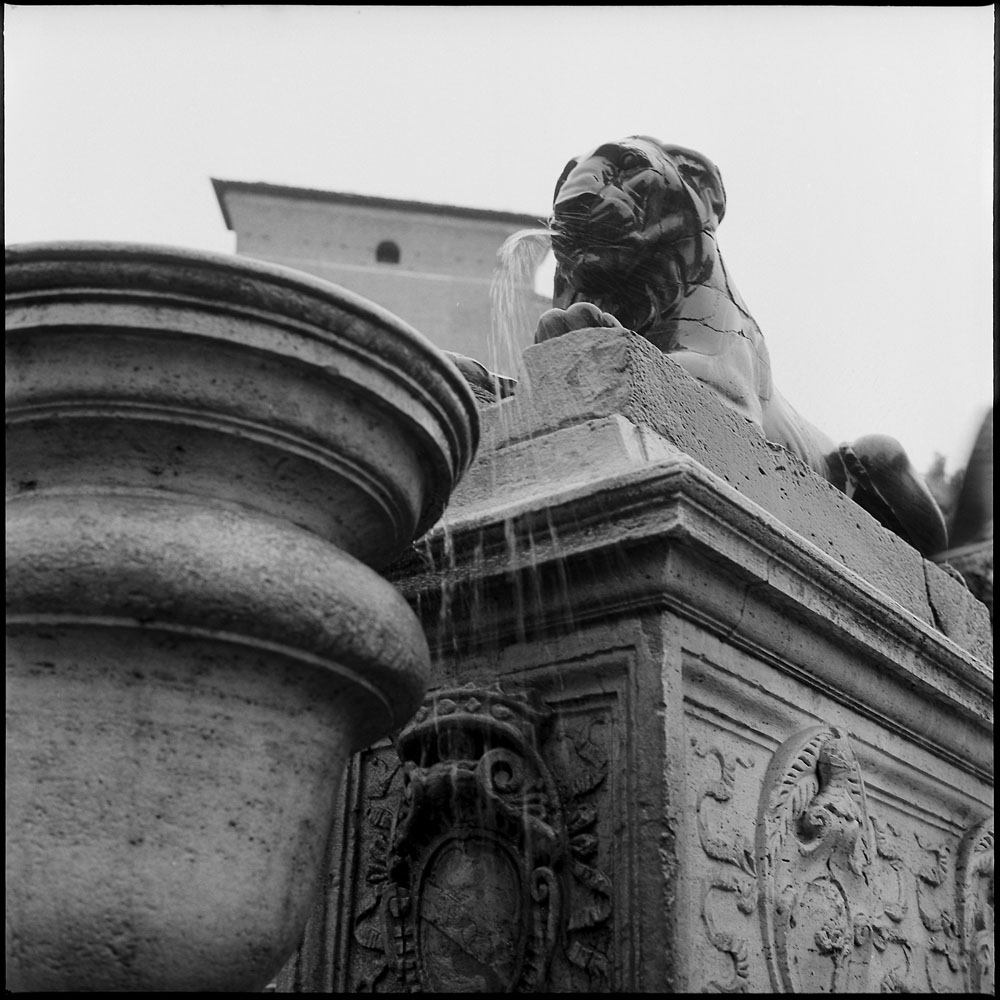
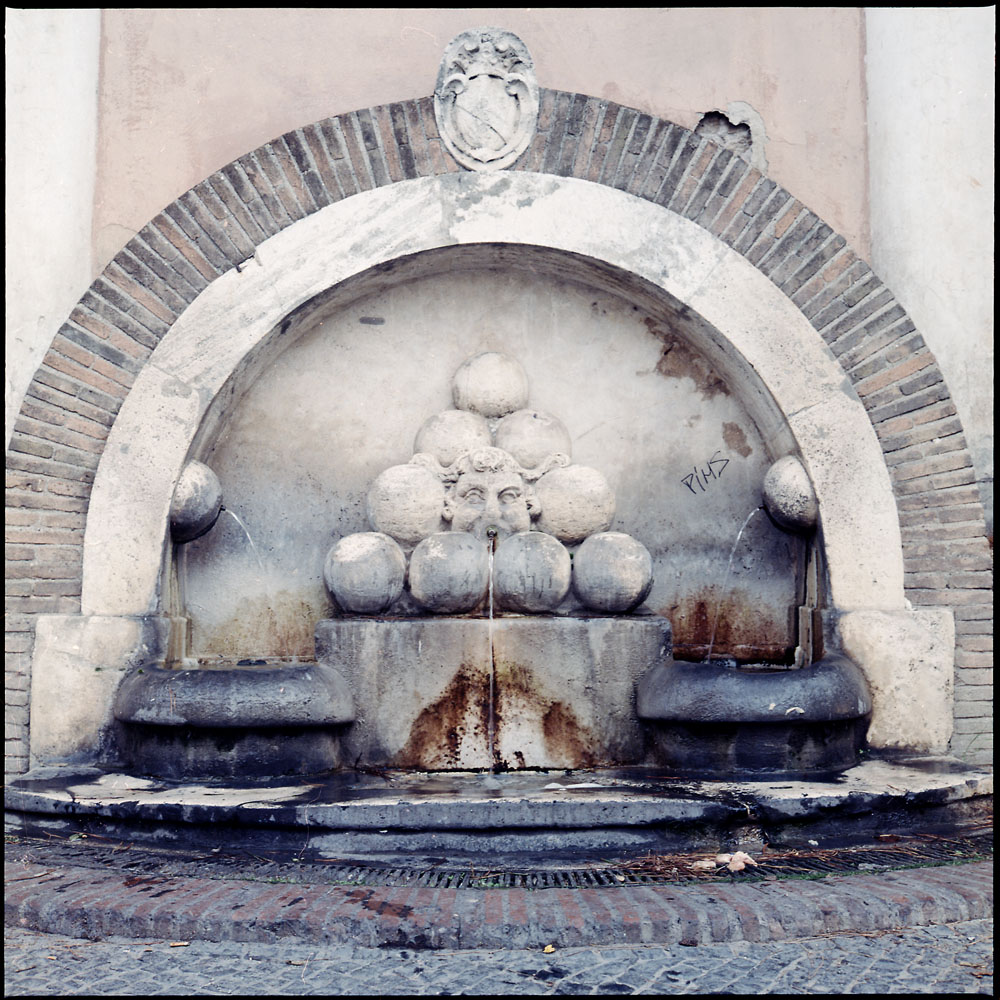
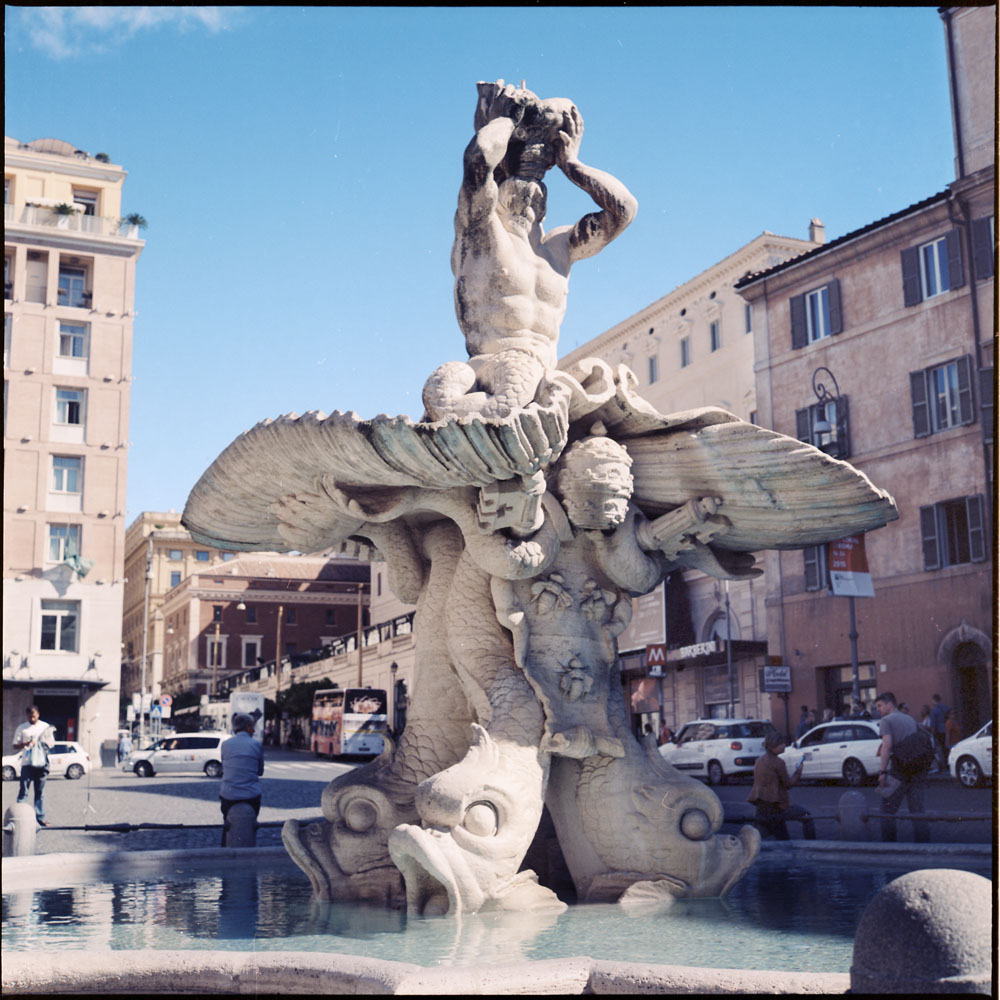
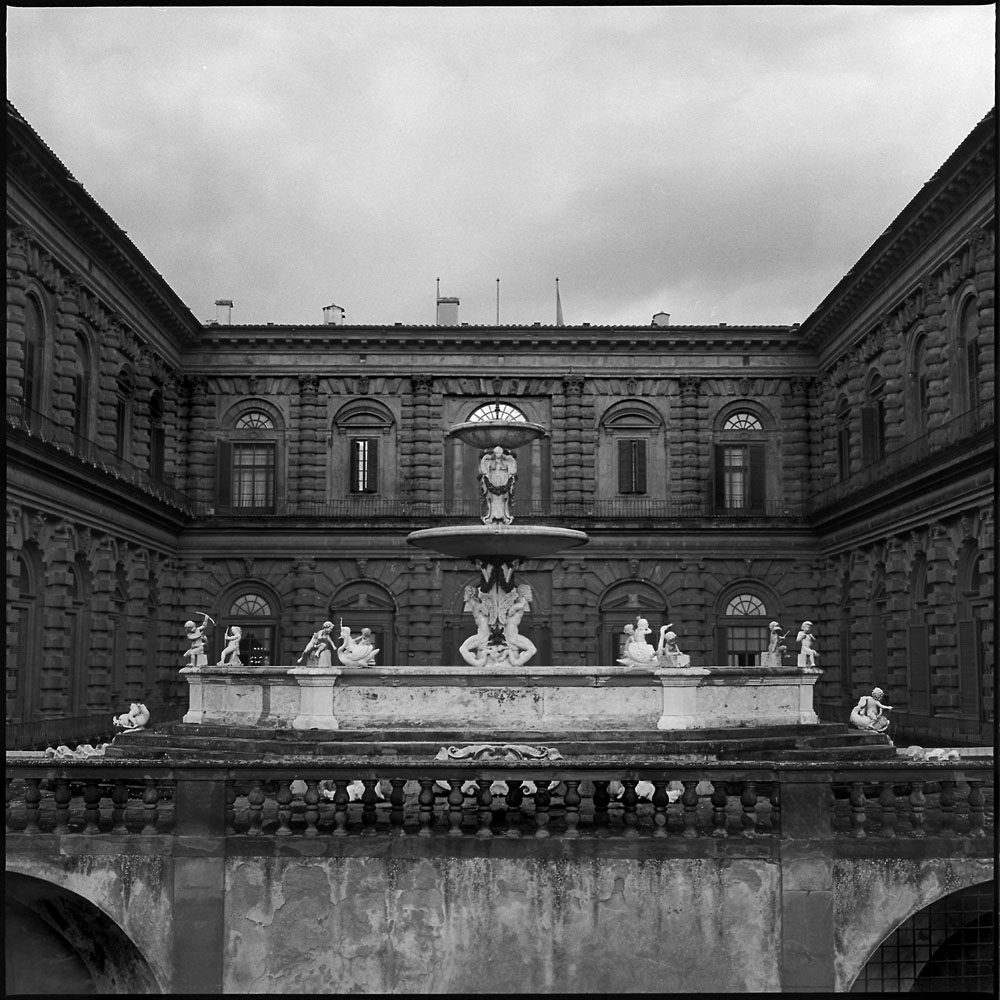
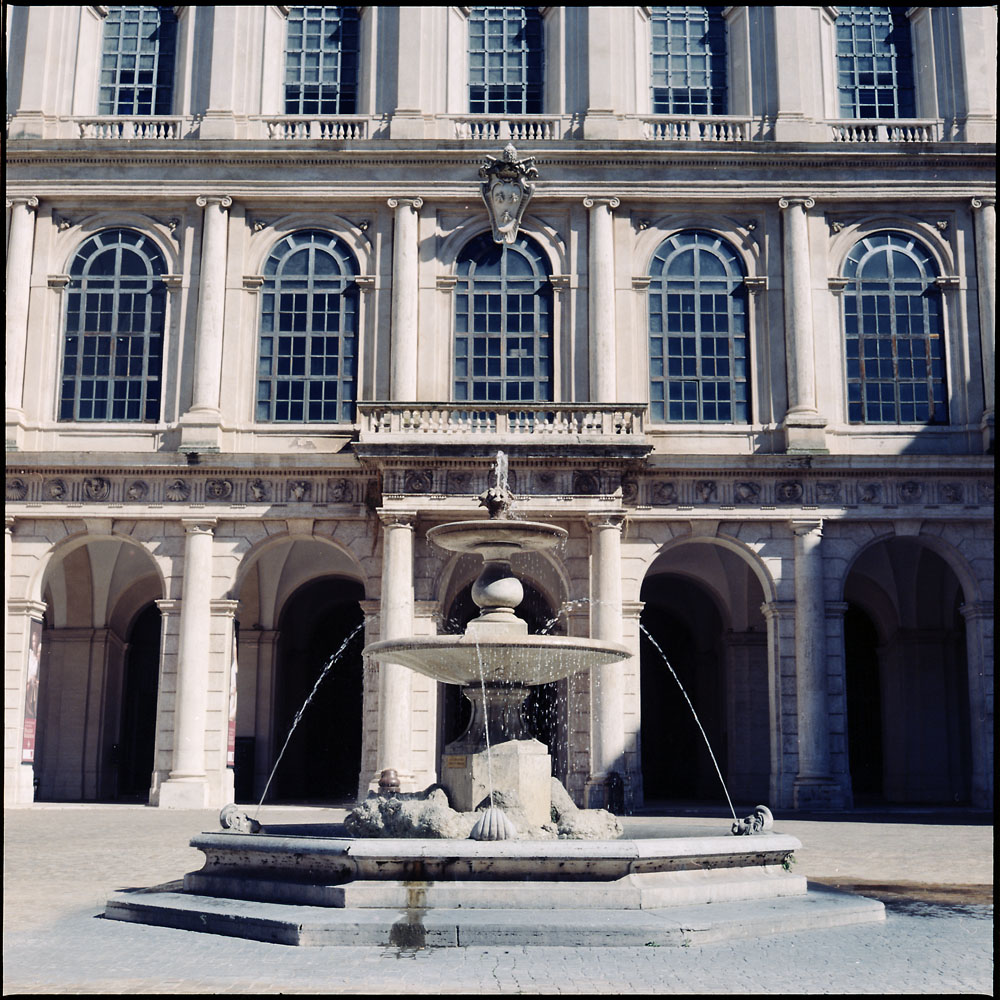
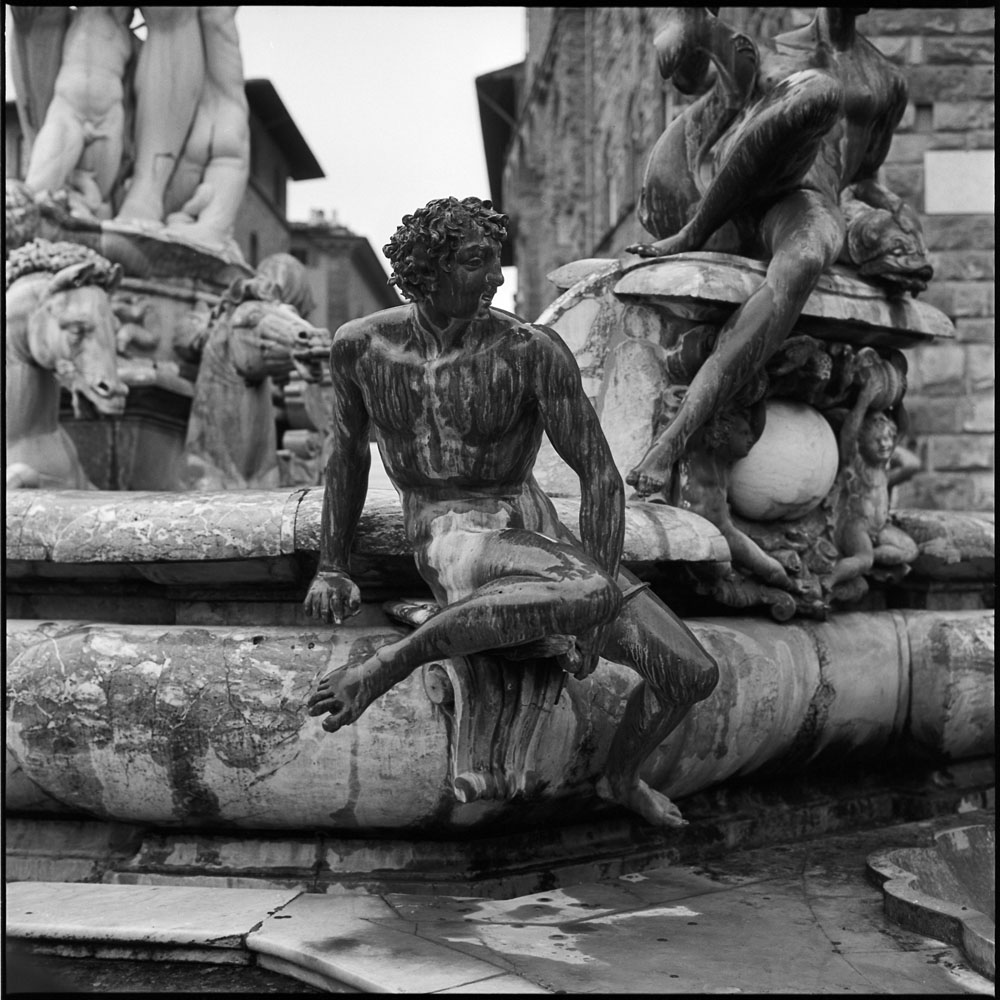
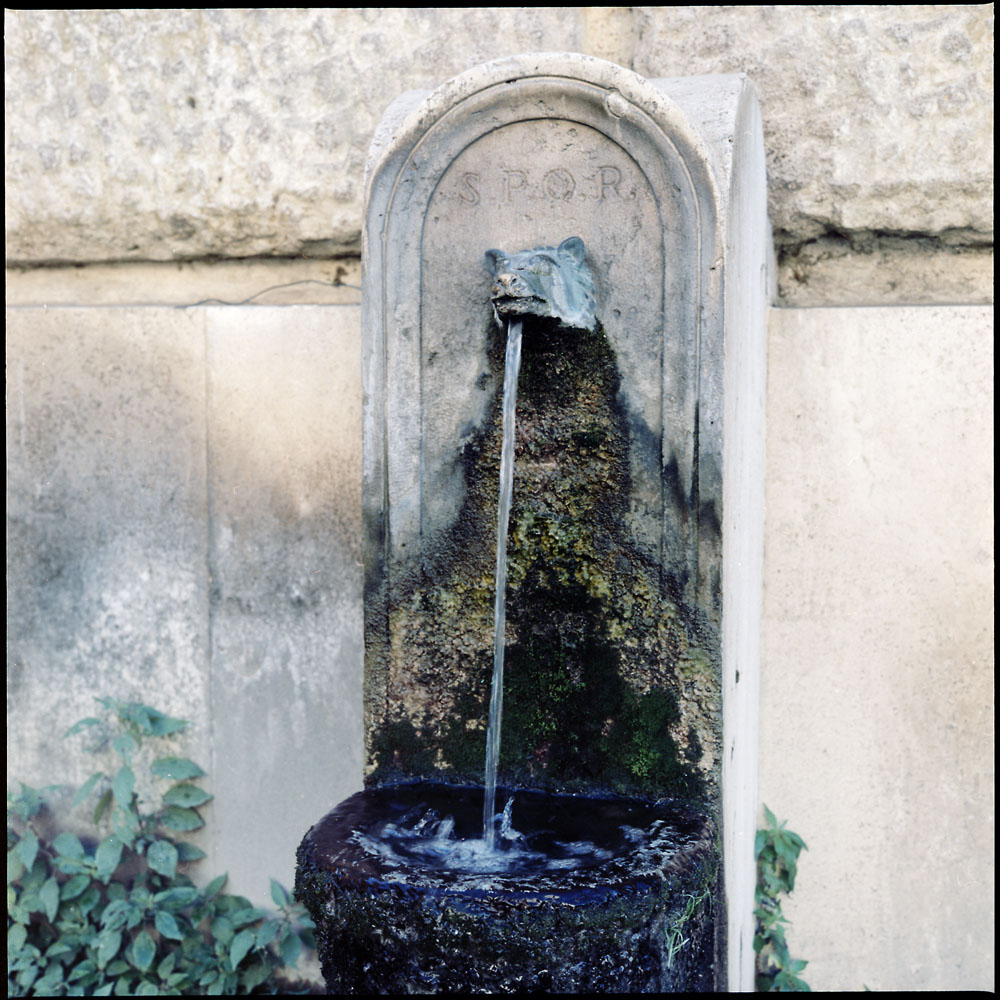
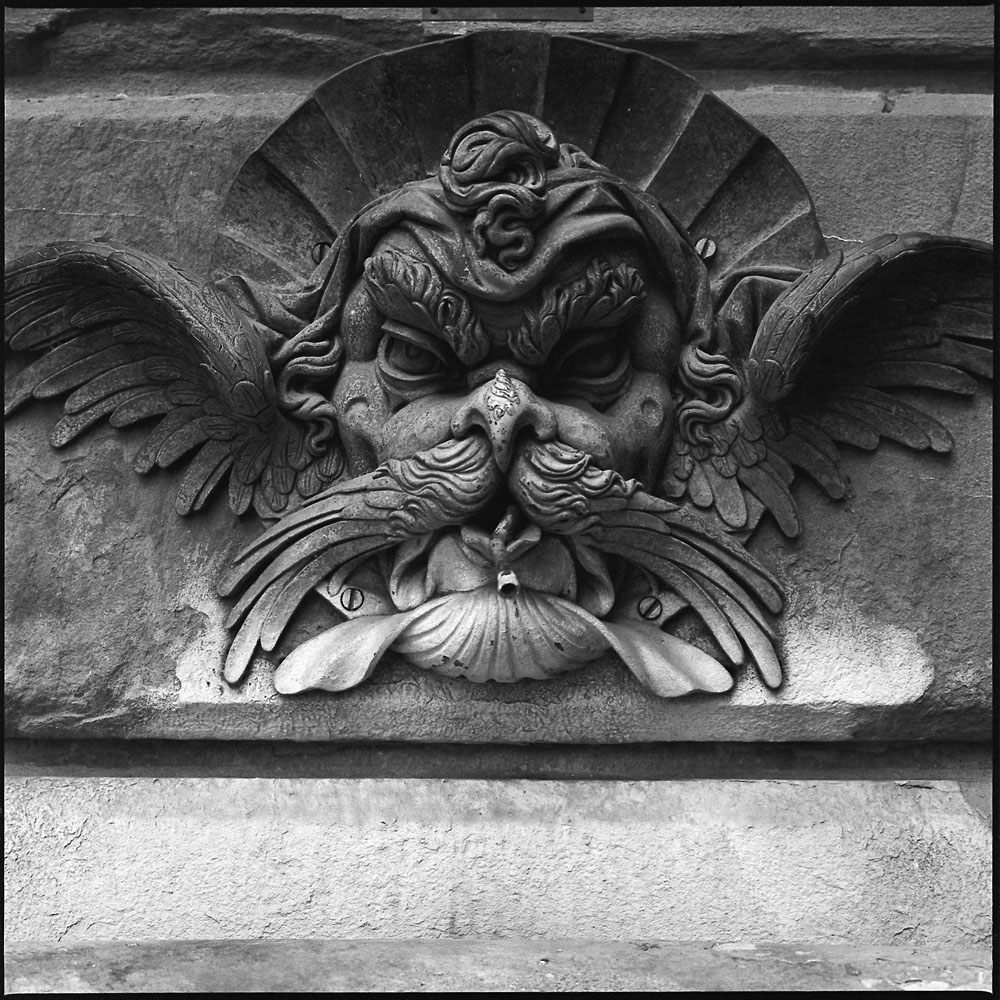
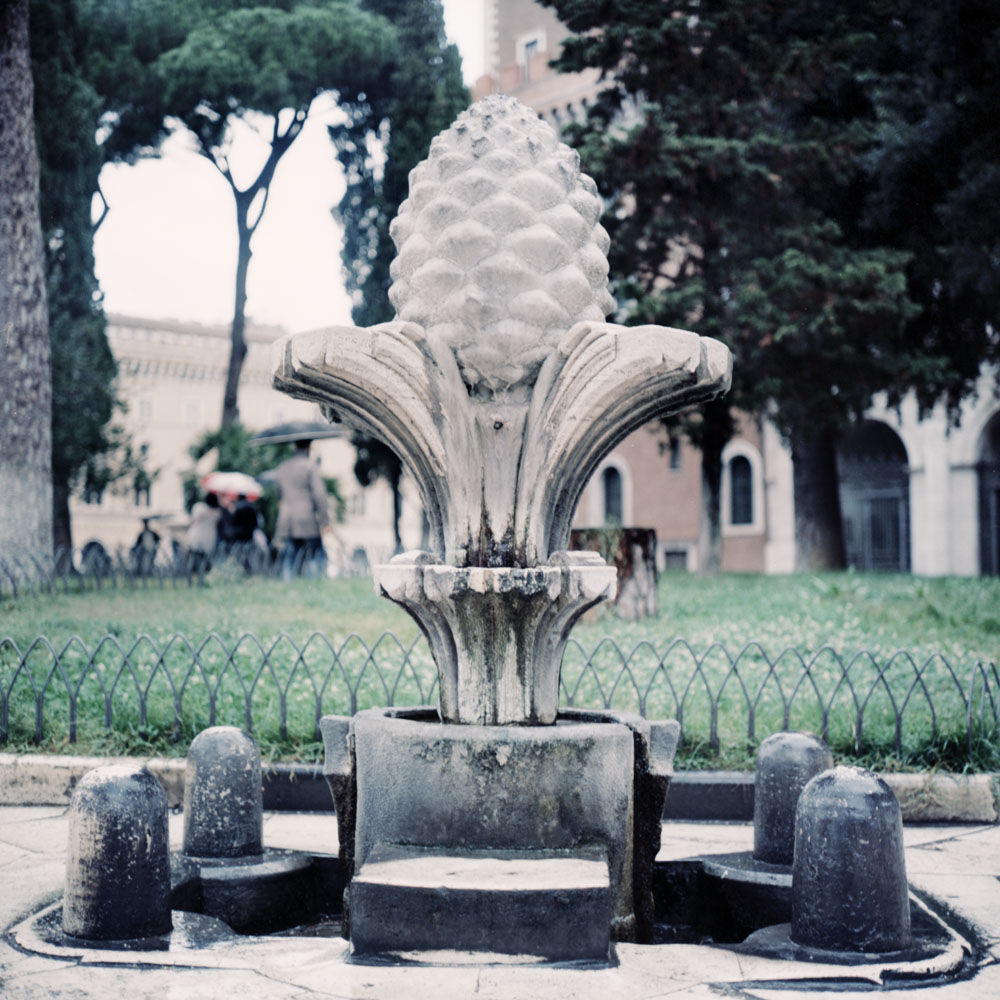
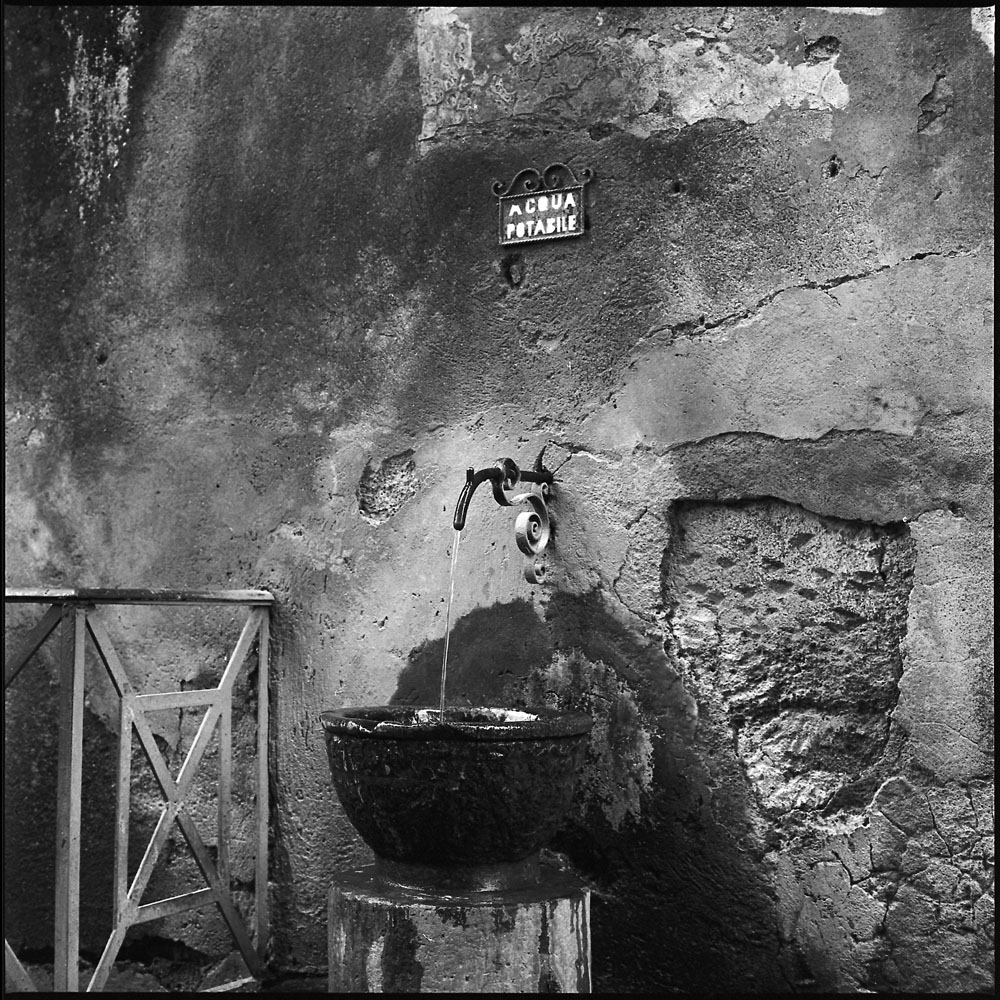
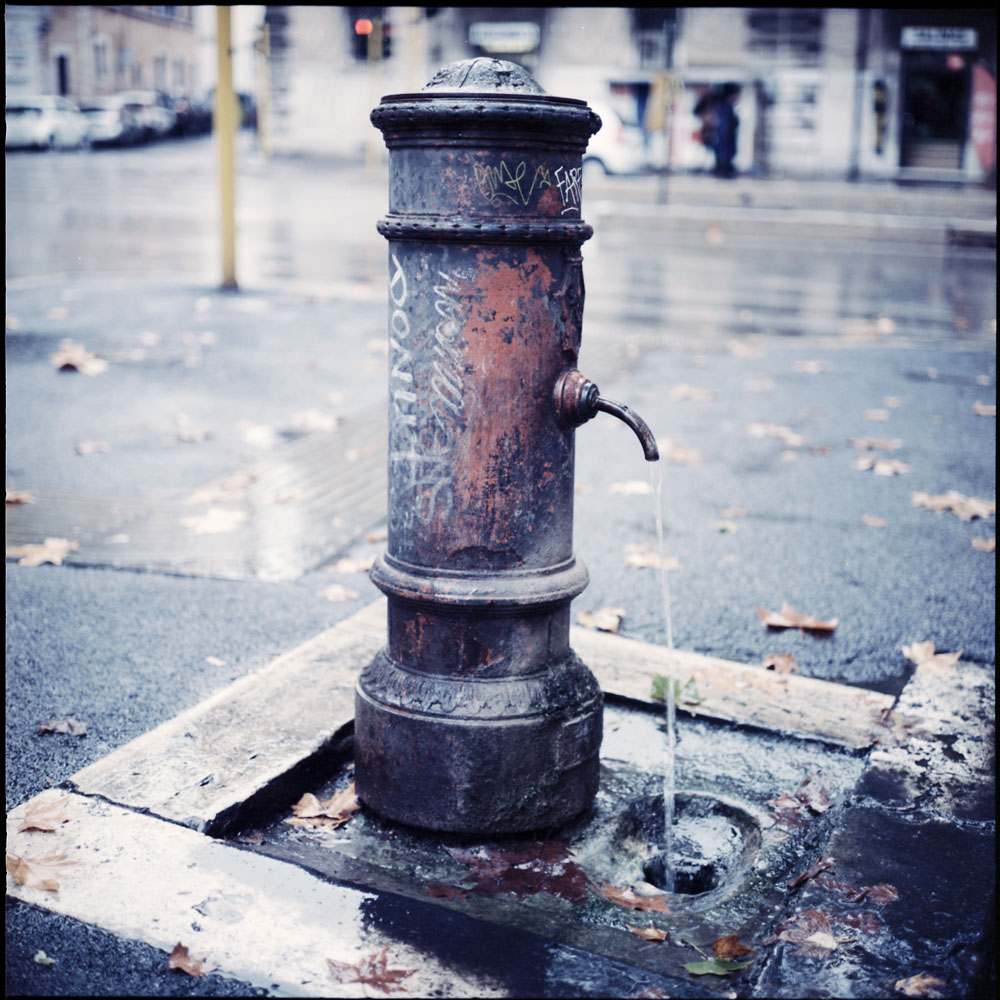
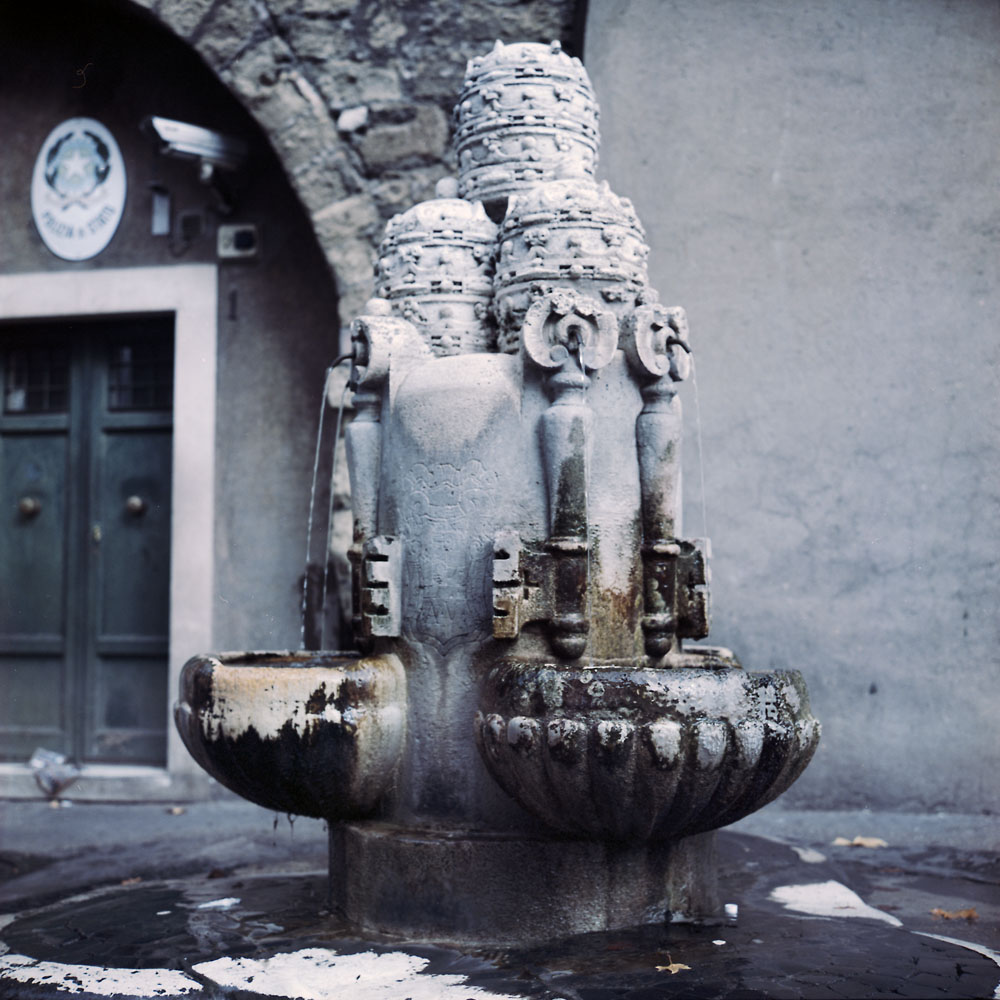
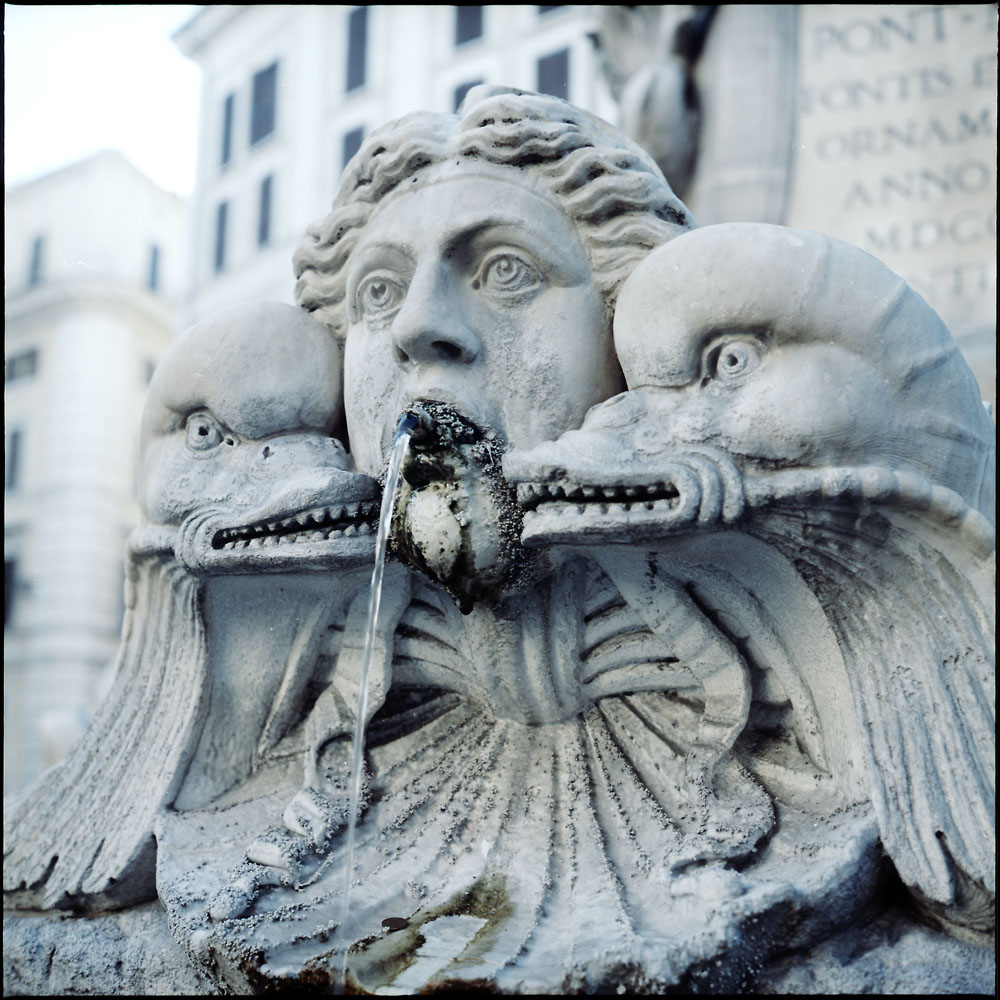
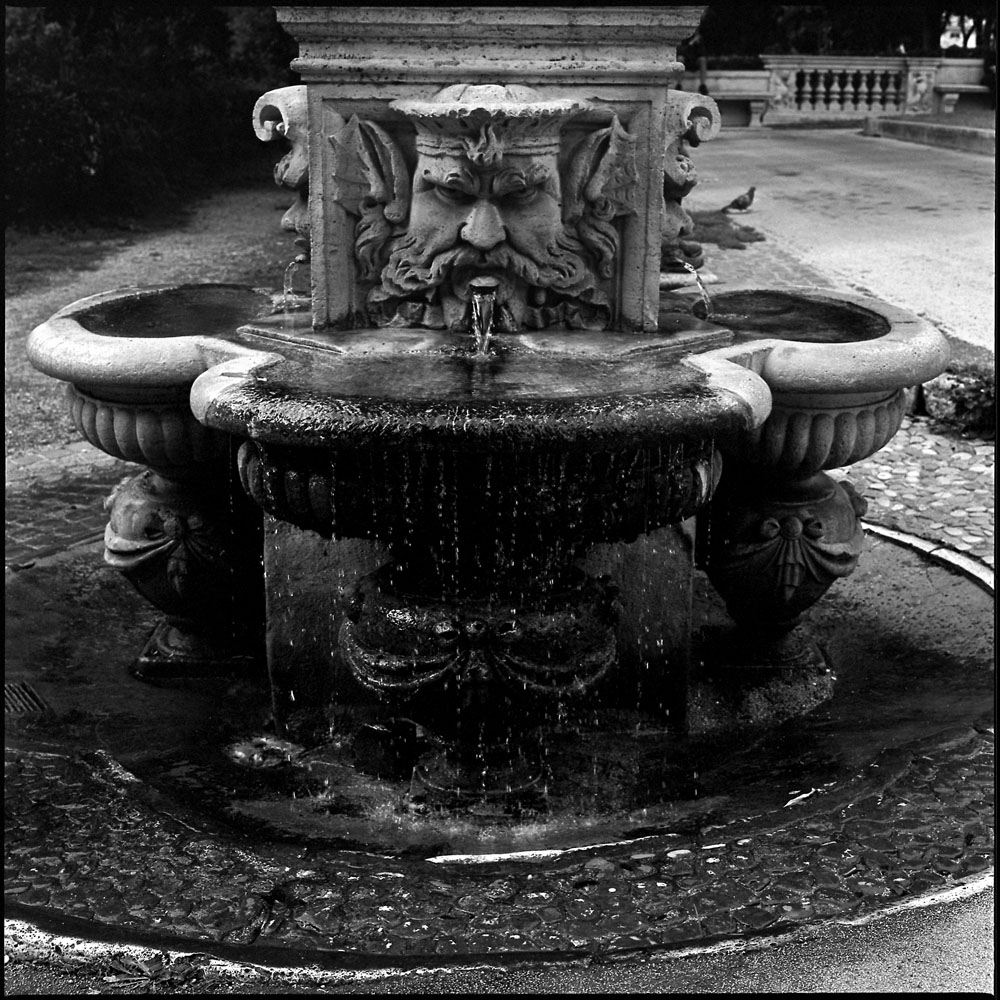
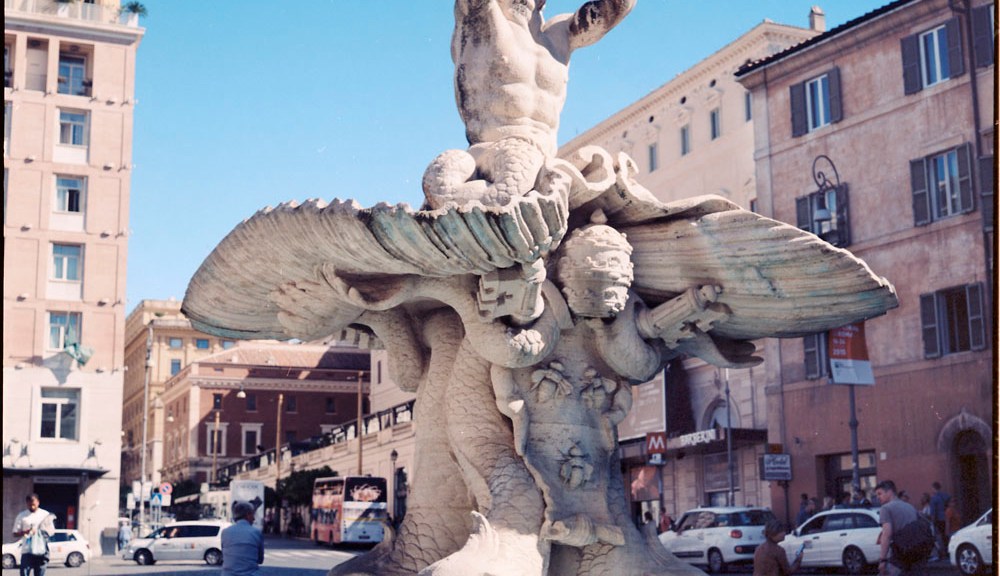
This is somewhat of a recap of some earlier images, but they’ve been a running theme in my Italian work so I thought I’d pull together a collection of my photos of fountains from Rome and Florence.

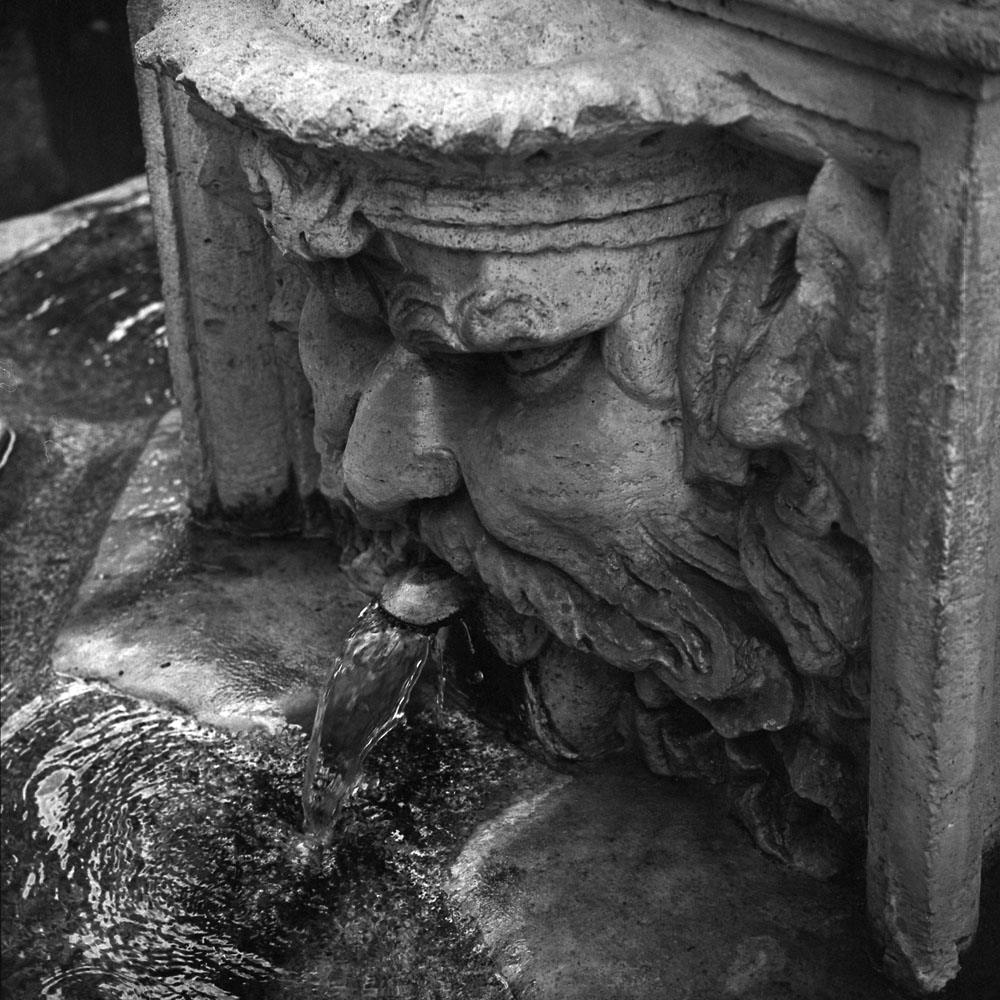

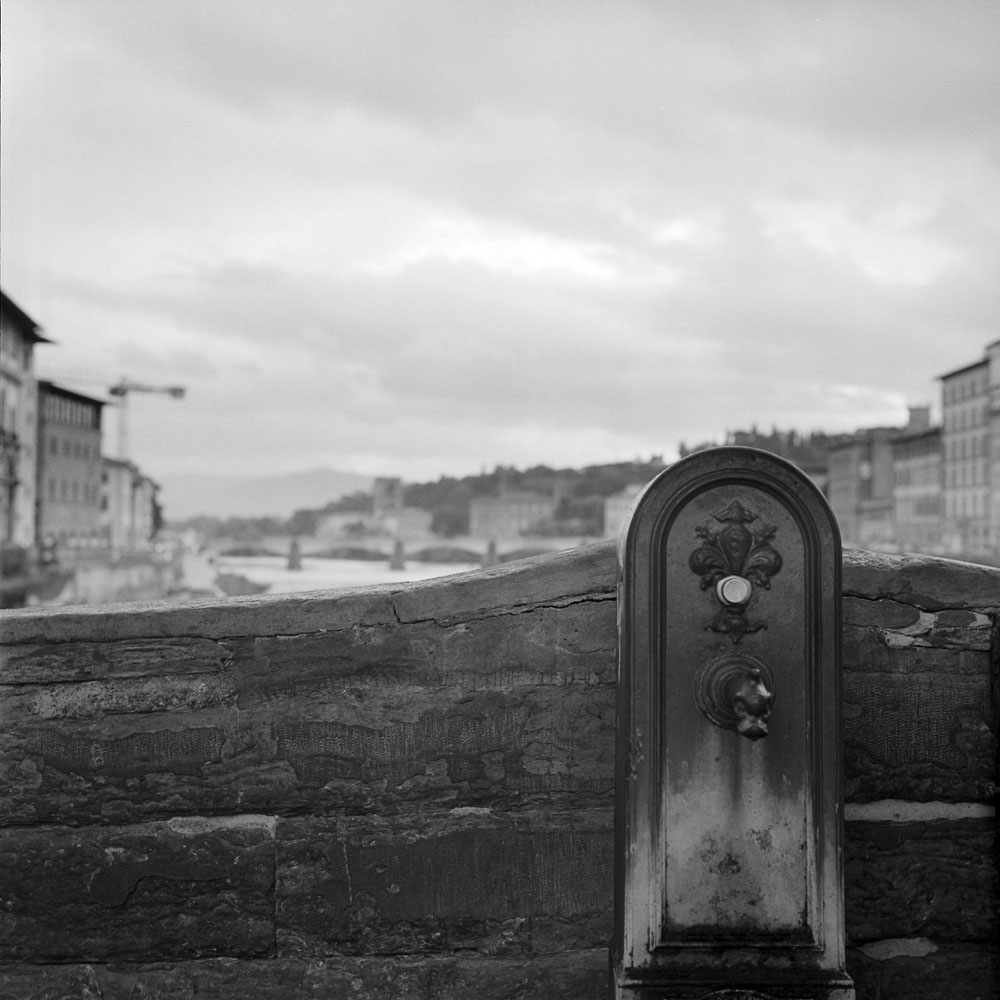
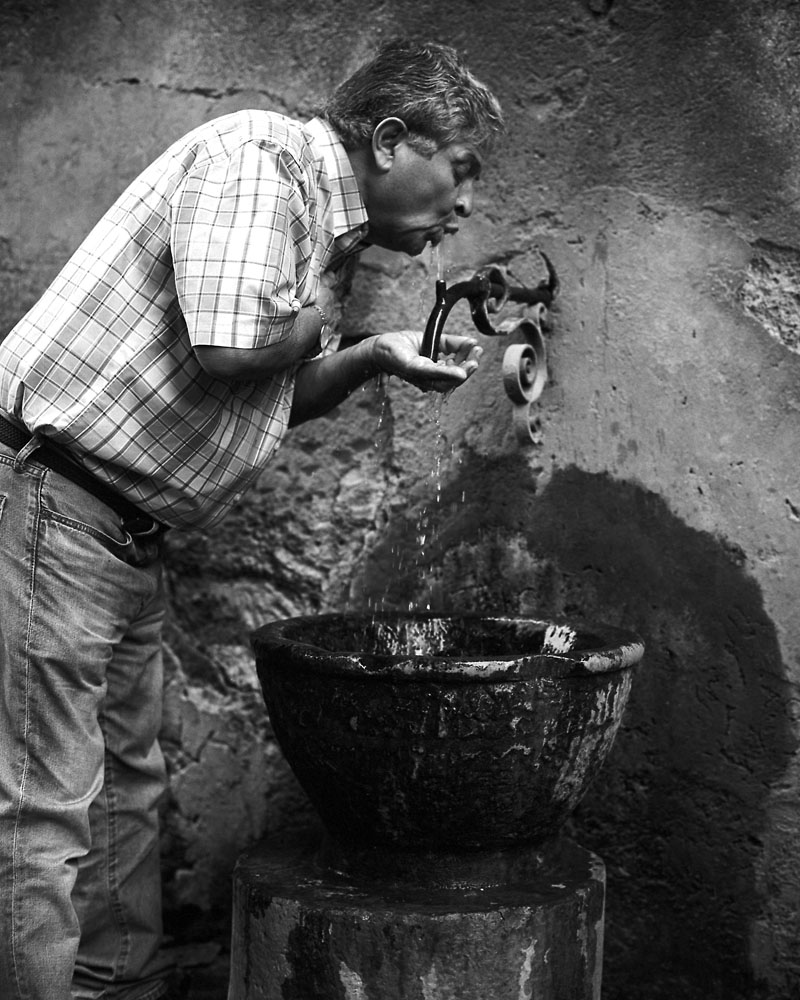
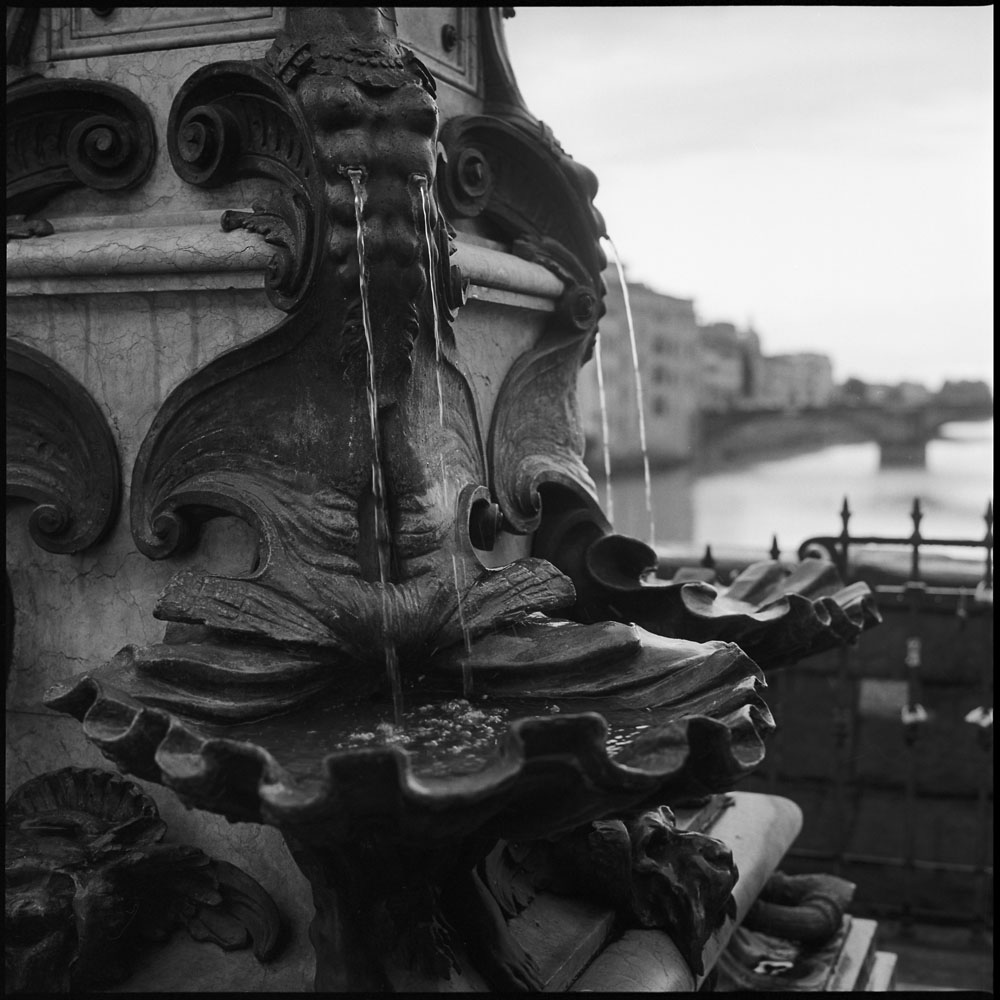
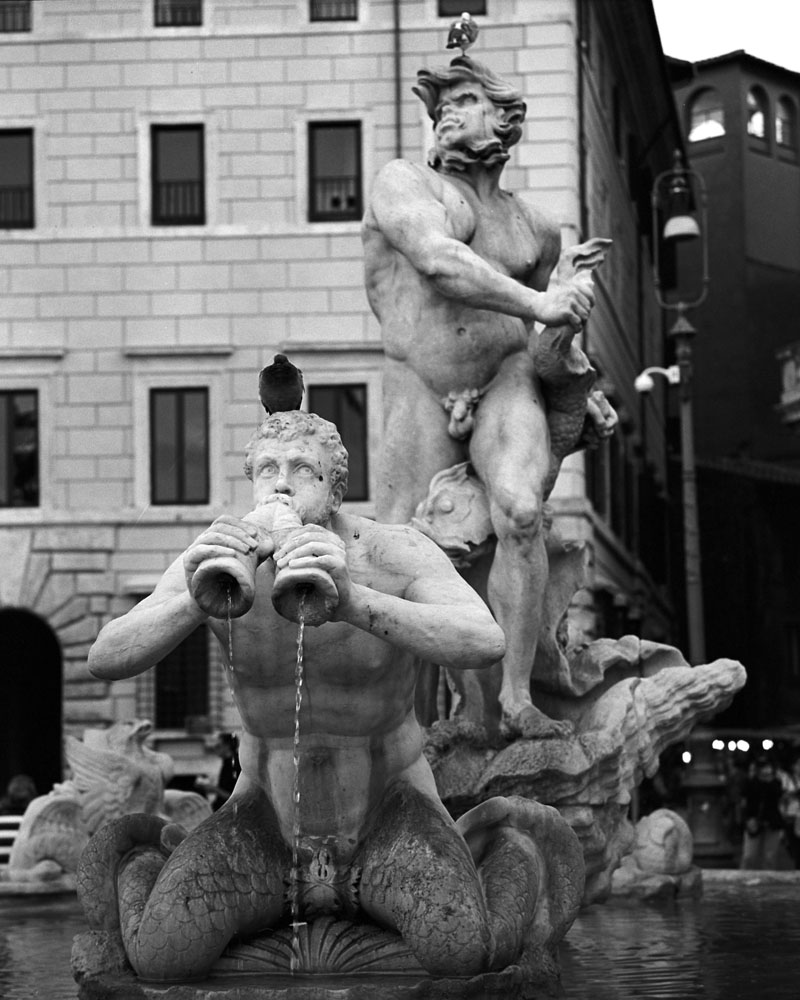
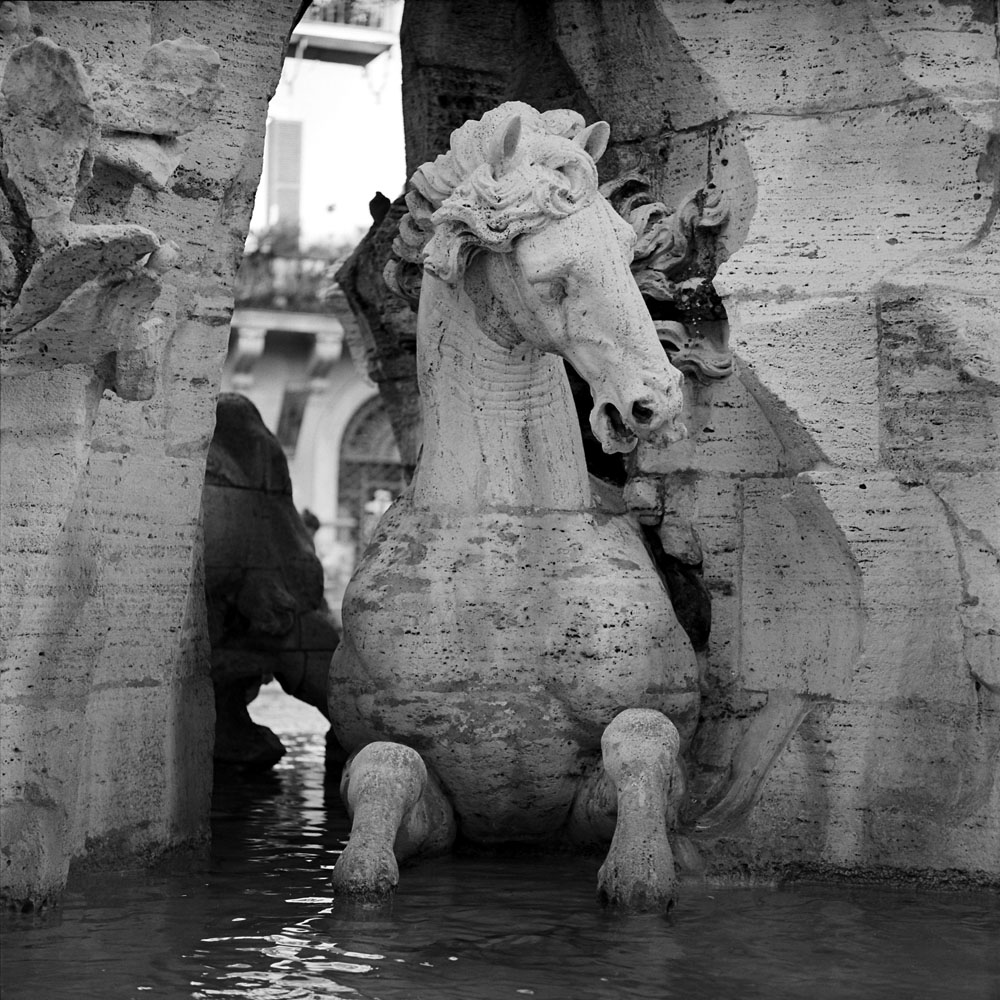
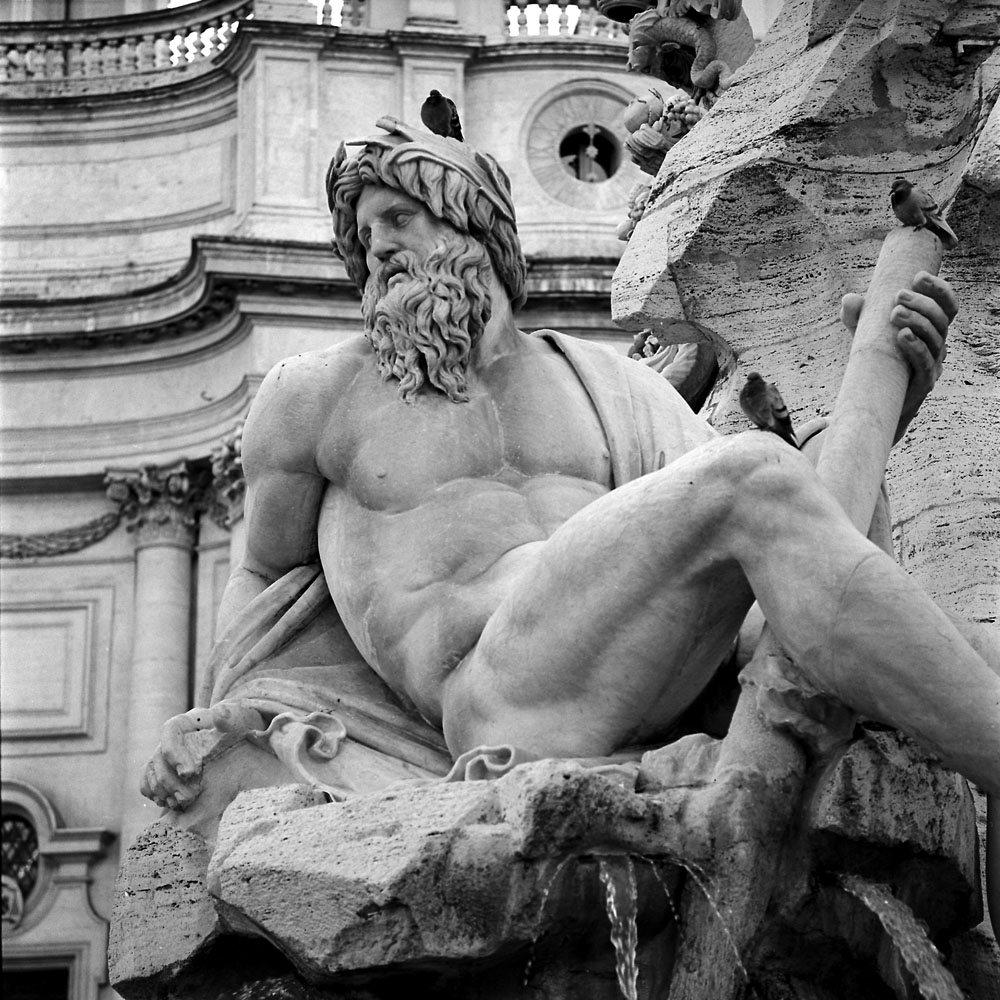
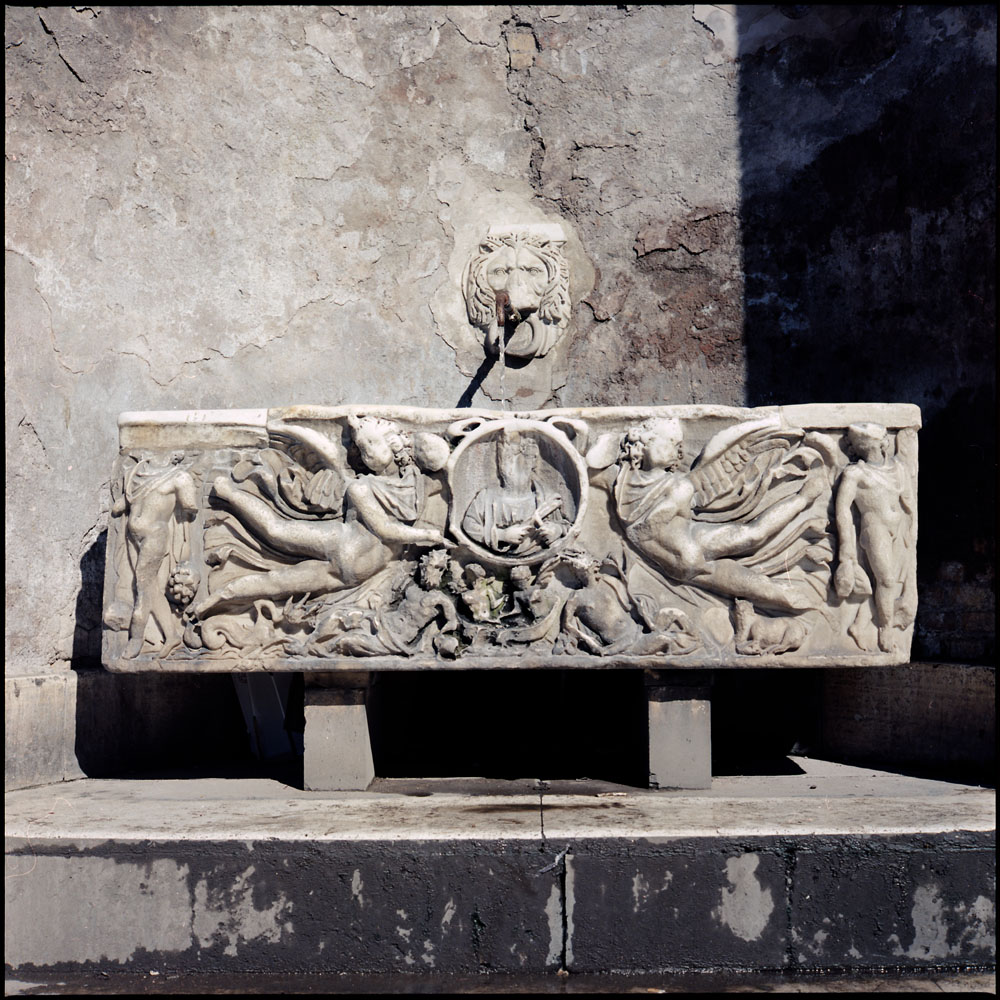
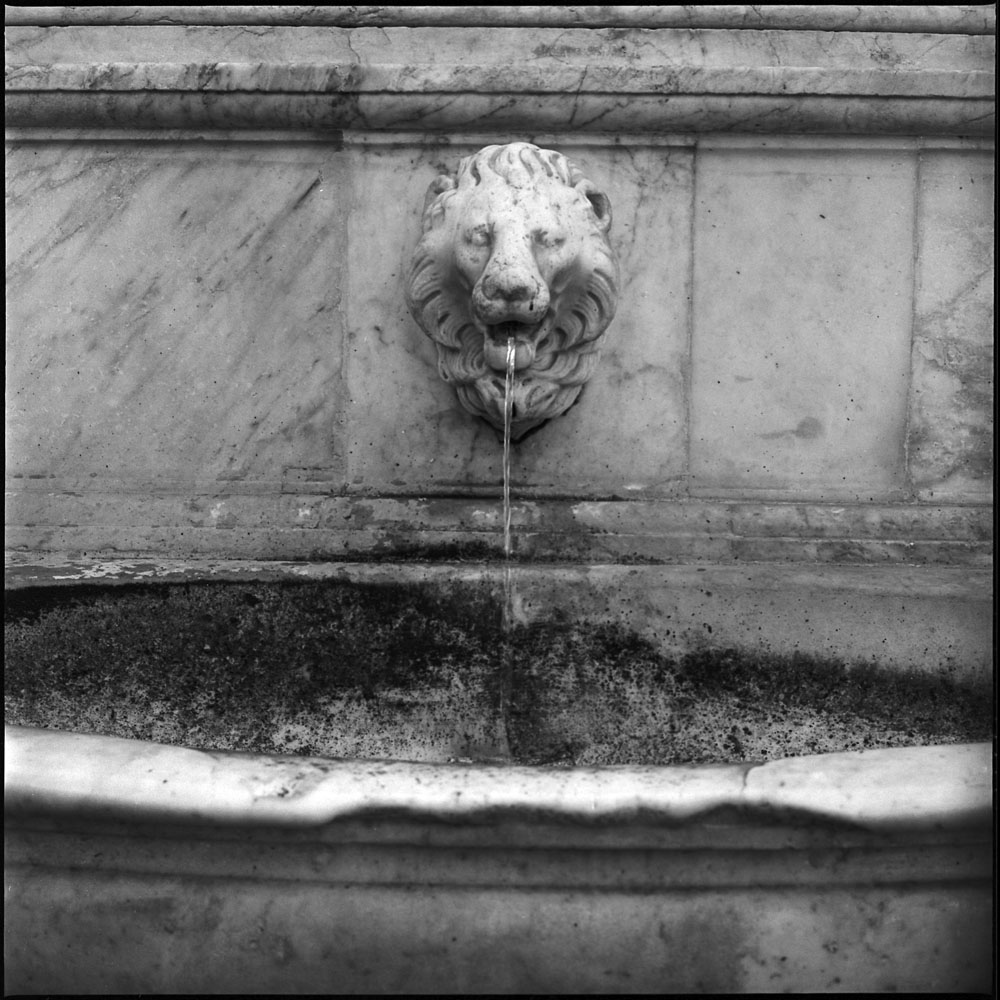
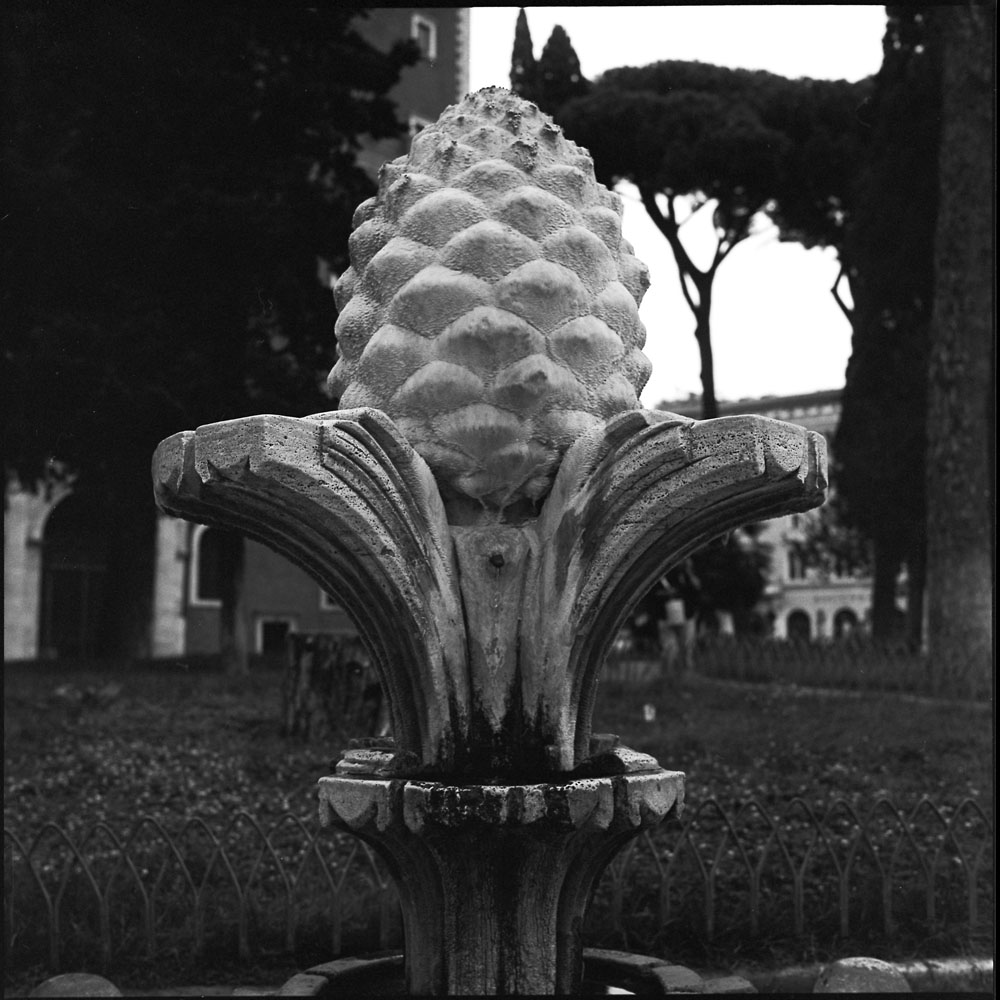
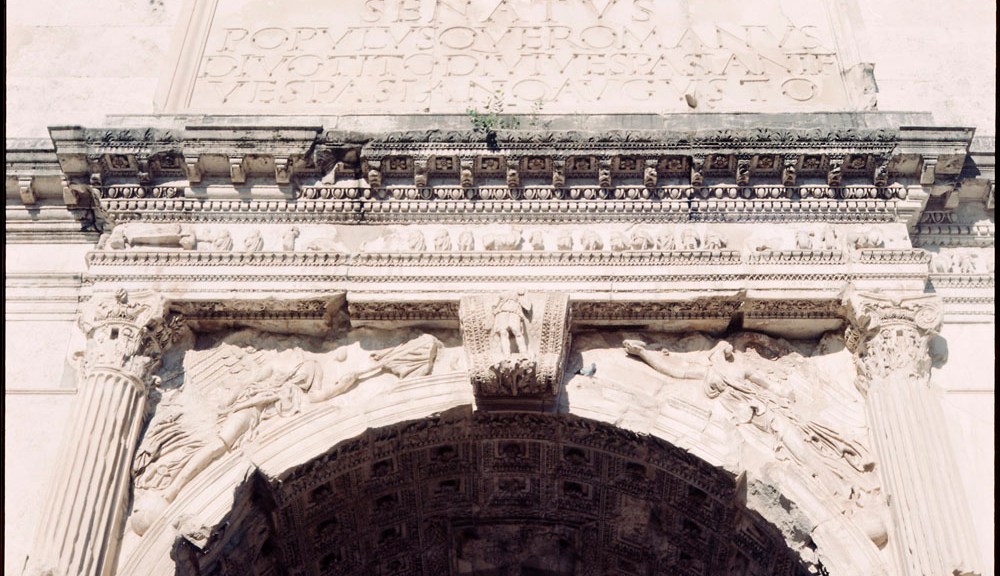
Many emperors had triumphal arches erected. Immediately beside the Colosseum is the arch of Constantine. The arch of Septimus Severus stands at the foot of the Capitoline hill, at the one end of the Forum. There are others scattered around the Empire, and of course, they inspired many later constructions, such as Napoleon’s Arc De Triomphe in Paris, the Soldiers’ and Sailors’ Arch in New York City, Wellington Arch in London, and the Arch of the General Staff Building in St. Petersburg. Ironically, the latter two were built to commemorate the Russian and English victories over Napoleon. This is the arch of Titus, at the opposite entrance to the Forum.
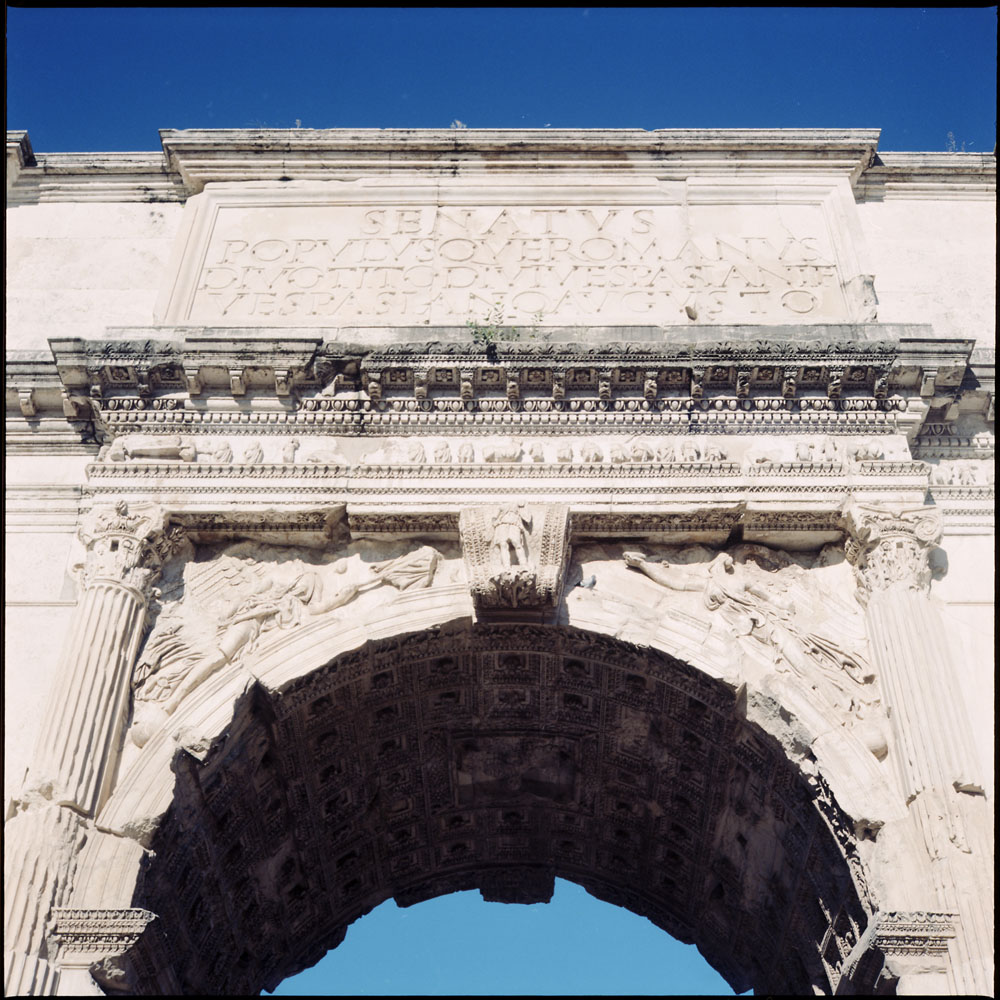
You can see the inscription which reads:
SENATVS
POPVLVSQVE·ROMANVS
DIVO·TITO·DIVI·VESPASIANI·F(ILIO)
VESPASIANO·AVGVSTO
which translates to:
The Roman Senate and People (dedicate this) to the divine Titus Vespasianus Augustus, son of the divine Vespasian.
The inscription itself and the central arch are the remaining original parts of the arch. It was restored and reconstructed in the 19th century. The reconstruction was done in Travertine marble to demonstrate the difference between the original and reconstructed parts, and the reconstructed columns were left plain in contrast to the fluted columns of the original.
The arch would have originally had a sculptural group on top of perhaps horses and chariots, or perhaps the emperor riding a pegasus. The inscription would have been filled with metal letters in silver, gold or some other metal (bronze is possible but less likely as it would have oxidized and bled green patina over the face of the arch).
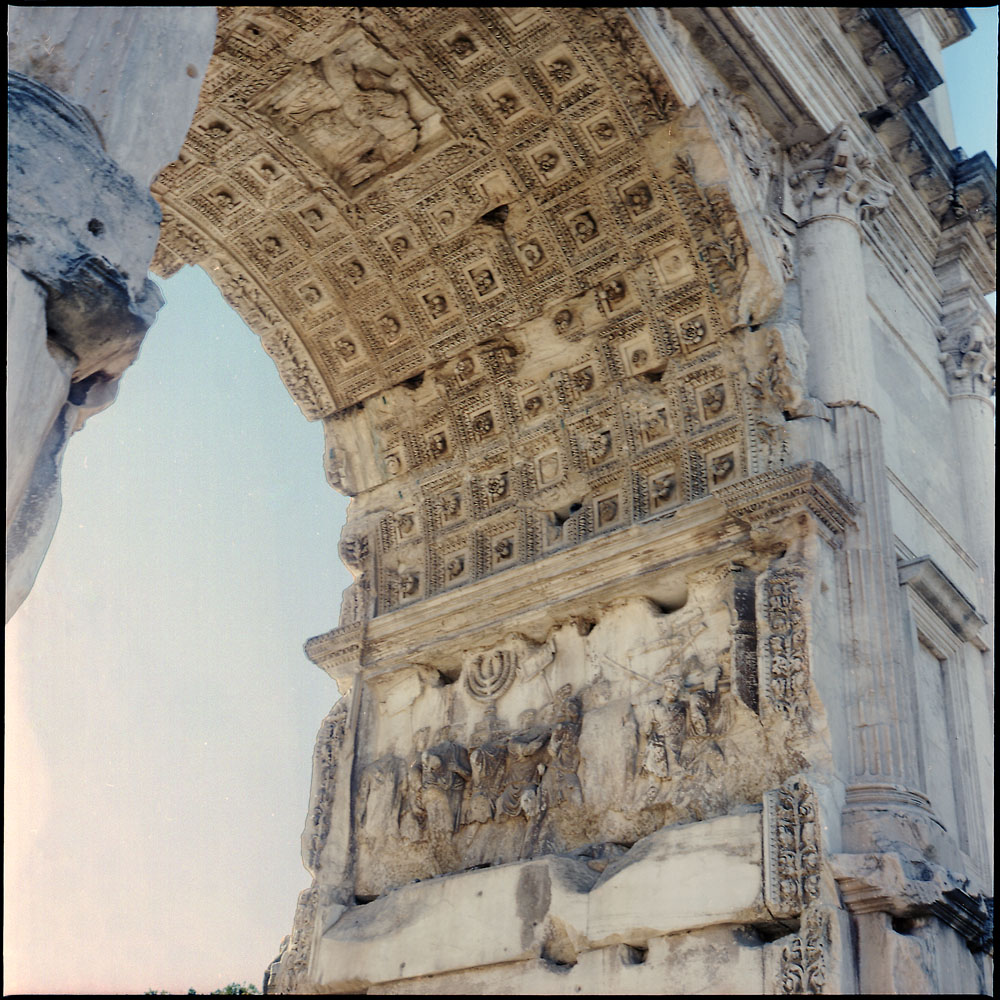
In the interior of the arch, you can see the spoils of war being brought back to Rome from the Temple in Jerusalem, particularly the golden Menorah. This was originally painted golden color, with the background blue. During a spectrographic survey of the arch for the Arch of Titus Digital Restoration Project in 2012 discovered the remains of yellow ochre paint in the menorah.
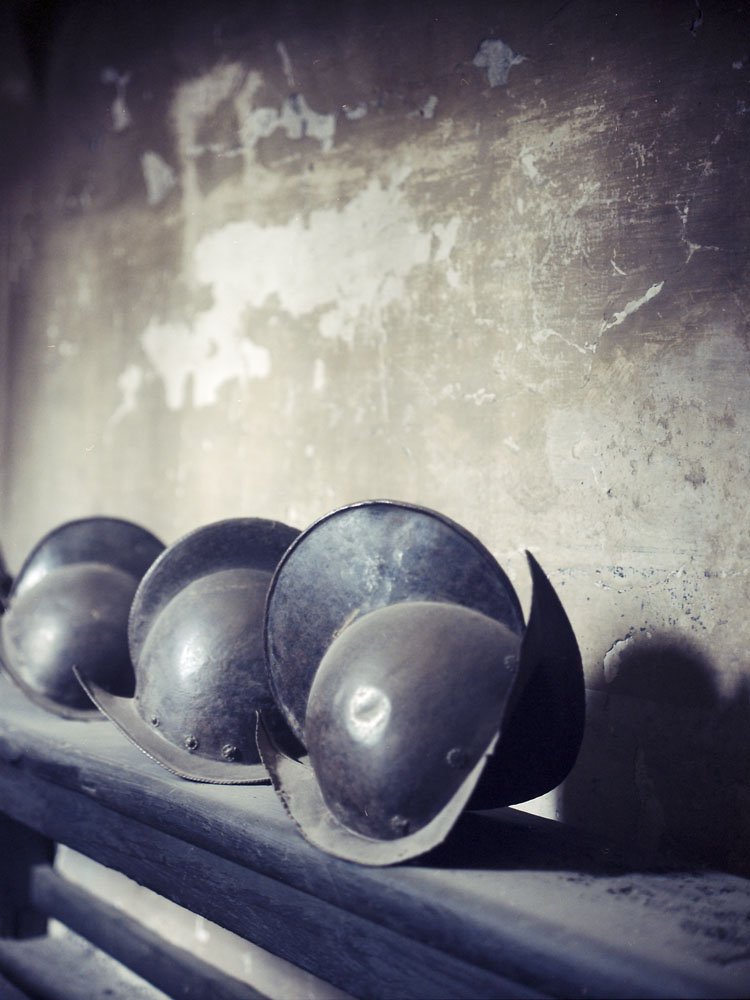
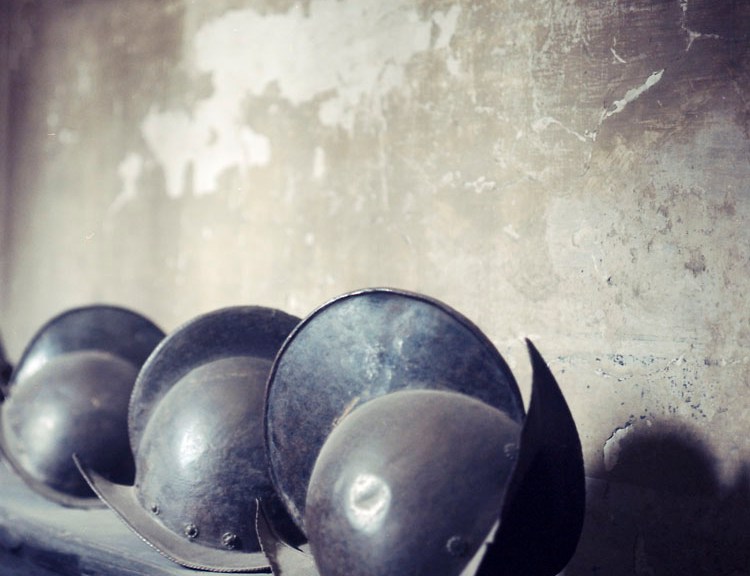
In a guardroom in the Castel Sant’Angelo preserved as an example of what such a space would have looked like in the 17th or 18th century, a row of steel helmets have been laid out:
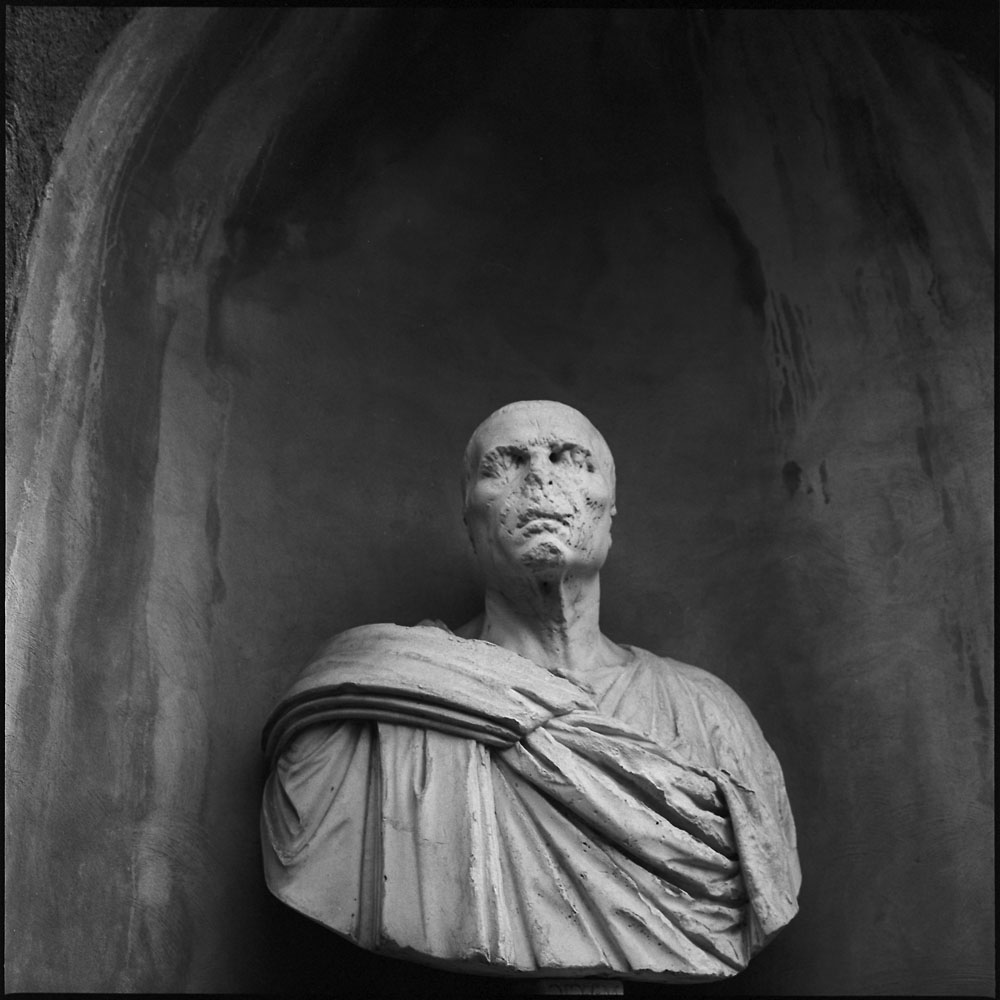
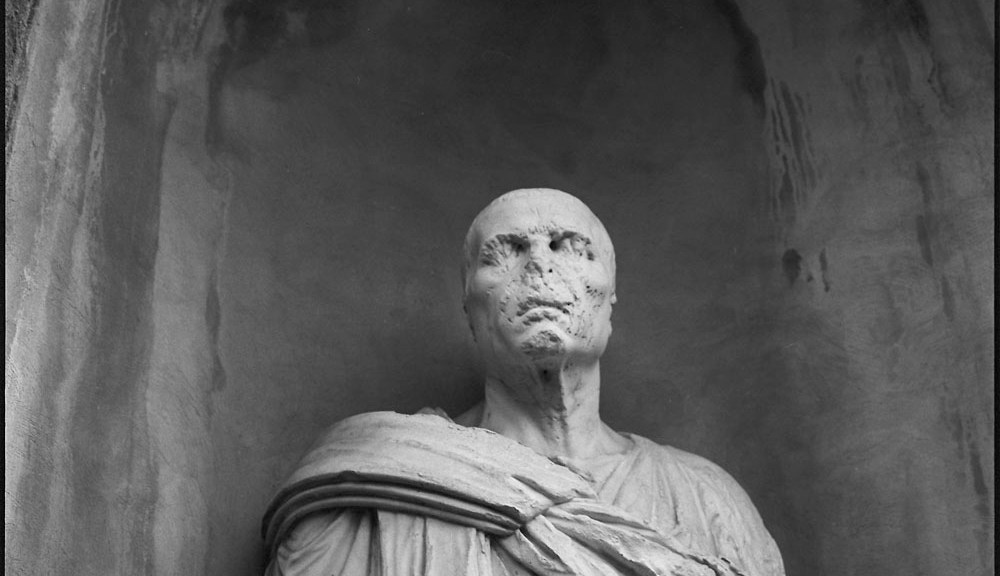
These two pieces are quite moody, and that somber undertone of them inspired me. From their weathered appearance to the various forms of damage they’ve taken over the centuries, they act as a kind of memento mori to remind us that even art in marble will eventually die.
I’ve joked to friends that this one is proof that there were zombies in ancient Rome – but in fact the damage to the face is probably caused by relatively contemporary rivals seeking to damage the visage of a now-dead adversary, or inadvertent blows from overzealous Renaissance-era treasure hunters or clumsy builders trying to clear debris in preparation for fortifying the former Imperial tomb.
This one has suffered different indignities – while his visage remains relatively intact, at some point his head was separated from his shoulders, and later re-attached.
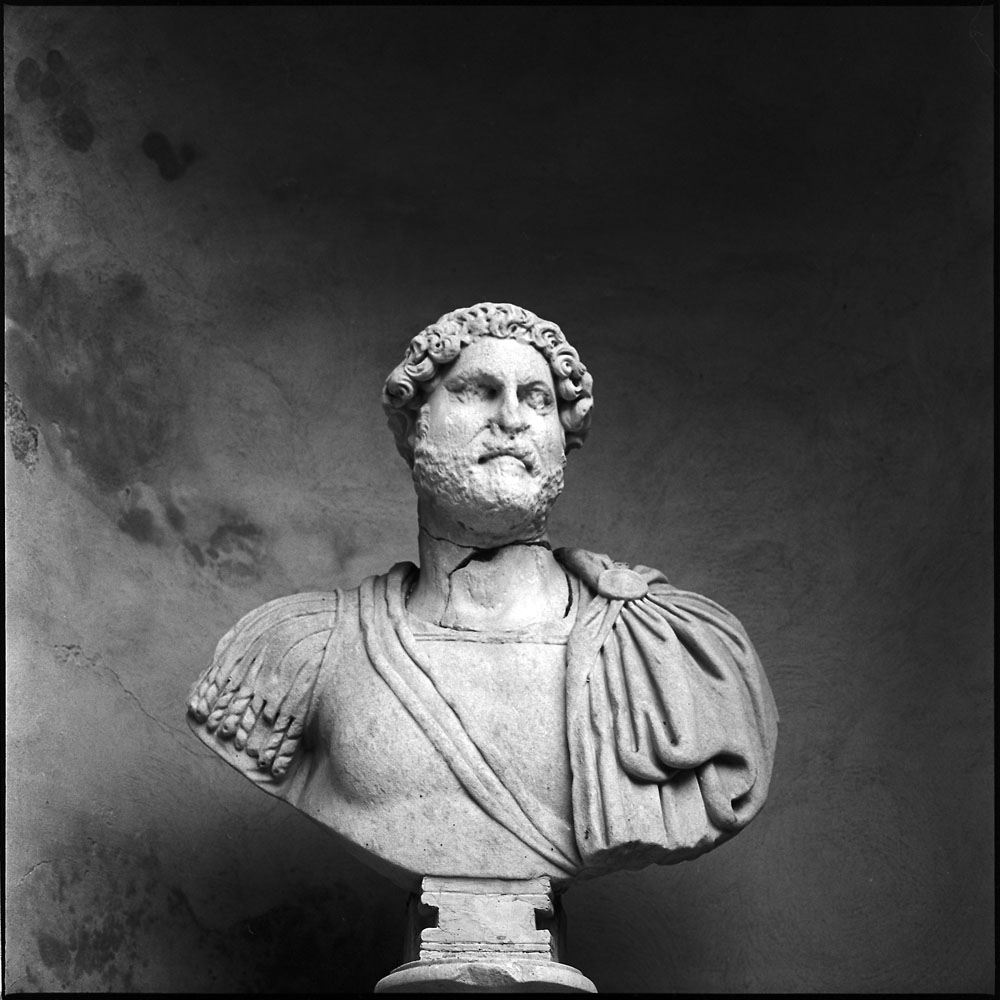
Just for the record, to the best of my knowledge there were no zombies running around ancient Rome.
Today the Palazzo Barberini houses another great art museum, home to two Caravaggios, a version of Hans Holbein’s portrait of Henry VIII of England, and Bernini’s bust of Cardinal Barberini among many other masterpieces of Renaissance and Baroque painting. Here is the entrance facade as designed by Bernini, seen from the entrance courtyard with its central fountain.
A detail of one of the water jets in the fountain:
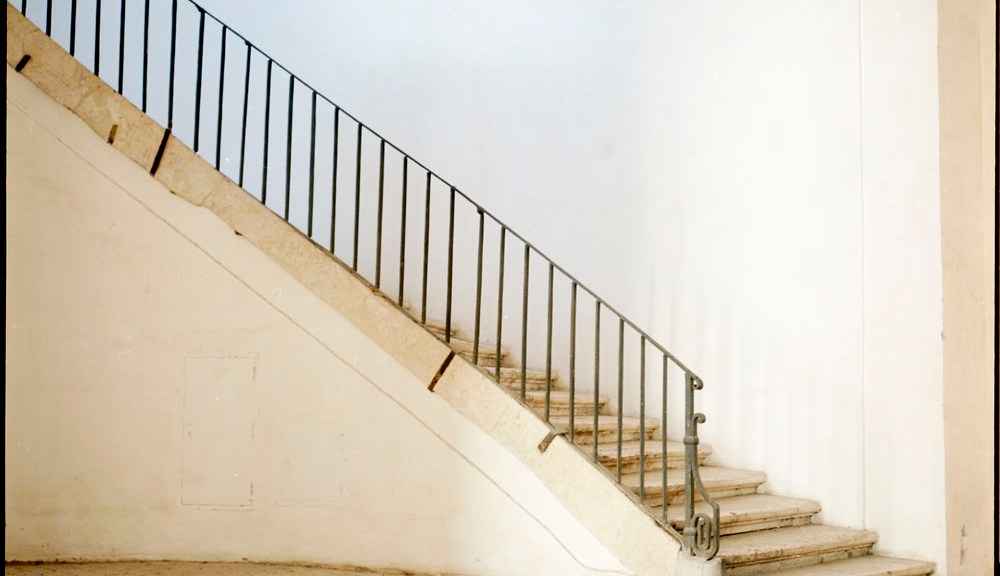
A staircase leading up to the rear gardens from the coachway underneath the palace. To the left out of the frame is the famous stepped ramp to the rear of the garden also designed by Bernini. Sometimes when you’re photographing, you get into this mindset of one type of image or another – for example, I had been shooting black-and-white film, and when composing this, I was still in the black-and-white headspace. I was thinking about the tones of the scene and the gradations from bright to dark. I don’t know if I even realized at the time I was shooting in color. When I was editing through my negatives, I saw this one and thought, “gosh, that’s likely to be a throwaway shot, but I’ll scan it just in case”. I wasn’t sure it would be sharp enough, because my memory of the space was that it was exceedingly dark and I winged it with a handheld exposure, roughly 1/4 of a second.
Well, you can see what happened. Not only was it sharp, but I seem to have mastered serendipity. The colors in the scene are beyond beautiful – the subtle blue from the cold light of the palace shadow seeping down into the stairway from the garden entrance to the rich golden hue of the paving stones and the plaster on the wall.

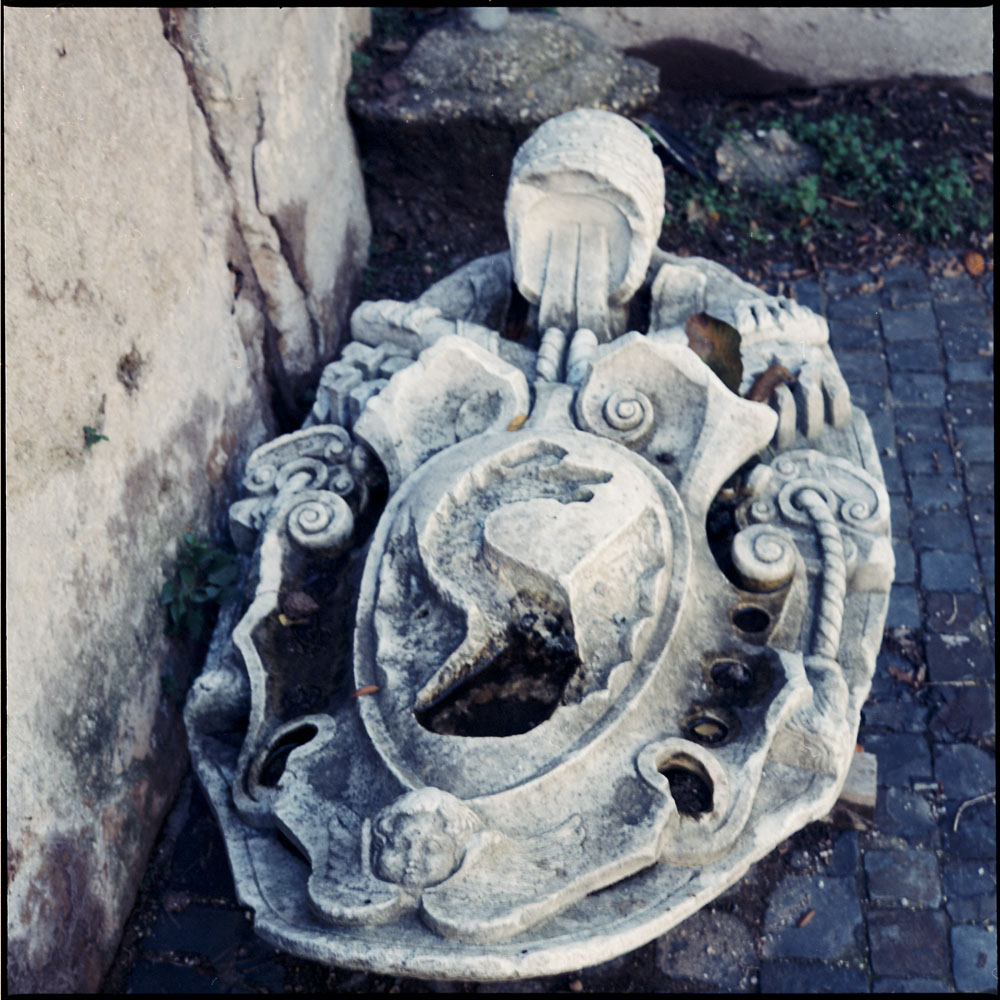
Poking around the grounds of the palazzo, I saw two massive carved stone coats of arms lying on the ground in a side service yard. One was the papal coat of arms of Maffeo Barberini, Pope Urban VIII. To be expected – this was his palace. This one, on the other hand, is a bit surprising – the papal coat of arms for Paul V – Camillo Borghese. During the years of their respective papacies, the Borghese and Barberini estates were neighbors, and Scipione Borghese, the Cardinal Nepotente to Paul V, was a friend and fellow art enthusiast with Maffeo Barberini. After Urban VIII’s death, the Barberini palace was seized and not returned to the Barberini family for some years, but neither the Pope doing the seizing nor the pope who returned it to them were Borghese. Both families (Borghese and Barberini) were one-papacy families, unlike the Medici with four, and the Della Rovere with two.
 dcphotoartist