Tag Archives: Tele-Rolleiflex

Commuter Diaries – People

I know I was being very abstract or at least impressionistic with my earlier Commuter Diaries images, so in that sense these are a break from that line, and don’t quite fit. But they are about the commuting experience, so they have the potential to belong, if I develop enough images for them to blend in and make sense, and aren’t just outliers.

The first one is a woman waiting for the bus at my origin bus stop. Early morning, headphones on, anticipating the impending arrival.
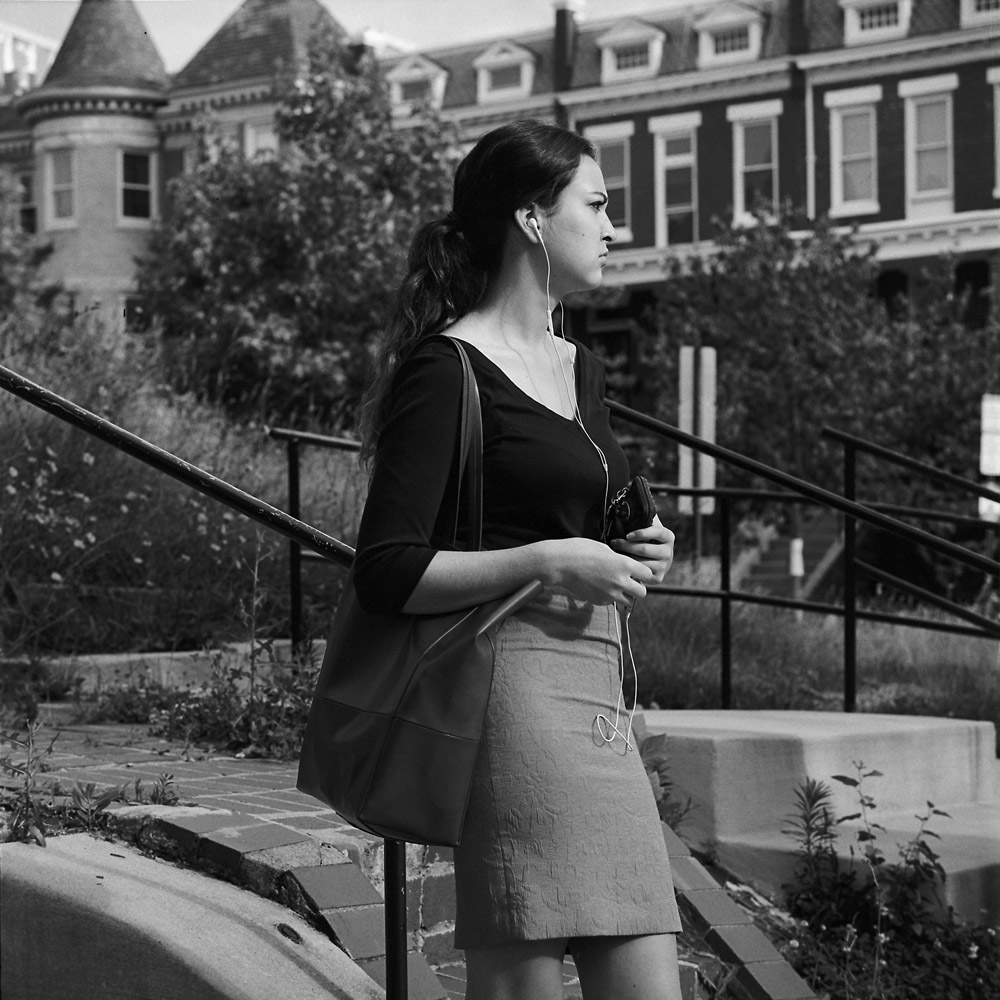
Waiting For The Bus
Waiting For The Bus

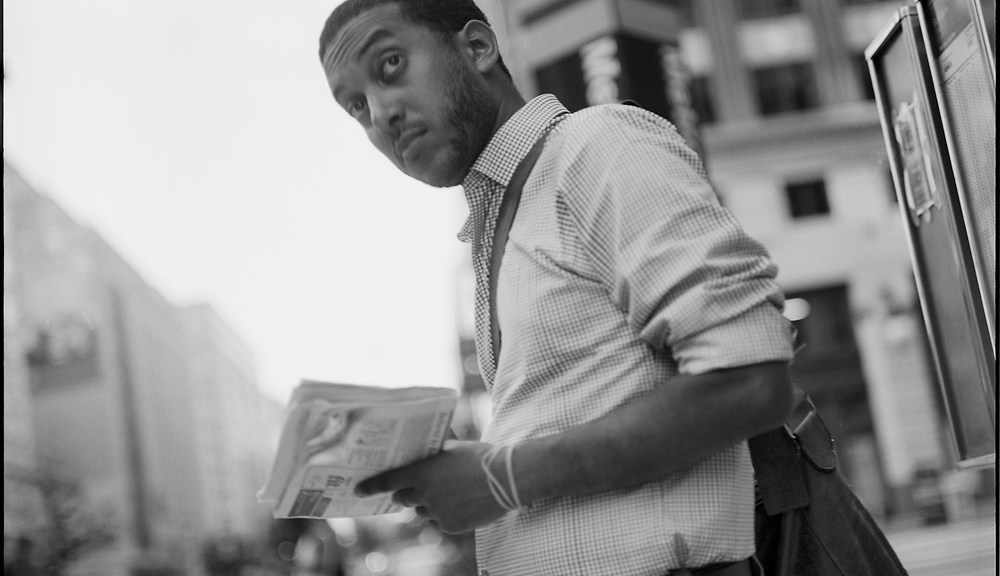
This second one is a gentleman waiting downtown at Metro Center, peering down the street in hopes of spotting which bus is arriving next, anxious for the final leg of his journey home.
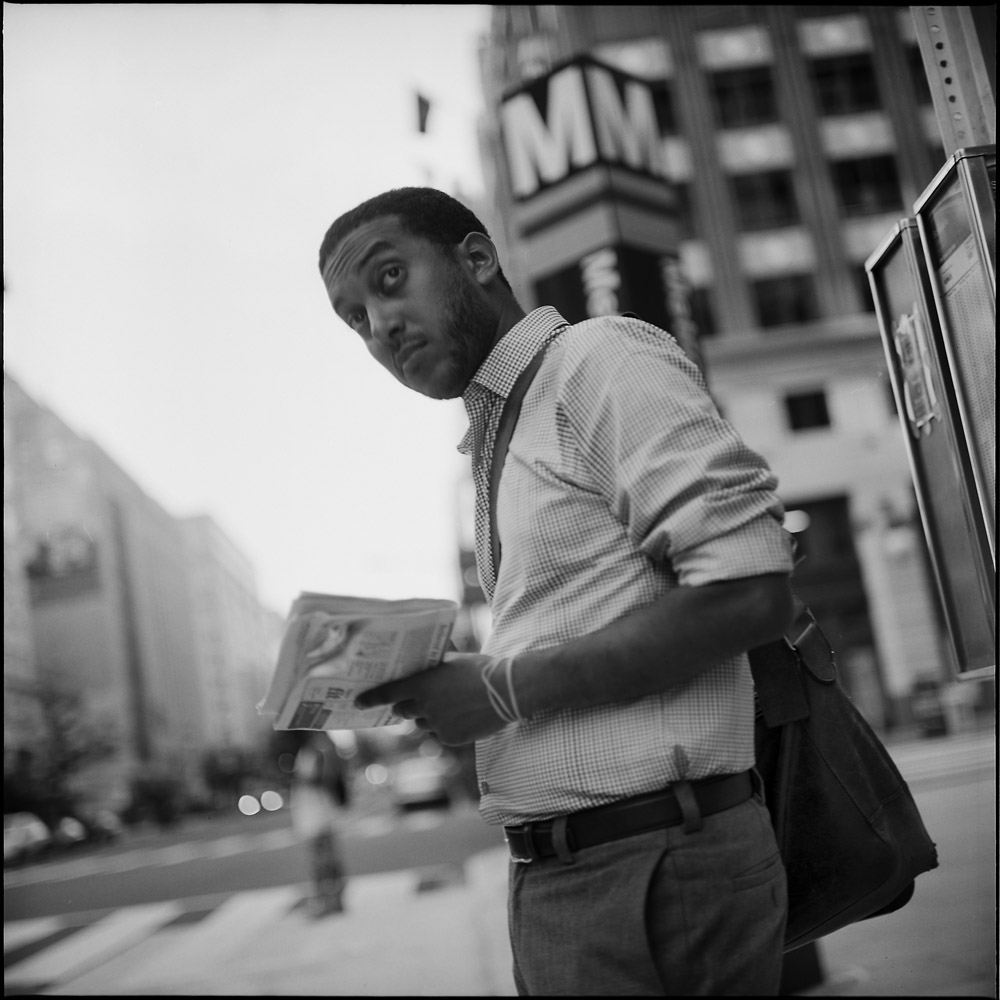
At Metro Center Bus Stop

I think the latter is more successful because of the stilted angle, which makes it more dynamic and tense. I snuck that one by pointing the Rollei sideways, and had to live with what I got.

I have to keep reminding myself that sometimes it’s good to be loose and free with things, and that not all images have to be tack sharp and perfectly focused to be successful. I’ve been ruminating about this one because the composition is a bit unbalanced, and there’s a little motion blur to it, because it was another grab shot as I walked by and I didn’t have time to perfectly compose and focus it.
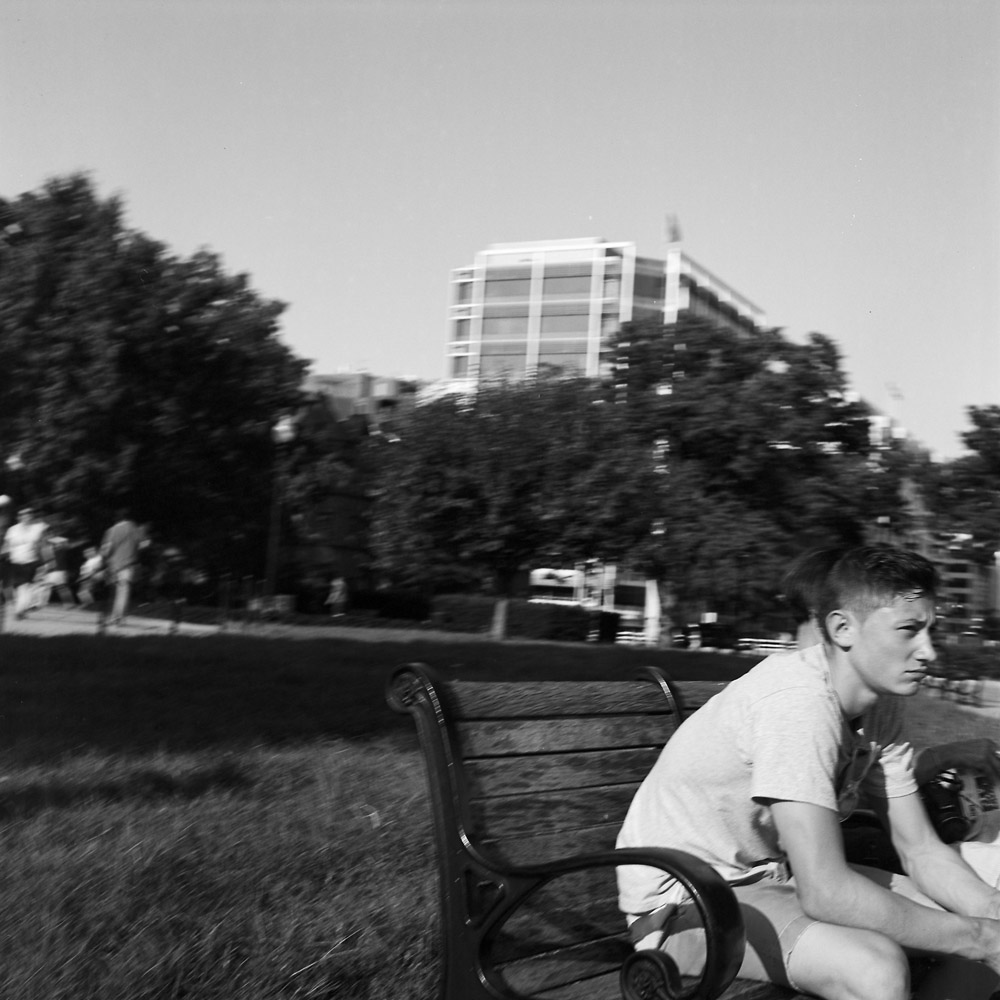
Boy On Bench
Boy On Bench

I think it’s a good object lesson from the original purpose of the series – taking long exposures that were not planned or structured in any way to free me up from being too formal. Even if this isn’t a fully successful image in some sense, it’s useful as a reminder to be relaxed and open to possibilities.
Everyday Objects Portraits

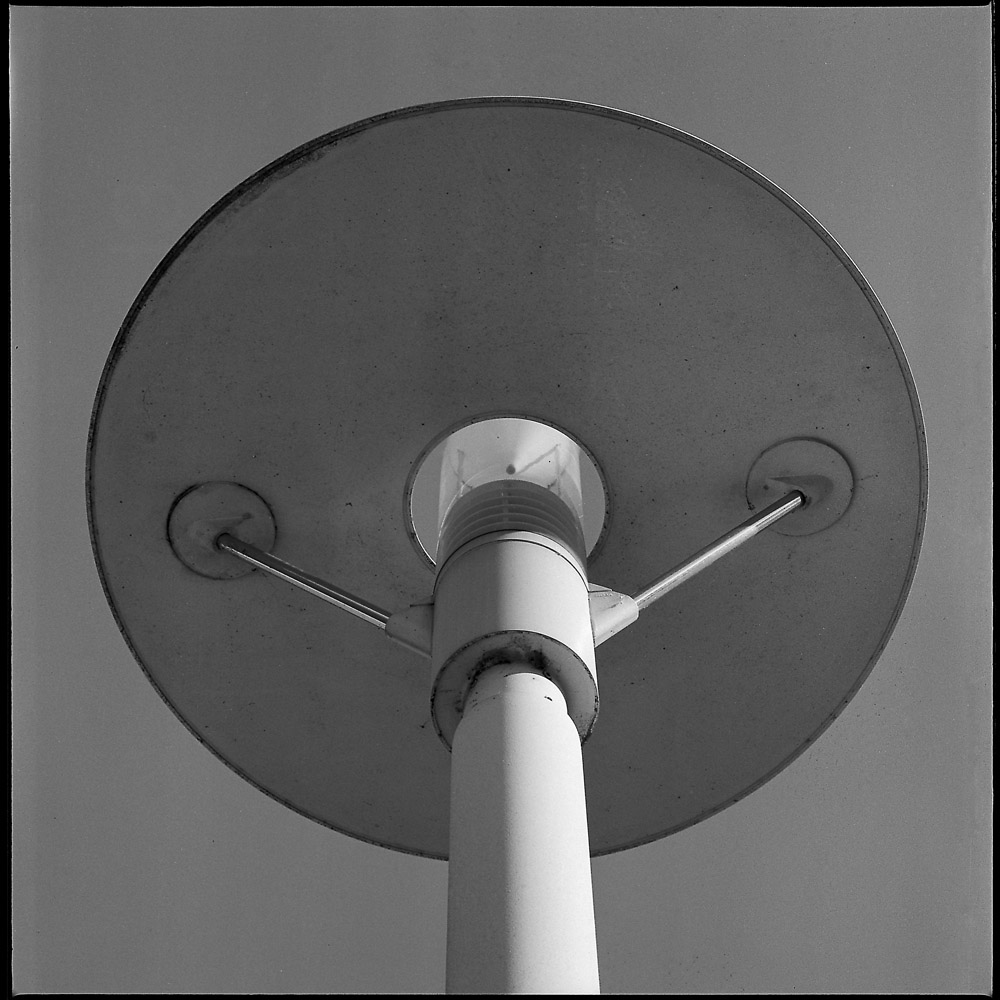
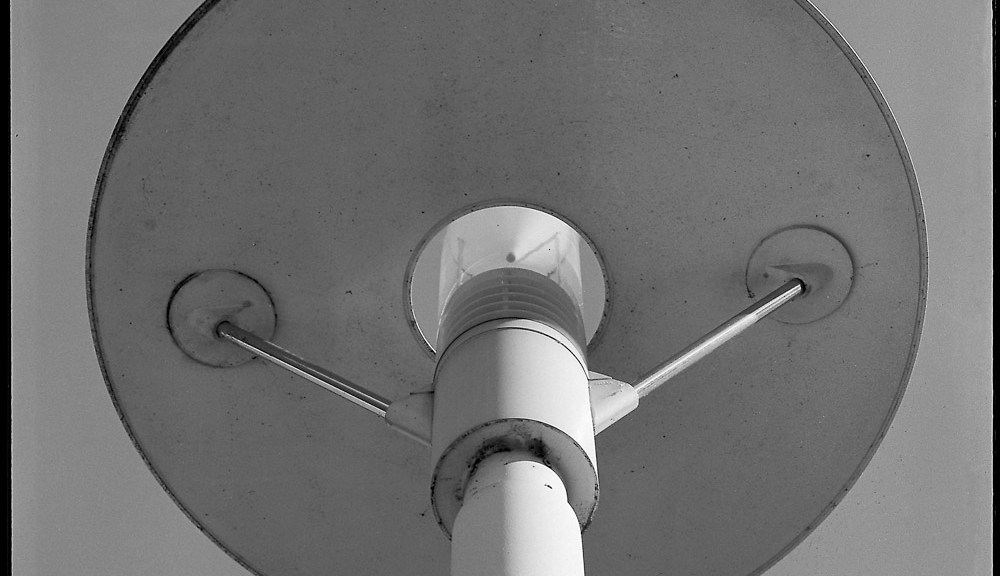
Yet more in my series of everyday objects. This time, it’s a lamppost, a safety cone (I’m not calling it a traffic cone because in this context, it’s being used to warn pedestrians of an uneven paver), parking meters again, and a police call box. You may have wondered at seeing some of my images with a black border and others without. I generally try to compose full-frame, and I like including the black border to show that. I also feel that in some cases, the black border helps define the image especially if the background is predominantly bright. I don’t ever add one to make it look as if what you see is full frame if in fact it is cropped, or to make you think it was made in a different format than presented. The images I post online for the most part are scanned from the negative, and given the nature of film, sometimes the backing paper leaks light along the edge, or other things happen during processing that require me to crop a little. Sometimes, I have to crop a lot because the composition just wasn’t right in the full square of the 120 image size. In those cases, I leave the edges alone and don’t put a black border on.

Twin Meters
Twin Meters
Safety Cone
Safety Cone
Police Call Box
Police Call Box
Lamppost, Kennedy Center

Architectural Abstracts in Black and White

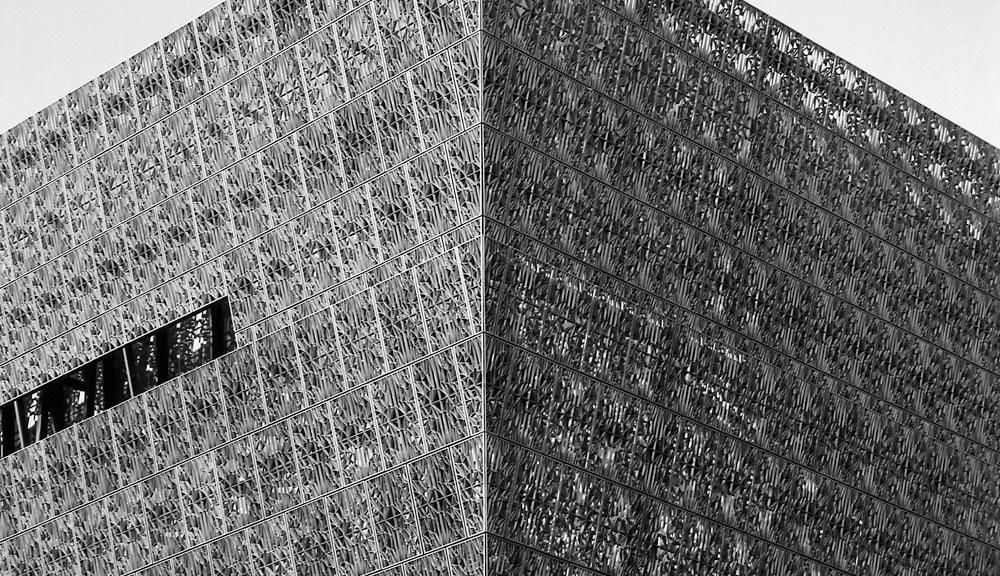
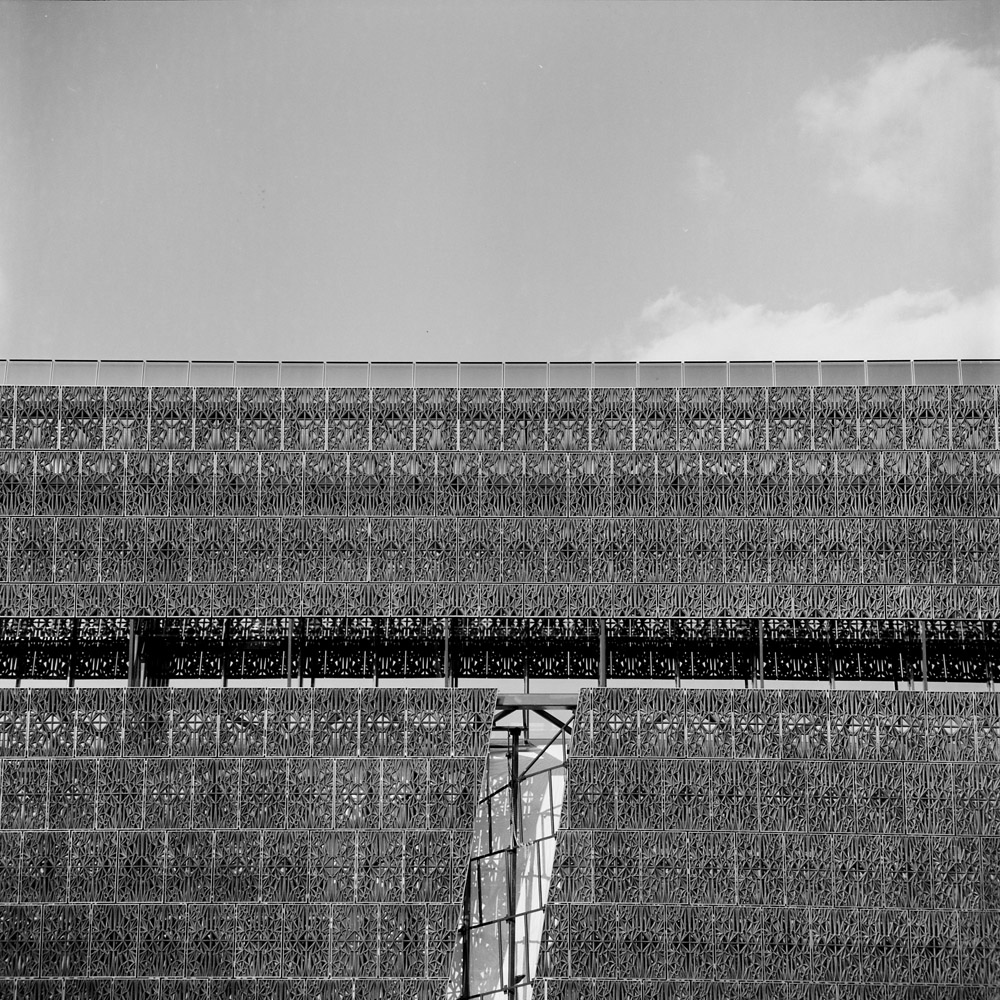
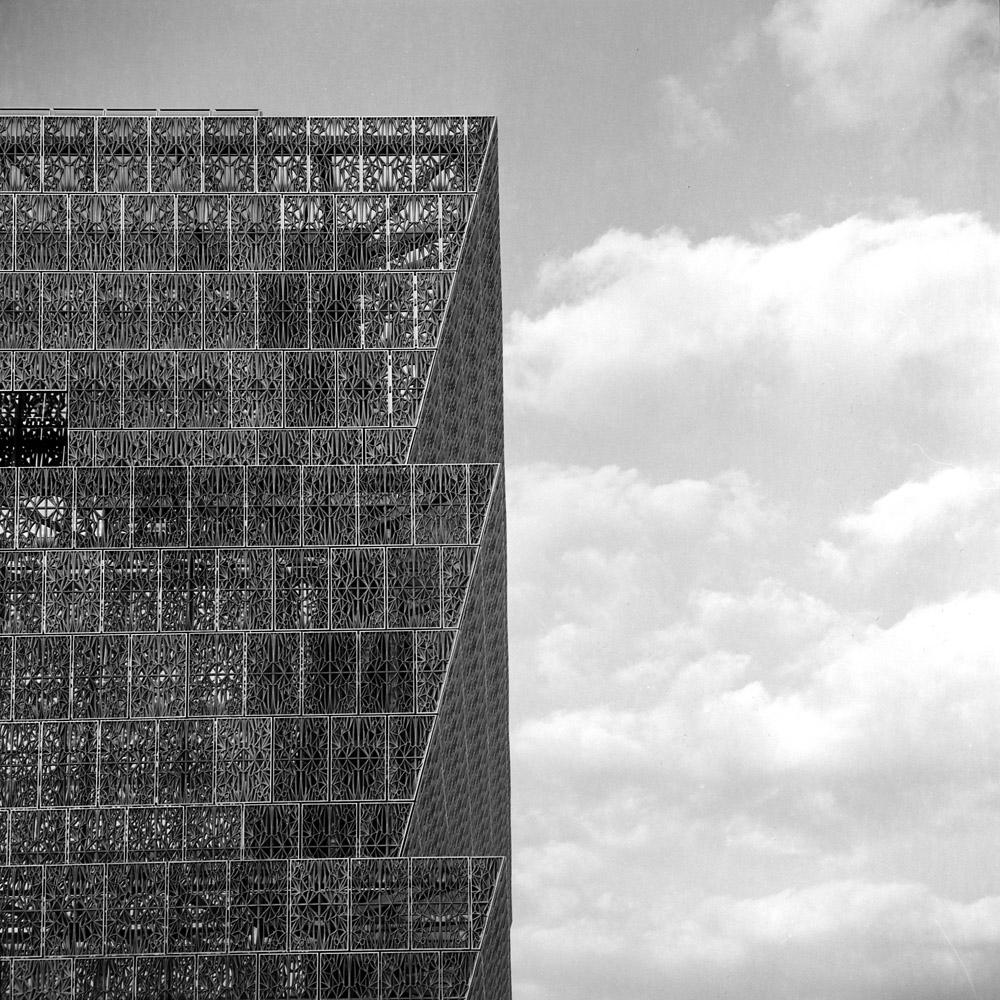
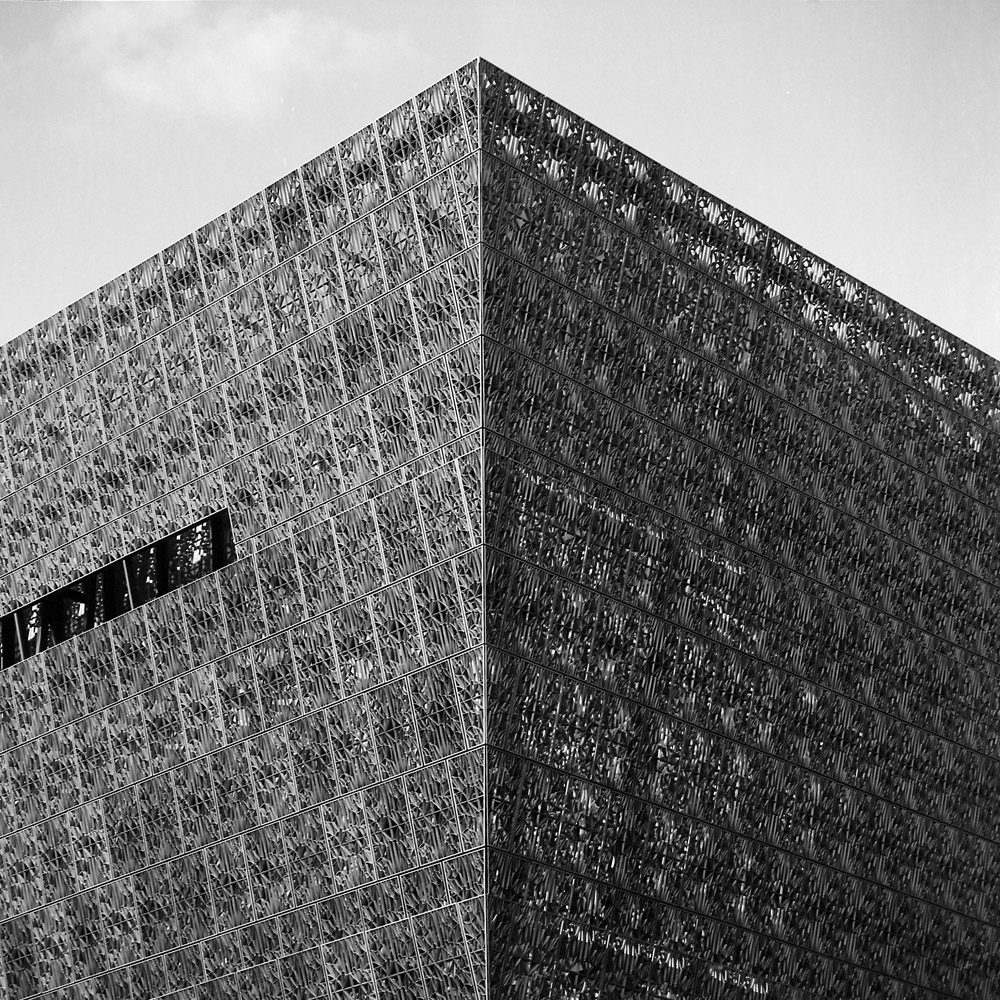
If you recall an earlier post, I had some shots of the new National Museum of African-American History and Culture (I’ll call it the African-American History Museum for short) in color, taken as architectural abstracts. Here are a few in black-and-white. The building shape lends itself extremely well to these kinds of geometric abstract studies. I think the architect nailed the design prospectus,making references to the cross-cultural influences of Africa on the American experience.

Seen here against the sky it feels like a seascape, a reminder of the trans-Atlantic voyage that brought three centuries worth of slaves to the New World.

African-American History Museum

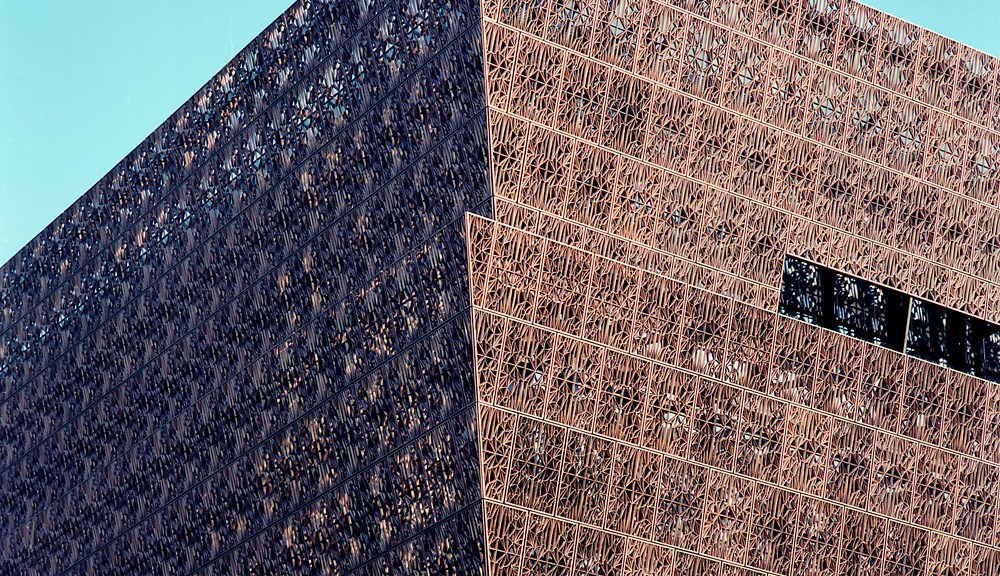
The bronze-colored metal screening on the outside has a tropical botanical motif. It is both protective screen and mask, concealing and revealing, ancient and modern. The patterning is reminiscent of Kente cloth batik designs.

African-American History Museum

The overall shape of the structure is that of a three-tiered African crown, but viewed from different angles, it can be a monolith or a pyramid, or the prow of a ship.

African-American History Museum

A Trio of duos

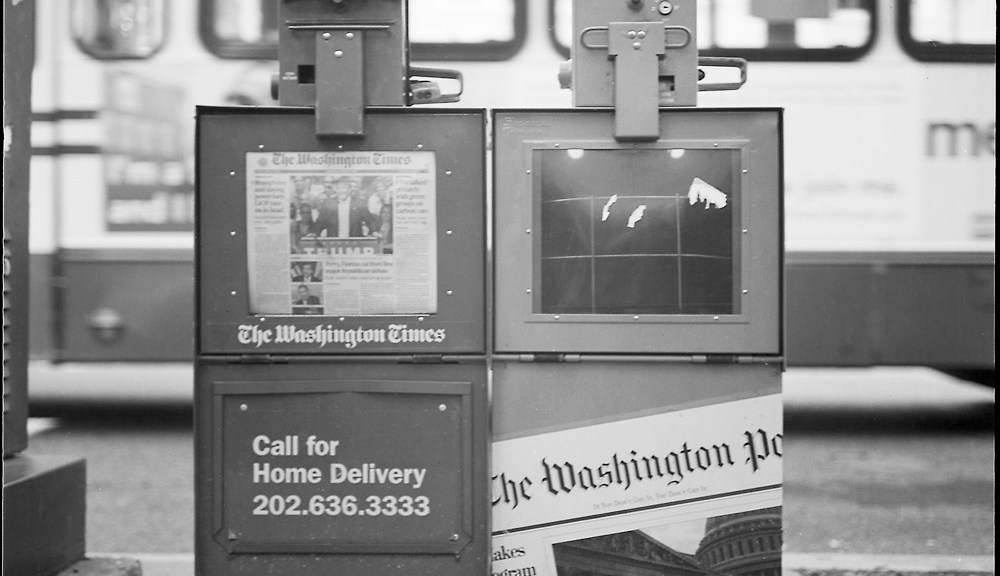
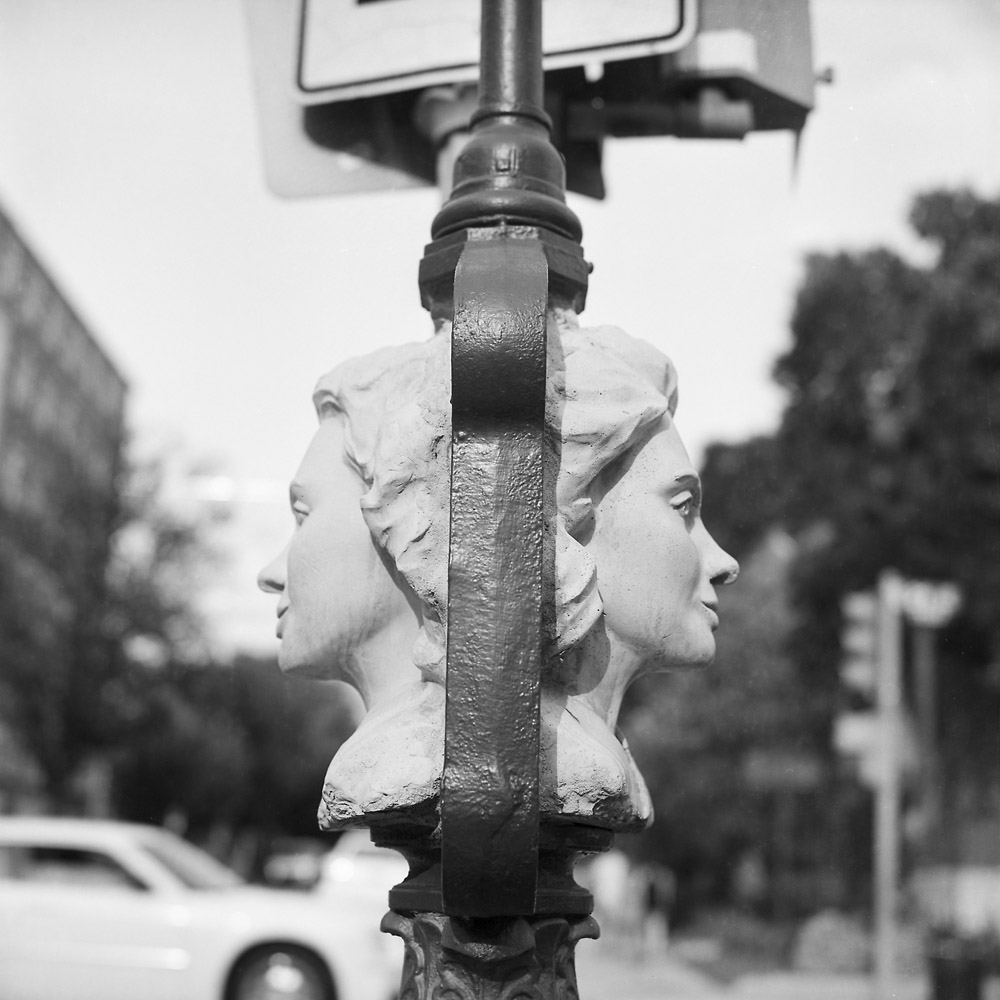
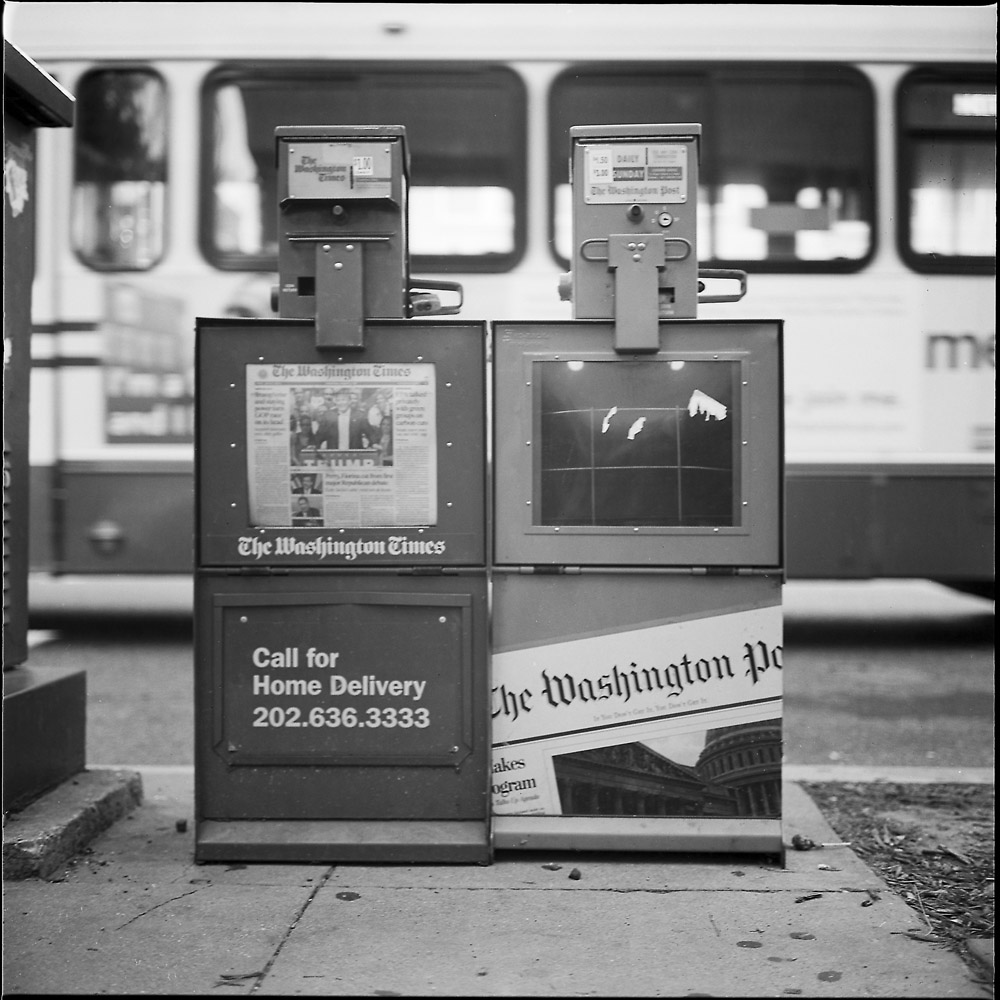
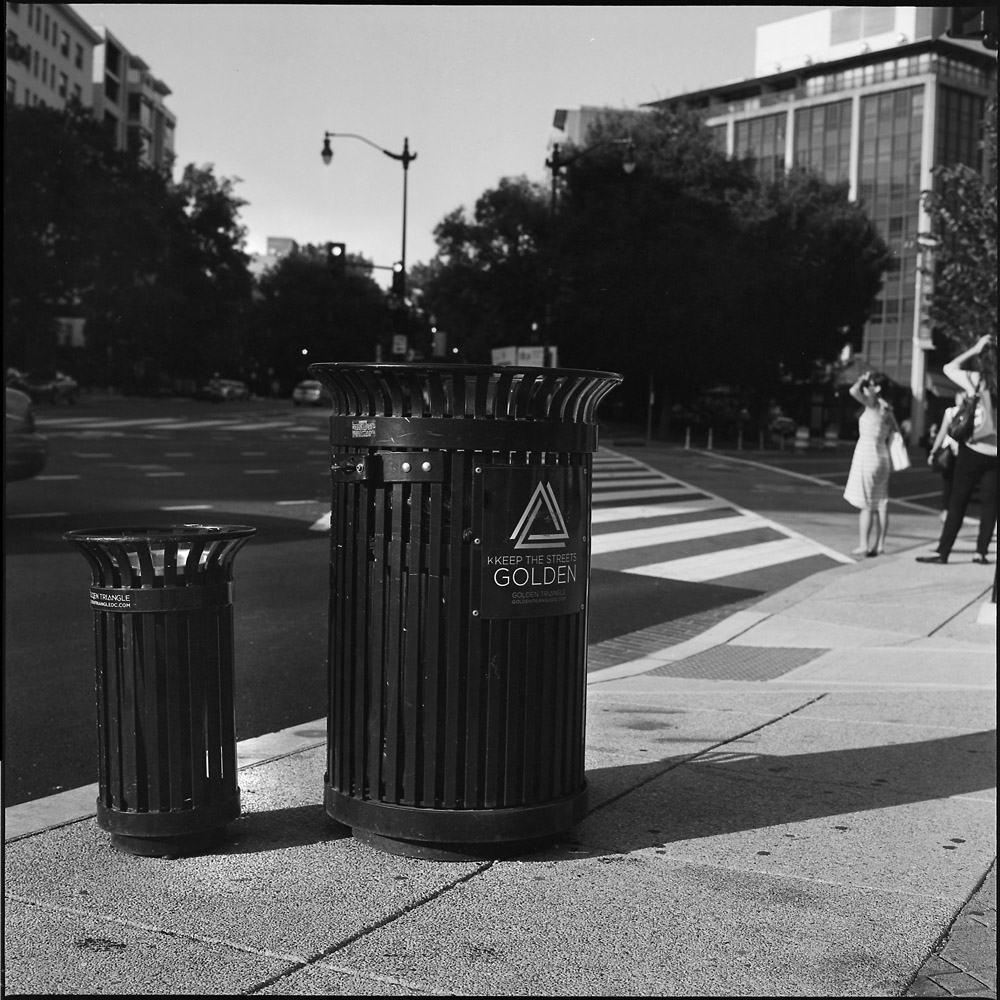
More things from my everyday objects series. These are all things I found around DC in my peregrinations on my way to and from work. They all have a theme of “two” in them – two faces, two paper boxes, two trash cans.

Two Heads
Two Heads

The sibling rivalry is in the two newspapers themselves represented in the two boxes – the Post and the Times. The Post is considered by many to be the “paper of record” for Washington DC, whereas the Times is a partisan hack with an extremely conservative bent, owned by a highly suspect organization (the Unification Church aka the Moonies). Depending on your political bent, the Post is a liberal shill and the Times a bastion of integrity. Either way, they co-exist in a shrinking market and both are struggling to find their feet in the post-internet age.

Sibling Rivalry - Two Paper Boxes
Sibling Rivalry – Two Paper Boxes

I call this last one two twins because there was by happy accident two people of parallel size to the trash cans, both striking the same pose in the background. It made for a serendipitous symmetry.

Two Twins
Two Twins

Waxing Patriotic at the National Mall

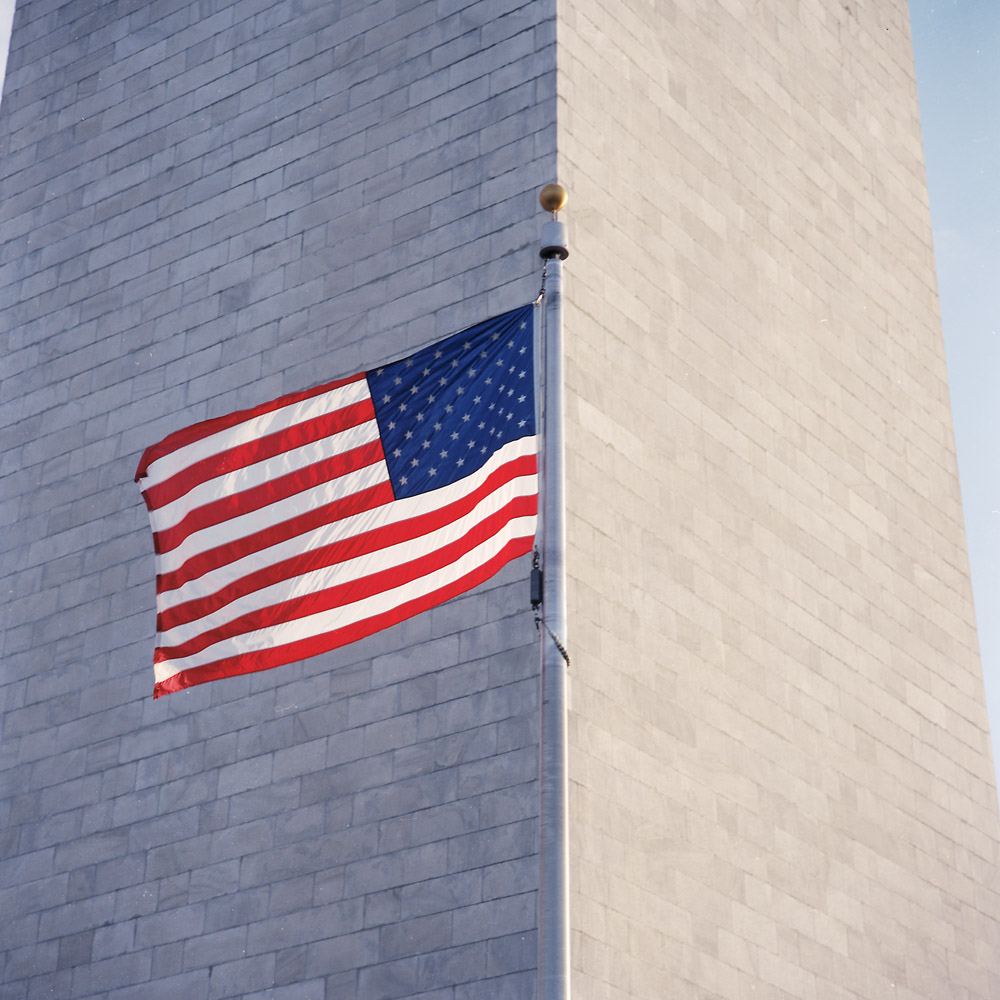
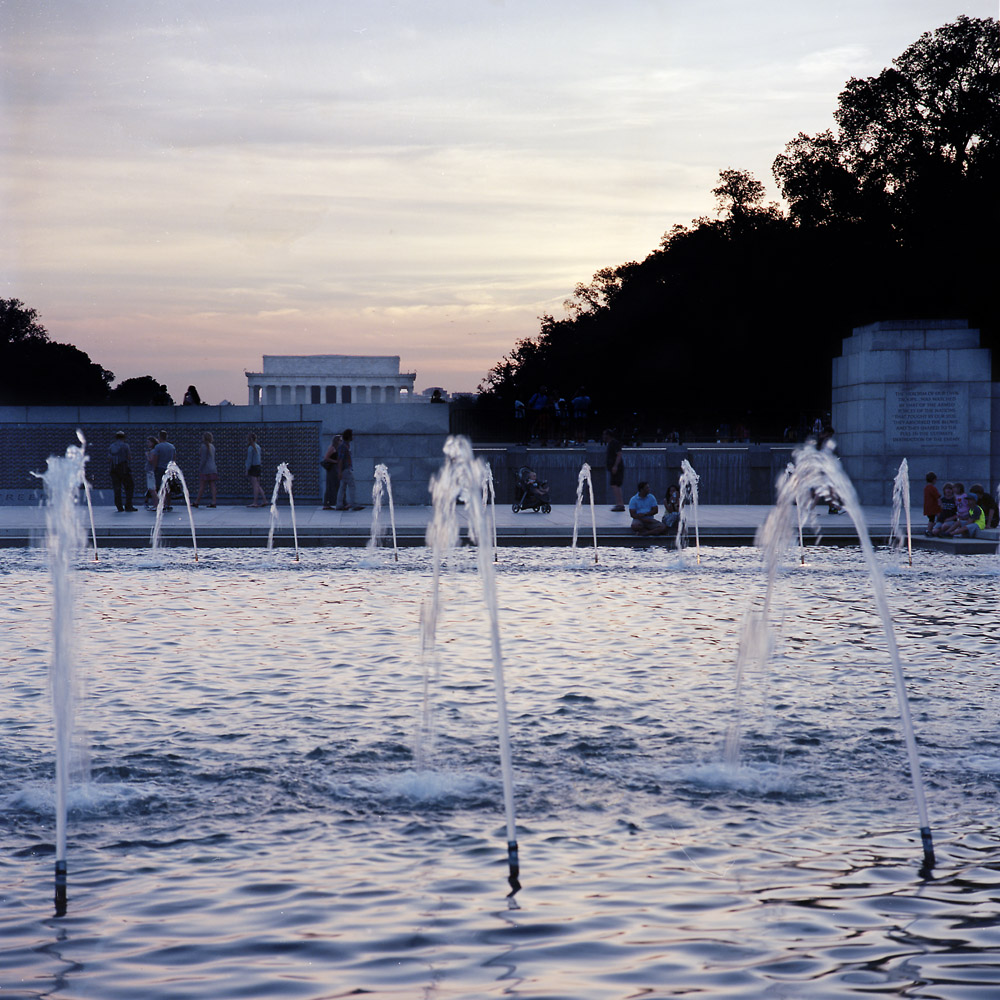
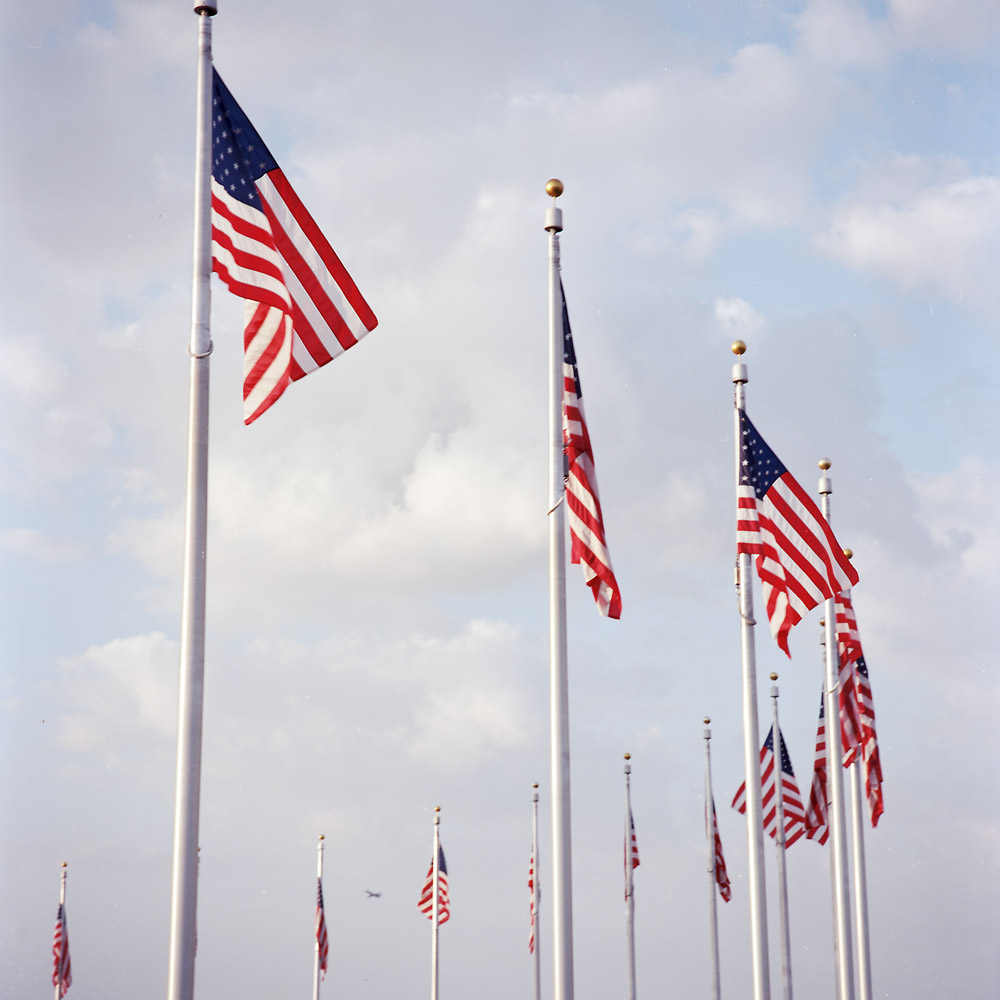
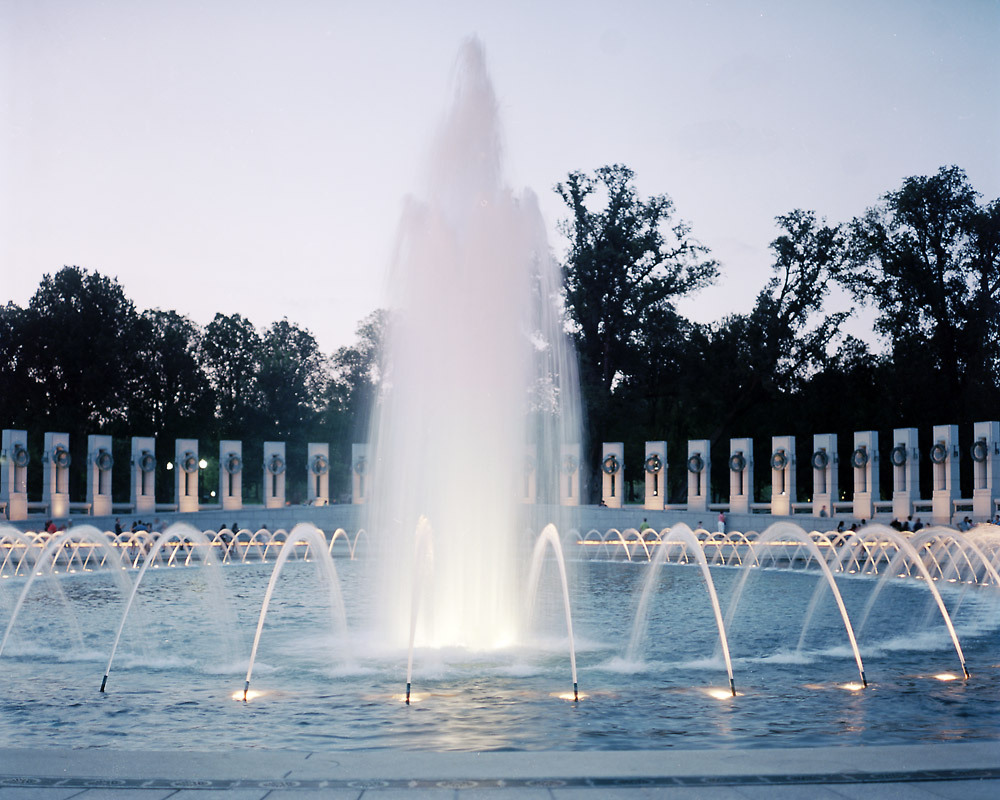
A few views of the area around the Washington Monument and the World War II Memorial.

Flag, Washington Monument
WW II Memorial, Fountain, Lincoln Memorial, Sunset
Flag Circle, Plane
Flag Circle, Plane
WWII Fountain Long View

Architectural Abstracts – Color

If you recall my earlier posts of the World Health Organization/Pan-American Health Organization headquarters building, I like architectural abstracts. These are some color abstracts I shot on two different excursions – one down to the National Mall at sunset, and the other on my routine walk home from work.

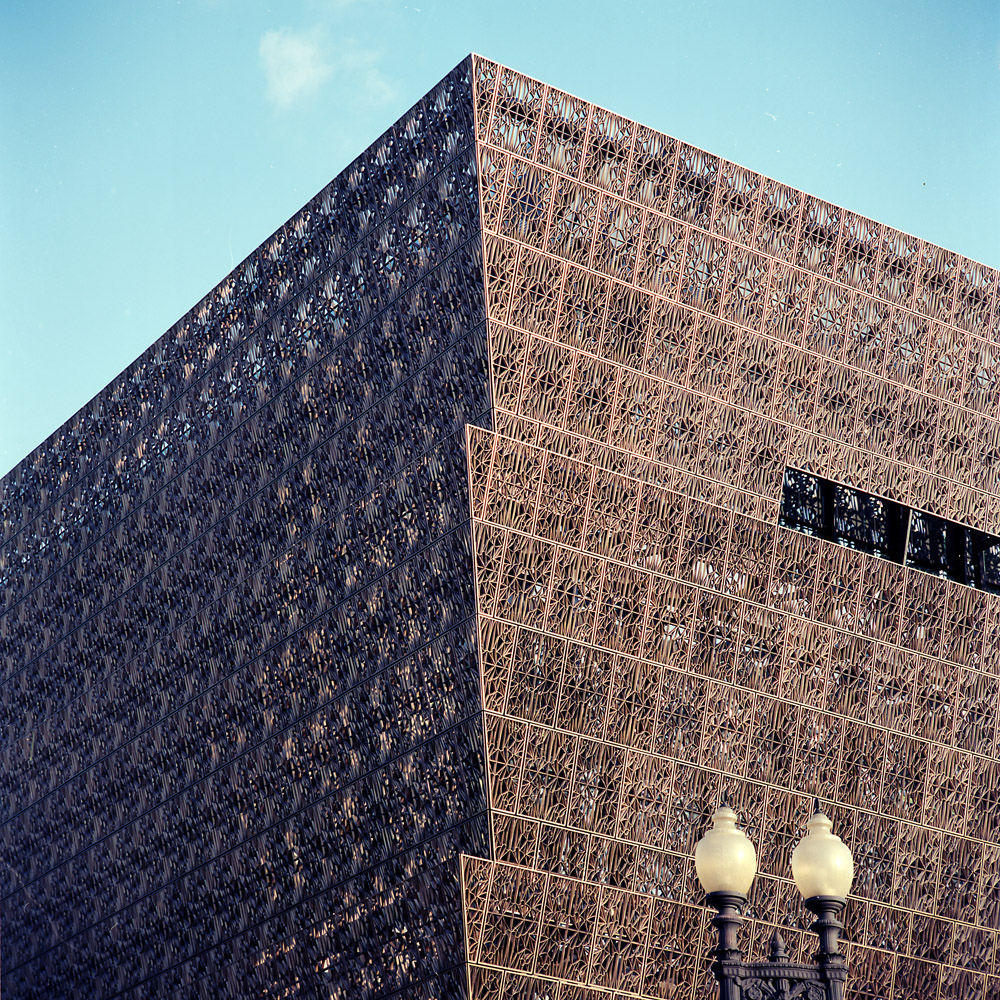
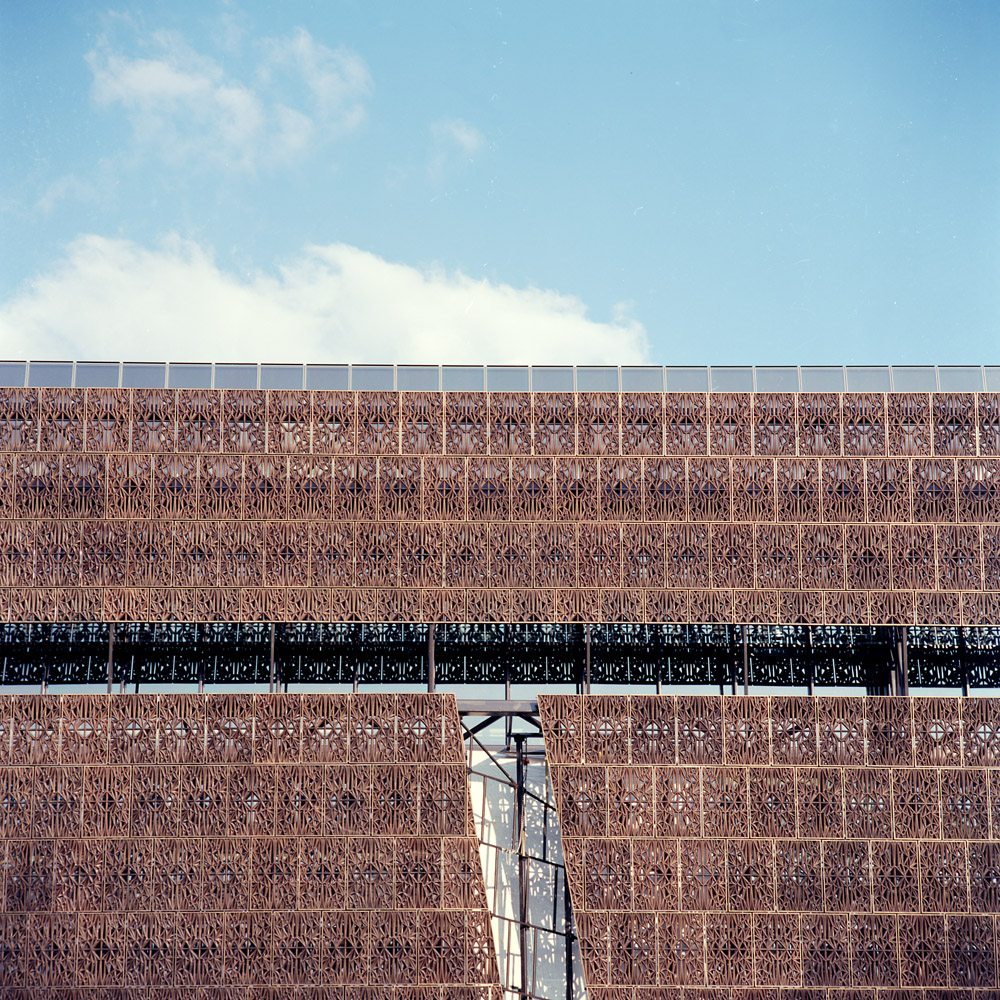
The African-American History museum is still a work in progress – I think it is slated to open in 2016, but it could be 2017 or even 2018 before it is ready for visitors, even if the structure is finished (which it appears will be true sometime this year, from the look of it). The building design is made to look like a traditional African crown with three tiers of bronze-colored mesh. The repeating pattern of the mesh screening lends itself extremely well to abstraction, and the missing panels (from the architectural renderings on the signs outside the museum, they are in fact missing/uninstalled, and not intentionally empty) add a geometric counterpoint.

African-American History Museum, Lamp

It’s nice to see that DC is finally getting some real architectural gems, and is not just filled with Classical-revival, Victorian, and Modern Industrial glass boxes. On a certain level it’s too bad the Corcoran was not able to get their financial act together several years ago and build the Frank Gehry addition to the school they wanted, as that would have been quite a striking change to the streetscape.

African-American Museum, Sky

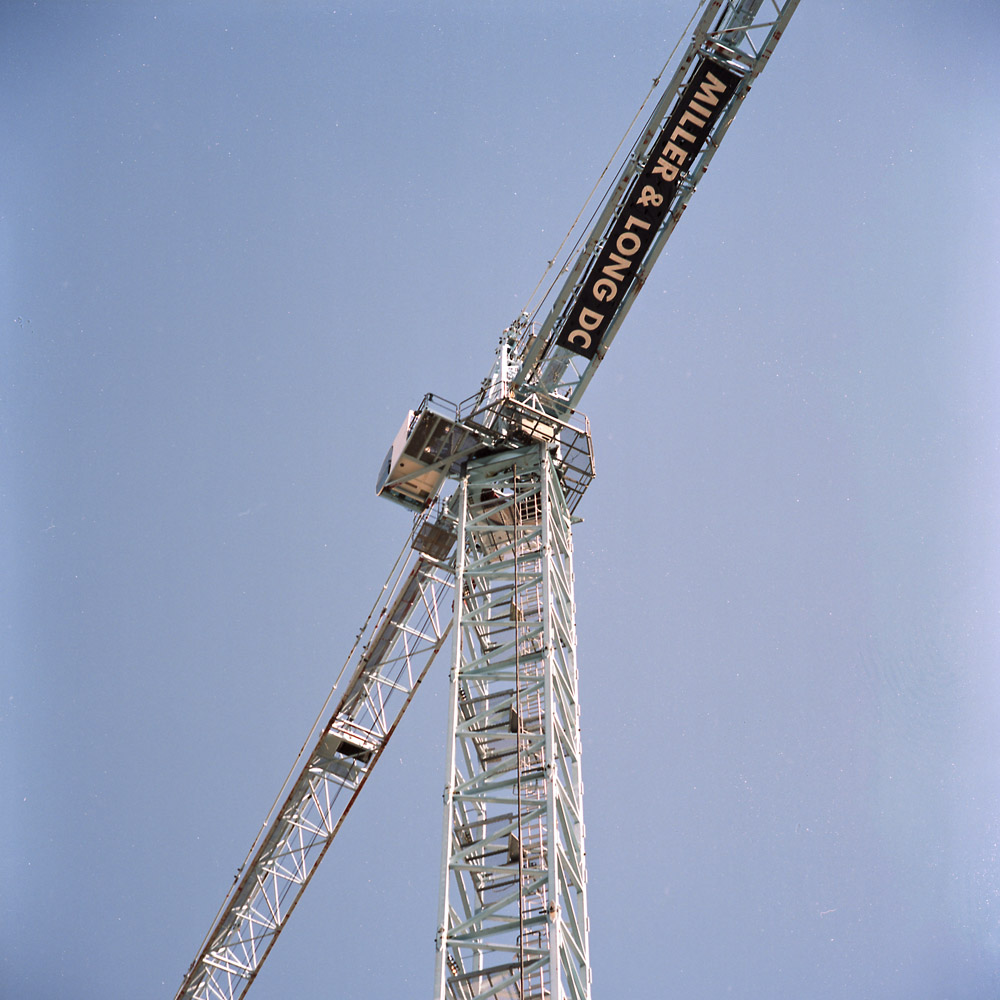
Although not strictly architectural, I thought the geometric forms of the crane against the solid blue sky made for a nice abstract and fit well with the overall theme; after all, it is a construction crane.

Miller-Long DC crane

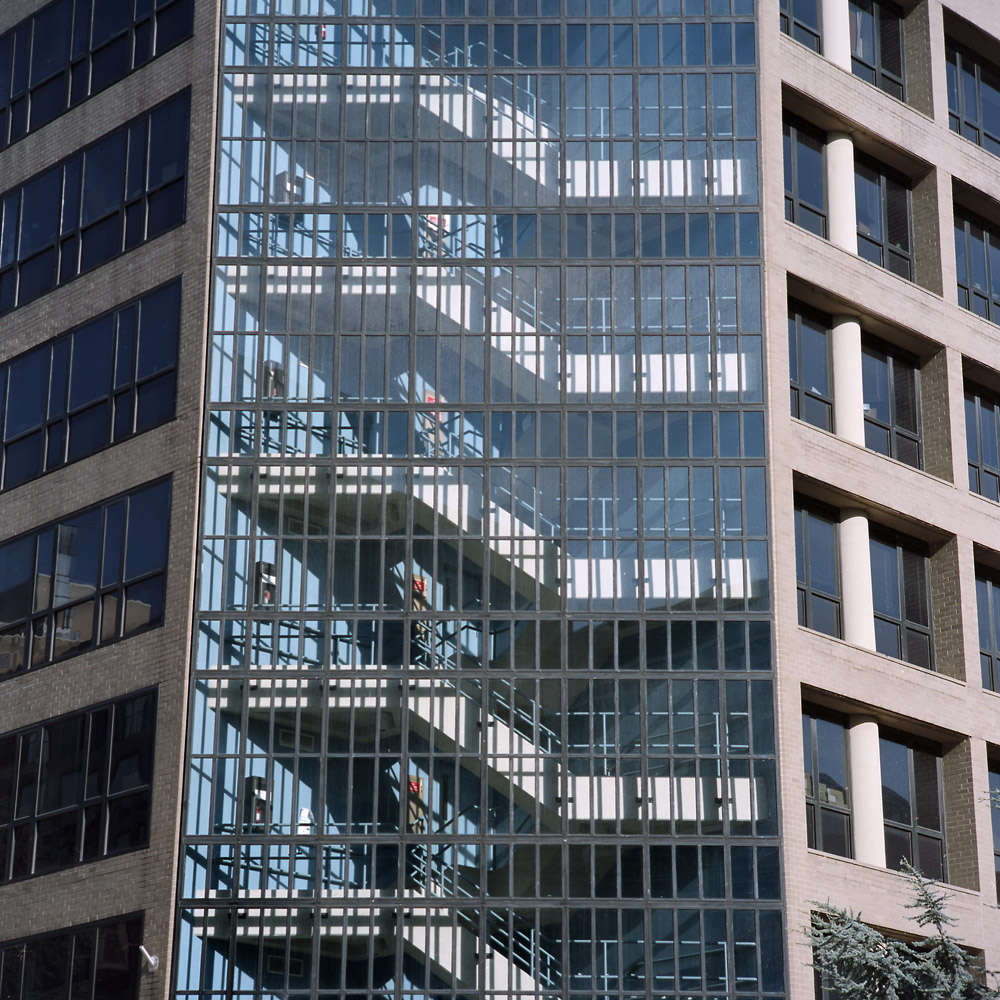
Far be it for me to accuse George Washington University of being architecturally avant-garde; most of their buildings blend in to the DC streetscape with an ennui-inducing banality. But their 1970s and 1980s brown-brick boxes do have some worthwhile details that break the monotony and catch the eye. Take this stairwell, for instance – the walls are blue, which pops out against the brown brick facade and dark bronze-color window trimming. And easily overlooked, the blue stairwell provides some continuity by breaking the space between the facades, each of which has a different styling for their windows. Without the stairwell, the contrast would be in high relief, and we’d think something went wrong during construction and/or they ran out of money and had to switch styles when they turned the corner.

Glass Stairwell, GW
Glass Stairwell, GW

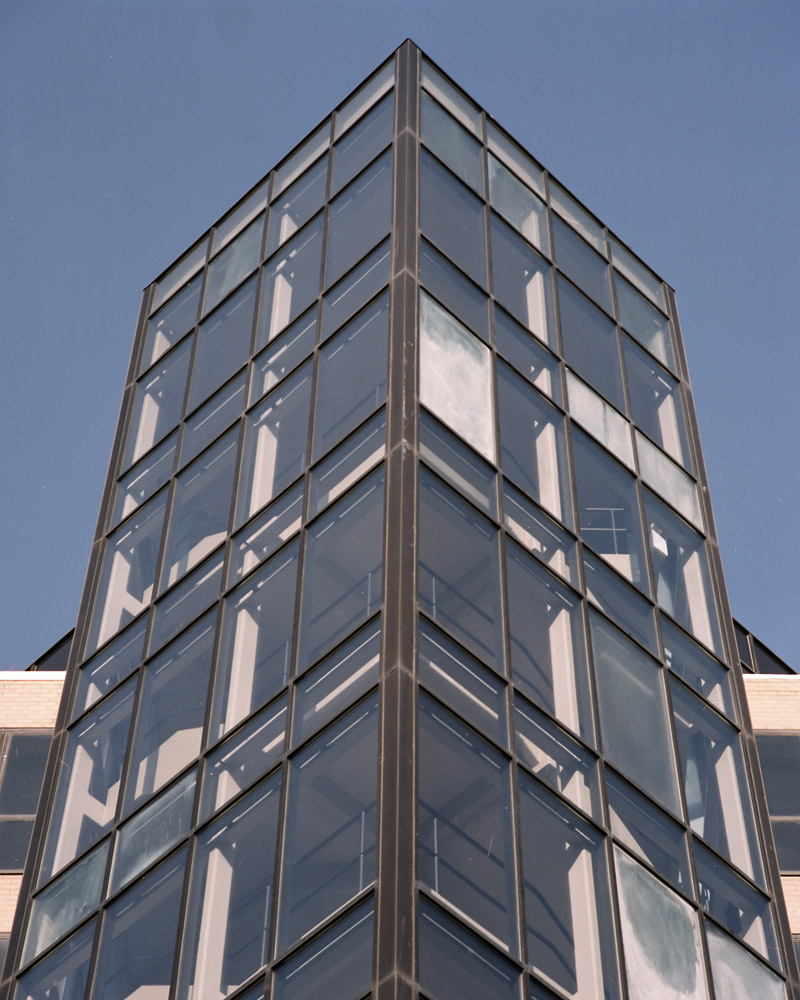
This glass tower thrusts into the sky like the prow of an ocean liner, cleaving the plane of the facade like an Arctic icebreaker clearing the channel into Archangelsk through a wall of sea ice (ok, I’m being a tad dramatic but I wanted SOMETHING to say about it).

Tower, GW
Tower, GW

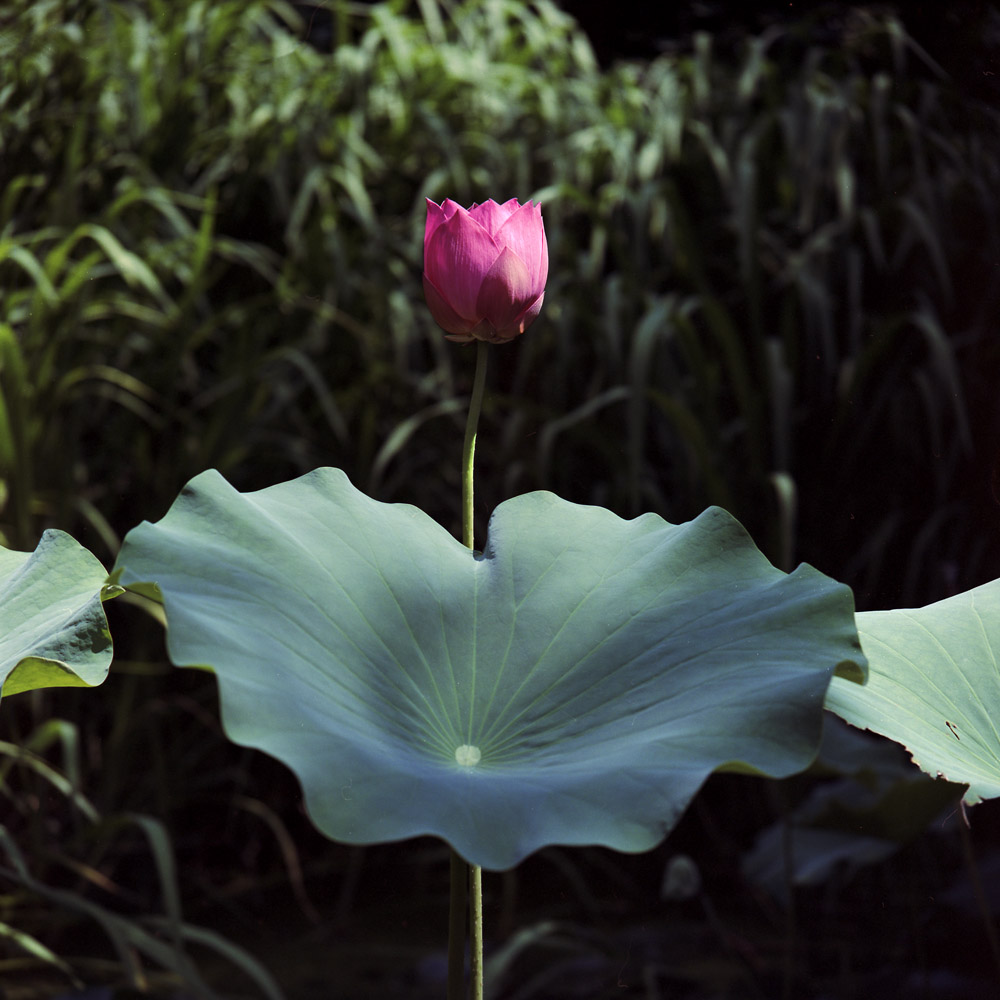
And now for something completely different – a Lotus Blossom

Lotus Blossom, National Zoo

I don’t think much needs said – it’s a lotus blossom at peak season, with full and unbuttered leaves.

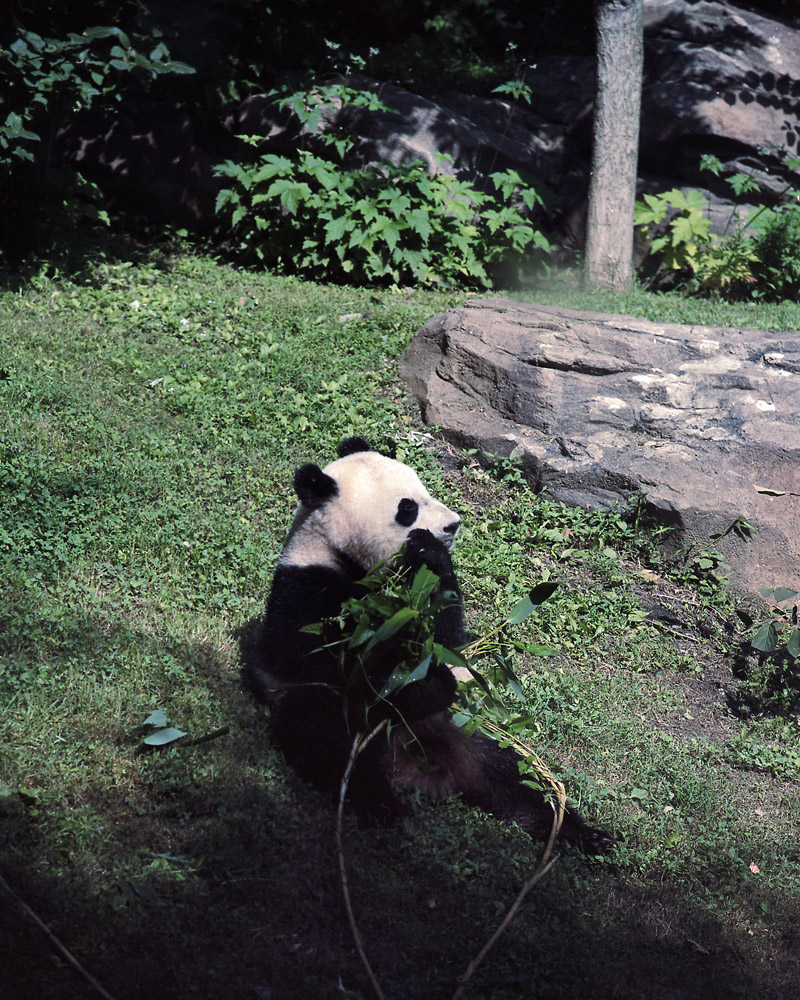
And now for something completely different… a panda

I took the Tele-Rolleiflex with me to the zoo the other weekend. I didn’t know quite what I would be able to get good shots of and not, but I tried anyway. The one animal I could get close enough to get a good shot of while still outdoors in good light was, fortuitously enough, the Giant Panda – I think this one is Tian Tian, the male panda.

PandaNatZoo

Enjoy!

World Health Organization – More Abstracts

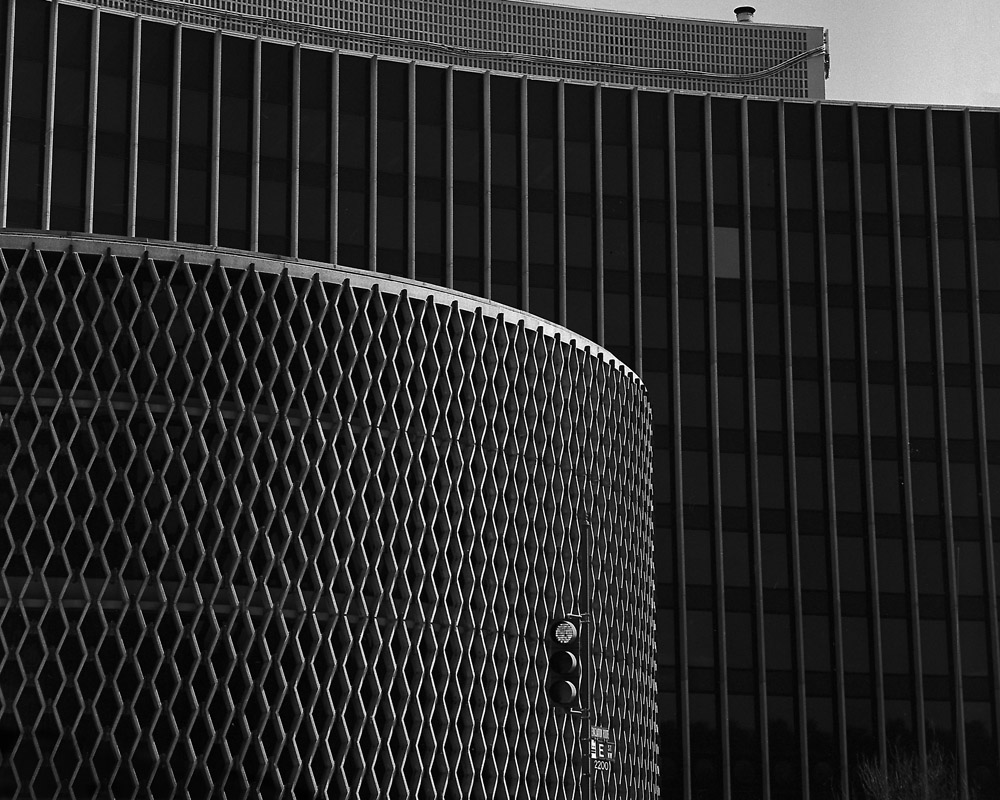
World Health Organization - Tower and Drum, E Street Lamp
World Health Organization – Tower and Drum, E Street Lamp
Corner, WHO building

Architectural Abstracts in Black and White

If there’s one subject that never fails, it’s architecture. Twenty-four hours a day, it looks different. To the patient and observant eye, even the most seemingly bland box of a building can be transformed into a study of volume and texture with the careful observation and application of light.

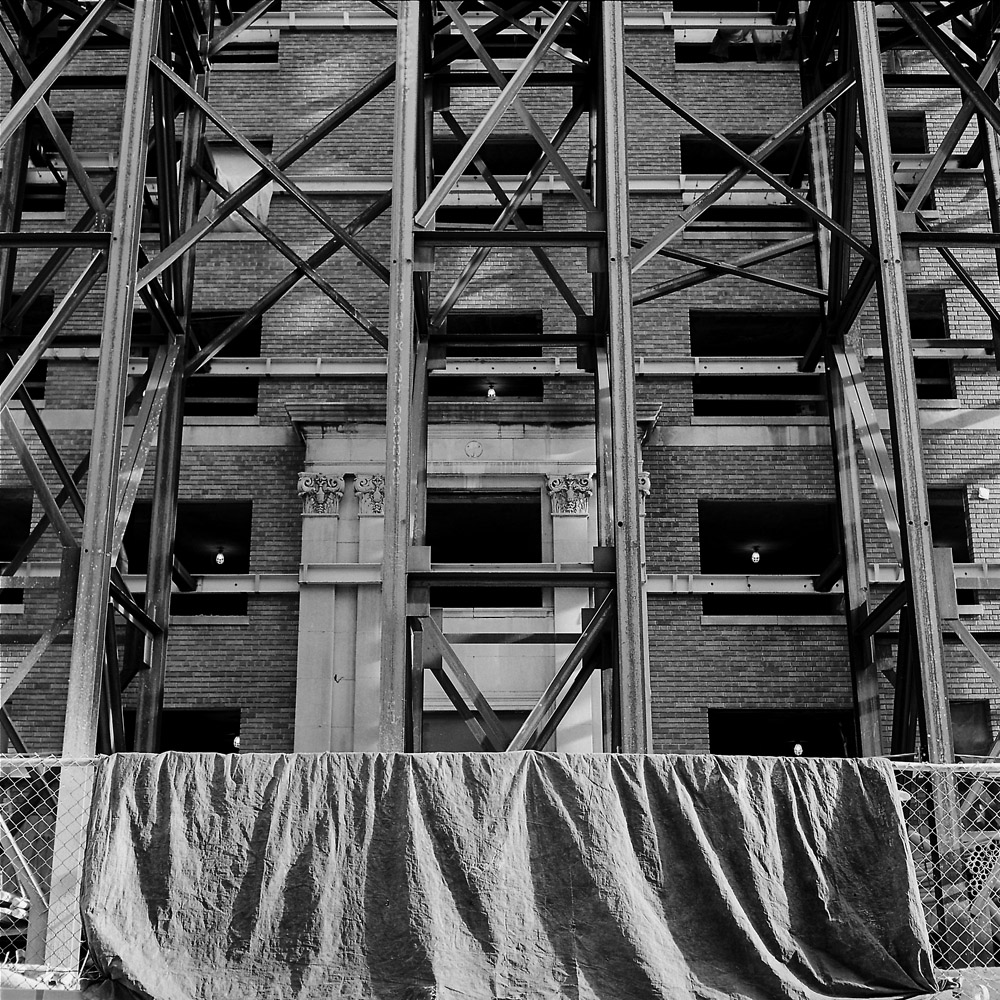
Steel girders wrapping a facade for protection during renovation become a study of patterns and of contrasting textures – the rigid linearity and modernity of the I-beams highlights in strong relief the delicate brickwork and moldings behind it, and the strong shadows cast by the evening sun bring out geometric repetition.

Facade, Girders
Facade, Girders

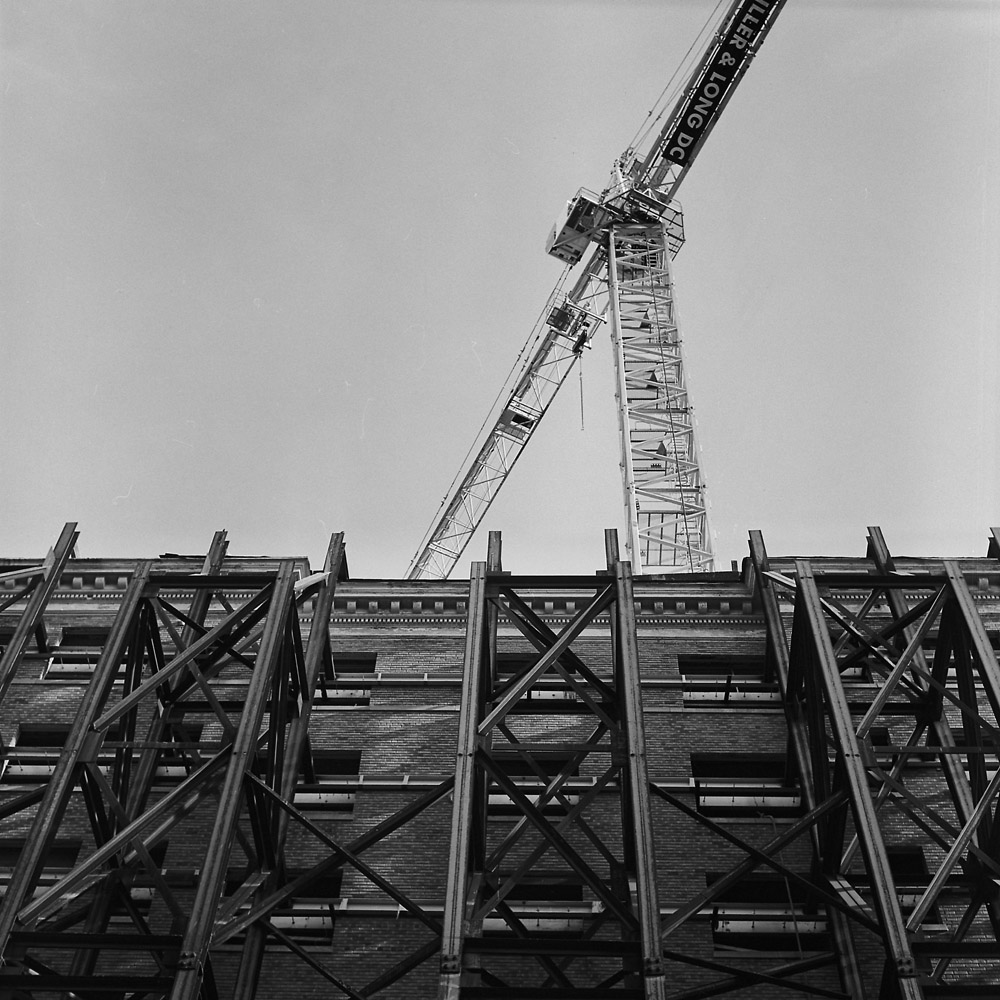
The white crane above the girder wall catches the late afternoon sun, a thrusting line that divides the blank sky with dynamic movement that creates multiple negative spaces instead of unbalancing the image with empty information.

Miller & Long Crane
Miller & Long Crane

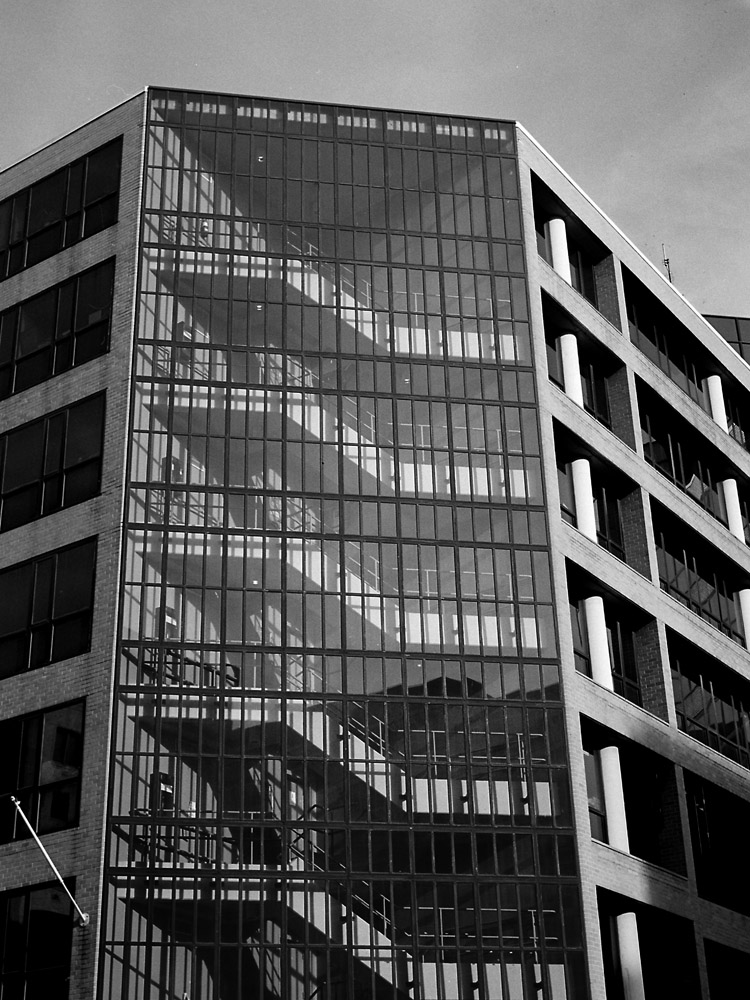
This image would be even better in color as there are patches of blue in the stairwell that repeat in a subtle pattern, drawing your eye into and up the stairs, but even in black-and-white, the repeated lines of the ascending structure draw your eye through the image.

Glass Staircase, GW
Glass Staircase, GW

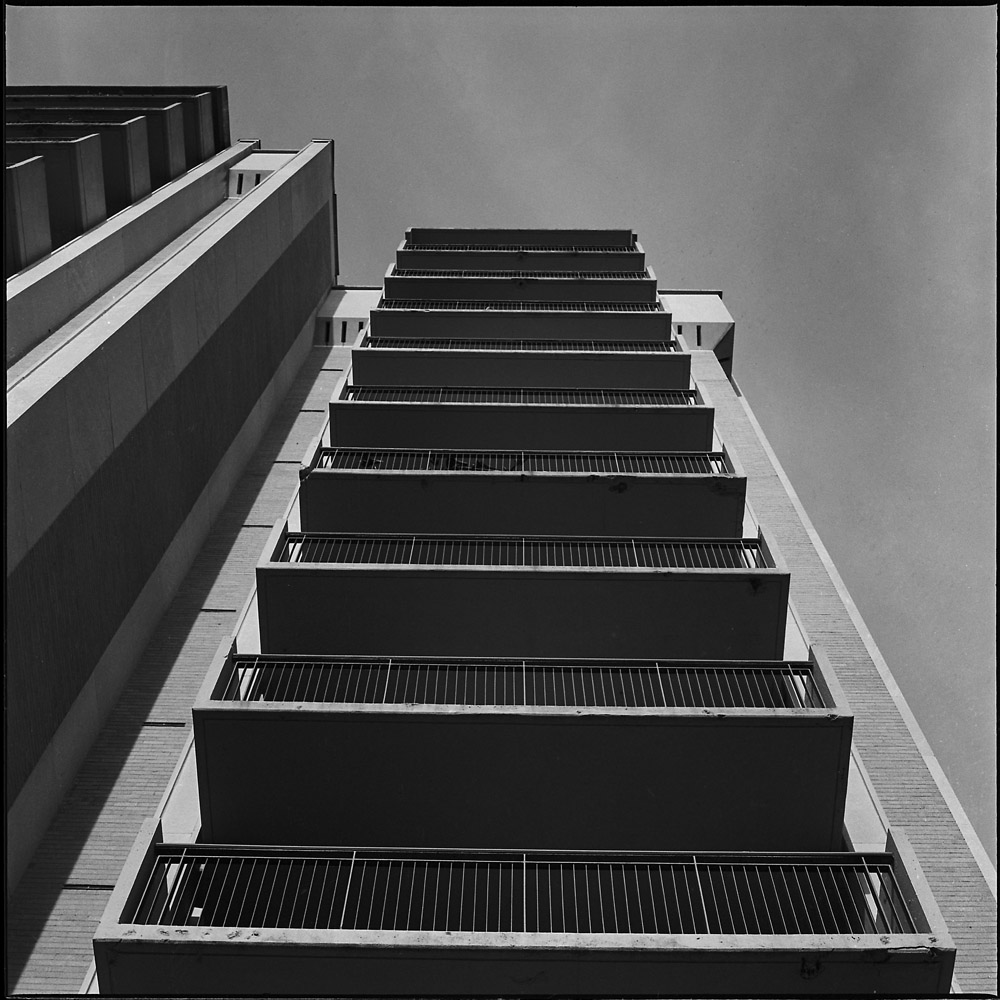
I like the vertiginous vertical lines of the apartment tower as you look straight up it. Believe it or not this was shot hand-held, no tripod, no level, just very careful eyeballing and steady hands.

Columbia Plaza Tower

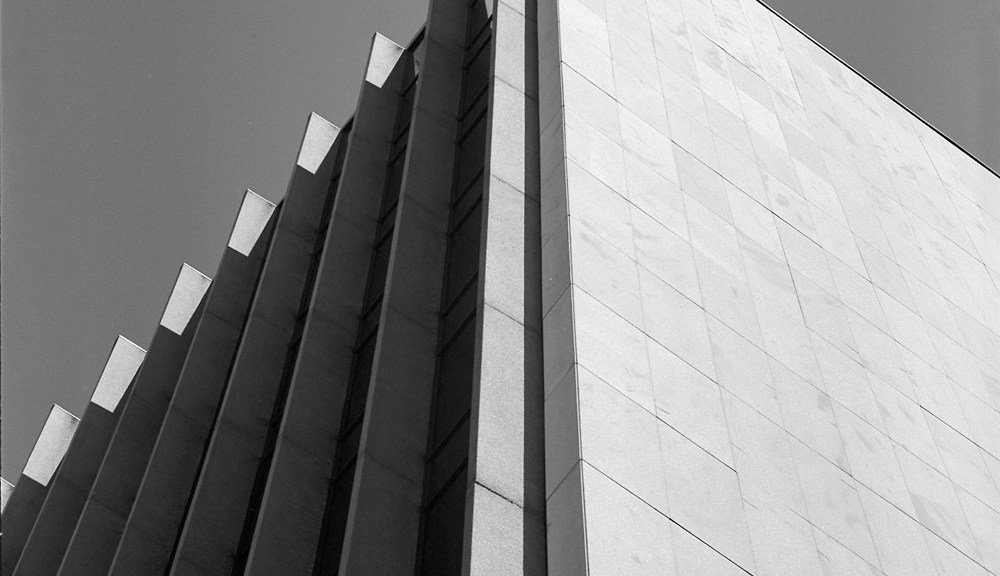
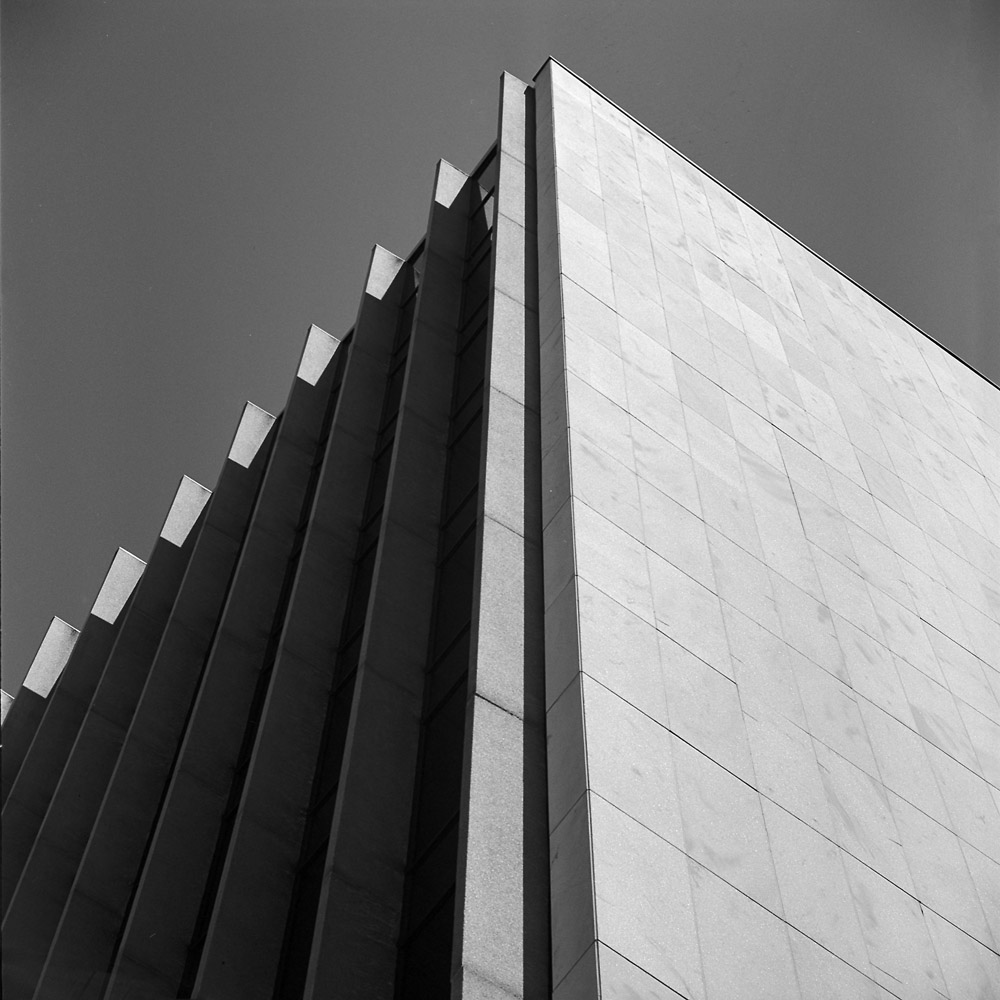
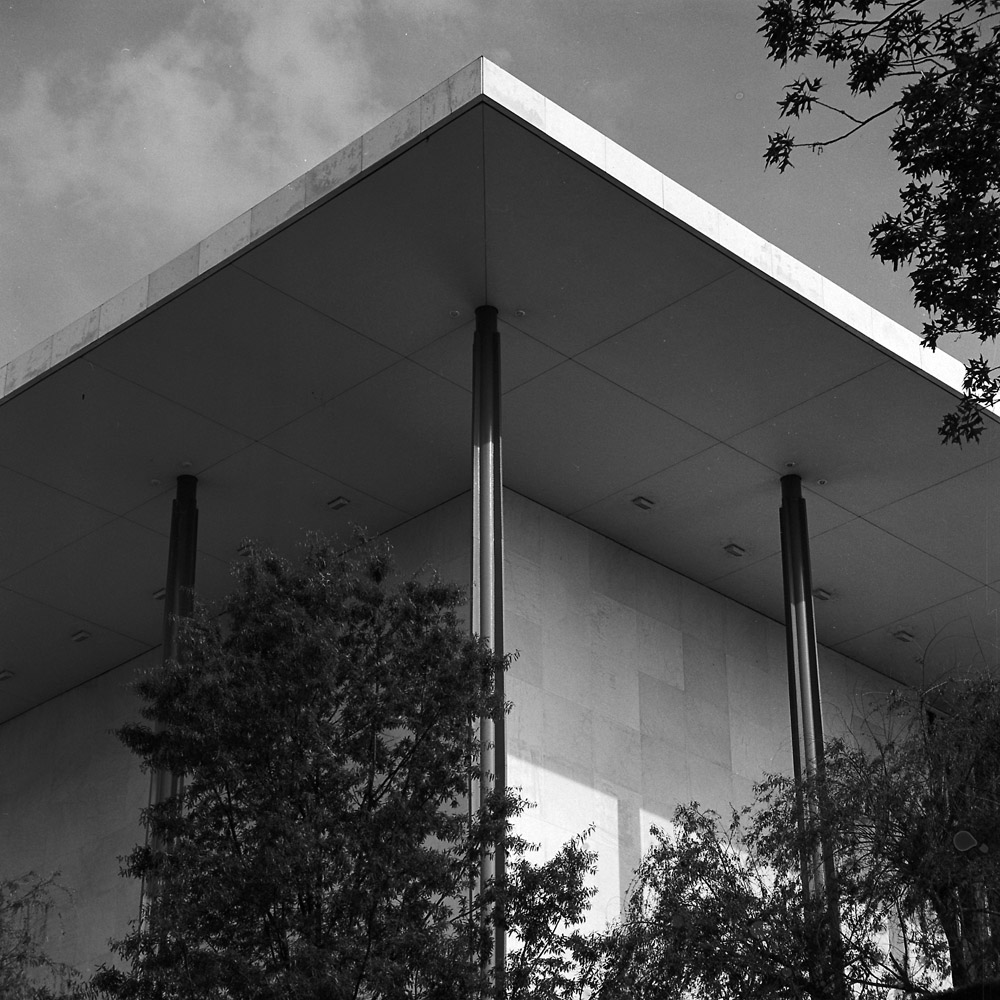
The Kennedy Center for the Performing Arts is a magnificent slab of white marble. Even the outside spaces are all grand and awe-inspiring, very much in keeping with the goal of presenting and preserving the performing arts. Here the roofline is a dramatic act in itself, like a set piece in an opera playing on the stage within. Wagner couldn’t have composed it better.

Kennedy Center Corner

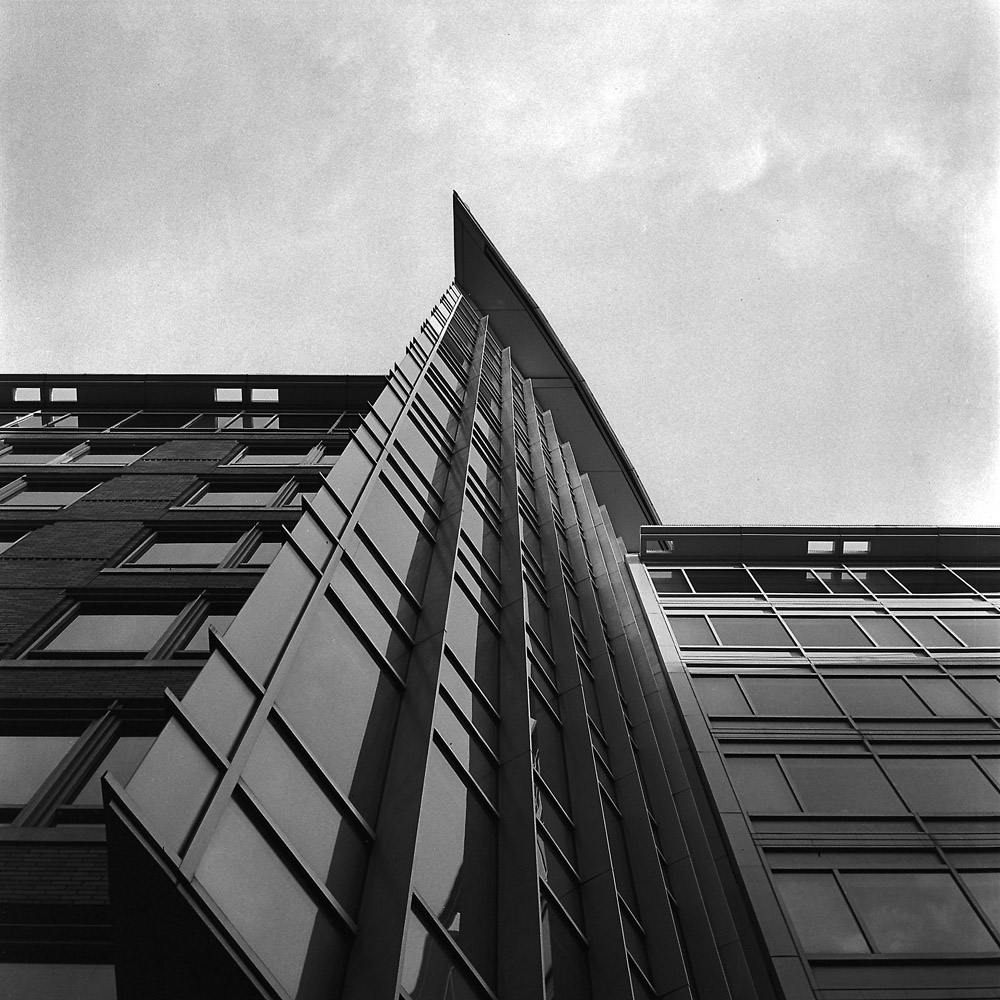
Another vertigo-inducing shot looking straight up at what I call the ships’ prow building. The facade is mostly flat, but this arced wedge bursts forth from the surface like a ship’s prow cutting the waves.

Ship's Prow Building, H Street
Ship’s Prow Building, H Street