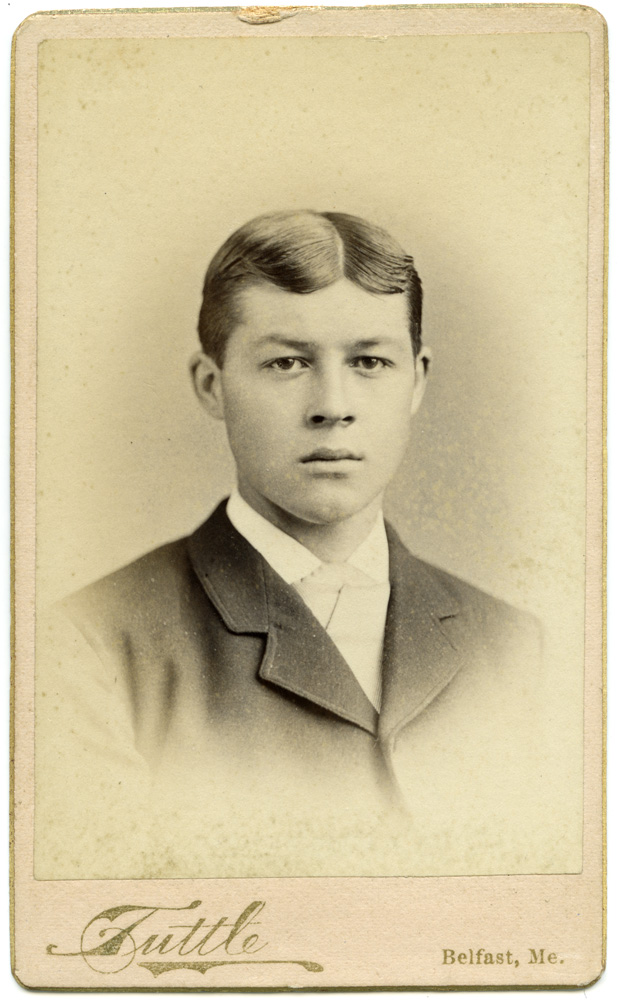
Sometimes the reason you buy something is purely aesthetic – there doesn’t need to be an historical association, famous subject or famous photographer to make an image worth buying. This is an example of just that – a very handsome subject, simply captured, plainly presented. Is he part Native American? Hard to say, but he has a certain look about his nose and jawline.
Handsome Youth, Belfast, Maine
This is an example, as I mentioned, of a carte-sized Cabinet Card. It is the same dimensions (2 1/2 x 4 1/2) as a carte de visite, but is printed on the heavier card stock with the beveled, gilt edges and the larger front imprint of the photographer’s logo typical of the Cabinet Card. Because of the style, I would definitely call this a Cabinet Card, and not a CDV, because the time period of its creation is definitely later, as are the material conditions of its composition.
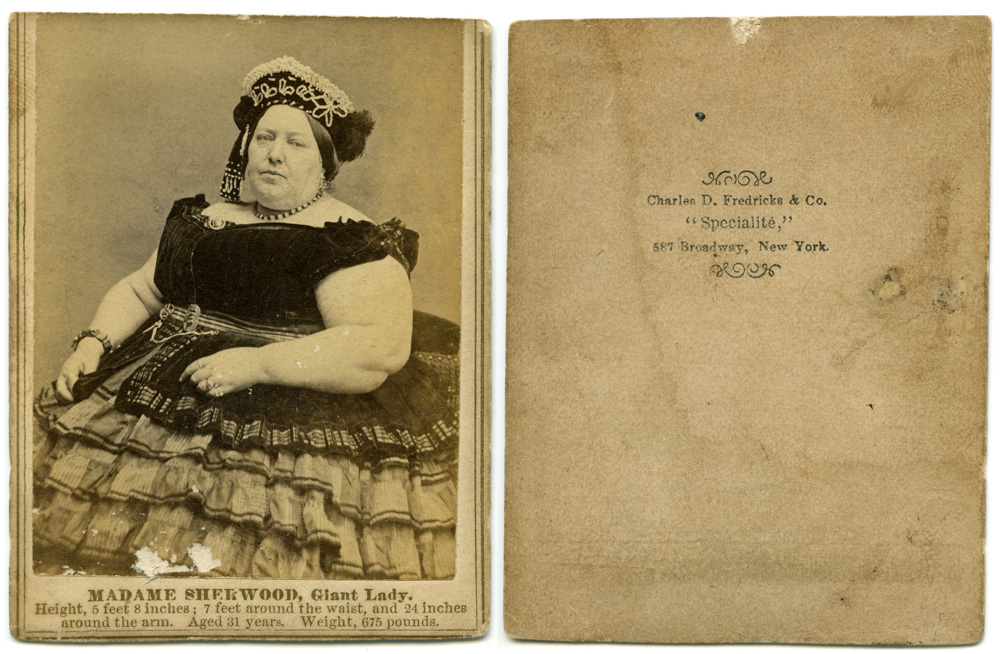
Well, I don’t know if she ever sang, or if she had any kind of performance at all. But her name was Madame Sherwood, and according to the bio on her CDV, she had an 84″ waist and was 675 lbs. Given the Victorian (and specifically Barnum-esque) penchant for exaggeration, I wouldn’t be surprised if she was more like a 60″ waist and 400 lbs but you never know. This CDV has been trimmed, rather significantly, but again this doesn’t detract from the image so I don’t find it terribly objectionable. It definitely impacted the value of the card, but I was not unhappy with the price paid. This is another C.D. Fredericks image. The simplicity of the backstamp not only in terms of the design but also the pomposity (or lack thereof) of the advertising slogan leads to some confusing dating for the image, as “Specialité” was his slogan in the 1850s and 60s, but the subject would have this date from the early to mid 1870s. Fredericks was another New York photographer who, like Gurney (whom he studied under and worked for for a time) and Eisenmann, did significant trade with the theatrical and performing professions.
For more information about C.D. Fredericks, there is a succinct but interesting blurb at Historic Camera
MadameSherwood, by C.D. Fredericks
I suppose in a way you could term all these circus freak photos as also being occupationals in that they do show the sitters enacting their profession, which in a way was merely existing as who they were. It’s not like it mattered what outfit Tom Thumb or Madame Sherwood or Isaac Sprague (the Human Skeleton) wore, they were not performing a role, and even if they did, their audience was not coming to see them be Hamlet or Viola or Caliban, but to see the midget/fat lady/human skeleton.
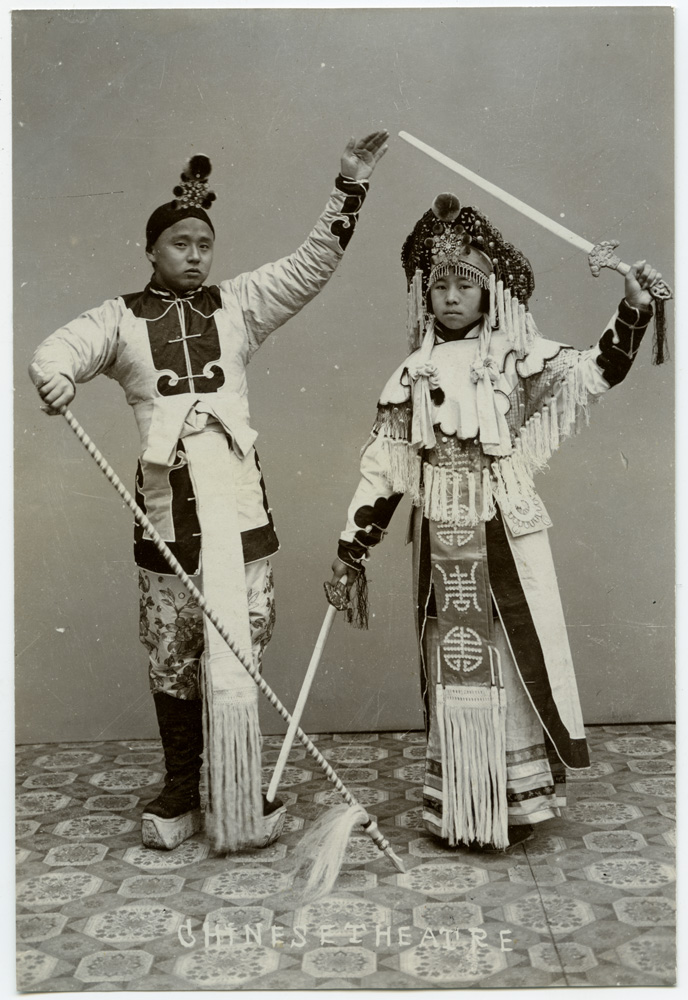
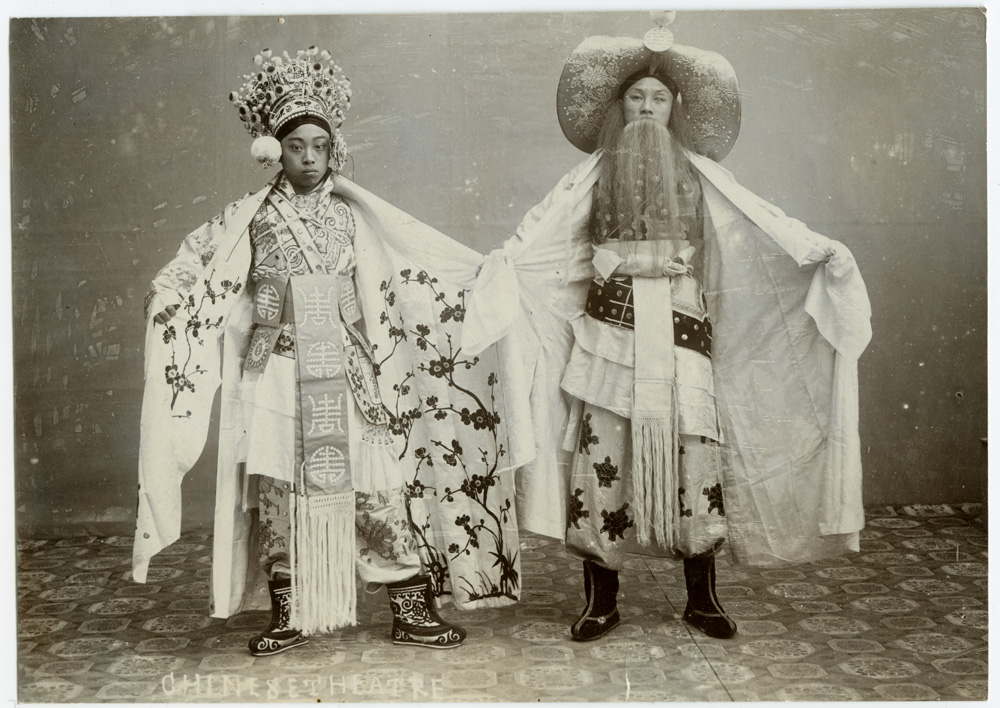
here are two turn-of-the-20th century souvenir photos from China. They depict performers in the Peking Opera. They come from the period marking the end of single-sex performers, when all roles both male and female would be played by male performers. Gender segregation of the opera began to phase out in the 1920s. For much the same reasons as in the West, Chinese theater was single sex because being an itinerant actor was seen as very much akin to being a prostitute. And despite the attempt to preserve the honor and virtue of women by banning them from performing on stage, the boys who played female roles on the stage themselves became prostitutes. Can’t win for trying, I guess.
Peking Opera PerformersPeking Opera Performers
I would classify these as genuine “gay interest” images because they represent a moment in history where the enactment of same-sex desire was sanctioned, even if in masquerade. It’s a rarity photographically because in the West, same-sex drama had largely been eliminated well before the photographic era, lingering on symbolically into the 19th century in the operatic tradition of castrati. If anyone out there recognizes the roles these actors are portraying, and the name(s) of the opera(s) they are from, the feedback would be most welcome.
Here are some more of my circus freaks/performers collection. We’re going to start our tour of the circus in the sideshow, where P.T. Barnum was a busy man – he collected strange people from all over the world, and when he couldn’t find them from afar, he invented foreign origins for them!
Waino and Plutano(r), the Wild Men of Borneo, were actually brothers born in Ohio with physical and mental developmental challenges. As you can see in the photo, even in adulthood, they were pygmy sized. They did however possess considerable strength for their size, and were known to lift up to 300 pounds. Their real names were Hiram and Barney Davis (no relation!). They were a huge success in Barnum’s circus and over a 25 year career in show business spanning from 1880 to 1905, they earned $200,000, a gigantic sum in that day and age.
Waino and Plutano, The Wild Men of Borneo, by Eisenmann
As you can see, this was yet another carte by Chas. Eisenmann, who specialized in photographing theater people and performers. I love the Victorian era advertising slogans – “Portraits taken by Instantaneous Process – Extra Inducements to the Theatrical Profession” on this carte, and on another one I have by him, it shows a photographer striding the globe, with “The Popular Photographer” inscribed below. It’s too bad the carte-de-visite tradition died out; there’s nothing quite like it today in terms of marketing and character.
Next up, also in the sideshow, is the fat lady. Why this particular display was so popular, I’ll never quite understand. I don’t think the fat ladies sang or had any particular performing talent – they were just fat. I think it would have to have been one of the most humiliating experiences in the sideshow, to be looked at that way. At least in the other circus freak cases like the human skeleton or the midgets, they had little or no other viable employment options.
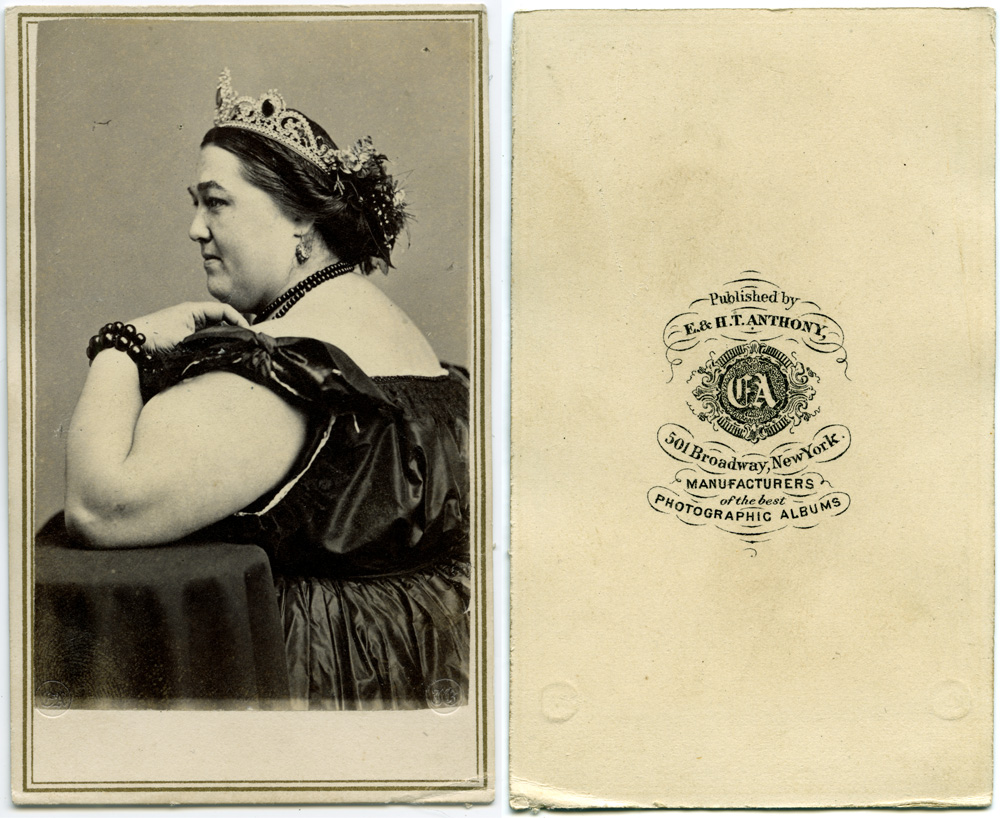
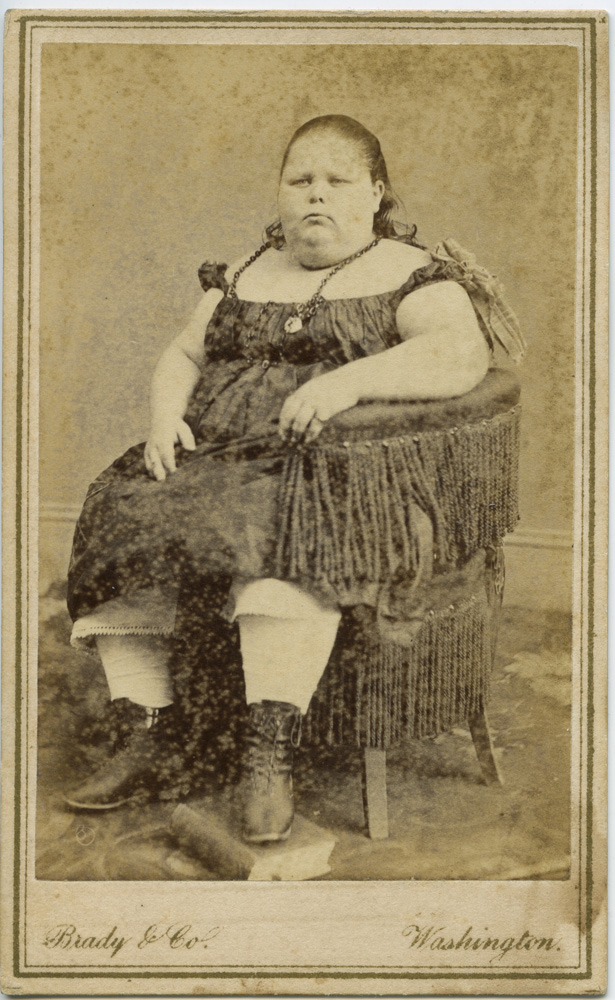
This image is an E&H.T. Anthony publication, with no credit given as to the photographer. The image has the Anthony blind stamps in the corners, and what appears in the scan to even be a fingerprint, possibly of the person who printed and mounted it. It is a breathtakingly beautiful carte in person, and I would suspect that it is probably a Brady carte, given that Anthony owned the Brady negatives for many years, and served as Brady’s publisher/distributor. The lady appears to be Madame Sherwood, a famous fat lady in Barnum’s circus. She also bears a vague resemblance to another fat lady I have, this one from the Brady studio in Washington DC. I don’t think the Brady image is the same woman, but it’s possible.
Madam Sherwood, on an E&H.T. Anthony CDV
The Brady image:
Fat Lady, Matthew Brady Studio, Washington, DC
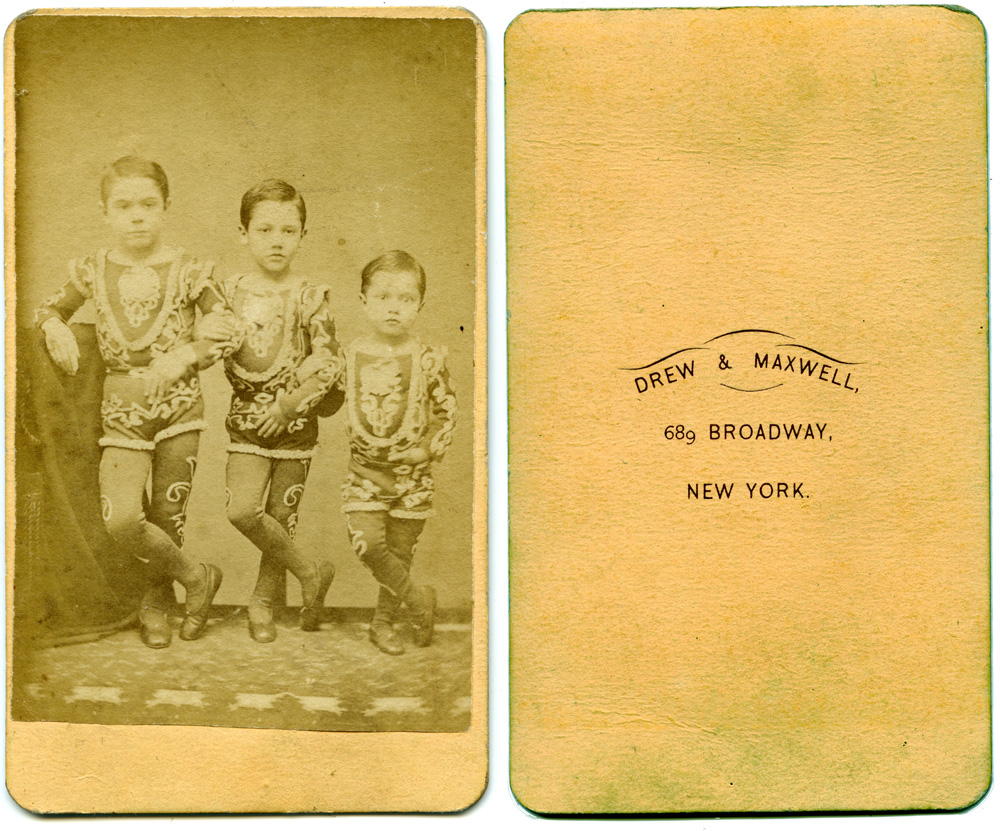
Moving under the big top, we have the acrobats! Here is a trio of boy tumblers/high-wire walkers/trapeeze artists. They look very much like the two I have in another cdv, which I’ll post again here for ease of comparison. If they are the same brothers, then the third one’s name is a mystery to me – the first pair appears to be the O’Brien brothers, but in my research, they were only ever a duo, and their father died fairly young as a result of injuries sustained in a circus accident.
Trio of Boy Acrobats, by Drew & Maxwell - possibly the O'Briens?Circus Siblings, Gurney & Son, New York
I’ve got two news items to announce. I’ll be in an invitational show at Glen Echo Photoworks from April 12-May 7, and I’m teaching my Introduction to Platinum/Palladium Printing class May 5-6 also at Glen Echo Photoworks.
Please come to the opening reception for the show, April 22 – I’ll be speaking briefly about my work. I’ll be showing some selections of my work from Argentina.
April 13-May 7
Alternative Visions – An Alternative Process Photography Exhibition
Scott Barnes, Andrew Currie, Scott Davis, Sheila Galagan, Barbara Maloney, Janet Matthews, Richard Pippin, George Smyth, Grace Taylor
Opening reception and Gallery Talk 6-6:30pm. Sunday April 22 5-7:30
If you are interested in registering for the Intro to Platinum/Palladium, you can find the link on the Photoworks website
The class is a hands-on two day course on the basics of platinum/palladium printing. Topics covered include history, technical basics (chemistry, equipment, paper), major process controls (negatives, exposure, processing), and fine controls (contrast, process variations). This is a film and wet darkroom focused course – I will be providing a 5×7 camera and film, and we will shoot film negatives and make prints from the same. Digital negative making will NOT be covered due to the number of potential variables involved in working from student supplied images.
Please note: As of the date of this announcement, there are only two spaces remaining in the class – don’t hesitate if you are interested. If this class sells out, I will discuss running it again in the fall with the Photoworks staff.
I saw another CDV of what appears to be the same brothers, with similar outfits and different hairdos (probably a couple years older). This one is labeled “Willie & Freddie O’Brien”. I did a quick google search on their names and it turns out they were well-known circus performers, part of Barnum & Bailey’s circus, among others. A brief bio of their father (from Olympians of the Sawdust Circle):
O’BRIEN, FRED. (1848-April 28, 1881) Champion leaper. Native of Buffalo, NY. Lake’s, 1869; Dan Rice’s, 1870; Rice’s Paris Pavilion Circus, 1871-72; P. T. Barnum’s, 1872-73; John Wilson’s, San Francisco, January 1874; Cooper, Bailey & Co., 1876; Great London, 1875-77; with wife and sons, Freddie and Willie, Orrin Bros.’, Havana, 1878. Wife was a slack wire artist and his 2 children performed on the trapeze. With P. T. Barnum’s, Madison Square Garden, 1881, was injured in a leaping double-somersault over a number of elephants. Died aboard the steamship England en route to Liverpool as a result of those injuries, age 33. Remains were buried at sea.
O’BRIEN, FRED, JR. Acrobat. The son of leaper Fred O’Brien. Three Melville’s & Co., 1889; general superintendent, Price & James, 1897; principal clown, Cooper & Co., 1897.
O’BRIEN, WILLIAM. Acrobat and leaper. Son of Fred O’Brien. Howes’ London, 1877; Cooper & Bailey, 1880; Howard Bros.’, 1888; Charles Andress’, 1888; Robinson-Franklin, 1897.
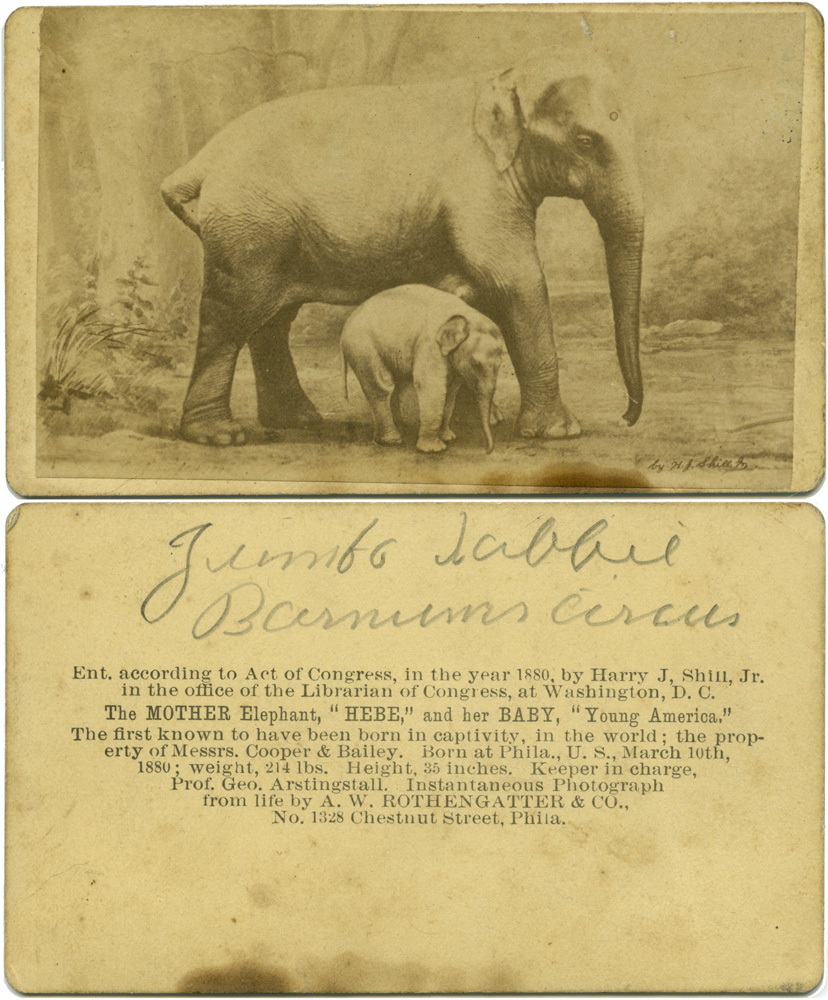
Here’s another new image in the collection, part of my growing circus images segment. The photo is of the mother, Hebe, and her baby, “Young America”, the first elephant born in captivity. They were part of Bailey’s circus, later to be bought by P.T. Barnum to become the Barnum & Bailey’s Circus we know today. This may be a photograph of a painting or drawing, I suspect, as the backdrop is somewhat contrived. There is a signature in the lower right corner of the image, “by H.J. Shill Jr.”, who is indicated on the verso as the copyright holder, but the photograph itself was produced by A.W. Rothengatter of Philadelphia (“Instantaneous Photograph from life… No. 1328 Chestnut Street, Phila.”). It’s theoretically possible they brought the two elephants into Rothengatter’s studio and posed them on a painted backdrop, but that would have been a rather sizeable undertaking! Another possibility is that the elephants were photographed, and then in a feat of photo-manipulation worthy of today’s greatest Photoshop wizards, they were merged onto the “jungle” backdrop. The mother looks very photo-realistic, but the baby, not so much. Alternatively this may have been a merger of multiple photographs, and Mr. Shill is getting the credit for the mash-up, which would have been unusual in that day and age as assistants were rarely credited for any work performed and sold under the studio’s name.
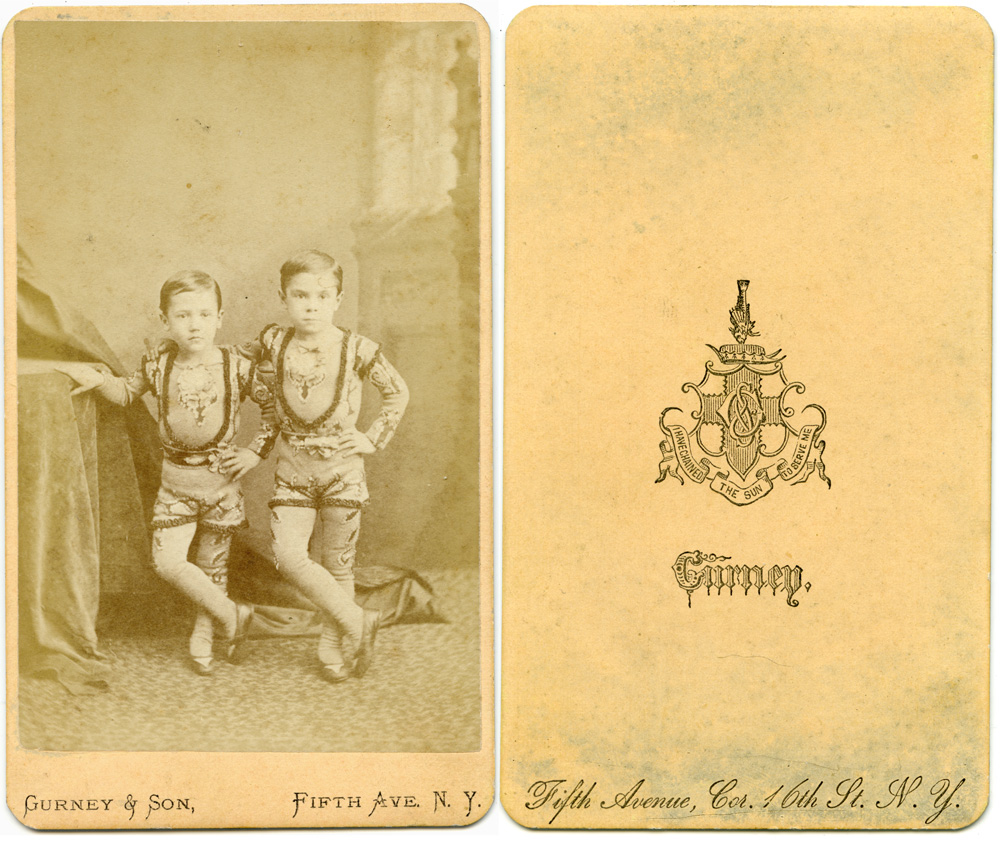
A pair of circus performer brothers – perhaps twins – by Gurney & Son, New York. Gurney, like Sarony, was famous for photographing the famous of the day. Gurney was the one who was requested to photograph Abraham Lincoln lying in state when his funeral cortege was passing through New York on the return train trip to Springfield. But enough of the morbid thoughts. I liked this image because it contains several collecting themes in a single card: children, circus performers, and famous photographers. I’ve been fascinated by the Victorian era advertising slogans people used on the verso of their CDVs, and this one does not fail to disappoint – “I have chained the sun to serve me”. I doubt any photographer could make a more arrogant statement!
Circus Siblings, Gurney & Son, New York
I suspect they were also with Barnum’s circus, but I don’t know. If anyone out there recognizes them and knows their identity, it would be much appreciated!
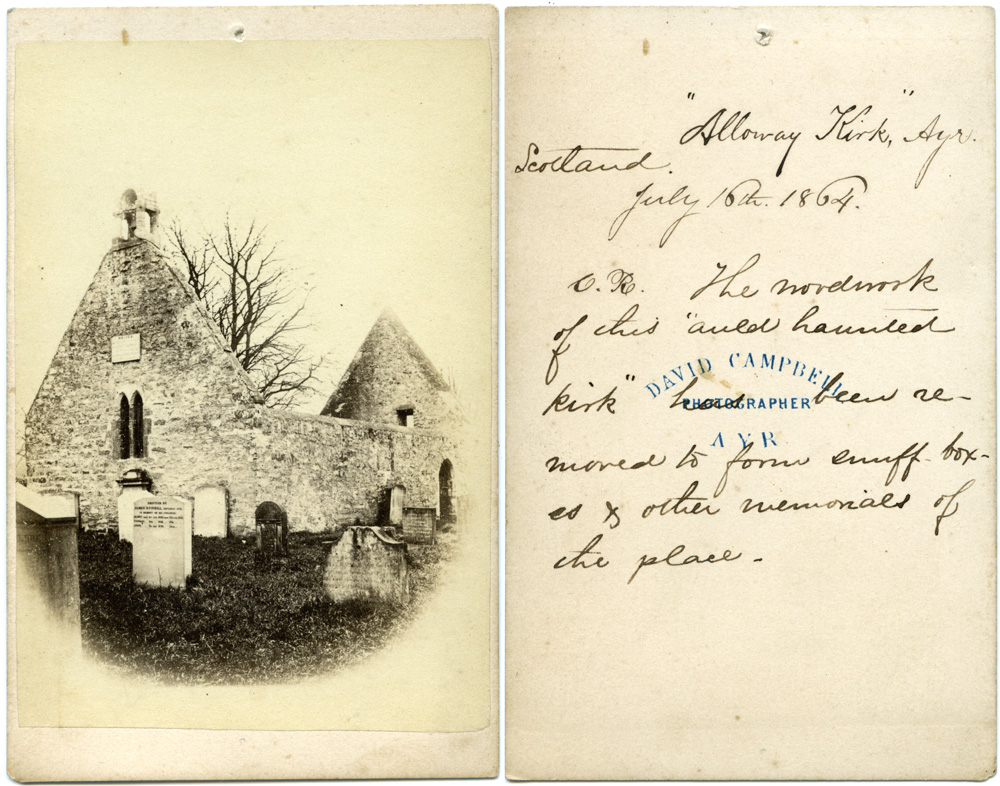
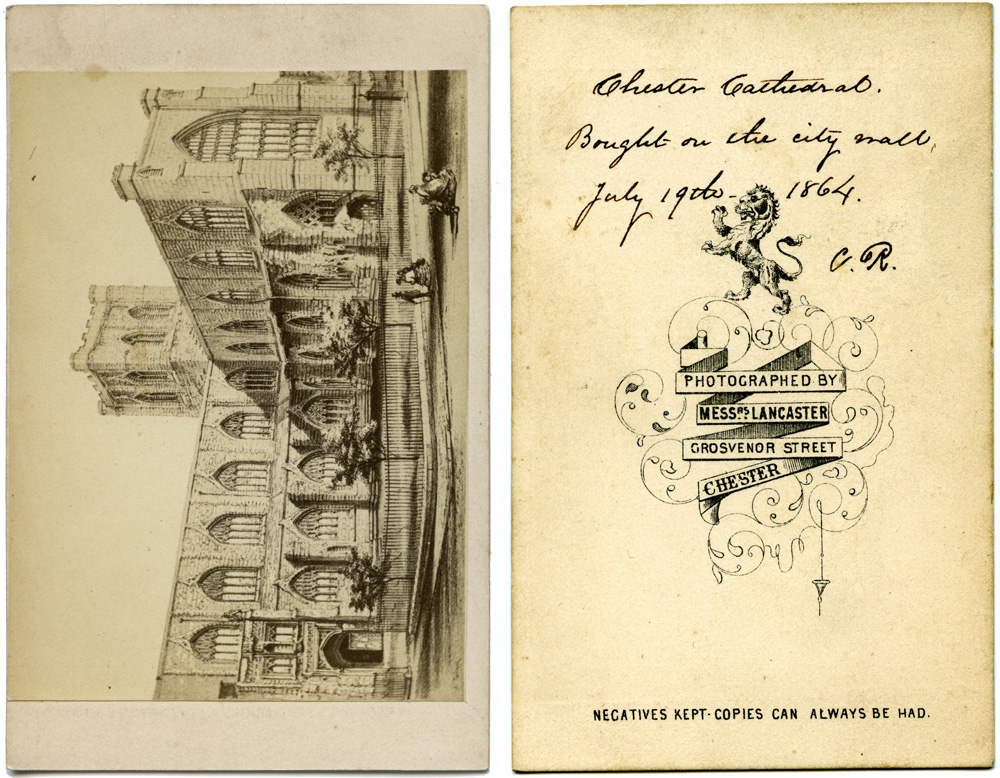
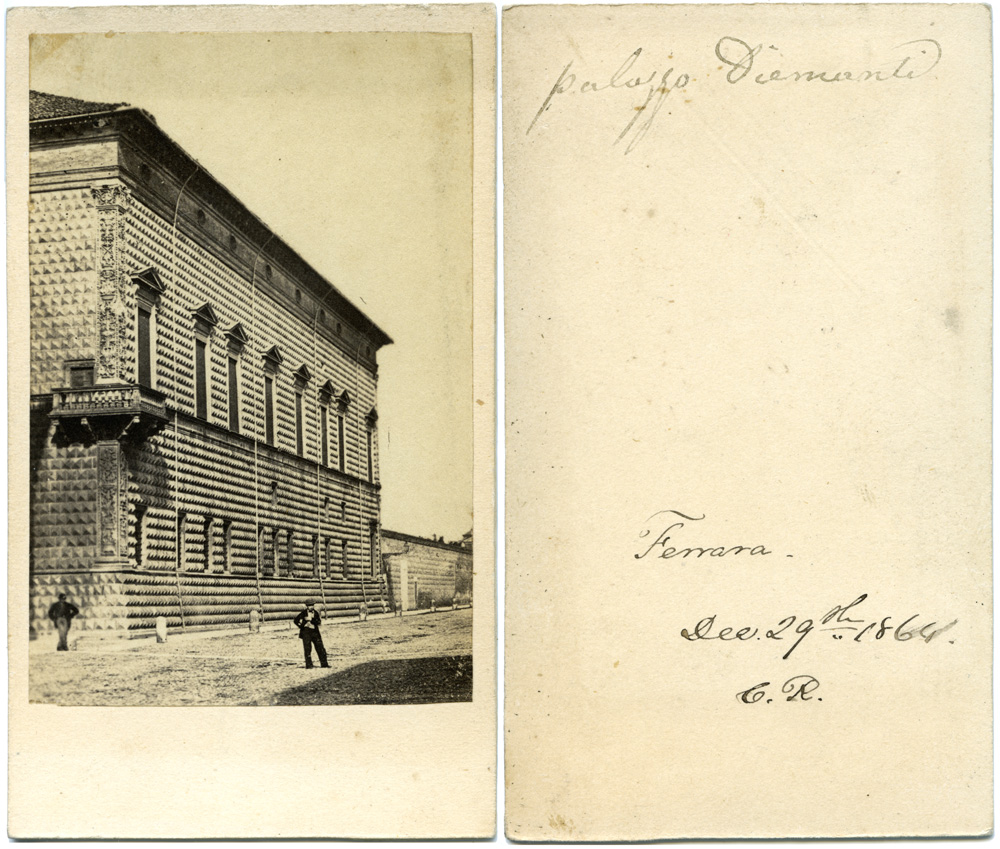
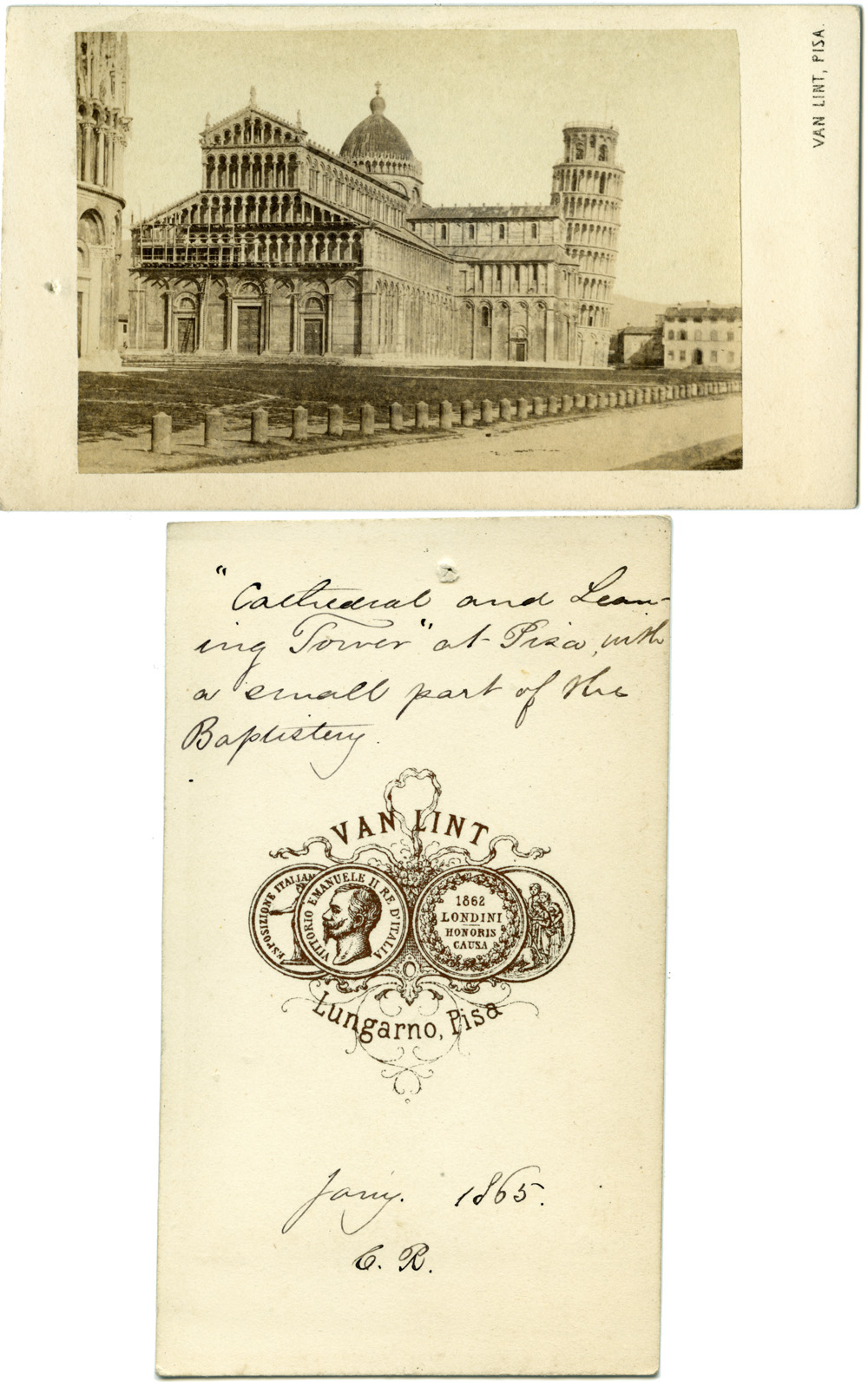
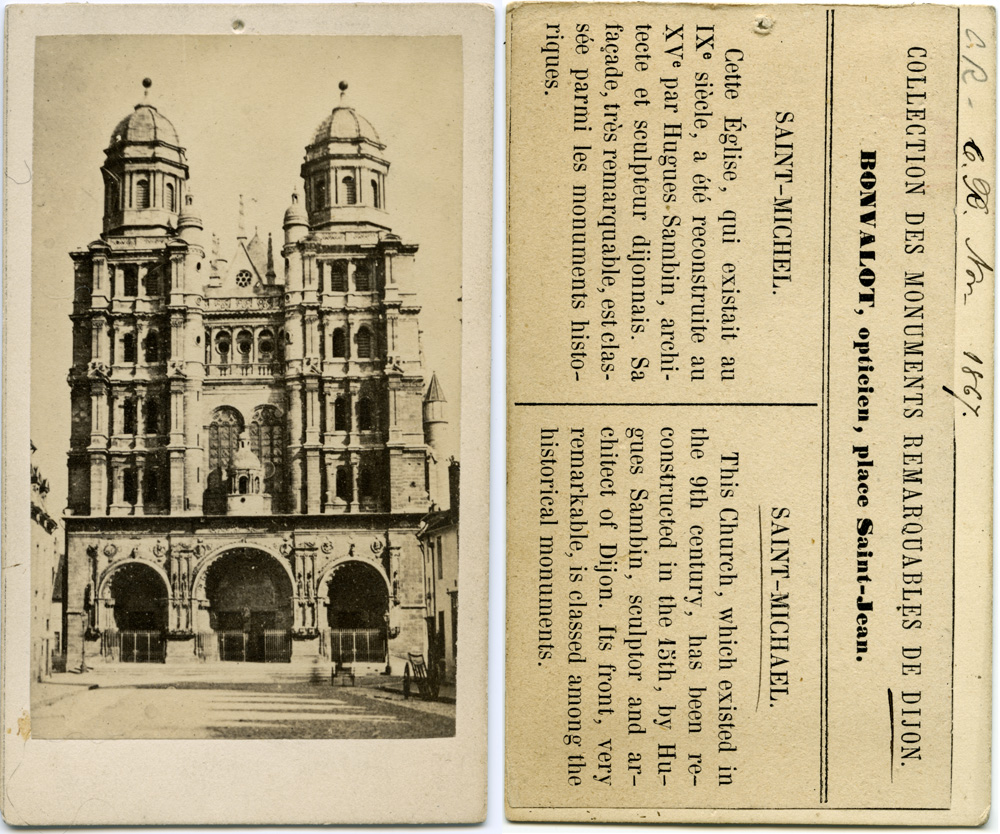
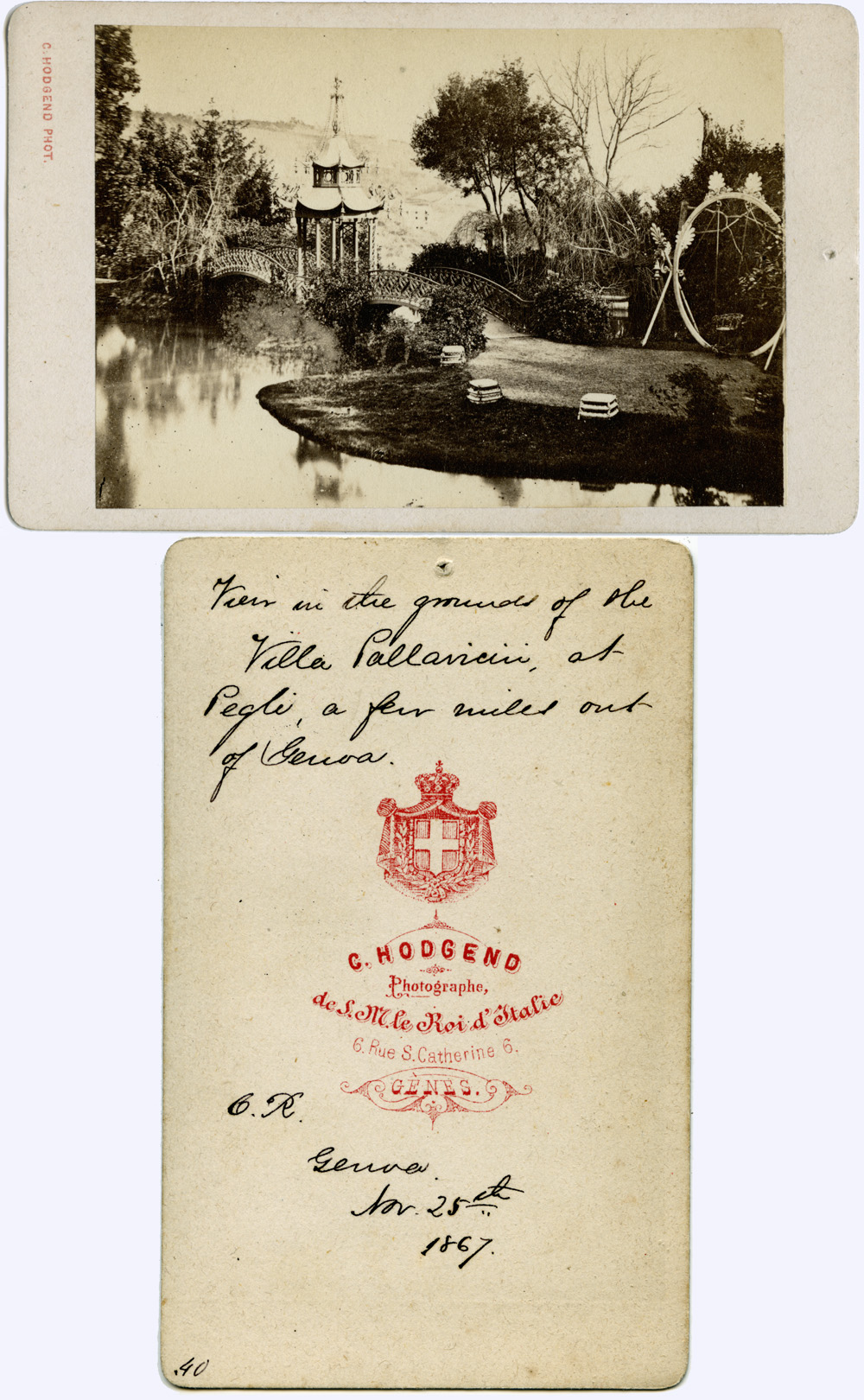
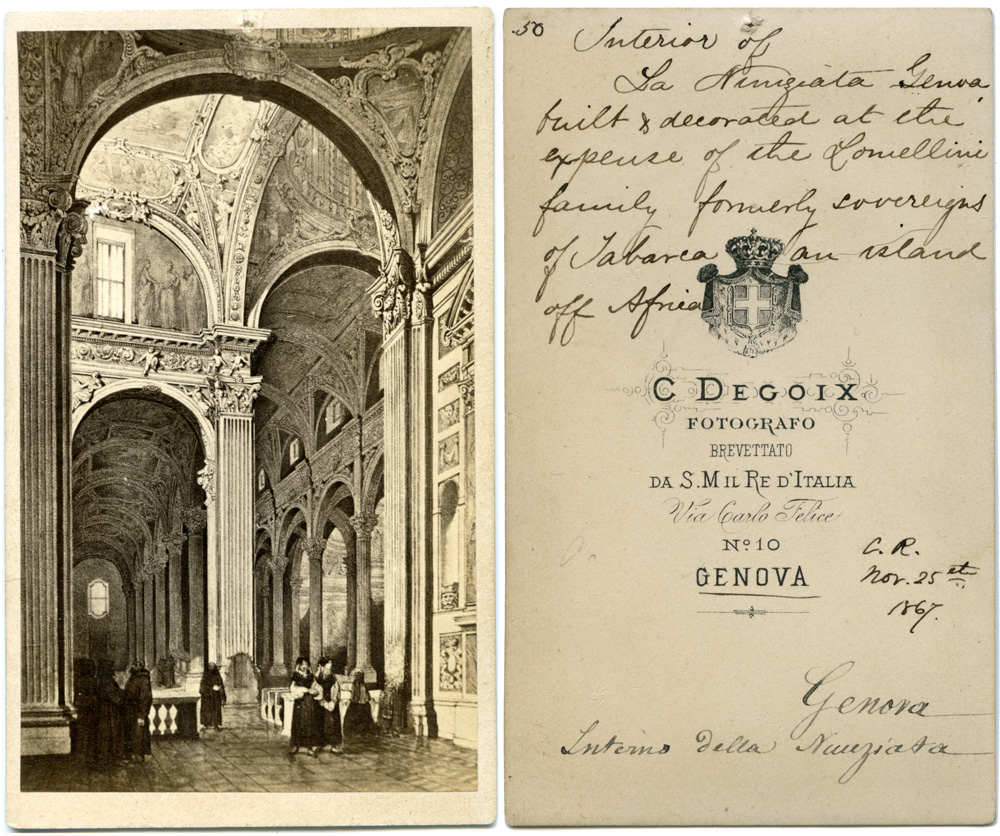
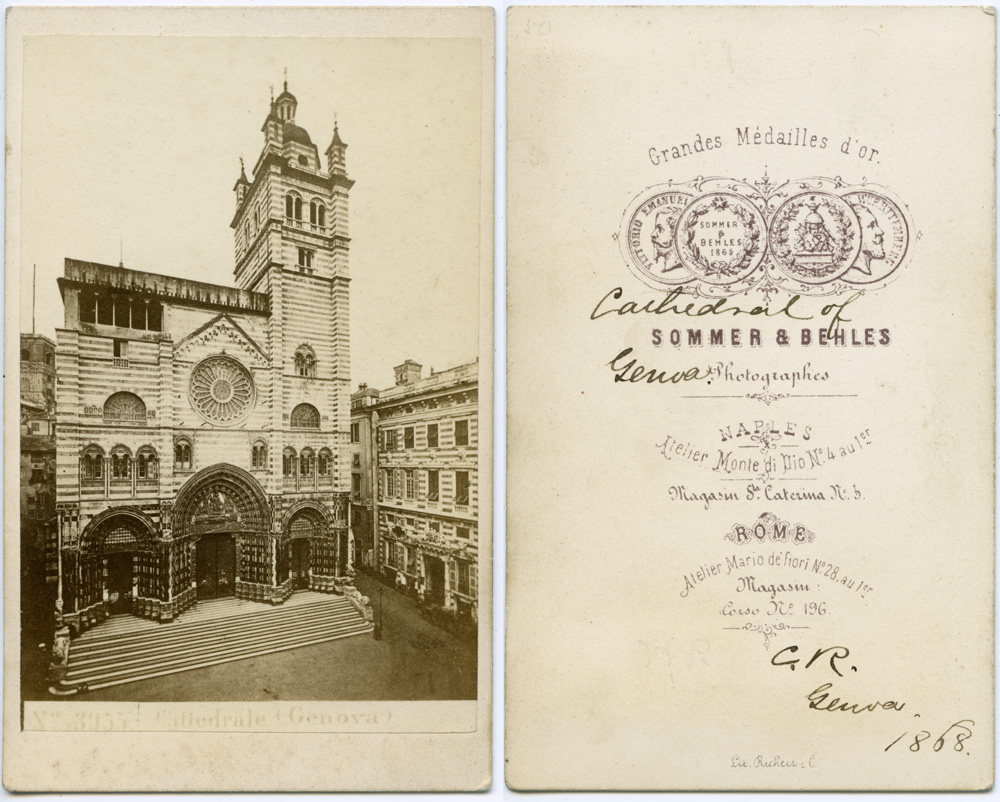
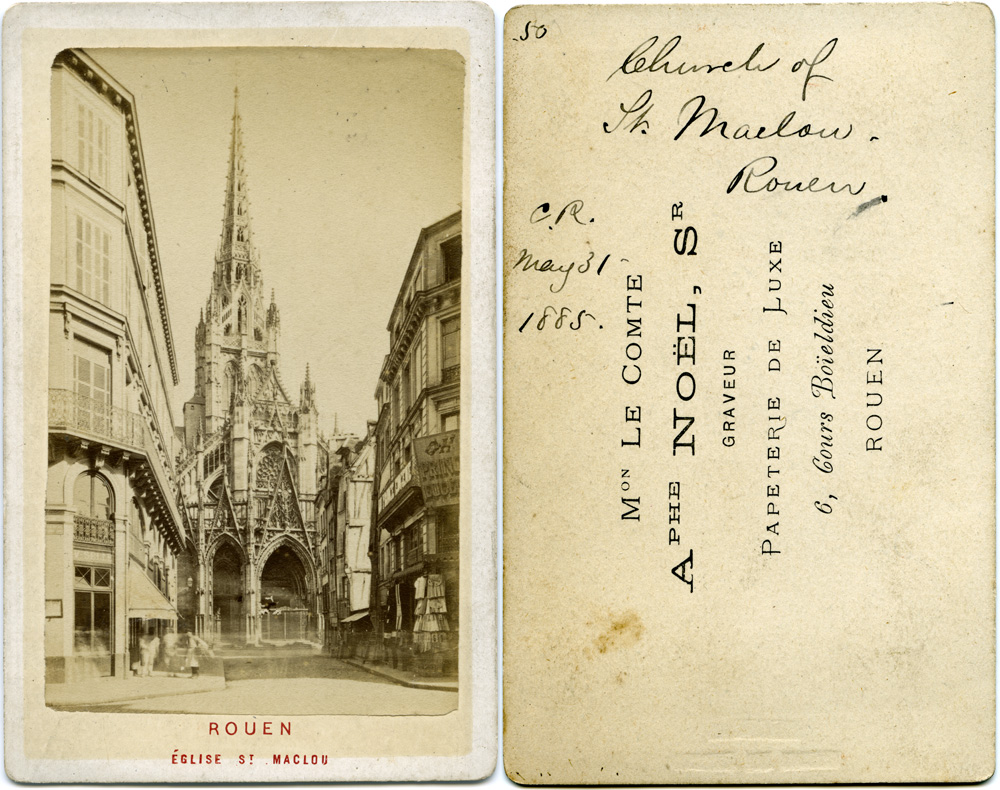
Ok- I managed to succumb to indiscretion and bought the rest of the “C.R.” cartes-de-visite. If you’re new to my blog, I posted earlier about this set of cartes-de-visite a “C.R.” purchased and collected during what I assume was his (not hers) journeys across Europe during and after the US Civil War. It’s a fascinating travelogue spanning three countries and twenty-one years. Two of the images in this second set are in fact photo reproductions of sketches. Given the dates and locations of the earliest ones in the set, one can’t help but wonder if “C.R.” was a Union or Confederate supporter, perhaps even a Confederate agent sent to the U.K. to try and purchase arms and ships for the Confederacy. Or was “C.R.” just a Northern businessperson whose work frequently took him to England, Scotland, France, Italy and Germany (there were one or two more in the set that I was unable to acquire that showed German churches) and had a soft spot for ecclesiastical architecture?
The oldest one in the complete set of nine CDVs dates from July 1864, and the last one is May 1885. Here’s the complete set, in chronological order.
AllowayKirk, Ayr, Scotland, July 16, 1864Chester Cathedral, July 19, 1864Palazzo Diamantini, Ferrara, December 29, 1864The Cathedral of Pisa, January 1865Church of St. Michael, Dijon, France, November 1867Villa Pallavicini, Genoa, November 25, 1867Interior of La Nunziata, Genova, November 25, 1867Genova Cathedral, 1868The Cathedral of Rouen, France, May 31, 1885
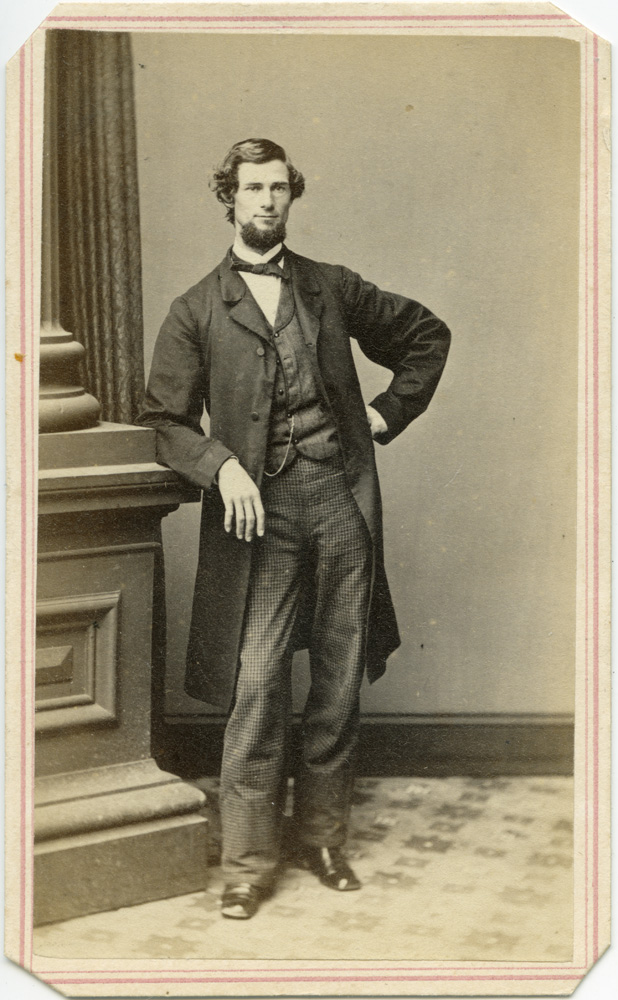
Just a random CDV I acquired, because I have another CDV from the same photographer – R.A. Lewis, at 152 Chatham Street, New York. The address no longer exists – the approximate location is near 1 Police Plaza in lower Manhattan. The street grid was completely ripped up and re-done in that area when 1PP was being built, and so there are numerous streets that either changed names or vanished altogether. This is one of them.
Tall lanky gentleman, R.A. Lewis Studio
I liked the image because the photographer knew how to arrange the gentleman’s pose to show his height in an aesthetically pleasing manner.

 dcphotoartist