All posts by dcphotoartist

Busy photo weekend

This was another really busy photo weekend. Yesterday was a shoot with two models in the studio. Today was darkroom work. Yesterday was interesting – I went in to the studio in the morning to help out one of my studio-mates by shooting with two models he had brought in from New York and Philly to do some portfolio development work with them. The first one to arrive was a bouncing ball of unfocused energy. I suspected there would be trouble as short attention spans and I don’t get along well. Things worked out ok in the end because I got some decent shots with him, but getting there was, well, challenging. Knowing what I know now, would I hire him as an art model? NO. Would he be fine for a fashion shoot or as a fitness model where poses only last 3-5 seconds each? Sure. I hate to stereotype, but this guy lived up to the male equivalent of Cameron’s supermodel girlfriend in In & Out who couldn’t figure out how to use a rotary phone.

The second model arrived shortly afterward, and he and I shot while the first guy pumped up with some resistance bands. Mr. Fitness (I’ll call him that to distinguish him from the second model) wanted to shoot second even though he was there first because he wanted to get pumped up first. That was the first strike against him.

I generally keep a quiet set so I can concentrate on the work and communicate with my model. Mr. Fitness decided he was bored, so bored I had to stop, dig out the iPod speaker dock that belongs to the studio and plug it in for him so he could have some music. He promptly selected some very obnoxious hip-hop that he then played at an intrusive volume level. Not impressive.

My set that day was my first attempt at re-creating after a fashion the old Victorian photo parlor feel, with some IKEA drapes and tie-backs I found at Bed Bath & Beyond pulled out a couple feet from a backdrop. Since my studio is shared, I can’t build anything permanent, but instead the whole thing gets pulled together with some Manfrotto Auto-Poles which just happen to reach the ceiling of the studio with a couple inches to spare. I think the effect is working, although I’d still like some bigger tassels on the tie-backs. See some of my previous posts here from my collection of CDVs for examples. Images from the shoot will follow. One set of images I did of each model had them posing clothed and nude in the same pose. It’s a visual riff on the standard CDV portrait concept, but with of course modern attire, and then pairing it with nudity, certainly something you wouldn’t see in most Victorian CDVs. I also had some fun posing one model with a neat Art Deco floor lamp we have sitting around the studio.

I did run into some major frustration with gear, as the shutter on my preferred lens, the 240mm Heliar, decided it wasn’t going to trigger my studio strobes anymore. Adapt and overcome, a-la the US Marines – I pulled out another lens I have of the same focal length, but mounted in a modern shutter that never refuses to trigger my strobes, and carried on. Can I entirely fault the Heliar? Not really – perhaps it’s too much to expect that it trigger the strobes reliably, after all the shutter is nearly 70 years old. I’ll feel lucky if I work as well as that shutter when I’m 70.

Mr. Fitness capped the day off by not listening to directions while helping me strike the set so my studio-mate could get his backdrop and lighting arranged. He managed to completely release the background support on his side of the background, dropping it from maximum extension to fully collapsed in the blink of an eye, wrinkling the seamless paper and bending the pin on the other background support. To his credit, he did apologize for wrinkling the seamless.

Today was a big darkroom day. I started the morning off doing a major cleaning in the darkroom. I had been accumulating all these chemical storage bottles from back in the day when I did enlarging onto silver gelatin paper. I went through all of them, pouring the thoroughly exhausted remains of several batches of Dektol and Ansco 130 down the drain, followed by copious amounts of water. Most of the other bottles were fortunately empty. They all got packed up in plastic storage bins and put in the downstairs bathroom. Now I have enough space that I can put all my print developing trays under the sink when I’m running film in the Jobo, and the Jobo has a place to live other than the hall floor when I’m printing. Have I said before how tiny my darkroom is? It’s about 7′ by 8′, with a 6’3″ ceiling. It works quite well under the circumstances. Having gotten that out of the way, I ran four batches of sheet film in the Jobo. 15 sheets of 5×7 and four sheets of whole plate. I’ve got one more batch of 5×7 from Saturday to run, then I’m all caught up, and ready for NEXT weekend! I’ll go from a souping fiend to a printing fiend for the rest of October.

CarbonWorks Blog by Richard Sullivan, FRPS

I wanted to put in a good mention for Richard Sullivan’s new blog, CarbonWorks. Richard is a brilliant photographer and photo chemist, co-founder of Bostick & Sullivan, the premier source for all things alt-process. I found his blog today and was reading up on some innovations he has discovered and published, including the Athenatype (a silver-based printing technique that yields a near-platinum print look) and a fumed silica treatment for alt process printing that helps boost dmax (maximum black density) a common shortcoming of many antique processes. Richard has been honored as a Fellow of the Royal Photographic Society for his work in reviving alternative/antique photographic processes and for inventing new variations on the same, specifically the Ziatype, a printing-out process variant on Platinum/Palladium. He is a master carbon printer (thus the blog title). He also teaches non-silver processes at Santa Fe Community College. Give the blog a read, and follow it if you’re interested in anything antique photo process related!

Dates announced for Platinum/Palladium printing Demo, 11-09-2011 at Photoworks Glen Echo

I will be doing a live demonstration of the platinum/palladium printing process at Photoworks in Glen Echo, Maryland as part of the FotoWeek festival. The date and time has been finalized – Wednesday, November 9, from 7-9 PM. Topics to be covered include: tools, paper, chemistry, coating techniques, processing, contrast control and altering image color. The session fee is $40. The session will be held in the upstairs classroom in the Photoworks facility.

Photoworks location and directions

Busy weekend in the studio

This weekend was a really busy weekend in my studio. I was supposed to have a shoot on Saturday. The model I had made arrangements with cancelled on me, but with more than reasonable advance notice, so I’m not pissed off about it – he gave me two days heads up. I’ve had some models flake out two hours ahead, some an hour after the shoot was supposed to start, and some who never bothered to call or cancel (that was the previous weekend, for example). I was talking to my studio-mate who had the studio booked for Sunday, and he said, “I’ve got two models coming in on Sunday, why don’t you work with them before I get there? I need someone to keep them occupied, and it’ll be a big help giving them a chance to work with someone who has a very different style of shooting, because they’re new to the business”. I was more than happy to help out, as it meant free models for me, and I’d be helping out a friend anyway. Since I had the studio booked for Saturday anyway, I went in and did some still life work using a flower I bought whose name escapes me but looks like a cross between a leafy cactus and a gigantic q-tip. I left my stage setup I had created (I took the old curtains I had from the previous studio and made a little ‘stage’ setup for a backdrop) for Sunday, as I thought it would be great to work with the models as well.

WELL, thus go the best laid plans of mice and men. I get in to the studio Sunday morning, meet the first model, Justin, a 6’4″ ex- football player, and get ready to shoot. On the third test pop of my flash, what happens but one of the capacitors in the power pack goes tits up. And I don’t have my own backup. I call my studio mate who is coming later, and he says just use his, which happens to be compatible with my accessories. So another half-hour goes by digging out his flash unit and setting it up. We do get on with the shoot, and once things get moving, it goes well. Justin is a good model and understands how to create dynamism in his body – I had no trouble setting him in poses that accentuated his physique and worked well with the somewhat exotic format I was shooting in – I was trying out the 5×12 for human figure work, mostly shooting verticals. Working with me, from a models’ perspective, is a real challenge and a physical workout because I need them to hold poses for an extended period of time while I compose each shot. I’m not shooting like a typical fashion photographer who likes to ‘run-n-gun’ and fire off hundreds of photos in an hour. I think with Justin, in about 1 1/2 hours, we took 8. I had him holding a pose for sometimes four or five minutes while I played around under the dark cloth.

My studio mate is a good friend (loaning me his strobes is an instant qualification!), but he’s a bit frantic. He’s a fashion photographer and likes to run-n-gun, for one thing, and he’s just a bit keyed up all the time anyway. Fortunately Justin and I wrapped our shoot just before he and the other model got there. The other model is a college student named Peter, (only) 6’2″, and about 2/3 the body mass of Justin. Peter was tragically late because of traffic and poor directional sense. What he lacks in timeliness, he makes up for in facial features. He’s one of those models who looks relatively ordinary when you pass him on the street, but when you see him through the camera lens, his face just screams High Fashion (that’s actually a good thing). They set up and shot while I went to the Nationals game with my father. When I got back, they were still there, and since my set had been taken down, we did a few shots in the air shaft outside the studio, which has a really cool steel security door and lots of exposed brick. Another great thing about shooting in the air shaft is that because it has these nice tall walls, you get beautiful soft indirect light from overhead – like a north light window. It’s very even, very consistent – you can meter once and not have to re-meter for hours. Reflectors are very helpful though because it is a top-down light and makes people into sunken-eyed zombies if you don’t bounce a little fill on their faces.

In talking to Peter about the poses I was looking for, I asked him to do a nude. I knew because he was agency represented that frontal nudity was a no-no, so I explained the pose would keep his intimate parts covered, and he was fine with it, but then he asked if he could cover himself with a sock. I find the whole ‘hide it in a sock’ business to be laughable – I’m not there to stare at your anatomy, and if someone IS nude in real life, do they ever run around with a sock on their penis? NO. We got that out of the way and went on. I did some head-shots of him with the 5×7 Canham, getting to put some film behind the 240mm Heliar I have for the first time with a human subject. The image on the ground-glass positively glowed! The shallow depth-of-field at f5.6 just made the features that were sharp SNAP, and the brick wall in the background looked like a painting seen through running water, it was so smooth. I’m DEFINITELY taking this outfit with me when I go out west for some figure-in-the-landscape shooting!

When I shoot, I’m used to shooting all by myself, no assistants, no “creative input” from other photographers. Sometimes having the helping hand is very welcome (adjusting lights, etc). Other times, not so much. My studio mate was watching the shoot with Peter, and while I was still arranging a pose, he had to jump in and start directing the model because he had this love handle that showed up only when in a certain kind of pose. I would have seen it and adjusted his pose, but I didn’t get the chance. GRRRR. And then, to make matters worse, I wasn’t done shooting before my studio mate mentioned a shot he wanted to do in the air shaft as well, and boom, the two of them were off doing their own shot. Moral lesson here – assistants are fine, but two principal photographers probably shouldn’t share the set – too many chefs end up putting someone’s finger in the chili.
Busy Week in Collecting, Part 3 – more “Gay Interest” tintypes

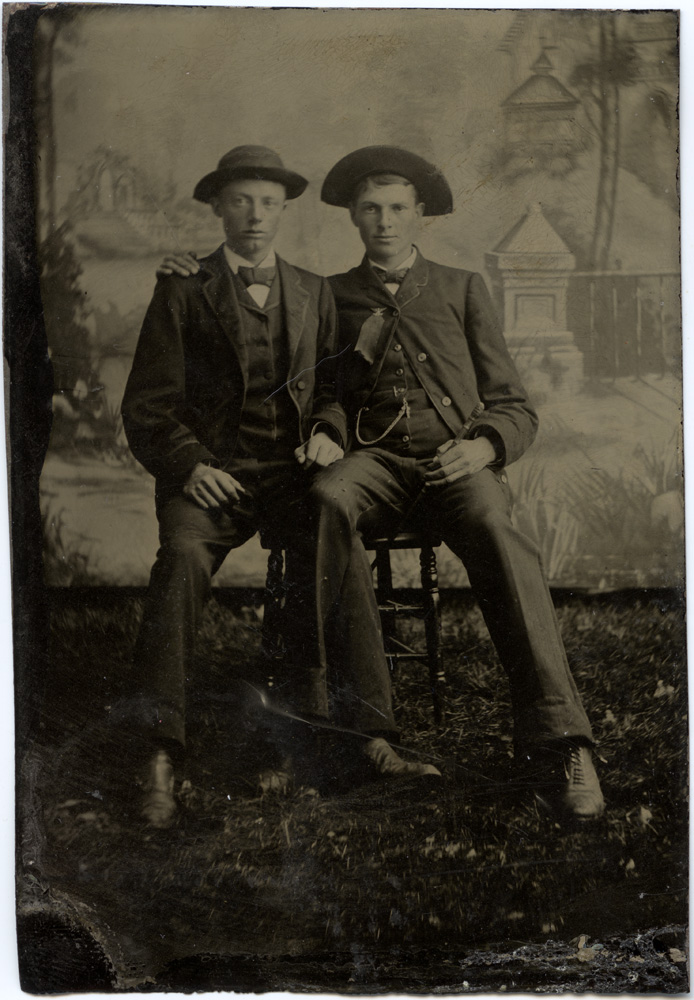
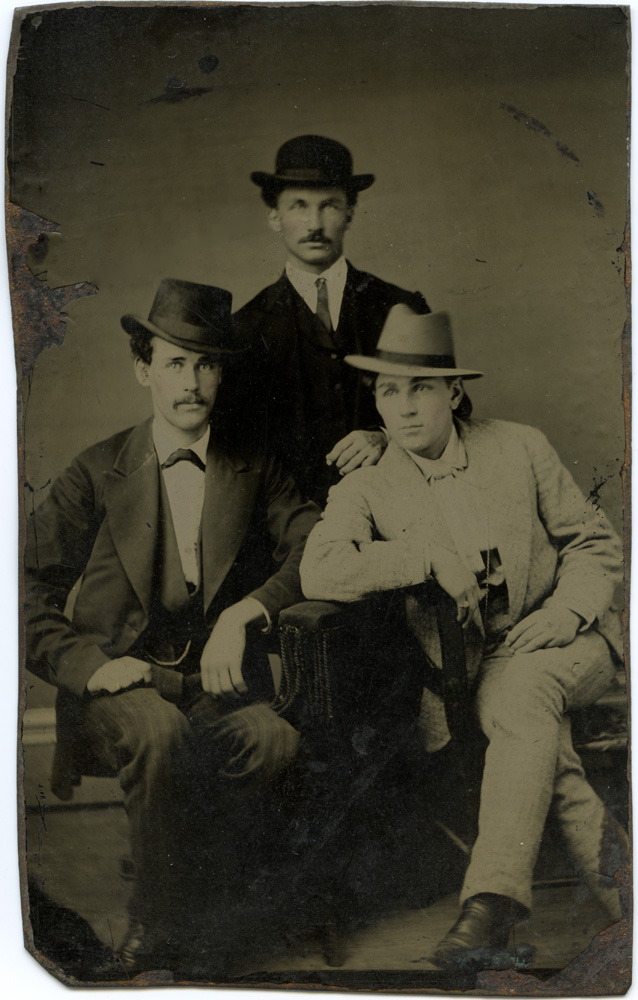
As I’ve said before, you can’t really call these images that get sold as “Gay Interest” “gay” because the concept as we know it today didn’t exist in the 19th century. Men have always been physically and emotionally intimate with each other but the concept of two men (or women) living together in an emotionally intimate bonded relationship for life (or at least serially to the exclusion of the opposite sex) is very much a late 20th century concept. They are interesting though because they suggest possibilities – the absolute anonymity of the images leaves open the questions and suggestions to the modern imagination of what might have motivated the sitters to pose together, and particularly in the very openly affectionate and intimate way that they did.

Tintype, Two Affectionate Pals (Brothers?)

These two men are very affectionate with each other. Their very similar appearance suggests they may be brothers, or they could just be very close friends. Quite possibly they were battlefield friends – the one on the right appears to be wearing a Grand Army of the Republic campaign ribbon. This may well have been taken at a unit reunion in the years following the war – note the photo was taken out of doors, on the grass, in front of a painted backdrop. I’m always interested to find images like this because it says so much more about the sitters than does a strictly studio portrait – there was some event occurring at which they wanted to record and remember their presence, and document their relationship. What was this event? Why use the painted backdrop instead of the landscape scene at the location?

This next image is even more ambiguous than the first one. Obviously from the fashions, a later image (end of the 19th/beginning of the 20th century).

Tintype, Three Dandys

Again most likely just three friends, but the possibilities and suggestions are more ripe with potential for a late 20th century interpretation. The most interesting bit is the juxtaposition of the very fashionable dandy with the light suit with the staid middle-class burghers to his right and behind. Who was the dapper dandy, and what was his relationship to these gentlemen? Was he a foreign friend, visiting from overseas? Some exotic celebrity they had the good fortune to corral into posing with them, the 19th century equivalent of the cell-phone snap on the red carpet with a movie star? Certainly, the posing would have largely been the result of the photographer’s efforts to fit all three of them in the frame together, but the contrast between the dandy and the seated burgher couldn’t be more striking than if he were naked.

Busy Week in Collecting, Part 2 – various CDVs, including celebrity photos

Here for your viewing pleasure are three random CDVs. The first one I don’t have a lot to say about because the sitter is unknown. The photographer is William Shew, who began his photographic career on the East Coast, then moved out to San Francisco in 1851 to capitalize on the gold rush. He began his career as a Daguerreotypist, and his first studios in San Francisco were a mobile wagon parked in the plaza at Kearny between Clay and Washington streets – now Chinatown (which I hope to photograph the location as it appears today while I’m out in San Francisco on vacation). He was one of only three photographers in San Francisco at the time.

Anonymous CDV by Willam Shew, San Francisco

The next pair of images come from the mid-19th century cult of celebrity. Although both cards are not marked as to their photographer, there is a good probability that they were taken by the Brady studio, which was known for such subjects, and both had been photographed on other occasions by Brady. The first is Henry Ward Beecher, the prominent preacher and abolitionist and brother to Harriet Beecher Stowe, author of Uncle Tom’s Cabin and according to Abraham Lincoln, “this little lady whose book started this great big war”.

CDV of Henry Ward Beecher, photographer unknown (probably Brady)

This one may NOT be Brady’s, because the set is so plain – even the hat stand/support prop is rather simple for Brady’s studio, and oftentimes public figures of Beecher’s status would be invited to sit for their pictures whenever they visited a new town. These cards were the sports trading cards/Tiger Beat posters of their day, and people would collect them in albums to show off when friends came to visit.

The last image is another of Commodore Nutt and a woman who is unidentified, but another little person. It MAY be Minnie Warren, sister of Lavinia Warren, ex-sweetheart of Commodore Nutt who went on to marry General Tom Thumb in the Fairy Wedding (see previous post), but she appears smaller of stature than Minnie. It is also NOT the Commodore’s wife, who while below average height, was not a dwarf. Again, an anonymous image, but very much in the same vein. It may be possible to identify the photographer from the backdrop of the image. The custom backdrops like this were often like fingerprints or signatures for individual photographers’ work – the painted backdrops were often custom-made and very expensive, so they show up over and over again.

Commodore Nutt and unknown little woman, Anonymous CDV (probably Brady)

Note the feet of the posing clamp stand showing from behind the girl/woman. I love finding images that show the stand – it’s a bit of a reminder how the image was made. These would all have been shot in daylight studios on wet plate collodion negatives, which meant that the subjects still had multi-second exposures to hold still for.

Palladium Printing at Large Sizes

If any of you out there have ever done alternative process printing, you’re probably aware of the increase in technical difficulty that comes along with making bigger prints. Each size up adds a new wrinkle, especially when it comes to getting an even, consistent coat. It certainly helps to have a good paper that facilitates a consistent coating via sizing, baryta, or other pre-treatment. Another very important step is using the right brush. I’ve become very fond of the Richeson 9010 “Magic” brush for a good reason – the Richeson brushes have earned their name “magic” by the way the bristles are designed, they just make it easier to coat evenly and smoothly without disturbing the paper surface. They’re worth the price you pay for them from the savings in coating time, reduced re-prints, and hair not pulled out in frustration.

Especially when getting into platinum/palladium printing, most novice printers are extremely cost-conscious. After all, a basic pt/pd kit to make roughly 30 8×10 prints costs in the range of $200 today. And that’s just for the chemistry. However, you’ll quickly learn that there is such a thing as false economy. While printing at smaller sizes, it’s fine to try and economize on your coating solution to see if you can still coat the entire image area. If you under-coat, it’s painelss enough to toss a bad print and start over. All that goes out the window when you start printing bigger than 8×10. Better to be generous with the chemicals until you KNOW your requirements for your paper and your image size, otherwise you’ll be throwing away blotchy, uneven print after blotchy uneven print until you get one. A couple extra drops of palladium or platinum “wasted” will cost you far less than an entire 14×17’s worth that turned out poorly. I was printing some 14×17 prints this week and I realized at the current prices for materials, I was somewhere in the region of $30-40 per print, my cost. You don’t want to mess that up.

When I coat prints that big, I usually mask the edges of the coating area for several reasons. One: I’m using a 3″ or bigger coating brush. Watercolor wash brushes that big are not precision instruments capable of stopping on a dime and not slopping chemistry around. Two: I like nice clean white borders on my paper unless I’m aiming for that ragged, handmade look. Three: the masking tape helps keep the paper in place while coating so it is easier to brush on an even coat of emulsion. One of the challenges of masking is preventing the paper from adhering to the masking tape and tearing when you lift it off. To that end, I’ve found that the 3M “delicate surface” blue painters tape works best. It’s still not a 100% solution, because even when I’m being what I think is careful, I will have the odd occasion where the tape sticks to the paper a little too much and a layer of the paper surface comes up with the tape. I prefer masking with tape during coating to using rubylith to mask while exposing because the rubylith mask just prevents the emulsion from being exposed. You still have to clear the unexposed chemistry out of the paper and if your paper is particularly binding and/or your clearing bath is insufficient, you’ll end up with a rather embarassing looking stain on the paper around your image area. The 3M tape is cheap enough, don’t skimp and try to go cheap. Throw away your tape and pull new strips with each print – again false economy if you try to re-use it, as you run the possibility of contaminating your new print with old chemistry. At potentially upwards of $40 per print, is it worth it trying to save money on $0.10 worth of tape?

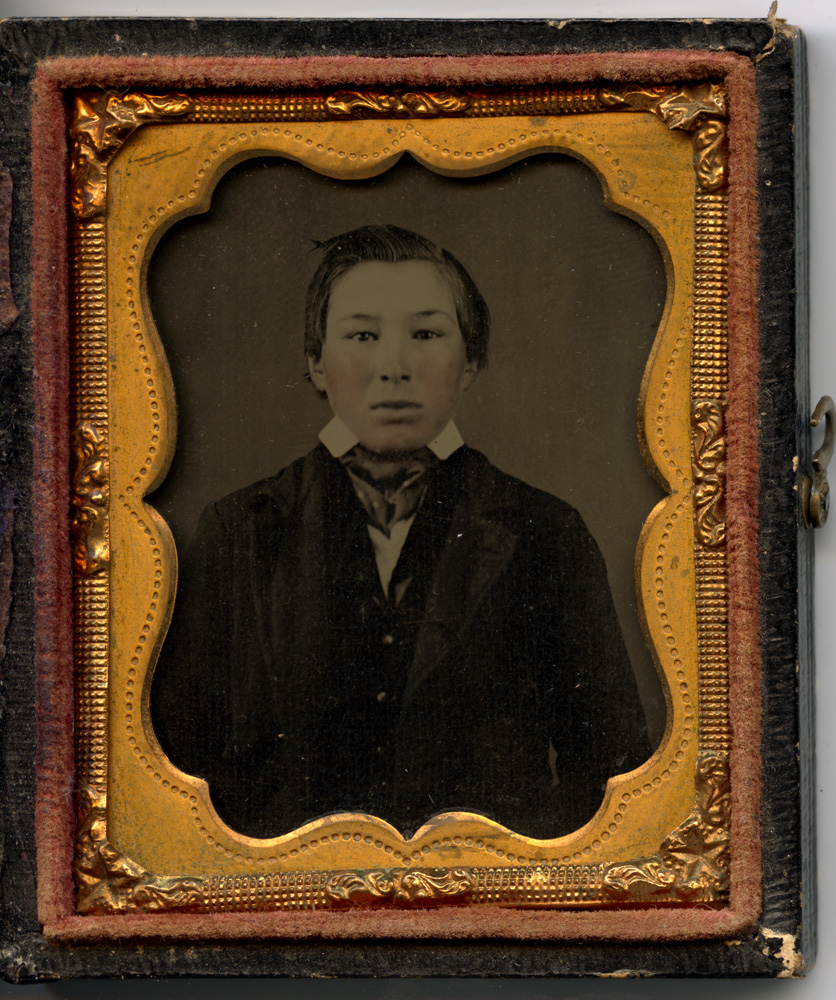
Busy Week in Collecting, Part 1- Penobscot Indian Boy

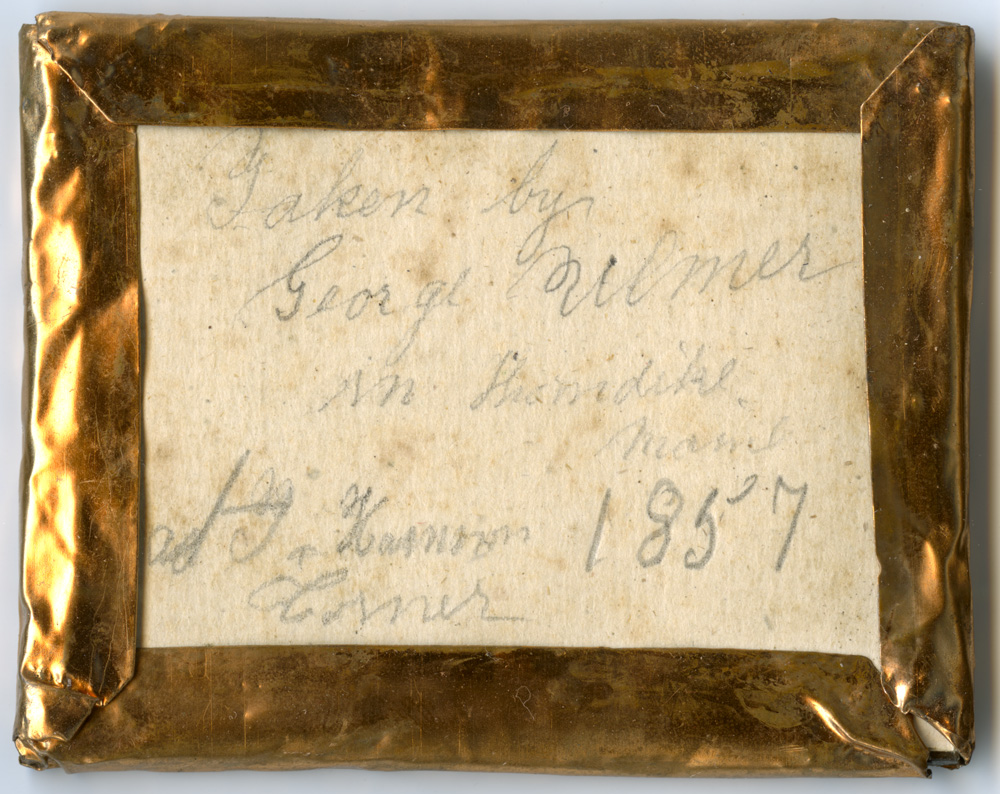
This was a wonderful find – a photo of a Penobscot Indian boy, in Anglo attire and haircut. A 1/9th plate ambrotype in a half case. Most fortunately, when the packet is removed from the half case, there is some attribution to the image. The subject himself remains unidentified, but the photographer put his name, location, and the date taken on the back. It appears to be George Ulmer(Bilmer?Kilmer?), in Thorndike, Maine 1857 At T & Harrison Corner. T could be short for Thorndike Road. If anyone has any information about an Indian School in Thorndike, Maine in the 1850s, or even better can point to attendance records, I would be eternally grateful.

FotoWeek DC events at Photoworks in Glen Echo

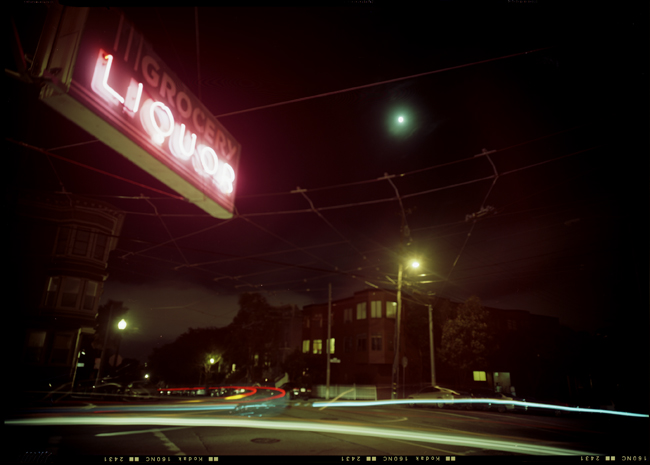
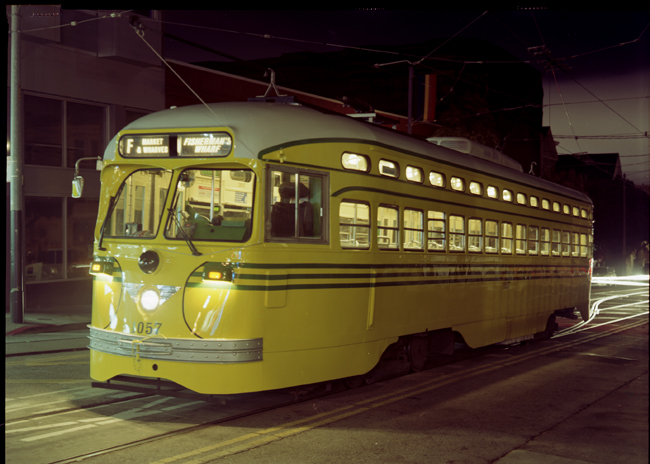
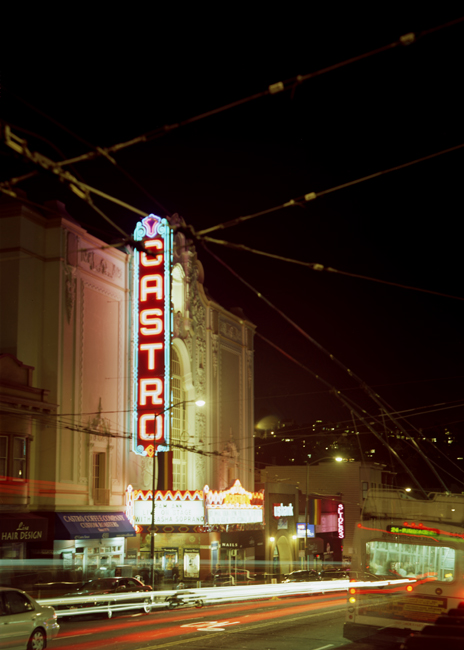
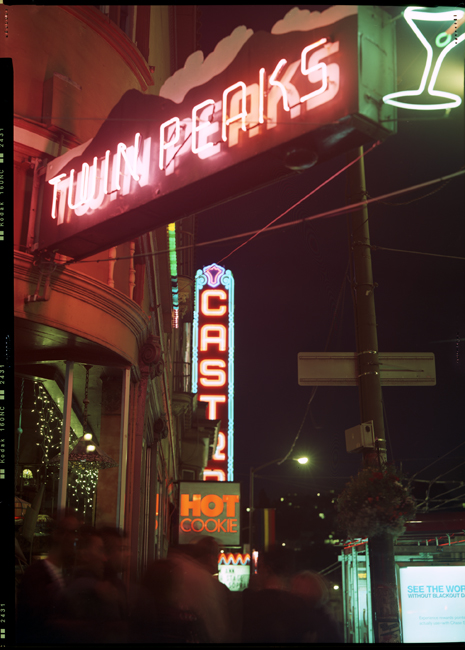
Photoworks in Glen Echo, Maryland (just outside Washington DC) will be putting on a slate of events as part of FotoWeek DC from November 5-12, 2011. I will be participating in the alternative process show-and-tell on Sunday, November 6, from 11AM to 4PM. I will be showing selections from my recent body of work of DC at night, all shot on large format film.

I will also be giving a platinum/palladium printing demo later that week (date/time to be determined) – admission is $40 plus a $10 materials fee. Here is the slate of presenters and schedule for November 6. I encourage everyone to come out and see the show, and if you’ve never been out to Photoworks before, please come check it out, it’s a lovely facility in the terrific (and photographically ripe) setting of Glen Echo Park, which is part of the National Park Service!

For more information about the park and its cultural, social and educational activities for people of all ages, here is a link to the park’s website:
Glen Echo Park

11:00 11:30 Barbara Maloney Intro/Temperaprint/Photoetching/Cyanotype
11:30 12:00 Scott McMahon Gum bichromate
12:00 12:30 Scott Davis Platinum/palladium
12:30 13:00 Sheila Galagan Lith Printing
13:00 13:30 Andrew Currie Tintype
13:30 14:00 break
14:00 14:30 Grace Taylor Vandyke brown
14:30 15:00 George Smyth Bromoil
15:00 15:30 Keith Williams Monobath/IR/UV
15:30 16:00 Richard Pippin Lith Printing

A few shots from Sunday

I went out on Sunday evening with a friend of mine to do some shooting over at the old mill ruins at Rileys Lock along the C&O Canal. The ruins are buried in the woods, and a popular hangout for teenagers looking to paint some graffiti or smoke or sit silently next to each other playing on their cellphones. You know, usual teenager stuff.

Climb Me
Climb Me

I loved the accidental humor of the vine following the instructions on the graffiti here.

I was still playing around with my new-to-me Canon 135 F2 L lens, and here are some examples of what it can do. The first shot is the canal house at the Riley’s Lock viaduct. I was intrigued by the play of shadows from the nearby tree on the stone wall. After getting home and downloading the shot onto my Mac, I looked at it and thought, “there’s some better, more interesting shots within this” so I made a couple crops, which I’ll show below. Comments and thoughts greatly appreciated.

Canal House Windows
Canal House Windows

Here’s the full-frame original shot.
Canal House Window, Left

Canal House Window, Right

And last but not least, the brownstone rail end with a dedication chiseled into it.

Viaduct railing end pillar