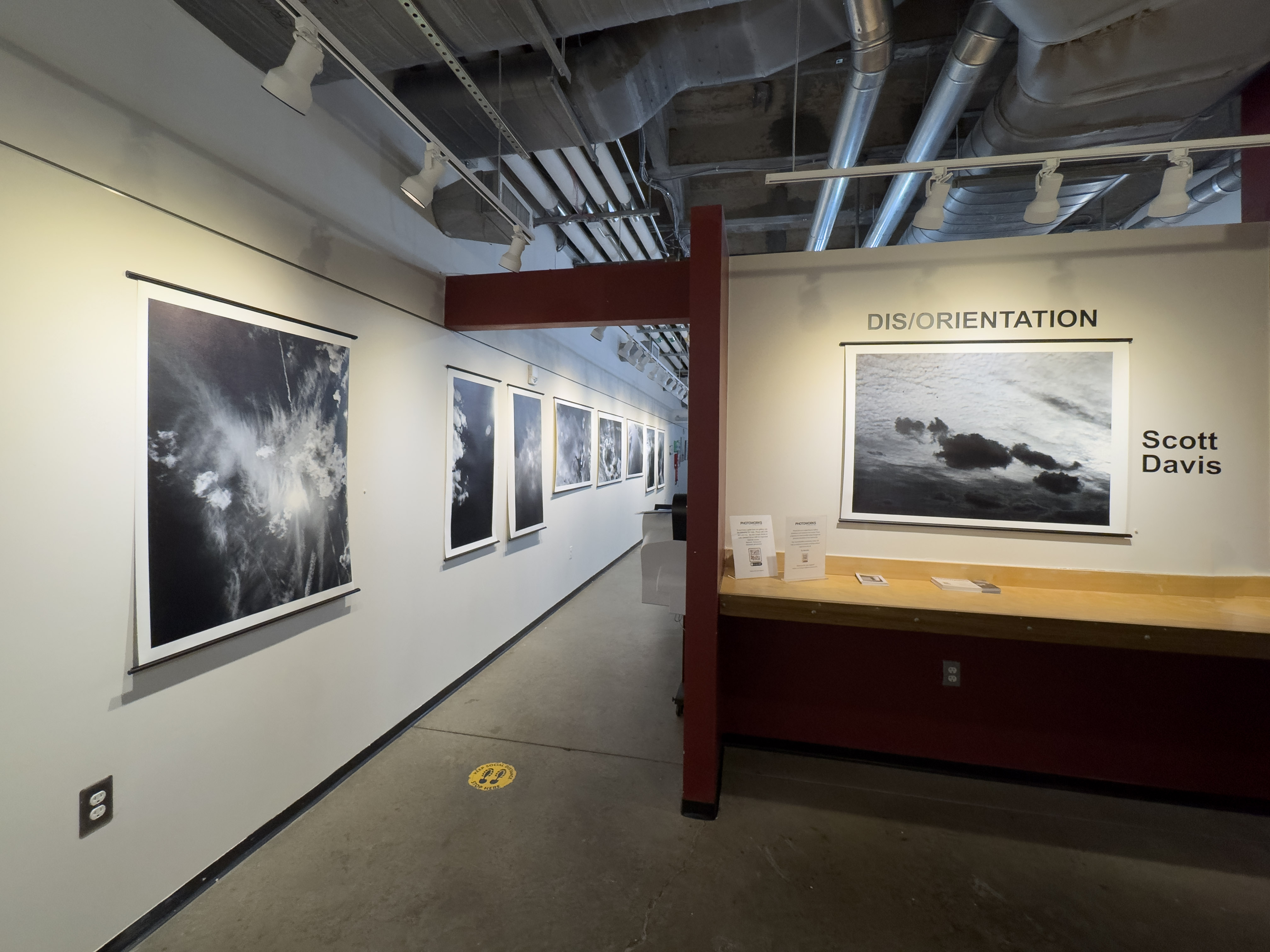
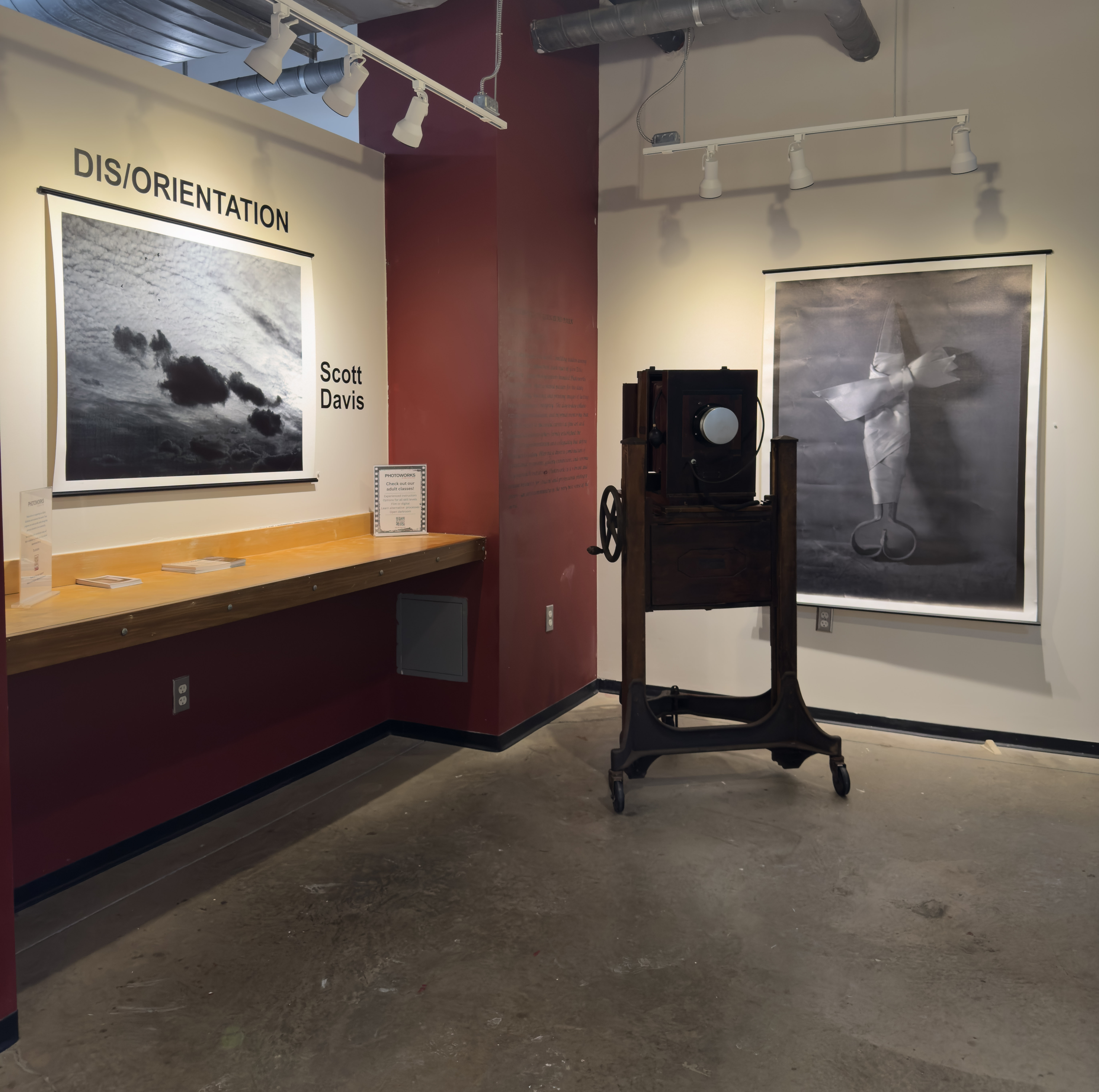
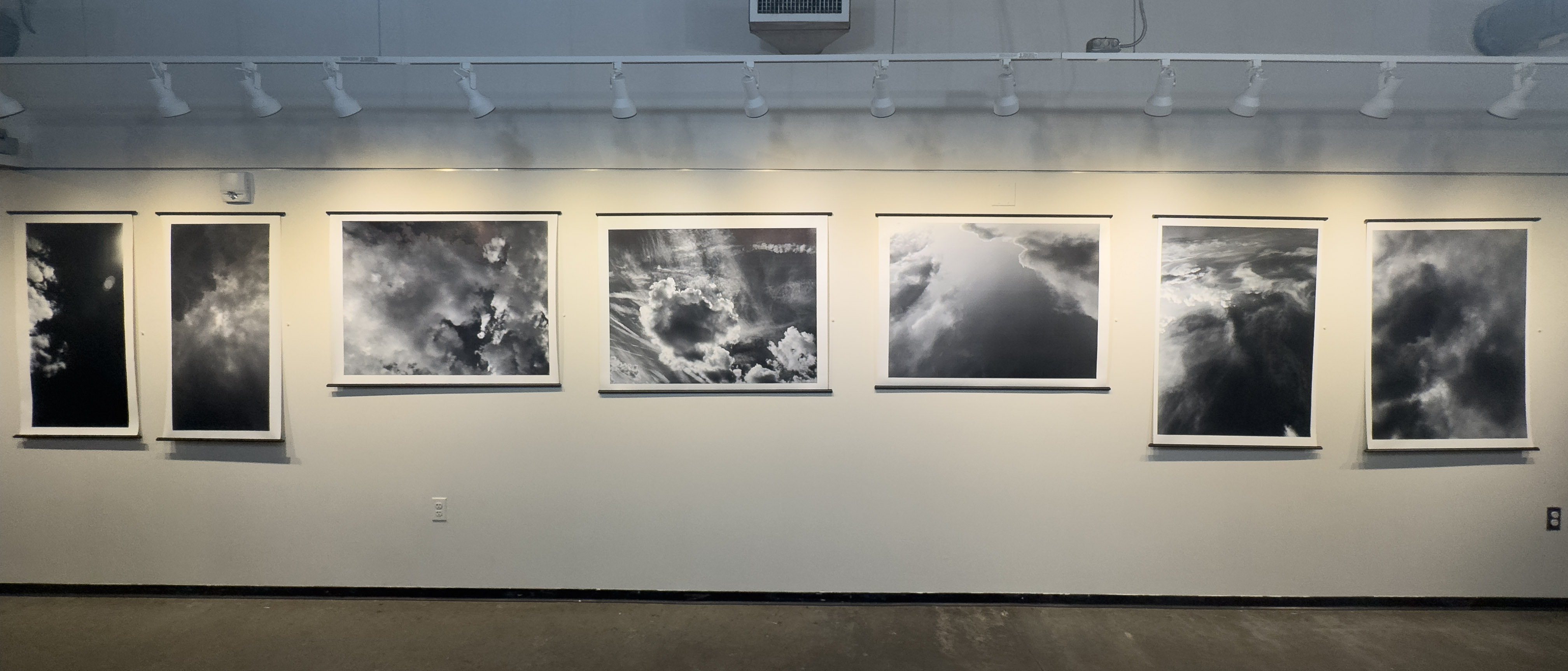
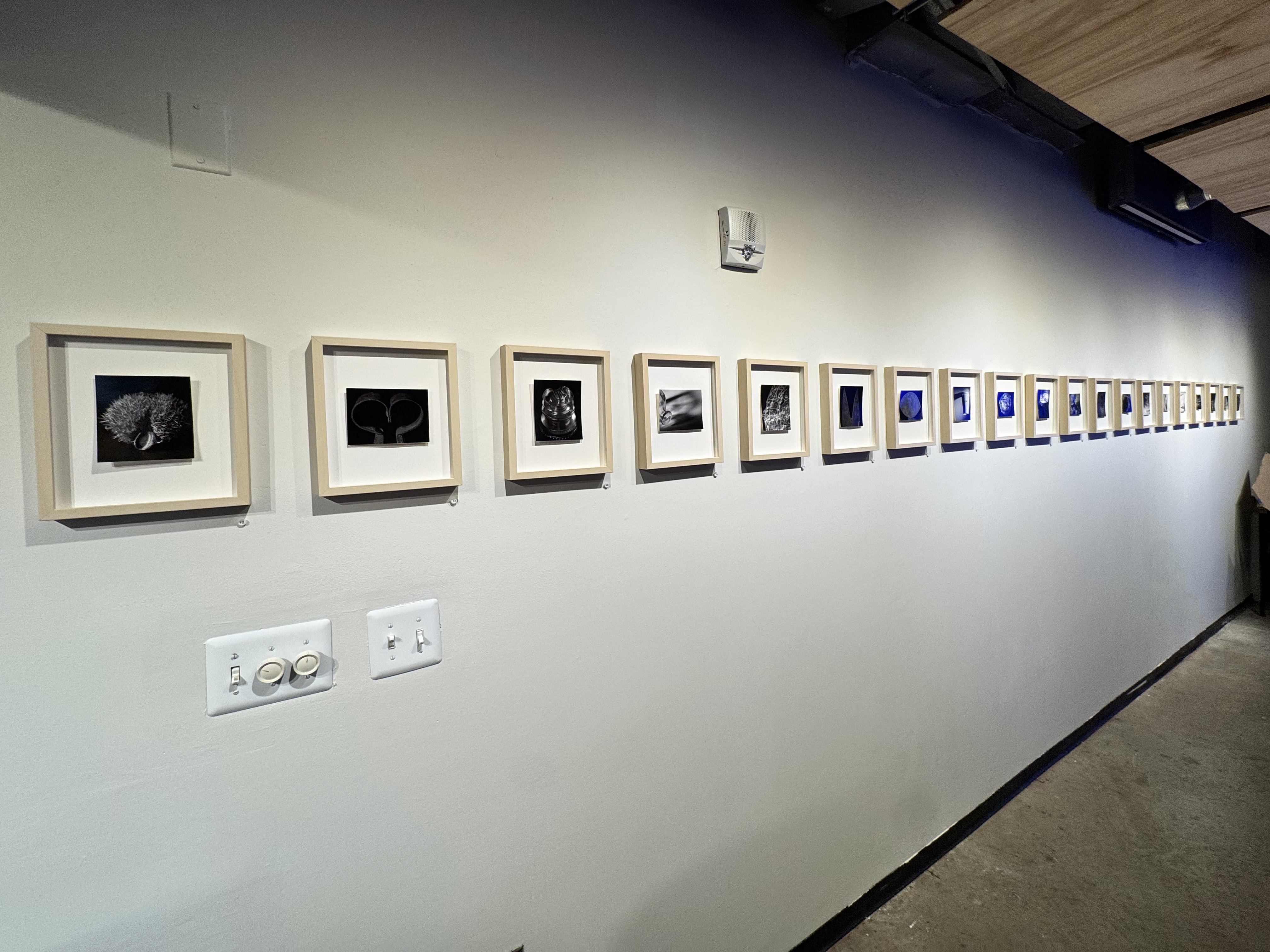
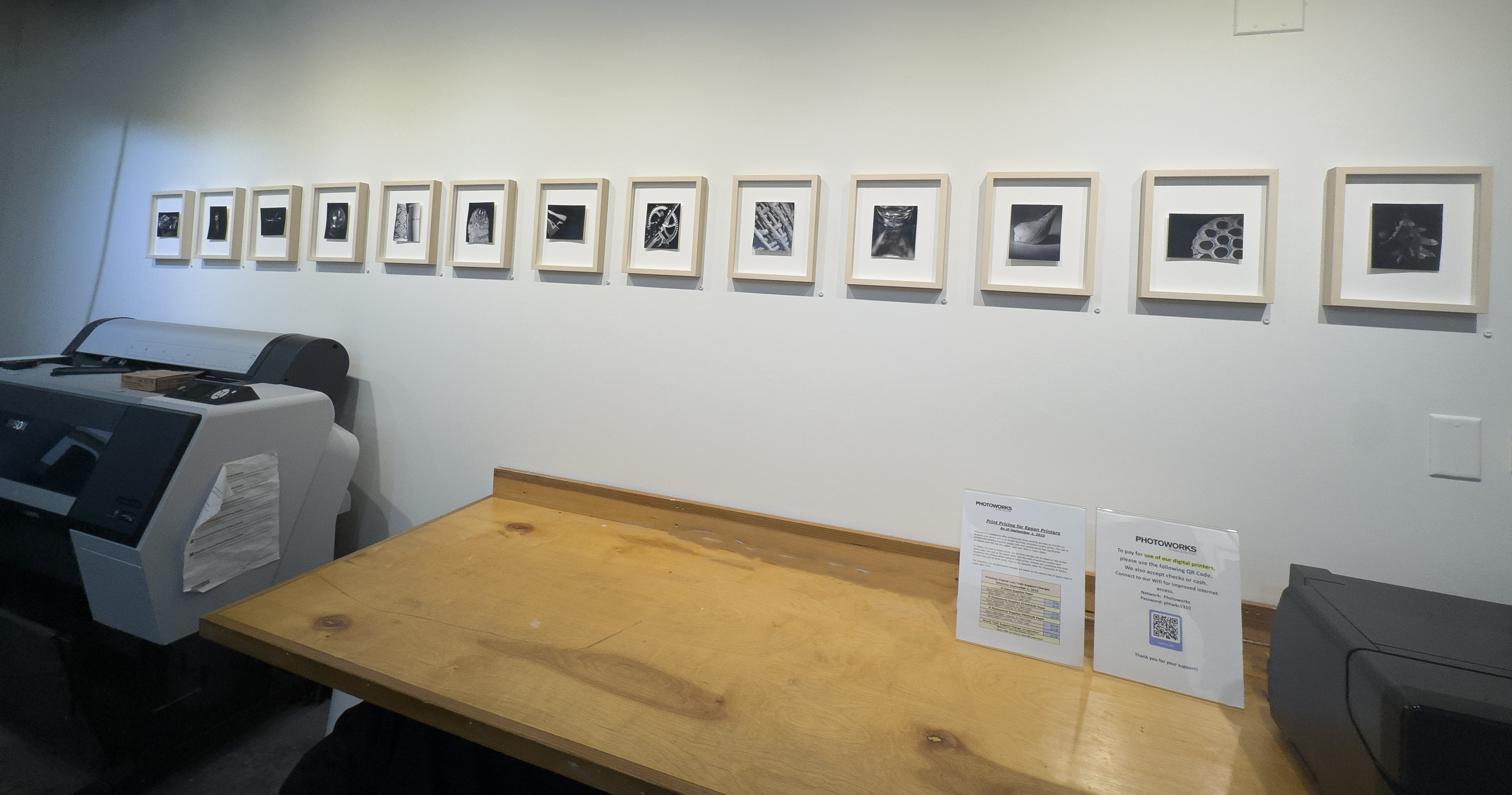
I currently have up on display through March 8th at Glen Echo Photoworks a solo exhibition entitled “Dis/Orientation”. The exhibit consists of 45 images in three rooms. Two rooms are devoted to very large format (20×40, 30×40 and 40×50 inch prints) of images of clouds without horizons or other reference points. The other room is the opposite extreme – 4×5 inch prints of still life images of objects shot on a seamless backdrop, also removing reference points for size, direction, or other context.
The Washington City Paper reviewer Louis Jacobson had this to say about the show:
In his new photography exhibition, Dis/Orientation, Scott Davis doesn’t leave the small things to chance. His exhibit comes in two halves: large, decontextualized images of clouds, and small black-and-white still lifes of common objects. Davis’ clouds have a free-floating approach that owes a clear debt to Alfred Stieglitz’s famous series of “equivalents,” which Davis acknowledges in his artist’s note. Less obviously, Davis credits Chinese and Japanese scroll paintings, a connection evident in the images’ scroll-style hanging. For the second grouping, the presentation also matters: Davis mounts his low-key still lifes without mattes or glass, allowing their natural curling to break the wall of three dimensionality and remind the viewer that photographs are objects, too. Davis’ strongest cloud images leverage high-contrast shades of black and white to play with what the viewer might expect clouds to look like; one of his small still life images, featuring the shadow of an object, channels the same vibe. Of the still life grouping, the most memorable image features what may be the humblest item in the lot: a throwaway latte cup. What makes the image stick is the fact that the cup seems to be hanging from its lid, subverting all visual and gravitational expectations. Scott Davis’ Dis/Orientation runs through March 8 at Photoworks, 7300 MacArthur Blvd., Glen Echo. (Open Saturday and Sunday.) glenechophotoworks.org. Free. — Louis Jacobson
If you haven’t yet read the book, Photo Work: 40 Photographers on Process and Practice, I highly recommend it. In the course of interviewing 40 different photographers with an identical set of questions about their creative process and how they conceive and execute long-term photographic projects, the book outlines several common approaches. It serves as a useful tool for self-reflection on how you as a photographer can approach your own projects, and encourages you to analyze your own working methods to better understand not only how but why you undertake a long-term photo project.
There has been over the course of the last 50 or so years a mythologizing of the photographer as a lone wolf, stalking the ever elusive Cartier-Bresson-esque magical ‘decisive moment’ image and somehow creating a body of work that will wow galleries and collectors and art historians through a catalog of utterly disjointed found moments on the street. While there certainly is potential to create a body of work this way, and there are a few famous photographers who have done this, to say that it is an uphill struggle would be putting it mildly.
Where the book Photo Work comes in is in pointing the reader to taking a more methodical, structured approach to creating images, especially a cohesive body of work that has a message. While it does not try to draw any definitive conclusions on photographic methodology, one observable trend amongst the artists interviewed is that they start out with a concept, work to produce images that support that concept, and if in the course of making those images, the images tell them that their original concept was flawed, or in need of refinement, or that the way they were making the images does not support the concept, they revise and adapt either the concept or the image-making process to refine the project.
This does not mean that they stop shooting images that don’t fit – in fact, the act of going out and photographing, of seeing through a camera, often informs the genesis of a project.
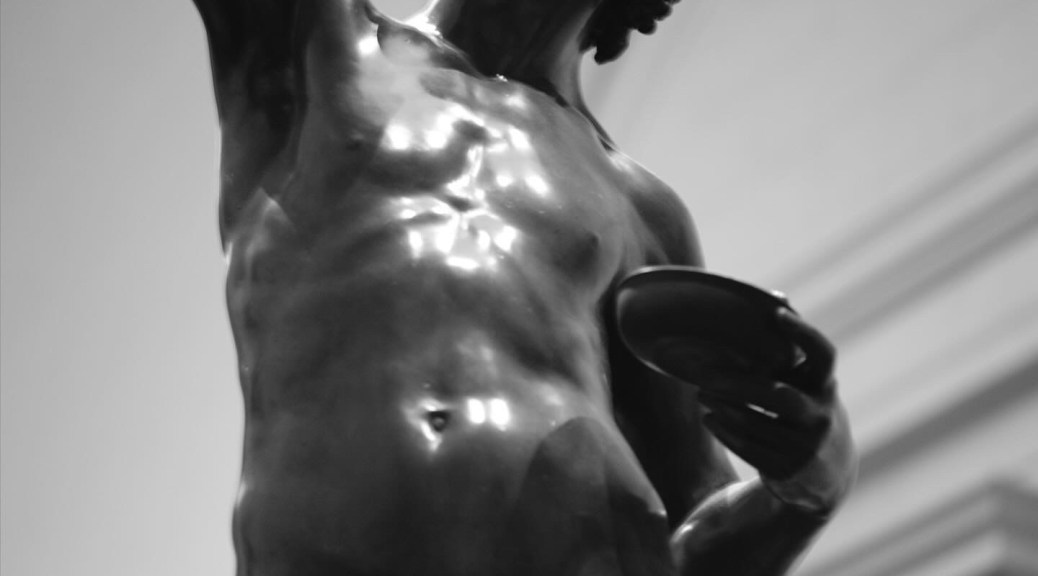
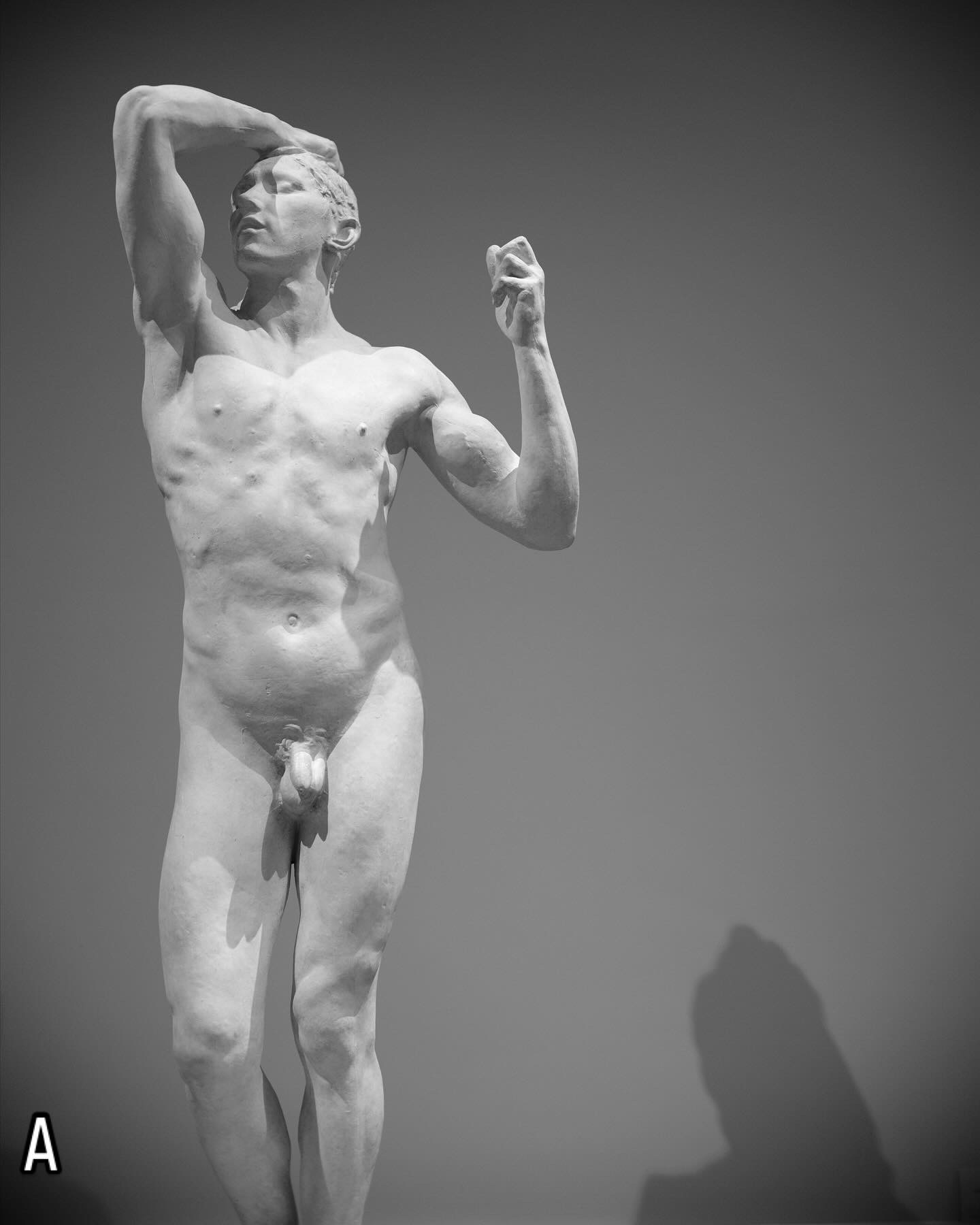
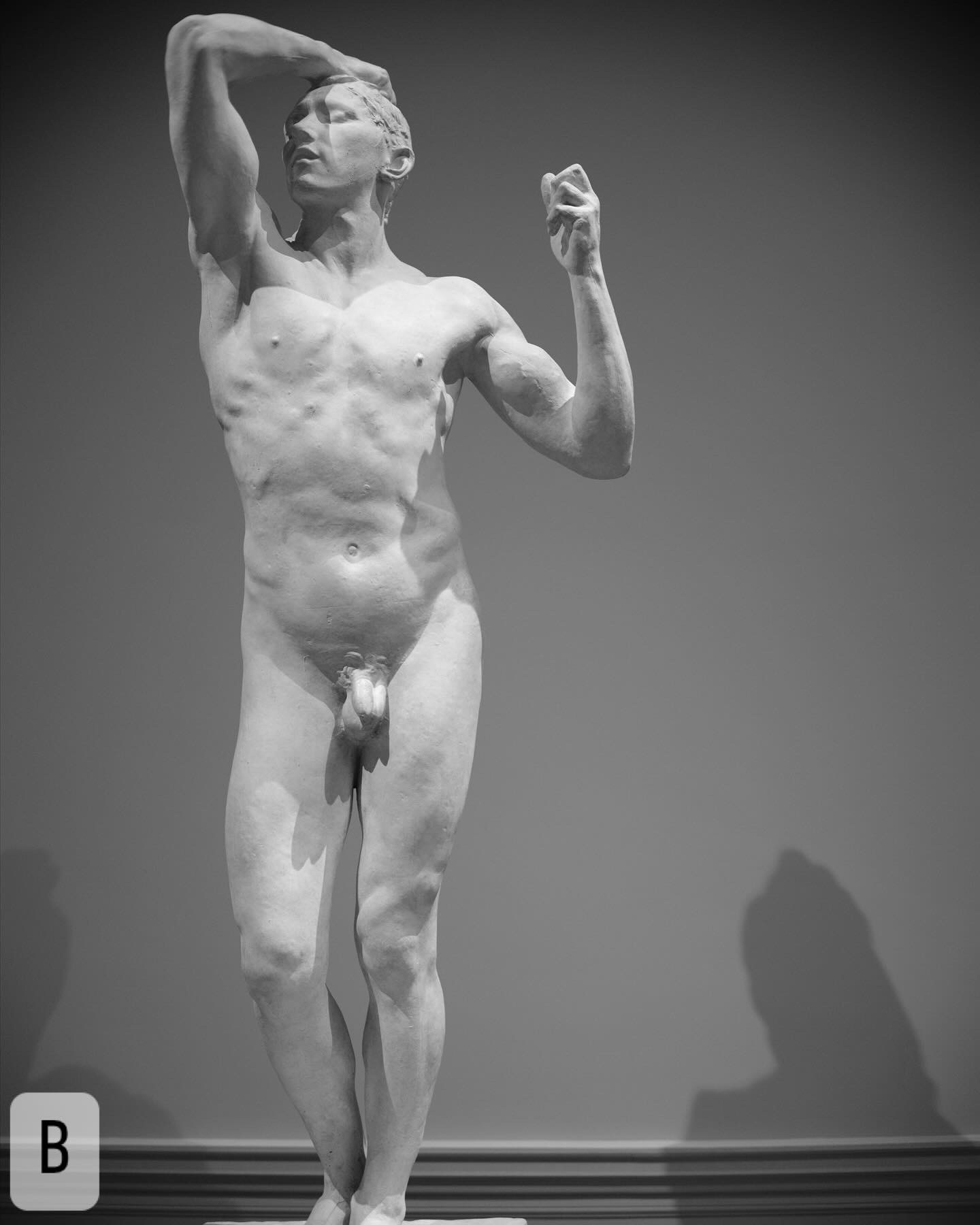
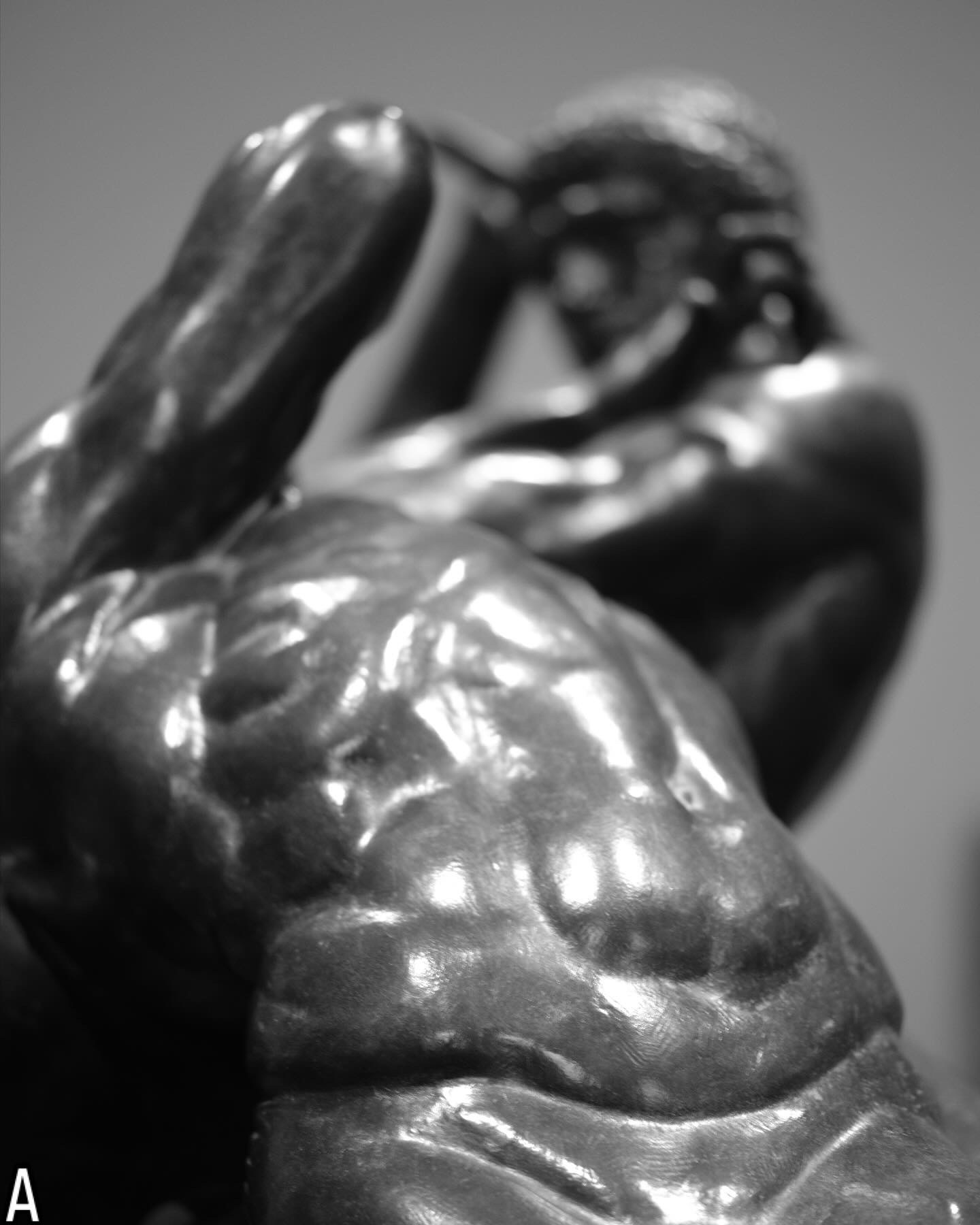
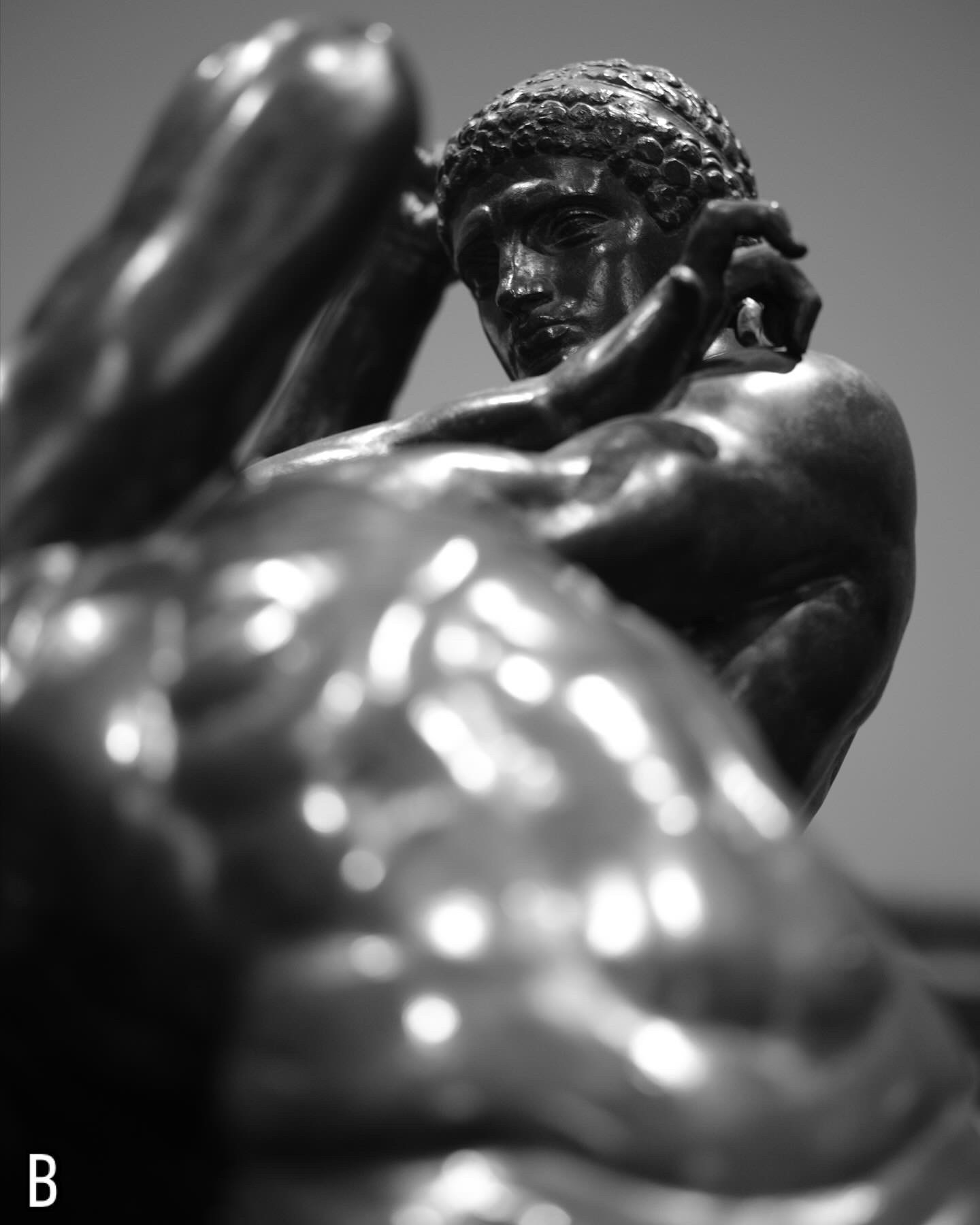
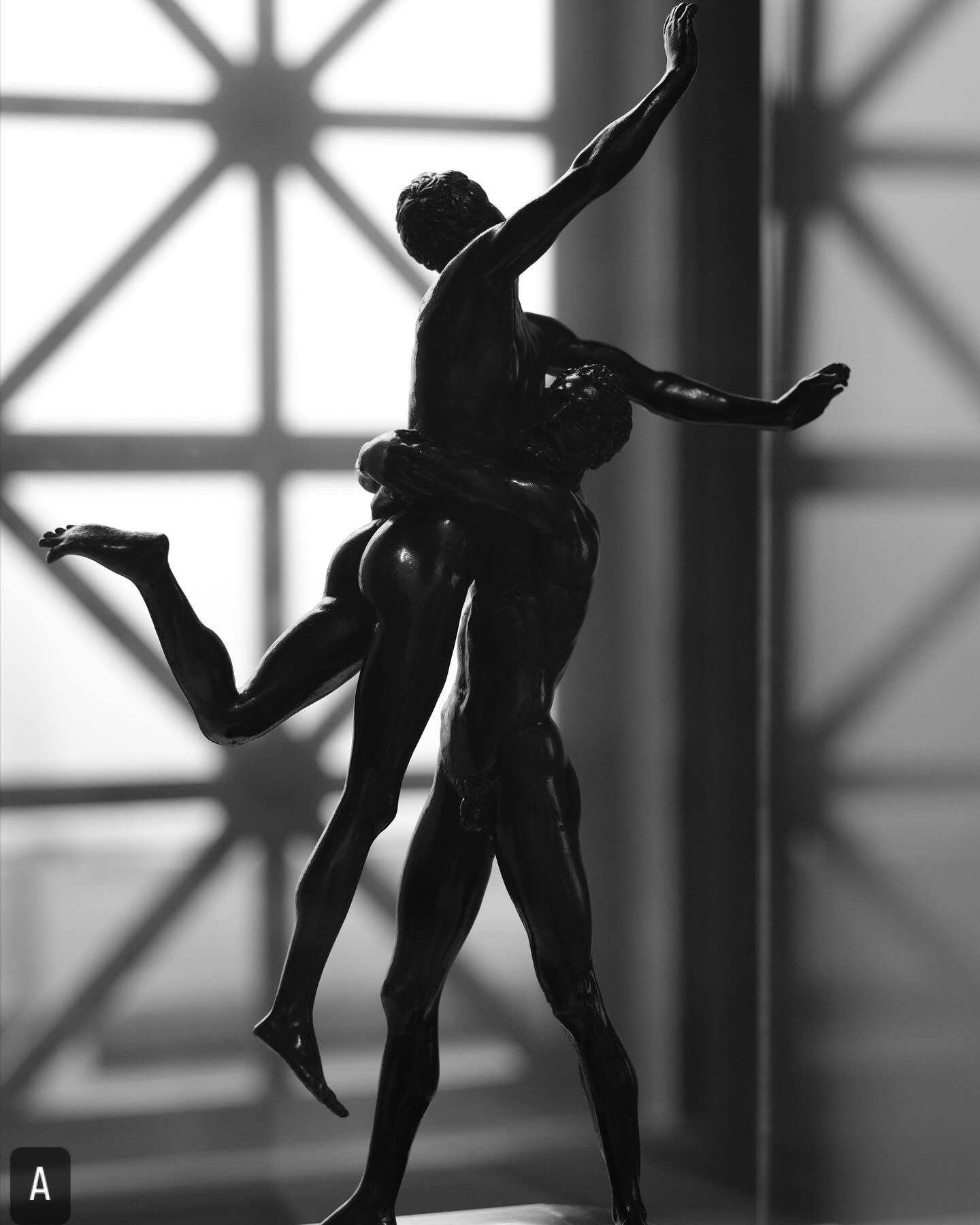
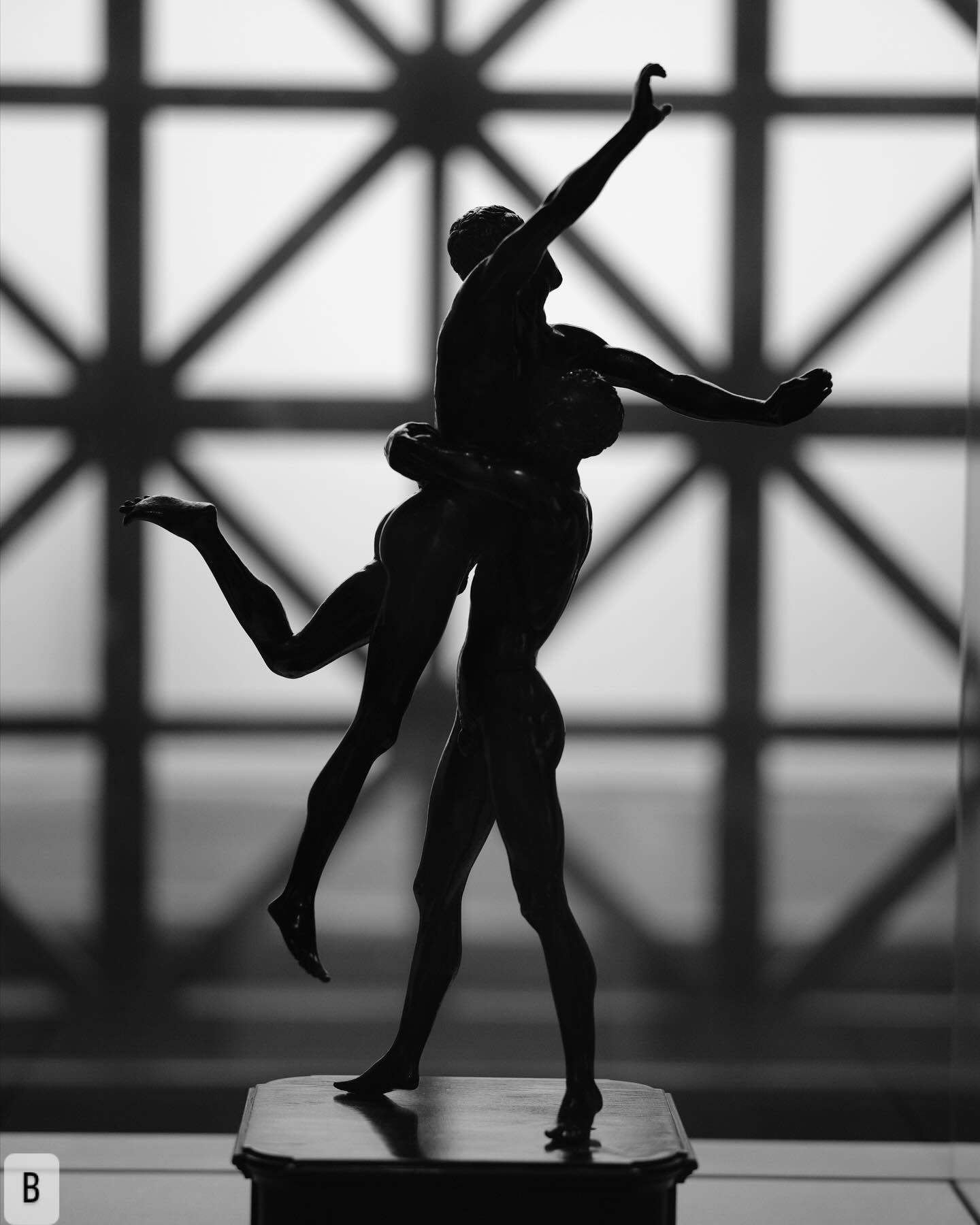
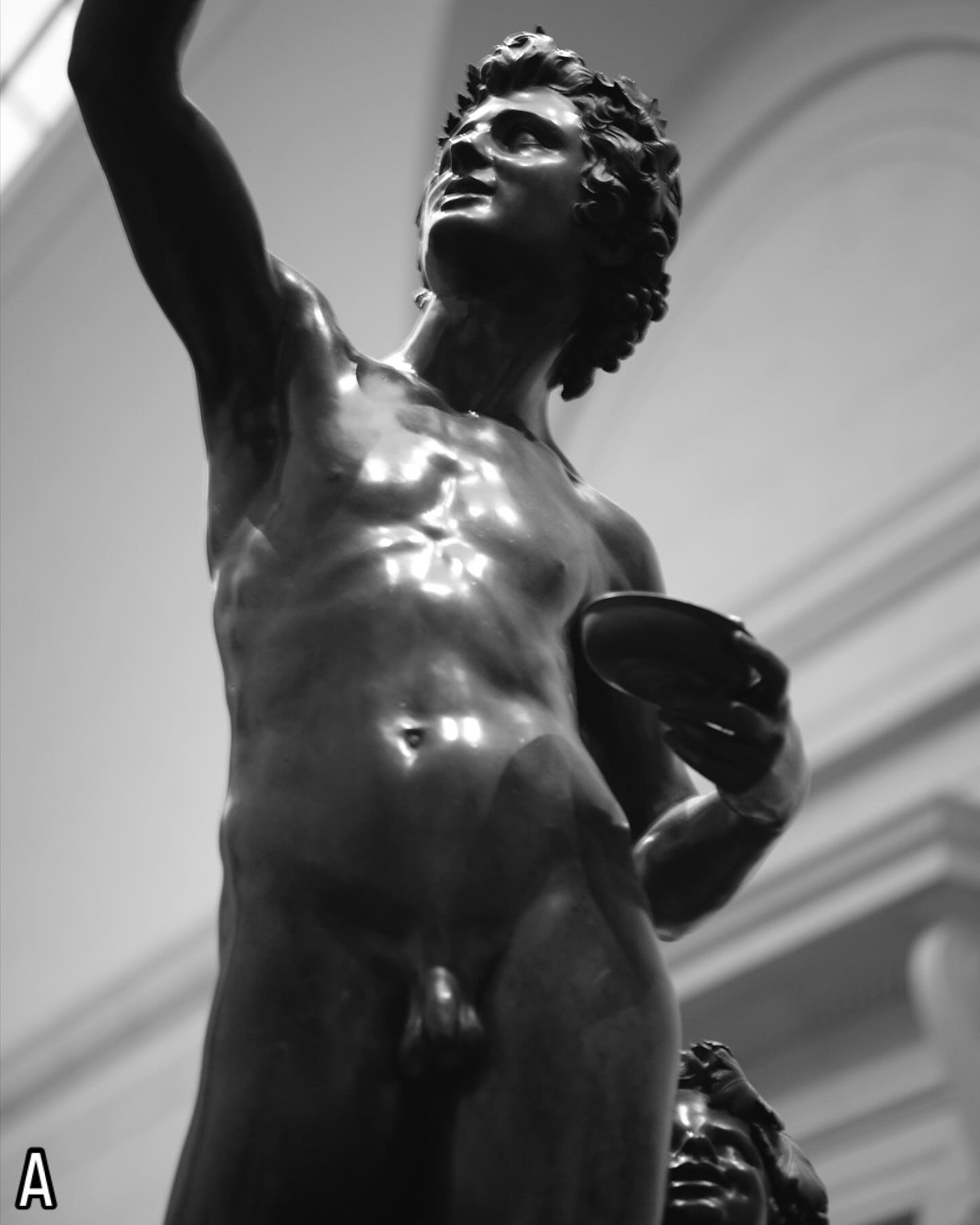
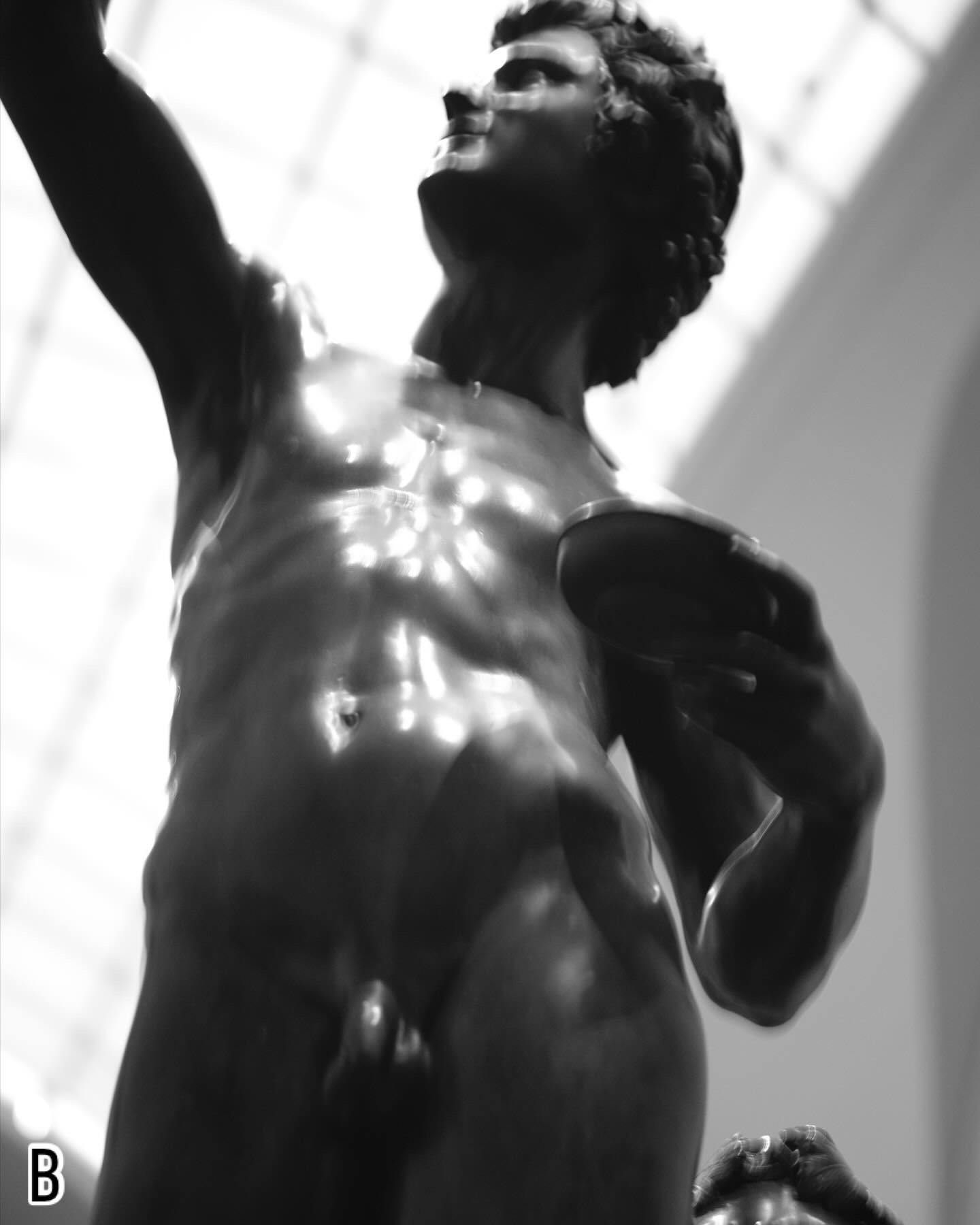
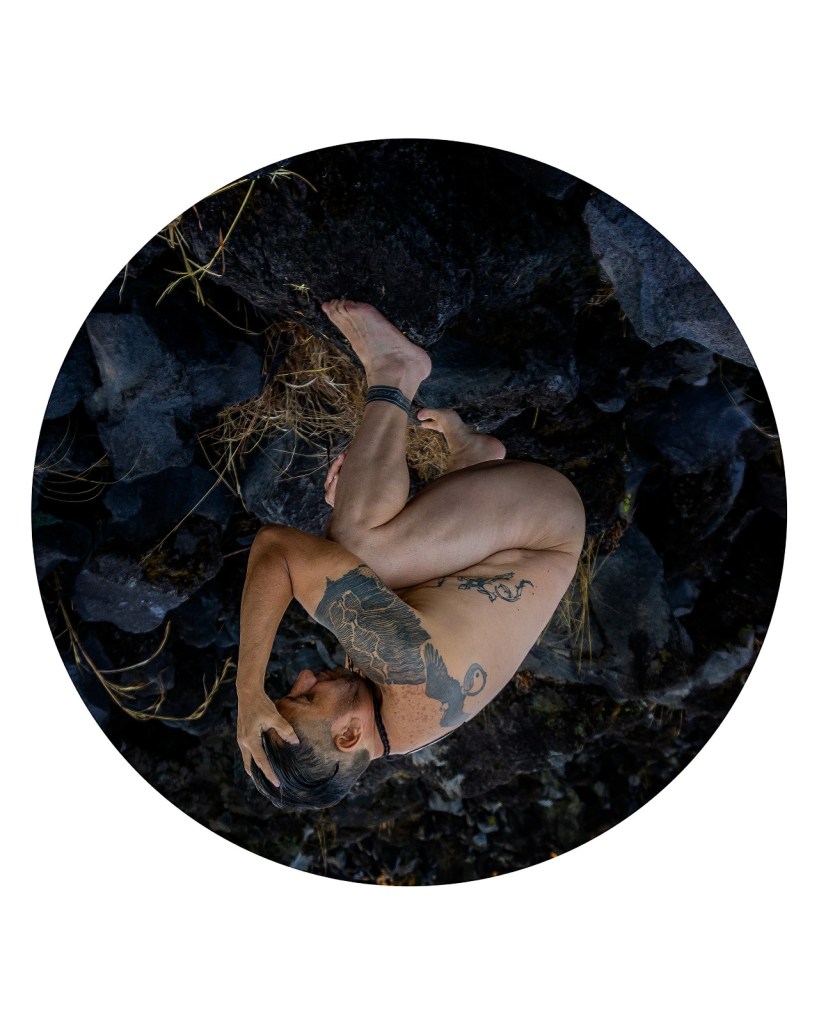
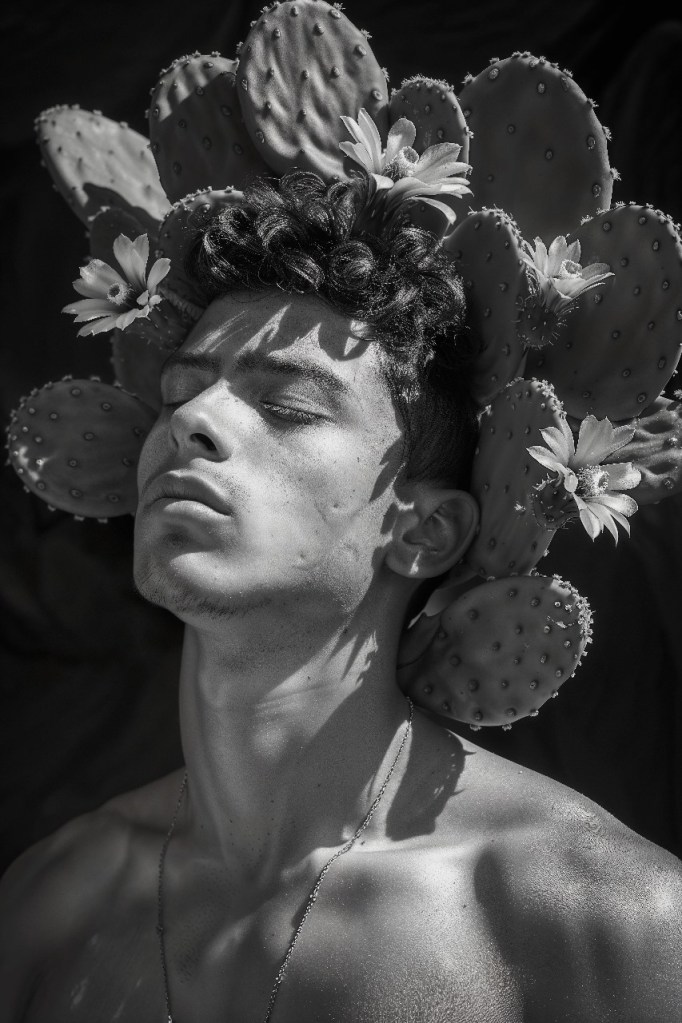
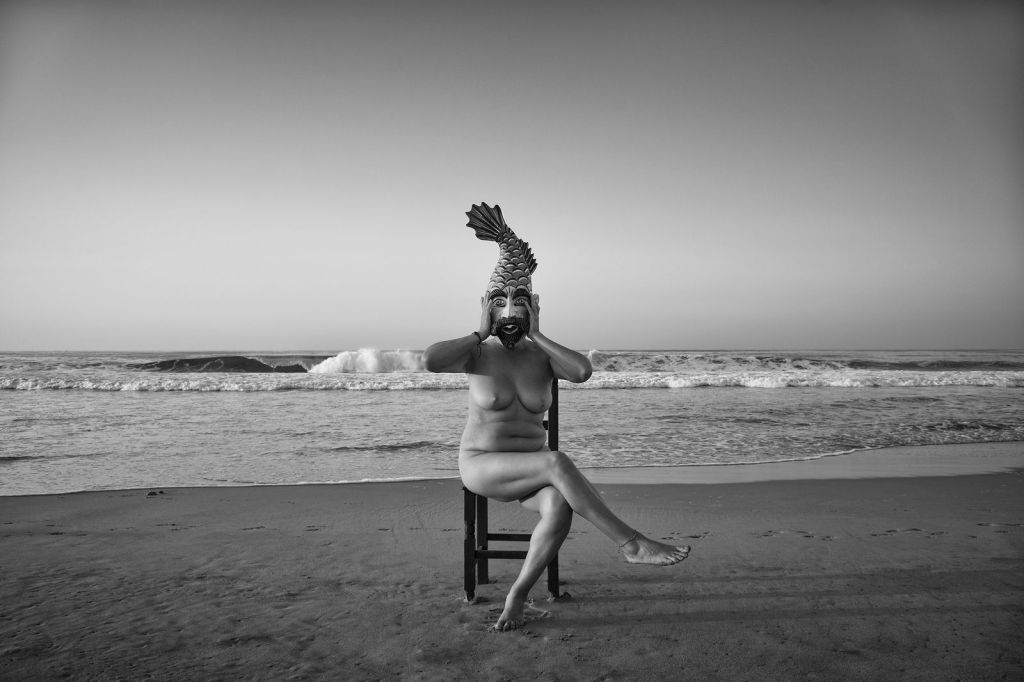
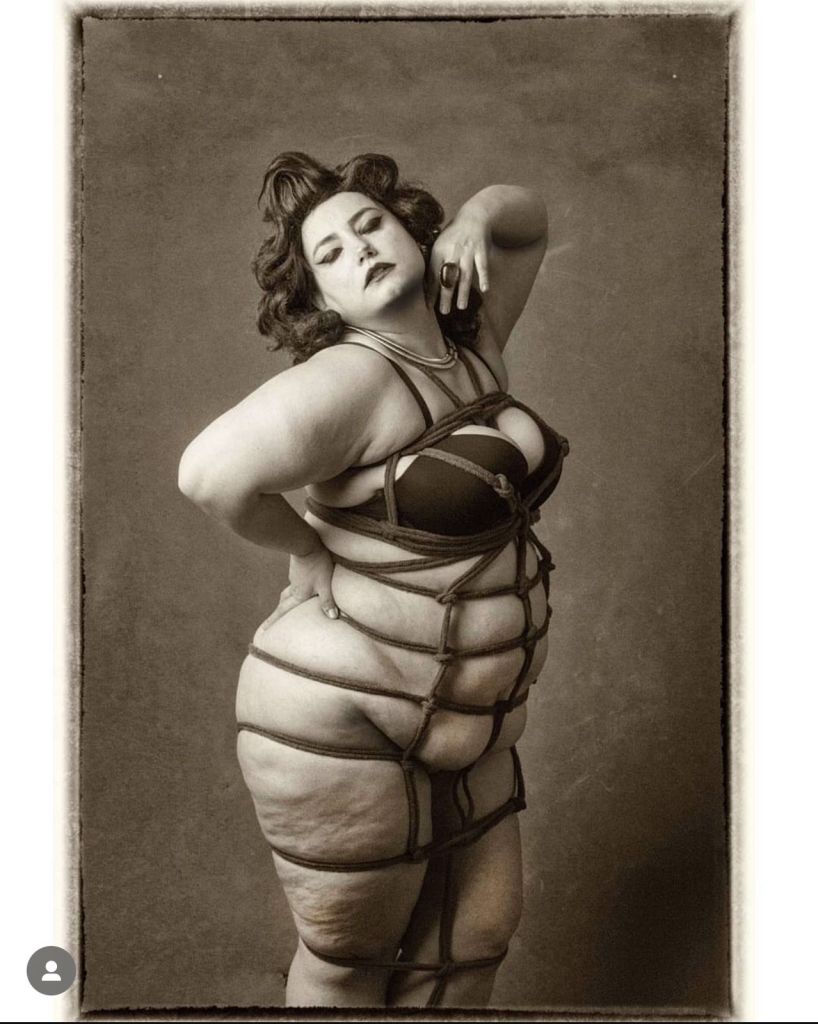
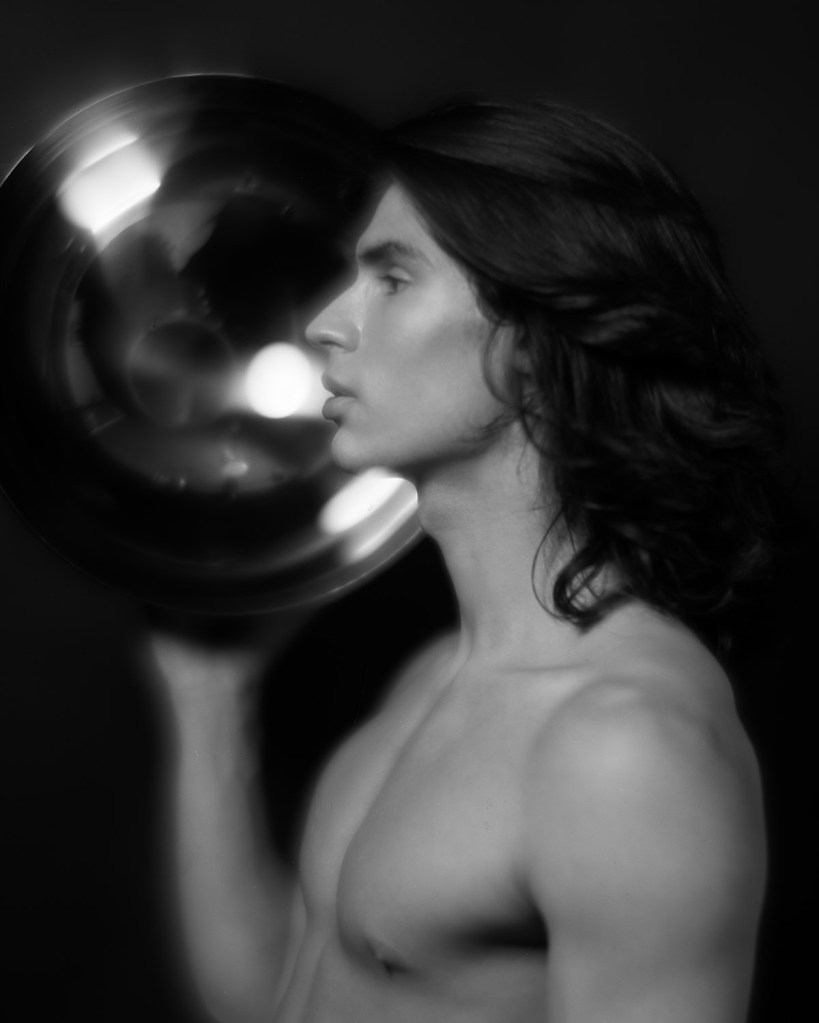
I’ve had a project idea burbling around in the back of my brain for a year now – I got started thinking about this after a trip to Richmond, Virginia to the Virginia Museum of Fine Art, and looking at the ancient bronze and marble sculptures, the Greek pottery, and even more modern artwork that carries an erotic subtext (or even overt eroticism). I wanted to do something that speaks to the role museums play in simultaneously preserving that and in whitewashing it – having work that has queer context in a museum permits the preservation and transmission of the queer gaze AND allows non-queer viewers to dismiss that quality of the work.
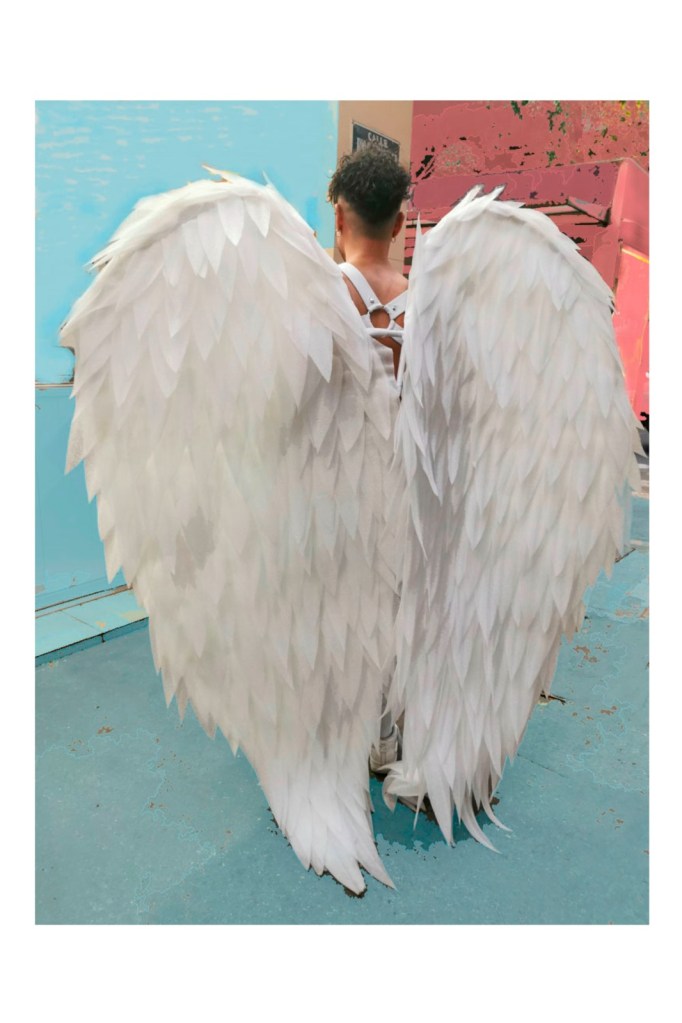
I have several theories as to how I am approaching this concept, so I’m going to just put some images out there for you all to respond to, if anyone is so inclined. I’m not going to articulate those concepts because I don’t want to prejudice the jury pool – just react to the A-B pairings and let me know your thoughts on them. There is no right or wrong answer, just react. I will block/delete any homophobic/hateful comments.
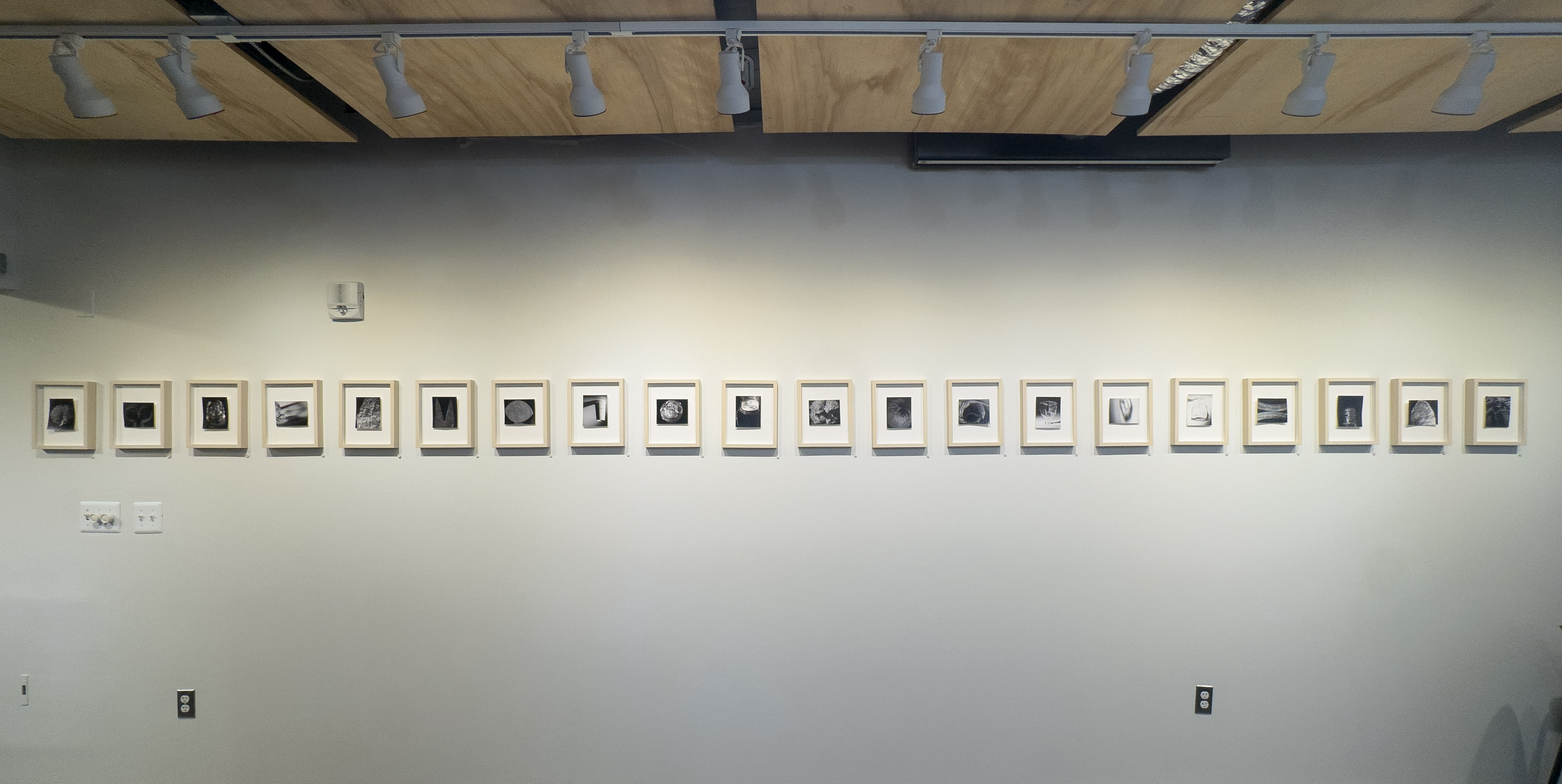
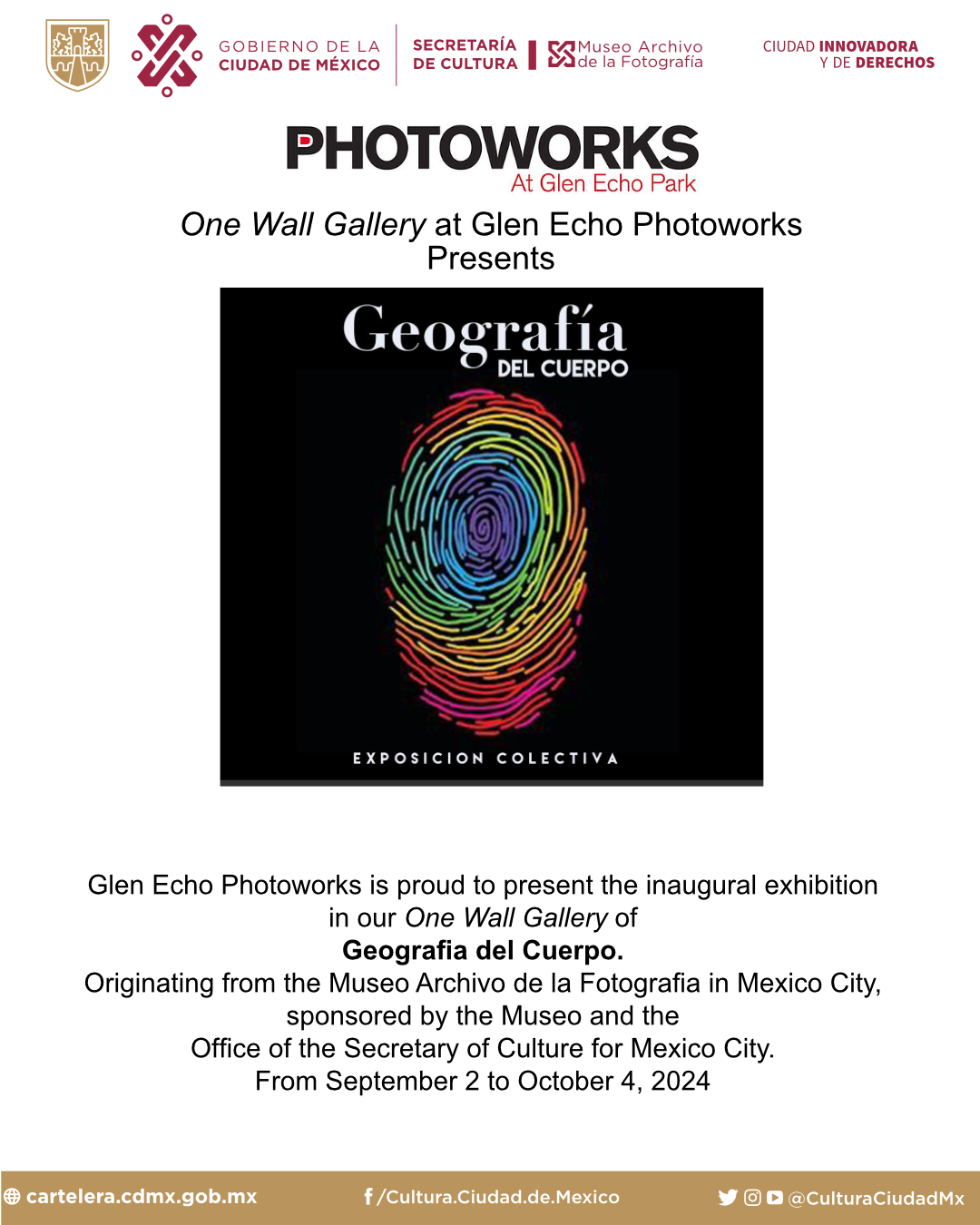
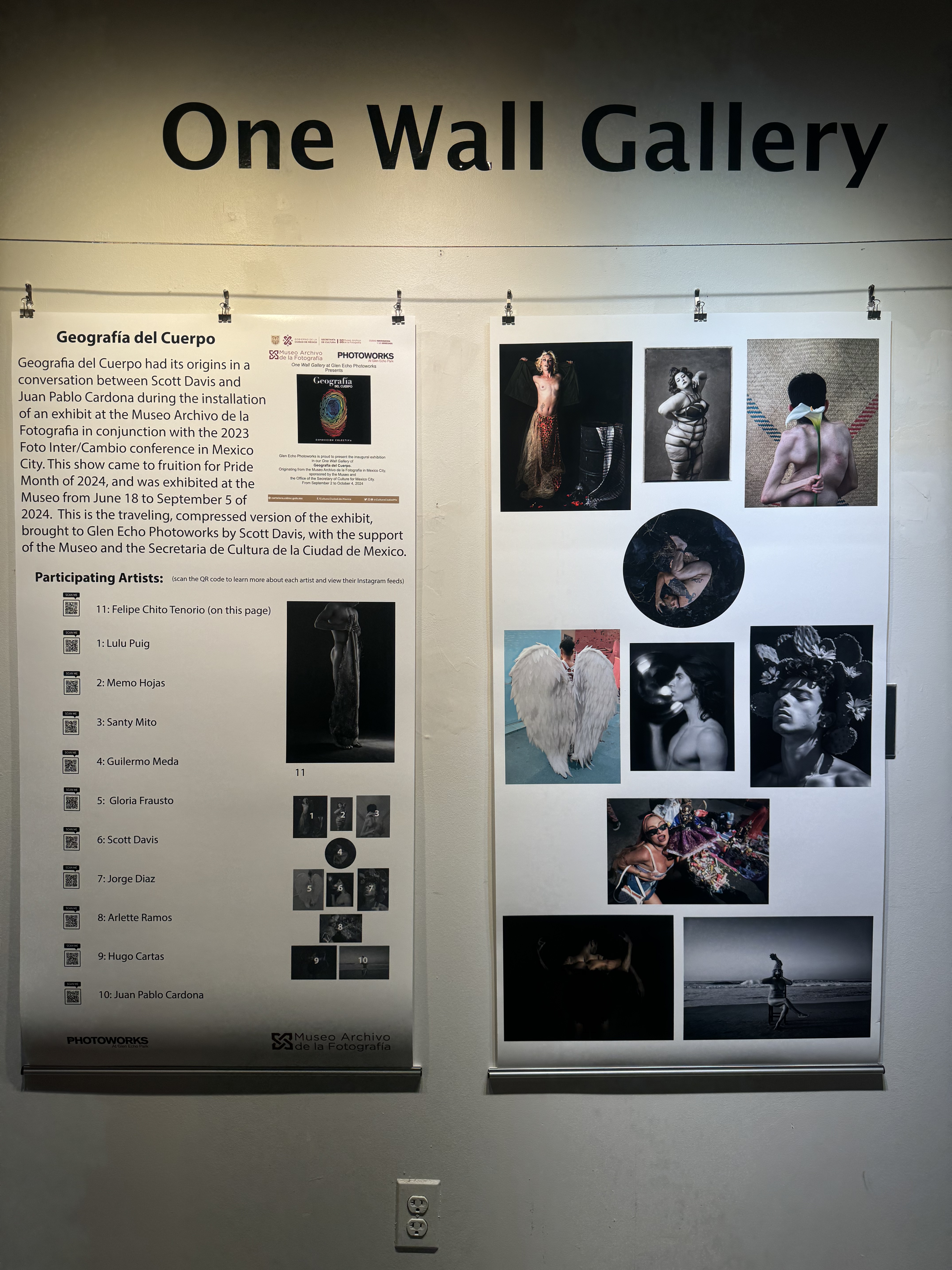
In conjunction with the Secretaria de Cultura del Ciudad de México, the Museo Archivo de la Fotografia, and Glen Echo Photoworks, I have brought a condensed version of Geografia del Cuerpo to inaugurate the One Wall Gallery at Glen Echo Photoworks. One Wall Gallery is a pop-up gallery space by the front door, designed to provide flexible exhibitions of shorter duration and bring life to an otherwise under-utilized space.
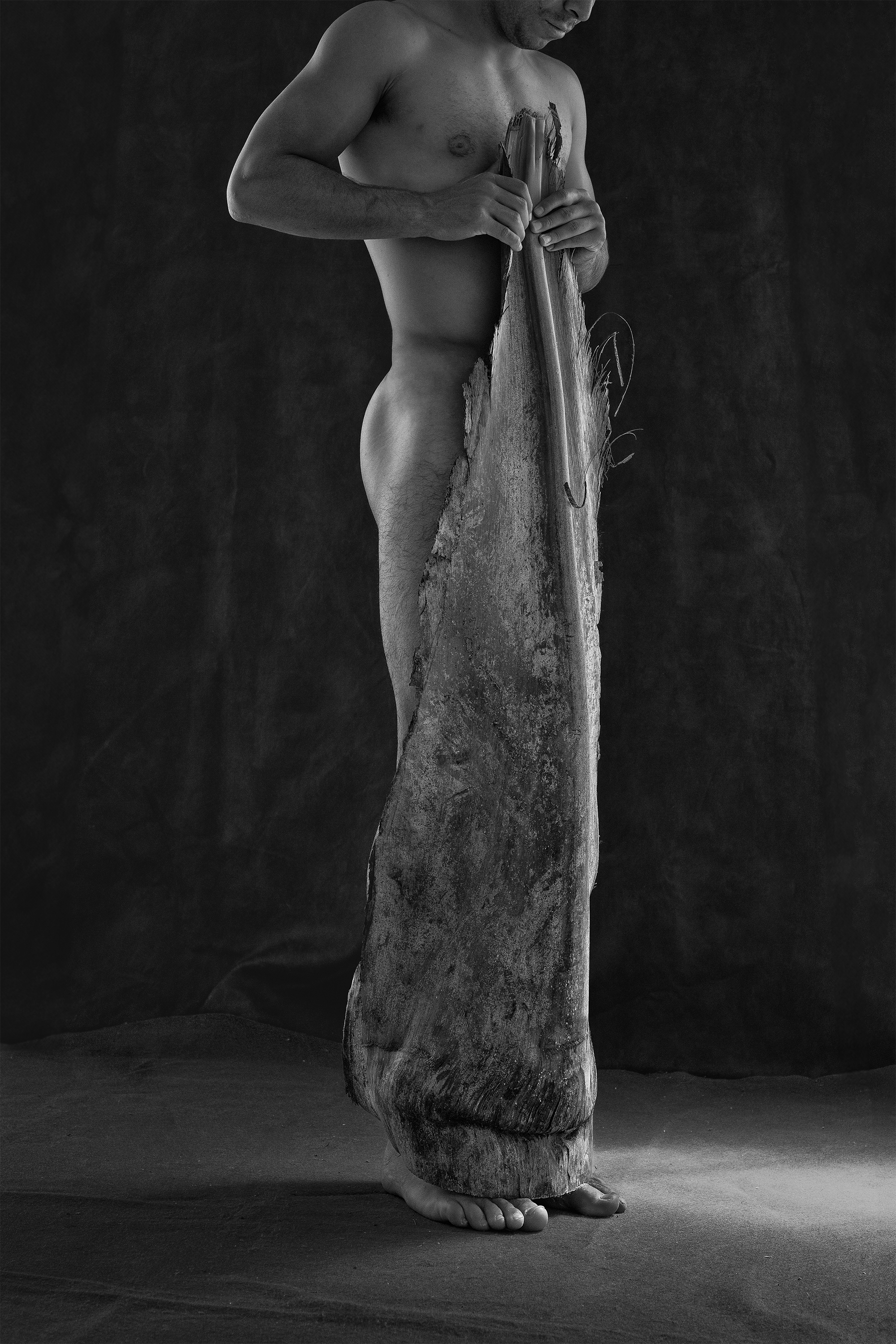
Given the time constraints and the space constraints, the exhibit was limited to one piece each from 11 of the 13 artists participating in the original exhibit in Mexico City (two were unable to participate). The form of presentation had to be re-interpreted to fit the space, and I think it turned out nicely.
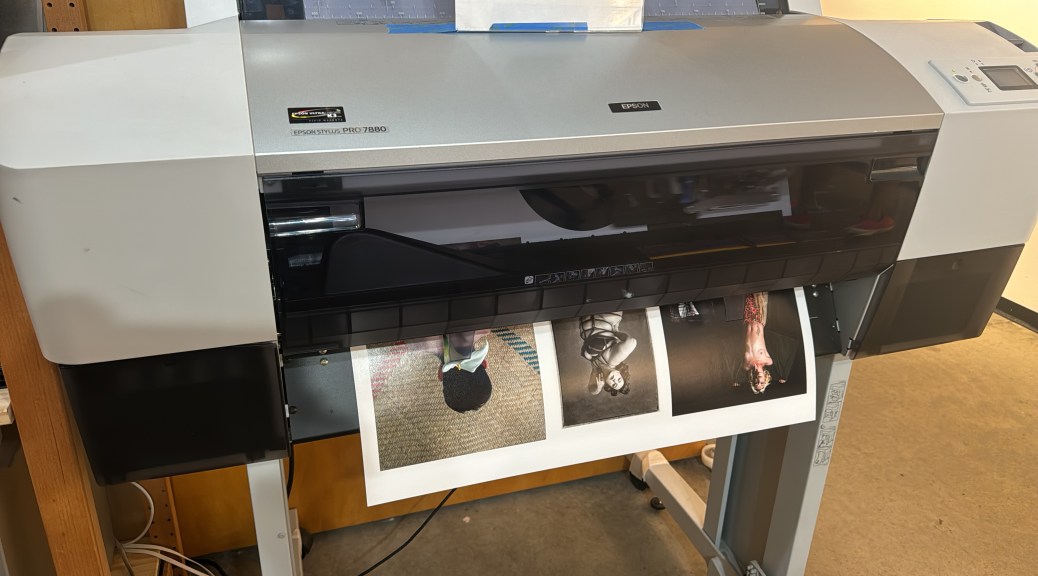
The banners were printed on our 24″ Epson wide-format printer. The original concept was going to be mounting each image on a 12″x12″ backing board and hang them in three rows from curtain wires (like the one you can see at the top of the photo). This, unfortunately, is one of IKEA’s worst products – the metal feet that you screw the posts into that attach to the wall do not fit the threads on the posts a significant amount of the time. I do have a tap-and-die set I can (and will, when I get around to it) fix the threads with so we will be able to use the hanging wire in the future, but that in the moment necessitated the re-envisioning of the exhibit into what you see here today.
The artists represented in the show are, in alphabetical order (names will be linked to their Instagram accounts):
The show opened September 2 and will remain up through October 4 on the One Wall Gallery at Glen Echo Photoworks, 7300 MacArthur Boulevard, Glen Echo, Maryland. Photoworks is located inside the ground floor of the Arcade Building.
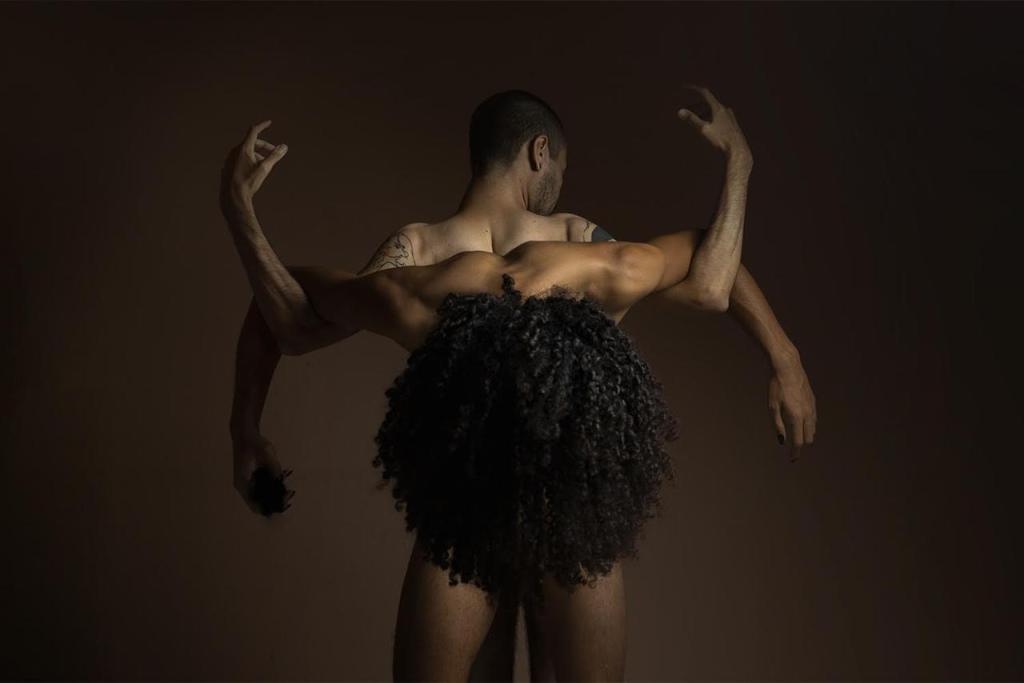
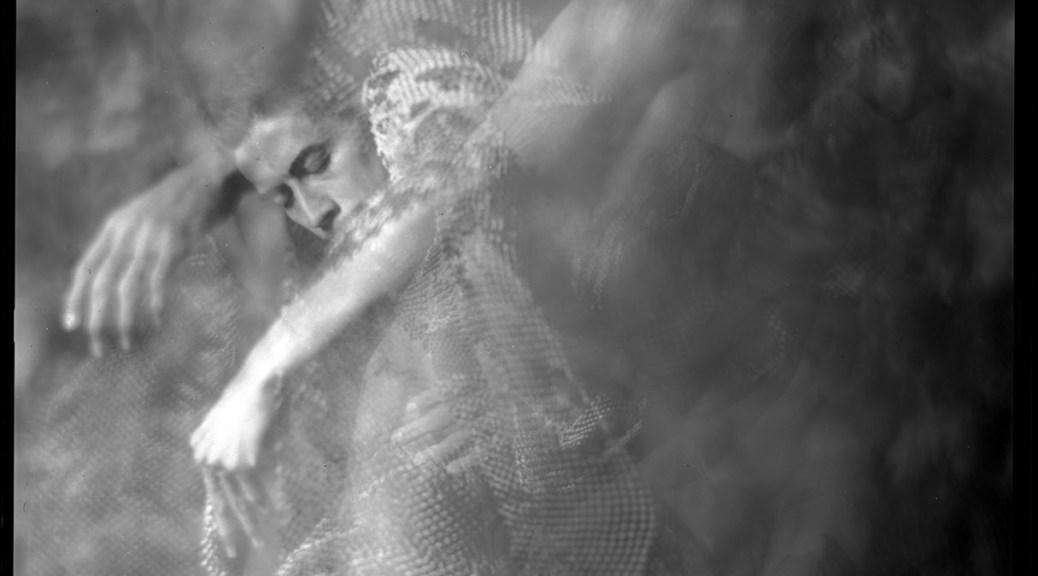
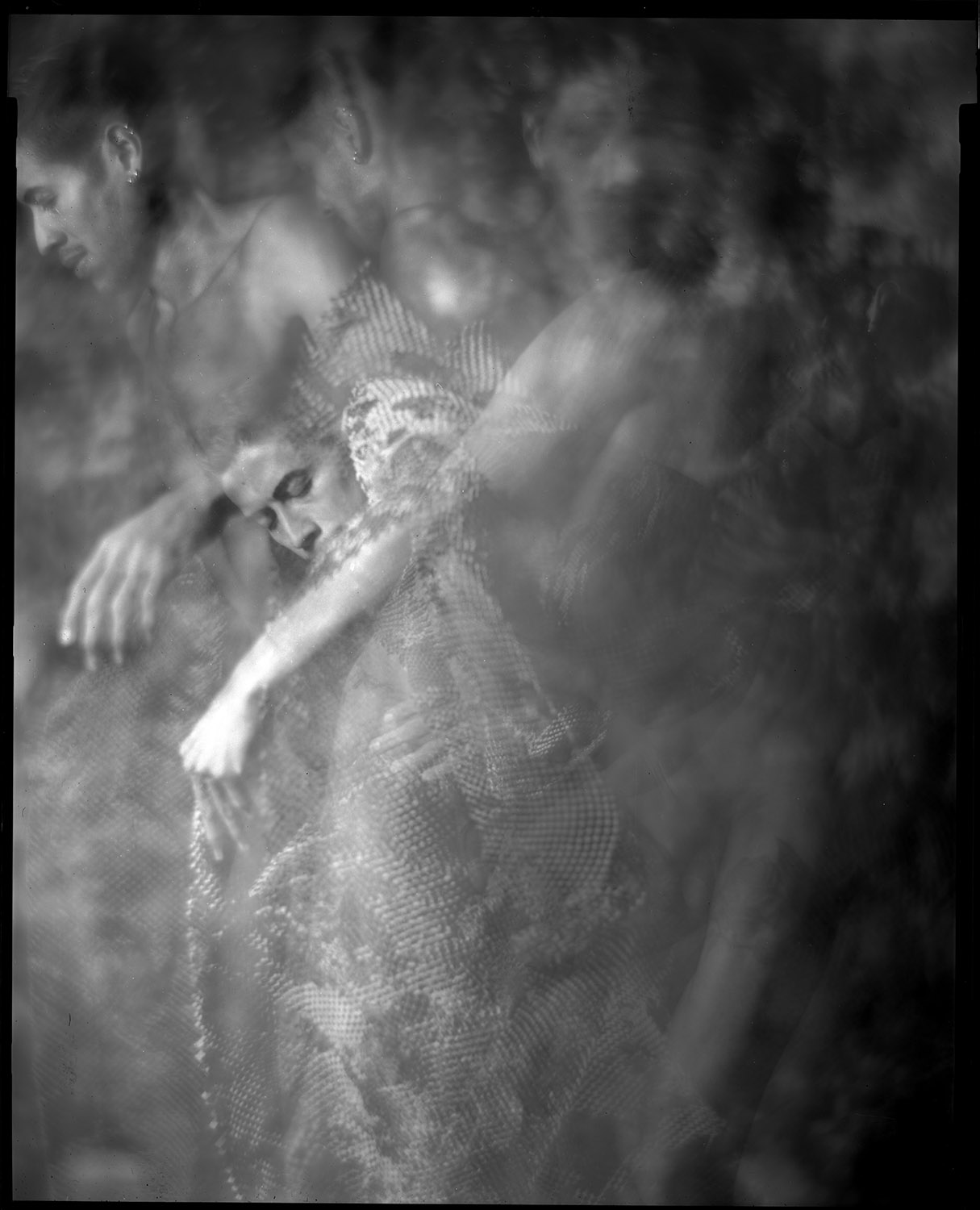
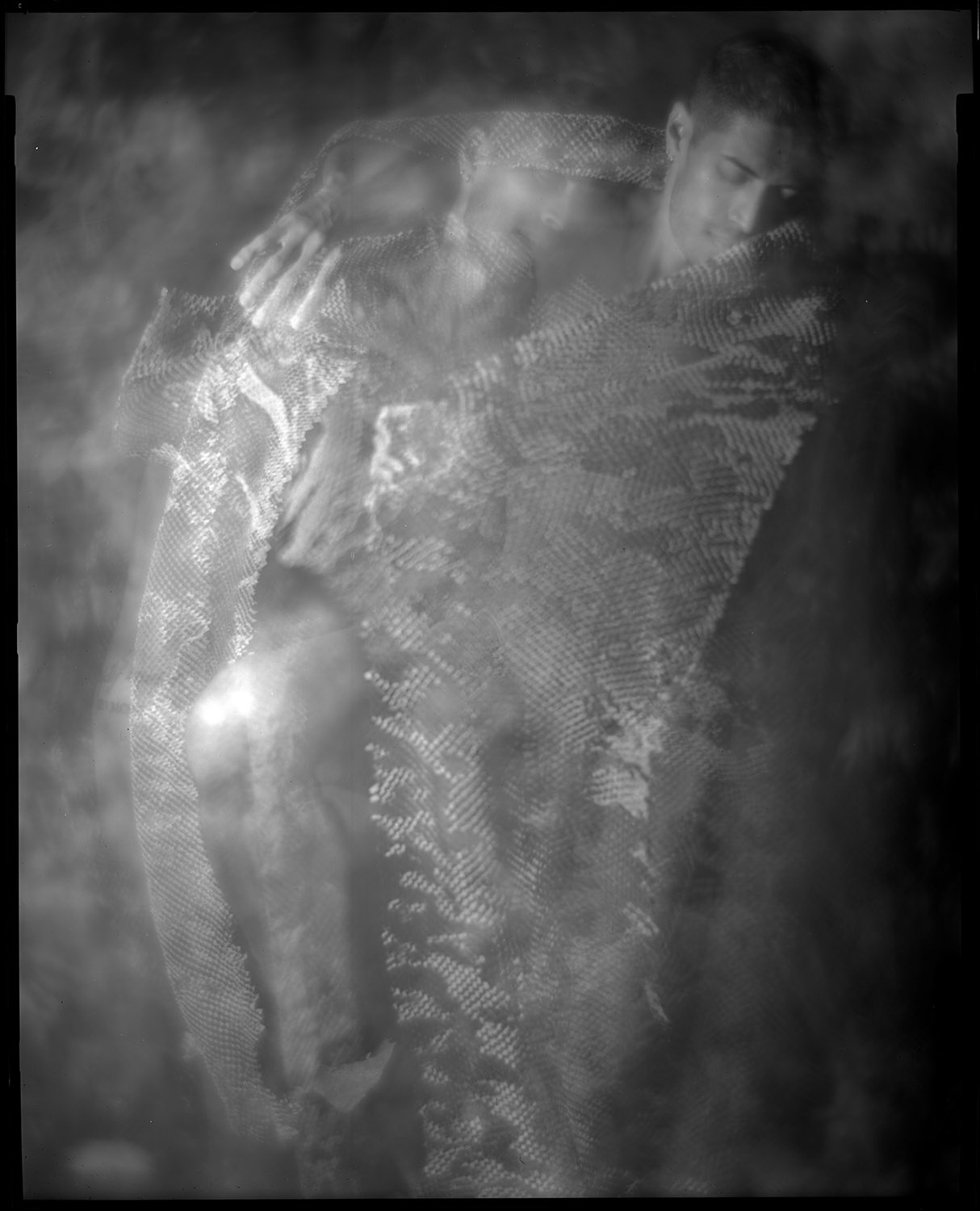
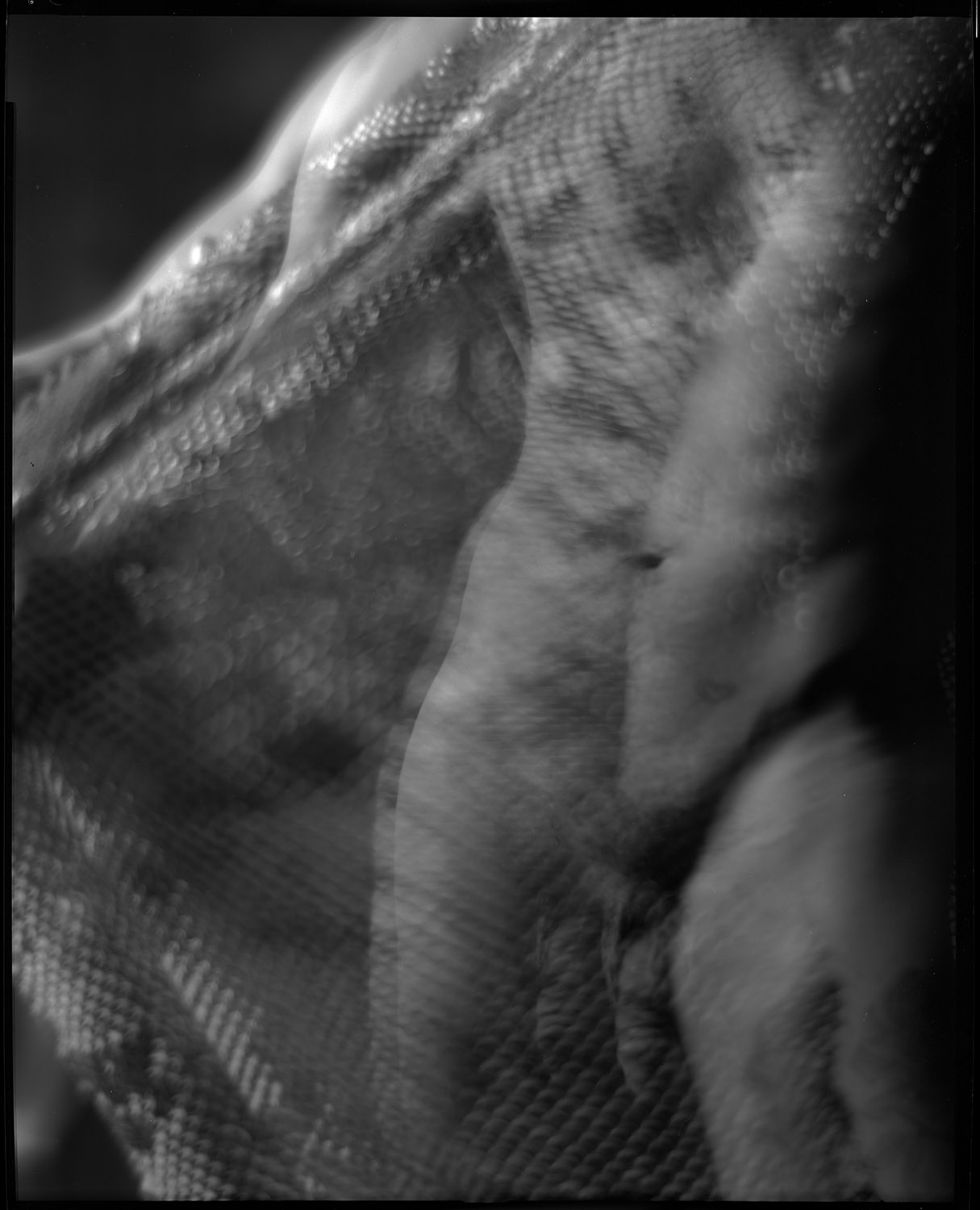
I’m getting started on a new series of human figure studies to go along with still life images. I arranged with a friend who is a professional dancer to be my model. One of the things he wanted to do was to try some movement studies. I had some pre-conceived shots I wanted to make, but I thought it would be good to push my comfort zone and try to do something different. I’m very much a collaborative photographer when it comes to working with models – I know I do NOT have all the ideas, and I love being inspired by and learning from the people I work with to create images.
I also enjoy using the limitations of my tools creatively and making them do things they aren’t necessarily intended for. We did this series with my 8×10 inch studio portrait camera, which is a big, heavy, relatively immobile beast. It has a Packard shutter to control exposure, which is a fairly crude, imprecise device (top speed is 1/30th-ish of a second). But what it does do is allow me to keep the shutter open for an extended period with the pneumatic squeeze bulb. So for these motion study shots, I opened the shutter, let Gabriel my model dance, and randomly popped my flash multiple times during the exposure. Very imprecise, very guesstimate, very subject to the whims of serendipity or disaster.
To make things more interesting, I had him dance with a piece of perforated craft paper that came in a box as packing material for something I bought online. The combination of the paper plus the swirly backdrop we worked in front of plus the use of a soft-focus lens on the camera gave the images an etherial, smoky look.
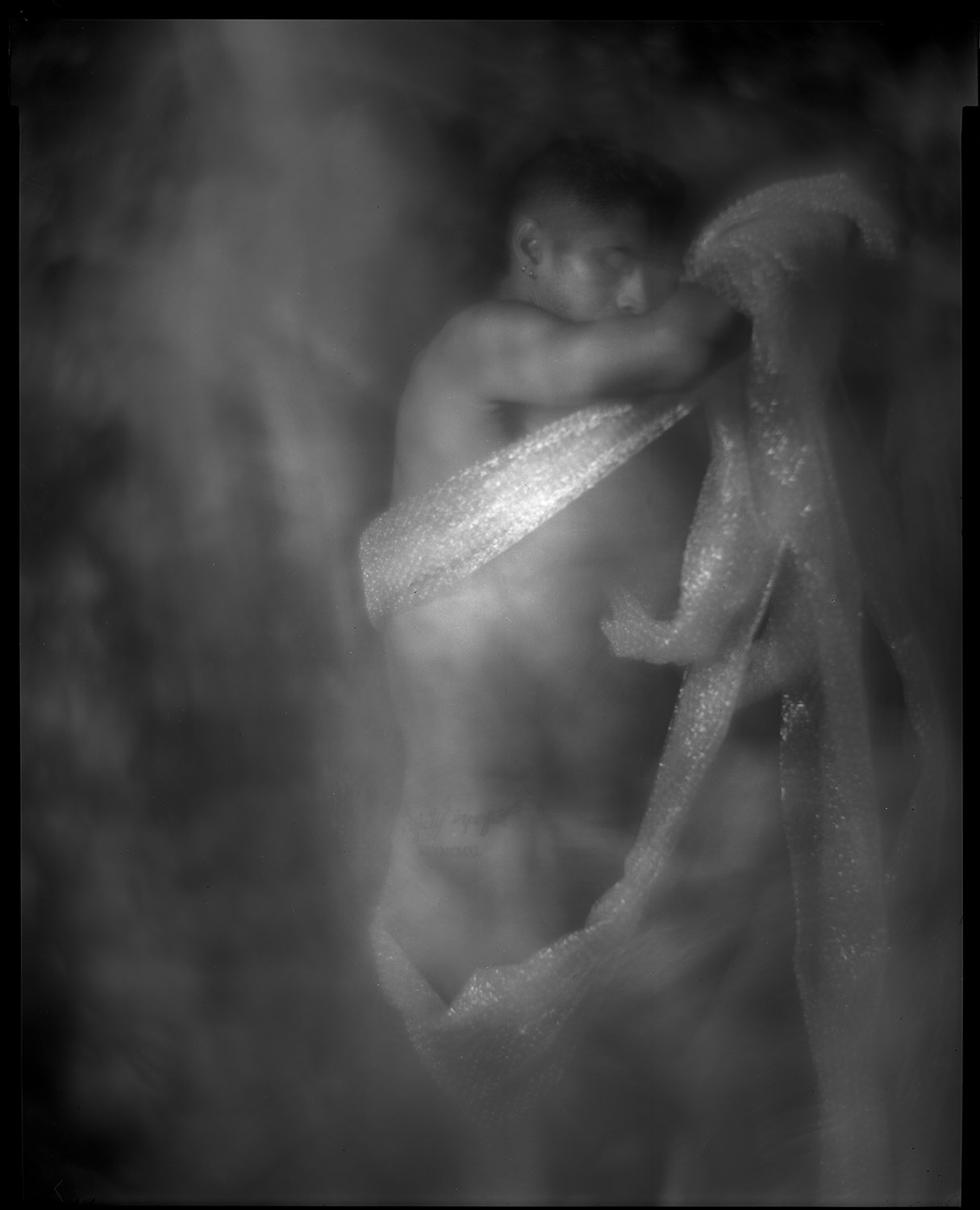
We also did some with bubble wrap.
We only did a few shots like this as it was experimental and I had no clear idea how it was going to come out. Having seen these, now I wish we had shot a whole bunch more of them! But that is the clarity of hindsight. Now, at least, I am inspired to try more of the same, and have a foundation of what to expect.
The great risk of course is, now that I have these shots, in trying to replicate them I will end up dissatisfied with the results because they will be too thought out and the element of serendipity will be lost, or I’ll go too far the other direction in trying to compensate for the serendipity loss and make a godawful mushy mess. But these are the risks we take when we make art – connecting with something emotionally is always risky.
Show dates and times: Saturday June 22- Sunday August 18, 2024. Opening reception June 22 at 6pm. Artists Talk June 25th at 5pm (I will be participating in the artists’ talk and showing some additional work from my portfolio).
Geografía del Cuerpo is at the Museo Archivo de la Fotografía, and runs from June 26 to July 18. The opening reception is July 26 from 7-9pm, and is limited to 100 persons in attendance. I will be there as well (In case you’re wondering, I’m the one in the hat with the gray beard and glasses).
I’ve been doing a LOT of printing lately, in preparation for the shows in Mexico City. I did some serious darkroom cleaning too, getting my print washers disassembled and scrubbed clean of all the mineral deposits that accumulate from using DC city water, and got all the stuff out of the sink that was cluttering it up so I could print big. I’ll be doing some copy photos of the big prints I did shortly, and have them posted here. But all that work inspired me to not only do more printing, but to be adventurous in my artistic endeavors, and push out of my comfort zone.
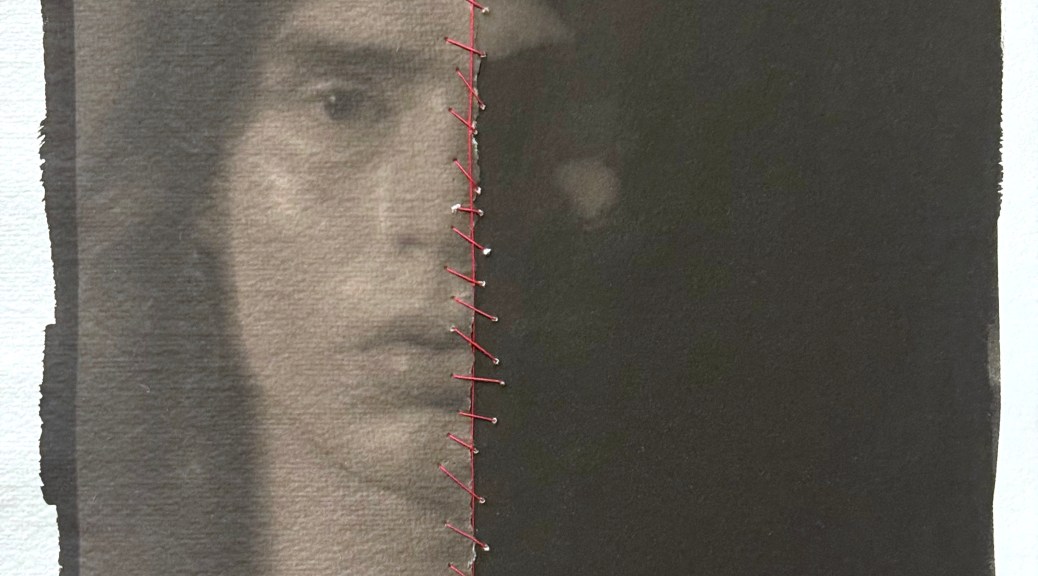
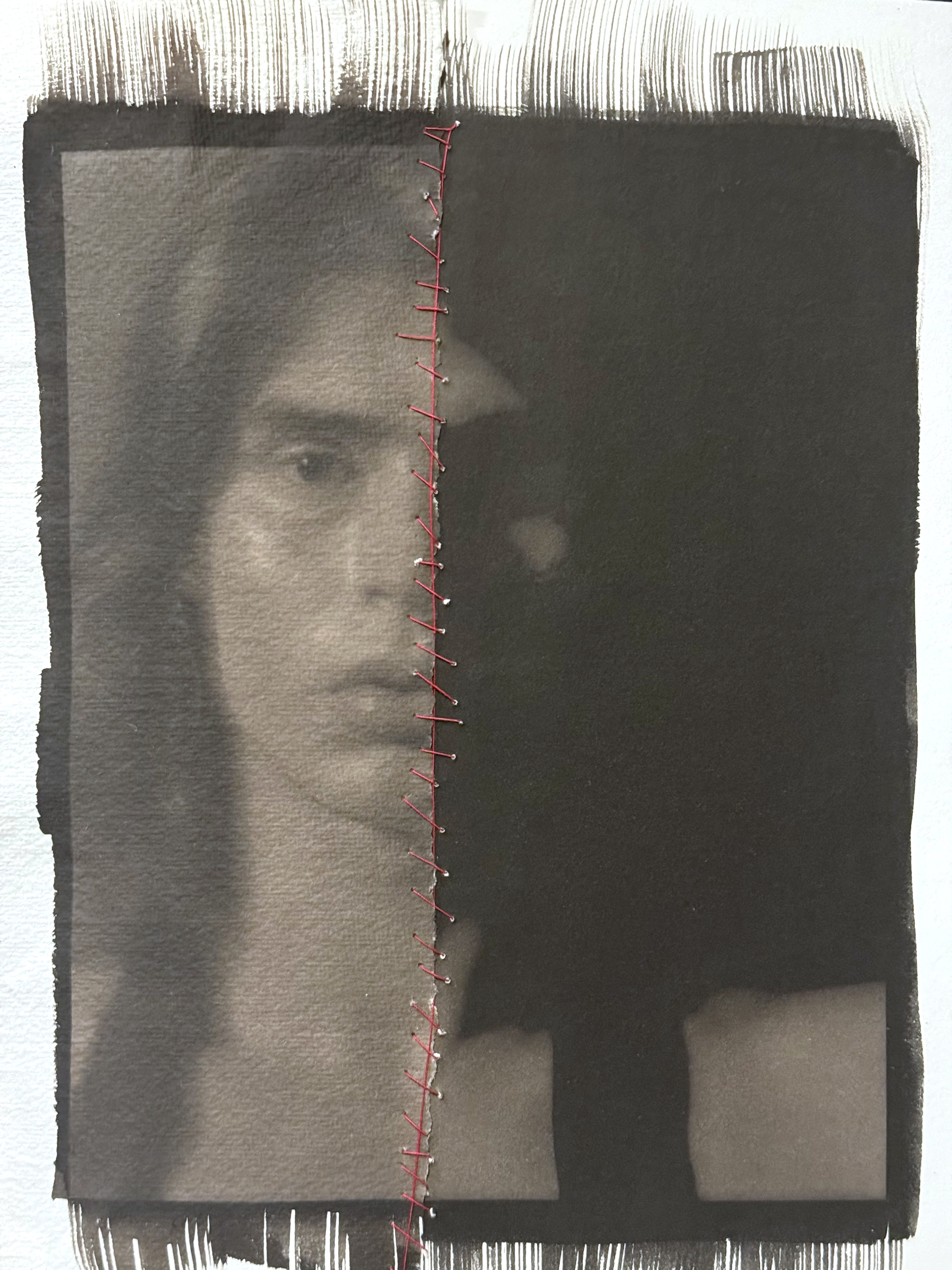
I have thought for quite some time about trying this, and thanks to a little push from my friend Jeremy Moore who lives down in Texas, I took the plunge last night and did some interventions on my prints that many would consider heretical. I made two different digital negatives from the same image, one with high contrast and one with normal contrast. The one with normal contrast I printed on Velke Losiny Prague, which is a light-weight cold-press paper with lots of texture. The high-contrast/dark print is on Revere Platinum, which is a heavy-weight hot press smooth paper. I then tore the print on the Velke Losiny paper in half, and then stitched the two prints together with red thread.
This is an exciting change for me, getting more experimental and risk-taking with my photographs. I’m going to do a lot more with the “destructive/reconstructive” mode of working – I think it opens up the work to being less literal and more visually and psychologically explorative.
For many people, getting a gallery show is the holy grail of their artistic ambitions. Even though the art world is undergoing a major transformation with relationship to brick-and-mortar galleries, many people still see getting a gallery show as a mark of accomplishment (and it is – it means that someone who has money invested in an exhibition space is willing to commit their time, energy, reputation, and cash to showing and marketing YOUR work). Having achieved this, I’d like to pass on some salient advice for anyone still struggling to get there.
HAVE AN IDEA
Before you ever begin to look for a gallery show, have a rock-solid concept about your work. You can take all the pretty pictures in the world, but if you don’t have some idea, some message behind your work, then you probably won’t get very far. I’m not saying that your concept/message must be a social/political/intellectual/academic one, but it should be more than just “they’re all photos of Yosemite because I think it’s pretty”.
ARTICULATE THAT IDEA
Develop your elevator pitch – if you need help writing it, find someone you know who is a good writer to come up with a couple of sentences that encapsulate what your work is about, and then practice delivering it to your friends and family until you are able to rattle it off with confidence.
In my case, it was:
Sinister Idyll: Historical Slavery in the Modern Landscape is a visual narrative of the physical evidence of the slave-holding past in and around the nation’s capital. The work consists of 2 1/4 inch by 4 1/4 inch palladium prints that, by virtue of their size, force the viewer into an uncomfortable intimacy with images that are both familiar and unknown.
That was the hook to pull the interest of the gallerist. After that, I had the attention of the gallery owner, and was able to tell the story of how I got started on my series, what was my motivation, and all the other bits about the work that made it worth showing.
NETWORKING
Go to art openings – lots of them. Go see different galleries and keep track of the kinds of work they show. Get to know other artists and talk to them about their work, especially artists whose work you identify with. Get them to introduce you to the gallery owners – having a personal introduction from someone the gallerist already knows and works with is a big leg up in getting your work in front of them.
GALLERY OWNERS
At the openings, go talk to the gallery owners. Don’t be afraid to identify yourself as another artist looking to show your work, but don’t introduce yourself that way if you’re meeting them cold. Engage them in conversation – ask them about the show, how they chose the work to include, and so on. When they turn to you and ask you about who you are, then tell them, “I’m Bob Jones (or whatever your name is) and I’m a photographer. I’ve been working on a series about xyz for the last three years”. Have your elevator pitch ready to go – if they’re interested, they’ll ask, and you can give them your confident, practiced hook. Have a few images of your work on your phone, at the top of your phone’s gallery, so they’re ready to show, if the gallerist asks to see some. If they don’t, don’t whip out the phone and start showing them anyway.
ETIQUETTE
If the owner is interested, ask what their process for viewing new work is – maybe they have portfolio drop-offs once a month, maybe they schedule appointments, maybe it’s an online process. Whatever it is, FOLLOW THEIR PROCESS. Nothing will piss off a gallery owner more than someone ignoring what they consider to be the most basic of basic rules. They will see it at best as a waste of their time, and you’ll likely never get your work reviewed by them, and there won’t be a second chance.
If they look at your work, and they like it but don’t have a space to show it soon, don’t take this as a no. Say thank you, let them know you appreciated their time, and listen to any advice they might dispense. Get their business card before you leave. When you get home, that same day, or next day at the latest, send them a thank you email, and find out if they would be interested in getting future communication from you about your work. If they say yes, do send them links and announcements about new bodies of work you’re doing. Do it often enough they won’t forget you, but not more than say 3-4 times a year so you aren’t a pest. Don’t send them announcements about every time you get a photo hung in a cafe somewhere, but do let them know if you get a major show or you get a write-up in a serious publication like a national newspaper or art magazine.
SELF-PROMOTION
A lot of this stuff above falls under the umbrella of self-promotion. It’s a practice, not a one-time event. You’ve got to kiss LOTS of frogs to find a prince, so if this doesn’t lead to a solo show the first time you try, don’t give up. Lather, rinse, repeat.
DON’T BE A DIVA
Unless your last name is Mapplethorpe, Avedon, or Liebowitz, you can’t get away with being a diva. So don’t even try. Your goal (I assume) is to get invited back to show again. Producing a show, even a solo show, is a collaborative effort. The gallerist will know their space and have a pretty clear idea of how to hang your work in their space to be most effective. Listen to them. You can politely disagree and discuss their ideas, of course, but don’t take a “my way or the highway” approach to hanging the show. If you pull a stunt and say, “I’m not doing this unless…”, it had better damn well be a hill you want to die on. “Doing that would compromise my artistic vision” is 99% of the time a bullshit excuse. Be willing to share a wall. Be willing to have your pictures arranged in a way you hadn’t thought of. Don’t insist that “if this picture isn’t in the show, I’m not doing the show”. The gallery owner will remember if you’re a temperamental diva, and they won’t want to work with you again. The art gallery world is small – word gets around and if you’re a diva, more doors will close than open.
This was inspired by an online discussion I was engaged in on a photography forum.
Photography occupies a unique niche in the arts. Because of its easy verisimilitude, its capacity to effortlessly record detail with precision, it presents the comfortable illusion that it is reality. I would argue that it is in fact no more reality than painting, and in some ways even less, precisely because of its easy verisimilitude.
Palacio de Bellas Artes, Mexico City. A seemingly hyper-realistic image.
Object Permanence
Why do I say that photography is less real than painting? Because it claims representational status when it is merely descriptive. When people look at an average photograph, because the subject of the photograph appears to be an exact likeness of the subject, they assume that it is a 1:1 correspondence because it is in their own personal interest to assume such. It is comforting to think that “this photograph IS the person in that moment the photograph was taken”.
In a way it allows us to reverse the childhood lesson of object permanence. When a child is very small, if you show them a toy, then you hide it, they will not understand that the toy is still there, just out of sight. A photograph allows you to imagine that something is there even when you know it is not. The subject of the photograph is not physically present at the moment of viewing the photograph, and may even be dead or transformed beyond recognition, but still exists in the mind of the viewer at the moment of viewing.
Dimensionality
Photographs render their subject from four dimensions (length, depth, height, time) to two. They also perform a selective removal of context. In reality, a subject exists in an omnidirectional, infinite context. Taking a photograph of that subject requires excluding a near-infinite amount of that context – you are viewing that subject from a single direction, from a fixed perspective, as it presents itself for the duration of the exposure. That duration of exposure is necessarily self-limiting and as such is not tied to the experience of the subject holistically – it is possible to make a subject appear dramatically different than it does 99.99% of the time, to the point of being unrecognizable, through the use of light, composition, color, and time.
Organ Grinder, Calle Madero
You are recording that subject in a single quantity and quality of light. And you are photographing it at a single moment in time (even if you are doing a solagraph that requires a year to expose, in the span of infinite time, it is a moment).
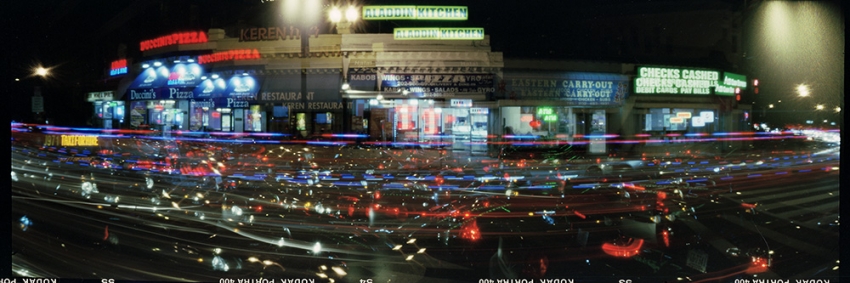
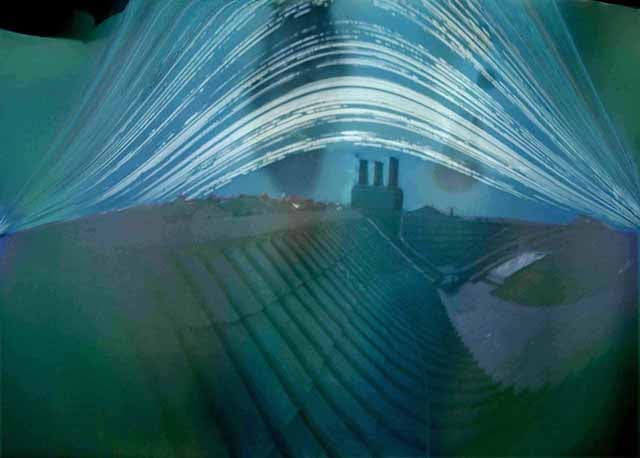
Because of the mechanics of making a photograph, while everything that appears in the above photograph was in front of the camera during the exposure, this scene in no way looks like this, ever. Yet it is a photograph. This was made by two separate exposures of twelve minutes each, moving the camera closer to the subject during the second exposure, utilizing a pinhole camera.
Verisimilitude
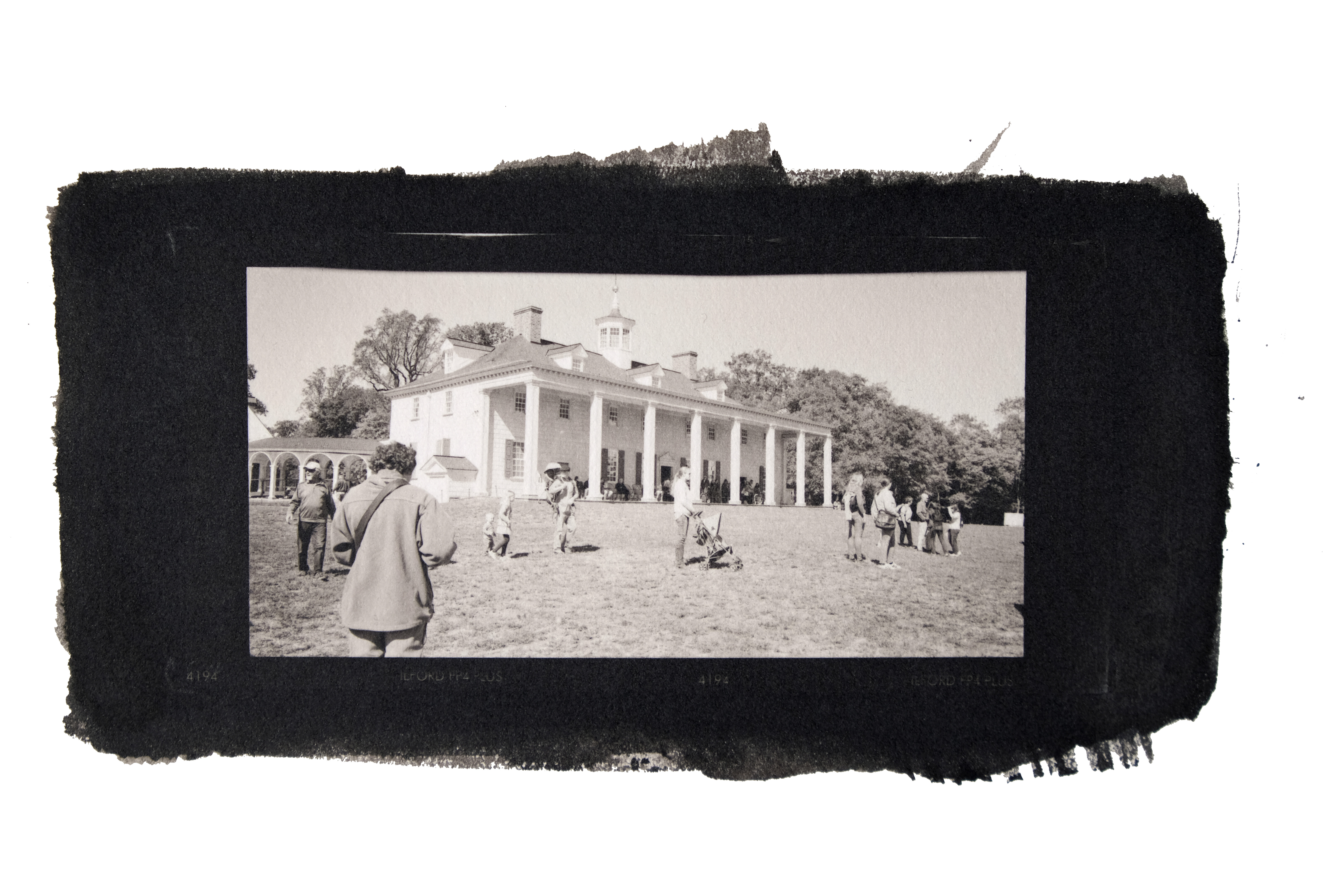
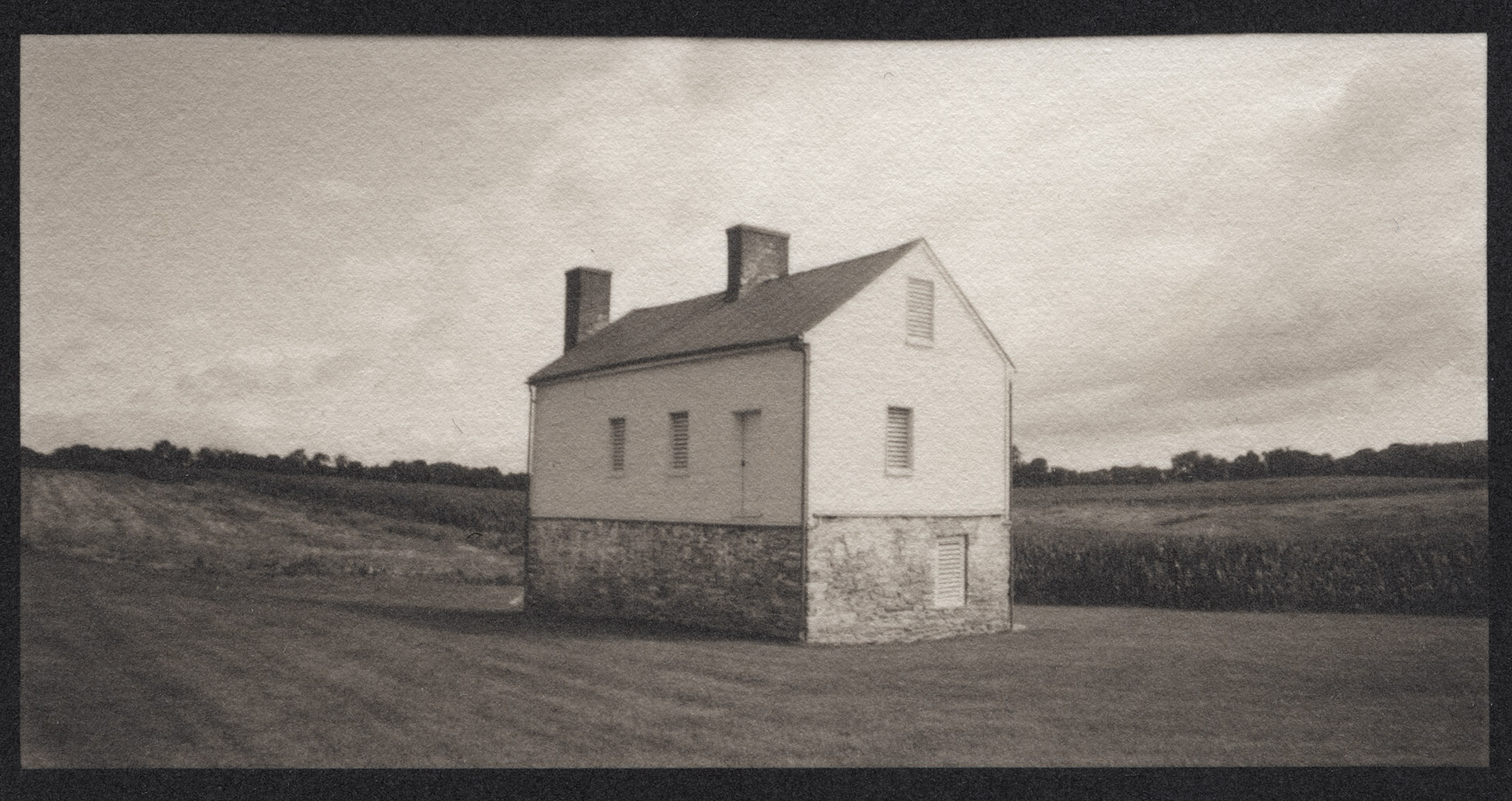
You are choosing to reproduce that subject using some method that is at best a precise simulacrum of that subject. Should you choose to reproduce the recorded image in any number of alternative media, then you have completely eschewed realism – while a photograph of a house may look like the house, the house has never ever appeared like the palladium print of the house.
Bachelors House, Best Farm
The house is NOT that color, nor is it that texture, nor even that exact brightness – it is stone and brick and painted wood, not paper fiber. It is an interpretation by the photographer of the relative brightness of the objects in the scene rendered on a piece of film with its own spectral sensitivities, translated through chemistry onto a piece of paper. That chemistry has its own particular responsiveness to light, temperature, humidity, paper pH, and other factors that alter the appearance of the final image. Yet if you were to take this image and go to the place where it was taken, you would say, yes, this is that house. It is similarly delusional to talk about the permanence of the one versus the other. Both are subject to the vicissitudes of time, and there is no guarantee either one will outlast the other.
Photographs as Language
Let me start this section by prefacing it with a bit of academic theory. While I am thoroughly annoyed by one of the great bete noirs of 20th century academia, post-structuralism or deconstruction, the theory does have one very useful concept at its core: the understanding that language is NOT literal. Words are symbolic, abstract representations of the things they relate to. The word “rock” for example, is a vast generalization about rocks. When we read it, it conjures up in our mind a whole slew of associations with objects of geologic origin, and when YOU hear the word or read the word, the mental image you form is different from the mental image formed in MY head.
I can apply more and more words as modifiers to the word “rock” until you and I can both understand we are referring to the SAME rock (a chunk of granite, three centimeters in length, two in width, 1.3 in height, with reddish brown mottling and flecks of gold-like minerals contained within, whose surfaces have been polished to a mirror-like smoothness, on display in the Smithsonian Natural History Museum’s mineral collection), but even then, those words are NOT the actual rock.
Well, neither is a photograph of that rock. The photograph may represent the rock, and it may represent it with extreme accuracy (the rock in the photograph may be reproduced with the identical dimensions of the actual rock). But it is still two-dimensional, not three, and the colors of the rock in the photograph are composed of organic dyes, not the same minerals and elements of which the rock is composed.
And what of the fact that the photograph can be (re) produced in many different ways so that those aspects of verisimilitude are distorted or thrown out altogether? Perhaps my original capture of the image of the rock is a 1:1 scale representation of the rock, but I enlarge it to be twenty feet across, rather than three centimeters. Or I intentionally (or accidentally) alter the color balance so that the rock appears green rather than red. Or I reproduce it to be smaller than the actual rock. All these things are possible, and true.
If anything, a photograph that attempts to be a literal record represents a failure of the imagination and creativity because it is suppressing those acts through its verisimilitude. An “accurate” photo is encouraging the viewer NOT to think and NOT to interpret, but to take on face value the subject presented because there is the possibility that it mightbe accurate.
Photographs and Time
One of the great challenges of ascribing literal representation to a photograph is the factor of time in its creation. Because of the speed of production of a photograph, we assume that there is some literal truth and purity to the image. While it is more fundamentally assumed today due to the nature of photographic technology (there are digital cameras today that can record an image in less than 1/10,000th of a second even without the aid of stroboscopic light), even at the dawn of photography when a Daguerreotype could be made in minutes, rather than hours or days for a sketch or a painting, photographs were thought of as “instantaneous”. This can be seen in marketing for early portrait studios: “Instantaneous Likenesses” were the frequent topic of advertising.
But just because a photograph CAN be captured in fractions of a second does not mean that it can ONLY be captured that way, and cannot be ascribed as a fundamental character of a photograph. A pinhole image may be made over hours or days, or a solagraph can be recorded over an entire year. There is nothing literal in a one-year solagraph – it captures the movement of the sun through the scene every day, and the changing position of the sun in that scene every day. The effect on the film or paper is so profound as to not only cause chemical reactions but actual physical reactions – the sun will be sufficiently intense as to burn the film or paper.
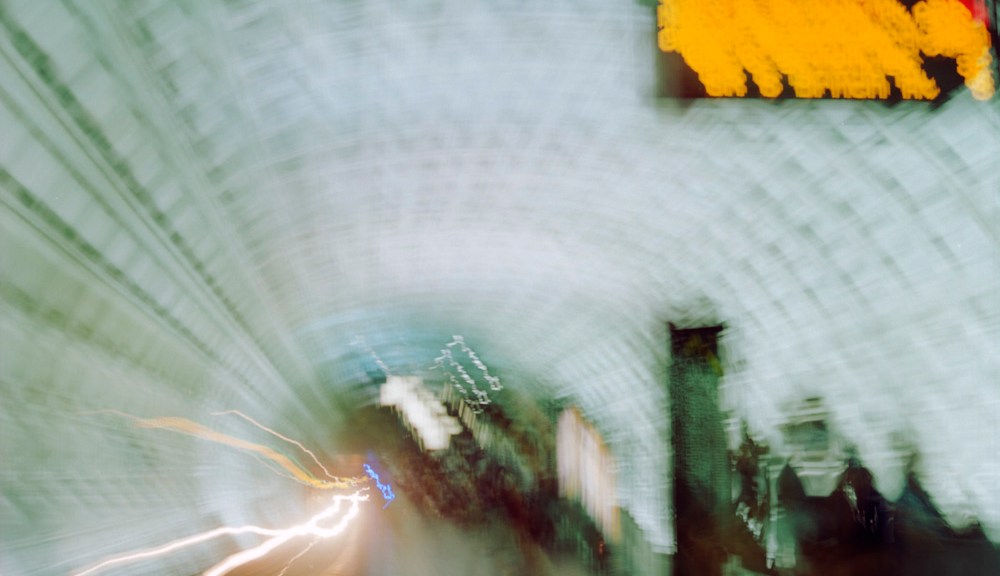
If you view that scene where this image was taken, it would look nothing like that, ever. You would NEVER observe that. Yet it is a photograph. It is simultaneously literal and profoundly distorted.
At the moment I’m struggling to come up with a nice tidy academic conclusion to this essay. I don’t know that I have it in me at this time, because I’m not done thinking about this topic and I need to spend a healthy chunk of time organizing and re-organizing my thoughts. I will come back to this idea of the paradoxical simultaneous literalness and non-literalness of photographs and how we interpret them (or fail to interpret them).
With the ongoing pandemic, many people are turning to, or at least considering, still life as a genre to explore with their photography. This class is designed for those wishing to tackle still life in their own home. One of the great things about still life is that you don’t need a fancy studio with expensive and complicated lights to produce great images, and since your subjects are (usually) things, you can take all the time you need and your subjects won’t complain.
Stainless tea kettle, 5×7 inch Sinar Norma, Cooke 10.4″ Series II Anastigmat
We will cover the basics of how to get set up and choose a space to shoot in, and how to manage your light. All that is required is a table that is within reach of a window, so if that’s all you have, that’s all you need. We will cover lighting options both low-cost and more complex should you not have access to a good window, or you want to be able to shoot regardless of the hour or the weather.
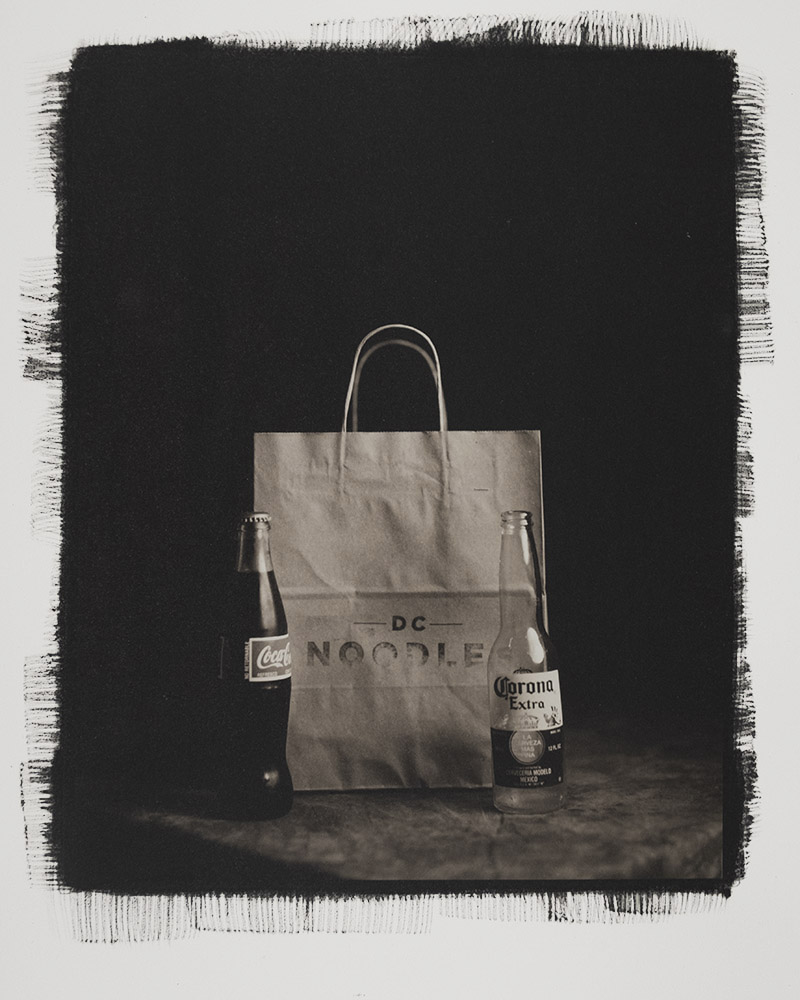
Takeout container for rice, 5×7 inch Sinar Norma, Cooke 10.4″ Series II Anastigmat
Beginning with single objects and growing from there, we will build complexity into multiple object setups. Most if not all the images used in this article were made with a single light – you can see that you don’t have to be a studio lighting pro to produce excellent results. We will touch on using reflectors and diffusers (very useful when working with natural light where you may not have as much control over the quality, direction and contrast as you do with studio lighting).T
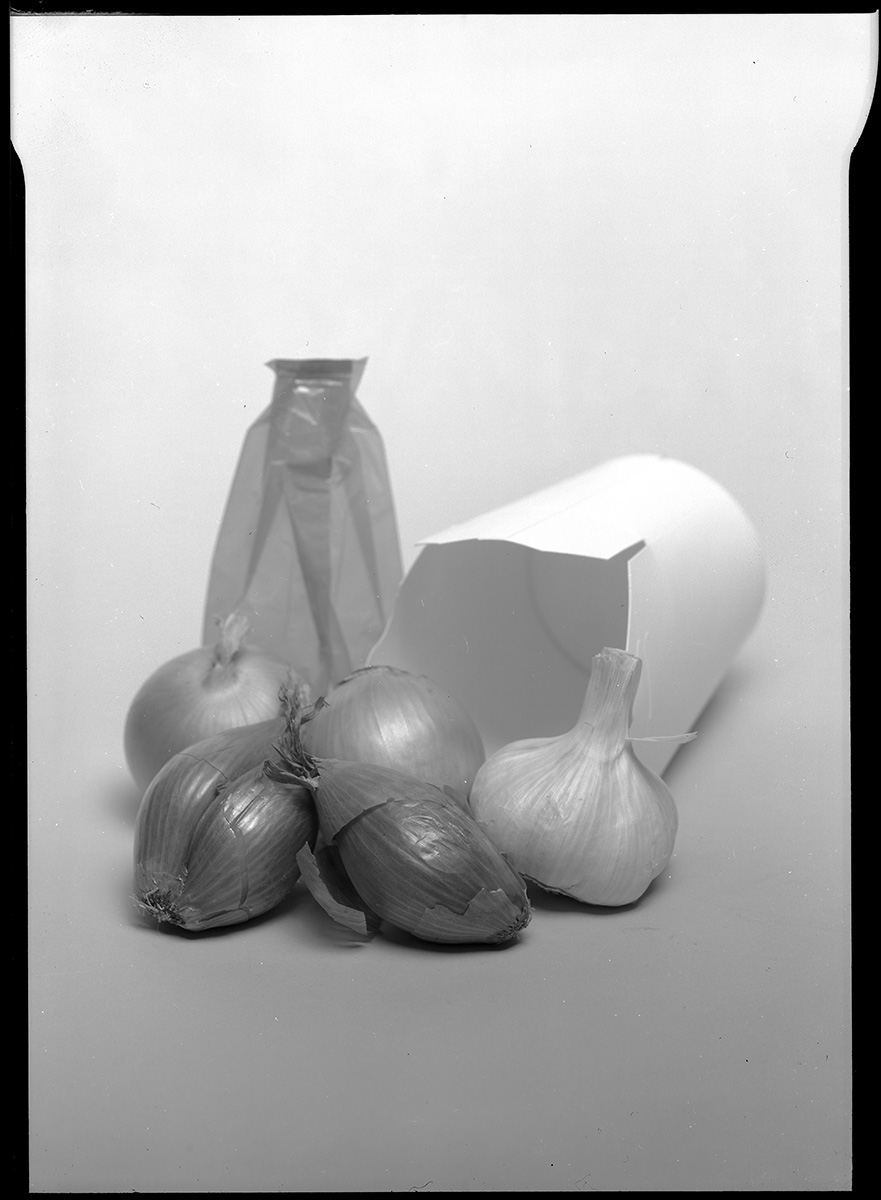
Things with skins, 5×7 inch Sinar Norma, Cooke 10.4″ Series II Anastigmat
Still life can be more than just a bunch of fruit. It can tell a story, reflect the zeitgeist, or even be a portrait (of the thing pictured, or of a person).
Proof of the Existence of the Outside World #1 – 8×10 inch Palladium print
While in my own work, I do mostly large format film photography, because I like it and I like the results it produces. Between the antique lenses available that produce a unique look to the camera movements to control depth-of-field and plane of focus placement, there is really no better tool for still life.
Using a Sinar 5×7 with movements to shoot a still life of a tea kettle.
That said, you don’t have to use a view camera to produce excellent still life work. What counts is your creativity and understanding of the tool you’re using to produce the image you want to make. Anything in this class is acceptable, from a smartphone to a view camera. As proof of the pudding, the following are images I made on my iPhone:
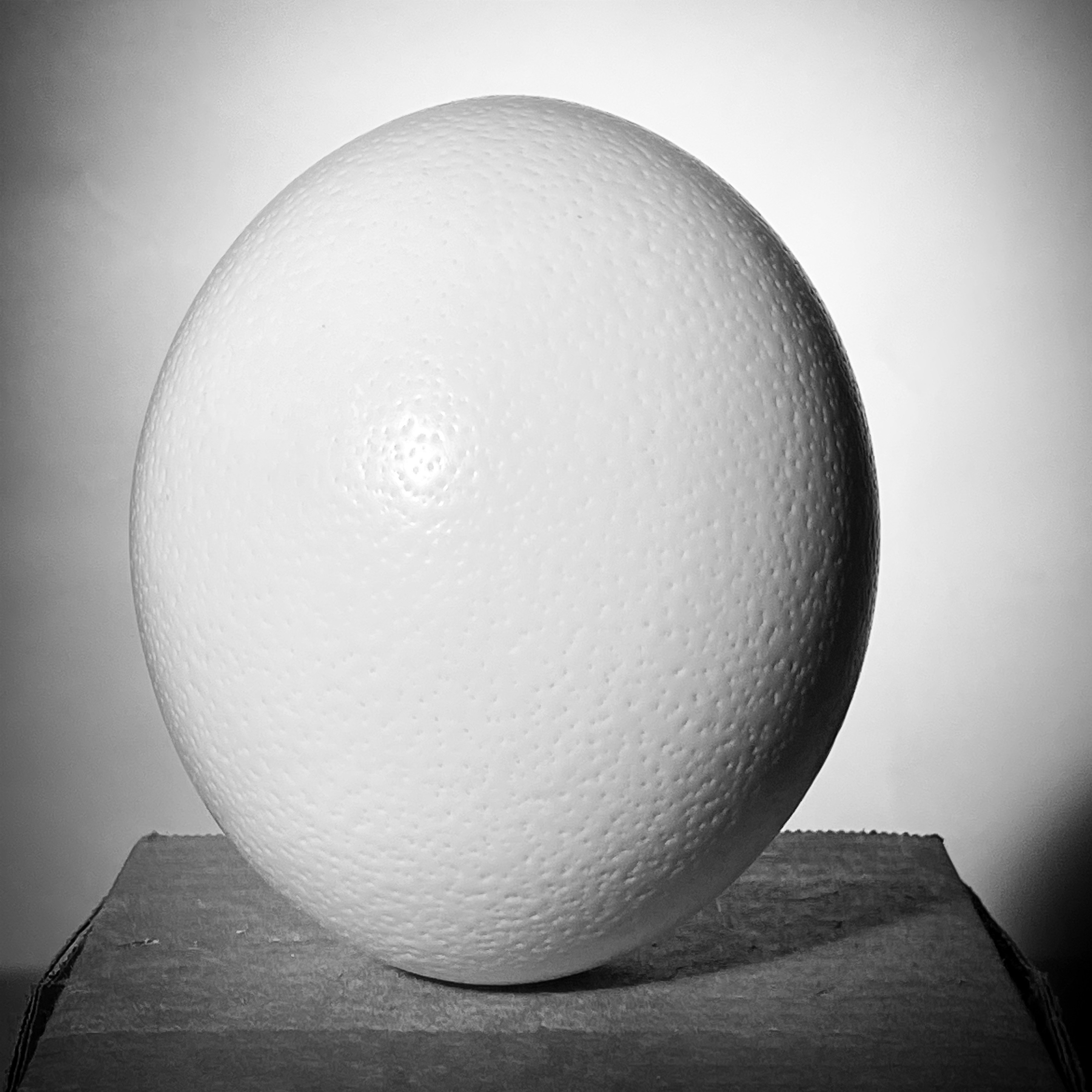
Ostrich egg, iPhone 12 Pro Max
Bottles for Sparkling Water, iPhone 12 ProMax
The class starts on April 21 and runs for six weeks through May 26. Classes are held via Zoom, from 7:30 to 9:30 pm. The link to the class will be sent to enrolled students via email a few days before the class starts. Tuition is $300 for the six sessions.
I have a class coming up from March 4 to April 29, Understanding Your Practice – The Photo Project, at Glen Echo Photoworks. This course is about thinking about how we approach and execute photographic projects. The foundational text for the class is Photo Work: Forty Photographers on Process and Practice., edited by Sasha Wolf. The book consists of interviews with forty different photographers who work in long-term projects, asking each of them the same twelve questions.
We will use the text as a guide to introspection into our own process of working on projects – how we come up with projects, how we shoot those projects, how we decide when they’re done, how we edit those projects, and how we think of them as a body of work – will they be prints on a wall, a book, a website, or some combination thereof.
We will execute our own mini-project over the duration of the class, using the ideas we discuss to help us guide our project and get a better understanding of our own working methods. There are no “right” answers here – this is just an exercise to help bring clarity to your own working techniques, to refine them and hopefully bring success to your ongoing long-term projects (or help you get started on them!).
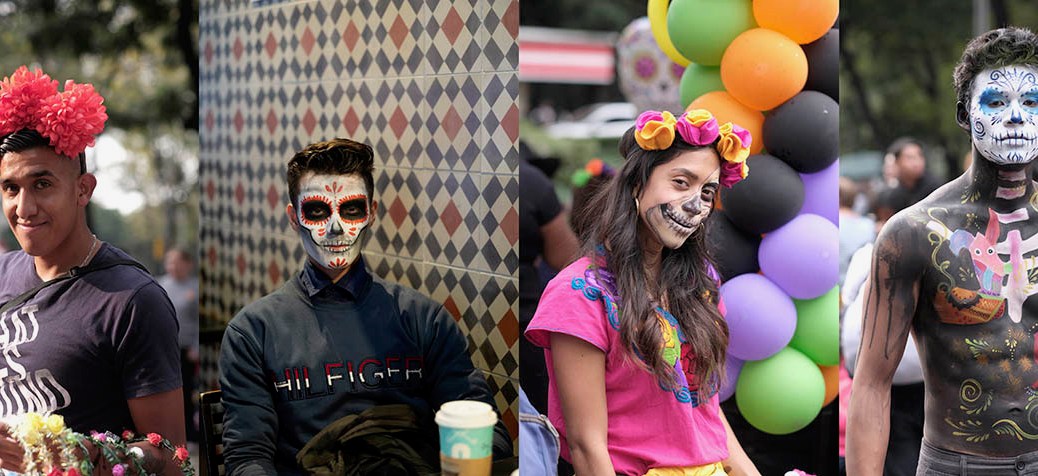
The images following here are illustrations from my ongoing project about The Day of the Dead in Mexico City. Day of the Dead is a far-reaching cultural institution across not just Mexico but much of Latin America. It has regional and even local variations – Mexico City was, until very recently, somewhat blasé about the event, with celebrations being held more on the personal level. Thanks to the 2015 James Bond film Spectre, Mexico City decided that they needed to have the big public parade (desfile in Spanish) depicted in the film.
The event has its roots in traditions predating the arrival of the Spanish conquistadors, which were co-opted by the Catholic church. Today, the tradition adapts with the times and competes with Halloween (and its Hollywood inspirations), but also serves as a mirror of contemporary cultural and political events.
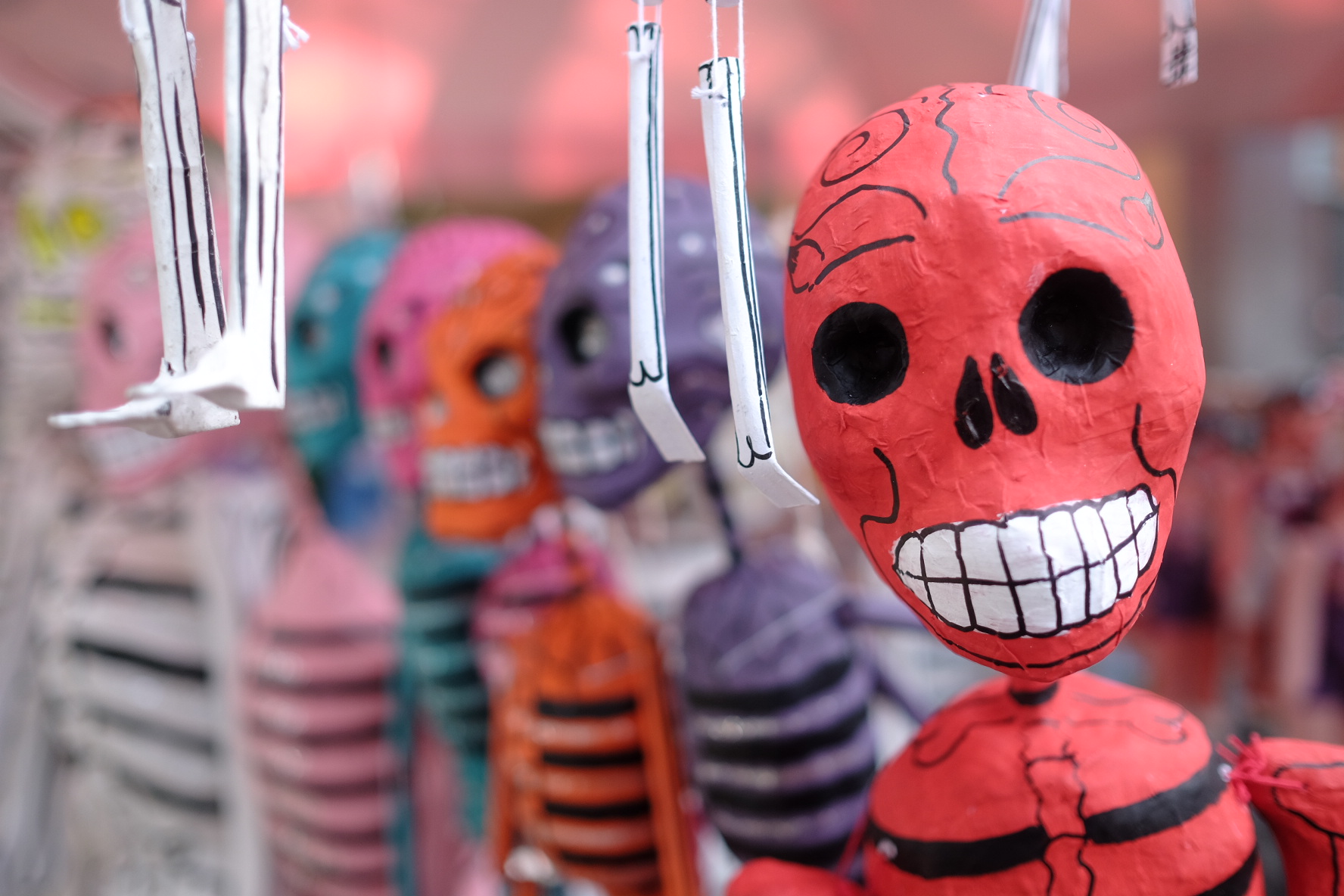
Papier-mache skeletons for sale from a street vendor.
More papier-mache skeletons for sale on the sidewalk in Coyoacan, an historic neighborhood in Mexico City
Businesses getting into the spirit – El Moro Churreria, one of the most famous churro shops in Mexico City, has their own mesero (waiter) ready to serve the spirits of the dead!
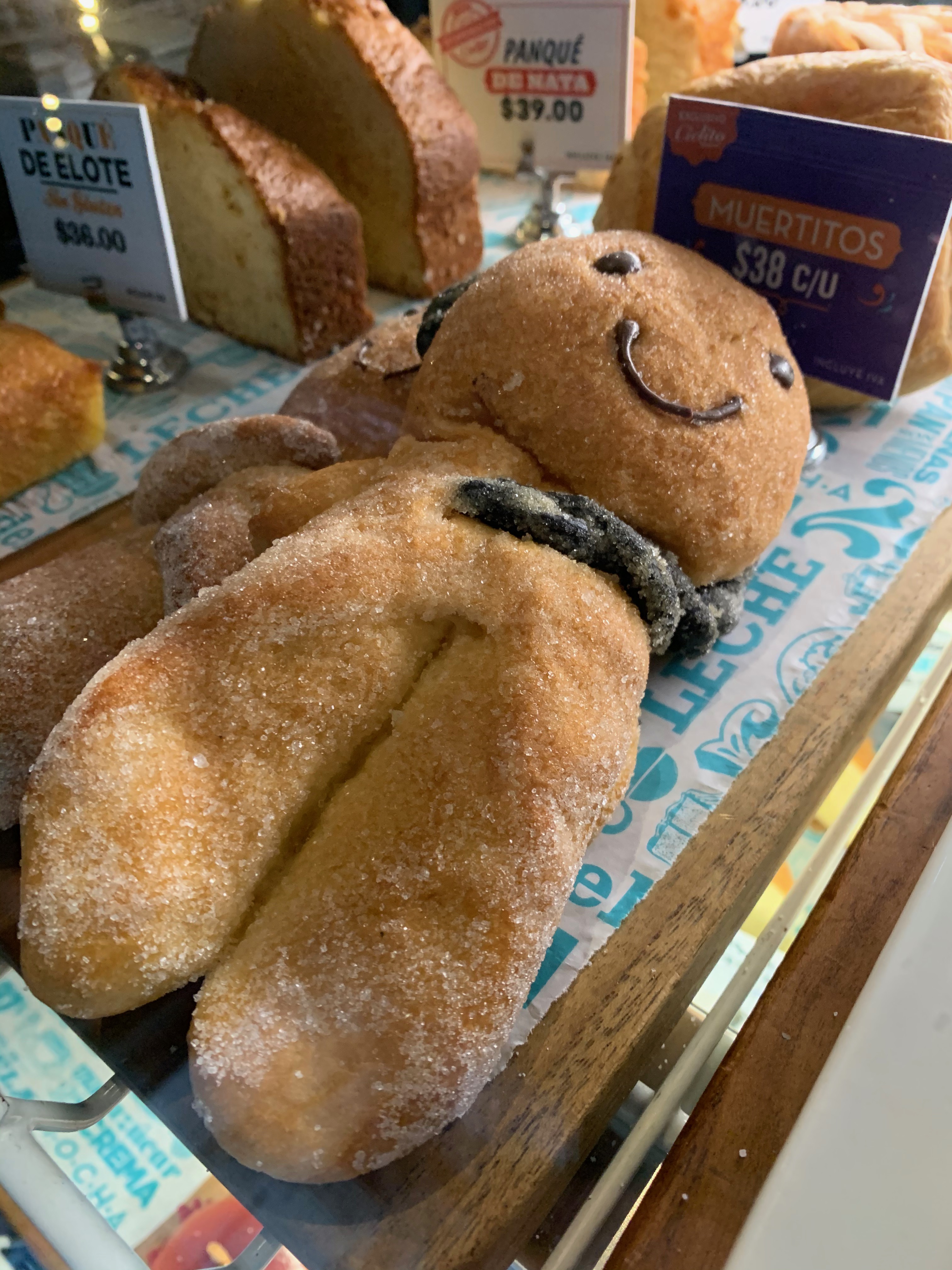
Muertitos – pastry for day of the dead in the shape of boy and girl dead.
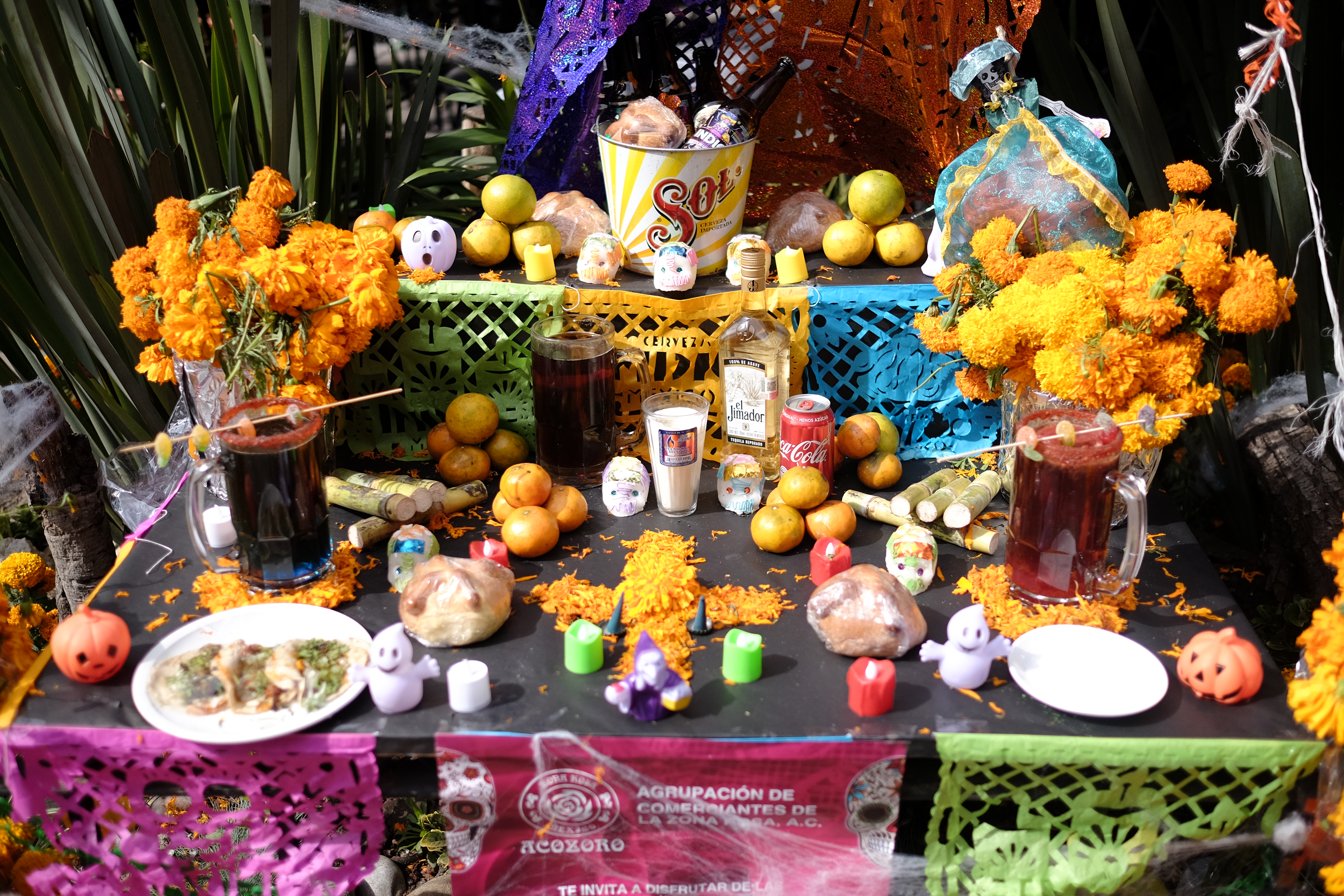
a typical offend altar set up outside a bar in the Zona Rosa
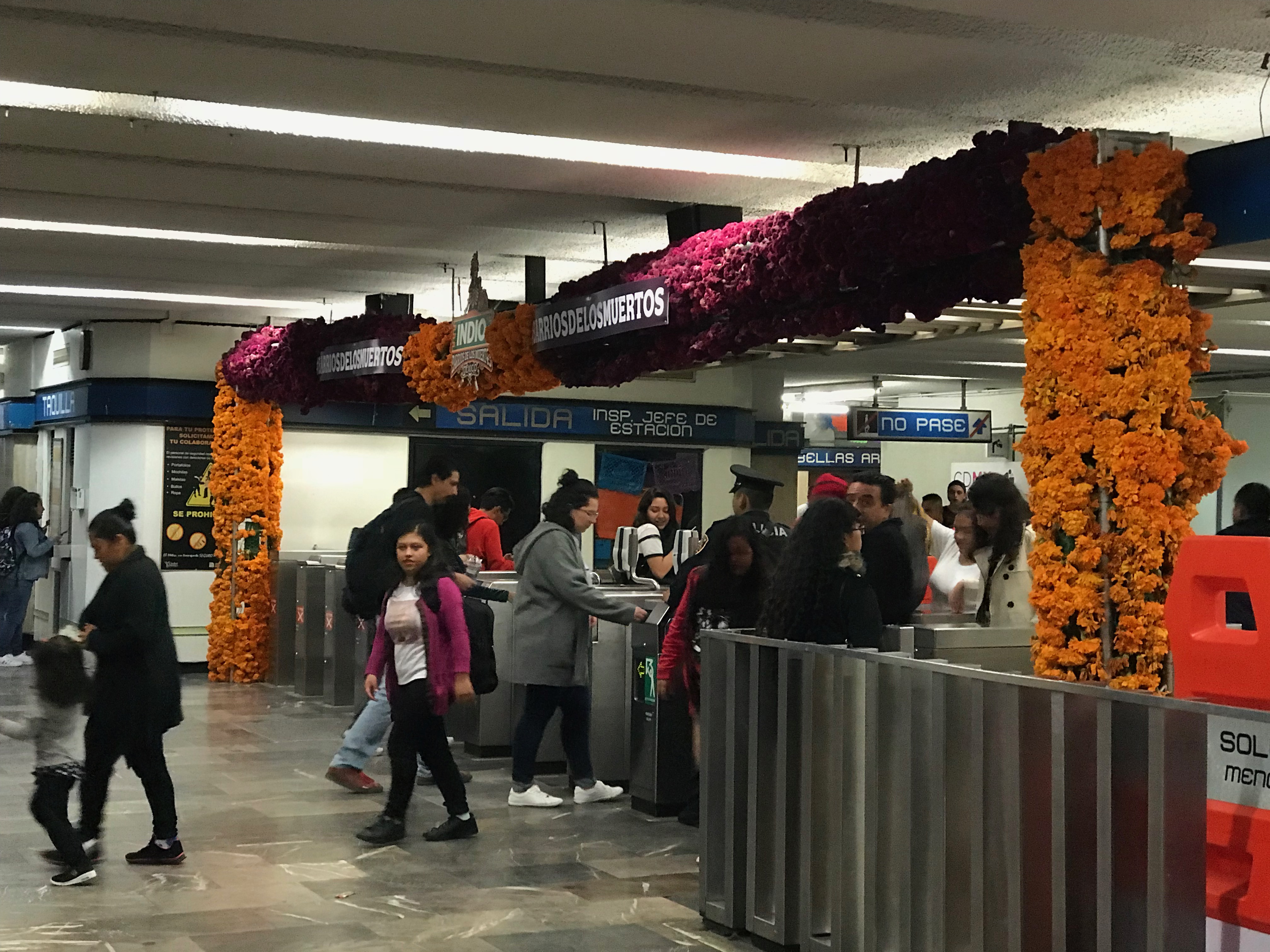
Even the Mexico City metro system gets into the spirit. Turnstiles decorated with the traditional orange cempasuchitl (marigolds).
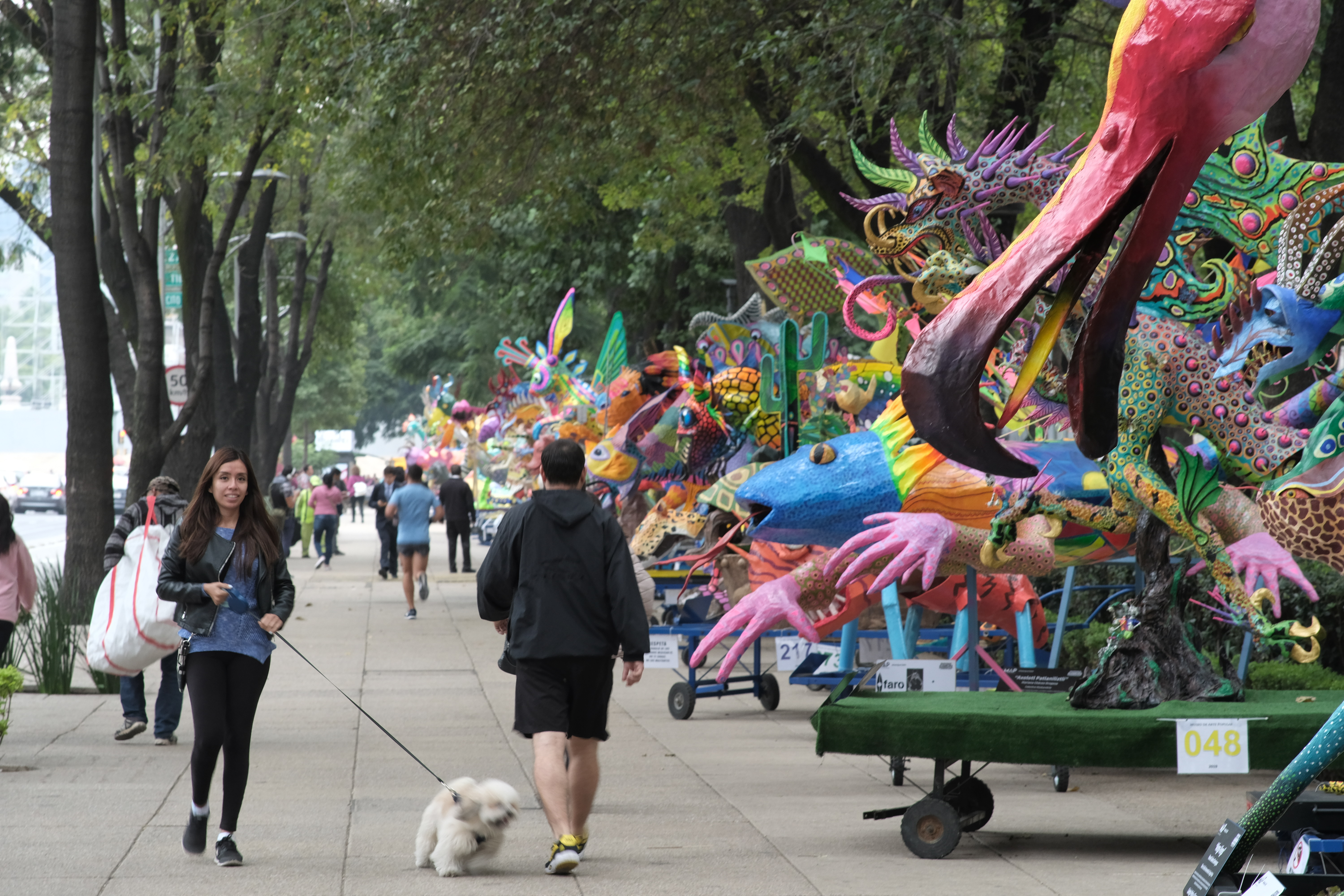
The avenue of Alebrijes (fantastical spirit animals) along Reforma, each one commemorating a person who has passed on. These Alebrijes line both sides of Avenida Reforma for over a mile.
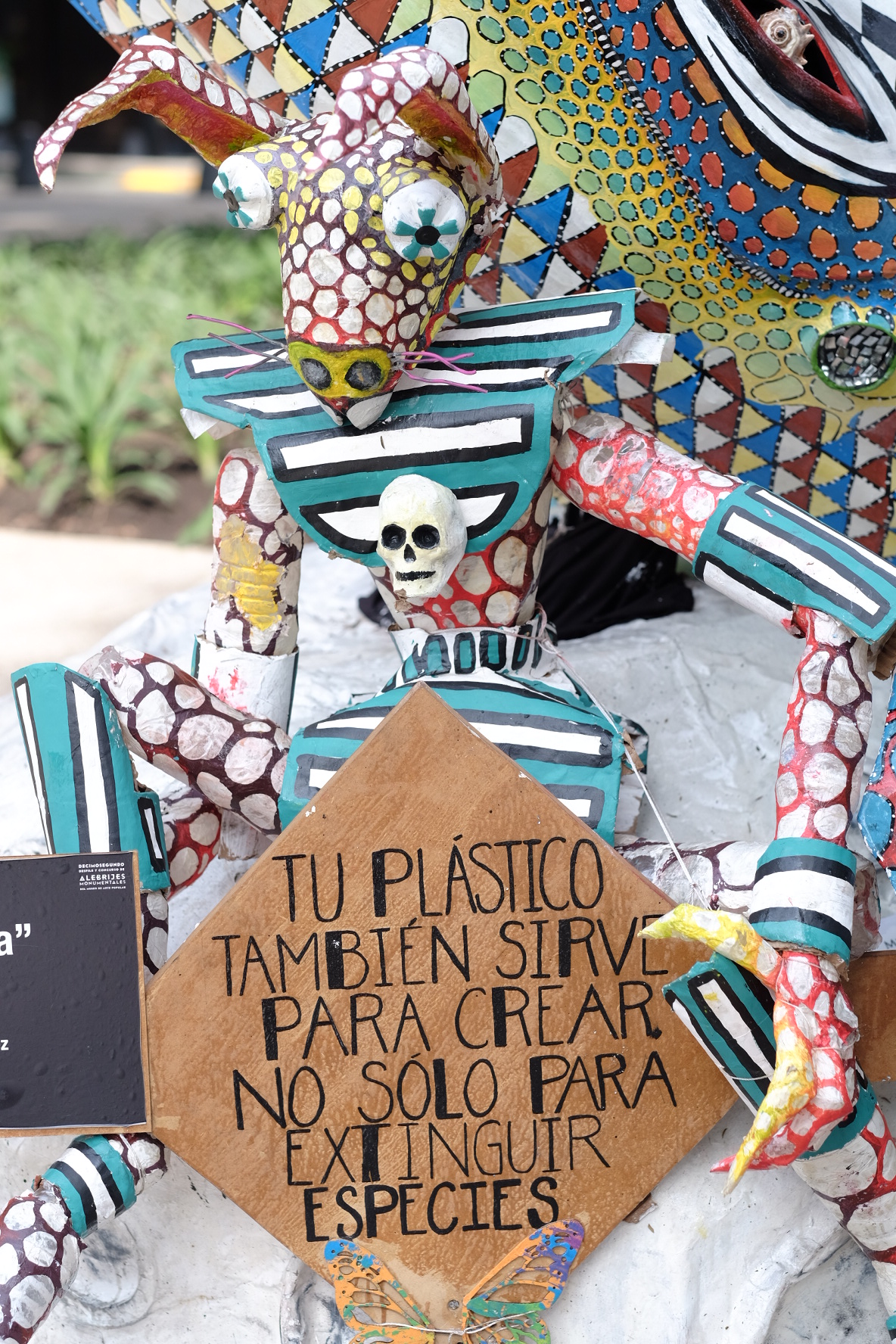
The cultural is political – an Alebrije on Avenida Reforma reminding us that plastic can create and it can destroy.
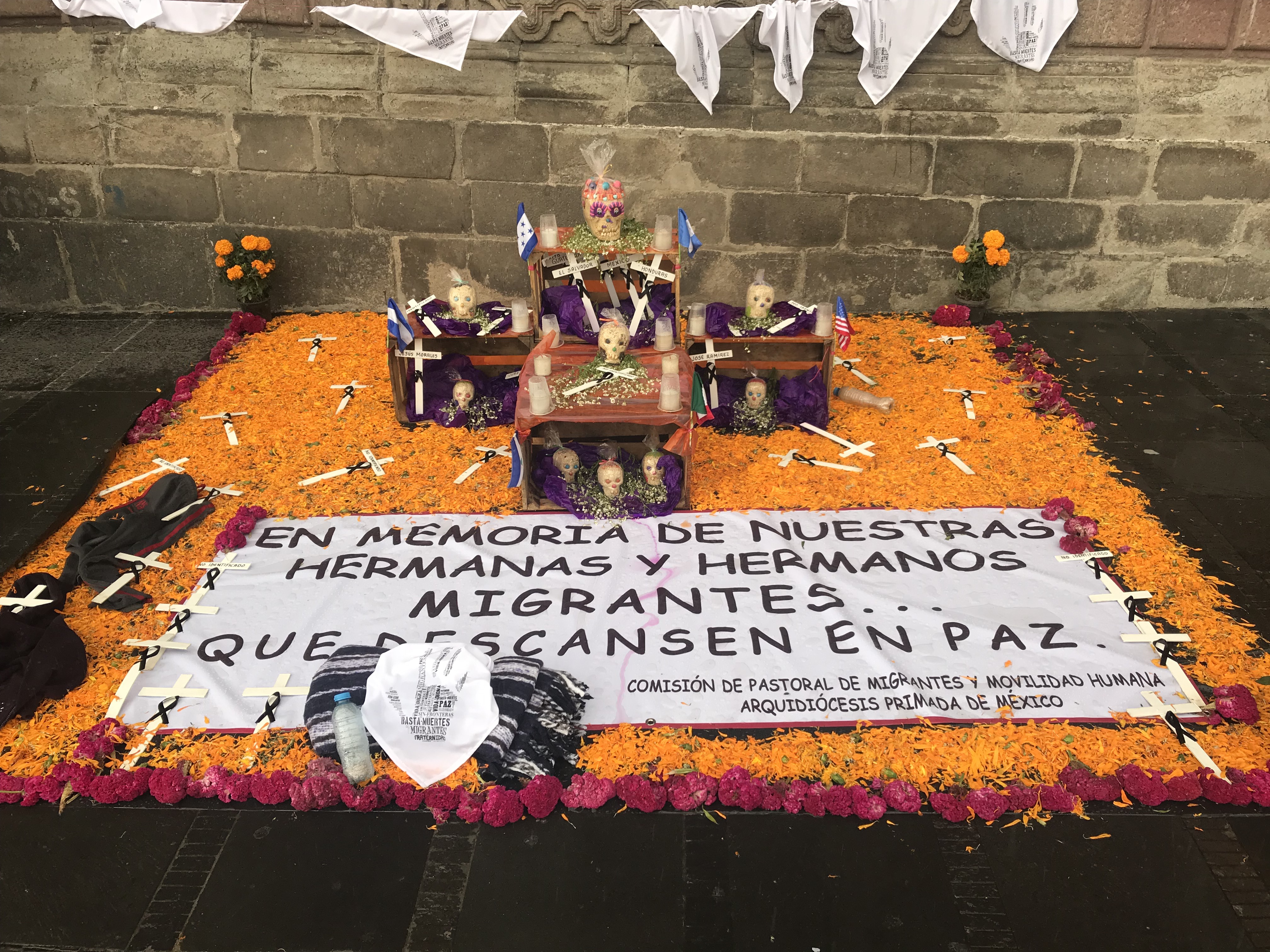
A memorial altar or ofrenda at the front wall of the Metropolitan Cathedral in Mexico City in memory of migrants who died fleeing violence and poverty in Central America.
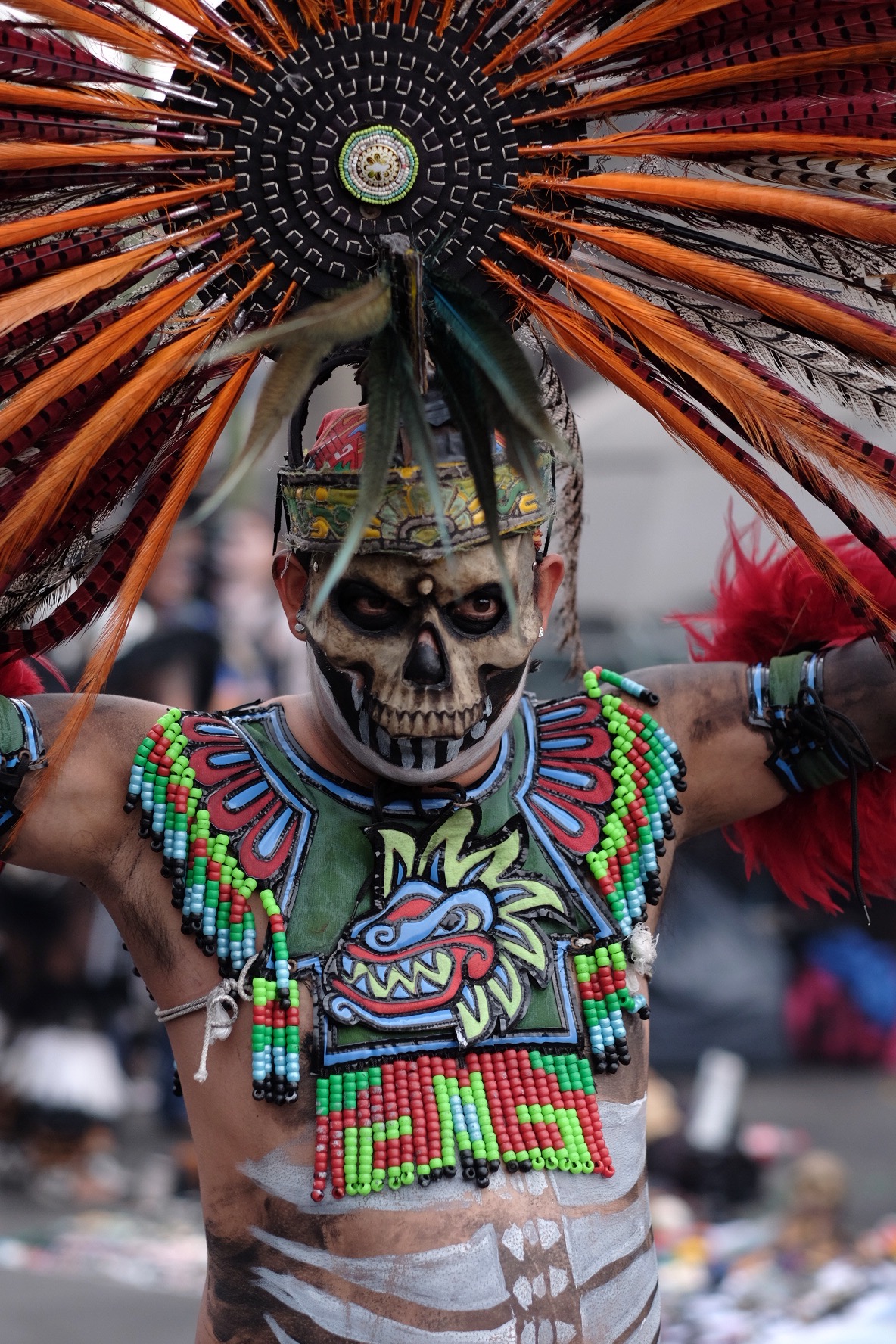
Traditional Aztec dancer performing on the plaza in front of the Metropolitan Cathedral
A painted Catrina accompanied by the abuelita Coco from the Disney movie of the same name.
Young woman with face painted.
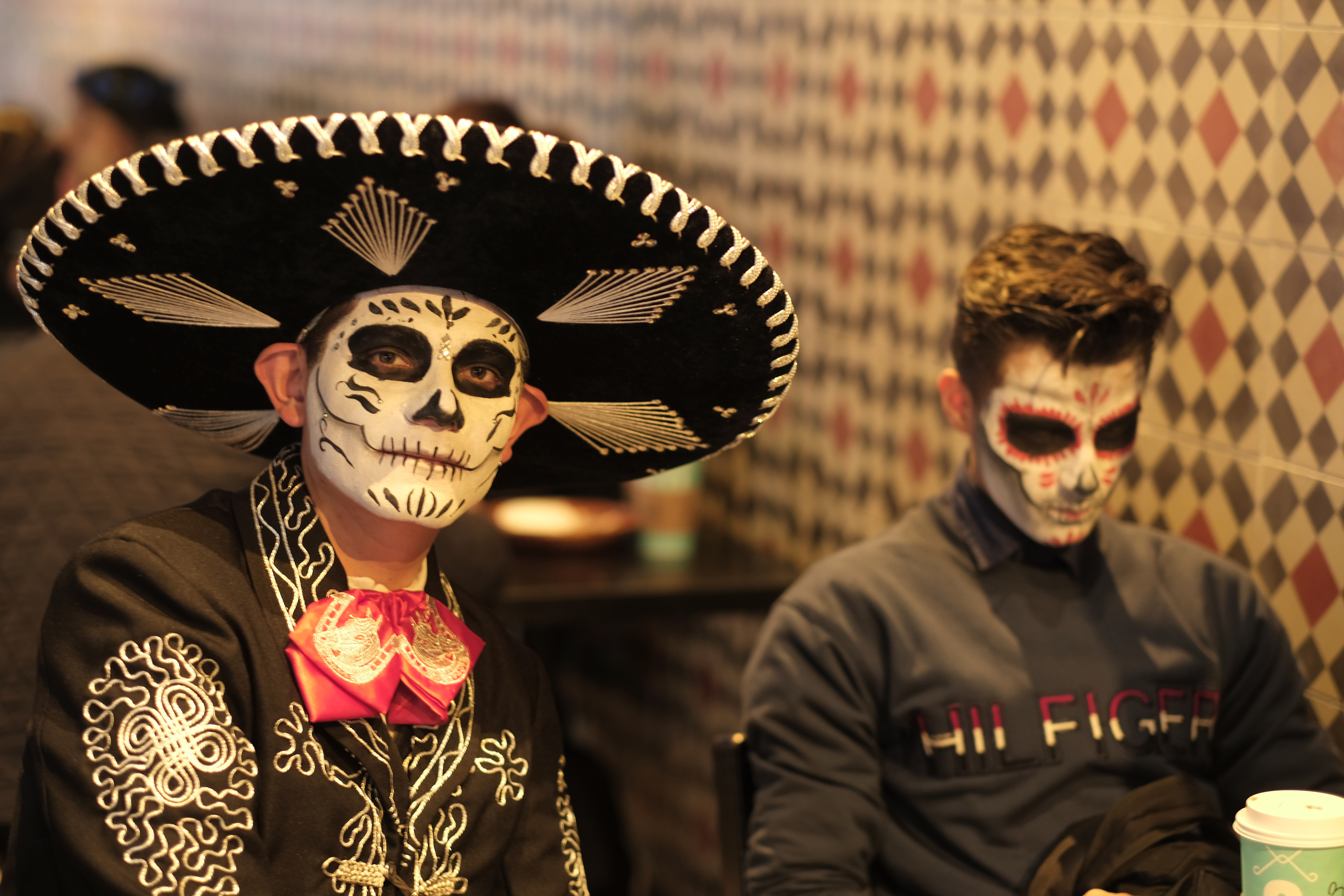
Mariachi and friend in the Cielito Querido Cafe on Avenida Reforma.
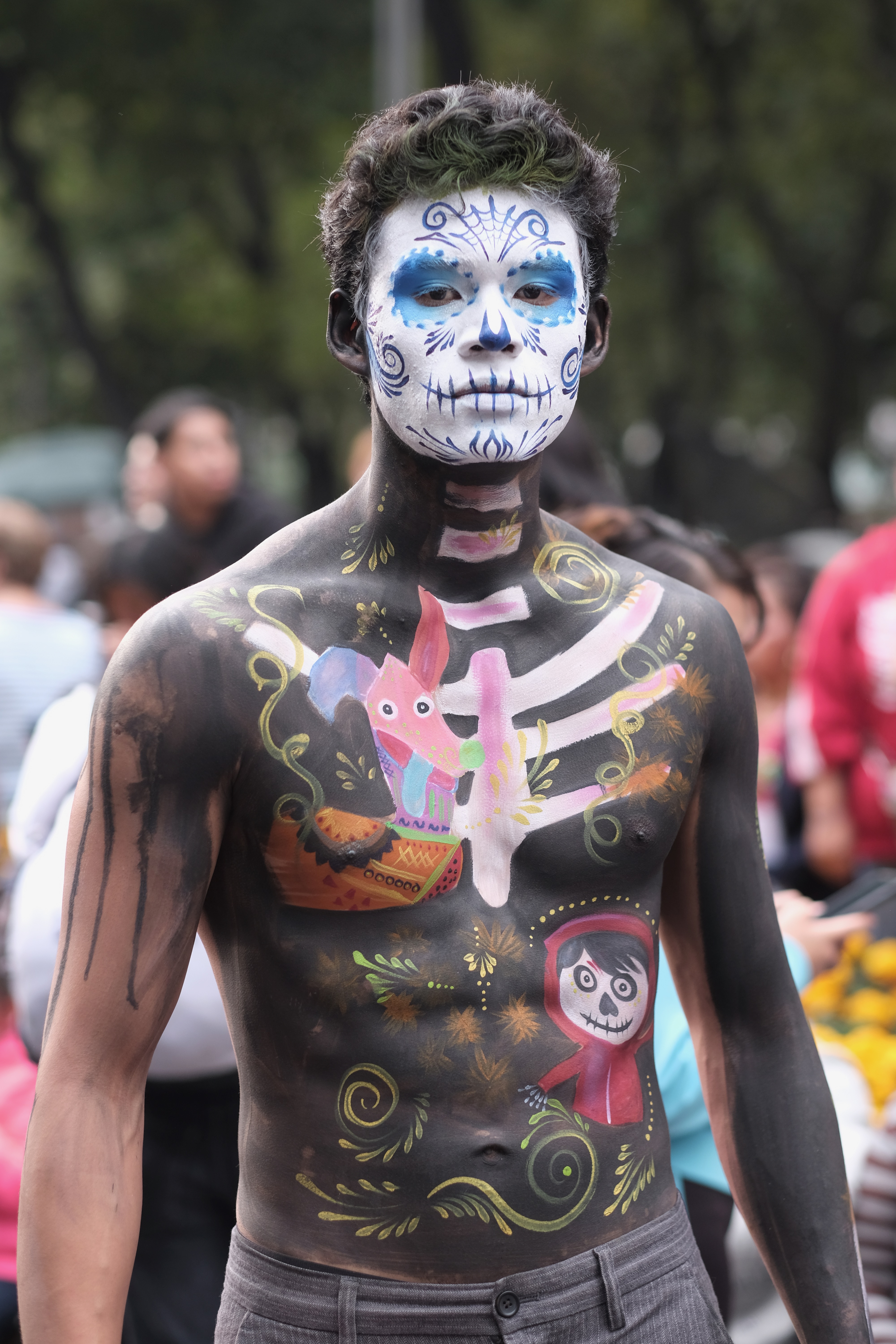
The traditional meets pop culture meets artistic expression. Full body paint that shows not only the huesos (bones) of a skeleton to remind us we are all mortal, but interconnected with the little boy and his dog from Coco, the Disney movie.
To sign up for the course, click on the link below. Tuition is $350 for 8 sessions. No class will be held on April 1.
















 dcphotoartist