Category Archives: Large Format Cameras

Portraits with the Hermagis Eidoscope

I think I wrote previously about the Hermagis Eidoscope soft-focus portrait lens I have on loan. Here are some results from it. As the lens is on loan to me and not mine, I have not sent it off to have replacement waterhouse stops made for it. It was expensive enough modifying my camera to fit the lens – I don’t want to spend more money on accessories for a lens I’ll have to return. That said, as the only waterhouse stop I have for the lens is the wide-open f5 stop, that’s the only one I’ve been using. It’s not only the maximum amount of light but also the maximum soft-focus effect. I’ve been told that if you stop the Eidoscope down past f8, it becomes a much more regular, sharp lens. But this is what you want to see with this lens anyway – the soft-and-fuzzies.
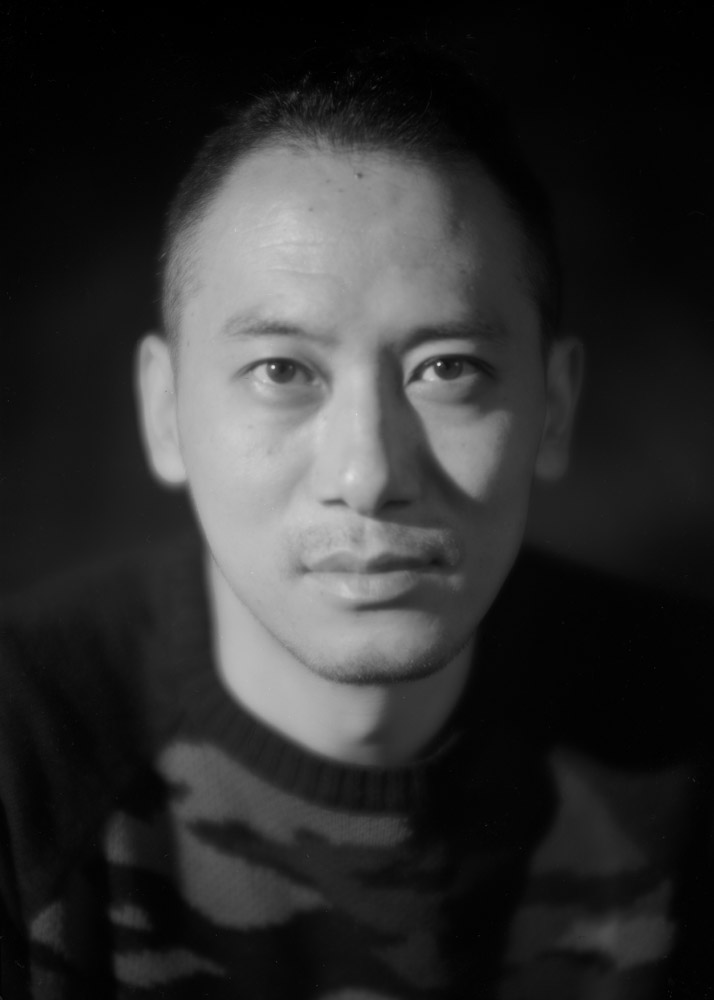
Wanchuk, close-up
Wanchuk, close-up

I know the lens is flattering to women – I did not know if it would be too much for male portraiture though. I think my example here bears out the fact that it works well for both genders. Here is another portrait of my friend Wanchuk, this time a half-length shot with a different outfit. The soft-focus glow is especially apparent in this image, with the bright denim jacket giving lots of flare around the cuffs of the sleeves.
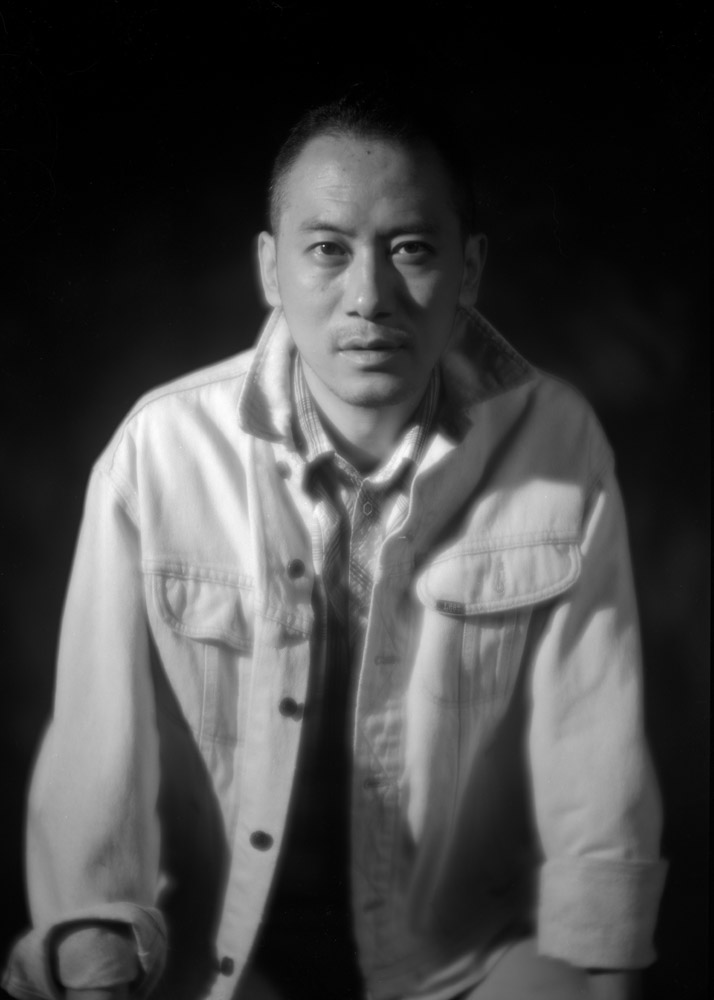
Wanchuk, denim jacket

These were shot on Ilford FP4+, with the lighting being just one 1000w Fresnel tungsten lamp and a silver reflector. I bought a pair of these cheap Chinese knockoffs of ARRI fresnel lights ($125/ea as opposed to more like $600/ea for the ARRI lights) for the purpose of teaching my large format photography class. Since I had a need for something that would work without needing electronic synchronization (the Hermagis has no shutter, therefore no flash sync), I broke the fresnels out again for this lens test. Proof positive that you don’t have to have massive, fancy, expensive strobe lighting setups to create great portraits. That said, I wouldn’t try this with my 14×17 using hot lights – there’s just not enough light to be had without literally cooking both subject and photographer.

As I mentioned previously, the Hermagis Eidoscope does not have a shutter in addition to not having an iris diaphragm for the aperture control, so I used a pair of spare dark slides from an old 5×7 film holder, held in a V configuration, as the shutter. I was able to pull off a roughly 1/30th second shutter speed by keeping the gap between the dark slides relatively modest (about a 20 degree wedge). Eventually I’ll print these in platinum/palladium.
Custom work – Mounting a Hermagis Eidoscope

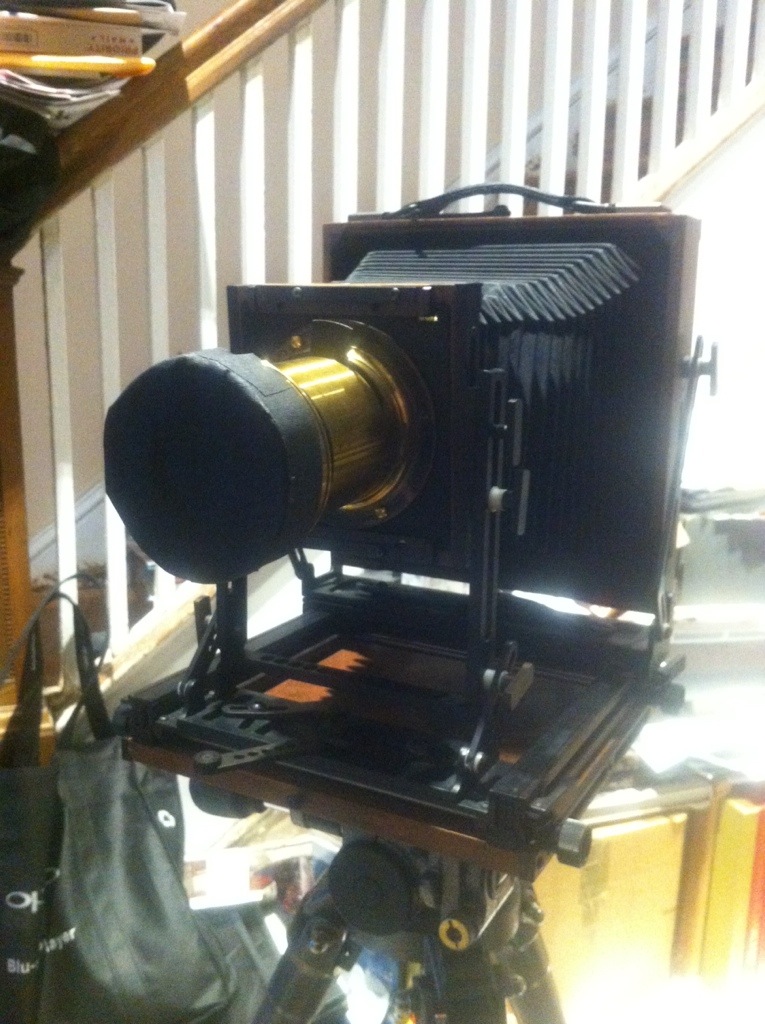
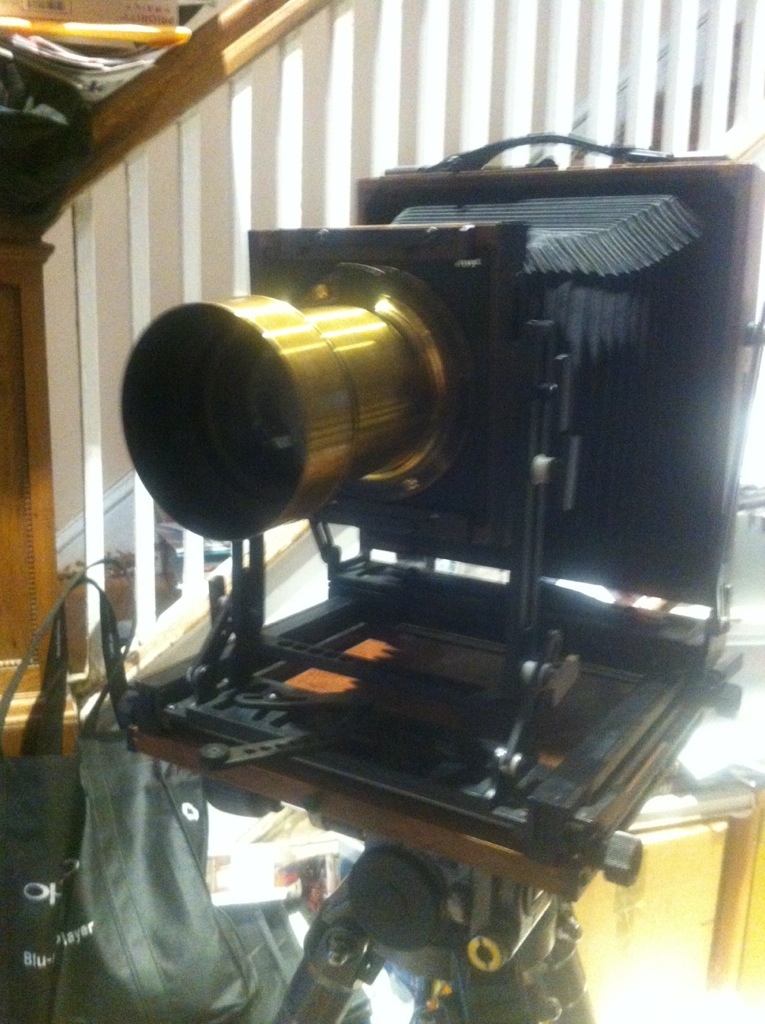
Here are two photos of the Hermagis Eidoscope #5 mounted on my Canham. The Hermagis is on loan to me from the Washington School of Photography. Mounting it on my camera required multiple customizations. First, I had to have the front standard on the Canham swapped out, as the original one was made to handle Linhof lensboards. The Linhof Technika board is just a little too small to take the flange for the lens. Fortunately, the Canham design will accommodate the larger Toyo 110×110 mm board, and now comes standard in that format.

I called Keith Canham and spoke with him about this. One of the great things about calling Keith is that when you call to discuss a problem, he answers the phone himself. You speak directly with the man who built your camera! He suggested that I pull the front standard off the camera, ship it to him, and he would re-use the hardware on a new wood panel the required size. I followed his instructions and popped it in Priority Mail. I had the new panel with all the hardware installed plus the original should I ever want to convert it back in my hot little hands within four days. Talk about customer service!! This is why I will be a loyal Canham customer as long as they remain in business.

I took the Toyo lensboard out to my folks’ place where I have my drill press and, after hunting around a bit to find the proper tools, drilled the hole in the lens board that would let the flange fit. Typically, I slightly oversized the hole, but not so big it caused any problems. I’d wish for a laser lathe but I don’t do this kind of stuff often enough to justify such a thing. For now I’ll live with my cheap Ryobi drill press and my variable diameter circle cutter.

In addition to mounting the lens, I made a lens cap from the cardboard insert that came in a package of Bergger VCCB fiber paper. The lens cap top was traced from the lens hood then cut out with an Xacto blade. The edge was made from a strip of the same board bent into a tube. There was a small gap in the side of the tube because it was too short, but that worked out to my advantage- otherwise the cap would have been too tight and therefore too hard to take off and put on efficiently. The tube is attached to the body with black bookbinder’s tape, the same tape I use for repairing hinges on light traps for film holders.

I’ll be using the lens cap as a shutter for now, until I get around to making a mount for a Packard shutter. You can see the lens cap in the first picture, on the lens.

20140514-080600.jpg

20140514-080613.jpg

Closing Reception Reminder – Silver Visions, River Road Unitarian Church, 5/3

Just a reminder we’re having the closing reception for our Silver Visions: Large Format Photography show at the River Road Unitarian Church on Saturday, May 3, from 3-5 pm. Please come out and see the work (and maybe even buy something??? Prices are very reasonable!).

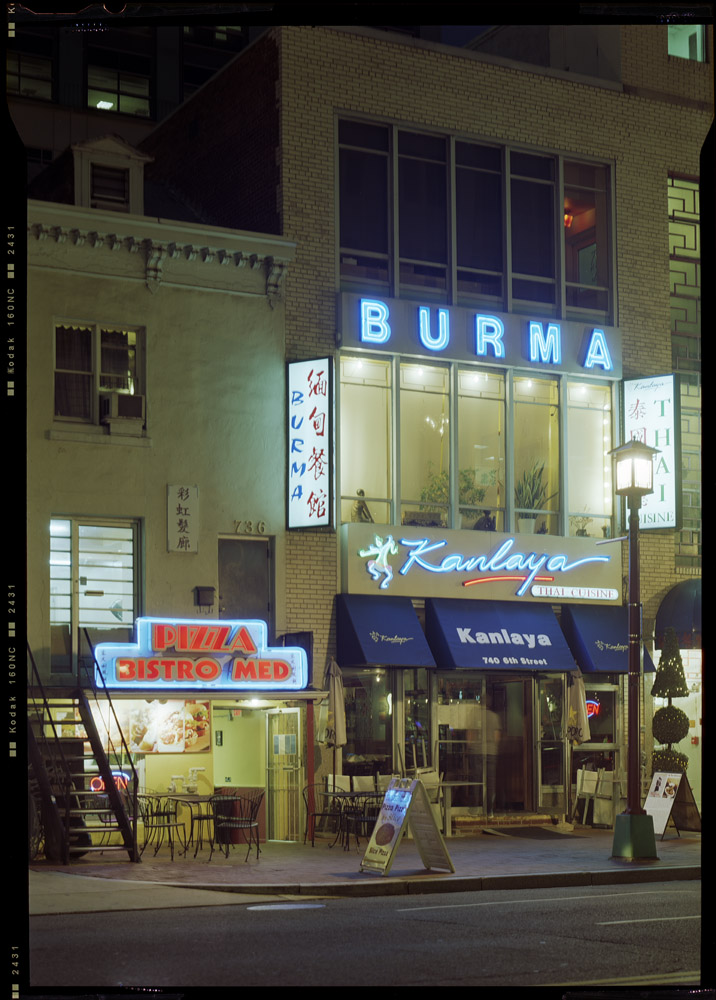
Burma Restaurant, Chinatown, DC

The church is located at 6301 River Rd, Bethesda, MD 20817, but the entrance is on Whittier Boulevard (turn on to Whittier from River Road and make the second left into their driveway – the immediate left is the exit from their parking lot).

For more information about the exhibit or visiting hours or directions, see:

River Road Unitarian Church Exhibitions

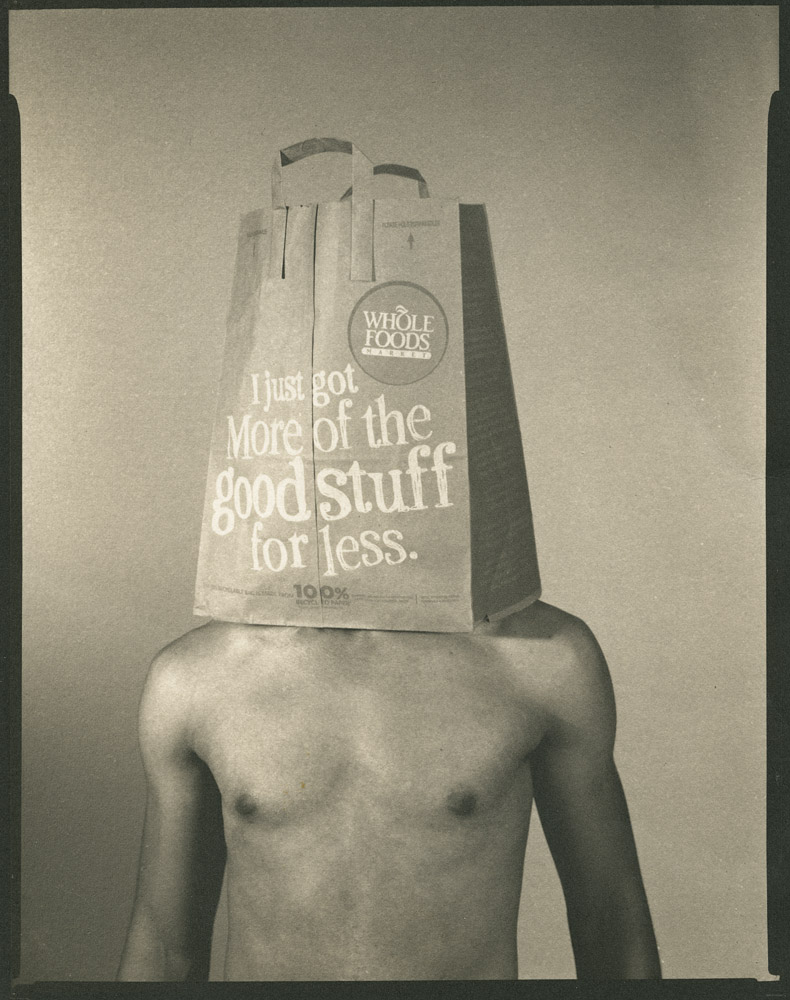
From a Series on Identity and Commodification

More of the Good Stuff

A long time ago I started working on a series about how we commodify people and their identities. I was playing around with advertising slogans on grocery bags and how those slogans can be used to replace food with people (not in a cannibalistic sense but as something to be looked at as a consumable or a flavor-du-jour). I’ll pick it up again when I get the chance and see if I can do more with it. Let me know what you think of the idea and the execution in this image.

The original is a whole-plate (6.5 by 8.5 inch) hand-coated palladium print on Bergger COT320 100% cotton rag heavy-weight paper.

Platinum/Palladium Prints from the vaults

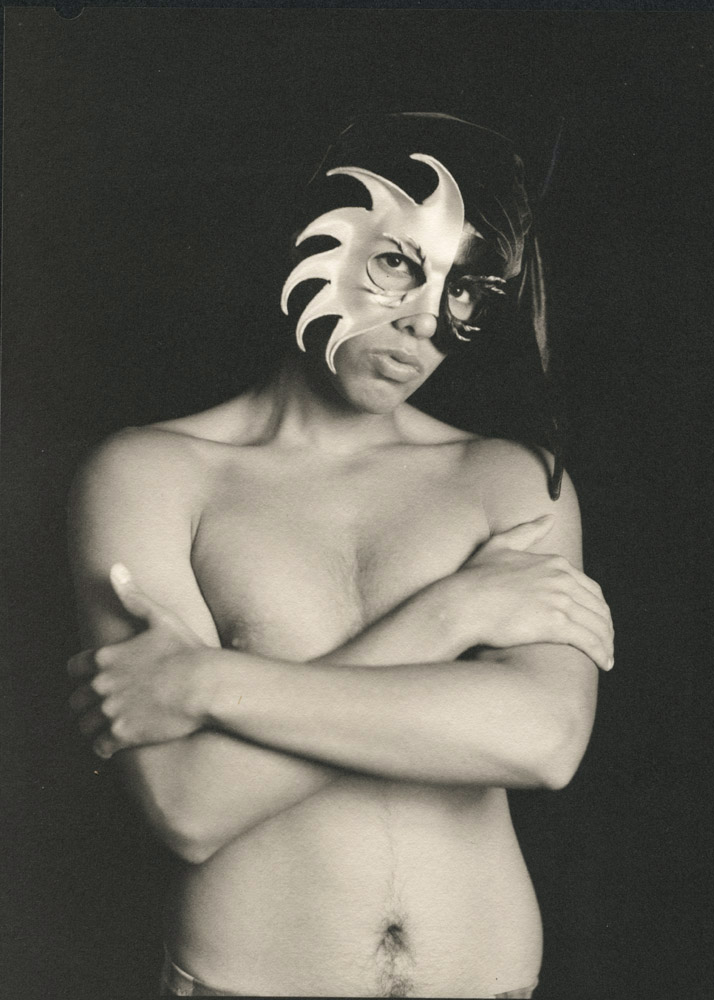
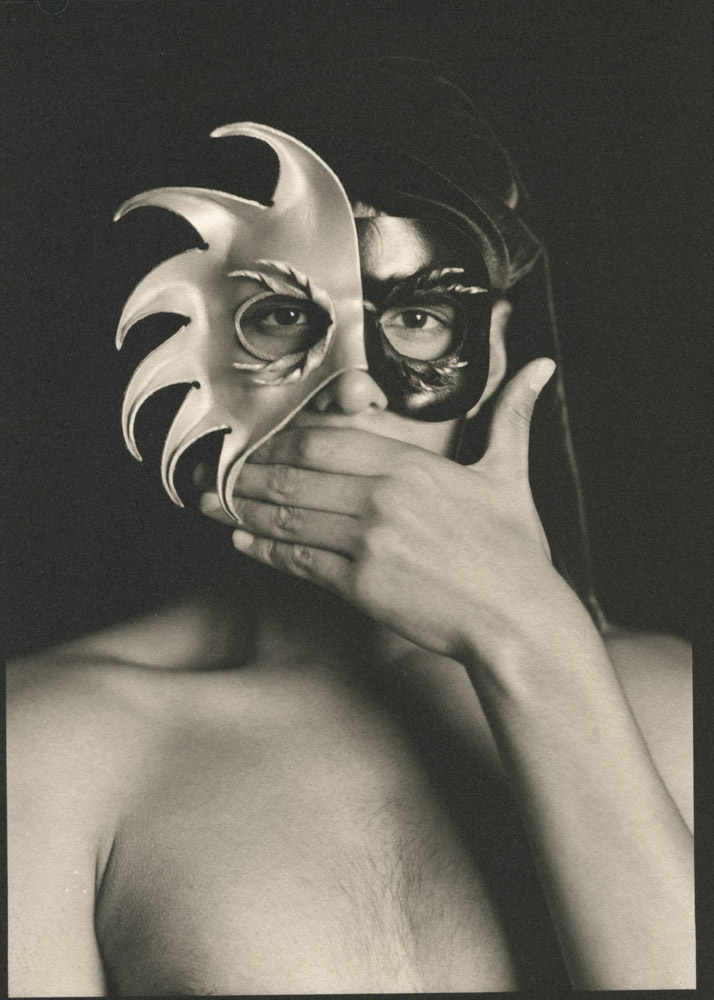
I dug up a few older platinum/palladium prints I did a couple years ago and realized they were worth sharing, so I thought I’d post them here today.

They were studies for a series I was working on – they didn’t make the editorial cut for the series, but as standalones they’re good.

Jester
Jester

Jester
Jester
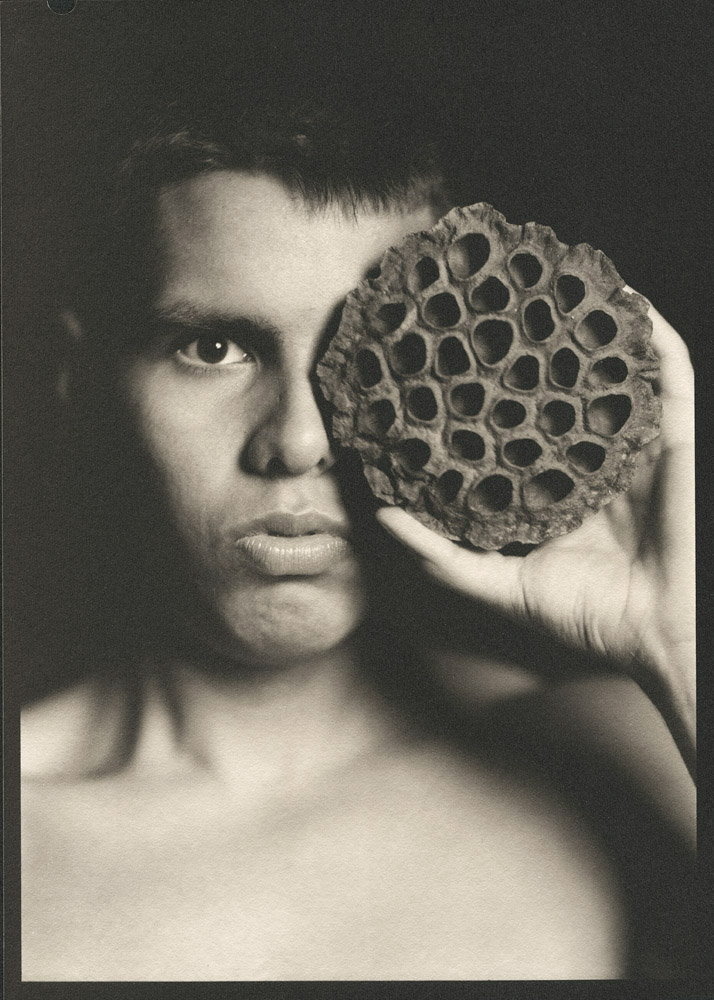
Portrait with Lotus Seed Pod

These were shot in my home studio (aka the dining room) with a single light and a black velvet backdrop. The camera was my ancient studio portrait camera with a 5×7 back installed and a Seneca portrait lens (aka Wollensak Vesta, rebranded). I mention all this to show that you can produce great work with the simplest of set-ups and equipment, and you don’t have to have the latest and greatest or fancy facilities.

New exhibit and upcoming reception

I have eight of my color night photos up on the wall as part of a group show of large format photographs at the River Road Unitarian Church. The show will be hanging through Sunday May 4, when we (the four of us artists in the show) will have a take-down party from 3-5pm. If you can’t make it to the take-down party, feel free to drop by the church and ask to see the show any time during their operating hours:

In addition to the usual Sunday fellowship hours, the exhibit can be viewed Monday-Friday 10 am-4 pm in the Fellowship Hall, River Road Unitarian Universalist Congregation, 6301 River Road, Bethesda, MD. Please call the RRUUC office (301-229-0400) before going there to check that no conflicting activity is scheduled when you want to view the exhibit.

River Road Unitarian Universalist Congregation

Amazingly enough, the RRUUC’s exhibition schedule is so popular we (the large format camera club I belong to) had to book this show almost a year in advance.

Burma Restaurant, Chinatown, DC

New teaching tool, and upcoming class

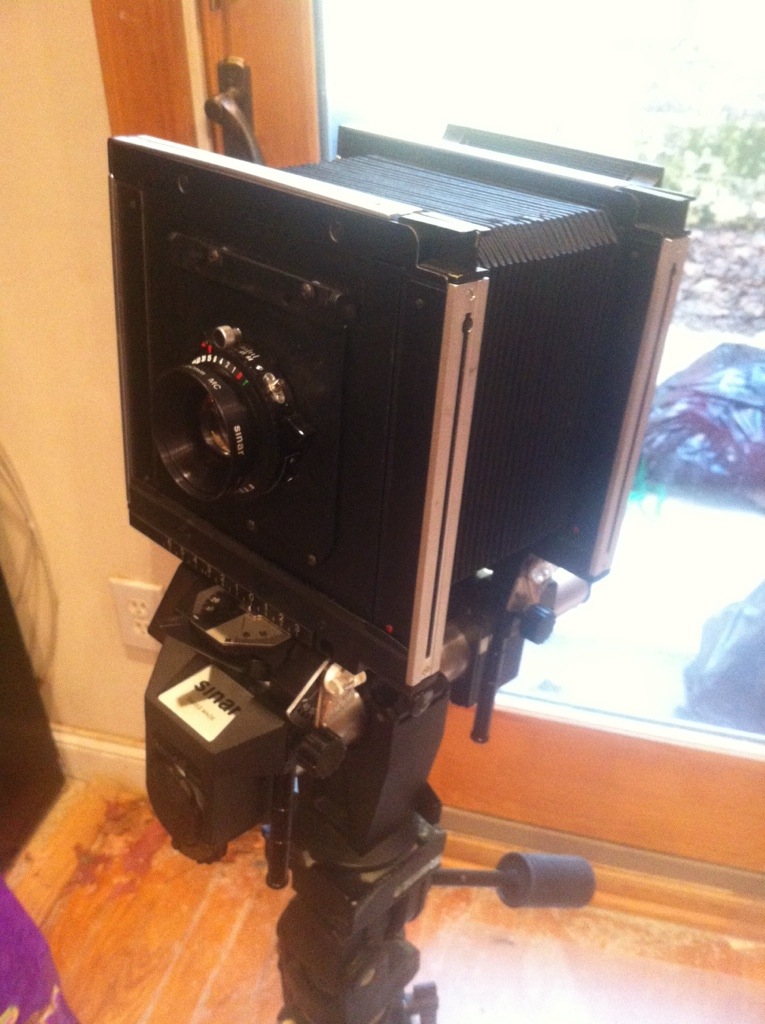
I got my new teaching tool for my Introduction to Large Format photography class. It’s a Sinar F 4×5. Sinar cameras were the first modular large format system with standardized components that would let you build 4×5, 5×7 and 8×10 cameras on a common architecture. While the F has certain limitations (base tilts, friction driven movements), its a fantastic entry-level camera and very light-weight for a studio monorail camera (about 7lbs).

20140323-184708.jpg

I’m running the course starting April 5 through May 10. The course covers camera handling, film loading and processing, using movements for perspective and depth-of-field control. Individual modules will include landscape, portraiture, architecture and tabletop shooting. For more information check out the Glen Echo website –

Photoworks Course Listings

to register, click –Register Here

I got the camera at KEH Camera online. They have a very limited selection in inventory at any one moment, but their prices are excellent. The Sinar F is a good starter camera and one I highly recommend for students looking to get started in large format. There are lots of other good cameras, of course, and it all depends on what you need from your camera – for some people, a field camera may be a better solution. My primary large format camera is a Canham field camera because I like to travel with it, but it has it’s own limitations (fixed bellows length, limited movements). I’ll cover all the quirks of large format cameras in the class, so to learn more, sign up!

Mono Lake

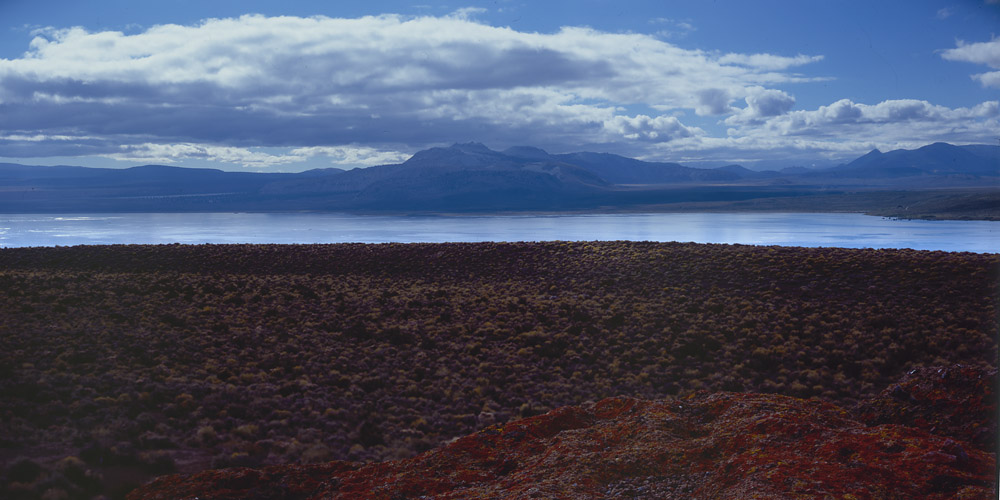
Another panorama taken from a 4×5 Fujicrhome transparency shot on my trip to the eastern Sierra. This view is from the north, looking down at the lake from the top of that volcanic upthrust where the fissures are that I mentioned in the previous post.

Mono Lake, from Upthrust

Mono Lake is like the Great Salt Lake in Utah or the Dead Sea in Israel – it has no natural drainage, so over time, the waters have become super alkaline with all the minerals that leach out of the rocks and soil around it. I wouldn’t drink it, and although you can swim in it if you’re so inclined, it’s not a pleasant feeling. The mineral content makes it such that it is easy to float on the surface – the ducks and other aquatic birds seem to float on top of the water, instead of in it. I have a few photos of the tufa formations for which the lake is famous that I’ll scan and post later. The tufas are formed when pure freshwater from underground springs enters the lake, causing the minerals in the water around it to sediment out and form hollow columns in fantastic shapes.

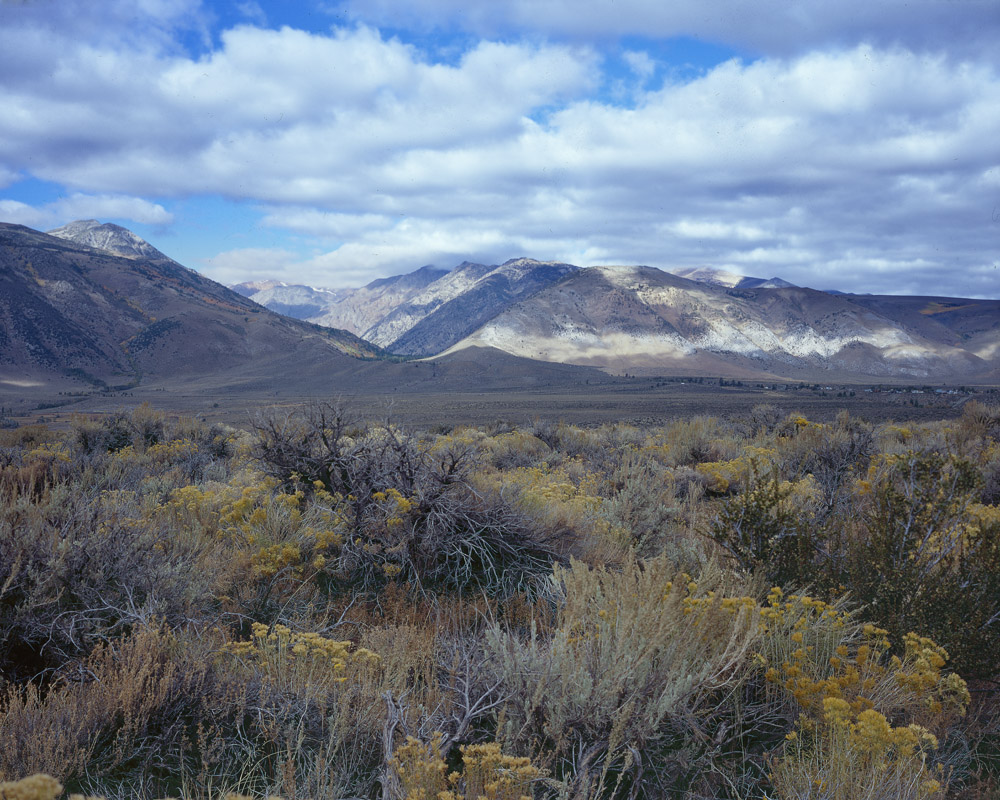
High Desert, Mono Lake

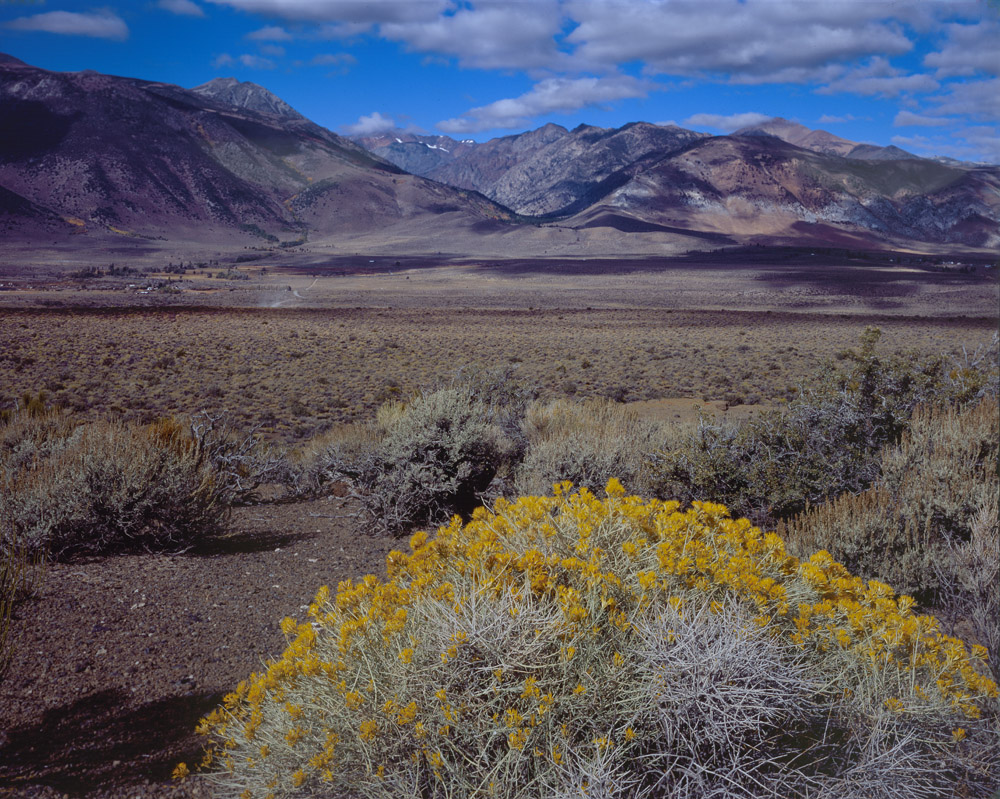
A few scenes from the high desert around Mono Lake. You’ll forgive my ignorance of desert flora and not naming the plants properly, but I’m an east coast city boy at heart, so I’m lucky I can tell an oak tree from a blade of grass. Well, not entirely true, but you get the point – a horticulturalist I’m not.

Golden Bush, Mono Lake

Thinking of horticulture, that reminds me of an old joke about Dorothy Parker – she was invited to speak at a meeting of the Ladies Auxiliary of the New York Botanical Gardens. Knowing of her penchant for a quick wit, one of the more naive members of the group asked her to use “horticulture” in a sentence. Her response? “You can lead a horticulture but you can’t make her think”. For repeating the joke in this context, the quip is probably about me, but I have a good sense of humor about such things. More scrub brush on the top of the plateau:

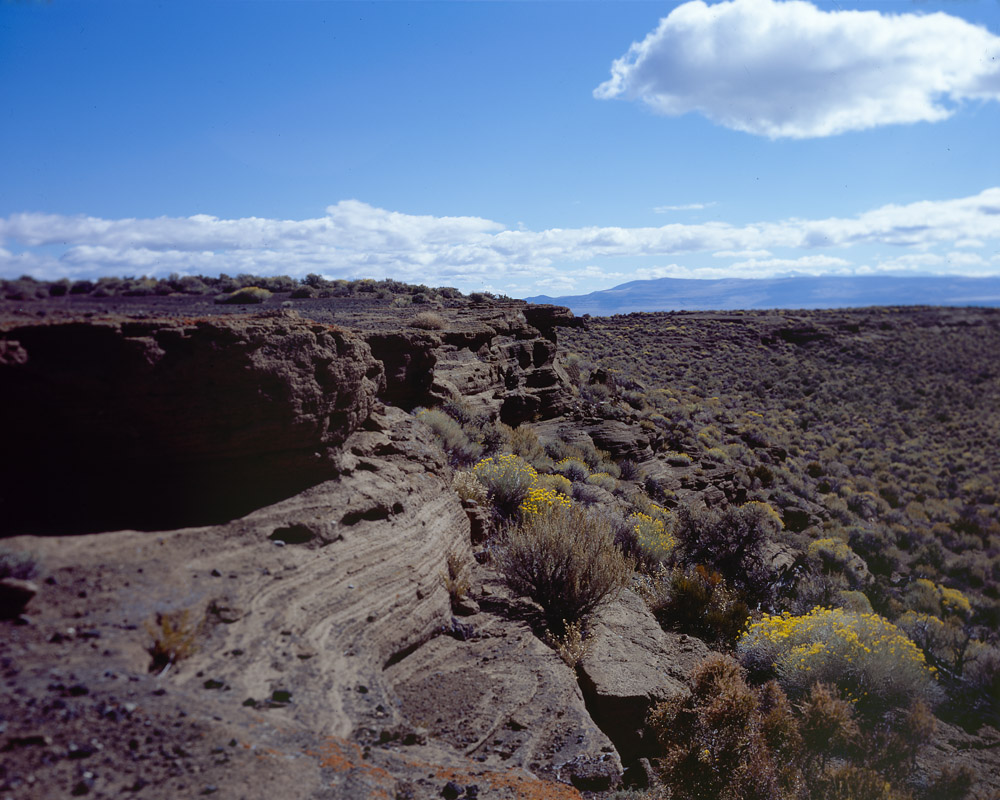
High Desert, Mountains, Mono Lake

These are taken in the scrublands atop the volcanic uplift plateau on the north edge of Mono Lake. For geology buffs, the plateau was uplifted perhaps 10 to 15,000 years ago in an event so rapid and violent it created fissures resembling miniature slot canyons. I went out in search of said fissures and hiked around on top of this plateau for perhaps two hours, looking for them, not finding any, all the while wary that I would miss one and inadvertently plummet down into one and get stuck. As it turns out, they’re on and near the leading edge of the plateau, and had I stuck to the edge, I would have found them perhaps fifteen minutes after ascending to the top of the plateau. But I had a lovely time all to my self, communing with the great open spaces, and I saw these scenes, so no great regrets.

Uplift Face, Mono Lake

I think I goofed the movements on the camera with this one, as there is some out of focus in the foreground that in retrospect really shouldn’t be there, but I’ll blame it on the altitude getting to me – I was fat and out of shape, and hiking at nearly 9000 feet of elevation with 30+ lbs of camera gear on my back.

Tioga Pass, Yosemite

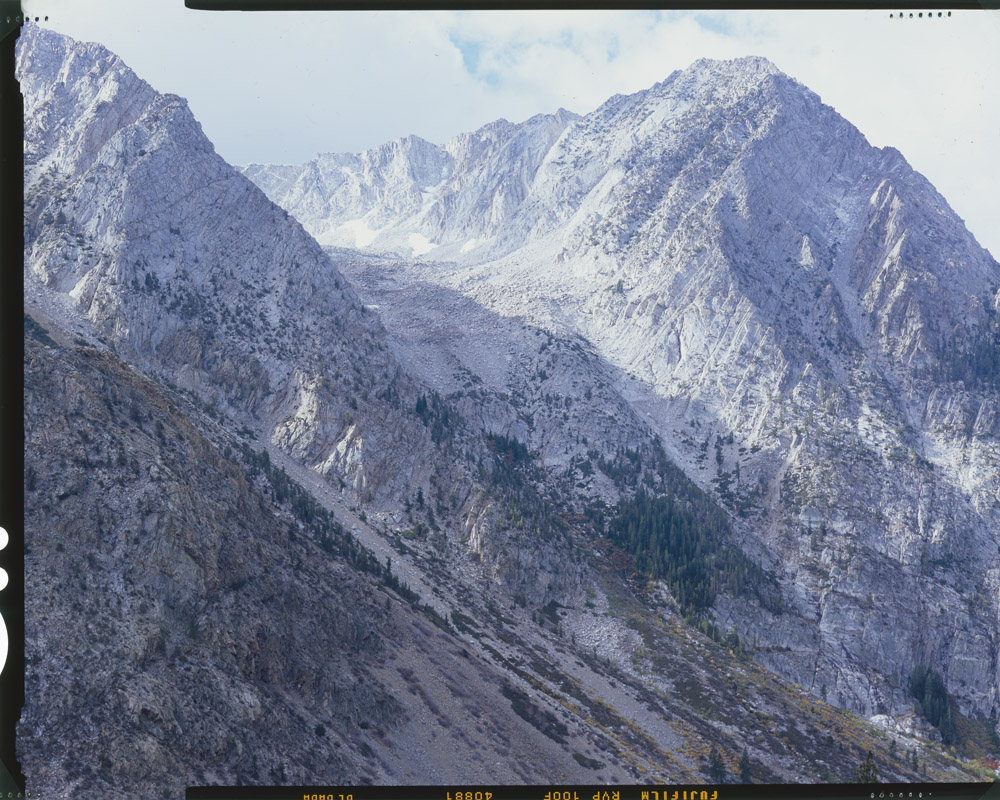
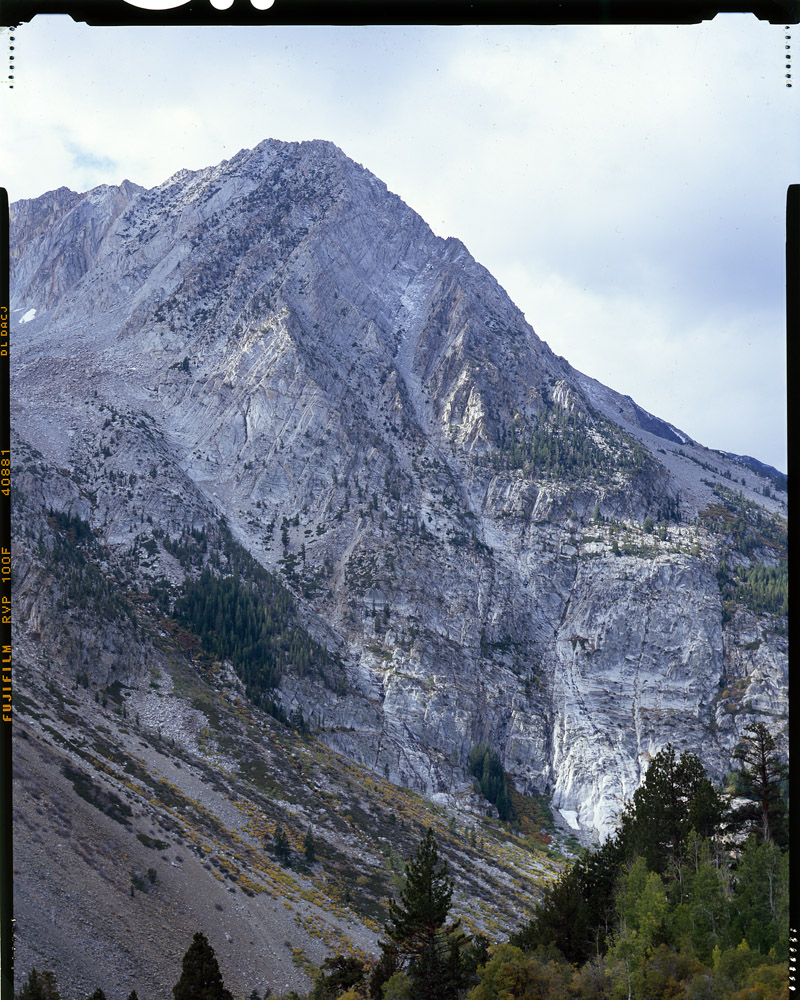
I was doing some clean-up in my library after doing the book inventory and came across something I’ve been looking for for a very long time: a box of 4×5 Fujichrome Velvia 100F transparencies (slide film). No scan on the internet will do the actual chromes justice – they need to be viewed on a lightbox with a loupe or even better, projected. Not that I have a projector that could handle a 4×5 chrome. But here are two favorites that I think come pretty close to conveying the majesty of a big slide:

Tioga Pass
Tioga Pass
Tioga Pass
Tioga Pass

These are both views of the eastern end of the Tioga Pass, on the way in to Yosemite National Park from Lee Vining. If memory serves, these are even before you get to the ranger station at the park entrance. I took a vacation back in I think 2004 to the east side of the California Sierra. I drove from San Francisco up through gold rush country – Sutter Creek, Volcano, and Sonora to take 108 around the north side of Yosemite through the Sonora Pass to get to Lee Vining, where I eventually stayed for a couple nights to explore the landscape. Photographers, like fishermen, have tales of “the one that got away” – this is mine, “the shot I couldn’t take”. Coming up through the Sonora Pass, I reached the peak of the pass, 9980 feet of elevation, just at sunset. The road that climbs up through the pass becomes a series of hairpin switchbacks as it approaches the apex. Ascending the penultimate stretch, I glanced out the window to see the setting sun painting the mountain faces to the west brilliant oranges and reds, like they were on fire. There was no place to stop, even if I didn’t get out of the car, let alone set up a tripod and squeeze off a frame or two with a 4×5 field camera. So the image has to live in my memory, and hopefully in retelling it, I’ll encourage some of you to get out there and drive that route yourselves, and time your trip so that you climb the pass at sunset and can see it for yourselves.

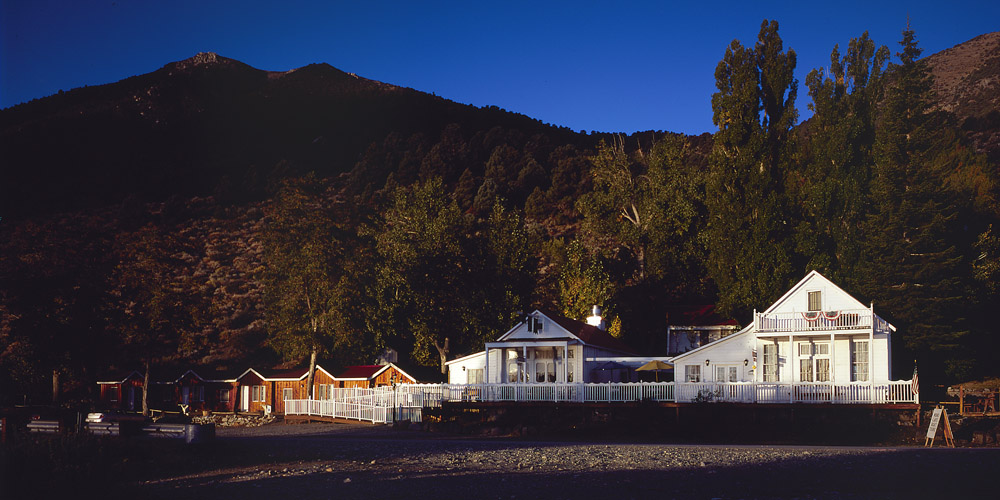
I’ll close with a panorama shot cropped from a 4×5 ‘chrome I shot of the Tioga Inn where I stayed. The two white buildings of the inn are actually salvaged structures in whole or in part from Bodie, the famous ghost town up the road a little ways. The more modern cabins on the left are some of the rooms – there are more cabins on the right, up in the trees, some of which are also made of Bodie salvage materials.

 Tioga Inn
Tioga Inn

I’ll have more to tell of the road trip in future posts.