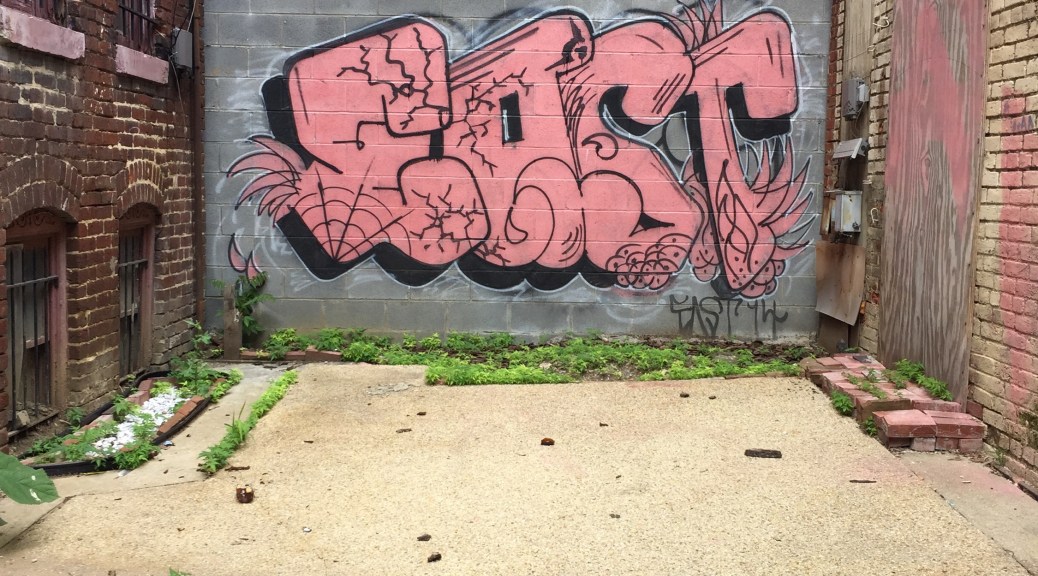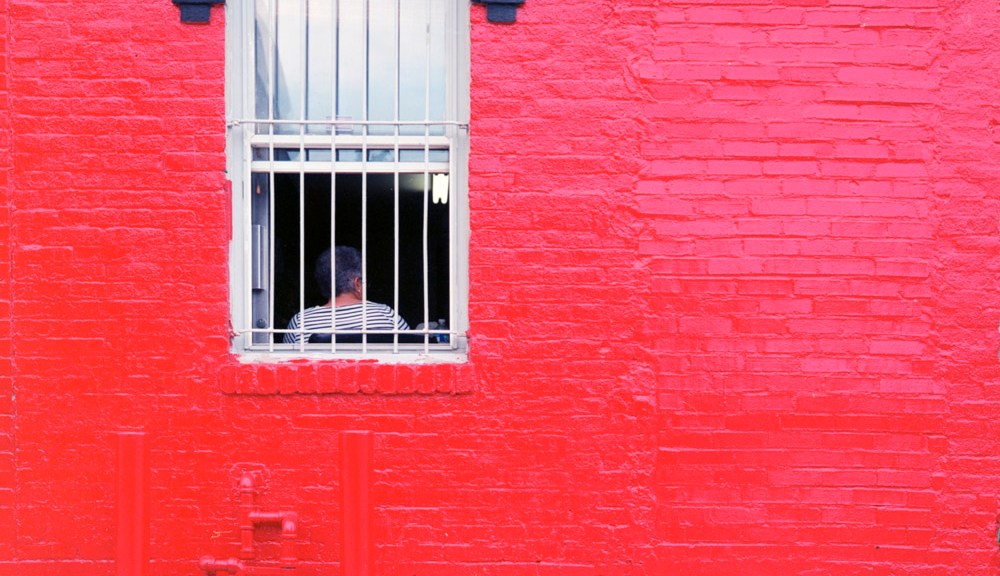
Category Archives: Cameras

Photographic Vision, or: Re-seeing the same things

Many photographers complain about “I don’t have anything to photograph where I live… there’s nothing interesting, blah blah blah… I get tired of seeing the same things over and over again”. If you’re getting tired of seeing the same things over again, then you’re not looking right. Not only are you not paying attention to what’s around you, but you’re failing to observe change in your environment and to record that change, which is one of the greatest functions a photographer can fulfill.

Case in point: two images of the same house, taken about two years apart. The first image is the earlier one. I was foremost interested in the gas meter as an organic pattern against the rigid geometry of the red brick and the white window at the time I took this one. The window and the gas meter were each singular objects set off against the dark, weathered red of the wall. At a bright and cloudless sunset, the meter casts a long shadow, further repeating its organic pattern.
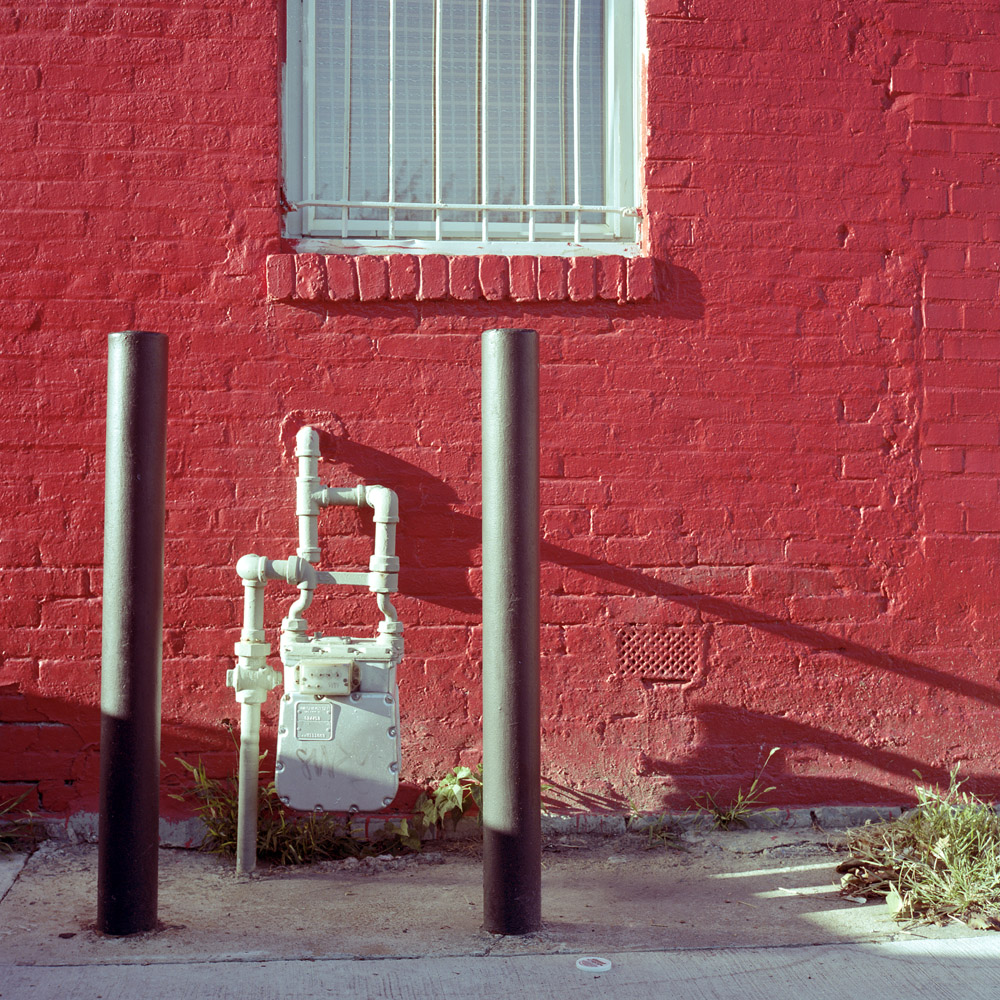
Gas Meter, Red Wall, V Street

Returning two years later, the house has been re-painted, this time in BRIGHT red, along with the gas meter plumbing and the bollards protecting it. Instead of looking at singular items tightly framed, this time I pulled back a bit and gave the scene a narrative – there’s a person visible inside the bars of the one window, the other window closed. The lighting is flat from an overcast sky, pushing the drama of the scene into the deeply saturated colors and the enigma of the house – who is that person inside? how did they get in there when there is no visible door? Why is the one window bricked up but the other one open?
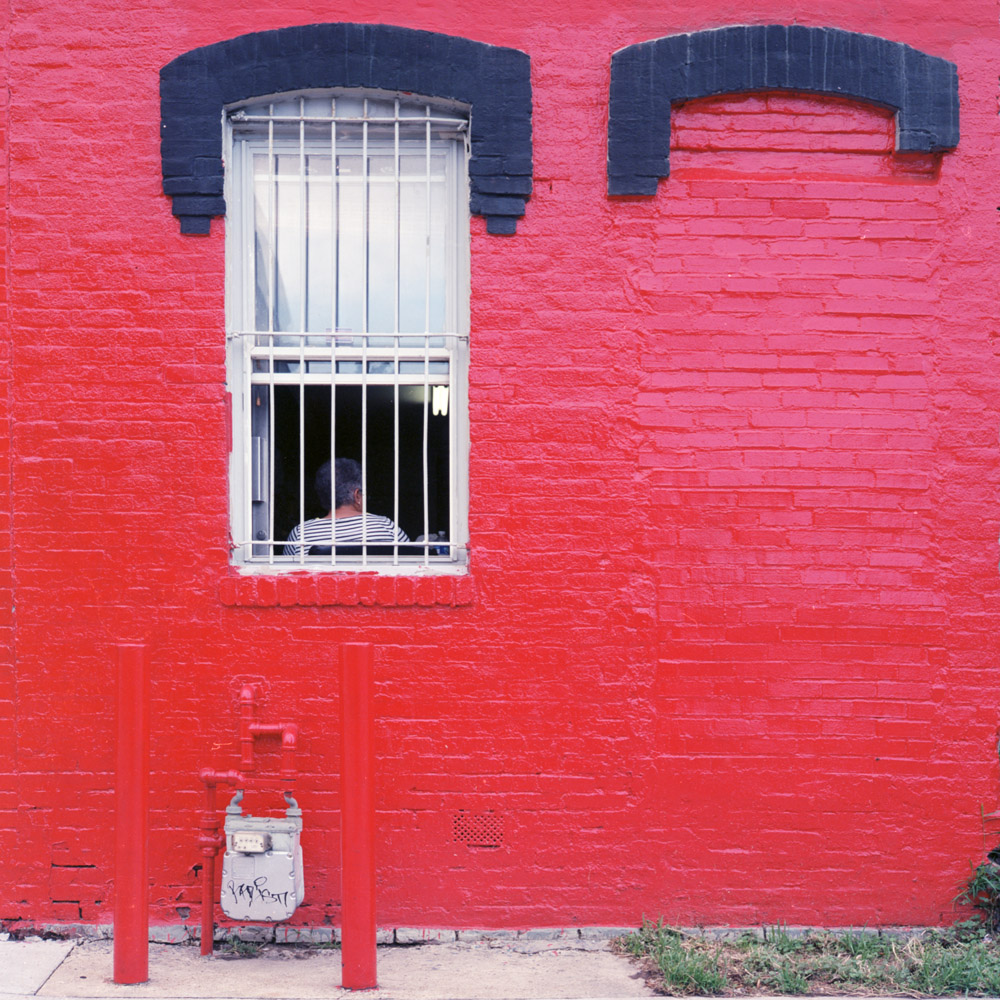
Red Wall, Window
Red Wall, Window

By re-visiting the same subjects, we not only learn to see them, but to see them differently instead of as static, unchanging objects. It also helps with story-telling and narrative development. Being able to tell a story with an image is one of the key differentiators between a factual record (“on this date, this building/car/person/plant/animal looked like this”) and an artistic output (“why does this look the way it does? Who is that? Why are they there? Why are they doing what they are doing?”). I think that we should all strive for that artistic output and not just factual recording (not that there is no value in recording of facts – we need facts recorded!).

This is one aspect of photography that I would hope to help inspire my students toward, as an educator. But it’s also the hardest thing to teach – photographic vision is something that has to happen, organically, natively, within the individual photographer. The best you can hope for is to provide exercises to stimulate them in the direction of building their vision, and to provide constructive critical feedback to focus that energy.
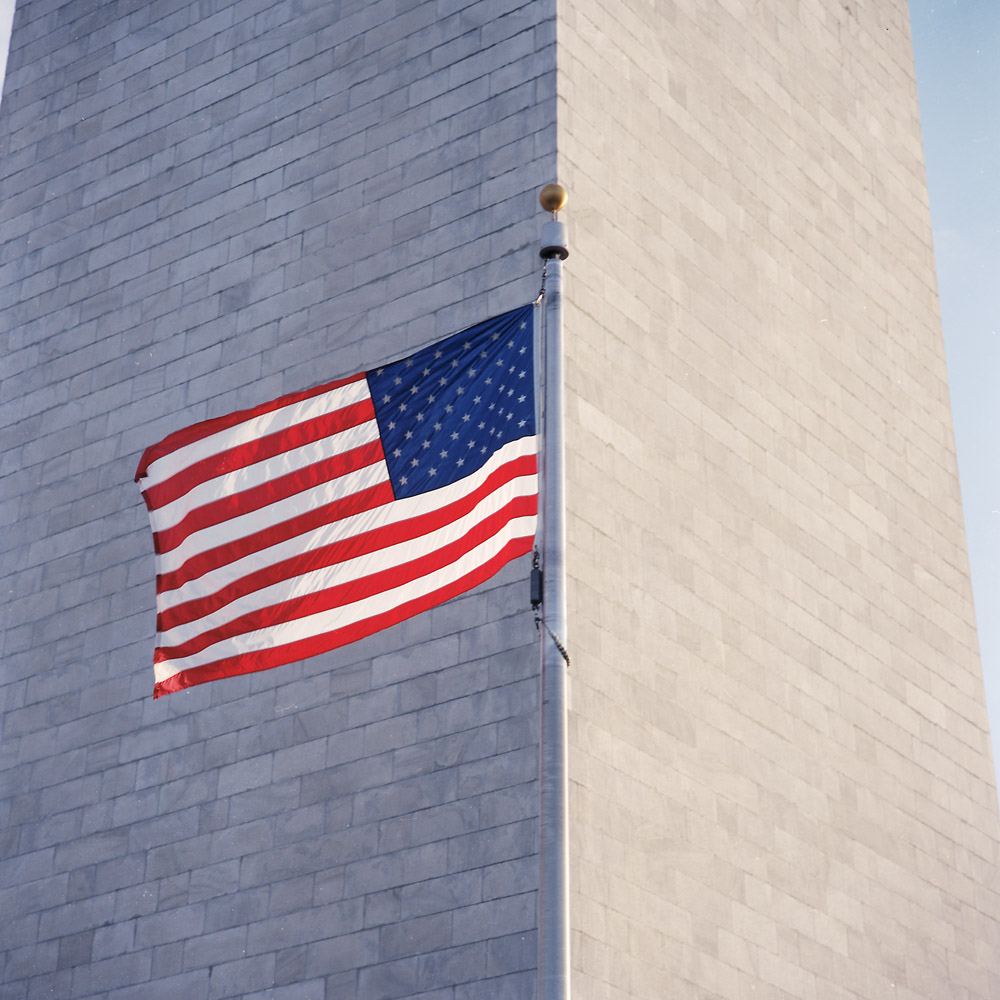
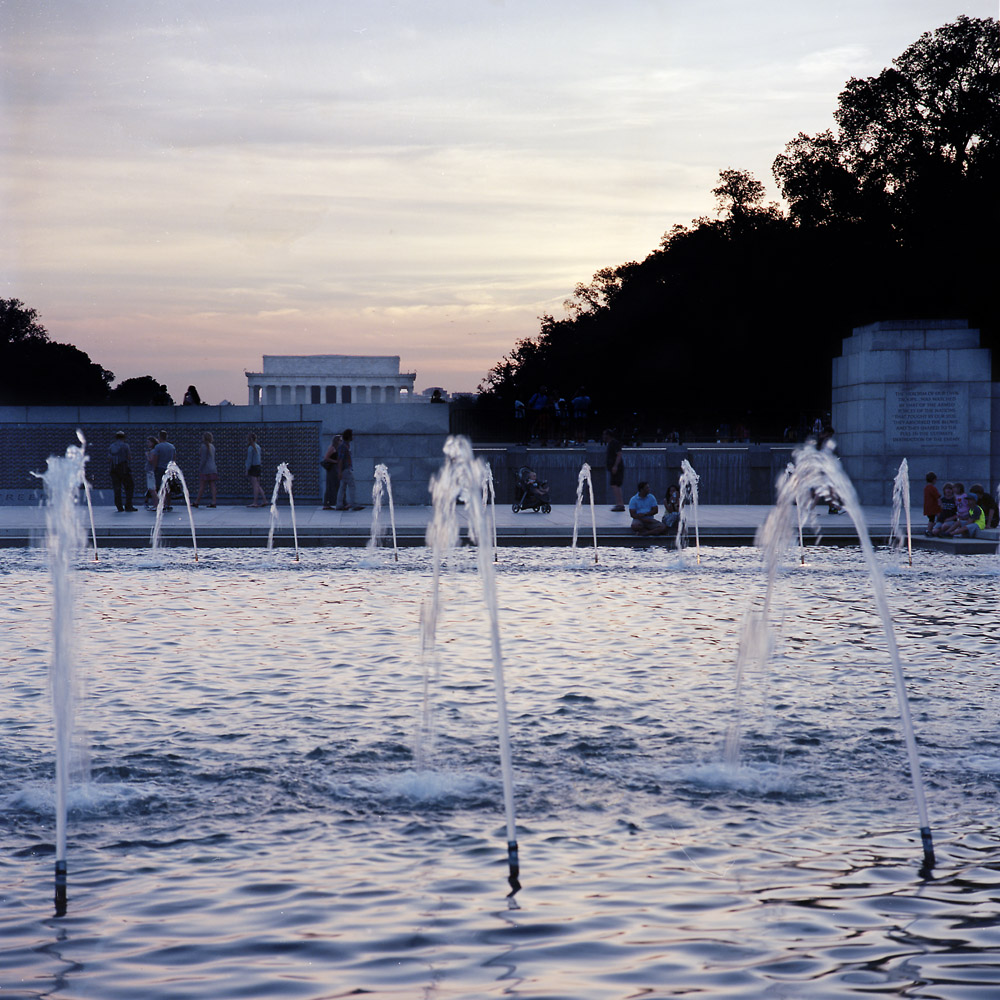
Waxing Patriotic at the National Mall

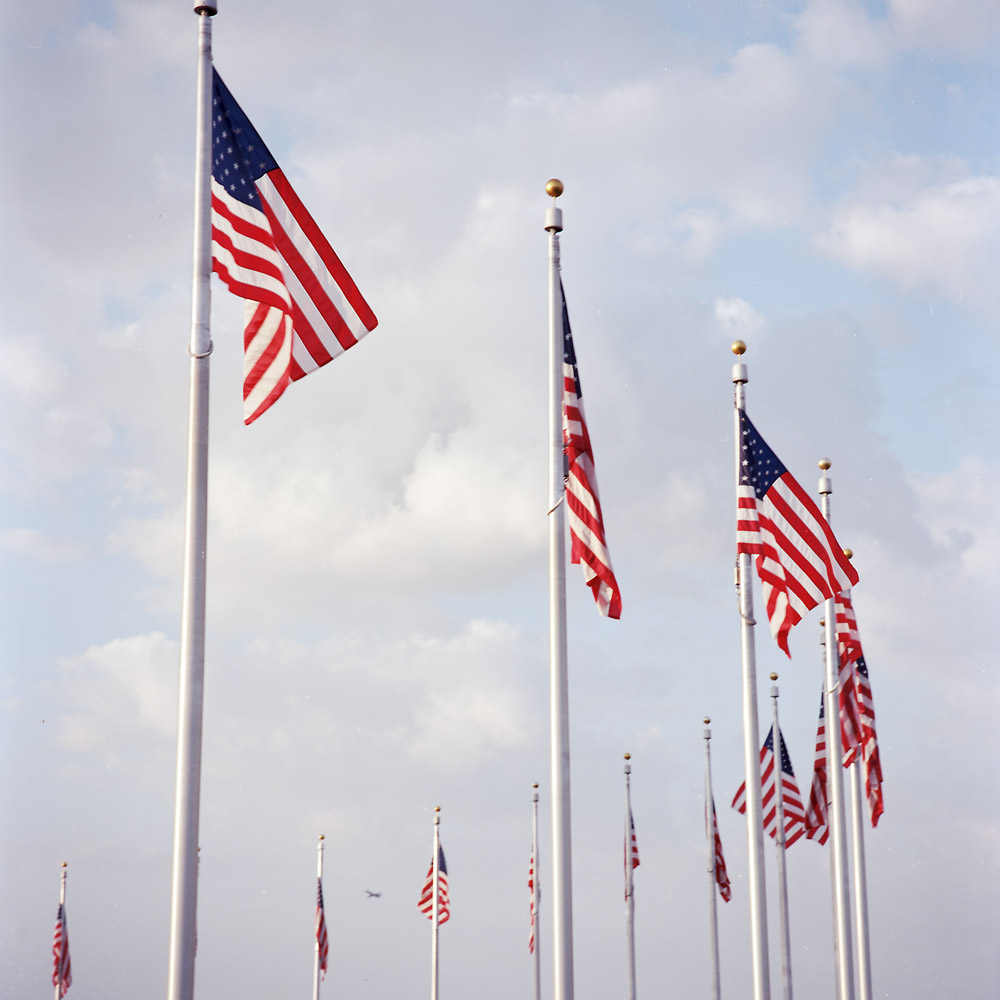
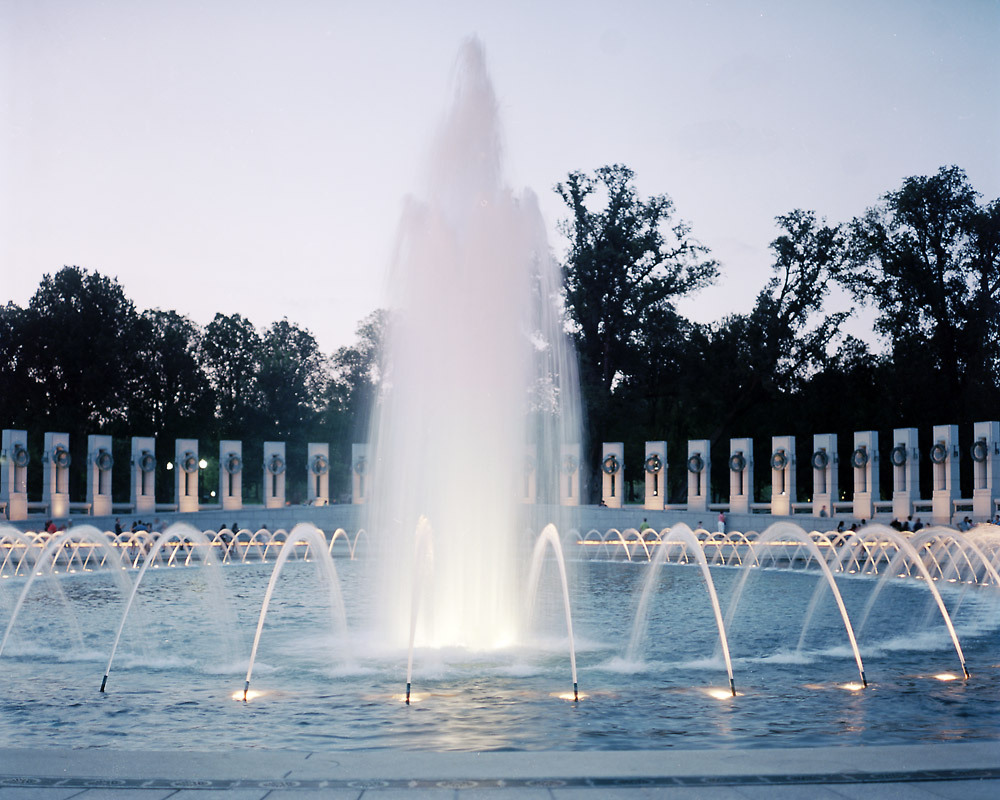
A few views of the area around the Washington Monument and the World War II Memorial.

Flag, Washington Monument
WW II Memorial, Fountain, Lincoln Memorial, Sunset
Flag Circle, Plane
Flag Circle, Plane
WWII Fountain Long View

Architectural Abstracts – Color

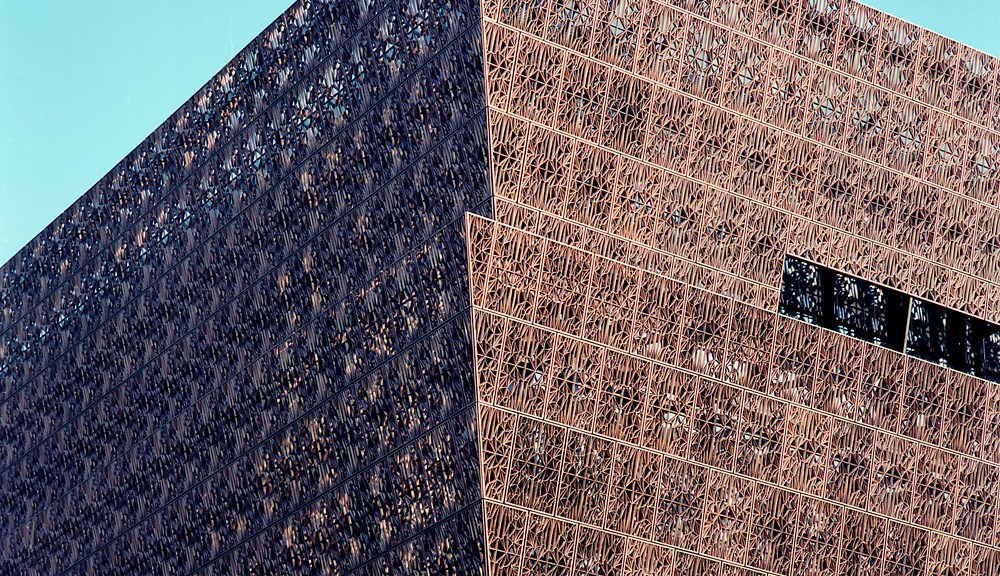
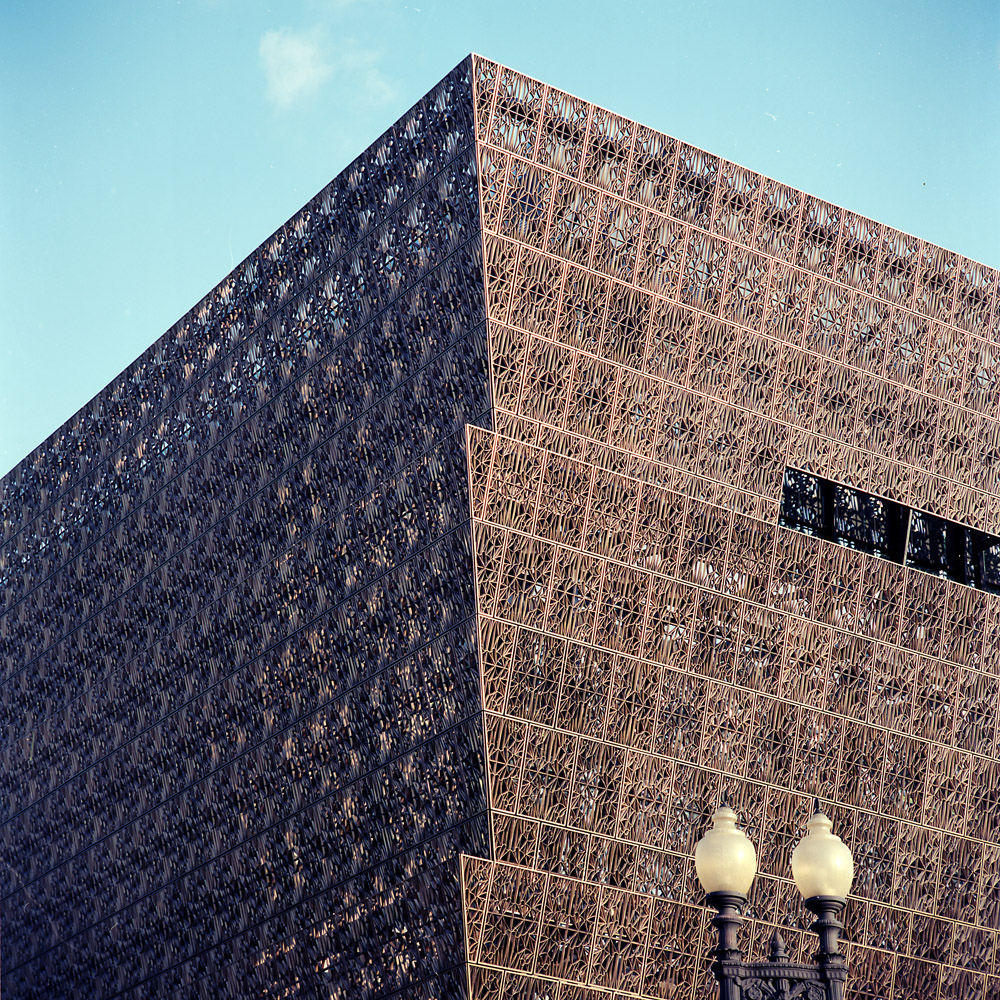
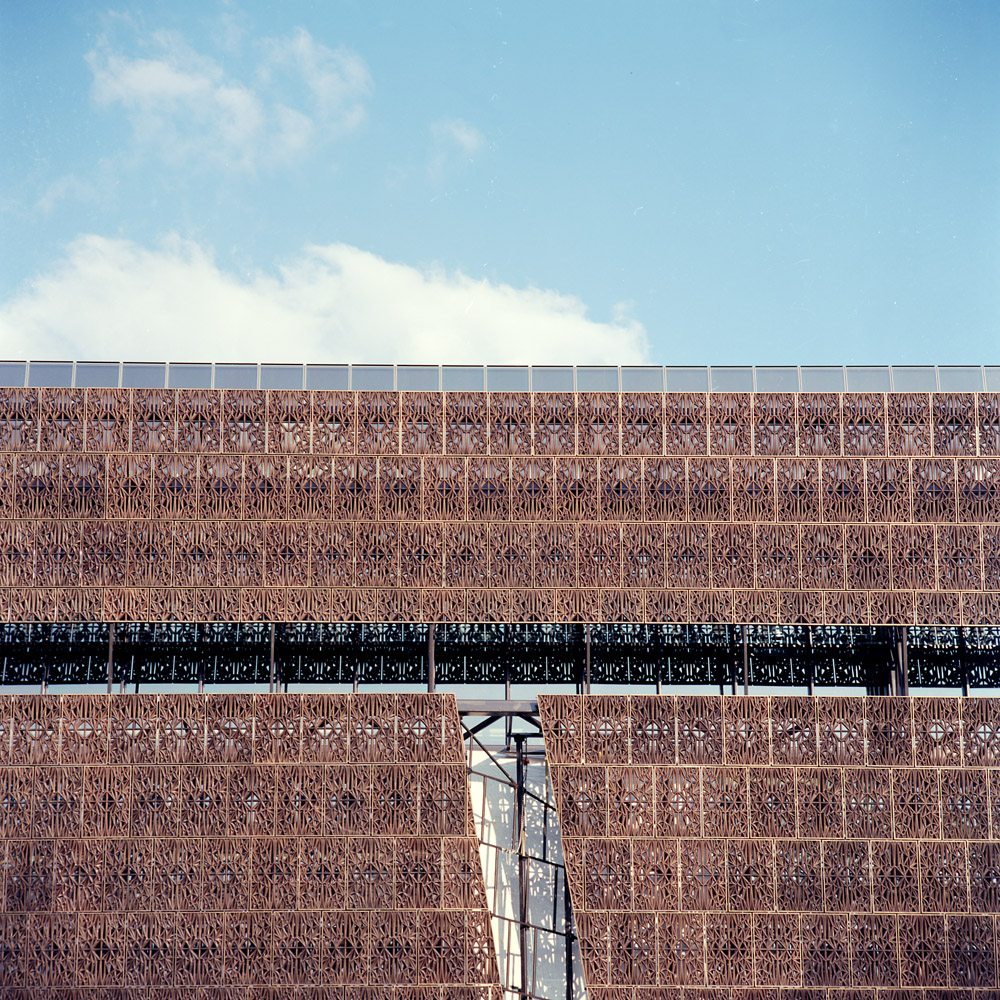
If you recall my earlier posts of the World Health Organization/Pan-American Health Organization headquarters building, I like architectural abstracts. These are some color abstracts I shot on two different excursions – one down to the National Mall at sunset, and the other on my routine walk home from work.

The African-American History museum is still a work in progress – I think it is slated to open in 2016, but it could be 2017 or even 2018 before it is ready for visitors, even if the structure is finished (which it appears will be true sometime this year, from the look of it). The building design is made to look like a traditional African crown with three tiers of bronze-colored mesh. The repeating pattern of the mesh screening lends itself extremely well to abstraction, and the missing panels (from the architectural renderings on the signs outside the museum, they are in fact missing/uninstalled, and not intentionally empty) add a geometric counterpoint.

African-American History Museum, Lamp

It’s nice to see that DC is finally getting some real architectural gems, and is not just filled with Classical-revival, Victorian, and Modern Industrial glass boxes. On a certain level it’s too bad the Corcoran was not able to get their financial act together several years ago and build the Frank Gehry addition to the school they wanted, as that would have been quite a striking change to the streetscape.

African-American Museum, Sky

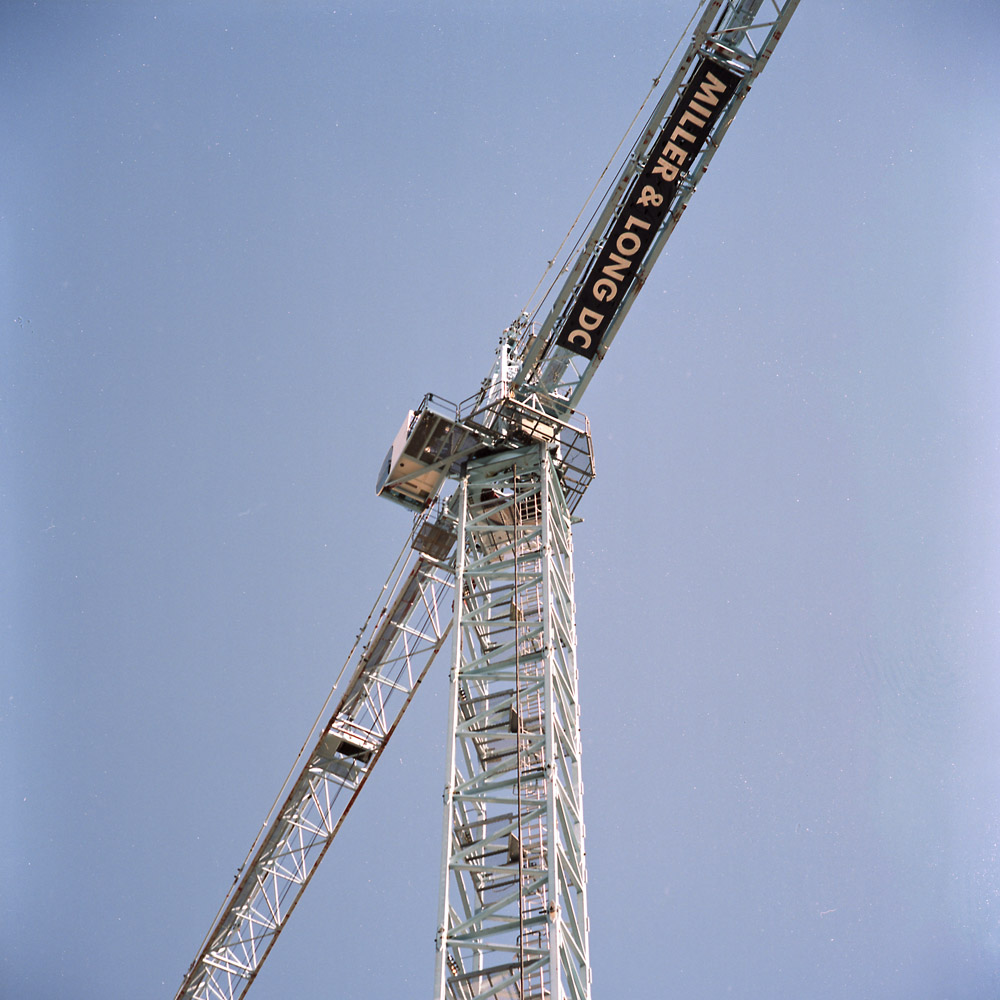
Although not strictly architectural, I thought the geometric forms of the crane against the solid blue sky made for a nice abstract and fit well with the overall theme; after all, it is a construction crane.

Miller-Long DC crane

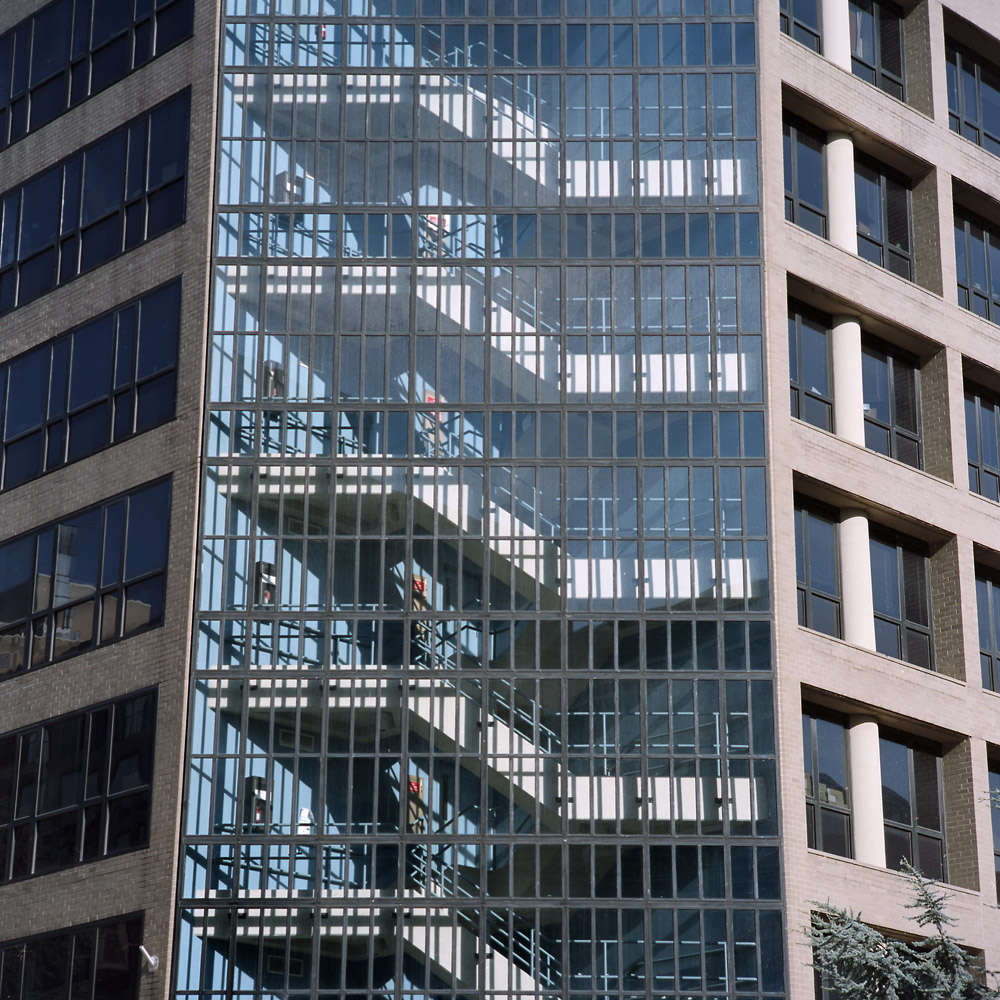
Far be it for me to accuse George Washington University of being architecturally avant-garde; most of their buildings blend in to the DC streetscape with an ennui-inducing banality. But their 1970s and 1980s brown-brick boxes do have some worthwhile details that break the monotony and catch the eye. Take this stairwell, for instance – the walls are blue, which pops out against the brown brick facade and dark bronze-color window trimming. And easily overlooked, the blue stairwell provides some continuity by breaking the space between the facades, each of which has a different styling for their windows. Without the stairwell, the contrast would be in high relief, and we’d think something went wrong during construction and/or they ran out of money and had to switch styles when they turned the corner.

Glass Stairwell, GW
Glass Stairwell, GW

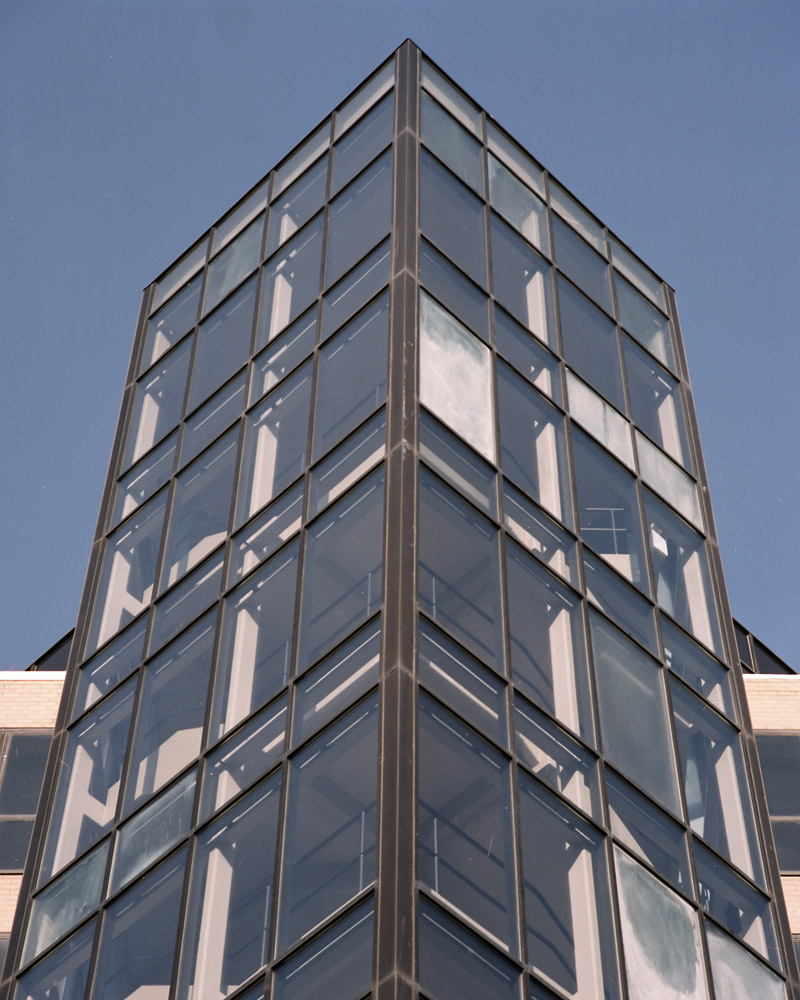
This glass tower thrusts into the sky like the prow of an ocean liner, cleaving the plane of the facade like an Arctic icebreaker clearing the channel into Archangelsk through a wall of sea ice (ok, I’m being a tad dramatic but I wanted SOMETHING to say about it).

Tower, GW
Tower, GW

14th Street Graffiti

I often go on walkabouts on my way home from work with the Rollei in tow. I’m always impressed by the array of graffiti that’s been put up, and how it is becoming an accepted art form, with entire murals done in “graffiti style”. Here are some finds, most of them in a single alley off 14th Street.

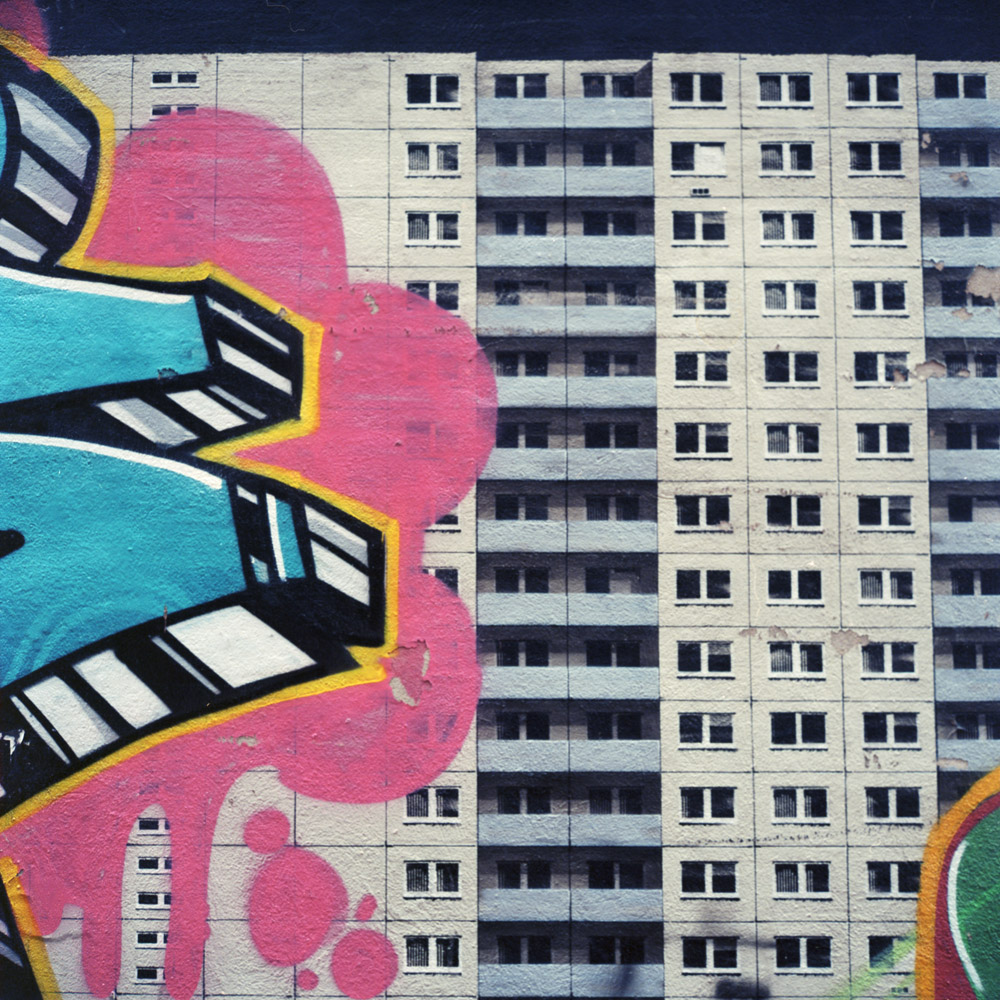
I’m particularly taken with this segment of the mural, because of the optical illusion. If you de-focus just a little bit so you lose the texture of the stucco, it really looks like someone has made a GIANT tag on top of an actual apartment building.

Optical Illusion
Optical Illusion

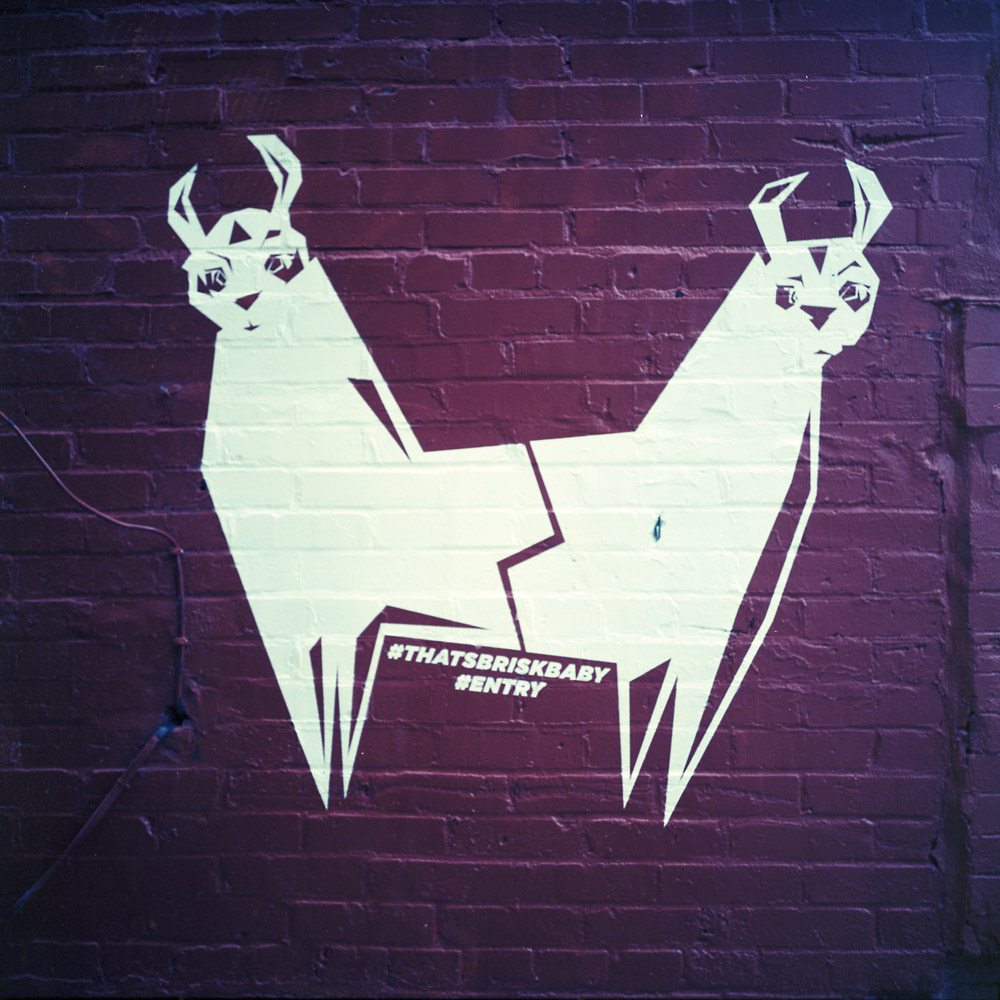
I forget exactly where the two-headed Llama is located, but it’s near the alley mural. Very different texture and style, obviously not the same artist (the Llamas are a stencil, whereas the mural is almost entirely freehand). But Llamas are always cute.

Two Llamas
Two Llamas

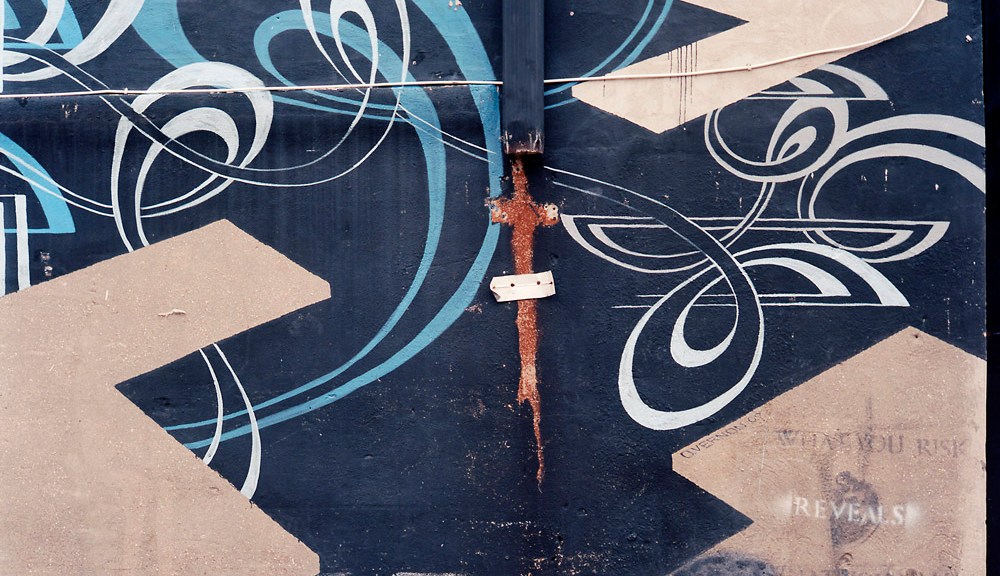
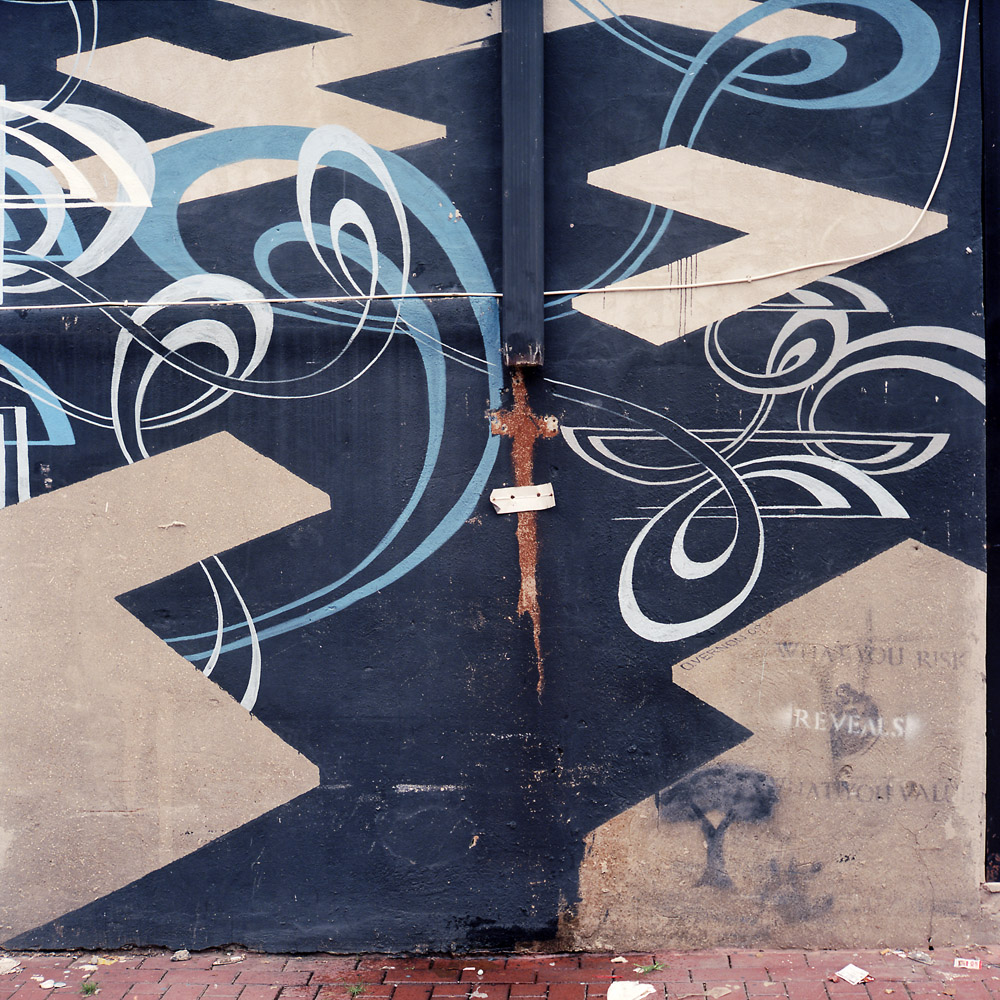
I don’t know if the stencil is an add-on to the mural by the artist, or if someone else came along and tagged it on top of the mural. But the statement is both enigmatic and profound: “What you risk reveals what you value”.

What You Risk
What You Risk

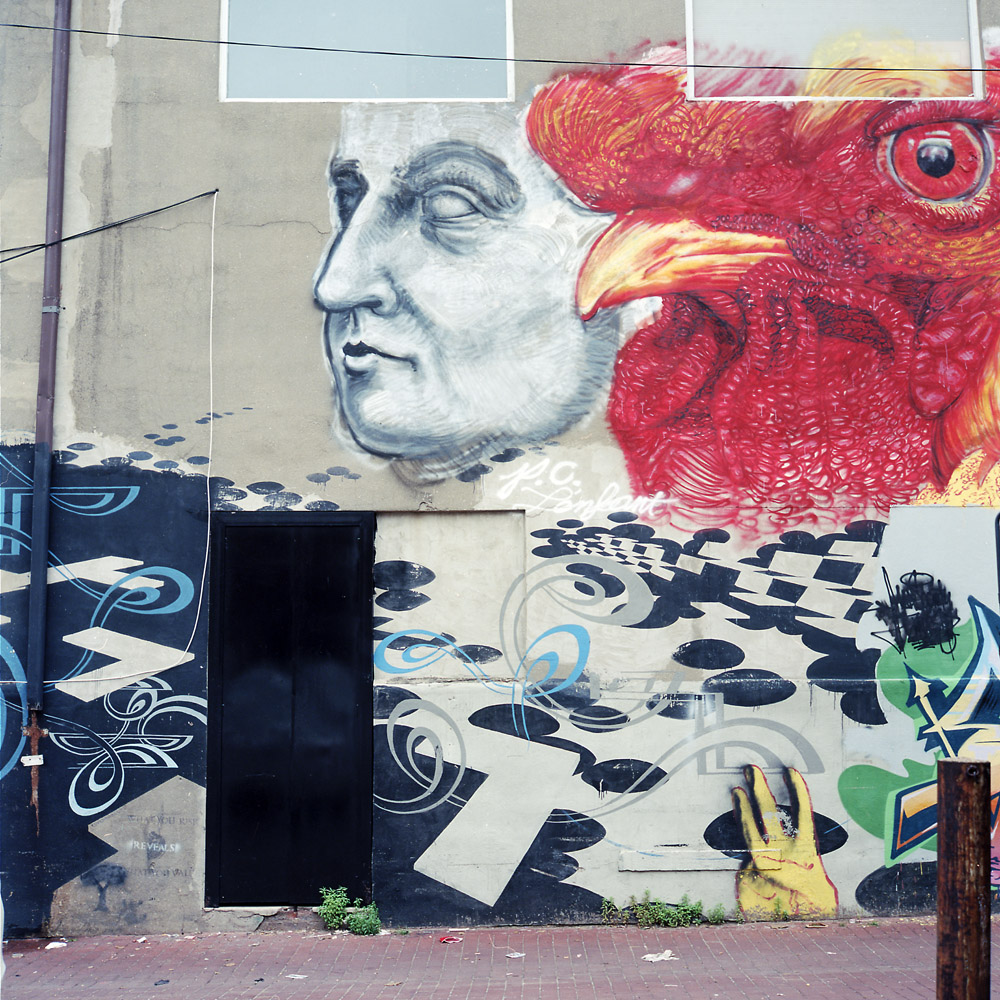
Another M.C. Escher-esque optical illusion in the mural- when you first look at it you see a redhead with long, flaming hair streaming behind. Then you realize it’s a head with a chicken next to it. But it’s hard to keep seeing the chicken, and easy to go back to seeing the redhead alone.

Chicken Head
Chicken Head

iPhone vs. Rollei – who does it better?

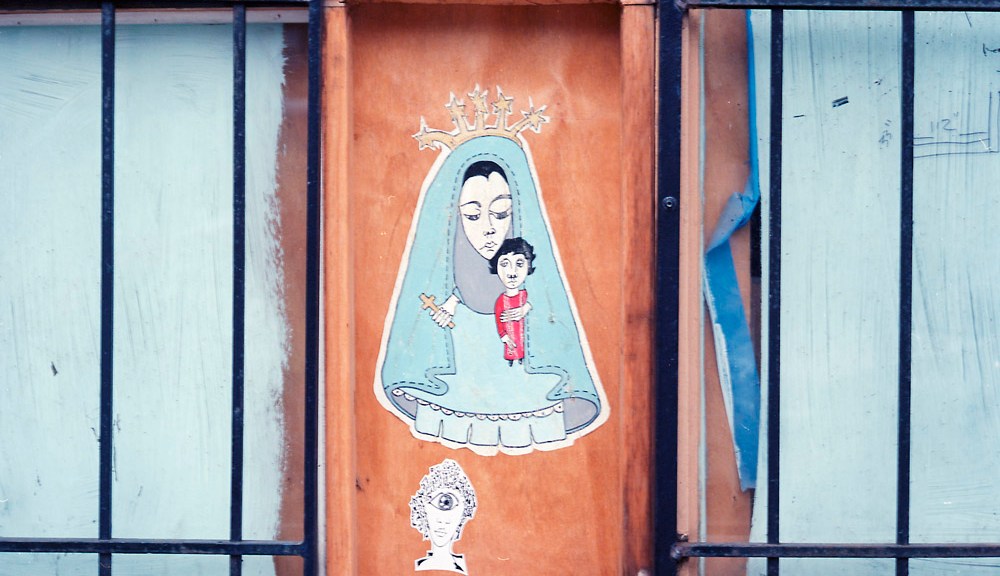
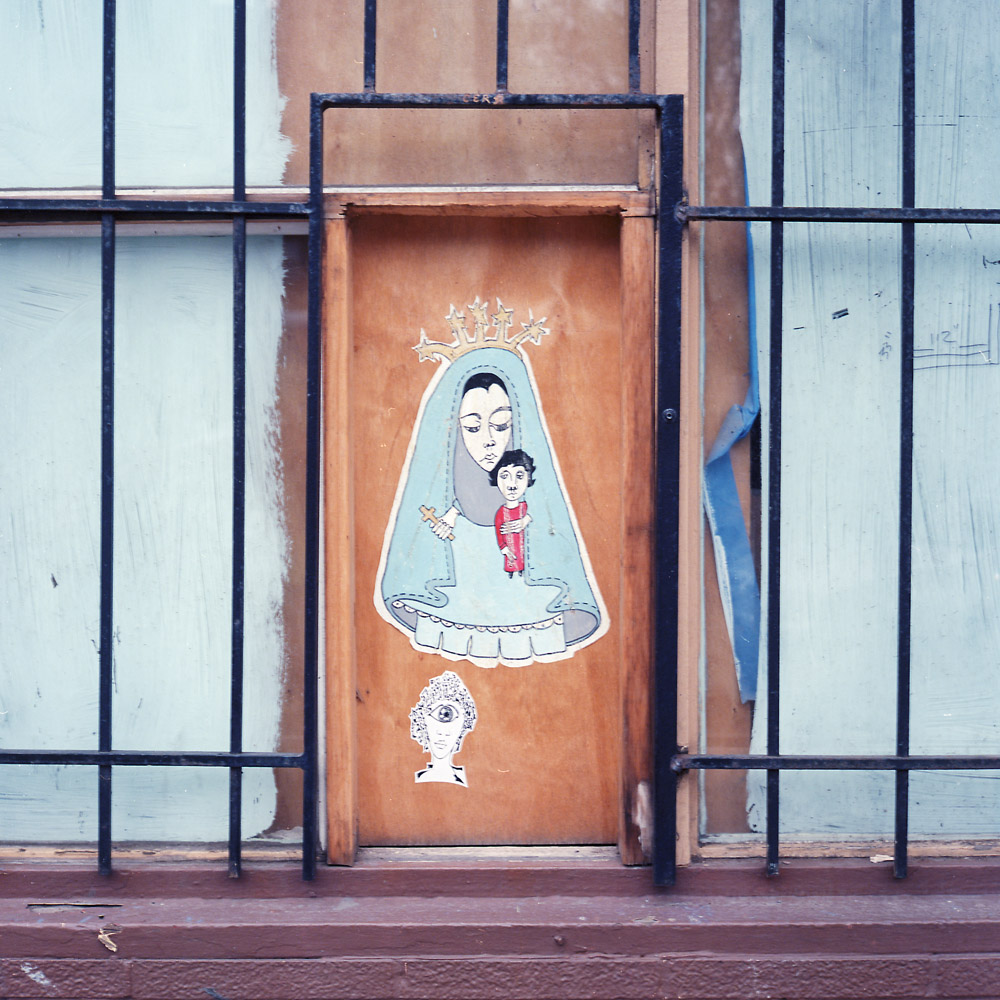
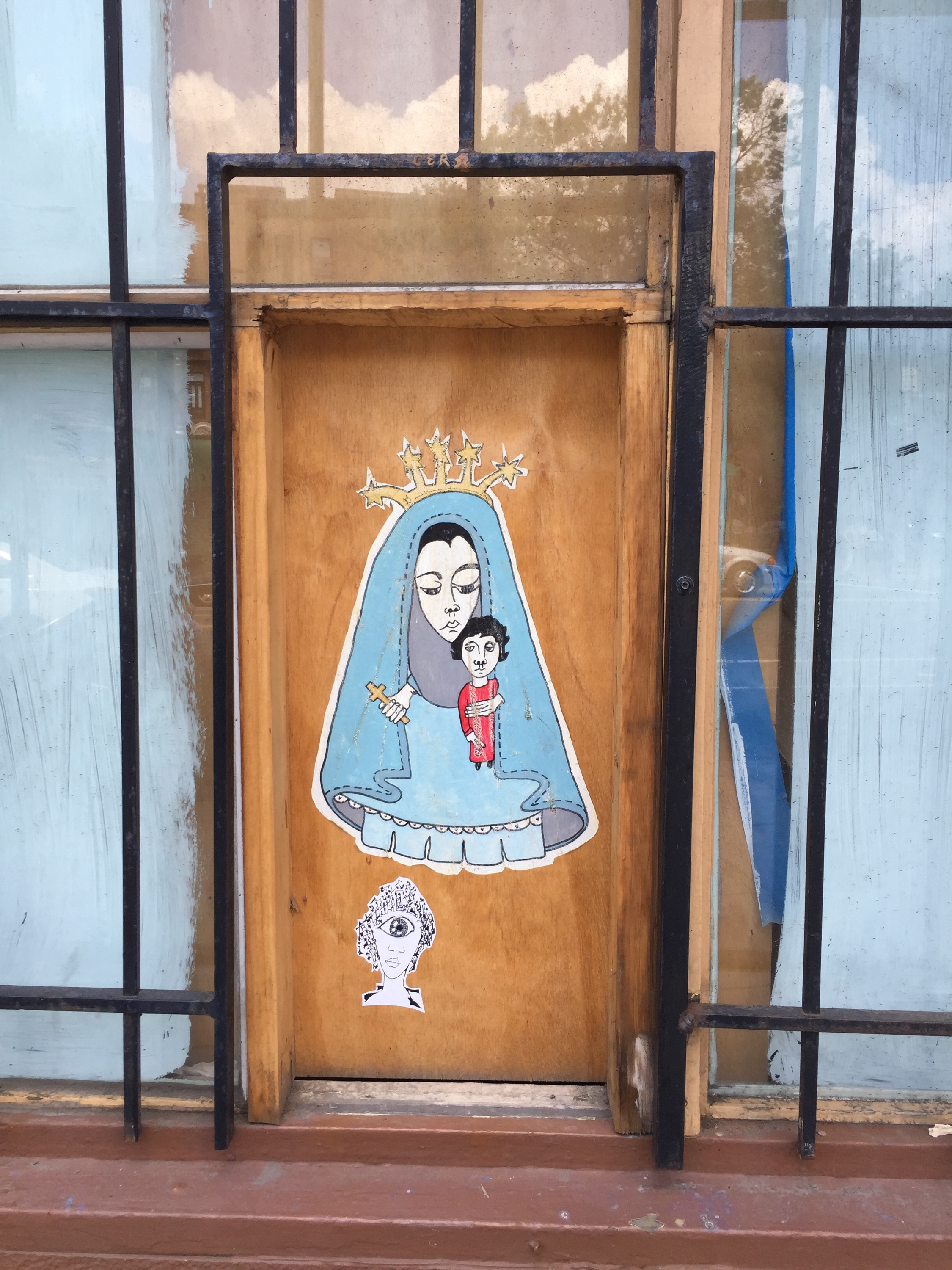
Another pairing of iPhone vs. Rollei in the battle of “the best camera is the camera you have”:

Mother Mary Passthru, Rollei
Mother Mary Passthru, iPhone

I was lucky that I got back around with the Rollei to take this shot because within a week of my return with the Rollei, construction crews had started work on the building and Mother Mary of the Takeout Passthru, the not-so-baby Jesus and the One-Eyed Wonder beneath them had been removed and replaced by a fresh sheet of plywood. Gone was the shrine to the blessed deli, replaced by the altar of rapid gentrification.

The camera you have…

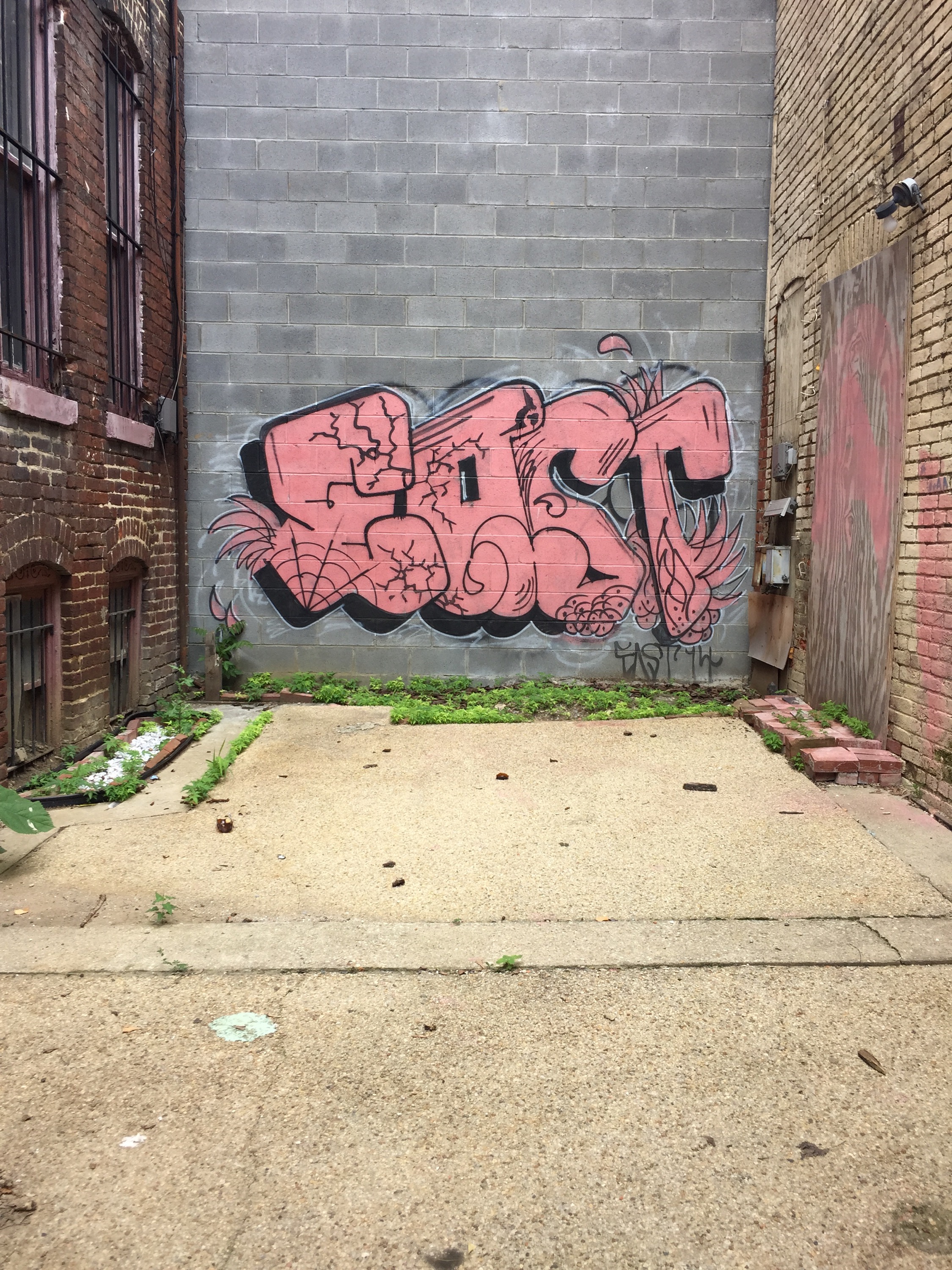
A while back I posted an item about sometimes the best camera is the camera you have with you at the time you need to take a picture. Certainly, there may be other cameras that are better suited to the task at hand, but they don’t do you any good if you don’t have them with you. To whit, the first image. I came upon this bit of graffiti in an alley between two buildings. It’s almost as if it were an art installation in itself, the way it’s situated. When I first saw it, the camera I had on hand was my iPhone. It certainly did a good job of capturing the scene.

IMG_2308

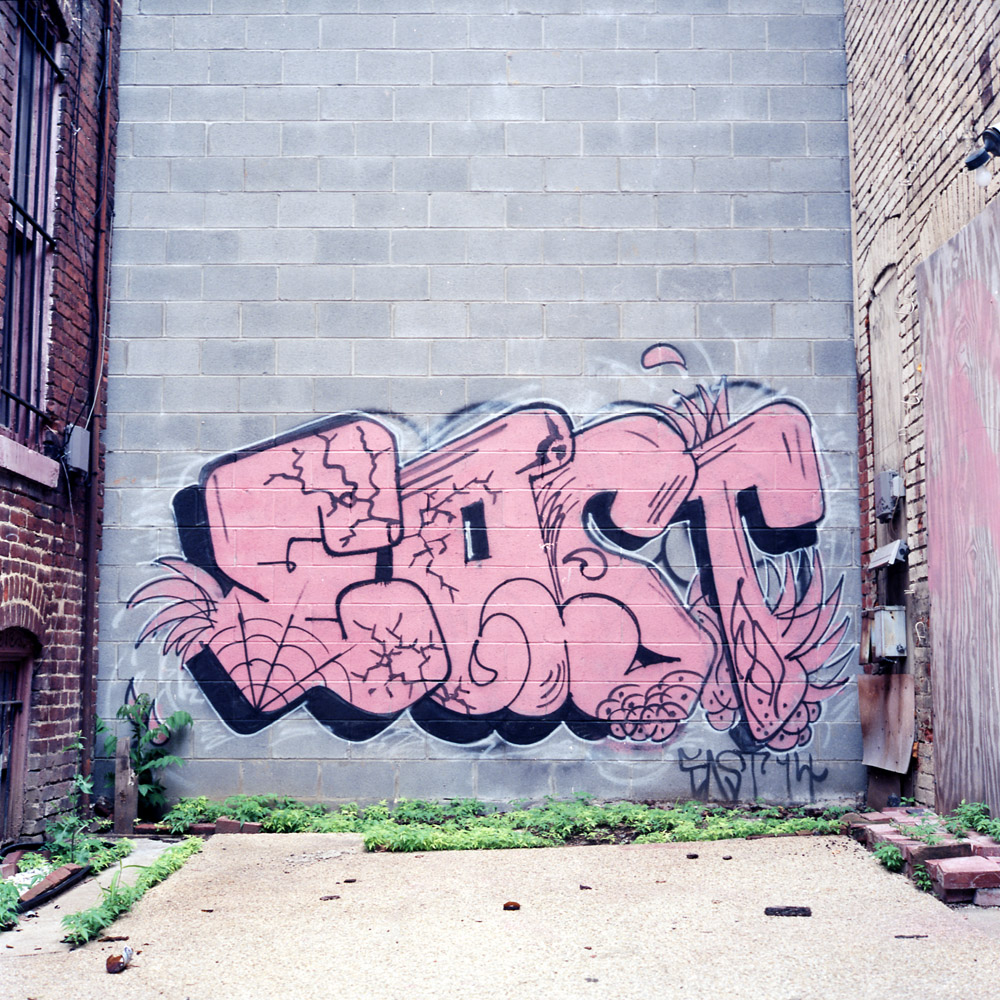
I promised to come back with my Rolleiflex to photograph it again, to see how different the two cameras’ visions were, and how they rendered the scene differently.

Graffiti, 14th & Corcoran

It’s not really a fair comparison, given that the sensor for the iPhone is the size of a Q-tip, if that, and the film in my Rolleiflex is 2 1/4 inches square, or about 300 times the size. Also, the lens has a different field of view- the iPhone is somewhere between a 28mm and 35mm lens’ field of view (moderately wide-angle), translated into 35mm equivalent, whereas the lens on my Rollei is a “normal” (50mm equivalent). The two cameras give very different renderings of the scene – the iPhone gives you much more of a sense of the space, whereas the Rollei makes the graffiti the star of the show.

Graffiti, 14th & Corcoran, Door

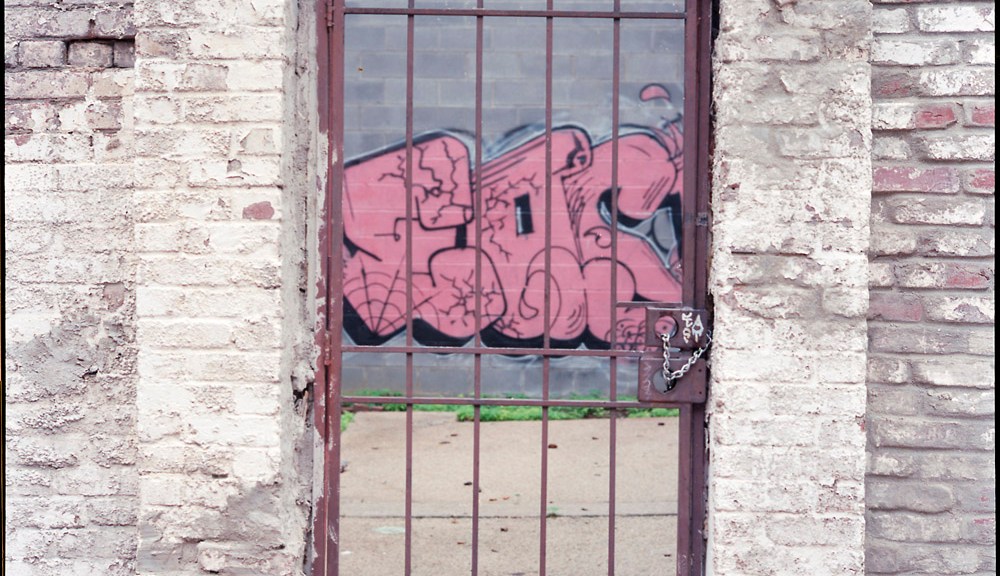
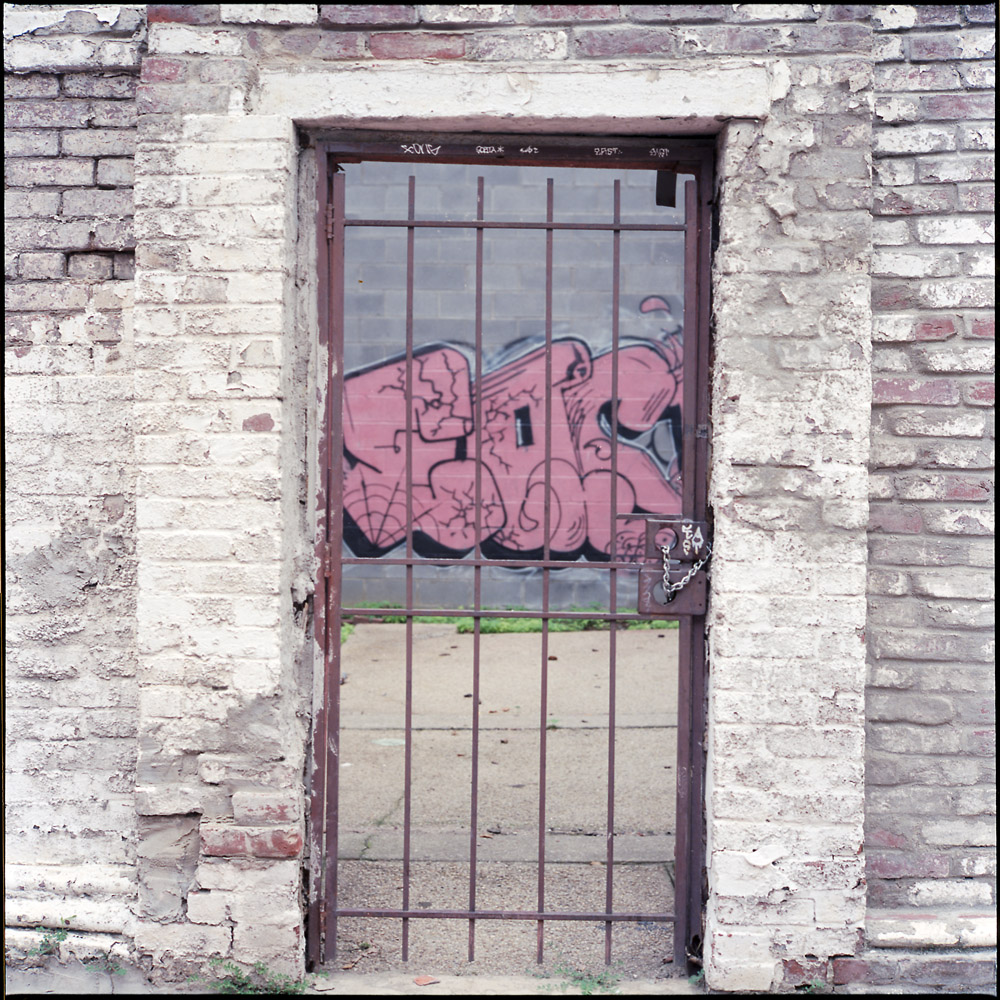
Here is the locked gateway to the space where the graffiti is. Now you can get a sense of the drama of it – it’s hidden behind a locked gate, guarded like some treasure on display at more than an arm’s distance.

And now for something completely different – a Lotus Blossom

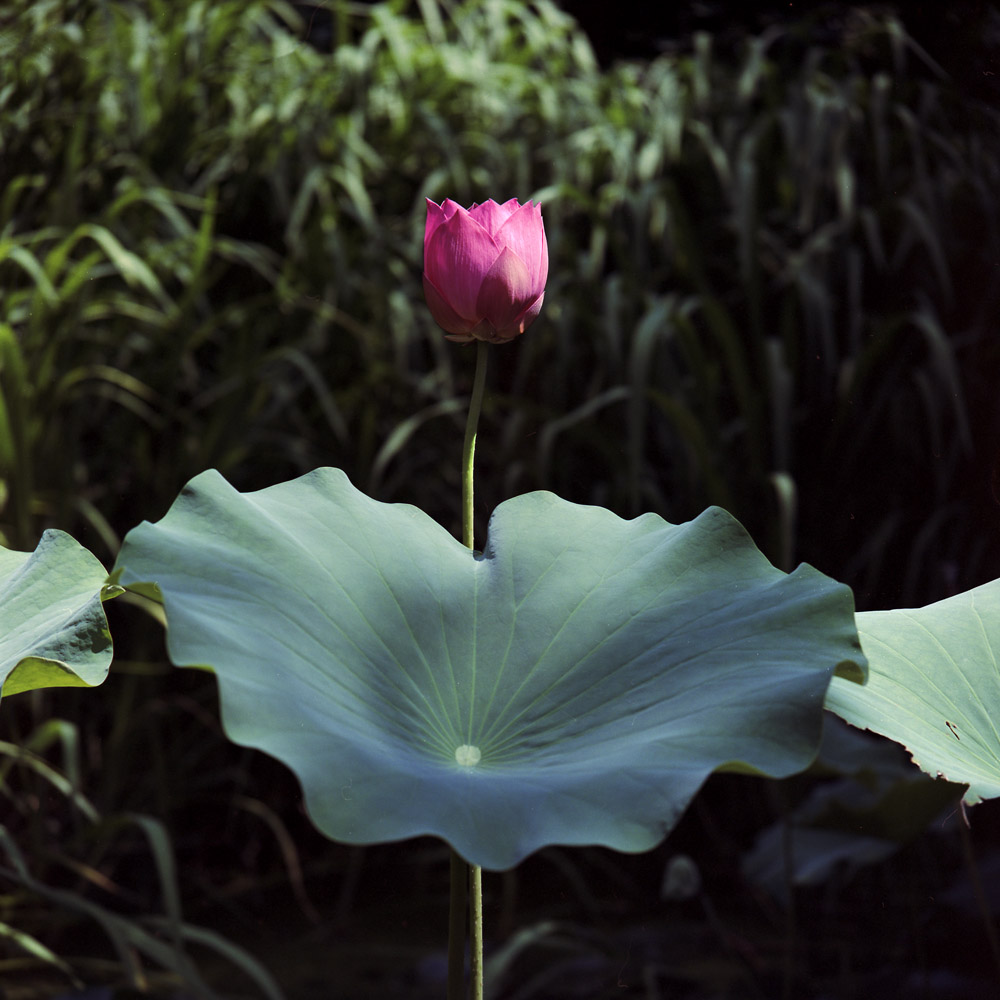
Lotus Blossom, National Zoo

I don’t think much needs said – it’s a lotus blossom at peak season, with full and unbuttered leaves.

And now for something completely different… a panda

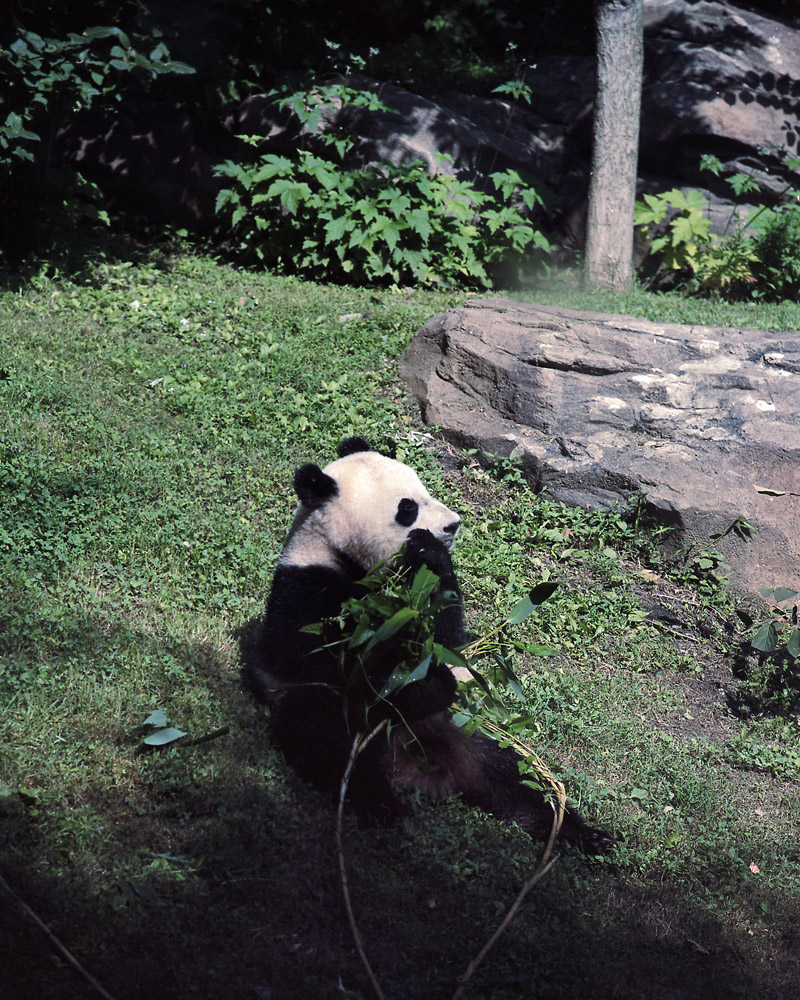
I took the Tele-Rolleiflex with me to the zoo the other weekend. I didn’t know quite what I would be able to get good shots of and not, but I tried anyway. The one animal I could get close enough to get a good shot of while still outdoors in good light was, fortuitously enough, the Giant Panda – I think this one is Tian Tian, the male panda.

PandaNatZoo

Enjoy!

K.T. at Land’s End, in Black-and-White (NSFW)

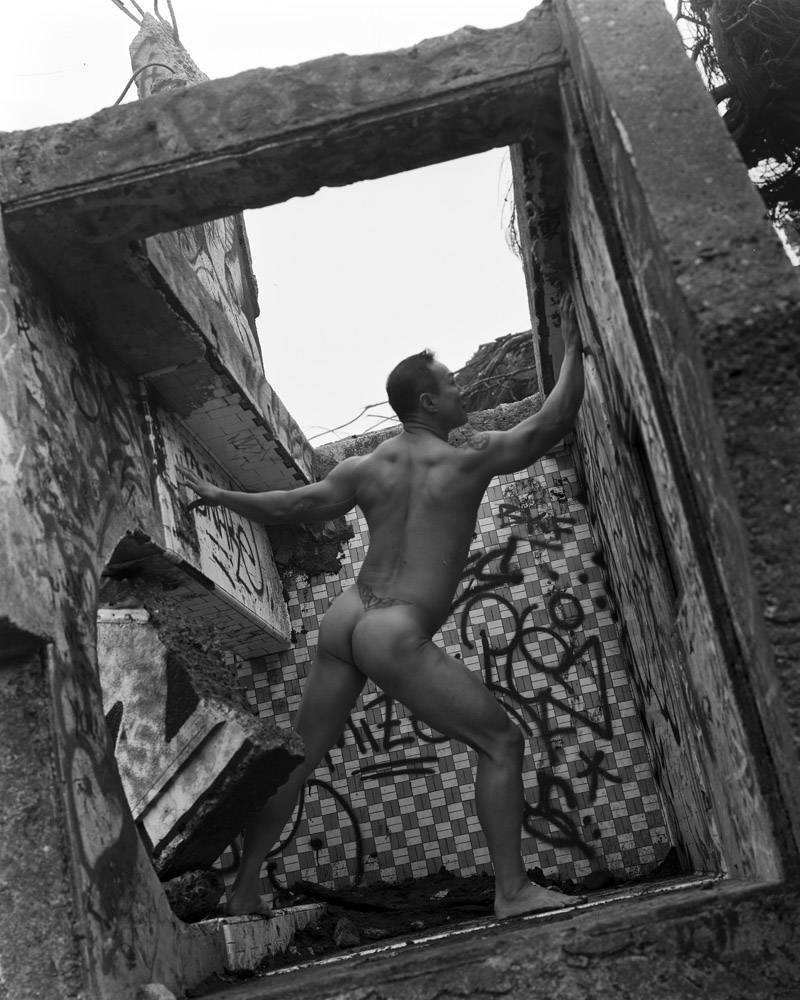
Four more images from my series with K.T. at Land’s End. It’s funny how when you’re shooting, sometimes you’re so in the moment of doing it, you don’t realize the parallels you’re creating. In this first pair, the parallel is obvious.

K.T., Front, Foyer
K.T., Front, Foyer
K.T., Back, Foyer
K.T., Back, Foyer

We had an interesting space to work in, so I had him turn and repeat his pose both front and back. I was thinking of exploiting the cubic volume of the collapsed structure, and contrasting the rectilinear forms of the structure with the organic ones of the body.

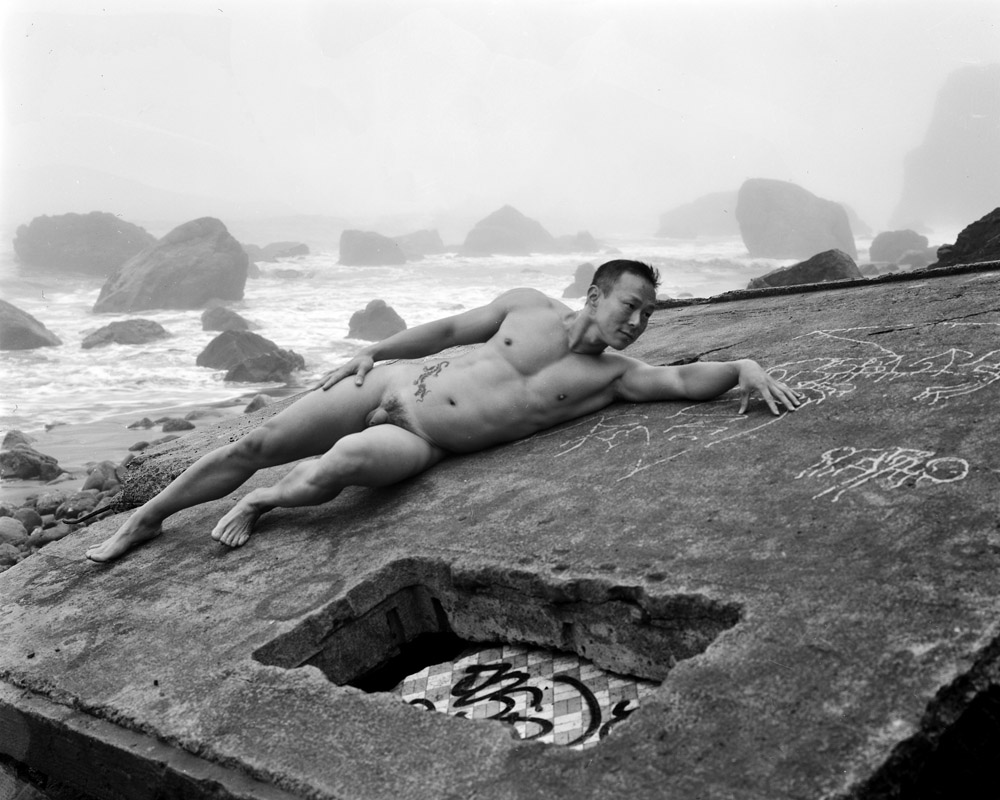
The reclining poses are similar as well, but in a less obvious way because the backgrounds are different, as is the placement/emphasis on the figure. In the tree figure, the human form is front-and-center, definitely the main subject of the image. The coarseness of the bark and the wild gnarls of the branches contrast with the contained, orderly, smooth human body draped over them. In the surfside image, the human figure is very much present, and the focal point around which the image is structured, but it blends in to the scene both tonally and formally.

K.T., Reclining, Wall, Surf
K.T., Reclining, Tree

Last but not least, I thought I’d make a diptych out of the two foyer shots, since they so harmonize with each other. I know I wasn’t thinking “Gee, let’s make a diptych out of this!”, or at least not like THIS, when I took them. Back when I took these, I thought almost exclusively as a single-image shooter. Each image was a discreet entity, even if part of a narrative series. So I certainly shot them to be a pair, but I would have envisioned hanging them side by side in separate frames. Funny how serendipity works, isn’t it?

Diptych, K.T., Land's End
Diptych, K.T., Land’s End

Randomness

You know the old adage, “the best camera is the one you have with you”? It’s true. I got lucky and found these two shots as I was walking around the other day waiting to meet a friend for lunch.  

They’re snaps with my iPhone. It was the camera I had with me at the time. And proof that it’s the photographer, not the camera, or the software, that makes the image. 

I’ll be back in the neighborhood today after work with my Rolleiflex, and I’ll take them again. Different photos, different camera, different aspect ratio, so they’ll feel very different. I’ll try to remember to post them when they’re done.