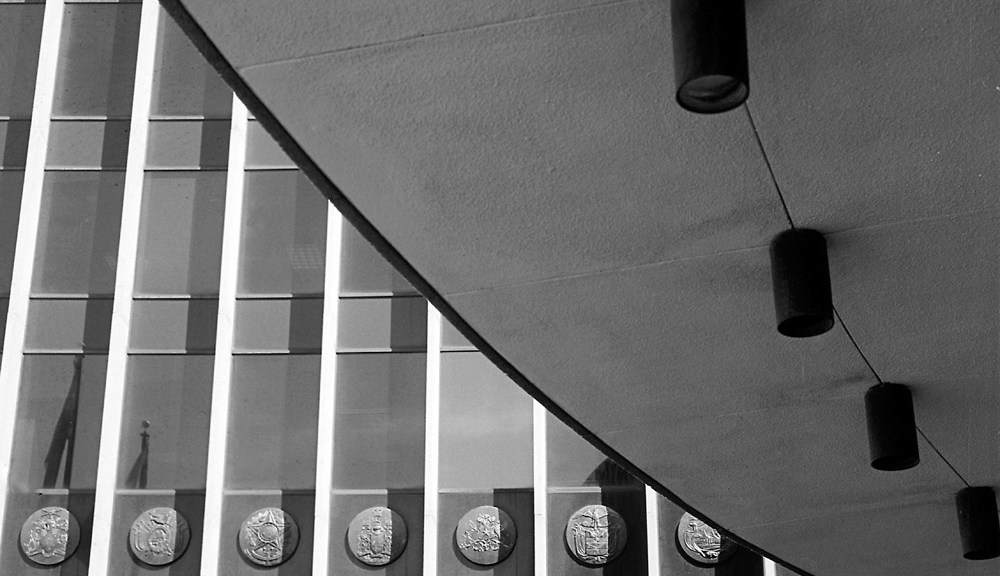
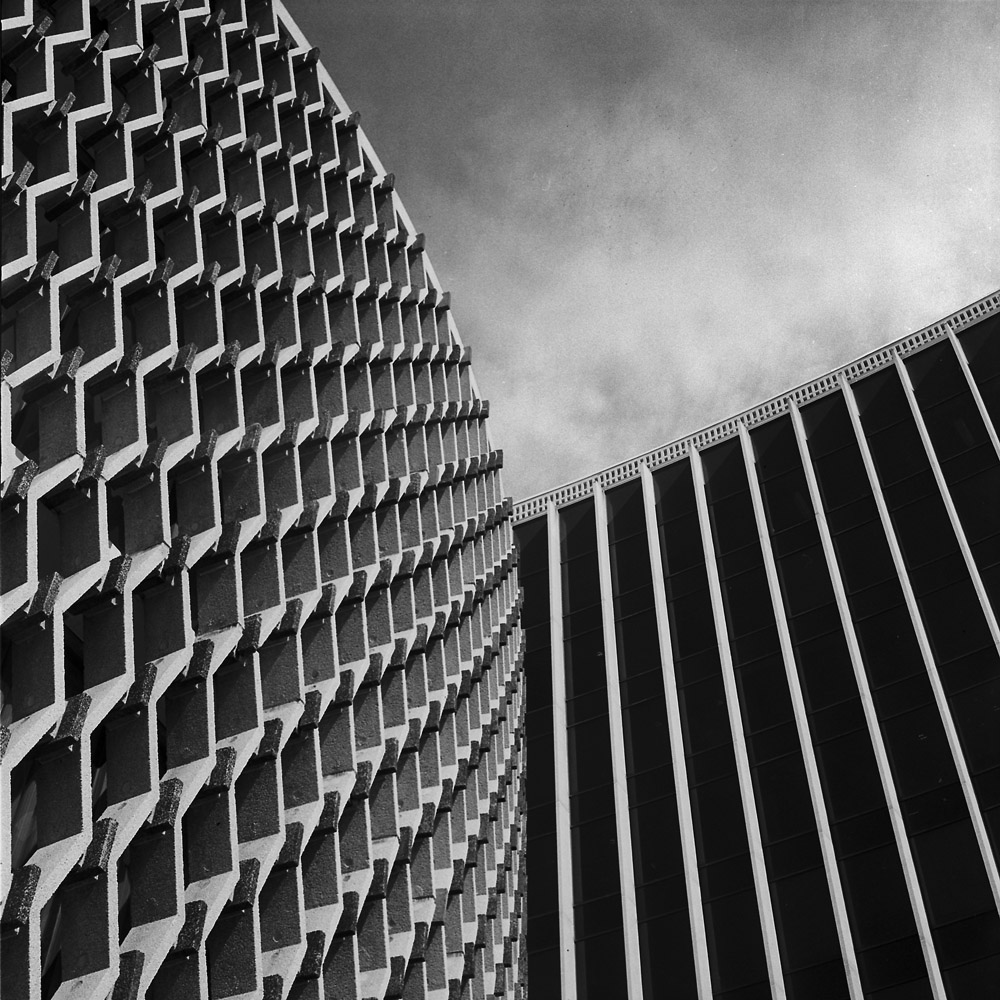
A different perspective on the World Health Organization building, looking up from under the cylinder at the tower. Not quite as abstract as the other two, but nonetheless.
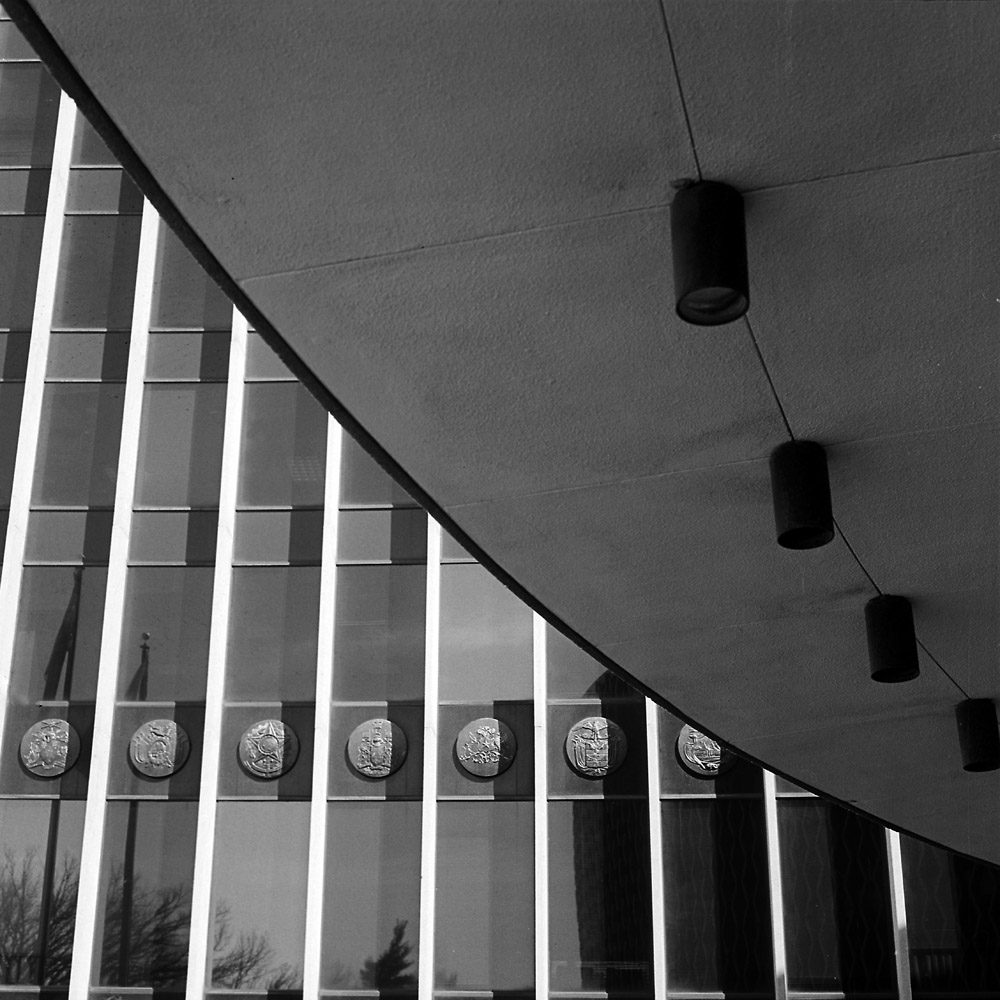
A different perspective on the World Health Organization building, looking up from under the cylinder at the tower. Not quite as abstract as the other two, but nonetheless.
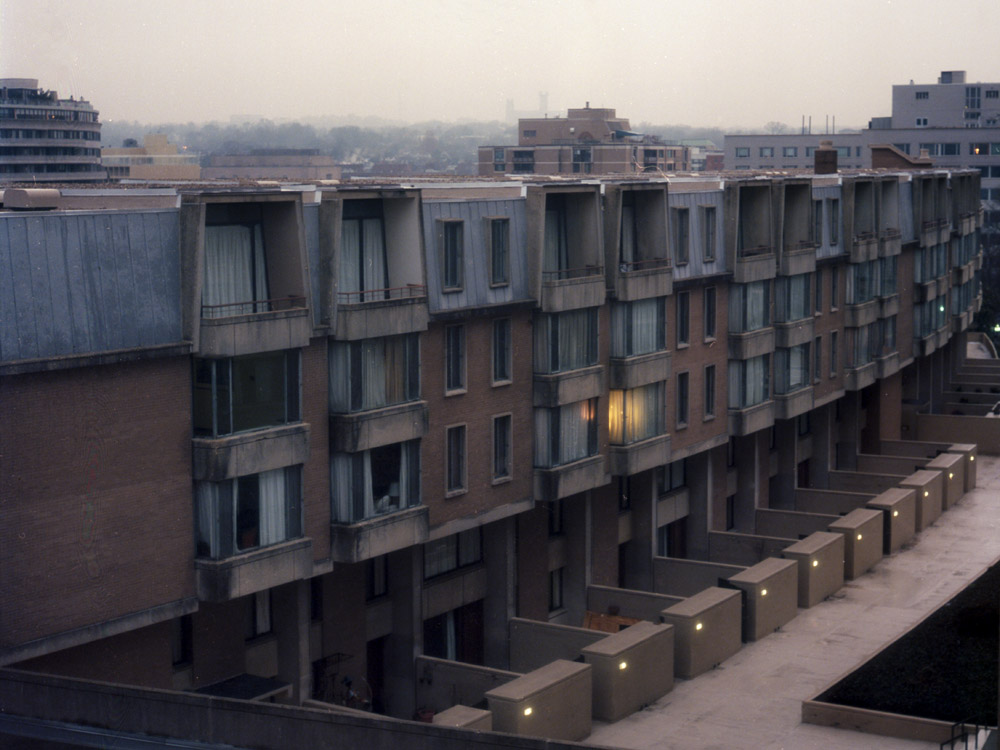
Another scene I see near my office every day. Easier to capture in the wintertime when it gets dark early.
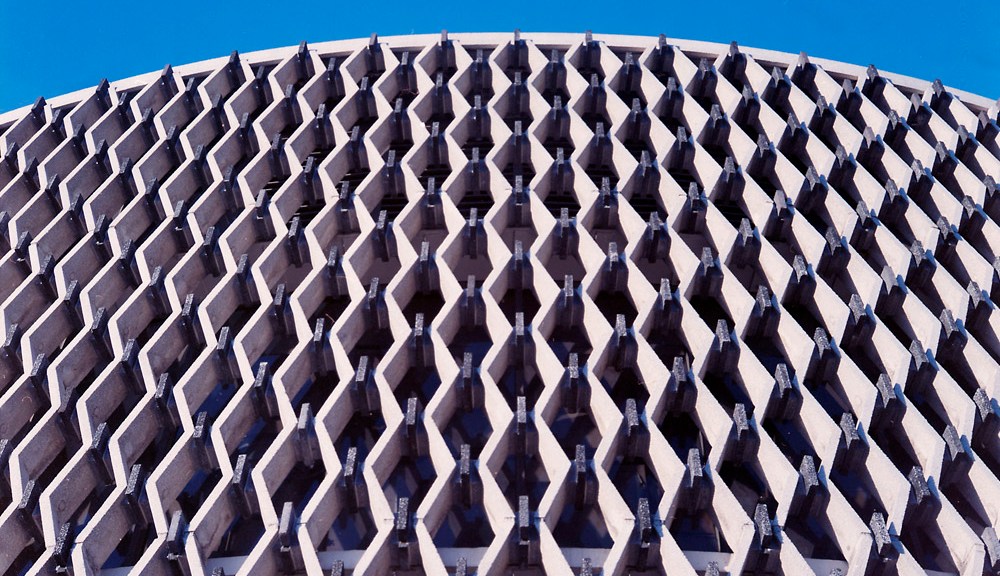
Two different takes on the WHO building downtown DC. This time shot in bright, strong, contrasty sunlight. Due to the geometry of the building I was aiming for geometric abstractions, composing so the context of the structure was absent and what is visible has to be taken non-literally.
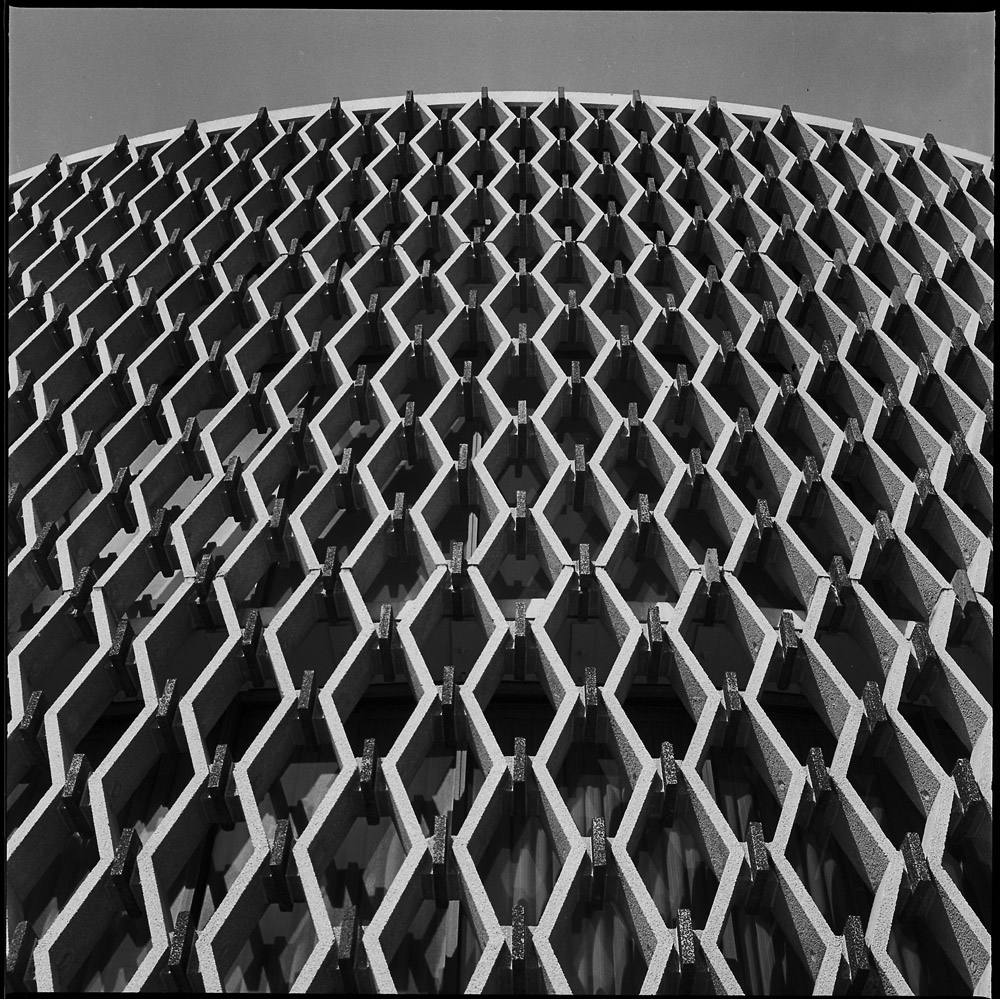
Pointing the camera vertically to create these images really pushes the perception into unreality – you’re dealing with three texture sets, not anything particularly identifiable. Mid-century architecture like this is a rare commodity in DC – most buildings are either glass-and-steel cubes, neoclassical faux-palaces, or Art Deco boxes of varying degrees of interest and value, so this really stands out.
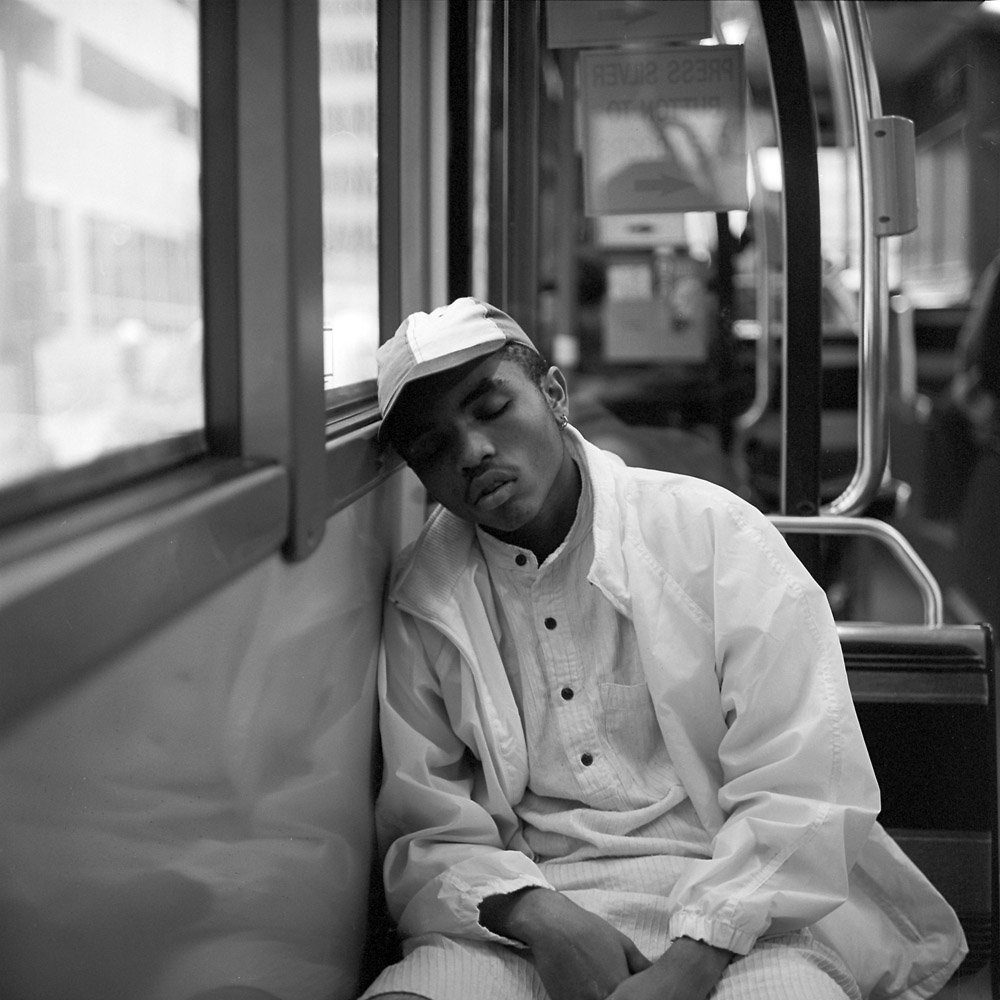
This is a one-off, as it stylistically doesn’t really fit with the rest of the Commuter Diary series. But it’s a really great image, so I’m posting it. I saw this young man dozing off on the bus on my way home from work the other day. It’s very representative of that kind of moment all of us have had when riding public transit – you’re tired, in need of a rest, and hoping you won’t oversleep your stop.
So far I’ve mostly been focusing on the infrastructure of commuting – the trains, the buses, the buildings, the mechanical bits. Here are a few shots of the human side – the reason the infrastructure exists in the first place.
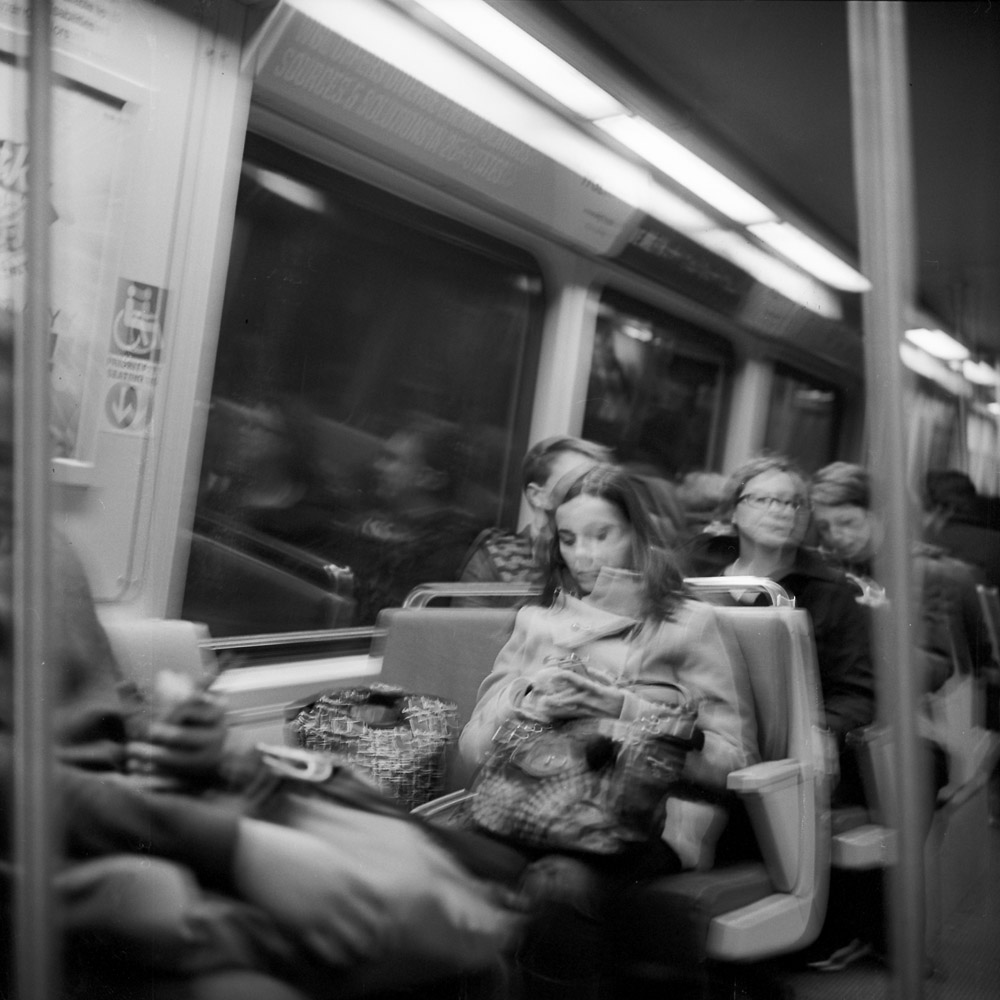
It’s an all-too-common sight on the train or the bus – someone taking up two seats with their stuff. It doesn’t really matter when the train is more empty than not, but on a busy, full train during rush hour, well… it’s downright rude. Thus, the question gets asked, even if only in an internal monologue – “did your bag also buy a ticket?”.
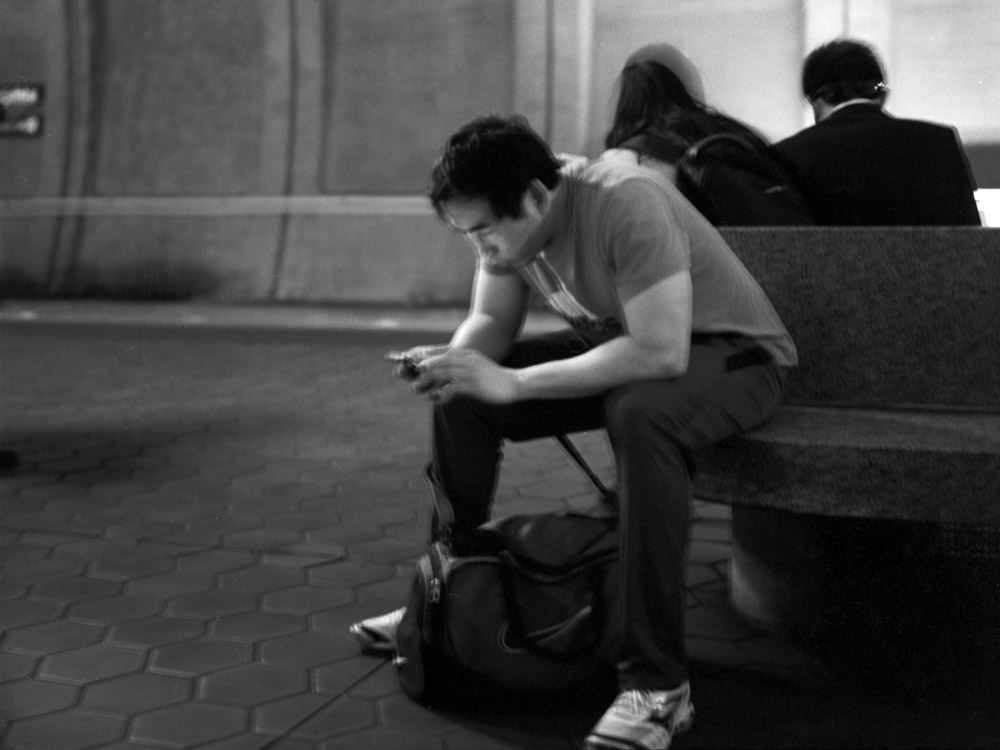
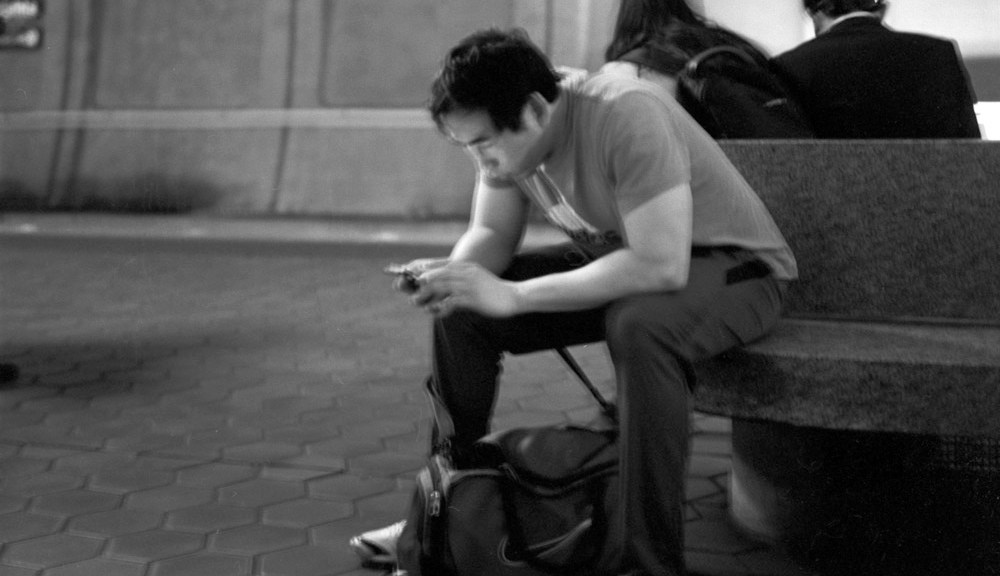
Another very common part of the commuting experience is waiting. Waiting for the bus, waiting for the train, waiting for someone to come pick you up at the bus stop or train station. With the omnipresence of smartphones, nobody reads books or newspapers any more – instead it’s little glowing screens that light up their face with a deathly pallor as they hone in with a zombie-like intensity on the images and text being fed to them by an iSomething.
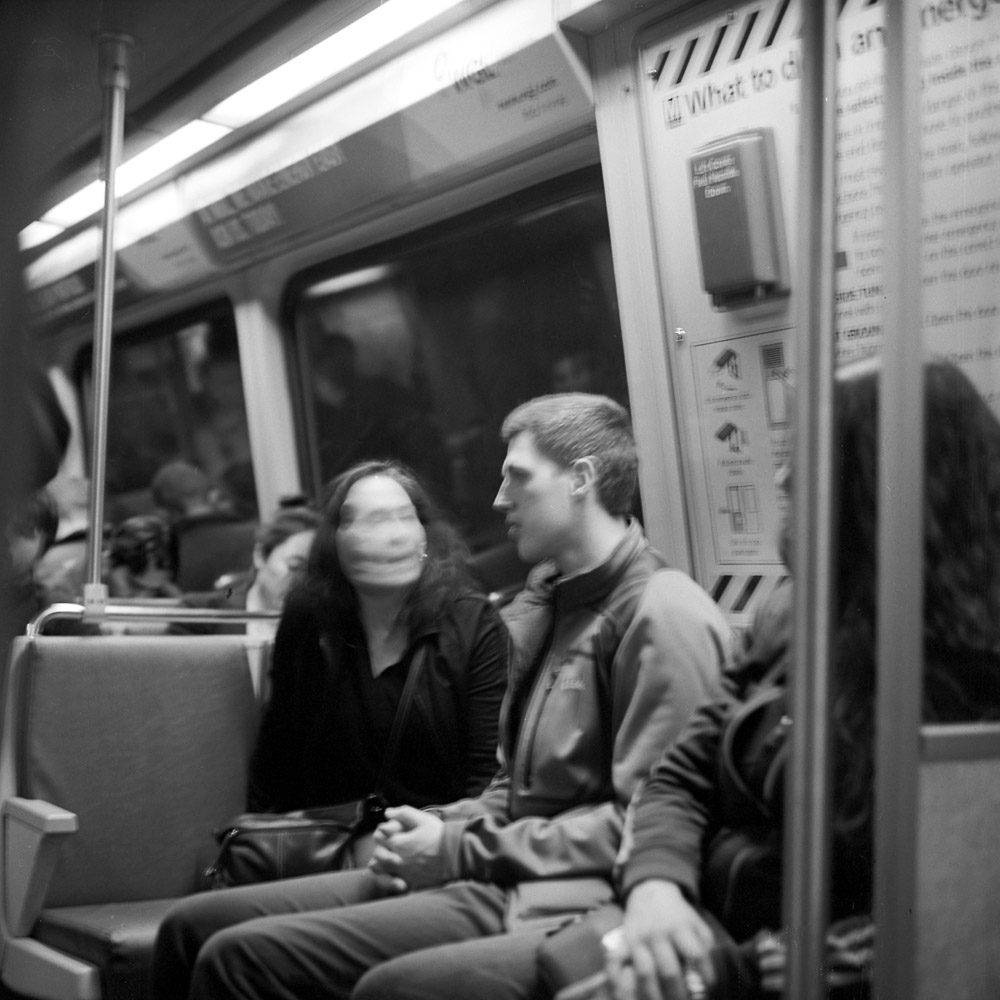
An interesting side effect of the way I take these photos is seeing what does and doesn’t move over time. This poor woman looks like she has hair of concrete as her face moves but her hair doesn’t.
not much to say, really- it’s camera porn, pure and simple. I got a steal on a Sinar Norma 5×7, which I plan to use in the studio (it’s a heavy beast!). Here she is in her glory:
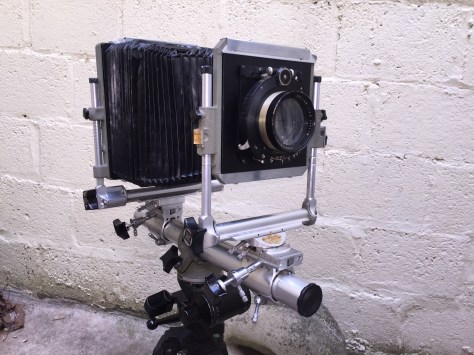
To pretty her up a little I put my Voigtlander Heliar 240mm f4.5 on the front, and used my Sinar pan-tilt head to get her on the tripod.
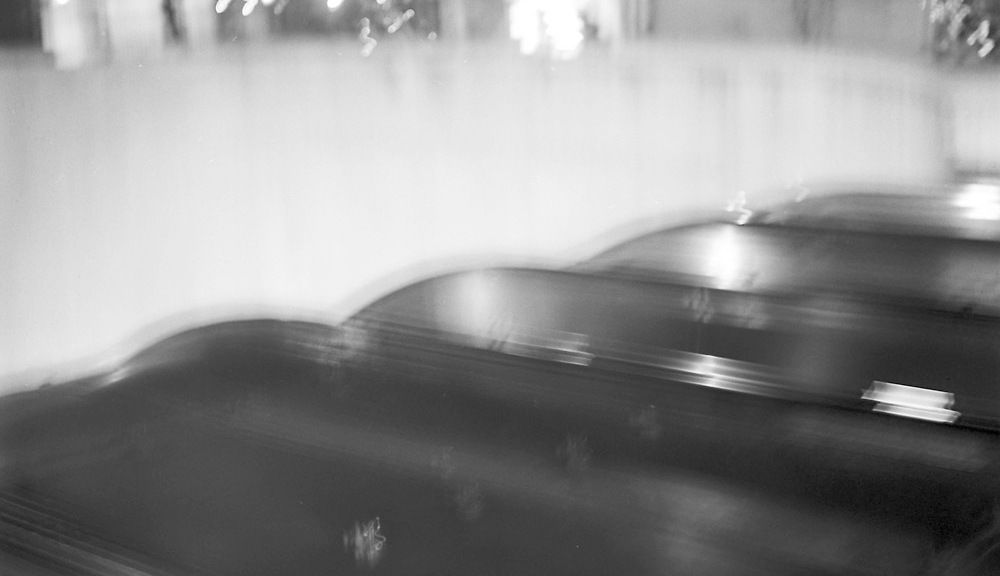
I often use the Dupont Circle metro station not so much as a part of my commute but for going out on weekends or after work. These images are actually in a bit of a reverse order from how they were taken, going from streetside to platform. Dupont Circle’s escalator is legendary for its length – it is a very steep, very long escalator, but NOT, all legends to the contrary, the longest in the Metro system. The longest is actually at one of the outer suburban stations, Glenmont. Bethesda is also very long and very steep, longer than Dupont. Once I timed it to prove to a friend that Bethesda is longer, and it takes some 30 seconds longer to ride the Bethesda escalator to the top than the Dupont Circle escalator.
The entrance to the Dupont Circle station on the Q Street side is the one that has the long, deep escalators. It also has a relatively unique architecture with a circular aperture. Inscribed in the marble around the entrance shaft is a quote from Walt Whitman about the soldiers he nursed in the Civil War hospitals of Washington DC. The inscription was added in 2006 to honor the caregivers who gave so much of themselves in the fight against AIDS – Dupont Circle was particularly ravaged by that scourge, having been the heart of the gay community in DC. While perhaps no longer the geographic center of the gay community (it has moved to other, cheaper, and more geographically dispersed locations as times and attitudes have changed), Dupont Circle is still the spiritual home.
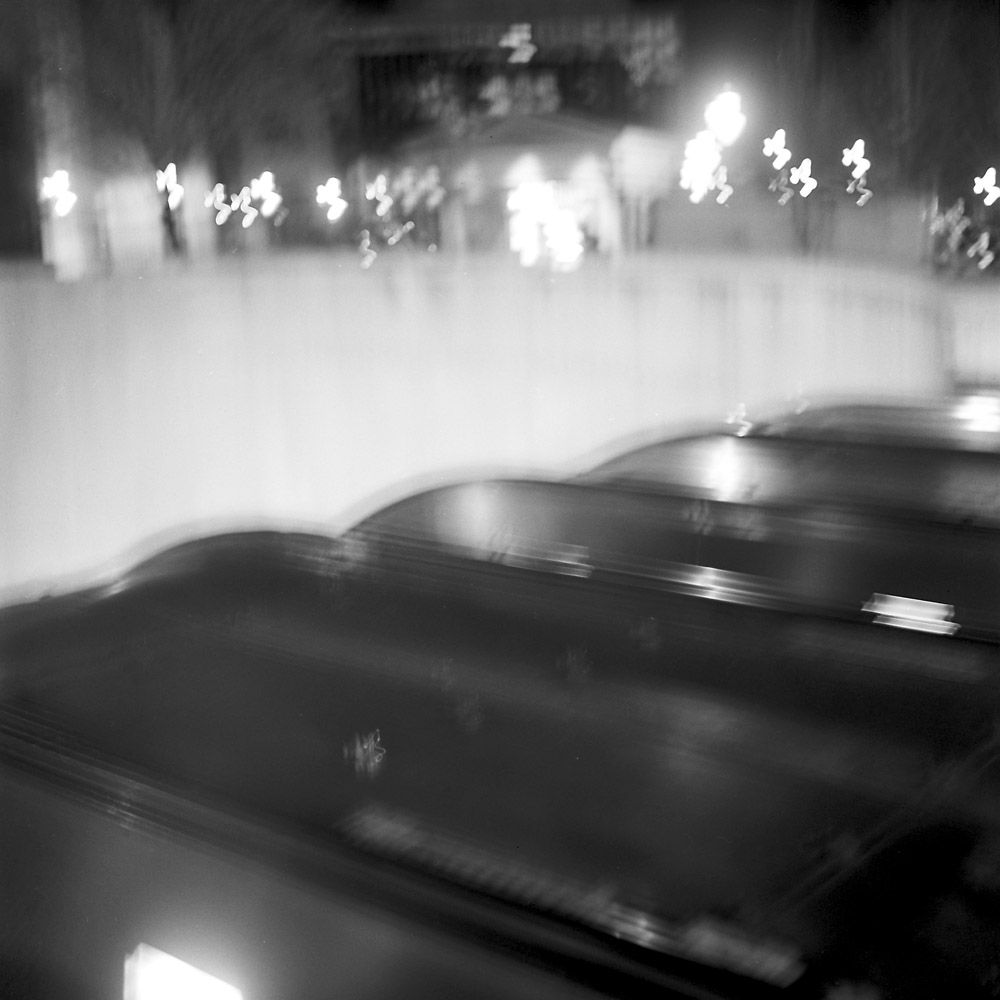
The quotation reads:
Thus in silence in dreams’ projections,
Returning, resuming, I thread my way through the hospitals;
The hurt and wounded I pacify with soothing hand,
I sit by the restless all the dark night — some are so young;
Some suffer so much — I recall the experience sweet and sad . . .
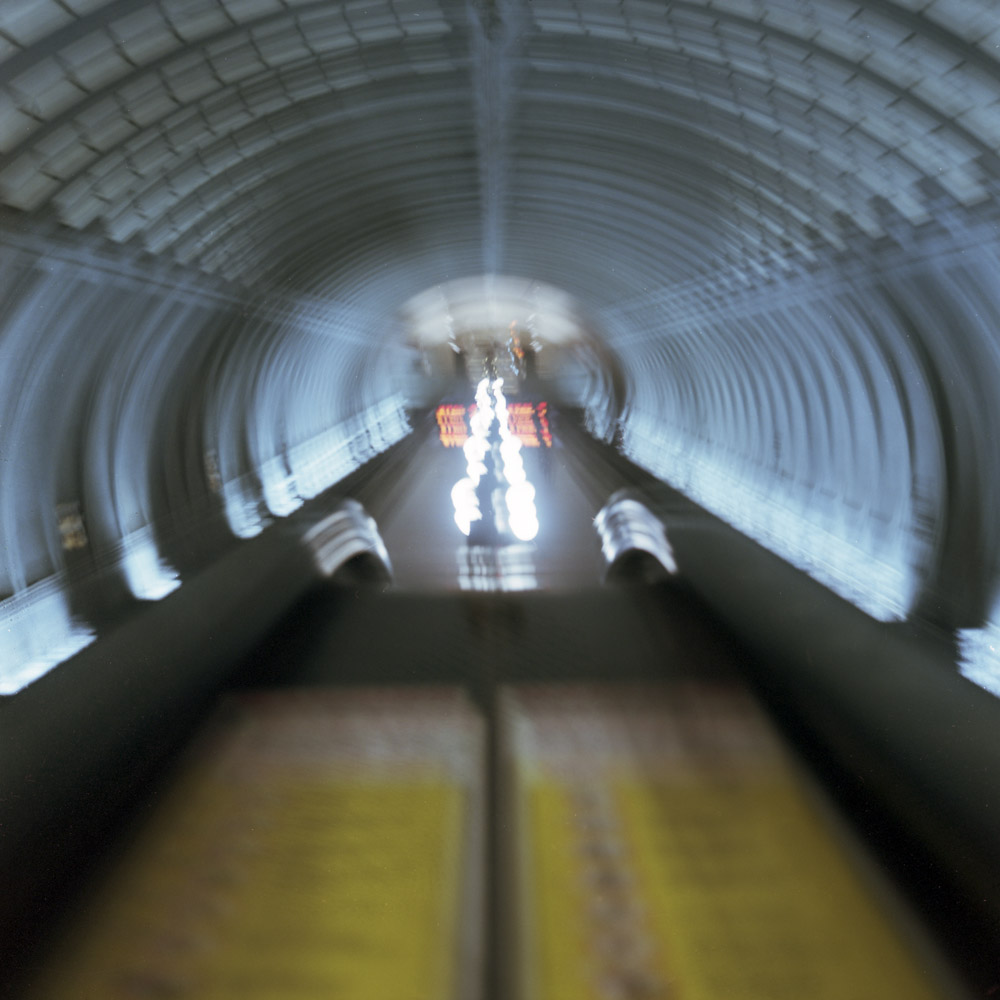
The poem in question, first published in 1865 as part of a collection called “Drum-Tips”, was originally titled “The Dresser”, and re-named “The Wound-Dresser” in later publications. In my image, the inscription is not legible, but the escalator tops plunge over the precipice of the entrance like a waterfall into a cavern, taking you down into the unknown.
The view looking up the escalator is equally vertiginous. Exiting at night you emerge from the confined but bright space of the underground into a dark circle of the open night sky. You’re falling UP into a different unknown.
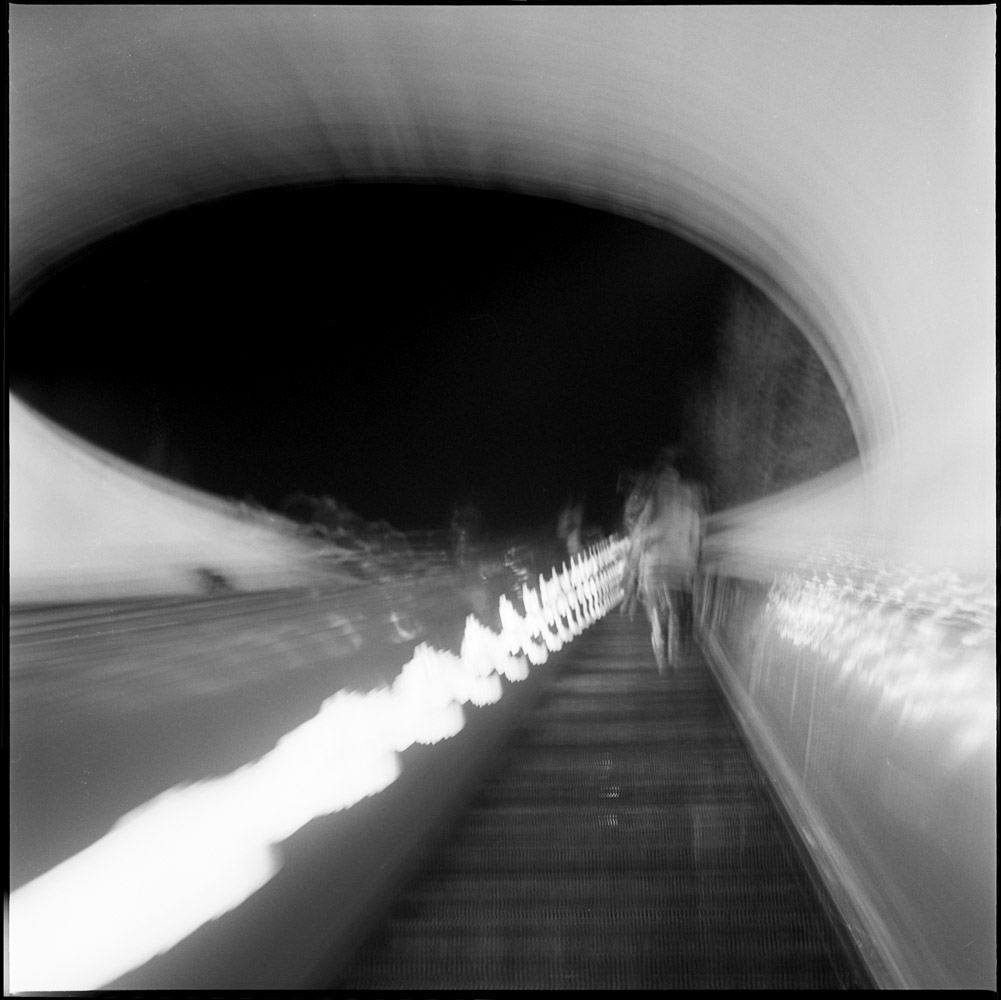
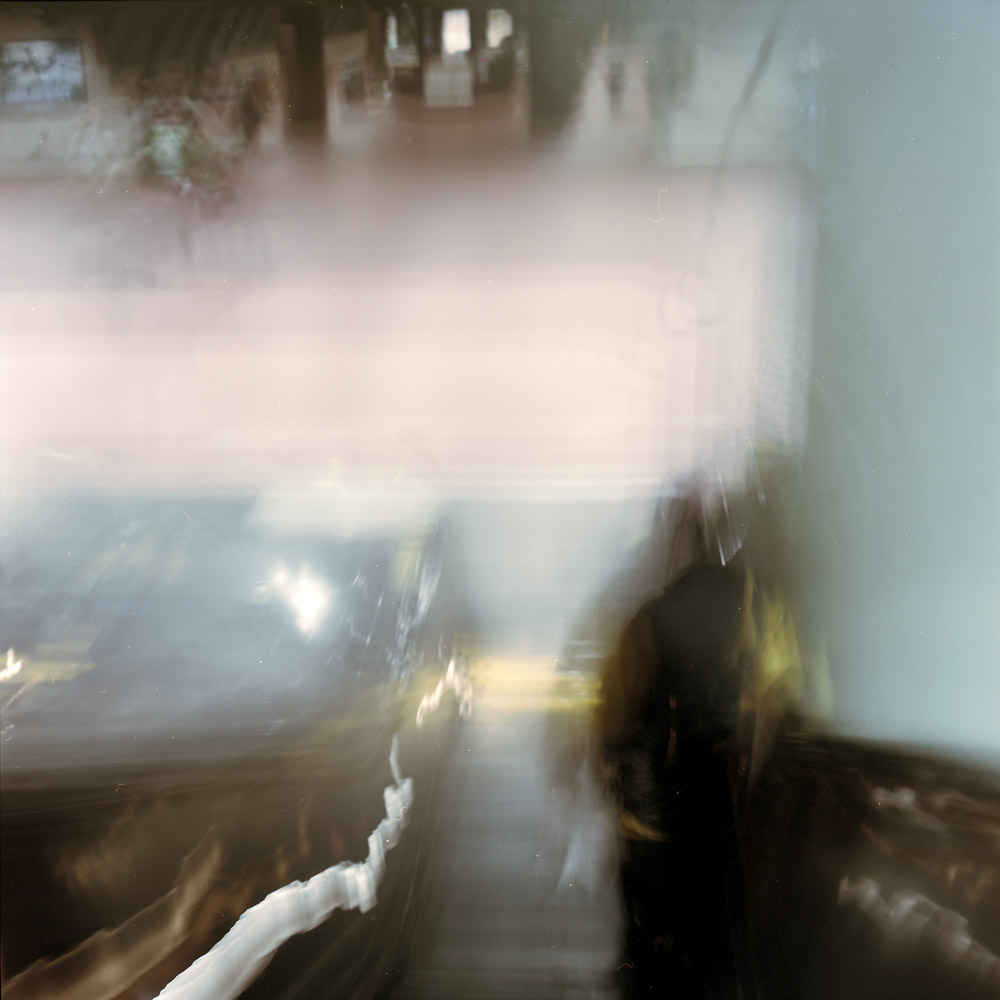
Turning around and looking back down at where you came from, it’s a bit like Orpheus and Eurydice or Lot’s Wife, looking back at whence you came. Fortunately, the only time there’s instant regret is in the depth of winter when it’s 15 degrees F outside and the wind is whipping your face. And you don’t turn into a pillar of salt.
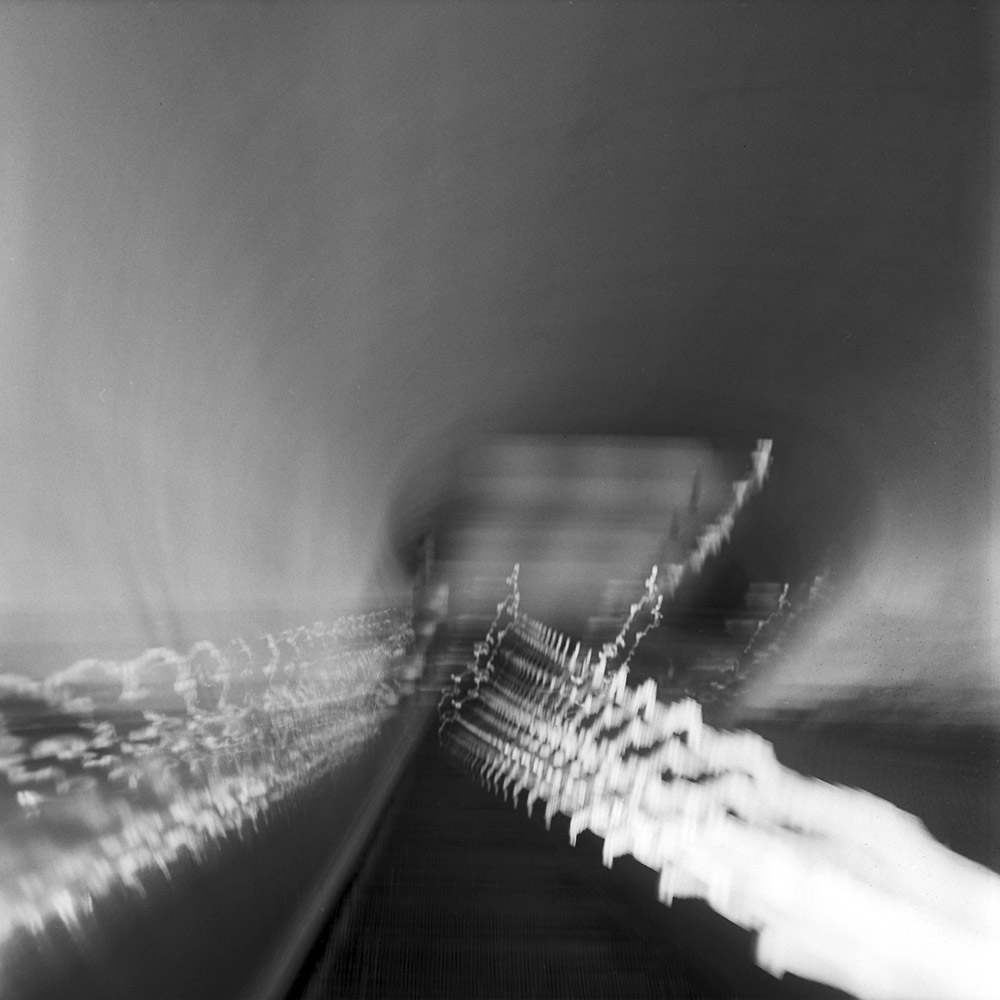
The flow of traffic up the escalator at the Dupont Circle platform:
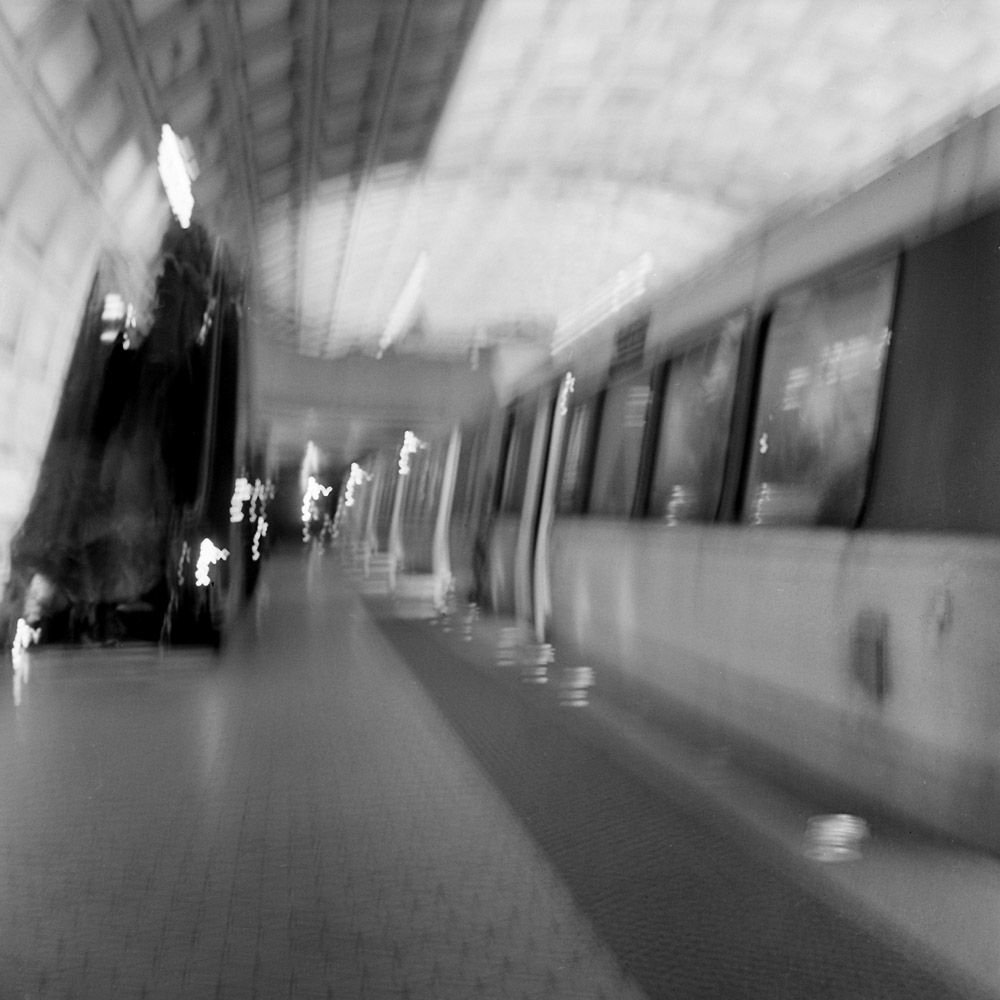
Boarding the train:
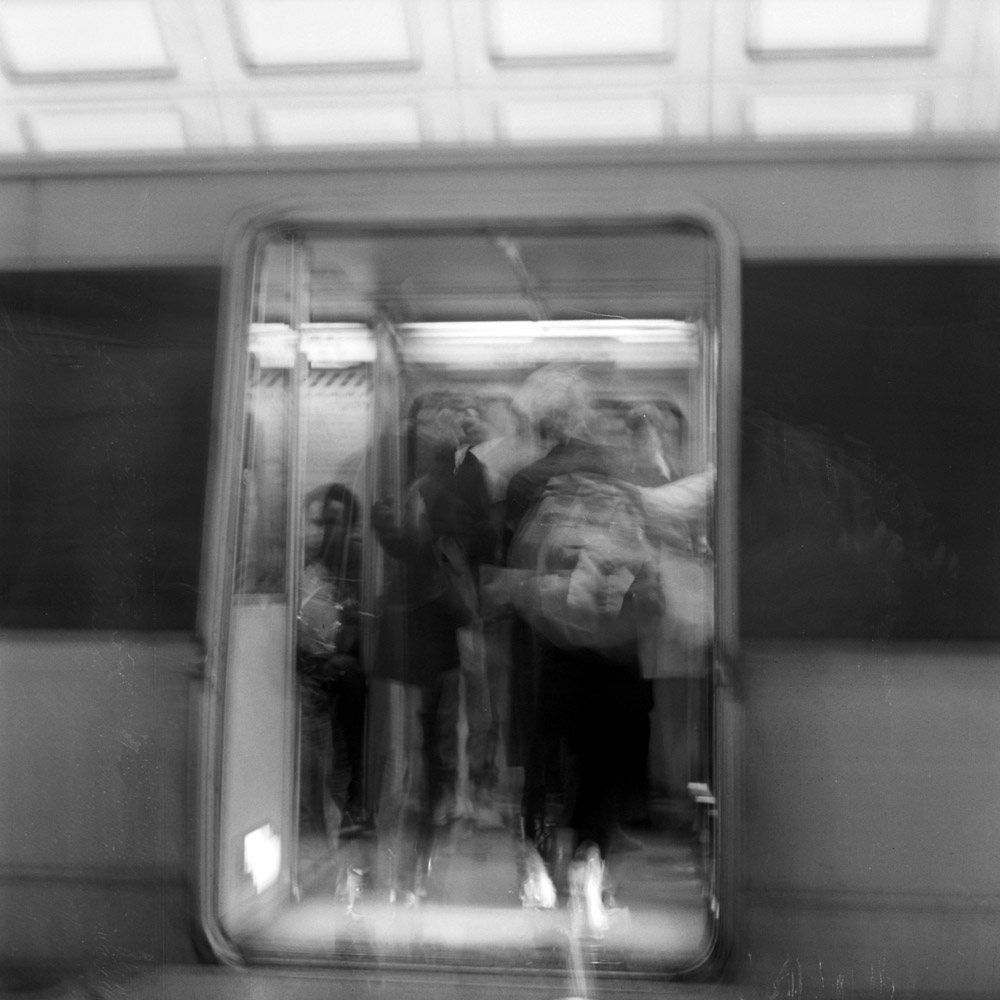
Sorry if I can’t wax poetic for every image. It’s just as the mood strikes and the juices flow. Maybe if I have a show of this work I’ll edit my better bits of commentary out of the blog into quotes on the wall as captions for the images.
I previously posted some b/w abstracts of this building, taken on a cloudy, rainy day. Here it is on a glorious, cloudless sunny day. Yes, that actually is the color of the sky; no Photoshop trickery was used to create that.
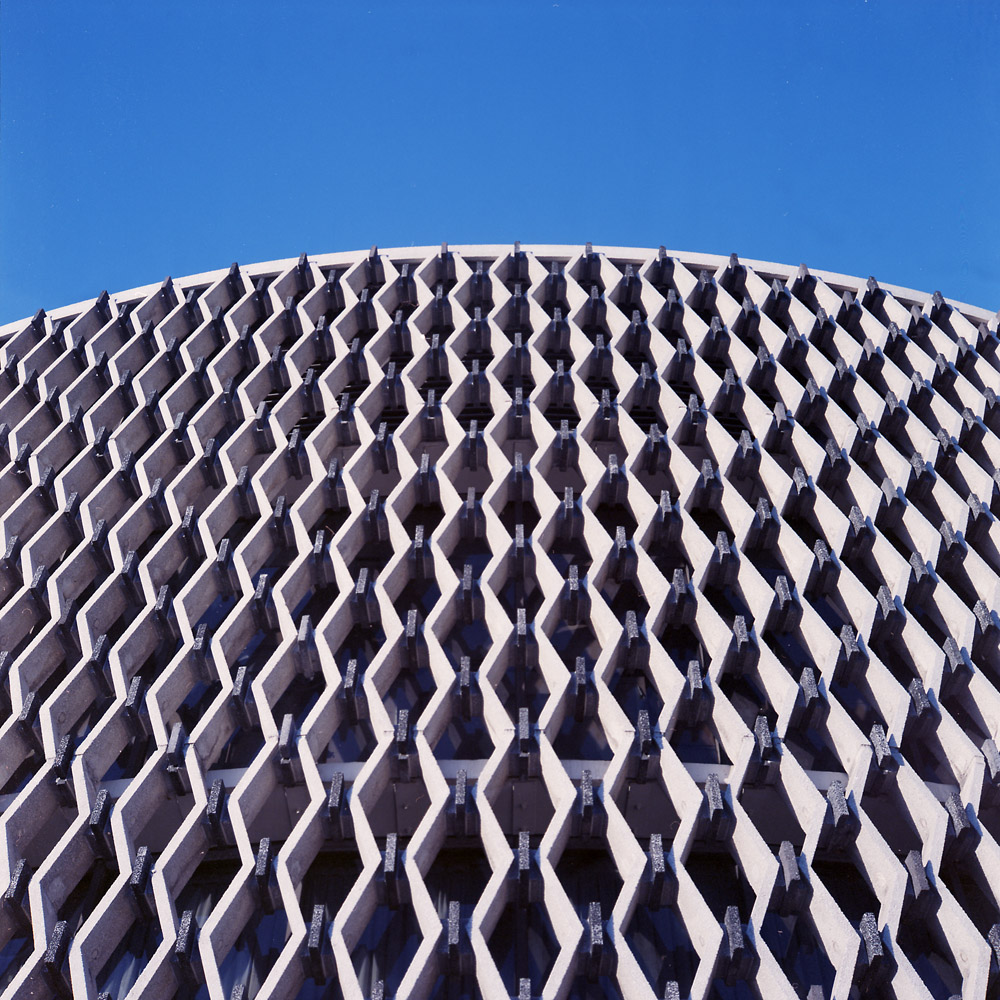
I love the dramatic contrast between the clear, textureless blue sky and the geometric dynamism of the brick latticework over the building facade.
Looking down on the platform from the top of the escalator feels like you’re about to plunge over a precipice into an unknown below – will it be a deep pool, or full of jagged rocks? Will there be minnows, or will there be sharks?
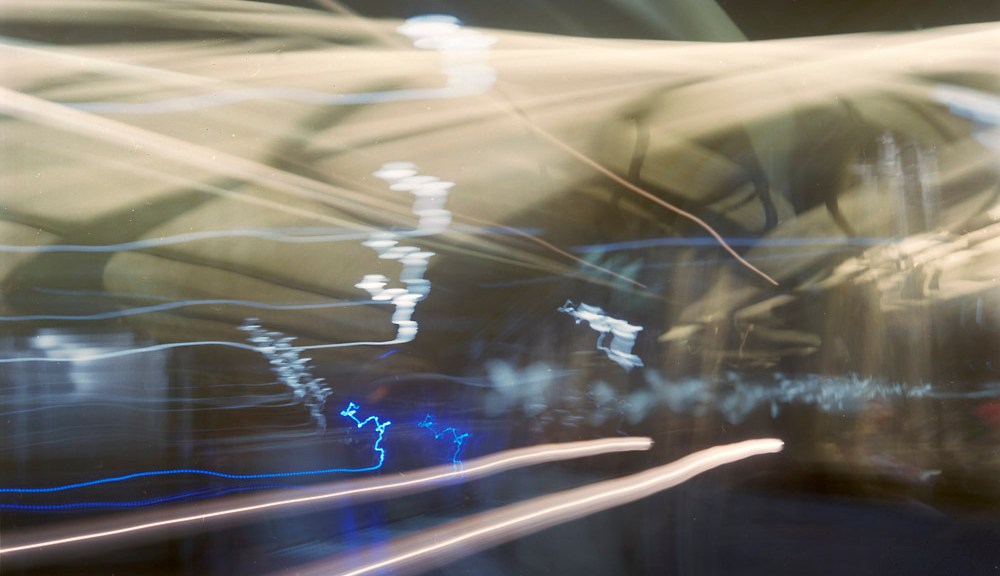
Perhaps the most interpretive, impressionistic image of my commuter diary so far. Another long exposure where I panned the camera along with the train as it pulled in to the station. The panning along with the motion blur and the different lengths of time moving vs still give a uniquely layered image that requires you to engage and investigate to understand. I’m getting more and more intrigued by this style of exposure – the truly non-literal photograph.
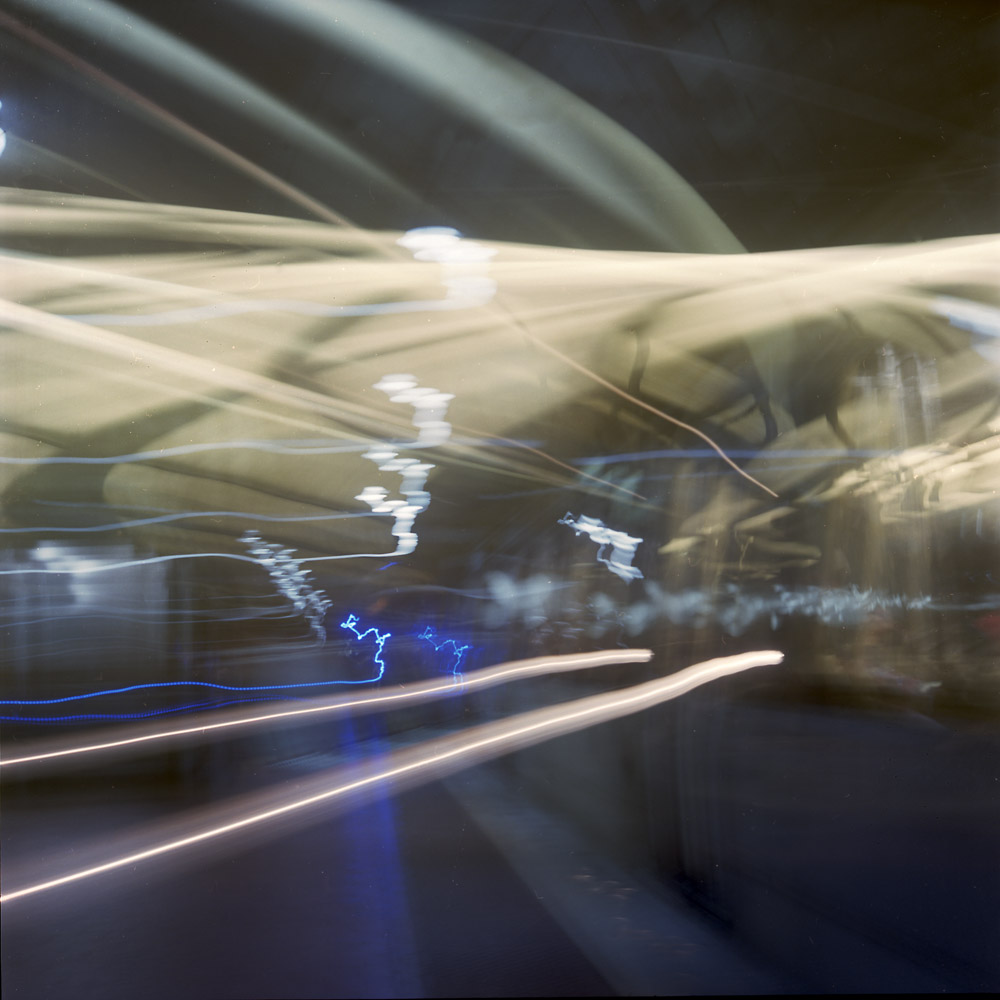
Riding the down escalator with the shutter held open leaves nothing constant except the passenger in front of me. The changing perspective of the descending escalator puts the station entrance above where you would expect it to be.
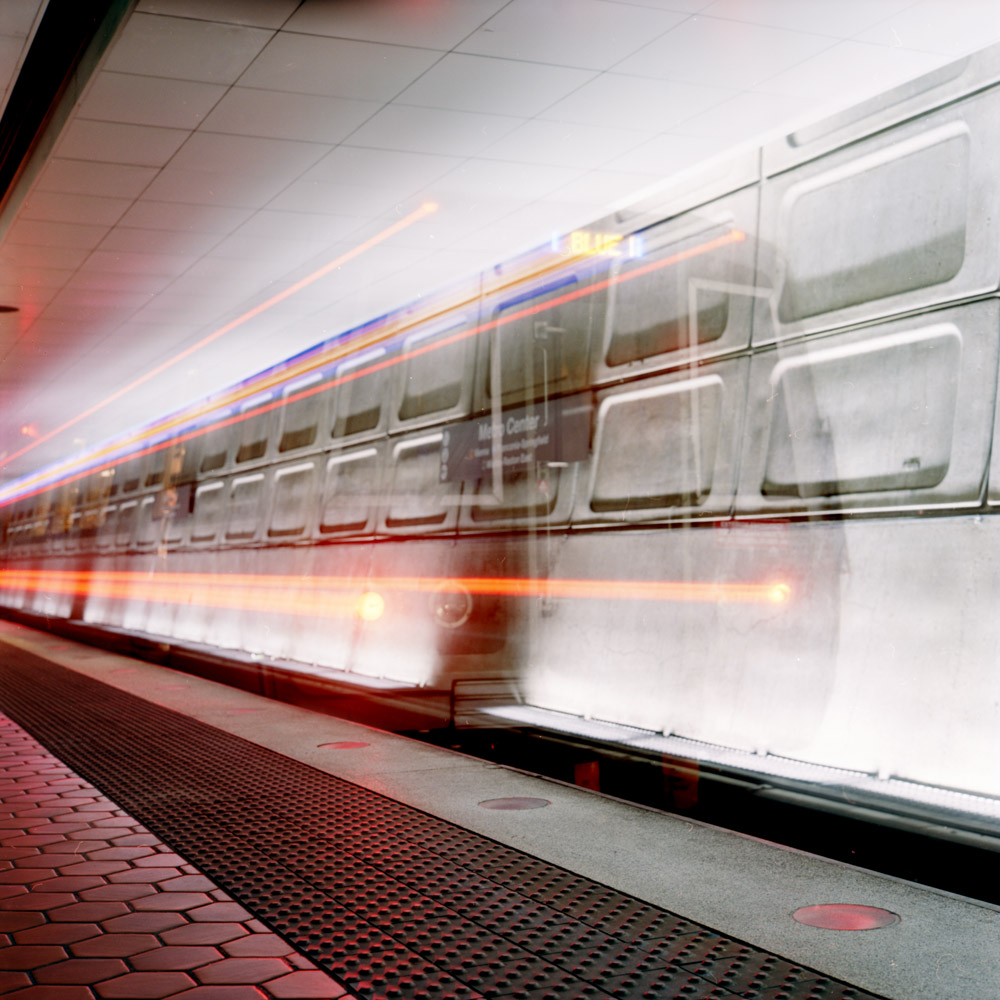
a far more literal, sharp, precise image of a departing train. This is the first image in this series I’ve done with a tripod, because I wanted to catch the back of the train with some clarity before it departed. I’ll try it again later handheld and see which I like more. This has its charms even with the sharpness because the lights moving in a straight line are in some ways more forceful and direct.
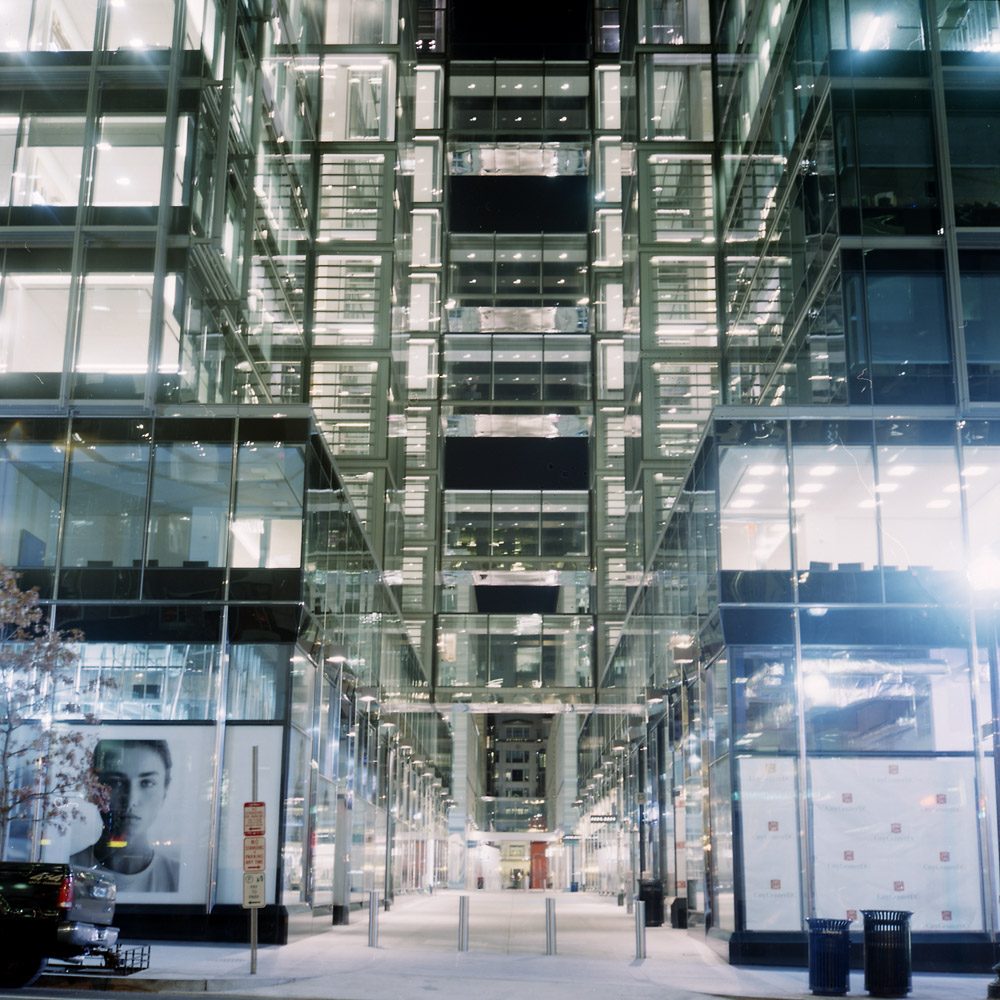
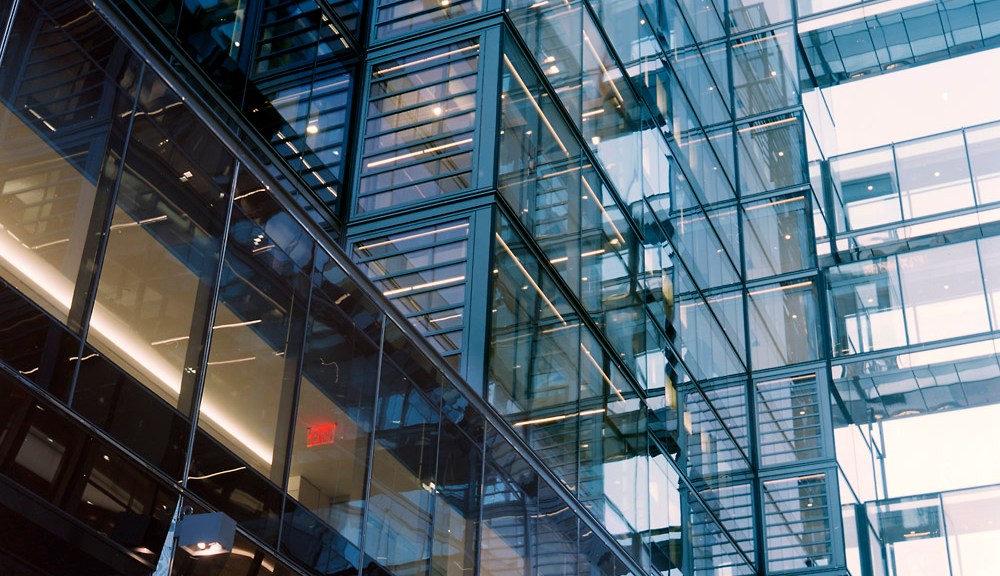
this is a brand new office/retail/residential complex here in DC. I pass it all the time on my way to and from work, social outings and various and sundry obligations. I’ve seen it in all kinds of light, at different times of day. I particularly like watching it come to life as the sun goes down.
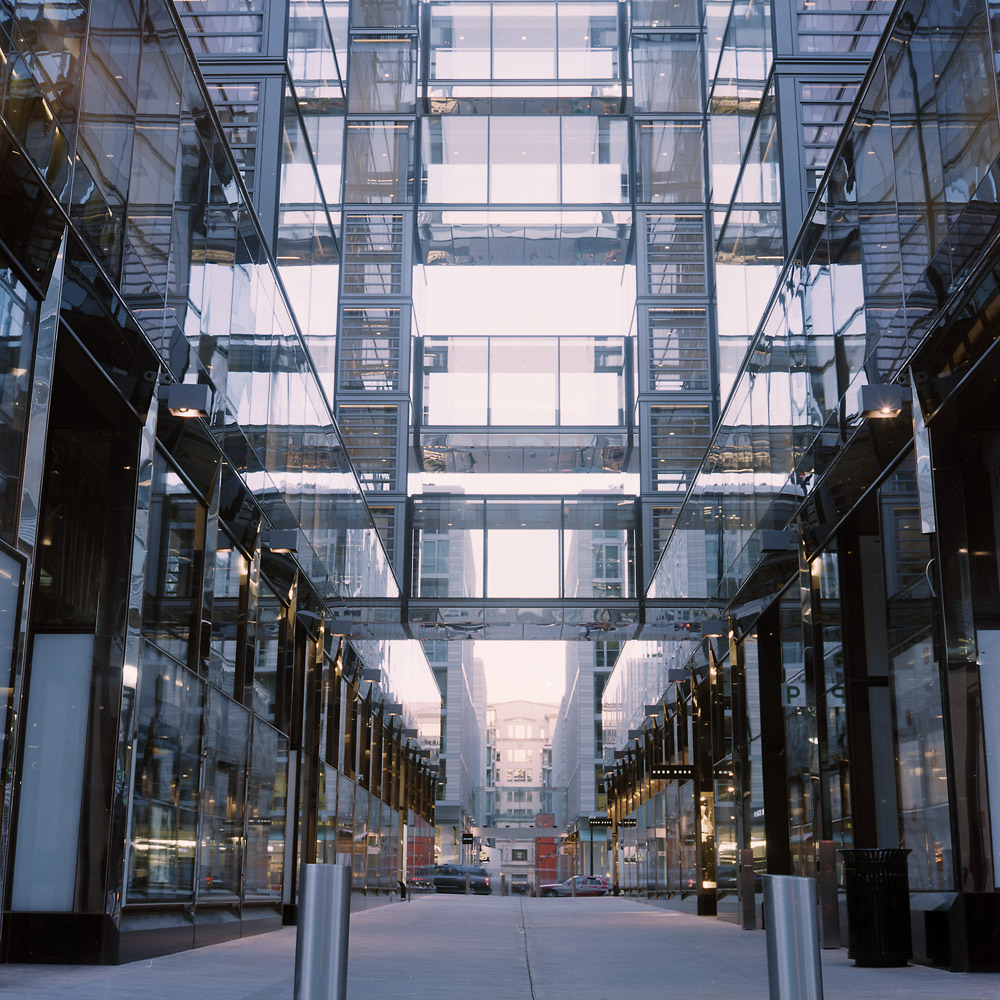
The color changes as the sun goes down and the lights go on. At any time, the abstract geometry of the place makes it highly clinical, but the mood shifts. It actually looks more alive at night.
A different take on abstracting the geometry of the space. The glowing red exit sign adds a tiny touch of humanity in what could otherwise look like a set from Tron, the movie about a virtual world inside a computer. 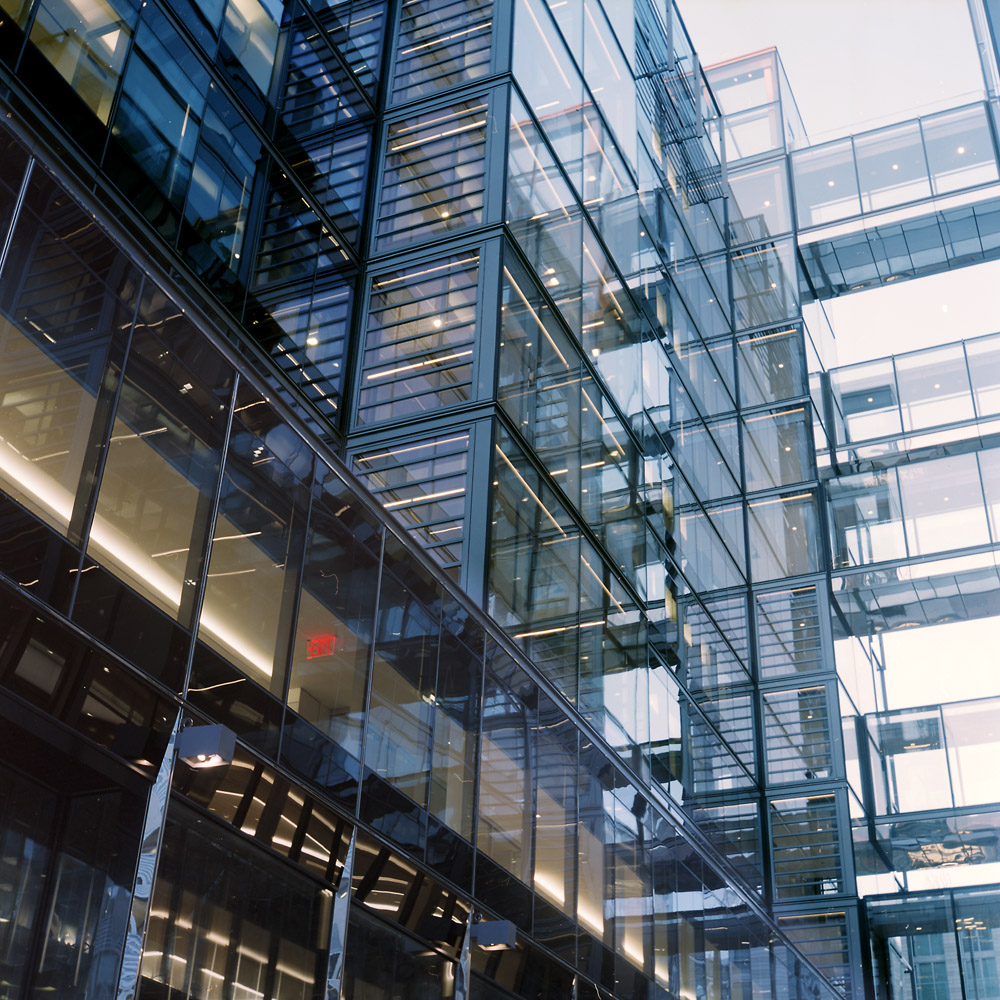

 dcphotoartist