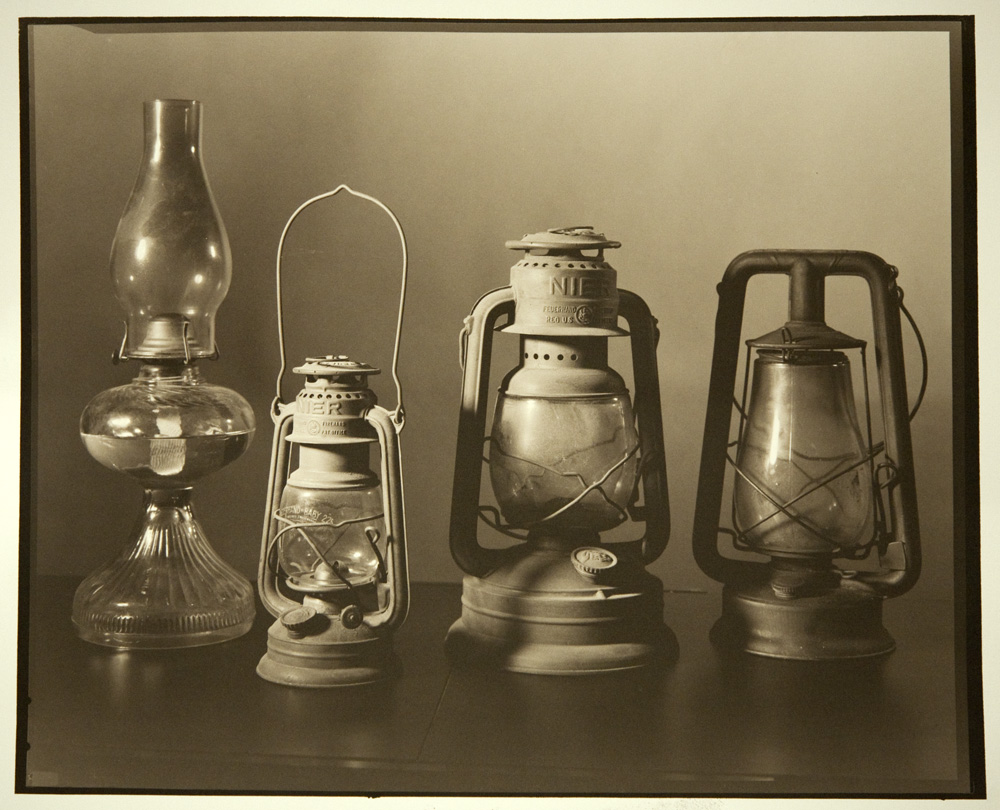
One of my 14×17 still life shots. Printed in palladium. Making a palladium print (or any hand-coated emulsion) this large presents unique challenges – trying to coat something this big is a lot harder to get even because it’s such a large surface. You have to work with a much bigger brush, and make sure you keep the emulsion moving around quickly. Don’t be afraid of getting sloppy outside your margins – it’s more important to be evenly coated than it is to be precise and tidy. I printed this on Bergger COT320, a 320 gsm uncoated paper designed specifically for alternative process photo printing. It’s a beautiful, heavy-weight paper with great wet strength and a bright white base – it gives you easily another full stop of contrast range over a more warm white/eggshell paper.
I just needed to put in a good plug for this book. It’s what I learned gum printing from, and contains some very useful information on other alt processes. The book is “A Non-Silver Manual: Cyanotype, Vandyke Brown, Palladium & Gum Bichromate with instructions for making light-resists including pinhole photography”. It was available for sale for many years in a soft-cover spiral bound edition directly from the author, Sarah Van Keuren. Mrs. Van Keuren has decided that she no longer wants to maintain the book and deal with the printing and shipping, so she is making it available chapter by chapter for free to download on www.alternativephotography.com If you want a hard copy, you can contact the publisher of AlternativePhotography.com and see about remaining stock.
Well, my experiment with pre-acidification of Rives BFK for doing palladium/platinum/Ziatypes was a success. I got a flawless Ziatype over which I will now try several gum layers. My pre-acidification consisted of a 5 minute bath in 5% Oxalic Acid. I sized the paper AFTER the acidification bath. Image to follow.
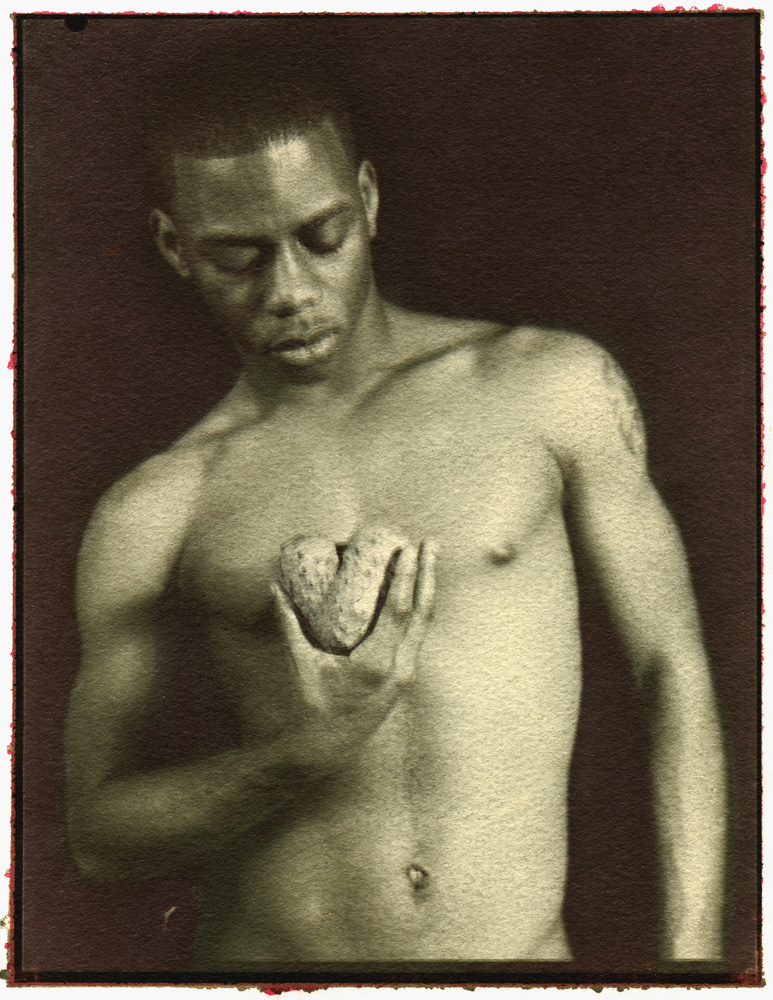
Here is the image with the first two layers of gum over Ziatype. Colors are Alizarin Crimson and Sepia. I’m planning on doing at least two more layers, probably another sepia or burnt Sienna and then another red, maybe something deeper red.Heart In Hand
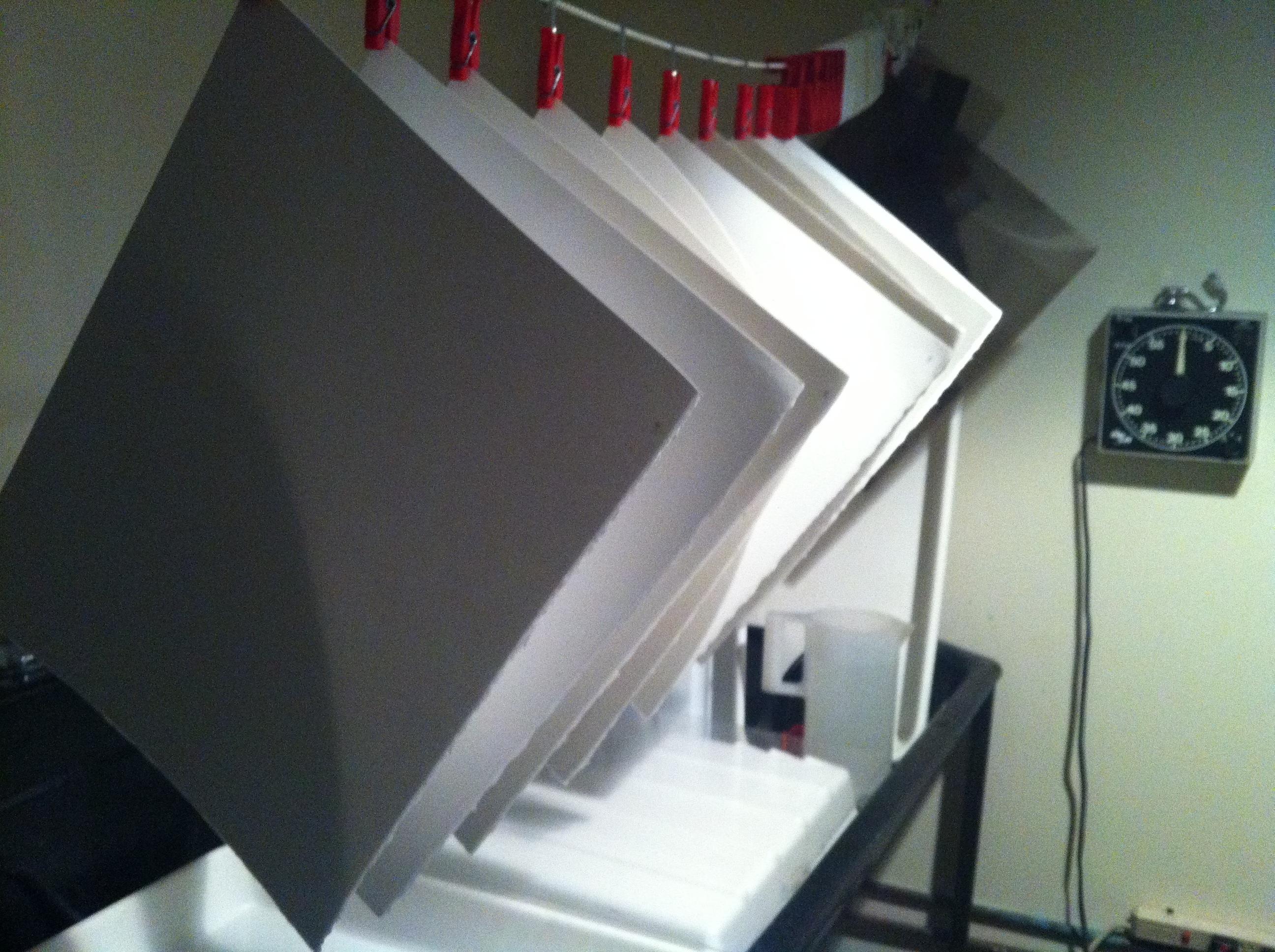
Well, today was spent prepping paper for gum and gum-over-platinum printing. I did two batches of 10 sheets of 11×15 Rives BFK. The first batch had an oxalic acid pre-bath. The last time I used Rives BFK for a platinum/palladium print, I got these funny discolored blotches, which could be attributable to paper pH, so I’m trying the acid pre-bath to see if that makes a difference. Twenty sheets doesn’t sound like a lot, until you realize that I can really only size paper in 10 sheet batches because that’s about all my clothes-drying line in my darkroom can handle. In any case, it’s enough to get me printing for a few weekends, so I won’t have to do it again for a while. It’s a necessary evil in the gum printing process, because without it your gum image would dissolve off the paper in the development step.
Here’s my darkroom sink with ten sheets of sized paper hanging up to dry: Freshly sized paper, hanging to dry
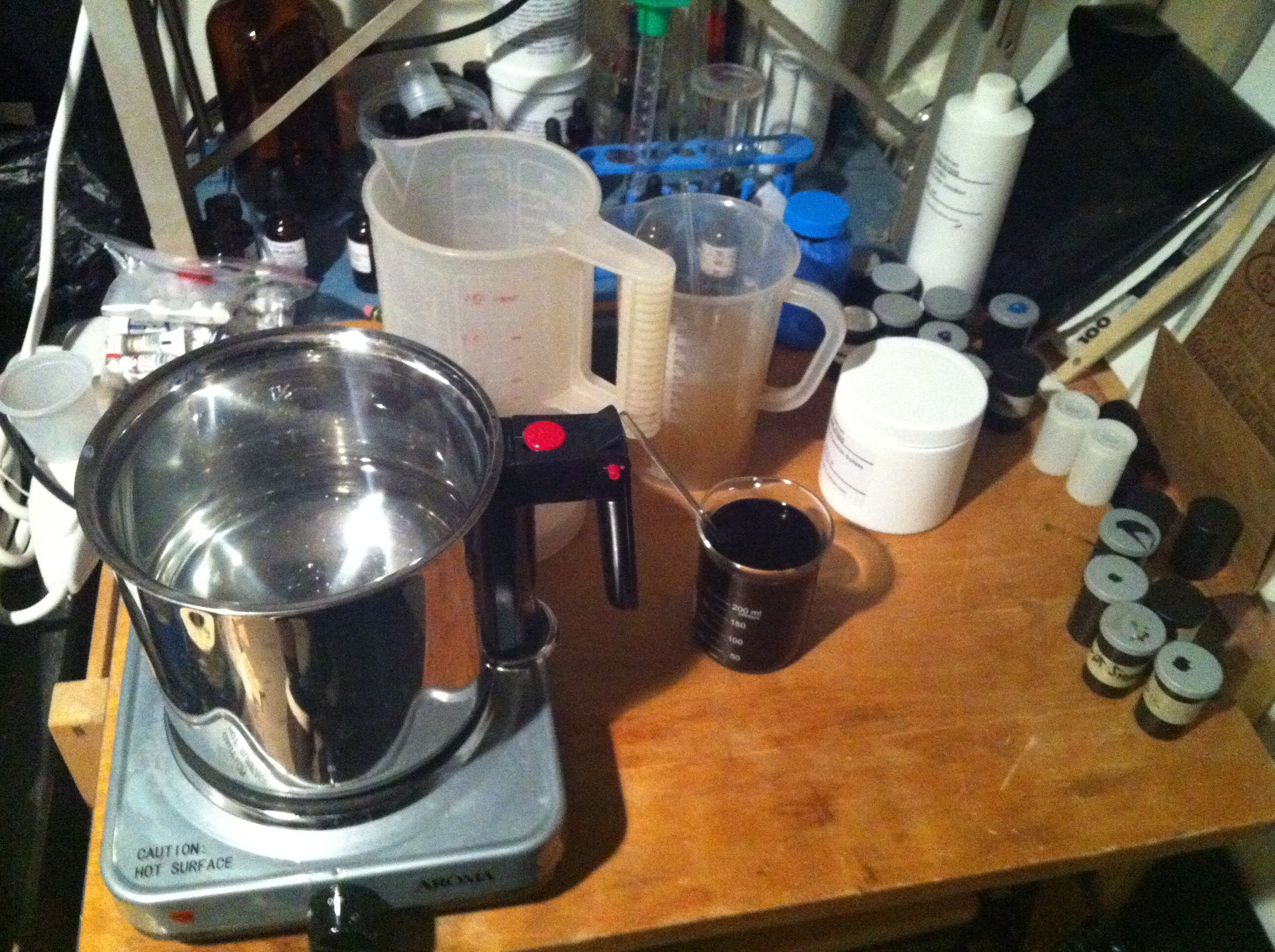
Sizing is an interesting creature – basically it’s Knox unflavored gelatin with a hardening agent added. To make it, you put a box of four 7 gram packets in 300 cc’s of cold distilled water, let the gelatin bloom for 30 minutes give or take, then mix the bloomed solution with enough water to bring it to 1 liter. Place this new solution in a water bath and heat until the gelatin solution reaches 140 degrees Farenheit. Add your hardener, mix, then you’re ready to coat. I have a bain marie pot that I use on a hotplate for heating the gelatin so it doesn’t scorch, and I can do it in my darkroom instead of on the kitchen sink.
Here’s a shot of my sizing mixing setup- Sizing prep station
Sizing needs a hardening agent to help it stand up to repeated soakings in water. Hardeners are all something other than pleasant chemicals – typical hardeners are Chrome alum, Glyoxal and Formaldehyde (Formalin), in ascending order of toxicity. This time I decided to give the chrome alum a try because it doesn’t off-gas, has minimal effects from exposure, and requires the least safety gear for handling (latex gloves are sufficient). I had been using Glyoxal before, which requires good ventilation. My darkroom has minimal ventilation, and at this time of year, fresh air comes with a massive temperature penalty. Formalin pretty much HAS to be used outdoors, so that’s not happening either.
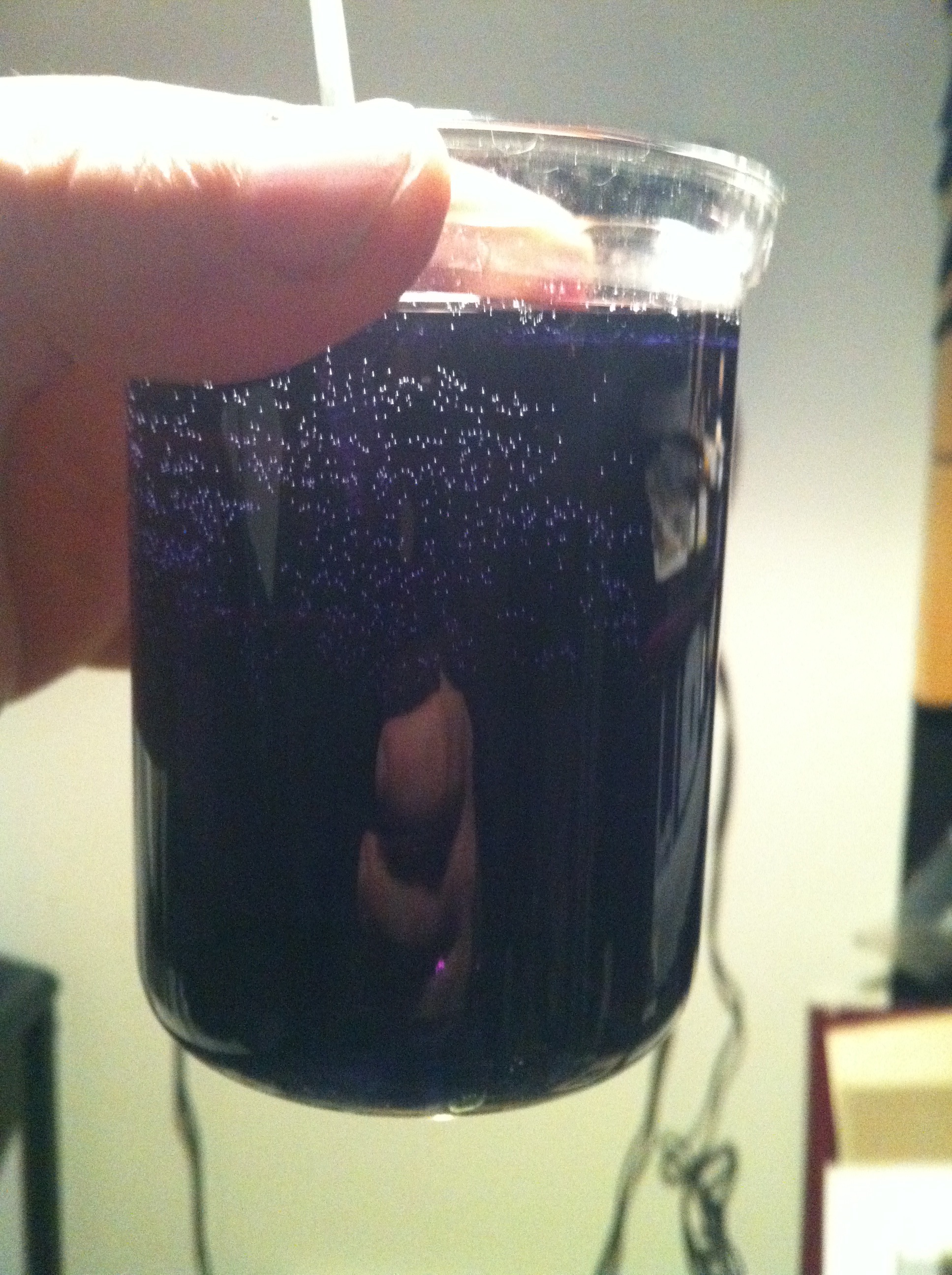
Here’s my Chrome Alum, 5% mix- Chrome Alum
Isn’t it a lovely purple color? Don’t mistake it for grape Kool-Aid though…
I got a new batch of 100 sheets of Rives BFK from my favorite supplier, Bostick & Sullivan, today. I’ll be having a sizing marathon this weekend getting all that paper ready for gum printing. I’ve not tried a lot of other papers yet, to keep the variables down, but I’ve been quite happy with the Rives BFK so far. It’s a 90# watercolor paper with good wet strength, and I’ve been able to coat up to five layers so far without having to re-size. After I get through this lot, I’ll have to try the Lana Aquarelle I have sitting around. I’m also going to try using an alum-based hardener in the sizing instead of glyoxal because it’s not exactly practical to try and size paper outdoors in this weather, and my basement darkroom doesn’t have good ventilation.
 dcphotoartist