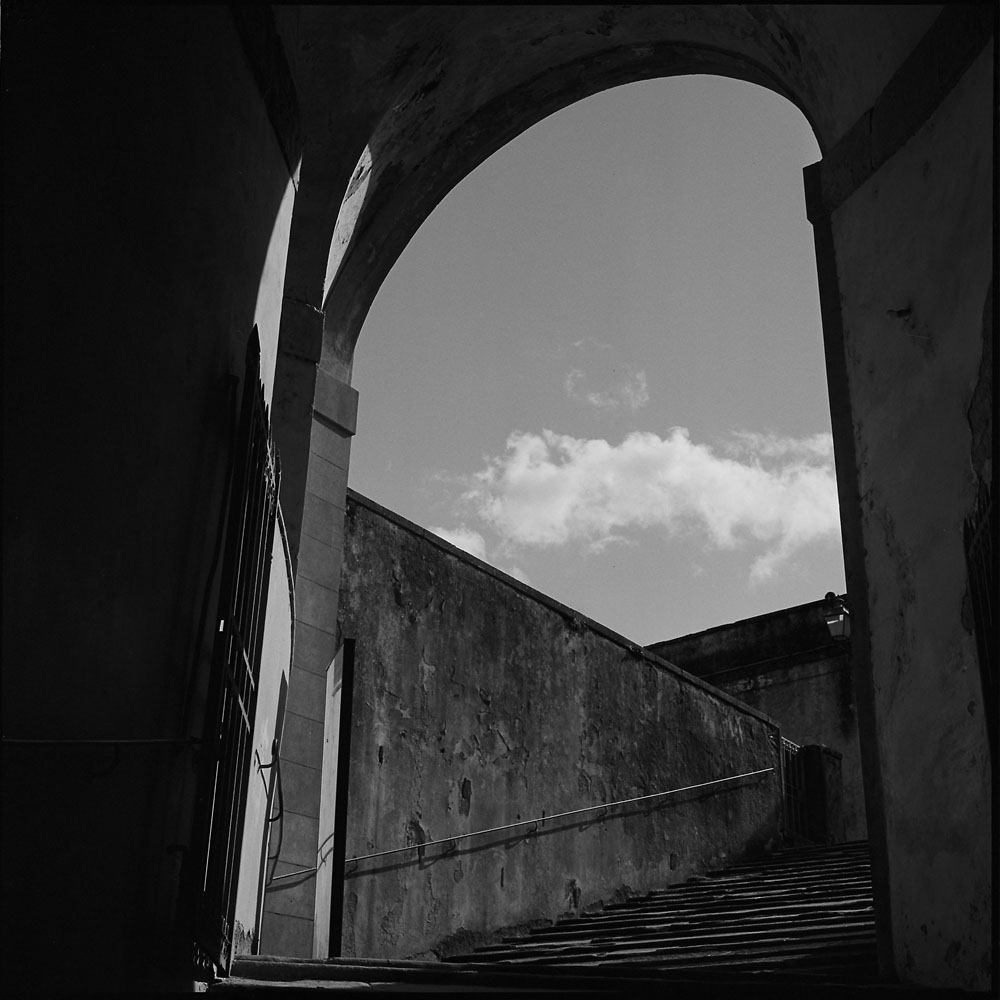
The stairs from the Palazzo Pitti courtyard to the Boboli Gardens pass through this upswept curving space, creating a rather dramatic view of the sky:
Stairs To Boboli Gardens
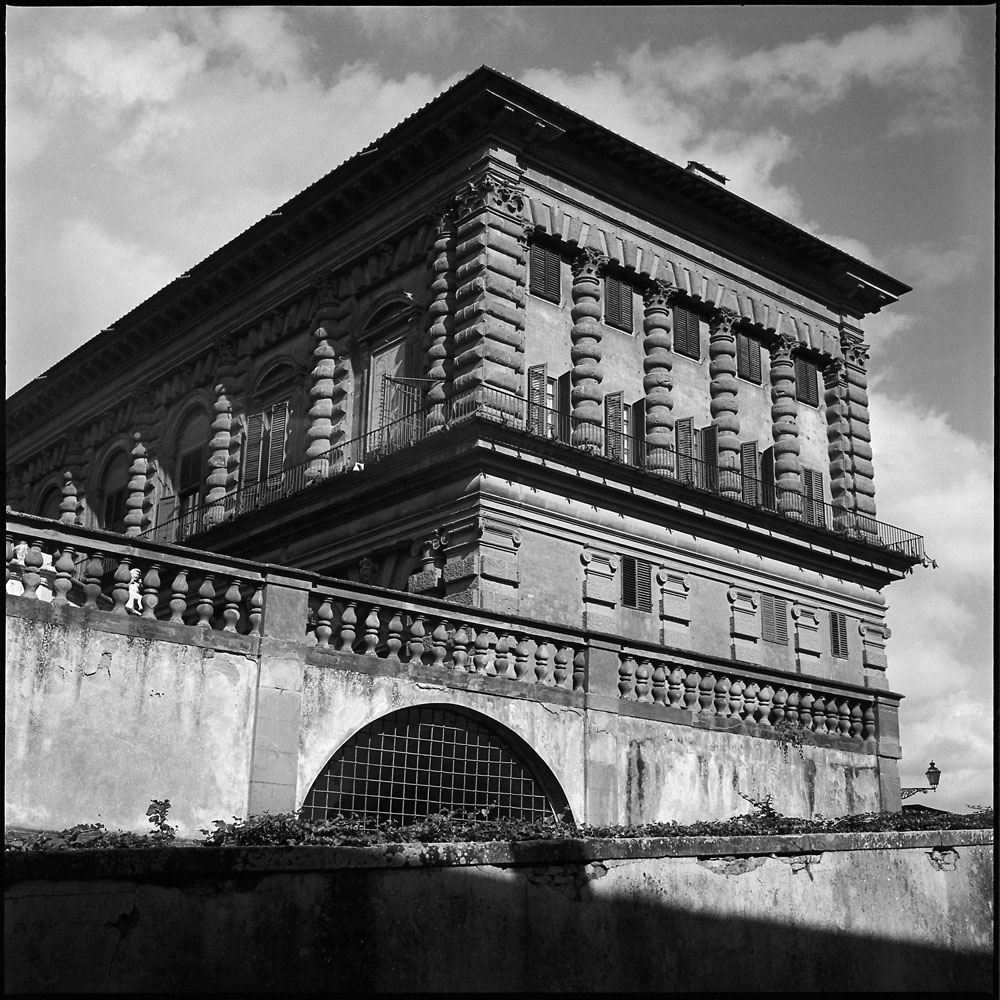
This is the Medici residence wing of the Palazzo Pitti, where the Grand Duke and Duchess had their suites, and Napoleon’s bathtub can be found.
Medici Residence Wing, Palazzo Pitti
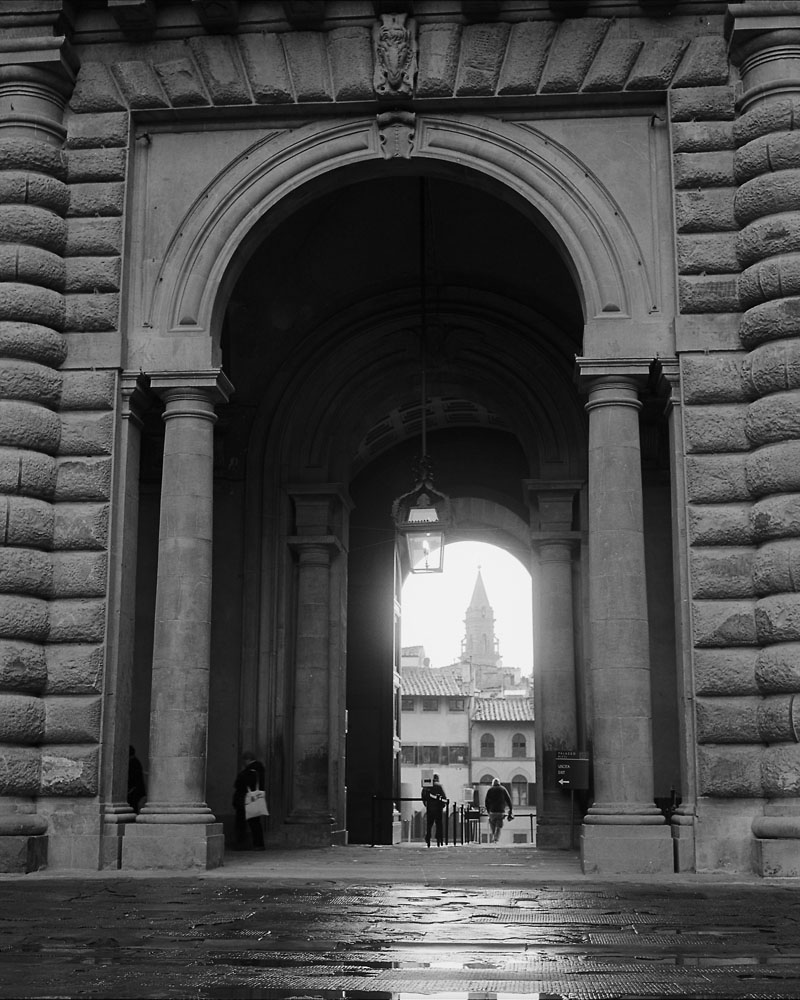
This is a view from the courtyard of the Palazzo Pitti out the main entrance. The bell tower in the distance belongs to Santo Spirito, a church with an ornate interior designed by Brunelleschi, the man who created the dome of the Duomo.
Entrance, Palazzo Pitti in the Rain
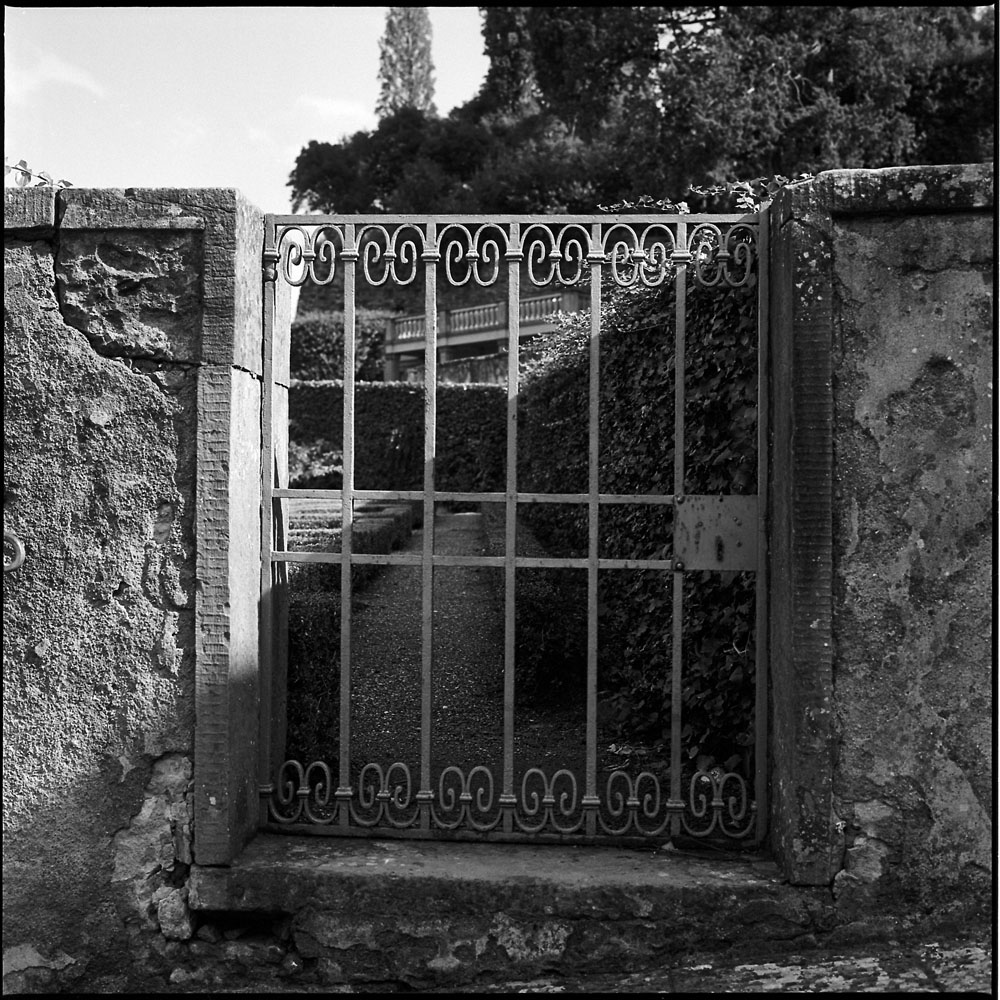
A wrought-iron gate in the Boboli Gardens.
Garden Gate, Boboli Gardens
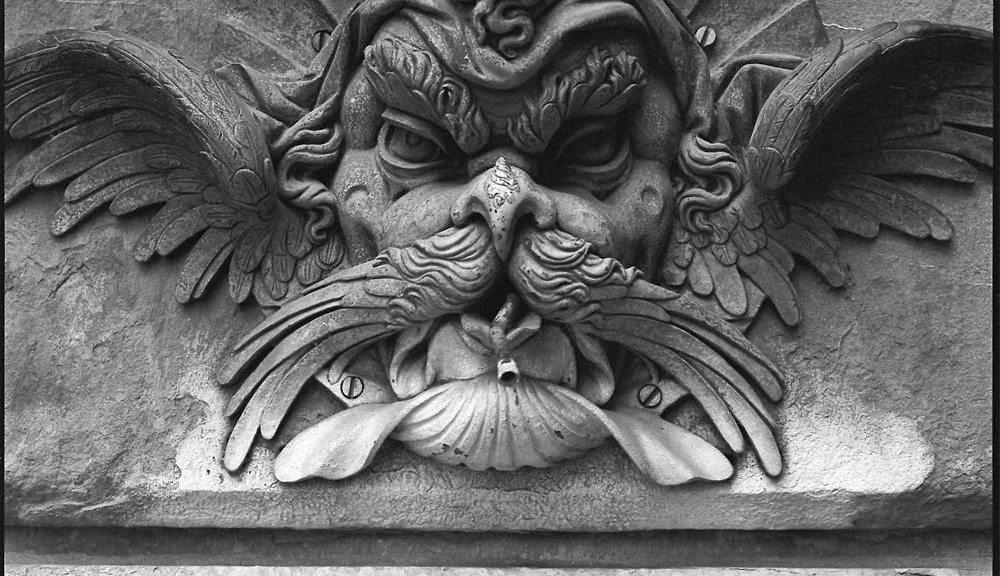
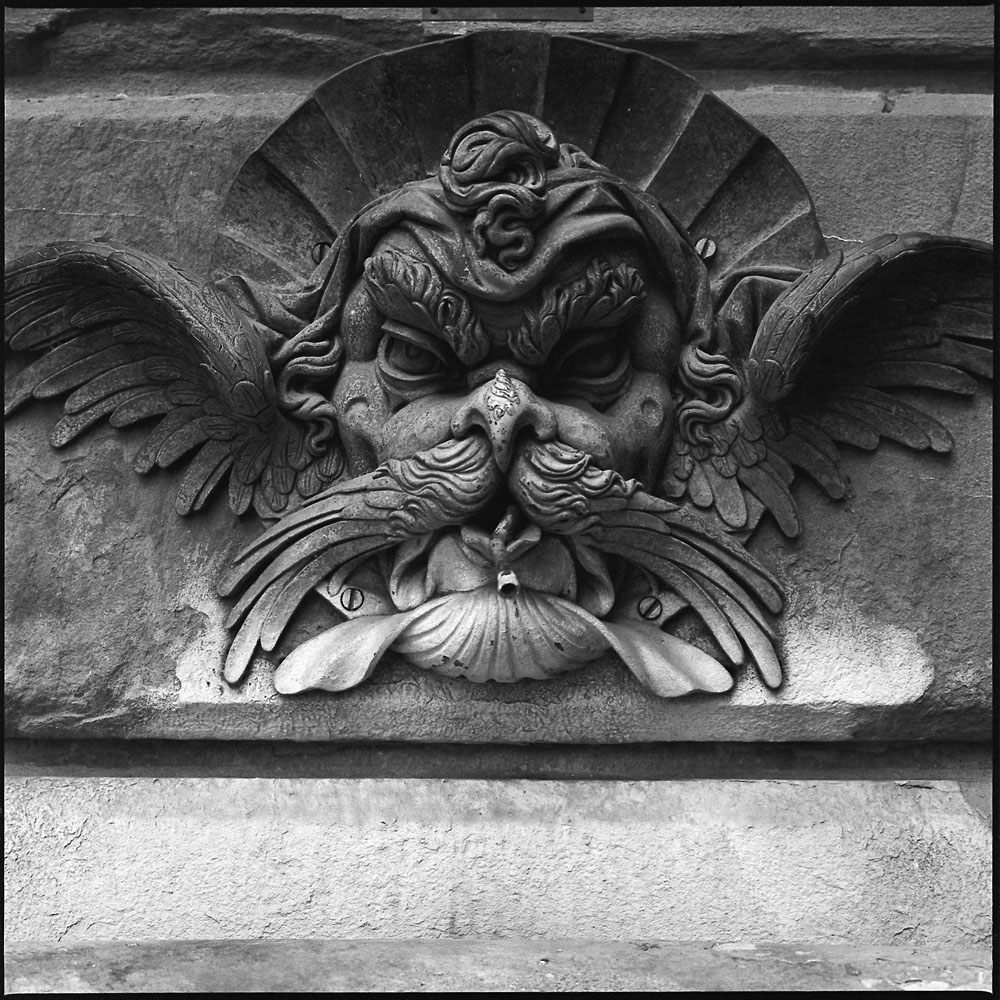
This fountainhead is found in the courtyard to the Palazzo Pitti. And no, Ayn Rand had nothing to do with it.
Fountainhead, Palazzo Pitti
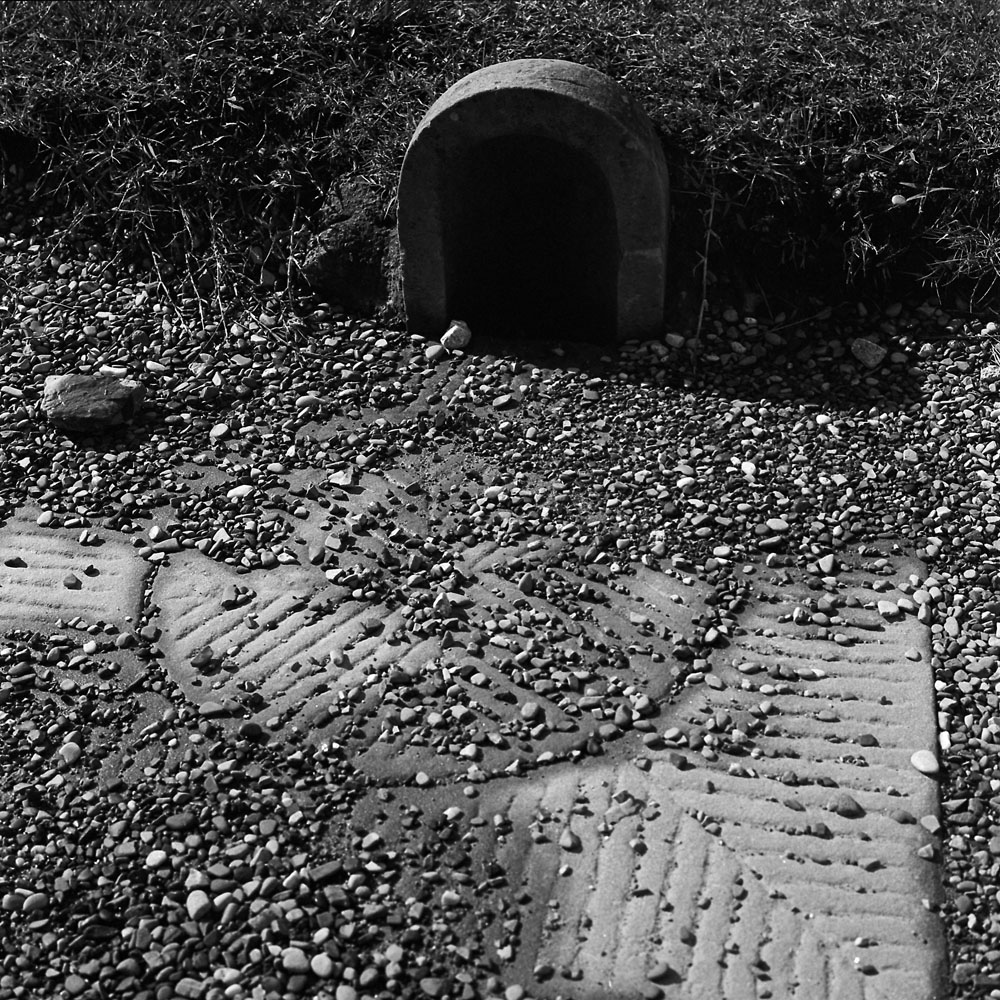
As you’re probably aware if you read this blog with any frequency, I’m fascinated by ordinary objects that we tend to ignore. So I couldn’t pass up the opportunity to capture a Renaissance storm drain cover and inlet in the Boboli Gardens, along one of the gravel paths ascending from the amphitheater to the Neptune fountain.
Drain Cover, Boboli Gardens
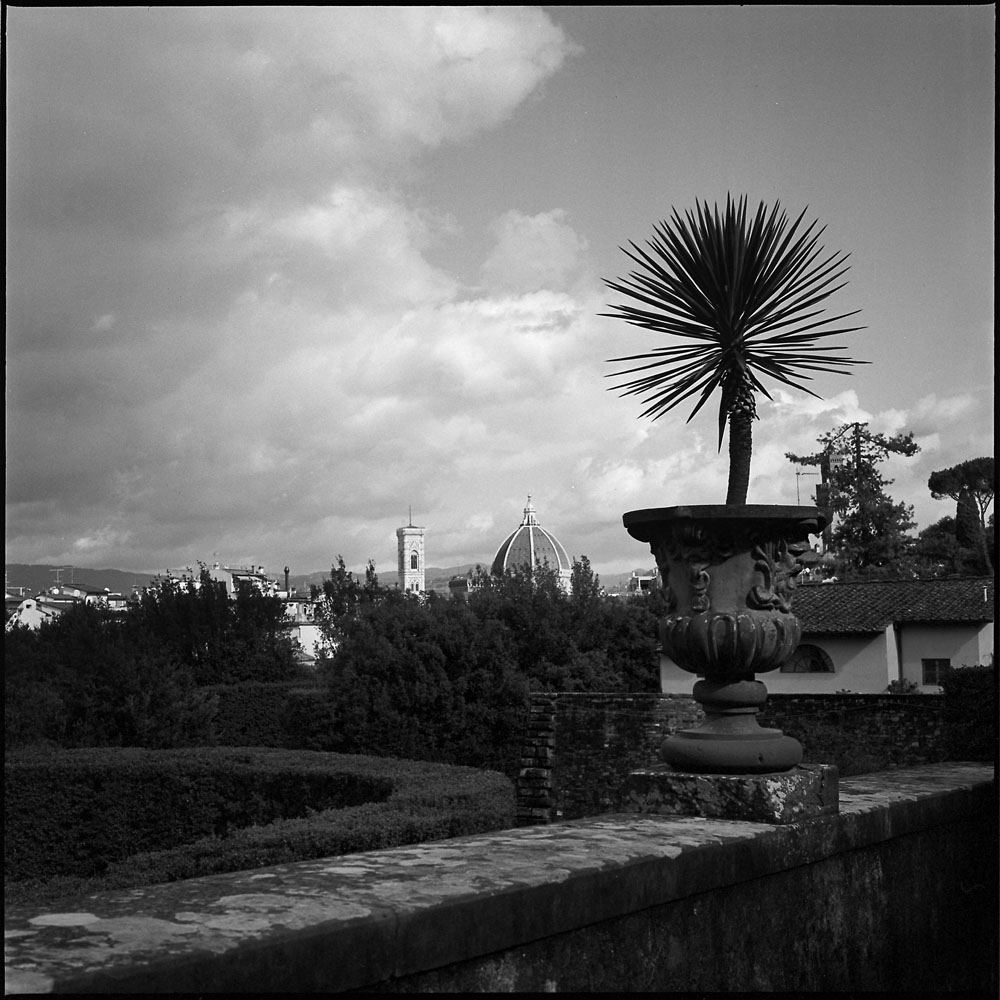
And finally a view of the Duomo from the Boboli Gardens. You don’t really realize how big the cathedral dome is and how much it dominates the landscape in and around Florence until you stand on the hill a good mile away and realize that it’s the biggest thing between you and the mountains some fifteen or more miles beyond.
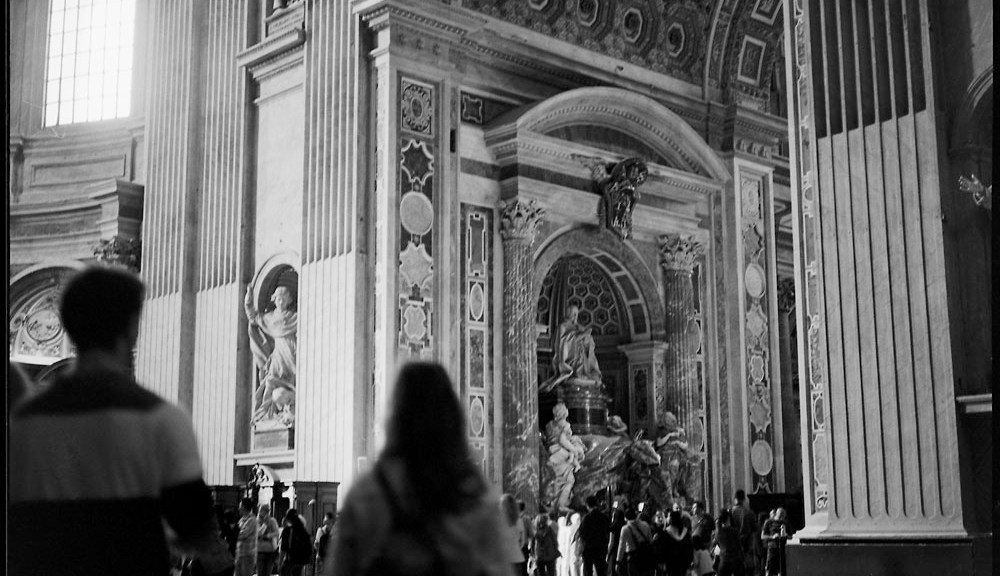
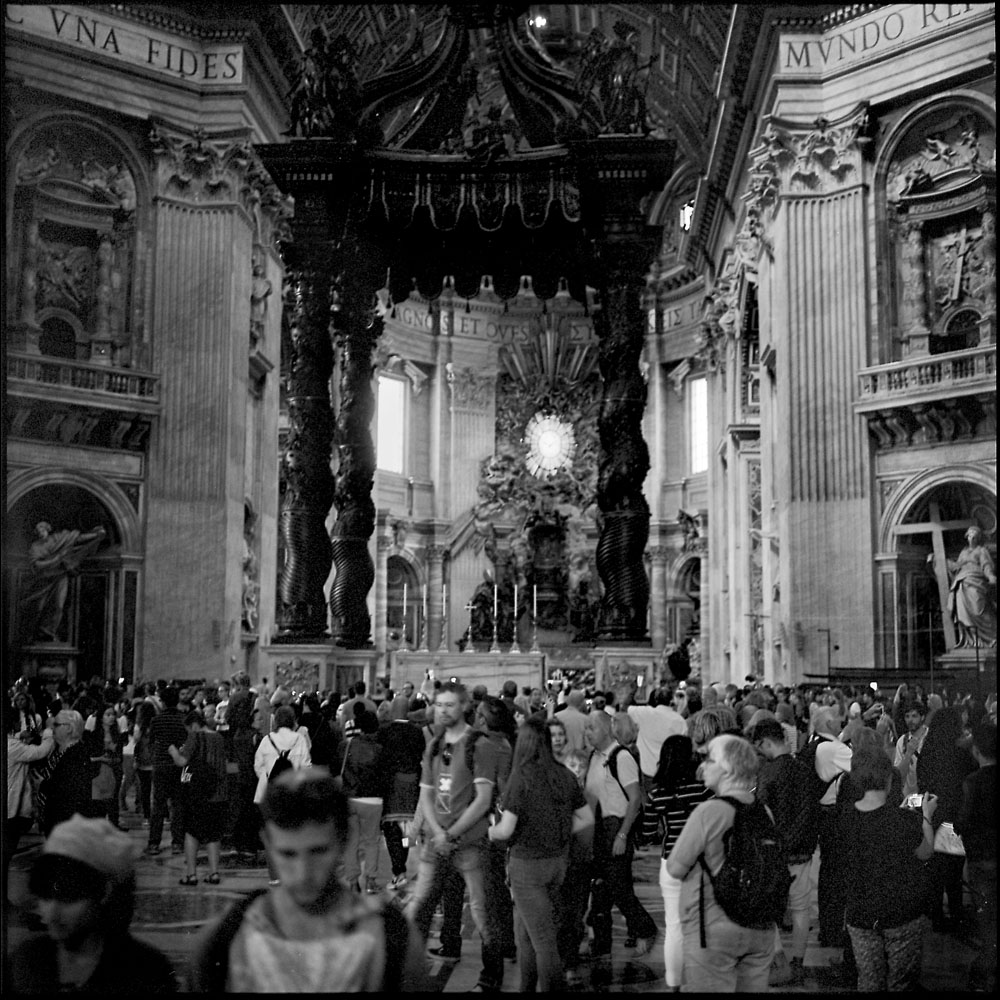
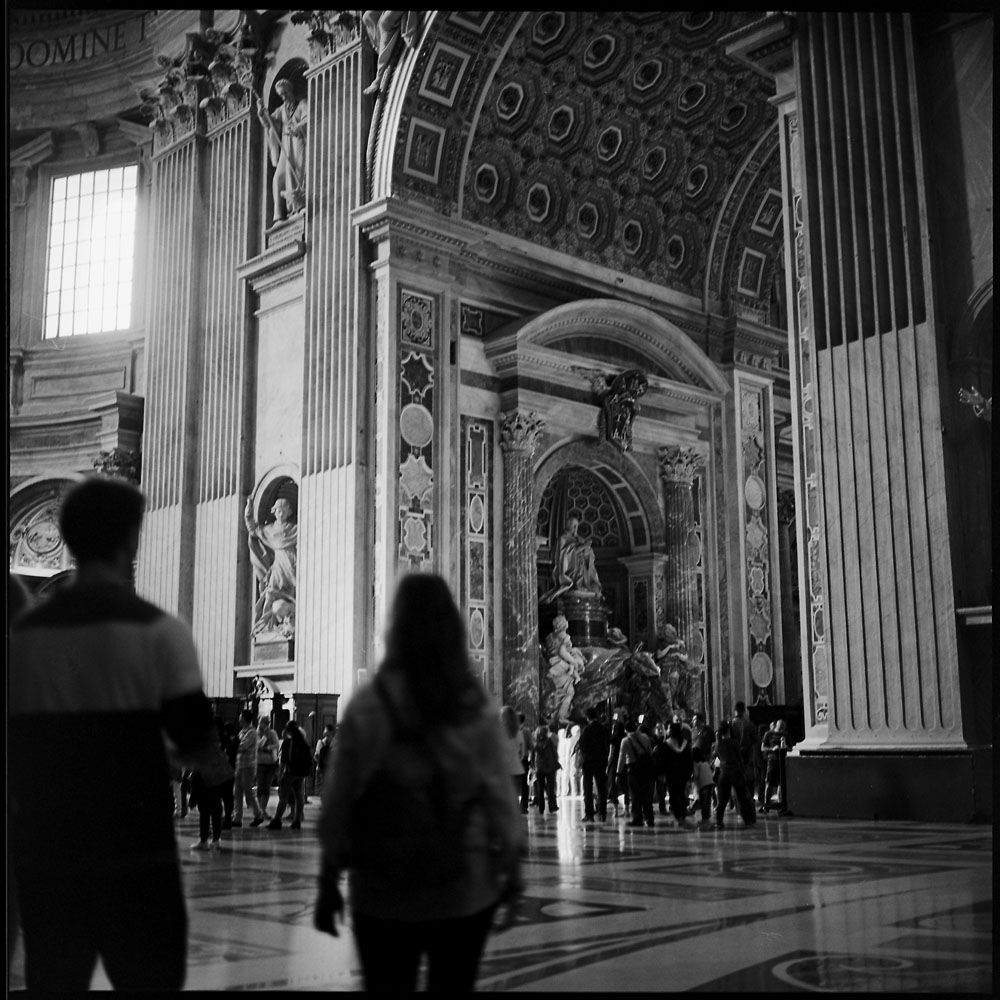
It’s so easy to be overwhelmed by St. Peter’s – the space is so vast, even when full of tourists it doesn’t shrink down.
The baldacchino over the high altar at St. Peter’s is one of the more recognizable objects. Cast from bronze allegedly taken from the roof of the Pantheon, it was designed by Bernini (remember the staircase from earlier?) and marks not only the center of the crossing under the dome, but the grave of St. Peter. While one of its alleged functions is to provide a bit of human scale to the vast space of the basilica, it is so massive that it only compresses the space if there are no people around to provide comparison.
Baldacchino
This view into the transept from the crossing with the people in the foreground I think really helps give you a sense of scale for the place.
Crossing the Nave, St. Peter’s
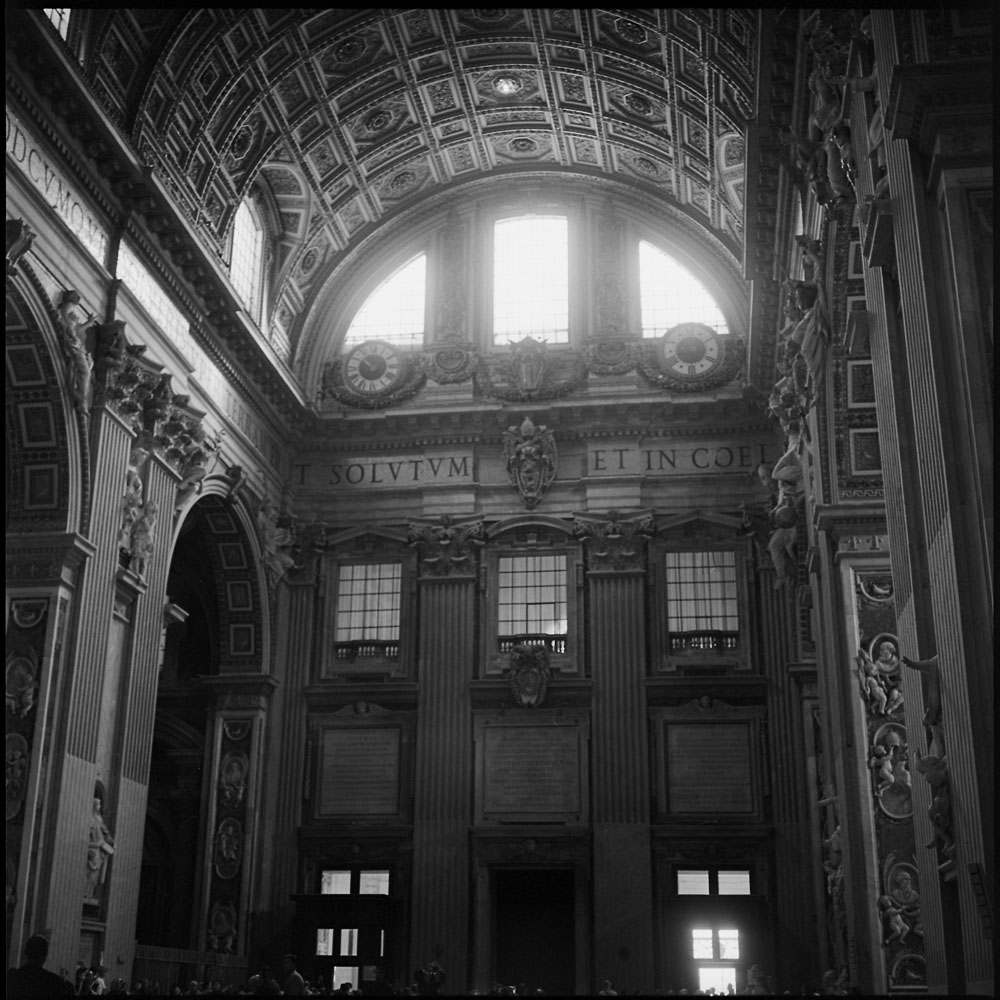
This is a view of the entrance with its two clocks, as seen from the mid-nave.
St. Peter’s Entrance, Clocks
On a separate but related note, it’s interesting how we refer to Rome and the Vatican interchangeably when we speak of the seat of the Catholic Church, when in fact they are two distinct entities. This was not always true, of course- especially during the Renaissance through the early 19th century, it was literal truth to say that Rome was the papal seat. Now, of course, the Vatican is in fact not only a separate city within the city of Rome, but in fact a separate nation, complete with its own passports. The Vatican is in fact the world’s smallest country.
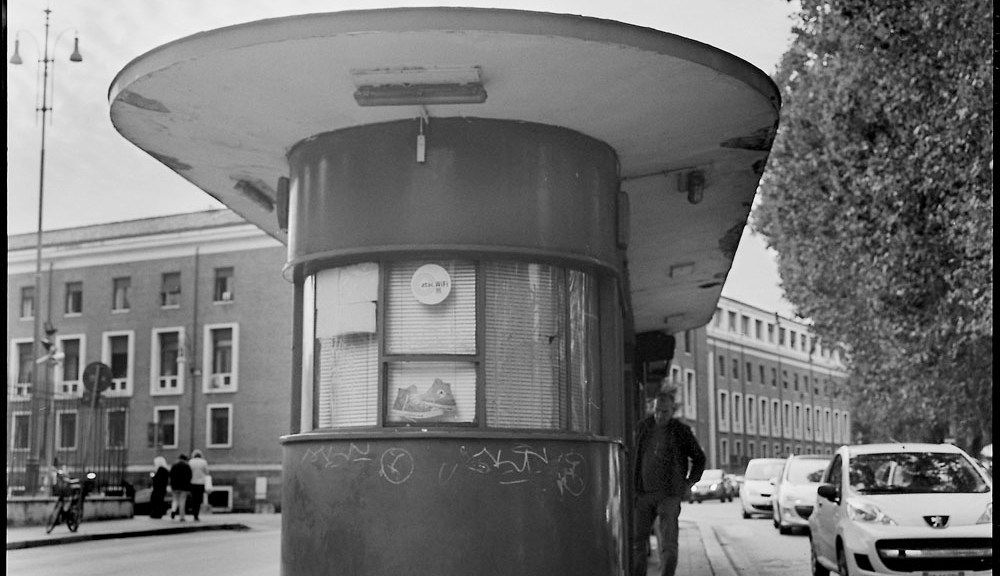
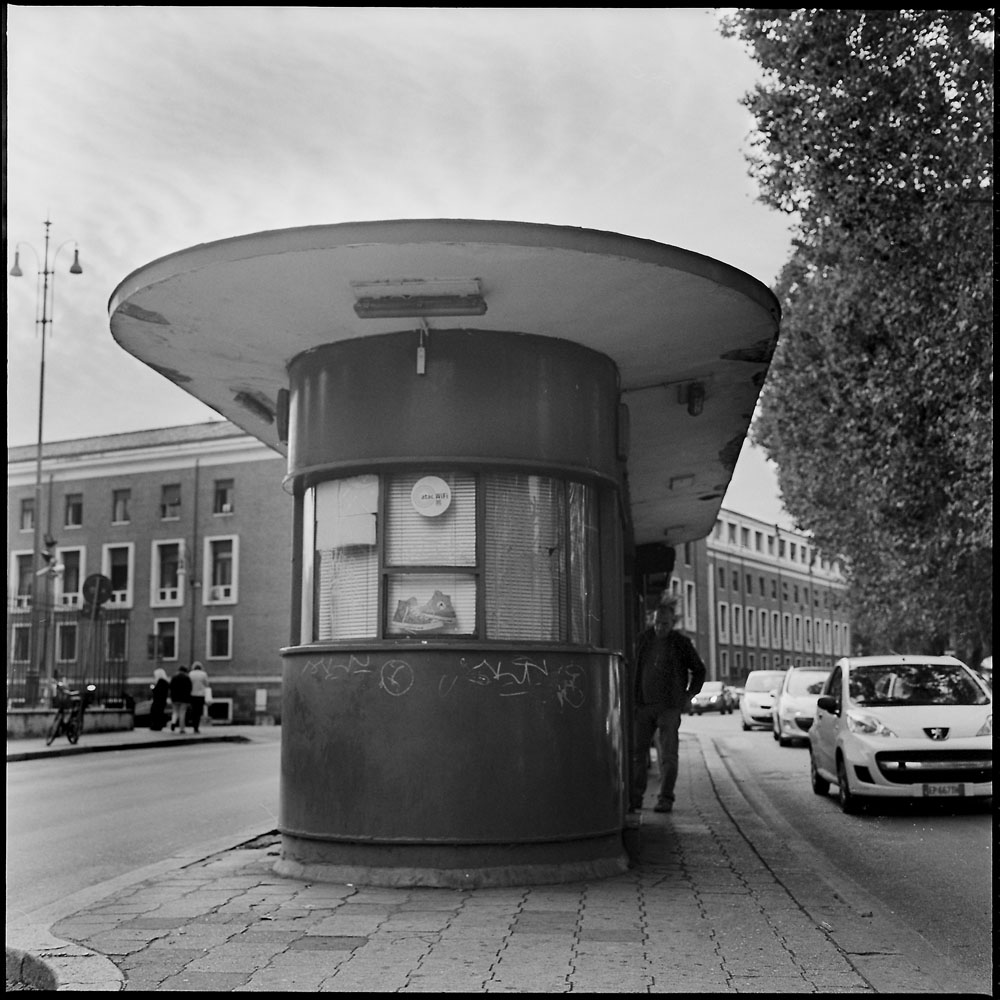
This is where I went to catch a bus to go to the Vatican Museum on my first day in Rome. It’s a vintage bus shelter, hard to date, but I’d guess post-war, maybe as late as 1950s. What you can’t see in the picture is that in the middle of the structure is a news-stand. Today it’s not so bad, but I wouldn’t want to have had to work there even as recently as the 1980s when diesel exhaust was much heavier than it is now.
Vintage Bus Shelter, Rome
That’s actually a sense-memory I kind of miss – you knew you were in Europe when you smelled the diesel exhaust everywhere. That and certain kinds of tobacco. It’s still a noxious odor, but the emotional context of it is so positive. I suppose geologists feel that way when they smell sulphur or biologists with methane.
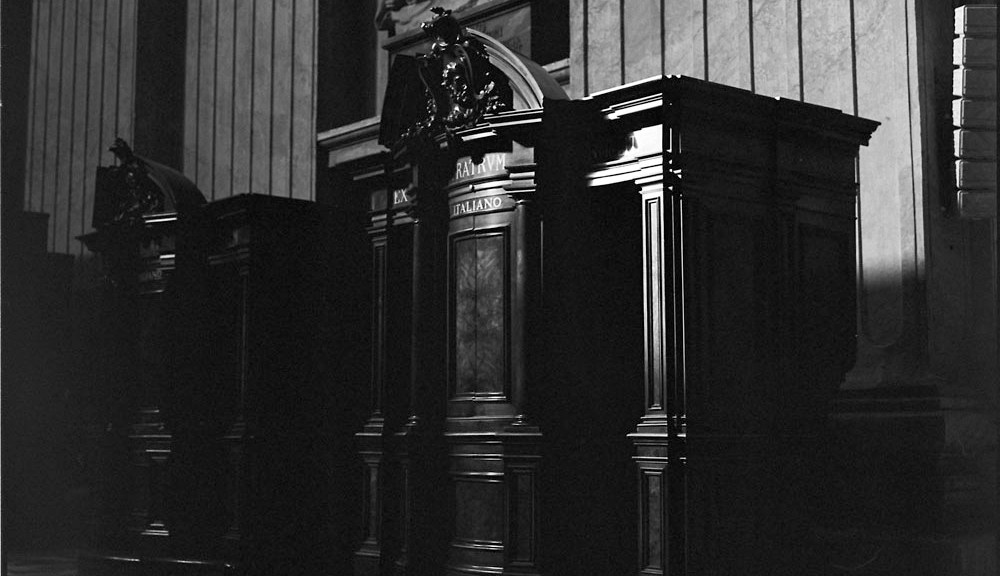
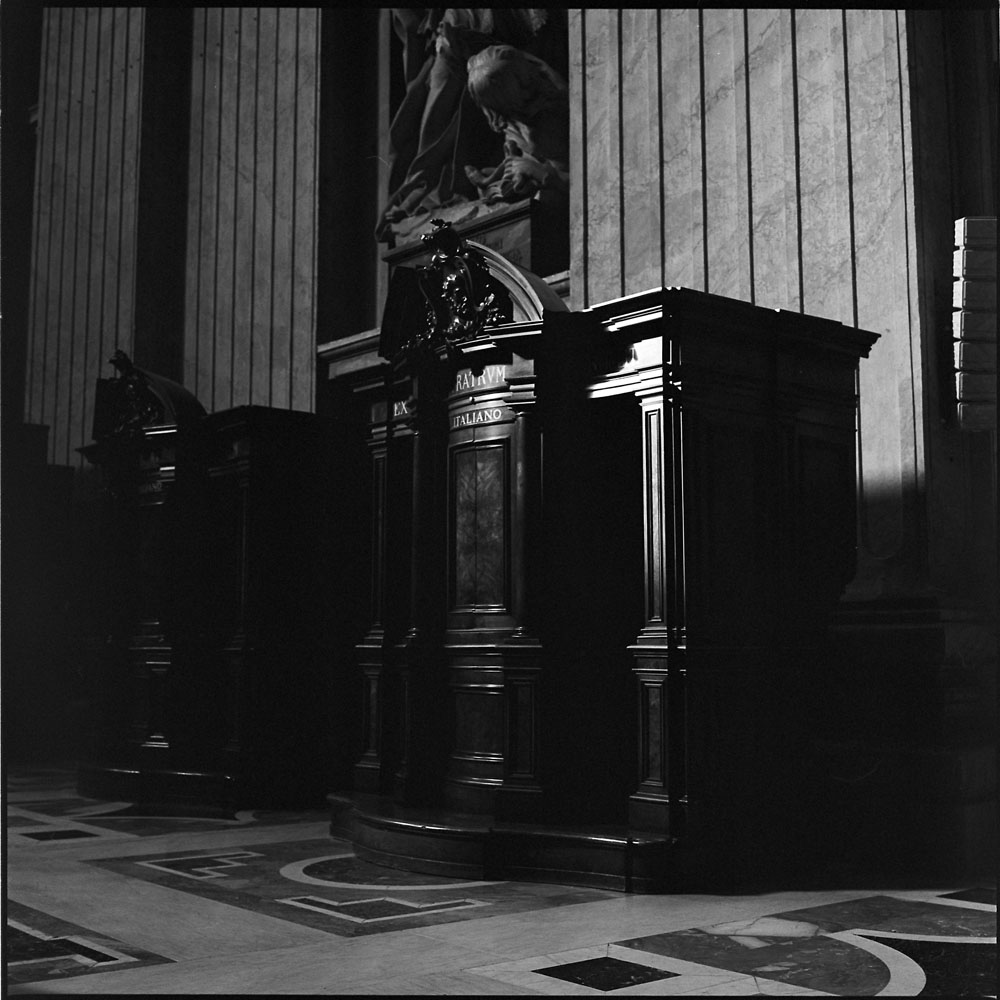
While exploring St. Peter’s basilica, I saw this amazing light falling on the confessional booths, which were in themselves magnificent pieces of furniture. Something about them feels a little ominous, though, don’t you think? Or perhaps a touch funerary.
Confessionals, St. Peters
Even though I’m not myself Catholic, I don’t know that I’d want to give confession in that confessional booth- it would feel a little bit too direct.
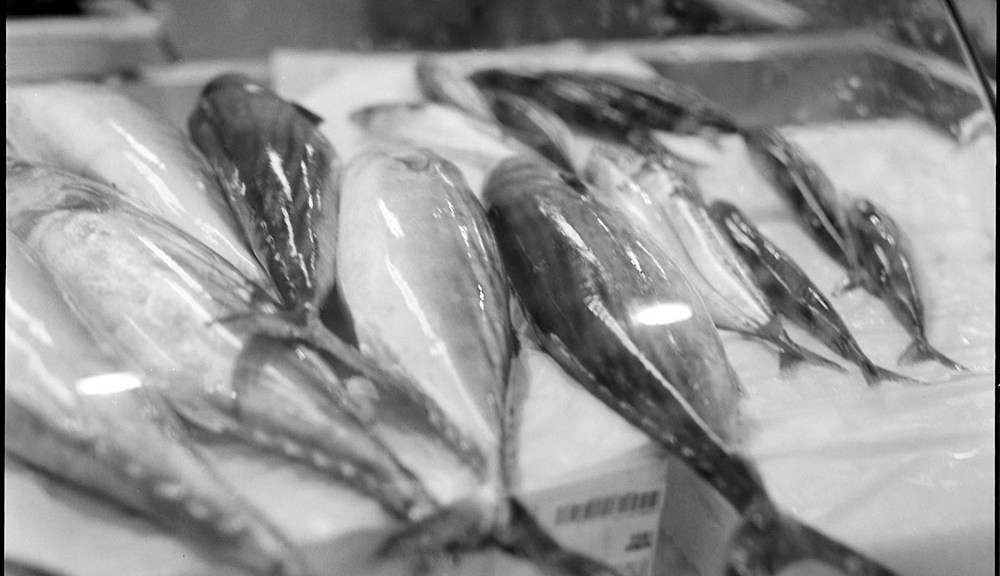
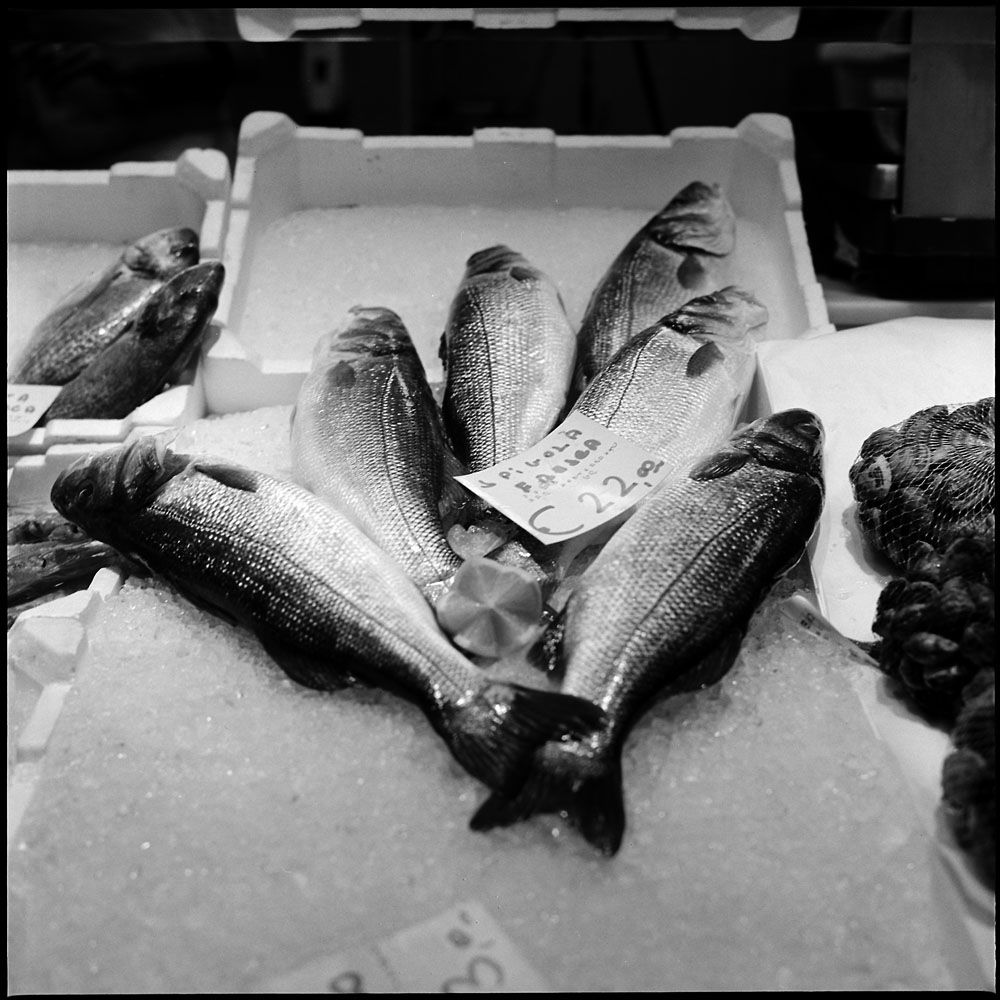
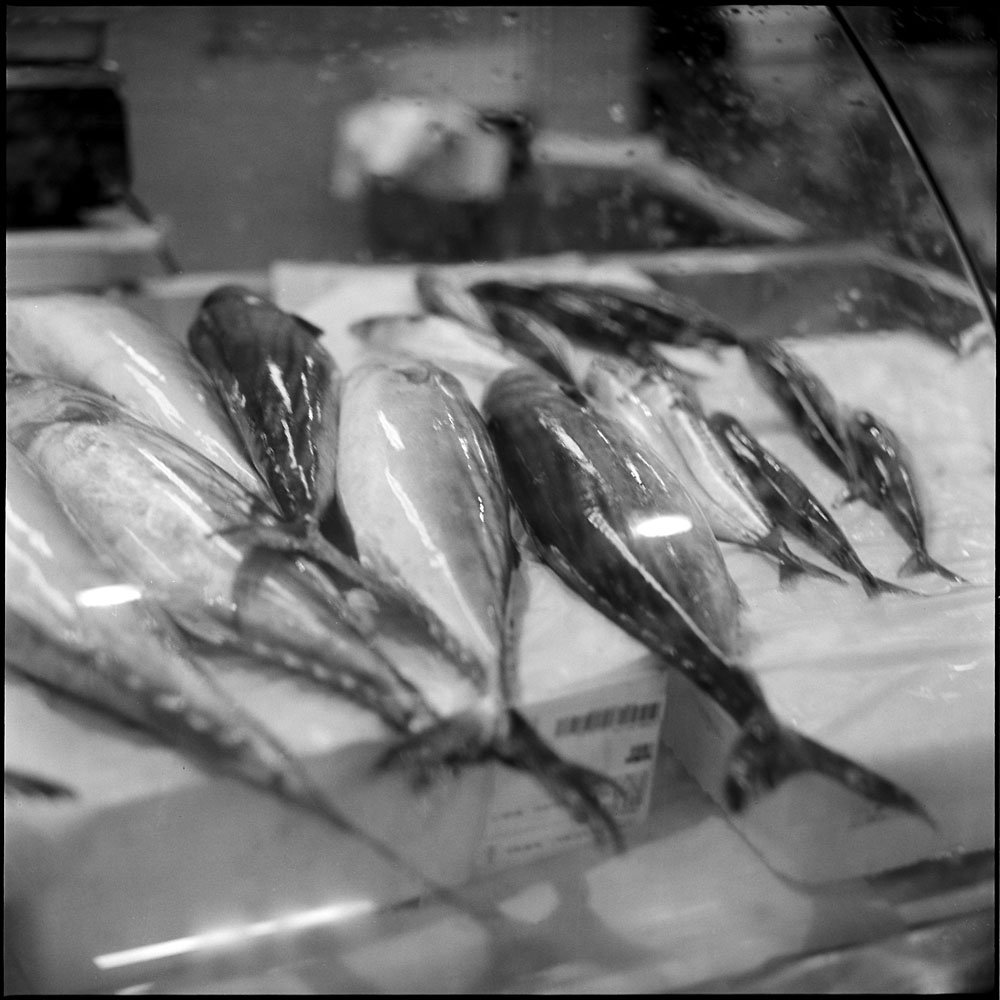
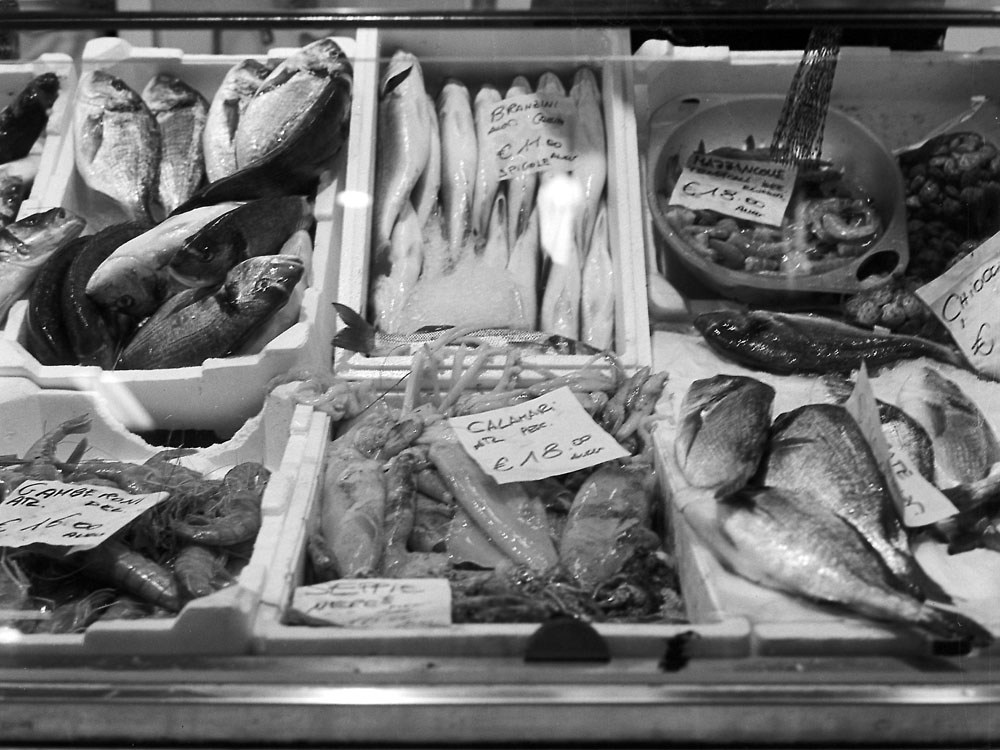
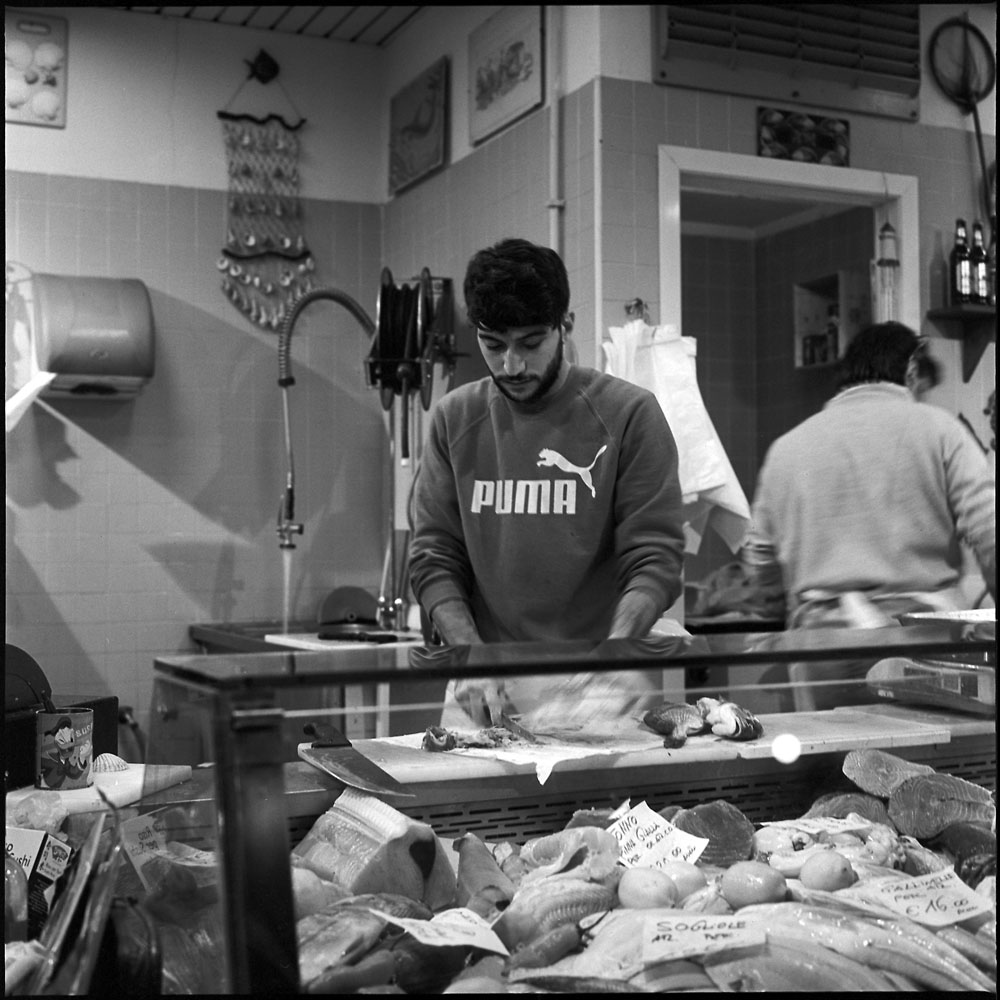
There’s something about fish in the market that makes them look especially good in black and white, don’t you think? It’s funny that most of the fish we eat are shades of black and silver and white – there are really only a couple fish that are colorful that we eat (red snapper, bluefish, Yellow Mackerel), the rest are enjoyed as visual treats when snorkeling, diving or in an aquarium.
Fish, Mercato CentraleFish, Mercato CentraleFish, Mercato CentraleFishmonger, Mercato Centrale
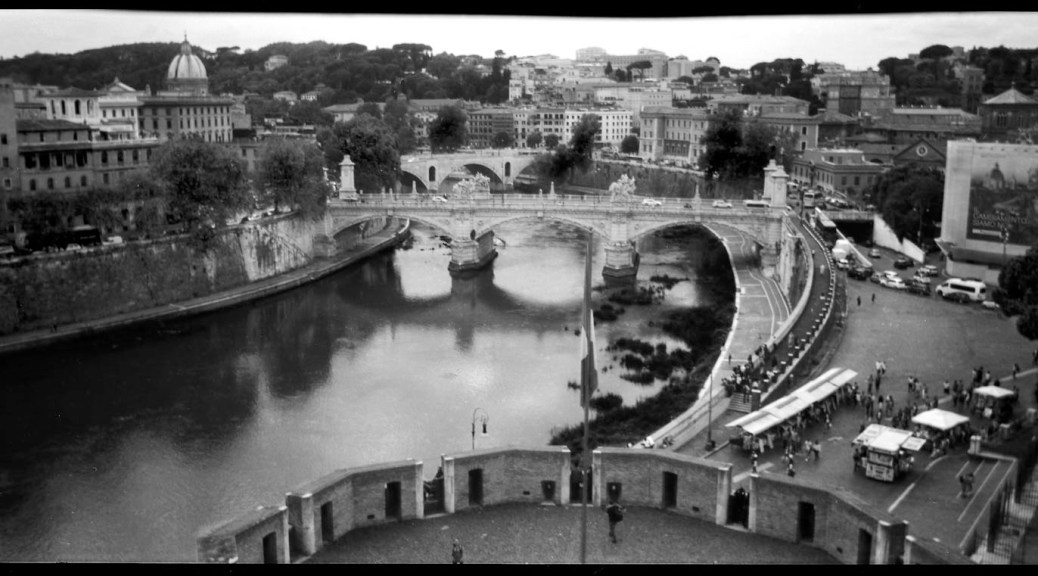
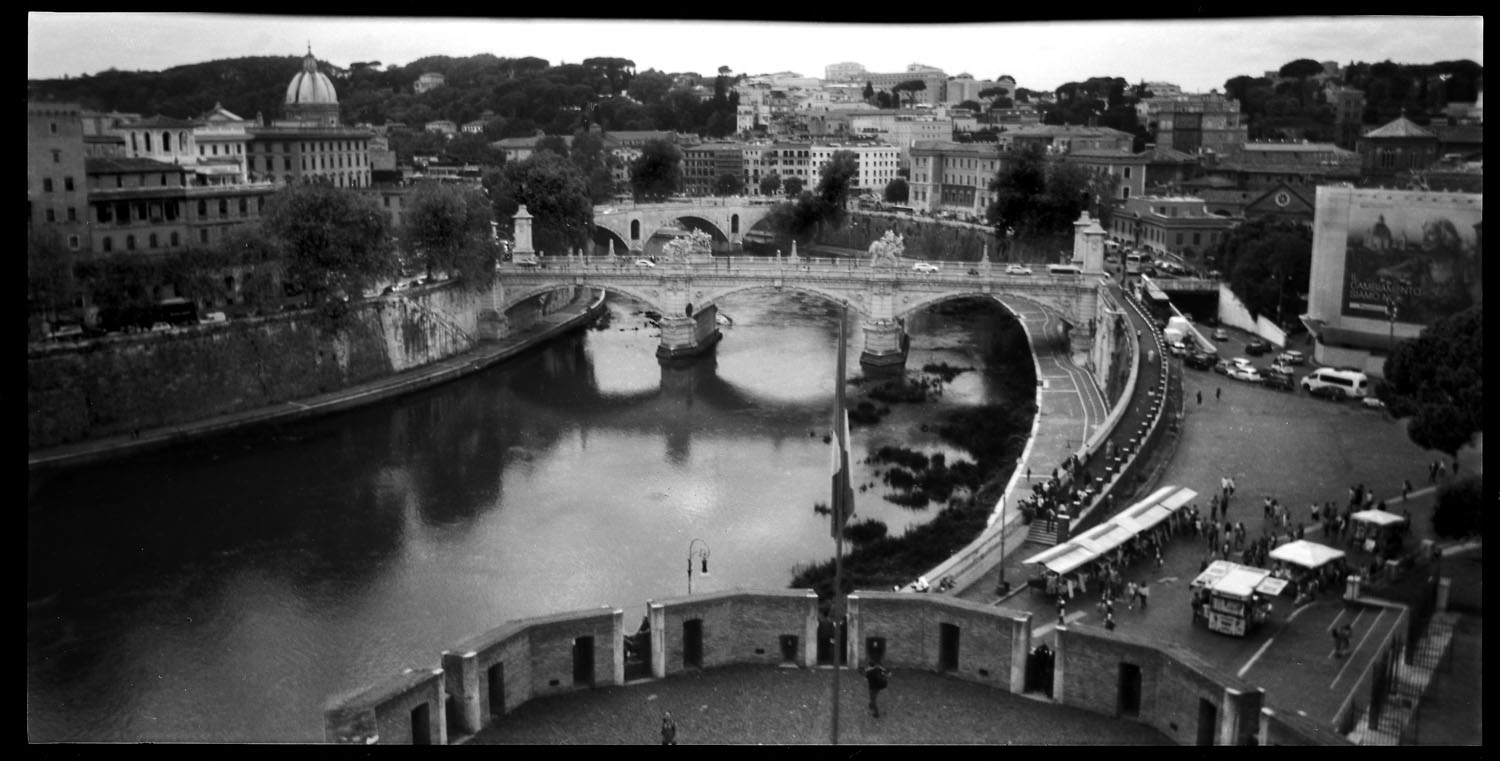
This is a panorama I took of the bend in the Tiber river just in front of the Castel Sant’Angelo, from the castle’s ramparts. St. Peter’s is to the right, out of view. If you look at the bridge in the background, you can see the keyhole arches in the supporting piers which are there to help the bridge not get washed away in time of flooding. There are a number of bridges across the Tiber with this feature, including the famous “Ponte Rotto” (Broken Bridge), which you’ll see in some other shots I’ll post later.
This was taken with my Belair X6-12 camera. As you can see, it’s a pretty soft lens, combined with what was probably a pretty slow shutter speed (1/30th, 1/15th? with this camera, who knows- it sets it automatically for you and doesn’t tell you what it used). But it has a look to it, and the negative isn’t unusable.
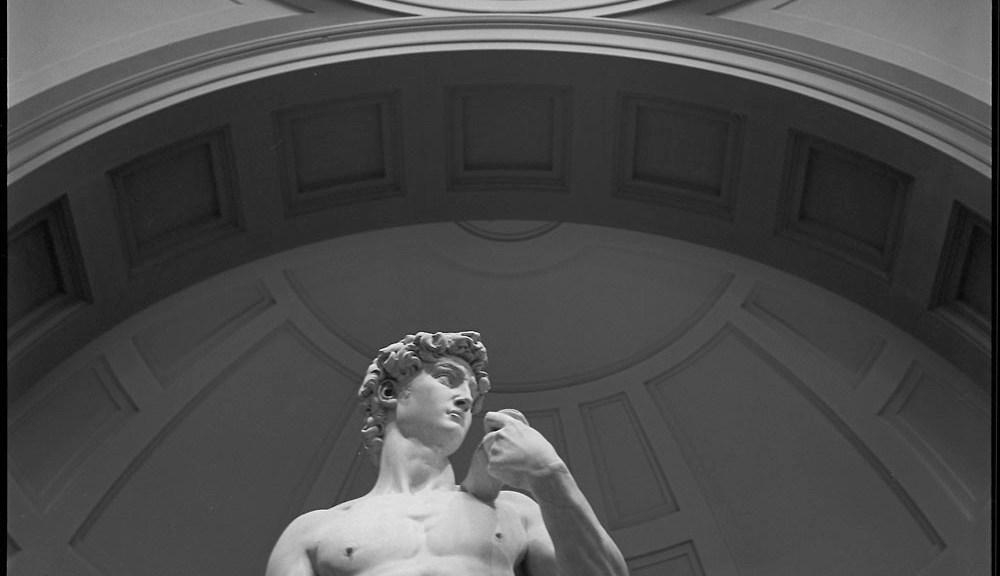
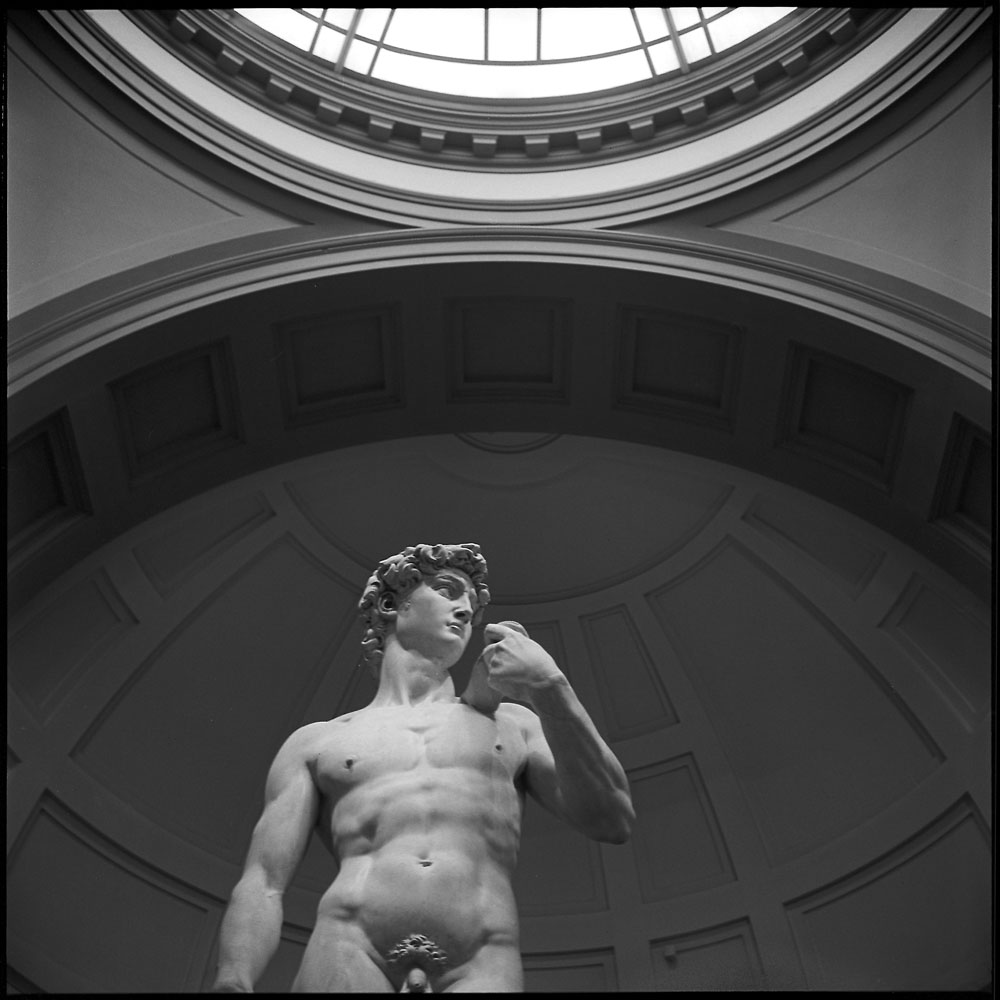
What trip to Florence would be complete without a visit to the Accademia to see David?
My first visit to Florence, I actually did NOT get to see David as I only had about 2 1/2 days, and back then unless you booked a tour group, the only way in was to get in the 2-3 hour line. Now, Florence the city offers a three-day, all-you-can-museum pass called the Firenze Card. It’s a bit pricey, but in my estimation well worth the 72 Euros because you can just wave it at the door and walk right in to the Uffizi, the Accademia, the Bargello and any of the other major public museums in the city. If you can make it in to say four museums in the three days, it’s more than paid for itself.
Back to the David – I had seen the copy that was made in the 19th century and placed in front of the Signoria on my previous visit, and I thought it was a good enough copy that I didn’t need to see the original. Having been now to see the original, I can say I was totally wrong. The public copy is an excellent copy, but it’s still just a high-end Xerox of Michelangelo’s. I tried with this composition to photograph it in a slightly less cliche fashion by including the architecture of the room.
David
There’s so much going on with this statue and its history. It was originally intended to stand on a pedestal on the outside of the Duomo along with a dozen or so other similar sculptures. The David was the only one of the group ever made, and it never was placed in its originally intended location. David came to symbolize the Florentine Republic, and as such, by the time he was finished, he was placed outside the Palazzo Vecchio in the Piazza della Signoria to remind Florentines of their independent status. The original statue stood outside in the rain and the wind and the sun and the snow for four centuries before being moved to the Accademia. In the 20th century, he was “restored” once, very poorly, and a second time, recently, with a far more gentle method. As a result of the cleanings, the exposure, and the hammer attack he was subjected to, there remains no actual surface which would have been touched by the hand of Michelangelo. In spite of this, the statue remains transcendent.
There’s a terrific book about the David, From Marble to Flesh: a Biography of Michelangelo’s David, by A. Victor Coonin. My only association with the book aside from having read it is that I was a Kickstarter backer of the original publication. If you look in the credits you’ll find my name. Regardless, the book tells the complete life story of David from his beginnings as a sculpture to be carved by someone else, Michelangelo taking over the task, his completion, public placement, life, moving from the Piazza to the Accademia (which took almost as long to accomplish in the late 1800s as it did to move from Michelangelo’s studio to the Piazza some four hundred years earlier), through to the cultural importance of David as a symbol in 21st century life.
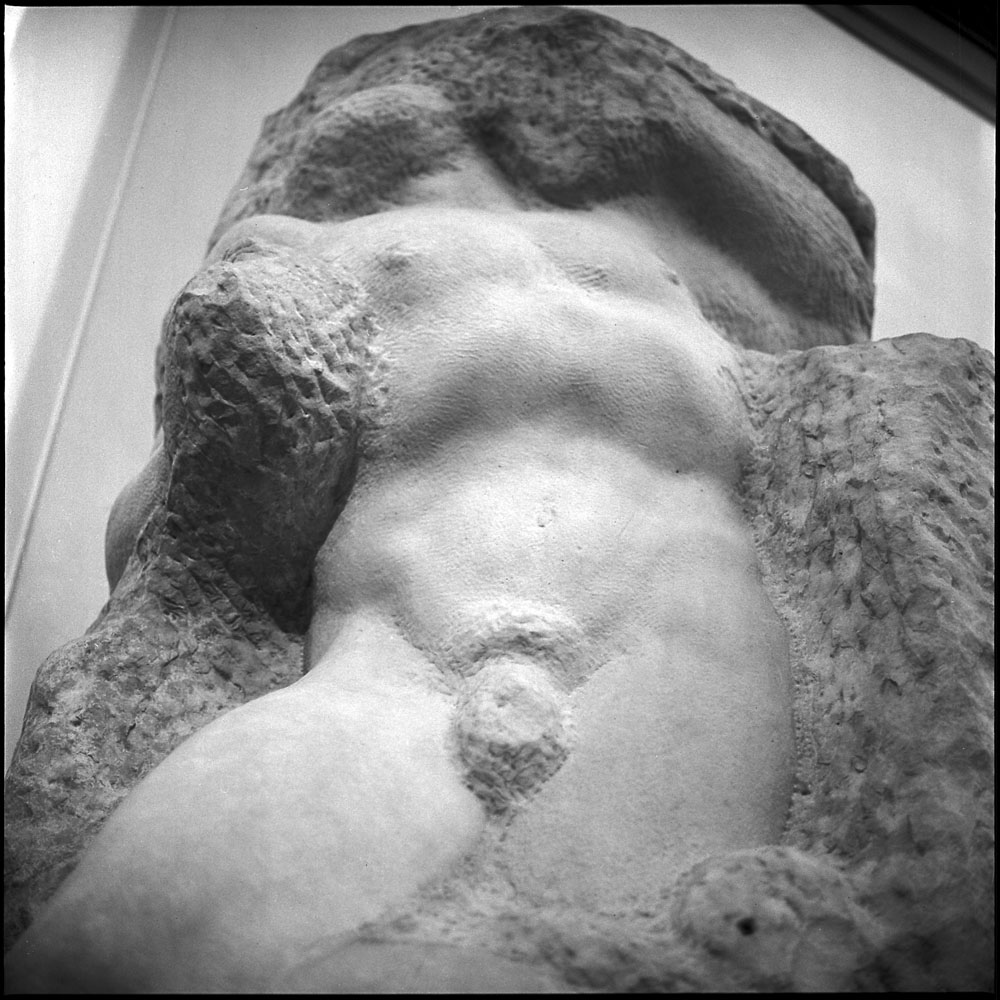
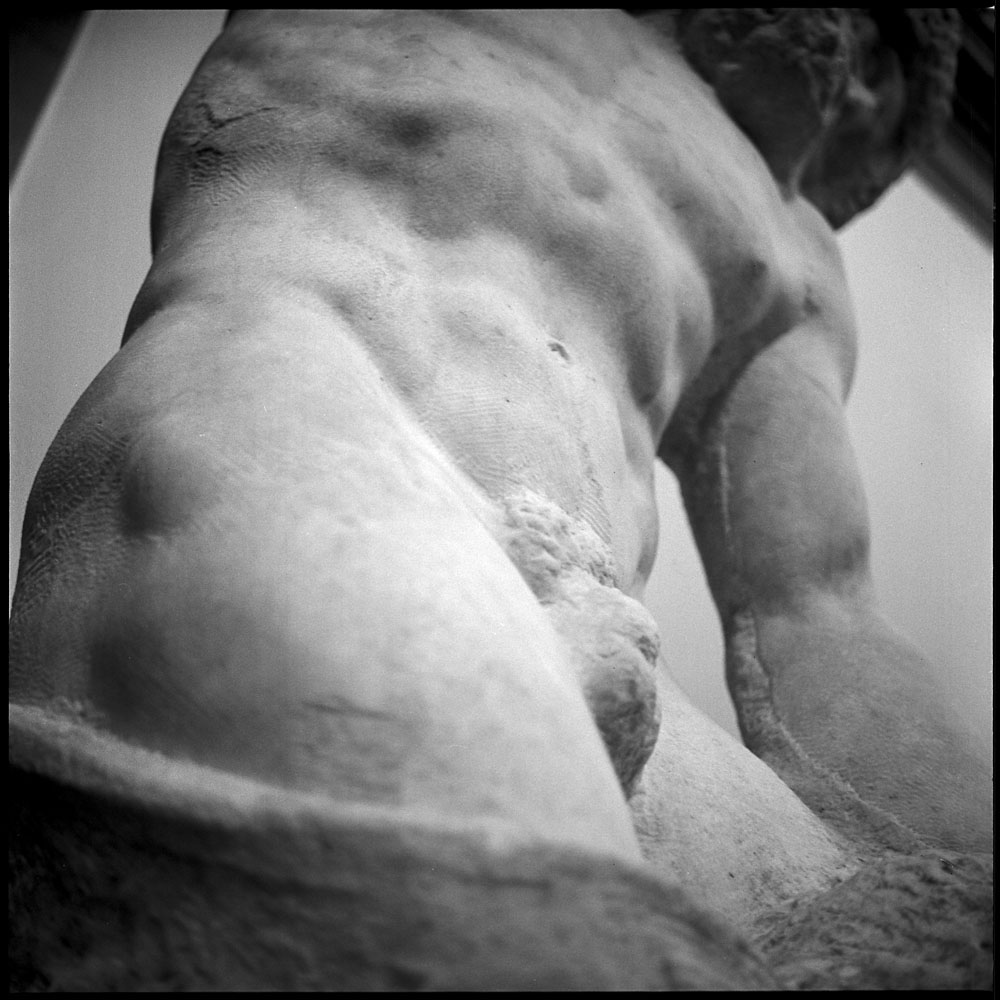
I had mentioned in an earlier post about Michelangelo and the “Unfinished” sculptures. Here are some of the pieces in the Accademia’s main hall.
Unfinished Sculpture
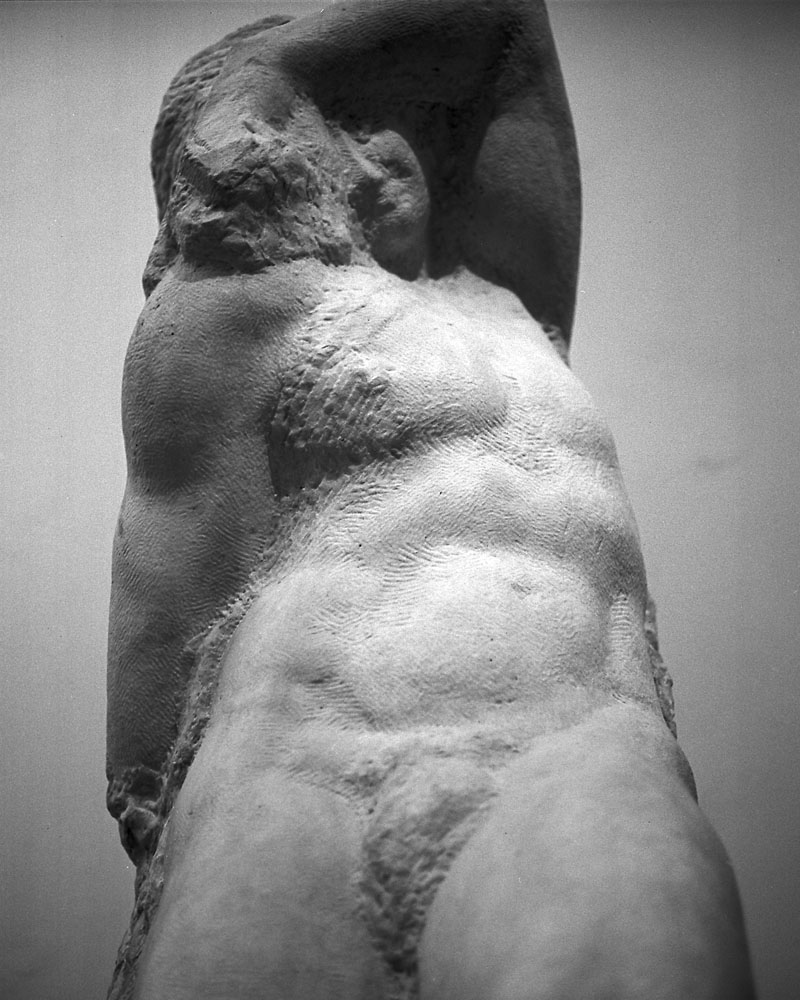
If you look carefully at them, it’s hard to truly call them unfinished – there is a certain deliberateness about what is carved finely and what is left rough.
Unfinished Sculpture
The coarse textures blend very naturally with the revealed forms. To my eyes, and from my (granted rather limited) experience of stone carving, this kind of texture and modeling is something done very intentionally.
Unfinished Sculpture
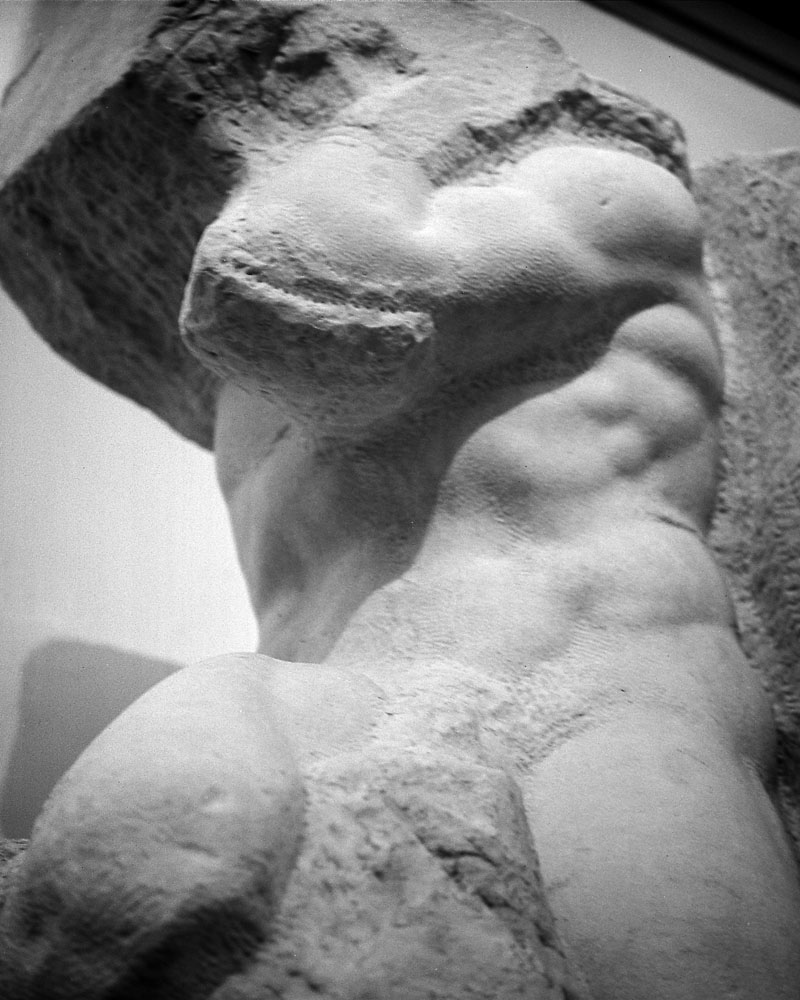
While there are certainly areas that are unrefined, the transitions are fascinating and at the very least provide an insight into the working technique of a genius master sculptor, and given how far ahead he was in so many other aspects of his art, it is entirely possible for him to have been five centuries ahead of his time in his thinking, much the way Caravaggio’s paintings were.
Unfinished Sculpture
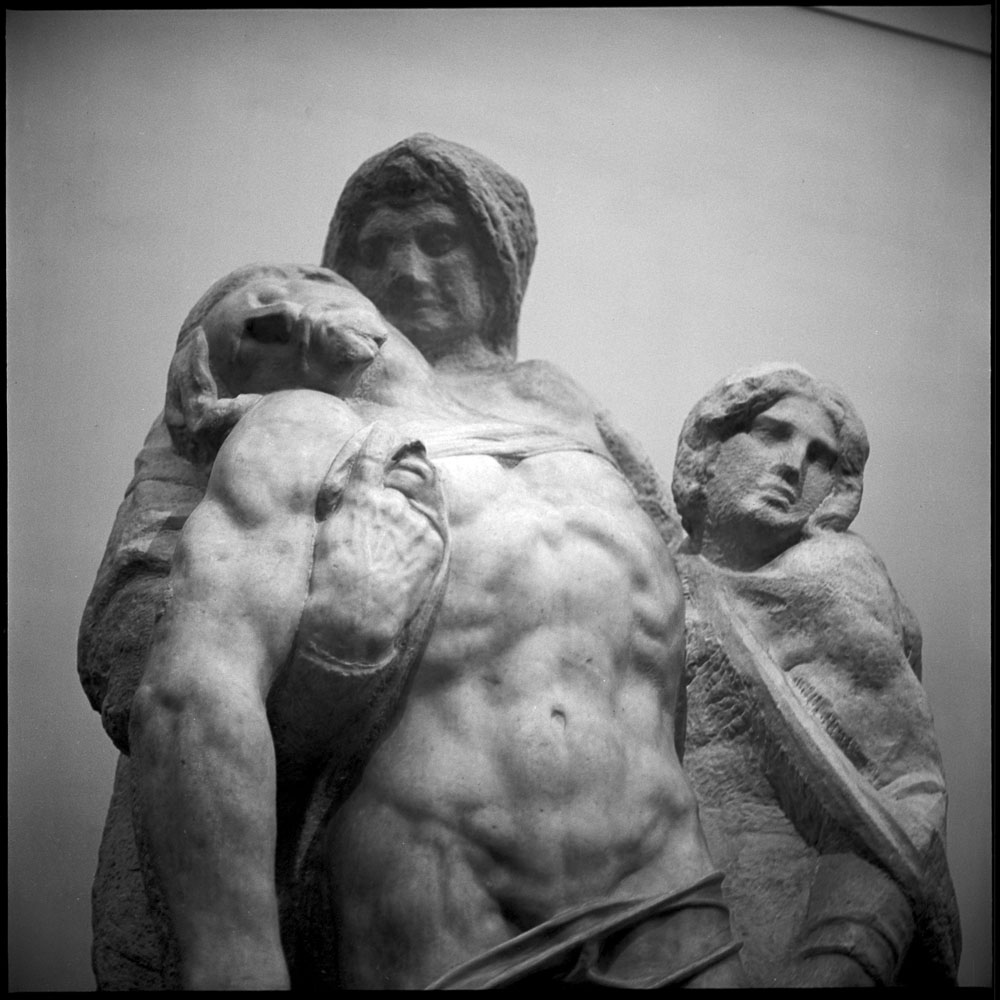
And I couldn’t let the opportunity pass without remarking on something that virtually everyone who’s ever looked at a Michelangelo painting or sculpture of a woman has noticed- his women are really just men with boobs and long hair. The hand of Mary that’s supporting a very robust looking Jesus in this “unfinished” Pieta is one of the manliest hands I’ve ever seen on a woman.
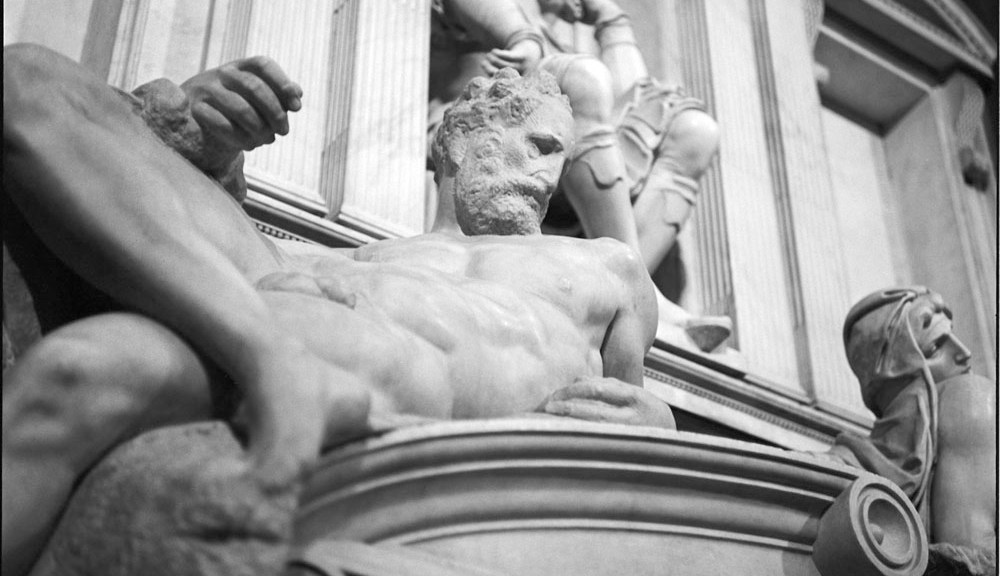
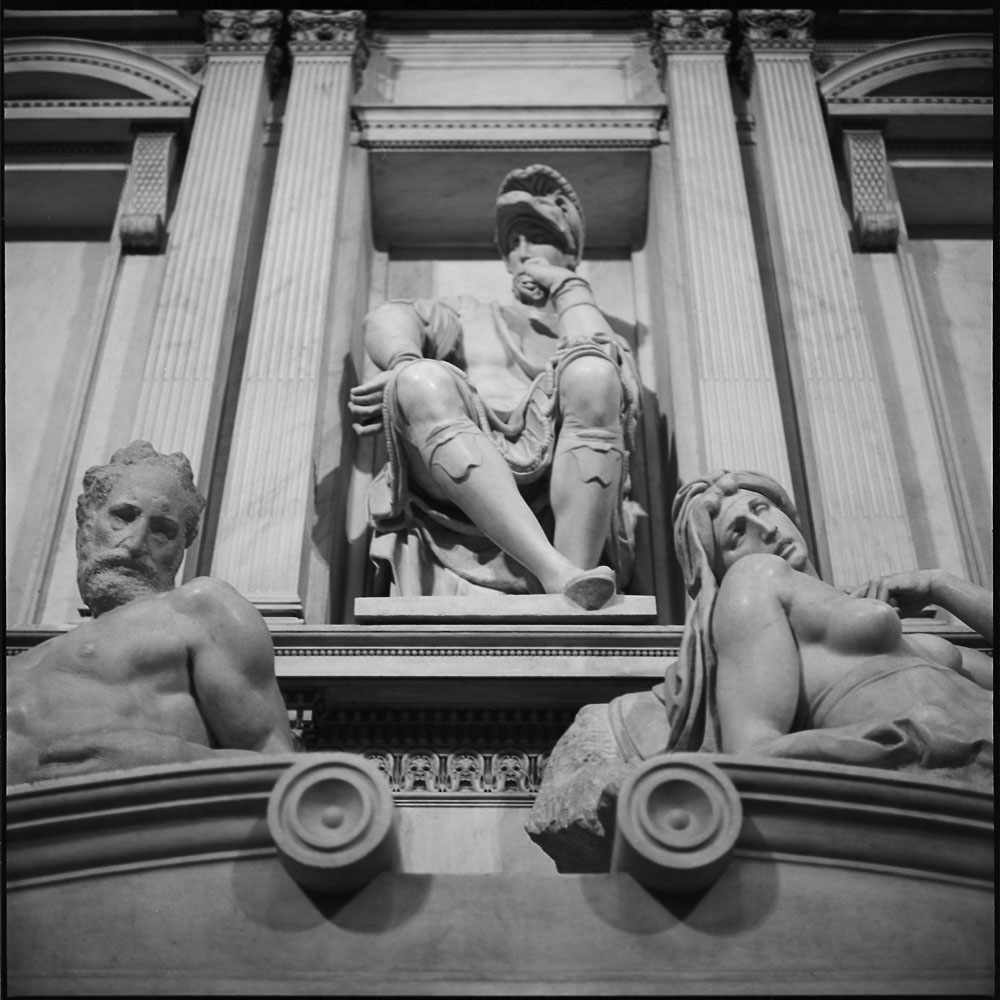
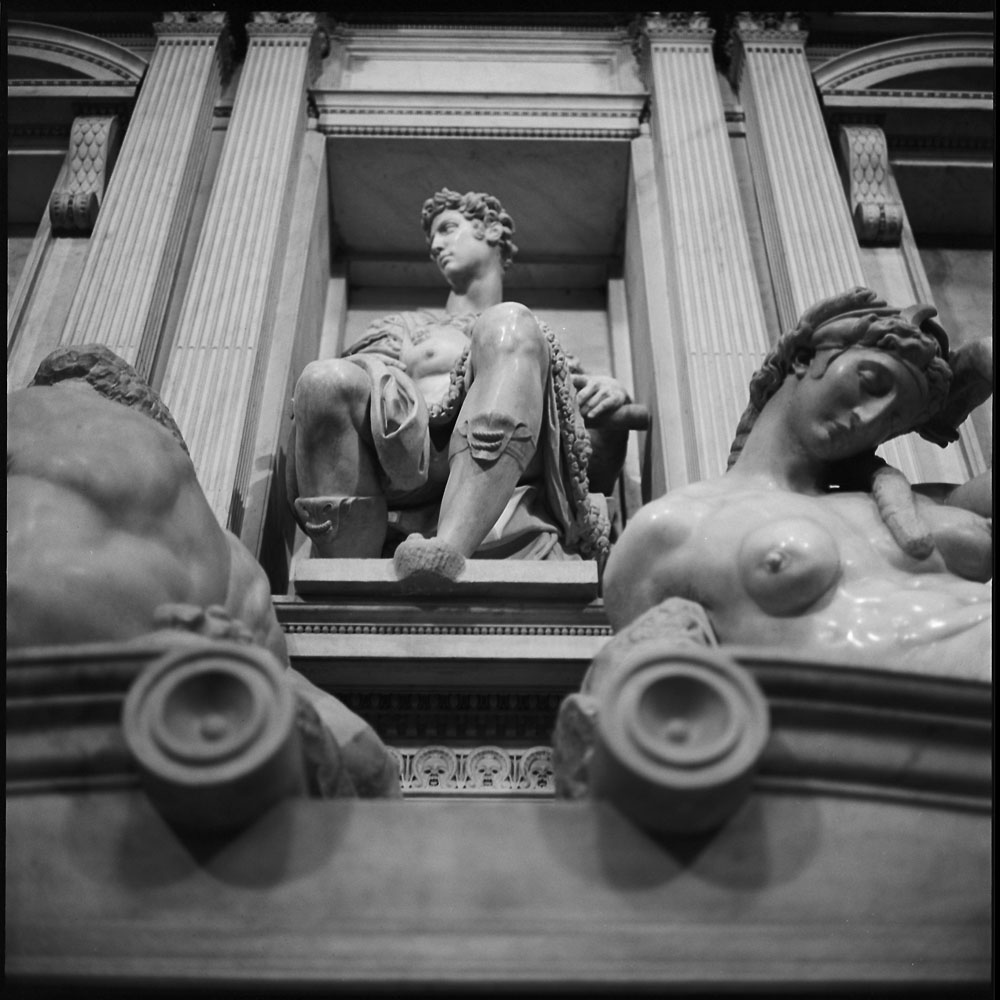
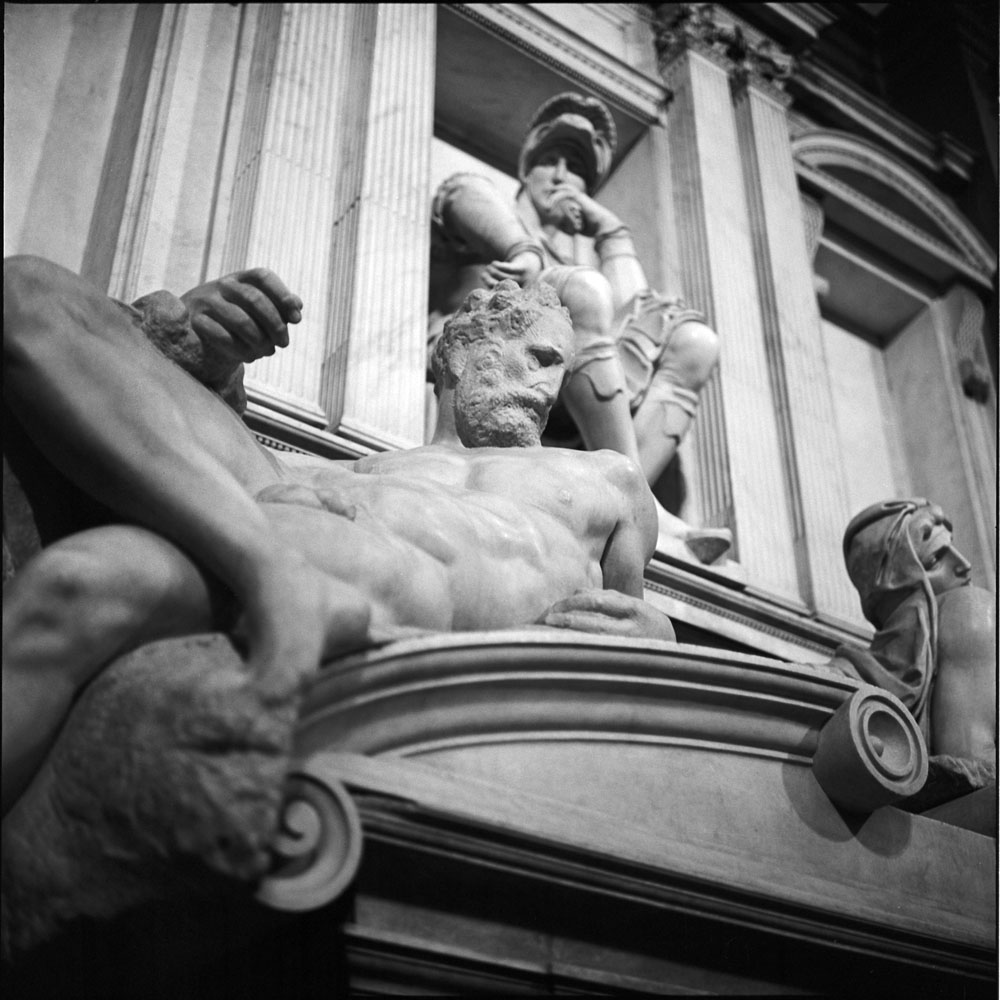
As promised in the previous post of the ceiling of the Sagrestia Nuova (also a Michelangelo design), here are the Michelangelo sculptures decorating the tombs of Lorenzo di Piero de Medici and Giuliano di Lorenzo de Medici. The great irony of this is that the greatest tombs in the Medici crypt go to the lesser members of the family – all the famous Medicis (Lorenzo Il Magnifico, Cosimo I, Guiliano, etc) are buried in the awe-inspiring-but-somber-and-over-the-top Medici Chapel, a giant domed octagonal chamber lined with dark marble mosaics and sarcophagi, or in the crypt below it.
Lorenzo di Piero de Medici, with Dusk and DawnGiuliano di Lorenzo with Day and NightDusk, Medici Tomb
The male figures of the tomb decorations both appear to be “unfinished”. While Michelangelo did leave Florence for Rome permanently before the sculptural figures were installed and all the tomb decorations complete, there is a debate in the art historical world about how “unfinished” they actually are, thus my use of quotation marks on the word unfinished. Michelangelo left behind enough sculptural works in rough form that some say he was really bad at completing projects, whereas others will argue that they are as finished as he intended them to be. Certainly his reputation as one of the greatest stone carvers ever to live has not been diminished by his “unfinished” pieces.
You can see more of his “unfinished” pieces at the Louvre in Paris and at the Accademia in Florence (the pieces at the Accademia are forthcoming in another blog post).
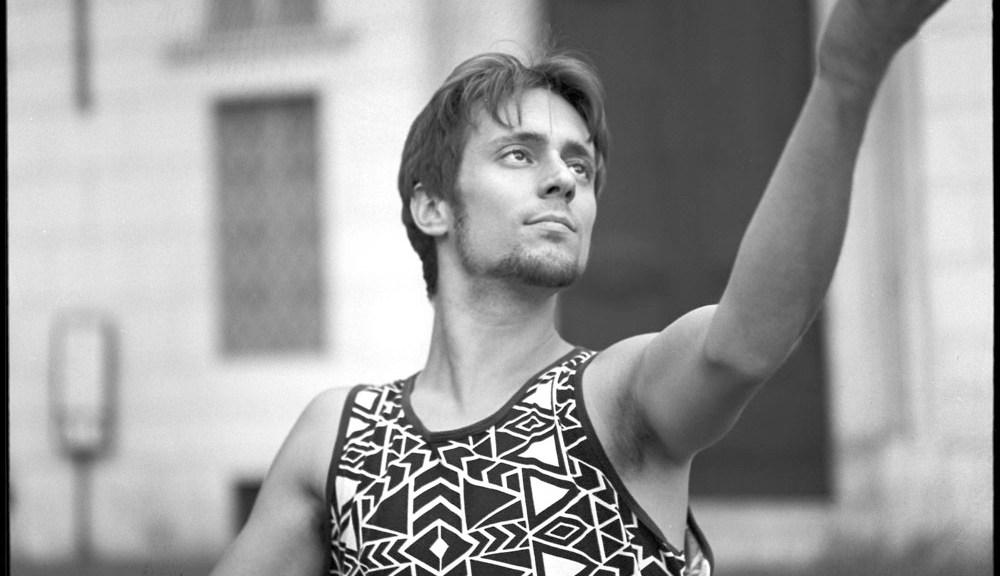
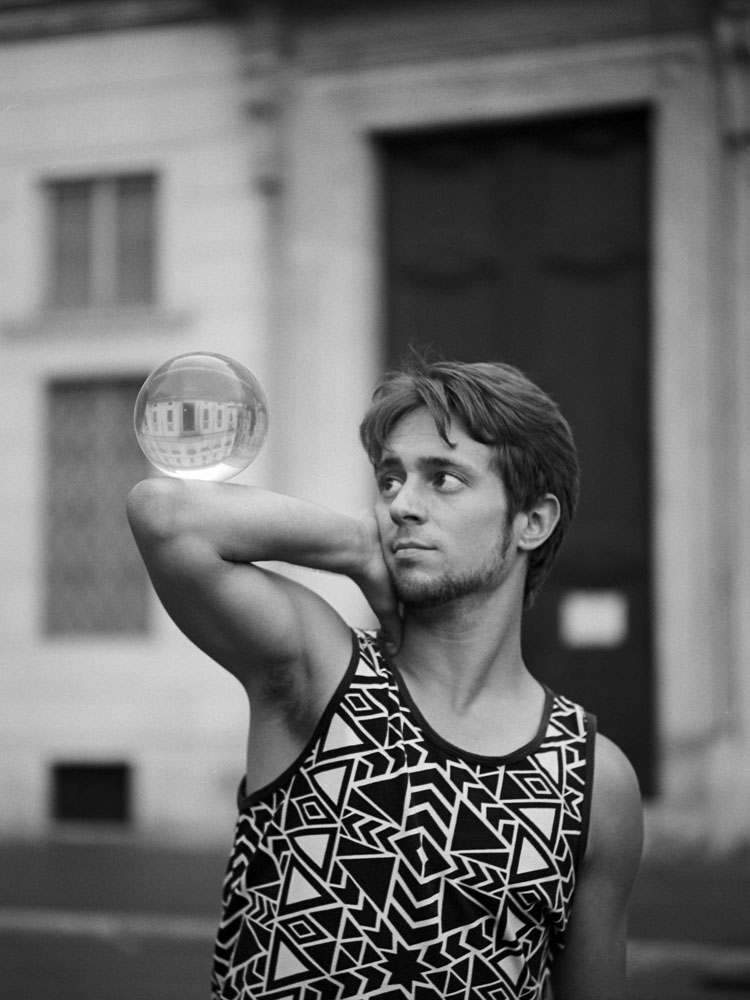
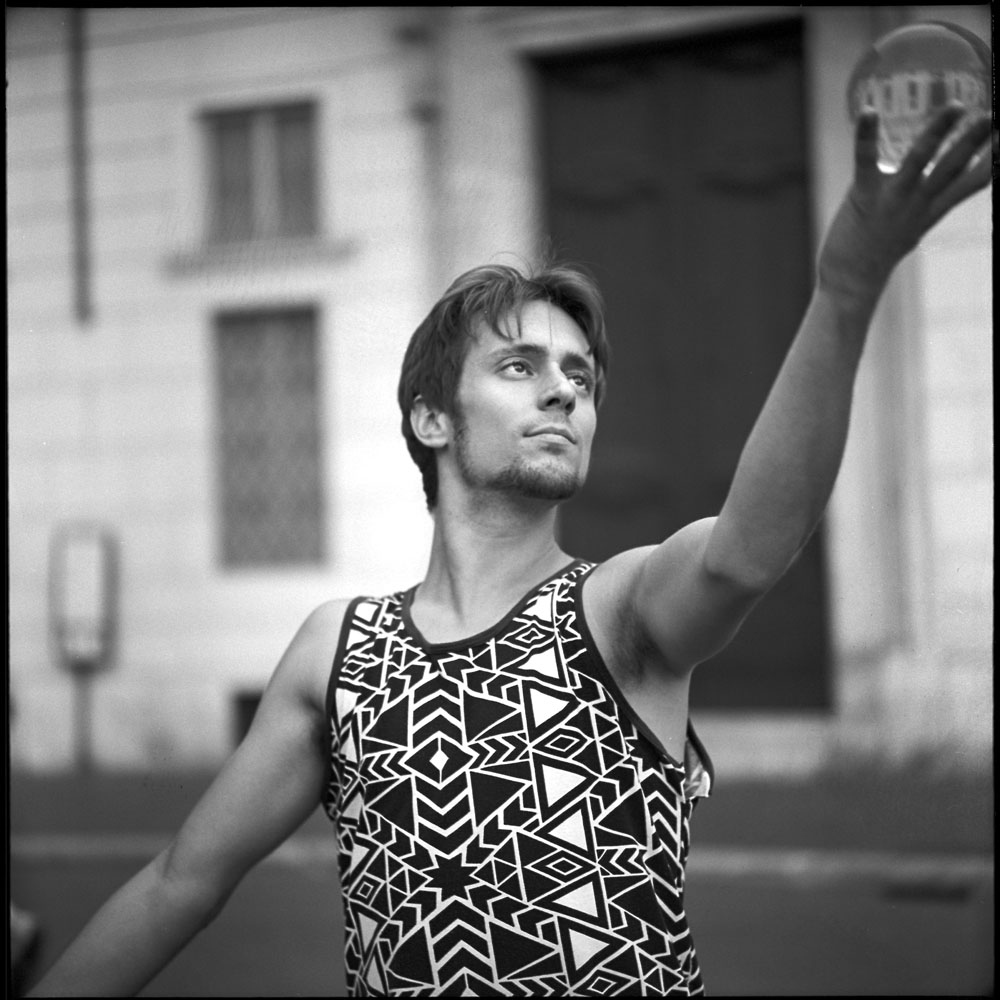
This is something I’m working on doing more of- photographing people in the wild, so to speak. I do well in the studio, where people are expecting you to take their picture, and for that matter have given you some measure of control over the experience. But “street” photography, photographing people out and about doing things where they’re not expecting to be photographed, well, that’s an entirely different animal. I find it easier to photograph people who are performing or in some other way putting themselves out there to be observed. If nothing else it’s good practice for more elusive subjects.
Juggler, Piazza Navona
This young man was out on the Piazza Navona, juggling this glass sphere. He had a sign up with his busking bowl that described it as a particular kind of juggling – I forget the term, but he would roll the glass sphere up and down his arms, across his neck behind and over his head. Here he has the sphere on his elbow, then at the end of his fingers.

 dcphotoartist