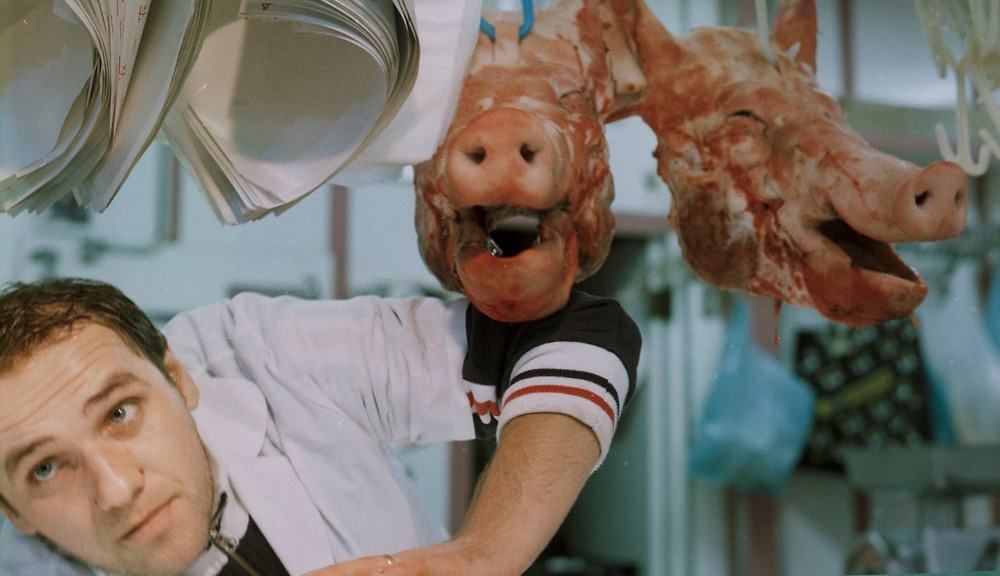
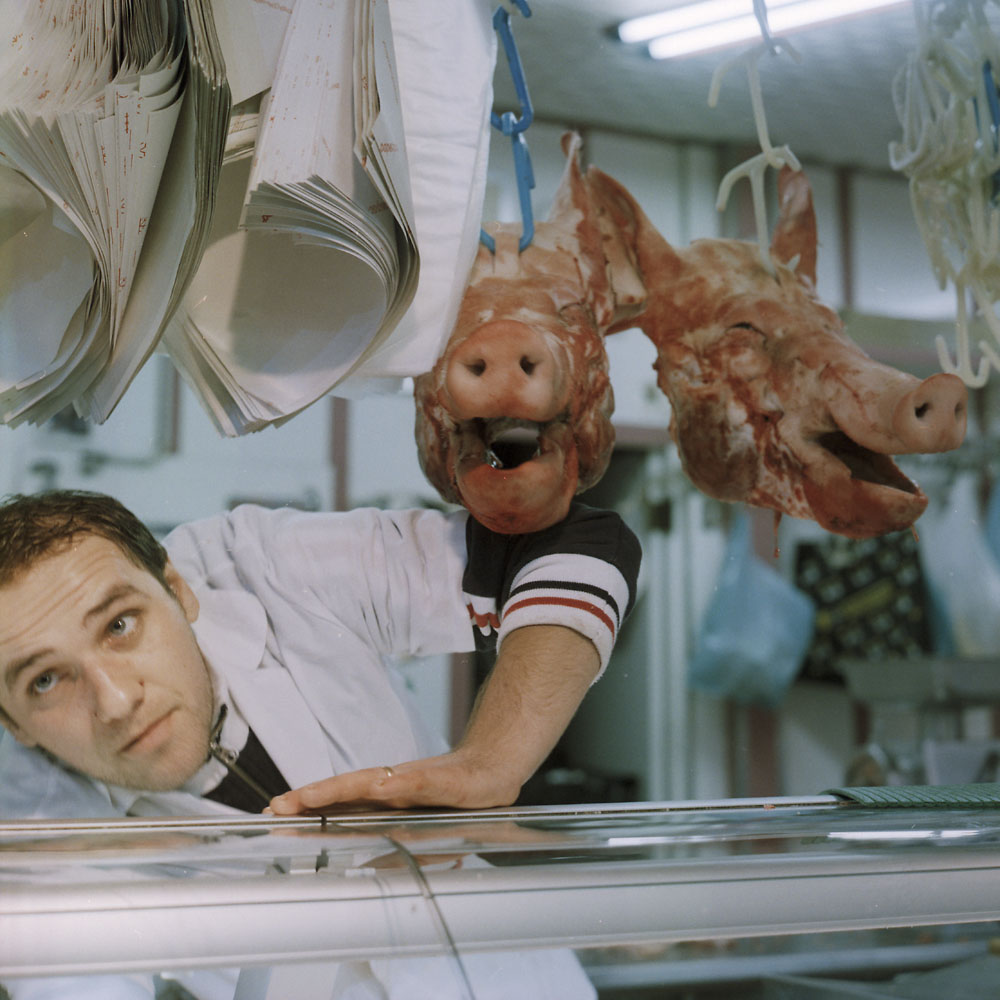
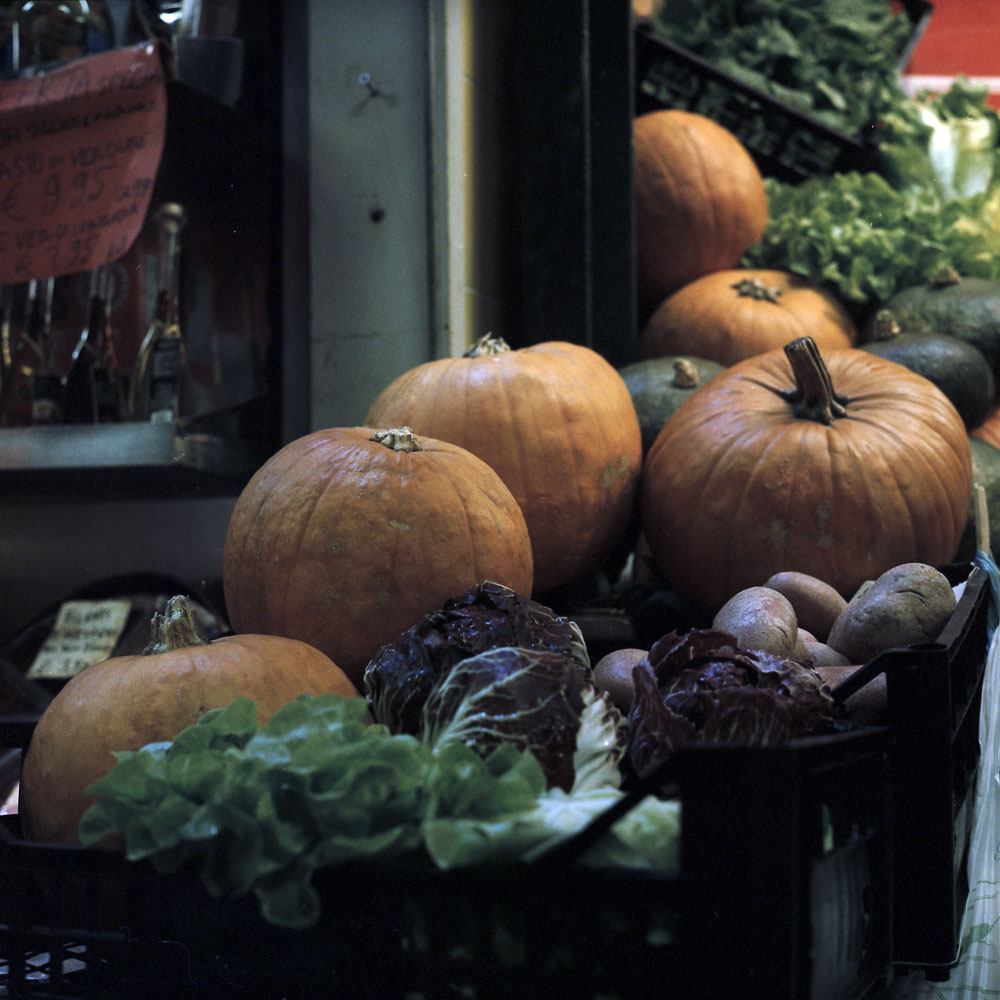
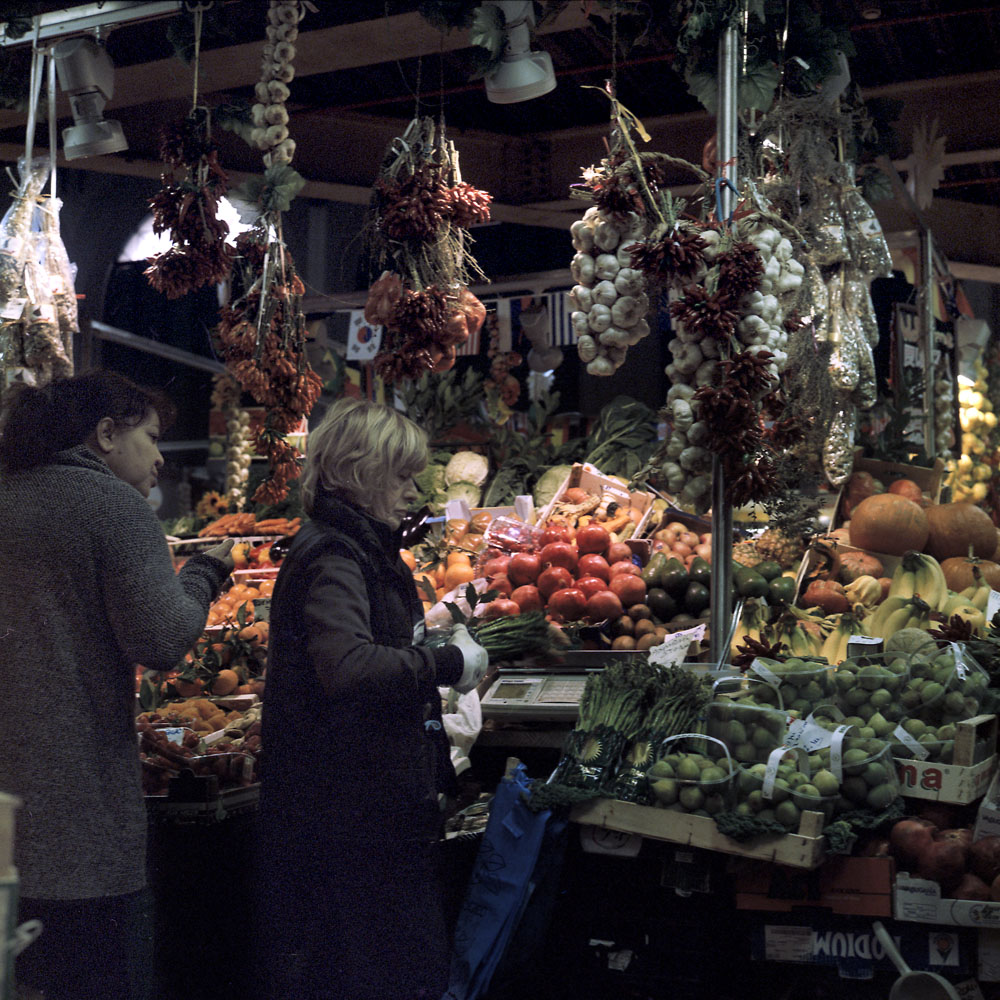
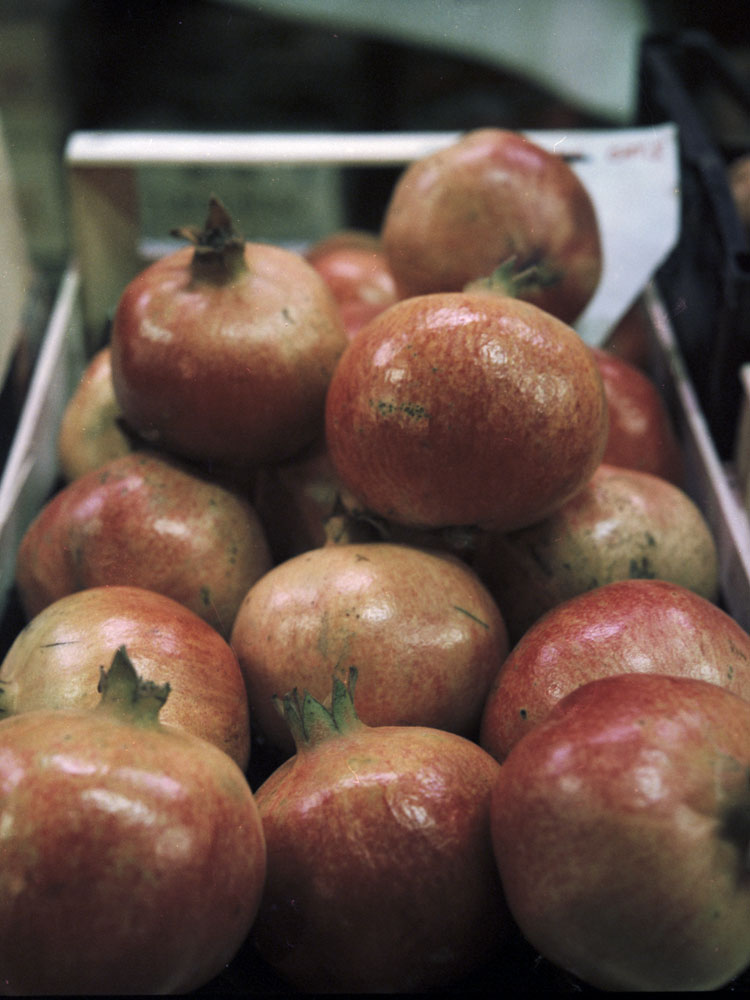
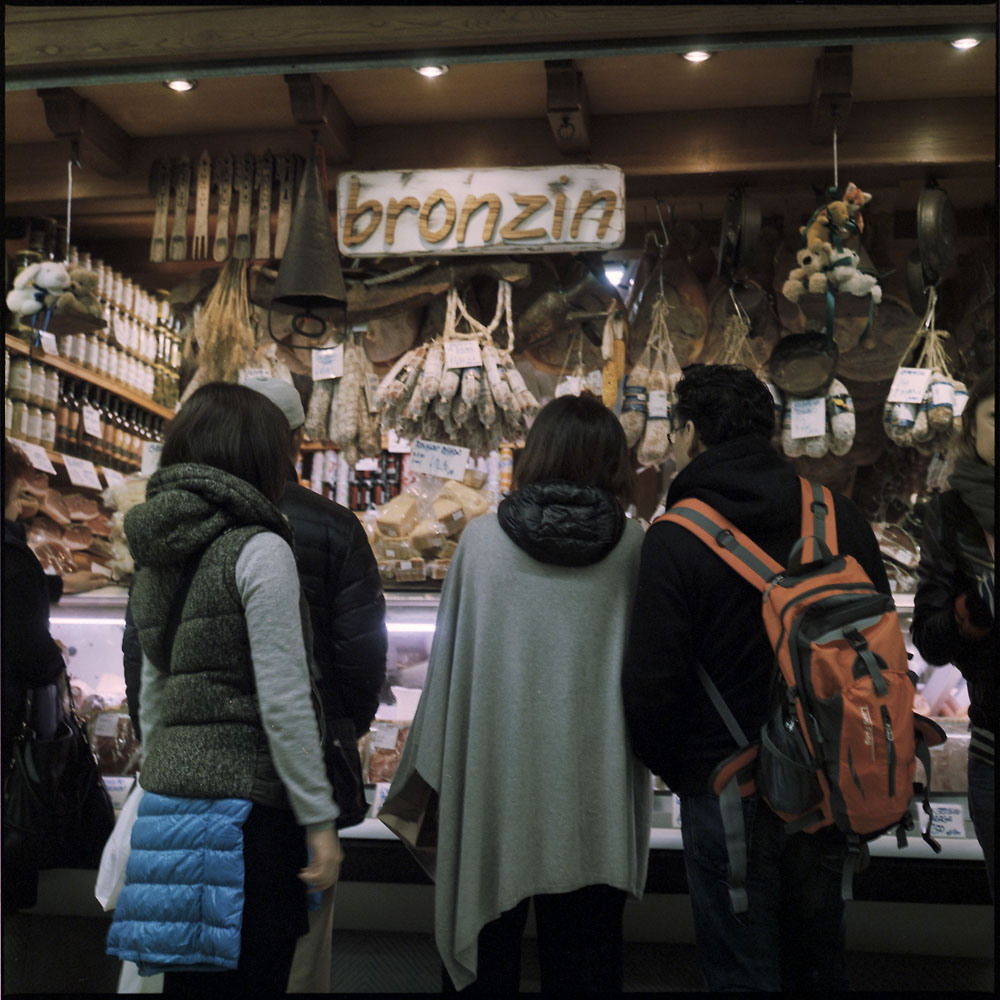
From my trip to the Mercato Centrale in Florence. It’s challenging shooting in someplace like the Mercato Centrale because it’s very crowded, and the lighting is generally miserable- overhead fluorescents mixed with neon mixed with halogen and now mixed with LED spots. One of the things that helps pull it together is a great film – Kodak Portra 800 to be specific. It’s very fine-grained for a film that fast, and it, like the other films in the Portra family, does an incredible job of handling mixed lighting sources. No special filtration was used to color-correct these images.
Here begins my Italian saga. I got back less than a week ago from my Italian excursion, having spent 12 days in Florence and Rome. I posted an odd and end from my phone while on the road, but now that I’m home I’m working my way through the 79 (yes, 79!) rolls of film I shot. I’ve got 16 processed so far, and will try to develop some more after work during the week so I don’t have to totally binge on the weekends.
If you’ve been following the blog, shortly before I went away I got a Lomo Belair X/6-12 panoramic camera. I posted a few shots I took with the 58mm super-wide lens, and that lens is, well, marginal at best. Very soft, very low-contrast, and horrendous barrel distortion. Not the kind of lens I would want to shoot a lot of architecture with, and that’s what I’d be shooting a lot of in Italy. I brought it with me just in case, but kept the 90mm lens on the camera and ended up shooting exclusively with that.
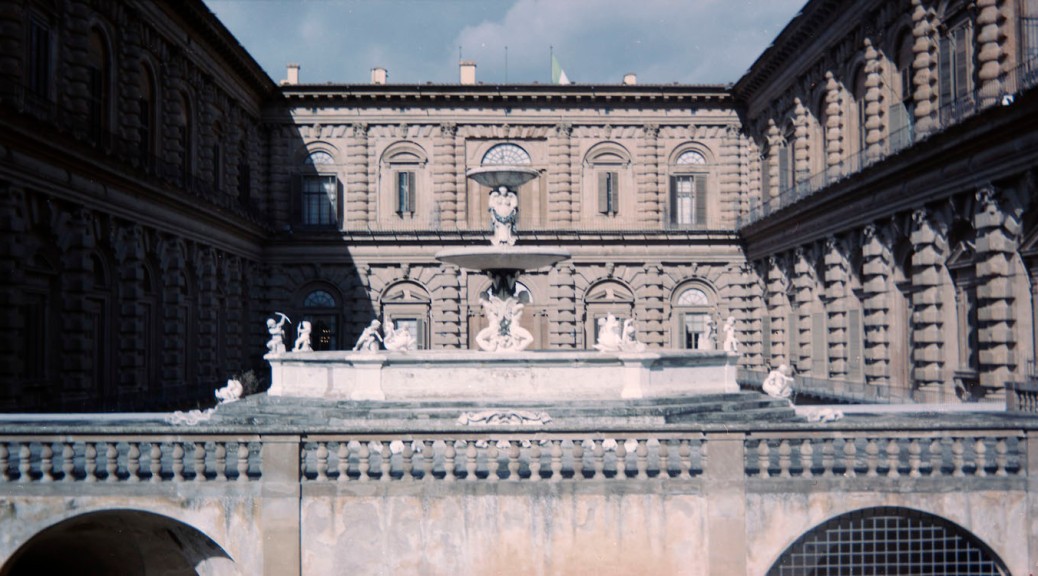
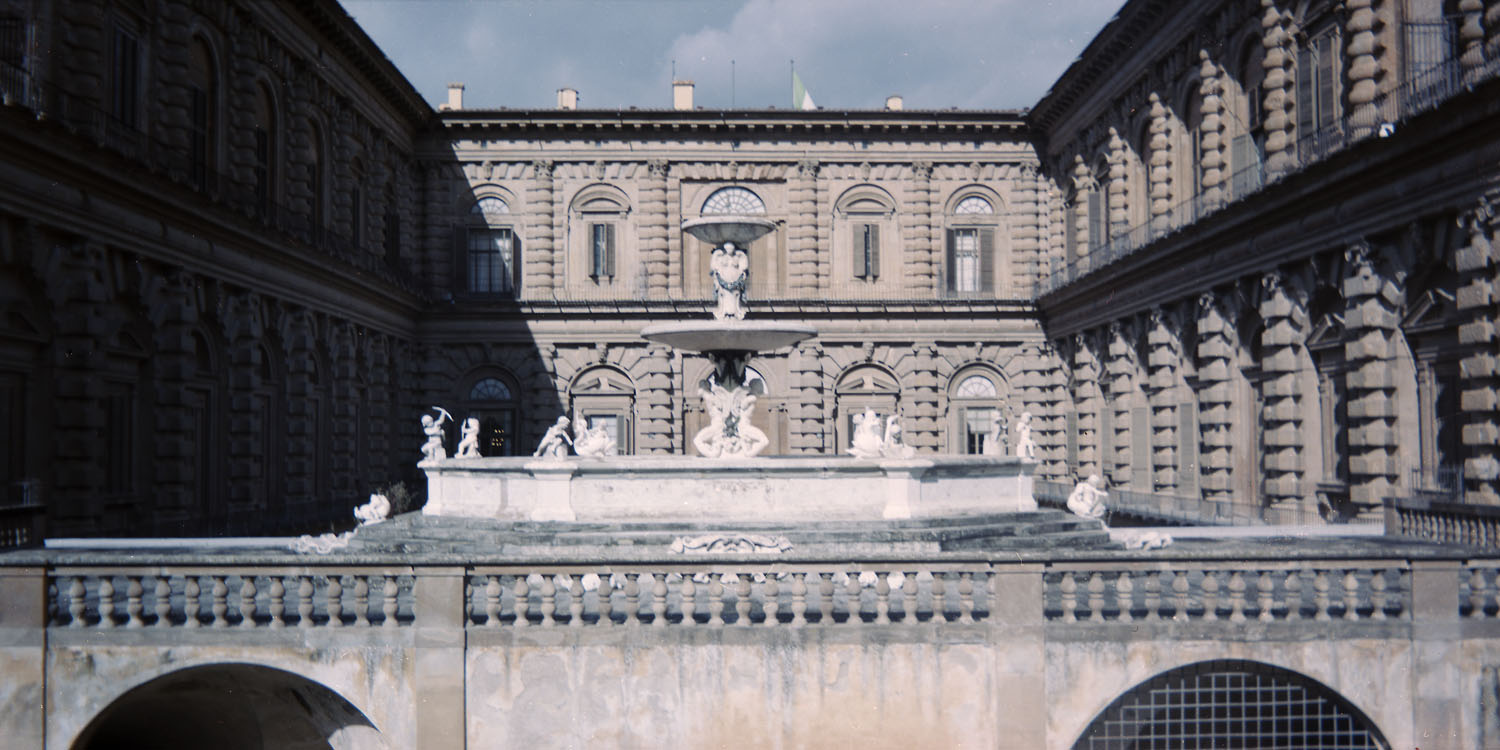
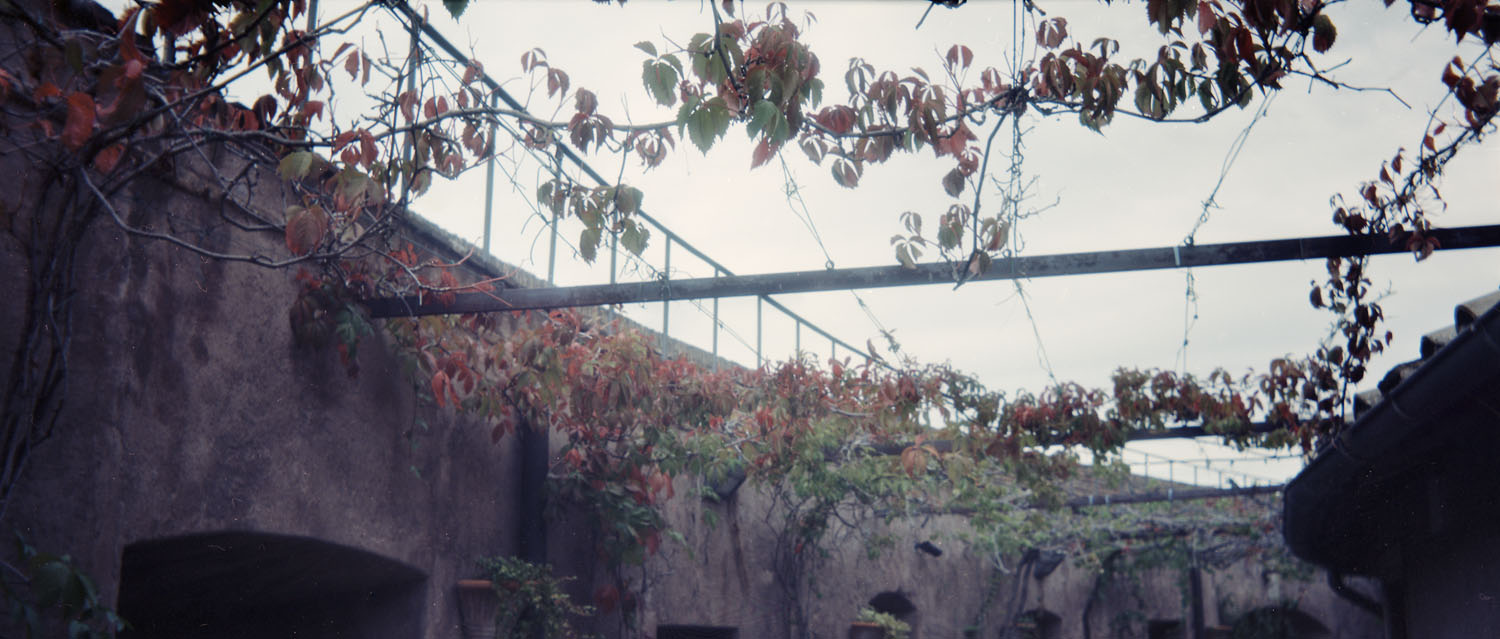
This is the courtyard of the Palazzo Pitti, as seen from the Boboli gardens behind it. As you can see from this shot, the 90 is sharper than the 58, but still not up to the standards of a glass lens (the 58 and the 90 are both plastic).
Pitti Palace
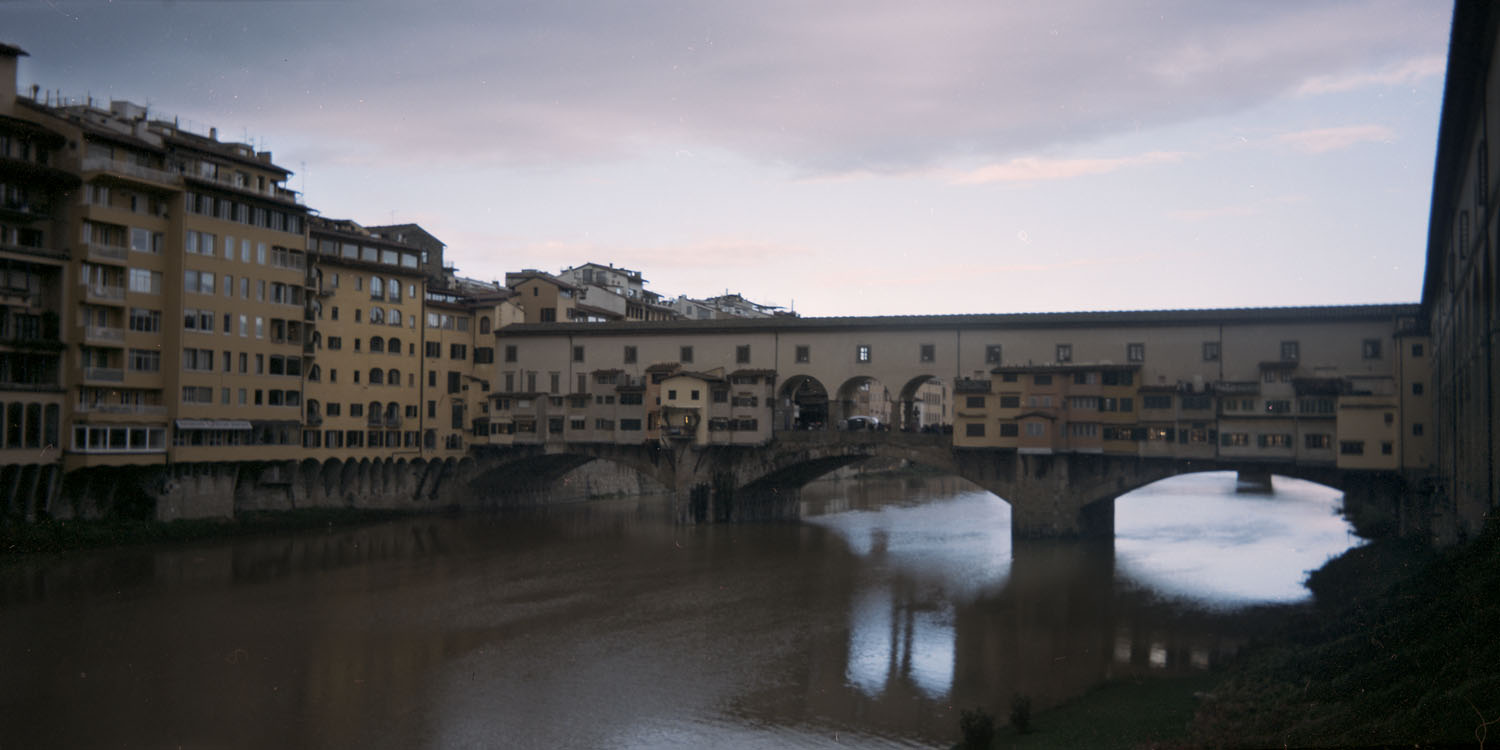
The 90 is better, but better is a relative term. Certainly, I wouldn’t have been able to take these shots without the camera, and I genuinely like them, but they’re not what I normally think of when I think of my style of photograph. If I’m going to stick with the camera, it’ll be a mental adjustment to apply the tool to tasks appropriate to it. It’s very good at transforming the time of day of a shot- while this is titled “Ponte Vecchio Evening”, it was actually shot around 10AM.
Ponte Vecchio Evening
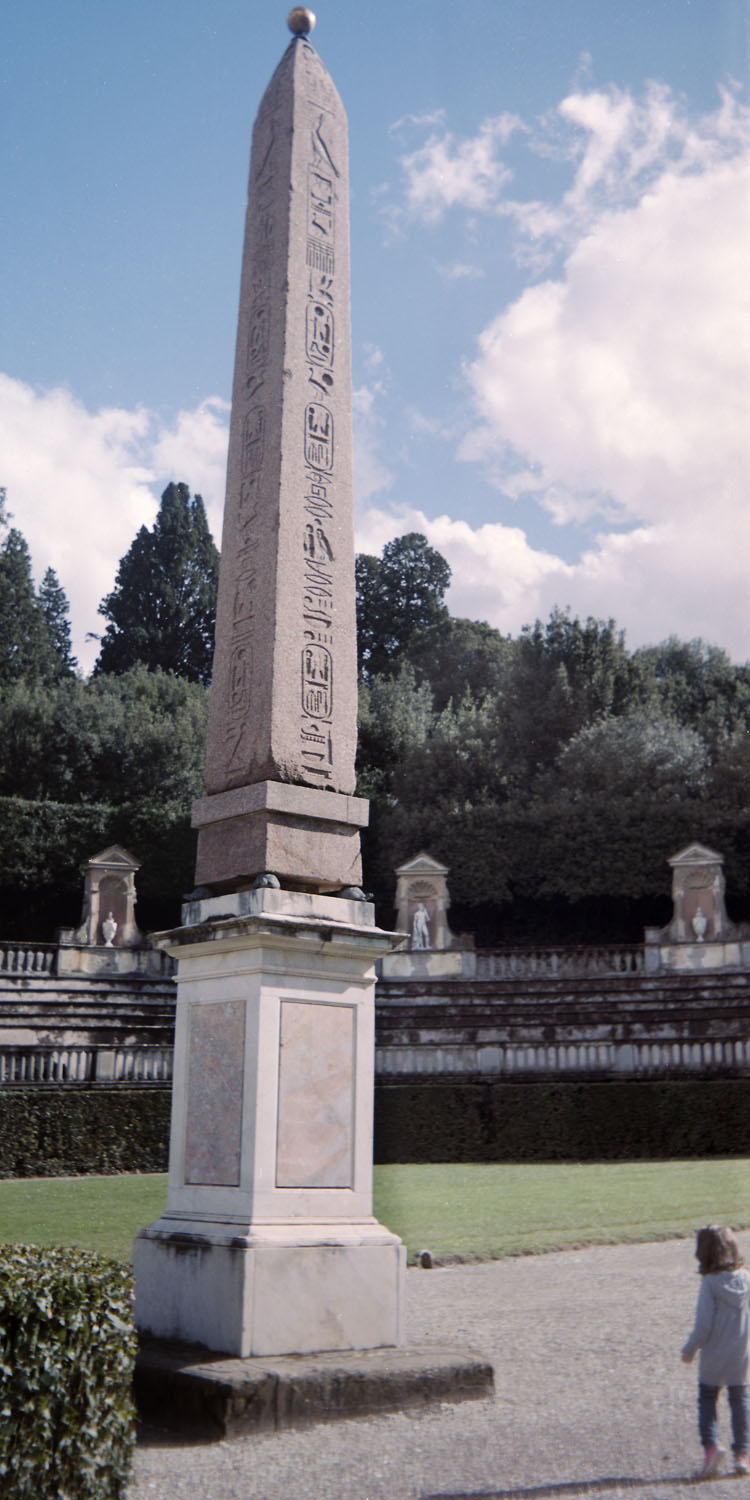
This has also been a lesson for me in making peace with cropping. I’ve been for the most part a full-frame kind of guy – I try to compose to the edges of my frame so everything shows the way I want it to and I don’t need to crop. But sometimes, the best of intentions when composing in the heat of the action don’t always work, and you learn to crop after the fact. This shot, for example. In the original full frame, the obelisk was dead center in the frame. I think at the time I pushed the shutter button I thought the little girl was out of the picture, but there she was. On the left, the edge of the fountain in front of the obelisk was intruding into the scene. Looking at the image actually captured, all the action in the scene included the little girl playing off against the obelisk, and the edge of the fountain was a real distraction. Cropping to get rid of the fountain completely changed the dynamic and makes the image go from being a record shot to something actually interesting.
Obelisk Boboli Gardens
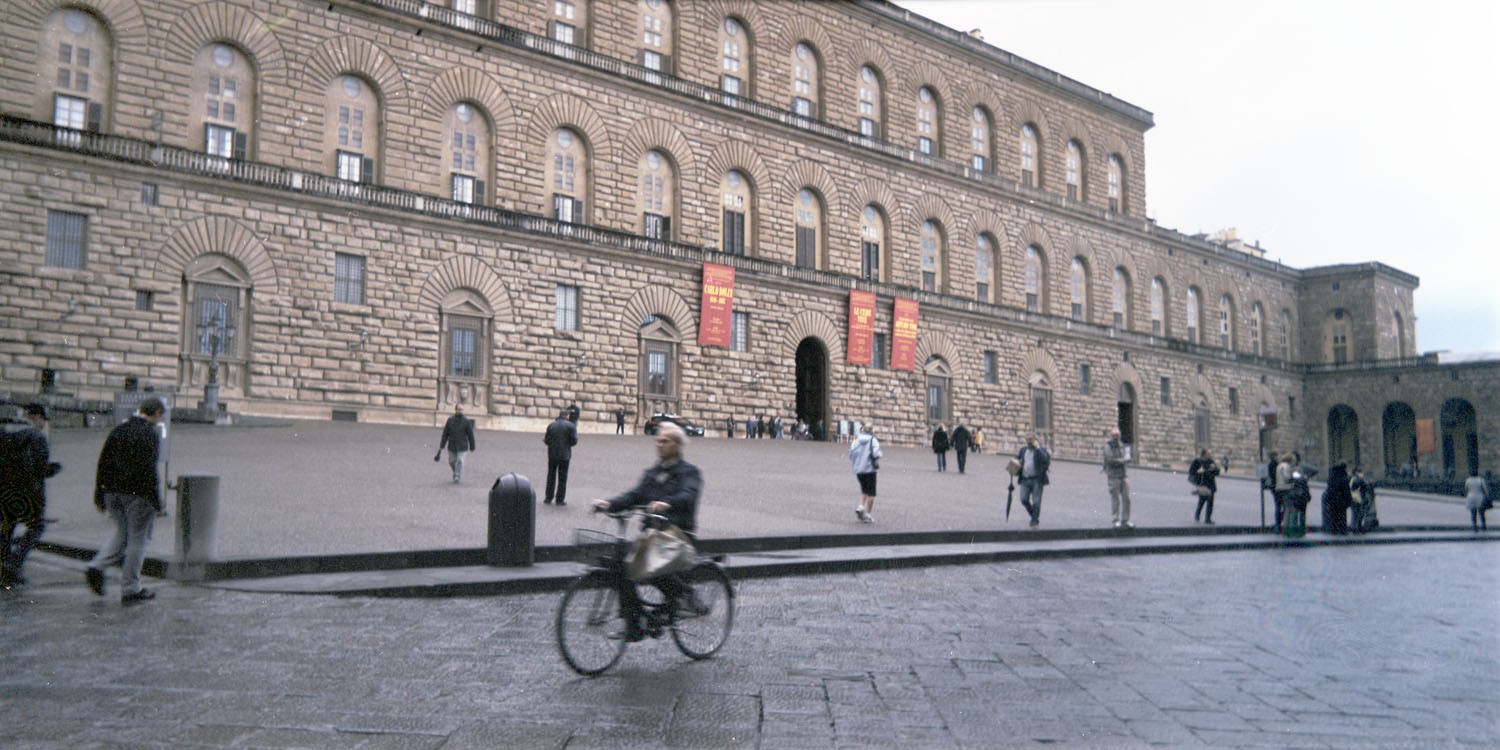
This is the facade of the Palazzo Pitti, originally home to the Medici family, later a residence for Napoleon Bonaparte, then the administrative center of the Italian government for the first few years after unification, and now an art museum. The shutter has a maximum speed of 1/125th of a second, which is fairly slow all things considered. I don’t know how fast an exposure this was – the camera doesn’t tell you what speed it is using – so I’m guessing somewhere in the 1/60th range given the amount of movement in the cyclist. That’s another thing you have to make peace with with this camera – unpredictability. I don’t know that I’m there yet. I’ve got about 12 more rolls of film from this camera to process in my black-and-white film, so we’ll see how I feel after getting through those.
Cyclist, Pitti Palace
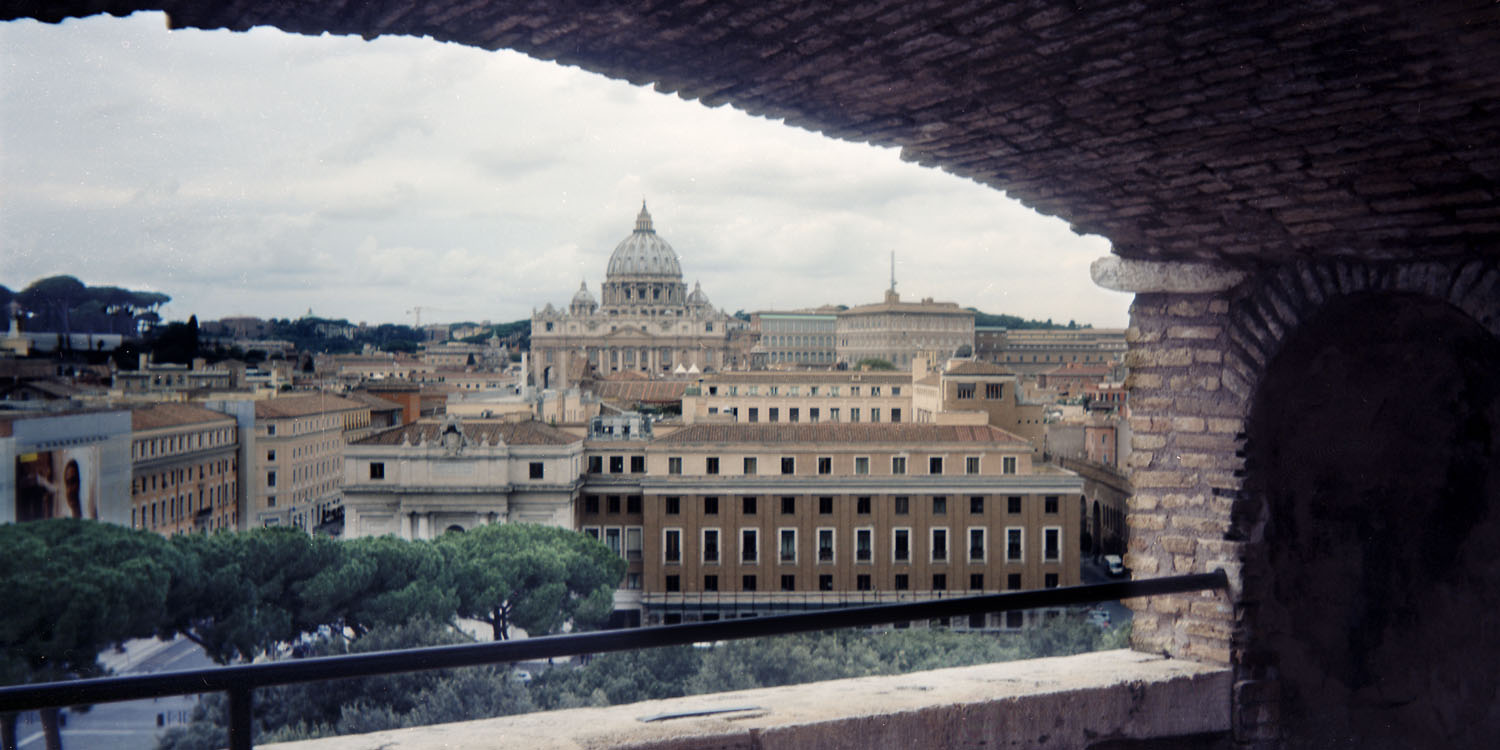
Sometimes the panoramic composition works phenomenally, like this one of St. Peter’s Basilica as seen from inside an arch on the Castel Sant’Angelo.
St. Peters From Castel SantAngelo
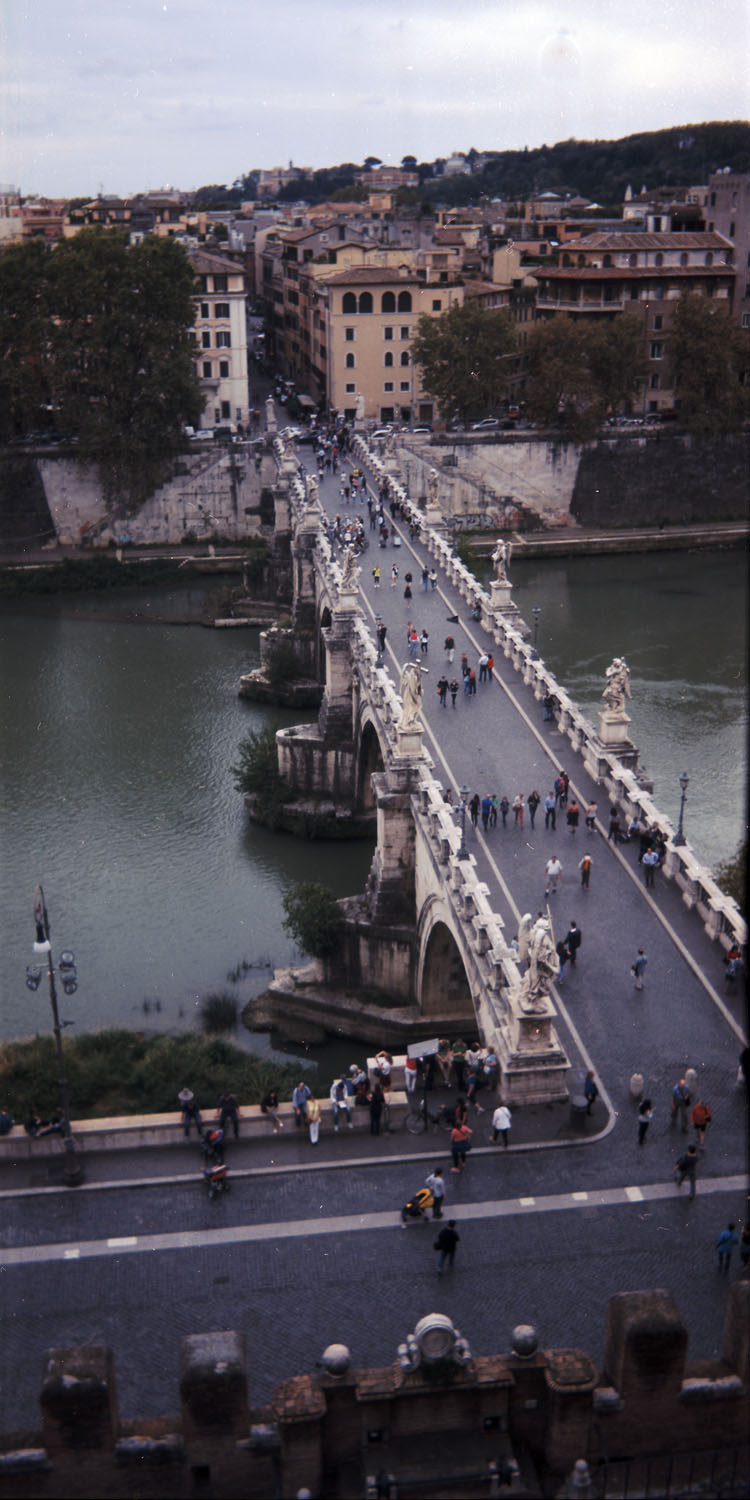
Other times, the panorama gives you compositional challenges that provide serendipitous solutions to themselves, like shooting the bridge in front of the Castel Sant’Angelo. The landscape around the bridge provides an S shape through the composition that leads your eye around and through the entire scene, not just pulling you from lower right to upper left and shooing you out of the frame at the end.
Bridge From Castel SantAngelo
Another argument in favor of cropping – the original of this included the heads of the patrons of the Castel Sant’Angelo cafe (yes, they have a cafe in the battlements of the Castel Sant’Angelo, which began life almost 2000 years ago as the burial monument to the Roman Emperor Hadrian).
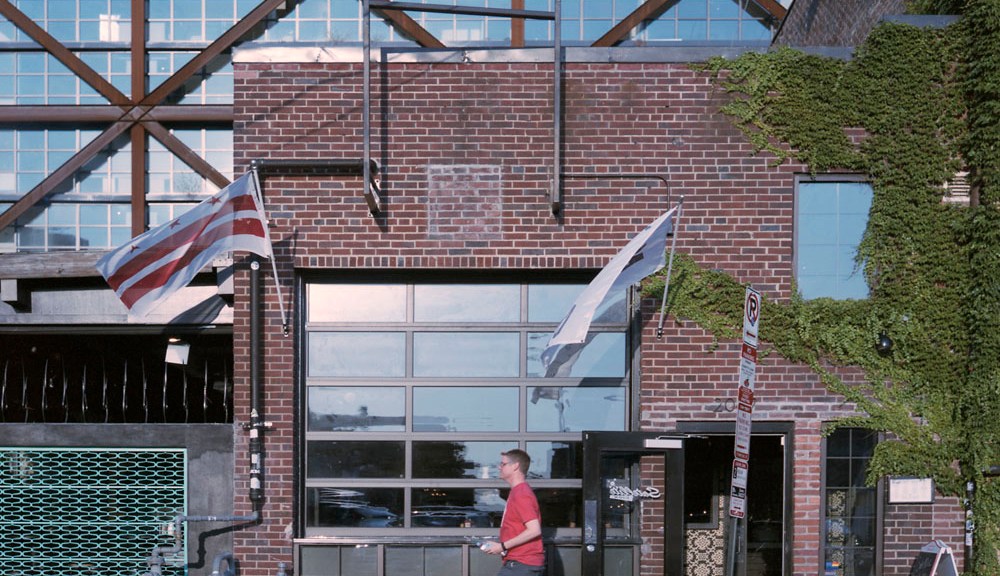
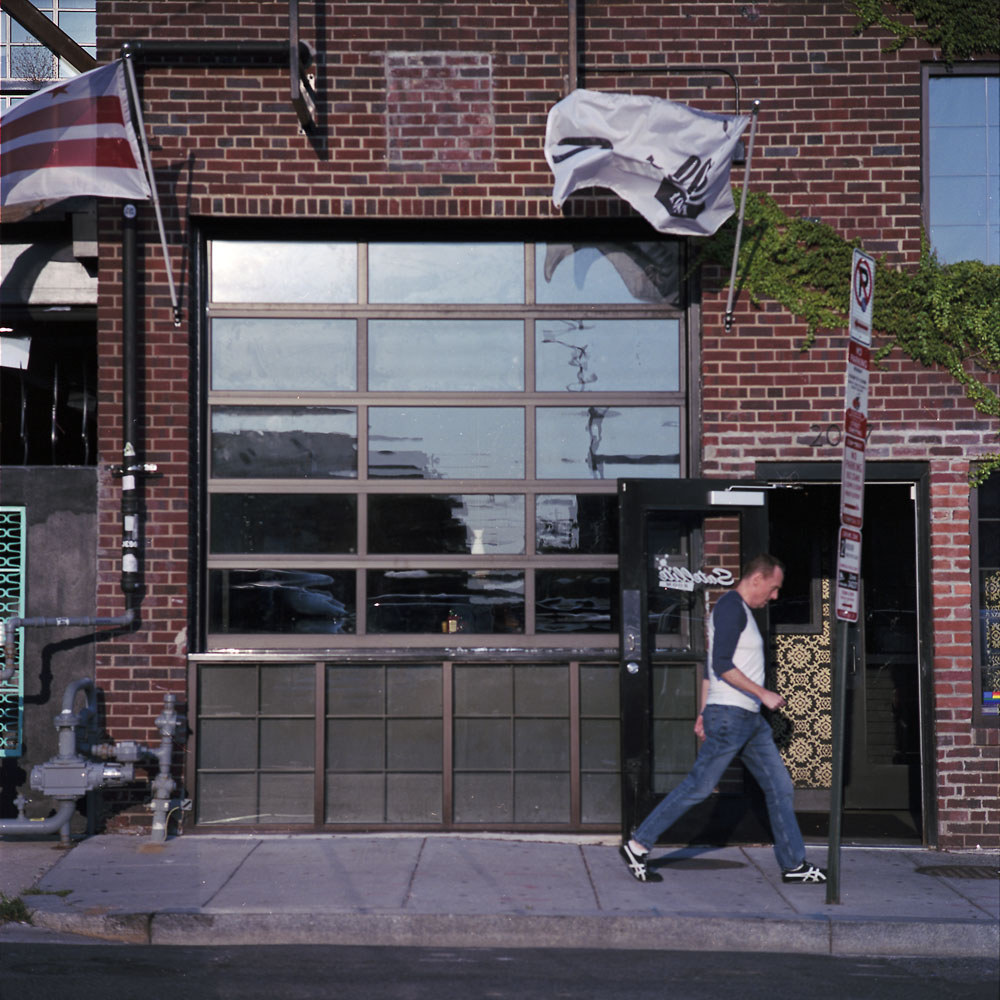
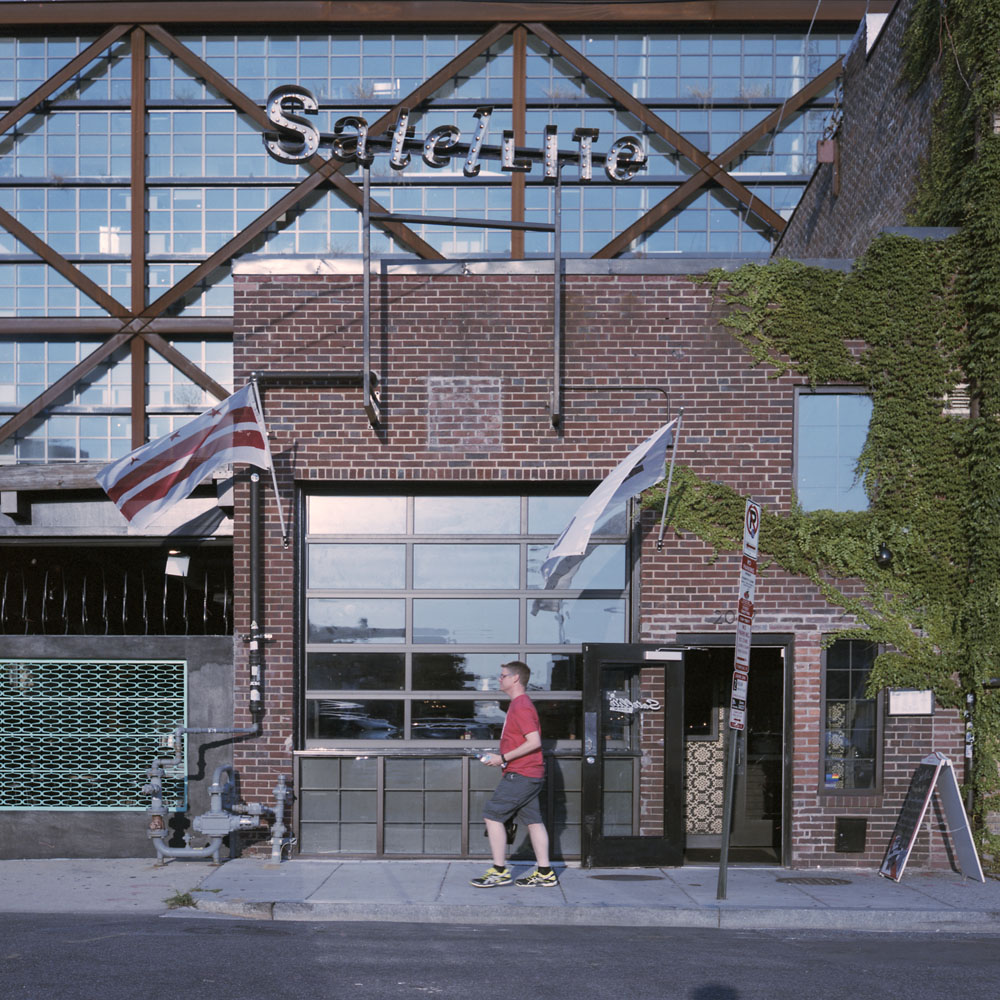
Just another little snippet of my neighborhood in Washington DC: the Satellite Room, a small bar/club on the back side of the 9:30 Club.
Satellite Room
You can see behind it the massive structure of the Atlantic Plumbing building, which will house a new outpost of the Landmark Theaters chain in addition to residential condos. Landmark Theaters specialize in independent, foreign and classic films, and this will be their third location in DC itself, with an additional location in Bethesda and one in Baltimore. Just another sign of the massive gentrification of the area – ten years ago it was a rare-for-DC industrial area with a few bombed-out row houses scattered between. Now it’s high-end theaters with bar service and million-dollar condos.
Satellite Room
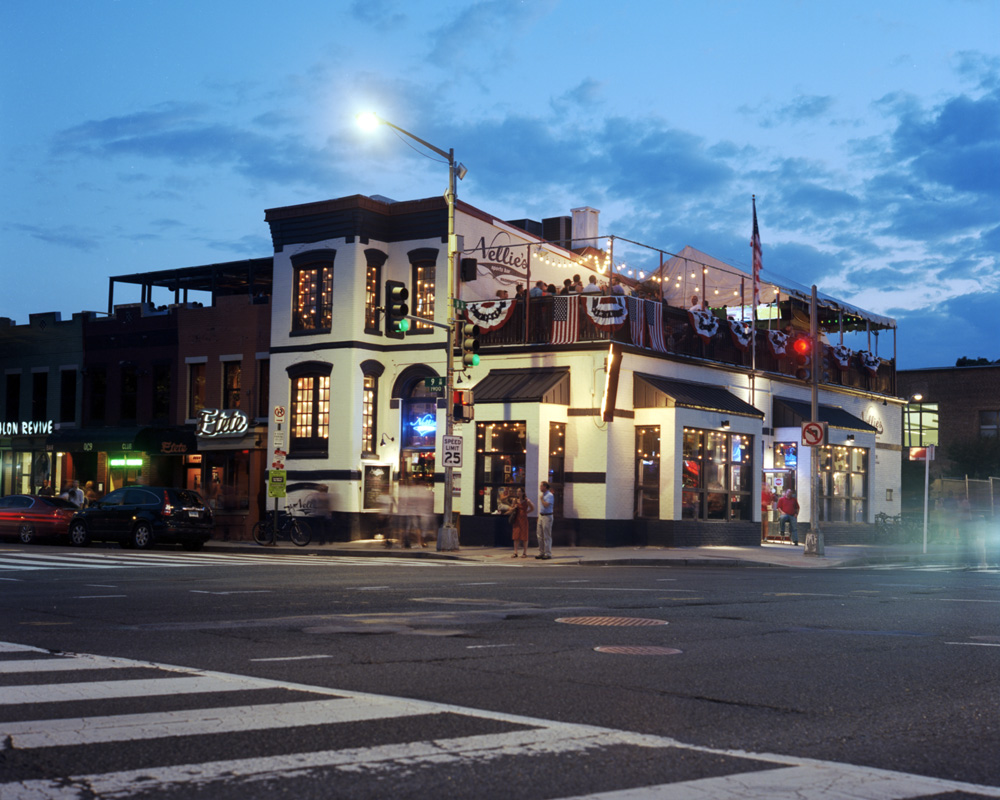
Clubs like the 9:30, the Satellite Room and Town helped pioneer the neighborhood making it desirable as a location to visit. With the more recent addition of Nellie’s (just across the street on 9th where U Street turns back into Florida Avenue)
Nellies Sports Bar, From Florida Avenue
and The Brixton, even the former dive bars have been cleaning up their acts and getting wine lists and 18 year old Scotch.
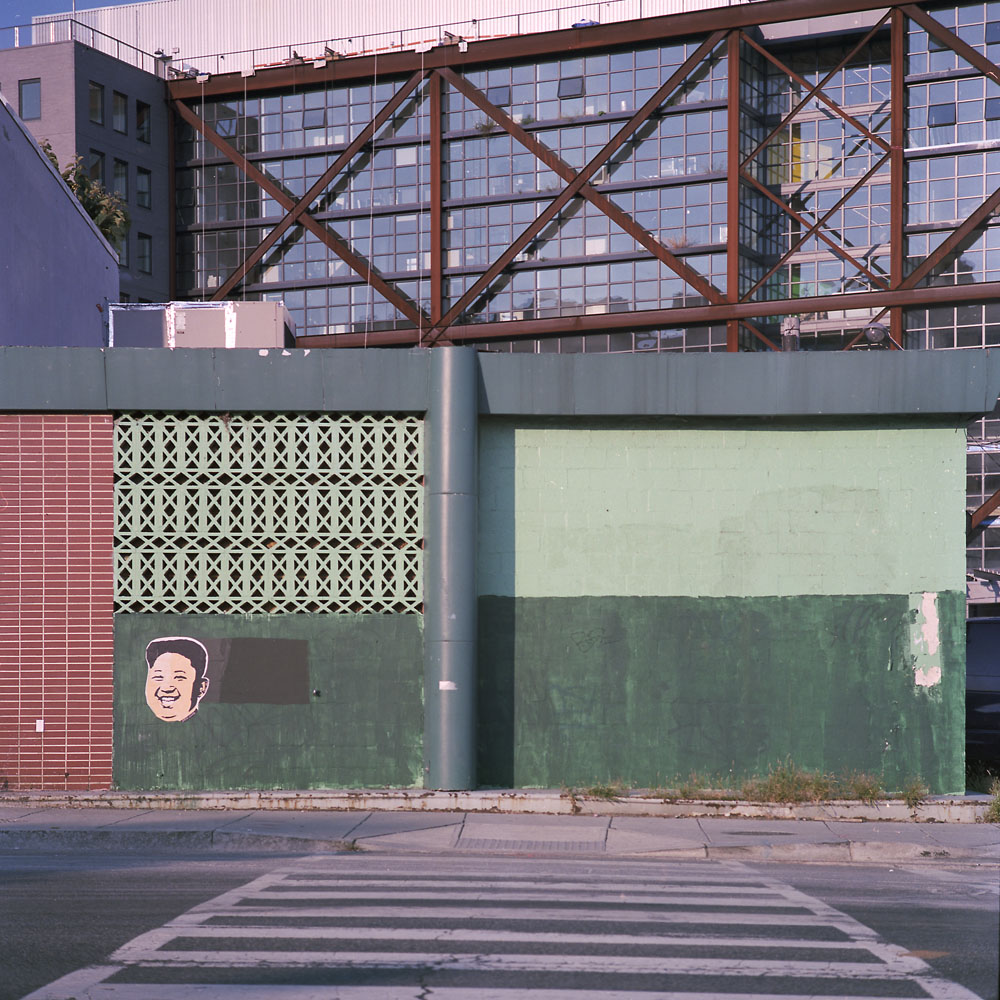
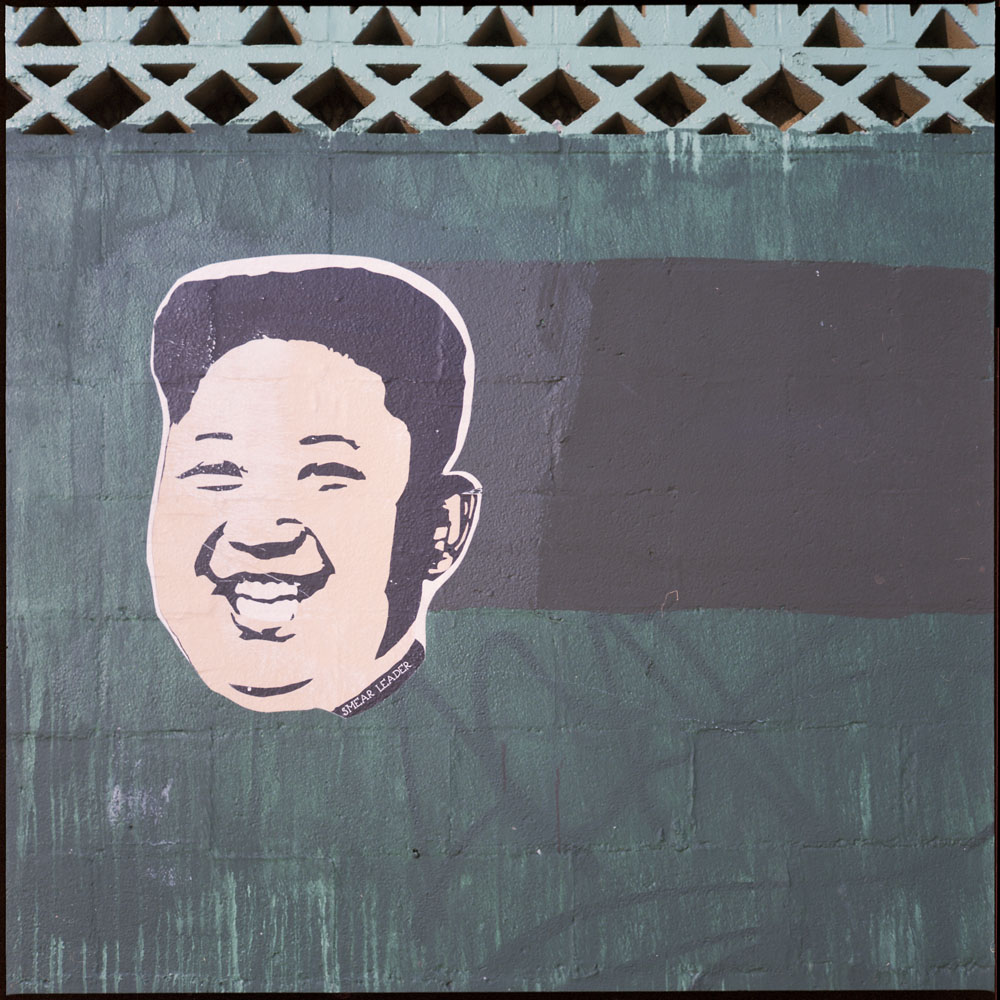
As seen in my neighborhood. Wheat-paste cutouts are becoming a new form of eco-friendly/sustainable/non-destructive graffiti. In this one, Kim Jong Un’s face has taken up residence on the wall of a building near the 9:30 Club.
Kim Jong Un Wall
Just because it’s gone hipster doesn’t mean graffiti has lost its edge for political and social commentary. Kim’s collar proclaims him “Smear Leader”.
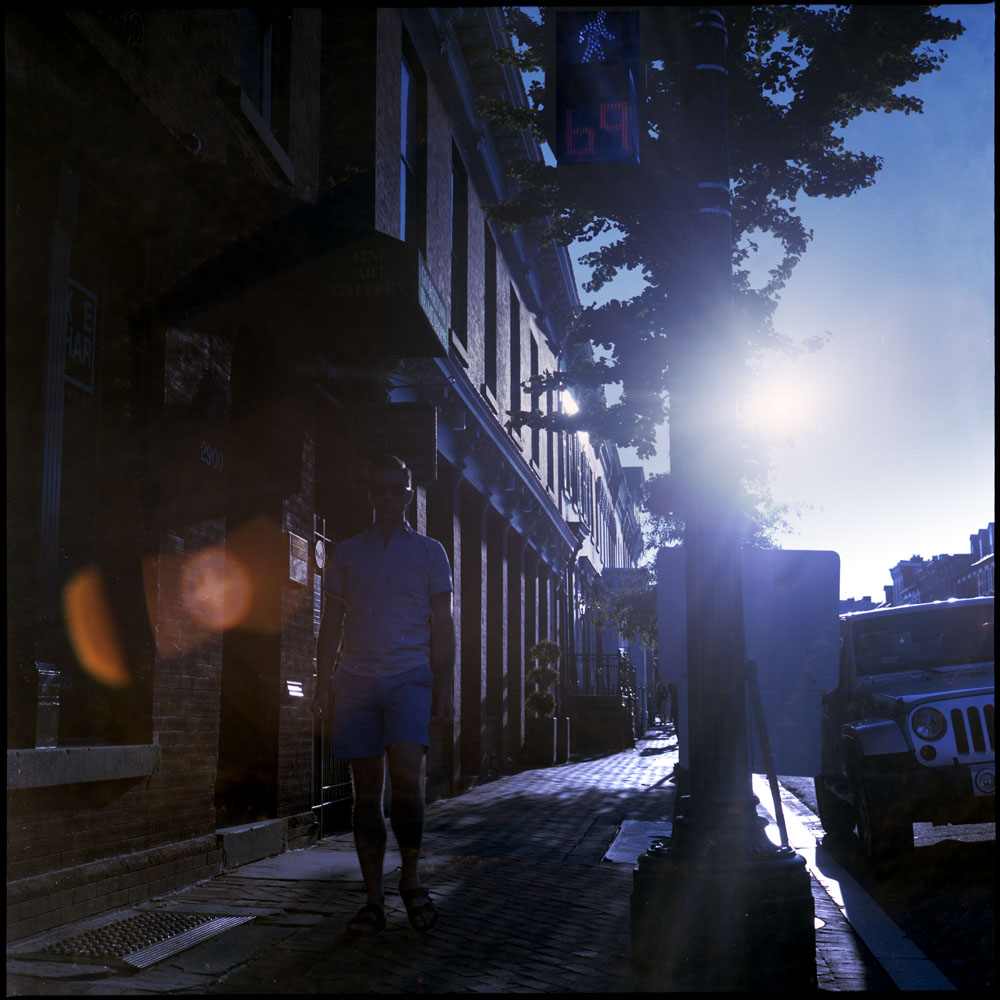
A sidewalk in Georgetown on M Street, with the waning sun going down and casting very long shadows on a late summer evening. I’ll leave it to you to figure out why the title is “69 Seconds”.
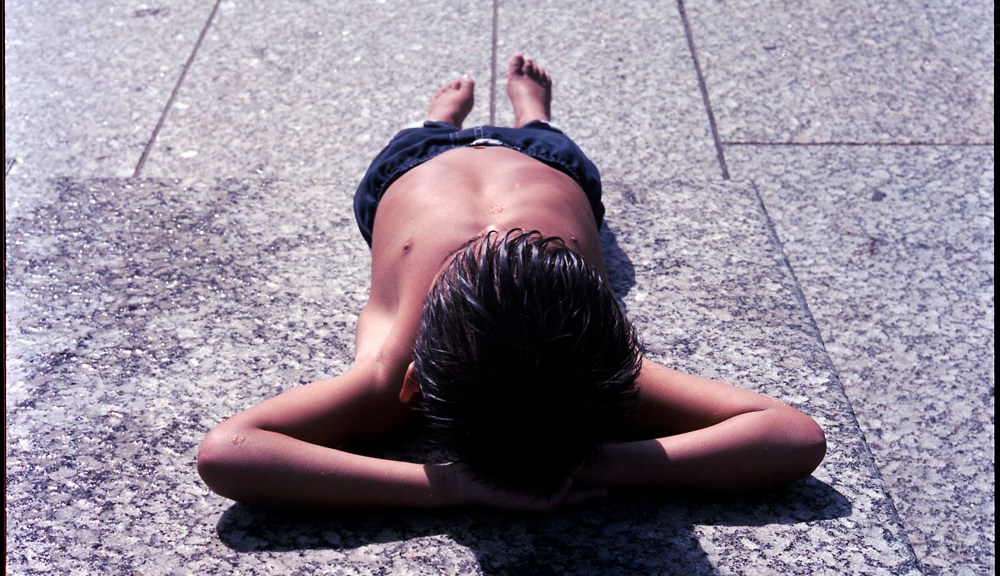
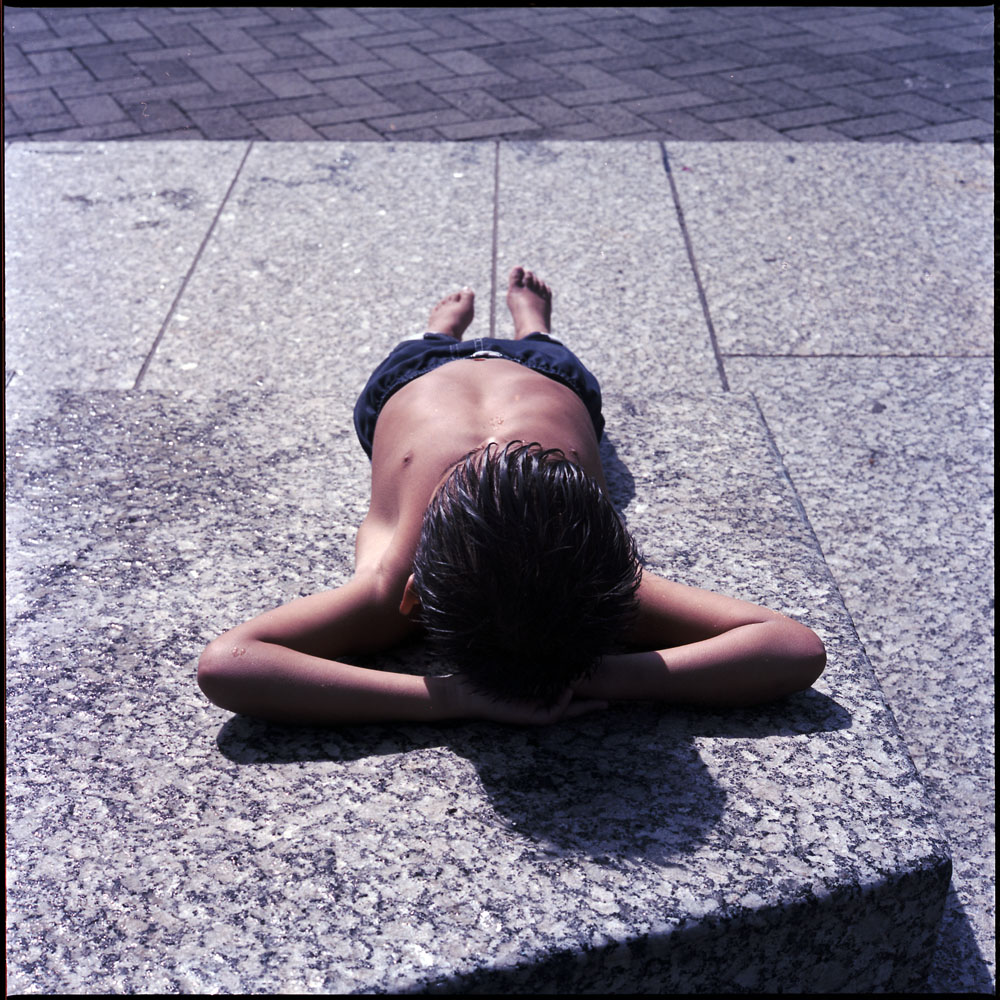
This was from the weekend before Labor Day, when it was still hot, the sun stayed up longer, and it still felt like summer wasn’t going to end. This boy was playing in the fountain at the Georgetown riverfront park. He stepped out to take a break and basked in the sun to dry off. I can remember that kind of in-the-moment joy of lying on a warm rock after swimming in cold water, just being there and experiencing it, without a thought for the past or the future. I need to do that again some time, soon.
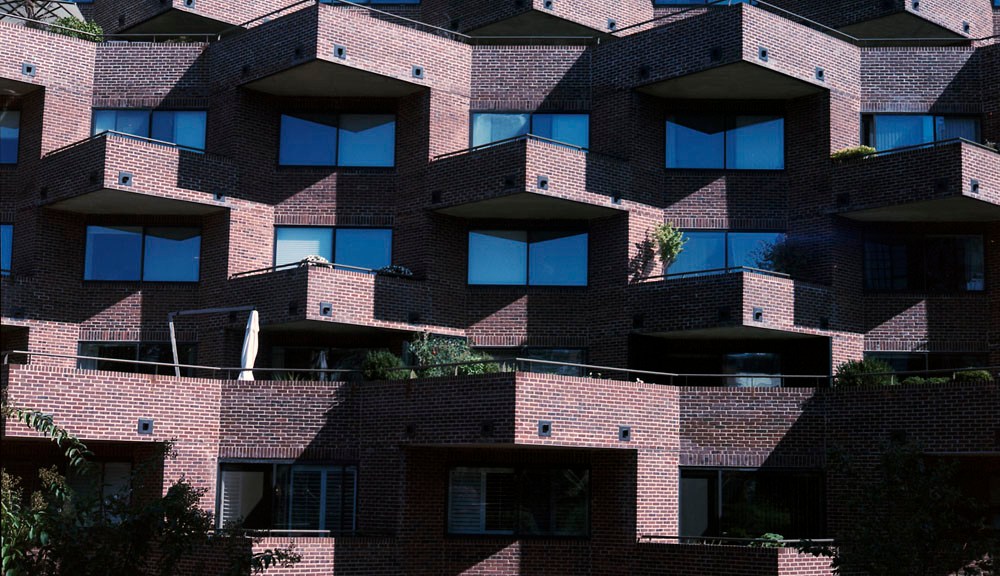
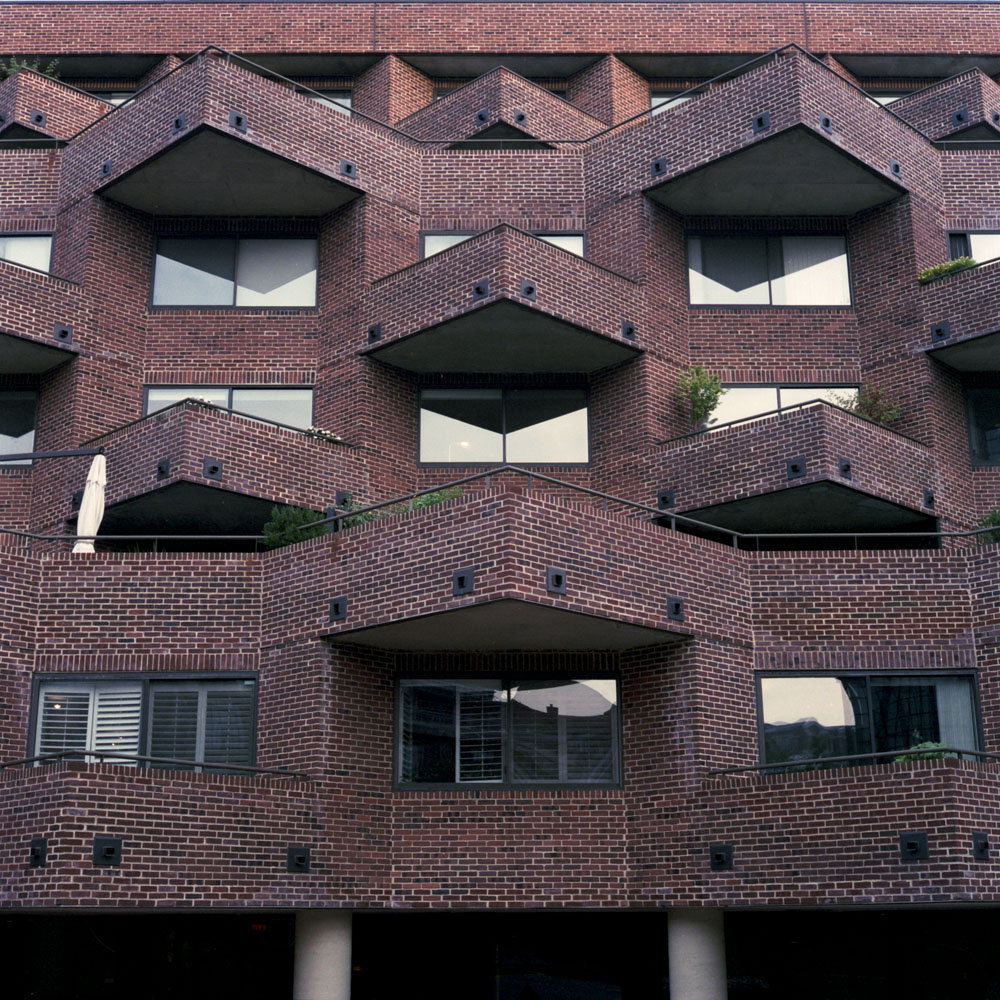
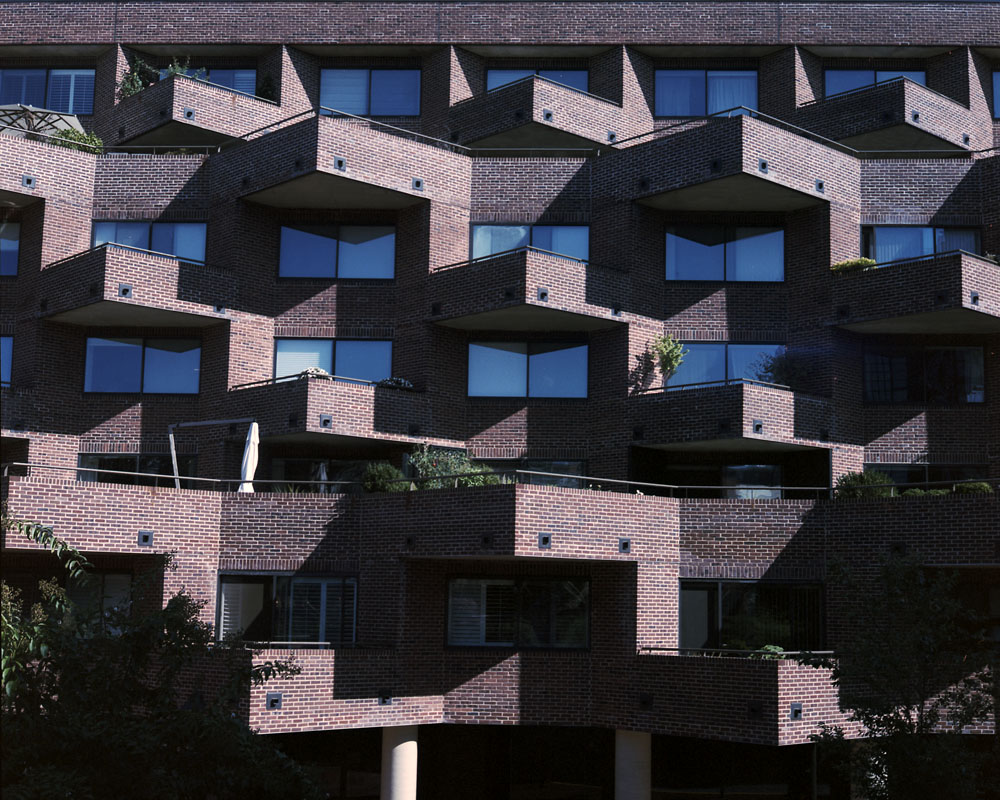
Two very similar shots of the same building. One in soft, diffuse light, the other in strong directional light. While both are about repetition of shapes and patterns, the one remains representational, the other, abstract.
Balconies, GeorgetownBalconies. Georgetown
And the difference between these two shots is about two hours. They were taken on different, but weather-wise similar, days, but one was taken around 4pm, the other around 6pm.
Key Bridge is one of the most iconic structures in Washington DC and a major attraction in its own right. It spans the Potomac between Georgetown and Rosslyn, and carries a tremendous volume of traffic between DC and Virginia every day.
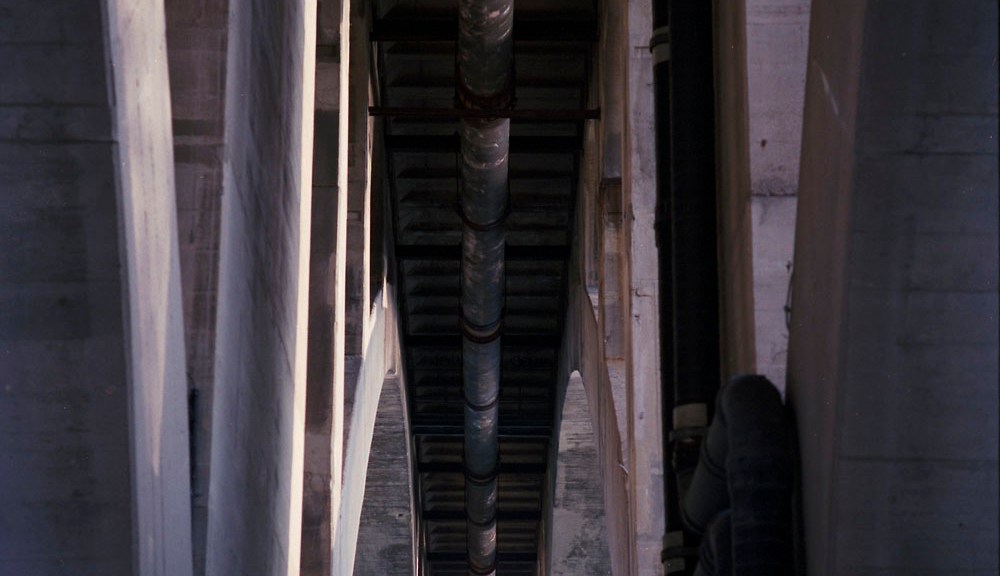
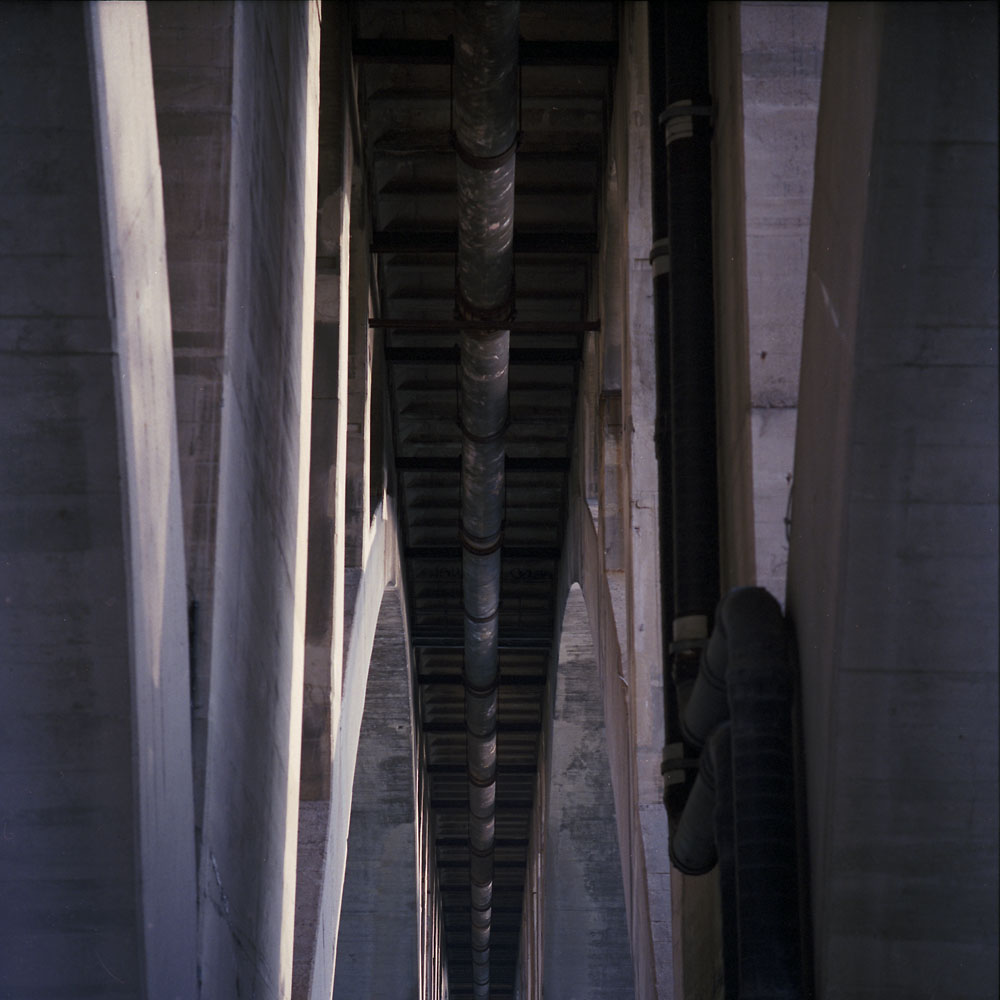
The view of the underside is one most people never get, of this or any bridge for that matter.
Under Key Bridge
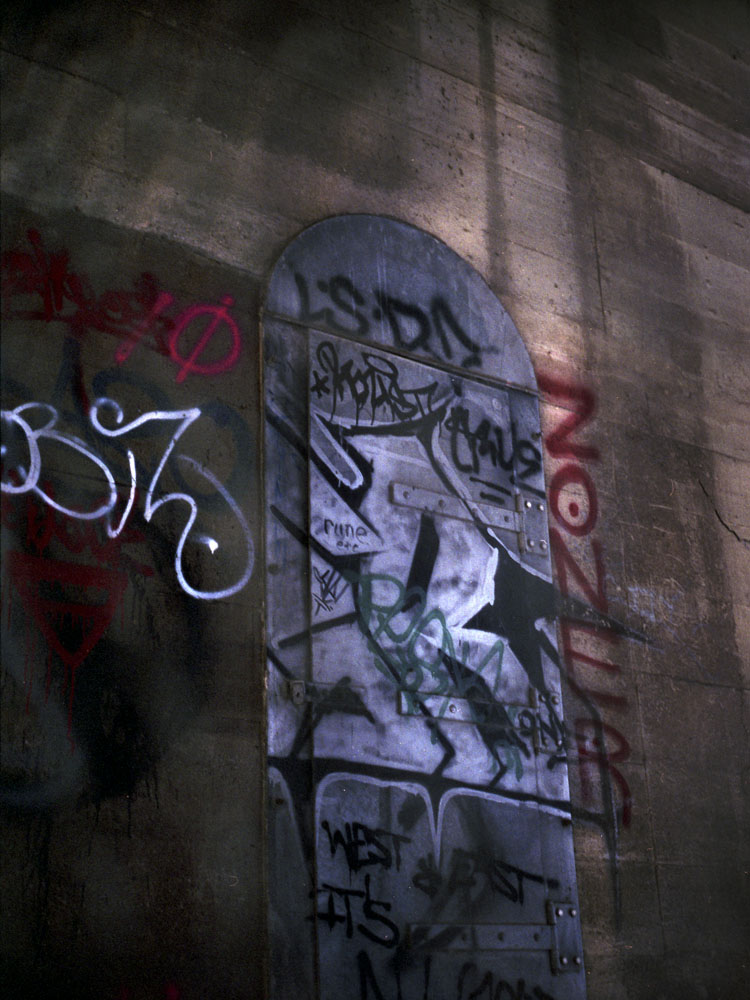
Key Bridge is chock full of strange hidden nooks, like this service door to something in the infrastructure. Despite being sealed off behind chain-link fencing, people have managed to get in and graffiti it.
Service Door, Key Bridge
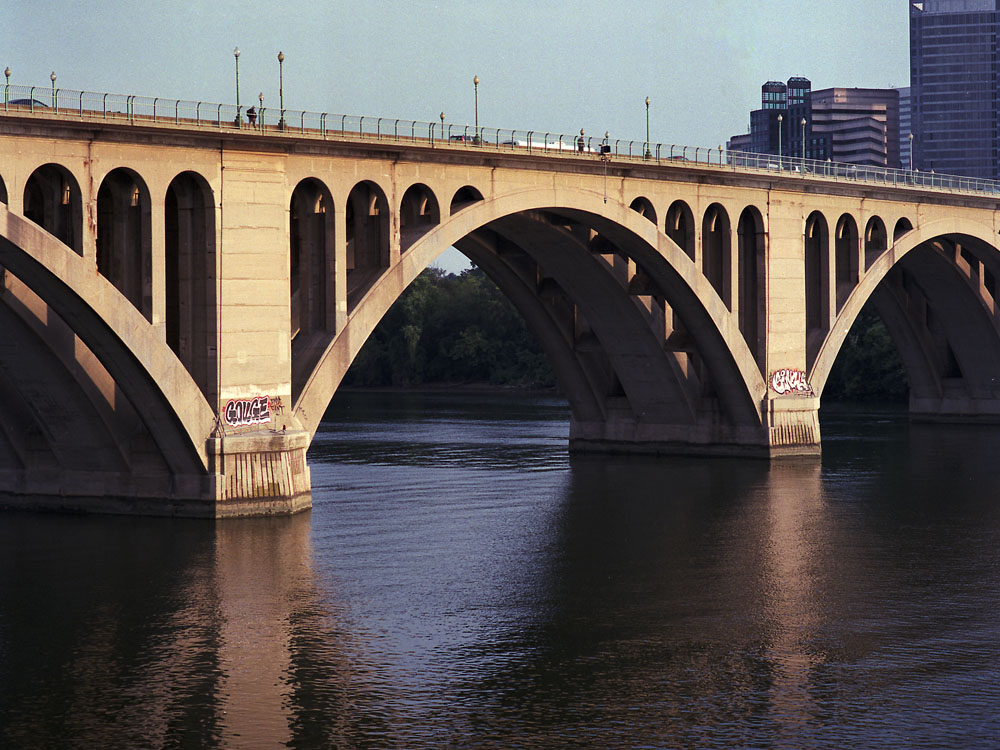
The prototypical view of Key Bridge, from the West side. I’m fascinated by how someone managed to get to the bottoms of the piers and graffiti them. You’d have to either have a boat, sail up to the foot of the pier, then climb up 20+ feet from the waterline, or somehow rappel down from the pedestrian deck of the bridge. Not a recipe for success on either front, as I’d imagine you’d be spotted very quickly and arrested.
Key Bridge, Evening, West Side
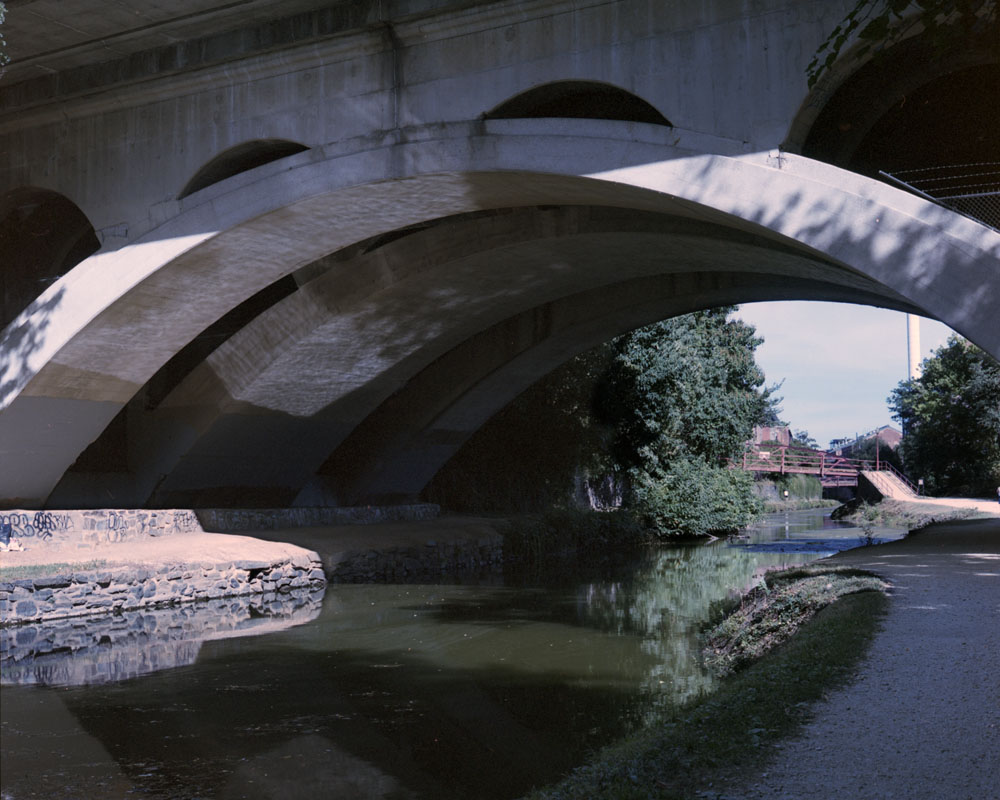
Here’s a view of the underside where the bridge crosses the C&O Canal.
Canal, Under Key Bridge
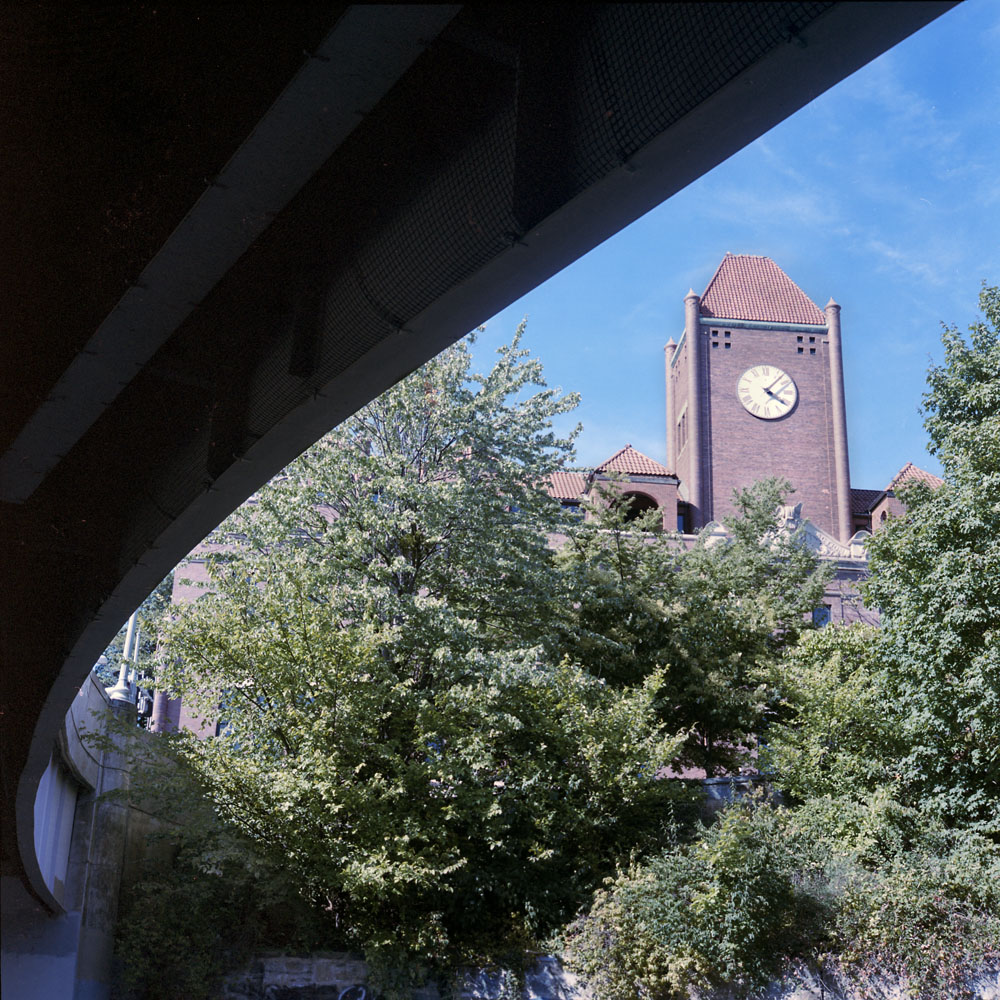
This is the tower of the old Trolley Barn, which used to house the streetcars that plied DC in the late 19th/early 20th century. Now it is office space on the upper levels. The view is from under Key Bridge, where the on-ramp to the Whitehurst Freeway (really just an elevated bypass to get around the street traffic of Georgetown) splits off of Key Bridge.
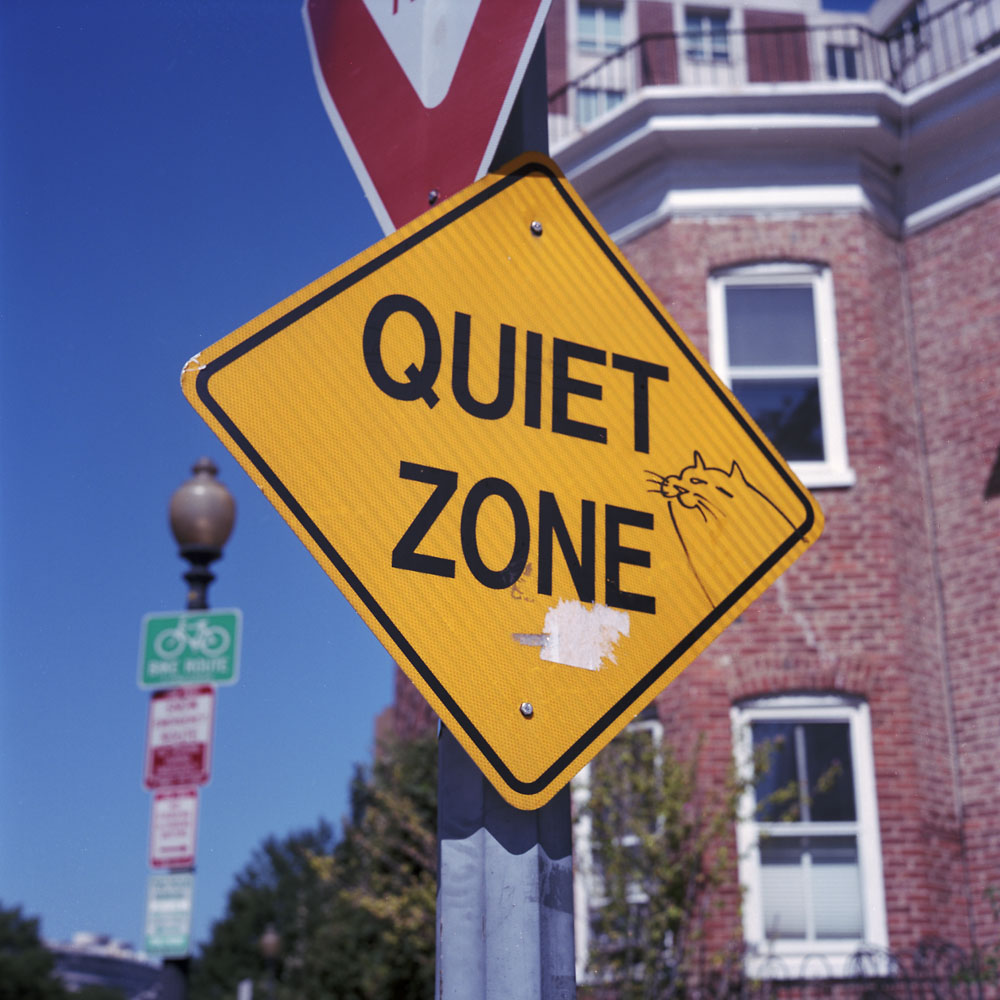
The “Quiet Zone” sign is somewhat ironic, as it is on the edge of the George Washington University campus and three blocks from the GWU Hospital. It does seem to work, at least when I’m in the area, as I don’t see roving hordes of GW undergrads partying it up on the street, but it of course has zero impact on the ambulance sirens.
Quiet Zone
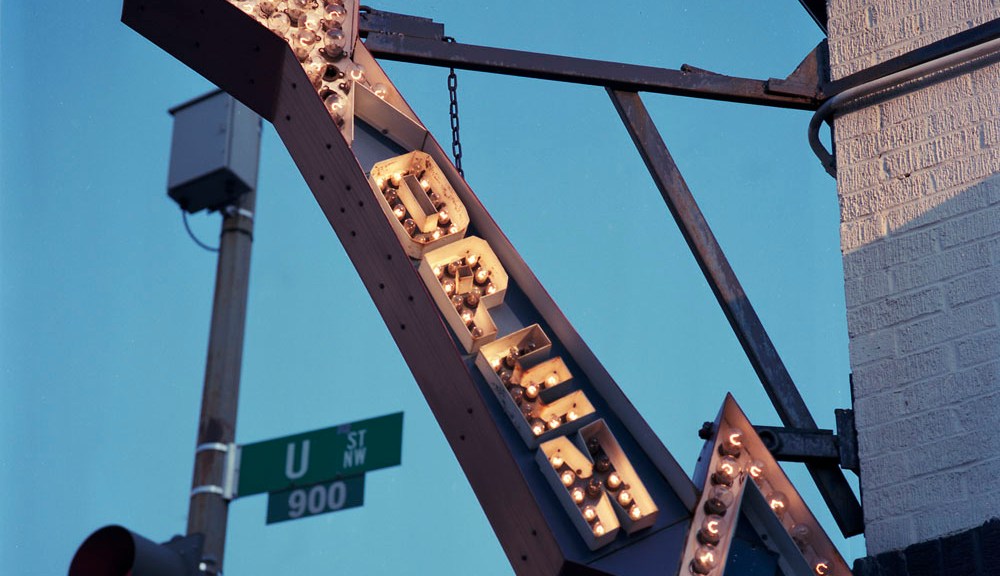
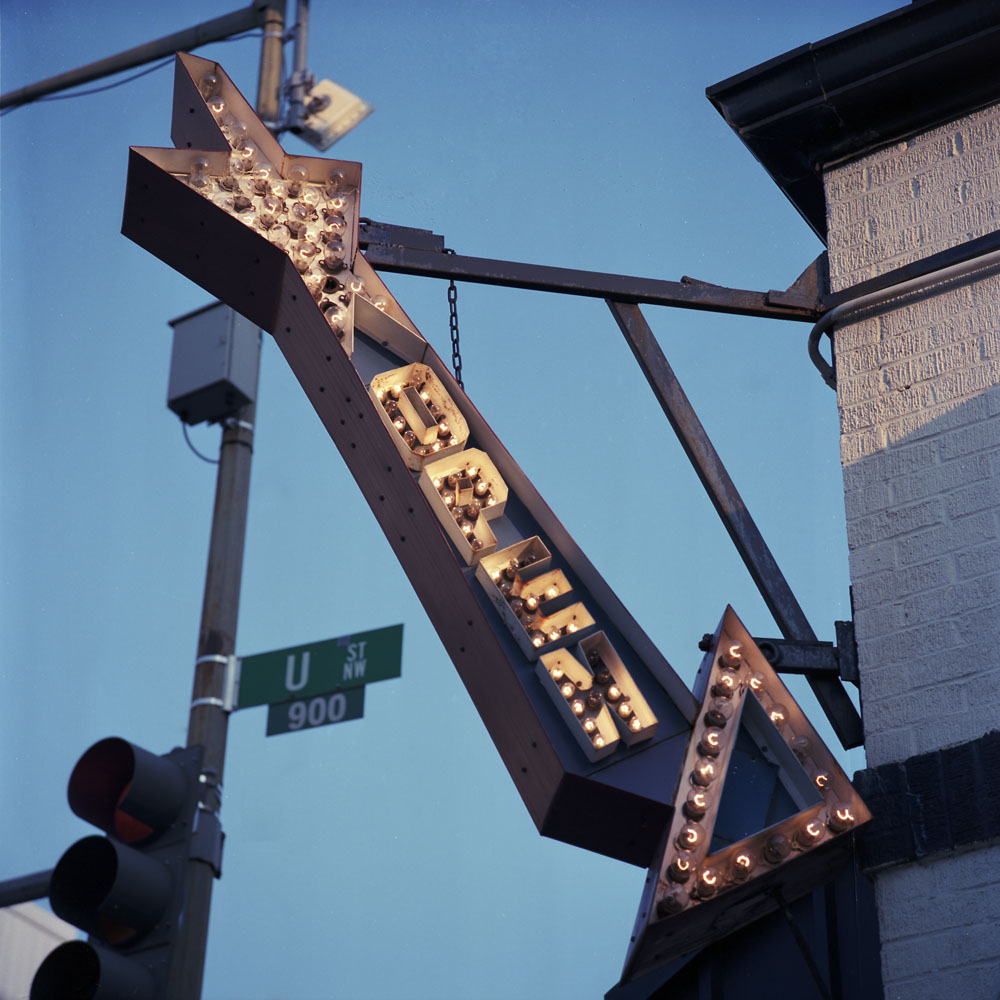
The “Open” arrow is outside Nellie’s Sports Bar, the first gay sports bar perhaps anywhere. What is a gay sports bar? Well, it’s a gay bar that has lots of very large flatscreen TVs, all of which are tuned to various flavors of ESPN, and it actually sponsors a number of teams in various gay sports leagues around the city. The “Open” arrow is a found object they re-purposed and fixed up to put outside the bar.
Nellies Is Open
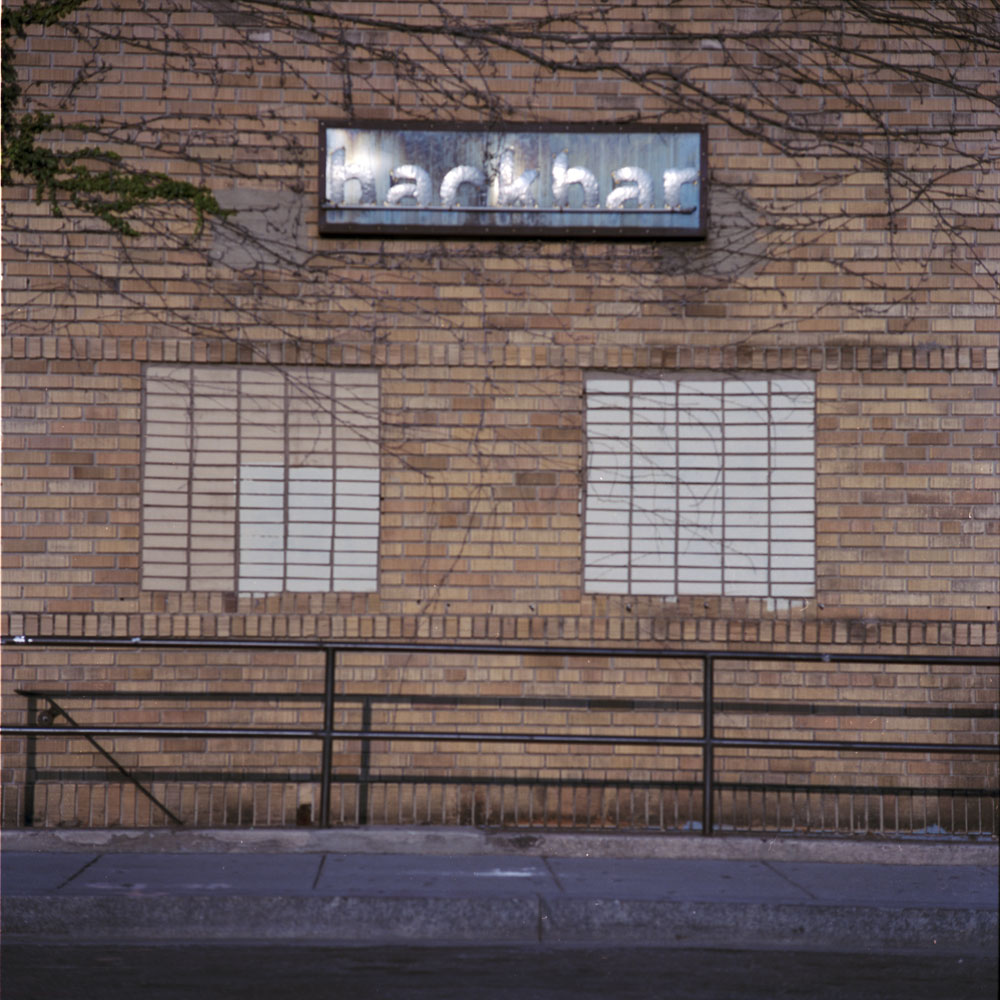
This is the sign for the Backbar, part of the famous 9:30 Club. The 9:30 Club is a major rock-n-roll venue and has been around since 1980. It used to be located much further downtown, at something like 9th and F streets, but maybe 15 years ago moved to the current location which is roughly 9th and V Streets. They host major acts for a “small” venue – Billy Idol, Jimmy Somerville are two I can remember off the top of my head.
 dcphotoartist