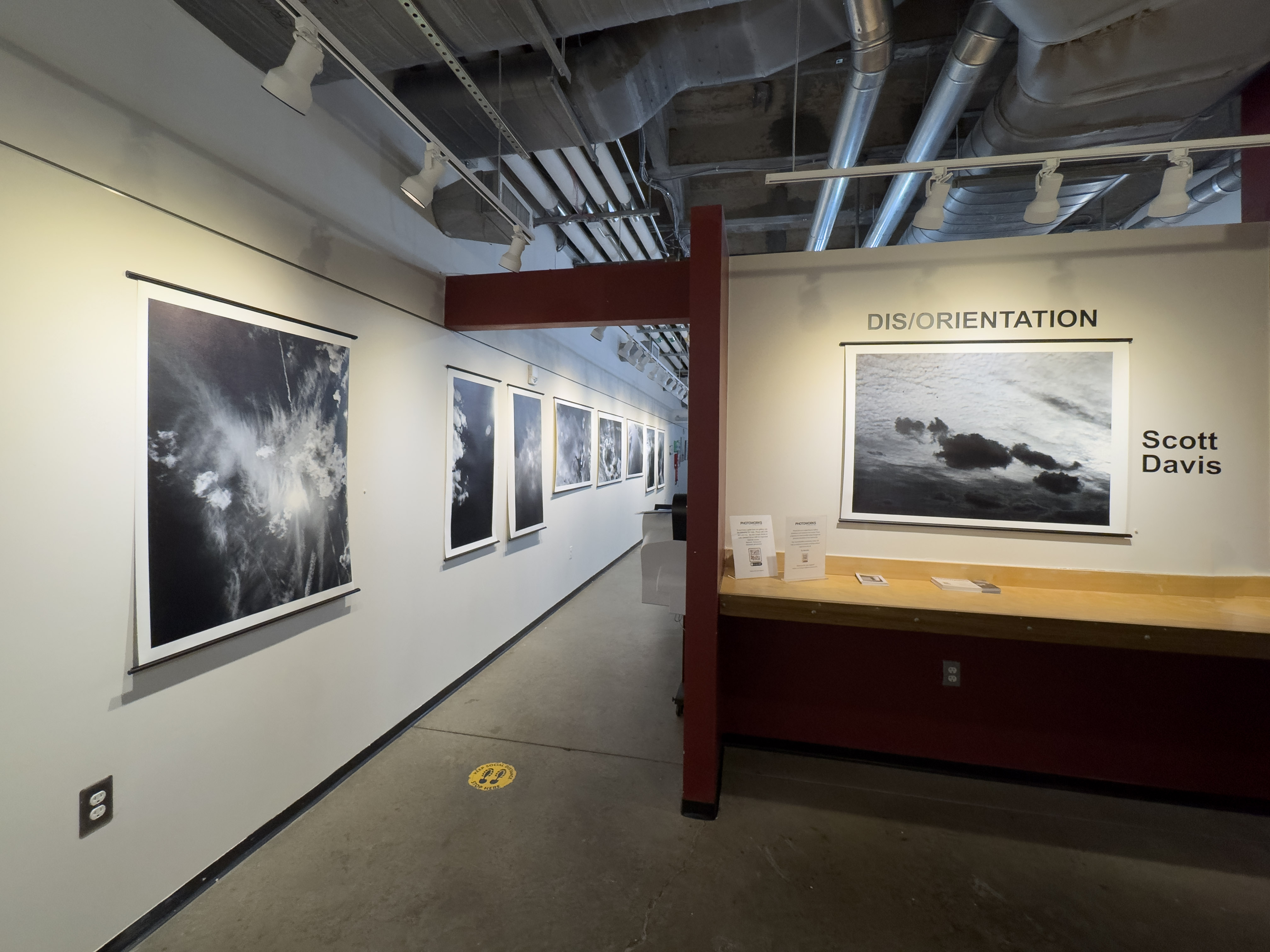
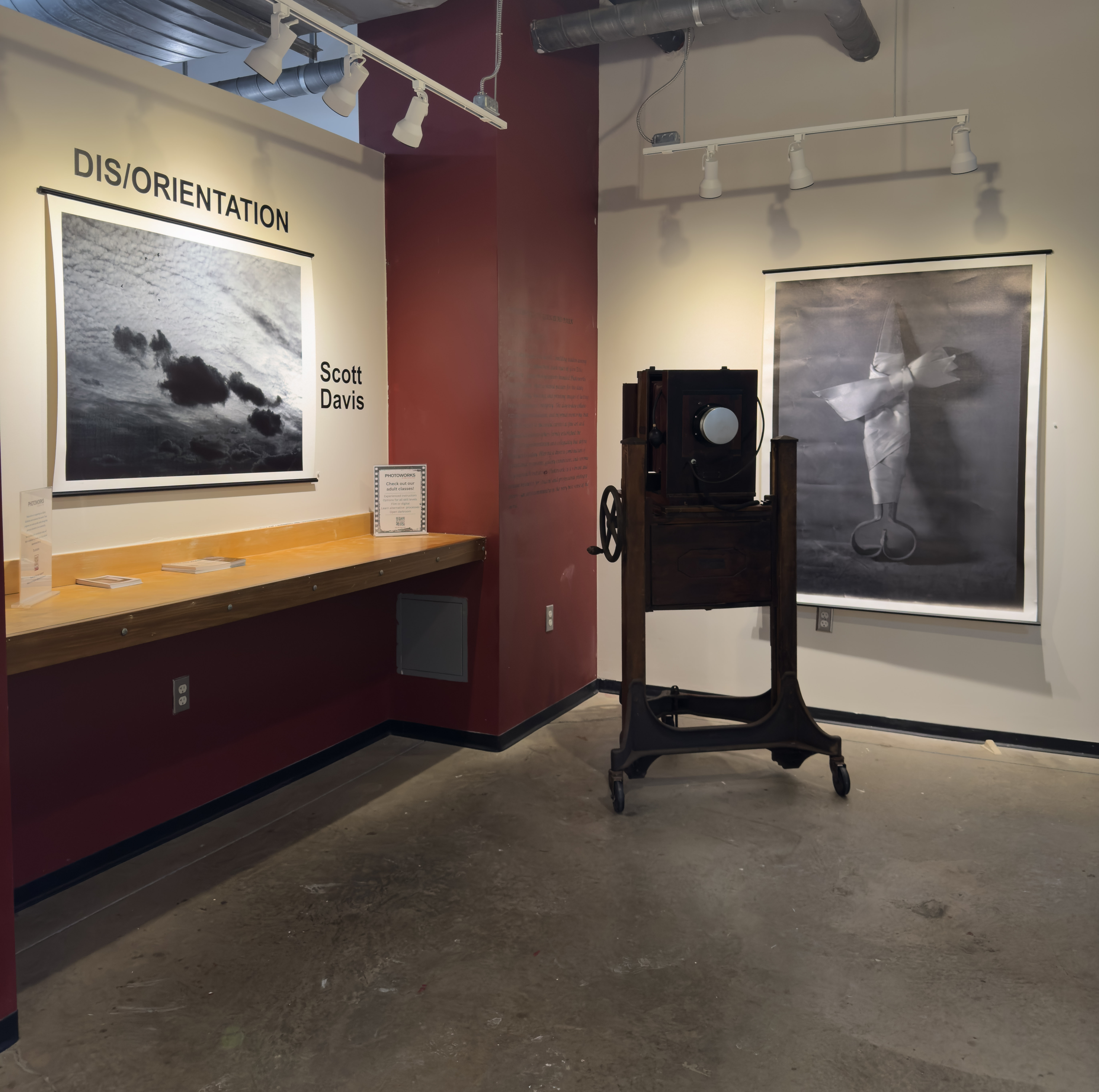
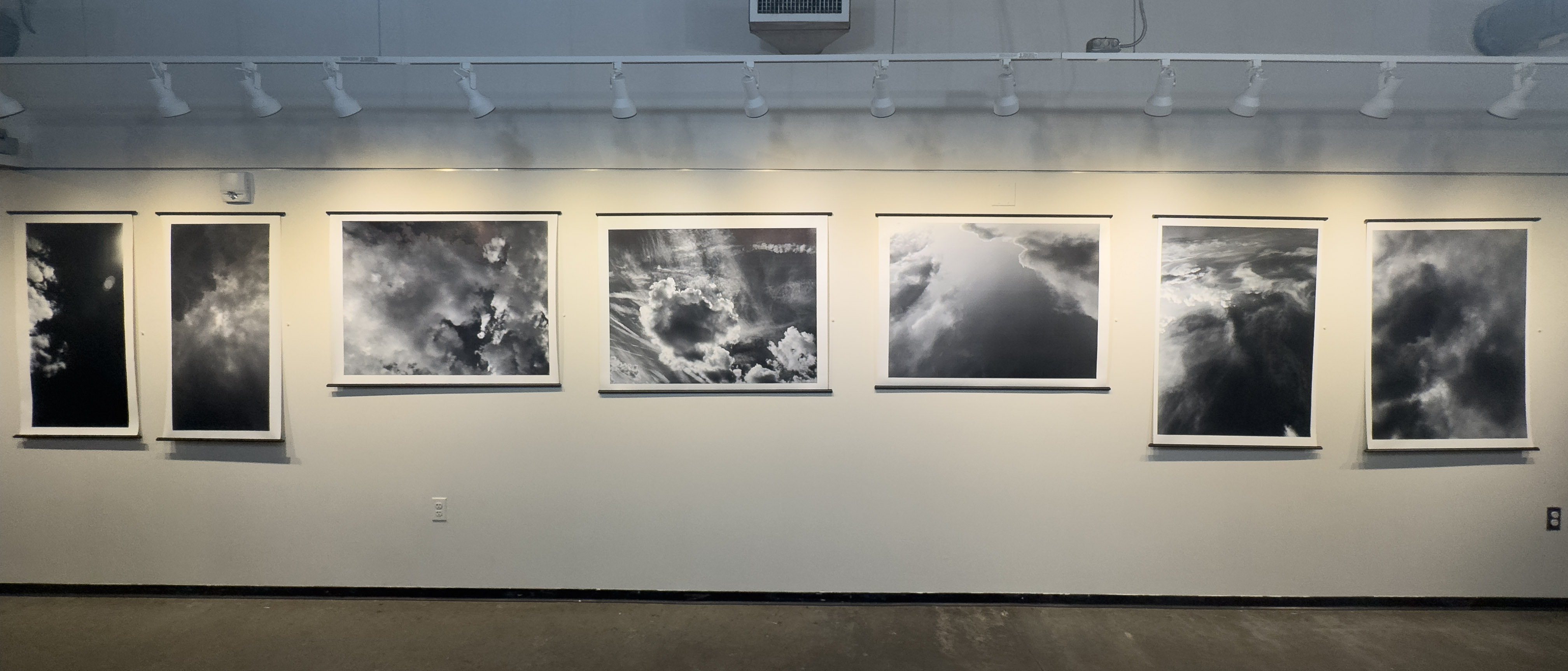
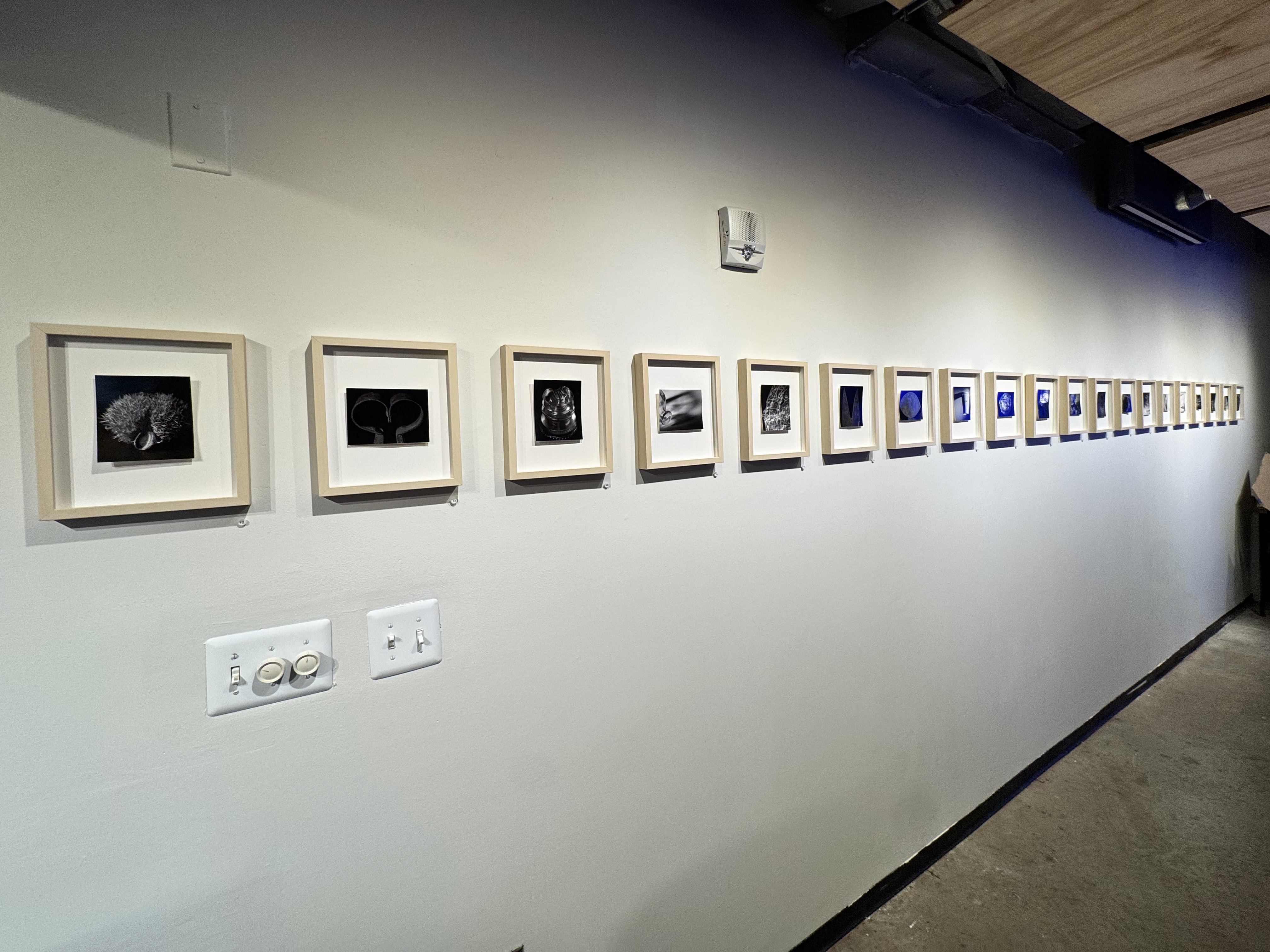
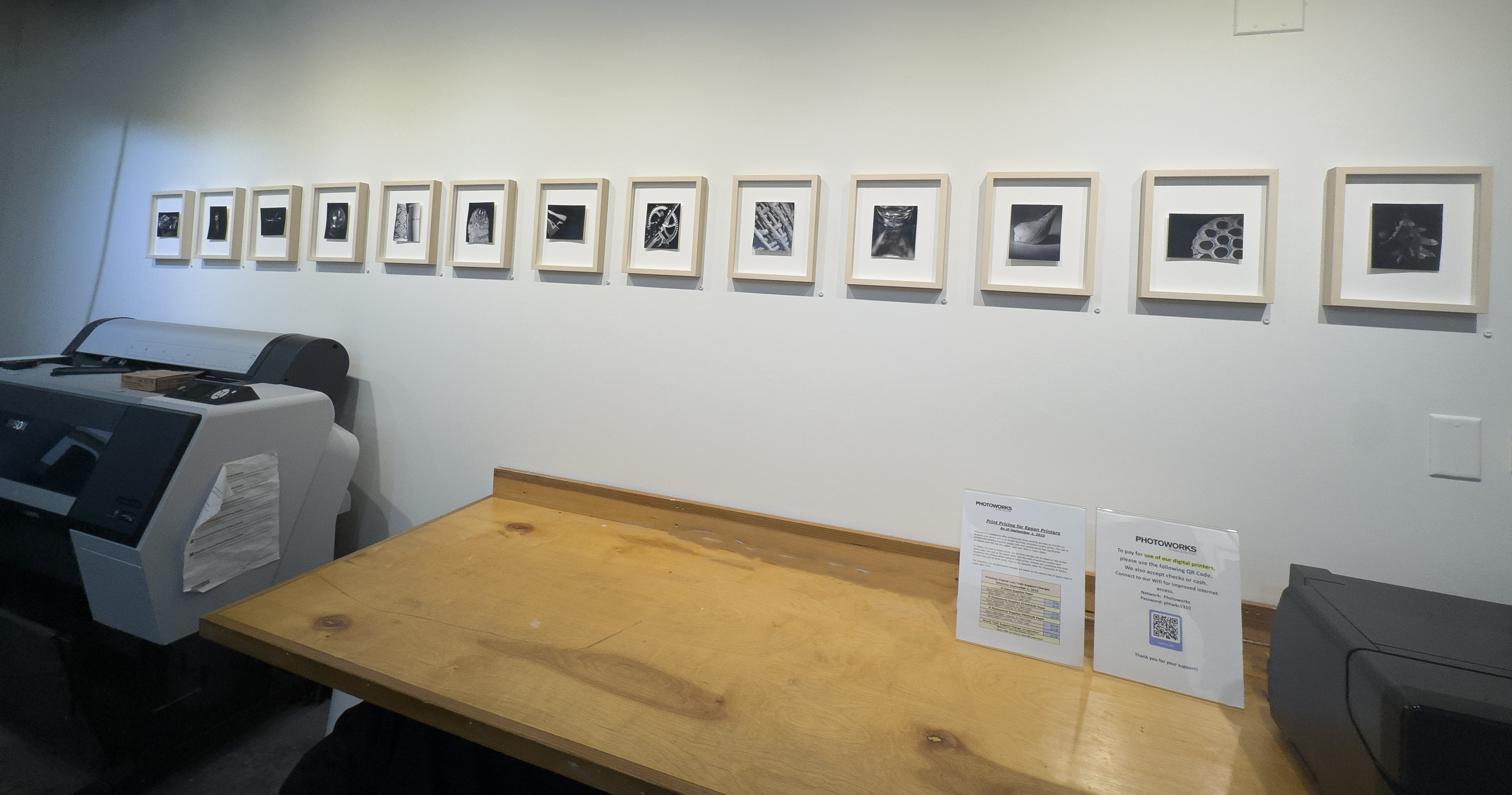
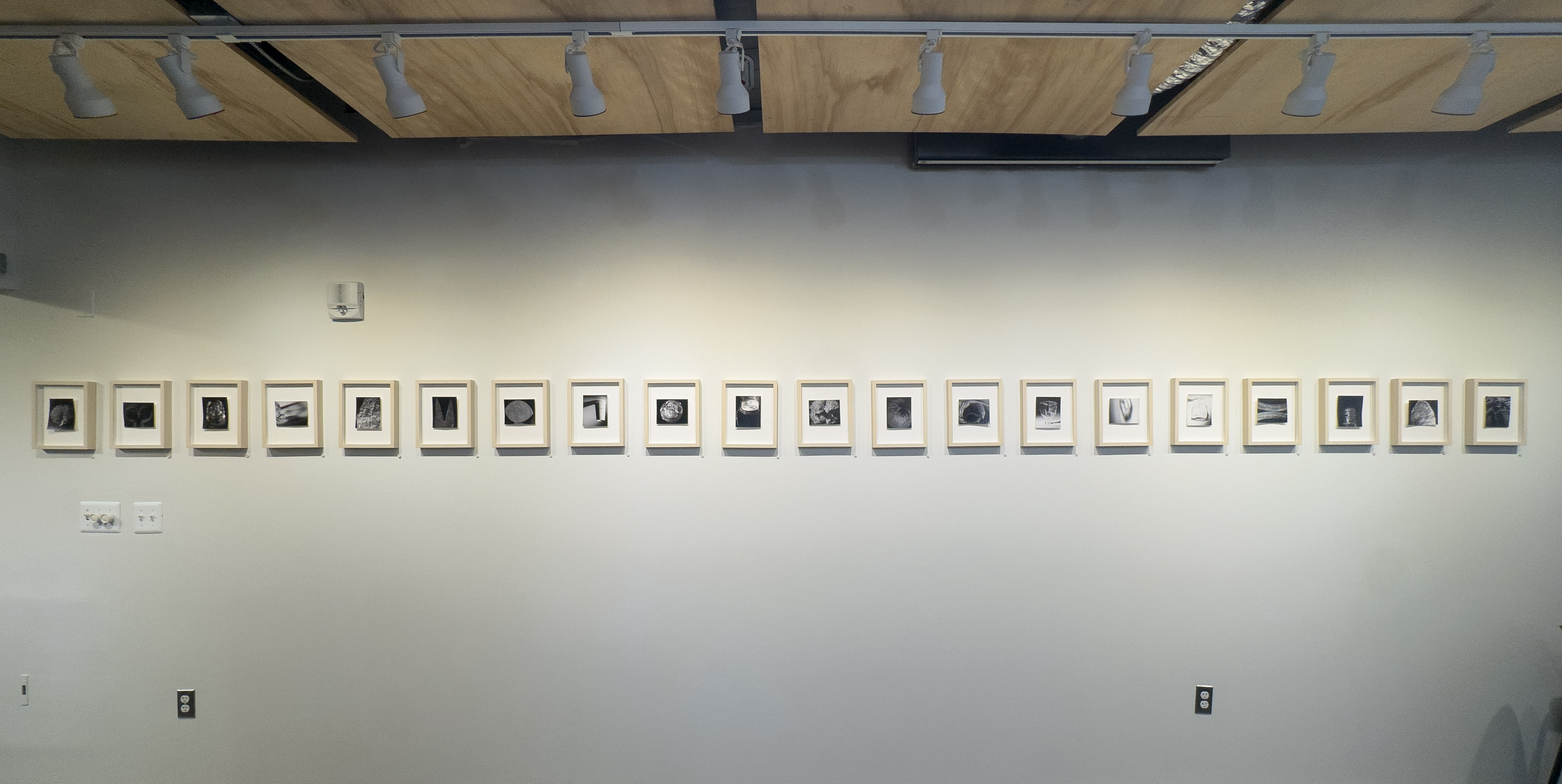
I currently have up on display through March 8th at Glen Echo Photoworks a solo exhibition entitled “Dis/Orientation”. The exhibit consists of 45 images in three rooms. Two rooms are devoted to very large format (20×40, 30×40 and 40×50 inch prints) of images of clouds without horizons or other reference points. The other room is the opposite extreme – 4×5 inch prints of still life images of objects shot on a seamless backdrop, also removing reference points for size, direction, or other context.
The Washington City Paper reviewer Louis Jacobson had this to say about the show:
In his new photography exhibition, Dis/Orientation, Scott Davis doesn’t leave the small things to chance. His exhibit comes in two halves: large, decontextualized images of clouds, and small black-and-white still lifes of common objects. Davis’ clouds have a free-floating approach that owes a clear debt to Alfred Stieglitz’s famous series of “equivalents,” which Davis acknowledges in his artist’s note. Less obviously, Davis credits Chinese and Japanese scroll paintings, a connection evident in the images’ scroll-style hanging. For the second grouping, the presentation also matters: Davis mounts his low-key still lifes without mattes or glass, allowing their natural curling to break the wall of three dimensionality and remind the viewer that photographs are objects, too. Davis’ strongest cloud images leverage high-contrast shades of black and white to play with what the viewer might expect clouds to look like; one of his small still life images, featuring the shadow of an object, channels the same vibe. Of the still life grouping, the most memorable image features what may be the humblest item in the lot: a throwaway latte cup. What makes the image stick is the fact that the cup seems to be hanging from its lid, subverting all visual and gravitational expectations. Scott Davis’ Dis/Orientation runs through March 8 at Photoworks, 7300 MacArthur Blvd., Glen Echo. (Open Saturday and Sunday.) glenechophotoworks.org. Free. — Louis Jacobson
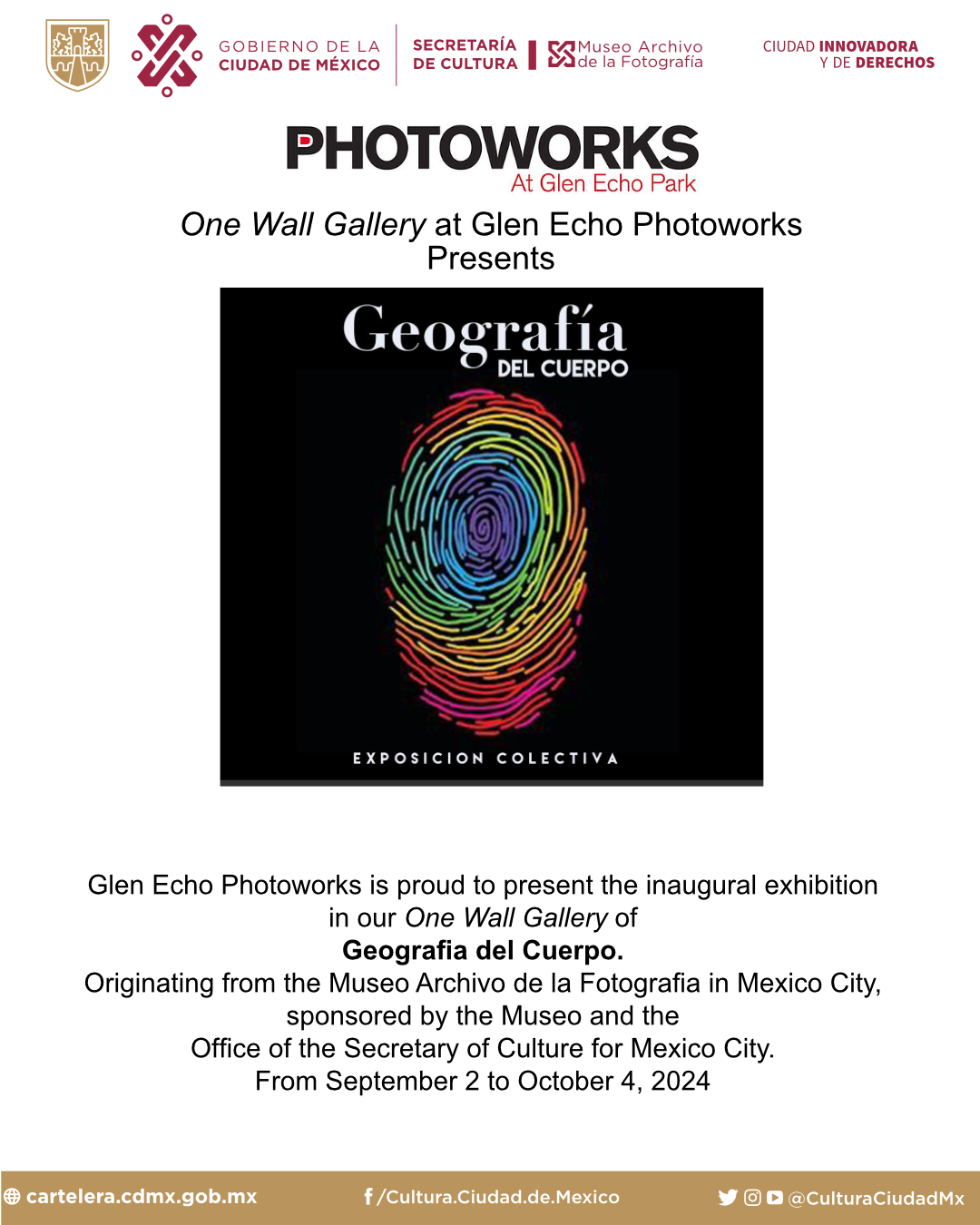
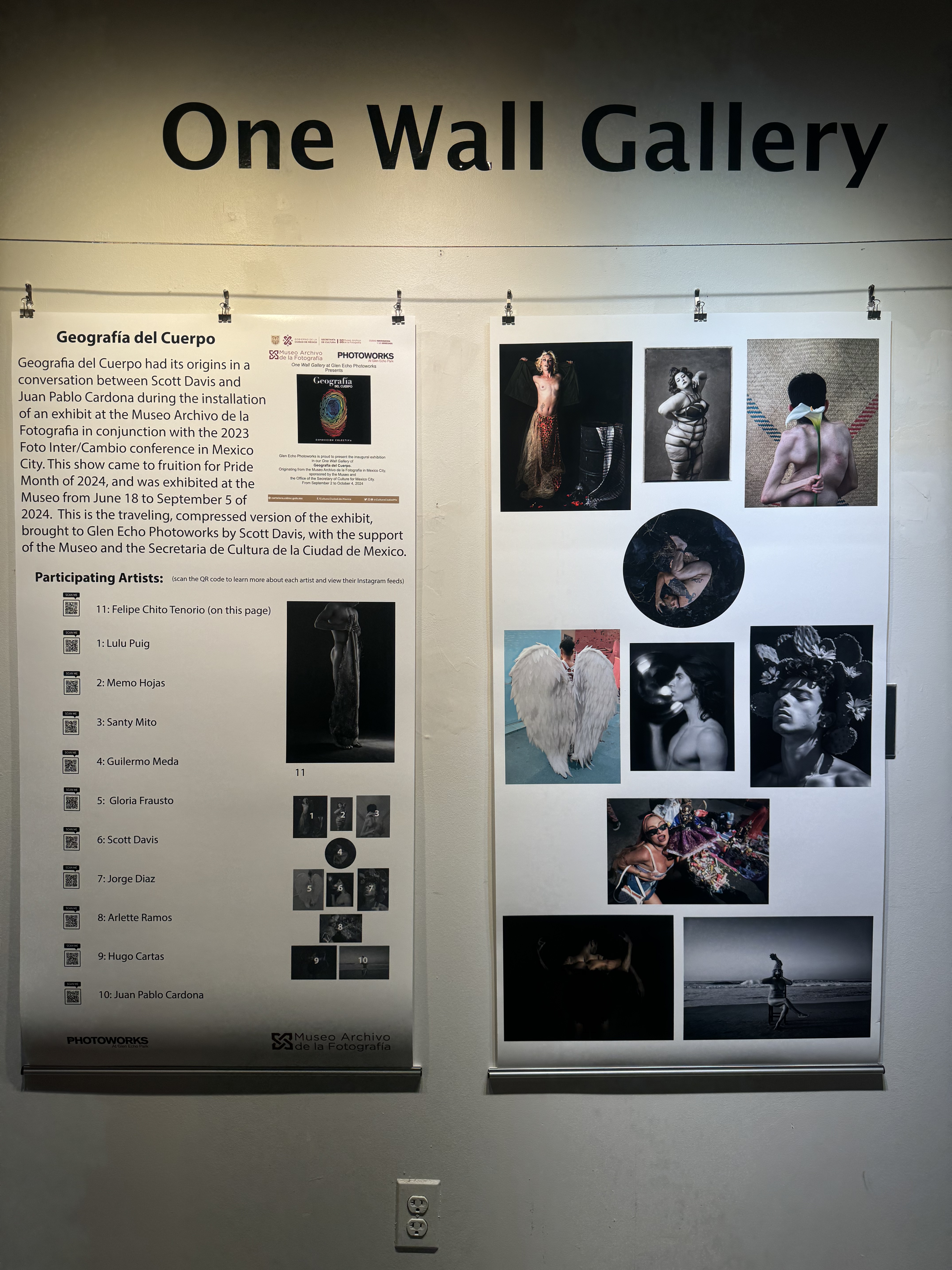
In conjunction with the Secretaria de Cultura del Ciudad de México, the Museo Archivo de la Fotografia, and Glen Echo Photoworks, I have brought a condensed version of Geografia del Cuerpo to inaugurate the One Wall Gallery at Glen Echo Photoworks. One Wall Gallery is a pop-up gallery space by the front door, designed to provide flexible exhibitions of shorter duration and bring life to an otherwise under-utilized space.
Given the time constraints and the space constraints, the exhibit was limited to one piece each from 11 of the 13 artists participating in the original exhibit in Mexico City (two were unable to participate). The form of presentation had to be re-interpreted to fit the space, and I think it turned out nicely.
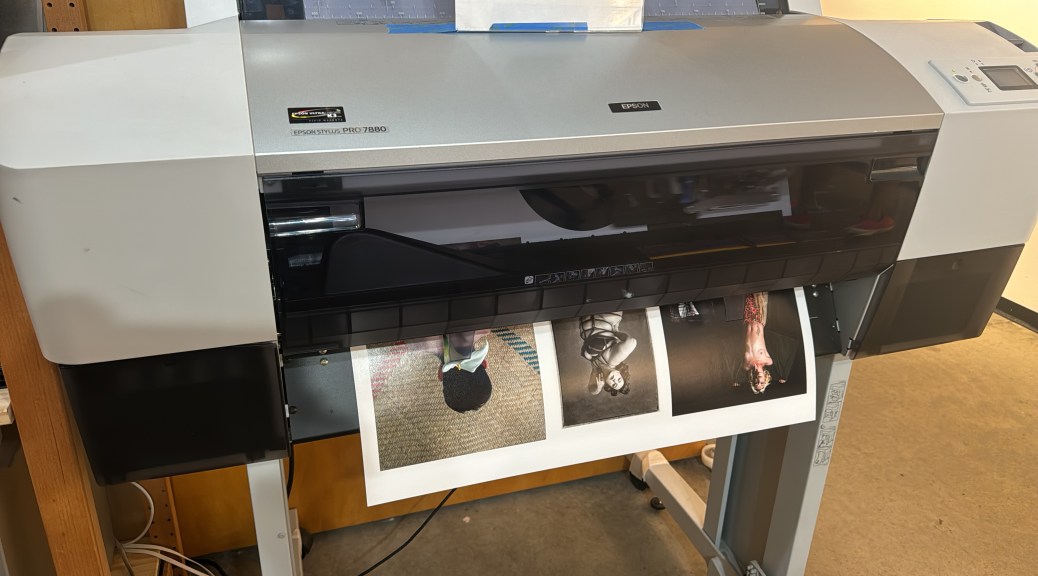
The banners were printed on our 24″ Epson wide-format printer. The original concept was going to be mounting each image on a 12″x12″ backing board and hang them in three rows from curtain wires (like the one you can see at the top of the photo). This, unfortunately, is one of IKEA’s worst products – the metal feet that you screw the posts into that attach to the wall do not fit the threads on the posts a significant amount of the time. I do have a tap-and-die set I can (and will, when I get around to it) fix the threads with so we will be able to use the hanging wire in the future, but that in the moment necessitated the re-envisioning of the exhibit into what you see here today.
The artists represented in the show are, in alphabetical order (names will be linked to their Instagram accounts):
The show opened September 2 and will remain up through October 4 on the One Wall Gallery at Glen Echo Photoworks, 7300 MacArthur Boulevard, Glen Echo, Maryland. Photoworks is located inside the ground floor of the Arcade Building.
I am still trying to find words to describe how absolutely overwhelmingly wonderful last night was. I had previously shown some work in a group exhibit at the Museo as part of the Foto Inter/Cambio conference, and even then they treated me as some kind of photographic rock star – I was part of the ribbon-cutting ceremony to open the exhibit, they asked me to speak publicly, and I received a certificate of recognition for helping to organize the conference.
I had brought additional personal work in a portfolio that I was planning to share with attendees of the conference. This included a bunch of my male nudes. One of the staff members saw that work, and was very interested in it. He asked me to show it to one of their curators, Juan Pablo Cardona. Juan Pablo was very taken with the work, especially the four-color gum bichromate prints I had made of an African-American model.
At the opening reception for the Foto Inter/Cambio show, he asked if I would be willing to show that work to the museum director. Not being an idiot, of course I said yes. We stepped off the floor of the reception and into the museum’s framing lab where my portfolio had been stored for the day, and Lizbeth Ramirez, the director, along with Juan Pablo and another museum staffer, had me go through my portfolio.
Everyone was excited by my work, and at that time Juan Pablo asked if I would be interested in participating in a show for this year’s Pride celebrations. Of course I said YES! And thus began the journey to yesterday’s opening.
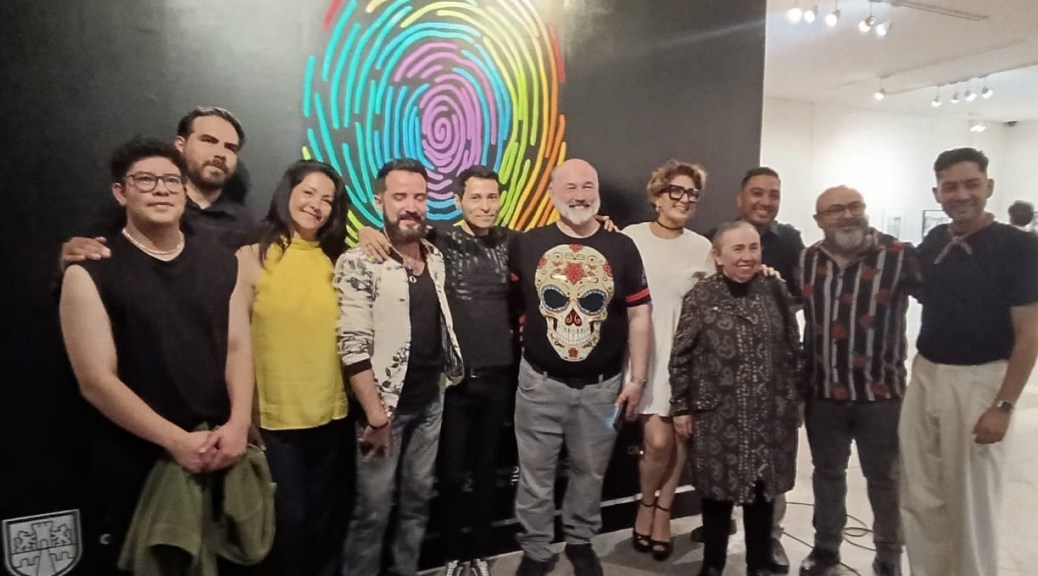
I got to the museum a bit before 6 PM – the opening was scheduled to start at 7, and they had asked all of us artists to be there an hour ahead of time. That was my first glimpse of the installed exhibition:
panoramic view of the galleryMy wall in the gallery
The museum staff did an absolutely amazing job of preparing the space – I love the way they used color blocks on the walls to break up the space and give the work a flow and a rhythm around the room. This gallery is on the first floor of the museum immediately off the entrance, so public visibility is excellent. I had expected this would be in their upstairs gallery where we had the show last year for the conference, but this is the big deal.
Also to my surprise, I was selected to be one of three of the fourteen artists to speak at the opening. They also listed my name first on the list of participating artists, which to me was a very high honor.
When organizing the event, the museum staff indicated it was limited to 100 people. I think over the course of the evening, significantly more than that came. When I turned around to look at the crowd waiting to be admitted, I was absolutely stunned at how many turned up.
I’ve never had a crowd this big or this enthusiastic at an opening before. This exhibit, and especially this opening night reception, has been the absolute high point of my career to date and quite possibly the most incredible night of my life.
I realize I am incredibly tardy in posting this, on the cusp of the closing of the show (the museum very generously extended the show through September 2!). I wish I could be there in person for the take-down and to collect my work (I have a friend who will be picking it up and storing it for me until I am back in CDMX next), but that wouldn’t be practical.
Show dates and times: Saturday June 22- Sunday August 18, 2024. Opening reception June 22 at 6pm. Artists Talk June 25th at 5pm (I will be participating in the artists’ talk and showing some additional work from my portfolio).
Geografía del Cuerpo is at the Museo Archivo de la Fotografía, and runs from June 26 to July 18. The opening reception is July 26 from 7-9pm, and is limited to 100 persons in attendance. I will be there as well (In case you’re wondering, I’m the one in the hat with the gray beard and glasses).
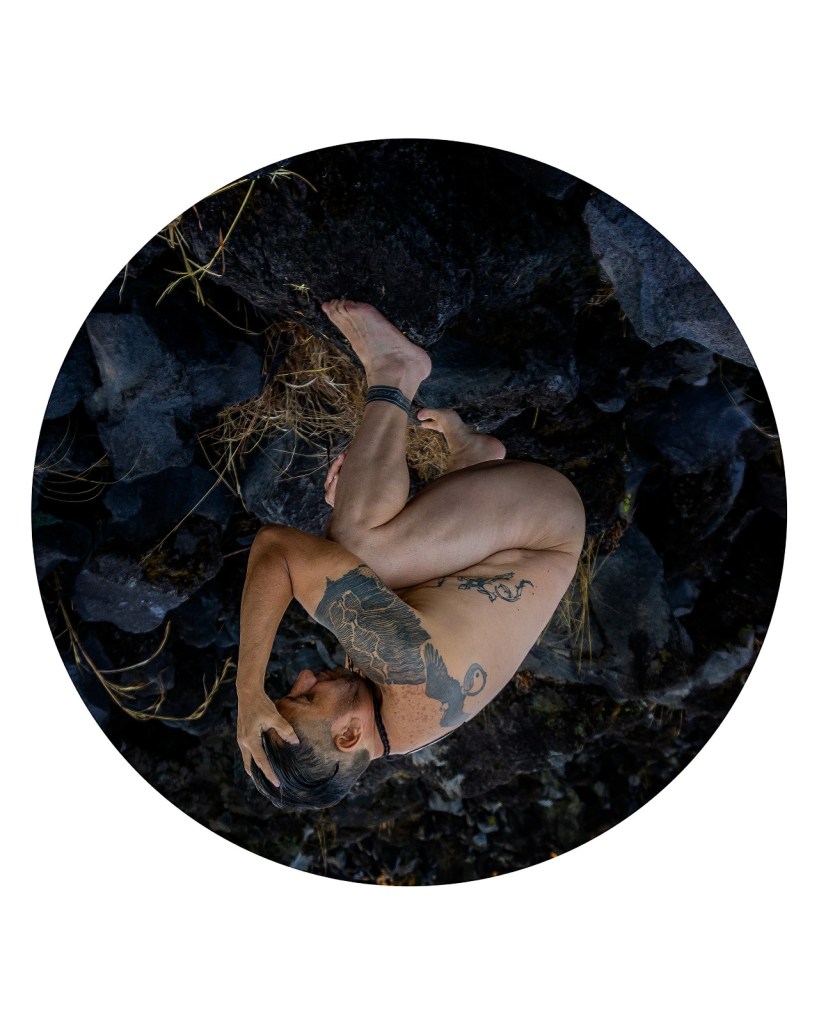
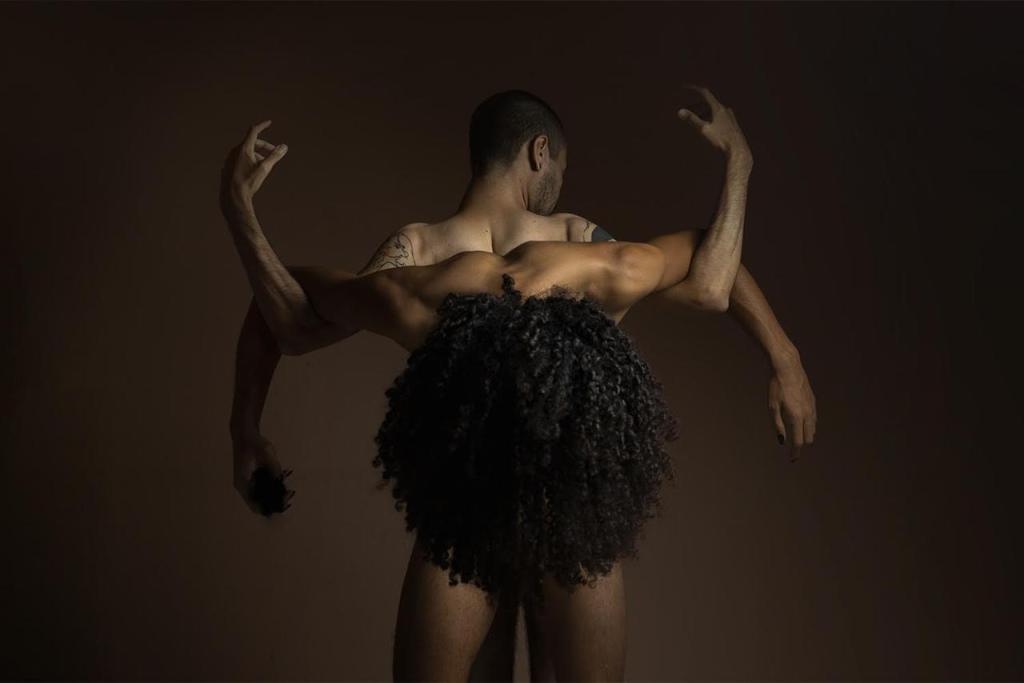
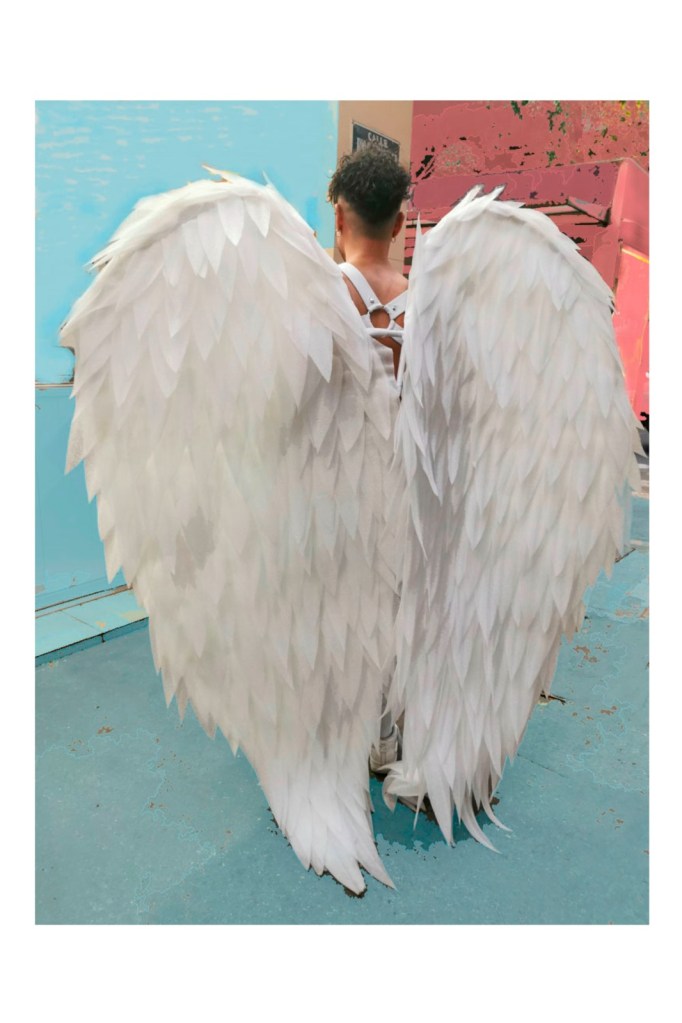
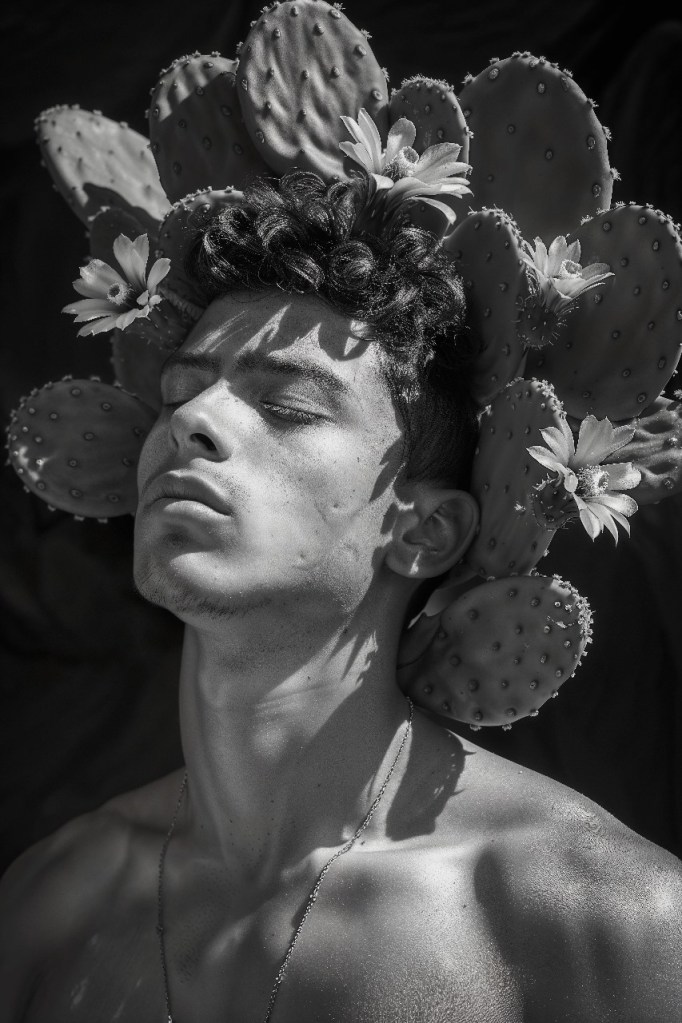
I’m going to have work in not one, but TWO shows in Mexico City the end of June. Show number one is at the Museo Archivo de la Fotografía. The show is called “Geografía del Cuerpo” and features work by eleven photographers creating work dealing with gender, sexuality, identity and politics.
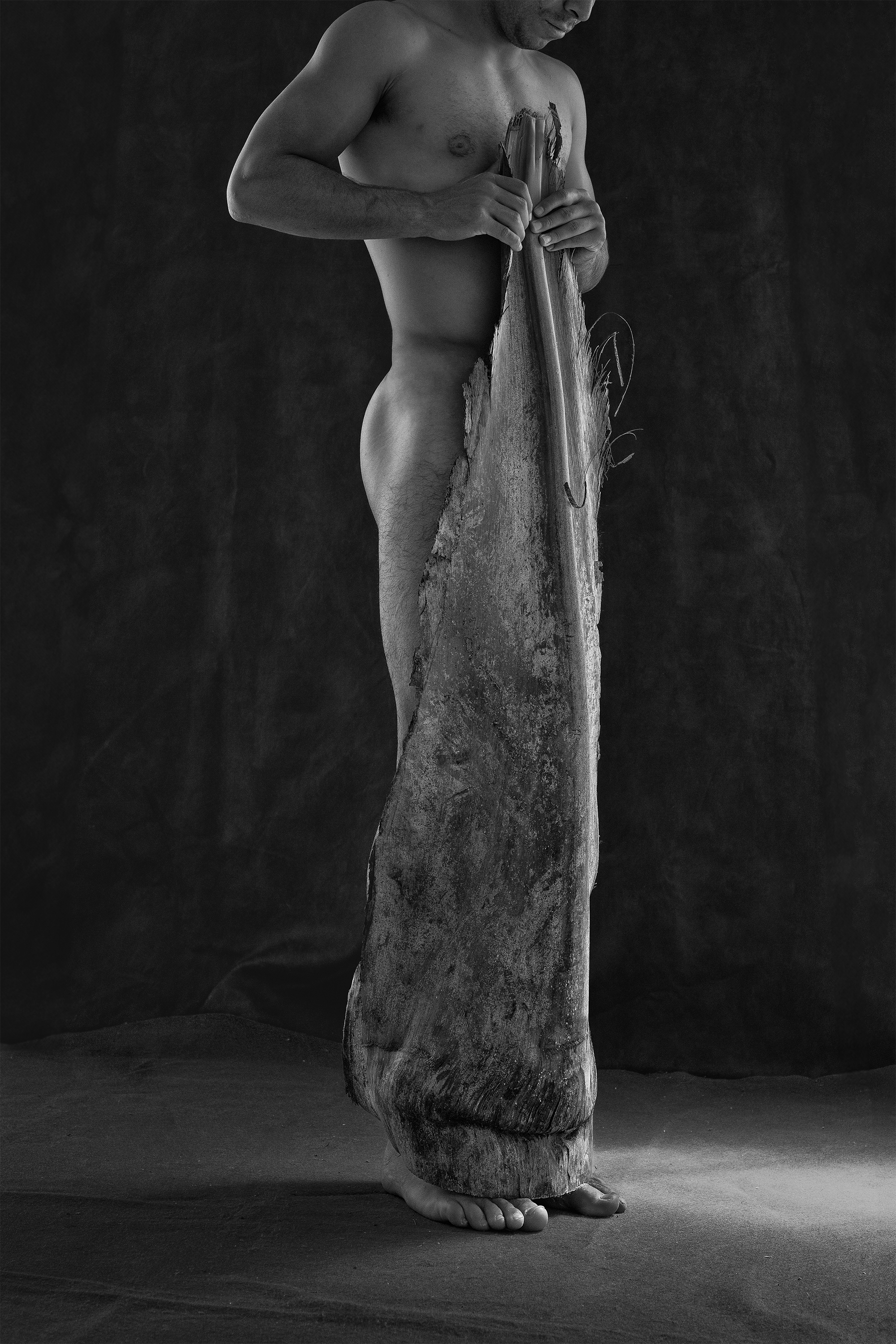
This show will be a minor retrospective for me as it includes work I’ve made across the last 20 years. I’m including some unique gum bichromate prints that I made in the 2000s, some infrared shots of male nudes in the landscape printed in palladium on kozo paper (a Japanese paper made from kozo bark which is almost tissue-like) that were shot in the 2010s and printed recently, and some studio nudes I did just last year. Pensive (Kodak HIE, palladium on Awagami Platinum kozo paper, unique print)Torso Moreno (four color gum bichromate, unique print)Narcissus (palladium on Saint Armand Frobisher paper, edition of three)
The opening reception will be held on Wednesday June 26 from 5-7 pm, and the show will be up through the end of July. I will be in attendance at the opening reception, so if you’re in the neighborhood please stop in and say hi!
The second show also features images dealing with gender, sexuality, identity and politics, this time at Eucalipto 20, an independent art center in the Santa Maria Ribera neighborhood. The gallery is a short walk from the Buenavista bus/metro/train station. The building is somewhat nondescript on the outside, so watch carefully for the street numbers.
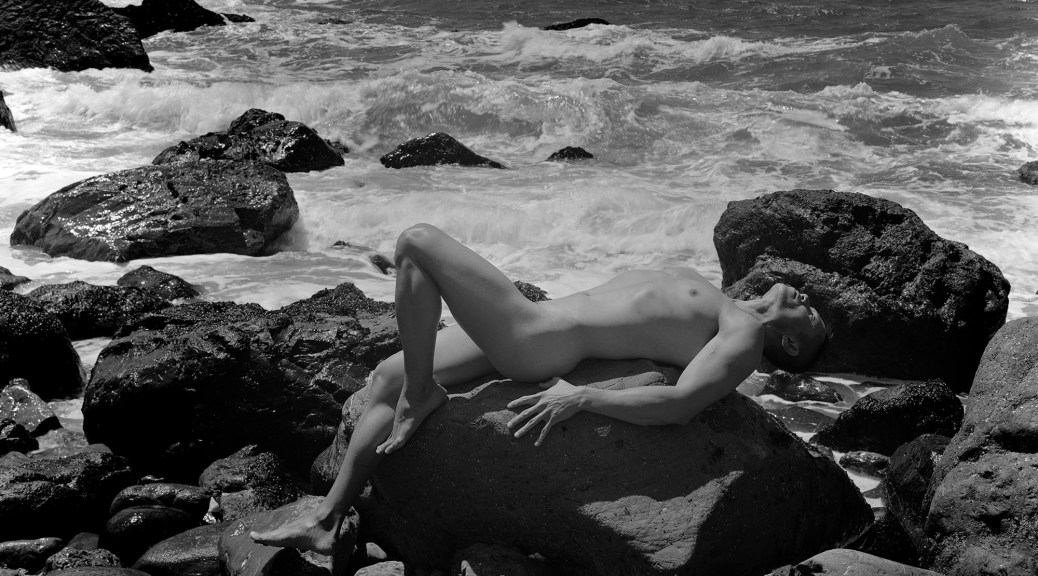
James, Rocks, San Francisco 2001 (platinum print, edition of 5)James, Tree, Lands End Beach, San Francisco 2001 (platinum print, edition of 5)
The opening reception will be June 22, so I will not be in attendance, but we will have an artists talk during the week, dates and times to be announced.
For many people, getting a gallery show is the holy grail of their artistic ambitions. Even though the art world is undergoing a major transformation with relationship to brick-and-mortar galleries, many people still see getting a gallery show as a mark of accomplishment (and it is – it means that someone who has money invested in an exhibition space is willing to commit their time, energy, reputation, and cash to showing and marketing YOUR work). Having achieved this, I’d like to pass on some salient advice for anyone still struggling to get there.
HAVE AN IDEA
Before you ever begin to look for a gallery show, have a rock-solid concept about your work. You can take all the pretty pictures in the world, but if you don’t have some idea, some message behind your work, then you probably won’t get very far. I’m not saying that your concept/message must be a social/political/intellectual/academic one, but it should be more than just “they’re all photos of Yosemite because I think it’s pretty”.
ARTICULATE THAT IDEA
Develop your elevator pitch – if you need help writing it, find someone you know who is a good writer to come up with a couple of sentences that encapsulate what your work is about, and then practice delivering it to your friends and family until you are able to rattle it off with confidence.
In my case, it was:
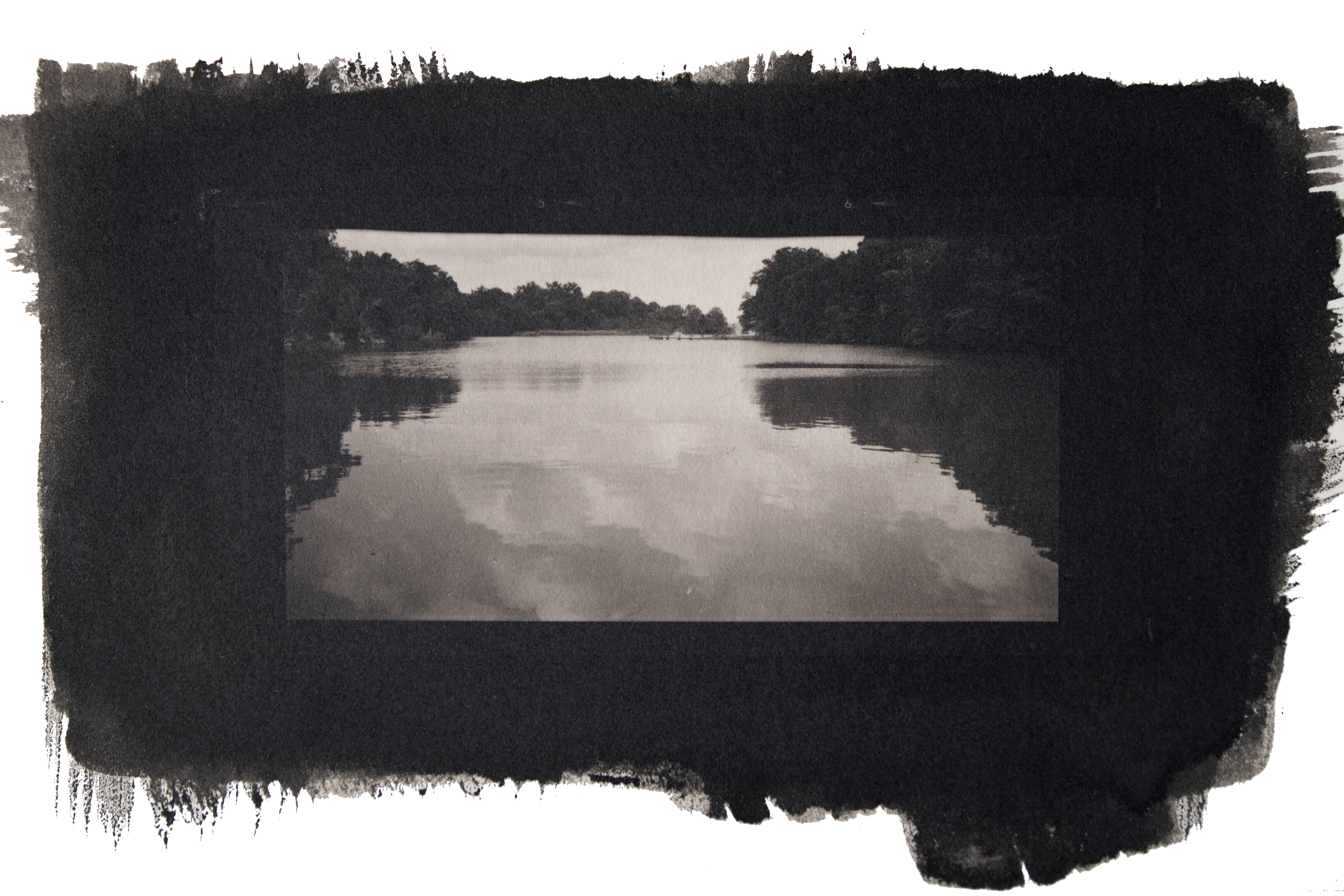
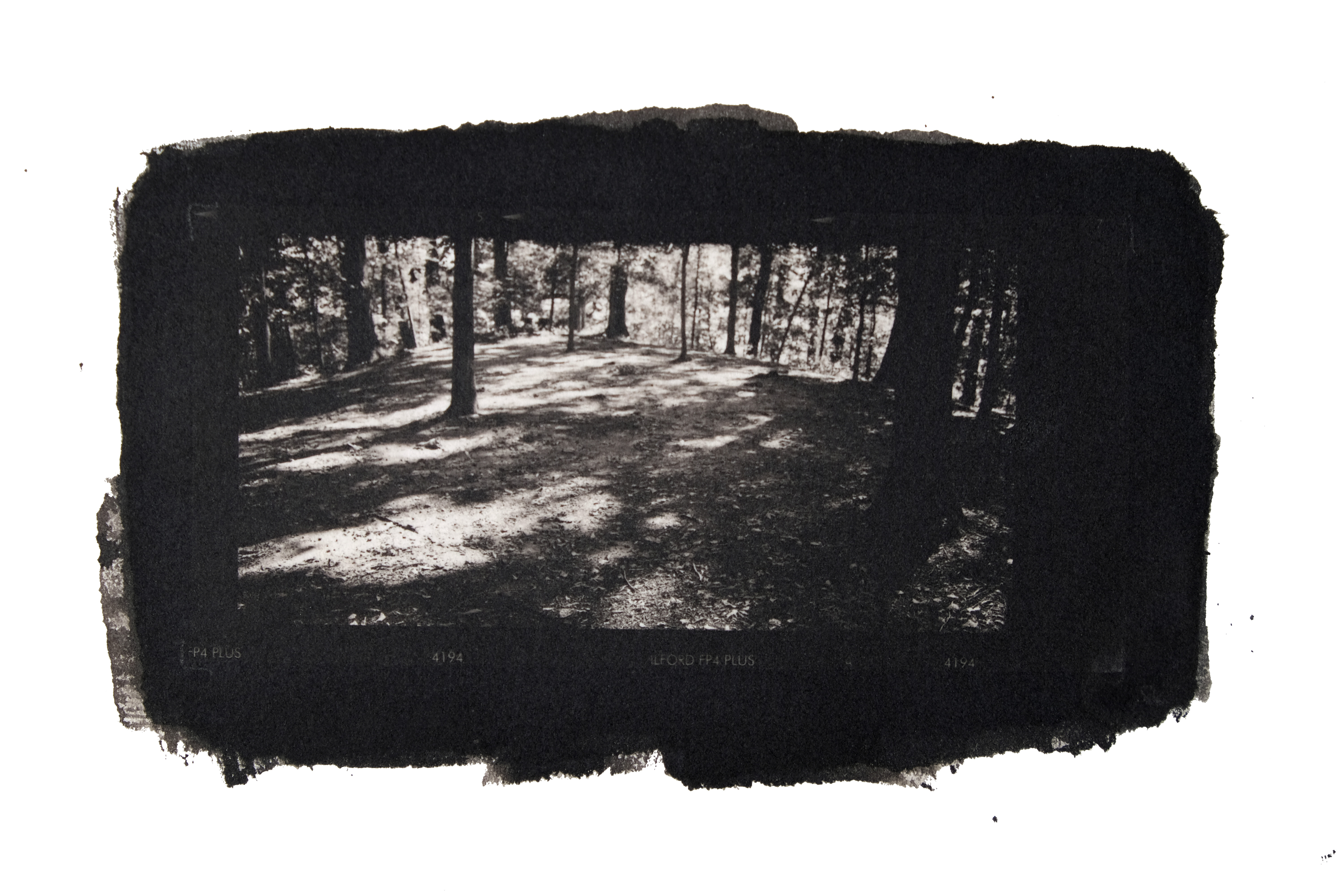
Sinister Idyll: Historical Slavery in the Modern Landscape is a visual narrative of the physical evidence of the slave-holding past in and around the nation’s capital. The work consists of 2 1/4 inch by 4 1/4 inch palladium prints that, by virtue of their size, force the viewer into an uncomfortable intimacy with images that are both familiar and unknown.
That was the hook to pull the interest of the gallerist. After that, I had the attention of the gallery owner, and was able to tell the story of how I got started on my series, what was my motivation, and all the other bits about the work that made it worth showing.
NETWORKING
Go to art openings – lots of them. Go see different galleries and keep track of the kinds of work they show. Get to know other artists and talk to them about their work, especially artists whose work you identify with. Get them to introduce you to the gallery owners – having a personal introduction from someone the gallerist already knows and works with is a big leg up in getting your work in front of them.
GALLERY OWNERS
At the openings, go talk to the gallery owners. Don’t be afraid to identify yourself as another artist looking to show your work, but don’t introduce yourself that way if you’re meeting them cold. Engage them in conversation – ask them about the show, how they chose the work to include, and so on. When they turn to you and ask you about who you are, then tell them, “I’m Bob Jones (or whatever your name is) and I’m a photographer. I’ve been working on a series about xyz for the last three years”. Have your elevator pitch ready to go – if they’re interested, they’ll ask, and you can give them your confident, practiced hook. Have a few images of your work on your phone, at the top of your phone’s gallery, so they’re ready to show, if the gallerist asks to see some. If they don’t, don’t whip out the phone and start showing them anyway.
ETIQUETTE
If the owner is interested, ask what their process for viewing new work is – maybe they have portfolio drop-offs once a month, maybe they schedule appointments, maybe it’s an online process. Whatever it is, FOLLOW THEIR PROCESS. Nothing will piss off a gallery owner more than someone ignoring what they consider to be the most basic of basic rules. They will see it at best as a waste of their time, and you’ll likely never get your work reviewed by them, and there won’t be a second chance.
If they look at your work, and they like it but don’t have a space to show it soon, don’t take this as a no. Say thank you, let them know you appreciated their time, and listen to any advice they might dispense. Get their business card before you leave. When you get home, that same day, or next day at the latest, send them a thank you email, and find out if they would be interested in getting future communication from you about your work. If they say yes, do send them links and announcements about new bodies of work you’re doing. Do it often enough they won’t forget you, but not more than say 3-4 times a year so you aren’t a pest. Don’t send them announcements about every time you get a photo hung in a cafe somewhere, but do let them know if you get a major show or you get a write-up in a serious publication like a national newspaper or art magazine.
SELF-PROMOTION
A lot of this stuff above falls under the umbrella of self-promotion. It’s a practice, not a one-time event. You’ve got to kiss LOTS of frogs to find a prince, so if this doesn’t lead to a solo show the first time you try, don’t give up. Lather, rinse, repeat.
DON’T BE A DIVA
Unless your last name is Mapplethorpe, Avedon, or Liebowitz, you can’t get away with being a diva. So don’t even try. Your goal (I assume) is to get invited back to show again. Producing a show, even a solo show, is a collaborative effort. The gallerist will know their space and have a pretty clear idea of how to hang your work in their space to be most effective. Listen to them. You can politely disagree and discuss their ideas, of course, but don’t take a “my way or the highway” approach to hanging the show. If you pull a stunt and say, “I’m not doing this unless…”, it had better damn well be a hill you want to die on. “Doing that would compromise my artistic vision” is 99% of the time a bullshit excuse. Be willing to share a wall. Be willing to have your pictures arranged in a way you hadn’t thought of. Don’t insist that “if this picture isn’t in the show, I’m not doing the show”. The gallery owner will remember if you’re a temperamental diva, and they won’t want to work with you again. The art gallery world is small – word gets around and if you’re a diva, more doors will close than open.
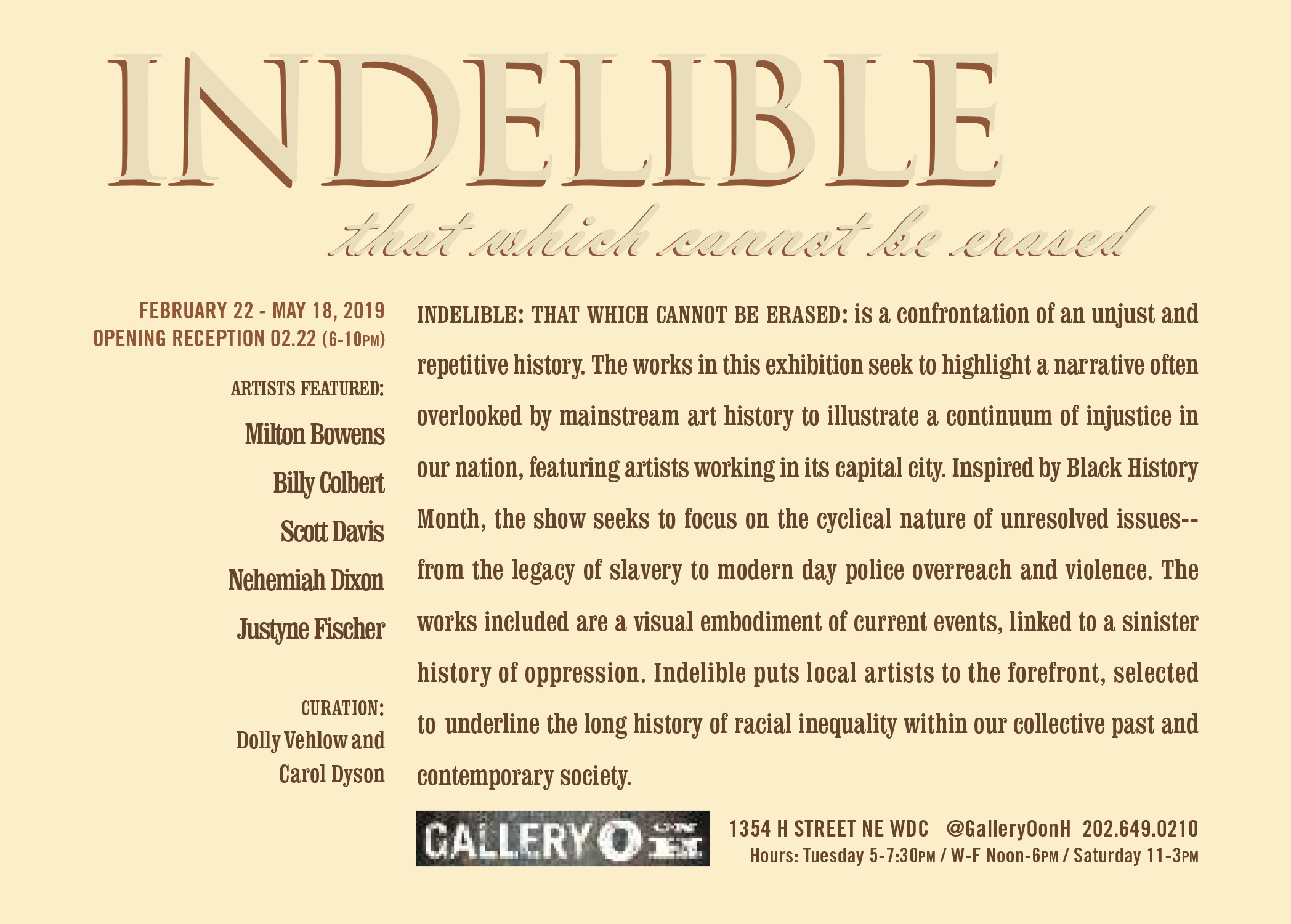
I am overjoyed to announce that I will be one of five artists participating in INDELIBLE: That Which Cannot Be Erased, at Gallery O on H, 1354 H Street NE, Washington DC, from February 22 to the end of May. I will have over 40 palladium prints in the show. I also want to give a huge round of applause to Mary Ellen Vehlow, the owner of Gallery O on H and curator of this show, for including my work in a very powerful exhibit.
INDELIBLE: that which cannot be erased. A multimedia two-floor installation curated by Gallery Director Dolly Vehlow of GalleryOonH and Busboys and Poets Arts Curator Carol Rhodes Dyson.
Opening Reception: February 22nd 6-10pm. On exhibit through May 2019. Daily Tuesday 5-7:30PM, Wed-Fri 12-5PM, Saturday 11-3PM.
Indelible: that which cannot be erased is a confrontation of an unjust and repetitive history. The works in this exhibition seek to highlight a narrative often overlooked by mainstream art history to illustrate a continuum of injustice in our nation, featuring artists working in its capital city. Inspired by Black History Month, the show seeks to focus on the cyclical nature of unresolved issues–from the legacy of slavery to modern day police overreach and violence. The works included are a visual embodiment of current events, linked to a sinister history of oppression. Indelible puts local artists to the forefront, selected to underline the long history of racial inequality within our collective past and contemporary society. Artists featured include Milton Bowens, Billy Colbert, Scott Davis, Nehemiah Dixon, Justyne Fischer and Rodney “BUCK!” Herring.
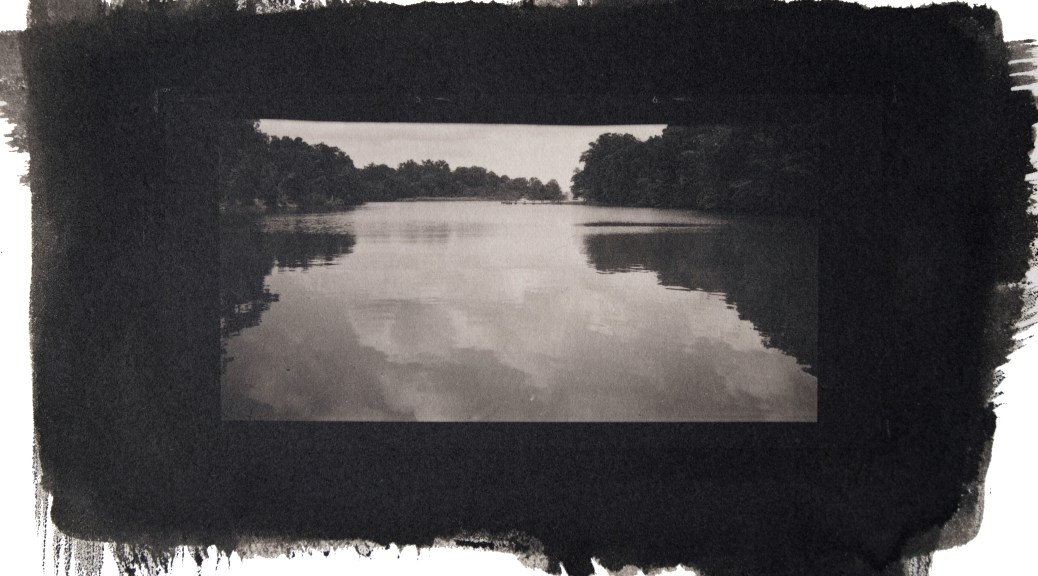
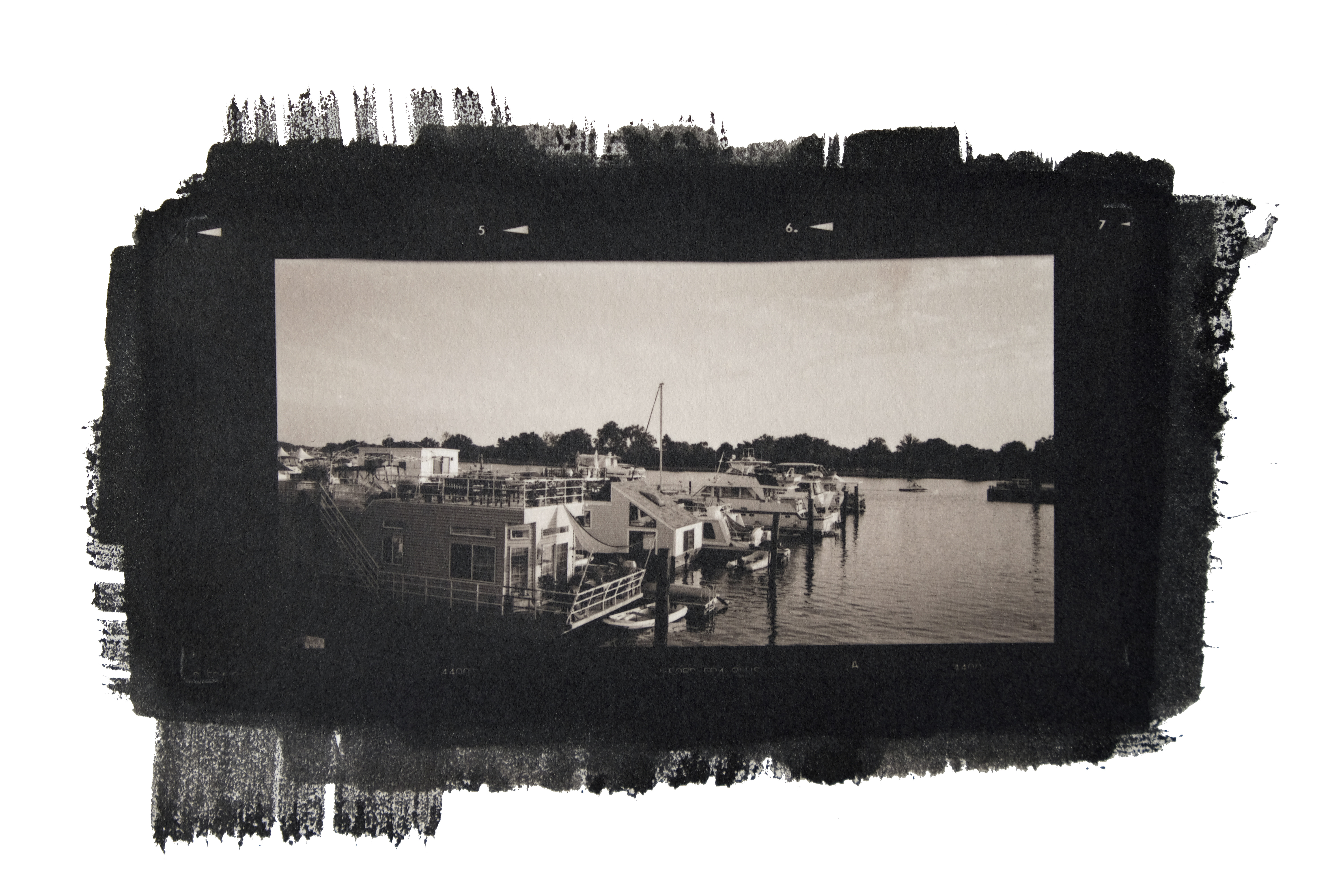
The DC Yacht Club, site of the former docks for the city where in 1848, the Pearl, a merchant ship, had been hired by a group of slaves desiring to escape to the north. The so-called Pearl Incident was the largest non-violent slave escape in US history prior to the Civil War. Seventy-seven individuals had arranged passage. They were betrayed by a fellow slave who did not participate in the escape. The owner of several of the slaves, a Mr. Dodge, sent a steam launch to pursue them down the Potomac. The Pearl had become becalmed near the mouth of the Potomac and was caught by the steam launch. Among the passengers were two of the Edmonson daughters mentioned in the previous caption. In the immediate aftermath of the incident, pro-slavery groups ran amok in Washington DC, attacking abolitionist newspapers and groups. The long-term outcome was that the slave trade was banned outright in Washington DC in 1850, although slavery remained legal in the District until April 16, 1862.
My artists statement about the work:
Roland Barthes wrote of how a photograph contains a “punctum”, an element that strikes the viewer to the spiritual core, something that provokes a visceral emotional reaction in them. I believe life has moments of punctum – the origins of this project, for me, was an experience that ran through me like a lightning bolt. I was taking a Civil War history tour through the Smithsonian one late summer afternoon. I was standing on the lawn of L’Hermitage, a farm just outside Frederick, Maryland. I was looking around at the gently rolling hills, trees full of green leaves, puffy white clouds dotting the sky, corn in the adjacent field taller than my head, and listening to the guide talking about the history of the place.
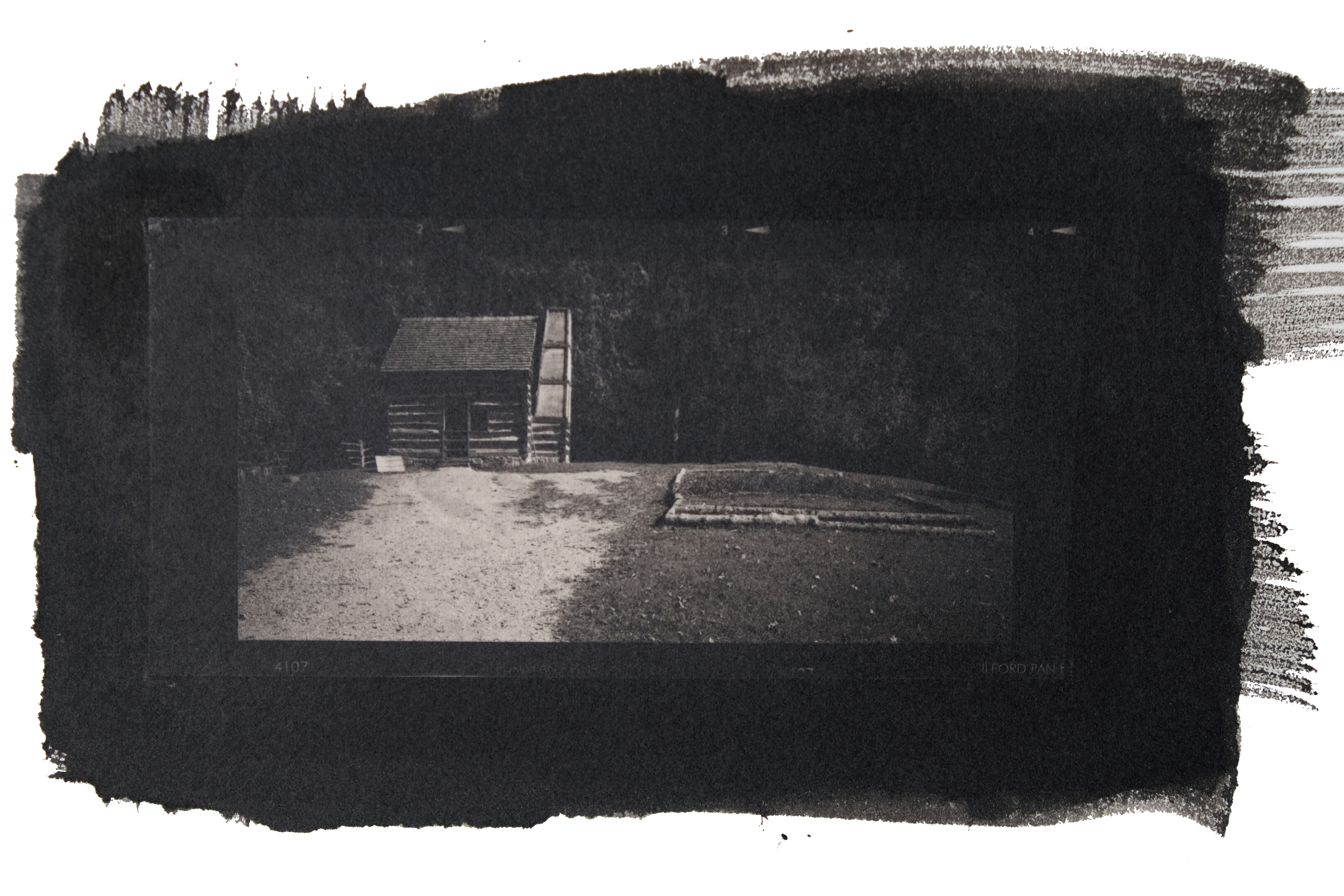
The “bachelor’s house” at L’Hermitage on the Monocacy National Battlefield. This house would have housed the young un-married male members of the family and their personal servants. Four to six people at a time would have lived here. In the field adjacent, just out of the field of view of this photograph, the three slave cabins for L’Hermitage were located. Each of those three cabins were not much bigger than this cottage but held roughly thirty people each.
The farm was founded by a family of French emigres from Haiti who had fled the slave uprisings in the 1790s. They re-settled in Frederick, Maryland, and proceeded to attempt to reestablish Haitian-style slavery replete with the same degree of brutality they had practiced before. These people were so brutal with their slaves that their neighbors, slave-owners themselves, called the sheriff on them multiple times. In 1810, the importation of new slaves into the United States was made illegal. After that time, if you wanted more slaves, you had to buy them from someone else, or you could breed them. This family ran a stud service with their slaves, treating human beings as breeding stock.
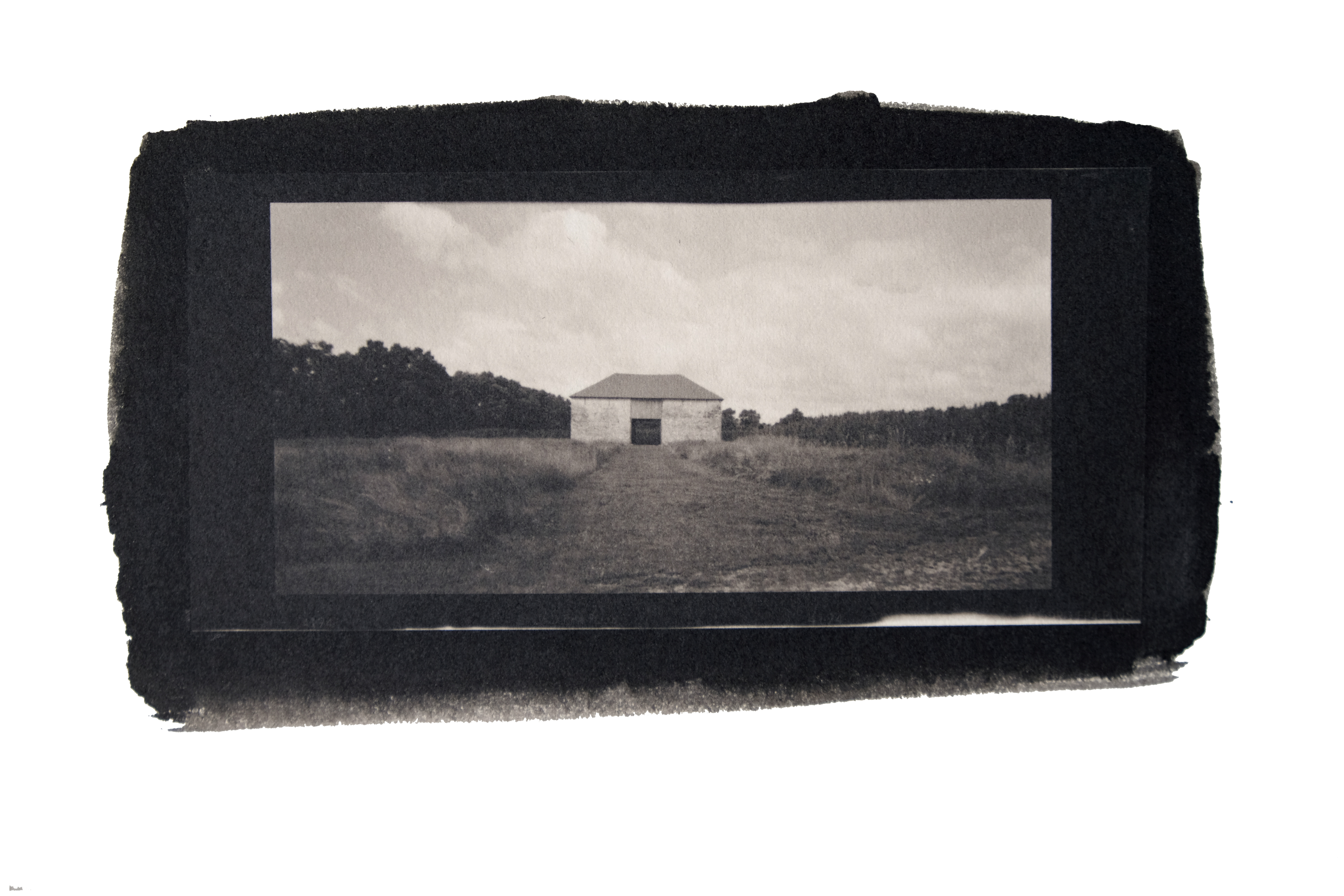
The stone barn at L’Hermitage. The family that built the estate were originally from northern France, and so built their barn in the style of construction they remembered from their home. This would have housed their animals such as horses and cattle, along with carriages or other farm equipment like plows or threshing equipment for wheat.
Hearing this, I was struck by the horrific irony of the pastoral idyll of the scene I was viewing being literally soaked in the blood of other human beings who had lived, worked, and died there quite possibly never able to look at that scenery with the innocence I had looked at it until the moment before that revelation. I felt compelled to respond to that epiphany artistically, because I knew from my own experience that all the academic reading in the world does not adequately convey that emotional truth I had experienced.
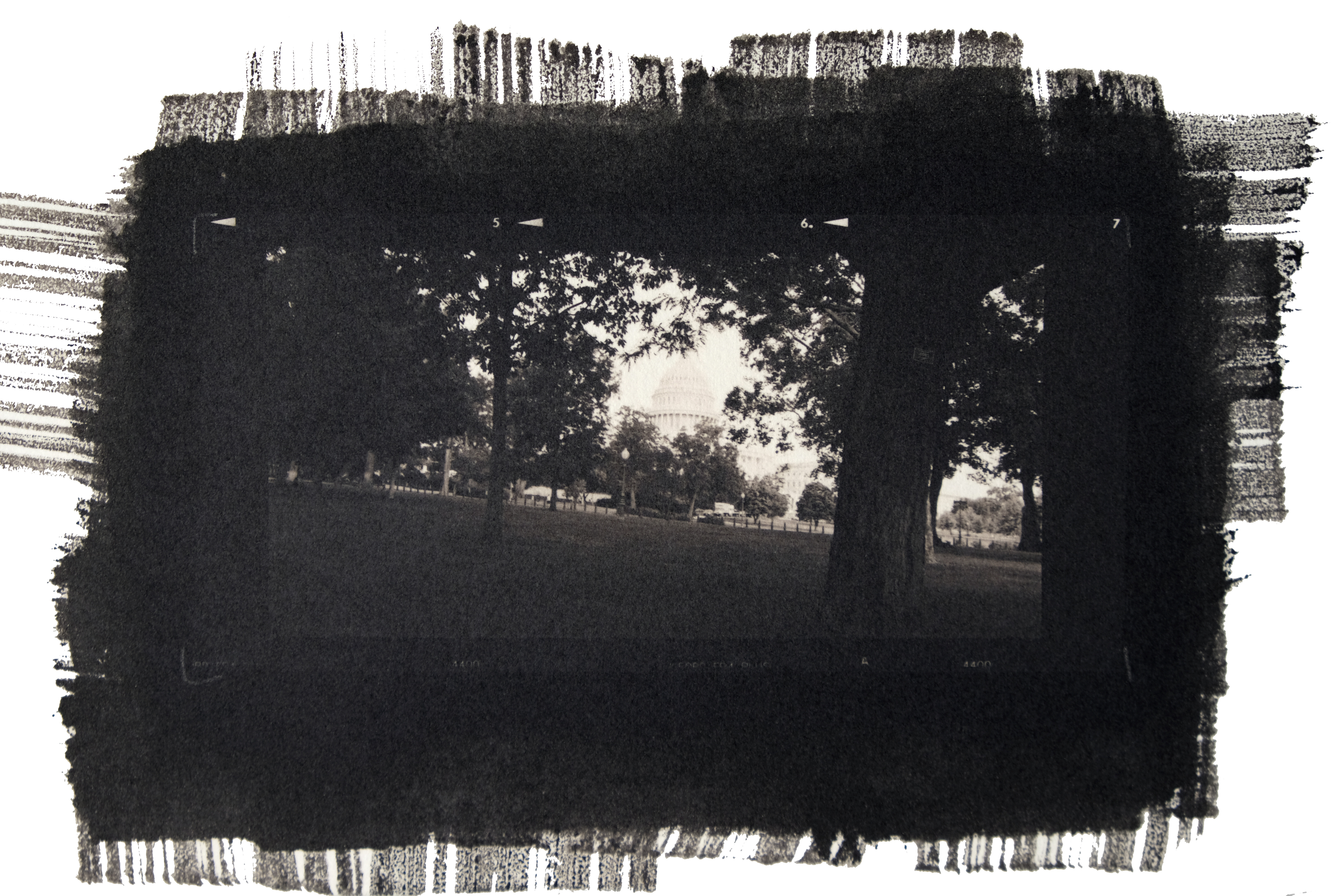
View of the US Capitol from the approximate location of the Capitol Hotel. The Capitol Hotel served as a slave market and slave auction site, and advertised in local newspapers that their holding cells in the basement were sufficiently secure that should a slave owner suffer a loss of property while staying at the hotel, they would be fully insured against the loss.
I grew up with a very specific version of the history of this country – it was built by great men of lofty ideals, who imbued it with a progressive spirit intended to raise up the dignity of all humans. As a child, and into my adulthood, I went to the houses of these great men to see the way they lived and the places that inspired them to deliver the great nation of the United States into being. We went to Mount Vernon, Monticello, and Montpelier in Virginia, the Paca house in Annapolis, Maryland, the Carroll estates in Baltimore, and dozens of other colonial-era grand homes – their grandness was signaled as direct proof of their virtue and wisdom.
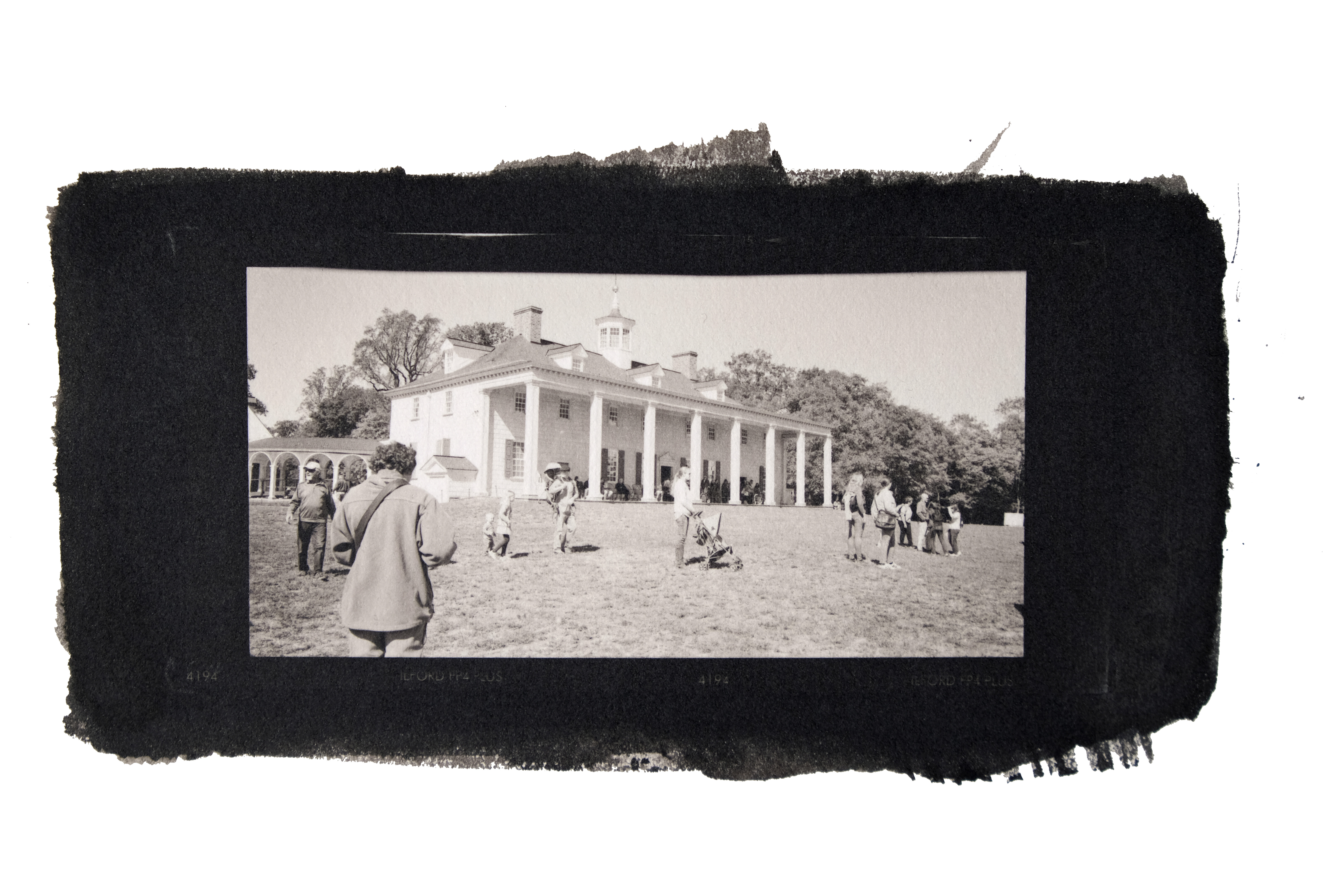
The Mount Vernon mansion. Home to George Washington, first president of the United States, an extraordinarily wealthy man, and whose profits were built almost entirely upon a large slave labor force (over 300 persons) required to manage the agriculture and industry on his 3000+ acres. Look upon this house and remember that this nation was not only founded by slave owners, it was built by slave labor and the profits of slave industry.
It was never discussed that they had the wealth and leisure to develop these lofty ideas because they owned in some cases hundreds of their fellow human beings who labored for them to produce that wealth and leisure. Nor was it discussed that these men who wrote so eloquently about the inalienable rights of life, liberty and the pursuit of happiness saw fit to administer corporal punishment to the people they owned when those people decided that they too were deserving of the same life, liberty and happiness their owners wrote about.
A reconstructed slave cabin at Mount Vernon. This is typical of what the average enslaved worker would have lived in – log and mud construction, no glass in the very small window, poor ventilation, and two rooms (one under the roof, one on the main floor) shared by an entire family, perhaps two.
I still go to see those great houses because I am fascinated by the styles and architecture of bygone eras, but now I think about how they were paid for (and often built) with slave labor. It is a metaphoric and literal foundation to this country that we must acknowledge and recognize if we are ever going to make forward progress.
The landing from the Patuxent River at Sotterly Plantation, in southern Maryland near St. Mary’s City. At this location in 1729, a cargo of 220-plus people were delivered to the owner of Sotterly, George Plater, to be transported overland to St. Mary’s City where they would be auctioned off and he would receive a commission from the sale. This is one of five documented “Middle Passage” sites in Maryland and the first to have a memorial marker.
I chose to produce these images the way I have for two reasons. I made them as compact contact prints 2 ¼ by 4 ¼ inches in size to force the viewer to engage very personally with the images, so they cannot hold themselves at arm’s length from the subject. I printed them in an historic photographic process, palladium, because using a noble metal to make jewel-like images that can only be made with extensive manual labor was a metaphorical way of repaying some of the debt to the people who without compensation or recognition built and shaped the landscapes I photographed. I hope that these images will in this way produce moments of punctum for the viewers the way they have for me.
This is the slave graveyard at Mount Vernon. There are believed to be between 50-75 people to be buried here. Not a single one of their graves has even a headstone to mark their final rest, and in the Mount Vernon records, many of the slaves buried there are recorded by just a first name. No records of who was buried where in the plot exist, so it is impossible to say which graves belong to which individuals.
I’m thrilled to announce that two works by a brilliant Japanese daguerreotypist (and the man who taught me how to do daguerreotypes) have been acquired by the Smithsonian’s Hirshhorn Museum and Sculpture Garden.
I couldn’t find links to the images in question that were acquired by the Smithsonian, so I’m linking to two related images from his website.
A Maquette for a Multiple Monument for Fukushima Daiichi Nuclear Power Plant
2014, Daguerreotype, 67x280cm
and
The Atomic Bomb Dome, Hiroshima
2014, Daguerreotype, 25.2×19.3cm
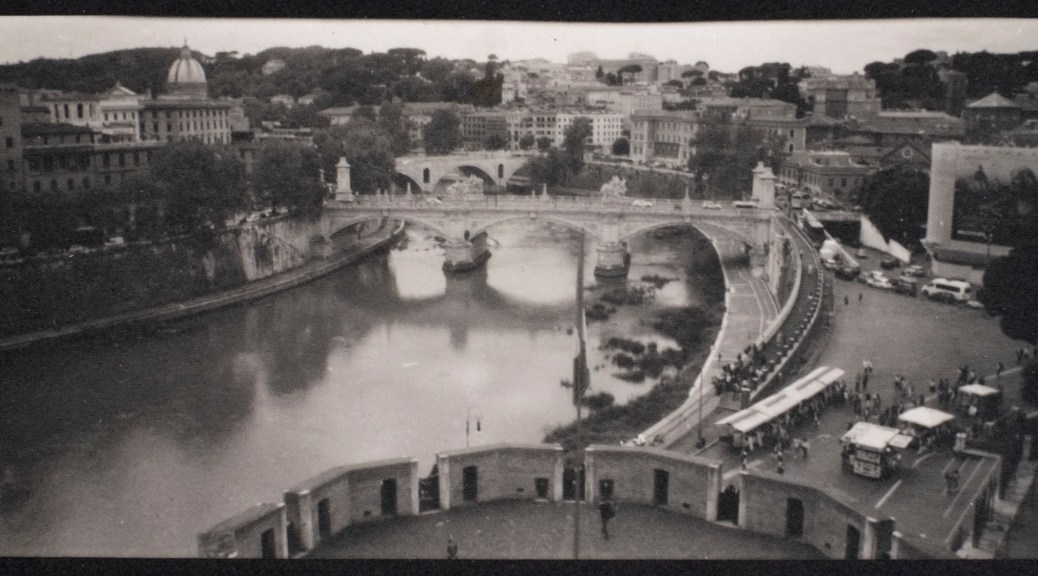
I want to invite you all to come see the Labor Day Art Show at Glen Echo. I have two pieces in the show, and it would be great to see you all at the opening reception on Friday, September 1st. I will be there on Friday evening to meet attendees and talk about my work. I’m showing two of my miniature prints from Rome. Each print is made using the historic platinum/palladium photographic process that requires preparation of the paper by hand, applying the light-sensitive metal salts (in this case palladium) with a brush, then sandwiching the negative with the sensitized paper and exposing it to a UV-rich light source to form the image, and then processing the print in a series of chemical baths to develop and make the photograph permanent.
Platinum/palladium printing was developed in the 1870s as another alternative to silver-based processes. It peaked in popularity in the early 1900s, but fell out after 1917 when world supply of platinum dropped in the aftermath of the Russian Revolution (Russia was at the time the world’s largest producer of platinum). It is notable not only for the extremely long tonal range it provides, but also its long-term stability and permanence. With a properly processed print, your platinum/palladium photograph will last as long as the paper it’s printed on lasts.
Tiber River from Castel Sant’Angelo
Colosseum, Rome
All work is for sale, and people come to this show to buy, so if you see something you like, don’t hesitate, or it may not be available when you turn around. This is a great show to support local artists, as park takes only a small commission, and 100% of the commissions go to support Glen Echo Park, which is a truly unique gem in the National Capital Region.
Exhibition Dates: Saturday, September 2 – Monday, September 4, 12 – 6 pm
Public Opening Reception: Friday, September 1, 7:30 – 9 pm
Spanish Ballroom, Glen Echo Park
7300 MacArthur Blvd, Glen Echo MD 20812
The 47th Annual Labor Day Art Show at Glen Echo Park will be held in the historic Spanish Ballroom from Saturday, September 2 through Monday, September 4, 2017 from 12 pm – 6 pm each day.
Sponsored by the Glen Echo Park Partnership for Arts and Culture, the
exhibition and sale runs from 12 pm to 6 pm each day. Admission is free.
The exhibition features the work of more than 200 artists from the mid-Atlantic region. The show includes works in a wide range of artistic media, including:
Another artist interview from the Alt Process Revolution series – this one with Philip Jessup, another Canadian photographer. One of the great things about this touring show is that it brings greater visibility of Canadian photographers to the US audience – I think many US photographers are aware of many other photographers from their own country, but with the possible exception of Yusuf Karsh, most could not name a single Canadian photographer living or dead.
Tell us a bit about your photographic work:
How did you get interested in photography?
My landscape photography is an extension of my professional work over the years advocating solutions to climate change. Many of the effects of climate change—rising sea levels, warming global temperatures, increasingly erratic precipitation patterns—are placing wilderness and communities that depend on them under unbearable stress. Many of these areas are likely to vanish, like low-lying atolls in the Pacific. I see my job as documenting such areas, so that if they do vanish or change in some unrecognizable way, humankind will remember them.
Do you feel your work is influenced by other media/periods/genres? If so, which ones, and why?
I’ve been influenced stylistically by other landscape photographers whose work I love. Eliot Porter, who was the first landscape photographer to work extensively in color, has always inspired me, his ability to find the abstract in the real. Other photographers who work I admire include: Fay Godwin, Harry Callahan, Brett Weston, Toshio Shibata, Wynn Bullock, and the Canadian Edward Burtynski, who has taught us to find beauty even in the devastation being inflicted on the environment.
What is your experience with analog photography? Digital photography?
All of my early work dating from 2003 was shot with medium format film, Fujifilm’s Velvia 50. I love its wide color gamut and detail. From the start, however, I had my reversal film images scanned at high resolution and then printed on a Lambda using Cibachrome and later Fujiflex media. Today I shoot with a digital camera, process the images myself, and print on my own Epson P7000. I’ve been able to achieve rich, long lasting color prints this way. I would go back to Cibachrome if the media were available. Today, I occasionally shoot using film just for the pleasure and self-discipline, but in Canada availability and processing is limited and quite expensive.
What brought you to participate in the APR show?
I’m always interested in exploring new ways to create an image that deepens the experience of my work with the viewer. Multiple gum over palladium produces a highly subjective final print that feels to me like a memory or a remembrance of something that is past or lost. The theme of my own work, which is trying to capture the beauty of landscapes and communities that may vanish, is a good match for this process. I also like the extreme longevity of these images. Again, it is a good match for my own goal, which is to memorialize imperiled landscapes so future generations won’t forget.
Do you see a continuing role in your photography practice for alternative processes?
I’m keen to explore the potential of alt processes to emotionally charge the images I place in front of the viewer. The exhibit at Glen Echo is the first step.










 dcphotoartist