Category Archives: Photography

Still Life in 14×17, number two

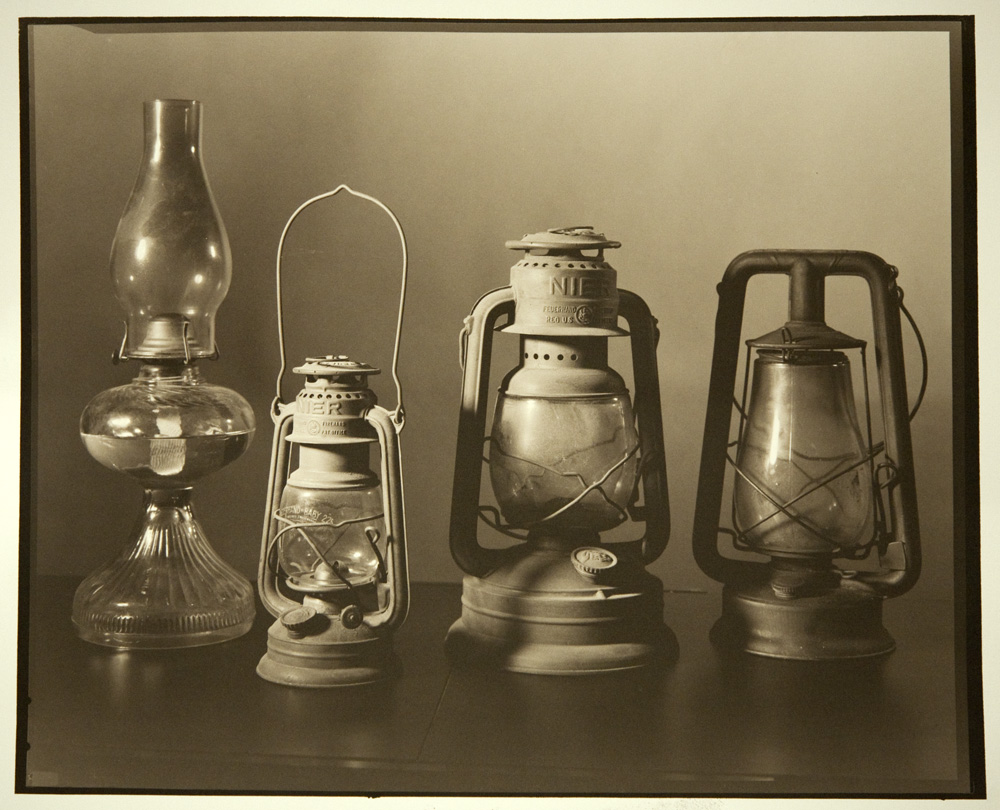
Still Life, Lanterns

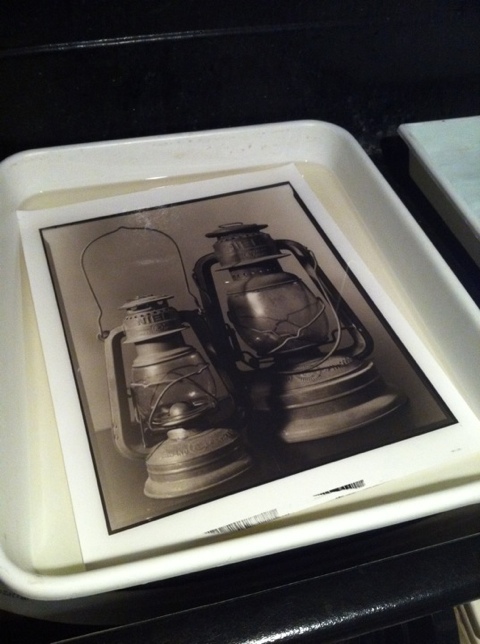
One of my 14×17 still life shots. Printed in palladium. Making a palladium print (or any hand-coated emulsion) this large presents unique challenges – trying to coat something this big is a lot harder to get even because it’s such a large surface. You have to work with a much bigger brush, and make sure you keep the emulsion moving around quickly. Don’t be afraid of getting sloppy outside your margins – it’s more important to be evenly coated than it is to be precise and tidy. I printed this on Bergger COT320, a 320 gsm uncoated paper designed specifically for alternative process photo printing. It’s a beautiful, heavy-weight paper with great wet strength and a bright white base – it gives you easily another full stop of contrast range over a more warm white/eggshell paper.

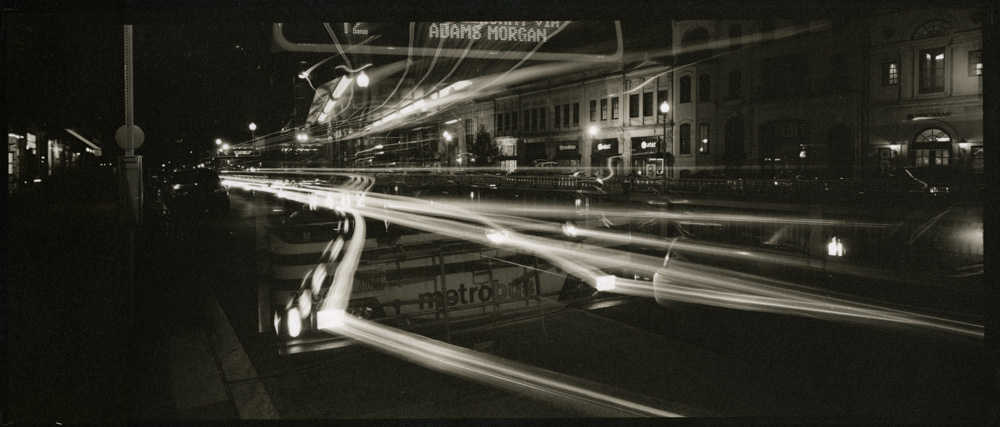
DC Street Nocturne in the key of Panoramic, part 1.

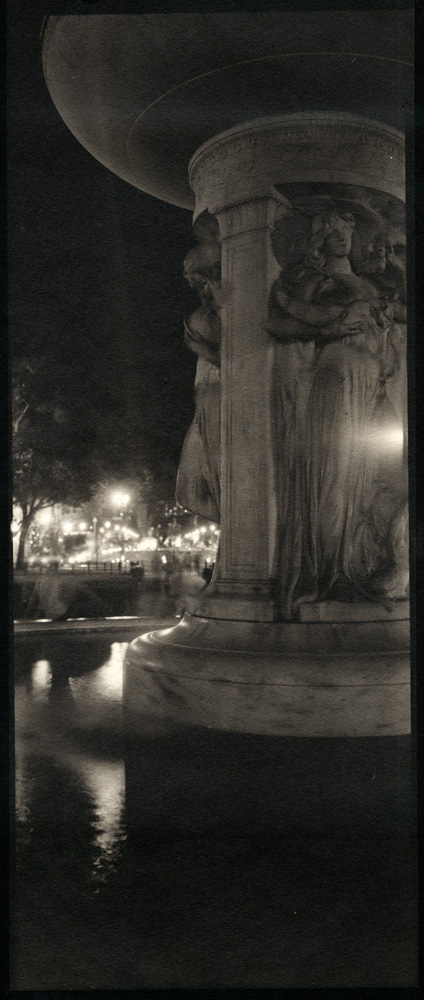
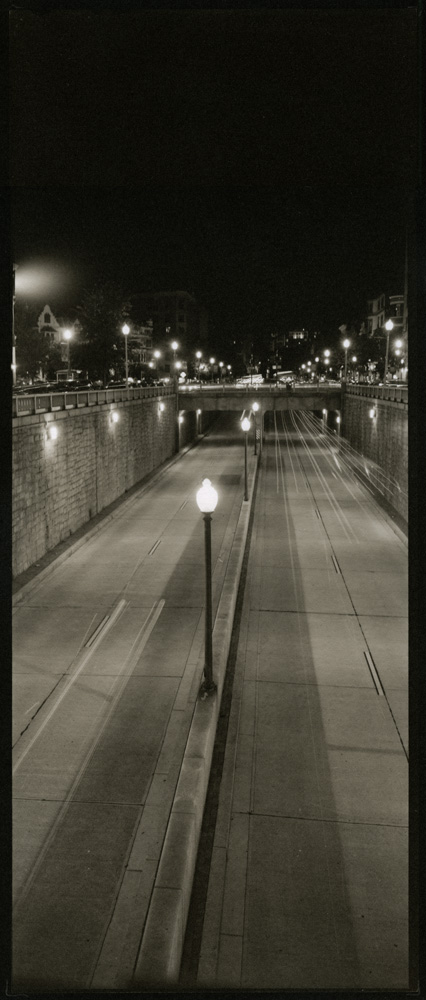
Some of my prints from the shoot on Saturday night. These are all palladium prints. The images were shot with my Canham 5×12. All images were taken around Dupont Circle. You can see from the bus photo that these were obviously long time exposures (the bus was somewhere north of 2 minutes, in multiple snaps of 30+ seconds each). The bus was an experiment that didn’t produce the expected result, but in a bout of serendipity turned out something just as cool as my original concept. I was hoping the bus sitting still as passengers boarded would record as a solid object. Instead, it became something far more abstract in the final image – you can recognize the bus, in pieces. It became an essay on motion, transportation and “transit/ion” by virtue of its self-deconstruction.

First print from the still-life shoot

Here’s the first print in the wash from the 14×17 still-life shoot I did a week ago. Looking at the negative I was worried it would be too thin to print well in palladium. My fears as you can see were totally unfounded. This was a straight palladium print with 33 drops of Pd, 33 drops of Ferric Oxalate (FeOx), and 2 drops of NA2 (sodium platinum) as a contrast agent. The paper is Bergger COT 320.

20110821-081601.jpg

C’est arrivee!

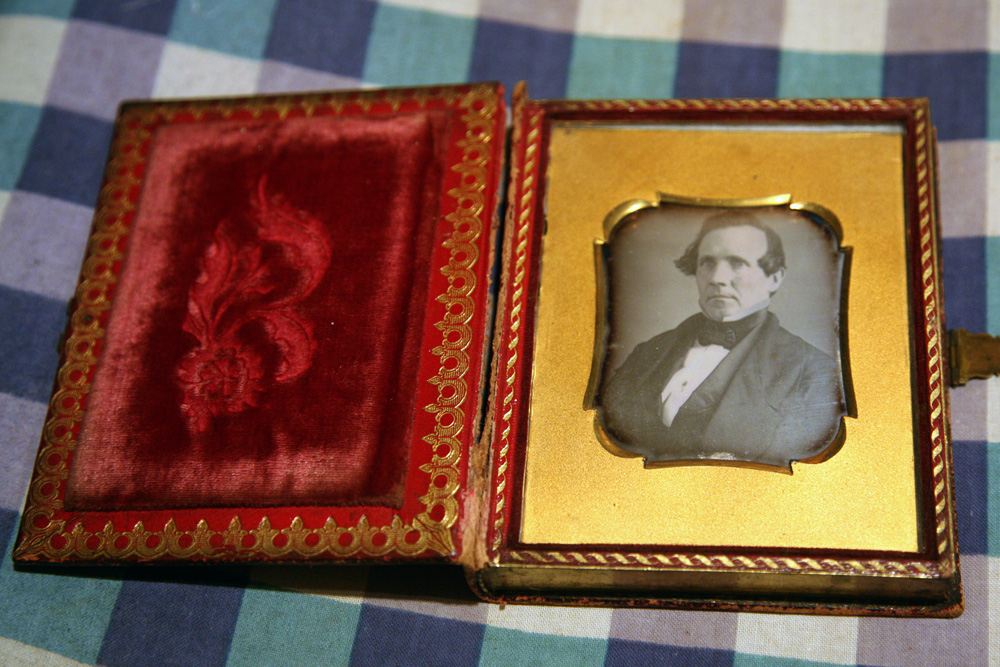
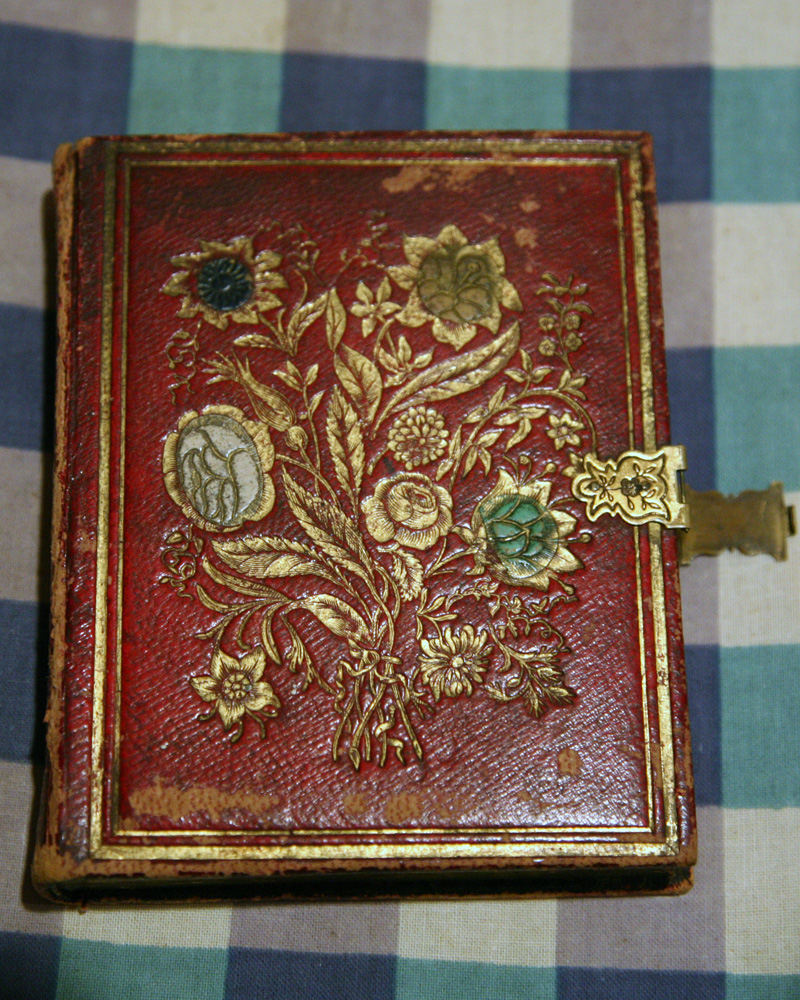
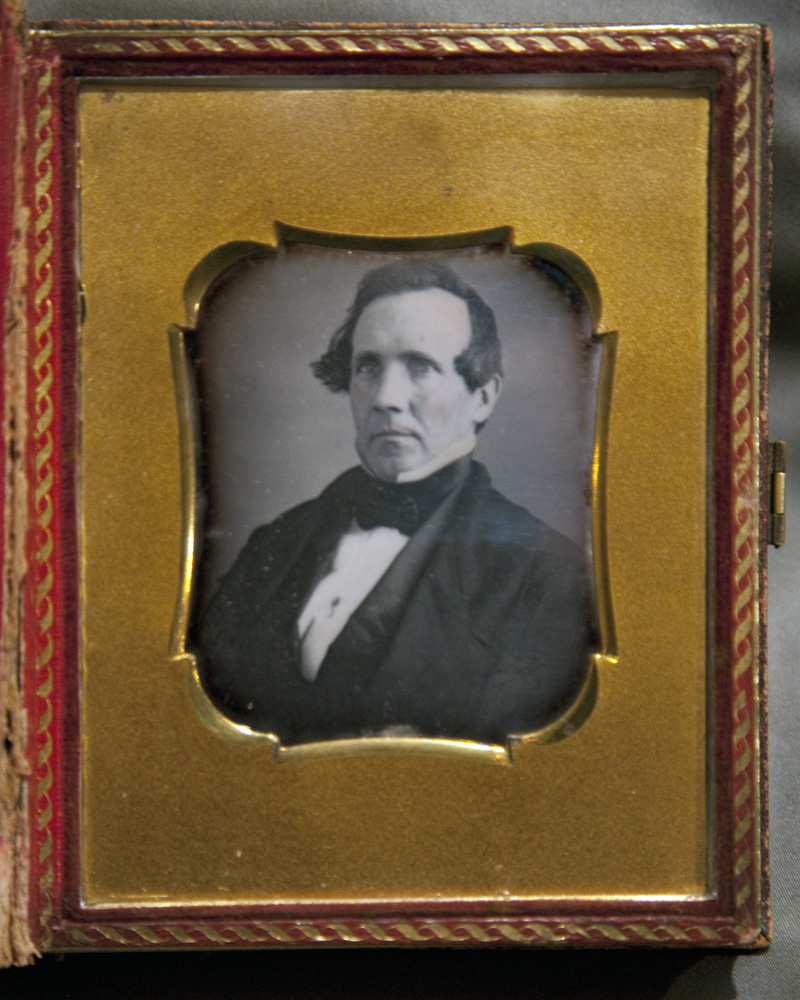
The first of the new images has arrived. The cased quarter-plate daguerreotype of a gentleman. The case itself is quite amazing – made to look like a little book, it’s nearly half an inch thick and gives the plate some real heft. Makes you wonder if the family had a series of them together on a shelf in their library. The image itself is in quite excellent condition, with minimal tarnishing around the edges of the mat. There is a very subtle hand-coloring applied to his cheeks. As you can see from the shot of the open case, the spine is torn but not completely broken.

A night at the circle…

Well, I finally got off my keyster and went out shooting tonight. I loaded up ten sheets of 5×12 in the Canham and went over to Dupont Circle to burn some long exposures onto film. This process always takes a lot longer than you think it should because inevitably setting up with a 5×12 (or any view camera for that matter) invites dozens of total strangers to approach you and ask questions. I always view it as an opportunity to educate people about the ongoing viability of film photography, and so I’m always happy to chat, even if the light is changing (fortunately after dark there’s no worry about the light changing – you only need to take one meter reading and stick with it for the rest of the shoot).

I’ve had this idea for a shot for a long time, and never quite got around to trying it until tonight. I did two versions of it – here’s hoping at least one works. The idea was a shot of a city bus pulling up to the bus stop, and loading/unloading passengers. Ideally it would be a 30-second or so exposure. I played a bit fast and loose with this one because the traffic pattern at the bus stop I was using resulted in a lot of stop-and-go and made it hard to get the shot in just 30 seconds. I’m going to develop the film tomorrow and we’ll see what came of it. If it worked as planned, I’ll have light trails leading up to the bus at the curb, and a fairly clear bus at the stop, along with the passengers and the interior. I did one version with my 240mm Apo-Germinar, which wasn’t wide enough to get the whole bus in at the bus stop. I switched to the 159 Wollensak Extreme Wide-Angle for the second shot, and stopped the lens down further to allow for the longer exposure time needed. I’m pretty sure I’ll get most if not all the bus in at the bus stop (I don’t mind if the roof gets a little cut off), but it’s hard to tell without watching the scene through the lens, and at that hour of the night it would mean waiting another half hour for the next bus to come around, and maybe nobody would be waiting to get on or wanting to get off at that stop, and I’d miss the shot. If this first try doesn’t work out, I’ve got other locations I can give a whirl that might work better.

Happy birthday, Daguerreotype!

Just a quick note – today marks the 172nd birthday of the Daguerreotype. It was on this day in 1839 that the French government declared the Daguerreotype process “free to the world” (after buying the patent rights from Daguerre in exchange for a life pension). Vive la France!!!

New Daguerreotypes coming!

Well, new to me that is…

I’ve been off the collecting kick lately because I had some more gear and supplies to buy for my own photography. I found a pair of 14×17 inch film holders that fit my Canham 14×17, and although they’re not a color match for the other three, they’re more than good enough – the external dimensions are identical, so they
re an exact fit, which is the most critical factor when looking for such things. Oh, and they’re less than half the price of new ones that do match my existing holders.

So, with that holdup out of the way, it’s on to more collecting. Two daguerreotypes and a milk glass ambrotype are en route. Daguerreotypes are much more familiar to most people, so I’ll save further commentary until I have them to show. A milk glass ambrotype though- you might wonder what is it? Simply, it’s an ambrotype on a piece of white, opaque glass. Not so simply, to get the image to show, you create a collodion negative the same way you would if you were planning to make albumen or salt prints. You coat a second wet plate onto a piece of milk glass (a white/opalescent glass), then separate the negative from the milk glass with a thin wire or shim or anything that will keep the collodion original very close to but not in contact with the new wet plate. Expose and process as normal for collodion. You end up with a positive on the milk glass (a negative of a negative is a positive). Because of the extra labor involved, they’re somewhat rare. The one I’ve got coming is a very small (1/9th plate size) oval portrait of a young woman, done with a very attractively executed vignette, in a red velvet case. I’ll post pictures as soon as I get it in my own hands. I have no idea who she is or what she did for a living, but something about the outfit feels like a nurse’s habit. Maybe it’s the vignette giving a subliminal halo to the woman adding to the impression – who knows? It probably is a civil war era image, but if that’s true, she’s probably not a nurse, as most of the official requirements for nurses during the civil war requested that they be doughy, extremely plain of looks, and past marriageable age. This girl is none of the above.
A Non-Silver Manual now available for free

I just needed to put in a good plug for this book. It’s what I learned gum printing from, and contains some very useful information on other alt processes. The book is “A Non-Silver Manual: Cyanotype, Vandyke Brown, Palladium & Gum Bichromate with instructions for making light-resists including pinhole photography”. It was available for sale for many years in a soft-cover spiral bound edition directly from the author, Sarah Van Keuren. Mrs. Van Keuren has decided that she no longer wants to maintain the book and deal with the printing and shipping, so she is making it available chapter by chapter for free to download on www.alternativephotography.com If you want a hard copy, you can contact the publisher of AlternativePhotography.com and see about remaining stock.

Upcoming classes/exhibits/jurying

I’ve gotten some further confirmation, so I can post more information about this now:

I’ll be showing work at PhotoWorks in Glen Echo, Maryland as part of PhotoWeek DC 2011. I’ll be displaying my platinum/palladium prints and talking about the process as part of a show-and-tell event on Sunday, November 6. I’ll update with links when they have a schedule of events published. I’ll also probably be doing a process demo some evening that week or the following weekend, November 12-13, and a full-fledged workshop in the spring of 2012.

On a separate note, I’ve been asked to be a judge next weekend at the Howard County Fair’s Home Arts department photography contest. If you’re going to be in the neighborhood, stop by and say hello and see the entries in the contest.

From Anonymous Vernacular by Jeremy Moore

I read this post by my friend Jeremy Moore the other day and wanted to pass it along. I wholeheartedly agree. I still push myself to go to see contemporary shows because I want to see what people are doing, and while it’s not a universal constant, I am disappointed more often than I am delighted by what I’m seeing on the walls. Too often the idea that the concept should take primacy over the craftsmanship has evolved so far that the idea of craftsmanship seems to be not just second-fiddle, but non-existent. Prints that aren’t spotted, contrast corrected, burned/dodged, or color corrected are far too common. I think it’s a symptom of the age that thoughts no matter how unfinished are all given equal value, and he (or she) who can shout their idea the loudest gets credit. Sometimes it feels as if you’re back in high school at the Model UN debate club and the teachers have stepped out of the room – everyone’s still on-focus enough to stick to debating the topic at hand, but all sense of moderation and argument has been thrown out the window – “I think the solution to the Arab-Israeli problem is to give Jerusalem to Tibet and let the Buddhists run it!” “And why do you think that would work?” “Because!” “Nuke em’ all and let God and Allah figure out between themselves which bodies belong to whose faith” and so on…