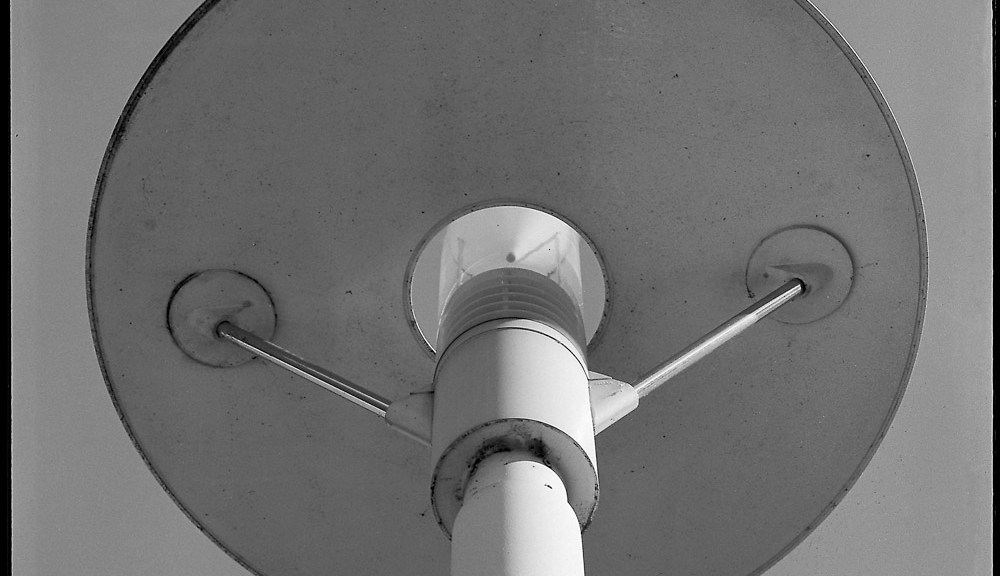
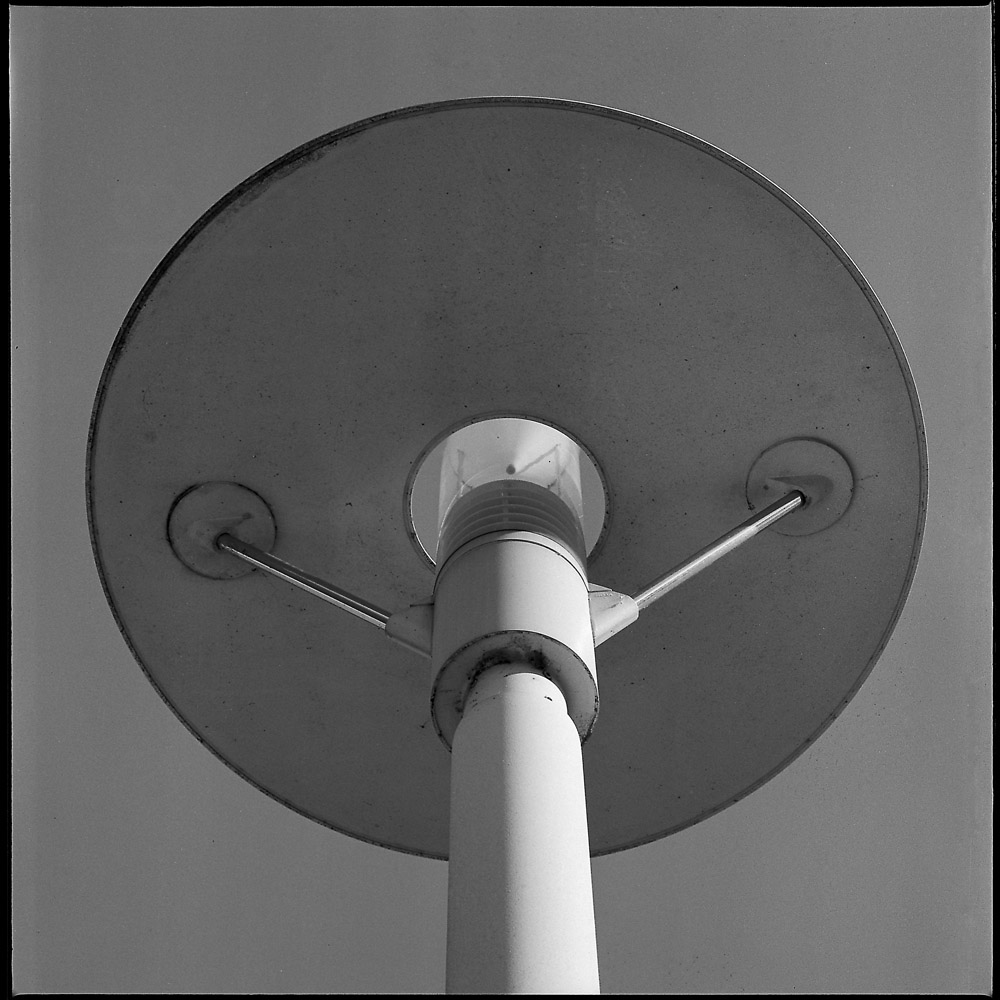
Yet more in my series of everyday objects. This time, it’s a lamppost, a safety cone (I’m not calling it a traffic cone because in this context, it’s being used to warn pedestrians of an uneven paver), parking meters again, and a police call box. You may have wondered at seeing some of my images with a black border and others without. I generally try to compose full-frame, and I like including the black border to show that. I also feel that in some cases, the black border helps define the image especially if the background is predominantly bright. I don’t ever add one to make it look as if what you see is full frame if in fact it is cropped, or to make you think it was made in a different format than presented. The images I post online for the most part are scanned from the negative, and given the nature of film, sometimes the backing paper leaks light along the edge, or other things happen during processing that require me to crop a little. Sometimes, I have to crop a lot because the composition just wasn’t right in the full square of the 120 image size. In those cases, I leave the edges alone and don’t put a black border on.
Twin MetersSafety ConePolice Call BoxLamppost, Kennedy Center
Many photographers complain about “I don’t have anything to photograph where I live… there’s nothing interesting, blah blah blah… I get tired of seeing the same things over and over again”. If you’re getting tired of seeing the same things over again, then you’re not looking right. Not only are you not paying attention to what’s around you, but you’re failing to observe change in your environment and to record that change, which is one of the greatest functions a photographer can fulfill.
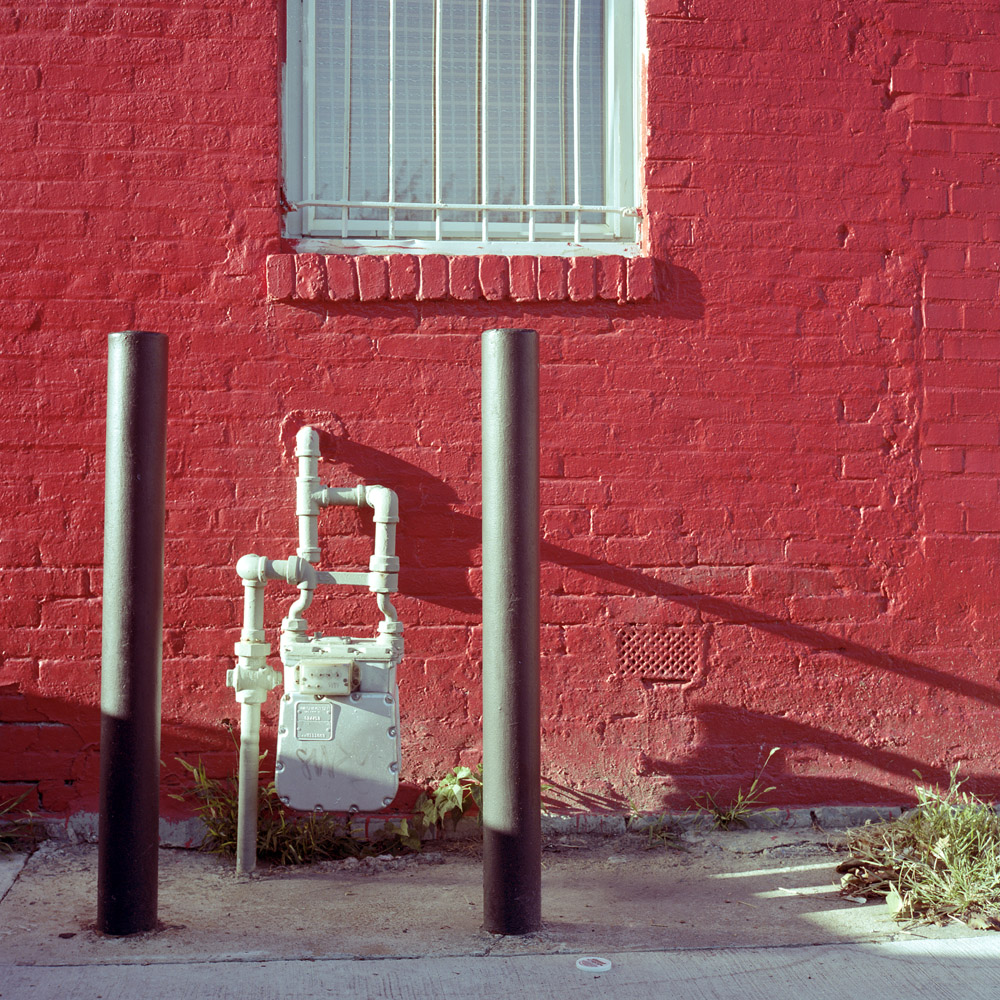
Case in point: two images of the same house, taken about two years apart. The first image is the earlier one. I was foremost interested in the gas meter as an organic pattern against the rigid geometry of the red brick and the white window at the time I took this one. The window and the gas meter were each singular objects set off against the dark, weathered red of the wall. At a bright and cloudless sunset, the meter casts a long shadow, further repeating its organic pattern.
Gas Meter, Red Wall, V Street
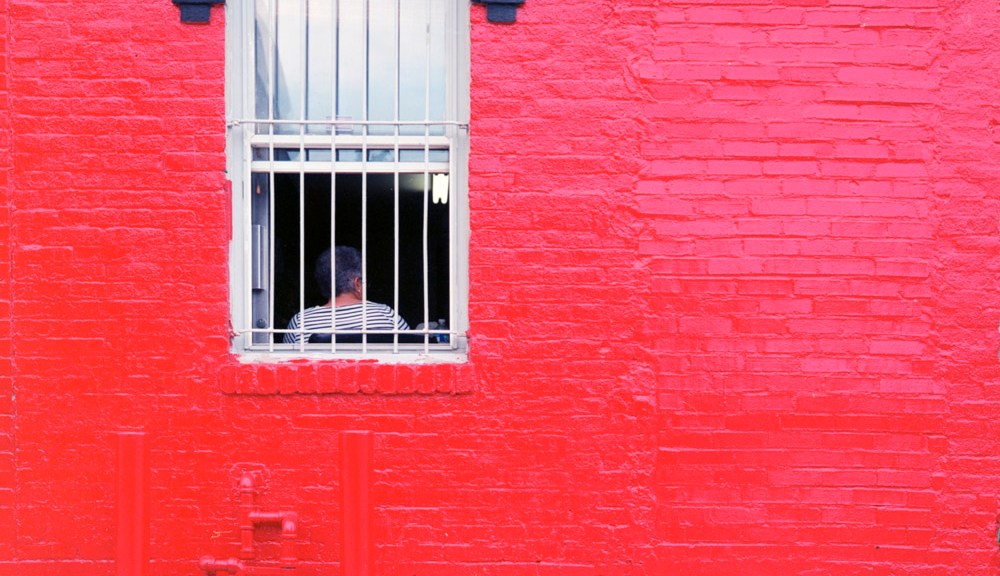
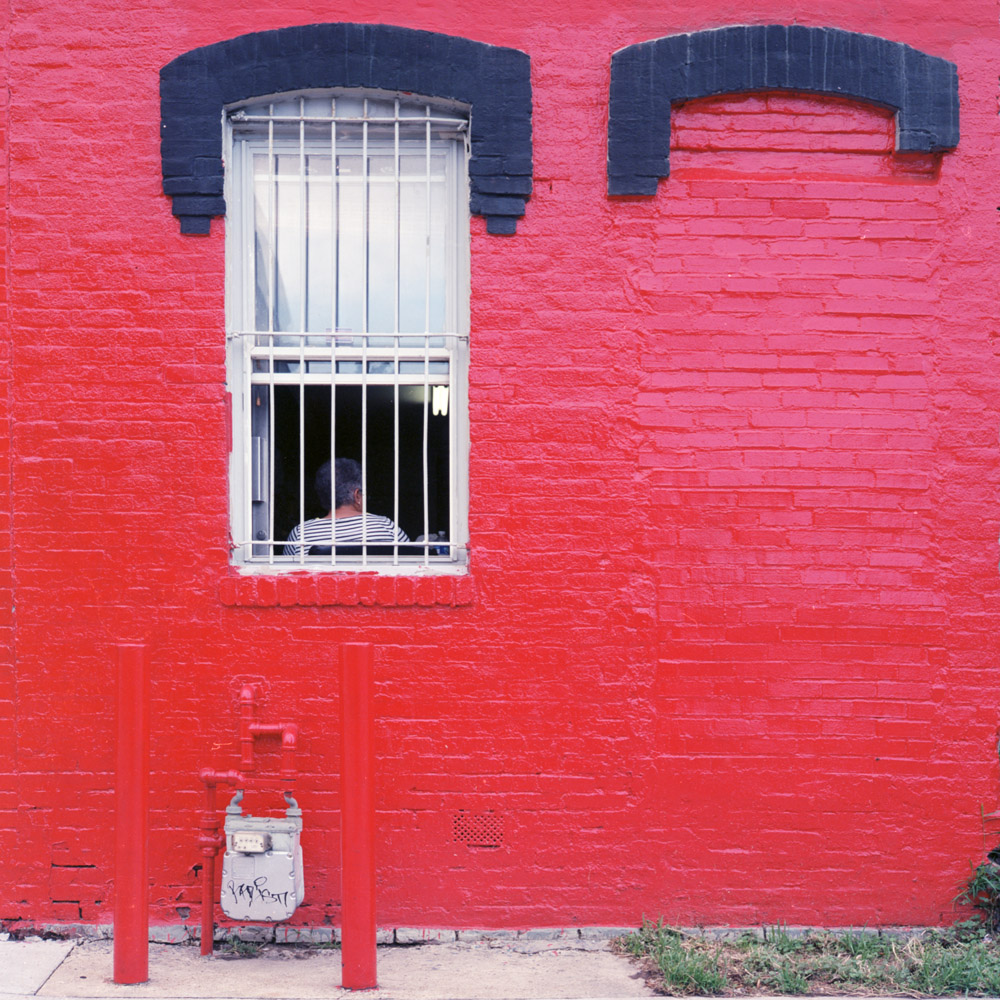
Returning two years later, the house has been re-painted, this time in BRIGHT red, along with the gas meter plumbing and the bollards protecting it. Instead of looking at singular items tightly framed, this time I pulled back a bit and gave the scene a narrative – there’s a person visible inside the bars of the one window, the other window closed. The lighting is flat from an overcast sky, pushing the drama of the scene into the deeply saturated colors and the enigma of the house – who is that person inside? how did they get in there when there is no visible door? Why is the one window bricked up but the other one open?
Red Wall, Window
By re-visiting the same subjects, we not only learn to see them, but to see them differently instead of as static, unchanging objects. It also helps with story-telling and narrative development. Being able to tell a story with an image is one of the key differentiators between a factual record (“on this date, this building/car/person/plant/animal looked like this”) and an artistic output (“why does this look the way it does? Who is that? Why are they there? Why are they doing what they are doing?”). I think that we should all strive for that artistic output and not just factual recording (not that there is no value in recording of facts – we need facts recorded!).
This is one aspect of photography that I would hope to help inspire my students toward, as an educator. But it’s also the hardest thing to teach – photographic vision is something that has to happen, organically, natively, within the individual photographer. The best you can hope for is to provide exercises to stimulate them in the direction of building their vision, and to provide constructive critical feedback to focus that energy.
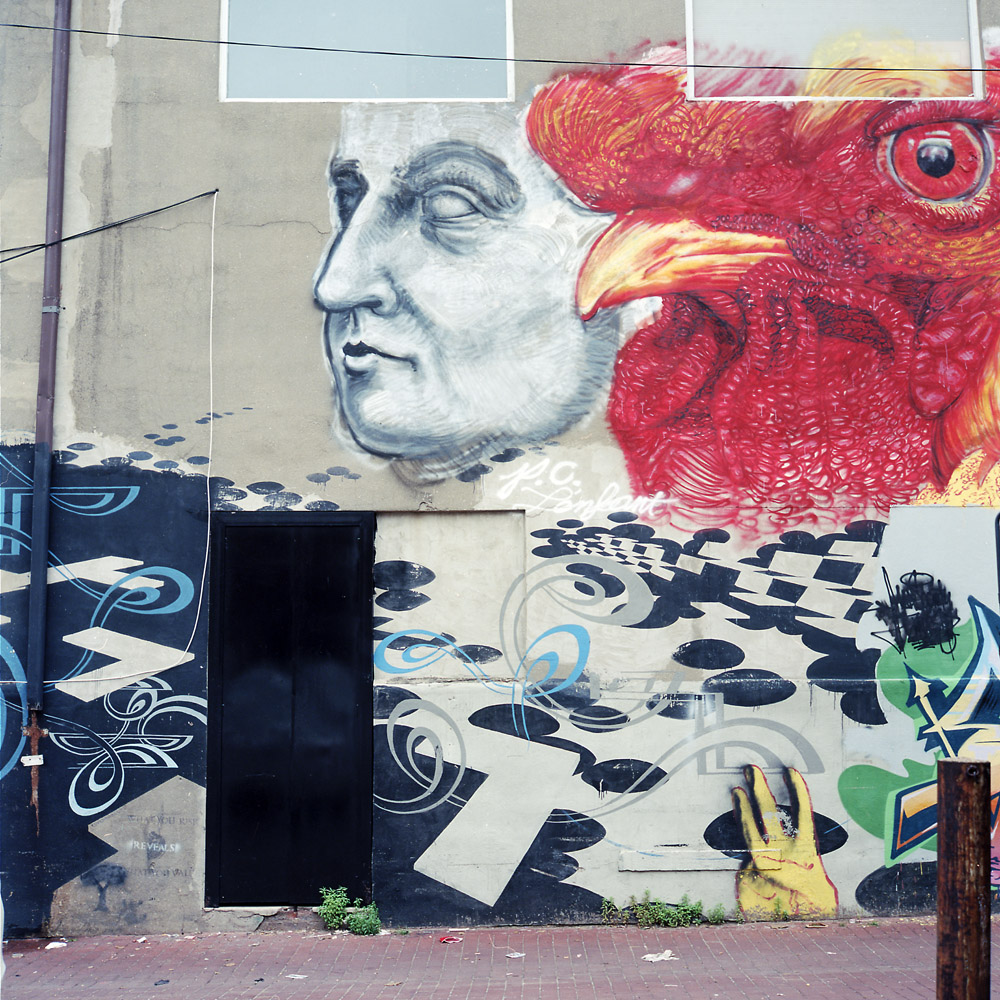
I often go on walkabouts on my way home from work with the Rollei in tow. I’m always impressed by the array of graffiti that’s been put up, and how it is becoming an accepted art form, with entire murals done in “graffiti style”. Here are some finds, most of them in a single alley off 14th Street.
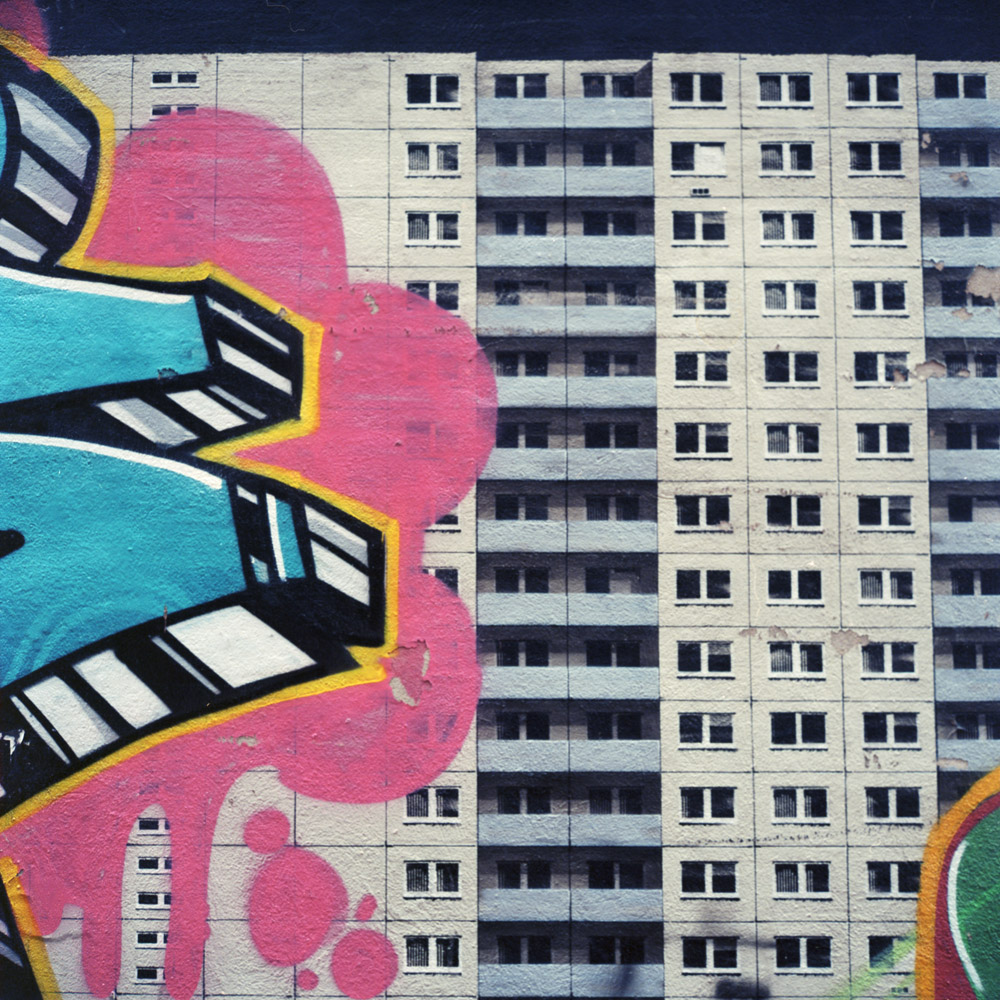
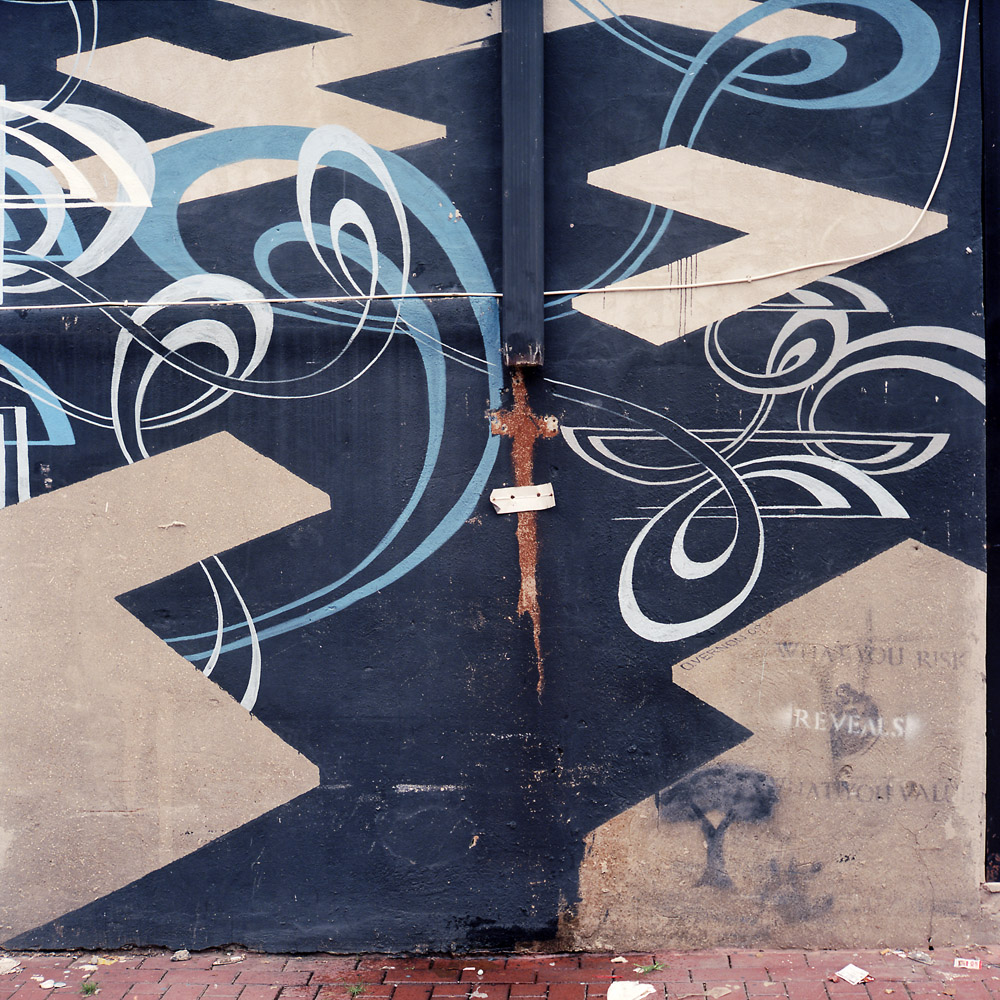
I’m particularly taken with this segment of the mural, because of the optical illusion. If you de-focus just a little bit so you lose the texture of the stucco, it really looks like someone has made a GIANT tag on top of an actual apartment building.
Optical Illusion
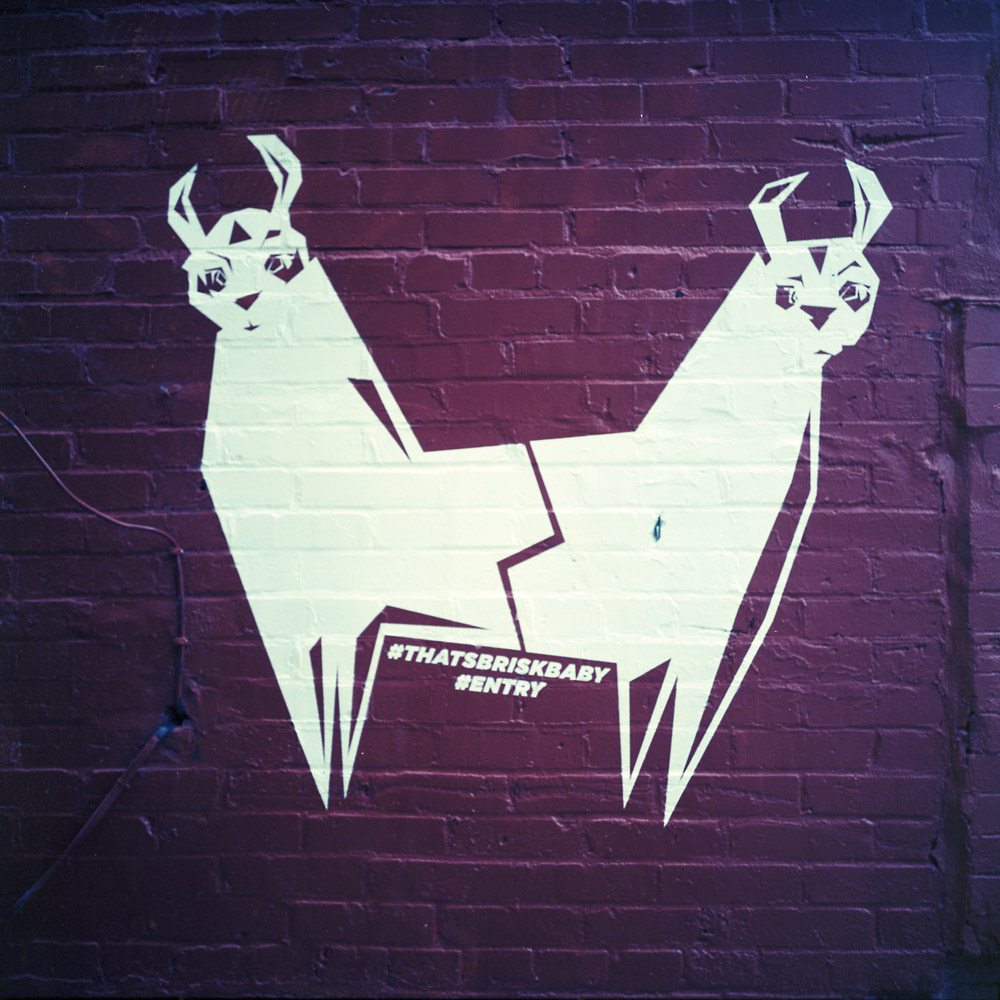
I forget exactly where the two-headed Llama is located, but it’s near the alley mural. Very different texture and style, obviously not the same artist (the Llamas are a stencil, whereas the mural is almost entirely freehand). But Llamas are always cute.
Two Llamas
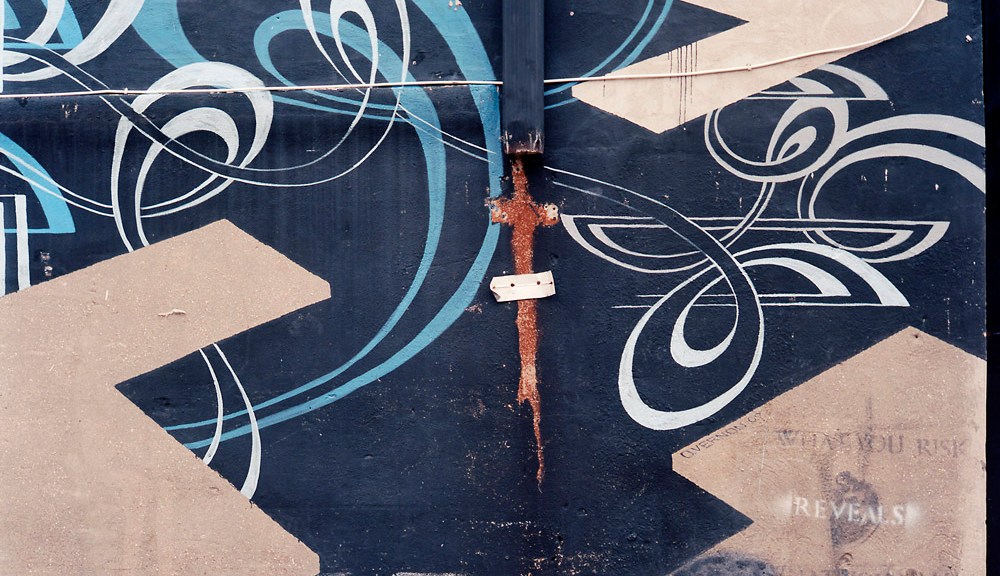
I don’t know if the stencil is an add-on to the mural by the artist, or if someone else came along and tagged it on top of the mural. But the statement is both enigmatic and profound: “What you risk reveals what you value”.
What You Risk
Another M.C. Escher-esque optical illusion in the mural- when you first look at it you see a redhead with long, flaming hair streaming behind. Then you realize it’s a head with a chicken next to it. But it’s hard to keep seeing the chicken, and easy to go back to seeing the redhead alone.
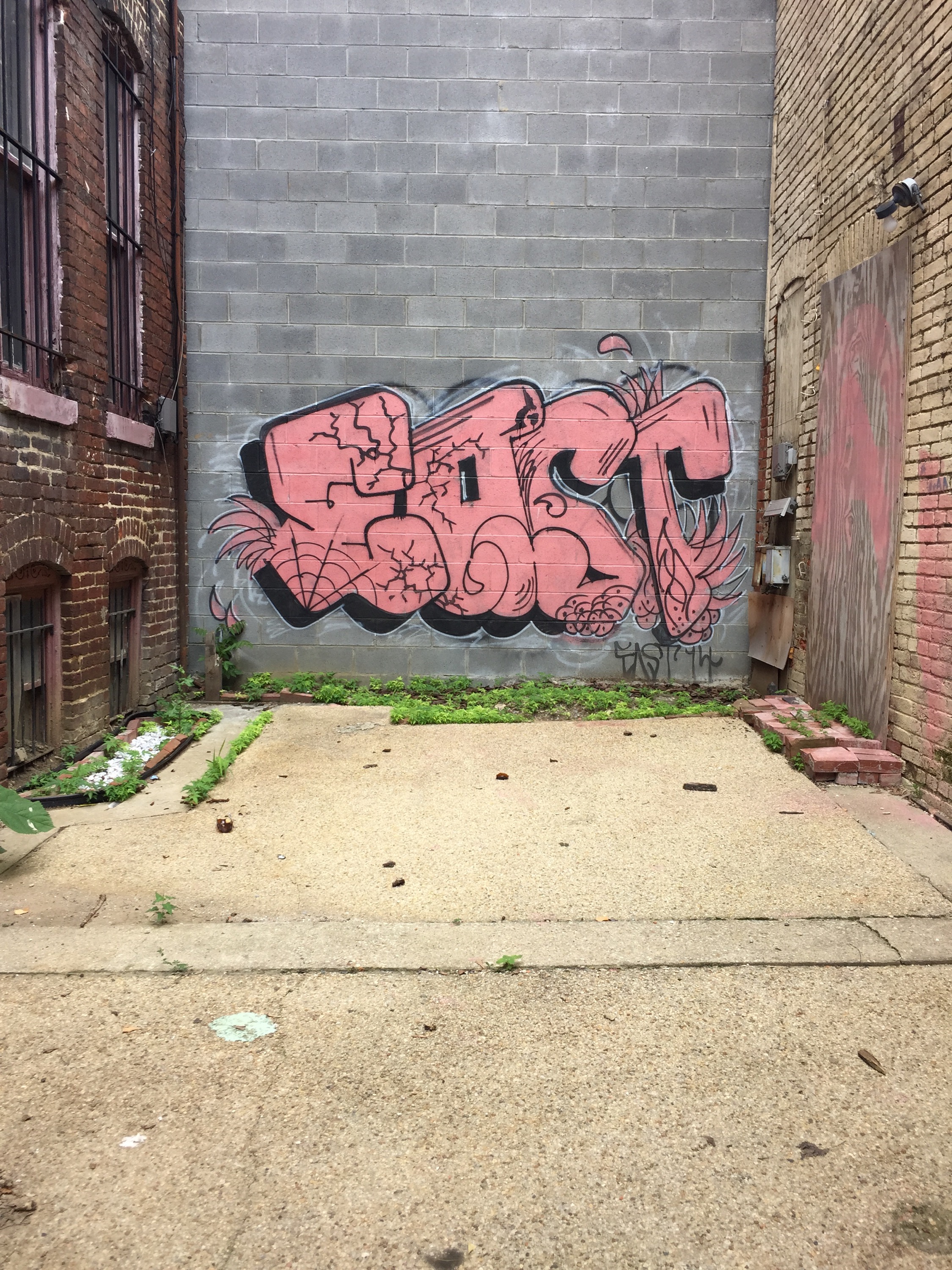
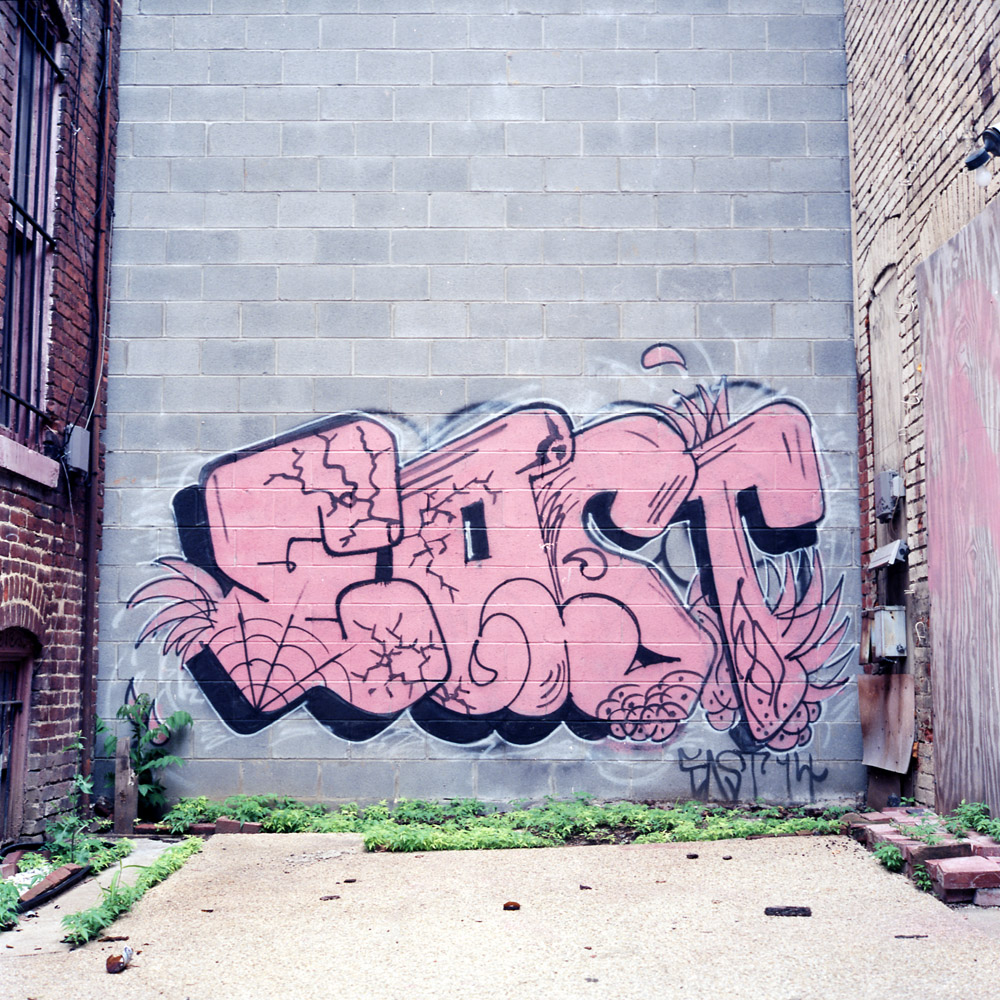
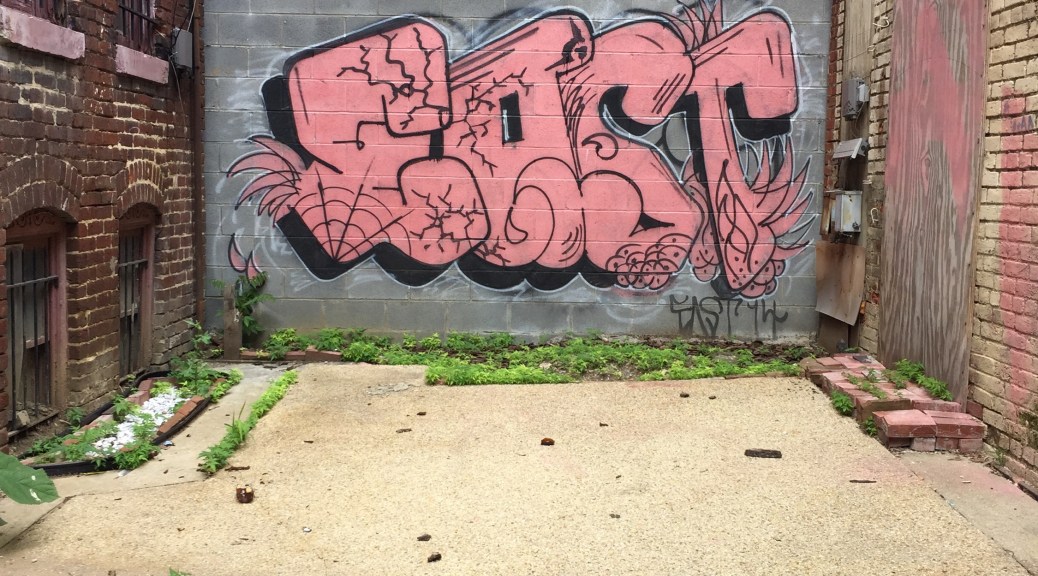
A while back I posted an item about sometimes the best camera is the camera you have with you at the time you need to take a picture. Certainly, there may be other cameras that are better suited to the task at hand, but they don’t do you any good if you don’t have them with you. To whit, the first image. I came upon this bit of graffiti in an alley between two buildings. It’s almost as if it were an art installation in itself, the way it’s situated. When I first saw it, the camera I had on hand was my iPhone. It certainly did a good job of capturing the scene.
I promised to come back with my Rolleiflex to photograph it again, to see how different the two cameras’ visions were, and how they rendered the scene differently.
Graffiti, 14th & Corcoran
It’s not really a fair comparison, given that the sensor for the iPhone is the size of a Q-tip, if that, and the film in my Rolleiflex is 2 1/4 inches square, or about 300 times the size. Also, the lens has a different field of view- the iPhone is somewhere between a 28mm and 35mm lens’ field of view (moderately wide-angle), translated into 35mm equivalent, whereas the lens on my Rollei is a “normal” (50mm equivalent). The two cameras give very different renderings of the scene – the iPhone gives you much more of a sense of the space, whereas the Rollei makes the graffiti the star of the show.
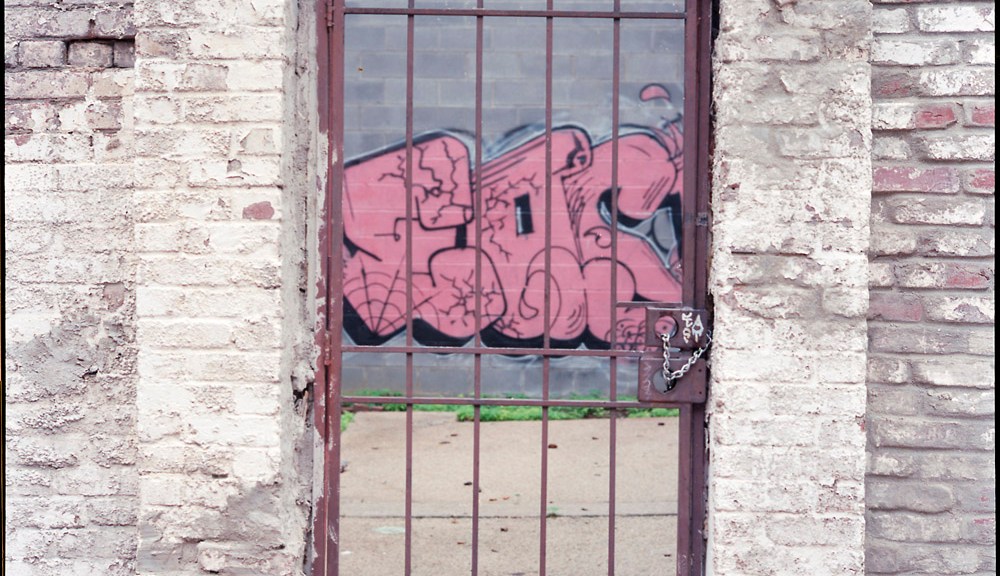
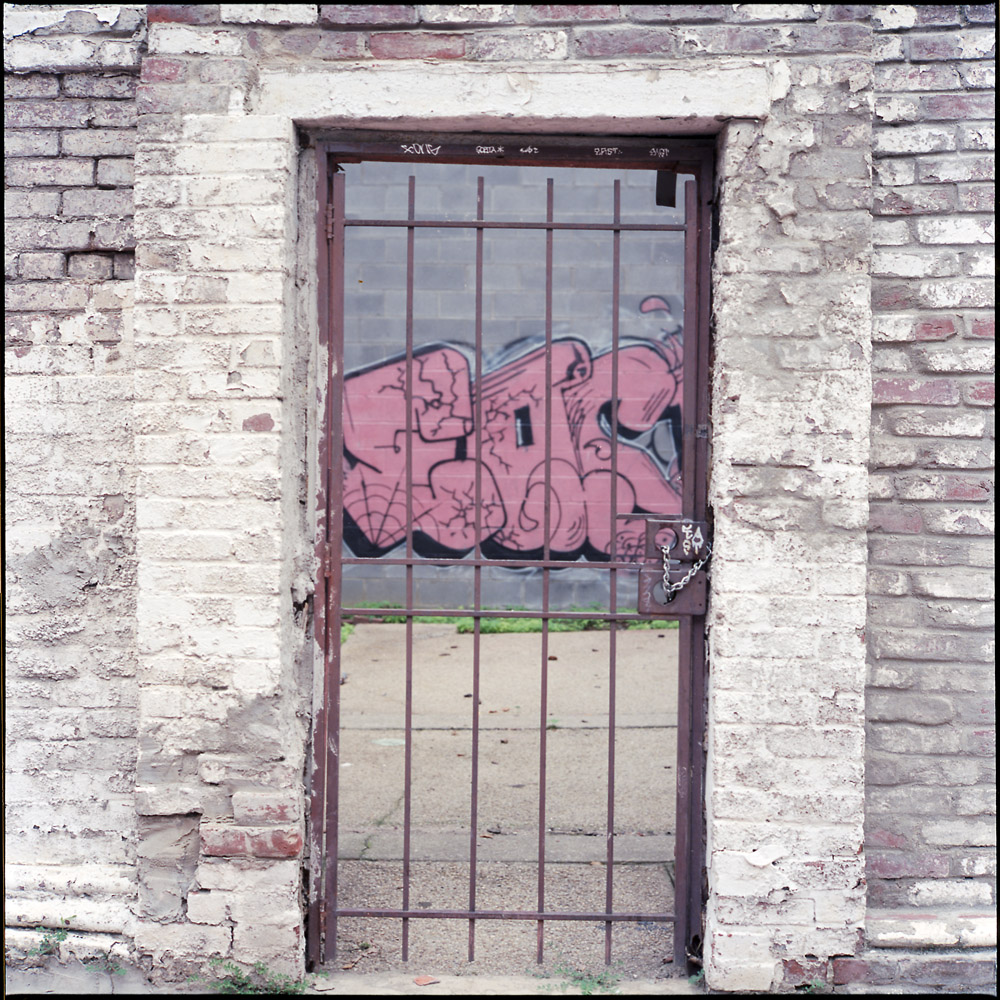
Graffiti, 14th & Corcoran, Door
Here is the locked gateway to the space where the graffiti is. Now you can get a sense of the drama of it – it’s hidden behind a locked gate, guarded like some treasure on display at more than an arm’s distance.
You know the old adage, “the best camera is the one you have with you”? It’s true. I got lucky and found these two shots as I was walking around the other day waiting to meet a friend for lunch.
They’re snaps with my iPhone. It was the camera I had with me at the time. And proof that it’s the photographer, not the camera, or the software, that makes the image.
I’ll be back in the neighborhood today after work with my Rolleiflex, and I’ll take them again. Different photos, different camera, different aspect ratio, so they’ll feel very different. I’ll try to remember to post them when they’re done.
Here are some photos from yesterday’s Gay Pride Parade. These were faces in the crowd of people watching the parade.
This first picture is the reason why we need gay pride parades still – I was standing on the curb, waiting for the parade to arrive, and this woman carrying this sweet little girl came up to me and said, “She’s a Pride baby – she needs her picture taken! Take her picture, she’s a Pride baby!”. When I put the camera to my eye to compose the photo, the mother turned her head so her face would not appear in the photo, only the little girl’s.
Pride Baby
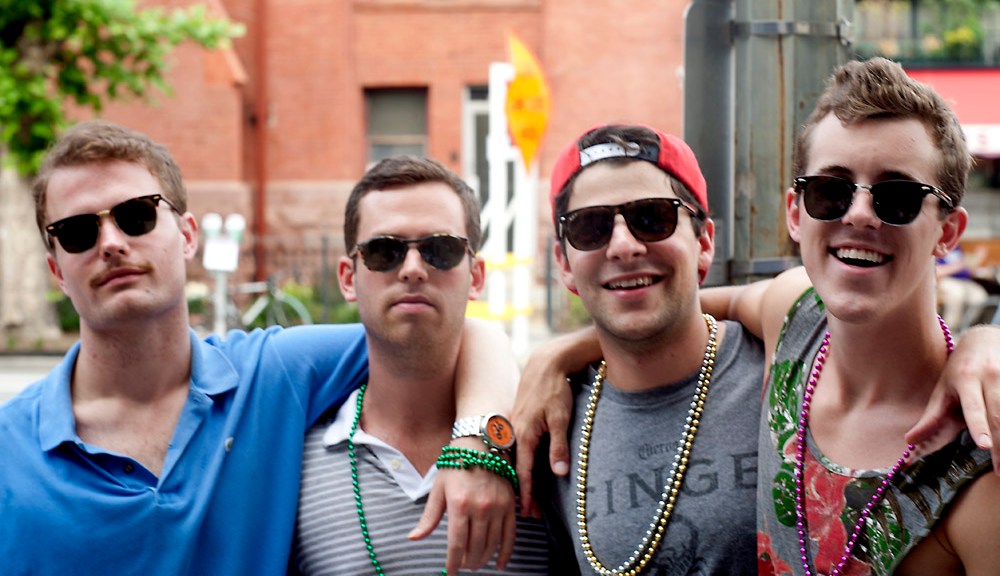
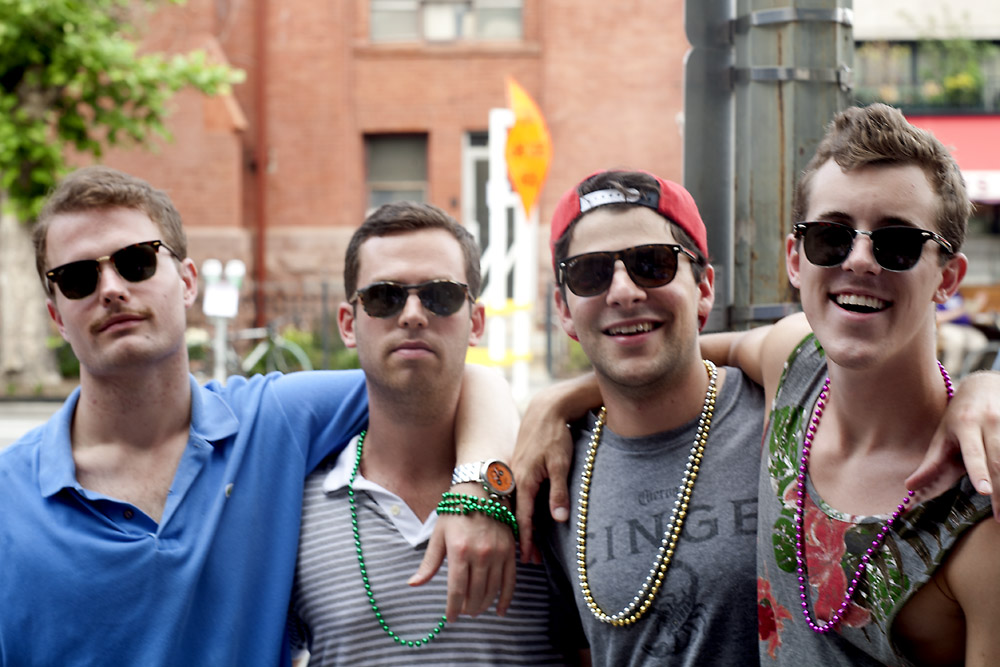
These guys saw me standing with my camera and approached, asking to be photographed. They asked me where the photos were going to be used – “Will these be in the New York Times?” I told them I’m shooting for this blog, and they said “you can use our photos anywhere!”. I hope they find this photo and enjoy it!
Besties
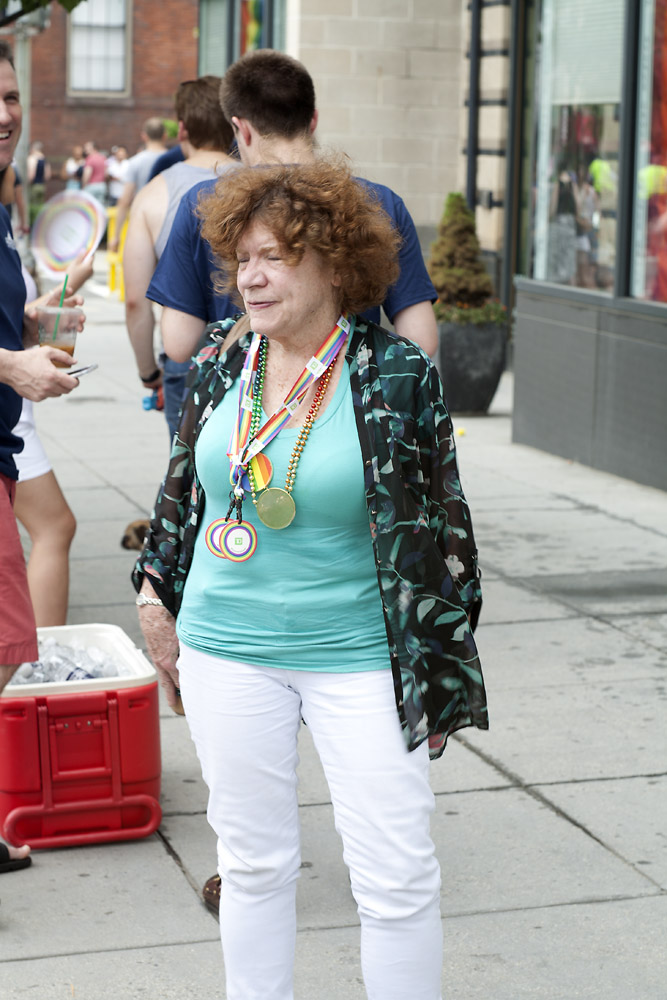
I don’t know her name or if she is in fact a mother, but I’m calling her Pride Mama for all her ribbons and beads.
Pride Mama
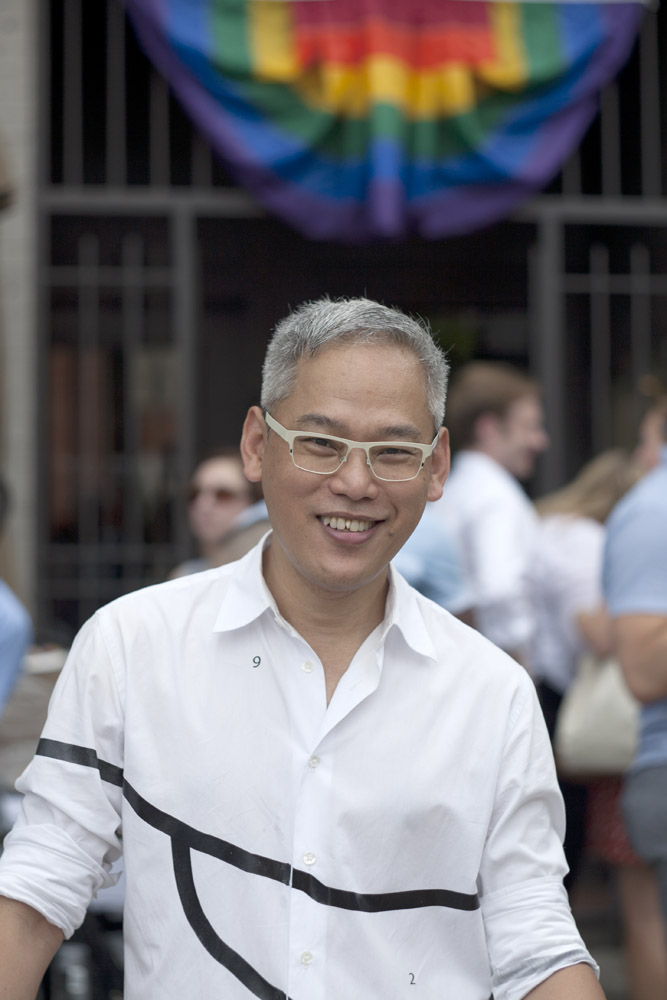
This is my friend, Sak Pollert, who owns Rice restaurant on 14th Street (where I parked myself to watch the parade, as the restaurant is on the shady side of the street in the afternoon when the parade is passing).
Sak P.
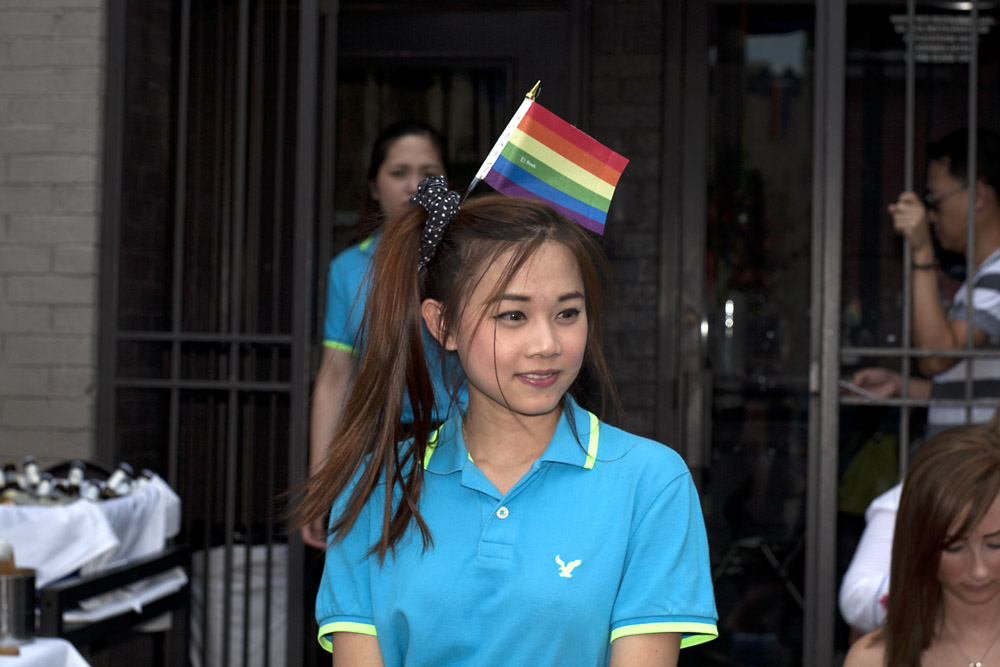
One of the waitresses at Rice – she put a rainbow flag in her hair like a chopstick.
Rainbow Waitress
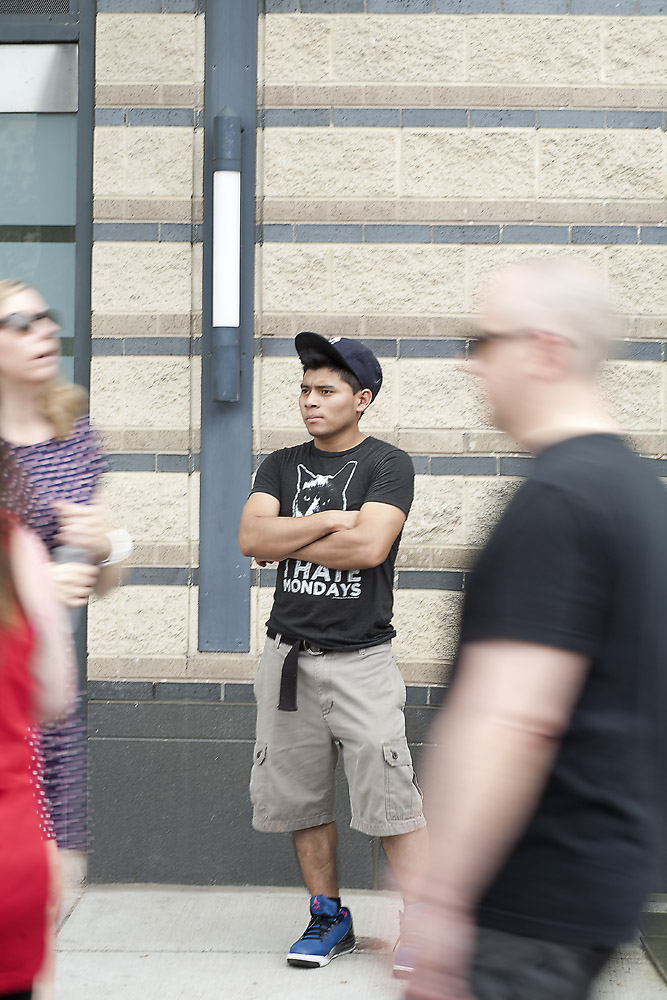
I think this guy is one of the busboys/kitchen staff at Rice, out to watch the parade. I loved his Grumpy Cat T-shirt.
I Hate Mondays
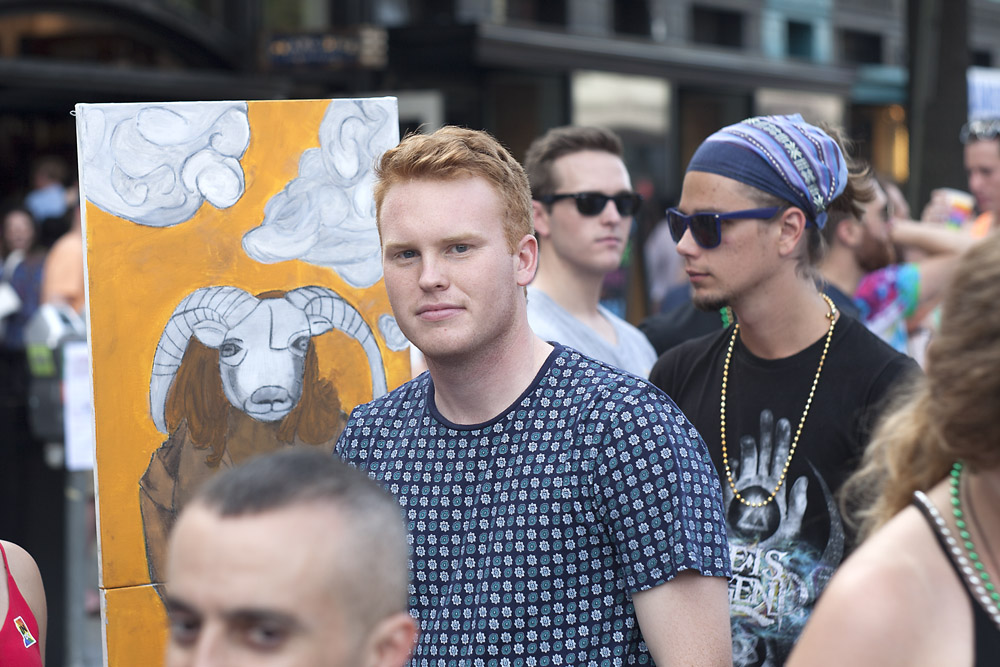
I don’t think this guy actually had anything to do with the goat in a trench coat sign behind him (I think it belongs to the guy in the black t-shirt to his left). When he saw me composing the image, he straightened up, made eye contact, and posed.
Boy, Goat Sign
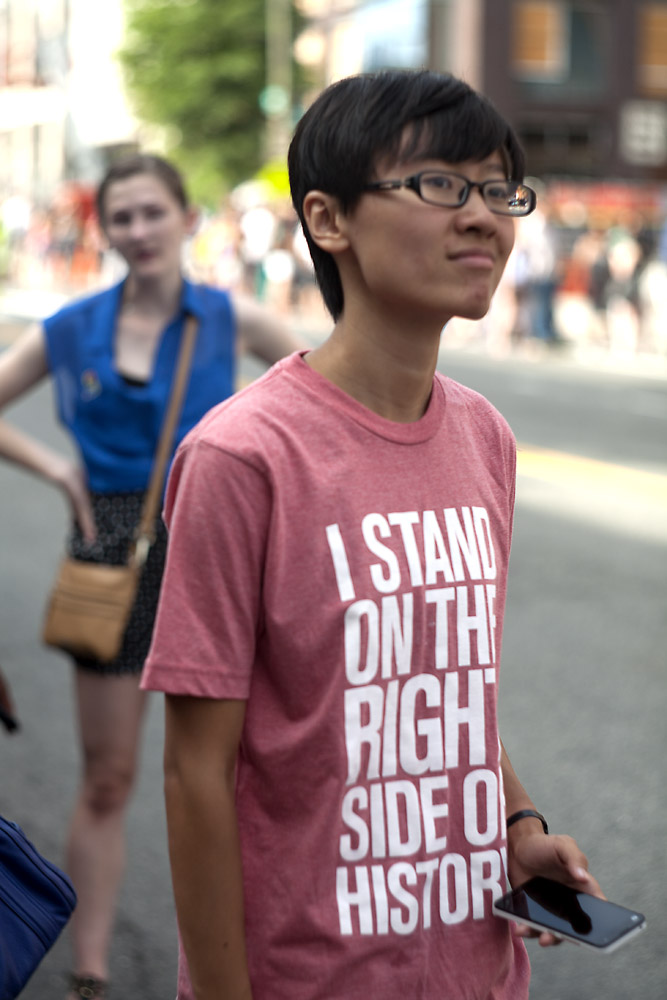
This young lady was standing next to me for a while, and I wanted to get a photo of the shirt with that caption.
Right Side of History
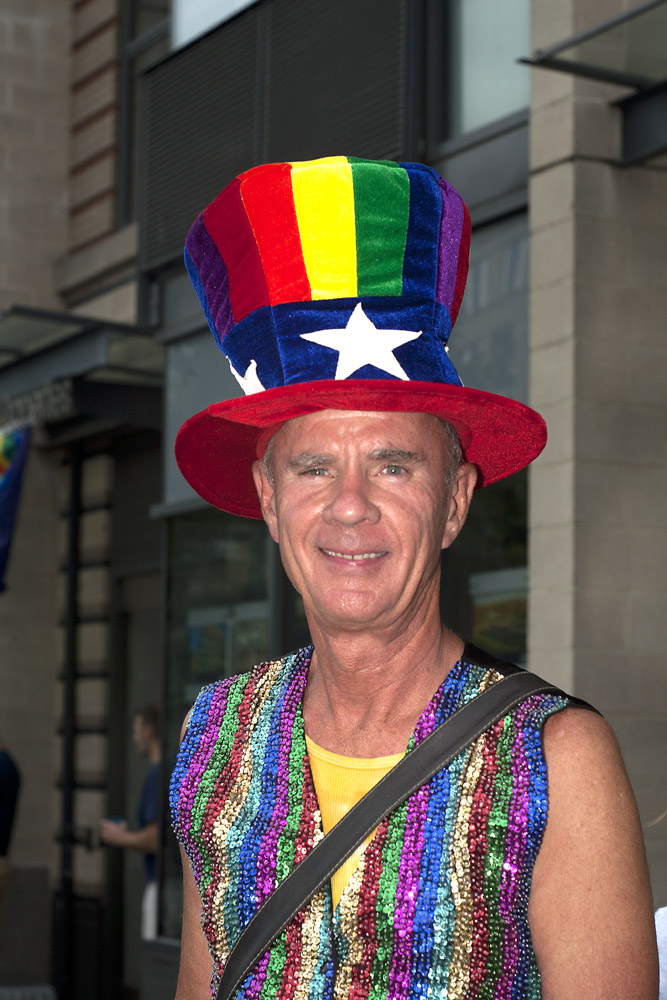
This gentleman was all decked out in rainbow finery (if you call tons of sequins ‘finery’). He was certainly in the spirit of the day! Not visible except by interpolation were his six-inch platform heels.
Rainbow Top Hat
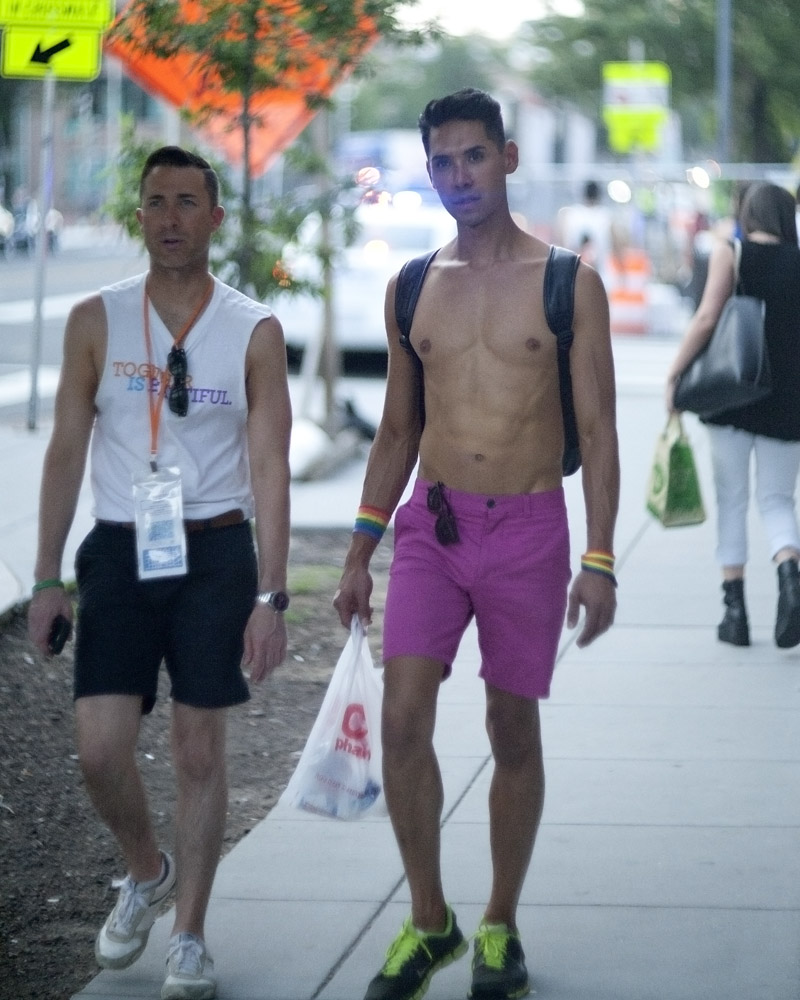
I titled this one “Apres Parade” because I caught these two as we were all leaving the parade, heading home after a long, hot, fun day.
Apres Parade
This was another experiment photographically. I shot the whole parade using my Helios 85mm f1.5 lens. This is the second time I’ve shot the parade with this lens – I did it for the first time the last time I photographed the Pride parade, and the lens was brand new to me then. It’s a bit of an oddity because it’s manual focus and it uses a pre-set aperture – unlike modern all-automatic lenses, this one you have to tell it to stop down the aperture on the lens by turning a separate ring. The lens has a particular signature to its look – when focused and configured properly, it produces a “swirly” background (most visible in the “Apres Parade” image in this post, and several others (Bright Wig, Bike and Miss Gay Virginia) in an upcoming post. The lens is big, heavy, a bit slow to use, especially because of the aperture mechanism, and exposures are sometimes a little off because there is no communication between the lens, camera, and flash. The “swirl” is something I’m still debating if I like. I might need to just shoot more with it to decide.
Another regular subject for me is bicycles and public transportation. Here are four more bicycle photos seen around town.
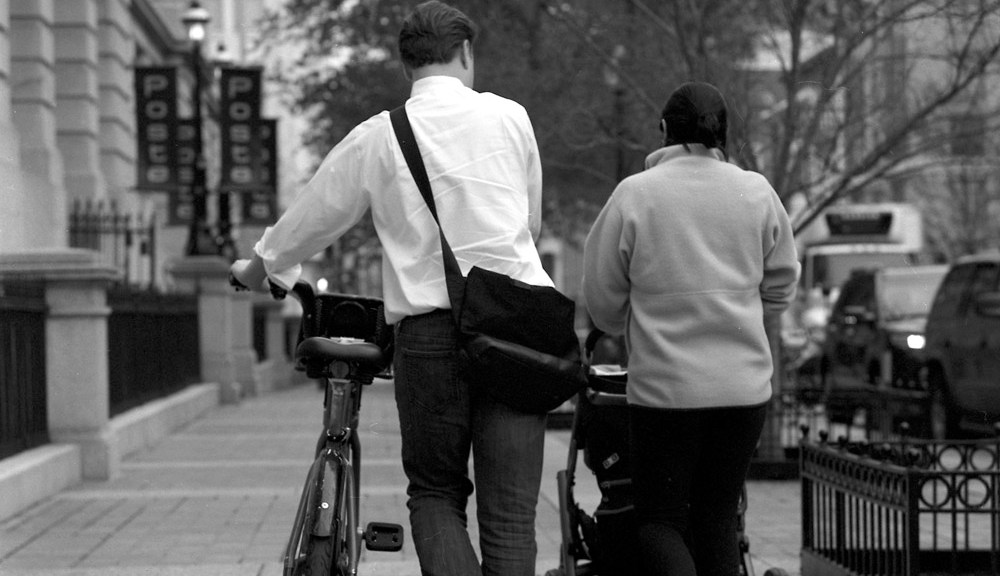
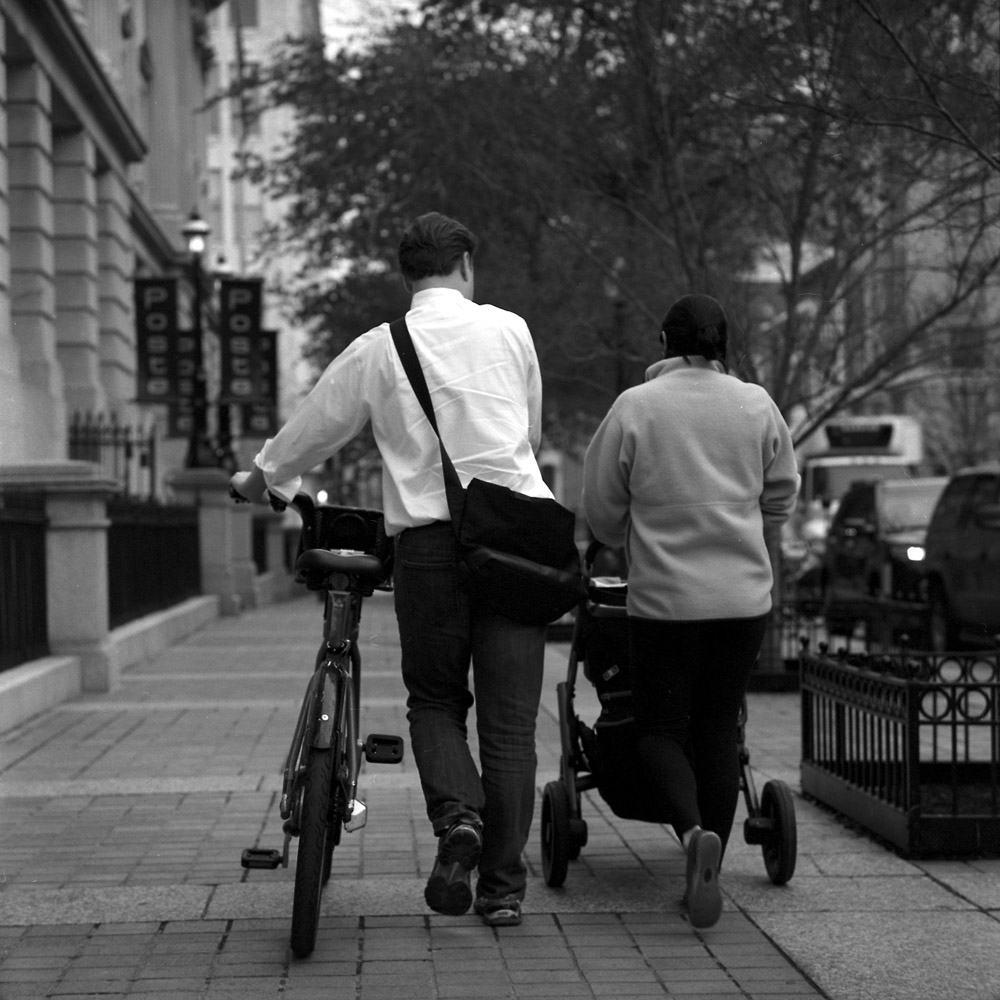
A couple walking home together. He’s using a Bikeshare bike, which is a pretty positive commentary on their adoption by more than just tourists.
Walking Home
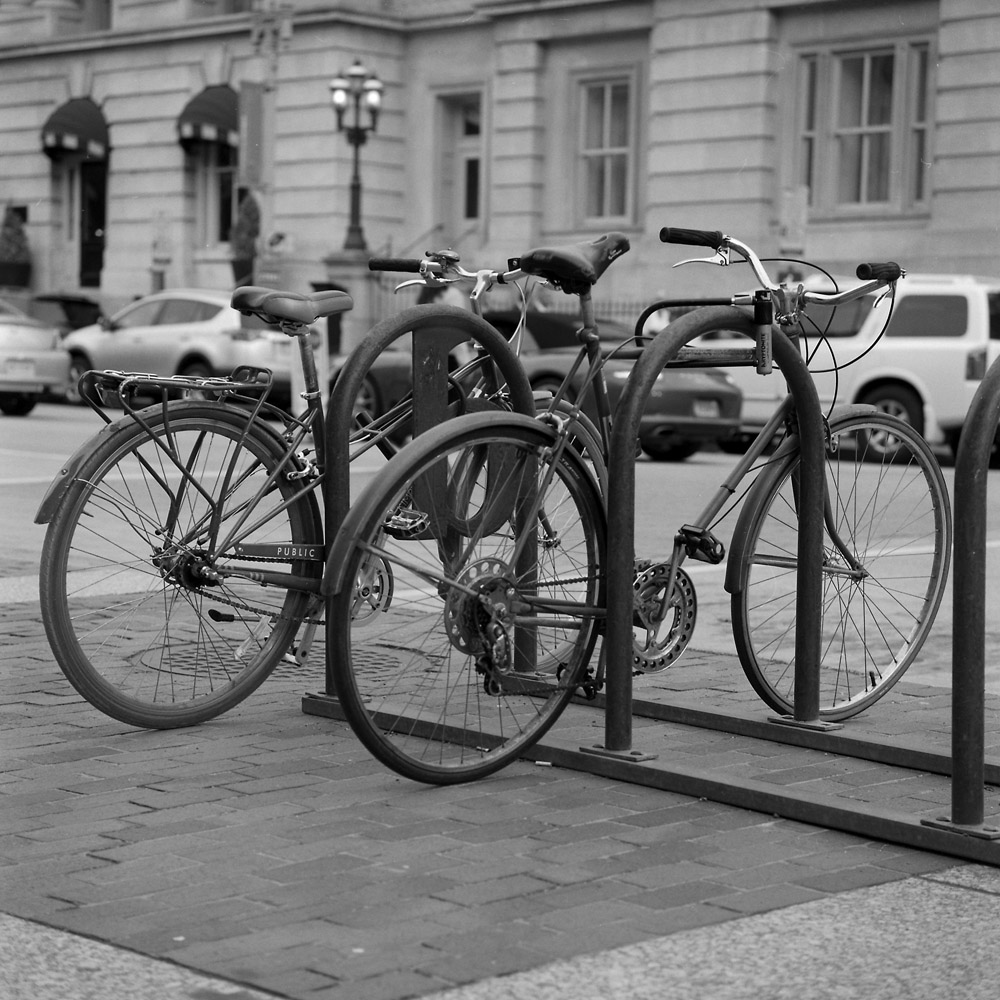
A pair of interesting old bikes locked up on the rack outside the National Portrait Gallery/American Art Museum.
Bikes, National Portrait Gallery
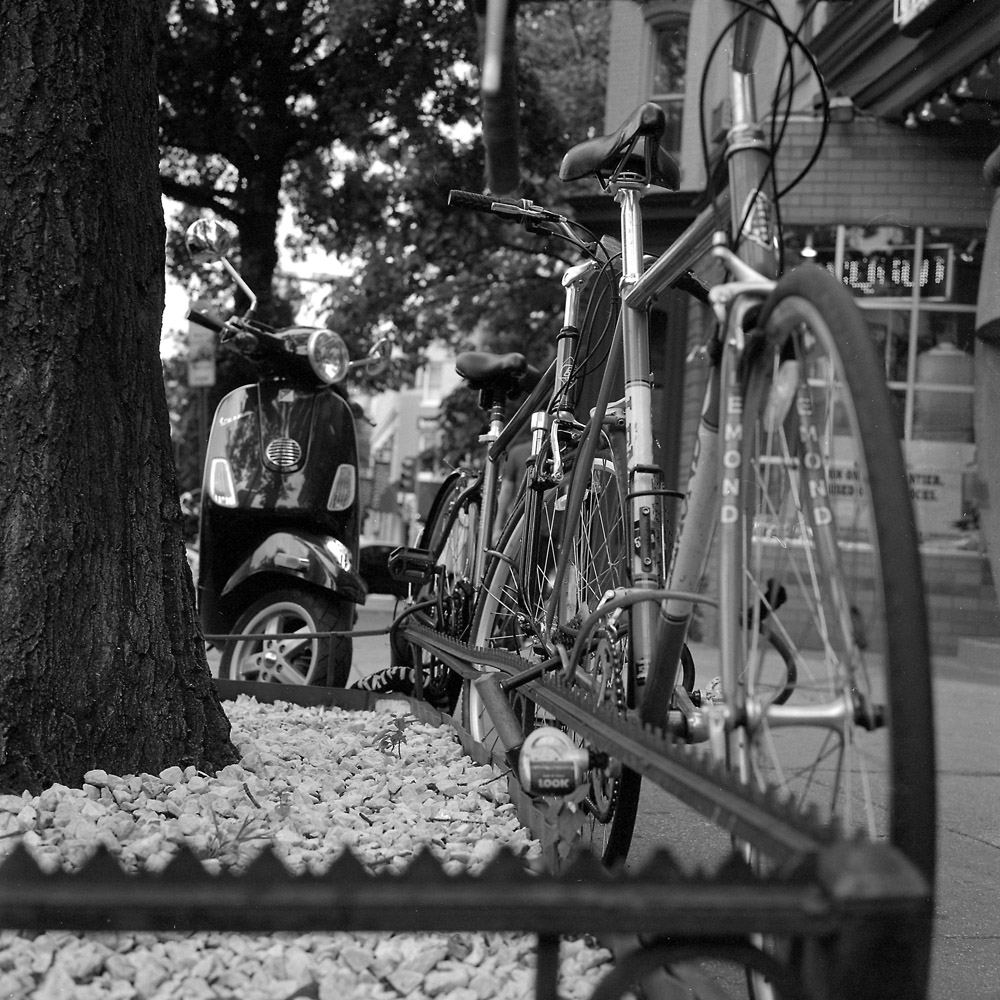
I’m on the fence about how much I really like this image, but it’s bikes, so I’m including it for now. Let me know what you think – does the composition work well? Placement of depth-of-field?
Bikes, Planter Box, Scooter
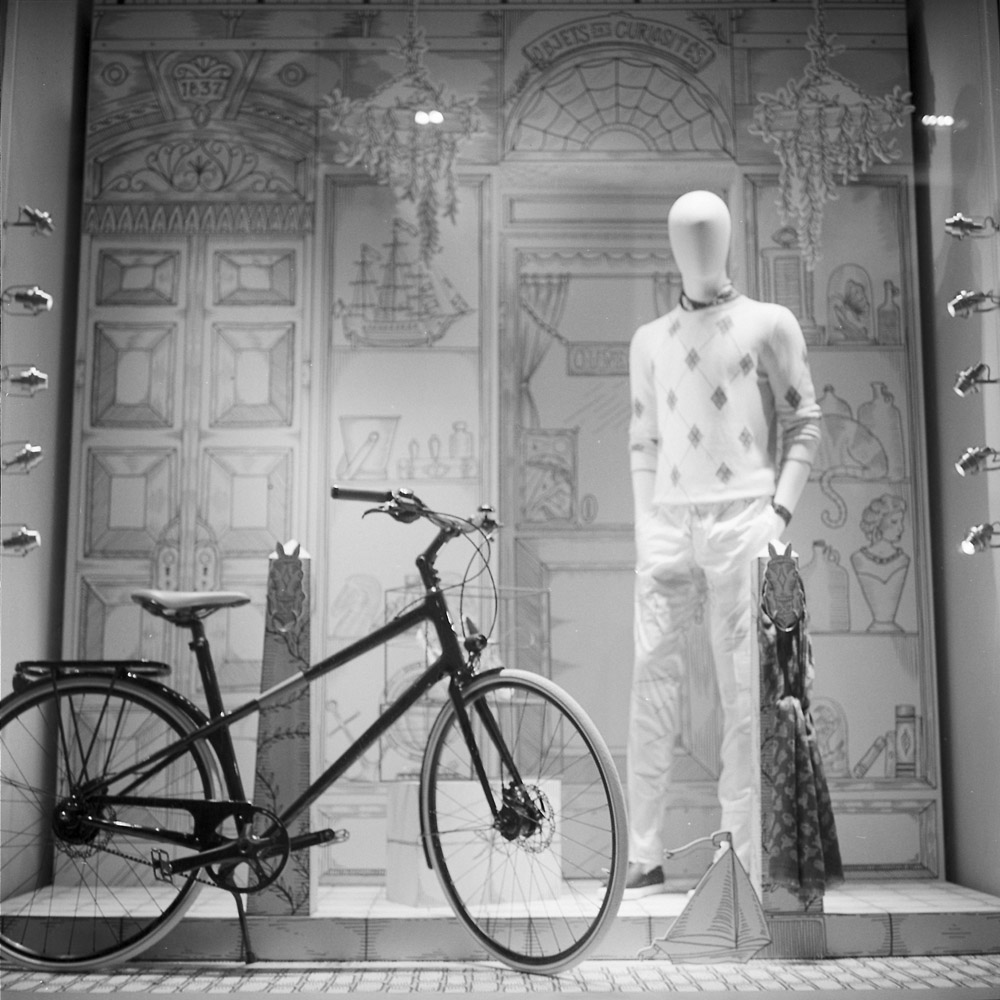
Finally, the bike in the Hermes window. While it’s not in use for its intended purpose, it’s a nice looking bike, and it’s in the Hermes store window, very cleverly employed in the window design. I forget if it was red or dark blue (I think red), but it was a splash of color that popped out against the white backdrop of the window, pulling your eye around the display.
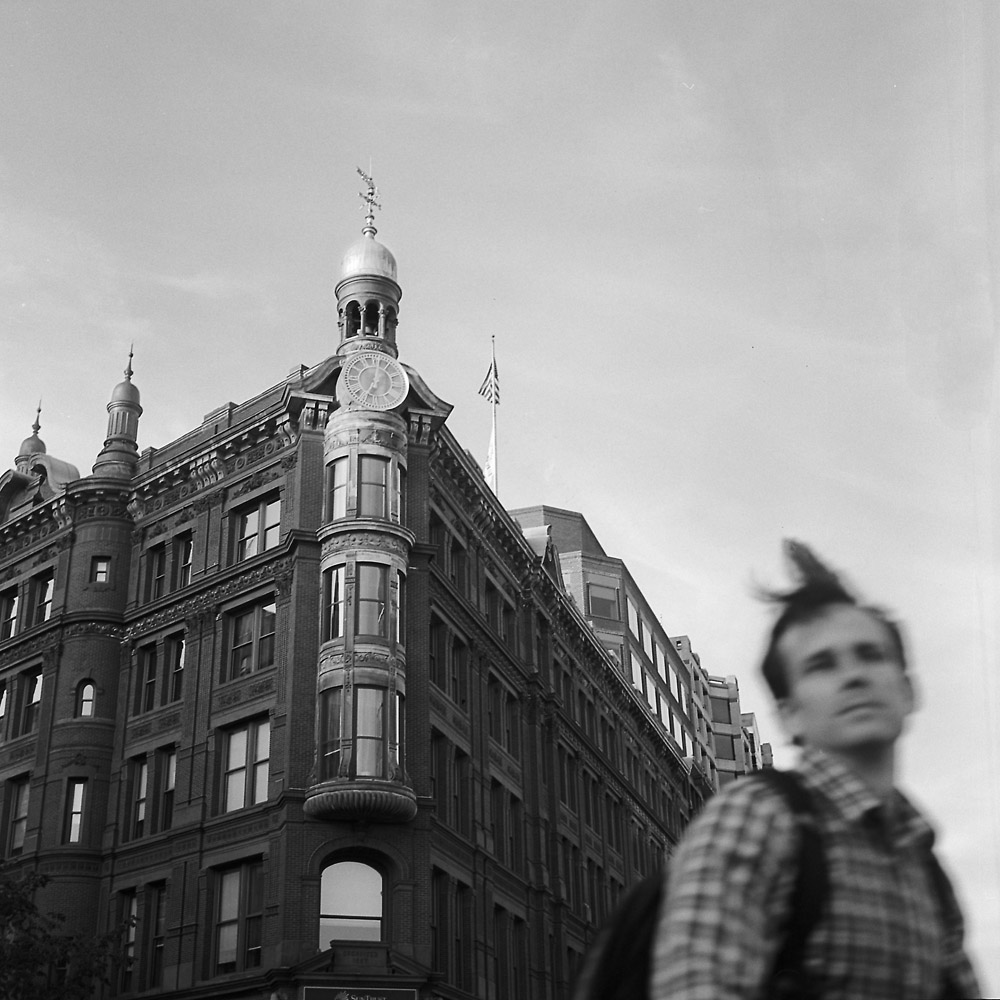
While this shot is at least as much about the SunTrust Bank building in the background, I love how the cyclist passing through the shot turned out – he’s obviously in motion, with a lock of hair blown up and back as he moves. The blurred face makes it somewhat anonymous, an everyman on his way somewhere quickly, turning his head just long enough to look back at the camera looking at him. Actually kind of a rarity these days.
Cyclist, SunTrust Building
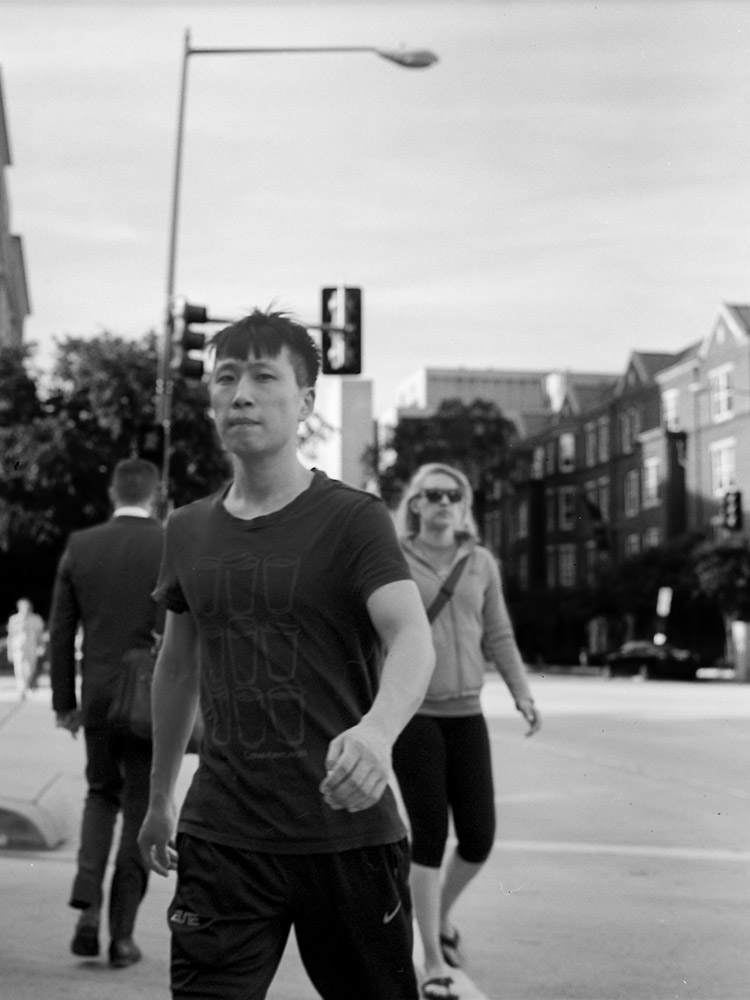
I liked the graphic design of his t-shirt so I set up my camera before he started crossing the street and waited until he was in “the zone” to snap the picture. He’s not tack-sharp because we were both moving at the time, but I think the slight softness of him and the people around him give a sense of movement as well as depth.
Nine Cups T-shirt
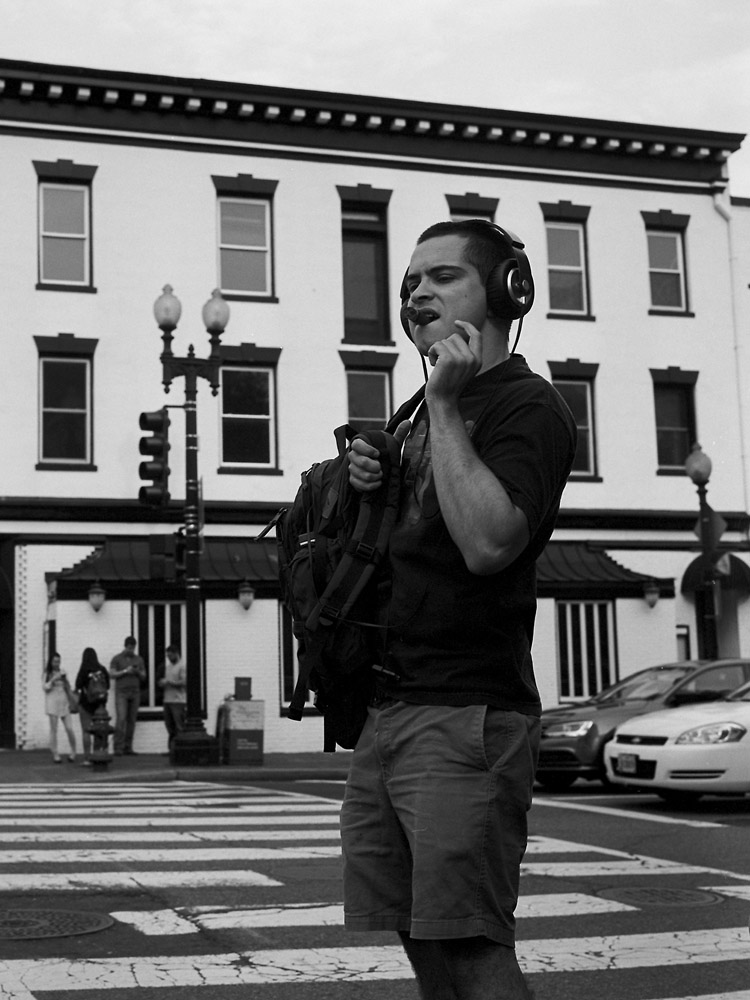
When I saw this character I had to photograph him – giant headphones combined with the fat stogie? How could you NOT?



 dcphotoartist