Category Archives: Washington DC

Washington DC in the Snow

We had a snowstorm a couple weeks ago. I know, bad me for taking so long to getting around to developing the pictures. And I have another roll from the snowstorm to go, as part of a batch. In any case, I decided I wanted to take pictures during the snowfall, so I bundled myself up and got out and about with the Rollei. This, and rain, are perhaps the two things the Rollei is less than ideal for, because the waist-level finder does nothing to prevent snow (or rain) from falling on the focusing screen. Unless of course it’s blowing sideways, at which point you have bigger problems.

I took the camera and my Induro carbon-fiber tripod out for a short walk up the street on my way to get dinner. It’s proof of the adage about finding interesting things to photograph in your own backyard. You just have to be willing to see them.

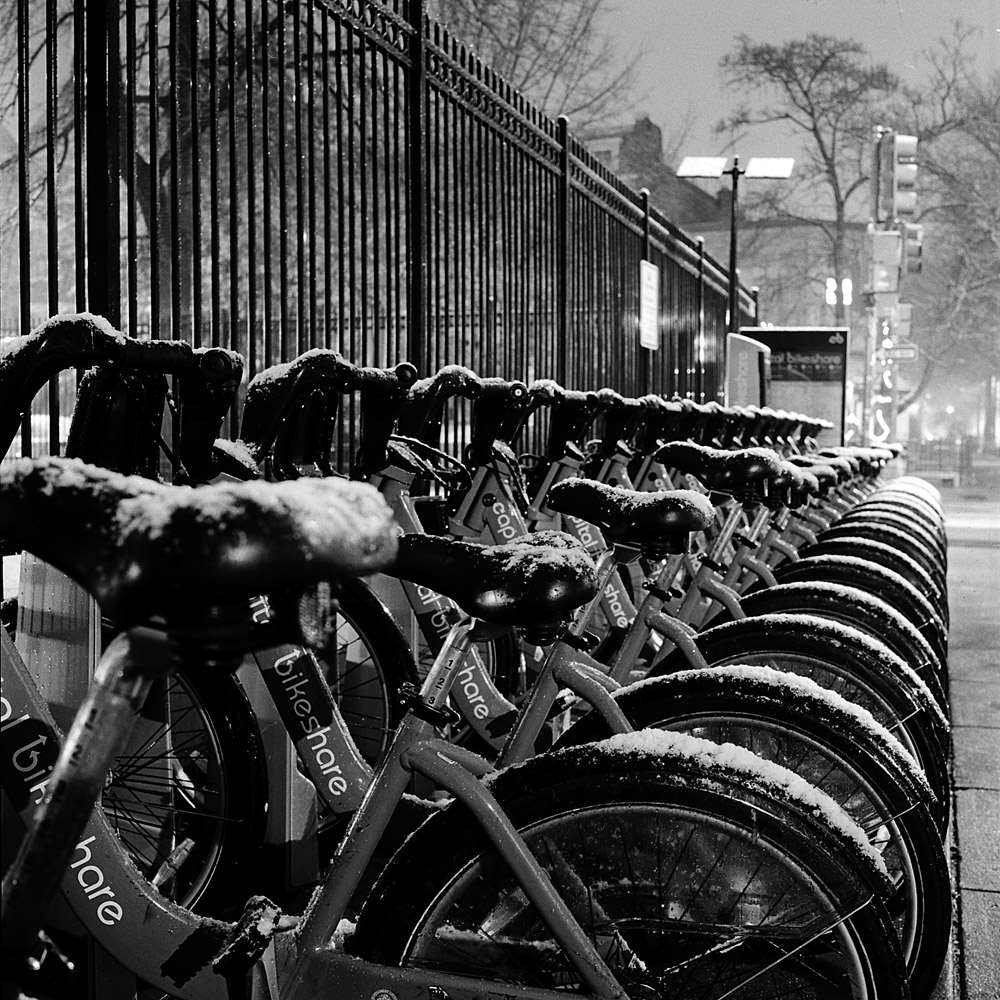
The bikeshare is a great source of material, especially if you like repeating shapes and patterns. The bike seats both break and reinforce the pattern as they are all set to slightly different heights.

Capital Bikeshare 11th Street

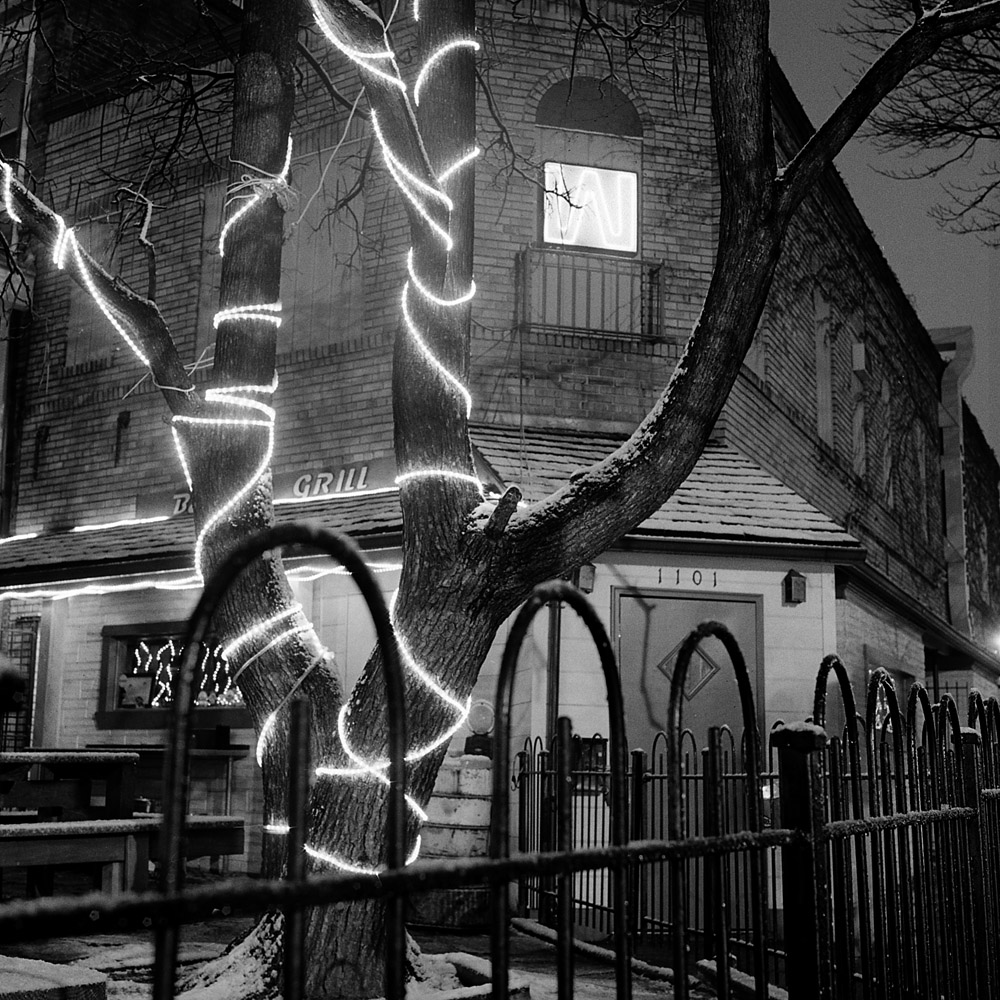
The Wonderland Ballroom is a neighborhood bar and grill. Until 2004, it was the Nob Hill, DC’s oldest continuously operating gay bar (opened in 1954), catering to a primarily African-American (and in the end, elderly) clientele. Now it serves a young, ethnically and sexually diverse crowd of urban hipsters. Plus ca change, as the French say – a side-effect of gentrification.

Wonderland Ballroom
Wonderland Ballroom

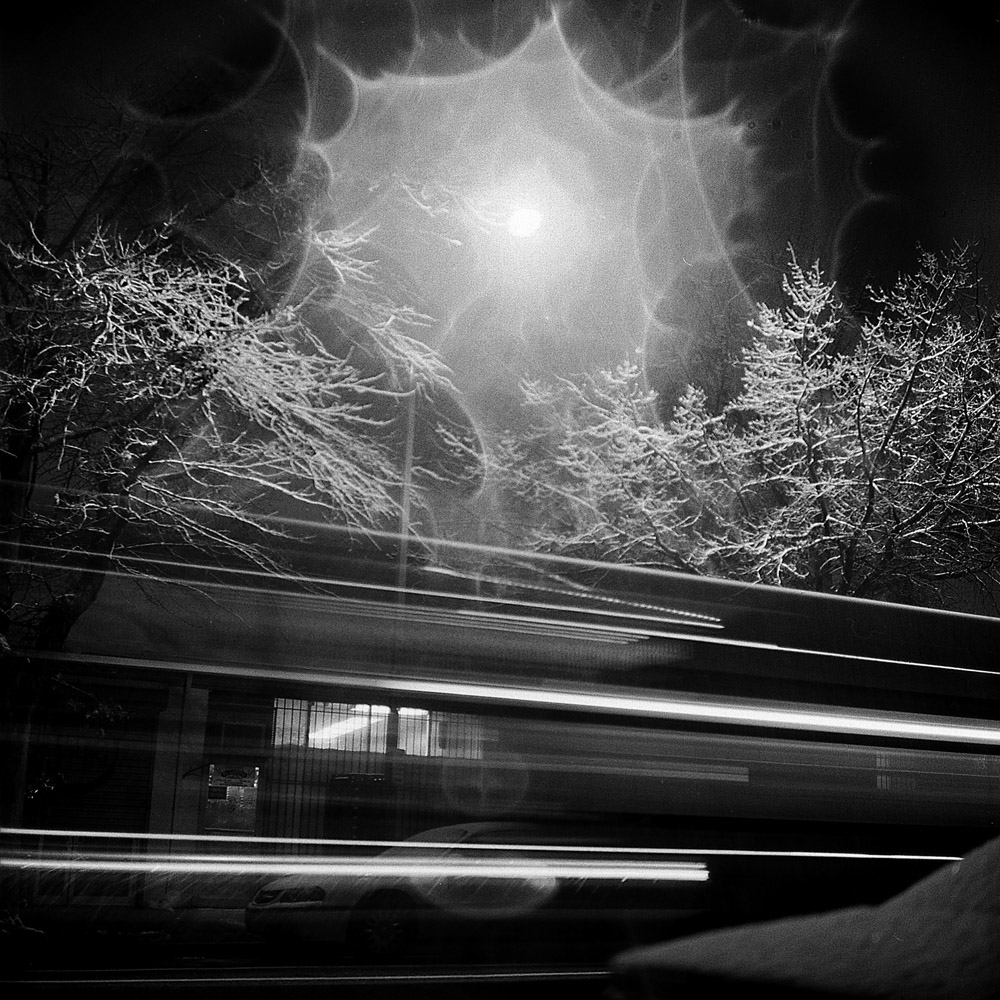
In a long time exposure (somewhere in the region of 30 seconds) I caught the lights of a passing city bus, under the flare of a street lamp. The awesome and dramatic flare from the street lamp is a combination of the lens on my particular camera, which is prone to strange flare artifacts when you put a light source directly in the scene pointed at the lens (due in part to some loss of coating on the front element of the lens) and the specular reflections from the falling snow. In some cases I’d find lens flare like this to be highly objectionable and would consider the shot ruined. In this case, though, I think it makes the image.

Passing Bus 11th Street

Website Editing, and Vickie Lewis Marketing Seminar

Ok – it was overdue for a variety of reasons, so I went in last night and did a major edit of my personal website, the “static” online gallery I have at www.theflyingcamera.com. I trimmed the categories down, got rid of some images that were old/weak, and generally aimed to make the site look and feel more professional. I’m getting ready to launch my portrait business, and pending some research into good site hosting services that will let me customize my page, this will have to do as an online presence. I would love some feedback from my readership as to what you think of the overall look and feel, and the image flow and selection.

Part of what spurred the interest in this overhaul was attending a photography business marketing seminar taught by Vickie Lewis, a Washington DC based photographer who is a certified business coach in addition to being a past president of the regional chapter of the ASMP (American Society of Media Photographers), a Pulitzer Prize winner and currently represented by National Geographic. She teaches small group seminars on the business of photography – how to market yourself as a service, how to sell your artwork. She also teaches technique classes. Her website is: http://www.vickielewis.com if you’d like to read more about this terrific woman and her work. She gave me a lot of fantastic ideas on how to market myself and the work that I do.

As a result, I’ve overhauled my photographic mission statement and my elevator pitch:

The typical portrait photographer produces workmanlike images that function as documentation. My goal is to use my creativity and vision to produce images that go beyond to become iconic representations of your spirit and character. You do not have your portrait taken by me; rather you make your portrait with me. I use antique techniques and processes in a contemporary style to create not mere photographs but tangible art objects you will be proud to display in your home and pass on to future generations.

My new “About the Artist” blurb:

Scott Davis is a Resident Photographer at Washington School of Photography and an Instructor at Glen Echo Photoworks where he teaches antique and historic processes. When not teaching or shooting for private clients, he exhibits his personal projects around the Washington DC area. His publication credits include Metropolitan Home, Metalsmith, Creative Image Maker, Rice Paper and Rangefinder. He counts Stephen John Philips and John Dugdale as mentors and influences.

That sounds like a pretty good set of credentials, doesn’t it? And it has the added benefit of being accurate. It’s something that she told me about how to put these things together in a short bullet point concept. I knew all this stuff about me but I had never put it in a concise, condensed thought so I wasn’t able to articulate it.

And my inspirational quote – the reason I love photography and the reason you should want me as your photographer:

I fell in love with the magic of photography when I made my first darkroom print. My original goal was to just learn enough to use photographs as subject matter for painting and drawing. But when that first print emerged in the developer under the red glow of the safelight, I was hooked and I knew right then the camera would be my companion for the rest of my life.

More Model Photos from Sunday’s Shoot

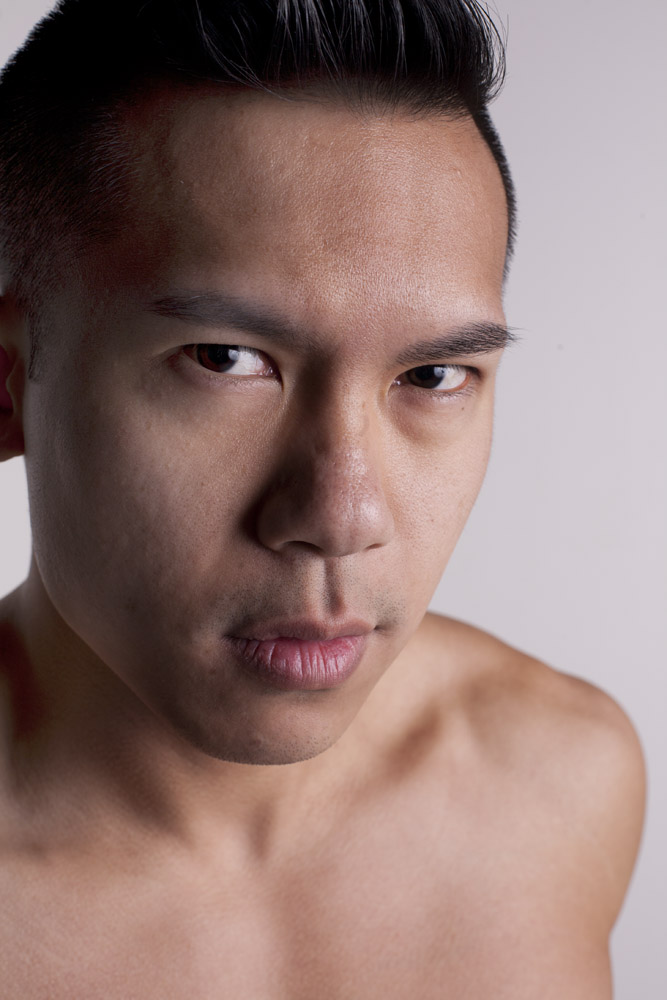
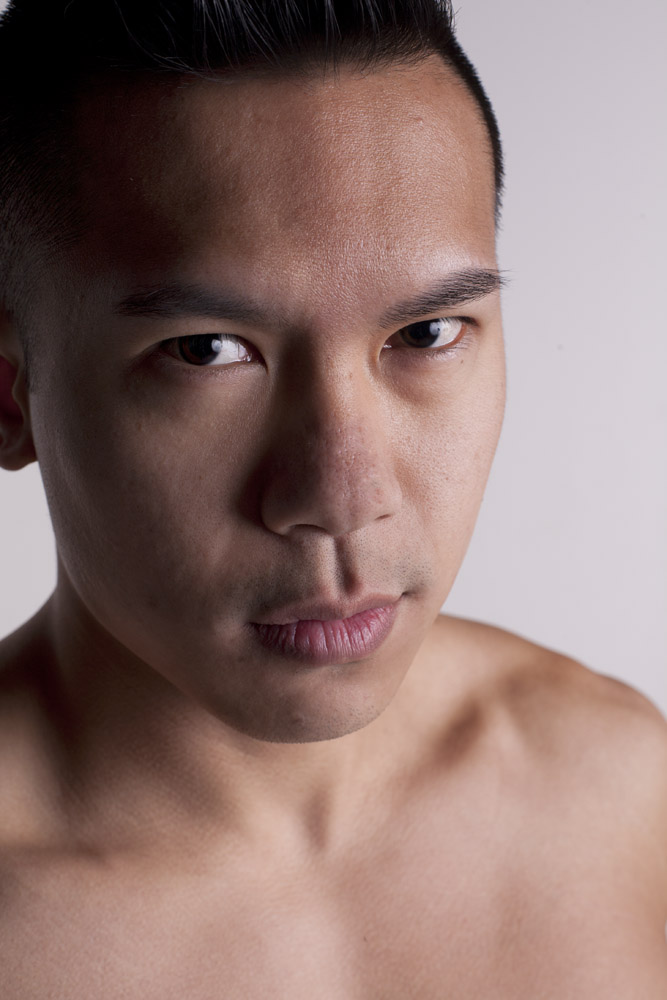
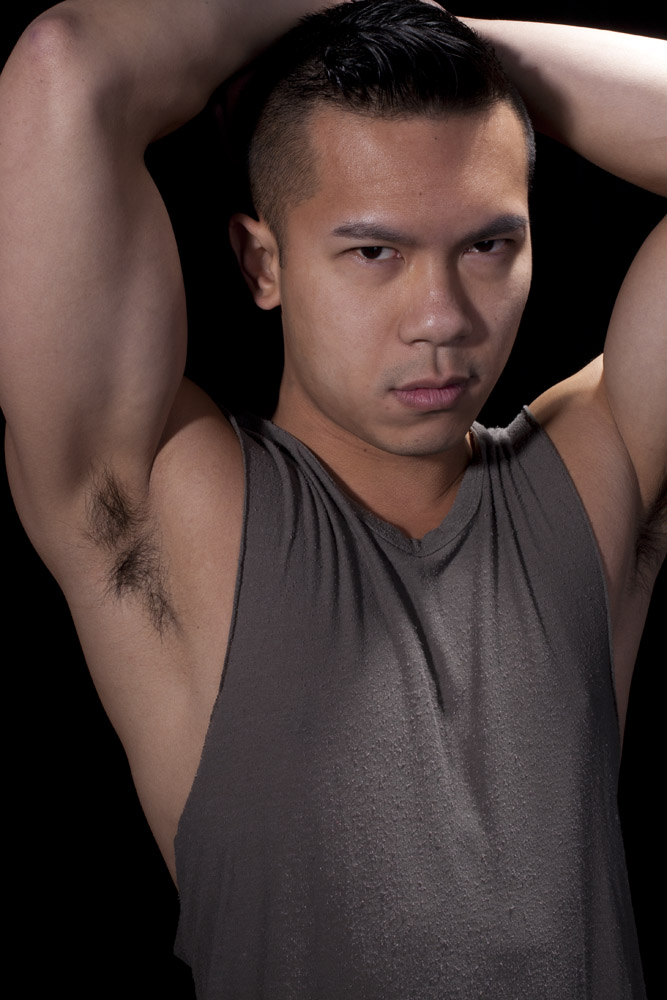
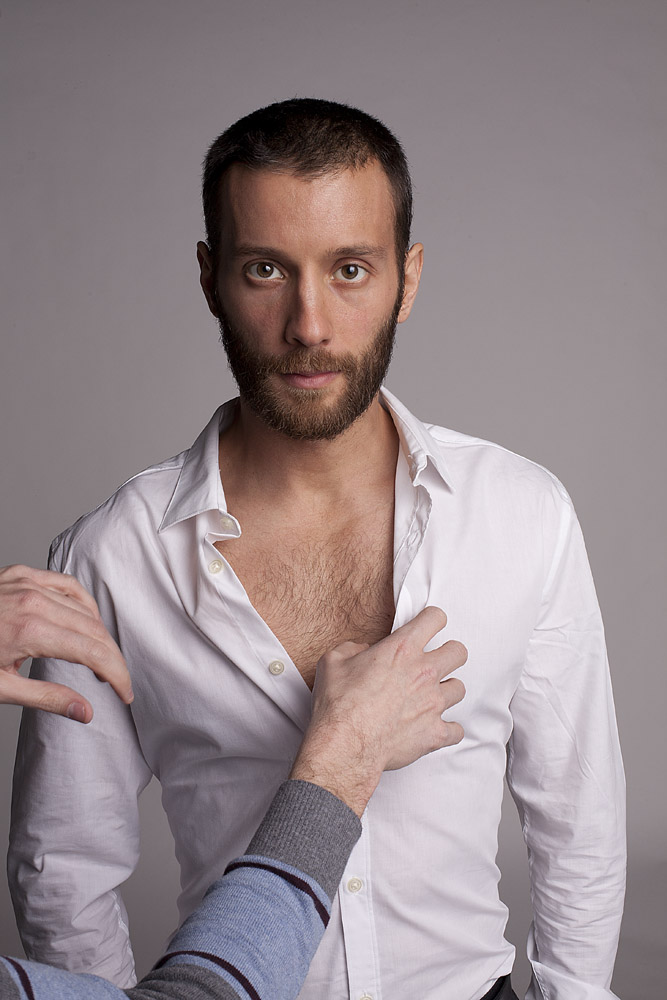
Too often you only see models with that vacant, fashion-model stare, or the “I’m trying to seduce you” gaze. I think it’s important to show a range of emotions in a portfolio, so potential clients can see you giving different moods.

Bo is a pretty serious guy, but he does know how to relax and laugh (but you have to catch him between official shots – otherwise he reverts back to staring directly at the camera).

IMG_9870

IMG_9911

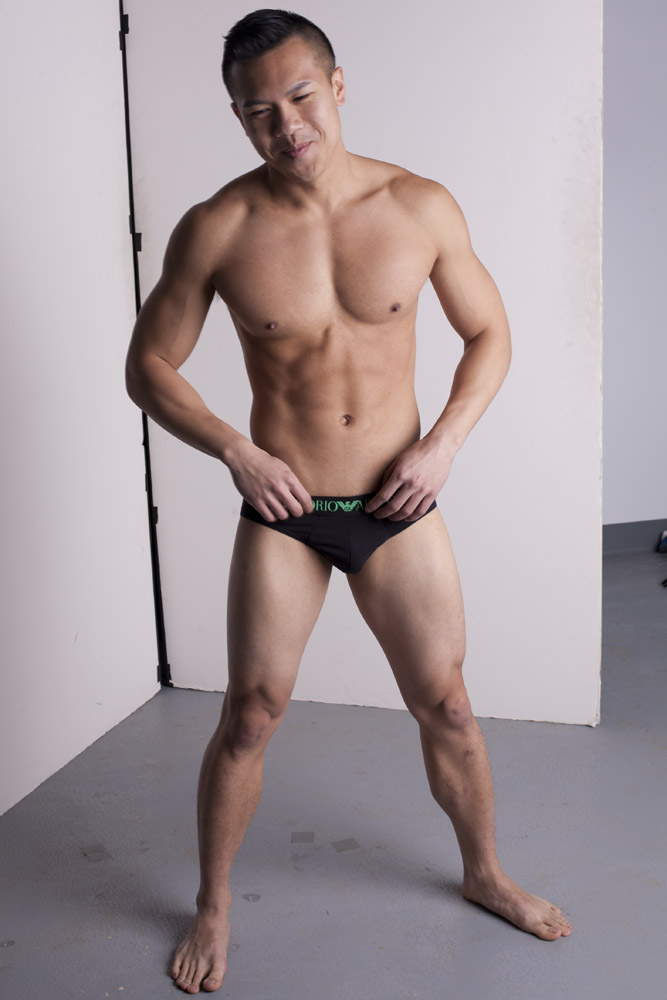
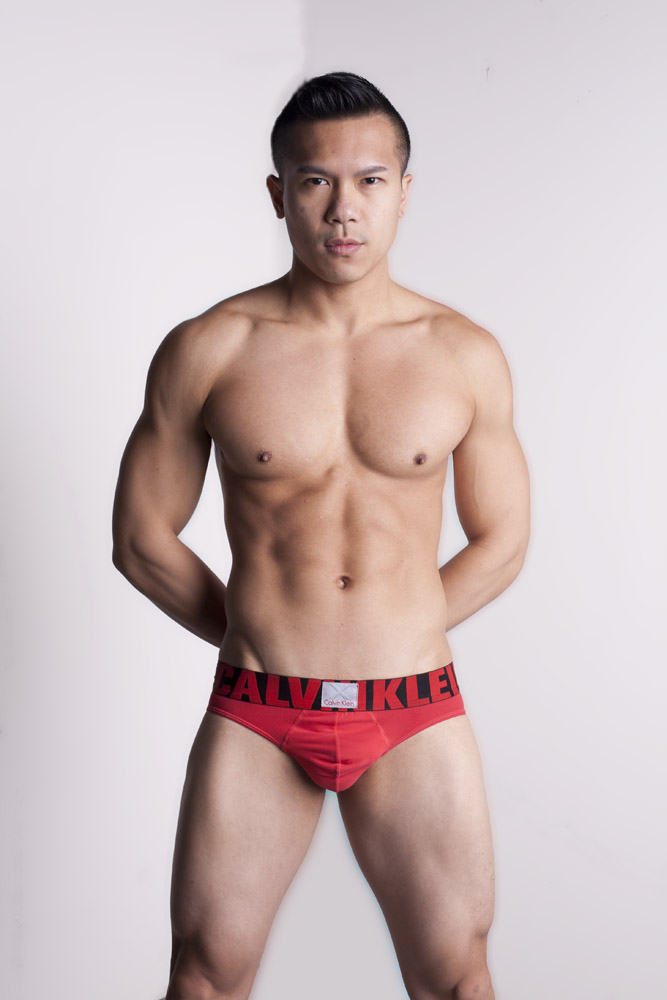
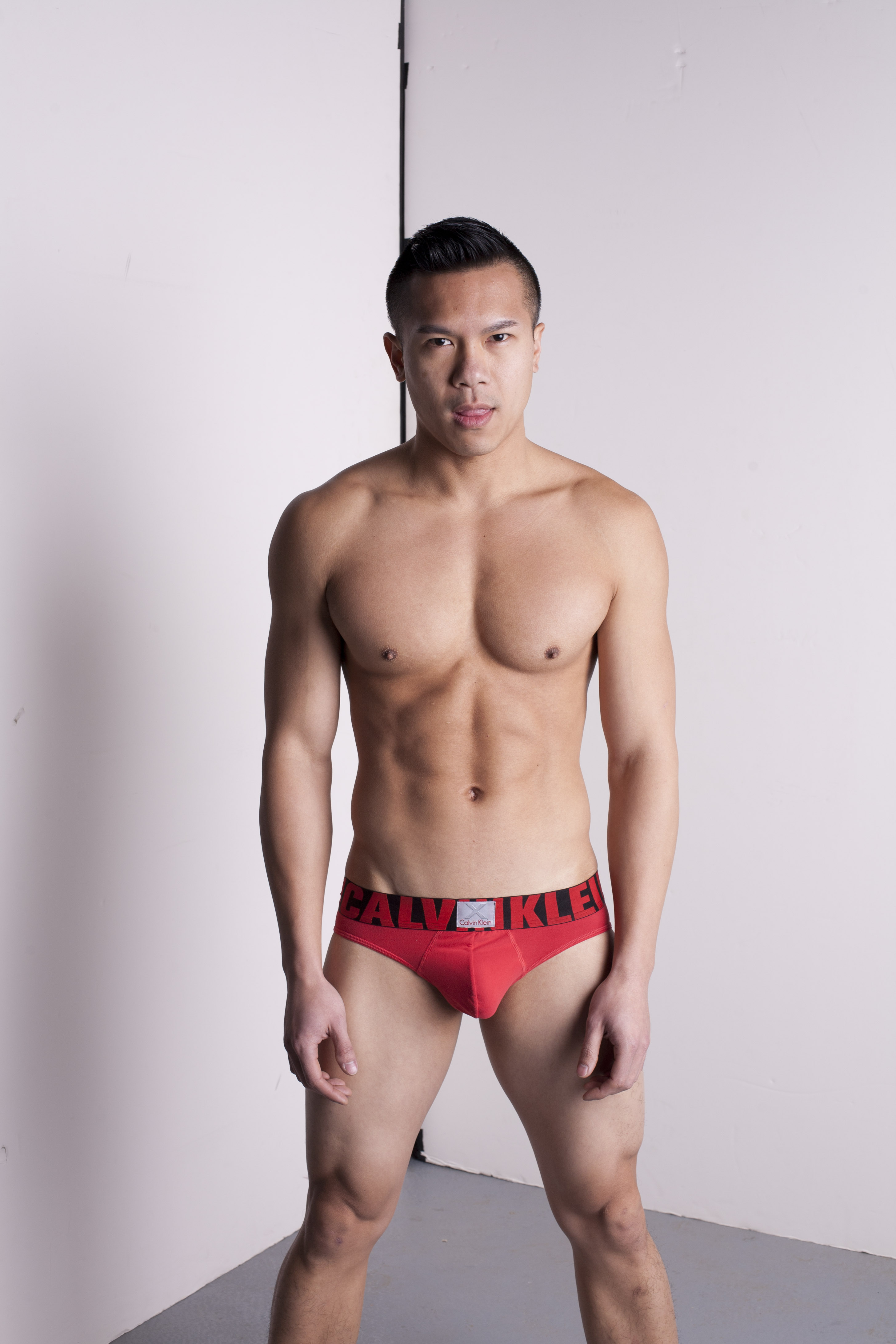
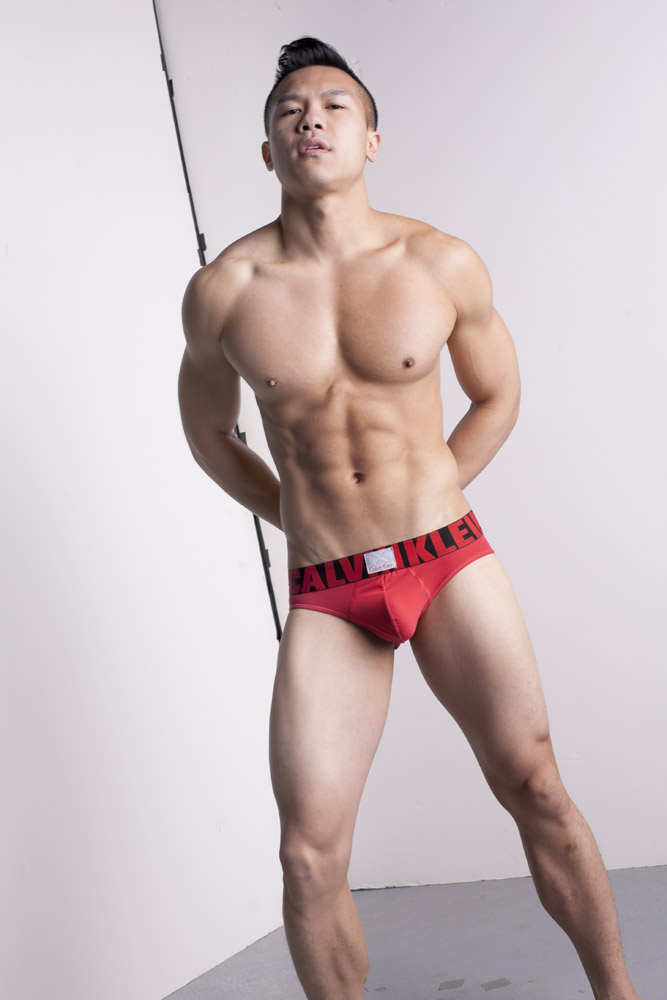
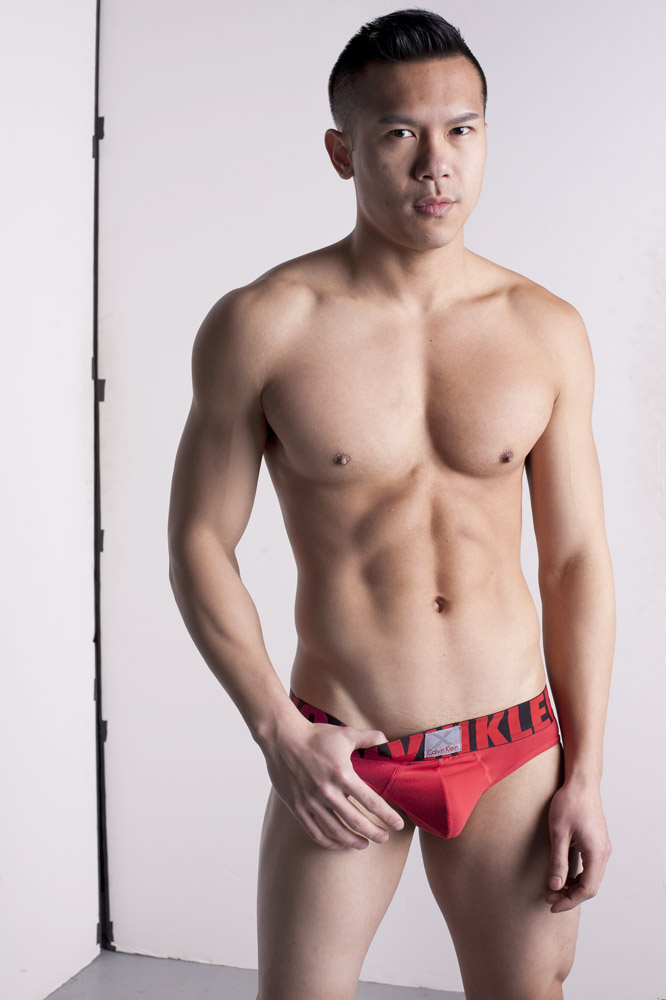
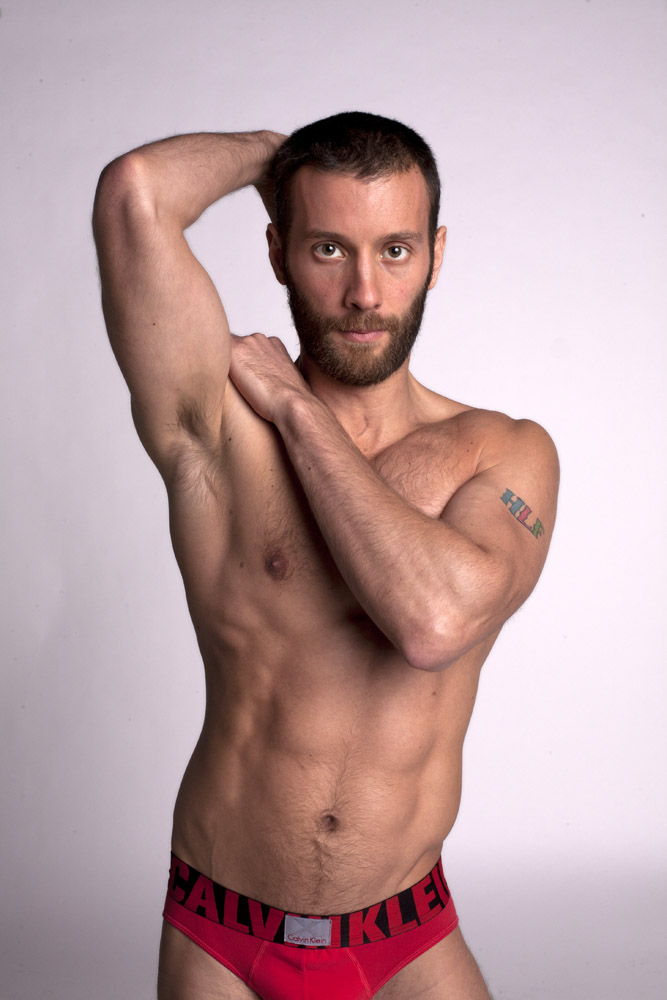
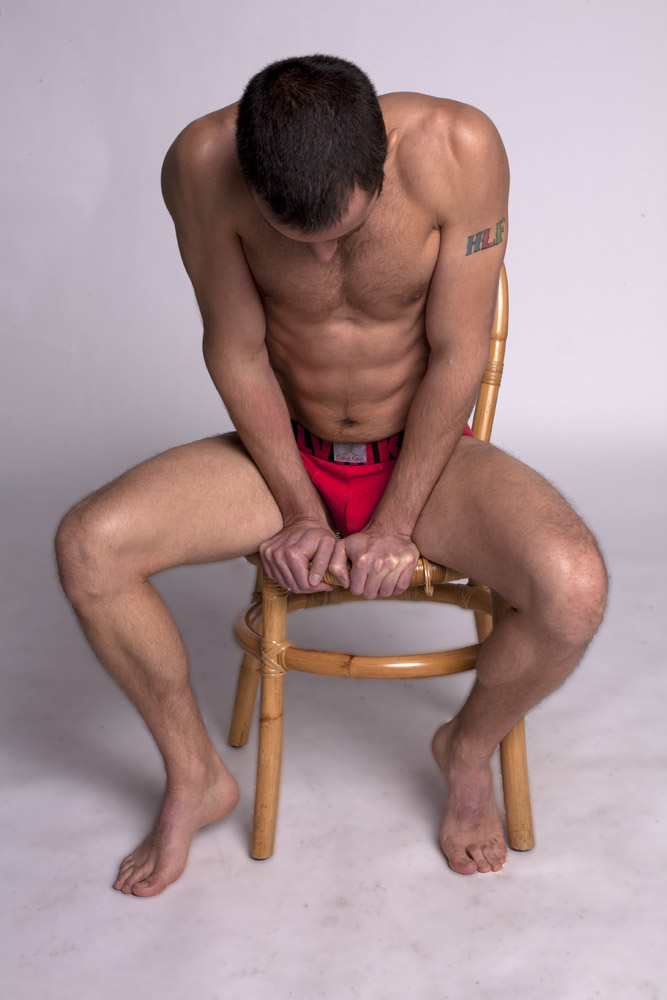
A few more from the underwear series – he looks really good in red.

IMG_9868

IMG_9836

IMG_9838

IMG_9844
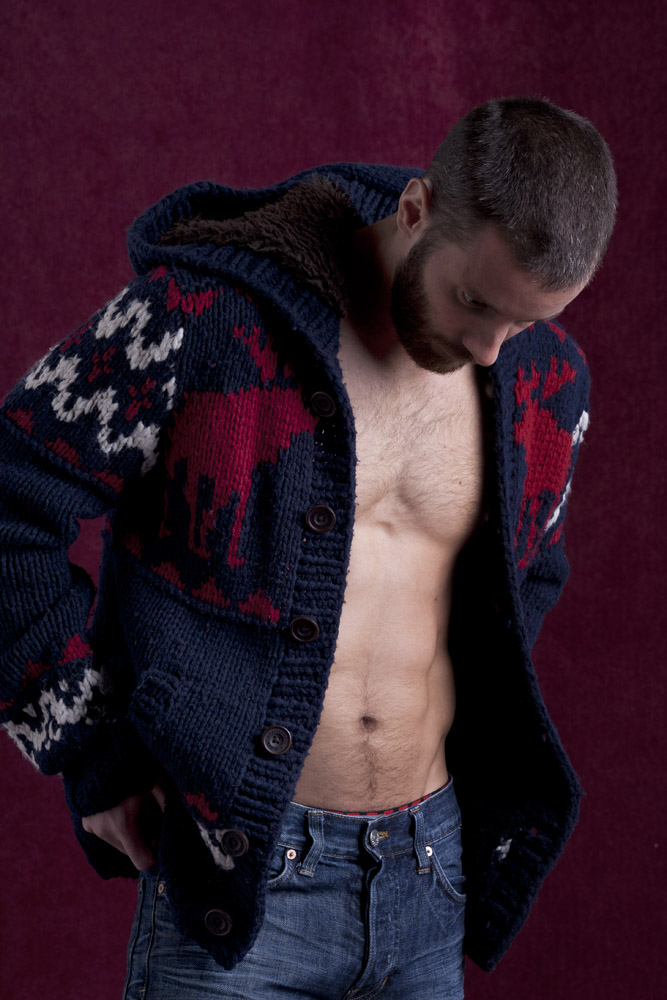
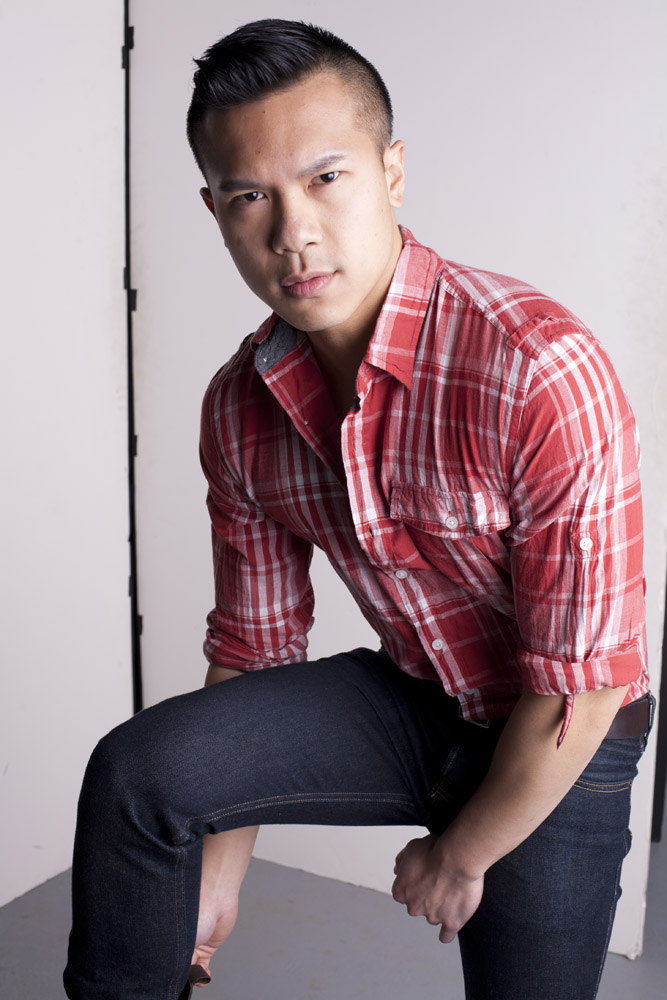
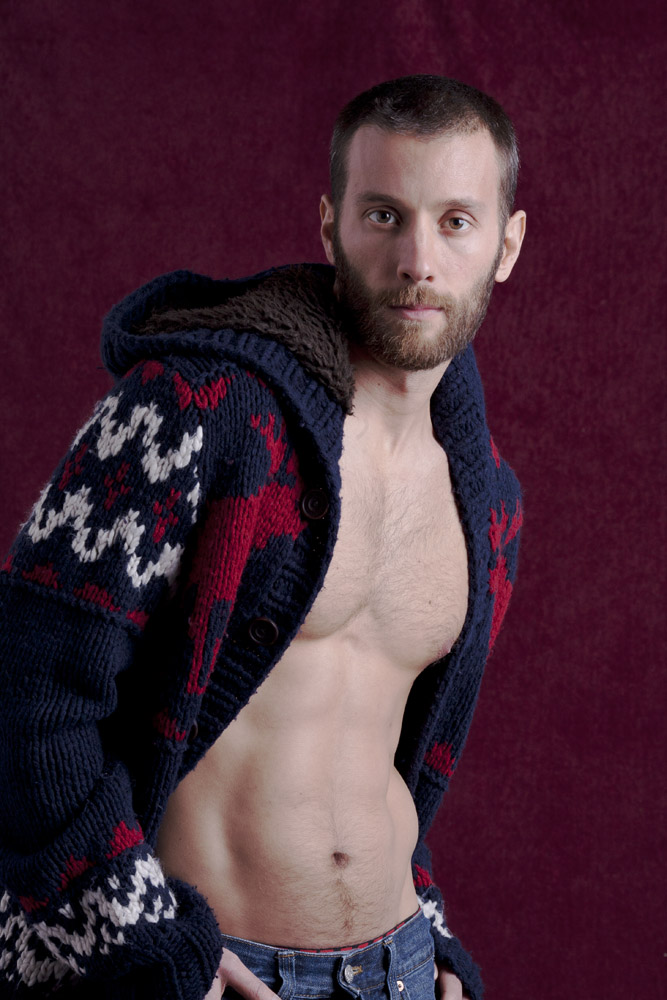
Another from the plaid shirt set. Actually, he looks good in anything! I suspect you could put him in a Soviet potato sack and he’d make it rock (although good luck trying to get him to do that – he wasn’t crazy about trying on my ex-Soviet Army surplus winter hat with the red star insignia on it).

IMG_9835

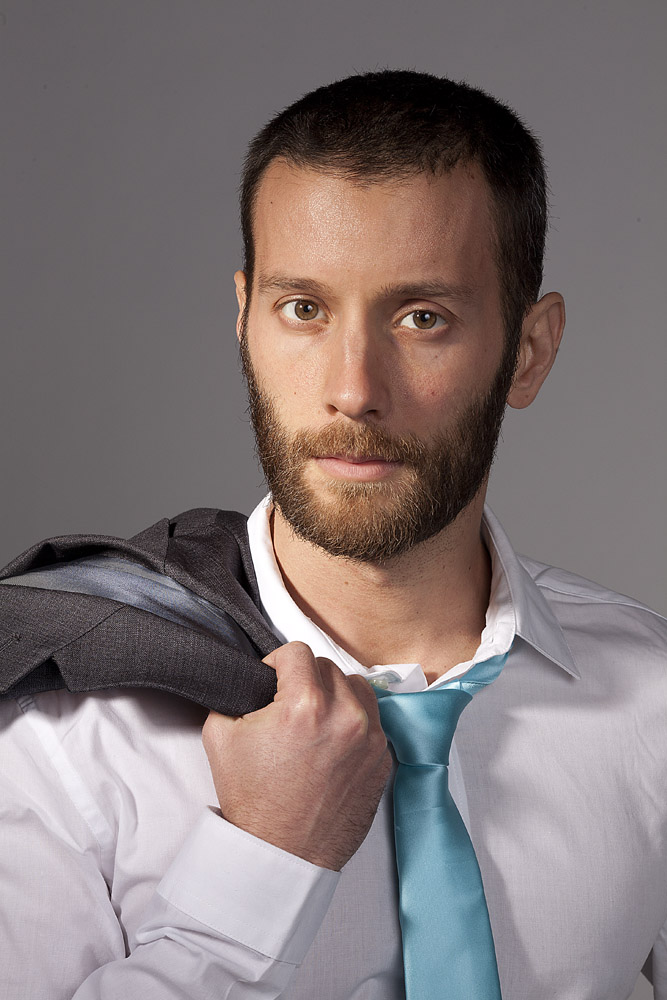
Here are some more candidates for the headshot –

IMG_9874v2

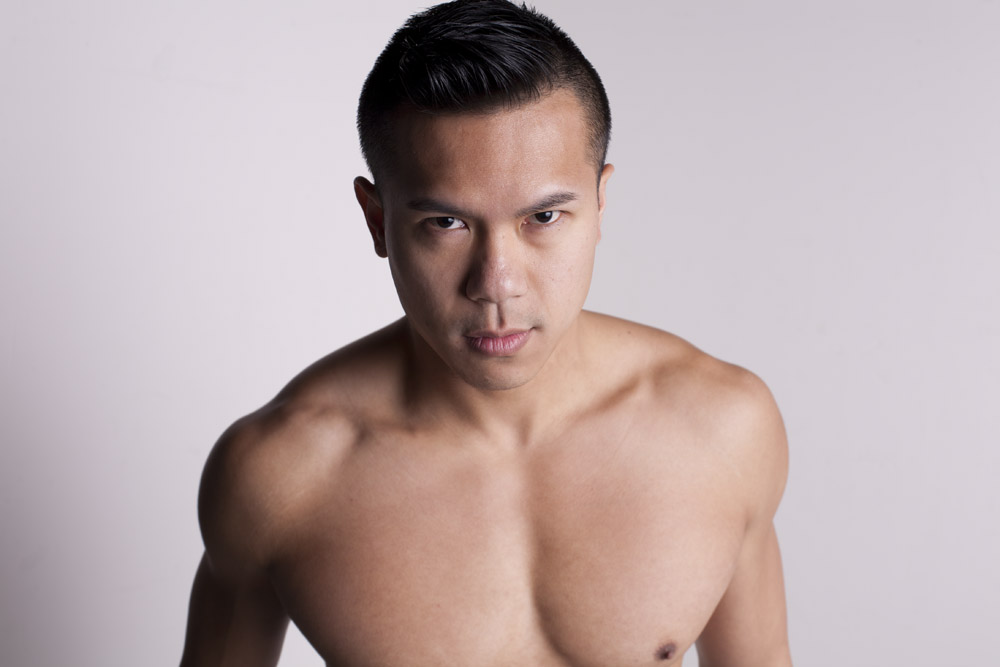
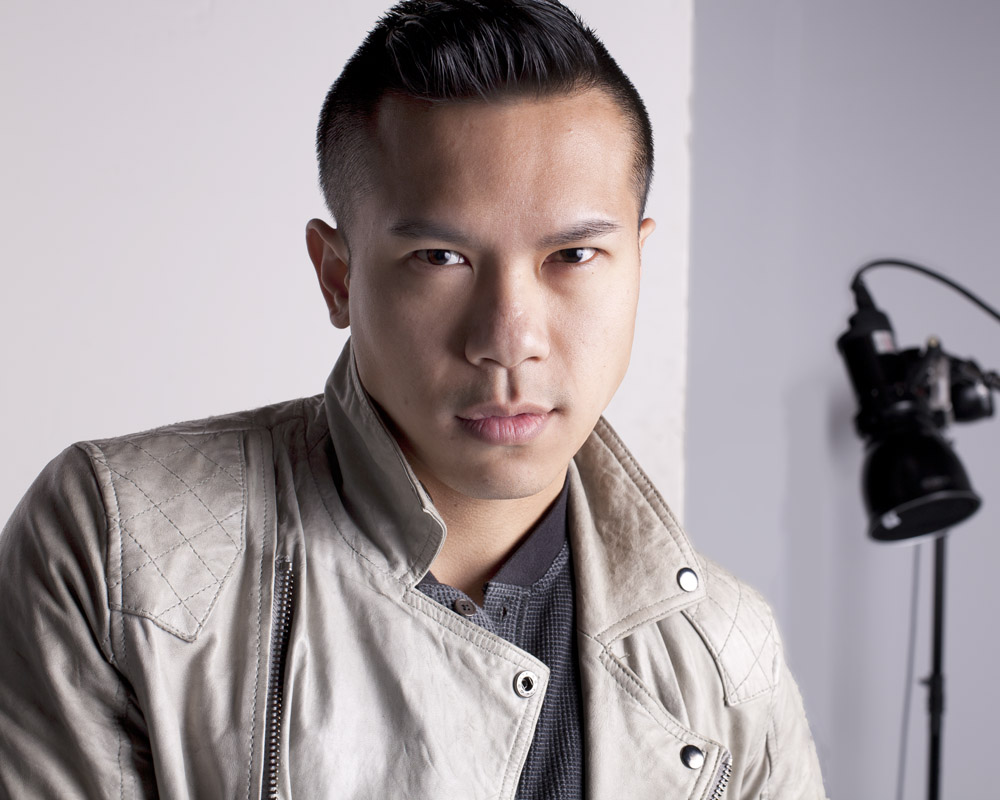
On this one, especially because it’s a horizontal shot, I wanted to emphasize the face, so I selected it in Photoshop and masked it out, then applied a little bit of blur to the rest, so the face pops out more, like I had used a much wider aperture (my lights are actually at times TOO powerful and it’s hard to not stop down too much).

IMG_9874

IMG_9876

IMG_9877

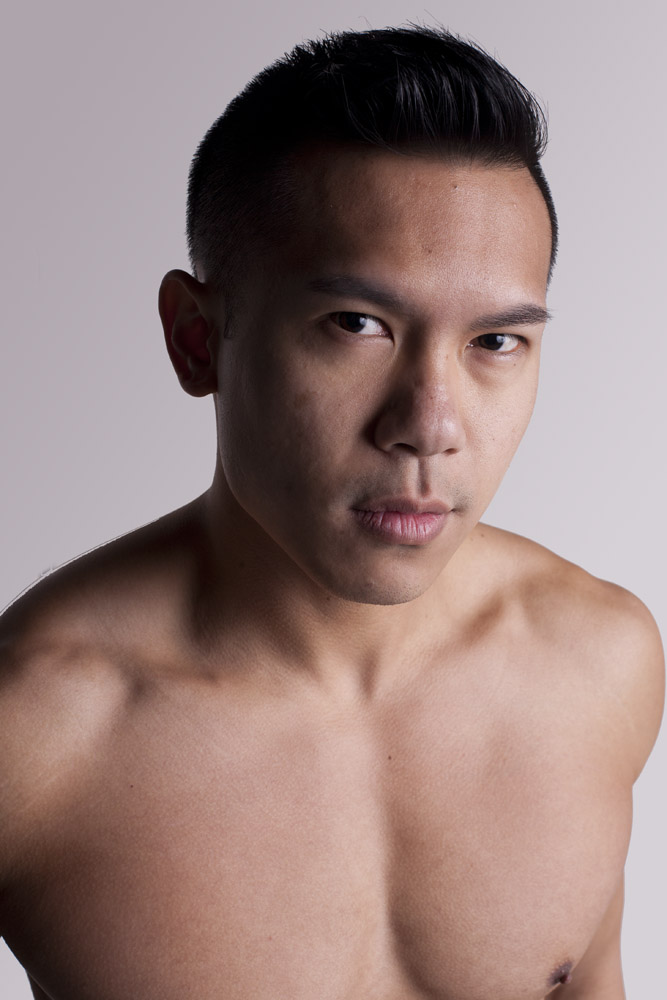
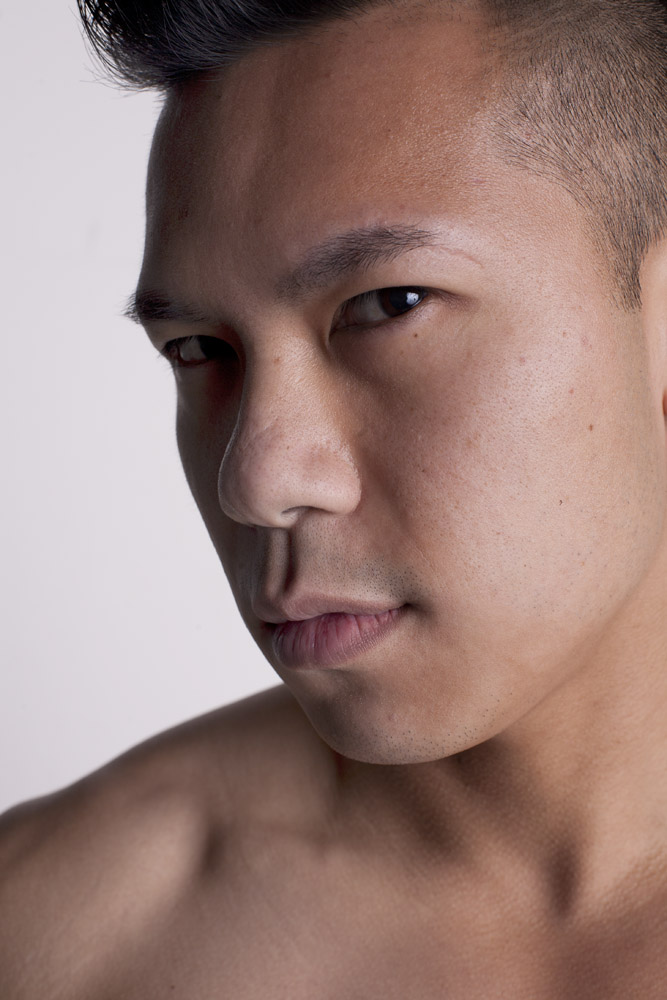
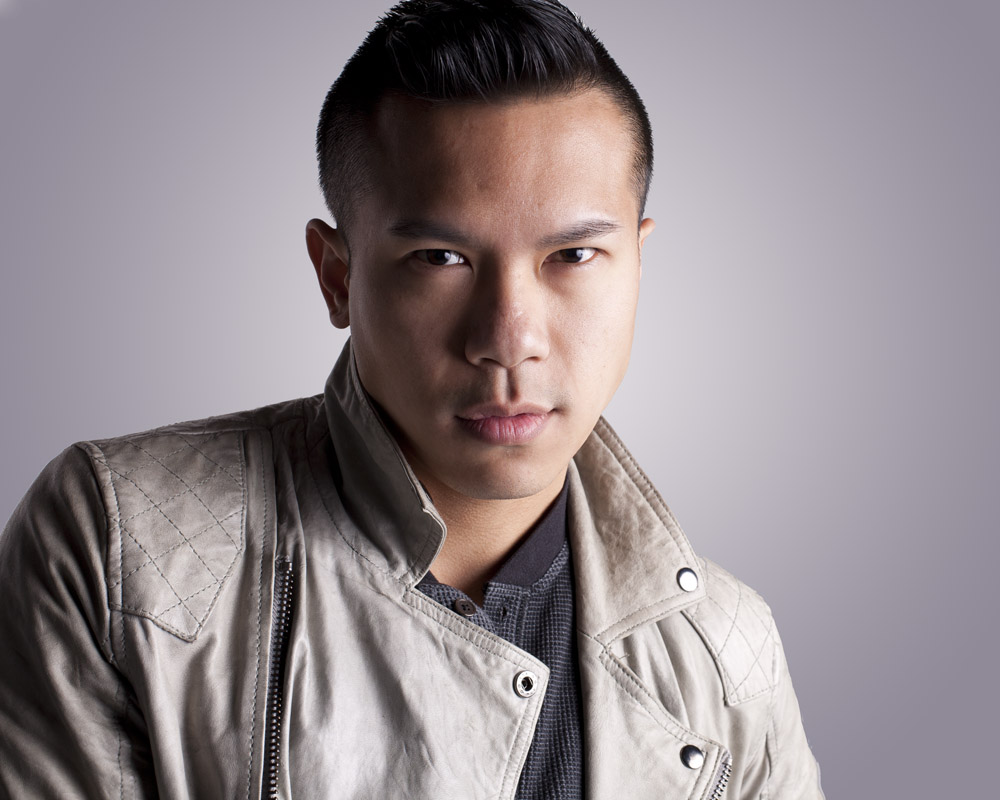
I really like this last one because it gives great shape and definition to his face – his previous head shot, although it was square on, was basically lit flat from directly in front, and had no contouring, so it made him look like an Asian chipmunk. He actually has a very shapely face, and I think this does him justice.

IMG_9879

Headshot for Bo, Revisited

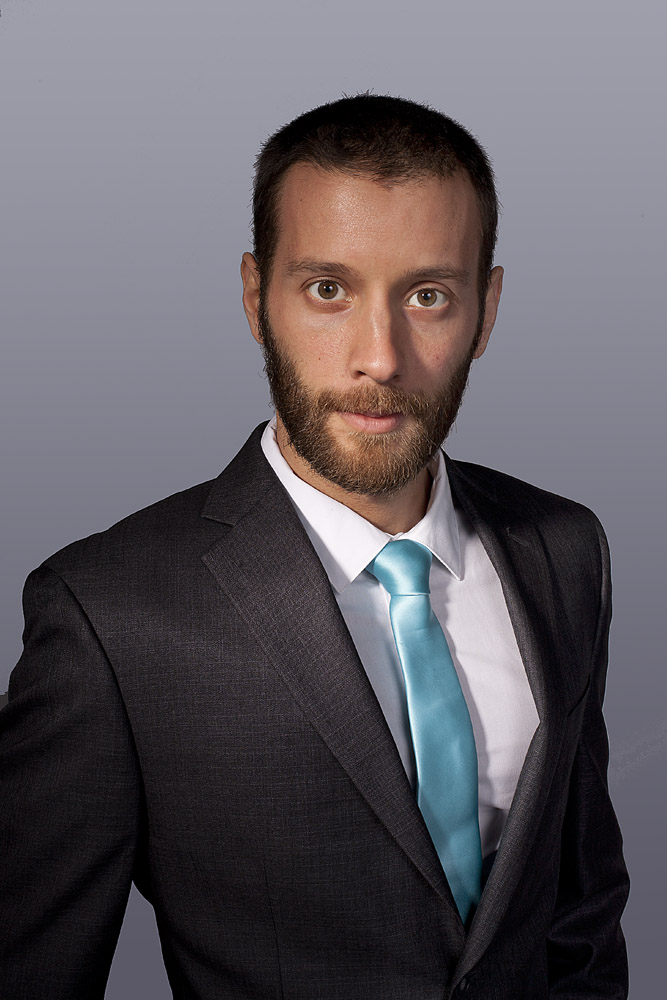
This is what happens when you shoot two days in a row, then go work at the office for a full day, then come home and edit photos until 11pm. Your judgment gets a bit off. I posted the original version of this headshot with the studio background intact (well, minus a broom handle I cloned out). Looking at it again in the clarity of new morning light, I realized that the background stuff, while cool, was a serious distraction from the goal of the photo – getting you to focus on the model’s face. So I got rid of the background altogether in a remake – What do you think? Much better, no?

IMG_9718

IMG_9718v2

Busy Weekend – Two Model Portfolios part 2

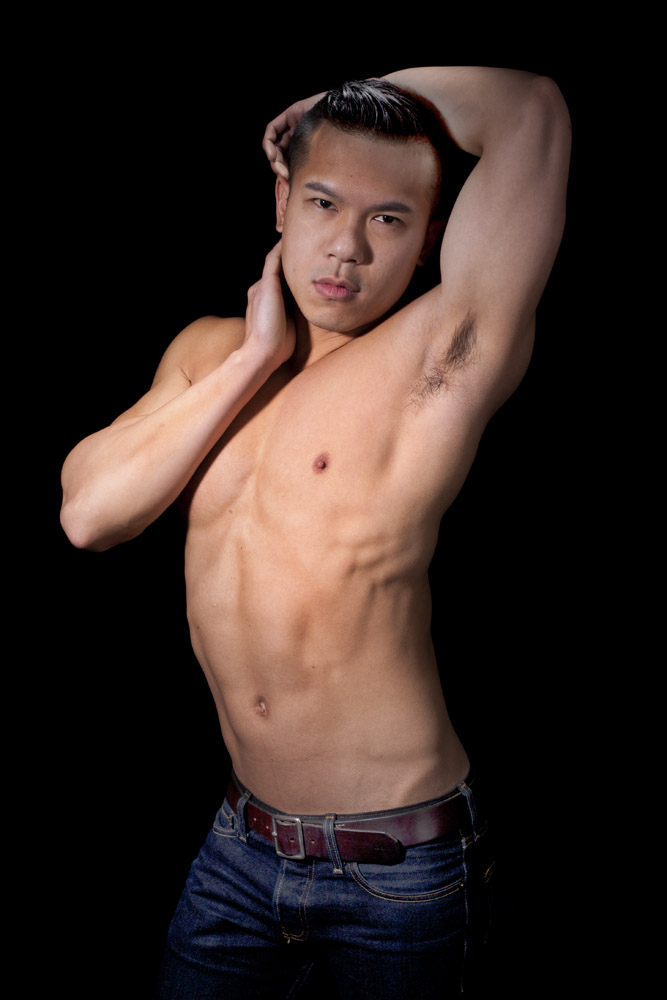
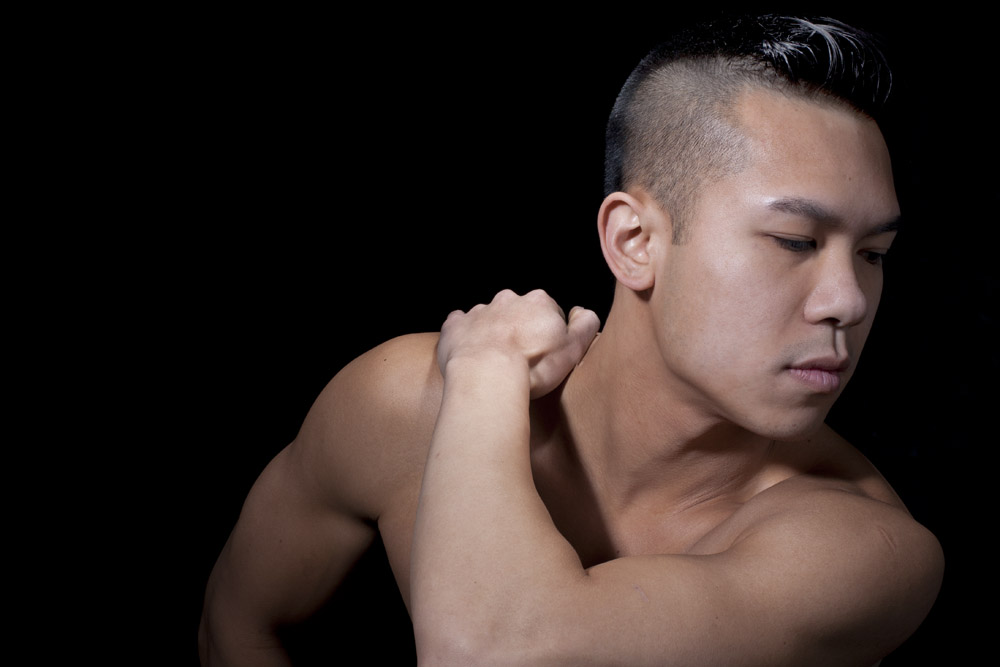
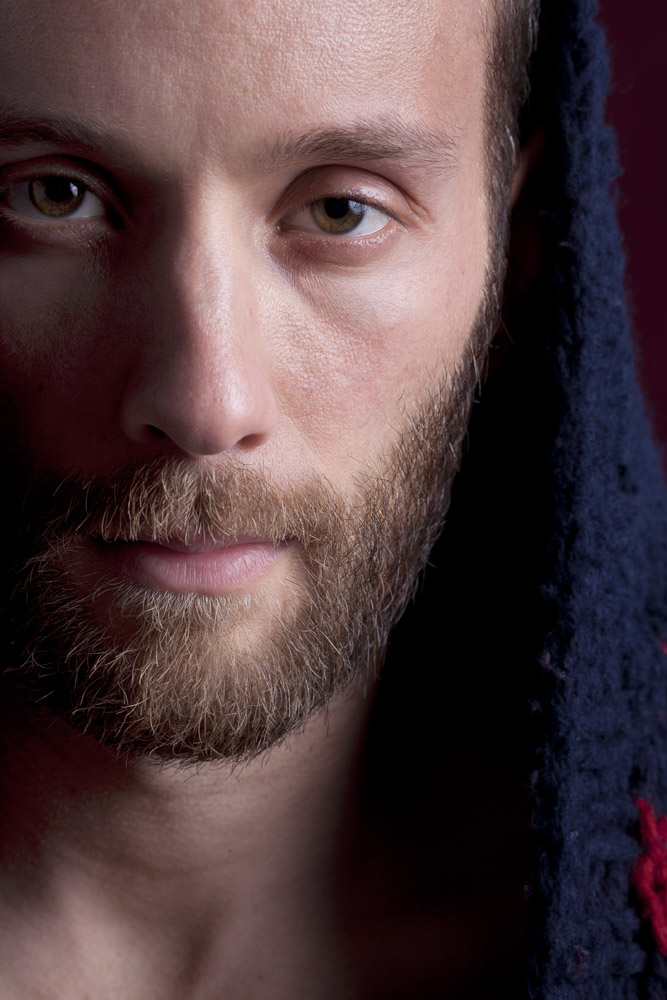
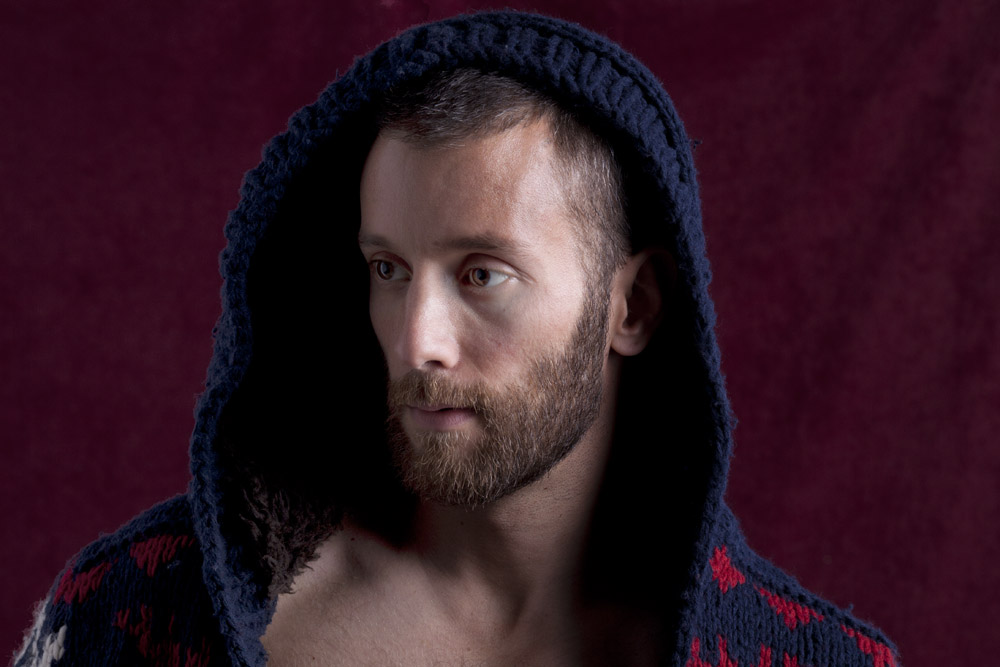
Sunday was my shoot with Bo. Bo is also a trainer and a bartender. I know he works VERY hard to keep the body he has but I still get jealous. Bo already had a bit of a portfolio so we were expanding his look. He needed new head shots first and foremost, so I concentrated on getting good full face images in each of the looks we did.

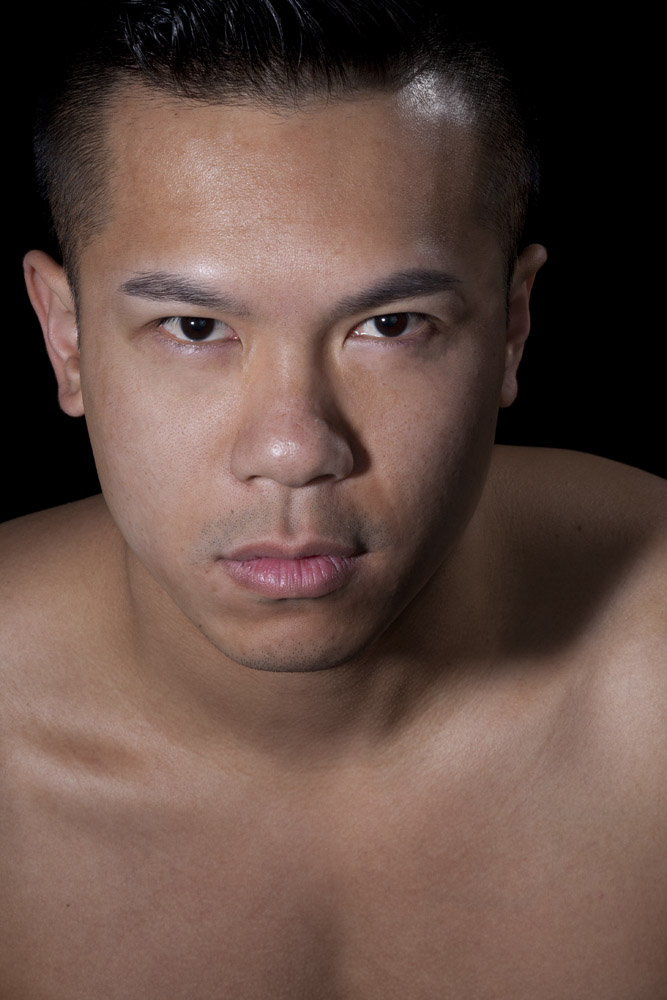
These are the prime candidates for head shots so far.

IMG_9718

IMG_9567

IMG_9468

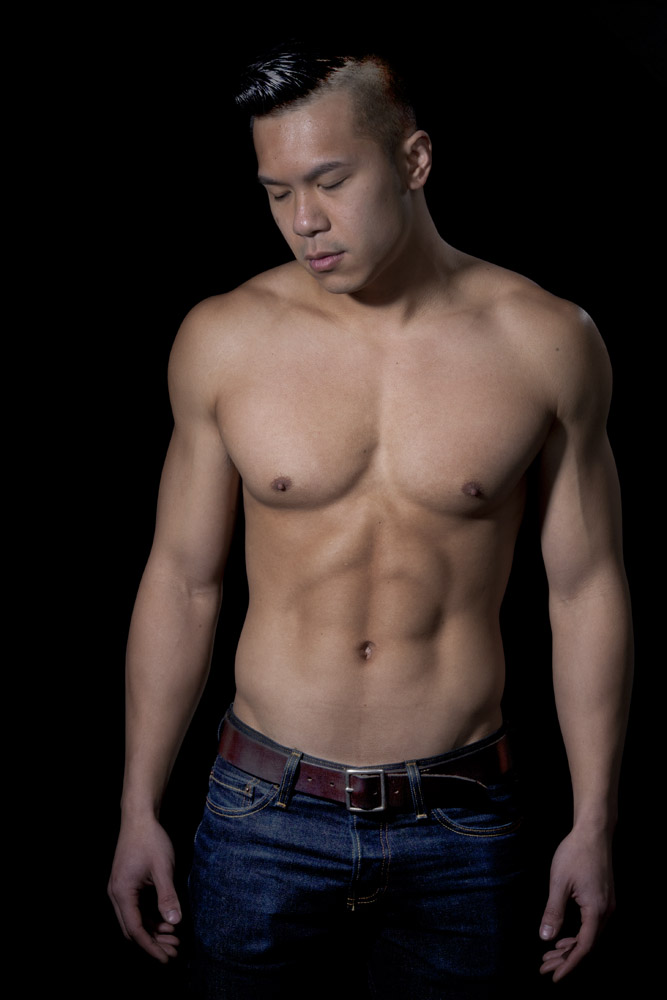
See what I mean about a body to be jealous of? It’s like there’s not an ounce of fat anywhere to be found.

IMG_9483

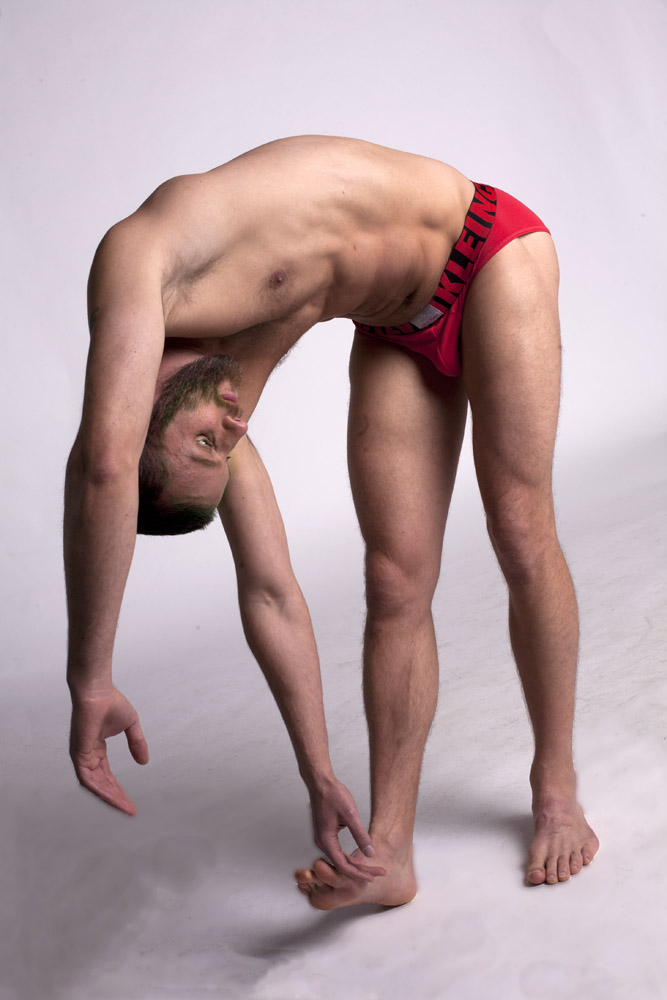
Here’s body movement for you – Bo is quite good at shaping his body to give it natural visual dynamic.

IMG_9513

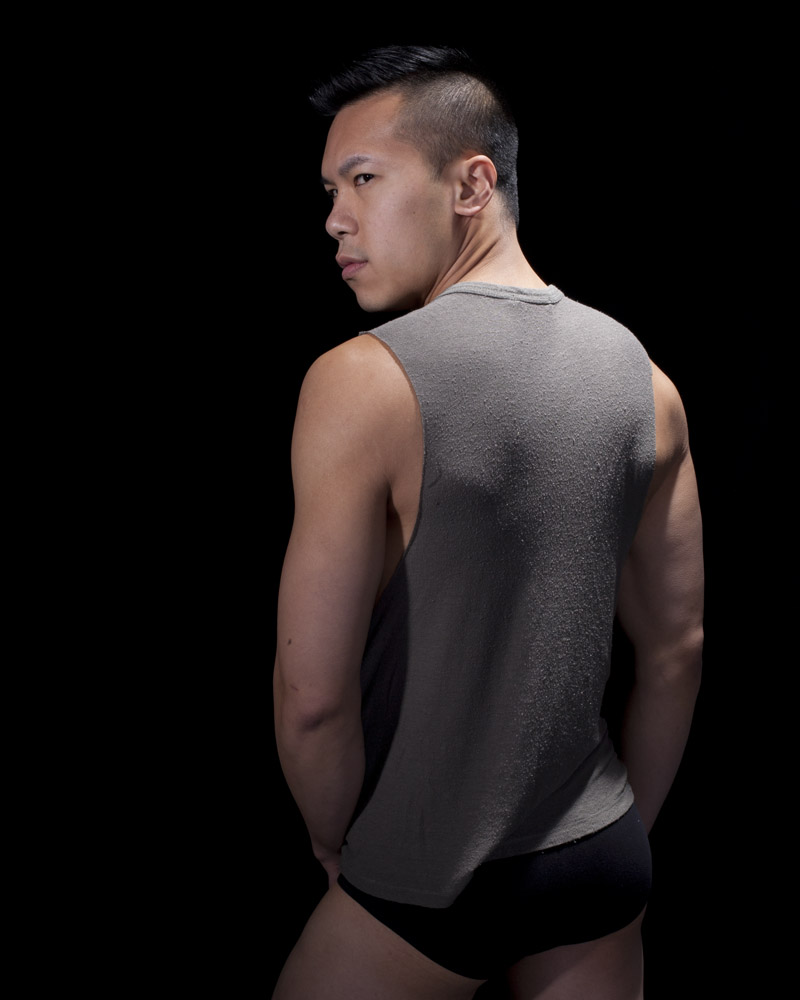
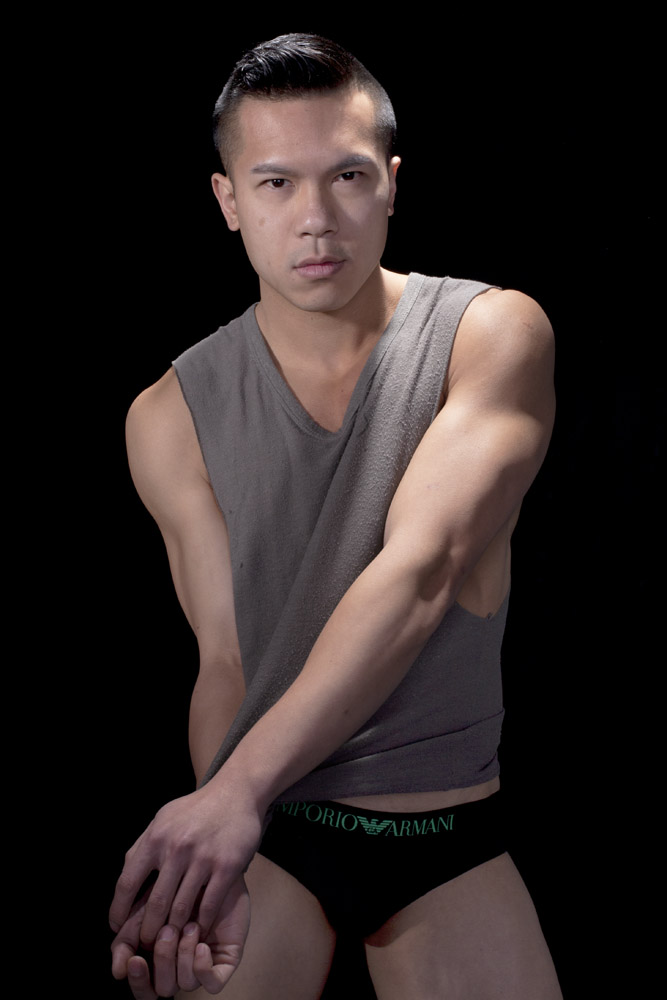
Several from the underwear series we shot.

IMG_9638

IMG_9614

IMG_9655

What I was thinking when I put Bo against a black backdrop I’ll never know, as he has jet black hair that wants to disappear into the black velvet. Keeping the hair light on the top of his head to pick it out from the background was a constant fight. But I think we got some very useable shots out of it in the end.

IMG_9522

For the first hundred or so shots we did, there was an issue with his forehead being much darker than the rest of his face in the photos. He’s got naturally very even skin tone but for some reason, the forehead was photographing darker than his face, which made it look like he had a sunburn, or he was wearing big ski goggles while outside that kept his eyes lighter. But as the shoot progressed, the problem went away.

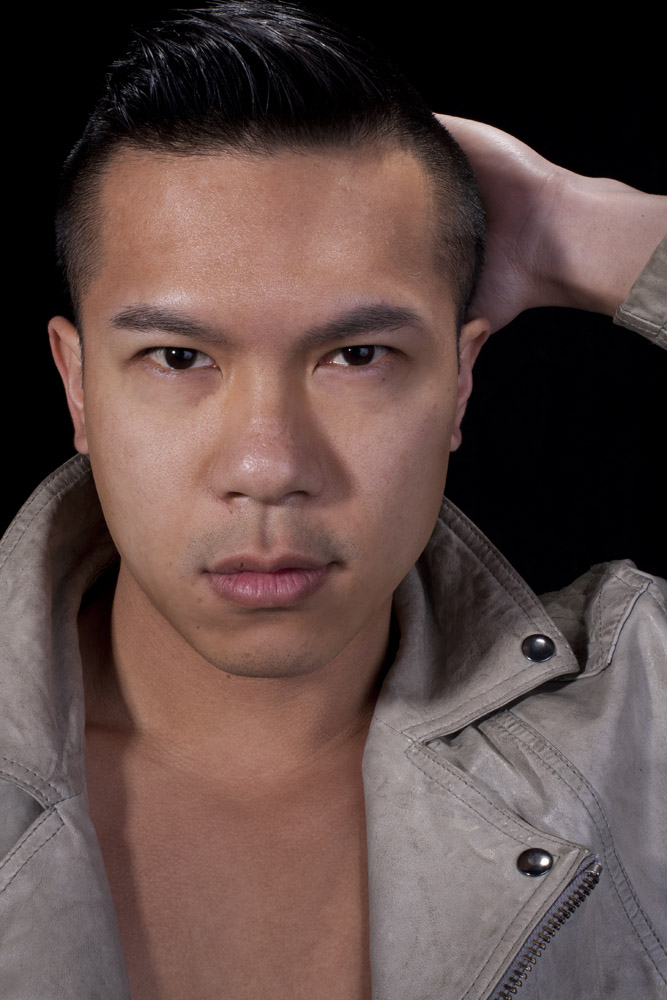
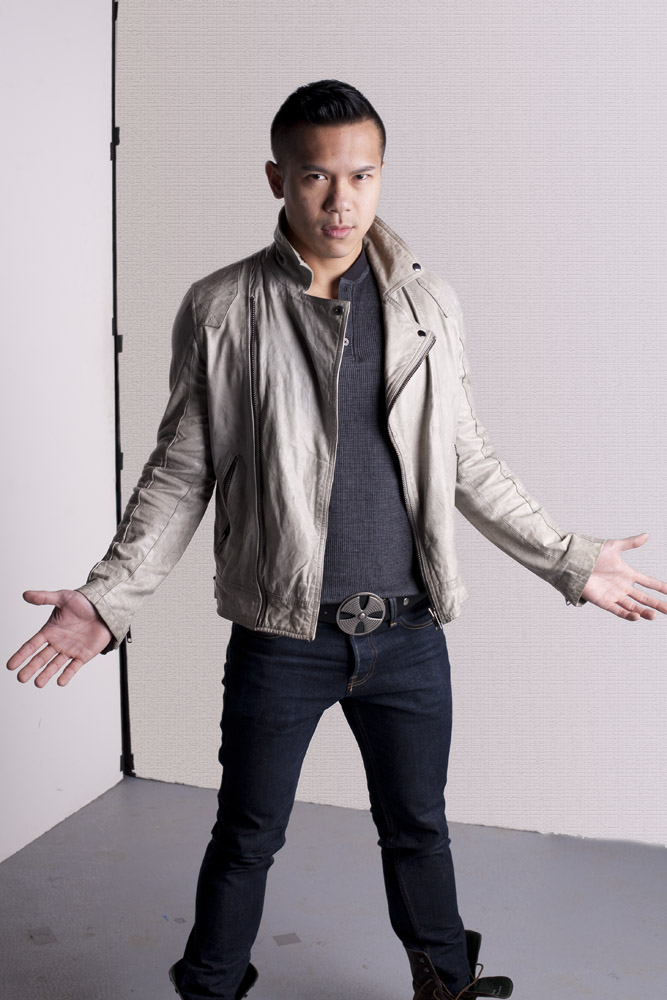
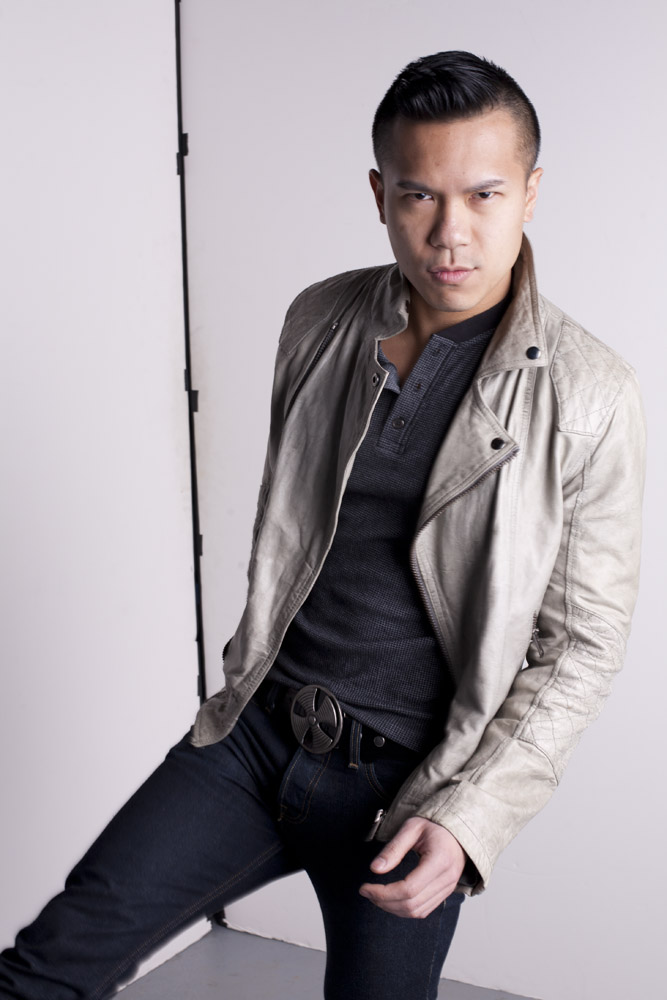
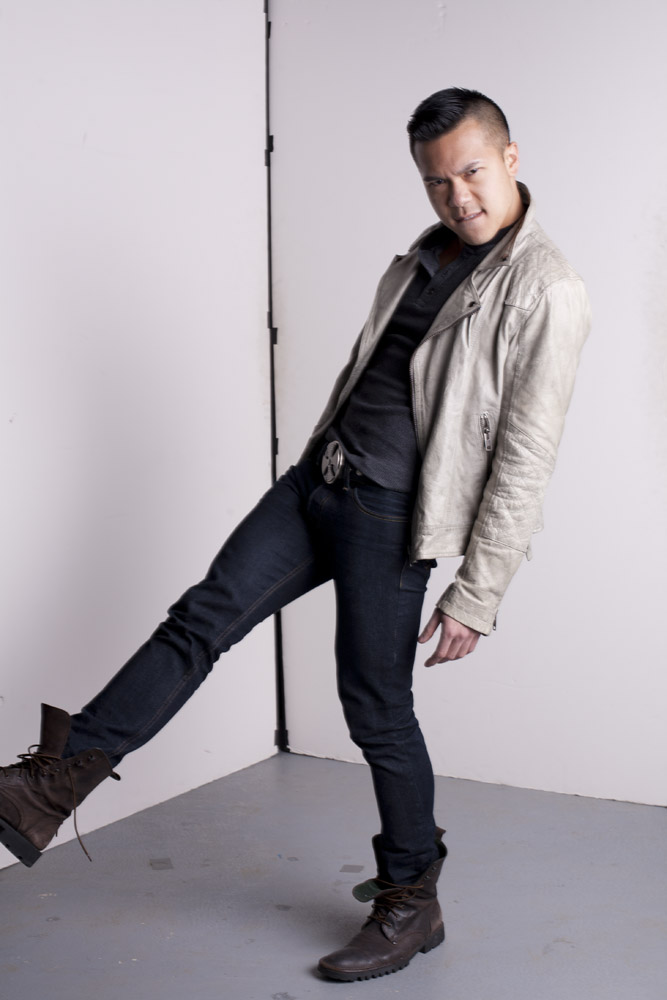
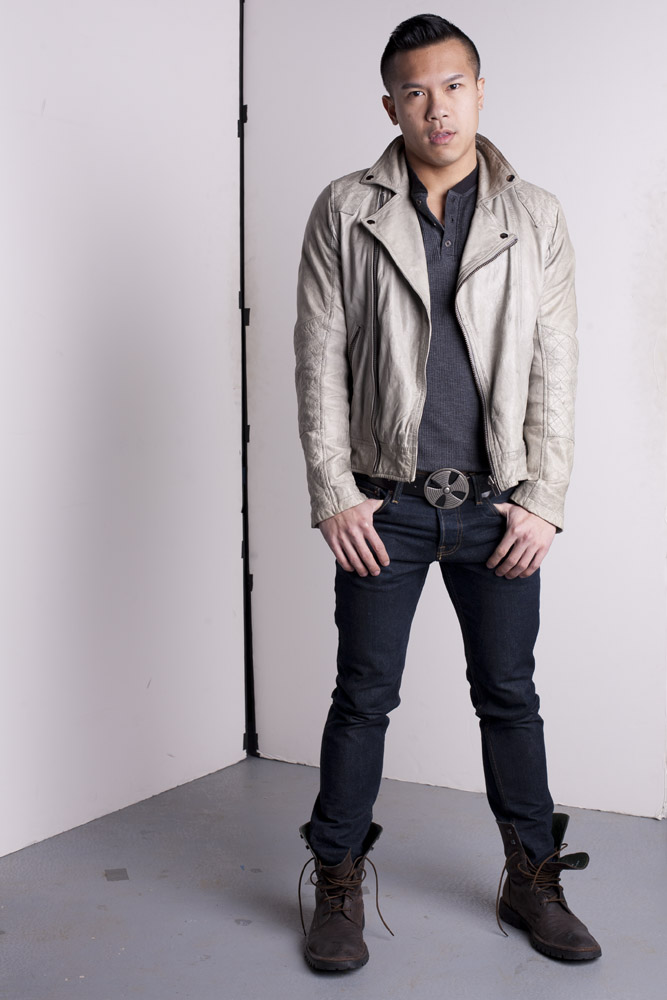
For the fashion look, we did a bit of a rock-n-roll styling with a leather jacket, jeans, unlaced boots and a belt with a spinner in the buckle.

IMG_9707

IMG_9702

IMG_9698

IMG_9689

Yes, that belt buckle actually spins.

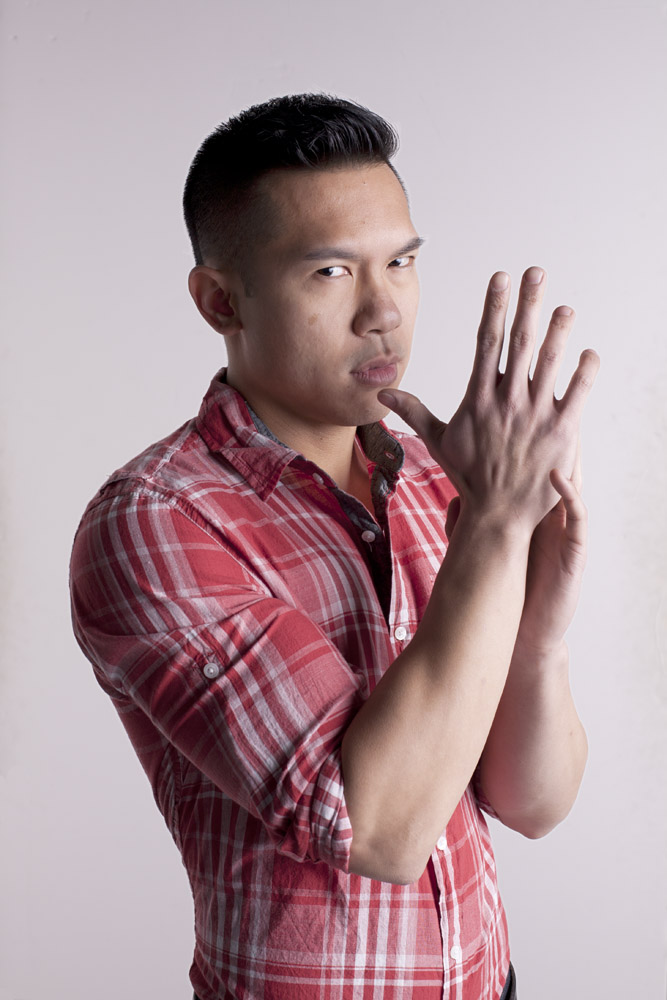
We did another casual look with a red checkered shirt – I do have more of these but I haven’t edited through all of them yet – this was just one that popped out for the pose as well as the splash of color.

IMG_9768

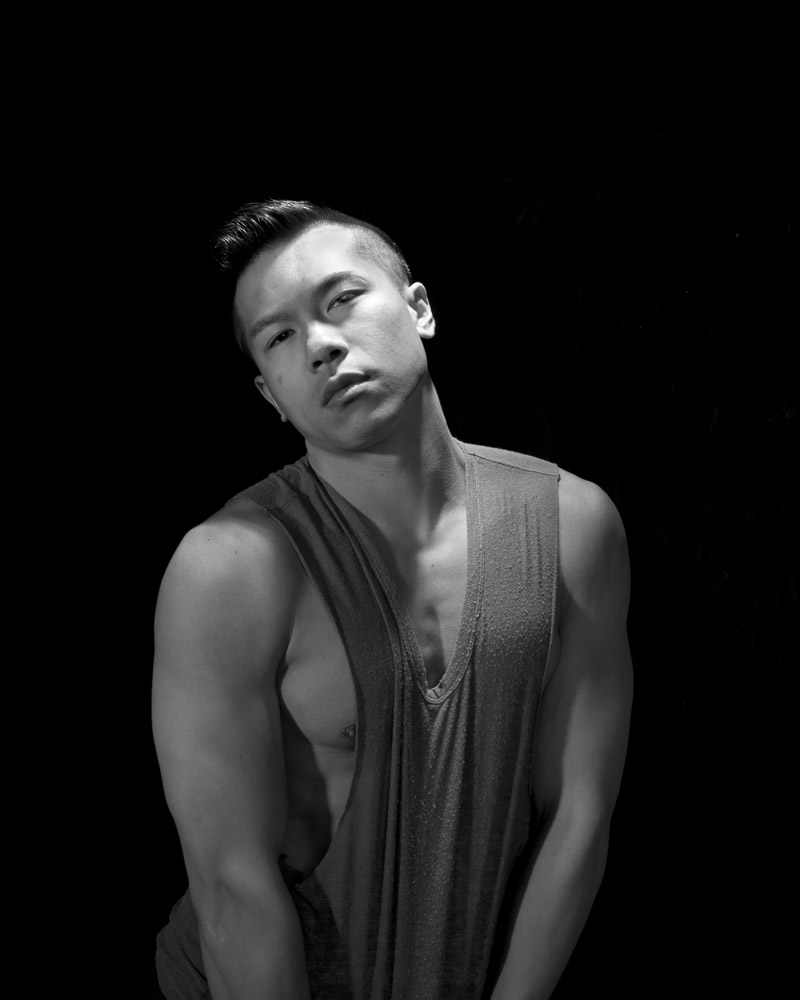
I thought I’d play around with turning a couple of the underwear shots black-and-white. I’m not terribly fond of digital black-and-white conversions – if I’m shooting personal work, and I want black-and-white, there’s no substitute for real film. Here is the one I’m happiest with so far.

IMG_9621-BW

In this case, I think the black-and-white conversion does add something to the sensuality, and it could be a nice touch to diversify his portfolio. I have even more images to edit through from this shoot – I think the grand total was 489 in three hours. This is the time you do thank god for digital.

Busy Weekend – Two Model Portfolios

Among the many things I do photographically, I shoot model portfolios. I did back-to-back shoots on Saturday and Sunday this weekend. This is one where you do shoot digital because of the volume of shots required, the usual turnaround time, and the delivery methods. It would be beyond a pain in the ass to have to get the film back from the lab, edit the shots, then scan, then edit again, then do post-production clean-up. So I brought out the Canon 5D and shot away. All images were made with either the Canon 50mm f1.4 or the Canon 135 f2 L lens. While zooms have their convenience, when you’re working in a small studio, there’s little call for something very telephoto, and you can always take a couple steps back or forward if you need.

My first model is Bucky. He’s a professional trainer at a high-end gym here in DC. The goal was to get him a decent headshot and a couple different looks to flesh out his portfolio and modeling card. I’ve got a couple prime candidates for his headshot:

IMG_9176

IMG_9430

This could also be a head shot, but in a horizontal composition, for something a bit different.

IMG_9432

Which one do you like best? Don’t worry, I shot around 350 images of him, so there’s plenty more to choose from if these don’t cut the mustard.

Then comes the formal look. The shoot stylist pulled together a suit and tie look for him from the studio’s stock wardrobe. That was a hoot because someone had mismatched the pants with the jacket and at first, there was a size 36 waist with a 38 short jacket (that should have had a 30 inch waist pant to go with it). We were afraid he’d have to wear the pants pinned up with binder clips and gaffers’ tape, but shortly the proper pants were found and we were off to the races.

IMG_9233

IMG_9193

I snagged a candid of the stylist adjusting his shirt for a series of somewhat more casual shots.

IMG_9293

These two are showing winter styling with a sexy twist. The first shot shows off his ability to shape his body, as well as the shape his body is in.

IMG_9414

This one is about giving a different mood to the same outfit.

IMG_9406

We also shot the obligatory underwear shoot. The underwear shots are as much about showing off a model’s ability to move and sculpt their body in poses as they are about underwear – after all, there isn’t very much to underwear itself, is there?

IMG_9380

IMG_9404

IMG_9320

You want to make sure a model looks as good out of clothes as in them because it’s about their ability to SELL whatever it is they’re wearing.

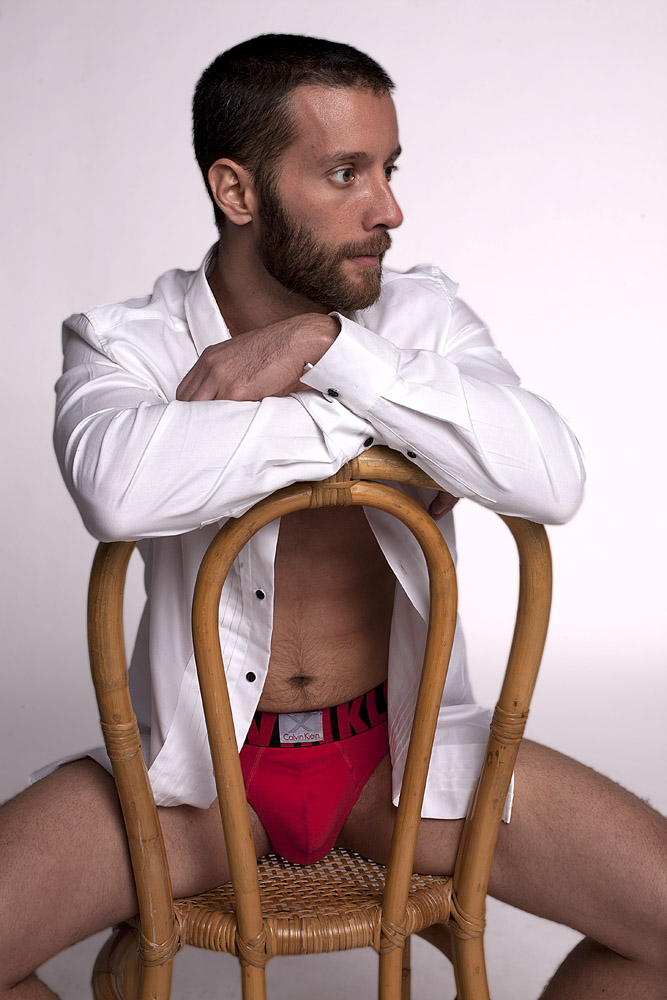
And last but not least is a bit of a crossover – we paired a tuxedo shirt with red underwear to add a different kind of sexy to the shot.

IMG_9307

Glen Echo Carousel, Twilight, Fall

Here are a few loose odds-n-ends I shot back at the end of September, but kept on the shelf until I was all done with the Paris photos. I like playing around as light levels fall – it’s a challenge to balance foreground and sky, but when it works, it’s beautiful. I also like the colors you get when you mix different kinds of lighting.

I was walking around Glen Echo Park in the evening after visiting for (I think) an exhibit opening. I had the Rollei with me, and a roll of Kodak Portra 800 loaded. Portra 800 is another one of those “miracle” emulsions, in my estimation. It is expensive (almost $10/roll), but when you need it, it’s there and it works so well at what it does. Yes, it does have more grain and less contrast than Portra 400, not to mention Portra 160, but the difference compared to what you would have seen in older 800 speed films is almost not worth mentioning. It’s a specialty film, and because of the price, not something I’d shoot every day in lieu of a slower film. But using it is not a sacrifice, like other films used to be.

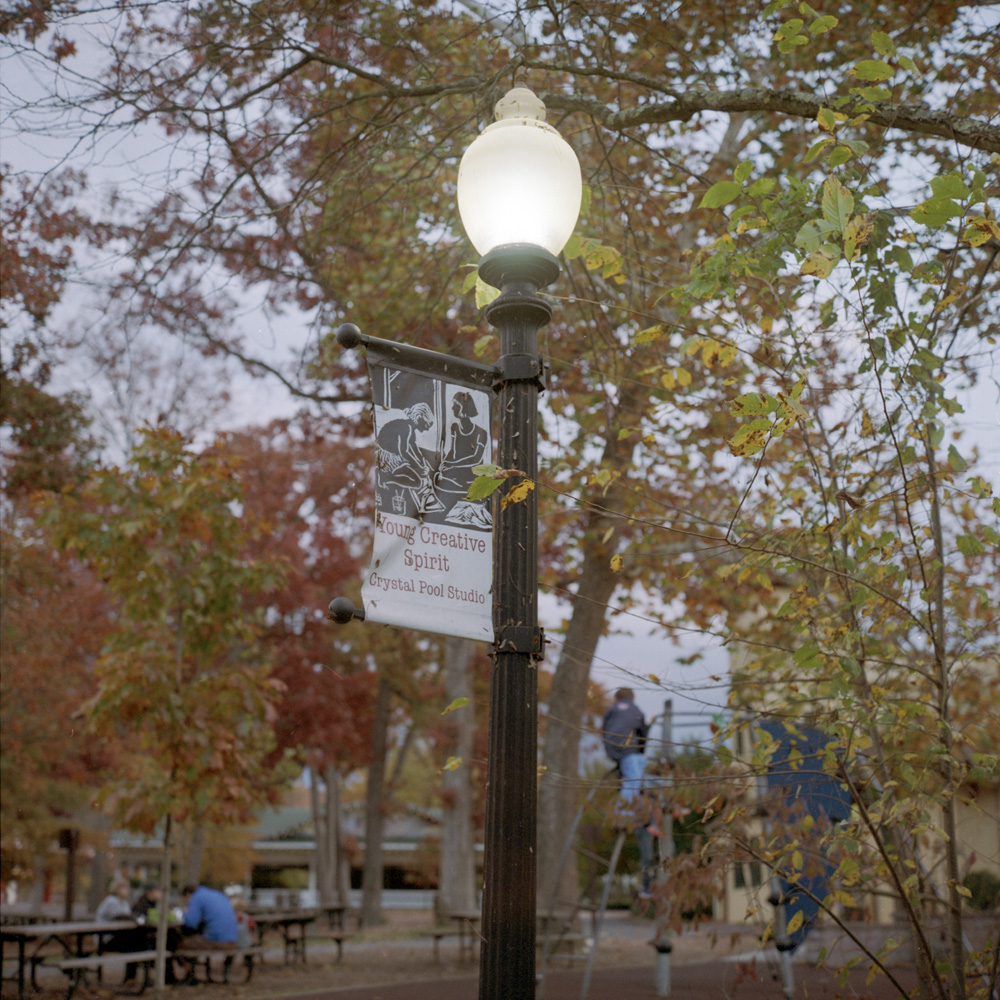
Here is one of the street lights in the park, glowing in the pre-dusk.

Lantern, Crystal Pool, Twilight

The Dentzel carousel is endlessly fascinating. The bright colors, the lights, the music, the motion – it’s a nostalgic combination that provokes a range of emotions from childish joy to melancholy. Here the lights of the carousel are glowing inside the carousel house, and the neon of the old Midway perks up the background through the trees.

Carousel Lights, Fall

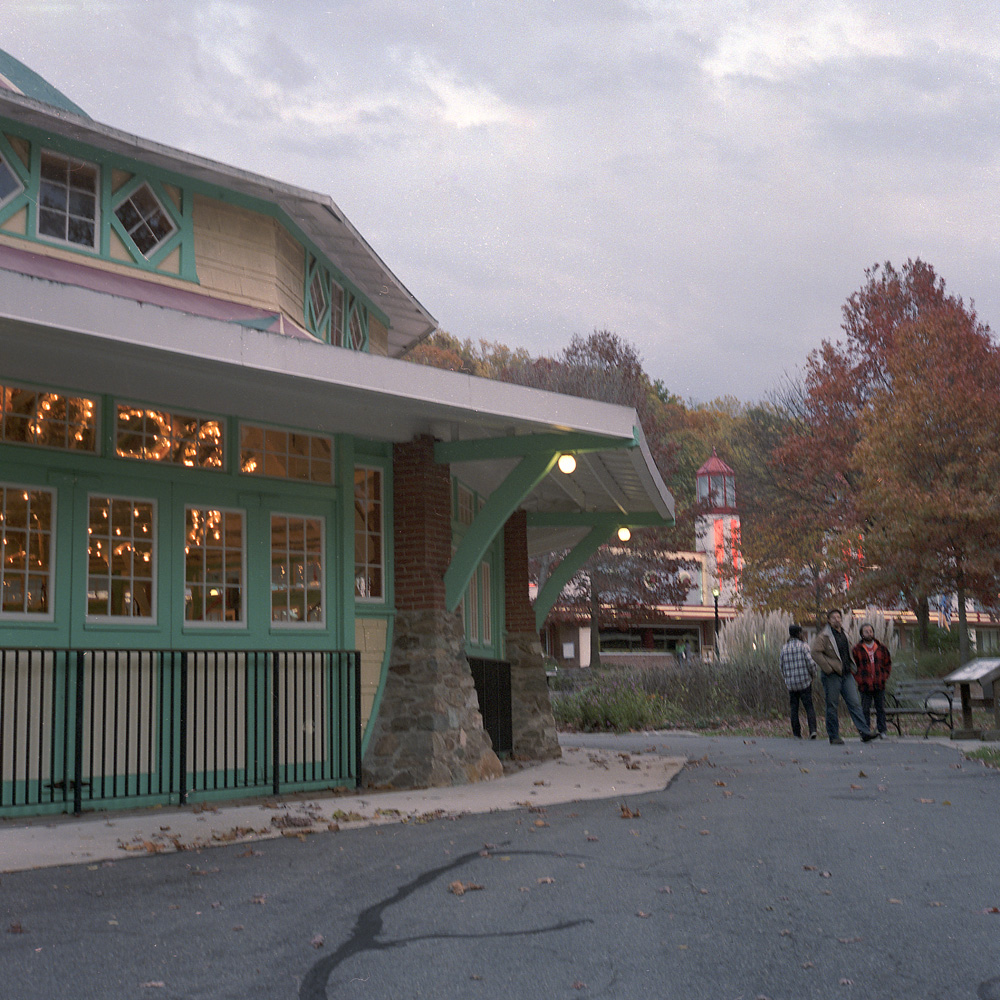
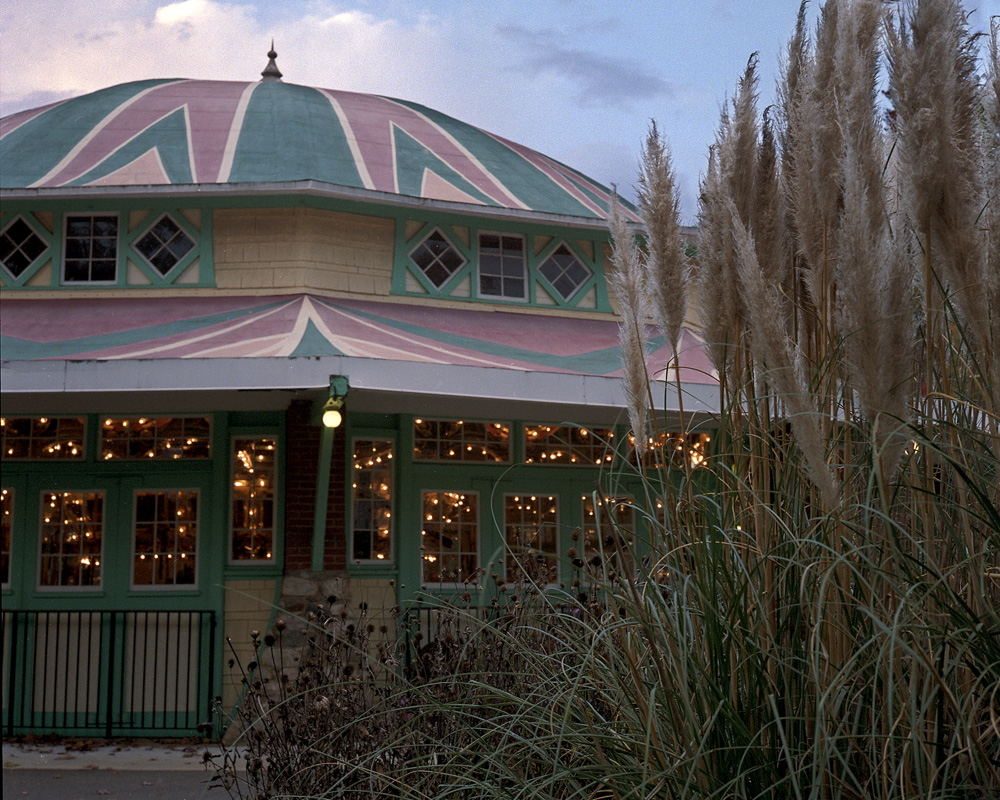
Another view of the carousel house, framed with ornamental grasses. The glow of the lights is particularly inviting – I’d love to go for a ride.

Carousel, Grasses, Twilight

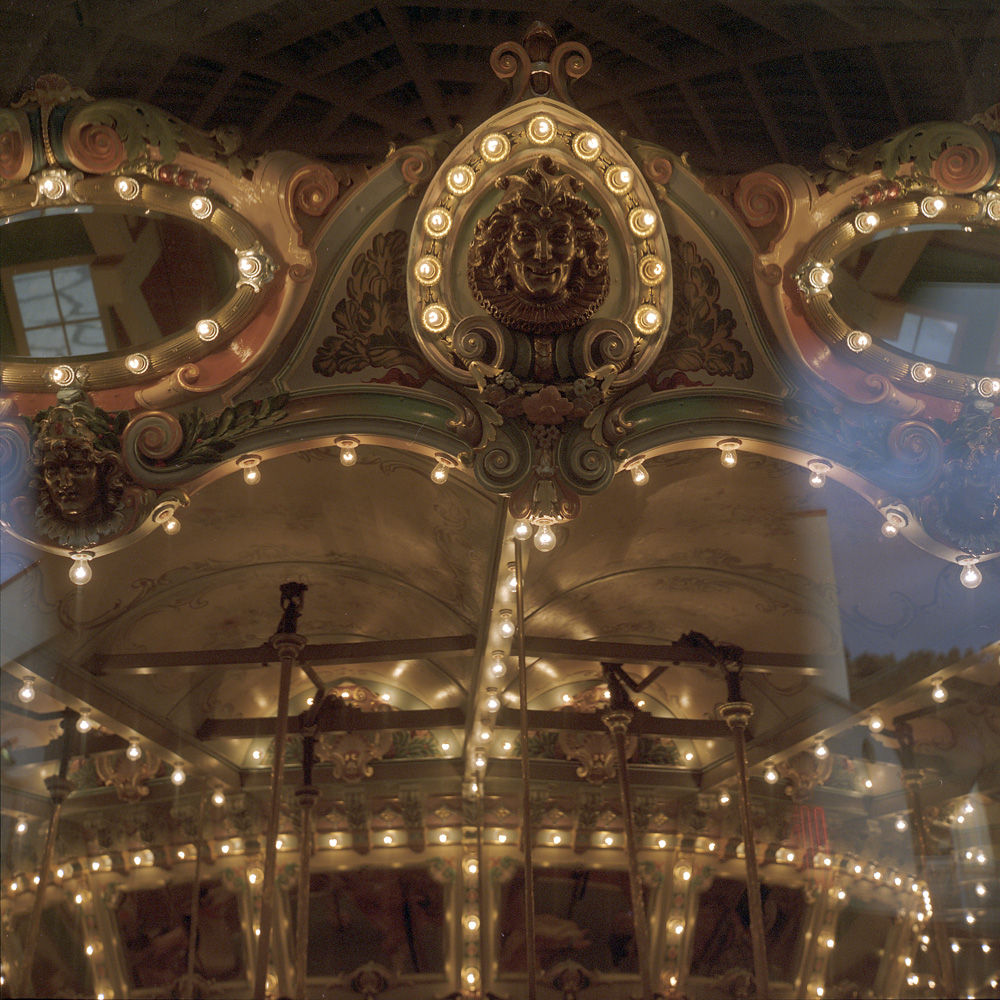
One of the circus masks on the crown of the carousel peers out at you through the reflections on the carousel house window. The lighting and the stillness gives it a slightly sinister air.

Carousel Lights
Carousel Lights

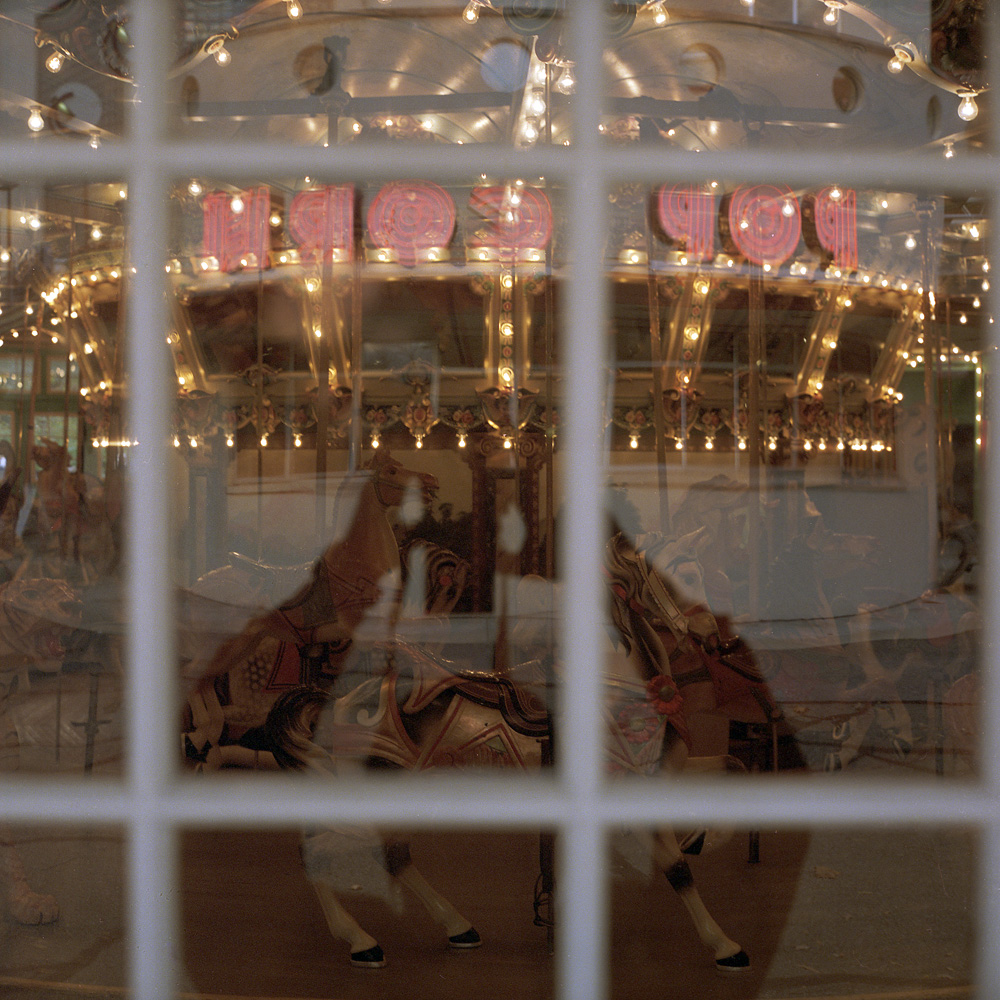
The neon of the arcade reflects in the windows of the carousel house, and I’ve caught myself taking the photo in the reflection as well. The reflected neon gives it a true carnival atmosphere – it almost feels like a real live amusement park, instead of the culture and arts center it has become. Which is not to say that the park lacks vibrancy and vitality, but it has a new character now, a lovable low-key quality that reflects and honors its past while preserving the facility for the future.

Glen Echo Carousel, Neon, Reflections

Neighborhood Walkabout

It “snowed” here in DC on Tuesday, and we got the day off for what amounted to a little more than a dusting that rapidly turned into slush and never really interfered with traffic or public transportation or anything. But, since I had the day off, I took a walkabout in my neighborhood to burn some film.

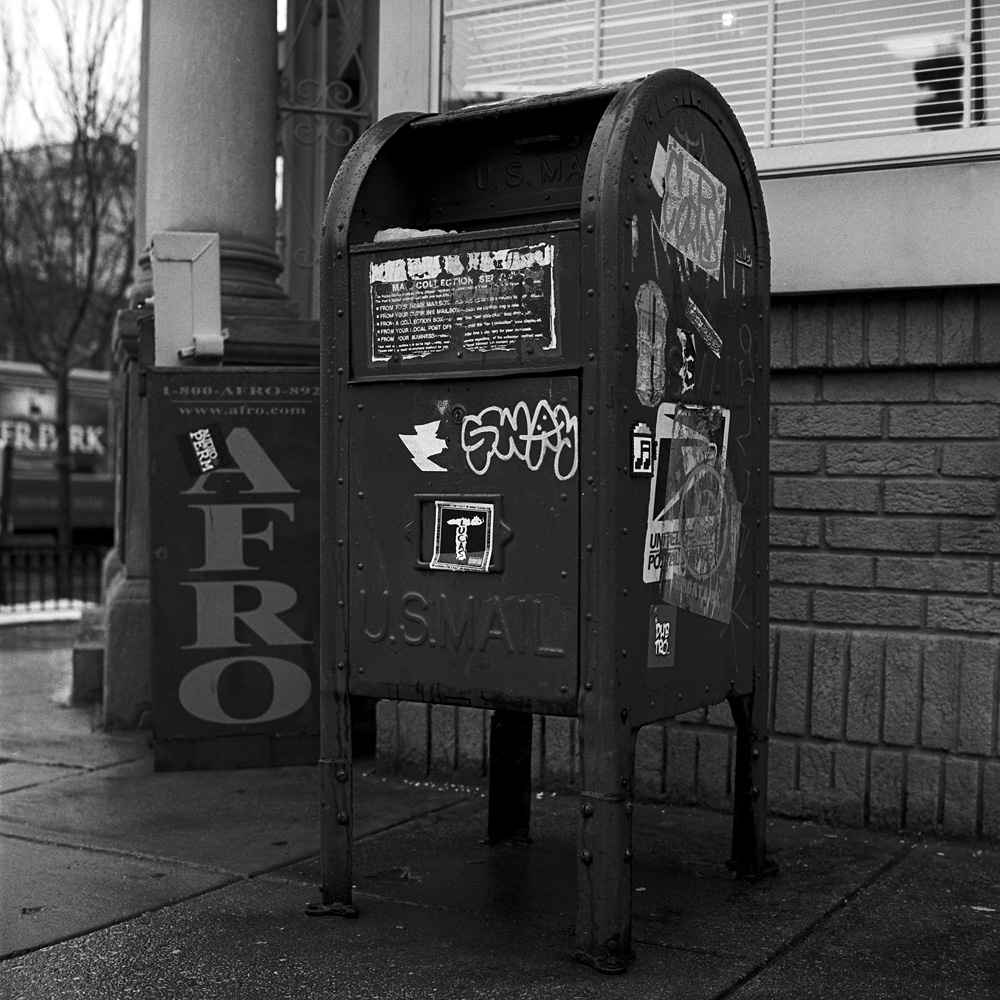
I’m always looking for images of things to add to my “Portraits of Everyday Objects” series. This mailbox, outside the Industrial Bank building on U Street fits the bill, looking somewhat forlorn with all its graffiti.

Mailbox
Mailbox

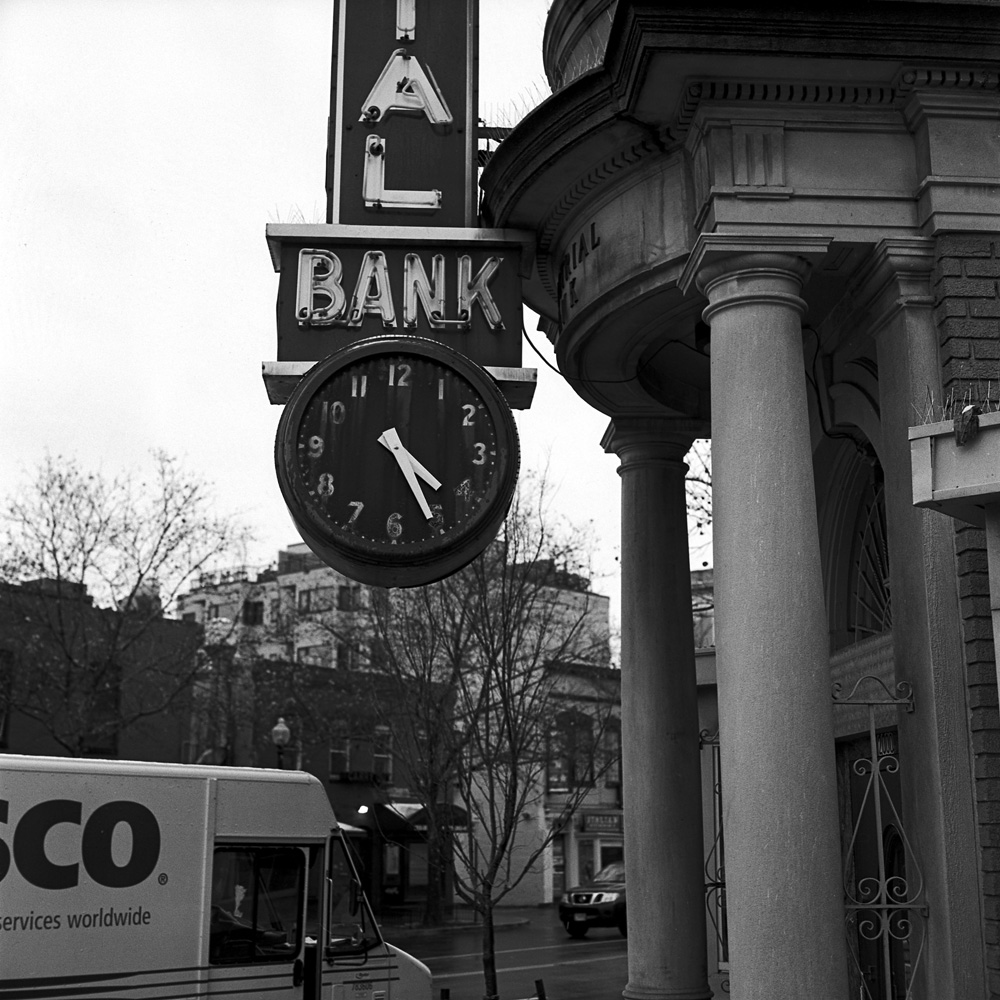
Industrial Bank was started at the beginning of the 20th century by African-Americans to cater to the African-American community. Their main branch is at the corner of 11th and U Streets, and has this really cool metal and neon clock sign out front. Alas they have allowed the sign to lapse into disrepair – I THINK the clock functions but it is not accurate, and either they just never turn on the neon or it no longer works. I really wish they’d fix it up so it would work, as it would make a very nice neighborhood landmark and a visual counterpoint to the yellow saxophone sign across the street outside the Bohemian Cavern nightclub.

Clock, Industrial Bank

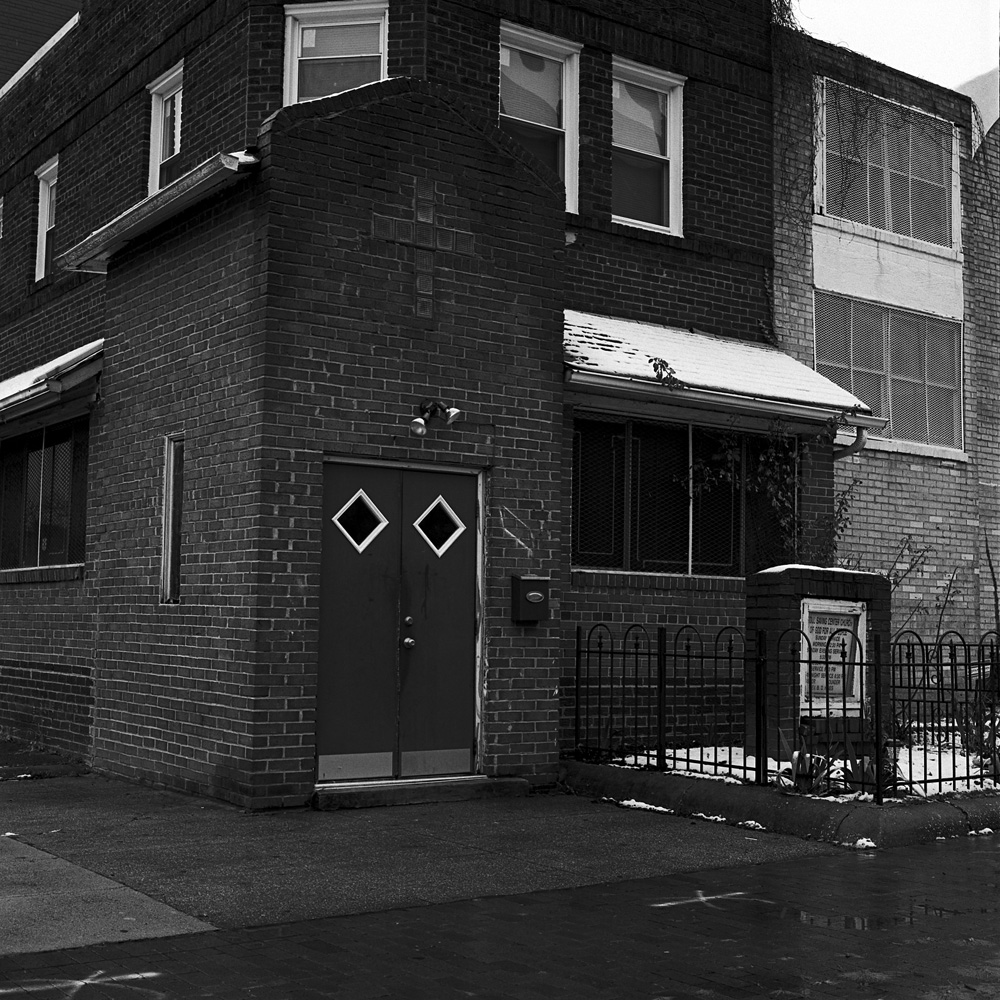
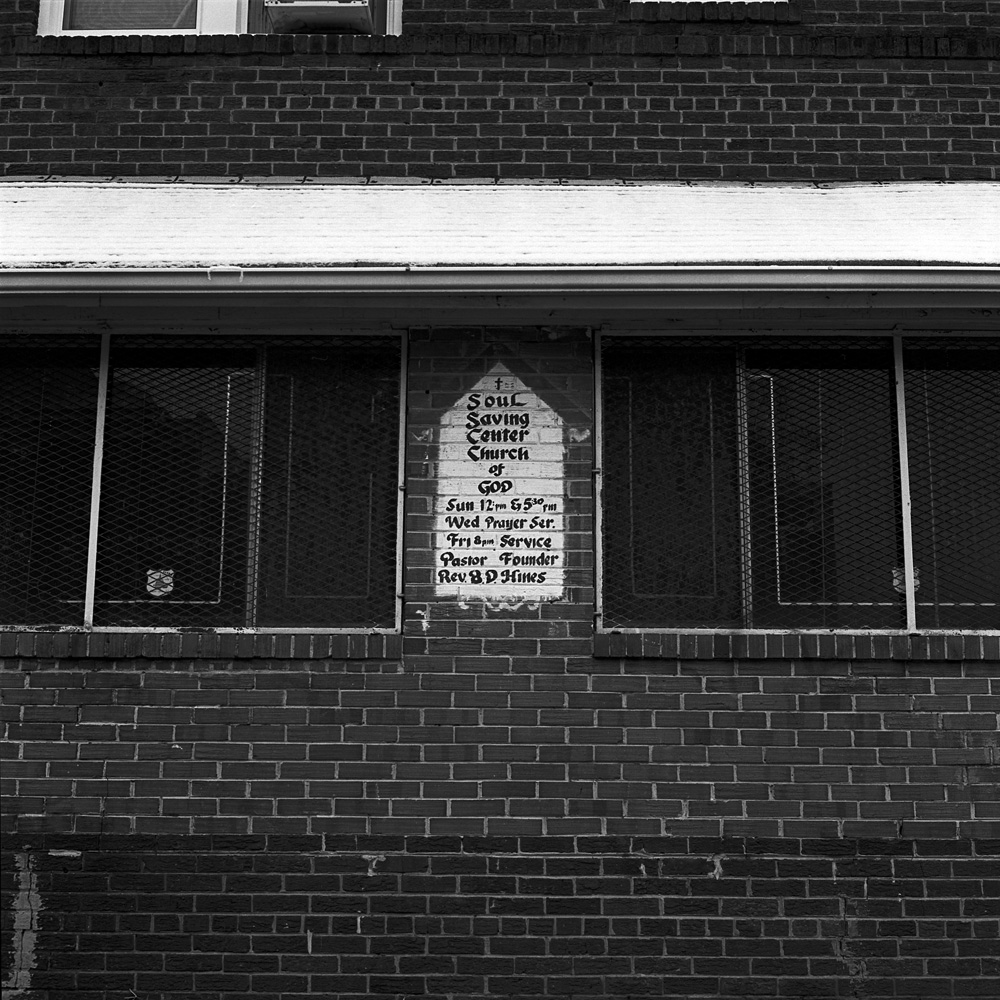
Up the street there is the Soul-Saving Center Church of God – a storefront community church with a primarily if not exclusively African-American congregation. It’s a sign of the gentrification and transformation of the neighborhood – across the street from them is a brand-new condo building with units selling for up to $1.2 Million.

Soul Saving Center Church Door
Soul Saving Center Church

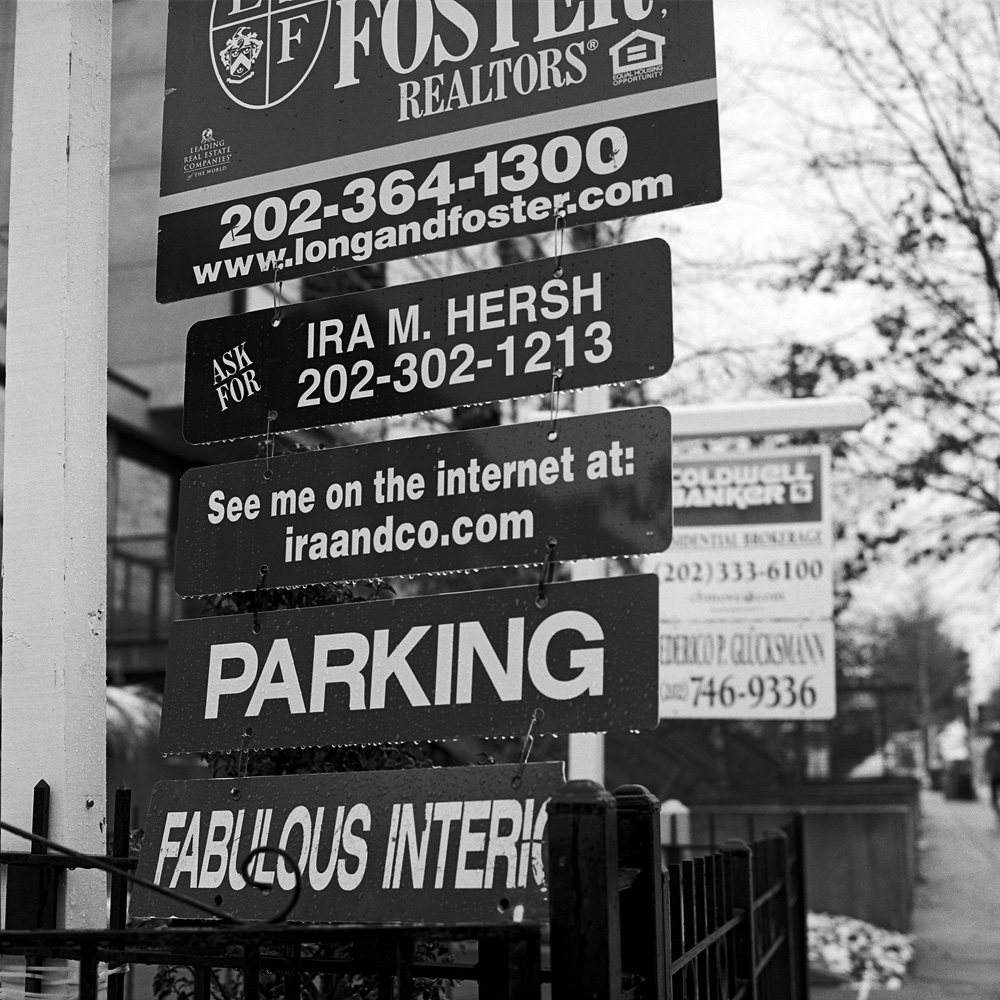
You can see the real estate bonanza still happening in the neighborhood – small row houses are being converted and expanded into multi-story multi-unit condominium buildings. Here is one with a “Fabulous Interio”- the agent broke off the “r” to get the sign to fit inside the fence. I wonder how long it will be before the Soul-Saving Center Church decides to sell their buildings plus the adjacent lot they have – they’ve got perhaps $10 Million in land alone now.

Fabulous Interio
Fabulous Interio

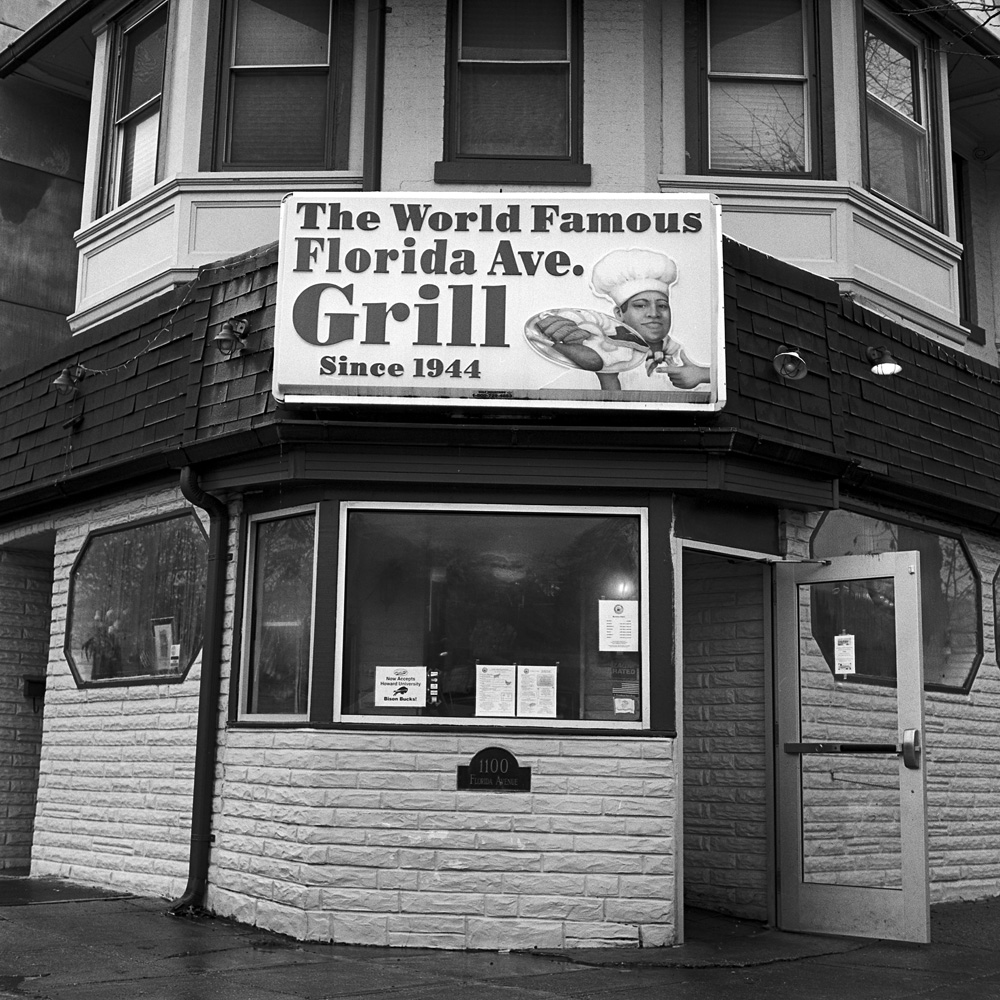
Up the street is another landmark of the neighborhood, almost as famous as Ben’s Chili Bowl. The Florida Avenue Grill has been around since 1944, serving up good old-fashioned soul food to locals and celebrities alike. The Florida Avenue Grill once owned a large empty lot next door, which served as their parking lot. About five years ago the family that owns the grill sold the empty lot and now a five story condo building has filled it. The average unit in that building sold for north of $500,000 each.

Florida Avenue Grill

Charles Marville exhibit at the National Gallery of Art

The River Seine by Charles Marville

Charles Marville: Photographer of Paris

Around 1832 Parisian-born Charles-François Bossu (1813–1879) shed his unfortunate last name (bossu means hunchback in French) and adopted the pseudonym Marville. After achieving moderate success as an illustrator of books and magazines, Marville shifted course in 1850 and took up photography, a medium that had been introduced 11 years earlier. His poetic urban views, detailed architectural studies, and picturesque landscapes quickly garnered praise. Although he made photographs throughout France, Germany, and Italy, it was his native city—especially its monuments, churches, bridges, and gardens—that provided the artist with his greatest and most enduring source of inspiration.

By the end of the 1850s, Marville had established a reputation as an accomplished and versatile photographer. From 1862, as official photographer for the city of Paris, he documented aspects of the radical modernization program that had been launched by Emperor Napoleon III and his chief urban planner, Baron Georges-Eugène Haussmann. In this capacity, Marville photographed the city’s oldest quarters, and especially the narrow, winding streets slated for demolition. Even as he recorded the disappearance of Old Paris, Marville turned his camera on the new city that had begun to emerge. Many of his photographs celebrate its glamour and comforts, while other views of the city’s desolate outskirts attest to the unsettling social and physical changes wrought by rapid modernization. Taken as a whole, Marville’s photographs of Paris stand as one of the earliest and most powerful explorations of urban transformation on a grand scale.

By the time of his death, Marville had fallen into relative obscurity, with much of his work stored in municipal or state archives. This exhibition, which marks the bicentennial of Marville’s birth, explores the full trajectory of the artist’s photographic career and brings to light the extraordinary beauty and historical significance of his art.

I went this weekend with my parents to see this exhibit. It is a wonderfully presented exhibition, and proof positive that when the National Gallery tries hard to do a good photography show, they can. The exhibition had special resonance for my father and I as we have just been to Paris, and trod the same streets documented in these photographs.

The exhibition has over 100 prints of Charles Marville’s work on display, ranging from early salt-paper portraits made from calotype negatives (negatives made on paper) to large albumen prints of architectural studies from glass collodion negatives. His architectural works have a significant sociological aspect as they document neighborhoods in transition from medieval warrens of twisted streets and cantering buildings flung up haphazard against one another, populated by the Parisian working class, to the modern, wide boulevarded, sanitized, luxurious Paris created by Baron Haussmann that we think of today.

Among the modernizations he documented were the new gas street lamps being installed, and the public urinals Haussmann designed to improve public sanitation (a major obsession of his). While many of the street lamps were preserved with electrification and can still be seen today, only one of Haussmann’s urnials still stands on Parisian streets.

Marville even includes himself in this transition, as he frequently used himself or an assistant as a stand-in for scale and emotional impact amidst the tumult and construction/destruction he photographed. He even photographed his prospering studio in a location that a scant few years later would also fall victim to Haussmann’s ‘modernizations’.

At the peak of his career he was the official photographer of Paris, but by the time of his death, he had faded into obscurity, his work ending up stored in state and city archives, and not a single obituary was published to mark his passing. He may have died in obscurity, but his work survived and preserved the city in transition, sometimes with his images being the sole record of the city that was.

The exhibit will be traveling to the Metropolitan Museum of Art in New York in January. If you can make it, it will be well worth your while.

Another image published – Eastern Sierra Center for Photography website

http://esc4p.org/motels/

I submitted a photo to a call for entries from the Eastern Sierra Center for Photography the other day, and the photo was accepted! It’s even #1 in the series. The photo is one I took a while back of the Surratt house in Washington DC. The theme of the photos was “Motels”, based on a quote by William Borroughs –

“Motel, motel, motel, broken neon arabesque, loneliness moans across the continent like fog horns over still oily water of oily rivers.”

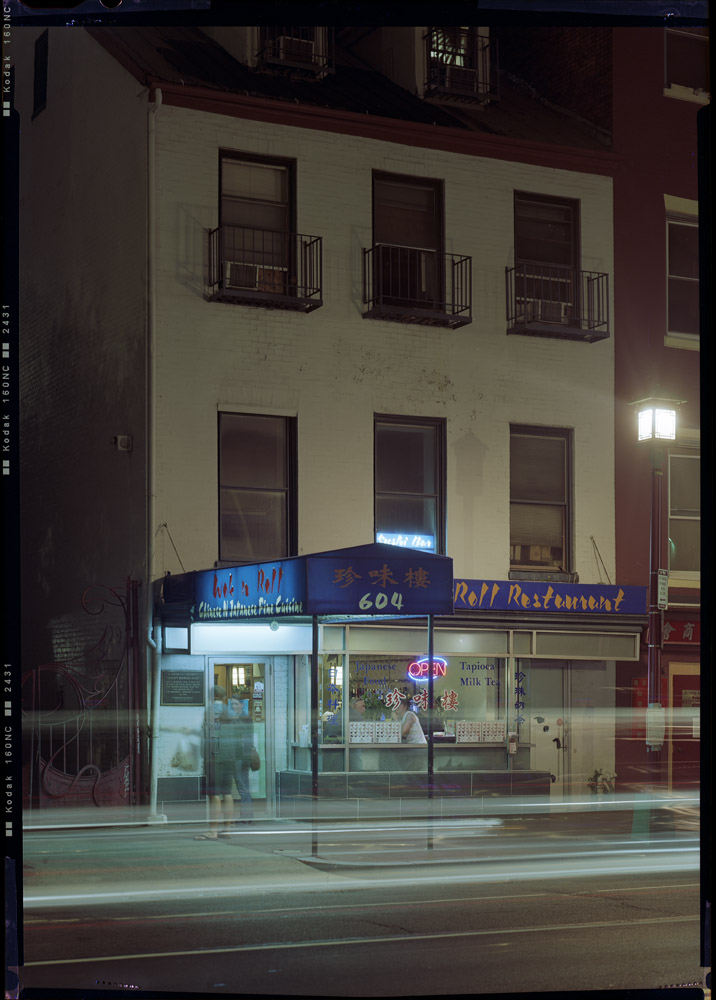
The motel connection in my image is a little tenuous, but Mrs. Surratt took in boarders to her home to help pay the bills before she was hanged for her alleged role in the Lincoln assassination (she was the first woman ever executed in the United States for a crime she may have only ever been tangentially involved in). I also felt the mood of the scene put into image the words in the Burroughs quote.

There was a requirement that the image be made with a large format camera (one of the primary missions of the Eastern Sierra Center for Photography is the promulgation of large format photography).

Secession Sushi - The Wok 'n Roll in the Surratt House
Secession Sushi – The Wok ‘n Roll in the Surratt House

The photo was shot on Kodak Portra 160 with a Canham 5×7 wood field camera using a Kodak Commercial Ektar 12″ lens.

Please go visit the Eastern Sierra Center’s website and read about their very worthwhile mission – supporting the continued use of view cameras for contemporary (and future – they have a program to expose kids to view cameras!) photography.